
We were quite happy to be leaving Port Macquarie and its civilised shopping strips and brand-new housing developments behind when we boarded the ferry at Settlement Point to take our Suzuki Grand Vitara north across the mouth of the Hastings River.
This feature was originally published in 4×4 Australia’s April 2012 issue
This wasn’t going to be a rollicking bush bash in the middle of nowhere, but we did want to get the Grand Vitara dirty, and to spend long days at the beach and sultry nights camped out under the stars – and we didn’t want to see one more roundabout or fluorescent-lit service station. For a little while, at least.
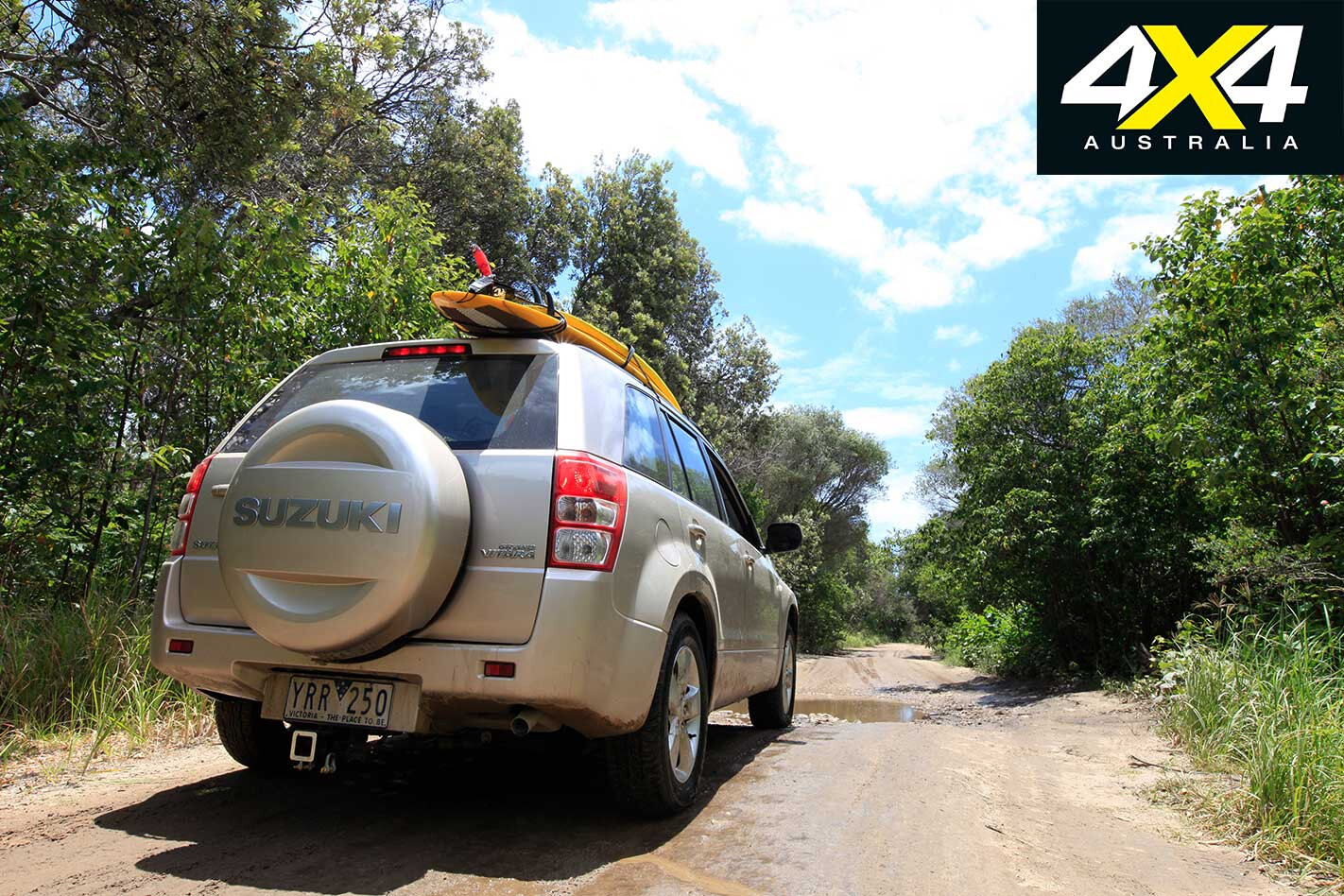
The stretch between Port Macquarie and Crescent Head (made up mostly of Limeburners Creek and Goolawah national parks) is a coastal holiday utopia. As well as private camping grounds, there are several NPWS campsites, long stretches of white sandy beaches for swimming, surfing and fishing, and Point Plomer Road – which is 4X4-only for the 16km before Point Plomer, and lends a bit more adventure to the otherwise well-graded but mostly unsealed track.
When we drove Point Plomer Road, the air was viscous with humidity, and armies of mosquitoes buzzed from the shadowy melaleuca forests that line the track. Clay-stained puddles were axle-deep and the oozy mud stuck to our thongs like glue.
Along the way, several short sandy tracks dart off towards the long, unprotected beach, which can be driven on in this part of the coast with an NPWS permit (as always, watch the tides).
The Grand Vitara had us cringing on occasion as it scraped its relatively low-hanging belly on unidentified objects in the deep, muddy holes, but otherwise handled the track effortlessly.
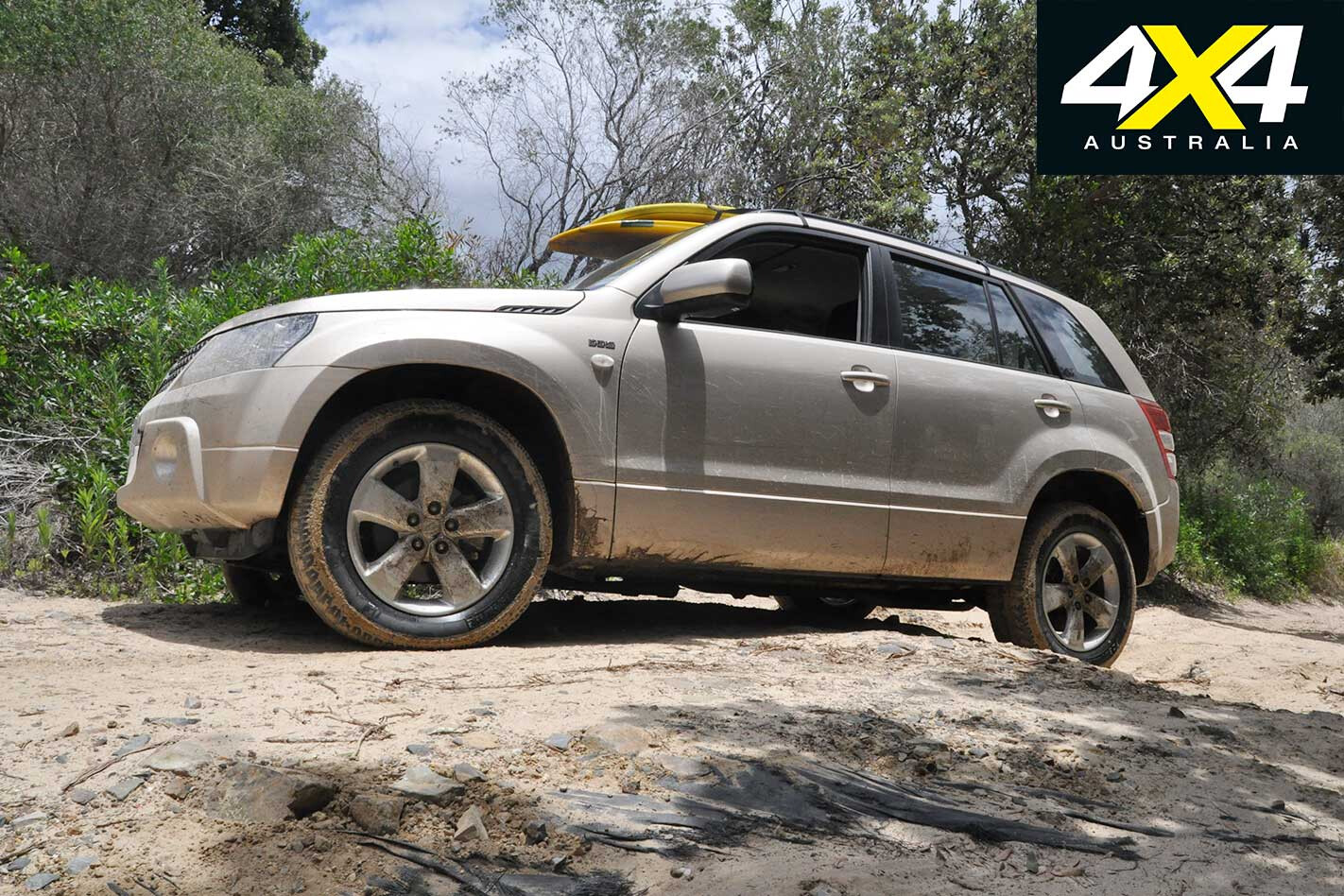
Budget camping options with limited facilities and easy access to the beach are available, but at this time of year (the no-man’s-period between Christmas and New Year when only crazy people like us don’t get in early or book ahead), they were pulsating with families and holiday-makers.
So, we drove a little further onward to the unlikely-named Delicate Nobby Camping Ground to try our luck at securing a private campsite.
As it happened there was, miraculously, an available site. Located across the road from the beach, it had full facilities (including a fire pit for each site, and free firewood), but still a bush-camp feel.
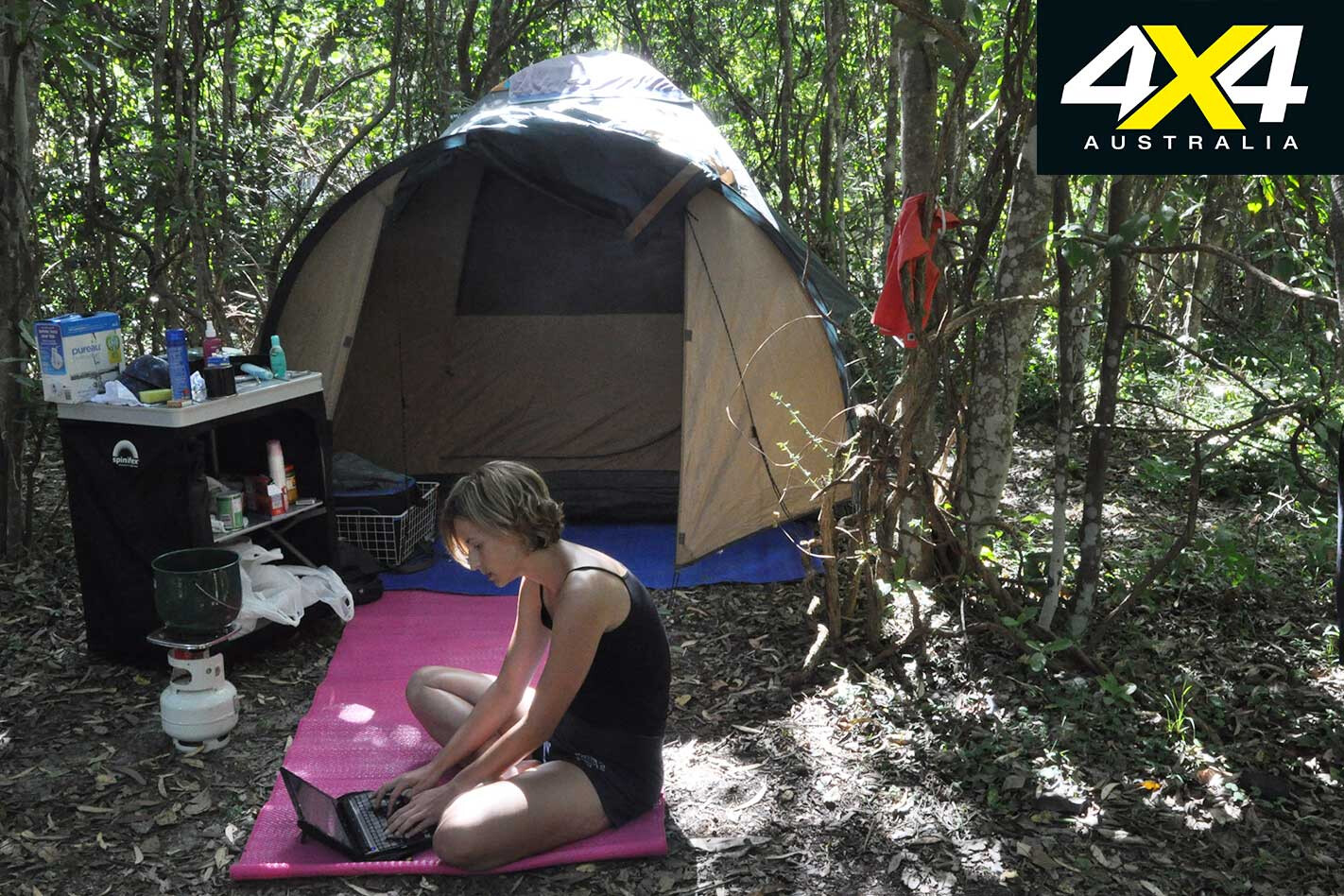
Delicate Nobby is a little pricier than the NPWS bush camps at $20 per adult per night (peak season rates), but is well worth a look, offering easy access to the several surf beaches up and down the mid-north coast.
And that’s exactly how we spent the several days and nights that followed – enlisting the Grand Vitara when it was needed, or else enjoying the beaches within walking distance … and making the occasional sneaky trip to Crescent Head to stock up on supplies, or even grab a coffee.
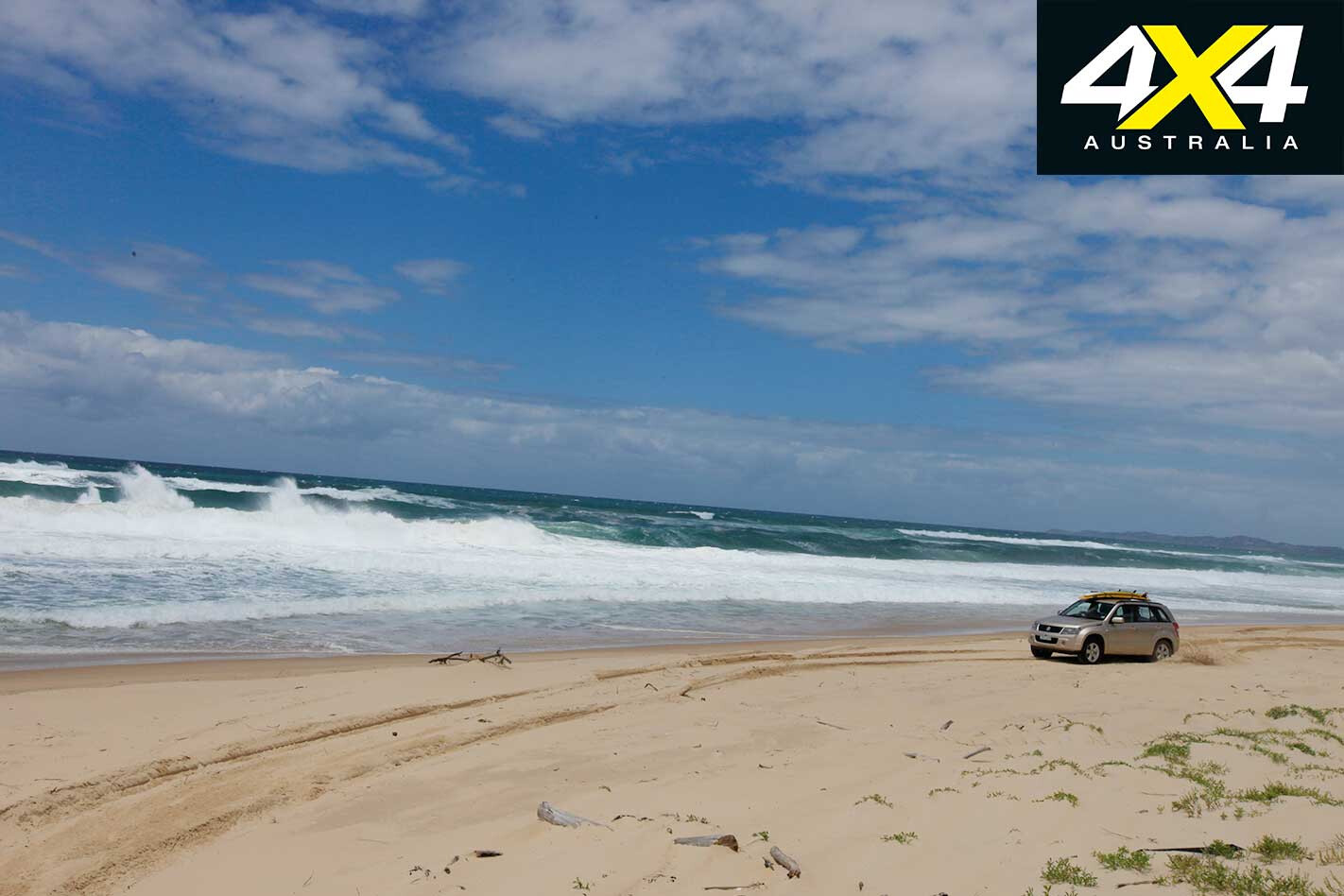
Because, like the Grand Vitara itself, a holiday on the mid-north coast of NSW can provide all the adventure you want or need, without feeling as though you’ve strayed too far from civilisation.
AND THE 4X4…
As we drove the 1.9-litre manual turbo-diesel Grand Vitara on this beach jaunt, it occurred to me along the way that – as a 20-something, childless couple on our summer break by the beach, after a bit of adventure, but remaining within reach of civilisation – we were exactly who this fourby was made for. So, we left the little ol’ Jimny in the driveway at home and took a step up in the world for a couple of weeks.
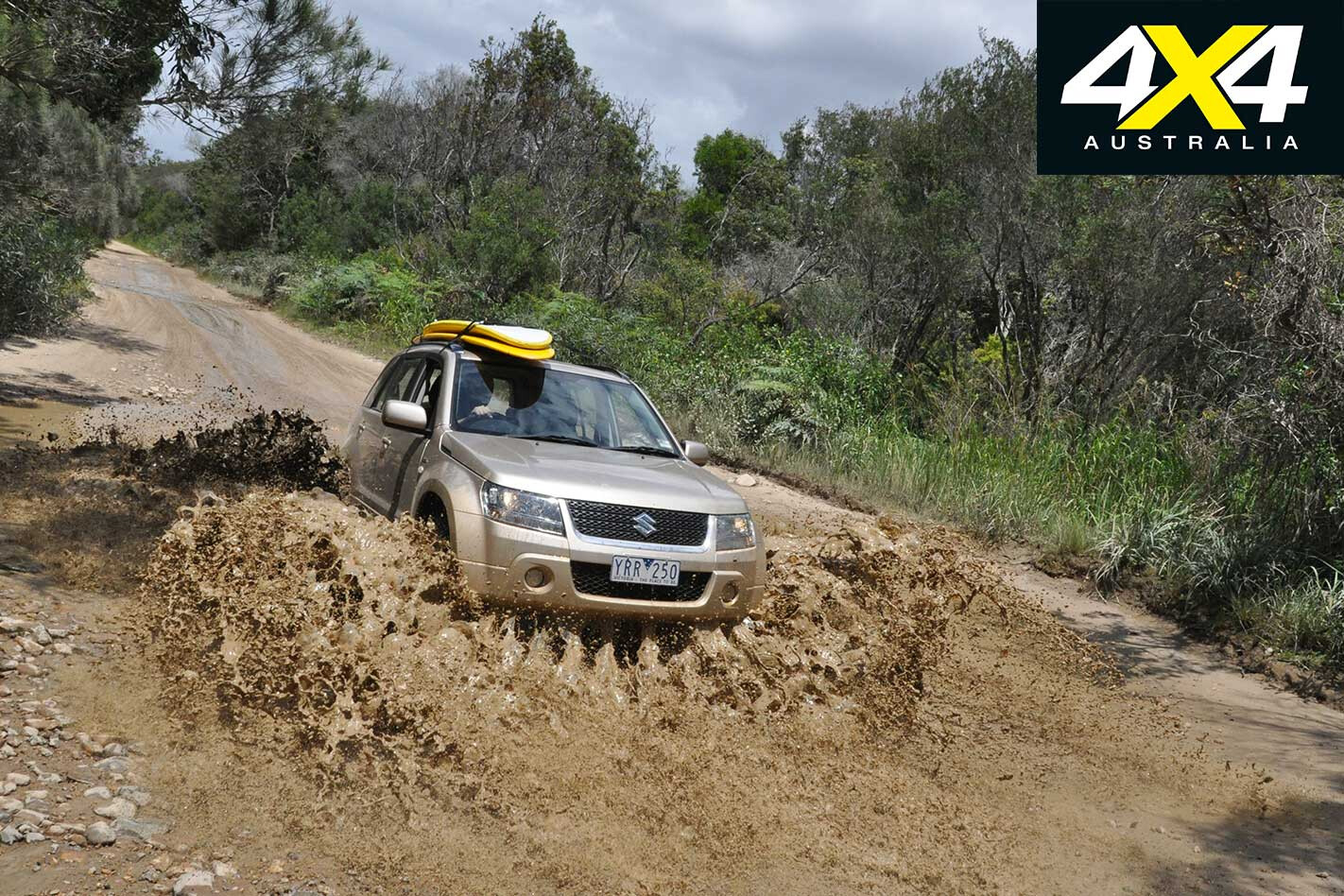
With seats folded in the five-door model (diesel isn’t available in short-wheelbase, unfortunately), the cargo area provided ample space for all our camping gear, and we used soft racks to strap surfboards to the roof.
With (standard highway) tyres deflated for sand and corrugations, we didn’t suffer one flat – more than can be said for the several other travellers we crossed paths with juggling jacks, spanners and spares.
With boards on the roof, two passengers on board and a mix of on- and off-road and highway driving, we achieved a frugal 7.5L/100km fuel consumption – allowing long stretches between needing to refill the 66-litre tank.
The manual gearbox was, as Paul called it, somewhat “agricultural”, with a very short first gear – good for off-roading, but liable to cause RSI (repetitive strain injury) in your left wrist after stretches in the city.
However, after our comparably feeble Jimny, we certainly appreciated the ample torque available low in the rev-range.
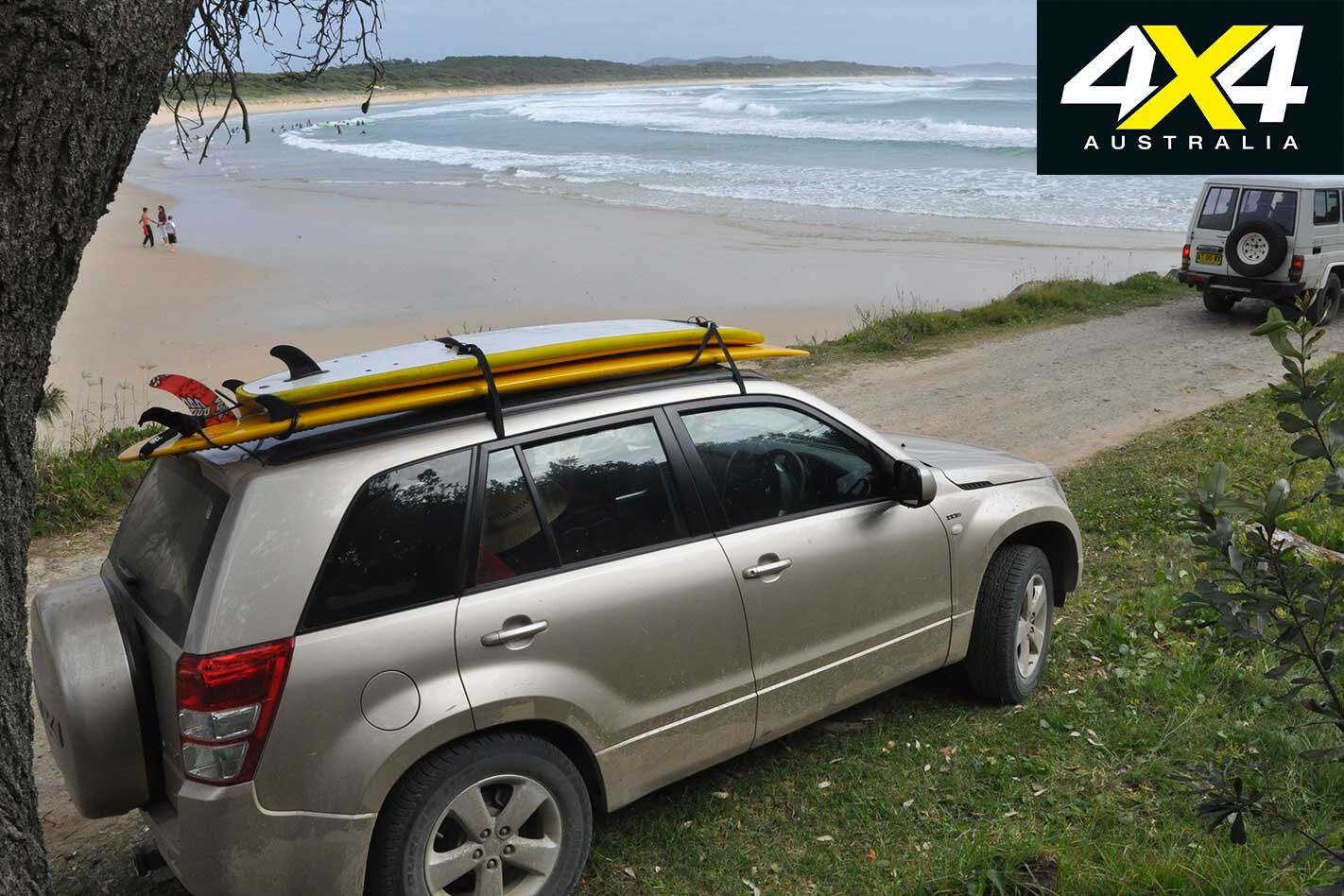
The Grand Vitara is like a soft roader with guts (read: low-range gearing). It might be let down off-road by its limited ground clearance, but for the job we assigned it – to get us safely up the coast on the highway without using all of our holiday pocket money on fuel, and to have a bit of fun in the sand and on dirt roads in between days at the beach – it fits the bill nicely.
The Jimny might just need to watch out.
Travel Planner
GETTING THERE Limeburners Creek NP is located north of the Hastings River. Take the car ferry ($3 one-way) from Port Macquarie. From Kempsey, turn off the Pacific Highway onto Crescent Head Road.
ACCOMMODATION There is a mix of campgrounds scattered throughout this area, both privately owned and NPWS run. Point Plomer and Melaleuca camping grounds cost $10 per adult per day ($5 for children). Point Plomer has flush toilets, wood barbecues and cold showers, while Melaleuca has pit toilets only. A daily $7 vehicle entry fee is also required to stay in the national park (and for beach driving). Delicate Nobby Camping Ground costs $20 per adult per day (peak season rates) and provides full facilities and free firewood.
TRACK CONDITION Most of the roads in the region are unsealed but in good condition – suitable for a softroader. Conditions vary on Point Plomer Road; it can become quite rutted after rain. A 4X4 is recommended. When driving on sand, always reduce tyre pressures and monitor the tides.
CONTACT Kempsey Tourist Information Centre: 02 6563 1555. NSW National Parks and Wildlife Service: visit environment.nsw.gov.au/nationalparks or phone 1300 361 967.
After a glorious first day at Lake Paluma with a cloudless blue sky and bright sunshine, we woke up the next morning to find our view limited to low-hanging clouds. It is one thing to read about camping in the clouds, but it is an entirely different thing to experience it.
This feature was originally published in 4×4 Australia’s June 2012 issue
We’d already had an interesting night with a giant white-tailed rat keeping us awake for part of it, as he tried to chew through a plastic box to get to the kids’ Weet-Bix. His attempt failed but the white monster did succeed in ripping open the garbage bag, which Chris had left hanging on a hook in the shower tent.
The rat downed most of the bag’s contents and we were left to clean up the mess. Camping in the wet tropics comes with its own challenges.
The wet start to the day didn’t dampen our spirits. The campground was deserted, giving us the sense we were the only people in the mystical rainforest. Rain dripped continually from the branches and the humidity was high, making it impossible to dry clothes and towels. The kids loved the place because there was plenty of space to ride a bike – this is a popular campsite during the school and Christmas holidays.
Lake Paluma is part of Paluma Range National Park which consists of two sections. Jourama Falls in the north, close to Ingham, and easily accessible. Lake Paluma is in the south and situated high up in the mountains; Mt Spec rises 1000m above sea level.
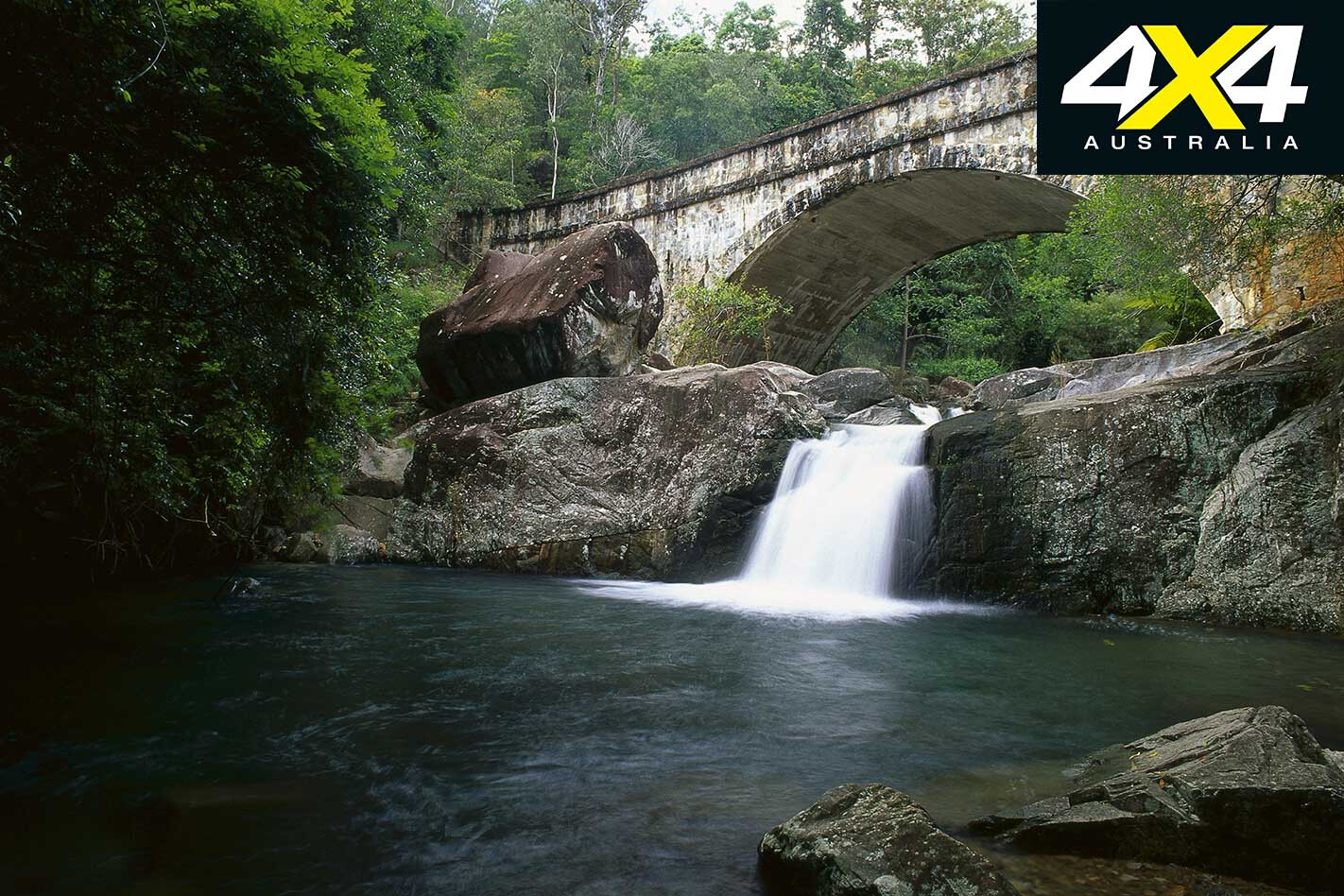
The trip to Lake Paluma is an adventure in itself and a stop at Little Crystal Creek is mandatory. The creek flows all year round and is a popular swimming hole for people from Ingham and Townsville who want to escape the stifling summer heat.
The stone-arch bridge is considered an engineering feat – it was constructed during the Great Depression and took two years to build, from 1932 to 1933. Unemployment relief labour was used with jobs lasting six weeks for single men – 10 weeks if married – for two bob a day, with two men per tent.
After crossing the bridge, it’s an 11km drive to the township of Paluma. Once known as Cloudy Clearing, Paluma developed after the discovery of tin in 1875. The town is thought to be named after HMQS Paluma, a converted gunboat purchased by Queensland Maritime to meet a perceived Russian threat to the colony.
The town was gazetted in 1934, but development came to a halt with the start of WWII in 1939 when its strategic location was recognised – 1000m above sea level and overlooking the Coral Sea. Defence forces took over the town, first the United States followed by the Royal Australian Air Force (RAAF).
American officers worked with Australian defence and scientific personnel on a portable lightweight air warning device that was field-tested around Paluma for the jungles of New Guinea. The Australian army undertook its first jungle training in the surrounding rainforest. RAAF personnel also manned the No.6 Medical Rehabilitation Unit, treating close to 1000 patients over two years.
Today, this peaceful town is mostly made up of holiday houses. There are no shops and you can’t buy fuel. The pottery is an interesting place to visit and a handful of licenced restaurants and a café are open for meals during the dry season. The history of the area has been captured in a series of signs throughout the village at sites of historical significance.
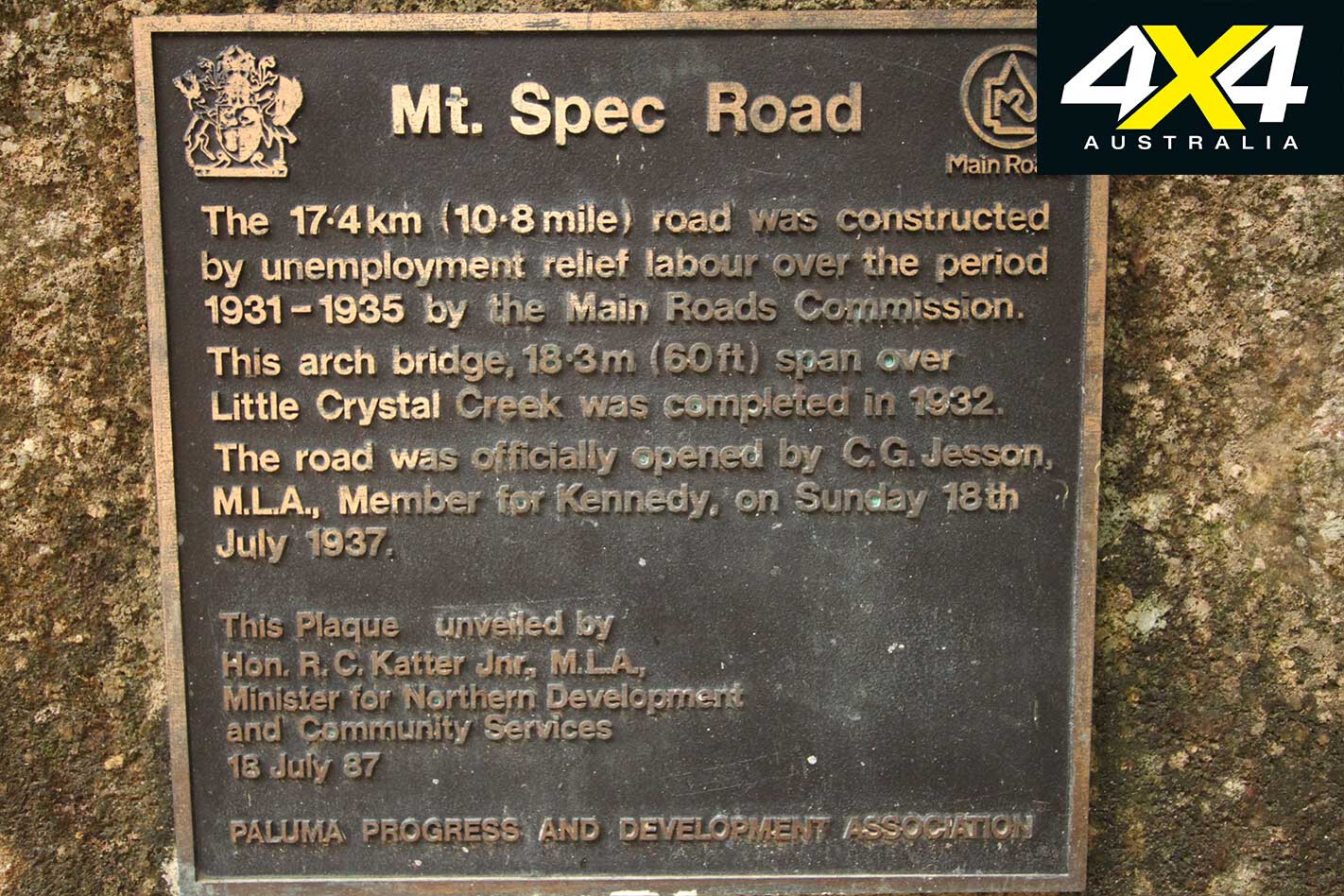
For the energetic, there are a couple of walks from which to choose. McClelland’s Lookout is named after the Main Roads Commissioner who was in charge of overseeing the building of the Mt Spec Road and the stone-arch bridge in the 1930s. On a clear day, the lookout has views to the coast.
The Paluma Rainforest Walk is a 580m circuit which takes you through dense rainforest with strangler figs, king ferns and glowing fungi at night.
More serious bushwalkers can follow the Witt’s Lookout Track, which rewards with more breathtaking lookouts. Cloudy Creek Track is an extension of the Witt’s Lookout Track and is steep – allow two hours for the return trip.
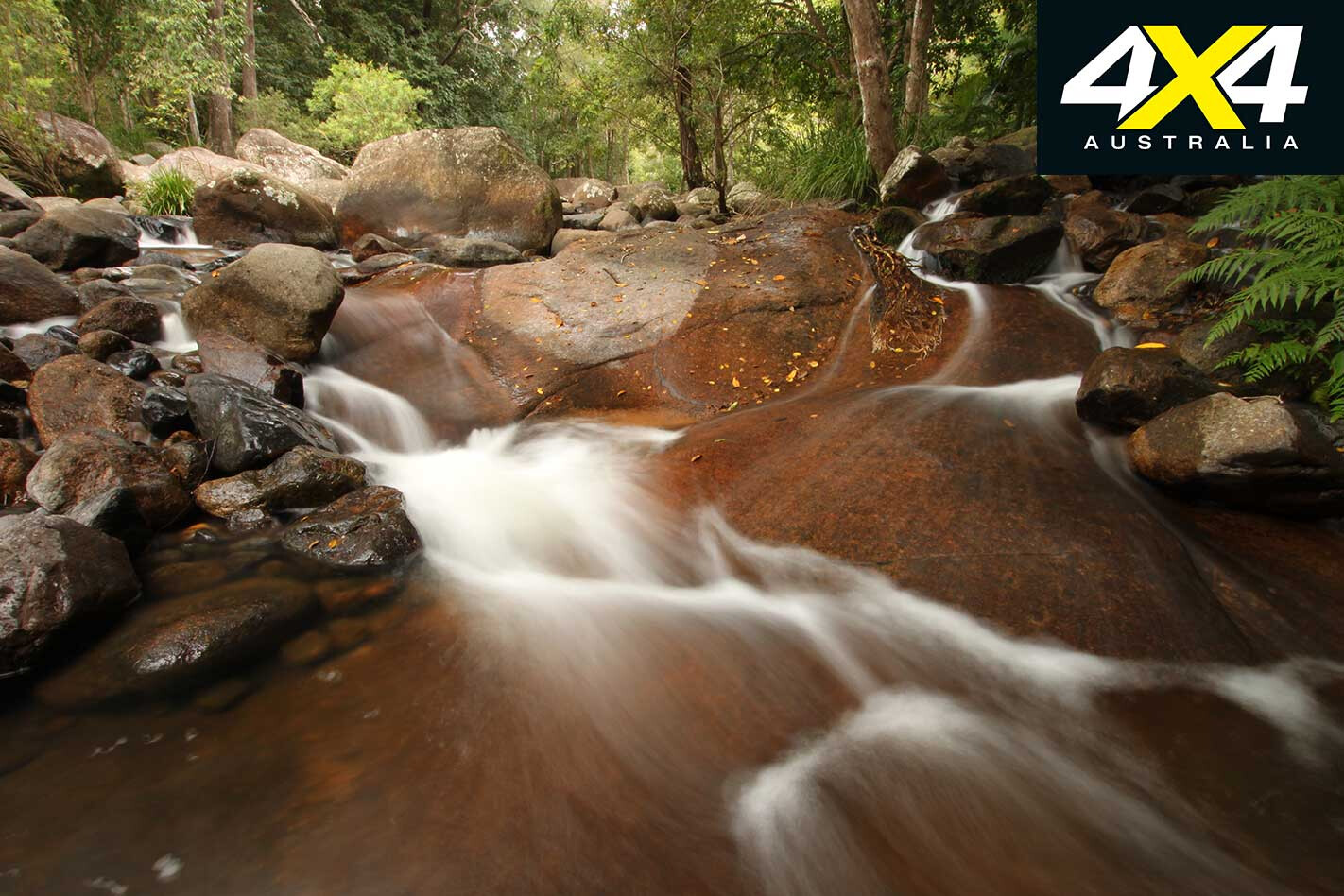
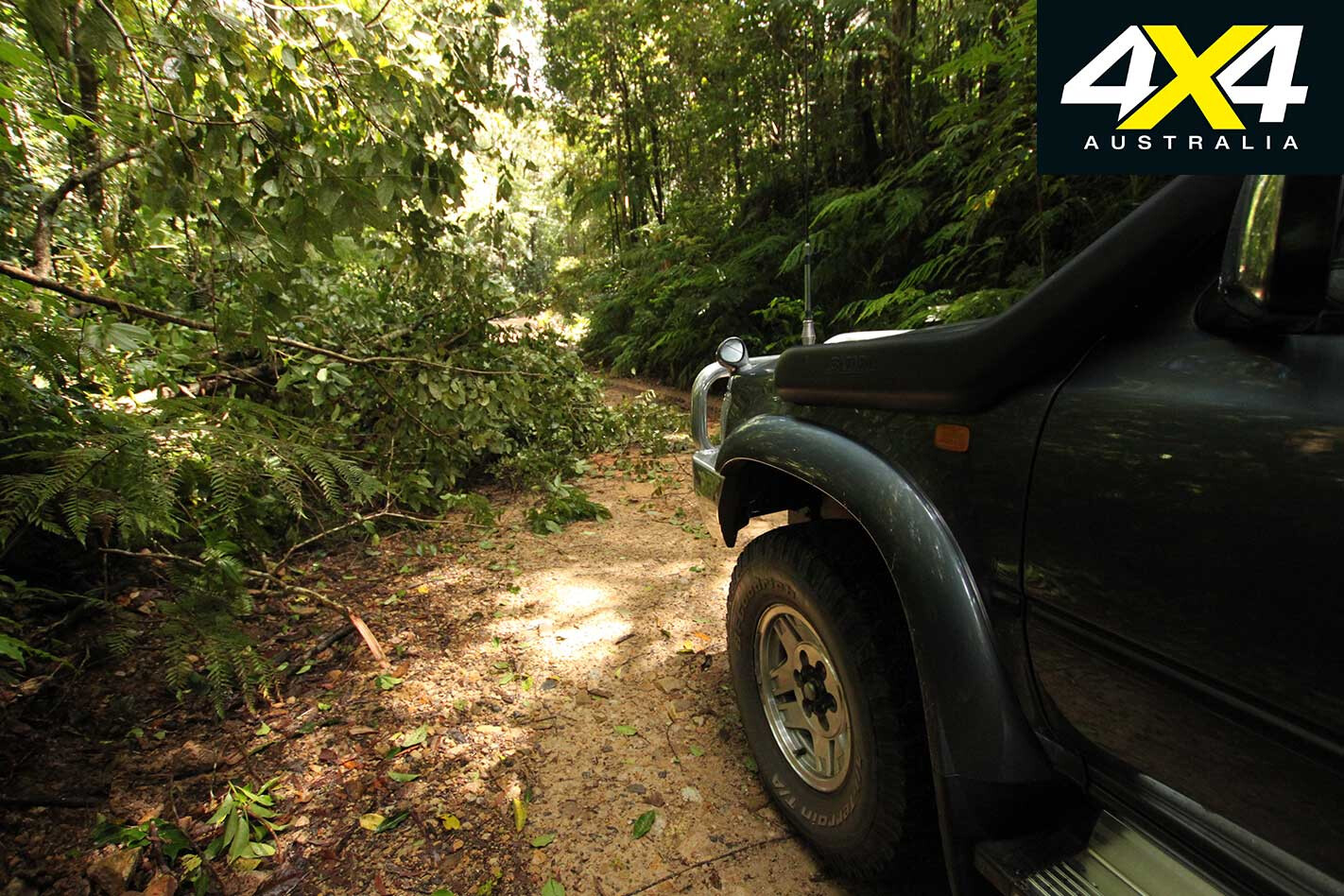
Leaving the township, it’s 3km to the turn-off to the lake where the road turns to dirt. The last 11km takes you through dense rainforest and past the turn-off to Birthday Creek Falls. Take care on this road because it’s usually wet and there are plenty of potholes to make for a rough-and tumble-ride.
Birthday Creek Falls is definitely worth a look as the water flows all year round and you may even spot the elusive golden bowerbird. Wherever you look, almost everything is a dazzling emerald colour, although it’s amazing to see the many different shades of green. Paluma is also a birdwatcher’s paradise, as some of the region’s most endangered species can be found here.
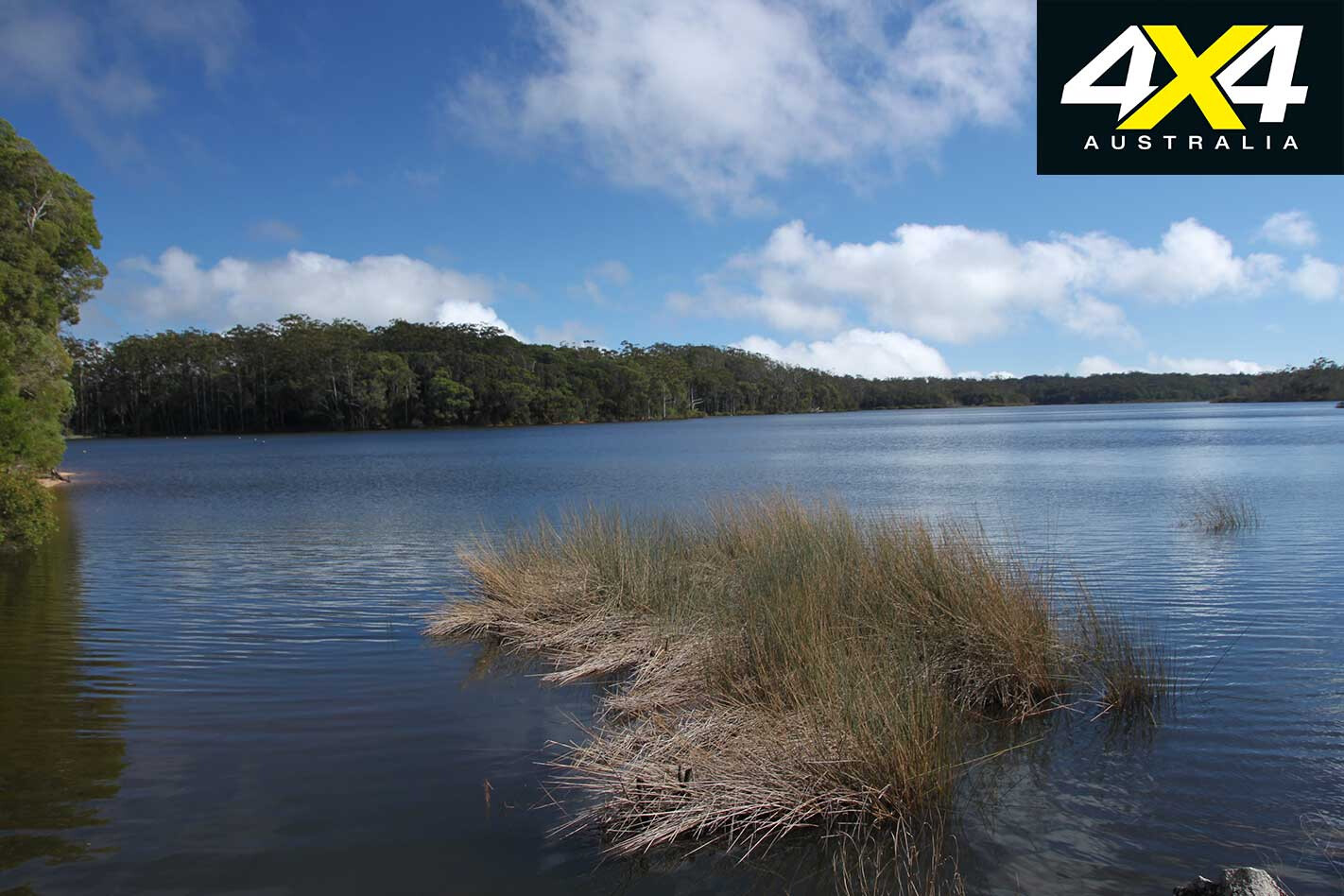
It’s a short drive from the falls to Lake Paluma, where we’d set up camp. The lake is one of the water supplies for the city of Townsville.
By the 1920s, Townsville had become a thriving place but had outgrown its water supply. The city taps ran brown and dirty and water rationing was common in the dry season. The cool, clear waters of Crystal Creek were seen as a tempting alternative. In 1955, the Townsville City Council completed a pipeline to carry Crystal Creek water to the city reservoirs.
Construction of Lake Paluma began in 1957, but contractors were caught out by heavy rain in 1958 which filled the dam before it could be fully cleared. When dam levels are low, large stumps and hollow logs litter the shoreline. Today, the lake is a great place for swimming and provides relief from the extreme summer heat.
After staring at the clouds for three days in a row, combined with a desperate need for clean and dry clothes, we packed up and headed for Jourama Falls, 40km up the road. It’s an easy drive in the dry season when the causeways have little water over them. The campground turned out to be one large open area with plenty of space for our camper trailer and nice and close to the toilets.
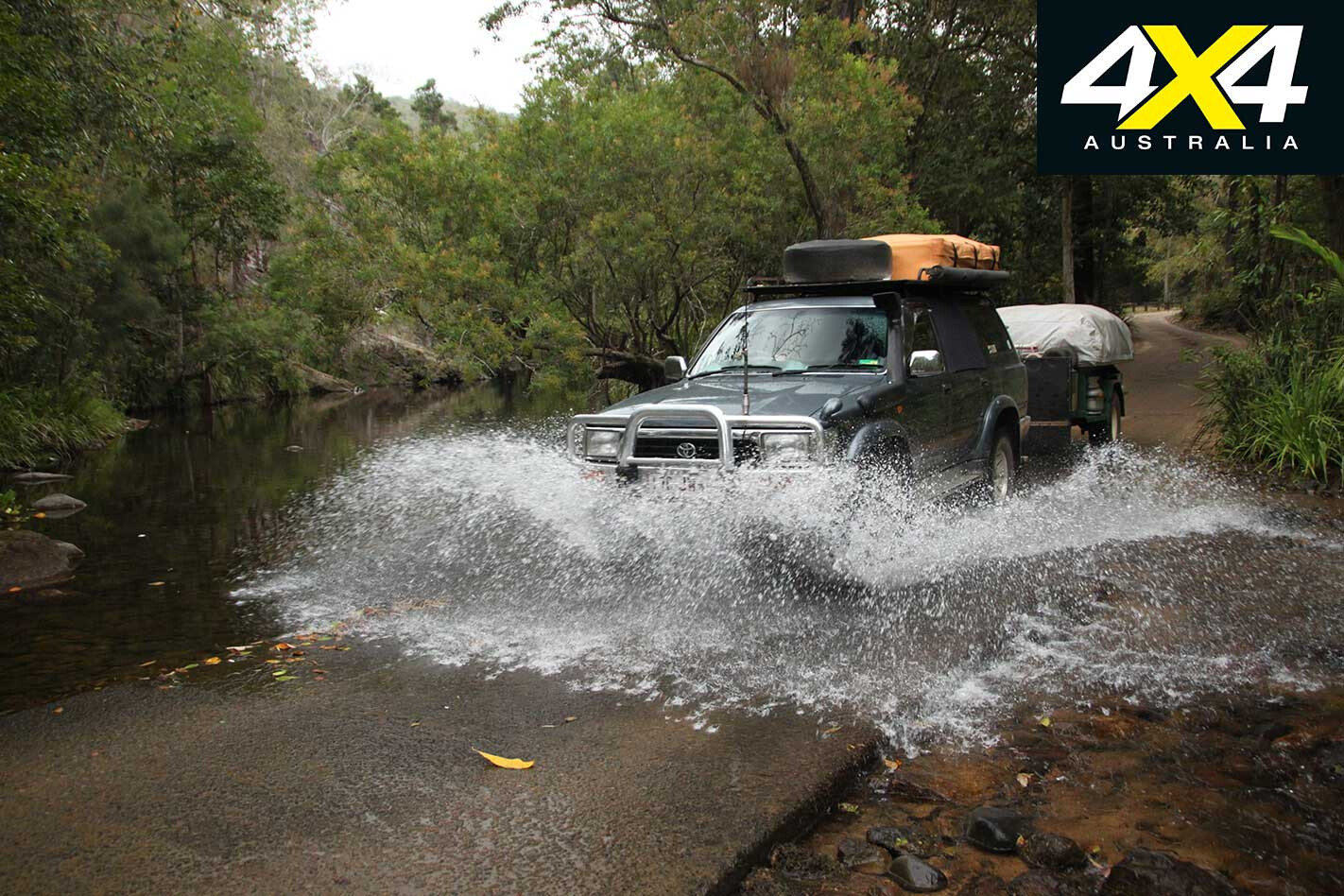
We arrived at Jourama Falls campground on a beautiful sunny day and we lapped up the warmth to dry out our stuff. The kids were eager for a swim in the shallow creek and the concrete causeway was the perfect place to splash around.
We left the walk to the falls for the next day because there was plenty to explore around our camp. A large goanna climbed the tree next to the tent and bush turkeys scratched about in search of food. The spectacular Ulysses butterfly appeared here and there, mesmerising the kids with its bright blue colours. We spent the evening sitting out under a starry sky, soaking up the peace of our tropical surroundings.
Early the next morning we struck out on the walk. The track was challenging at times because it involved some rock-hopping, but the kids managed just fine.
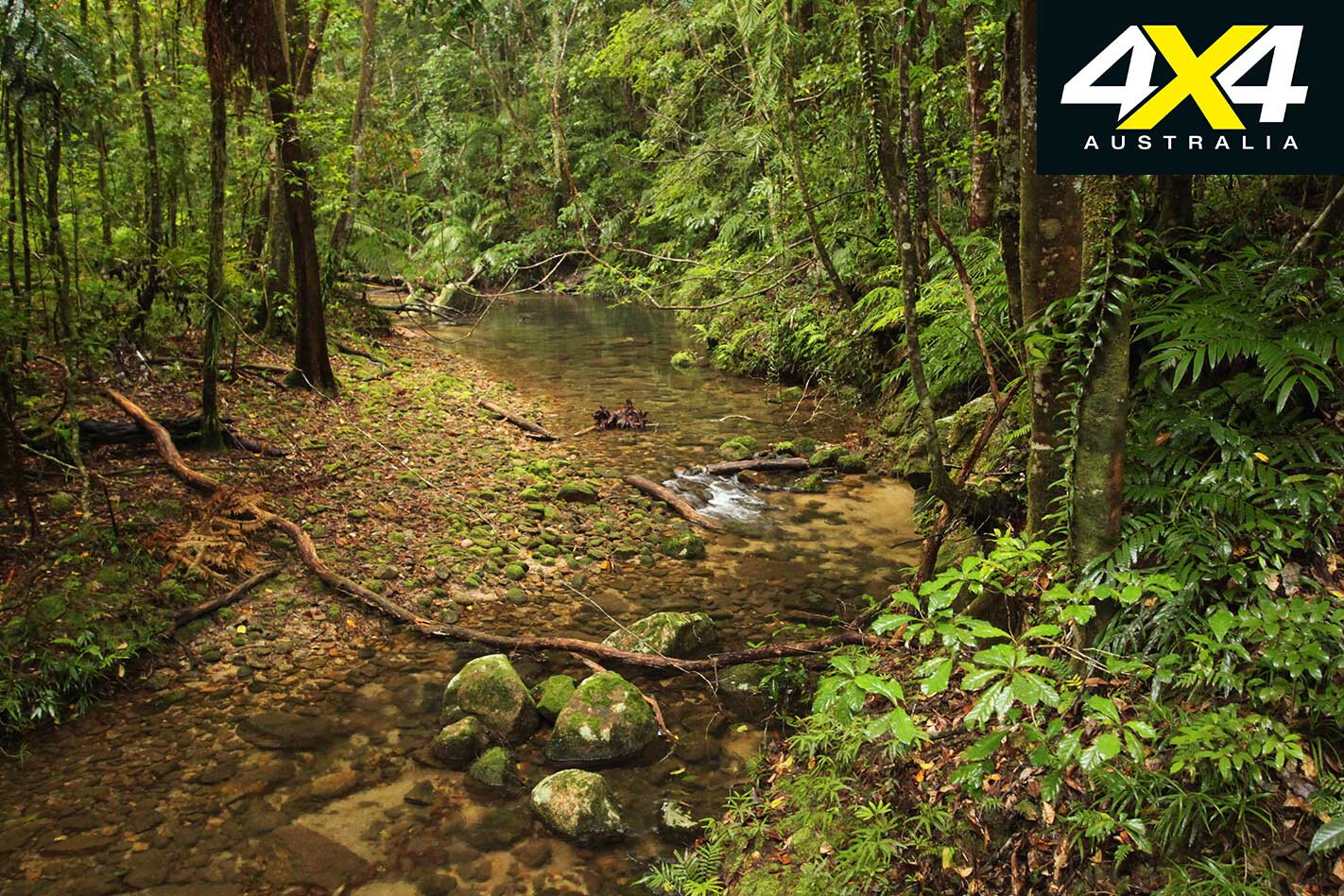
You have the choice of taking the 600m walk up to the lookout, where you are rewarded with views of the falls and surrounding rainforest, or following the creek upstream – either way you get a real tropical rainforest experience.
If you’re feeling game, you can go for a swim in one of the rock pools, where you might spot a freshwater turtle. These relaxed-looking creatures sun themselves on the rocks and logs, quickly retreating into the water at the first hint of danger.
Up at the lookout we marvelled at Jourama Falls, a series of cascades disappeared into deep pools, zigzagging their way down the rocky slope. We couldn’t see the higher slopes of the Seaview Range from the lookout, so the falls appeared to come out of nowhere.
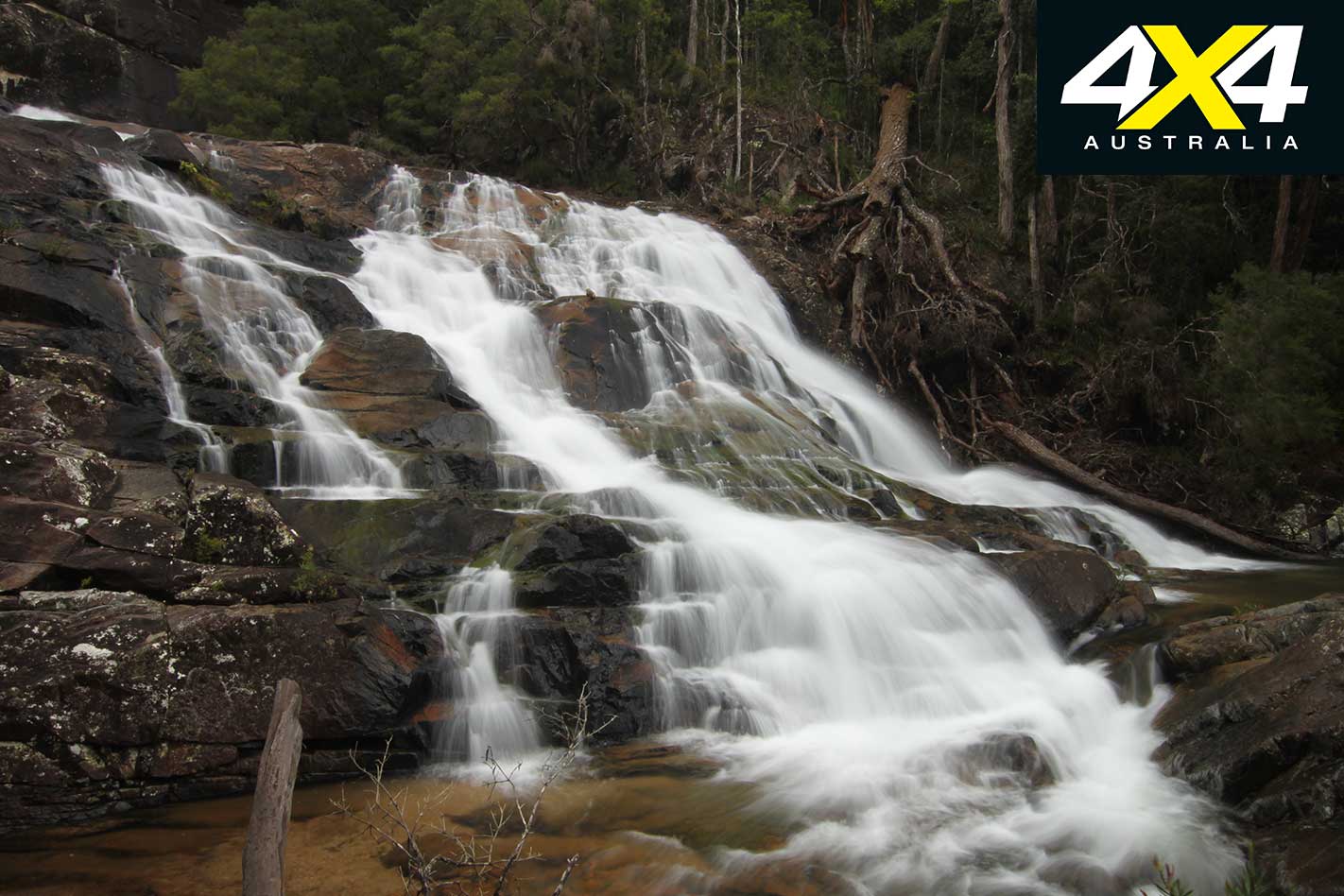
It rained on the morning of our departure, but as soon as we crossed the last causeway and left the rainforest behind us, the sun came out and we breathed a collective sigh of relief.
You don’t visit the wet tropics to soak up the sunshine, but if you’re keen to experience camping in the clouds, Paluma Range NP is definitely the place to go.
Life in the rainforest
For Europeans, life in this high country meant constant hardships and challenges.
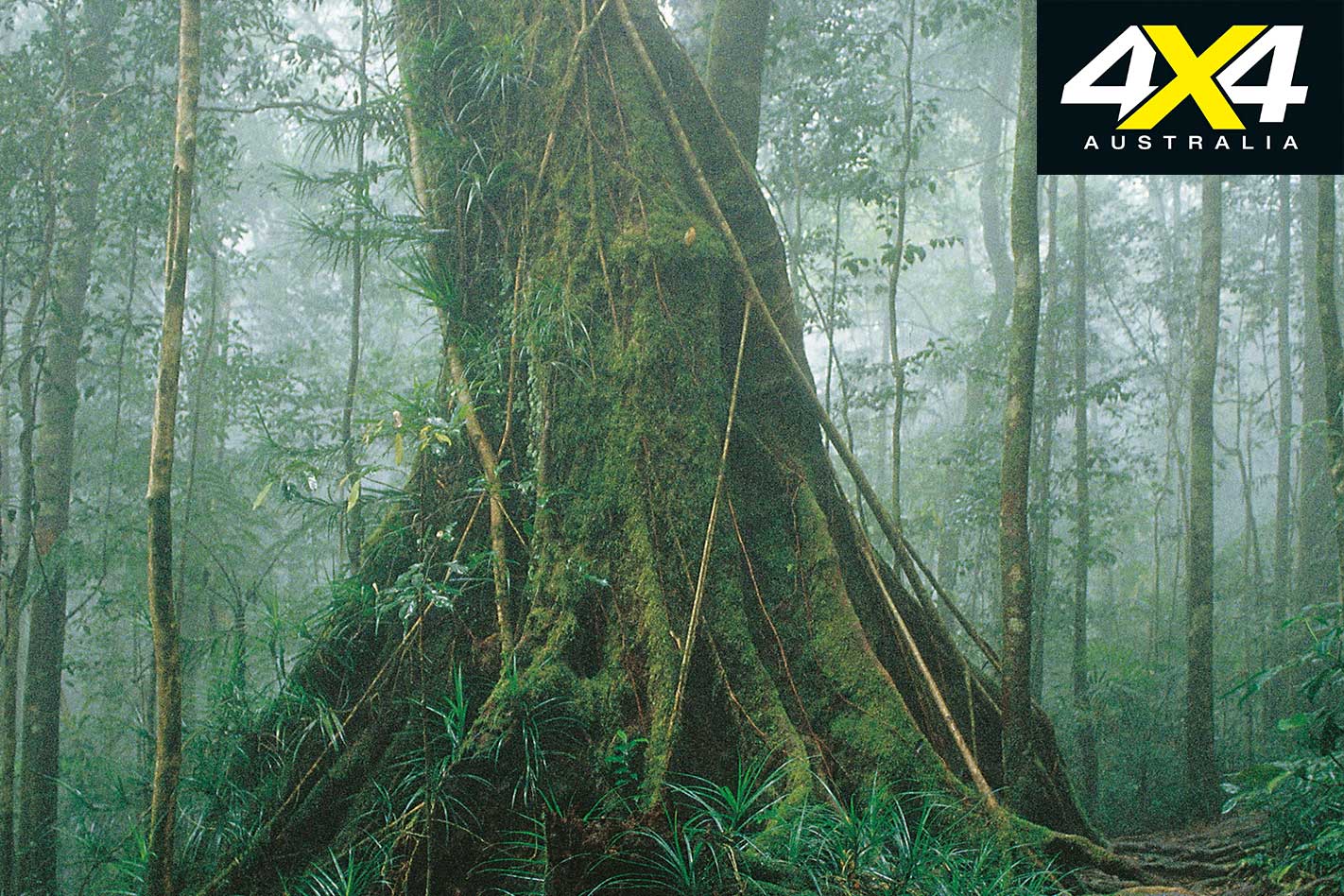
The dense tropical rainforest and mountainous terrain made access and transportation difficult. Continuous heavy downpours during the wet season often made work impossible. To add to the burden, there were infestations of ticks, fleas and leeches and there were always the snakes.
Defence force personnel stationed here during WWII had similar experiences with their clothes getting mildewed and the soles peeling off their shoes. They had to wade knee-deep through the mud and conducted leech-counting contests.
One story tells of two guards brewing some ‘jungle juice’ from unknown ingredients, running amok in their jeep and using their rifles to shoot the insulators off the telegraph poles.
Finally they raced down the mountain, crashed, and had to be lifted into an ambulance and taken away. It makes you wonder about living in the rainforest and how good it is for your health… (Info taken from a sign in Paluma township.)
Kids and Wildlife
Some parents seem to think it is irresponsible to take your kids camping to a place where you know there’ll be snakes, spiders and other creepy-crawlies. Chris and I are of the opinion that it is better to educate your kids about the potential dangers of the bush than to stick your head in the sand.
The rainforest is the one place where you’re guaranteed to come across snakes and other venomous creatures, so your kids need to be well prepared. Some simple and basic rules can be explained to kids as young as three.
Our kids stay close to the campsite and have been taught not to wander off alone. They don’t play in tall grass because they know that’s where snakes like to hide. Up at Cooktown the kids have seen visual displays of snakes and spiders, and at the Lions Den Hotel (Bloomfield Track) they’ve seen dead specimens in a jar. T
he reality is that snakes are more scared of us than we are of them, so the best approach is to leave them alone. We’ve seen many snakes travelling around Australia and our experience is that common sense prevails.
Travel Planner
GETTING THERE Paluma Range NP is split into two sections: Jourama Falls and Lake Paluma, 91km and 61km north of Townsville, respectively.
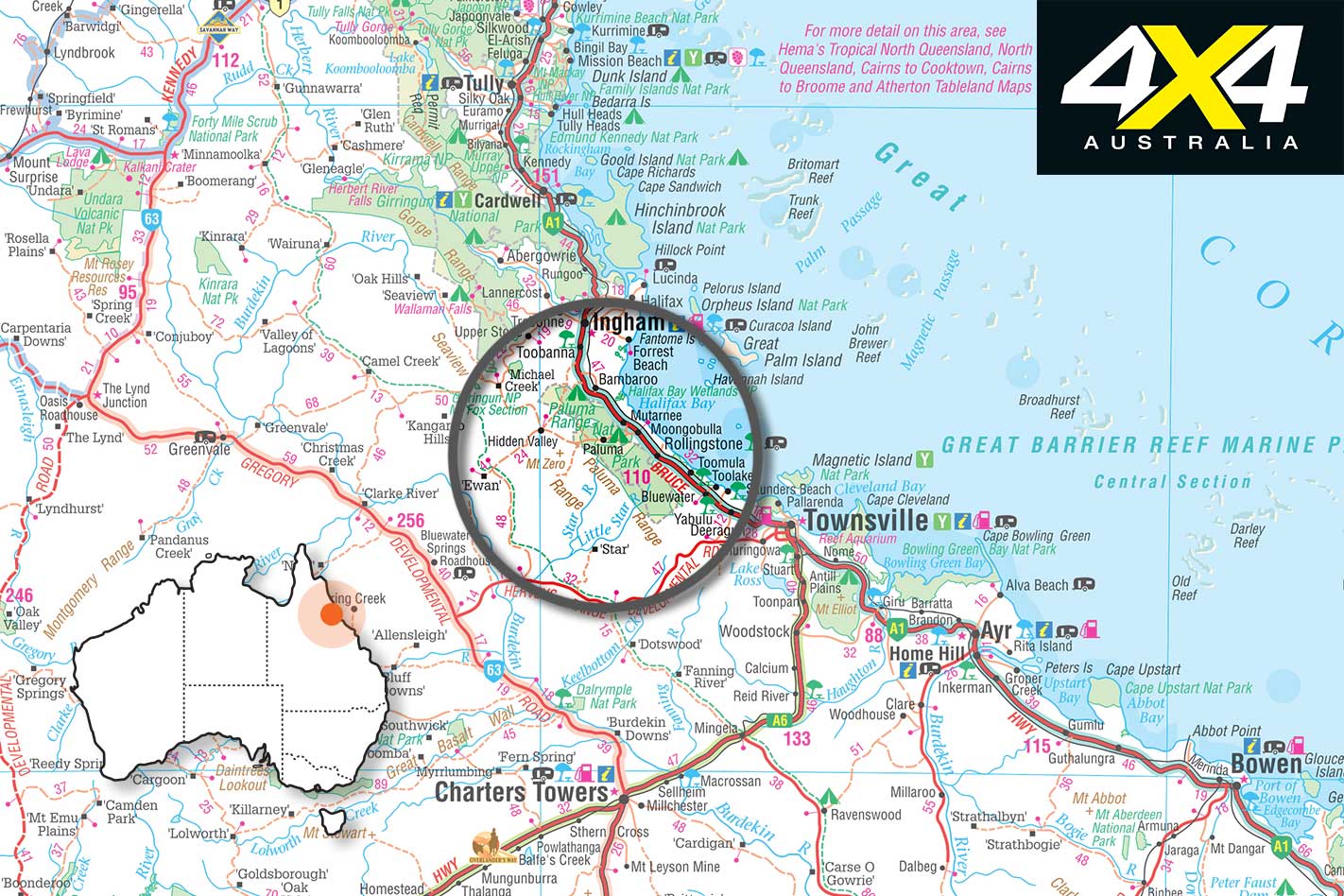
CAMPING Camping is available at Jourama Falls, but sites must be pre-booked. Fees are $5.30 per person per night, or $21.30 per family per night. Facilities include toilets and cold showers. Dogs and generators are not permitted. Call 13 74 68 for more information.
Campsites at Lake Paluma must be pre-booked. Camping fees apply ($20 per night). There are toilets and a tap with non-drinkable water in the day-use area. Dogs, generators and caravans not allowed.
WHAT TO TAKE Bring food and drinking water as well as a shower tent. Take care of your own rubbish.
SUPPLIES AND FACILITIES Ingham is the closest town with a large supermarket and all other services. There is no fuel at Lake Paluma or Jourama Falls.
TRIP STANDARD The road to Jourama Falls is sealed except for the last 4.5km. It is suitable for standard vehicles and caravans but take care when crossing the two causeways, especially after heavy rain. The first stretch of road to Lake Paluma is sealed but steep, winding and narrow, making it unsuitable for caravans or large motorhomes. The last 12km is dirt road and after heavy rain it can become very wet and rough.
MORE INFO Lake Paluma, phone Townsville City Council on 07 4727 9000 or email [email protected].
PERMITS No entry fee or permit is required for entry into the park.
%MCEPASTEBIN%
It’s been around six months since the Hankook Dynapro AT-M tyres were fitted to the Discovery.
The tyres were originally chosen on the basis that I was keen to try something a little bit different; as opposed to my preferred Light Truck (LT) choices, the Dynapro AT-M tyres don’t feature LT-specific construction (Hankook does offer LT versions in the Dynapro AT-M stable) so this was a new road, so to speak, for me.
There were a few reasons for this choice, with the first (and main) one being the fact that, as much as I like to dream of those week-long off-road escapes, the reality is the Disco and the Walker family only occasionally get to head bush for a weekend camping adventure.
So, I was keen to ensure the Disco’s fuel consumption around town was affected as little as possible, while still being able to enjoy the benefits of what is a beefier tyre than the OE hoops.
Further to this, I opted for the Hankook Dynapro AT-M 235/70R16 – an exact match for the Disco’s stock tyre size. Past experience with a taller set of LT-spec all-terrain tyres on my previous Disco TD5 – and the resultant lift in around-town fuel consumption as the slightly lethargic donk tried to spin the heavier, taller rubber – had taught me a lesson in that respect.
These Hankook tyres are considerably chunkier in appearance, but, thankfully, this is not all for show; the most obvious design feature is the wraparound tread on the sidewall, which is designed to protect against side punctures and cuts – add in a thicker gauge of sidewall rubber and, so far, this has proved the case.
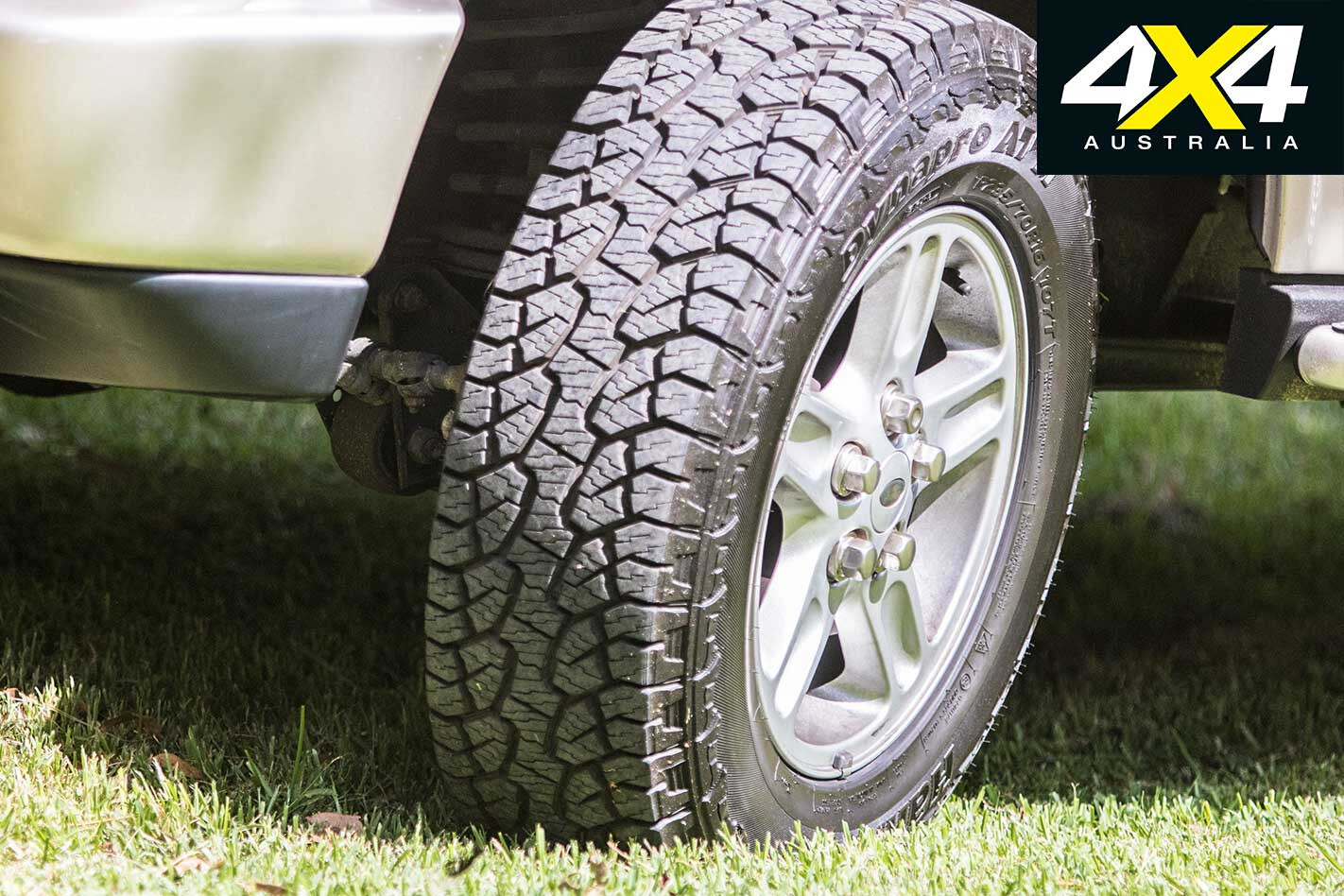
The off-road surfaces the Hankooks have been subjected to have comprised mainly coastal hinterland tracks. These are primarily dirt and sand based, but with roots, sticks and rocks bordering their edges; the broken tree roots in particular are often perfectly angled toward the track to stake the sidewalls of tyres.
With tyre pressures dropped for the terrain the Dynapro AT-Ms bulge accordingly, but that reinforced sidewall, in conjunction with the aggressive side-biter section, seem to offer decent protection.
This side-biter pattern has also assisted in traction when funnelling the Disco through narrow, rutted tracks – and a few muddy ones – with the resultant scratches and marks on the sidewalls evidence that they are, indeed, working to up the tractive quality of the tyre and keep the big Brit rig moving forward.
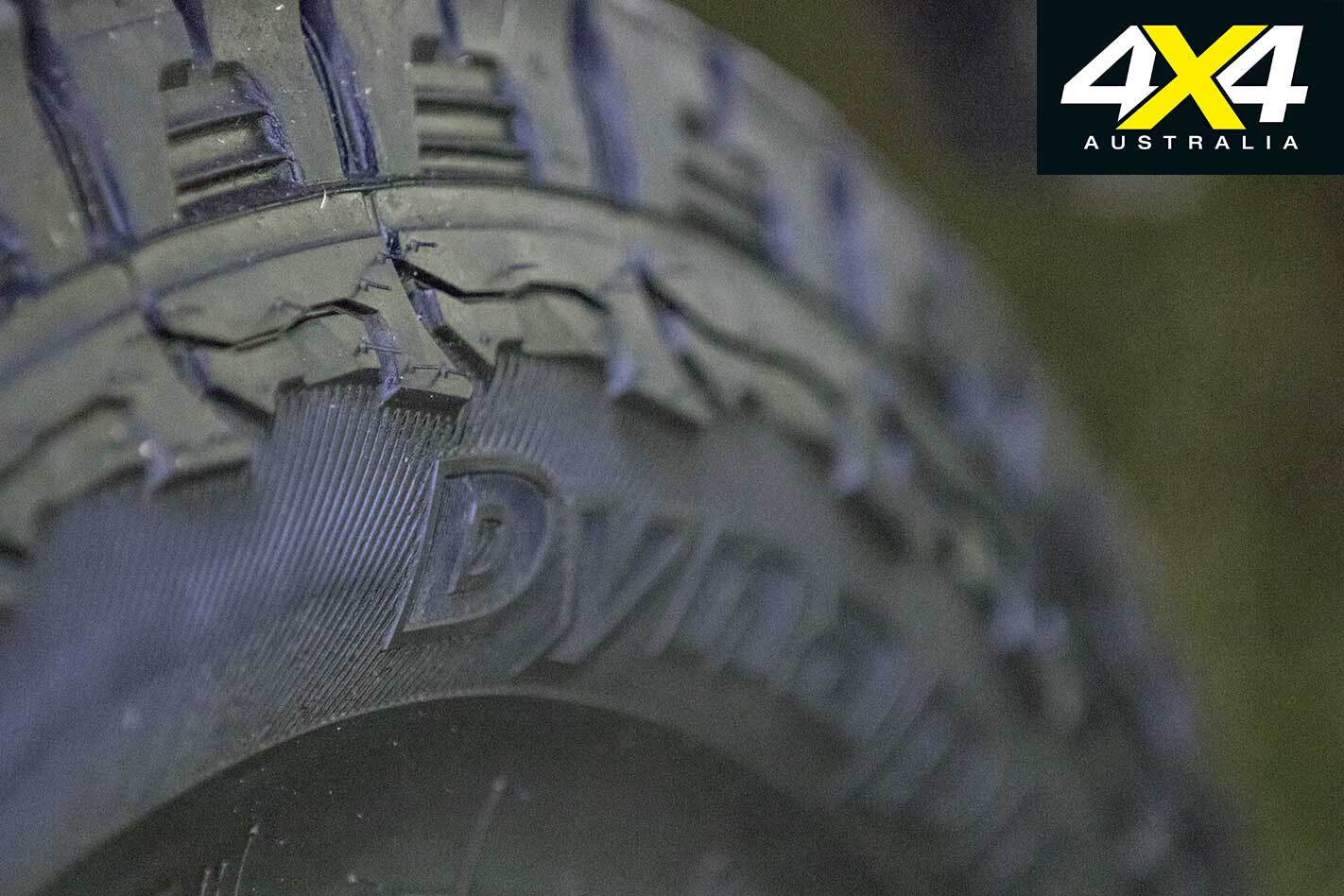
Hankook touts the tyre’s jointless bead wire as assurance against bead separation when you’re running low air pressures; that is, at this stage, hard to quantify because we’ve spent only a short amount of time at really low pressures. During that time – and owing to this cautious driver – I did not subject the tyres to many aggressive changes of direction that could lead to a tyre/wheel separation.
In between these occasional off-road forays there’s been a pile of bitumen driving, ranging from freeway blasts to off-camber, narrow, sealed and unsealed country roads, in all weather conditions. This is one area where I have found the Hankooks to really impress; all-round on-road performance has been fantastic.
The Disco is no sports car, but there’s been a few corners approached at a decent click and the tyres just hung on – there’s no sense of the Hankooks about to let go or even approaching their tractive limits.
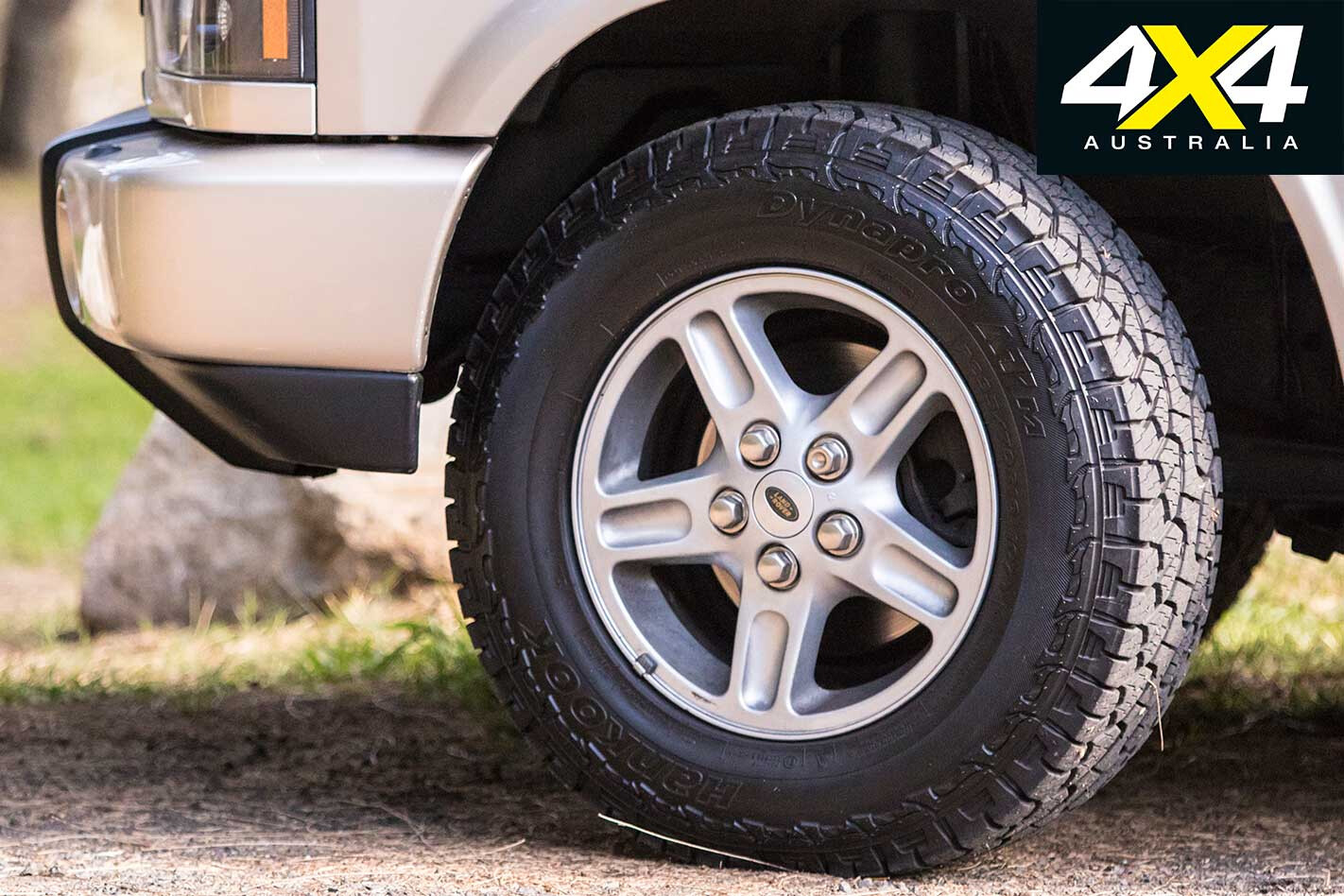
Even on wet, coarse bitumen roads the tyres grip assuredly, while tyre wear has, to this time of writing, been nothing worth noting. And speaking of minimal; it may well be the clattering and droning of the TD5, but tyre noise in-cabin is barely discernible, even allowing for the fact they’re not an LT construction tyre. Still, nobody inside the cabin is complaining. The engine noise, on the other hand…
The Hankooks are coming up to around 6000km of use now – still very low, really – and to date the performance has been impressive. If I was planning an outback expedition I would look at tougher rubber – most likely Mud Terrains – but for the majority of the on- and off-road terrain this writer’s vehicle traverses (and will continue to for some time yet before that big trip), the Hankook Dynapro AT-M tyres have proved somewhat of a surprise package – and a welcome one.
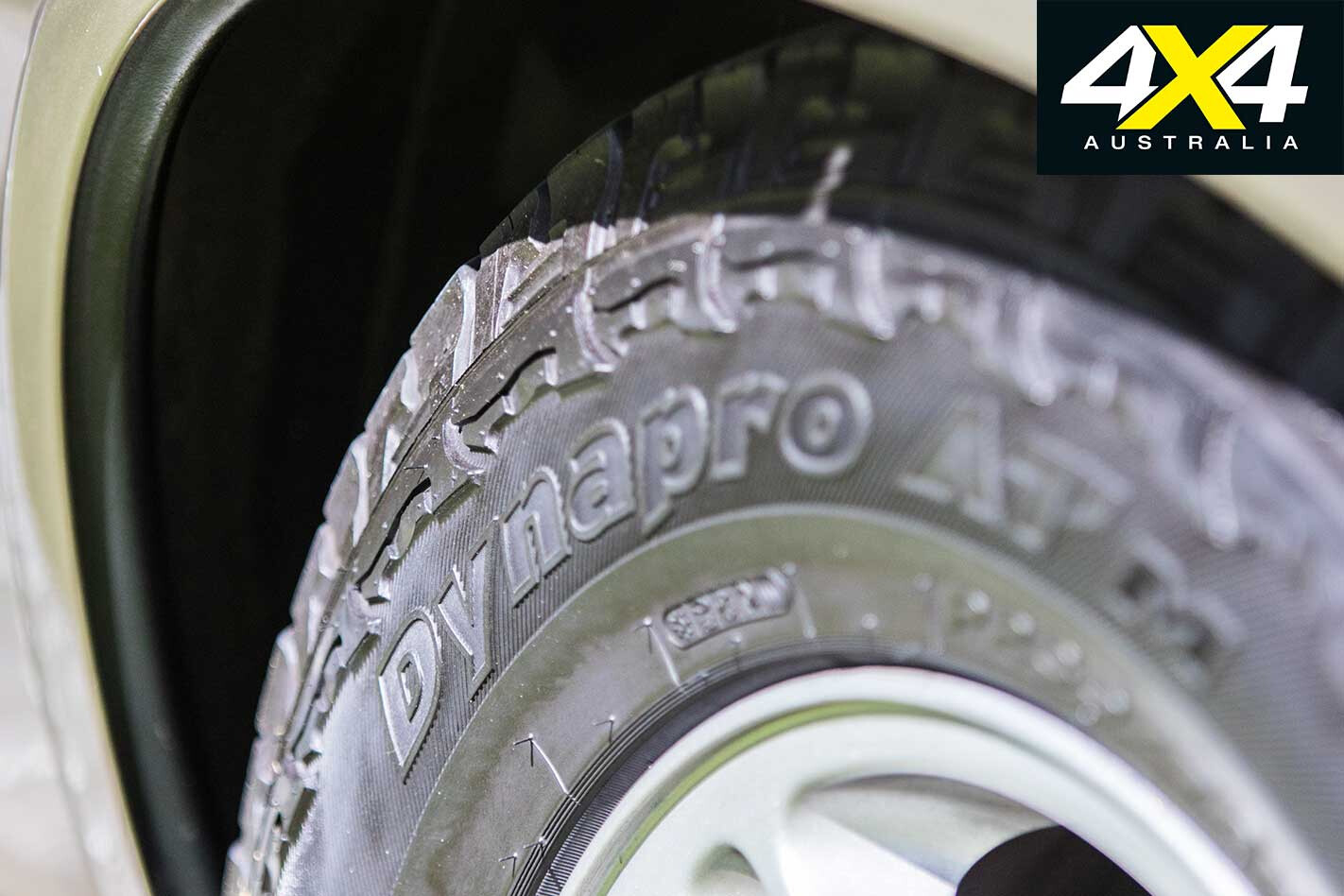
RATED Available from: www.hankooktyre.com.au RRP: Contact your local Hankook dealer We Say: Tough, ample traction, functional and rugged.
TOYOTA New Zealand has added a TRD version of the Fortuner to its local line-up, and it has been confirmed it will remain exclusive to NZ.
Speaking to WhichCar.com.au, Orlando Rodriguez, Product Public Relations Manager for Toyota Australia said, “there are no current plans for Australia to offer the TRD enhancement pack that is being offered in NZ for the Fortuner”.
The TRD garnish – added on top of the Fortuner Limited variant – includes a TRD honeycomb grille, front spoiler, side steps and 18-inch wheels.
“The TRD Fortuner has all the head-turning features of the Fortuner Limited and maintains its off-roading credentials, with the distinctive TRD treatment,” said Neeraj Lala, Toyota New Zealand General Manager of Product Planning and new vehicle sales. “The result is a beefed up, great looking, top end SUV which follows in the footsteps of other popular Toyota TRD models.”
The Fortuner Limited is powered by a 2.8-litre, four-cylinder turbo-diesel that’s good for 130kW and can tow up to 2800kg.
NISSAN has pulled the covers off its Armada Mountain Patrol overlander, or, as us Aussies would call it, a kitted-out Y62.
The one-off build was revealed recently at the spectacular Red Rock Canyon in Sedona, Arizona, with Nissan Truck’s unveiling the rig via Facebook in time for the 2018 Overland Expo WEST.
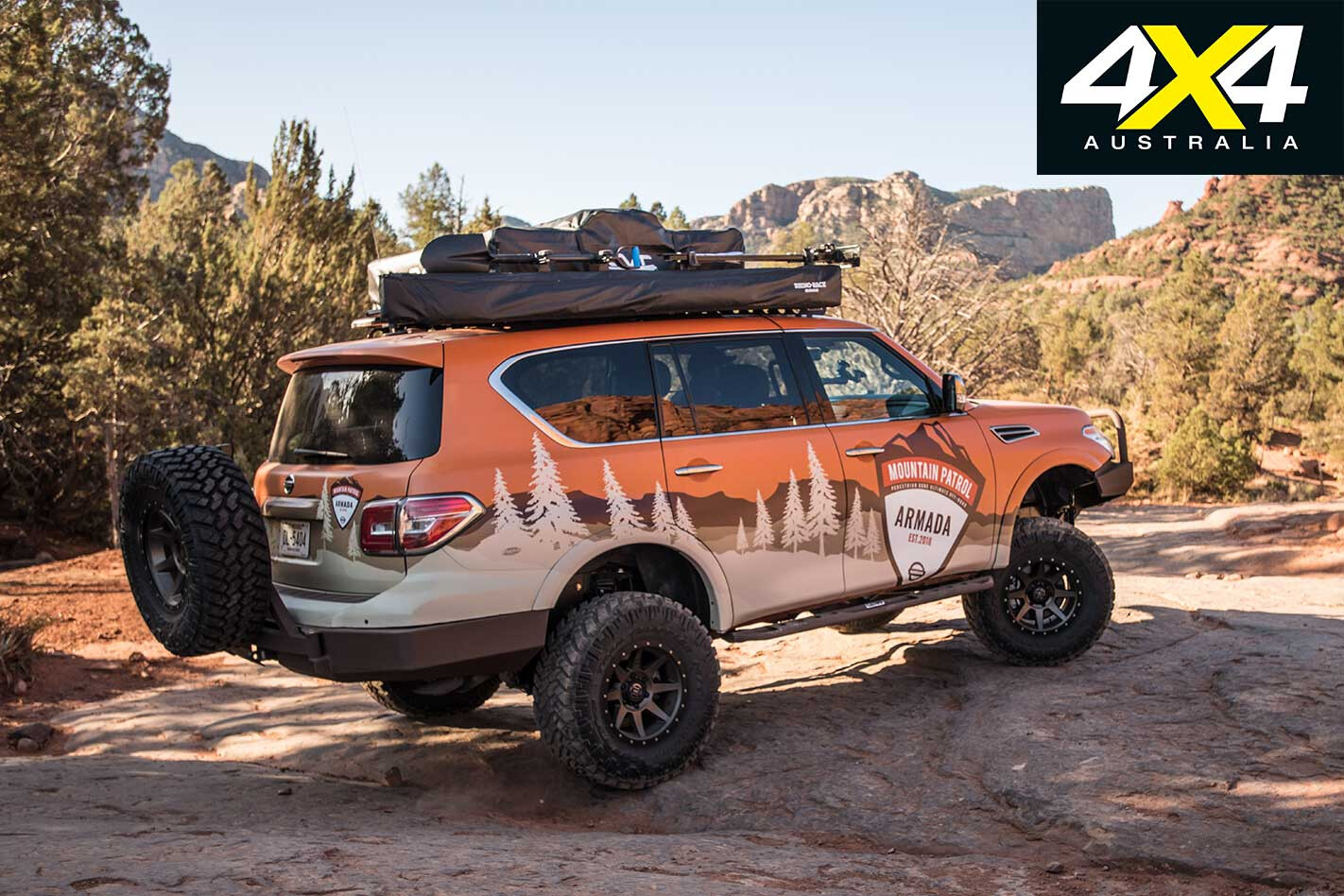
The Armada – Y62 Patrol – build was driven by the brand’s social media followers and enthusiasts, with Nissan Trucks putting the call out on its Facebook and Instagram pages for assistance with equipment and modification selection, including design touches, tyre specs and camping kit.
Following the trial by social media, a four-person Mt. Shasta roof-top tent from Cascadia Vehicle Tents won the popular vote and was plonked atop the Mountain Patrol. The tent runs in tandem with a custom awning supplied by Rhino Racks and additional pop-up tent, sleeping bag and chairs from Alps Mountaineering.
Changes were few beneath the hood, with a Magnaflow cat-back exhaust system added to help the Armada’s 5.6-litre 298kW V8 breathe easier.
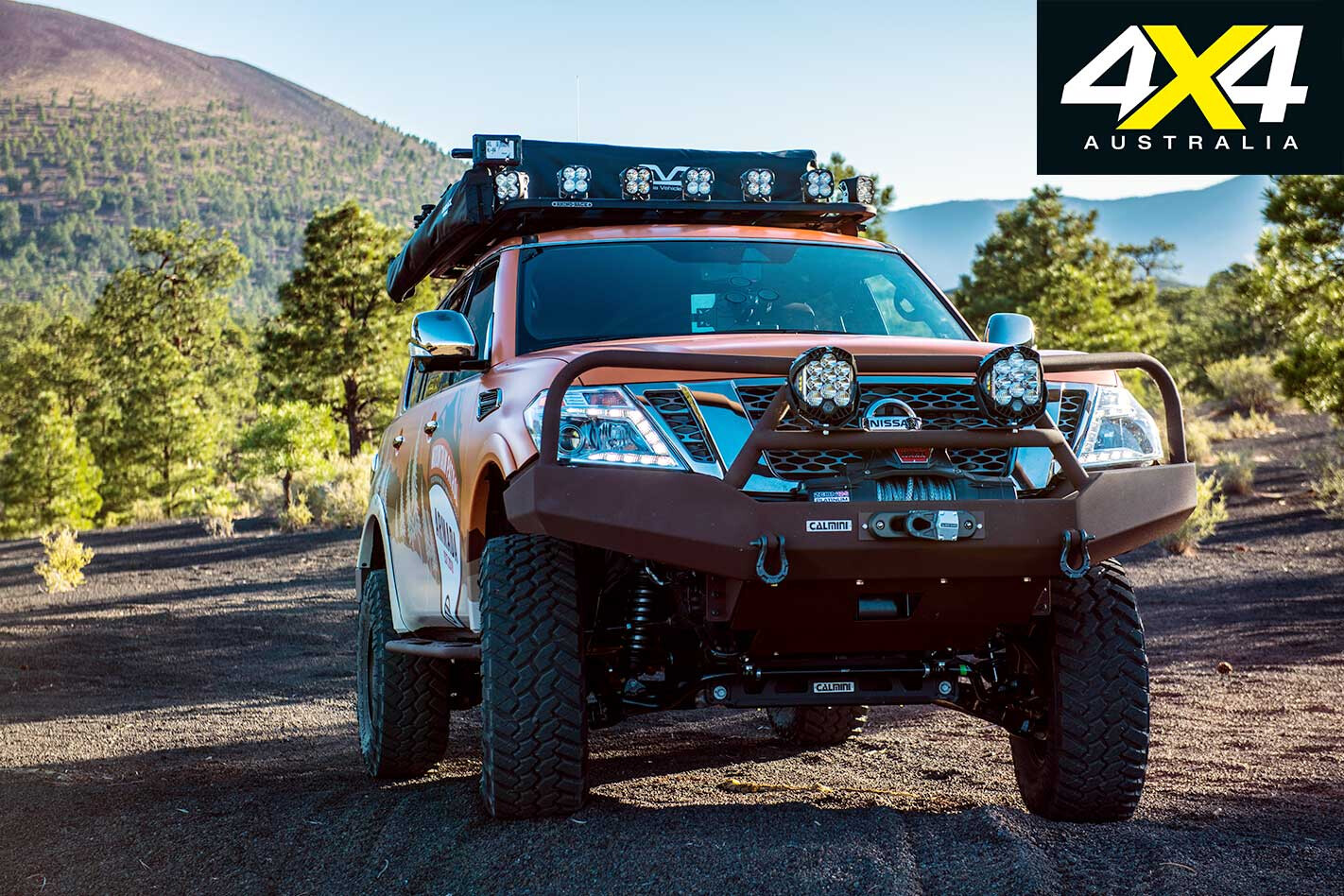
“One thing true off-road enthusiasts understand about the Armada Mountain Patrol is its authentic adventure heritage. Every 2018 Armada is inspired by the global Patrol – a vehicle with over five decades of off-roading credibility,” said Brandon White, director, chief marketing manager, Nissan North America. “For that reason, only minimal modifications were made to the factory Armada drivetrain.”
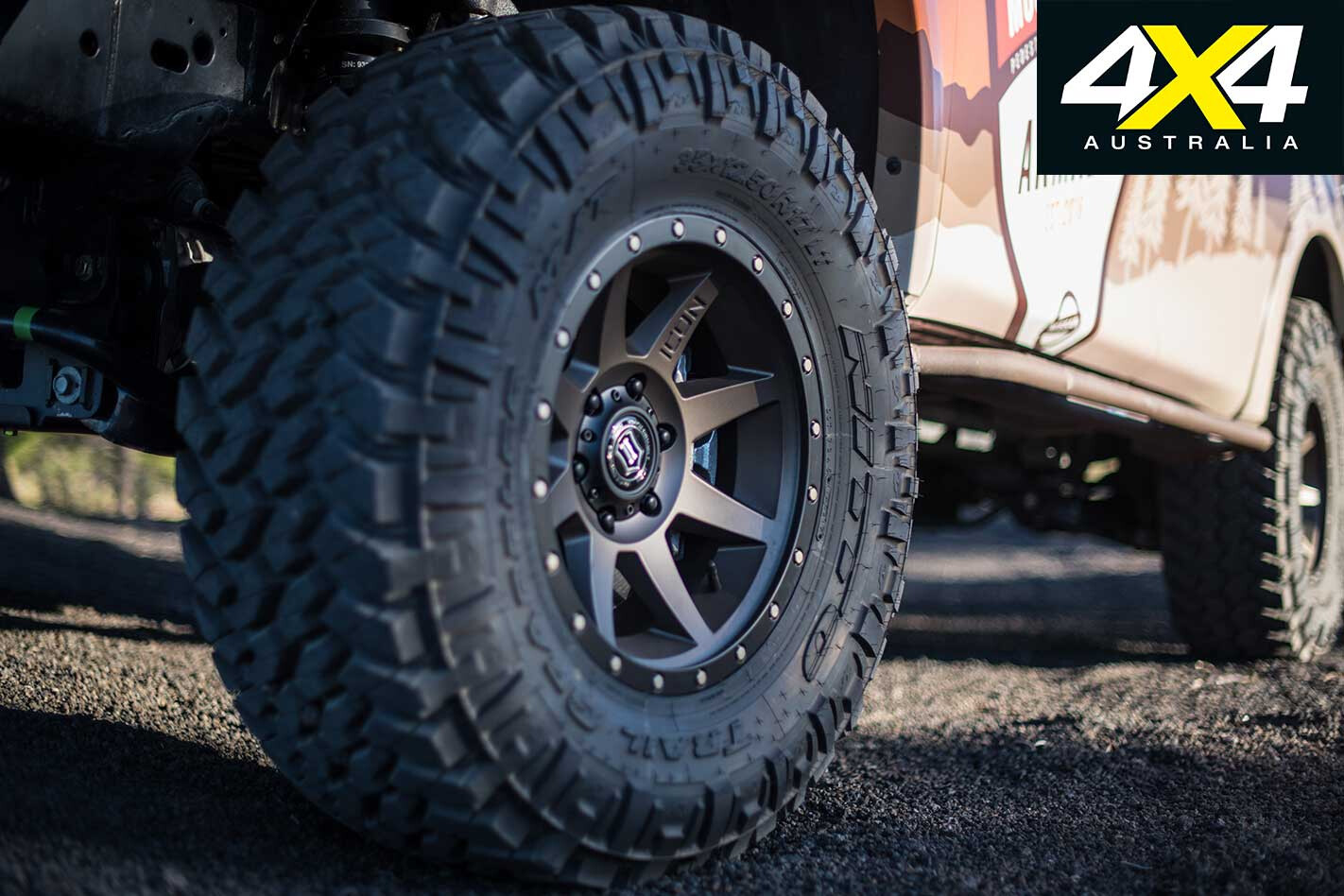
For comfort and convenience, the Mountain Patrol was fitted with a Lowrance navigation system, a Rugged Radios off-road radio system, a Rhino Racks aluminium back-bone pioneer tray, an ARB pull-out drawer system, Pelican gear cases, a Dometic refrigerator/freezer, and Otterbox Venture coolers. Nitto Ridge Grapplers 35/12.25/17 tyres wrap around 17-inch Icon Rebound wheels.
Other additions include Calmini rock sliders; a spare tyre swing-away; custom front and rear heavy-duty steel bumpers; a 12,000lb Warn Platinum Series winch; rack-mounted MaxTrax; a Hi-lift jack; Rhino Rack shovels; RotoPak auxiliary fuel storage; and Baja Designs’ roof-mounted LED light bar, bumper-mounted fog lights and wheel-well lighting. Social media “experts” also voted for Rocket West Off-Road’s unique body wrap.
Thanks to the guidance of enthusiasts, the eight-seater not only looks beaut but is set-up to traverse troublesome terrain, as Brandon White, director, chief marketing manager, Nissan North America, explained.
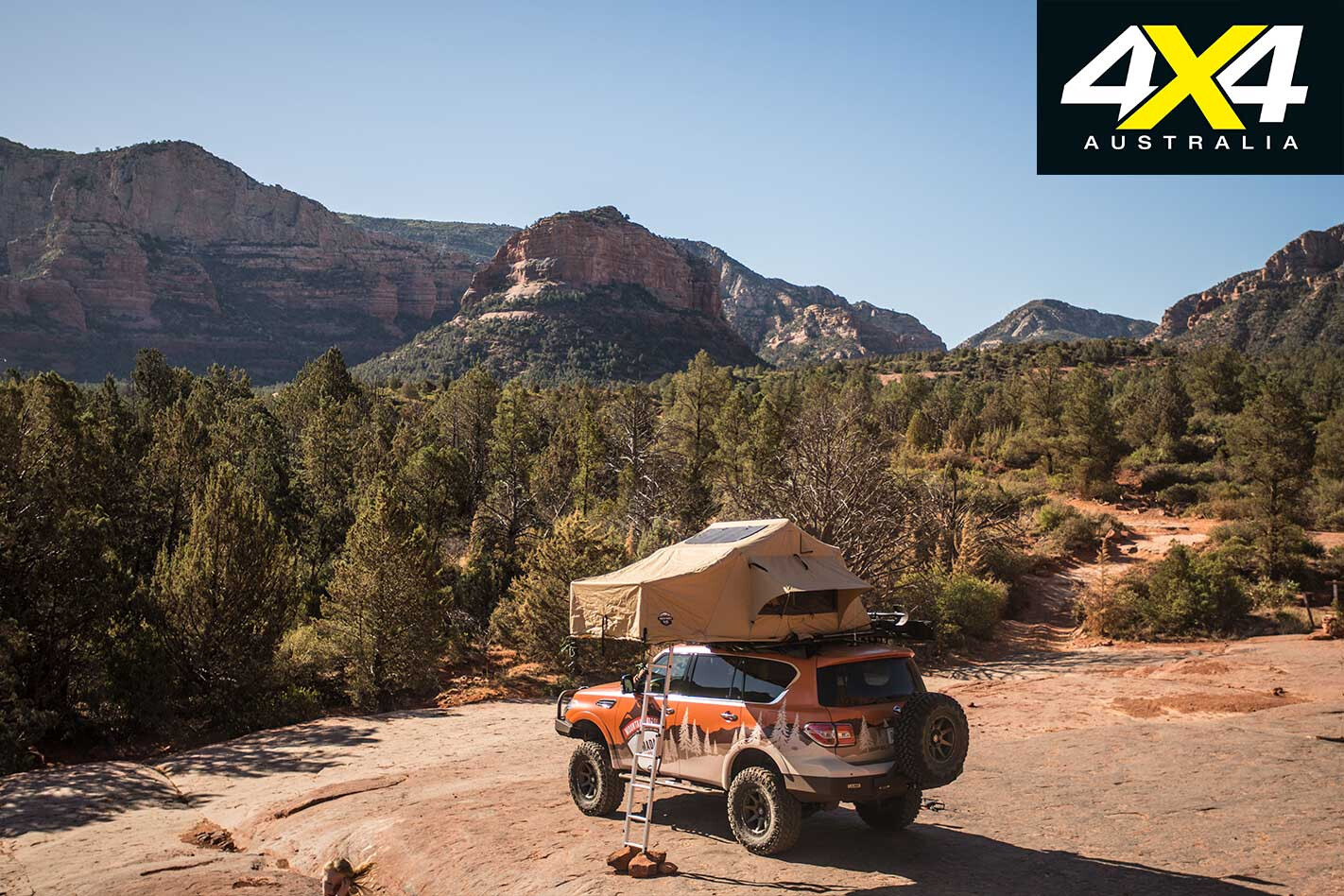
“For those family adventure fans who aren’t familiar with the term ‘overlanding’, all they need to do is look at the Armada Mountain Patrol to understand that this is not glamping, not a day trip to the local forest – it is adventure taken to new heights,” he said.
The one-off special will debut on May 18-20 at the Overland Expo West in the Fort Tuthill County Park in Flagstaff, Arizona.
The Barunga Festival, one of the Northern Territory’s longest-running and much-loved festivals, will once again gear up to celebrate the best of remote Indigenous Australia, on June 8-10.
However, this year marks a special milestone, as it’s the 30th year since then-Prime Minister, Bob Hawke, was presented with the Barunga Statement which called for a treaty.
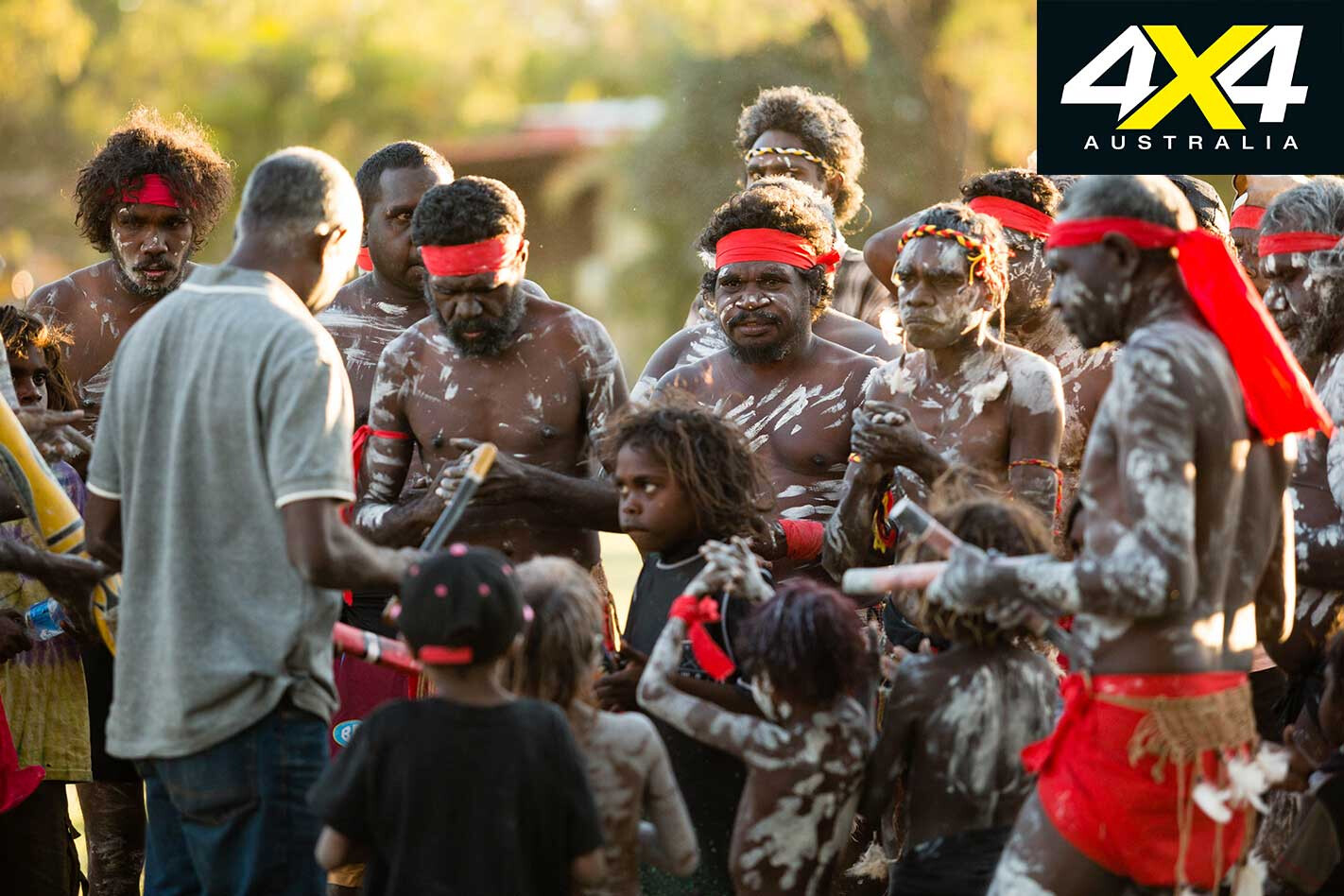
The three-day event showcases the indigenous community’s excellence in music, sports, dance, bush tucker, arts and other traditional activities.
A total of 4000 people are expected to descend on Barunga to participate in the festivities, and all are welcomed by the traditional owners.
Barunga is located 70km south-east of Katherine, accessed via the sealed bitumen of Central Arnhem Road. It’s an easy 2WD-access drive to reach the remote community, but surrounding attractions may entice some low-range action.

There’s no fuel at Barunga, so it’s advised to fill up in Katherine; however, fuel is available around the clock at Beswick Community, located about 30km west of Barunga via a sealed road.
To see who’s performing, where to camp and how to get there, head to www.barungafestival.com.au. While you’re there, why not grab some tickets.
GENERAL ADMISSION PRICES Adult: $54.14 Youth (12-17): $18.35 Child (2-11): $8.13
Website: www.barungafestival.com.au
FORD has plenty of confidence in the upcoming Ranger Raptor’s 2.0-litre bi-turbo diesel engine (2.0BT), with this powerplant and its accompanying 10-speed auto gearbox to be offered as an option in the 2019 Ranger Wildtrak and Ranger XLT. The 2.0-litre bi-turbo diesel produces its 157kW at 3750rpm and the 500Nm at 1750rpm.
The current 3.2-litre turbo-diesel five-cylinder diesel engine (with six-speed auto), along with the existing 2.2TD, carry over as engine options for the rest of the Ranger line-up.
Combined with Ford Auto Start-Stop, the new engine and gearbox offers improved fuel economy: the 2.0BT’s claimed combined fuel consumption figure is 6.7L/100km, a notable improvement on the 3.2TD’s 8.2L/100km. Impressively, 2019 Ranger models will include a five-year, unlimited kilometre warranty, on top of increased equipment levels.
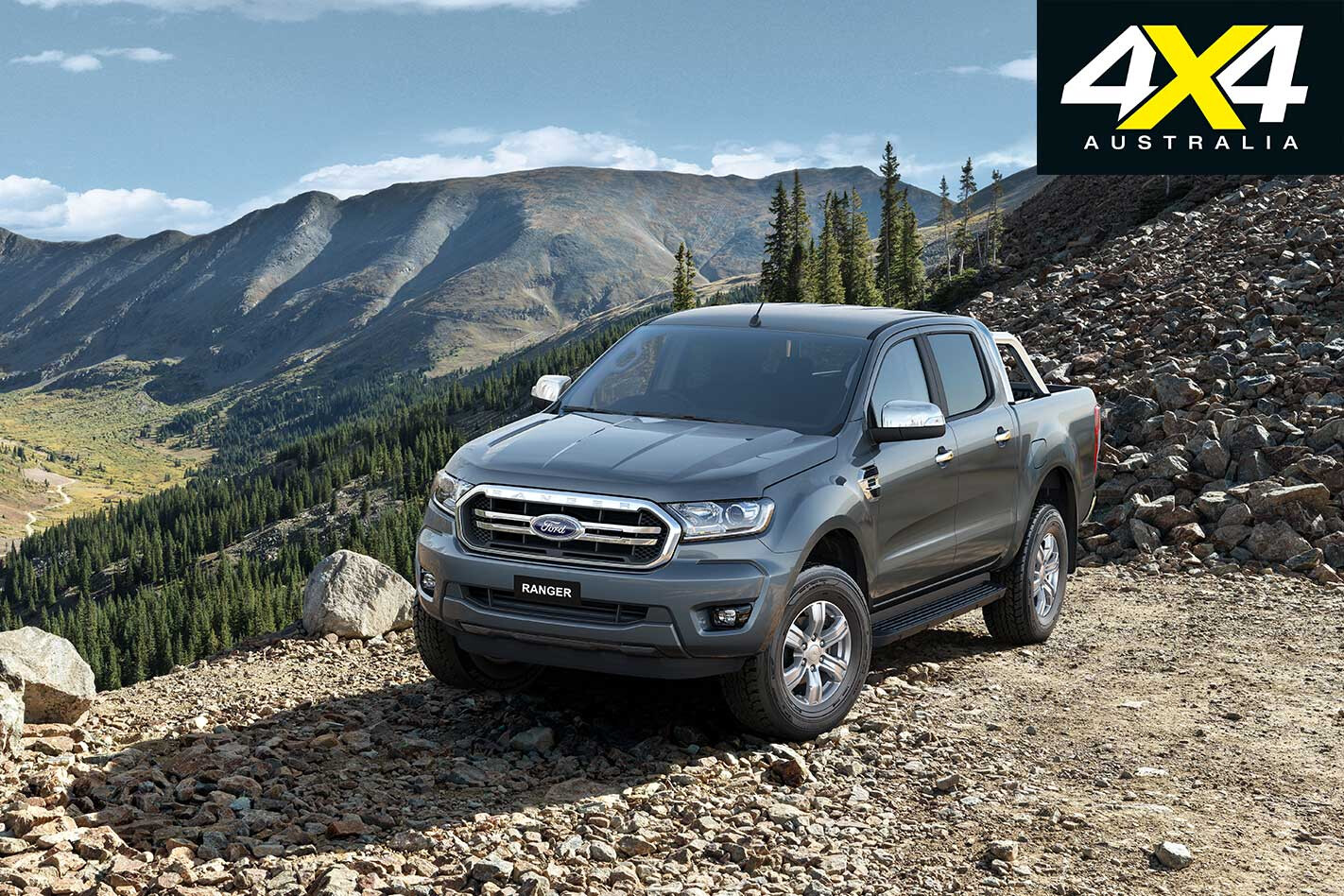
Models with this new powertrain will gain the Raptor’s Terrain Management System (TMS) although, disappointingly, for those looking to unleash their inner desert racer, the Raptor’s ‘Baja’ mode will remain exclusive to that model.
Interestingly, the 2.0BT-equipped Rangers (with leaf-spring rear) will boast the same 3500kg towing capacity as the 3.2TD variants (as opposed to the Raptor’s lower tow rating), but with extended service intervals.
Ford is claiming that the Ranger’s ride and handling has been improved for 2019, by repositioning the front stabiliser bar and adding a new front damping tune (plus altering recommended tyre pressures).
Ford says the resultant geometry changes will offer drivers a lift in ride and better handling, along with improved NVH levels. Wheel sizes remain the same, with the mid-spec XLT still rolling on 17-inch alloys and the top-end (bar Raptor) Wildtrak sitting on 18s.
Other updates for 2019 include the addition of standard Autonomous Emergency Braking (AEB) with Pedestrian Detection and Vehicle Detection on the upper-tier models (on Ranger Wildtrak; available as part of a tech pack for XLT). This system works by using radar and camera tech to stop the Ranger if a vehicle or pedestrian is detected, and it functions at speeds above 3.6km/h. To ensure this system doesn’t intrude during off-road driving, it can be switched off.
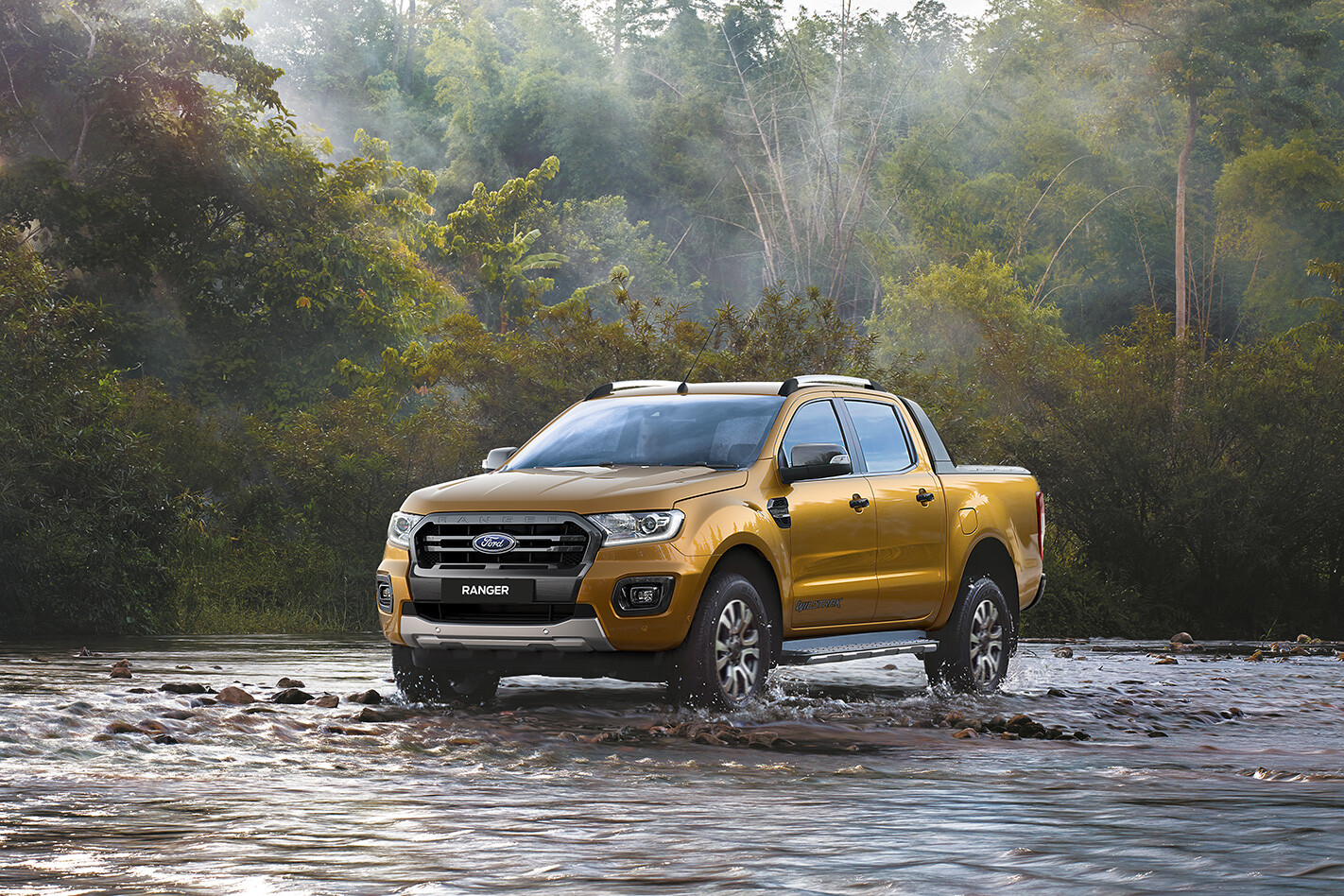
Another new safety feature for Wildtrak is Lane Keeping Alert and Lane Keeping Aid. As their respective names suggest, they firstly alert the driver of “unintentional lane departure” and then re-direct the vehicle if the driver doesn’t take action. These safety systems do not come into effect until 65km/h speeds are reached, ensuring urban driving is unaffected.
The final part of the new safety tech package is Adaptive Cruise Control with Forward Alert and Active Park Assist (Wildtrak).
Keyless entry is now standard across SLS, XLT and Wildtrak models, and PEPS (Passive Entry Passive Start) tech allows you to open any door on the vehicle, not just the driver’s door (and including the hard tonneau cover on Wildtrak).
Wildtrak also cops another handy feature: an “easy lift” tailgate that incorporates a torsion rod to provide assistance when lifting. This also means the tailgate won’t drop suddenly when opening. Rather, it will drop slowly under its own weight.
Further driver-aid tech (for Wildtrak) includes Active Park Assist for semi-auto parallel parking (the only driver input required here is braking and throttle) and, yep, you’d better believe it, Traffic Sign Recognition.
The Raptor influence is evident in both the interior and exterior styling of the new Ranger line-up, with plenty of dark trim colours (read: black and grey) inside, plus a redesigned gear shift (Everest will score this, too).
The material used in the Ranger seating is claimed to be more durable, with leather trim carrying over as an option on XLT, and Wildtrak receiving more distinctive stitching and trim to separate it from its siblings.
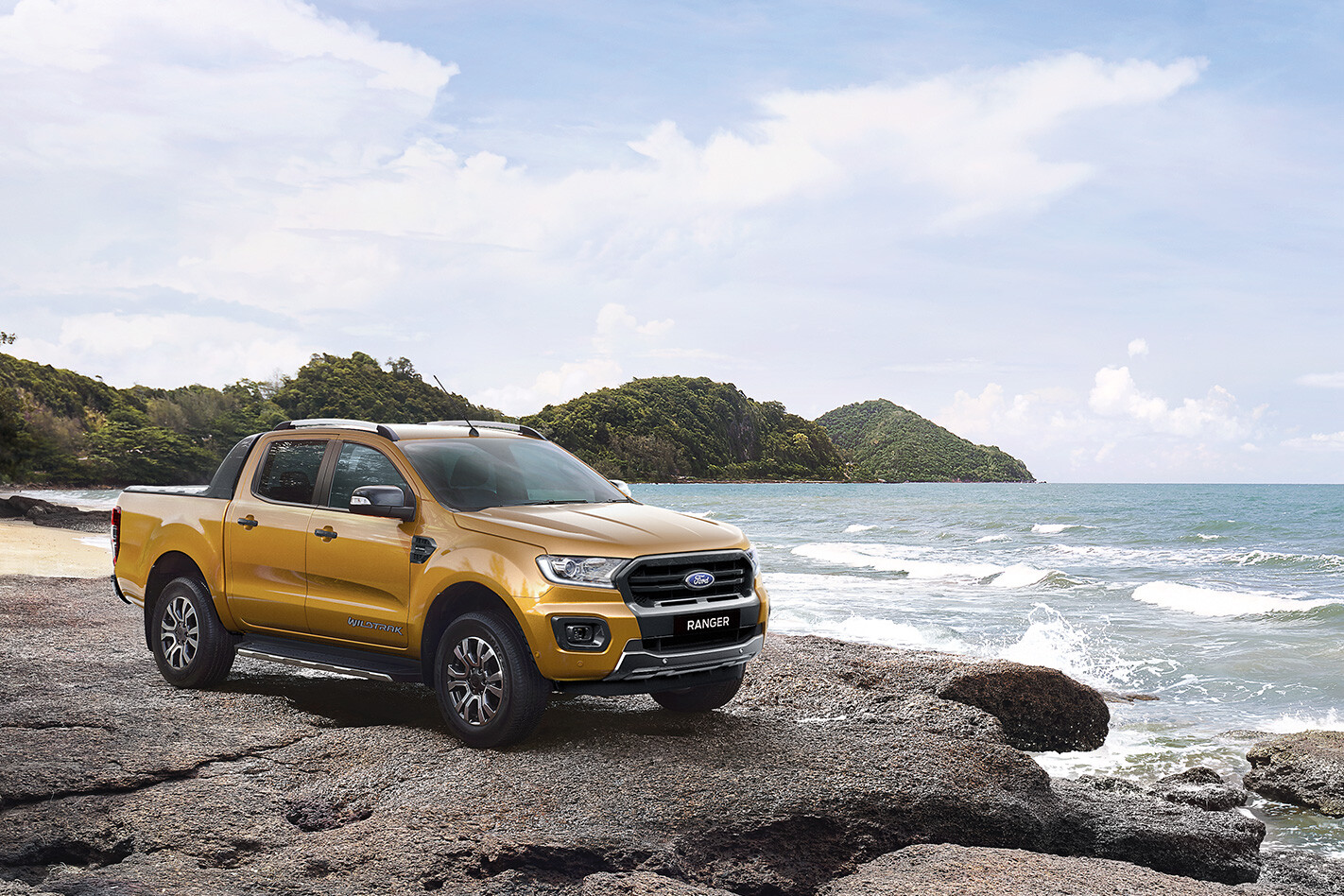
SYNC 3 remains standard on all dual-cab Rangers and includes Apple CarPlay and Android Auto compatibility, Bluetooth, an eight-inch colour touchscreen, and a reversing camera.
For 2019 Rangers, owners will get SYNC 3 map updates for up to seven years, provided the vehicle is serviced by Ford dealers. The SYNC 3 map setup also allows off-road tourers to record any unmarked excursions as on-screen ‘breadcrumbs’, thus allowing you to retrace your steps if need be via this recorded info.
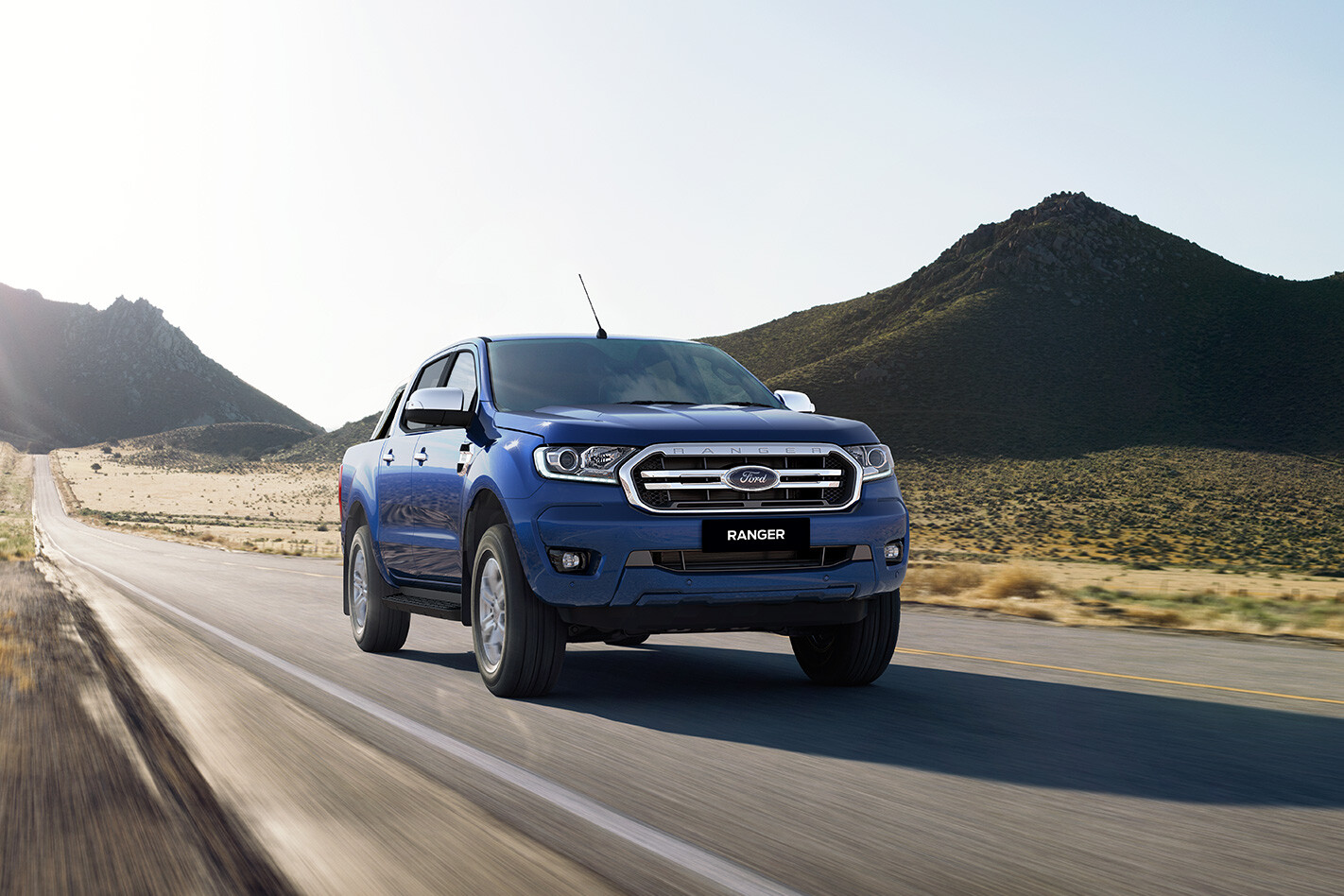
Proving when you’re on a good thing, stick to it, the Ranger exterior has only had subtle styling changes, with most aimed at further differentiating the models within the line-up. This includes a new rich orange hero colour – dubbed ‘Sabre’ by Ford and exclusive to Wildtrak.
Further exterior styling changes include LED Day Time Running Lights (DTRLs) for Wildtrak, HID headlights for Wildtrak and XLT, plus a reshaped front lower bumper bar, a rear step bumper and a revised grille that accentuates the bluff front end.
With the option of an all-new engine/drivetrain (one that has been subject to more than 5.5 million kilometres of testing), combined with the alternative of the tried-and-true 3.2TD and six-speed auto, and general improvements across the range (including that five year/unlimited kays warranty) Ford has ensured the Ranger will continue to remain at the top end of the vehicle sales results in Australia for a while yet.
The updated 2019 Ford Ranger line-up should be available in dealers around September 2018.
MORE: Ford Ranger Range Review MORE: Ford Ranger Specs, Range & Price
ONE of the reasons I chose the GQ Patrol chassis to form the basis of this project was because there are so many off-the-shelf products available for a GQ that it makes the mild-to-wild build pretty easy.
With everything stripped last month, the time for fitting parts together came via a complete Marks 4WD Adaptors kit. I could have saved a few bucks in the interim by making some parts, but given the scope of this project centred around fitting a 6.2-litre V8 into the GQ chassis, having everything engineered was paramount.
Not only was it easy to deal with Marks 4WD Adaptors, it has everything necessary for the engine-to-chassis conversion, as well as a heap of options. Because the parts in the conversion are ‘off-the-shelf’ and ‘engineered’, it makes it much easier and cheaper in the long run to get the finished product passed by the engineer.
An engineer must still certify that an engineered part has been fitted in accordance with their requirements. This can include welding, fasteners and hardware, as well as positioning on the vehicle – it’s a legal minefield that varies from state to state and from engineer to engineer.
I could have gone ‘engineer-shopping’ to pass larger tyres, higher lifts and more radical mods, but I’ll stick to the reputable fella Jason at Total Care 4WD recommends and who I’ve worked with before for my Troopy’s seating and extra (third) door. Playing the engineering game correctly ensures I’ll have no problems with insurance or potential roadside canaries by the boys in blue.
There was a hiccup, though, with the Marks 4WD Adaptor kit for an LS3 and six-speed auto not mating with the linkage setup of the GQ transfer case. This was easily fixed by swapping for a GU transfer case with the relevant linkage positioning.
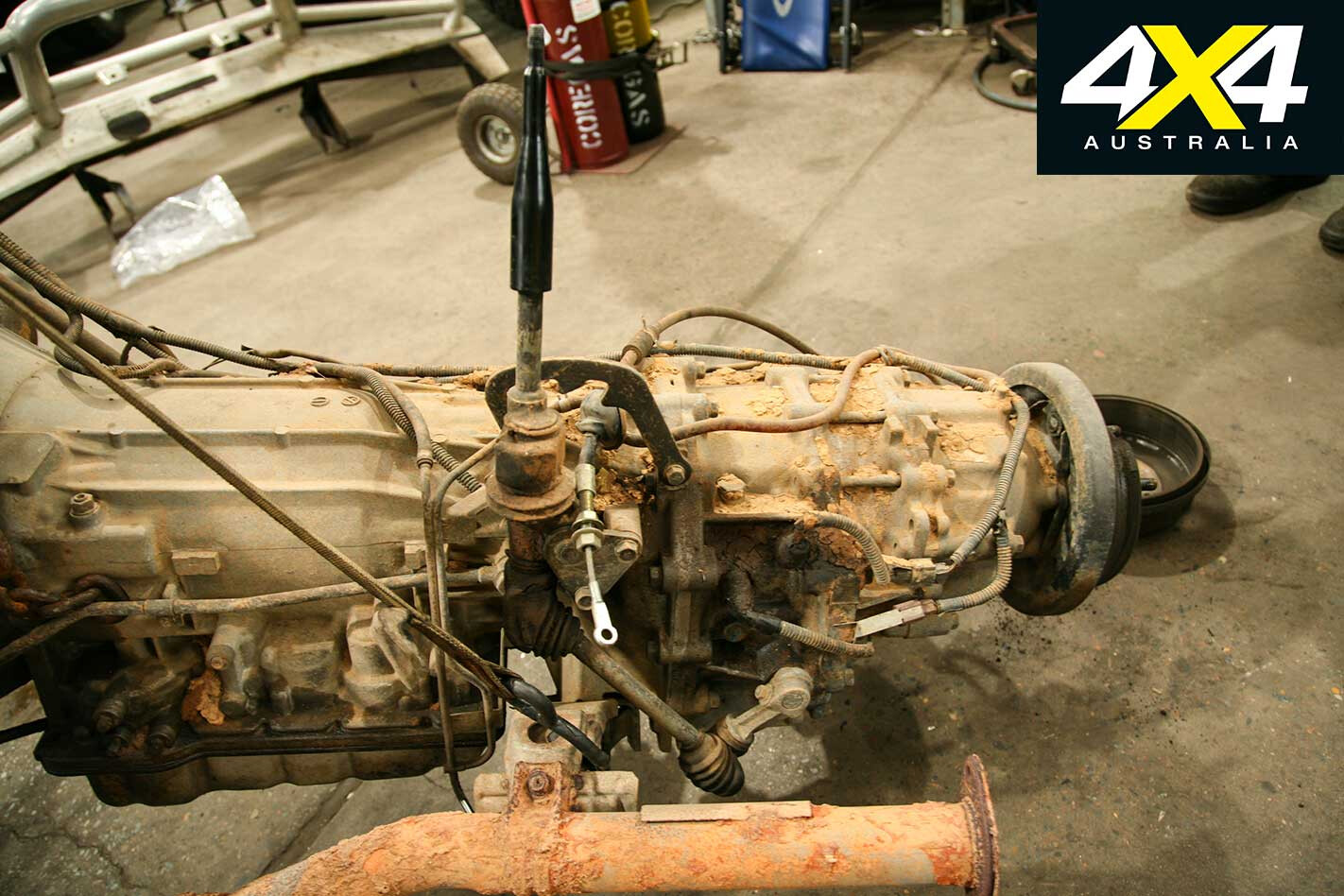
The adaptor kit is unbelievably comprehensive with respect to options. On Jason’s advice I chose to delete the Holden Maloo twin-thermo-fan cooling system in favour of a mechanical, viscous hub single fan with shroud to cool the engine. While the thermos can do the job on nice, clean bitumen roads, once you start playing in water and mud they tend to cause more problems than viscous hub units.
A fan shroud is a necessity to keep any engine cool regardless of what radiator you use, so I also ticked that box from Marks.
We’re unsure on a radiator type yet, but an initial play with a 100 Series Land Cruiser unit while at Total Care 4WD seemed to be pretty close to being the right dimensions. More fiddling and trialling is needed here, and a lot will depend on the exact fitting of the cabin over the engine and onto the chassis. We’re also looking at 4.8 Nissan and V8 petrol Cruiser radiators, but time will tell.
I also opted to use the Marks 4WD adaptor extractors, which are a tight-hugging kit that brings down the spent gasses inside the Patrol chassis rails in preparation for whatever exhaust system we bolt on.
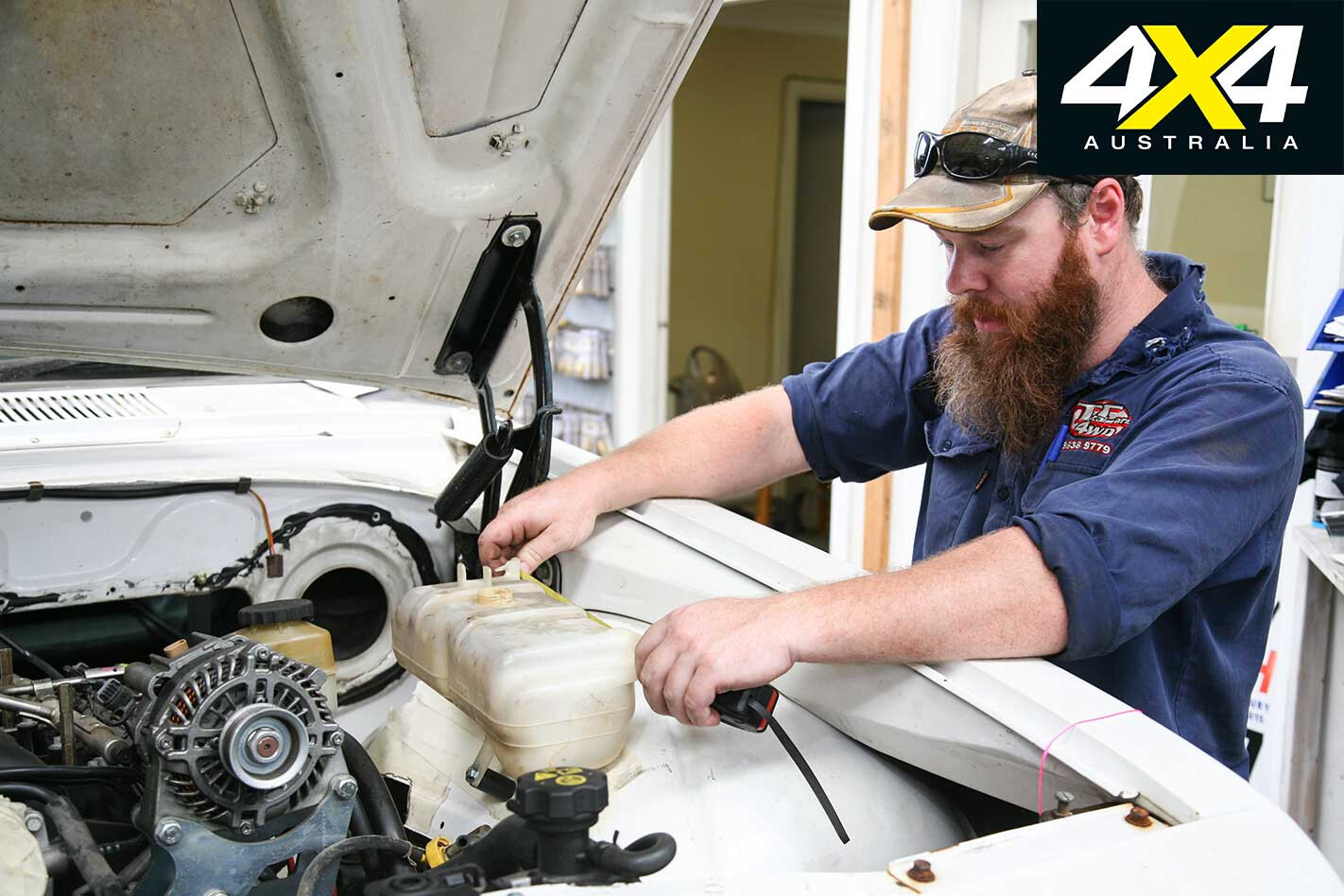
We’ve bolted enough of the engine adaptor kit onto the 6.2 to allow a dummy fit into the GQ chassis. To say “it fits like a glove” is correct; everything from the engine mounts, the alternator repositioning brackets, reverse drop sump and the custom tight-hugging extractors that flow inside the GQ chassis rails is spot on and well worth the outlay.
Call me soft, but when the option of chucking an air-con into the Tonner was presented, I jumped for it. Initially we planned on using the compressor as per the standard VE Maloo R8’s LS3, but the electronic workings of it didn’t pan out with the mechanical-orientated system we had our eye on, so it was swapped for an earlier model LS1 version.
I thought about sourcing an air-con unit from an old Holden, but a few ‘old-car experts’ suggested it would be a tough job fitting the unit which bulged into the engine bay. Plus, it would be damn hard to find one in good condition, if at all. That, as well as the fact it would most likely be an under-dash unit taking up valuable cabin space, put me off.
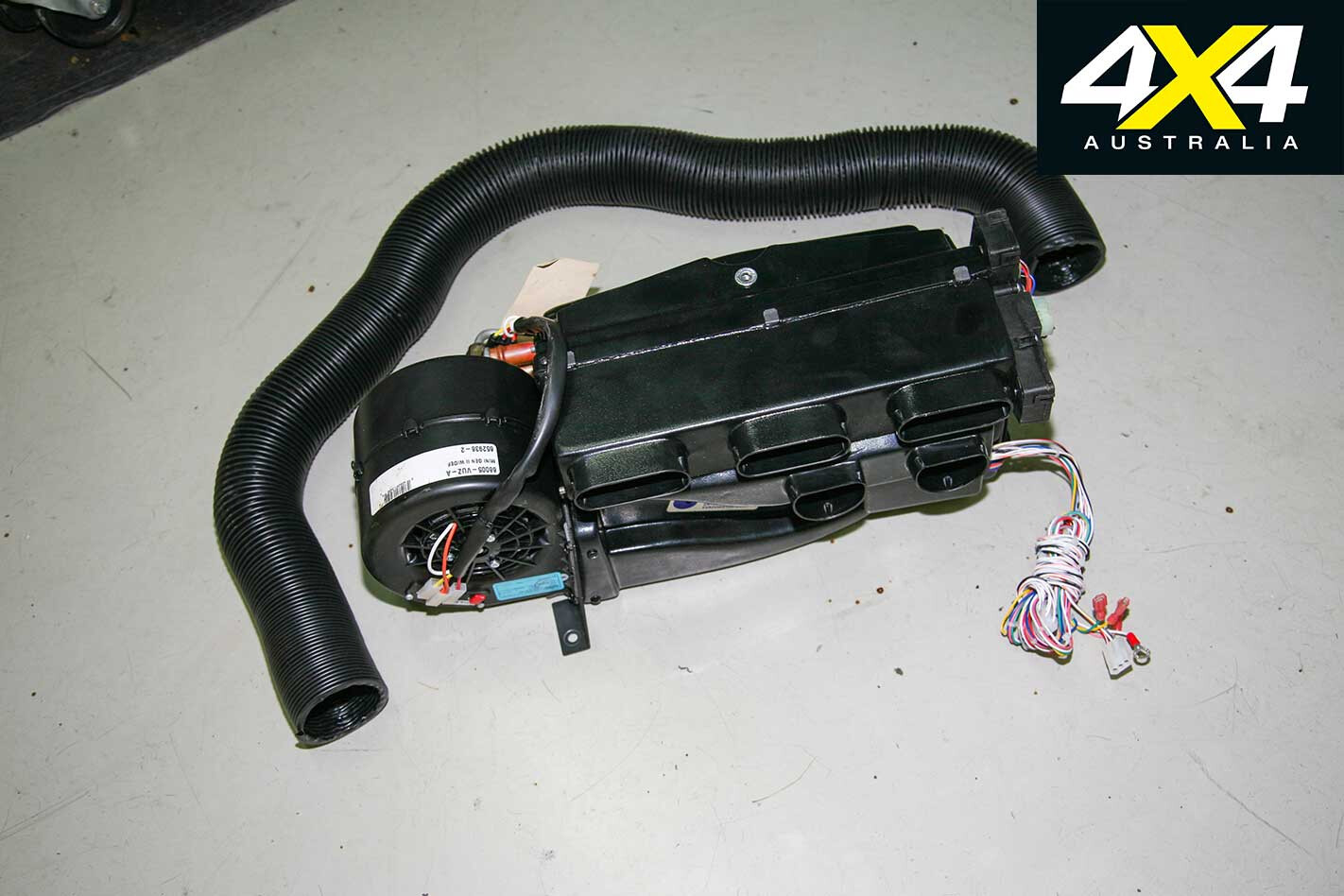
A Vintage Air unit, a mob that supplies air-con units into pretty much anything old with wheels, was suggested. My sparky – Steve at Powers Road Auto Electrical Services – also recommended this system as he’d installed exactly the same unit in his street machine.
With just a little ‘shaving’ from one side of my glovebox, he reckoned it’d fit like a glove under the Tonner dash, and the included flexible piping would marry up with the factory dash vents and demister outlets.
My GQ had both of its sway bars removed by one of the previous owners, which is a practise often undertaken to improve suspension flex when off-road; although, on-road handling goes out the window … and it’s illegal.
I could have dug up a cheap set of Patrol sway bars and mated them with sway bar disconnects to return decent on- and off-road ability and stay within the law, but I decided on a set of Superior Superflex swaybars. These bars feature much longer and larger diameter arms, allowing both much-improved off-road flex (via the longer arms) and improved on-road handling (via the heavy-duty materials).
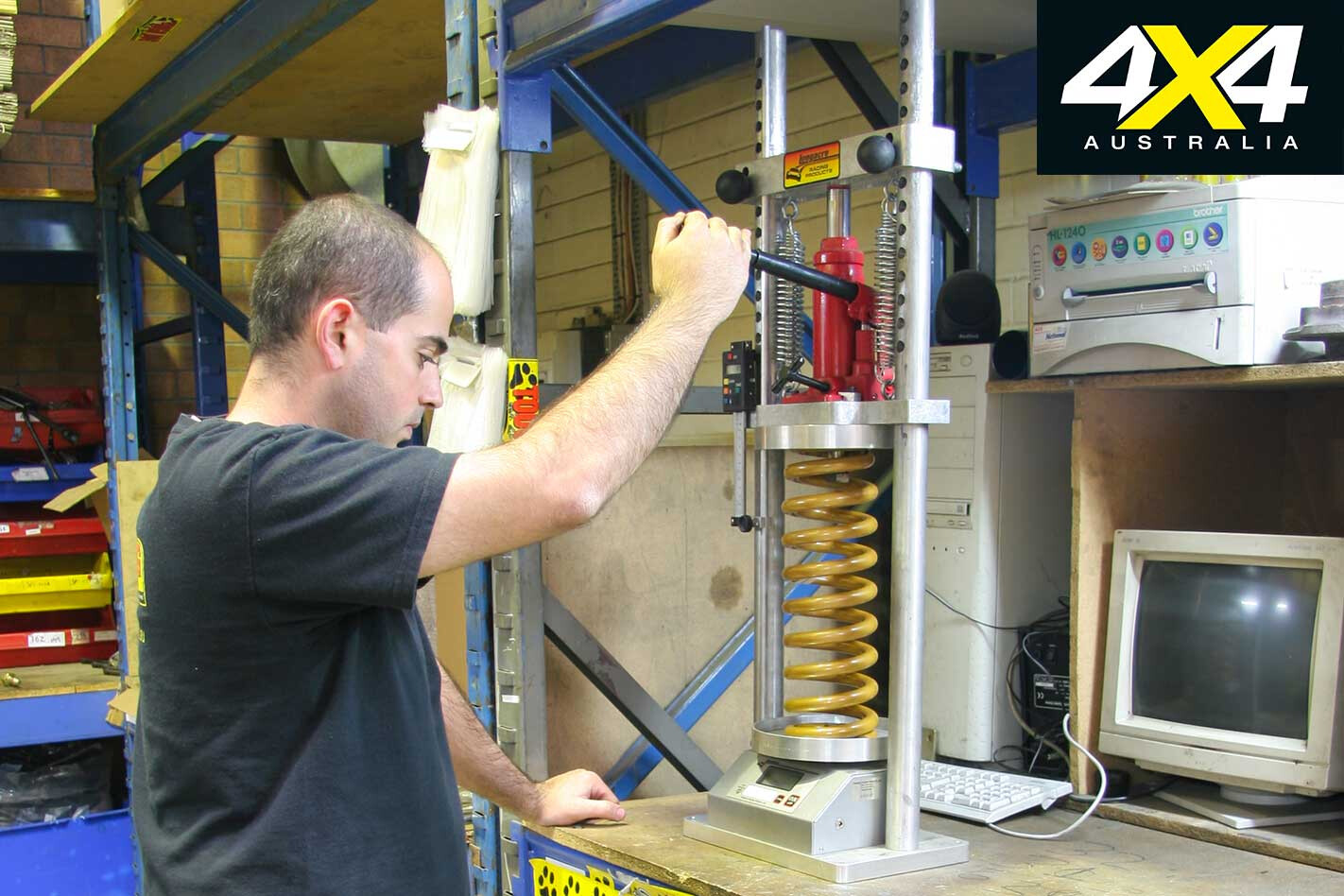
On the strict advice of my engineer I’ll only be installing two-inch-raised coils. We are currently working with Tough Dog to determine the best spring rates for this application, which will be totally different to a standard GQ Patrol.
Given the LS3 engine and driveline is a different weight to the old 4.2-litre petrol six-banger, Simon at Tough Dog is working with Jason at Total Care 4WD to achieve the best setup. I’ll also be fitting a set of foam cell non-adjustable shocks all ’round. It’s nothing overly fancy, but it’ll be a reliable, effective and well-mannered system both on- and off-road.
A set of 33-inch Cooper STT Pros with Dynamic-imitation beadlock steel rims will grace the old Tonner. Again, given the need to keep my engineer happy, I can’t go larger, but I know plenty of people who ‘legally’ run 35s. I’ve not run the chunky STT Pros before so it’ll be interesting to see what noise levels they return on the bitumen. Off-road, I reckon they’ll maul pretty much anything in their way.
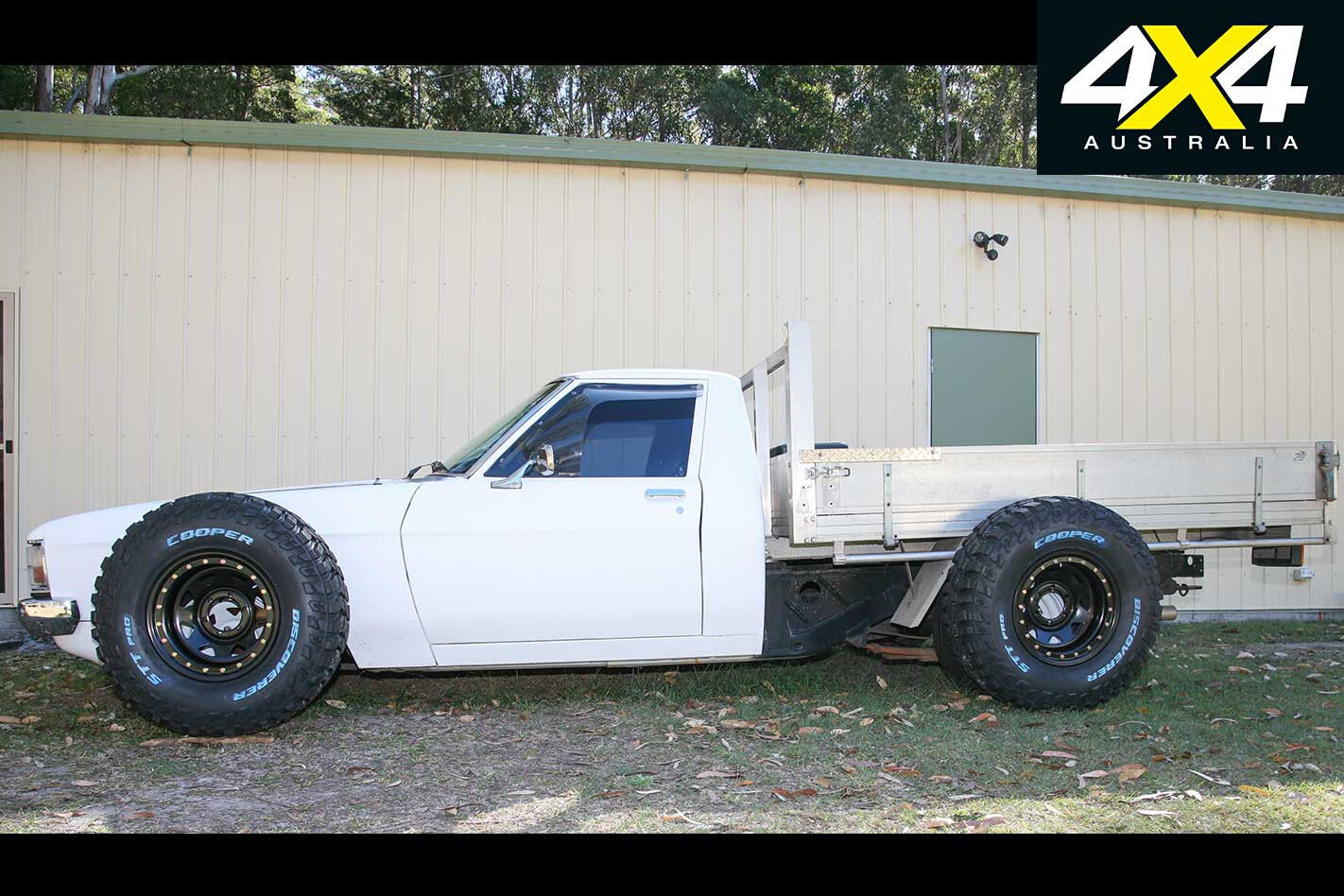
Luckily it’s easy finding many new or replica parts for old Holdens via Rare Spares and Resto Country Spares, from whom I’ve picked up a new interior dome light and bonnet cable release with all associated installation parts. Guards, rust replacement parts, full dashes and pretty much all ancillary parts are available for full rebuilds if needed.
The petrol GQ Patrol I picked up was also running LPG, which involved the removal of the main rear-mounted 95-litre petrol fuel tank and installing a mid-mounted smaller tank, which, I’m guessing, is 40 to 50 litres. I’ll not be running LPG, so I’ve got the OE fuel tank void to fill. I’ve contacted Long Ranger for a custom-built tank.
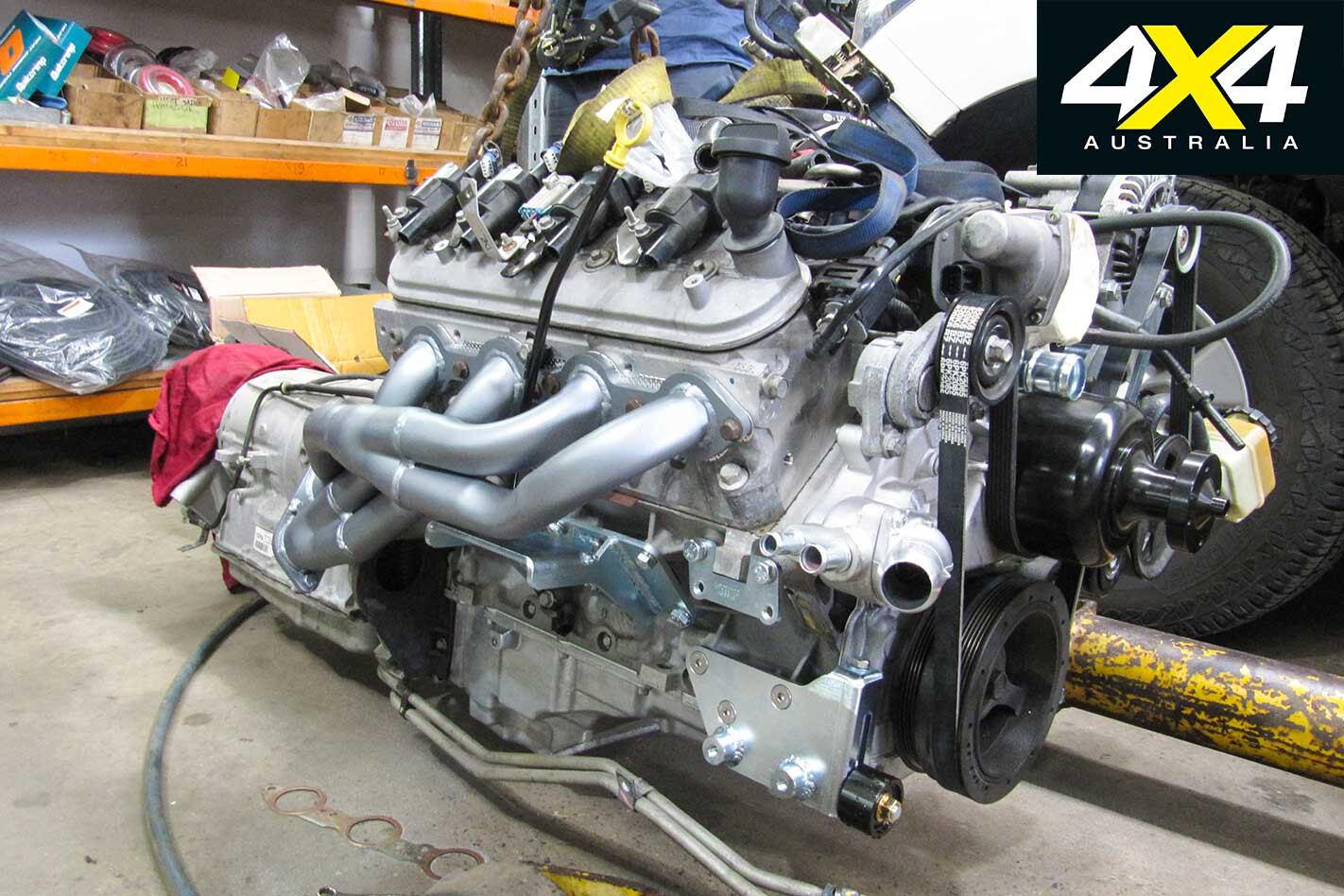
While I don’t have the tank yet, Long Ranger reckons it can easily modify its existing aftermarket GQ 147-litre tank and mount a sender unit and fuel pump from my model Dunnydore. At worst, Long Ranger figures I may lose a litre or two in volume, but hey, in the end that’s pretty damn good and it is yet to be fully confirmed.
I’ll attempt to keep the mid-mounted petrol tank and rig-up a fuel transfer pump to move the spare fuel rearwards when needed, giving a total of roughly more than 200 litres.
That should see the 6.2-litre get to the shops and back. This extra weight also makes a difference to the rear coil spring rates, so we’re ultimately holding off choosing springs with Tough Dog until we can confirm all these weight-related details that can affect the suspension system.
The old Tonner rear-view mirrors, while looking the part in the ’70s, are way too small and I spent an age looking for a suitable replacement. My standard rectangular Troopy mirrors are spot on – other than the mounting foot not suiting the Tonner panels – so I wanted something similar.
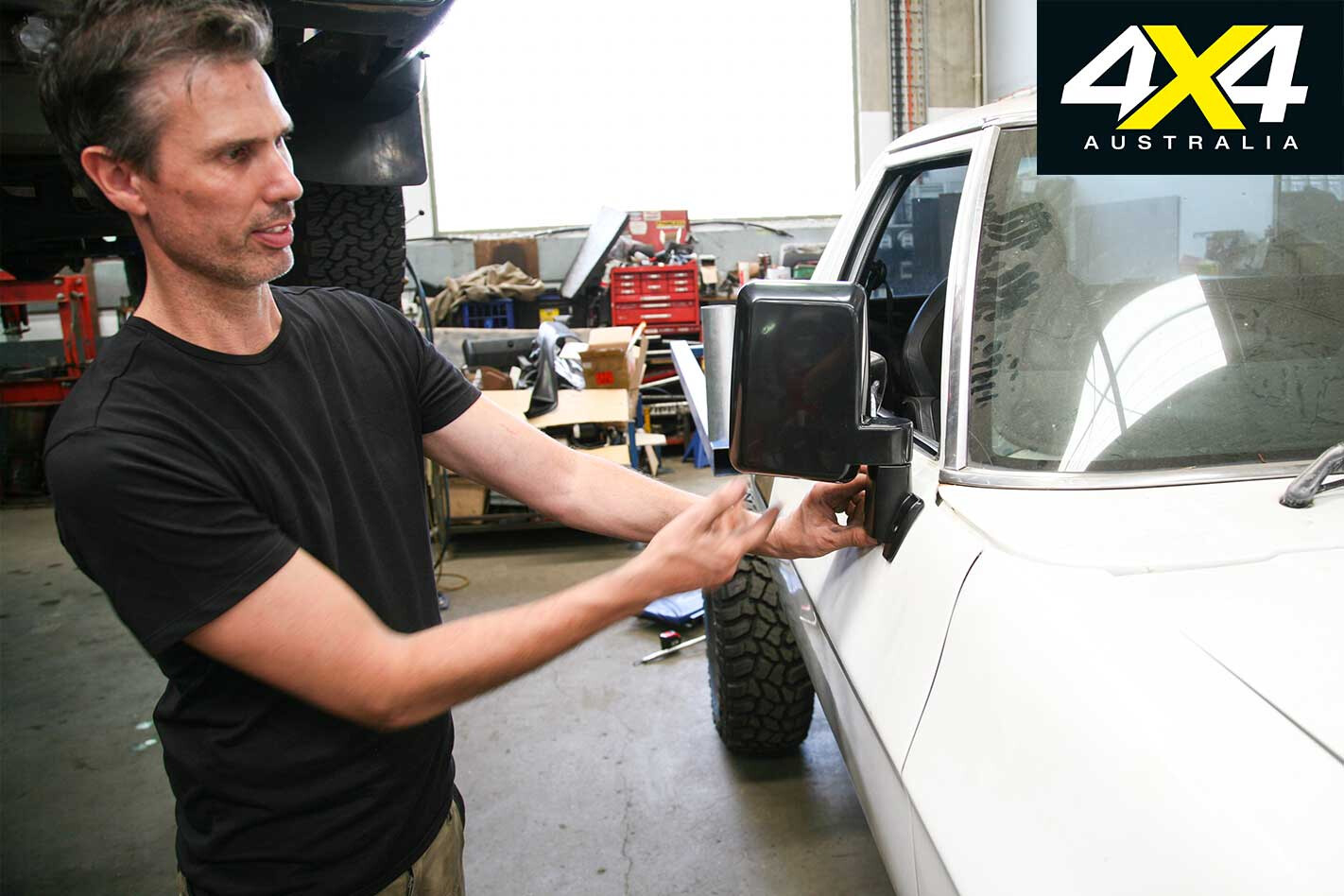
Low and behold, 60 Series Cruiser mirrors offer a similar size and an (almost) ideal-shaped mounting foot for the smooth lines of the Tonner. Terrain Tamer stock them and they seem to be a pretty solid mirror and mounting system.
Next month, we’ll look at dropping the Maloo seats into the cab, GQ steering column into the dash and the Tonner cabin onto the chassis, along with more discussions with the engineer to ensure a painless final check and registration process. That’ll be interesting.
THE ACCC has issued a recall for custom-fit car seat covers made for the Toyota Hilux and RAV4 and sold under the Sperling and Tradies brand names.
The affected seat covers, sold between January 1, 2015 and April 6, 2018, pose a safety hazard as the side panel of the seat cover may not come apart to allow the airbag to deploy correctly.
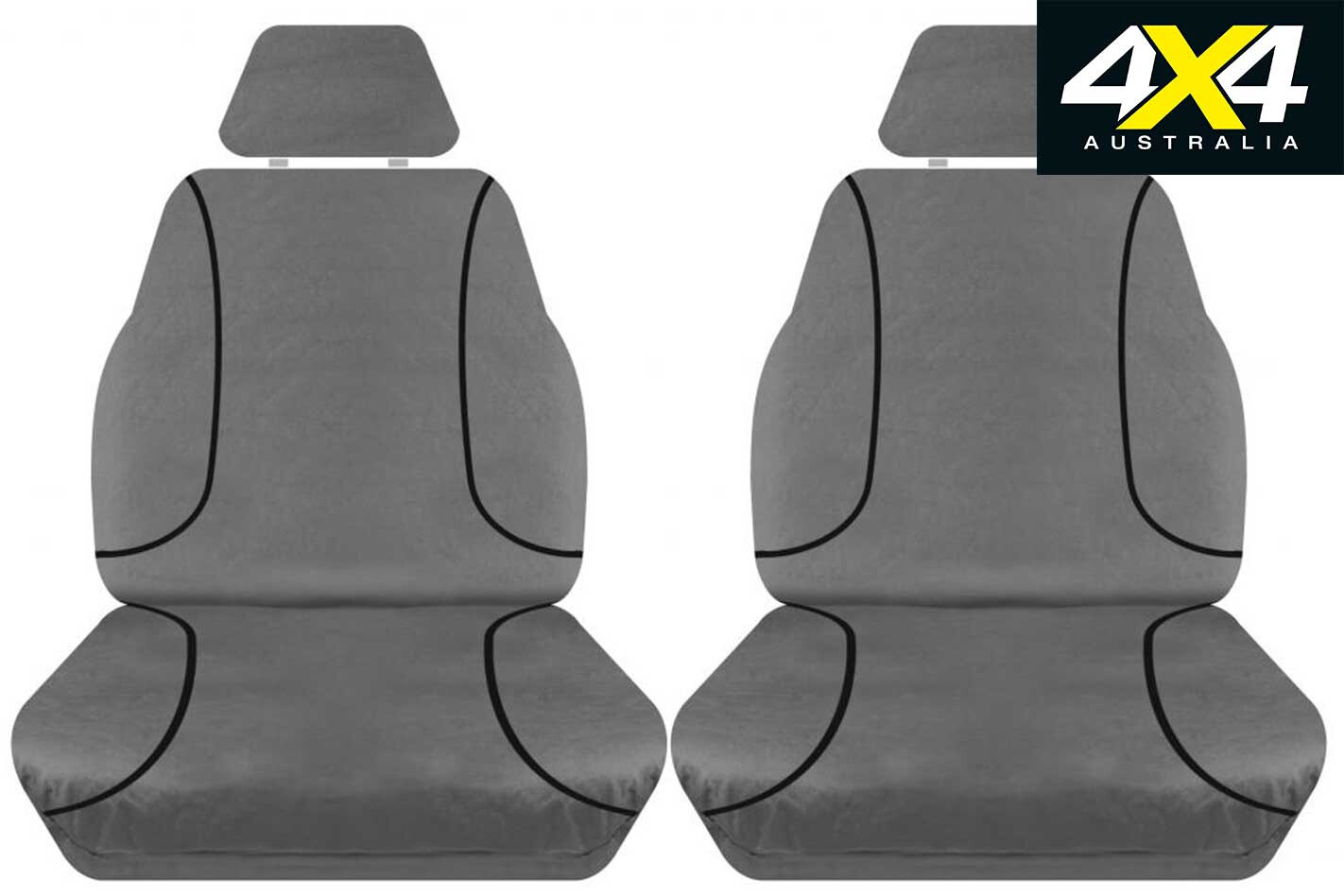
Part numbers: • Toyota RAV4 2013+ (CT444) • Toyota HiLux SR, SR5 Dual Cab Ute 2015+ (CT460) • Toyota HiLux 4dr Workmate Extra Cab Ute 2015+ (CT463)
The seat covers were sold nationally by the following traders: Autobarn, Auto One, Collier & Miller, D&D Automotive, Eulandilla Pty Ltd, Griffiths Equipment NZ, GT Products, MyCustomCar.com.au, NAPA Automotive SuperStore, OzPlus Trading, and Speedster Automotive.
Owners of affected seat covers should remove the seat covers as soon as possible and contact Sperling Enterprises to organise a replacement.
Phone: (02) 9821 1444 (ext 909) Email: [email protected]
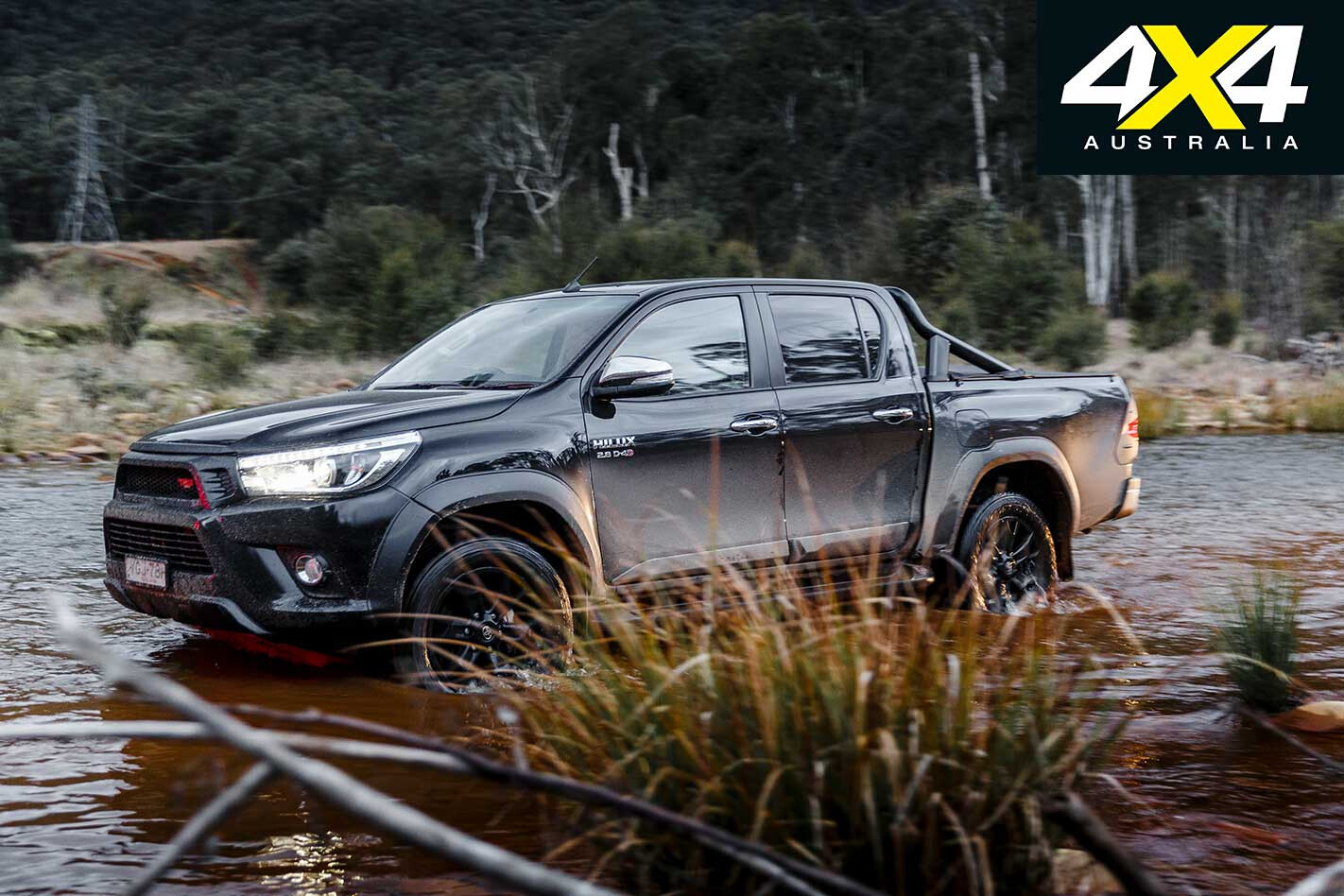
THE remote town of Birdsville, Queensland, will come alive with festivities from August 31 to September 1, for the annual Birdsville Races.
Each year punters from all over Australia flock to the iconic outback town for a jam-packed program of thoroughbred racing, unique outback entertainment and wacky festivities. At days’ end the legendary Birdsville Hotel comes alive as the go-to drinking hole, where the celebrations kick on well into the night.
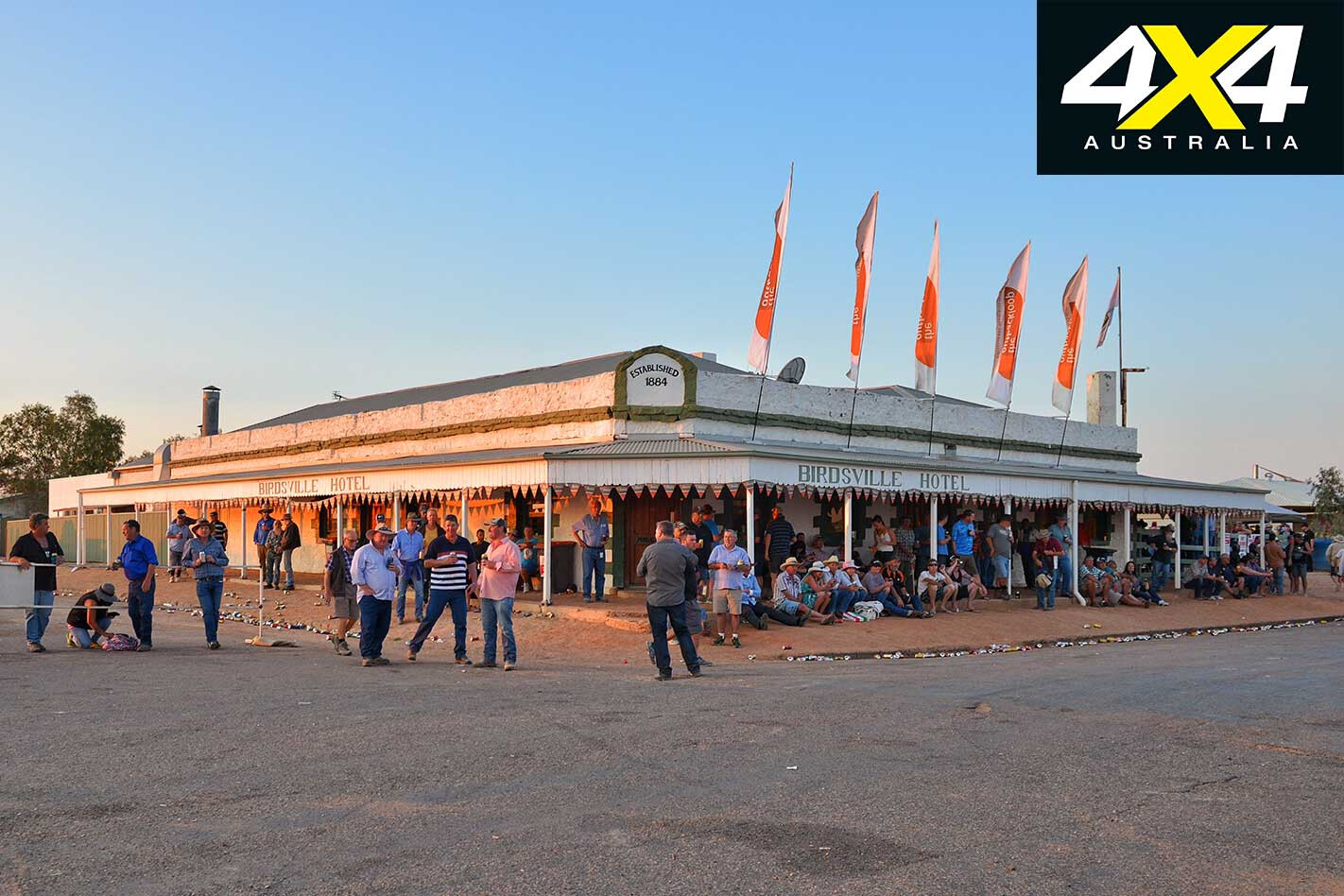
More than 6000 visitors are expected to roll into town for the two-day, 13-race program, with Birdsville set to come alive with film, comedy, live music, cocktail parties and Fred Brophy’s famous travelling boxing troupe. If you’re game, the famous curried camel and kangaroo and claret pies will be available from the famous Birdsville Bakery.
“2018 marks the 136th year since racing began in Birdsville, and this year’s event will once again present one of the best and most unique Outback experiences this great country has to offer,” said Gary Brook, Vice President, Birdsville Race Club.
“The Birdsville Races are extremely remote in location – and that’s part of what makes them so special. Nothing beats the sight of the horses racing around the bend and kicking up the striking red desert dust each year. It’s truly a one-of-a-kind experience and something you should in your lifetime, especially if you’re an Aussie.”
Tickets are on sale now, with two-day racing passes starting from $69.90. It’s a must-do adventure that should be on every tourers’ bucket list. Tick it off this year! Website: www.birdsvilleraces.com