
CELEBRATIONS for Land Rover’s 70th birthday have continued, with the British company visiting a remote rural community in West Bengal, India, known as the ‘Land of Land Rovers’.
What’s special about this remote Himalayan community of Maneybhanjang, part of the Nepal-India border area, is that a fleet of Classic Series Land Rovers that date back as far as 1957 are used to transport the locals on a 31km off-road journey between the villages of Maneybhanjang (altitude: 1523m) and Sandakphu (altitude: 3636m).
To reach the remote, hidden community, the 42-strong fleet of well-maintained Land Rovers must overcome daily hazards of “towering gradients, rock-strewn pony tracks and treacherous weather.”
“Land Rovers are important to Maneybhanjang because the road uphill is so treacherous,” one resident says.
The Land Rovers play an integral part in linking the two villages, as the journey is one taken often by the residents.
“Land Rover is so important to this community because everyone has a special emotion connected to the Land Rover,” one local says in the video.
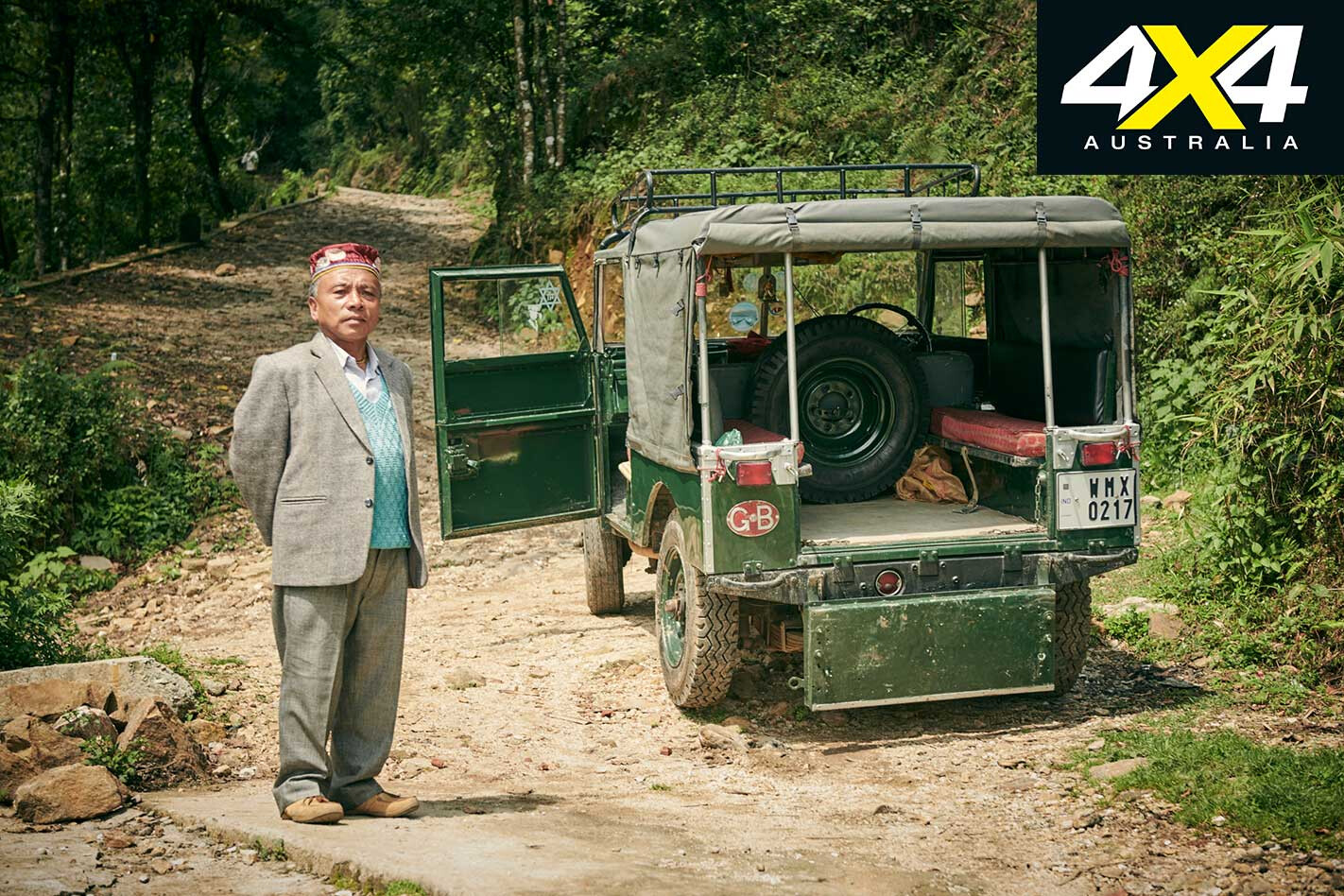
The Land Rover Series I launched at the 1948 Amsterdam Motor Show, and Land Rover is acknowledging its 70-year milestone with a series of celebrations.
Closer to home, the off-road icon held a big bash in Cooma, NSW, back in March, 2018; and a parade was held more recently at the Goodwood Festival of Speed in the UK.
NEVER heard of INKAS? Well, the Canadian company specialises in manufacturing armoured vehicles, and it recently unveiled its bulletproof G63 limo.
The stretched G63 wears advanced body armour and multi-layer ballistic glass, both capable of withstanding a serious barrage of bullets – for those who know the lingo, the vehicle meets a CEN 1063 BR7 armour level.
Perimeter surveillance is taken care of via infrared and thermal cameras, with recordings uploaded to a secure cloud server.
INKAS also installed entire perimeter protection of the passenger compartment, protection for the battery and electronic control module, reinforced suspension, reinforced door hinges, run-flat tyres and a vehicle security system accessible from the front cabin. Additional security and defensive features are available upon customer request.
Beneath its hardened exterior, the bulletproof limousine, based on the 2018 Mercedes-AMG G63, boasts the 5.5-litre petrol-powered twin-turbo V8, which is good for 563hp (420kW) at 5500rpm. That muscle is mated to a seven-speed automatic transmission.
When you’re done surviving the mean streets of a post-apocalyptic world, sit back and watch a zombie flick on the 4K ultra-high-definition tele or enjoy a cocktail from the motorised bar with a built-in icebox.
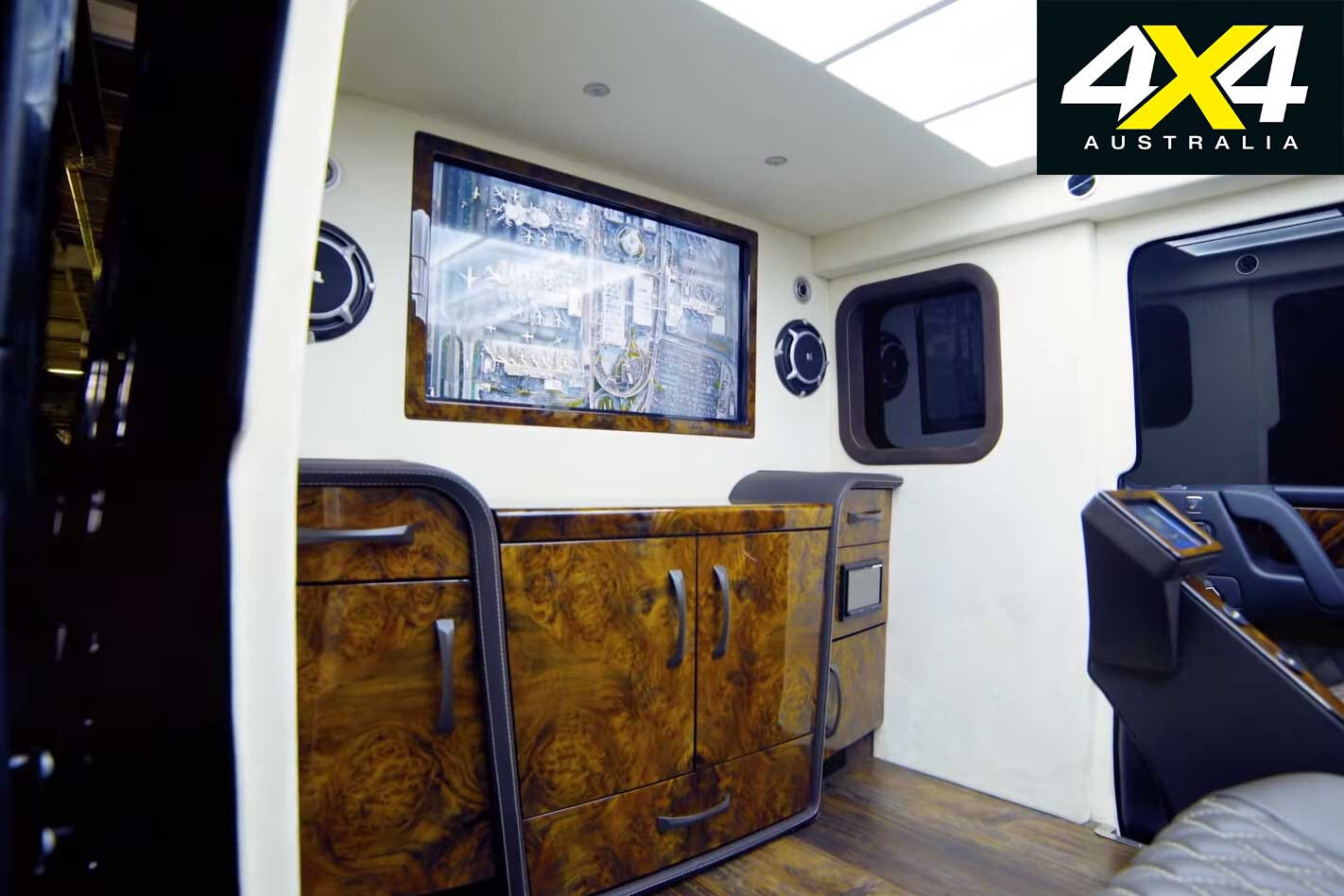
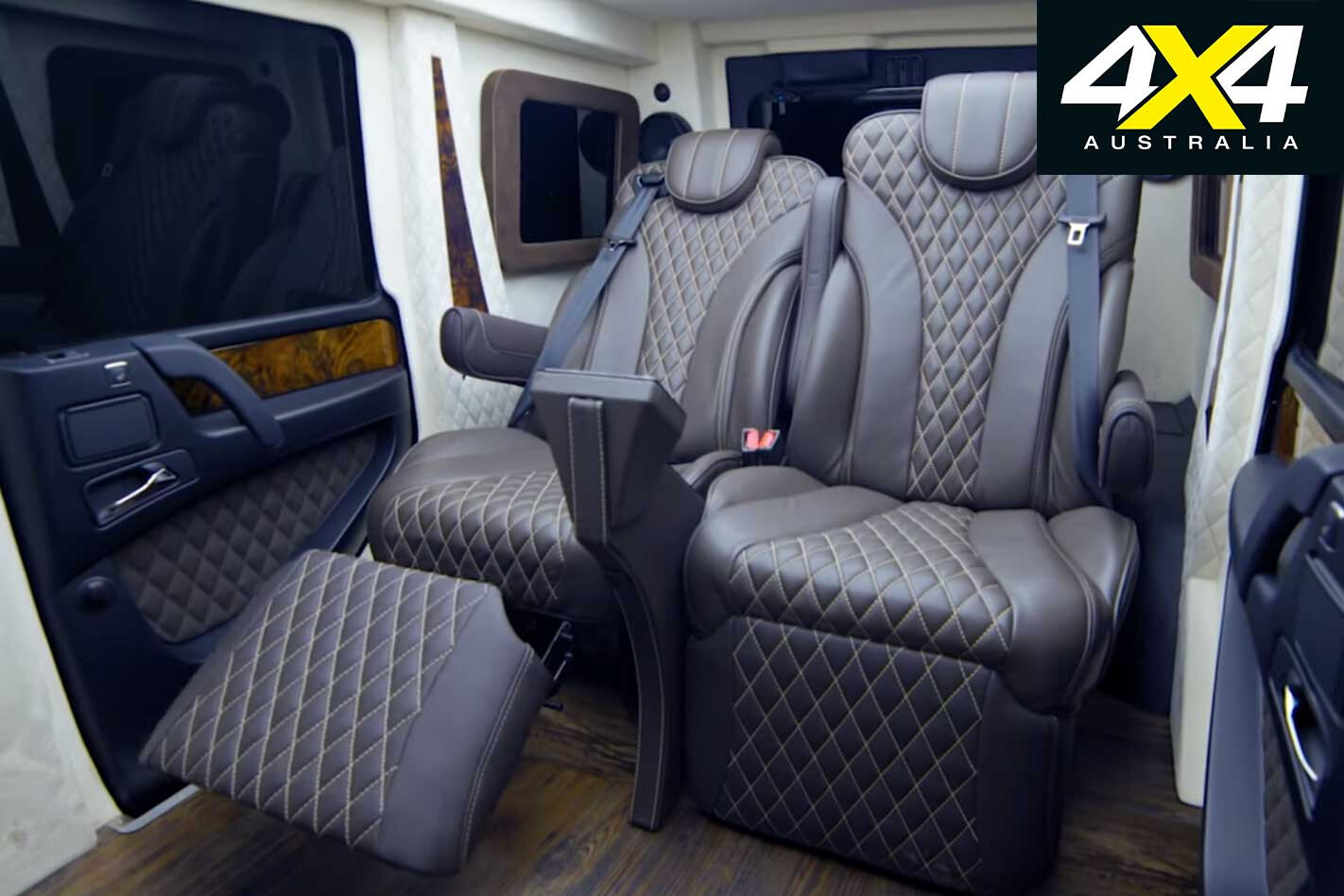
Other comfort items include 4K Apple TV integration, voice-activated controls (Apple Siri and HomeKit Integration) and fully reclinable massage seats. Those massage pews feature a built-in control centre that takes care of the rig’s media, lighting, comfort and security functions.
A customisable daylight headliner is also featured, which is calibrated to mimic real sunlight in order to reduce fatigue. Fancy, huh?
The armoured G63 – measuring 6186mm x 2055mm x 1951mm – is priced at one million euros (approx. $AU1.5 million), but good luck getting one here, as INKAS confirmed with 4X4 Australia that it cannot provide the option to ship vehicles to Australia.
INKAS has a range of vehicles in its garage including armoured Range Rovers, Patrols, Land Cruisers and Prados. The company was established in Toronto, Canada, in 2000, and now ships its products to many countries around the world.
THE DATES for next year’s Variety WA 4WD Adventure have been released, with the seven-day journey kicking off on May 26 and running until June 1.
In 2019 the event will explore the stunning and challenging West Kimberley region of Western Australia, and participants will be encouraged to hit low range to explore the area’s stunning ranges and coastlines.
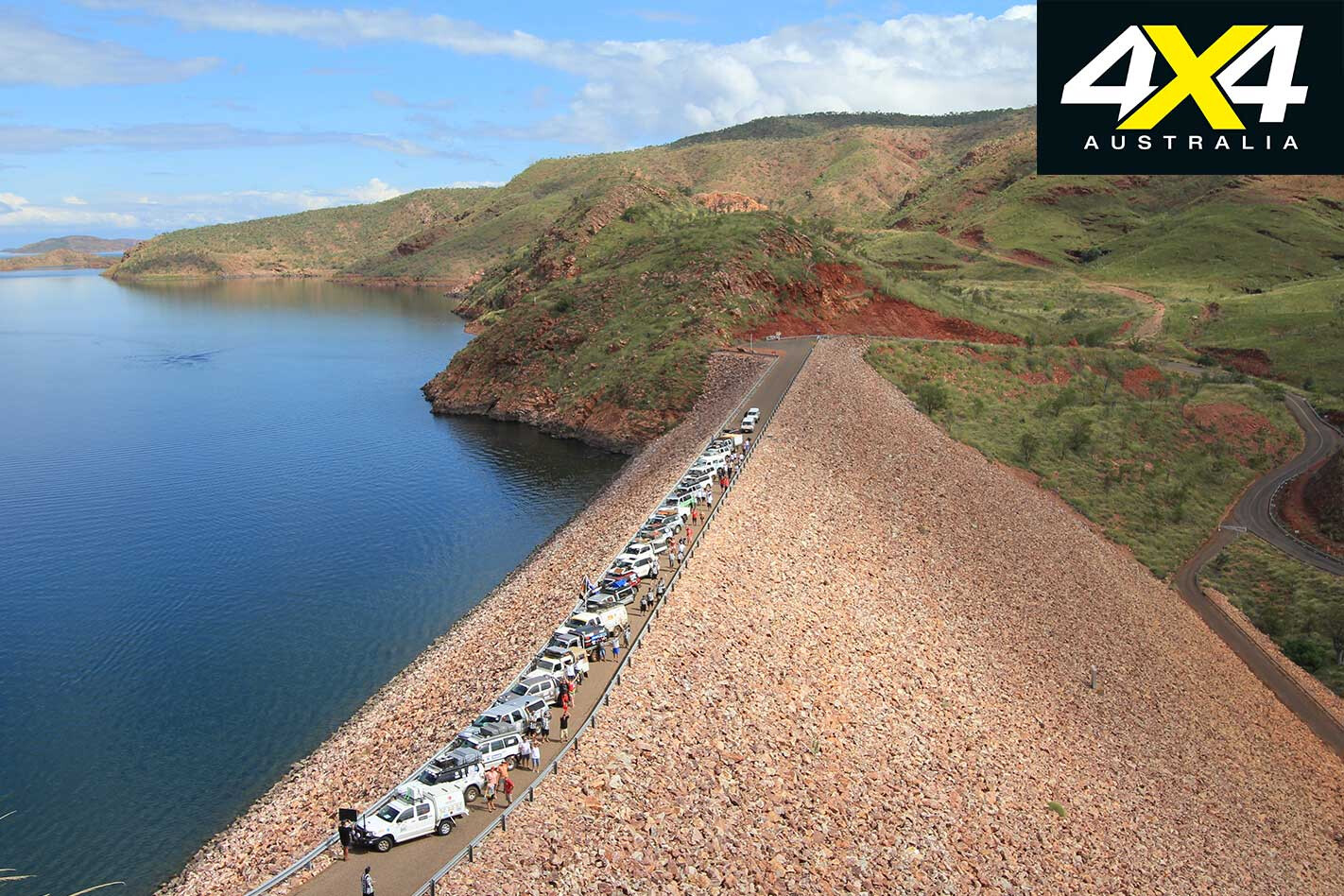
The great thing about this event is that it’s all in the name of charity, with money raised going to kids who are sick, disadvantaged or have special needs.
“We’ve always gone above and beyond to make this event special, but I can already tell you, with locations like Broome and Cape Leveque on the list, 2019 is going to be better than ever,” said Bill, the Variety Event Coordinator. “The Variety 4WD Adventure is the perfect balance of classic four-wheel driving, adventure, mouth-watering food and great entertainment.
“But, most importantly for the participants, the greatest reward of all is knowing that their week on remote tracks is making a difference to the lives of WA kids in need.”
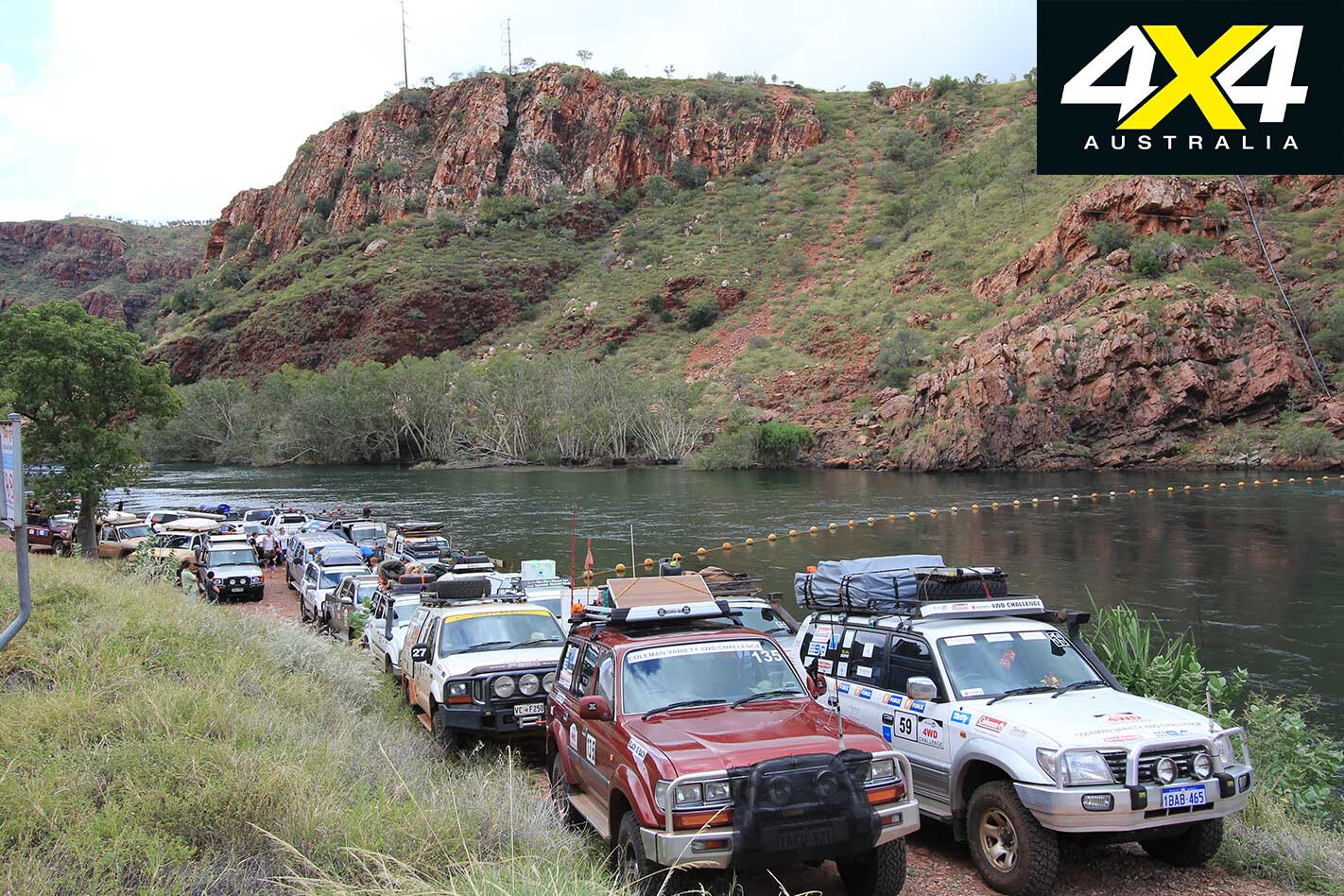
The Variety WA 4WD Adventure is open to both experienced and non-experienced 4WDers, with both groups sure to get something from the week-long festivities. Don’t stress if you’re not 100 per cent confident when tarmac turns to dust, as support staff with more than 50 years of experience will be on-hand to ensure everything runs smoothly.
Not only will the off-roading be enlightening, there will also be activities for the kids, as well as party-filled nights for the adults.
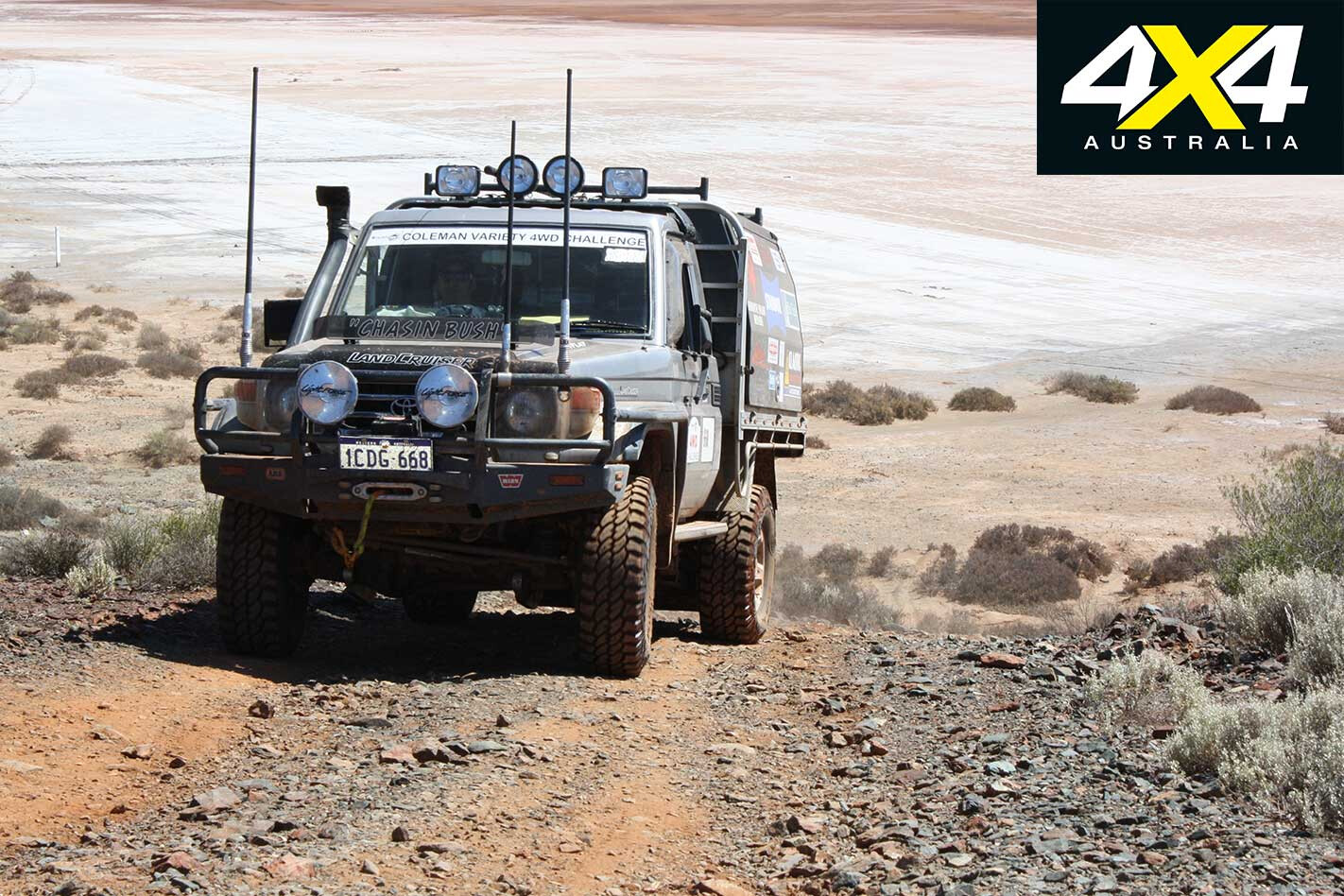
The 2018 adventure saw 67 4WDers embark on a journey from Kalgoorlie to Uluru, with events spanning from sunset dinners and helicopter rides. Last year’s event raised more than $150,000 for WA kids.
To register, visit: www.variety.org.au/wa/4wd
Killa Kustom Kables & Conversions set the 4×4 ute market on fire last year when it introduced its LS3-powered Killarado.
Since that first conversion, which we featured back in May 2017, the Queensland workshop has been flat out building V8 Colorados for customers, with a few supercharged LSA-powered rigs in there for good measure.
Melbourne’s long-standing church of all things high performance, Harrop Engineering, teamed up with Killa Kustoms to become the southern states dealer and has put its own spin on the conversion. It has taken the V8 Colorado to the next level and developed the car with two different identities – one for off-road use and one with a more urban slant.
The urban version rides on 20-inch wheels, all-terrain tyres and its Shockworks-developed suspension rides stiffer for better handling. But it’s the off-road one we’re most interested in, with its 18-inch Method wheels, Toyo R/T rubber and more compliant suspension.
Harrop has dubbed the supercharged beast the Superado and they threw us the keys to have a play with it.
Arriving at Harrop to pick up the Superado in our bone-stock Colorado LTZ, one could be forgiven for thinking the Superado is just another kitted-up double-cab ute. Sure, those bright-red Methods stand out from the flared guards, and the ride height is up there, but without even a nudge bar on the front end, this could be any other sign-written shop truck.
Open the door and the leather-trimmed sports seats are a nice addition and the extra switches in the console indicate there’s an ELocker in there somewhere, but otherwise it’s just like our LTZ.
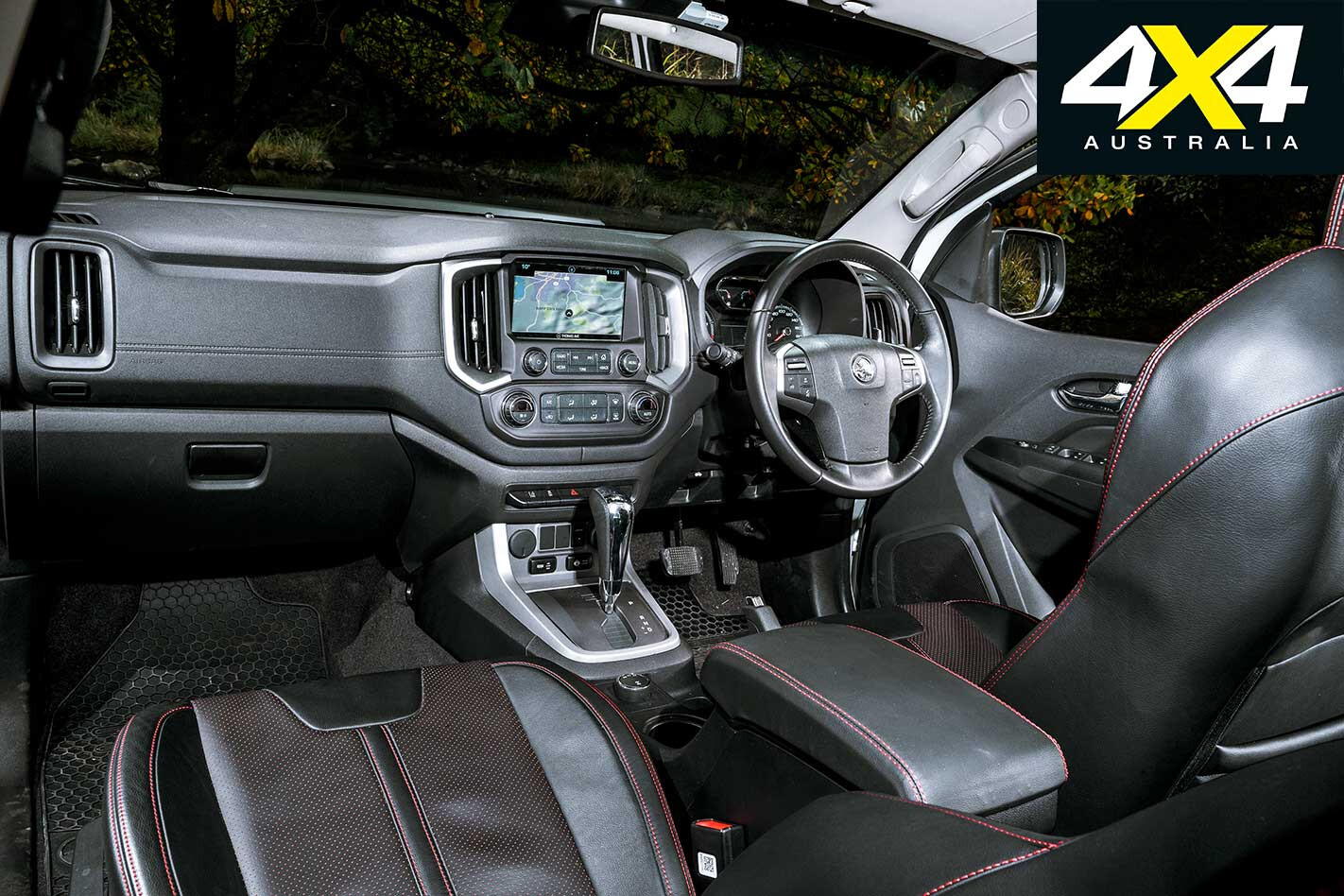
All similarities end when you turn the ignition key. There’s no clatter from an Italian-made Duramax diesel in this Holden ute; it’s all American V8 rumble from the dual pipes exiting under the back!
Harrop Performance Centre used the Killa Kustoms conversion as the basis for its build and fitted a 6.2-litre LS3 V8. If that wasn’t enough, it topped the engine with a Harrop-Eaton TVS2650 supercharger – the biggest and most efficient supercharger in the range.
Originally developed for V8-powered HSV and Holden Commodores, the supercharged V8 was easily adapted to the Holden 4×4 ute. In fact, the LS3 looks like more of a natural fit in the engine bay than the 2.8-litre four-cylinder diesel, with less underbonnet clutter and lines. There’s still space in there for a second battery, and the big air-cleaner box made by Killa Kustoms looks well-suited to dusty conditions.
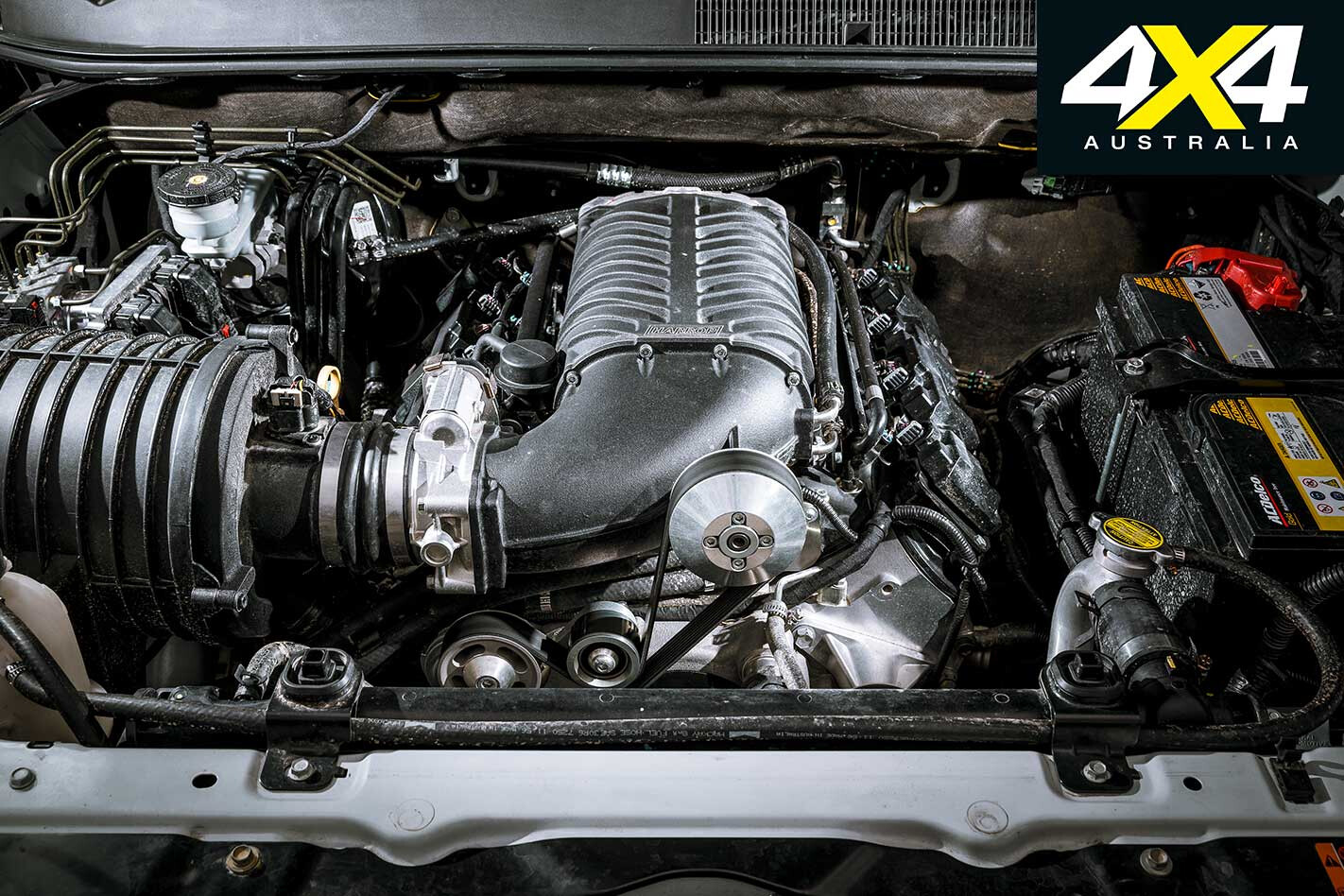
The GM engine is backed by a GM 6L80 six-speed auto, while the factory Colorado diffs have been retained – the front one fitted with a Harrop ELocker for better off-road performance. The transmission used in this car came from one of Harrop’s go-fast Commodores and is beefed up with heavy duty internals. It works nicely with the factory Colorado gear shifter.
Harrop will be offering the V8 conversion in a few different forms including a naturally aspirated LS3 crate engine, an LS3 with a TVS supercharger, an LSA, or an LSA with the factory supercharger replaced by the TVS2650. The last combo will be the most powerful, as the LSA is made to be supercharged with a lower compression ratio but it will get more grunt with the bigger 2650 supercharger.
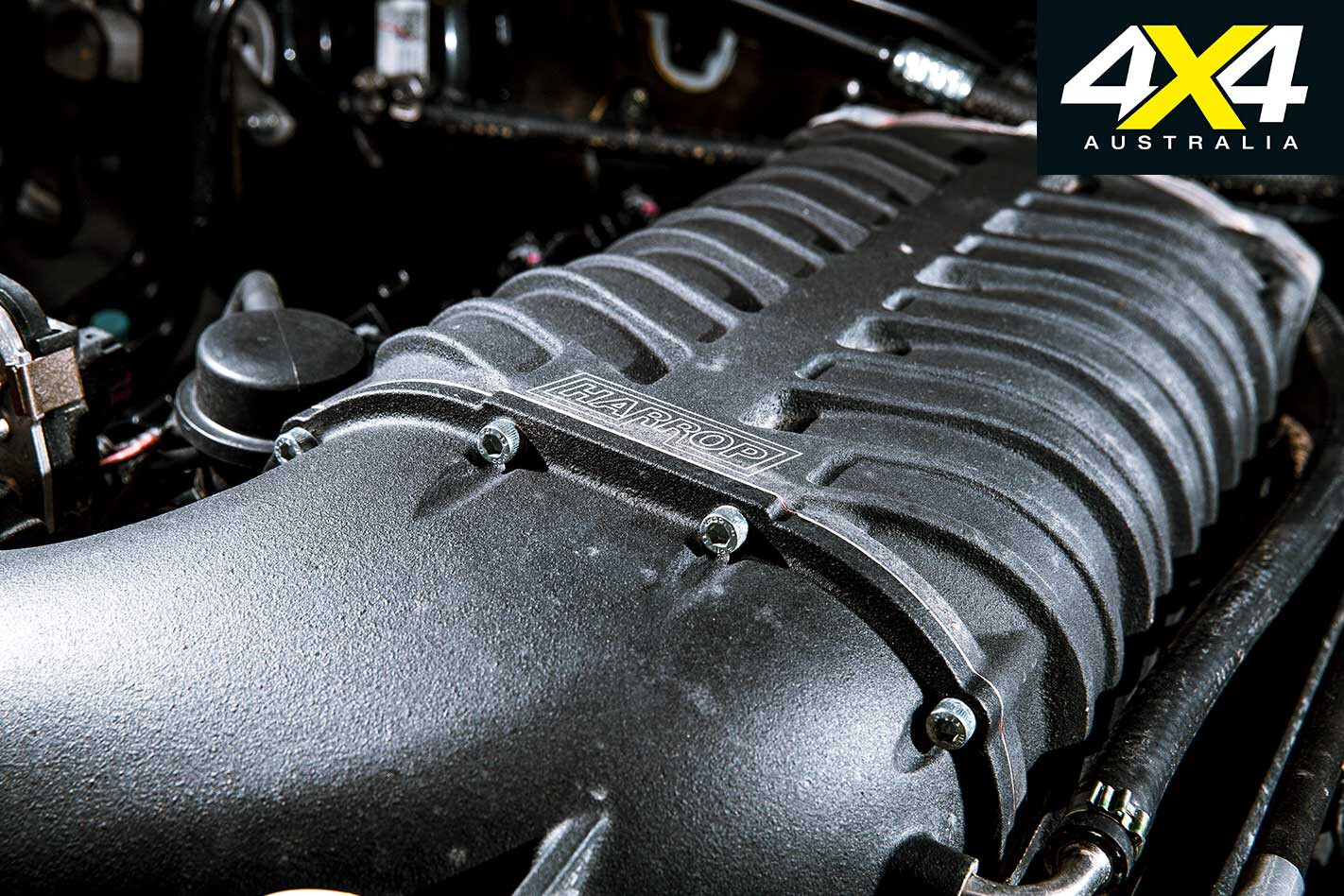
Then there are the vehicle options, and, being Harrop’s own truck, this vehicle is loaded with them. Behind those Method wheels is Harrop’s 355mm brake package with their own monoblock calipers plumbed through braided steel lines.
The suspension was set up by Shockworks using its in-house-developed remote reservoir shock absorbers and custom springs. It offers just enough lift to clear the 285/65-18 Toyo Open Country R/T tyres. Incidentally, the 18-inch Method wheels clear the big brake package, but the factory Holden 18-inch alloys will not.
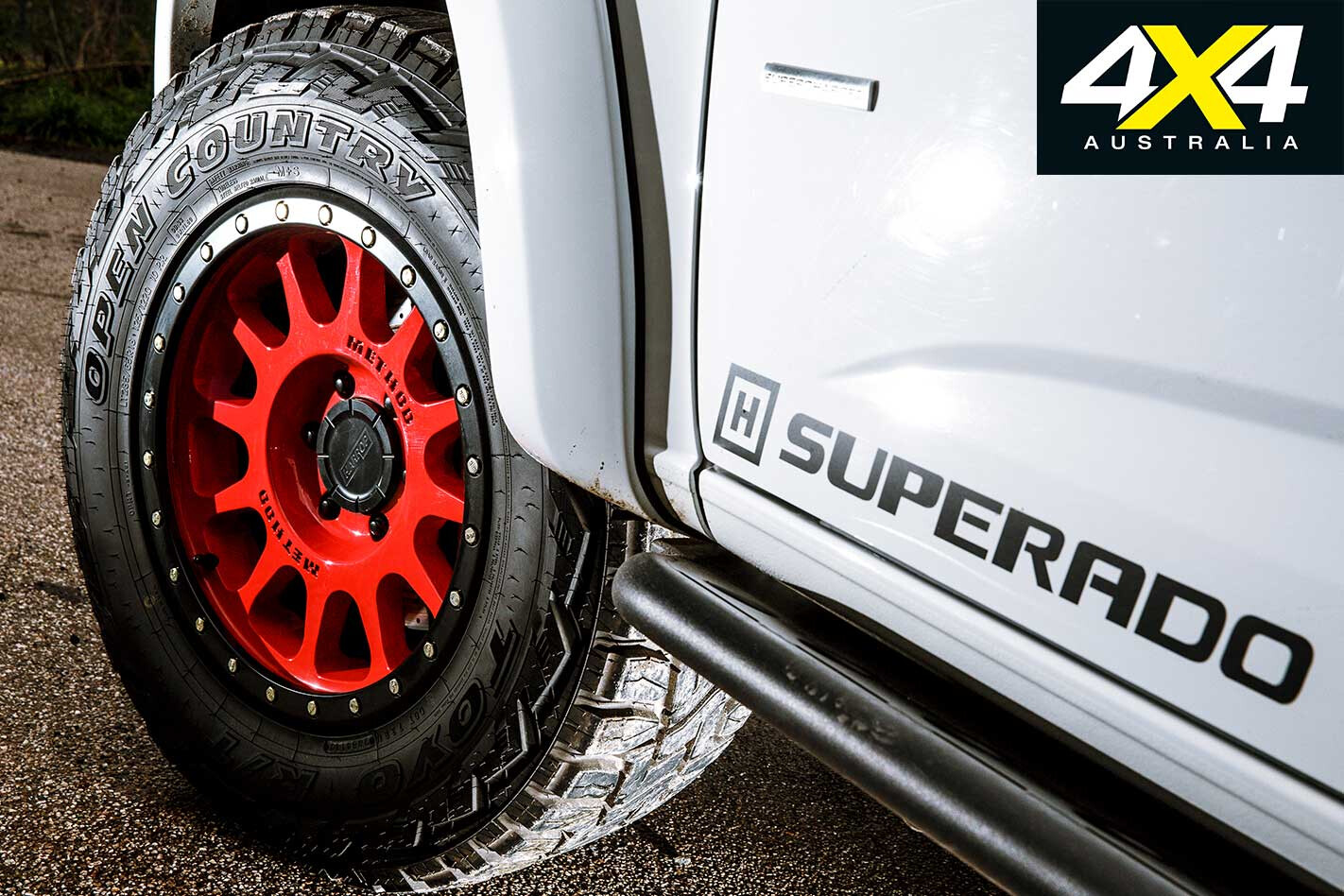
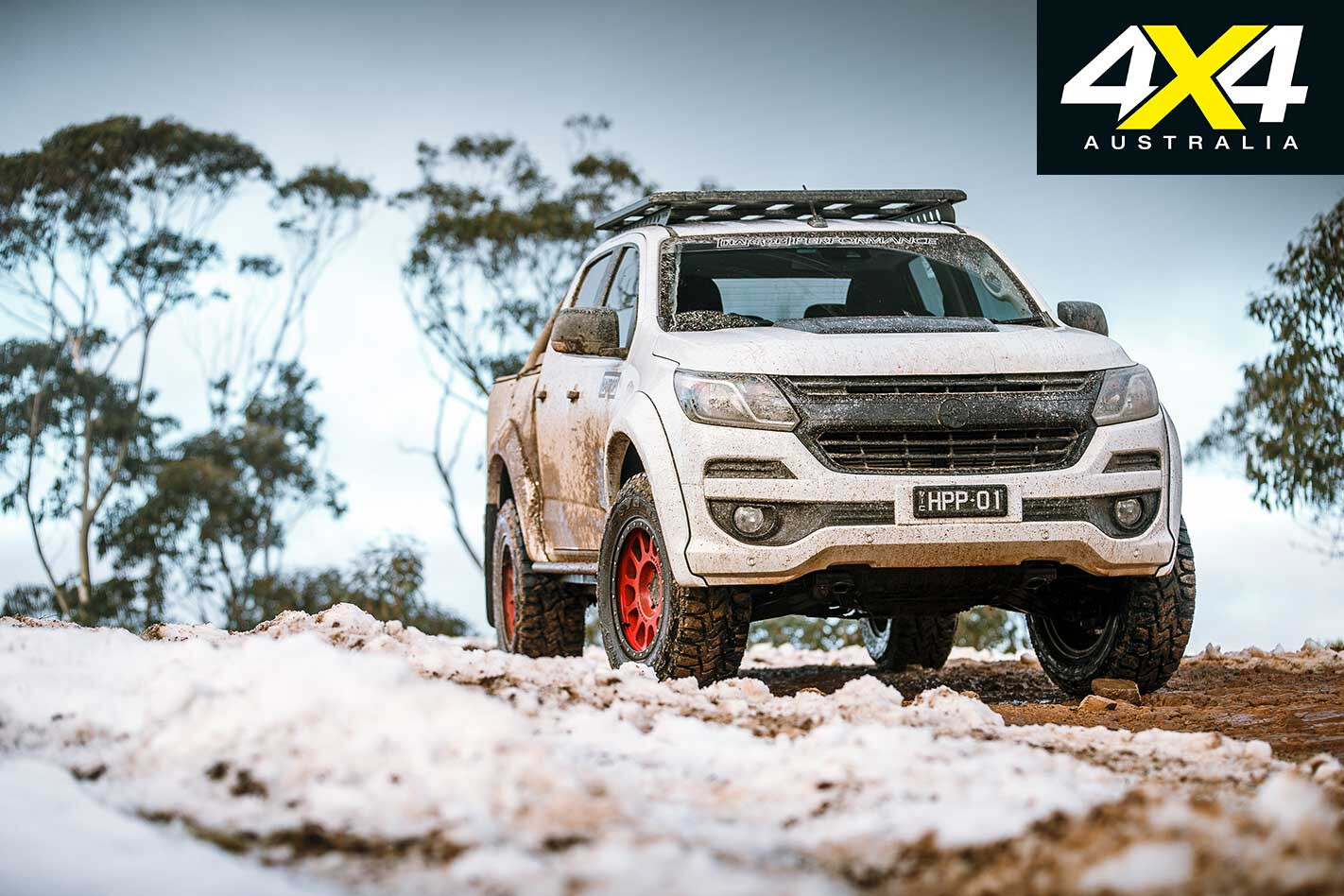
If you look past the bright red wheels and decals, the body is pretty much stock, even the OE front bumper remains. Wheel arch flares are fitted to cover the tyres, some sturdy steel side-steps ride down the flanks, a ZR2 bonnet bulge is fitted, a Rhino Rack platform is mounted up top, and the factory sports bar and badges have been given the blackout treatment.
It all comes together in an eye-catching package, but it’s the sound and feel that really leave the biggest impression.
ON THE ROAD
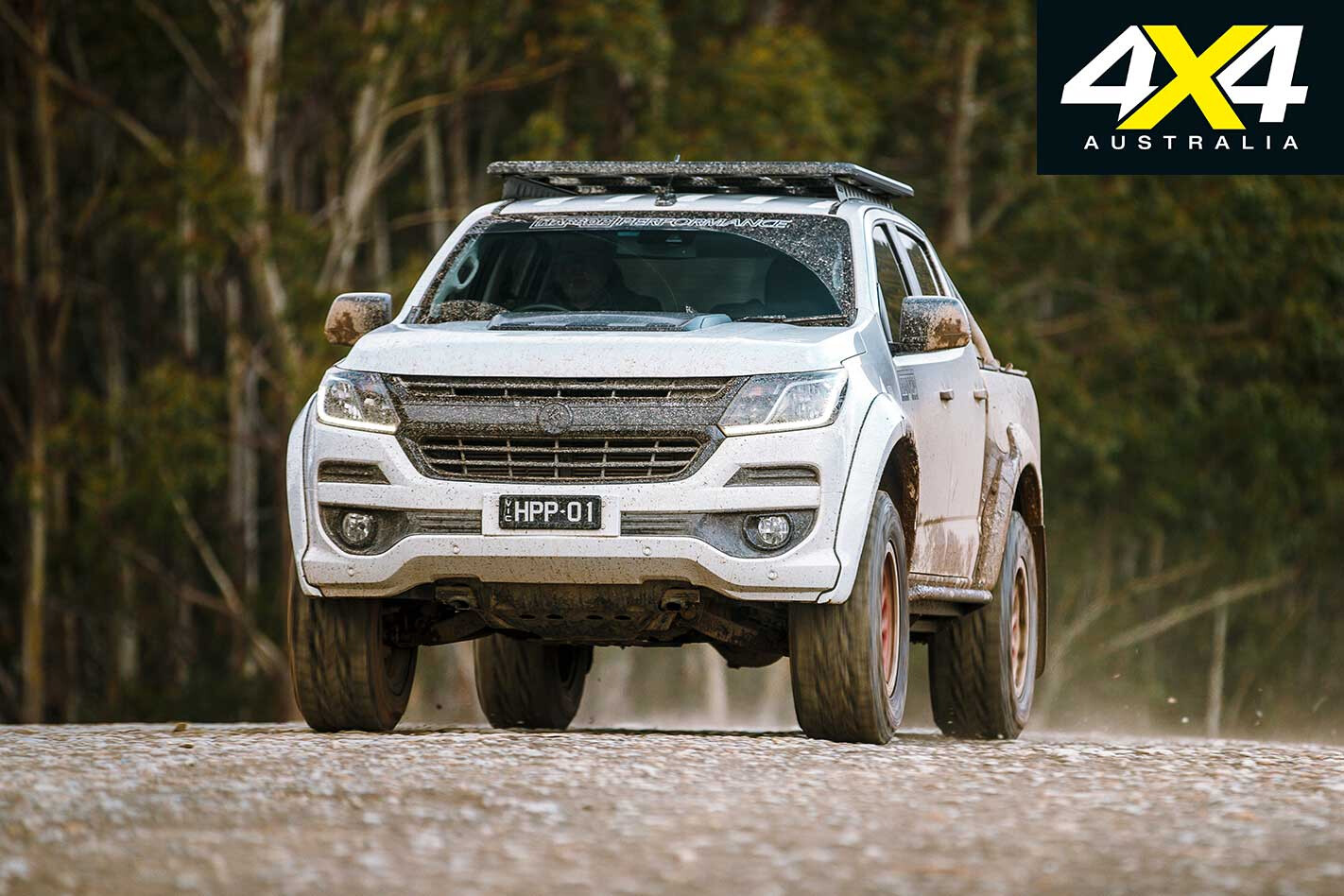
THE first impressions of driving the Superado were of the sweet engine rumble and how factory it all feels. Everything still works as it does in our stock LTZ including cruise control, the hill start assist function and safety features. Plant your right foot, however, and there’s nothing OE about it!
The sound and acceleration are sensational as the Superado blasts through first gear and the 6L80 slams into second before you have to back off. This car is a lot of fun on the street and would scare a lot of fast sedans off from the lights.
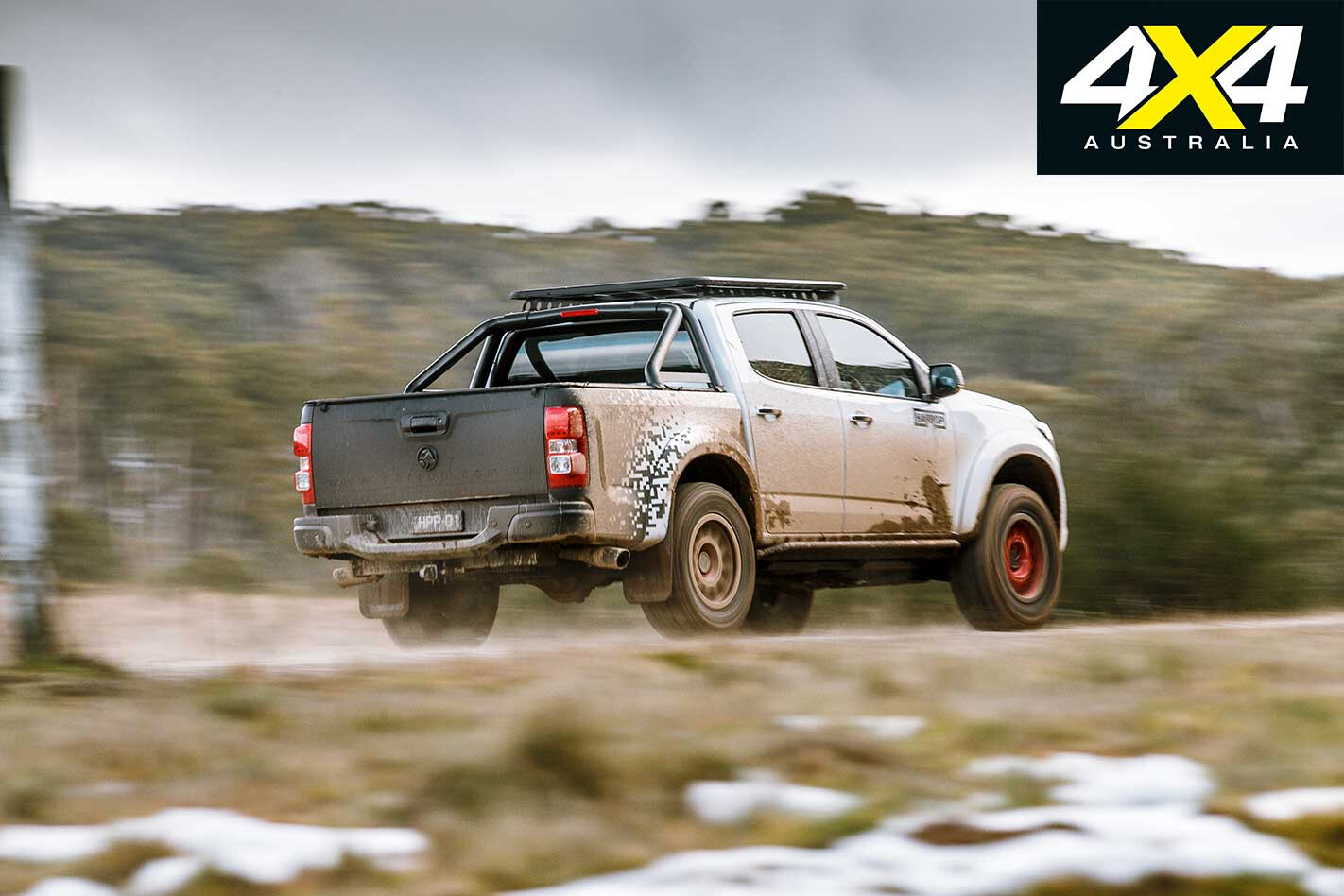
The brakes felt precise and the suspension firm as we left town. The suspension tied the high-riding 4×4 ute down as it cornered flat through the tight, twisty bends that wind up into the hills. Still you needed to be careful as you applied power to the wet roads and the off-road oriented Toyos tried their best to harness the abundant torque.
Again, it’s a fun drive, but we remained cautious on the wet mountain roads. Opening it up on a straight and the supercharger whined, stuffing the V8 full of fresh mountain air as the dual exhausts bellowed off the surrounding hills. It’s an aural delight!
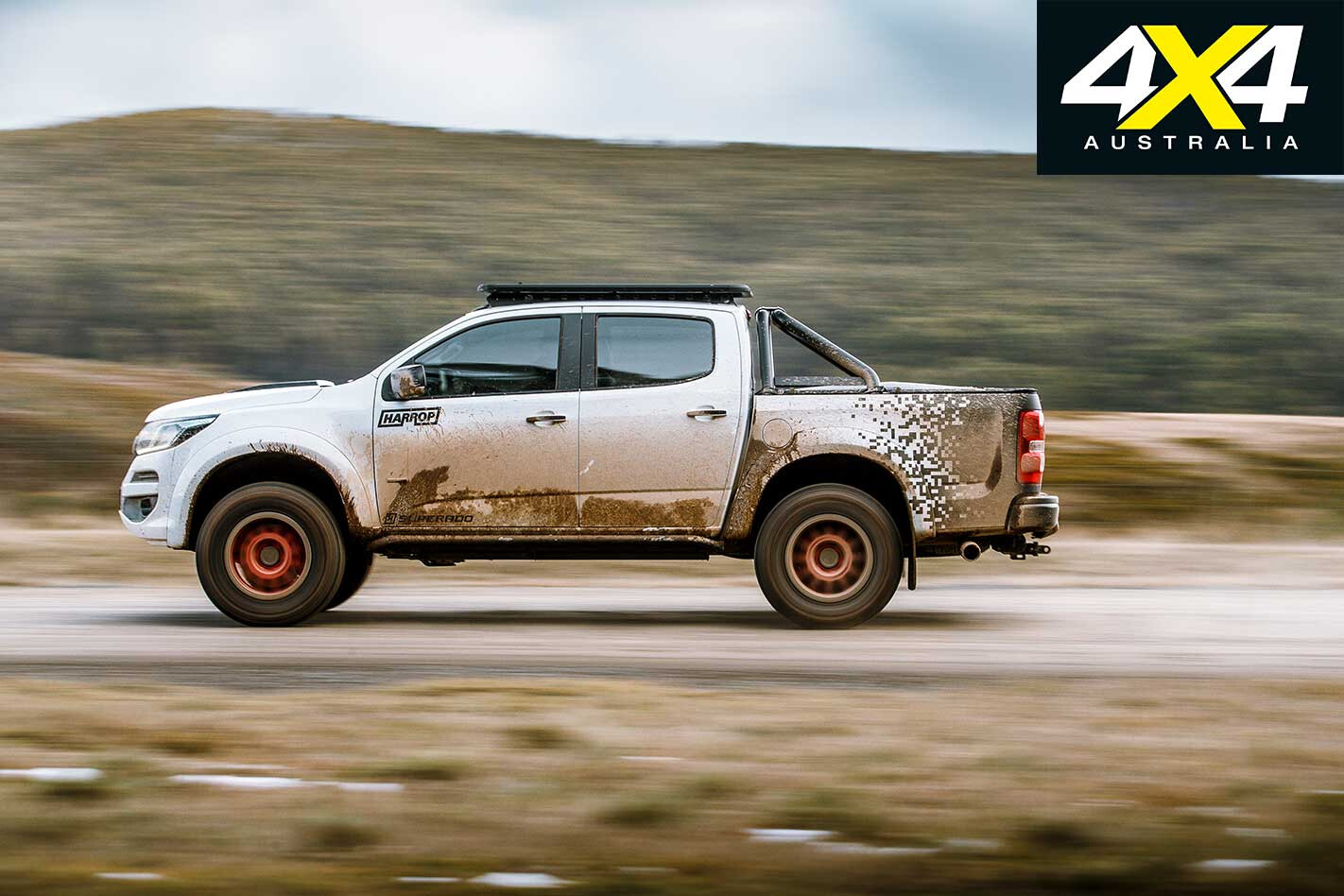
Leaving the blacktop behind, the bends opened up as we hit the gravel and we’re able to push the engine a bit more. Selecting high range 4×4 helped with traction, but there was no taming all that grunt.
The well-used forest road is heavily corrugated and the suspension setup proved too firm for the conditions, rattling the cargo and the occupants. The dampeners are adjustable and Brett from Shockworks says they will look at the calibration for future use.
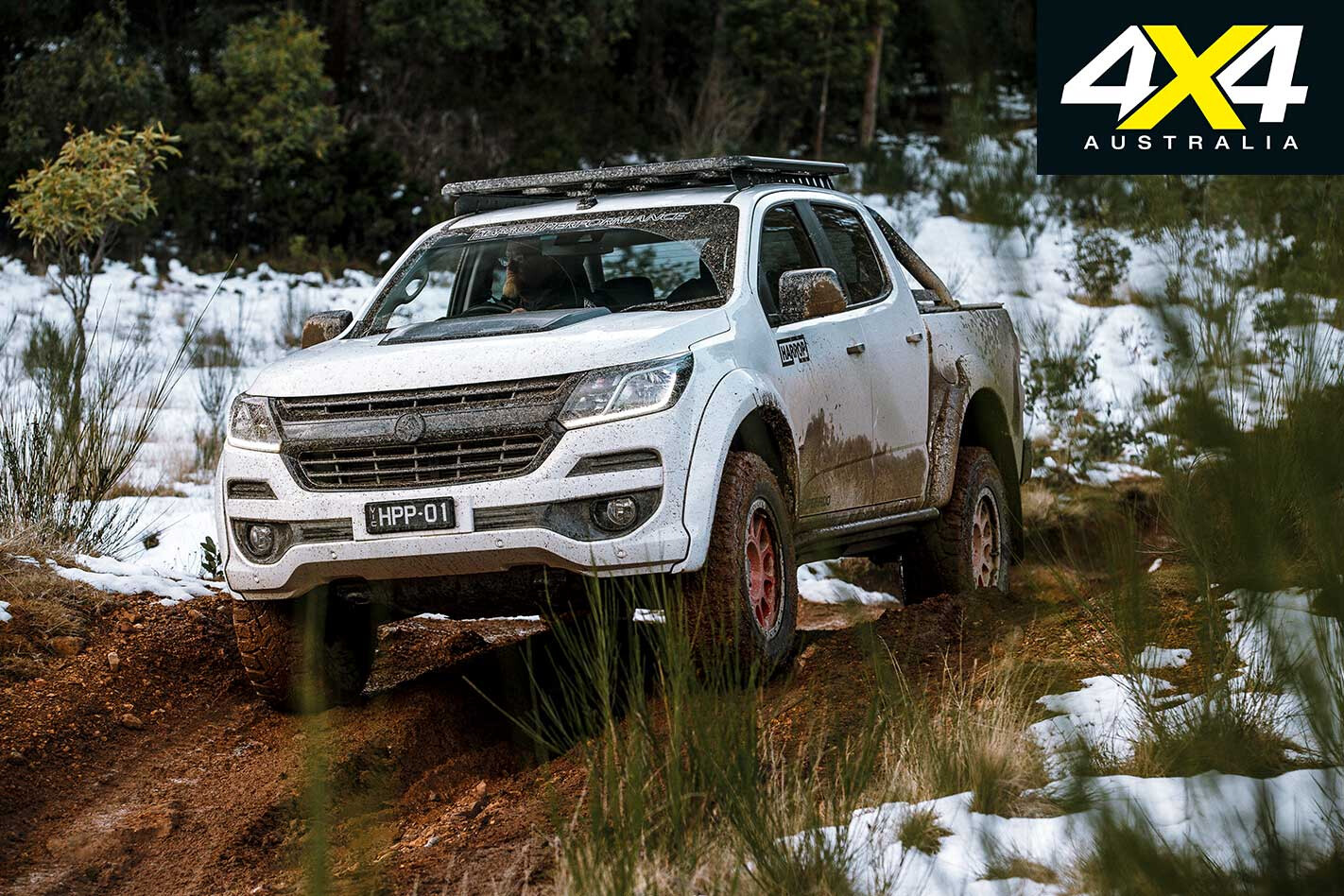
As the mud turned to snow we engaged low range and the front ELocker to keep progressing forward. You only needed to squeeze the throttle down to have the tyres spinning and the Superado rocketing ahead.
All this fun and performance comes at a cost, and it’s not just the expense of fitting the conversion (see prices and options below). The Superado slurps through PULP at more than twice the rate of our diesel Colorado, and the gauge soon told us the stock fuel tank was getting low. A larger aftermarket fuel tank would be a must for the Superado, especially if you want to head out of town with it.
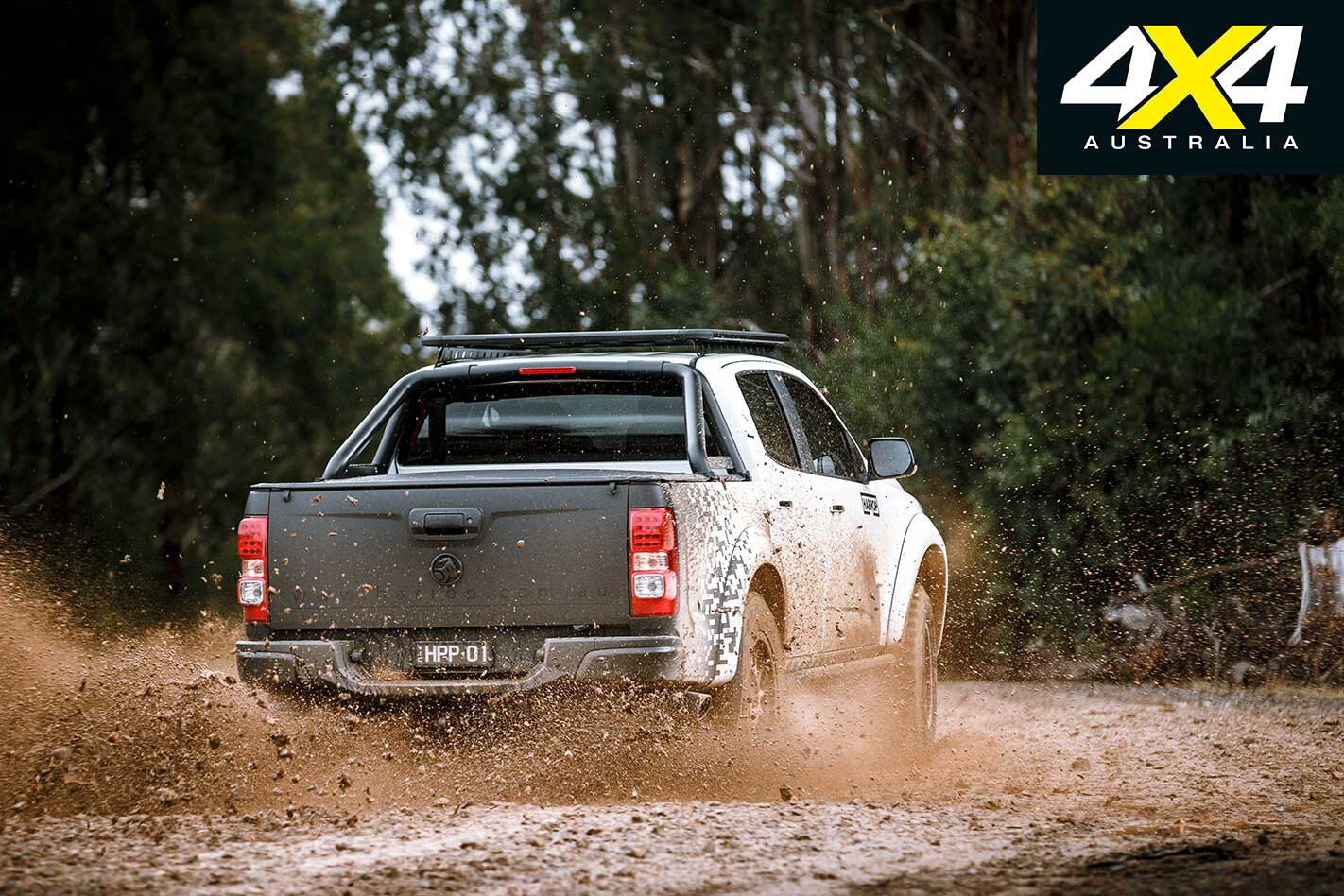
And why wouldn’t you want to? The V8 Superado is the double-cab 4×4 ute we all want, if you desire better performance than any of the small diesels can product. It’s a unique vehicle and the Harrop conversion is an OE factory quality, fit and finish.
We’re not sure how many people will go the whole hog with all the equipment fitted to this vehicle, but even a stock LS3 in one of these would make it a weapon of choice.
| Powertrain | $ inc. GST |
| LS3 Spec: LS3 NA with 6L80 Auto | $37,830 |
| LSA Spec: LSA 1900 SC with 6L80 Auto | $43,270 |
| Superado Spec : LSA 2650 SC with 6L80 Auto | $44,820 |
| Optional 3-Year Driveline Warranty | $2970 |
| Options / Upgrades | $ inc. GST |
| 1-7/8u201d Headers/Hi-Flow Cats | $1150 |
| Black Ceramic Coating (Headers/Cats only) | $495 |
| Cat-back Exhaust 3u201d u2013 Bi-Modal | $2802 |
| Harrop Brake Upgrade u2013 Front | $4400 |
| Harrop Front ELocker | $2573 |
| Harrop Rear ELocker | $2353 |
| Method 18×9 (Set of 4) from | $2350 |
| Method 20×9 (Set of 4) from | $2350 |
| Toyo 285/65/18 Open Country R/T | $1800 |
| Toyo 285/50/20 Open Country AT2 | $1700 |
| Shockworks Suspension Kit | $3022 |
| Interior Upgrade | $3300 |
| Rhino Roof Rack | $1529 |
| Rock Sliders/Side-Steps | $1430 |
| Grille | $460 |
| Bonnet Bulge | $581 |
As its 40th anniversary approaches, the Mercedes-Benz G-Class is about to receive the first major redesign it’s had in those four decades.
The new G-Class has a bigger and lighter body to improve passenger space and fuel efficiency, while the hard edges of the boxy original have been rounded off to improve aerodynamics. More significantly, the age-old proven formula of a ladder-frame chassis with live axles front and rear has been tweaked for the first time.
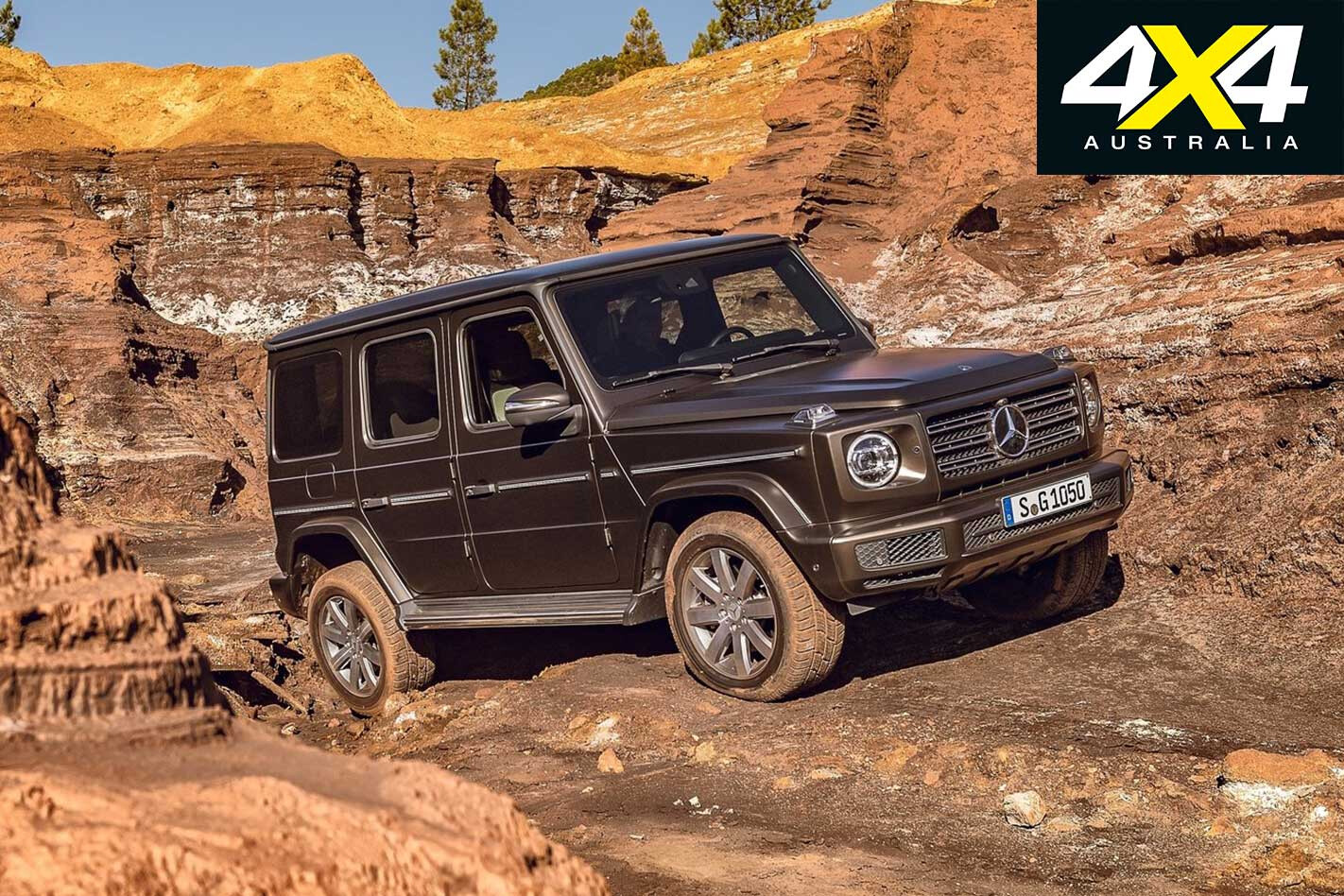
The new W463 will utilise independent front suspension (IFS) to greatly improve the wagon’s on-road ride and handling characteristics, as well as the overall driver experience.
Traditionalists will be happy to know there is still a G-Wagen that sticks to the original recipe and keeps its traditional body and live front axle. The W461 G 300 Professional is available in both five-door wagon and single cab-chassis variants, and it’s the vehicle overlanding dreams are made of.
Ever since it arrived on the market in 1979, the appeal of the G-Wagen (as it was then known) has been its rugged construction and simplicity.
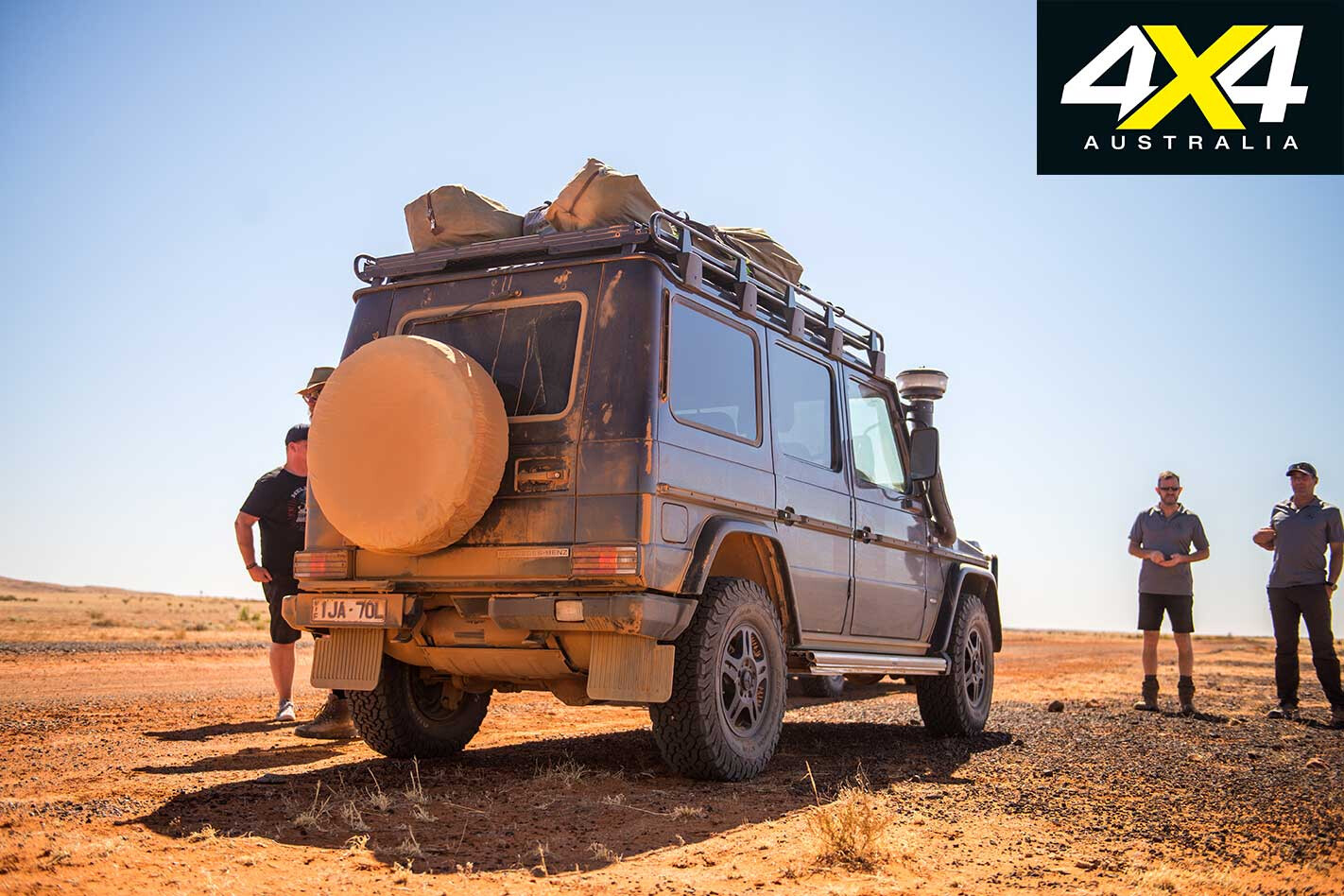
A functional wagon body on a robust frame with coil-sprung live axles front and rear, triple differential locks and low range; it’s a solid foundation for an overland vehicle and one that has been used by explorers, militaries, NGOs and adventurous private buyers around the globe.
The G 300 Professional arrived in Australia first as the cab-chassis back in 2016. It is a vehicle unique to this country and came on the back of the Australian Defence Force’s adoption of the G-Class to its vehicle fleet.
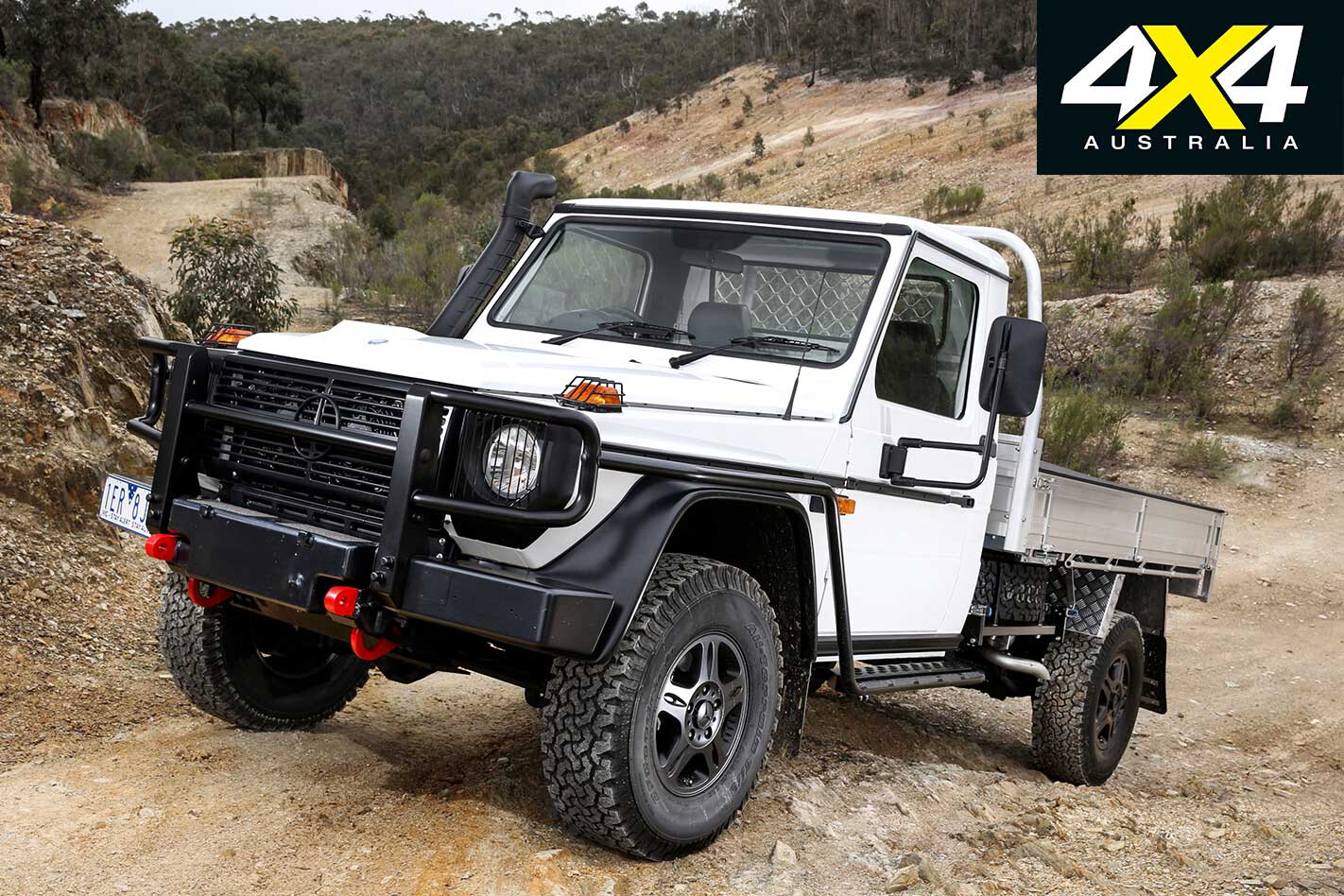
The G 300 Cab Chassis offers an all-terrain, load-hauling vehicle with unrivalled capability. Its main rival here is the ever popular Land Cruiser 79 series, but the G’s two-tonne payload (dependent on tray fitted) more than doubles that of the Toyota and, with its longer wheelbase, better carries the load over the rear axle rather than behind it.
The vehicle comes as a bare cab-chassis and it’s up to the owner to fit a tray, service body or canopy to it, and it’s ideally suited to mounting a camper body on the back to create an expedition-ready tourer.
The chassis is heavily sprung in order to accommodate its two-tonne payload and, as a result, the ride quality when unladen is stiff and harsh. Fitting a camper-back or loading it up with a one-tonne water tank (as we did on test) softens the ride yet has no detrimental affect on the suspension as it would on most other vehicles.
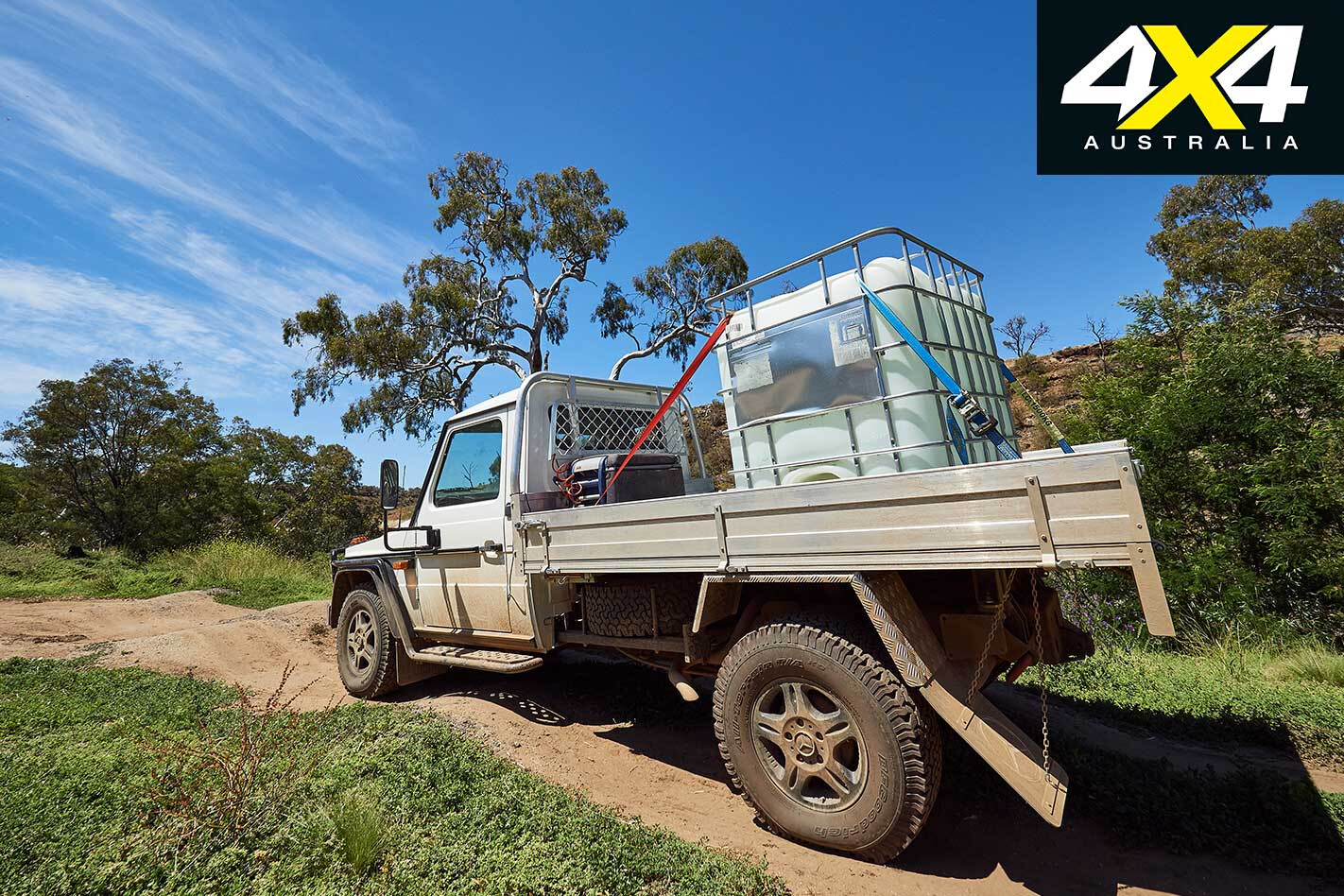
We drove a G 300 Cab Chassis, fitted with a fully loaded service body that weighed in at around 1500kg, in the Simpson Desert, and that load perfectly balanced the vehicle. It felt comfortable and at home cresting the sand dunes and exploring the harsh, remote tracks.
The two-seat cabin is spartan by Mercedes-Benz passenger car standards, with uncovered painted floors, manual winding windows and a basic radio/CD player that is offered as an option only. There’s even a drain plug in the footwell so you can hose out the interior after dirty adventures.
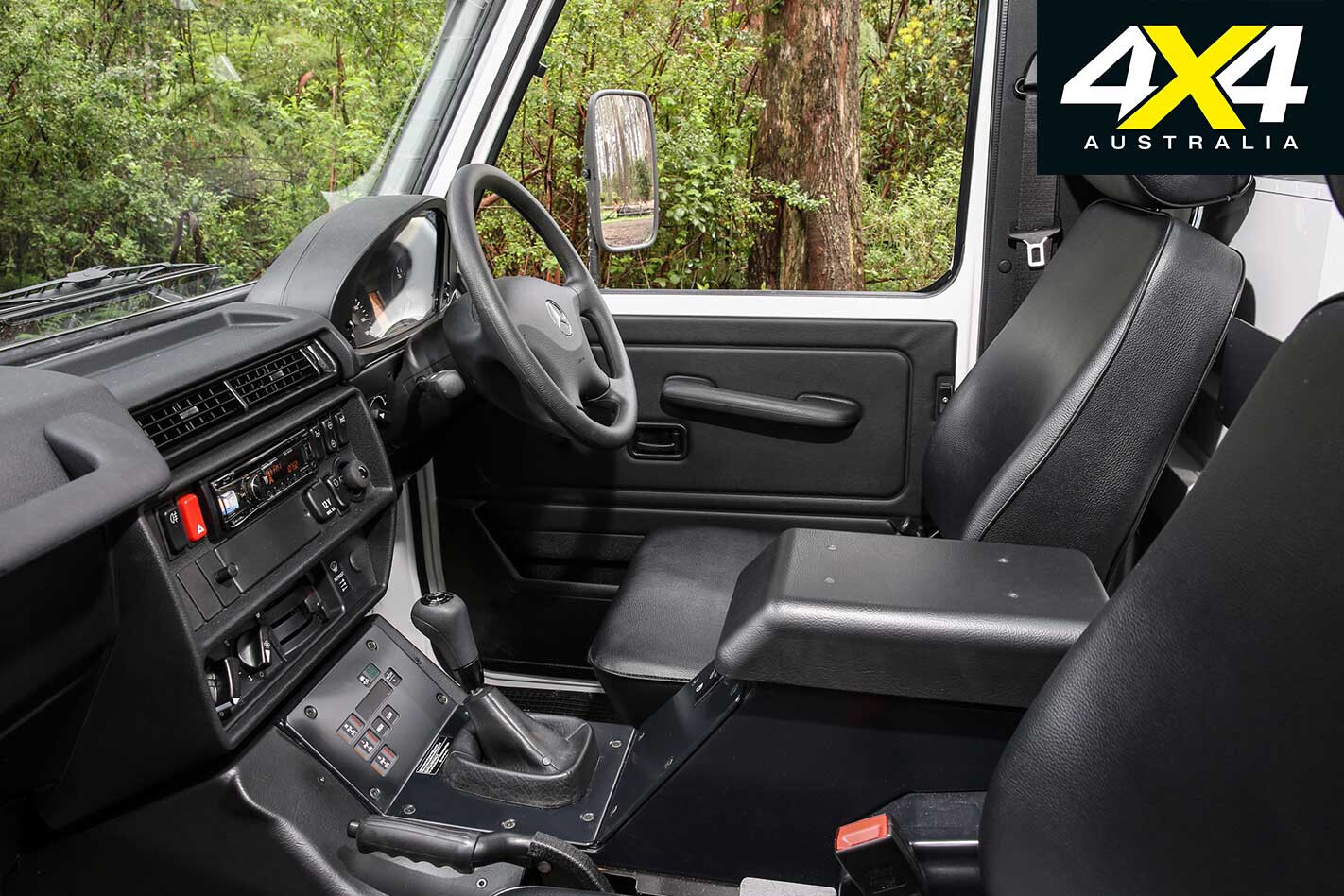
The cabin is compact with minimal space for storage, other than the handy enclosures beneath each seat, reflecting the workhorse nature of the vehicle. It also presents a blank canvas to anyone wanting to further equip it for recreational or touring use.
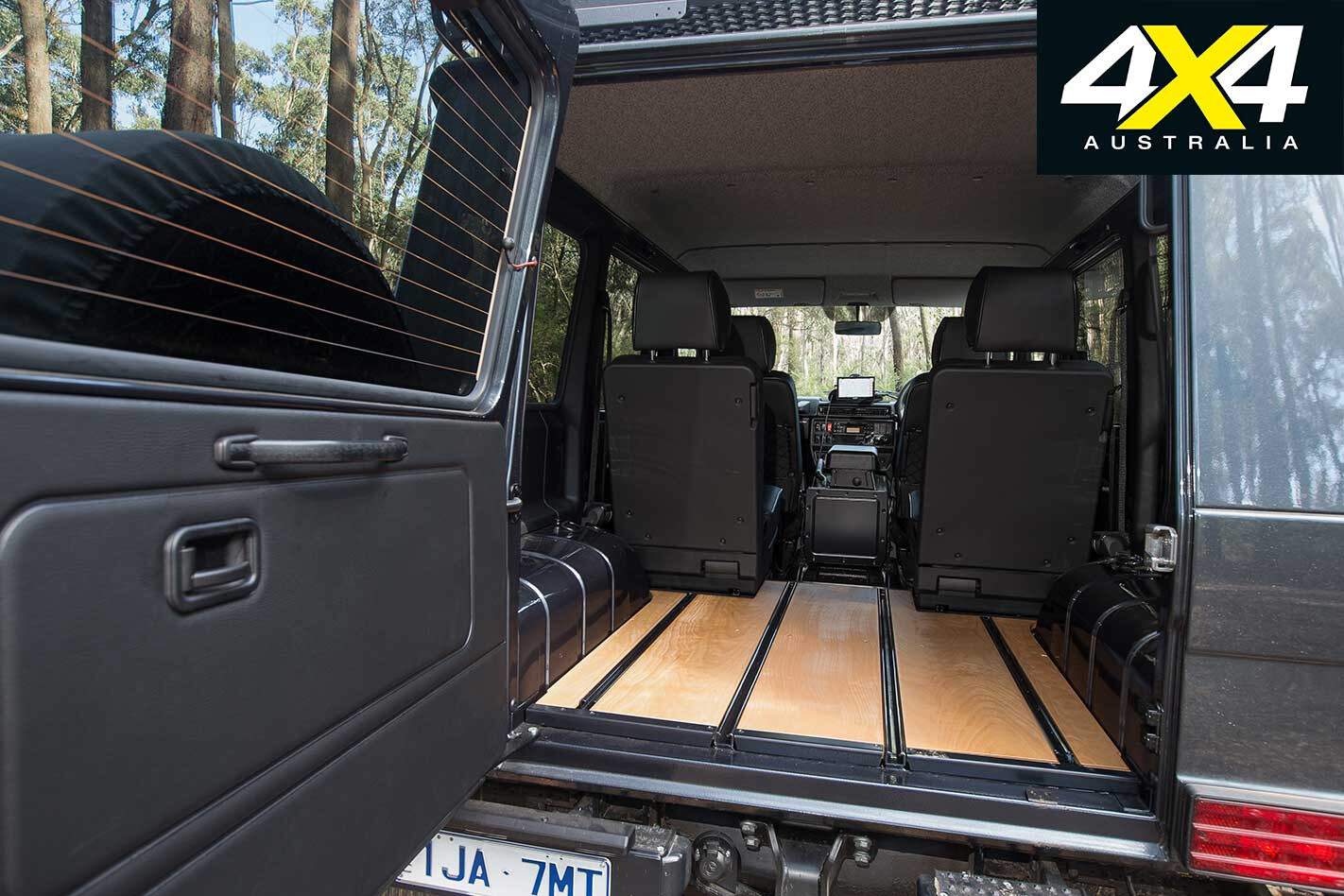
The G 300 Professional wagon provides occupants with a bit more room to move inside. It has four bucket seats, leaving a walk-though space between the rear seats to the cargo area; great for carrying longer goods or perfect for a mountain bike.
The front seats go back farther in the wagon than they do in the cab-chassis, which further improves comfort. However, like the truck, it is a basic, hose-out interior with very few modern conveniences.
Our G 300 wagon was fitted with the optional Edition PUR package, which adds heated leather seats, a radio/CD player, smart-looking wood flooring in the cargo area, and a sturdy roof rack. This is a $10,000 option and really gives the exterior that expedition look, while adding functionality and a touch of class to the inside.
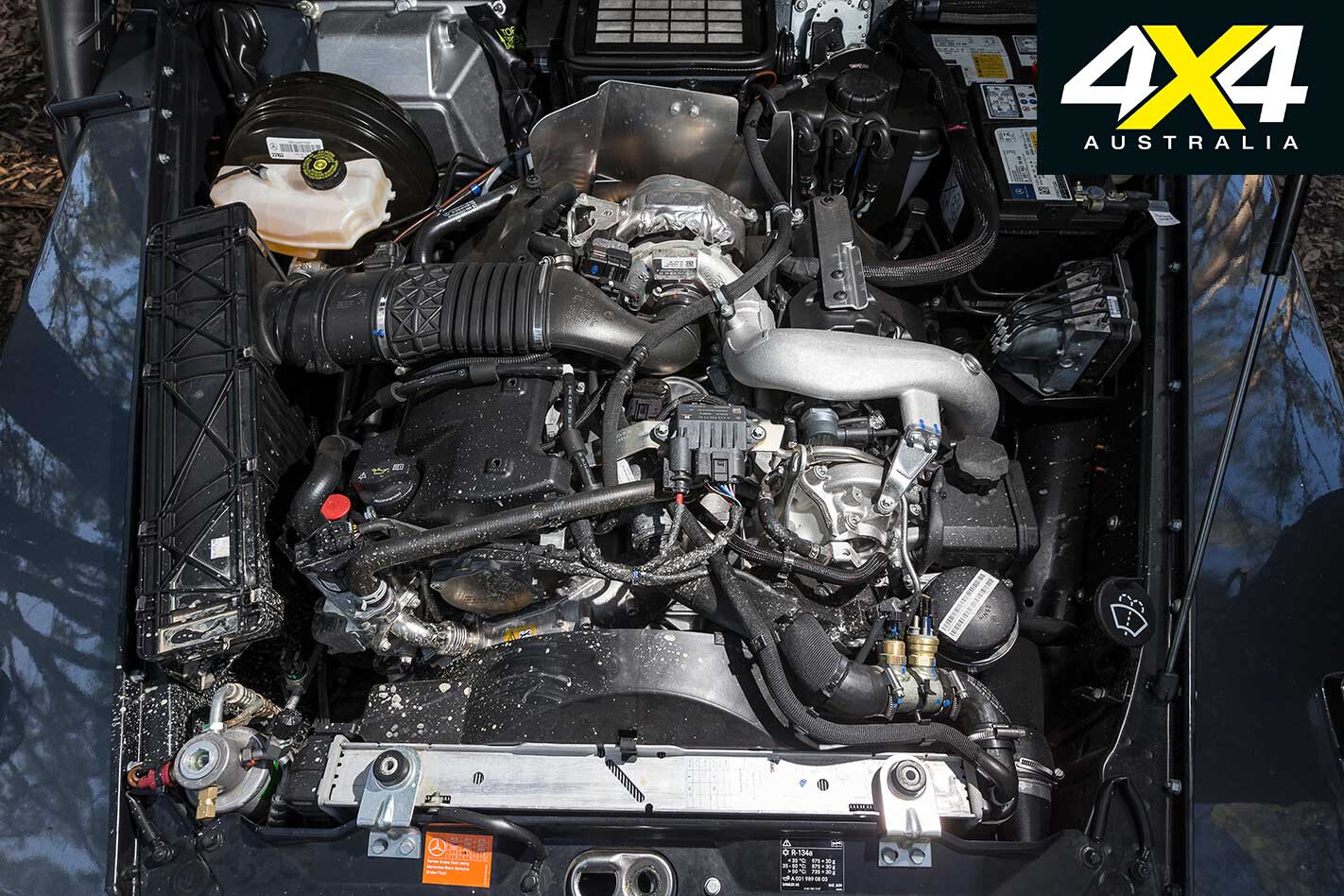
Both the cab-chassis and wagon are powered by the same 3.0-litre diesel V6 engine that makes a modest 135kW and 400Nm. This engine is derived from Benz’s popular diesel V6 as used in passenger cars and SUVs, but it has a low state of tune to make it serviceable in countries anywhere in the world, many of which don’t have the fuel quality to reliably produce high power and torque numbers.
The engine is backed by a five-speed automatic transmission, full-time four-wheel drive with high and low range, and the aforementioned locking differentials. The transfer case and the three differential locks are activated by buttons ahead of the gear shifter, and the lockers are switched in sequence as the terrain dictates; starting with the centre differential.
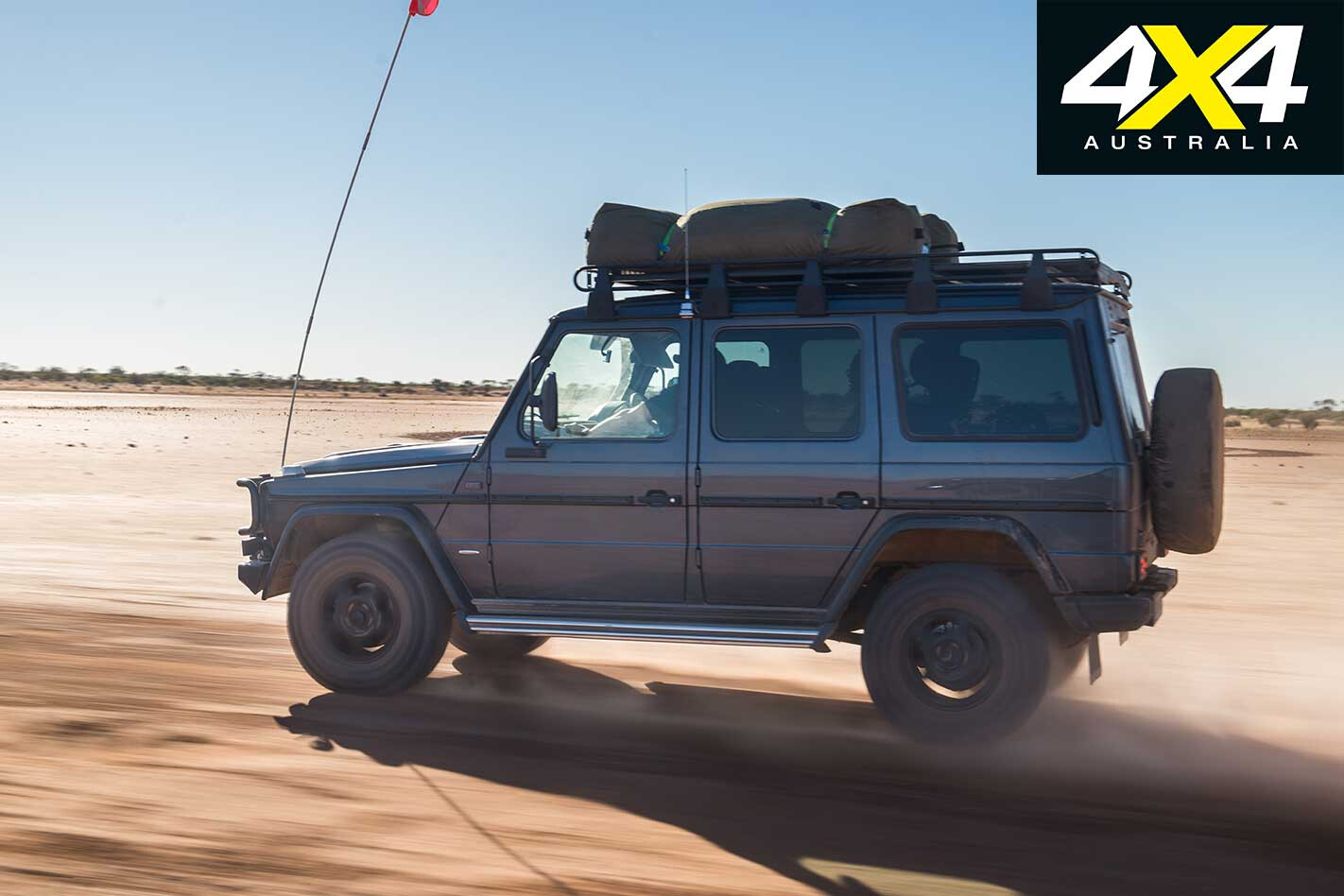
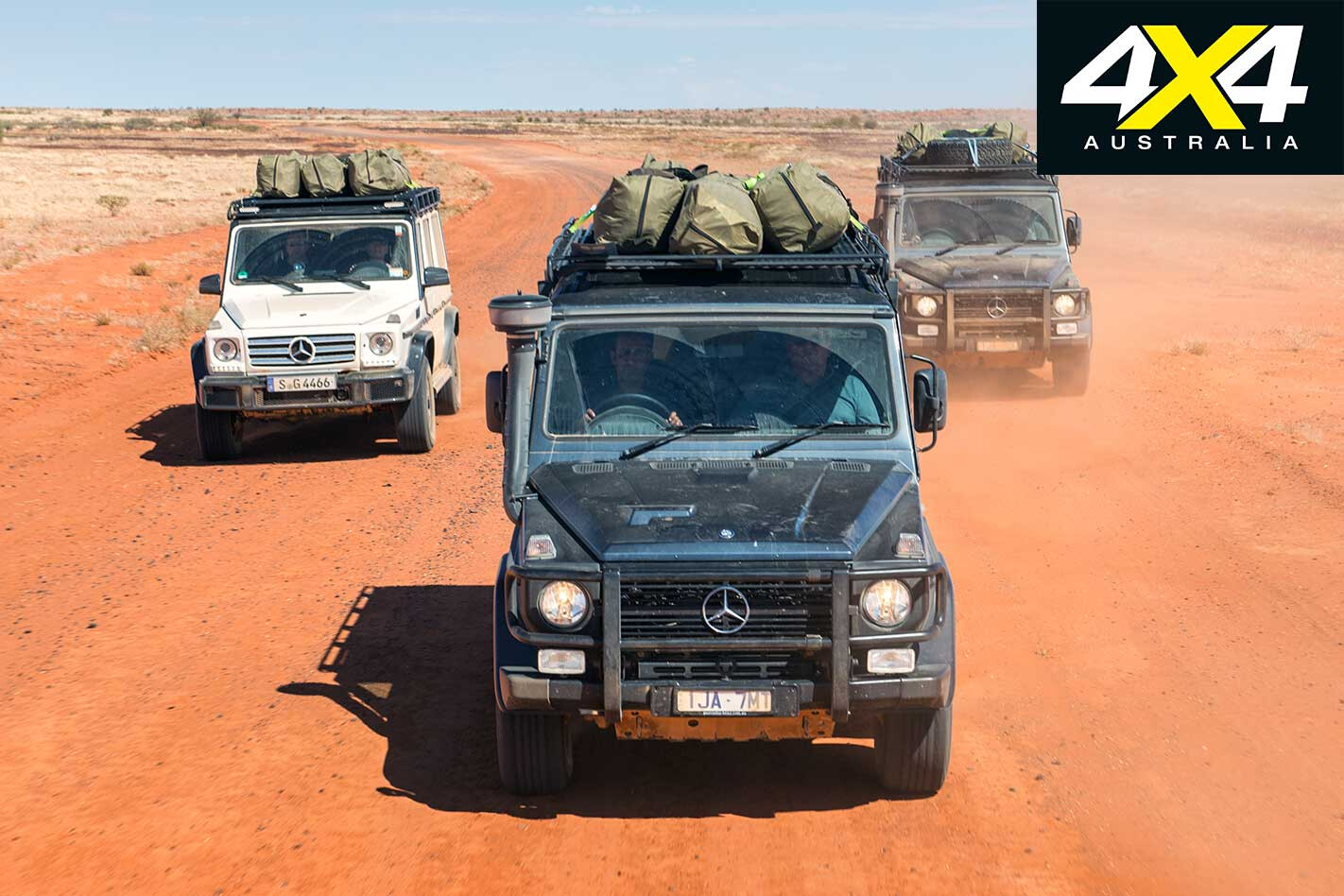
With all three diffs locked the G 300, be it cab-chassis or wagon, is near-on unstoppable – mud, rocks, sand and ruts are all traversed with confidence and ease. The stiff suspension doesn’t have a lot of travel so the lockers are needed to keep that momentum up when the all-terrain tyres are leaving the ground, but there isn’t much that’ll hold the locked G back.
In a nod to functionality, those chunky tyres are mounted to practical 16-inch alloys and not the large diameter rollers you find on city-based SUVs. Other practical features include a 96-litre fuel tank, an engine-intake air snorkel, standard bullbar, dual batteries, tyre-pressure monitor, dirty air filter warning, headlight and indicator guards, and underbody protection.
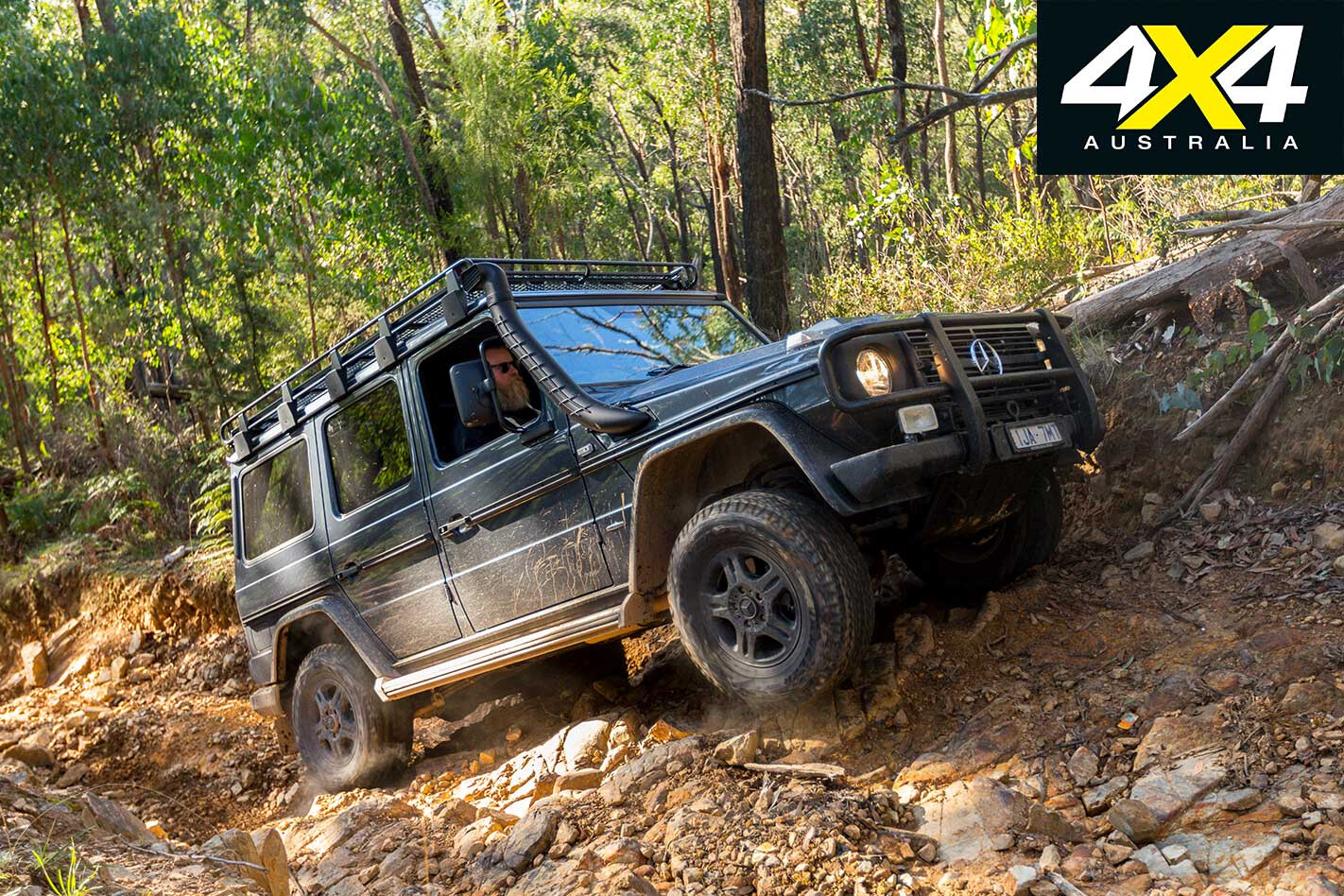
Being a vehicle that retains its 40-year-old design, the body of the G 300 Professional is old-school, which means it has a nice big glasshouse – an upright windscreen with thin pillars so it affords the driver plenty of visibility around the vehicle, allowing them to position it well on the track. This is an important aspect of off-road driving and something lost in more contemporary vehicle designs.
The Mercedes-Benz G 300 Professional is a classic example of form-follows-function design. It’s built for purpose and it serves that purpose like no other vehicle. This is testament to its success and how it has stood the test of time for close to 40 years.
| u00a0 | G 300 Professional Wagon | G 300 Professional Cab Chassis |
| Engine | 3.0-litre V6 turbo-diesel | |
| Power | 135kW at 3800rpm | |
| Torque | 400Nm at 1600-2600rpm | |
| Gearbox | Five-speed automatic | |
| 4×4 System | Dual-range full-time | |
| Kerb Weight | 2350kg | 2410kg |
| GVM | 3560kg | 4490kg |
| Payload | 1210kg | 2080kg (minus tray weight) |
| Towing | 3140kg | 3200kg |
| Fuel capacity | 97 litres | |
| ADR Fuel Claim | N/A | |
| Price | $109,900 (+ORC) | $119,900 (excluding tray) |
TOYOTA and Isuzu have agreed to dissolve their capital tie-up, an agreement established back in 2006.
The agreement signed in November 2006 meant both companies would work together with a focus on developing diesel engines, as well as “provide mutual technical assistance and to create a framework capable of capitalising on the resulting synergistic effects, and to examine the feasibility of collaborative projects.”
Toyota acquired a 5.89 per cent stake in Isuzu, with the intention of utilising Isuzu’s strong background in diesel technology. However, with different goals moving forward – a stronger focus on hybrid vehicles – Toyota intends to sell its entire stake.
Toyota and Isuzu agreed to “re-examine the capital relationship” due to “changes in the market environment” and “little specific progress achieved in other collaborative efforts”, which prompted the companies to “suspend some of the originally considered projects”.
The press statement concluded, “As the automotive industry faces sweeping, once-in-a-century changes, Isuzu and Toyota intend to accelerate their efforts to improve competitiveness in the commercial and passenger vehicle markets, respectively”.
Toyota and Isuzu’s local arms have been contacted for comment; stay tuned for more info.
A trip to Wyperfeld National Park is a journey into one of the more remote areas of Victoria. Highways turn into narrow one-lane roads and you pass through some townships which comprise only a handful of houses. Soon a vast landscape stretches out before you in every direction and you know you’re in big sky country.
This feature was originally published in 4×4 Australia’s September 2012 issue
Wyperfeld covers 360,000 hectares of Victoria’s north-west and is also known as mallee country. The park has three distinct landscapes and each makes for a different experience: the west is dominated by desert, the east covered with mallee eucalypts, and the north home to large white sand dunes, nicknamed Snowdrift.
We were ready for another outback adventure, and the kids were itching to see emus and kangaroos and, of course, climb the sand dunes. Approaching the park from the south, we stopped at the Parks Victoria office in Rainbow to get the latest information on road conditions. The ranger advised us the North-South Track was in good condition, but warned about the Milmed Rock and Chinaman’s Well tracks in the west.
“If you have intentions of attempting either track,” he told us sternly, “you should first come to the office to let us know.” His main concern was the deep and soft sand at that time of year, and the fact we travelled as a solo vehicle.
Armed with up-to-date info, we continued our trip north and headed for Wonga campground. The camping area was almost deserted; one caravan at one end and a campervan at the other. It was tempting to set up under a large gum tree to have some shade, but we had been warned about falling limbs.
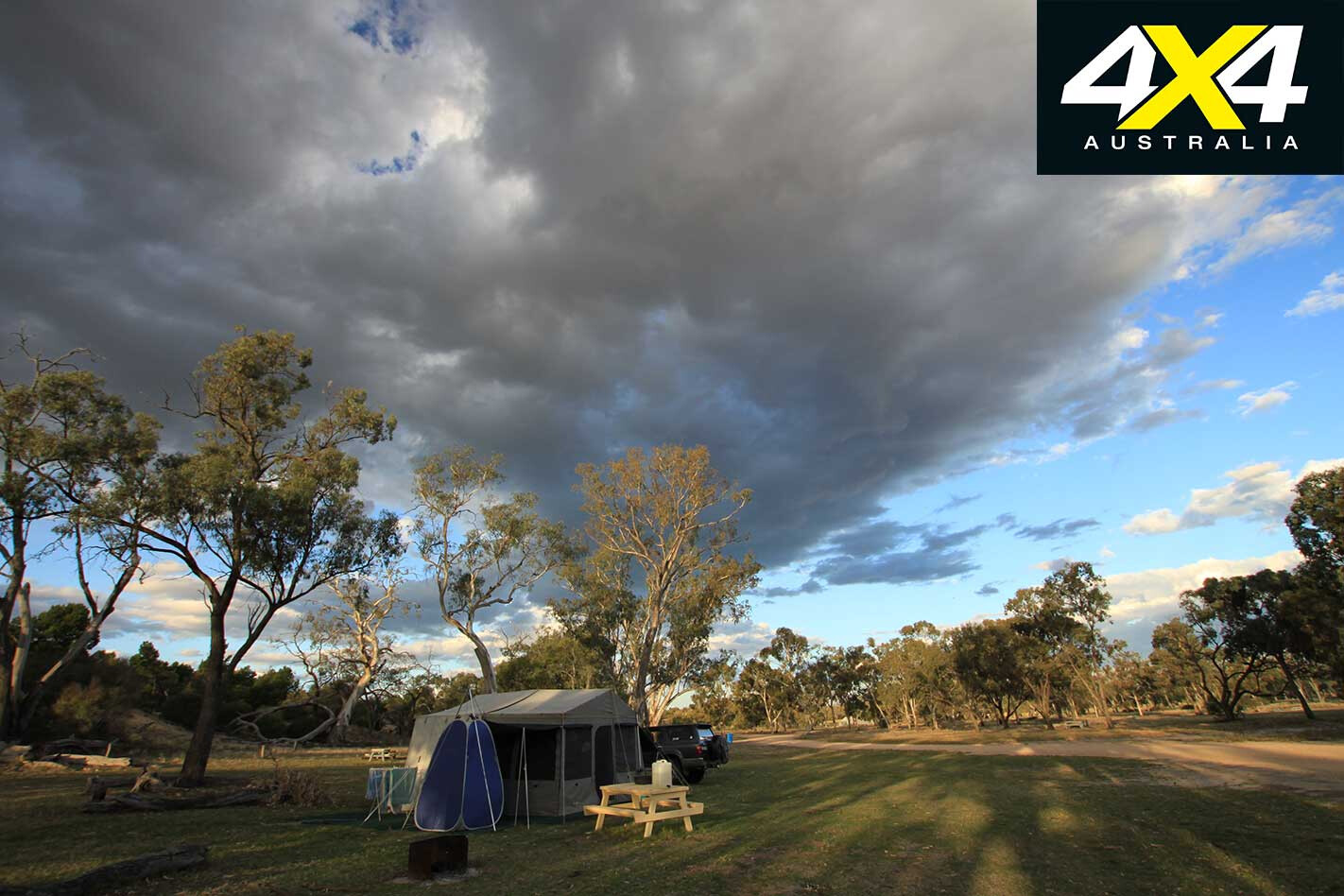
Unfortunately, we failed to see the sign warning visitors about the feral bees and made the mistake of putting the bush shower right next to our tent. That afternoon, a swarm of bees descended upon our awning after we’d all had a shower. The constant buzzing didn’t stop until dusk.
Chris quickly dug a huge hole next to the shower (underneath the shade cloth which we used as a floor) in order to contain the water. I started throwing out the dish water at least 10 metres away from our tent to give the bees another water source to hang around. Our plan worked and we breathed a collective sigh of relief when peace and quiet returned to our camp site.
The park information centre (open 24/7) contains a wealth of information and is also the place to obtain your camping permit. After paying our fees, the kids ran outside to check out the Wonga Lake whim, which is a replica of the one used during the severe drought of the 1860s.
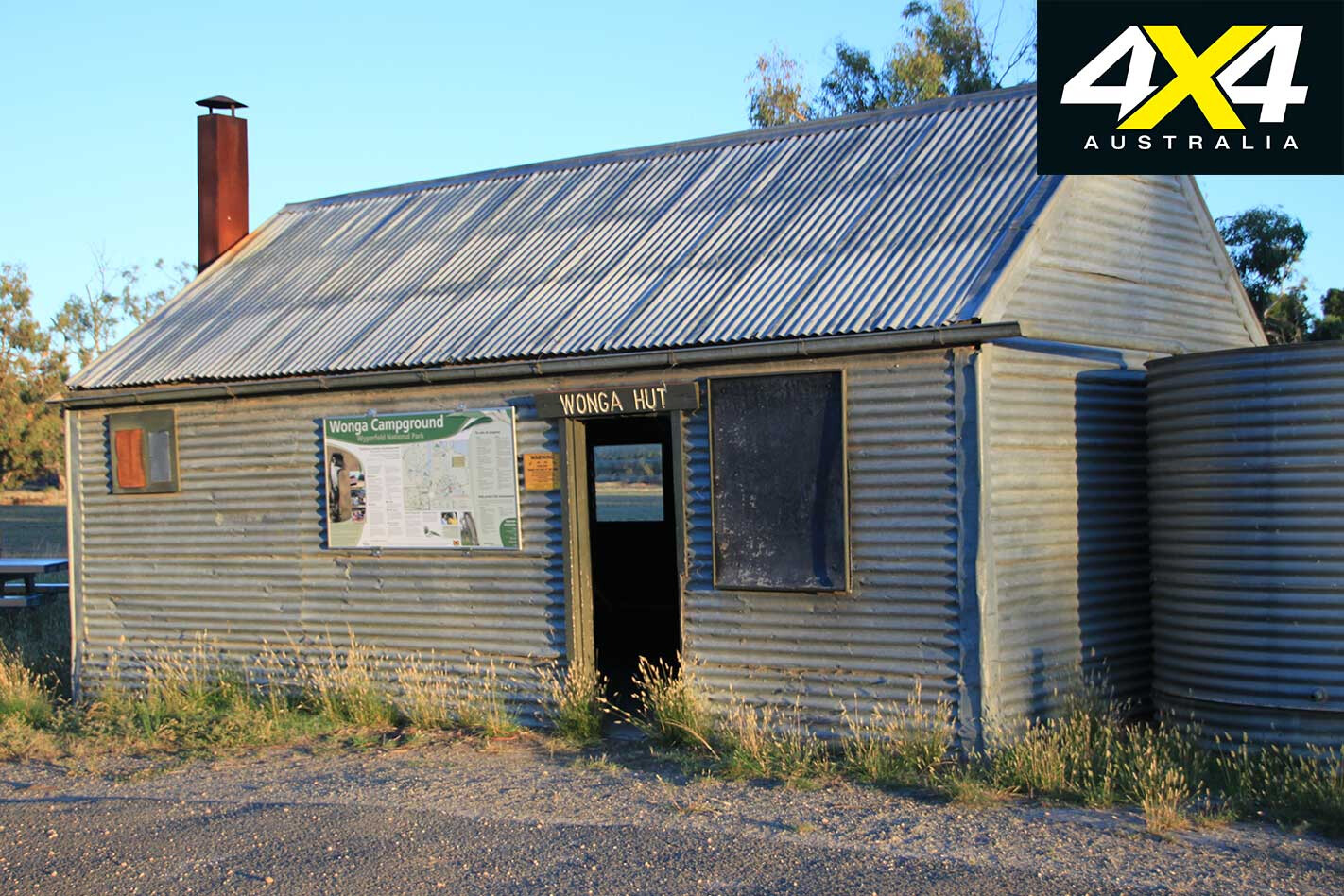
The whim was built to draw water from a well for sheep grazing on the property and stock travelling to Pine Plains. Three-year-old Hannah was fascinated by the stump-jump plough, which is a piece of machinery that was invented in 1876 to help clear the mallee scrub. If the plough hit a rock or root, it would ride over it without getting damaged.
The James Barrett Nature Drive was next on the list. This 15-kilometre loop drive passes through dry lakebeds, flood plains, sand dunes and typical mallee country. One large sand dune, known as Flagstaff Hill, was used as a point to hoist a bucket of burning wood and coals to the top of a pole at night in the early station days to act as a guide for returning bullock teams.
The highlight of the drive is the Eastern Lookout, which is well worth the gentle 400m climb, and rewards with panoramic views – it’s a great spot to watch a sunrise.
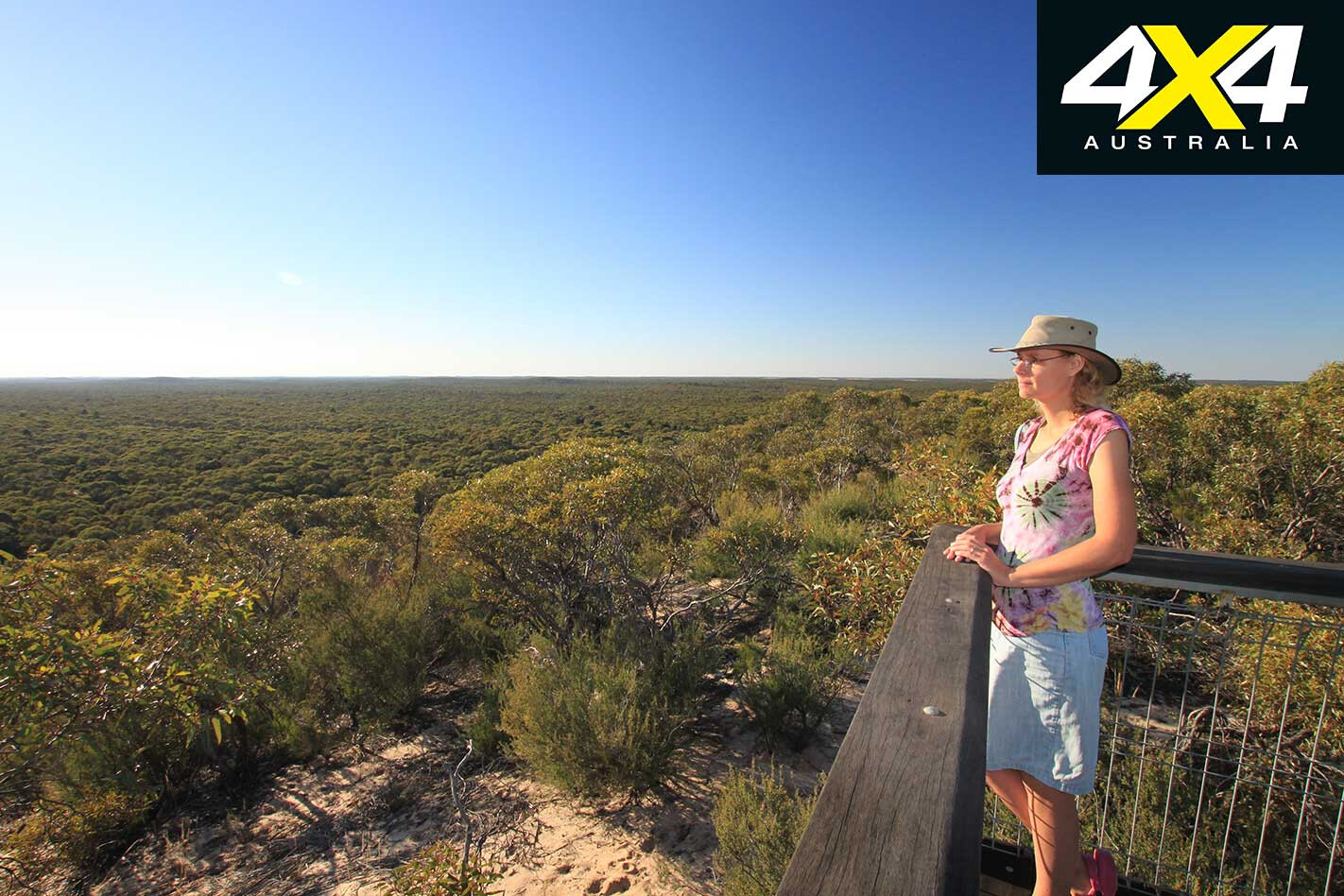
There are plenty of other walks to be enjoyed and most of them are within 5km of the campground. The Discovery Walk starts at the eastern toilet block and takes you up Mt Mattingley where you can enjoy sweeping views of the park, and you are likely to spot kangaroos and emus at dusk and dawn.
The 4.4km Tyakil Nature Walk, accessed via Black Flat carpark, has interpretive signs along the way and takes about two hours to complete. If you’re feeling energetic, park at Nine Mile Square carpark and check out the 6km Desert Walk, which rewards with views of Big Desert and Outlet Creek.
The next day we got up nice and early, ready for our 4X4 adventure to Snowdrift. The kids’ excitement grew as we passed the turn-off to the North-South Track and the sand became deeper. Chris pulled over to drop tyre pressures for a softer, safer ride. (Read ‘Safe in Sand’ below)
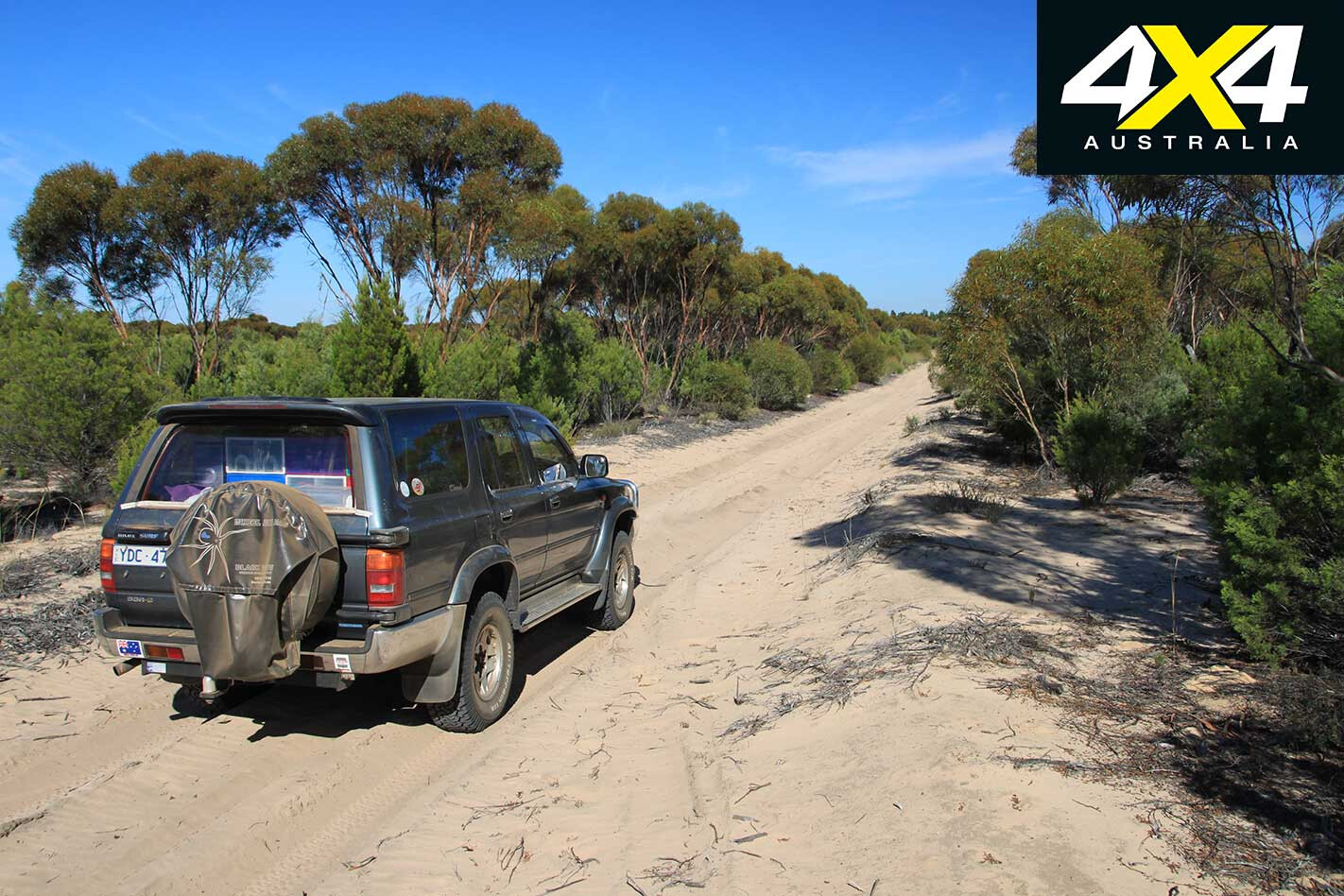
The track wound its way up and down the sand dunes, but nothing terribly steep, and a right turn took us onto the Eagle Track. We followed the park boundary for a couple of kays until we turned left and continued down the Moonah Track. Suddenly, the scenery changed dramatically and there was barely any vegetation – the sign ‘Callitris Clearing’ provided the obvious explanation.
The track came to a T-intersection where we turned right onto the Meridian Track. We passed Casuarina campground before hanging a left onto the Wool Track, which is a short-cut to the Patchewollock Road. From here you follow signs to Snowdrift.
We were not disappointed when we parked the 4X4 at the bottom of the massive white sand dunes. The kids were off in a flash. For the next half-hour they ran up and down the dunes, sliding, rolling and falling. We were the only people there. The view from the top was impressive, with Wirrengren Plain stretching out before us.
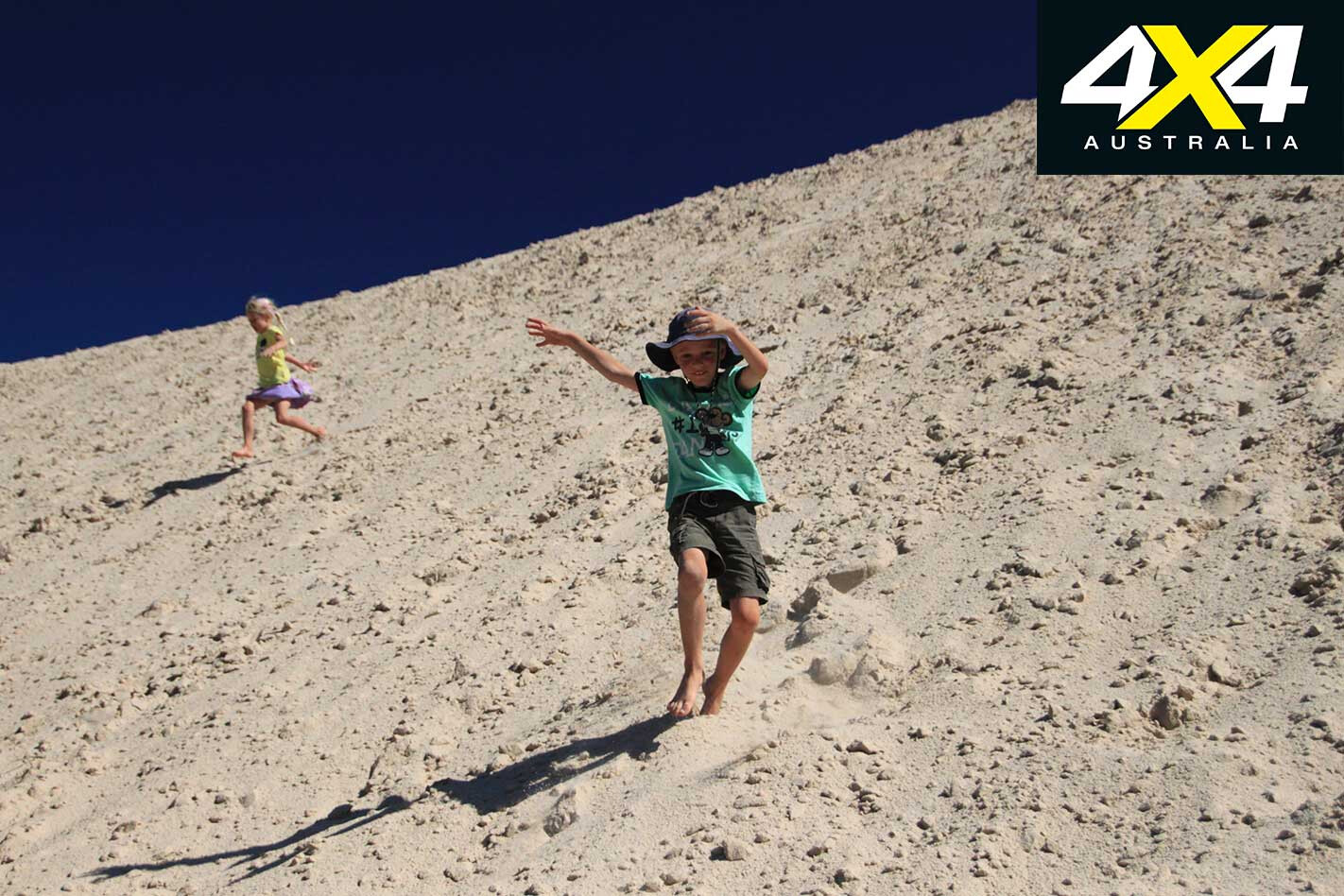
This dry lakebed only fills up when Lake Hindmarsh and Lake Albacutya to the south overflow, which is a rare occurrence these days. You can drive through the lake bed to O’Sulllivans Lookout, but the kids were not interested in going. Finally, the kids had had enough – they were covered in sand from head to toe, but, boy, they’d had fun.
On the way back we stopped at Casuarina campground, where a shaded picnic table was the perfect place, because the temperature hovered in the low 30°Cs. Shannon went exploring and discovered a water melon.
Disappointed he couldn’t eat it straight away, the melon came back with us and was put out in the sun to ripen. He checked it every 15 minutes and complained when the melon still wasn’t ready to be eaten by dinner time. In the end he gave up, cut it open and left it for the bees to eat.
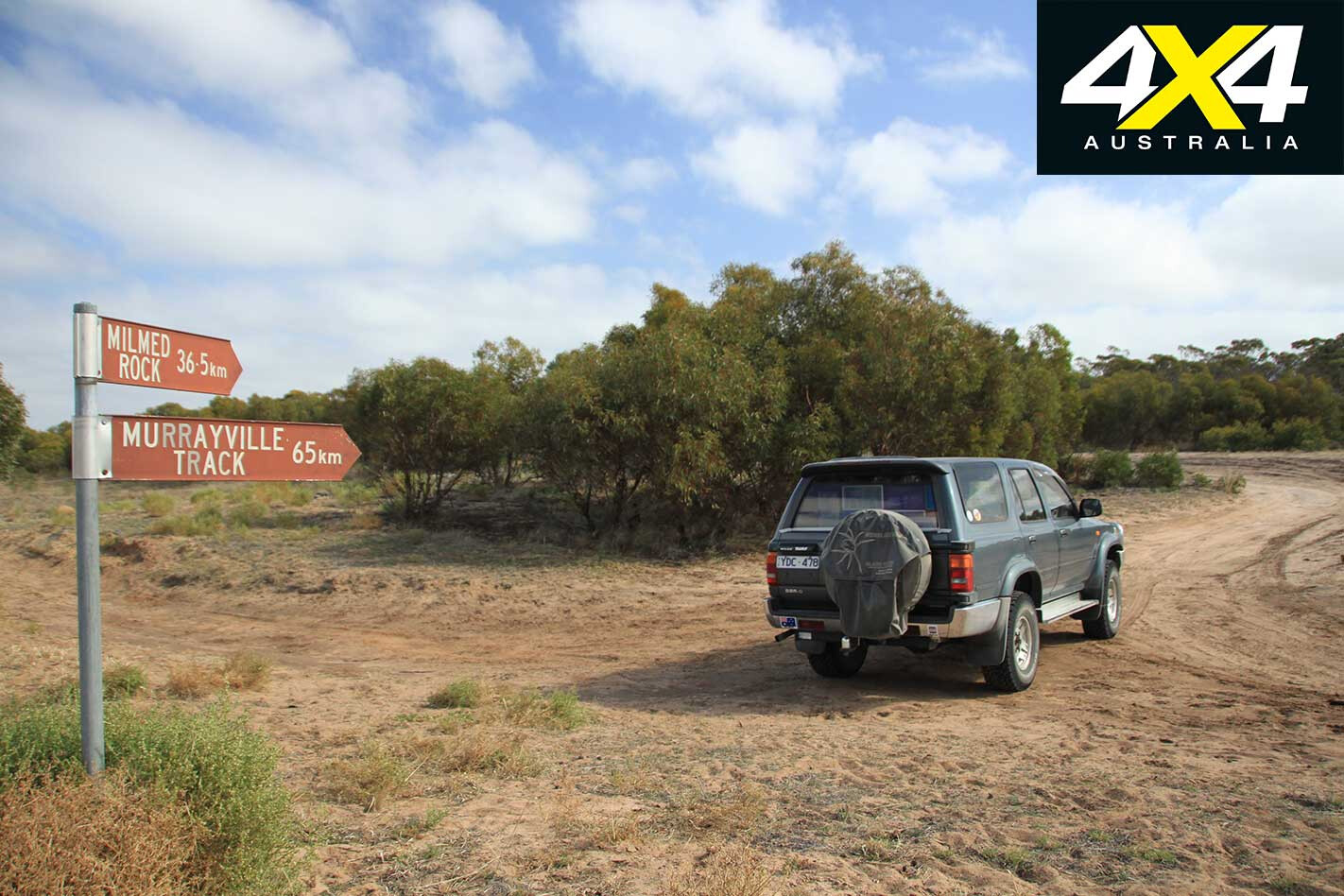
On our last day we headed south to check out Lake Albacutya and the start of the Milmed Rock Track.
Lake Albacutya last filled in 1975 and is part of a complex lake system. The lake floods only when the Wimmera River overflows from Lake Hindmarsh. The major flood of 2011 was enough to fill Lake Hindmarsh to two-thirds, but it wasn’t enough to overflow into Lake Albacutya.
It is quite an experience driving through a dry lakebed and you come to realise the massive importance of such a precious natural resource – water. You know you’ve reached the other side when you see the Western Beach camping area. This large campground has pit toilets, picnic tables and a toilet/shower block, which is maintained by the Friends of Albacutya. Amazingly, you can camp there for free.
We turned right and continued north along the Purra Track. In some sections the sand was very soft and quite deep, making this track unsuitable for the inexperienced four-wheel driver. Chris did his fair share of four-wheel driving during our two-year trip around Australia, so he wasn’t too fazed.
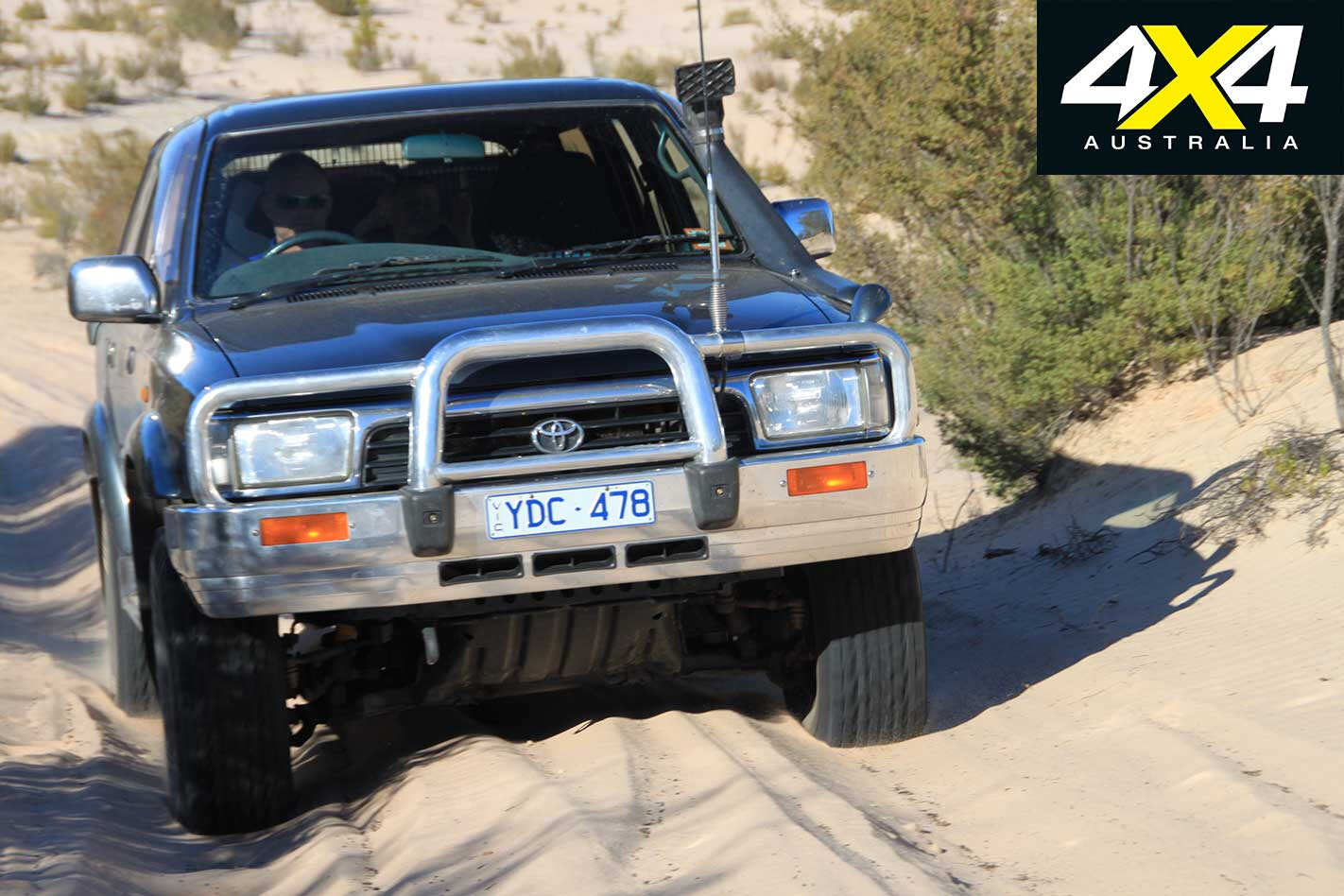
Instead of driving back the same way, we headed out onto the lake and cruised back to Western Beach. This time we continued south and turned right onto Kurnbrunin Road until we passed a sign to Milmed Rock.
We followed the park boundary for a couple of kays until the track turned north and we hit deep, soft sand. Chris heeded the ranger’s warning and turned the vehicle around. There was a fair possibility of getting stuck and it’s not a risk you want to take when you’re a solo vehicle, especially with three kids in the back.
That night we watched in awe as the sun slowly slid behind the horizon and a soft pink coloured the sky. Soon countless stars dotted the firmament and we sat there, in silence. There’s nothing like exploring this amazing country and camping in a remote location, away from the crowds and the busyness of life. So, when’s your next trip?
Safe in Sand
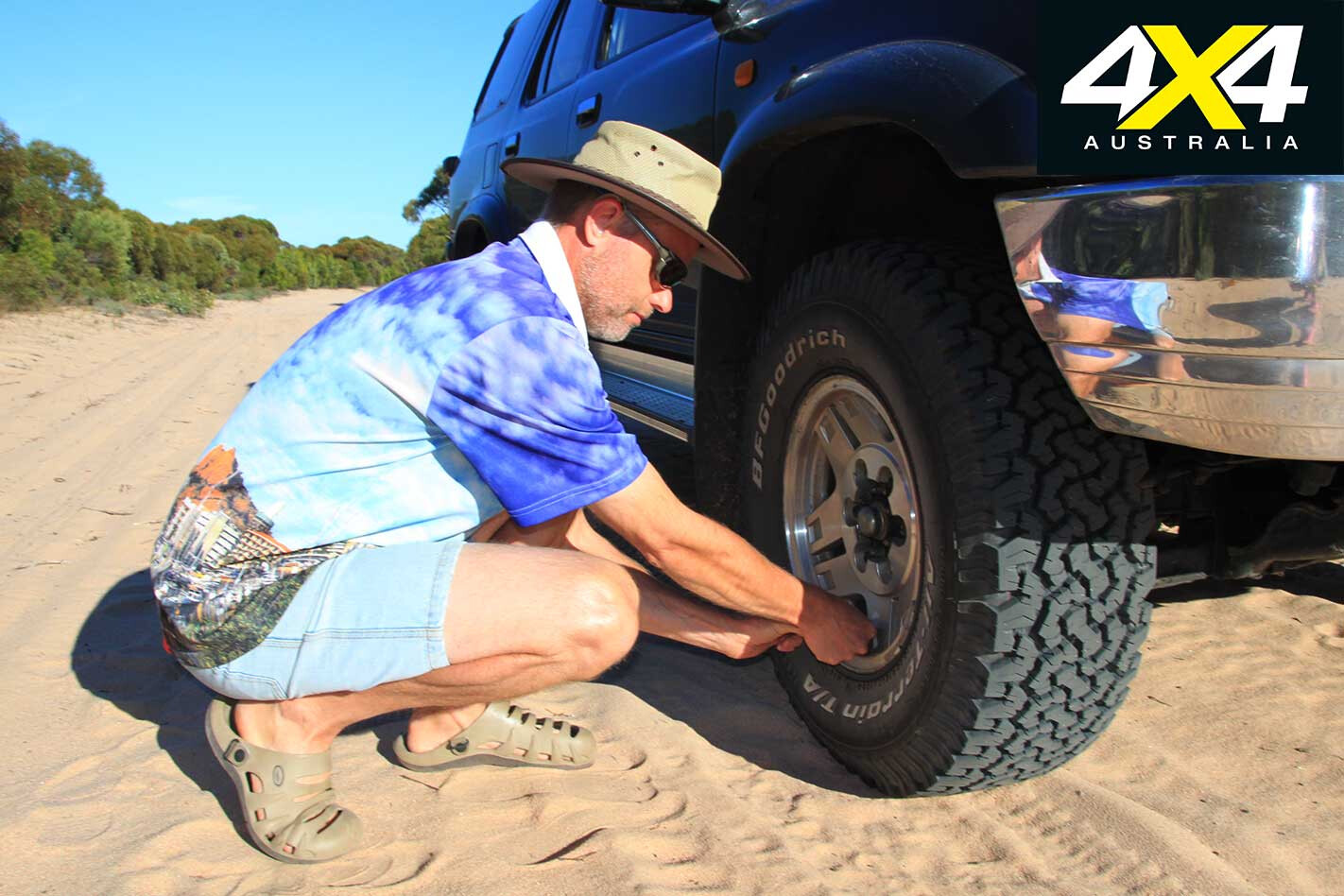
Here are a number of tips to keep you moving through the sand: – Take a shovel, compressor and tyre-pressure gauge – Fill up before the trip as fuel consumption will increase in sand – Lower tyre pressures (to around 15psi) – Remove weight from the vehicle – Don’t tow a trailer – Use steady momentum, but don’t drive aggressively – Use high-range for higher speed; low-range for tight track work – Keep your speed down – Accelerate gently – If the wheels spin, stop and immediately and back out. Don’t spin the wheels into a hole.
Travel Planner
WHERE Wyperfeld NP is 450km north-west of Melbourne and is accessed via Rainbow from the Western Highway at Dimboola, via Underbool on the Mallee Highway, via Hopetoun on the Henty Highway or via Patchewollock off the Sunraysia Highway.
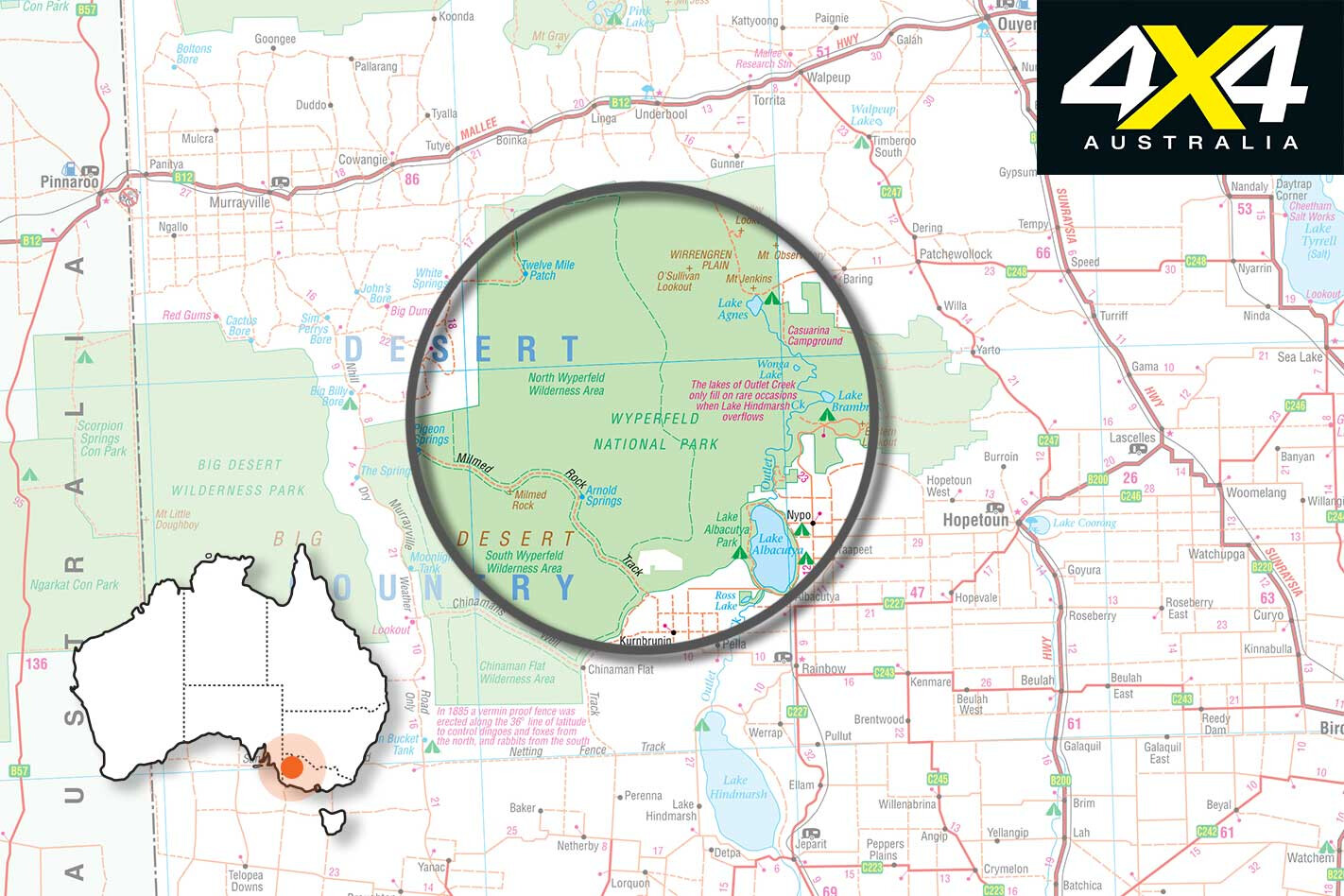
CAMPING Wonga campground in the southern end of the park is the main camping area and has a Park Information Centre. Facilities include toilets, picnic tables, rainwater tanks and bins. Casuarina campground in the northern area of the park is smaller and has toilets, picnic tables and a rainwater tank. Generators are not allowed. The best time to visit is spring, autumn or winter.
WHAT TO TAKE Be completely self-sufficient with food and water. Bring a bush shower. Recovery gear is mandatory.
SUPPLIES & FACILITIES When staying at Wonga campground in the south, the closest town with a supermarket and fuel is Rainbow (40km). If you choose to stay at Casuarina, Patchewollock is the nearest township (20km).
TRIP STANDARD The road to Wonga campground is sealed. Casuarina campground can be reached via sealed road from Patchewollock. The James Barrett Nature Drive in the south is accessible to 2WDs. All the other tracks in the park are 4X4 only, due to soft, deep sand.
CONTACTS Phone Parks Victoria on 13 19 63 for more information about the park and current road conditions or visit www.parkweb.vic.gov.au and download the park notes.
MAPS & GUIDES Wyperfeld National Park Visitor Guide and Mallee Drive (Parks Victoria).
PERMITS Camping fees are $14.50 per site per night. Self-registration is available.
THE July VFACTS report has landed, and the Toyota Hilux has reclaimed top spot from the Ford Ranger on the monthly 4×4 charts.
In June, Ford sold 4236 Rangers and Toyota sold 4032 Hiluxes; but, in July, more Hiluxes (2660) left the showroom floor (versus 2600 Rangers).
The Prado remains the best-selling 4×4 wagon and slots in at number three on the charts, posting 1434 sales for July.
A total of 75 X-Class 4×4 utes found new homes last month, taking the overall number of Mercs sold since arrival to 797 (a 0.8 per cent share of the PU/CC 4×4 market).
Despite a 7.8 per cent decline of overall new-car sales in Australia, compared to July 2017 – passenger car sales fell 20.2 per cent and SUV sales fell 1.0 per cent – the LCV market posted positive results … just. A 0.1 per cent gain was registered for the Light Commercial segment. More specifically, 4×4 pick-up sales were up 6.4 per cent and upper large SUVs were up 4.1 per cent.
Total new-car sales so far in 2018 have reached 691,073, which is 0.2 per cent below the same year-to-date result for 2017. Of that number, 139,930 vehicles have been LCVs.
Top 20 4×4 Sales: July 2018
THE Toyota Hilux has creeped ever-so-slightly ahead of the Ford Ranger on the 4×4 year-to-date charts, following a marginally better July period.
The Japanese brand sold 2660 4×4 Hiluxes in July, 60 more sales than the Blue Oval could muster with its 4×4 Ranger (2600), giving it an edge of 81 extra YTD sales.
The Mitsubishi Triton continues its stranglehold of third spot on the 4×4 annual charts, with 13,376 sales, 2674 sales ahead of the best-selling wagon: Toyota’s Prado.
Compared to the same time last year, most 4×4 models in the top 10 YTD charts have shown considerable sales growth: the Hilux is up 9.8 per cent; the Ranger up 3.0 per cent; the Triton up 14.9 per cent; the Prado up 8.4 per cent; the Land Cruiser wagon up 11.4 per cent; the D-Max up 6.7 per cent; and the Land Cruiser PU/CC up a whopping 24.2 per cent. Only the Colorado (-8.8 per cent), Navara (-6.9 per cent) and BT-50 (-3.2 per cent) have had poorer years.
Despite a 7.8 per cent decline in overall sales for the month of July – compared to July 2017 – the LCV market produced a minor gain of 0.1 per cent. 4×4 pick-ups also continue to buck the declining sales trend, showing a 6.4 per cent increase.
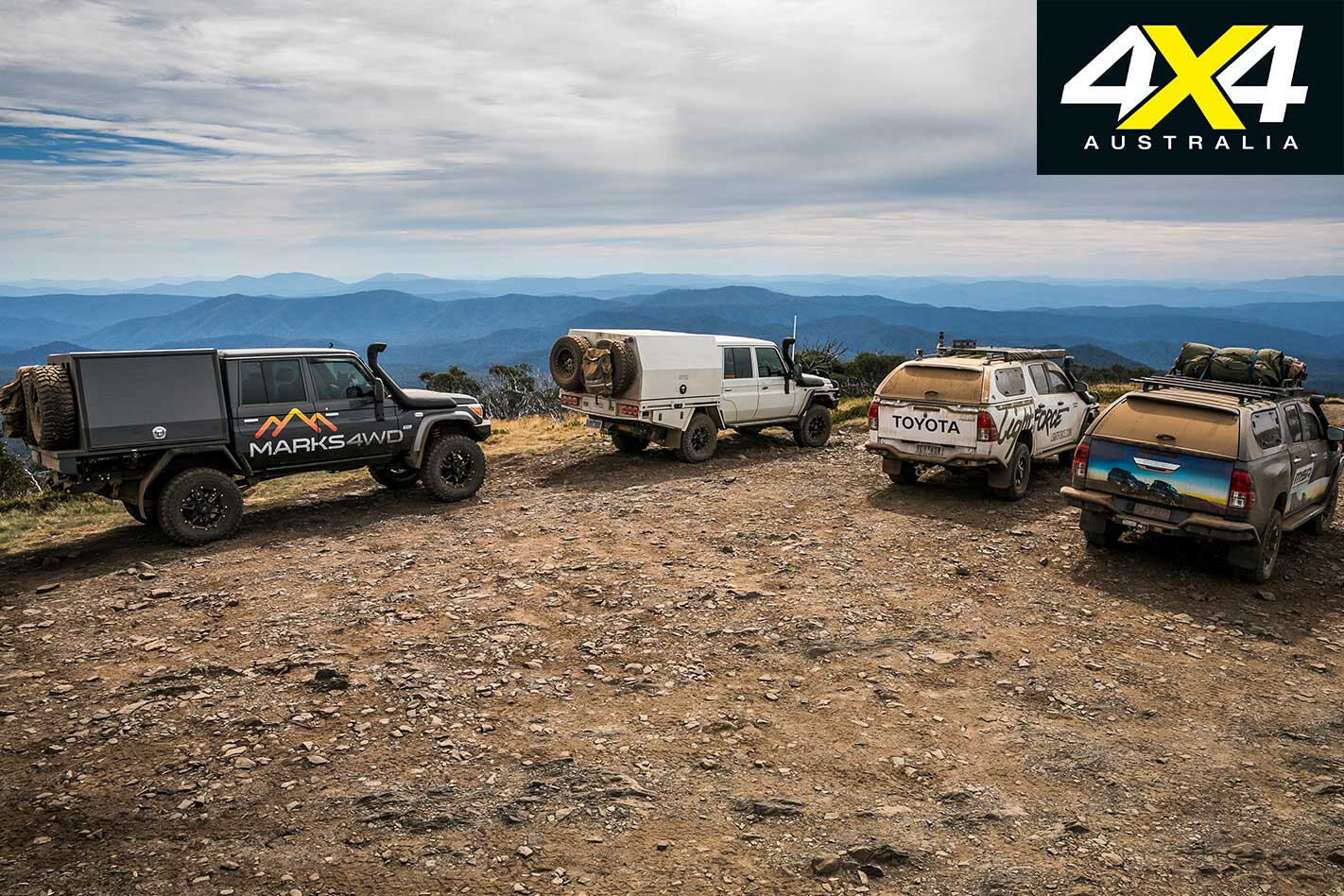
In a continuation of dual-cab dominance on the overall sales charts, the Hilux and Ranger– when you combine 4×4 and 4×2 sales – also occupy the top two spots on the podium. The Hilux with 3747 monthly sales and the Ranger with 2950 sales – the next best is the venerable Corolla with 2594 sales.
Year-to-Date 4X4 Sales: July 2018
FRESH from bringing us the ultimate off-roader in the form of the Explorer XPR440, the folks at EarthCruiser have pointed their spanners towards Merc’s G Professional to create the EarthCruiser Mercedes-Benz G-Pro Escape.
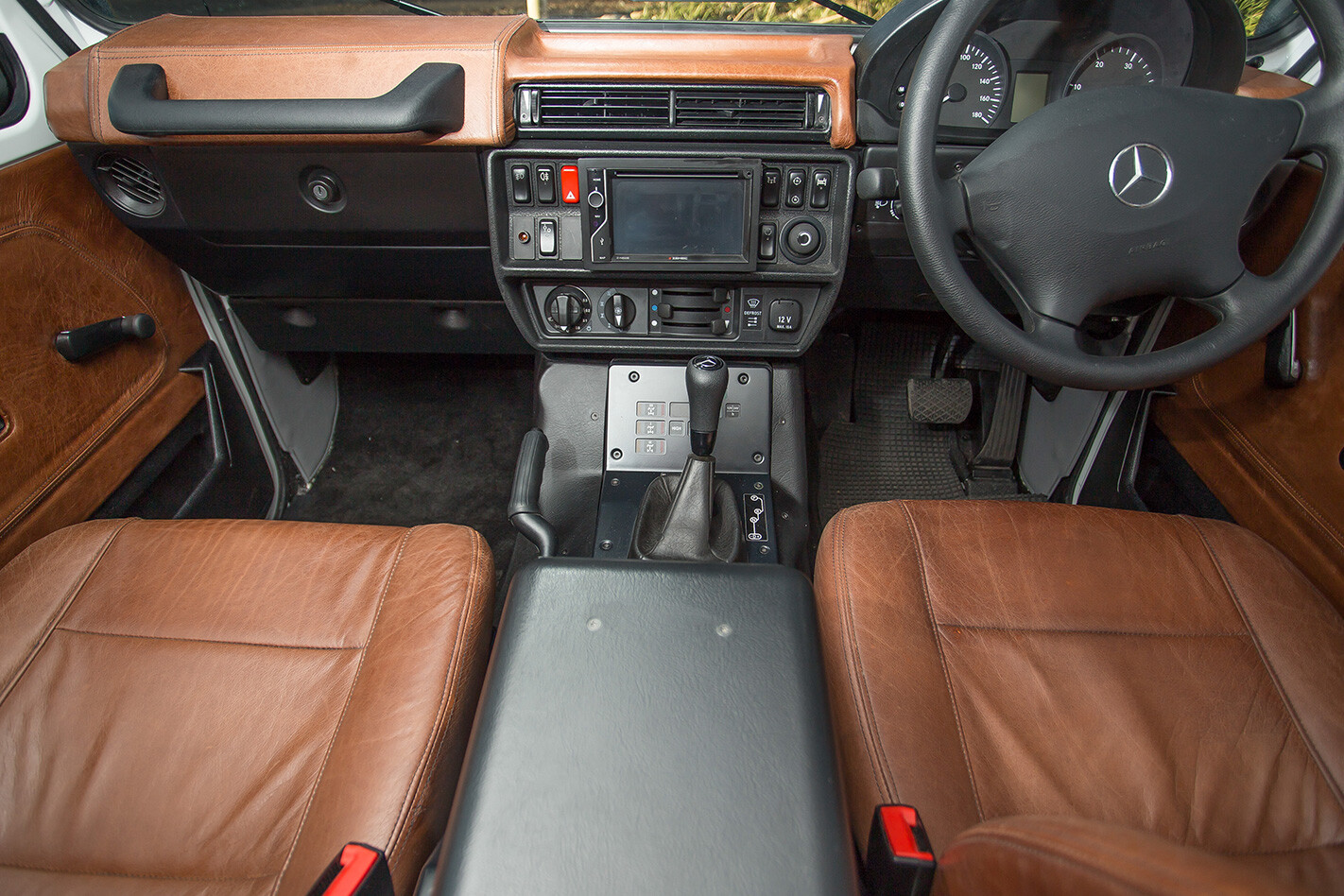
The G-Pro Escape is based on the Benz G-Wagon, so that means it’s running Merc’s V6 turbo-diesel engine capable of 135kW and 400Nm. It’s mated to the German brand’s long-serving five-speed automatic transmission.
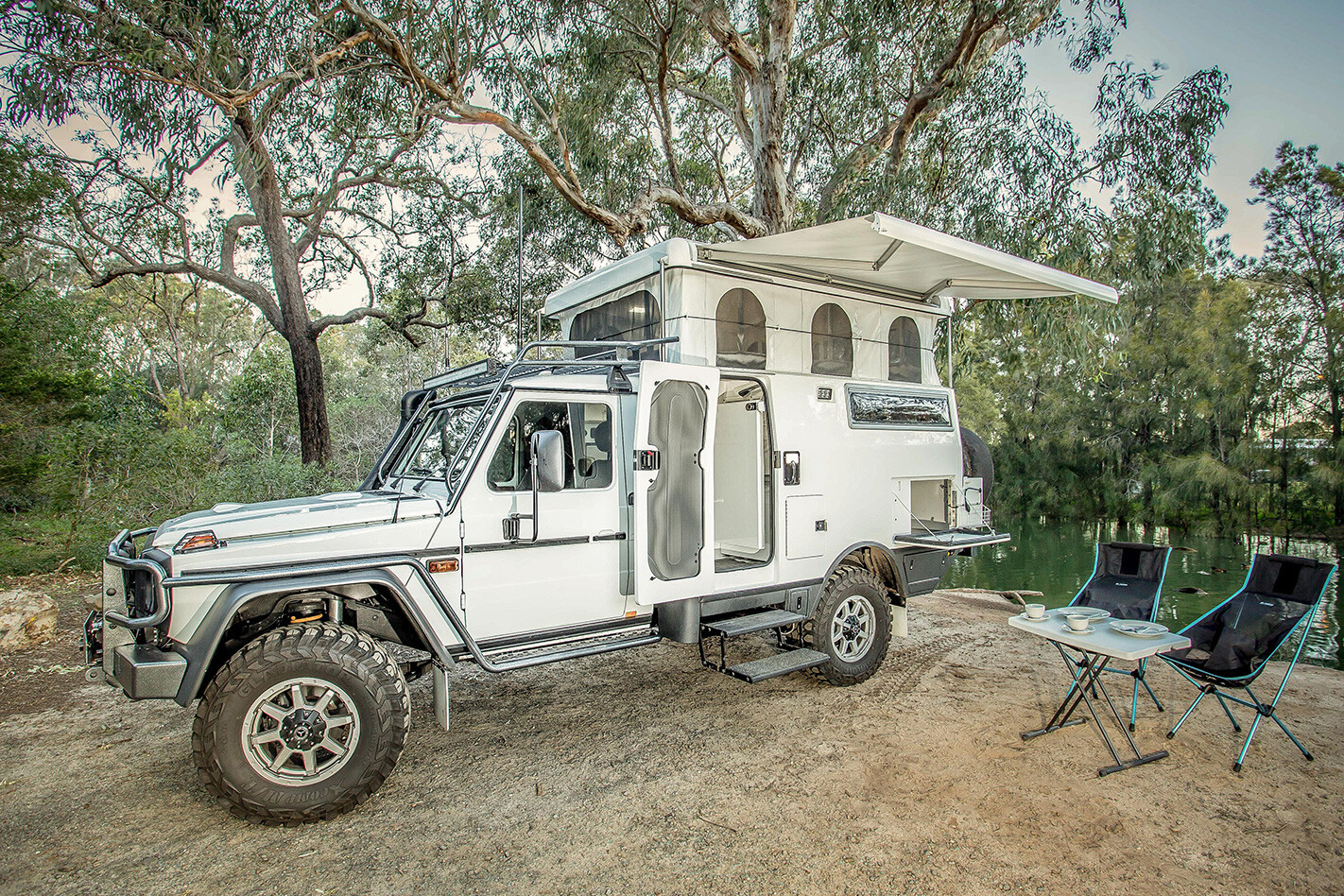
Front, rear and centre differential locks are standard fare on the G-Pro, but the Escape adds uprated shocks, an on-board air compressor, 250-litre tanks for both water and fuel, and a 122-litre fridge/freezer for keeping tucker and liquids cold. 13,500lb winches are positioned fore and aft.
Lithium batteries keep the power flowing and accessories pumping, and they’re kept full via a 120-amp alternator system – solar panels work their magic when the rig is stationary.
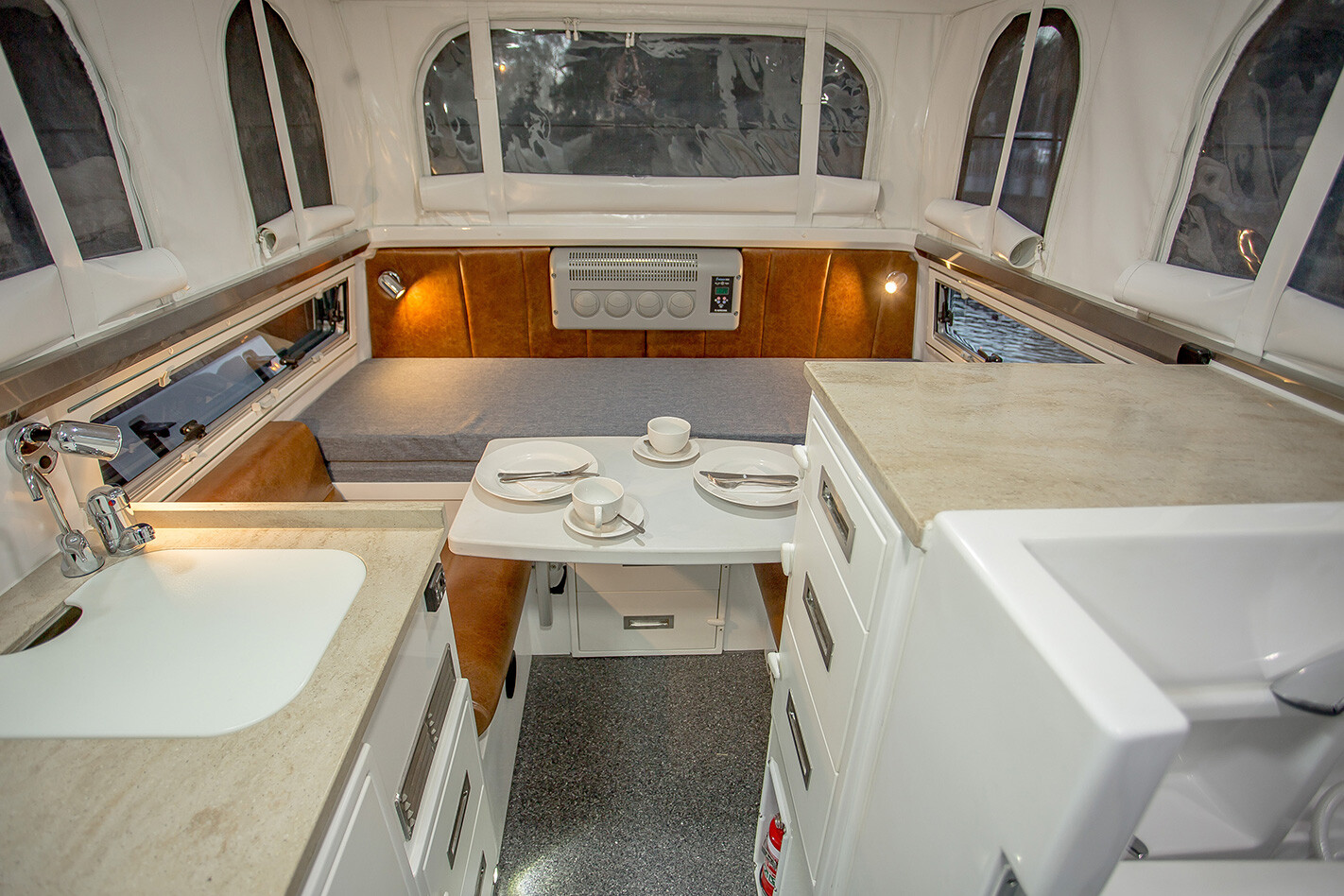
Down back you’ll find a double-bed (there’s a sky bed option to sleep three), as well as an internal shower and toilet. A diesel-fuelled cooker takes care of hungry bellies.
Five external cameras are fitted and provide up to 45 days’ worth of recordings in real time, and the system can be controlled via an iPad. Comms options include an 80-channel UHF with a DVR/GPS/4G solid state cellular hot spot. Plus, HEMA mapping will ensure you won’t (shouldn’t) get lost.
Known for its off-road camper solutions, the team at EarthCruiser has more than 65 years of experience in this field, with an expanding fleet of expedition rigs.
For more information on the G-Pro Escape, head to www.earthcruiser.net.au