
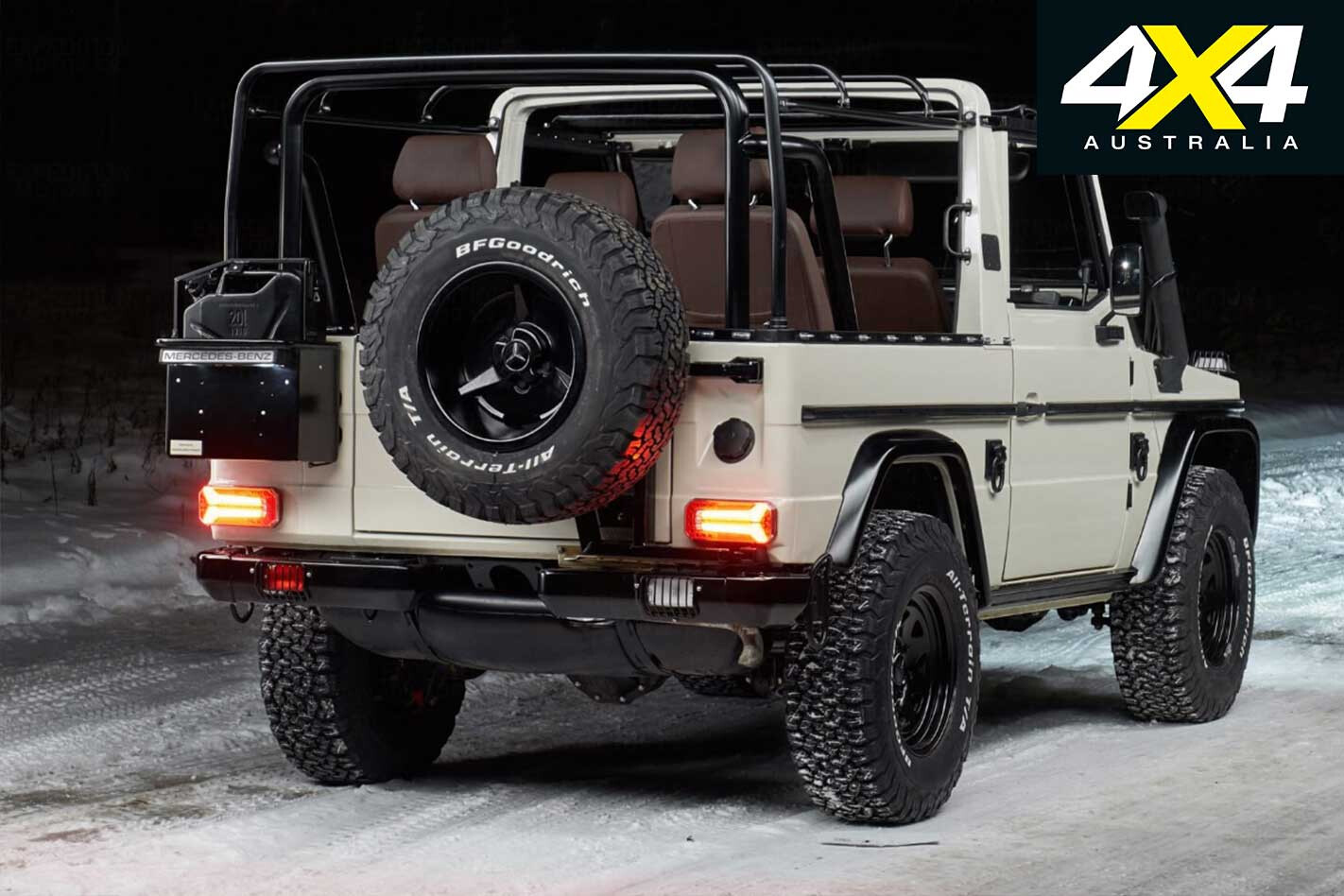
THERE’S a mob based out of Pennsylvania, USA, which prides itself on its painstaking restorations of old Mercedes-Benz G-Wagens, with the Expedition Motor Company fully restoring and tailoring a series of classic G-Wagens to exact customer specifications.
The company specialises in the ‘Wolf’, specifically ex-military 250GD models circa 1990 to 1993. The ‘Wolf’ nomenclature was a codename used by the German military to describe the G-Wagen. To qualify as a ‘Wolf’ the following criteria needs to be met: it needs a fold-down windscreen, it must be a convertible, and it must be a 250GD.
Photography: Expedition Motor Company
According to Expedition Motor Company, the meticulous build process of each bespoke vehicle is “nearly 1000 hours in the making”, with each “frame-off restored vehicle” a turnkey offering.
Once payment is received, a three- to four-month wait is expected before the keys are handed over to affluent customers.
The restorations aren’t limited to the 250GD, though, with the company also listing the 240GD, 290GD and 300GD on its website.
The website also indicates it can ship the truck to “any country in the world”. For more info, and to have some fun building your own, visit: https://expeditionmotorcompany.com
FOLLOWING the build of the Axial Bomber builder’s kit I was keen to build another RC off-roader, but unlike the RR10 Bomber, I wanted to build it my way. Like 1:1 scale 4x4s, I reckon small-scale ones are best built to your own tastes. Customised, modified and swapped-out to keep them interesting and individual.
Just as I would when building a full-scale 4×4, I went looking for an older secondhand RC to base my project on. I set my sights on the popular Axial SCX10 due to the massive range of aftermarket products that are available for it. The SCX10 is like the Jeep Wrangler of the RC world, with all the gear you can buy for it both from the manufacturer and aftermarket. In fact, there is a selection of Jeep bodies offered for this platform. I found a complete and running Axial Honcho for the right money not far from home and, just like the real thing, I stripped it back to a pair of bare chassis rails as soon as possible.
I already had a few ideas of what I wanted from this build, but it did take many months to complete. I love the Nukizer 715 concept truck that Jeep built for Moab back in 2010 and wanted to build a truck in that style. Fortunately Axial offers an RC replica of the concept truck, so I ordered one of those bodies.
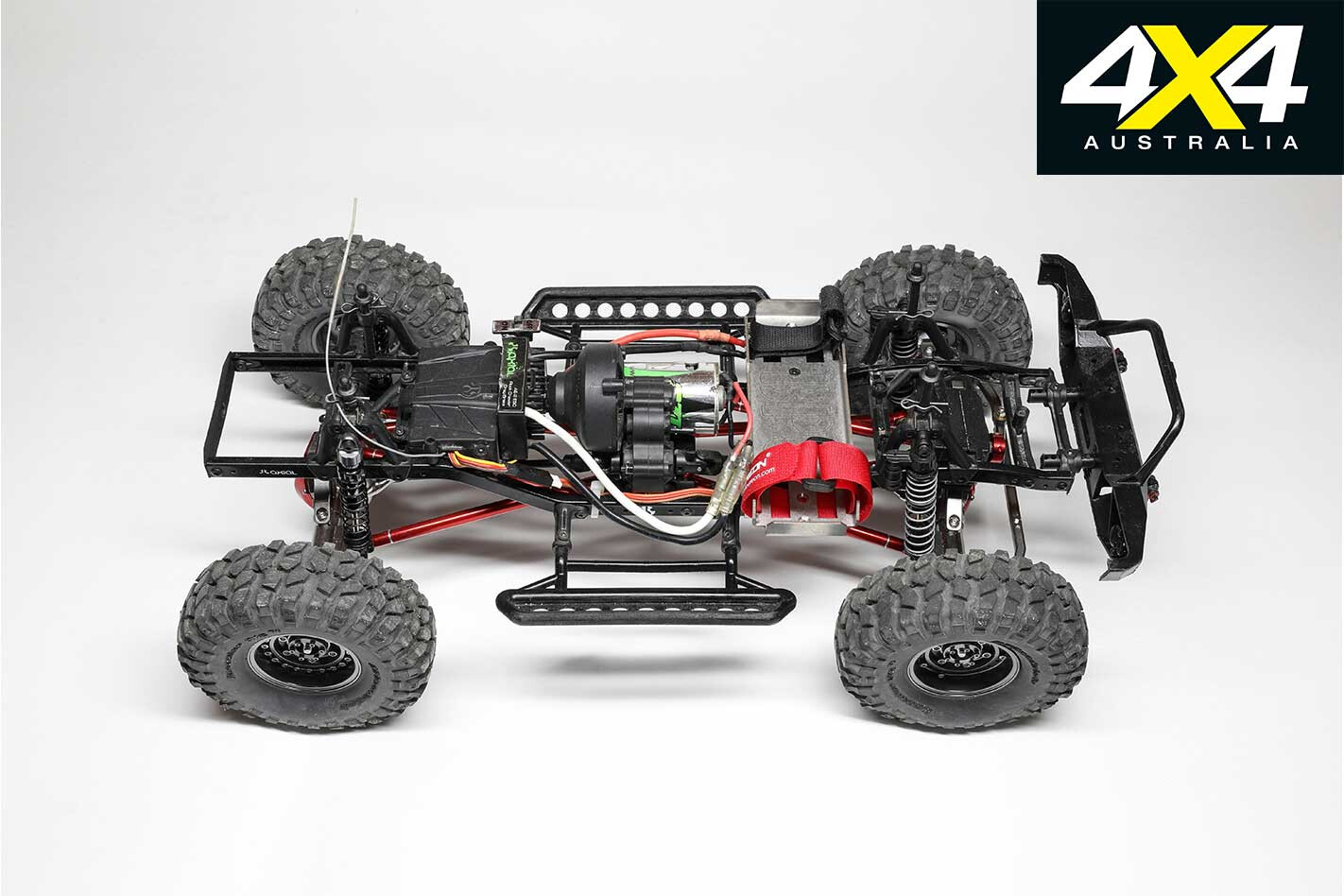
I also wanted to replace as many of the standard plastic parts of the original car as possible using metal ones, so I hit the online classifieds to see what was around. Again, just like the real trucks, the choices are only limited by your budget and I soon had a complete set of front and rear axles, 4-links, cross member and military-look wheels shipping over from China, all in aluminium.
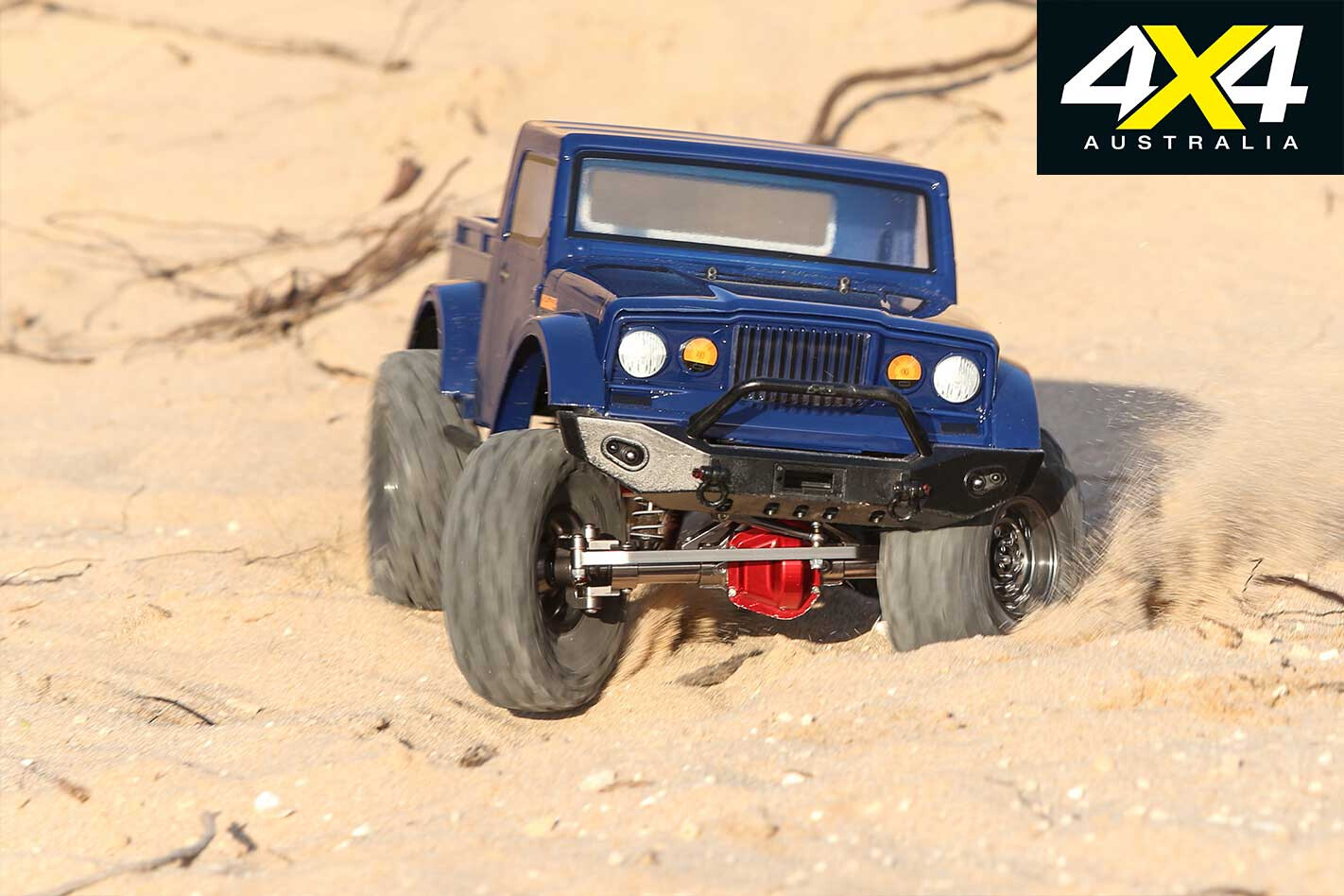
The replacement cross members and links all bolted into place without too much hassle but did require a bit of refining to fit correctly, and I was soon getting towards a rolling chassis. I still needed tyres and wanted a set of BFGoodrich KX Krawler T/As which are made under licence by Axial. These don’t come cheap from China, so I looked for the best online resource and came across AMain Hobbies in the USA.
AMain had the BFGs and everything else I would need to complete the build. To get the most from the shipping I also ordered a set of metal Incision steel drive shafts, Incision shock absorbers, Incision steel transmission gears, and a BP Customs battery relocation tray.
The parts arrived from the USA faster than you can get things shipped in Australia and I soon had my chassis rolling and looking tough. This was the inspiration I needed to push on with the build. The OE electrics, motor and drivetrain out of the Honcho were cleaned up and the stronger Incision gears fitted to the transmission, before it was all refitted to the refurbished chassis and fired up for a test run. Just like the real thing, once it’s rolling and running you can’t wait to get it completed.
The Lexan body was trimmed and test-fitted, flexing the suspension to full travel to check for clearance and then trimming some more before it was prepped for paint. The clear Lexan bodies need to be painted with a special paint for polycarbonates to get the best adhesion and the paint applied to the inside. Tamiya has the biggest range of PC spray paints, although I was disappointed to find a lack of NATO drab colours to get keep the military look. I settled on plain blue and applied a selection of the decals that come supplied with the body. While not true to the Jeep concept Nukizer, I’m still pleased with the result and the overall look of the rig.
I also tidied up the original rock sliders and Proline front bumper with some fine sand paper and refitted them, and it was ready to go.
With the stock motor and drivetrain, the Nukizer is slow but crawls nicely. The axle articulation is good but not great and it could use some tweaking, but the BFGs are super soft and flex nicely over obstacles.
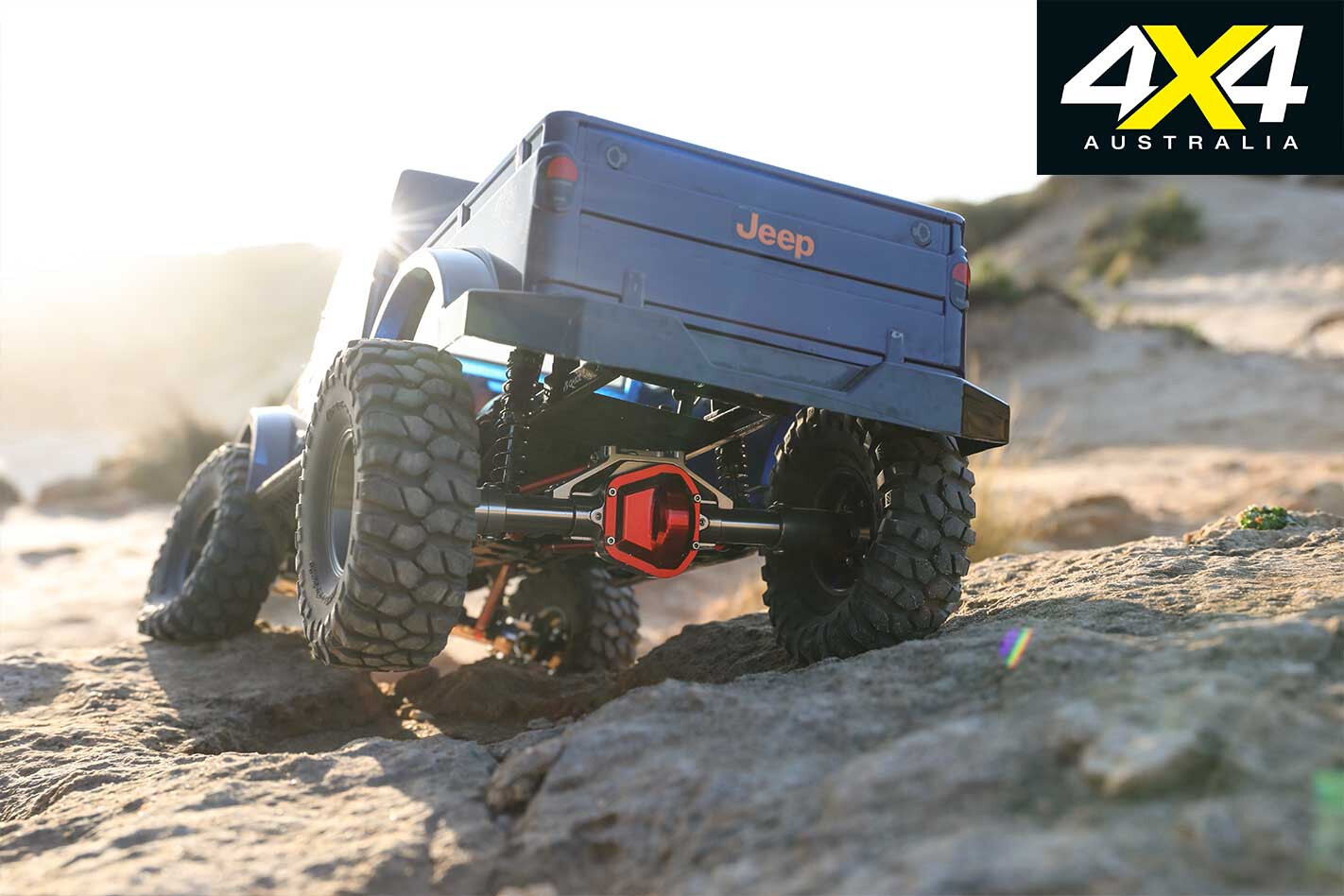
Like most project cars, this one’s never finished. I reckon a Warn 8274 would look great on the front bumper with a few more scale accessories and an interior to complete the look. I don’t want to trash the Nukizer body, but thankfully the used Honcho body still fits on this wheelbase and can be fitted for use that is more likely to cause damage.
Using a combination of a secondhand complete car, cheap online parts and quality accessories from AMain has resulted in an affordable project that delivers on the tracks and maintains its cool looks.
MORE INFO
AMain Hobbies: www.amainhobbies.com
Axial: www.axialracing.com
The new 2020 Isuzu D-Max has officially been unveiled, with the model due to land in Australian showrooms next year.
In what is the first major change since the second-gen debuted in 2012 – with facelifts in 2015 and 2017 – the D-Max has received a boost in output, a rear diff lock and radical styling tweaks, among a raft of other changes.
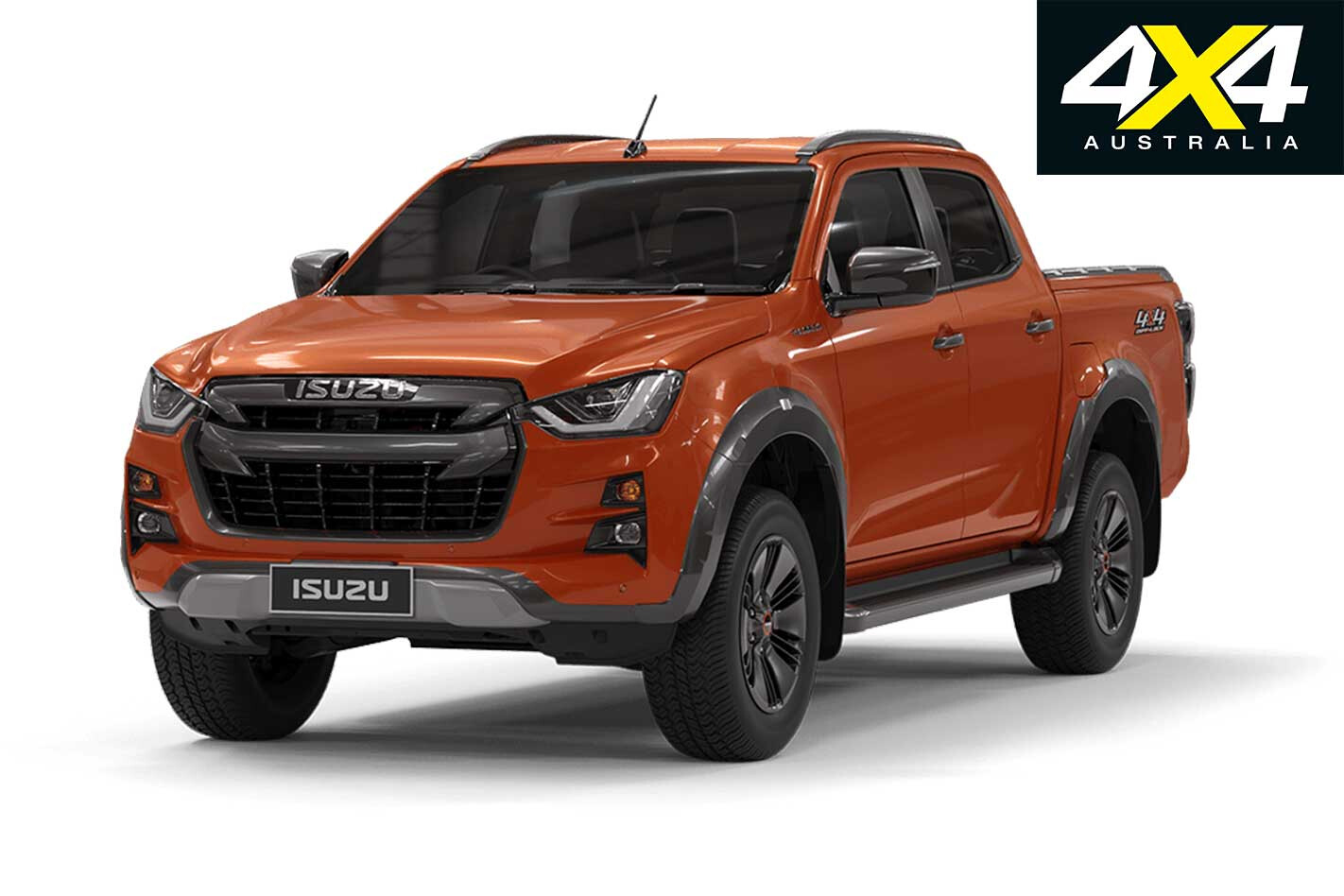
A new 3.0-litre turbo-diesel engine (codenamed 4JJ3) – a revision of the existing 4JJ1 engine – sees power and torque output increase from 130kW/430Nm to 140kW/450Nm respectively, and is claimed to offer improved fuel economy and better noise suppression. As mentioned when the teaser video debuted recently, a 1.9-litre twin-turbo-diesel engine – already used in other global markets – may also find its way down under, but that’s yet to be confirmed.
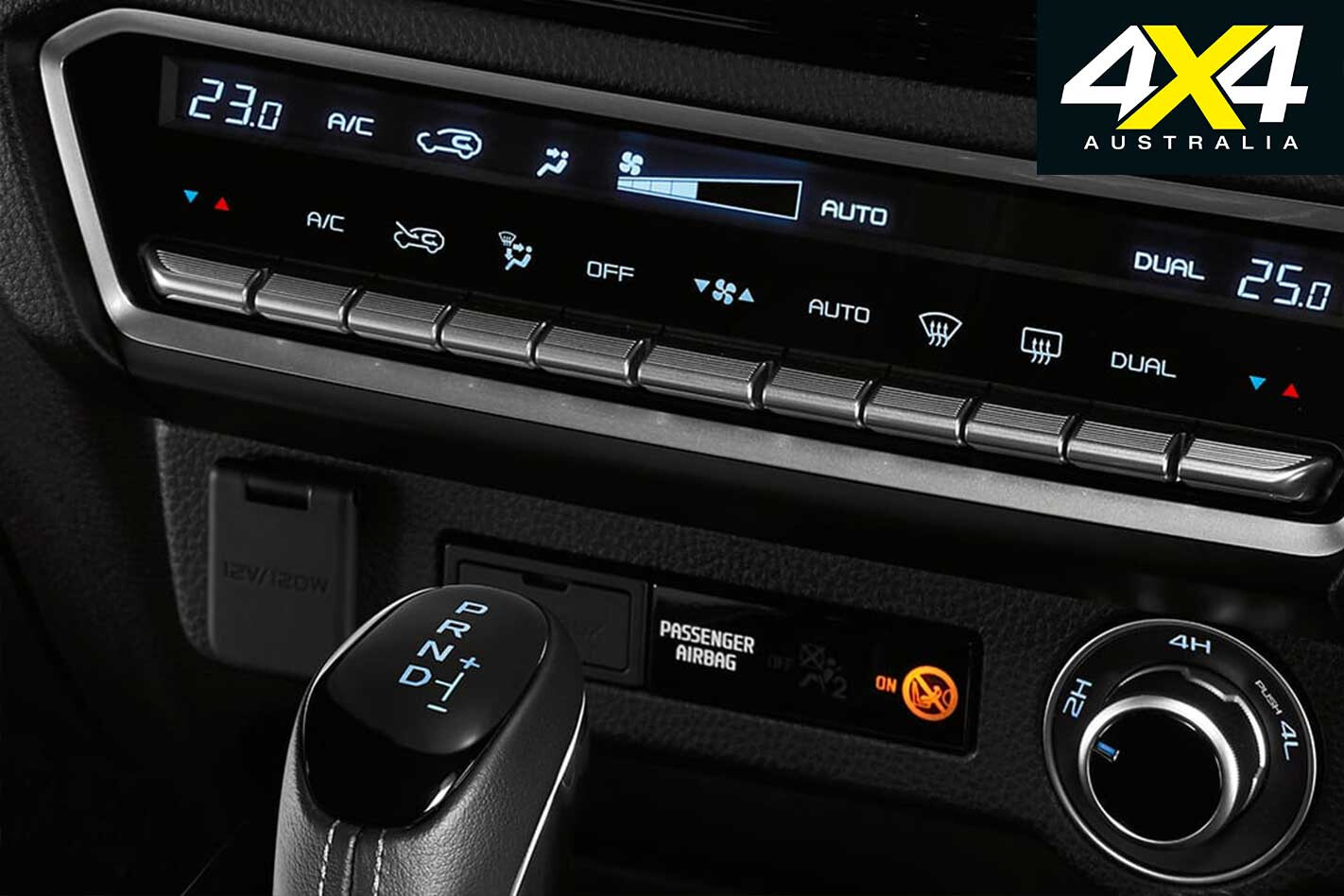
The new D-Max will be fitted with an electromagnetic rear differential lock for improved off-road capability and, for ease of use, Isuzu says it’s now quicker to shift between 2WD and 4WD. The new model D-Max also has an 800mm wading depth.
A design overhaul provides a more aggressive silhouette than the outgoing model, and it includes the addition of LED lighting fore and aft to embellish the more-intense front fascia and rear tailgate. A rear step bumper is also fitted.
“The D-MAX’s design is so distinctively new that it’s over and above the conventional pick-up trucks, transforming it into a whole new pick-up,” the Isuzu Japan press statement reads.
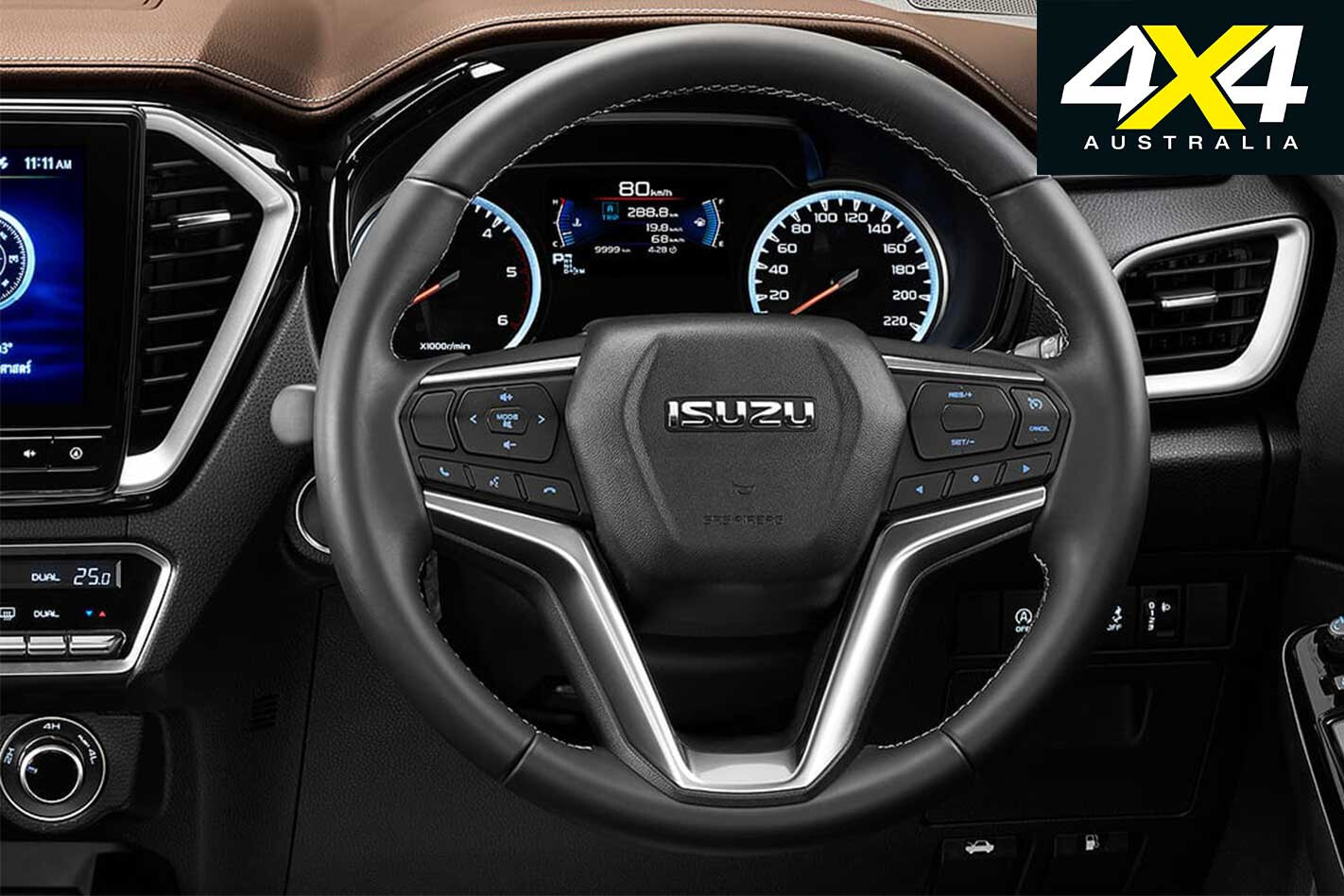
Bringing the D-Max up-to-date has involved upping the in-cabin spec sheet. The D-Max now gets a nine-inch digital display, a redesigned console that is “designed to enfold the driver and passenger as if they were in a cockpit of an airplane”, and high-end textures and embossing.
Local pricing is as yet unavailable, with the vehicle not expected to arrive until 2020. For now, the D-Max will start rolling onto Thai roads from October 19.
HERE at 4X4 Australia we spend a lot of time punishing four-wheel drives across the toughest terrain, in turn evaluating wheel articulation, traction systems and ground clearance. It is, after all, the core of machines designed for adventure and to perform flawlessly in the rough stuff.
However, for a bit of fun we’ve changed our focus for a one-off high-speed indulgence. For this test we’ve focused on a single attribute of the latest breed of dual-cab utes: performance.
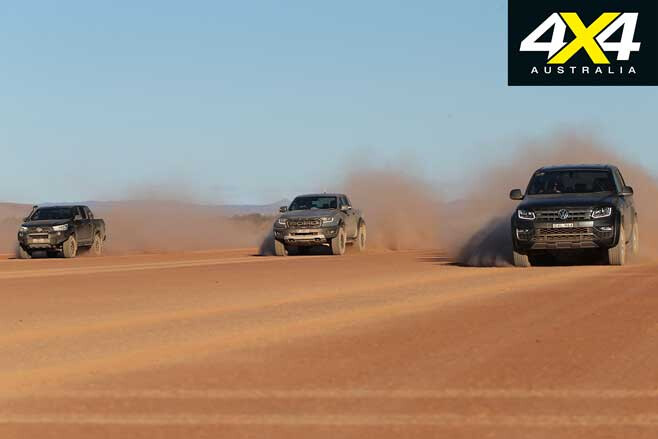
Not around a race track or scorching over a lumpy track Baja style, but in a straight line. A flat-out thrash from a standstill across a double quarter-mile. Think effortless outback touring, overtaking that road train or simply wanting to build pace before the next Simpson sand dune.
Rather than a regular drag strip we’ve thrown in an outback twist, performing testing on a 1.2km expanse of claypan that is as smooth as they come. It’s on a private station and is a long way from your average performance testing patch; parched earth setting the foundation for a dusty top-speed experience.
With the temperature north of 40°C it is about as harsh as Aussie conditions get, with the occasional willy-willy snaking across the course to add to the Aussie ambience. Our drag race took part over a defined 800m strip, the extra few hundred metres a comfortable safety margin to slow cars travelling in excess of 150km/h.
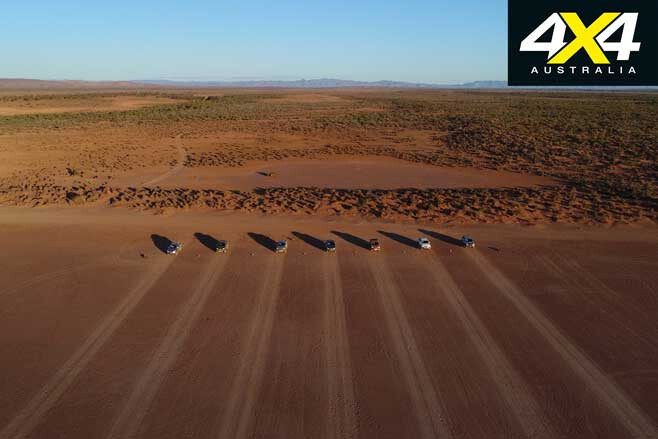
It’s all over in 30-something seconds, an orange sand dune rushing towards us as the claypan disappears beneath pounding all-terrains at a rate of 45 metres every second. We’re covering almost the length of an Olympic swimming pool every second … in a dual-cab ute that can comfortably cope with everything from soft sand and mud to craggy rocks and river boulders.
With mountain ranges towering in the distance and heat haze shimmering off the bronzed surface, there’s a remote sense of anticipation as our seven utes line up for the ultimate outback drag race.
Testing Times
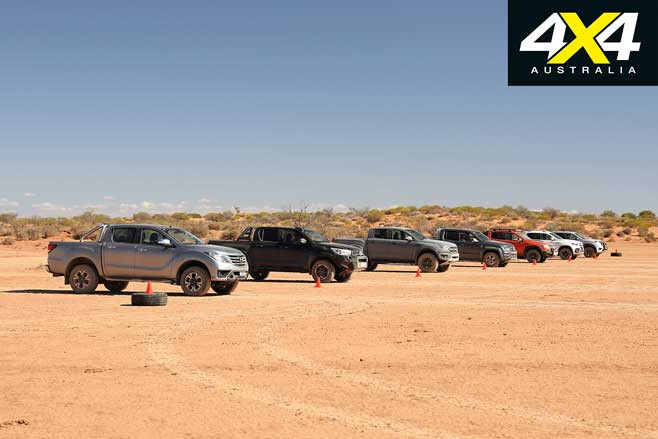
To even things up between the full-time four-wheel drives – the Amarok and X350d – all vehicles ran in 4×4.
There was no loading the transmissions against the brakes to boost turbo pressure. Instead it was straight on to the throttle, mashed to the firewall; flat out and hold it. We left the transmissions to do the shifting rather than trying to outsmart the computers ourselves. The temperature was hovering around 44°C, so cooling systems were working hard and air-conditioning systems even harder.
Acceleration times and speeds were collected using a VBox data logger, the same as those used in some race cars and for trackdays. Being on dirt, which creates more rolling resistance than bitumen, the times are slower than what you’d achieve on a paved road. Yet comparisons still apply.
So, let the flat-out 4×4 games begin…
1st: Volkswagen Amarok V6 580
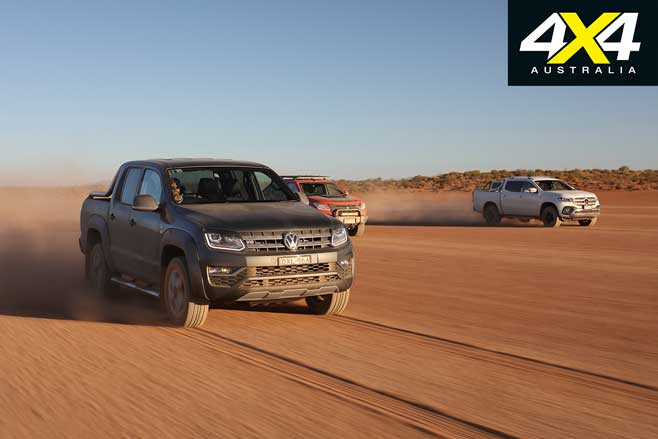
As the most powerful engine in the Amarok line-up, the V6 comes with big expectations. The version we’ve got is the 580, the number referring to its torque peak that edges it up over the regular V6 and gives it more pulling power than any of our seven.
There’s also an overboost function that liberates another 10-15kW; although, it relies on intake temperatures being less than 55°C, something that is highly unlikely in the 40-something-degree conditions we’re dealing with out here. If anything, then, the times we clocked are quite conservative for the Amarok.
Not that it slowed the Volkswagen. It was the only contender to top 100km/h in less than nine seconds.
Credit its enthusiasm to its relatively quick response to the initial prod of the throttle as well as closely spaced ratios, especially below 80km/h; the focus of the gearing seems to be to maximise acceleration in lower gears, and is something that clearly works. The eight-speed auto keeps the engine ticking over nicely.
Into triple figures some of the muscle dissipates and the Amarok starts seeing the X-Class approaching in its rear-vision mirrors, with the mighty Mercedes-Benz slowly reeling it in. But the Amarok enjoys a clear-sky view, its dust trail billowing out each side and cascading over its mid-pack rivals, almost as if thumbing its 30Nm advantage in an act of four-wheeled defiance.
While the Amarok and X-Class engines are closely matched on paper, they’re different beasts in the real world, with the Volkswagen’s lower-speed focus and superior step-off better matched to Australian conditions.
SPECS: VOLKSWAGEN AMAROK V6 580 Engine: 3.0-litre V6 twin-turbo diesel Power: 190kW at 3250rpm Torque: 580Nm at 1250-3250rpm Transmission: 8-speed auto
2nd: Mercedes-Benz X350d
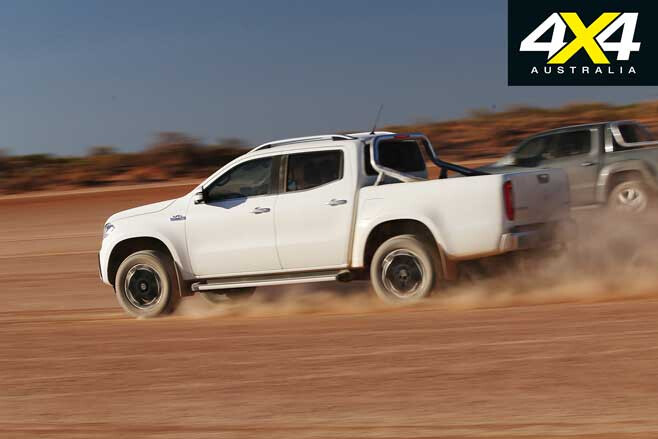
Same power, less torque and the X350d is also a ratio down in its gearbox compared with the VW. But it’s the way it steps off the line that hurts the top-shelf X-Class down the entire length of the claypan.
Lazy throttle response teams with turbo lag to make for a lethargic start, and there’s a big hesitation as it waits for the turbo to awaken. Around town the X350d needs planning to deal with that initial lethargy; our here it shows up in the acceleration times, taking a full four-tenths of a second longer than the Amarok (that’s 10 per cent longer) to reach 60km/h.
Once it does it jumps the hardest of the lot, its transmission and grunty engine making light work of nearly 2.2 tonnes. So much so that breaking out the middle acceleration runs the Merc is the quickest of our seven. Just 6.09 seconds from 80-120km/h reinforces this is the ute you want for blasting past a road train.
As the speedo winds past 150km/h the Mercedes starts carving back its shortfall, building speed more effectively than the Amarok. It’s almost as though some German engineer has decided that while it needs to cart a container load of hay and tow a caravan that would suit the Kardashians it still needs to hold its own on an autobahn. The engine revs cleanly and the gearing works well at speed.
Like a Melbourne Cup winner it comes in hard in the final half of the course, its speedo nudging past 160km/h. In terms of sheer top speed it’s the fastest here, comfortably. But the Merc already lost so much ground in the early part of the run it spends the rest of the claypan chasing the lead, and it effectively loses the race in the first 20 metres.
It crosses the 800m finish line in second, albeit only three-tenths behind the Amarok. But with an extra 8km/h on board it has the credentials. If the race had been one-kilometre long the Merc would have come home first.
SPECS: MERCEDES-BENZ X350D Engine: 3.0-litre V6 turbo diesel Power: 190kW at 3400rpm Torque: 550Nm at 1400-3200rpm Transmission: 7-speed auto
3rd: Holden Colorado Z71 Xtreme
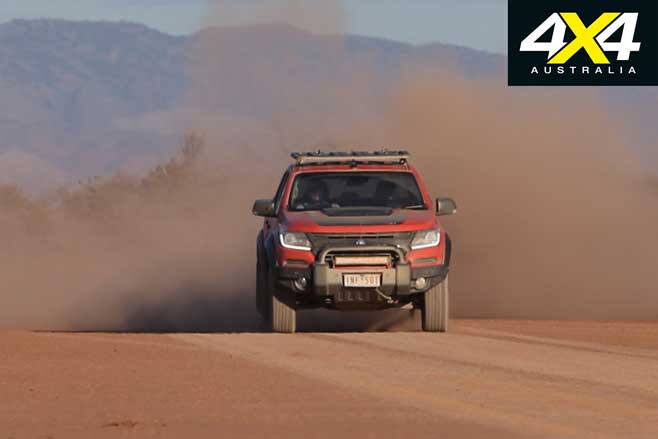
Holden HAS always talked up the grunt of the Colorado’s 2.8-litre engine. When it debuted in 2012 the four-cylinder turbo-diesel brought with it a mighty swell of torque, and even today the Holden outclasses some impressive contenders. The 147kW power peak is less impressive, but still in the mix by ute standards.
It’s the tuning and preparedness to jump that defines the Colorado and the way it behaves in our drag race. Refinement and polish play second fiddle in an engine that’s simple but effective. So much of that torque is available so soon after flooring the throttle. The Colorado’s torquey 2.8 jumps decisively and pulls an early lead on all but the bigger V6s.
Crucially, it’s comfortably ahead of the tech-laden Ford, some old-school grunt doing the job. Most of the Raptor’s deficit to the Holden happens in the first few car lengths, the margin blowing out to almost one full second by the time they top 100km/h.
But fewer ratios hurts the Holden, the engine forced to lean on that torque spread rather than jump into another gear. From then on it’s bumper to bumper with the Ford, the Holden’s lack of top-end not helping. Once moving, the two are very closely matched. Yet in this Ford versus Holden battle it’s the lion that comes out on top.
Of course, once all those other ute attributes are factored in it’s a different story; although, for our claypan drag strip it’s a solid win to Team Red.
SPECS: HOLDEN COLORADO Z71 XTREME Engine: 2.8-litre 4-cyl turbo-diesel Power: 147kW at 3600rpm Torque: 500Nm at 2000rpm Transmission: 6-speed auto
4th: Ford Ranger Raptor
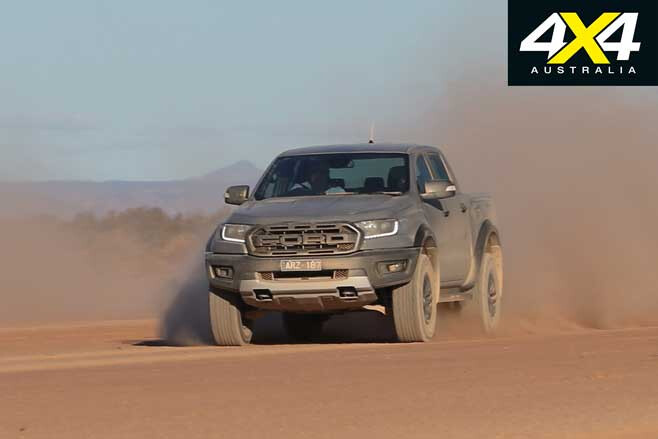
The Ranger Raptor may be the toughest, meanest ute on our dusty start line, but it’s got the smallest engine by at least 10 per cent. Not that the numbers suggest anything is lacking, with 157kW and 500Nm on offer. The Raptor also has a sequential turbo set-up and more ratios than the others, with a full 10 on offer.
Ever since Ford announced the Raptor would use the newer 2.0-litre twin-turbo four-cylinder instead of the trusty 3.2-litre five-pot, debate has raged about which is best. This one settles the score, and it’s a clear win in the 2.0’s favour; the Mazda BT-50 allowing a direct comparison because it shares that 3.2 still employed in other iterations of the Ranger.
But it’s not a slam dunk.
The Raptor is one of the more sluggish of our contenders off the line, the engine taking a moment to get into its stride. It also has a semi hiccup in first gear and won’t use its full rev range, instead slotting into second for the torque ascent. That scenario was not a one-off, either; it was consistent on repeat runs.
Up to 60km/h it’s only half a second up on the Mazda – and the Colorado is already beginning to show the Ford its trails of dust. Once moving it’s the transmission that comes to the fore, the 10-speed slicing through the gears beautifully and keeping the engine in its sweet spot. When under way it utilises every one of those ratios nicely and the engine is impressively refined for a diesel in a tough ute like the Ranger Raptor.
From the Raptor’s viewpoint there’s no slowing the V6s, the dust trail intensifying and disappearing into a sun-bleached distance, with the cloud eventually spewing over the bonnet to the point where you struggle to see the extremities of the car.
SPECS: FORD RANGER RAPTOR Engine: 2.0-litre 4-cyl sequential twin-turbo-diesel Power: 157kW at 3750rpm Torque: 500Nm at 1750-2000rpm Transmission: 10-speed auto
5th: Nissan Navara Black Edition
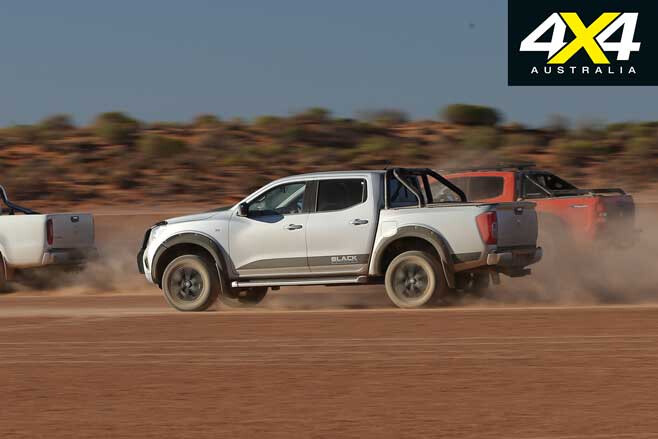
WITH 2.3 litres of capacity the Navara’s four-cylinder is the second smallest here, one thing that helps it be the most fuel efficient. Our Navara is a Black Edition, very similar to the recently-released N-Trek, complete with wheel-arch flares, decals and some additional equipment.
That it’s not the slowest is testament to the engineering efforts, which demonstrate what lighter weight and well-tuned turbos can do. The Nissan has a clever sequential turbo set-up, with one smaller than the other so that it spins up faster, reducing lag. That comes into its own on the strip, where quick responses make the most of a modest 450Nm torque peak.
The engine spins relatively freely by diesel-ute standards, ensuring it makes reasonable time. That top-end helps the Navara reel in the BT-50, but the Ford and Holden are beyond its reach.
SPECS: NISSAN NAVARA BLACK EDITION Engine: 2.3-litre 4-cyl sequential twin-turbo-diesel Power: 140kW at 3750rpm Torque: 450Nm at 1500-2500rpm Transmission: 6-speed auto
6th: Mazda BT-50
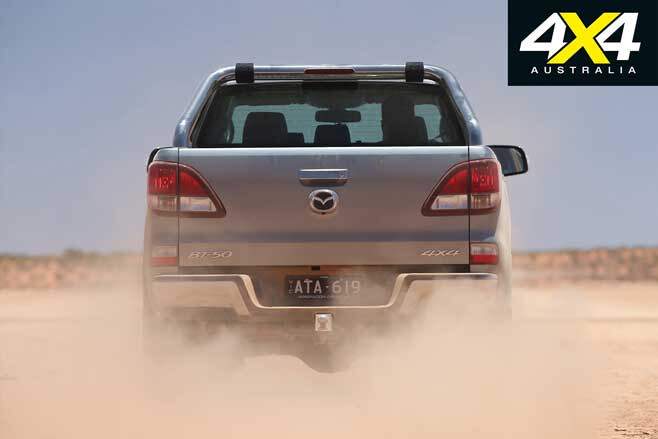
At 3.2 litres the BT-50 has the largest capacity engine in our field. Its five-cylinder layout is also unique, slotting between the fours and sixes that sprawl across the claypan. Not that the BT-50 has ever felt undernourished in everyday driving – gruff and noisy, yes, but not slow.
Its throttle tuning and response give it an initial kick off the line. The BT-50 launches respectably, something that would be useful for the traffic-light grand prix. It’s enough to give it an early lead against the Navara, the 470Nm making itself known. But it runs out of puff as speed increases, the Navara carving its way past by the time they’ve passed 100km/h.
While early acceleration is respectable, the 80-120km/h run is only completed a fraction of a second faster than the Hilux. Higher speed is not the BT-50’s strength, at least when it comes to building speed.
Any hope of holding onto the Raptor’s tail also dissipates the further we barrel down the claypan.
Considering regular versions of the Ranger still offer this same 3.2 engine, it’s a clear demonstration that technology wins out over cubic capacity – in this instance, at least.
SPECS: MAZDA BT-50 Engine: 3.2-litre five-cylinder turbo-diesel Power: 147kW at 3000rpm Torque: 470Nm at 1750-2500rpm Transmission: 6-speed auto
7th: Toyota Hilux Rugged X
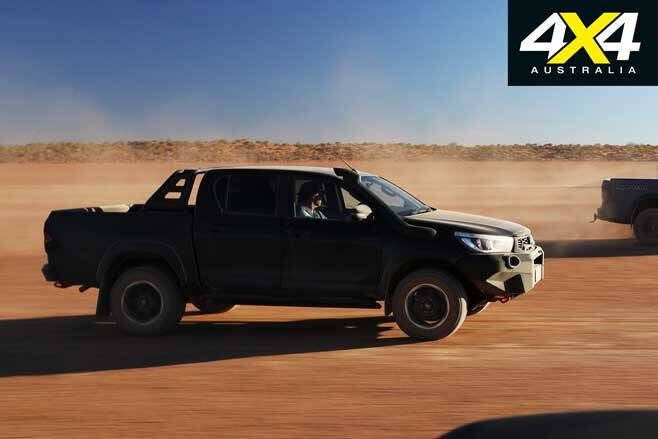
Even when it first arrived the 130kW and 450Nm dished up in the latest Hilux was nothing special compared with its rivals. By sheer numbers, the Hilux is outclassed. And while numbers aren’t always everything, this time around it turns out they count for plenty.
The Hilux is slow to take off and maintains that lethargy throughout its run. It’s swallowing more dust than any rivals, the fine particles splaying over its accessorised Rugged X body. That’s not ideal given the issues this 2.8-litre has with the air filter allowing dust to reach the mass airflow sensor, in turn reducing outputs (we didn’t have any issues during our testing).
The leisurely stroll to 100km/h takes almost twice as long as the Amarok 580. It’s not helped with the Rugged X pack we’re testing, which adds a couple of hundred kilos to the total.
But it’s not just in initial acceleration where the Hilux takes its time. Even in the 80-120km/h range the Hilux was the most relaxed, taking almost twice as long as the Mercedes to add 40km/h to its speed. Passing trucks on outback roads takes more planning in a Hilux.
Perhaps Toyota’s drawcard is longevity. There’s every chance the Hilux engine is very understressed, the focus on ensuring many decades of reliability. Sure, it’s speculation, but decades of Hiluxes suggest there could be some truth there.
SPECS: TOYOTA HILUX RUGGED X Engine: 2.8-litre 4-cyl turbo-diesel Power: 130kW at 3400rpm Torque: 450Nm at 1600-2400rpm Transmission: 6-speed auto
Winners & Losers: The Breakdown
Another Technique
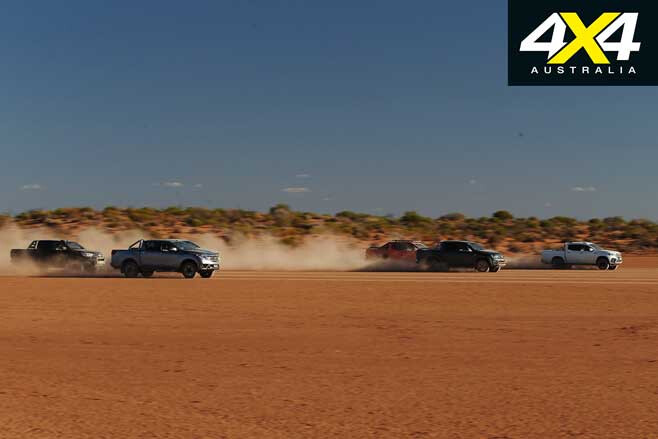
THE FIGURES quoted here didn’t rely on loading up the transmission before taking off by holding a foot on the brake, something that allows the turbo to build boost and launch harder.
However, by means of comparison, we also took times for each car to see how much of a difference this approach made … and the overall results didn’t change markedly.
However, taking some of the Benz’s lazy initial lag out of the equation closes the gap up to 100km/h, and by the end of the 800m strip the X350d had just edged past the Amarok – beating it across the line by a mere 0.03 seconds.
Weighty Issues
THE SAME engine in different variants of some of our contenders would likely perform better, all because we’ve chosen top-shelf model variants. With the Hilux, for example, the Rugged X adds more than 200kg as well as the aerodynamic drag of a snorkel; the latter not much of an issue at low speeds, but certainly a hindrance above 100km/h.
Same story with the Ranger Raptor; it’s around 200kg heavier than a regular Ranger ute and, with bigger all terrain tyres and taller ride height than standard, it’s pushing more air. A Ranger XLT or similar with the same drivetrain would have fared better.
Similarly, the Colorado Z71 Xtreme is far from slippery through the air, its roof tray humming away as speeds increase, in turn sucking crucial kay-per-hour off the speed. Plus it’s 150kg heavier than a non-accessorised Colorado.
It’s unlikely to have affected the finishing order, but the times and speeds recorded would in some instances be better had the cars not been dripping in accessories.
Four-wheel driving as a whole is a strange place.
For the overwhelming majority of us it’s a passion, a pastime, an escape from the everyday and the everything, where we can find peace or adventure in the mountains and deserts. For others, it’s a career, the very thing that defines them.
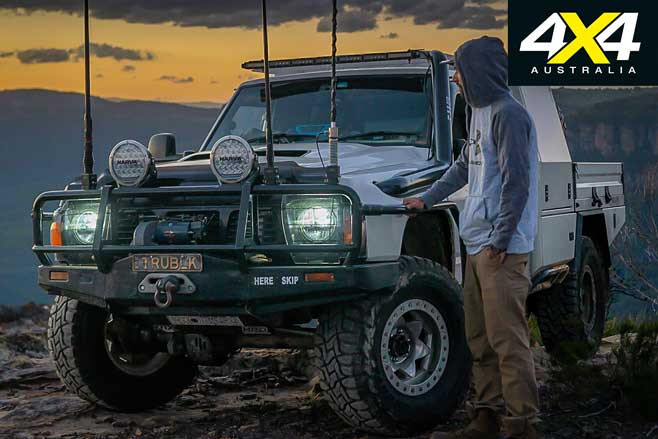
There’s a whole industry of people who earn their keep talking 4x4s. The store owners, the accessory fitters, the men and women welding together bullbars and wiring UHFs. Then there’s the blokes like Danny Reber, who took things just that little bit too far, as he’s known to do.
When you’re reading a 4×4 magazine, watching a 4×4 show, or even looking at an ad for an off-road tyre company, there’s normally an entire crew of photographers, writers and videographers just out of frame. This rig? It belongs to one of them, and today we’re taking a closer look.
It’s been purpose-built over the last decade to not only travel to every corner of this country, but drive any track the job needs him to drive, feed a crew of people, and do it all with a new car’s worth of camera gear strapped down in the canopy. Think of it like a mobile job site, if your job needed you to park up in a Cape York creek for three days.
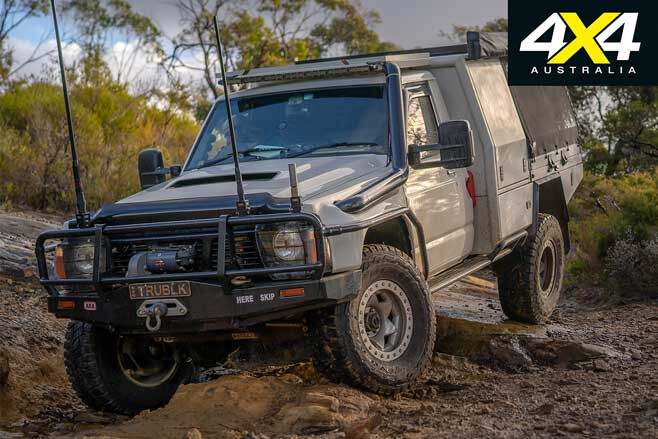
While you might be looking at a white, diesel, manual, single-cab GQ Patrol, it didn’t exactly start out that way. In fact, it wasn’t that long ago it was a maroon, petrol, automatic station wagon.
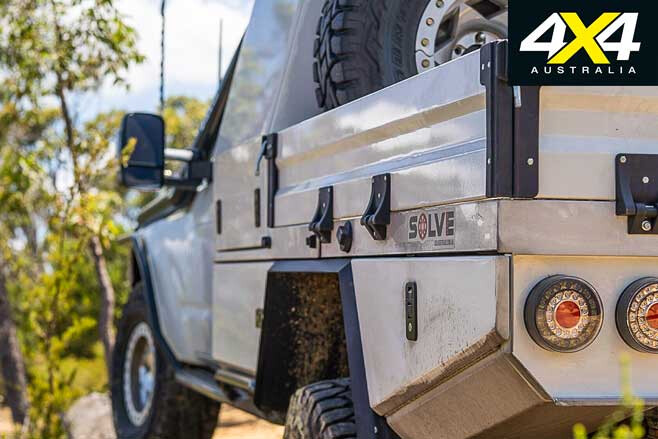
“The wagon simply didn’t suit my storage needs,” Danny told us. “As my work gear started getting bigger and bigger, I just kept running out of room to stash it all.”
To give the GQ the required room he sent it northwards to Darren at Custom RV Creations to work his magic. From here, both the cab and the chassis itself were sliced and diced before being meticulously pieced back together.
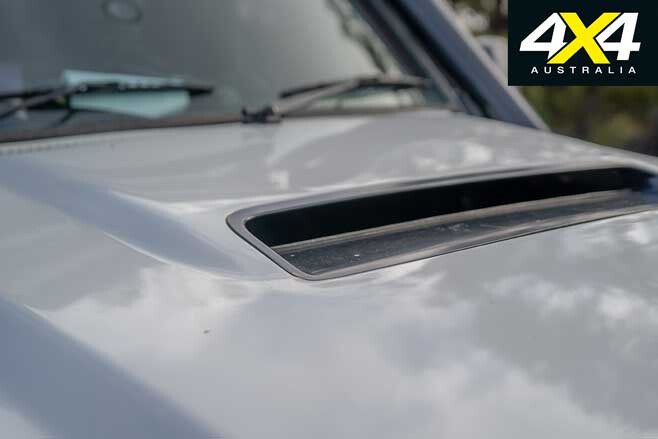
Rather than starting with a ute cab, Danny had the guys graft a ute rear wall into the front half of the station-wagon body, giving him just a few extra inches to suit a 188cm Aussie bloke with comfort. While the welder was out the guys also grafted a VDJ79 bonnet scoop into the all-steel bonnet, and eagle-eyed readers may also notice an extra hump in the front guards pumping them wider than stock; although, we’ll come back to that later.
After the chassis was cut in half, Darren pushed it back 300mm from stock before manufacturing a new length of chassis to fit in the gap. He’s also pieced together a custom-length driveshaft, as well as extended fuel lines, brake lines and wiring. The ultimate goal? It not only made the Patrol far more stable at high speed and in steep terrain, it allowed the half canopy in its entirety to be placed between the front and rear diffs for better weight distribution.
Those diffs Danny went to so much effort to place the weight between? They’re actually out of a later model GU Patrol and stuffed full of Harrop E-Lockers. The diff centres themselves are the same, but they’ve actually got vastly larger and stronger CV joints compared to the earlier GQ offerings. They’re also significantly wider, necessitating the front guards be pumped out to suit.
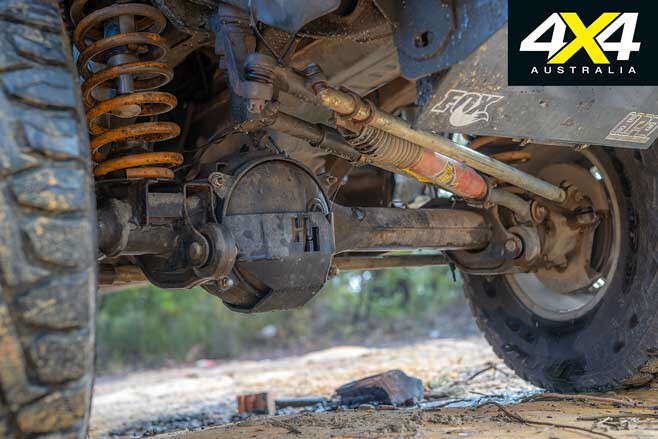
Up front, standard radius arms have been fitted into a set of drop boxes to help with caster, while a full suite of slow- and fast-speed tuneable Fox suspension keeps things in check. Four-inch lifted King coils sit in custom raised PSR towers, while Fox hydro bumpstops smooth out some of the GQ’s bigger hits, and tuned Fox 2.5 shocks on either side keep things floating smoothly. Of course, there’s a plethora of HD and adjustable rods holding the whole affair centre.
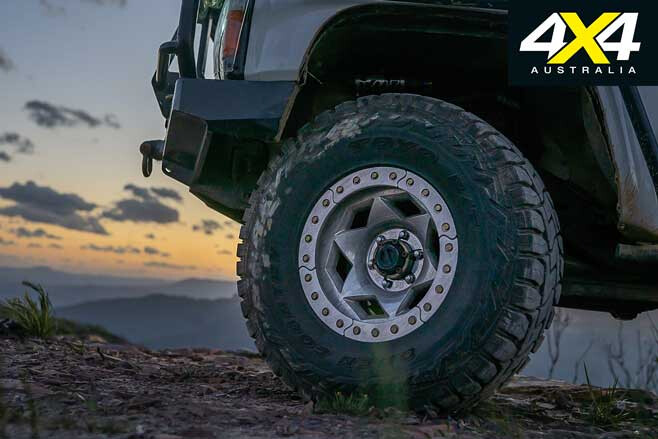
In the rear, four-inch Ironman coils serve as the base, with an adjustable helper air spring inside from Polyair allowing Danny to dial the ride in for varying loads. Again, Fox 2.5 shocks provide a plush ride, with Snake Racing adjustable arms keeping things on the path forward. The whole arrangement not only lets the big GQ float effortlessly over undulating terrain, it also makes just enough space for the 35-inch Toyo R/T tyres.
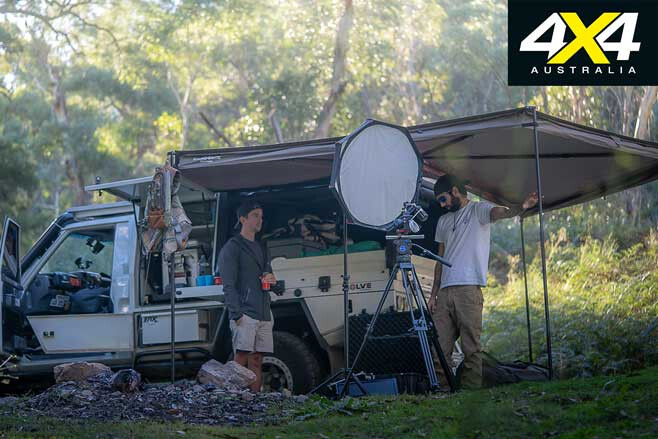
Of course, all that room is useless if you’re not going to put it to work. The huge tray is a massive two metres wide at the hips, with another 1600mm behind the half canopy. It’s a lightweight alloy construction, but packed to the brim with work and play gear.
Behind the captain’s seat, the canopy houses a dog box/camera storage depending on the day, while the passenger side houses a trusty Engel fridge with a Redarc triple battery system and huge 1000W Redarc inverter for keeping Danny’s camera gear charged.
The various trundle trays house everything from recovery gear to tyre puncture-repair kits, as well as freeze-dried meals should he find himself stranded far beyond help. Under the removable canvas cover at the back you’ll find two spare 35s and either Danny’s Yamaha quadbike the tray was designed to carry, or huge space cases full of studio lighting, all coated in bulldust. It also houses the wraparound Rhino-Rack awning.
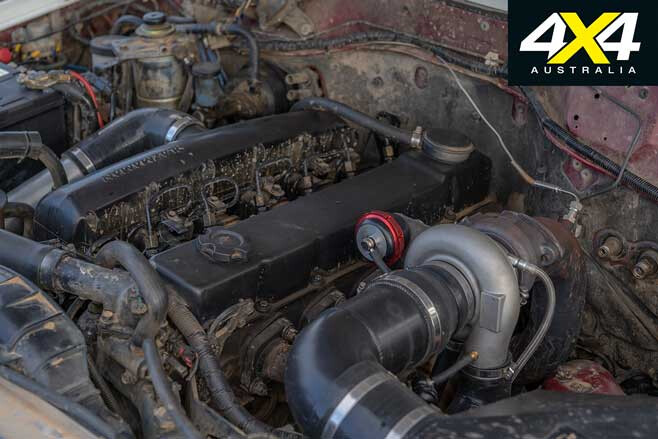
Weighing in at approximately 4.75 tonnes the anaemic 4.2-litre petrol engine simply wasn’t going to get the Patrol where it needed to be, not on deadline anyway. In its place Danny put a factory turbo-diesel TD42 from the later model GU Patrol, as well as a matching five-speed manual ’box.
It screams for the heavens thanks to a monstrous 18G turbo sucking air through the Radius Fabrications snorkel and box, before pushing them to 26psi through the Plazmaman intercooler and billet intake manifold.
The guys at Automotive Etcellence and JP Performance matched it with a 12mm fuel pump and programmable mechanical diesel tuner for a clean-as-a-whistle 230hp and 780Nm without the plumes of diesel soot TD42s typically run. The combination is backed up with an NPC Viper clutch and a billet flywheel for an incredibly smooth drive.
Moving inside there’s far less billet and far more character. It’s been a constant evolution of a decade of travel, so is adorned head to toe with HF radios, pub stickers from pubs we’ve never heard of, dust from every corner of the country and a big hole where the heater core was supposed to be. Apparently they’re not needed and only add complexity? In fact, the only concessions to technology are the XRS UHF from GME, and the trio of Redarc gauges affixed to the driver’s A-Pillar.
While the purpose and spec sheet of Danny’s Patrol reads like a who’s who of adventure and gear, the real charm in it is the evolution of an idea and a career path. Where $2 tarps once were, there’s now high-end freestanding awnings.
Where the basic tools of Danny’s trade were once thrown on the dash, there’s now an extensive setup only a craftsman could appreciate or even understand. In a way, it’s somewhat similar to everyone’s 4×4: an evolution of who we are on and off the clock, and a goal that we’re all always pushing for.
THE GREAT Race might be on at Bathurst this weekend, but we ran our own version, 4×4 style.
Sitting around the campfire in the outback, with a convoy of the latest 4×4 utes close at hand, the conversation soon turned to which of them is the quickest ute.
There’s only one way to settle such an argument, so once all the campfire scuttlebutt had settled, we found a nearby claypan and set the record straight.
Ford Ranger Raptor v Holden Colorado v Nissan Navara v Mercedes Benz X350d v VW Amarok 580, Toyota Hilux Rugged X v Mazda BT-50.
800 metres from a standing start on dirt. It might be a straight-line drag race, but it’s still more entertaining than the SuperUtes running around The Mountain.
Stay tuned to 4X4 Australia to see which 4×4 ute emerges as King of the Claypan.
I don’t actually know how to play chess, so bear with me for a minute here. Four-wheel driving is like chess. Well, maybe Risk, or snooker, or perhaps Cluedo. The point is, while the spinning tyres and flinging mud get all the Instagram likes, it’s much more of a strategic affair.
Man vs machine, machine vs terrain; knowledge and skill vs practicality and good sense. It’s an ongoing struggle identifying the weak points of the vehicle’s abilities and strengths, addressing them to make things go farther and harder, and trying to keep the whole affair on the road long enough to actually go for the occasional four-wheeling trip with your mates. And ultimately, it all comes down to one thing: traction.
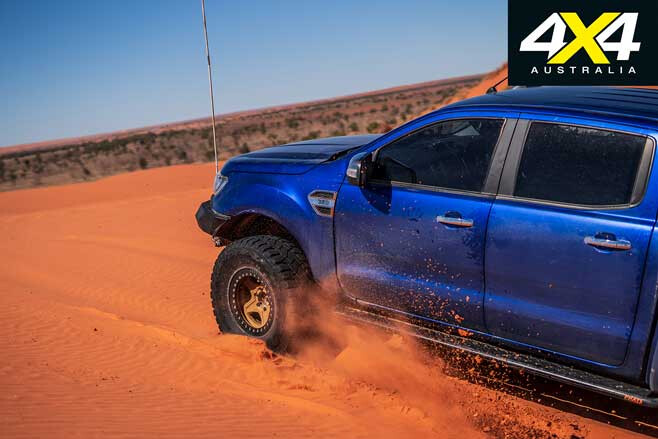
Y’see, where bigger turbos send more power down the line, bar work armours your rig, and lockers ensure drive goes to all four wheels, continued progress in tricky terrain ultimately comes down to just a few square inches of rubber on the track propelling you forward and, just like chess, tyre pressures can make all the difference.
Dropping tyre pressures gives a whole host of benefits off-road (although more on that later), but it also comes with a whole host of negatives too (more on that later as well, actually). But the wheels you choose to wrap your tyres around can play just as big a part in off-road performance as the tyres themselves.
Over the next few pages we’ll be airing down and shining the spotlight on beadlock wheels – the pros and cons, the situations they can get you out of and, most importantly, what it means to get caught running them – the good, the bad, the ugly.
So torque your wheel nuts and lock your hubs, ladies and gentlemen … it’s beadlock time.
Beadlock wheels – The Good
Before we get stuck into the nitty-gritty of why beadlocks help off-road, it’s important to run through the fundamentals of why we want lower tyre pressures. After all, while you’re no doubt a grizzled outback adventurer with red-dirt running through your veins, we’ve all gotta start somewhere, and many seasoned veterans don’t understand what making your tyres ‘bag-out’ actually means, and why it’s the secret sauce for a good day on the tracks.
Pending any Flinstones-esque breakthrough in technology, tyres are typically round, allowing them to roll. There is a little asterisk on the end of round though. If they were perfectly round the contact patch would be non-existent, leaving you to sit there spinning your tyres due to a lack of grip. So it’s the small flat contact patch on the bottom that actually allows the tyre to grip the surface resulting in the potential for forward drive. The more surface area, the more grip.
It’s this surface area we’re taking advantage of when airing down. Starting with a 35-inch tyre at 36psi gives us roughly 300mm of contact patch on the ground for a surface area of 952cm2. Dropping tyre pressures down to 18psi lengthens that footprint to around 350mm for a surface area of roughly 1111cm2.
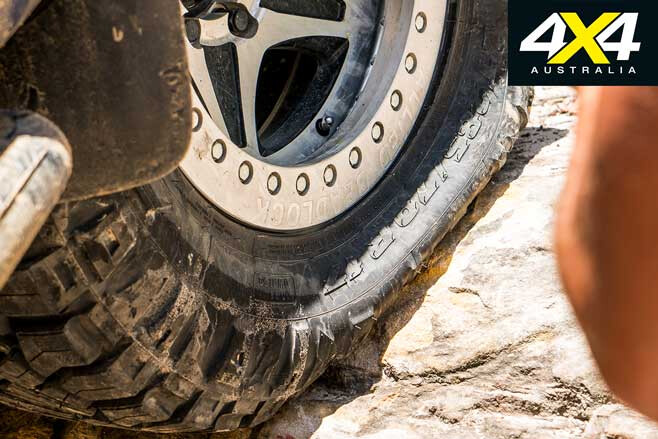
Dropping even further again, down to an insanely low 8psi, gets that contact patch out to roughly 400mm for a surface area of 1270cm2, which is 32 per cent more surface area, and 32 per cent more grip sending you up the track. There’s a common misconception that the tyre gets physically wider, too, and although the sidewall might bulge out the contact patch is relatively limited by the tread face.
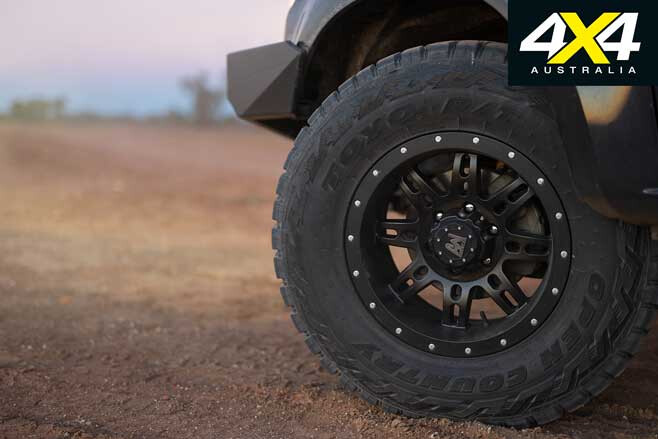
The lower the tyre pressure, however, the more likely the tyre is to physically come off the wheel (see the breakout ‘Take A Seat’ below). This is where beadlocks come into their element. Where a regular wheel requires internal air-pressure to maintain the connection between the tyre and wheel, a beadlock wheel physically clamps the tyre to the wheel with a locking ring and bolt system. Even at 0psi there’s essentially no chance the tyre is coming off.
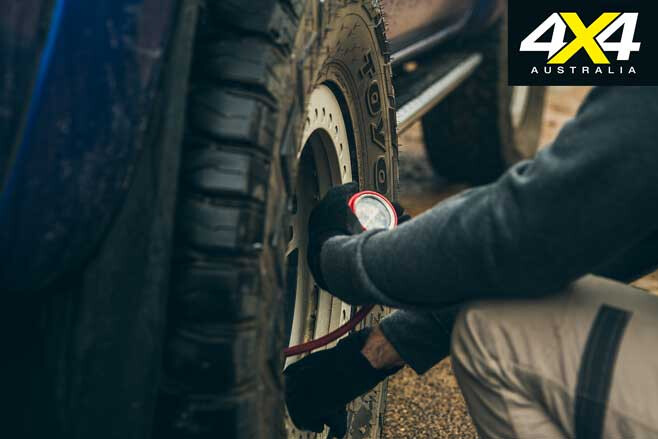
Beadlocks allow you to safely run lower pressures than you could with a conventional wheel. Bogged to the hilt in soft sand and just keep digging? Drop to 0psi if you need to and drive out with near tank-track like contact patches giving you grip. You can also drive with more confidence at low pressures in both high- and low-speed driving.
Where a sharp steering input on a non-beadlocked wheel can peel the tyre bead away from the wheel, a beadlock ensures it’ll stay put. This benefit extends to hard low-speed driving, too. Think of the shock load a tyre is subjected to when sliding off a rock ledge and gripping again, and you’re on the right path to understanding the benefits of a beadlock wheel.
The low pressures you can run also allow the tyre to deform over rough terrain like rocks, giving you grip and also decreasing the chance of damage to the tyre. Sounds like a good thing only better, right? Not exactly, but you’ll need to keep reading to find out why.
Beadlock wheels – The Bad
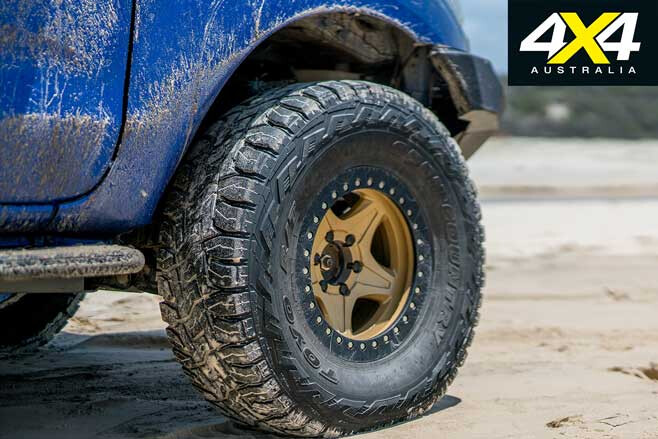
There’s no such thing as a free lunch, and beadlock wheels are no different. While they might sound like a miracle cure-all that will fix your tyre-pressure issues, the reality is there are plenty of downsides.
Where a typical tyre seats in a relatively simple fashion, a beadlock wheel requires a complicated bolt and ring system where upwards of 30 individual high-strength bolts need to be precisely torqued to ensure the ring provides equal pressure on the tyre bead, keeping it clamped in place.
As torque is applied to these bolts the tyre bead is compressed, meaning you’ll need to run through each individual bolt multiple times in a star pattern to ensure even and accurate pressure is applied. With 30 bolts, and three passes each, that’s 90 bolts that need to be tightened per wheel – 360 just to do a standard 4×4 without factoring in spare tyres. Don’t be surprised to find most tyre shops refuse to fit them due to inability, inexperience or simply a case of covering their arses, so you may need to contact a specialist shop.
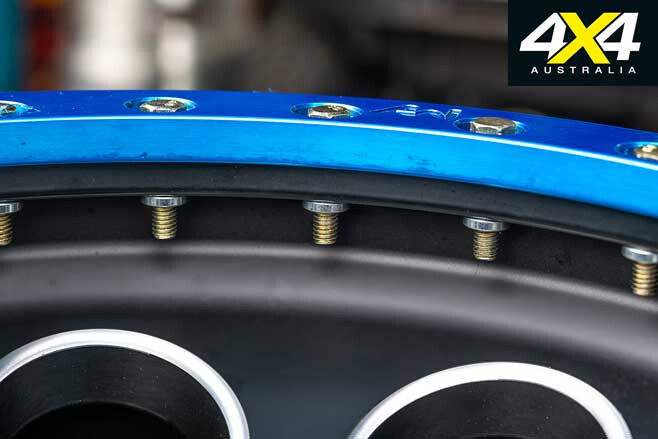
The bolts will require routine re-tensioning, too. With road vibrations, the bolts can back out ever so slightly, putting more load on the bolts on either side. Left unchecked, these bolts can snap under load, creating a chain reaction that can leave you with five to six bolts in a row snapped off, allowing the locking ring to flex and the tyre to come unseated from the wheel. If this happens at speed it’ll be the equivalent of a tyre blow-out.
While the addition of a solid chunk of alloy on the outer edge of the wheel increases strength and reduces the chance of wheel damage, it also increases unsprung weight; there’s additional material on the wheel, the ring, the bolts, washers and nuts used to hold the whole affair in place.
That additional unsprung and rolling weight will negatively affect acceleration, put more load on the brakes and reduce ride quality, as your suspension will have to work harder. And the locking ring will collect rainwater and mud, just waiting to blast you in the face every time you come at it with a pressure washer.
Most of these issues are avoided by regular maintenance and an understanding of the affects modifications can have on your vehicle, but that won’t mitigate the legal ramifications of running these wheels.
Beadlock wheels – The Ugly
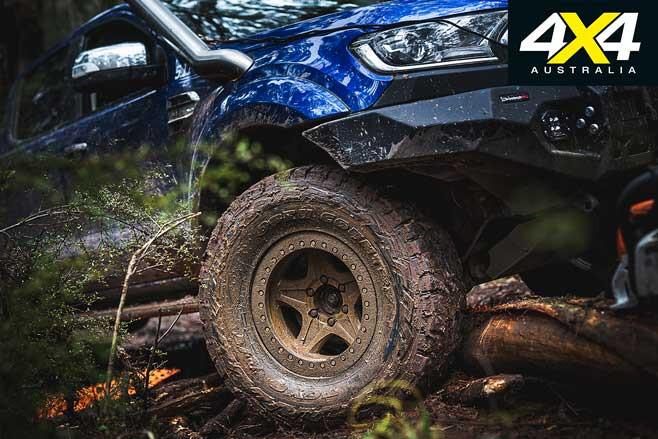
Fitting beadlocks for off-road use is all well and good, but when you’re doing hot laps of Chapel Street in your sandy taupe 79 and the local constabulary turn on their blue and red party lights, what are you actually getting pinged for? And this is the part that hurts. Y’see, beadlock wheels aren’t actually illegal, they’re just not legal. Let us explain.
In Australia, laws typically function on being approved rather than being disapproved. Beadlock wheels simply haven’t been approved, and nor do they fit into the standards that have already been approved so, by default, they’re not legally able to be run, and therefore running them is illegal.
Clear as mud, right? Think of it a little like running around with a rocket launcher just because the law didn’t specifically say you couldn’t.
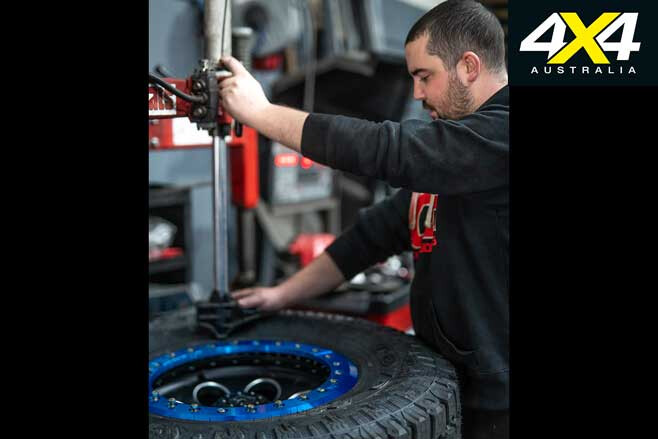
In the case of being pinged for beadlocks, you’ll likely find yourself slapped with an infringement notice stating “Use Light Vehicle not comply with standard”, as well as a few demerit points for your trouble, and a $112 fine.
We’ve spoken to multiple police and highway patrol officers up and down the country looking for a specific answer as to what law has been broken when running beadlocks, but non-compliance is the closest explanation we’ve heard … off the record, of course. So why don’t they comply?
There are a few theories but most of them can be debunked by looking at other approved wheels. One theory is the tyre is mechanically connected to the wheel, placing extra stress on the tyre’s sidewall, although Hummer H1s are legally sold here with an internal beadlock that does exactly that.
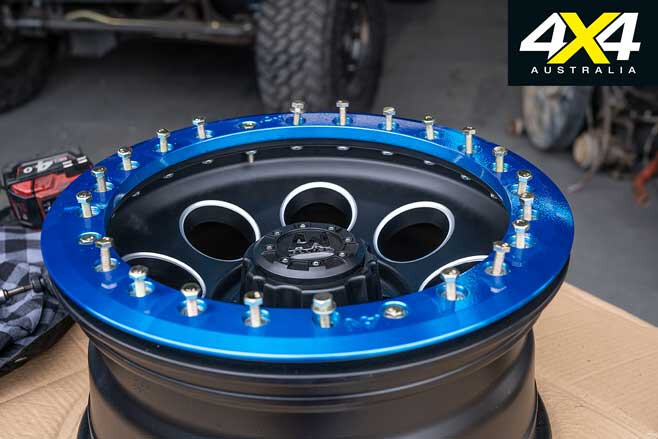
The only actual difference is the way the tyre physically seals; in an internal beadlock, like a Hummer H1, the tyre still seals on its outside edge, with an internal piece re-enforcing a typical bead, but an external beadlock seals on the inside edge of the bead (where it wasn’t designed to seal) with an external piece re-enforcing the outer edge. Put simply, the wheel works differently to how the tyre manufacturers and the government think that a wheel should work.
Another issue is the multi-piece construction of a beadlock creating potential failure points, although again multi-piece streetcar wheels and split rims are still legal on the road, and these can have the same issues.
So couldn’t a wheel manufacturer strive to make beadlocks legal? The short answer is yes, but the longer answer is why would they? Australia has a long history of laws being challenged and repealed, standards being modified, and legal strategies completely changing. Hell, it’s the whole reason we have a High Court. But it costs money … and bags of it.
A manufacturer could challenge the ADRs, but would they sell enough beadlock wheels to cover the costs to have the standards redefined? And would it actually make a difference to the people already choosing to run the gauntlet for better off-road performance? Probably not.
Take a seat
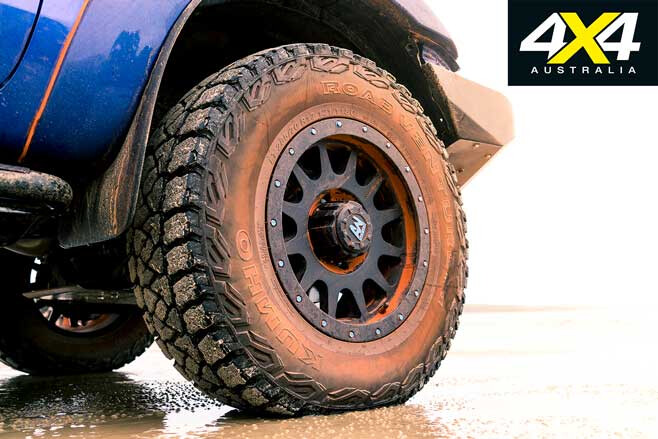
As many times as our kids have made us sit through the Harry Potter anthology, the unfortunate reality is tyres don’t magically hold themselves to the wheels they’re fitted to. In most modern wheel and tyre combinations there’s a thick outer edge on the tyre known as the bead that seats into a corresponding cup on the wheel.
Huge air-pressure is required to get the bead over the lip and into the cup, where it’s held in place by typical road pressures and surface friction between the tyre and wheel. It’s an elegantly simple solution that works perfectly 99.9 per cent of the time. The only downside is the less internal air pressure, the less force there is keeping the bead seated, which can cause issues when lowering pressures off-road.
DI-WHY?
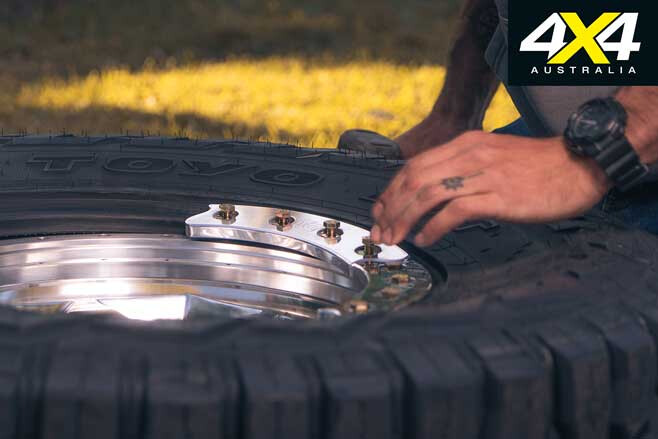
Mechanical beadlocks aren’t the only solution to stop your wheels spinning uselessly inside your tyre, especially when you’re on a budget. Prepare to have your local tyre shop hate you (and this is possibly more illegal than just running beadlock wheels) but a smear of Sikaflex between the wheel and tyre can strengthen the bond between the two, keeping it in place when running slightly lower air pressures in tougher terrain.
The Sikaflex will only come off with a wire wheel though, so maybe don’t do this trick. Some bush-bashers on private property take this idea a step further and run small screws through the wheel’s outer edge and into the tyre, which stops it spinning on the wheel, and using an even bigger helping of Sikaflex to seal it up again.
A US-based restorer of vintage vehicles, Legacy Overland, has meticulously restored a 1981 US-spec Toyota LandCruiser FJ40 for a client.
The complete ‘frame-off’ rebuild involved not only a full refresh of the 2F six-cylinder petrol engine – new pistons, rings, bearings and sleeves, plus the polishing of cams and machining of all surfaces and valve ports – but the exterior was stripped to bare steel and flawlessly rebuilt to “better than new”, according to Legacy Overland.
While the FJ, wearing a custom blue hue, maintains the core components of the original FJ, it does differ from original specification in a few ways. Per the client’s request, a five-speed H55F gearbox has replaced the four-speed manual, and a Weber carburettor (with an adapter for the OEM air-filter box) has been installed.
Other tweaks from original include the addition of an extra-strength roll bar, Old Man Emu suspension components, a Bluetooth-enabled RetroSound media receiver and updated light-grey interior leatherette and trim.
Other notable features of the rebuilt FJ40 include Warn manually locking front hubs, LED lighting fore and aft, galvanised metal brackets, bolts and fasteners, and a custom-fabbed cubby box. It runs 16-inch steel wheels wearing chrome OEM hub caps and wrapped in BFGoodrich AT tyres.
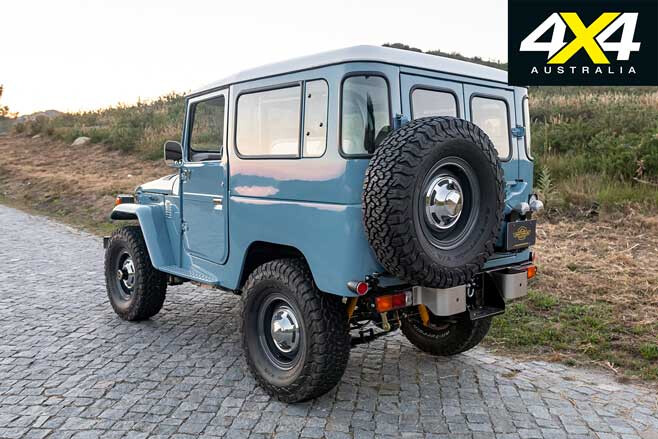
The classic resto-mod Cruiser is priced from US$100,000, placing it at around the AU$150,000 mark.
Last week we wrote about The FJ Company’s run of custom-built, resto-modded FJ40s with a sticker price starting from $270,000!
Clearly built for those with deep pockets, the waiting list for such vehicles exceeds 12 months.
YOU MIGHT be thinking that an olive-drab wrap doesn’t make a vehicle mil-spec, but there’s more to this Ford Ranger than first appearances reveal.
British consultancy and engineering firm, Ricardo, has taken to the popular pick-up and transformed it into a general purpose utility vehicle for defence personnel.
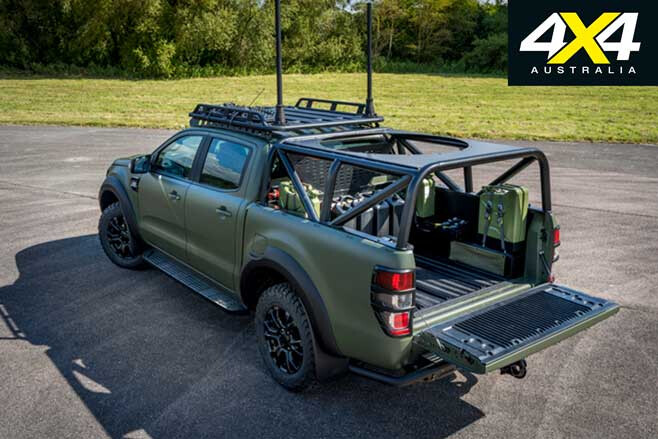
Ricardo was the company responsible for the design and construction of the WMIK light attack Land Rovers and the Foxhound vehicles, both currently in use by the British Army, so they know a thing or two about this stuff. The company’s take on the Ranger demonstrates a militarised adaptation of the ute, to show how this workhorse can offer a highly cost-effective, multi-role transportation product for defence and other security-related applications.
Key arsenal to the Ricardo Ranger’s capability include an armoured ballistic underfloor plate; armoured glass; heavy-duty front and rear bumpers; rock sliders; and protective skid plates for the radiator and drivetrain.
Mounted in the cargo tray is a rollover protection cage, with provisions for a ring-mounted weapon system protruding from the top. On the inside, four-point seat harnesses secure the occupants and a 24-volt electrical system supplies the added power required for military use.
Heavy-duty springs and shocks not only support the extra weight of the modifications but give added ground clearance for off-road use.
This vehicle is powered by the Ranger’s 500Nm 2.0L bi-turbo-diesel engine and 10-speed auto combination, but there’s no reason that any other standard Ranger powertrain couldn’t be used.
You might like the idea of a militarised Ranger with weapons mounted in the back to cope with city traffic, but, other than that use, we don’t see the Ricardo Ranger being offered in Australia anytime soon.
THE ACCC has officially issued a recall for a total of 1899 Toyota LandCruiser Prado models due to a fuel leak issue.
The problem centres on a fault at production, which may allow the fuel inlet pipe to leak fuel as it supplies fuel to the diesel fuel injector common rail. This could lead to an engine stall, which increases the risk of accident or injury.
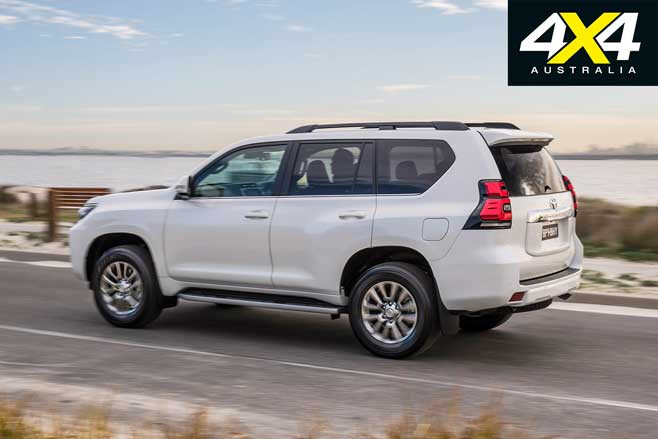
Toyota Australia initiated the recall back on September 26, saying in a statement: “This recall is due to a production issue which has the potential to affect the tightening torque of the fuel pipe that supplies the common rail. If this were to occur, fuel may leak from the pipe resulting in an engine stall.”
For a full list of affected vehicles, which were sold nationally between April 8, 2019 and September 27, 2019, click here: https://www.productsafety.gov.au/system/files/VIN%20list_105.pdf
According to Toyota Australia, there are no symptoms or warnings to indicate a fault and the fix – replacing the fuel pipe and associated clamp with new parts – will be free of charge and take about three to four hours.
Toyota Australia advises owners of affected vehicles with any questions to contact their local Toyota dealer or call the Toyota Recall Support Helpline on 1800 987 366.
The Toyota HiAce was also affected by the same recall.