
The Victorian High Country has been synonymous with the outlaw lifestyle for nearly 200 years. It’s a place where the only things more wild and outlandish than the geography are the people who call it home.
2020 CUSTOM 4X4OTY: Vote now for a chance to win!
For centuries the mountains and valleys rang with the echoes of gunfire and pounding horse hooves, the long arm of the law in lockstep behind. It’s fitting then that after countless years, those same mountains and the valleys that connect them still roar with the sound of people who forge their own paths; although, now they’re a little louder and come sporting mud tyres.
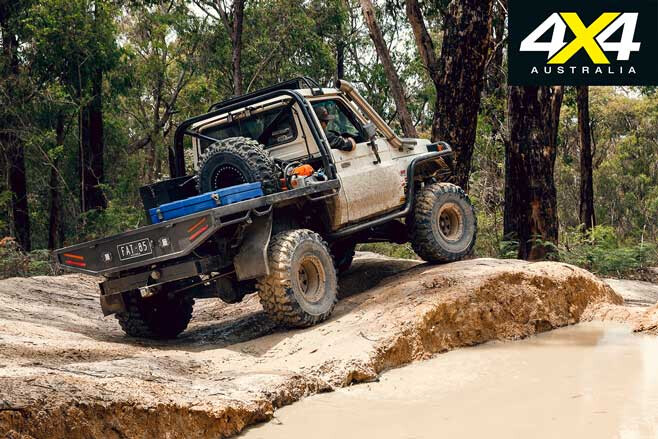
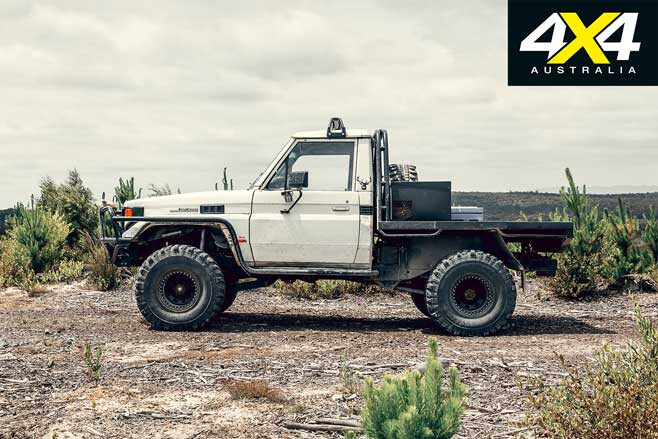
Spread out in front of you is the prime example of that outlaw mentality. A vehicle built to be what the man who built it wanted it to be, not what a rulebook somewhere said it should be. And it’s bloody glorious.
Like any good story, this one starts a long time ago; about 10 years to be exact. Brett’s old man was trading in his near-dead LandCruiser HJ75 for a brand-new HDJ79, and he threw the keys to then 16-year-old Brett.
Leaf springs, half full of rust and every inch showing the hard yakka it’d been put through on the family farm, ever since Brett was just a baby. It’d serve as the perfect platform for Brett to learn the ropes, not only for driving on and off the road, but spinning spanners on old tin.
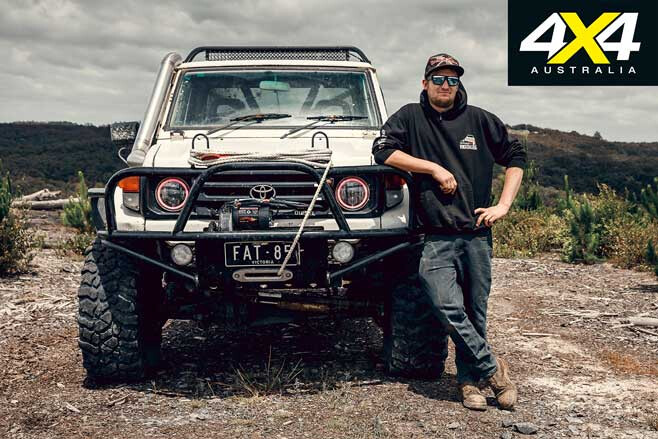
For the last 10 years Brett’s spent countless hours patching this, fixing that, keeping the tired old rig on the road. It’s been through countless engines, suspension setups and running repairs before it finally got too much. Brett called in the help of a few mates, put it on jack stands and got to work.
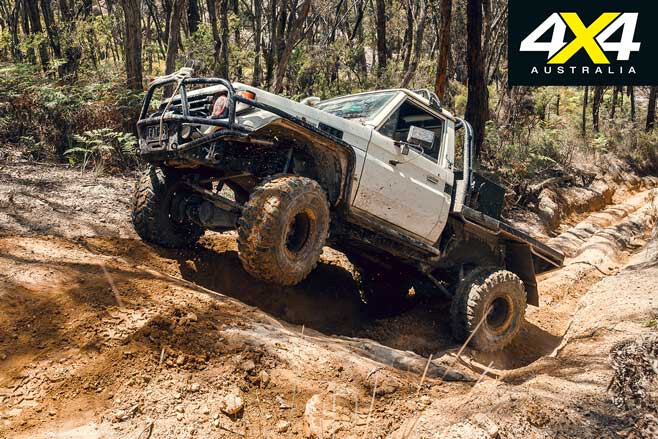
The plan was simple: Unbolt the original cab, remove everything underneath it, and replace it all with later model gear from an 80 Series LandCruiser, chassis and all. The new setup brings not only an increase in articulation from converting to coil springs, but also improves ride quality, beefs up the brakes and converts to a physically larger CV joint.
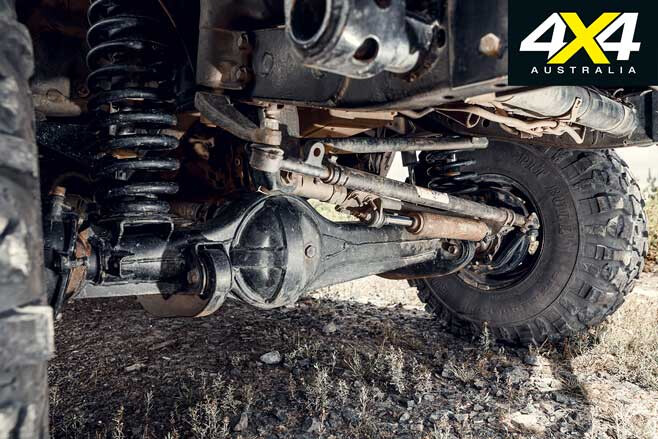
The only downside is a slightly smaller ring gear. Of course, Brett didn’t leave things there either; the housing is braced to protect against bending in hard landings, and it’s stuffed full of chromoly CVs from RCV, upgraded kingpin studs from ARP, beefier steering arms and heavy-duty hub nuts from USA-based Trailgear. The whole lot is sent to drive via an ARB Air Locker.
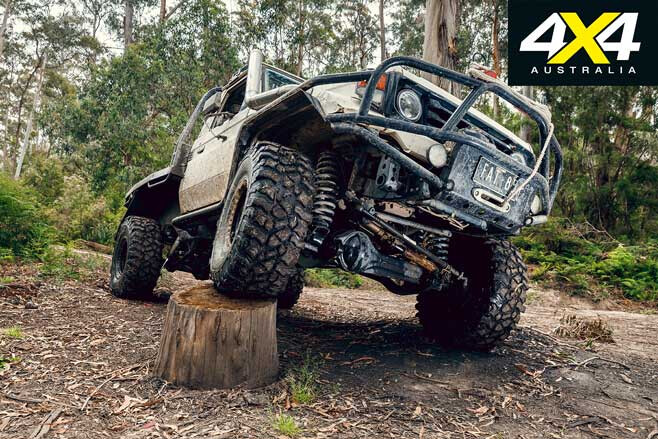
On the suspension front, RidePro coils now hold the frame three inches higher than stock with Superior Engineering’s remote reservoir shocks keeping things behaved. If Brett gets a little carried away through undulating terrain there’s a set of Profender hydraulic bump stops grafted in that’ll smooth things out.
Moving rearwards the rudimentary leaf spring rear-end has also been long forgotten, the LC80 chassis swap not only bringing coil springs to the party but also an elaborate five-link arrangement to provide a smooth ride and monster flex. The rear housing remains largely untouched; although, an ARB Air Locker drives both wheels, with ARP axle studs ensuring the axles stay attached to the hubs.
The rear suspension components mimic the front with three-inch Ridepro coils and Superior Engineering remote-reservoir shocks. Eagle-eyed readers may spot the wheelbase looks a little tighter than stock, too – the 80 Series is a full 300mm shorter than a stock 75, making Brett’s rig much nimbler in tight terrain.
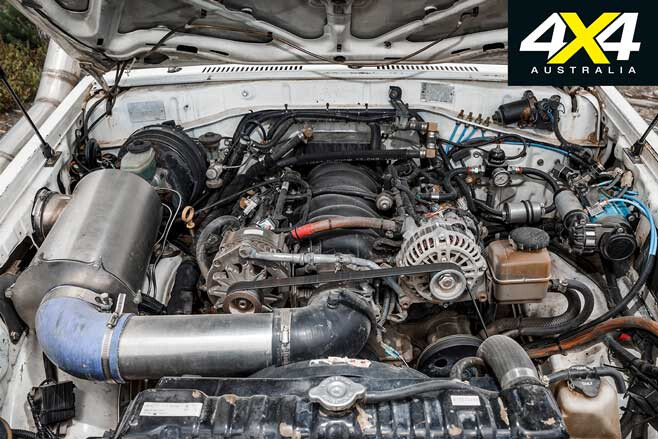
Despite the original 1HZ having a turbo on it, it could best be described as somewhat lethargic, and swapping it out for another 1HZ+T wasn’t really going to get the blood pumping; so when Brett looked at his daily-driver VX SS Commodore, the 400hp LS1 nestled between its frame rails caught his eye. The choice was obvious and the V8 was slotted into its new home. It’s now sitting on a set of Brett-built engine mounts, with a Marks Adaptors kit helping it find a home.
Brett’s mated it to a gearbox and transfer case from a later model VDJ79, which is built from factory to handle a turbo-diesel V8 so should be plenty strong enough to cope with the LS1. From here a MAFless tune has the LS1 running perfectly, with a twin 2.5-inch to single three-inch exhaust giving the 75 its howl. The whole lot sucks in air through a four-inch stainless-steel snorkel.
The wider LC80 axles increase the 75’s track by a huge 200mm, but that wasn’t enough for Brett. To help keep the 75’s body panels off the tight Victorian trees he opted to fit huge 15×10 Gecko steel wheels. Punching in at -44 offset, they bump the track width out even more. He’s then wrapped each corner in aggressive 35×12.5R15 Pit Bull Rocker mud tyres.
The hand-me-down tray that was fitted when Brett got the keys had more holes than Swiss cheese, so he fired up the welder again and set to work building something more suitable for the hard wheeling he had planned.
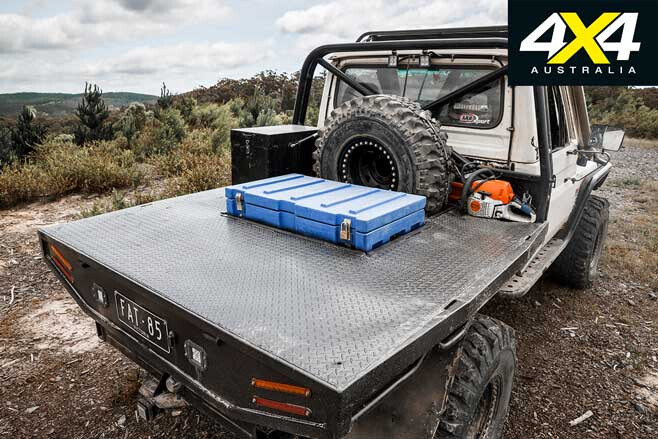
Made from a combination of box-tube and chequer-plate it houses a space-case full of recovery gear, as well as a recessed spare tyre to keep the centre of gravity down low without detracting from ground clearance.
From here Brett knocked together rock sliders that continue up through scrub bars into the wild comp-spec tube front bar. It not only gives the ’Cruiser an aggressive approach angle, but also houses a built Warn 8274 high-mount winch; it’s been braced, the freespool lever pinned, a GigglePin brake shaft fitted, and 24V is fed into the Road Runner motor thanks to a standalone 24V alternator. There’s also a Stedi light bar mounted up on the roof in a custom-built light rack.
If you haven’t noticed by now, Brett’s rig is basically a road-driven comp truck, and that’s all the more noticeable when you swing open the near-on 30-year-old doors. The old dash is gone, in its place a hand-built one wired with aftermarket gauges to help Brett keep an eye on the V8’s vitals. There’s a full internal roll cage should things go pear-shaped, and bucket seats sourced from a Nissan Pulsar to keep driver and navigator pinned in place with four-point harnesses.
Say what you want about time spent versus reward, but with the help of his mates Brett has handcrafted his own idea of a perfect 4×4. He’s forged his own path and done things his own way, and that’s something pre-4×4 outlaws could relate to.
Outlaw 4×4 stainless steel exhaust systems
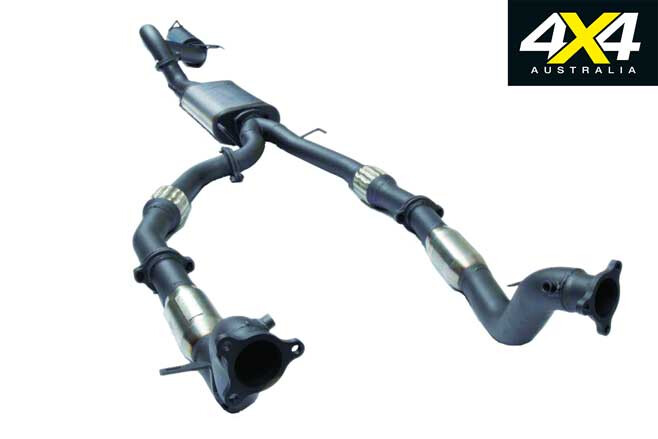
Outlaw 4×4 has recently expanded its range of stainless steel exhaust systems for 4x4s.
Most of Outlaw 4×4’s exhausts are offered as ‘turbo back’ systems, which include a high-flow turbo dump pipe for maximum turbo response, a high-flow diesel-spec catalytic converter where applicable, mandrel bent tubing, a premium quality flex joint for system longevity and minimal NVH (noise, vibration and harshness), and high-flow tube and muffler designs.
All systems are manufactured using 409-grade stainless steel, and full stainless steel mufflers are employed to ensure they operate as designed long after lesser mild steel or aluminium-coated mild steel systems have failed.
RRP: From $1100-$2000 Website: mercurymufflers.com.au
Process West TerraTuff SEPR8R Air Oil Separator Kits
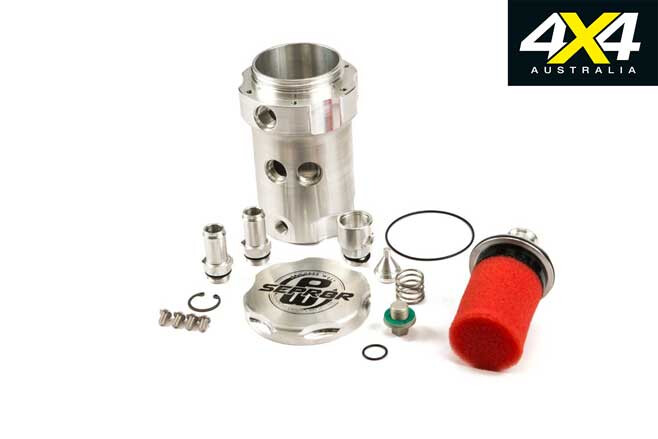
TerraTuff SEPR8R Air Oil Separator Kits are manufactured from billet aluminium and feature a removable lid and filtration assembly with a 650ml capacity.
An over-pressure relief valve prevents system malfunction in the case of blockage, and there’s a drain port incorporated into main housing with an optional drain valve available. The unique low-restriction anti-clog polyurethane filtration system is washable and reusable, and provides 4um filtering.
Laser cut brackets allow for vehicle-specific fitment and the kits are supplied with quality clamps and mounting hardware, and detailed installation instructions.
RRP: From $385.00 Website: www.4x4modsaustralia.com.au
JLM Diesel DPF ReGen Plus
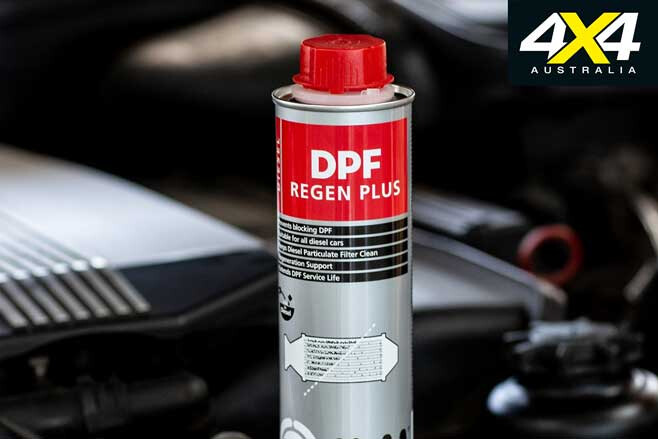
Just add JLM Diesel DPF ReGen Plus to your vehicle’s fuel tank and the company claims it will prevent the diesel particulate filter from becoming blocked.
The high concentration of active ingredients in DPF ReGen Plus is designed to ensure that soot in the diesel particulate filter burns at a lower temperature and therefore sooner and cleaner. In other words, it’s aimed at improving the DPF regeneration process (cleaning process).
JLM Diesel DPF ReGen Plus is particularly suitable for late model 4WDs that primarily make short journeys, and vehicles that operate at lower speeds. JLM recommends adding 250ml of Diesel DPF ReGen Plus to your fuel tank for every 50 litres of fuel, and says that regular use can prevent DPF problems and help avoid expensive repairs.
RRP: $21.95 Website: www.gcg.com.au
Direction-Plus PreLine-Plus
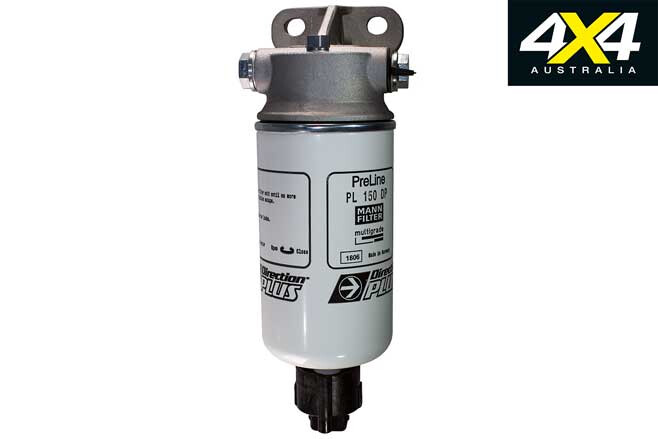
The Direction-Plus PreLine-Plus is described as an innovative pre-filter that has been designed to protect your diesel fuel system from corrosion and abrasion.
The PreLine-Plus kit includes an intuitive multistage water alert and is claimed to provide 100 per cent water-separation efficiency and a long service life. The manufacturer also claims the PreLine-Plus meets the specifications set by leading manufactures of diesel fuel injection systems.
RRP: From $550 Website: www.direction-plus.com
Sachs Max shock absorbers
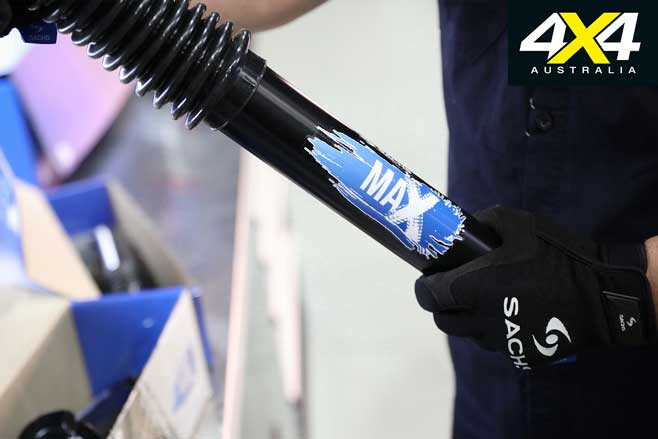
SACHS has developed a range of shock absorbers designed specifically for the needs of four-wheel drivers. Called SACHS Max, the design is based around larger and more durable components, resulting in greater fluid capacity and better heat dissipation.
Increased bore size and upgraded seals are claimed to minimise heat generated through friction for more consistent performance under repeated loads, while internal valving has been designed to optimise damping characteristics to promote a more comfortable and safer ride.
The SACHS Max range covers more than 65 fitments, including popular vehicles such as Ford Ranger, Toyota Hilux and LandCruiser, Nissan Navara and Isuzu D-Max.
RRP: From $196.35 (each) Website: www.sachsmaxshocks.com.au
EFS Ford Ranger PXIII suspension upgrade
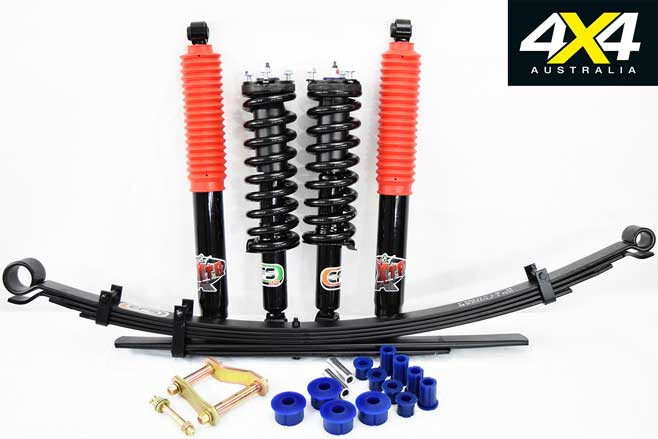
EFS has developed a range of suspension upgrade options to suit the ever-popular Ford Ranger PXIII. With a choice of spring rates, EFS says it will have a suspension kit to suit four-wheel drivers whether they use their Ranger for towing, off-road driving or outback touring.
The complete lift kits include new front struts with EFS’s Elite 35mm big bore damper and a choice of spring rates, while at the rear there are a number of leaf spring options, as well as EFS greasable pins and shackles, U-bolts, polyurethane bushes and Elite 35mm big bore dampers.
For full details you can check out the website (see below) or to talk to an EFS accessory expert phone direct on 1300 337 493.
RRP: From $1999 Website: efs4wd.com.au
Bendix Ultimate 4WD Brake Upgrade Kit
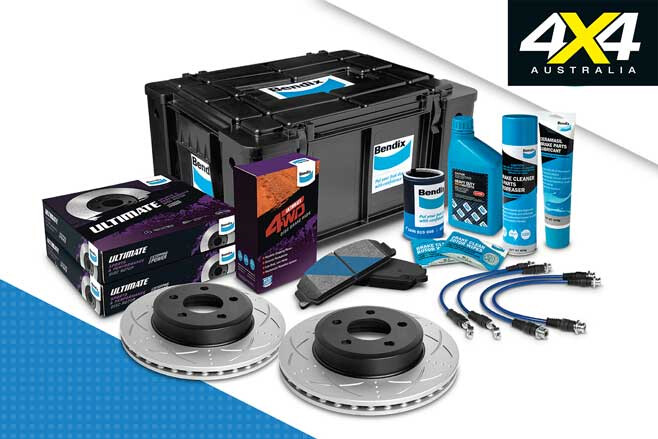
Renowned brake specialist Bendix Brakes has developed what it calls the ‘Ultimate 4WD Brake Upgrade Kit’. Packaged in a heavy-duty touring case, the kit includes advanced brake pads and rotors, braided lines and all the ancillary items required for a smooth changeover from the vehicle’s OEM brakes.
The Bendix high-performance ceramic material pads are claimed to offer increased stopping power in extreme conditions, while the new rotors incorporate innovative technology such as high carbon metallurgy for increased braking performance, as well as special diamond tip slots and a bi-directional pillar design to efficiently expel gases, water, dust and grit. Bendix says the Ultimate 4WD Brake Upgrade Kit not only provides improved braking performance, but also better feel at the pedal and improved resistance to brake fade.
The kit also comes with a Bendix stubby cooler, and is available to suit a wide range of modern 4×4 vehicles.
RRP: $1199 Website: www.bendix.com.au
EFS 4X4 Accessories Diff Drop Kits
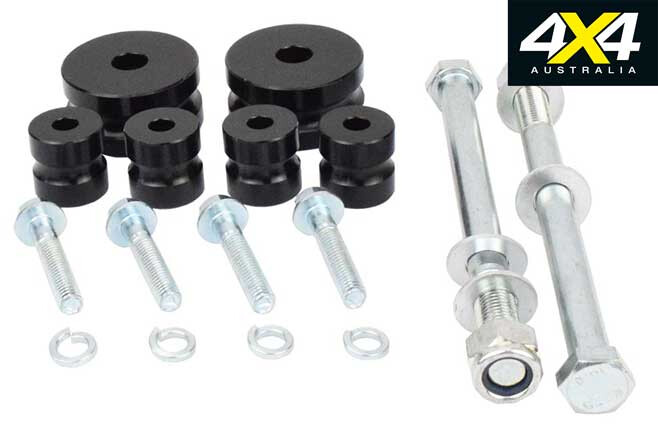
EFS 4X4 Accessories has developed a range of Toyota Diff Drop Kits designed to assist in the realignment of vehicle CV joints when a suspension lift has been introduced. The Diff Drop Kits include all required spacers, flat/spring washers, bolts and rings. The spacers are made from tough T6061 high-grade aluminium and all nuts and bolts are made from high-quality nickel-plated 10.9 or 8.8 grade bolts.
The range includes Diff Drop Kits to suit Prado 120 and 150 models, FJ Cruiser, MY2005+ Hilux and LC200. In addition, EFS has developed a Centre Bearing Spacer to suit MY2015+ Mitsubishi MN-MQ Tritons that’s designed to reduce the vibration often associated with a suspension lift on this model.
RRP: From $124.80 Website: efs4wd.com.au
Terrain Tamer Heavy Duty Wheel Bearing and Combination Swivel Housing Kits
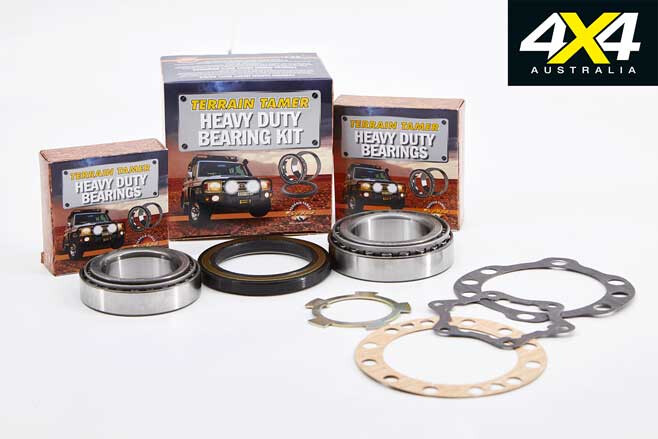
Terrain Tamer has released a range of Heavy Duty Wheel Bearing and Combination Swivel Housing Kits, specifically designed and manufactured for Toyota LandCruiser and Hilux vehicles operating in extreme conditions.
Aimed at applications such as heavy towing, driving in tough off-road conditions and commercial use including mining, the kits comprise made-in-Japan bearings with a Rockwell hardness rating that is 2.5 points higher than the OE equivalent. The bearings are manufactured using a new forging technique with an upgraded heat treatment procedure, to enable a longer service life.
The kits also include an innovative new range of heavy duty hub seals that rotate on their own internal surface without relying on the condition of the shaft, thereby eliminating wear on other components.
According to Terrain Tamer, “the seals utilise a labyrinth construction to better prevent the loss of oil and lubricating fluids and better protect against the ingress of dirt and other contaminants, making them perfectly suited to harsh muddy and dusty conditions and ensuring both extended seal and bearing life”.
The Heavy Duty kits are supplied with all required components including gaskets, nuts, gear lever seats and bushes, boots, washers etc., and all parts are covered by a 12-month warranty.
RRP: HD Wheel Bearing Kits from $120;HD Swivel Housing Kits (with Swivel Hub and Wheel Bearing) from $400 Website: www.terraintamer.com
- Introduction: Old is Gold
- Update 1: Veteran services
- Update 2: Geared up
- Update 3: Getting into the groove
- Update 4: Bush Bashin’
- Update 5: Hot Stuff
Introduction: Old is Gold
I WOULD like to say it was love at first sight, but when I first copped a glance of the 1994 Land Rover Defender 300Tdi parked in the Sunshine Coast Airport carpark I was a little tentative.
That’s because I’d just flown from Sydney to purchase the Land Rover on the promise that it “drives beautifully”. I walked around it and saw a body that looked rougher than I’d anticipated.
This Landy had done some work, but it had a roof rack to which was attached an Ironman 4×4 awning, a high-lift jack and a pair of MaxTrax. When I poked my head underneath, there was oil everywhere. This was expected, but it looked like it was coming out of several places including the engine, gearbox, transfer case, diffs and swivel seals.
The chassis looked pretty straight, without any visible rust, and there was an Old Man Emu steering damper up front, King springs, unidentifiable aftermarket shocks, and airbags in the rear. Then I opened the driver’s door and noticed the air-conditioning, the three switches for an ARB air compressor, and front and rear Air Lockers. Bonus!
It was pretty dirty in the cabin, but the dash was in good nick, the seats weren’t too bad and this Landy was loaded with extras I didn’t know about, including a UHF and a dual battery set-up. I took it for a spin and the gearbox and clutch felt good, but there was a clunk in the driveline.
The 300Tdi performed as I would’ve hoped, but when the Landy approached 90km/h the steering wheel began to wobble. Nevertheless, it handled well, rode beautifully and the brakes offered plenty of bite – a good sign.
I did the deal and was on the highway heading south by 11.30am with 1200km ahead of me to familiarise myself with my new Landy. I stopped at the first service station to fuel up, check tyres and fluids, as well as stock up on food and drink to fuel me.
A couple of the tyres were a bit iffy, and they were all from different rubber companies, including the spare, but I was confident they would get me home safely. The drive back to Wollongong was enjoyable.
The temperature gauge sat where it should the entire way back and the engine (supposedly rebuilt 70,000km ago) performed faultlessly. The only issues on the journey included a sticking throttle and the aforementioned wobble in the steering, which could be the result of out-of-balance wheels or (so I’m told) dodgy swivel hubs. One of the headlights is also buggered and the window washer is sometimes reluctant to turn off.
When I arrived back home I discovered the Defender had come with a complete Bahco toolkit, an inverter, a battery charger, some jumper leads, a machete (yes, you read right), and a heap of other tools and bits and pieces. Of course, my once pristine driveway is now covered in oil, but you can’t see it when the Landy is parked over the top. It looks like I have a lot of work ahead of me.
Update 1: Veteran services
Deano’s spent a bucket-load of cash fixing his old Defender
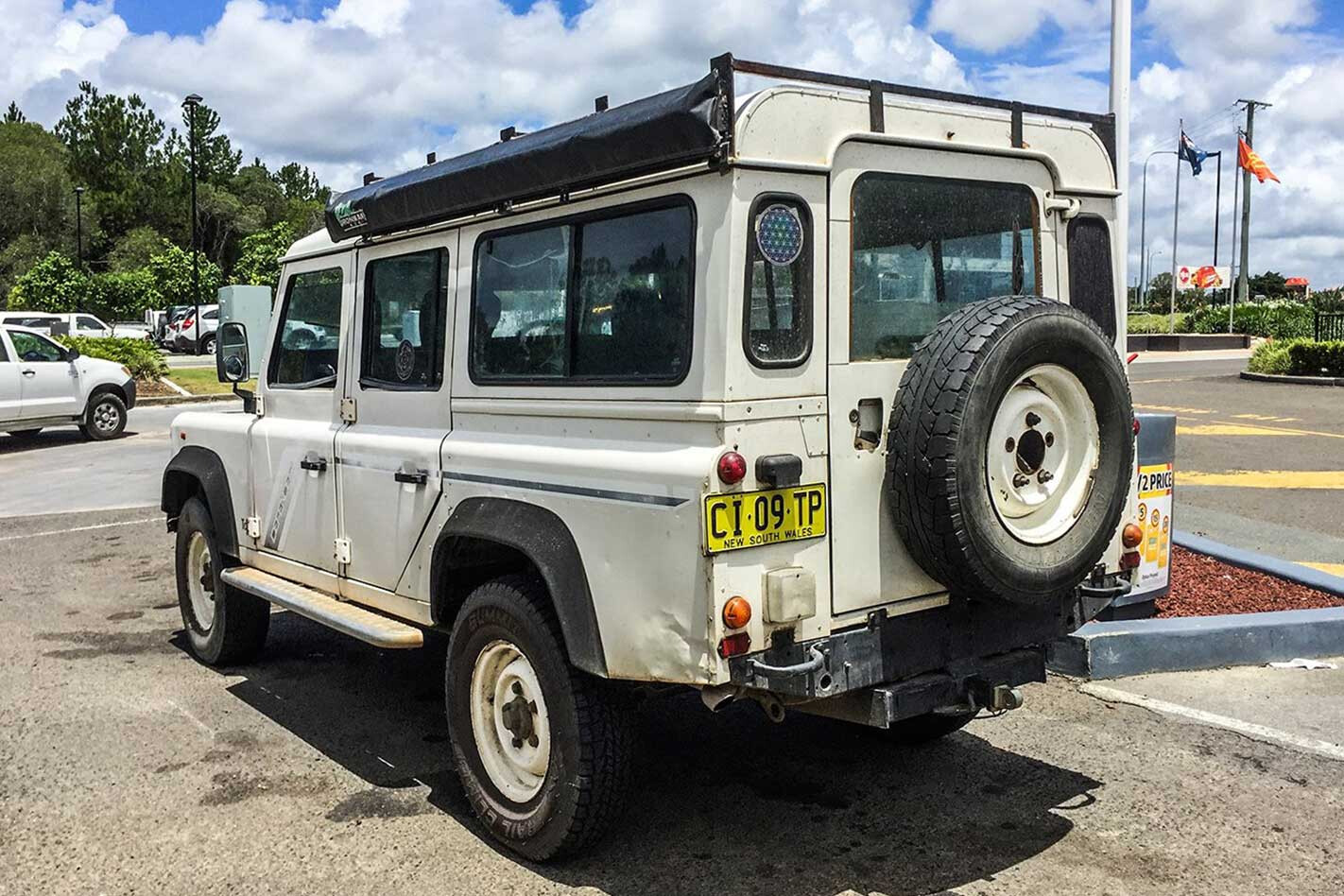
AS MENTIONED a couple of months ago (May, 2017), my recently acquired 1994 Defender 300TDi needed a fair bit of work.
The obvious problems included a big wobble in the steering at highway speeds, a slipping clutch, and oil leaks from every conceivable seal (situation normal, I hear you snigger).
Rather than take it to my local mechanic, I enlisted the services of Pete Davis from Roving Mechanical. Pete, who’s been working on Landies for years, has set up shop with the equally experienced Glen Wickens in the southern Sydney suburb of Peakhurst.
I left the Landy with Pete for a few days and he had a good look over it before presenting me with a long, long list of items requiring attention.
I expected there would be a fair bit to do, and had factored that into my budget, so I gave Pete the go-ahead to fix the areas of immediate concern, which included a new water pump, new brake fluid reservoir and new silicon intercooler hoses.
On picking up the Defender, Pete ran me through the rest of the problems that would still have to be fixed: leaking inlet manifold, rear disc shields, wheel bearings, radius rod bushes, Panhard rod bushes, swivel seals, transfer case overhaul, clutch replacement, steering damper, leaking auxiliary fuel tank… you get the idea.
I drove the Defender home and parked it in the garage, with an old carpet underneath to soak up the leaking fluids. A few weeks later I took it back to Pete, where all of the listed work was carried out over a couple of weeks while I was gallivanting about the Flinders Ranges in someone else’s 4×4.
Pete fitted an Xtreme Outback heavy duty clutch from Australian Clutch Services in place of the standard item, and the five mismatched tyres were flicked in favour of a set of BFGoodrich All Terrain T/A KO2s.
I have now sampled the KO2s on a couple of different vehicles – up in the Victorian High Country and in the South Australian outback – and I’m a big fan, so I’m looking forward to seeing how they perform in narrow LT235/85R16 spec on the Defender.
When I picked up the Defender once more it felt vastly improved; no more steering wobble, no more slipping clutch and no more oil or fuel leaks (Pete had removed the auxiliary tank so I could get it welded up).
There was still a knock in the rear-end, which was eventually diagnosed as the rear A-frame bushes. These were replaced on a subsequent visit to Pete and the Defender now drives as it should.
Yes, I exceeded my original budget, but not by too much, and now I’m the happy owner of a very capable off-roader, albeit one that doesn’t look all that flash thanks to some bent panels, below average paint and very faded decals. I’ve since removed most of the crappy old window tint, and I’ve ripped out the sagging roof lining.
There’s still a long road ahead for the Defender, but for this project I’m willing to give it all the time it takes.
Update 2: Geared up
Deano starts kitting out his Defender.
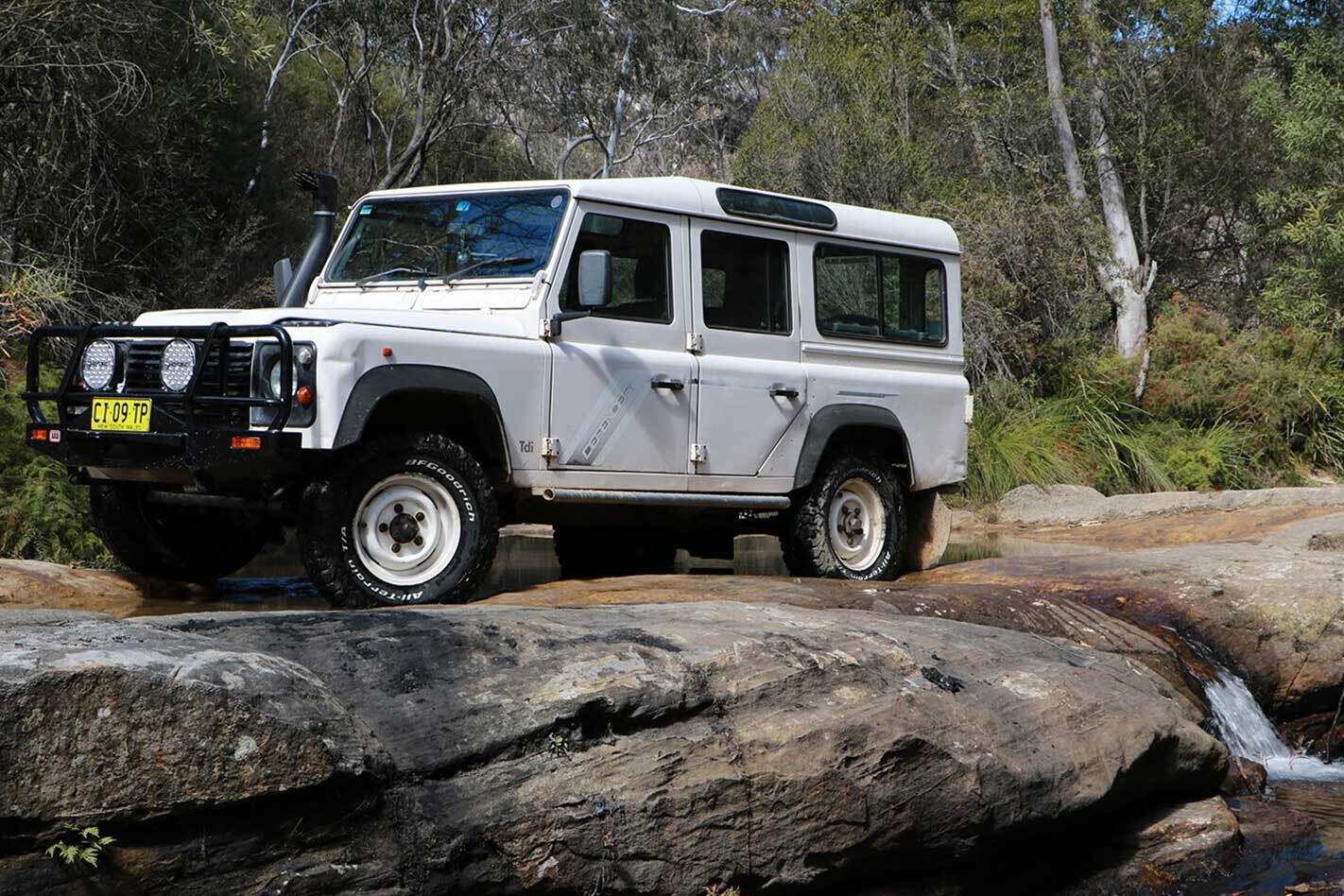
AFTER throwing a heap of money at my old Defender, I reckon it’s finally mechanically sound (knock on wood); although, there are still a few little things to sort out, such as the still-leaking auxiliary fuel tank.
When new, the little 2.5-litre four-cylinder turbo-diesel engine only made a claimed 111hp (83kW), and I reckon a few of those ponies may have got out of the gate in the last 23 years, but on-road performance is still acceptable.
The Defender will happily cruise at 100km/h on the highway and I can even stretch it out to 110 clicks on the freeway, so long as the terrain is flat … or pointing downhill. It struggles a bit on inclines and often needs a shift down to fourth, but I try to leave early for appointments so I’m never in too much of a rush.
The upside of that modest output is excellent fuel economy, the Defender averaging just 10L/100km over the past 1000km. The best thing, however, is how the Defender now rides and handles. There’s minimal play in the steering, ride quality is good and cornering is predictable with well-controlled bodyroll … relative to other Defenders, that is.
The new Xtreme Outback clutch has bedded in nicely. It offers a progressive feel and is only a little heavier than I remember the old clutch being. To say I’m impressed with the BF Goodrich A/T KO2s would be an understatement, both on sealed and unsealed roads.
On the blacktop they offer plenty of grip and are particularly confidence-inspiring in wet weather. Are they quiet? Well, that’s a hard one to answer, but I can assure you they’re barely audible over the wind noise and mechanical cacophony that the Defender generates at highway speeds.
Off-road they bag out nicely with pressures dropped to around 25psi, which you’d expect of a high-profile LT235/85R16. I haven’t had the chance to drive them in muddy conditions as yet, but I’ll let you know how they go as soon as I find out.
As any Defender owner knows, too much chequer plate is never enough, so I was pretty stoked when the oldies bought me a pair of wing-top chequer plates for my birthday. I reckon black highlights on a white vehicle look fantastic, and these plates are no exception.
I’ve also spent a fair bit of time trying to remove the worn Defender decals down each side. Using a heat gun, I managed to get the stickers completely off the driver’s side, but there’s still some adhesive residue that won’t budge. I’ve only just started peeling off the stickers on the passenger side. If anyone has any tips on easy decal removal, I’m all ears.
I’ve put some new mud flaps on the back (the old ones went AWOL) and a new catch in one of the sliding rear windows. I sourced these items out of the UK as I struggled to find them locally. My next job was fitting an ARB winch bullbar that I spotted on Gumtree for $750.
I called the seller one morning a couple of weeks ago, whipped up to Sydney (from the ’Gong) to buy the bar, whipped back home and spent the arvo in the shed fitting it. My wife Renata helped me lift the bar into place and the whole job was done in a just a few hours.
This was the second bullbar she’s helped me fit, so I’ll probably have to start paying her soon, but now she’ll have to wait until after I’ve bought a winch (which undoubtedly she’ll also have to help me fit).
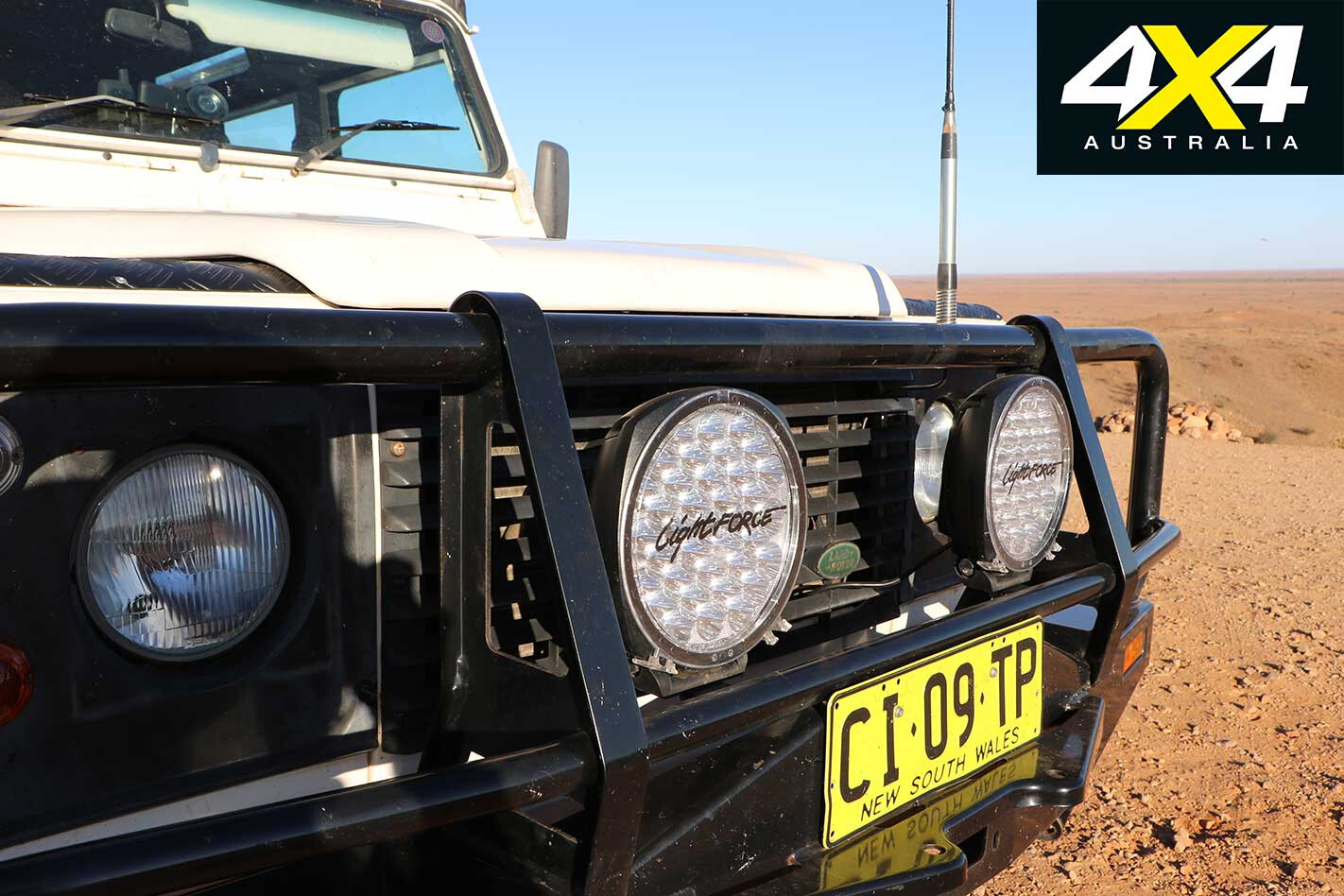
Finally, the Lightforce Genesis LED driving lights I had fitted to my previous vehicle are now on the front of the Defender. Using the supplied Lightforce wiring loom, these lights are easy to wire-up on a regular vehicle, but not so on a Defender, with its battery located under the passenger seat, next to no space between the radiator and the grille, and no access behind the dashboard without first removing it.
The Aussie-made Lightforce Genesis driving lights are seriously bright, and will prove a great complement to the yellow glow of the standard halogen headlights … once I get them wired-up properly.
I’ve ordered an Exmoor Trim rear seat from the UK for my daughter to sit in, because the standard seat is hardly what you’d call safe. The stock pew has no headrest and wobbles around on its dodgy-looking mounts. The Exmoor unit mounts securely to the floor of the Defender and has a high back and a headrest.
Another job on the to-do list is to fix the air conditioning, especially now winter is well and truly behind us. I also want to tidy-up the cargo area and make it a little more practical, but for now I’m just enjoying the Defender every time I slip behind the wheel, whether it’s a weekend in the scrub or a drive down to the shops.
4×4 Shed Log 1: 1994 Land Rover Defender 300TDI Total Mileage: 231,500km Date Acquired: Feb 2017 Price: $10,000 Mileage this month: 1000km Average fuel consumption: 10L/100km
Update 3: Getting into the groove
Dean is back with an update on his Defender, after plenty of tinkering and driving.
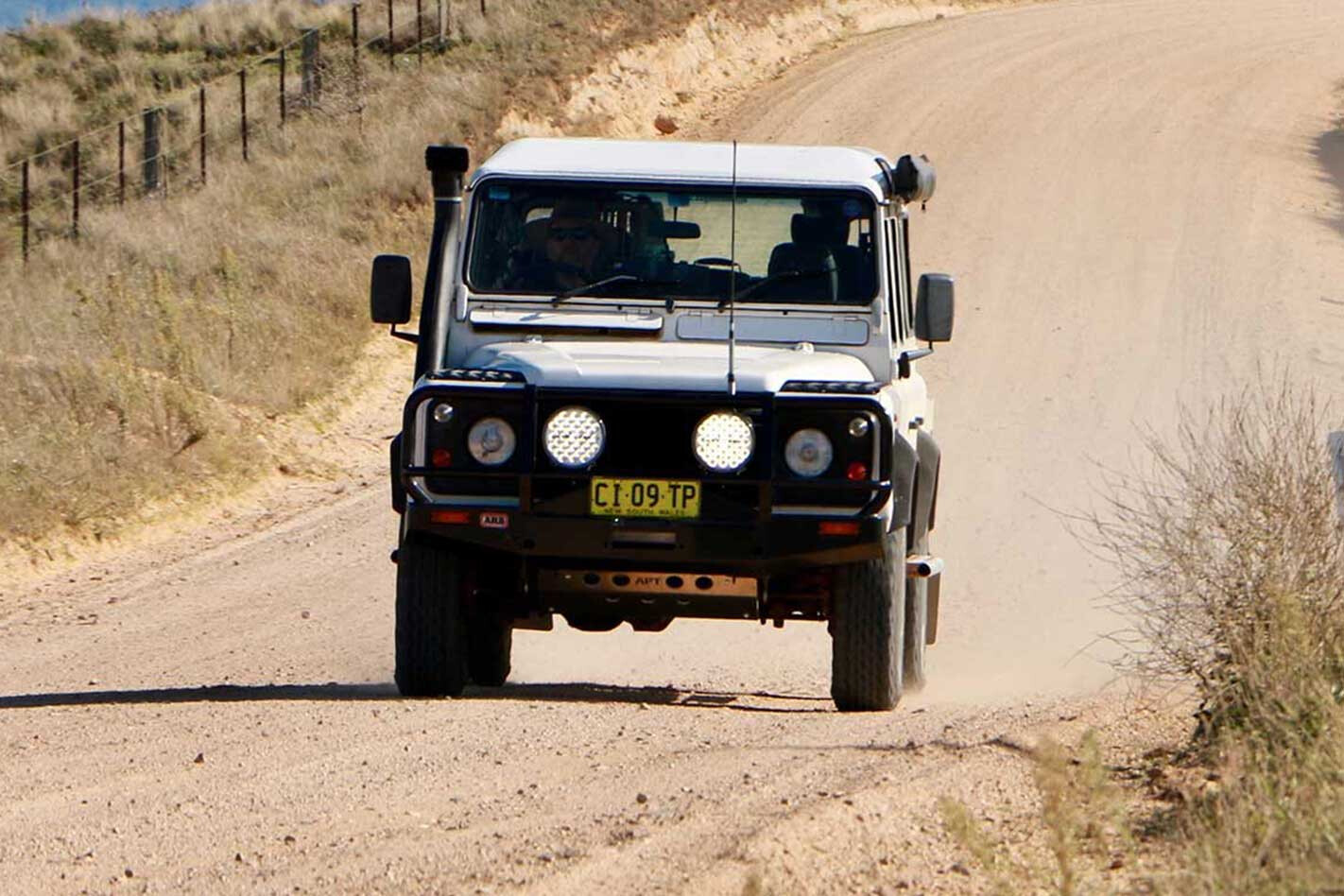
I haven’t written a ‘Shed’ update on my Defender since November last year, and a lot has happened in that time. I’ve tinkered, I’ve driven, I’ve fixed, I’ve driven, I’ve spent, I’ve driven and I’ve spent some more.
Tinkering
I FITTED a new rear seat manufactured by a company in England called Exmoor Trim. It provides a far more solid base and proper bucket seat comfort for my rear-seat passenger, who deserves something much safer than the rattly, old standard pew.
The Exmoor Trim seat wasn’t cheap (just over $1000) but it’s superbly engineered and nicely made. The old roof lining has gone back in, but not until I stripped it of its saggy, stained material covering. I cleaned off all the old foam, spraypainted it grey, and voila; it looks great and it’ll never sag again.
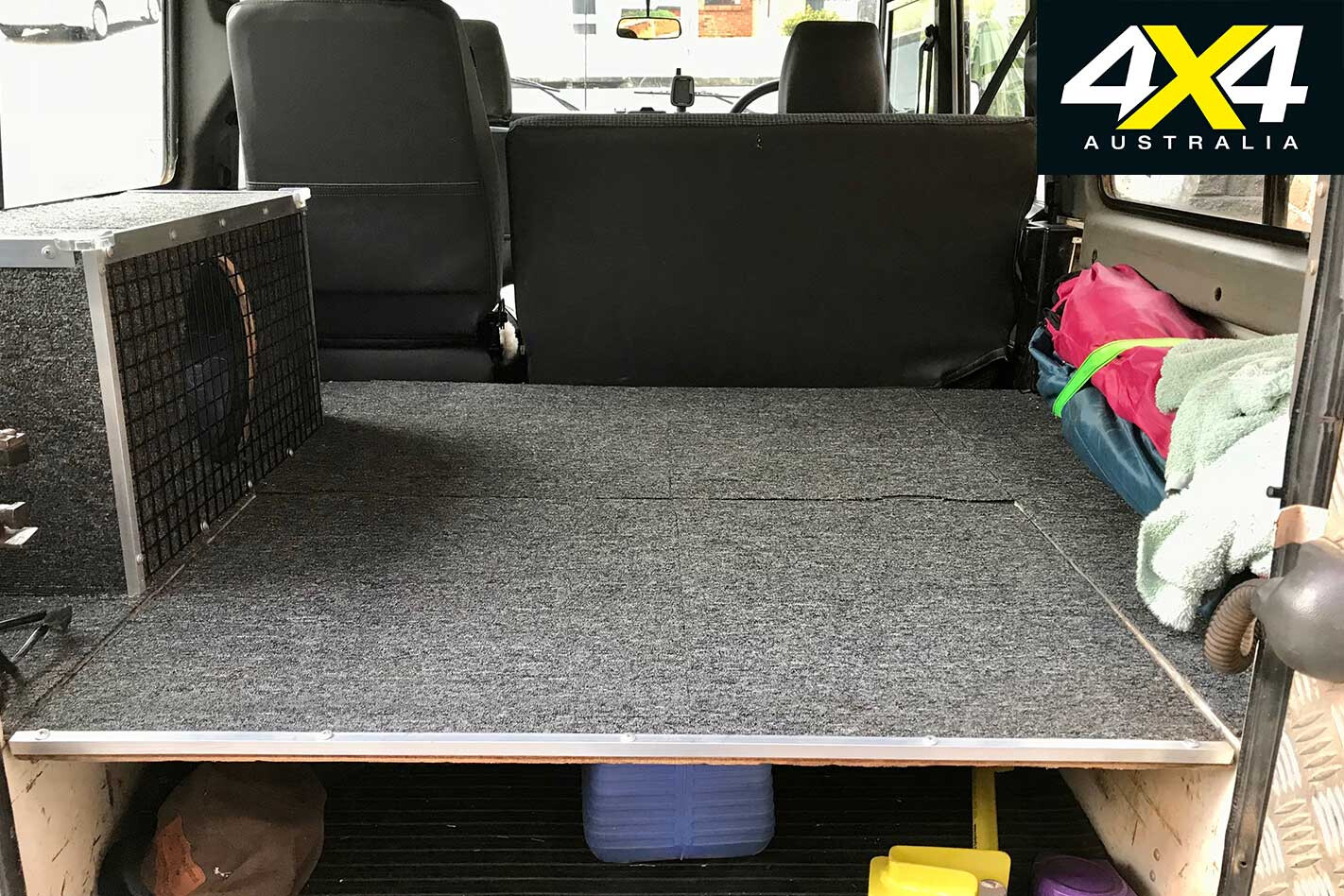
I’ve upgraded the sound system by fitting a Sony head unit with Apple CarPlay. I initially enlisted the services of a local car audio mob to do this job, but the result was so shoddy I ripped it all out and started again from scratch. I’ve retained the front speakers, fitted some rear speakers in boxes, built a subwoofer box and wired up an old sub and amplifier I used to have fitted in a previous vehicle.
There’s now enough sound to hear a tune at freeway speeds, which is really saying something in an old Defender.
To match the flash new subwoofer box, I decided to tidy up the rear cargo area. To do this I screwed down some marine ply behind the rear seat and attached another piece using hinges; this gives me an under-floor area to stow gear and a nice, flat floor area. It’s all working quite well so far, but I’ll probably fit a drawer down the track.
The rear sliding windows were missing a few rivets and were rattling like nothing else, so I drilled out the old rivets and started again. I’d like to eventually flick these sliding windows and replace them with a pair of gull-wings for better access to the cargo area. There are a couple of viable options on the market, including from CSW and Front Runner.
I’ve now wired up a pair of Lightforce Genesis LED driving lights bolted to my second-hand ARB bullbar. These Aussie-made lights are simply awesome, providing a huge throw of light as well as a good spread. They also have a Daytime Running Light (DRL) function, which improves vehicle visibility.
I had to flick the original ‘wombat bar’ when I fitted the ARB bullbar, so I’ve since equipped the Defender with a far more substantial APT alloy steering guard. It looks great and provides much more protection at the front of the Defender. I’ve also fitted a pair of additional rated recovery points.
Fixing
WHEN I bought the Defender I knew it needed a fair bit of work to make it mechanically sound, but I may have underestimated much. So far the crew at Roving Mechanical in Sydney’s south have fitted an Xtreme Outback heavy-duty clutch and replaced or fixed the water pump, brake fluid reservoir, intercooler hoses, inlet manifold gasket, rear disc shields, rear wheel bearings, rear axle ball joint, front radius rod bushes, Panhard bushes, steering damper, rear main seal, hub seal, timing belts, wiper switch, air cleaner mounts, wiper stalk, dipstick and more.
The air-conditioner still doesn’t work, but the fault was located by my local air-con specialist – the bonnet catch has worn a hole through the condenser because, apparently, early model 300Tdi Defenders didn’t have the necessary shield in place to prevent this from happening. It’s an easy enough fix, but I just haven’t got around to it yet.
Of much higher priority is to fix the injector pump, which is leaking a small amount of diesel. At this stage it’s just leaving its mark on my driveway, however, I’ve already booked it in at a diesel specialist for repair.
Driving
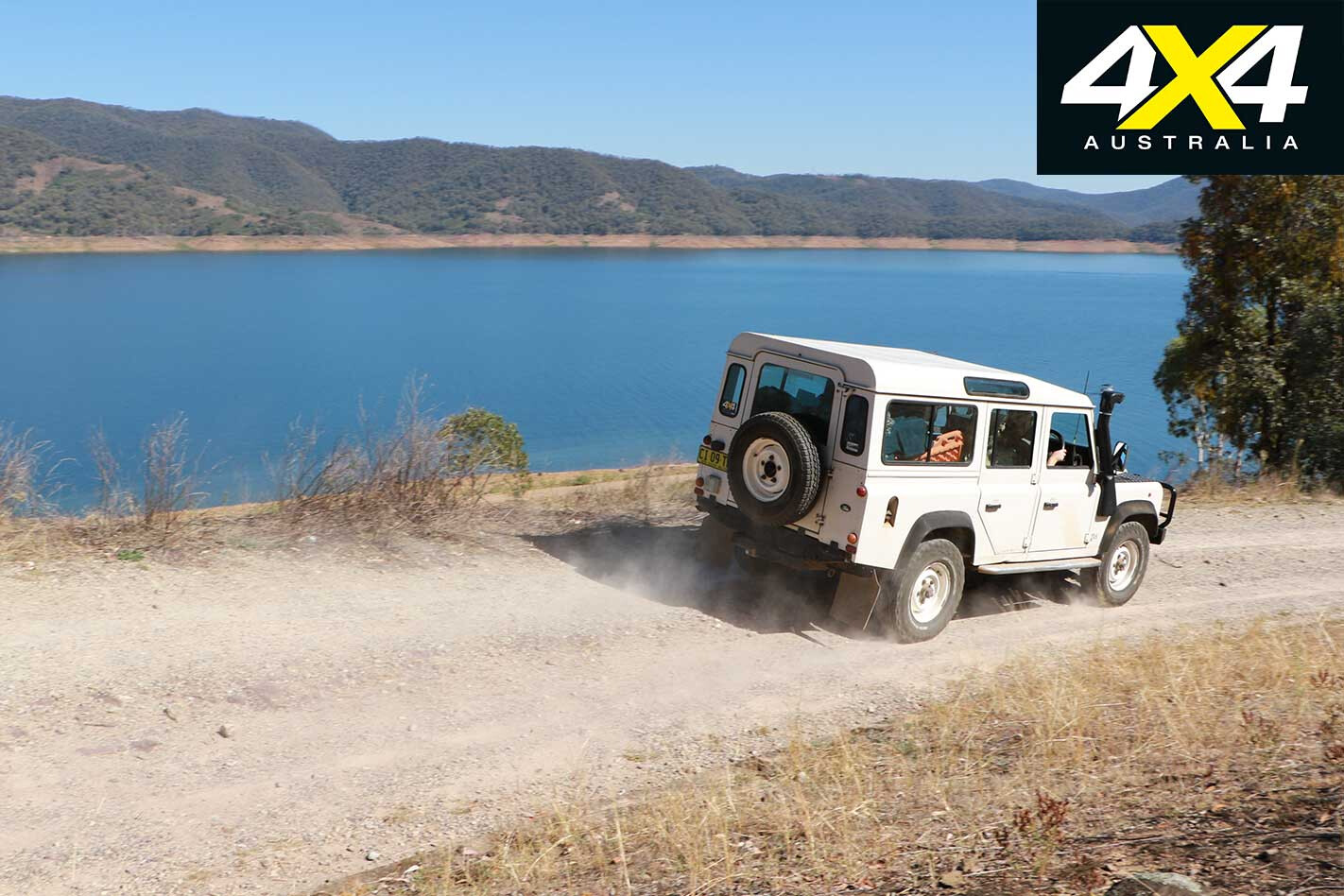
NOW TO the good bit: I just bloody love driving my Defender. It’s noisy, it’s slow, it’s hot in summer and it’s cold in winter; but when I’m behind the wheel, I’m in my happy place.
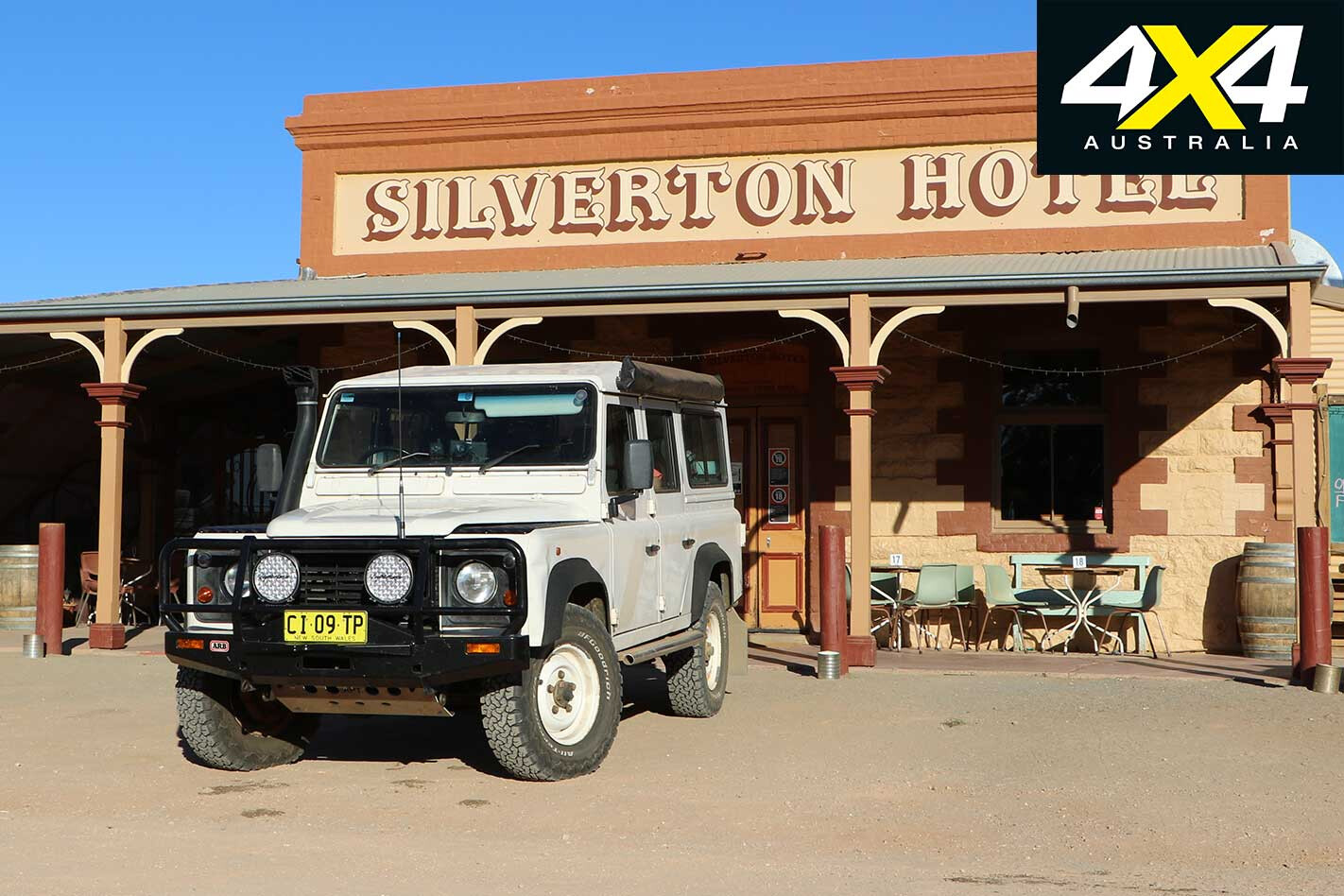
Since the last update the Defender has done about 12,000km, including a bit of off-roading around the NSW Southern Highlands, a trip out to Eldee Station in outback NSW, a couple of trips down to the Snowy Mountains, and several runs up to Sydney from Wollongong.
The BFGoodrich All Terrain KO2s have covered 10,000km and they’ve performed faultlessly. At this stage they show little in the way of tread wear and there are no visible nicks or cuts in the tread blocks or on the sidewalls, despite a fair bit of off-road work including some rocky tracks in the Barrier Ranges. For the record, I’ve been running 35psi front and rear on the road, dropping to as low as 26psi on dirt.
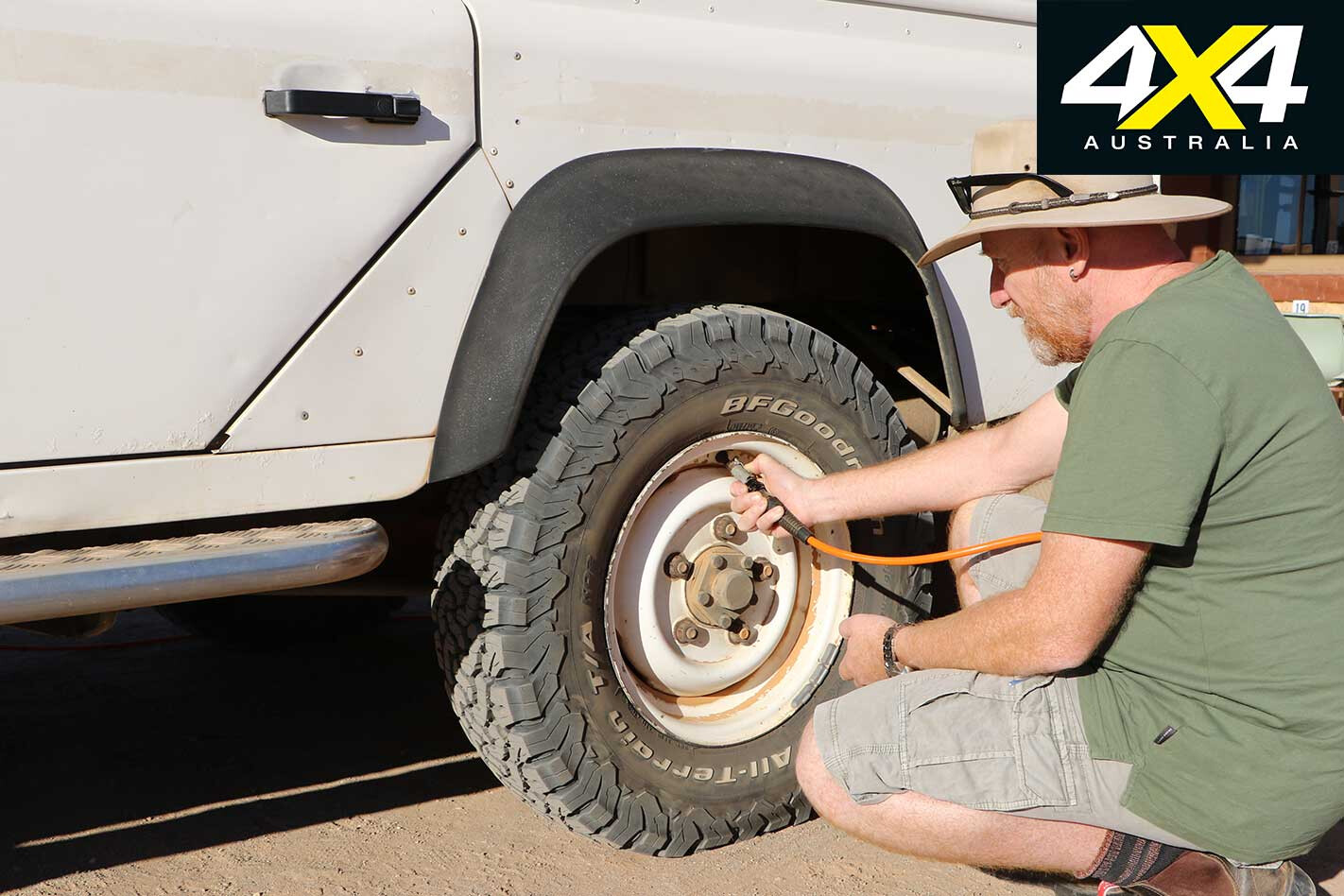
Off-road, the Defender is probably the most capable vehicle I’ve owned. It has fantastic low-range gearing, excellent axle articulation and, thanks to front and rear ARB air lockers, constant drive to all four wheels.
The only problem with all this off-road capability is the temptation to go farther, which I’ve so far resisted to avoid mechanical breakages.
What’s next?
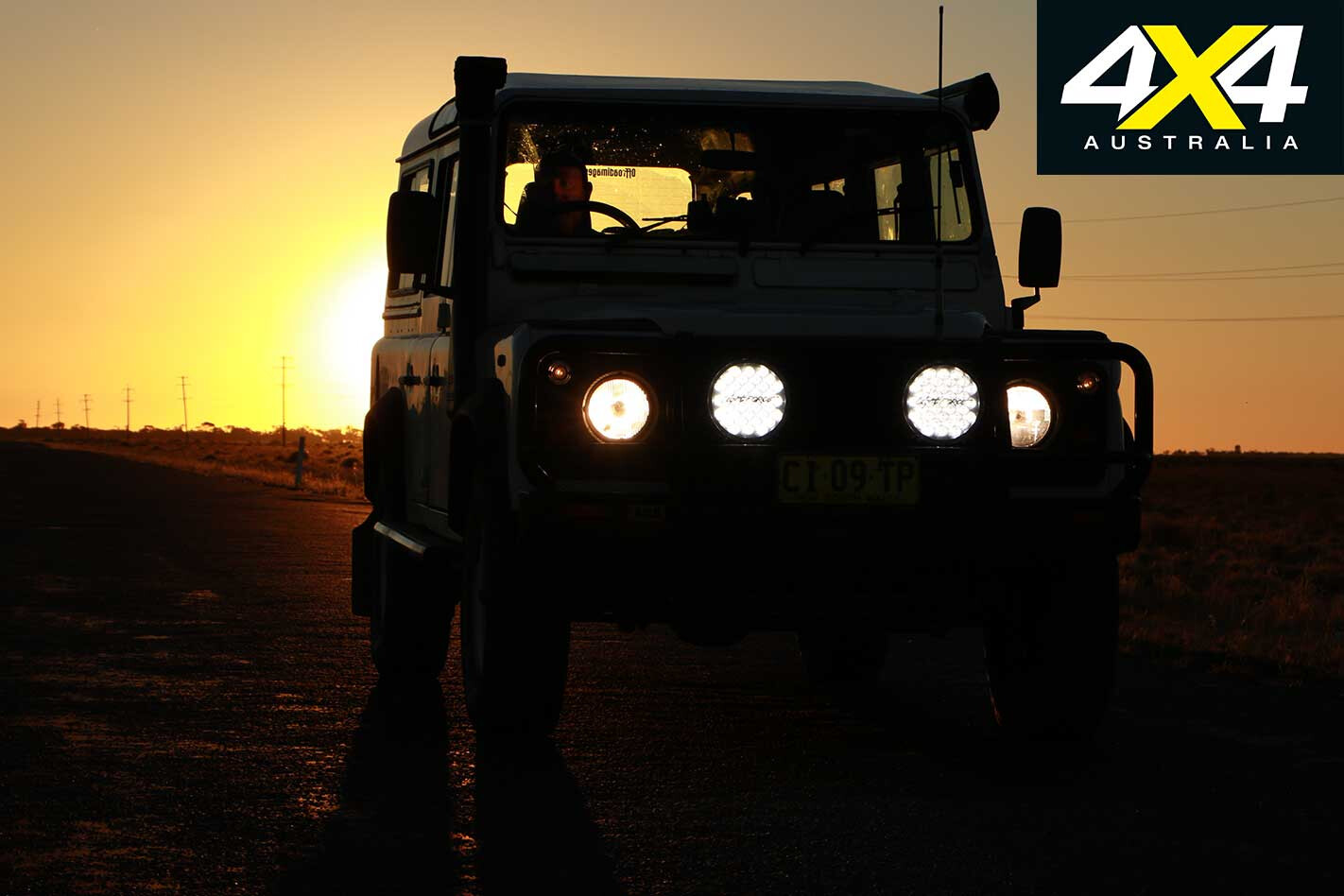
WINCH, roof rack, drawer system, new suspension and a Cummins crate engine … like any four-wheeler, my ultimate wish-list is way bigger than my budget, but you never know your luck. See you off the road.
4×4 Shed Log 2: 1994 Land Rover Defender 300TDI Total Mileage: 242,500km Mileage this month: 12,000km Average fuel consumption: 10.2L/100km
Update 4: Bush Bashin’
Deano heads bush in the Defender with a couple of mates.
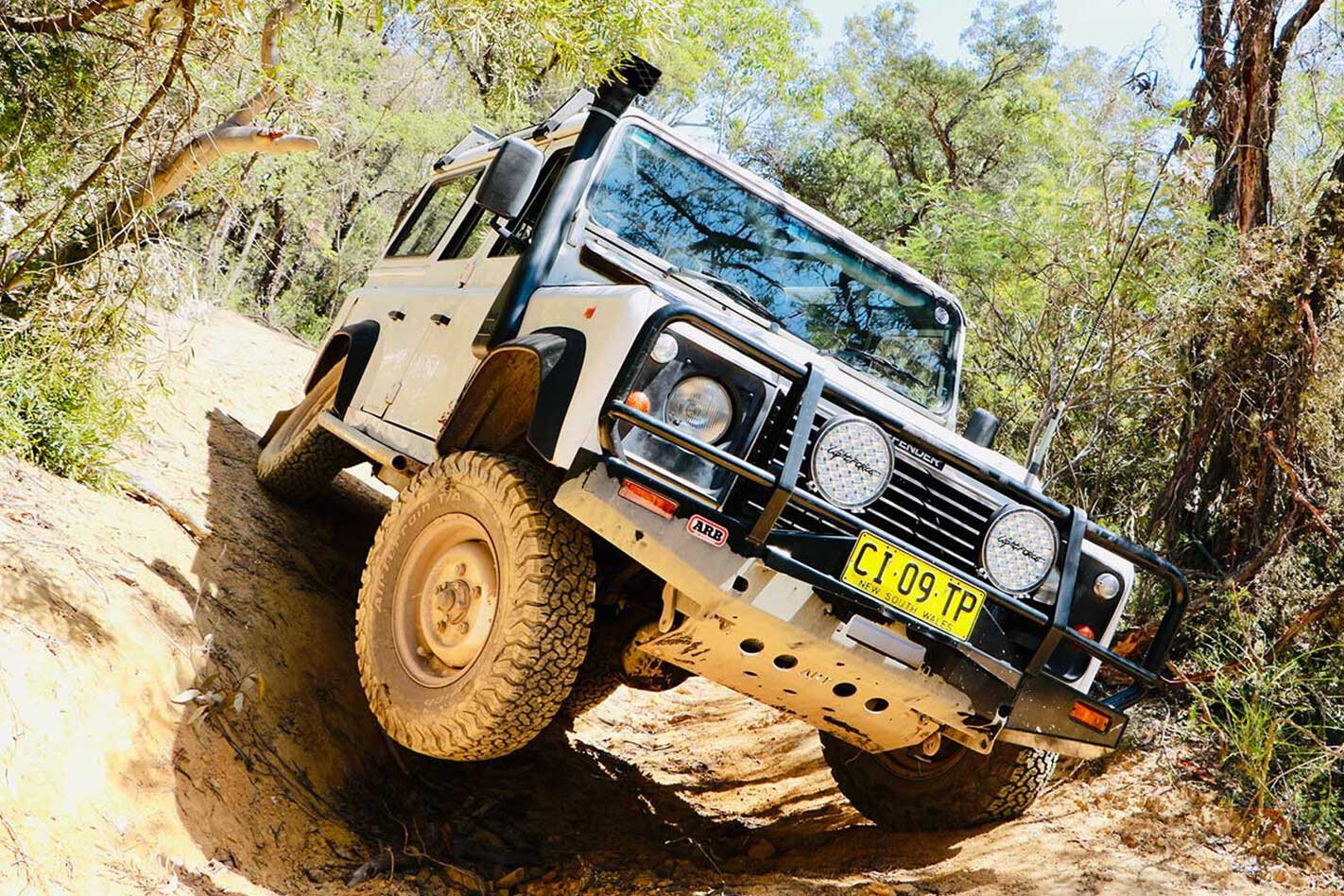
A MATE of mine (Matt) has owned a Discovery 3 for about a year, so I was surprised when I bumped into him at a pre-Christmas barbecue to find out he’d yet to take it off-road. We planned to resolve the issue with a run through Meryla State Forest sometime early in the New Year.
My brother-in-law Josh, who’s a Southern Highlands local, decided he’d tag along in his Navara, and so it was that we met up one warm morning in January just past Moss Vale for a day in the scrub. But I’m getting ahead of myself…
More Money
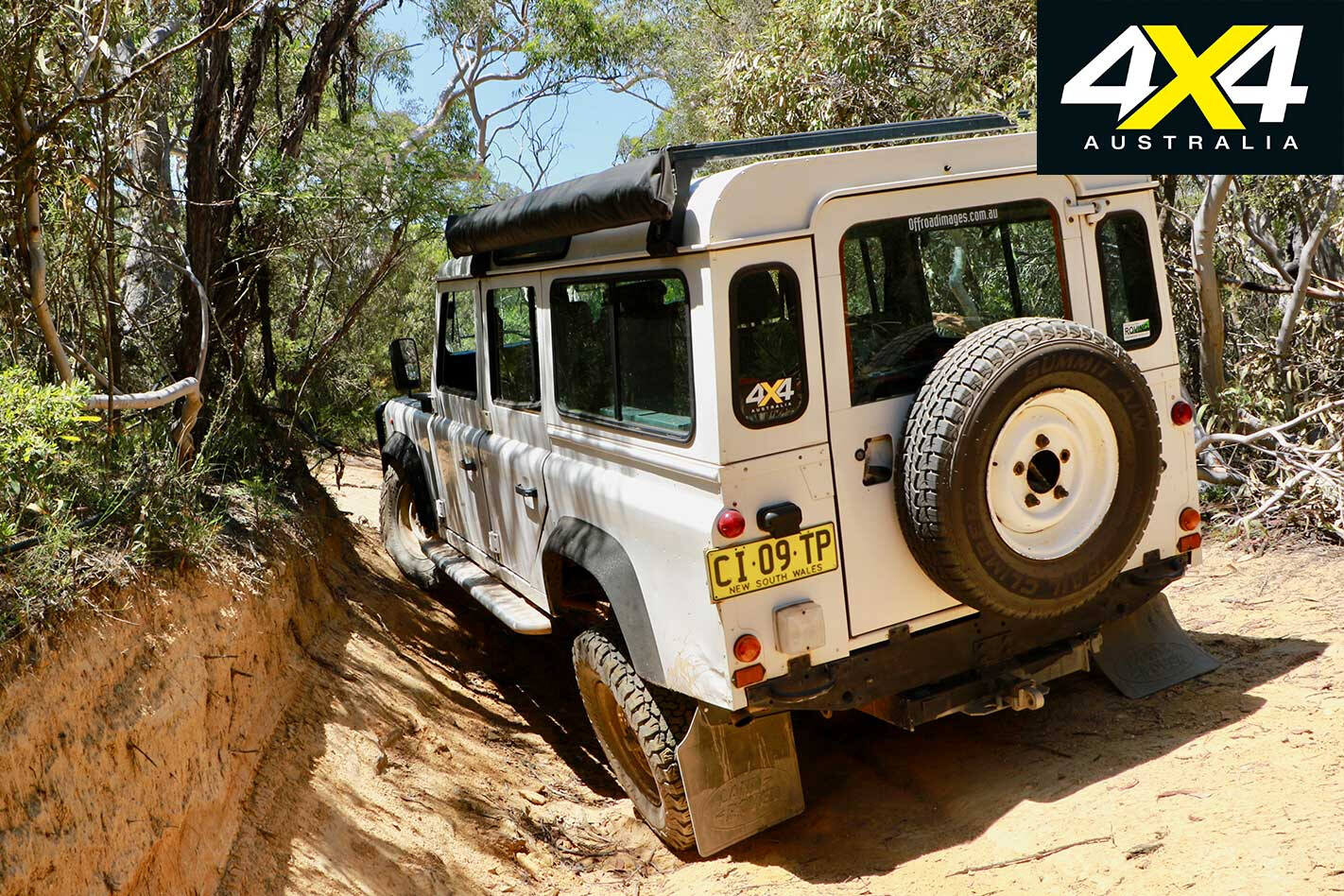
AS I MENTIONED in the last ‘In The Shed’ update, the Defender had a leaking injector pump and, as my wife was getting sick of the slippery diesel stain on the driveway, I decided to book it in with my local diesel specialist for a pump rebuild. After they’d worked their magic on it, the rebuilt injector pump looked like new, and my wallet was significantly lighter as a result. Who would have known owning an old Land Rover could be so expensive, eh?
Since the pump was rebuilt the Defender has been running like a dream, which isn’t really surprising considering all the other items that have been fixed or replaced over the past couple of years, but I’d much rather spend money on preventative maintenance than repairs, so I shouldn’t complain.
Still, the more I spend fixing stuff the less money I have to spend on new accessories like a winch and rock sliders, which are both still on my wish list. I did, however, manage to find the funds to buy a cheap drawer to bolt in the cargo area, alongside which I’ve fashioned a homemade shelf with a lift-up lid.
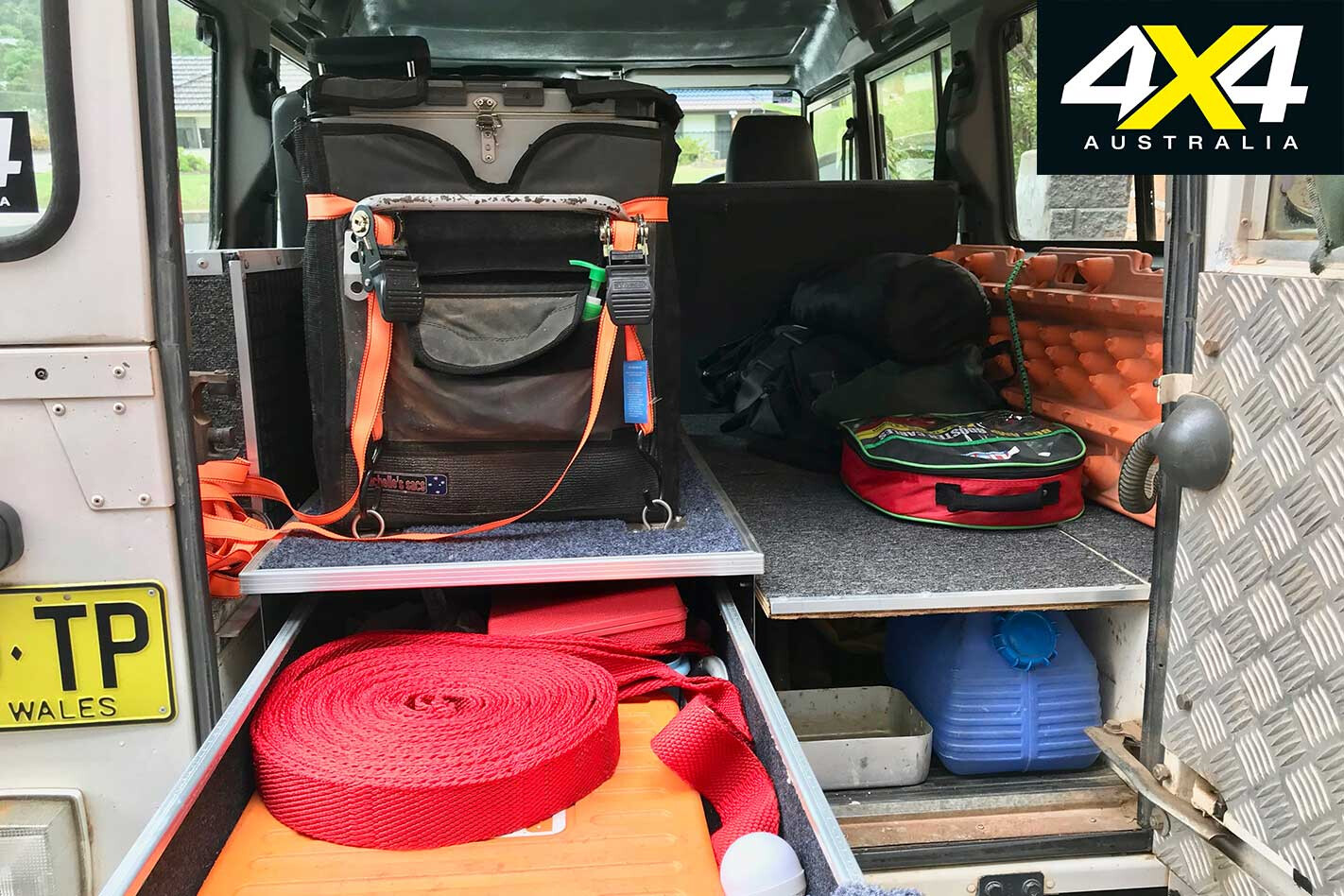
Being able to secure stuff in the back is obviously quite important and I also like to stow gear where I can find it, and with the new setup I know where everything is and can easily access it.
The Drive
THE LAST time I went for a drive in Meryla SF I was on my Pat Malone, and as many of the tracks now have huge muddy ruts in them, I wasn’t too keen on testing their depth.
This time, however, with recovery tracks and snatch strap packed, and two other vehicles along for the drive, I felt much more confident I’d make it through any unforeseen sticky situations.
We started off at the base of a small climb just off the side of Meryla Road called Patons Clearing. After dropping tyre pressures I jumped in the Discovery 3 to see what 4×4 hardware it was armed with, and then suggested Matt raise the air suspension, select low range and opt for the Terrain Response system’s Rock Climb mode.
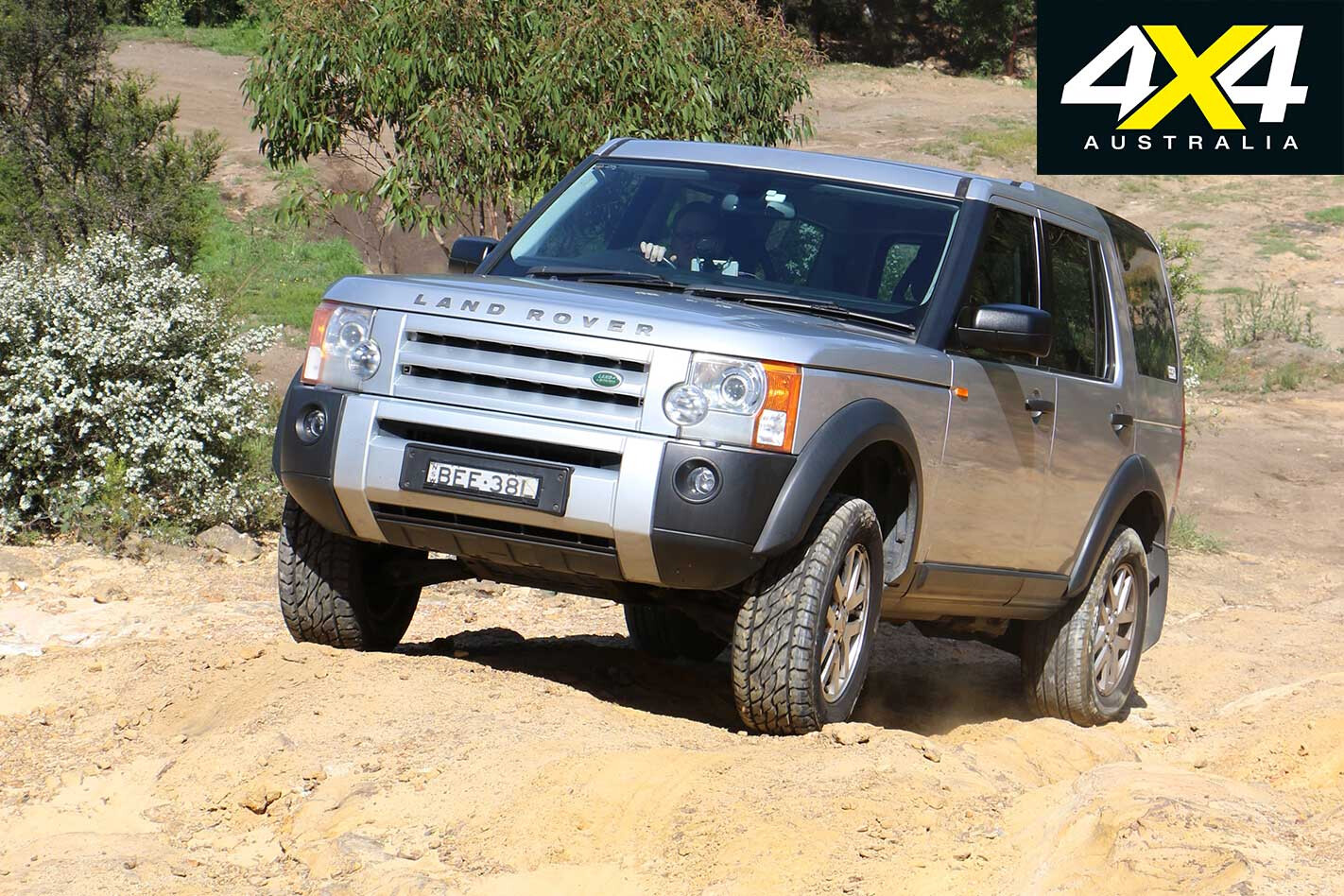
I jumped back in my Defender, locked the centre diff, grabbed low first, locked the rear Air Locker and started the climb. Ultimately all three vehicles made it to the top with ease, so we pushed deeper into the forest towards Gunrock Creek Fire Trail.
There’s a rocky climb on Gunrock Creek Fire Trail with an alternate ‘chicken’ route. The Defender made the climb easily enough, albeit with both air lockers engaged, while Matt and Josh wisely opted to take the easier track.
We then peeled off onto Gunrock Falls Fire Trail, which appropriately heads down to Gunrock Creek. There’s a great water hole here and an impressive waterfall, but despite some local rain in the preceding days there wasn’t much in the way of water flow and the creek looked almost stagnant.
With the exit on the other side of the creek in poor condition, we backtracked to Meryla Road and followed it south to where the forest borders Morton National Park and the Ettrema Wilderness Area.
Several years ago there were no locked gates here so you could drive to the end of Wombat Hill Lookout Trail, but unfortunately this is now known as Morton Trig Walking Track. There was also a time you could drive down Griffins Fire Trail to a fantastic camping area below the escarpment, however, this too has now been closed to 4x4s and bikes.
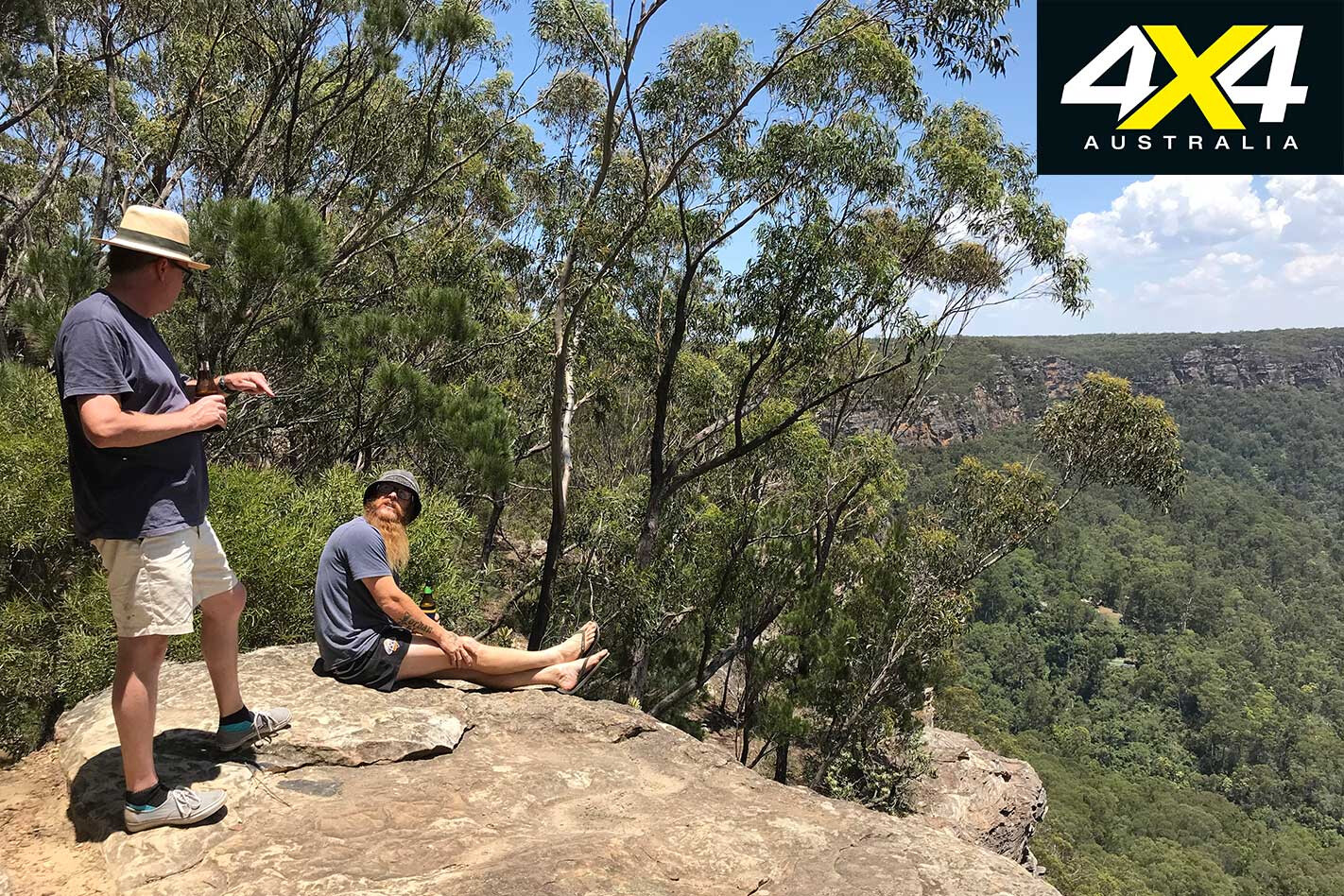
We headed back to the north and then turned left onto Patons Fire Trail, which has some seriously deep washouts due to inappropriate use in wet conditions. We had to meander around various ‘chicken’ routes, in and out of the trees, backing and filling, to eventually reach the end of this track, but our reward was a spectacular view looking down the escarpment to Bundanoon Creek and an icy cold pale ale I’d earlier packed into the Engel.
Exit Strategy
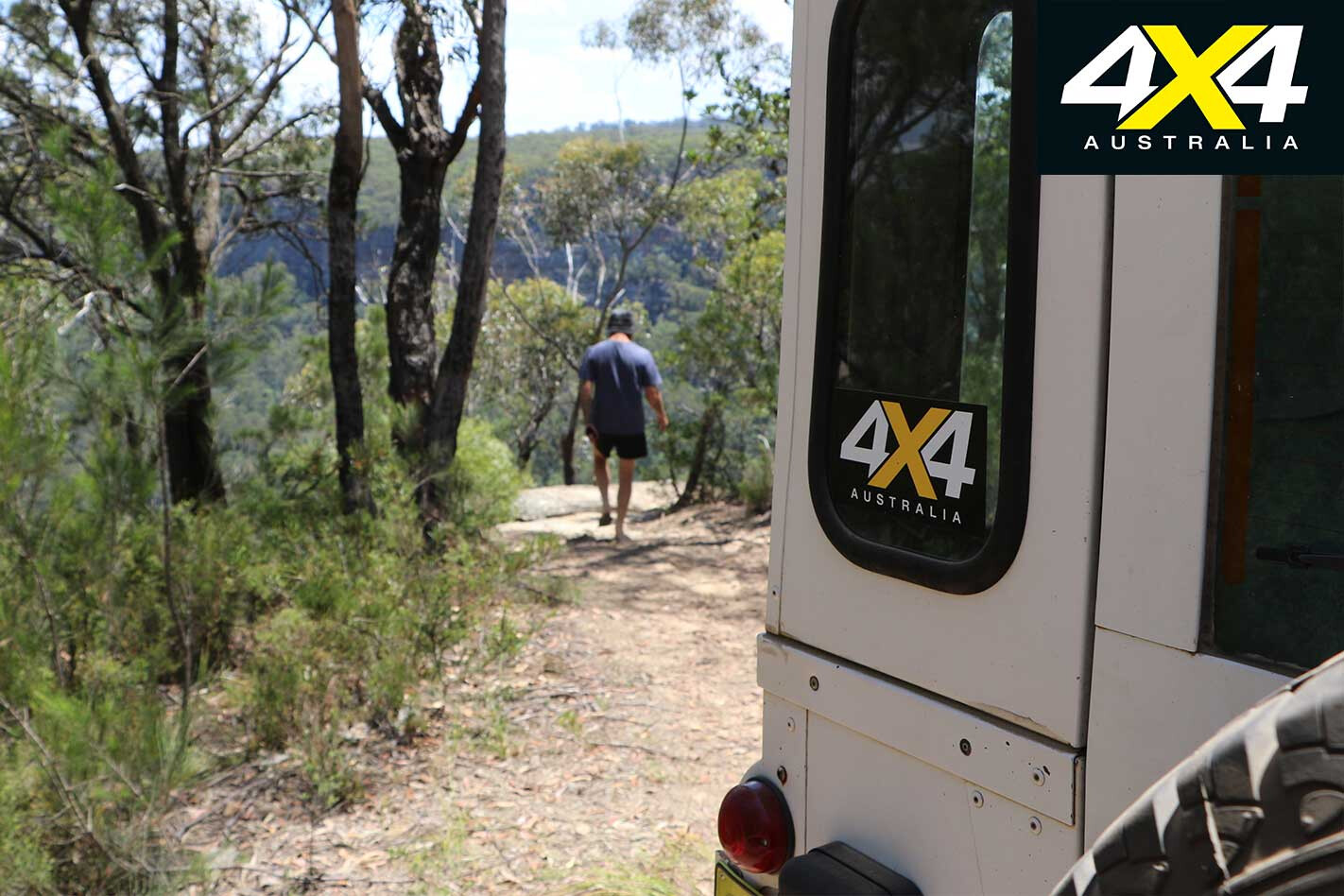
THE DRIVE back out along Patons Fire Trail was much quicker than the way in, because we knew which holes we could drive through and which we’d have to drive around.
Back out on Meryla Road we reinflated tyres, discussed the day’s drive (which was more technically challenging than novice Matt expected) and planned our next one-day escape. We’d all had a great day and all the vehicles came out unscathed.
As I pointed the Defender back down the Illawarra Highway towards home, I had a grin from ear to ear. Yep, it’s safe to say that I love nothing better than being in my happy place.
4×4 Shed Log 3: 1994 Land Rover Defender 300TDI Total Mileage: 242,800km Mileage this month: 3300km Average fuel consumption: 10.2L/100km
Update 5: Hot Stuff
More travels, more repairs.
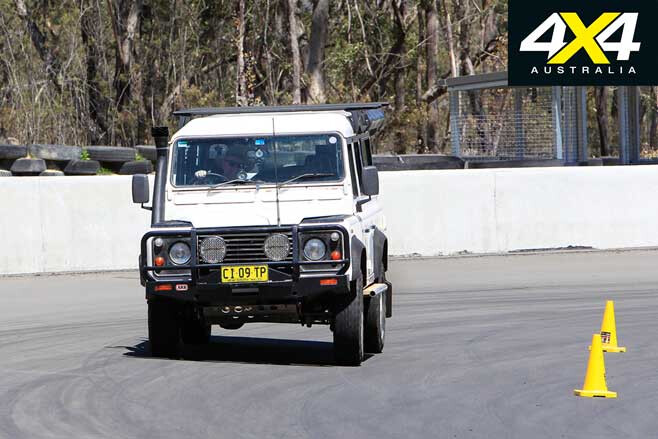
THE ADVANTAGE of having two toys in the shed is that when one doesn’t start you can drive the other one. Having said this, my Defender has never let me down (knock on wood) but it does seem to spend an inordinate amount of time in workshops having bits and pieces repaired or replaced, so it’s lucky I have my ever-reliable Series IIA shorty to get around in when I need it.
Of course, constant maintenance is one of the tradeoffs of owning an older vehicle instead of a newer one. And while it might cost a fair bit of dough to keep the ol’ Defender on the road, it’s still more affordable than the repayments would be on a new 4×4 wagon.
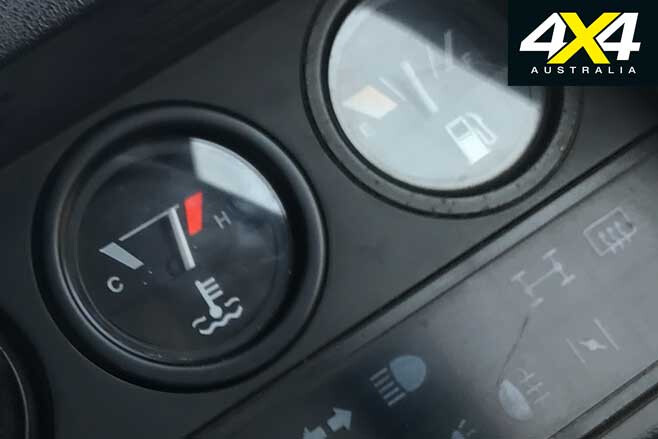
So, what are the latest Landy trials and tribulations? You may recall I recently spent a wad of cash having the injector pump overhauled. Once this was sorted the lift pump started leaking, so this was replaced at the next service interval. Everything went well for the next couple of months, but then I noticed the temperature gauge climbing towards the red zone on a freeway run to Marulan. I backed off and it dropped back down, but whenever I tried to nudge it up to the 110km/h mark the temperature gauge would correspondingly nudge its way up to the red mark.
It was at Marulan that I got to drive the Defender on a racetrack, using it to ferry photographer Phil Cooper around the Pheasant Wood circuit for 4X4 Australia’s mud-terrain tyre test. This was bloody great fun, but, suffice to say, I won’t be entering the Defender into a race anytime soon.
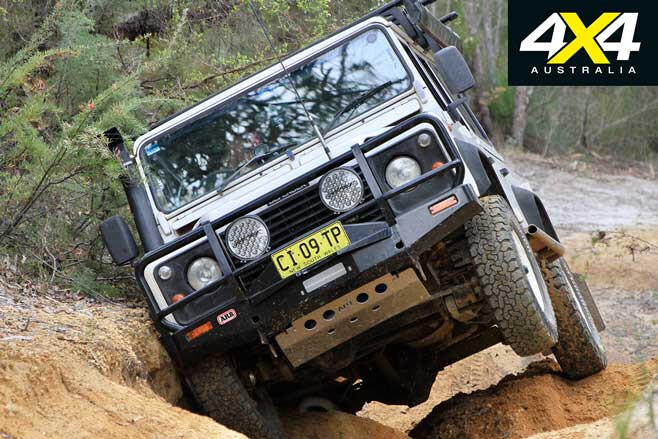
The next big drive was up to Coffs Harbour for the 4X4 Australia advertiser’s weekend, and on the freeway drive north the temp gauge also headed north. I subjected the Defender to two solid days of pretty gnarly off-road driving in the Coffs hinterland, and this proved no problem for the cooling system at all.
In fact, I had an absolute ball, with the Defender’s long-travel suspension, front and rear air lockers, great low-range gearing and pre-dinged panels combining to make light work of the tricky tracks. But when I jumped back on the freeway for the drive south, the faded and bent temp needle continued heading the other way.
The boys at Roving Mechanical have since upgraded the tired-looking cooling system, fitting a new copper radiator, a new viscous fan, a new thermostat, and even a new temperature gauge. The result? Nothing much has changed. The next port of call will be to check the vehicle’s earth which, if poor, can mess around with the accuracy of the temperature gauge.
Of course, a head gasket could be the culprit, too, but there’s no coolant loss and no telltale cloudy engine-oil signs. I hope it’s just the earth; I’m not in the mood to spend more money on the Defender right now, because it could prove my old vehicle/new vehicle expenditure comparison to be a falsehood.
On a more positive note, I picked up a Defender cargo barrier the other day for 20 bucks! Winning.
4×4 Shed Log 5: 1994 Land Rover Defender 300TDI Total Mileage: 250,163km Mileage this month: 4363km Average fuel consumption: 10.2L/100km
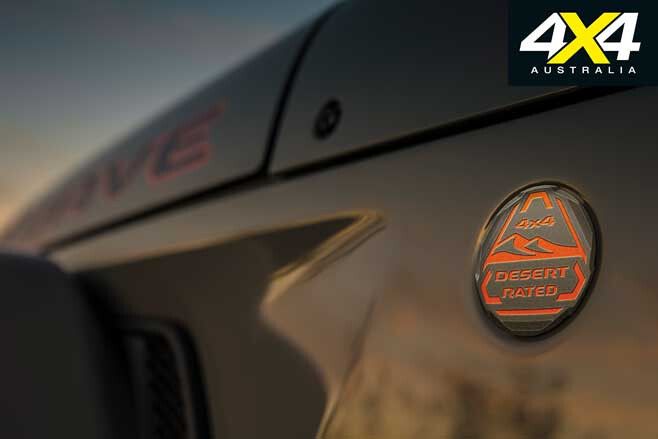
JEEP will introduce a new ‘Desert Rated’ badge to its range of off-road vehicles when it releases the JT Gladiator Mojave to the US market in March.
Jeep fans are no doubt familiar with the ‘Trail Rated’ badge affixed to the brand’s best off-road models, indicating that they have passed the company’s gruelling testing regime on California’s iconic Rubicon Trail. ‘Desert Rated’ symbolises a new discipline for Jeeps, where high-speed sand running takes precedence over low-speed rock crawling. Think Ford Raptor and Chevrolet Colorado ZR2 and you see where Jeep is heading.
The Gladiator uses Jeep’s Command-Trac 4×4 system, with the standard 2.7:1 low range ratio and lockable rear differential. This is opposed to the Jeep Rubicon’s Rock-Trac system, which has lower 4.1:1 gearing and locking diffs front and rear for ultimate traction and low-speed control.
The Gladiator Mojave, named after the desert that spans the borders of California, Nevada, Arizona and Utah, gets its off-road prowess from a bespoke suspension system featuring Mojave-exclusive Fox Racing 2.5 shock absorbers and hydraulic bump stops.
Fox Racing shocks are also available on Jeeps as a Mopar accessory and are fitted as factory on Ford’s F150 and Ranger Raptor utes. The ones fitted to the JT Mojave use internal bypass valving and external oil reservoir, to keep the dampening fluid cool during extended and punishing off-road use.
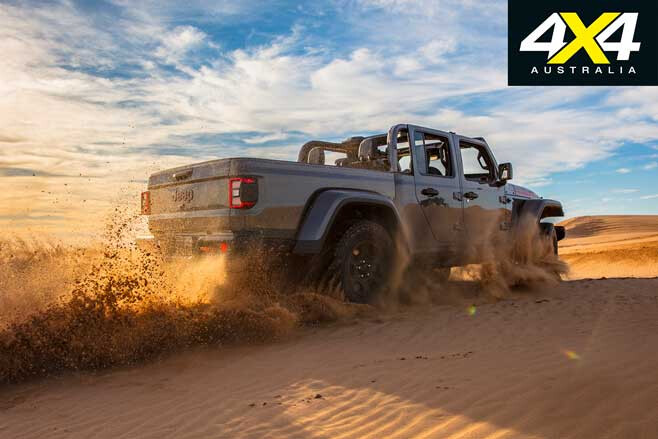
Hydraulic bump stops replace the hard rubber bumps stops fitted to most cars. Bump stops are there to act as a stopper when the suspension is fully compressed over a large bump or jump. They prevent the suspension components or axle from coming into contact with the vehicle’s chassis or underbody.
Hydraulic bump stops still do this but act like small, secondary shock absorbers to cushion the jounce rather that provide a hard stop. This is the sort of hardware you find under Baja, Dakar or Finke desert racing vehicles, and it’s now under the front of the Jeep Gladiator Mojave.
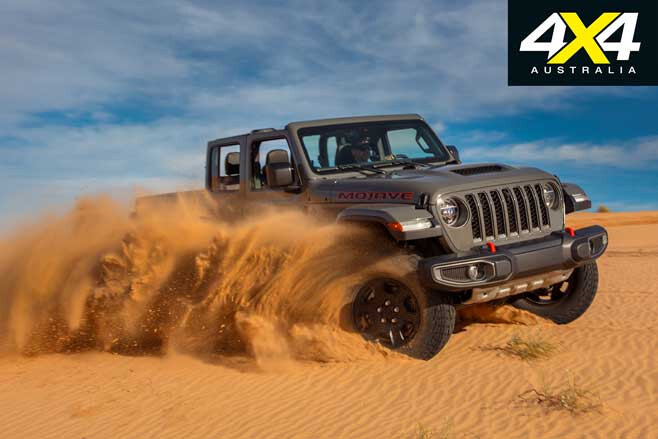
The Gladiator Mojave gets model-specific hood decals, ‘Desert Rated’ badges, unique 17-inch alloy wheels, 33-inch Falken all-terrain tyres (with Falken muddies as an option), a 25mm ride height increase, side rails/rock sliders, and new seats that offer more support for occupants thanks to increased side bolsters.
The powertrain remains the Gladiator’s proven 3.6-litre petrol V6 engine backed by either an eight-speed automatic or six-speed manual transmission. This is the only powertrain available in the Gladiator to date. An Off-Road Plus button allows the driver to adjust throttle control, transmission shift points and traction control for the best performance on sandy tracks, as well as during low-speed crawling. The Off-Road Plus drive mode on Mojave will also allow the driver to lock the rear axle at high speeds while the transfer case is in 4H.
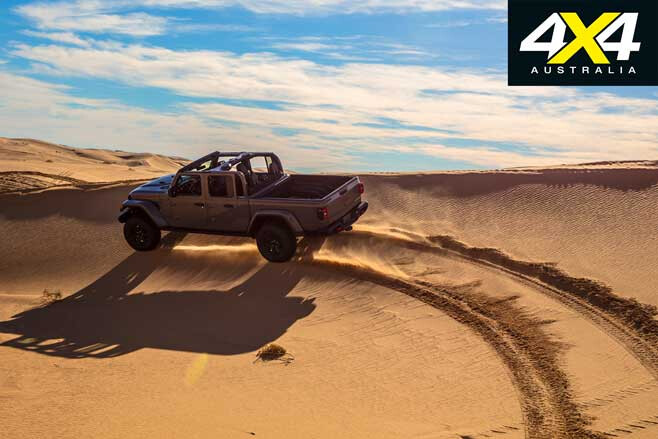
Jeep’s JT Gladiator is on course to arrive in Australia in the second quarter of 2020, but don’t hold your breath waiting for the Mojave edition. Jeep will only be bringing the Overland and Rubicon models to Australia, with no plans for the Mojave.
While the Mojave isn’t the Hellcat V8-powered Hercules model that has been rumoured to be coming to take on the F150 Raptor in the USA, it does show that Jeep is looking to new niche segments to explore and conquer.
It has been a horror season for bushfires throughout Australia and we’ve still got a few months to go before there is any respite.
We’ve been pretty lucky in all the years we’ve been travelling around Australia and through the bush, as we’ve never been really close to a fire. Sure, we had smoke all around us when we were rafting the Snowy River years ago, and then we had flames licking both sides of the track from burn-offs up north. More recently, while we were climbing out of the Wonnangatta River valley, my phone pinged; it was our VicEmergency app telling me that a bushfire was burning out of control not all that far away. We had to change our travel plans after that.
So, what do you do if a bushfire comes your way while out in the scrub?
Before you jump in the 4WD for that long-awaited getaway, check what the current fire levels are at for the area you are planning to visit and check the park websites for any fire warnings, and park and track closures.
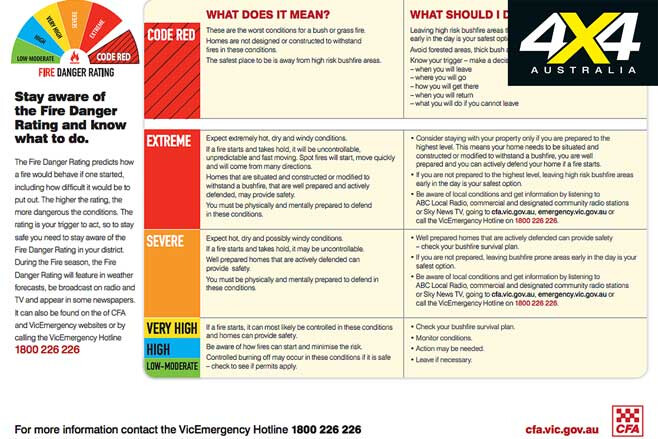
Many areas will be subject to Total Fire Bans and you need to know what you can and cannot do on a Total Fire Ban day. Understand, too, the different levels of the Fire Danger Ratings used throughout Australia – check the ‘CFA Fire Danger Ratings brochure’.
Parks, forests and reserves, if the last few years are anything to go by, will be closed due to extreme fire danger, so it pays to check before you set out and save a wasted journey. If you were thinking about a forest camp or somewhere remote surrounded by scrub and the day looks like being classed as an ‘Extreme’ or ‘Code Red’ day, I’d rethink the whole adventure.
When you are out in the scrub or travelling through fire-prone regions, listen to local radio stations for weather updates, fire bans and any active fires in your area. And if you are in mobile phone range, keep a close eye on the state’s fire service phone apps such as VicEmergency or FiresNearMe. However, please don’t rely solely on your phone and mobile reception – it’s often non-existent in the areas we tend to visit.

Finally, if you are out in the bush and get caught in a fire, here’s what you need to do: • Call 000, if you can. • Park off the road in a clear area away from trees. • Face the car towards the fire. • Stay in the car and get down below the windows, to protect you and the rest of the occupants from radiant heat. • Turn off the engine and turn on headlights and hazard lights. • Close windows and vents. • Cover everyone with woollen blankets. • Drink water. • Cover your mouth with a damp cloth, if there is smoke. • Stay down until the sound of the fire has passed, then carefully leave the car – remembering everything outside will be hot.
For more information, download and consult the Bush Fire Safety guide.
Play it safe and be very careful with any campfire, ensuring it is completely and utterly out even if you are just leaving it unattended for an hour or so.
PRICING for the Ford Ranger FX4 has officially landed, with the special edition model to be available from $59,140.
For that coin, you’ll need to opt for the six-speed manual FX4 equipped with the 147kW/470Nm 3.2-litre turbo-diesel engine. Spend $61,240 and you’ll snare the same 3.2-litre donk, but it’ll be paired to a six-speed automatic transmission. The 2.0-litre bi-turbo-diesel offering, mated to a 10-speed automatic transmission, is the most premium offering at $62,840.
All variants have a towing capacity of 3500kg, but there are discrepancies with payload capacities: 978kg (3.2-litre/manual), 960kg (3.2-litre/automatic), and 993kg (2.2-litre auto).

As reported in August, 2019, the FX4 has been granted 18-inch FX4 alloy wheels, an FX4 mesh front grille, darkened bi-LED hi-po headlights, an extended black sports bar, and black exterior mirrors, door/tailgate handles and fenders; all providing the FX4 with a distinct point of difference. Look closely and you’ll even spot red 3D decals on the front door and tailgate … yep, 3D.
Standard kit includes SYNC 3 with Apple CarPlay and Android Auto, a full-colour reversing camera and a suite of Driver Assist Technology: Autonomous Emergency Braking, AEB with Pedestrian Detection, Lane Keeping Aid with Lane Departure Warning and Driver Alert, Traffic Sign Recognition and Automatic high-beam headlights.

Punters can option up with the Tech Pack, which adds Adaptive Cruise Control and Semi-Auto Parallel Parking.
The interior is awash with FX4-specific trim, highlighted by leather-accented sports buckets embossed with red FX4 insignia and lined with red stitching. Red stitching has also been applied to the gear selector, handbrake cover, steering wheel, door trim and floor mats.

Design cues from the Ranger Wildtrak have been carried over, with the FX4 inheriting a premium soft-touch instrument panel; while tinted graphite accents have been applied to the instrument panel and door trim.
The Ranger FX4 is available in five hues: Shadow Black, Arctic White, True Red, Meteor Grey and Aluminium Metallic.
The limited run will be capped at 1000 units.
VOLKSWAGEN Group Australia is gearing up for a milestone, with the 70,000th Amarok set to depart an Aussie showroom within a matter of weeks.
In many eyes the Amarok might still seem like a ‘new kid on the block’ of sorts, lacking the pedigree and history of its contemporaries. However, the Amarok has been taking Aussies to remote campsites for near-on a decade, with the first Amarok introduced down under in 2011 as a four-cylinder manual variant with both petrol and diesel engines.
The auto – using an eight-speed ZF – landed a year later, with the V6 model launching in 2016 and expanding to Core and Sportline variants in 2017.
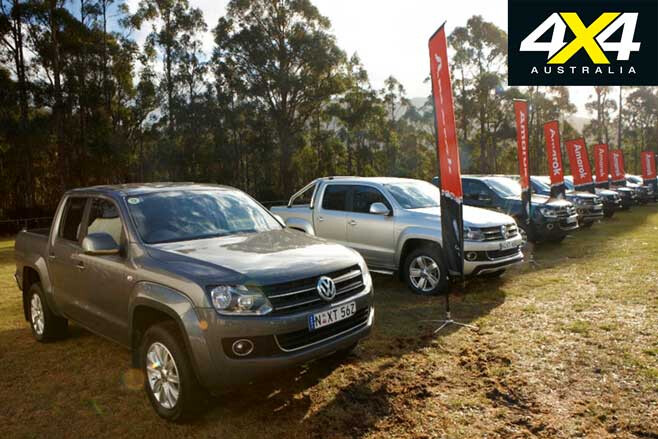
“The Amarok, especially since the introduction of the V6, has become part of the Australian landscape,” said Ryan Davies, VGA Director of Commercial Vehicles. “Its capability on blacktop and dirt alike have been proved time and again. There are some formidable utes out there, but we can claim that none go and stop or generally drive as well as the mighty ‘Rok. And you can fit a full pallet between the wheel arches.”
The past decade has seen the Amarok carve out a reputation as a premium offering in the ute scene, boxing on with higher-end models in rival showrooms (think Toyota Hilux SR5 and Mercedes-Benz X-Class) while still having a presence in the sub-$50K category (TDI400 and 420 Core variants).
Despite dwindling new-car sales in Australia on the overall market – sales in January 2020 are down 12.5 per cent compared to January 2019 (71,731 versus 81,994) – the VW Amarok actually sold more vehicles year-on-year … if only by a whisker.
The ’Rok shifted 537 vehicles in January 2020, up from 536 sales in January 2019 – the best-sellers being the Highline 550, Core V6 and Highline 580 Black Edition.
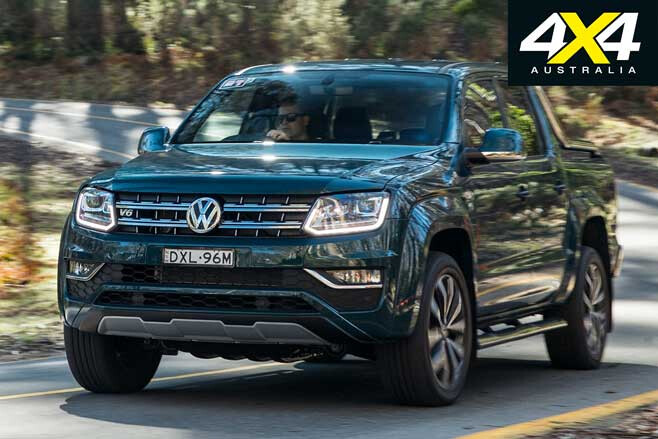
Volkswagen will introduce a six-speed manual V6 to its local line-up later this month, with the manual variant getting a part-time 4×4 system and two-speed transfer case.
The six-speed manual V6 Core 4×4 will be priced at $49,590. Stay tuned for our first impressions.
IT MAY be a new year, but not much has changed at the pointy end of the 4×4 charts so far in 2020, with the Ranger, Hilux and Triton once again occupying the podium.
The Ford Ranger has started 2020 ahead of its rivals, with the Blue Oval shifting 150 more units than its closest rival, Toyota’s Hilux. Ford has managed to sell 2446 Ranger 4x4s in the New Year so far, with the Hilux (2296 sales) leading the value-packed Mitsubishi Triton (1850 sales).
Here are the 20 best-selling 4x4s in January 2020:

2020 itself has begun much like 2019 left off, with fewer folks purchasing new cars. In fact, only 71,731 new-car sales were recorded for January, which is 10,263 fewer sales than January 2019 (or -12.5 per cent). The LCV segment in particular doesn’t fare much better, dropping 11.2 per cent compared to 2019. And the PU/CC 4×4 segment registered a sales decline of 9.3 per cent.
The sluggish start to the year can be attributed to a range of issues, as Tony Weber, chief executive for the FCAI, explained: “Given the broad range of environmental, financial, international and political issues facing Australia during January, it is no surprise to see the new vehicle market has reported a conservative start to the year,” he said.
Toyota’s evergreen Hilux continues be Australia’s most desired vehicle, with the ute (when combining 4×2 and 4×4 variants) topping the overall sales charts in January by shifting 2968 units. Despite recording the most sales for the month, Hilux (4×2/4×4) sales were dramatically down on January 2019 (-24.9 per cent, in fact).
The Ford Ranger remains the next best-seller, netting 2624 sales (+2.3 per cent from January 2019), with the Corolla rounding out the top three.
Land Rover’s all-new Defender doesn’t drop until later this year, but until then this could be the ultimate expression of the iconic nameplate. A soft-top classic Defender 90 is always going to be a cool ride, even more so the rare NAS Defender that was unique to the American market. However, California’s Fusion Motor Company has cranked the cool dial way past 11 in building this D90 with a 550hp (410kW) supercharged GM V8 engine. And it could be yours!
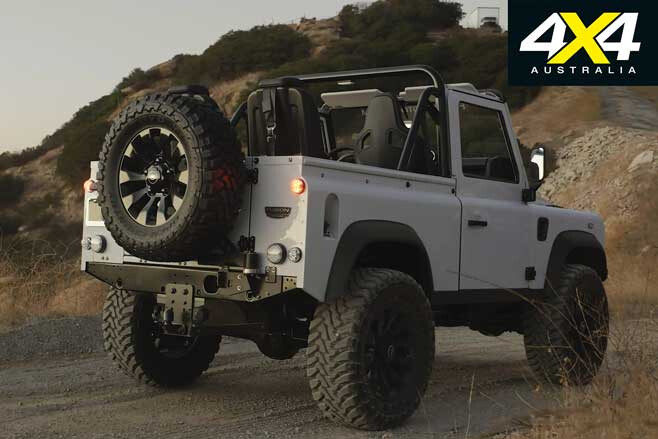
Land Rover stopped making Defenders back in 2016 and since then prices of the classic models have rocketed skywards, particularly in the case of rare or limited-edition models. Americans got very few Defenders as the agricultural Landies didn’t meet essential US safety standards, so any Defender is rare in the States. This example is extra rare, being left-hand drive and fitted with a factory removable soft-top.
Rarity didn’t stop the team at Fusion going to town on the little Landy. Take a look at the company’s website and you’ll see that it specialises in rare automobiles and top-end builds. The vehicles available there are only limited by your budget, and in the case of this Defender it’s available for a cool US$270,000. All of a sudden that new Defender is starting to sound more affordable.
What makes this Defender 90 so special? Purists be damned; Fusion did a chassis-up resto-mod job on the Defender and shoehorned a monster Supercharged LSA V8 under the bonnet to give it the mumbo to match the macho.
This is the factory blown, 6.2-litre GM V8 engine usually found under the hoods of Corvettes and Camaros, or the bonnets of HSV-tweaked Holdens. It’s a far cry from any puny diesel or even a paltry Rover V8 that would have originally been fitted to this vehicle.
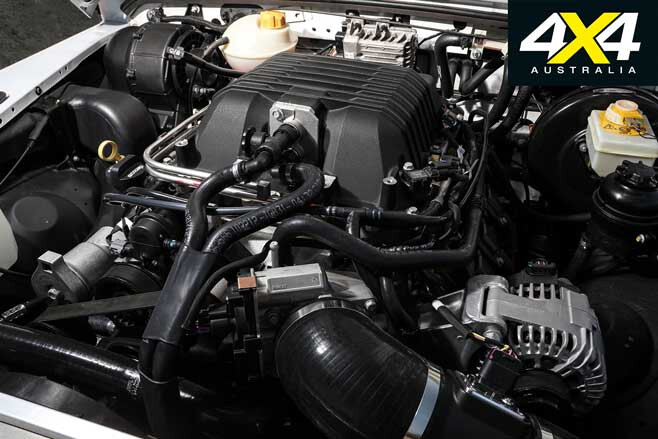
Fitting the GM V8 engine to a Land Rover is not as difficult as you might think and there are companies in the USA that make kits specifically for the swap. Back here in Australia, companies like Les Richmond Automotive in Melbourne regularly carry out such conversions to Land Rover Defenders, Discoverys and classic Range Rovers.
To help tame the Defender’s new-found 550-odd horsepower and the subsequent boost in performance, the fully refurbished chassis was fitted with extended shock towers to accommodate Fox Racing 2.0 dampers and bespoke coil springs. We reckon you could throw all the suspension in the world at it and still not tame this high-riding, short-wheelbase beast.
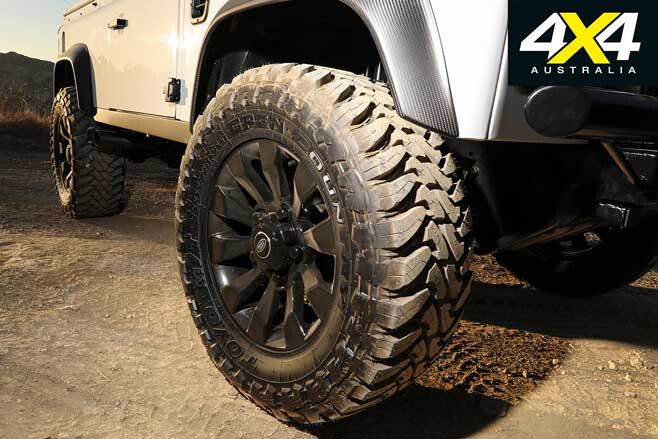
While you’re under the Defender to check out that suspension, you might also want to take in the GM 6L80 six-speed auto transmission that backs the LSA mill, the custom-made stainless-steel exhaust system with its side-exit tips, and the oversized stainless-steel fuel tank. The exhaust tips and the aluminium sump guard are Cerakote-coated for looks and protection.
The front bumper is an aftermarket tubular item with inbuilt recovery points and it mounts a small LED lightbar. The headlights have been replaced with Fusion LED units while the other lights, such as indicators and brake lights, have been upgraded with factory optional LED units, giving a more modern look to the classic vehicle. The rear cross-member remains the solid Land Rover unit with its factory tow point and spare-wheel carrier.
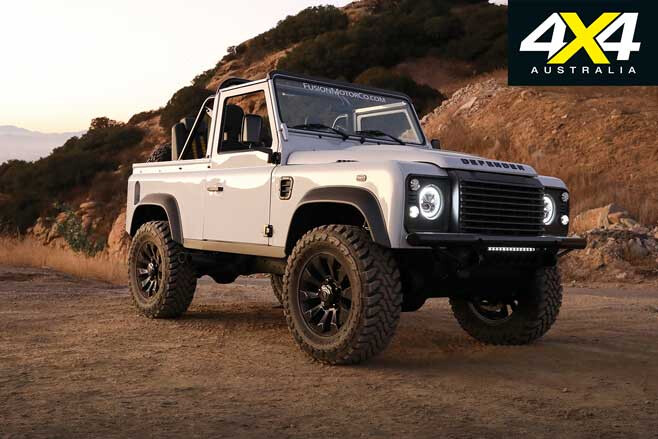
Also adding an air of modernity to the boxy body are the carbon-fibre replacement parts that are smothered all over the pale grey body. Carbon-fibre parts are Fusion’s specialty and on the Defender you’ll find the lightweight but tough material on the grille, fender vents, mirror caps, dashboard, centre console, door cards, wheel arch flares and sill covers.
The Defender’s interior is a mix of old and new. Leather-clad Recaro bucket seats keep the front occupants comfortable, while Land Rover buckets are fitted in the rear. The centre console was recreated in carbon-fibre and includes spun-alloy cupholders and surrounds for the transmission and transfer case shifters.
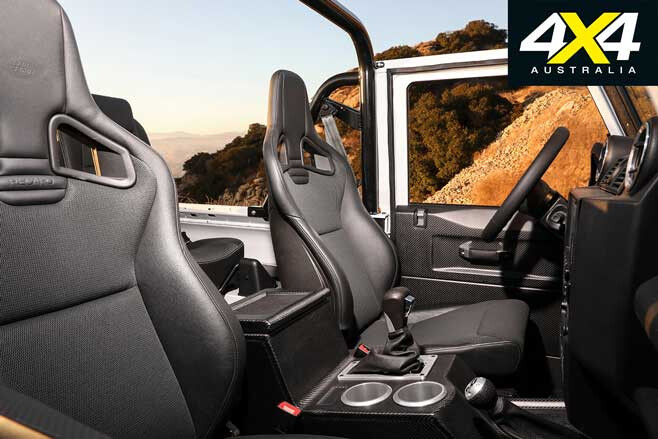
The carbon-shrouded dash binnacle houses a gauge cluster from Dakota Digital that uses analogue meters to monitor vital signs, while the cloth soft-top ties in with the black and white theme on those rare occasions it is needed in sunny Southern California.
With its fusion of old-school cool, modern finishes and ball-tearing supercharged performance, this little Defender has the ability to turn heads anywhere, be it on Rodeo Drive or in the Borrego Badlands. And it’s just a lottery win away from snapping necks Down Under should it take your fancy.