
IF your old man has a tendency to break down or get bogged when off the beaten track, then these Father’s Day gift ideas might be right up his alley.
UNIDEN JUMPSTART KIT
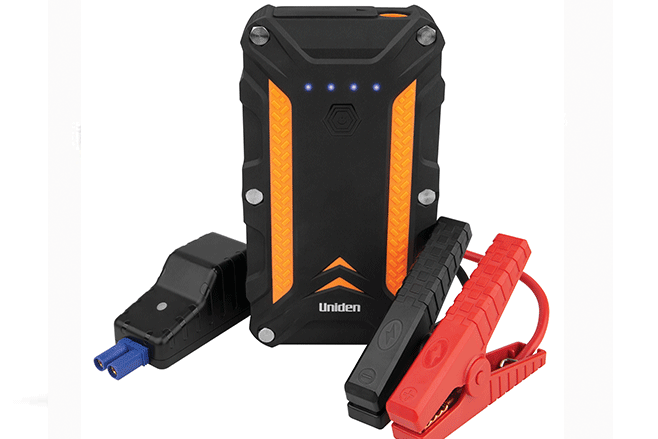
UNIDEN has unveiled its UPP1000 jump-start kit, which is powerful enough for both petrol- and diesel-powered 4WD vehicles. A great little peace-of-mind gear to keep stored away, just in case the engine fails to fire out beyond the black stump. The UPP1000 has a start current of 500amp and a peak current of 1000amp, and can jump-start petrol engines up to seven litres in capacity, and diesel engines up to five litres. It also comes with smart clamp protection, so the battery doesn’t overload, and an IP67 rating. RRP: $199.95 Website: www.uniden.com.au
GME XRS CONNECT OUTBACK PACK
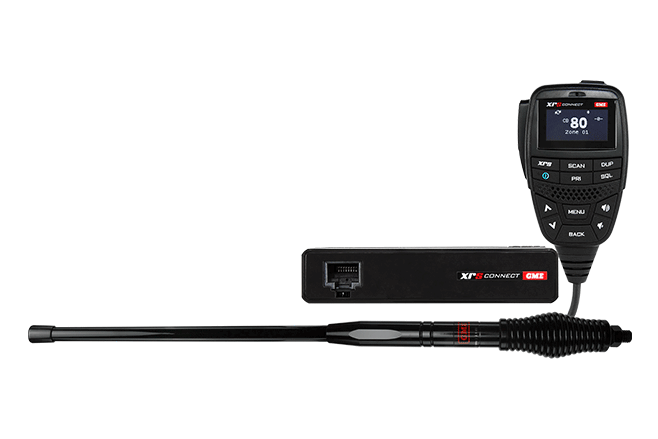
GME has added the XRS Connect Outback Pack to its range of XRS Connect UHF CB radios. A key feature of the Bluetooth-enabled Connect range includes the XRS Connect smartphone app control. Other features include an anti-glare OLED display and super-durable construction for remote, rugged conditions, as well as a professional-grade microphone, 2.1dBi Radome antenna, and user-customisable buttons. Made in Australia, the Outback Pack comes with a five-year warranty. RRP: $629 Website: www.gme.net.au
PIRANHA OFFROAD HEAVY DUTY RECOVERY KIT
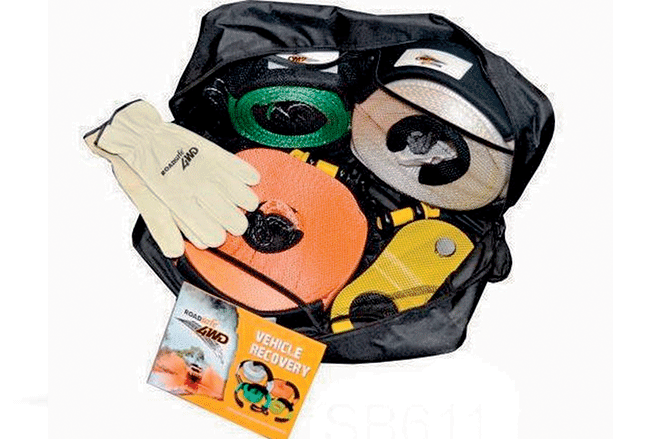
A recovery kit is an essential tool for any off-roader, and you’ll be spewing if you don’t have one when your axles are deep in mud. The Piranha Offroad Heavy Duty Kit comes with all the required tools: an 8000kg snatch strap, a winch extension strap, 12,000kg tree trunk protector, a snatch block, bow shackles, a pair of gloves and a durable carry bag. Spend now, save later, we say. Ensure you have a winch-equipped 4×4, otherwise this kit won’t be much use. RRP: $289 Website: www.piranhaoffroad.com.au
DAD’S day is coming up fast, so get your old man a gift he’ll love. Here are a few ideas.
KMC 718 SUMMIT WHEELS
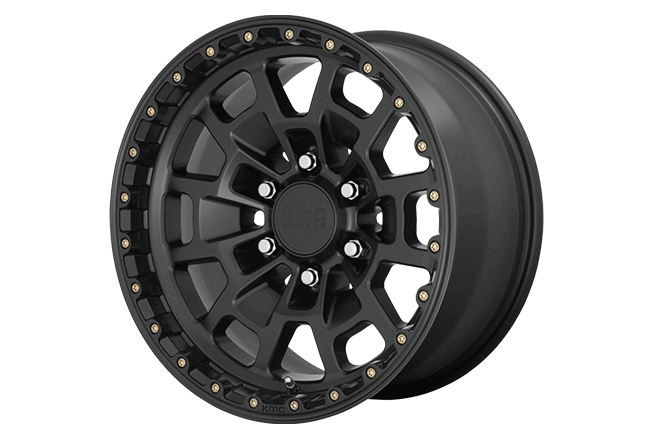
KMC Wheels has revealed its all-new KMC 718 Summit wheel. The 17-inch wheels, made using cast aluminium construction, can be had with either a satin black finish, or that finish with a grey tint. While Australia pricing hasn’t been confirmed, pricing for the 718 Summit in the USA begins at US$146. The 17 x 8.5-inch wheels can be optioned with 0mm or 18mm offset.
Website: wheelprosaustralia.com.au
KUMHO MT71 TYRE
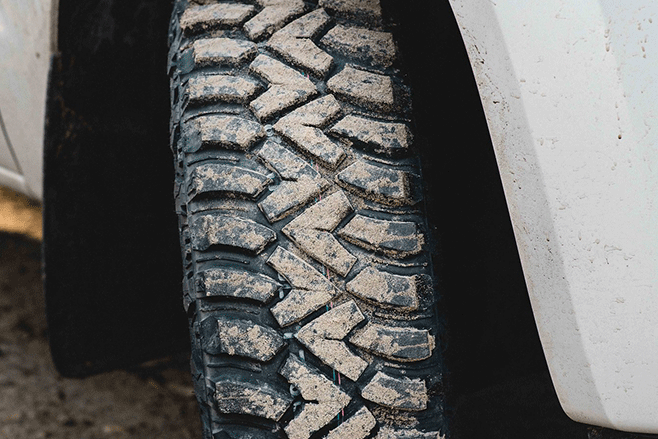
After two years of development, Kumho has unveiled its all-new MT71, which will eventually be available in 27 sizes. “The Road Venture MT71 is a cornerstone product for Kumho because it will deliver the highest level of performance at a truly competitive price and will, we believe, redefine the serious 4WD tyre market,” said Kenny Chun, national marketing manager for Kumho Tyre Australia. An aggressive tread pattern is combined with extra cut and chip resistance, to make it a proper player on the off-road scene. The MT71 contains seven integrated steel and fabric layers, three-ply high-strength construction, two steel-cord layers and two nylon protection plies. The MT71 is available in a range of diameters and sizes, from 14- to 17-inch.
Website: www.kumho.com.au
PROTEX BRAKES
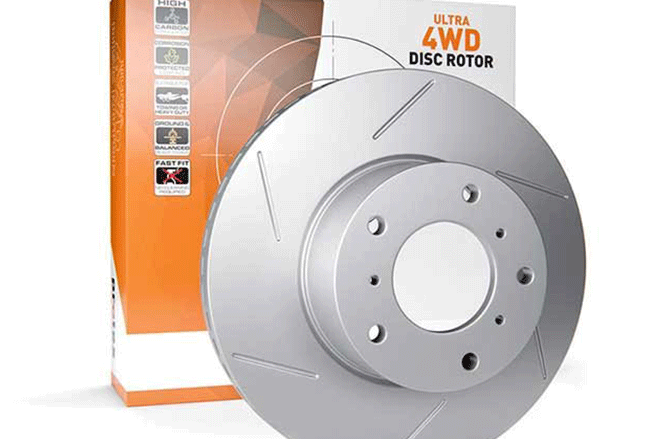
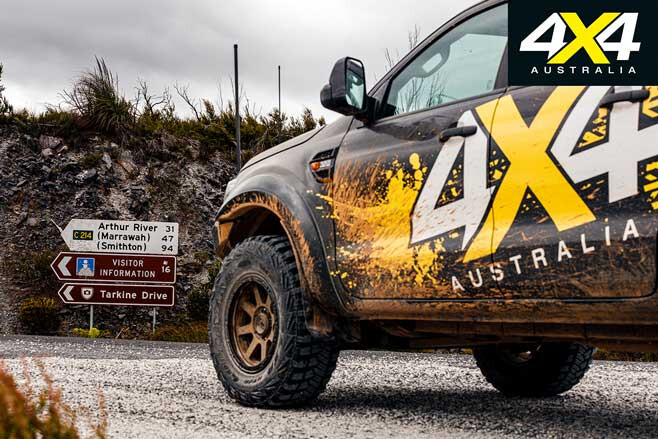
The 4X4 Australia Ranger recently received improved stopping power courtesy of new brake rotors and pads from Protex. The direct-replacement parts use a ceramic compound and the pads don’t contain any copper. The rotors use a high-carbon compound in the metal, which is great for off-roading and towing. In addition, the rotors are flat and smooth, so there’s no vibration when applying the brakes. They’ve worked an absolute treat so far on our Ranger.
Website: www.protexparts.com.au
FOUR-WHEEL drives are many different things to many different people. For some, they’re rugged, bare-bones weekend warriors.
The thrill comes from making do, feeling every rattle and bump, cooking off the tailgate and expertly balancing the clutch and accelerator to negotiate steep hill climbs and swollen river crossings.
For others, they’re a tool to get them to the farthest reaches of the country, the stunning red gorges of the Kimberley, or the endless alpine peaks of the High Country. The destination is as much a part of the adventure as the vehicle, so the more comfort you have on the long journey there the better.
We try and show a healthy mix of both in the pages here at 4X4 Australia, and the gear to build either style of vehicle.
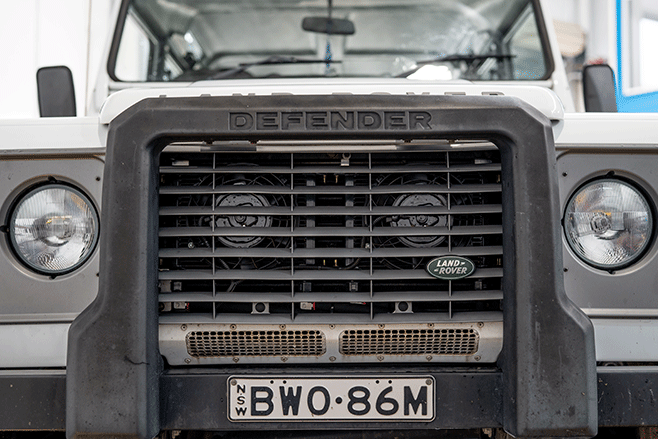
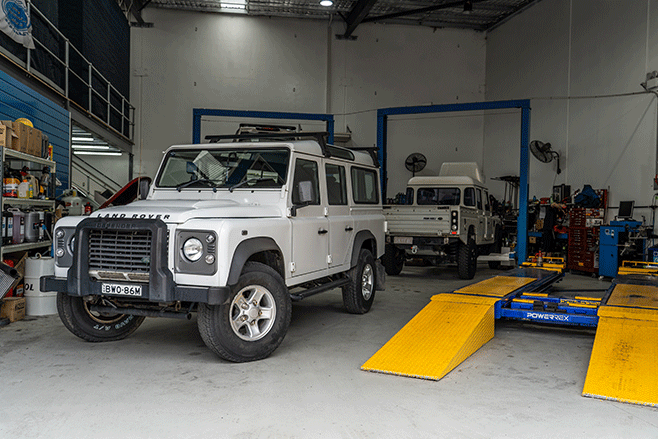
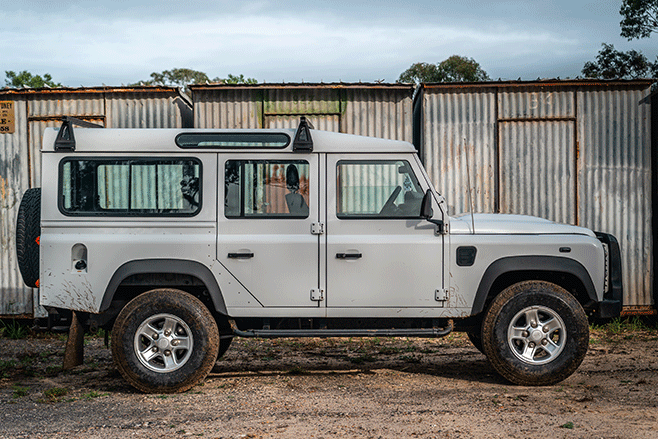
This time on the inspection block we’ve headed out to Western Sydney-based Davis Performance Landys (DPL) to get up close and personal with its auto-converted Land Rover Defenders.
The classic boxy style, live-axle rigs now shift smoother and faster thanks to their wizardry, something that the purists probably turn their nose up at, but has the owners reaching for the keys time and time again.
So what exactly goes in to the conversion, what does it cost, and how smooth is the final product? You’re only a few short pages away from having all the answers.
WHY WOULD YOU DO IT?
THE auto versus manual debate has raged on for a couple of decades now. The old adage that autos were for going up-hill, and manuals for going down rang reasonably true back then. But there’s a very big problem with that theory: technology moves on, and while manuals are largely untouched, automatic transmissions have jumped forwards leaps and bounds.
Auto-converting an older 4×4 does a few things for driveability that you simply won’t be able to get with any other modification.
The first, and most important to us, is an increase in off-road ability for a few different reasons. The transmission used in this case has a lower first gear ratio than the manual gearbox it’s replacing. That directly translates to more controlled low-speed work and more power on take-off, helpful for towing or steep terrain.
The second is having a torque converter rather than a clutch gives smoother application of power than the old manual ’box, and, through torque multiplication in the converter, an even bigger boost in low-speed take off.
The other additional benefit is by swapping out a five-speed for a six-speed the top gear is taller than factory, this results in a lower rpm at freeway speeds, and a direct reduction in fuel economy.
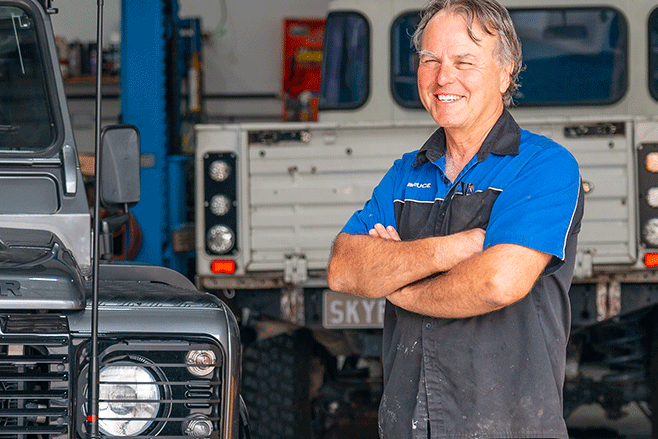
“They’re just far easier to drive too,” added DPL front man Bruce Davis. “The owner (of the white Defender) wasn’t driving it much, but now he drives it all the time. It means anyone can jump in it and drive it.”
WHAT’S IN THE BOX
MUCH like manufacturers develop lines of vehicles like the Defender, they develop lines of engines and transmissions, too, which is where you get catchy names like Powerstroke and Duramax. In many cases it’s simply a marketing ploy, with the engines having very little compatibility between different members of the same family. Other times, they’re near identical. This gets even more confusing when manufacturers do joint projects like the BT-50 and Ranger and start interchanging various components.
Ford’s 6R80 transmission is one of its most popular lines of automatic shifters used in everything from F150s to Mustangs, as well as the current generation Duratorq-powered Rangers. With a reasonably compact footprint as well as a low first-gear ratio of 4.17:1 and a long-legged 0.69:1 in top gear, it’s got an impressive take-off and helps lower fuel usage, making it a perfect match for converting into Duratorq-powered Land Rovers.
In stock form they’ve been known to handle up to 1000hp, and with the OEM tiptronic shifter make a useful tool off-road, allowing you to dial in the right gear for the task at hand.
HOW IT’S DONE
DAVIS Performance Landys offers the conversion as a full drive-in drive-out package in its workshop using a variety of imported and locally sourced gear. The bulk of the conversion is a kit from UK supplier JE Engineering which specialises in hot-rodded Land Rovers.
The backbone of the conversion is Ford’s 6R80 transmission we talked about previously. The Ranger-specific version is sourced brand-new direct from Ford and bolts directly to the Defender 2.2L or 2.4L motors without adaptors.
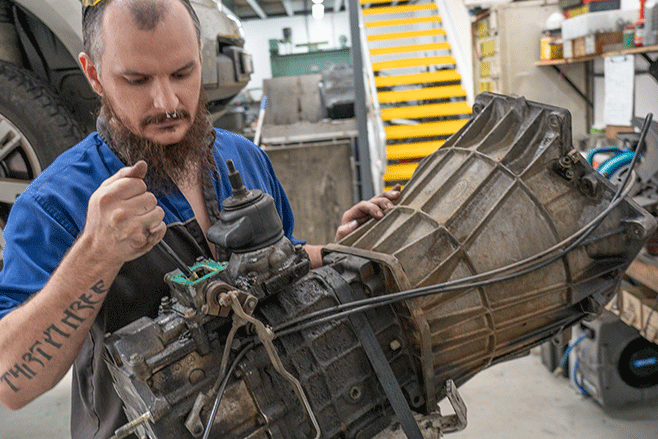
Moving rearwards an adaptor is required to mate the automatic transmission to the Defender’s original transfer case, the mighty LT230. Custom driveshafts front and rear account for the relocated transfer case position but use original Land Rover-style yokes and joints.
There’s a variety of simple yet extensive adaptors used, as well as an ECU tune to get the transmission and engine talking to each other smoothly, but being of the same family, once they’re talking, it’s an OEM level of usability rather than a cobbled-together conversion.
Finally, inside a Ranger the shifter is encased in a milled housing in the new centre console. It won’t exactly pass for factory, but only because the fit and finish is far superior to the original Defender interior, including a tidy pair of cupholders thrown in for good measure. If you were looking to give your Defender a similar conversion you can expect a bill around the $25,000 mark.
WHILE YOU’RE IN THERE…
MAKE no mistake, the 6R80 transmission and DPL conversion are more than up to the task of just about any job you could throw their way, but, hey, sometimes more is more, right?
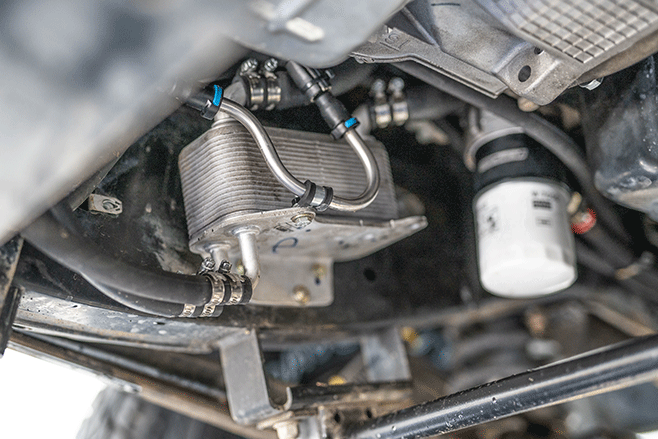
Right away, while Davis Performance Landys is working its magic, it also installs an additional oil-cooler up front to keep the transmission’s temperature in check, and also holds a little more oil so the ’box should take longer to heat up in hard work.
The model we drove also had fitted an optional electronic handbrake; the clever unit replaces the bulky lever next to the driver’s leg, freeing up more interior space, and it’s tied into the automatic transmission so it’ll automatically disengage if you go to drive off.
For those looking to push performance further, the use of the 6R80 transmission means there’s a whole host of aftermarket mods such as heavy-duty valve bodies, torque converters, deeper sumps to hold more fluid, and temperature monitors. As the ’boxes supplied are brand-new none of it is required, but it does give a little peace of mind you’re not stuck with an obscure transmission you can’t source parts for down the track.
HOW DO THEY DRIVE?
JUMPING behind the tiller of the converted Landies and the first thing that’s clear is how much more spacious the typically cramped interior is. Land Rover’s Defender is iconic for a few different reasons, but driver comfort isn’t one of them. By losing the clutch pedal, the typically cramped pedal box significantly opens up, making the cabin feel more spacious and far more comfortable for long-haul drives, as well as around-town trips.
Clicking the suspiciously Ranger-looking auto-shifter into drive and releasing the brake, the Defender takes off exactly how you’d expect a factory automatic version to do, smoothly rowing its way up through the gears.
We had the chance to drive both 2.2L and 2.4L turbo-diesel versions and both had plenty of get up and go, with the auto competently keeping up and never lingering in gears too long or awkwardly down-shifting like some conversions are prone to do. It’s not exactly Ferrari-smooth, but it’s a drastic improvement in a Defender.
Off-road and the benefits of the auto became far more apparent.
The course we took the Defender through had a healthy mix of mud, loose shale, steep climbs and urban traffic. In steep, undulating terrain the torque converter would allow us to lean into the accelerator harder than you typically could with the direct drive of a manual transmission.
It’d soak up and smooth out quick jabs on the throttle from the bumpy track, and allow the power to progressively build right from idle rather than having to manage the stall point of the old manual gearbox.
Spinning around at the top and heading back down the same climb we’d simply tap the shifter over in to first gear and the torque converter would lock up, allowing us to use engine braking just as effectively as a manual gearbox.
Like most automatic 4x4s compared to their manual counterparts, by not worrying about the constant balancing act between the clutch and the accelerator made it a far more a point-and-shoot kind of affair. Somehow, the agricultural nature of the Defender still shone through, so you don’t lose a great deal of the charm you get from having an older rig.
If you’re after the rugged simplicity of camping under a tarp and rowing gears yourself, the conversion may not be for you. But if you’re more focused on the places you can go than what your feet are doing on the drive, an auto conversion will make your 4×4 more capable, and you more comfortable.
WEBSITE: davisperformance.com.au
WHAT’S on your bucket list of 4×4 and off-road vehicles to drive? A classic LandCruiser maybe? An AMG-G63 6×6 perhaps? What about a Bushmaster? Any takers for a Rolls-Royce Cullinan or Lamborghini LM002?
Classics, exotics or just downright unstoppable, these are the vehicles off-road that dreams are made of, and most of us will never have the opportunity to climb behind the wheel of them.
The venerable Mercedes-Benz Unimog fits in to all of those categories: classic, exotic and damn near unstoppable; so you can imagine my smile when offered a drive of the latest Mog.
A CLASSIC
THE Unimog has been in production for more than 70 years. It was conceived as a vehicle that could do the job of a tractor, a truck and farm equipment. It was the Swiss Army knife of vehicles; one vehicle that could do the work of many machines.
The term Unimog is an abbreviation of the full name UNIversal-MOtor-Gerät which loosely means a single piece of equipment. The Mog, as the name is often abbreviated too, is a do-it-all piece of kit.
Over the course of seven decades the Mog was refined end developed in to many configurations, employed by military forces around the world for multiple tasks, converted in to recreational off-road campers and even competed in the Dakar rally.
The Australian Defence Force has used Unimogs as troop transporters for more than 30 years and other organisations such as Victoria’s DELWP have utilised them for anywhere a heavy-duty off-road vehicle was needed.
EXOTIC
WHILE you can purchase ex-ADF Unimogs for reasonable money, the cost to upgrade and maintain them for recreational off-road use makes LandCruiser ownership look affordable. With the price of a new U5023 starting at $225,000, they fall directly in to the realm of exotic vehicles.
The U5023 we drove here has a handful of factory accessories on it plus a basic tray from Unidan Engineering, and it hits the $300K mark. Start equipping your new Unimog for global off-road adventures with a camper back on it and you will be looking at something on the other side of half-a-million dollars!
THE MODERN MOG
NEW Mogs are available in Australia in two main varieties. The relatively compact (if ever a Unimog could be compact) U218 – U530 and the U4023 – U5023 like we dove here. This double-cab version is known as the Doka and seats five.
While the modern Mog is a far more complex and bigger vehicle than the original, it retains some of the design features that have been part of the model for decades and ensure the off-road capability and functionality.
Central to that design are its gear reduction, portal axles on coil spring suspension, torque tube drivetrain, a centrally-mounted transmission and transfer case, and a high riding cab-over passenger compartment.
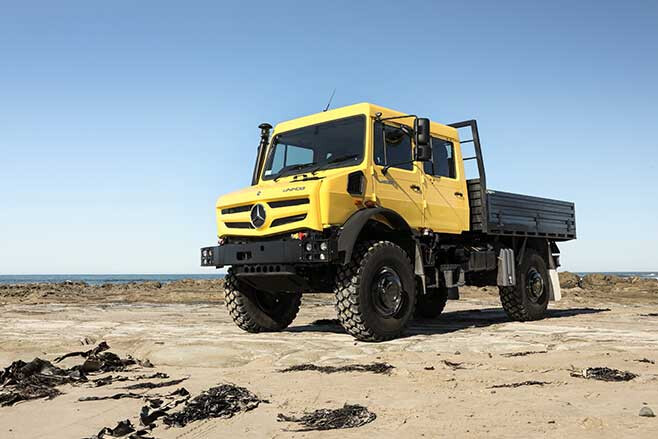
Power comes from a modern Mercedes-Benz Euro 6 compliant, 4-cylinder turbo-diesel engine that makes 170kW of power and 900Nm of torque. It sends drive back through a shaft to the centrally-mounted transmission which is an 8-speed automated manual, and the all-wheel drive transfer case.
In standard form the U5023 has a single-range transfer case, but it can be optioned with what MB Trucks calls ‘Working gears’ which employs low range to give 16 forward ratios and six reverse. This vehicle was thus equipped as well as having front and rear locking differentials and central tyre inflation (CTI) that allows the operator to inflate and deflate tyre pressures on the run as required.
Significantly, the Mog can be driven as a fully automated, two-pedal transmission; manually shifted two-pedal operation; or, by flicking a switch that releases a clutch pedal down from the left side of the steering column, a full three-pedal manual transmission.
DRIVE TIME
I’M no truck driver so climbing up in the cabin of the massive Unimog was a bit intimidating. Thankfully, I had MB Trucks’ Mog guru Jimmy Dalgleish sitting alongside me to explain what all the buttons and levers do.
Like any cab-over vehicle, vision from the driver’s seat of the Mog is excellent over the stubby bonnet and the side mirrors show you where the rear wheels are at to make placing the Unimog on the track relatively easy. Once you start to become acquainted with the size of the vehicle you soon realize that it’s not much wider than most large 4×4 wagons and it will drive over most tracks you would expect to take a family 4×4 on.
With a 1950mm wheel track its only around 400mm wider than a Ford Ranger when you’re placing it on the tracks. Wheelbase is 3850mm so again comparing it to a double-cab Ranger, the Mog is around 630mm longer.
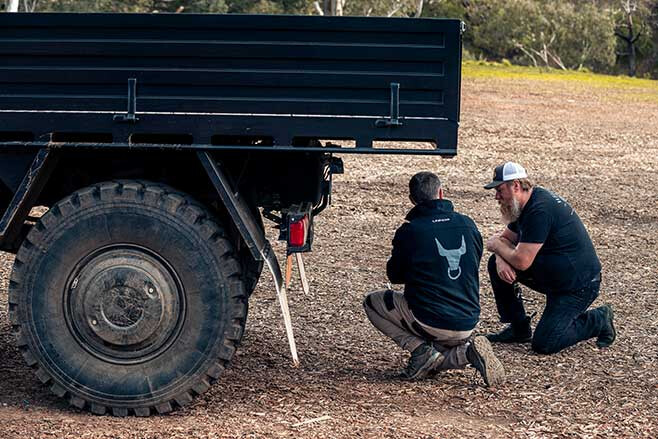
After a couple of laps of the Melbourne 4×4 Proving Ground to get a feel for it, I pointed the Mog though some tighter tracks and again it was easier to get through than I expected. The regular water crossing was a doddle with the Mog’s 1200m wading depth.
The gearing is super low and when I pointed it up a fairly steep climb and selected the ‘Working gears’, Jimmy suggested I take off in third gear and that was all I needed to amble up the slope.
On descent, it was again left in third gear and the exhaust brake employed to control the speed. Even in third it required a bit of throttle to maintain a downward pace.
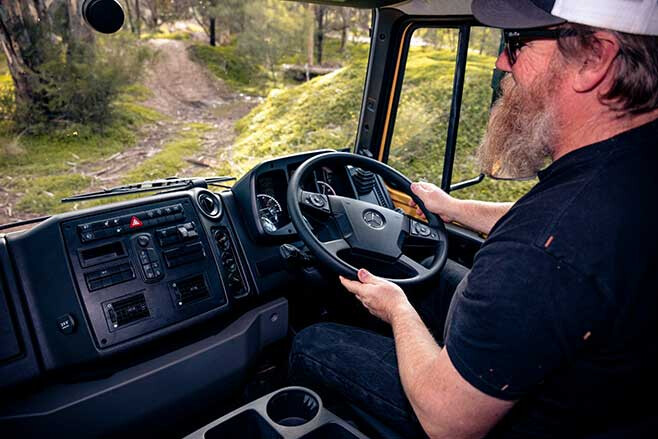
With my confidence growing, Jimmy suggested I take it over one of the steeper jump-ups in the proving ground. It had been wet in the area, the tracks were muddy and just a few hours before, the ‘more traditional’ 4×4 ute I was driving scrabbled for traction to climb over this mound. The track had dried a bit but Jimmy said this was a great place to demonstrate the CTI system.
Using CTI you can deflate and inflate the four tyres at the same time at any time using the onboard air-compressor. The system has preset pressures for certain terrain including Highway, Cross country, Sand/Mud/Snow and an emergency setting. We chose the emergency setting where the massive Michelin XZL 395/85 T 20 tyres drop down to 10psi.
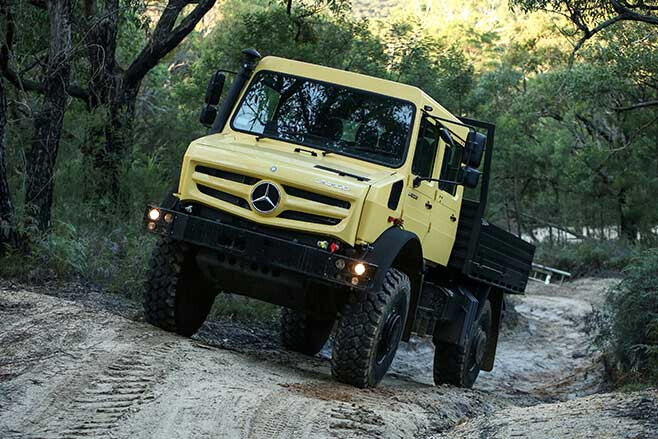
The tyres use internal bead locks to secure them to the rims at low pressure. Jumping out of the cab, you could see the tall tyres bagging out to increase the contact patch and hence traction. Back in the seat and Jimmy turned the dial locking both front and rear differentials and it was ready to go.
Initial thoughts that the Mog was too wide to follow the narrow track over the mound passed as we approached it. Sitting high in a cab-over vehicle like this you are literally looking head-on at the hill. After a quick glance at the side mirrors to see where the tyres were in relation to the track it was again third gear, low range and the big Mog crawled over it slowly without a hint of wheelspin.
The high, forward seating position also gives an excellent view when cresting a blind hill so you can see the line beyond the crest and the Mog followed the track to crawl down the other side. Flick the button on the CTI back to the road setting and the tyres inflated up to pressure as we drove back to the shed.
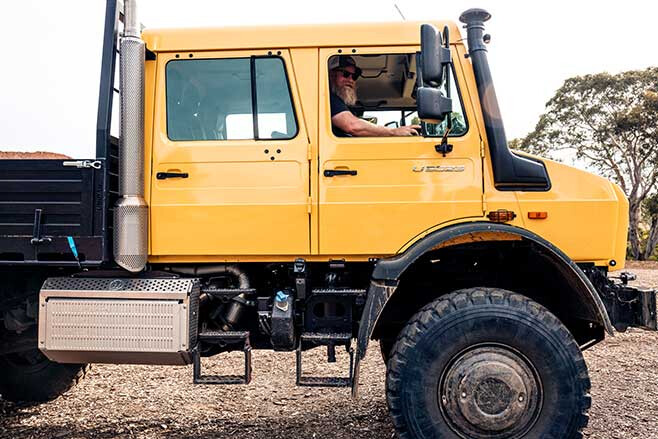
It was only a brief drive of the Unimog but it gave the understanding that the Mog is not as big as you first think and easier to manoeuvre on bush tracks than anticipated. I had a pretty good idea that the Mog would be massively capable off road and this just reinforced that belief as we didn’t push its capabilities at all on this quick spin.
I didn’t drive it on the road at all but Jimmy tells me they are comfortable cruising at 90 to 100km/h on the highway and that they are in fact speed restricted to 100km/h due to the GVM exceeding 11,990kg.
The Unimog didn’t disappoint and driving it ticked off a spot on my bucket list. A kitted U5023 could be the ultimate off-road adventure touring vehicle but unfortunately, owning such a rig is still a lottery win away.
UNIDAN
Unidan Engineering’s Daniel Mavin has owned 46 Unimogs of his own since 2007 and says hundreds of the vehicles have passed through his Gold Coast business since he established it back in 2011. As well as being a Mercedes-Benz Special Vehicles (specifically Unimog) dealer, Unidan has become Australia’s go-to workshop for the big Benzs.
Dan tells us that most of the work these days is for recreational users wanting expedition-style vehicles, but he also does vehicles for industry including mining, agriculture and people moving.
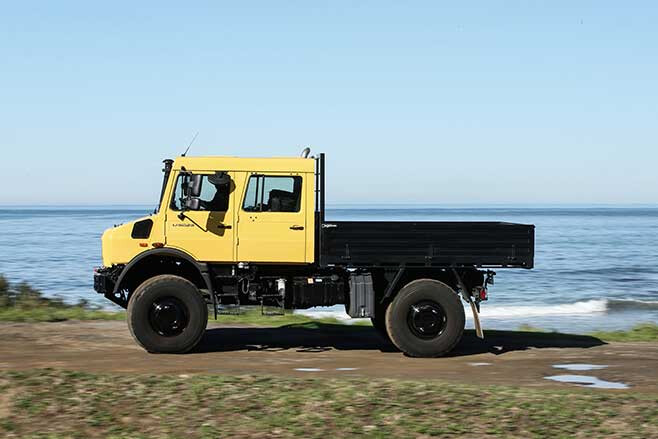
As well as selling and working on the vehicles themselves, Unidan has developed its own bodies and camper conversions to suit the different Unimog models including the incredible Odyssey X camper. The tray on the back of the U5023 tested here is also from Unidan.
Take a look at the Unidan website and you’ll see the wide variety of Unimogs they have done for customers, be they for industry or recreational use; there are even some rock-crawling Mogs there too. There’s also a page of vehicles for sale to whet your appetite for adventure.
WEBSITE: www.unidan.com.au
2019 MERCEDES-BENZ UNIMOG U5023 SPECS
ENGINE: 5.2L 4-cyl diesel MAX POWER: 170kW at 2200rpm MAX TORQUE: 900Nm at 1200 to 1600rpm TRANSMISSION: Automated manual; 8 forwards gears/6 reverse 4X4 SYSTEM: Dual-range full-time SUSPENSION: Multi-link with coil springs KERB WEIGHT: 2080kg GVM: 14,100kg GCM: 32,500kg TYRES: 395/85 T 20 FUEL TANK CAPACITY: 160L BASE PRICE: $225,000 AS TESTED: $300,000+
2019 MERCEDES-BENZ UNIMOG U5023 OFF-ROAD SPECS
DEPARTURE ANGLE: 41⁰ RAMPOVER ANGLE: 45⁰ APPROACH ANGLE: 43⁰ WADING DEPTH: 1200mm GROUND CLEARANCE: 460mm
THE Volkswagen Amarok Core V6 manual is the most engaging drivers’ car of the 4×4 double-cab ute pack.
Even though that sweet V6 diesel engine is detuned to sit in front of the six-speed manual gearbox, it feels more punchy and responsive with its direct delivery of power and torque.
There’s no slippage of a torque converter waiting for kickdown, or any other computer-controlled sorcery that comes with an automatic transmission.
In Core V6 manual trim – Core being the only variant that offers the V6 with a manual gearbox – the engine is tuned to 165kW between 3250 and 4500rpm, and 500Nm from 1250 to 3000rpm, which is down from the 500Nm and the class-leading 580Nm of the more up-spec auto transmission Amarok models.
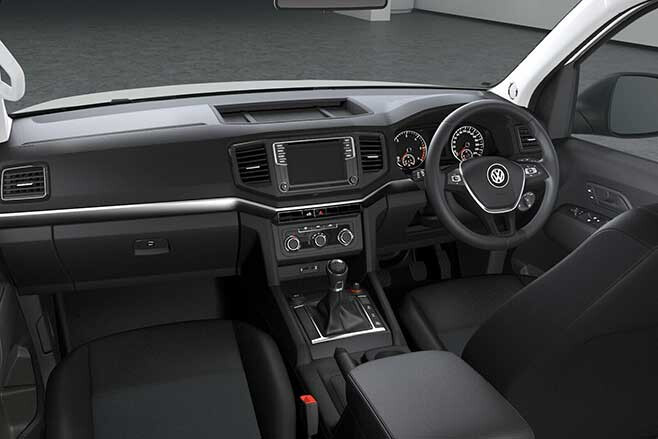
The stick-shift gearbox lets the driver explore the broad torque spread and flexibility of the engine, whether you are short-shifting it through suburban streets or making full use of its grunt on a mountain road. It certainly doesn’t feel its missing those 50 to 80Nm that the auto models claim, and backs up my belief that autos always sap power from the drivetrain.
City traffic is a breeze with the manual, as you quickly row through the ratios and let the torque do the work. You can almost leave it in fourth gear and drive it like an auto around the suburbs, while it will comfortably hold sixth gear at any speed faster than 80km/h.
The gearshift action is a bit vague and reminds you you’re driving a one-tonne ute and not a sports car, while the clutch is light and easy on the left knee.
The Amarok’s chassis has always been one of, if not the, most dynamic within the ute segment, and the manual cog-swapper encourages the driver to explore that trait.
Sure, the Ranger Raptor might be better at calming bumps at speed off-road thanks to its fancy Fox Racing dampeners and bespoke coil-sprung rear suspension, but for a base model workhorse the Amarok Core outshines any other standard 4×4 ute for dynamics.
Amazing, really, as the Volkswagen is also one of the oldest utes on the market today, and we’re due to see an all-new Amarok later next year.
Likewise, the interior of the VW is one of the best in class and has aged very well. It has been criticised for lacking rear seat airbags and compromising safety for rear passengers, but, for overall feel, comfort and usability, it remains the best laid-out, styled and functional mid-size ute on the market.
Even in this low-spec Core trim it has everything you need, but I’d love to see the availability of an option package that gives the upscale bigger centre screen, audio system and climate control of the higher-spec models.
An advantage of having a base-model such as the Core is that, without all the bells and whistles on board, it is a lighter car and hence gives you a higher payload. The V6 manual Core is the only Amarok in the V6 range to have a full one-tonne payload (1004kg), while all the four-cylinder Amaroks top that figure.
Like all Amaroks, this one fits a Euro pallet between the wheel arches in its deep, wide tub. The manual V6 has a lower towing rating at 3000kg compared to 3500kg for the auto models, which, along with the de-rated engine, suggests limits to the capacity of the gearbox.
We’ve never found anywhere that stopped a V6 auto Amarok because of its single range transfer case, and many of those trips have been with dual-range utes all using low range. Like the four-cylinder Amarok, when mated to the manual gearbox you get a transfer case with low range in the V6 Core manual; so that would be a benefit in the steepest rough stuff.
But it’s on-road where we’ve really loved the drive in the manual Amarok. Exploring the breadth of the engine and chassis with better control and engagement with the vehicle itself.
Volkswagen’s first attempt to crack the one-tonne 4×4 ute market continues to impress us, and it’s a shame the next model with be a shared product with the next Ford Ranger.
VW AMAROK V6 CORE MANUAL SPECS
Engine: 3.0L V6 turbo diesel Power/Torque: 165kW/500Nm Gearbox: Six-speed manual 4×4 System: Dual-range part-time Crawl Ratio: N/A Kerb Weight: 2076kg GVM: 3080kg Payload: 1004kg Towing Capacity: 3000kg GCM: 5550kg Fuel Tank Capacity: 90 litres ADR Fuel Claim: 9.7L/100km Approach Angle: 28⁰ Ramp-over Angle: 23⁰ Departure Angle: 23.6⁰ Wading Depth: 500mm Ground Clearance: 192mm
VW EXPANDS 580Nm AMAROK RANGE
SALES of the Amarok Core V6 manual have been low, representing just four per cent of total Amarok sales in Australia.
We like to think that’s more to do with the Core model rather than the manual gearbox, because it’s such a great car to drive. But buyers in this segment have shown that they prefer the fully loaded upper-spec ute variants.
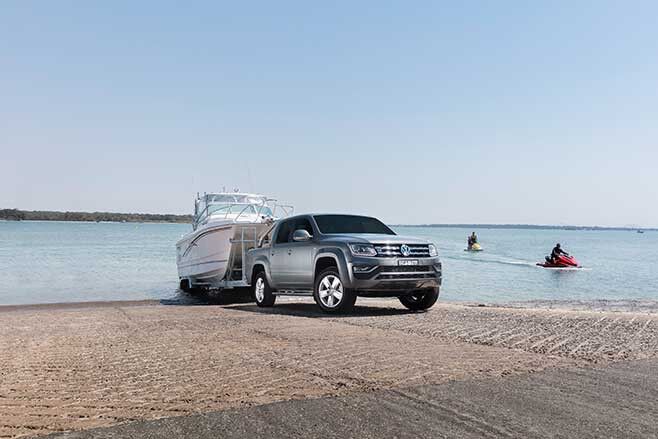
With that in mind, VW Australia has loaded the top end of the Amarok line-up with another model equipped with the class-smashing 580Nm engine.
The Highline Black V6 580 joins the Ultimate V6 580 and 580S as the only models in the range with the TDI580 engine that makes 190kW (200kW on overboost) and 580Nm.
The Highline Black 580 also adds black 20-inch alloy wheels, a gloss black styling bar, gloss black side bars and exterior mirrors, gloss black and chrome grille, plus black headlining and pillar trims inside the car.
VW AMAROK 4X4 V6 PRICING
TDI500 Core (man): $49,590 TDI550 Core: $52,590 TDI550 Sportline: $56,590 TDI550 Canyon: $57,990 TDI550 Highline: $61,090 TDI580 Highline Black: $64,990 TDI580 S: $70,990 TDI580 Ultimate: $72,790
RAM TRUCKS Australia has unleashed the HEMI V8-powered 1500 Warlock, with the beefed-up, special-edition dual-cab priced from $104,450.
That venerable HEMI V8 is a 5.7-litre engine that produces a considerable 291kW and 556Nm, and it can be found in other 1500s within the range including the four-door Express Crew.
What gives the Warlock its point of difference is a factory-fit one-inch suspension lift, lending the big rig improved wheel articulation and greater ground clearance.
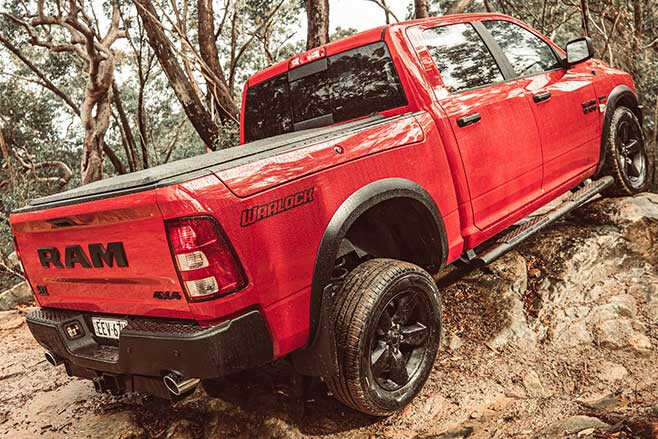
Notable exterior changes are aesthetic, with the Warlock receiving aggressive touch-ups including a Rebel-look front grille, a uninque sports hood, black powdercoated front and rear bumpers and fender flares, 20-inch alloys and Warlock decals.
Apple CarPlay and Android Auto, as well as a satellite navigation system, can be monitored and controlled via the UCONNECT 8.4-inch touchscreen. Plus, the Warlock comes standard with Ram’s clever RamBox Cargo Management System.
“The new Warlock is the start of a product offensive that allows us to broaden our audience appeal and continue to grow the official RAM Trucks Australia brand down under,” says Jeff Barber, National Manager, RAM Trucks Australia.
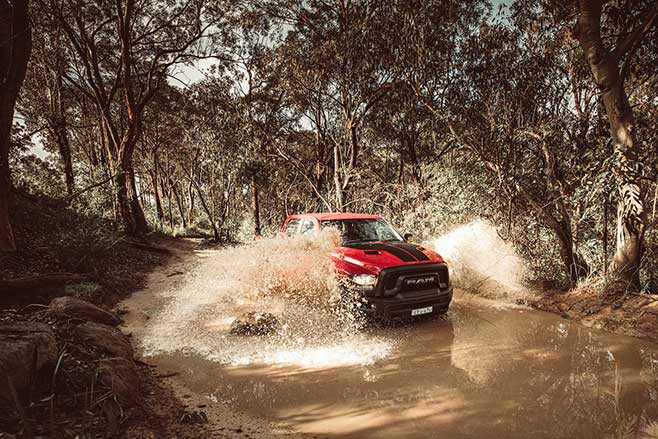
Like other 1500s in the shed, the Warlock comes standard with a Trailer Brake Control system. It also has an 820kg payload and a 4500kg braked towing capacity.
Three colours are available at launch: Flame Red, Bright White and Patriot Blue. Ram says more colours will be released soon.
Priced from $104,450 (plus dealer delivery and on-road costs), the Warlock is backed by a three year/100,000km warranty.
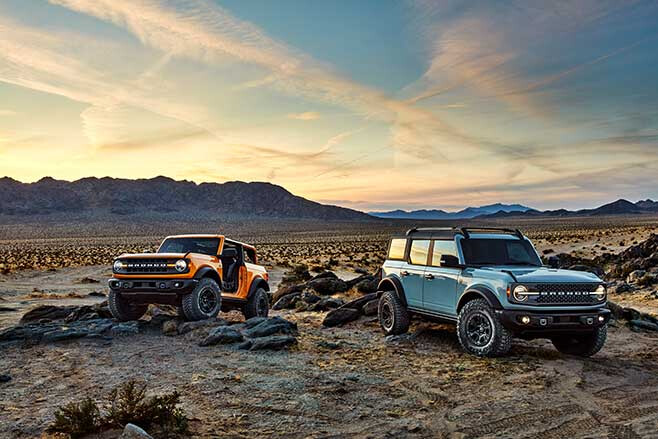
WHEN Ford created the first Bronco back in 1965 it looked at the WW2 Jeep which Ford manufactured – as well as Willys – and sought out ways to make it more user friendly for the recreational user.
Ex-military personnel were buying the old Jeeps and using them back home in the USA where a market was developing for a compact, personal use, off-road-capable 4×4 vehicle. So the first Bronco was born, and some say it was the first SUV.
- BUCK SHOT: 2021 Bronco detailed
- PHOTO GALLERY: 2021 Bronco in pictures
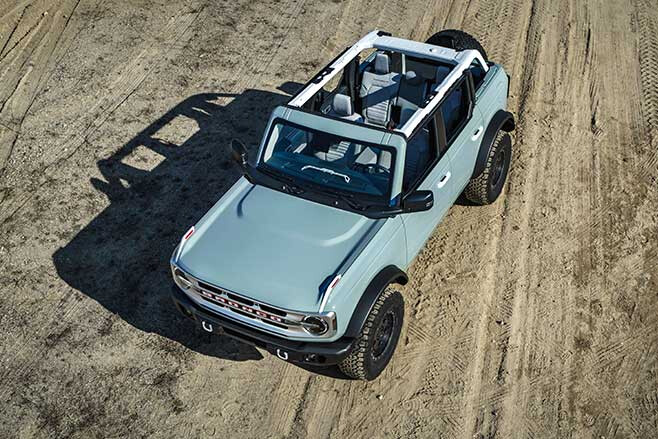
We’ve chosen the JL Wrangler Rubicon and paired it up with the four-door Bronco Badlands with the optional Sasquatch pack. To match apples with apples we’ve chosen the petrol V6 and auto transmission for both of them.
The Rubicon is only available with an auto here in Australia but it does have the option of a diesel engine; while the Bronco has an optional seven-speed manual, but that is only offered with the 2.3-litre EcoBoost four-cylinder mill.
The new Bronco is slightly shorter than the Rubicon, but it’s taller and wider. It has a paltry towing capacity but outdoes the Jeep in payload.
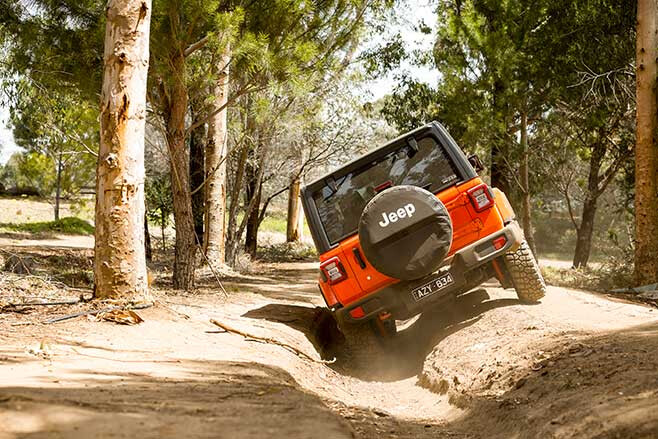
The off-road specs of the Ford outshine those of the Jeep in everything but overall crawl ratio. Both vehicles have locking differentials front and rear and both have a disconnecting front swaybar. Ford wins on tyre size with its 35s over the Jeep’s 32s.
Wrangler’s live front axle should out-articulate the Bronco’s IFS, but IFS will give a better ride and handling over all but the most rugged off-road terrain.
Ford’s turbocharged V6 out-grunts Jeep’s naturally-aspirated Pentastar engine, but you have to give Jeep points for simplicity in both the engine and transmission, which is important in an off-road vehicle.
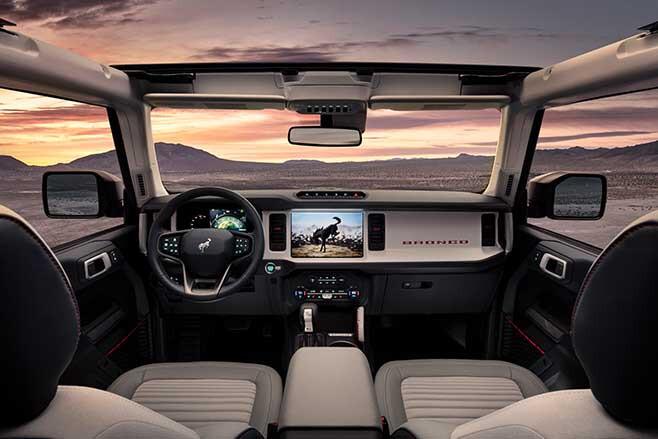
Pricing is irrelevant at this point, as all Ford has told us is that the two-door Bronco will start at US$29,995. Jeep USA lists the Wrangler Sport two-door starting from US$28,295. Expect to see them similarly matched in price as you go up through the range.
You have to say that, on paper, these are fairly evenly matched vehicles and it will be interesting to see how they compare in real-world testing.
Unfortunately we won’t be doing that here as the Bronco won’t be available in Australia, but we’ll be reading the US comparisons with interest.
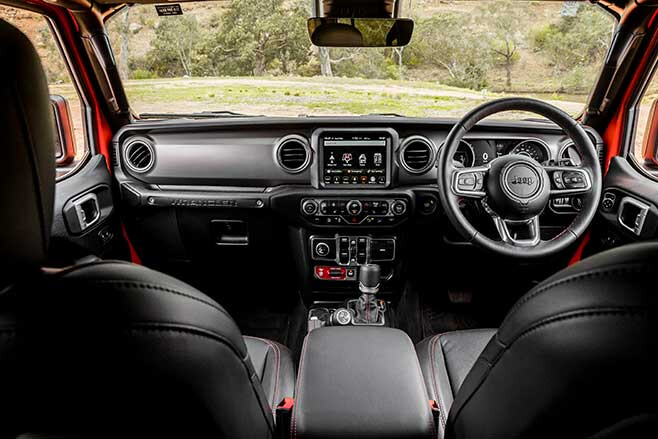
JEEP WRANGLER RUBICON SPECS
Engine: 3.6-litre petrol V6 Power: 209kW @ 6400rpm Torque: 347Nm @ 4100rpm Gearbox: 8-speed automatic 4×4 System: Dual-range/selectable full-time 4WD Crawl Ratio: 70.3:1 Suspension (f): Separate-chassis; Live-axle /coil springs Suspension (r): Live-axle/coil springs Wheel/tyre spec: 255/75R17 Departure Angle: 31.9˚ Rampover Angle: 21.2˚ Approach Angle: 41.7˚ Wading Depth: 760mm Ground Clearance: 252mm Kerb Weight: 1992kg GVM: 2562kg Payload: 409kg Towing capacity: 2495kg Wheelbase: 3008mm Length: 4882mm Width: 1894mm Height: 1848mm
FORD BRONCO BADLANDS SPECS
Engine: 2.7-litre V6 turbo petrol Power: 231kW Torque: 542Nm Gearbox: 10-speed automatic 4×4 System: Dual-range/ selectable on-demand 4WD Crawl Ratio: 67.8:1 Suspension (f): Separate-chassis; Independent/coil springs Suspension (r): Live-axle/coil springs Wheel/tyre spec: 315/70R17 Departure Angle: 37.2˚ Rampover Angle: 29.0˚ Approach Angle: 33.2˚ Wading Depth: 850mm Ground Clearance: 295mm Kerb Weight: 2332kg GVM: n/a Payload: 621kg Towing capacity: 1587kg Wheelbase: 2949mm Length: 4839mm Width: 1938mm Height: 1877mm
Dual-cab 4×4 utes continue to dominate the Australian new car market, and when you look at their versatility you can understand why. Here is a vehicle that can ferry the family around town, carry your trade tools to the worksite, tow your boat or horse float and take you on the four-wheel drive adventure of a lifetime.
If you’re looking to set off on such a 4×4 adventure you’ll want to upgrade your 4×4 ute to better handle the conditions, as the Aussie outback can throw up some of the toughest challenges. Thankfully, Australia is also home to the best aftermarket 4×4 accessories brands in the world, so we are spoilt for choices when it comes to top quality equipment.
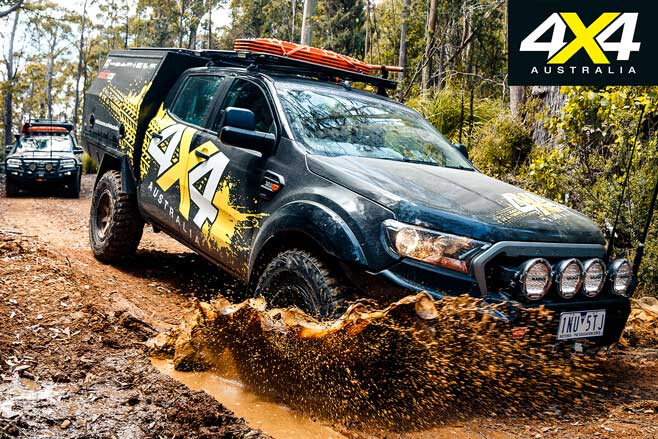
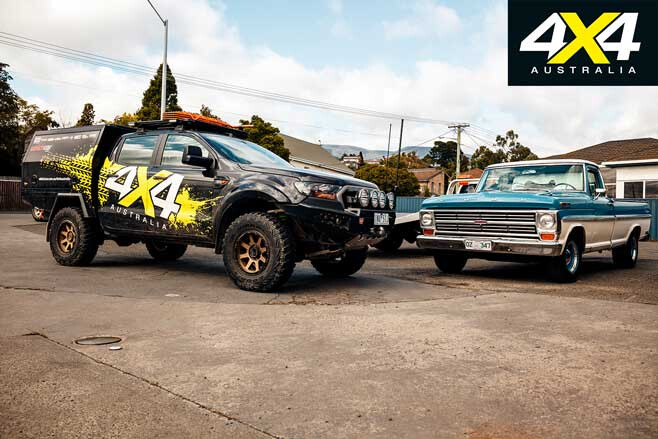
Last year we purchased a new Ford Ranger 4×4 with the intention of transforming it into the ultimate adventure-touring dual-cab ute. With the help of some of the leading aftermarket 4×4 accessories companies in the country we’ve achieved the goal and have taken the rig to Central Australia, the Simpson Desert, the Flinders Ranges, Vic High Country and Tasmania.
From the ground up
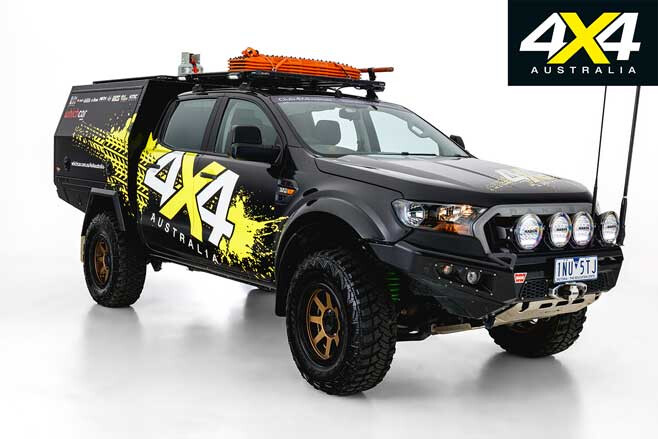
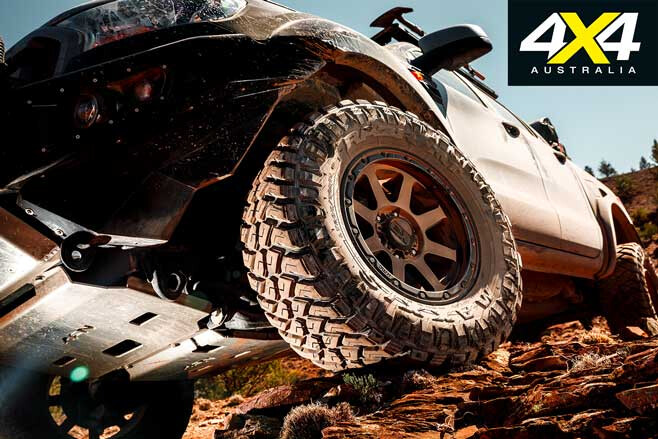
We started the build by replacing the stock wheels and tyres and upgrading the suspension. Wanting tough tyres, we fitted a set of mud terrains to a set of bronze KMC Addict 2 alloy wheels. Initially we fitted Maxxis RAZR muddies and had a great run with them over the first 15,000km of use, covering all sorts of terrain. Recently, we swapped them out to give a set of Goodyear MT/Rs in the same 285/70-17 size a run.
To improve ground clearance, we raised the Ranger using a suspension upgrade from Ironman 4×4. This is a comprehensive kit from Ironman that includes the brand’s Foam Cell Pro front struts and uprated coil springs, its new forged aluminium upper control arms, and constant-load rear leaf spring mated to another set of Foam Cell Pro shocks. Combined with the bigger tyres we’ve achieved close to 75mm in extra clearance while the superior suspension components improve ride quality, handling and the Ranger’s ability to carry a load.
Adding to the improved clearance up front is a replacement bumper bar. We didn’t want to fit a full-size bulbar on this car but wanted a steel replacement that would allow us to mount our winch, spotlights and UHF aerial. So we went with a loopless style bar from AFN 4×4 as it ticks all the boxes for what we wanted. You can clearly see the improved clearance up front and our Warn winch, Narva lights and aerials are all securely mounted.
AFN4x4 also made the aluminium plate underbody protection for the inevitable scrapes and bumps you get off-road no matter how big your 4×4 is. These heavy-duty plates run from just below the bumper at the front, under the engine to protect the sump, and back under the transmission and transfer case.
The bigger aerial on the bar is for our Cel-Fi Go cellular phone booster from Powertec, which improves our mobile phone reception in remote areas; while the slim aerial is for the GME UHF radio, which we use for essential car-to-car comms when out on the road.
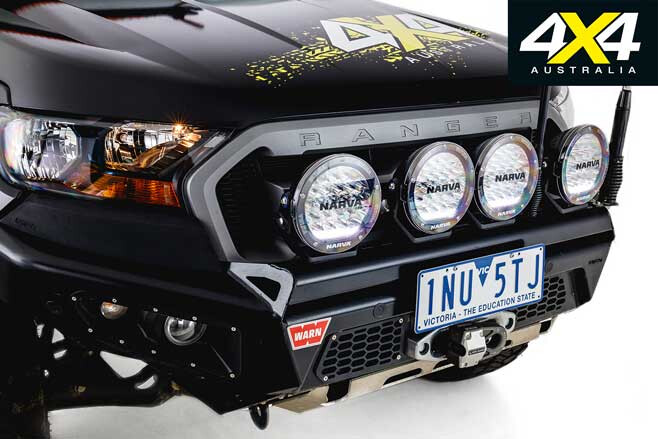
For the first six months of using the Ranger we ran a pair of Bushranger NightHawk driving lights on it. They proved to be amazing with their bright LED beam, featuring a unique variable power output. Just recently we’ve fitted a quartet of Narva Ultima 180 lights for a slimmer look. While the Narvas don’t offer the variable beam of the Highthawks, we can control the output by switching between the centre pair, the outer pair, or all four at once.
Another recent addition to the Ranger is the adjustable towing mirrors from MSA 4×4 Accessories. Gone are the days of having huge elephant ear-like towing mirrors strapped to the side of your car. The MSA units are compact and have a factory look to them but they can be rotated to a horizontal position to increase rearward view and slid outward for maximum view beyond your trailer – or in our case, our AMVE canopy body.
Body surgery
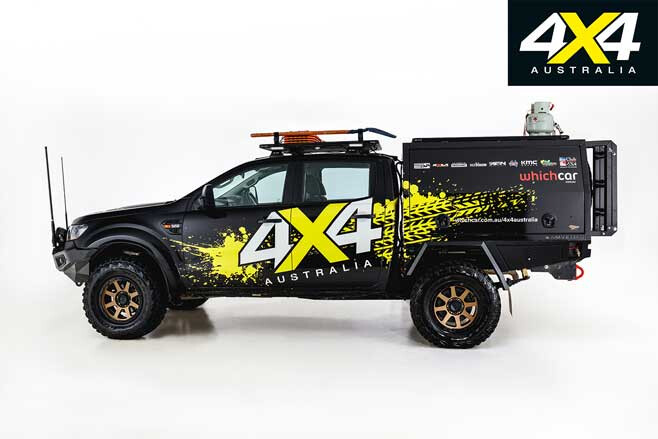
A replacement body for the rear of the Ranger was an integral part of our plans for the car from the outset. We wanted to retain the versatility of a ute that allows us to carry and store all sorts of equipment in the back, while keeping it all secure and protected from the elements.
Queensland’s Allsafe Mine Vehicle Equipment stepped up to the plate to build the body to our specifications. With a growing business in building such bodies for mining and industry, plus an awesome Ford F250 with a similar body but on a larger scale, we knew AMVE was the team for us.
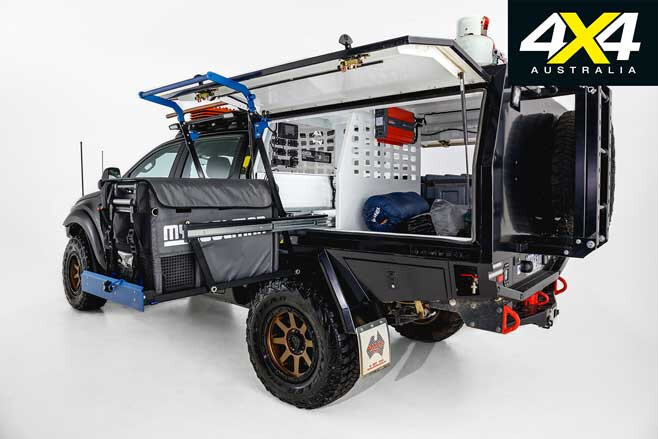
The AMVE body is beautifully custom-made from powdercoated aluminium and is bolted directly to the Ranger’s chassis – it doesn’t sit on a tray as some others do. This design makes the body lighter and allows us to maximise the usable space.
Inside the body we have mounted an MSA fridge slide to access a myCOOLMAN 60L fridge, some adjustable tie-down points to secure luggage and storage boxes, internal and external lighting, and lockable external toolboxes. Plus, we’ve integrated a water tank with powered pump for vital water supplies. The AMVE body really is the complete package that makes life on the road so much more practical – and thus easier.
To power things like fridges, lights, water pumps and other accessories, the Ranger is fitted with a comprehensive Redarc system incorporating the Manager 30 DC-DC charger to charge and maintain a bank of lithium batteries from Revolution Power Solutions. This allows charging via the Ranger’s alternator, directly from an external 240-volt source or via solar panels.
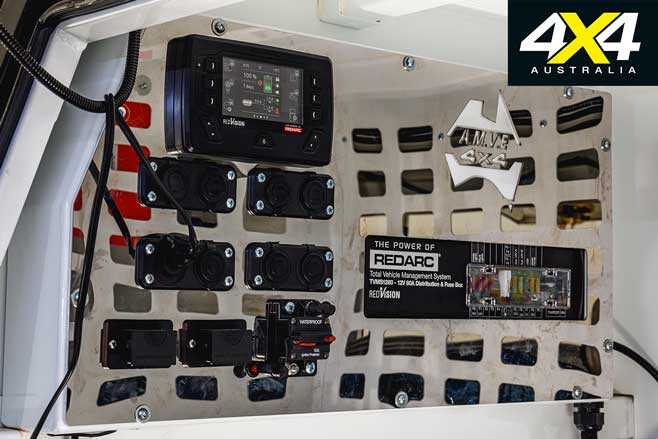
We’ve also fitted a Redarc 2000-watt pure sine wave inverter to allow us to power and charge appliances using 240V power when we are out on the road. The whole Redarc system is controlled by a RedVision Total Vehicle Management System that monitors and switches all the inputs, outputs and accessories via this control panel or the Redarc app on a smartphone.
The Redarc system is integrated into the AMVE body and, using it and the lithium batteries, we can power our fridge and accessories for up to a week in camp or indefinitely using a solar panel input, giving us the independence we’re after for self-sufficient remote area travel.
On the outside, looking in
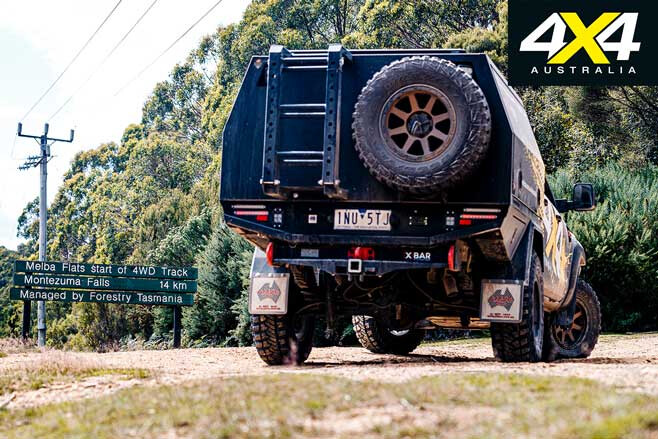
At the back of the Ranger we have fitted an X-Bar from Aussie towbar specialists, Hayman Reese. Utes without the factory tub are often left without a rear bar and the X-Bar provides us with a tow bar, plus it has integrated rated recovery points for pulling other vehicles out of a bog. With its three red recovery points, it has a solution for any sticky situation.
A ladder provides access to the Rola Titan Tray rack system. The beauty of the Rola Titan system is that low-fitting slimline design when not in use and the multitude of accessories available to secure all of your adventure gear. In our case, up here we’ve stored MaxTrax Extreme recovery tracks, a shovel and a gas bottle, but there are options for a wheel mount, driving and camps lights, awnings, jerry cars and cargo. Speaking of MaxTrax, if the tracks themselves can’t get us out of trouble we have a full MaxTrax recovery kit on board to help with safe winching and kinetic vehicle recoveries.
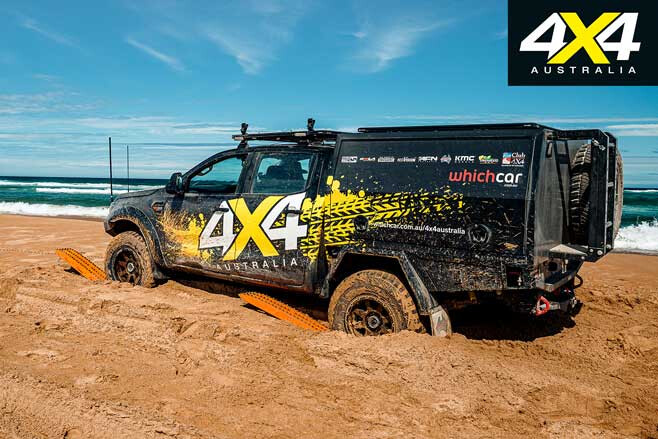
There’s a second Titan Tray on the roof of the Ranger itself and it mounts Narva LED work lights, controlled via the RedVision system. The second tray also give us more capacity to carry more gear if needed.
We’ve kept things simple on the inside; the handpiece for the GME XRS UHF radio is close at hand for the driver, while the main body of the unit is concealed out of sight behind the dash. Plus, the extra switches for our driving lights are mounted in a panel from Lightforce. Essential protection for the carpet comes from a set of form-fitting 3D Mats.
Under the bonnet
The mechanical package remains pretty much as Ford intended with the 3.2L diesel and 6-speed manual. We did fit a free-flowing King Brown exhaust system from South Aussie specialists Pacemaker Exhausts, and this gives the Ranger’s diesel engine a bit more ability to breathe and a slight growl from its exhaust tip.
Protection for the fuel system comes via a Water Watch unit which removes any water, grit and other contaminants from the fuel system before it reaches the OE fuel filter. It also has a warning light and chime to warn the driver of any contaminants in the system before they can do expensive damage to the engine.
There’s also a Provent oil separator catch-can from Direction Plus, which reduces the amount of oil that would otherwise go back into the engine’s intake and result in performance-robbing carbon build-up. Like the Water Watch unit, an oil catch-can provides a preventative measure to ensure the performance and longevity of the engine.
We’ve logged 18,000km on the Ranger in the eight months we’ve had it and it’s living up to our aim of being the ultimate bush tourer. It isn’t used as a town car, so its mileage has all been out on off-road adventures or the highways to get us to those remote places.
From the deserts of Central Australia to the highlands of Tasmania, the Ranger, and the equipment we’ve fitted to it, has done everything we’ve asked of it and never let us down.
THANKS TO
www.redarc.com.au www.club4x4.com.au www.amve.com.au www.atecoequipment.com.au www.goodyear.com.au www.wheelprosaustralia.com.au www.ironman4x4.com www.pxwholesales.com.au www.afn4x4.com.au www.narva.com.au www.ontrack4x4.com.au www.titantray.com www.maxtrax.com.au www.powertec.com.au www.gme.net.au www.msa4x4.com.au www.pacemaker.com.au www.3dmats.com.au www.x-bar.com.au www.mycoolman.com.au
- All-new Bronco.
- Two-door, Four-door and Bronco Sport models.
- Removable roof and doors.
- Class-leading off-road specs.
- Up to 35-inch tyres available.
- Front and rear locking diffs.
- Bronco Base, Big Bend, Black Diamond, Outer Banks, Badlands, Wildtrak and First Edition models offered.
- Off road-focused ‘Sasquatch’ package.
- No right-hand drive, so not for Australia.
- SIDE BY SIDE: 20210 Bronco vs Wrangler Rubicon
- PHOTO GALLERY: Plenty of Bronco shots
Revealed in three variants, the initial Bronco line-up includes two- and four-door off-roaders built on the Ford Ranger/Everest T6 platform with removable roofs and doors, and a light-duty SUV which is built on the Ford Escape platform.
It is expected the Bronco family will grow to possibly include a pick-up truck at some time in the future. There’s also room for some Ford Performance-tweaked models at some time.
Bronco returns after 24 years
The new Bronco, expected to go on sale in the USA later this year, marks the first time the nameplate has been applied to a production model since it was shelved back in 1996.
It debuted as a compact 4×4 back in 1966 to create a vehicle that had the capabilities of the WW2 Jeep in a more everyday practical and comfortable package. The Bronco soon grew to a full-size SUV and went through five generations of models before being discontinued.
Bronco’s Australian roots
The third-gen Bronco was even built and sold in Australia between 1981 to 1987, when it was assembled in Ford’s Brisbane plant.
The Australian connection is there again in this new generation of Bronco, which is built on the Australian-developed T6 platform that underpins PX Ranger and Everest. Bronco test ‘Mules’ have been spotted undergoing development in Australia, which is nothing unusual for Ford US products.
Those T6 underpinnings mean it’s riding on a separate ladder frame using a coil-sprung line rear axle and coil IFS. It also means it could be made in right-hand drive; although, Ford says there are no plans for that or the Bronco or Bronco Sport to come to Australia. Bummer!
Ford Bronco targets Jeep Wrangler
The new Bronco makes no secret of the fact that Ford is going after the Jeep Wrangler in the off-road segment. Despite lacking the off-road benefits of a live front axle, the Bronco brings in many Jeep traits such as a removable hardtop roof and doors, and a boxy, functional silhouette.
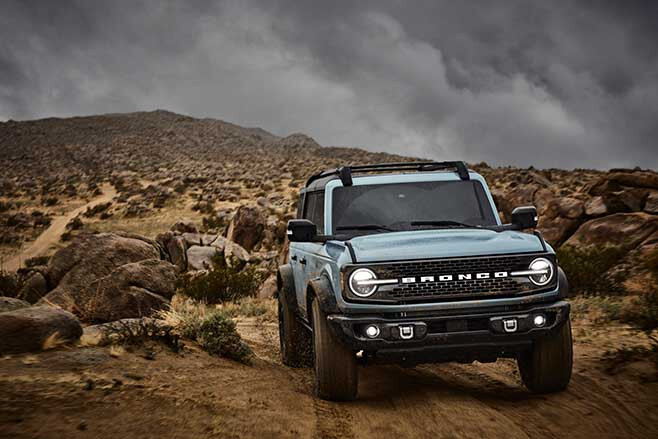
The two- and four-door models also mimic the Wrangler line-up; although, rather than have an off road-focused variant like the Wrangler Rubicon, any of the Bronco two- and four-doors can be optioned up with the best off-road hardware.
Power will come from a choice of turbocharged petrol engines starting with the 2.3-litre EcoBoost four-cylinder engine that makes 201kW and 420Nm, while the main engine for the two- and four-door Broncos will be the 2.7-litre EcoBoost V6 engine putting out 231kW and 542Nm.
Exciting news is that the Bronco will be available with a seven-speed manual gearbox as well as the 10-speed auto that has become the default Ford transmission these days.
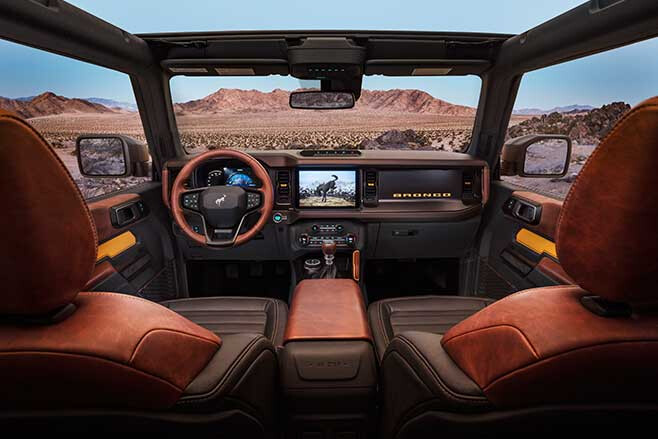
Bronco’s impressive off-road specs
The manual is basically a 6+1 ratio ‘box with six regular gears plus a crawler ratio. With this transmission, the optional 4.7: final drive and the two-speed transfer case in low range, the Bronco has an astounding 94.75:1 overall crawl ratio. With the auto it’s only 67.8:1, but compare that to a Wrangler Rubicon which has a 70.3:1 crawl ratio.
The Bronco is also promising class-leading off-road specs including the option of 35-inch tyres that will give it 850mm water-fording capability and up to 295mm of ground clearance, as well as 29° rampover, 43.2° approach, and 37.2° departure angles.
Ford has gone with Bilstein position-sensitive shock absorbers for its premium off-road packages on the Bronco and not the Fox shocks you’ll find under Raptor models. This leads us to believe we will see a Ford Performance-tuned Bronco Raptor at some stage.
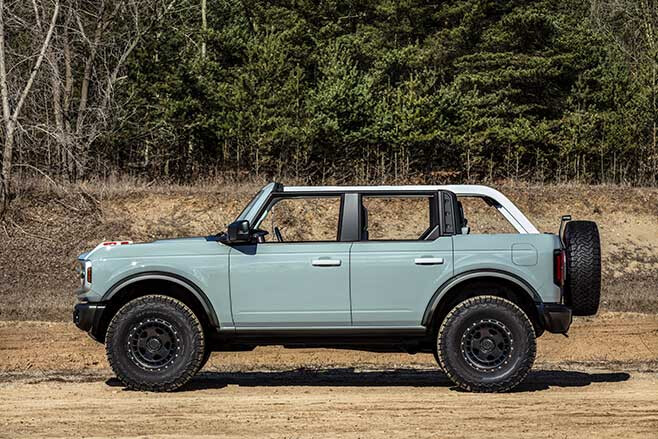
The Raptor’s ‘Baja mode’ is available on the Terrain Management System on some Bronco variants, while a disconnecting front sway bar comes on the Bronco Badlands model.
The differentials are Dana units and both front and rear lockers are available, as is a 4.7:1 final drive ratio on the Sasquatch package.
That Sasquatch package also adds 17-inch beadlock-capable alloy wheels with 35-inch mud terrain tyres; front and rear lockers; high-clearance suspension with position-sensitive Bilstein shock absorbers; and high-clearance fender flares. It’s the package off-roaders will want, but we love it for the name alone.
Bronco not riding into Australia
Love it as we might the new Bronco is not for us, with the model designed for the US and Chinese markets only. The official word from Ford is that there is no plan for right-hand drive production, so we can only hope the local converters get on to importing them on a small scale.
SHELVE THE singlets and clip the mullets, as the 2020 Deni Ute Muster has been called off due to the current COVID-19 pandemic.
The Deni Ute Muster joins a long list of canned outback events this year, including the iconic Big Red Bash and the Birdsville Races.
“Despite our very best efforts to continue with planning for our 22nd event, we are saddened to announce the cancellation of the 2020 Deni Ute Muster,” said Vicky Lowry, the GM of Deni Play on the Plains Festival Ltd.
“Due to the current COVID-19 outbreaks and the evolving situation, and after consultation with government and health officials, it is not possible to predict what will happen in the coming months and we must make the health and safety of our patrons and staff our top priority,” she said.
Tickets purchased for the 2020 event – as well as reserved camping tickets – will automatically be valid for the 2021 event.
However, if you’ve purchased tickets and you’re unable to make the 2021 Muster – scheduled for October 1 and 2 – a refund request is available from Oztix until September 30, 2020.
With its origins dating back to 1999, the Deni Ute Muster typically brings close to 20,000 people to the small town of Deniliquin each year to celebrate all things Australiana, including the iconic “ute”. With trade stalls and plenty of entertainment (including night concerts with top-line talent) the event is a quintessential outback experience.
“We would like to take this opportunity to thank everyone for their patience and support and will continue to respond to questions on our social media accounts as we begin to move forward and plan for 2021,” said Lowry. “We look forward to seeing you on 1 and 2 October 2021, when we will be back bigger and stronger.”