
The March 2021 issue of 4X4 Australia hits letterboxes and stores this week, and here’s a quick sneak peak of what you’ll find inside.
As can be seen in the above video, we’ve included a comprehensive comparison of the smaller but increasingly more common seven-inch LED driving lights. For the real-world test, we measured each light at 20m, 60m and 100m intervals, before dunking them in the river to see how waterproof they are.
SUBSCRIBE TO 4X4 AUSTRALIA MAGAZINE
That glorious PX2 Ranger you see on the cover is chassis-stretched and loaded with quality kit, making it one of the most fit-for-purpose off-roaders in the country. Despite the huge amount of gear it’s carrying, an amazing job sees it remain below GVM.
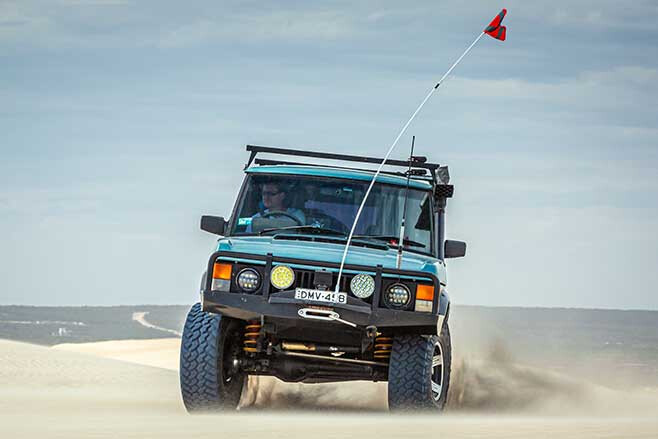
We also pointed a microscope at a fettled Range Rover Classic, which has been fitted with a 3.9L Isuzu 4BD1 engine from an ex-army Land Rover Perentie (now turbocharged, of course). Read all about the ground-up rebuild of the Classic in this issue!
On the unmodified metal front, we pointed two new vehicles to some off-road tracks to see how they fared off the tarmac: Jeep’s SWB JL Wrangler Rubicon Recon and Ford’s Ranger FX4 Max.
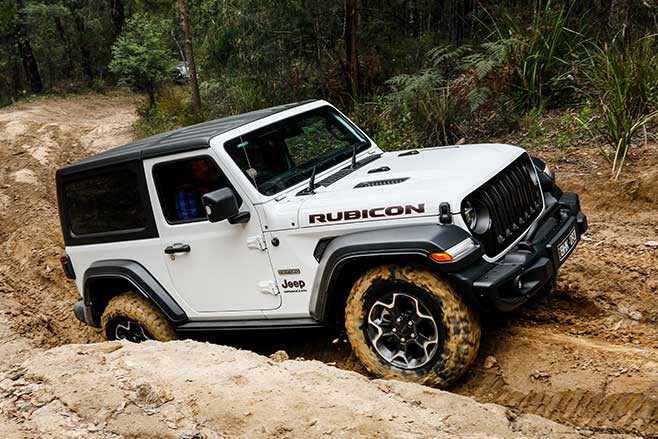
We registered plenty of kilometres this month, with separate trips to Coorabakh National Parl in NSW, Robe in South Australia and Victoria’s Golden Triangle. Plus, we’ve squeezed in yarn on the old bull-catching days and the importance of the short-wheelbase FJ25.
WHAT ELSE IS THERE?
– Monthly columns by Ron, Fraser and the Wandering Aus crew – New gear tested and analysed – Latest batch of Readers’ Rigs
The March 2021 issue of 4X4 magazine is officially on sale in stores from March 4.
I AM A bit of a tyre snob these days – you know, tried the best and now looking at the rest.
In the past, I’ve spent a bloody fortune on the big brands and to be honest they have been pretty darn good, but on the other end of the scale I’ve tried the el-cheapo range too and I’m just as impressed.
Having spent some 20 odd (some very odd) years in the bush, touring outback desert regions, clocking up stacks of highway miles and just recently spending time in Tassie and the Cape, I reckon I can lay claim to being a seasoned traveller.
During the past 18 months we’ve been travelling Australia and when it came to prep I knew I wanted muddies for where we planned to go. Now I know there are pros and cons with noise, wear patterns, being dicey in the wet (allegedly) blah, blah, blah, but that’s what I wanted.
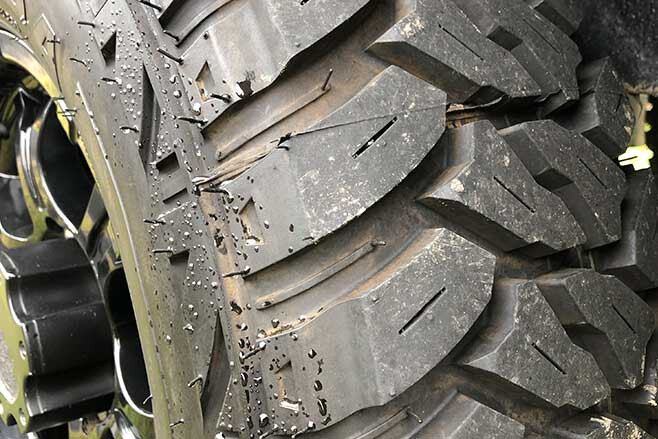
As a side note, we bought a hybrid camper the year before to prepare and there were muddies on the trailer. Again, there’s been stacks of debate regarding muddies on trailers, so I won’t go there. Anyway, the tyres on the trailer were ones I had never heard of before, namely Kenda Klevers in an MT pattern.
Now while they looked ‘tough’ on the camper (the only reason why manufacturers put them on in my books) I thought they wouldn’t last long. After having them balanced and aligned, they’ve performed well on the tracks we’ve been using to prepare for our upcoming trips.
After running the Kenda Klever muddies on the trailer for a year I thought I would take a gamble and throw a set on the Cruiser, after. I was pleasantly surprised on the ratings overseas, as well as the vast range of tyres Kenda makes for trucks, 4WDs, bikes, mowers and a few random ones. Even the history behind the company is pretty impressive; established in 1962 in Taiwan producing bike tyres, it soon moved to other fields.
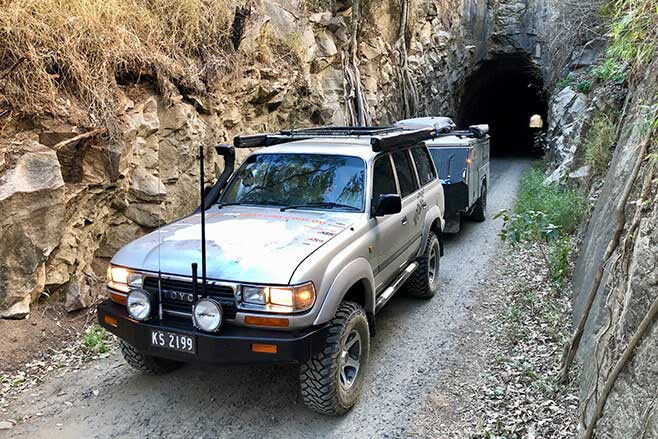
So I thought why not take a gamble with a set on the old 80 Series to match up with the camper. Without wanting to spend a bucket-load of cash – but also not wanting to skimp too much on tyres – the Kenda came in under budget: for the 285/75/16 I paid $240 each (fitted and balanced), which was very affordable.
First impressions? As they’re muddies I was expecting them to howl and be a bit blocky on the road, which they were, but they’re definitely not the noisiest I have had (mind you, I’ve run comp-style tyres that scared little kids walking down the road).
2020 TYRE TEST: Mud-terrains!
The Kenda Klever MTs have double steel-belted construction with a three-ply sidewall utilised for long-lasting wear, with tough square shoulder lugs that provide pretty decent self-cleaning capability. Like I said, they are on the cheaper end of the market and we all know that down here they all look pretty much the same in design and appearance.
But you know what, I’m bloody impressed. We’ve done some big miles along Gulf roads, outback desert roads, a lot of tar, played in the sand (not the best for a muddie), used them in the mud (around Tassie) and given them a hiding around the back blocks of Coffs Harbour.
VERDICT
AFTER having the tyres for nearly two years and being on the road for 18 months, I am very impressed with their performance in most conditions (haven’t had them in the snow yet).
However, like any tyre they need to be looked after. I check pressures every morning when cold, do a visual every time we walk around, and basically baby them trying not to hit washouts and large sharp things on the road – as well as dropping pressures to suit.
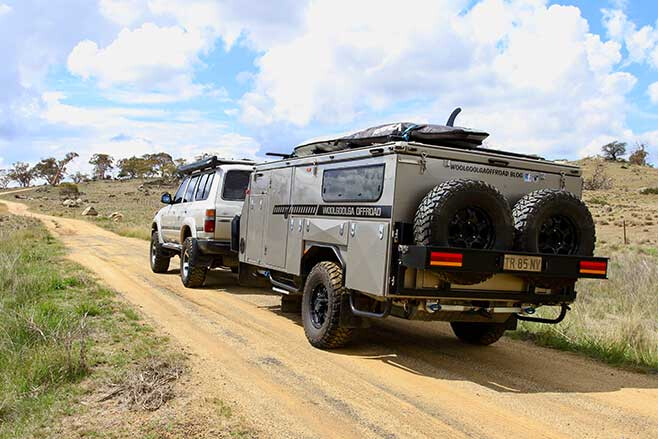
They aren’t all-terrains, so I’m always extra careful in the outback where gibber rocks tend to bust sidewalls, and with the open-tread pattern there’s always a chance of a large sharp rock or a foreign object punching a hole directly between the blocks – but, hey, that’s the chance you take with nearly any tyre. Interesting to note, though, that on the trailer the tyres are marked Made in China and the Kendas on the old girl are marked Made in Taiwan.
After 60,000km of heavy towing, exploring nearly all road types, giving them a caning in the bush, and doing the hard tracks through Tassie, up the Cape and all in between, what’s my verdict? Well, I’m suitably impressed overall and would probably get them again, but like any tyre just remember to rotate and run the right pressures to suit what you’re doing.
WHAT WE LIKE
The on- and off-road performance of these tyres has surprised me. On the road (tar) I run them at 45psi and they wear well, keep above the blocky nature muddies have, and seem to clear mud and rocks pretty well. Off-road they perform well in all conditions. I find my 80 seems secure on both the tar and off-road at full tyre pressures and they keep their balance well. Price is very attractive, too, at half the price of other brands on the market and I’m sure not half the tyre.
WHAT WE DON’T LIKE
There aren’t that many cons. Perhaps the biggest con is that you need to drop a stack of pressure for them to perform extremely well off-road. Other muddies may go down to a pressure around 22psi, with the Kenda muddies I soon learned to go straight to 16psi to bag them out. It’s a very open block design that is vulnerable to punctures.
A FEW years back there was a bloke named Isaac Newton. He was mainly famous for having an apple fall on his head, but he also said something that’s just a little bit relevant to the rig you’re looking at right now: “If I have seen further, it is by standing on the shoulders of giants.”
The concept is pretty simple: the things we’re capable of are built on the foundations laid before, a constant march towards more knowledge, or in Taylor Shaw’s case, towards one of the most bad-arse 4x4s in the country.
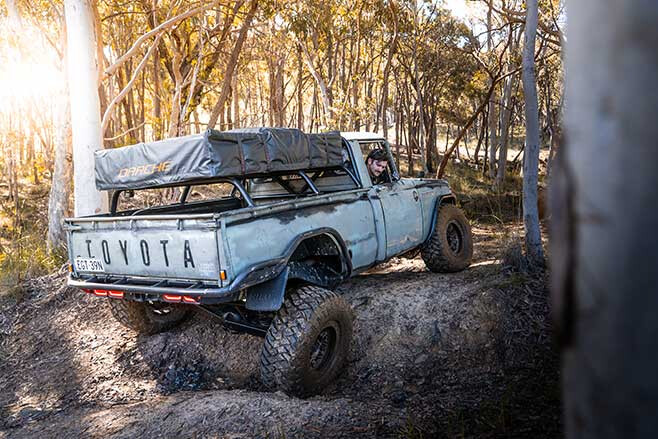
If that name rings a bell it’s because this is the third 4×4 of Taylor’s we’ve featured in as many years, each one teaching him skills along the way. Before us is the culmination of that journey so far, a bad-to-the-bone 1969 Toyota Lite Stout that’s like nothing we’ve ever seen before.
Like all good project cars, this one started with more than a little wheeling and dealing, and a whole lot of sitting around. Taylor is just the third owner, his uncle before him, his uncle’s neighbour before that signing the paperwork brand-new for just a couple of grand 52 years ago. The price when Taylor took ownership? A ride-on lawn mower in a handshake swap.
80 SERIES SWAP
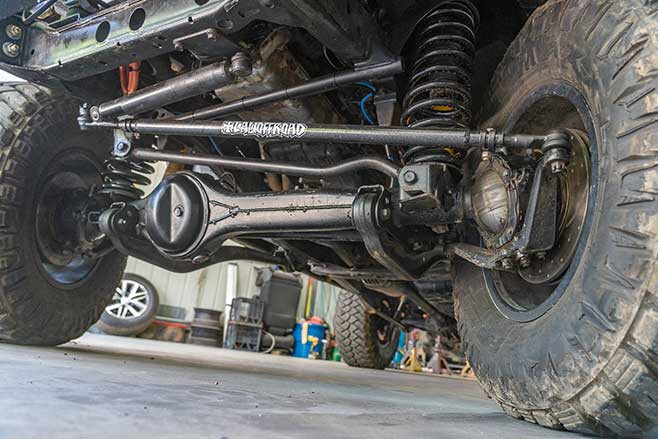
From there Taylor wheeled it into his shed, parked a petrol-powered 80 Series LandCruiser next to it, fired up the plasma cutter and proceeded to make one vehicle out of two. Taylor used the skills he’d learnt building his previous rigs to free both front and rear axles from the 80 Series chassis they were previously attached to, and graft their mounts on to the ’69 Stout frame.
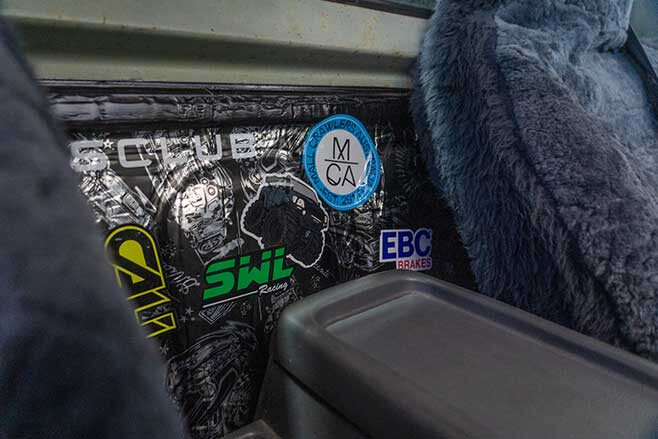
To keep it looking factory, Taylor carefully unpicked the OEM spring seats and shock mounts from the 80 frame as well and transferred them to the Stout frame. While the welder was fired up, a thick-walled brace was added along the back edge of the rear axle, helping it cope with the added stresses of low-range rock bouncing at low tyre pressures.
An ARB air compressor was also given the nod, air lines running along the Stout’s chassis rails plugging into air lockers front and rear giving maximum traction at the flick of a switch. While the housings were stripped back to bare metal, he ran through them wheelnut to wheelnut replacing every bearing, seal, bushing and brake component, helping the Stout drive better than it ever has.
SUSPENSION
Front and rear the ’Yota is running three-inch lifted coil springs from EF; although, as the weight is completely different to what they’re rated for and the coil mounts are sitting wherever Taylor felt they fitted best – and there’s no real reference point for ‘lift’ in a rig like this – exactly how high it’s sitting over stock is anyone’s guess.
The shocks are another mix-and-match type affair, as Taylor is still fine-tuning the beast he’s thrown in a hodge-podge of shocks that were in the donor 80 Series, as well as a couple that were kicking around his shed.
WHEELS & TYRES
Moving farther out and things get a little more big-ticket. On each corner are a set of lightweight aluminium wheels from USA-based Dirty Life. Punching in at 17×9 the ‘Roadkill’ wheels are a beadlock design allowing Taylor to drop down to single-digit pressures for maximum traction, something necessary with the lightweight body sitting above them.
The beadlock ring not only holds the bead tight but also serves as a sacrificial component protecting the wheel itself from serious rock rash. Each wheel is wrapped in a Maxxis MT772 RAZR muddy, with Taylor’s punching in at 315/70R17.
POWERTRAIN
With serious off-road work to be done, and a lethargic carburetted four-cylinder sitting under the bonnet, the choice was pretty clear for Taylor. Out came the engine crane and the 1FZ-FE sitting in the donor 80 Series was liberated from its previous home and lined up inside the engine bay of the Stout.
The 212hp six-cylinder, double overhead cam, four-litre mill is a significant upgrade with more than twice the power of the old 80hp motor, but that also meant significant work was required to make it fit.
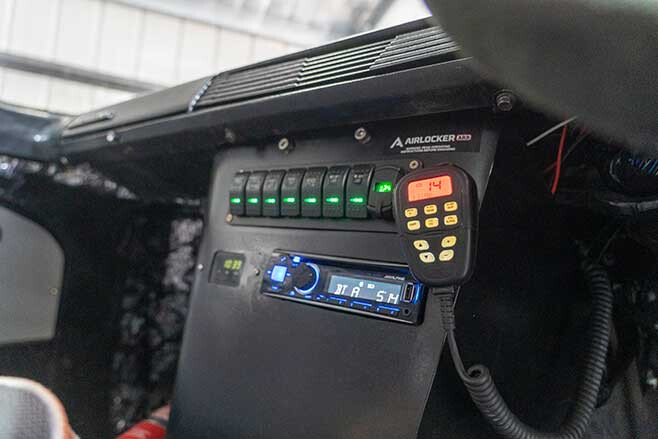
A custom alloy radiator up front mixed with thermo fans help save some space, while a tubed firewall at the back of the engine takes up the slack. Taylor pieced together an exhaust system to fit in the significantly smaller Stout that’s the same overall length as the original 80 Series system to keep noise down. It snakes around through two mufflers before punching out the side of the tub away from potential damage caused off-road.
The whole package is backed up by the standard five-speed cog-swapper and transfer case from the 80 Series, with the stock 80 driveshafts in place, too, as the wheelbase is the perfect match between the two vehicles.
BODY WORK
While the body looks largely stock from the outside, that’s testament more to the effort Taylor’s put in rather than luck. The paint up front is the same as it rolled off the production line 52 years ago, albeit with a few more dents and scrapes along the way. However, the tub is off a different vehicle and Taylor’s worked wizardry on the rattle cans to make the tub match the cab.
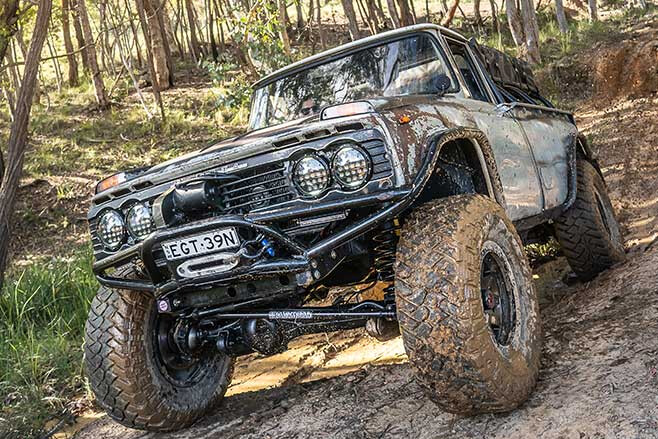
Eagle-eyed readers will spot black rattle can strips along the flanks where Taylor has sliced into the metal work and pumped it out a couple of inches either side, to help cover the wider track. The front end also copped bonnet pins; the alloy radiator sitting where the old bonnet latch sat; while the roof is the only part of the vehicle with neat paint, a lashing of white on the lid helping keep internal temperatures down.
BODY ARMOUR
Of course all that time and energy into the body couldn’t be thrown away at the first sight of a stray rock, so Taylor has heavily armoured up the lightweight rig from front to back. Up front, sitting tight to the body is a tube bar, housing the built Warn 8274 high-mount winch recessed back into the grille.
It flows rearwards into neat scrub rails over the front and rear wheels, linked by plate-steel rocker panels below the doors before finally tying into the rear tube bar. Taylor’s welder also pieced together the tub rack that holds the huge rooftop tent.
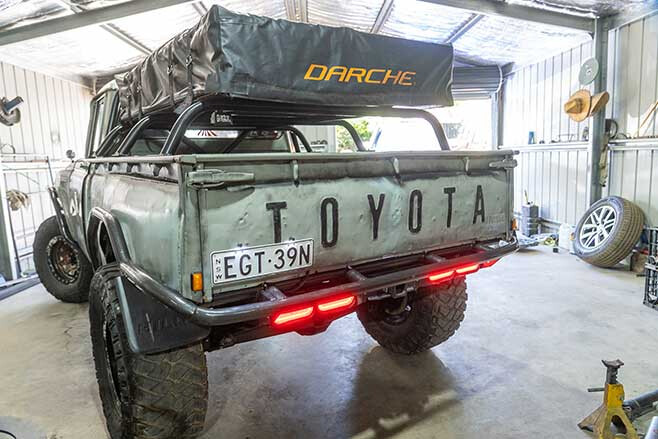
We can go on and on about the intricate details of Taylor’s latest wild ride, from the false floor in the tub to the sneaky air outlet hidden under the tie-down rails. The attention to detail in this build is insane and something that can only be appreciated in person.
For now though, the build is done, as done as can be, the lessons learnt, a new project in the pipeline, and some of the toughest tracks in the country about to come face-to-face with the toughest Stout in the country. One thing is for sure, though, if the Stout is any indication of just how far Taylor’s skills have grown in such a short time, there’s going to be some seriously insane builds rolling out of his shed in future.
BEADLOCKED WHEELS
IF you scratched your head a little at the comment about beadlocked wheels, fear not; they’re l something only one in 10,000 4WDs would run, but there is a reason they’re gaining popularity in the hardcore weekender crowd.
A GUIDE TO: Beadlock Wheels
In a typical arrangement, a tyre is held in place on the wheel by means of air pressure keeping a ‘bead’ or rib on the tyre’s edge pushed into a seat. Run too low a tyre pressure though, and that contact point weakens, allowing the wheel to spin inside the tyre, or the tyre to come off the wheel completely. Not something you’ll face driving to the local campsite, but if your wheels are bound up in the rocks and you’re in low range, it’s not uncommon.
A beadlock wheel fixes this issue by physically locking the tyre’s bead to the wheel. The locking ring sandwiching the tyre’s bead against the wheel’s external grooved surface, and the bolts on the outer edge squeezing it in place. It is an extra service point on the vehicle to monitor, but means single-digit tyre pressures are completely safe off-road.
LAND ROVER has officially added V8 muscle to its 2022 Defender family.
The supercharged 5.0-litre V8 – to be made available with both 90 and 110 models – delivers a stonking 386kW and 625Nm, making it the most powerful production Defender ever made.
It’s serious power even compared to the Defender Works V8 (298kW and 515Nm), which was created back in 2018 to celebrate Land Rover’s 70th anniversary – plus, 25 variants were produced for the 2021 Land Rover Experience at Eastnor Castle.
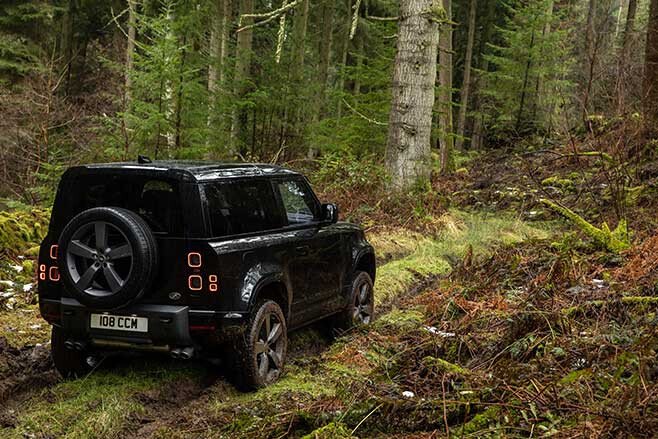
Land Rover has also tickled the Defender’s suspension and transmission, specifically tuning the V8 variant to be an even more agile and engaging experience. To this end, bespoke spring and damper rates, as well as a new electronic active rear diff (with yaw controller) are utilised.
A new Dynamic mode within the Terrain Response system is also unique to the V8 Defender.
OPINION: Here’s why the new Defender upsets purists
“The 5.0-litre V8 supercharged engine further enhances the unique character of the Defender. It sounds fantastic and delivers incredible performance – providing new levels of driver appeal,” said Iain Gray, Senior Manager, Powertrain Advanced Engineering, Jaguar Land Rover.
“Our engineering focus has been to optimise powertrain calibration for Defender to deliver both responsive on-road performance and fine control off-road – all without compromising Defender’s unstoppable all-terrain capability and wading ability.”
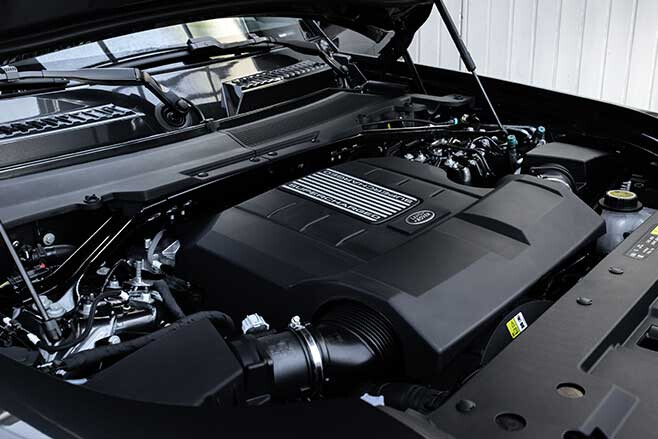
Time was also spent ensuring the visceral V8 soundtrack had maximum aural impact, with Land Rover tuning the induction and exhaust systems – flick it to Dynamic mode for full effect.
If you can’t hear it, bespoke exterior badging, quad exhausts and 22-inch alloys will help to distinguish it from its stablemates.
In addition, Land Rover also revealed a special edition Defender XS, to be slotted into the line-up above the SE models.
Also available in both 90 and 110 bodies, the XS is available exclusively with the P400 petrol engine and features a handful of style tweaks: bespoke lower cladding, lower wheel arches and 20-inch alloys.
REVIEW: 2021 Defender P400
2022 Land Rover Defender pricing for Australia
- 90 P300: $74,640
- 90 D200: $81,290
- 90 D250 S: $90,450
- 90 P300 S: $83,470
- 90 P400 SE: $100,450
- 90 P400 XS Edition: $110,640
- 90 P400 X: $141,480
- 90 P525 V8: $200,540
- 110 P300: $76,960
- 110 D250: $82,590
- 110 D250 S: $91,220
- 110 P400 S: $92,360
- 110 D300 SE: $ 96,780
- 110 P400 SE: $103,800
- 110 P400 XS Edition: $113,580
- 110 D300 X-Dynamic HSE: $113,980
- 110 P400 X-Dynamic HSE: $120,480
- 110 D300 X: $143,190
- 110 P400 X: $145,290
- 110 P525 V8: $205,500
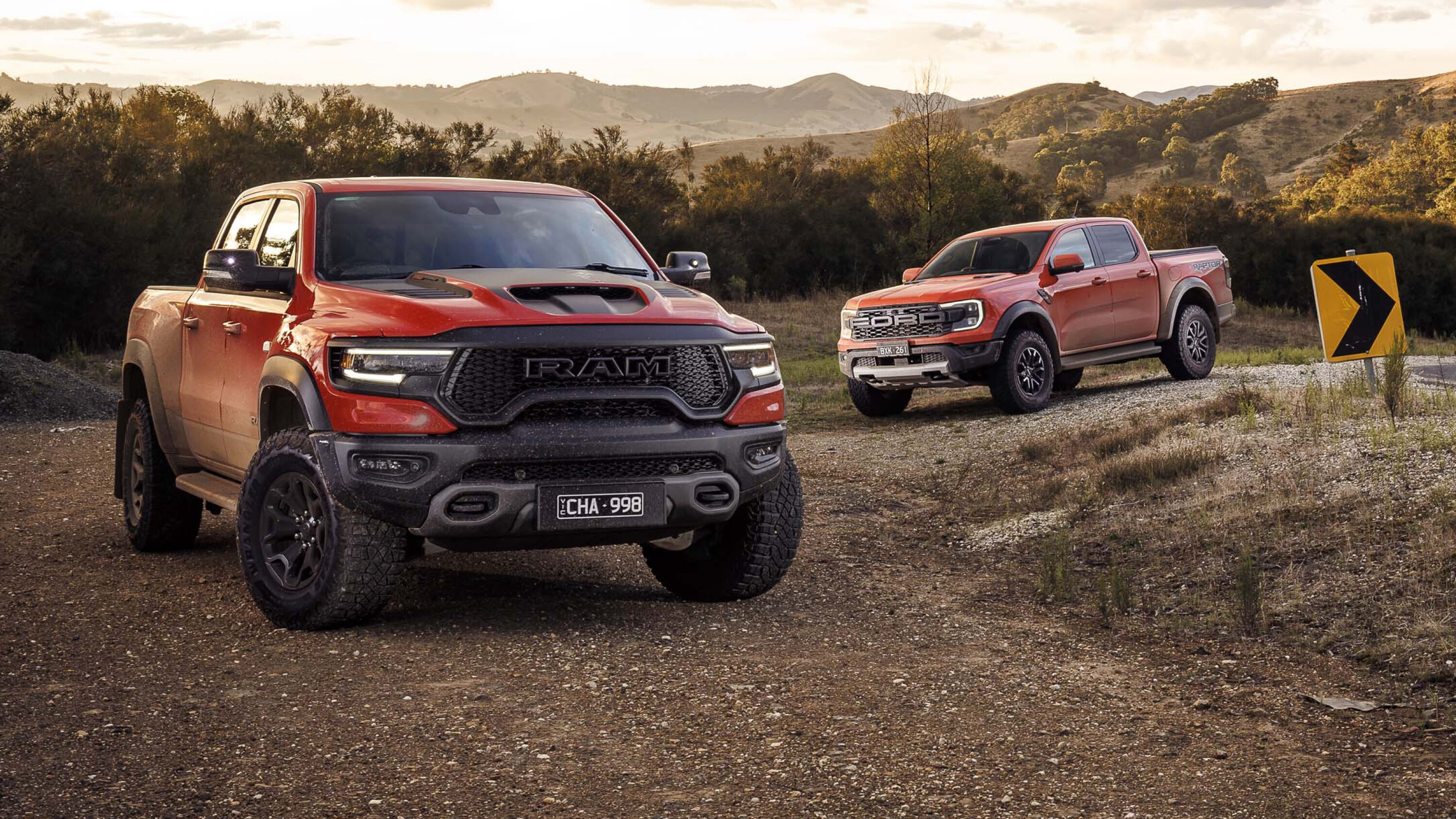
RAM Trucks USA dropped the covers on its HEMI-powered 1500 TRX in 2020, with RAM Australia saying at the time it was eager for it to arrive as the flagship offering of the 1500 range.
A local arrival now seems one step closer to reality, with expressions of interest for the 1500 TRX now available on the Ram Trucks Australia website – “We’re working closely with our colleagues in the US to bring the TRX to Australia in 2021,” it says.
By jotting down details, punters can now receive up-to-date information when it comes to light,
UPDATE, May 2023: Ram 1500 TRX v Ranger Raptor
?♂️ Australia’s most outrageous utes face off in a rock-spraying, fuel gargling celebration of excess. Strap in, it’s about to get noisy!
STORY CONTINUES: 1500 TRX launches in America
The HEMI V8 giving the TRX the title of “most powerful mass-produced truck in the world” is the venerable supercharged 6.2-litre offering rated at 523kW and 881Nm and said to help the TRX hit 60mph (97km/h) from zero in just 4.5 seconds. The HEMI runs through a TorqueFlite 8HP95 eight-speed automatic transmission.
Clean, cool air is fed into the V8 by a new dual-path induction system, which utilises two paths to draw in air – via the hood scoop, and via the front grille.
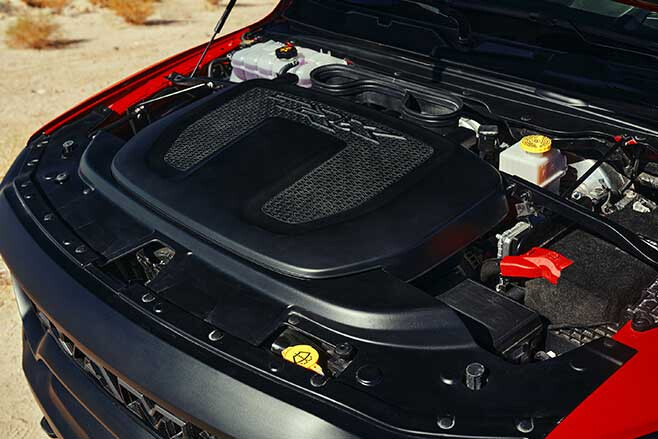
“The entire Ram TRX intake system is engineered to minimise power-robbing air restrictions while ensuring only clean, cool air reaches the engine,” the RAM Trucks USA press statement reads.
“Industry-standard testing shows that the Ram TRX far exceeds any competitor in the amount of time it can ingest dirty air and debris before performance is diminished.”
A wider stance than the rest of the 1500 range – eight inches wider, in fact – means the TRX had to undergo changes to compensate, including stretched composite flares and fender wells, a six-inch increase in track width, and wider wheels wrapped with 35-inch Goodyear Wrangler Territory 325/65/R18 All-Terrains. 18-inch beadlock-ready wheels are available.
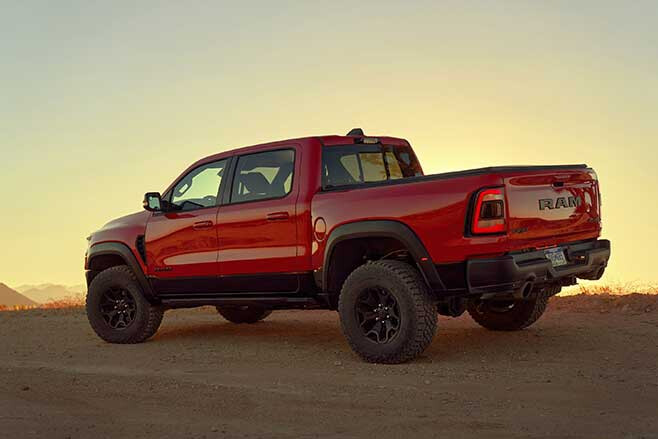
Even the RAM badging is bigger than its 1500 stablemates, with the TRX also receiving unique skid plates (five in total) and steel bumpers.
The Raptor-fighting TRX – built and tested (including rock-crawling in Moab, Utah) to handle tough off-road conditions with a smattering of high-strength steel and aluminium – runs an independent front suspension set-up with new front upper and lower control arms.
The rear suspension employs active damping, a five-link coil system and a Dana 60 rear axle, to increase rear wheel travel by more than 40 per cent compared to the rest of the 1500 line-up.
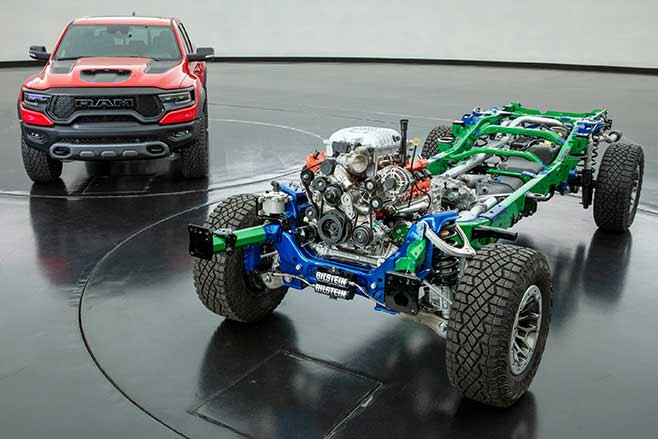
Utilising a BorgWarner 48-13 full-time active transfer case, the TRX features a low range of 2.64:1. The off-road specs are equally impressive, with an approach angle of 30.2 degrees, breakover angle of 21.9 degrees, departure angle of 23.5 degrees, a ground clearance of 11.8 inches (299.7mm), and a water-fording depth of 32 inches (812.8mm).
It also boasts a towing capacity of 8100lb (3674kg) and a 1310lb (594kg) payload capacity.
Three dynamic off-road modes are pre-configured into the software – Mud/Sand, Rock, and Baja – which modulates the four-wheel-drive system, throttle response, transmission, paddle shifters, suspension and steering, depending on the terrain.
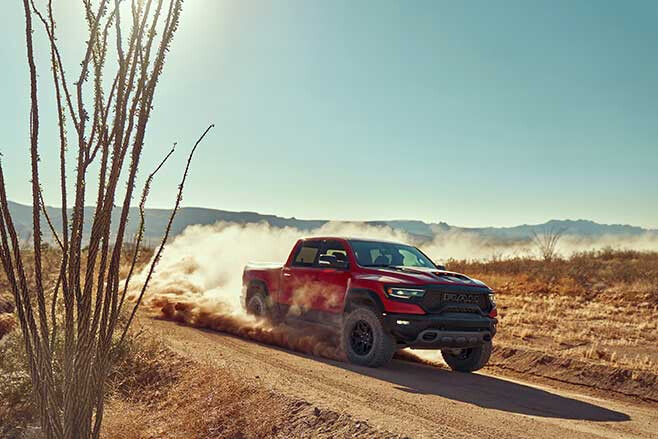
Another nifty feature of the TRX is Jump Detection, which senses when the vehicle is airborne and prevents driveline damage by modifying a number of driveline components including engine speed, torque, gear selection, transfer case torque split and damping rates.
The 1500 TRX is expected to arrive locally late in 2021, with an estimated $200K price tag.
I BOUGHT the iDrive for my 2005 Hilux around six months ago (they have since changed the name to Ultimate 9) and I paid full retail from my local 4WD shop. Right off the bat, I have been suitably impressed with its function and versatility.
First up, no, an iDrive doesn’t give you more power, it’s a throttle controller. It allows you to change the sensitivity of your throttle to suit a variety of terrain or conditions. No, you can’t just press your foot down farther or quicker to do the same thing either, as the vehicle’s computers are smarter than your foot – the iDrive acting as an adjustable interface between your foot and said computers.
SECOND OPINION: iDRIVE throttle controller
There are three modes: AC, E and U (Auto, Economy and Ultimate, with E and U having nine stages of adjustment). With the smallest amount of experimenting, you’ll quickly work out what works best for you.
Installation was a snap, literally! Unclip the throttle control cables from the accelerator pedal, clip in the iDrive, reattach the factory cables, and run the unit to your dash. If it takes you five minutes, I’d be surprised. Just make sure you wipe down your dash with Prepsol or something similar before sticking the unit in place.
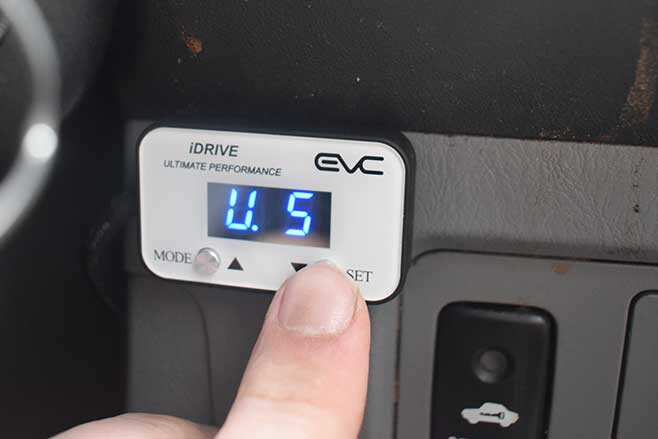
I found that after I did a custom dyno tune on the Hilux, the iDrive really woke it up. I played with the settings religiously, and found for on-road driving the sweet spot is U3 or U4 in Ultimate mode. The AC mode is automatic, and I can see the point of having the unit do all the work for you.
For me, it wasn’t hard to find the sweet spot and it has stayed on U3 or U4 ever since when on-road or sand driving.
Another huge benefit of the iDrive was using Eco Mode when off-road. This dulled down the throttle response, making the otherwise twitchy Hilux feel like an old Range Rover Classic – E5 seems to do the trick. It’s really handy, especially for those who reverse trailers and need a forgiving throttle. If your vehicle feels like its lagging down low when trying to take off from a set of lights and so on, the iDrive will help here, too, but again it doesn’t give you any more power.
For $265, I think it is money well spent. I hear people saying you shouldn’t need one if you have a custom engine tune, and I see that point. However, having this degree of versatility at your fingertips is pretty damn powerful.
Any negatives? Well, some people have told me they find the screen bright when driving at night, but this doesn’t bother me. And if you are creative in mounting the unit in a place that is accessible but out of the way, it’s a non-issue.
AVAILABLE FROM
RRP
$226
WE SAY
Easy install and provides the correct throttle response for most driving styles, situations and terrain.
TOYOTA’S Hilux ute was the top-selling car in Australia in 2020 in what was a tough year for the industry, but it didn’t have things all its own way. Ford’s Ranger beat it in the 4×4 sales ranks and we’re pretty certain that is a title Toyota would like back.
Along with highly publicised DPF issues, a problem for the Hilux was its lacklustre 2.8-litre engine, so the company addressed this and a few other smaller complaints late in the year. This saw sales numbers pick up again over the last couple of months in 2020.
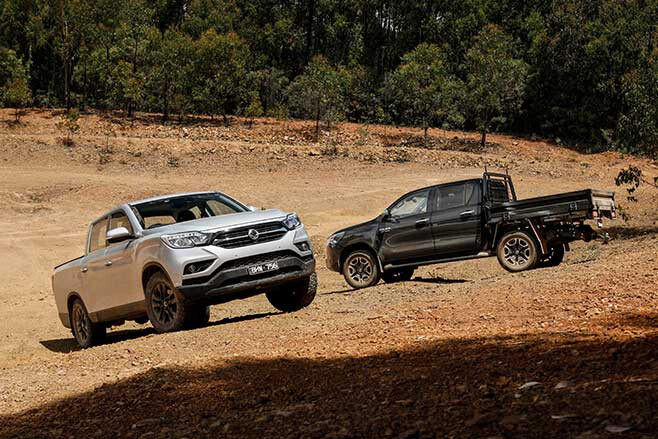
SsangYong can only dream about being anywhere near the pointy end of the new-car sales charts, but we’ve been mighty impressed with the comfort and performance of the Musso XLV Ultimate we had on long-term loan through the second half of the year. At more than $18,000 cheaper than the Hilux SR5, the Musso represents eye-opening value too.
With these factors in mind we took our long-termer out for a day in the woods with the updated SR5 auto, to see how they stack up and if the changes made by Toyota are enough to fix the complaints surrounding it.
TOYOTA HILUX SR5
THE updated Toyota Hilux lobbed in to showrooms in September and brought with it a new front-end design, fresh tail-lights at the back, interior upgrades, as well as much needed tweaks under the bonnet.
Toyota might not build any cars in Australia anymore but the company’s Australian designers and engineers played a big part in both the styling and mechanical changes for the 2021 updates, and it seems that it was work well done.
POWERTRAIN & PERFORMANCE
THE previous tune of Toyota’s 1GD engine had about as much life in it as 2020 a New Year’s party and felt totally outgunned by many of its competitors. Its claimed 130kW and 450Nm felt optimistic at best as it struggled to inspire with its performance.
The updated engine promises 150kW and 500Nm; matching the class-leading figures of any other four-cylinder diesel in the one-tonne ute segment. To get these numbers while improving fuel economy at the same time, the engineers equipped the engine with a new common-rail fuel system and a bigger, ball-bearing turbocharger, among other changes. A more rigid cylinder block is said to improve the NVH levels.
The changes have worked, giving Lazarus-like new life to the 1GD. There’s a noticeable improvement in acceleration right through the rev-range, but particularly in the mid-range where you use it most.
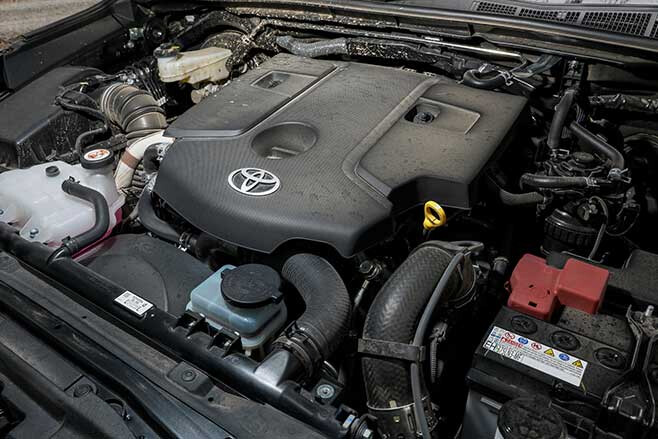
Toyota claims that maximum 500Nm of torque is now available from 1600 to 2800rpm when backed by the automatic transmission, as our test car was. Six-speed manual-equipped Hiluxes don’t get the same increase in torque and have to make do with 420Nm, which is on tap from 1400 to 3400rpm. There’s even a bit of turbo whistle evident when driving the Hilux now, which we don’t recall noticing in the past.
The six-speed automatic transmission has also been tweaked to match the engine’s performance, while the ‘Power’ mode button not only holds gears longer, it sharpens up the throttle response in much the same way as aftermarket throttle controllers do.
The changes to the engine and transmission have made the 2021 Hilux engaging to drive, something you could have never said about those with the earlier 1GD engine. It’s harder to discern any improvement in the engine’s NVH and it is still quite vocal when you put your foot down to appreciate the new-found performance.
ON-ROAD RIDE & HANDLING
THIS eighth generation of Hilux has been criticised since launch as having a harsh and choppy ride when unladen and, while this was warranted, it countered this with its ability with a heavy load on board – and isn’t this what a ute should be able to do?
Toyota has revised the spring, shock absorber and suspension bushes in 4×4 Hiluxes to improve the ride and handling; including the use of longer leaf springs to give a more supple ride without sacrificing load-carrying ability. The springs have also been moved outboard to improve handling stability.
Our test car was a cab-chassis model fitted with the factory steel tray and, driving it unladen, it was difficult to discern any improvement in ride and handling. This vehicle did feel softer and had better ride quality than the 2021 Rogue model we drove a couple of weeks before this SR5.
The Hilux handles as you would expect a workhorse ute to handle. The load-bearing rear end is stiff and a bit choppy, while the front end is soft and prone to wallow and pitch. The hydraulically assisted steering remains well-weighted with good feel, despite the changes made to the 2021 model, to make it lighter at low speeds and ease wheel effort when parking.
OFF-ROAD
ALL the things you might criticise a Hilux for on-road disappear when you leave the tar behind. The soft front suspension soaks up bumps and the cabin is well-isolated from road noise. Once you get off track and in to low range, the rear-end works wonderfully with better than average articulation from the leaf-sprung live axle. Water fording depth is quoted at 700mm and the engine air intake picks up from inside the fender.
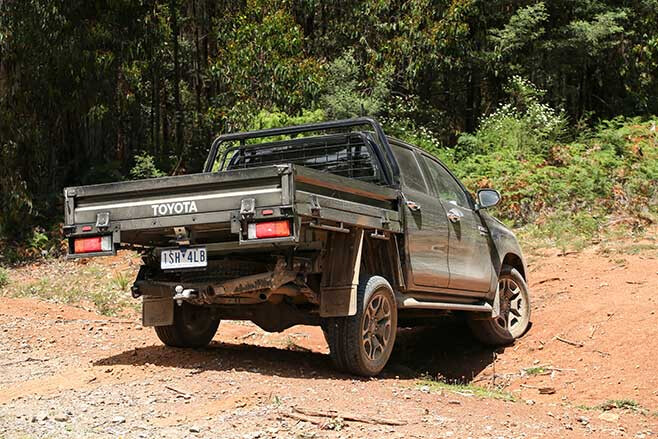
The calibration of the electronic traction control has always been excellent in the eighth-gen Hilux, and that hasn’t changed with the updated model. It is so good you’ll rarely need to use the driver switchable rear differential lock.
CABIN & ACCOMMODATION
FORGETTING about any other updates, the new Hilux is better than the previous model because Toyota has gone back to having knobs/dials for the audio system’s volume and station selection, instead of annoying buttons. This has been a personal gripe of mine, and the functionality is so much better now with fast-acting and tactile dials back on the radio fascia. Winning!
That audio system has a new eight-inch display (up from seven) and Apple CarPlay and Android Auto are now standard inclusions. The gauge binnacle is also new, with a fresh look on the dials and a digital information display in between the speedo and tachometer.
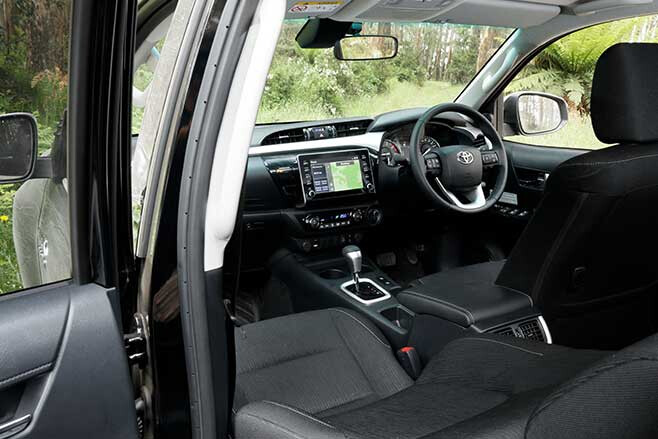
The front seats remain comfortable and accommodating and there’s good vision from the driver’s seat. On a side note, the JBL sound system that is fitted exclusively in the Hilux Rogue is a step above that of any in the lower-spec models and one of the better ones offered in 4×4 utes. That’s not saying much because across the segment they are all pretty average for sound quality.
4X4 HISTORY: 50 years of Hilux
The Hilux has all the common safety features including AEB, lane departure warnings, trailer sway control, pedestrian sensing pre-collision warning and lane keeping. Interestingly, as the Hilux retains hydraulic power steering, it can’t self-steer in the same way most other cars do to keep you in the lane. The Toyota steering assist is done through the brakes and, as such, is less intrusive than most of the similar systems that can pull the steering from your hands. The lane departure warning chime is also easily turned off via a button on the steering wheel.
The SR5 normally has a rear camera as well as parking sensors, but as this vehicle was fitted with a tray it misses out on these, and it’s surprising how often you now look to the AV screen for vision as well as the mirrors when reversing. Other ute manufacturers retain their reversing camera when fitted with a factory tray. A genuine Toyota accessories reversing camera for the tray is available as an optional extra.
PRACTICALITIES
RECENT problems aside, Toyota has been churning out 4×4 Hiluxes since 1978, so it knows a thing or two about building a working-class off-road ute. Things like the way it has retained hydraulic power steering for durability and the way the rear suspension works so well, comes from 40-plus years of evolution.
Even this high-spec SR5 double-cab spec has more than one-tonne payload, towing capacity is the 3500kg standard, there’s 700mm wading depth, a simple 4×4 system, excellent ETC and a host of Australian-designed genuine Toyota accessories. Consider the massive following from the aftermarket accessories industry and you can tailor a Hilux to do just about anything you need it to.
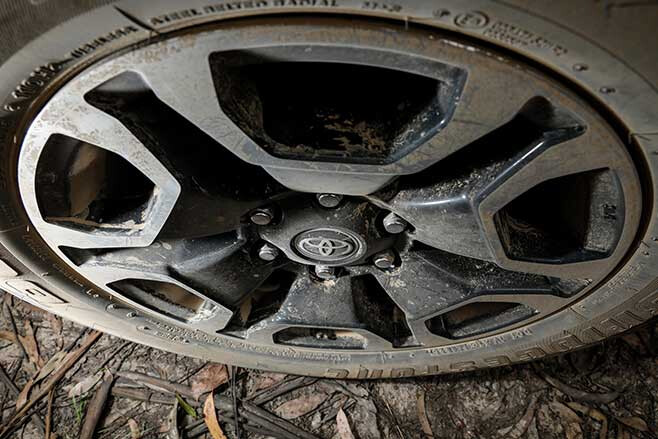
The SR5 rides on a 265/60-R18 tyre, which is fast becoming the standard size for this style of ute, so you shouldn’t have any troubles finding replacement or alternative tyres for it.
The genuine Toyota tray fitted to our test car adds a lot of practicality for load carrying, but the more popular ute tub holds plenty, even if its four tie-down points are mounted too high on the sidewalls.
With 18 models in the Hilux 4×4 range there should be a variant in there for everyone, so you can see why it remains so popular with buyers.
SSANYONG MUSSO XLV ULTIMATE
SSANGYONG mightn’t be the first name you think of when shopping for a 4×4 ute, but it has been selling 4x4s in Australia for more than 25 years and, like other South Korean auto brands, the products have come a long way in that time.
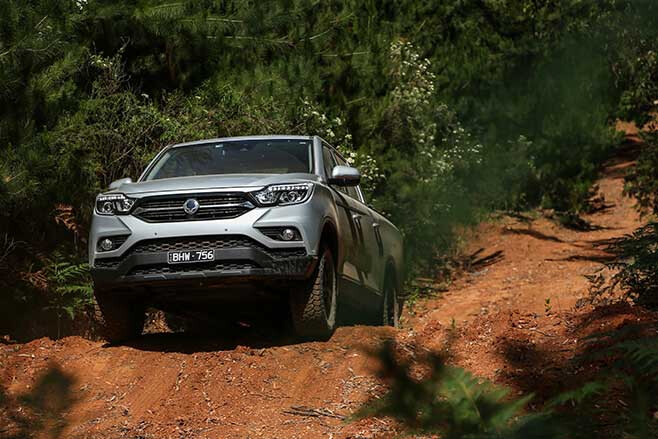
It’s been a turbulent time for the brand over the years with partnerships and owners including Mercedes-Benz, Daewoo, SAIC and more recently Mahindra throughout that time. Even as this is written, SsangYong is battling to pull itself out of receivership in its home country after Mahindra seeks to offload the brand.
Yet the latest Musso ute is a surprise package and well-worth any buyer’s consideration. It is available in two wheelbases and the longer XLV is what we have here in Ultimate, the middle of three available specification levels. The Musso XLV Ultimate starts at just $39,990, but there’s a lot more going for it than just being a value package.
POWERTRAIN & PERFORMANCE
MUSSO is Korean for Rhino, and the powerplant is a grunty, little 2.2L diesel engine that makes a modest 133kW and 420Nm. That’s a way off the class leaders with 500Nm but it gets along alright, even if you need to plan those overtaking moves very well.
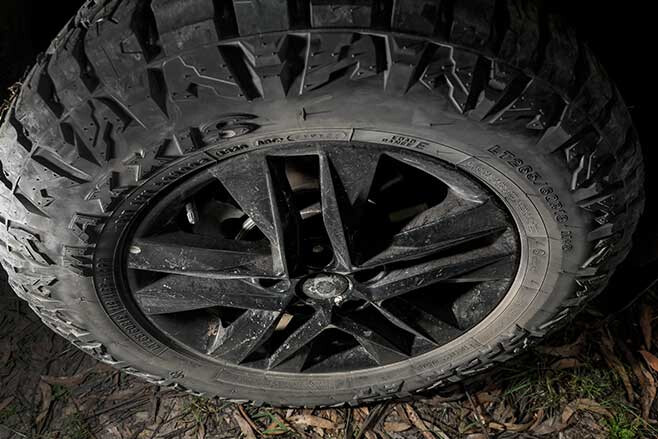
What it lacks in performance it makes up for in refinement, and the Musso is arguably the quietest four-cylinder diesel ute in the segment; surprising some passengers who can’t believe it’s a diesel engine. It’s also pretty good on fuel use, bettering the Hilux on this test recording 11.85L/100km. It’s worth noting our Musso is fitted with aggressive LT all-terrain tyres that do nothing for fuel savings.
The engine is backed by a six-speed automatic transmission from Aisin, which is probably related to the one in the Toyota. It features ‘Power’ and ‘Eco’ modes, the former sharpens up the performance a bit, while full-manual control is via a toggle on the shift handle.
The 4×4 system is part-time with high and low range, and the rear differential has an effective auto-locking function.
ON-ROAD RIDE & HANDLING
SSANGYONG Australia teamed up with Ironman 4×4 to locally develop an approved suspension kit to improve off-road and towing performance, and this Musso is fitted with it. The kit is available from the dealer at the time of vehicle purchase or retrospectively and is covered by a factory seven-year warranty. Kudos to SsangYong for giving buyers this option.
Also credit for offering a choice of leaf or coil rear-suspension systems and equipping the Musso with four-wheel disc brakes, something you won’t find on many other new 4×4 utes. The XLV Ultimate has the all-coil configuration and, with the Ironman kit, it’s a well-sorted package.
The Musso rides firm and feels a bit jittery over small high-frequency bumps, but it’s not uncomfortable. More noticeable is how well-controlled the suspension is, something that only comes from quality aftermarket dampeners and very few OE setups will offer. The Musso steers and corners flat with that confidence-inspiring control.
OFF-ROAD
THAT rough-road jitteriness is amplified on gravel and particularly corrugated roads, prompting the driver to lower the tyre pressures to improve the ride for extended gravel and off-road driving. The superior control of the suspension comes to the fore again in these conditions and in low-speed off-road use.
The coil rear suspension doesn’t offer the axle articulation of the Toyota’s leaf-sprung rear nor is the electronic traction control as fast-reacting or effective. But when it hikes a tyre and breaks traction you quickly feel the rear diff lock kick in to maintain forward progress. Yes, this is slower reacting than a well-calibrated ETC system and you feel the momentum loss before the differential locks up, but, once it does, it is very effective.
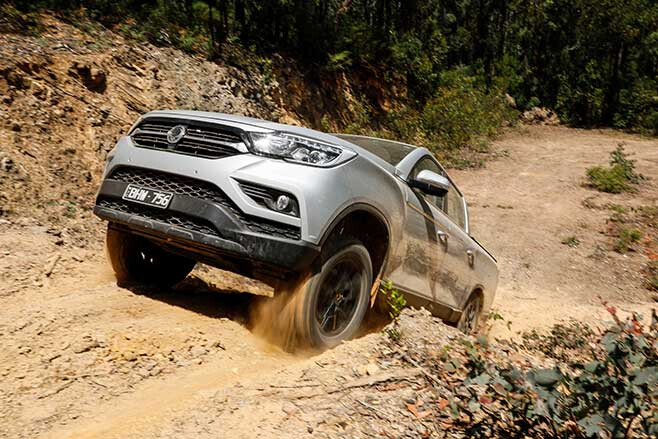
The off-road suspension kit raises the Musso some 40mm over stock, but it is still a low vehicle with plenty of overhang at the rear due to the XLV’s 300mm longer tray than the short wheelbase Musso. The XLV is 110mm longer in the wheelbase than a stock Musso, so the belly is also susceptible to scraping over erosion mounds. This car is fitted with dealer optional underbody protection, which again was developed by Ironman 4×4.
CABIN & ACCOMMODATION
The most appreciated feature of the Musso is its cabin, both for its size and features. Climb aboard after being in any other double-cab ute and you instantly feel the extra width of the cabin with plenty of shoulder room in both the front and back seats. Short of an American pickup, only the VW Amarok comes close to the feeling of space inside a Musso. The long dashboard accentuates the cabin and its large eight-inch AV screen includes Apple CarPlay and AA for all your mapping and entertainment needs.
There are three specification grades for the Musso XLV: ELX, Ultimate (as we have here) and the top-spec Ultimate+. The mid-spec Ultimate gets heated and cooled faux-leather seats for an instant feel of luxury, but as you dig deeper you find they are manually adjustable and the air-con is manual with no auto climate control. It’s now you remember this is a $39,990 drive-away vehicle.
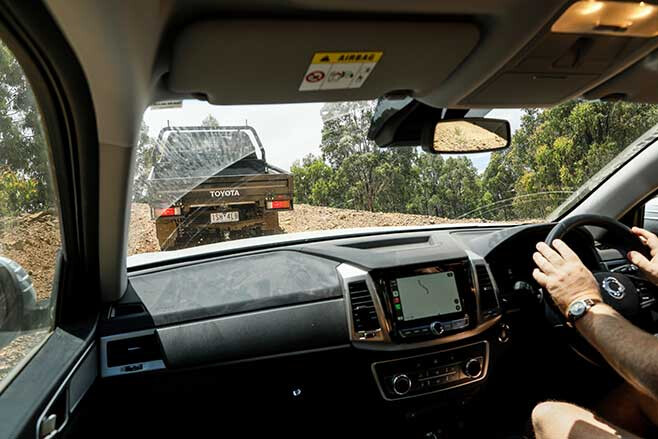
The driver’s aids/safety package is comprehensive, including AEB with front collision warning, lane departure warnings, radar cruiser control, blind spot indicator and rear cross traffic alert. That last feature is one we particularly like and you can’t get on the Hilux.
Also worthy of note is the excellent tyre-pressure monitoring system (TPMS) displayed in the information menu in the dash binnacle. It displays individual pressures for each tyre, gives warnings for both high and low pressure, and randomly displays the TPMS to keep the driver aware of a vital function.
PRACTICALITIES
THE coil-sprung Musso XLV is limited to an 880kg payload, but the leaf-spring models are 1025kg, and both have 3500kg braked towing capacity. The XLV’s tub is one of the biggest in the business and swallows a heap of gear. There are four tie-down points inside plus a 12-volt outlet. The Musso XLV Ultimate’s tyres are also the popular 265/60-R18 size.
The engine air inlet is high on the forward edge of the radiator support panel so it’s not ideal for water crossing and the 350mm fording depth requires care; while the rear-view camera and parking sensors help with negotiating the big ute on tight tracks.
As a relatively small seller, the Musso isn’t overly supported by aftermarket kit, but SsangYong has partnered with some of the biggest brands such as Ironman 4×4, Carryboy canopies and Rola roof racks to offer a comprehensive range of factory-backed gear.
SUMMARY
THIS might seem like an odd comparison where we have what is one of the most popular cars in the country with decades of evolution and sales behind it, lined up against a virtual minion in the 4×4 ute segment. However, they both compete in the same category and each of them has their plusses and negatives; yet the clincher is one of them is around $18K cheaper to drive out of the dealership.
The Musso XLV comes in swinging with its affordable pricing, seven-year factory warranty and roadside assistance, comprehensive safety kit, large cabin and cargo tub, well-sorted optional suspension package, and premium interior feel; but it is let down by its modest engine performance, limited off-road ability and a ride quality that could be better.
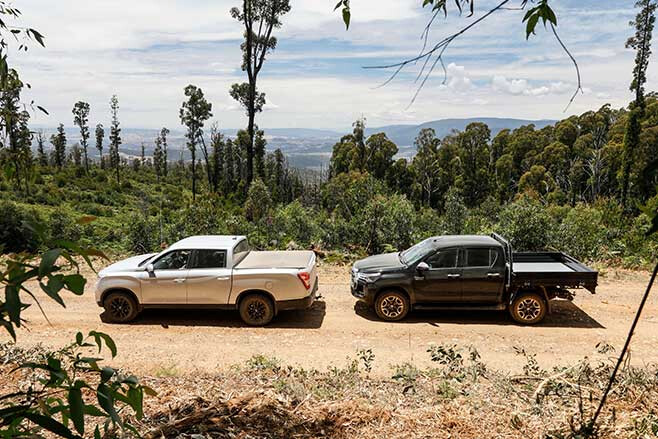
The Hilux, as always, has its well-earned reputation of dependability, quality and workhorse capability, and there’s nothing to say this has been compromised. Toyota has taken note of recent criticisms and addressed them with a massive improvement in engine performance, as well as an updated and improved interior fit-out. Toyota does claim to have addressed its DPF issues as well, however it’s too early to tell how successful that fix has been.
The question remains, is that 40-plus years of 4×4 Hilux development worth the considerable amount of extra money?
If you were looking for a 4×4 ute to equip for an off-road adventure around the country, we’d say it would be money well spent choosing the Toyota. However, for general family use around town and the occasional bush getaway, it is very hard to look past the SsangYong with its bigger cabin, extra equipment, longer warranty and more affordable purchase price.
TOYOTA HILUX SR5 SPECS
ENGINE: 2.8-litre 4-cyl turbo diesel MAX POWER: 150kW at 3400rpm MAX TORQUE: 500Nm from 1600 to 2800rpm TRANSMISSION: 6-speed automatic TRANSFER CASE: Part-time 4×4 w/ high/low range STEERING: Hydraulic-assist rack and pinion FRONT SUSPENSION: IFS w/ upper and lower control arms, coil springs REAR SUSPENSION: Live axle, leaf springs, stabiliser bar TYRES: 265/60-R18 KERB WEIGHT: 2093kg PAYLOAD: 1105kg (cab-chassis) TOWING CAPACITY: 3500kg GVM: 3050kg GCM: 5850kg FUEL TANK CAPACITY: 80L ADR FUEL USE: 7.9L/100km TEST FUEL USE: 12.96L/100km APPROACH ANGLE: 29° RAMPOVER ANGLE: n/a DEPARTURE ANGLE: 27° WADING DEPTH: 700mm GROUND CLEARANCE: 216mm
SSANYONG MUSSO XLV ULTIMATE SPECS
ENGINE: 2.2-litre 4-cyl turbo diesel MAX POWER: 133kW at 4000rpm MAX TORQUE: 420Nm at 1400-2800rpm TRANSMISSION: 6-speed auto CRAWL RATIO: 34.95:1 4X4 SYSTEM: Dual-range part-time FRONT SUSPENSION: IFS w/ upper and lower control arms, coil springs REAR SUSPENSION: Live axle, coil springs, stabiliser bar TYRES: 265/60-R18 KERB WEIGHT: 2160kg GVM: 2980kg PAYLOAD: 880kg TOWING CAPACITY: 3500kg GCM: 6130kg FUEL TANK CAPACITY: 75L ADR FUEL CLAIM: 8.2L/100km TEST FUEL USE: 11.85L/100km APPROACH ANGLE: 21.5° RAMPOVER ANGLE: 21.3° DEPARTURE ANGLE: 27.1° GROUND CLEARANCE: n/a WADING DEPTH: 350mm
Missing the latest 4X4 Australia content in your Facebook feed? There are plenty of other ways to stay in touch with us.
Subscribe to the world’s best 4×4 magazine and save up to 39% off the retail price: 4×4.subscription.com.au
Bookmark our website, which is updated daily with news, reviews, tests and more: www.4x4australia.com.au
Sign up for our weekly newsletter: www.whichcar.com.au/4x4australia-email
Find us on Insta: www.instagram.com/4x4australiamag/
Check out our YouTube channel, which we’re ramping up in a big way: http://youtube.com/4x4Australia
Facebook might have had its day, but we’re 40 years strong and not going anywhere.
THIS is your last chance to win a Patriot X3 camper trailer, with the competition closing on February 28, 2021.
Jeep customers who purchase at least $100 worth of genuine Jeep accessories – or service their car – at an official Jeep dealership will go into the draw to win a brand-new Patriot X3 camper trailer worth $69,990.
Swipe the credit in one transaction for more than $1000 worth of goodies and your entries in the draw will double.
Released in Australia in 2020, the X3 is based on the chassis and suspension of the previous-gen X1 but adds a smorgasbord of new materials and luxuries, to ensure you’re the envy of other campers.
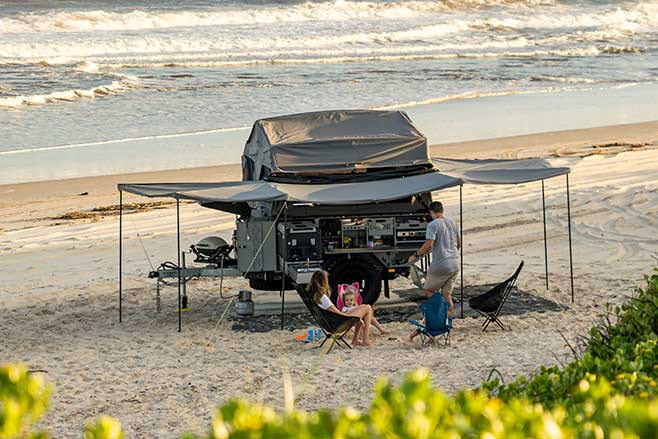
The X3 measures 3.75m long, 1.85m wide and can be expanded to offer approximately 30m² of indoor and outdoor coverage. It has a tare weight of 1120kg, 500mm of ground clearance, and a 40° departure angle.
Key features include a gel-top double mattress with an addition pull-out bed; a massive kitchen space fitted with a 75L dual-zone fridge freezer; a diesel heating system; twin water tanks; and a power system that comprises a 1500W inverter system and two 150Ahr AGM gel batteries.
“We’re delighted to align with a brand that believes in exploring and getting off the grid just as much as we do,” said Justin Montesalvo, Managing Director of Patriot Campers. ” I have no doubt that the X3 is going to make one lucky winner truly unstoppable off-road, thanks to their Jeep and their new Patriot.”
The competition closes on February 28, 2021, with the winner announced on March 16, 2021.
BEING the second largest sand island in the world, Minjerribah, as it is known by the traditional owners, the Quandamooka people, lies within Moreton Bay and is situated off the coast of Redland City, southeast of Brisbane. It’s colloquially known as ‘Straddie’.
A storm in the late 19th century caused the island to be split into two, forming North and South Stradbroke Islands, which are separated by the Jumpinpin Channel.
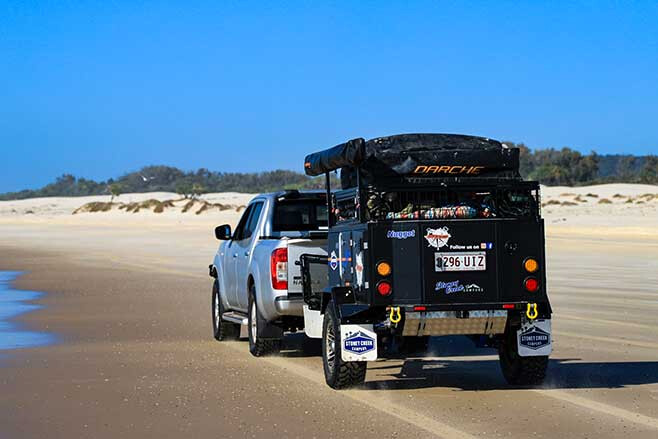
Main Beach runs down the east coast of the island, for 32km of beach frontage and an abundance of foreshore campsites to choose from. Who can’t pass up the opportunity to have pristine waterfront accommodation?

The campsites on Main Beach are scattered all along the dunes and you can find them by entering any of the track entrances directly from the beach. These are clearly sign written, and the choice is yours when it comes to selecting a site. There are heaps to choose from, either right on the dunes or farther back out of the wind, and keep an eye out for the perfect spot to erect a hammock for those lazy days.
BRISBANE ESCAPES: North Straddie
Common sense also prevails when beach driving, like anywhere really: let the tyres down, have recovery gear on hand, and don’t drive on the beach two hours either side of high tide.
For the keen fisherman, the best spot to wet a line is right down the southern end of Main Beach at a spot called Jumpinpin Channel, or ‘The Pin’ to locals. This bar is every boaties ticket to the open waters of Moreton Bay; although, it is driven by high tides and strong currents and isn’t the best spot for swimming – for land-based fishing from the beach, though, this is the spot you need to be.
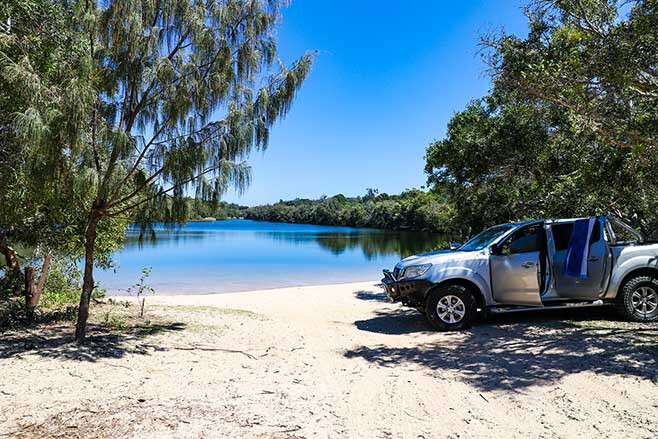
With a clear view south, you can see the buildings on the Gold Coast and it’s the ultimate spot to crack a cold one, wet a line, catch some dinner and watch the sun go down … there really isn’t anything more you could ask for.
After watching the sunset on the point, head back to camp and get that fire cranking and whack a casserole in the crock pot. The darkness lit up by the flames of the fire, eating cooked marshmallows off a stick and the sound of the waves crashing on the beach with the salty air surrounding you is everyone’s explanation of serenity.
Nothing beats going to sleep to the sound of the waves … well maybe one thing … if you’re an early riser, you will be in awe every morning as you catch the sunrise over the water. It certainly is a showstopper and be sure not to miss a single sunrise, it’s Mother Nature at her best.
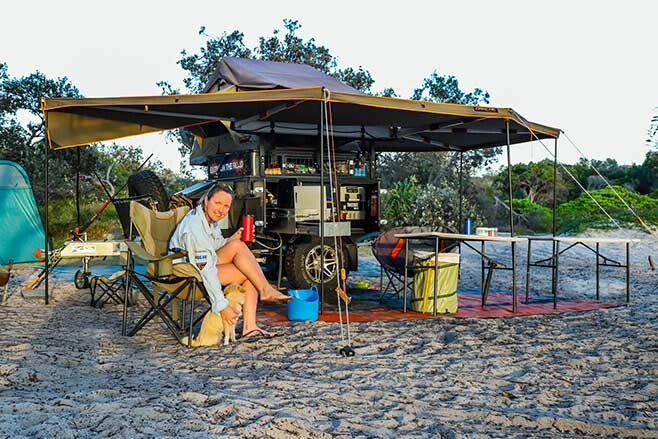
There are other camping areas on the island to choose from as well and they are situated on the northern part of the island. Flinders Beach offers sheltered, dog-friendly, beachfront-facilitated campsites, plus camping areas available at Amity Point, Cylinder Beach and Home Beach, to name a few.
QLD TRIP: Moreton & Straddie
For those that aren’t keen on roughing it, there are other accommodation options at Adder Rock Campground, which offers powered and unpowered caravan, trailer and tent sites, as well as glamping eco tents and cabins.
There are two townships on the island which have shops, bars, restaurants and cafes, providing options for restocking of supplies, fuel, water and air. You’ll find these at Dunwich and Point Lookout.
POINT LOOKOUT
THE North Gorge Walk at Point Lookout is a must-do when you visit Straddie, it provides superb views out to sea and a great way to spot some whales between June to October, so don’t forget the camera!
While out and about, you can’t go past Brown Lake. Known for its colour which is caused by the tannin in the water, Brown Lake is a freshwater lake with picnic areas that make for a good day trip and a great spot for lunch and a dip.
TOP 5: Best beach drives in Oz
Not far from Brown Lake, there is Blue Lake, known as ‘Kaboora’ by the Quandamooka people, meaning ‘deep silent pool’. There’s a 5.2km walking track to get to the lake, so bring your walking shoes as you’ll have to earn the swim at this one.
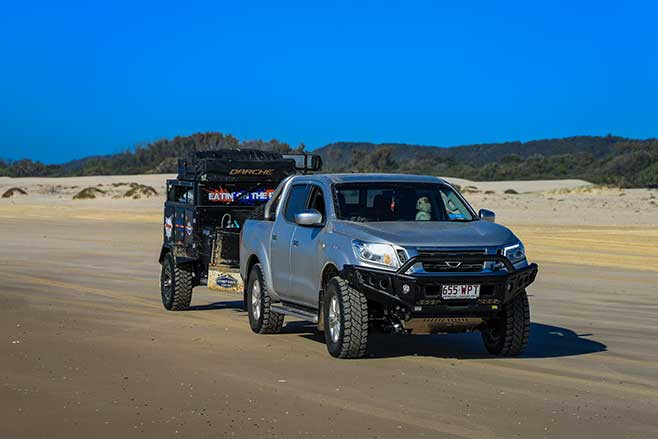
Straddie is truly spectacular, and while you have to do a little exploration to be able to see the special spots, there is an abundance of things to see and do that will keep the whole family entertained. Bring the kids, bring the dog, pack the fourbie and hop on that ferry, you don’t know what you’re missing out on, and once you make it to Straddie, you’ll be coming back for more.
There is so much to see and do that you may not get a chance to do it all in one trip, so it makes for a perfect excuse to return.
WHERE
Main Beach, North Stradbroke Island
CAMPING
Unfacilitated beachfront camping on the dunes.
CONTACTS & INFORMATION
Stradbroke Ferries: www.sealinkseq.com.au Camping: www.minjerribahcamping.com.au
RESTRICTIONS & PERMITS
Vehicle access permits are required to drive on the beach. Camping Permits are also required.