
HEAD on over to the 4X4 Australia Facebook page and send us a photo of your 4×4. You could win a Wurth under-bonnet LED valued at $249.
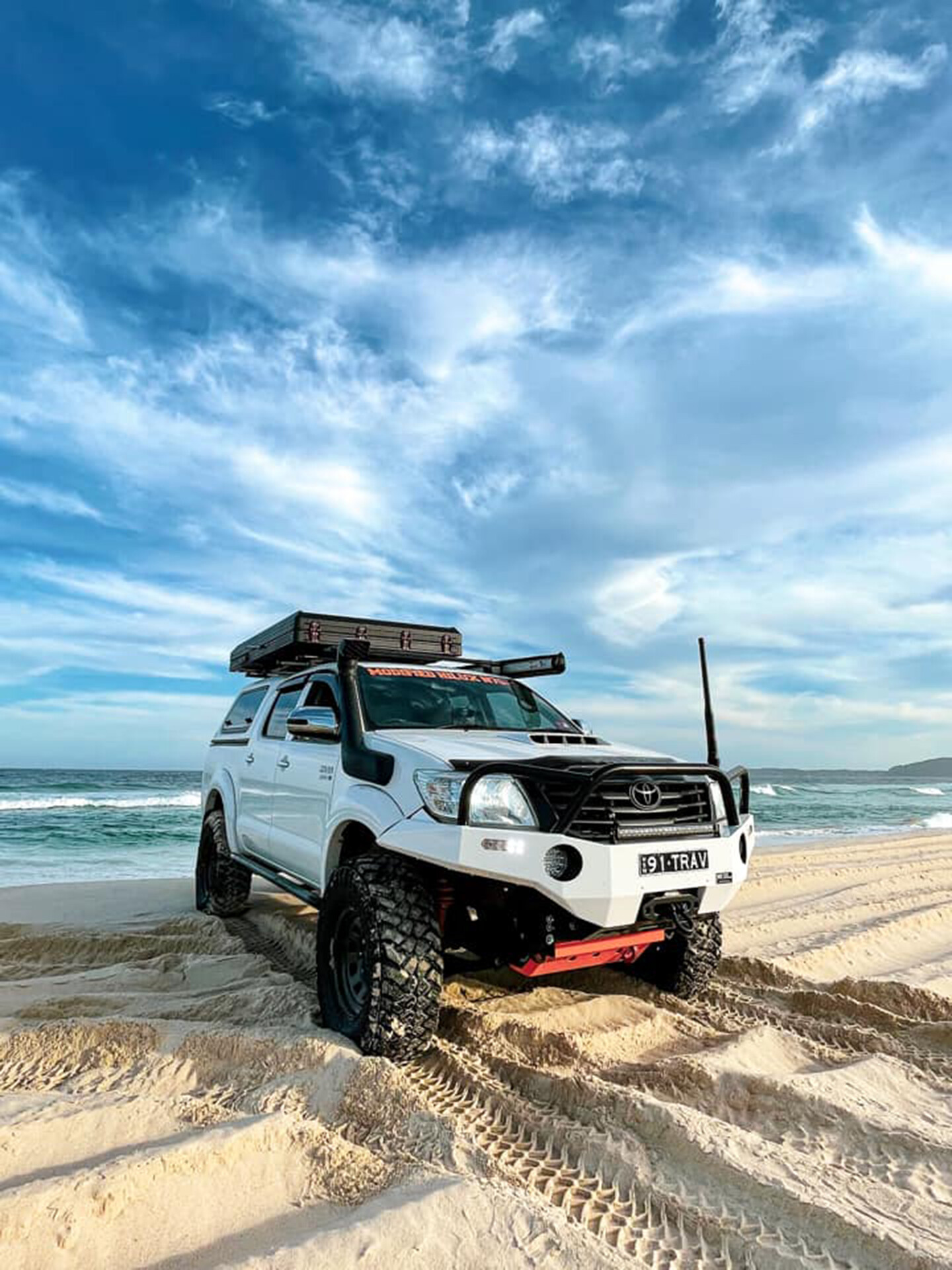
2011 SR5 HILUX
I bought it completely stock, and I’ve added a lot of mods: SEQ muzz bar; 33-inch tyres; 3-inch lift, diff drop and UCAs; LED light bars; long-range fuel tank; Bush Company Alpha RTT; full canopy setup including fridge/freezer, drawer system and drop slide; 12V setup; Phat Bars bash plates and rock sliders; diff breathers; EGT and boost gauges; and a diesel pre-filter and catch can. It has taken us to some amazing places around Australia including Cape York. Next month we will visit the Eyre Peninsula in SA, and the NT -Travis Keuneman
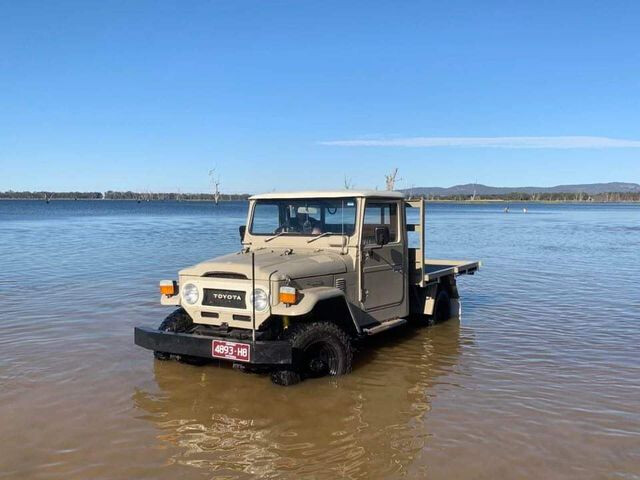
1979 TOYOTA LANDCRUISER FJ45
It’s fully restored with all steel panels, and the original 2F motor. It has been my dream to own one since I was a young kid. I finally got one and did all the work myself -Aaron Edmondon
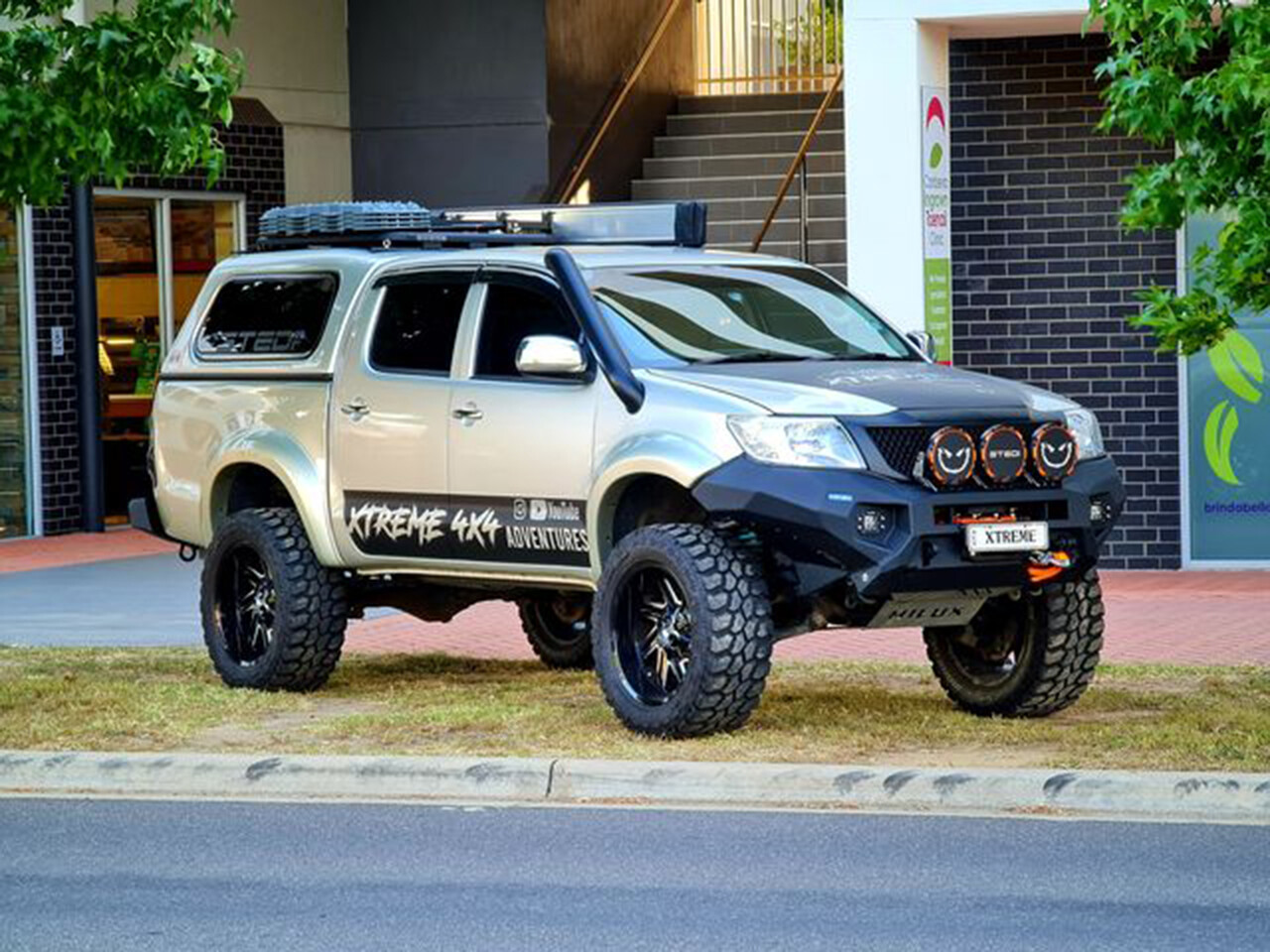
TOYOTA HILUX
It has had a full 2015 facelift, with aftermarket grille, and LED headlights with LED switchback indicators. A long list of aftermarket gear includes a Rival bullbar with 14,500lb winch; Stedi Type-X Pros; Bilstein 4in adjustable lift (front); extended upper control arms and ball joints; rear Enduro Pro remote-res shocks and lifted leafs at 4in; and a Rival bar (rear).
The canopy has 2900mm drawers and full custom-built side panels and wings, with AGM battery; Enerdrive DC2DC 40amp charging system; 1200W inverter; Projecta battery management system; GME XRS UHF; MSA drop slide; and an ARB 60L Zero fridge. The custom Boss Air suspension consists of fully remote-controlled airbags in the rear, with a 19L air tank that has a separate line for the ARB air system for inflating tyres, etc.
The high-output twin ARB air-compressor is hard-mounted. Other gear includes 20in Hussla Toxic rims with Extreme M/Ts; a custom-mounted roof tray with a Darche 270 awning; solar panels; two sets of TREDs; and GME antenna on a swivel mount. Twin air lockers are about to be installed, and a Raptor Stage 2 supercharger with front-mount intercooler is being built as we speak. Plus, a new canopy has just been ordered from 4D Engineering -Dion Kirkland
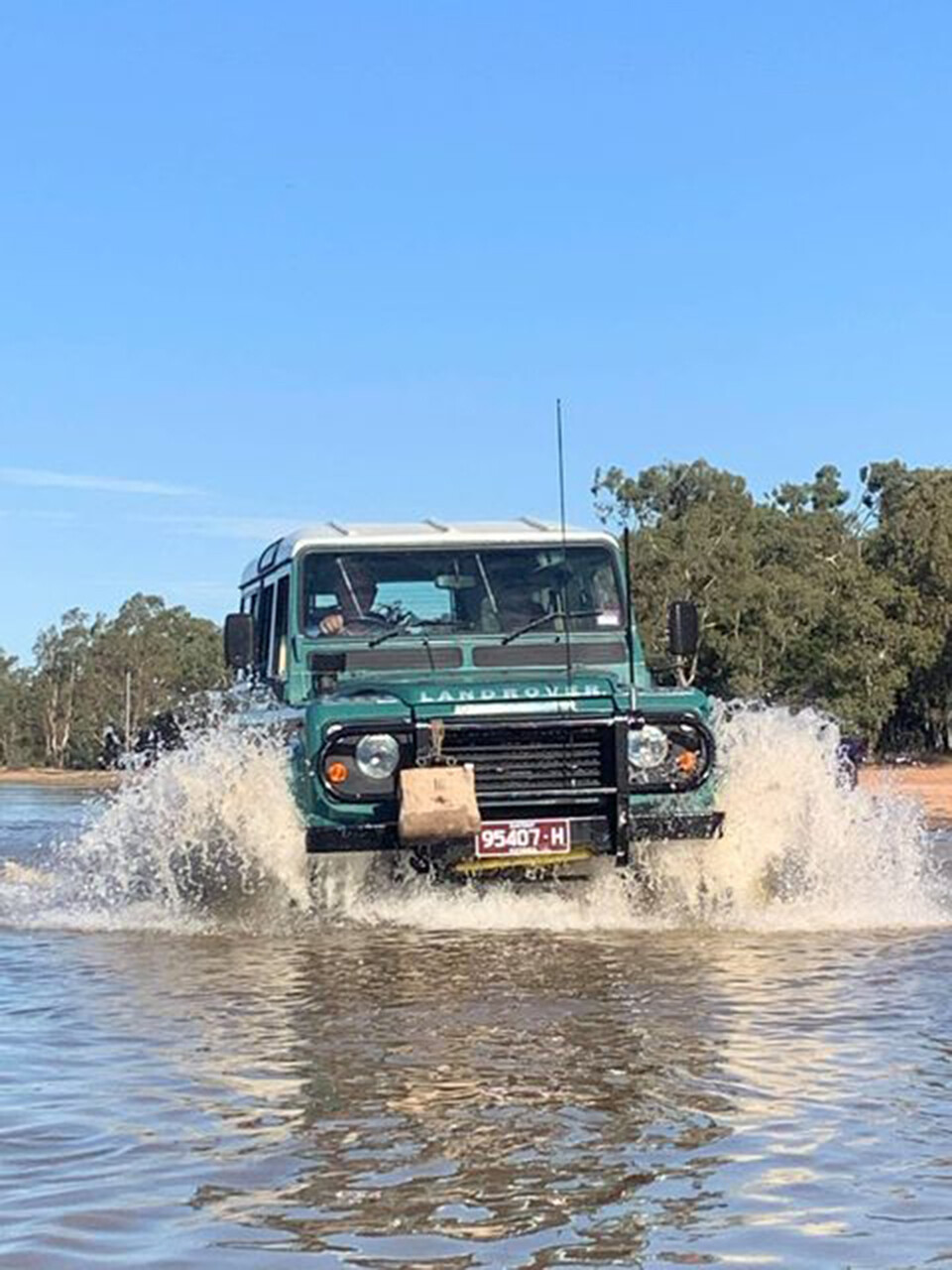
1985 LAND ROVER DEFENDER
Registered as a nine-seater, it runs a 5.7-litre V8 diesel. It has diff breathers, full Monroe Wylie coil and shock suspension, a five-speed Santana gearbox, custom half-snorkel, UHF CB radio and a diff lock -Tony Taylor
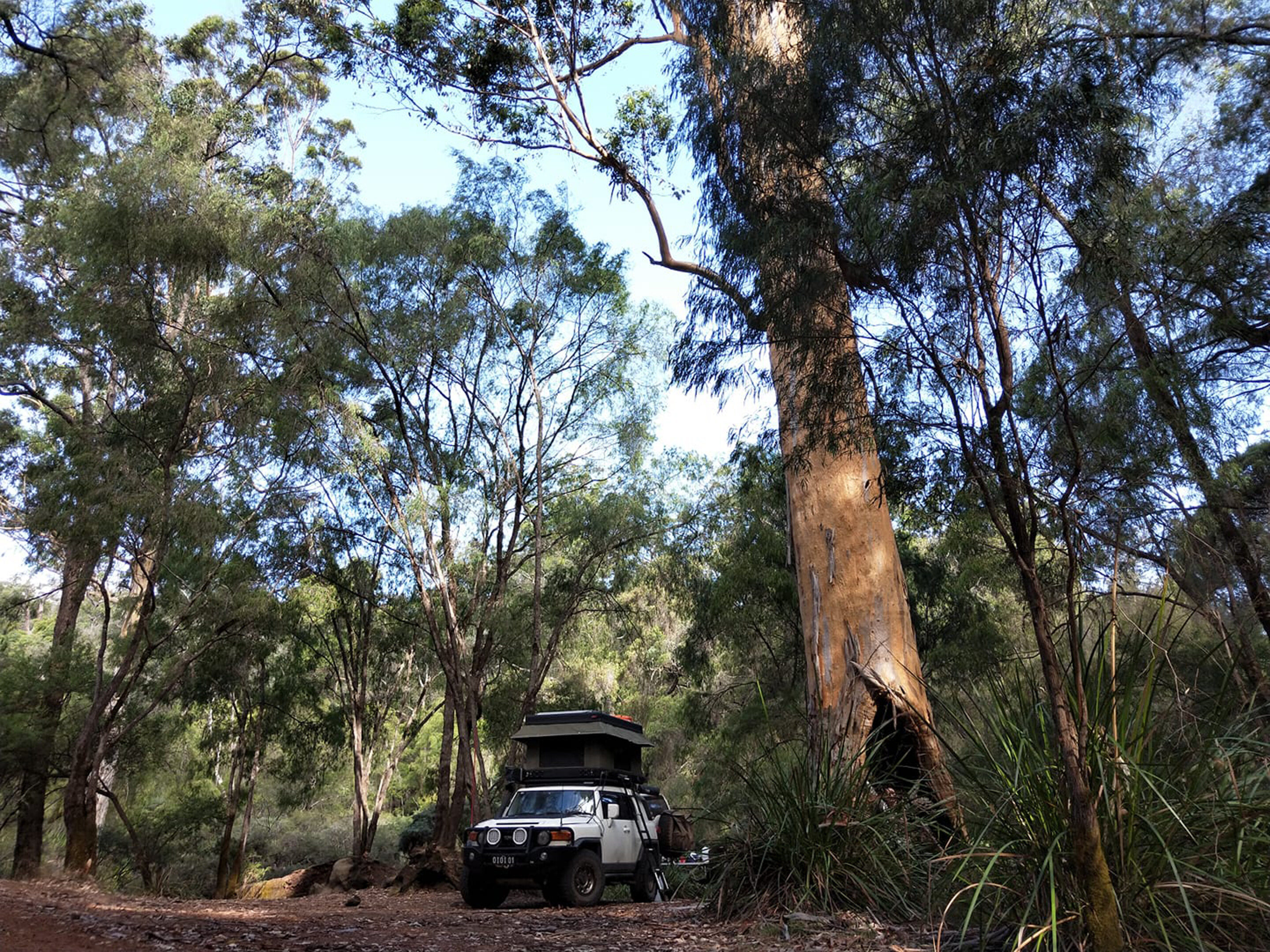
2013 FJ CRUISER
It has 33-inch KO2s; a two-inch TJM lift; a TJM bar with Runva 11000XP winch and TJM snorkel; 120W bonnet-mounted solar panel powering a 100amp/h LIPO aux battery; Bundutec RTT; 30-second 270 awning; KickAss shower tent with Glind hot water; 45-litre water tank; custom pull-out kitchen/stove/sink and workspace in the back; 48-litre Isotherm upright fridge; and a Travel Buddy oven that’s worth its weight in gold! Great setup; very happy with it -Ben ‘Matt’ Doorn
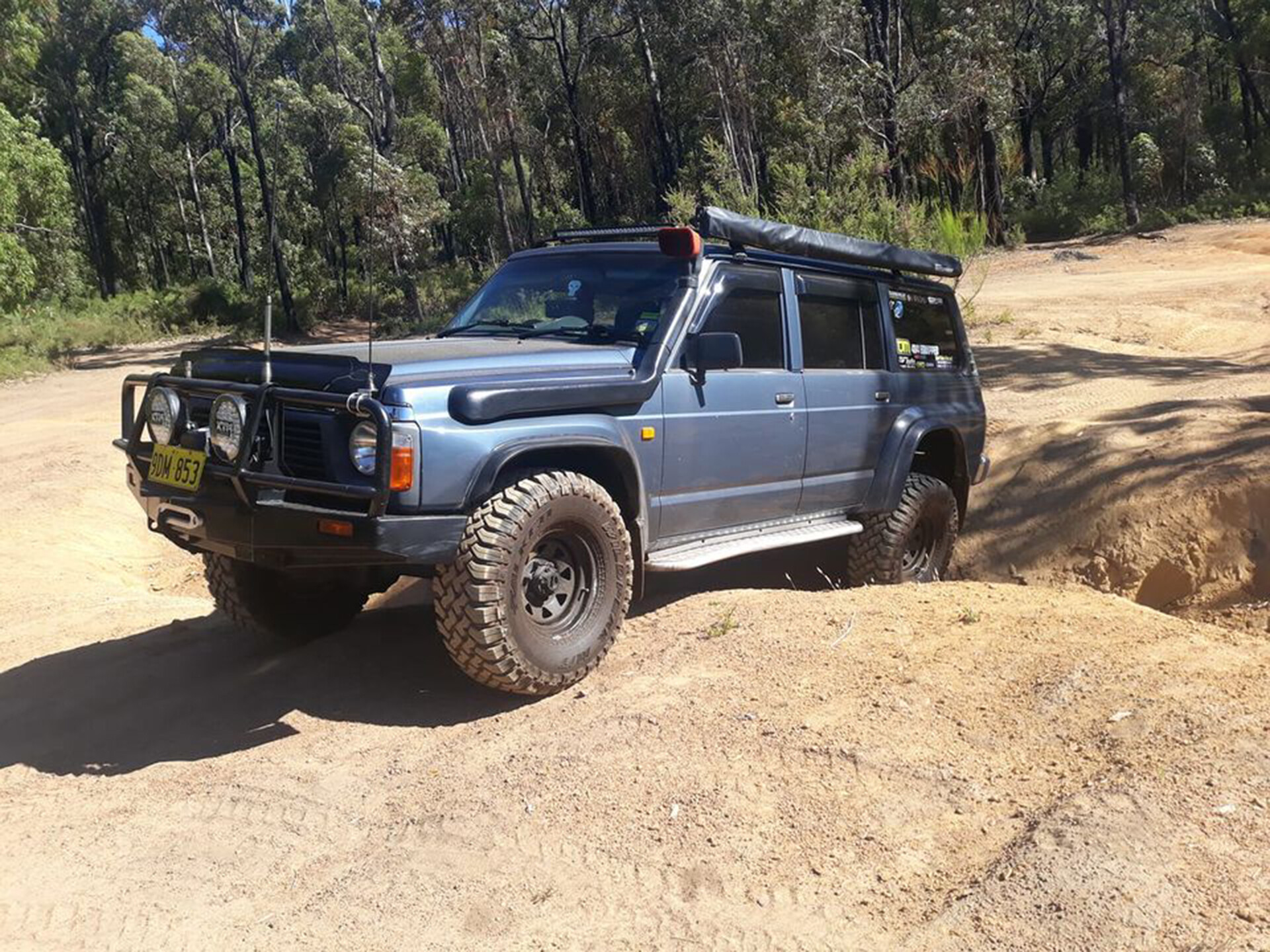
NISSAN PATROL
Equipped with an RB30 EFI, with everything new or rebuilt under the bonnet. Other kit includes heavy-duty clutch; 2.5-inch exhaust extractors; 3-inch Dobinson lift; 33/12.5/15 Falken Wildpeak MTs; ARB front bar; Domin8r Xtreme winch; Kings light bar; Rhino-Rack awning; and roof bars. There’s probably more I’ve forgotten. I’ve had it near-on 10 years and probably 5km on new motor. It’s still not finished, though -Nathan White
When I was growing up dazed and confused in 1980s Australian suburbia, cultural binarism engulfed us like a plume of hairspray on a poodle perm.
Labor or Liberal, male or female, Coke or Pepsi, Summer Bay or Ramsay Street… there was no middle ground and tough titties if you didn’t fit in. Or, worse still, refused to.
Such black-and-white thinking even applied to the family transport tucked away behind the B&D roller door. Local or imported. Holden or Ford. Cars or 4WDs.
Except for Subarus, the latter were universally ladder-frame off-roaders with names like LandCruiser, Patrol and Pajero, but began splintering off into cheaper pick-up-derived wagons during the decade, led by the HiLux-based 4Runner. Then somebody created a car that looked like a 4WD, the world went crazy for SUVs and here we are today. Choice, glorious choice.
Evolution is the enemy of binary thinking.
Yet, like the primordial reptiles of 300 million years ago, body-on-frame 4WDs survive. Strike that. They thrive, going forth where SUVs can’t tread, as off-road adventurers and holidaymakers alike snap ’em up. Demand for many far outstrips supply.
Australia’s favourite has long worn Prado badges, but now nudging $90K in Kardashian Kakadu guise, they’re getting a bit rich for many working-class Aussies. More like Toyota Prada!
This is where the smaller, cheaper Fortuner steps in. A latter-day 4Runner (which evolved into a larger and more sophisticated Prado-based 4WD for the USA decades ago), it was designed mainly for South East Asia and rides on the same, ageing low-cost ‘Innovative Multi-purpose Vehicle’ chassis as the last two HiLux generations.
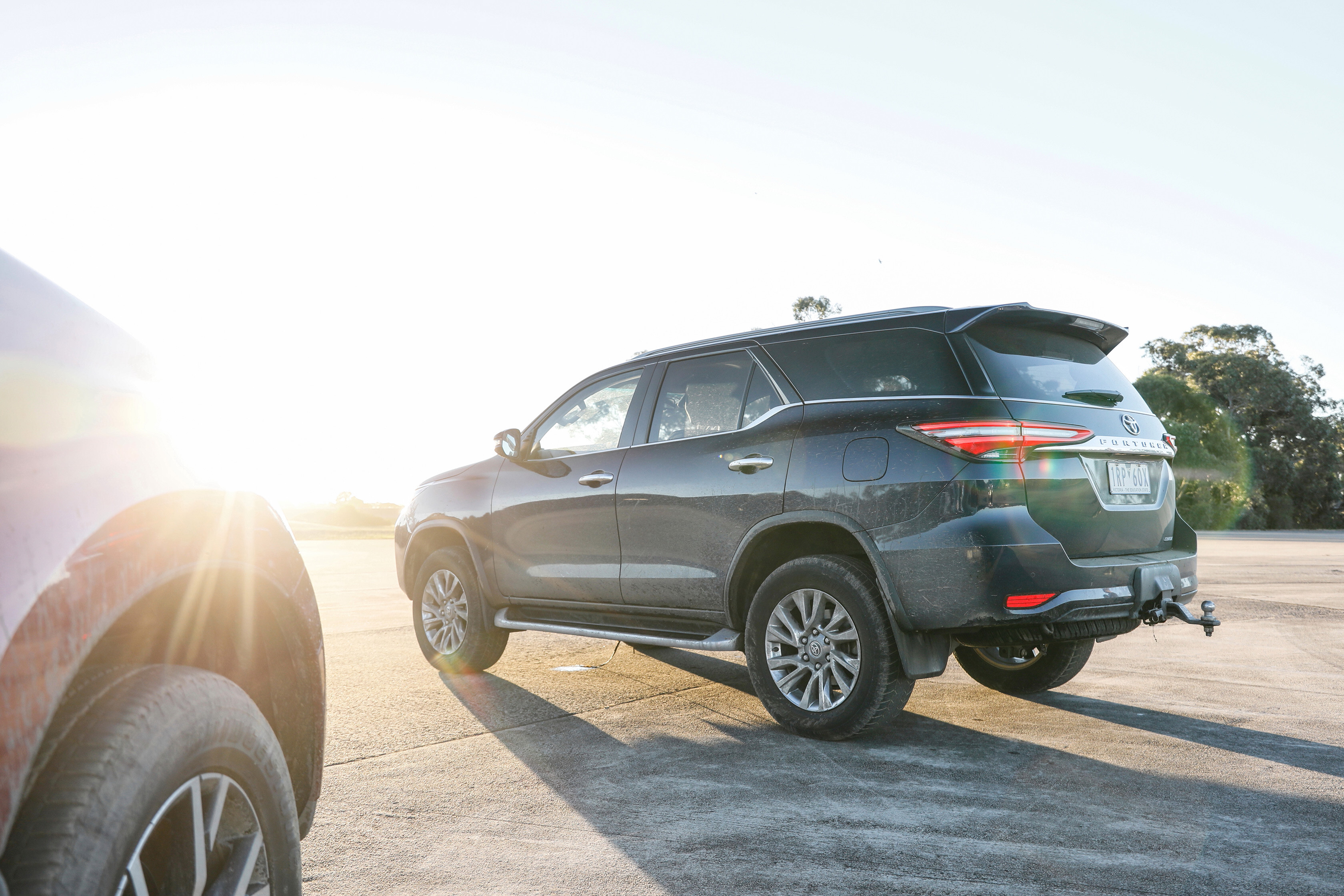
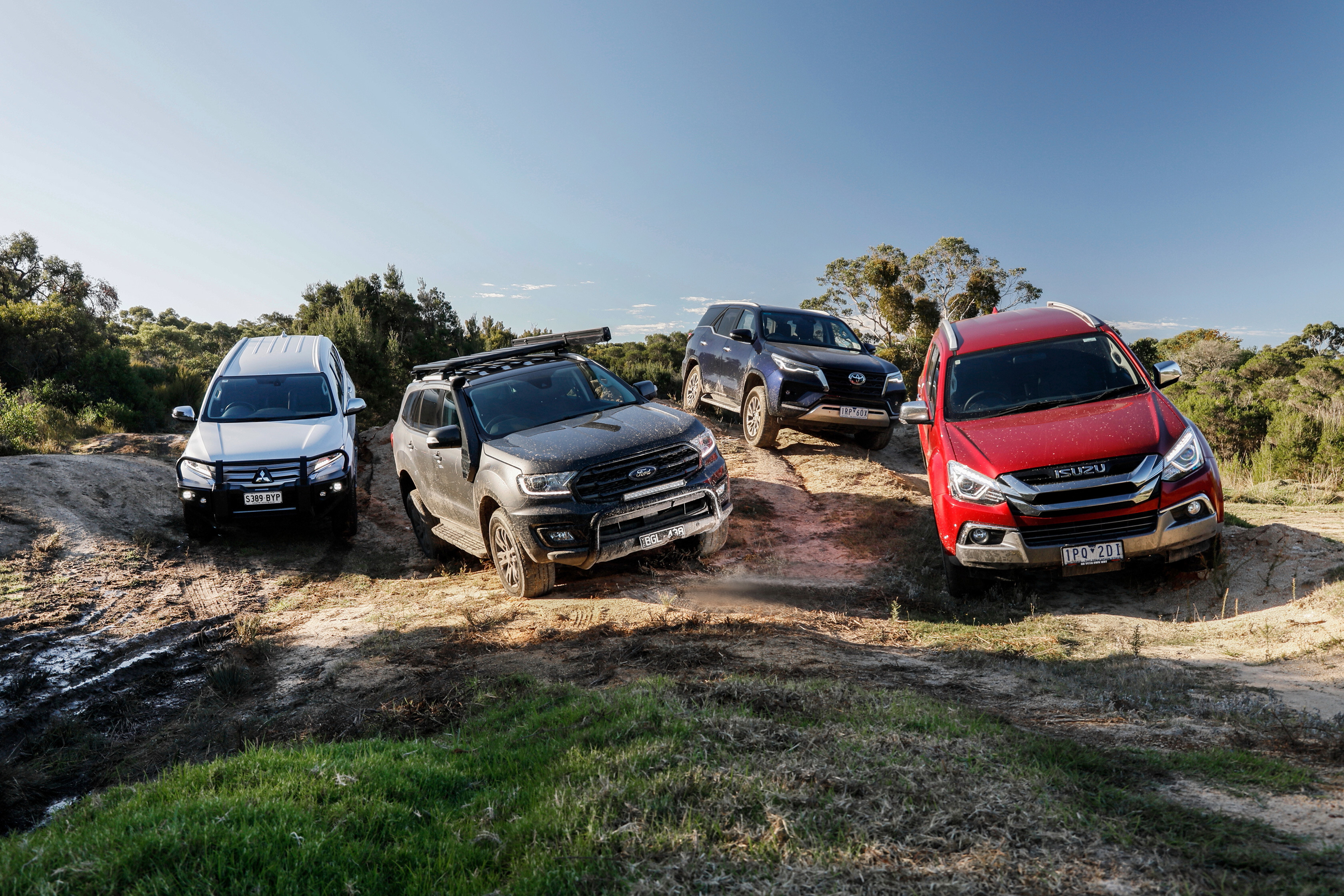
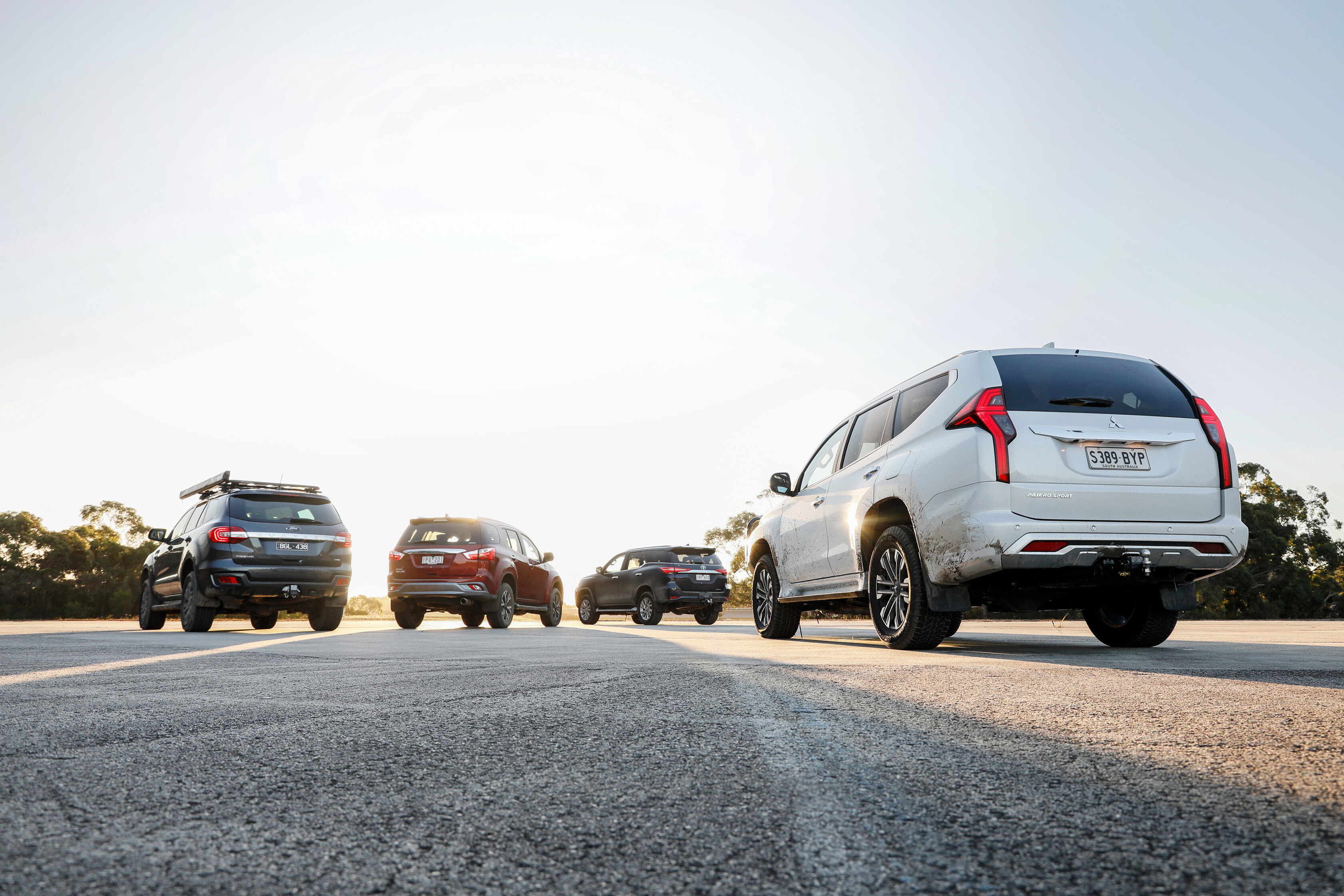
Unusually for a Toyota, the gawky-looking Fortuner has underperformed since launching locally in late 2015, despite significant Aussie input, lagging behind the Isuzu MU-X, Ford Everest and Mitsubishi Pajero Sport – which are also pick-up based seven-seater 4WD wagons built in Thailand to help keep prices in check.
With a facelifted version arriving in mid-2020 bringing much-needed visual improvements (namely slimmer headlights and a restyled grille and bumpers), a larger touchscreen and updated multimedia, can the Toyota finally reel in its high-riding rivals? Let’s find out.
Somebody created a car that looked like a 4WD, the world went crazy for SUVs and here we are today. Choice, glorious choice.
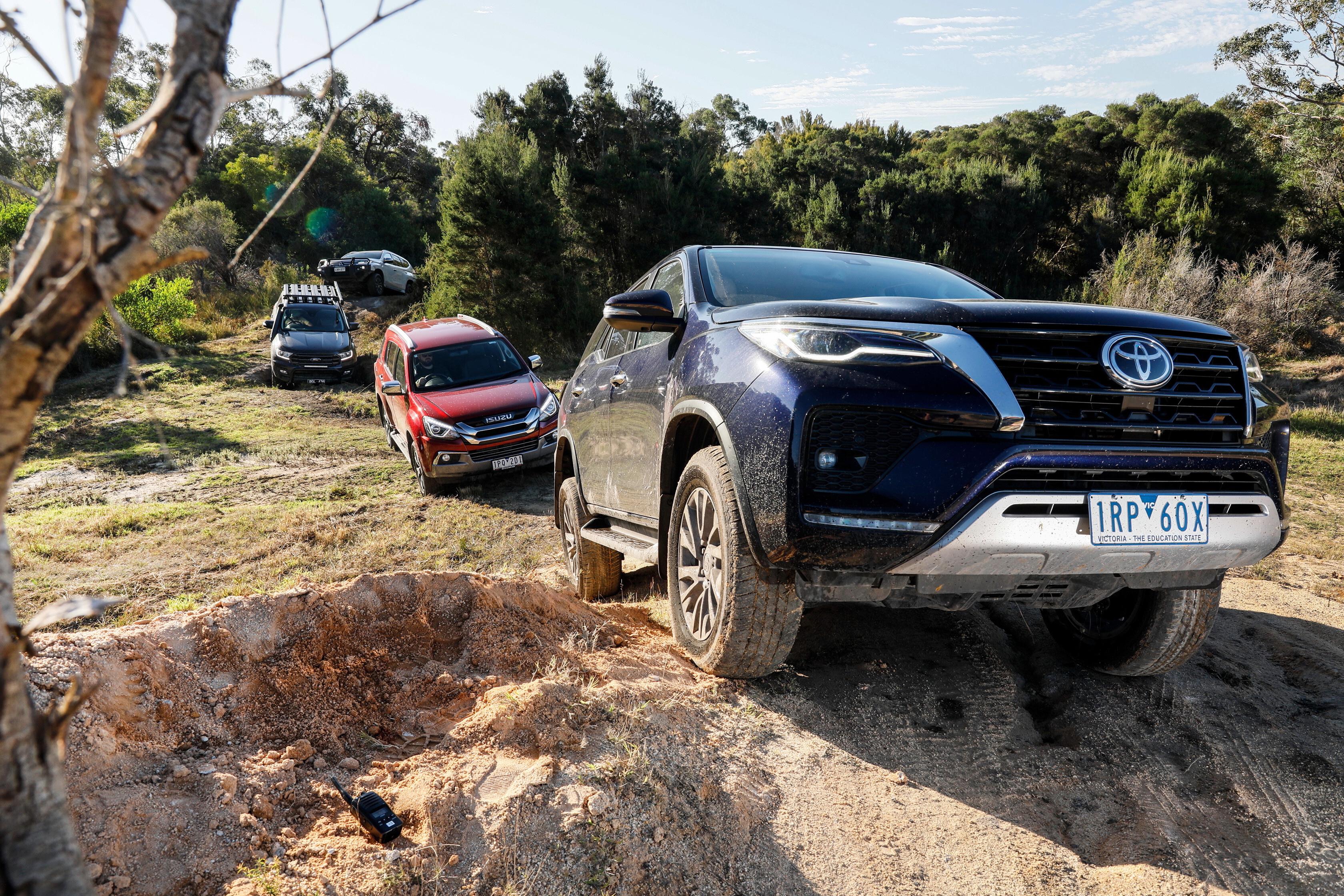
Like the corresponding HiLux, the Fortuner gained a gutsier yet more economical 2.8-litre turbo-diesel last year, along with improvements to towing capacity and steering responses. The GX opens at $49,080 before on-road costs, while ours is the swish Crusade from $61,410. That’s more than base Prado GX money.
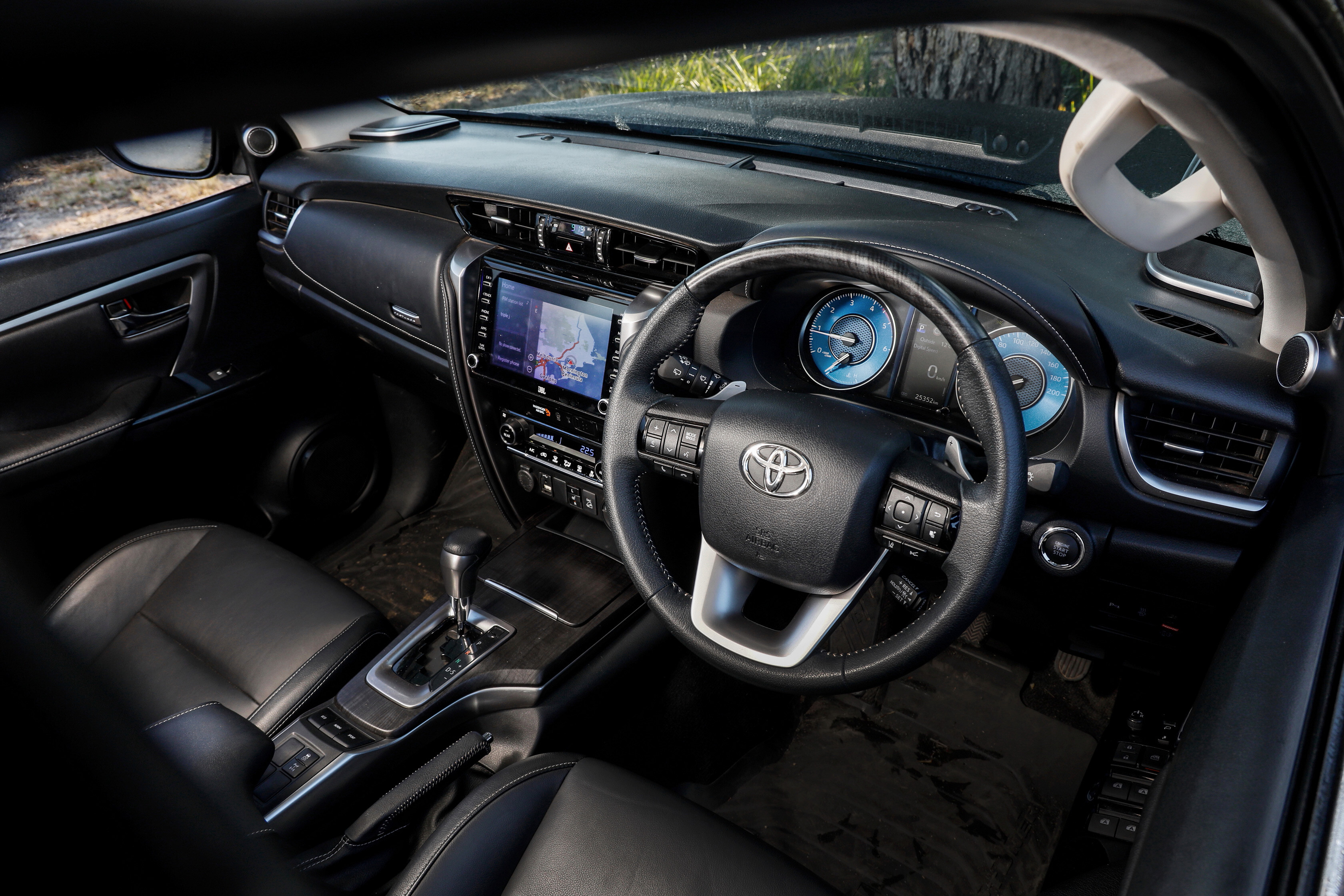
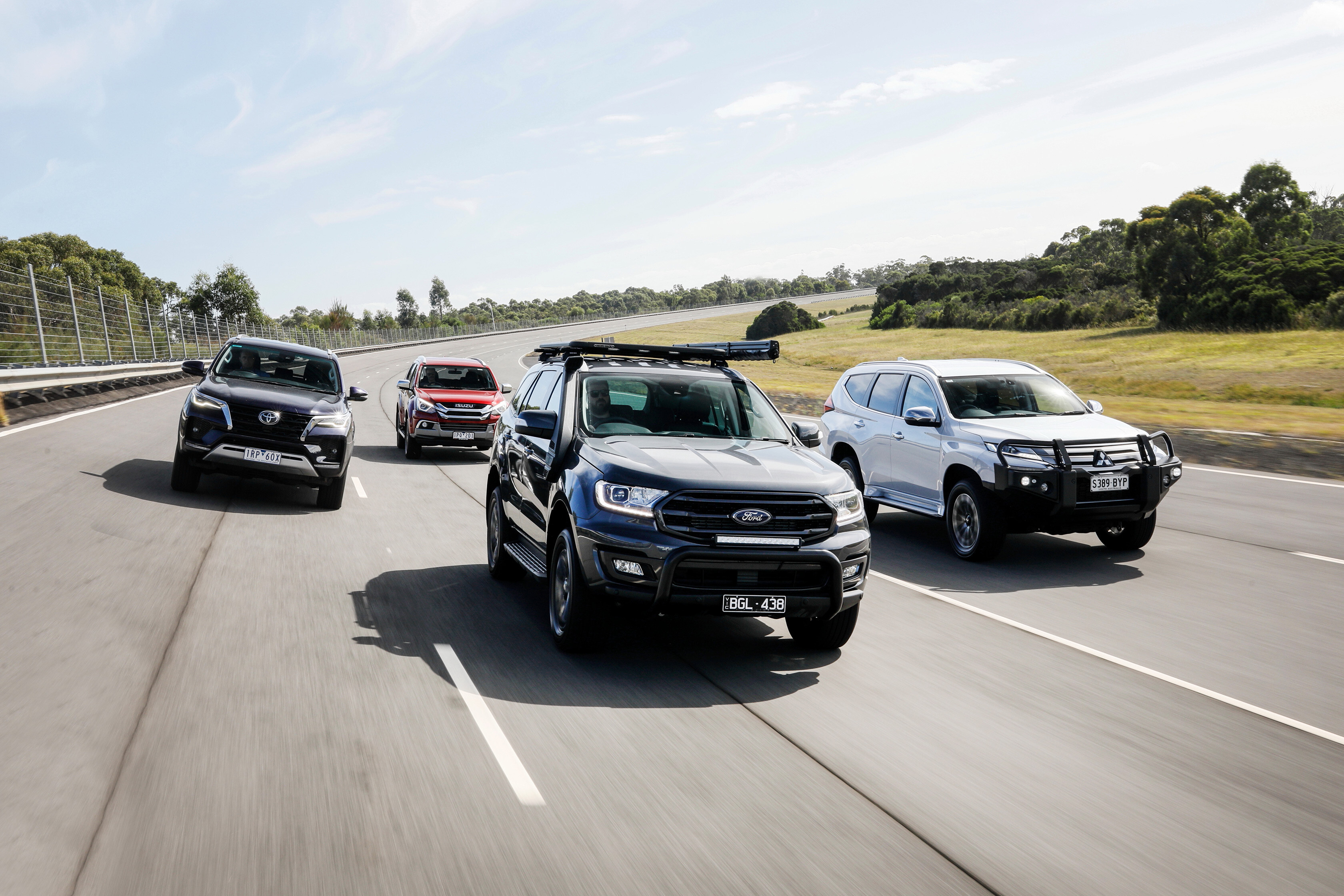
As with the Pajero Sport and Everest but not MU-X, the Fortuner includes autonomous emergency braking (AEB), lane-departure warning with steering assist, adaptive cruise control, front and rear parking sensors, Apple CarPlay/Android Auto connectivity and digital radio, while a reverse camera, keyless entry/start, climate control, sat-nav, electric front seats, part-leather upholstery, roof rails and alloy wheels with a full-sized spare are common in all. The Toyota (with Mitsubishi) also usher in a powered tailgate and premium audio, while a chilled cool-box and – ahem – fake wood trim are sole Crusade offerings. Formica for your Fortuner, anybody?
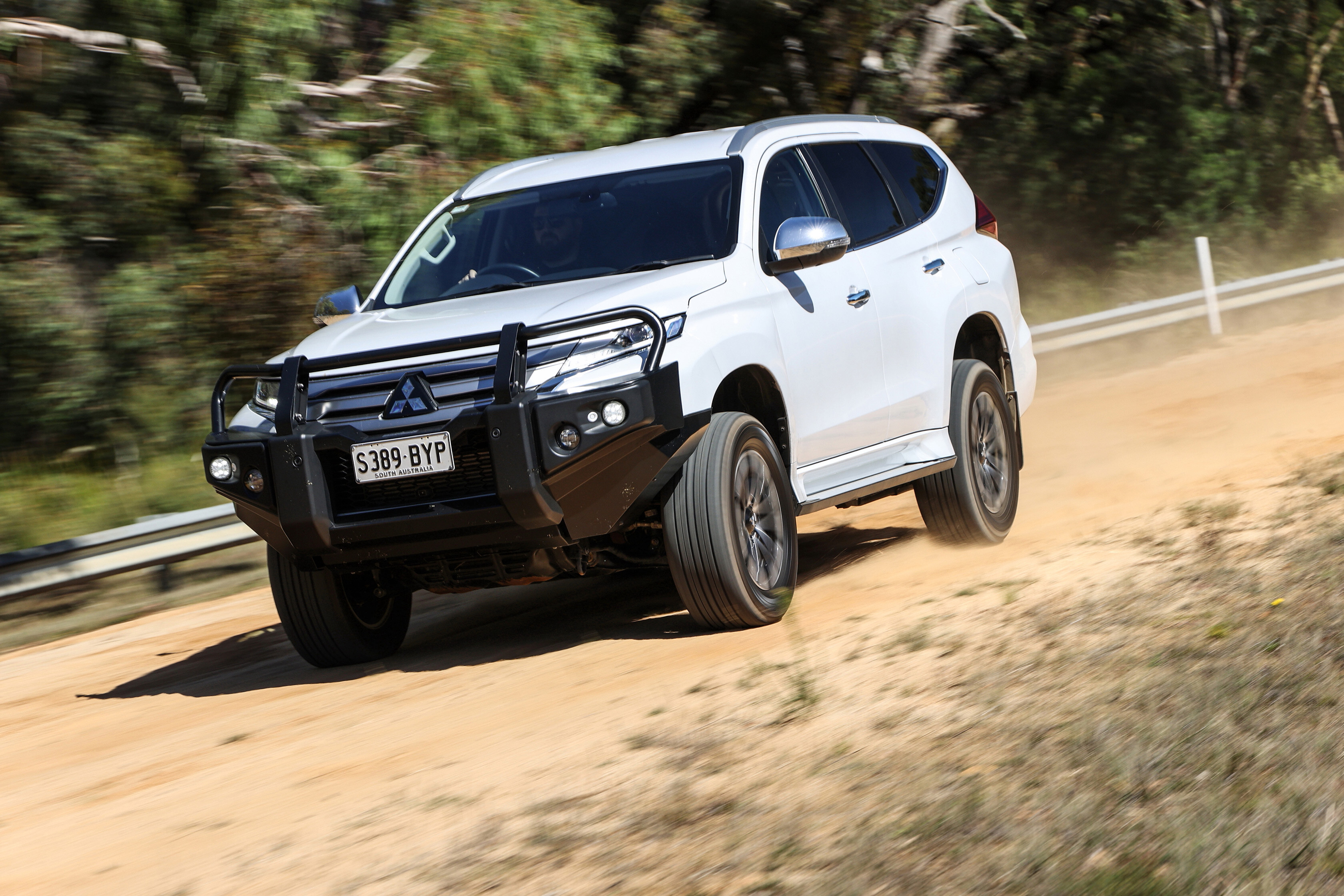
Also updated in 2020 (and coincidentally another late-2015 debutante, as the old Challenger successor) the latest Pajero Sport brings a stronger Mitsubishi family look thanks to that toothy boomerang-style chrome smile shared with its Triton pick-up twin, reshaped bumper and revised tail-lights.
There’s also uprated safety from the base $47,490 GLX five-seater up, including blind-spot monitoring and rear cross-traffic alert tech not fitted to the any other of the 4WDs tested. Revised multimedia, a redesigned centre console and electric park brake debut, along with extra convenience items such as a remote-control app for tailgate and headlight operation, exclusive to the Exceed as tested, from $57,690. That’s strong value, backed up by a conditional 10-year/200,000km warranty – or half that term if you choose not to service at a Mitsubishi dealer.
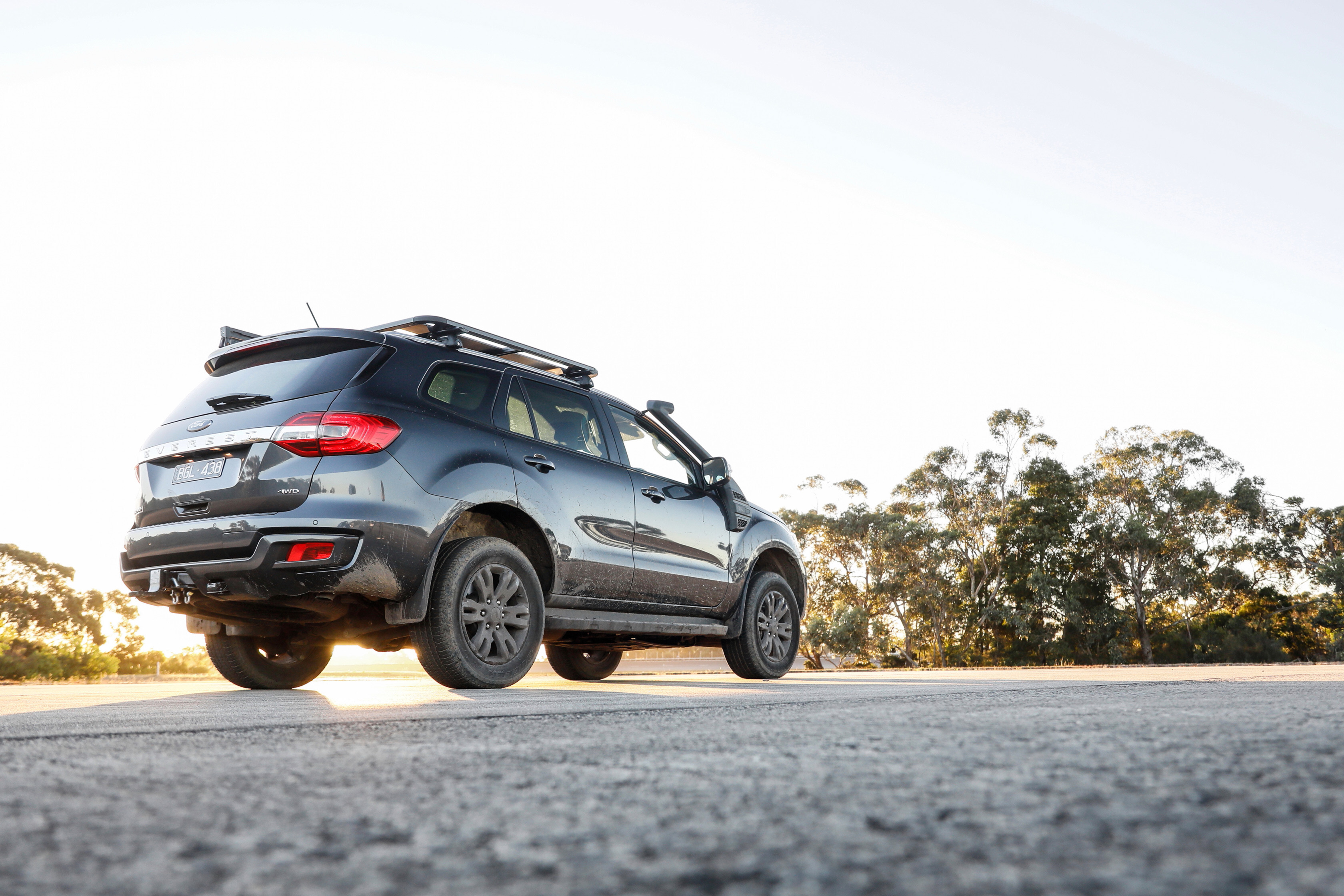
The Everest is also now approaching its sixth birthday, facelifted in 2018 with the usual headlights/grille/bumper makeovers, and is now the sole Australian-designed and engineered wagon made on Earth. Let that sink in for a moment.
Interestingly, the Ford straddles the Fortuner and Prado for pricing, kicking off from $50,090 (Ambiente 3.2L RWD five-seater), meeting its rivals here with the mid-range Trend 4WD from $60,890 and then reaching for the stars with the $73,190 Titanium Bi-Turbo 4WD. Deserved or delusional?
Our test car is one of the 450-build BaseCamp edition Trend Bi-Turbo 4WDs from – deep breath – $64,590. Emo-fied to within an inch of its grey life with tonnes of black-out make-up, there’s $6K’s worth of adventure gear (nudge bar, light bar, snorkel, towbar, roof-mounted carry bars, side steps and awning) for $2200. Trend also aligns with Crusade equipment-wise, though is alone with traffic-sign recognition.
The Everest is now approaching its sixth birthday and is now the sole Australian-designed and engineered wagon made on Earth. Let that sink in for a moment.
Finally, there’s the MU-X. Sorry, folks, not the box-fresh second-gen MU-X heading here later this year, but the 2013-vintage RF original (albeit updated in 2017), that grew out of the Isuzu MU (for Mysterious Utility). Fun fact: it also spawned the contemporary Colorado 7/Trailblazer, so is technically the last new Holden-ish vehicle out there. So get in quick.
Maybe that’s why sales are up 72 percent this year, growth that’s well ahead of the others. Or perhaps because the top-line LS-T AWD at $56,400 is (marginally) the cheapest of the quartet.
However, the MU-X really shows its age with a roof-mounted DVD screen but no digital radio, while vital driver-assist safety systems like AEB, lane-keep warning/assist, adaptive cruise and front parking sensors simply aren’t available. The all-new MY22 model is expected to standardise all, as it’s based on the latest (and not previous) generation D-Max pick-up.
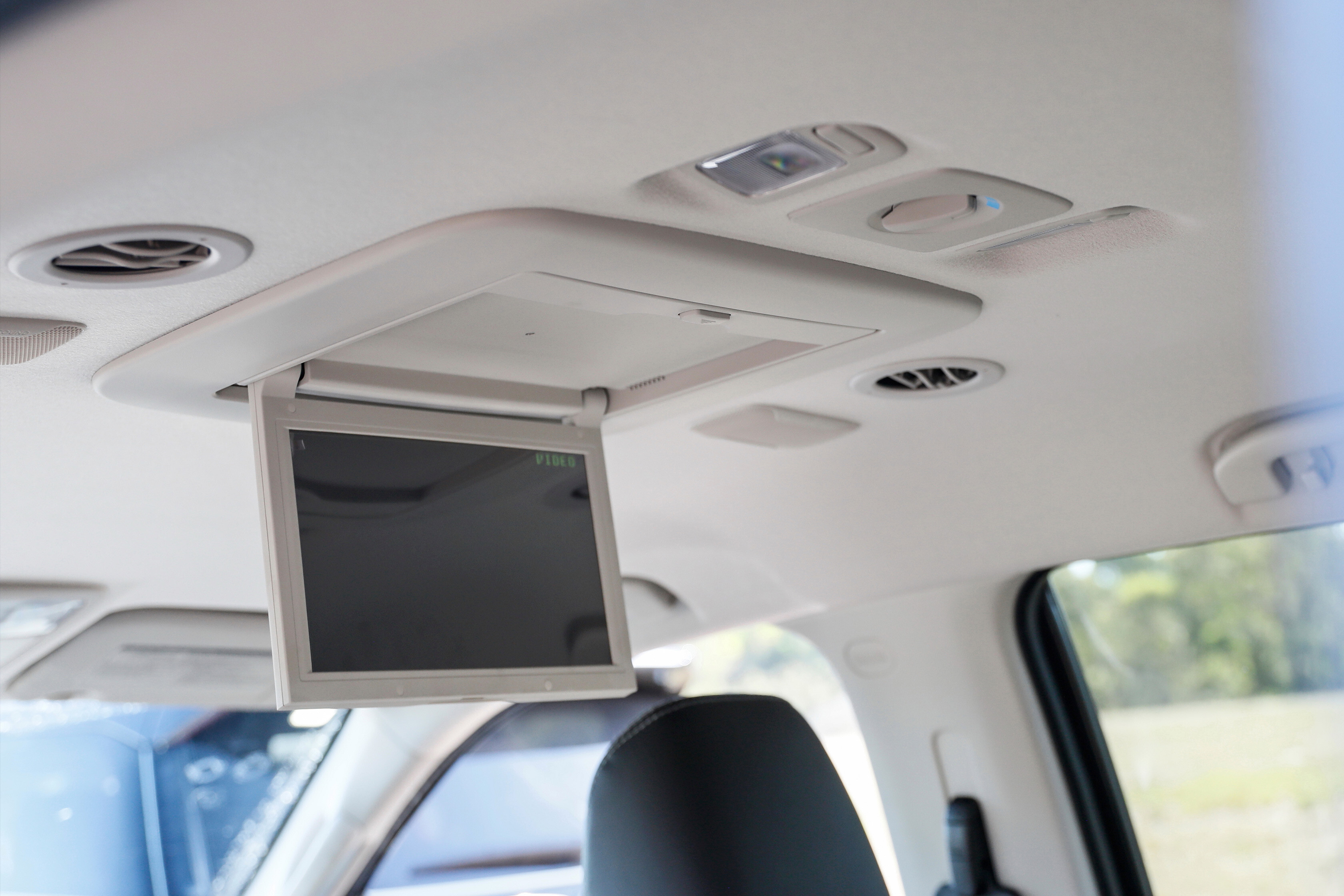
The Isuzu starts behind the eight ball as a result, and it’s easy to stick the boot in from the moment you are first met with the laughably dated dash design, off-the-shelf multimedia and its low-fi graphics, AWOL digital speedo, cheap, sheeny finishes, slippery upholstery and persistent off-plastic reek. It can also get pretty noisy back there.
Yet, sound packaging knows no age. There’s plenty of space for a family of seven – even in the third row; the seats feel soft and comfy, with easy one-touch access thanks to a middle bench that tumbles forward and out of the way; sufficient ventilation and storage are provided – with cupholders and door pockets fitted (as per all the 4WDs tested here); vision out is good and the driving position is AOK despite – like Everest – there being no steering column reach adjustability.
The MU-X really shows its age with a roof-mounted DVD screen but no digital radio, while vital driver-assist safety systems simply aren’t available
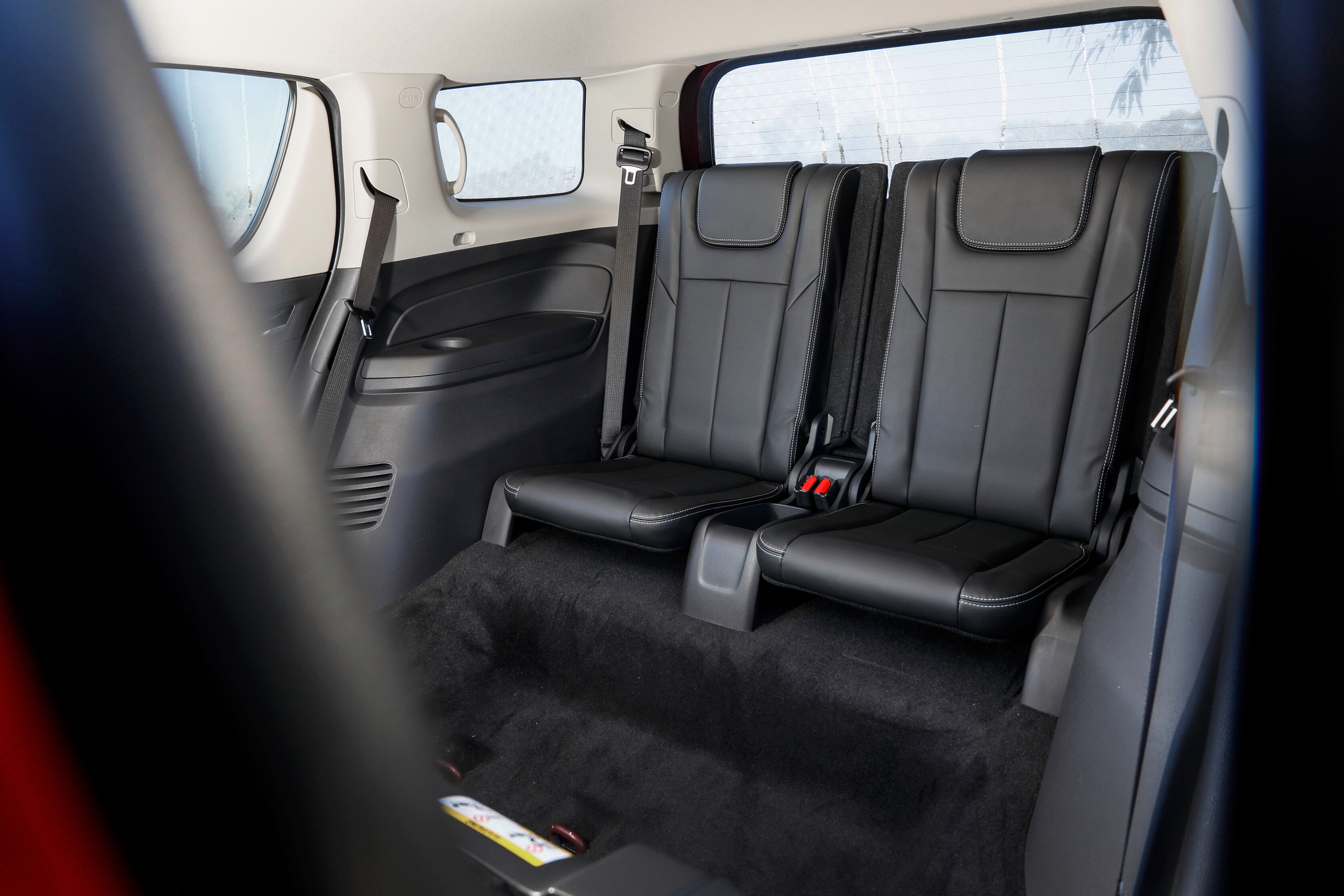
Only two years separates the Isuzu from the Mitsubishi but the latter’s cabin seems from a newer era – and a higher class. The MY20 facelift brought a bigger screen and digital instrumentation, backed up by attractive finishes and intuitive control layout. The front seats are sumptuous, there’s plenty of room for three behind on well-sculptured outboard cushions, and all expected amenities like USB ports are present.
Note, though, that the Pajero Sport’s second row bench does not slide, hampering access behind, forcing people to squeeze past the reclinable backrest’s narrow aperture; and while the third row’s also recline and there’s a useful amount of kneeroom, the cushion feels thin, the suspension is jolty and there’s too much tyre roar.
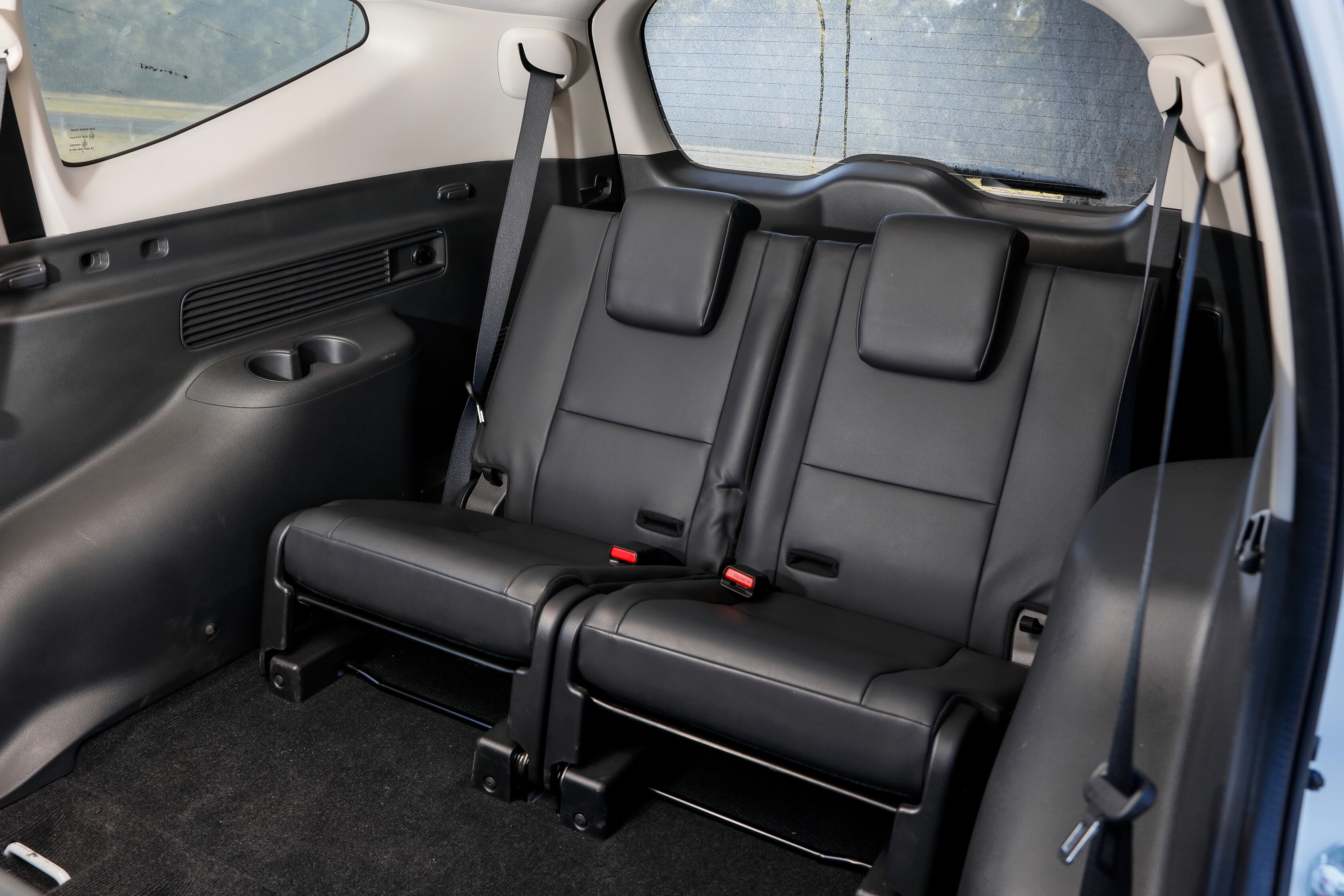
Amongst this lot, the Fortuner’s packaging feels… compromised, with a narrow-body look and feel that betrays its ageing IMV HiLux-based architecture; occupants sit noticeably closer to each other. The third-row passengers miss out on cupholders, overhead vents and USB ports, the cushions are firmest, the ride is hardest, there’s also excessive noise intrusion and access back there is the most difficult. Plus, the twin seats fold out into the sides, reducing cargo capacity, rather than in the floor as per the others – a strange layout.
Up front, the bulky dash includes two gloveboxes and it’s easy to figure out all the switchgear; the big screen is a cinch to use and the seats are supportive enough. The smallest of the quartet, it’s best to consider the Fortuner a 5+2-seater.
Only two years separates the Isuzu from the Mitsubishi but the latter’s cabin seems from a newer era – and a higher class
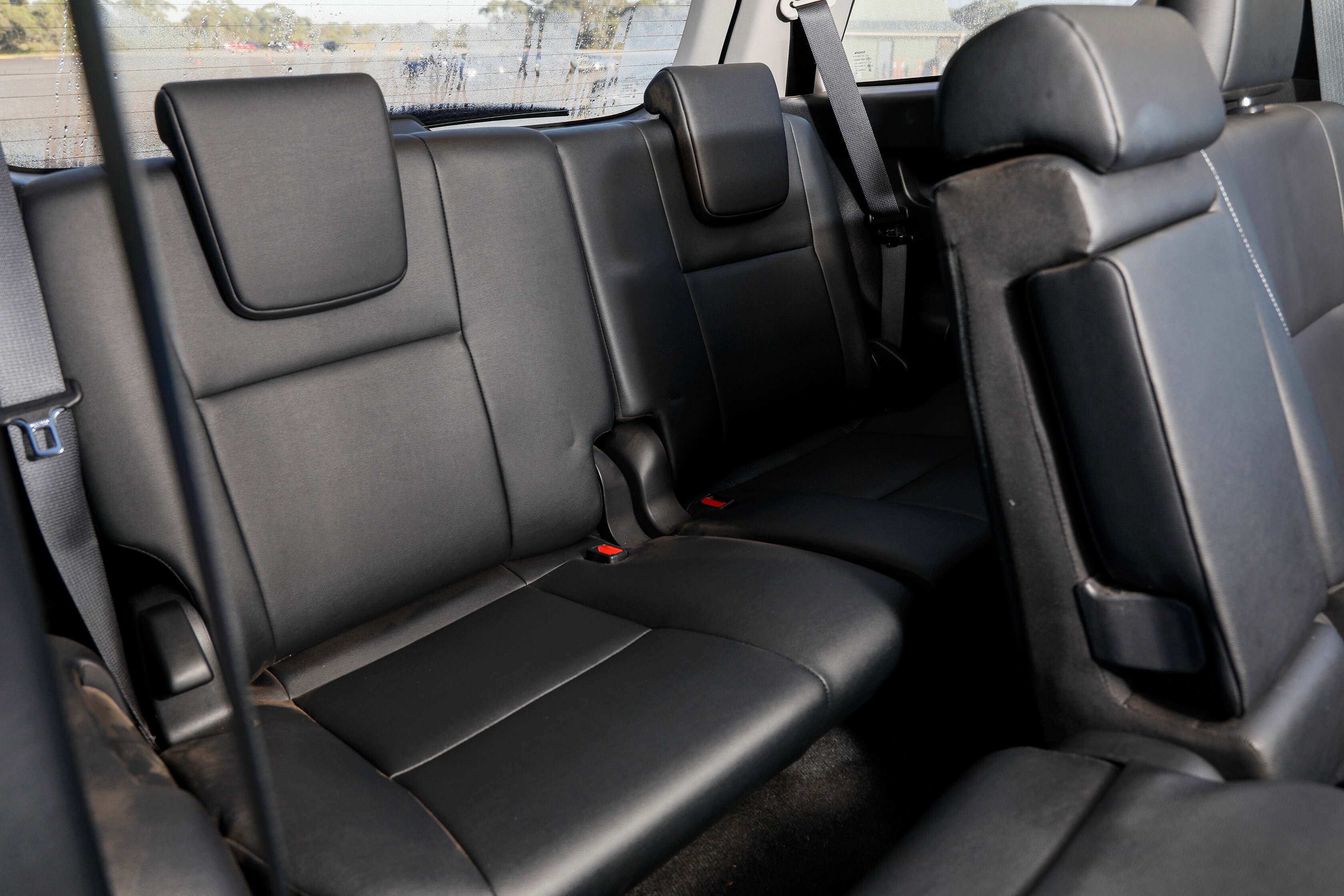
Though feeling substantially wider, the Everest’s third row suffers because entry/egress is limited by the middle row seatings’ inability to tumble forward; it’s also pretty cramped for adults and there are no USB ports. But the seating is far comfier, it’s quietest and the ride is softest of the group. The same also applies to the middle row, which benefits from the largest rear doors, while the front seats are the best for support.
The Trend’s dash may be very familiar by now, but it still works exceedingly well, with excellent controls, great ventilation, heaps of storage and a very friendly (if dated looking) multimedia system. It doesn’t seem as upmarket as the Pajero Sport’s, but is miles more appealing than those of the Toyota or Isuzu. From a functionality and practicality perspective, the Everest still shines.
The Ford is also the only 4WD here to offer a choice of two powertrains.
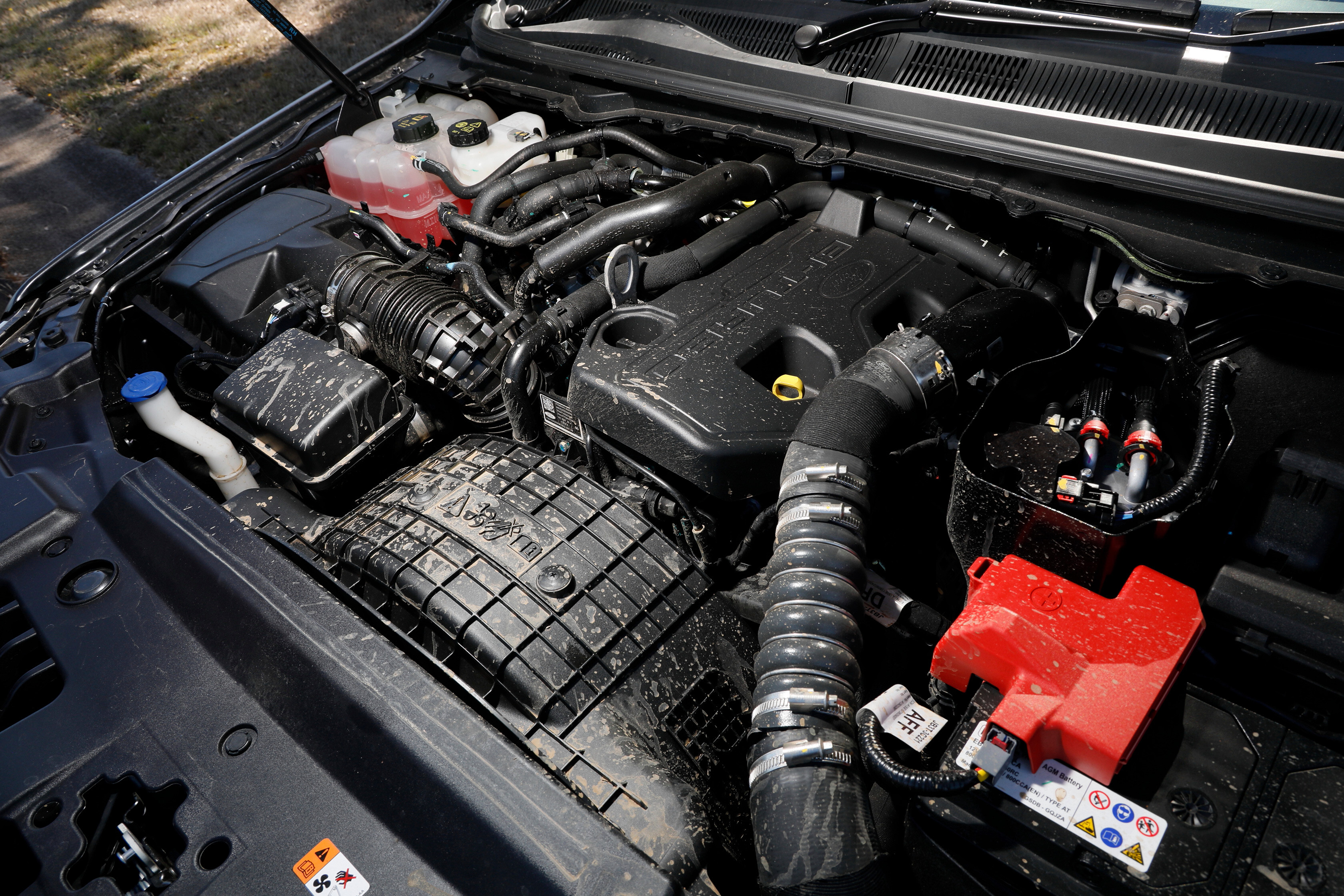
Ours is the 157kW/500Nm 2.0-litre four-cylinder Bi-Turbo diesel instead of the hoary old 143kW/470Nm 3.2-litre five-pot turbo-diesel, coupled to a slick 10-speed (rather than six-speed) auto. It might be down on capacity, but this is an impressively strong powertrain – once you’re on the move.
Off the line, the portly (from 2387kg) Everest feels slowest, trailing the rest and barely keeping the actual tardiest (Pajero Sport) in its sights right up to 60km/h; but with the twin turbos blowing in strongly, the Ford then pulls the hardest, smoothest and quietest of the quartet, crossing the 100km/h mark in 10.6s, and is pipped only by the Fortuner past 120km/h. Keep in mind that our BaseCamp extras impede aerodynamics, which hindered top speed.
Some testers have noted that the transmission can feel busy or indecisive by having to slice through so many ratios, but in our experience, the driver-adaptive tech comes into play seamlessly. This is the most refined powertrain here.
As mentioned, the 2155kg Fortuner is easily the fastest. Aided by the highest power-to-weight ratio, a big new turbo and smartly spaced six forward speeds, its 150kW/500Nm 2.8-litre four-pot turbo is the group’s tearaway racer, beating the Everest by at least a 0.3s interval at every increment. Toyota’s done a great job extracting such punchy performance, and without sacrificing civility either – except when the particulate filter purge kicks in like a big old noisy generator.
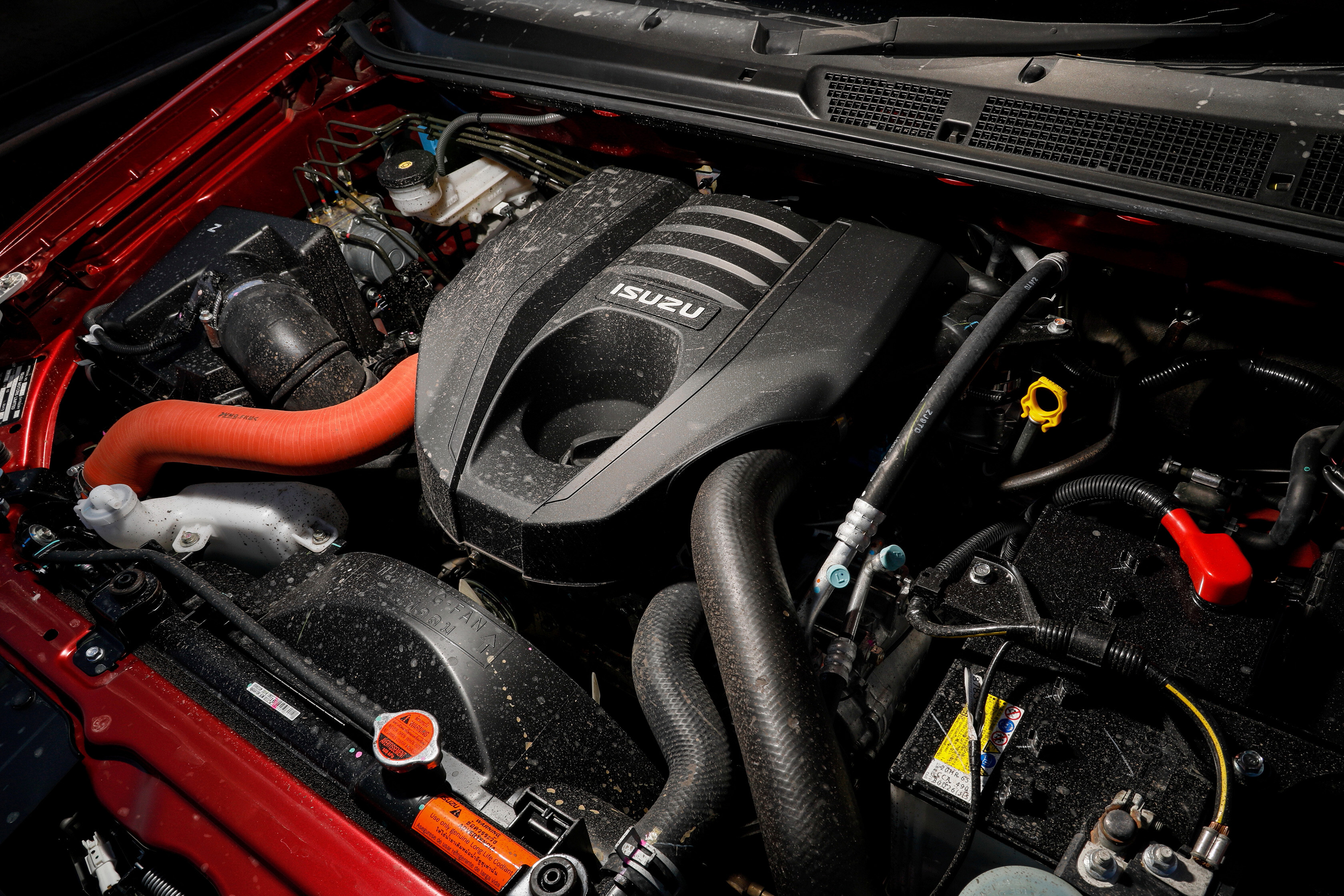
The wooden spoon is a tie-up between the 130kW/430Nm 3.0-litre Isuzu and 133kW/430Nm 2.4-litre Mitsubishi, which are within 0.1s of each other at virtually every marker – and that’s no surprise, given they both have similar (at 60kW and 63kW per tonne respectively) power-to-weight ratings.
But while the end results are similar, the way they go varies. The 2110kg Pajero Sport lives up to its name by being a revvy little unit, feeling friskiest when the engine is working hard and relying on its close-ratio eight-speed auto to shuffle through the ratios without fuss; in contrast, the Gloria Marshall’d 2062kg MU-X is a slogger, and quite loud to boot, relying on its extra 600cc capacity for a dollop of low-down pull. And once momentum is achieved, it maintains the muscle as speeds rise.
Off the line, the portly Everest feels slowest, trailing the rest and barely keeping the actual tardiest – the Pajero Sport – in its sights
All four 4WDs have impressive average fuel consumption claims, with the Everest’s being the lowest for the longest distances between refills – 7.0L/100km, with over 1140km possible due to its 80L tank. At the other end of the scale is the MU-X’s circa-830km range, as a result of its bigger thirst (7.9L/100km) and 15L-smaller diesel reservoir.
In truth, there really isn’t that much in it between them against the clock – but away from the flat, smooth drag strip, the differences are far more telling… and definitive.
All four are fundamentally light and easy to drive by people across the height and size spectrum, belying their sheer bulk to be amenable urban family haulers as well as weekend lifestyle getaways. Given they feature body-on-frame construction, lockable low-range 4×4 engineering and ample ground clearance for light-to-medium bush bashing, they’re all impressive all-round performers.
But focussing on their on-road dynamics and comfort, only one model here can do it all.
Inevitably, the MU-X isn’t it. Superficially, you might be impressed by the Isuzu’s eager steering, which makes it feel lighter through corners than its size suggests. And there’s plenty of grip too, with minimal body lean. However, even at moderate speeds, the handling can feel nervous, the ride is jittery and the amount of noise coming through really betrays the Isuzu’s age. The electronics cut power mid-corner with tiresome regularity and the steering rack rattles too, like a cheap set of dentures. Which might be an apt metaphor for the MU-X’s overall on-road behaviour.
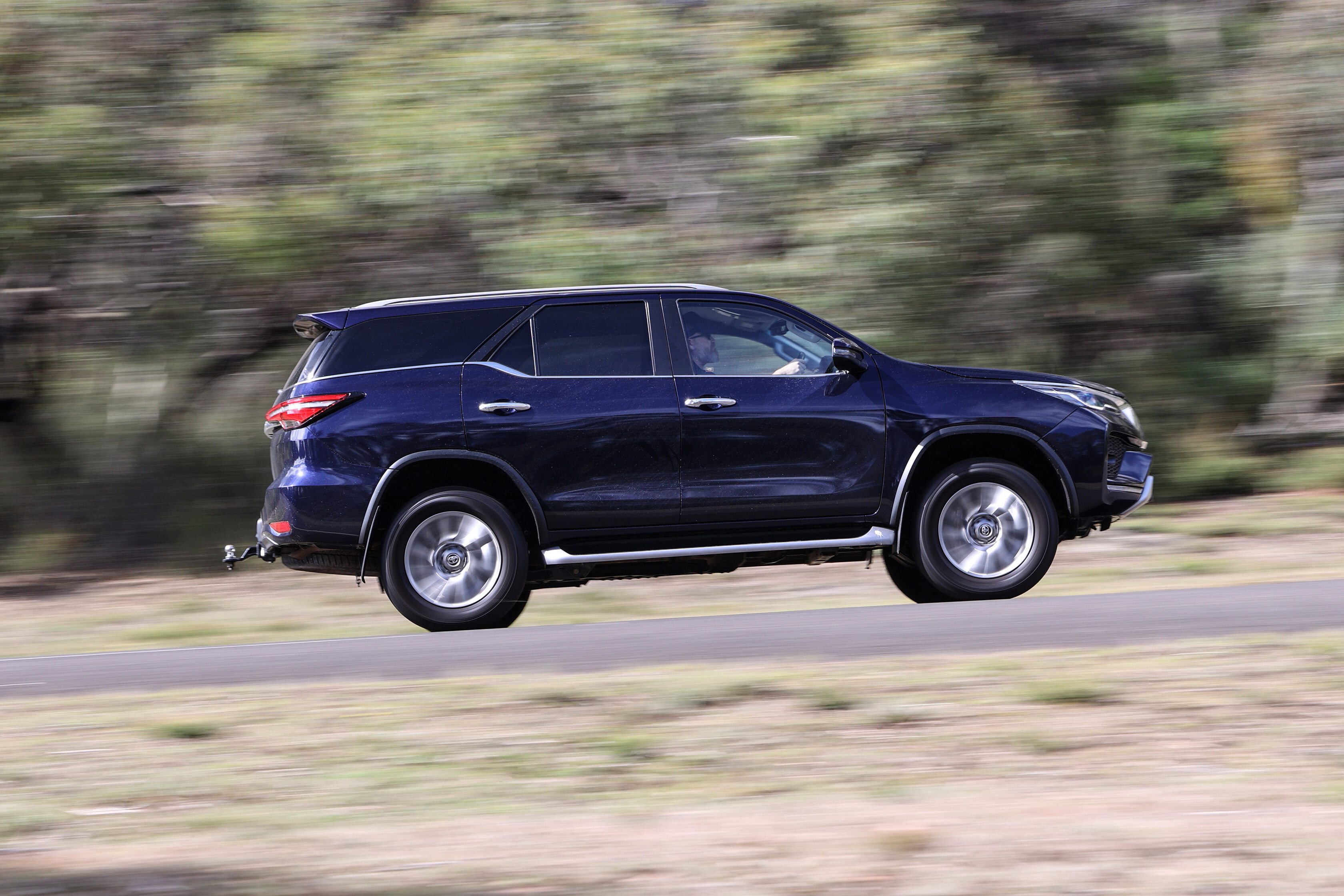
Then it’s a big step up to the Fortuner. Already the fleetest of the foursome, the chassis engineers have clearly set this up for handling agility and composed roadholding, thanks to smooth and progressive steering, backed up by fine body control – making it unexpectedly fun to throw around, in a scrappy sort of way.
But, you can sense a ‘but’ coming on, right? Your butt’s already on it, suffering from the unyielding ride that rarely settles down. Slow or fast, over smooth or rough, the Toyota will have its occupants shaken as surely as the driver is stirred. Not good enough.
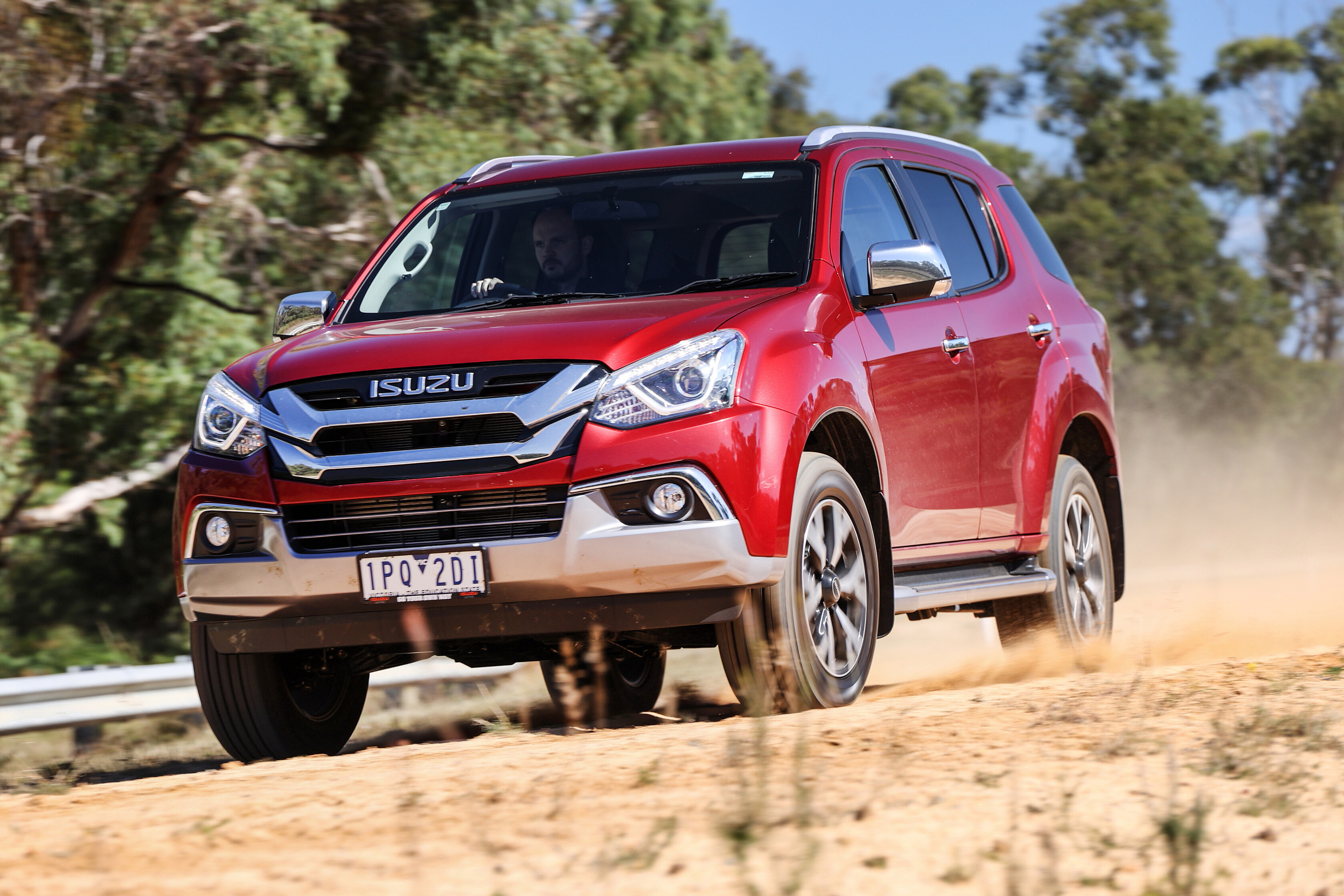
The opposite applies to the squidgy Mitsubishi, due to its engineers emphasising comfort over agility. In concert with the sumptuous seating, the suspension is soft, absorbing bumps left, right and centre – and that too describes how loosely the body feels as it leans and pitches compared to the rest. That said, we applaud the diamond brand’s priorities, because most occupants will gladly trade the harshness and at-times discomfort of the Toyota and Isuzu for smooth and relaxed transportation.
Ultimately, there’s nothing athletic about the Pajero Sport’s remote, feel-free steering or handling that is tuned for safe but ultra-dull proficiency. It’s easy to achieve a balanced flow through a series of corners, but way before any limits are reached, the ESC will abruptly end play, ensuring the driver will never be having fun.
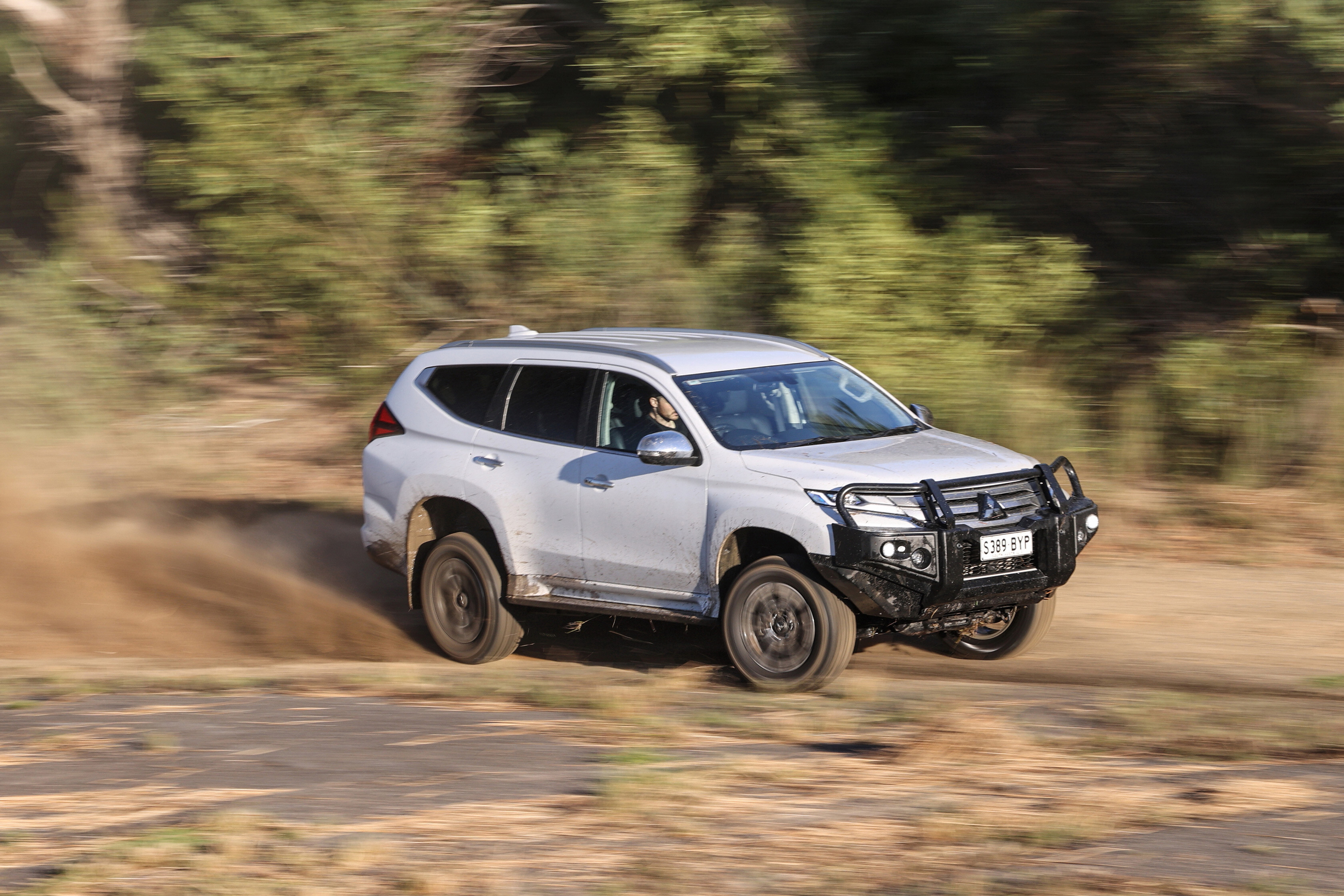
This is where the Everest is an absolute knockout, displaying next-level sophistication and finesse the others cannot hope to match. My notes on the steering (“wonderfully talkative and flowing”), handling (“car-like”), roadholding (“exceptional”), suspension (“supple”) and emergency braking distance (“best of the lot”) all spell it out: The Ford is leagues ahead. Keener drivers will feel nourished as surely as occupants will appreciate how plush and isolated the ride is.
As we said at the beginning, the Everest and Ranger represent the end of a very long road of mass-produced Australian-engineered vehicles, and while it may not be as cheap as the MU-X, opulent as the Pajero Sport or fast as the Fortuner, it is by far the best in class. This is an achievement we can be proud of.
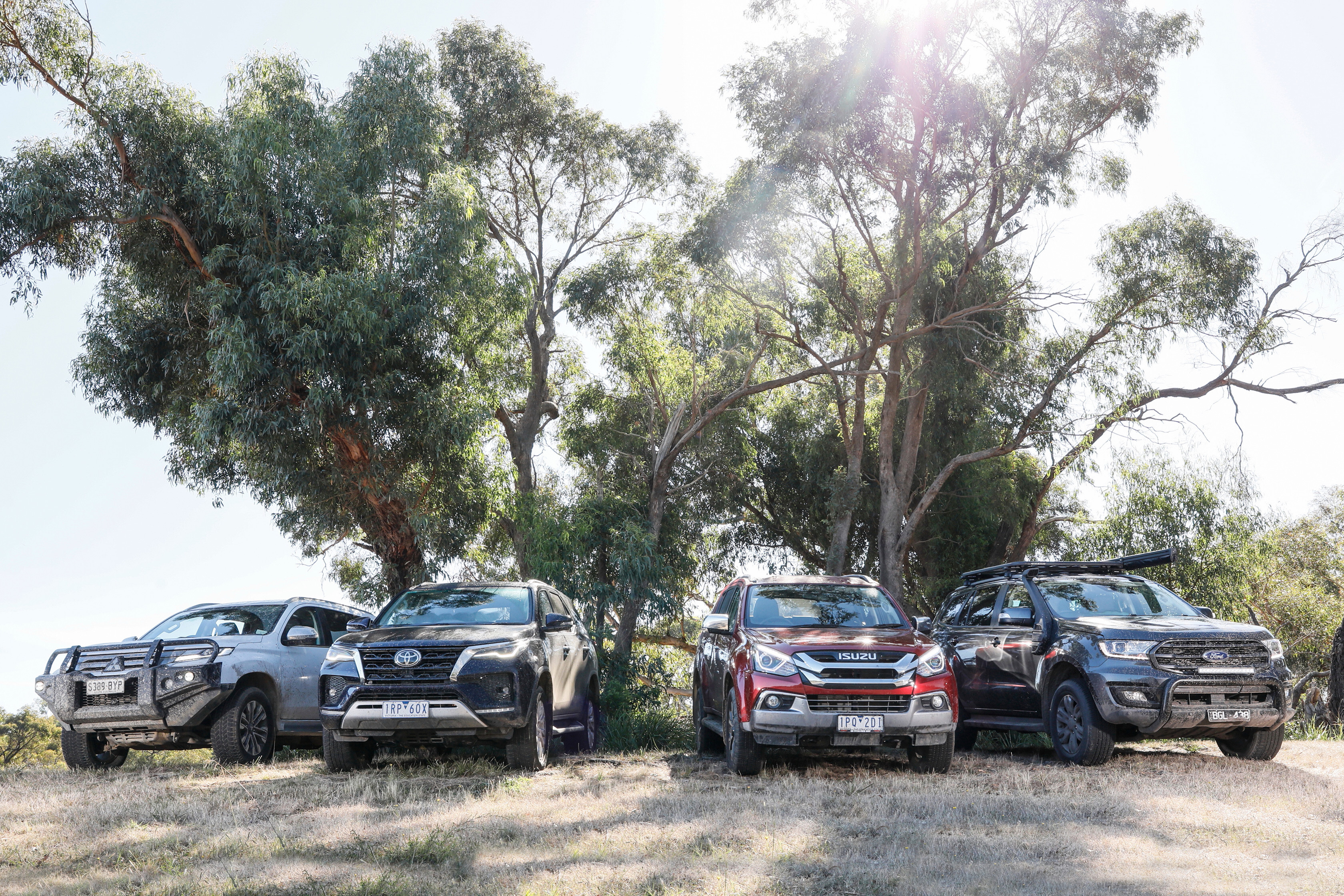
There’s a clear space between it and second-placed Pajero Sport, which puts in a good, honest showing by dint of its value pricing, passenger-first comfort engineering and appealing ownership protection. Too bad it’s such a dreary drive.
Just behind that comes the Fortuner, which – performance aside – shows its age and limitations in too many areas, while the group’s actual geriatric, the MU-X, surprisingly puts up a fair fight with low pricing and smart packaging, but ultimately is just too creaky to properly compete. We have high hopes for the MY22 model.
The Ford’s resounding victory reminded us of two things. Firstly, it smashes rigid expectations and blurs lines with its pan-category capabilities. And, secondly, as a result, there isn’t a more-accomplished body-on-frame 4WD wagon on this continent.
Everest by name, Everest by nature.
Interior Comparison
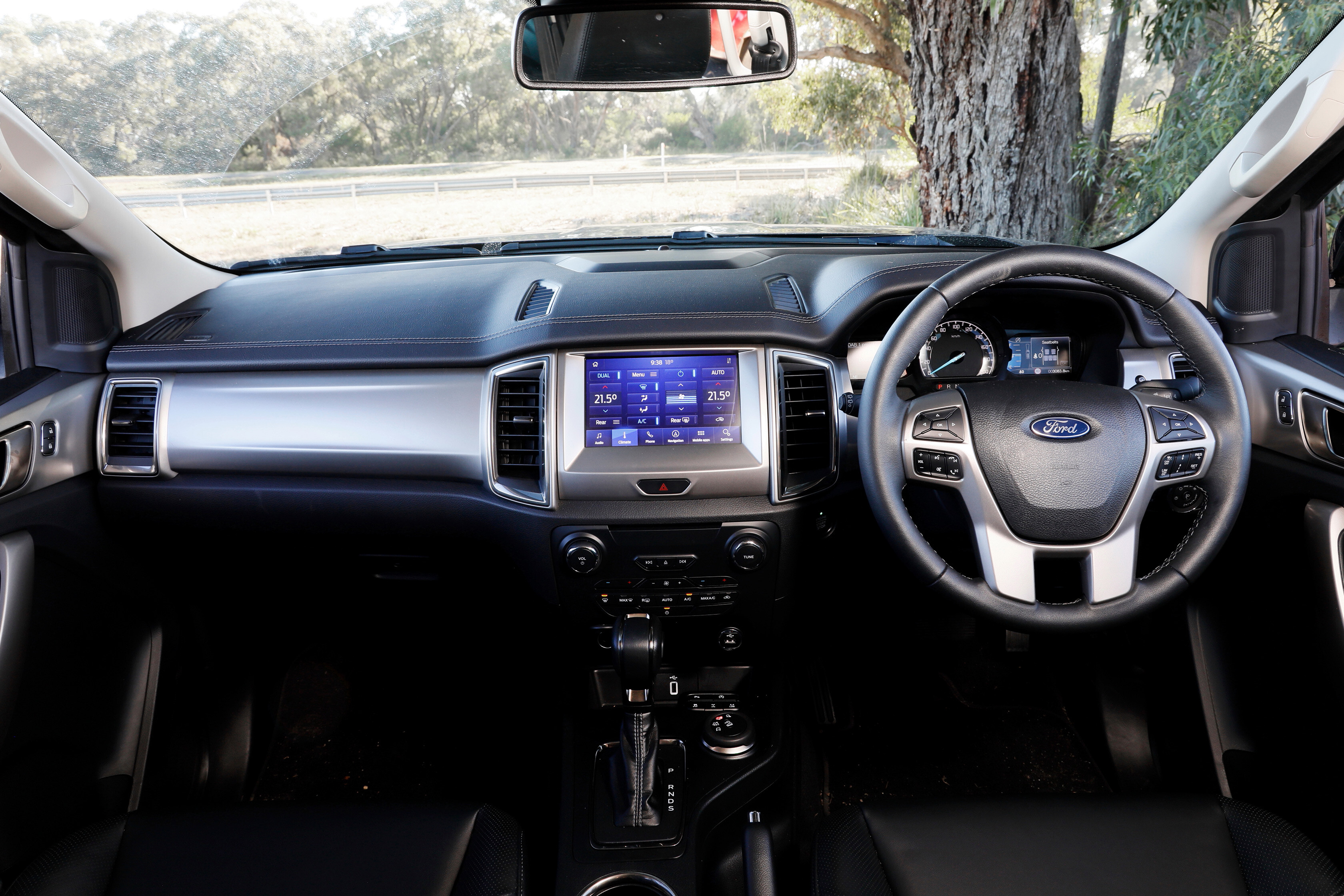
Ford Everest
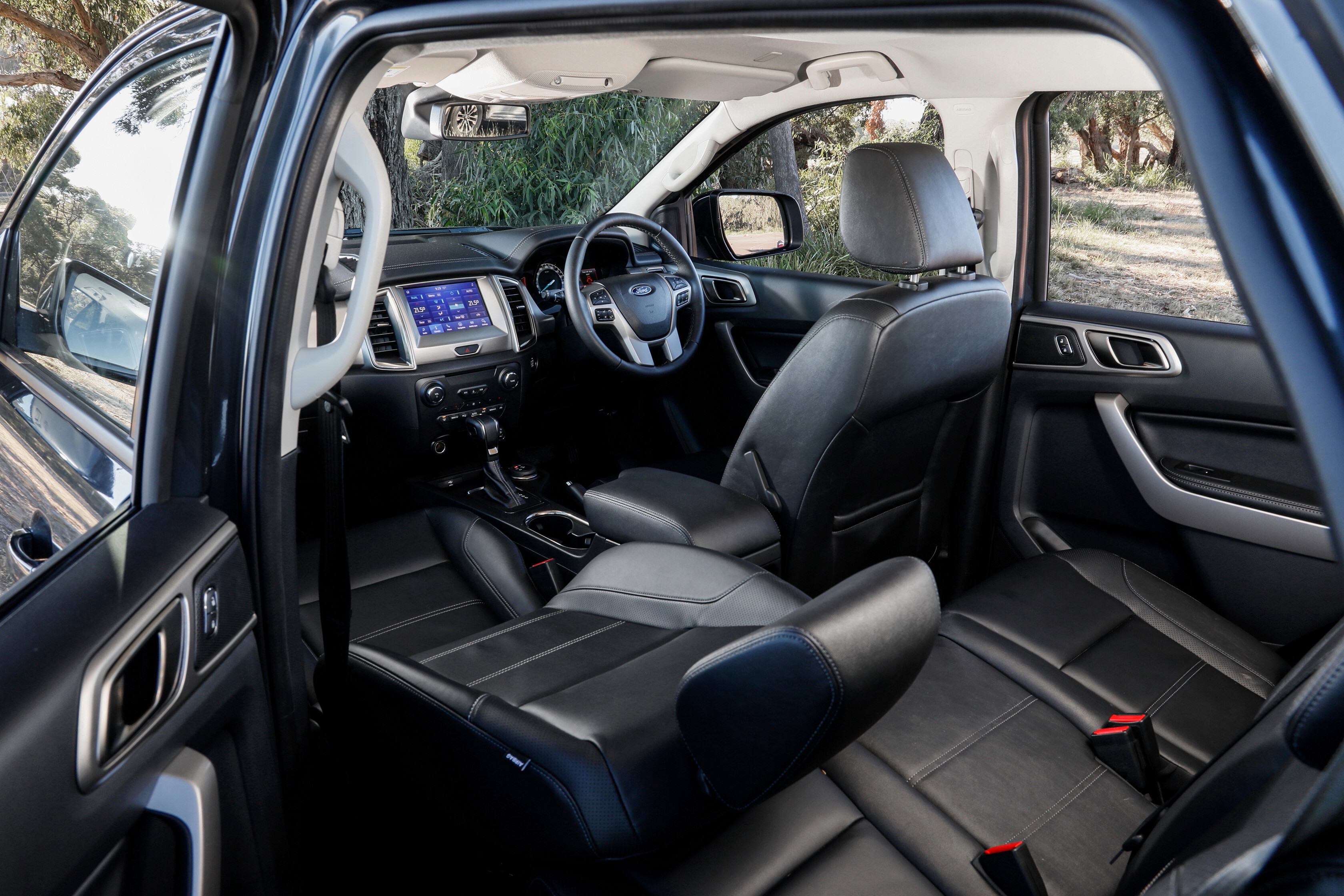
Shared with the Ranger, the Everest’s dash is dated but smart and functional, with user-friendly SYNC3 multimedia, supportive seating, excellent storage and strong packaging for taller people up front and in the second row. But there’s no telescopic steering adjustment while third-row entry/egress isn’t elegant and space back there is tight. Cargo volume is 249L with all seats erect, 876L in five-seat mode and 1796L with two-seater configuration. Braked towing capacity is rated at 3100kg, ground clearance is 227mm.
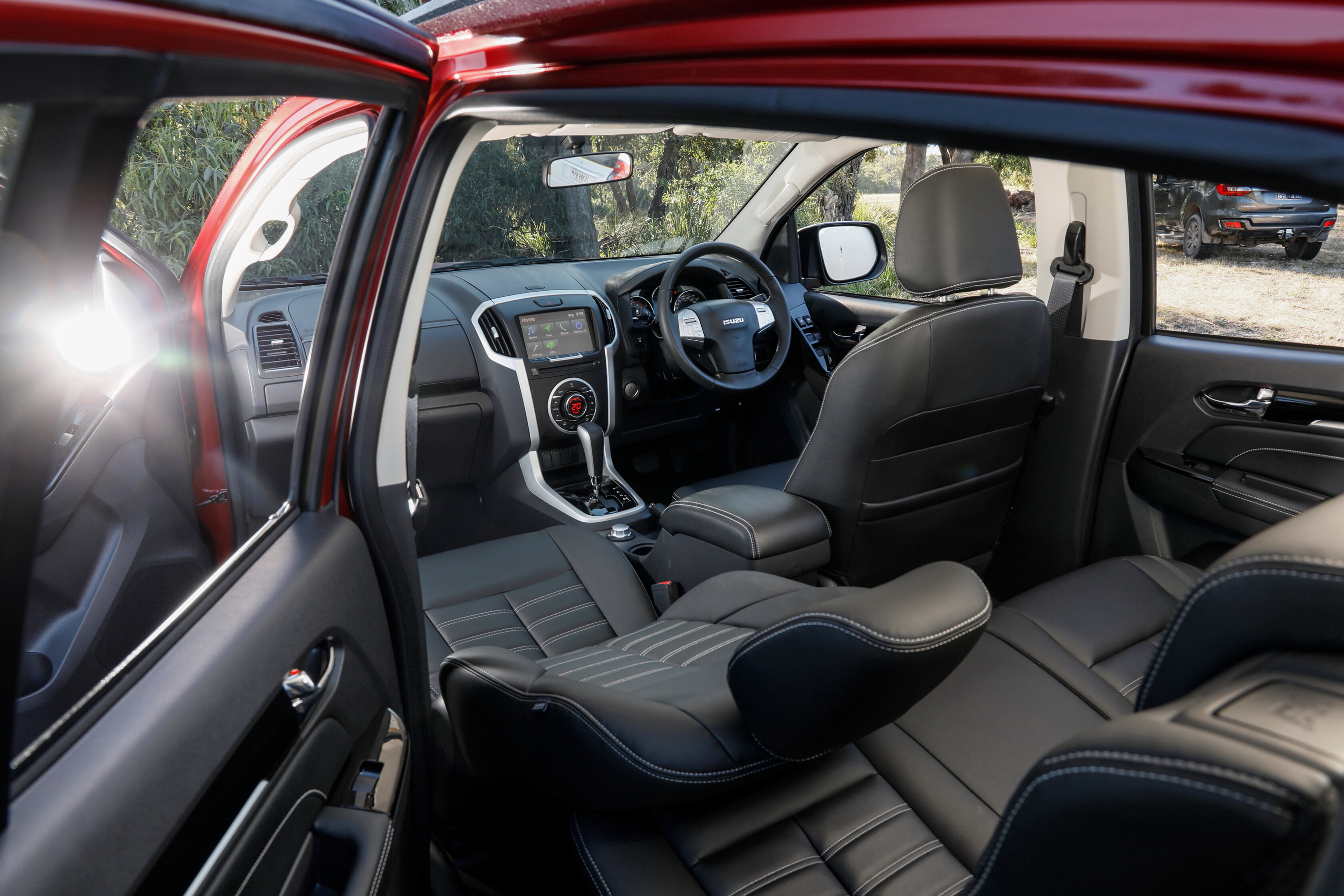
Isuzu MU-X
The MU-X cabin feels old and cheap, and steering is tilt-only, though there’s plenty to recommend, including comfy seats, heaps of space, the oddball circular ventilation controller is quite nice to use and third-row access is easiest of quartet. But doors don’t open up very wide and there’s too much noise intrusion. Cargo volume is 235L with all seats up, 878L in five-seat mode and 1830L with two-seater configuration, beating Everest. Braked towing capacity is rated at 3000kg, ground clearance is 230mm.
Mitsubishi Pajero Sport
Updated digital instrumentation helps boost the Paj Sport cabin’s luxury feel, and also scores with soft seats, lots of space and heaps of useful features. But third-row access isn’t great, the seats are uncomfortable and there’s too much noise coming in. Second-row child-seat tethers impede third-row space because of ceiling hooks. Cargo volume trails the best, with 131L in seven-seat mode, 502L with the third-row folded and just 1488L with rows two and three flattened. Braked towing capacity is rated at 3100kg, ground clearance is 218mm.
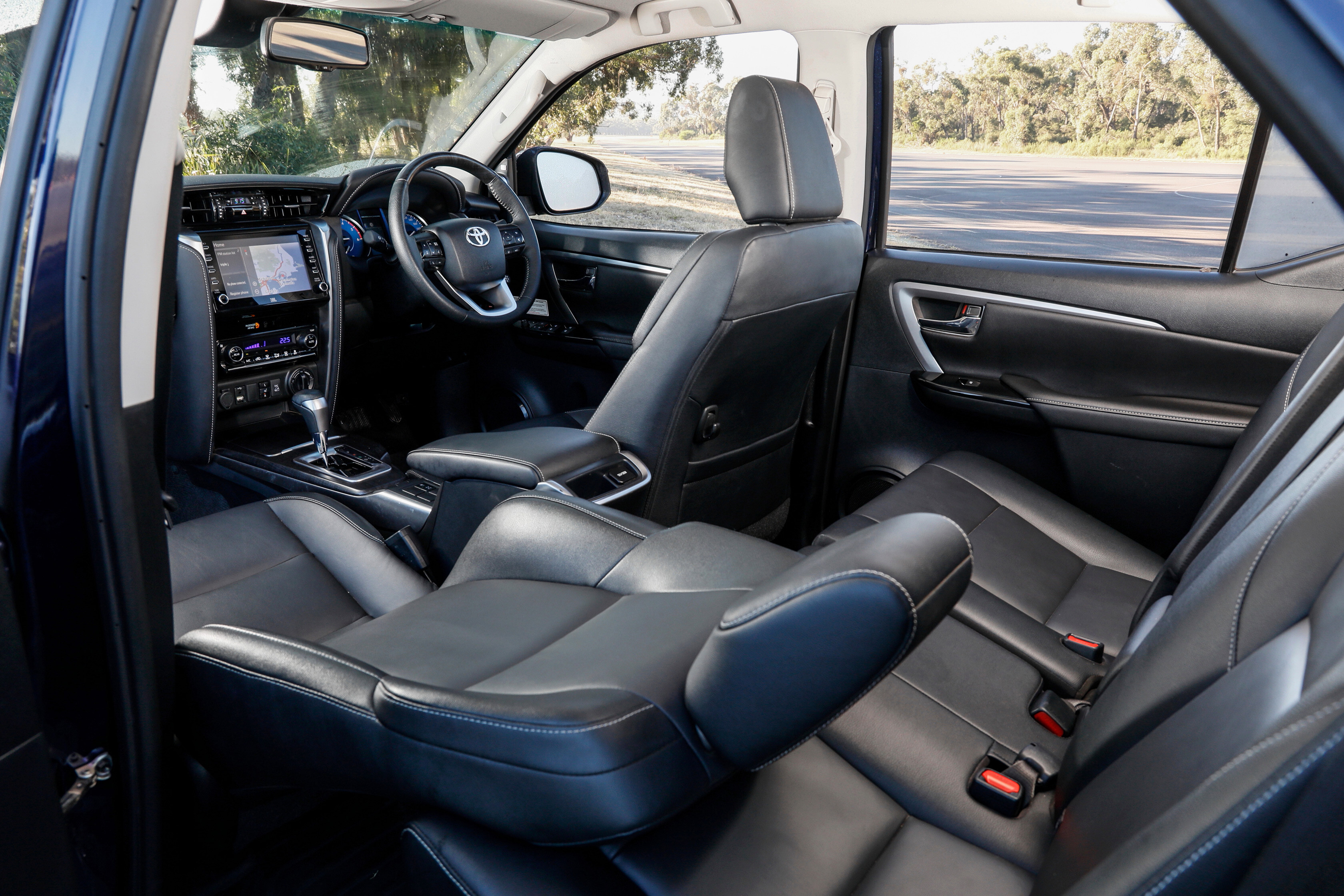
Toyota Fortuner
The Fortuner’s dash looks dated and bulky but is typical-Toyota practical, and benefits from revised instrumentation and multimedia. Seating is fine, but the whole vehicle feels narrower than the rest. Rather than folding into the floor, the twin third-row seats fold up into the sides, eating into luggage space. Cargo volume is 200L with all seats up, 716L in five-seat mode and a disappointing 1080L with two-seater configuration. Braked towing capacity is rated at 3100kg, ground clearance is 216mm.
Verdict
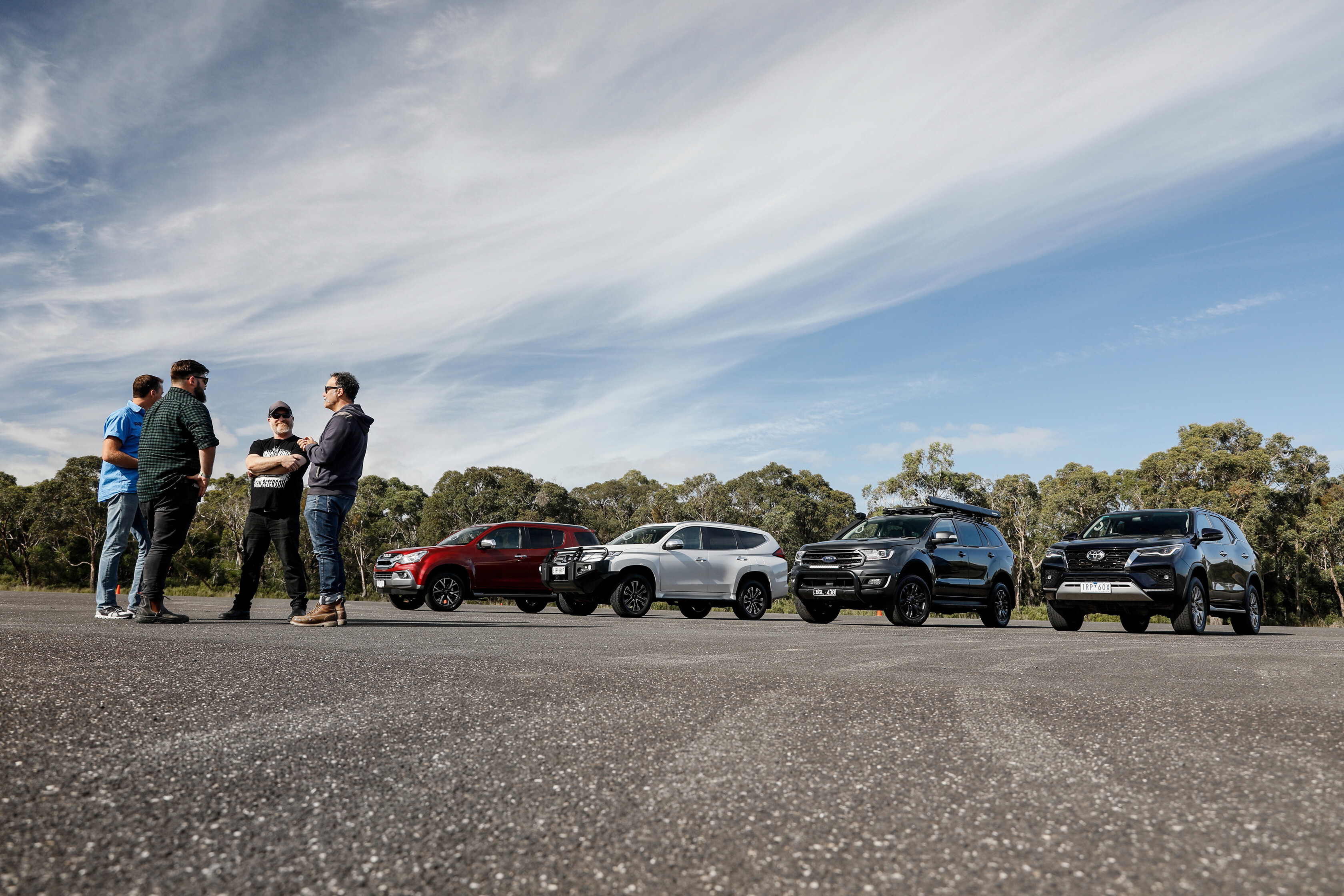
1st – Ford Everest
Score: 8.5/10 Like: Outstanding ride and handling, polished powertrain, comfort, space, design Dislike: Expensive, dated dash, no telescopic steering, difficult third-row access
Warranty: 5yr/unlimited km. Service interval: 12 months, 15,000km. Glass’s 3-year resale: 58%. AAMI Insurance: $958
*Includes BaseCamp special edition with nudge bar, LED light bar, snorkel, towbar, carry bars, Pioneer platform and Sunseeker awning ($2200), Meteor Grey prestige paint ($650)
2nd – Mitsubishi Pajero Sport
Score: 7.0/10 Like: Value pricing, conditional 10-year warranty, comfy ride, plush interior Dislike: Dull steering, noisy interior, excessive body lean through corners
Warranty: 5yr/unlimited km. Service interval: 12 months, 15,000km. Glass’s 3-year resale: 60%. AAMI Insurance: $914
3rd – Toyota Fortuner
Score: 6.5/10 Like: Gutsy performance, sharp handling, Toyota dependability, build quality Dislike: Dreary dash, narrow cabin, jittery ride, cramped and noisy third row
Warranty: 5yr/unlimited km. Service interval: 12 months, 15,000km. Glass’s 3-year resale: 57%. AAMI Insurance: $981
* Includes premium paint ($600)
4th – Isuzu MU-X
Score: 5.5/10 Like: Smart packaging, sharp pricing, easy-access third-row, six-year warranty Dislike: Lack of driver-assist safety, stiff ride, cheap-looking cabin, noise intrusion
Warranty: 6yr/150,000km. Service interval: 12 months/15,000km. Glass’s 3-year resale: 54%. AAMI Insurance: $1018
* Includes Magnetic Ted mica paint ($500)
Specifications
Performance figures
Track: Warm, dry Temp: 23ºC Driver: Byron Mathioudakis
OZTRAIL FAST FRAME TENT
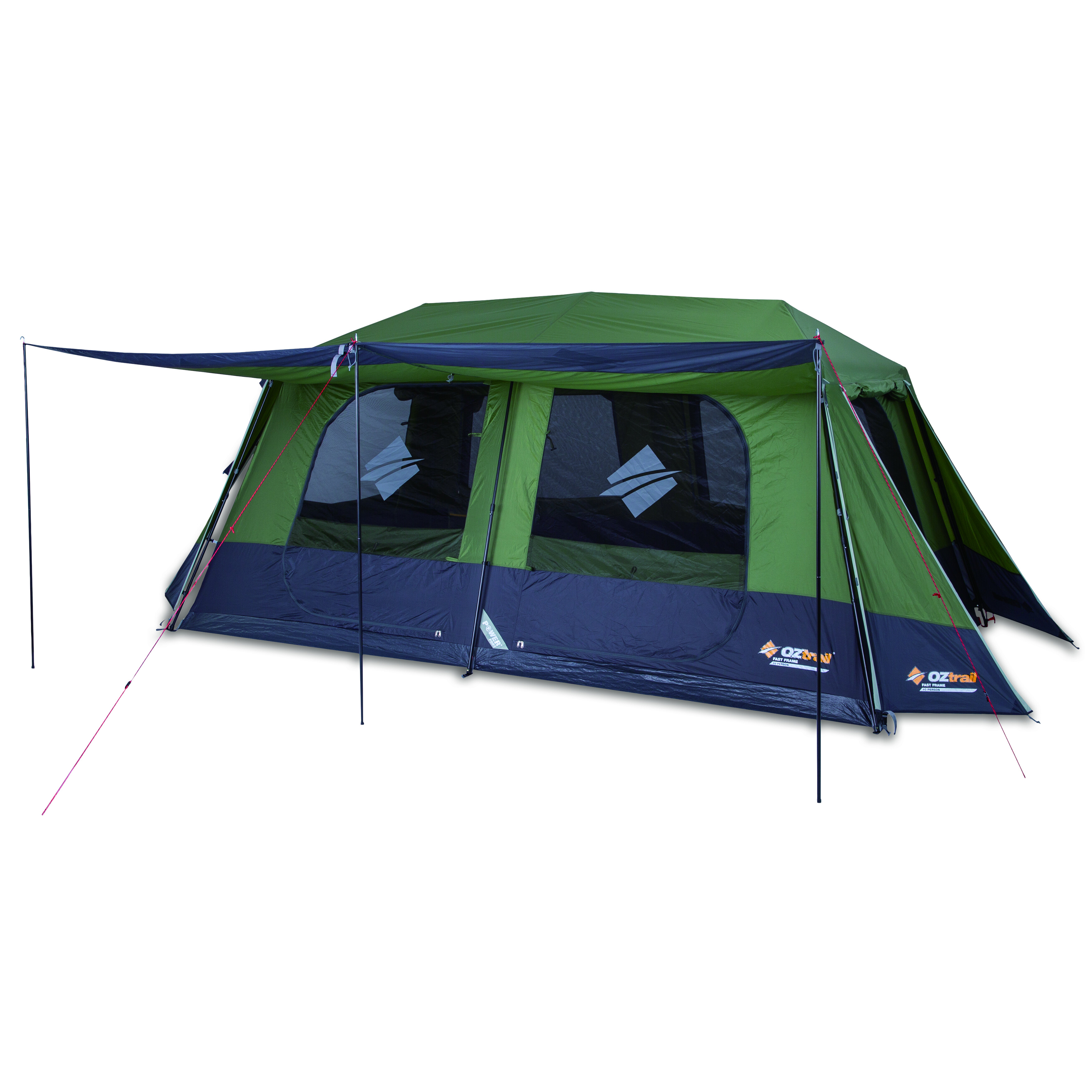
After a long day out on the tracks, the last thing anyone wants is to spend hours setting up lodgings for the night. With an OZtrail Fast Frame 10-person tent, you’ll be off to sleep in no time. The system’s strong integrated hub system is designed for fast pitching, plus it has enhanced headroom and internal space. The 1500mm waterhead rated Ripstop polyester fly will keep you dry, while the heavy-duty PE floor is built for durability. It also has flexible shade options, with front and full side awnings.
RRP: $679.99 Website: www.oztrail.com.au
EFS XCAPE BAR
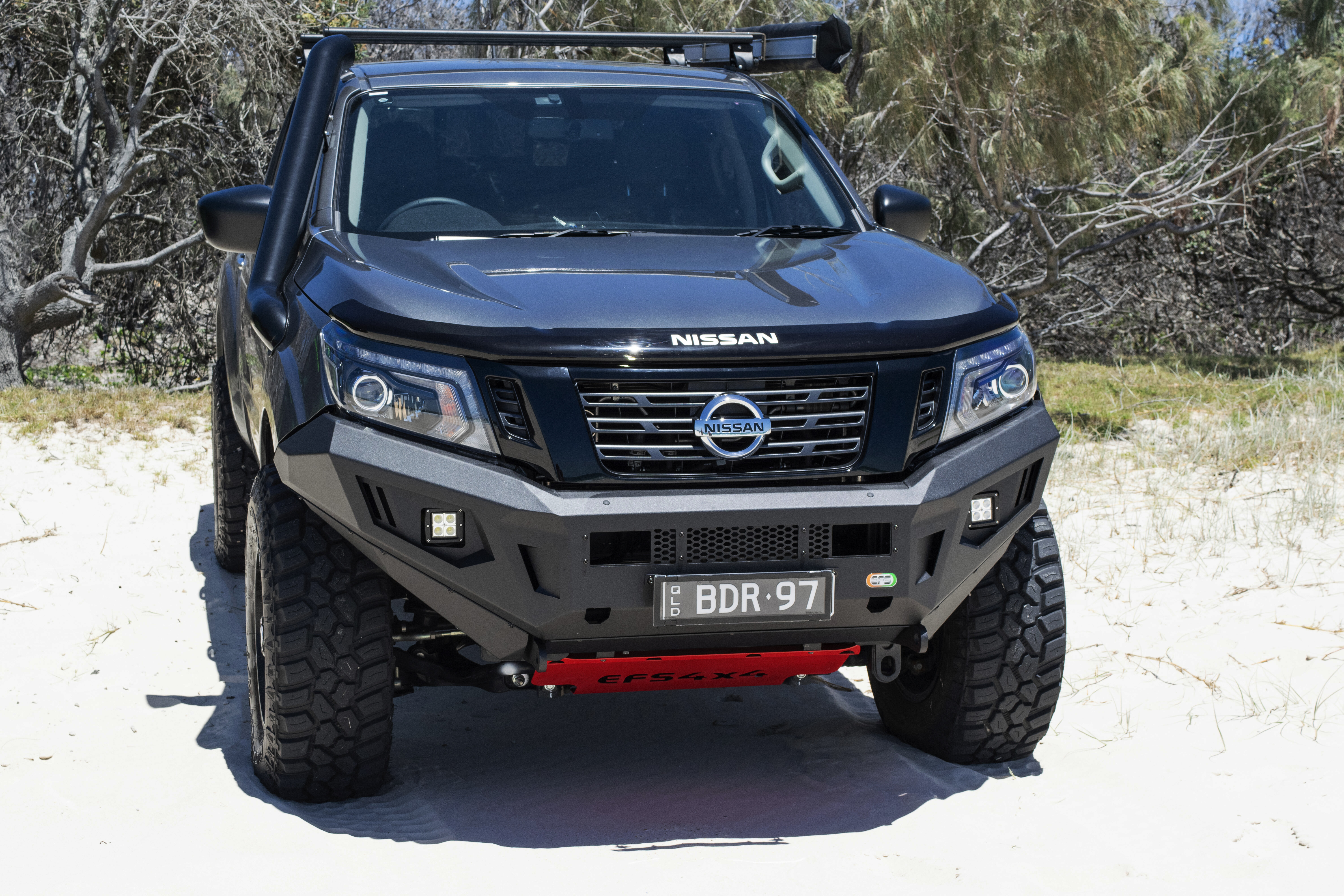
Designed to suit the Nissan Navara NP300 (coil cab and king cab leaf-spring 2015+ models), the EFS Xcape bars are made from high-quality steel and finished in EFS’s Endura coat for maximum protection. Designed specifically to suit Australia’s unforgiving climate, the slimline bar is winch-ready and features LED lights, robot welds, lower bash plates, and high clearance for greater approach angles. The Xcape bars comply with Australian design rules and are air-bag compliant.
RRP: $1799 WEBSITE: www.efs4wd.com.au
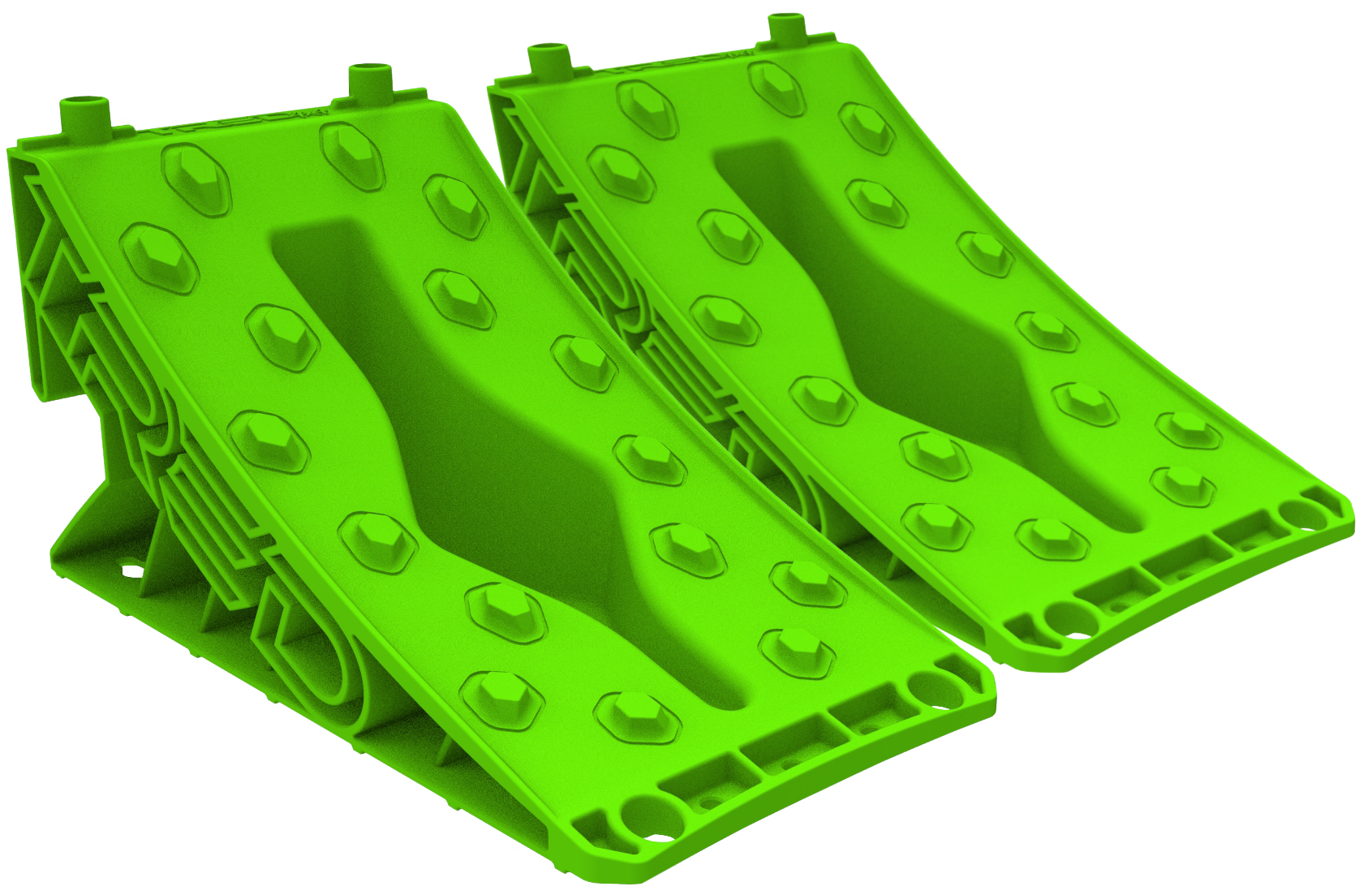
TRED WHEEL CHOCK
Ditch the brick or block of wheel sitting ugly in your garage and pick up TRED’s new Wheel Chock, which has been designed to safely and securely keep your 4×4, trailer and/or caravan in place. The Australian-made unit has a tyre-hugging, aggressive profile, so it won’t slip, and features multiple securing points and TRED-link so it’ll snap together for neat and easy storage. A rope-fixing point allows for easy retrieval, and it’s available in black and green.
RRP: $19.95 WEBSITE: www.tred4x4.com.au
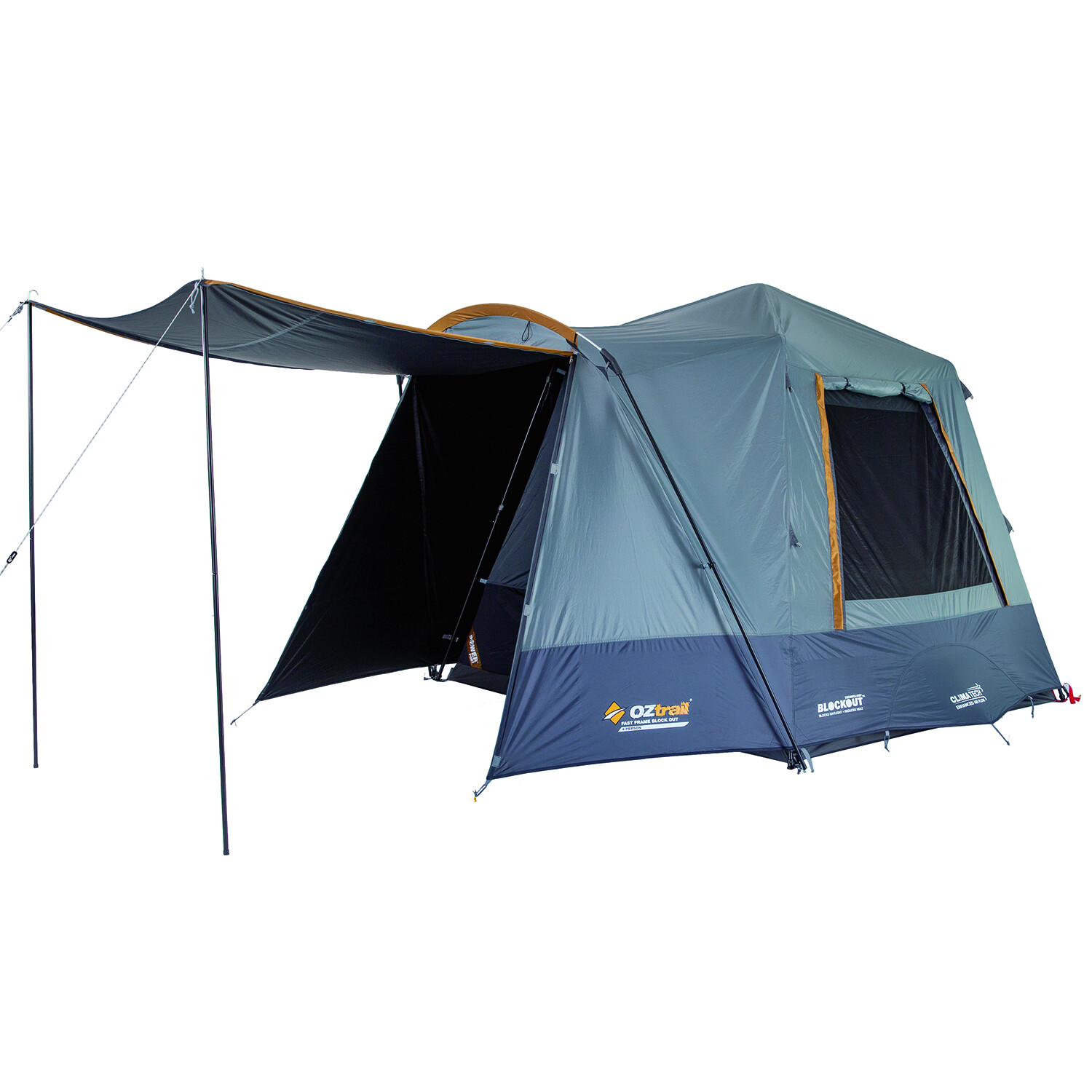
OZTRAIL FAST FRAME BLOCKOUT 4P TENT
Skip the sunrise on your next camping adventure and have a sleep-in inside OzTrail’s Fast Frame BlockOut tent. The BlockOut technology is said to block light by up to 95 per cent and reduce heat by 10⁰C. The single-room tent includes a Fast Frame system which features an integrated hub designed for “fast pitching, enhanced headroom, internal space and strength”. ClimaTech vents are also utilised to enhance ventilation. The tents are made with 3000mm waterhead rated Ripstop polyester fly, with tough Polyoxford floor.
RRP: $529.99 WEBSITE: www.oztrail.com.au
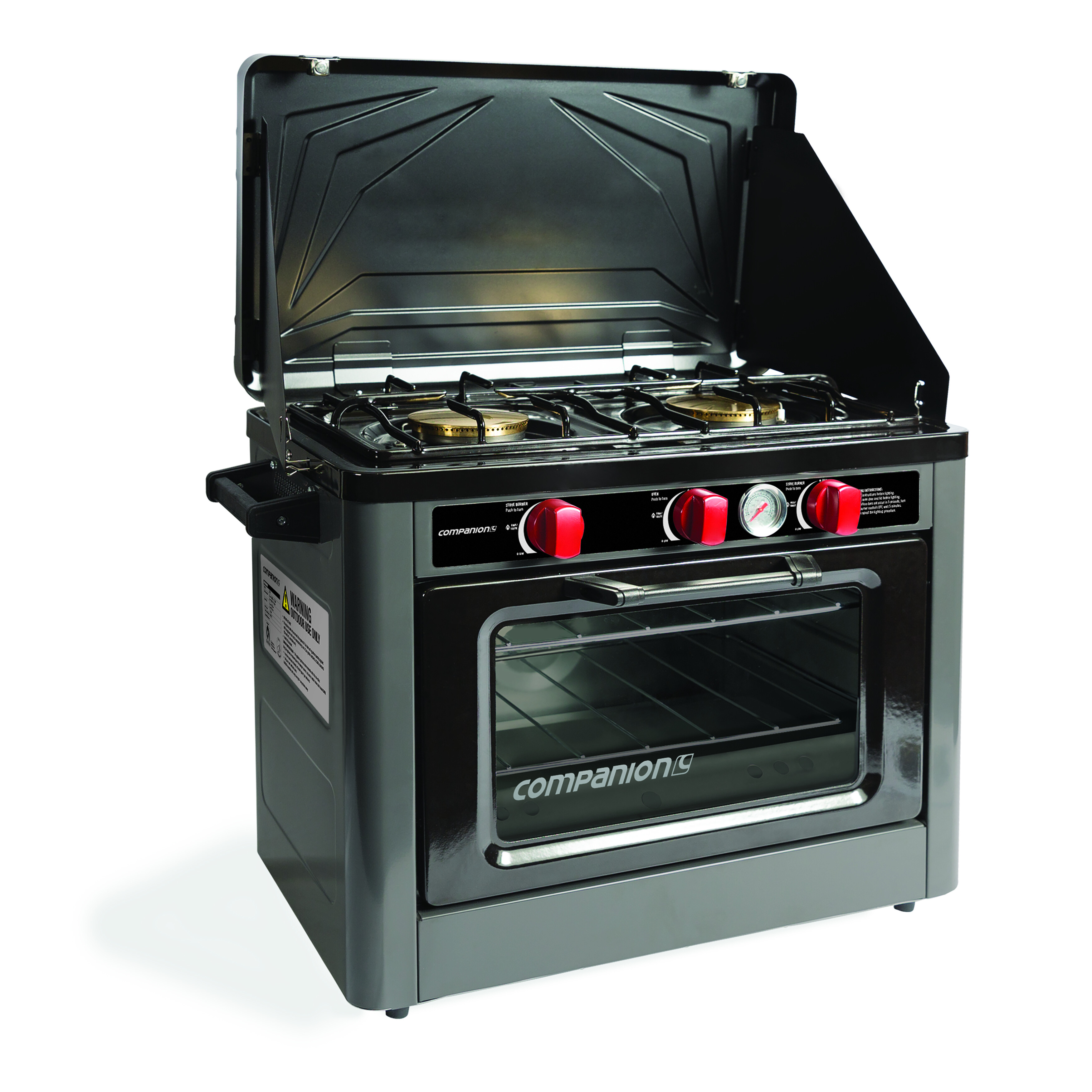
COMPANION OVEN/COOKTOP
Roast for dinner? Be the envy of the other chefs at camp on your next adventure with your very own stainless-steel oven and cooktop combo (the cooktop burners are brass). The low-pressure design makes it ideal for caravan and camping use. The unit features easy-start piezo ignition, a flame failure device inside the oven, temperature-resistant porcelain that can be heated up to 250⁰C, a built-in thermometer, and a 1000mm LP gas hose and regulator for connection to POL cylinder.
RRP: $499.99 WEBSITE: www.companionoutdoor.com
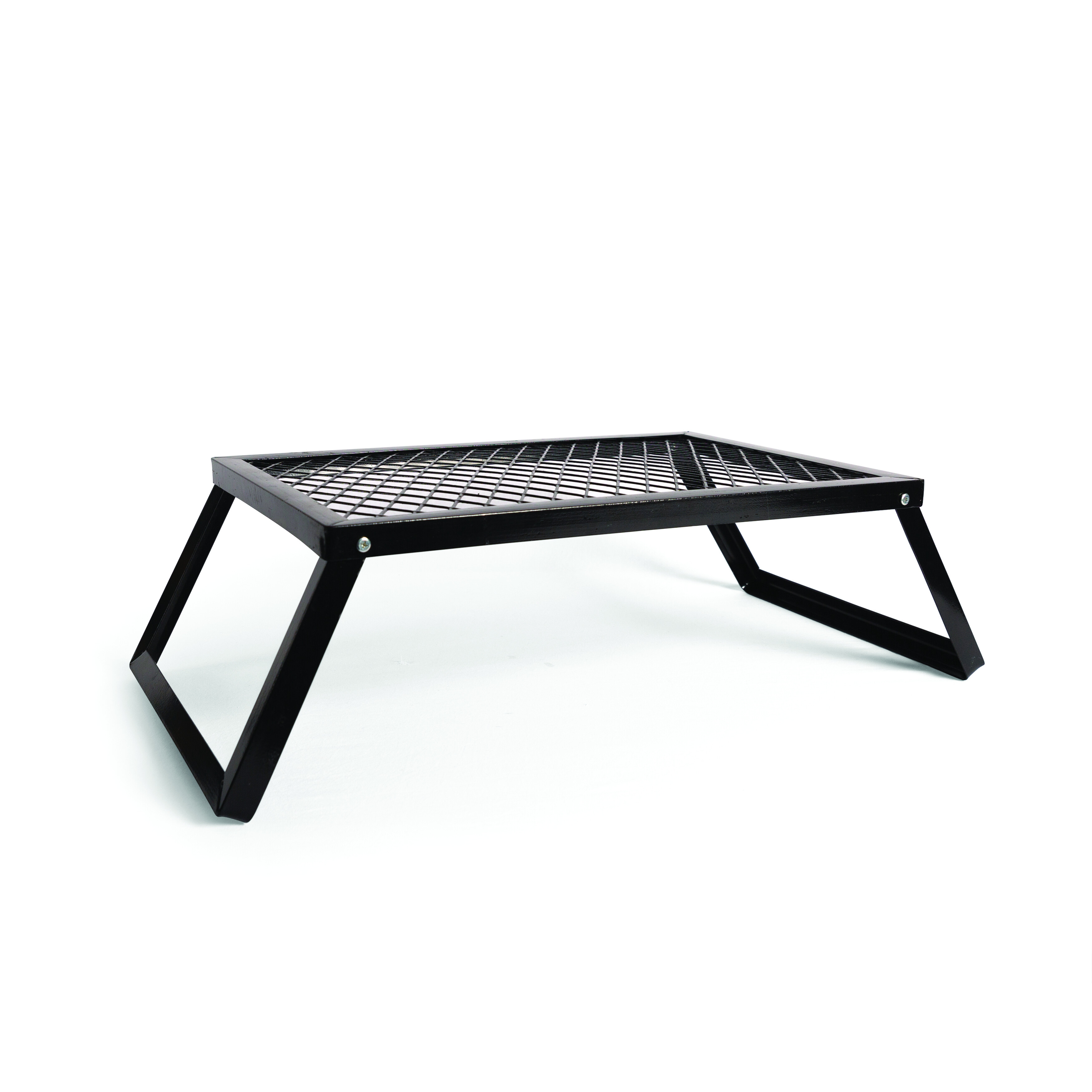
CAMPFIRE CAMP GRILL
Cooking a feast for the family? You’re going to want more cooking space. Enter the camp grill from Campfire. With an expanded metal grill surface – a cooking area of 60 x 40cm – the Campfire camp grill is an ideal tool to cook your dinner over the campfire. Not only does its clever design allow you to easily position it above a campfire, the legs fold down so that it can be easily stored in the back of your 4×4 without consuming too much space.
RRP:$59.99 WEBSITE: www.campfirecook.com
Snapshot
- Disguised PRO-4X Warrior caught testing
- Expected in showrooms within three months
Spy shots have leaked online revealing a prototype Nissan Navara PRO-4X Warrior dual-cab ute testing in Melbourne.
The PRO-4X Warrior is expected to arrive in local showrooms within the next three months.
Much like the PRO-4X which launched earlier this year, the top-spec Warrior model will get the four-cylinder 2.3-litre twin-turbo diesel engine capable of 140kW and 450Nm. Much of the same equipment is also expected to carry over.
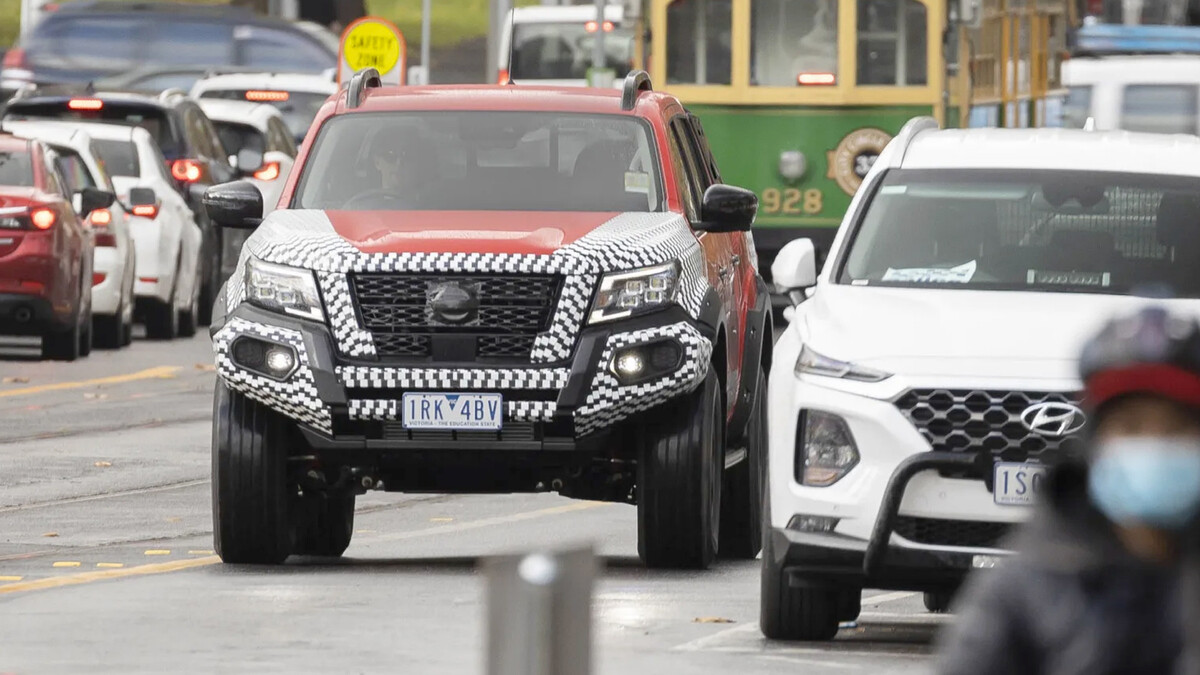
The 2021 Navara PRO-4X debuted earlier this year with a bold, new look, mimicking the rugged front-end style of the Titan in the USA. In doing so, Nissan dropped the N-TREK nomenclature of the flagship Navara.
The N-TREK Warrior wore specially tuned springs and dampers and came with a bigger wheel and tyre package than the base N-TREK. It also had a bespoke steel front bar, underbody protection, siderails, an LED light bar, a redesigned towbar and various styling enhancements.

It was re-engineered locally by the folks at Premcar in Melbourne, with this strategy expected to continue on the PRO-4X Warrior.
The PRO-4X double-cab starts at $59,790 with the six-speed manual gearbox or $61,290 with the seven-speed automatic. Expect to dig a little bit deeper for the Warrior – for comparison’s sake, the N-TREK Warrior when it launched started at $63,790.
No proper touring 4×4 is complete in Australia without frontal protection.
You don’t have to head far from any major city or regional centre to see just how many ’roos are out there, or how much carnage an unprotected vehicle can sustain in the event of an impact. This is why we decided the first thing to get added to our D-MAX was a sturdy steel bullbar from Ironman 4×4.
We chose the Commercial Deluxe bar, for a number of reasons. Firstly, it just looks right. Designing a bullbar for the new D-MAX would have been an engineering nightmare, thanks to all the additional safety features found in this model.
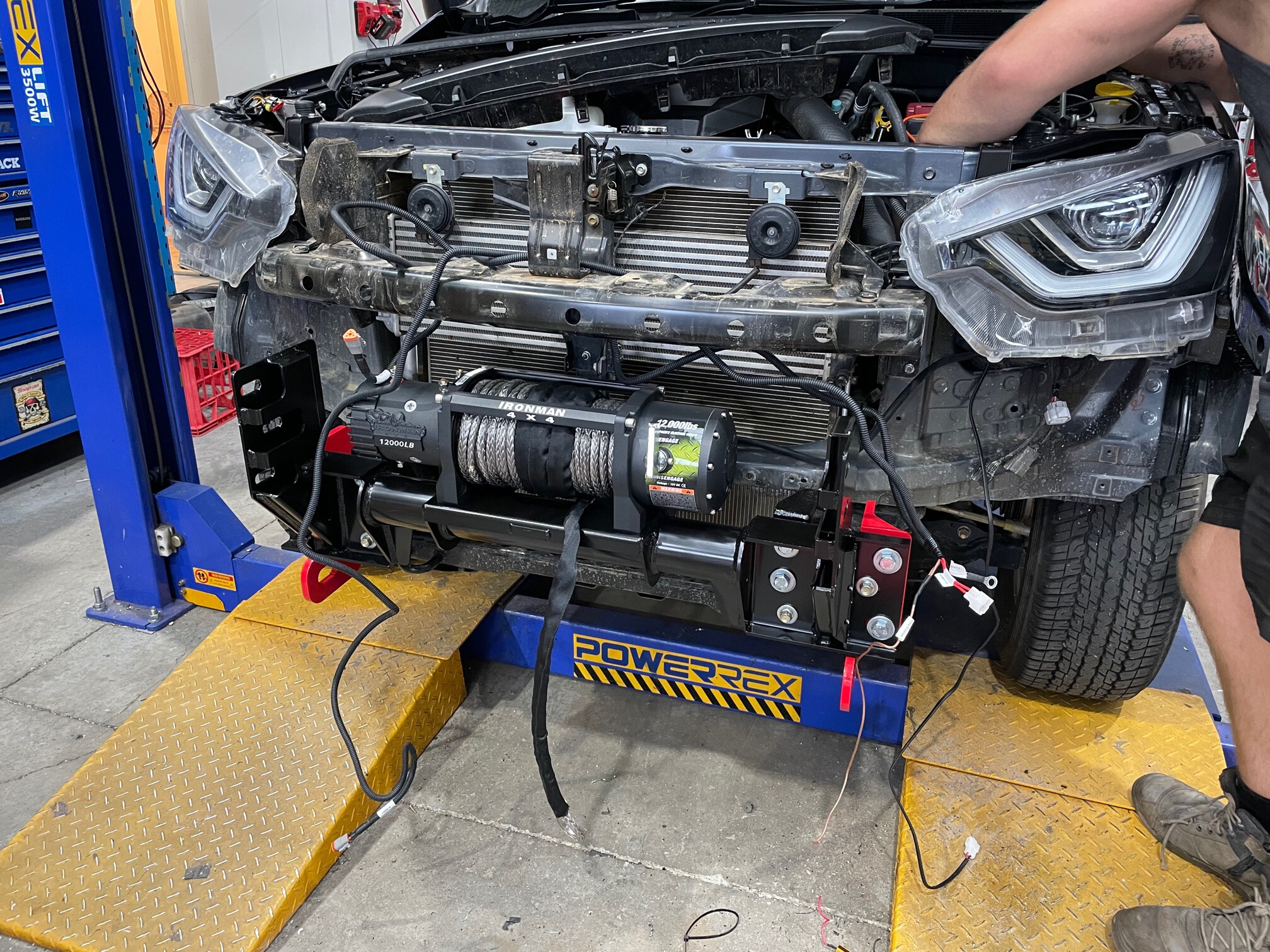
Taking in to account those limitations from a design point of view, I feel Ironman 4×4 has done an awesome job designing this bar. It doesn’t impede the vehicle’s cameras and sensors, while still looking modern and dare I say, aggressive. Seeing it drive out of Truracks in Penrith (which did the fitting – thanks guys) made me almost feel like a proud parent. Our little ute was growing up.
As well as the bullbar, we decided to have a bunch of other gear fitted at the same time. As the front bumper was coming off, it would be rude not to basically. The main addition is a 12,000lb Ironman 4×4 Monster Winch with synthetic rope. I really like the positioning of the clutch handle; you don’t need to be a yoga instructor to operate it. I also rate the supplied controller, with built-in LED light and the ability to run it wireless or plugged in with everything supplied to do either. There was even a winch damper included, which I feel is a neat touch.
While the tools were out, a pair of rated recovery points were bolted on as well, again we didn’t want to be doing things twice. All that is left to do now is some underbody bash plates, which should arrive any day now.
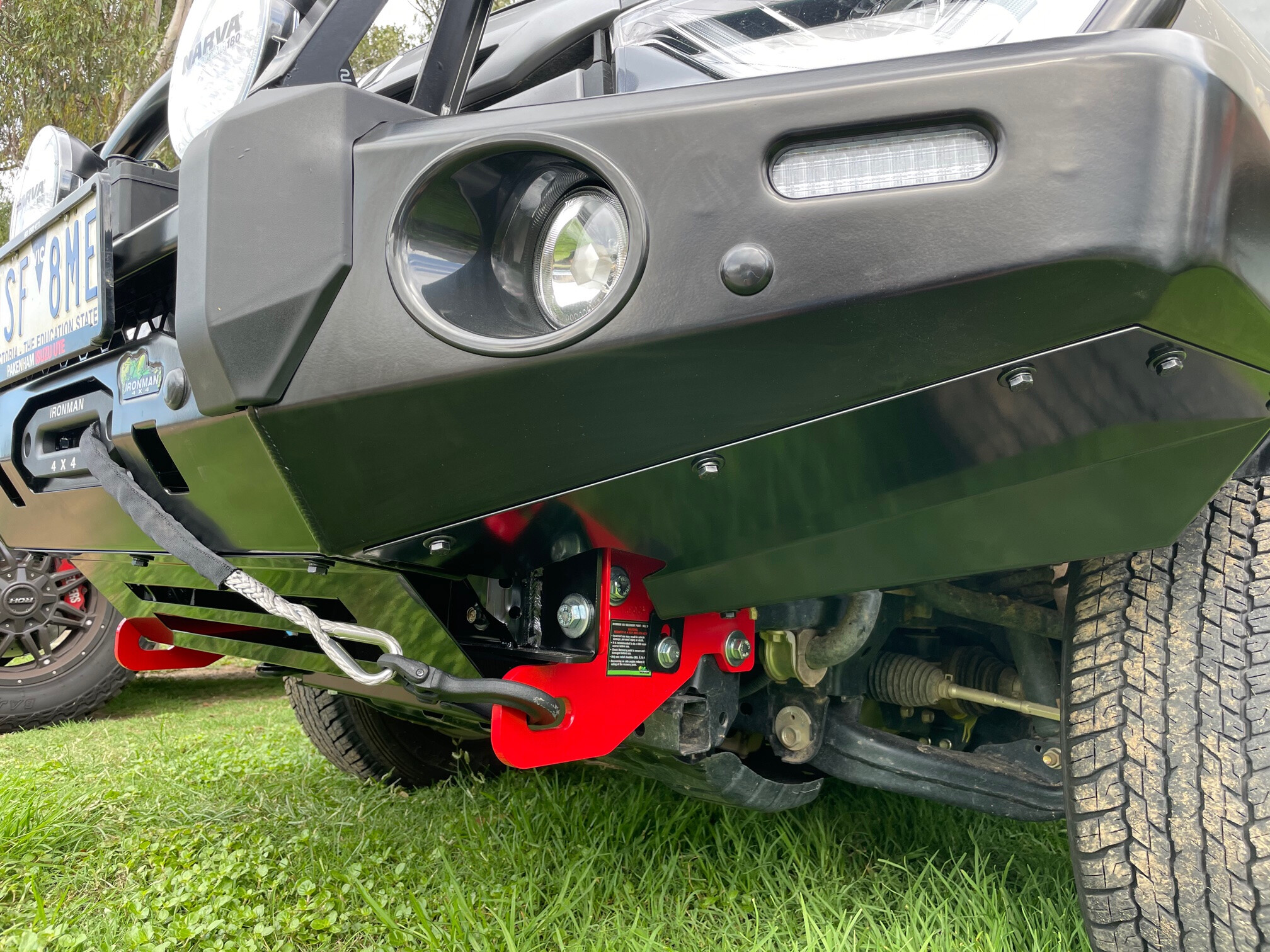
All in all, this is a really good first mod to do, as we wanted to add weight to the vehicle, so we could set the suspension and wheel alignment just right. We also had the Truracks’ team wire up a set of Narva 180 MkII LED driving lights, with daytime running lights; but we’ll focus on these more in a full upcoming review.
As a side note, adding the weight of the bullbar, 12,000lb winch and recovery points made the stock suspension sag 20mm. If you were to do these mods to your vehicle, I’d strongly recommend upgrading the suspension as well.
A trip to Tough Dog Suspension is up next for us, to fix this issue and one other major problem we have with the stock D-MAX suspension.
LED driving lights have come a long way in a short period of time. I’m guilty of always fitting the biggest set of driving lights I could to my 4x4s, because bigger is always better, right?
Well, after 5000km of driving over all sorts of terrain, with these seven-inch lights from Narva, I’ve had to change the way I think about lights and start focusing on quality over quantity.
There are numerous benefits to running a smaller driving light, namely improved fitment to modern bullbars which are sleeker in design compared to say an 80 Series LandCruiser’s bullbar.
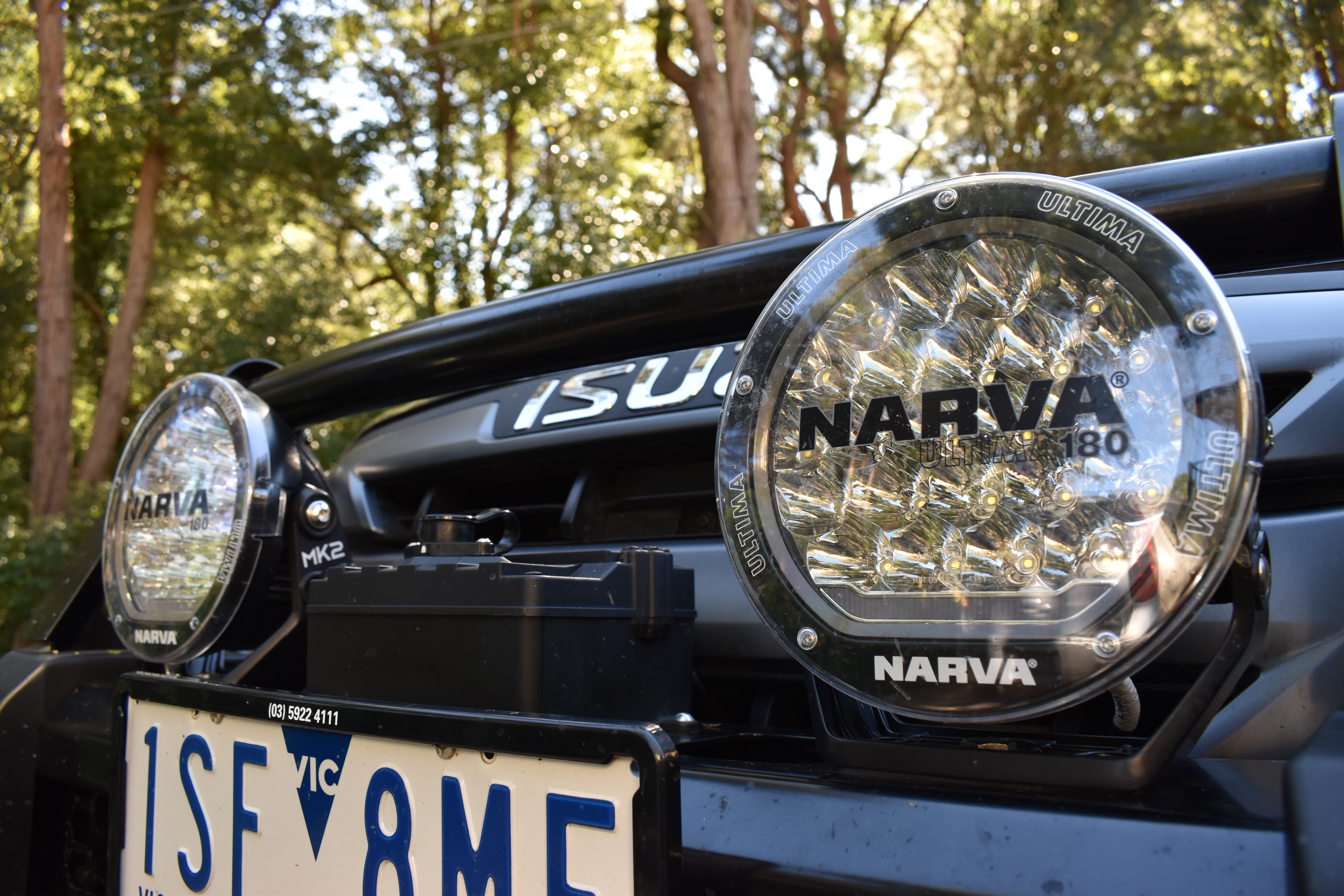
There’s also an increase in airflow to the vehicle’s cooling system, with less real estate taken up by fitting smaller lights. But are they bright enough in the real world?
Narva claims these new Ultima 180 LED MK2 driving lights are 30 per cent brighter than its previous generation of LEDs, and it also states these lights achieve 20 per cent more distance – not insignificant figures.
Combined with the factory headlights on the D-MAX, which offer a wide spread of light, it’s safe to say I don’t feel we need any more illumination on the front of this vehicle.
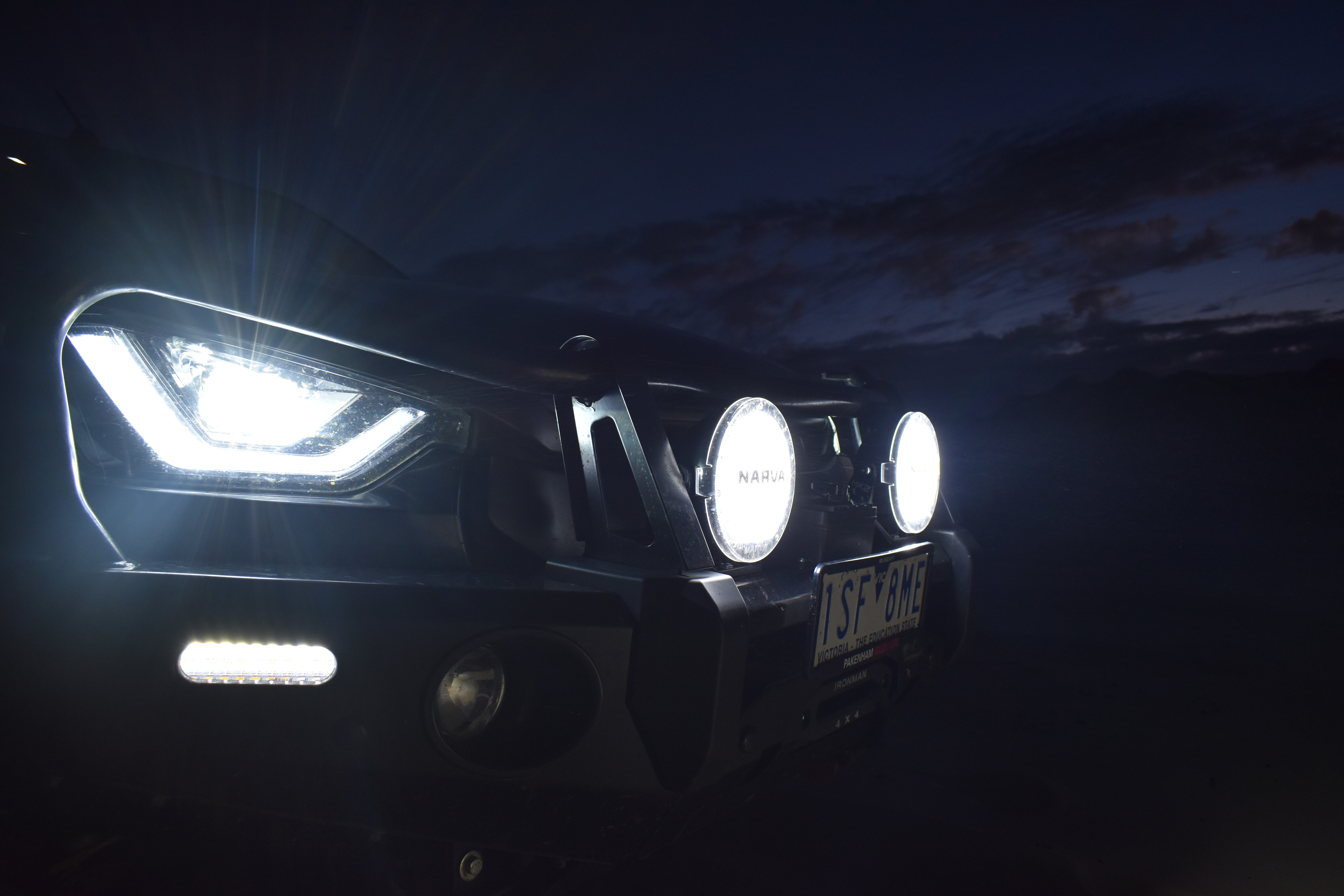
This was best illustrated as I pulled into the NSW town of Tumut on the Snowy Mountains Highway one late evening, after a drive back from Melbourne. I felt completely in control with the amount of light available – and I can confirm when you see a street sign, you really see it now.
They’re also a good-looking light, with a glossy black finish. There is the option to personalise the lights, with the inclusion of three different colour trims when you purchase the lights as a kit.

These kits (which include a loom – lights can be purchased individually too) also come with a stealth dark-tinted lens, if you want to offer more protection for the lights. Not that I think you could hurt these if you tried.
All in all, we’re impressed with these lights and how the D-MAX is progressing as a customised 4×4. We knew that though, as we tested these lights in our recent seven-inch LED driving light comparison, and they performed well across the field.
Pricing
From $487.50 for individual lights; or $1050 for the kit with two lights, wiring harness, and clear and tinted lens covers.
Available from
Snapshot
- Arriving in showrooms from May 2021
- Limited run of 400 vehicles
Jeep’s 80th Anniversary celebrations continue in 2021, with Jeep Australia revealing a limited run of Special Edition Cherokee, Grand Cherokee and Wrangler Unlimited models.
The exclusive ’80th Anniversary Special Edition’ models will begin arriving in showrooms from May 2021, with prices starting at $51,941.
All vehicles are draped in 80th Anniversary aesthetics on the inside and out, with the Wrangler Unlimited in particular featuring an 80th Anniversary swing gate plaque, which pays homage to the original Willys. The vehicles also pay respect to tradition with the Cherokee and Grand Cherokee getting a Dual-Pane Panoramic Sunroof; and the Wrangler Unlimited coming with a Sky-One-Touch Power Top.
Another nice touch on all vehicles is the unique greeting received when operating the 8.4-inch Uconnect touchscreen, which displays “Since 1941” once activated.
To dig a bit deeper, we’ll take a closer look at what each model gets.
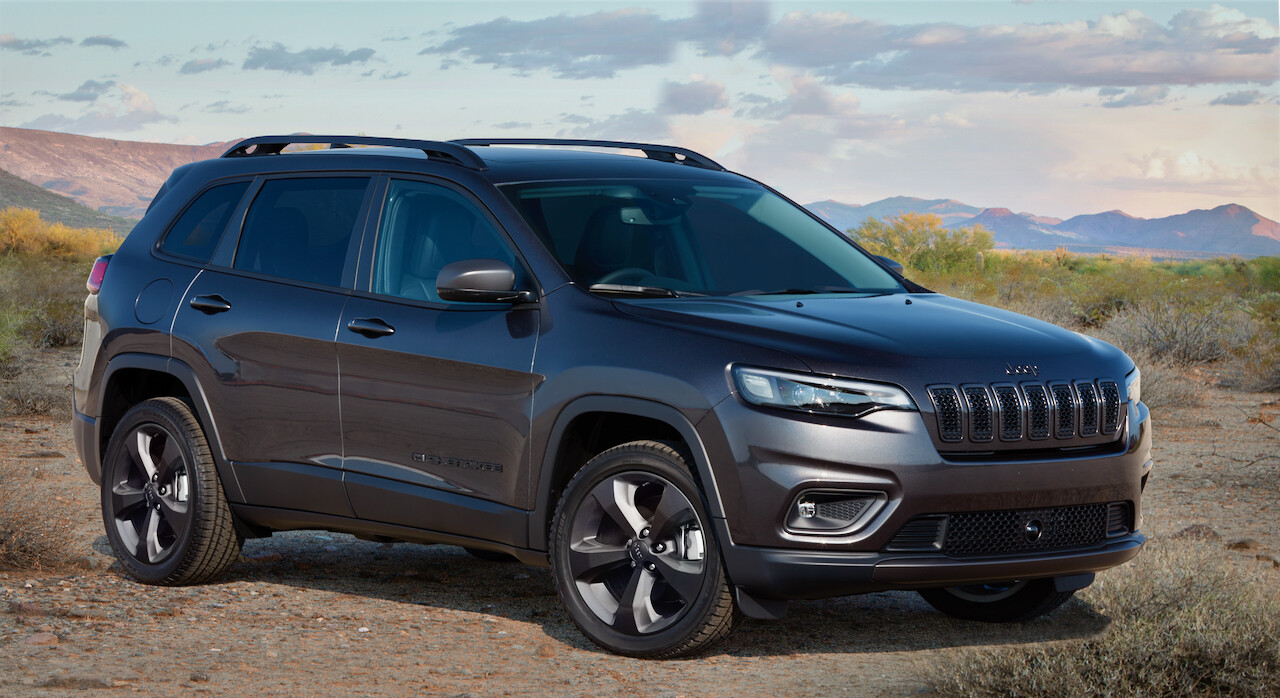
JEEP CHEROKEE
The Cherokee 80th Anniversary Special Edition is based on the Cherokee Limited, with its 3.2-litre petrol engine mated to a nine-speed automatic transmission. In addition to the standard kit on the Cherokee Limited and 80th Anniversary paraphernalia, the Special Edition gets ‘Granite Crystal’ 18-inch wheels, grille surrounds, roof rails, exterior badging and exterior mirrors; and body colour wheel flares, claddings and fascias.
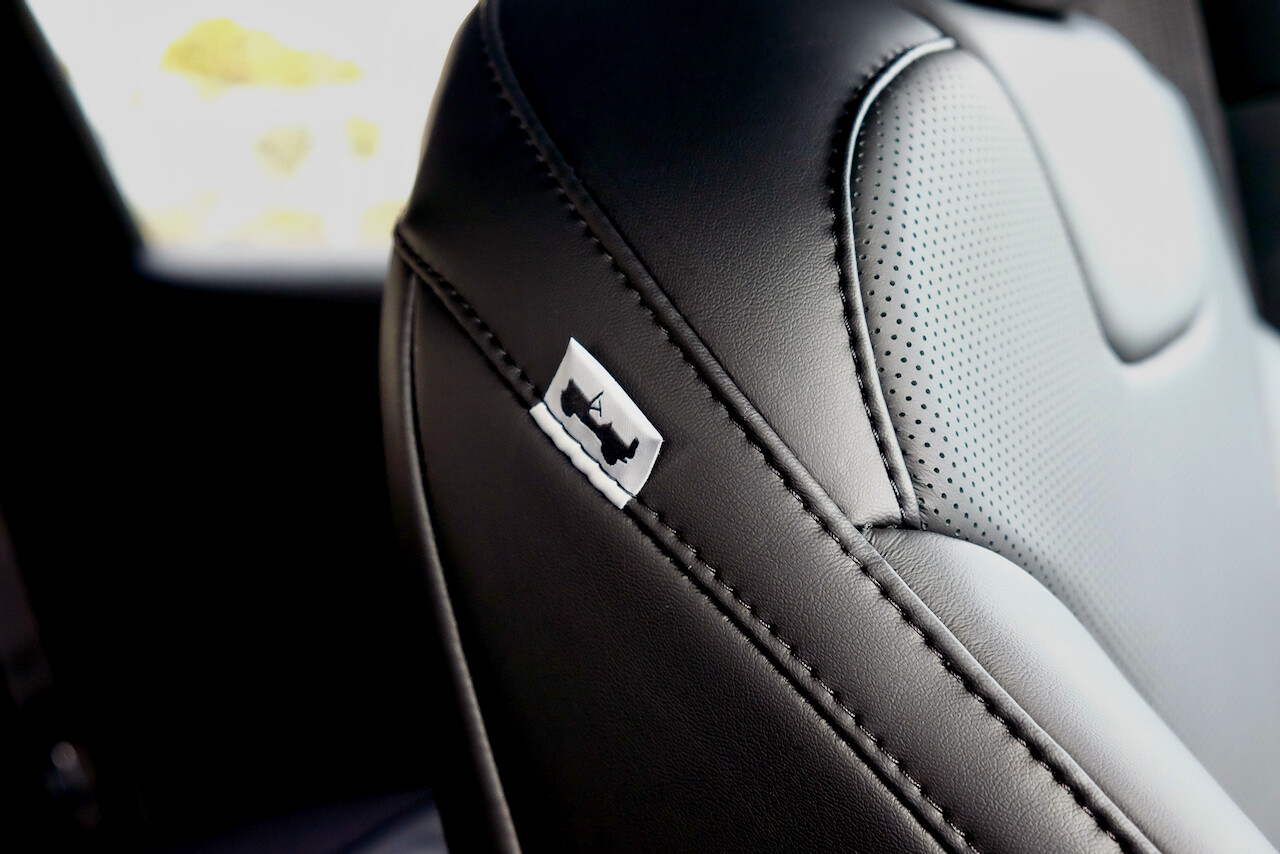
JEEP GRAND CHEROKEE
Based on the 3.6-litre petrol-powered Grand Cherokee Limited (with an eight-speed auto), the Special Edition includes a long list of cosmetic tweaks including ‘Granite Crystal’ 20-inch wheels, exterior mirror caps, grille, badging and accents; Dark Lens tail lamps; a black roof molding; and 80th Anniversary commemorative badges.
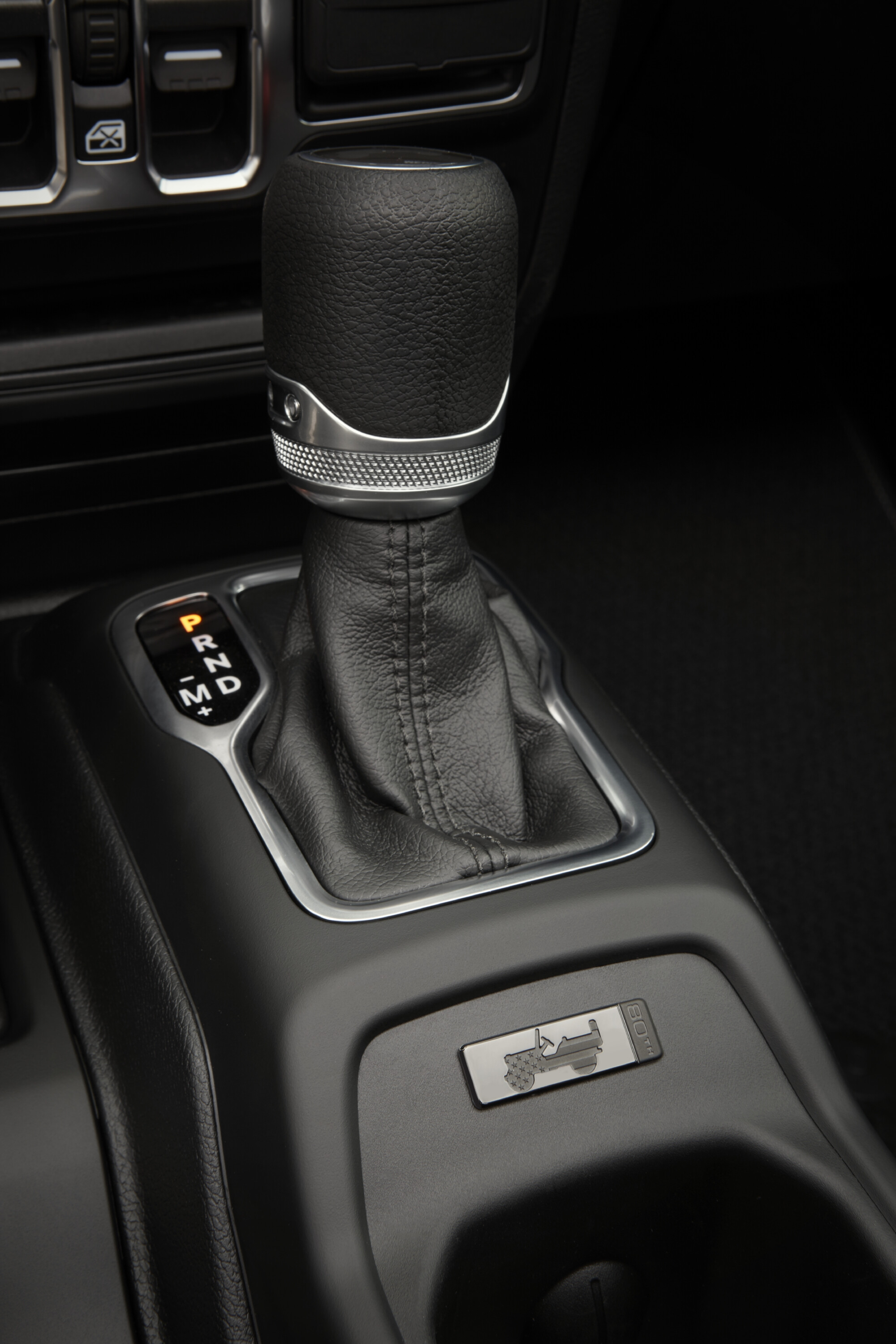
JEEP WRANGLER UNLIMITED
The Special Edition Wrangler Unlimited is based on the Wrangler Overland 3.6-litre petrol, running through an eight-speed auto. In addition to the standard model, it gets 18-inch wheels in Granite Crystal; 80th Anniversary commemorative badges; a gray/black Trail Rated badge; and the as-mentioned 80th Anniversary Swing Gate Plaque.
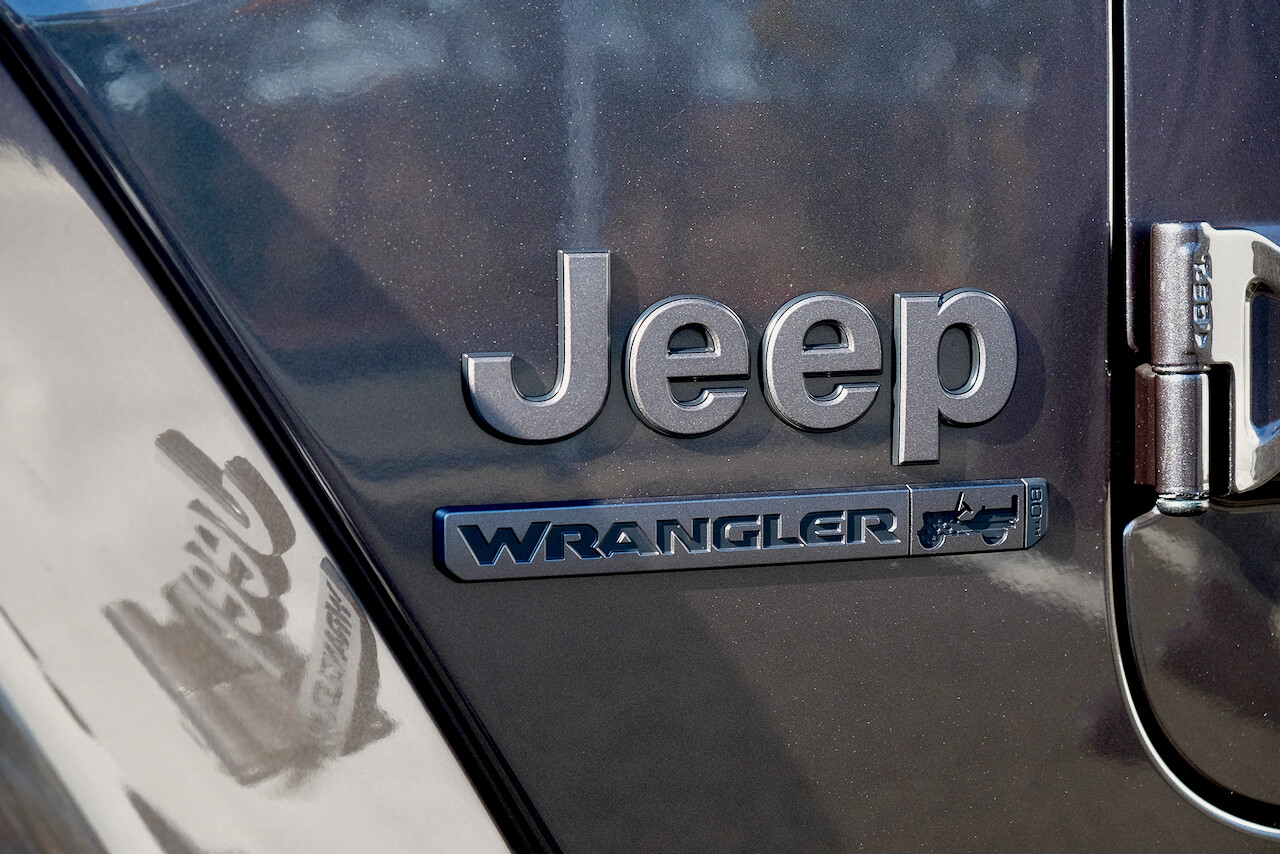
Kevin Flynn, Jeep Australia Managing Director, said of the limited edition models: “Since 1941, Jeep SUVs have been renowned for their unparalleled off-road capability and freedom.
“Today, the Jeep range continues to drive best in class 4×4 leadership, as well as leading safety and convenience features, premium craftsmanship and exceptional on-road dynamics.
“We’re excited to mark eight decades of the Jeep brand with these limited-edition models and give Jeep customers the opportunity to own a piece of history.”
In total, Jeep Australia will offer 80 units of the Cherokee and 160 units of both the Wrangler and Grand Cherokee.
This announcement follows the release of the Jeep Wrangler Unlimited Willys earlier this year, where a limited run of 130 Willys – inspired by the legendary 1948 Willy Overland CJ-3A – went on sale with an asking price of $61,941.
PRICING
Jeep Cherokee: $51,941 Jeep Grand Cherokee: $66,941 Jeep Wrangler Unlimited: $71,941
Snapshot
- Heavily redesigned interior
- Factory offered rear diff lock
- Advanced safety features, as per the D-MAX
It’s been a long time coming, but Australia is set to receive the new-generation Isuzu MU-X in the coming months.
Considering the popularity of the current Isuzu D-MAX, it’s a no-brainer for Isuzu to bring in a more modern version of its seven-seat wagon based on the D-MAX platform.
While we will still have to wait for a full reveal on the local-specification MU-X, we can confirm this is what the vehicle will look like, including a heavily redesigned interior.
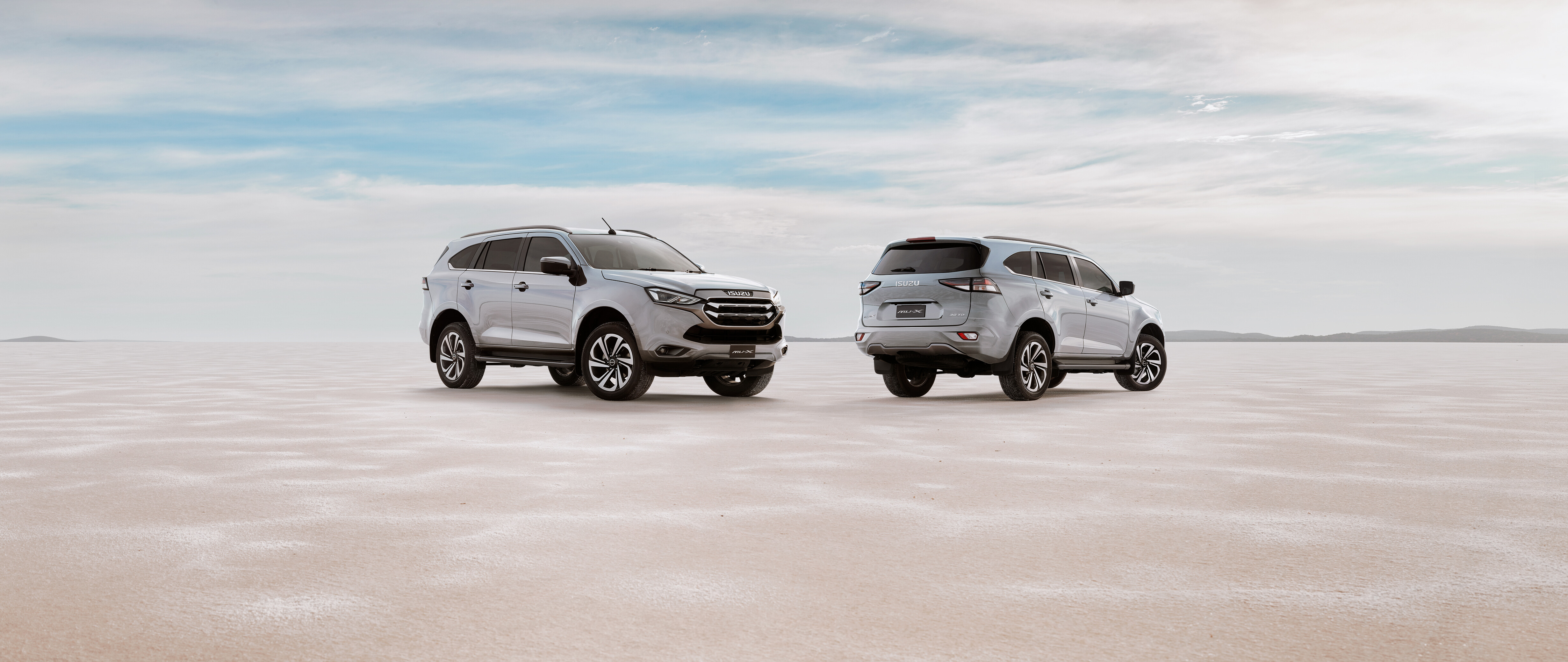
Boosts to technology across the Isuzu range have been announced, as well as increased off-road ability thanks to the factory offered rear diff lock.
Interestingly, Australia is the largest global export-market for Isuzu. As such, design and features on the new model have evolved from feedback received from the current MU-X. This means we will see Isuzu’s Intelligent Driver Assistance System (IDAS), and higher levels of safety technology as per the D-MAX.
What we do know is Isuzu is offering a more premium interior, fit for modern Australian families, including a nine-inch touchscreen with Apple CarPlay. Bi-LED headlights with LED daytime running lights will be featured, and it looks like the new MU-X will be rolling on 20-inch wheels.
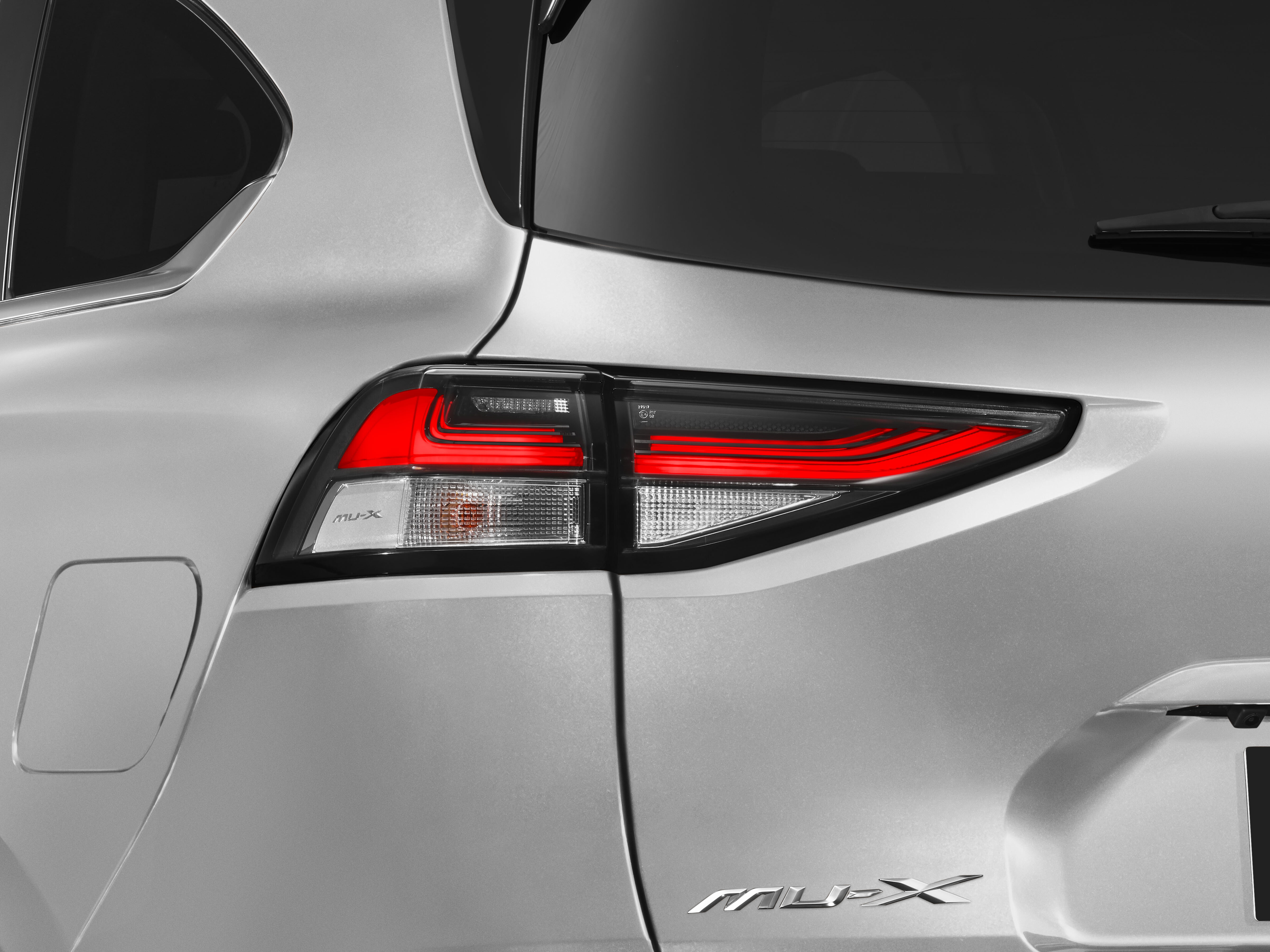
It’s also safe to say the MU-X will be fitted with any engine you want, as long as it’s the 3.0L turbo-diesel 4JJ3-TCX motor found in the D-MAX.
Producing 140kW at 3600rpm and 450Nm between 1600-2600rpm, it’s a solid performer for off-road and towing duties. It’s unsure if a manual transmission will be available at this stage.
Isuzu UTE Australia Managing Director, Hiroyasu Sato, had this to say: “While it’s too early to reveal all the details, I’m proud to share that we’ve been working hard to ensure that our all-new MU-X combines the latest technology and design with the proven formula of durability and reliability that Australian motorists have come to expect from Isuzu over the years”.
The first 1500 registered purchases will receive a limited-edition Isuzu UTE branded Casio G-Shock watch as an incentive.
If you have been hanging out for the new Isuzu MU-X, and want to get your hands on one ASAP, register your interest here: www.isuzuute.com.au/all-new-isuzu-mu-x
When does the new MU-X hit Australia?
Specific timing is still to be announced, but Isuzu has confirmed the new MU-X will be here “in the coming months”. We’d expect that to mean sometime before September.
I STILL remember my first time driving on the sands of Stockton Beach. I would have been 14 years old and my dad had just bought a Range Rover Classic.
He had always wanted one, and as I was entering my troubled teenage years, it was something we could bond over. But we had no idea what we were doing. The smart call was to join the Range Rover Club and attend its beginner sand-driving course at Stockton Beach in NSW.
Within the first five minutes of driving down Lavis Lane towards the beach, my old man barked, “What the hell have you gotten me into?” Not what you want to hear at the start of the day. We nearly threw in the towel and headed home.
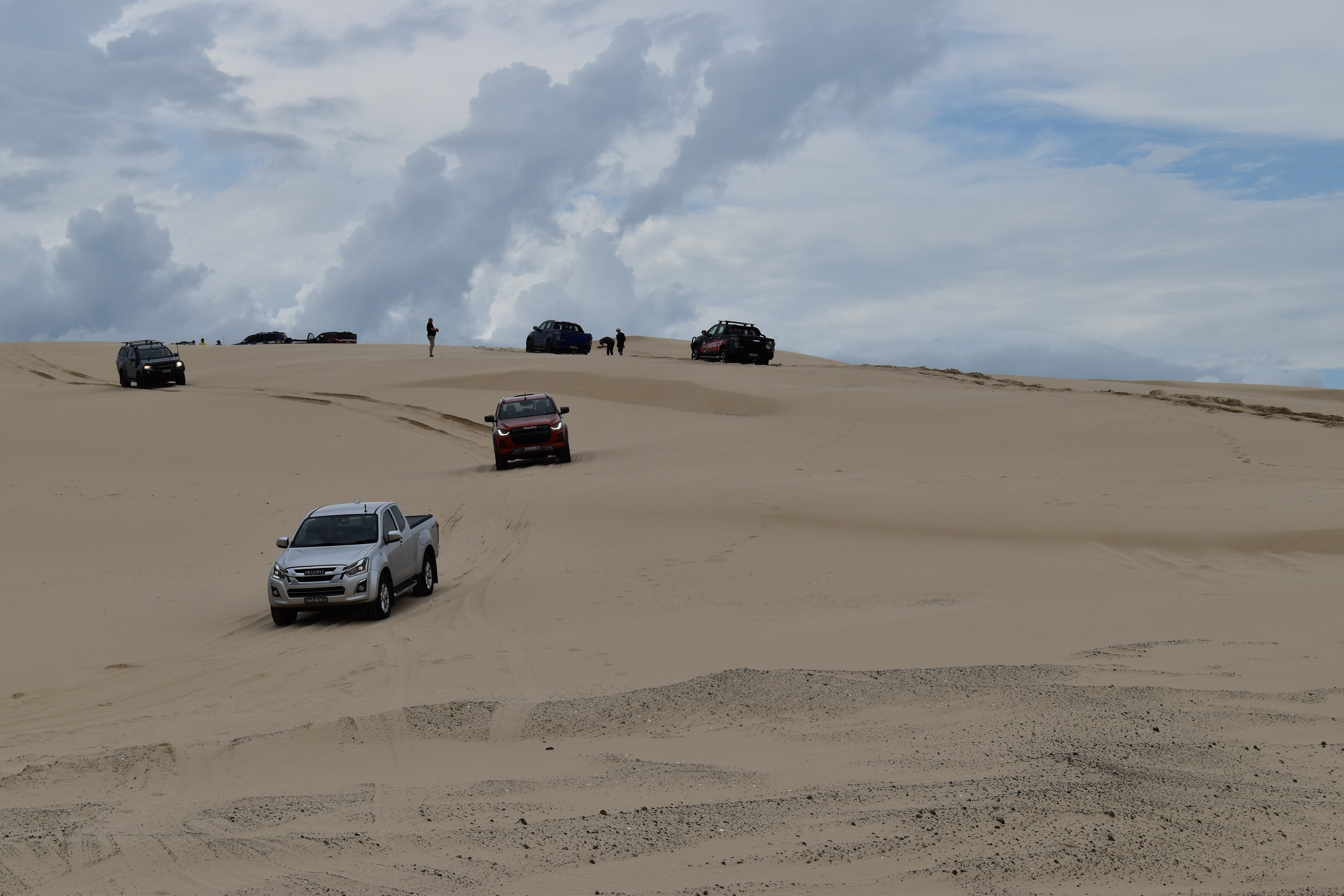
Thankfully, by leaning on club members who had experience, he had a smile on his face pretty soon. By the end of the day, we were cruising up and down dunes like experts, and still enjoy sand driving to this day.
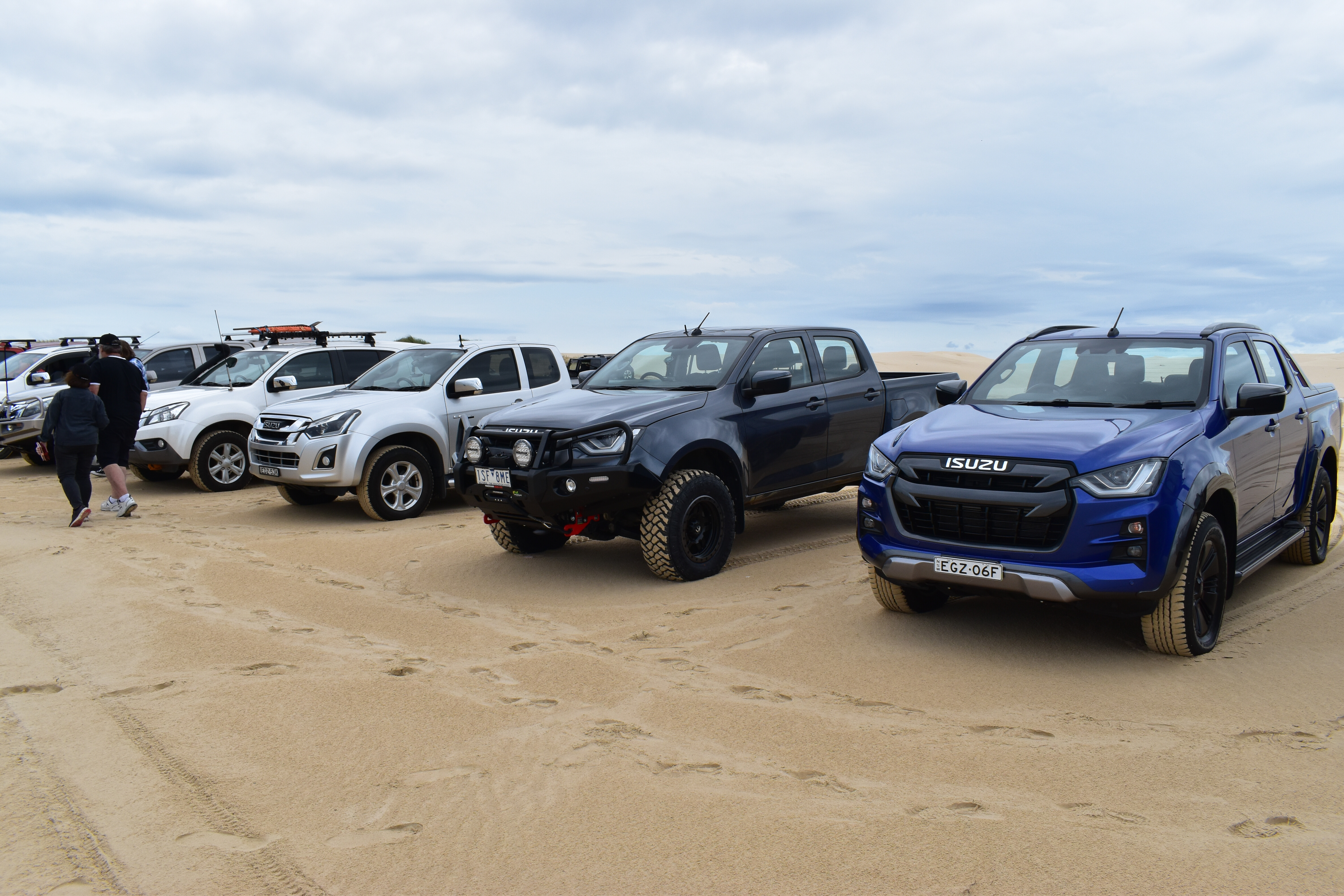
So, what does all this have to do with anything? Well, I was recently invited on a training drive-day with the Isuzu I-Venture Club to Stockton Beach. To say it brought back many happy memories would be an understatement.
While I’ve personally done loads of sand driving over the years, it was my first time on sand in our recently modified 4X4 Australia D-MAX. It was also a brilliant opportunity to see a group of Isuzu enthusiasts learning new skills and gain confidence along the way.
The day started with a driver-briefing at a nearby hotel, where lead trainer David Wilson engaged with the punters on everything from how to engage 4WD, to convoy etiquette. This set the scene for the day, if at any stage someone wasn’t confident with an obstacle, there was a team of people available who could help.
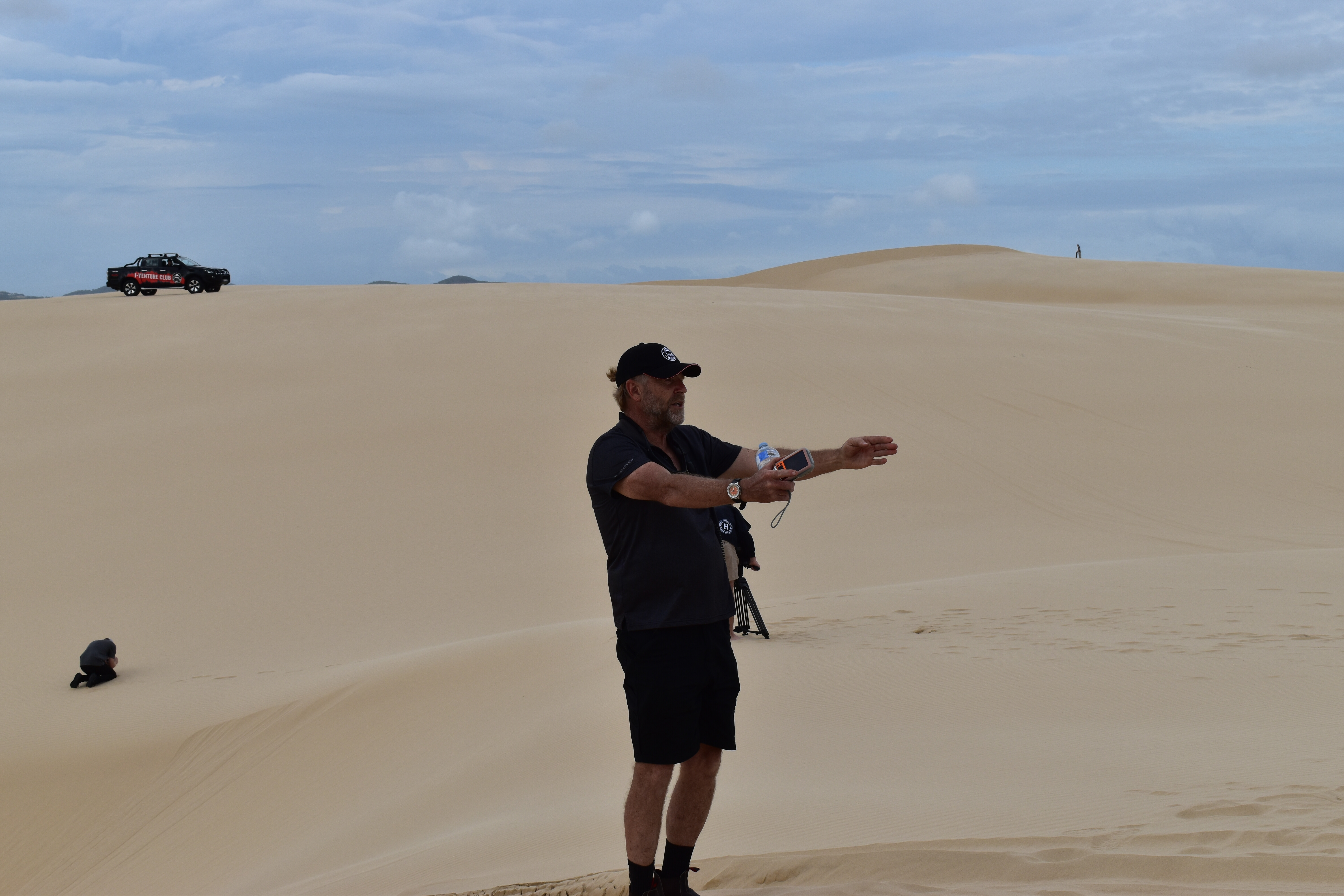
“It was an educational and non-competitive environment to learn and gain an appreciation of how these vehicles perform”
Once the briefing was out of the way, we headed to the Anna Bay end beach access and aired down our tyres to 20psi initially. Thanks to recent rain, the sand was hard-packed here, and we made our way to the beach for the first activity of the day.
David had yours truly create a bit of a course, snaking up and down the beach, designed to show people how best to steer and use throttle inputs on sand. It was an educational and non-competitive environment to learn and gain an appreciation of how these vehicles perform.
After a quick (and delicious) lunch break, we met up with rangers from National Parks, who took us through the dune system behind the beach. I still remember when you could drive these dunes freely, however only those with special permits or tour operators can access them these days. A real shame that it’s become a pay-to-play system, but let’s not go into that now.
Dune driving is still permitted towards the southern end of the beach, in the designated Recreational Vehicle Area. There’s also a designated camping area if you wish to stay overnight. So, it’s certainly not all doom-and-gloom.
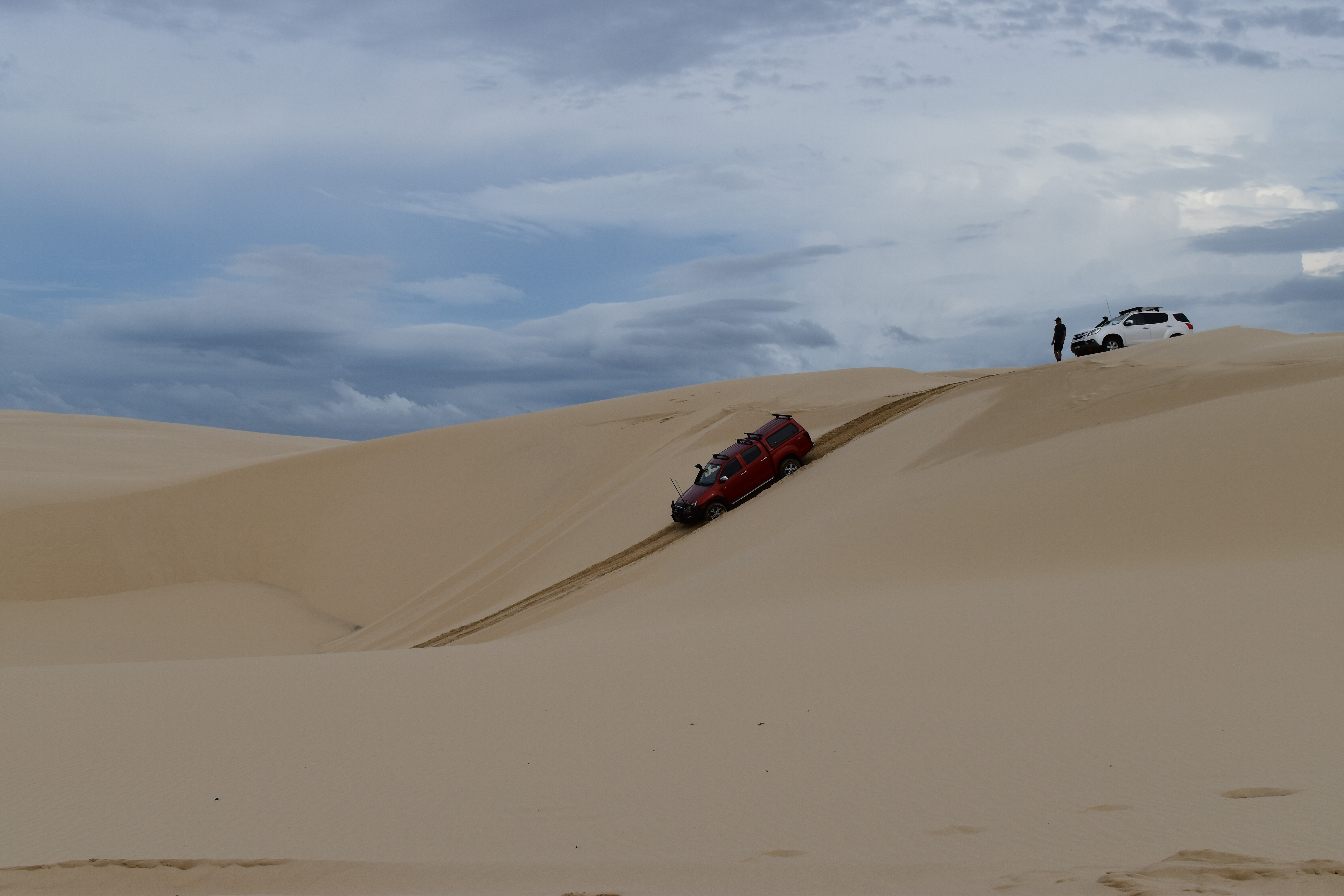
In this massive dune system, we were shown through the proper way to descend sand dunes, selecting the right gear and taking correct lines. We were also introduced to the benefits of lowering tyre pressures further, dropping down to 15psi.
Everyone agreed it made a massive difference to traction and ride quality. Attendees were gaining confidence, and it was interesting to see them comment on how others were performing. You could see the off-road bug beginning to bite, and that’s what these events are all about.
As the day was getting away from us, we decided to drive out south along the beach towards Lavis Lane. It’s amazing to see how much the beach changes in conditions. The sand is so hard-packed at the Anna Bay end, you could take any SUV there. But things get much softer and more chopped out the farther south you head. You need a proper 4WD to take on the beach, as we were soon to find out. On a side note, keen bird lovers will have a field day here, spotting various species along the way.
As we approached the beach exit, and end of the day, we came across a very bogged Ford Territory. Talk about how to make someone happy and sad at the same time. Seeing 14 or so vehicles coming towards you to help, but then becoming the subject of a recovery masterclass would be an interesting feeling.
As the tide was coming in fast, the decision was made to join two snatch straps together, and recover the vehicle backwards. We also helped the couple let their tyres down; something they had forgotten to do …
With the sun well and truly setting, we had them out of the mess and on their way. It was a great experience for new members of the I-Venture Club, to show that things can go wrong quickly if you aren’t prepared.
Once off the beach, tyres were aired up, recounts of the day’s experiences were discussed and goodbyes said. It’s safe to say everyone had a great time, and even the most experienced sand drivers gained something.
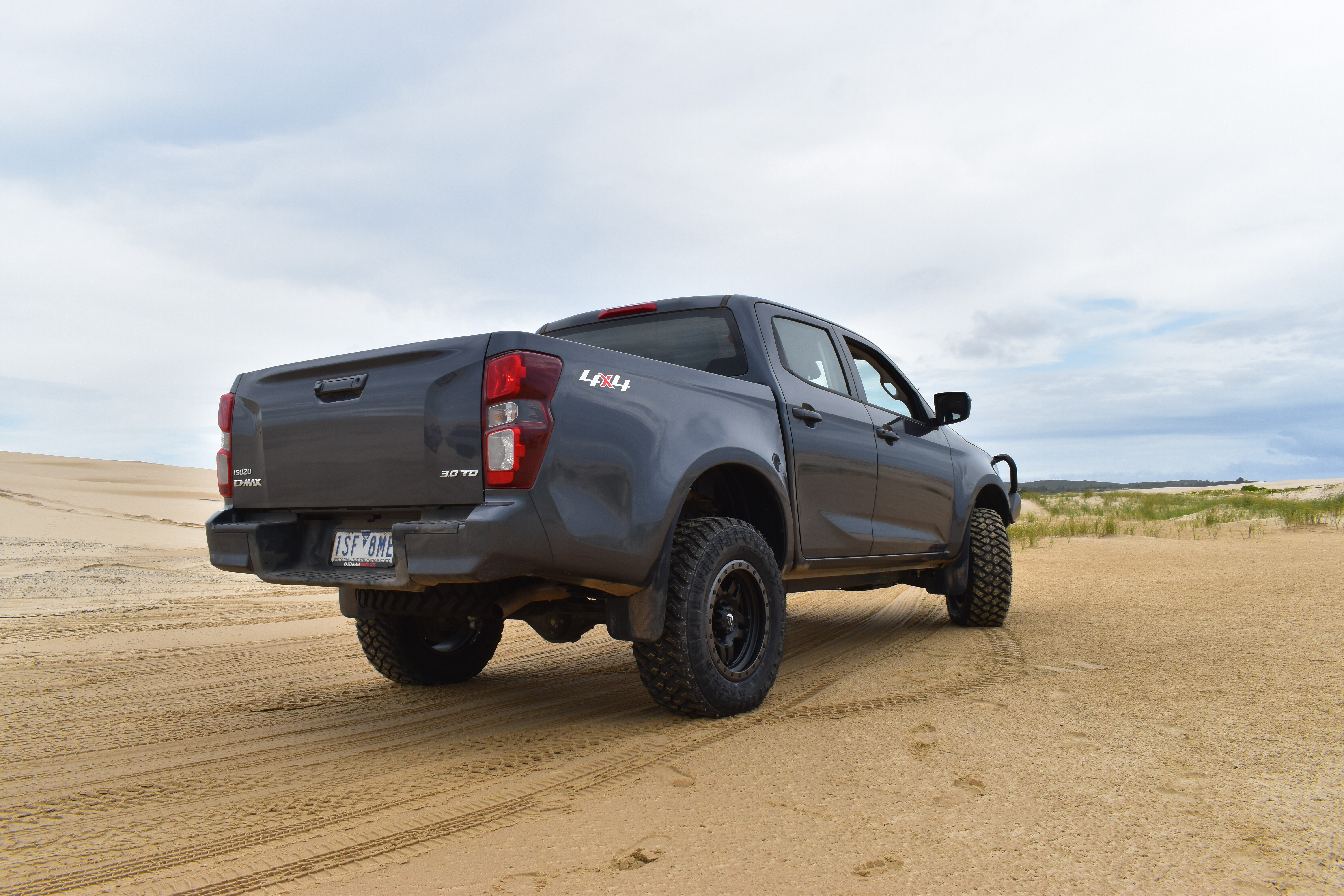
QUICK FACTS: STOCKTON BEACH
- Permits are required and available locally at service stations, tourist information centres and fishing shops etc.
- Dune driving is allowed in the Recreational Vehicle Area in the southern end of the beach.
- You can camp at Stockton Beach. There is one allocated camp zone, with sites available. You do need to book, and you must have your own toilet. Cost is $33 per night for two people, $16.50 per additional adult.
- Lower your tyre pressures to between 20 and 15psi, and turn your stability control off in a modern vehicle.
- Driving is only permitted on the beach and designated areas, a $300 fine applies if caught on the frontal dune.

THE I-VENTURE CLUB
I-Venture Club is an exclusive community, made specifically for the owners of Isuzu 4x4s. Regular trips are planned all around the country, ranging from one-day training sessions all the way to week-long explorations across remote destinations.
Qualified 4×4 instructors are present at all time, offering peace of mind if you find yourself out of your comfort zone, not to mention the comradery found among fellow enthusiasts. If you own or are considering purchasing an Isuzu 4×4, do yourself a favour and check out the I-Venture Club.
For more information, visit: www.isuzuute.com.au/experience/i-venture-club
PROJECTA makes a wide range of solar panels and we’ve been using their 180W folding solar panel on the last few trips, ensuring our fridges stay cold and there is ample power to run all the other devices we seem to have accumulated.
These monocrystalline 12-volt panels produce up to 11amp, or so they say. We managed to get 9amp out of it on a sunny, warm day in eastern Victoria, but only when the unit was facing directly into the sun. Like any solar panel the current supplied drops off pretty quickly whenever the unit is not facing the sun directly or a wispy cloud comes over; take note all you power-hungry travellers.
If you want to know what each appliance demands in power, the size solar panel you need, and the average hours of sunlight in each state, go to: www.projecta.com.au/select-solar-panel-size
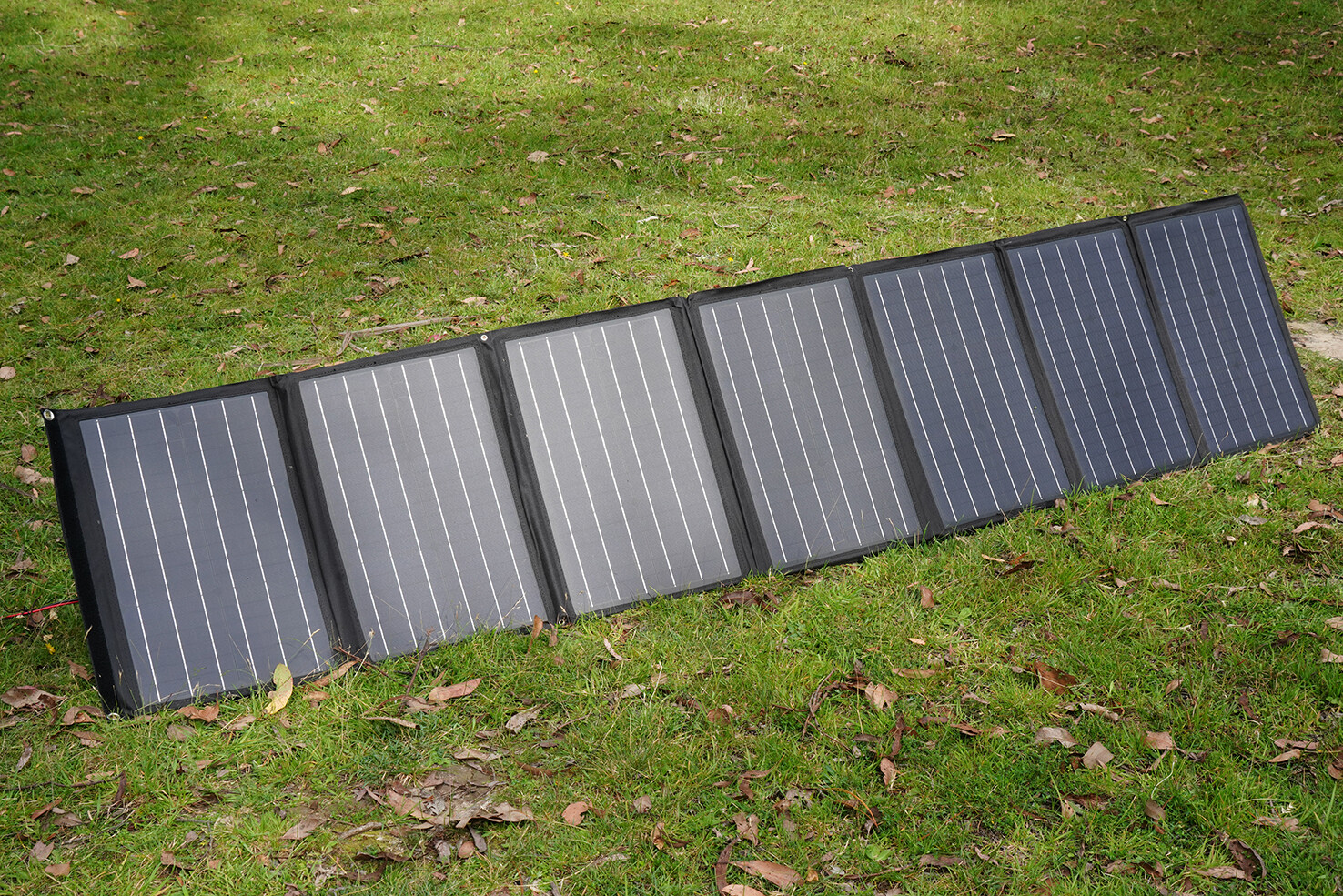
These solar panel kits come with a solar charge controller with digital readout that keeps a continuous check on the power situation and the power the unit is delivering; it’s bloody handy.
The solar controller itself delivers a 4-stage charge and features multi-chemistry technology that allows the user to set the charging profile to suit the battery type (ie: gel, AGM, wet and calcium), while protecting against overcharging and solar discharge. If only every solar panel came with such a controller and read-out!
The seven scratch-resistant monocrystalline panels that make up the complete unit have a protective mat coating to improve durability and scratch resistance, while for superior strength and reduced weight, the solar panels’ backing is constructed from tough-wearing fibreglass. In all, the unit weighs about 8.3kg, which is lighter than many units of similar output that I’ve used.
“It’s relatively lightweight, packs down to a handy size, and produces enough power to ensure our fridges keep running”
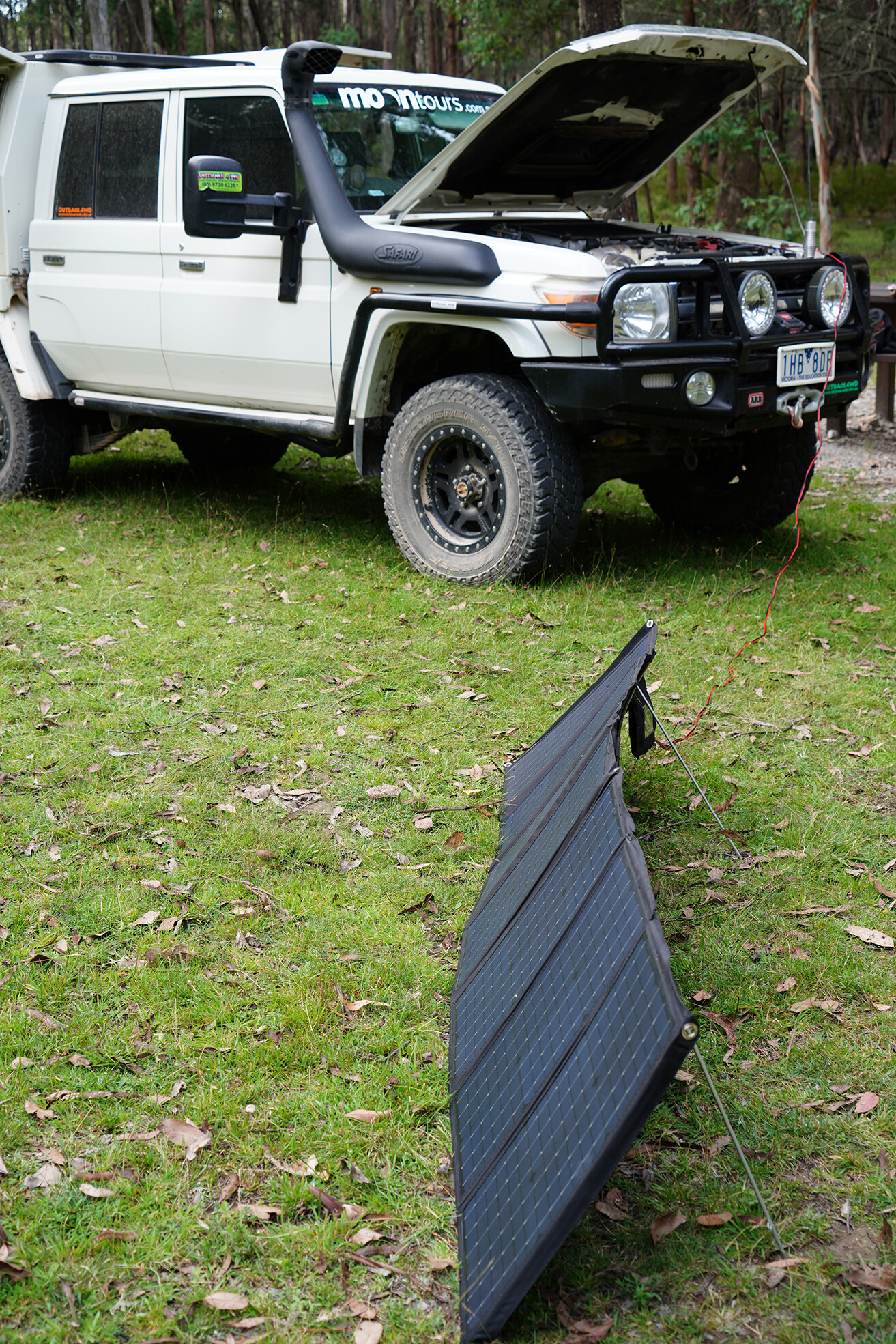
Over the years I’ve used a wide range of solar panels including quite a few folding units. This is the one I now carry wherever we go – it’s relatively lightweight and packs down to a handy size, produces enough power to ensure our fridges keep running, is easy to set up and you can continuously monitor the power output and the performance of the panels under different weather conditions ensuring you get the most battery power from the sun.
AVAILABLE FROM: www.projecta.com.au/folding-solar-panel-kits
RRP: Less than $1000 if you shop around.
WE SAY: Easy to use with good power output, while monitoring power output continuously is a big plus.