
There’s a side of Australia most don’t ever see. Perched up in their high-rise apartments in the guts of cities all along the eastern seaboard, the average Joe has no understanding of what lays beyond the city lights.
They’ve never seen the endless kilometres of corrugations. Couldn’t fathom the idea of hours between fuel stops, let alone days. The concept that a marked road may be nigh on impassable, requiring winching, sawing and technical driving ability to master it, is so foreign to them you may as well be describing a Mongolian odyssey.
But for those with red dirt in their veins it’s a part of life; it defines not only their entire concept of adventure, but the very vehicles they build to tame the great outdoors.
With his sights set on serious remote touring, Luke knew he’d need a serious 4WD to get the job done, and with a Lifestyle Campers Reconn R2 ready to hook up to the back, a modern dual cab wasn’t going to cut the mustard; it’d need a bit of serious get up and go as well.
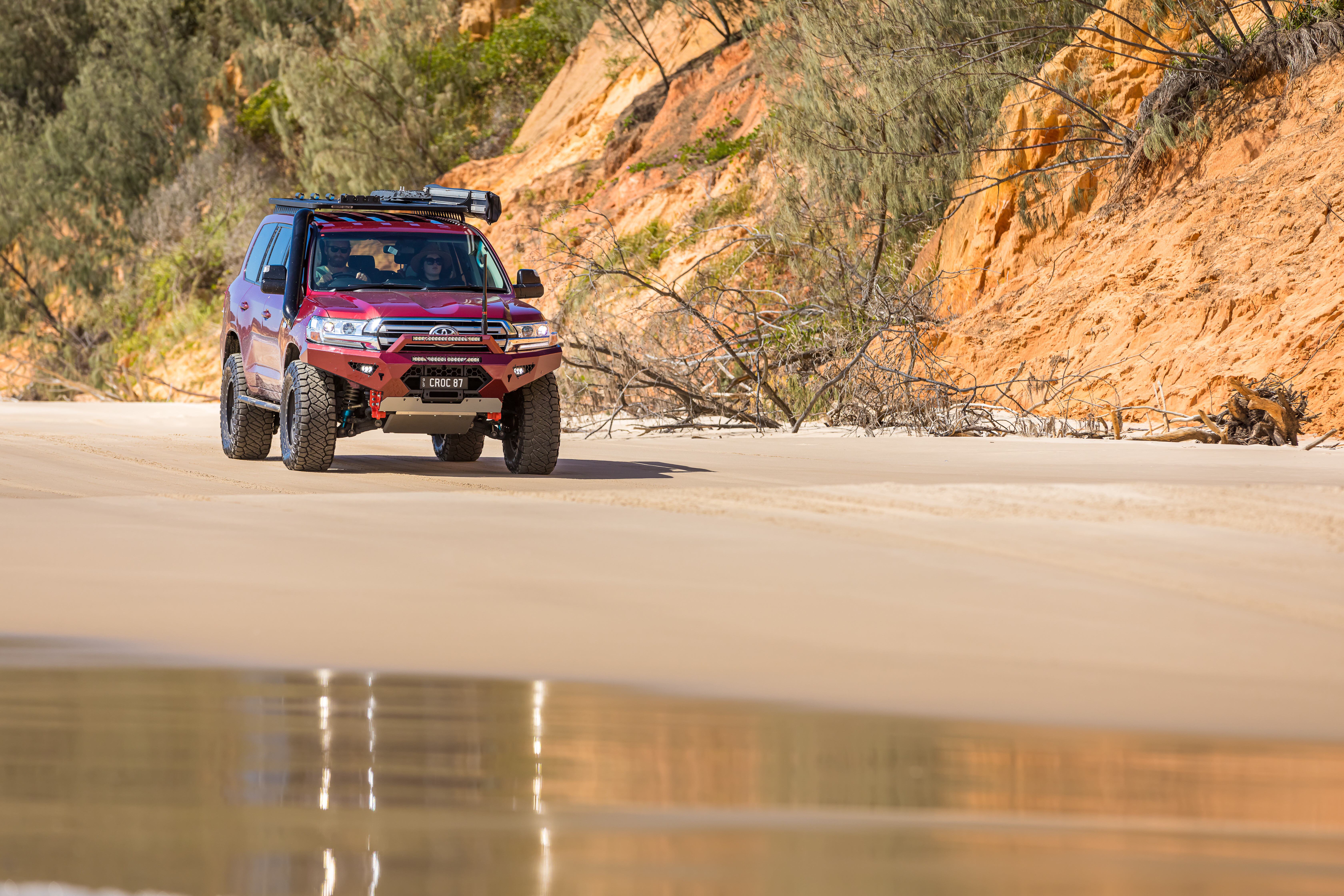
Enter a stunning Merlot Red 2020 LC200 GXL, one of the toughest 4WDs on the market in factory form, and even tougher again after Luke had KDT Automotive Solutions spin its automotive wizardry on it.
Like many tourers on the market, Luke knew the gear he’d be adding would start eating into the factory GVM, leaving him in a pinch of strife if he ever came face to face with a stern inspector holding a set of scales.
With that in mind before he even picked up the keys, he had Darren from KDT lined up for a second-stage rego-certified GVM upgrade, bumping the Cruiser up to a massive 3800kg legal weight limit. With the LC200 so robust right out of the factory, extensive modifications weren’t required to boost the carrying capacity, but he did start with a solid foundation.
Hiding in each wheel of the Cruiser are huge 2.5-inch diameter King shocks with remote reservoirs and adjustable dampening, allowing Luke to dial-in his suspension set-up to suit exactly the loads he’s carrying and how he wants the rig to ride on the magic-carpet scale.
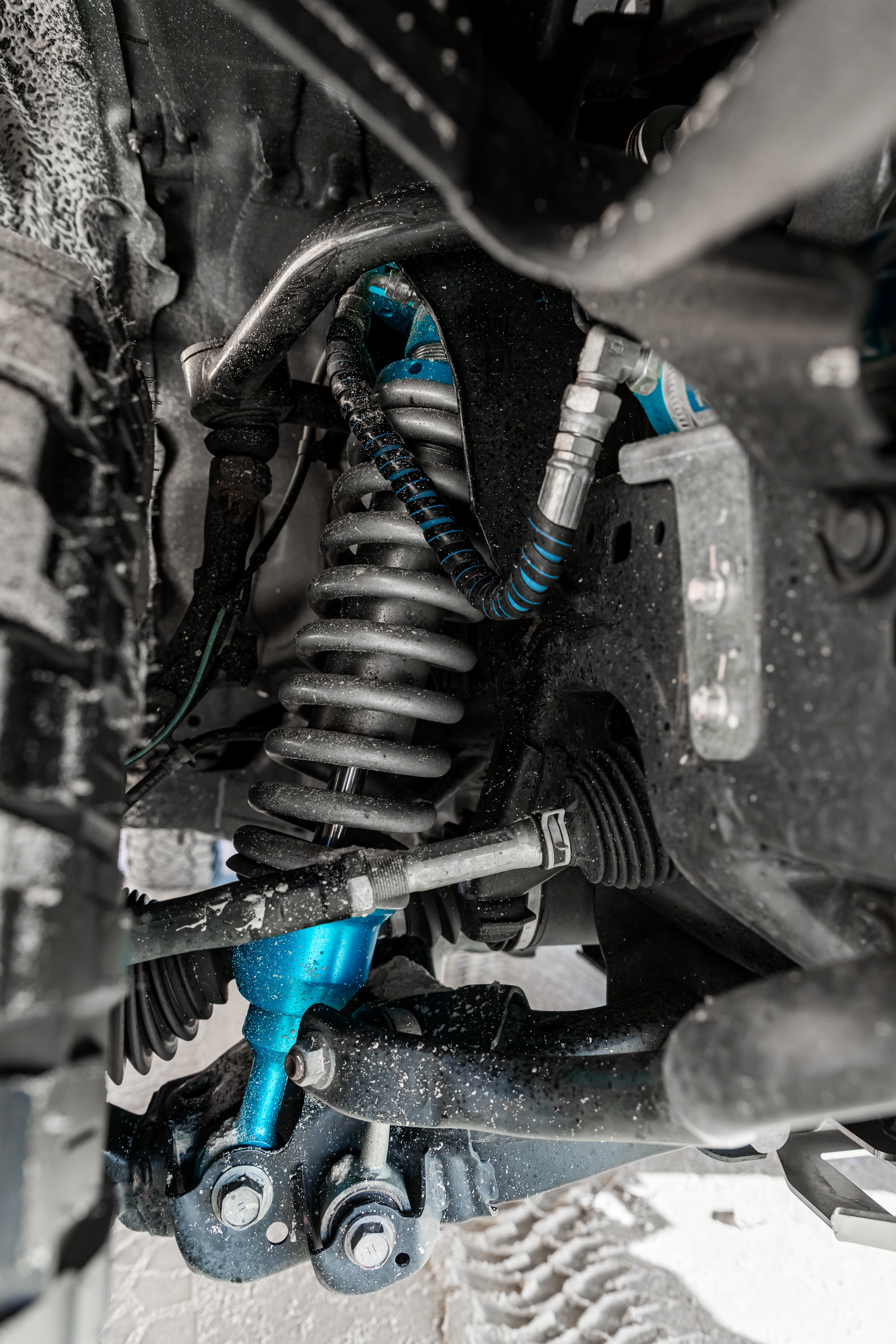
Up front, the King shocks have bumped the ride height three inches closer to the clouds with Eibach springs, while the rear sits two inches higher on a set of Aussie-made King springs, a popular combination to level out the factory rake so many OEM 4x4s come with these days.
While it was on the hoist, a host of ancillary parts were fitted to ensure the Cruiser didn’t just sit better, but performed better too. Back to the front, and the restrictive OEM upper control arms have been binned and in their place now reside a pair of significantly beefier Blackhawk replacement arms, with the upper ball joint realigned to suit the new ride height; the suspension now far more comfortable at full travel.
Moving backwards, the restrictive Panhard rod has swung the Cruiser’s diff to the side with the new lift, so an adjustable unit from Roadsafe was optioned up, providing a strength upgrade as well as adjustability to get the axle tracking straight again. Eagle-eyed readers will spot a set of Airbagman helper springs tucked inside the rear coils, allowing Luke to effectively increase his spring weight if the rear end is loaded up.
With so much space liberated in the wheel arches, Luke knew exactly what he’d need to do to fill it. “The overall goal of the build was long-range touring,” Luke told us. “But I didn’t want to compromise the look of the car.”
Each corner now sports huge 18×9-inch 309 Grids from Method Race Wheels. Measuring in at +18 offset, they line up perfectly with the guards, giving the Cruiser an aggressive look without requiring huge flares to cover larger offsets. They’re wrapped front to back in 35×12.5-inch Nitto Ridge Grapplers, an aggressive all-terrain tyre perfect for a do-it-all tourer.
“I didn’t want to go down the path of flares,” Luke says. “It meant with the offset I was running, a body mount chop and some minor guard trimming was required.”
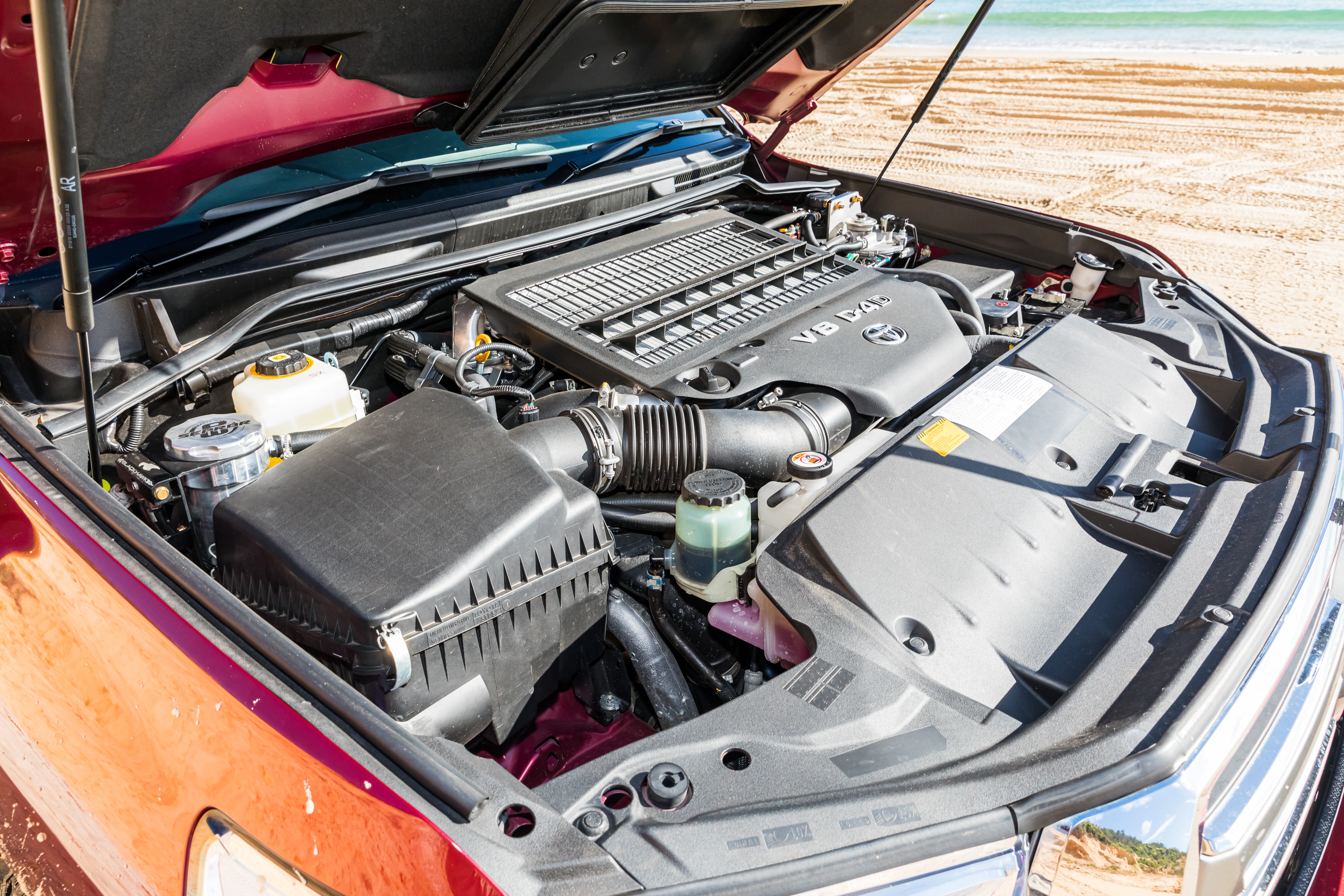
Keeping the whole show motoring down the road is the renowned twin-turbo bent-eight 1VD-FTV diesel. It’s breathing freely through a five-inch Vogue Industries stainless-steel snorkel and Unifilter combination. A Direction-Plus pre-filter helps ensure the injector pump and injectors live a long and healthy life, while a Process West catch can separates oil from the engine’s blow-by, helping keep the intake gunk free without blocking the EGR like so many people do these days.
Back on the outside and the Cruiser’s distinct look comes from the clean-as-a-whistle ‘Predator’ bar from Offroad Animal in Victoria. The colour-coded unit not only armours up the Cruiser’s soft bits, it also provides a home for a 22-inch slimline LED light bar from Stedi. Sliding back and the up-armouring continues with a set of Legendex rock sliders protecting the vulnerable sill panels.
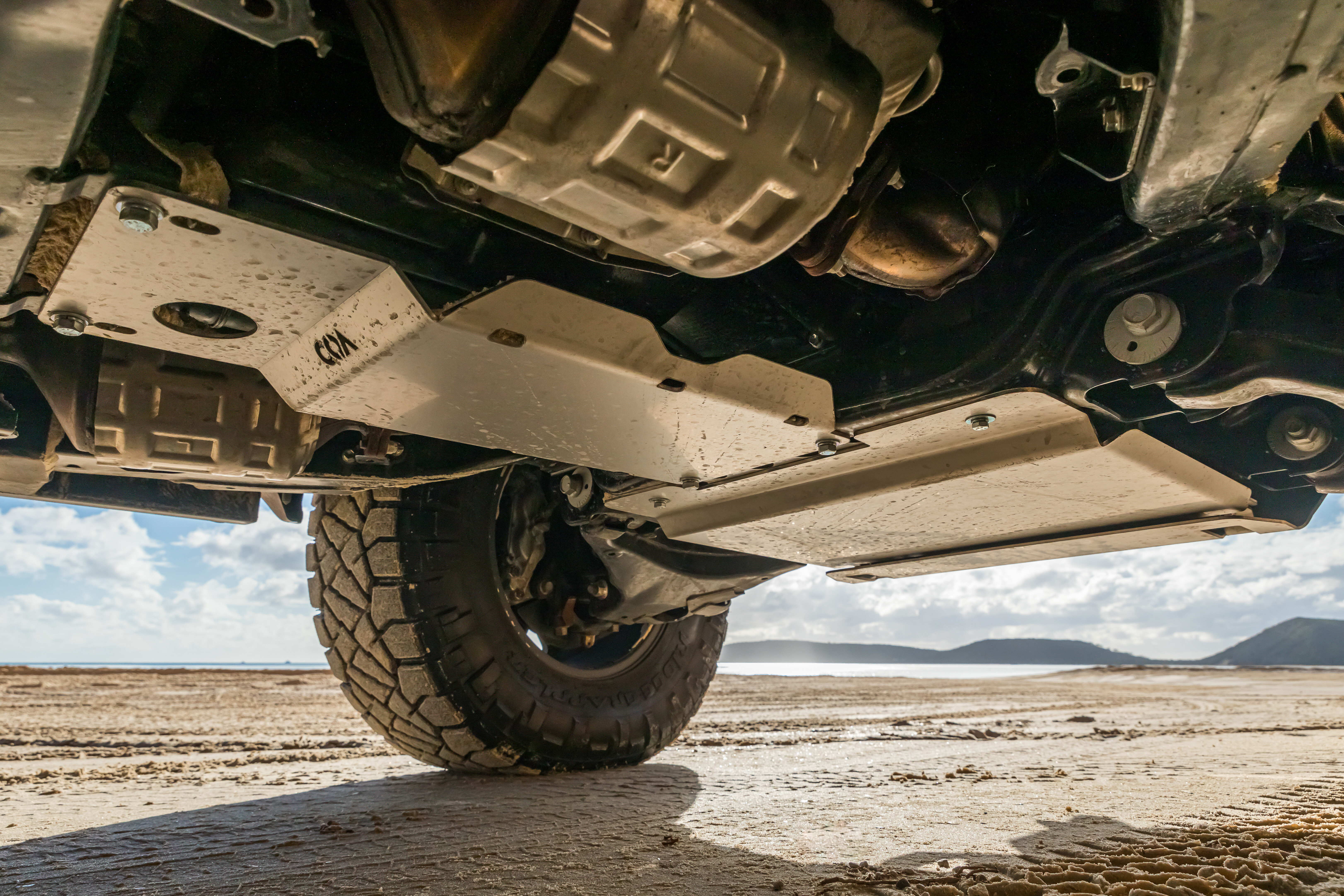
Underneath, there’s more steel than a Sherman tank in the form of Custom Offroad bash plates front to back. MSA towing mirrors help bump out the view too, to let Luke keep a keen eye on the Lifestyle Campers set-up on the hitch.
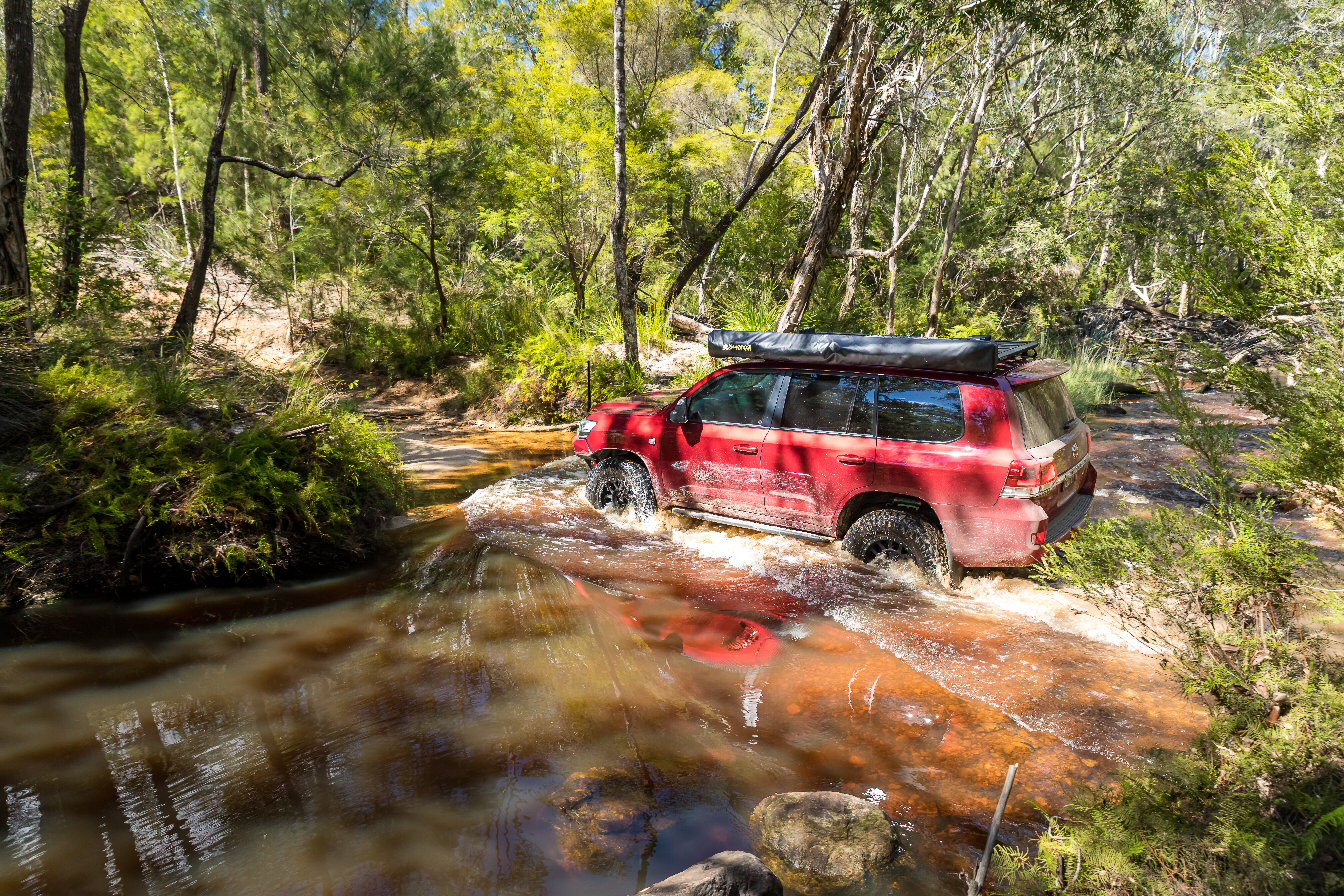
Up top there’s more than two square metres of touring storage thanks to a full Rhino-Rack set-up resting on a Backbone mounting system. It plays host to a 270-degree awning, a couple of additional light bars and a few recovery items if things turn pear-shaped on the tracks.
Sliding into the captain’s seat, Luke’s kept things simple but practical for his remote touring needs. A Throttle Monkey unit lets him dial in the throttle sensitivity, allowing him to dull it right down for precise rock-crawling work, or give him instant throttle response in soft sand or mud.
A GME XRS 330C falls easily to hand, the high-tech unit not only giving clear communications but allowing Luke to replay previous messages and locate other members in his convoy thanks to the built-in location services. Hanging off the centre console is a full-sized iPad with off-road mapping, and a Redarc trailer-brake controller equipping Luke with all the tools he needs in his off-road arsenal.
While Luke’s Cruiser may not be one of the most modified we’ve ever seen, it’s easy to see it’s one of the most well thought out and intentionally modified. Everything he needs for remote touring, everything he’d want for hard weekend wheeling, and enough drool factor to ensure he’ll spend plenty of nights sitting in the shed looking at it with a smile on his face.
During my many Cape York fishing and hunting escapes, I have often driven the alternate routes from the Peninsula Development Road (PDR) that junctions with the Burke Developmental Road (BDR) which runs from Mareeba to the Dunbar Station junction on the Normanton Road in the northern Gulf country. Two routes, the Artemis and Fairview roads, divert directly from the PDR to the BDR after crossing the mighty Mitchell River that closely parallels the BDR.
Another route swings off the PDR at Laura to Palmerville Station, and the Maytown ruins. Farther south from the station are the ruins of Groganville and its cemetery. The track is rough and runs on private lands, thus permission from stations is required. There are active gold-mining operations about Groganville. The track that runs from Groganville to the BDR, via Bellevue Station, is privately owned and permission is rarely given.
The easiest route from Palmerville Station south is via Mount Musgrave Station to the BDR, via the Gamboola Station Crossing. As elsewhere, these remote area roads and tracks have numerous gates. Leave them as you find them. If they are open, don’t stop; if closed, open and shut it behind you. Don’t shoot unless you have permission to do so. Remember, scrub bulls belong to people and are worth a lot of money. They are not feral, so leave them be. Above all, be careful with campfires, as this country is tinder-dry when roads and tracks open.
MOUNT CARBINE TO DIMBULAH
For something different, turn west from the Mulligan Highway 25km north of Mount Carbine, on to the Mount Carbine-Groganville track. It provides an amazing journey of discovery into yesteryear when gold was king. About 9km from the highway take the Dimbulah Road, cross the Old Cooktown Crossing on the Mitchell River and head south past Kondaparinga Station to Dimbulah. There is a free campground with no facilities on the south bank of the river on the crossing.
Imposing views of Mount Mulligan are beyond the crossing, and the mountain has rich coal seams under it. Now abandoned, the coal mine is best remembered when it blew up on the morning of September 19, 1921, instantly making every woman in town a widow and every child an orphan. It remains the state’s worst mining disaster and the third worst in Australia, when 76 miners were killed by a coal-dust blast.
Past the old cemetery, under the lee of the imposing bulwarks of Mount Mulligan, are the ruins of once-rich gold mines – Thornborough, Kingsborough, Tyrconnell, General Grant and others – all once thriving communities where now only silent headstones remain of their past glories when gold was king.
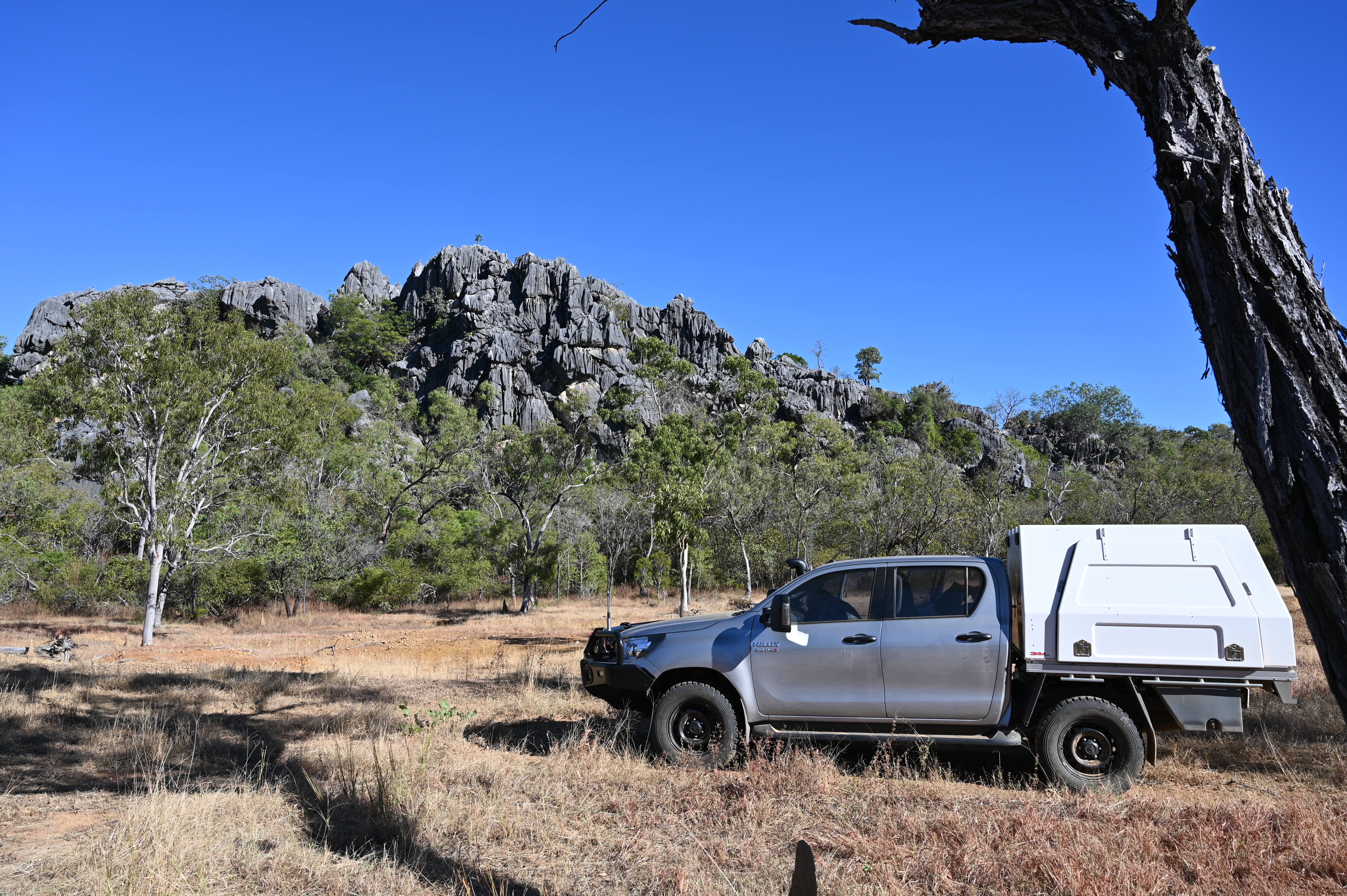
At Dimbulah you have a choice of heading west to Mount Mulgrave Station via Chillagoe, and turning north to Palmerville Station at the Mount Mulgrave crossing. Chillagoe had all amenities, cave tours and amazing limestone ranges and towers. It’s also the last fuel stop.
GROGANVILLE TO PALMERVILLE
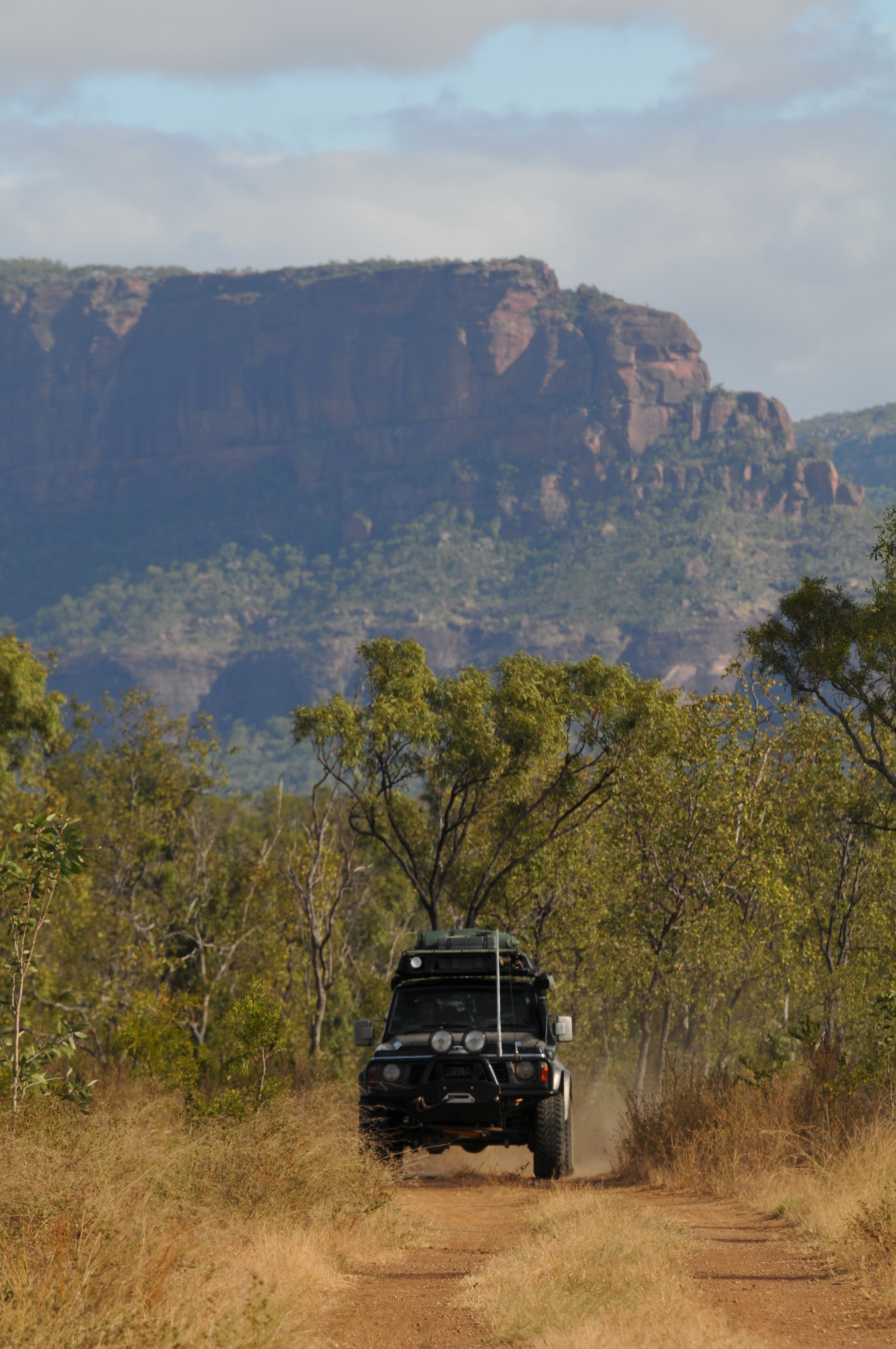
If you decided to miss the Dimbulah-Mount Mulligan turn-off and continue to Groganville, consider camping on Karma Waters Station en route. The station has nice campsites on the perennial Mitchell River. These back roads and side-tracks provide access across the steep hills of the Great Dividing Range before they spill on to the savannah lowlands of the southern Cape York Peninsula. To the east beyond the Mulligan Highway, is the backdrop to the rainforest-clad Main Coast Range of the Daintree and Wet Tropics World Heritage Area.
Little remains of Groganville, once located on the banks of a steep gully in a narrow gorge. Locals must have suffered from heat exhaustion in summer, and children and babies died in numbers if the headstones on the cemetery are an indication.
The mine is reached via a deep cutting past the ruins. A steam engine and rusted machinery and bough sheds remain. From here you have a choice of heading directly north to Palmerville Station on a track that may be impassable after the wet season. The previous owners are doing time for the murder of a prospector on the station, which now has new owners. They are much more hospitable and have campsites set aside for visitors and prospectors for a small fee.
You can also reach the Palmer Goldfield Resources Reserve by turning off the Mulligan Highway at Maitland Station, 17km south of the Palmer River Roadhouse. Note there are some confusing names – Mount Mulligan, Mulligan Highway, Musgrave Roadhouse and Mount Mulgrave Station.
WESTERN ROUTES
Some 24km south of the Musgrave Roadhouse is Artemis Station. It is a noted birdwatcher’s destination, being one of the few places on the Cape where people go to see the endangered golden-shouldered parrot in its natural habitat, one that it shares with many other species.
The station has campsites for dedicated twitchers and others. Its 95km from the PDR at the Artemis Station turn-off to the Alice River Goldfields junction and another 65km where it meets the junction of Fairview Station, which is on the PDR. You have the choice on this road of heading to Fairview, or turning south to Palmerville Station and beyond, via Fairlight Station.
This is a nice, easy day trip with a few stops at stream crossings and the rocky outcrops and hills. There is much wildlife – birds, kangaroos and antilopine wallaroos. At Palmerville you can head back on to the PDR or continue directly south via Mount Mulgrave Station, to the BDR.
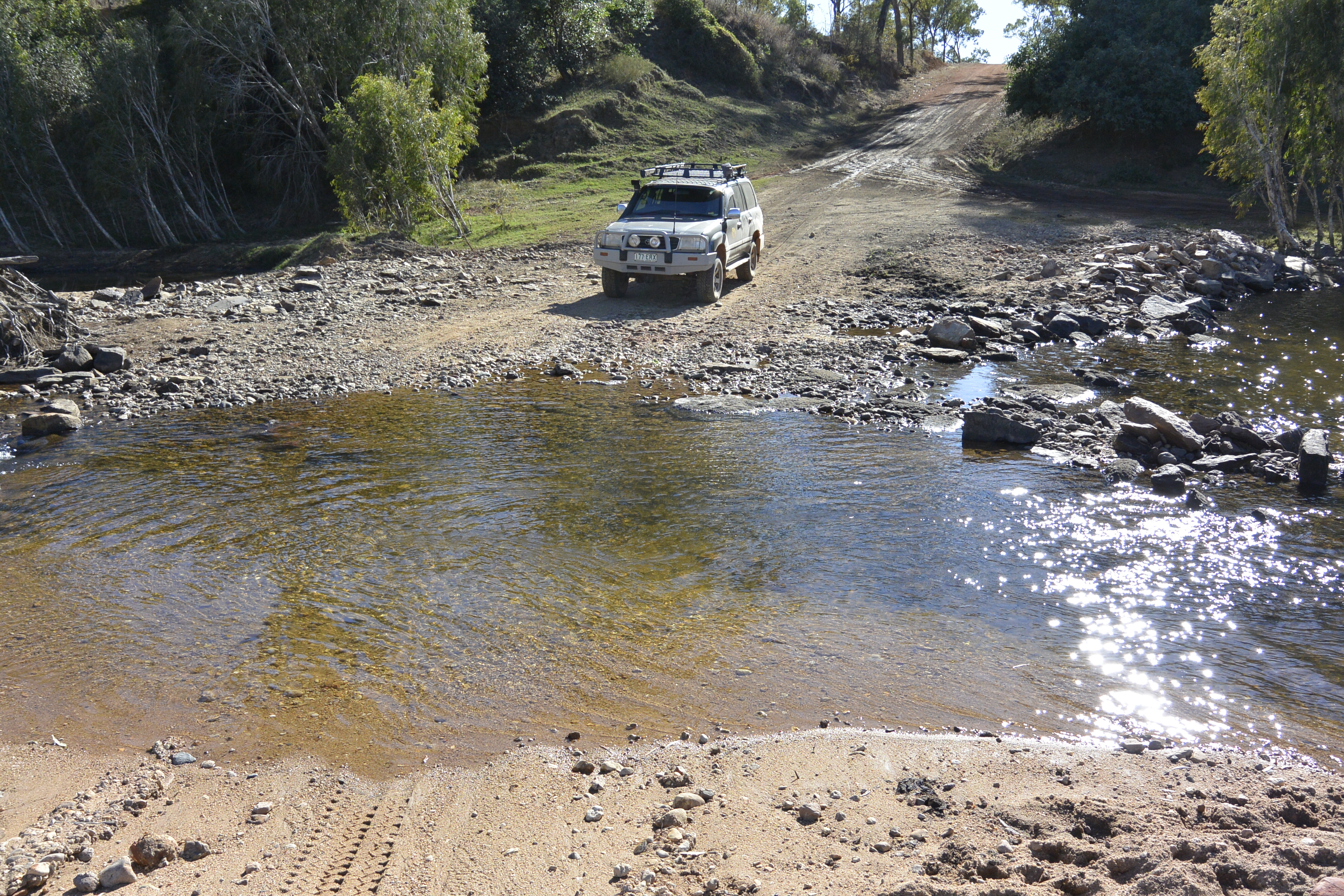
Another nice drive to the BDR is about 19km past the Killarney Station turnoff on the Artemis-Fairview road. It’s an interesting drive that crosses the Palmer River at King Junction Station and the mighty Mitchell River near Gamboola Station on the BDR. Several stations lay along this route and permission to camp away from the road is required.
Another great trip from the PDR to the BDR is to continue past the Alice River Goldfields junction to Indigenous-owned Oriners Station, the Alice River, and beyond to the crossing of the Mitchell River, 19km past Koolatha Station where it runs parallel to the BDR.
If you don’t wish to cross the river, there is another parallel 110km-long road that runs east from Koolatha via Drumduff Station, to the Gamboola Station crossing. It’s generally the preferred route for locals as the BDR is noted for its treacherously deep bulldust late in the dry season.
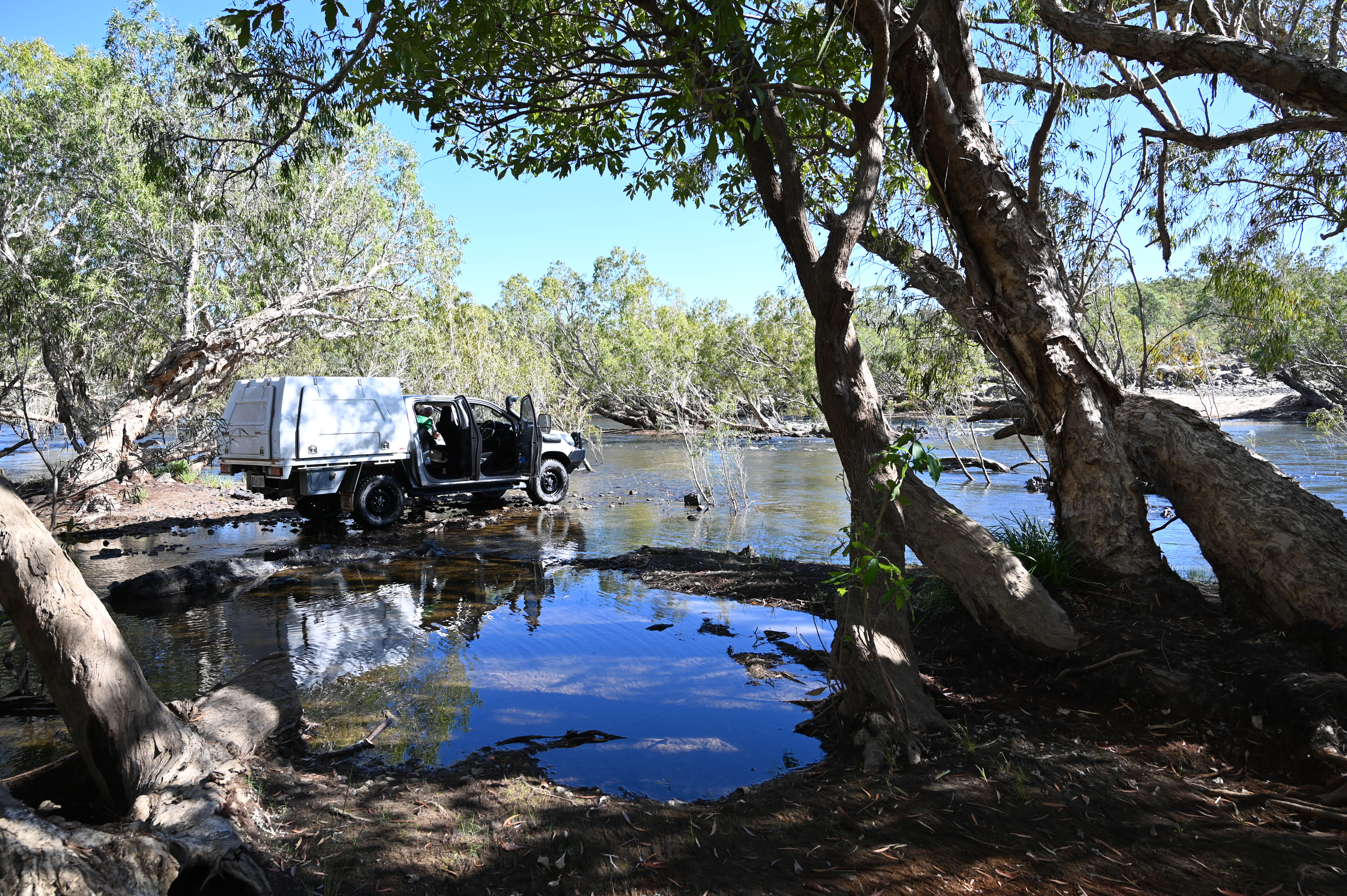
LANDSCAPES
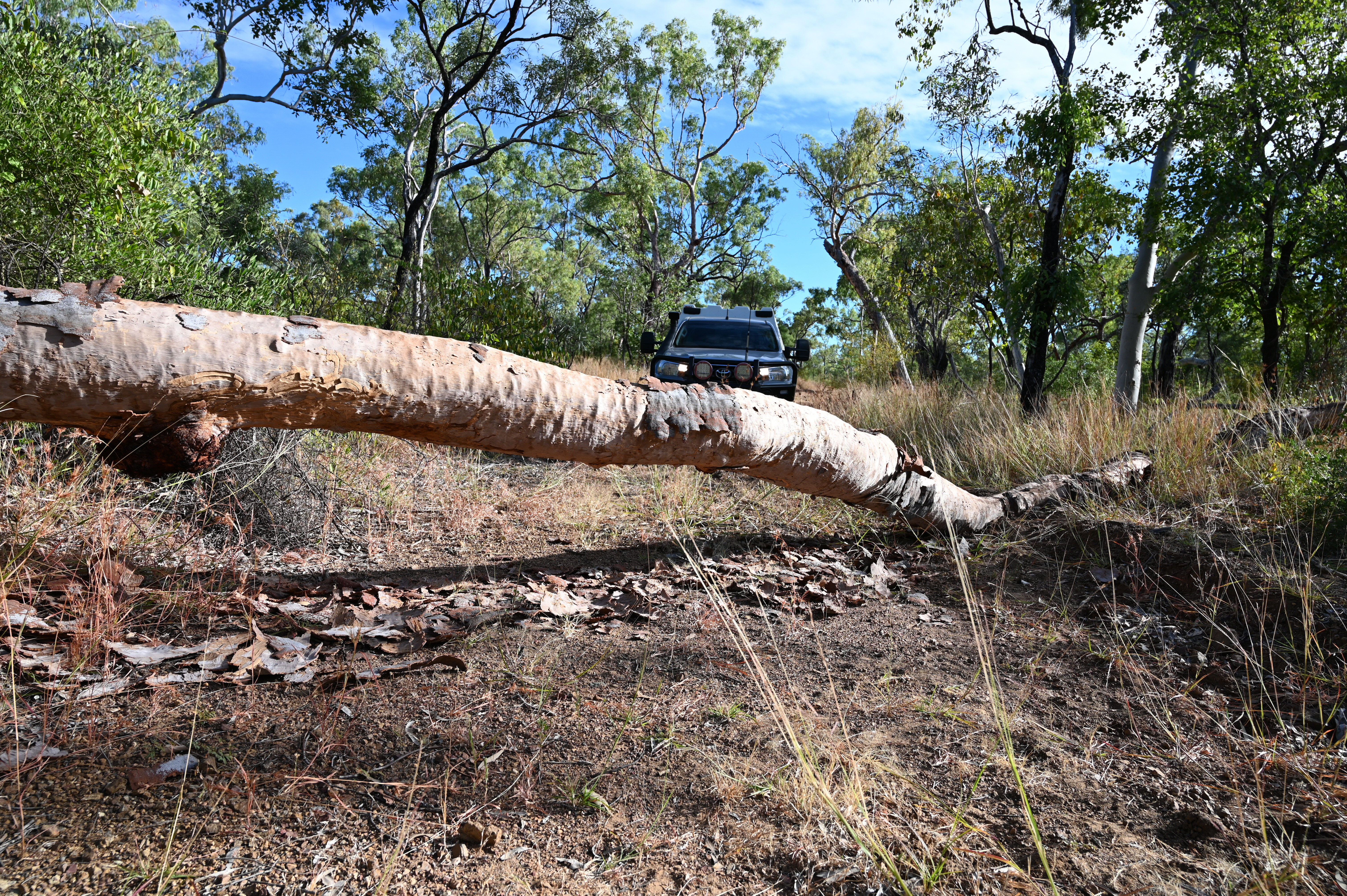
None of these roads are sealed and some are not maintained by the Cook and Mareeba Shire Councils. Visit their websites for updated information when travelling in this remote region. The roads are generally in fair condition by mid-year, but if you hit the Oriners Station road too early in the dry season, it’s generally impossible to traverse due to inundated low country that can take weeks to dry out after the wet is over.
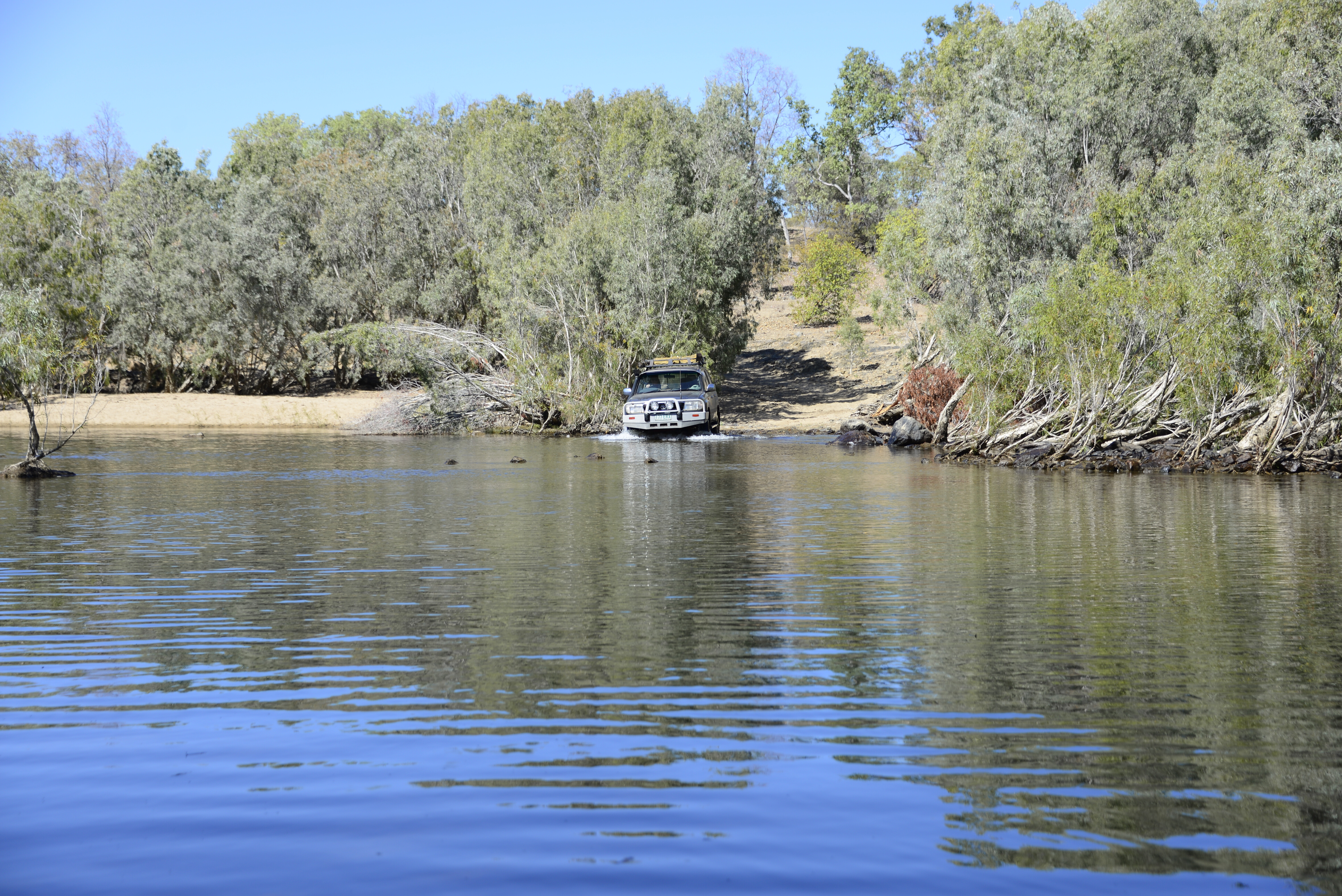
Another hazard is that stream crossings may also be washed out or still too deep. I have seen the Gamboola Station causeway completely wash out after the mighty Mitchell, one of our largest rivers in volume of water, came down. Other river crossings can be piled high with sand dunes that must be cleared before vehicle crossings are possible.
The low country beyond the western Great Dividing Range hereabouts is largely dominated by monsoon woodlands, with open plains, studded by termite cities, occurring on other areas. A few sandstone outliers are on the King Junction Station track and near Mount Mulgrave Station. Station owners and managers vary in their attitude towards travellers with some giving permission to camp and fish, even hunt pigs, while others will tell you to “piss off, mate”.
However, there are several national parks and reserves on these routes, including the new Alwal National Park, west from Artemis Station. At time of writing, management plans with the traditional owners have not been finalised, thus access may be restricted.
The Palmer Goldfield Resources Reserve has a no-frills campsite on the southern bank of the North Palmer River, while lovers of early mining history can indulge in the ruins of yesteryear that is Maytown, the Chinese workings, cemeteries, and the rusted relics and ruins of former settlements that are scattered about the field.
The Errk Oykangand (Mitchell-Alice River) National Park is northeast from Kowanyama, an Indigenous community on the lower Mitchell River. It is reached from the BDR via the Dunbar Station junction. The community welcomes fishers and campers and caters for them with four camping grounds.
A campground that accesses the park is at Shelfo Crossing on the Mitchell River. At time of writing, COVID-19 has reared its ugly head resulting in all Indigenous communities shutting their doors, but 2021 is looking better and perhaps we may be able to wander at will about the tracks less travelled. Contacts: Phone (07) 4060 5187 or email: [email protected] for camping details.
The track from Kowanyama to Pormpuraaw is still marked on maps but alas is no more as – sand dunes in the Mitchell River and with the Coleman River crossing flooded away out to the north – this track has lapsed into decline as it was too costly for the two communities to maintain it.
You need to know that the lower west coast of the Cape York Peninsula and northern Gulf country is largely composed of savannah, which during the wet season becomes an inland sea that takes weeks to drain properly before any traffic is possible on these so-called ‘roads’.
You will encounter running streams, swamps, billabongs and stream pools rich in fish and crustaceans. Take a couple of red-claw lobster/cherabin pots and live well on bush tucker. The Artemis-Dunbar Station route – and the many side-tracks that branch out from it – is a wilderness escape like nowhere else on the Cape. Remote and isolated with plenty of wildlife encounters and wide-open spaces, this savannah route is a must if you are into wilderness treks.
BE INDEPENDENT
Living in Mareeba I have travelled these routes over many years on day and longer trips. I have driven from Fairview Station to the Gamboola Crossing on the Mitchell River without encountering another vehicle. Stations are few and far between (some are abandoned), and I once dropped into one to say g’day at Strathleven Station, but, unknown to me at the time, it had sold weeks before.
The new owners had not yet appointed a manager. The station had been taken over by a group of pig hunters who set up residence in the homestead. They had savage dogs who, along with their owners, appeared high on drugs and booze. They were far from friendly at being caught trespassing. I turned round and drove out, the dogs chewing on my tyres. I reported the matter to a neighbouring station who were keeping an eye on the place. They had no idea that the pig doggers were there …
You need to be independent because there are is no fuel when you leave the PDR behind you until you reach either Kowyanma, Chillagoe or farther west, Karumba or Normanton. All Indigenous communities are alcohol free and if you have a bottle of happy spirits or beer on board it may cost you if stopped and searched. The police are very active in enforcing these laws. Dispose of it before entering DOGIT land areas.
A breakdown is an expensive experience, therefore ensure your vehicle is in top shape before venturing on to tracks less travelled.
Pull out the Hema Map, study and mark it when you read this, otherwise these amazing wilderness tracks won’t make much sense. You will discover there is much more to the Cape than the tip and back.
Snapshot
- D200 engine makes local debut
- P300 90 starts out as cheapest variant at $74,516
- V8 exclusivity will cost $210,716 plus on-roads
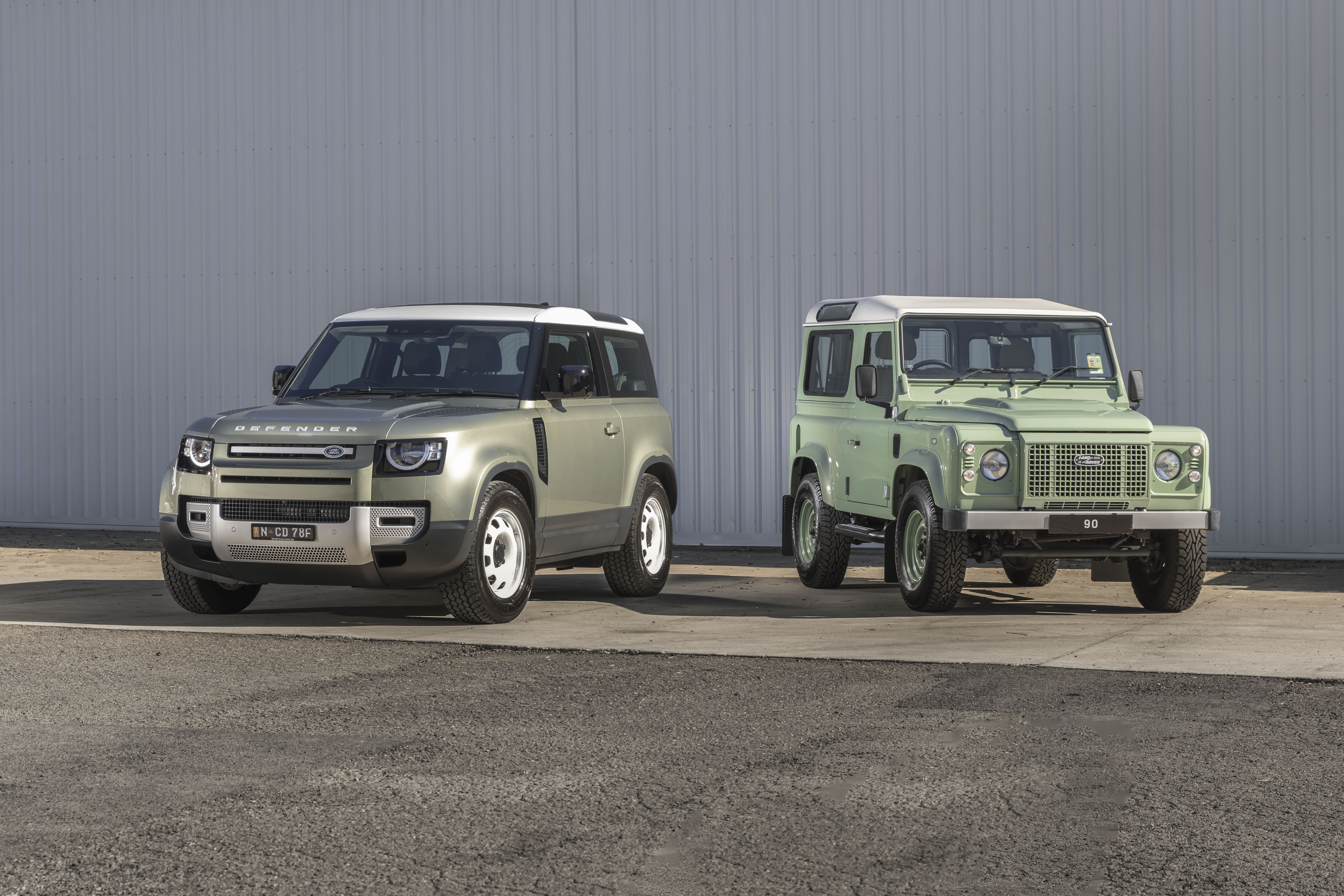
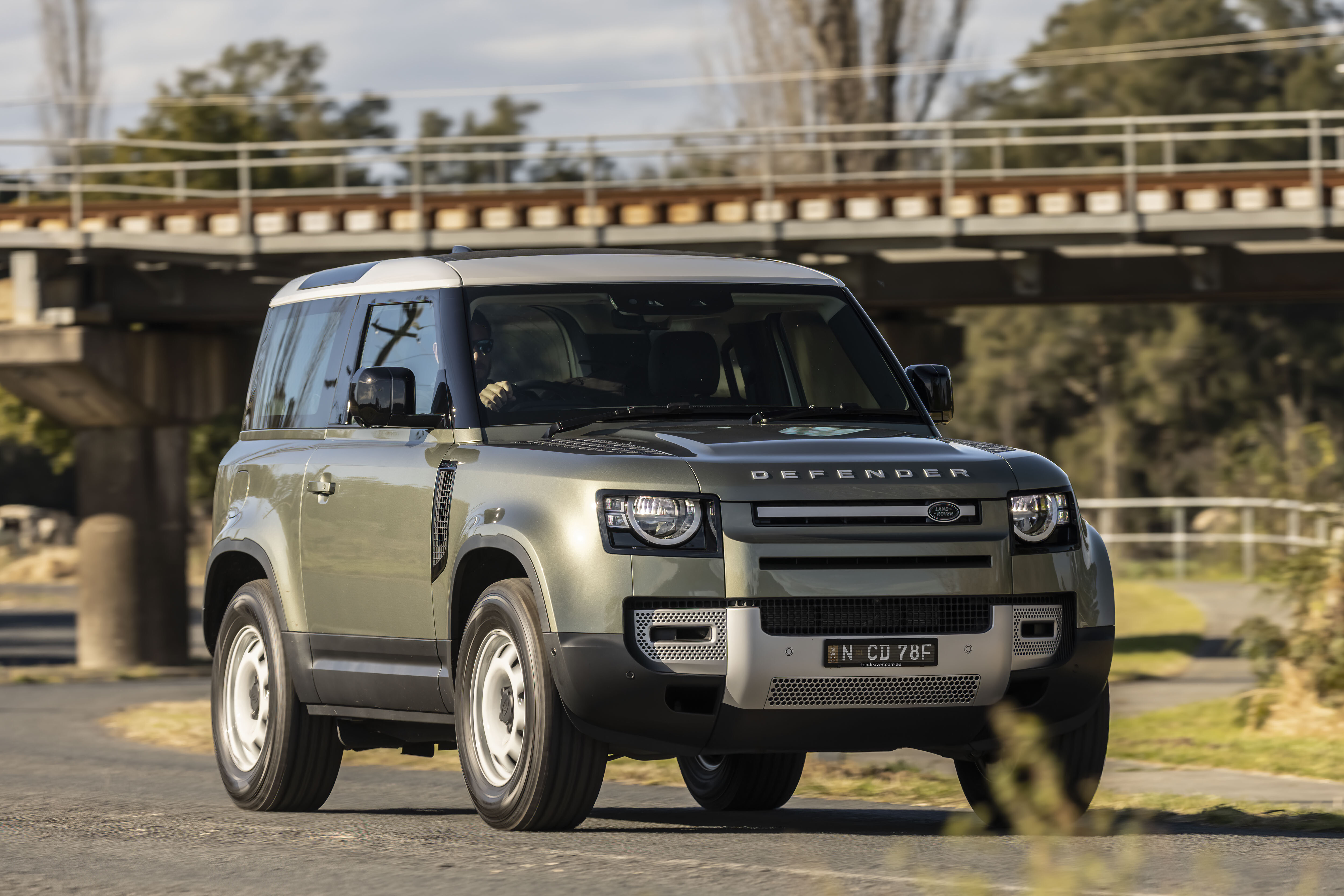
The launch of the new Defender 90 is here, with the three-door Land Rover joining its five-door Defender 100 sibling in the Australian market.
Featuring a new chassis and overhauled styling from the previous Defender, the new model is looking to bolster Land Rover’s local sales as the Defender 110 leads the way for JLR locally.
Starting out at just under below $75,000 before on-road costs, the range-topping V8 will set buyers back over $200,000, rivalling some of the top-shelf Range Rover Sport models.
Pricing
The 2022 Land Rover Defender 90 range features five different engines across six trim variants, leading to eight possible combinations of powertrain and other options.
All prices listed are before on-road costs.
- Defender 90 P300 – $74,516
- Defender 90 D200 – $81,166
- Defender 90 S P300 – $83,346
- Defender 90 S D250 – $90,326
- Defender 90 SE P400 – $100,326
- Defender 90 XS Edition P400 – $110,516
- Defender 90 X P400 – $141,356
- Defender 90 V8 P525 – $210,716
Features
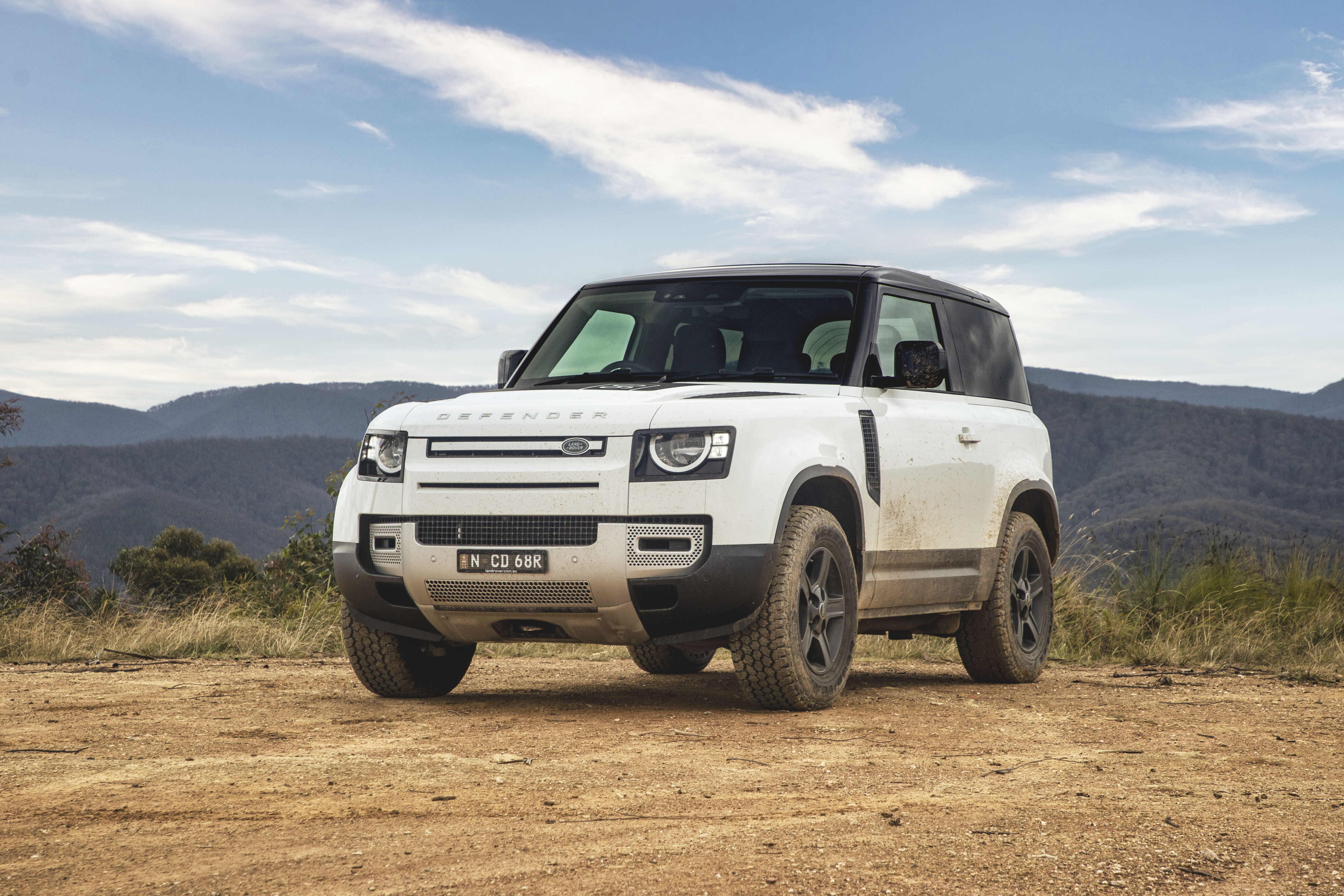
All Defender 90 variants are available with the same standard equipment which includes features such as:
- Heated, electric, power fold door mirrors
- Auto-dimming rearview mirror
- LED headlights and tail-lights
- 18-inch Style 5093 gloss white steel wheels
- 18-inch full-size spare wheel
- Goodyear Wrangler AT/S tyres (all-season also available)
- Coil springs (air suspension optional)
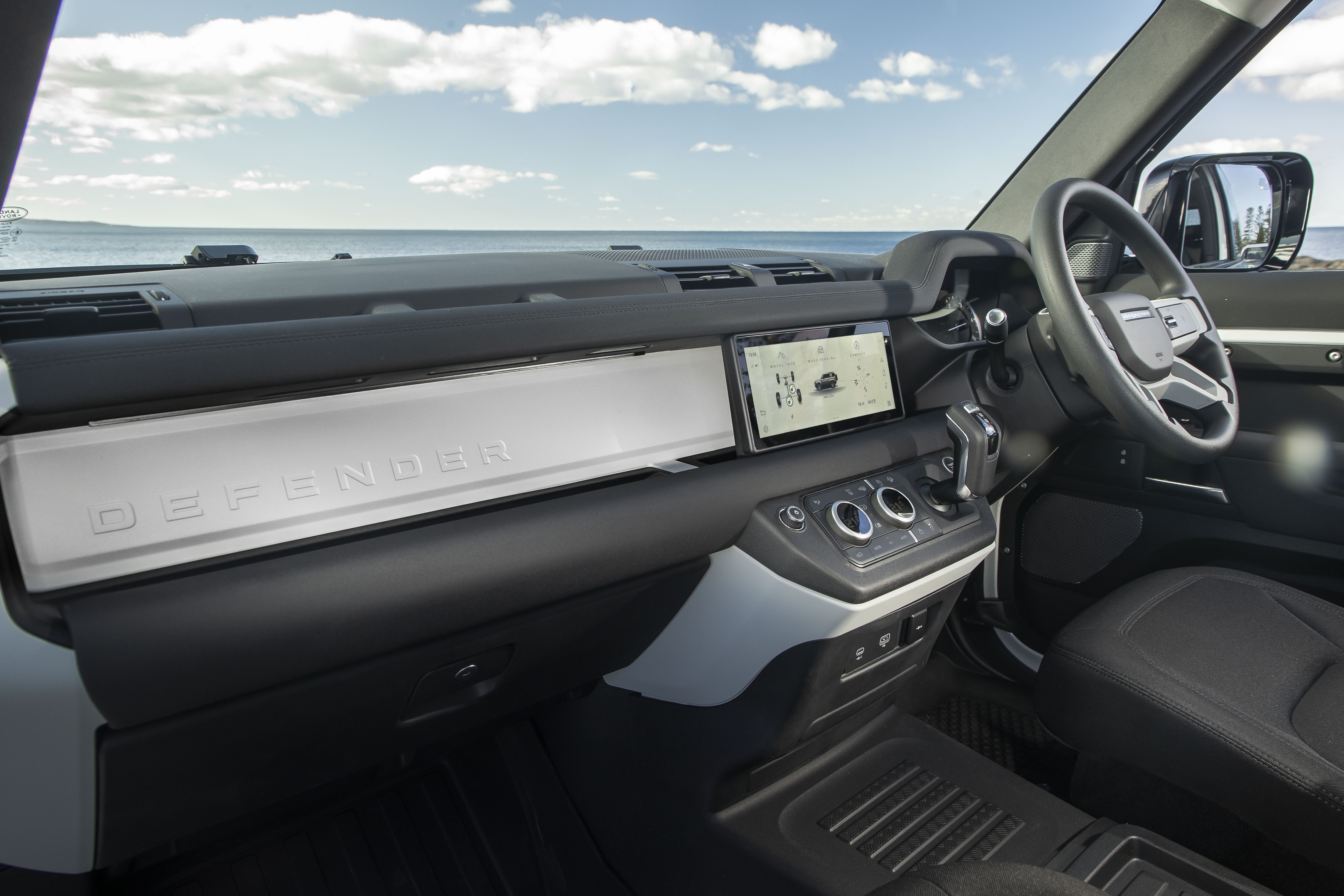
- Pivi Pro 10-inch infotainment touch screen (11.4-inch screen optional)
- DAB radio
- Apply CarPlay and Android Auto
- Online pack with data plan
- 12-volt power in rear loadspace
- Rubber cabin flooring
- Keyless entry
- Tyre pressure monitoring system
- Black contrast roof – $2171 (90, S, SE)
- White contrast roof – $2171 (90, S, SE)
- Sliding panoramic roof – $4490 (90, S, SE)
- Folding fabric roof – $4810 (90, S, SE), $330 (X)
- Black roof rails – $940 (all except V8)
- Black exterior pack – $1400 (90, S, SE)
- Extended black exterior pack – $1543 (X, V8)
- Bright exterior pack – $2205 (90, S, SE)
- Extended bright exterior pack – $2646 (90, S, SE)
- Signature graphic – $337 (all)
Optional packages
In addition to the abundance to individual options available across the Defender 90 variants – which includes 12 wheel options and six interior trim options – Land Rover offers a range of different packages which can be added, though specific prices have not yet been offered up.
Explorer Pack
- Wheel arch protection
- Front and rear classic mudflaps
- Expedition roof rack
- Raised air intake
- Spare wheel cover
- Matte black bonnet decal
- Exterior side-mounted gear carrier
Adventure Pack
- Bright rear scuff plate
- Portable rinse system
- Front and rear mudflaps
- Integrated air compressor
- Spare wheel cover
- Seat backpack
- Exterior side-mounted gear carrier
Country Pack
- Bright rear scuff plate
- Portable rinse system
- Wheel arch protection
- Front and rear classic mudflaps
- Full height loadspace partition
Urban Pack
- Bright rear scuff plate
- Front undershield
- Bright metal pedals
- Spare wheel cover
Engine, drivetrain and fuel economy
All of the five available engines are mated to an eight-speed torque-converter automatic transmission, coupled to a twin-speed transfer box with high and low range.
The four-wheel-drive system also includes Land Rover’s Terrain Response technology, allowing the driver to change settings between presets in the system depending on what kind of surface they are driving on with help from the electronic centre and rear differentials.
Below is a breakdown of the five engines available with power, torque and fuel consumption figures.
- D200 – 3.0-litre, turbocharged inline six-cylinder diesel with 48-volt mild-hybrid assistance, 147kW/500Nm, 7.9L/100km
- D300 – 3.0-litre, turbocharged inline six-cylinder diesel with 48-volt mild-hybrid assistance, 183kW/520Nm, 7.9L/100km
- P300 – 2.0-litre, turbocharged inline four-cylinder petrol, 221kW/400Nm, 10.1L/100km
- P400 – 3.0-litre, turbocharged inline six-cylinder petrol with 48-volt mild-hybrid assistance, 294kW/550Nm, 9.9L/100km
- P525 – 5.0-litre, naturally aspirated V8, 386kW/625Nm, 12.8L/100km
Dimensions
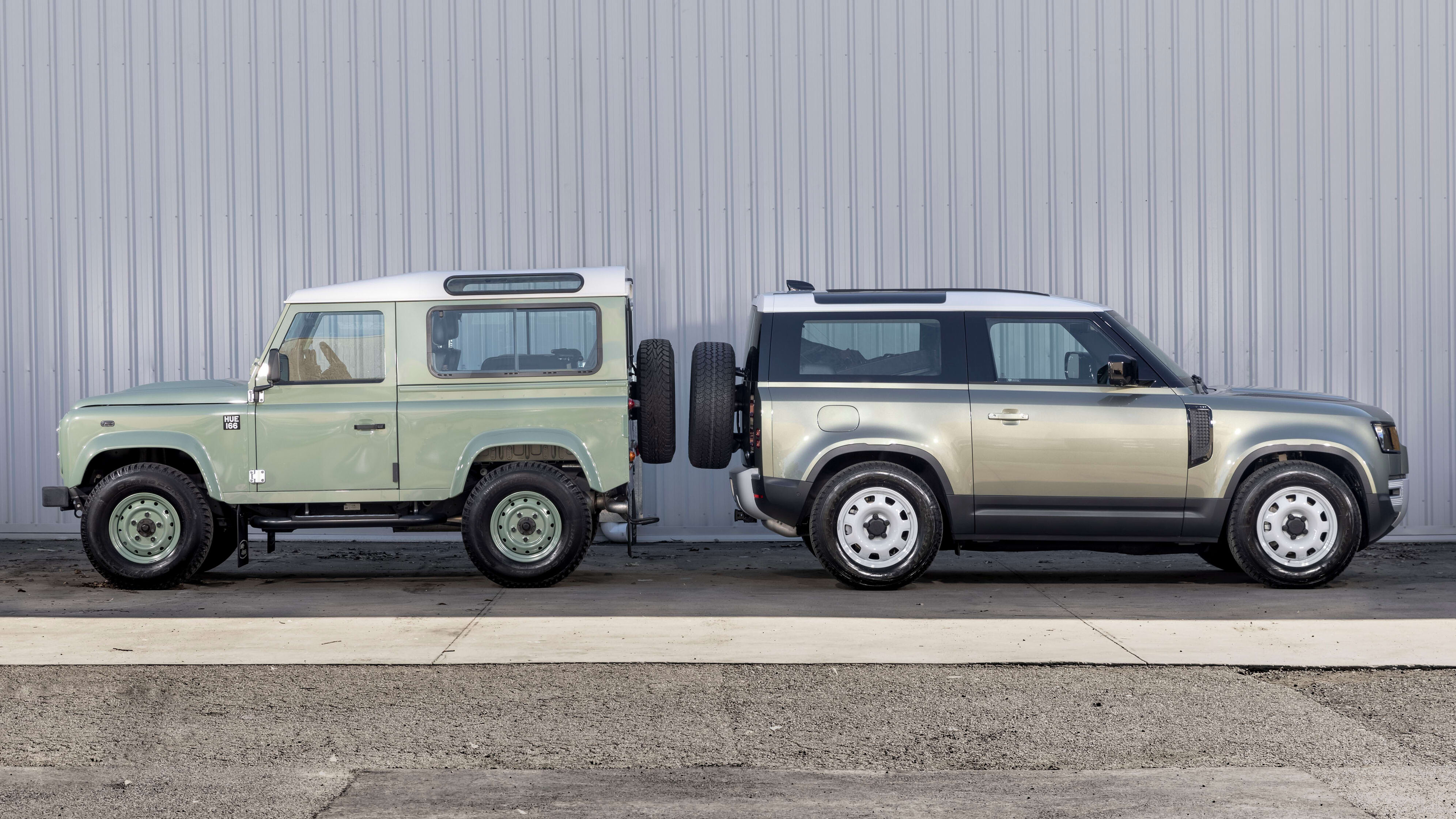
With almost half a metre chopped off the 110’s wheelbase, the Defender 90 is 435mm shorter than the bigger off-roader resulting in a body length of 4583mm and a wheelbase of 2587mm, still sharing the same 2008mm width and 1967mm height.
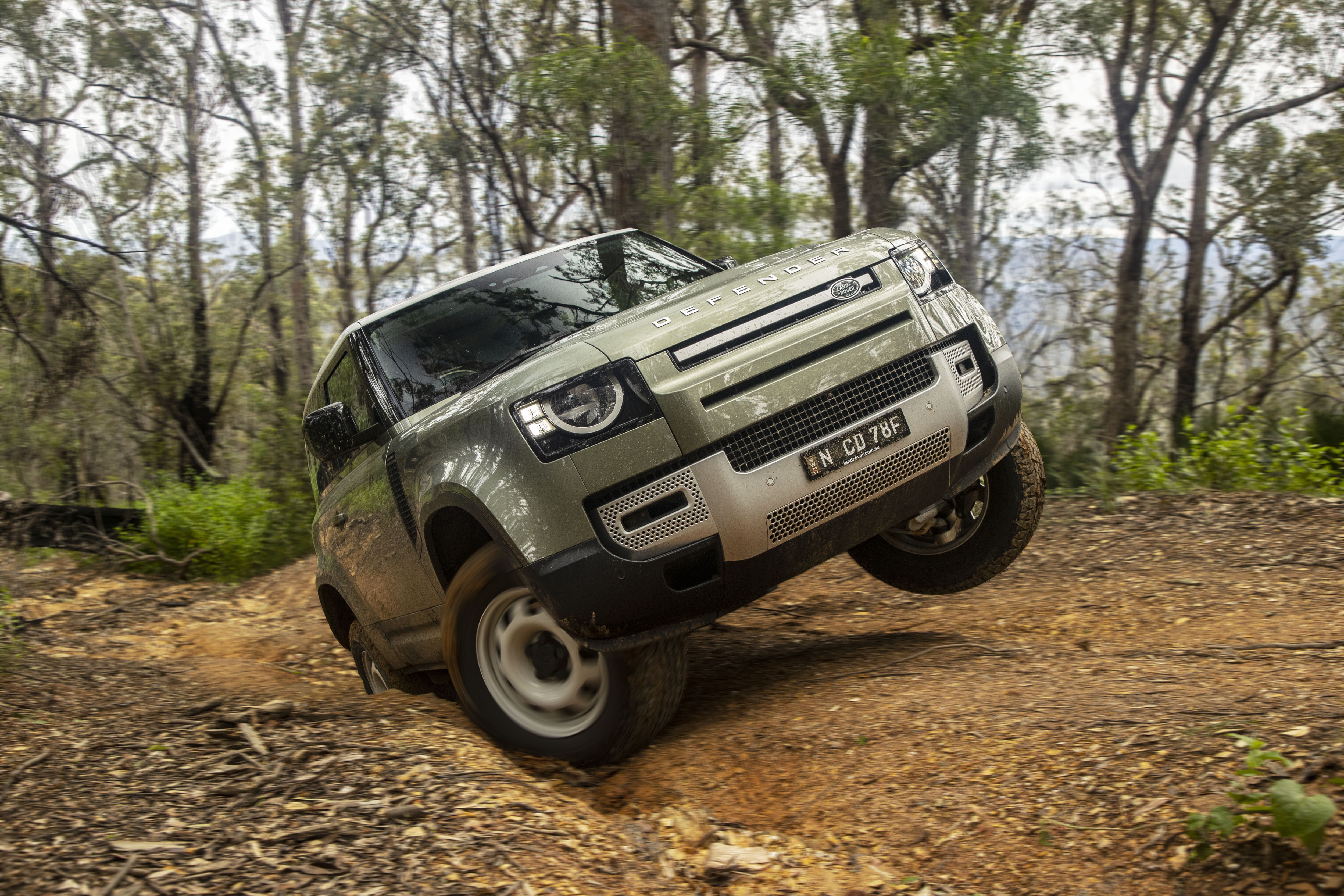
On the standard coil springs, all Defender 90s have a 31 degree approach angle, 25 degree ramp angle and 38 degree departure angle thanks to its 225mm ground clearance (increased up to 291mm with air suspension).
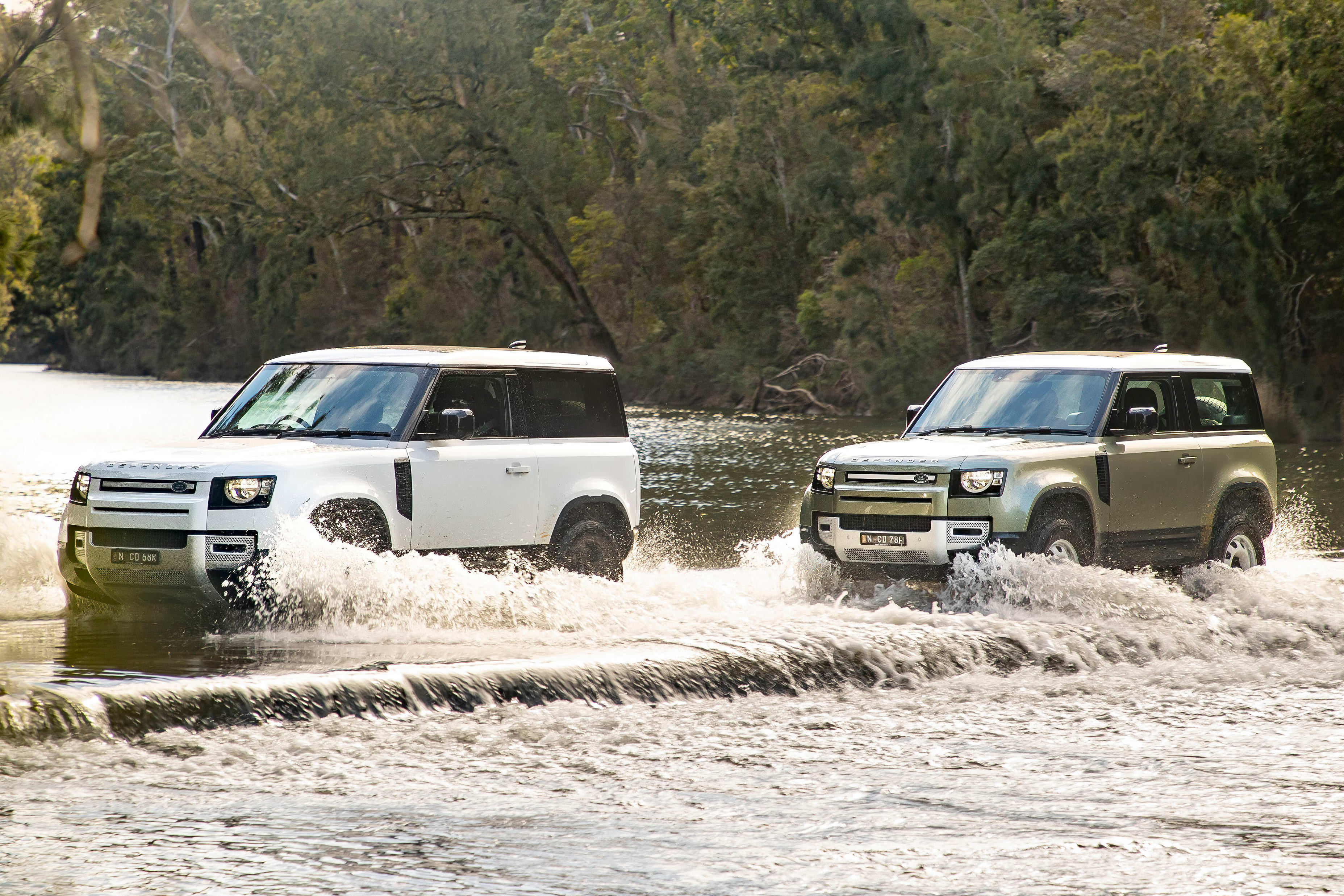
A side air intake means the Defender can wade at depths up to 850mm.
Safety
While no ANCAP crash test results have been released for the three-door Defender, its bigger five-door sibling scored five stars when it was tested in 2020, rating particularly well for child and adult occupant protection.
The Defender 90 features a variety of safety technology to keep its occupants and other road users safe, including:
- Emergency braking
- Blind-spot assist
- 3D surround camera
- Clear exit monitor
- Adaptive cruise control
- Lane keep assist
- 360° parking aid
- Rear collision monitor
- Rear traffic monitor
- Traffic sign recognition and adaptive speed limiter
- Wade sensing
- Driver condition monitor
- Rear ISOFIX
Warranty and servicing
As with the rest of the Land Rover model line-up, the Defender 90 is covered by a five-year/unlimited-kilometre warranty with a five-year guaranteed future value assurance included.
Five-year service and roadside assistance packages are also available for the range, starting at $1950 for the 2.0-litre petrol, $2650 for the 3.0-litre petrol and diesel engines before reaching $3750 for the top-shelf 5.0-litre V8.
Availability
Land Rover is currently taking orders for the Defender 90 but has warned of delays up to the first quarter of next year due to production issues, owing in part to the semi-conductor shortage throughout the automotive industry.
Snapshot
- Jeep has big electric plans but isn’t ditching V8 engines yet
- Diesel sales expected to drop off by 2030
- Brand CEO says losing ICE doesn’t mean losing performance
Jeep has confirmed its V8s are not dead yet despite recently announcing big electric vehicle plans for the future – with the Aussie favourite expected to be gradually phased out.
Speaking at a roundtable event for the India and Asia Pacific region this week, Jeep CEO Christian Meunier gave the V8 a stay of execution from being axed in favour of electric power, saying “it will happen, but not yet”.
“We want to keep producing the V8 for as long as we can, especially while there is a market demand for it, but at the same time electrification gives us the opportunity to get even more performance in a better way,” he added.
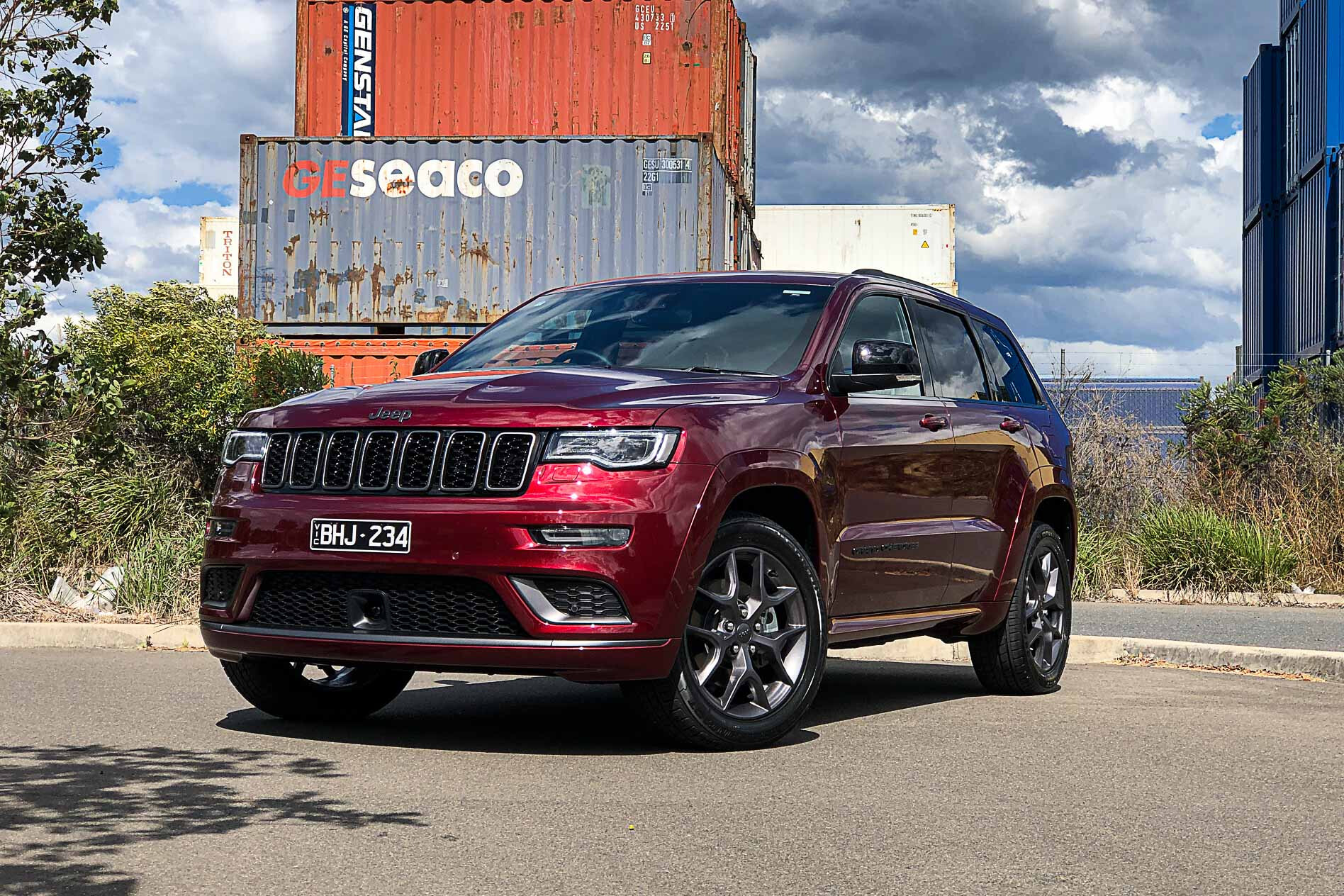
“I love it, but I love electrification more – it gives us more acceleration, more power, more torque and all in a better package without hurting the planet, and that’s the solution in the long term.”
The US manufacturer’s top execs were adamant the transition to electric won’t mean losing out when it comes to performance though.
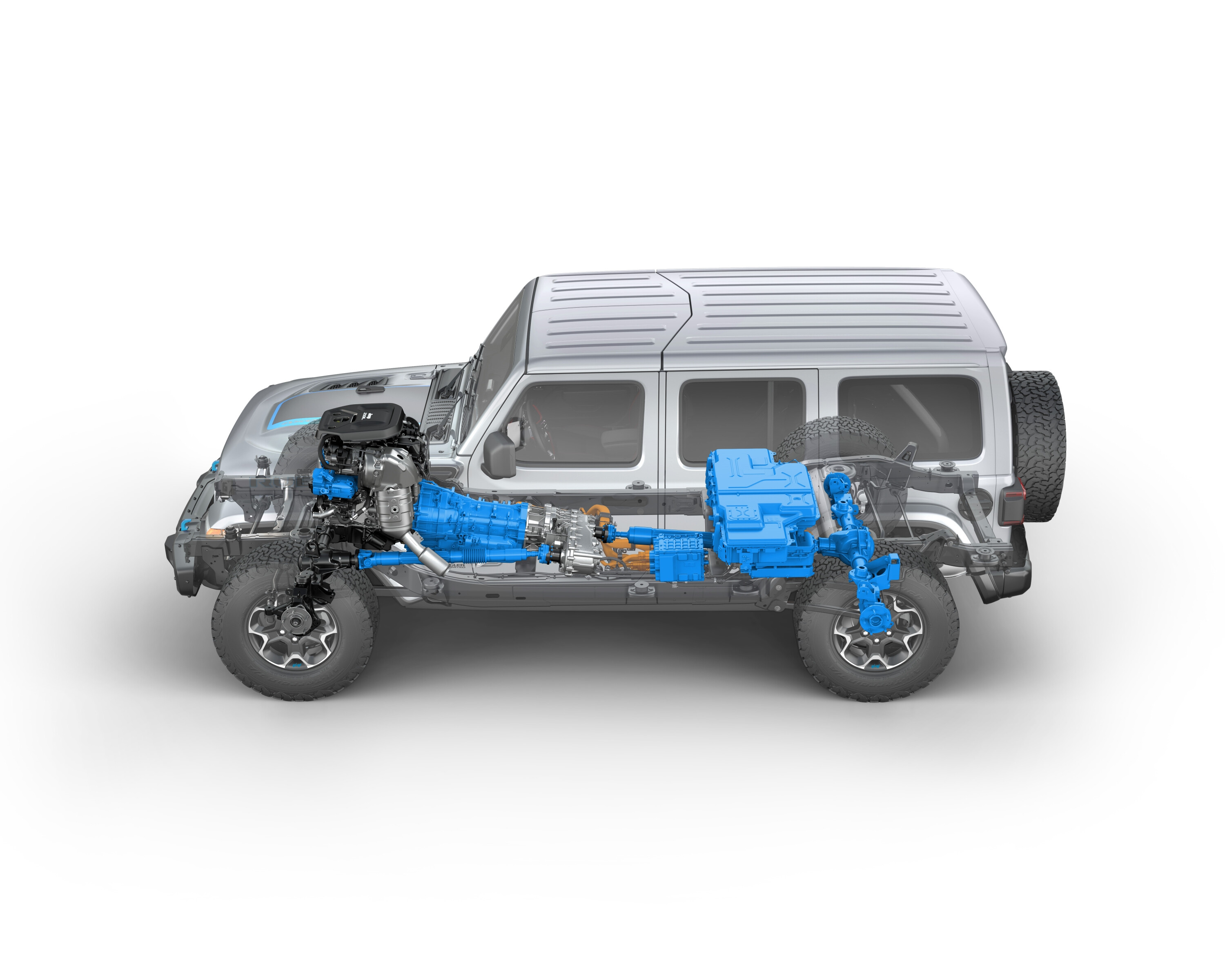
While details are still scarce on what the Grand Cherokee 4xe teased last week may be capable of, if the Wrangler 4xe, which is available to order in America now, is anything to go by – we could be looking at the new PHEV Jeep featuring a 2.0-litre four-cylinder petrol unit making 280kW and 637Nm paired with a 17kWh battery pack.
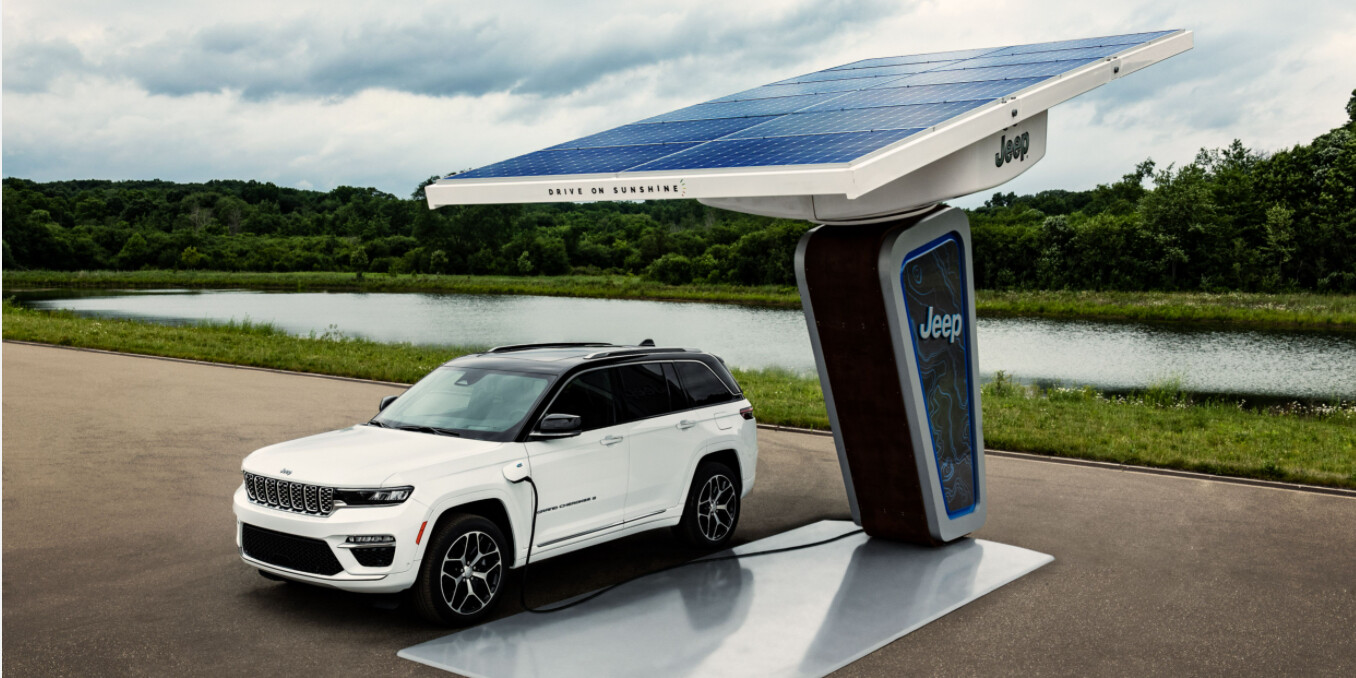
That means the upcoming 4xe models could produce more than enough to stand up against the brand’s existing line-up – even if they don’t come in the form of a V6 or V8.
As a quick reminder, here’s how that stacks up against Jeep Australia’s current engines and their performance:
Gladiator
3.6-litre Pentastar V6 found in all variants – makes 209kW/347Nm.
Wrangler
3.6-litre Pentastar V6 found in all variants – makes 209kW/347Nm.
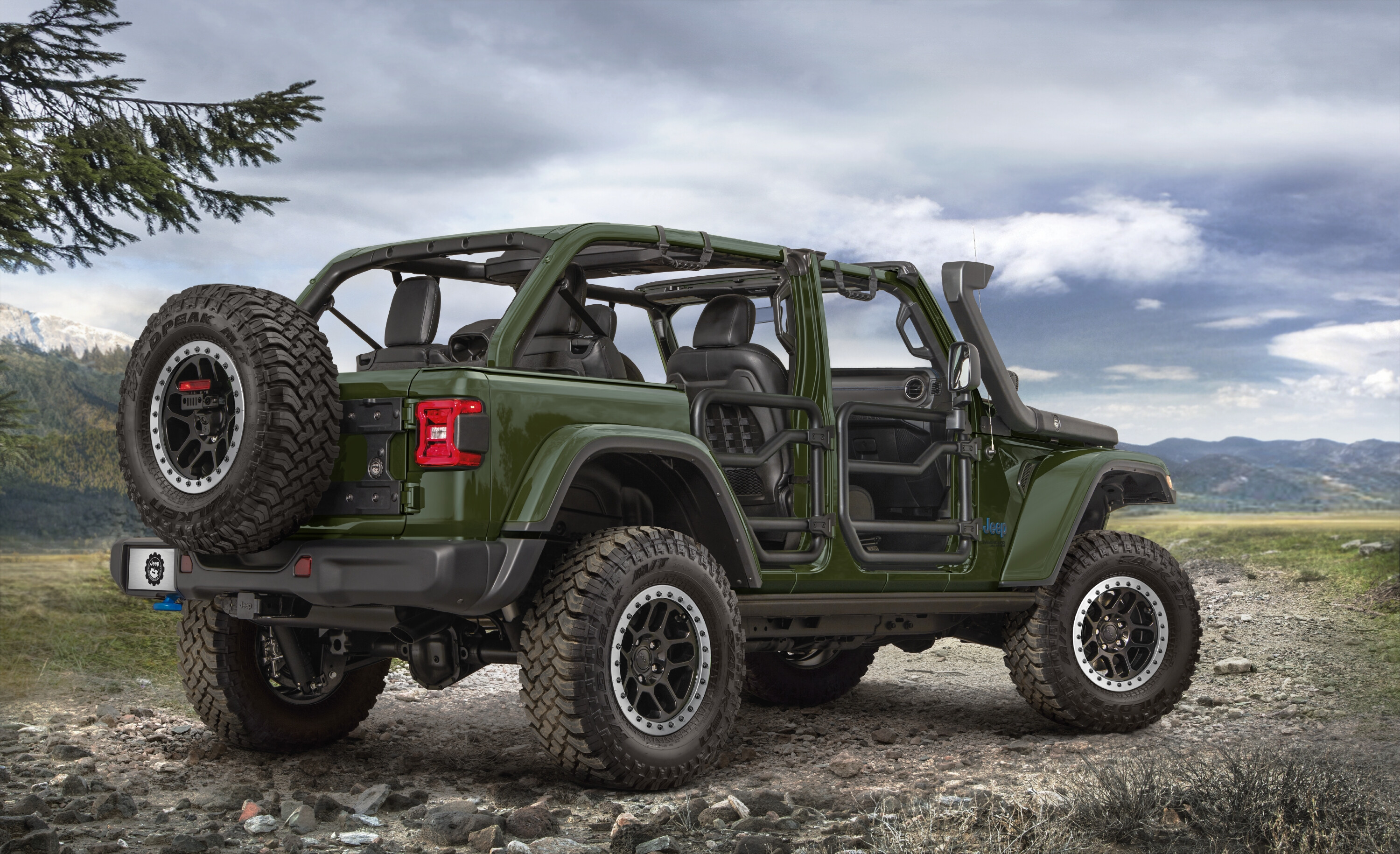
Grand Cherokee
Night Eagle – 3.6-litre V6 or 3.0-litre V6 turbo diesel – makes 213kW/347Nm or 184/570 respectively.
S-Limited – 5.7-litre V8 petrol, same 3.0-litre V6 turbo diesel or additionally available as 5.7-litre HEMI V8 – 5.7-litre V8 petrol produces 259kW/520Nm, no figures quoted for HEMI V8.
Trailhawk – utilises same V6 turbo diesel.
S-Overland – utilises same V6 turbo diesel.
Cherokee
Sport – 2.4-litre Tigershark – pumps out 130kW/229Nm.
Limited – 3.2-litre Pentastar V6 – makes 200kW/315Nm
S-Limited – utilises same 3.2-litre V6.
Trailhawk – utilises same 3.2-litre V6.
Compass
Launch Edition – 2.4- litre Tigershark petrol – produces 129kW/229Nm.
Limited – utilises same 2.4-litre petrol.
S-Limited – utilises same 2.4-litre petrol.
Trailhawk – 2.0-litre MultiJet diesel – makes 125kW/350Nm.
When also asked by 4×4 Australia about the future of diesel in its model range, the boss said the American firm plans to phase it out between now and 2030.
“Diesel is disappearing in Europe, the volume is going to reduce but that doesn’t mean we’ll stop producing [diesel variants] all at once – there will be a transition between now and 2030 and we’ll continue to have a V8,” Meunier said.
“Our role is to make Jeep even more exciting, to embrace electrification. On top of that, the Jeep community loves nature, they embrace it, so by making a product which doesn’t hurt nature and can drive in silence – that’s magic.”
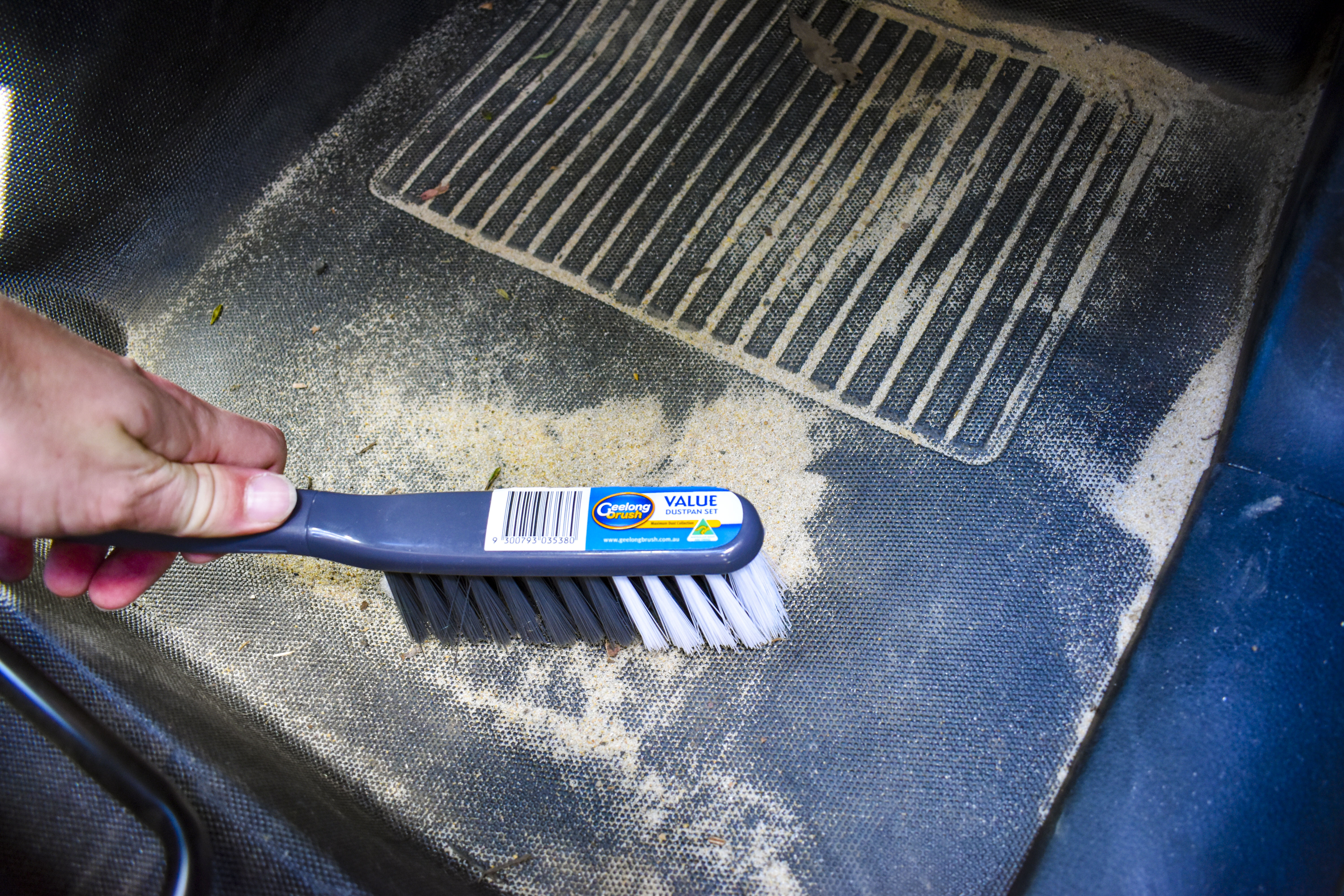
We’ve made no qualms about singing the praises of the vinyl floor found in our LS-M Isuzu D-MAX. It’s high quality, easy to clean and resistant to stains. The only negative is sand and mud can get trapped around trim panels, meaning a vacuum or sweep out is still required.
There has to be an easier way, and the answer is obviously floor mats. We didn’t want to cut any corners though, so opted for these high-end Maxtrac 3D mats from the team at TruFit carpets and vinyls.
Now this is an upgrade anybody could make at home; if you can open a box, you are basically over-qualified. Each floor mat has been specifically designed to suit your vehicle, so no cutting or mucking around is required. They also won’t slide around once in place; unlike many other floor mats you can get.
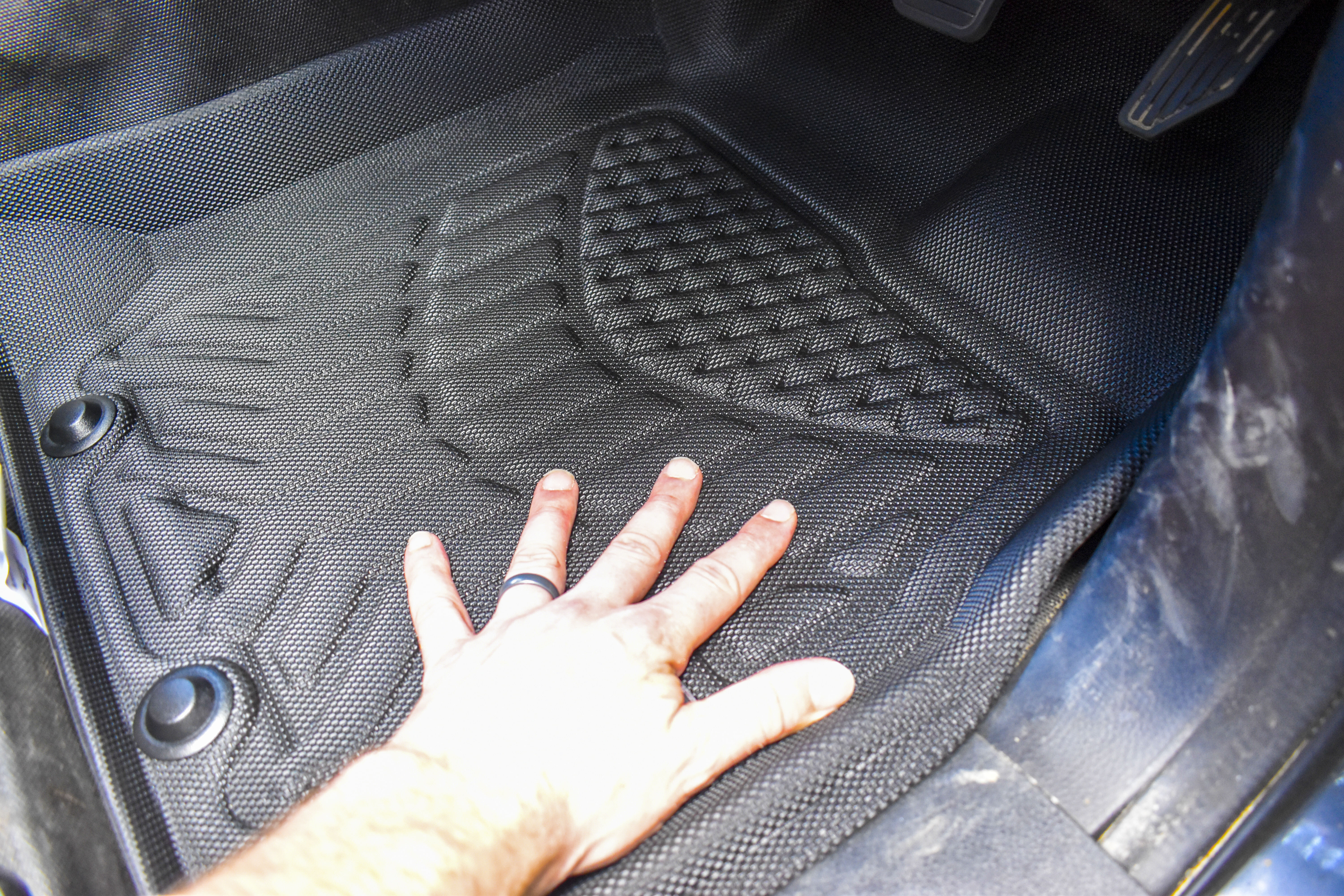
Simply fit them in place and go four-wheel driving. At the end of the day, lift them out and shake whatever material is left over from your adventure.
They will protect our vinyl floor, increase resale value as it will look brand-new for years to come and make cleaning up after a day on the tracks easy as pie.
If you have just bought, or are about to buy a new 4×4, floor mats and seats covers are some of the first things you should fit.
AVAILABLE FROM: http://3dmats.com.au RRP: For the D-MAX, front and rear floor mats cost $279, or $199 for the front alone. WHAT WE SAY: Check out the TruFit 3D website, to see if there’s a floor mat to suit your vehicle.
Snapshot
- Priced from $67,490
- In dealers from September 1
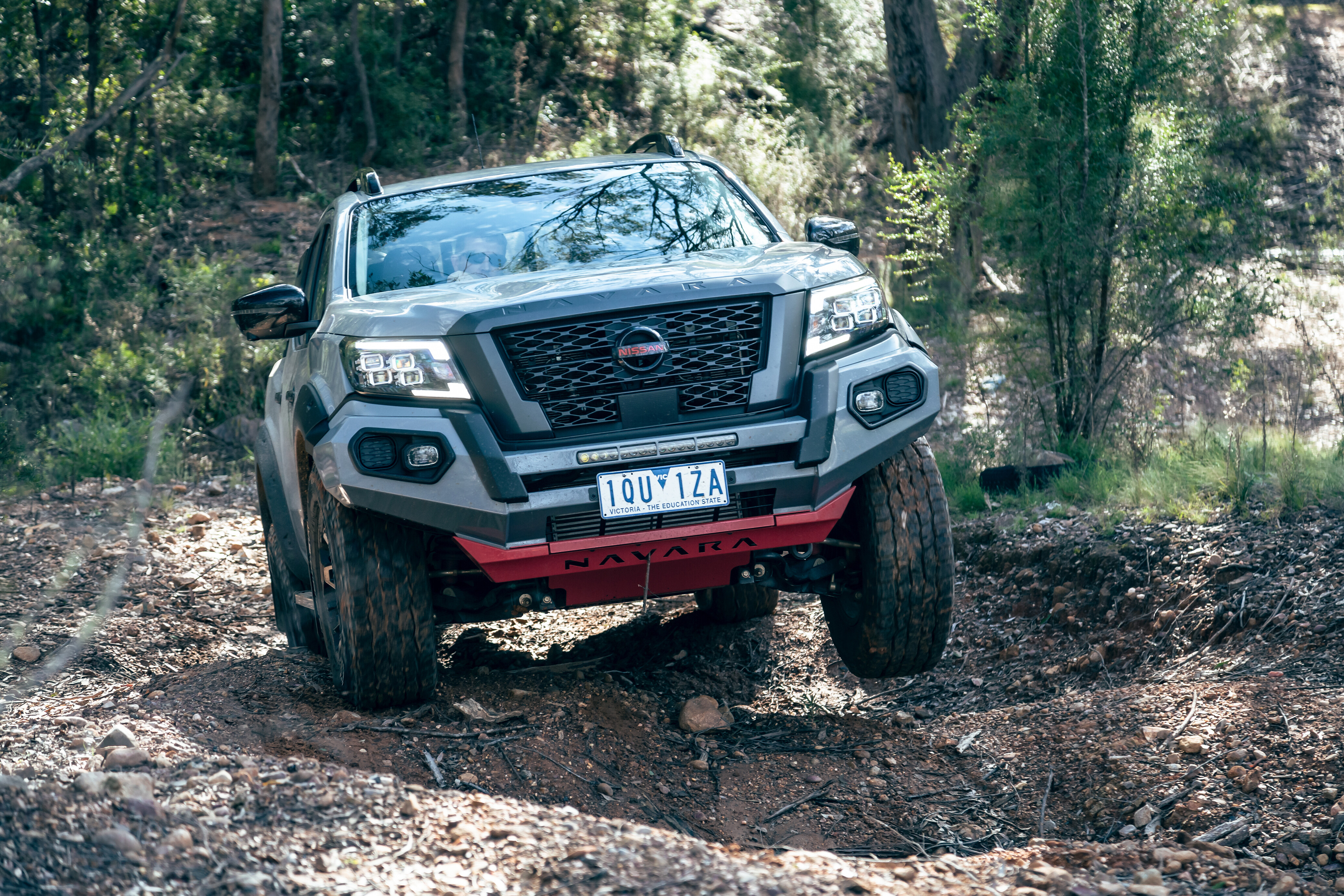
The recently revealed Nissan Navara PRO-4X Warrior by Premcar has officially been given a launch date, with the halo off-roader to arrive in dealerships across Australia from September 1 this year.
Pricing has also been released, with the Warrior priced from $67,490 when paired with a six-speed manual transmission. Opting for the self-shifting seven-speed automatic variant is a $2500 premium, with that set to retail from $69,990.
This price point positions it side-by-side with its closest competitor, the Hilux Rugged X ($69,900; auto-only), and considerably cheaper than the Jeep Gladiator Rubicon ($76,450) and Ranger Raptor ($77,190).
Still, it’s a decent price hike compared to N-TREK Warrior, which was priced at $62,990 (manual) and $65,490 (auto) when launched in 2019.
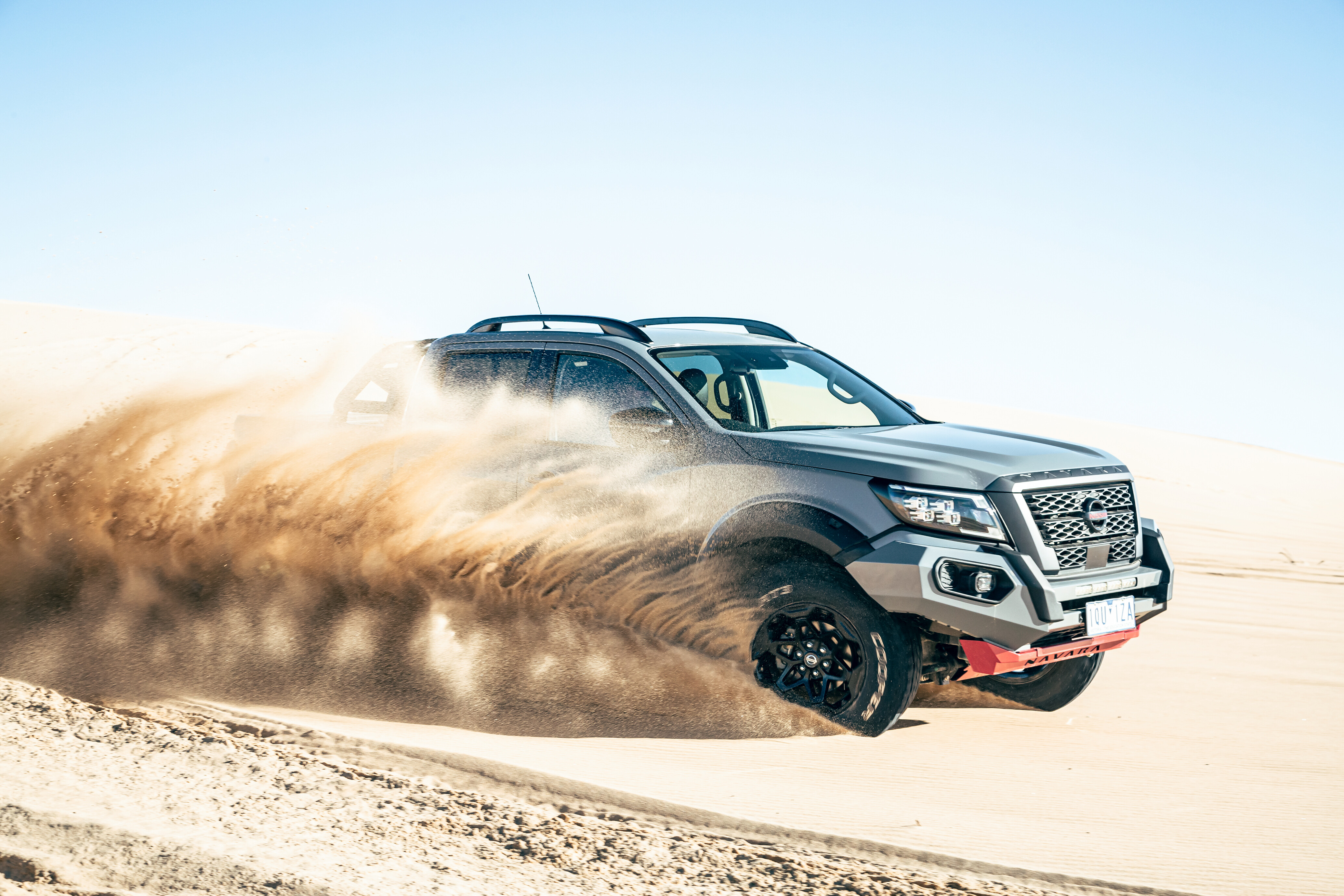
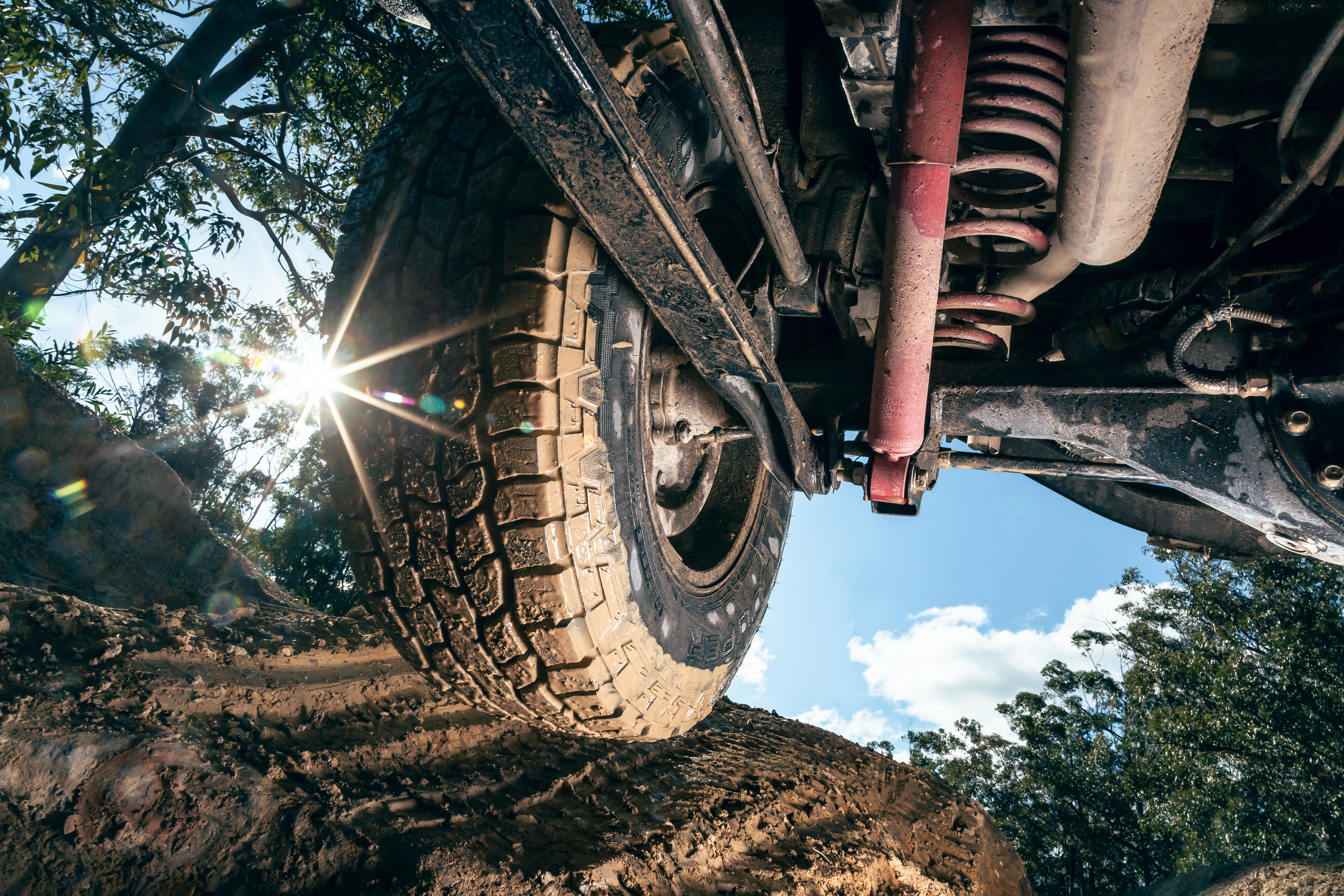
Utilising the underpinnings of the MY21 Navara PRO-4X, the Premcar-fettled Warrior is wider, taller and tougher courtesy of revised suspension componentry; a widened track from 1570mm to 1600mm; more ground clearance (260mm up from 220mm); a greater approach angle (36 instead of 32 degrees); and a 100kg GVM upgrade (now 3250kg).
The suspension updates comprise new spring rates, revised front and rear damping, and a larger, taller jounce bumper, said to provide “better control of wheel movement at maximum suspension travel, and reduce transmission of large impacts into cabin”.
Listen to Premcor’s Tom Imbesi discuss these changes in detail in the below video.
Also new for the PRO-4X Warrior is a winch-compatible bumperbar with an in-built LED light bar, a Navara-branded bash plate, and 3mm-thick steel underbody protection.
“The PRO-4X Warrior by Premcar is a true Warrior 2.0, delivering more technology, more capability and more go-anywhere toughness than any Navara before it,” said Bernie Quinn., Premcar Engineering Director. “We set out to create the most capable Navara ever and this new Warrior is exactly that? It’s been engineered from the ground up to tackle the toughest terrain Australia can deliver, all without sacrificing comfort.
“It benefits from all of our learnings, our customer feedback, and from the improvements made to the Navara PRO-4X, creating a new dual-cab Ute that is tailor-made for Australian conditions.”
At the vehicle’s launch earlier this month, Quinn explained to 4X4 Australia that production of the Warrior at Premcar’s Epping facility in Melbourne, Victoria, will span the duration of the current-model Navara’s lifecycle – unlike production of the N-TREK Warrior which was limited to 1400 units due to a capped 12-month production lifespan.
“Production is scheduled at 32 a week, but we’ll be supply-constrained at that,” Quinn said. “The facility is capable of doing more. At the peak of N-TREK Warrior we were doing 13 per day, which we can do in one shift.”
The Warrior is covered by a comprehensive five-year, unlimited-kilometre warranty which covers all Nissan and Premcar parts.
“Ensuring a hassle free Warrior purchase and ownership experience is extremely important,” said Matt Baily, Nissan Australia’s Senior Manager of Local Product Development & Enhancement.
“With the PRO-4X Warrior model, you’re supported, just like any other Navara owner would be. The same goes for servicing and capped-price servicing, ensuring our customers get the best OEM and Premcar equipment, with everything taken care of by your Nissan dealer.”
There’s no denying how popular the JB74 model Suzuki Jimny is, both locally and internationally. Suzuki has done a marvellous job of creating a new model that somehow is modernised, yet with a strong nod to the heritage of the previous incarnations of Suzuki’s off-roaders.
While Zooks have always been capable four-wheel drives, it’s plain to see they are on the small side, especially if you intend on carrying basic things like people or cargo.
The JB74 Jimny is also a relatively new model, so sourcing gear can be an added challenge. For Darren Young, the owner of this highly modified example, that was almost part of the appeal to build his idea of the ultimate (Little) Rig.
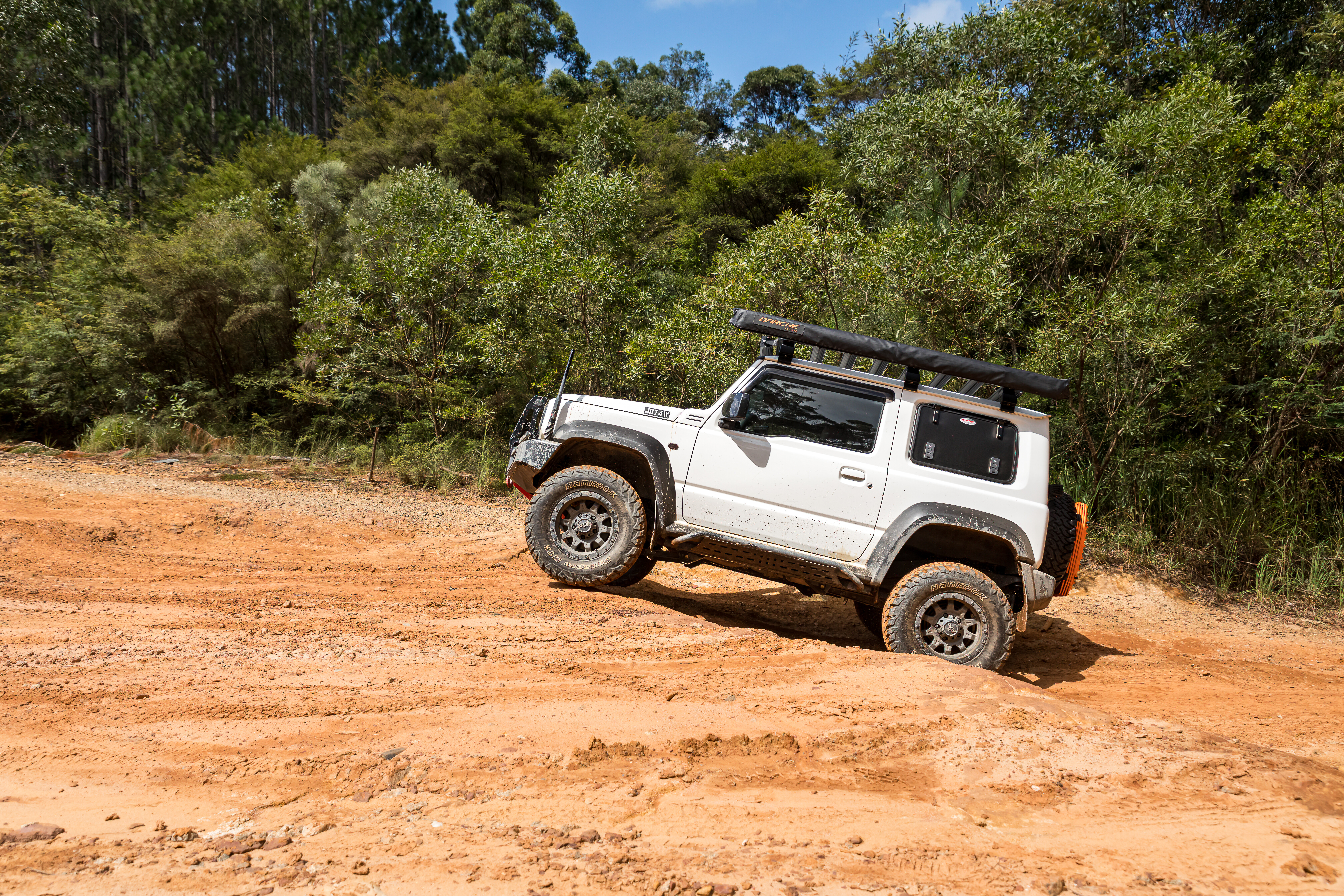
“A friend was talking to me about the Jimny, and how good they are off-road,” Darren tells us. “I started watching videos on YouTube, and was instantly hooked. I sold my 2016 Ford Ranger and ordered the new model.
When I first picked up the vehicle, there weren’t many aftermarket accessories available yet. So customising it meant plenty of trial and error. I’ve been trying to find that perfect balance between a mini tourer and an off-road weapon. I’ve got a pretty good balance so far, I think. I wanted something that could do it all basically.”
Despite owning a Ford Ranger previously, Darren’s background is actually in high-performance street cars. It must have been a shock jumping out of a worked V8 into a Jimny. In saying that, you can also see how his love of street cars has transferred into four-wheel drives, as the attention to detail in this little Jimny is next level. He also hints that he’s seen the light, and the off-road way of life is now something he has well and truly embraced.
Starting at the pointy end, the engine has been left alone for now, except for the addition of a custom stainless-steel snorkel from Vogue Industries. When asked about the performance of the stock 1.5L motor, Darren was blunt: “It makes about 100 horses, 100 very slow and very tired horses.”
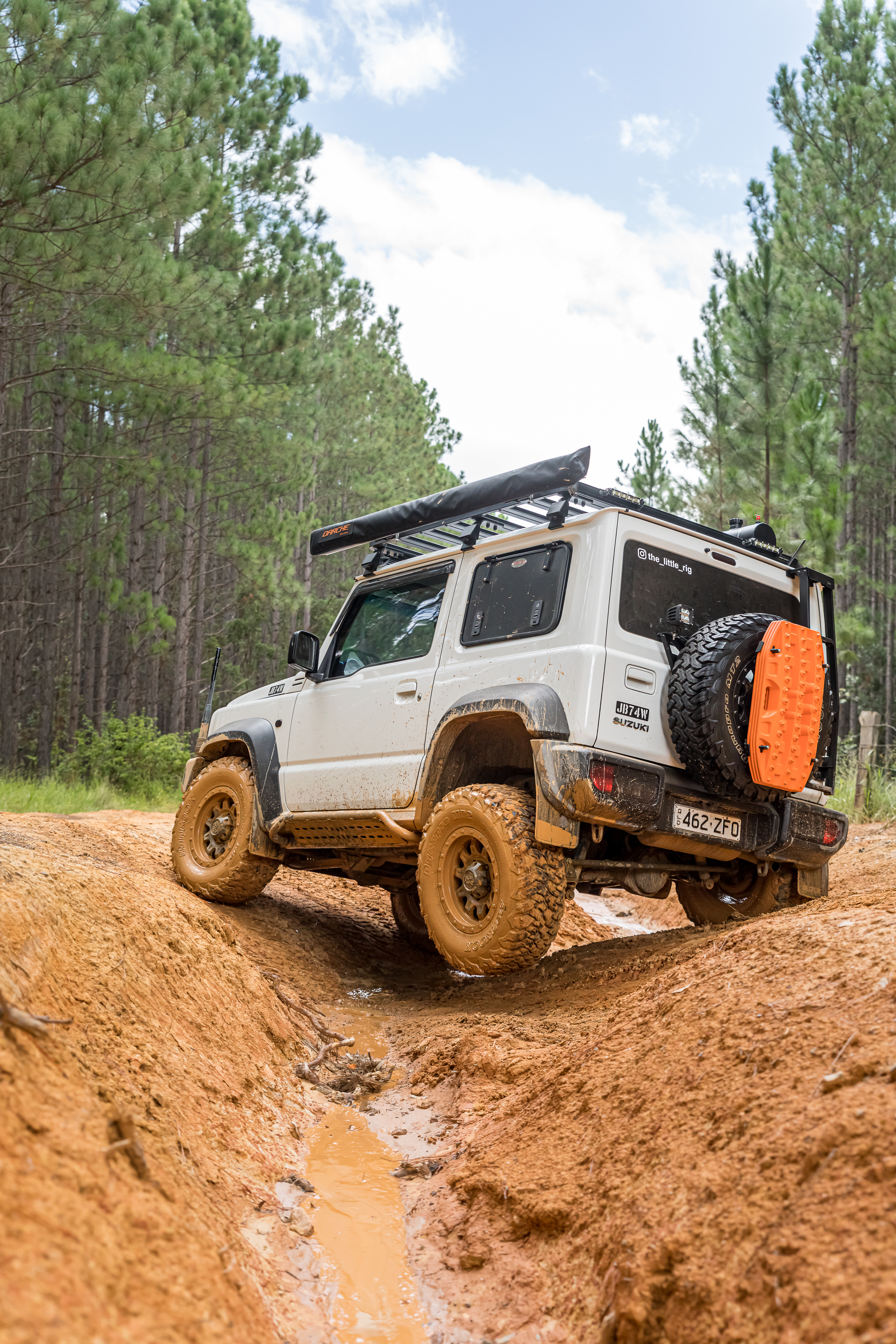
It makes about 100 horses, 100 very slow and very tired horses
To get around that, Darren is planning on installing a Turbo World turbo kit in the near future. Now that would be fun. As well as the turbo, Darren is keen on fitting an 80L long-range fuel tank to double the touring range of the Jimny without the need to cart Jerry cans around.
When the going gets tough, this Jimny has all the right off-road credentials to keep up with the big boys. While the traction-control system used in these JB74s is pretty good, Darren had front and rear ARB air lockers installed for the ultimate in traction. To help navigate tough obstacles, he is in the process of installing reduction gears, which will make this micro-weapon damn near unstoppable. Those reduction gears will provide 87 per cent reduction in low range, and 17 per cent in high range.
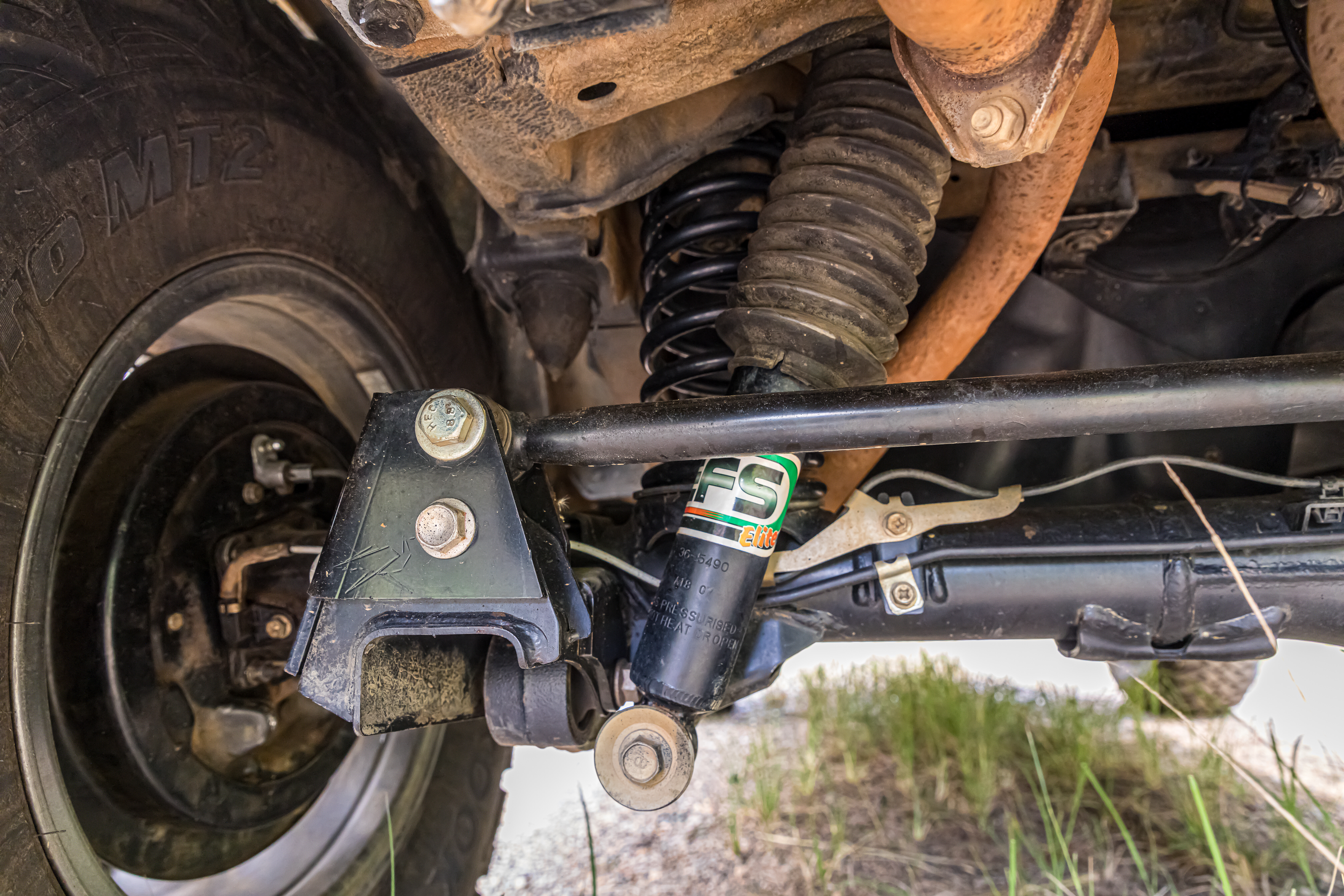
The factory suspension in the JB74 model Jimny is notoriously soft, which is great in slow off-road settings but not ideal anywhere else. Darren opted for an EFS 50mm suspension lift to provide more clearance, and he says it is still very softly sprung which suits him to a tee. He didn’t just whack in some new springs and shocks, though, but a complete suspension package. This is made up of a lowered chassis brace (to stop the front driveshaft hitting on down travel), rear Panhard rod extension, castor correction bushes and a Tough Dog return-to-centre steering damper.
Filling out the newly found real estate in the ‘guards is a set of Dirty Life 15×7 wheels with 30×9.5r15 Hankook Dynapro mud-terrain tyres. While that might sound small compared to a Patrol or Cruiser, that’s a big tyre on such a little vehicle. In saying that, now that Darren has invested in transfer reduction gears, he’s eyeing off a set of 32-inch tyres for off-road work, to really take things to the next level.
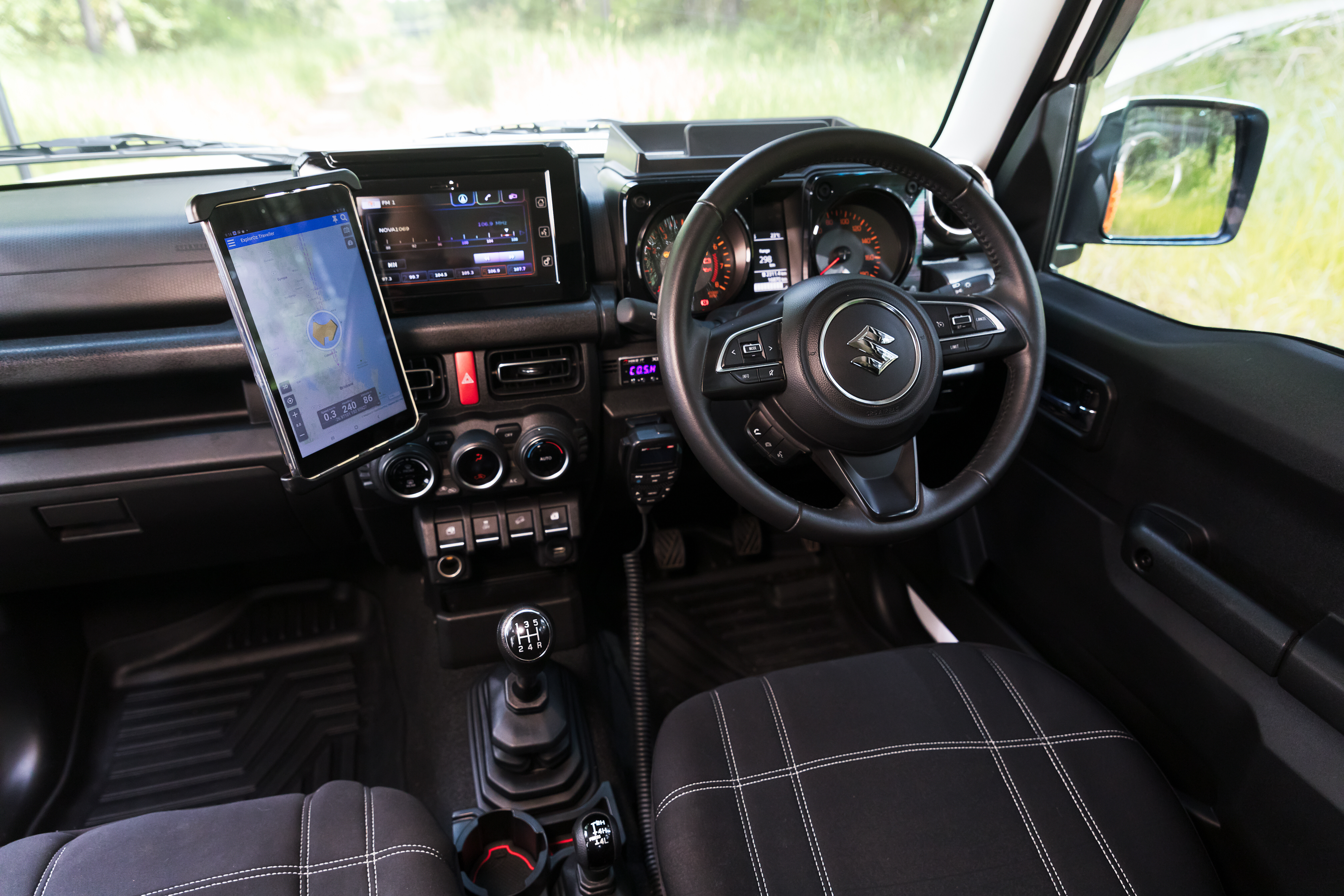
As previously mentioned, the Little Rig isn’t just a play toy, it’s a proper tourer as well. As such, Darren had it wired up with a lithium battery to power any accessories. There’s also an ARB compressor stashed under the driver’s seat, which is used for the lockers and tyre inflation. Darren selected a GME UHF radio for communications, and uses a Samsung tablet for off-road navigation and mapping. BushTek gullwings are another neat addition, making access to the small cargo area possible from nearly any angle.
Darren has taken no chances when it comes to protecting his pride and joy, with an extensive amount of off-road armour. BEI House bash plates and rear tyre mount (with MaxTrax carrier) get the party started, and a pair of Jimnybits rock sliders keep the sills looking like sills. He also had a set of neoprene seat covers installed early in the piece, to protect the factory cloth seats from stains and damage.
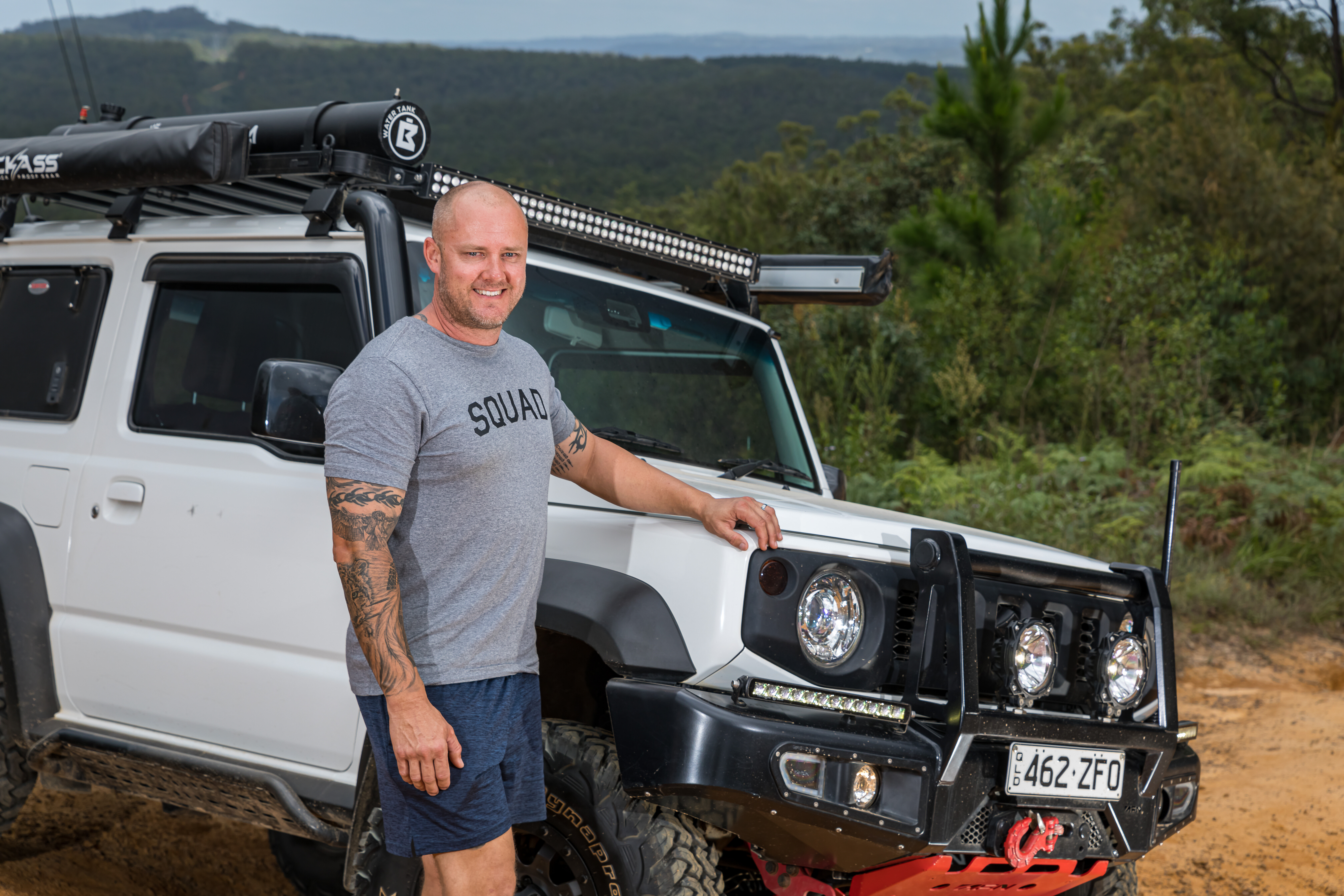
One of the most obvious bits of gear fitted to the Jimny would have to be that AFN front bar. This provides frontal protection, but also a platform to mount a 9500lb Carbon winch with synthetic rope. Darren has a rather intricate lighting set-up on the Jimny too, with LED driving lights from KC HiLiTES, as well as two 13.5-inch Stedi light bars and a further 40-inch LED light bar on the roof.
Speaking of the roof, you’ll also notice a Front Runner roof rack mounted on the factory rain gutters. To that, Darren has fitted a Darche awning for protection from the elements, as well as a Kickass shower tent for privacy in the bush. A Bazooka water tank can also be seen, which is heated by the sun and provides decent water pressure when supplied with a few psi from a portable air compressor.
When asked what he would do differently, Darren mentions that Ironman 4×4 now offer a GVM upgrade, and that would have been the first thing he would have done to the vehicle if it was available at the time.
Darren spent 15 months to get the Jimny where it is today, and he estimates the total cost of the build (including vehicle purchase) is around the $60,000 mark. “It was very difficult for the first six months or so to find aftermarket parts to suit the vision I had for the build,” says Darren. “But I must say, it’s so rewarding to be the first one out on the tracks with these mods.”
So, what is the best thing about the Jimny according to the man himself? “It’s just heaps of fun to drive,” he replies. “It puts a smile on everyone’s face when they see it.”
If you are keen to check out more of this brilliant off-roader, check out The Little Rig on YouTube or Instagram.
The Blue Oval is on something of a charge in North America at the moment, releasing a range of new trucks such as the Maverick and F-150 Lightning recently, and also expanding its off-road oriented line-up with the Explorer Timberline and Bronco.
American publication CarBuzz has discovered a trademark registration application from Ford for another brand name, with the Detroit-based manufacturer filing to stake its claim on “Rattler” – expected to end up on an off-road based model.
Submitted to the United States Patent and Trademark Office, the trademark application is “intended to cover the categories of motor vehicles, namely, automobiles, pick-up trucks, electric vehicles, sport utility vehicles, off-road vehicles, and their structural parts.”
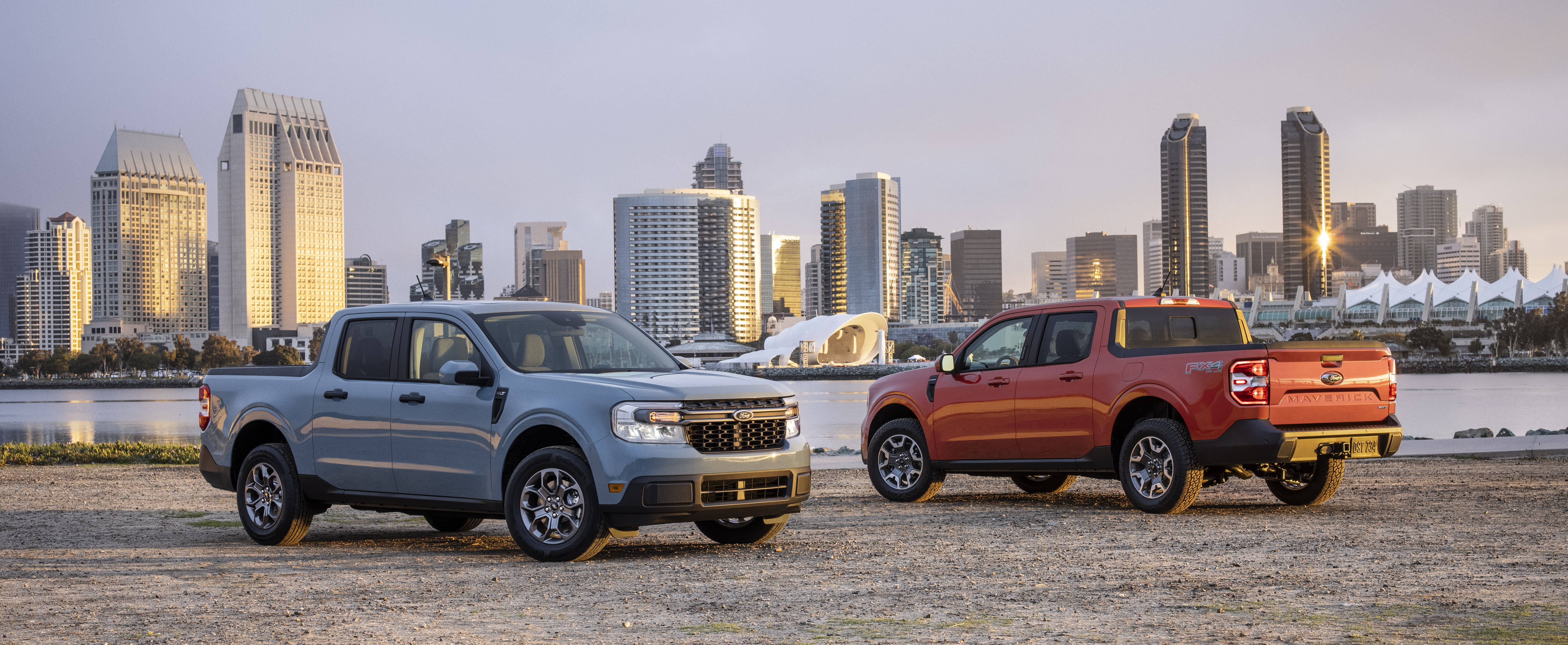
The new Maverick could be a prime candidate for a Rattler upgrade, available out of the box with either a 2.5-litre four-cylinder hybrid engine or 2.0-litre EcoBoost turbo-petrol, each making 142kW/210Nm and 186kW/376Nm respectively.
Though it’s unlikely Ford would try to shoehorn something like a V8 into the Maverick, it’s not out of the question for a hotter-tune version of the EcoBoost to make its way into a Rattler upgraded variant, with extra gear being added on top of the already available all-terrain tyres, underbody protection and off-road tuned suspension.
As the smallest truck in Ford’s model line-up, the Maverick is even smaller than the Australian-designed Ranger but is expected to take sales away from the ute, being aimed at customers who want a light-duty vehicle with its 680kg payload capacity.
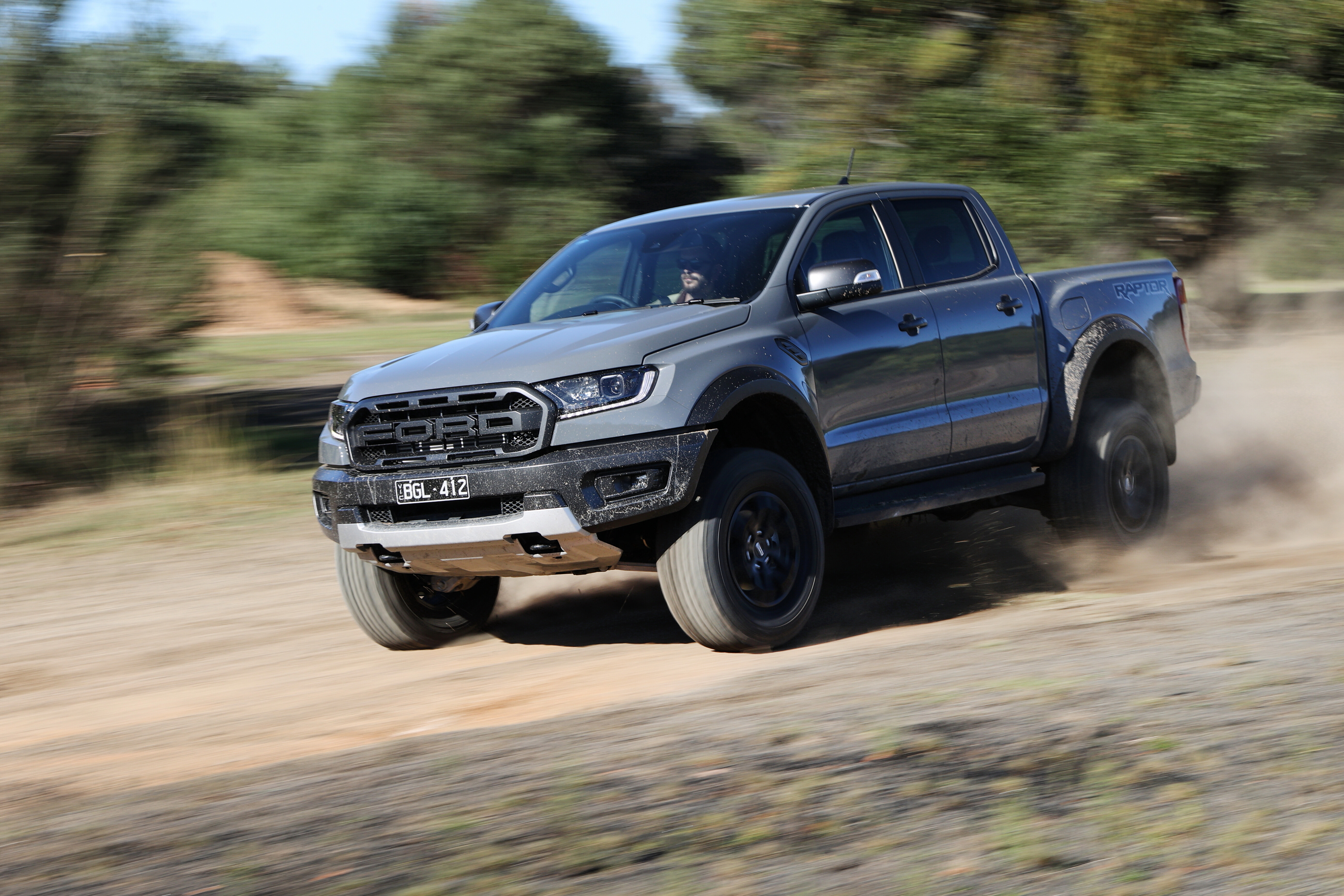
Currently, the Raptor nameplate serves as Ford’s range-topper for off-road models, being applied to the F-150 and Ranger, while its Mustang pony car has adopted snake-related variants since the 60s, the Cobra being used as a symbol for the high-performance Shelby range.
Access to American trucks took on a whole new persona a few years back when factory-backed offerings became available through Ram Trucks Australia and HSV/GMSV for the Chevrolet products.
They had been available in the past through a range of importers, but these vehicles, each re-engineered to right-hand drive by Walkinshaw in Melbourne, are as close as you can get to direct from the manufacturer here in Australia.
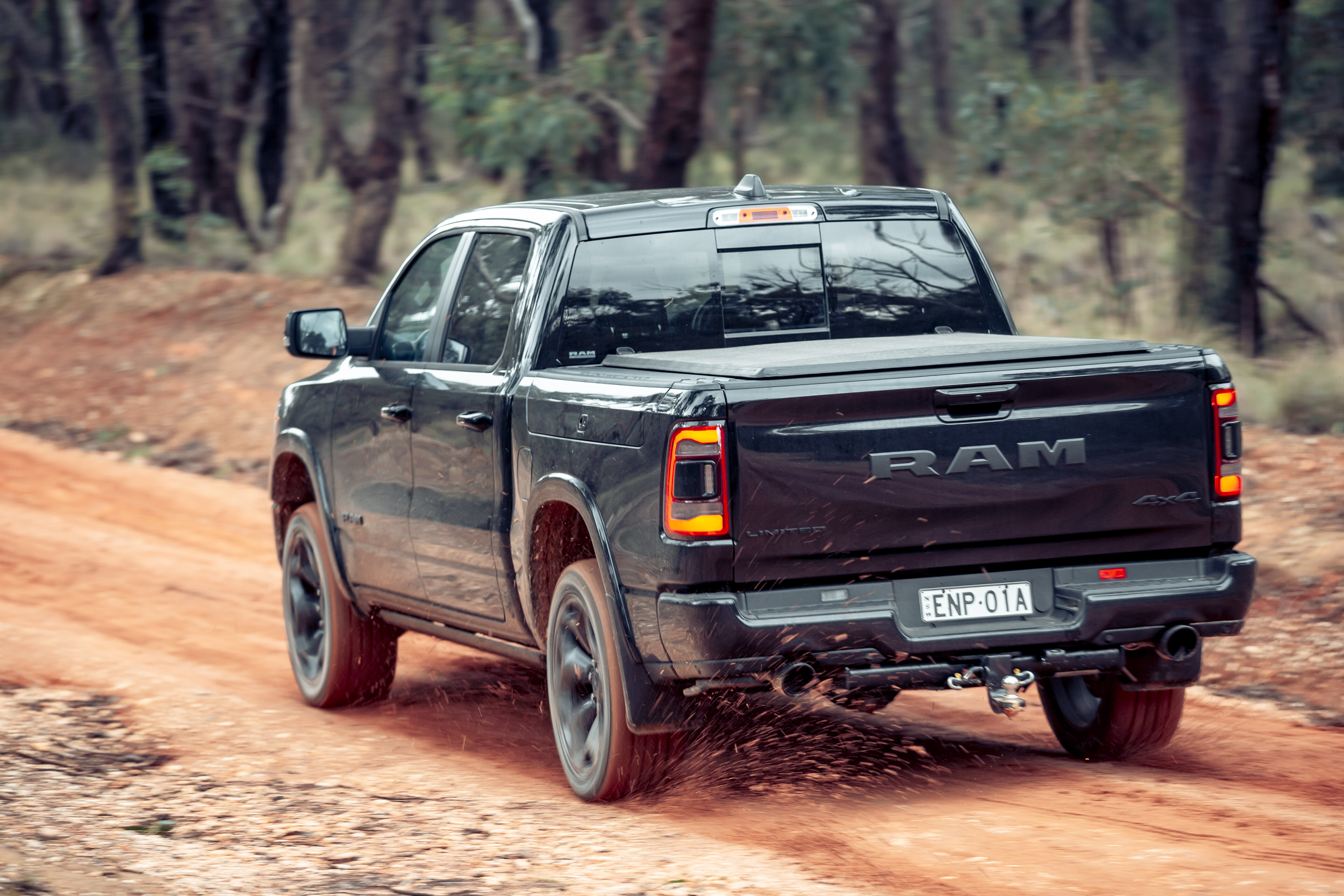
Ram Trucks Australia (RTA) is a product of huge vehicle importer Ateco Automotive and has, until now, only been importing the older DS version of the Ram 1500. In 2019, Ram released the new DT series 1500 in the USA which it sells alongside the older DS series vehicle, while Australian buyers have had to wait until now to get a DT directly through RTA.
The DT Ram is available in two specifications from RTA: the Ram 1500 Laramie starts at $114,950, while the Ram 1500 Limited, which we have on test here, starts at $139,950. Ram 1500 DS ‘Classic’ Express and Warlock variants are still available from as low as $79,950.
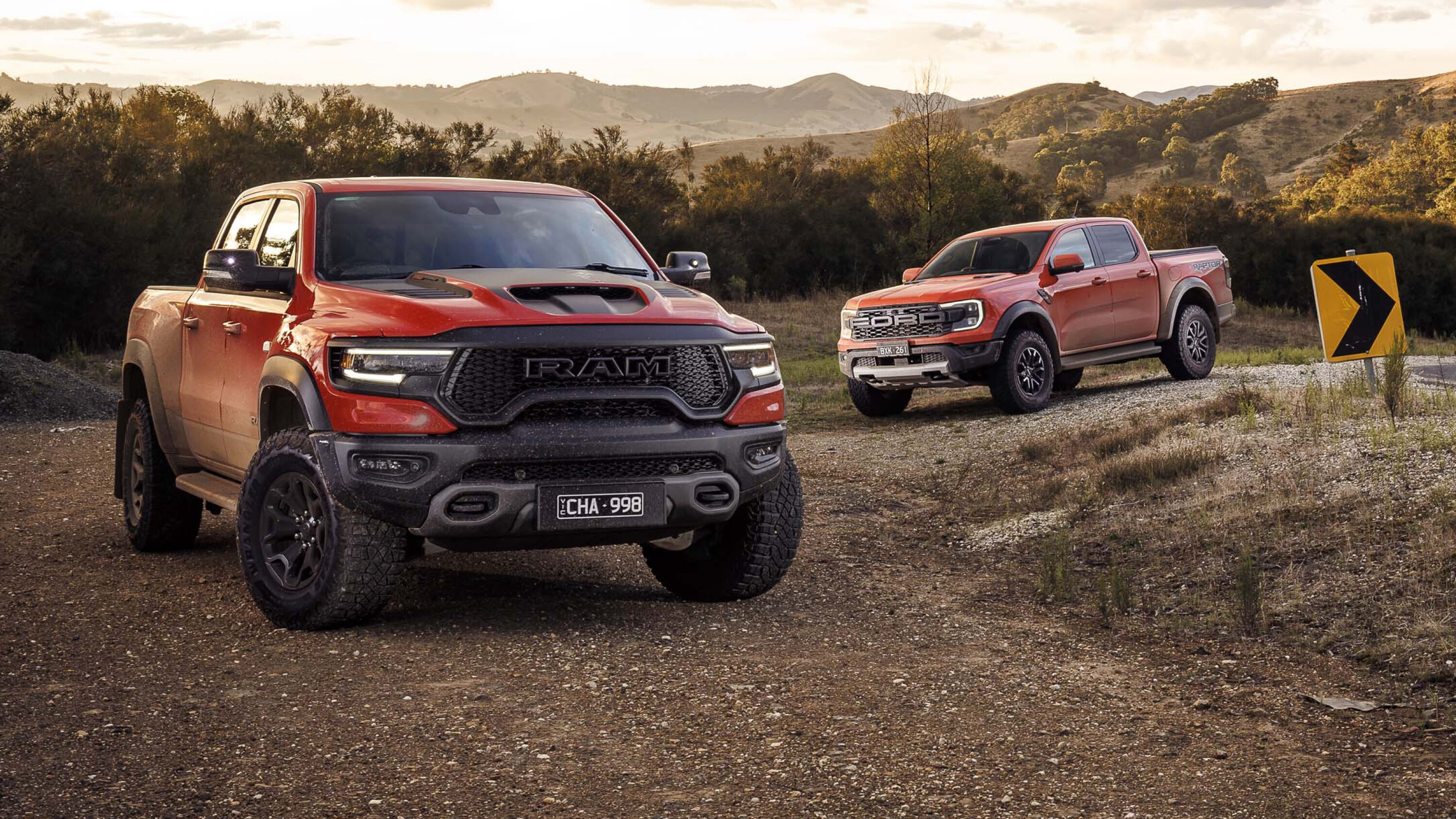
UPDATE, May 2023: Ram 1500 TRX v Ranger Raptor
?♂️ Australia’s most outrageous utes face off in a rock-spraying, fuel gargling celebration of excess. Strap in, it’s about to get noisy!
STORY CONTINUES: 1500 Limited review
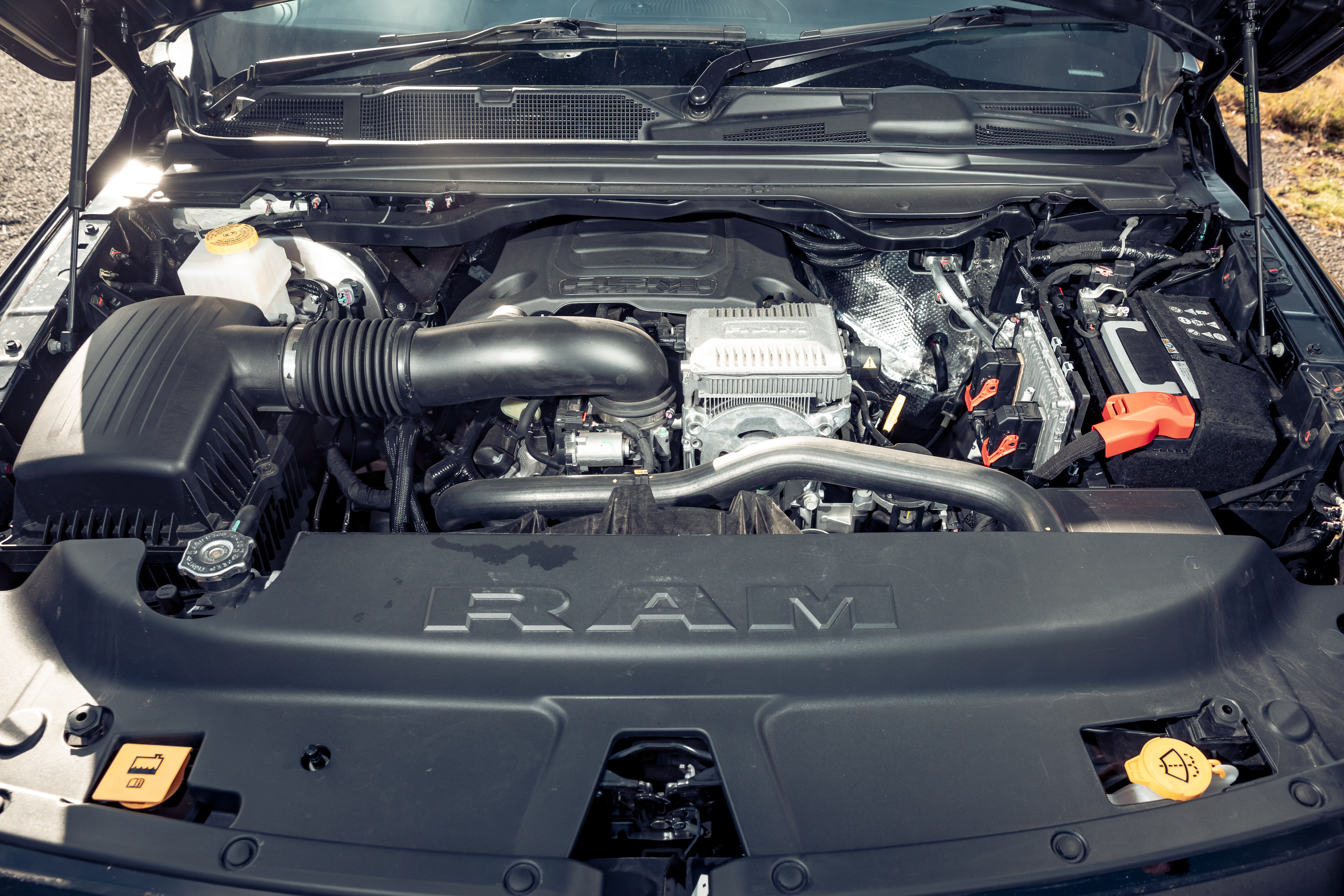
All Ram 1500s sold in Australia by RTA are powered by the 5.7-litre Hemi V8 petrol engine, with the difference between the DT and DS Classic models being that the newer DT engines feature a mild hybrid system for improved efficiency.
This system uses 48-volt electrics and a belt-driven generator to ease stop/start operation and be able to send torque back to the crankshaft for brief intervals for a mild boost in performance.
Ram calls this system eTorque, and on the V8 it is claimed to be good for around 175Nm of extra grunt as the 66Nm at the generator is multiplied through the drive-belt ratio. That said, RTA still quote both the eTorque and non-hybrid version of the 5.7 Hemi as making 291kW and 556Nm.
You’d be hard-pressed to feel any difference in the performance of the eTorque Hemi over the regular version without putting them to the stopwatch, but it does feel to have better throttle response with zero lag before it gets its boogie on. The power delivery is smooth and direct, with a kick down of a ratio or two in the eight-speed ZF automatic transmission. The combination of engine and transmission gives a refined drive, with just a muted V8 growl when you put your foot down.
A minor complaint about the transmission is the gear selector dial which is located on the dash near your left knee. It works okay for set-and-forget driving, but when making lots of gear selections – such as multipoint U-turns, negotiating tight tracks or backing a trailer – its operation isn’t as simple as that of a regular T-bar shifter, or, even better, the column shifter as used on the 2500 trucks.
The Ram uses a few technologies to help suppress fuel consumption if you are easy on the throttle. These include cylinder deactivation which can ‘switch off’ four of the eight cylinders when they are not needed, and grille shutters which block airflow to the engine bay to improve aerodynamics when suitable. It is claimed that the eTorque system allows the engine to deactivate cylinders for longer periods of time when cruising.
This is a big 2749kg truck and it’s not something you’d buy if fuel saving was on your agenda. Ram quotes consumption at 12.2L/100km combined cycle, which it gives to both non-eTorque DS models and the eTorque-equipped DT 1500. We returned 16.28L/100km during our week with the car.
With marginal – if any – improvements in fuel consumption and performance to be gained by the eTorque system, other than its seamless start/stop, you have to question its validity on this truck.
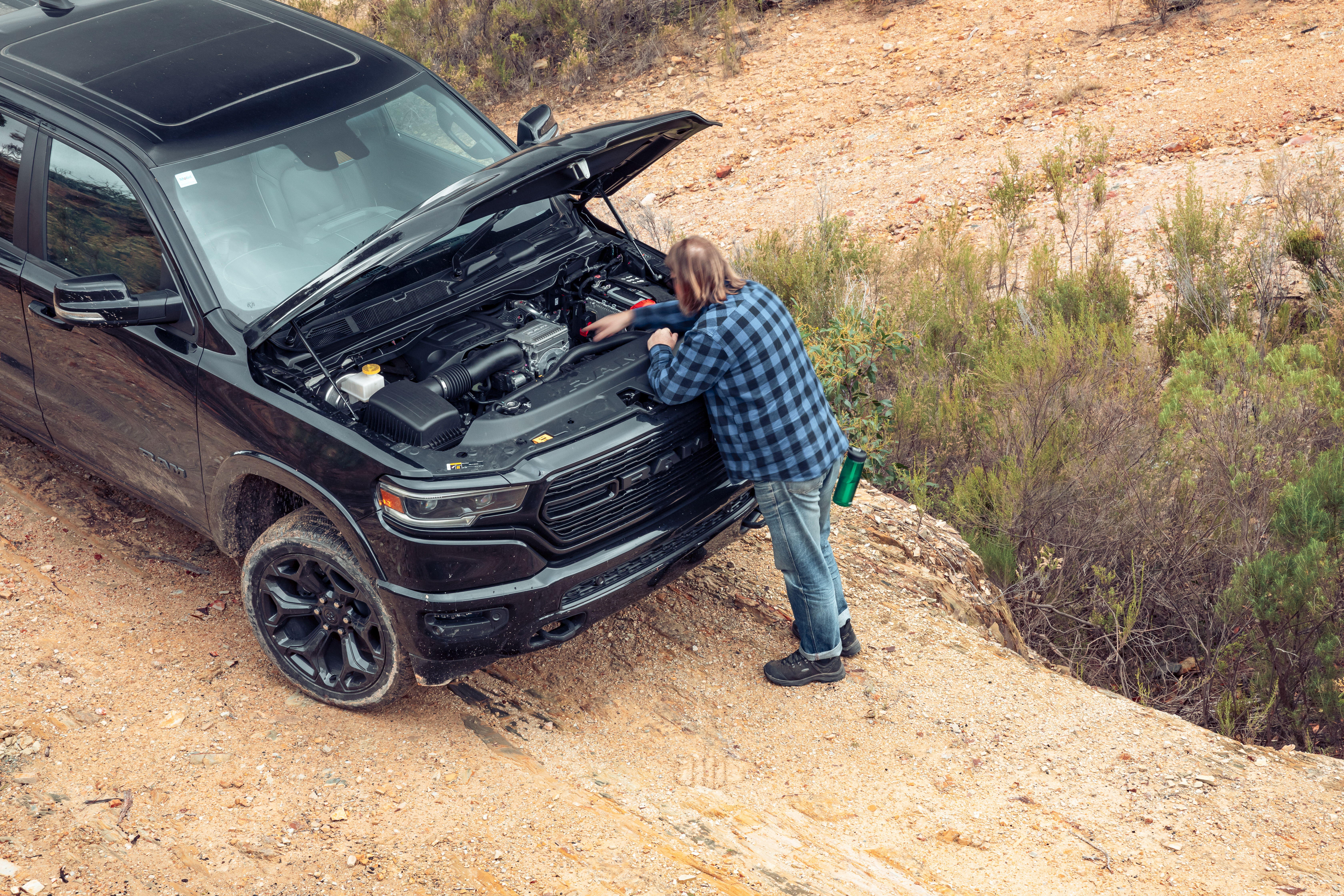
ON-ROAD RIDE & HANDLING
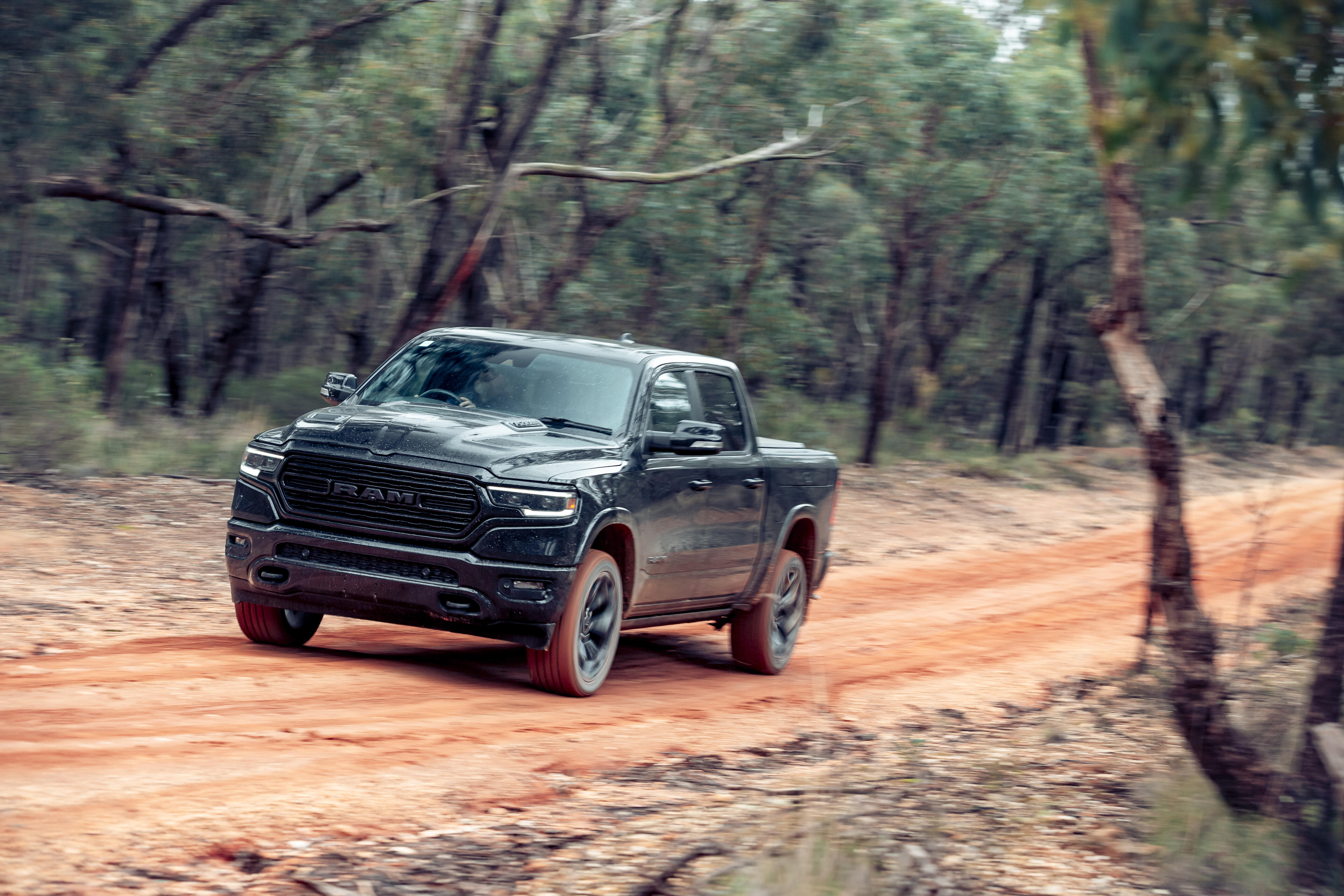
IN top-specification Limited trim, the Ram gives a very plush and refined ride that is more akin to a luxury SUV than a pick-up truck.
The air-spring suspension is firm without being harsh to add to that feel of comfort. This is never going to be a corner-carving sports car, but it rides flat and neutral when pushed.
The height-adjustable air suspension, which is only available on the Limited, lowers the vehicle at speed to improve both vehicle dynamics and aerodynamics, neither of which are fortes of large pick-up trucks. The Limited rides on 22-inch alloy wheels wearing 285/45 highway tyres, which were surprisingly smooth and quiet on the sealed roads.
OFF-ROAD
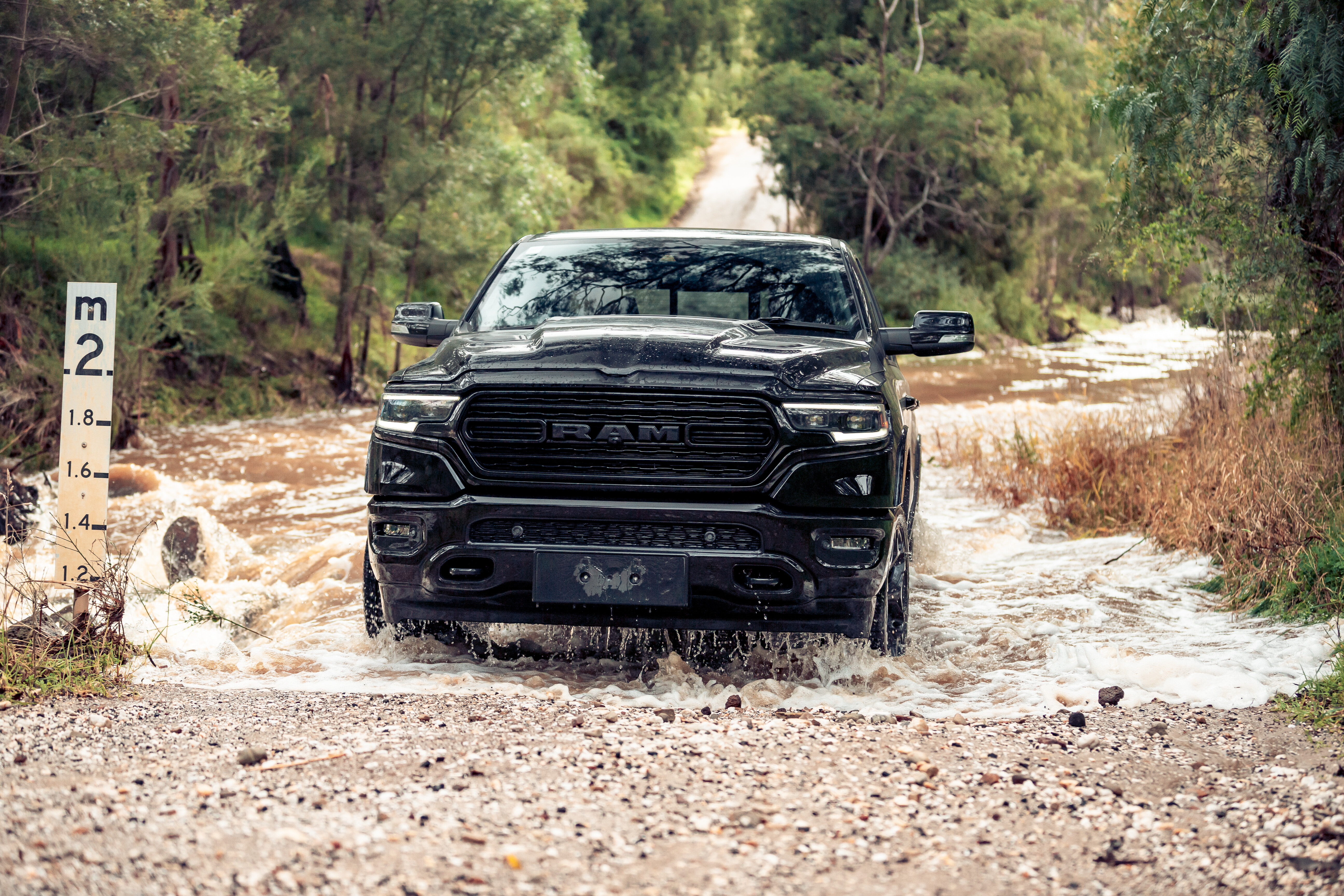
THOSE 22-inch wheels and low-profile tyres don’t do the Ram any favours once you leave sealed roads behind.
They transmit bumps and potholes through to the otherwise well-insulated cabin worse than a set of smaller diameter wheels with taller sidewall tyres would. This means you need to tiptoe along gravel roads if you want to keep the fillings in your teeth. They also offered very little traction on the damp gravel roads, which kept us from doing any real off-roading in the Ram.
The four-wheel drive system offers 2WD, 4WD auto (on-demand), 4WD high and 4WD low range. There is no locking differential available in this specification, so the Limited relies on its electronic traction control. The ETC or any other traction aid, became worthless once the highway tyres got mud on them. It wouldn’t drive up a relatively steep (but usually simple) climb on this day. If off-road driving is in your Ram plans then you might want to opt for the smaller diameter wheels and more appropriate tyres.
CABIN & ACCOMMODATION
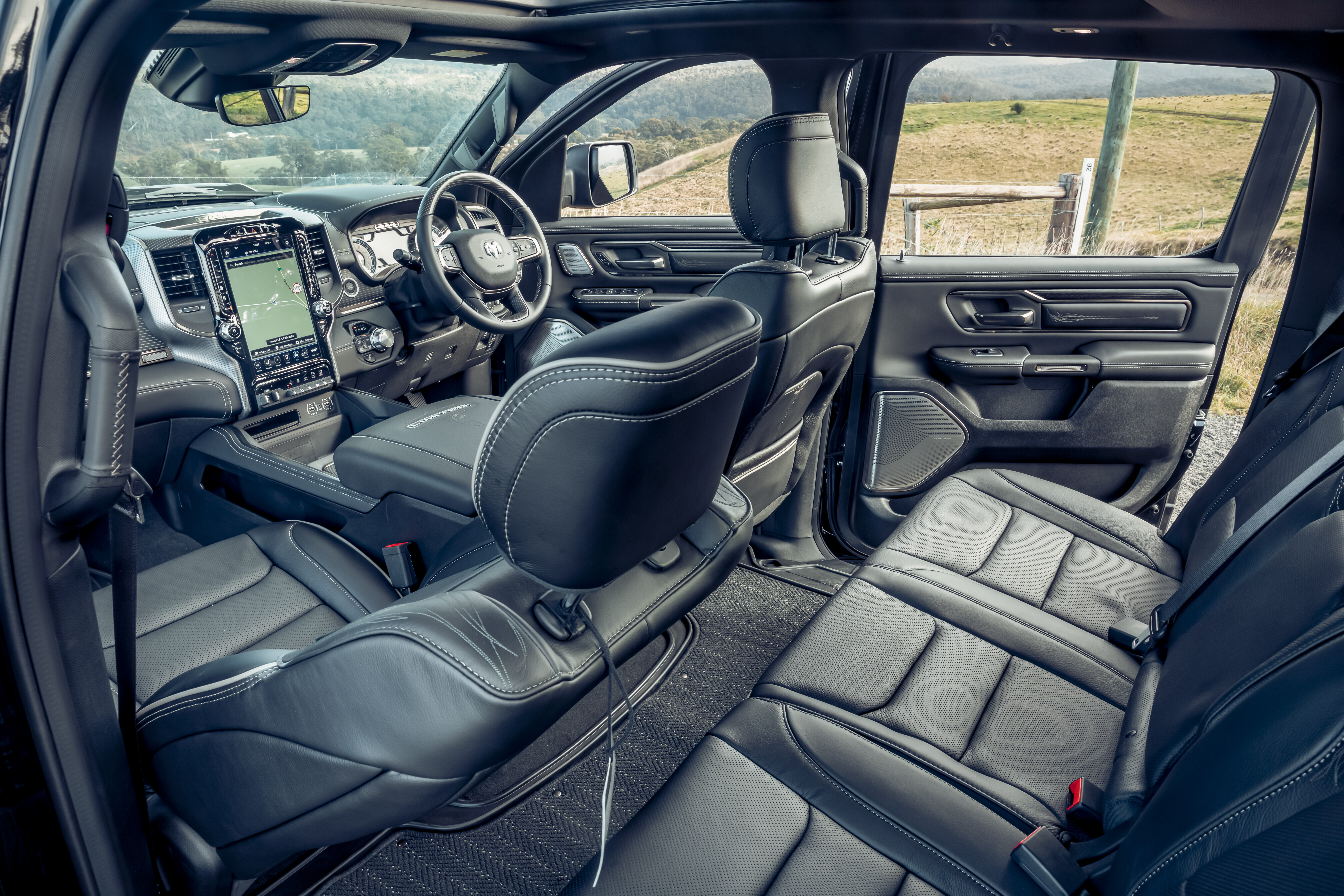
AS I said at the outset, the Ram Limited is a luxury car, and nowhere is that felt more so than in the massive cabin.
The cabin feels 50 per cent wider than a regular one-tonne ute, and there’s room between the two front seats for another pew. In the Limited, that space is taken up by a massive centre console with multiple configurations and storage options. This is fantastic for anyone who spends long hours in their car and appreciates having somewhere to store all your things.
The front seats are 10-way power adjustable leather items with heating and cooling, while the rear seat easily accommodates three adults, something not so easy in regular one-tonne utes. Above them is a full-size sliding glass sunroof and cover.
In and around the console are five USB and four USB-C ports, 12V plugs, and a wireless charging point for your compatible phone. Ahead of the console is a 300mm touchscreen AV system which is new on the DT Ram. This massive system houses all the controls for the audio, navigation, seat heating and ventilation, Apple and Android links, and configurable apps. All the cabin functions you need to control are accessed within this impressive system; although, it can be annoying to have to go through menus to reach some functions or when switching between audio sources. A simple button would suffice.
The audio system in the Limited is also worth a mention as it’s a 19-speaker, 900W Harman Kardon set-up which again is the stuff of luxury vehicles. The Limited benefits from active noise cancelling to block unwanted road and wind noise, meaning that when riding inside the Ram, the tunes are all you hear.
With the level of comfort and convenience features and the quality of the ride within the Ram Limited, the $140,000 price tag starts to look like good value when compared to any other such-equipped vehicles; and none of those vehicles could match the Ram’s 4500kg towing ability.
SAFETY
JUST because it’s a truck doesn’t mean the Ram 1500 misses out on any safety tech.
It features most of the latest electronic aids such as forward collision warning with active braking (AEB), lane-departure warning, rear cross-traffic alerts, front and rear ParkSense assistance, trailer sway control, adaptive cruise control and blind-spot monitoring, and six airbags. The Ram trucks on sale in Australia have not been given an ANCAP safety rating, however the 2021 Ram 1500 is rated as the top pick in its class for safety by the IIHS in the USA.
The rear ParkSense system, which automatically brakes the truck when reversing too close to an object or person, is a great feature considering the number of kids hit in driveways or car parks, but annoying on the tracks when reversing – it brakes for long grass, dirt banks and large puddles. Thankfully, you can switch it off in the bush or when hooking up a trailer, but we’d leave it active at other times.
PRACTICALITIES
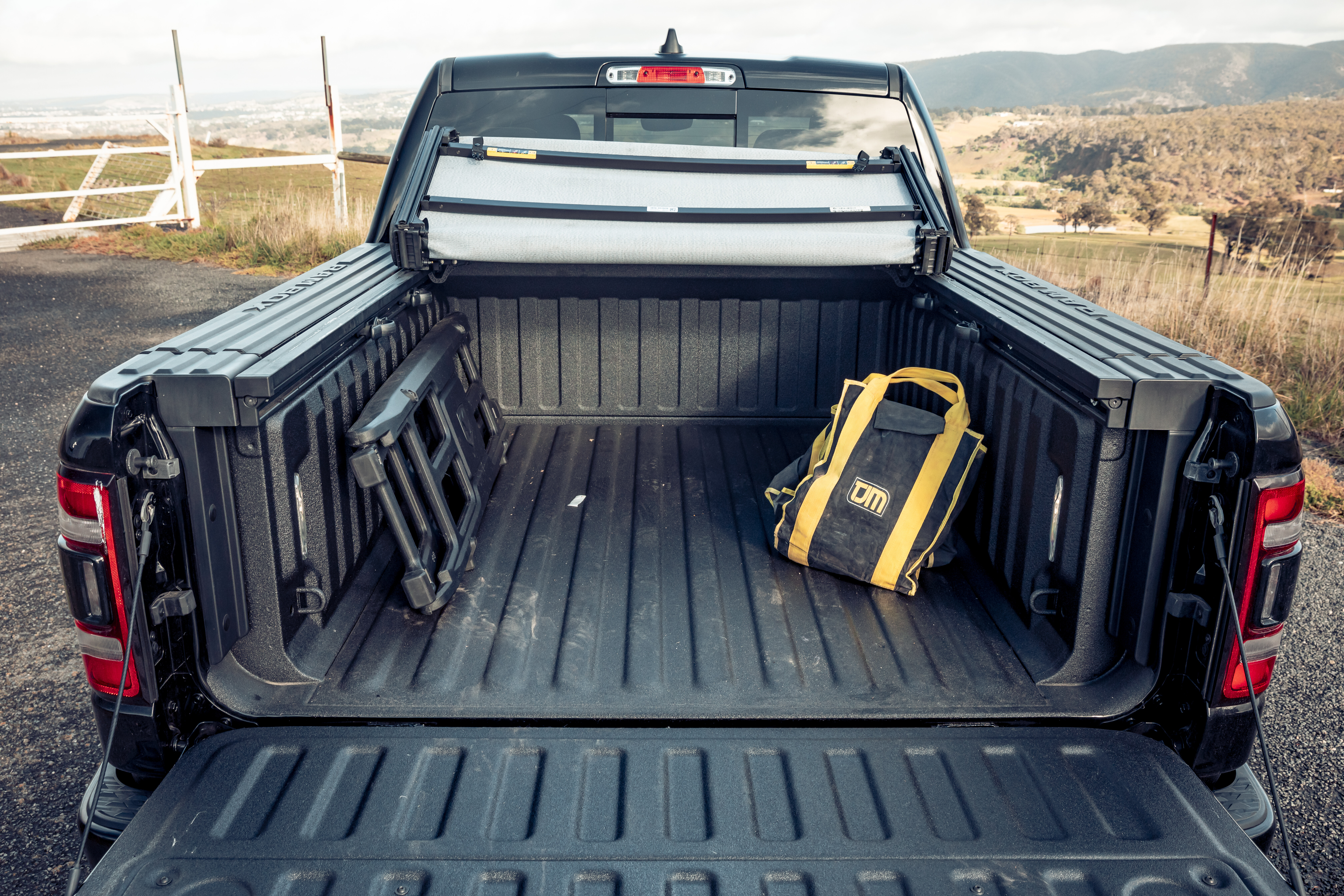
THE Ram Limited could be seen as a luxury SUV with the practicality of a ute, and the 1500 adds to that with the ‘RamBoxes’ on either side of the cargo tub.
These locking storage compartments are great for stowing gear you want easy access to, without having to get into the back of the ute. They are waterproof and have a drain plug in the bottom, so you can fill them with ice and use them as cool boxes for drinks.
The cargo area is massive and includes an adjustable load divider, four tie-down points and a bed liner for protection. There’s a fold-out step at the rear of the tub on the passenger side to make stepping into the back easier, and the Limited gets a folding tonneau cover.
While there’s heaps of space for cargo, you are limited by a relatively low payload of just 701kg. Unlike the mid-size utes that are popular in Australia, the full-size American 1500s don’t carry so much and it won’t take a lot to reach that load capacity. If you want to carry more, you need to step up to the 2500 which is a heavier duty vehicle throughout.
While the payload is low, the towing capacity is much better. Up to 4500kg when using a 70mm towball. A 7713kg GCM allows for some heavy hauling in the Ram.
Those 22-inch tyres are not going to be easy to replace when you tear one apart on the Birdsville Track, so stepping down to the Laramie’s 20-inch tyres or smaller (down to 18-inch is possible) would be a good option. There are plenty of good tyre options for the 20s, as this is the standard size for most US trucks.
This truck was also fitted with the $1950 optional power side-steps, which drop down when you open a door and automatically fold-up again when you close it. These are great if you need sides-steps as they tuck up out of the way when not in use, but I found them trying to trip me over or take out a shin every time I went to get in or out of the truck. Maybe shorter folks would like them.
SUMMARY
A LOT of people will look at the $140K asking price of the Ram 1500 Limited and think you have to be joking, but in reality you are getting a lot of car for your money.
If on-road presence accounts for anything, then the look of this triple-black beast is worth the price alone. Then you add in the 4500kg towing ability, the massive passenger cabin with its luxury-level appointments and features, and the ease of which you could spend long hours of mile-munching touring behind the wheel, and it all starts to add up.
The only obvious competitor to the Ram is the Chevrolet Silverado 1500 from GMSV, which comes in a bit cheaper in LTZ specification. Its 6.2-litre engine also has more power and torque on paper, but in terms of features and refinement, the Ram would be hard to beat.
To the outside observer, the world of 4x4s and 4×4 modifications has never heard of the term ‘less is more’. We’re almost obsessed with adding. Bigger motors, bigger tyres, bigger batteries, bigger driving lights. And while a couple of tonnes of 4×4 mobbing down the track might look impressive, it’s not always the right tool for the job, you wouldn’t hang a picture hook with a sledgehammer now would you?
Enter Lal’s insane BT-50 – one of the most modified BT-50s you’ll find anywhere in the country, and also one of the smallest. Let us explain.
Starting with a bone-stock 2014 single-cab BT-50, Lal set out to build something a little different than the rest, and he started from the frame up. Where a stock BT-50 has a huge 3226mm between the front and rear axles, Lal called in the guys from Ultimate Stretches to cut his pride and joy in half, remove 300mm from the chassis behind the cab, and stitch the whole lot back together better than stock.
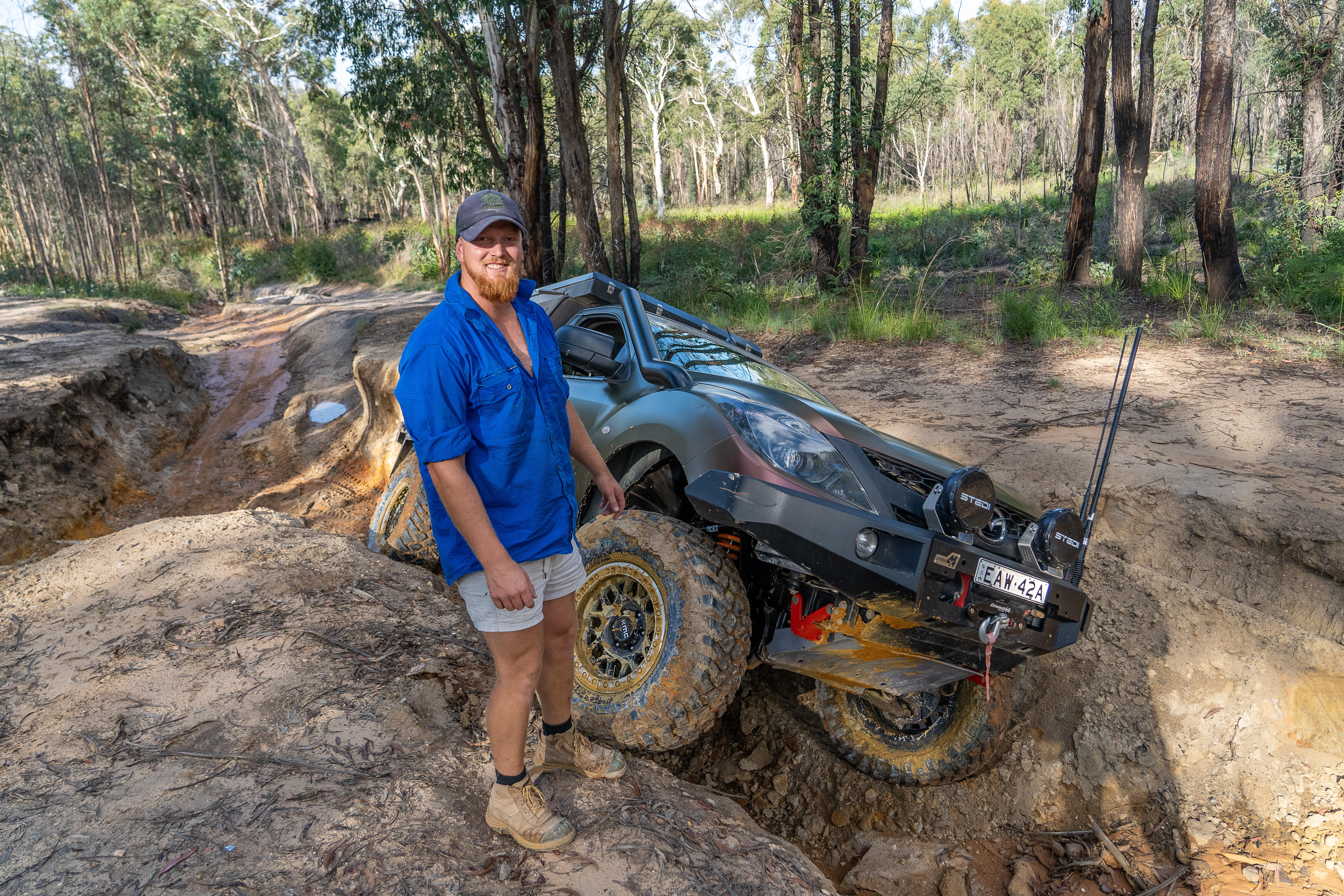
The new wheelbase gets the off-road ability more in line with the classic 80 Series LandCruisers and GQ Patrols and helps make the BT far more nimble on tight tracks. While the grinder was out, the overhang at the rear of the frame was knocked back all the way to the leaf hangers, giving a useable tray size closer to a dual cab – we weren’t kidding when we said Lal had built something unique.
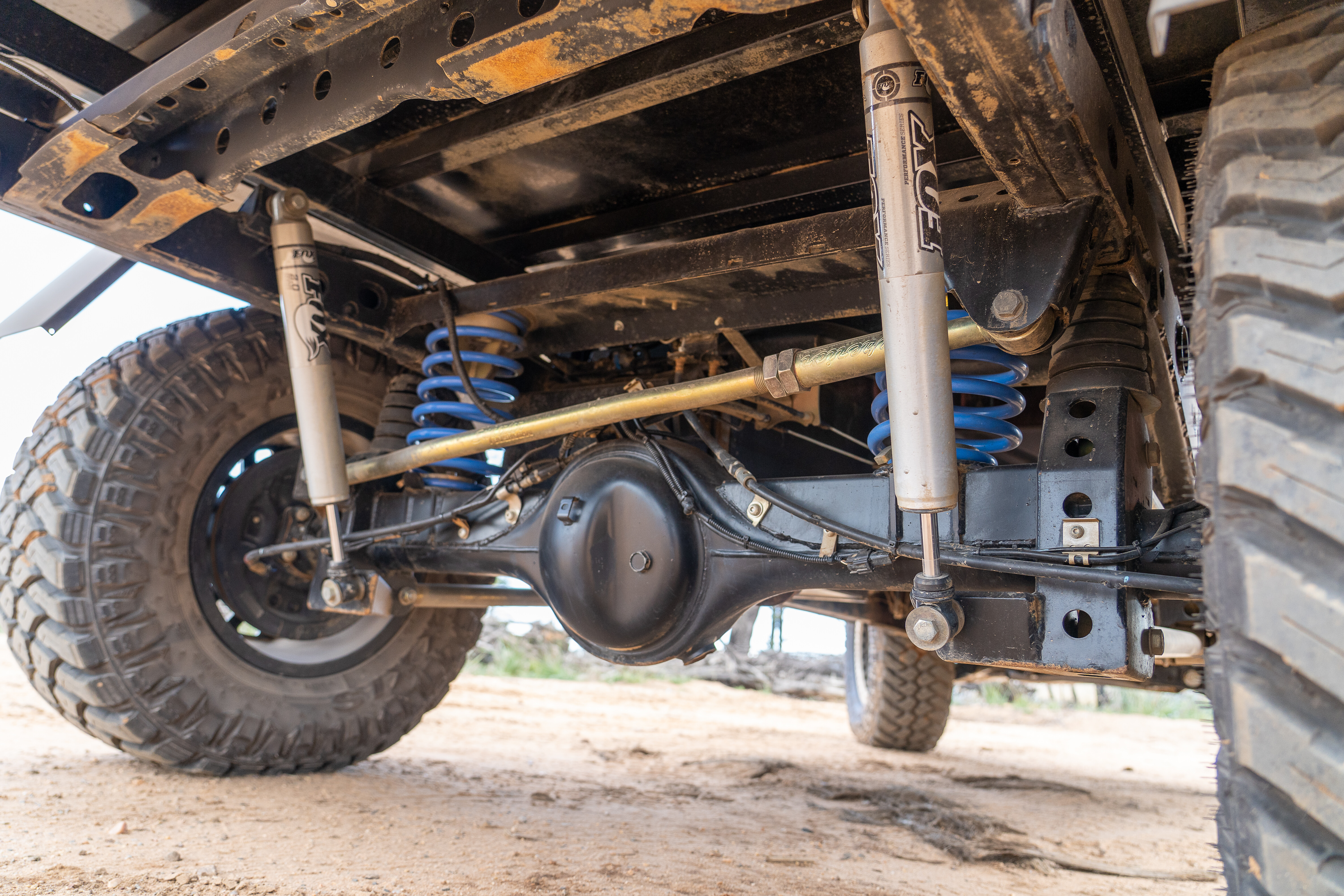
Of course, a shorter wheelbase isn’t the only key to Lal’s success. One of the biggest weak links in any modern ute’s off-road ability is the stiff-as-a-rock rear leaf-spring suspension, but that’s nothing a grinder and welder couldn’t fix. Lal and his mate Creedo rolled the BT into the shed and set about installing a Superior Engineering coil rear-conversion.
The weld-in 5-link set-up gives the same insane articulation Patrols and Cruisers are known for, as well as a far smoother ride on- and off-road. Adjustable upper control arms let the boys dial the pinion angle in perfect for the set-up, with the adjustable Panhard rod getting the diff smack bang on centre again to suit the three-inch suspension lift. Lal also spec’ed up a set of 11.6-inch stroke Fox shocks from the guys at Solve Offroad and teamed them up with progressive bump stops to smooth out the bigger hits.
Up front has received a similar three-inch bump in altitude. This time with a set of Fox struts doing the heavy lifting. They’re teamed with Solve Offroad coil springs, and paired with a set of Blackhawk upper control arms on either side getting camber and castor back in to line. To give the CV joints a fighting chance, Lal fitted a weld-in diff-drop kit as well.
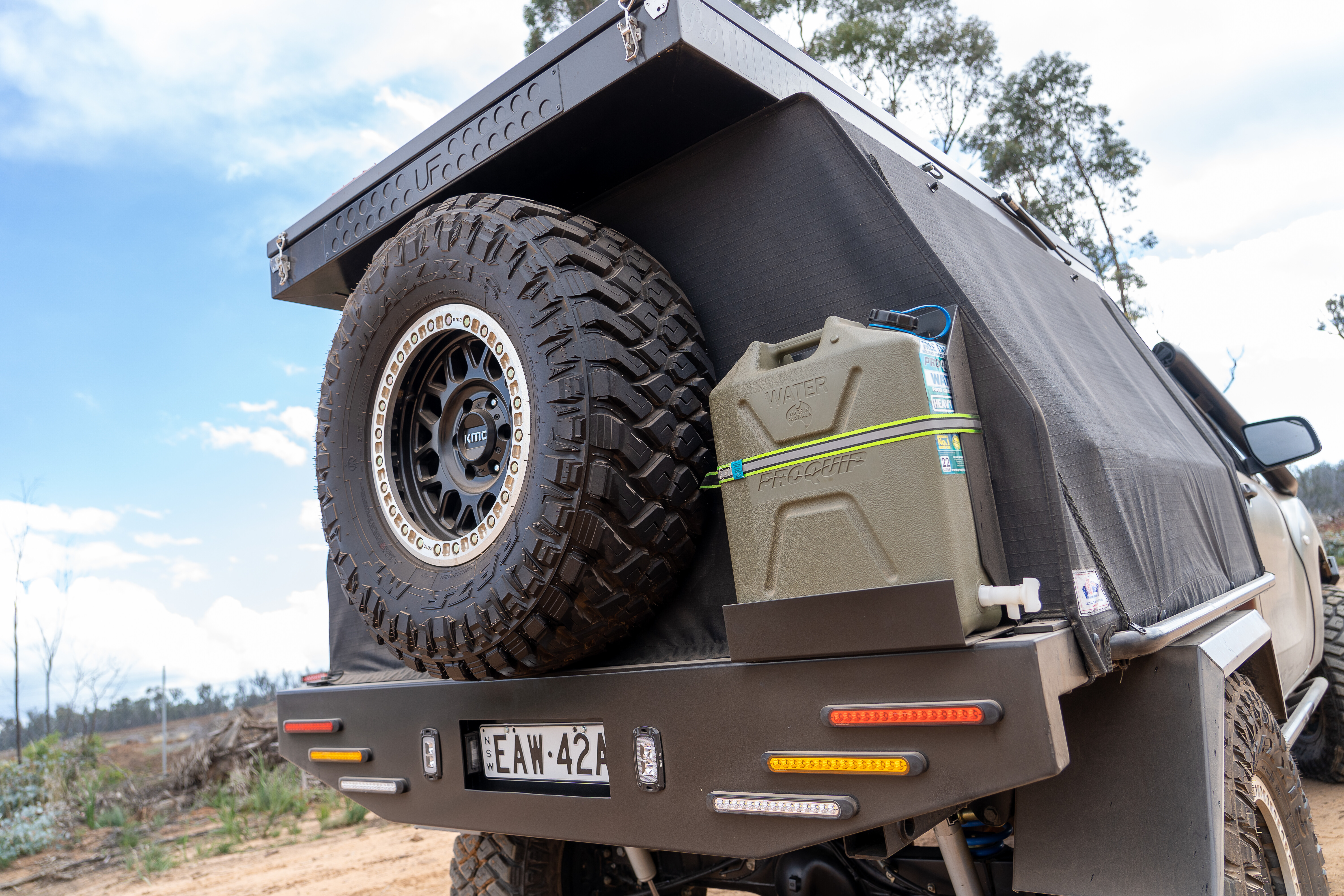
To make sure the full off-road ability of the chassis and suspension makes its way into the ground, Lal’s not pulled any punches in the traction department either. Keeping both rear tyres digging together is the factory electronic rear locker, while up front an ARB air locker is called into action at the flick of a switch giving the BT true four-wheel drive. Tyre slip is rarely an issue either. Each corner is shod with aggressive Maxxis Razr mud tyres shaping in at 35×12.5-inch, and they’re typically operating in single-digit pressures thanks to the beadlock KMC Desert Grenade wheels locking the tyres to the rims.
Moving up, Lal managed to nailed the balance between off-road ability and serious camping rig too. A month of weekends on the welder pieced together a custom stubby tray, with a custom canvas canopy keeping it water and dust tight while still coping with the abuse Lal throws its way.
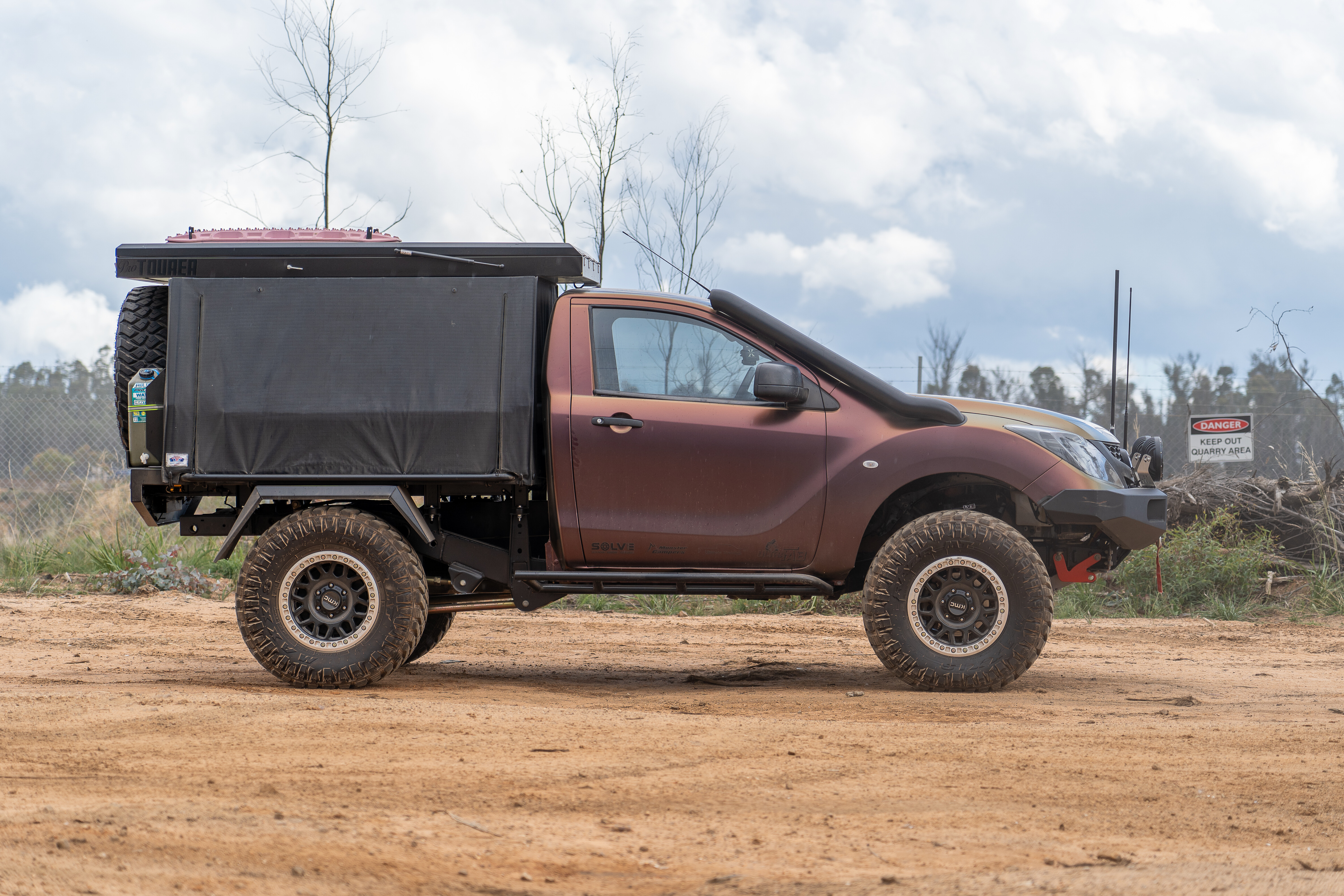
Rolling up the passenger-side canvas gets you straight into the kitchen set-up. There’s a 130L Bushman upright fridge up against the headboard, with a custom-built slide-out pantry tucked in next to it playing host to every sauce and spice you can imagine. Rounding out the rest of the minimal kitchen space is a Dunn & Watson kitchen slide, giving a convenient prep space as well as somewhere to stash bulkier food items.
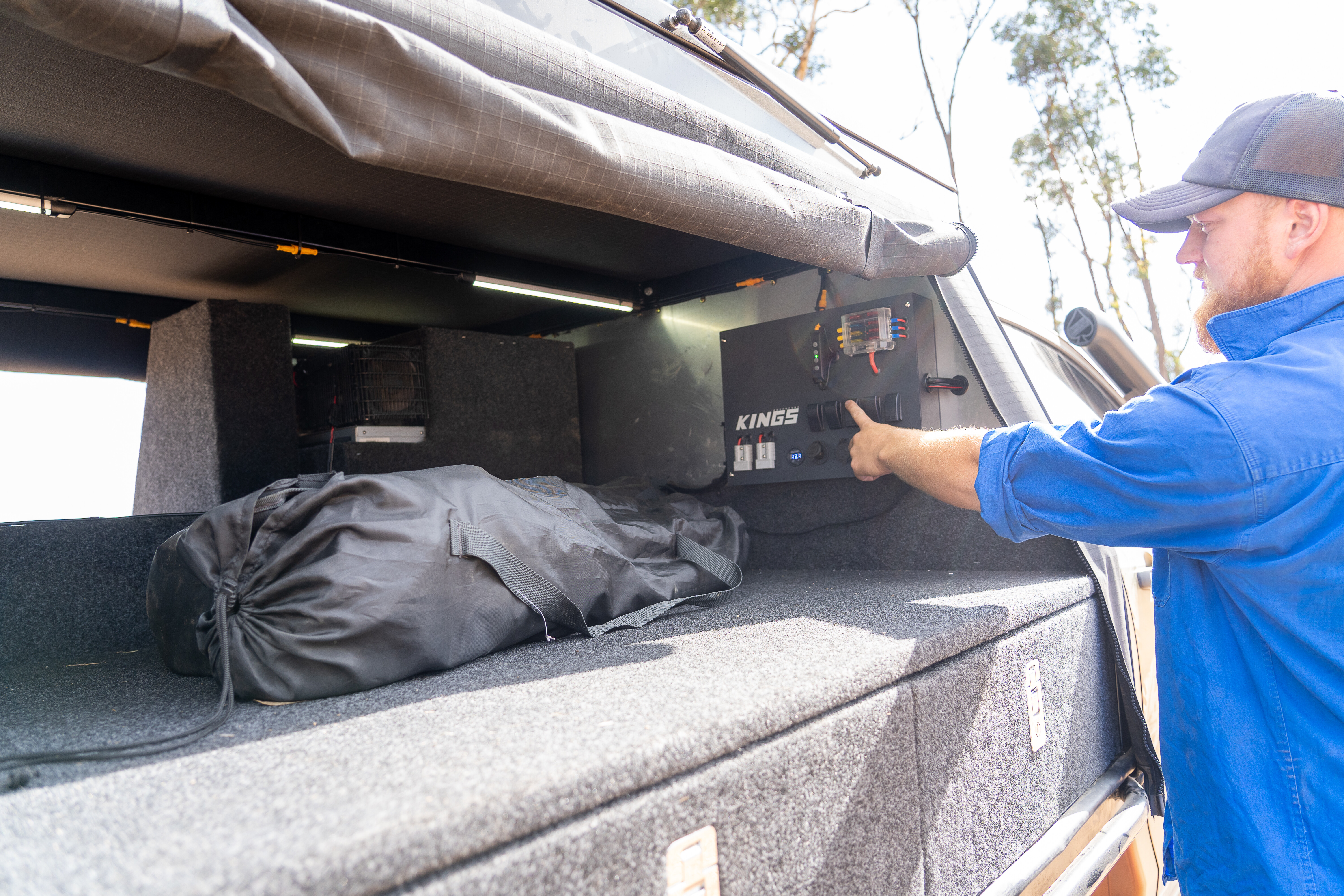
On the driver’s side are a couple of custom drawers Lal keeps stocked with spare parts and tools, a huge storage area for clothing and a 12-volt control panel feeding the Korr LED lighting and various power outlets via the 126amp/h Monster Campers Lithium battery. The cap on it all is a quick and easy place for Lal to lay his head with an Ultra Fab hard-shell rooftop tent.
With the rear well and truly protected thanks to the heavy-duty steel tray, Lal set his sights farther forward to protect the vulnerable sheet metal. Along each flank are a set of matching custom tube rock sliders bolted on to mounting plates on the frame, while aluminium Rival bash plates protect the driveline underneath right up to the Uneek4x4 ‘Crawler’ bar up front.
Tucked inside the hoopless bar is Drivetech 4×4’s dual-speed 9500lb winch (geared for light work at high speeds, or lower speeds with higher loads). The bar houses the OEM fog lights in new mounts, but Lal’s fitted a set of laser beam-bright Stedi Type-X LED driving lights up top to help light the way. The whole bar work arrangement from front to rear not only gives the BT a sleek look, but protects the colour-changing ‘rising sun’ 3M vinyl wrap that covers over the original battleship-grey paint.
Under the constantly changing colour bonnet, Lal’s kept things relatively simple. The stock five-cylinder 3.2L turbo diesel still takes pride of place, backed up by the manual cog-swapper six-speed; and Lal’s got it breathing far better thanks to an In-House fabrication stainless-steel snorkel feeding down into a high-flowed standard turbo.
On the inside Lal’s kept things looking stock but functional again. Riding in the factory bucket seats he’s got full control over a whole host of communications and electronics upgrades. Behind the driver’s seat is a Cel-Fi phone reception booster ensuring he’s always in range on his long runs up and down the coast. A GME UHF sits above his right knee, keeping him in communication on the trail with his mates or out scouting for the perfect campsite.
On the right of the dash an iDrive throttle controller lets him desensitise the throttle for bouncy rock crawling, or dial the sensitivity right up for instant response in soft sand. The final piece to the puzzle is a Roadpower eight-way customisable switch panel that not only keeps all the extra wiring out of the cab, but also controls everything from lockers to winch controls and even interior lighting.
Lal’s BT might be smaller than the average modern ute, but there’s no arguing he’s crammed not only a lot of capability into a small size, but comfort as well. Despite being nearly half the length of many of the other tourers on the track, he’s got everything he could ever possibly need for an off-road adventure, and enough capability to adventure wherever he wants.