
Buying tyres today is really a personal choice, with so many brands and configurations available. I remember years ago there were only several choices and you’d never touch the really cheap imported brands.
Having to replace my mud tyres after years of tackling tracks around our country, I decided to jump back to some ATs for our next stint in the outback. Not one to follow the pack, I came across a relatively new brand designed and made in Singapore under the Omni United Group (OUG).
The tyre that caught my eye is the relatively unknown Radar Renegade RT all-terrain. The specs seemed to have all the right info: good side-wall protection, a five-block pattern for good stability and traction, a 10-ply rating with +2 steel, + 3 polyester, + 2 nylon built in to the tread, and a three-ply polyester in the sidewall.
More 4×4 buyers' guides
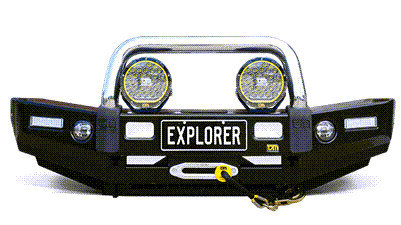
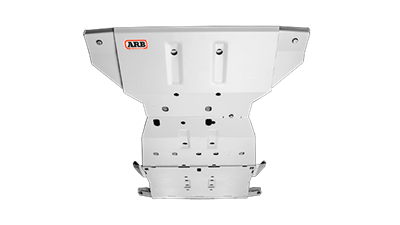
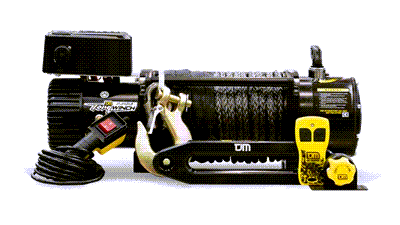
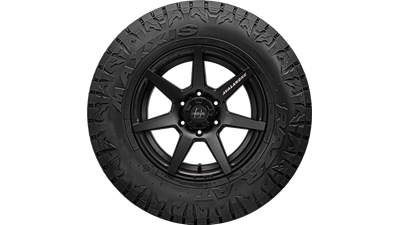
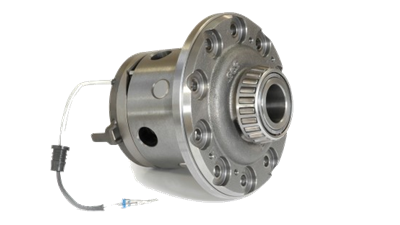
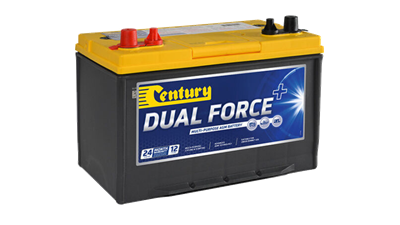
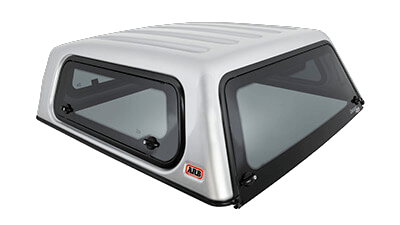
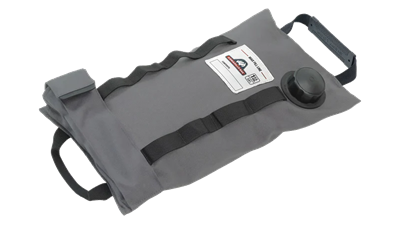
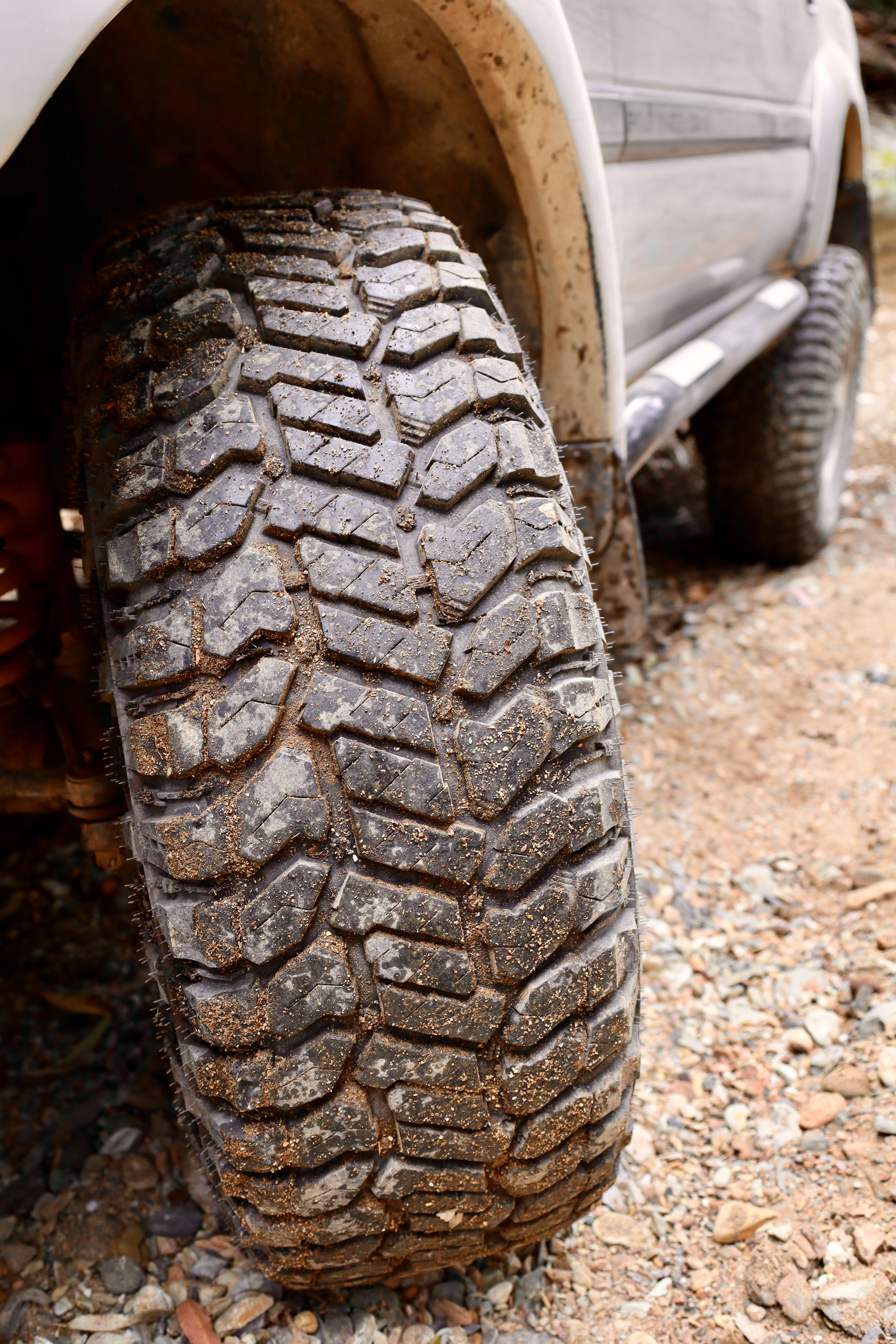
Over the past few months the tyres have seen an array of different conditions. I had them fitted in Darwin while exploring the NT and so far they have exceeded my expectations. With more than 10,000km racked up and their first rotation, there is no visible sign of any unusual wear.
They have covered Top End locations like Litchfield and Kakadu; and cut across the rough gulf country and down through central Queensland on outback highways. As some know, these roads can be darn-right horrible, with deep bulldust sections, rough-as-guts rocky sections across the Savannah Way, and unmaintained single-line tracks in remote camp areas.
The low hum from these tyres is definitely a sweet sound compared to the noise my last mud tyres made in their final days; and being an all-terrain, the steering feels lighter and smoother. It’s a pleasure cruising down the back streets.
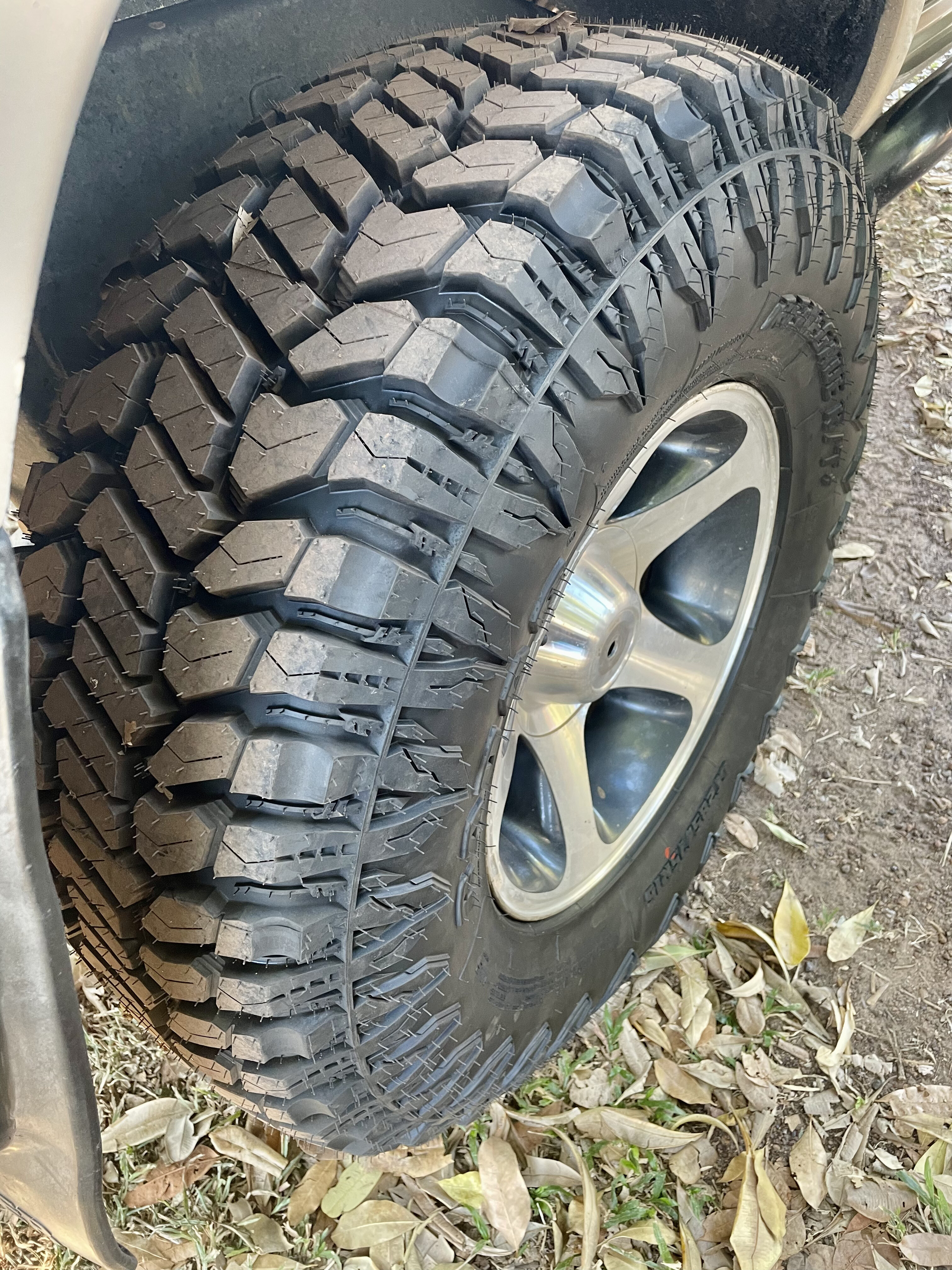
Back home in NSW’s Coffs Harbour region where tracks go from mild to wild in the blink of an eye, the tyres seem to be holding up well in different situations – from simple bush tracks, loose river sand and rocks, through to the damp rainforest sections.
I’ve found running them at 45psi on the highway seems to be the sweet spot for my vehicle (a heavy Toyota 80 Series), and 28psi on outback roads and across the Top End. On the harder tracks with steep hill climbs and where I’ve needed a lot more traction, they work well at 18psi and, to be honest, I could drop them further due to the tough sidewall.
It’s only early days, but I predict I will get a great run out of these ATs in my next stint across the country, exploring the range along the east coast. Over there, if it’s not uphill it’s back downhill, with large sections of wet areas in-between … so time will tell.
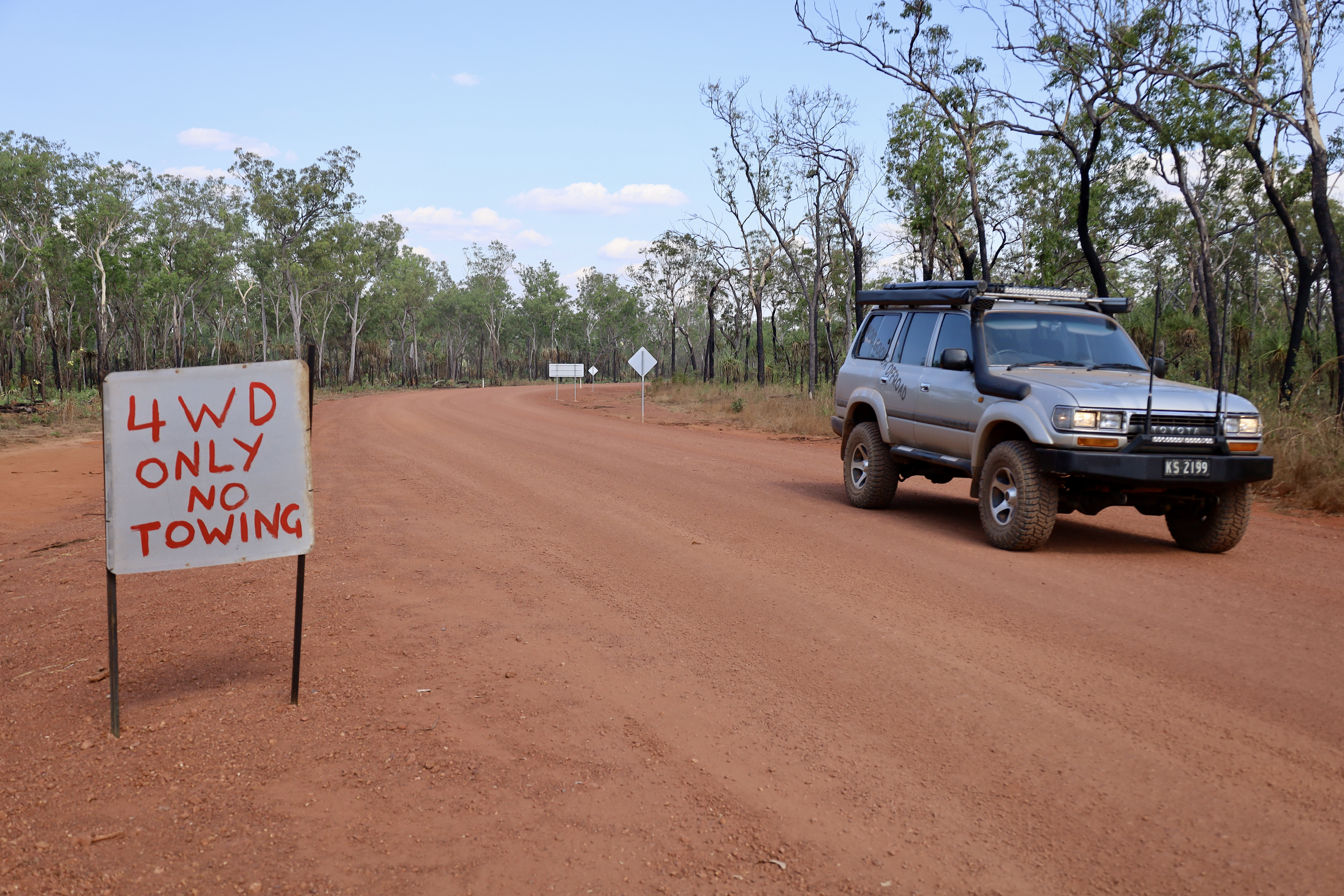
As a relatively new company, Radar seems to be producing the goods and ticking the right boxes around the world. As such, it’s well-worth watching to see what it produces in upcoming years.
AVAILABLE FROM: radartyres.com.au RRP: $300 each (285/75R16 Radar Renegade AT)
4X4 Australia's project builds
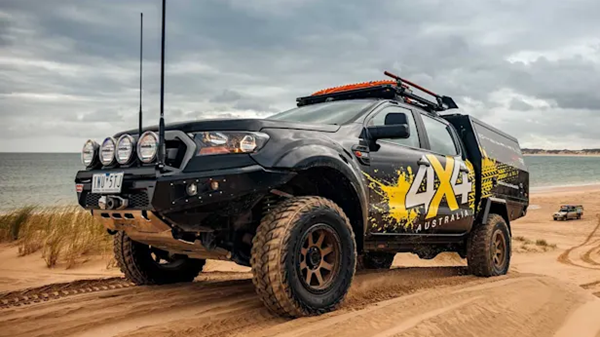
Australia’s first taste of the Isuzu D-Max came back in 2003, when it landed here rebadged as a Holden Rodeo, a year after its global launch.
Then in 2008, Isuzu UTE Australia (IUA) set up local operations in Brisbane, giving us their own version of the popular ute and suddenly tailgates brandishing Isuzu decals became commonplace.
Of course, Aussies were already well acquainted with Isuzu engines in cars like the Holden Gemini, and the many other vehicles that featured dependable Isuzu donks. Not to mention the market-dominating Isuzu N-Series trucks that were ubiquitous on our roads by the time the D-Max landed.
The D-Max spelled the true beginning of the Isuzu brand in Australia as we know it, though, and has hovered around the upper rungs of its segment sales ladder for many years. In fact, IUA celebrated its 200,000th vehicle delivery last year, which is an impressive achievement for a manufacturer offering only two vehicles; the D-Max and MU-X.

Isuzu’s venerable 3.0-litre 4JJ3 turbo-diesel engine has been a driving force behind the success of the D-Max, and the MU-X too, proving its bulletproof reliability across nearly two decades of service.
While 4×4 D-Max models have flooded the roads, the quiet achiever workhorse (or darkhorse) 4×2 models have gained momentum – sitting second in the 4×2 segment to only the Toyota HiLux Workmate.
Since 2008 IUA has sold 42,018 4×2 D-MAX utes, accounting for nearly a quarter of all vehicle sales, but one thing has been missing – an entry-level small displacement engine option for fleet, trade and service markets. Until now.
From January 4 this year, Isuzu started offering the RZ4E-TC 1.9-litre turbo-diesel engine option for D-Max SX Single Cab Chassis models – a first for Australia but a proven powertrain across 4×2 and 4×4 D-Max models in Europe.

The frugal 1.9-litre oiler ticks all the boxes for the budget-spec 4×2 SX over the 3.0-litre; it’s cheaper, boasts more payload, offers improved economy and emissions, and it’s engineered to be just as durable as its brawnier sibling.
And for any of you wondering if the introduction of the RZ4E spells the beginning of the end for the 3.0-litre 4JJ3 in Australia? We don’t think so. Isuzu recently overhauled the old 4J jigger from the ground up, modernising it and bringing outputs up to par with modern buyer expectations.
With a compelling drive-away price of $29,990 for the manual, or $33,200 for an auto like the one we tested, is the 1.9-litre D-Max the entry-level 4×2 of choice?

Design and interior
Visually, with the bonnet down at least, the 1.9-litre D-MAX 4×2 SX is indistinguishable from the thirstier 3.0-litre variant.
The same tensile steel ladder-frame chassis underpins the vehicle, with the same bang-up-to-date body on top and a massive factory-fitted aluminium tray at the back.
Isuzu ditched all low-rider models for ‘21, which means it’s a high-rider or nothing. We can’t think of many people, be they tradies, council workers, or weekend warriors, who’d prefer a low-rider model. The 4×2 D-Max looks so much like its 4×4 counterpart, while also boasting the ground clearance benefits, that only a keen eye would ever notice the missing diff and transfer case.
Inside the cab, it’s again no different to the latest-gen 3.0-litre SX models. Isuzu’s decision to offer the same level of tech and refinement in the base grade as you get in higher-spec 4×4 models is one we applaud.

The standard inclusion of all safety and multimedia technology across the range makes an otherwise budget workhorse a pleasant place to spend your days. Always a plus when throwing down your hard-earned.
So what standard tech do you get, then? For starters, wireless (and wired) Apple CarPlay is seriously impressive for an entry-level work ute. Unfortunately, if you’re an Android user you’ll be forced to keep a cable handy.
Front and centre is a 7.0-inch display with simple, easy-to-use infotainment system that includes voice recognition, DAB+ radio, the smartphone mirroring tech and all the usual steering wheel controls.
Hard-wearing plastics and vinyl remain throughout the cabin, but fit and finish is solid with no rattles or questionable trim items in sight. This is an interior made to handle mud, dust or greasy post-smoko mitts with ease – just wipe it down and off you go.

The entire D-Max line-up scores a 5-star ANCAP safety rating, helped along by eight airbags; dual front, dual seat side, dual full-length curtain, front knee and centre.
As far as safety tech goes the D-Max gets it all, whether you’re opting for a base-spec SX or range-topping X-Terrain. Isuzu’s Intelligent Driver Assistance System (IDAS) features autonomous emergency braking with turn assist, adaptive cruise control, traffic sign recognition, blind-spot monitoring, rear cross-traffic alert, and lane-keep assist.
The addition of a ‘Lane Support System Switch’ on the steering wheel for 2022 D-Max models, allows drivers to turn off safety features on the go.
We didn’t switch any features off across the two weeks of testing, but given it’s quite a touchy system, particularly the lane-keep assist, it’s handy to know a two-second press of a switch is an option for those that find the autonomous safety systems a tad intrusive.

Powertrain
The 1.9-litre RZ4E-TC is by no means a new engine, serving overseas markets for the last five years or so, but it has been tweaked for harsh Australian conditions.
It produces 110kw of power at 3600rpm and a healthy 350Nm of twist from 1800-2600rpm. The spread of torque is meaty and the electronically-controlled variable geometry turbo spins up quickly, which distracts you from the pint-sized displacement.
A choice of Isuzu’s MVL-6Y manual transmission or Aisin-sourced six-speed automatic is offered behind the RZ4E, and both are great options depending on personal preference. You’ll pay more for the auto, though.
Direct injection fuelling is similar to that of the larger 4JJ3, utilising the same Denso HP5S fuel pump, as is the maintenance-free diesel particulate filter (DPF) mounted to the back of the turbo.

There are a couple of benefits of mounting the DPF, in Isuzu speak ‘DPD’, right behind the turbo; it’s not under the vehicle at risk of igniting grass, and it remains incredibly hot to ensure optimal efficiency.
Australians want longevity and robustness out of their diesels, which is why good ol’ cubes are still favoured here. Isuzu, however, says it has engineered the little RZ4E-TC to be durable enough to handle commercial duties.
The RZ4E-TC features an aluminium crankcase, cast-iron upper-block and aluminium alloy head, with a relatively low 15:9:1 compression ratio.
Internally, the RZ4E scores a nitrided carbon steel crankshaft, lightweight aluminium pistons featuring low-friction coating, and the bores are treated with Isuzu’s induction-hardened melt-in liners.

Double overhead camshafts have also had the lobes induction hardened, the valvetrain features automatic lash adjustment to ensure minimal maintenance, and a tough steel timing chain keeps it all in time.
Lastly, Isuzu says the use of an offset gudgeon pin helps to reduce engine noise – not that this is a particularly quiet diesel.
Isuzu claims an official fuel use figure of 7.0L/100km which, when paired with the 76-litre tank, gives drivers a healthy range between servo stops.
During two weeks of testing, we consistently sat between eight and nine litres to the hundred, with a final figure of 8.9L/100km. Day-to-day driving, with a mix of loaded and unloaded use, should see fuel use below 9.0L/100km, because you’ve got to drive the 1.9-litre D-Max pretty hard to see figures higher than that.

By the numbers
Sitting in the one-tonne ute segment, payload is critical and the D-Max now gets more of it – about 100kg, which is a decent increase.
Kerb weight is roughly 100 kegs down on the 3.0-litre variants, sitting at 1620kg for the automatic and 1595kg for the manual, while gross vehicle mass (GVM) remains at 3000kg.
Doing the maths, this gives the 1.9-litre SX models payloads of 1,405kg for the manual and 1,380kg for the automatic, which puts this D-Max among the best in the segment.
Speaking of payload, the factory-fitted ‘Economy Alloy Tray’ is massive, measuring up at 2550mm by 1777mm with drop-down sides and an impressive array of internal and external tie-down points.

Isuzu also offers a range of genuine tray options, both alloy and steel, as well as various ladder racks, headboards, grab rails, lockable drawers and toolboxes.
Our test vehicle was fitted with the standard Economy Alloy Tray and tow pack with the option of a seven- or 12-pin plug, which we did use for a small box trailer.
Towing capacity is down slightly for the 1.9-litre SX due to a 550kg gross combination mass (GCM) reduction compared with the 3.0-litre, offering up braked towing capacities of 2800kg for the manual and 3000kg for the self-shifter. Unbraked towing capacity remains at 750kg.

We only had about 400kg total in the tray at any one time, which to be expected made the ride a lot more compliant as the leaf springs settled a bit. We’d happily run around with a tonne on the back, because the rear-end is definitely set up to be loaded and is expectedly jolty when empty.
Ground clearance remains at 235mm, a real perk of high-rider 4×2 utes and great for venturing off the blacktop to access job sites.
Visually, buyers are given the colour choice of Mineral White, Basalt Black mica, Cobalt Blue mica, Mercury Silver metallic, or Obsidian Grey metallic.

What’s it like to drive?
To answer the question simply, it drives bloody great. If you didn’t tell me, and I was driving sedately around town, I’d think it was the 3.0-litre. And I’ve spent a good 20,000km in D-Maxes over the years, so it really surprised me.
The smaller displacement is noticeable once you try to motivate some haste out of the D-Max, but for around-town use it’s not noticeably slower than the larger engine. In fact, because it’s more rev-happy, it gives the illusion of feeling peppier than it is.
You will notice it’s a little down on grunt when overtaking at highway speeds, but at anything less than triple figures it’s got enough pull to keep you out of trouble.
A big reason for this engine’s feeling of urgency is the impressive torque spread. Isuzu claims 85.7 per cent of the maximum torque output is available across 71.6 per cent of the torque band. So you’ve got at least 300Nm of the 350Nm maximum on tap from 1550rpm right through to 3700rpm.

It’s easy to turn your nose up at anything below 450Nm these days, but, in a 4×2 work ute, that amount of torque is for the most part excessive. The one exception being towing. And on that, if you do plan on pulling a decent-sized trailer even semi-regularly, the 3.0-litre D-Max is the better pick.
The 1.9-litre retains the rattly diesel characteristics of its big brother, and is by no means an ultra-refined engine like other small-displacement ute options.
Surprisingly, the six-speed auto kept the little engine right in the meat of its torque band and didn’t feel undercogged at any point throughout testing. Again, Isuzu did a cracking job of giving this engine a strong mid-range that isn’t reliant on eight- or 10-speed gearbox sorcery to keep it singing.
Keeping tabs on fuel-use numbers, it becomes apparent this is a real camel of a diesel engine. No matter how hard we drove it, fuel use sat between eight and nine litres per 100km and I’m sure that number would dip even lower if you munched highway miles on the reg.

The 1.9-litre D-Max steers and stops exactly like the rest of the range, featuring the same electric power steering, suspension setup, brakes, 17-inch wheels with Dunlop AT25 tyres, and the driver controls are identical.
The coil suspension up front doesn’t feel quite as wallowy as the heavier 3.0-litre and body roll is lessened too. Hardly noticeable, but a perk of the lighter engine over the front axle nonetheless.
Ultimately, the only major difference here is less torque. Otherwise, it’s the same tried-and-tested D-Max workhorse. Unassuming occupants or drivers probably wouldn’t know the difference between this and the 3.0-litre model.
Inside, it’s well-appointed for a budget work ute with all the safety and multimedia tech any buyer is going to need. Wireless Apple CarPlay is a big winner for us, just because it’s not something you expect in a dedicated work vehicle.

The safety tech, or IDAS as Isuzu calls it, is top-notch but can be quite intrusive. Realistically, it’s there to prevent crashes so it’s something you learn to put up with.
Lane-keep assist is particularly intrusive, occasionally wrestling you when changing lanes. I don’t recall the 3.0-litre SX being quite as overbearing, so it could be software tweaks to this new model. Either way, these systems will without a doubt prevent accidents.
All in all, the safety systems work incredibly well and the adaptive cruise control is a seriously useful standard inclusion at this price point.
The steering wheel-mounted ‘Lane Support System Switch’ is handy, too, allowing drivers to turn safety features off as they please. It’s good to have the option but we wouldn’t be turning any of it off in a vehicle like this.

Loaded up, the D-Max performed well and like every leaf-sprung ute, the rear settled and became a lot easier to live with around town. We had about 400kg in the tray, three days in a row, and in an ideal world you’d want some weight in there at all times to smooth out the ride.
Mind you, it’s still forgiving unladen. I live on a street with three speed bumps in either direction, and it didn’t buck me as much as other utes have.
There are loads of tie-down points and there is ample side visibility when loaded high against the headboard. The reverse camera is definitely worth using with these long alloy trays, because it’s always a bit of a guessing game without a peek at the camera when negotiating tight inner-city parking scenarios.
It’s a pretty hard ute to fault, given it’s essentially a cheaper, more fuel-efficient version of the already fantastic D-Max 4×2 SX.

Value and verdict
The as-tested price for the 2022 D-Max SX 1.9 is $33,200 plus on-road costs, which is $2,000 cheaper than the 3.0-litre version. Bear in mind, fuel savings will add further value for the 1.9-litre D-Max.
The manual SX 1.9 scores an introductory drive-away price of $29,990 – down from $31,200 plus on-road costs – and it’s the one we’d be going for. In a budget-spec work ute, a manual box will get the job done just fine and allow drivers to keep the 1.9 on the steam by holding gears.
If you plan on towing any more than 1000kg, get the 3.0-litre engine option because it lugs like a champ and will do a better job pulling the weight.
Otherwise, the 1.9-litre engine is our pick and given it’s a long-serving powertrain in overseas markets, it’s proven itself as a reliable option.

All D-Max models are covered by the same comprehensive ownership care package program, which includes a six-year/150,000km warranty, up to seven years roadside assistance, and seven years of capped-price servicing for private, ABN and fleet customers.
The 1.9-litre RZ4E-TC is Isuzu’s most cost-effective engine option to maintain, too, with the seven years of capped-price servicing (based on 15,000km travelled per year) totalling $3,223 versus $3,513 for the 3.0-litre 4JJ3-TCX.
Opt for the manual ‘box and you’ve got a safe, capable, and robust work ute for under $30,000 – still not the cheapest in this segment but it’s loaded with safety tech, which is where the extra value lies.
2022 Isuzu D-Max 4×2 SX 1.9 specifications
| Specification | Value |
|---|---|
| Body | Two-door ute |
| Drive | Rear-wheel |
| Engine | 1.9-litre inline four-cylinder turbo-diesel |
| Transmission | Six-speed automatic |
| Power | 110kW @ 3600rpm |
| Torque | 350Nm @ 1800-2600rpm |
| Weight | 1620kg |
| L/W/H | 5325/1870/1790mm |
| Wheelbase | 3125mm |
| Ground clearance | 235mm |
| Tracks | 1570mm |
| Turning circle | 12.5 metres |
| Tray length | 2550mm |
| Payload | 1380kg |
| Towing capacity (braked) | 3000kg |
| Fuel tank capacity | 76L |
| Fuel Economy (claimed) | 7L/100km |
| Fuel Economy (as tested) | 8.9L/100km |
| Suspension | Independent coil springs (f); Semi-elliptic leaf springs (r) |
| Steering | Electronic power steering |
| Brakes | 320mm ventilated discs (f); Drum brakes (r) |
| Wheels | 17 steel all-round |
| Tyres | 255/65 R17 Dunlop AT25 All-terrain tyres |
| Price | $33,200 (plus on-road costs) |
Snapshot
- Five-star rating for all 300 Series variants apart from unrated GR Sport
- Adult occupant, child occupant and vulnerable road user protection ratings over 80 per cent
- First examples arrived in Australia late last year
UPDATE: There have been plenty of 300 Series news and reviews stories since this pricing article went live, so head to our LandCruiser page to catch up on the latest.
The story to here
January 2022: The recently released Toyota LandCruiser 300 Series has taken full marks from ANCAP’s crash tests, scoring five out of five stars.
Having gone on sale last year and with the first examples arriving just before Christmas, all LandCruiser 300 Series (LC300) variants apart from the GR Sport have been rated by ANCAP, leading its class in the tests.
Out of the four tested categories, its strongest showing was in adult occupant protection where it scored 34.08 points out of 38 available, a score of 89 per cent.
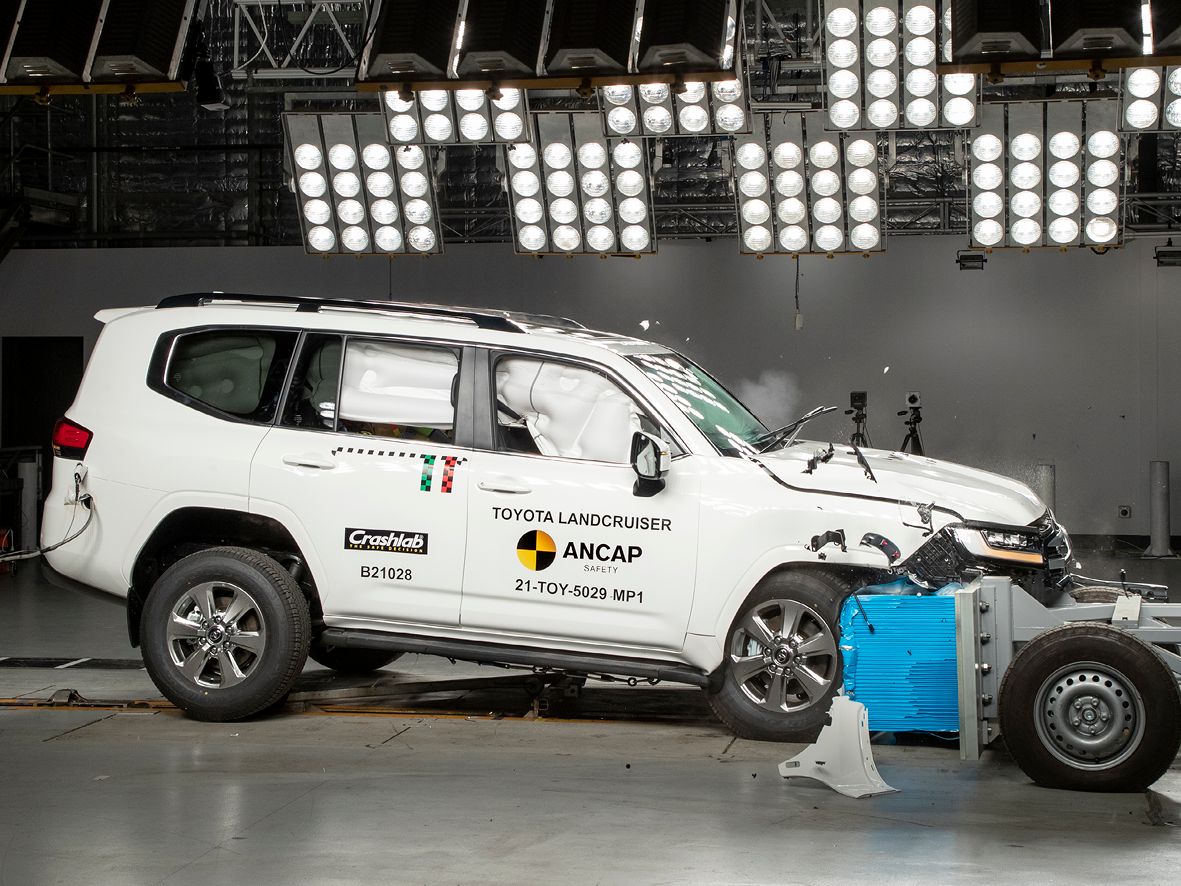
Full marks were given in the side impact, oblique pole, far side impact and rescue and extraction tests, while its weakest result came courtesy of the frontal offset test, taking 4.9 out of eight points on offer.
Next best was its child occupant protection rating – an 88 per cent overall result was only slightly down on the adult occupant score, again taking full marks in two of the four tests.
Vulnerable road users are relatively well protected as the 81 per cent score revealed – thanks to 44.02 points from 54 available – with upper and lower leg impacts as well as its autonomous emergency braking capabilities for forward pedestrian impacts all scoring within a point of full marks.
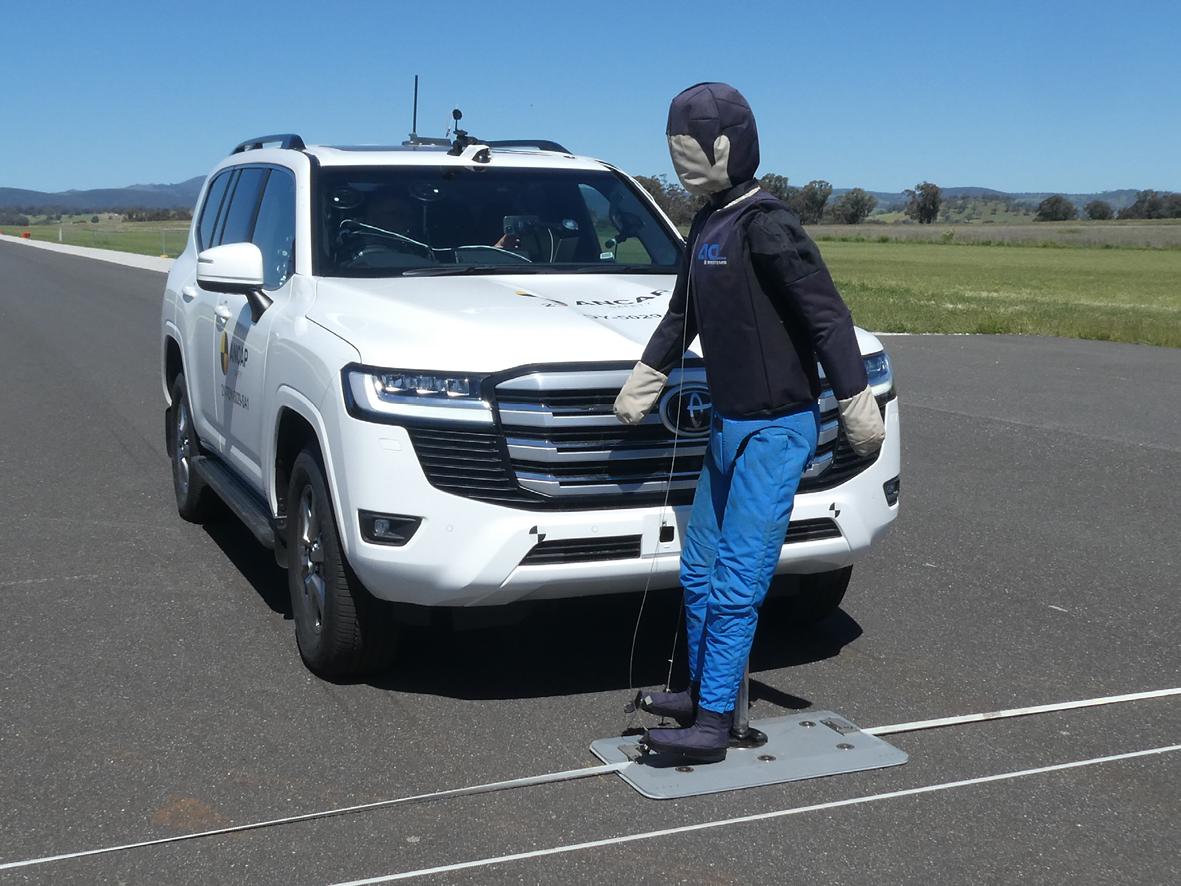
Still attributing towards the overall five-star rating, the LC300’s safety assist systems were given 12.4 points out of 16 (77 per cent), as all individual categories bar one tested scored above half, with the AEB junction assist awarded 0.89 points out of two.
Despite the hype for the LC300 and a limited number of cars being delivered late last year, a series of production delays for Toyota have blown out waiting list times, with some customers told they will have to wait another 12 months to receive the cars they ordered.
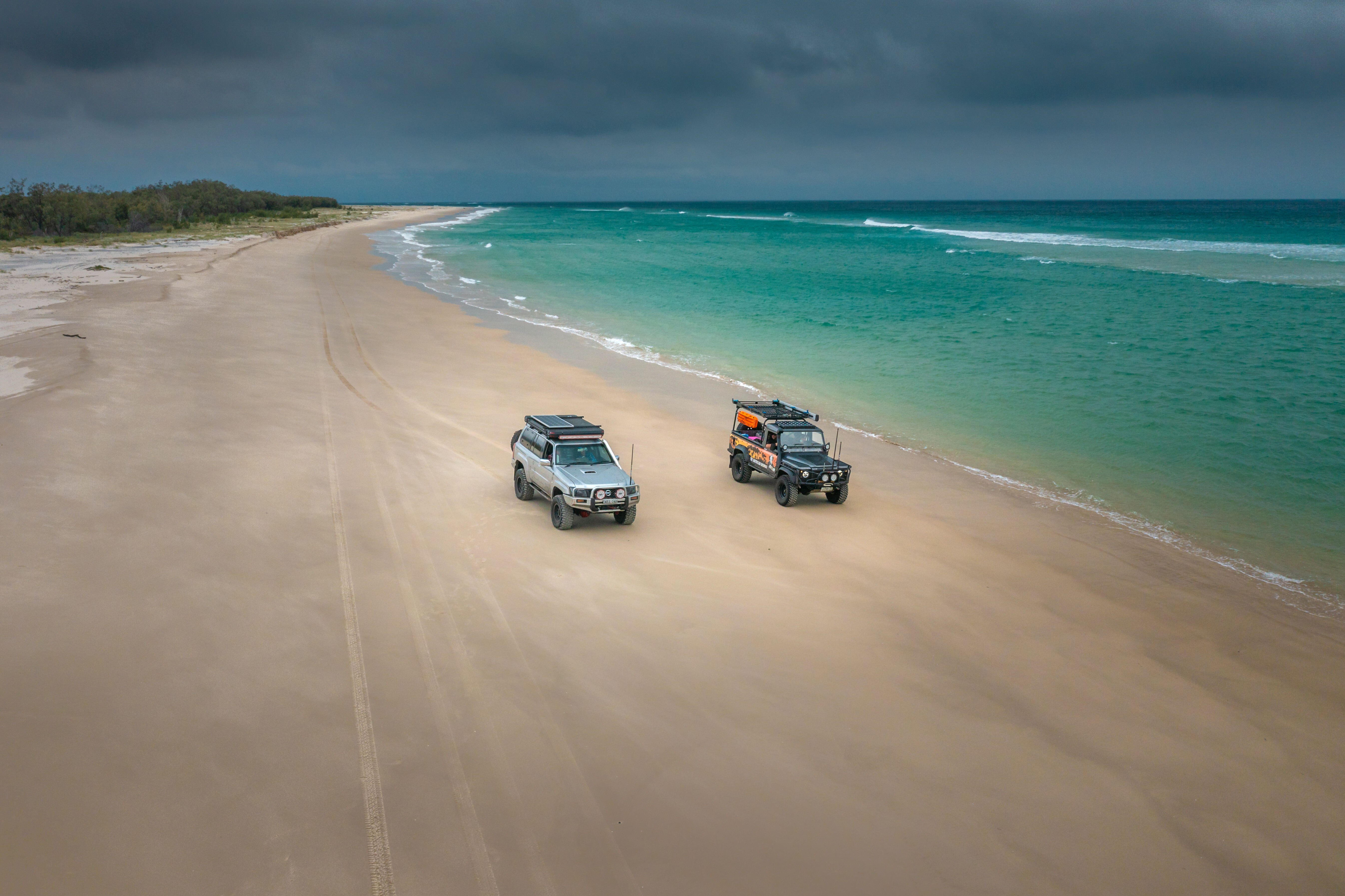
Moreton Island is a 44km-long sand island located east of Brisbane. It is a 4x4er’s paradise with both protected and open-water beach driving and camping, all connected by several inland tracks which are awesome to drive.
It is well regarded for its fishing and marine mammal spotting; plus, of course, the 18 shipwrecks on the western beach.It is advisable to be completely self-sufficient; there are basic shopping and facilities, plus fuel if needed, but be prepared to pay a premium.
GETTING THERE
The MICAT ferry is the only way to get your rig over there. It leaves the mainland at the Port of Brisbane and drops you on the island just north of the Tangalooma Island Resort, right on the beach and in itself, is a pretty cool experience, especially for the kids. There are usually two services per day and it is wise to book ahead as early as possible, particularly in the summer months and school holiday periods.Booking the barge is easy on the Moreton Island Adventures website, and from there you can follow a link to permits and camp booking, it’s actually really simple.
CAMPING
There are five large campgrounds and five main camp ‘zones’ on the island. Each has its own distinct feel and varied facilities. Generally, the campgrounds are ideal for large groups and have long-drop loos and cold-shower facilities.
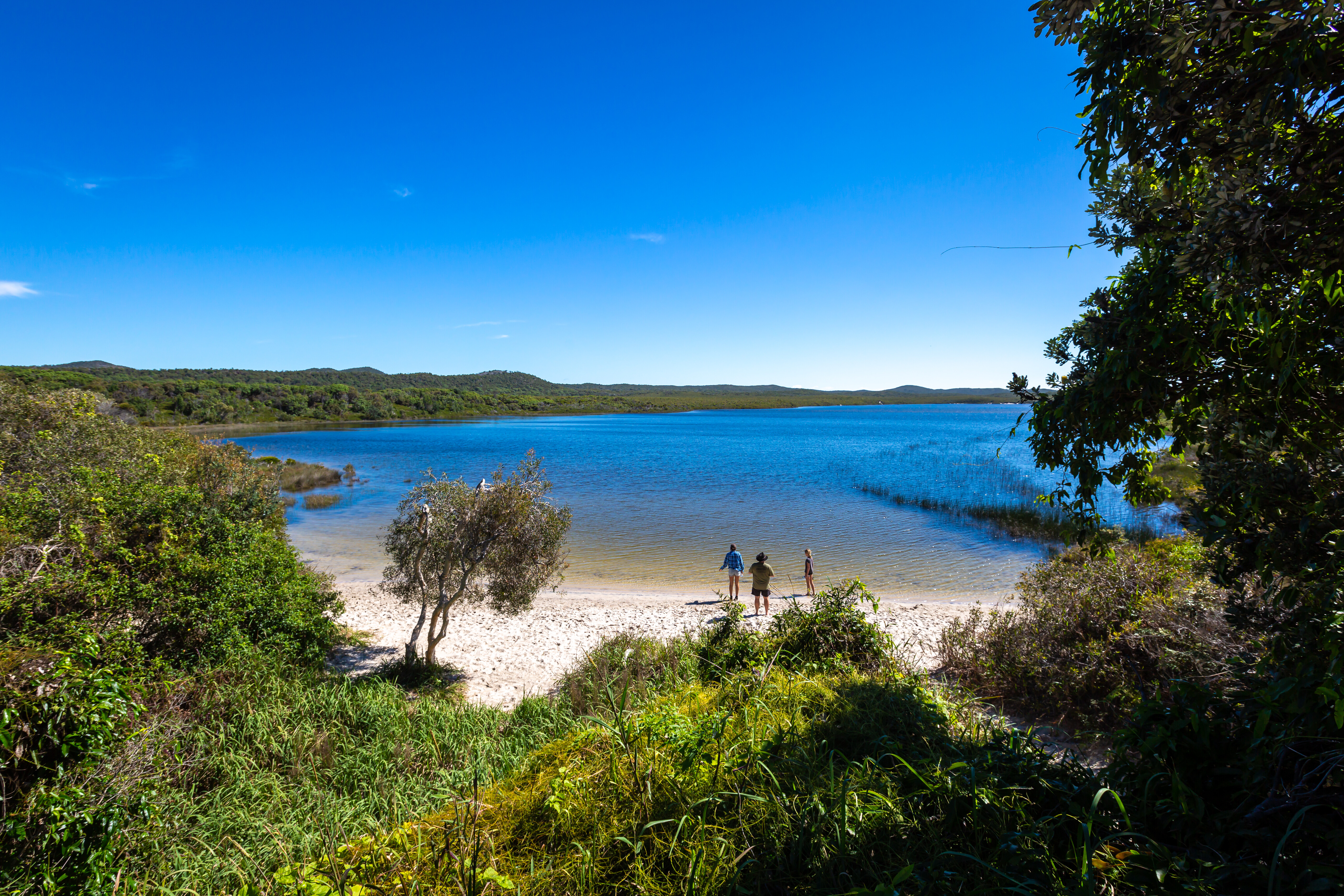
The camp zones are more secluded and consist of scattered sites, mainly along the beaches, they also lack any facilities. Whatever your choice though, rest assured you will not be disappointed, while there are some standout secluded ‘zone’ spots, all of them are stunning and have easy beach access.The advice here is to try and predict the prevailing winds for your time of travel to avoid the onshore winds. While you can book an area, there are no numbered sites, so it’s first in, first served.
DRIVING AND TIDES
The driving on Moreton is amazing, it’s pretty much all beach driving (apart from the sandy inland single-tracks) and who doesn’t love beach driving, right? From the barge you should point your rig north, it’s the gateway to all of the camps.
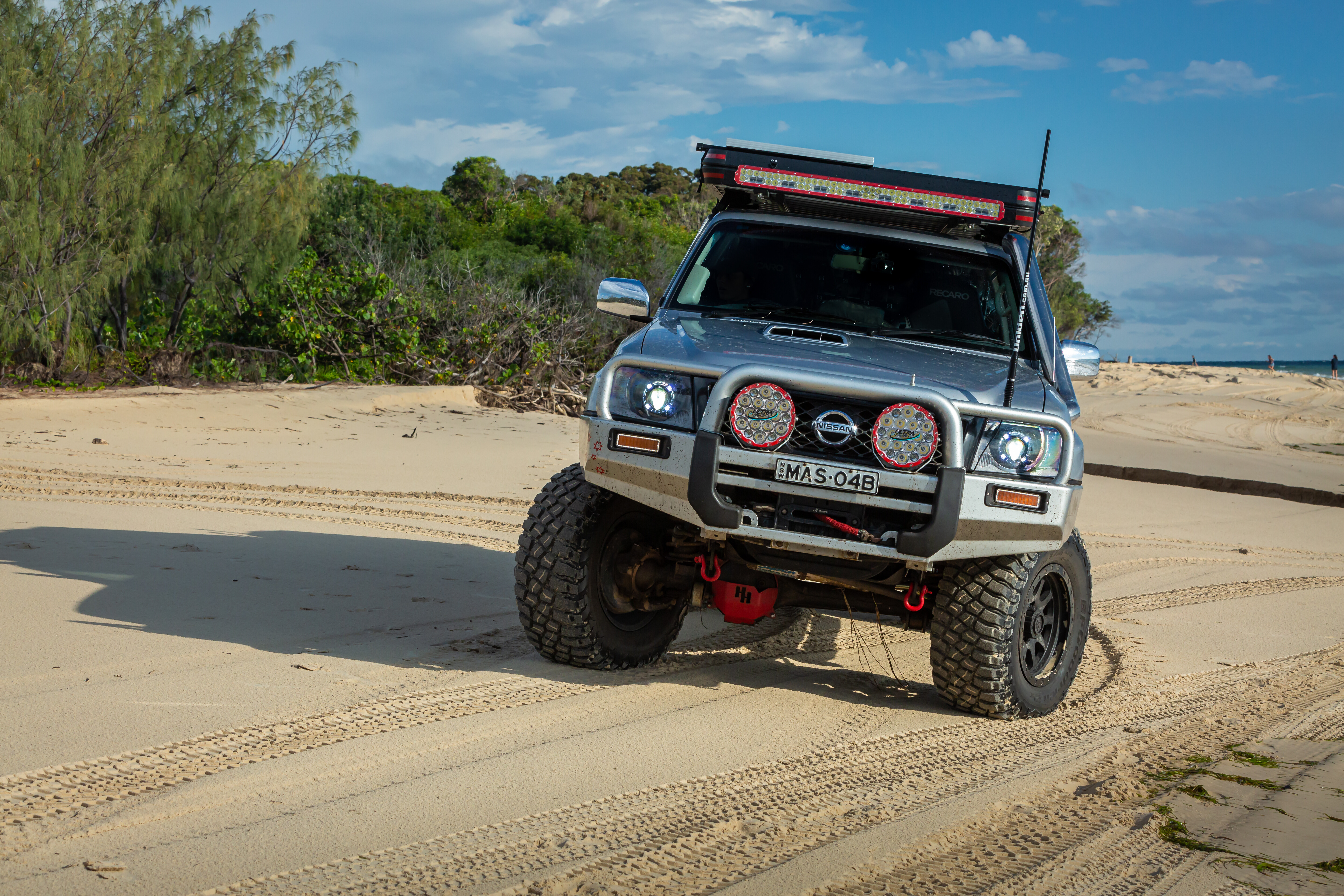
If you head the short distance south along the beach you’ll find the famous Tangalooma Wrecks (a great place to park up, swim and relax) a walk-in camp zone and then restricted access to the Tangalooma Island Resort and that’s about it (don’t worry, the resort is secluded and does not interfere with us 4x4ers).So, head north if you want to make camp and follow the signs or your maps to your booked area and look out for the turn right to cross the island if that’s where you are headed – it’s an easy track to miss, otherwise continue along the beach north to find camp and adventure.
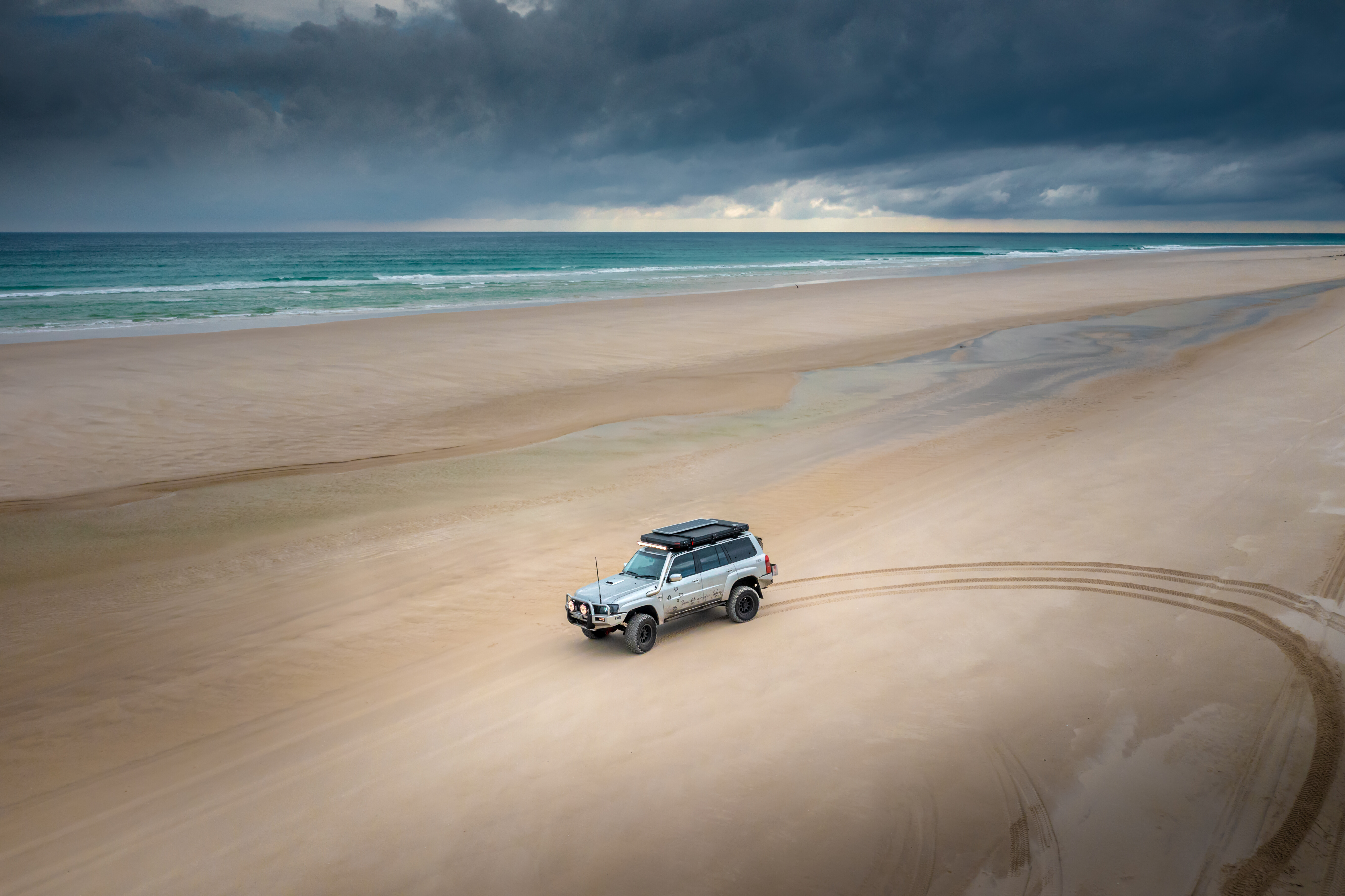
Being able to drive the beaches is very tide dependant – there’s not a great deal of sandy real-estate to drive upon, especially on the west coast that faces Brisbane, so the best time to drive is the two hours either side of the low tide. Outside of that, you find yourself with very little or no sand to drive upon and rest-assured, it is soft stuff up above the high-tide mark if it is even available.Water runouts are abundant on the west coast and they can be very deep and steep-sided, especially near the high-tide mark. It really does pay to drive cautiously and look well-ahead to avoid disaster. Hitting a runout at speed will ruin your trip instantly.Airing down is a must to avoid bogging and create a more comfortable ride – 15 to 24psi (depending on your vehicle weight and tyre construction) will have you negotiating the island with ease.
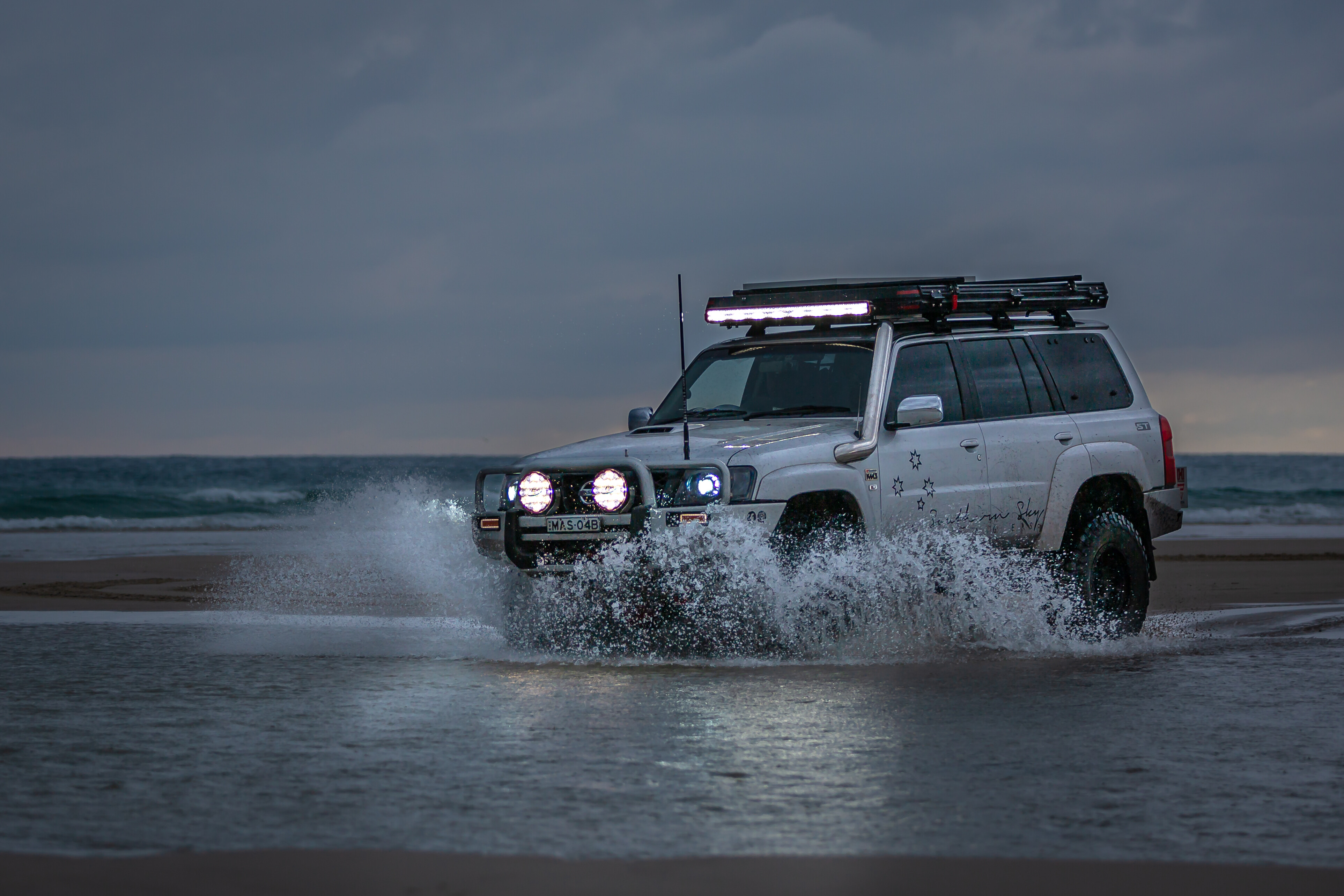
EAST OR WEST: WHICH IS BEST?
Choosing which side to camp upon really comes down to two things: weather and facilities.It is not enjoyable to have camp constantly bombarded by strong onshore winds nor have your body sand-blasted, so if the weather looks gusty head for the sheltered or lee side, but in the heat of summer it may be desirable to have cooling onshore winds, so it really is seasonally dependant.
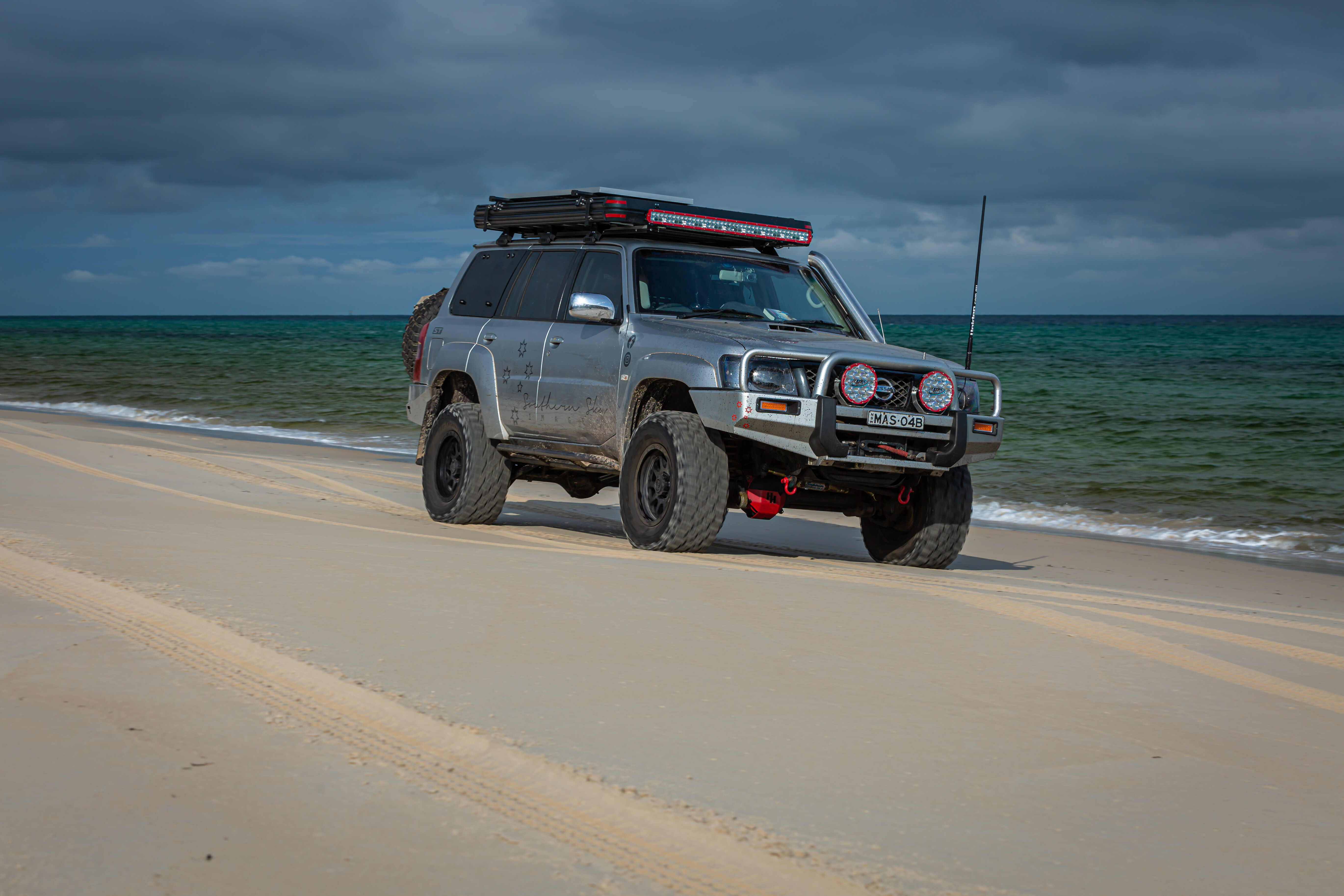
If you want close proximity to facilities then the west is best, the east coast is largely devoid of regular facilities with only Blue Lagoon having showers.If those two things are not that important to you, then you may consider that the west coast waters are more protected and calm, while the east coast is one very long surf beach with abundant gutters and rips. It is much nicer and easier to drive the east.
HOW ABOUT NORTH AND SOUTH?
There are some lovely camps up north but they are tucked inland a little, also you will need to allow more time to travel to and from the barge and keep an eye on tides while travelling.Down southwest there are some small camps tucked into the shoreline, but the caveat here is that you will be landlocked at high tide plus it is a mangrove area so the likelihood of midges (or sandflys) is high. Additionally, there is very little protection from southerly winds.

SHOPPING AND FUEL
There are two small communities on the island, Bulwer (north) and Kooringal (south) with facilities: The Castaways and The Gutter Bar respectively. Both offer basic goods and alcohol but The Castaways has much more variety and is the only place on the island to obtain fuel.
Be aware that it is possibly the most expensive fuel in Australia, so it’s best to fuel up at the Port of Brisbane near the MICAT barge terminal before you leave.If you are looking for a cooked meal both have good food on offer, but The Gutter Bar, as its name implies, is also a bar and a great place to enjoy a relaxed atmosphere with friends and family.
RUBBISH AND CAMPFIRES
There are plenty of dump points across the island, so there is simply no excuse to leave your rubbish behind.You are allowed to have campfires on Moreton Island but as always, there are a few sensible rules:• Campfires are only permitted in fireplaces and firepits at certain campsites.• Fires must be monitored at all times and never left unattended.• You must bring your own firewood to the island or purchase it at The Castaways; harvesting it on the island is prohibited.
WILDLIFE
Wildlife is a highlight of the island with plenty of birds, reptiles and aquatic life to be seen. One species that is not present is the dingo. Unlike the similar island, Fraser, you do not have to worry about potential interactions with these canines on Moreton.

WORTH THE EFFORT?
You bet it is! Moreton Island is a fantastic experience no matter your age or set-up. One tip though, be prepared to do it all again, because once you get a taste, you will certainly be back for more.
TOP 5 THINGS TO DO
TANGALOOMA WRECKS Fifteen work boats and barges were scuttled on the west coast to create a breakwall and are now a snorkeller’s and diver’s paradise.THE GUTTER BAR A great place to enjoy a relaxed, beachy vibe with friends and family.LIGHTHOUSE The 23m Moreton Island Lighthouse was the first built in Queensland back in 1857 with convict assistance.SAND HILLS The Big and Little Sand Hills are stunning dunes of white sand stretching across the southern tip of the Island from east to west.CHAMPAGNE POOLS This spot gets its name from the sparkling ‘champagne’ effect of ocean waves crashing over the natural break wall.
“You have all the gear and no idea!” he shouted as I kept digging out the sand from around the wheels.
He was right. I’d gone down on to the beach in the late afternoon to get some sunset pics and video with a mate’s new LC200 and high-end off-road caravan. I’d let the tyres down, but not far enough and was struggling to get the six-tonne combined mass back up the beach access ramp. I had blocked the only access track and the locals were (understandably) very upset with me.
In an era of $150K fully-kitted LC79s towing $150K-plus off-road caravans, it was a stark reminder of the need for us to get ‘back to basics’ and ‘keep it simple stupid’ – or in my case look really stupid! After all, isn’t the whole point of adventure to leave all the stuff and worries behind and get back to nature and things that matter, like family and fun?
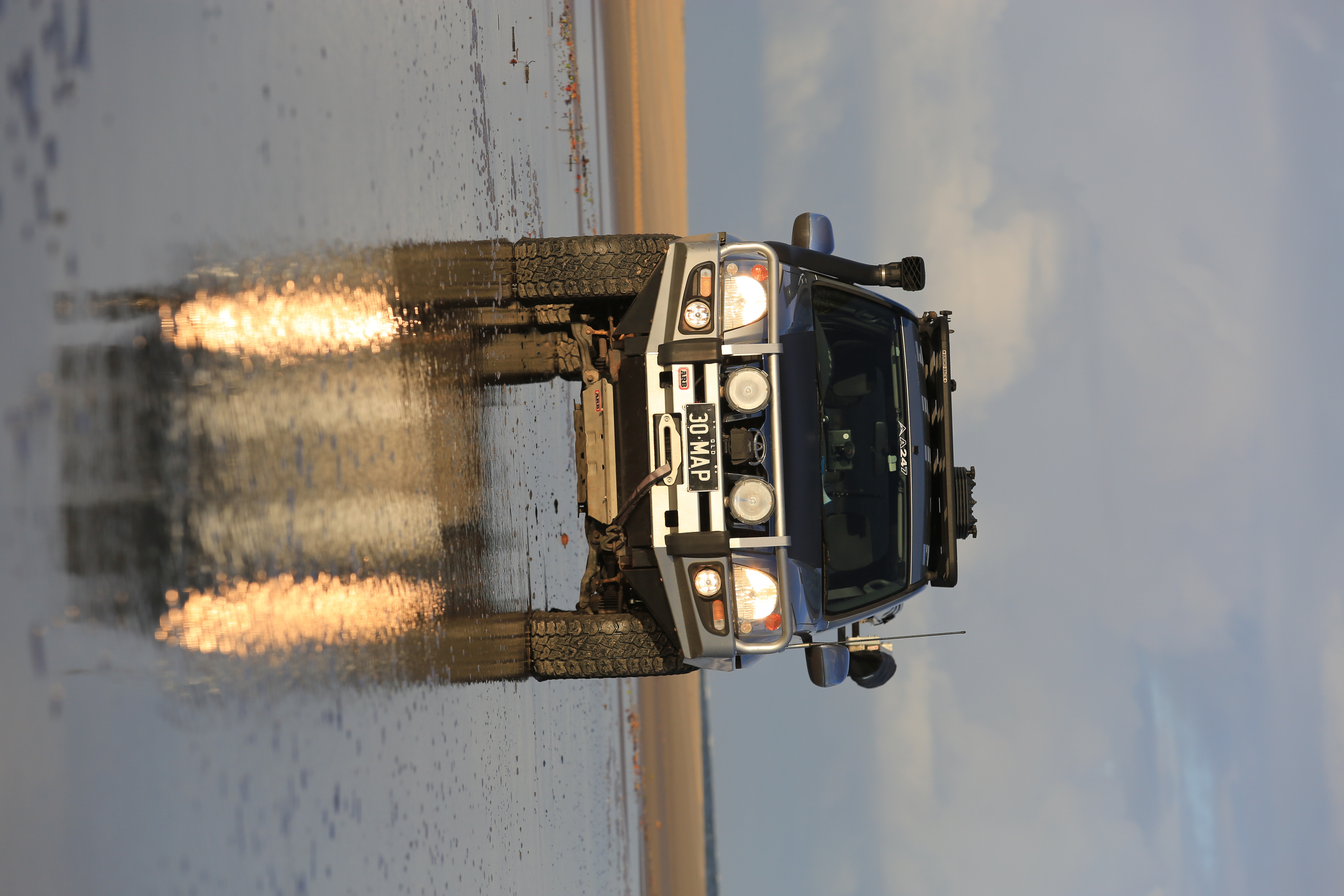
Don’t be fooled – you don’t need to gouge your super or mortgage your home to have the ‘perfect touring set-up’. And, with lead times long in to 2022 on new vehicles, camper trailers and caravans, it’s time to make the most of what you already have. Far better to go now and enjoy the outdoors than spend the next decade paying off some shiny new toy.
So, I dropped home my mate’s rig (most embarrassed) and apologised for not giving him any decent Insta pics. Then I went home to look at my own kit through a very different lens.
THE VEHICLE
A genuine one-owner vehicle, we’ve owned the 2004 120 Prado since new. It’s only done 260,000km in 17 years and, as like most Prados, it’s been a ‘mum’s taxi’ for our family of six and driven mostly within a 10km radius of home.
It’s a very reliable 3.0L turbo-diesel coupled with a five-speed manual transmission. I’ve quietly done it up as time and funds have allowed and put together a very competent off-roader.
The ARB deluxe winch bar, side-steps, Safari snorkel, under-bonnet air compressor, dual-battery system and IPF driving lights were all fitted as new. It has an ARB two-inch lift with the Old Man Emu shocks upgraded to OME Nitrochargers back in 2012.
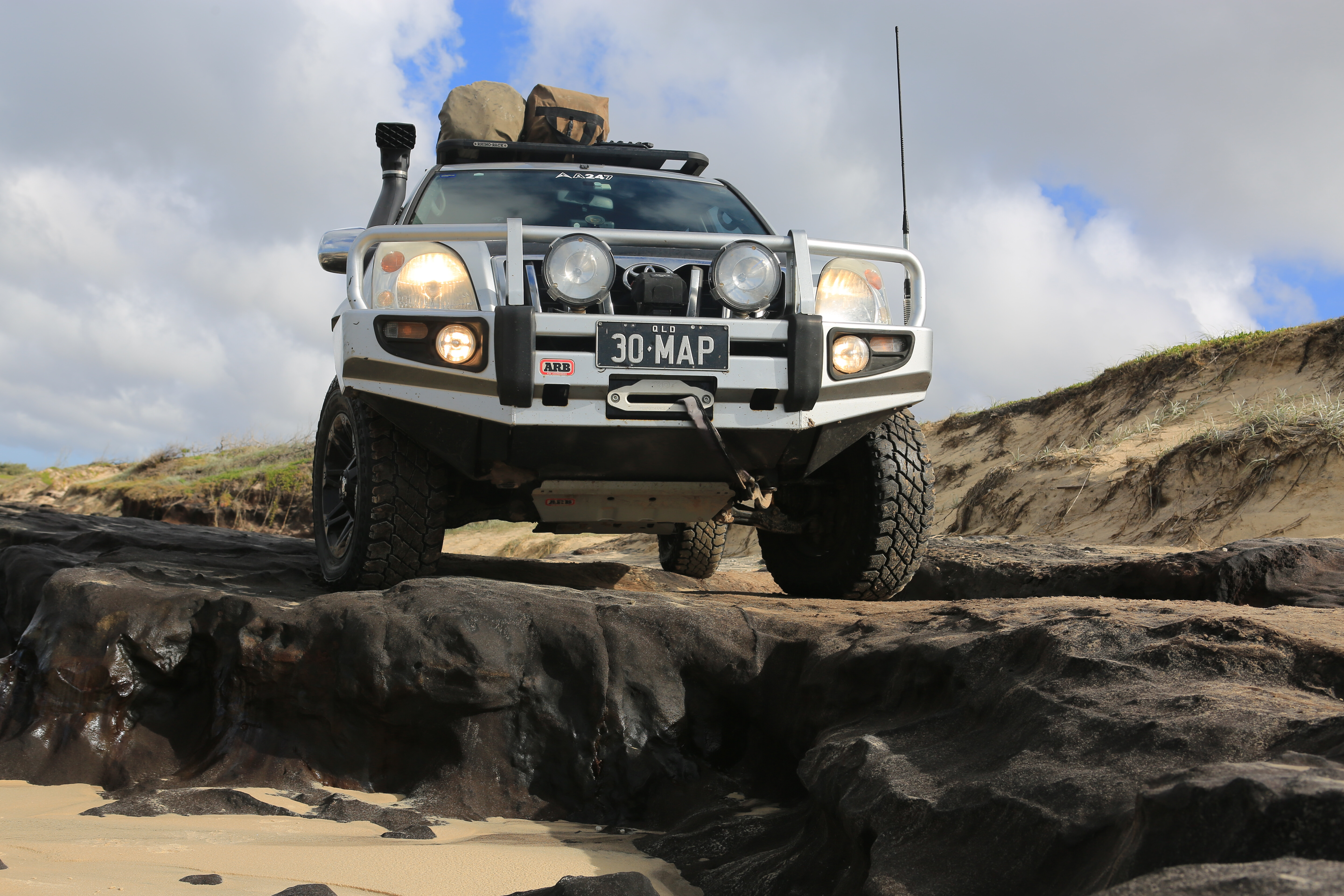
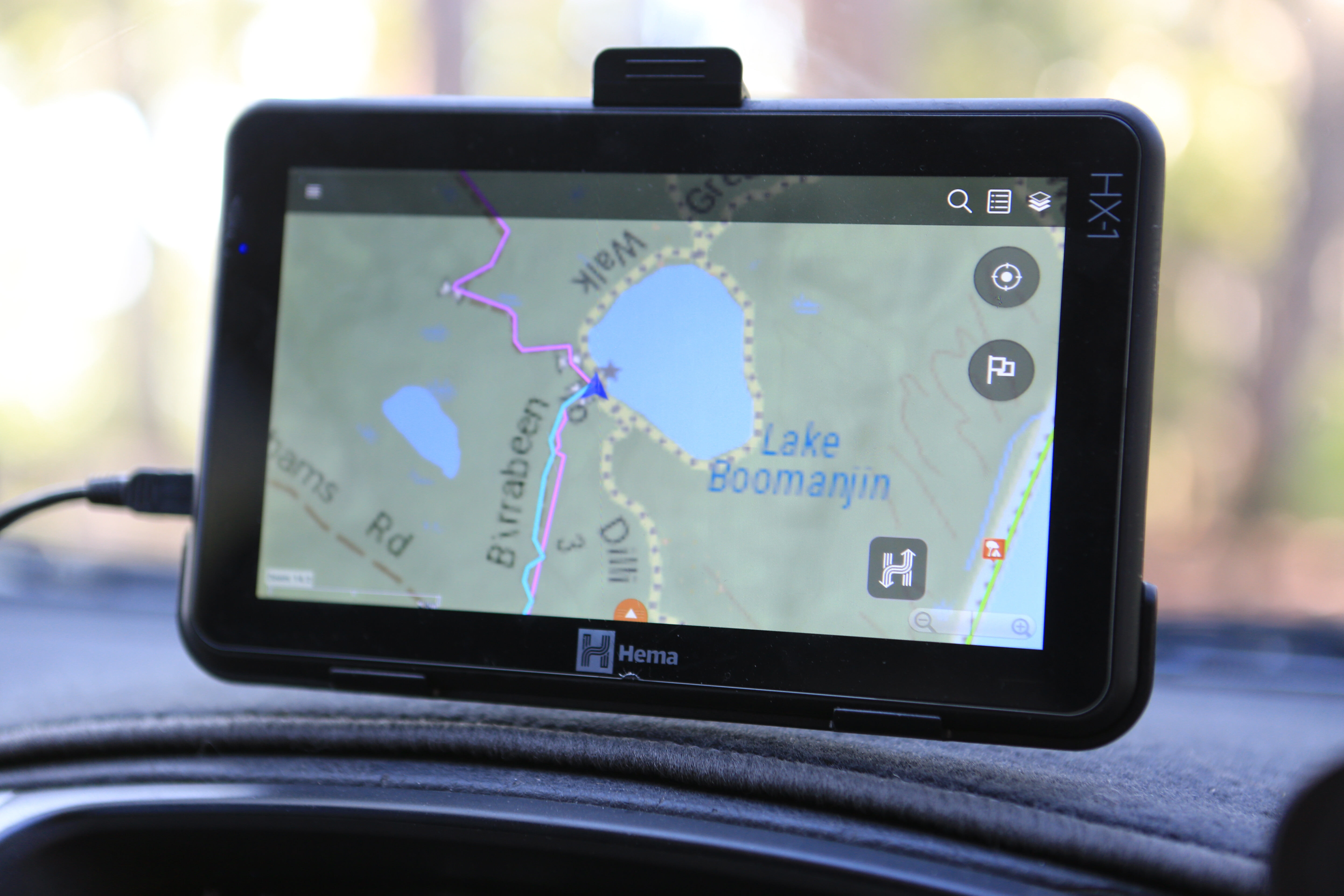
A few years ago, I replaced the 40-channel UHF with a new GME TX3350 remote handset and upgraded the smart solenoid power with a new 25amp BCDC Redarc smart charging unit, complete with solar input. Navigation aids include a Hema HX-1 Navigator and mounted iPad mini running a suite of map and campsite apps. An ARB TPMS keeps my tyre pressures in check and a Redarc TowPro brake controller helps with safe outback towing.
I need to charge a lot of camera and computer gear, so I mounted a Redarc 1500W pure sine wave inverter under the front passenger seat. I also ran a heavy-duty 12V cable to the rear cargo area to keep the 60L ARB fridge-freezer running direct from the auxiliary battery, and an even thicker cable to feed the trailer via a rear-mounted Anderson plug. The engine had a 15 per cent power upgrade thanks to a Tunit chip.
Next, I swapped the Toyota roof rack for a Rhino platform (1930 x 1240mm) with shovel holder and mounted black MaxTrax. A matte-black bonnet wrap and 17×9-inch Mayhem Rampage wheels shod with my favourite Cooper ST Maxx tyres (265/70/R17) rounded out the tough, black-on-silver look.
The Prado had done a bit of beach work, so the underside needed some TLC. I replaced the rusted and beaten bash plates with a set of ARB underbody protection and swapped the original tow bar for a Hayman Reese 2.5T rated one, as the hitch sleeve and mounting brackets were looking ‘pretty ordinary’ and didn’t look like they’d survive the next recovery.
The front end needed a bit of work, as the steering had been wandering a lot in recent times. It took the best part of a day to replace the steering-rack bushes and sway-bar links, with much of that time spent removing the original rusted bushes. The final touch was a pair of Airbag Man airbags in the rear to help carry the load when towing.
THE TRAILER
The trailer needed a heap of work! It’s a simple but strong 7×4-foot high-side, off-road box trailer that I bought 15 years ago. I’d used it for landscaping and carting building material when we renovated our 1926 Queenslander. It had a ladder rack for loading timber (or canoes), zinc-plated floor, spare-tyre carrier, tonneau cover and front-mounted toolbox. A set of second-hand GU Patrol alloys and 285/75R17 Cooper STT tyres gave it a stack of ground clearance and tougher stance.
Like the Prado, the surface rust had set in, so I lifted the front drawbar and wire-brushed the underside and then coated the whole trailer with Penetrol. This halted the corrosion and gave it a protective patina finish. It was messy work, but will double its useful life. The toolbox mounting bracket had rusted through the front box section, so it was cut out and replaced and a new one mounted up front. Lastly, I welded a tow hitch to the rear cross-member to carry a family of mountain bikes.
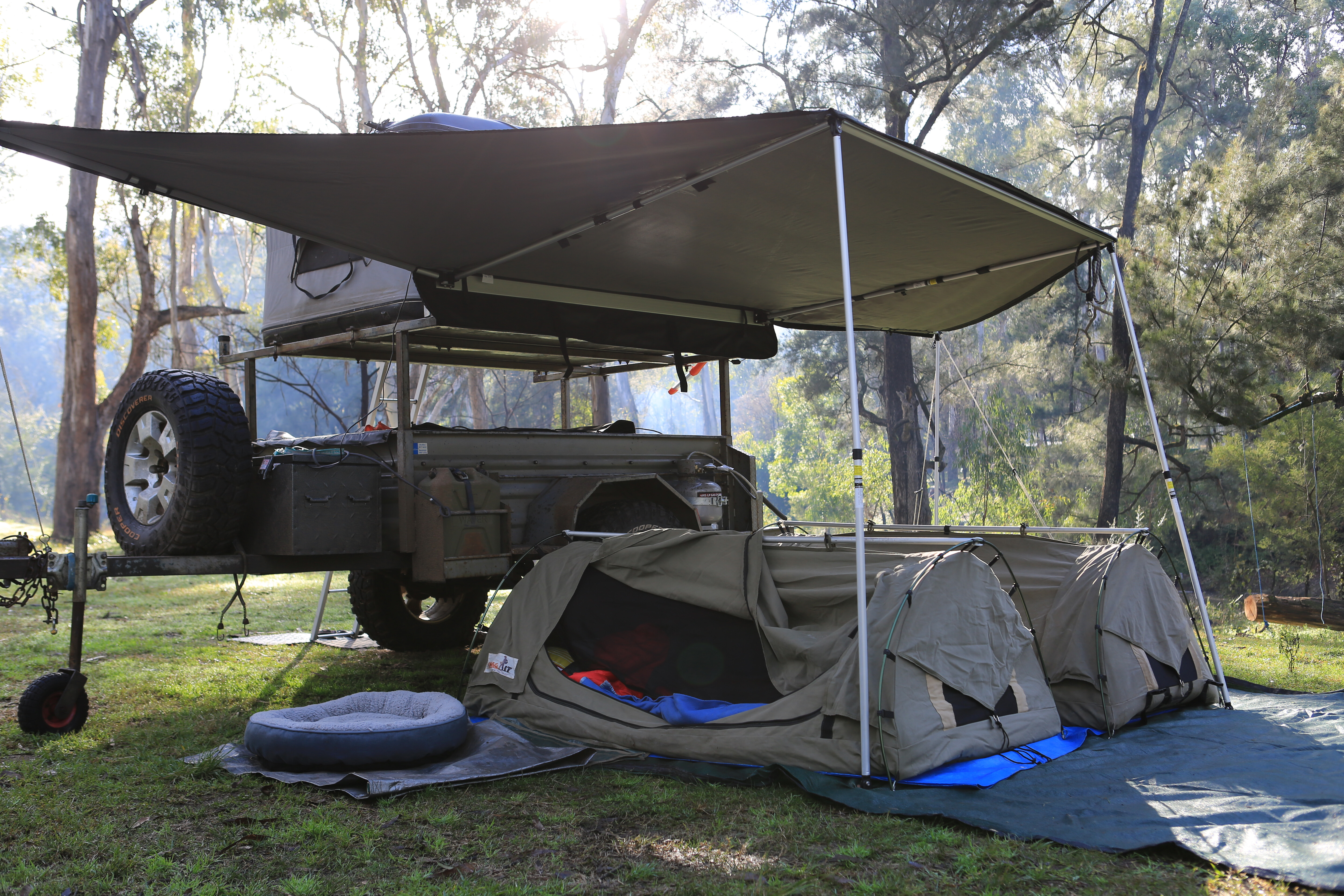
The toolbox houses a portable battery pack (Thumper) with charge input via an Anderson plug. With a portable solar blanket, this keeps the fridge and lights running for a longer stay. My camp cooking kit is stored in a large space case and fits snugly inside the rear of the trailer, with the open lid locking perfectly against the ladder rack. The tailgate serves as the kitchen bench, with removable chains holding it flat. A 4.5kg gas bottle is fitted nearby for the dual gas stove or Weber Q. The 40L of fresh water is stored in two side-mounted jerry can holders.
I mounted a second-hand James Baroud rooftop tent to the ladder racks with two linking parallel bars. It’s simply secured by four underside U-bolts, making it easy to mount or remove in less than five minutes. The rooftop tent is perfect for my wife and me, and I have two quick set-up swags and a two-person dome tent depending on how many of our four kids come along. A Supa Peg 180o side awning provides ample shade and shelter.
TEST RUNS AND DIY
An overnight camp at nearby Gordon Country gave me a chance to test the new camping set-up, followed soon after by a week-long trip to Fraser Island (K’gari). The missus and boys approved as we were set up at Gordon Country with the campfire started, in under 20 minutes, leaving plenty of time to explore with our new puppy. The lightweight trailer made for easy towing along the beach and inland tracks at Fraser. The Prado found it easy too – it’s a tonne lighter than a fully-loaded LC79 so handles the soft sand with ease.
For two of the four nights, I explored the remote northern and western sides with just the vehicle and swags. Here I found a few like-minded adventurers who had solved some common problems with simplicity and style. Take Charlie for instance, who had solo sailed to Fraser’s west coast and set up camp on the beach for a few days. He’d made himself a self-levelling ‘stable table’ to hold his food and drinks steady on a rocking boat or a swaying branch. Or Dave who had baulked at the cost of $1200 for a slide-out drawer so built his own complete with custom compartments and a fold-out kitchen bench – all for under $200.
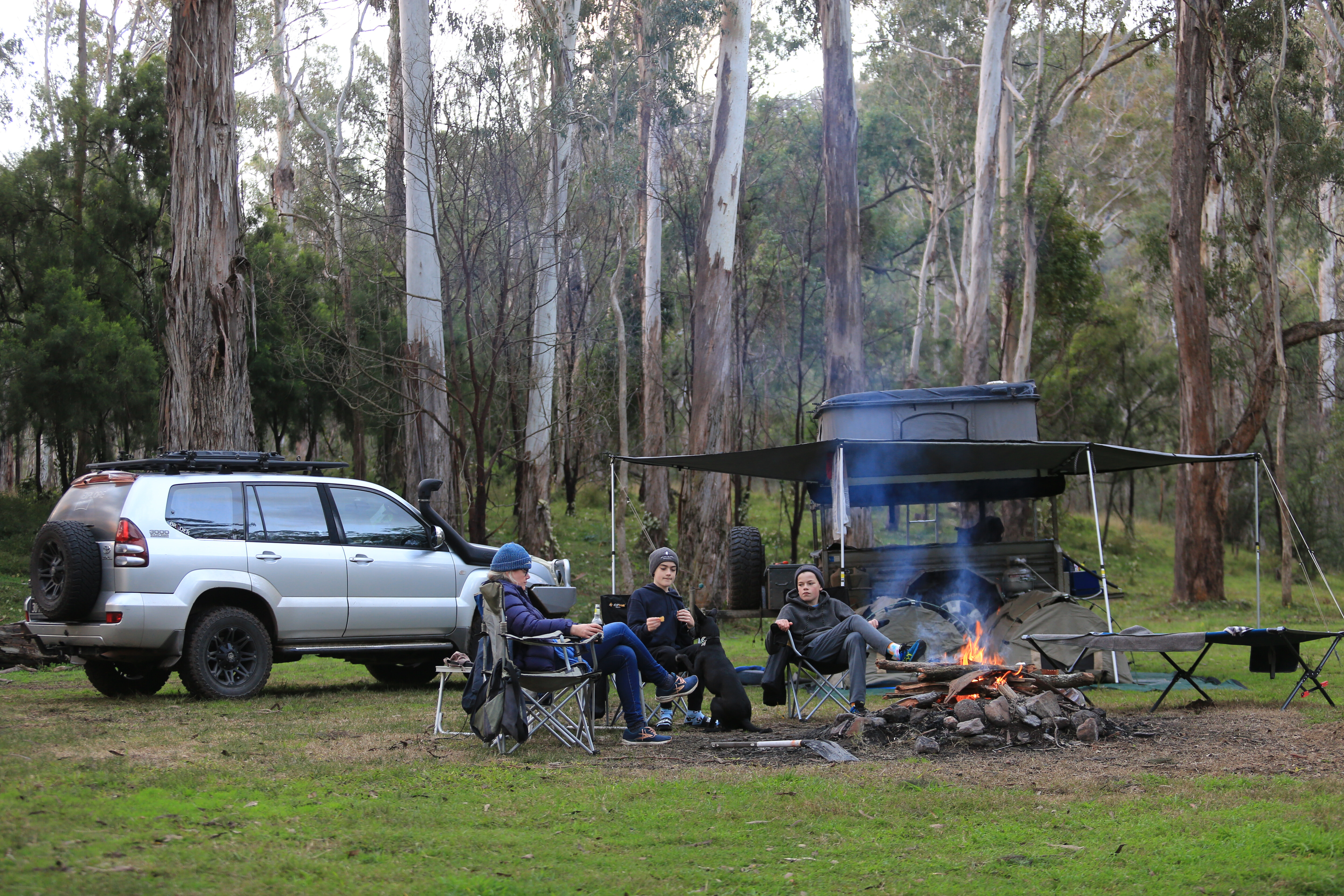
They say necessity is the mother of all invention, but I think it just takes a bit of common sense and not a whole lot of cash. I set out to make the most of what I already had and focussed on keeping it purposeful, lightweight, simple and modular. This means less stress on the car and trailer and keeps my kit fully-adaptable for long, short, solo or family adventures. Plus, I can still use the Prado to take the kids to school or do a dump run with the trailer.
You can easily find a similar mid-size 4WD or ute for around $15K and a quality off-road trailer for under $5K. All my upgrades will have cost me $12,500 across 17 years. So, whether you use a vehicle you own or one you buy tomorrow, you can easily have a capable and versatile 4×4 adventure rig for less than $35K.
UPGRADE LIST
ARB OME suspension ARB Deluxe winch bar Smittybilt X2O 10,000lb winch w/ synthetic rope and remote control IPF Extreme HID driving lights ARB mounted air compressor ARB underbody protection and side-steps Hayman Reese 2.5T tow bar Redarc BCDC 1225D three-stage battery charger Redarc Tow-Pro brake controller Rhino-Rack 1930 x 1240mm platform rack w/ shovel and MaxTrax holders Tunit performance chip Hema HX-1 GPS and iPad mini ARB Tyre Pressure Monitoring system ARB recovery kit Airbag Man rear airbag kit James Baroud Evasion Evo rooftop tent
Snapshot
- 2022 SsangYong Musso lands in March
- Much larger digital instrument cluster for the driver
- No powertrain changes for Aussie buyers
The 2022 SsangYong Musso will see some minor revisions for the Australian market when it arrives in the coming months.
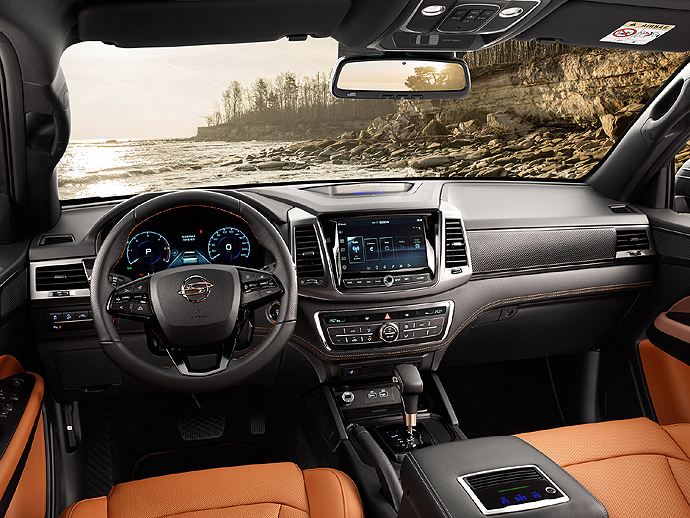
SsangYong has confirmed to 4X4 Australia the entire Musso range will move to a 12.3-inch LCD digital instrument cluster – up from 7.0 inches currently – while a new overhead console with LED lights and seat belt reminders will also feature.
The Korean carmaker will also reintroduce colour-coded door and tailgate handles and mirror caps to match the body paint.
The Euro 6-compliant 2.2-litre turbo-diesel four-cylinder engine will remain, with no changes to its 133kW output. Musso Ultimate variants will continue to receive a 20Nm torque bump over the standard 400Nm.
While Australian buyers miss out on the performance increases found on overseas MY22 models, the more powerful engine requires AdBlue – with an additional under-tray tank removing the ability to carry a full-size spare wheel.
Australian models will also retain hydraulic power steering for the time being, meaning owners won’t get adaptive cruise control or lane-keep assist found in other markets.
Recent reports out of South Korea suggest locals are keen to see the Musso badge return in its native market – where the ute known as the Rexton Sports Khan – with suggestions the company’s upcoming J100 SUV could adopt the Musso name.
The 2022 SsangYong Musso dual-cab ute will arrive into local showrooms in March, with exact pricing and specifications to be released closer to its launch.
Everyone loves to head out in their fourby for a weekend or longer exploring Australia.
We call it ‘the dream’, something we all strive for. But those dreams don’t always become a reality; there’s nothing more off-putting than knowing you have a full day of packing, sorting and then trying to find a spare gap in the back of your cargo area for that one extra item. It can even make the boring second option of sitting on the couch with a coldie watching the footy a viable one.This is where your pre-trip prep routine needs to be sorted, and it starts with having an effective storage ‘system’ for all the gear you need for the aforementioned fun times.
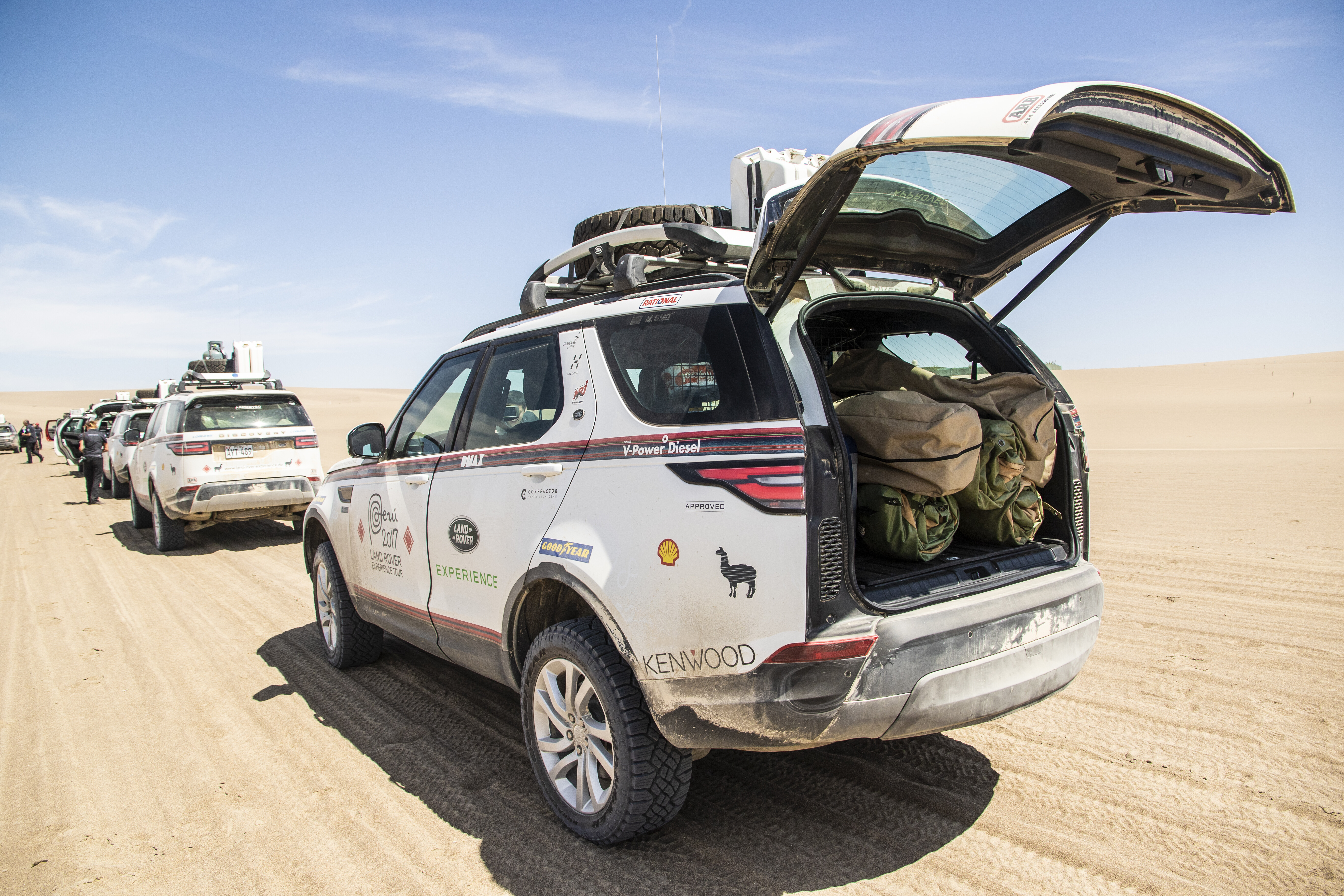
Opting for a complete system for lugging your gear makes loads (excuse the pun) more sense. It’s going to cost a bit more than those few plastic storage cases with hastily scribbled item lists on the front that you currently use, but with a full system for carrying gear – where everything has a place and it’s the same place each time – suddenly that painful packing experience disappears.
It can be as basic or as specific as you need, but the time spent sorting out a regular cargo system is going to be well-worth the initial set-up time. After that, you can just focus on the fun stuff.
THE BASICS FIRST
So, whaddya got? A 4×4 wagon, a dual-cab 4×4 ute? And where do you wanna go? The local national park, or across the Simpson?
Pretty straightforward questions, but with answers that will be crucial to how you plan your gear-lugging system. Things like available cargo space (more pertinent if you have a wagon) and – most notably – payload figures need to be considered carefully when deciding whether to dive in deep and commit to installing some type of cargo system.
We’re not saying you have to stump up many thousands of dollars for (in the case of a ute) a canopy, a full drawer system and roof rack (or platform) set-up, but you can incorporate any (or all, if your pockets are indeed deep) of these in to a sensible set-up that will ensure everything you need is stored in your rig securely, safely and within handy reach when you reach camp.
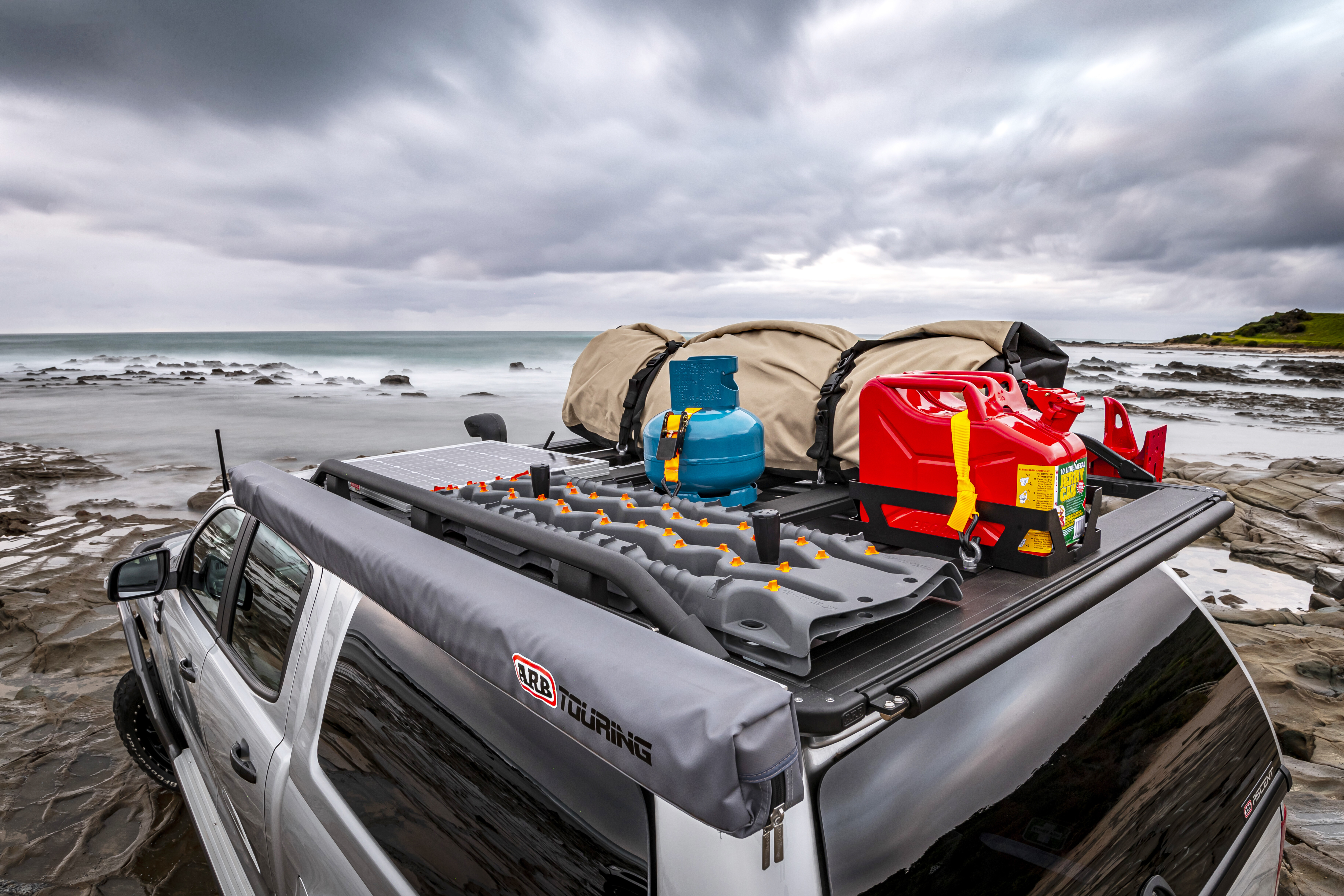
IN THE BEGINNING
First thing to do when planning a cargo system is to draw up a list of absolute essentials you take on every single trip, and then figure out how much storage you need for all of it and how you’d like said gear stored.
Next, and seemingly a bit off-track, it’s well-worth checking how robust your vehicle’s tie-down points are and if they are even rated to hold a significant load. This may sound a bit odd, but if you opt for a pile of hard-shell boxes (Ironman 4×4, ARB and Pelican all offer these) or another type of temporary storage set-up (even if you just need to secure gear that’d otherwise be floating around in the back), you’ll need to ensure they are tied down securely and safely in your wagon or ute tray.
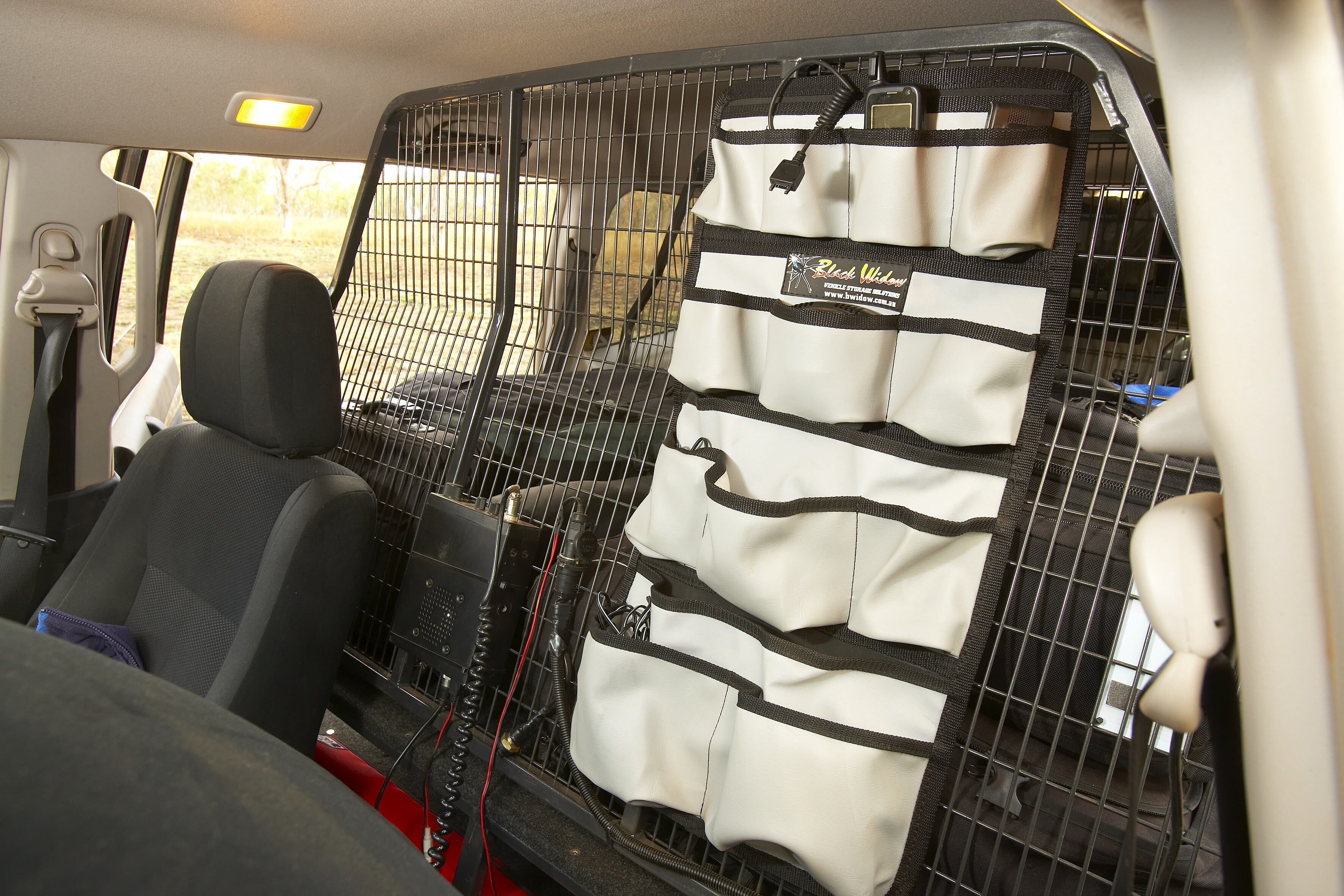
This brings us to another (albeit wagon-specific) basic item: a cargo barrier. For any 4×4 wagon owners who want to look seriously at how to optimise their vehicle’s load-lugging capacity, fitting a cargo barrier is an absolute must. This allows you to safely utilise the space in the back of your 4×4; with a cargo barrier affixed, there’s no chance of heavy, bulky items flying through the vehicle interior in the unfortunate event of an accident.
Yes, you could of course still just tie down gear using ratchet straps, but that extra assurance of an ADR-compliant metal barrier between you, your family and potential injury, makes a cargo barrier a no-brainer.
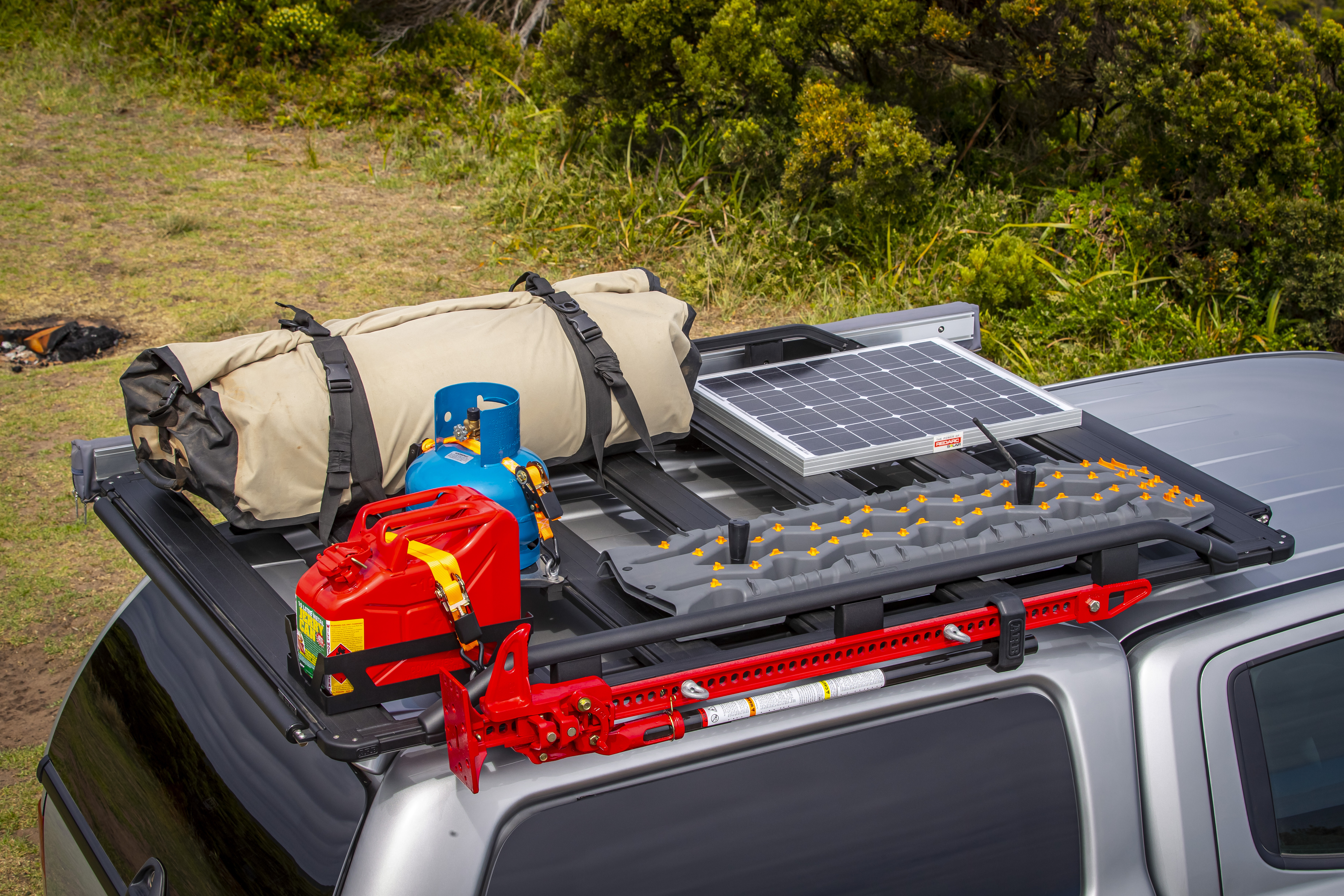
WEIGHTY MATTERS
When planning out what type of storage system you’re keen on, be conscious of your vehicle’s payload figure; an all-steel two-level cargo drawer system might be just perfect, but that additional weight cuts a chunk out of what you can lug legally in your rig.
The importance of payload is more pertinent to wagons of course, and some payload figures will surprise you: the LandCruiser 200 Series Sahara, beloved by off-road tourers, offers a relatively paltry 610kg payload (lesser models can carry slightly more).
Add in four hefty bloke s at 100kg each, a roof-rack, steel bullbar and lights, dual-battery system and cargo drawers in the back, plus all their gear, and you’ll be over what is legal. And that’s not Cruiser-bashing either – other brands’ flagship wagons offer similar (or less) in terms of payload.
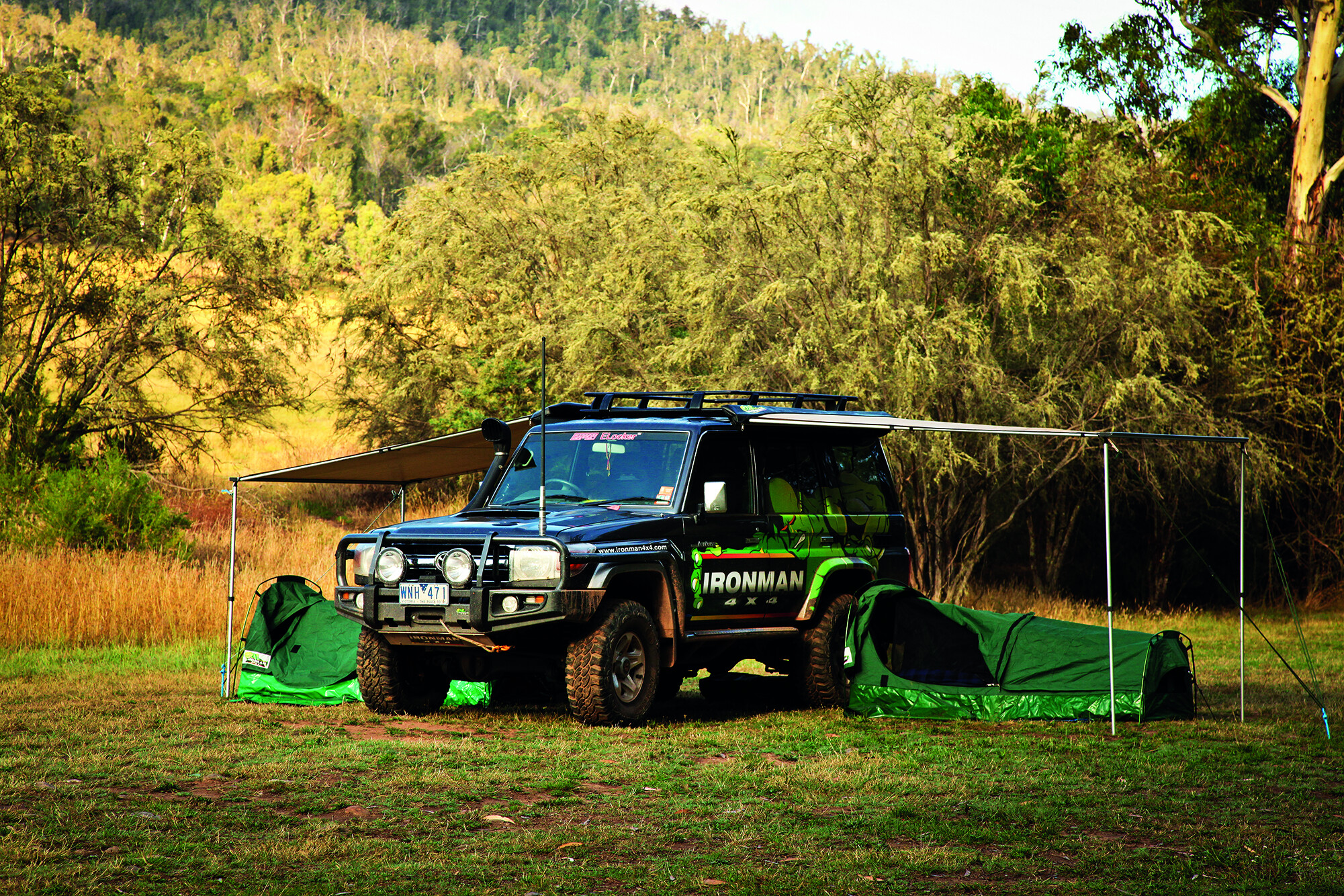
Your legal load limit is crucial to your cargo system, but close to equally as important is how you pack that weight. It should go without saying that heavy, bulky gear should always (where possible) be loaded down low in your vehicle, no matter whether you’re using a cargo-drawer system solely, or a mix of drawers and/or boxes plus throwing additional gear up on your roof (more on this option later). Keeping the weight low assists in maintaining decent on- and off-road handling.
DRAWERS
Inherent robustness, ease of use and a specific design for different 4×4 vehicles that makes the most of available cargo space, means a cargo-drawer system is a brilliant option for carrying gear. However, they do come with some heft, both in terms of their overall weight (and its impact on payload) and price.
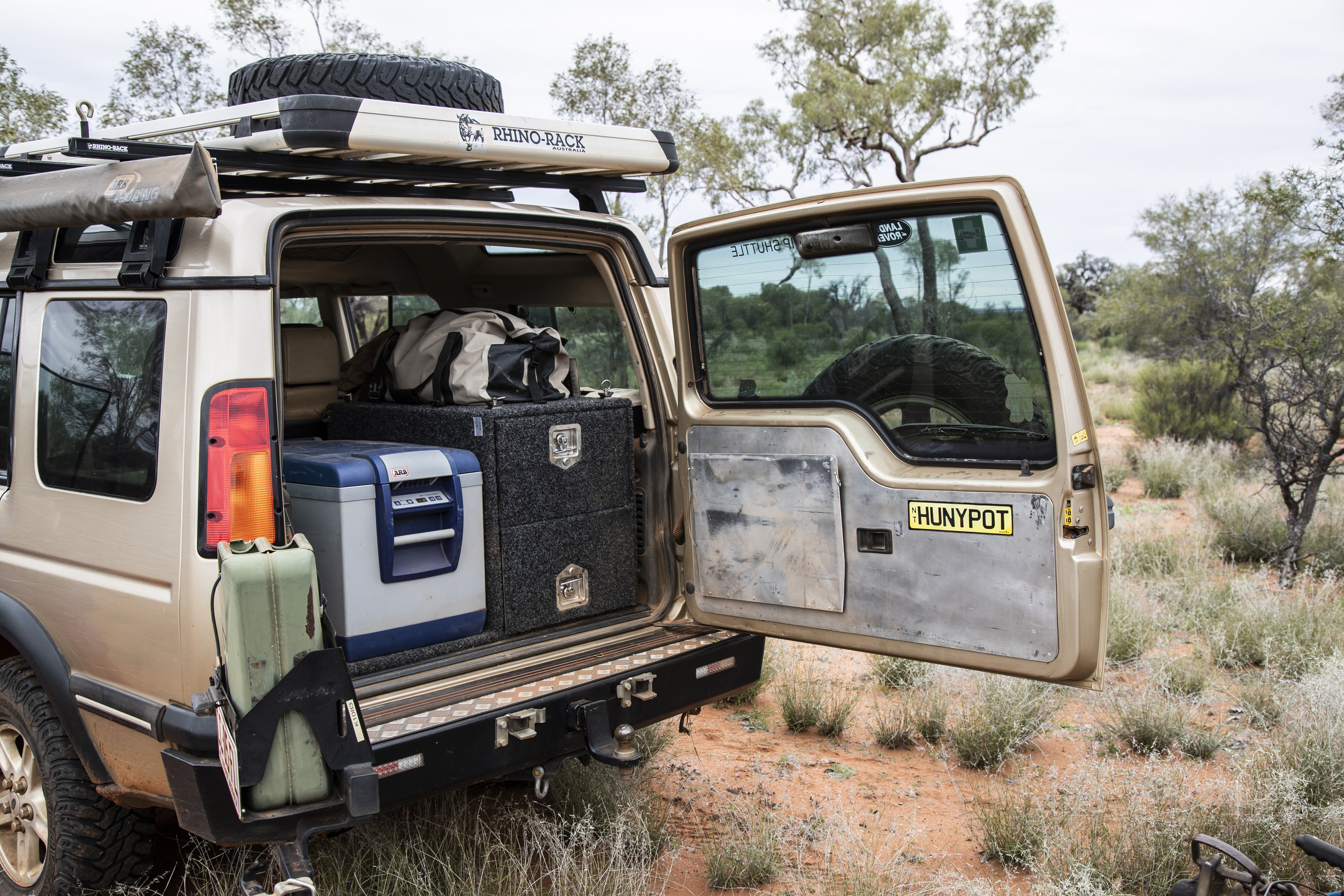
Having said that, as long as you take our earlier advice and plan out what you think you will be carrying – and how much space and weight this gear entails – you can utilise all the benefits of the many configurations a cargo-drawer system can be made in.
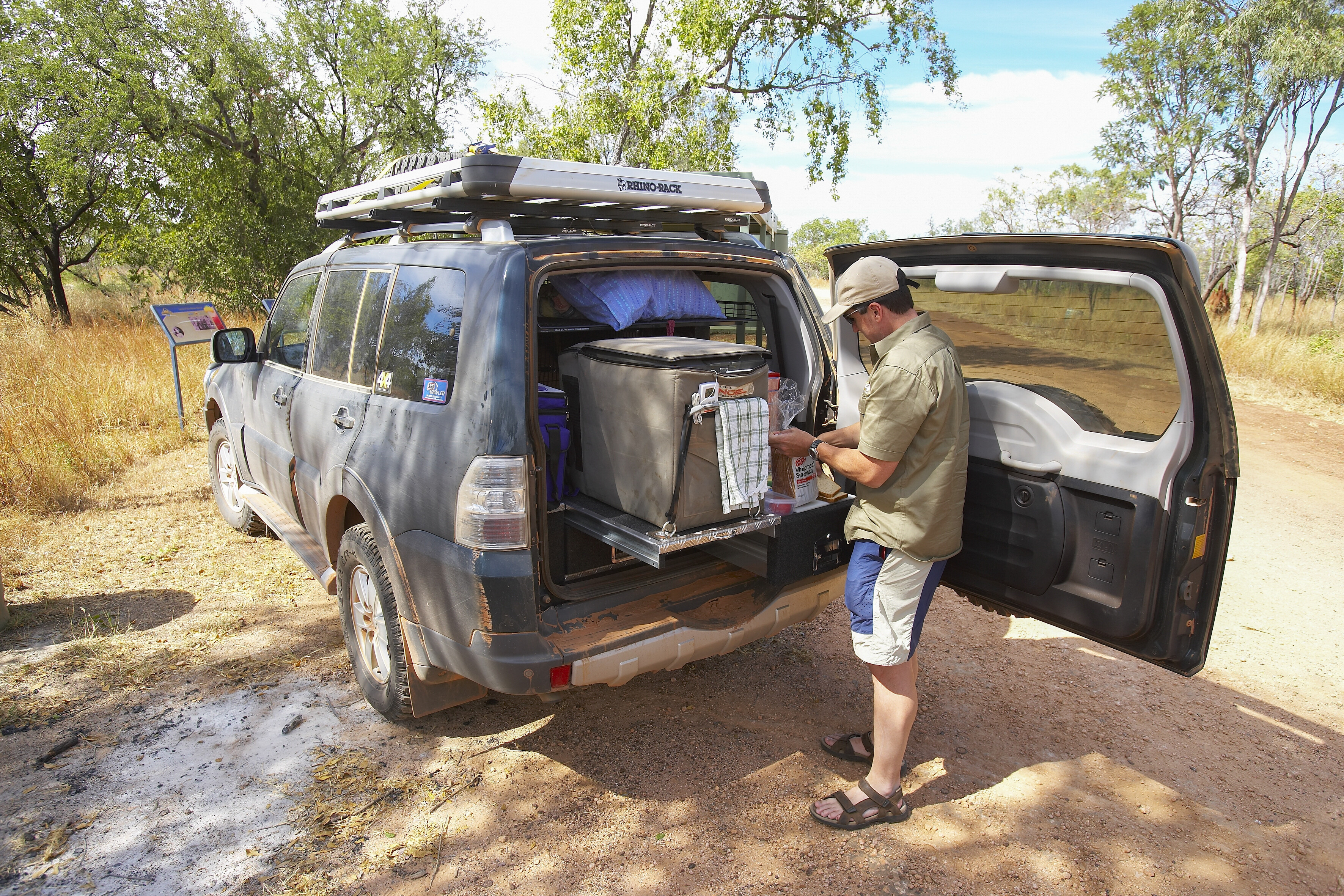
There are options that cover everything from a single fridge slide with a low drawer underneath for perhaps essential recovery gear and tools, to side-by-side drawers, to stacked (two-up) drawer systems that you can divvy up in to certain types of gear for easy access. In nearly all cases, these cargo-drawer systems will – in the case of 4×4 wagons – incorporate a cargo barrier as well.
Fitting a cargo-drawer system is usually a permanent arrangement (there are a few modular systems, but not many). You need to be confident you won’t ever need the convenience of a full-height cargo (or ute canopy) area or using your third-row seats (or, for that matter, even dropping down your second-row seats for long loads). It also must be able to ‘work’ when you’re not touring, i.e. in day-to-day use of your vehicle, the drawers won’t be a hindrance or limit its full use for your circumstances.Even though we have banged on about the cost of these systems, we would highly recommend not going down the DIY route to save money. A reputable manufacturer’s cargo-drawer system will have been subjected to – and met – ADR requirements for each vehicle (including fitment of child-restraint anchors) it has been built for, ensuring you get not only the benefits of a smart storage system but also of a very safe one.
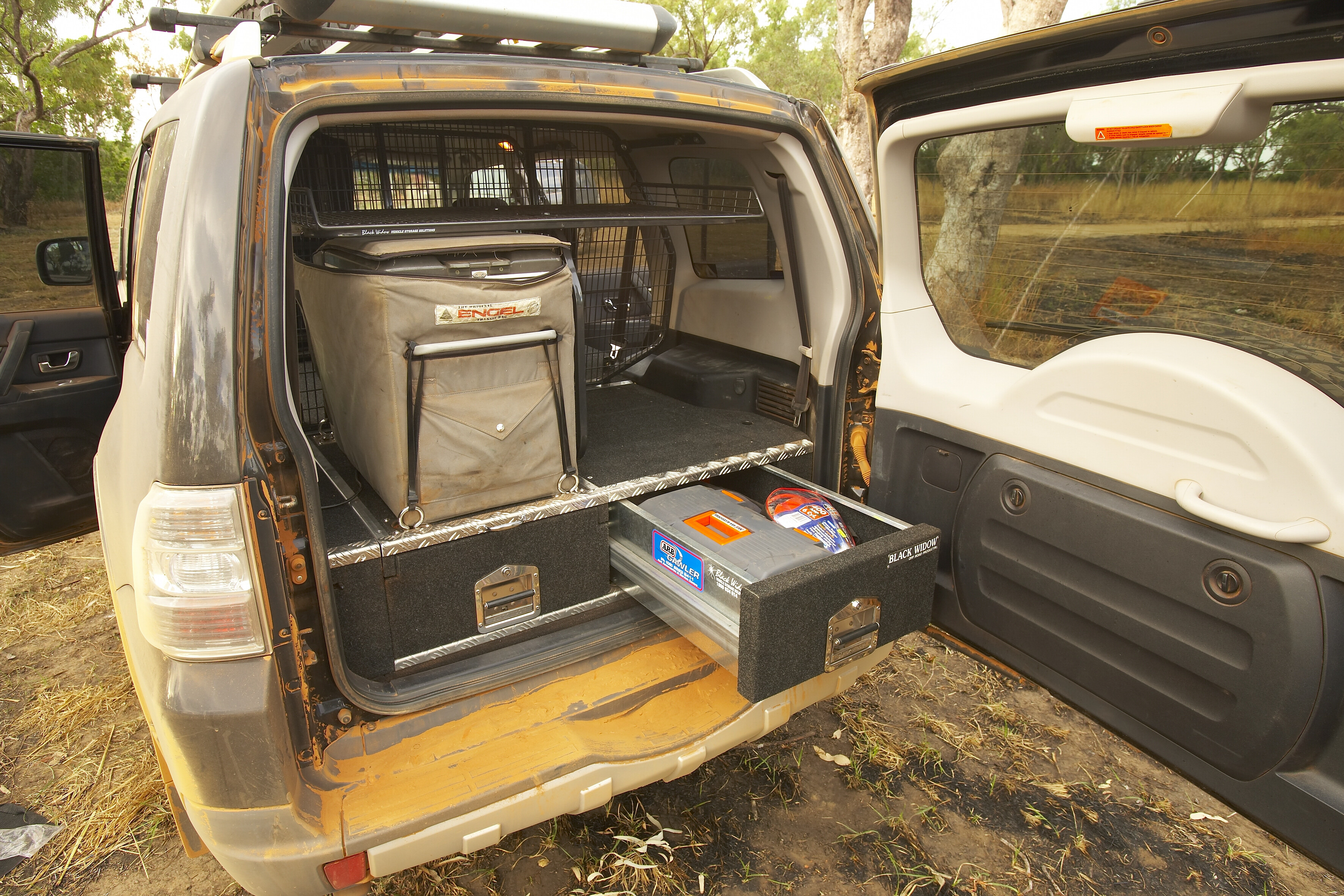
The versatility of a cargo-drawer system is hard to beat as well. Opt for a couple of dividers in each drawer and a permanent fridge-slide and you can set up a true system where all the gear you need at short notice is close to hand – and there’s still plenty of space for packing actual luggage.
Another clever option is to fit taller drawers at the bottom for heavier, bulkier gear, and shorter drawers on top where you can throw in camping gear, light cooking gear, etc. You can literally pack the kitchen sink too, courtesy of set-ups like ARB’s slide-out kitchen that can be incorporated in to its drawer system.
TOP IT UP
One of the most popular load-lugging accessories would have to be the roof rack. Today, there’s a plethora of roof-platform systems on the market, which take the concept of roof-loading even further again.
For any tourer, having a roof-based storage system is bloody handy. Being able to throw light, bulky gear up on top of a vehicle is a great way to keep the interior’s cargo area (whether wagon or ute tray/canopy) clear for storing heavier, bulkier equipment that needs to be packed low down.Roof racks with cross-bars are fine for things like surfboards, kayaks/canoes and fishing rods – and you can fit a basket to them for more storage – but we reckon the roof platform systems that are now available from many aftermarket suppliers are a much better option for those looking to go up top.
With their clever integration of specific holders for things like gas bottles, recovery tracks, jerry cans, spare wheels and more, these platforms offer more versatility when it comes to carrying gear, albeit with a weight impact.
It’s worth pointing out that, along with payload, another figure to pay very close attention to (and one which is included in the overall payload figure) is the maximum load-weight that your vehicle can carry on its roof.
It might be impressive that Brand X’s roof platform system can cope with 150kg of gear (and no, we’d never recommend putting that much weight on top of your rig) but if the vehicle manufacturer’s legal limit for that particular model is 50kg, then you have to work to that vehicle manufacturer’s figure.
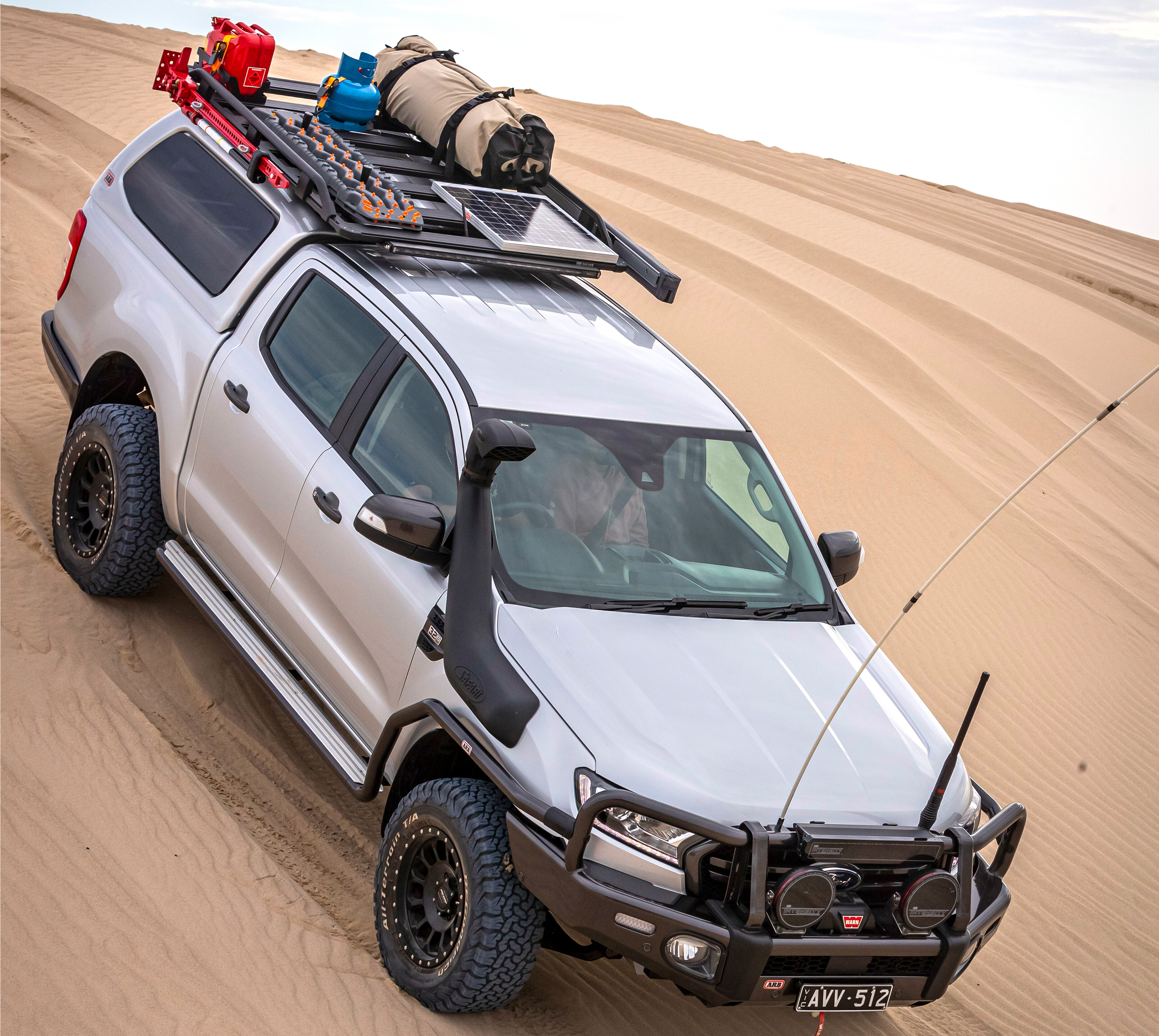
In doing so, you need to subtract the weight of everything fitted on your roof – platform mounts, the platform itself, you get the gist … Only after adding up the weight of the complete platform system, along with any assorted ratchet straps, brackets, etc., will you know how much you have left over for actually carrying gear.The roof platform comes in to its own when fitted to a ute canopy, but said canopy must be one that has additional bracing (usually on the inside, but sometimes in the canopy shell itself) to cope with load figures of around 100kg-plus. Again, we’d recommend against loading that much weight up top, but at least you have more room to move, so to speak, for gear loading. Speaking of canopies …
THE ULTIMATE DOUBLE-UP
It goes without saying that fitment of a canopy to a 4×4 ute is essential for anyone serious about touring – and whoever wants to take advantage of a ute’s far-higher payload capacity. Adding a canopy also effectively doubles your useable cargo space for your ute, and allows for any number of gear-carrying system options to be utilised.
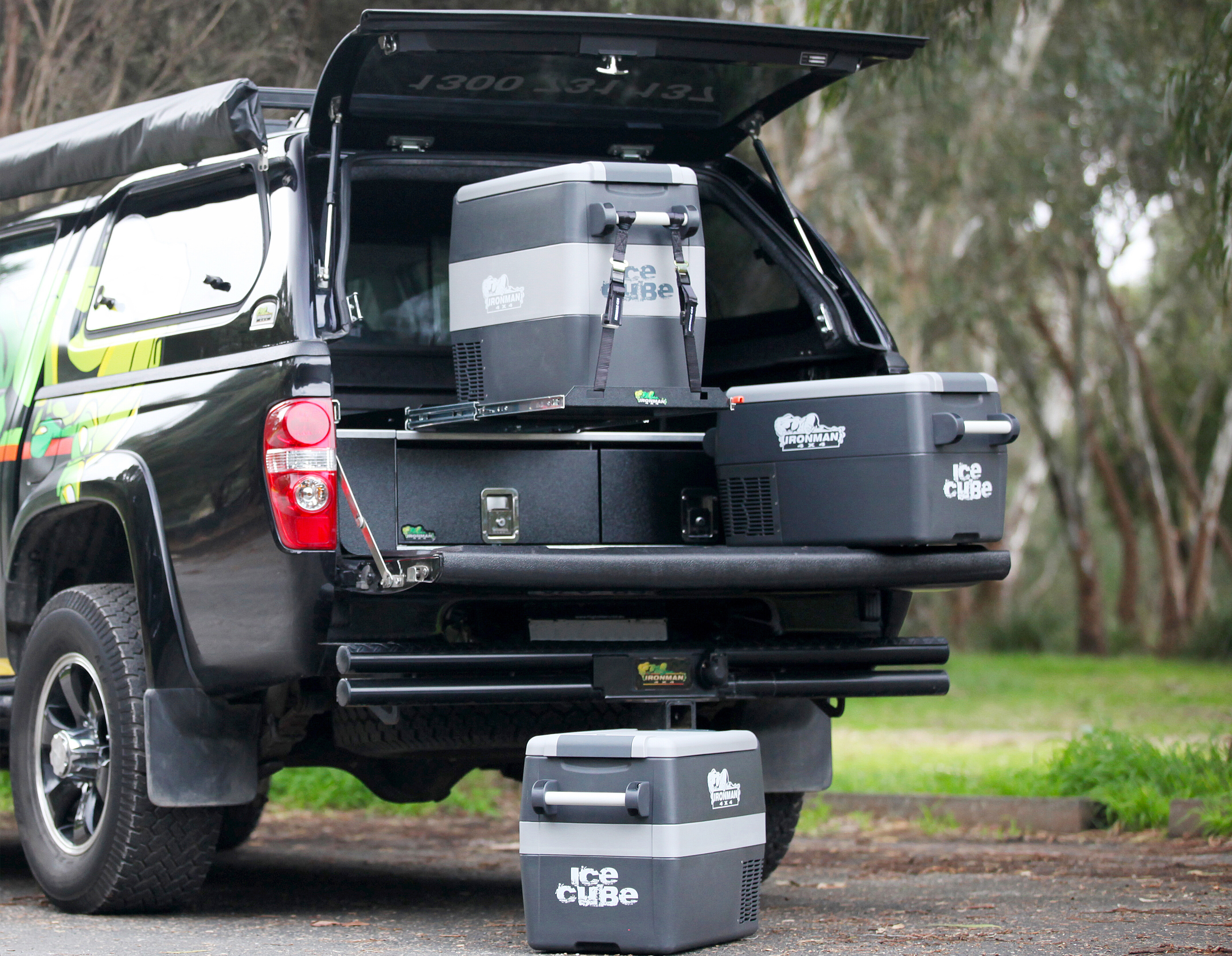
It is important to note that not all canopies are the same; materials used in their construction differ (from ABS plastic to aluminium to steel to good ol’ canvas jobbies, or as part of a complete rear-tray replacement) as do the features. The more common variants include options for sliding windows or flip-up windows inner frame, as well as vents that circulate air in/out to keep dust to a minimum during travel.As much as some folks might overlook it, the type of window you tick on your canopy is pretty important in terms of how you will be organising your gear inside it.Sliding windows are great for those who may be bringing their four-legged friends along (or simply for transporting your dog in/around town), while flip-up windows offer you the chance to pack your gear so that items you need every day/night can be accessed from the side window, rather than having to open up the back of the ute and drag it out that way. It sounds like a small thing until you have to unload half of your other gear just to get to that duffel bag at the back of the ute tray.
Sorting out a ute/canopy combo in terms of gear carrying isn’t totally straightforward, either. It’s worth remembering that a lot of a ute’s tray is back past the rear axle; pack heavier gear there and it’ll adversely affect handling.
The smart packing method for a ute with a canopy (and this applies to those excellent aluminium replacement tub canopies as well, such as the one on 4X4 Australia’s now-gone Ranger) is to ensure all the heavy, bulky stuff is packed between the rear of the cab and before the rear axle for better weight distribution.Once you’ve sorted weight distribution, the ute tray is your literal oyster in terms of how you carry gear. With a huge amount of space to utilise, myriad choices of cargo-drawer systems, the capacity to include even more gear on top of it, and the fact you have more ‘weight to work with’ in a ute’s higher payload, and it’s easy to see why 4×4 dual cabs have become so incredibly popular with off-road tourers.
ON THE CASE
For those without the budget for a cargo-drawer system, a set of interlocking boxes or hard-shell cases, such as those from Pelican, Ironman 4×4, ARB and others, are a great alternative. These robust plastic cases come in a number of sizes and are all over-built to protect the gear inside against dust and water ingress. Plus, you can stack a few on top of each other, and the tie-down points on these are up to the task as well.
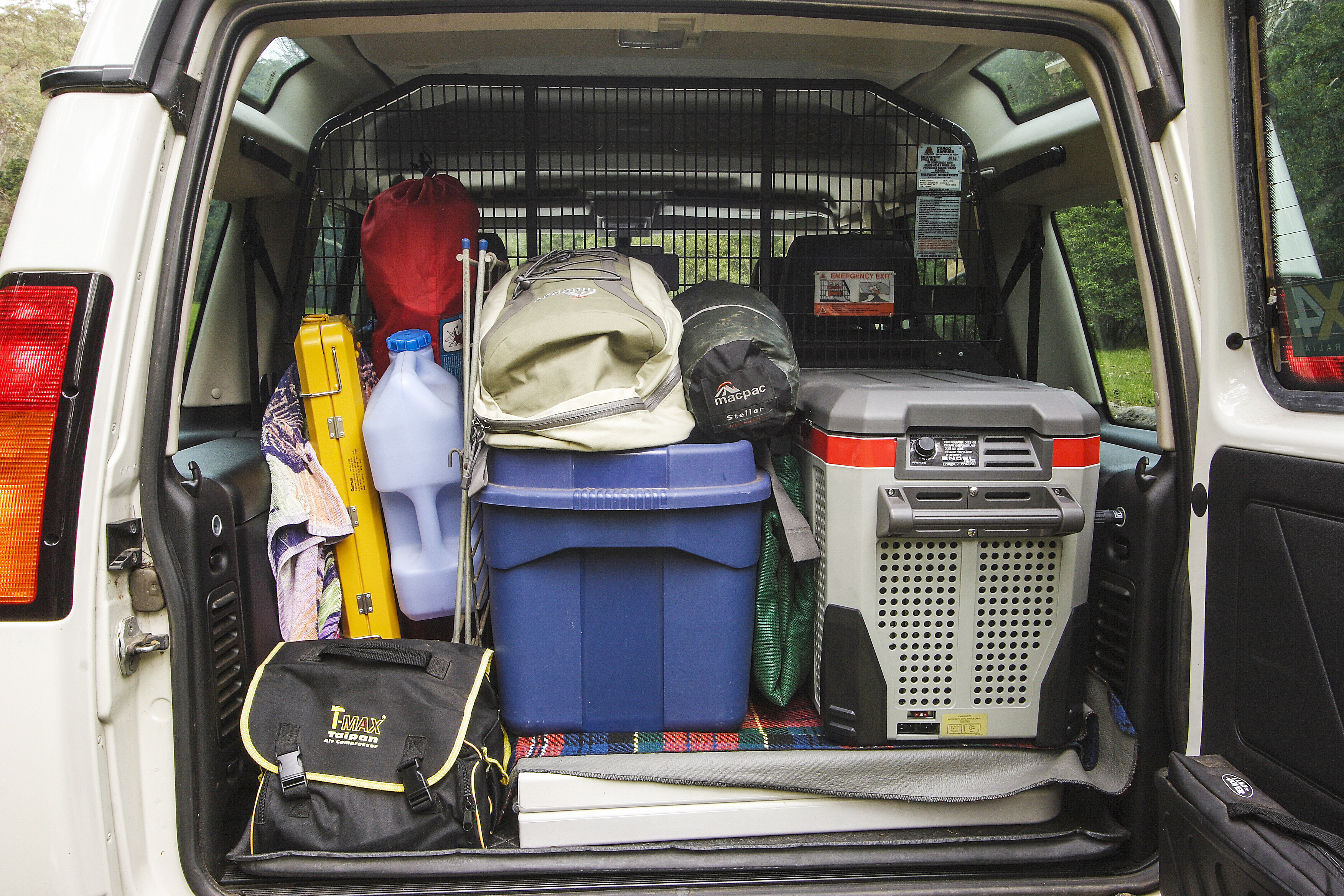
This writer uses a couple in his old Discovery 2 for camping trips and has been on longer expeditions in utes where Pelican cases were the preferred method of transporting gear. Even after days on the tracks that saw all types of weather conditions from dusty and hot, to wet and rain, the gear inside remained dry and dust-free.The other benefit of going with a hard-case set-up is that you can have them pre-packed in your shed and ready to load before the next trip is due. Plus, smaller, lighter ones can be stored up top on the roof too.What may be considered a negative is that these boxes aren’t permanent, i.e. you have to remove them after each trip. Conversely, they are ideal for those who wish to still use the third-row seating in their 4×4 wagon but when going away with just the family, can still make full use of the cargo area in the vehicle.
END GAME
There are so many ways in which to carry your gear when on a 4×4 adventure that there is no one correct method. Each traveller will have circumstances that govern whether they can go down the road of fitting a cargo-drawer system, or whether they have to opt for put in/pull out Pelican cases, or they just continue to tie down their bags and gear boxes in the back with (rated) ratchet straps and make use of a roof platform for their lightweight gear.No (safe) way of packing gear is the wrong way, as long as you stick to the common-sense basics. These include: ensuring only light gear goes up on a roof; all heavy gear is packed as low in your vehicle as possible; everyday items are packed so as they are easy to reach; and you make sure you don’t exceed your vehicle’s payload, or its maximum roof load.
Pretty simple, really, and by adhering to those caveats as you set up your gear-lugging system, you’ll end up with one that perfectly suits your needs. Then, all you have to do is find a map, choose a destination, and get out there and enjoy it!
Ask a local in Darwin which is the best national park in the Top End and you will be informed it’s Litchfield. Which is surprising because the attention is always on Kakadu. But again, the locals will tell you that Litchfield is a simple park without the b/s …Don’t get me wrong, Kakadu was my home for the entirety of the 1980s and I love the place. It’s not to be missed on a Top End holiday.However Litchfield has perennial creeks that feed thundering waterfalls and cataracts that, unlike those in Kakadu, never dry. There is also safe swimming in the plunge pools and at the spring-fed Buley Rockhole.
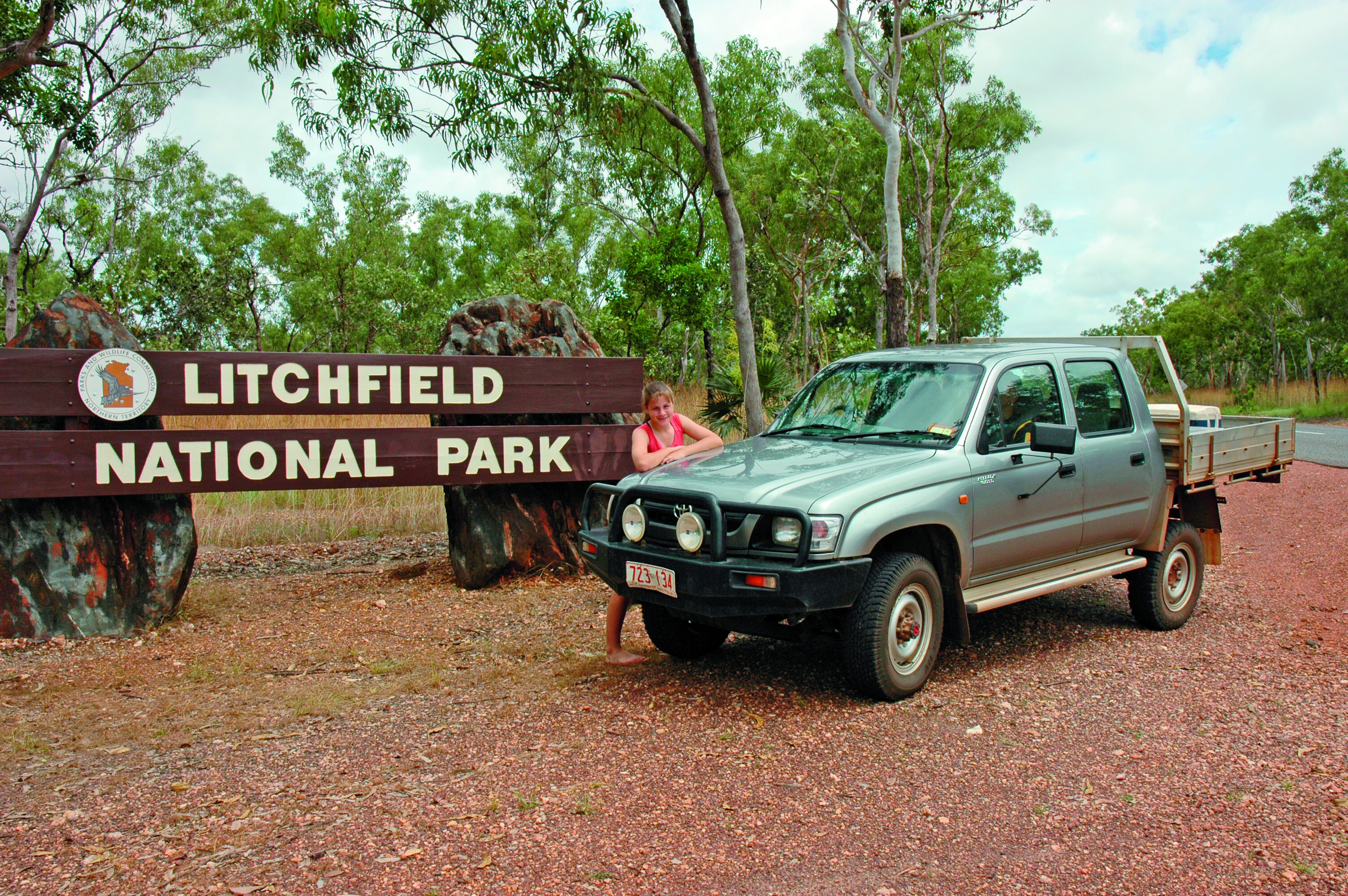
This alone makes Litchfield a favourite day escape for Top Enders during the build-up season, when the soaring temperatures of the coming wet makes having a cooling dip in a crocodile-free swimming hole invaluable. But the 146,000-hectare park is more than a swimming park for a weekend dip; it’s one that has scenic flora and fauna values that are so much a part of the Top End landscape.
SWIMMING HOLES
Swimming is popular at Tjaynera Falls (Sandy Creek), below Florence Falls and in Buley Rockhole. Wangi Falls is very popular, but it can be suspect, especially during and after the wet season when saltwater crocodiles make their way upstream into the plunge pool from the nearby Reynolds River. It’s your call …
Powerful currents are also present when the falls are in flood. Some years ago, following a huge ‘knock-em-down’ storm, I was lucky enough to photograph the Wangi Falls in full flood. The falls were roaring and powerful waves, along with spray, were washing the pandanus that line the creek. A bikini-clad English lady turned up to go for a swim. I warned her that the current was too strong and that a crocodile may be in the pool as they often are after a flood. She thanked me and passed it on to several others in her tour group.After enjoying a coffee at the kiosk my wife and I headed back to the car park and were ambushed by a park ranger and a tour driver at our LandCruiser. I was soundly abused for giving the girl some life-saving advice to the point where I told both to shut their mouths or face the consequences, especially when the tour driver told us to go back to Queensland …
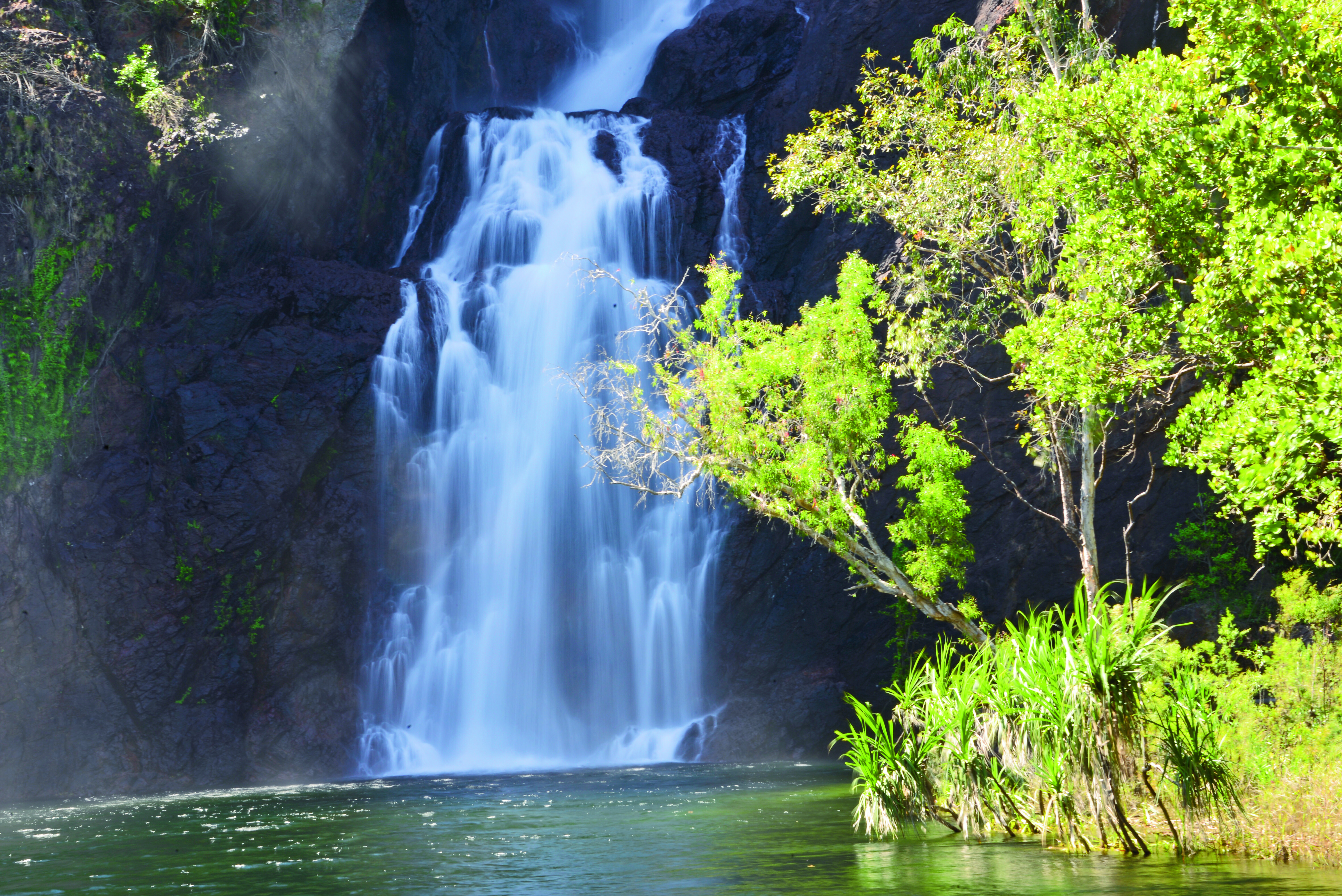
Later, I picked up the Northern Territory News at the newsagency and noted the headline: “12-foot crocodile captured in the Wangi Falls plunge pool.” I dropped it on the counter of the park office along with my business card – and told them to Google my credentials. In hindsight, the park people of the Top End have been amazing and very helpful to me over the years, but I suppose there is always a tosser in the pack.The lesson is never swim in one of the rivers and creeks below the escarpment plateau during and after flooding – and take note of the local bushmen. You will live longer in the tropics …
GETTING THERE
Litchfield is only two hours’ drive from Darwin and, with a mostly sealed ring-road from Batchelor to the Cox Peninsula Road, getting there is simple, whether for a day excursion or an extended camping trip by lodging at one of the park’s campgrounds or those run by private enterprises at both entrances. Meals, cabins and motel accommodation are available on the Litchfield Park Road, east from Batchelor, before the park’s eastern entrance.
Roads are open all year, as is most of the park, but during the wet season the Reynolds and Finniss River often flood the road crossings. Again, common sense rules when the environment is warring with itself. Best stay home when flooding is on the books. The Finniss River, while bridged, is crossed at both the eastern and northern park entrances.
4WD TRACKS
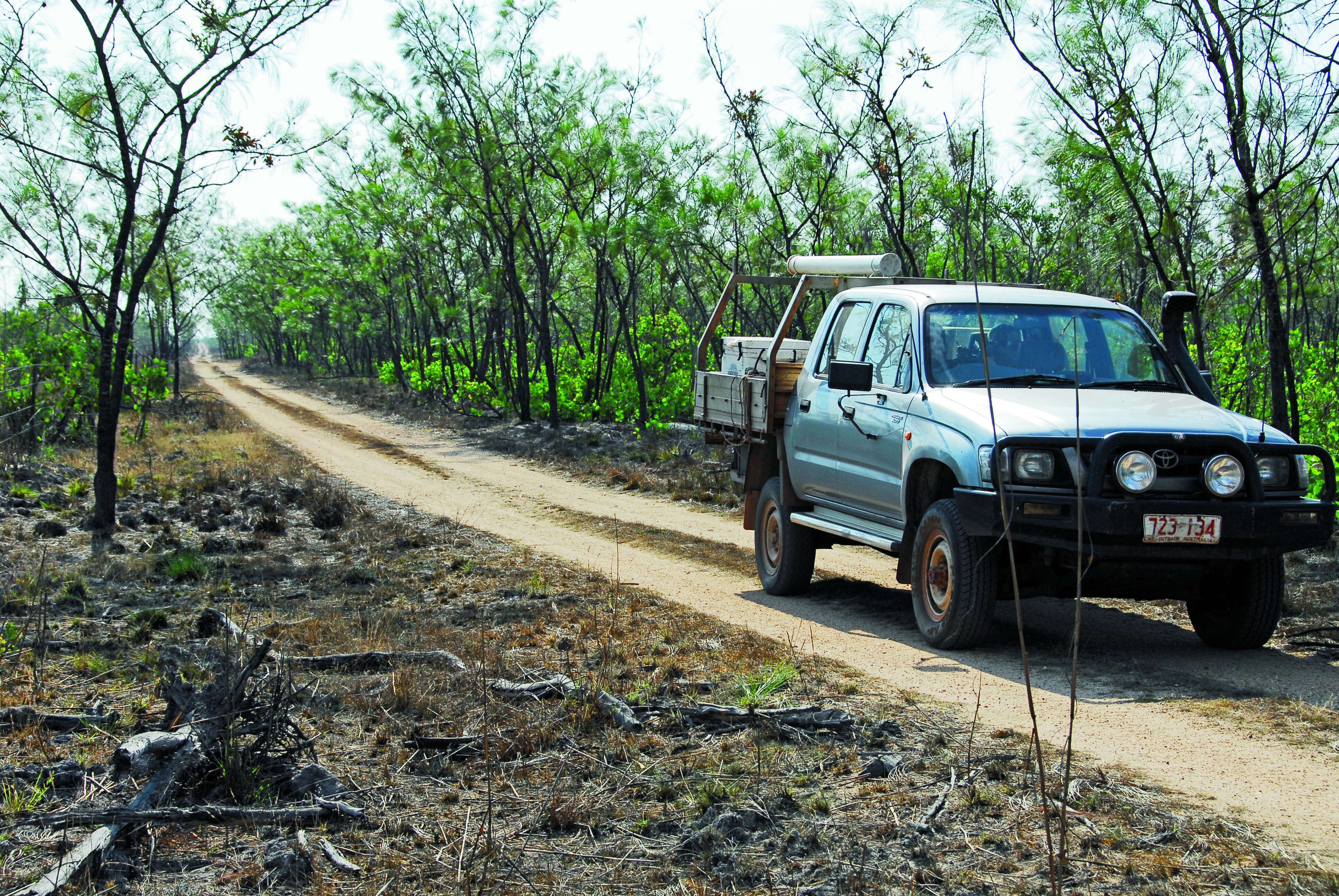
There are several 4WD-only tracks in the park and they are closed during the big wet. These challenging 4WD-only tracks terminate on the Daly River road to the south. The first track leads to the Lost City, Tjaynera Falls and the Blyth Homestead ruins. There is a natural crossing on the Reynolds River on the western track, but be careful there when wading as crocodiles live here. It’s a popular 4WD excursion route to the Daly River.
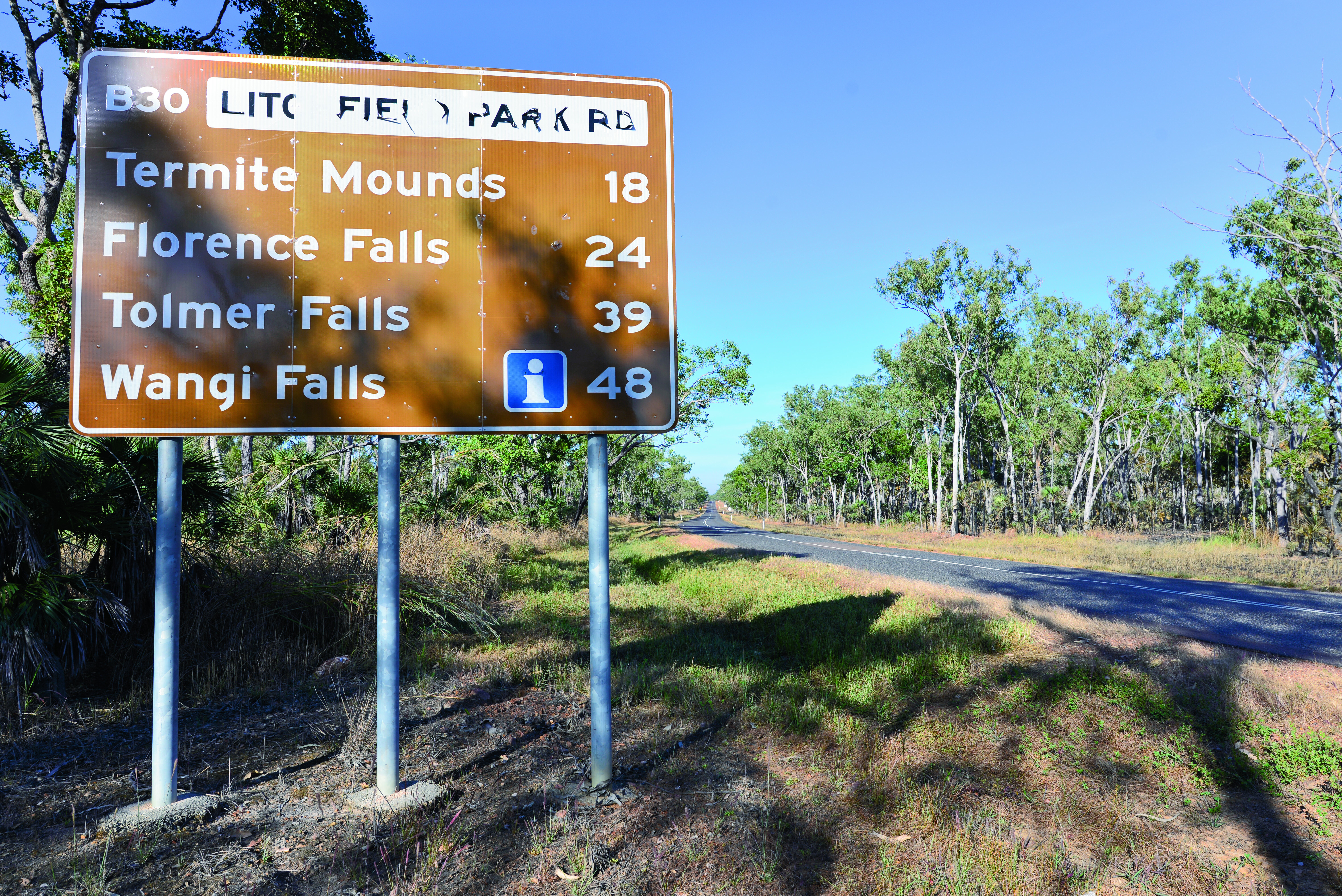
The main park ring-road route is fully sealed and provides access to several waterfalls and swim pools. Florence Falls, Buley Rock Hole, Tolmer Falls and, lastly, Wangi Falls are all located close to the road. There are short walks from the car parks to the falls.Another nice 4WD track is not far past the Finniss River bridge on the Litchfield Park Road. It cuts across monsoon woodlands, over steep hills and terminates on the north bank of the Florence Creek Falls. This 20km track and others to the Daly River are popular with 4WD explorers wanting to get away from the maddening weekend crowds.
WALKS
There are several walks in the park, the most used being the easy boardwalks that terminate at the waterfalls. If planning an extended walk across the plateau or the surrounding monsoon woodlands, you must apply for a permit which is available from the Territory and Wildlife Parks office in Batchelor.
They will want to know your planned route and other details. Carry a Personal Location Beacon (PLR) or sat phone when trekking across the Tabletop Plateau and the monsoon woodlands of the low country.Hiking and walking are very popular due to the scenic terrain and wilderness experience. While there is no marked trail system, rangers will assist with suggestions and more. Existing walks from the car parks do not pose any problems, being no longer than a brief stroll with two hours being the longest. It all depends how much time one spends looking at things along the route.The Rainforest Track at Florence Falls is 2km. It commences at the plunge pool and follows Florence Creek upstream, where lush and verdant gallery rainforest is encountered before it swings back to the pool. Another extends from the campground. Some fitness is required.The Buley Rockhole to Florence Falls track is 1.5km and an easy walk for the fit and young at heart.The Tolmer Falls Track is 1.6km long. It has recently been upgraded and skirts the top of the gorge above the falls, while grand views fold to far western horizons from the new lookout across the woodlands. No access is allowed in the deep rainforest gorge below the falls or the caves that are home to bats.
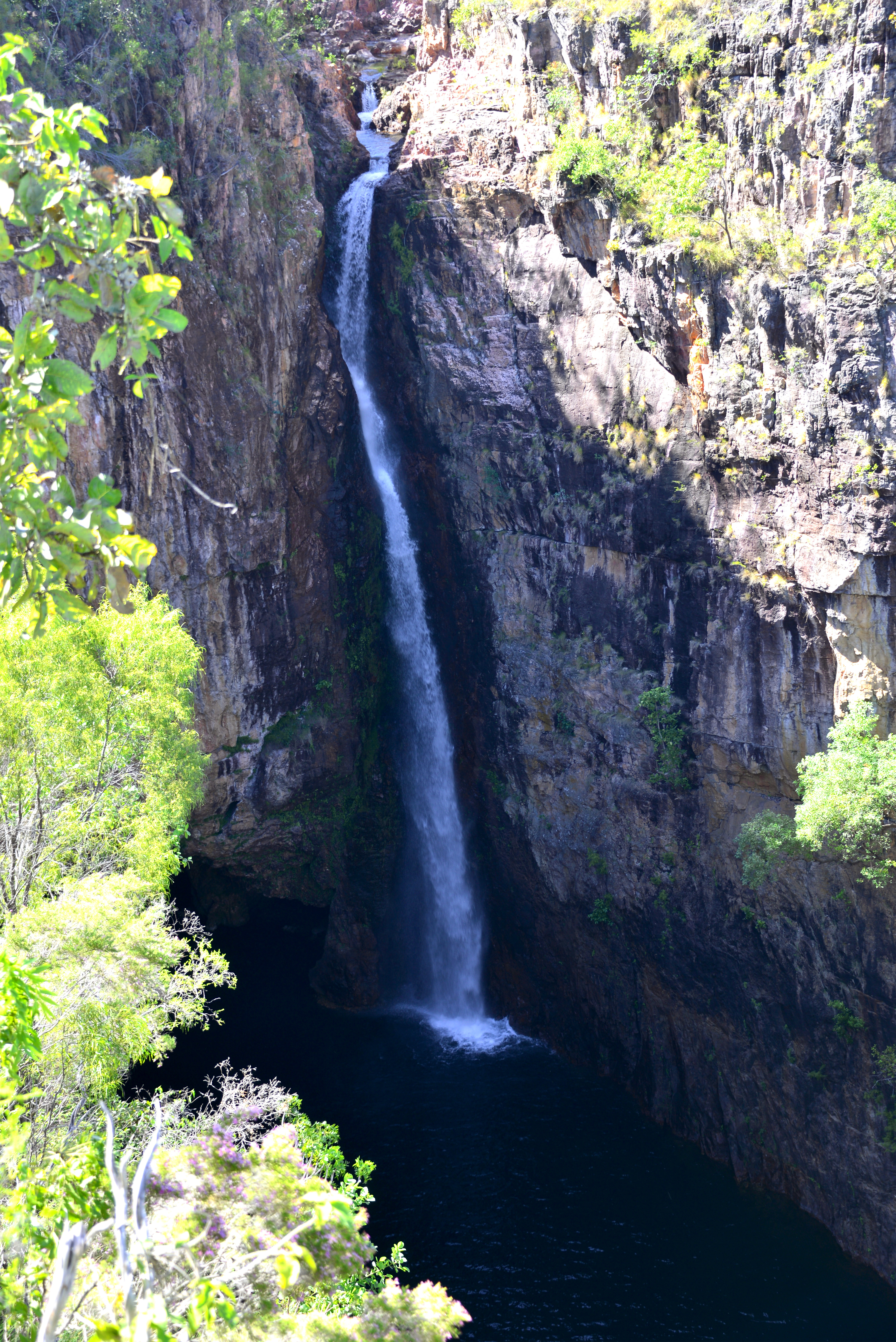
It’s arguably the most spectacular ’fall in the park. While a thundering 80m cataract in the wet, it drops down to a serene and plume-like waterfall at the end of the dry. The continual mist has created a true rainforest below the falls.The Lookout Walk Track at Wangi Falls is 1.5km and is only suitable for the fit, as it has steep ascents and descends to the top of the 50m high sandstone escarpment. The falls are the most popular with visitors who come here to swim and relax in the big plunge pool that is on the bottom of the twin cascades.
Snorkelling is also popular, but nature can be deceptive, and people have drowned in the strong currents under the falls – and, of course, there is the odd crocodile …
CAMPING
There is organised camping only in the park, with showers and toilets available. No bush camping is allowed, nor are pets. The most popular is the Florence Falls campground. It’s downstream from the falls where a short, steep walk takes you to the plunge pool below the cascading torrent.
Buley Rockpool is nearby. The campground is deemed unsuitable for caravans due to a steep ascent and limited space, but it’s okay for camper trailers.
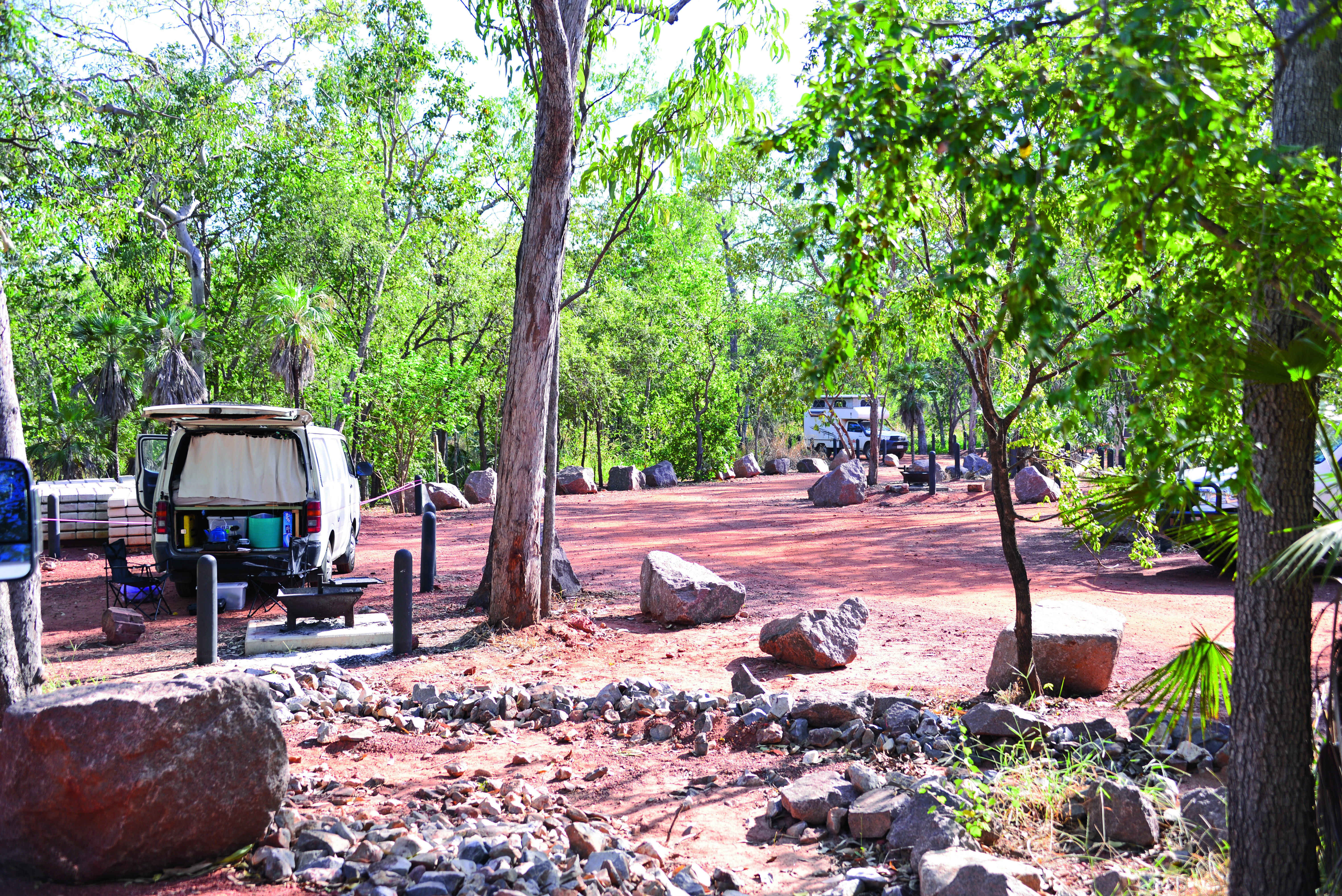
The next campground is at Wangi Falls, with a private campground just outside the park up the road a little. Caravans are suitable for Wangi campground. It has a kiosk with meals, showers and toilets. No powered sites are available. Camping fees apply and must be deposited in the honesty box provided. Rangers check for permits.There is a bush campground at Tjaynera Falls – 4WD-only track. The park campgrounds are managed by ‘Campground Services’, who will demand unpaid fees if you don’t have a ticket.
ROAD ACCESS
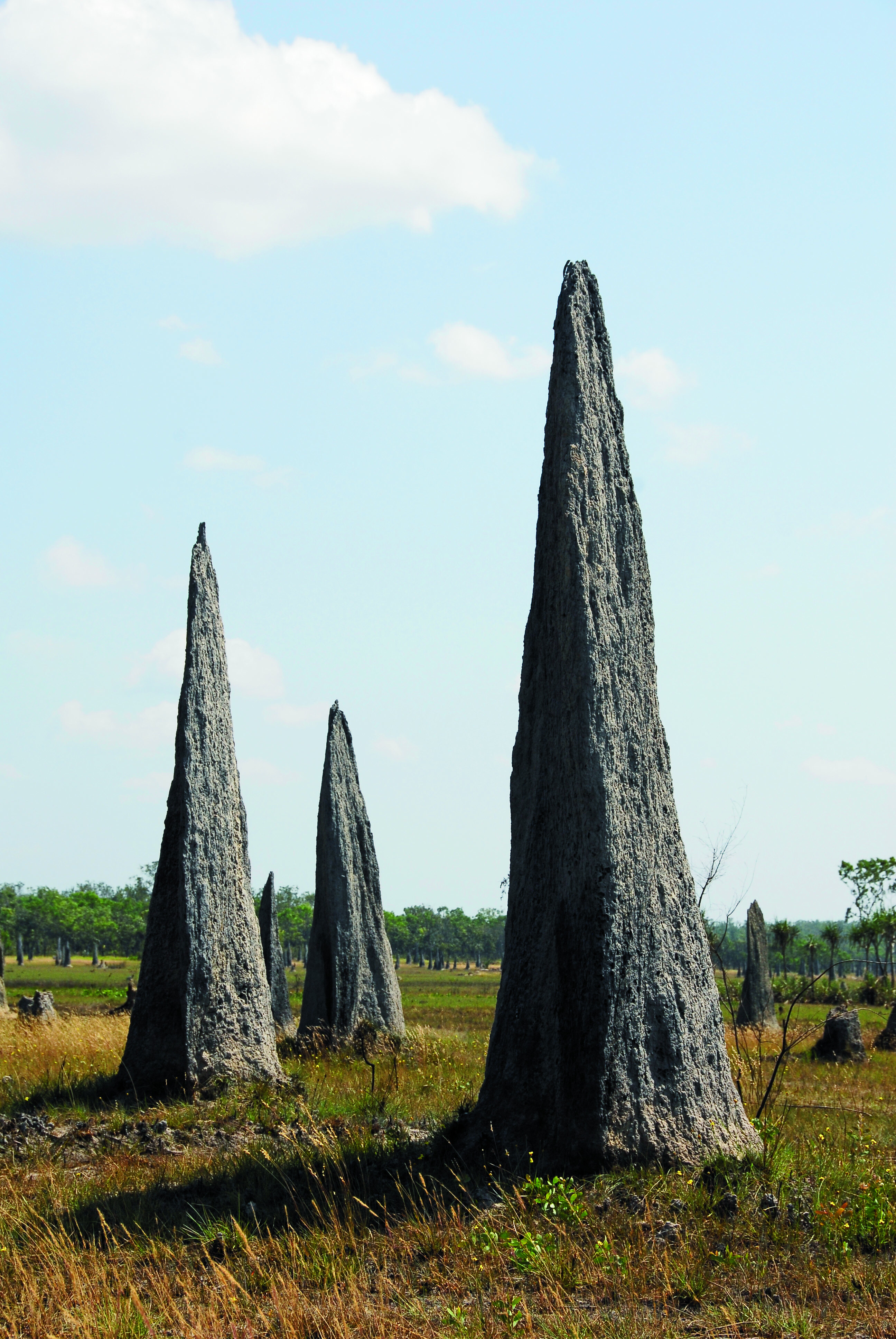
If coming from Batchelor, don’t miss the imposing termite mounds. Both the magnetic and the 4m-high Nasutitermes triodiae termite mounds are represented on the black soil plain. Magnetic mounds, constructed by Amitermes meridionalis termites, take full advantage of the sun and warmth, akin to having air-conditioning in the home. These mounds are orientated 10 degrees east to true north.
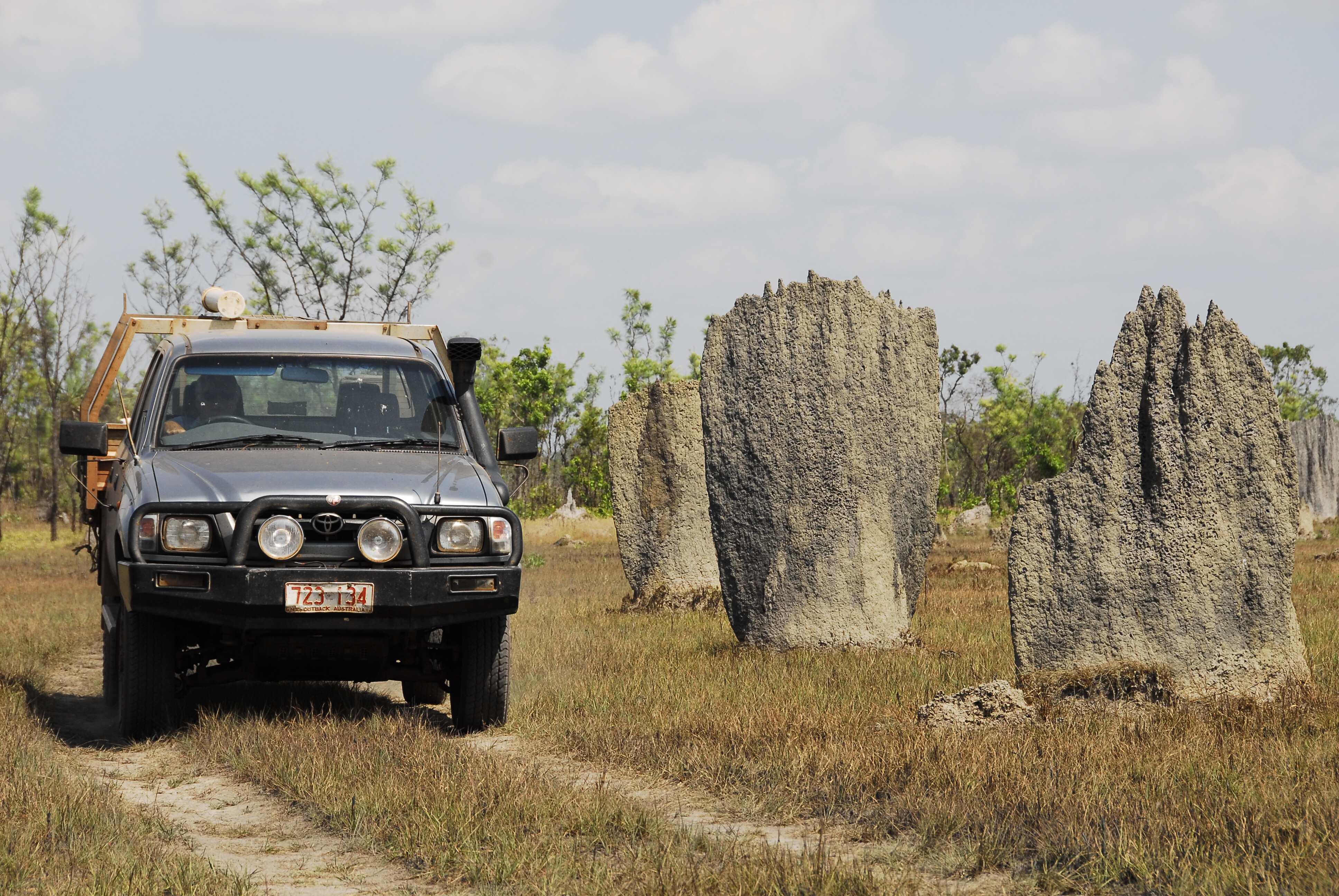
On the way out to the Cox Peninsula Road, keep an eye out for extensive huge magnetic termite cities, soon after crossing the Finniss River bridge.Another attraction is the Tabletop Swamp, where a shallow depression has created ideal conditions for the swamp. It is generally clad with reeds and fringed by paperbark trees. Swamps like this and the natural ‘sponge’ effect of the sandstone tableland are responsible for the slow release of water that feeds the spring-fed creeks and enables the waterfalls to flow permanently, even during the most severe dry season.

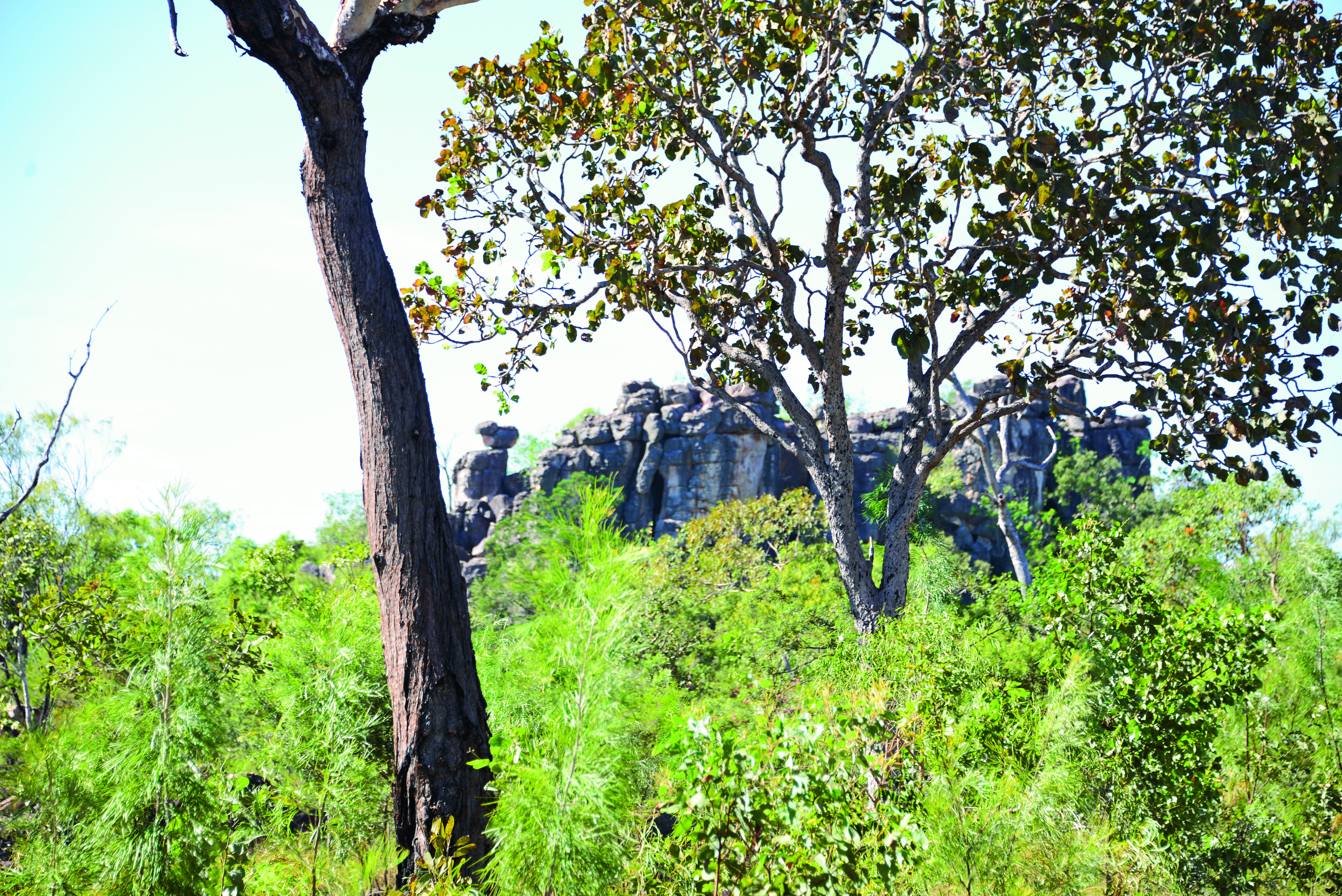
The swamp attracts a lot of wildlife, so take the easy walk about it and be surprised by its avian inhabitants in variety and numbers.About 4km past the Florence Falls marker is the Lost City turn-off. It’s 4WD-only country and tracks for 18km through monsoon forest. The track extends beyond the sandstone pillars of the Lost City to the Reynold River Track near the abandoned Blyth Homestead ruins.The Lost City has tall, weathered free-standing sandstone pillars that reach to the top of the gum trees. Nature has created works of art here and taking a gander and a walk about the ‘city’ is a must.Farther on is the Blyth Homestead, a living testimony to how tough and hard things were for the pioneers that dared to challenge the bush and the often-hostile natives. The homestead was built in 1929 and has endured.
You have a choice here of turning north to Wangi Falls or south to the Daly River road, via Tjaynera Falls, which is well-worth the drive. Plan to camp in the bush along the creek.Once past Wangi Falls, several attractions on the last leg to the Cox Peninsula Road are located outside the park. There is a kiosk and campground near the boundary, and beyond it is the private rainforest reserve of the Petherick family. Years ago, I met the now deceased founder of the reserve. Old man Petherick made a living from shooting crocodiles and said he once shot a 15-footer in the Wangi Falls plunge pool … now you know why I don’t swim in it.Bamboo Creek Mine turn-off tracks for about 2km before the old mine site is reached. Copper, tantalite and tin were discovered in the Litchfield region in the 1870s. Mining was active at Mount Tolmer and Bamboo Creek, but mining activity ceased in the 1950s.
Farther on is the Finniss River, turn right after crossing the bridge and be amazed by the beautiful waterhole that appears. Camp here, launch the tinnie and catch a barramundi for tea.The next attractions are the huge cities of magnetic termite mounds. They are located on private land, but no one stops people from viewing the mounds.
HISTORY AND GEOLOGY
Litchfield was named after Frederick Henry Litchfield, who was the first white man to visit the region in 1865. An able bushman and explorer, Litchfield died in 1873 from gangrene caused by a festering spear wound.During the dry season, traditional cultural burning regimes are practised by park management. Bush tracks may be closed, but generally burns are low key due to the lack of reduced fuel loads that is created by annual burning.It’s odd that for all its size Litchfield is dominated by only two geological formations. The sandstone predominant of the Tabletop Range, a plateau that rises to 50m. It is home to the spring-fed creeks that feed the waterfalls. Elsewhere in the low country, shaded by the plateau, are typical Top End monsoon woodlands.An average of 1450mm of rain falls in the park between November and May. Most of it falls during a two-month period when the monsoon peaks.The tableland lacks a drainage system and its shallow depression – like the Tabletop Swamp and others – along with the natural ability of sandstone sponge effect and a finely balanced aquifer under them, makes the park a wonderful waterfall world.
FAUNA AND FLORA
Fifteen frog species, 58 reptile species, 44 mammal species and 174 species of birds makes the park an interesting spot for wildlife and bird watchers. Bats are found in many of the caves that are under the lee of the escarpments. There is a cave at Tolmer Falls that houses almost 30,000 orange horseshoe bats, considerable because its estimated that only 34,000 occur world-wide.

Aboriginal rock art is present in some caves and rock shelters, though no Aborigines live in the park. Contact the Park ranger for details on rock art.The bats eat insects, which reminds me of the hungry hordes of park mosquitoes. Take Bushman Insect Repellent gel, wear loose-fitting and lightweight clothing, sturdy bush boots, and a wide-brimmed hat when walking in the park, and enjoy all that Litchfield has on offer. You may just agree with the Darwinian that it’s the best park in the Top End …
TOP 5 PLACES TO VISIT
1. Wangi Falls, Florence Falls, Buley Rockhole2. Magnetic termite mounds3. Lost City4. Tolmer Falls5. Blyth Homestead
Snapshot
- Ford Ranger best-selling 4×4 in 2021
- Toyota HiLux top-selling car overall
- Toyota sells more 4x4s than anyone else
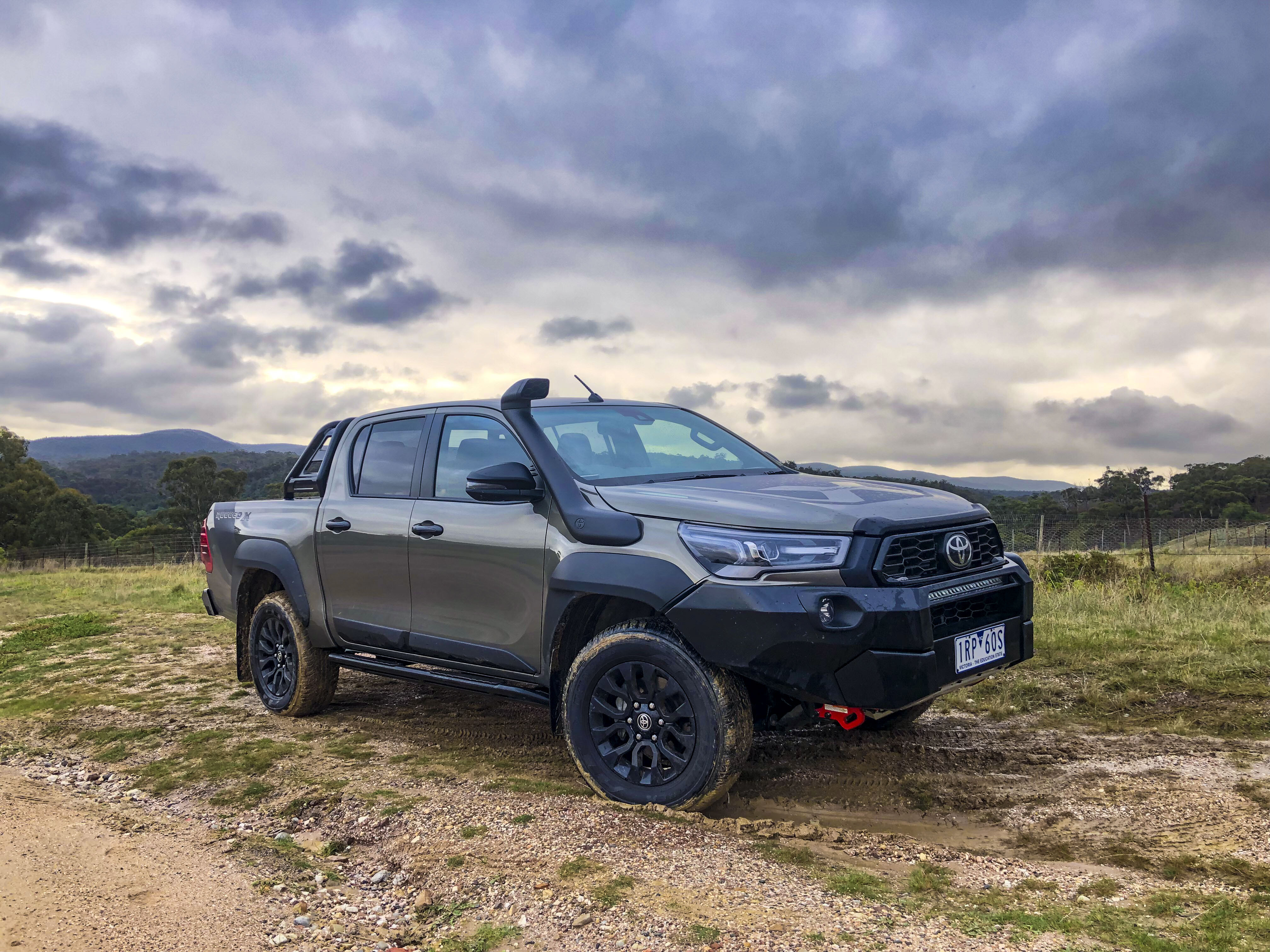
As expected, the Ford Ranger was again the top-selling 4×4 in Australia for 2021. It outsold the Toyota HiLux in the month of December by to 3747 units to 2600 to take the yearly tally up to 45,986 Ranger 4x4s to 39,587 HiLuxs.
While Toyota might feel the pain of not having the top-selling 4×4 in the country, the HiLux was the top-selling car in Australia overall (when you combine 4×4 and 4×2 sales) for the sixth year running. Out of interest, Toyota sells more than three times as many 4×2 HiLuxs as Ford sells 4×2 Rangers.
2021 was the 19th year running that Toyota has been Australia’s top-selling vehicle manufacturer and with more 4×4 models in its showrooms than any other manufacturer, it sells more 4×4 vehicles here than anyone else as well.
| December 2021 | ||
|---|---|---|
| 1 | Ford Ranger | 3747 |
| 2 | Toyota Hilux | 2600 |
| 3 | Toyota Prado | 2204 |
| 4 | Isuzu D-Max | 1475 |
| 5 | Mitsubishi Triton | 1431 |
| 6 | Nissan Navara | 1410 |
| 7 | Mazda BT-50 | 996 |
| 8 | Toyota LC79 | 931 |
| 9 | Toyota LandCruiser | 821 |
| 10 | Isuzu MU-X | 784 |
Despite delays for the LandCruiser 300 Series and shortages of other products, 2021 was the biggest year ever for the LandCruiser brand (including LC200, LC300, LC70 and Prado models) with almost 47,932 including individual records for LandCruiser Prado (21,299) and the LandCruiser 70 Series (13,981) – and strong sales for the LandCruiser wagon including the all-new 300 Series.
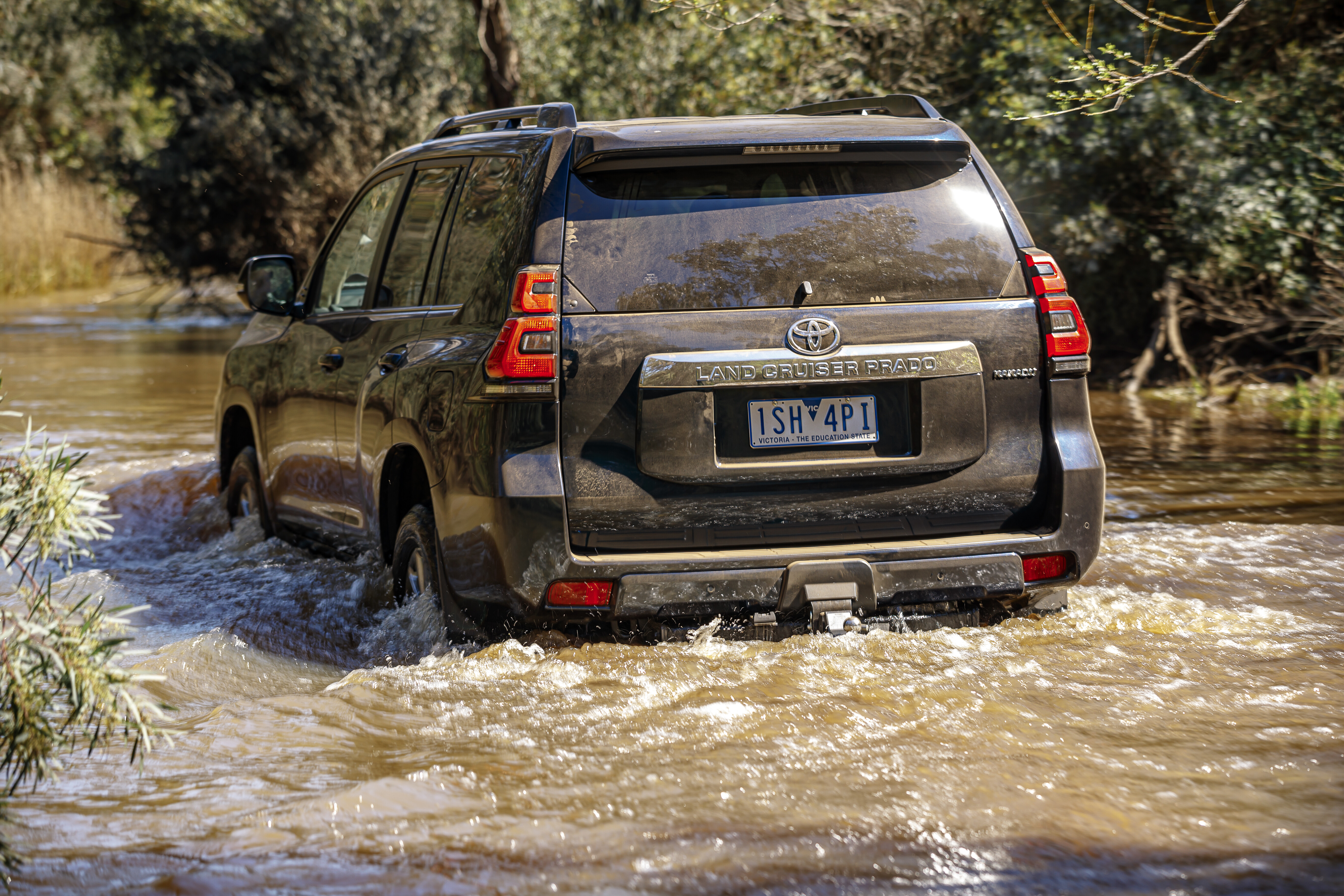
Also of note for Toyota in December, the Prado is one of only four serious 4×4 vehicles in the FCAI’s Large SUV segment which is largely made up of light-duty SUVs and people-movers. The other being the Toyota Fortuner, Isuzu MU-X and the Ford Everest. Yet the aging Prado was the only vehicle in the category to sell in the triple figures and with 2204 all-4×4 Prados it smashed the others whose sales are bolstered by both 4×4 and 4×2 variants.
You can’t argue with Ford’s determination to keep the Ranger brand strong with a plethora of new and limited-run variants throughout 2021 in what will be the current model’s last full year on sale. The new 2022 Ranger is due mid year and promises to again be a market leader.
In a year of stock shortages and virus-addled sales, there were a number of movers in the overall tally. None more so than the Mitsubishi Triton which was decimated by supply issues in the second part of 2021. The ute that was regularly a third place holder behind the HiLux and Ranger has now been leaped by not only the Prado but also the Isuzu D-Max.
| Yearly total 2021 | ||
|---|---|---|
| 1 | Ford Ranger | 45,986 |
| 2 | Toyota Hilux | 39,587 |
| 3 | Toyota Prado | 21,299 |
| 4 | Isuzu D-Max | 18,639 |
| 5 | Mitsubishi Triton | 16,333 |
| 6 | Toyota LandCruiser | 14,365 |
| 7 | Nissan Navara | 13,044 |
| 8 | Mazda BT-50 | 12,786 |
| 9 | Toyota LC79 | 12,277 |
| 10 | Isuzu MU-X | 10,618 |
Isuzu Ute continues its steady market ride despite being a brand with only two models – the D-Max ute and the MU-X wagon, with both those vehicles making their way in to the Top 10 overall for 2021. This was no doubt helped by a new MU-X hitting the market mid-year and improving supplies of the D-Max.
An indication of how much Australians are flocking to 4×4 utes is that, despite the stock shortages, the Ranger, HiLux, D-Max, Triton, Navara, BT-50 and even the LC79, all sold more units during 2021 than they did in 2020.
Will any of the 4×4 ute brands have anything to challenge the Ranger in 2022? With its new V6-powered Ranger due to arrive in showrooms in June we predict not.
Bring on 2022 by grabbing a copy of 4X4 Australia’s action-packed January edition, headlined of course by a traditional heavyweight bout between Nissan’s Patrol and Toyota’s LandCruiser 300 Series.
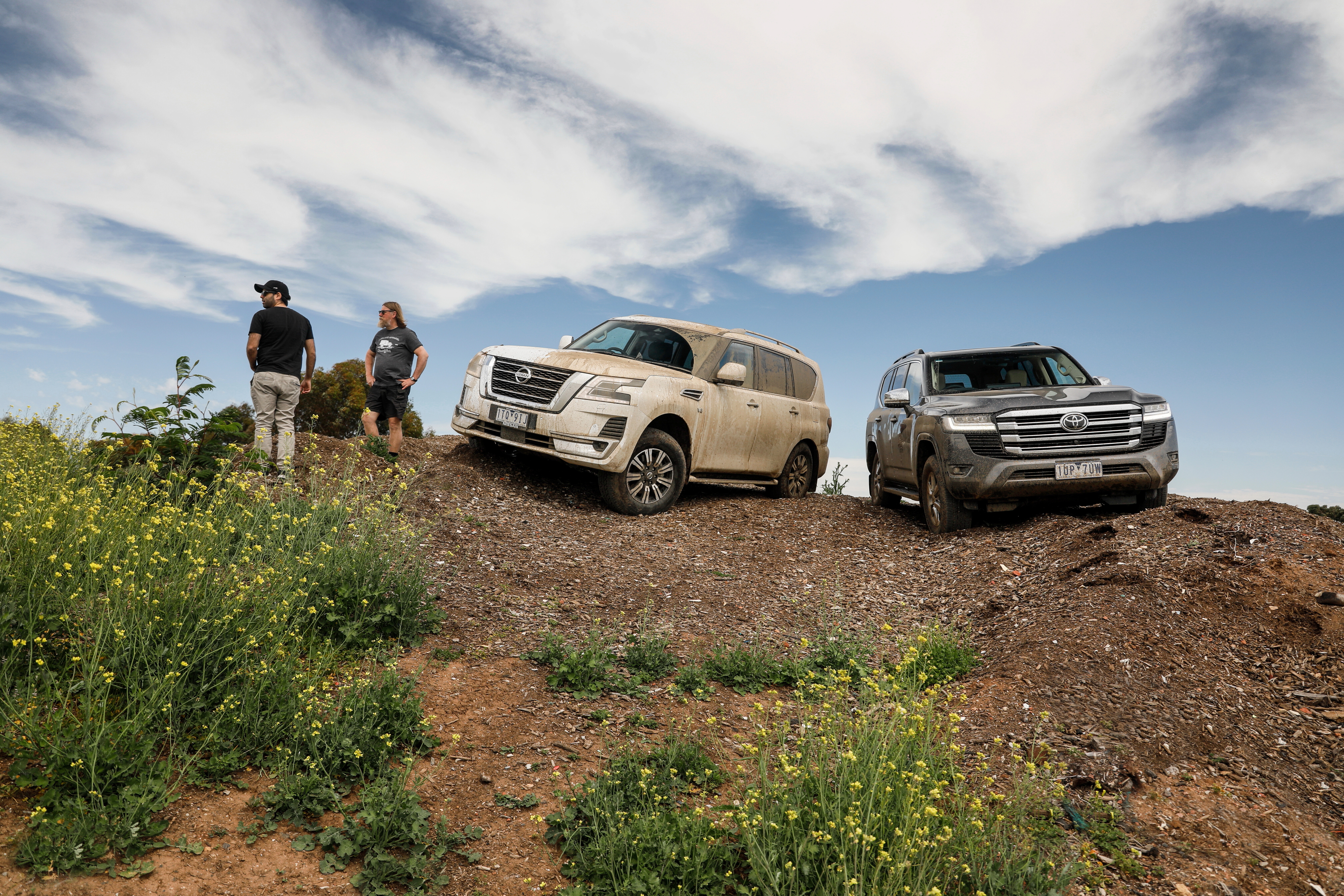
The Y62 has been around in its current guise for the best part of a decade, but the old-timer is considerably cheaper than the all-new 300 Series – especially the as-tested Sahara model. Is the 300 worth the extra coin? Read Matt’s comprehensive comparison to find out.
It’s been a busy period for our resident Isuzu D-MAX. This month, we install a Companion 60-litre fridge/freezer and MSA 4×4 towing mirrors. Plus, we finally point the D-MAX towards the outback, where we put it to the test on difficult off-road terrain.
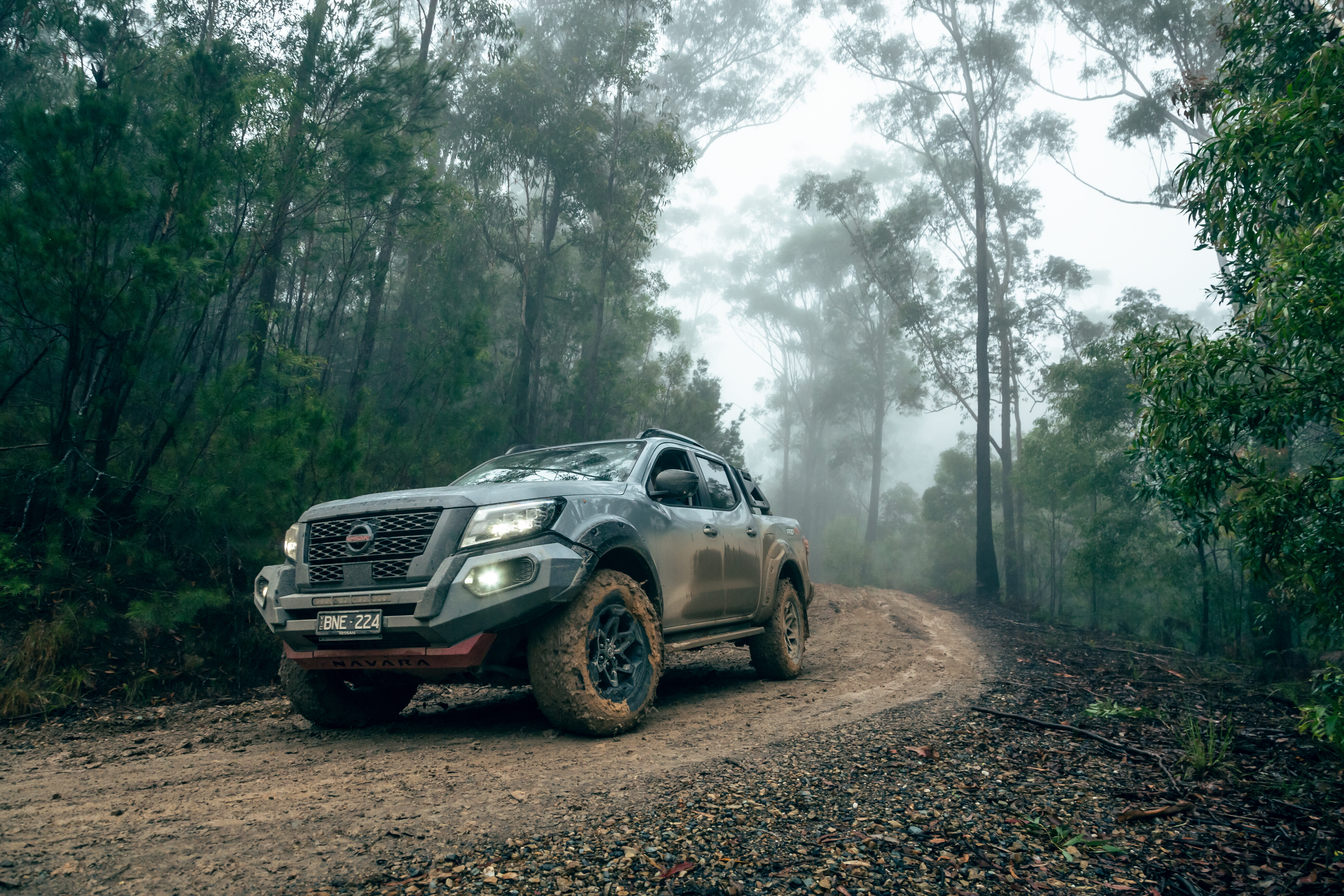
On the new metal front, we steer the Premcar-fettled Navara PRO-4X Warrior – is it the best Navara yet? We think so. Plus, we sink our teeth into the budget-priced, rudimentary LDV T60 Max ute.
A stretched VW Amarok with more than 200kW at the wheels is our hero custom 4×4 of the month, with the hot tourer dripping with quality aftermarket equipment. We also run a microscope over an M43 Power Wagon from the USA, and BAW Automotive’s 79 Series shop truck.
With the used vehicle market hotter than ever, Fraser Stronach takes an in-depth look at the popular 4×4 utes from the past decade, to ensure you don’t end up with a lemon.
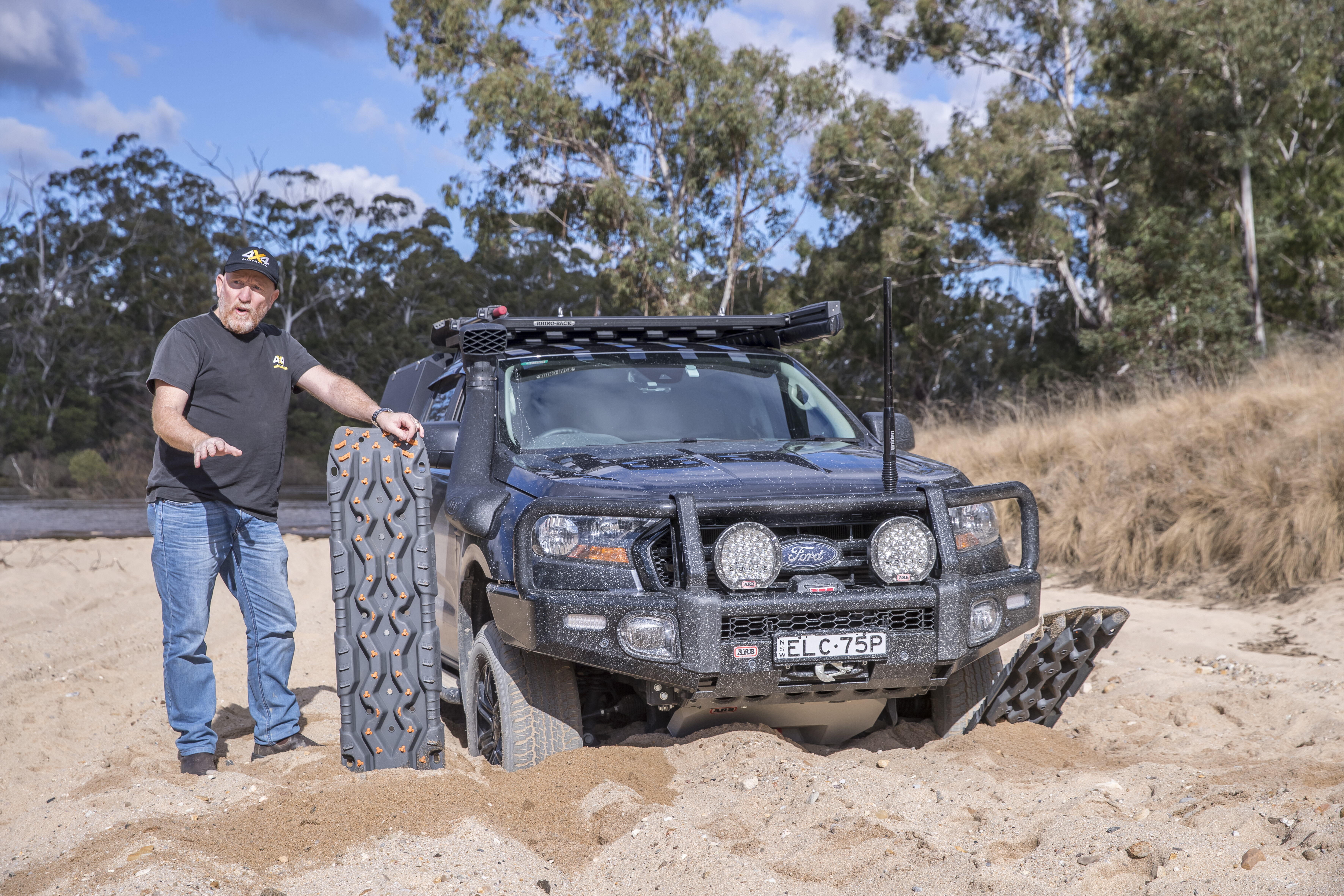
And Deano shows us how to properly use traction boards to get unstuck, in this month’s ‘How To’ instalment. There’s a lot more to it than just throwing them down…
Our main man in the USA, Chris, Collard, has compiled a comprehensive adventure guide for travelling to Baja, California, and across the border to Mexico. It’s an iconic off-road destination and it should be on every 4x4er’s bucket list.
WHAT ELSE IS THERE?
Coast to Coast, SA to WA National Parks of the Wet Tropics, QLD 2021 SEMA Show wrap Guide to off-road jacks Products, news, opinions and more!