
As the sun peeked over the La Sal Mountains, washing Southern Utah with warm hues of ochre and crimson, we made our way down Main Street to the Moab Diner for breakfast.
It was opening day of the Easter Jeep Safari (EJS), and a steady stream of traffic flooded in to town for one of North America’s most popular off-road venues.
Although today’s event draws tens of thousands of participants from all corners of the planet, we need to look back half a century, and further, to understand the significance of origins.
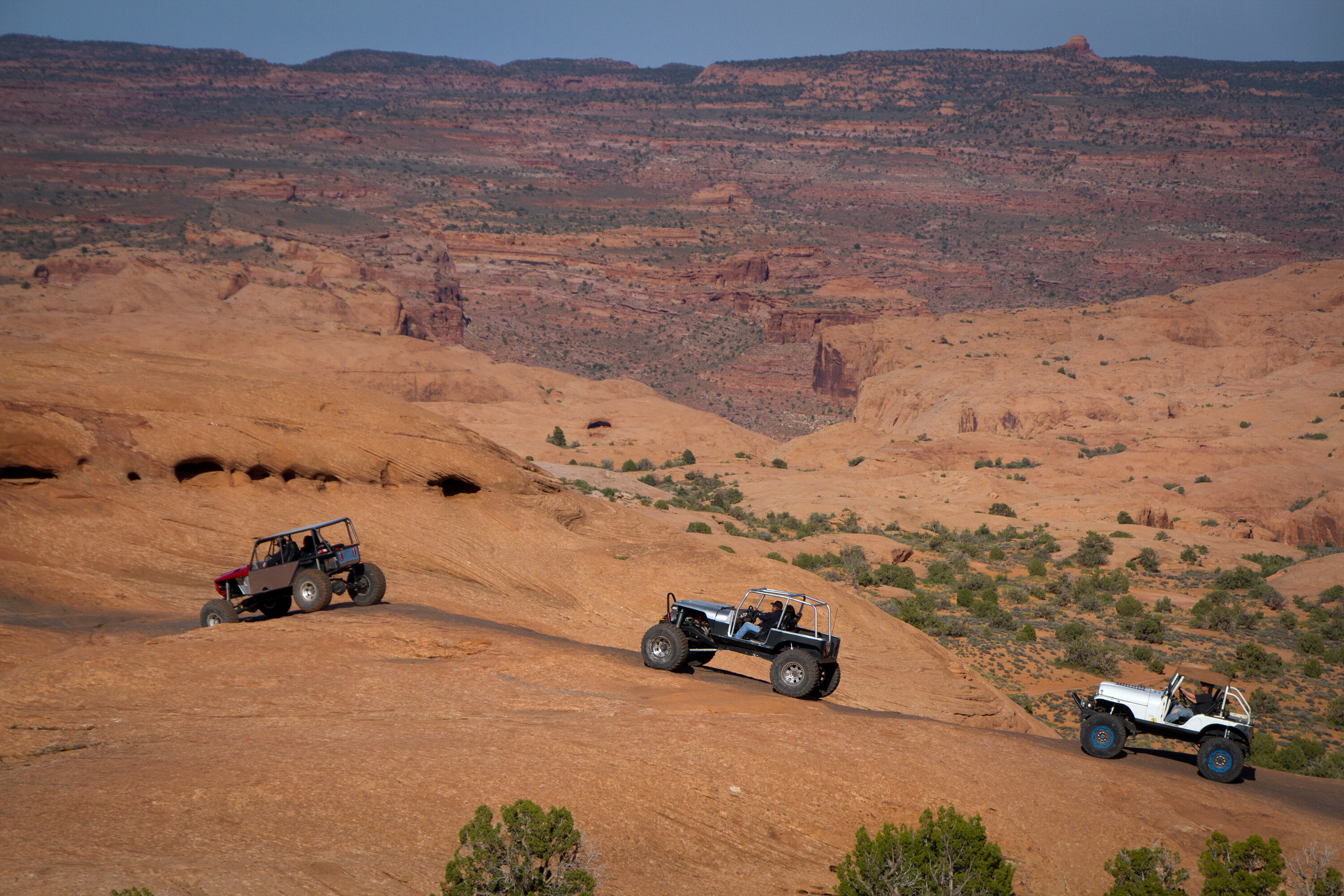
The year was 1967, and in an attempt to boost a lagging economy, the Moab Chamber of Commerce organised an event to draw attention and tourism to the area. It would be a simple affair and take place on Easter Sunday; a one-day trail ride in the backcountry with a few dozen participants.
Registration was free, and a highlight of the day was a Cessna flyover replete with an air drop of ice cream. The original route is now known as the Behind the Rocks Trail, and the event’s popularity required the addition of the Moab Rim Trail the following year.
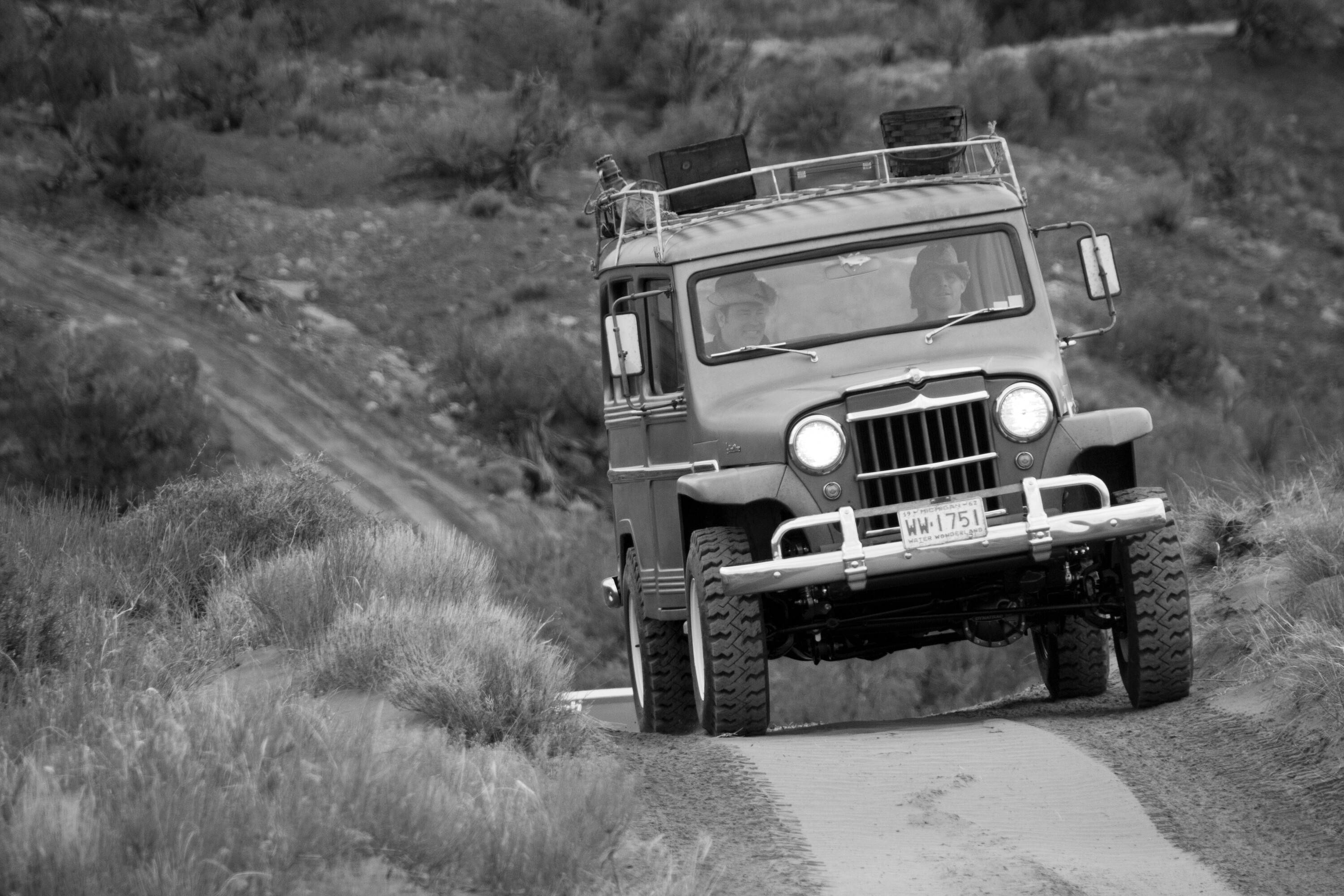
Meanwhile, steady growth strained the Chamber’s resources, and in 1982 management of the event was handed off to the club that had been volunteering as trail guides, the Red Rock 4-Wheelers.
My first experience exploring the fissured canyons surrounding Moab was in 1990. It was a non-EJS week mid-summer, and back then there weren’t any established maps of the web of trails that threaded their way up and down narrow ledges on precipitous cliffs.
I wondered why they were there and who created them? A buddy and I hiked up an eroded switchback to what appeared to be a cave, what we found was an old wooden crate full of dynamite and a mining claim tag. Miners, of course, but what were they looking for? For this, we need to turn the clock back to 1952 and the height of the Cold War.
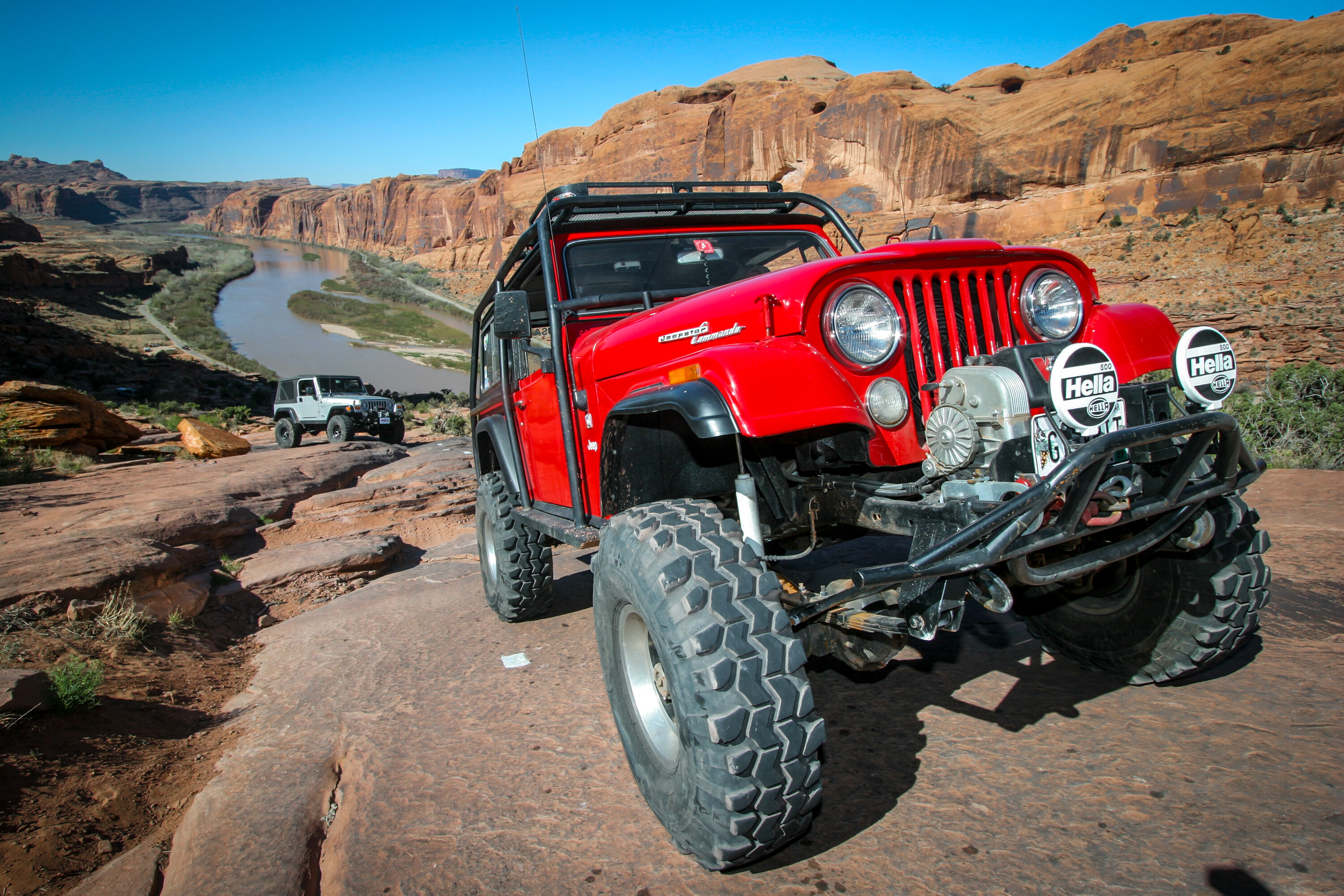
Explosive exploration
In 1946, the United States passed the Atomic Energy Act, and in 1949 offered incentives to prospectors to help locate domestic uranium deposits.
Word of this prompted amateur geologist Charley Steen to borrow $1000 from his mother, pack up his family, and move to Moab. Living in a tarpaper shack, he scratched at the dirt for several years, exhausted all of his money, and his family nearly starving. Charley was ready to pack up and head home, and then he hit pay dirt.
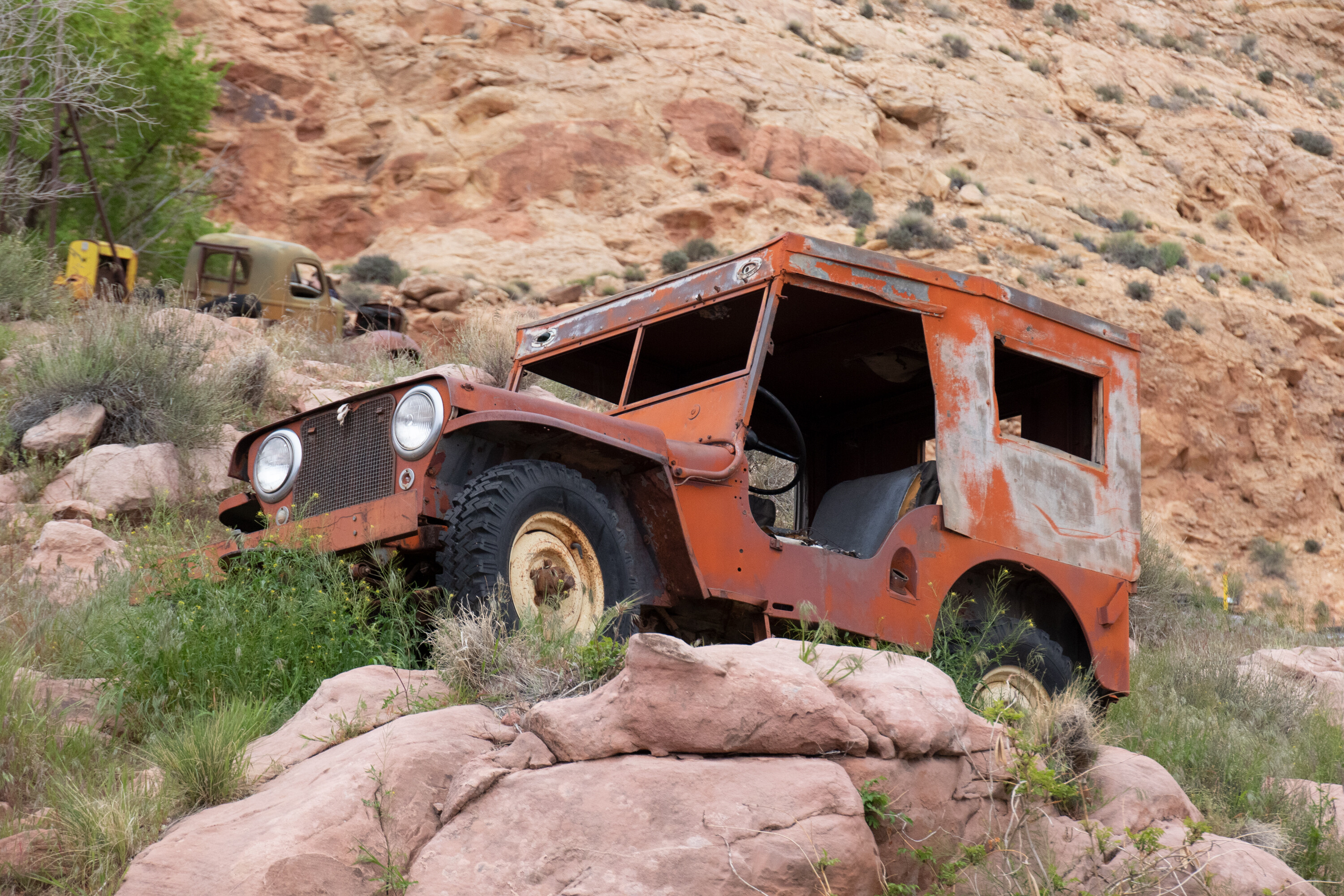
Word of his success brought an onslaught of commercial mining companies to Moab, which in turn canvased every ledge, canyon, and fissure of the region. Yep, the trails we enjoy today, as well as the Easter Jeep Safari, are the result of the Cold War and Nuclear Age.
As for Mr Steen, his mine, affectionately named Mi Vida (‘my life’ in Spanish) produced enough uranium to make Charley a very, very wealthy man. There would be no more tarpaper shacks for the Steen Family.
If you are in Moab, his Willys Jeep can be found on display in front of the Sunset Grill Event Center … which was originally his palatial home on a hill above town.
EJS in the 21st century
Popularity of the event has seen exponential growth in the past 30 years, and it now draws enthusiasts from the world over. Featuring dozens of trail rides over a nine-day period, and a vendor show with more than 200 manufacturers, Easter Jeep Safari has become the North American spring gathering of the off-road world. It has also generated tens of thousands of dollars for land-use efforts to keep trails open for public access.
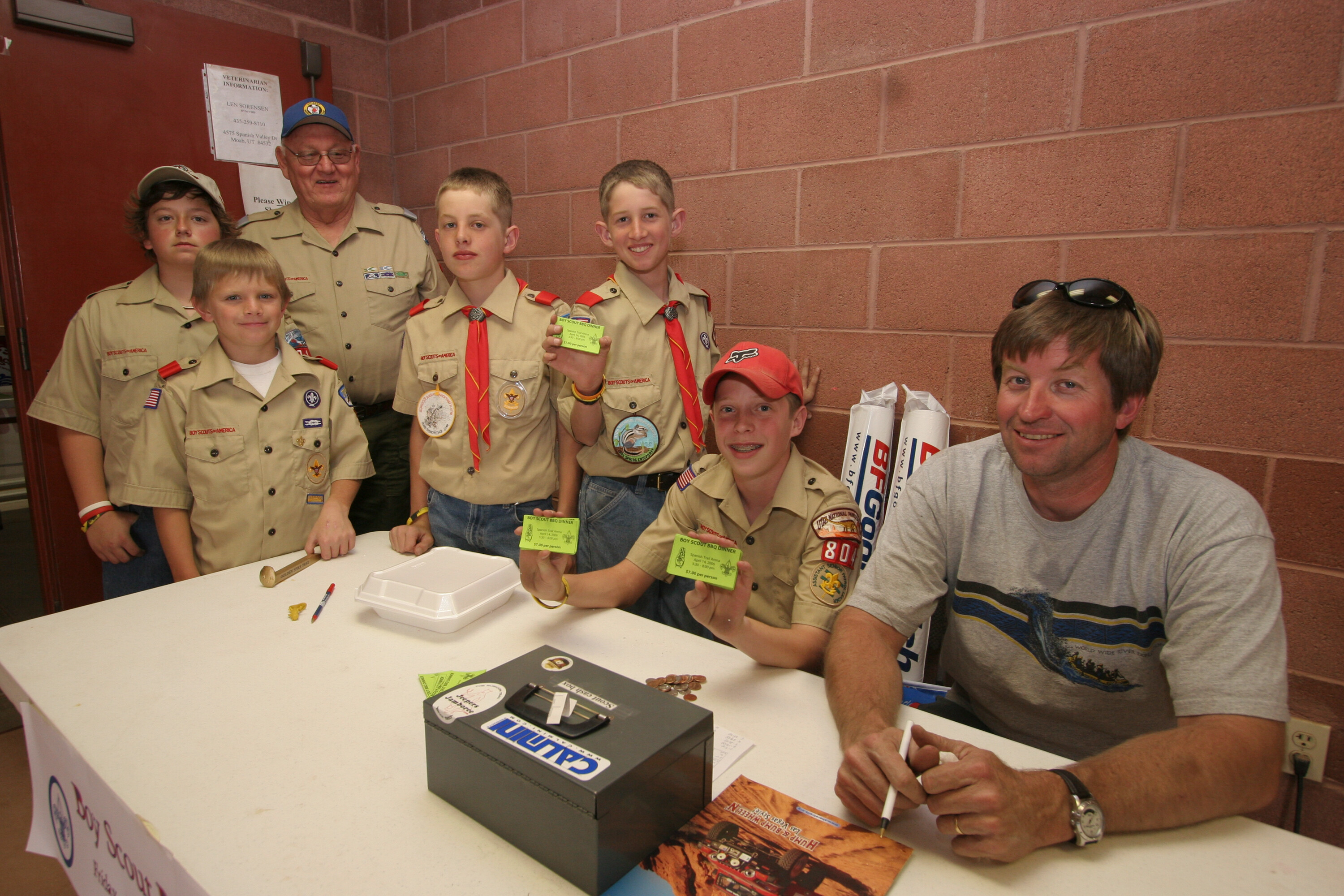
Moab has also become the go-to location for the testing of new vehicles, and in the mid 2000s Jeep began its ‘concept’ program. Each year since, it has revealed a fleet of one-off vehicles, some have been wild retro-modern creations but others have actually made their way to production.
The class of 2022
This brings us to this year’s rigs, and by the looks of them, Jeep is committed to joining the global trend of electrification. We spent two days driving them, and below is a brief recap. Enter Jeep’s 2022 Concepts.
Birdcage
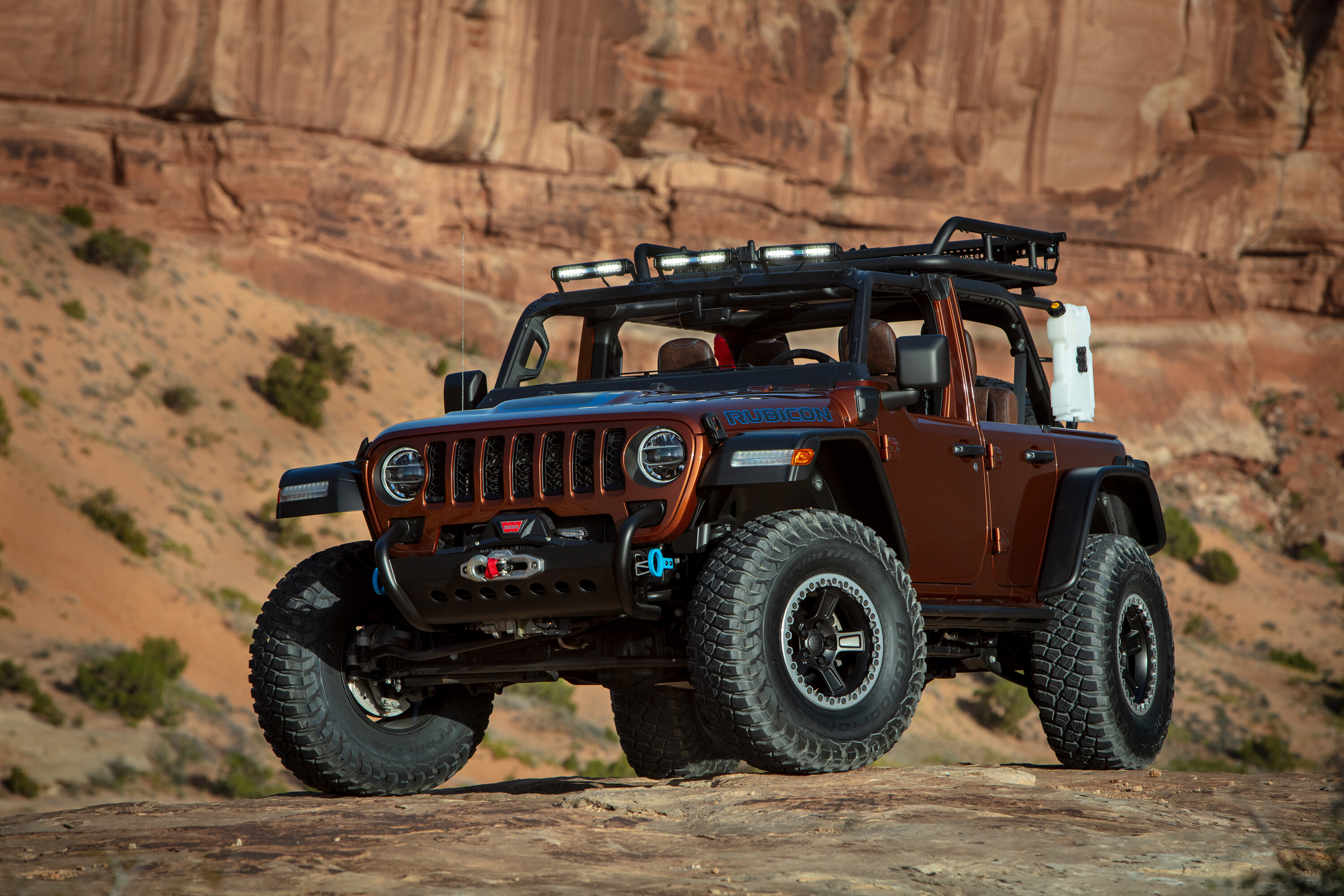
What’s cool? Open-air bugs-in-your-teeth driving experience (no windshield, windows, or top), flat fender flares, custom winch cradle, Granite Crystal metallic paint, Add-a-trunk rear deck system.
| Platform | 4-door Wrangler Rubicon 4x |
|---|---|
| Engine | 2.0-litre turbo-charged i4 dual electric-motor hybrid |
| Drivetrain | TorqueFlite 8-speed automatic, Rock-Trac 4:1 transfer case |
| Axles | Dana 44, electric locking differentials |
| Suspension | JPP 2-inch lift, Fox shocks |
| Tyres/wheels | 37-inch BFGoodrich KM3 / 17-inch JPP bead locks |
Bob
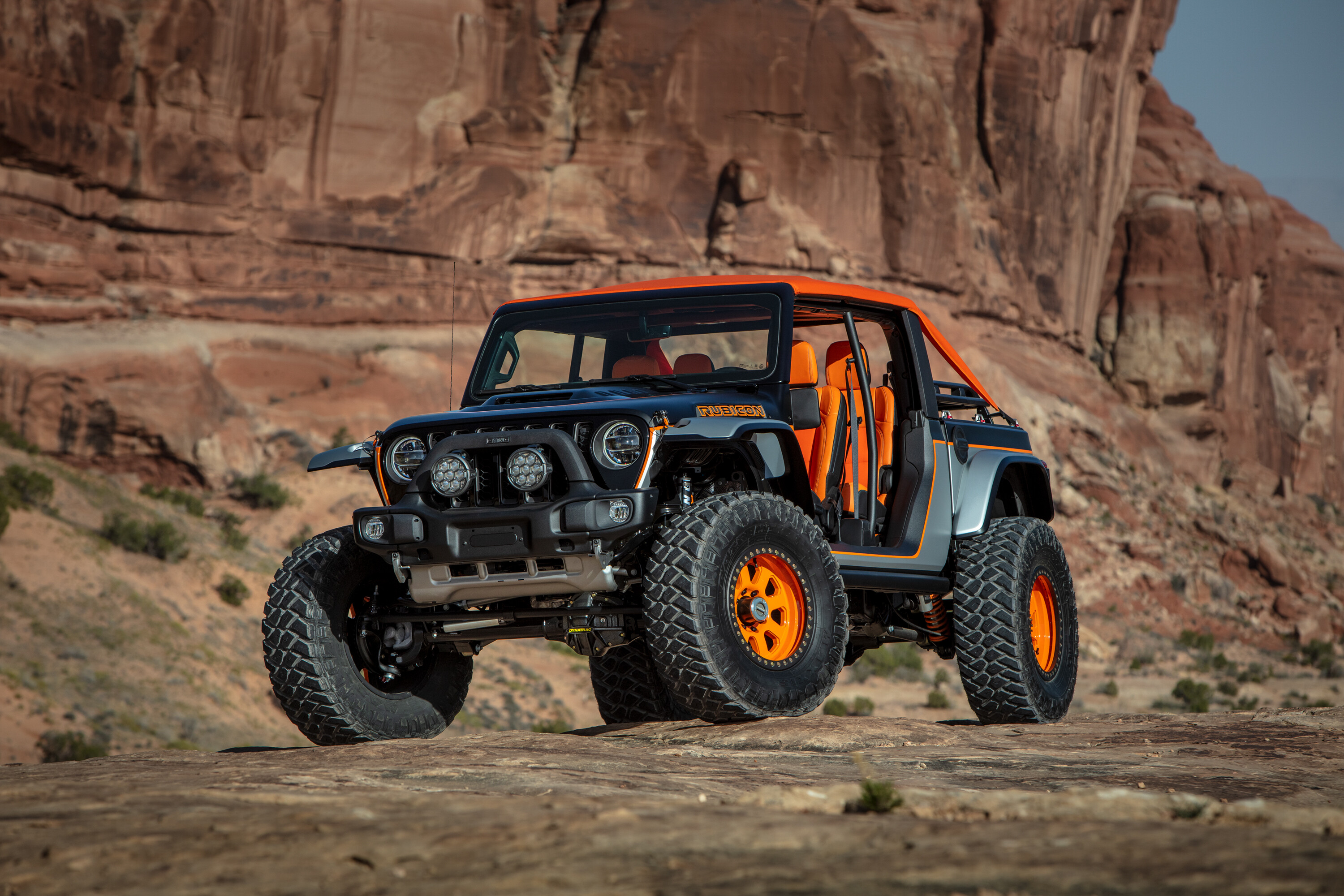
What’s cool? Bed bobbed 12 inches, open concept, Dynatrac Pro-Rock 60 axles, fastback canvas top, custom rear rack.
| Platform | Gladiator Rubicon |
|---|---|
| Engine | 3.0-litre EcoDiesel V6 |
| Drivetrain | 8-speed automatic, Rubicon transfer case |
| Axles | Dynatrac Pro-Rock 60s |
| Suspension | King coilover bypass shocks |
| Tyres/wheels | 40-inch Maxxis RAZR / 20-inch Raceline beadlocksu00a0 |
D-Coder
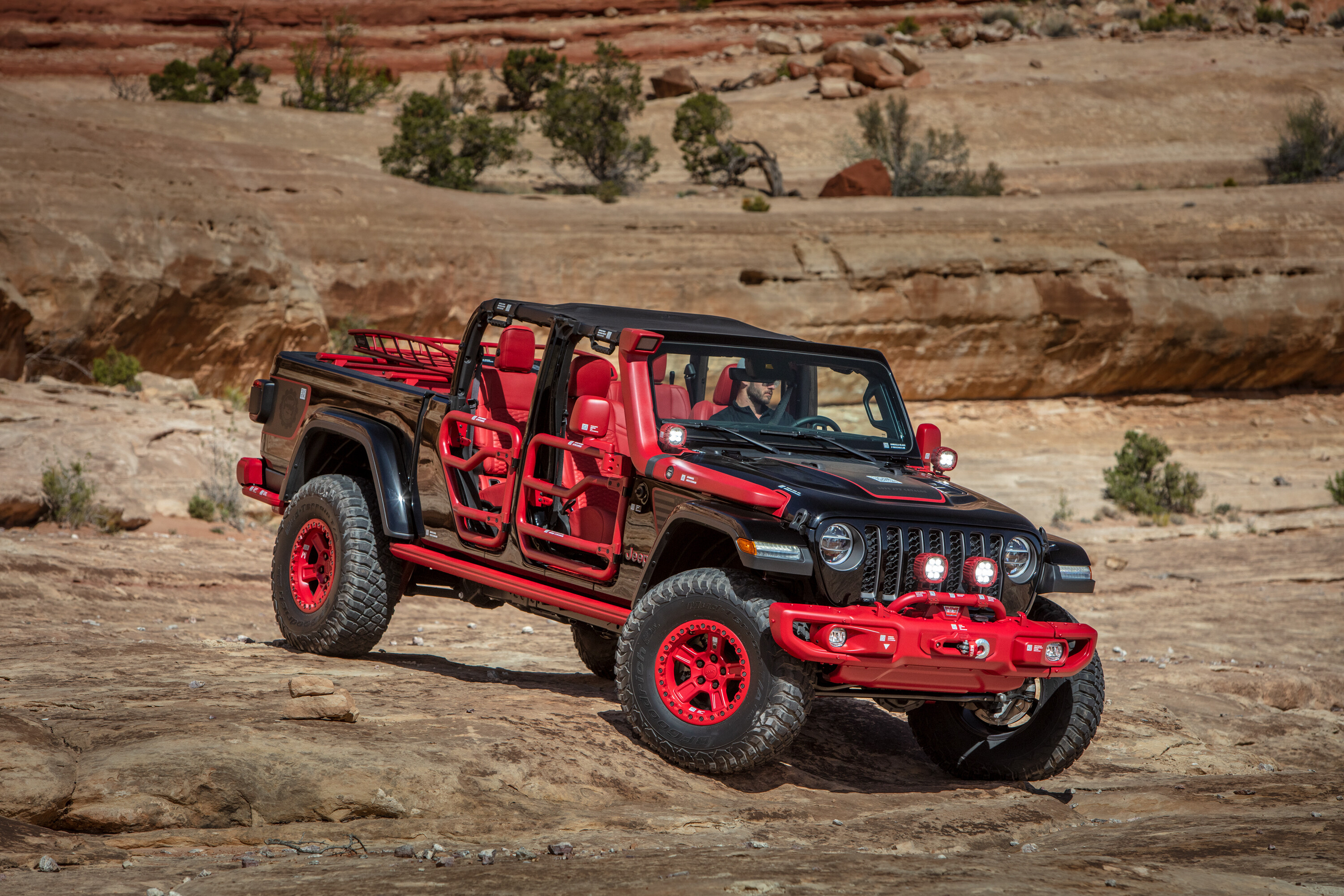
What’s cool? Prototype light bar, rack, leather seats, spray-on tub liner, and mesh bikini top. Scan any part on this Jeep with your phone – they all display a QR code – and it takes you to the product on Jeep Performance Parts’ website.
| Platform | Gladiator Rubicon |
|---|---|
| Engine | 3.6-litre Pentastar V6 |
| Drivetrain | 8-speed automatic, Rock-Trac 4.10:1 transfer case |
| Axles | Dana 44, electric-locking differentials |
| Suspension | JPP 2-inch lift, Fox shocks |
| Tyres/wheels | 37-inch BFGoodrich KM3 tires / 17-inch JPP beadlocks |
Grand Cherokee
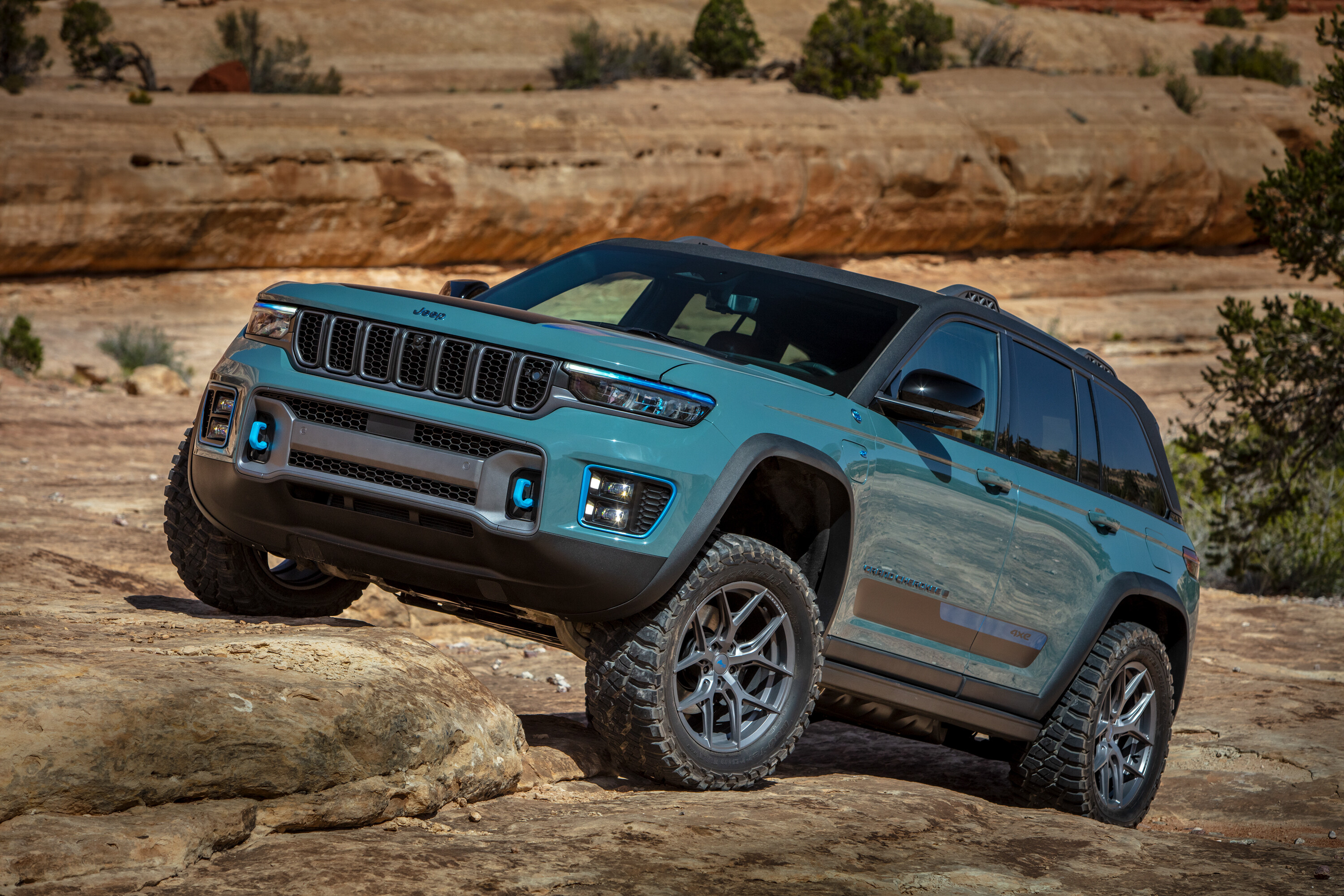
What’s cool? Trailhawk PHEV is light on mods but heavy on style and comfort. In 3C° weather, we took refuge in the Grand and cranked up the heated steering wheel and seats. We also liked the ‘Rodney Dangerfield’ houndstooth interior color scheme.
| Platform | Grand Cherokee Trailhawk 4xe |
|---|---|
| Engine | 2.0-litre turbocharged i4 dual electric-motor hybrid |
| Battery | 400-volt, 17.3kW/h |
| Output | 280kW, 637Nm |
| Drivetrain | TorqueFlite 8-speed automatic, Quadra-Drive II, rear electric limited-slip |
| Suspension | Five-mode Quadra-Lift air |
| Tyres/wheels | 33-inch BFGoodrich KM3 / 20-inch alloy |
Jeep 41
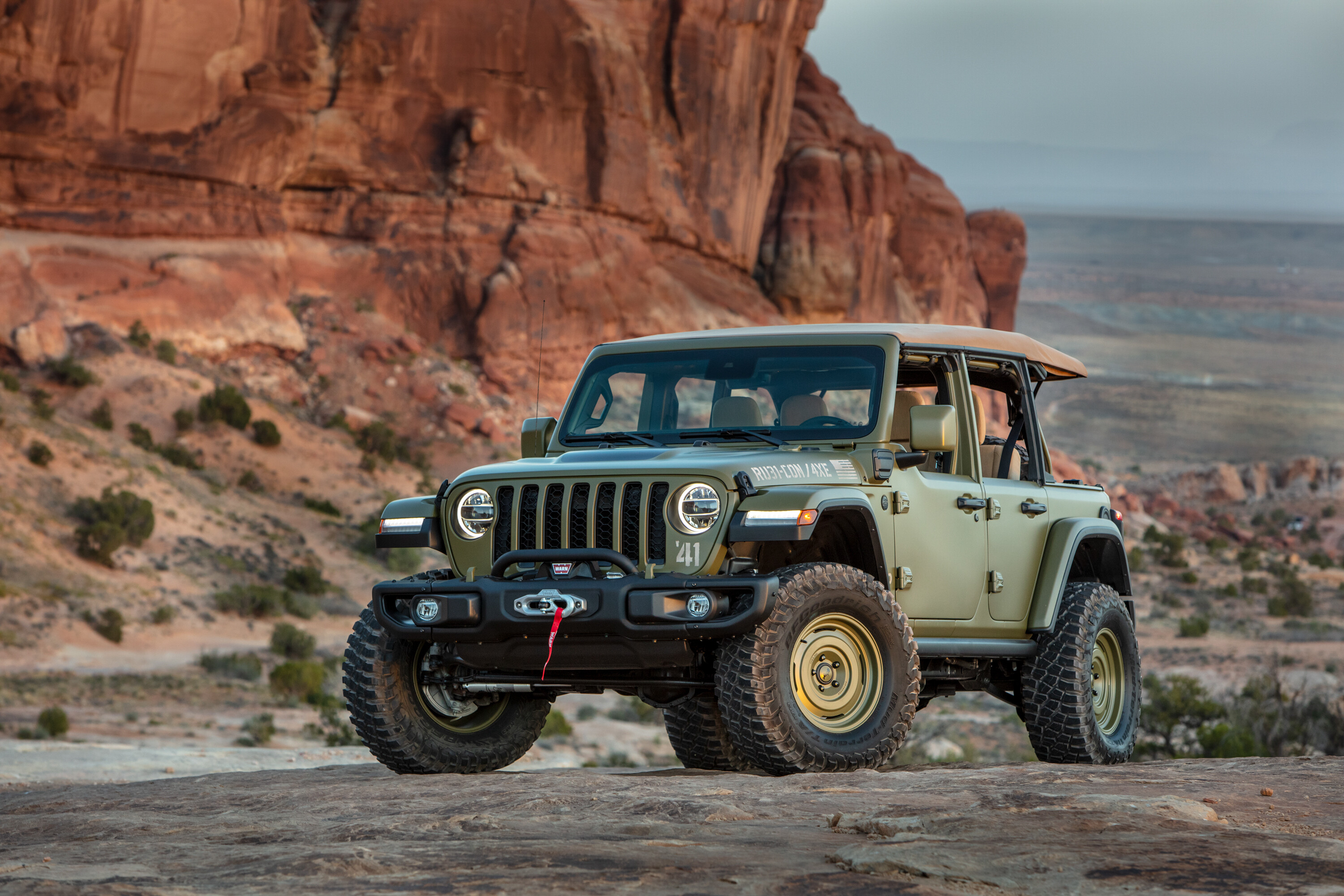
What’s cool? Jeep 41 pays tribute to its Willys MB military underpinnings, but in a 21st Century way: OD green paint, sand-tan soft top, camouflage seats, Warn winch, alloy ‘plow-disc’ wheels.
| Platform | 4-door Wrangler Rubicon 4xe |
|---|---|
| Engine | 2.0-litre turbo-charged i4 dual electric-motor hybrid |
| Drivetrain | TorqueFlite 8-speed automatic, Rock-Trac 4.10:1 transfer case |
| Axles | Dana 44, electric-locking differentials |
| Suspension | JPP 2-inch lift, Fox shocks |
| Tyres/wheels | 35-inch BFGoodrich KM3 / 17-inch Fifteen52 alloy |
Magneto V2.0
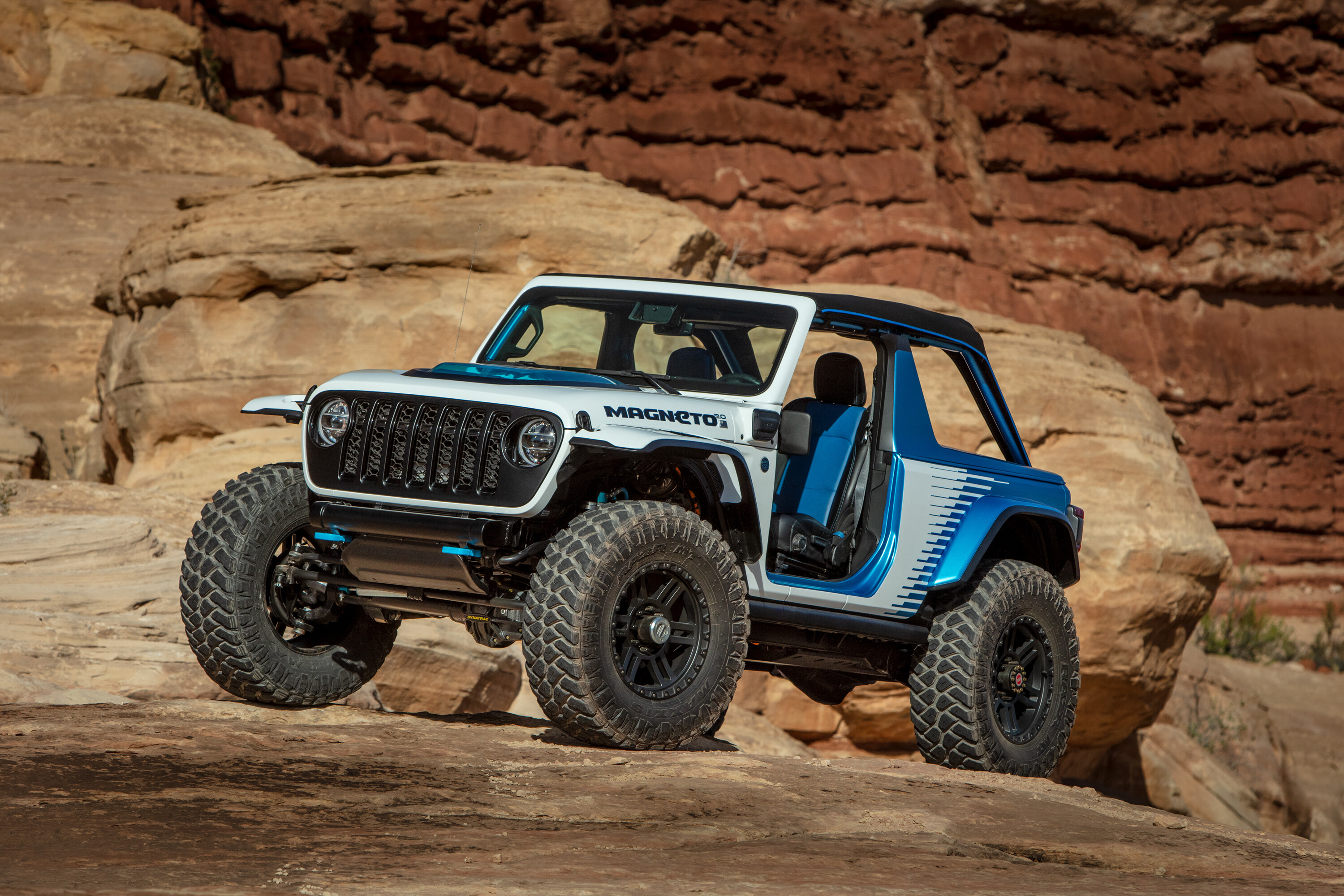
What’s cool? Everything! Magneto V2.0 is a super-energised version of Magneto 1.0. Monster horsepower and torque, zero emissions, ultimate in EV off-road capability. What is not to love?
| Platform | Wrangler 2-door, stretched 12 inches |
|---|---|
| Engine | Axial flux electric |
| Battery | 800-volt, 70kW/h |
| Output | 485kW, 1152Nm |
| Drivetrain | Manual Hellcat 6-speed, hardened gears |
| Axles | Dynatrac 60 front, 80 rear, 5:38 gears |
| Suspension | Custom coilover, King shocks |
| Tyres/wheels | 40-inch Maxxis RAZR MT / 20-inch Raceline bead lock |
Rubicon 20th Anniversary
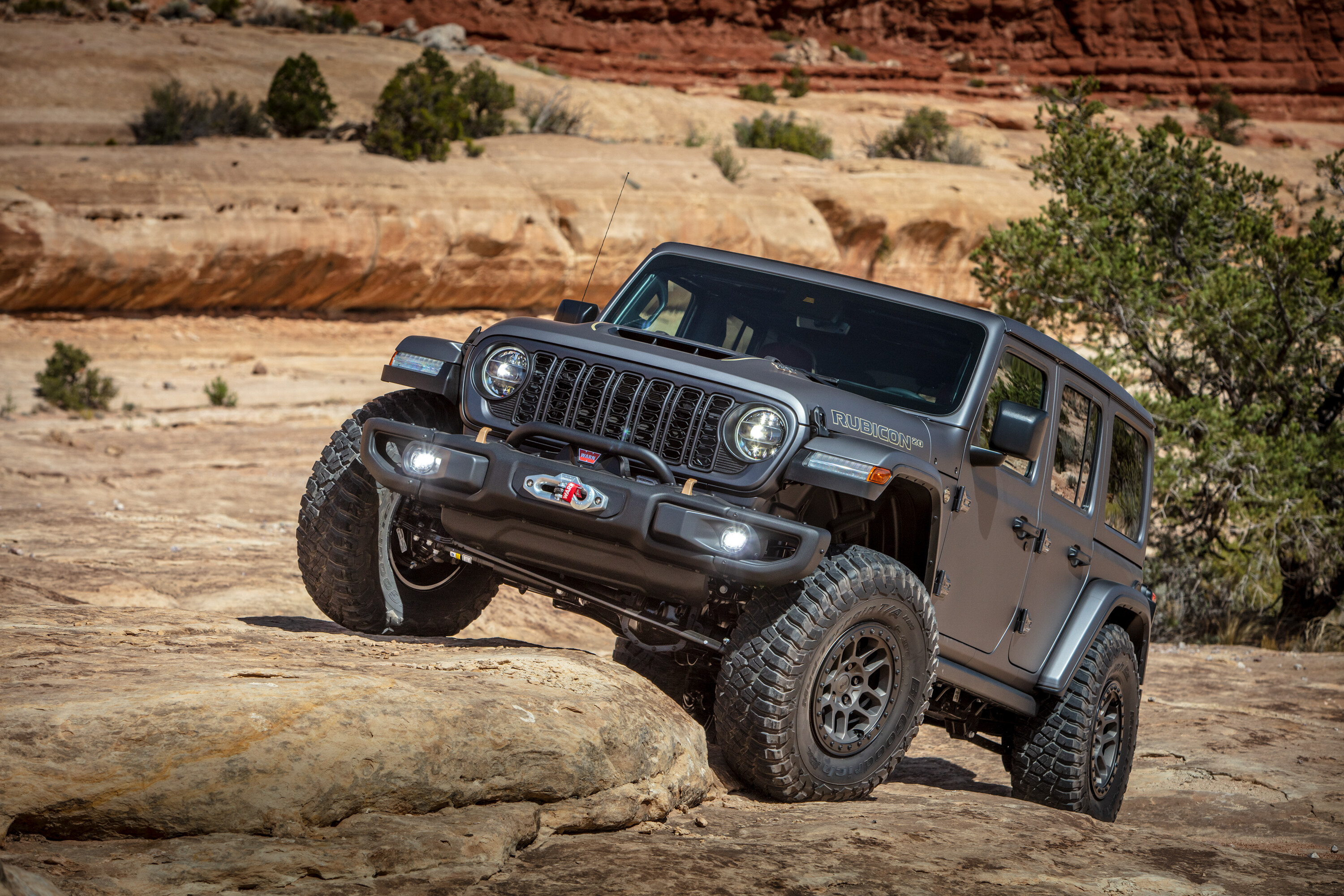
What’s cool? Introduced in 2003, the Rubicon model will celebrate its 20th birthday next year. Honouring that milestone, Jeep developed the 392 HEMI-powered 20th Anniversary concept. With custom graphics, anvil grey paint and red leather interior, full body armour and skid plates, and an air-compressor integrated in to the rear gate, we are hoping they will offer this one as a factory package.
| Platform | 4-door Wrangler Rubicon |
|---|---|
| Engine | 392/6.4-litre HEMI V8 |
| Output | 350kW, 637Nm |
| Drivetrain | TorqueFlite 8-speed automatic, Rock-Trac 4.10:1 transfer case |
| Axles | Dana 44, electric-locking differentials |
| Suspension | JPP 2-inch lift, Fox shocks |
| Tyres/wheels | 35-inch BFGoodrich KM3/ 17-inch JPP bead locks |
Power Wagon
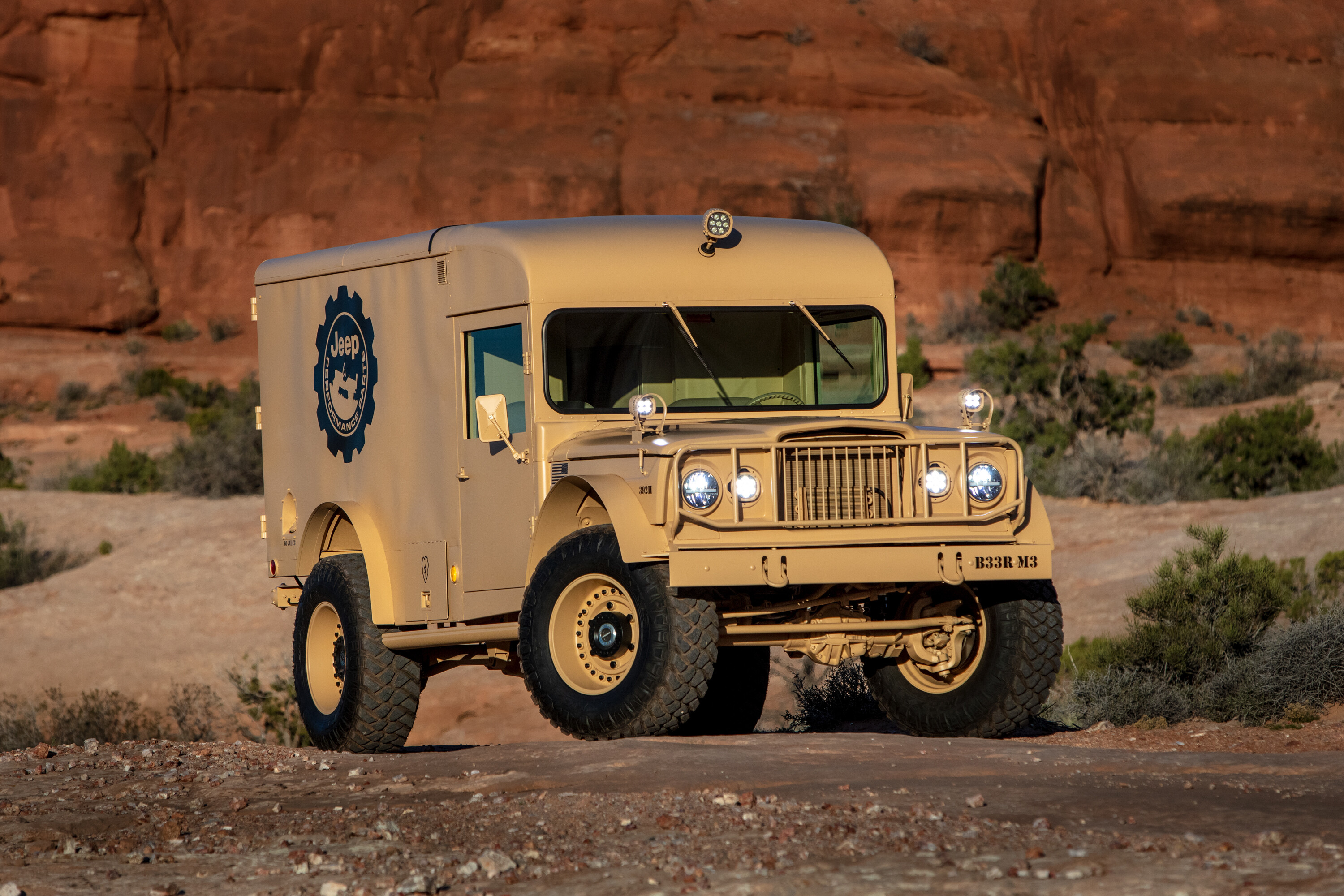
What’s cool? This Kaiser Jeep M725 Power Wagon was originally revealed at the 2021 SEMA show, but it is so damn cool we need to take another look – Crate 392/6.4-litre HEMI V8, Dynatrac 60/80 axles, raised canvas roof, beer keg refrigerator, and original roof-mounted spotlight (now LED). This is one cool Wagon.
| Platform | 1967 Kaiser Jeep M725 military ambulance |
|---|---|
| Engine | 392/6.4-litre HEMI V8 |
| Output | 361kW, 644Nm |
| Drivetrain | TorqueFlite 727 automatic, NP200 transfer case |
| Axles | Dynatrac 60 front, Pro-Rock 80 rear |
| Suspension | Coil-link, Fox shocks |
| Tyres/wheels | 40-inch Maxxis RAZR / 20-inch Black Rhino Amoryu00a0 |
Romance all we like about grunty V8s, creamy-smooth straight sixes or punch-above-their weight fours, all internal combustion engines’ primary purpose is as mundane as simply pumping air.
Without air, and its key constituent oxygen, you can’t combust either petrol or diesel. And without combustion you can’t convert the potential energy in petrol or diesel into mechanical energy to propel your vehicle. It’s as simple as that.
Popular racing fuels like methanol and more particularly nitromethane are different as they contain their own oxygen so aren’t as reliant on external oxygen for combustion. In fact nitromethane, which has double the oxygen content of methanol, can burn without any external oxygen at all.
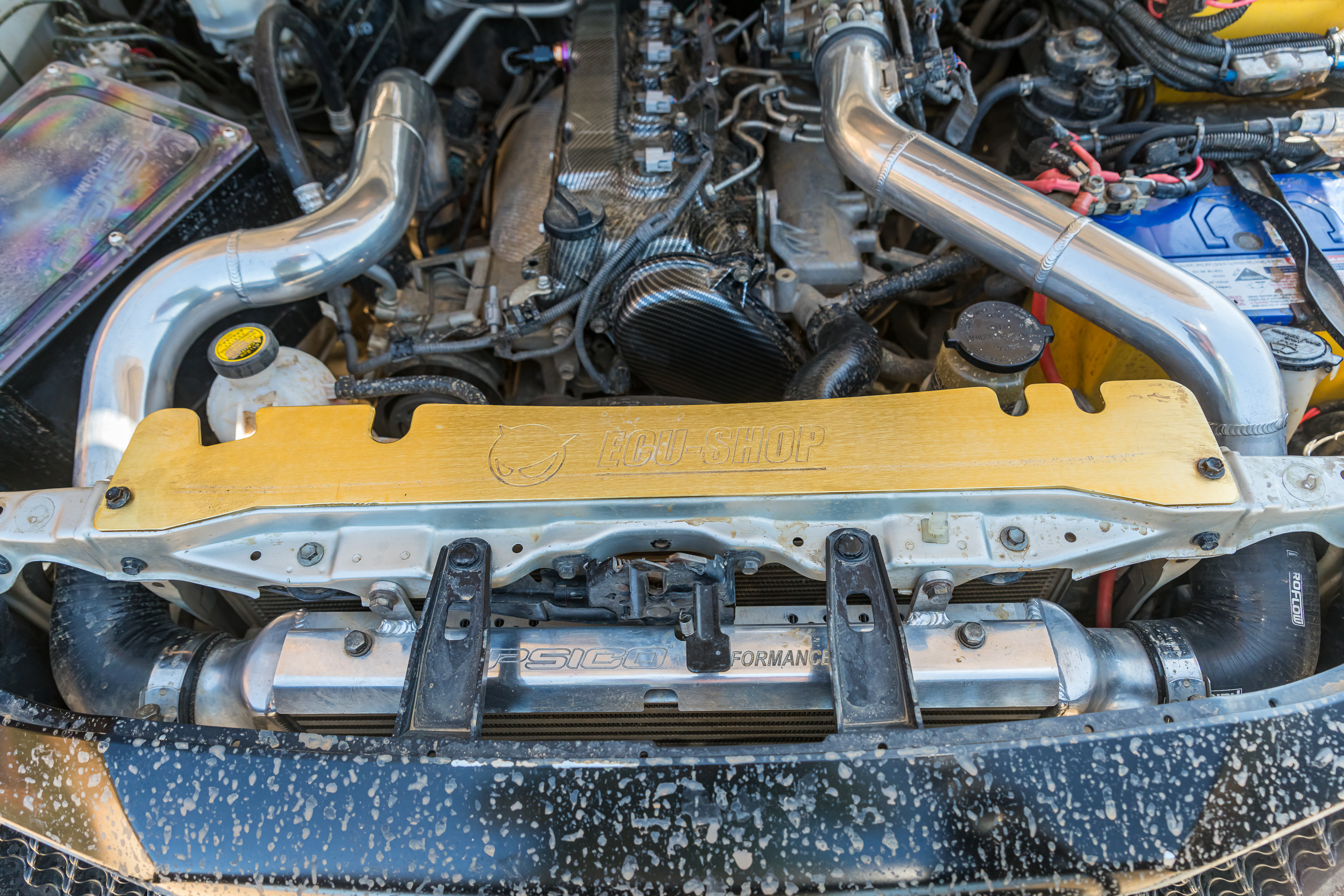
The problem faced by diesel or petrol engines is to burn either fuel you need an awful lot of air. And while getting the fuel in to the engine, specifically its combustion chamber is relatively easy, capturing the huge volume of air needed and drawing it in to the combustion chamber is extremely hard.
So how much air do you need to optimally combust a litre of either diesel or petrol? To burn a kilogram of diesel at peak efficiency you need 14.5kg of air. To optimally burn a kilogram of petrol you need 14.7kg of air. Now, given both diesel and petrol are far heavier than air by volume (with diesel being more dense than petrol), the required air-fuel ratio by volume is far more telling of the problem at hand.
To optimally combust a litre of petrol you need a whopping 5564 litres, or 5.564 cubic metres, of air. To optimally combust a litre of diesel you need even more air, some 6346 litres or 6.346 cubic metres. (Air volumes calculated at normal temperature and pressure as the volume occupied by a given weight of air varies with temperature and pressure.)
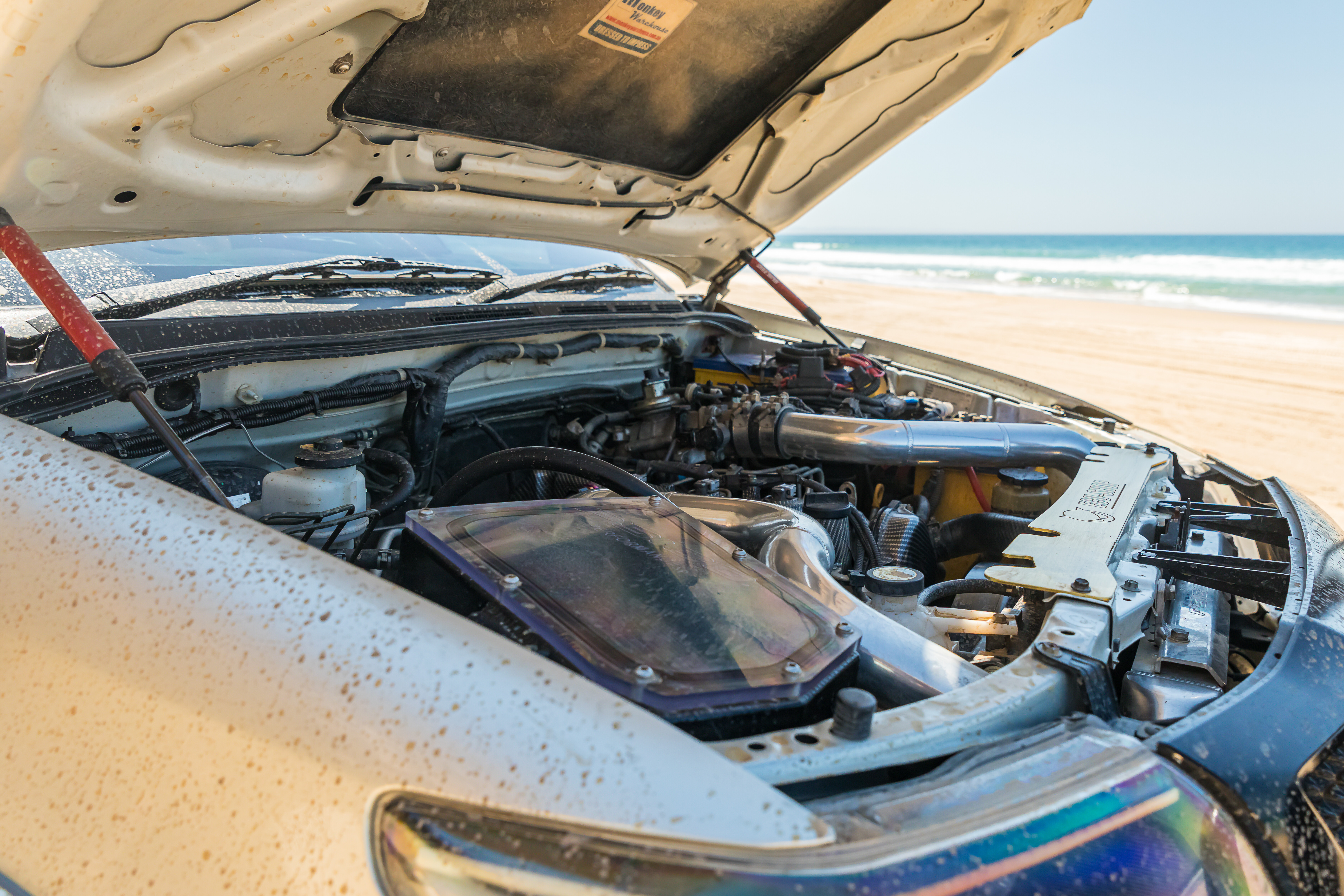
This is of course the age-old problem with internal-combustion piston engines. If you want to produce more power, you need to be able to move more air in to and through the engine. That is, increase its pumping capacity.
The most obvious and simple way to do this is to build an engine with a larger working capacity. Everything else being equal, a larger capacity engine will be able to pump more air, burn more fuel and therefore produce more power.
But larger capacity engines come with their own problems. They will be physically bigger and heavier, and take up more space, all considerable negatives in vehicle design. And they will be inherently more expensive to build if for no other reason than bigger capacity engines generally have more cylinders, therefore more moving parts to manufacture. Bigger engines also require more raw materials to make, regardless of the number of cylinders.
Plan B is to keep the engine the same capacity but to make it rev faster. A faster revving engine will obviously pump more air than a slower revving engine, everything else being equal.
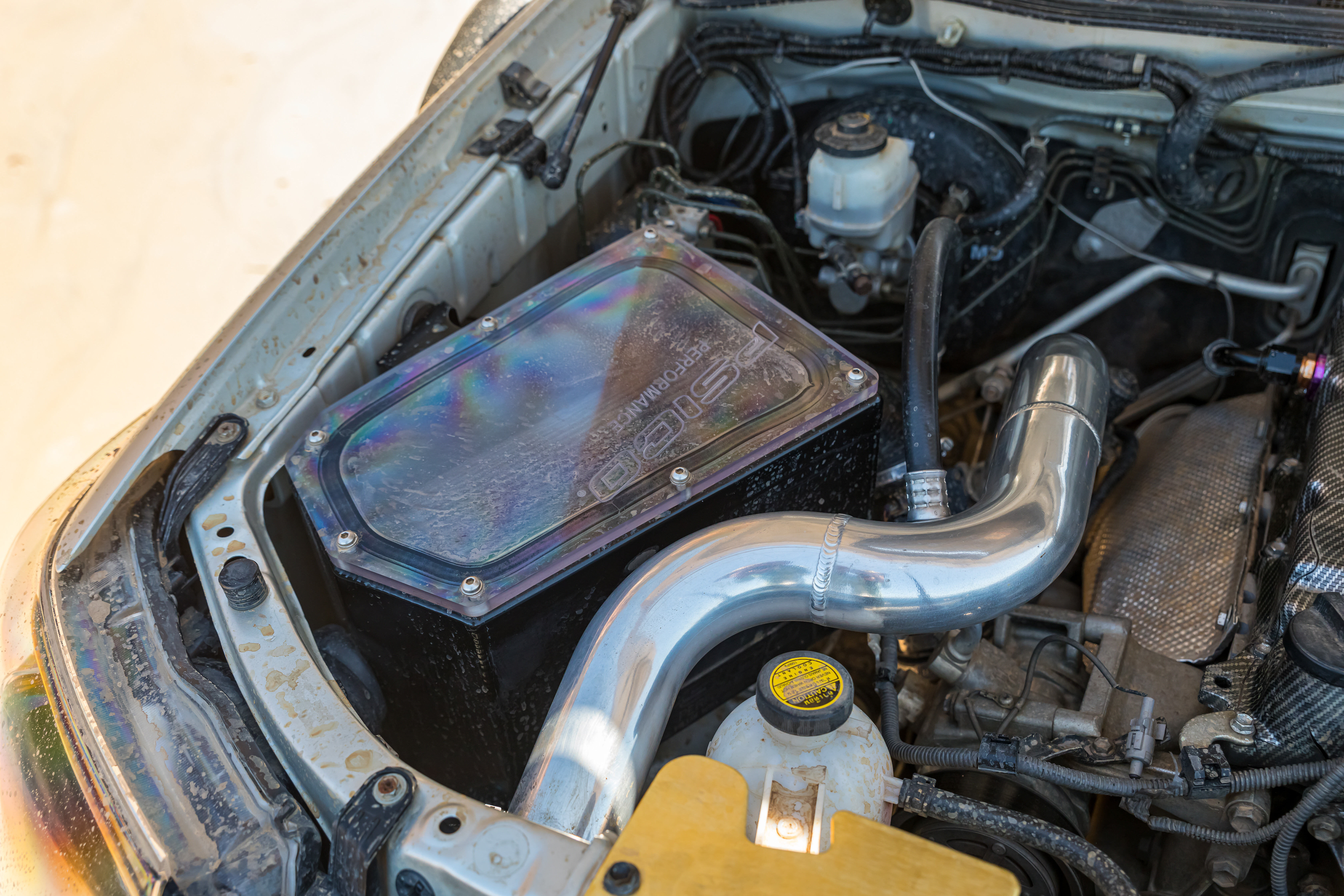
But there are problems here also. Higher engine speeds mean higher piston speeds and faster piston acceleration, both of which have attendant engine durability and reliability issues. Pumping efficiency will also decrease at higher engine speeds as there is less time to fill the cylinders with a fresh charge of air.
Plan C is to not use just one pump (i.e. the engine) but to add extra pumps to the system. Enter the turbocharger and the supercharger. Both turbochargers and superchargers are auxiliary pumps that increase the engine’s effective pumping capacity by feeding it with pre-compressed and denser air that contains more oxygen per unit volume than air at atmospheric pressure.
The difference between the two, of course, is that a turbocharger is driven by exhaust-gas pressure, while a supercharger is mechanically driven off the engine. Both arrangements have their inherent advantages and disadvantages.
Automotive diesel engines were miserable things until a turbocharger or two (or three!) helped make them a thing of wonder. Meanwhile, while normally aspirated petrol engines can perform admirably, turbocharging even a small capacity petrol engine can produce anything from a relaxed low-rpm grunter to a potent high-rpm screamer.
And while we may have reached ‘peak diesel’ in terms of technological development there’s probably a few tricks to come with petrol engines before the seemingly inevitable transition to the electric motor for automotive use.
If you’re the cynical type, you might be tempted to dismiss the 2022 Lexus LX as simply being a LandCruiser with a more prestigious badge and a hefty markup.
However, if you’re the type who prefers not to judge books by their covers and instead look a little closer, the new-generation LX is separated from its Cruiser cousin by myriad differences, on the outside, underneath and within.
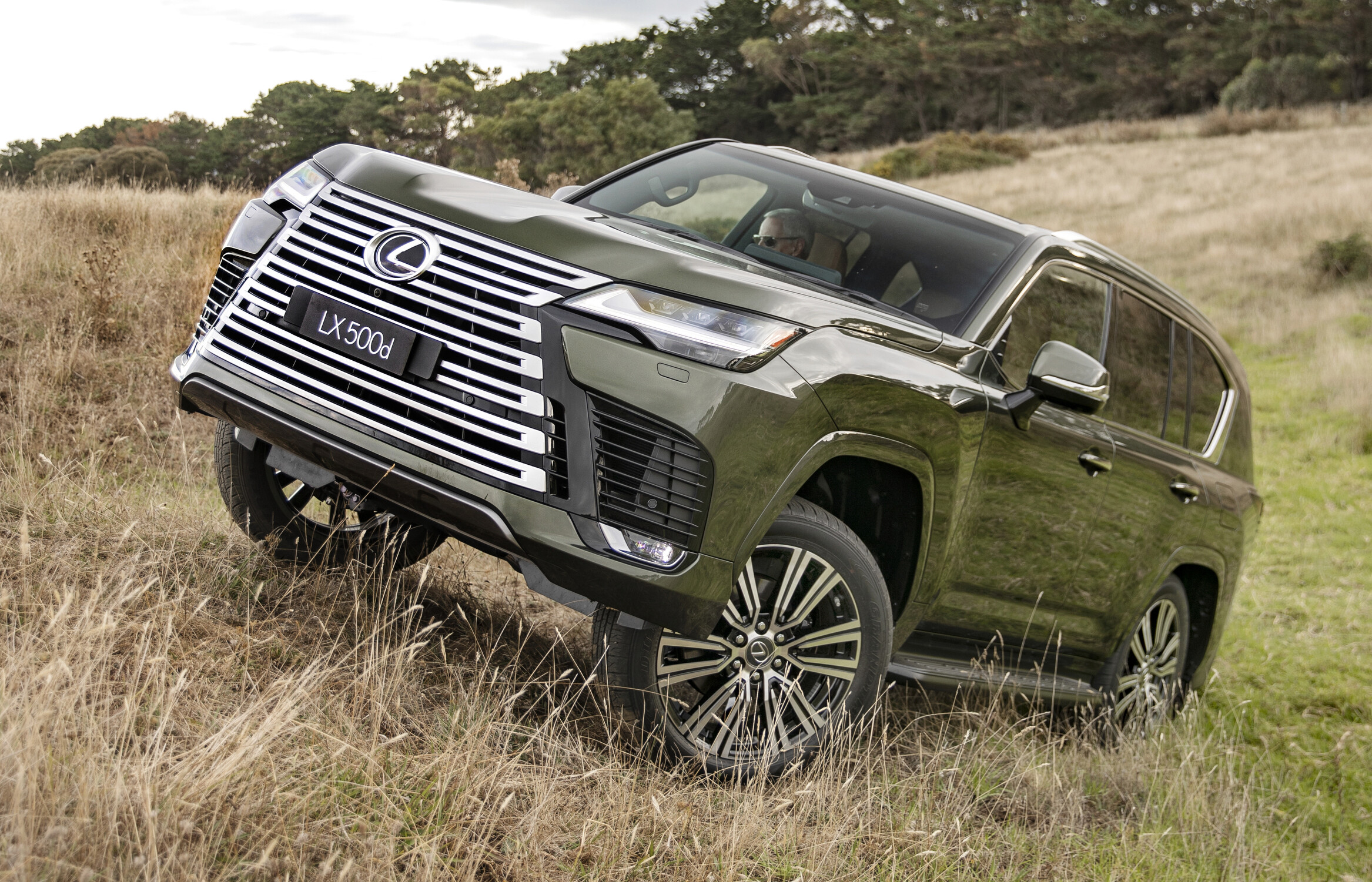
For enthusiasts, the most intriguing difference will be what’s beneath the LX’s gigantic double-humped aluminium bonnet.
While the new 2022 LX range –which utilises the same box-fresh GA-F platform as its Toyota counterpart – is available with the same 3.3-litre twin-turbo diesel as the 300 Series LandCruiser, that engine is offered alongside a new powertrain for the platform: a 305kW 3.5-litre twin-turbo petrol V6.
Developed from the engine that powers the Lexus LS 500 luxury sedan, it’s this mill that provides the new LX with a key point of difference to the 300 Series – but it’s not the only unique selling point.
An interior that bears almost no resemblance to that of the 300 besides its general dimensions is another, with LX-specific dashboard, door and centre console furniture. Meanwhile, suspension settings for the coil springs and hydraulically-linked dampers are also totally revised.
A ride height that’s adjustable on the fly, blingy 20- and 22-inch wheels, a hyper-opulent four-seat configuration … the list of major differences is a long one.
What does it all amount to? We travelled to Tasmania for the new LX’s local launch to put it through its paces over several hundred kilometres of tarmac and dirt to find out.
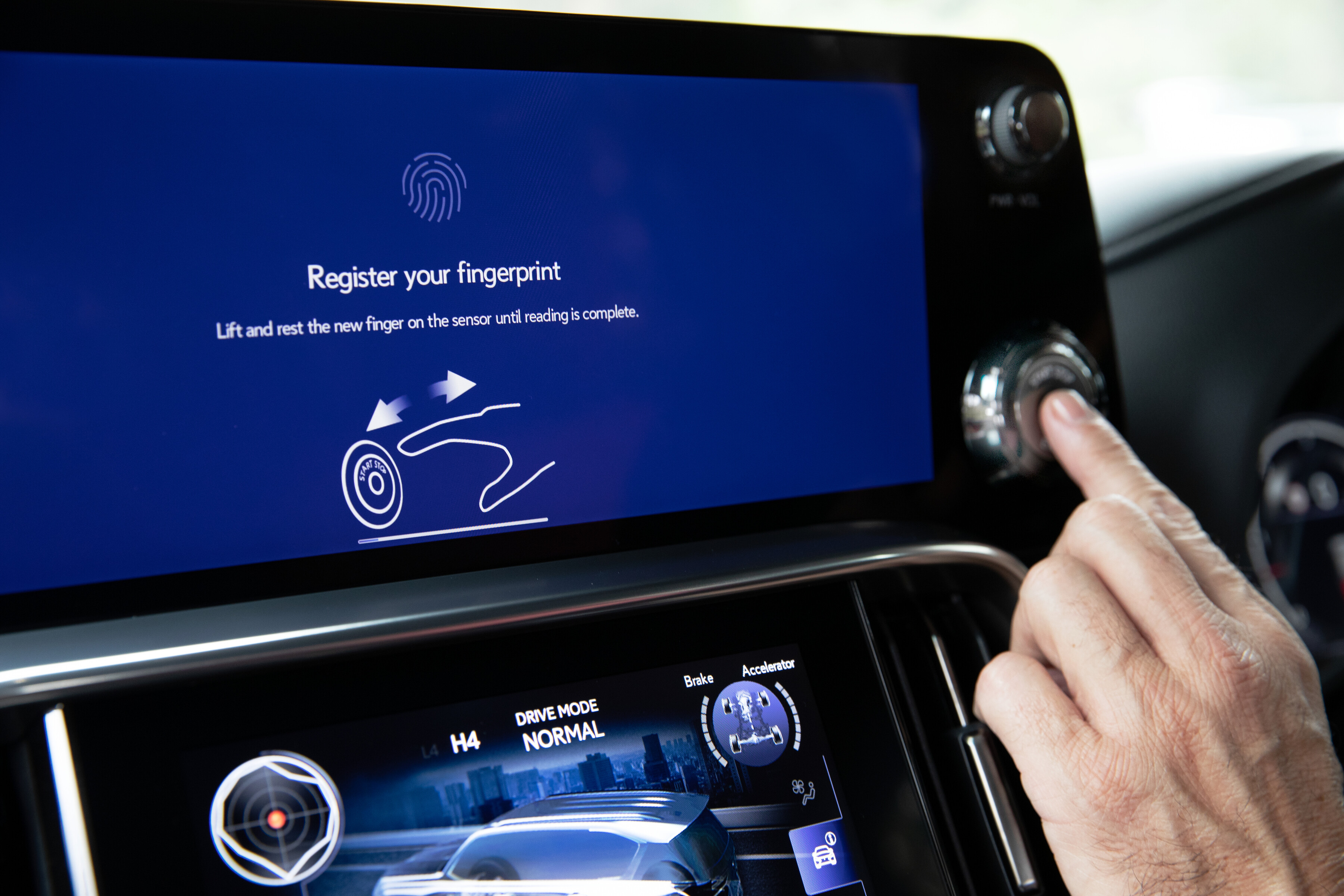
LX 600 Ultra Luxury
Starting in central Hobart, we hopped behind the wheel of the new range-topper, the appropriately named LX 600 Ultra Luxury. Priced at $210,800 before on-road costs, it’s a pricey hunk of metal, but the level of equipment you get is staggering.
A wide-angle head-up display is immediately noticeable to the driver, as is that tombstone-like 12.3-inch infotainment display at the top of the dash and the seven-inch auxiliary display immediately beneath it.
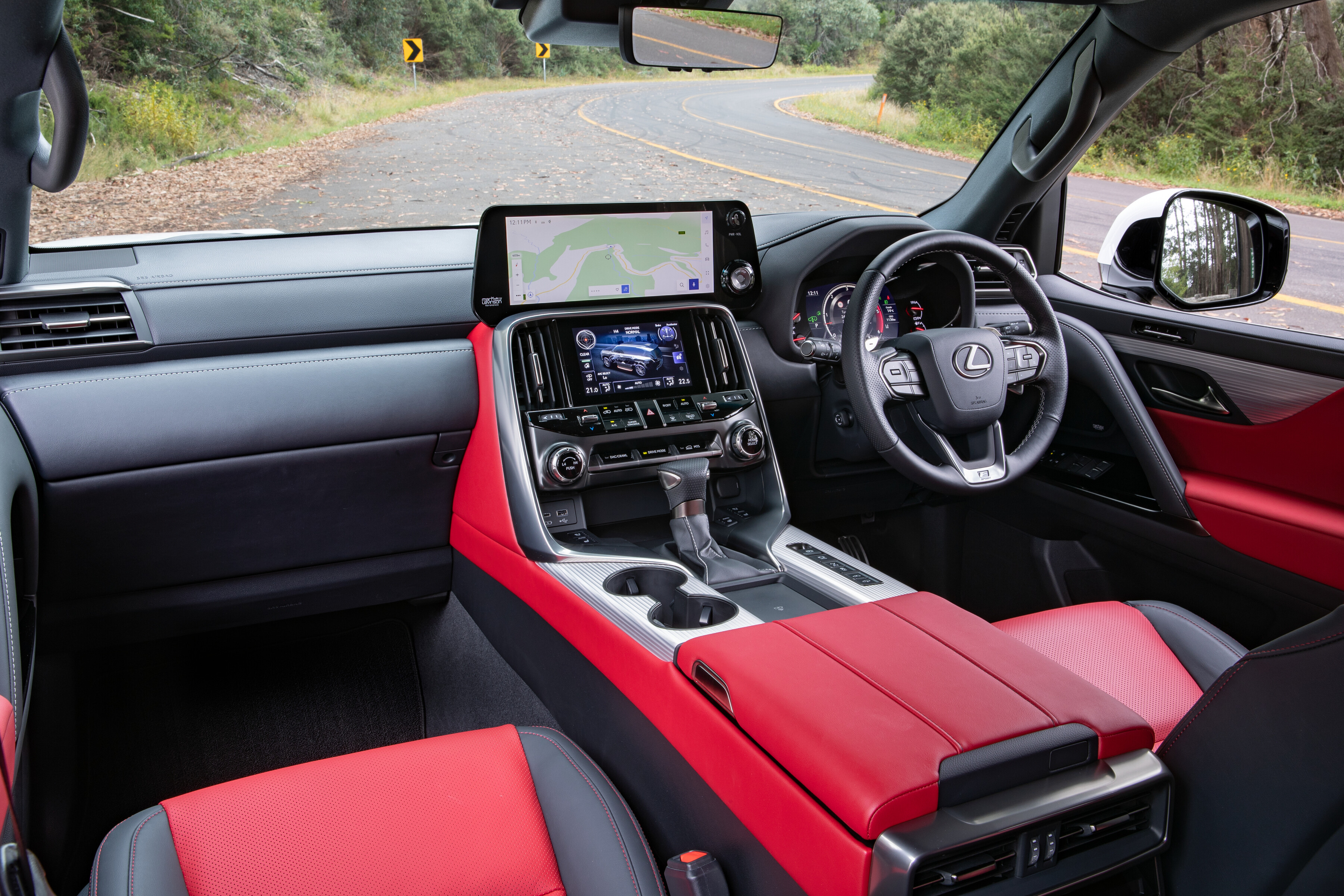
A compact instrument binnacle contains another electronic panel (eight inches from corner to corner) and a quartet of physical analogue gauges for oil temp, coolant temp, volts and fuel, and the vast bulk of the LX’s massive dashboard is trimmed in either sumptuous terracotta-coloured or black leather, satin-varnished open-pore wood, or fine dark chrome plastic. It all feels very, very high-end.
Though the main screen sits in the same position as the 300 Series, the LX’s dash is no mere copy-and-paste, with unique air outlets, that extra screen in the middle (which displays either climate control settings or vehicle drive-mode information), and a total reconfiguring of the centre stack layout.
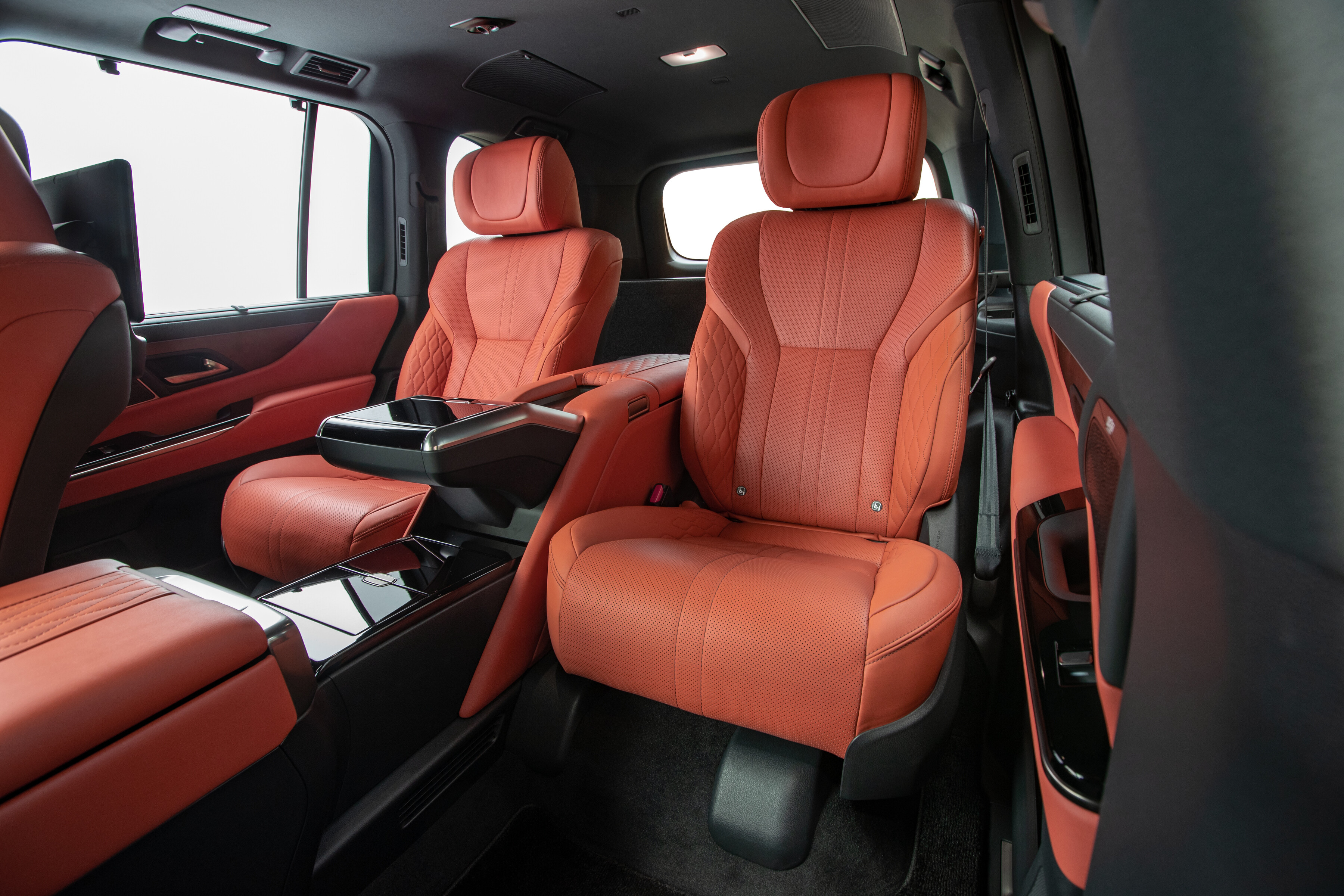
There’s also a different glovebox arrangement and a centre console that puts the cup holders on the passenger side and moves critical vehicle switches closer to the driver, all proving that Lexus has worked hard to differentiate the LX from the 300.
But look over your shoulder in the Ultra Luxury, beyond the standard-issue cool box under your left elbow, and you’ll see a pair of outrageously luxe rear seats separated by a fixed centre console with its own infotainment screen interface, wireless charging pad, high-set cup holders, power outlets and additional stowage.
That’s right, a four-seater LX. If you’re not shy about being a bit selfish and you want an experience that can only really be had in super high-end SUVs from Bentley, Maybach and Range Rover, the LX 600 Ultra Luxury might be your whip. The seven-seat ‘base’ LX 500d and LX and the five-seat Sport Luxury and F Sport grades are more prosaic, but still very well-appointed.
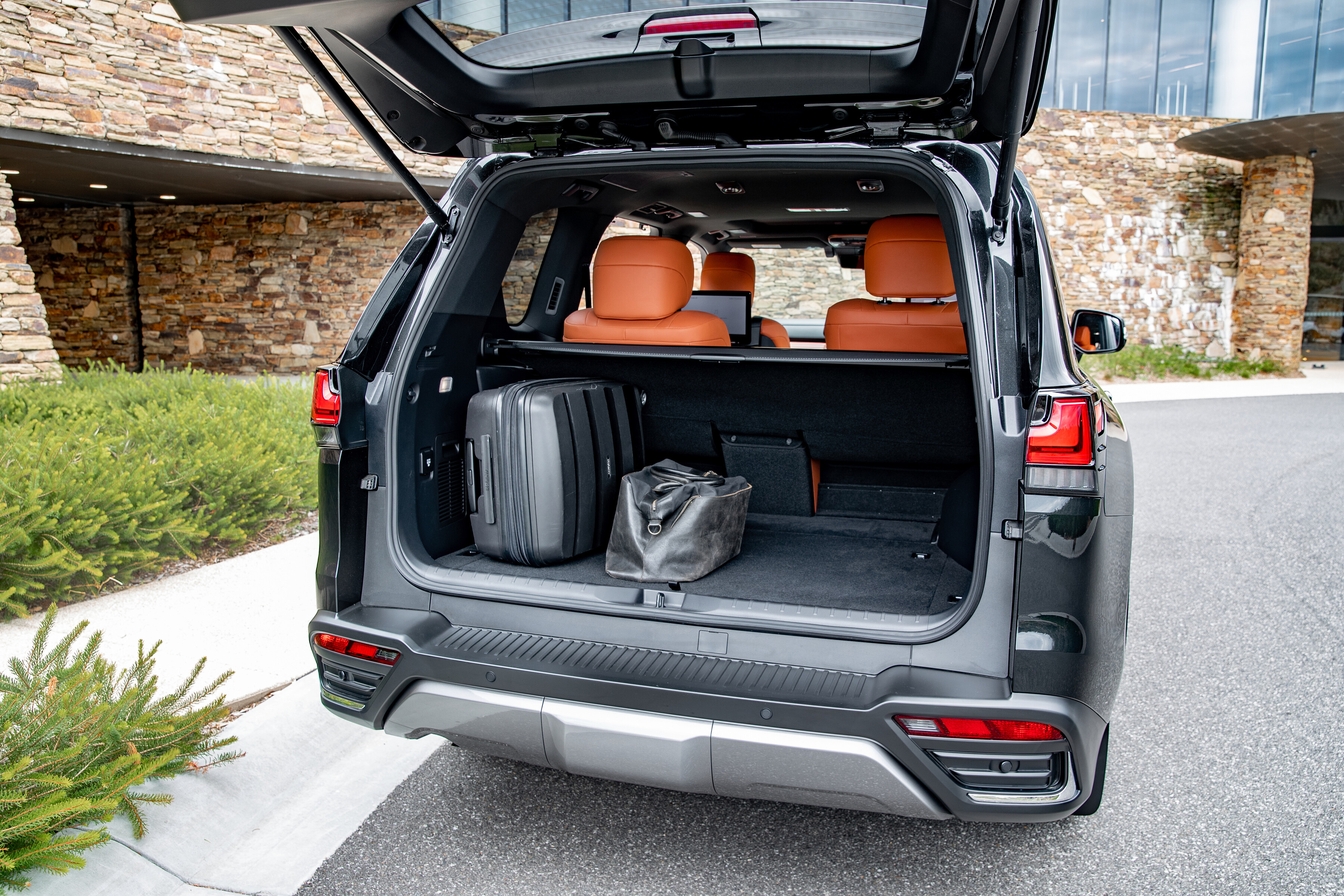
Twin-turbo V6 petrol
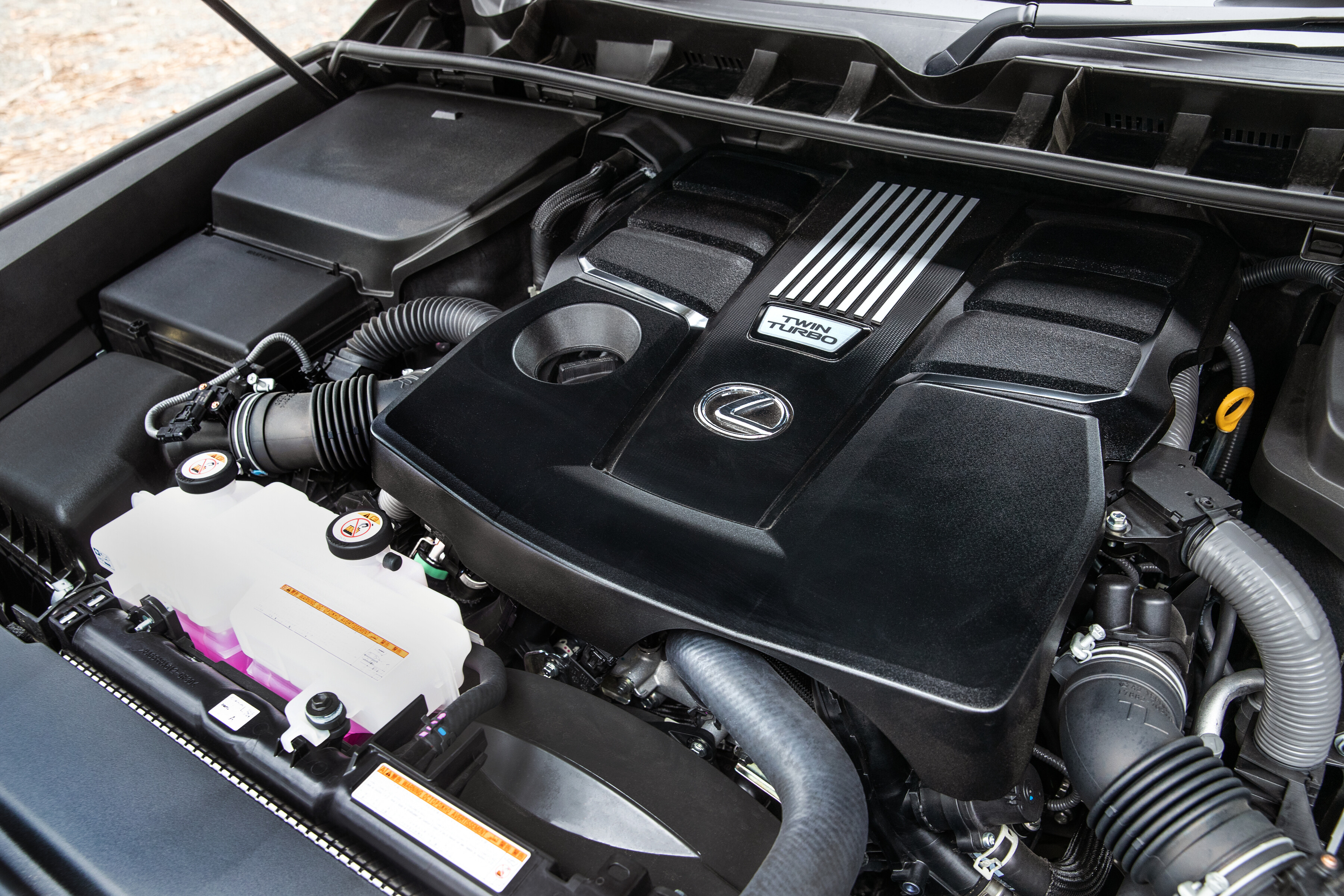
The Ultra Luxury is also exclusively powered by the twin-turbo petrol, which we quickly discover to be extremely smooth, extremely quiet, and extremely capable of hauling its 2660kg mass (plus a 73kg writer) around Hobart’s city streets.
Meshing with the same 10-speed automatic as used by the LandCruiser, progress is virtually seamless until you mash the accelerator to get ahead of traffic, whereupon the nose lifts and velocity increases rapidly as the engine’s growly V6 note finally makes itself heard. There are shift paddles behind the wheel, but don’t bother – the automatic arguably makes better decisions than you ever will.
Lexus says that compared to the LandCruiser’s suspension settings, the LX has springs and dampers that are tuned to be more sympathetic to on-road driving –which seems natural given how the LX is marketed and the wants and needs of the people that buy them.
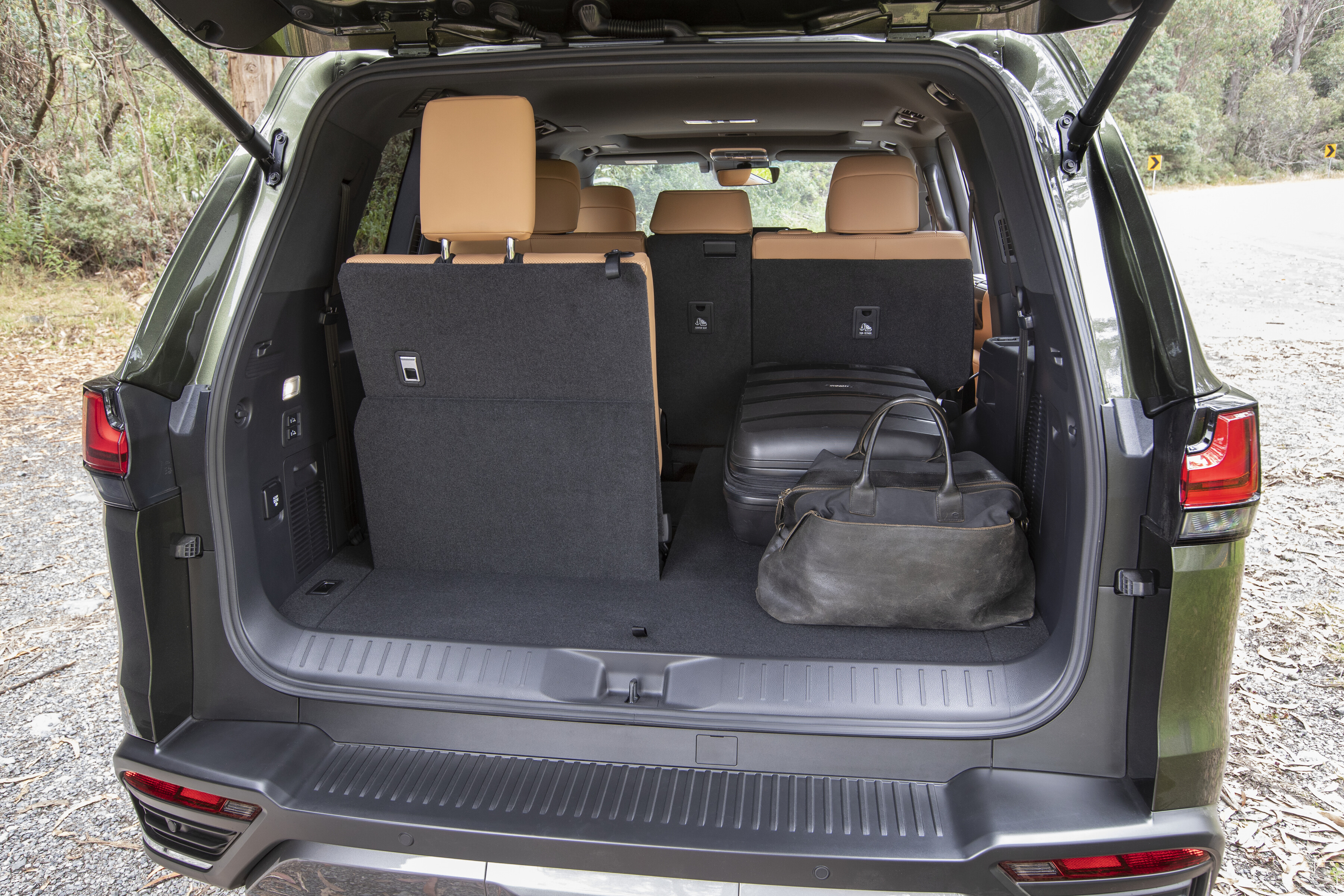
The wheel and tyre package on most LXs is also larger than what you can get on the Cruiser, with all but two in the LX’s nine-variant line-up rolling on 22-inch alloys – however that doesn’t translate to a ride that’s on the firmer side of the spectrum.
Instead, the LX has a great balance between suppleness and roadholding, with just a hint of body-on-frame jiggle over very low-amplitude, high-frequency bumps to remind you that this behemoth is sitting on a ladder-frame chassis.
The Toyota may filter out some of those kinds of imperfections better, especially those variants with fatter sidewall profiles, but that kind of assessment will have to wait for the inevitable back-to-back LX vs LandCruiser showdown.
On- and off-road
Exiting the city, the 3.5-litre petrol quickly settles into a nice lope. Generating 650Nm from 2000rpm to 3600rpm, the F35A-FTS is 50Nm down against the F33A-FTV 3.3L diesel but has a torque band that’s 600rpm wider, which, coupled with the 10-speed’s generous spread of ratios, makes it feel a lot livelier.
The 60 to 100km/h sprint is where it feels especially alive, crisply accelerating to highway speed with a quick flex of the ankle, while the 0 to 100km/h run is dispatched in just seven seconds flat – a clear second ahead of the diesel.
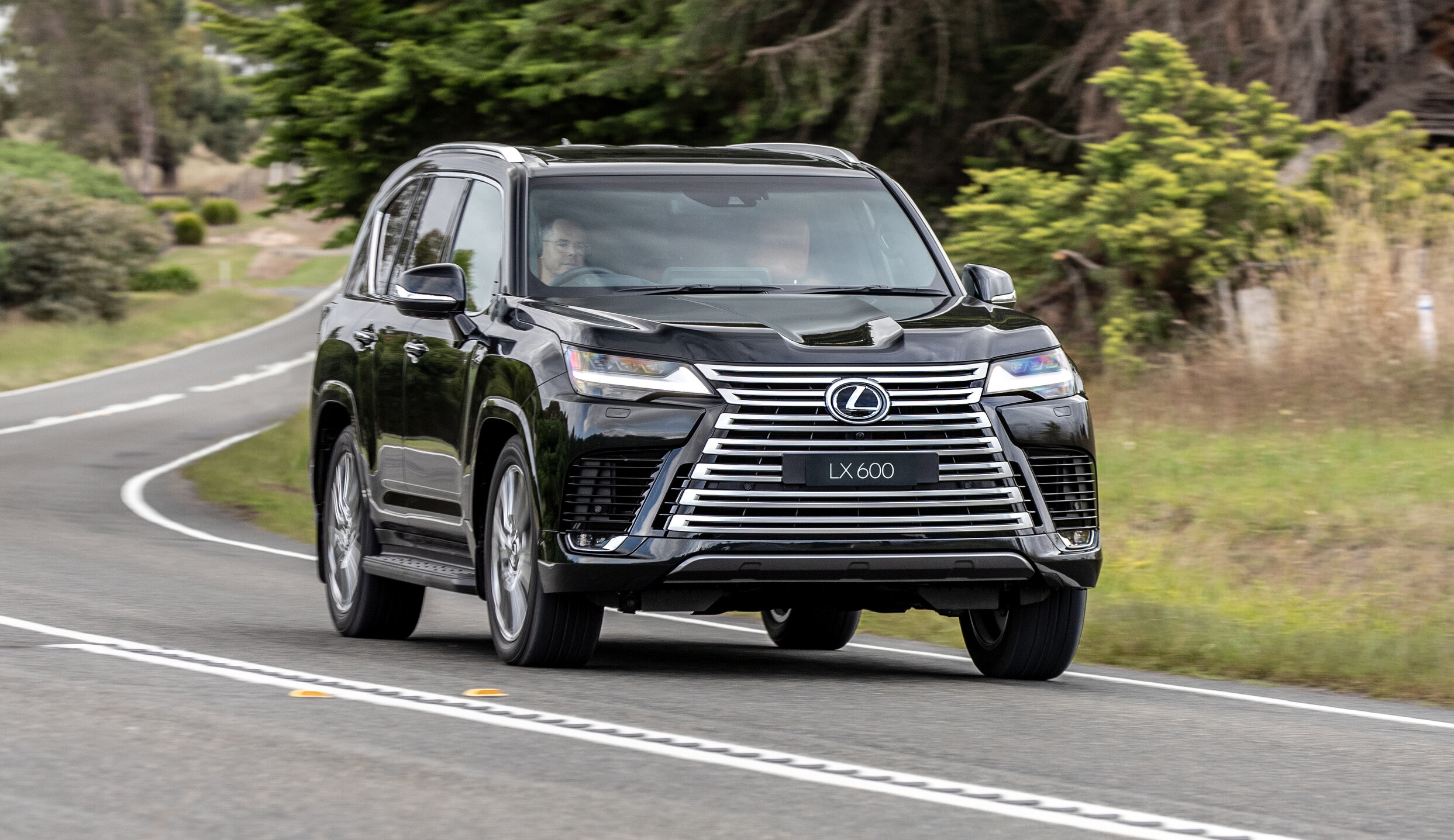
Fuel economy is also way ahead of the diesel, but in the wrong direction. The petrol burns a claimed 12.1L/100km on the combined cycle versus the diesel’s 8.9, and our time at the launch netted an average in the low 14s.
On dirt, the LX feels every bit at home and confident as the 300 Series. Rolling on Dunlop Grandtreks, the same tyre compound as the Toyota but upsized to 20- and 22-inch sizing, there’s a good level of grip on basic dirt roads and gravel access trails.
Off-roading time was limited to a fairly tame gravel and rock loop in the Geeveston area west of Hobart, which the LX dispatched with incredible ease, but it was good to see that the Multi-Terrain Select, crawl control and Downhill Assist Control systems are every bit as excellent in the LX as they are in the LandCruiser. However, a true assessment of the LX’s off-road talents will have to wait until we can get one into our testing garage.
Supply and demand
As it stands, the biggest drawback to the LX is the fact that finding one is going to be incredibly difficult. According to Lexus, it took over 400 pre-launch orders after it announced pricing earlier in the year, and with Australia only receiving an allocation of 50 cars a month for the remainder of this year, that means all of the supply has already been sucked up.
The company is working on securing a greater allocation for next year, but with COVID and computer chip supply disrupting production lines – including the Japanese line that produces both the LX and the 300 Series Cruiser – expect no relief on that front for the short term.
What’s interesting, though, is the data Lexus has gathered about its LX customers. Despite the provision of a fuel-efficient diesel from the get-go (the previous-generation LX only got a diesel in the last four years of its 14-year lifespan), over 60 per cent of LX buyers have opted for the more powerful – yet much thirstier – twin-turbo petrol.
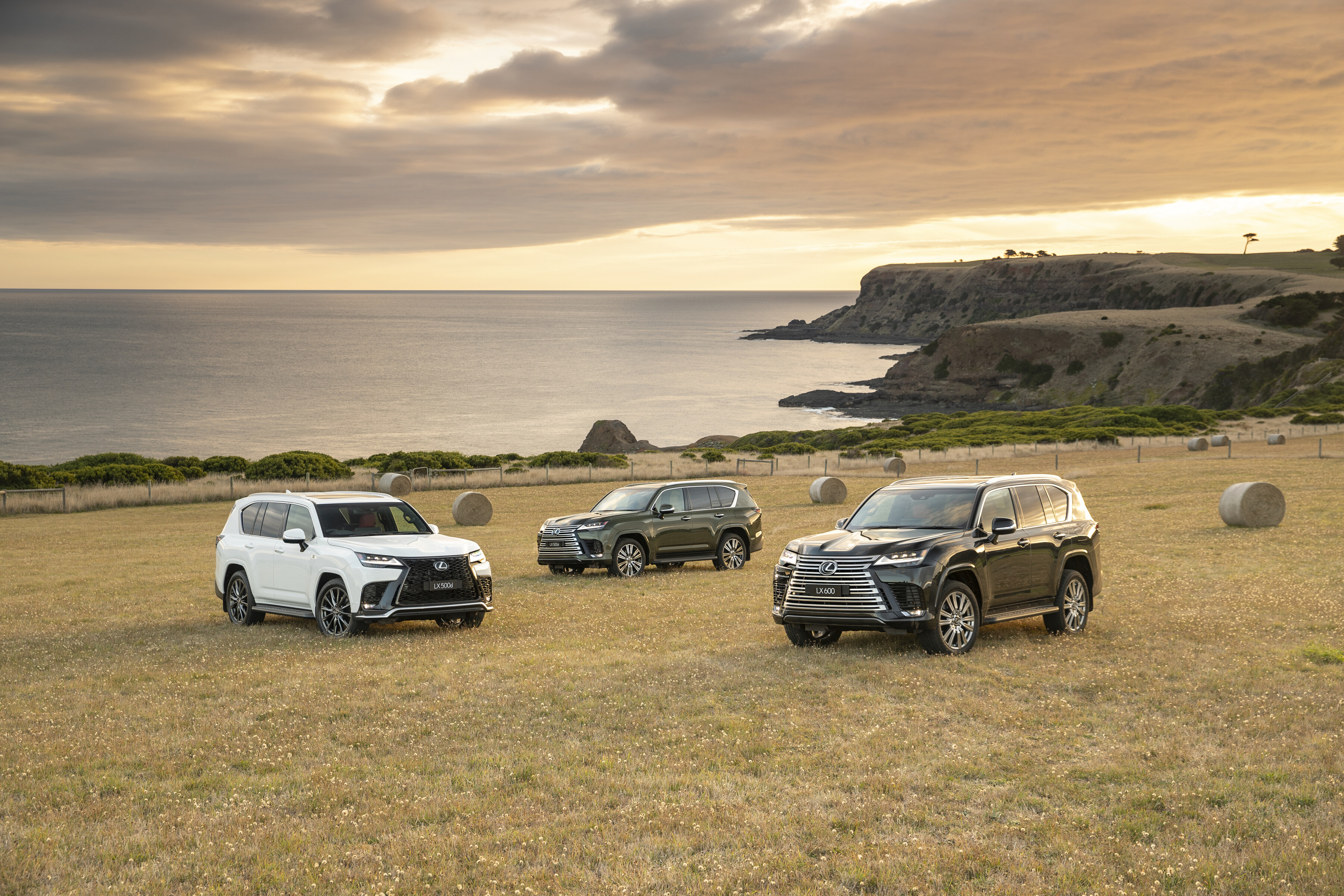
It’s also a very high-end mix. The base diesel and petrol seven-seaters account for less than 10 per cent of sales, while 40 per cent have gone for the seven-seat LX500d and LX600 with the $5500 enhancement pack. Perhaps Lexus should have made the pack’s 22-inch wheels, hands-free tailgate and glass moonroof standard, if those numbers are anything to go by.
Meanwhile a quarter of customers have opted for the F Sport trim, which ditches the seven-seat layout but gains an extra 30 litres of fuel capacity in diesel trim (all petrol models come standard with 110 litre tanks), as well as ventilated and heated front seats, a fridge, unique body plastics and wheel designs, plus the aforementioned F Sport-specific suspension and driveline hardware.
As for the four-seat LX 600 Ultra Luxury, that one model accounts for roughly ten per cent of all LX orders – something of a surprise considering its $210K-plus retail and unpragmatic four-seat configuration. The tastes of LX buyers have definitely changed.
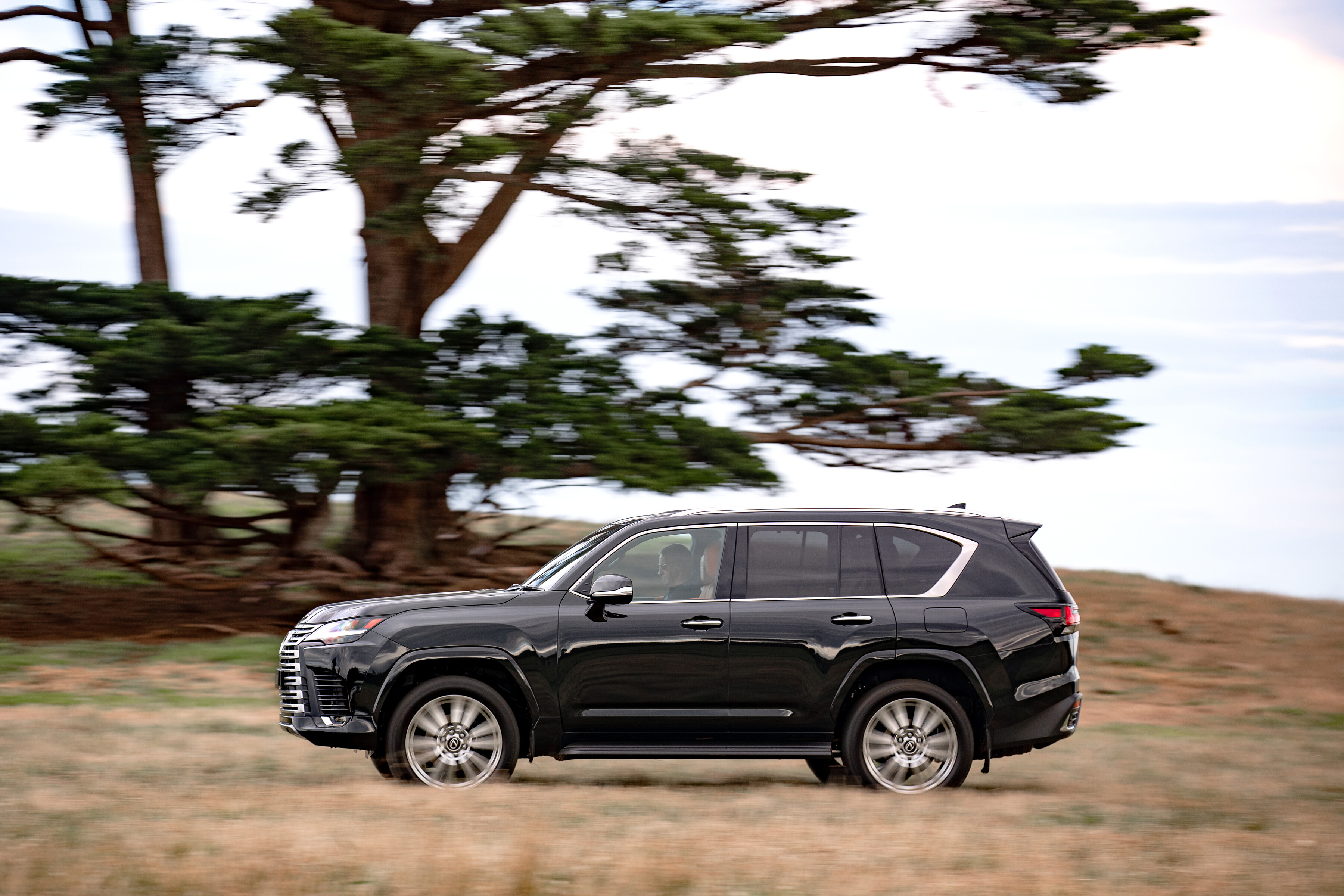
LX 500d F Sport
We also spent some time behind the wheel of the LX 500d F Sport, which cops its own road-biased suspension tune as well as a limited-slip Torsen rear differential and firmer front seat bolsters to better hold occupants in corners.
Its cornering prowess is more limited by tyres than anything else, but we can at least report that the F Sport doesn’t feel like a fish out of water when off the blacktop, retaining great suspension compliance and grip on potholed dirt roads.
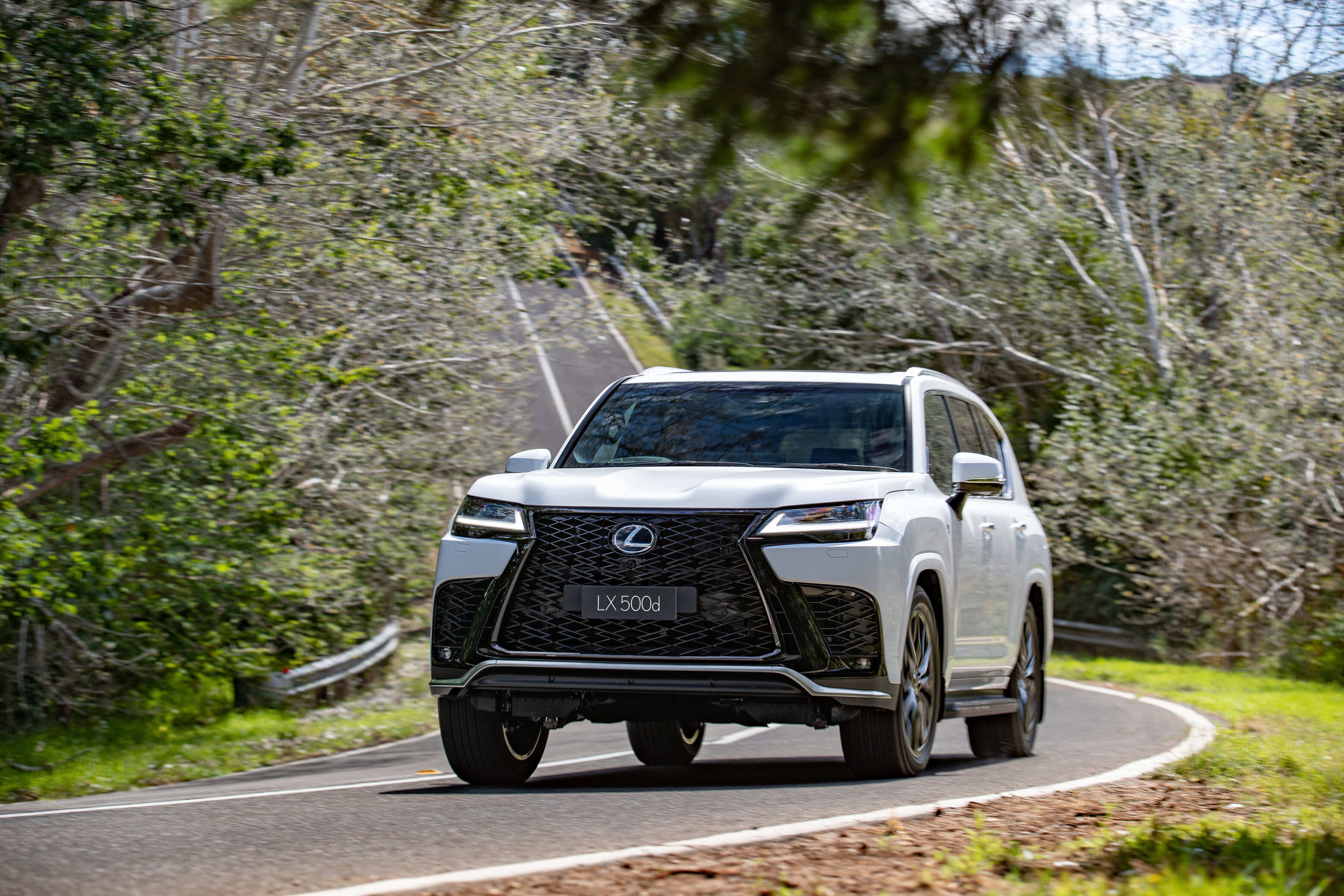
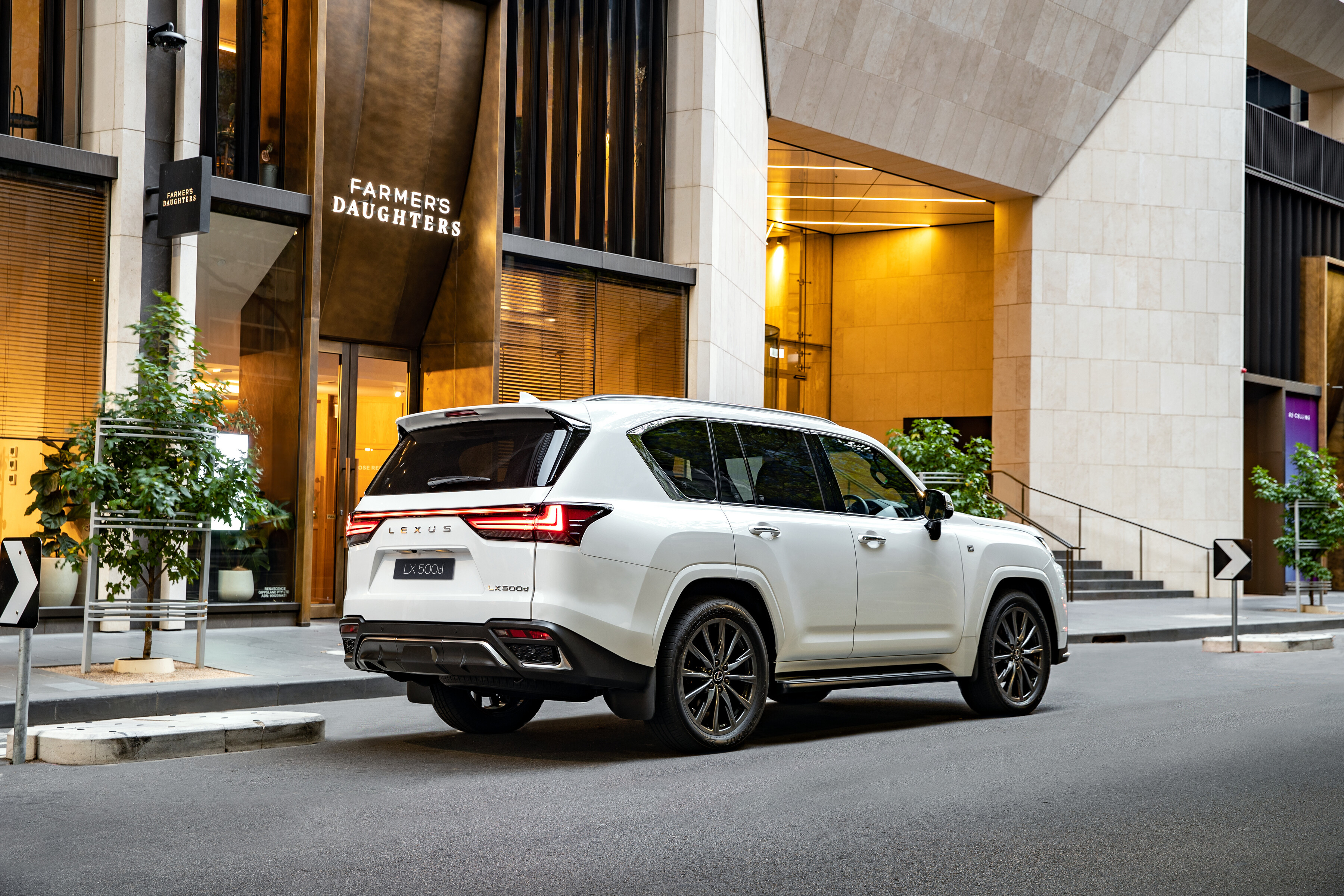
With a range that begins at $148,800 before on-road costs, the new LX succeeds in separating itself from its Toyota counterpart, while also providing an antidote to the wildly optimistic second-hand prices that Cruiser scalpers are asking for right now.
Its petrol engine is a peach, and a good pairing with the rest of the car provided you can stomach the elevated fuel burn, its effect on maximum range and its requirement for pricey 95 octane unleaded. We look forward to putting it through some more extensive tests.
Snapshot
- 2022 SsangYong Rexton line-up announced
- Priced from $47,990 drive-away
- New Black Edition joins range
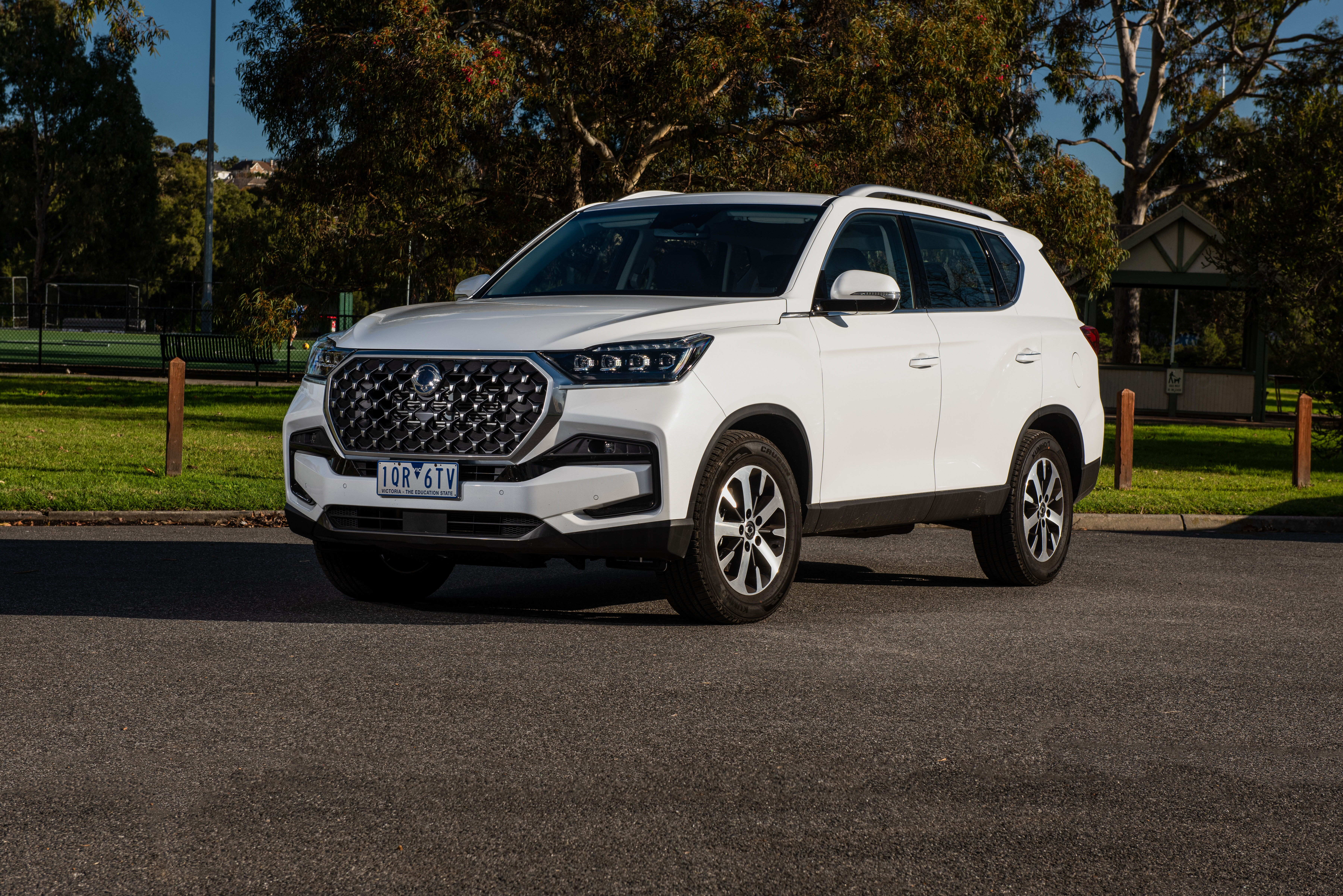
The 2022 SsangYong Rexton four-wheel-drive SUV range has expanded, with the announcement of a new range-topping, limited-edition variant later this year.
SsangYong has added a Black Edition to the seven-seater Rexton line-up, which gains a number of styling upgrades on top of the Ultimate’s features, as well as new LED front fog lights.
Available from August 2022 and priced at $1595 above the Rexton Ultimate, the Black Edition can be ordered in either Pearl White or Space Black for no extra cost – normally a $495 option.
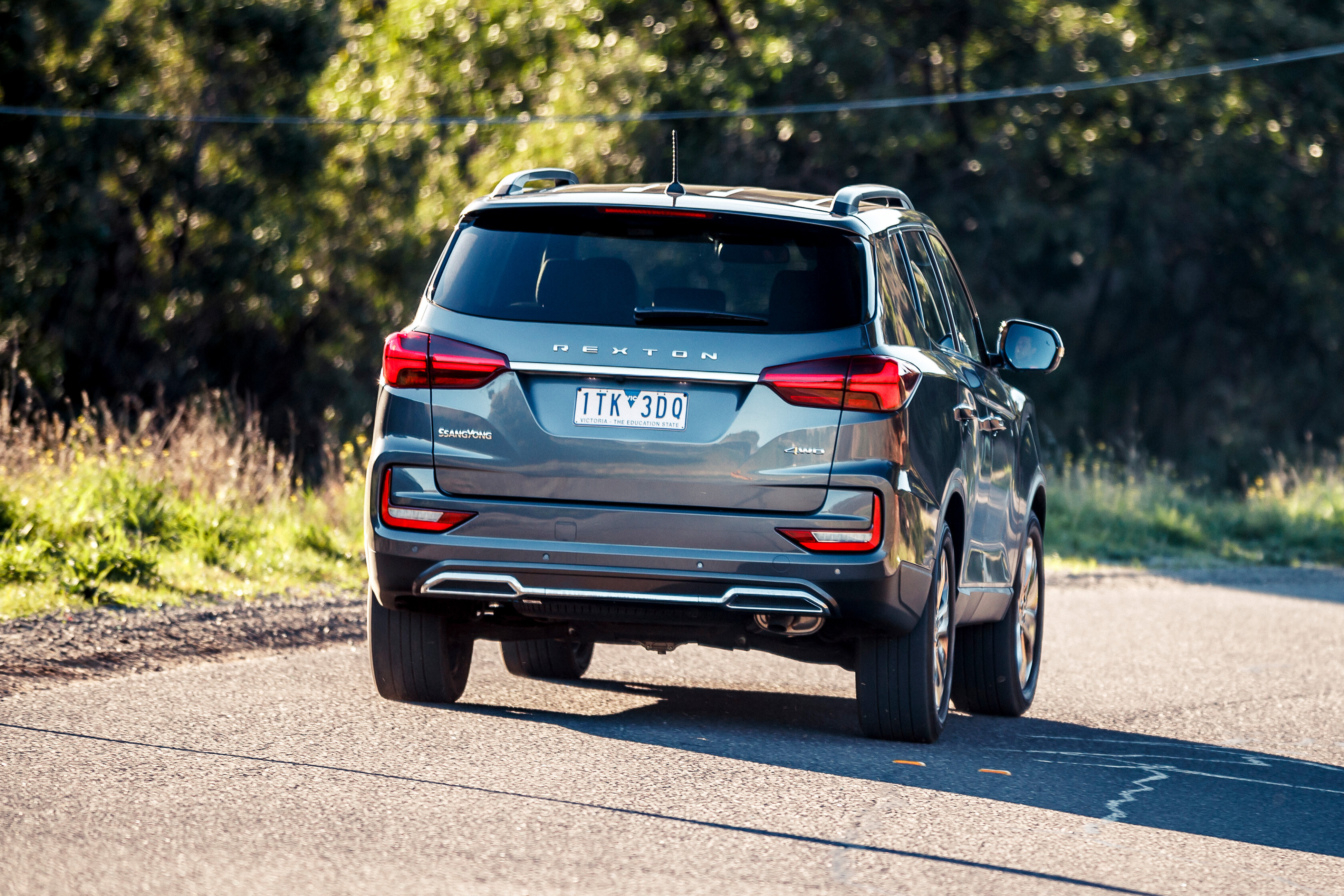
The Rexton range is powered exclusively by a 2.2-litre turbo-diesel engine, which primarily sends 148kW and 441Nm to the rear wheels through an eight-speed auto.
Inside, the driver is greeted with a 12.3-inch digital instrument cluster, while infotainment comes via an 8.0-inch touchscreen with Apple CarPlay and Android Auto.
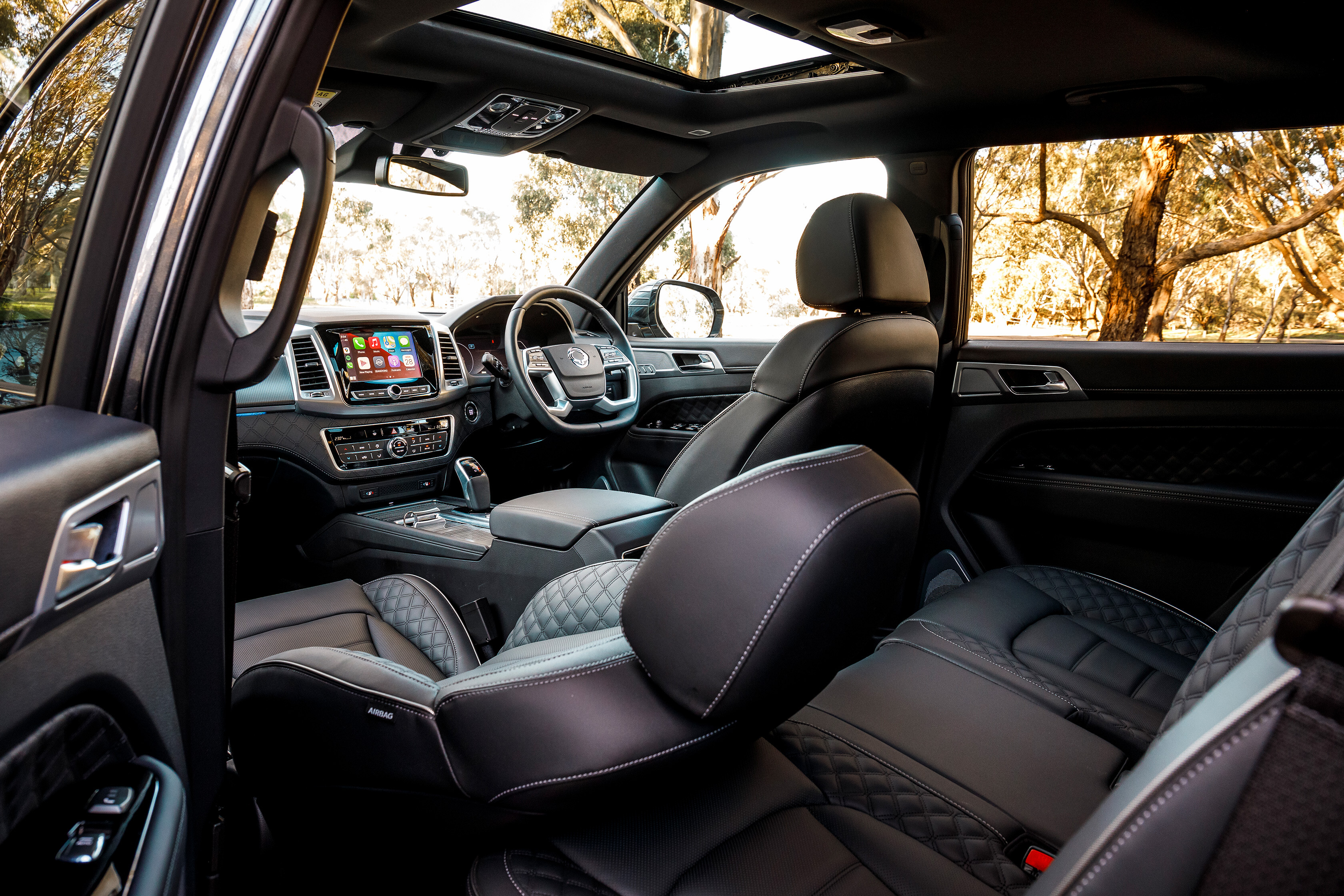
All models get synthetic leather trim with heated and cooled power seats, while Ultimate and Black Edition variants gain premium Nappa leather, a heated leather steering wheel, wireless smartphone charger, third-row air conditioning controls, a 360-degree camera, power sunroof, and power tailgate.
The SsangYong Rexton enjoyed a resurgence since its facelift, with sales growing by 182 per cent in 2021, making it the 10th fastest-selling model in Australia last year.
2022 SsangYong Rexton Australian pricing
Note: Drive-away pricing listed.
| Model | Price |
|---|---|
| Rexton ELX | $47,990 |
| Rexton Ultimate | $54,990 |
| Rexton Black Edition | $56,585 |
Standard features
Rexton ELX
| Seven seats |
| Automatic-locking rear differential |
| Automatic LED headlights |
| LED daytime-running lights |
| LED front fog lights |
| 12.3-inch digital instrument cluster |
| Synthetic leather seats with power adjustment |
| Heated and cooled front seats |
| 8.0-inch touchscreen audio |
| Apple CarPlay and Android Auto |
| Leather steering wheel |
| Reverse camera |
| Front and rear parking sensors |
| 18-inch diamond cut alloy wheels |
Rexton Ultimate
(in addition to ELX)
| Power sunroof |
| Power tailgate |
| Premium quilted Nappa leather interior with powered front seats |
| Speed-sensitive steering |
| Heated leather steering wheel |
| 360-degree camera |
| Wireless phone charger |
| Third-row air conditioning controls |
| Ambient interior lighting |
| Illuminated front door scuff plates |
| Touch-sensing front door locks with walk-away auto-door locking |
Rexton Black Edition
(in addition to Ultimate)
| Black front grille |
| New-style LED front fog lights |
| Black 20-inch alloy wheels |
| Black roof rails |
Engine and driveline
The Rexton is powered by a 2.2-litre turbo-diesel four-cylinder engine producing 148kW of power and 441Nm of torque.
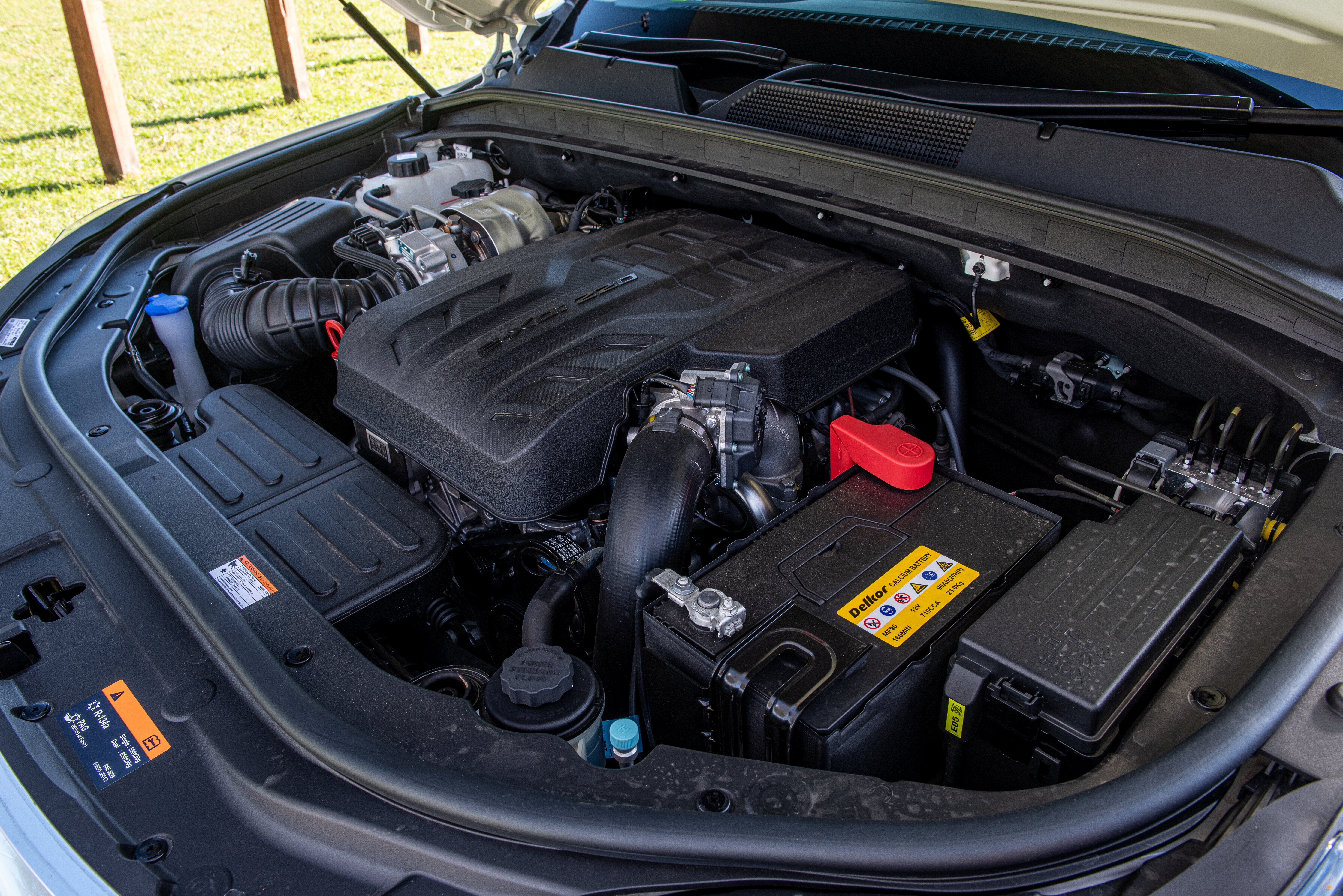
Drive is sent to the rear wheels in day-to-day driving through an eight-speed torque-converter automatic, with selectable low-range four-wheel drive and an automatic locking rear differential for off-road environments.
Fuel consumption is listed as a combined 8.7L/100km, with the 70-litre fuel tank offering around 805km of range. Emissions are claimed at 223g/km of CO2, combined.
Dimensions
The 2022 SsangYong Rexton has a wheelbase of 2865mm, while the body measures 4850mm long, 1825mm tall, and 1960mm wide, with 203mm of ground clearance.
Approach and departure angles are both 20.5 degrees, with a breakover angle of 20 degrees.
With the third row of seats folded down, the Rexton offers 641 litres of luggage capacity, increasing to 1806L with both the second and third row of seats folded.
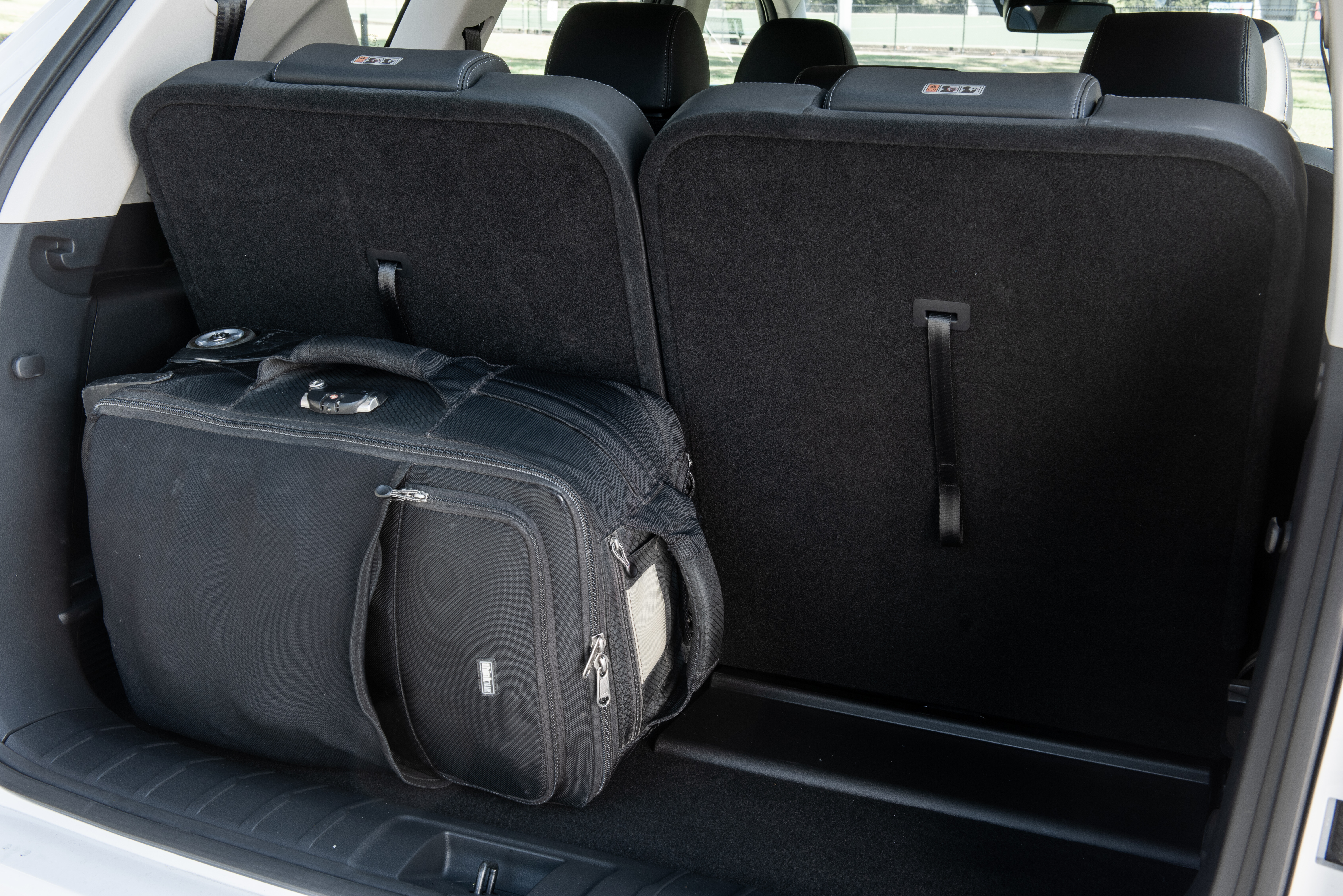
The SsangYong has a braked towing capacity of 3500kg braked, or 750kg unbraked, and a maximum towball load of 350kg.
Safety
| Tyre pressure monitoring system |
| Trailer sway control |
| AEB with forward collision warning |
| Lane-change collision warning |
| Safety distance warning |
| Blind spot warning |
| Auto high beam |
| Front vehicle start warning |
| Rear cross traffic warning |
Warranty and servicing
As with the wider SsangYong range, the Rexton comes with a seven-year/unlimited-kilometre warranty, together with seven years of roadside assistance.
Basic servicing for the first seven years costs a total of $2625, if performed at a SsangYong dealership.
When will the 2022 SsangYong Rexton arrive in Australia?
The 2022 SsangYong Rexton can be ordered now in ELX or Ultimate trims, with the Black Edition going on sale from August.
Kas Salar, the owner of this stunning 2006 Td5-powered Land Rover Defender, is mad keen about his fishing. I don’t just mean he likes a flick on the weekend, he dreams about catching kingfish or marlin and bases his trips around where fish will be biting at certain times of the year.
He’s actually in the process of packing for a trip to Fraser Island as we speak, with boat in tow, living out of this Defender for a week at Sandy Cape.
The vehicle, and accessories need to be reliable for such a mission, with everything from the engine to the 12V system being tested, Kas knows this full well and has put together a remarkable package to ensure he’ll have a good time.
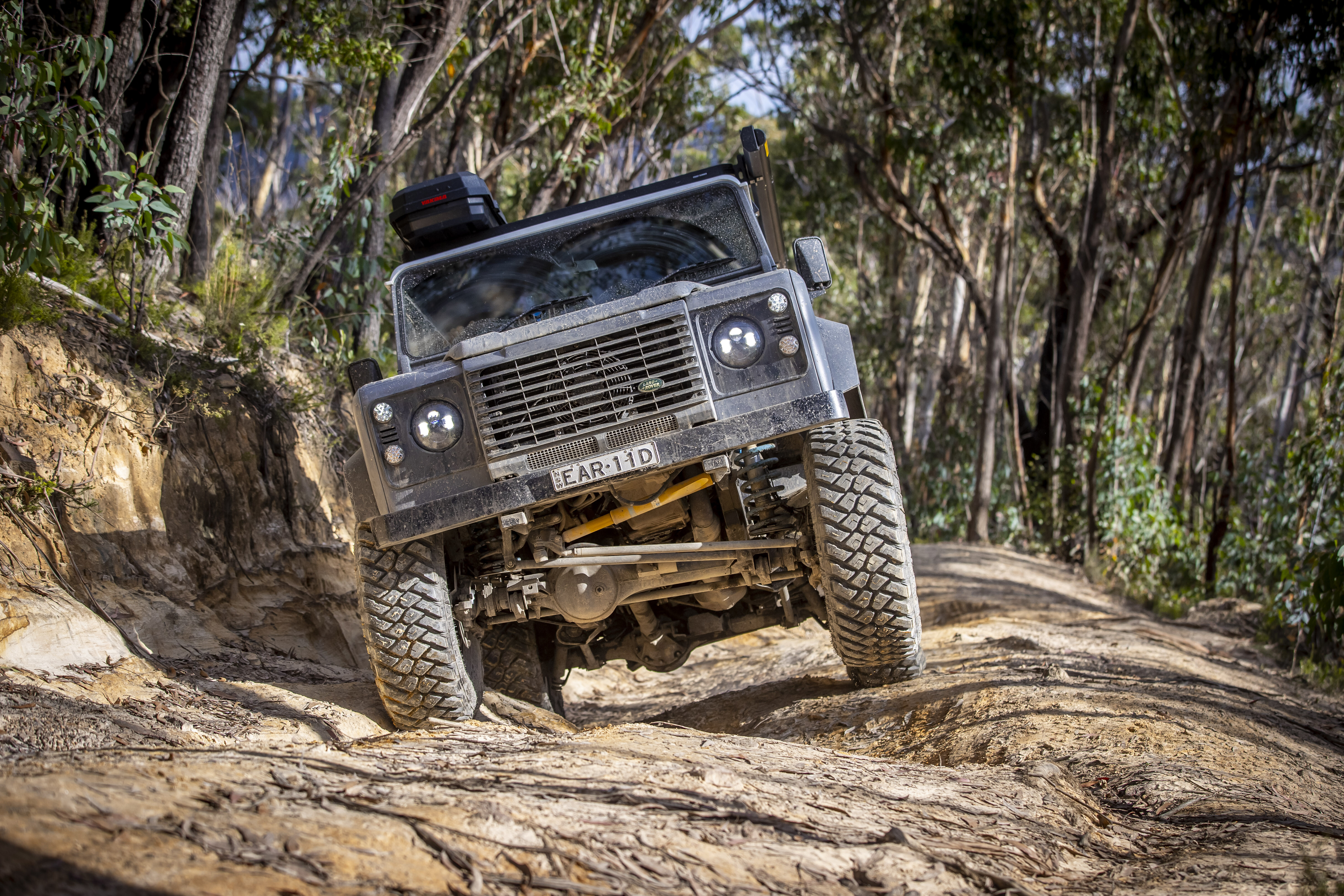
“My initial love for four-wheel driving was ignited when I was about 19 and I would borrow my dad’s bone stock Suzuki Sierra, fill the car with all my mates and go camping at Stockton Beach,” Kas tells us. “These trips are still some of my fondest memories camping and I think that says something for how basic a 4×4 and camping set-up you can have and still have a great time”.
A few blown clutches and lots of snatch recoveries later and Kas decided it was time to buy his own 4×4. “Growing up with the Sierra I became fond of boxy short-wheel-base 4x4s and decided a Jeep Wrangler JK (2012 Rubicon short-wheel-base purchased brand-new in 2013) was the obvious next step for me.”
There was another LWB Wrangler as well, which Kas went to town on, fitting 37-inch tyres and hitting every rock crawling track he could find. However, the urge to build a touring vehicle more suitable for longer fishing trips was keeping him awake at night. So how did he end up with a Defender?
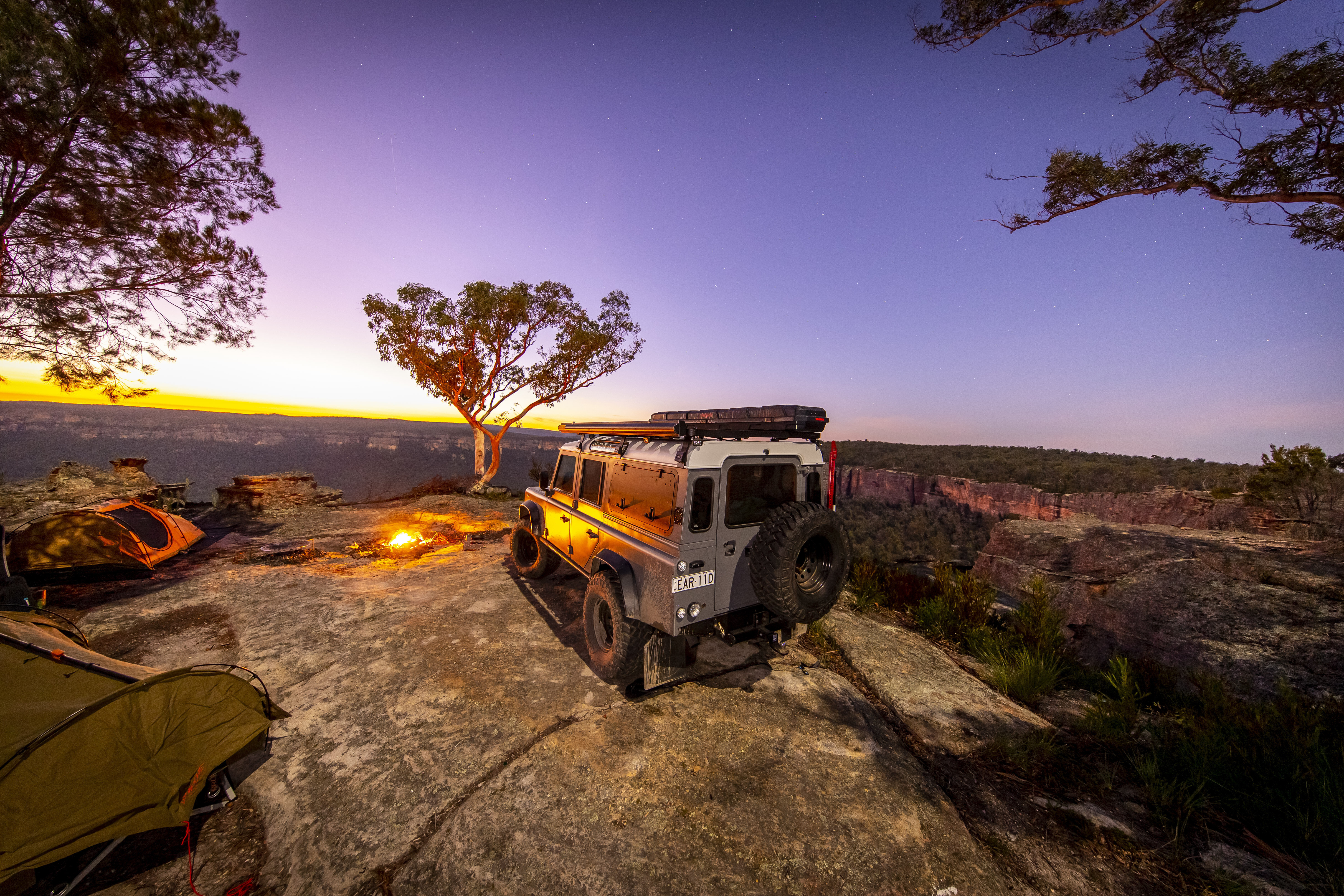
“I met Brendan at Adventure Merchants and got chatting about the different fit-out options for whatever build I ended up with,” Kas tells us. “I noticed all the Land Rovers they had around the place and started getting interested. The Defender has that same boxy shape I had with the Jeeps and even back with my dad’s Sierra and they had this somewhat timeless classic look to them. A few weeks of looking and I had made up my mind the Defender 110 was going to be my first tourer”.
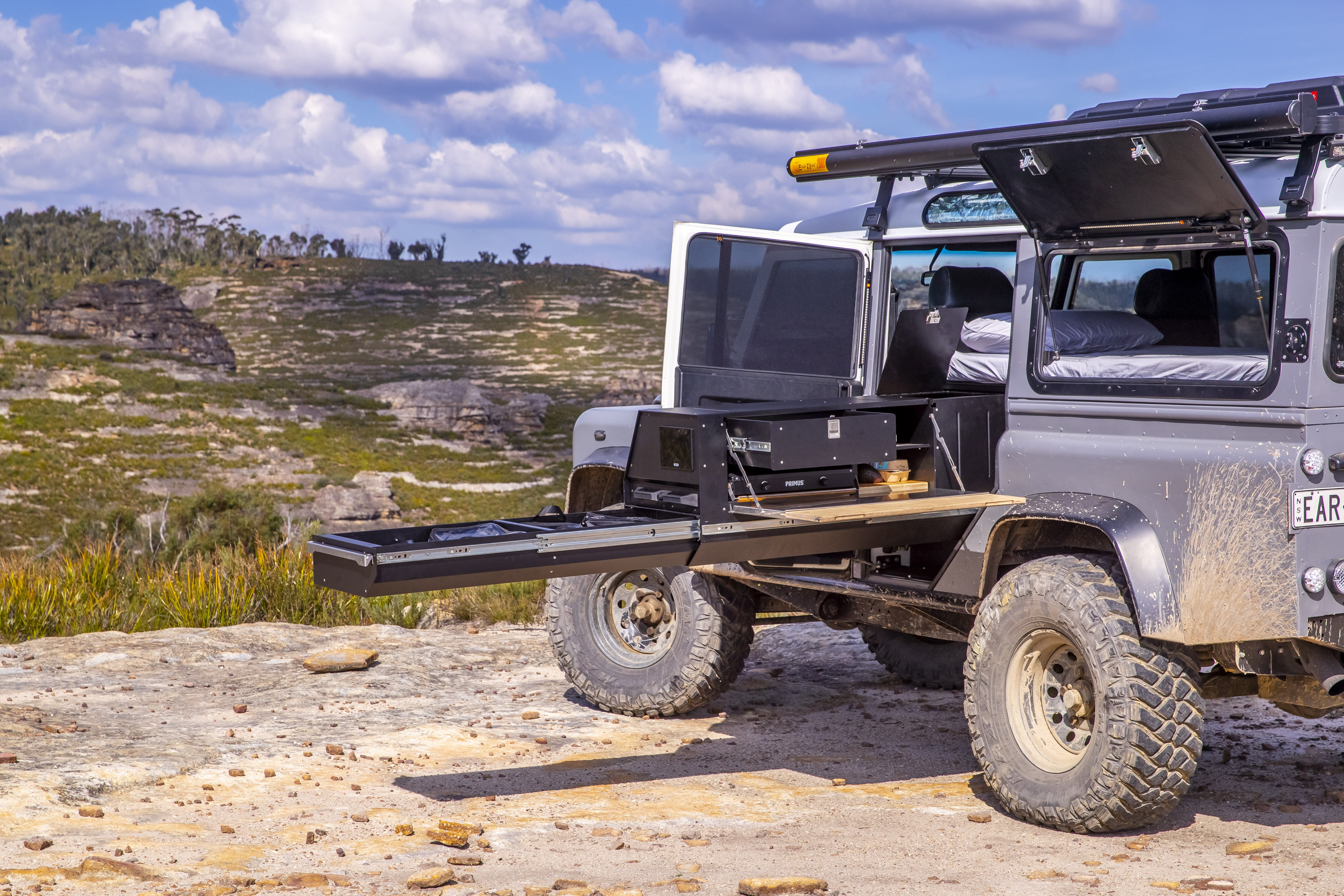
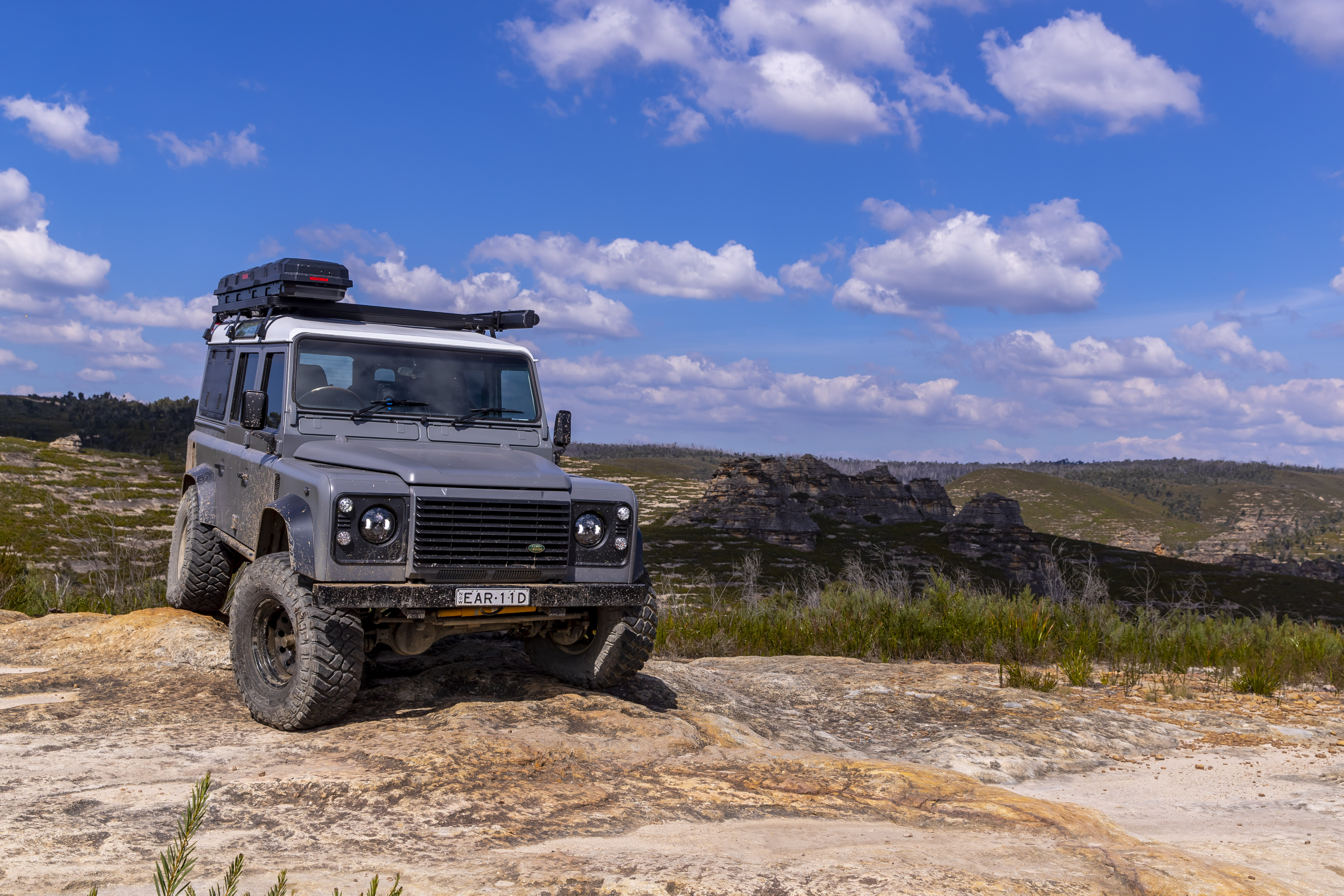
And what a tourer he has created, including a full respray in Audi Nardo Grey and interior fit-out complete with slide-out kitchen and bed (Kas says he’s had enough of sleeping in a swag). Let’s take a closer look at this absolutely wicked Defender.
Interior modifications
Land Rover Defender seats are, how do we say it delicately … crap. When Kas bought the Landie it already had a Recaro seat fitted to the driver’s side, so he decided to bolt one to the passenger side as well, not before having them retrimmed in black leather with grey stitching. These seats have small upper bolsters and have a period correct look about them compared to a lot of other aftermarket seats.
The centre console and dash have also been trimmed in the same leather and stitching as the seats to match, as well as the headliner and carpet which have been trimmed in black. Two stages of Car Builders sound deadening and insulation has its job cut out for trying to keep heat and sound levels down, something Kas says was very worth the effort in a noisy vehicle like a Defender.
Beefed-up driveline
It is common knowledge that when you bolt on larger tyres, such as these 35-inch Maxxis RAZR muddies to a Defender and plan on wheeling it hard, things are going to break.
Kas’s Defender has received the works burger with the lot when it comes to driveline upgrades, in a quest for reliability when pushing bigger rubber and more power. Starting with a heavy-duty clutch, with solid-mass flywheel and the addition of a clutch booster to assist with pedal feel.
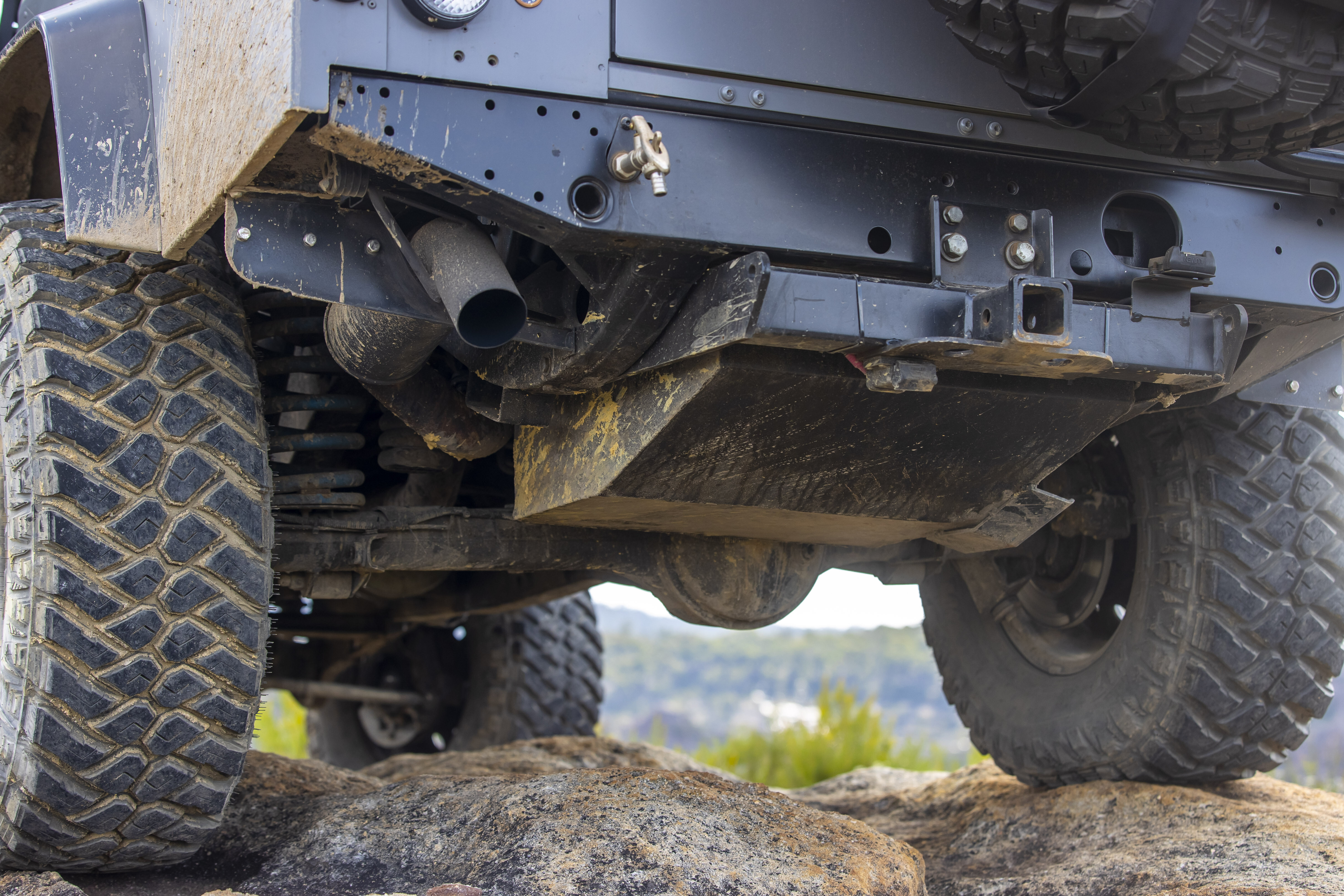
A heavy-duty Tom Woods double Cardan heavy-duty driveshaft was installed, before the MaxiDrive catalogue was thrown the Landies way. Both front and rear differentials are locked with MaxiDrive vacuum lockers, which have proved their worth time-and-time again.
The front end also receives MaxiDrive HD 23/24 axles (Kas says this is the strongest spline combination), a MaxiDrive County CV Conversion Kit with MaxiDrive HD Drive Flanges and County/Perentie CVs which are said to be the strongest CV joint made by Land Rover.
The rear end is beefed up with heavy-duty chromoly axle shafts, and MaxiDrive heavy-duty drive flanges. So far, this combination has held up well to the off-road conditions Kas enjoys conquering as often as possible.
Power upgrades
The 5-cylinder Td5 engine in stock form is no powerhouse, but it produces torque for days. Kas purposefully selected a Td5-powered Defender, as from his research they don’t mind making a bit more power with the right upgrades – how’s 200hp sound to you?
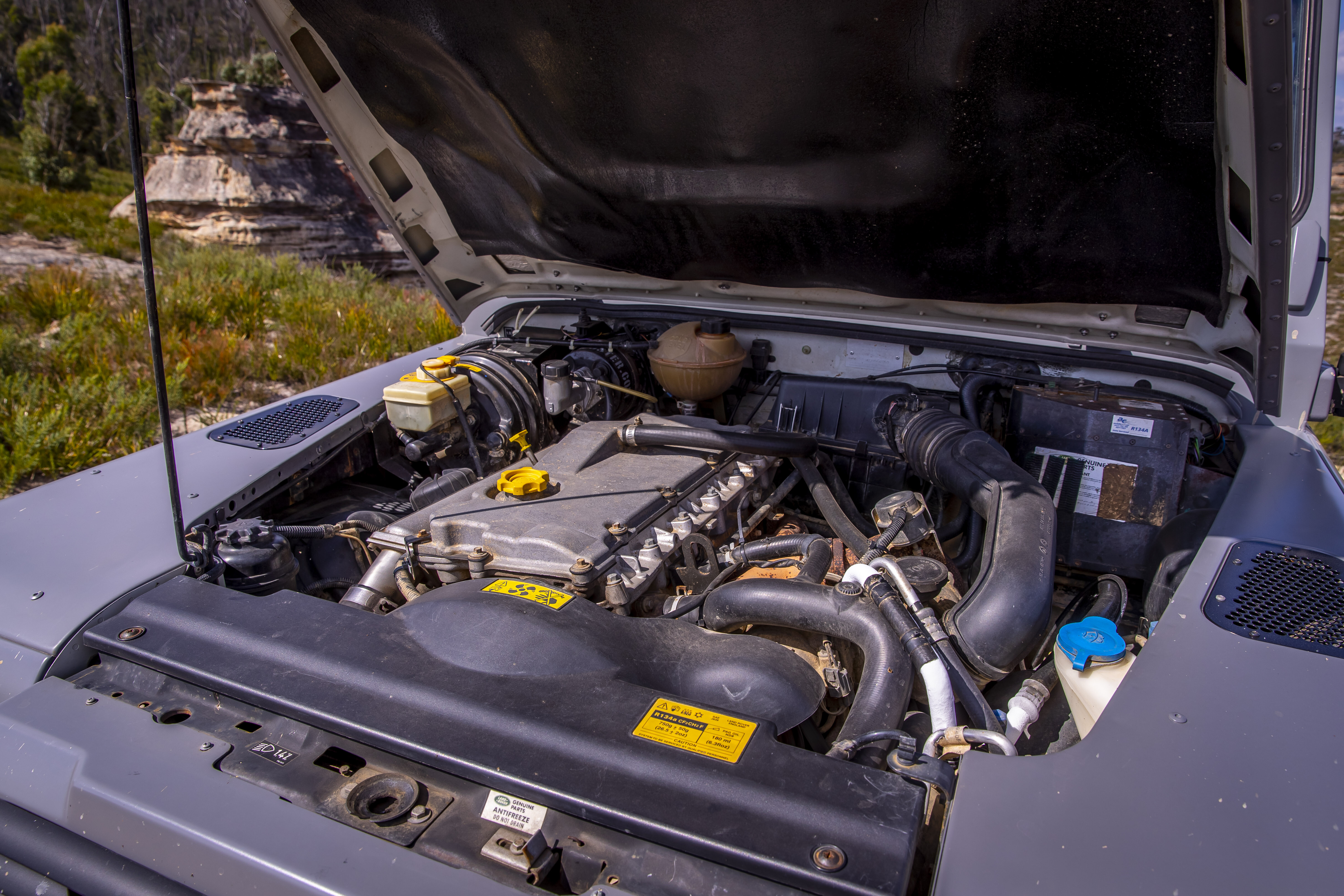
To achieve this power increase, the factory ECU was remapped, followed by the fitment of an upgraded hybrid turbo from Turbo Technics. Next up, a Td5 Alive boost control box, larger air-flow meter and intercooler were bolted on, as well as a Taipan 3-inch free-flowing exhaust with Vortex muffler to lower EGTs and provide a nice note.
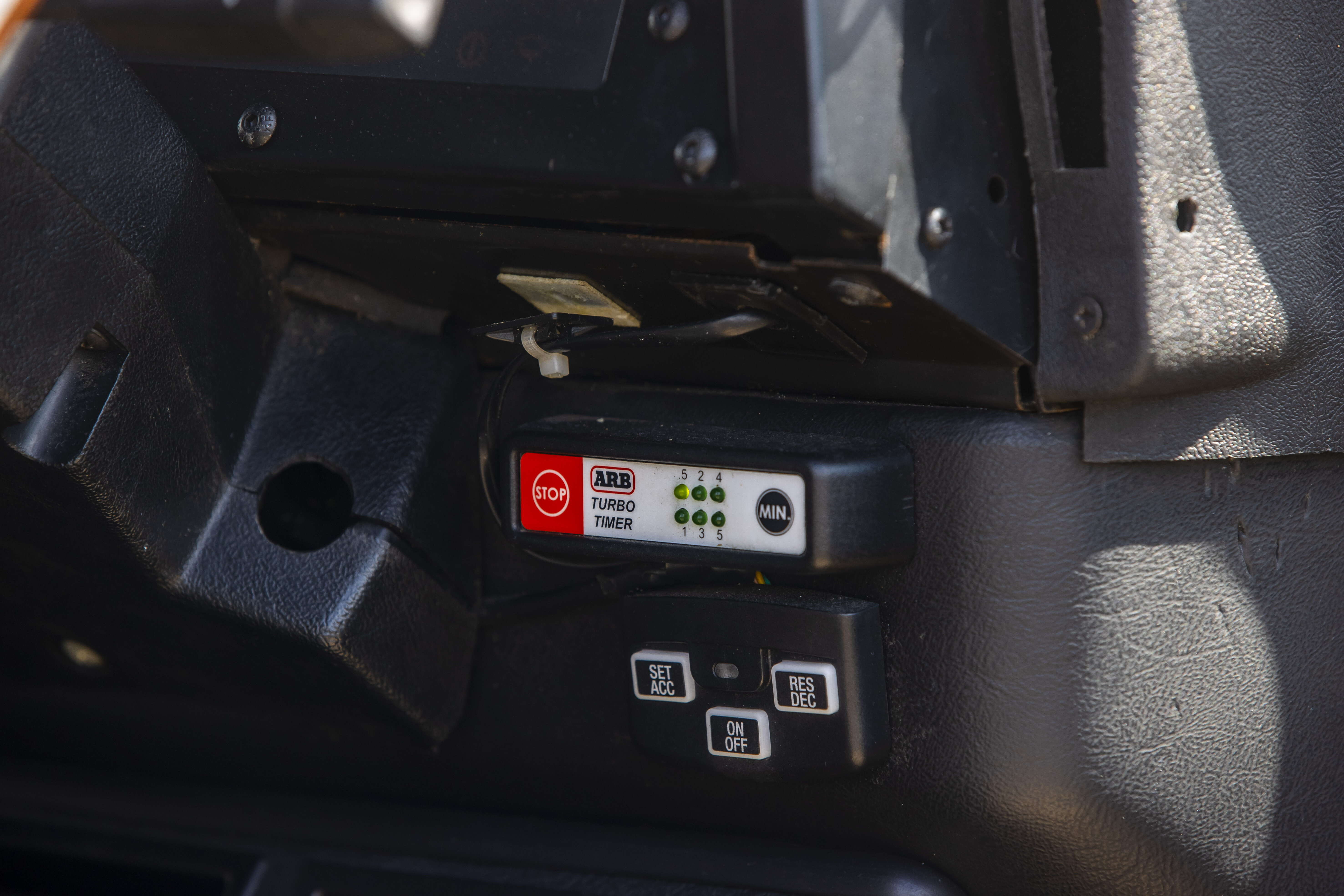
An ARB turbo timer has been wired in also, to allow for the turbo to cool down after long runs on the beach, or highway. Kas is rapt with the new-found performance of the Td5-powered Defender, and it’s not hard to see why.
Electrics
Kas has to keep his fridges running, not just to keep the beers chilled, which is important, but not as important as knowing his fresh bait and even fresher caught fish are kept in perfect condition.
He’s running a 100amp/h Enerdrive lithium battery to power his accessories, and a European-style starter battery with a lower profile to allow both batteries to fit under the seat as per the factory design. A dual-battery bracket has been installed to mount these batteries, as well as a Redarc 1225 DCDC charger.
Kas’s 12V system is controlled by a flash looking CZone Central Output Interface and a 7-inch touchscreen display as well as a Mastervolt MasterShunt 500. The system can be paired with an iPad, making for easy control and monitoring of everything electrical.
Solar is so important to allow Kas to live off-grid and stay out there catching fish for as long as possible, so he’s mounted a 120W flexible panel on the roof with a custom bracket.
“The best thing about the solar panel is its low profile,” says Kas. “You can’t even tell it’s even there.”
If the 120W panel isn’t enough, or he feels like parking in the shade, a second Anderson plug has been mounted under the front licence plate which allows for a solar blanket to also be plugged in to the 12V system.
Touring set-up
Simple is good when it comes to suspension in a touring four-wheel drive, Kas has kept things simple by running a mild 2-inch lift, with Aussie Ryder shocks that have recently been re-valved to better cope with weight.
Terrafirma front radius arms and rear cranked radius arms have been chosen for increased strength and improved suspension geometry, and for additional wheel travel spring retainers and dislocation cones to allow for maximum droop thanks to longer shock absorbers.
Kas also had the chassis reinforced with steel plates, giving peace of mind when loaded up on corrugated roads. This lift provides enough clearance for the Maxxis RAZR mud terrains, in a 315x76R16 size, which has been engineered, thus fully road legal.
The Defender carries a total of 165L fuel, made up of one long-range 125L tank bolted in stock-tank position, and a 40L auxiliary tank mounted in the rear right quarter. Both fill from a standard fill point, with the long-range tank filling first and once full, fuel then flows in to the smaller tank.
Water storage is super important for Kas, so he’s had multiple options installed in to the Defender.
“There are two separate water tanks in the rig, one is in the left rear quarter panel and fills from a filler next to the gull-wing on that side; there is a tap on the rear bumper. This is gravity fed and mainly used for washing hands, washing fishing equipment and washing dishes.
“The other tank is part of the custom fit-out Adventure Merchants have done on the car. It sits under the slide-out kitchen and takes up the footwell space behind the front seats bringing it up to level with the rest of the floor. This tank is 60 litres and is run by a 12V pump. The only visible part of the system is an outlet to plug a hose in to and a switch on the right-side rear passenger side,” Kas tells us.
Settled back in the late 1800s when gold was found in the area, the Top End’s Pine Creek is now a town full of history with a treasure trove of heritage, mining sites and railway buildings.Pine Creek, a good two hours south of Darwin, is now just a little stopover off the main highway, but there are heaps to see and do, including driving the Northern Goldfields Loop that heads back north towards Adelaide River.Today’s Pine Creek is just a small community where travellers stop overnight but back in the day, this place was booming. Gold was found by construction workers in 1870 when a drilling crew for the Overland Telegraph Line found alluvial gold near Yam Creek.
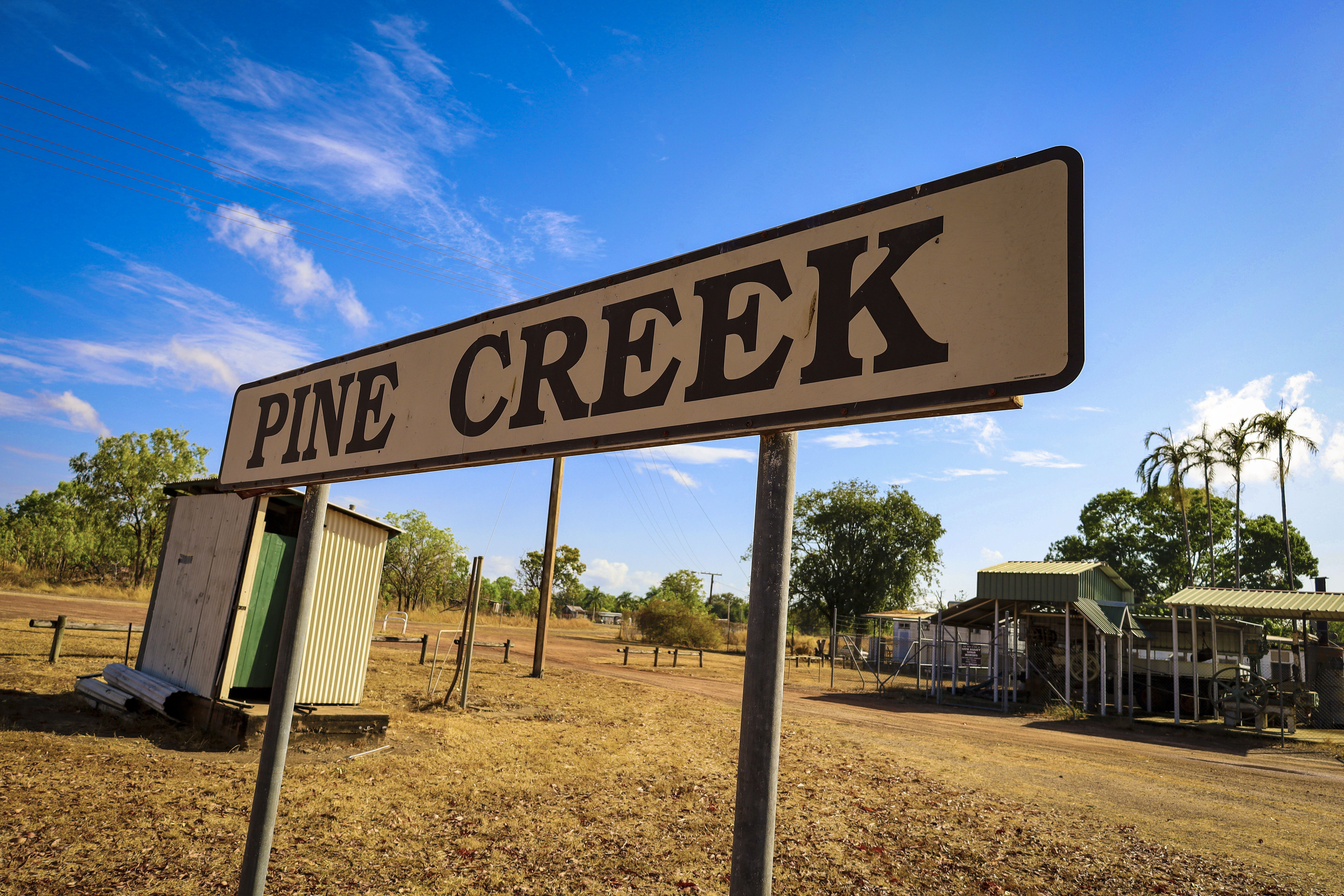
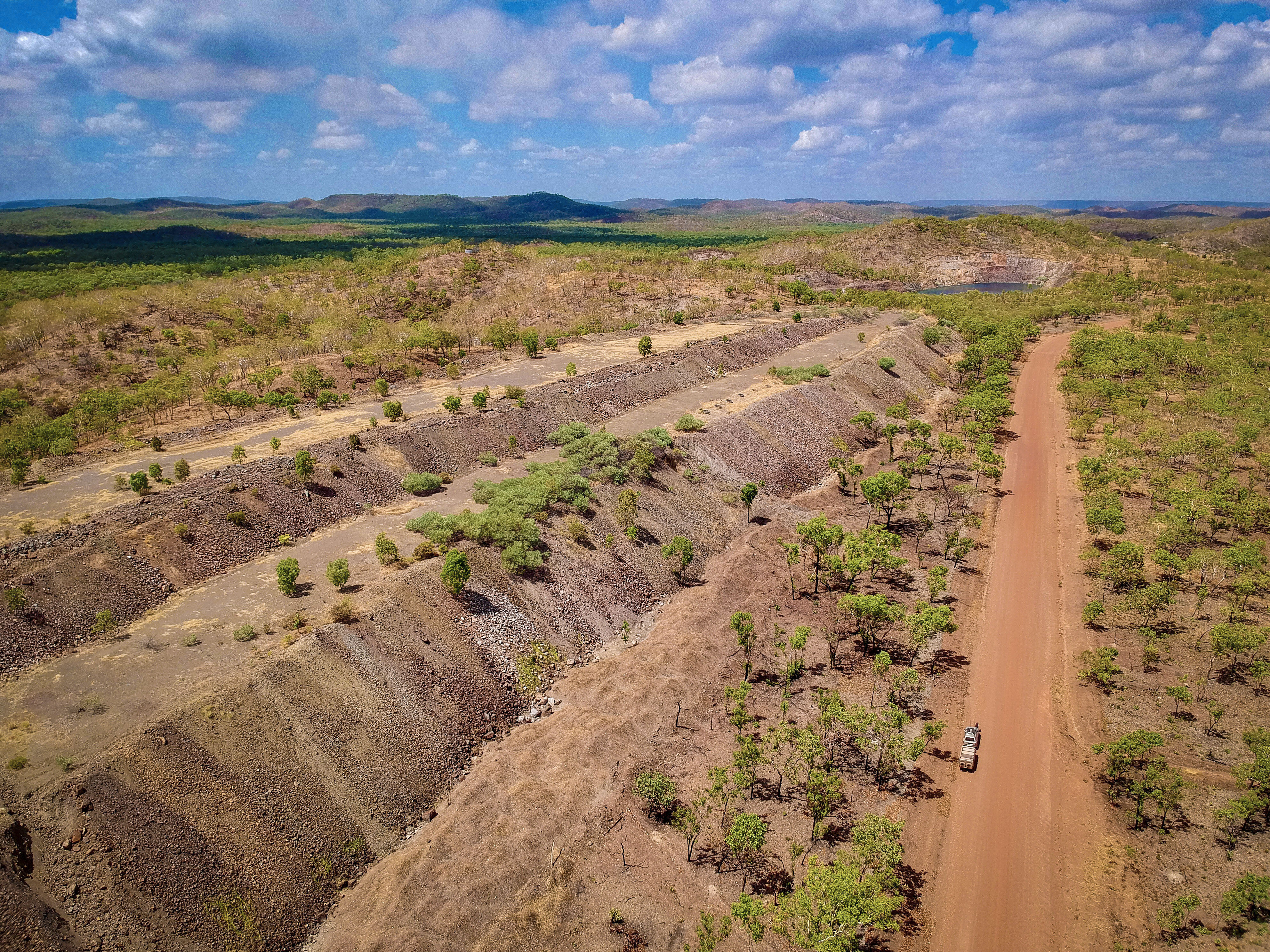
Over the next few years it was one of the most frantic gold rushes that the north had ever seen, where in just three years, major goldfields were declared. As the town grew, it became a repeater station for the Telegraph Line and by 1889 a railway line was built from Darwin to Pine Creek. This was to be the start of the transcontinental railway line down through the Red Centre to Adelaide.The first train arrived at the Creek in 1889 after 310 bridges and flood openings were built from Darwin. From the turn of the century, the town and indeed the railway were significant to the mining industry where apart from gold, other minerals like iron ore, silver, lead, zinc and uranium were found and transported back to Darwin. During WWII, Pine Creek was used as a staging camp and many mines reopened to support the war effort.Since gold was found back in 1870, there were a reported 2000 Chinese miners working the mines and other areas through the 15 registered mines that were dug. One of the biggest mines was the Enterprise. It started off as a simple shaft but soon grew to a massive open pit where more than 23,000kg of gold was extracted over 10 years. The mine can be viewed near the centre of town, at the end of Moule Street, but is now full of water with the deepest point 135m below the surface. Also at the viewing area are several Chinese mines that you can look down at through the safety fences.
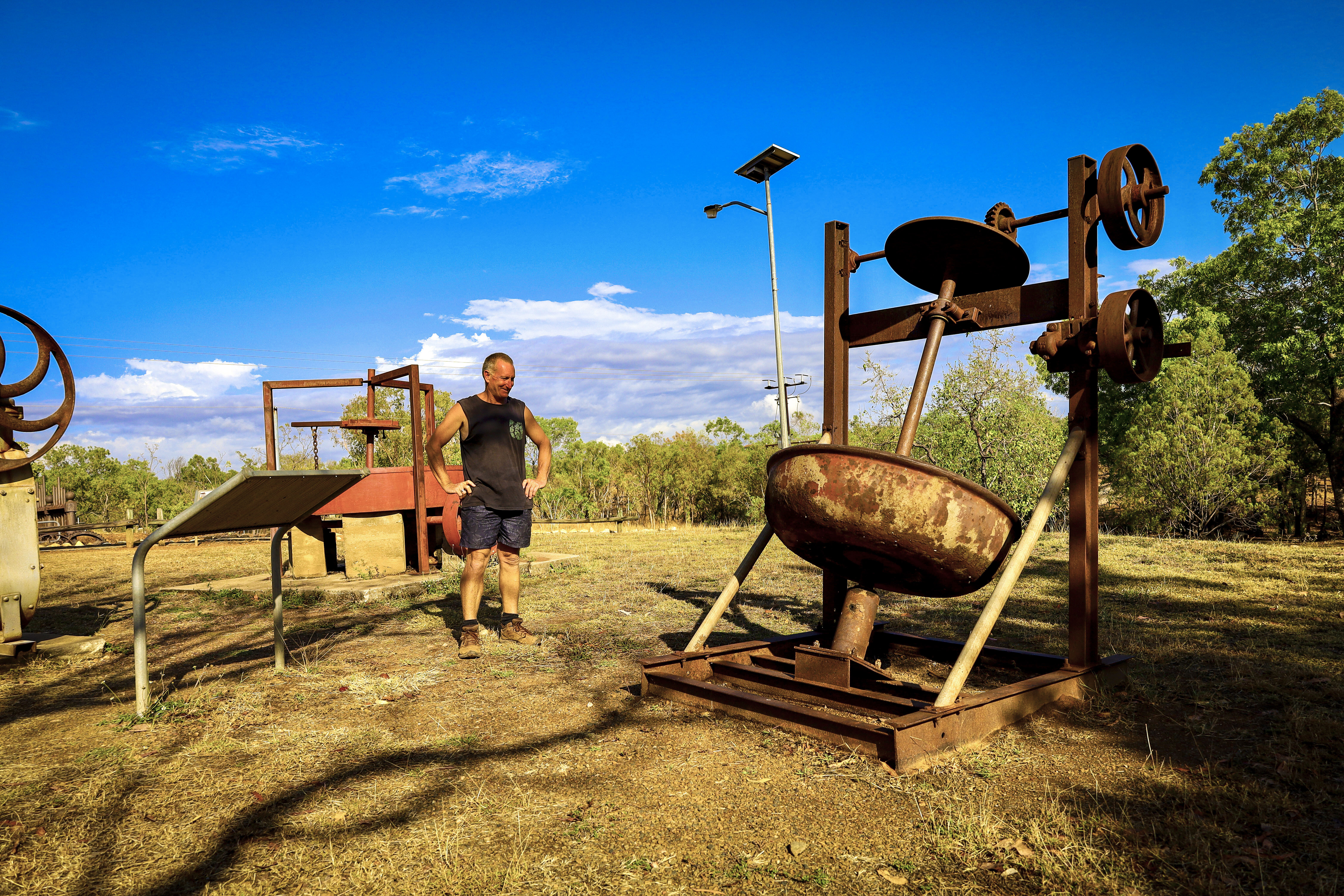
As the Pine Creek goldfields grew, the town’s infrastructure did too, with a police camp, hotels, bakery and a school. As recently as 1995, the major goldfields in the area ceased operations as they were unviable, and today local prospectors now scratch around for a little colour. Over time, big amounts of ore, tin and uranium have been pulled out from around the area.Pine Creek is pretty unique, as locals have gathered a lot of the old mining gear and put it on display in the Miners Park at the northern end of town. To be honest, this is one of the best displays I have seen with everything from a huge 120-head stamper, rail carts, steam winders, mine heads, steam engines, shakers, pulleys, wheels and so much more. Every displayed piece has an info board attached with so much information on the particular exhibit, its use and the time frame when it was used; there’s so much here it’s hard to take it all in.
Railway South
When the idea of a rail line was to be built in 1883, the government of South Australia – which at the time incorporated what we now know as the NT – in 1886 awarded the contract to a Melbourne company who used ‘coolie’ labour. This entailed using Indian and Singhalese doing the earthwork, followed by the Chinese laying the rail plates and line, accomplishing up to 1200m a day.
Unfortunately for Pine Creek, years after it opened, only two trains a week came from Darwin, and then in 1917 the line extended south to Katherine, making Pine Creek an unimportant stop. But during WWII an airstrip was built and a dispersal base for the troops, which saw an incredible 147 rail services a week running through Pine Creek to Darwin.Today, the rail museum in town is pretty impressive, with buildings chock-full of memorabilia, and train engines and carriages. Incidentally, the Pine Creek Museum is the oldest prefab corrugated iron building in Australia, and listed by the National Trust.Back in its heyday, it was the home for the mining warden across in the goldfields at Burrundie, and was moved to its present location in 1913. It’s had a chequered history as a clinic, military hospital, post office and a phone exchange.
Wandering around the streets of Pine Creek you can see the old buildings including the Ah Toy Bakery which was used as a butcher shop, then a bakery that was used until 1945 when bread was trucked in from Darwin. Other tin buildings around town include the old station master’s house, Maysie’s House that’s complete with 1950 decor and miners’ cottages which, incredibly, are lined with corrugated iron – summertime temps inside must have been insane.
Northern Goldfield Loop Heritage Trail
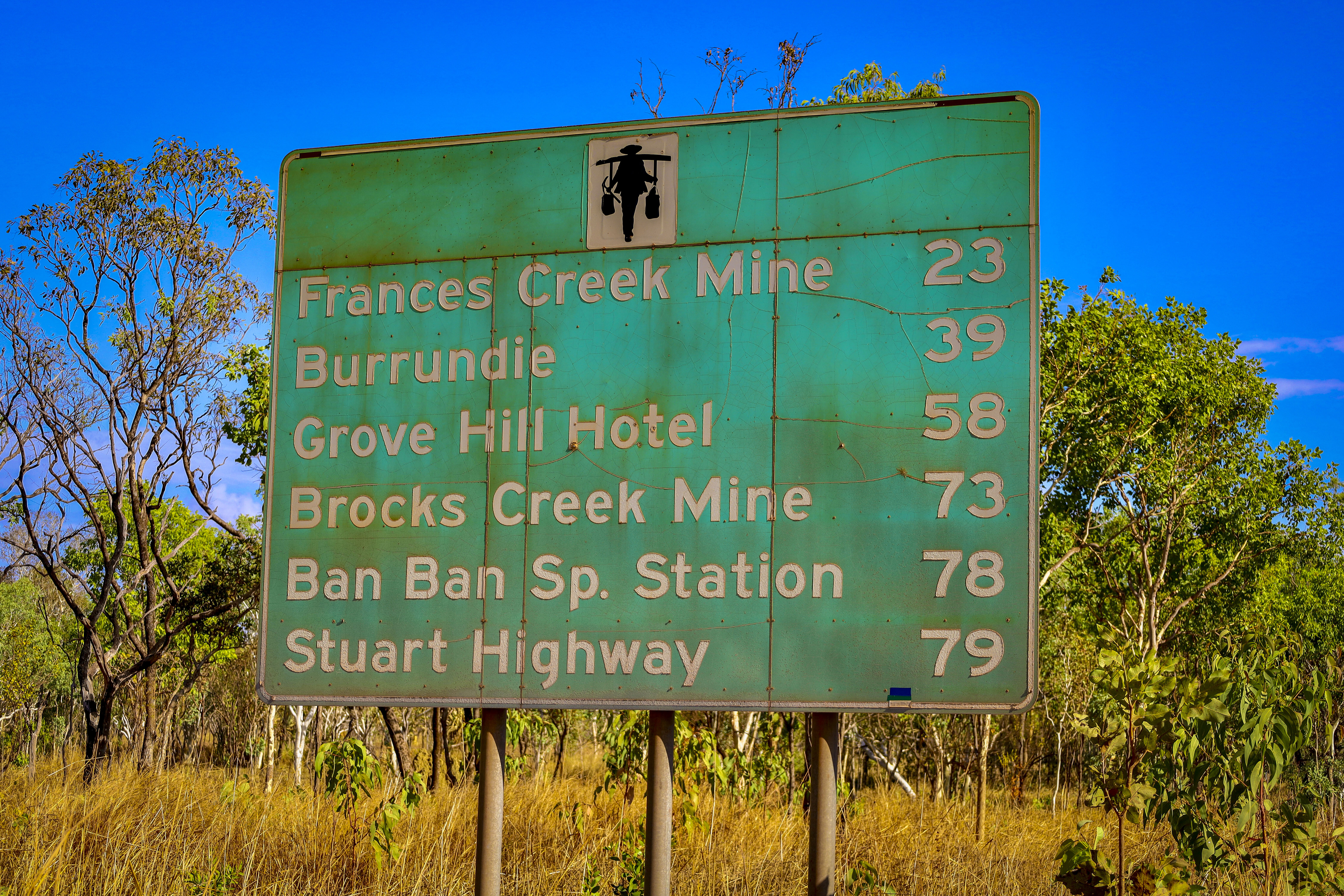
After spending time around town, you can do a loop trail that heads north towards Adelaide River passing the abandoned town (now ruins) of Burrundie and its goldfields. The loop (all of 79km) starts off on the bypass road around Pine Creek and is well-signposted with both distances and a symbol of a person carrying buckets across his shoulders.
The Chinese played a huge role not only here but across the country with their hard work in the mines and also market gardens. There’s nothing hard about the drive but it is all dirt through spectacular ranges following the Pine Creek Geosynclines where huge mineral-rich seams were exposed after millions of years of weathering.
Heading out from Pine Creek there’s a warning on the road regarding the mine trucks that use it, as there are still huge open-cut and active mines in the area. It wasn’t long before a roadside sign caught my eye along the way, this was for Esmeralda Station.The sign describes the life of Tom Cole back at the turn of the century and his association with the area. He was 17 when he arrived in Australia from England, and after a multitude of jobs across the Top End, he stumbled across Esmeralda Station and bought it in 1940. But he soon realised that it was tough country and sold off his bullocks to the Vestey clan who gave him near nothing to what they were worth. Just two years later, he sold in despair and moved on.
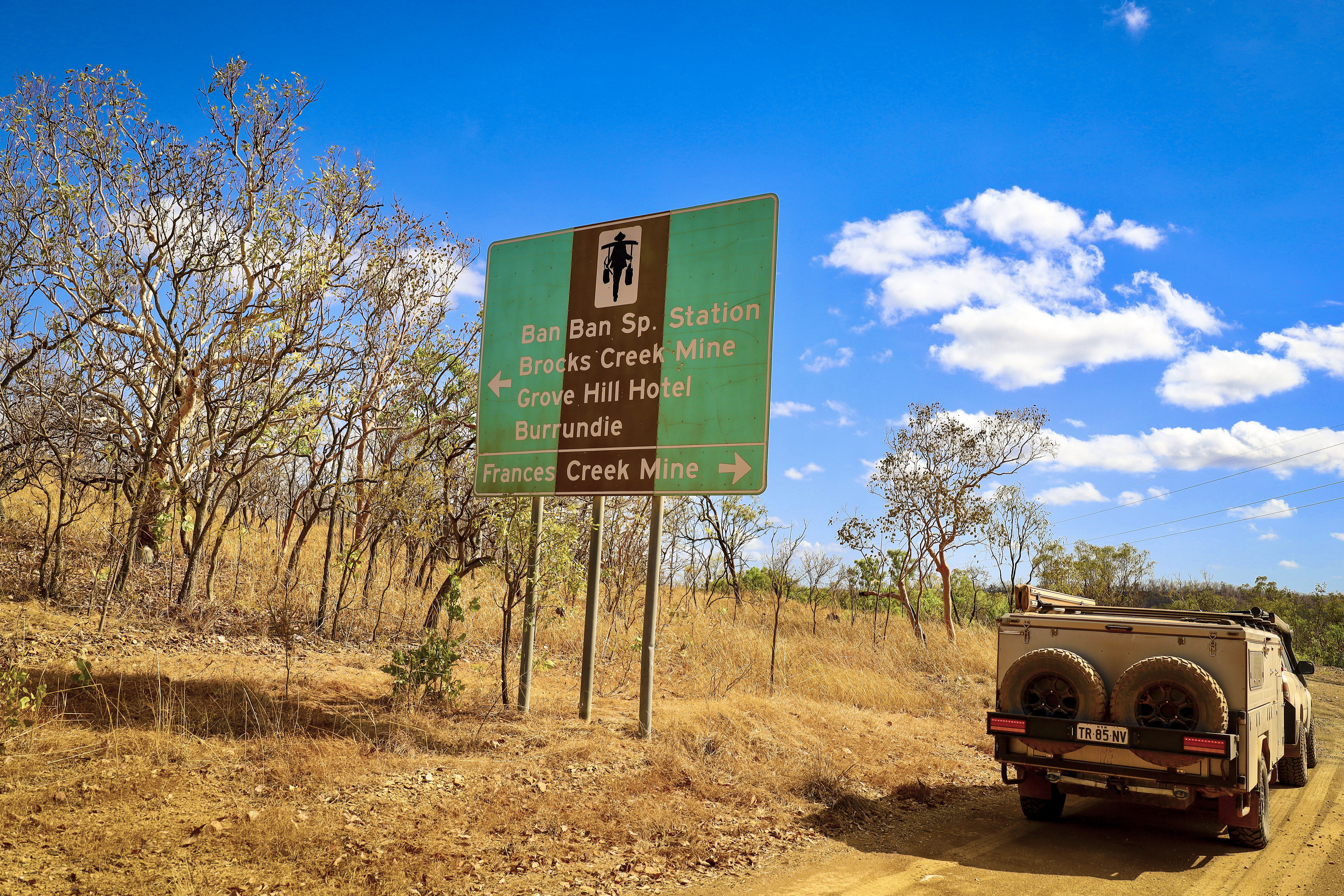
Since then, this huge station has still run beef but also as a plant nursery following WWII. Nearby, Ban Ban Station is another huge pastoral lease covering nearly 1900km² running huge amounts of beef cattle. Both these stations were established in the 1880s when gold was found. Also listed on the direction signs are several mines, including Francis and Brock Creek mines. These are still active and off limits to the general public.
Burrundie
It’s about halfway on the heritage trail that the road crosses a rail line and it’s here that the township of Burrundie once stood. Now in ruins, Burrundie and the surrounding goldfields were a bustling town back in the late 1880s.There were nearly a dozen huge goldfields scattered around Burrundie, making it the perfect place for hotels, court house, warden’s office and police quarters. In fact, Burrundie only lasted for a few years while the boom was on and at one stage housed 3000 Chinese railway workers. Slowly they moved on and the gold dried up by 1900, then by 1912 most of the buildings had either just collapsed or been moved to nearby Pine Creek to be recycled.
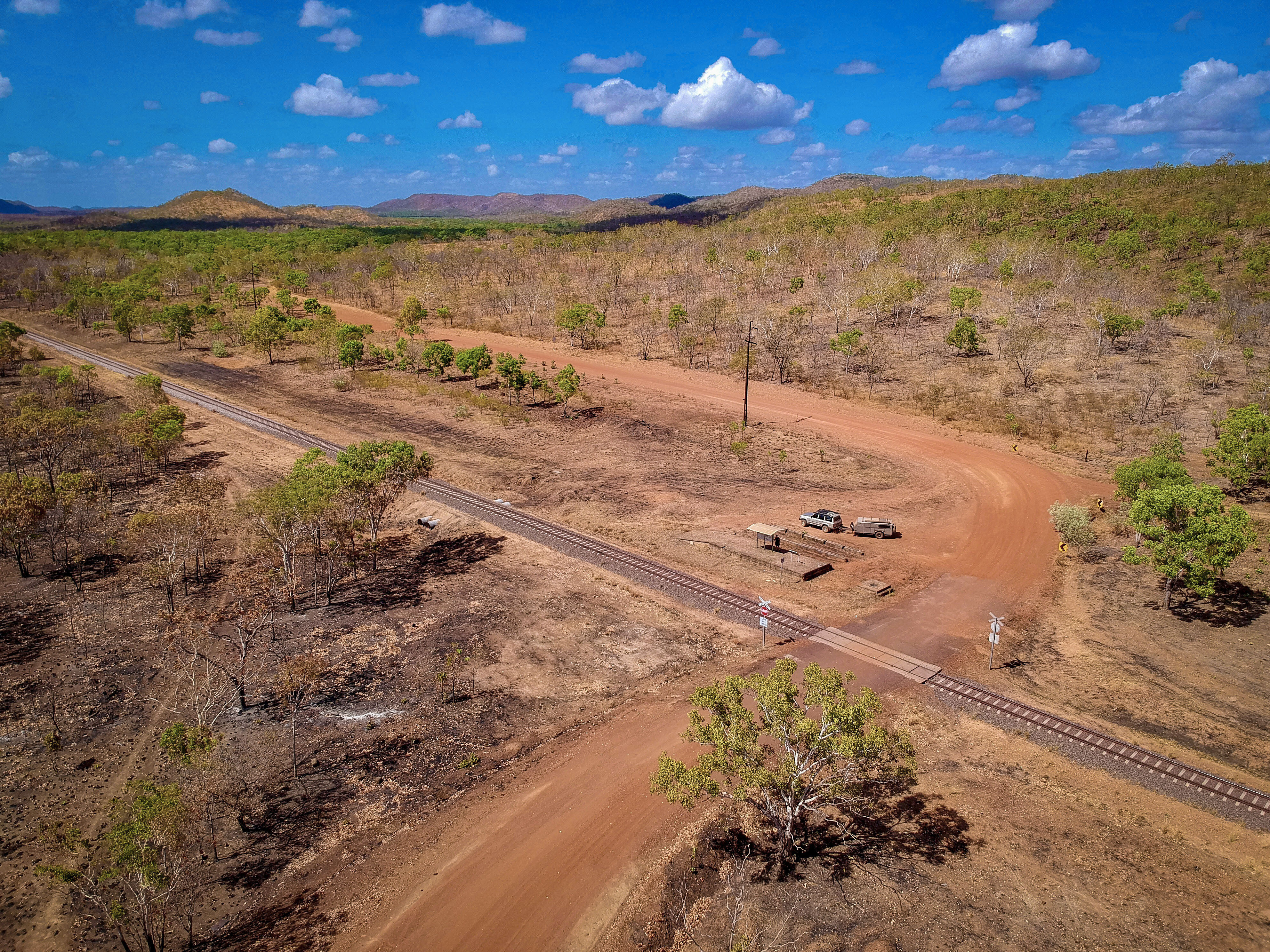
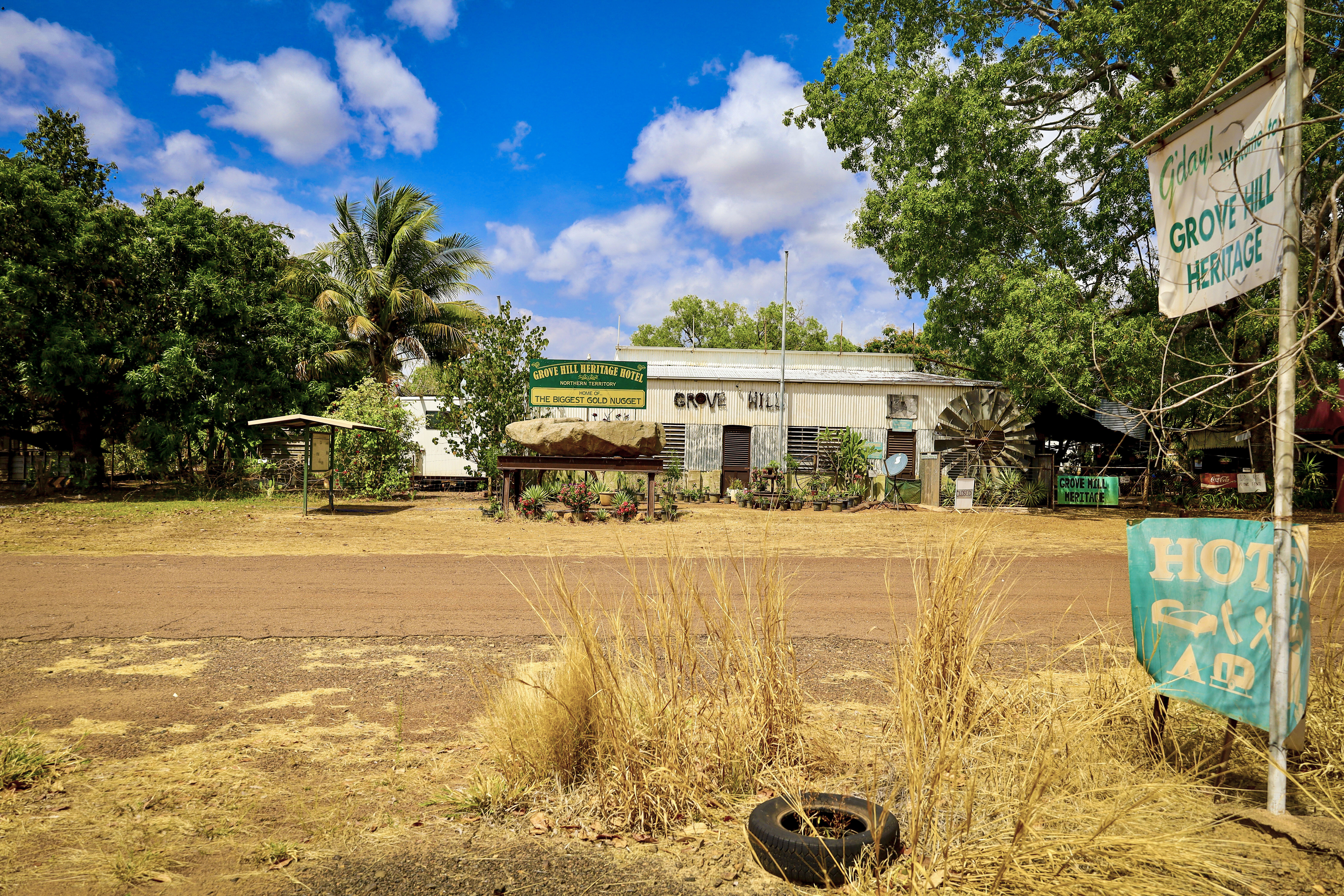
Burrundie was the second largest town outside of Darwin and was planned to be the hub of the adjoining goldfields in 1884. The name comes from the Aboriginal meaning of nearby Mount Wells. Wandering around the area there’s really not much left apart from a few stone chimneys, rough concrete slabs and a few old car wrecks. The info board is an interesting read describing the area from the goldfields, Chinatown, cattle stations and bogus company shenanigans – all this happening from 1885 until 1900.Another 20km along, is the Grove Hill Heritage Hotel. It’s closed now but when established in 1934, it was a popular drinking spot for the local miners and tourists alike; they also built a museum dedicated to the area’s history. Now while you can’t go inside, there’s plenty to see and read about around the hotel.The Heritage loop trail passes by open-cut mines that have been rehabilitated and where you can see massive tailing mounds and open-cut holes now filled with mineral-rich water. It’s an interesting, yet easy drive providing insights in to this harsh area, but it’s hard to comprehend just how hard it would have been 150 years ago when people were just trying to survive through either gold mining or working on the railway. Pine Creek is definitely a must-do for any history buff exploring in the NT.
Five things to see and do
PINE CREEK MUSEUM
Pine Creek is the only original mining town from the 1870s’ gold rush era remaining in the Top End. The Museum, administered by the National Trust, is the oldest surviving prefab corrugated iron building in Australia.
PINE CREEK RAILWAY STATION MUSEUM
This museum is located in the original railway station building built in 1888 and which served as a communications centre until 1976. Exhibited are historic photos, maps and memorabilia.
NORTHERN GOLDFIELD LOOP HERITAGE TRAIL
This 79km route takes you from Pine Creek to Adelaide River, passing through Grove Hill and its Heritage Hotel and museum, Burrundie town ruins, and long abandoned and modern open cut mines.
KAKADU HIGHWAY
Pine Creek is the southern entry point to Kakadu National Park, so if Darwin is not on the radar you can bypass its city lights and take the scenic 209km Kakadu Highway (State Route 21) straight to the park instead.
WORLD WAR II HISTORY
McDonald airfield, 16km northwest of Pine Creek on the old highway, is one of several military airstrips set up alongside the Stuart Highway in WWII. B-25 Mitchell bombers launched raids from here on Japanese targets in the Dutch East Indies (Indonesia).
A number of four-wheel-drives have been defected as part of a long weekend blitz by Victoria Police.
Off-road motorbike units from State Highway Patrol intercepted vehicles in the Mt Buller area over Easter, conducting roadworthy checks as part of ‘Operation Compass’.
Six vehicles from one convoy were issued defect notices near Razorback Hut Track, including a LandCruiser 79 Series owned and modified by fabricator Lachy Poole, who has nearly 100,000 followers on Instagram and 222,000 followers on TikTok.
Poole took to social media to express his disappointment, saying the police had “[picked] on a bunch of blokes just trying to enjoy a long weekend in a place their cars are built to drive”.
According to Poole, one officer had deemed the suspension on his LandCruiser as being “too crazy”, allegedly receiving a defect notice despite holding engineering certificates for the modifications.
A Nissan Patrol was also defected in nearby Mansfield, with the vehicle’s five-inch lift kit being “one of the highest lifts seen by the experienced members of the Solo Unit.”
Victoria Police say Operation Compass is “a major campaign focussing on keeping our community safe on the roads during the Easter long weekend.”
With the state-wide operation aiming to “reduce road trauma, including the number of lives lost and injuries on our roads”.
The first phase of Operation Compass will end at midnight tonight (Monday April 18), while the second phase will run over the Anzac Day long weekend from the early hours of Friday April 22 to midnight Monday April 25, 2022.
The track is always rough, but this time, for a change, it was muddy and in places, even slippery. Then we hit the first patch of water – a shallow stretch of red, thickish aqua that had taken on the colour of the surrounding rugged range country that lies a little to the east of the white dunes and long beaches that make up this spectacular section of the West Coast.
Underneath the water and the thin layer of mud was ancient limestone laid down when this whole area was under the sea and the range of today was, in fact, a coral reef. The limestone, though, makes the track rough and any rain takes a while to drain away, while the nearby dunes were showing little or any signs of the recent downpour we had been subjected to.
We were driving through the RAAF firing range, the track (officially known as the Ningaloo-Yardie Creek Road) being the only real link from our camp at Winderabandi Point on the northern edge of the old Ningaloo station property, north to Cape Range National Park and the bitumen road to the region’s major supply point at the town of Exmouth.
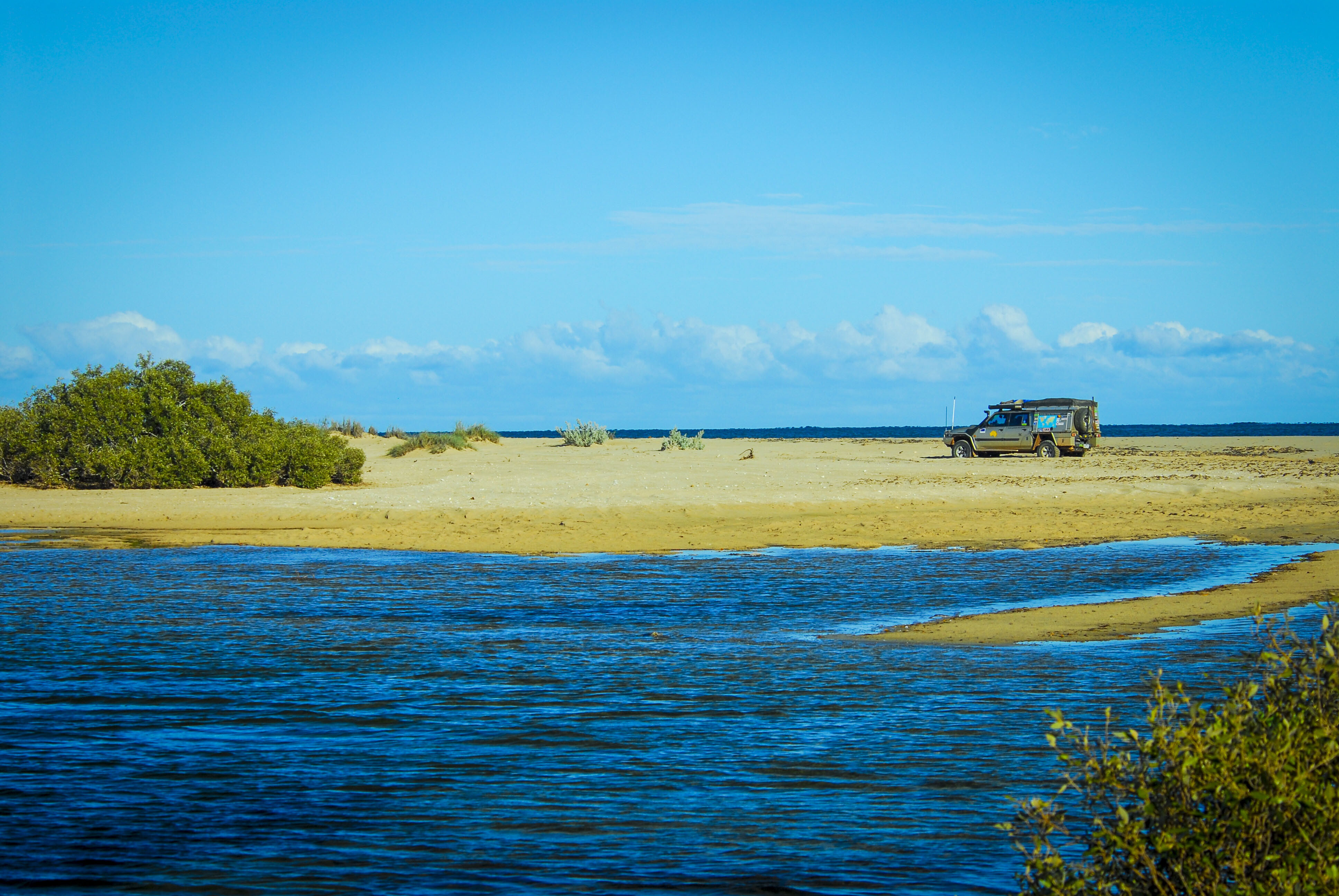
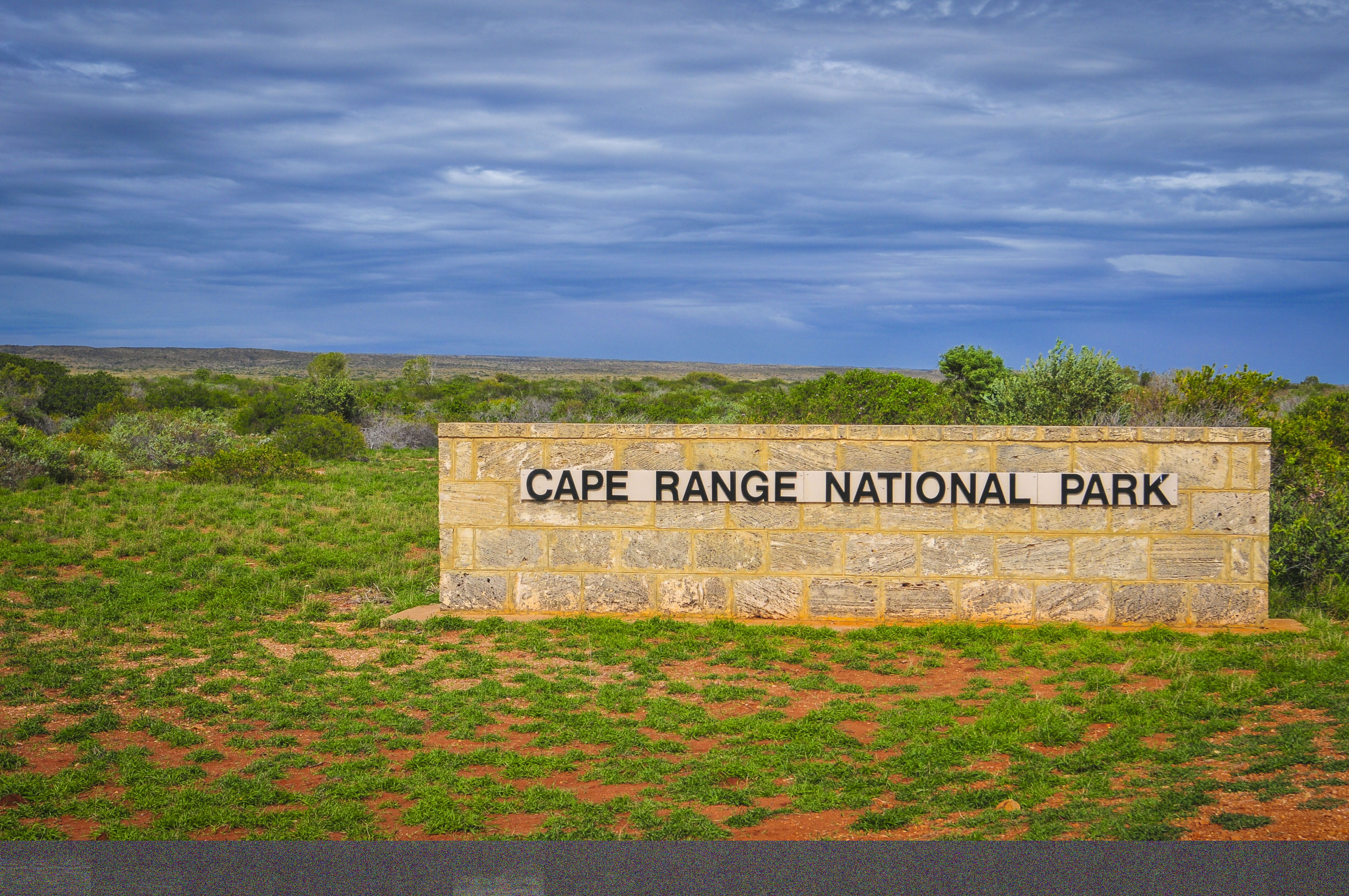
We entered the national park, passing a couple of small beachside camps (the best in the park?) before coming to the sandy crossing of Yardie Creek. For the first time in many years and only the second time that I’ve ever seen it, water was flowing out from the creek, cutting an ever deeper channel in the sandbar that normally cuts the freshwater off from the sea.
Luckily it was low tide and the flowing water shallow, but I checked the route before driving in and padded our way across the stream and quickly met up with the bitumen road.
The national park, here north of Yardie, was crowded to bursting with campers filling the many campgrounds and day trippers herding into the vehicle day-parking areas. At Tantabiddi, where the whale-watching trips depart from, there was a mass of buses and vehicles disgorging people for their day-long adventure.
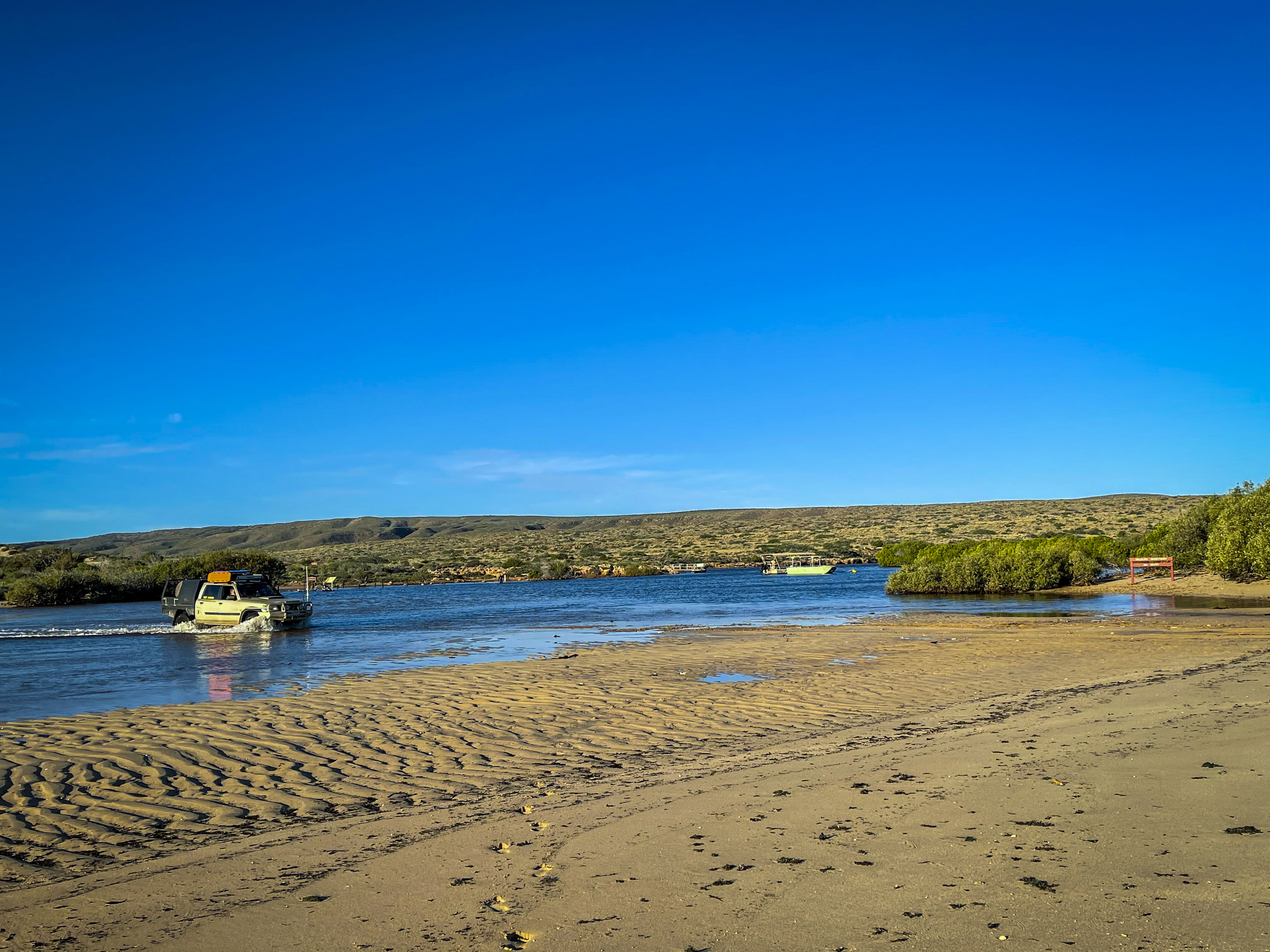
The park and the coast with its close in-shore coral reef, are an absolute cracker and I can understand the immense attraction, but can’t help reminiscing rather fondly of our first visit here in 1978 when we were the only vehicle camped at Yardie Creek and designated campsites were unheard of.
With this latest trip, we were glad to be camped farther south where the rough dirt roads and sandy tracks keep many at bay. North of the national park, a strip of land between the road and coast is protected in the Jurabi Coastal Park, while the pleasant and rustic Yardie Creek Homestead offers the only camping spot in this area. The famous Lighthouse caravan park is now closed and being rejuvenated as a luxury resort under the auspices of ‘Twiggy’ Forrest.
Nearby, on the crest of a high hill is the Vlamingh Head lighthouse and the remains of a WW2 radar tower and emplacement. They are both worth a look, giving an insight in to the region’s history and offering an outstanding view of the surrounding coast and the reef just offshore.
From the lighthouse, it’s less than 20km to the township of Exmouth, the thriving tourist hub of the region. During WW2 the US Navy had a submarine base in nearby Exmouth Gulf and the area was bombed by Japanese aircraft a couple of times in 1943.
From near here, the famous Australian commando raids on Singapore were launched, the first in September 1943 being a success while the second, launched sometime later, was a disaster with all the men being captured and executed.
Later in the 1960s, Exmouth became the site for a US submarine communication centre, now known as the Harold E. Holt Naval Communication Station and operated by the Australian Navy. In 2022, a Space Surveillance Telescope operated by the US Space Force is due to go in to operation, so you’ll understand the need for some of the tall antennas that dominate the area and the high security fences around them.
After our supply restock in the town, we backtracked to our camp arriving in time for happy hour with our long-time friends and a fine sunset to end the day. It was day 10 of our three-week stay on the Ningaloo Coast and we were enjoying the lazy days, even if the sun wasn’t shining too much and the weather was decidedly cool.
Most mornings, I’d wander up into the range country looking for wildlife and the like, although even the western grey kangaroos and shaggy coated euros were decidedly scarce this trip.
Maybe the preceding drought had thinned them out or the recent rain had spread them far and wide, away from the life-giving waters often found in many of the gorges and defiles throughout the range country. Still, we came across the odd one or two, along with a couple of solitary emus. In fact, we had more success with the area’s birdlife, spying osprey and falcons, a bustard and having butcher birds wake us each and every morning, their cries and antics keeping us amused for all but the hottest part of the day.
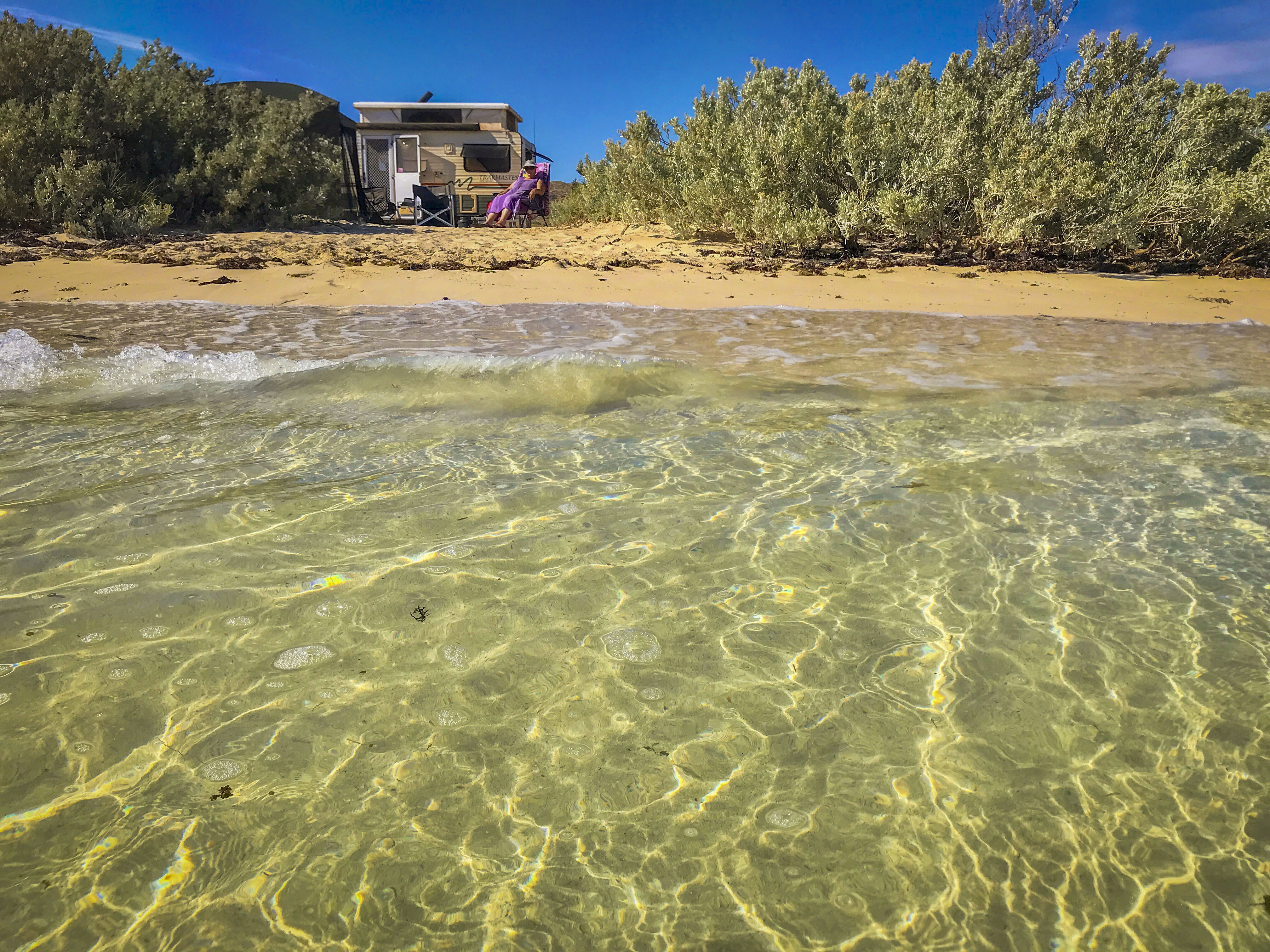
Of course, you can’t come to this coast and not go for a snorkel in the clear tropical waters. For land-based snorkelers you can’t get a much better spot to have a swim than at Turquoise Bay in the national park. The water is shallow and clear, while a drift dive, literally just a few metres from the shore, takes you across coral gardens alive with colourful reef fish and you’ll have a good chance of seeing a turtle or some harmless reef sharks or stingrays.
Another easy spot to enjoy a swim is out the front of the Coral Bay caravan park where near tame north-west snapper, or spangled emperor, will make you feel right at home. With a boat, the whole reef opens up to your exploration adventures and it’s only a matter of how keen you are and how far you want to go.
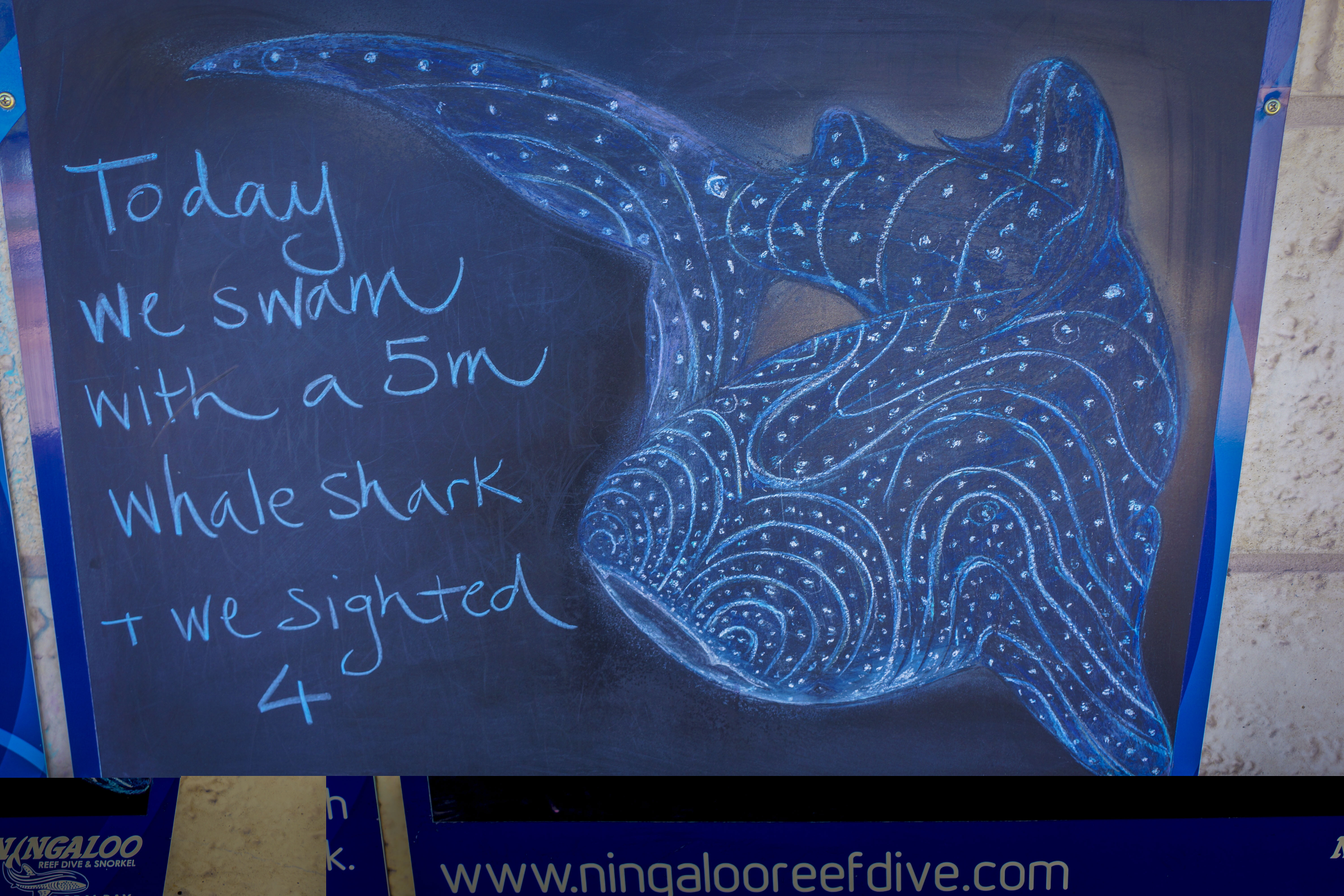
For those venturing outside the reef, there is always a chance to swim with a whale shark and while there are tours available from Exmouth and Coral Bay, there’s nothing quite like having a harmless giant of the ocean come up behind your boat and say ‘hello’ to you.
While we weren’t so lucky this trip, we’ve swum with them on previous trips to the Ningaloo Reef, while some young friends just up the beach and keener than us, going out each and every day, swam with a number of these harmless giants.
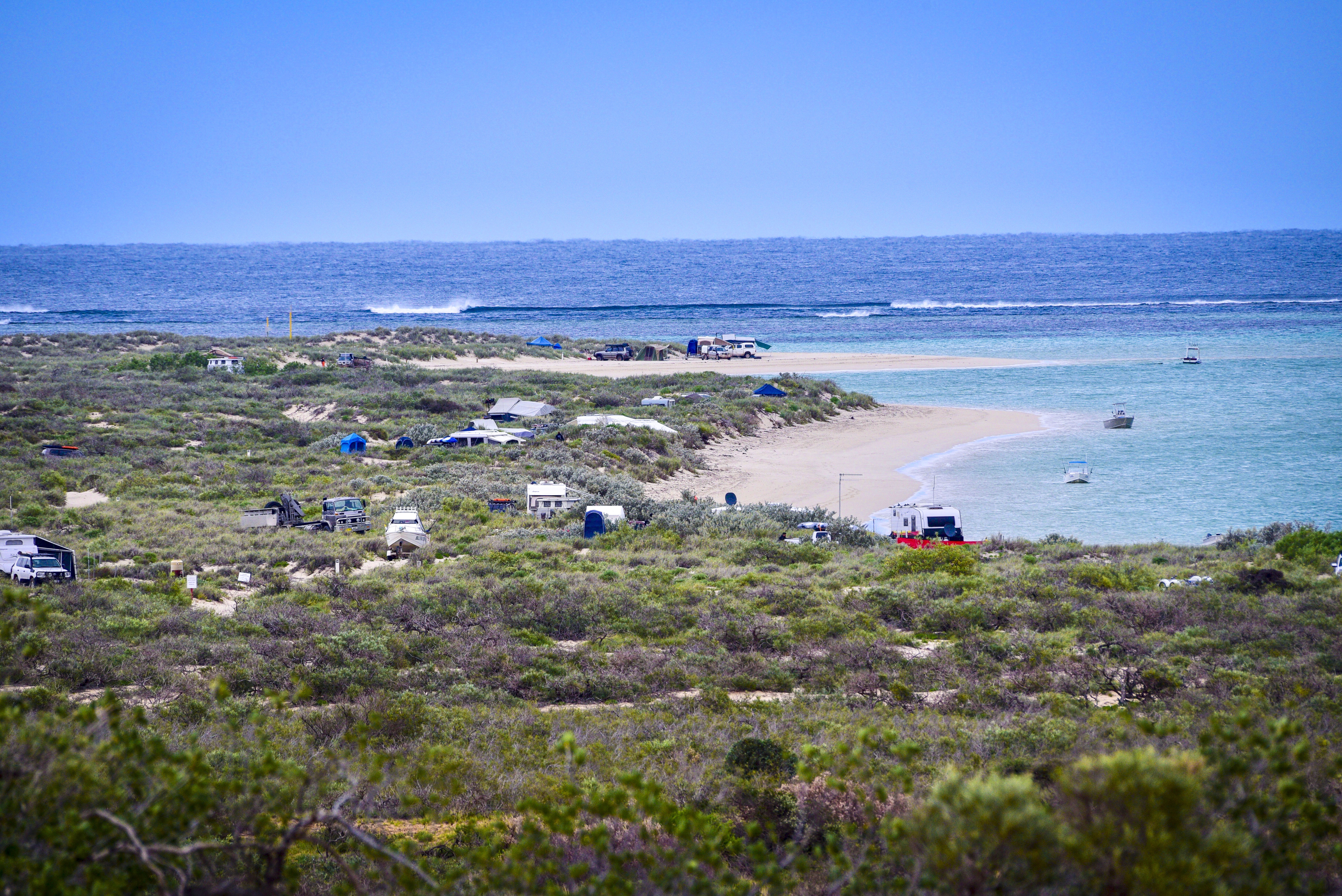
While you are allowed to fish off the beach in the bay directly on the north side of Winderabandi Point, fishing from a boat is not allowed which means, if you are a boatie, you’ve got to head farther afield. We did so a few times heading out behind the reef in fairly deep water to try our luck.
We caught a few nice fish too, but had trouble with the big bull sharks, which often quickly came on the scene and took any hapless fish that was unlucky enough to take our hook. Do the sharks know what to listen for as far as fishing is concerned? Many think so!
Fishing off the beach can be productive, especially just before first light and even more so if the tide is high. Our good mate and top-notch fisherman, Neil, went out on numerous early morning forays and always came back with one or two nice north-west snapper. Just being on the beach can bring unexpected delights as well.
One day we had a group of dolphins chasing fish and coming within a couple of metres of the shore. Another time a feeding frenzy of big predator fish, again just metres from the sand we were standing on, had smaller bait fish leaping for their lives, some landing at our feet, while others lay scattered in a line along the extremity of the ripple washed beach. We saw rays too, cruising across the shallows, all indications of a rich and healthy marine environment.
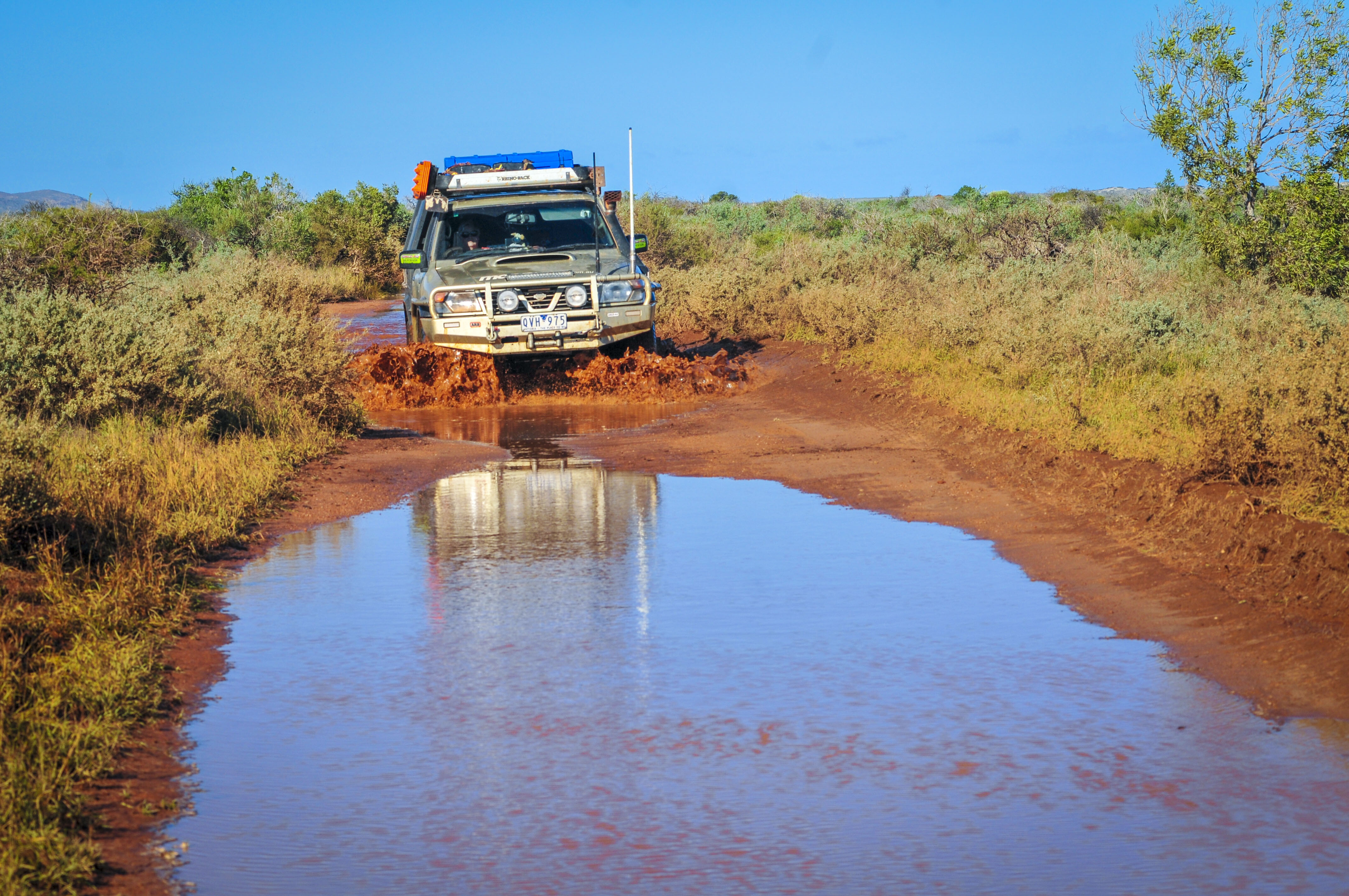
With the weather remaining cool and the snorkelling or swimming attraction not so great, we headed off to check out the ruins of the Norwegian Bay Whaling Station. Located about 6km south of the South Lefroy Camping Area, the whaling station was operational, on and off, between 1915 and 1957.
In the early years, the whale harvest was up to 2000 animals a year but in the later period was regulated to 500 a year. Today, as you approach the site from the north, the first thing you come to, as if heralding the station’s presence, are decaying piles of white bones beside the track, the last remains of the great leviathans of the sea.
The track soon comes to the most obvious ruins of the station, which are those of the huge metal digesters that lay scattered through the grass just behind the first low dune up from the beach.
The former jetties and slipways nearby can be recognised from the numerous semi-submerged metal and wooden piles extending from the beach out into the sea, while huge winches and heavy steel cables mark the position of the flensing deck.
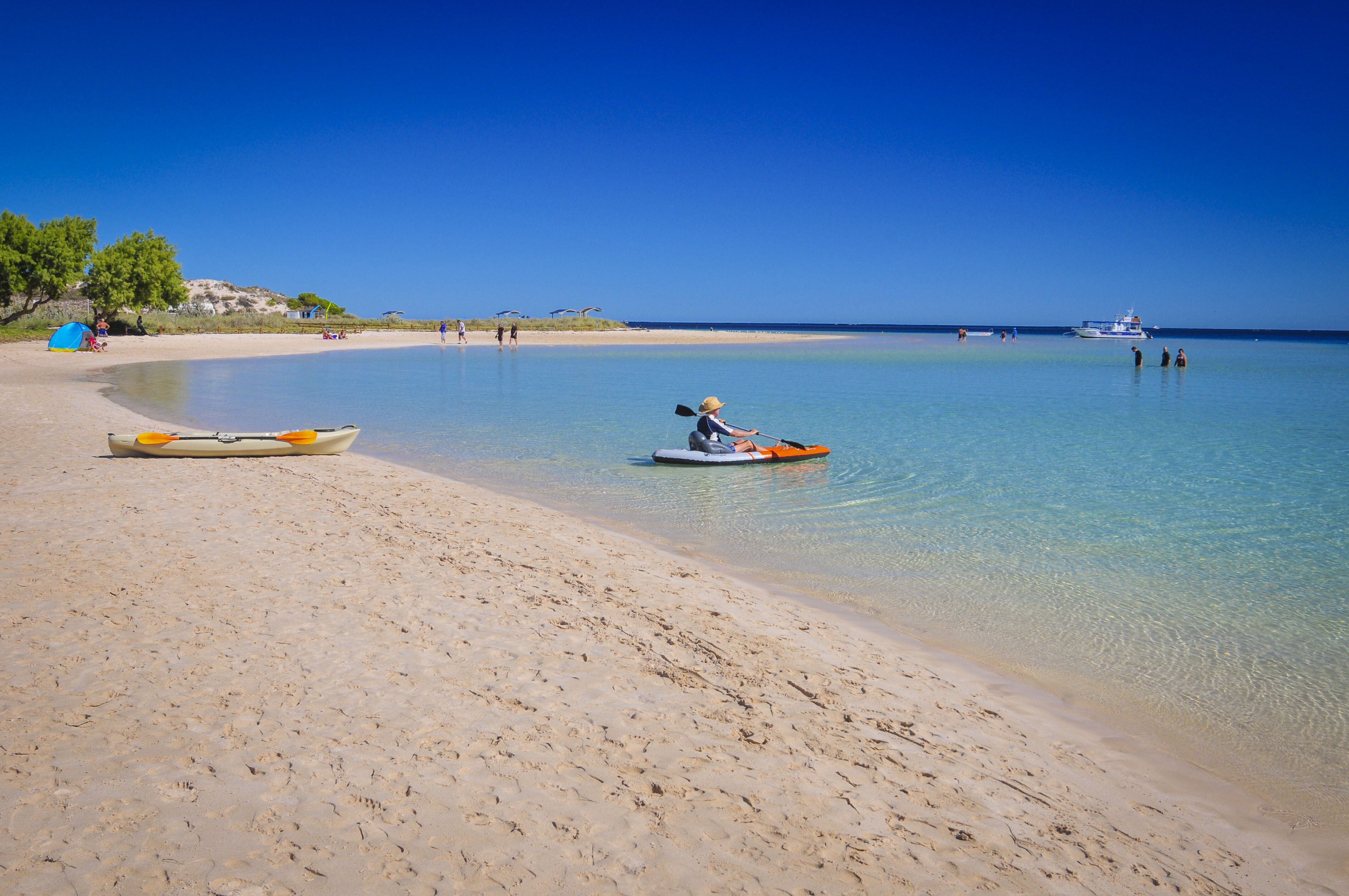
Searching around these obvious ruins, one will find piles of beer bottles and other industrial jetsam, while just off the beach an assortment of material including bottles, fuel drums and other assorted debris, can be found.
By all accounts, the remains of a sunken barge is also located close to the shoreline, but we never found it; maybe next time. We explored around the old workings and then went looking for the lonely graves of three young Norwegians who had died here back in the early years of the station’s existence.
We had been to this station site three times previously but had only recently heard of the graves, so we were pretty keen to find it. With a bit of searching on foot, the graves were found about 500m south of the main ruins and about 150m in from the beach.
A cement cross, with the names of the three young men carved into the concrete, is nearly completely buried by the shifting sands; it is a poignant reminder of the dangers and isolation these people endured, back then, so far from home.
Returning the way we had come, we stopped at one of the man-made water points on a sandy, clear flat about 2.5km north of the whaling station. There are a couple of wells dug here, each supplying water of varying quality, but often better than the water from the main water point on the main Ningaloo-Yardie road.
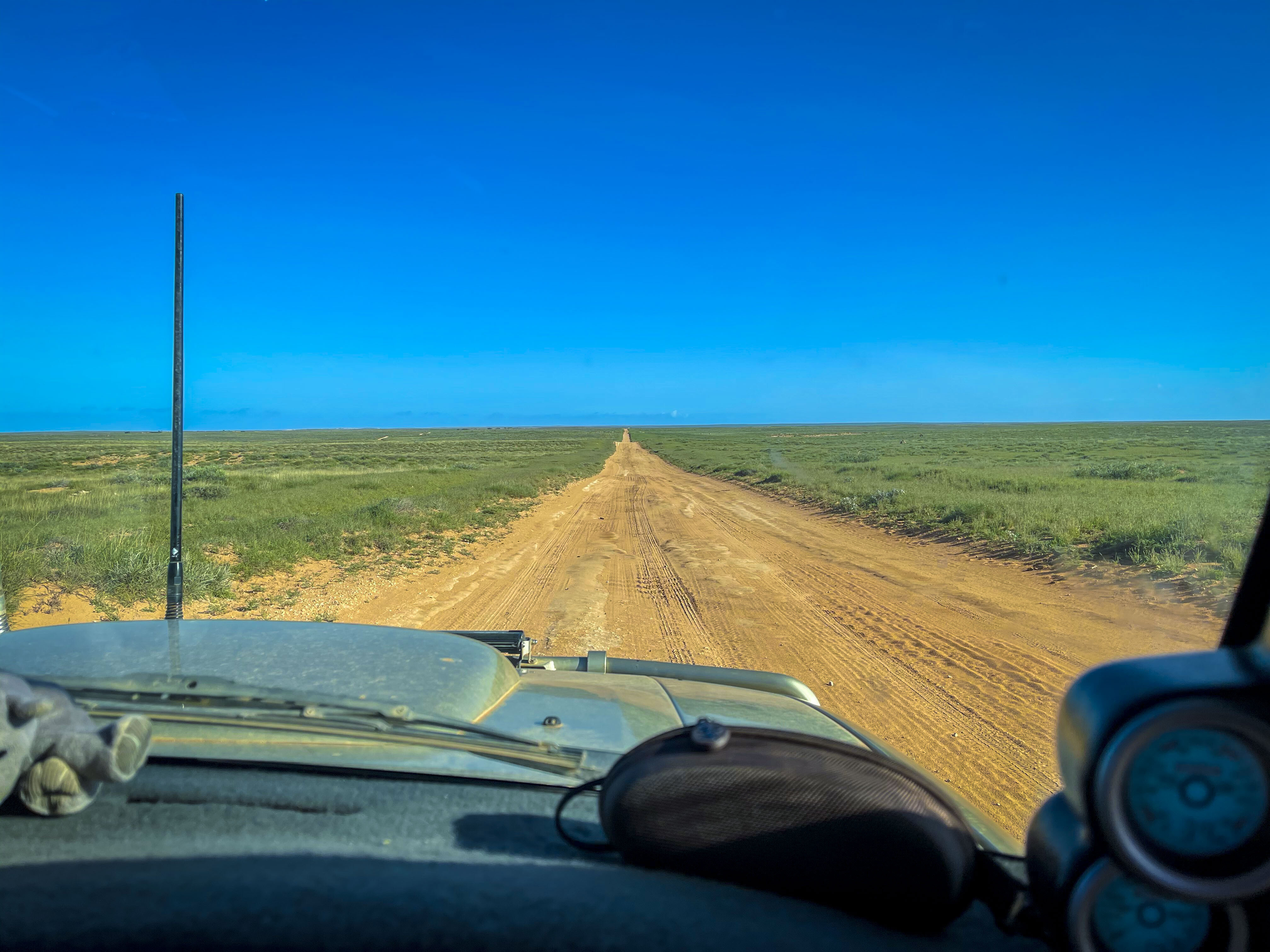
Our time was coming to a close, so after packing up our camp we headed south, passing the Ningaloo Homestead, which at that point of time the Lefroy family was also packing up to leave, thereby ending the family’s involvement with the property they had first acquired in 1934.
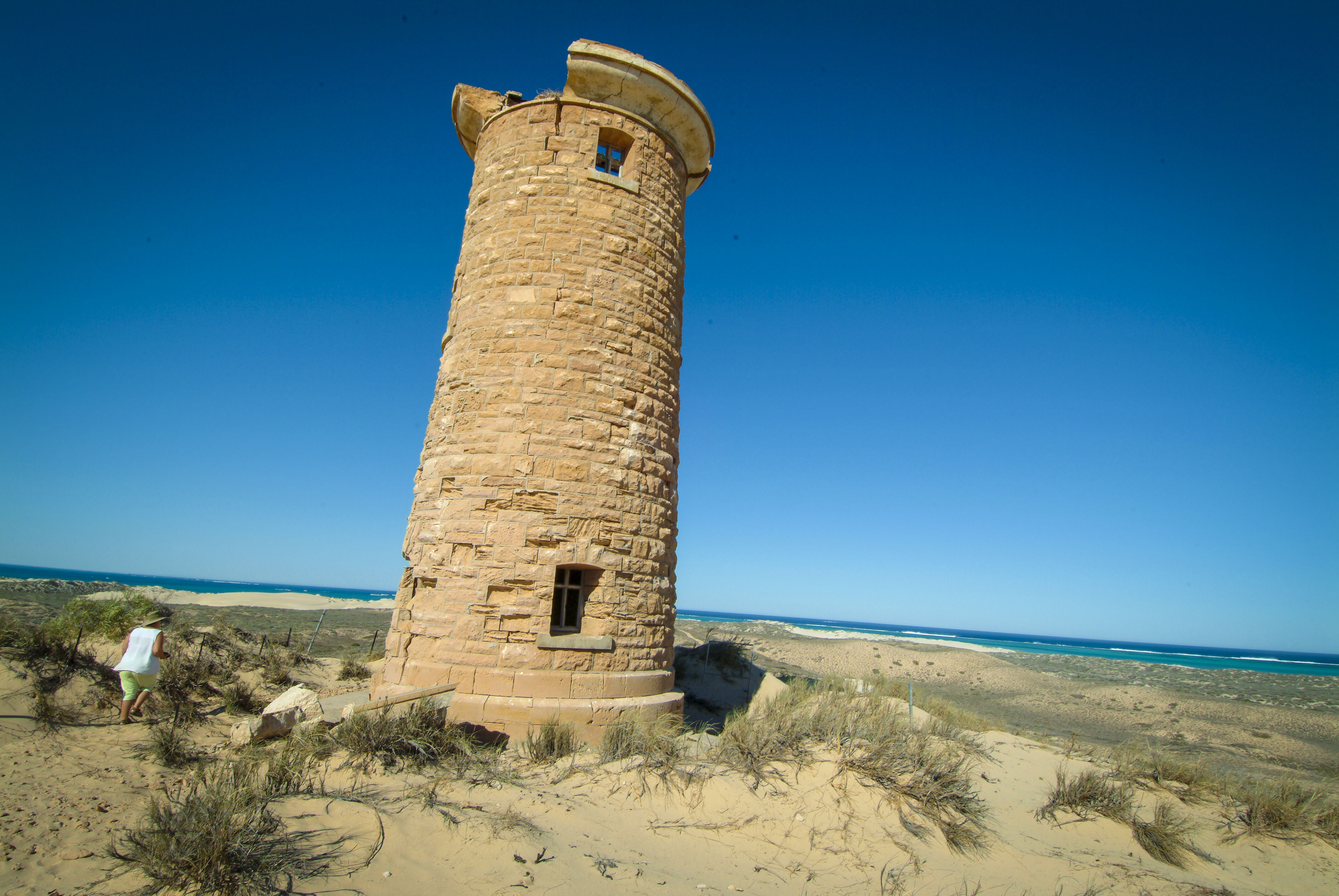
It was, sadly, the end of an era. Nearby, and from top of the tallest sandhill in the area, the old Point Cloates lighthouse was overlooking the sad scene. Built from local stone in 1910 and superseded by a light on top of a steel frame, the original stone tower has somehow withstood the cyclones and ravages of nature but is wilting under the pressure. I wondered if it will still be standing when I again return to this fabulous coast.
Access and camping
The easiest access to the Ningaloo Coast is via the Ningaloo Homestead road which leaves the main Minilya-Exmouth road, 99km south of Exmouth. The Ningaloo-Yardie Road north of the homestead is narrow and passing can be ‘interesting’. The route can be rough and/or corrugated.Access to the camping areas is through soft, deep sand, so a 4WD is essential as is lowering tyre pressures.
Camping on this section of the Ningaloo Coast is possible at any of the five campgrounds dotted along the coast: North Lefroy, Janes Bay, Point Billie, South Lefroy Bay and Winderabandi Point. There are no toilets at any of the campgrounds and visitors must bring a portable chemical cassette toilet.
At present, you can camp for up to 28 nights. Dogs are allowed, with some restrictions. Fires are not permitted on the open ground and must be contained within a portable fire pit. No firewood collection is permitted so you need to bring your own. Bookings are essential. Go to: https://parks.dpaw.wa.gov.au/site/ningaloo-coast
Five things to see and do
COASTAL CAMPING
The Ningaloo Marine Park protects the Ningaloo Reef, Australia’s longest fringing barrier reef. The best five campgrounds are at: North Lefroy, Janes Bay, Point Billie, South Lefroy Bay and Winderabandi Point.
TURQUOISE BAY
There’s top snorkelling from the white, sandy shores of Turquoise Bay in the Cape Range National Park. The water is shallow and clear, and you can drift dive the currents that take you across coral gardens alive with fish.
NORWEGIAN BAY WHALING STATION
Explore the site and ruins of the Norwegian Bay Whaling Station, 6km south of the South Lefroy Camping Area, the first shore-based whaling station in WA, operating on and off between 1915 until 1957.
VLAMINGH HEAD LIGHTHOUSE
The Vlamingh Head lighthouse is on the north-west tip of North West Cape and operated from 1912 until 1967. Nearby are remnants of a WW2 radar tower, plus magnificent views of the coast and the reef.
EXPLORING YARDIE CREEK
Yardie Creek is a must-see section of Cape Range National Park, with a permanent water source that flows between the sheer cliffs of Yardie Creek Gorge. Take the Yardie Nature Walk or for the more adventurous the Class 4 Yardie Gorge Trail.
So you have gone and remortgaged the house for a shiny MaxTrax-clad 70 Series Tojo, with the intent to bust out and prove Australia really is better than the rest of the world.
It is quite possible you may have even saved a few oversaturated photos of linen-clad, fedora-hat-wearing influencers drinking Aperol Spritz by serene waterholes, to convince your better-half that Outback Australia truly is better than a floating hotel in Fiji.The problem is, you forgot to consider where you might sleep upon reaching those aforementioned waterholes, and there’s no money left for that off-road camper you’ve been dreaming of.
It is at this point when the mind starts to veer from romantic thoughts of campfires and off-road adventures to the back corner of the garden shed, where an old-school, ground-dwelling swag of those good ol’ B&S ball (Bachelor and Spinsters) years lies gathering dust.“Maybe it’s not that bad?” you tell yourself.Dreams are dashed as you kick a rusting paint tin of mismatching nuts and bolts aside and peer behind the mower. Your best Casanova skills are no match for the waft of mouldy canvas and stale VB that greets you. Fortunately, all is not lost. A world of rooftop tents are waiting to save you and your better half from the stench of a mouldy swag, and we have put a couple of the best through their paces.
Background and development
The Yakima Skyrise HD is the brand’s one and only offering in the RTT category. The USA manufacturer is well-known for its roof bars, racks and vehicle mounts for kayaks, bikes and every outdoor toy imaginable.
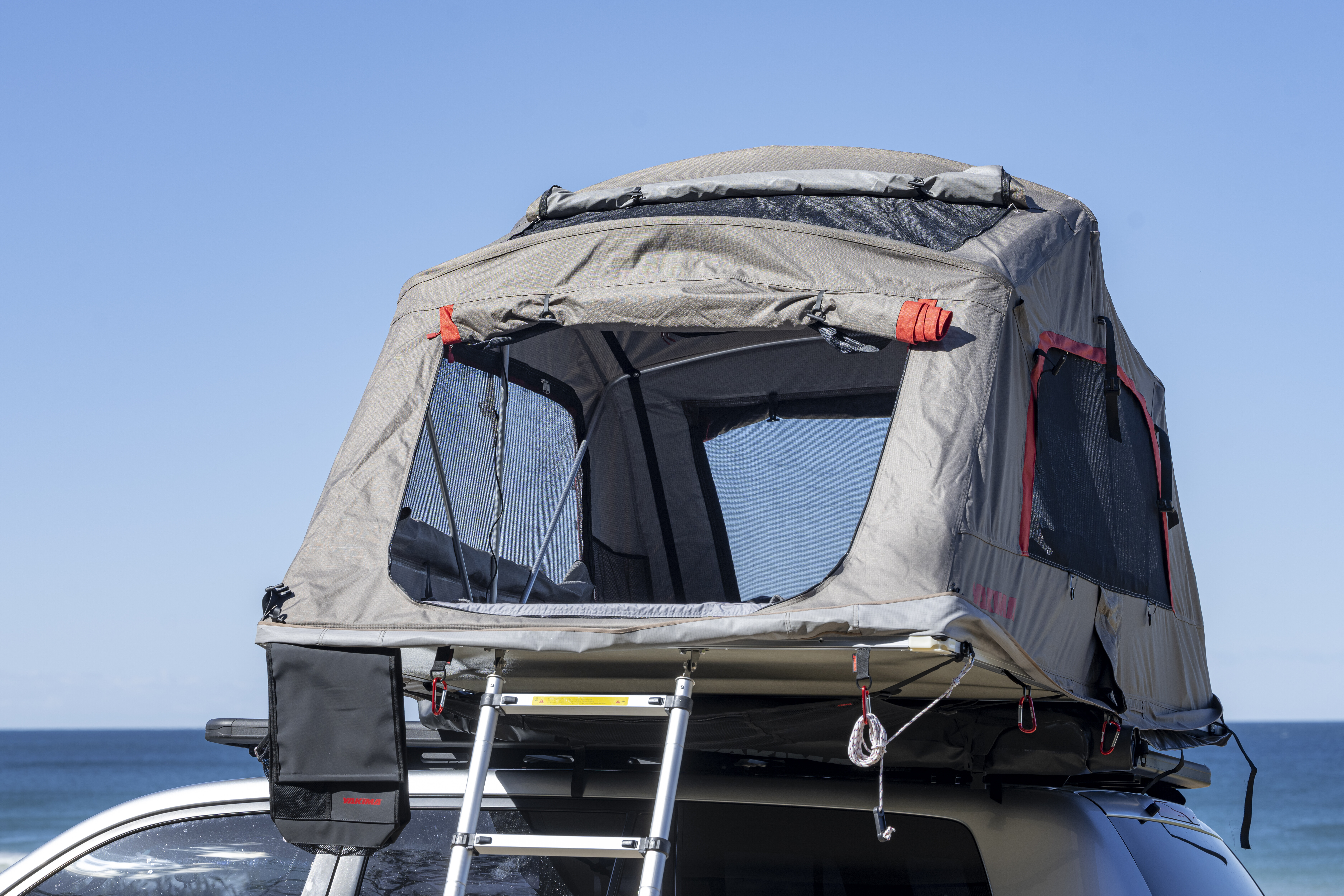
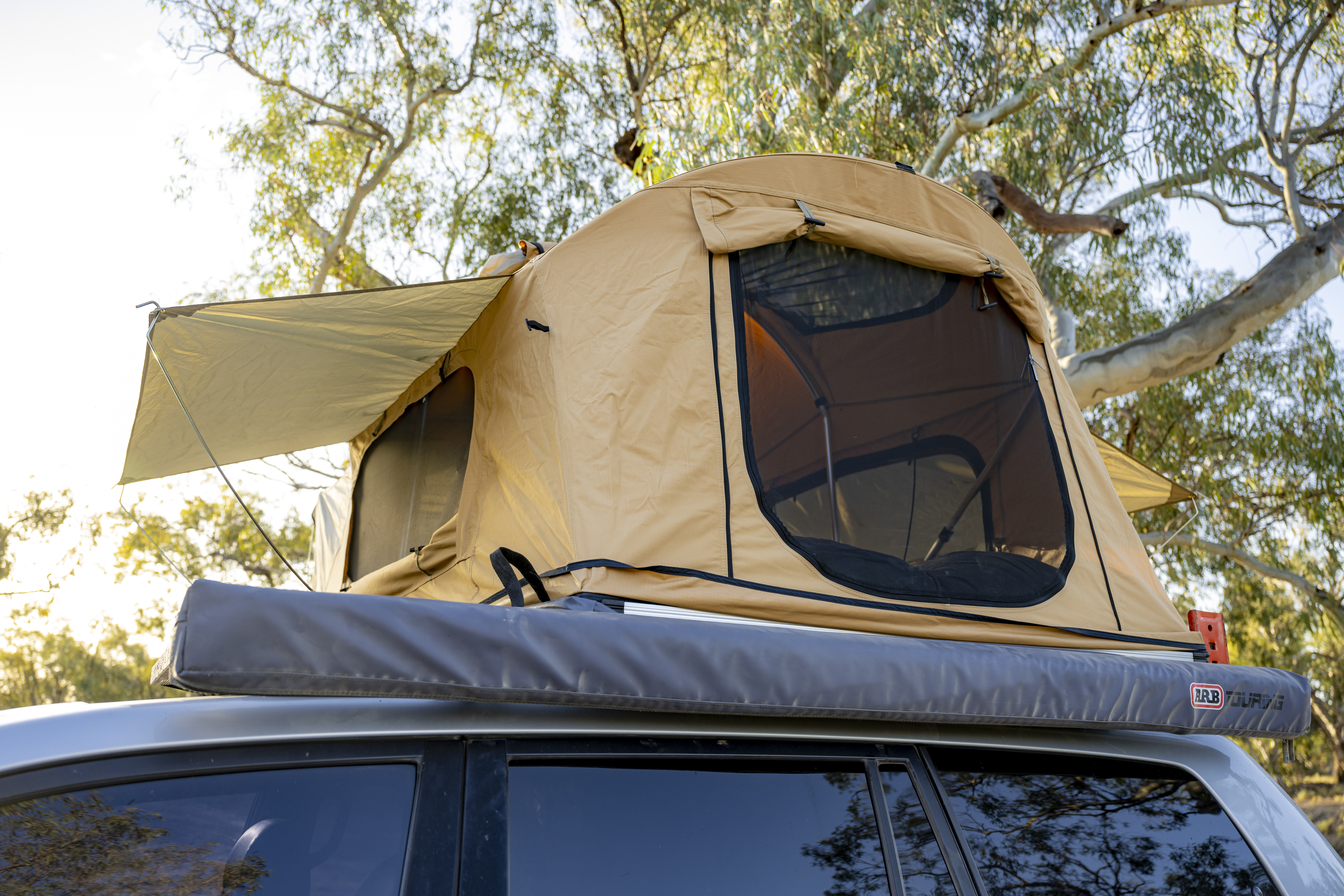
The Skyrise HD is successor to the original Skyrise that used lightweight backcountry materials to deliver one of the lightest-weight RTTs in its class. The Skyrise HD has been designed to offer a burlier and more durable tent for more resilience against continual use in harsh environments.ARB’s Flinders tent tells a near opposite story to the Skyrise. The Australian born ARB brand emerges from a background of serious off-road accessories, including a number of rooftop tents designed for the harsh Australian environment.
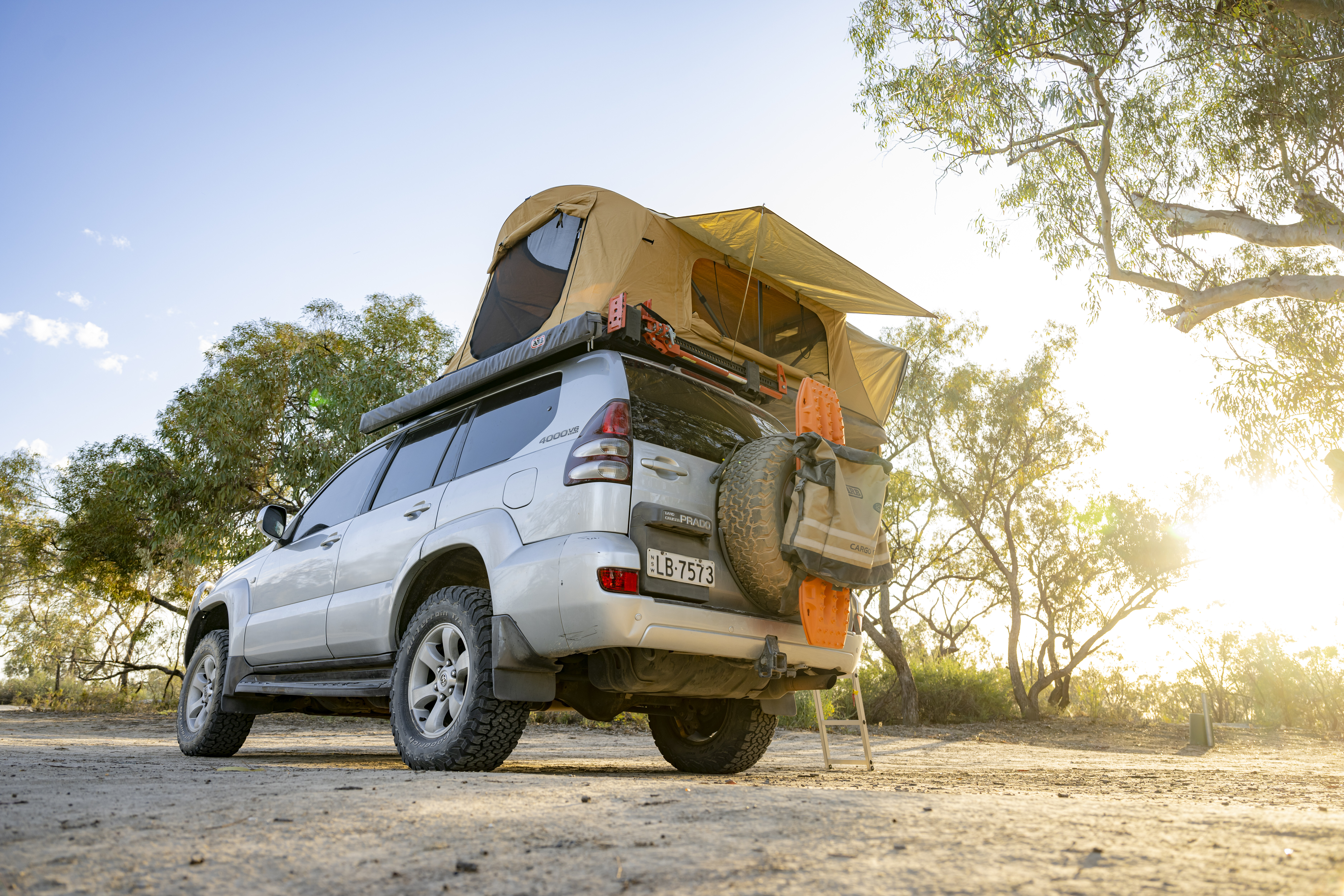
The Flinders RTT is a combination of new materials in conjunction with a ‘whittling down’ of the best features from previous RTT iterations, to produce a lighter-weight more streamlined RTT, without sacrificing quality and features.
Vehicle mounting and packed dimensions
When it comes to vehicle mounting, the Yakima Skyrise HD wins straight out of the gates for ease of use, whilst the ARB wins for design. The Skyrise HD affixes quickly and easily to roof bars via tool-free, lockable vehicle mounts, delivering a 52kg, 1220mm L x 1420mm W x 410mm H package. It also fits to Yakima’s LockNLoad roof platform; however, you’ll need small hands and a curbing of cursing to do so. The tent and telescopic ladder tuck neatly inside a removable heavy-duty hook-and-loop-sealable 680gsm PVC cover when in transit.

At 410mm tall when packed away, the Yakima Skyrise is one of the bulkier tents on the market, but the extra space allows the rain fly and poles to stow without removal, while delivering plenty of stowage space for grandma’s winter doona and a couple of hefty down pillows.The ARB Flinders has more traditional alloy rail mounts on the underside of the tent. While not tool-less, and a little more fiddly to install, the brackets and mounts mean for a much more streamlined RTT.
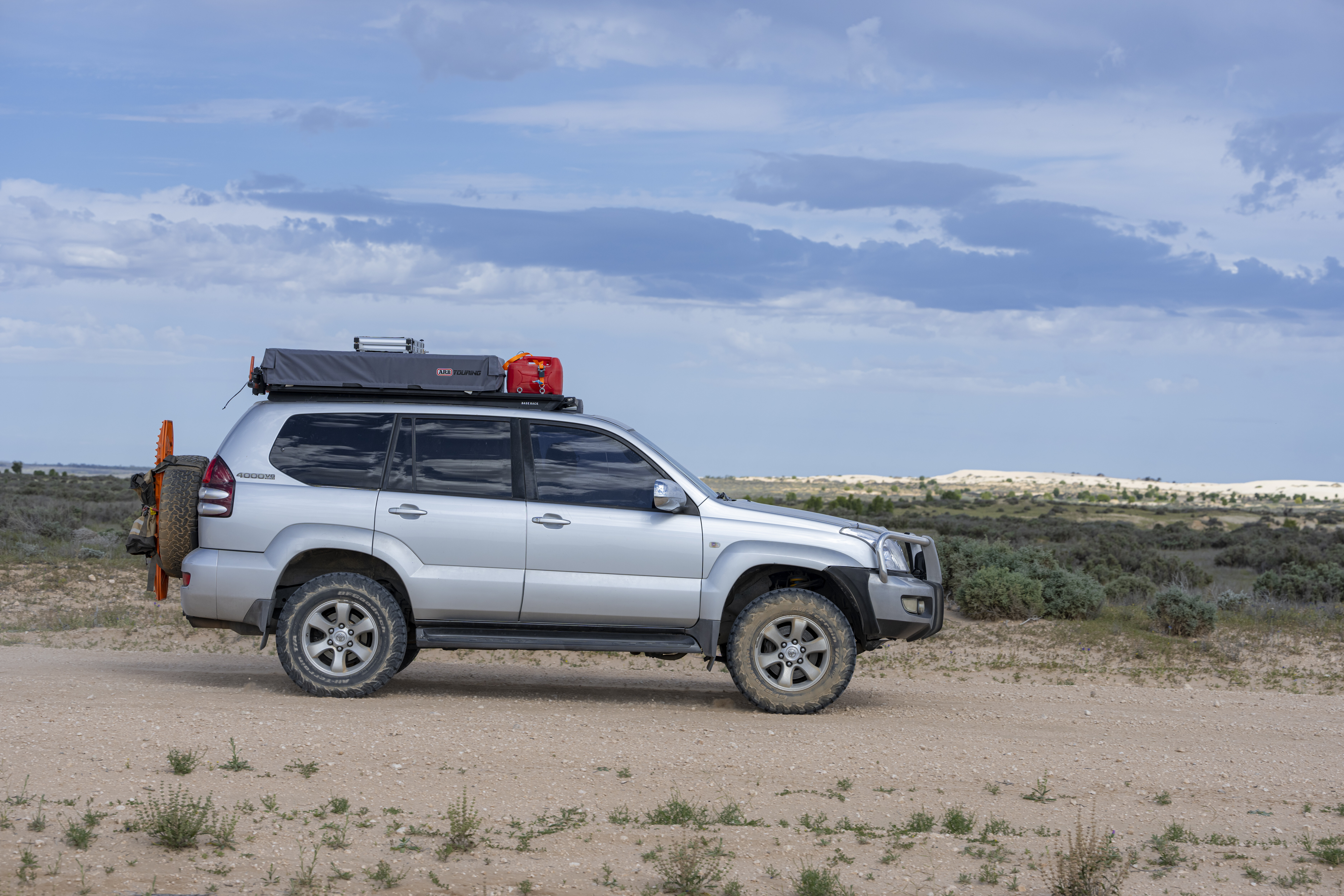
The Flinders fits easily to roof bars and can also fit to ARB’s low-profile BASE rack; however, we needed to partially remove the rack to fit the tent. The Flinders packs down to a super compact and low-profile 1400mm L x 1200mm W x 200mm H (300mm H with ladder) … without the ladder this is less than half as tall as the Skyrise HD.The Flinders therefore delivers less drag, equating to better fuel economy, in a super-streamlined package where even the ladder mounts fold flat to deliver a sleeker profile; but you’d best pack your summer sleeping bag as there’s little room for bedding stowage.
Pitching
The Yakima Skyrise HD is super comfy with lots of optional accessories, while the ARB Finders delivers more included accessories in a loftier tent but sacrifices sleep comfort.The Skyrise HD pitches in minutes (literally) by extending the multi-segment ladder and opening the tent on its dual hinges. The multi-segment telescopic ladder has mid-height adjustment for tweaking on varying terrain, as well as auto-close function for easy pack-away. The Skyrise HD offers pitched dimensions of 2430mm L x 1420mm W x 1220mm H, a comfortable 64mm-thick foam mattress (with a removable cover) and a load rating of 272kg, more than adequate for two adults.
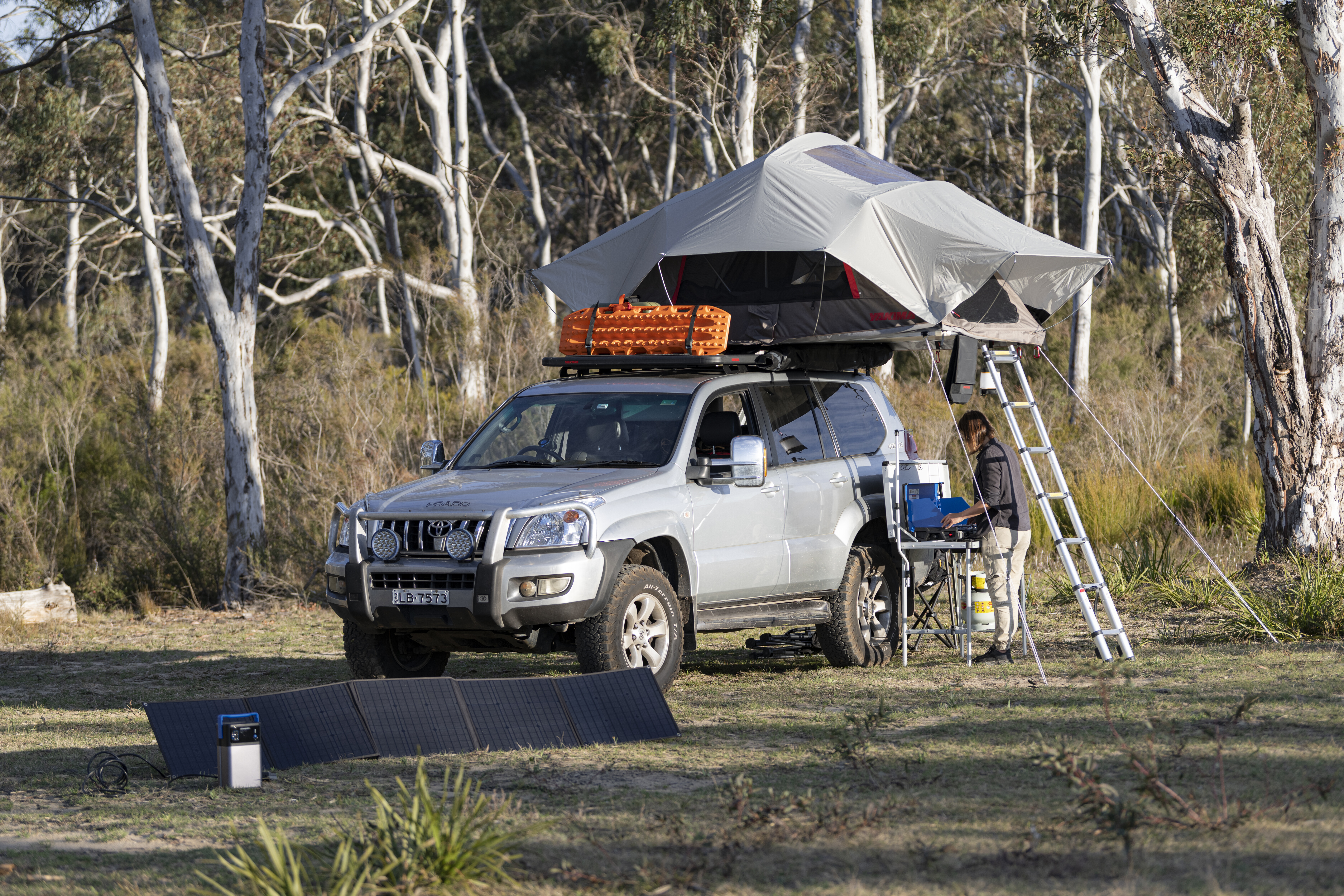
Unfortunately, the ‘rapid pitch’ advantage of fixed-length poles limits the pitched height to 1220mm, lower than some competitors on the market including the $799 Kings RTT, but we didn’t find head clearance an issue.Once pitched, the Skyrise HD has spring-rods to extend window and door awnings, tie-down points for securing to the ground in heavy weather, as well as four internal accessory pockets. Yakima also provides a plethora of well-considered optional accessories including a SkyLoft hanging storage net, SkyHook hanging carabiners (great for hanging a lantern) and SideKick storage bags for shoes and drink bottles, etc.In a pitching race, the ARB might just win, however. With its fixed 600gsm PVC cover requiring only a single zip to undo, there is no need to remove the cover. Instead, the Flinders is as simple as unzip and unfold. The two-part sliding ladder is not as easy to extend as Yakima’s multi-segment telescopic ladder (especially if sand or grit gets in the channels) and does not offer as much adjustability for uneven ground, but its flattened steps are more comfortable on bare feet.

Once open, the ARB Flinders loses a little of its lead in the pitching race, with a need to extend four internal corner poles, but the twist-lock system makes this a breeze and can be carried out in seconds. The tent has spring-rods to extend window and door awnings and offers pitched dimensions of 1400mm L x 2400mm W x 1400mm H, with internally routed cabling for the included 12V LED light alongside four accessory pockets and a two-part 50mm high-density foam mattress with bedding retention straps.
The volume and pole design offers more space than the Yakima Skyrise HD thanks to the higher roof, but the thinner mattress of the ARB Flinders might be a crux decision-point for poor sleepers.
Materials
Made from 600D Ripstop Polyester fabric with a 3000mm (hydrostatic head) waterproof PU coating, the Skyrise HD delivers excellent protection in all weather.
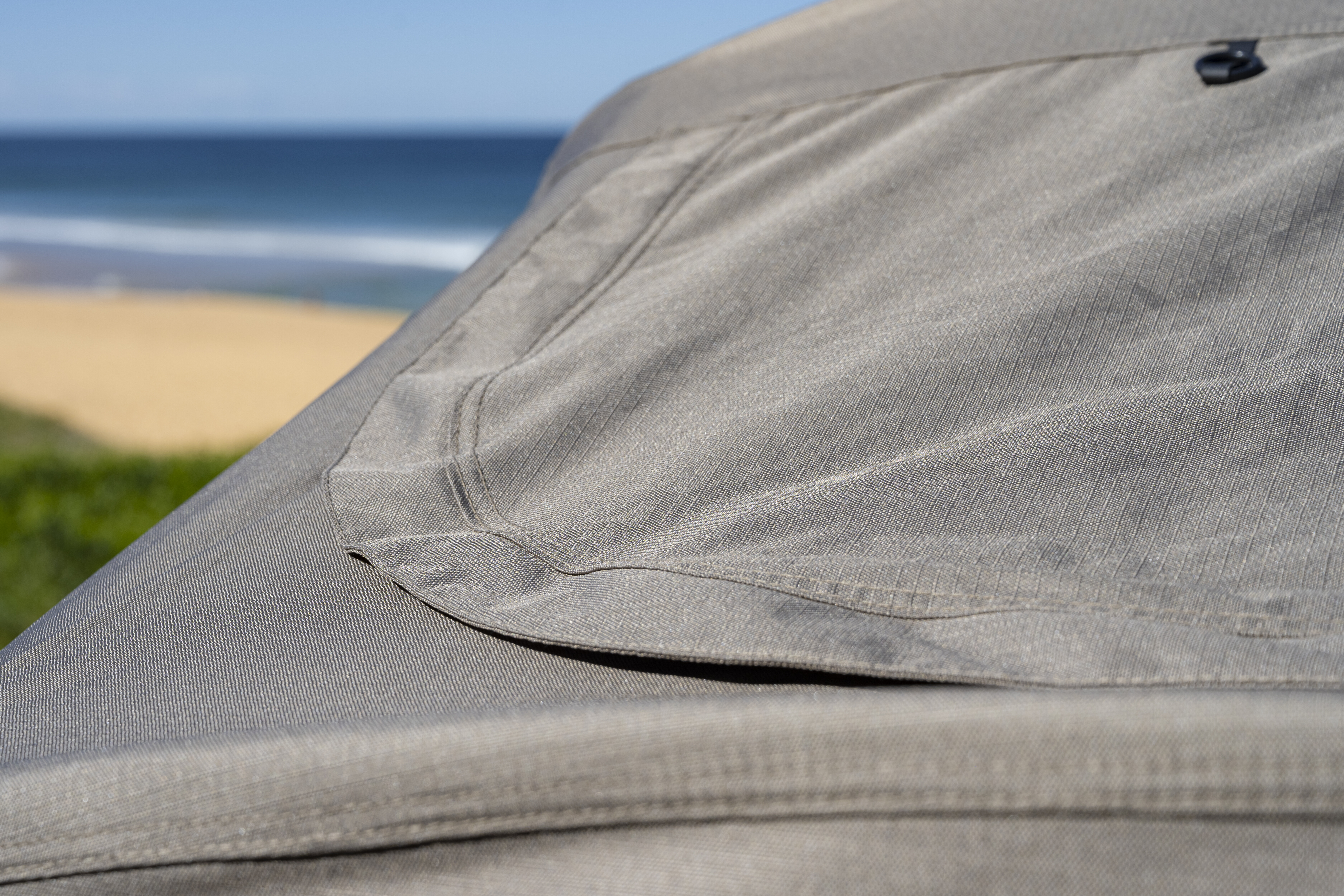
The lightweight 210D Ripstop Polyester flysheet delivers a further 3000mm of waterproofness, with two PVC windows allowing users to see the stars or the rain drops while sitting in a comfortable four-season shelter. The full-length flysheet delivers increased protection over the inbuilt partial flysheet of the ARB.ARB’s Flinders tent is a combination of a medium-weight 300gsm poly-cotton ripstop canvas with a fixed heavy-duty 420D Oxford Polyester Flysheet for sunroof and window awnings.
The unique design of a partial integrated flysheet and use of Poly-Cotton means for great warm-weather ventilation, but the lack of a full flysheet does mean the Flinders will offer less inclement weather protection than the Skyrise HD.
Real-world test
As far as usability goes, both tents score exceptional points. The Yakima Skyrise HD wins on comfort and features, while the low profile of the ARB Flinders delivers a superior transit experience and wins points for ease of set-up. We’ve all heard the saying that “It’s often the little things that count” and RTTs are no exception.The Yakima Skyrise HD stands out with its comfortable 65mm mattress, removable mattress cover and smart design features. The dual rooftop ‘skylights’ combined with flysheet PVC sunroof windows are great for both venting and checking the stars out, while upside-down zipped privacy screens inside the insect mesh windows makes for easy customisable venting, waterproofness and privacy without risk of insect invasion. The zips, tabs, reinforced seams and materials all exude quality and thus the near $2000 price tag.
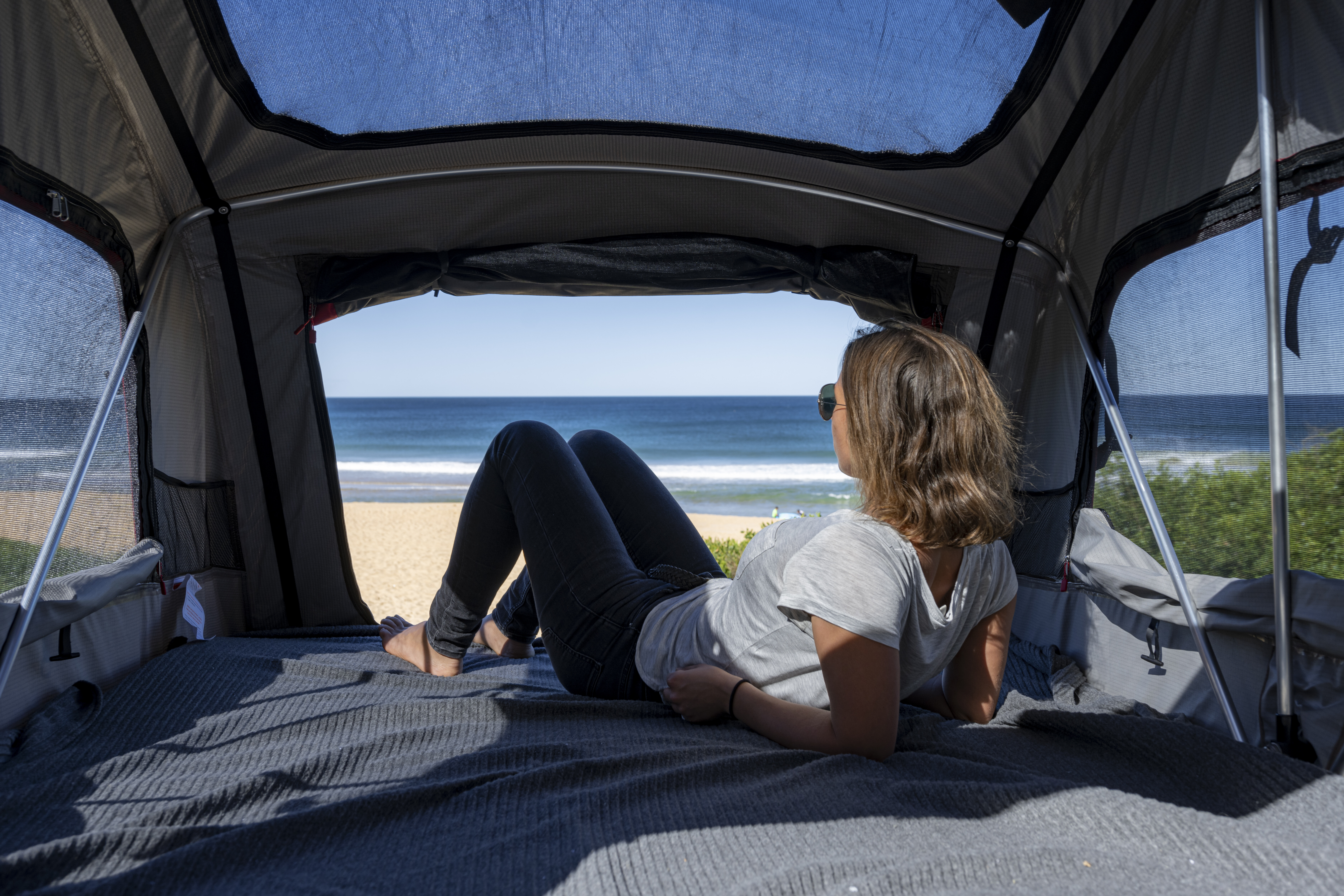
The Yakima does lose points for sheer bulk. At 410mm above your roof bars/platform it’s a hefty unit and will cause some wind drag on your roof. While the bulk of the tent when packed away leaves a little to be desired, the weight saving and extra space for bedding helps negate this frustration.Tool-less attachment to roof bars and fixed tri-pole design offering enough space without the downside of elaborate set-up are a win, as is the comfort of the mattress and bundle of accessories that aid usability.Small annoyances such as inability to easily fit to a roof platform, extra bulk not transitioning to extra headroom, or even the compression buckles sliding off the cover straps, are all frustrating. However, all in all the Yakima will be a great companion for the majority of users looking for camp-comfort over transit-comfort in a $1999 package.
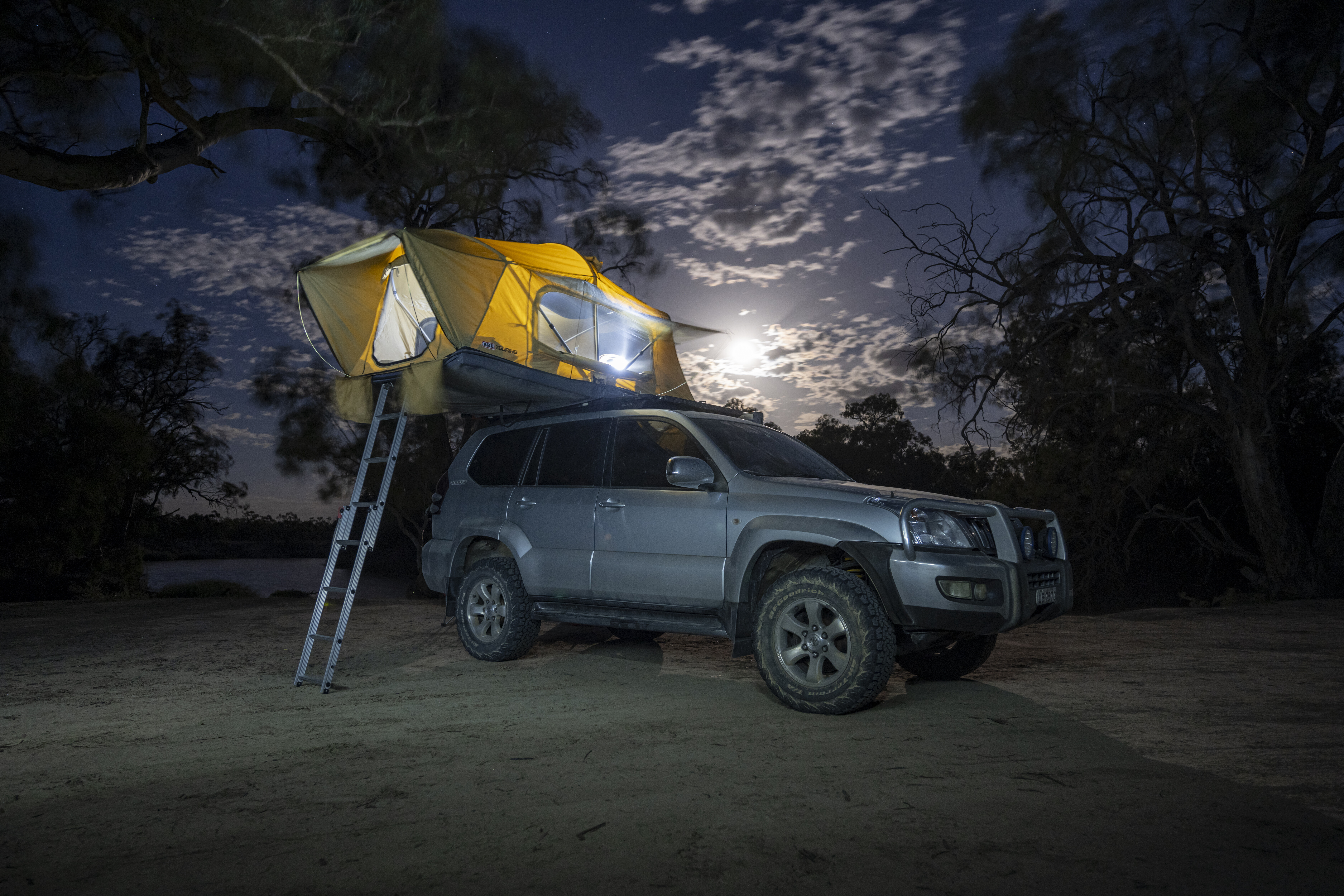
On the other hand, the ARB Flinders rooftop tent steps in to a realm of its own with its super low-profile sleek box-like design. The mere 200mm above-roofline profile is great for keeping things quiet and streamlined ‘up top’ but is slightly offset by the limited space for bedding. The fixed cover means for extreme ease in setting up and the integrated flysheet makes pitching an ease, while the twist-lock extendable poles are a great feature for easily expanding internal volume.While the ARB slips a little in mattress comfort and the annoyance of having to undo the insect screen to vent the tent, it makes up for it in ease of use and internal volume. For any intrepid explorer looking for an RTT that doesn’t break the bank or require limbo tactics to fit under the Macca’s drive-through, then the $1599 Flinders might just be the one for you.
Verdict
I know you want a winner, but unfortunately neither tent wins this battle. Where one tent excels, the other slips – but on another feature, it is vice versa. Both tents have been used on numerous outings over a period of at least three months and both have performed admirably. Neither have had any major issues.
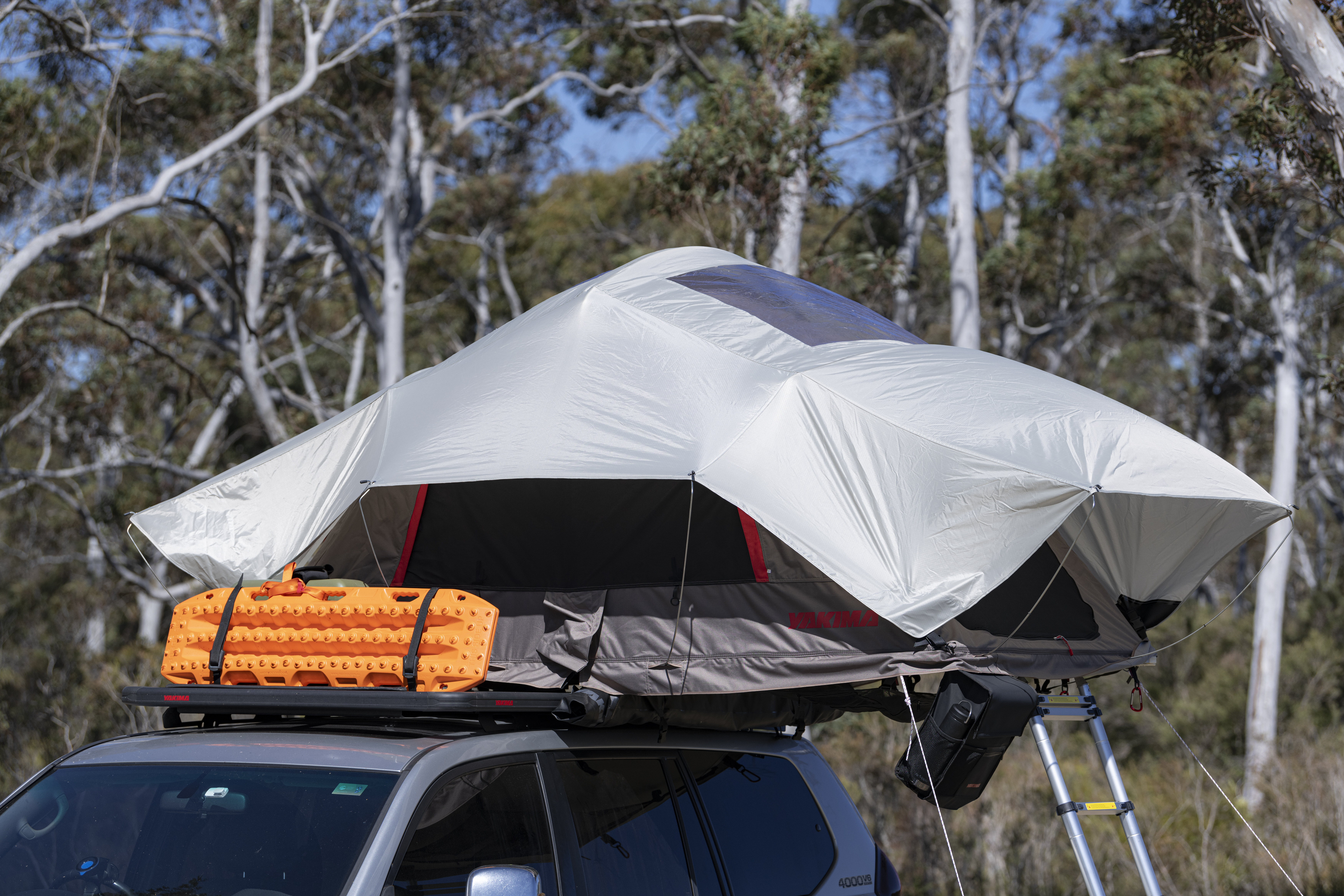
If you’re about measuring kilometres-per-litre or keeping things low enough to fit in your supermarket underground car park then the ARB Flinders might be the one for you, but if you want tool-less fitting, four-season protection and some extra comfort, then the Yakima Skyrise HD pips the ARB at the post.Both rooftop tents offer decent bang for buck, both deliver quality materials and workmanship, and both will keep you high and dry when you finally grab your better half, a fedora hat and a bottle of bubbles to go off in search of that elusive waterfall.
Yakima Skyrise HD
AVAILABLE FROM: www.yakima.com.au RRP: $1999
ARB Flinders
AVAILABLE FROM: www.arb.com.au RRP: $1599
It’s both refreshing and nerve-racking when you jump behind the wheel of a 76 Series LandCruiser, especially this stunning Merlot Red limited edition 70th Anniversary model of which only 80 exist in Australia.
First impressions are key when testing vehicles, and my first thoughts revolved around how massive the steering wheel is, and despite requiring many (many) turns, it is very slow to respond. This is made even worse thanks to its rather average turning circle, something that you get used to in time – but it will catch you out initially.
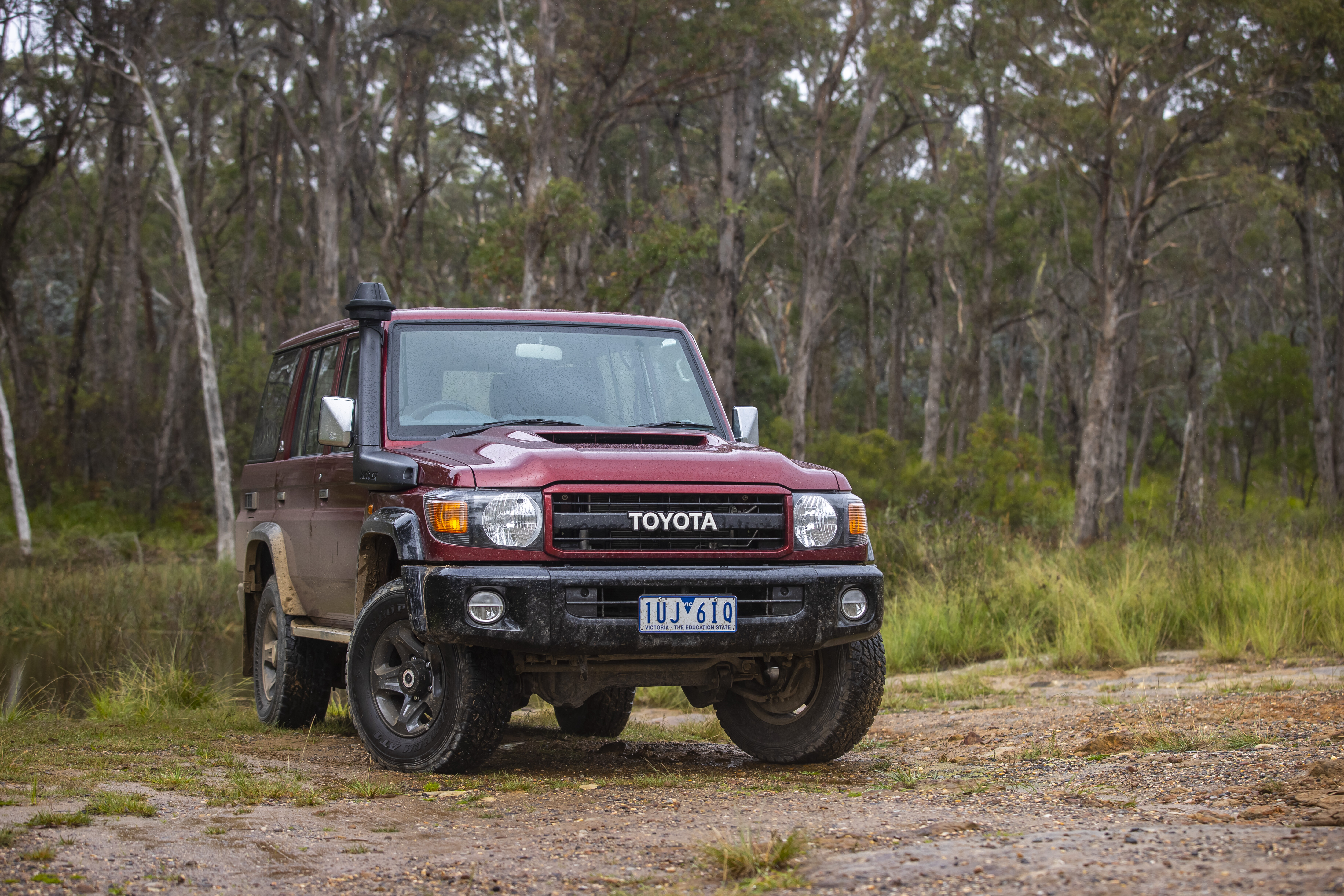
This isn’t my first foray in to the 76 Series platform; I’ve reviewed them when they were released many years back, and I was involved in the complete rebuild of an ex-mining 76 we were stupid enough to think would make for a good, cheap project… good and cheap should never be used in the same sentence. This is, however, my first shot at a 70th Anniversary model, which I was beyond excited to get to know over the space of a week.
Jumping in – you do have to jump thanks to the high sill clearance featured in the 76 Series – and you are transported back in time. It doesn’t beep at you for leaving your shirt untucked, it doesn’t try and steer you back in to your lane if you wander slightly, and it makes V8 noises that are so delightful you wonder why all four-wheel drives don’t sound this good.
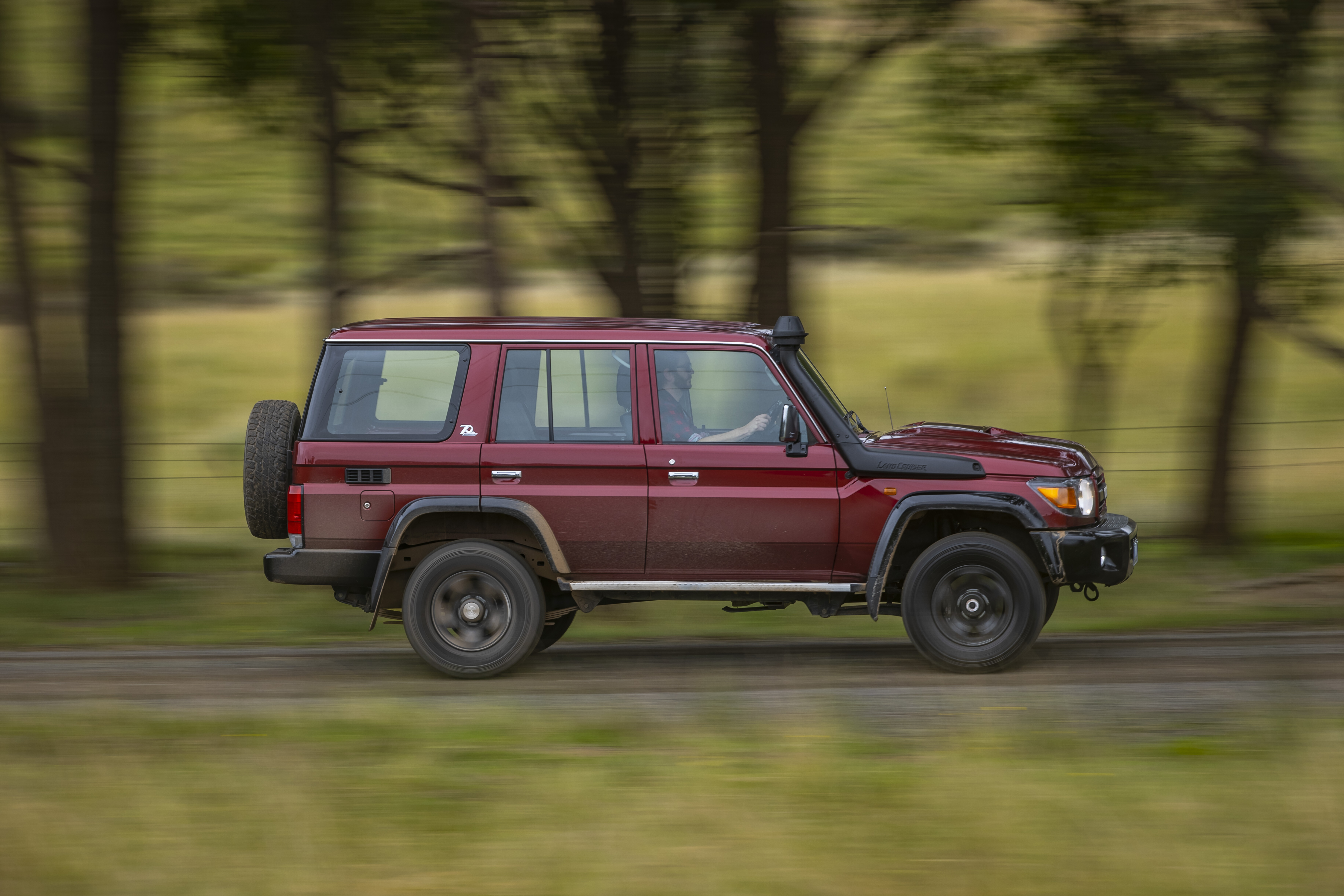
Then you drive it on the highway, and remember why… the 76 Series is loud inside, both from engine noise and wind noise. My inner teenager is squealing with delight, but the mid 30-year-old who houses said inner teenager isn’t so sure this is acceptable for a brand-new vehicle costing more than $80,000.
The interior is as basic as they come, even in this higher spec 70th Anniversary model, and the ride (while better than expected) sure isn’t plush. You don’t simply close the doors either, you have to give them a bit of gusto as they are rock solid.
The 76 Series LandCruiser is an expensive machine, and it realistically needs even more money spent on it to make it a good thing off-road. It’s not a rational purchase, it’s something that tugs at your emotions. If you want one, you’re just going to want one. I hope you get yours – I’m still trying to work out if I really need to eat food every day, and perhaps owning two kidneys is just being selfish?
What’s in the box?
This is what you get: premium seats, two additional cupholders, faux wood trim on the dash, and piano black trim around air vents. There’s 70th Anniversary badging inside and out, black 16-inch wheels, as well as a black front bumper and flares.
The steering wheel has been updated, and while it has blanks for switches, they are just that … blank. A missed opportunity there by Toyota, as it would have been great to see phone and infotainment integration for the steering wheel.
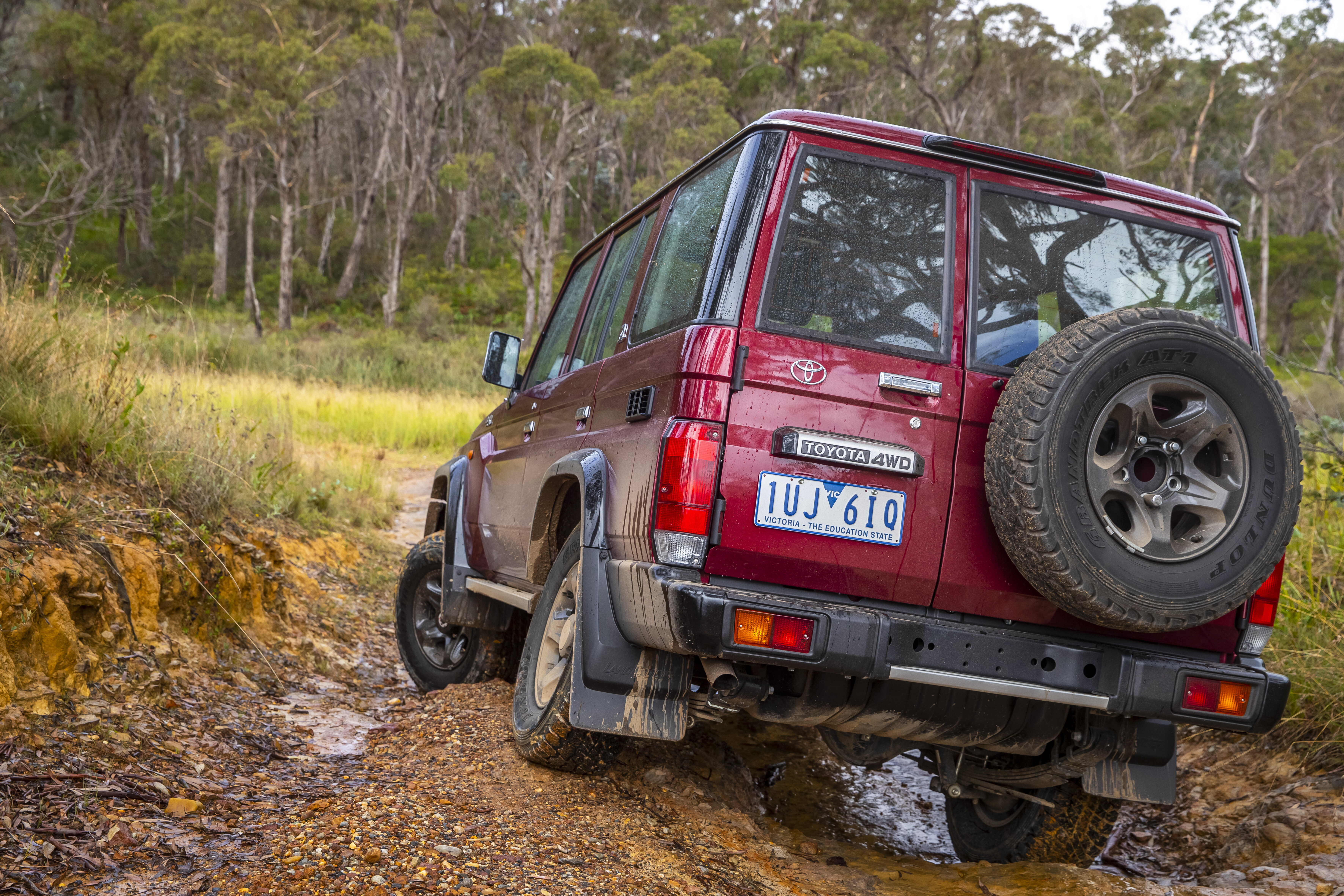
One item which had our resident 70 Series aficionado Mick Ellem from Offroad Images staring at with lust, was the retro-styled grille … he mentioned many times how much he liked it, and wondered how it would look on his beast of a 79 Series.
And the handbrake worked on this 76 Series (Hilux/80/100 Series owners know what I mean) which was a pleasant surprise. If only my own Hilux shared the same sort of enthusiasm.
Powertrain and performance
A 4.5L turbo-diesel V8 on paper is a thing of dreams, and this one is a proven package in Australia. While we mention specs on paper, with 430Nm quoted you’d think this motor would be underwhelming, but the way that VDJ thong-slapper produces grunt is spectacular.
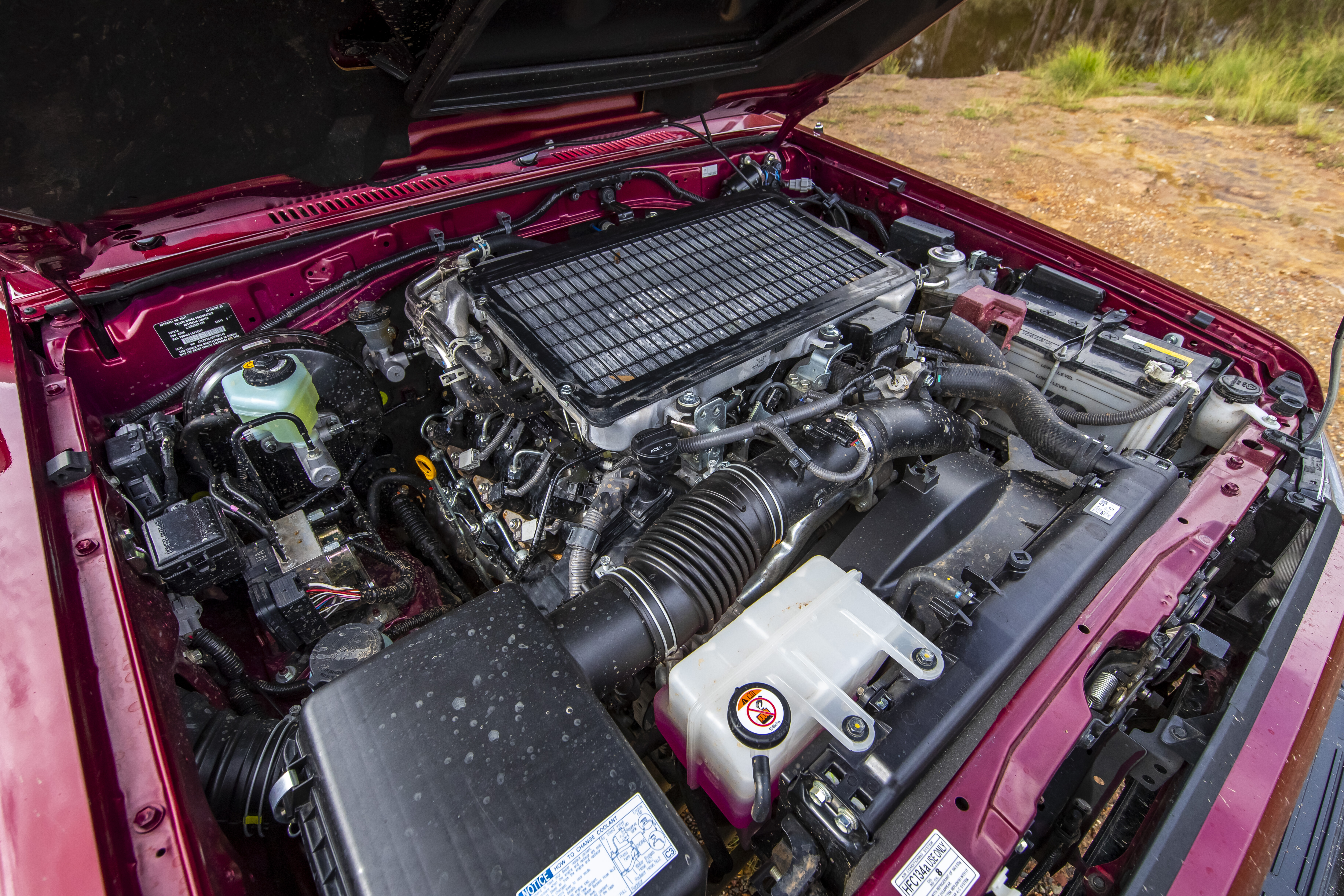
Take your foot off the clutch (yep, no automatic gearbox offering) and it just moves, you’d have to try hard to stall a stock 76 Series. It could definitely do with a sixth ratio in the gearbox though, with revs sitting at around 2300rpm doing 110km/h, the 76 Series is louder inside than it needs to be. It drinks more fuel than it should be when sitting at highway speeds too – the addition of a sixth gear would solve many issues.
While the power produced is less than that of a new Hilux, for example, there’s not much you can’t do to this engine to extract loads more power and torque from it. These engines are so under-stressed in factory tune, it’s not funny. They have been designed to run in rough conditions with reliability at the forefront. A good remap and run on the dyno should see conservatively 150kW at the wheels. Not bad at all, and that’s before playing with injectors and turbos. Food for thought.
Cabin and accommodation
This 70th anniversary edition includes more than the GXL model that sits below it – genuinely useful additions that all 76 Series LandCruiser models should have too, like multiple cupholders. I like the retro badges and grille design, and the seats are a bit nicer than what you get in the GXL or Workmate models, but I would have liked to see more than cosmetic additions to make this a truly special vehicle.
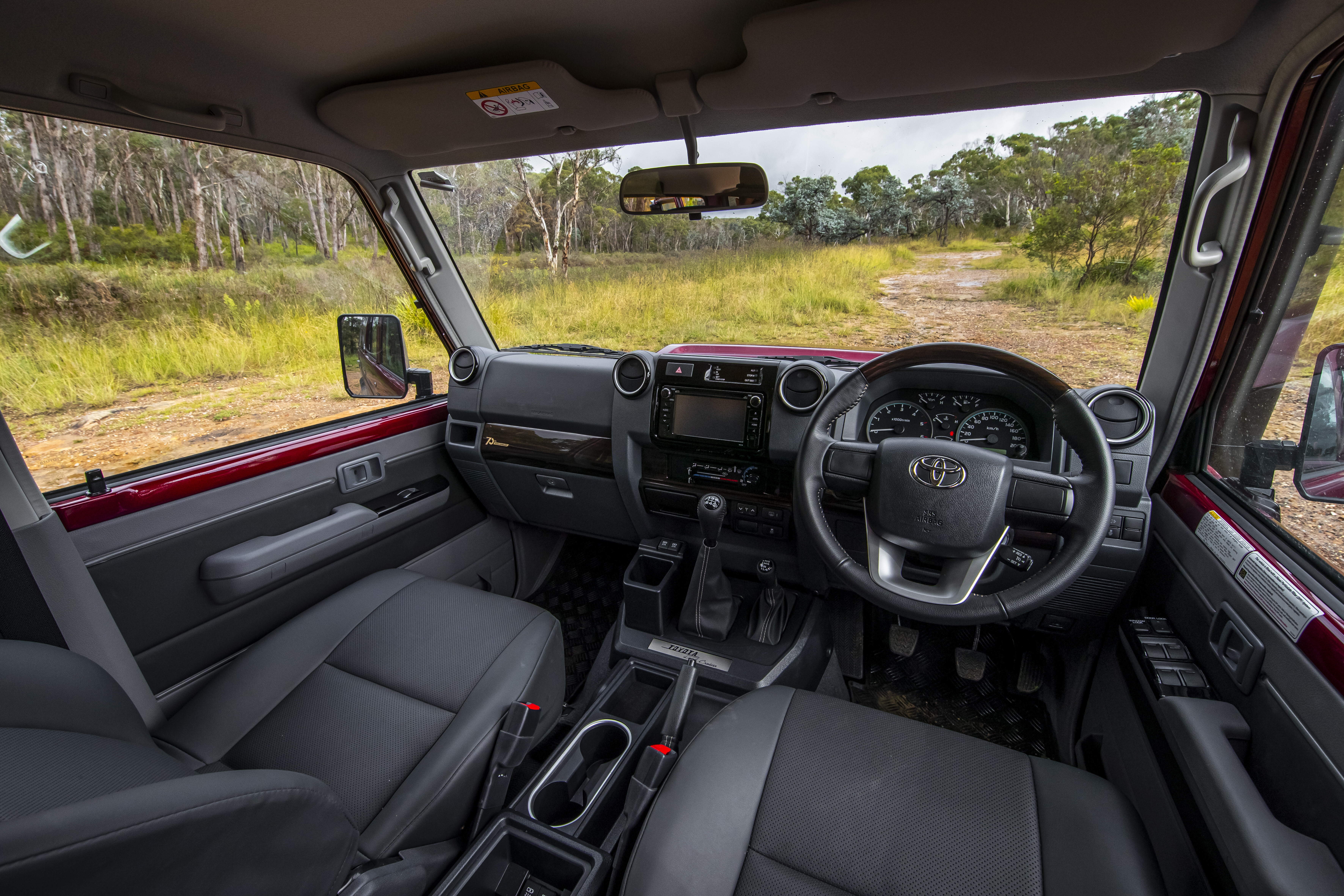
Visibility is a strong point, as you sit up nice and high with plenty of glass to see through. That’s almost where the good stuff ends, but this was never designed to be a luxurious or particularly comfortable 4WD – so we can’t judge it too harshly. One thing I can’t live with though is the stereo, which is utterly terrible. Just throw it and the speakers in the bin and start again, if you listen to anything other than cricket on the ABC.
I’m a lanky lad at nearly 200cm tall, and found there was plenty of headroom. Leg room in the second row of seating was cramped, but not awfully. I did laugh at the number of ashtrays, especially the ones mounted in the doors. It’s not something you see too often these days. Otherwise, it’s a simple, fuss-free affair, and with the extra bling you receive with this 70th Anniversary model, it’s a fun driving experience all-in-all.
On-road ride and handling
I wasn’t expecting much, but this thing rides better than you’d expect, especially off-road. If you hit a speed bump too fast when unladen, you certainly feel it, but I was mighty impressed with the tune of the factory suspension.
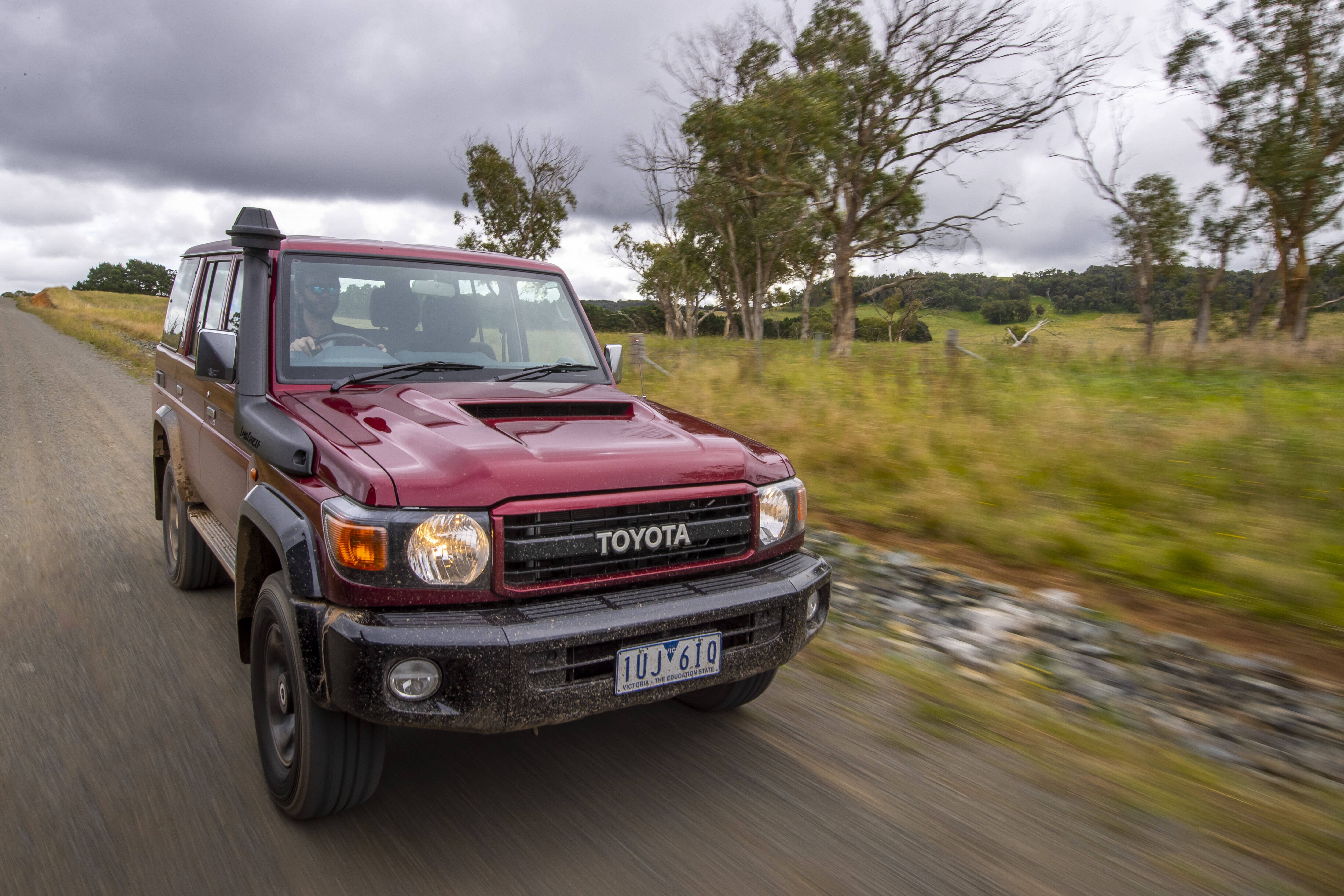
The steering is awful, though. This was the biggest let-down for me, as not only is the turning circle barge-like, the amount of turns required to go from lock to lock is exhausting. The good news is you get used to it in time, but it’s something that could be improved.
The 76 Series 70th Anniversary model tracks true on the highway – as well as a front solid-axle-equipped vehicle can – with the only complaints being the previously mentioned wind noise from the A-pillar and the drone of the engine. Please Toyota, can we have a couple more gears?
Off-road
With twin diff locks, stump-pulling low-range gearing and V8 diesel torque from damn near idle, the 76 Series is incredible in the rough stuff. It does like to lift a wheel from time to time as there’s not much suspension travel in stock form, but it just keeps chugging along. Sill clearance is impressive too, giving you confidence over rocks and deep ruts. However, those rear leaf springs tend to get hung-up, as they are mounted under the axle.
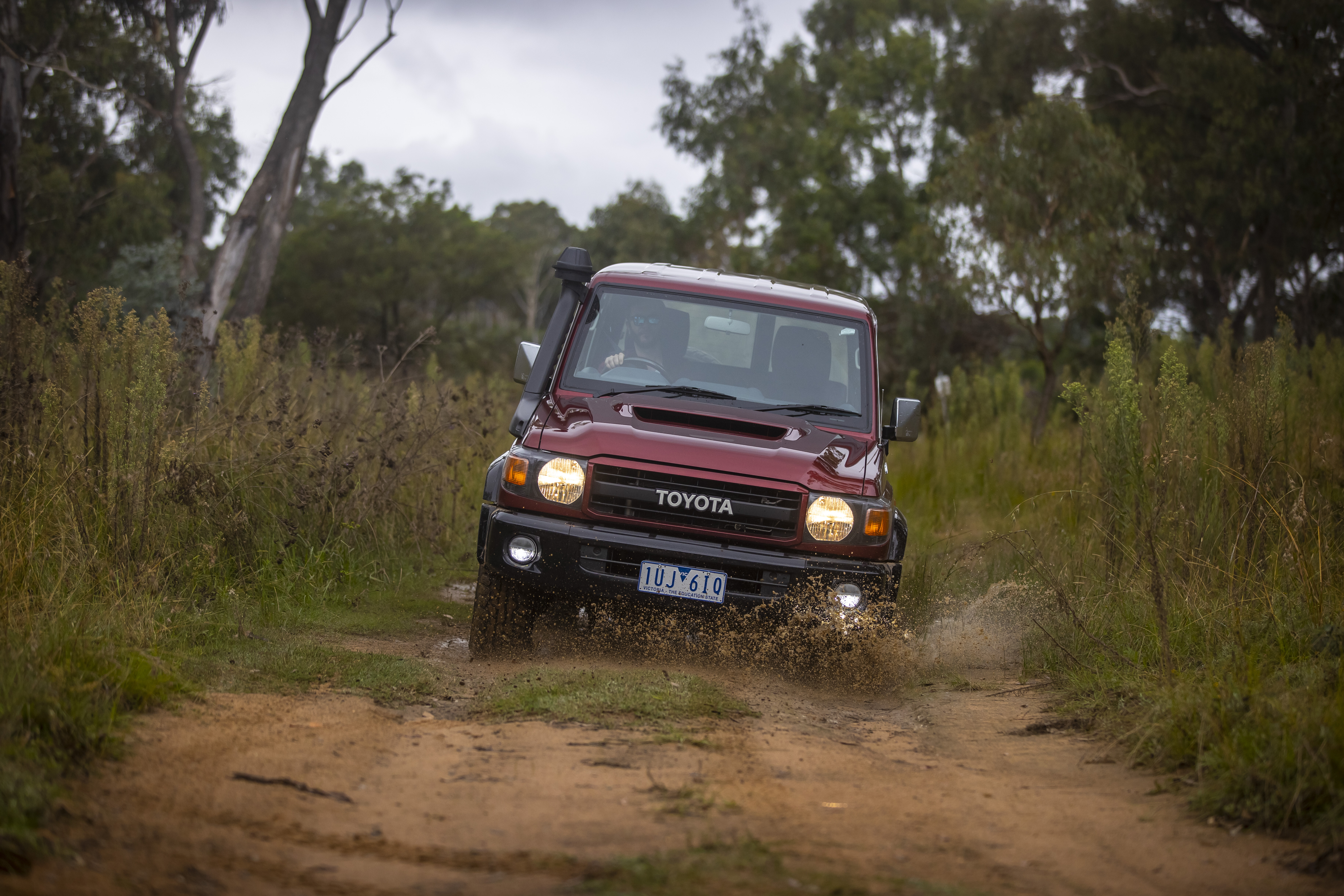
I’m not going to dive deep down the well-documented rabbit hole that is the rear track-width issue, as this has been discussed at great length and there are many aftermarket-based solutions to this problem. In general day-to-day driving, it’s not really an issue; but when driving in deep ruts and on soft sand, this is when you notice the rear axle is four inches narrower than the front. Disappointing to see this hasn’t been updated, but if you must have a 76 Series, there are plenty of simple (albeit costly) fixes available.
I’d also be ditching that factory raised air intake and replacing it with a quality sealed snorkel. In fact, it would probably be the first thing I’d do if I owned one, something I’d like to achieve in the future. You see, while it might seem like I’m throwing shade at the 76 Series, it’s only because I like it so much.
It’s the perfect vehicle for my needs on paper, but for the money there are just better options available these days that offer more refinement and safety. In saying that, there’s nothing much else like the 76 Series on the market today, and it’s pretty cool that you can still buy such a stripped-back and unique off-roader from the showroom in 2022.
Practicalities
Considering the 76 Series wagon is basically a box on wheels, it’s a really practical vehicle to load up with camping gear and other bulky items. There are some small tie-down points in the cargo area, a cubby on the passenger’s side for the jack and tools, and not much else.
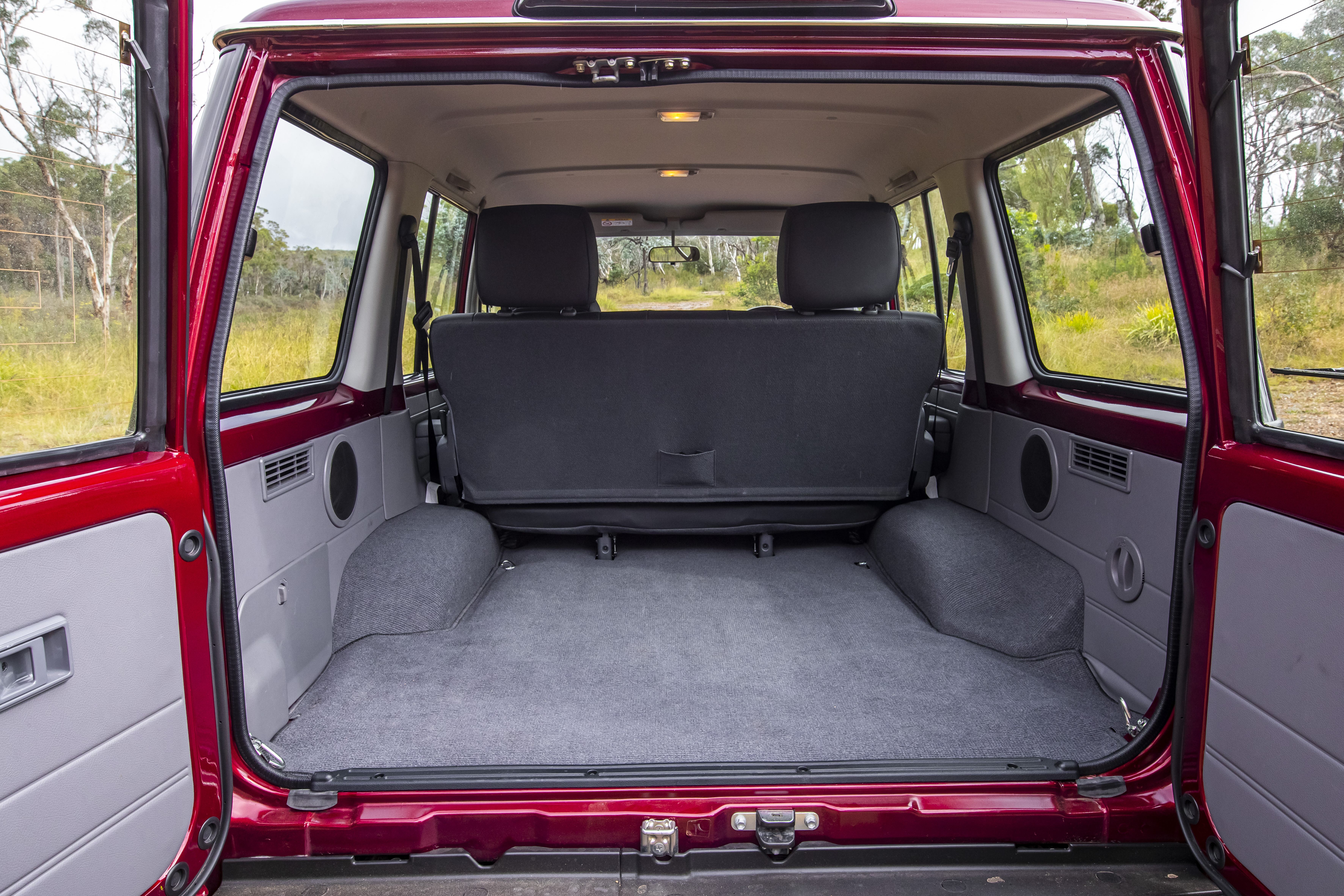
Call it an excellent blank canvas to make in to your own ideal tourer. I also love the roof gutters, as these make for a sturdy and simple install when bolting on a roof rack or storage platform. Something I’d wager most 76 Series owners would do.
Towing capacity is rated at 3500kg braked, and this 76 Series Cruiser can carry a usable payload of 795kg which is fair for the size of the vehicle. Fuel capacity is also decent with 130L of diesel available, giving a hypothetical range of 1000km between fills – but I’d feel more confident filling up at the 900km mark.
Verdict
It’s a dinosaur, it should be extinct … but I’m so happy this vehicle still exists on the Australian market. If you enjoy the feeling of constantly correcting the steering wheel, want a sturdy no-frills off-roader and have $80,000 burning a hole in your pocket, I support your decision to buy this vehicle.
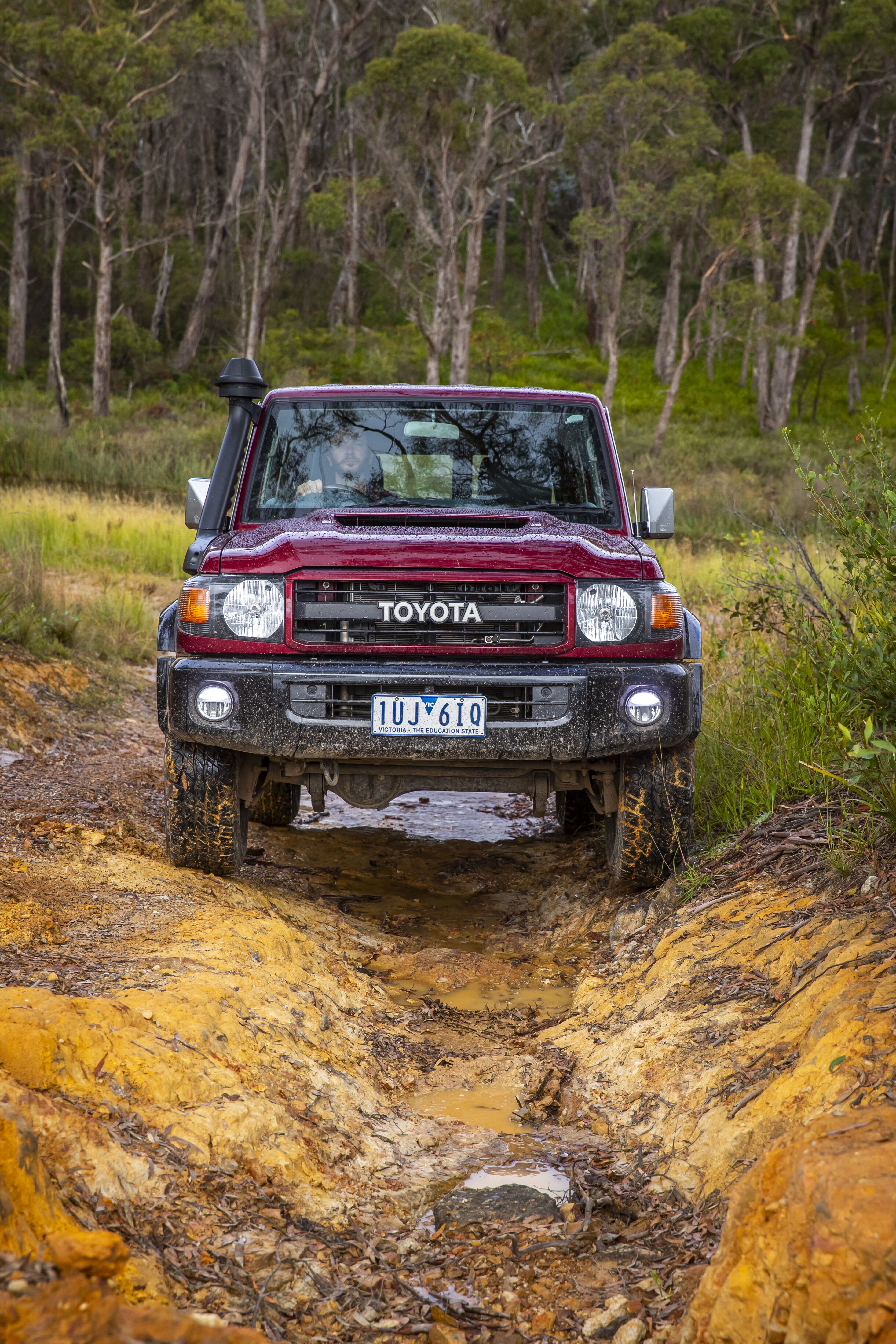
You have to grow with this 4×4 to learn how it feels to actually drive again. If you get it – and not everyone will – you’ll be hooked. Is it safe? Not particularly. Is it practical? Well, yes and no. Is it worth $80,000? Not even close. Do I want one? Absolutely.
70th Anniversary 76 Series specs
| ENGINE | V8 single turbo-diesel |
| CAPACITY | 4461cc |
| MAX POWER | 151kW at 3400rpm |
| MAX TORQUE | 430Nm at 1200 to 3200rpm |
| GEARBOX | Five -speed manualu00a0 |
| 4X4 SYSTEM | Part-time 4WD w/ locking front hubsu00a0 |
| CONSTRUCTION | Ladder-frame chassis |
| FRONT SUSPENSION | 3-link solid axle w/ coil springs |
| REAR SUSPENSION | Solid axle w/ leaf springsu00a0u00a0u00a0 |
| TYRE/WHEEL | 265x70R16 / alloy wheelsu00a0 |
| KERB WEIGHT | 2265kg |
| GVM | 3060kg |
| PAYLOAD | 795kg |
| TOWING CAPACITY | 3500kg (braked) |
| SEATING | 5 |
| FUEL TANK | 130L |
| ADR FUEL CLAIM | 10.7L/100km |
| ON-TEST FUEL USE | 13.7L/100km |
| DEPARTURE ANGLE | 23u00b0 |
| APPROACH ANGLEu00a0 | 33u00b0 |
| GROUND CLEARANCEu00a0 | 235mm |