
Snapshot
- 2024.5 Ford Everest: Full Australian details
- Pro Trailer Back-Up Assist added as option for Trend, Sport and Platinum
- Trend RWD variant dropped from line-up
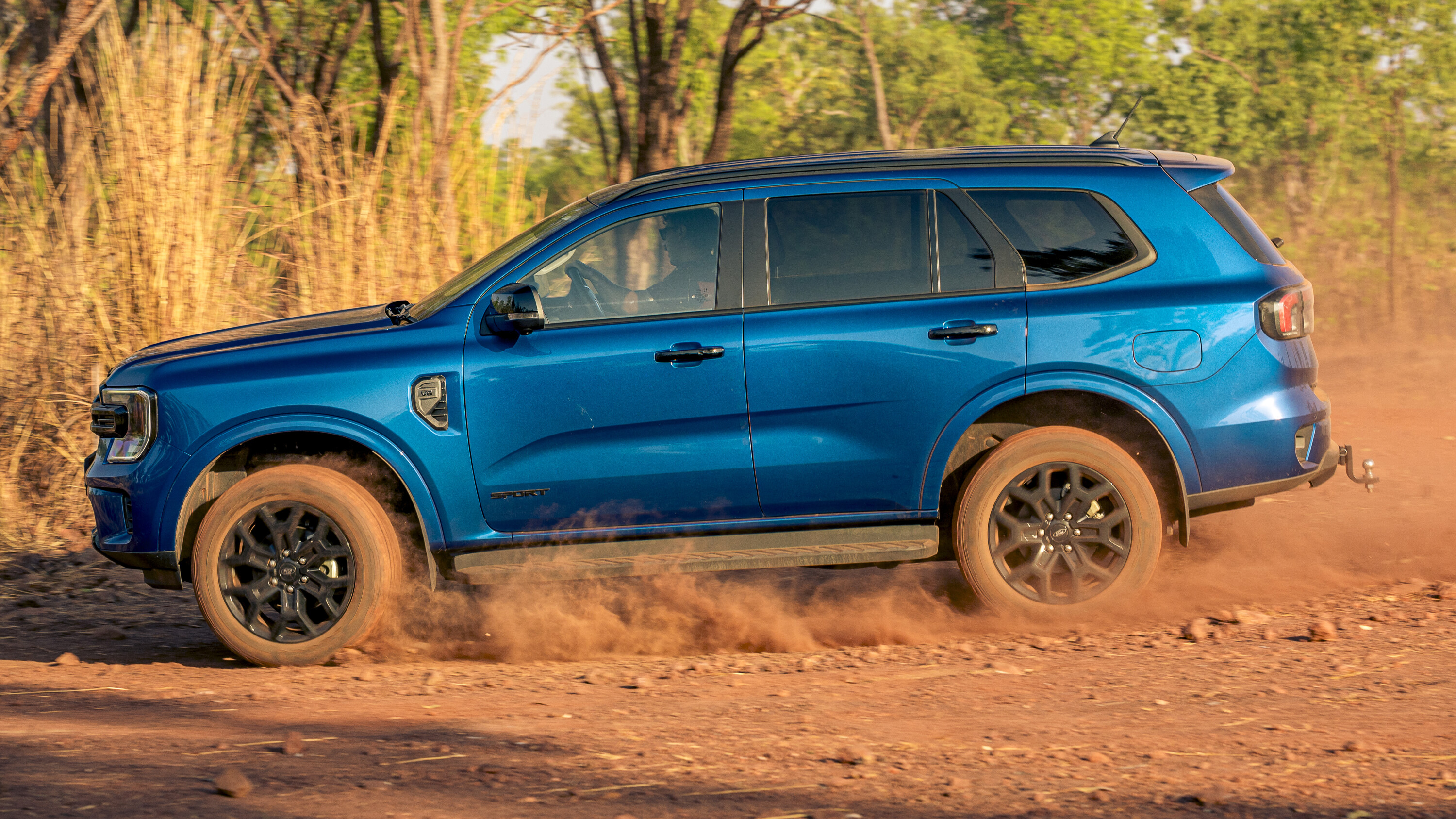
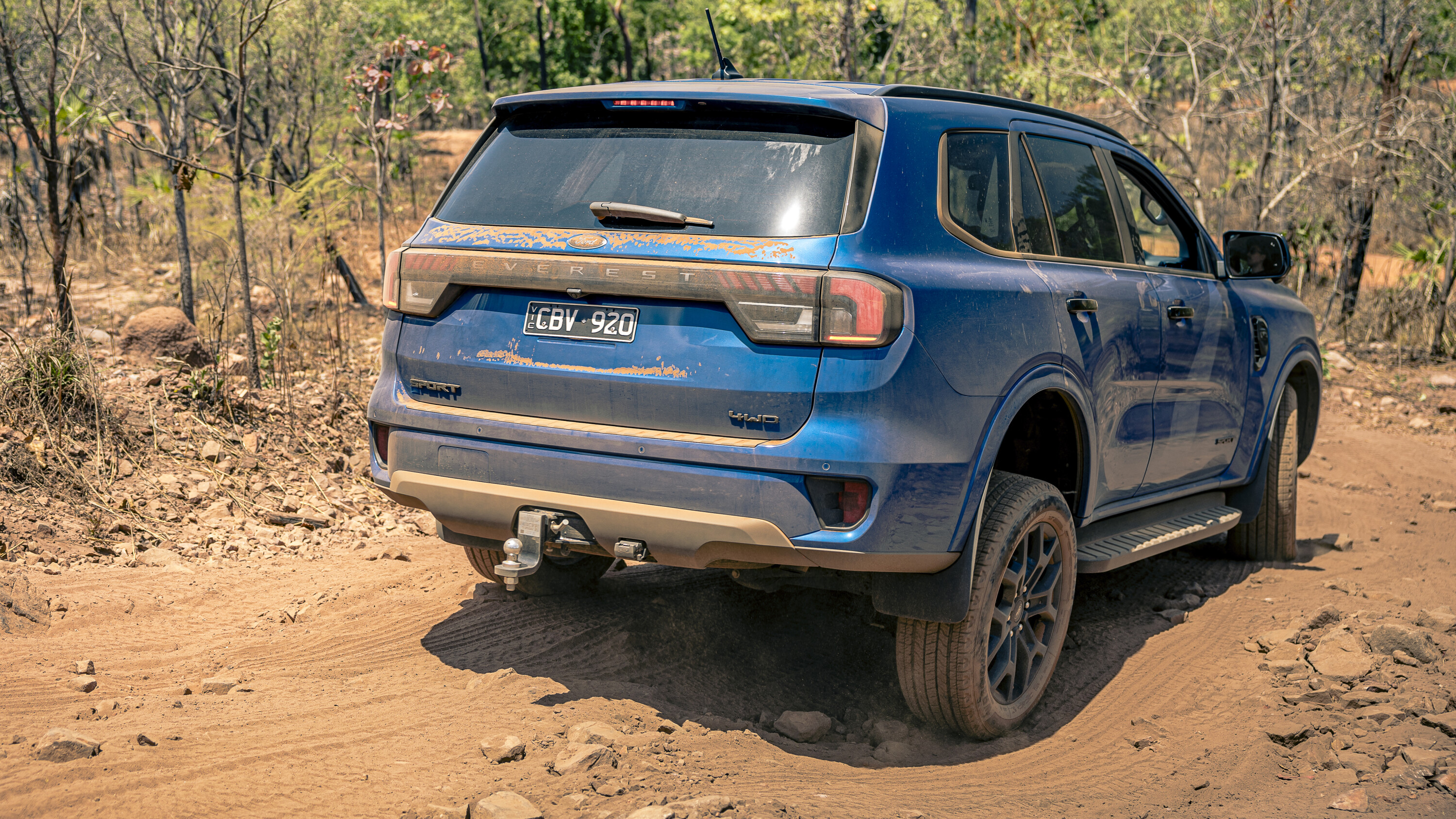
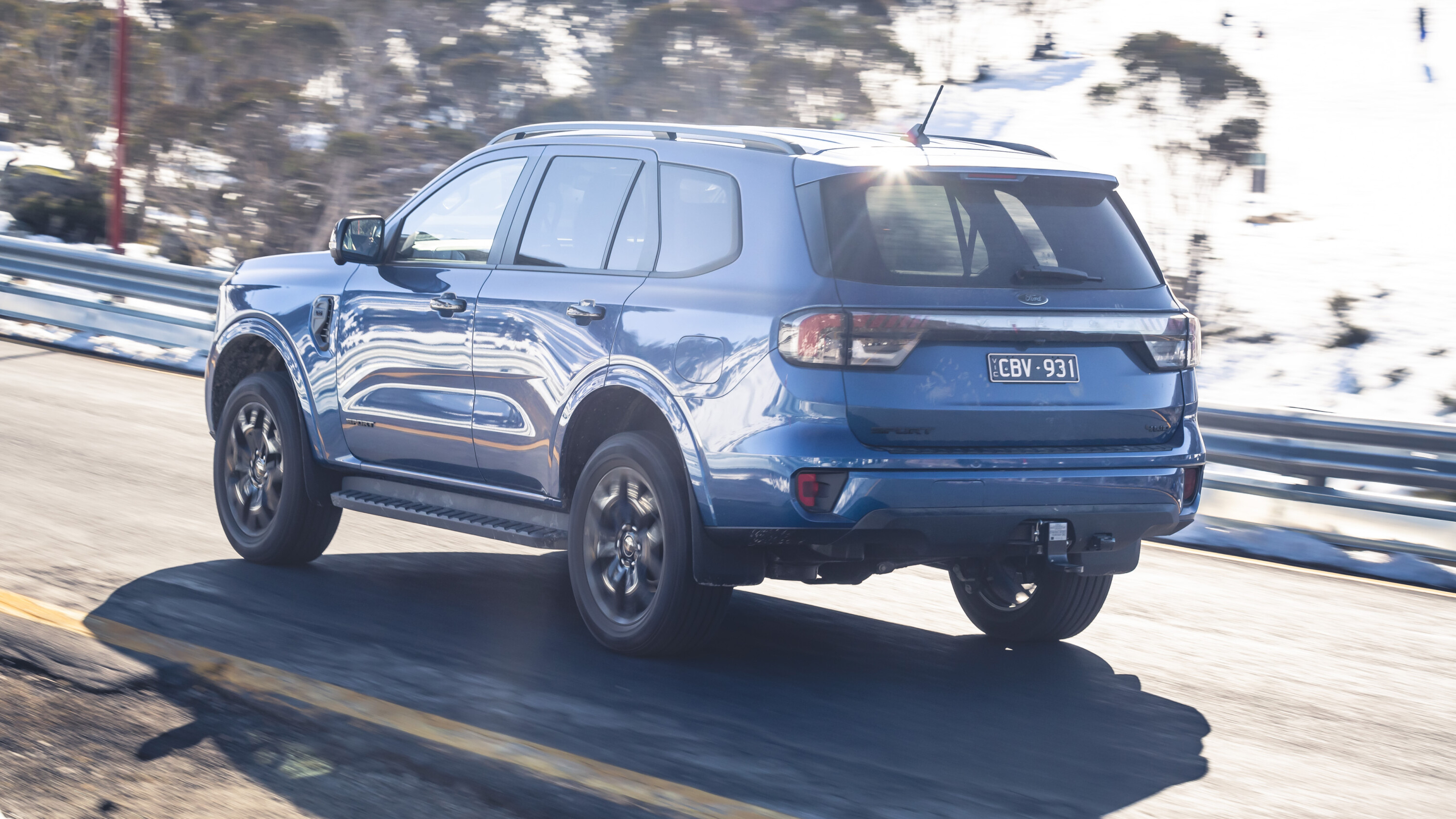
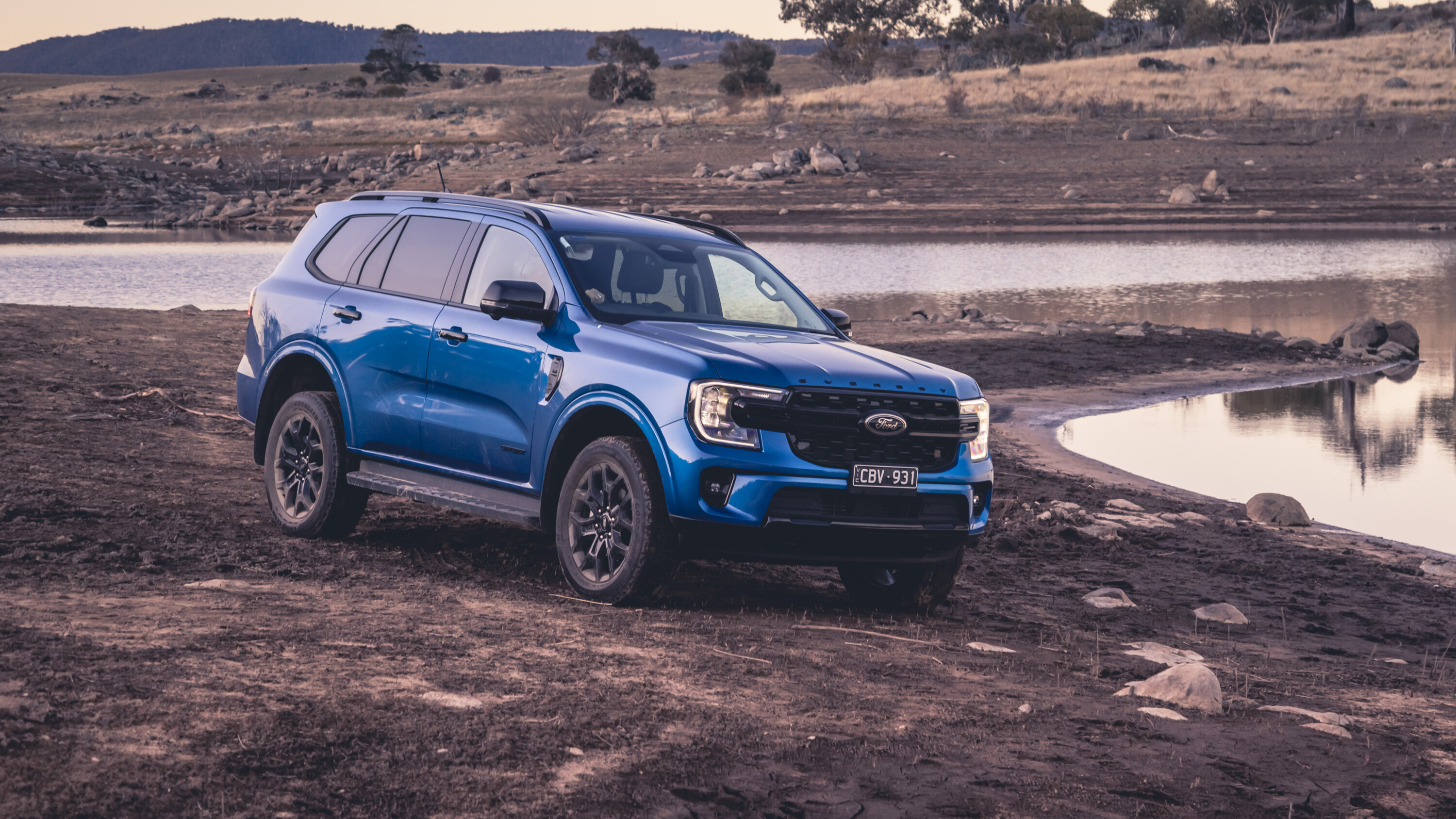
The 2024.5 Ford Everest off-road SUV is set to receive various upgrades and a smaller range of models.
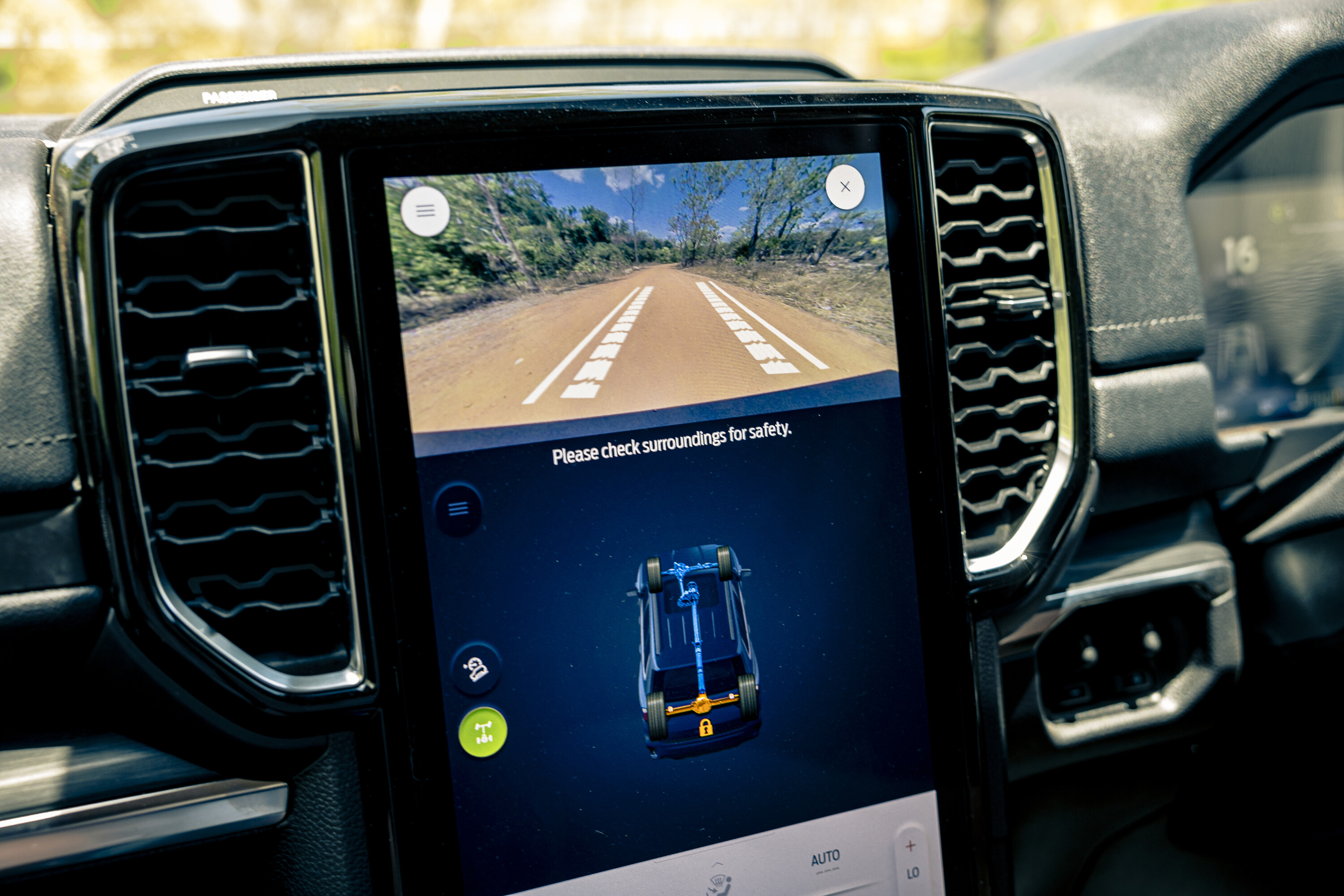
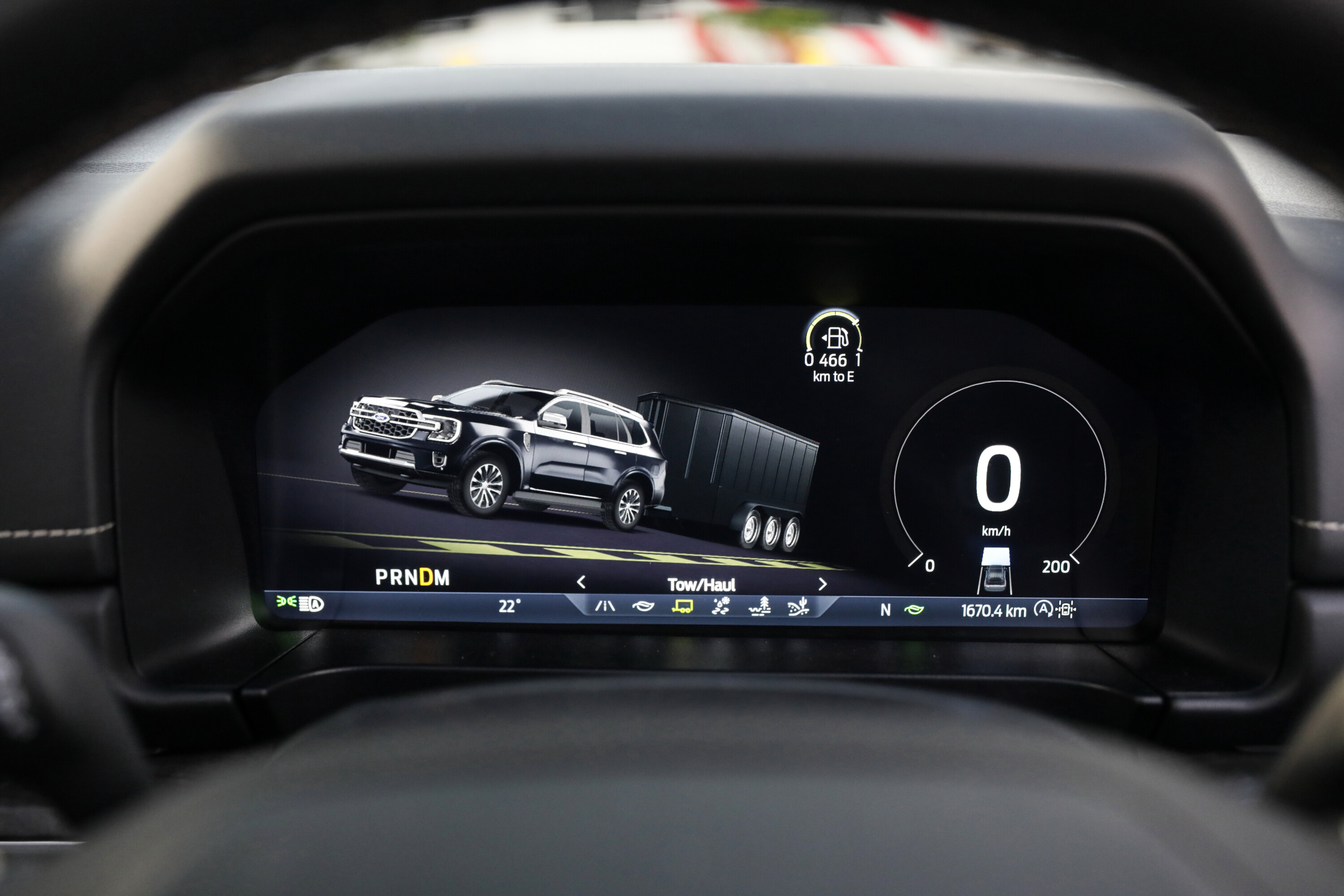
The new Pro Trailer Back-Up Assist is the main addition, which is borrowed from the full-size F-150 – and also coming to the related Ranger ute.
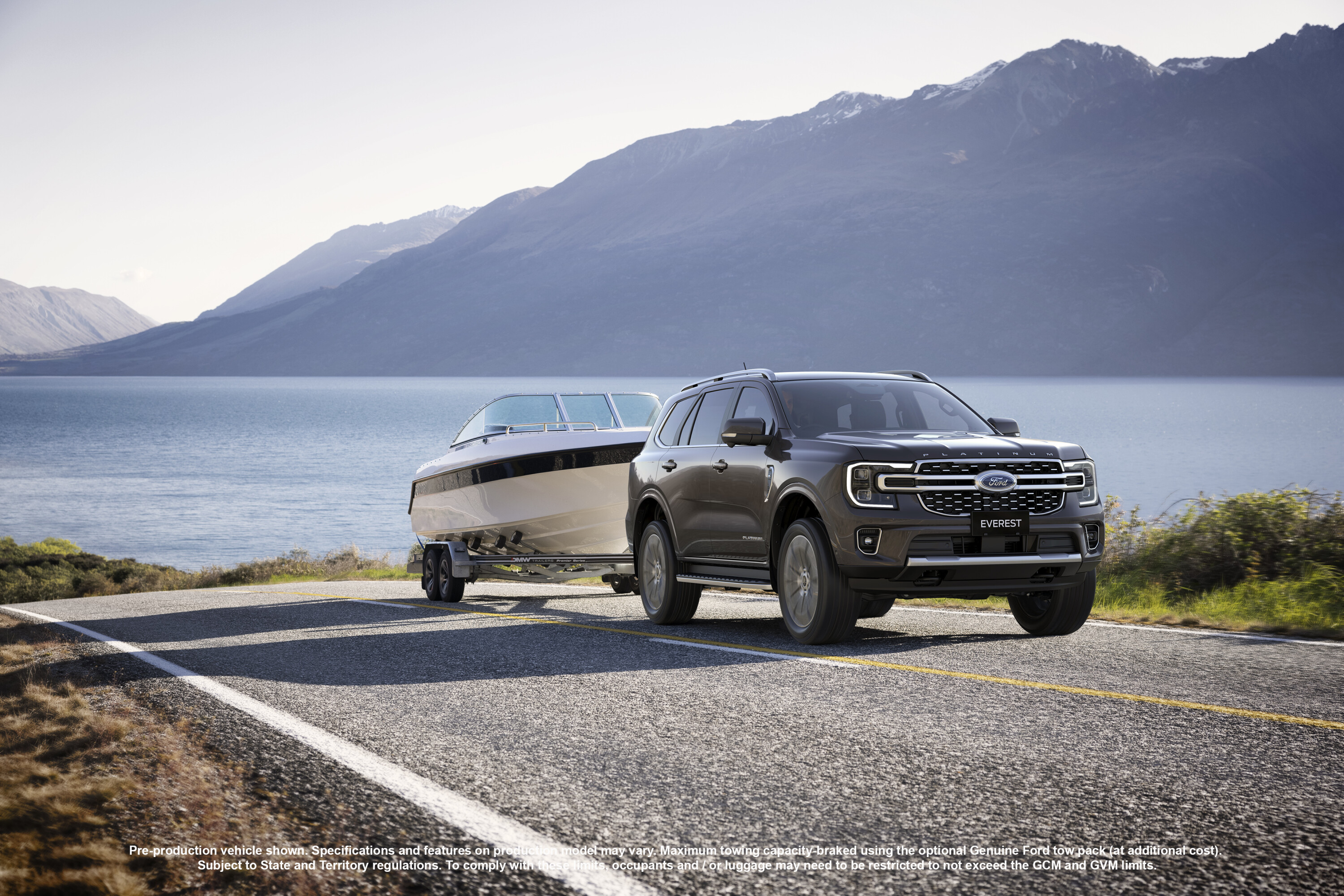
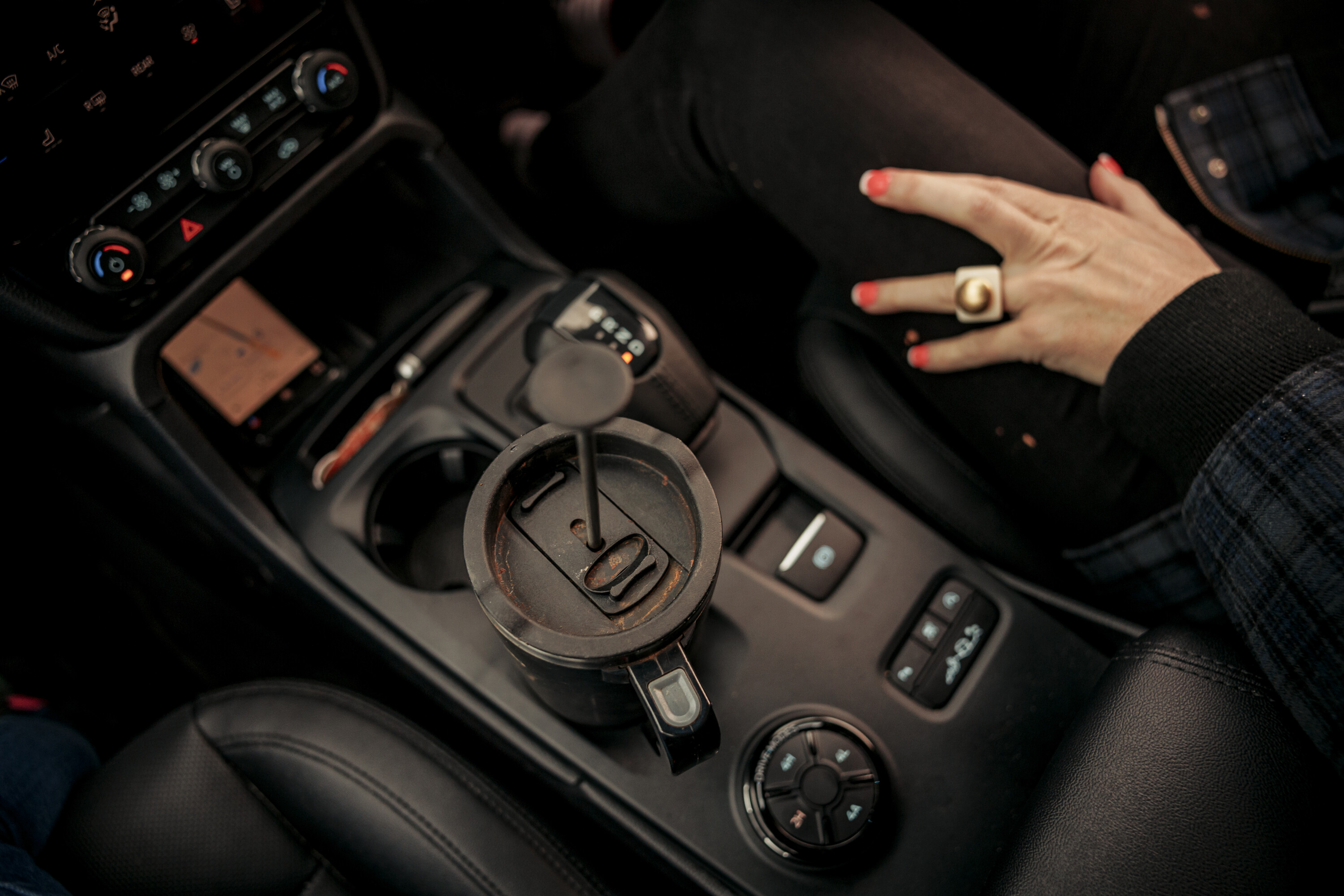
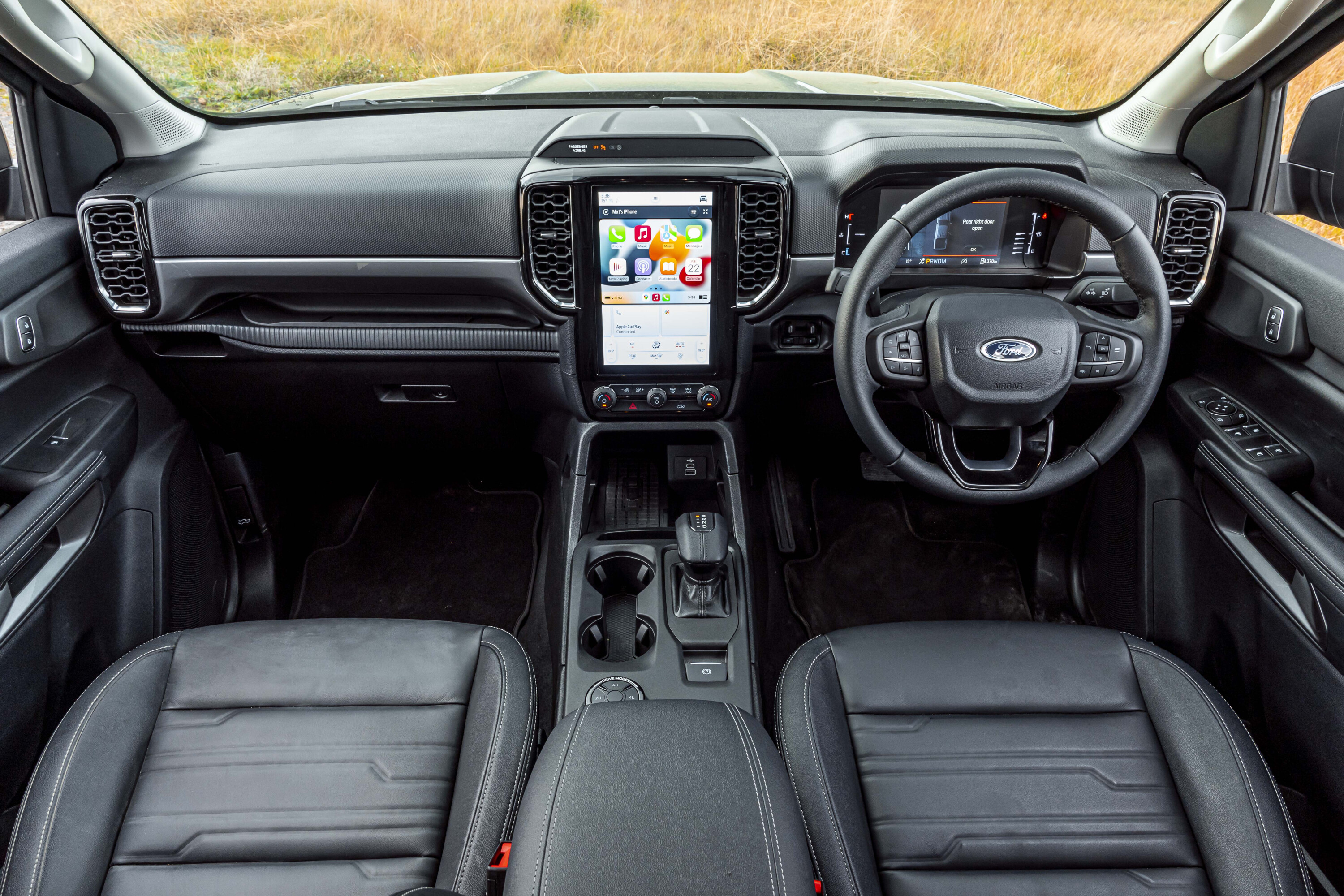
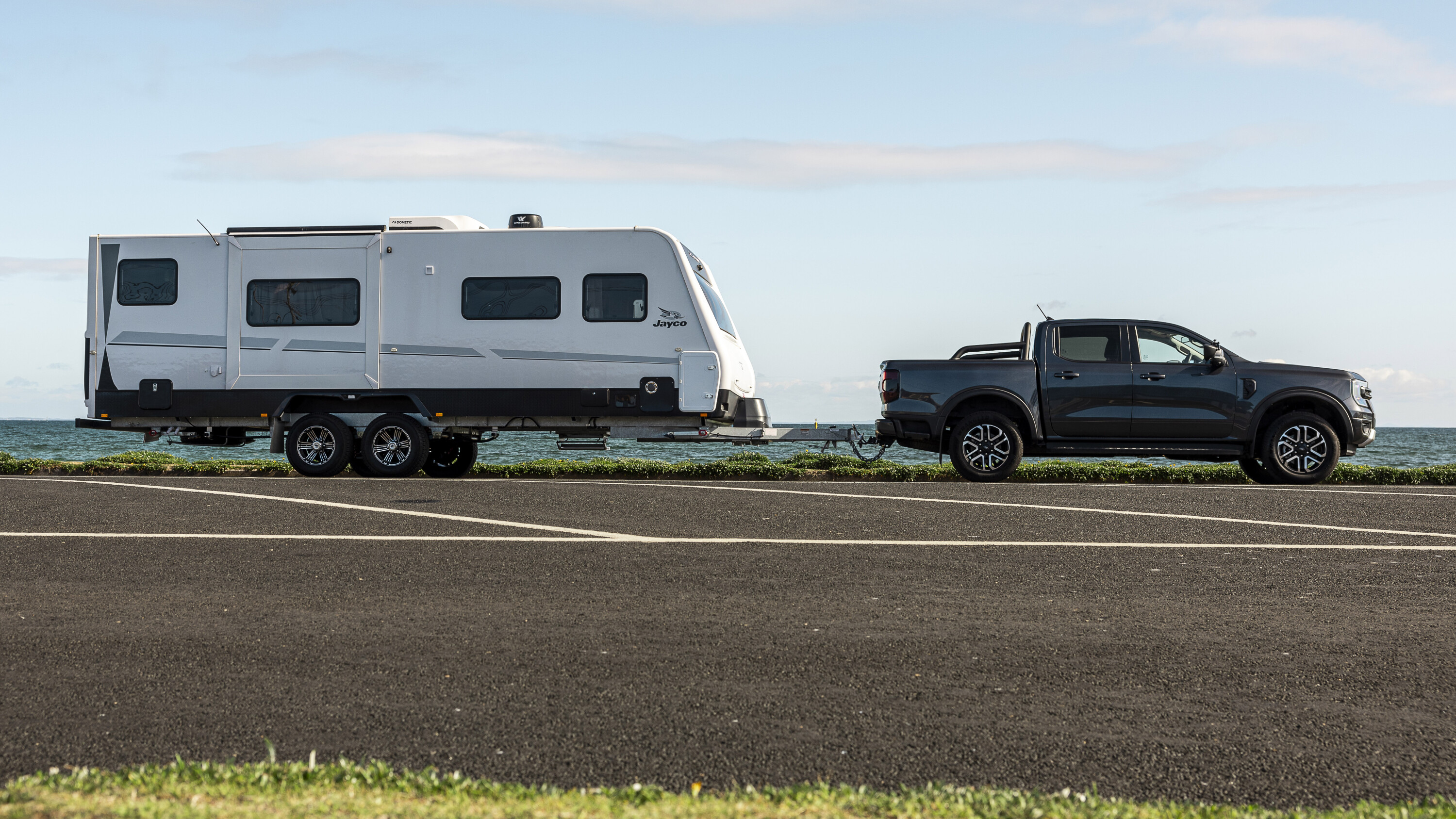
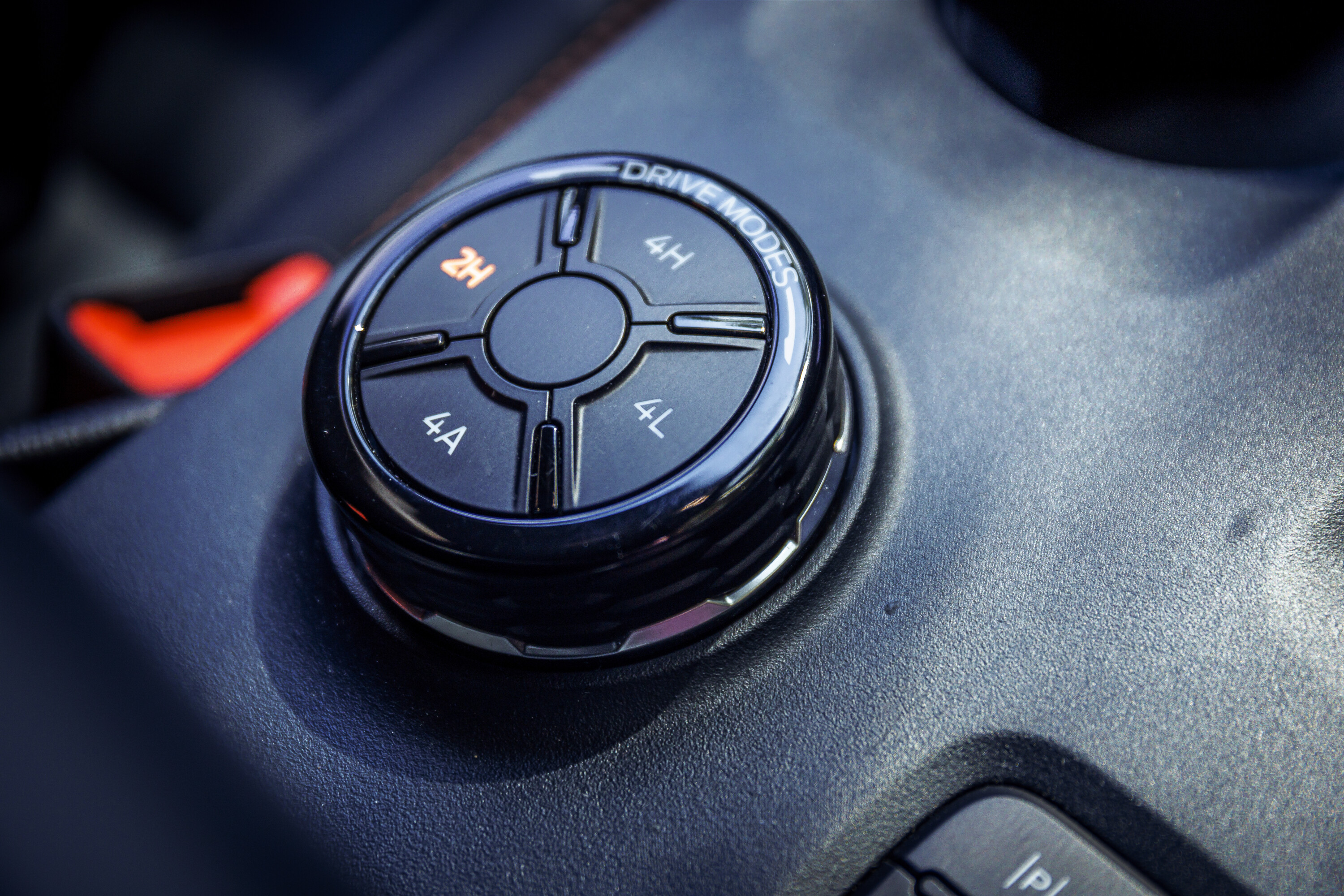
This feature enables drivers to manoeuvre their trailers using the outer ring of the drive mode selector on the centre console. The steering wheel turns automatically to direct the trailer as the driver turns the dial, so they don’t need to touch the wheel during the manoeuvre.
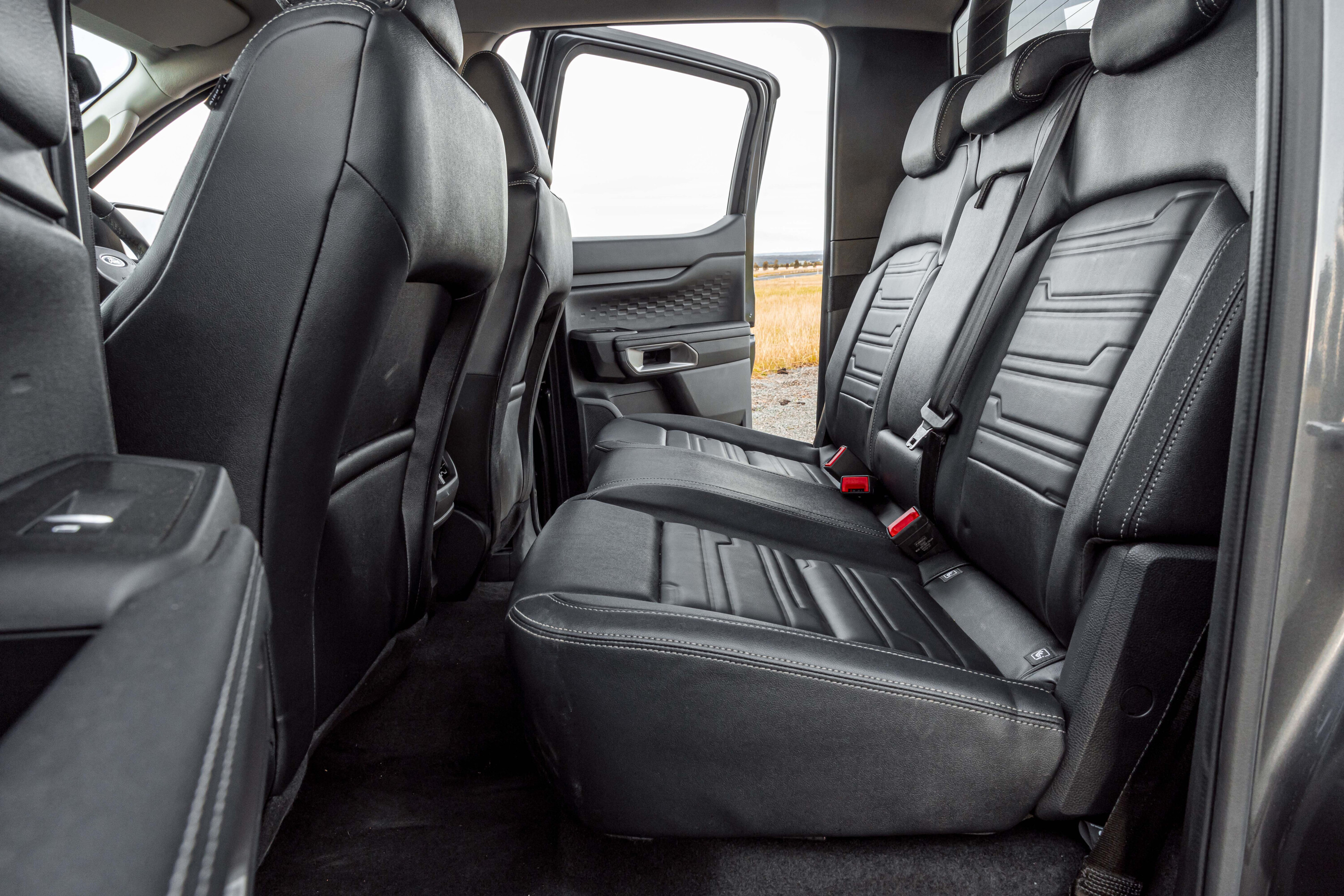
The Pro Trailer Back-Up Assist feature will be optional for the Everest Trend and Sport as part of the Touring Pack. The Platinum model is now available with a new Pro Towing Pack that includes the Pro Trailer Back-Up Assist feature, along with a tow bar and an integrated brake controller.
1
Other updates include standard zone lighting and black stand-off roof rails for the mid-spec Trend and Sport variants.
The Trend two-wheel-drive variant has been removed from the Everest line-up, while the limited-run Wildtrak special edition variant will not be offered for model-year 2024.5.
While Ford has not raised prices for the updated Everest, all variants previously saw price increases between $500 to $2490 applied from January 1, 2024.
The Everest now starts from $53,990 before on-road costs for the Ambiente 4×2, rising to $79,490 plus on-roads for the Platinum V6 4×4.
The Ford Everest, which was crowned the 2023 Wheels Car of the Year, was the nation’s second-best-selling large SUV in 2023, with 15,071 sales, beating the Isuzu MU-X (14,139). However, it was unable to overtake the popular Toyota LandCruiser Prado (20,710).
1
JUMP AHEAD
- 2024.5 Ford Everest pricing
- 2024.5 Ford Everest features
- Colours
- Engine, drivetrain, and fuel economy
- Safety
- Dimensions
- Warranty and servicing
- Availability
2024.5 Ford Everest pricing
1
2024.5 Ford Everest features
| 2024.5 Ford Everest Ambiente standard features | |
|---|---|
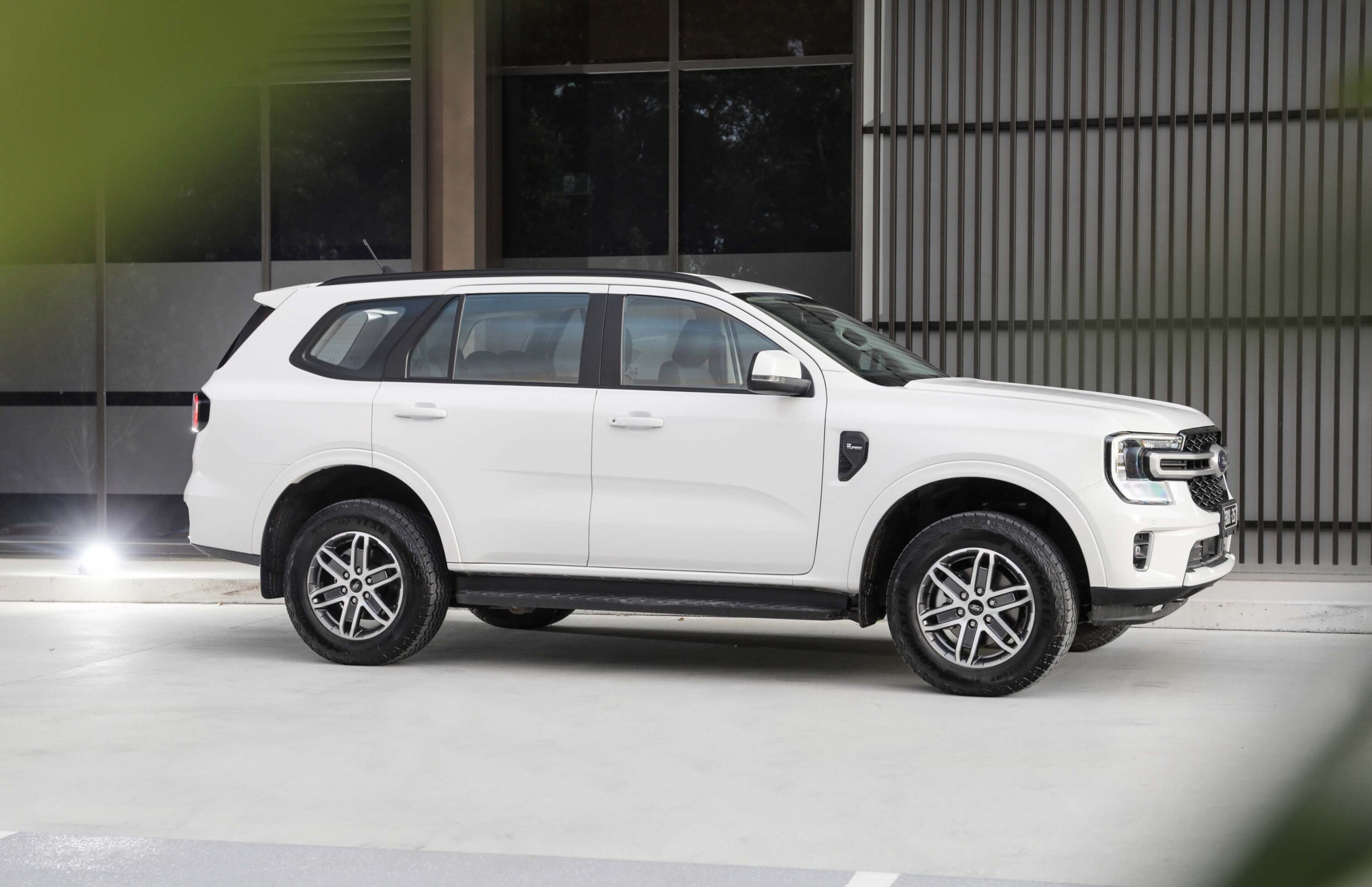
| 17-inch alloy wheels with full-size spare (18-inch alloys with all-terrain tyres optional, $1350, 4×4 only) | LED headlamps and daytime running lights |
| Five seats (seven-seat optional, $1200) | Front fog lamps |
| 10.1-inch Sync 4 infotainment system | LED tail-lamps |
| Wireless Apple CarPlay and Android Auto | Power-folding exterior mirrors |
| Connected satellite navigation | Rain-sensing wipers |
| DAB+ digital radio | Keyless entry and push button start |
| FordPass Connect with embedded modem | Dual-zone climate control |
| Eight-speaker audio system | Black side steps |
| 8-inch digital instrument cluster | Two front tow hooks |
| Wireless phone charger | Driveru2019s floor mat |
| Remote startu00a0 | Electrochromatic rear-view mirror |
| Cloth upholstery | Pull-out cup holders |
| Eight-way manually adjustable driver’s seat | Open storage shelf |
| Four-way manually adjustable passenger seat | Steel underbody protection (4×4 only) |
1
2024.5 Ford Everest Trend features
| In addition to Ambiente | |
|---|---|
| Zone lighting (new) | Power-folding, heated side mirrors with puddle lamps |
| Black stand-off roof rails (new) | Leather upholstery |
| 18-inch alloy wheels (all-terrain tyres optional, $700) | Eight-way power adjustable driveru2019s seat |
| Seven seatsu00a0 | Leather-wrapped steering wheel |
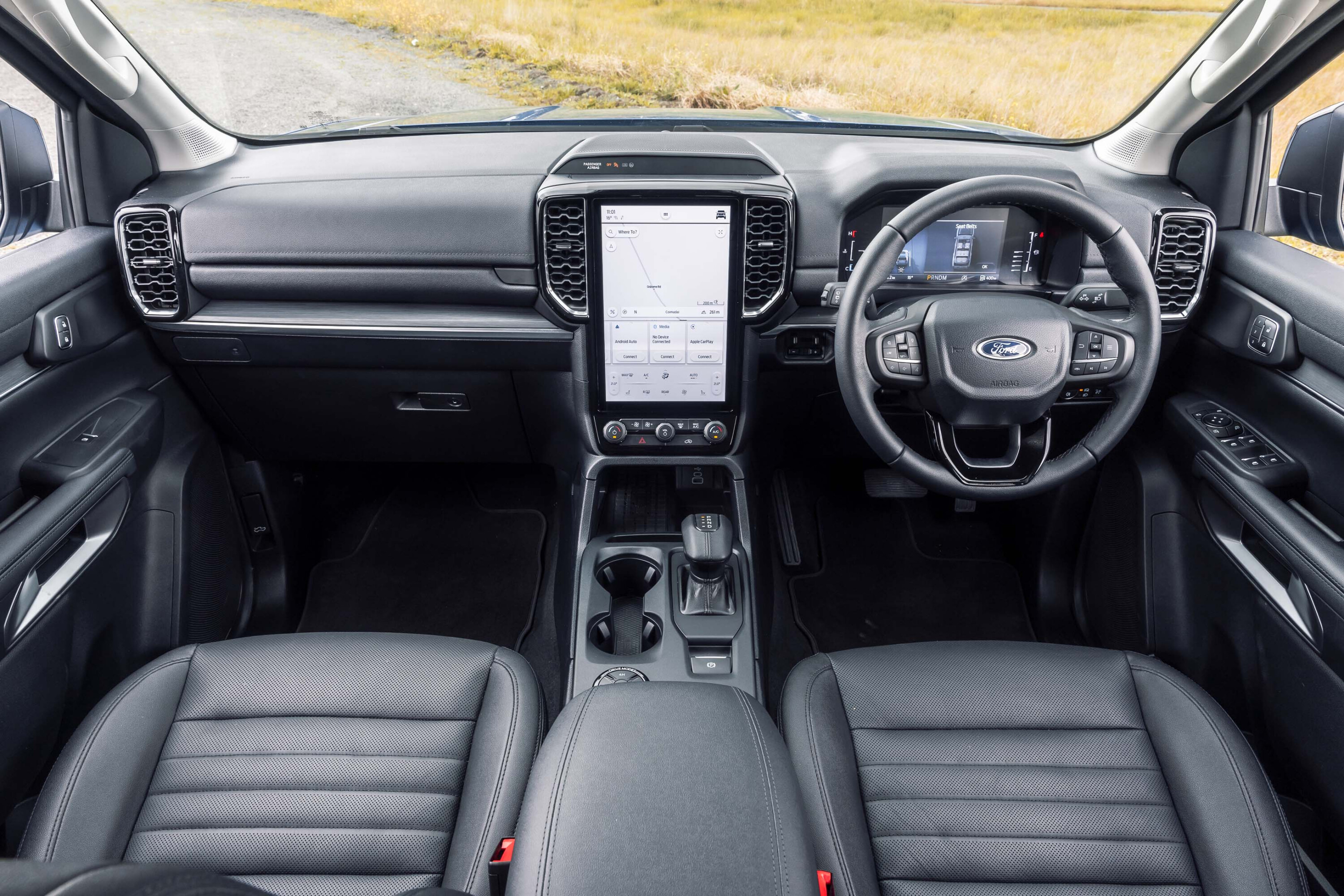
| 12.0-inch infotainment system | Driver and front passenger floor mats |
| Rear privacy glass | Second upper glove box (no open shelf) |
| Electric tailgate | Off-road screen |
| Selectable drive modes (sand/mud and ruts modes) | |
1
2024.5 Ford Everest Sport features
| In addition to Trend | |
|---|---|
| 20-inch black alloy wheels (18-inch alloy wheels with all-terrain tyres optional at no cost) | 10-way power-adjustable driveru2019s seat with memory |
| 10-speaker audio system | Eight-way power-adjustable passenger seat |
| Black exterior trim with Sport bonnet lettering | Unique interior colour accents |
| Leather upholstery with Sport embossing | Hands-free electric tailgate |
| Heated and ventilated front seats | |
1
2024.5 Ford Everest Platinum features
| In addition to Sport | |
|---|---|
| 21-inch alloy wheels (18-inch alloy wheels with all-terrain tyres optional at no cost) | Tyre pressure monitoring system |
| 12.4-inch digital instrument cluster | Plastic underbody protection (steel available as a no-cost option) |
| 12-speaker Bang and Olufsen audio system | Satin chrome accents |
| Matrix LED auto-levelling headlights | Premium leather-accented quilted seats |
| Dual-panel power-sliding panoramic sunroof | Heated steering wheel |
| Silver roof rails | Heated outer second-row seats |
| Power-folding third-rowu00a0 | Premium front and rear floor mats |
| Ambient lighting | 360-degree camera system |
| Automatic park assist | |
1
2024.5 Ford Everest options
| Pro Towing Pack u2013 Platinum ($2900) | |
|---|---|
| Pro Trailer Backup Assist (new) | Tow bar with integrated brake controller |
| Towing Pack u2013 Ambiente/Trend/Sport ($1900) |
|---|
| Tow bar with integrated brake controller |
| 2024.5 Ford Everest Ambiente additional options | |
|---|---|
| 18-inch wheels and all-terrain tyre pack | $1350 |
| Third-row seats | $1200 |
1
| 2024.5 Ford Everest Premium seat pack u2013 Trend ($1100) | |
|---|---|
| Heated and ventilated front seats | Eight-way power-adjustable passenger seat |
| 10-way power-adjustable driveru2019s seat with memory function | |
| 2024.5 Ford Everest Trend additional options | |
| All-terrain tyres | $700 |
| 2024.5 Ford Everest Sport/Platinum additional options | |
|---|---|
| 18-inch wheels and all-terrain tyre pack u2013 Sport/Platinum | (no-cost option) |
| 2024.5 Ford Everest colours | |
|---|---|
| Arctic white | Meteor grey* |
| Aluminium silver* | Equinox bronze* |
| Shadow black* | Blue lightning* (Sport only) |
| * Metallic paint, $700 | |
Ford has dropped Sedona orange from the Everest’s colour palette for MY2024.5.
1
Engine, drivetrain, and fuel economy
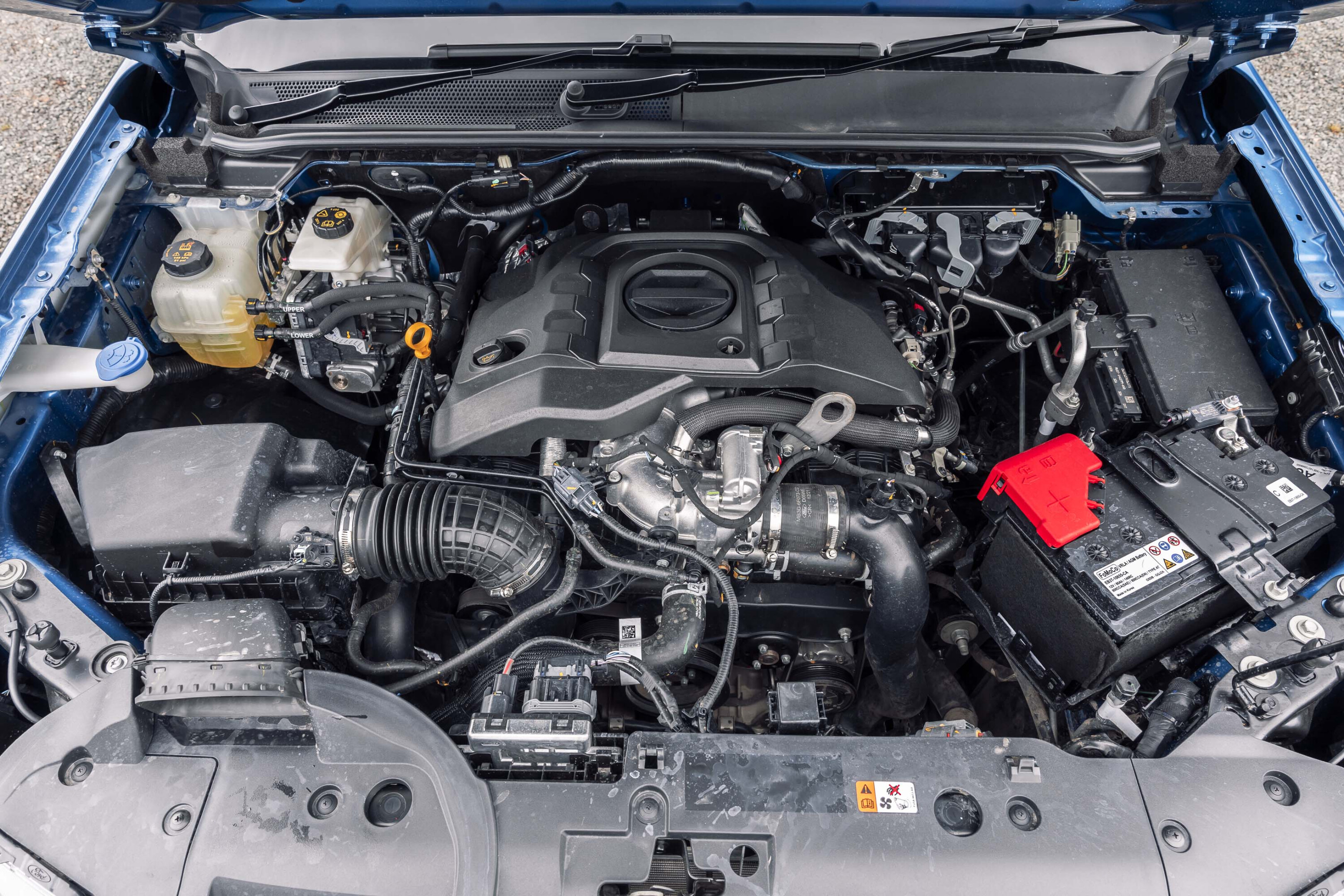
The Ford Everest is available with a four-cylinder diesel engine or a 3.0-litre turbo-diesel V6.
As standard, Everest Ambiente, Trend and Sport variants are fitted with Ford’s 2.0-litre bi-turbo diesel four-cylinder engine, which 154kW and 500Nm.
It is matched to a 10-speed torque-converter automatic transmission, with two- or four-wheel-drive depending on the model.
Standard for Sport and Platinum four-wheel-drive models is a 3.0-litre single-turbo diesel V6 powertrain pushing out 184kW and 600Nm, also mated to a 10-speed automatic.
All Everests have a 3.5-tonne braked maximum towing capacity.
| 2024.5 Ford Everest fuel economy | ||
|---|---|---|
| 2.0-litre bi-turbo diesel 4×2 | 7.1L/100km | 187g/km |
| 2.0-litre bi-turbo diesel 4×4 | 7.2L/100km | 190g/km |
| 3.0-litre V6 diesel 4×4 | 8.5L/100km | 224g/km |
1
Safety
The Ford Everest is covered by a five-star rating from ANCAP, based on testing conducted in 2022.
It scored 86 per cent for adult occupant protection, 93 per cent for child occupant protection, 74 per cent for vulnerable road users, and 86 per cent for safety assist.
To read the full safety report, click here.
Nine airbags (dual front, side head, curtain, driver and front passenger knee, and front-centre) are fitted across the range.
| 2024.5 Ford Everest active safety features | |
|---|---|
| Autonomous emergency braking (vehicle, pedestrian, cyclist, junction, reverse) | Driver attention alert |
| Lane keep assist | Post-collision braking |
| Lane departure warning | Automatic high-beam |
| Adaptive cruise control | Reversing camera |
| Blind-spot alert | Front and rear parking sensors |
| u200bu200bRear-cross traffic alert | |
1
Dimensions
The Ford Everest has a wheelbase of 2900 millimetres, and is 4914mm long, 2207mm wide and 1842mm high.
2024.5 Ford Everest boot space
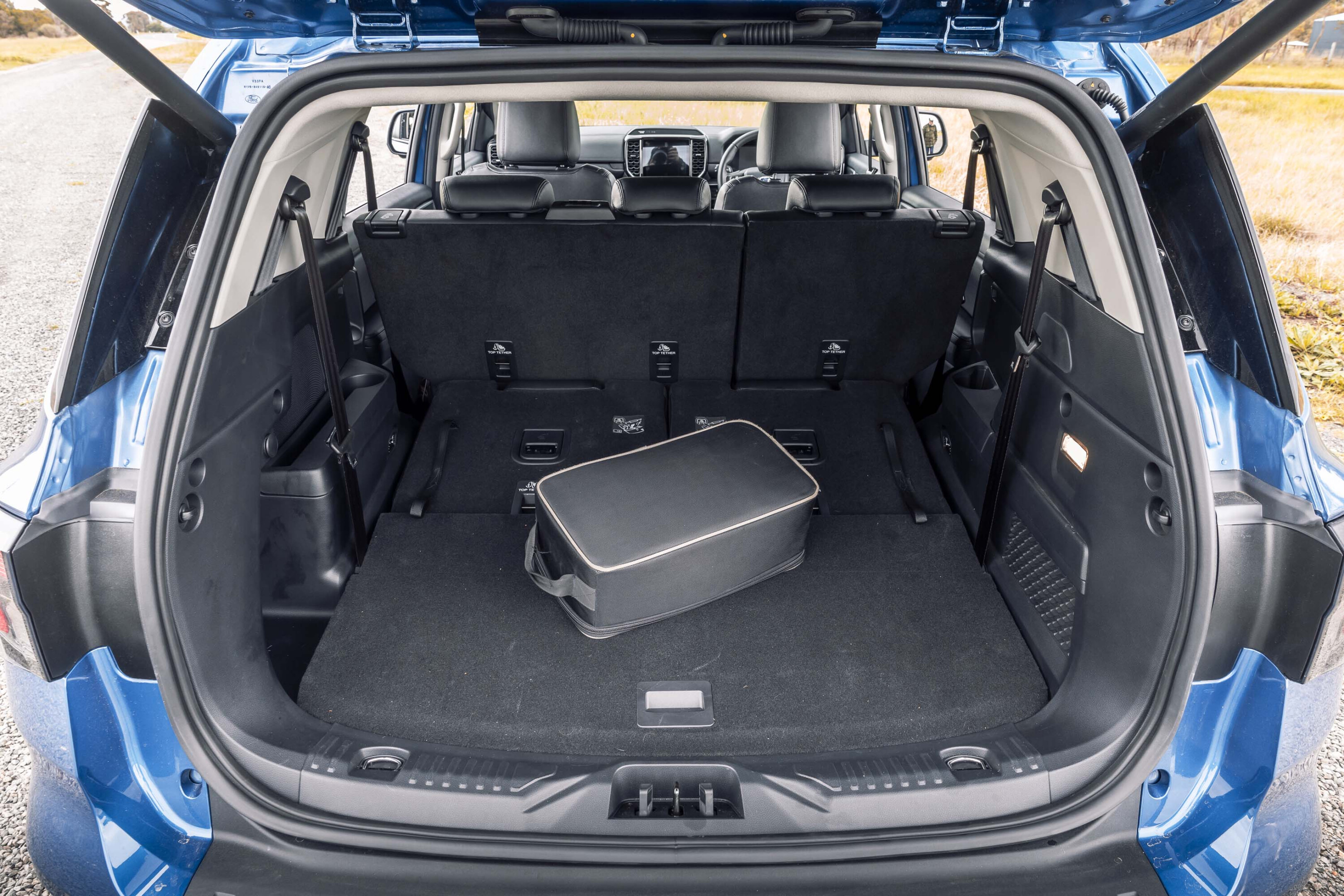
The Ford Everest has an 898-litre boot capacity with the third-row down, expanding to 1823L with the second-row folded. With all seats in use, it has a 239-litre capacity.
4
Warranty and servicing
The Everest is covered by Ford’s five-year/unlimited-kilometre warranty, along with 12 months of roadside assistance.
This program can be extended for up to seven years through annual servicing at a Ford dealership.
Servicing is required every 12 months or 15,000 kilometres, whichever occurs first, with the first five services priced at $329 under Ford’s capped-price program.
1
Availability
The 2024.5 Ford Everest will commence production in Thailand in March.
MORE
Everything Ford
Snapshot
- 2024.5 Ford Ranger: Full Australian details
- Pro Trailer Back-Up Assist for Wildtrak, Platinum & Raptor, optional for XLT & Sport
- Some options dropped from line-up, including XLS 4×2 pick-up
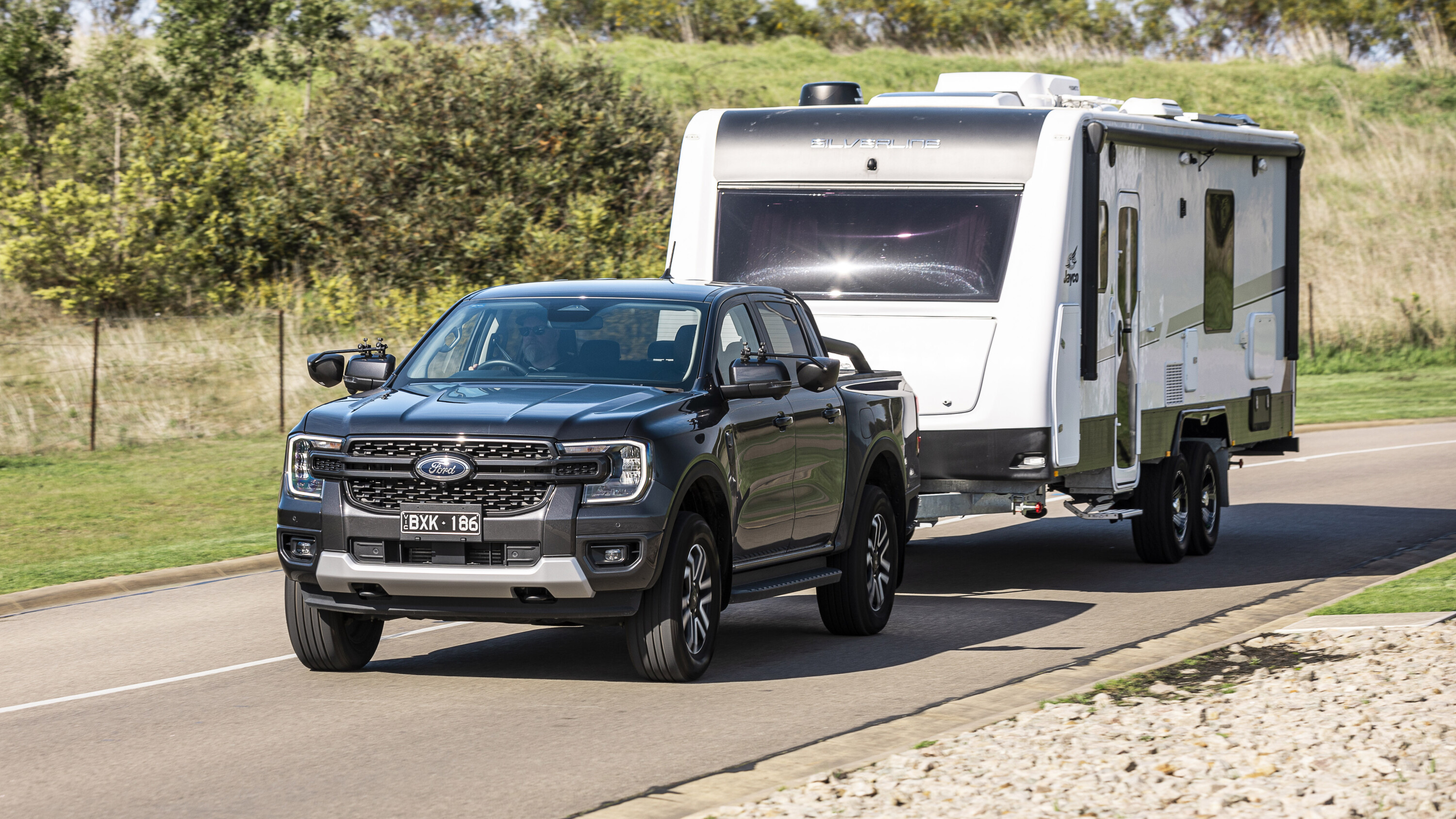
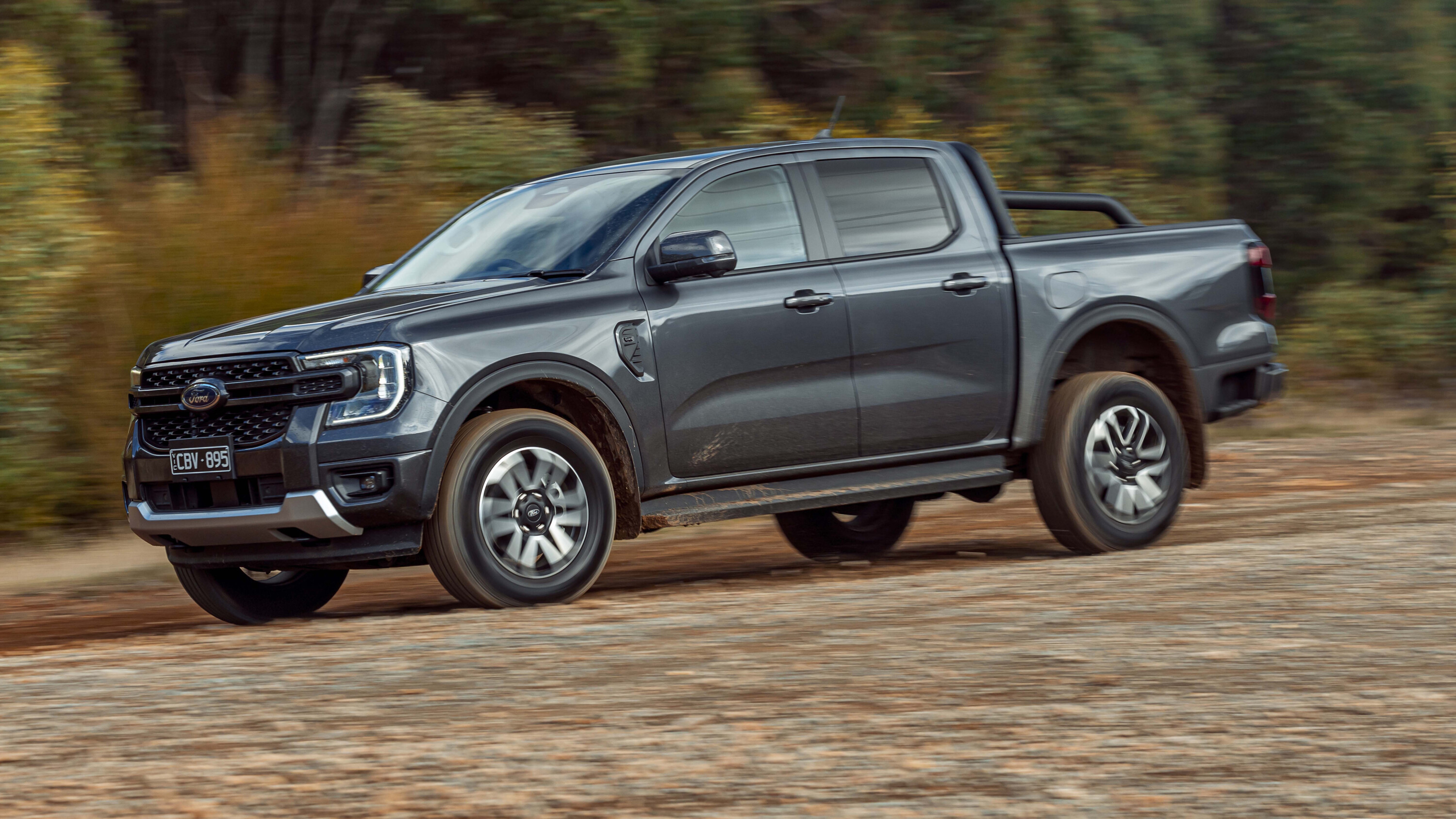
The 2024.5 Ford Ranger ute has been announced with several upgrades and a smaller range of models.
The Pro Trailer Back-Up Assist is one of the main new features, borrowed from the full-size F-150 – and also coming to the related Everest off-road SUV.
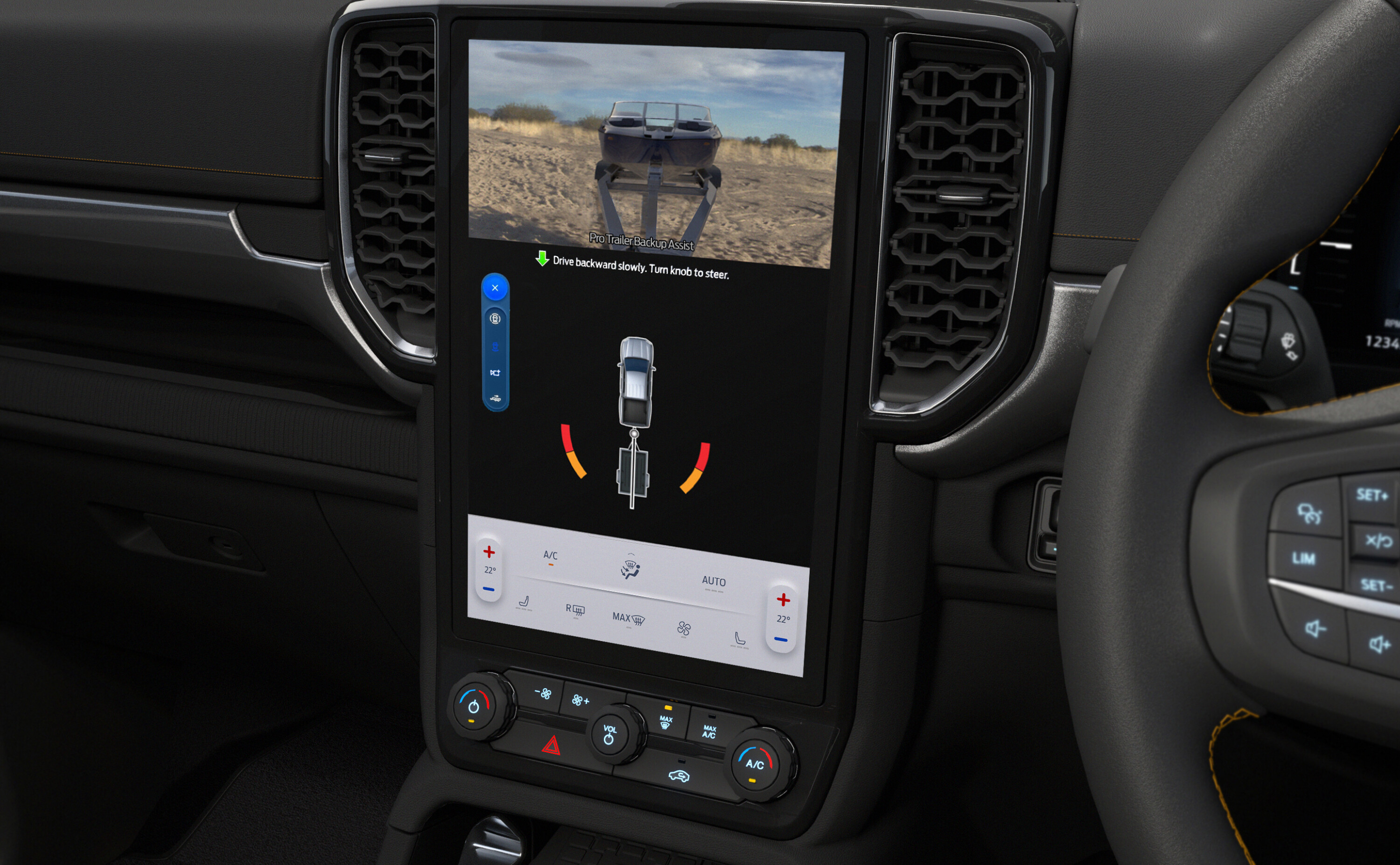
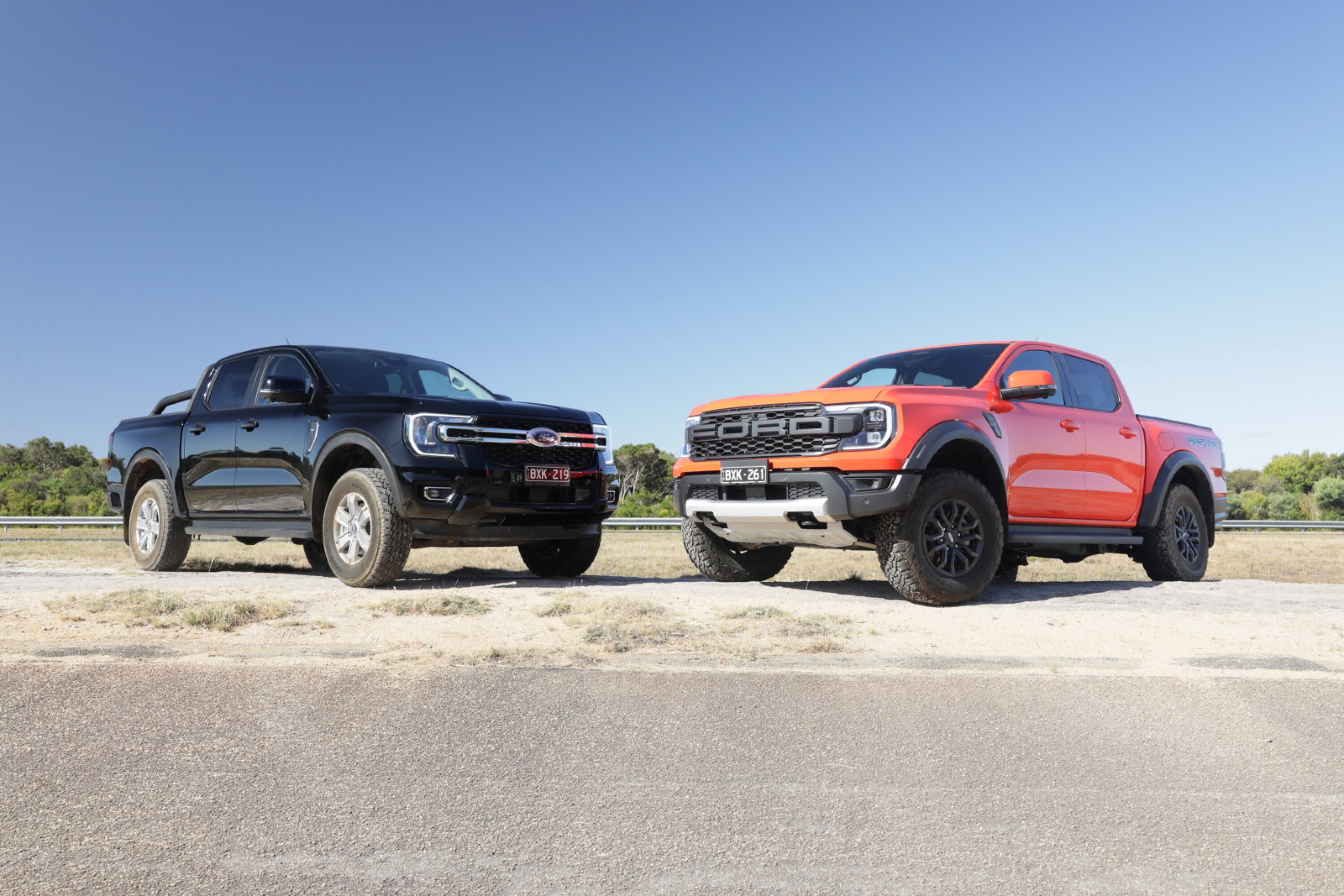
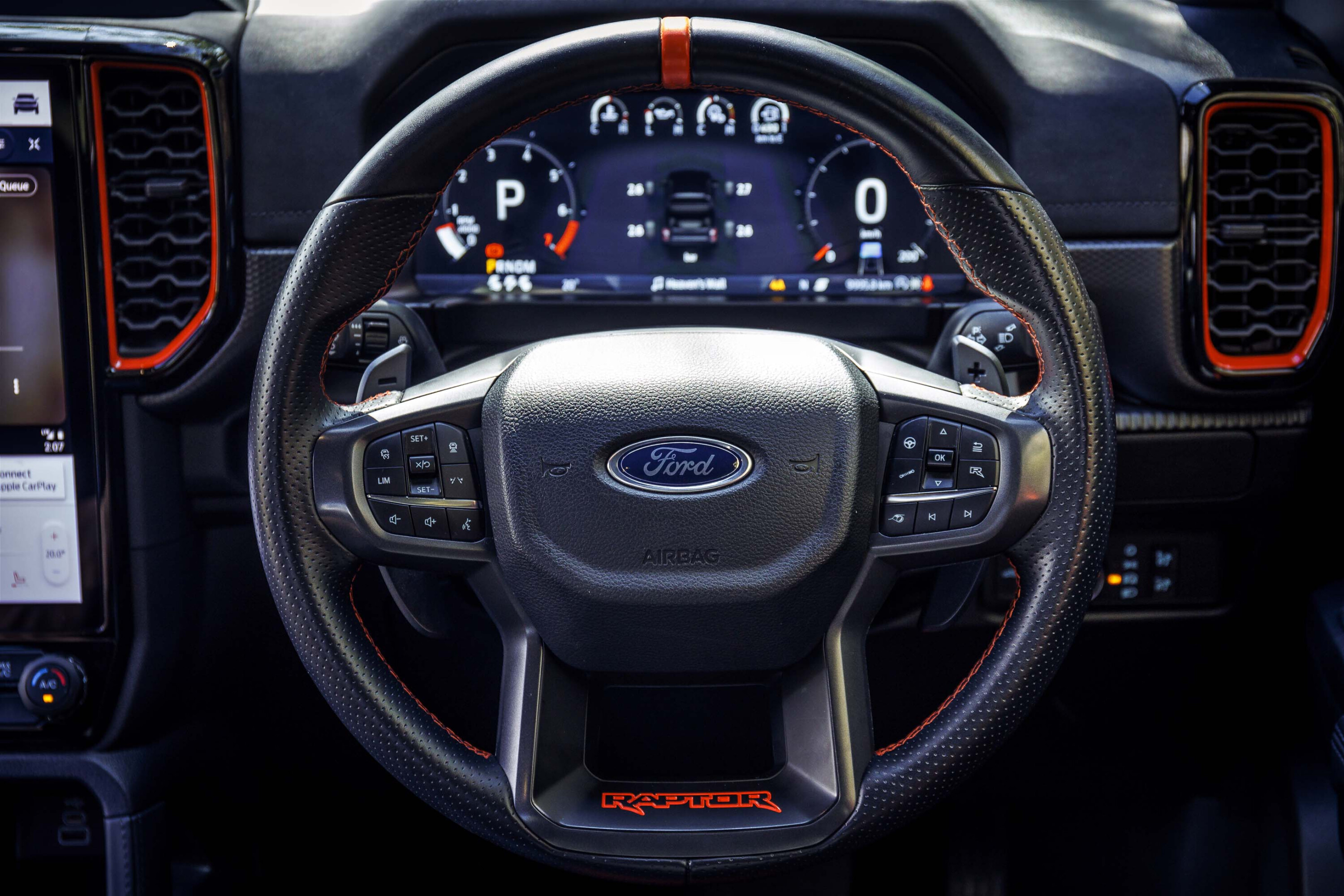
This feature will be standard on Ranger Wildtrak, Platinum and Raptor models, allowing drivers to manoeuvre their trailers using the outer ring of the drive mode selector on the centre console.
1
The steering wheel turns automatically to direct the trailer as the driver turns the dial, so they don’t need to touch the wheel during the manoeuvre.
Other updates include heavy-duty suspension for the entry-level Ranger XL workhorse model, which adds thicker rear springs, as well as new front and rear dampers tuned for heavier loads.
The mid-spec Ranger XLS is now only available in 4×4, with equipment from the previously optional Tech and Towing packages now standard. This includes a tow bar, keyless entry and push-button start, dual-zone climate control with rear seat air vents, connected satellite navigation, and DAB+ digital radio.
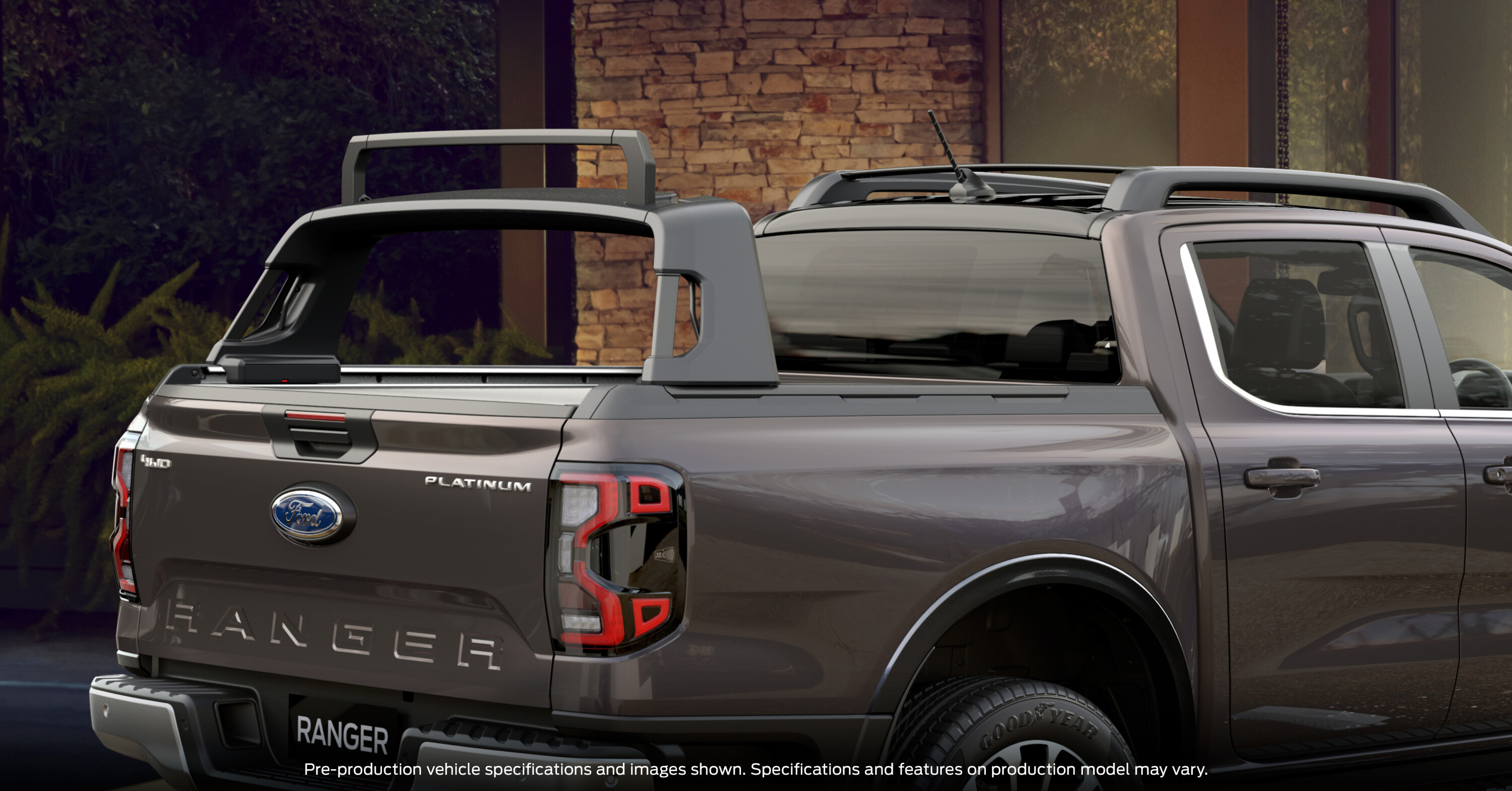
Additionally, the Flexible Rack System, first introduced with the Platinum luxury variant in 2023, is now available as a cost option for Sport and Wildtrak, replacing the standard Sports Bar and Load Box Access Points for Sport or Sailplane and Box Rails for Wildtrak.
1
Some models have been dropped from the 2024.5 Ranger line-up, including the XL bi-turbo dual-cab cab-chassis 4×2, XL bi-turbo super-cab pick-up 4×2, XLS bi-turbo dual-cab pick-up 4×2, and the limited-run Wildtrak X special edition.
While Ford has not raised prices for the updated Ranger, except the XLS, all variants previously saw price increases between $500 to $1200 applied from January 1, 2024.
The XLS variant is $1950 dearer than before, but now includes the Towing and Tech packs, which previously retailed for $1700 and $750, respectively.
The Ford Ranger was the top-selling car in Australia’s new-car market for 2023, surpassing its rival, the Toyota HiLux, which had been the nation’s top-selling vehicle from 2016 to 2022.
1
JUMP AHEAD
- 2024.5 Ford Ranger pricing
- 2024.5 Ford Ranger features
- Colours
- Engine, drivetrain, and fuel economy
- Safety
- Warranty and servicing
- Availability
2024.5 Ford Ranger pricing
1
2024.5 Ford Ranger features
| 2024.5 Ford Ranger XL features | |
|---|---|
| 16-inch steel wheels with full-size spare | Steel underbody protection including transfer case |
| 10.1-inch Sync 4 infotainment system | Halogen headlights and daytime running lamps |
| Wireless Apple CarPlay and Android Auto | LED tail-lights (pick-up), halogen tail-lights (cab-chassis) |
| 8-inch digital instrument cluster | Tailgate with lift assist (pick-up only) |
| FordPass Connect with embedded modem | Vinyl floor covering |
| Remote start (via FordPass application) | Cloth upholstery |
| Locking rear differential (standard on 4×4, optional for 4×2) | Eight-way manual driver seat and four-way manual front passenger seat |
| Front disc brakes, rear drum brakes | Power rear windows (dual-cab only) |
| Trailer tow body wiring (tow bar optional) | Single-zone climate control |
1
2024.5 Ford Ranger XLS features
| In addition to XL | |
|---|---|
| Tow bar and tongue (new) | 16-inch alloy wheels with full-size steel spare |
| Trailer light check (new) | Four drive modes (normal, eco, slippery, tow/haul) |
| Integrated trailer brake controller and extended blind-spot monitoring (new) | Black side steps |
| Body-coloured door handles (new) | Halogen front fog lamps |
| Keyless entry and push-button start (new) | Black front grille with silver accents |
| Dual-zone climate control with rear seat air vents (new) | Powered tailgate lock |
| Built-in connected satellite navigation (new) | Carpet flooring |
| DAB+ digital radio (new) | Driver floor mat |
| Voice-activated controls (new) | Six-speaker audio system |
1
2024.5 Ford Ranger XLT features
| In addition to XLS | |
|---|---|
| 17-inch alloy wheels with full-size steel spare | 4×2 locking rear axle |
| LED headlights and daytime running lamps | Black sports bar (pick-up only)u00a0 |
| Electronic gear shifter (V6 only) | Tub illumination (pick-up only) |
| Electronic parking brake | Bed-liner and 12-volt socket |
| Rear disc brakes | Leather-wrapped steering wheel and gear shifter |
| Body-coloured side mirrors | Auto-dimming rear-view mirror |
1
2024.5 Ford Ranger Sport features
| In addition to XLT | |
|---|---|
| 18-inch alloy wheels and spare | Skid plate |
| Six rotary select drive modes (normal, eco, slippery, tow/haul, sand, mud/ruts) | Two front floor mats |
| Dark accent grille | Wireless phone charger |
| LED front fog lamps | Off-road screen |
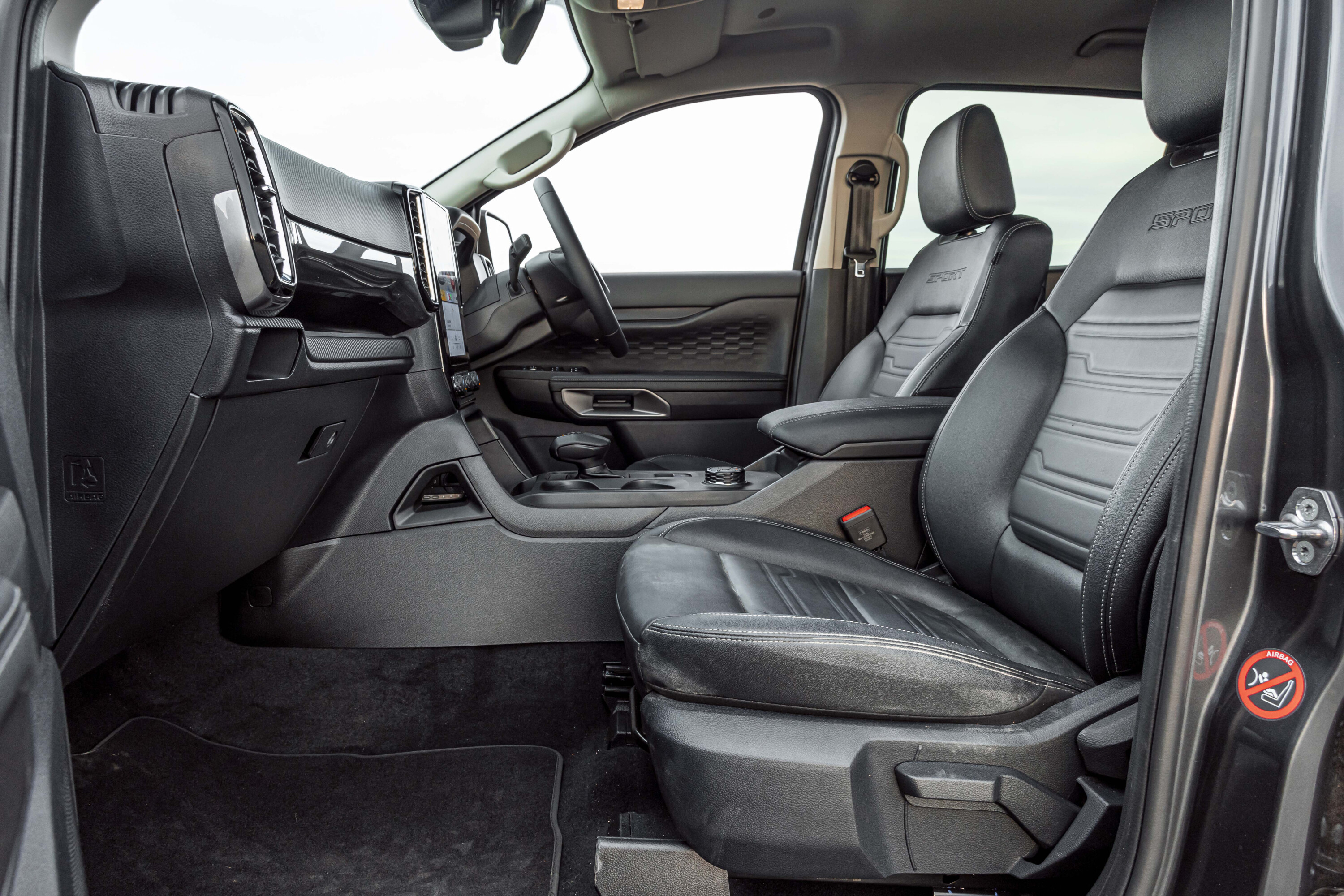
| Dark exterior accents | Leather upholsteryu00a0 |
| Two front-mounted tow hooks | Eight-way power driveru2019s seat and eight-way manual passenger seat with u2018Sportu2019 embossing |
1
2024.5 Ford Ranger Wildtrak features
| In addition to Sport | |
|---|---|
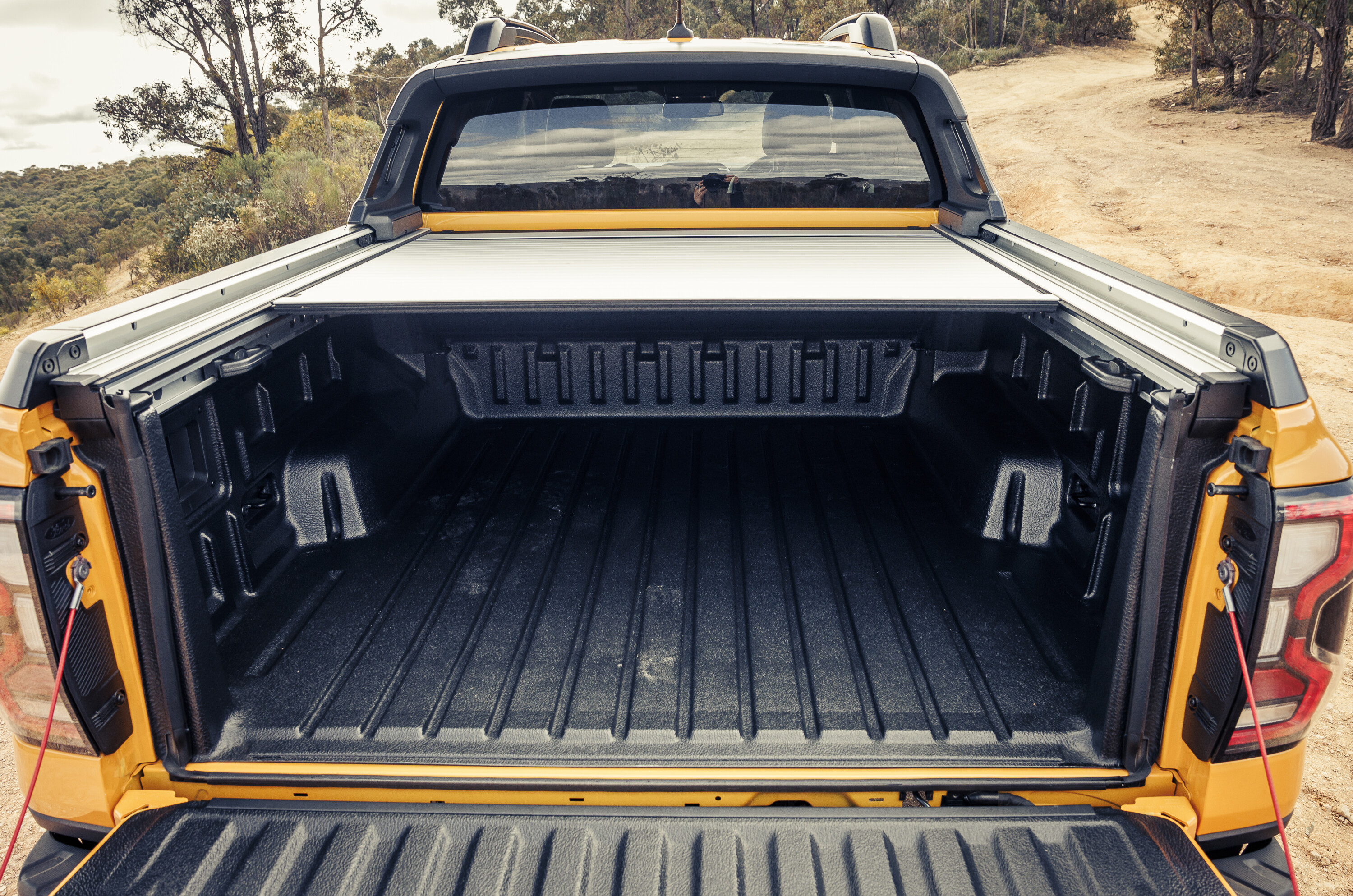
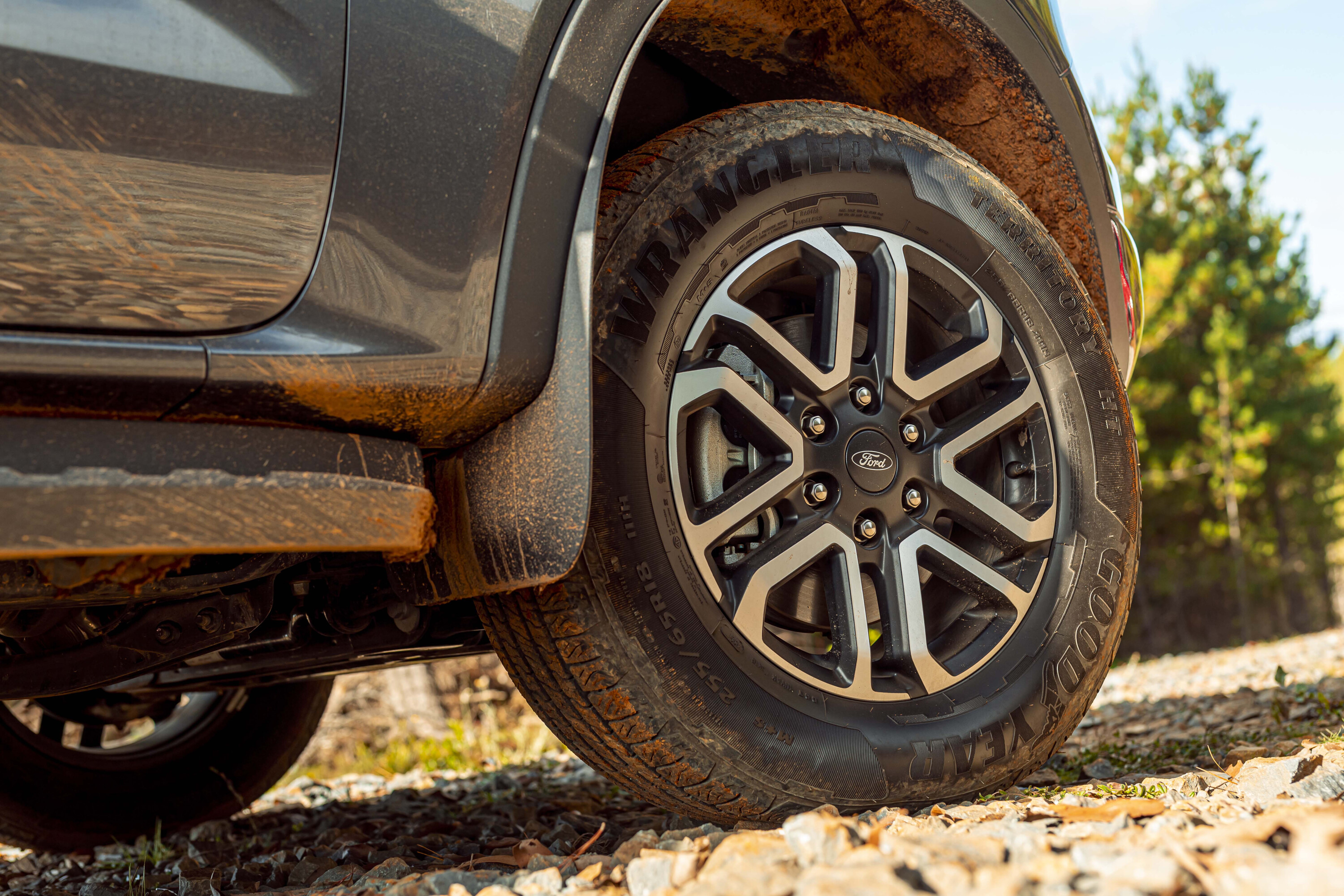
| 18-inch alloy wheels with Goodyear Wrangler all-terrain tyres | Wildtrak moulded sports bar |
| 12-inch infotainment system | Power roller shutter |
| Unique Wildtrak grille design | Ambient lightingu00a0 |
| Exterior mirror with puddle lamps and zone lighting | Cargo management system |
| Roof rails | Pull-out cup holders |
| Aluminium load box tie-down rails | Leather upholstery with orange stitching |
| Heated front seats | Eight-way power-adjustable passenger seats |
1
2024.5 Ford Ranger Platinum features
| In addition to Wildtrak | |
|---|---|
| 20-inch alloy wheels | Quilted leather-accented upholstery |
| 12.4-inch digital instrument cluster | Premium carpet floor mats |
| 10-speaker Bang and Olufsen audio system | 10-way power-adjustable front seats with driver’s seat memory function |
| Flexible rack system | Matrix LED headlights |
| Heated and ventilated front seats | Full LED tail-lamps |
| Heated steering wheel | Overhead auxiliary switch bank |
| Chrome exterior trim | Damped gas-strut tailgate |
| Black-painted roof (body coloured available as no-cost option) | Interior accent stitching |
| Platinum badging on the bonnet, front doors and tailgate | |
1
2024.5 Ford Ranger Raptor features
| In addition to Wildtrak | |
|---|---|
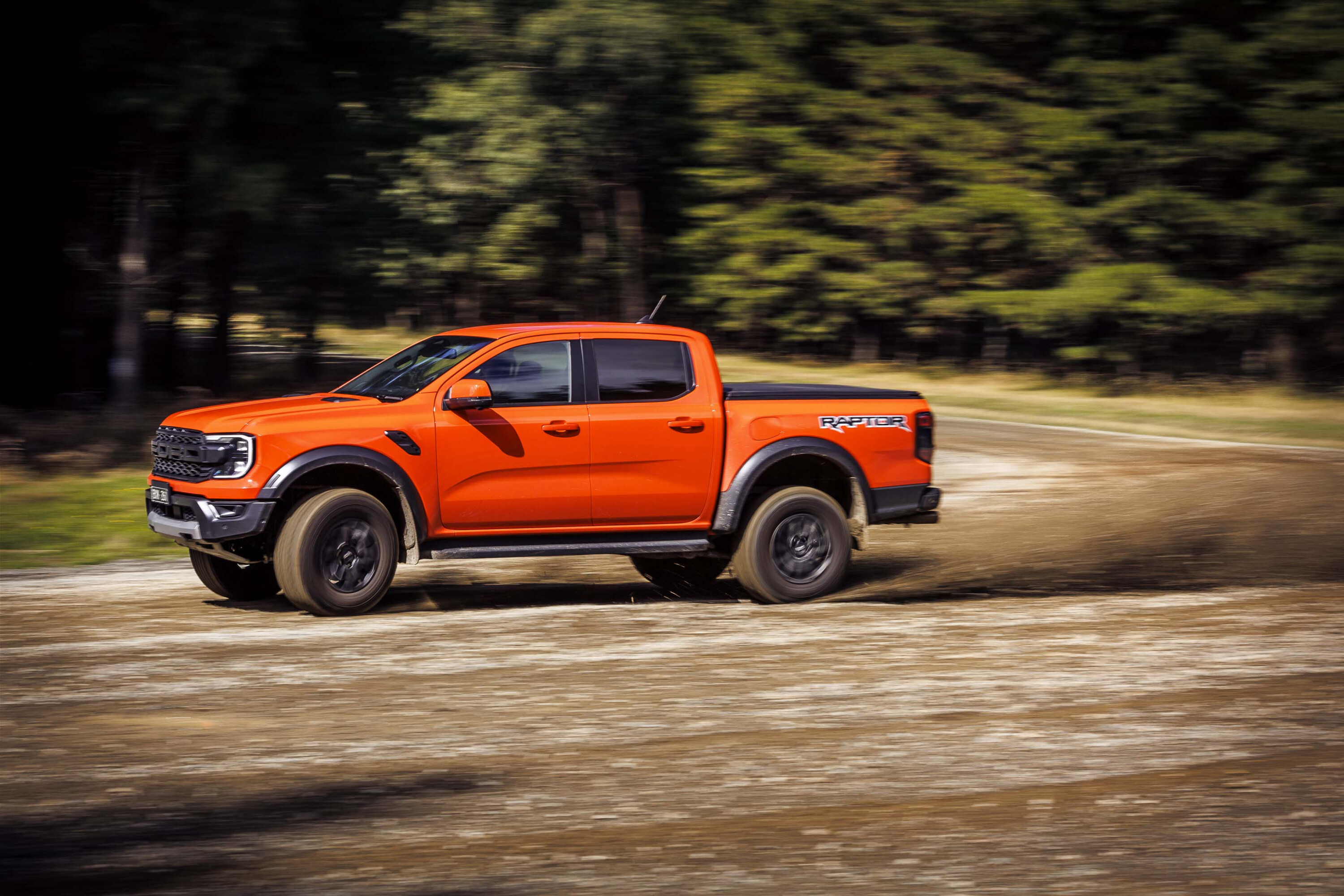
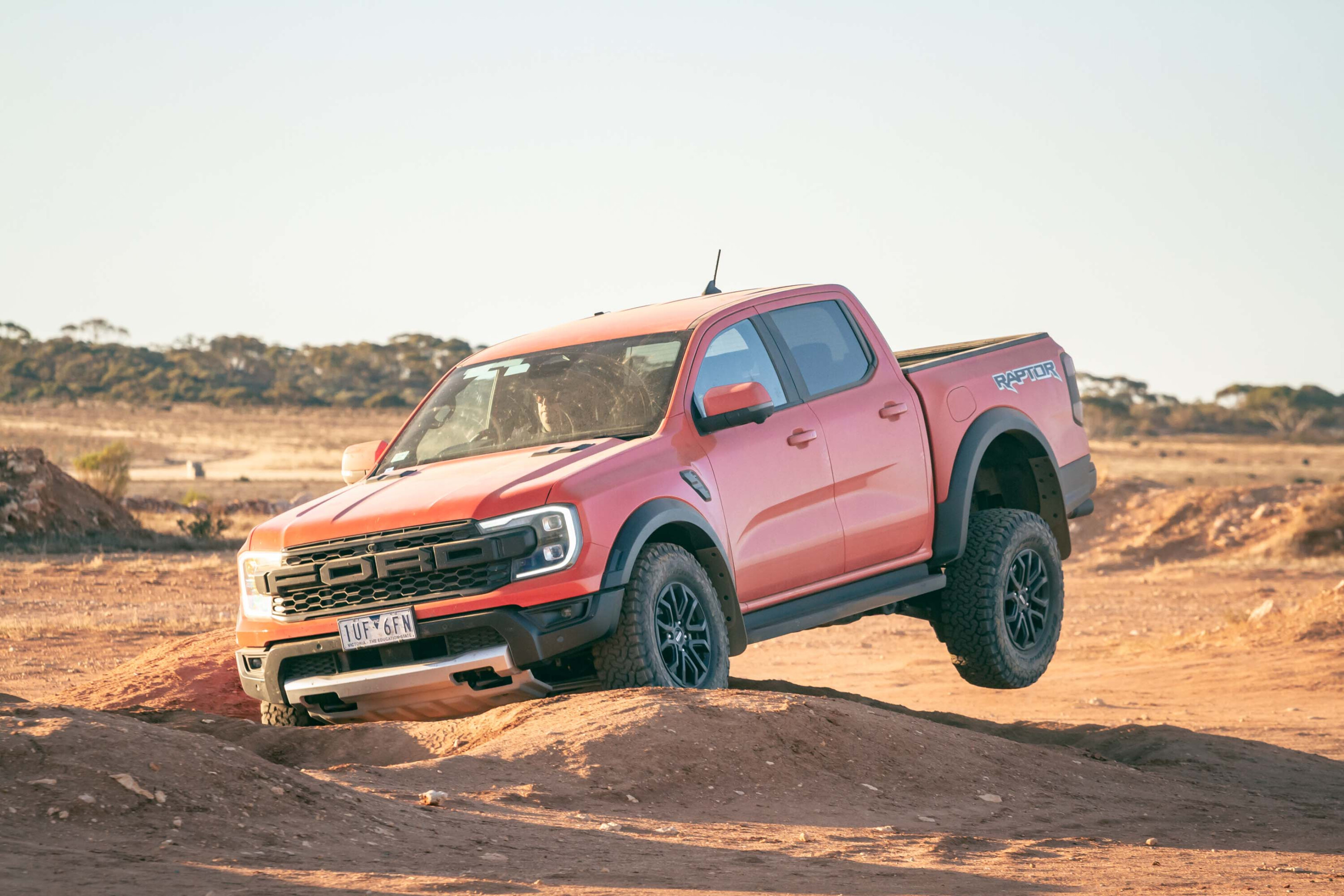
| 17-inch alloy wheels with T285/70 R17 BF Goodrich K02 High Performance All Terrain tyres (beadlock capable wheels optional) | Matrix LED headlights |
| 12.4-inch full-digital instrument cluster | Full LED tail-lights |
| Active exhaust | 2.3mm-thick front bash plate |
| Fox racing 2.5-inch live valve suspension and Watts Link coil suspension | Raptor dual tow hooks |
| Electronic locking front differential | Spray-in bed-liner |
| Full-time 4×4 | Paddle shifters |
| Unique u2018F-O-R-Du2019 block letter grille | Seven drive modes (normal, sport, slippery, mud/ruts, sand, Baja, rock crawl) |
Additional options
| 2024.5 Ford Ranger options | |
| Commercial canopy | $4700 |
| Dual lift canopy | $4700 |
| Lift and slide canopy | $4500 |
| Power roller shutter u2013 Raptor | $3800 |
| Manual roller shutter | $3000 |
| Flexible Rack System u2013 Sport/Wildtrak | $2800 |
| Premium Pack u2013 Wildtrak | $2000 |
1
| 2024.5 Ford Ranger Wildtrak Premium Pack includes | |
|---|---|
| Matrix LED headlights | 10-speaker Bang & Olufsen audio system |
| Full-LED headlights | Overhead auxiliary switch bank |
| 2024.5 Ford Ranger Towing Pack u2013 XL ($1900) | |
|---|---|
| Integrated trailer braking controller | Tow bar |
| 2024.5 Ford Ranger Touring Pack u2013 XLT/Sport 4×4 pick-up models ($1650) | |
|---|---|
| Pro Trailer Back-Up Assist (new) | Exterior mirror puddle lamps |
| 360-degree camera system | Cargo management system |
| Zone lighting | Overhead auxiliary switch bank |
1
| 2024.5 Ford Ranger Wheel Pack u2013 XL 4×4 models ($900) | |
|---|---|
| 17-inch steel wheels with steel spare | All-terrain tyres |
| 2024.5 Ford Ranger Wheel Pack u2013 Wildtrak ($750) | |
|---|---|
| 20-inch alloy wheels |
| 2024.5 Ford Ranger additional options | |
|---|---|
| All-Terrain Wheel Pack u2013 XLT/Sport 4×4 models | $700 |
| Overhead auxiliary switches u2013 XLT 4×4 dual-cab cab-chassis | $350 |
| Wheel centre cap kit u2013 XL | $50 |
1
| 2024.5 Ford Ranger colours | |
|---|---|
| Arctic white (all grades) | Aluminium silver (all grades)* |
| Shadow black (all grades)* | Meteor grey (all grades)* |
| Blue lightning (XLT, Sport, Raptor)* | Luxe yellow (Wildtrak)* |
| Equinox bronze (Platinum)* | Code orange (Raptor)* |
| Conquer grey (Raptor)* | |
| * Metallic paint, $700 | |
Ford has dropped Sedona orange from the Ranger’s colour palette for MY2024.5, while blue lightning is now limited to the XLT, Sport and Raptor.
1
Engine, drivetrain, and fuel economy
The Ford Ranger is available with two four-cylinder diesel engines, a 3.0-litre turbo-diesel V6, and a 3.0-litre twin-turbo petrol mill.
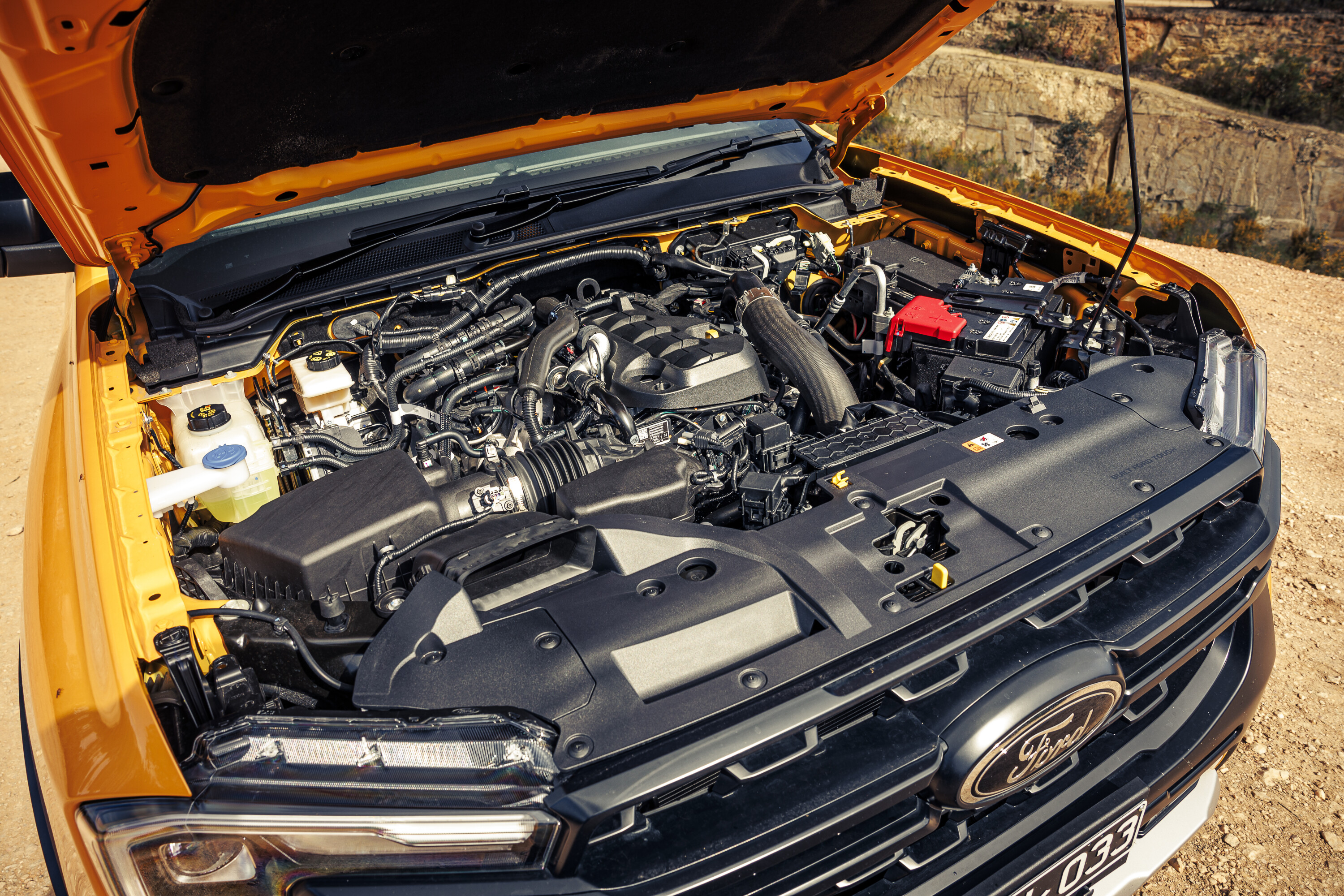
The entry-level option is the 2.0-litre single-turbo four-cylinder diesel, which produces 125kW and 405Nm. It is matched with a six-speed automatic transmission and is available in two- or four-wheel drive, depending on the configuration.
Excluding the Platinum and Raptor flagships, the entire range is available with a 2.0-litre bi-turbo four-cylinder, which pushes outputs to 154kW and 500Nm. It is mated to a 10-speed automatic transmission with two- or four-wheel drive options, depending on the variant.
1
The popular 3.0-litre turbo-diesel V6 – optional for XLT, Sport and Wildtrak and standard for Platinum – produces 184kW and 600Nm, with a full-time four-wheel drive system and a 10-speed automatic transmission.
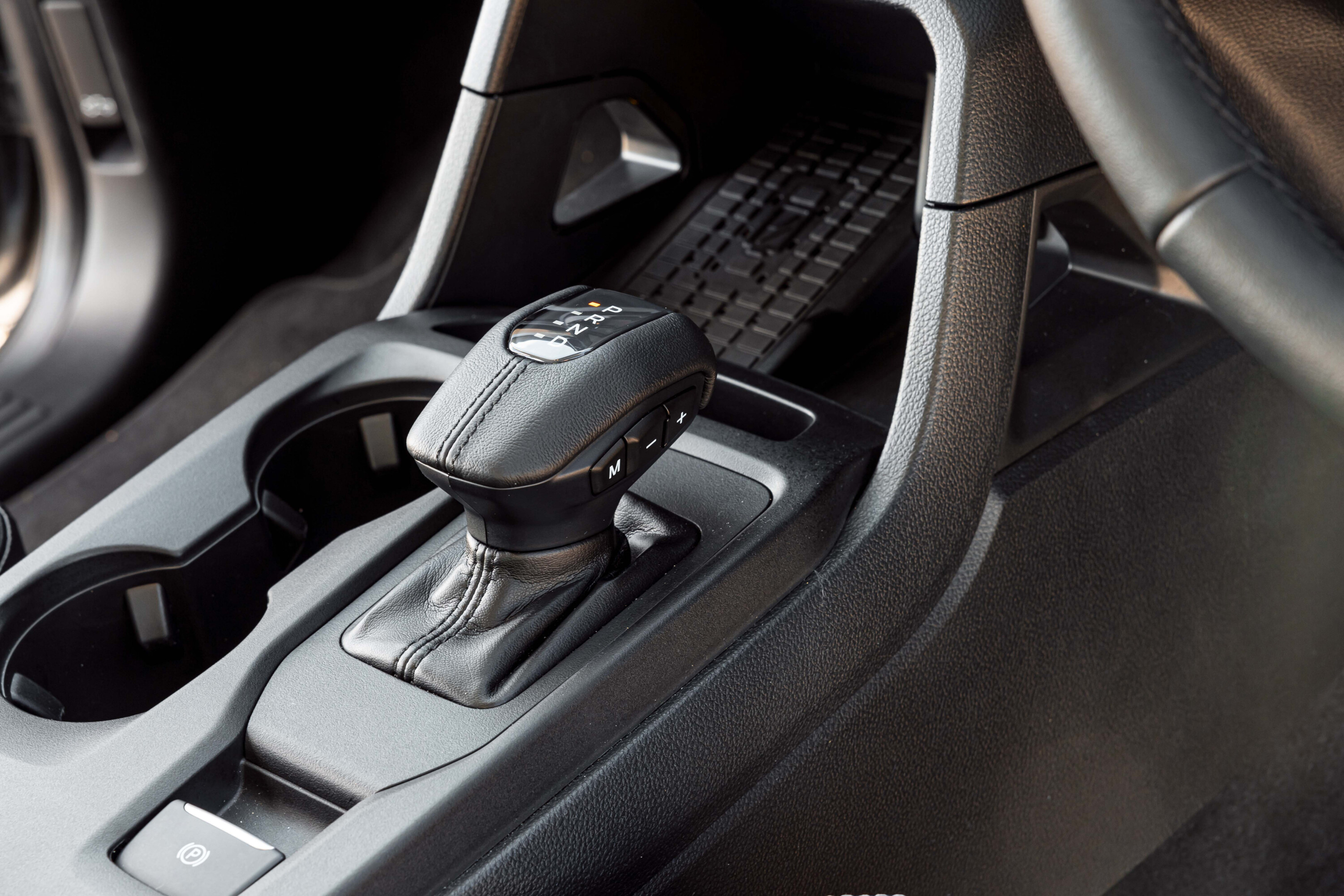
The Ranger Raptor is exclusively fitted with a 3.0-litre twin-turbo petrol V6 engine, which produces 292kW and 583Nm. As with the diesel V6, it is matched with a 10-speed automatic transmission and a full-time four-wheel drive system.
While the standard Ranger range has a 3500-kilogram braked towing capacity, the Raptor is limited to 2500kg.
| 2024.5 Ford Ranger fuel economy | ||
|---|---|---|
| 2.0-litre single-turbo 4-cyl 4×2 auto cab-chassis | 7.6-7.8L/100km | 199-204g/km |
| 2.0-litre single-turbo 4-cyl 4×4 auto | 7.9-8.0L/100km | 207-211g/km |
| 2.0-litre bi-turbo 4-cyl 4×2 auto | 7.3-7.6L/100km | 192-201g/km |
| 2.0-litre bi-turbo 4-cyl 4×4 auto | 7.6L/100km | 201g/km |
| 3.0-litre turbo-diesel V6 4×4 auto | 8.4L/100km | 222g/km |
| 3.0-litre twin-turbo petrol V6 4×4 auto | 11.5L/100km | 262g/km |
1
Safety
The Ford Ranger is covered by a five-star ANCAP safety rating, based on testing conducted in 2022. This score applies to all variants, except the Raptor.
For more detail, read our full report here.
It received a score of 84 per cent for adult occupant protection, 93 per cent for child occupant protection, 74 per cent for vulnerable road user protection, and 83 per cent for safety assist.
Nine airbags (dual front, side, curtain, driver and front passenger knee, and front-centre) are fitted across the range.
| 2024.5 Ford Ranger active safety features | |
|---|---|
| Autonomous emergency braking (vehicle, pedestrian, cyclist, junction) | Adaptive cruise control |
| Lane-keep assist | Post-collision braking |
| Lane departure warning | Reverse autonomous emergency braking* |
| Evasive steer assist | Blind-spot alert* |
| Traffic sign recognition | Rear cross-traffic alert* |
| * Pick-up models only | |
1
Warranty and servicing
The Ranger is covered by Ford’s five-year/unlimited-kilometre warranty, along with 12 months of roadside assistance.
This program can be extended for up to seven years through annual servicing at a Ford dealership.
Servicing is required every 12 months or 15,000 kilometres, whichever occurs first, with the first five services priced at $329 under Ford’s capped-price program.
1
Availability
The 2024.5 Ford Ranger will commence production in Thailand in March.
MORE
Everything Ford
The Nissan Navara is a mid-size ute that offers good performance and fuel efficiency and, with the most recent update, improved payload capacity and towing stability.
- Introduction
- Pricing
- Body styles
- Standard features
- Optional features
- Safety
- Comfort & Practicality
- How big is the tray/tub?
- I like driving – will I enjoy this car?
- Which Nissan Navara engine uses the least fuel?
- Towing capacity
- Warranty & Servicing
- Which version of the Nissan Navara does 4X4 Australia recommend?
- Key rivals
Launched in 2014, this NP300 generation Nissan ute replaced two generations of Navara that ended up running concurrently, the previous D40 model that lived on for a decade and the even older D22 workhorse.
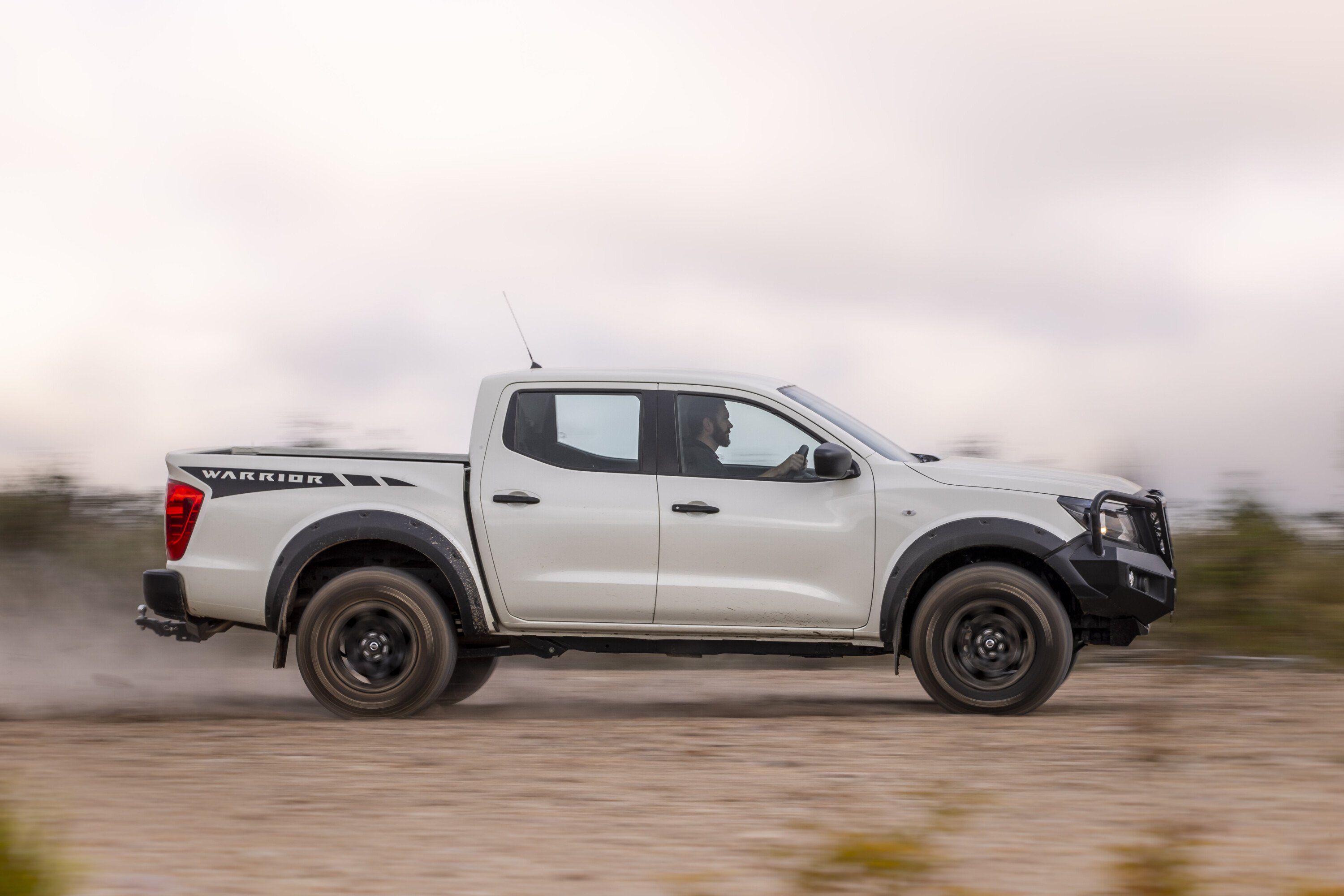
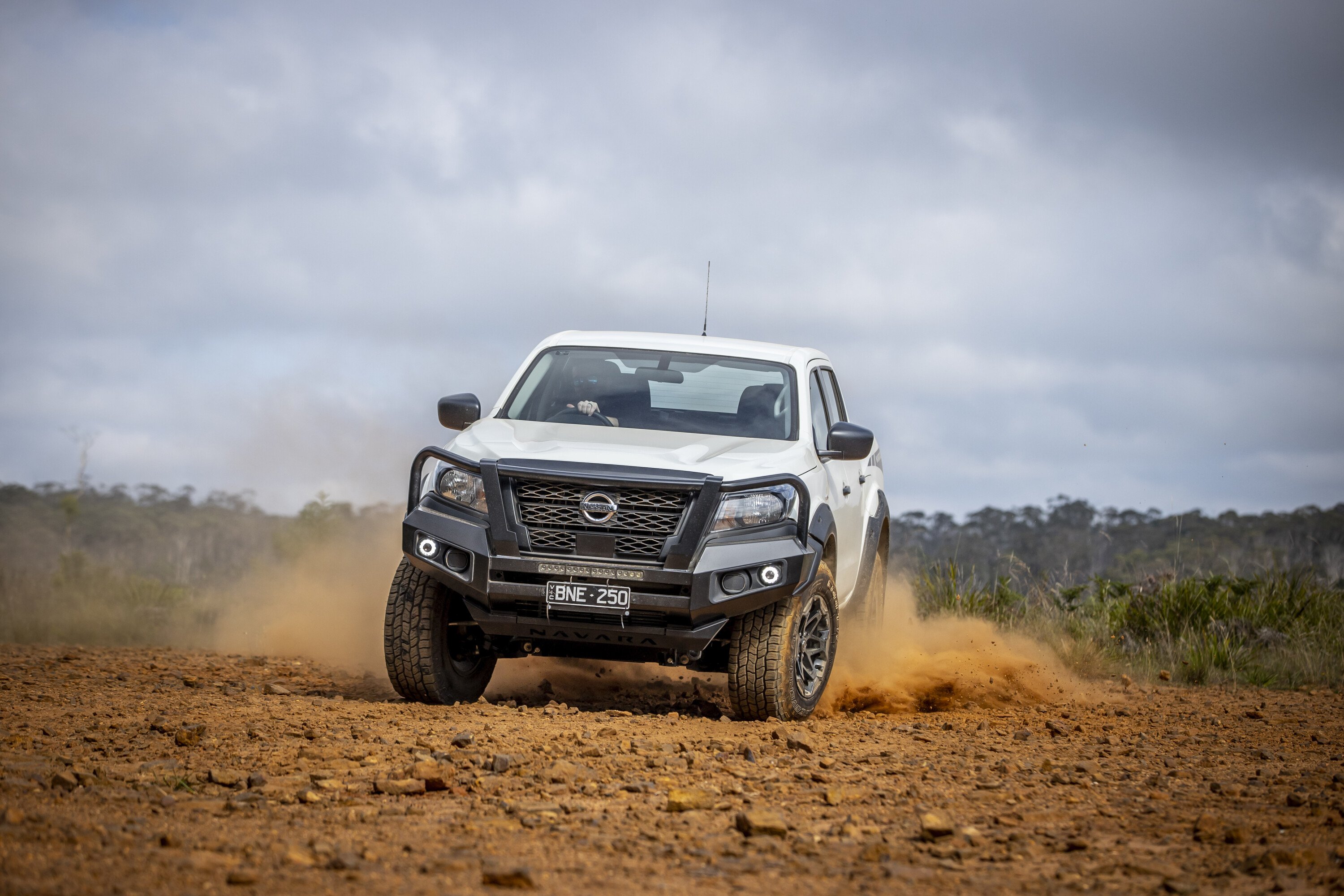
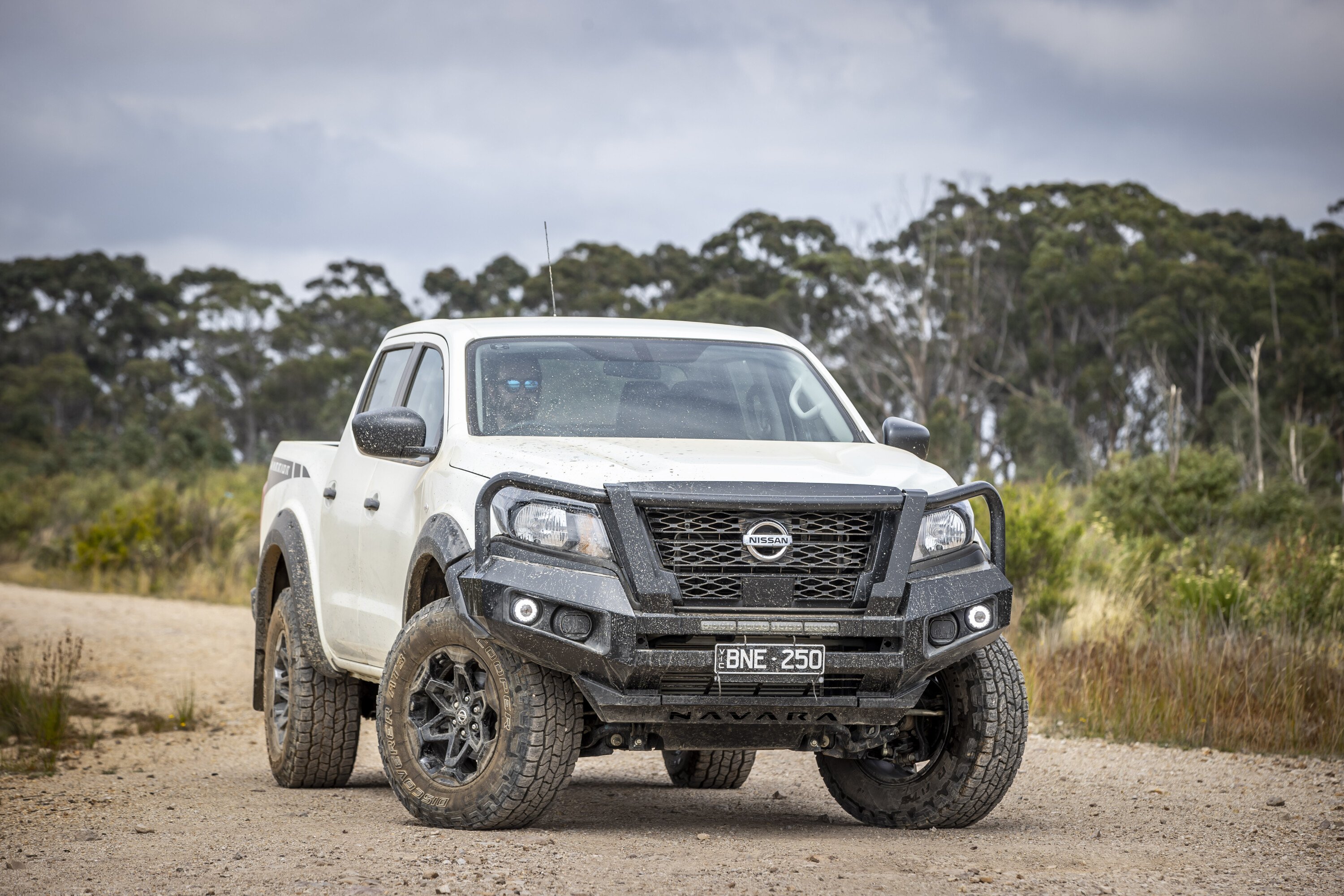
The NP300 Navara received a facelift in early 2021, while Melbourne-based Premcar has fiddled with the range-topping Pro-4X (previously N-Trek), and now also the entry-level SL dual cab 4×4, to create the factory-backed Warrior range.
Pricing
What body styles are available for the Nissan Navara?
The Navara is classed as a light commercial vehicle and drives either its rear wheels only (4×2 models) or all four wheels as a dual-range, part-time (4×4) drivetrain.
The cab-chassis models allow buyers to fit the tray or rear body of their choice, including designs tailor-made for specific applications.
1
Single-cab models arrive only in this form, but King cab and dual cab variants are offered as a cab chassis or with a ute pick-up body, depending on the model.
While single-cab models only have room for two passengers, King cab versions add two small extra rear ‘jump seats’ accessed through shorter, rear-hinged back doors and can seat a total of four occupants. Dual-cab models have larger, more conventional rear doors and can seat up to five people.
1
What features are standard in every Nissan Navara?
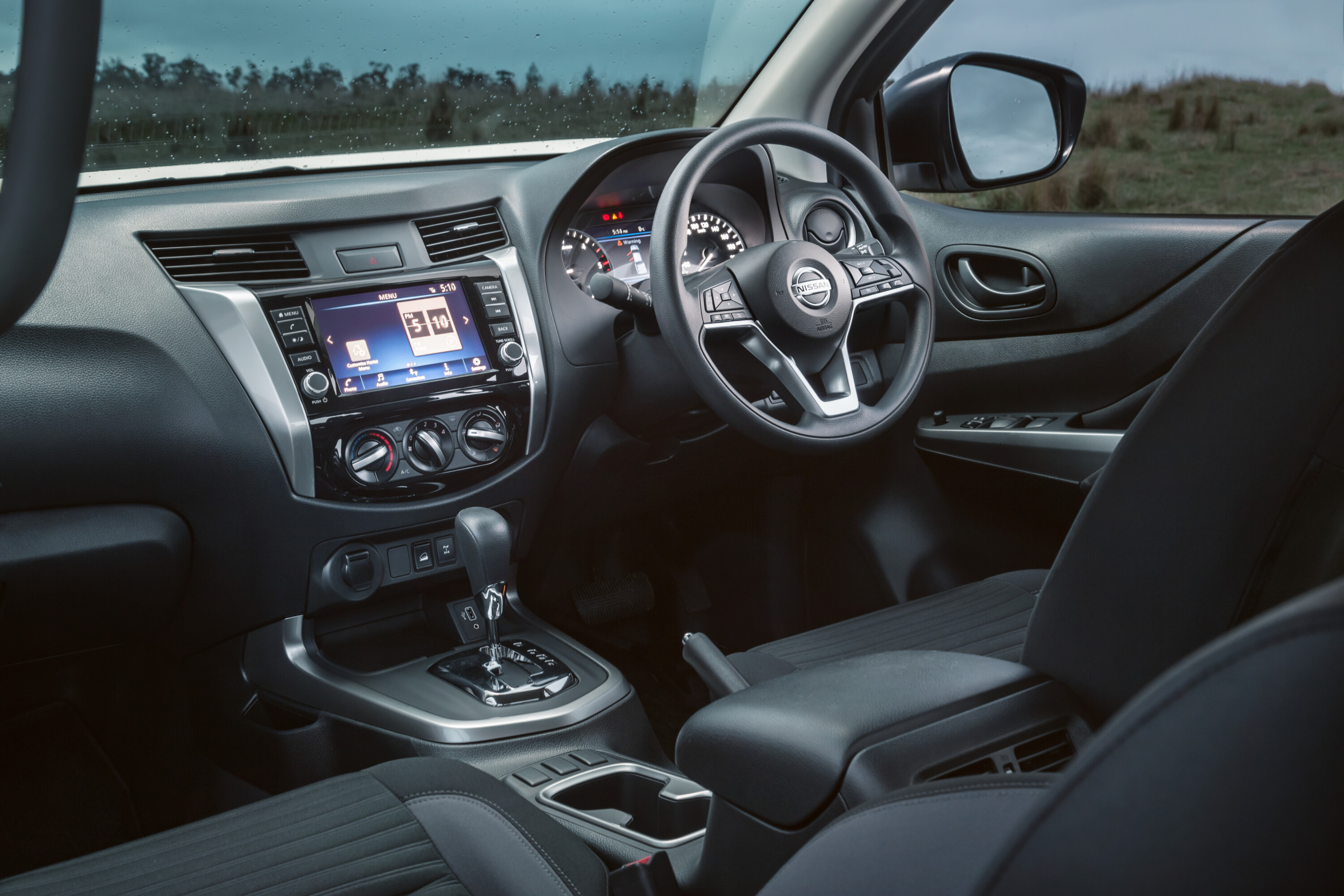
The features listed below are standard in the entry-level SL dual cab model and will appear in higher-grade models, unless replaced by more premium equivalent features.
| 2024 Nissan Navara standard features | |
|---|---|
| Colour eight-inch touchscreen, two 12v auxiliary sockets and four USB input sockets (of which three are USB-A and one is USB-C). | A six-speed manual transmission (or optional seven-speed automatic, depending on model). |
| Bluetooth connectivity for phone calls and audio streaming, Android Auto and Apple CarPlay (wired only), which lets you display smartphone apps on the touchscreen and control them from there (or by voice). Radio includes AM/FM bands. | A trip computer that presents fuel use and distance information. |
| Reversing camera (pick-up models only). | A digital speedometer. |
| Sound system with at least six speakers. | Wheels (17-inch) made from steel, and a full-size steel spare wheel. |
| Single-zone climate control. | Hill-assist control, which operates the brakes automatically to make take-offs on hills easier. |
| Smart Keyless entry that doesn’t require you remove your keyfob from your pocket or bag to lock or unlock the vehicle. | Downhill brake control, which can regulate speed automatically on steep downslopes when driving off-road (4×4 models only). |
| Driver seat height adjustment. | Trailer Sway Control, which senses trailer sway and applies the vehicleu2019s brakes to reduce such sway. |
| Vinyl floor covering. | Seven airbags: two directly in front of the driver and front passenger; one alongside each front occupant to protect the upper body; a curtain airbag on each side protecting the heads of occupants, and a driver knee airbag. |
| Cruise control. | Electronic stability control, which can help the driver to control a skidding car. All new cars must have this feature. |
| Halogen daytime running lights and headlights. | Locking rear differential which ensures the rear wheels turn at similar speeds to improve traction and handling (4×4 models only). |
| Auto-on headlights. | Maximum towing capacity of 3500kg (braked), with a towball download maximum of 350kg (unbraked towing capacity is 750kg). |
| Active safety features including autonomous emergency braking, forward collision warning, driver fatigue warning, and brake assist. | |
1
What key features do I get if I spend more?
Even the most popular Navara body variant, the dual cab, has a complex array of equipment and spec levels available.
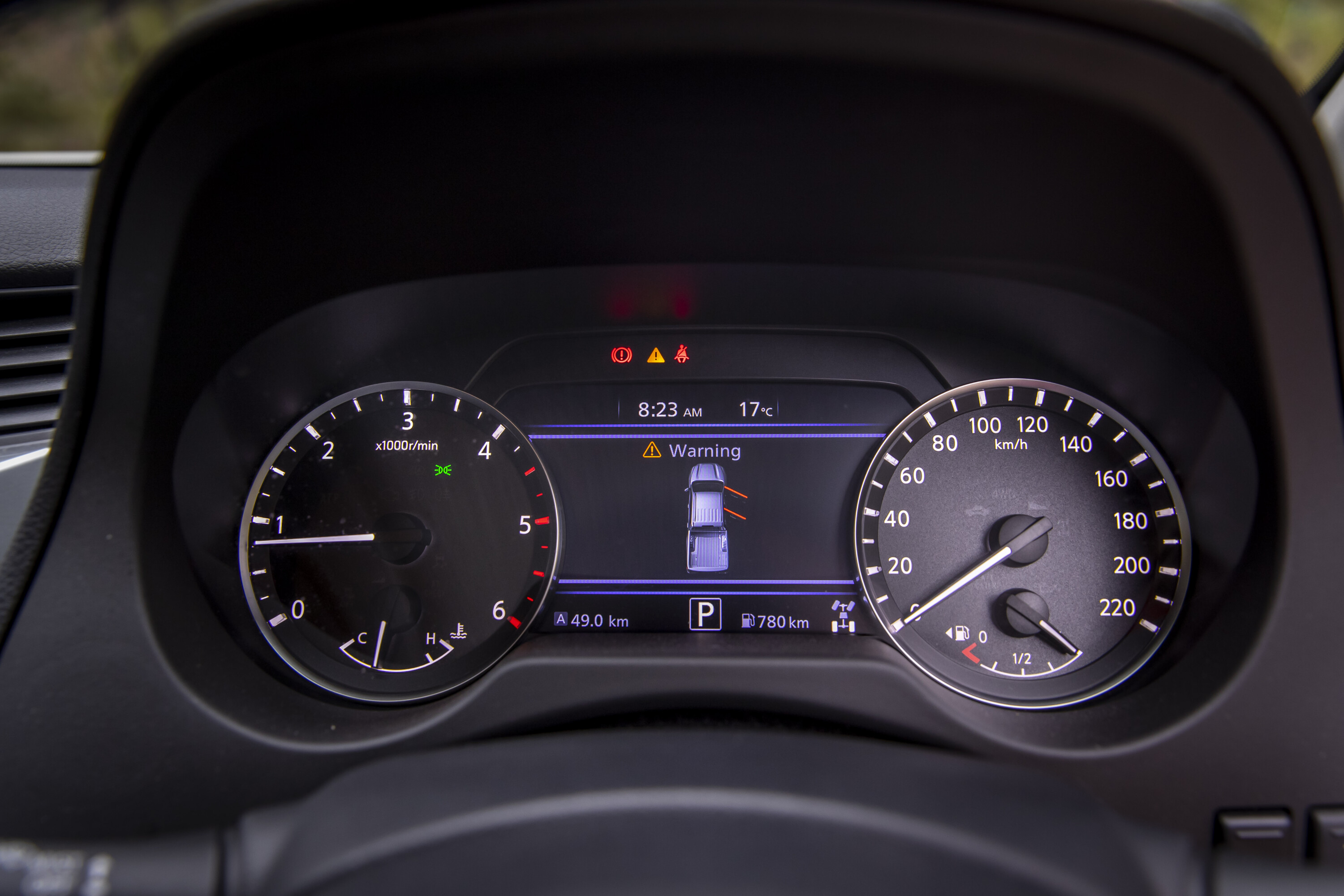
The entry-level dual cab is the SL pick-up 4×2 manual, with the 2.3L 120kW/403Nm four-cylinder single turbo-diesel engine and six-speed manual gearbox. The same specification in 4×4 brings increased power and torque from a twin-turbo 140kW/450Nm version of the 2.3L diesel engine.
ST specification offers only the 140kW and 450Nm 2.3L twin turbo-diesel engine with a six-speed auto only in 4×2 and with a six-speed manual (with six-speed auto option) in 4×4.
1
There is a big specification and equipment level jump with the Nissan Navara ST dual cab over the base SL dual cab, as you’ll see in the equipment list below.
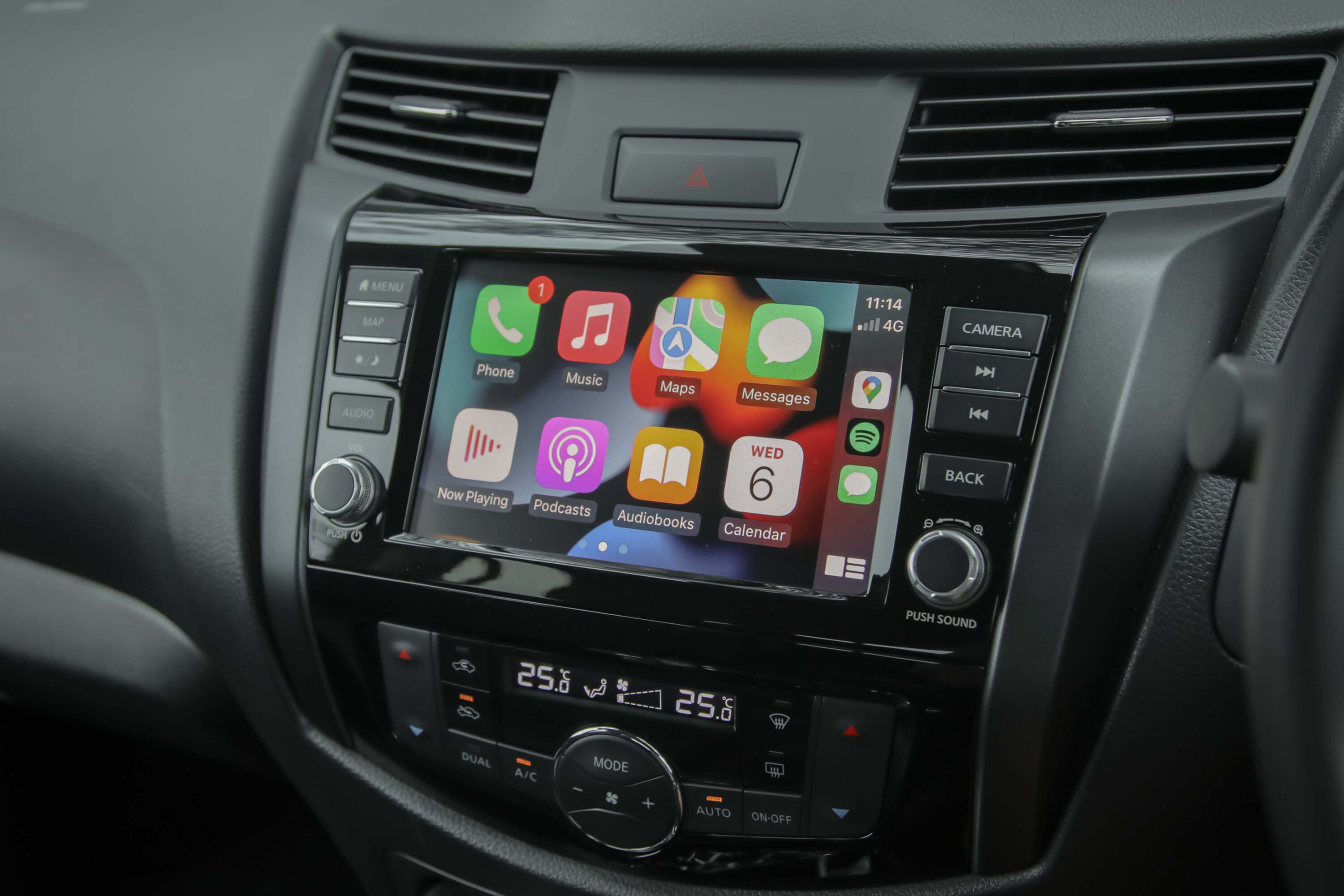
As well as the bigger-output twin-turbo 2.3L engine becoming standard, headline equipment upgrades include extra active safety technology and, in 4×4 models, you also get an off-road monitor in ST grade and above, as well as hill descent control for all 4×4 model grades.
2
The ST also brings:
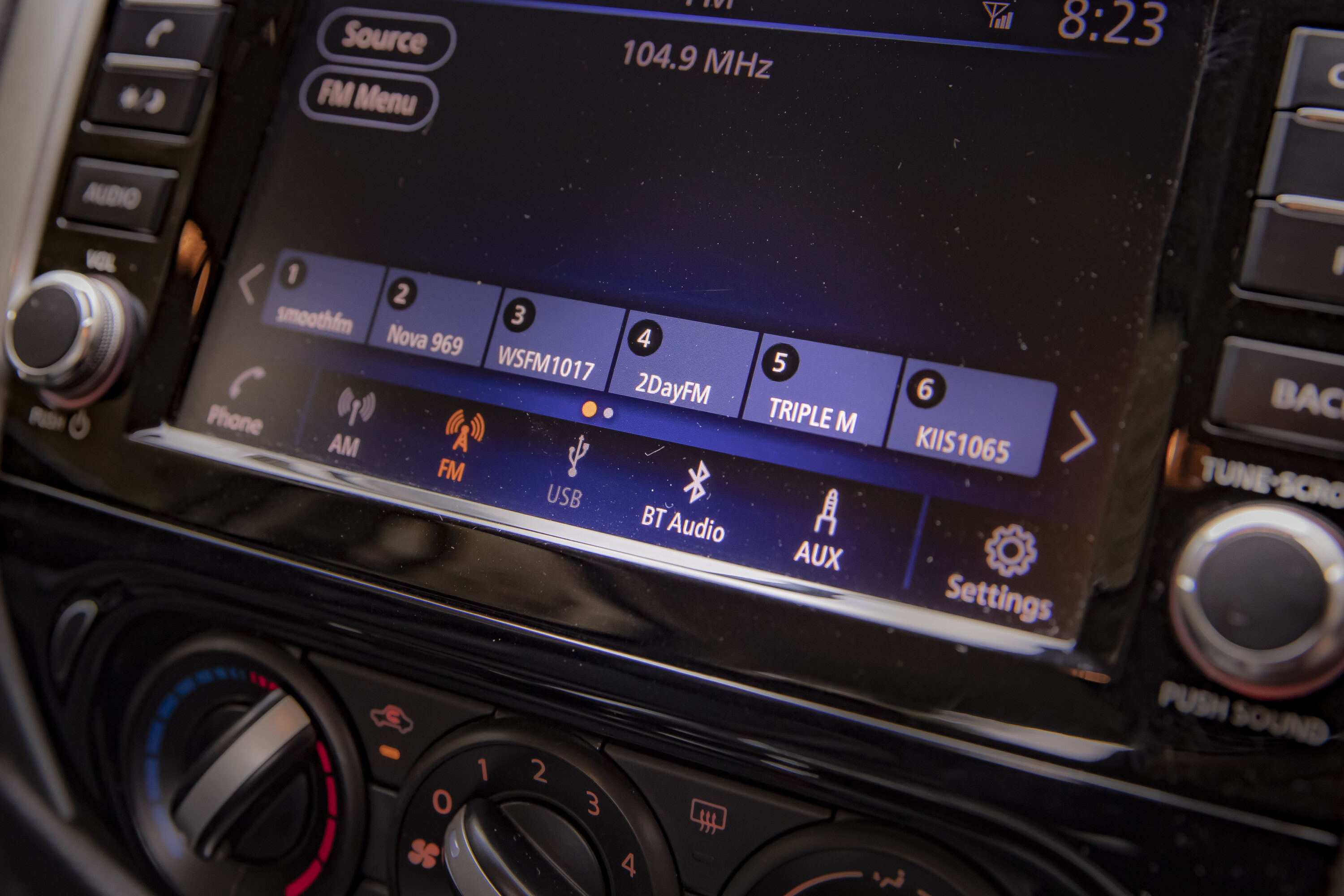
| 2024 Nissan Navara ST features | |
|---|---|
| Leather steering wheel and gearshift | Lane keeping assist |
| Floor carpeting | Blind-spot monitor and intervention system |
| Driver and passenger sun visor vanity mirrors | Rear cross-traffic alert |
| Chrome grille and door handles | Privacy glass |
| Turn signals incorporated in body-colour side mirror shells | LED headlights with auto high beam |
| Heated side mirrors | Front LED foglights |
| Stainless steel sports bar | LED tail lights |
| Body colour rear bumper | LED daytime running lights, to make you more visible to other traffic |
| Black side steps | Rain-sensing wipers |
| Rear power sliding window | Automatic dimming rear-view mirror |
| Reverse parking sensors | Rear parking sensors to augment the rear camera |
| Lane departure warning | More sporty-looking 17-inch alloy wheels |
1
Paying more again for a Navara ST-X gets you those features plus:
| 2024 Nissan Navara ST-X features | |
|---|---|
| 18-inch alloy wheels | Dual-zone climate control |
| Double tube sports bar | Tyre pressure monitoring |
| Smart Keyless engine start | A tubliner to protect the paint in the tray area |
| Automatic power-folding door mirrors | Carpet floor mats |
| Utili-track two-channel sliding tie-down hooks (King cab model) | |
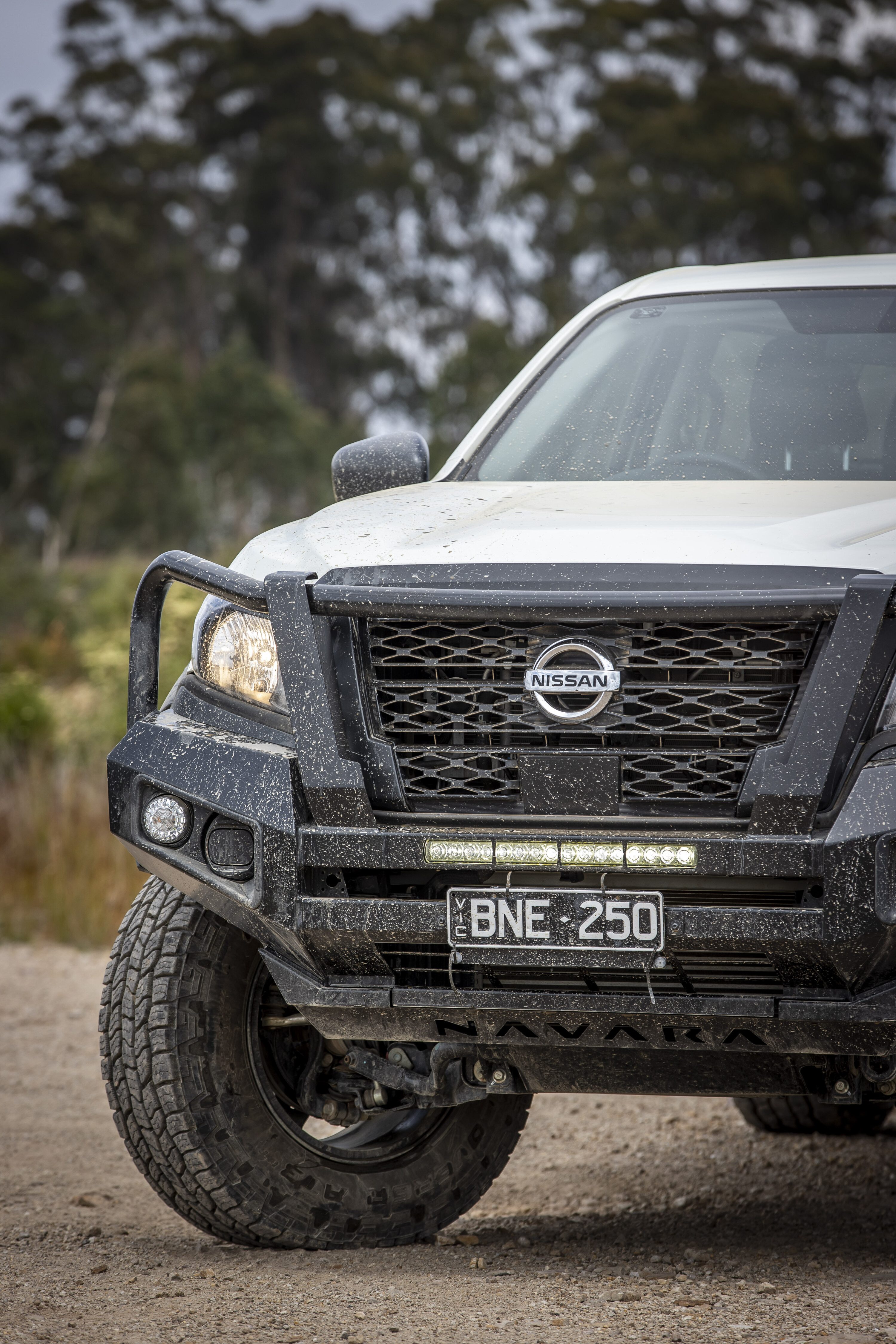
Next up on price is the locally fettled Navara SL Warrior, which builds on the SL dual cab 4×4 features plus:
| 2024 Nissan Navara SL Warrior features | |
|---|---|
| Auto high-beam headlights | Cooper Discoverer all-terrain tyres |
| Black bull bar with hoops and integrated LED light bar | Navara-branded black front bash plate |
| Black fender flares | Tow bar |
| Suspension lift 40mm | All-weather floor mats |
| 100kg GVM upgrade over SL dual cab 4×4 | Tub liner |
1
Picking up again from ST-X trim is the next highest-spec Navara, the Pro-4X, which builds on the ST-X trim level with:
| 2024 Nissan Navara Pro-4X features | |
|---|---|
| 17-inch wheels painted black, with all-terrain tyres | Black painted door mirrors, door handles and roof rails |
| Leather seats, stitched with u2018Pro-4Xu2019 logo embroidery | Black over fender flares |
| Utili-Track two-channel sliding tie-down hooks | Power adjustable driveru2019s seat |
| Grille painted black with dark grey surround | Heated front seats |
| Black stainless double tube sports bar with sailplane | Utili-Track two-channel sliding tie-down hooks (dual cab models). |
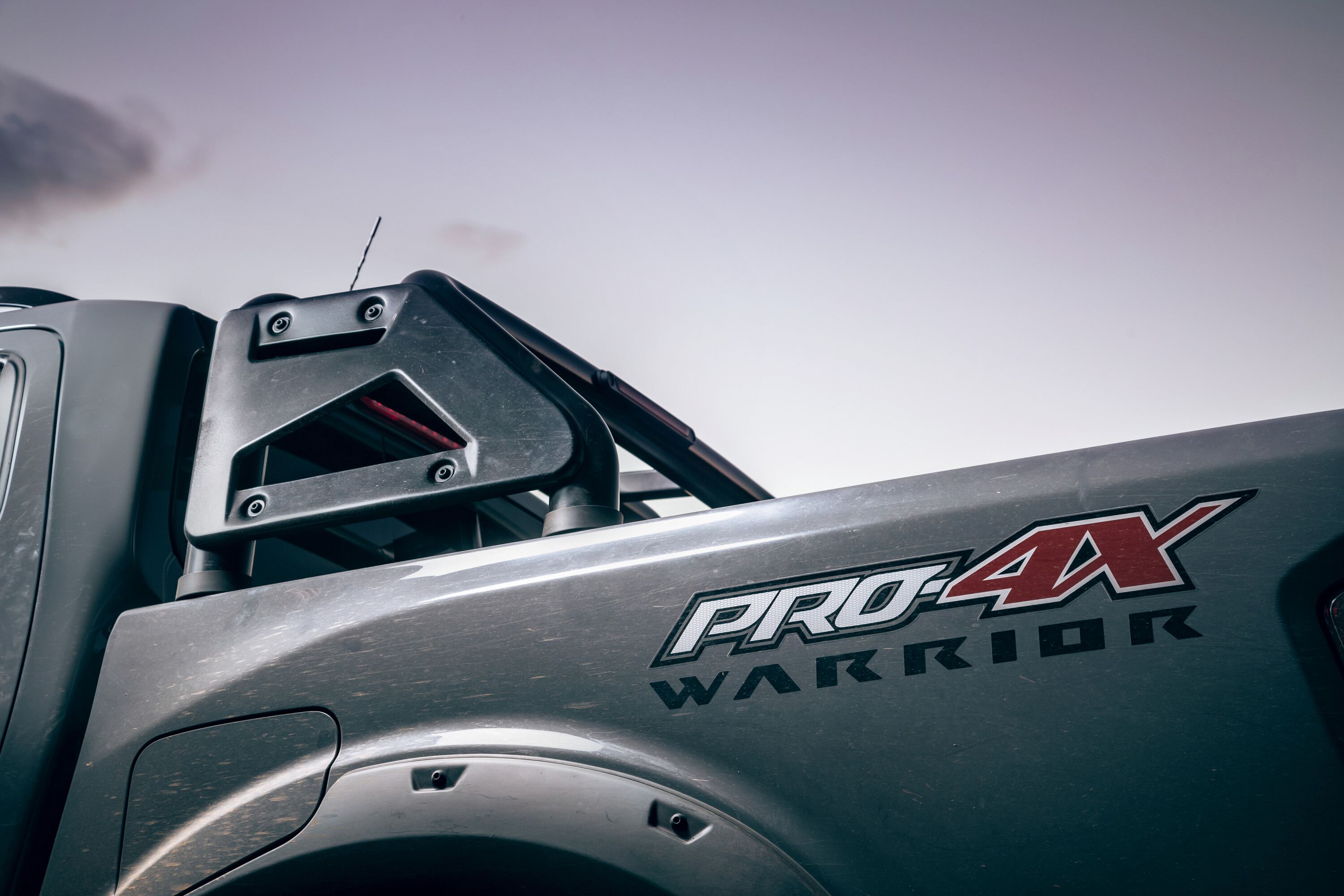
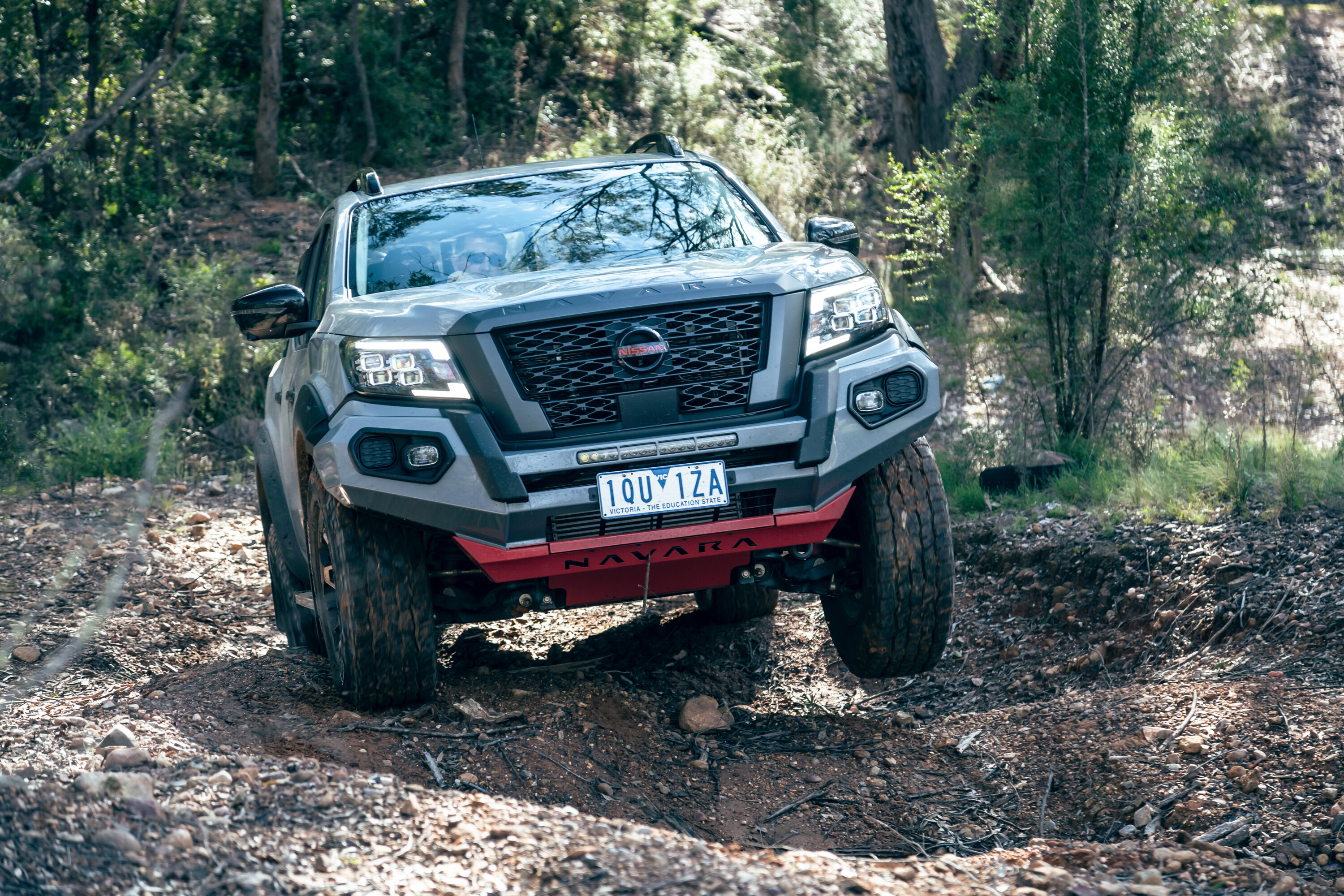
Top of the line in the Navara range is the off-road-oriented Pro-4X Warrior, which builds on Pro-4X with:
| 2024 Nissan Navara Pro-4X Warrior features | |
|---|---|
| Bullbar matched to body colour, no hoops | 100kg GVM upgrade over Pro-4X dual cab 4×4 |
| LED light bar integrated with bullbar | Cooper Discoverer all-terrain tyres |
| Black fender flares | Tow bar |
| Navara-branded red front bash plate | Tub liner |
| Second-stage 3mm thick underbody protection | Pro-4X Warrior logo headrest embroidery |
| Suspension lift 40mm | Red interior accents |
2
How safe is the Nissan Navara?
As part of ANCAP protocol revisions, the Navara’s five-star ANCAP rating from 2015 has expired, and therefore ANCAP considers the Navara from January 2023 as ‘unrated’.
The Navara is not without expected safety features, although unlike some competitors you don’t get the full safety suite from the base model. In the entry-level Navara SL, you get autonomous emergency braking (AEB), forward collision warning (FCW), brake assist and driver attention alert, at the least.
1
How comfortable and practical is the Nissan Navara?
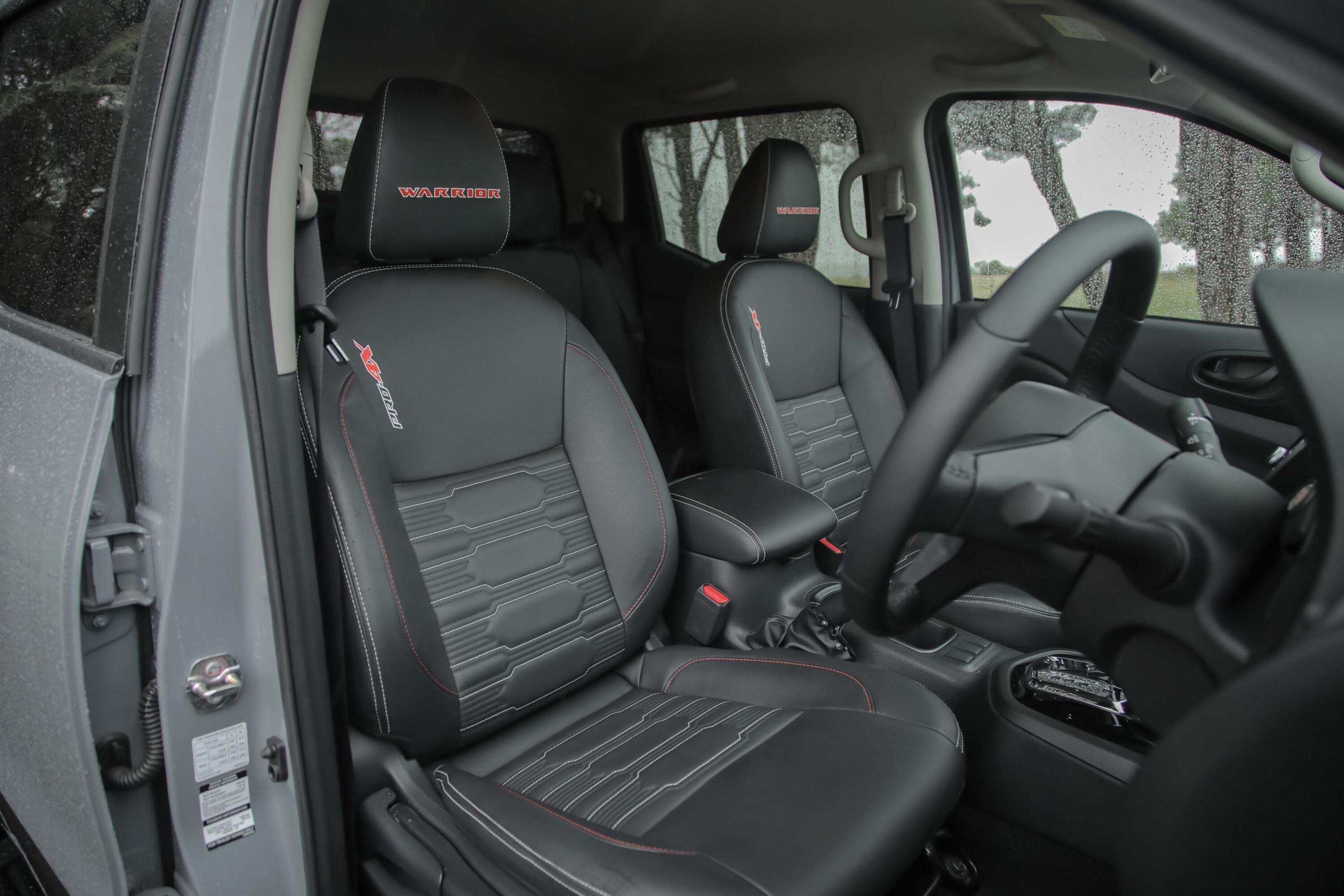
The front seats are a bit soft at first but seem supportive enough for a road trip.
However, the steering wheel seems too small and feels like it’s out of a hatchback. All the switchgear is pretty old but perfectly functional and the cabin is well-made and well laid-out.
The centre armrest has a usefully sized bin housing USB-A and USB-C connectors. You also get two cup holders in the front and bottle holders in the doors.
1
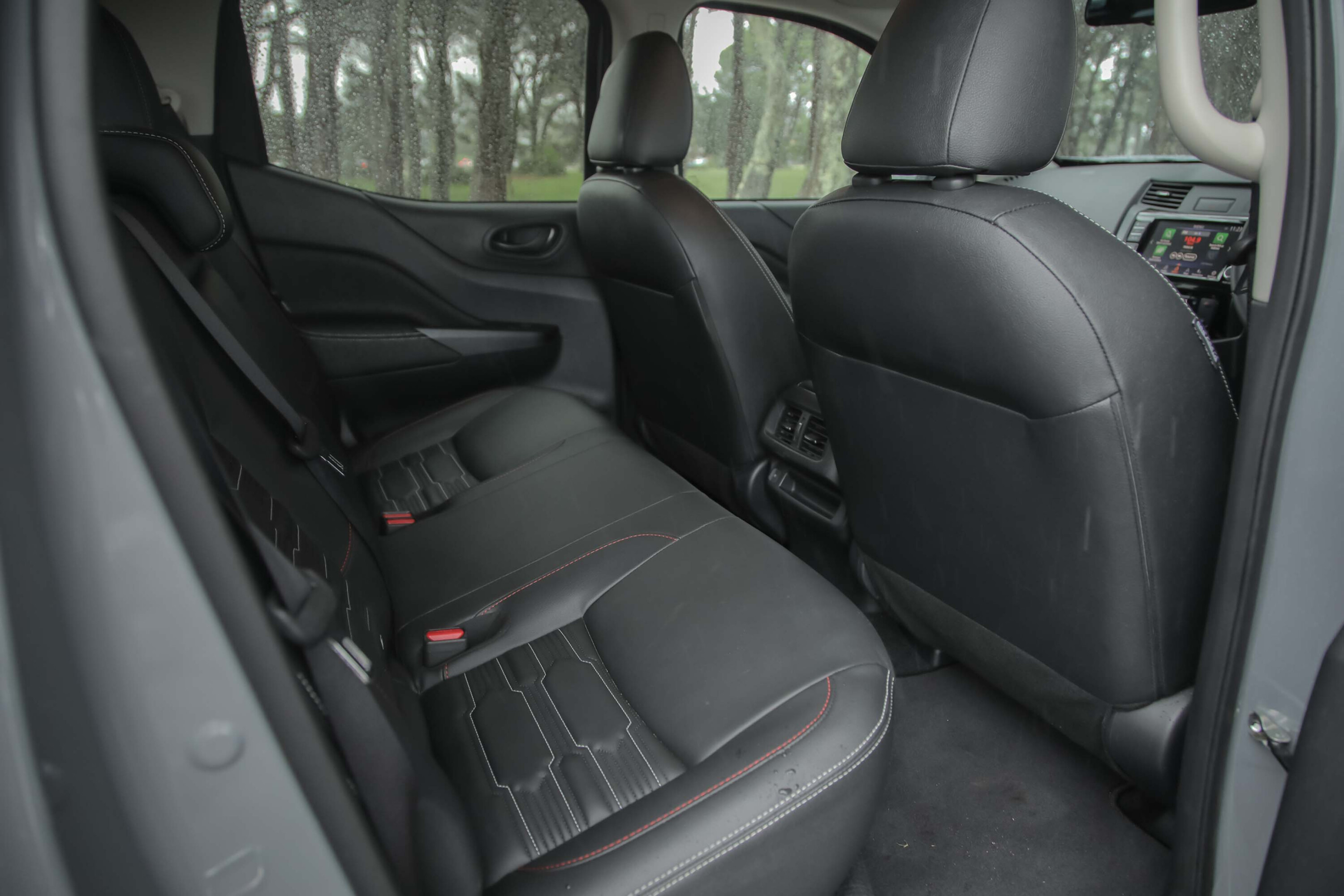
Rear accommodation is hardly palatial and entry is tricky with the narrow doors, but it’s a dual-cab ute so that’s to be expected.
Leg and knee room is adequate for up to six-footers and there’s a bonus of very dark tinting (from ST and up) plus that trademark electrically operated opening section in the rear window.
You even get rear air vents – way too many proper passenger cars still don’t get those. There is also a single USB charger.
1
How big is the tray/tub?
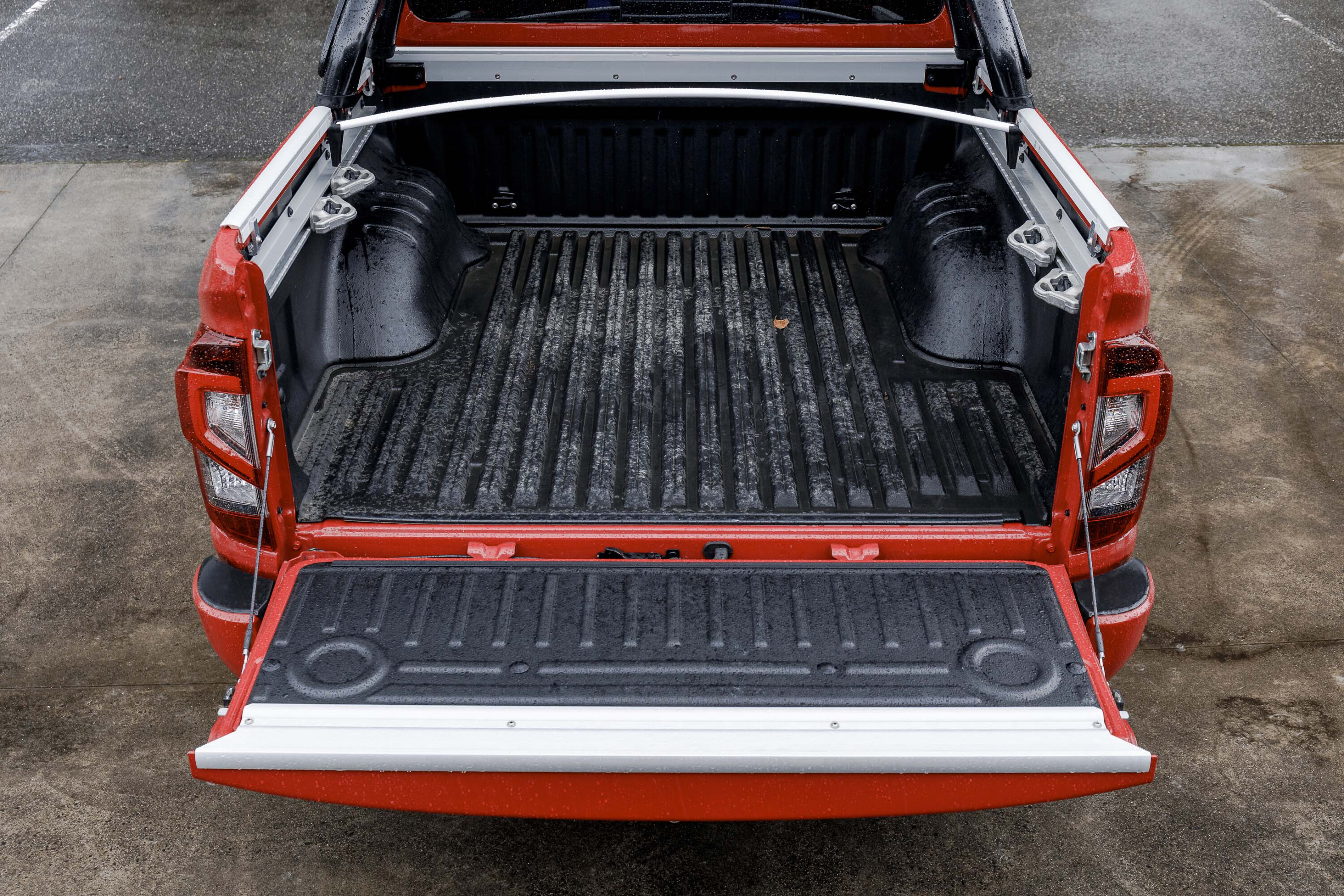
In the tray area, there’s a drop-in tub liner and sliding upper tie-down points from ST-X (King cab) or Pro-4X (dual cab) grade up and four looped tie-down points.
Dual-cab pick-ups have a very usable tray with 1509mm floor length, 1560mm floor width 1134mm of space between the wheel arches and 470mm tray height.
Meanwhile, the King cab measures the same in the tray except for its 1851mm floor length. Pick-up bodies also feature a torsion-bar-style tailgate assist that makes opening or closing the tailgate a one-handed affair.
The single cab chassis has multiple tray options, so Nissan doesn’t list tray dimensions there.
1
I like driving – will I enjoy this car?
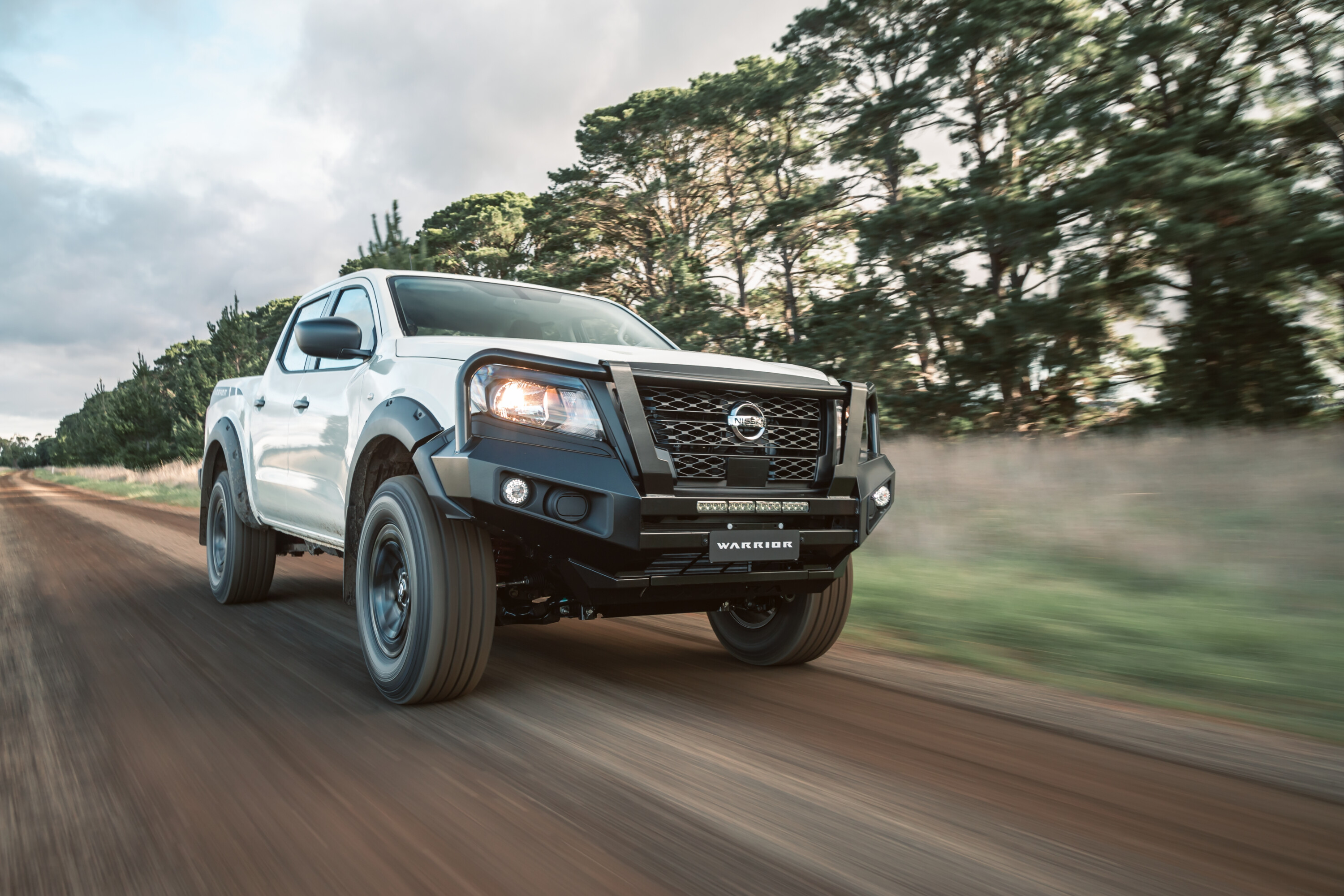
Up to a point, yes. The Nissan Navara is about middle of the ute field for dynamics, performance, and refinement.
The Nissan Navara is chiefly let down by boomy interior refinement and a lacklustre steering calibration that manages to be too heavy and sluggish at slower speeds and too vague and light at highway speeds.
However, the Navara is redeemed by a strong engine that will spin all the way to 5500rpm without any noticeable tapering of power at the top end. This imbues the dual cab with a muscular feel and nature that is matched by the Nissan’s roadholding capabilities on loose surfaces.
1
- What is a Powertrain or Drivetrain?
- Power vs torque
- Car suspension explained
- Automatic transmissions (‘gearboxes’) explained
- Chassis control systems explained
- Car vs Ute vs SUV: How the vehicle you buy should guide the way you drive
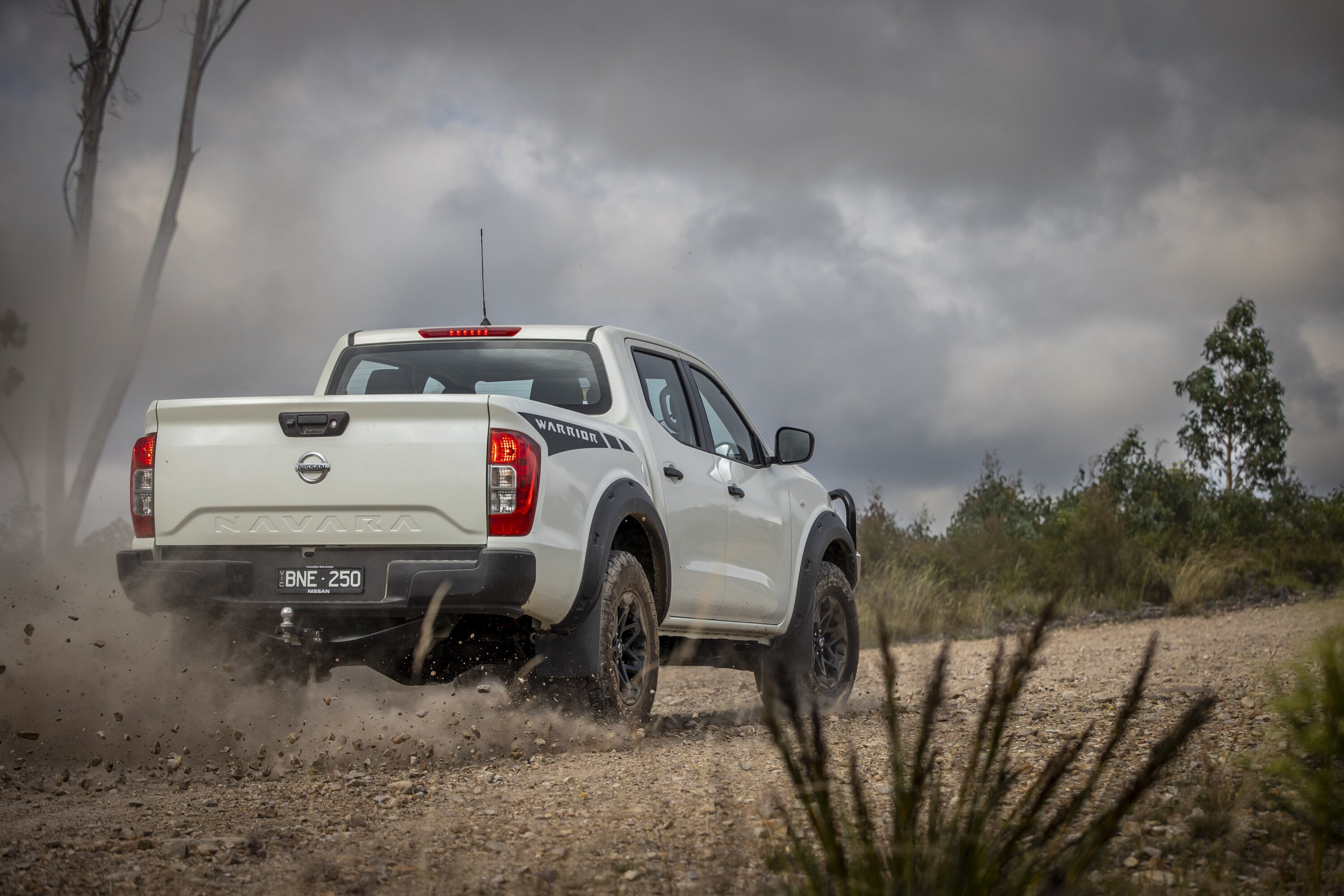
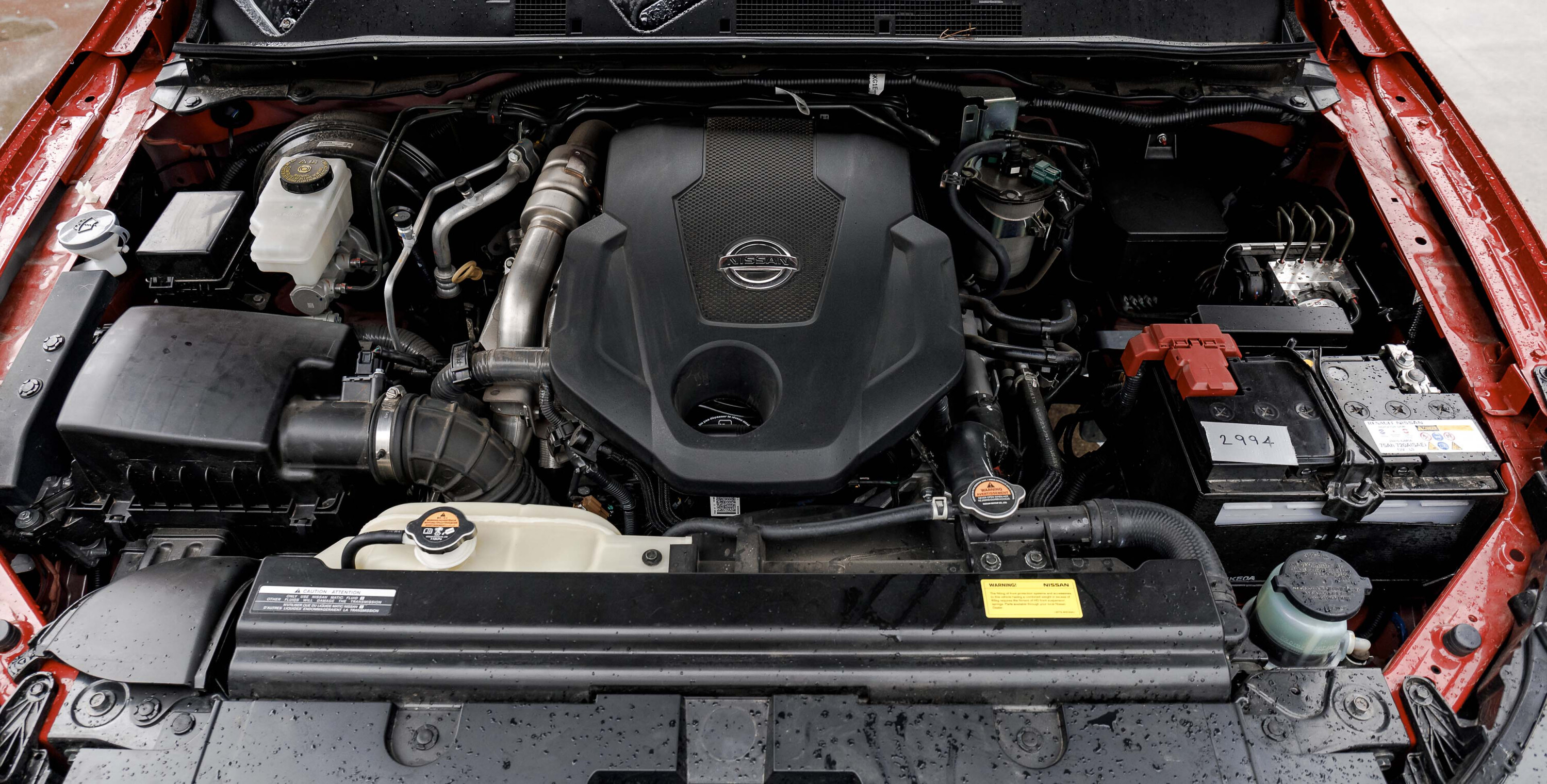
The 2.3-litre single turbo-diesel engine with manual transmission in the 4×2 dual cab uses the least fuel, at 7.2 litres/100km on the official combined-cycle test (city and country combined).
Although the single-turbo model is the efficiency leader, it is only available in one model grade (SL) in two body types (single cab-chassis and dual-cab pick-up) in one drivetrain – 4×2 with manual transmission.
Most buyers are choosing the more powerful twin-turbo 2.3-litre diesel, which has a still-decent official combined-cycle figure of 7.5L/100km (manual 4×4) or 8.1L/100km (automatic 4×4).
All Navara dual cabs have an 80-litre fuel tank.
1
What is the Nissan Navara’s towing capacity?
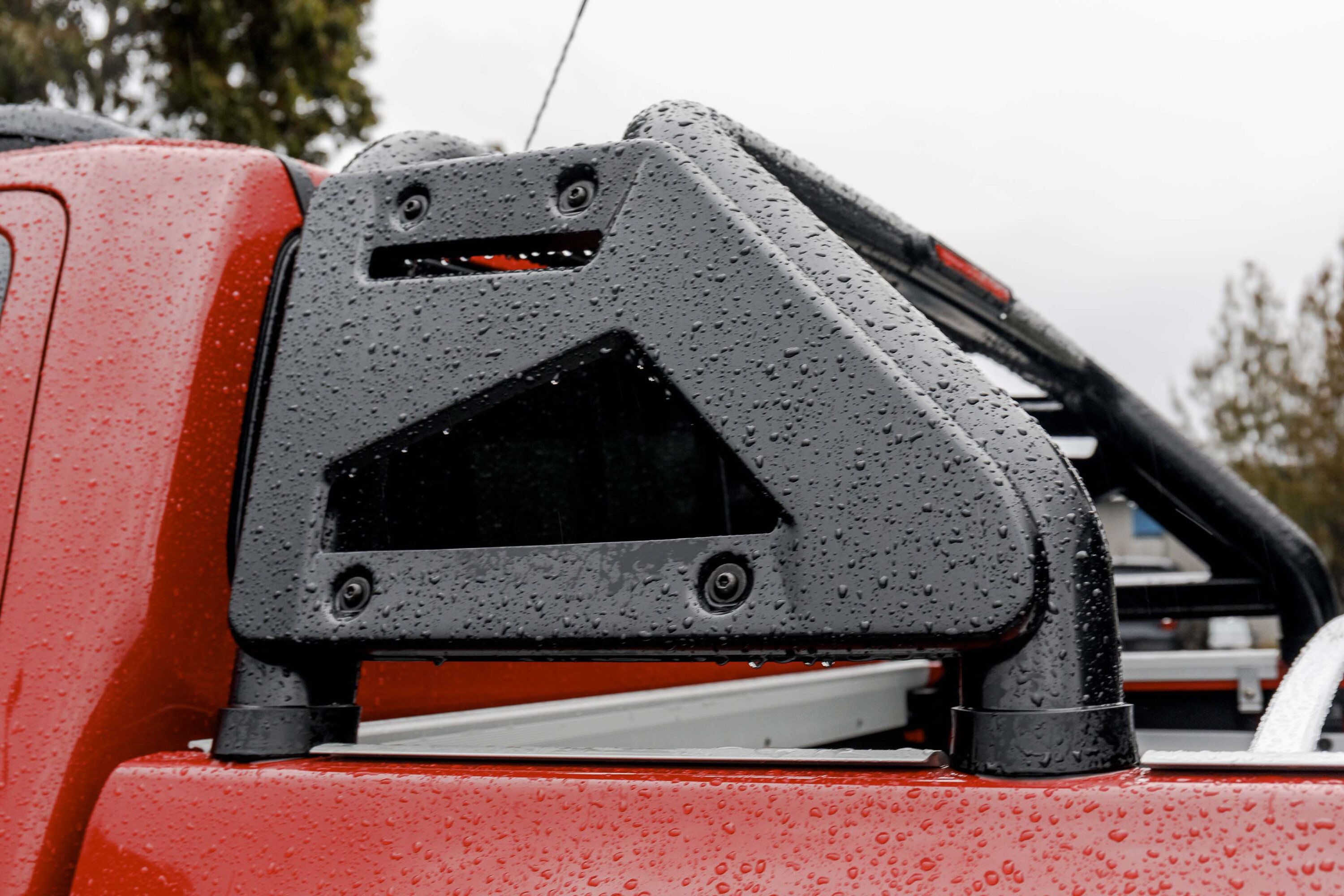
The Nissan Navara has a maximum braked towing capacity of 3500kg (350kg maximum tow ball mass) across all models.
Payload capacity ranges from 1004kg on the Pro-4X automatic to 1146kg on the SL dual cab 4×2.
1
How long is the warranty and what are the Nissan Navara’s servicing costs?
All Nissan Navaras receive a five-year/unlimited-kilometre warranty, with complimentary roadside assist for the same five-year period.
Servicing intervals are set at 12 months or 20,000km – whichever comes first. Prices for automatic variants start at a fraction over $500 for the first service and max out at $782 on the sixth. Servicing costs for manual models are marginally higher.
1
Which version of the Nissan Navara does 4X4 Australia recommend?
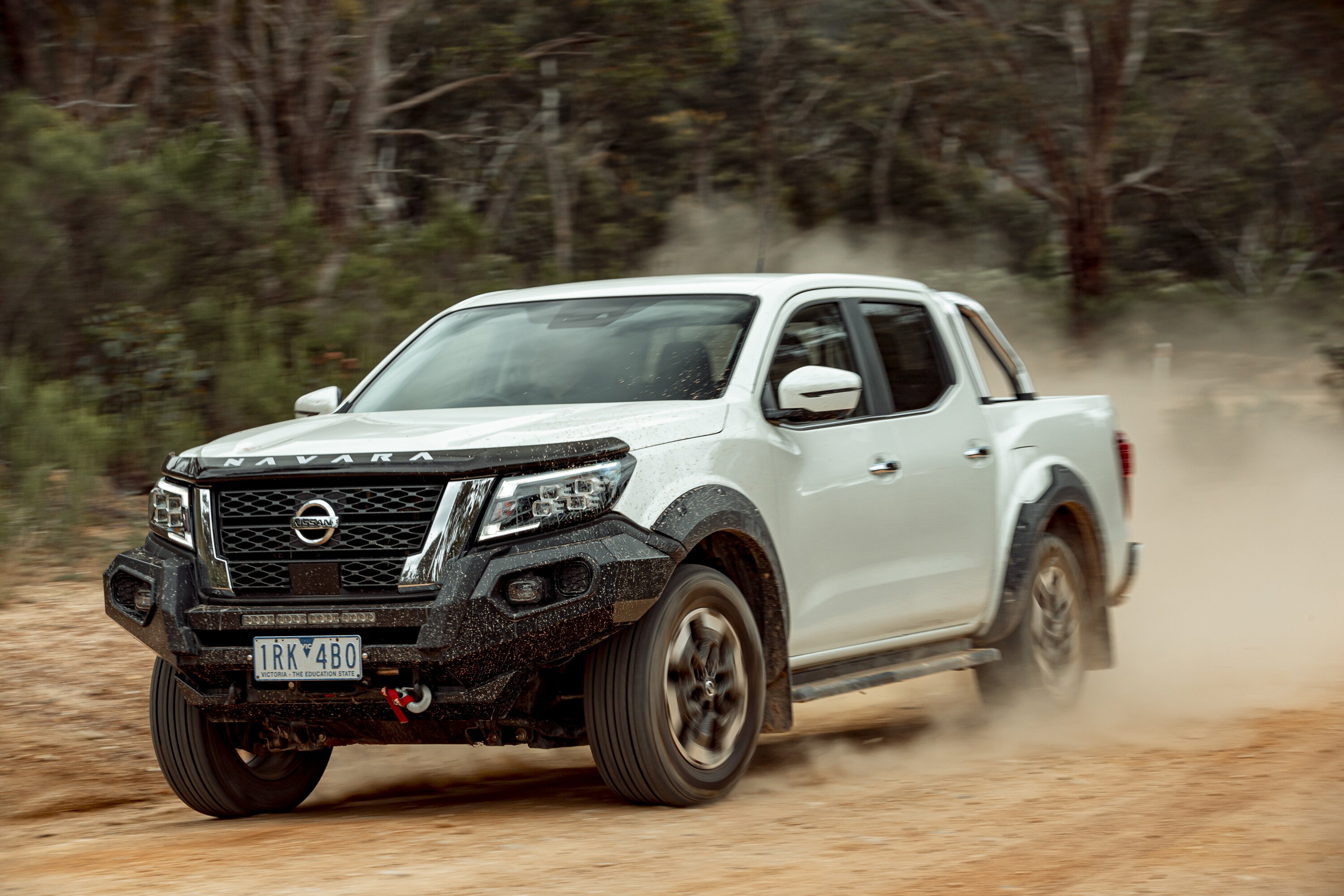
The sweet spot in the Nissan Navara range is the ST trim level, ideally in dual cab 4×4 automatic form.
At this trim level, it is as good as it gets for safety and infotainment features, as none of the higher-spec models get much if anything better in these terms.
1
There is a certain appeal in the SL Warrior grade, as it blends standard off-road gear for a not-too-excessive price, while for about $70K (plus on-road costs), a top-shelf Pro-4X Warrior auto is getting steep.
It ticks most of the right boxes for off-road gear but draws into stark relief the lack of active safety and infotainment sophistication in this price bracket. The all-new 2025 model can’t come soon enough.
1
What are the Nissan Navara’s key rivals?
- Ford Ranger
- GWM Ute Cannon X
- Isuzu D-Max
- LDV T60
- Mazda BT-50
- Mitsubishi Triton
- SsangYong Musso
- Toyota HiLux
- Volkswagen Amarok
MORE
Everything Nissan
It’s been a few months between updates on our Ranger, as it’s been sitting around doing not much for a while.
We had a few highway trips with it up to Sydney and back for the two 4×4 shows up there in 2023, as well as getting our Tough Dog suspension fitted at its headquarters.
We did have a small problem with it prior to one of those runs when the guys from Street Machine magazine were using it to tow one of their race cars and dropped it back, reporting an oil leak. There had been stories of similar leaks from owners on Ranger forums, and checking under the turbocharger confirmed it was indeed that known problem: a leak from the oil return line on the turbocharger.








5
With the drive up the Hume locked in we wanted it sorted out, and the team at Chadstone Ford did a great job for us, replacing the offending oil line, gaskets and associated hardware, in quick time to get us on the highway. Of course, this was all done under warranty, no questions asked.
The Ranger cruises nice on the highway, but it does like a drink. With the added weight of accessories, raised ride height, bigger and heavier mud terrain tyres, gear on the roof rack and the canopy poking into the wind, the Ford returns 15.5L/100km on the highway run, resulting in less than 500km from an 80-litre tank of diesel. I haven’t kept full fuel figures on the car as the highway usage scared me enough!
We had a photo shoot with Offroad Images planned and decided to head up to the mountains a couple of days early to make the most of the preceding weekend.
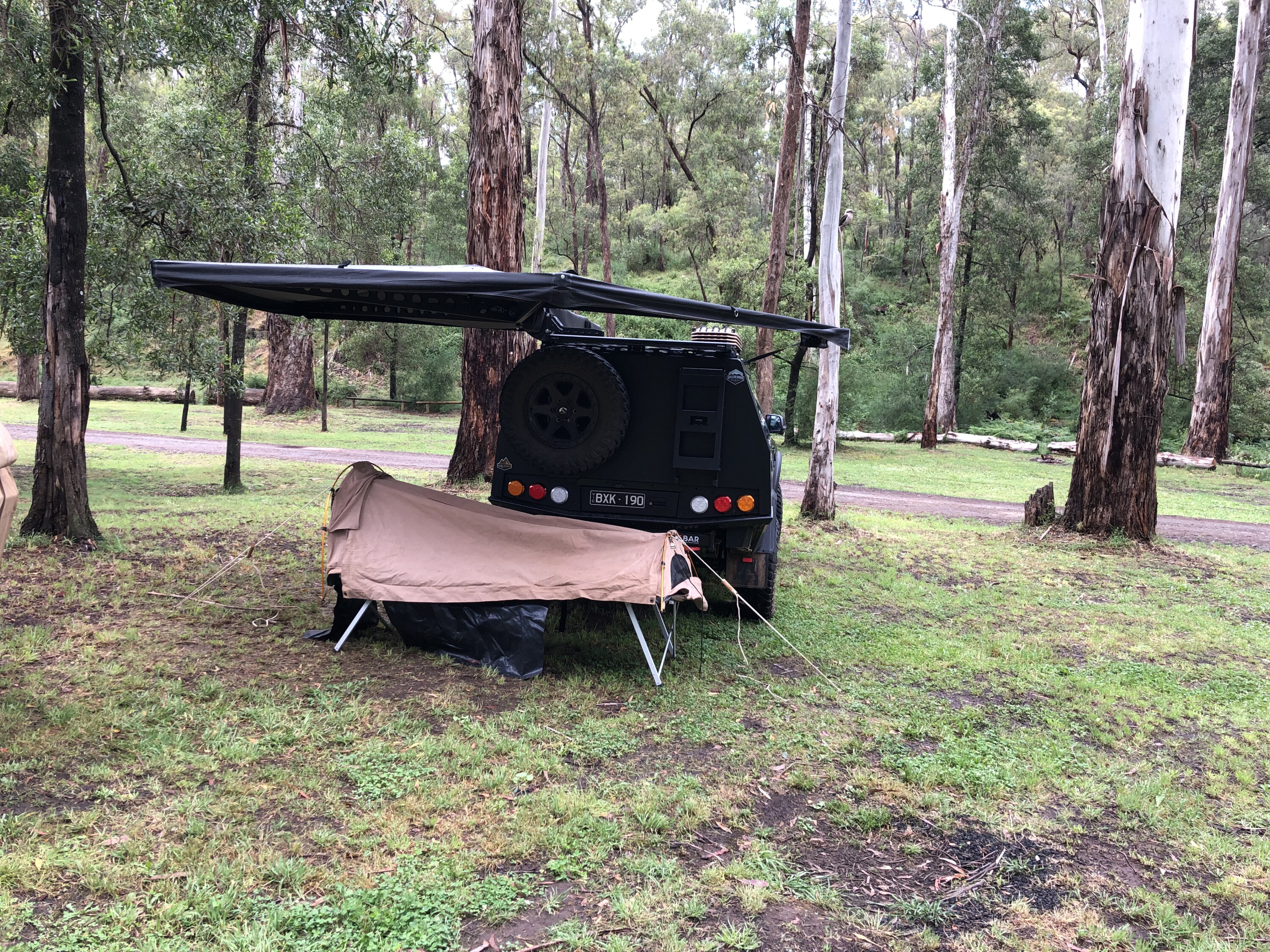
It was great to use the Ranger as it was intended; that is for travelling and camping out of, even if the weather turned bad and killed our hopes of getting the shoot done.
I really appreciated the awesome Boss Aluminium, 270° awning to cover the ‘camping side’ of the Trig Point canopy, and my swag protecting them from the rain.
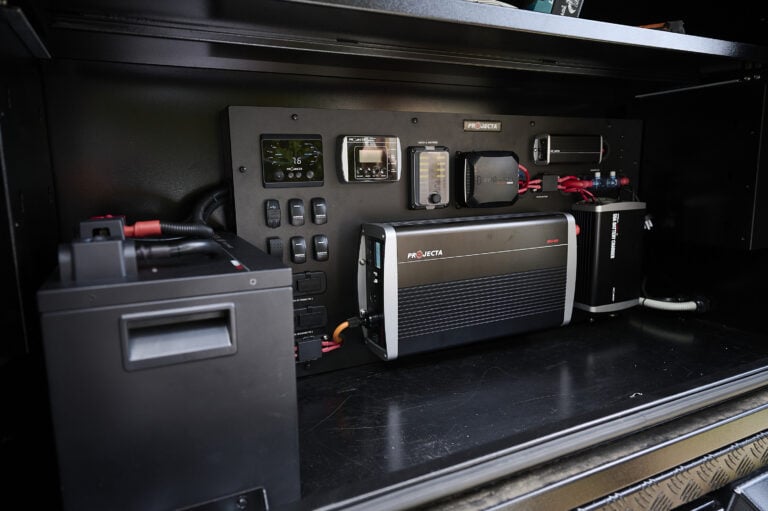
Living out of the canopy also gave me a great appreciation of how functional it is for this kind of use, with the Dometic fridge easy to access on the MSA Powerslide, 12-volt power supplied by the Projecta Intelli-Grid system, and the convenience and functionality of the Trig Point kitchen/pantry. It makes carrying all that extra weight around worthwhile.
A facelifted Toyota HiLux is coming: here’s what we know
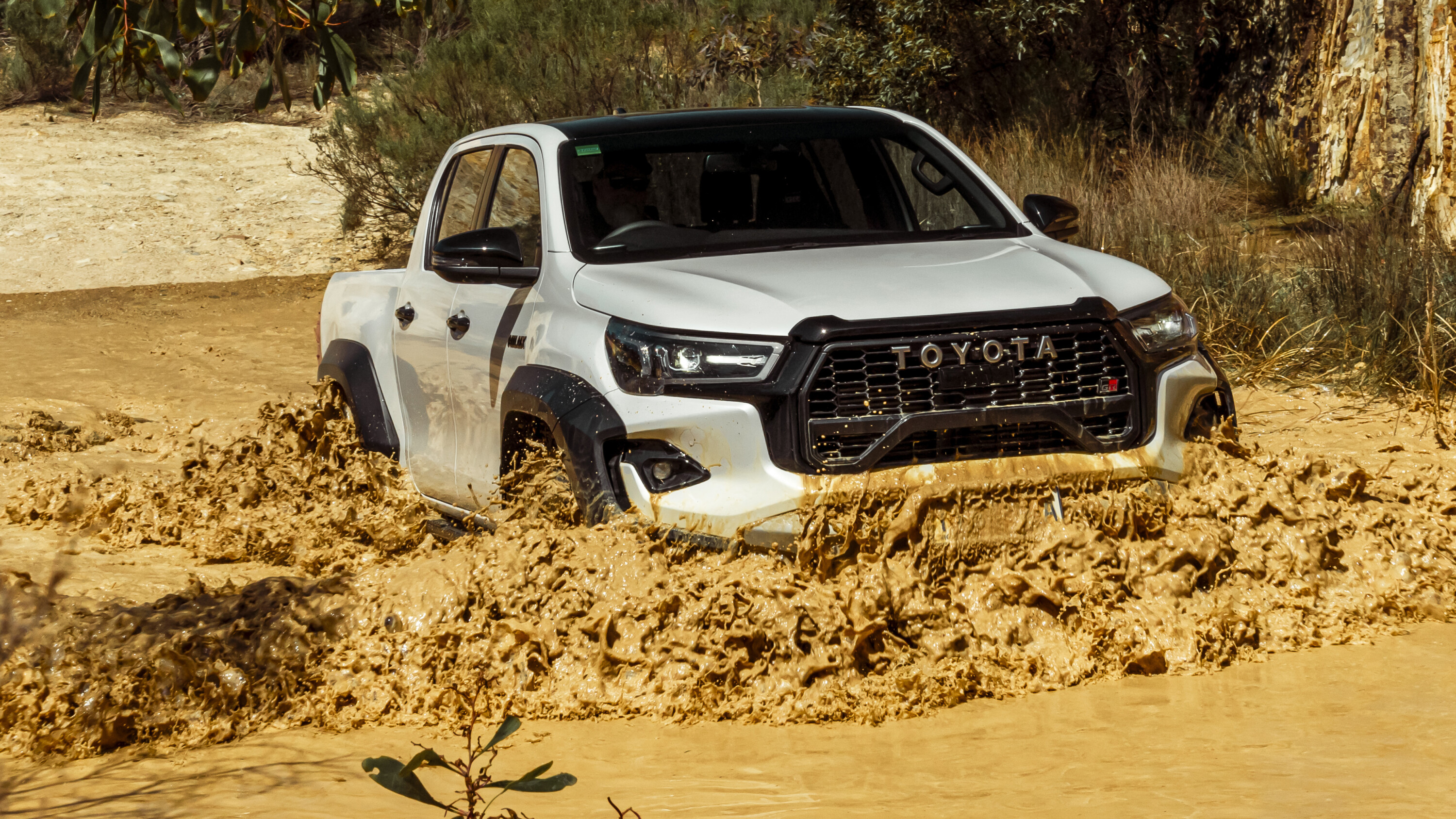
An updated version of the Toyota HiLux — including the first examples with 48-volt mild-hybrid powertrains — will arrive in Australia within “two or three months” as the popular dual-cab ute gears up for yet another facelift.
Wheels has learned the first examples of the updated HiLux, which will feature revised styling, additional equipment and price rises on some variants, are already on their way to Australia and that customer deliveries could commence as early as March.
1
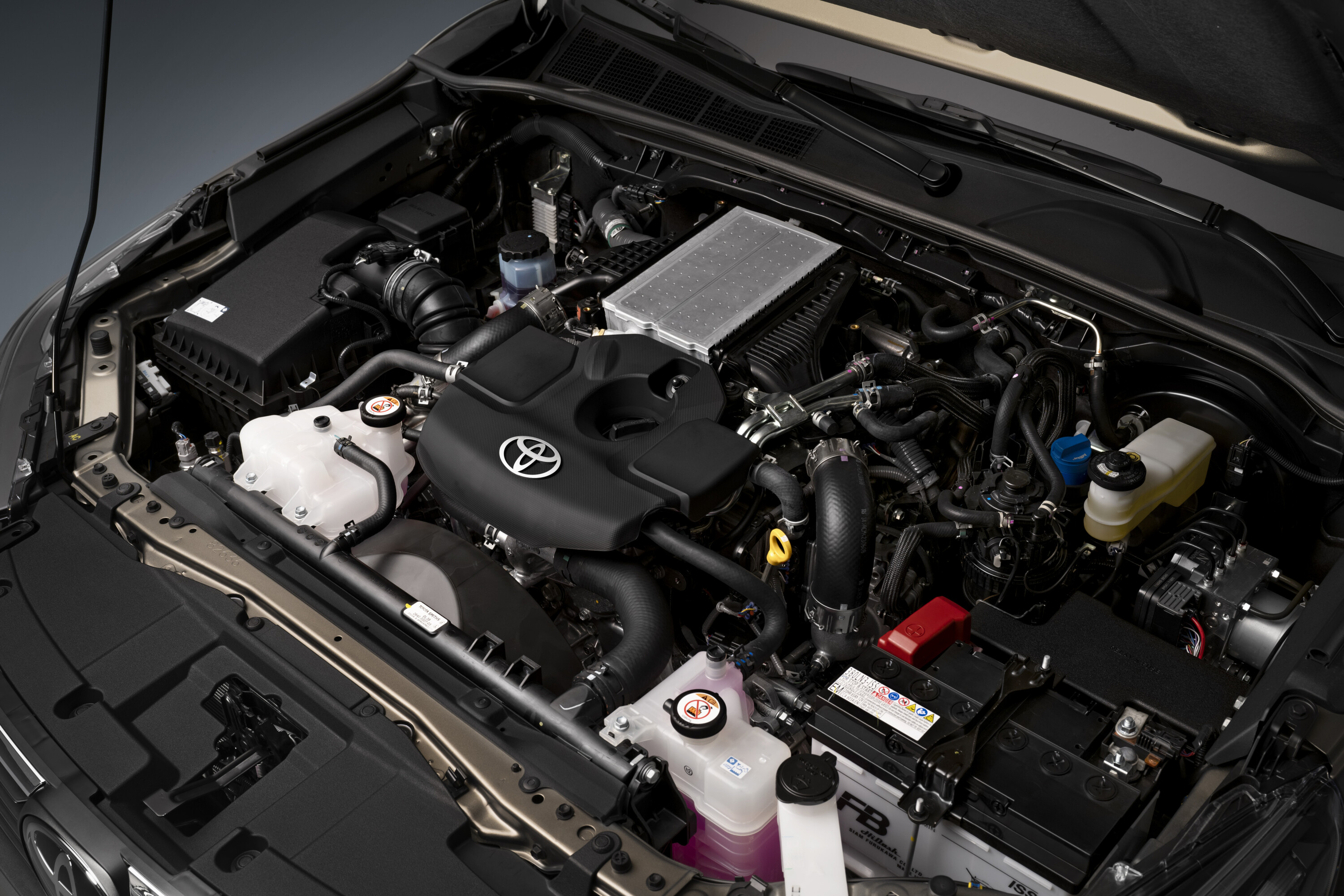
The new 48-volt mild-hybrid powertrain, known internally at dealerships as “new tech change”, will be offered on the SR, SR5 and Rogue 4X4 model grades and cost around $1000 more than their pre-facelift equivalents.
Versions of the new HiLux powered by the 48-volt powertrain won’t carry a hybrid badge as the new tech doesn’t deliver the same kind of fuel savings as Toyota’s existing petrol-hybrid tech used on models like the RAV4 and Camry.
Buyers can expect the 48-volt tech to reduce their fuel bills by around 10 percent from 8.4L/100km to 7.6L, however, and to benefit from improved drivability and an uplift in refinement thanks to less noise and vibration intrusion.
1
Adding the 48-volt tech is just part of a series of changes set to be made throughout the 2024 HiLux range.
Toyota has made a habit of regularly updating the HiLux, with this latest facelift the sixth running change introduced to the popular dual-cab in the last three years.
“The arrival of the 48-volt battery will be the third major update for HiLux since October last year,” said Toyota’s vice president of sales and Marketing Sean Hanley in September last year. “And we have at least one more HiLux surprise in store for next year.”
It’s likely this facelift is the ‘surprise’ Hanley was referring to – click here to read all of his quotes – however Toyota is yet to make an official statement about the updated HiLux or to reveal any images.
Without any official picture it’s unclear just how different the updated HiLux will look, although Wheels understands the updated styling — which will focus on the headlights and grille — is more of a minor cosmetic tweak than a wholesale change.
One facelifted model that is set to look markedly different is the popular SR5. Drive has unearthed further details about the updated HiLux and reports the SR5 will gain a ‘blacked out’ exterior with dark detailing around the grille, headlights, mirror caps and sports bar.
Drive also reports the facelifted HiLux will gain the fitment of front and rear parking sensors on some variants, as well as the addition of a wireless charging pad and rear USB ports. We’ll update this story as more details come to light regarding updates for specific variants.
Prices will also be tweaked across the 2024 HiLux range, with some variants set to remain unchanged while others will increase by between $300-$1000.
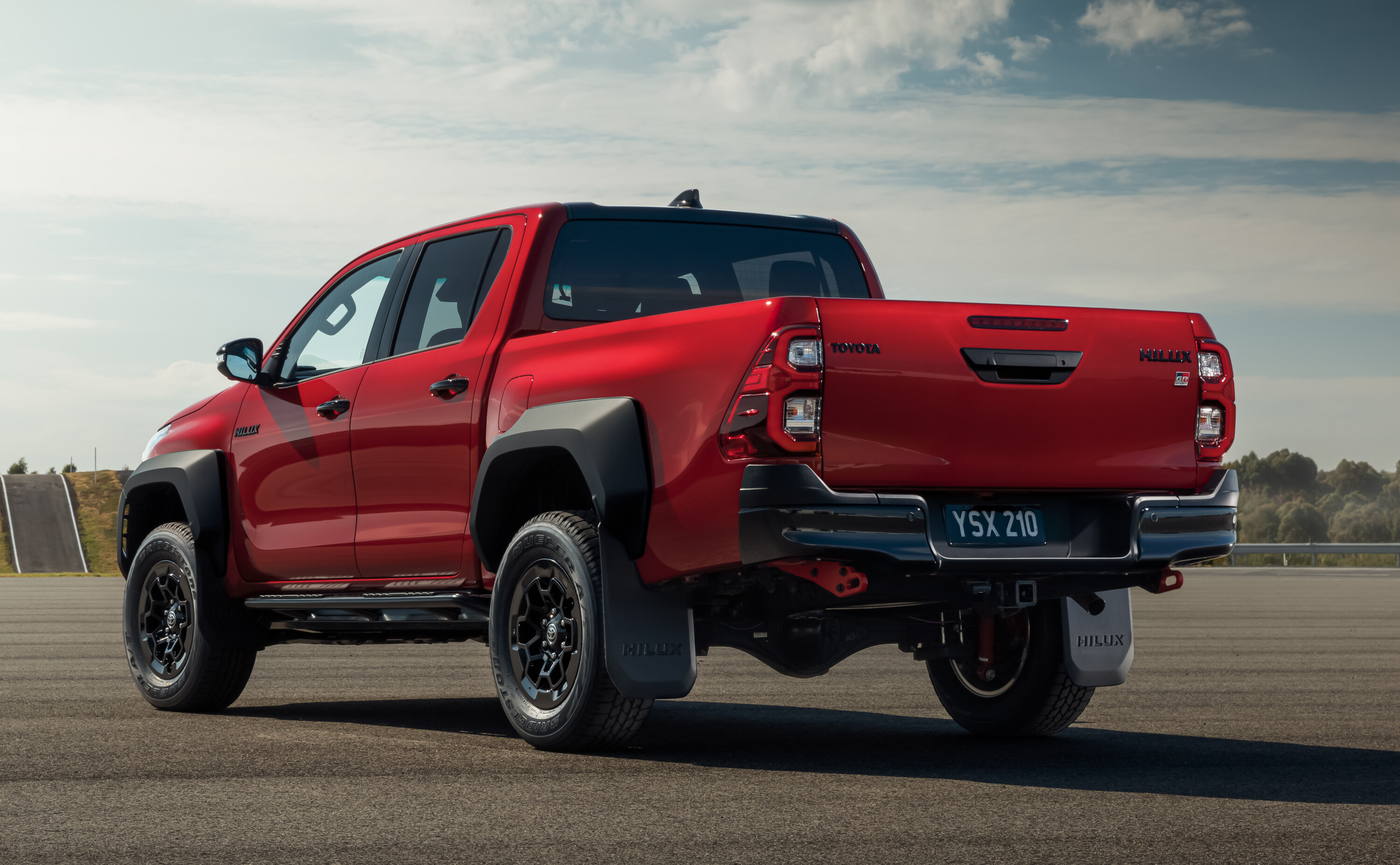
It’s likely this 2024 update will be the last change made to the current Toyota HiLux as an all-new model is due to arrive in 2025.
1
It’s understood the all-new HiLux, which will ride on Toyota’s latest TNGA-F ladder-frame platform, will be noticeably taller, longer and wider than the current ute.
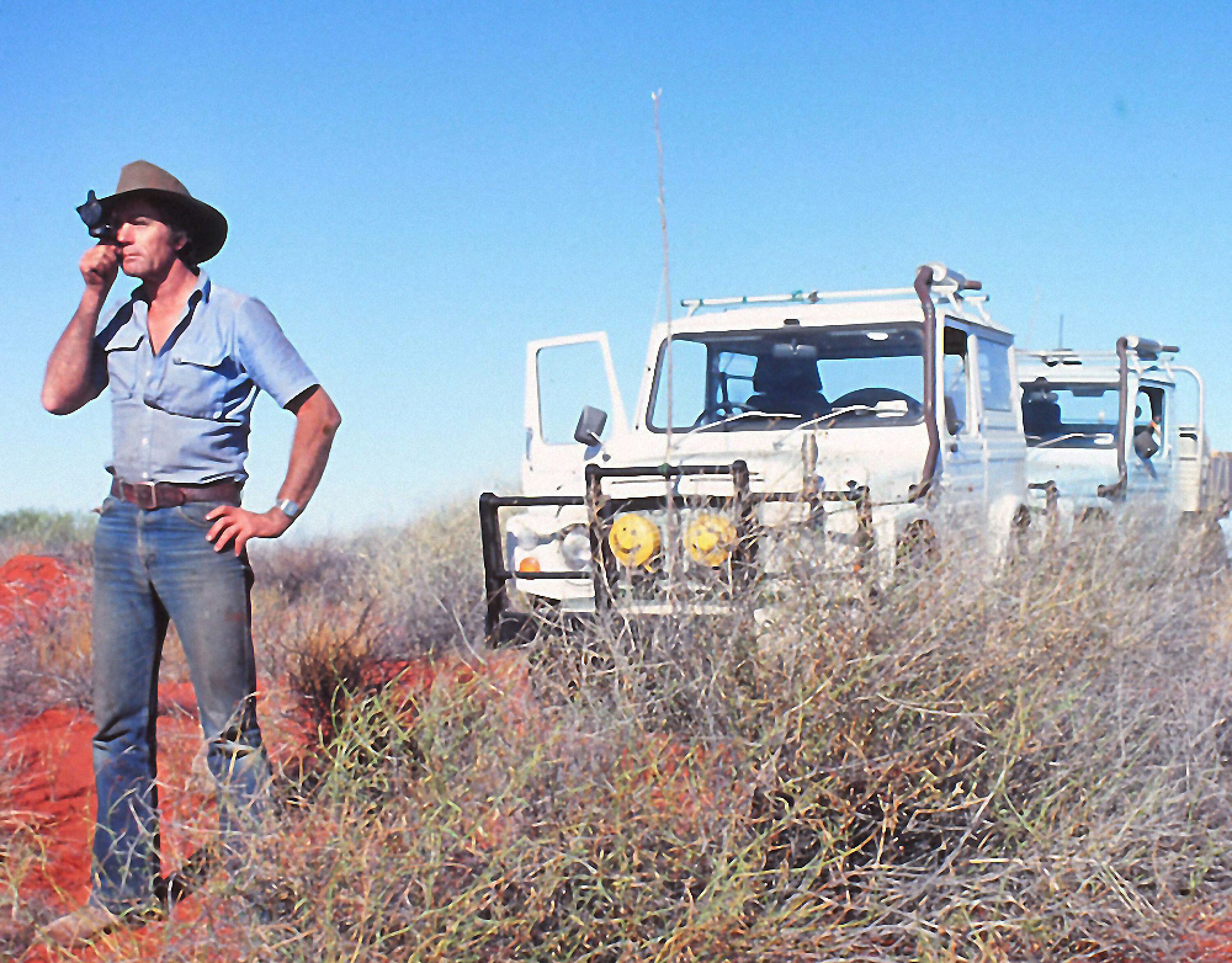
Famed desert adventurer Denis Bartell passed away peacefully on January 2 after a short Illness.
He was a legendary desert traveller, first crossing the Simpson Desert in 1977 – the first of 60-odd crossings by vehicle, camel and on foot. At that time he named the biggest dune in the Simpson, Big Red, and in conversations with him on top of that magnificent dune he reckoned he should have copyrighted that name.
In 1979 he became the first to drive what we now call the Madigan Line, and in 1980 he re-discovered many of the native wells that had eluded other searches.
1
His canoe trips down the Cooper to Lake Eyre and other inland streams were just as groundbreaking and epic. He was also the first to drive a solar car from Darwin to Adelaide, a precursor of the annual solar challenge.
In 1984 he set out on foot across his beloved Simpson Desert, from Alka Seltzer Bore to Birdsville. That crossing, the first unaided walking crossing of the desert, took 24 days. The following year, he set out on his greatest physical challenge, a walk from Burketown on the Gulf of Carpentaria to Adelaide on the Gulf of St Vincent, via, of course, the Simpson Desert.
There were many other adventures, continuing up until recently, always with the Simpson Desert as its heart. Our thoughts are with his wife, Jeanne, his kids and greater family. RIP mate.
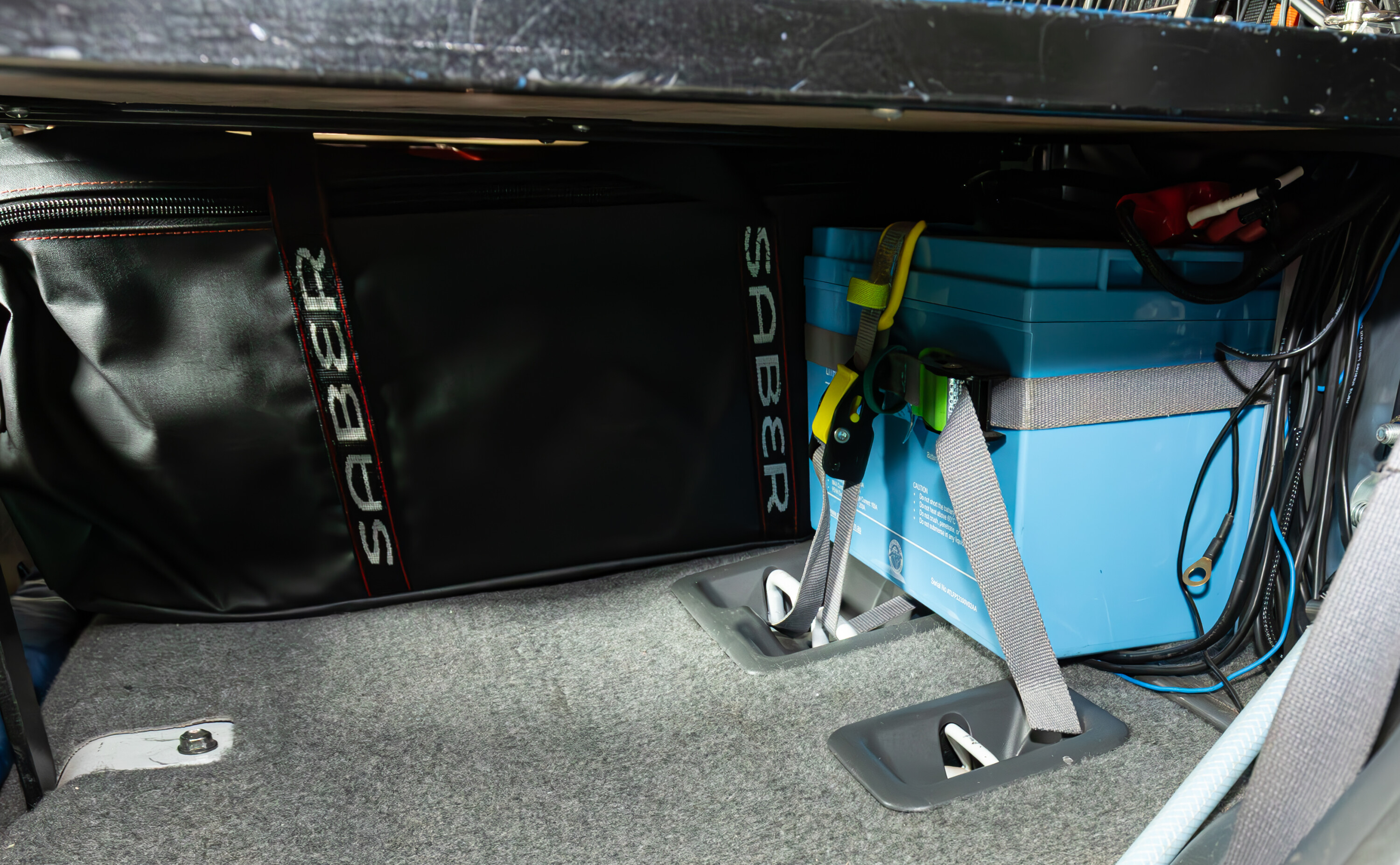
Having decided to upgrade my storage drawers from a Black Widow system to a lightweight RV Storage Solutions package, I discovered that my lithium battery would no longer fit behind the cargo barrier.
My solution was to mount it under the false floor, secured with tie-down straps. This wasn’t the smartest, safest or most secure solution but I couldn’t find anything off the shelf… until MSA 4×4 Accessories launched the MSA Battery Box in May 2023.
-
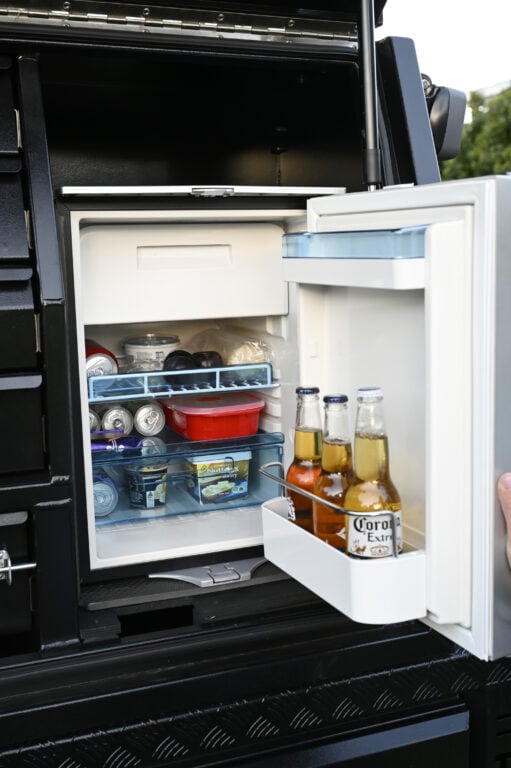
Dometic CoolMatic CRX 50 upright fridge
-
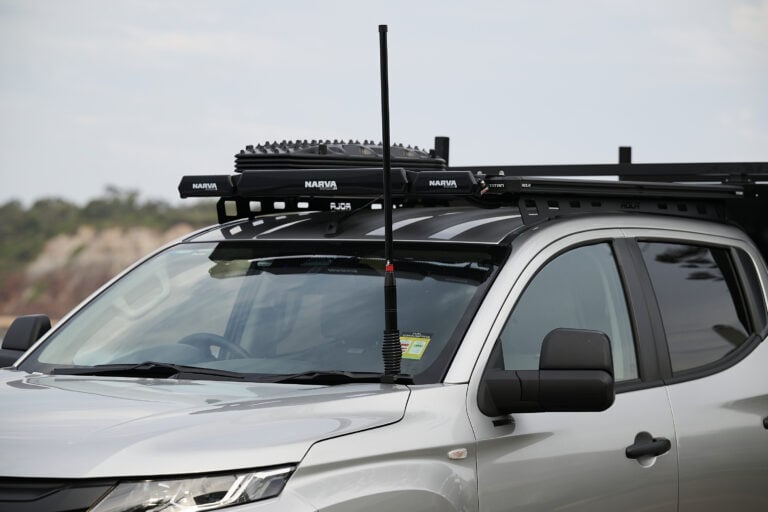
Cel-Fi GO mobile booster
-
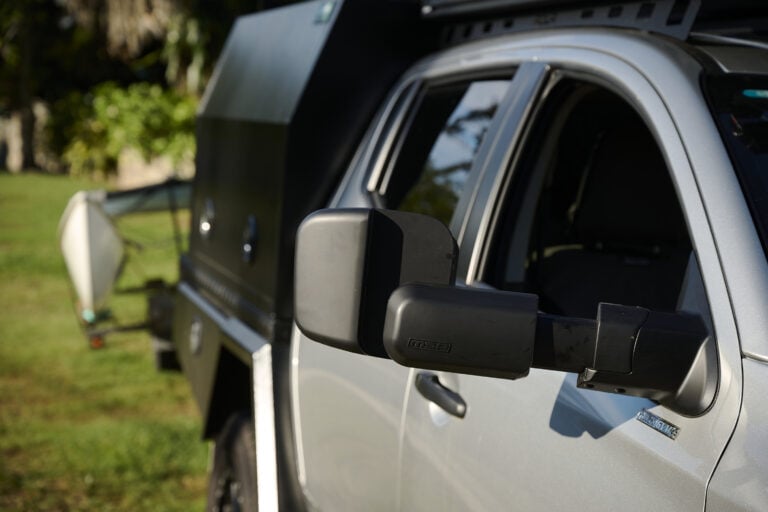
MSA 4×4 towing mirrors
-
Projecta power management
-
Narva LED lights
-
Pedders GVM and brake upgrade
-
Maxtrax recovery kit
-
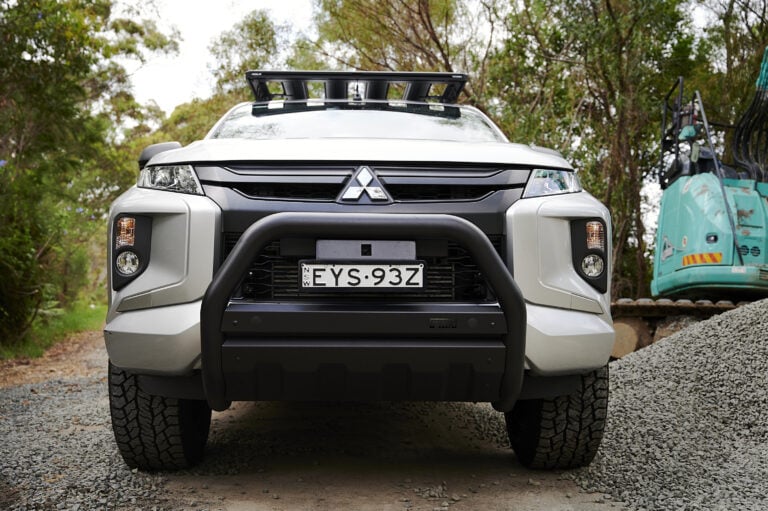
PIAK nudge bar
-
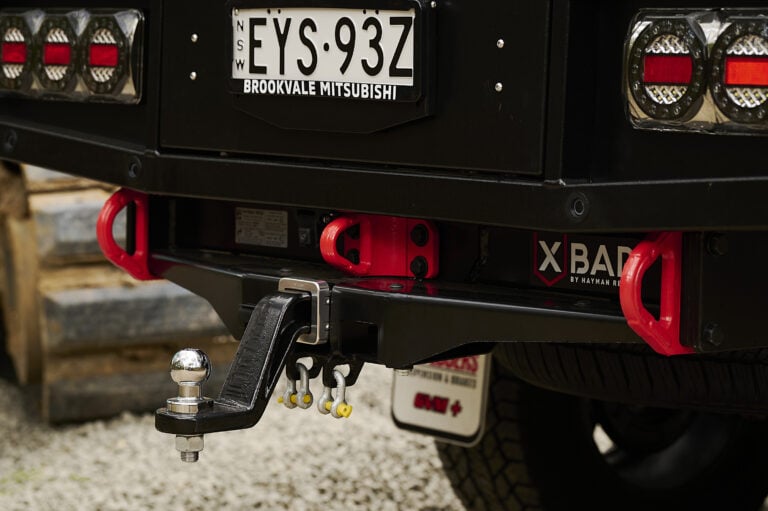
Hayman Reese X-Bar
-
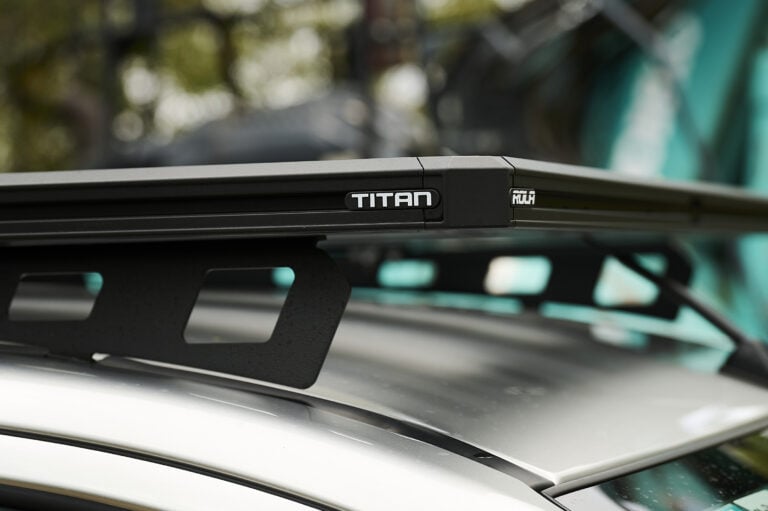
Rola MKIII Titan Tray
-
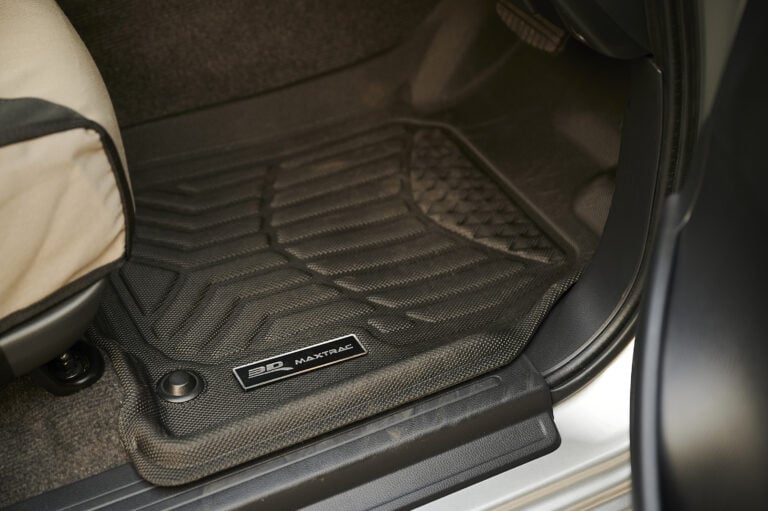
TruFit 3D mats
-
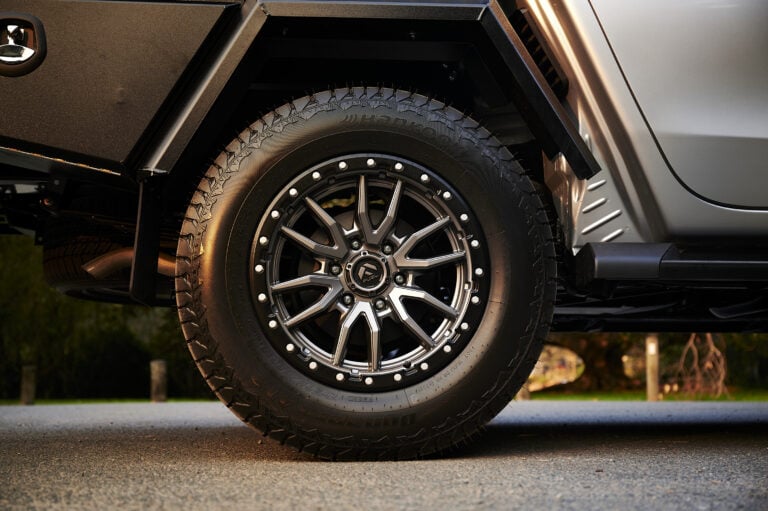
Fuel Rebel wheels
-
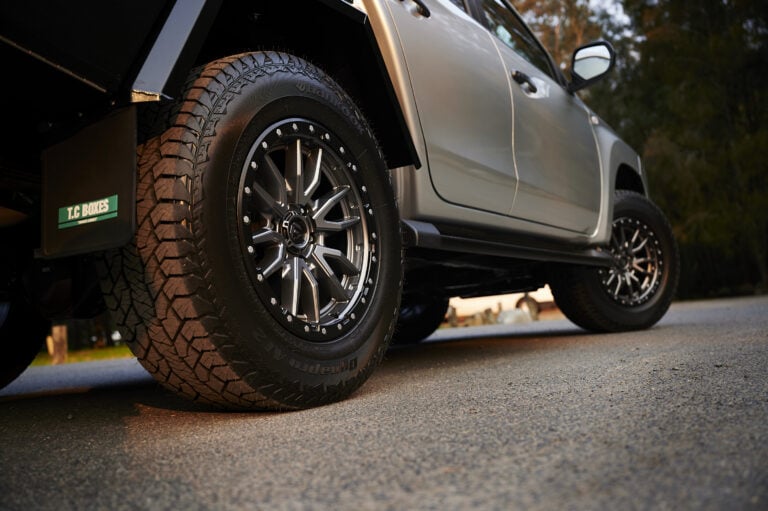
Hankook Dynapro AT2 tyres
-
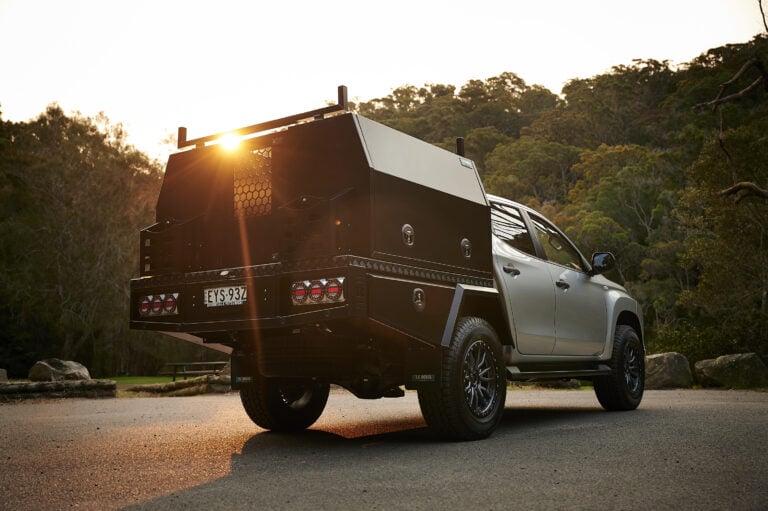
TC Boxes tray and toolbox
1
Designed to fit with any type of drawer system, the MSA Battery Box suited my needs. Even though the current set-up was stable, I was always concerned that severe corrugations could loosen the straps and my battery would then bounce and strike the roof of the false floor, possibly causing a catastrophic lithium fire or damaging the battery so it wouldn’t work.
The instructions that came with the MSA Battery Box were simple to follow and once I’d worked out where I was going to mount it, I began the installation. Hot tip: place all the supplied nuts and bolts into a container so nothing is lost.
The only tools needed were a 13mm and 10mm spanner, a couple of Allen keys, a drill and an 8.5mm drill bit. While it was easy to drill the required 8.5mm holes through the back wall of the aluminium storage system for the top bracket, I did need to use rivnuts for the bottom bracket, as I couldn’t access the bolt from the other side.
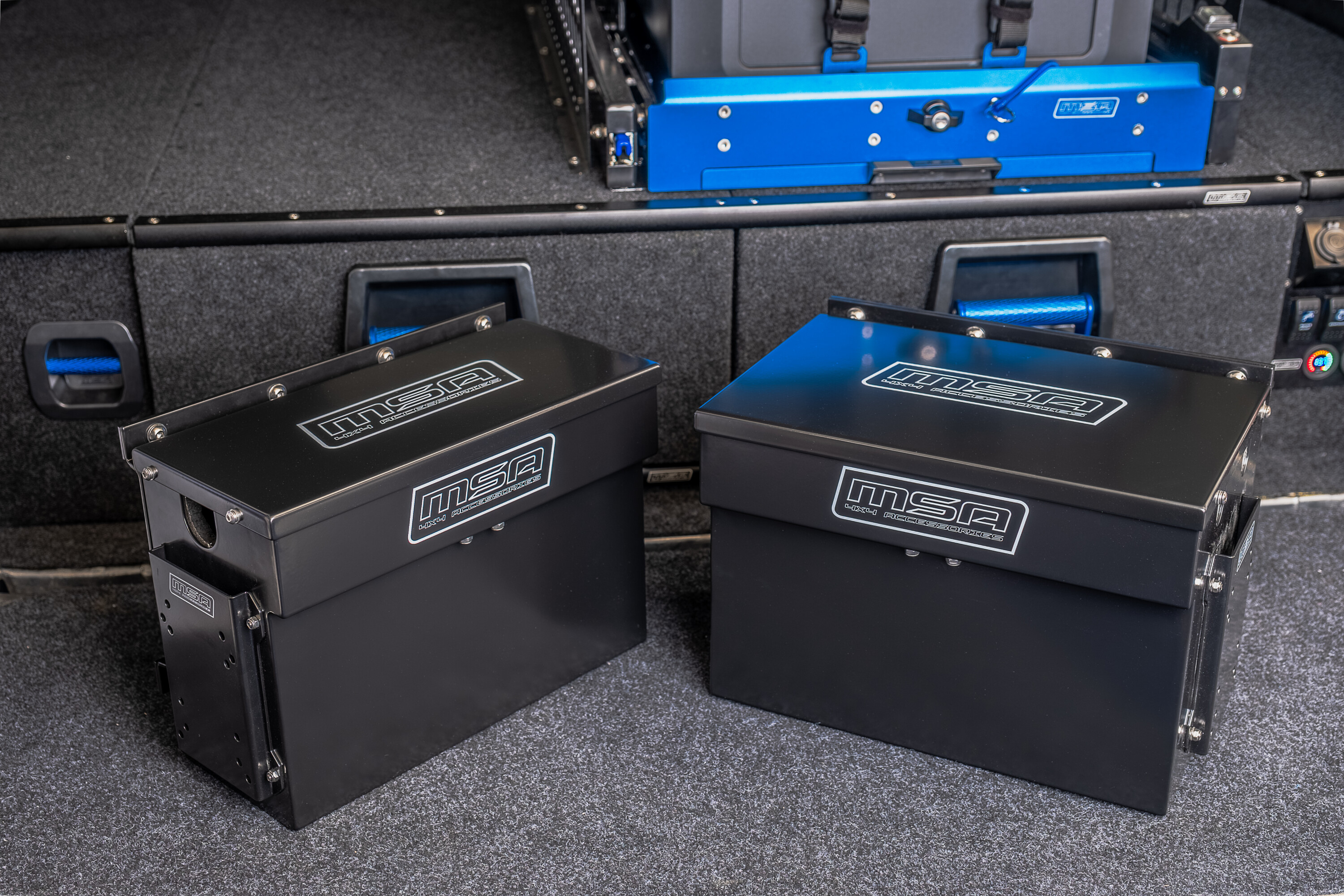
1
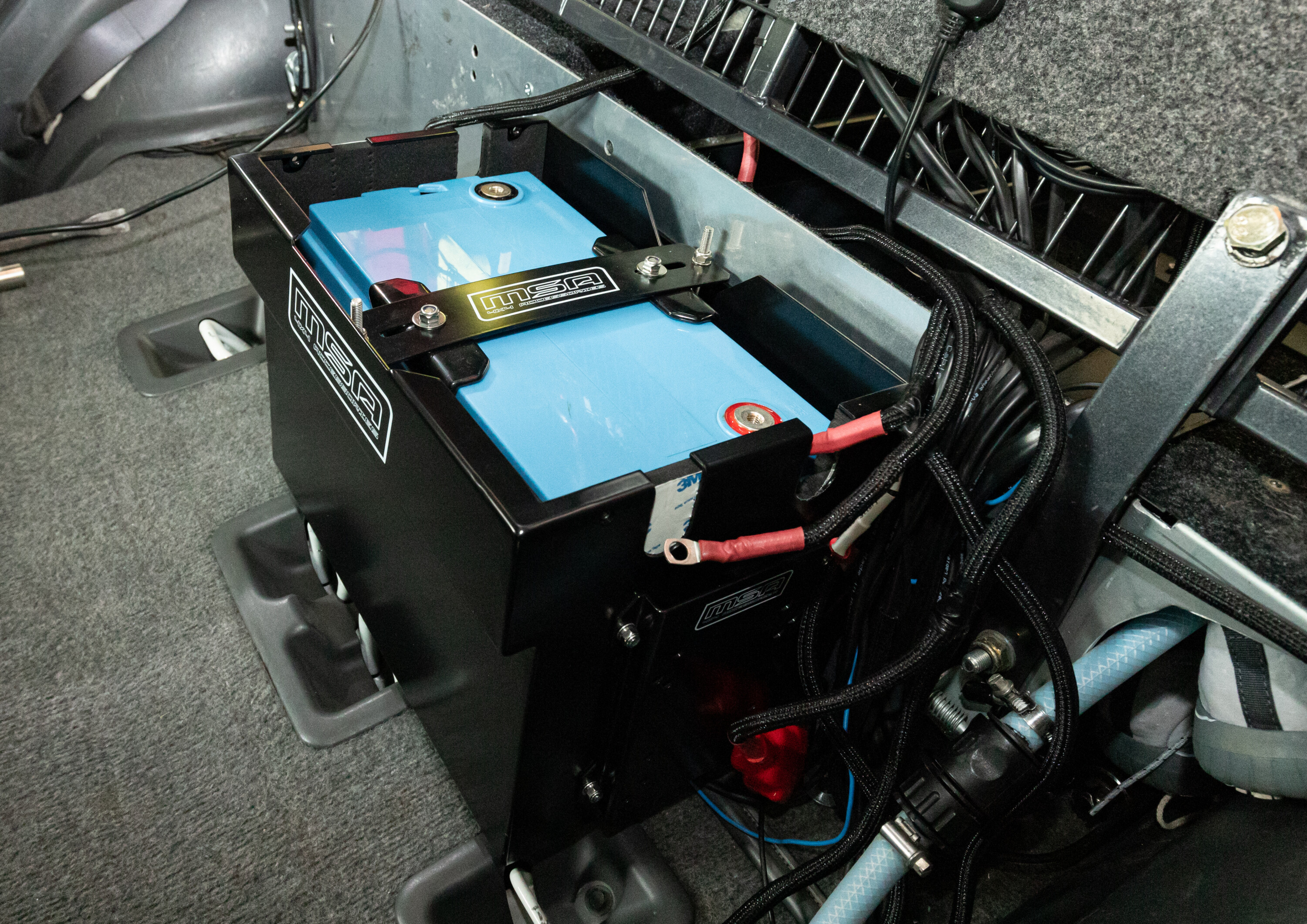
The box bolts onto these brackets, so you need to ensure they are securely mounted. With the box then secured to the brackets, it was time to place the battery into its new home. With foam padding on the sides of the box, the battery is prevented from moving around or being damaged from rubbing.
I then adjusted the securing saddle to suit the width of the battery before screwing down the poles. With the cables attached to the positive and negative terminals, it was time to fit the lid, which also features internal rubber padding. Once on the lid is secured to the battery with the supplied screws.
I have travelled more than 20,000km since I installed the MSA Battery Box, and I’m certainly impressed. The lithium battery is now safe and secure and well protected inside the battery box. When I recently needed to replace the battery it was an easy task. All that is required is unscrewing the lid to remove it, unbolting the securing saddle, removing the cables from the terminals, swapping the battery out then reversing the steps.
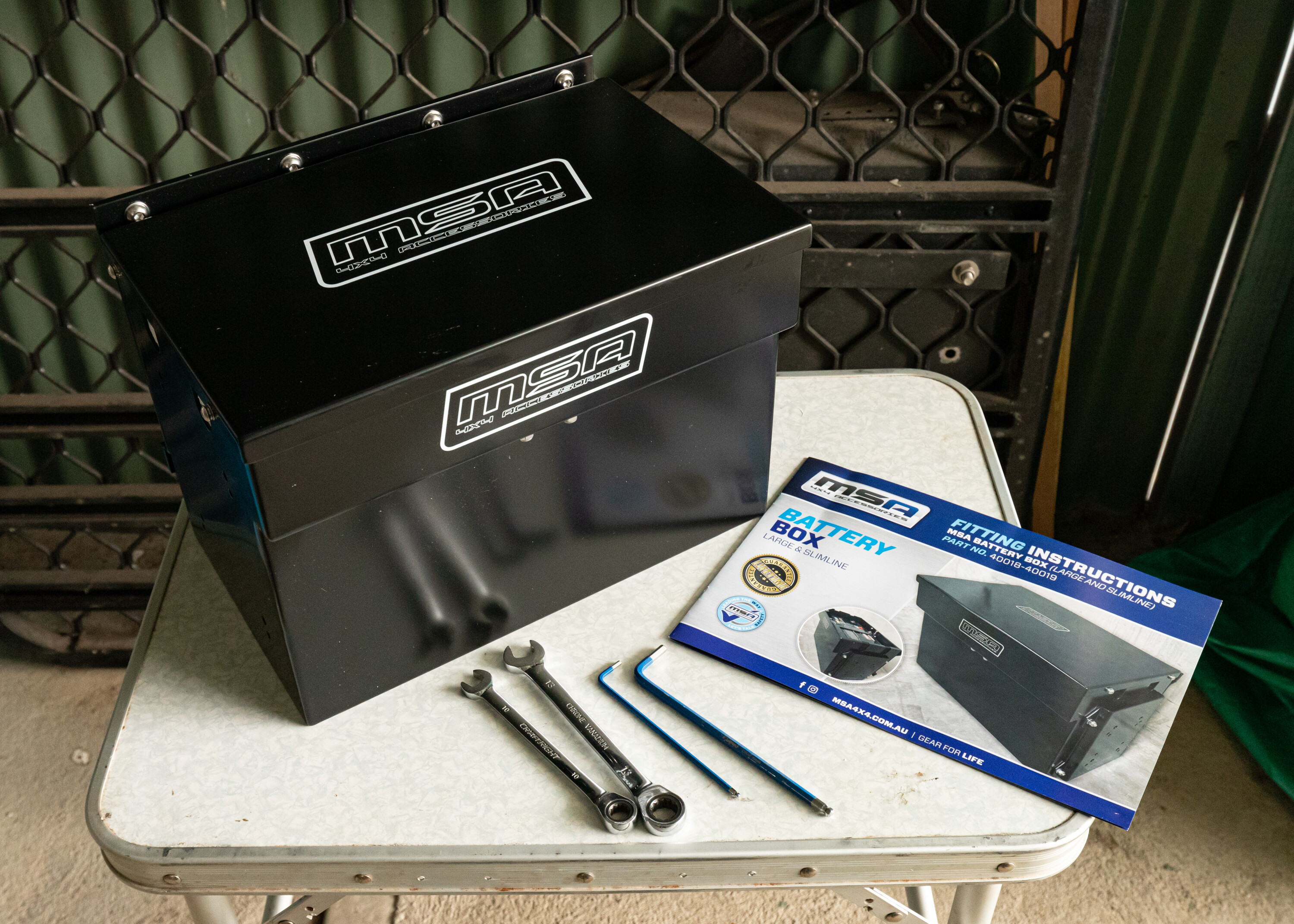
1
I like that all the nuts and bolts are stainless steel, and there are captive nuts for the lid to bolt into. The rubber on the lid prevents any issues from the exposed terminals while the foam inserts on the walls of the box protect the battery from vibrations.
The battery box has four entry points for wiring to the battery with rounded lips to prevent wear through the wiring. I like the simplicity of the battery box design and easy installation but it isn’t light due to its rugged 2mm powder coated steel construction, so now my lithium setup with the box weighs about the same as an AGM battery. Having said that, it’s worth the extra weight to know the lithium battery is safe and secure.
1
Another cool thing about the MSA Battery Box is the mounting plate that is supplied can be used to mount a DC-DC charger, an air compressor, a water pump or a fuse box. So, if you have the space, you can kill two birds with one stone.
Here are some numbers to close out: the battery box weighs 11kg, the same as my lithium battery. The external dimensions are 354mm (l) x 244mm (w) x 252mm (h). The internal dimensions are 330mm (l) x 194mm (w) x 224mm (h), which means it will accommodate any standard N70 battery or a range of AGM and lithium batteries.
MSA 4X4 also makes a Slimline Battery Box for smaller lithium batteries. Both MSA Battery Boxes come with a lifetime guarantee.
RRP: $295
The resurrection is complete, and the Betoota Hotel is open again for the first time in 23 years.
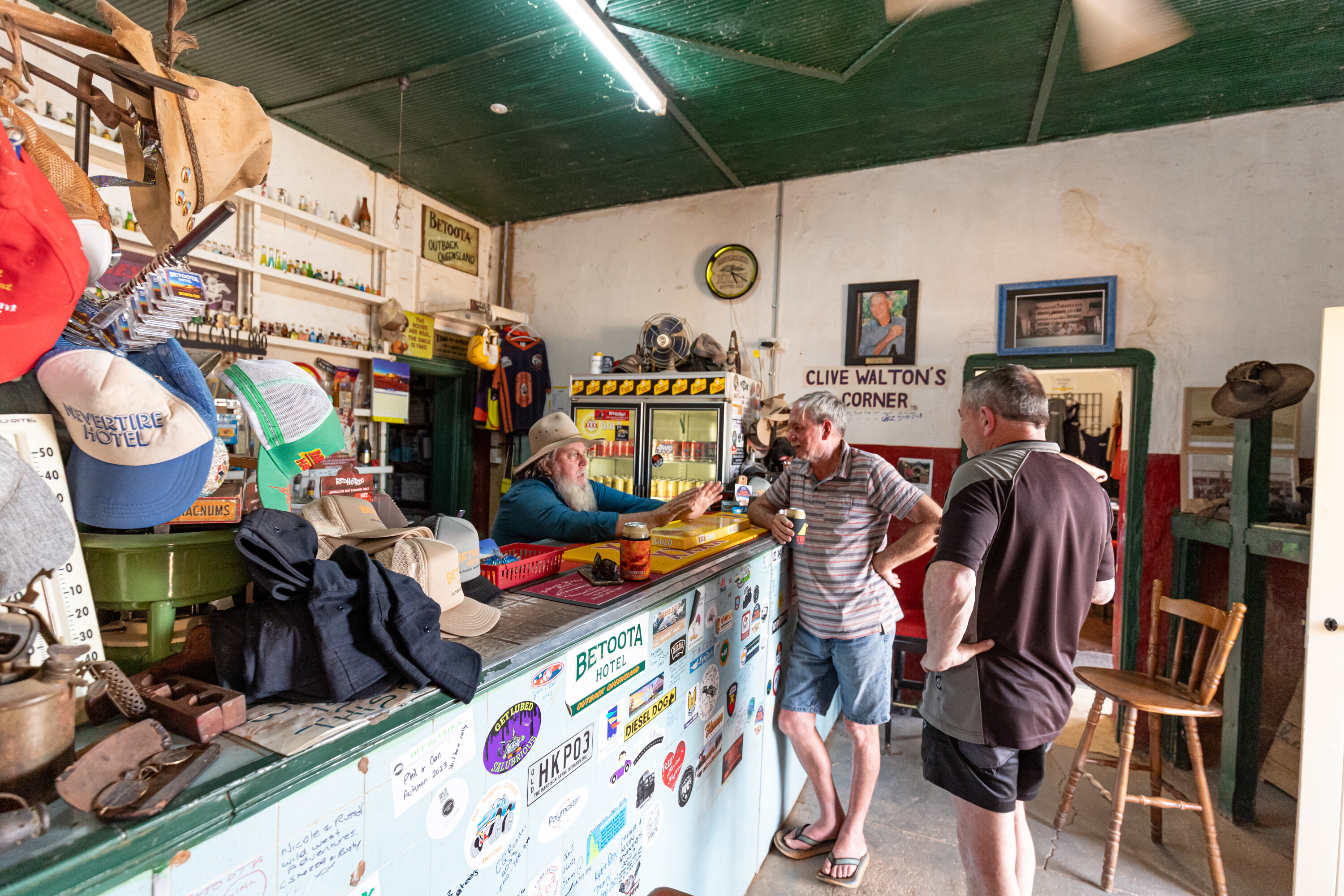
Well, it reopened on 20 July 2020 but it was a real challenge to reach the finish line according to Robert ‘Robbo’ Haken, the owner who purchased the pub in 2017.
Betoota was once a thriving town at the turn of the century as a customs post collecting taxes for goods travelling between South Australia and Queensland. The township is located 167km east of Birdsville, 219km west of Windorah and 345km from Innamincka, and is 6km from the turn-off from the Birdsville Development Road.
1
The old double brick walls have seen much over the past 100 years with the hotel being built in 1923 and closed in 1997, when then-owner Simon Remienko retired at 82 years of age. He’d owned the pub since 1957 and passed away in 2004.
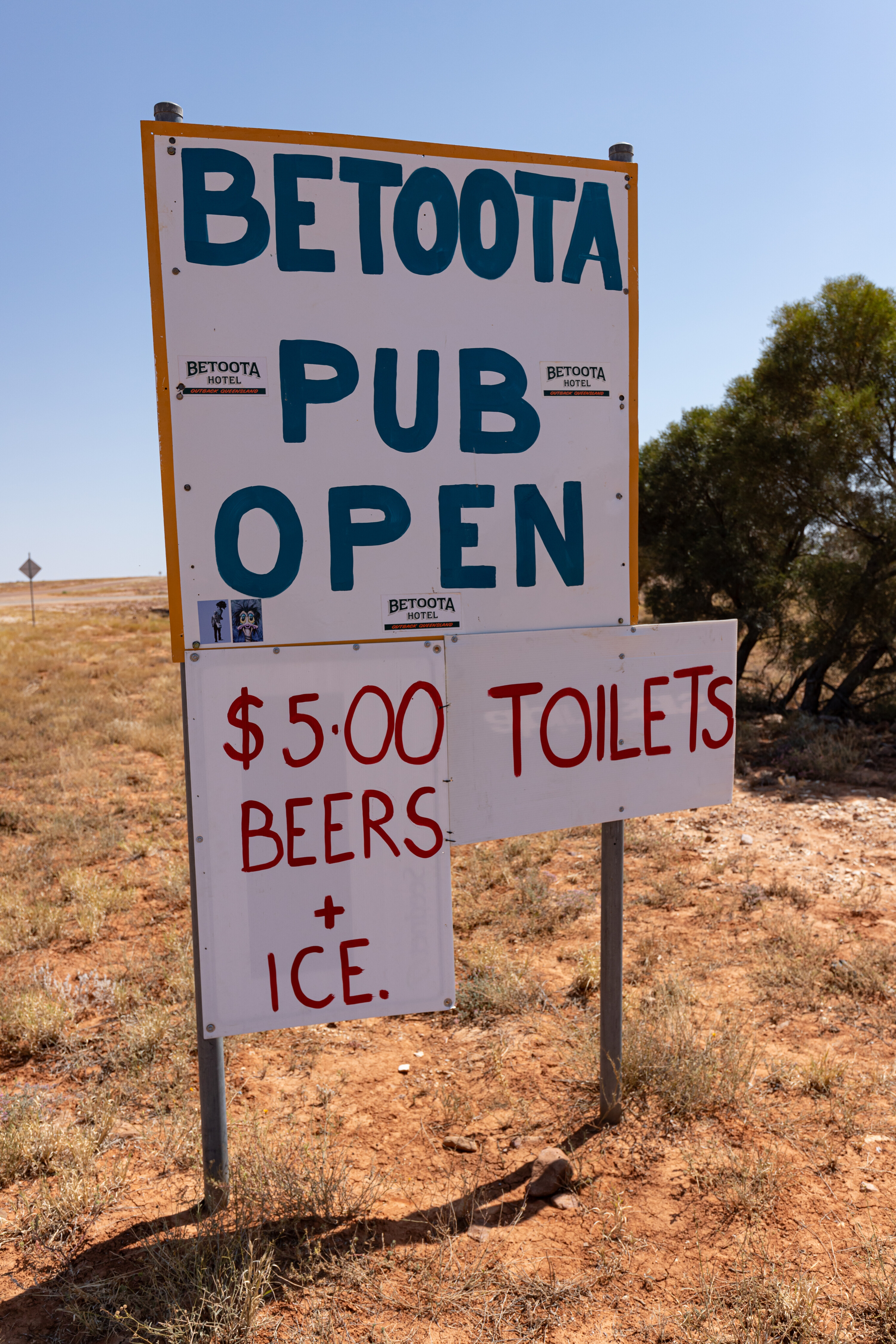
Now it has reopened, the Betoota Hotel has come alive once again. Sitting at the bar chatting with Robbo, people were always coming and going, with $5 beers helping travellers to wash the dust from their throats. The pub is open from 10 am to 12 am every day.
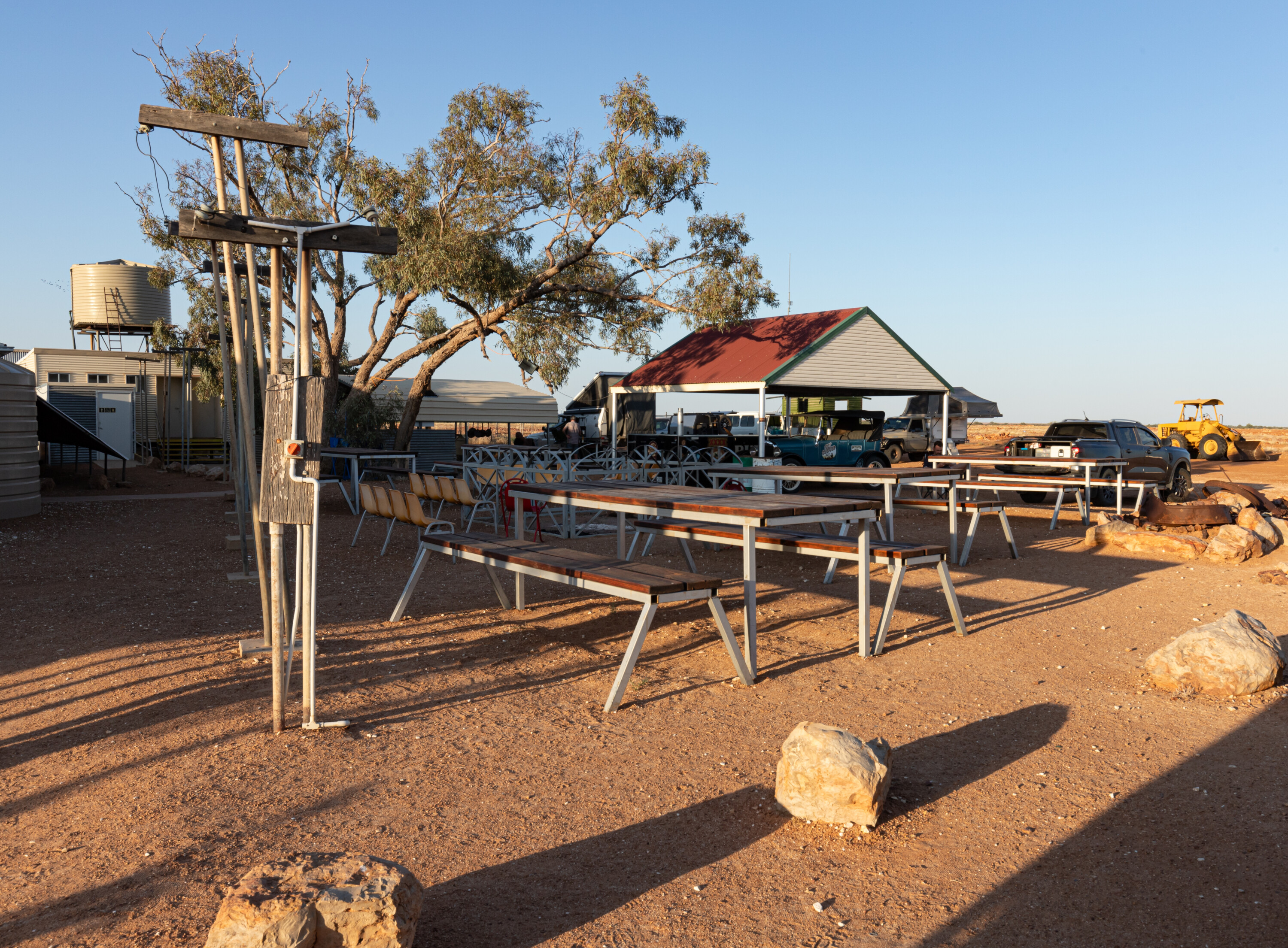
Free camping is available out the front of the hotel with access to flushing toilets and hot showers ($5 for a shower paid for at the bar). If you’d prefer waterfront views, head down to the creek to camp by the permanent waterholes where the yabbies will be biting.
1
For something more upmarket, Robbo has three rooms out the back for $100 per night, with double beds and three single beds in each, and the shearers quarters has 15 beds at $20 per bed.
Robbo is an old-school publican and the way he interacts with customers is hilarious. If you ever wanted to be a barfly, this is the pub to do it in; you’ll hear many stories from Robbo and the ambience is fantastic.
Robbo’s background was in V8 motor racing, and for more than 20 years he repaired the bodywork of busted-up racecars. While I was visiting, he helped out a couple of travellers who’d developed brake issues somewhere between Windorah and Betoota. After finding some brake line in his workshop, he cut it to size and flanged it so that the travellers could make it to Birdsville – that’s the type of fella Robbo is.
1
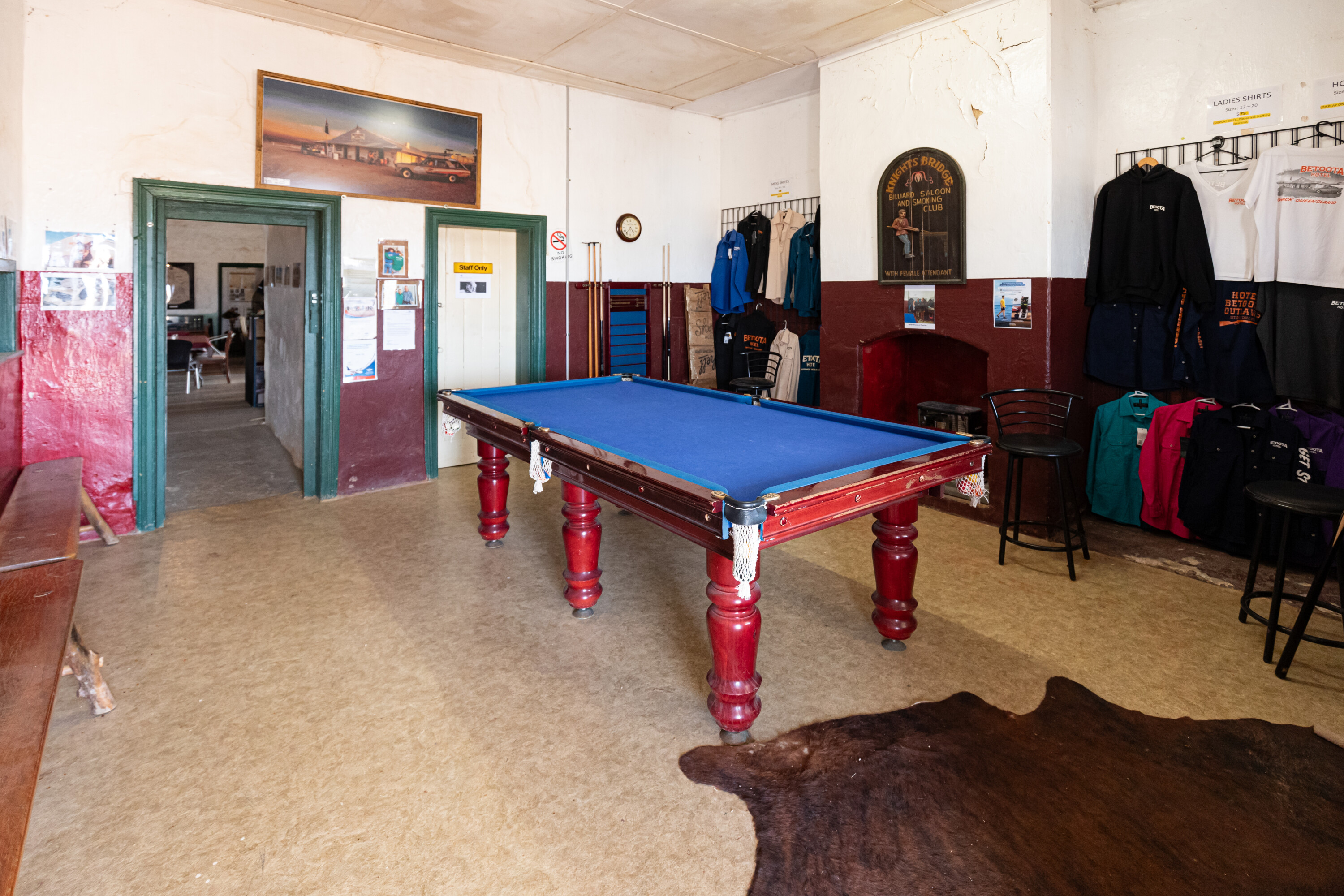
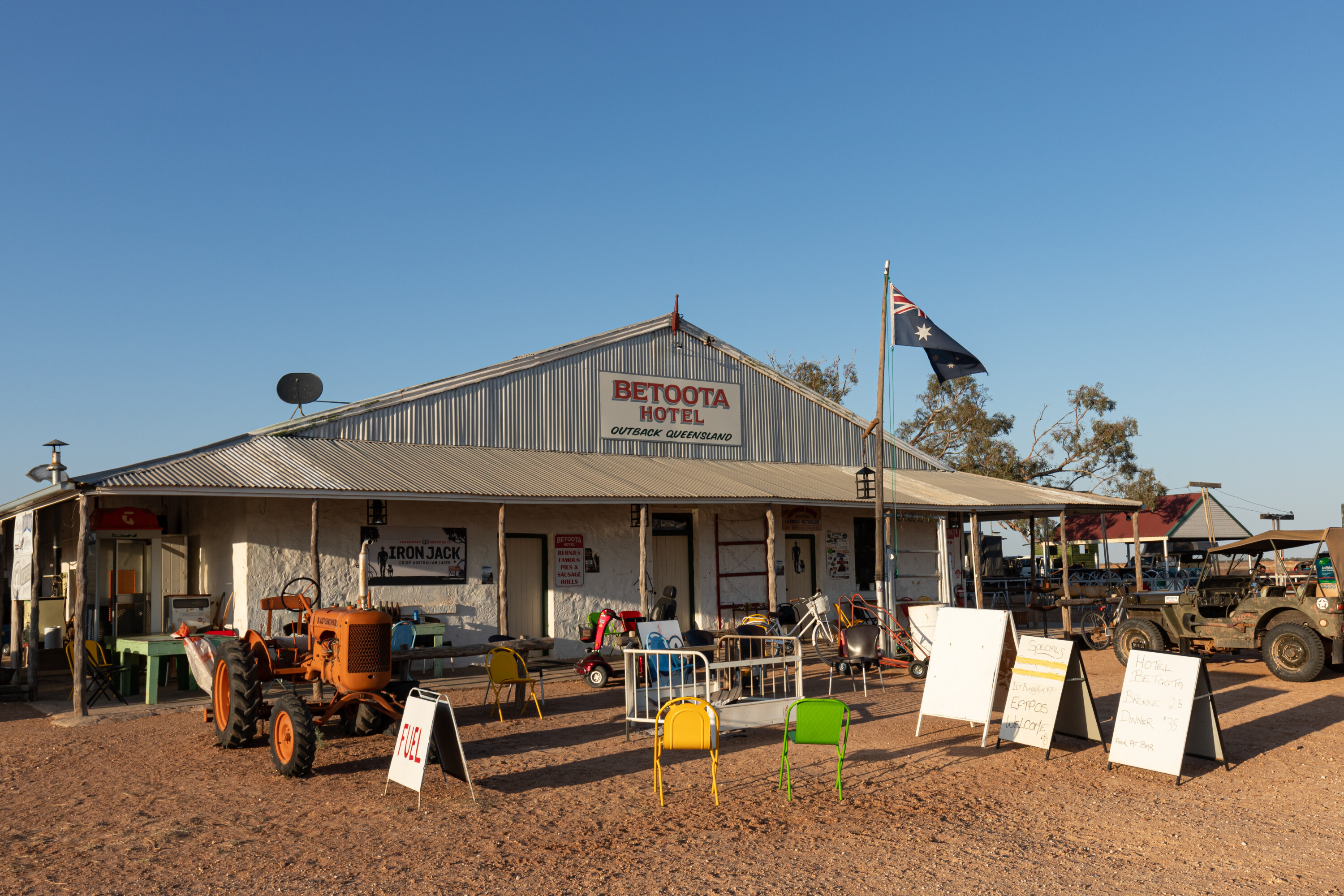
There is a plethora of memorabilia around the place and the original entrances in the dining room and the concrete flagstones are worth checking out. There are also plenty of areas in which to sit and enjoy the experience, under the verandah, in the bar, in the pool room or out in the beer garden. For a remote outback pub, it doesn’t get much better than this.
When the Birdsville events are on, the pub draws people in like moths to a flame. With camp oven cooking, $5 beers and live music keeping the place rocking, it’s no wonder many travellers choose to camp at Betoota and travel to Birdsville on the back of one of Robbo’s old trucks, the FJ, the Jeep or the Ford Model T.
1
There are also a couple of annual events that occur in Betoota itself; the Betoota Races are held on the last weekend in August and the Betoota Horse & Motorbike Gymkhana is held over the Queensland Easter School Holidays.
In 2024 the Betoota Hotel is also resurrecting its traditional cricket game where everyone is welcome – get in touch with the hotel to find out the dates. Dinner is a busy time at the hotel and when we were there Robbo was on his own. He’d whipped up his famous ham and salad stew with rice and bread, which was so tasty many of us went back for seconds.
After dinner, the fire was lit outside the pub and everyone gathered around, chatting about where they’d been and where they were going next.
It was an excellent way to end the day and I’m told that this is a regular event, just with a different mix of travellers.
1
Essentials
Beers: $5 per can/stubby
- Great Northern Original
- Great Northern Supercrisp
- Cooper’s Pale Ale
- Carlton Draught
- Tooheys New
- VB
- Carlton Mid
- XXXX Gold
Pre-mix spirits: $10 per can<\/strong>
Breakfast: Bacon and egg rolls ($25)
Lunch: Pies and sausage rolls from Charleville
Dinner: Robbo’s Famous Ham and Salad ($35)
Pub Of The Month
You never know when you might get in strife when four-wheel driving out on the tracks, which is why it’s vital to always be prepared and carry appropriate recovery gear.
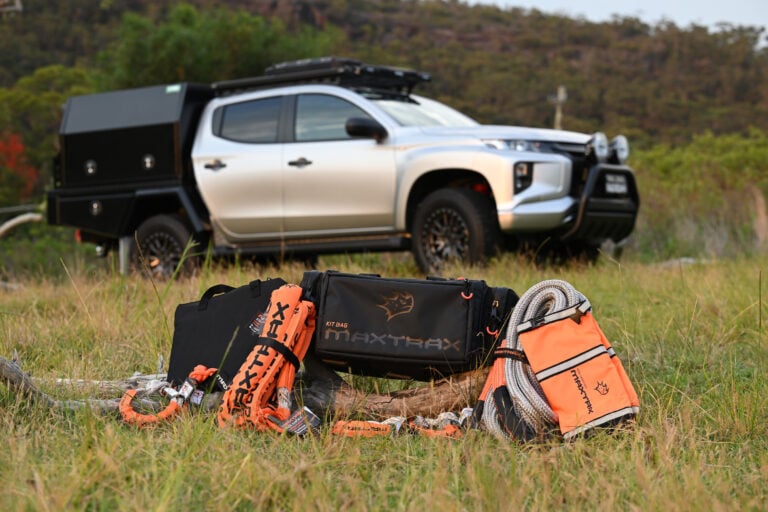
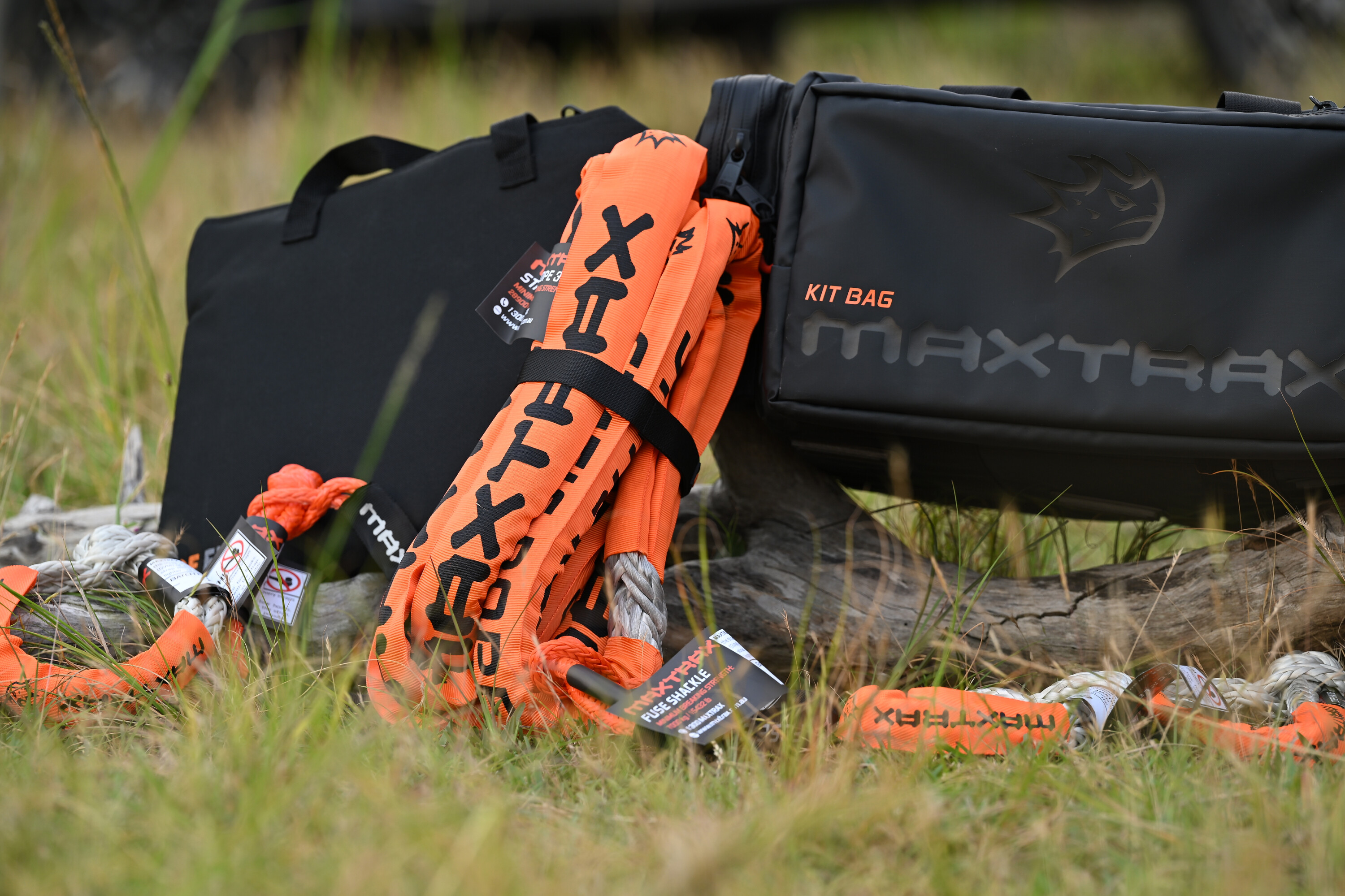
We’ve recently thrown a MAXTRAX Bush Recovery Kit in the Triton just for those unexpected occasions.
The Recovery Kit – Bush is supplied in a bag to keep everything organised, and it includes two Fuse Shackles, five Core Shackles that offer adaptable connection points; three Kinetic Ropes 92m, 3m and 5m); a static rope and a rope damper. We have also included MAXTRAX Lite Recovery Boards.
-
Dometic CoolMatic CRX 50 upright fridge
-
Cel-Fi GO mobile booster
-
MSA 4×4 towing mirrors
-
Projecta power management
-
Narva LED lights
-
Pedders GVM and brake upgrade
-
Maxtrax recovery kit
-
PIAK nudge bar
-
Hayman Reese X-Bar
-
Rola MKIII Titan Tray
-
TruFit 3D mats
-
Fuel Rebel wheels
-
Hankook Dynapro AT2 tyres
-
TC Boxes tray and toolbox
7
Fuse Shackles are a lightweight and safe alternative to traditional steel shackles with a minimum breaking strength of 7000kg, while core shackles have a minimum breaking strength of 14,000kg.
MAXTRAX Kinetic Ropes are claimed to outperform traditional flat snatch straps thanks to an impressive stretch of up to 30 per cent, which generates increased kinetic power, resulting in a smoother and safer dynamic recoveries.
The MAXTRAX Static Rope can be used as a load-sharing bridle, tree trunk protector or extension strap, while the Rope Dampener is designed to absorb energy in the unlike event of an equipment failure.
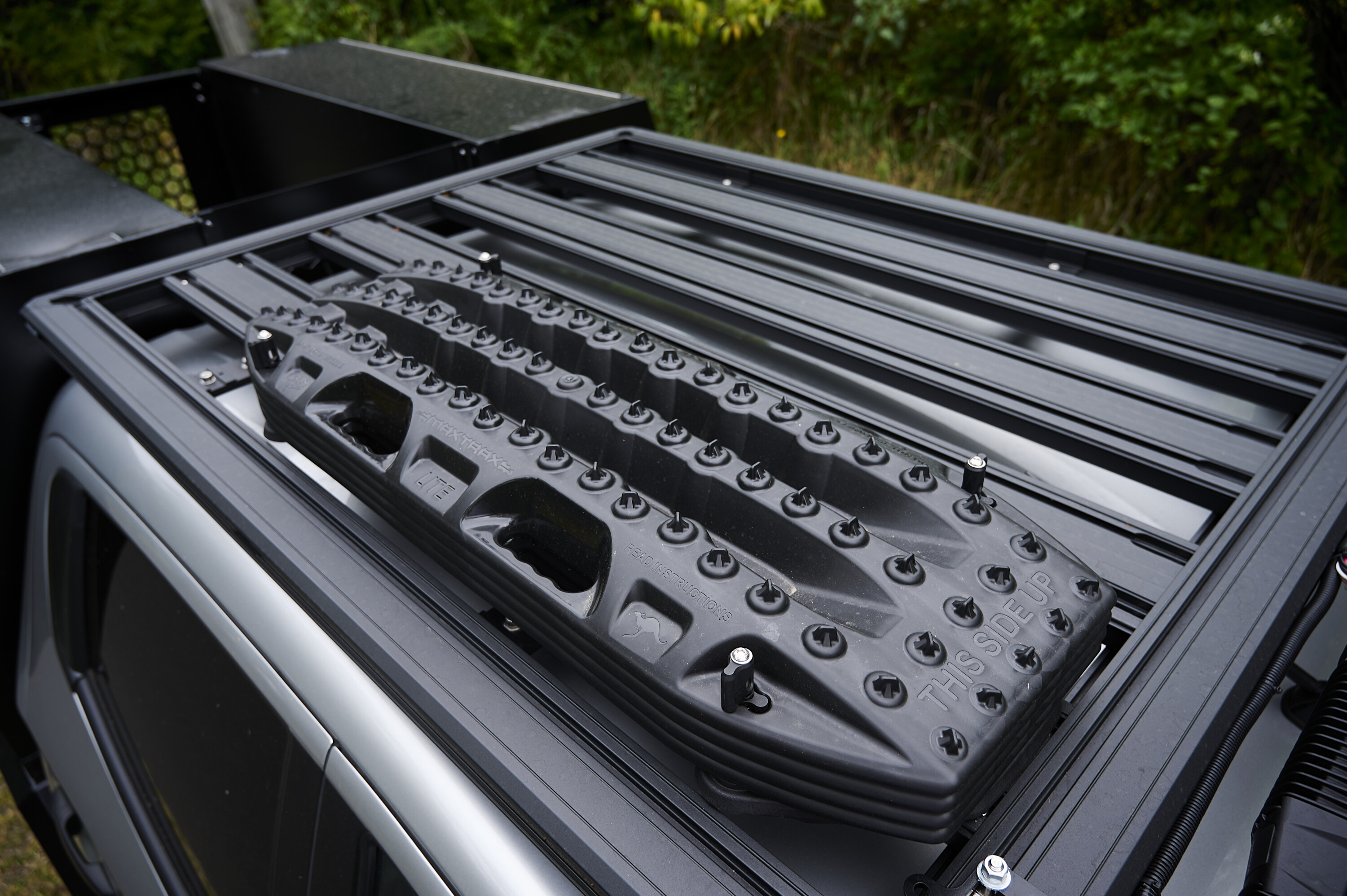
The MAXTRAX Recovery Board has taken a revolutionary leap forward with the introduction of the MAXTRAX Lite. Weighing in at just 1.8kg each and measuring 895mm long, these boards are a formidable addition to your off-road recovery arsenal.
3
They are constructed from an innovative impact-resistant thermoplastic, which is a departure from the MKII’s reinforced nylon blend. This engineering choice makes the Lite almost 50 per cent lighter, offering a compact and lightweight alternative that is easy to store up on roof racks.
Despite lighter construction the MAXTRAX Lite shares the same DNA as its predecessor, to ensure it is a reliable and effective recovery board for those venturing off the beaten path.
With the MAXTRAX Bush Recovery Kit and the MAXTRAX Lite Recovery Board now carried in the Triton, we can be confident we won’t be ‘that guy’ who gets stuck in front of family and friends, with no means to get ourselves out.
RRP
- MAXTRAX Bush Recovery Kit: $1005.41
- MAXTRAX Lite Recovery Boards: $179/pair
The title of the award may be ‘Custom 4×4 of the Year’, but the public vote has been counted and a six-wheeler has beaten 11 other contenders to claim the coveted crown for 2023.
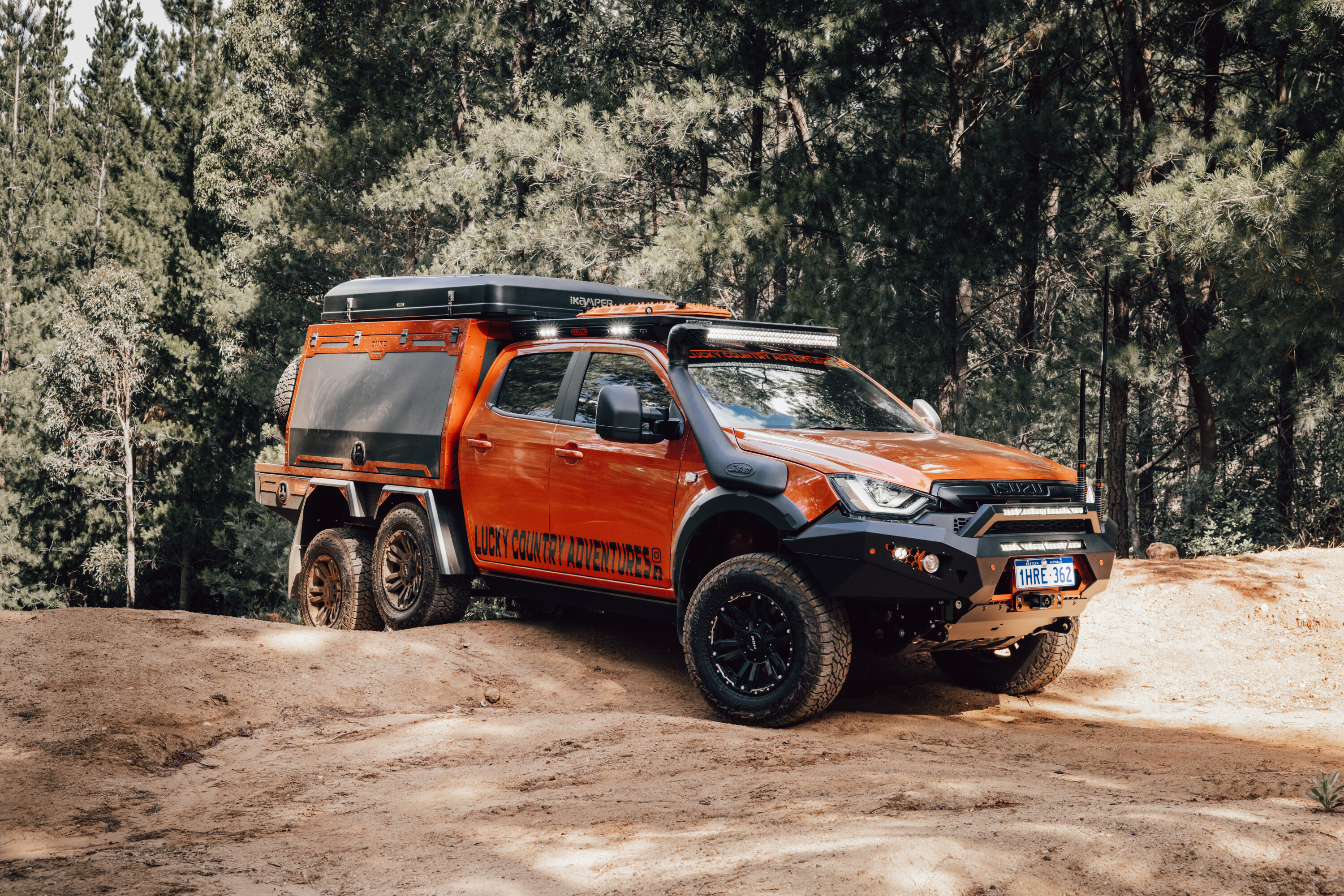
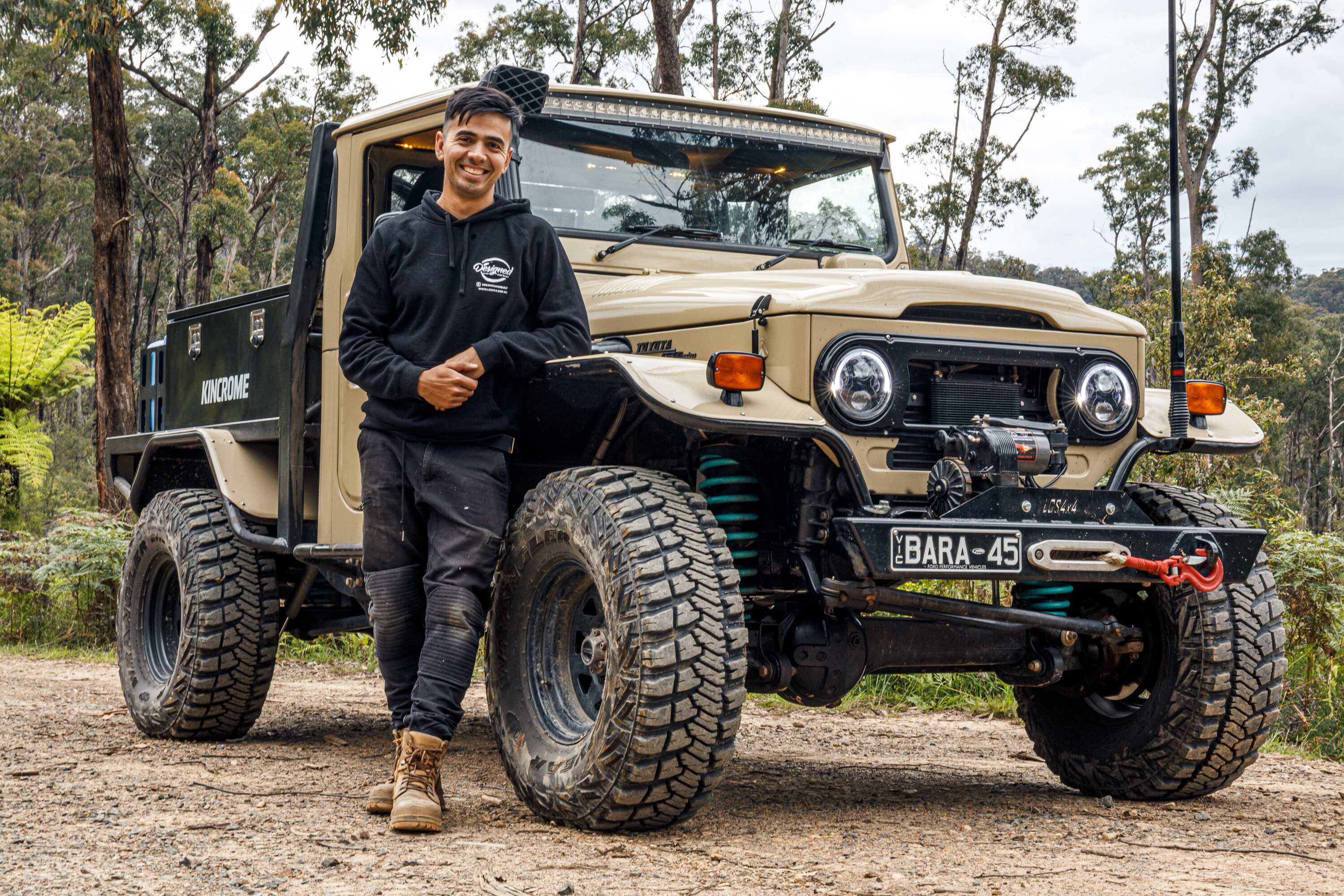
Callum and Nicole McDevitt’s Isuzu D-MAX X-Terrain scored a total of 597 votes, clinching the win by just 12 votes ahead of Richard Swindel-Hurst’s Barra-powered FJ45 which ended up with 585 votes. Proving that six-wheelers are popular in the touring community, On Track’s Nissan Y62 Patrol 6×6 rounded out the podium with 446 votes.
The winning D-MAX X-Terrain underwent a significant transformation by Six Wheeler Conversions, where a third undriven axle was added beneath the chassis. The conversion included a two-inch lift and a Formula two-inch upgrade at the front to maintain balance.
4
This extra axle redistributes 60 per cent of the vehicle’s rear weight over the rear drive axle, and the enhanced setup supports the extended canopy and additional tow-ball weight for a caravan. With six-wheel braking and a raised GVM of 4630kg (with a 4500kg towable capacity), the D-MAX achieved a GCM of 8130kg, allowing legal road use in Australia. CORE Off-Road then designed its first dual-axle-supported canopy to complete the project.
By being voted the 2023 Custom 4×4 of the Year, Callum and Nicole have won a MAXXIS Tyres voucher valued at $2000, an MSA 4×4 Accessories voucher valued at $500, and a MAXTRAX voucher valued at $500.
1
A total of 3815 votes were tallied to find a winner, with one lucky voter plucked at random to win a suite of prizes which included a MAXXIS voucher valued at $1000, an MSA 4×4 Accessories voucher valued at $500, and a MAXTRAX voucher valued at $500. The lucky winner was Georgia from Victoria, who was rapt to accept the prizes.
“Wow, thankyou so much! My partner is heavily involved in the 4×4 industry. You may know of him, he has a pretty cool HiLux. Who knows, one day he might be lucky enough to feature in 4X4 Australia magazine,” Georgia said. “We actually just bought four brand new MAXXIS Razrs, but a few spares will be unreal before we head to Cape York in May. We absolutely love and support the 4×4 community.”