Full BEV and range-extending powertrains to be offered
Uncompromised off-road ability
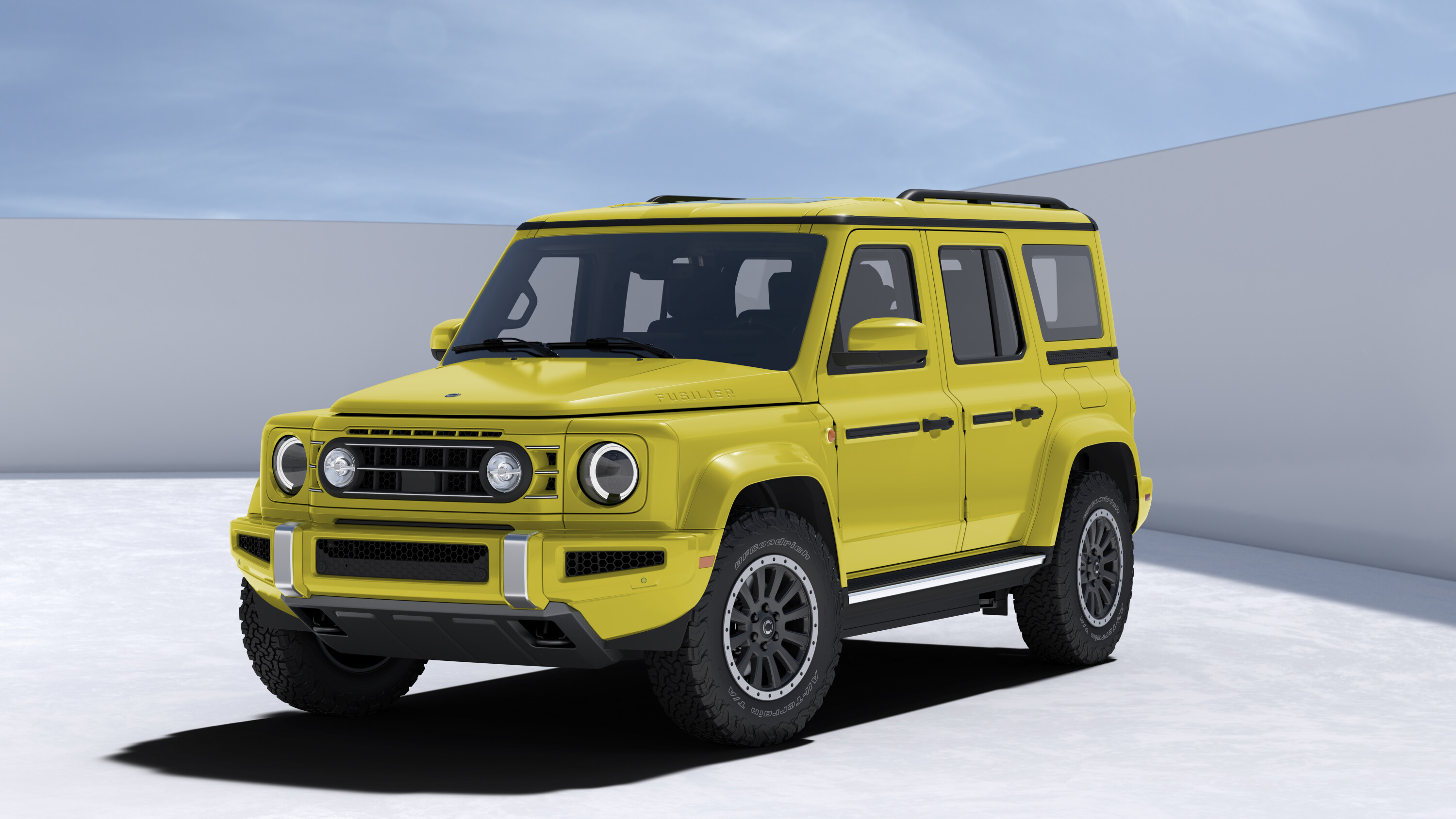
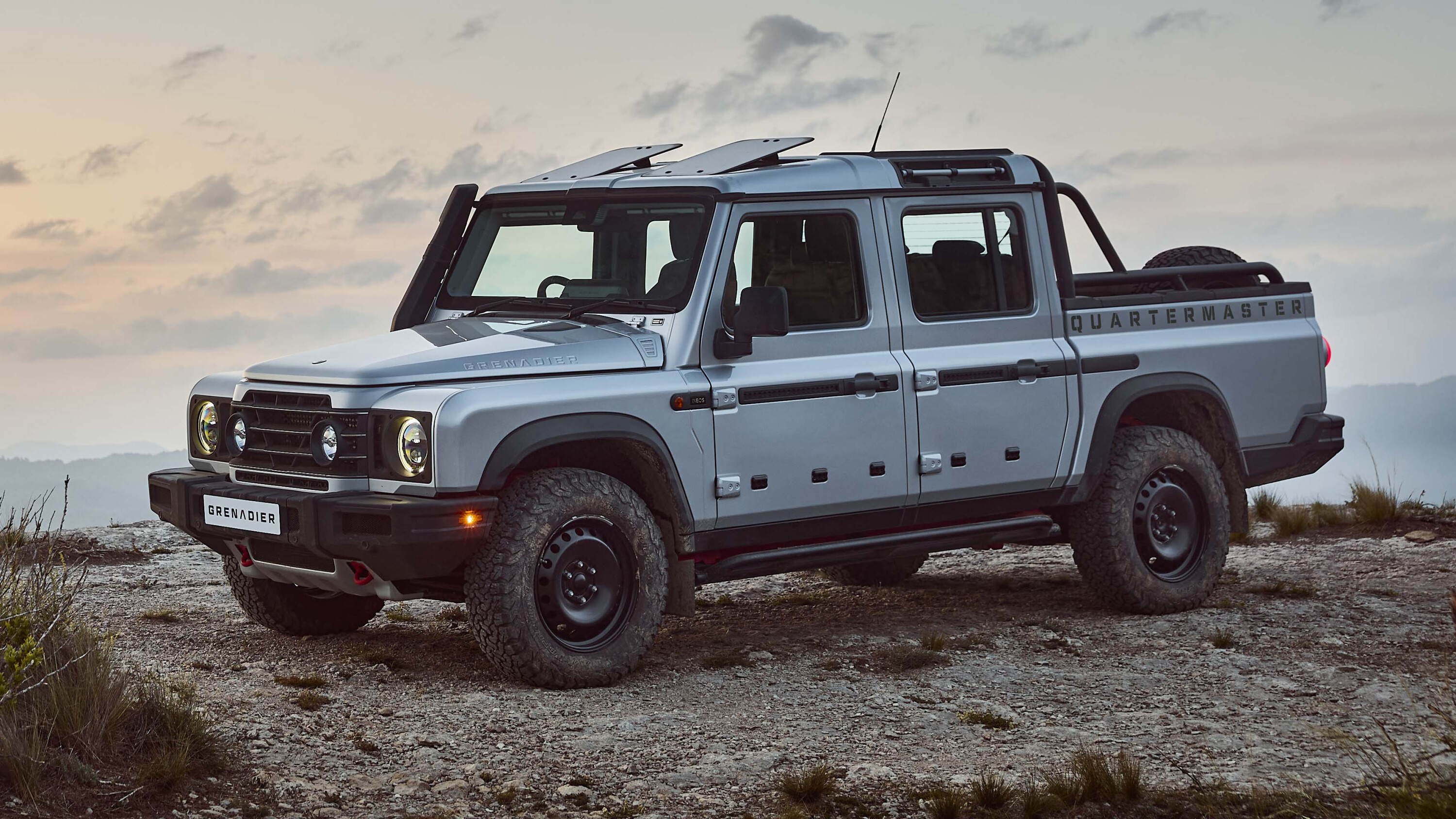
Ineos Automotive has revealed its third new model: a BEV which will be called the Fusilier, following the military theme of the Grenadier and Quartermaster.
The Fusilier BEV will be offered as both a full-time BEV or with a range-extending, small-capacity petrol engine that powers a generator to maintain the charge level of the battery when external charging isn’t available. Further details of the alternative powertrain and launch timings are expected by Q3 of 2024.
Sir Jim Ratcliffe, Chairman of Ineos, said at the unveiling: “The Fusilier is a great-looking vehicle, and the two powertrain options provide a real-world reduction in carbon emissions without compromise to the off-road capability or the on-road performance.
7
“We’re excited to bring our electric 4×4 to market but we are beginning to understand the clear limitations of battery electric in certain situations.
“We believe the addition of a range-extender electric to our line-up will offer our customers a very low emission drive without the range anxiety drivers of electric vehicles experience today.”
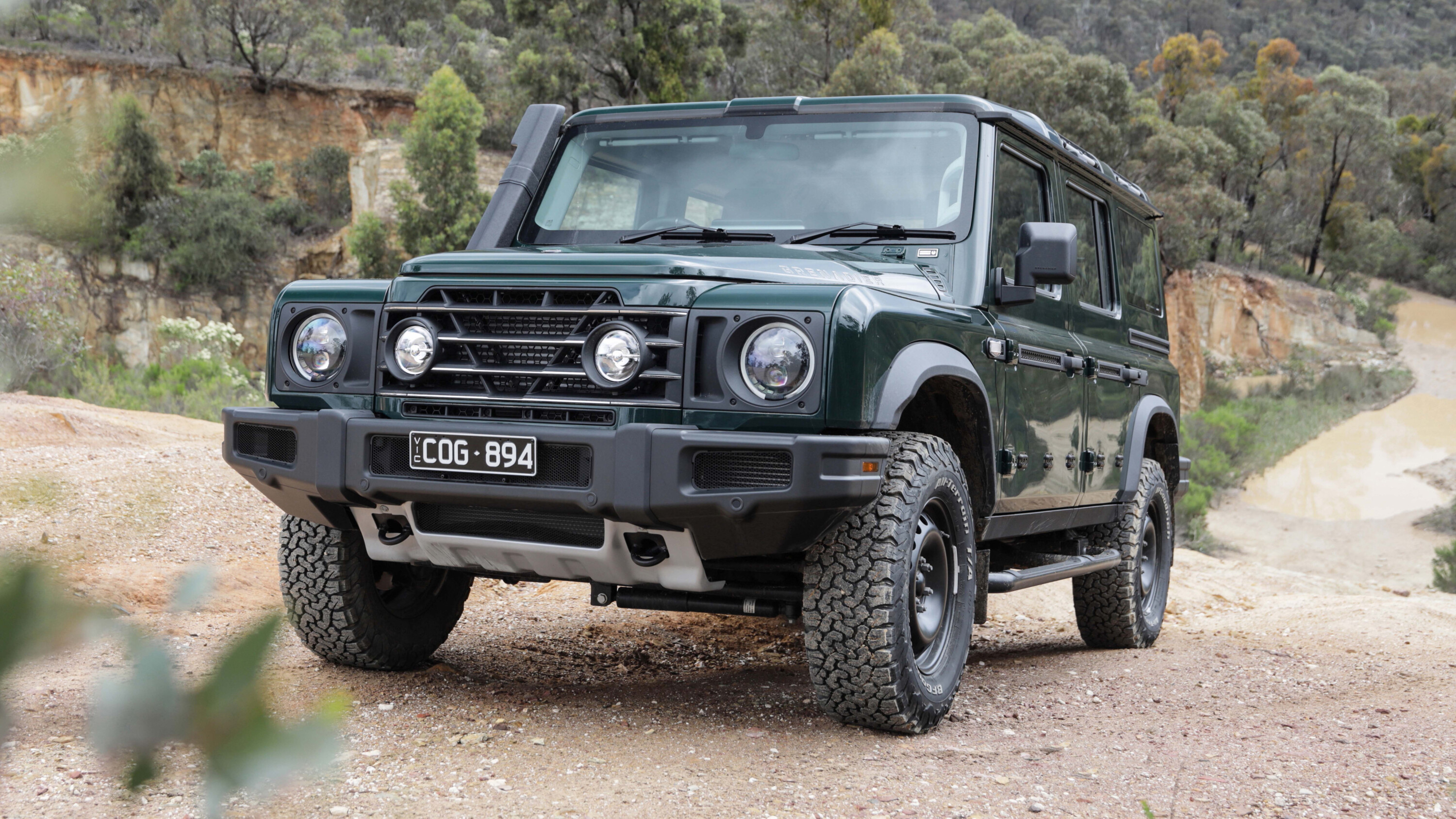
While the supplied images of the new Fusilier show a vehicle similar in design to the Ineos Grenadier, the new model is in fact smaller and built on a different platform to the ladder-frame chassis that is shared by the Grenadier and Quartermaster.
This vehicle will use a unibody chassis specifically designed as a BEV, but it’s claimed it will not compromise off-road ability.
It will be slightly shorter in length and slightly lower in height and will ride on a bespoke ‘skateboard platform’ with a steel top section and underbody, as well as aluminium doors and closures for reduced mass.
“It’s a completely different concept, and yet still trying to get the same or as close to the best off-road capability that we can get,” Ineos Automotive CEO, Lynne Calder, told 4X4 Australia when visiting Australia in 2023.
1
“We’ve engineered the Grenadier using the ladder frame and the solid beam axles, to get the off-road capability that we’ve got.
“Having to now, with a completely different concept, a unibody, skateboard battery configuration, but get the same ground clearance, the articulation and everything that goes with what we’ve built from the off-road DNA perspective, but in a completely different concept.”
Further differentiating the Fusilier from the Grenadier and Quartermaster models is that it will be manufactured by Magna at its plant in Graz, Austria.
The existing models are made at Ineos’s plant in Hambach, France. Ineos used Manga for the development of its previous models and again relied on the specialist automaker for development, but is extending its involvement with full production of the Fusilier.
1
This will include a rigorous testing programme on Austria’s Schöckl mountain, which is famous for being the test site of the Mercedes Benz G-Wagen for more than 40 years of development.
“Announcing our third model line is another significant milestone for Ineos Automotive, cementing our intent as an automotive manufacturer – like our full vehicle line-up, we are here for the long-haul,” said Ms Calder.
While confirmation of if and when the Fusilier is expected to arrive in Australia is yet to be confirmed, Ineos does say Australia is an important market for its brand. Read what you will into that, but we reckon we’ll see it some time late in 2025 or thereabouts.
1
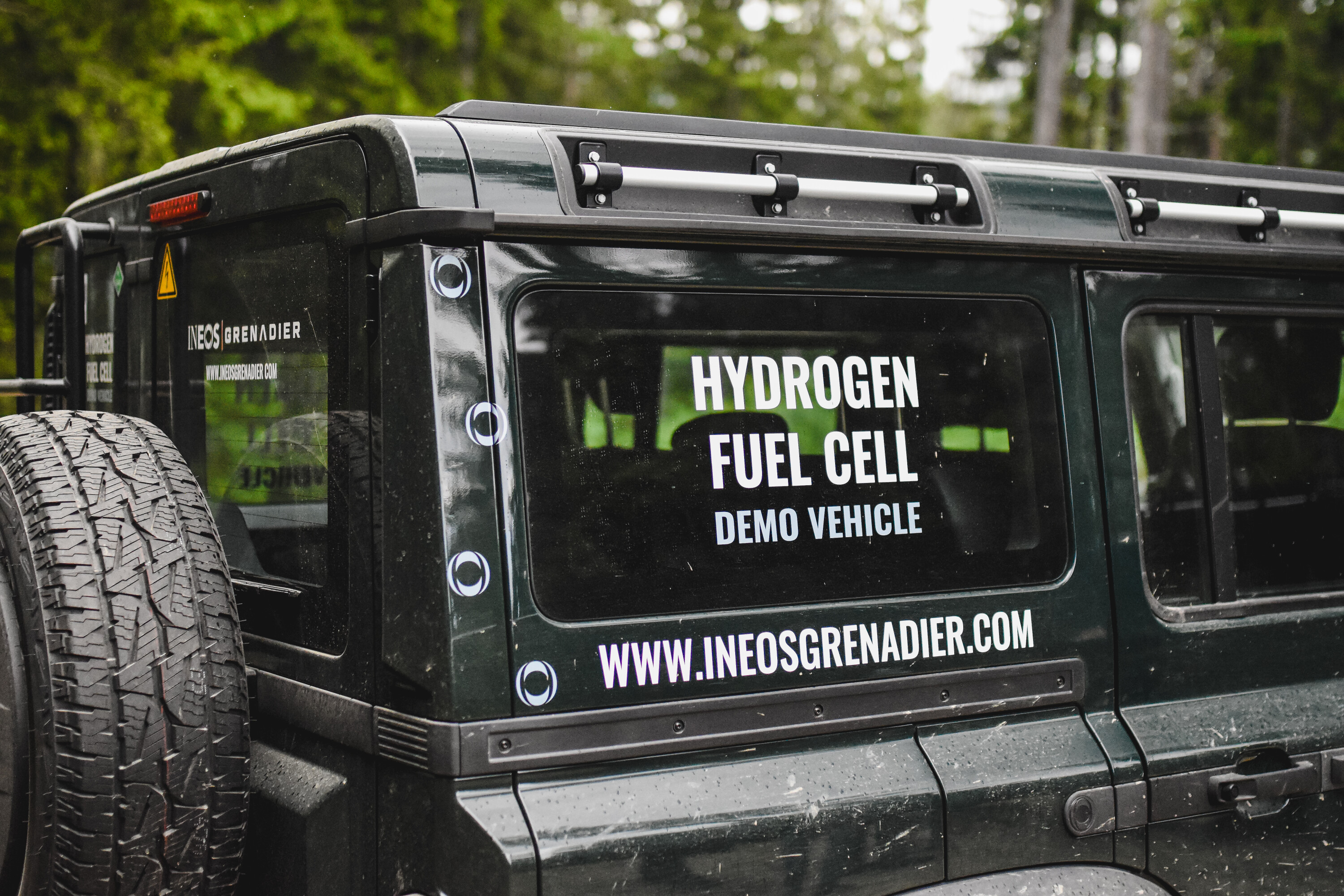
Ineos also showed a Grenadier Hydrogen Fuel Cell concept at the Goodwood Festival of Speed in 2023, to show that the technology for a hydrogen-powered 4×4 is capable and ready for production. It also said at the time that the refuelling infrastructure needs to be in place before it is commercially viable.
“When we built it, the plan was that it was a precursor for a series development vehicle, and it was purely a hand-built, uncompromised Grenadier,” said Ms Calder.
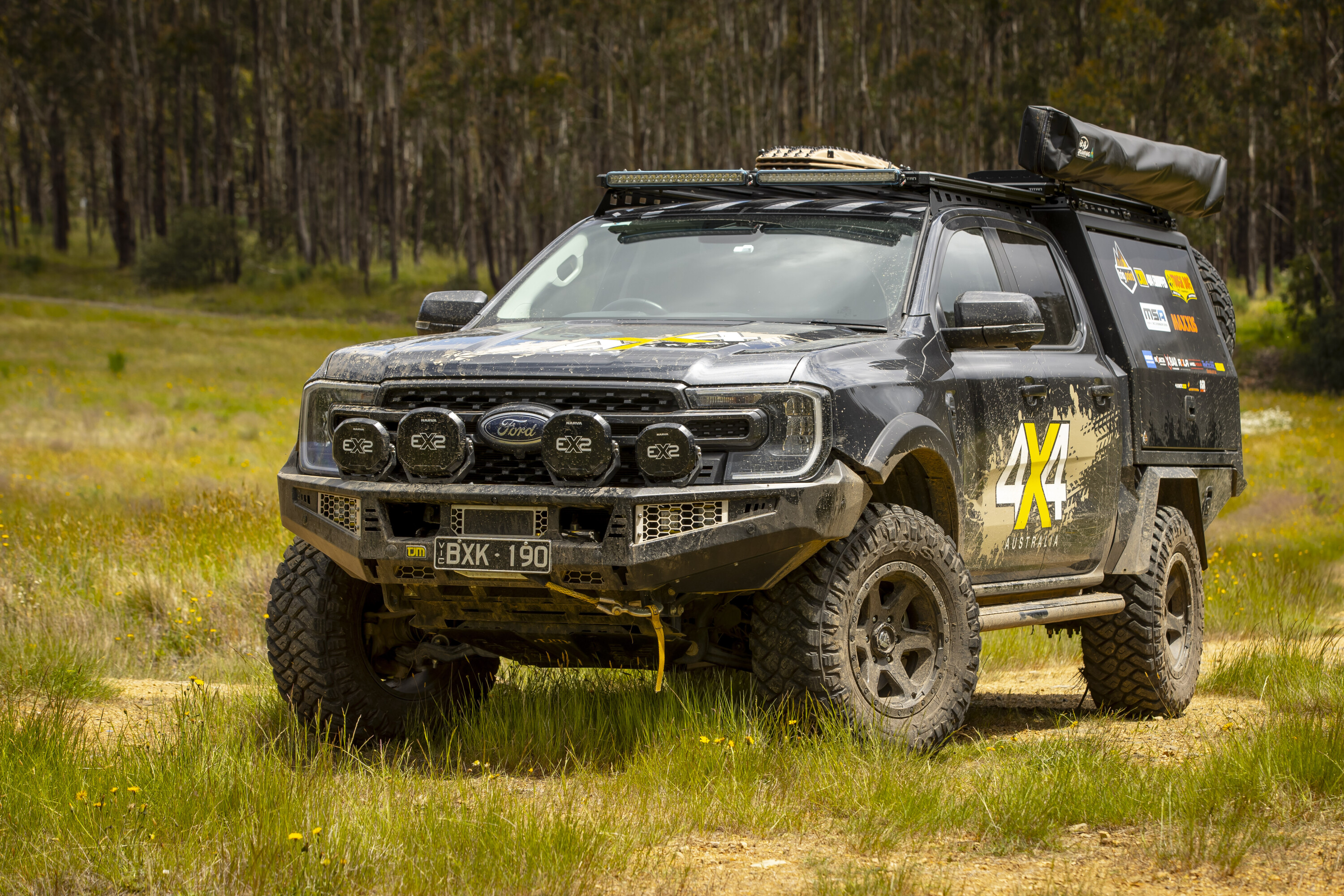
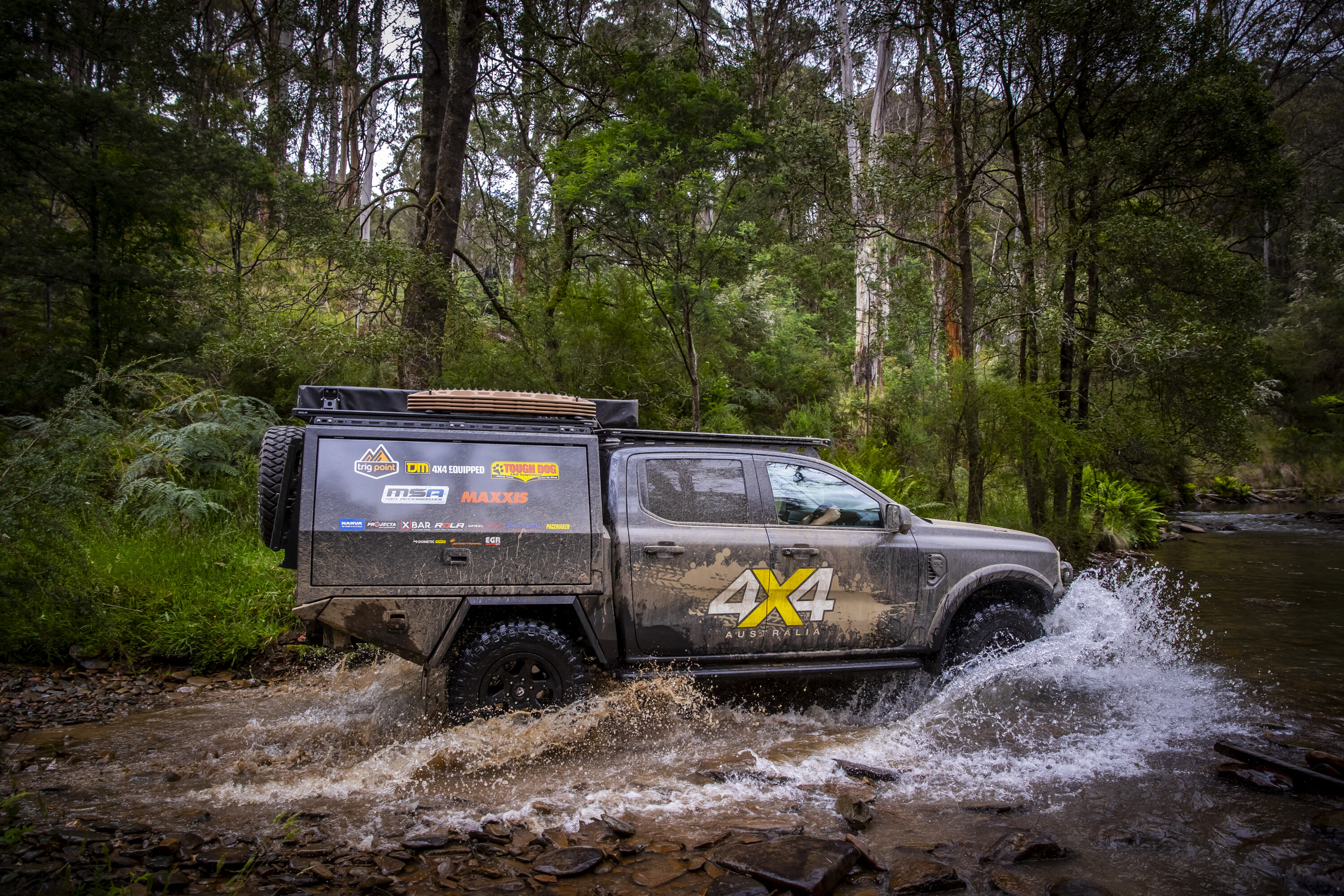
Our Ford Ranger Sport V6 has been our biggest build to date, and as always we leant on some of the best brands and aftermarket outfitters in the country to source all the gear to turn it into a capable touring rig.
We bought the Ranger straight off the Ford press-vehicle fleet following the model launch and this allowed us to get our mitts on it sooner rather than buying it new, as there was a wait list of six to 12 months for the new V6 Ranger at the time. It already had 6000km on it when we got it, so it was just run-in for us.
We liked the look of the new Ford Ranger as it promised to be the most significant new 4×4 model from 2022 and into 2023, and our thoughts were verified with it becoming the best-selling new vehicle overall in Australia in 2023. Not only was Ford’s V6 turbo-diesel engine a monumental addition to the midsize 4×4 ute market, but the new model brought many updates and inclusions to the segment making it the best driving ute in the class.
We chose the Sport model Ranger as it had a few nice features that we appreciate including leather seats, LED lights and, most of all, the chrome delete; to my mind, chrome has no place on any vehicle built after 1970. The blacked-out look is so much better and works well against the Meteor Grey metallic paint.
Build a box
From the outset it was always our plan to remove the factory cargo tub and fit a chassis-mounted canopy to the back of the Ranger.
Not only does this major inclusion reflect what owners are doing to their utes, including many of the vehicles we feature in 4X4 Australia magazine, but it gives us the perfect platform to create the best touring set-up for the back of the vehicle. Coincidentally, I had been speaking with Murray Brook from Trig Point Canopies just weeks before we took delivery of the Ranger and he suggested that if ever there was a way that Trig Point could be involved with one of our builds, that he’d love to have the opportunity.
Trig Point had recently displayed one the first Rangers we’d seen with a replacement service body at the Melbourne 4×4 Show, and we were impressed with the style and quality of the product, so were only too happy to take Murray up on his offer.
It was a good call in more ways than one. Not only is the Trig Point canopy an exceptional and well thought out product, but the help given to us by the team at Trig Point in general has gone over and above what we expected, as they are able to handle all aspects of a build including 12-volt systems, plumbing, electrical and accessories to fit to the canopy. They even communicated with some of our other suppliers to ensure that their equipment would fit and work with the canopy as well as the then-new Ranger.
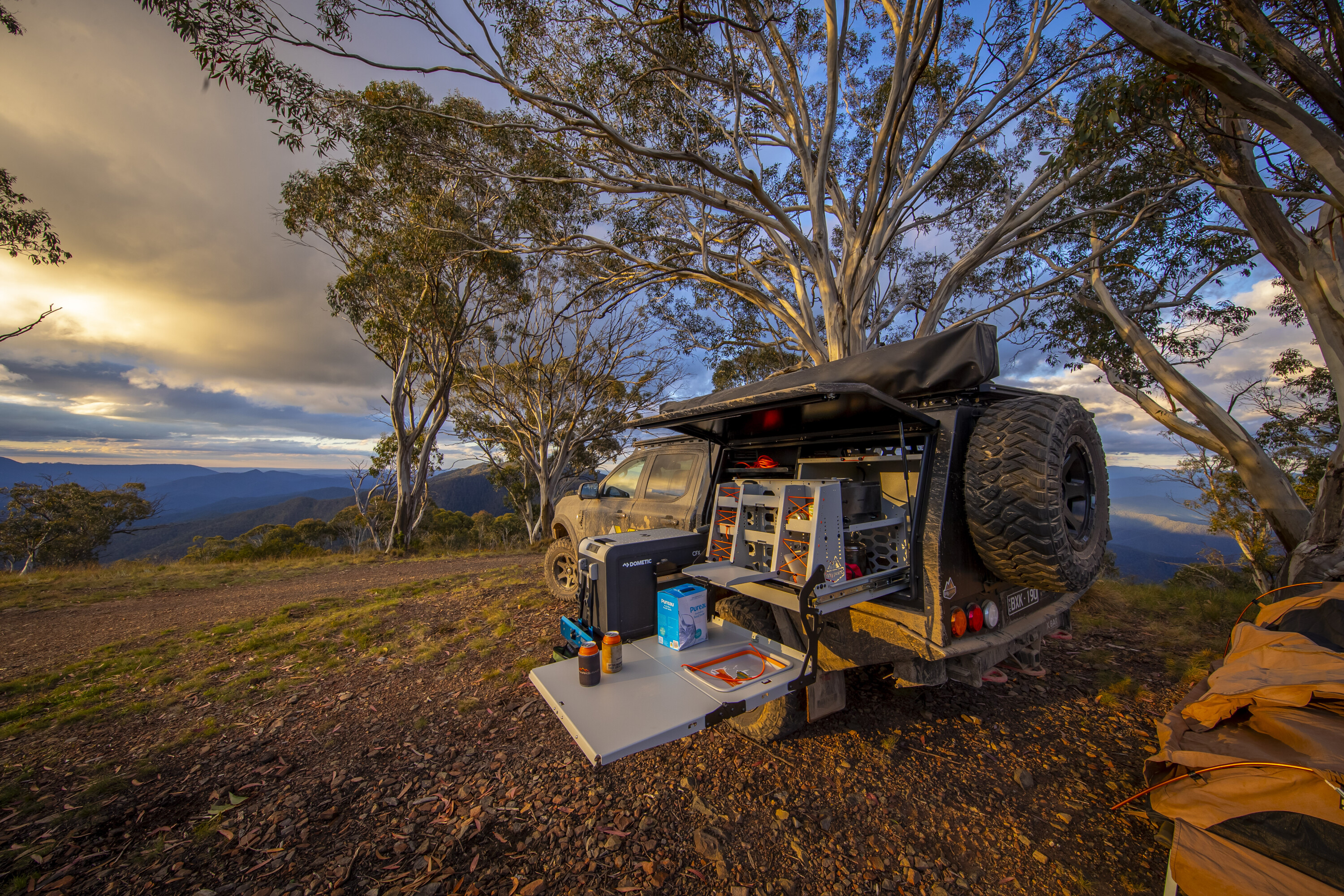
We specced our Trig Point with what they call the two-tone look, where the canopy doors are painted in body colour while the frame and rest of the body are all matt black. The canopy includes a few features that were new to Trig Point at the time including a rear trundle drawer as well as underslung rear tool boxes, a water tank with electric pump and hose kit, and an internal cage for the fridge compartment.
1
Trig Point used CAD to map out the internal inclusions so that the products from our other suppliers would all fit inside the canopy. These included an MSA 4X4 drawer and Power Slide for the Dometic CF45 fridge, space up on the headboard for the extensive Intelli-Grid power system from Projecta, and some open space to carry larger items. Murray also left space for something that he still had in the design stages which turned out to be the Trig Point kitchen/pantry that was fitted later in the build, and was a great addition that adds to the functionality of the whole set-up.
Some of the niceties we’ve come to appreciate in the Trig Point canopy include the press-shut locks for the side doors, making them super easy to close against the automotive-style seals, the fact that the doors and trundle drawer are hooked up to the Ranger’s central locking, the Narva LED touch-lights under the doors to illuminate the inside and work areas at night, and the overall fit and functionality of the whole set-up. It truly is first class.
The battery is charged and maintained via multiple sources including Projecta’s INVCHR3 inverter/charger that allows fast charging up to 180A from a 240V source, as well as being a 3000W inverter for running AC accessories.
The PMDCS60 DC-DC charger manages the charge from the Ranger’s alternator between the auxiliary Li-Po battery and the main battery; an SC540 MPPT solar charge controller can be hooked up to fixed or mobile solar panels; and you can keep tabs on the whole system via the INVCHRD-BT lithium battery monitor that is mounted just inside the canopy door.
The team also included multiple 240V GPO, 12V and USB power outlets on the powerboard to keep any accessories and gadgets charged up. It’s a comprehensive system that is really a set and forget set-up for life on the road and off-grid touring.
Protection racket
We were very happy to welcome TJM to our Ranger build as we hadn’t worked closely with the Aussie company on a build before. The legendary 4×4 brand was marking its 50th anniversary in 2023 and we were privileged to have some of their legendary gear fitted to our Ranger.
The TJM Venturer bar is a loopless steel replacement bumper adding a stronger bumper with improved approach angles, built-in rated recovery points and provisions to mount lights, antennas and a winch. Importantly, the bar retains the operation of all the Ranger’s safety cameras and radar, and even includes relocation of the little water squirter to clean the mud off the forward-facing camera.
For recoveries we chose a TJM Torq 9.5 winch fitted with synthetic rope. The Venturer bar has large openings in the front allowing easy access to the winch’s clutch release lever, and operation is simple with both a cordless remote and conventional corded controller.
The Venturer bar has provisions to include the OEM fog lights within it but TJM replaced them with a set of its own LED Pod lights which offer more (and better quality) light output.
TJM’s 3mm high-strength steel underbody protection extends from the bar and back under the engine sump to guard against hits from rocks and scrapes, while a pair of TJM 63mm tubular steel side steps offer a whole lot more sill protection down the side of the Ranger than the factory plastic steps ever could.
1
Our TJM gear was installed by the helpful team at the TJM Epping (Victoria) store who again went over and above with not only the fit-out but also other work on the Ranger since then.
At the rear of the Ranger we have once again gone with an X-Bar from Hayman Reece, which was chosen for its functionality, incorporating three red recovery points as well as the standard 50mm square hitch receiver. The recovery points are all rated and using the ones on the outer extremities with a bridle strap puts all the load directly to the ends of the chassis rails, which are the strongest points.
The Ranger’s standard 3500kg towing capacity is retained and, while we don’t tow anything with the Ranger, the boofheads at Street Machine reckon it goes all right when they borrow it to tow their project and race cars.
Light up
Atop our TJM Venturer bar sits a quartet of Narva LED driving lights. Narva released its EX2 range of LED lights around the time we started the build so this was a great way to showcase these new products.
We went with a pair of each of the seven- and nine-inch EX2 round lamps for the bumper and ran them through separate switches so that each pair could be run independently of the other.
Depending on your state regulations, you don’t need to run the EX2 lights through a separate switch or use an auxiliary wiring harness, as they have internal relays and only three wires coming out the back for power and a high beam pick up. Switching is then done solely through your vehicle’s high beam switch – clever stuff that makes installation easy.
Narva’s EX2 LED light bars came out a few months after the round lights and we fitted a pair to the Rola Titan Tray up above the cabin. These are 20-inch single row light bars and like the other EX2 products they don’t need any additional wiring harness or relays in the system, just power and a pick up from the high beam circuit, although we again wired them through a switch so that we can run them independently of the other driving lights.
Up top
Looking back it seems we timed the build of our Ranger with a few new product launches, and one of these was the third generation of the Rola Titan Tray.
The Titan MkIII trays are bigger and beefier for increased stiffness and a better look but still retain all the great features of the previous models including light weight, T-slot mounts and a huge range of accessories to suit whatever gear you might want to carry on top of your 4×4.
We fitted a pair of the Titan MkIII trays to the Ranger – one on the vehicle cabin and another atop the Trig point canopy. The one tray on the canopy has the Maxtrax mounts on the driver’s side where we secure a stack of Maxtrax Extremes when heading out, while on the passenger’s side we have the excellent Australian-made 270° awning from Boss Aluminium.
Down under
Rolling stock for the Ranger is a set of Fuel Ripper alloy wheels from Wheel Pros Australia clad in Maxxis RAZR mud terrain tyres in a 285/70R17 size.
We’ve had a good run with the Fuel Wheels/Maxxis RAZR combo on our PX Ranger and couldn’t go past them again for this build. The wheels look great and are a simple design which are easy to clean, while the MT772 RAZRs are a great all-round on- and off-road tyre that works well over all conditions.
The bigger than stock tyres are covered by EGR flares at the front and Trig Point’s standard canopy flares at the back. EGR makes the flares for Ford when you get them with your new Ranger so they were a great choice for our vehicle as they provide a factory look and neat fit.
Connecting the rolling stock with the chassis is a suspension kit from Tough Dog. The plan was always to fit as many of the accessories as possible before the suspension was installed so we could get the weights right but that didn’t go to plan.
The standard Ford rear leaf springs are made for comfort and really don’t like a load on them, and once we started putting a bit of stuff in the canopy they quickly sagged down to the bump stops. A set of replacement leafs was freighted down from Tough Dog to remedy the situation and ensure we could keep driving the Ranger before the rest of the kit was finalised.
Then it was up to Tough Dog’s HQ in Sydney where new Foam Cell rear shocks were added to the rear, while complete Tough Dog struts were fitted to the front-end, giving us a 55mm increase in ride height, a firmer and more controlled ride and a level vehicle again.
When we put the Ranger across the weighbridge we found it to be getting close to its axle limits, particularly on the front-end, so as we go to print it’s being equipped with a Tough Dog GVM-upgrade kit so its next owner will be able to load up the family for worry-free adventures in the future. We’ll have more on that and the limitations of the Ranger’s front axle in an upcoming issue.
Also under the vehicle is the only mechanical change we made to the V6 Ranger and that is in the form of a replacement exhaust system from the legends at Pacemaker Exhausts. On this Ranger the three-inch cat-back King Brown exhaust system from Pacemaker barely changes the sound of the exhaust but if you want it noisier you can delete the muffler. We didn’t want any droning on the highway so we left the muffler in place and we’re happy with the result; we must be getting old!
The guys at Pacemaker tell us that the true advantage of the King Brown exhaust system is that the extra flow and less restrictive design means the DPF runs cooler which extends the life of this expensive consumable part. The King Brown exhaust is made from coated stainless steel so it will last a lot longer than the OE mild steel system.
Interior
With the Ranger Sport being really well-equipped inside we didn’t touch much.
As with all our builds we fitted a set of Tru-Fit moulded 3D floor mats to protect the carpets front and rear, and these are shaped to the floor of the vehicle so they don’t move under your boots, while the dished design contains any mud, sand or even liquid spills. And the mats are easy to remove and blast with the pressure washer when you’re cleaning the crud off after your off road adventures.
The only other interior addition to the Ranger was a switch panel from Pirate Camp Co to accommodate our light switches. Like most new vehicles the Ranger doesn’t give you anywhere to easily install auxiliary switches and the Pirate Camp Co one fits neatly above the standard console and has four rocker switches. It also moves the USB port forward to an easier to access spot than where Ford originally positioned it.
One thing we would normally fit to any touring 4×4 would be a quality UHF radio unit but we didn’t get around to it with this build. After spending some time in a top-spec Ranger Platinum with its B@O sound system we reckon the standard Ranger Sport audio kit would benefit from an upgrade as well.
Our previous build, the Isuzu MUX, had its signwriting done by the guys at Moorabbin Signs and we went back to them for the wrap on this Ranger.
Final word
Since we took ownership of the vehicle we’ve run around between workshops, taken a few trips up to Sydney, and been on photo shoots out in the Victorian High Country.
It’s been mainly trouble-free with the only problem so far being an oil leak from the turbo return line, which was quickly fixed under warranty by Chadstone Ford. It’s proven to be a competent and comfortable tourer with all the gear fitted making it a functional home on the road, be it for long or short getaways. With the addition of some solar panels up on the roof you would be able to spend weeks off the grid.
1
Once we get the final sign-offs done for the GVM upgrade it will be off to Grays Online Auctions to find a new owner, so keep an eye out for details of that auction.
We’re also putting the final touches on our Mitsubishi Triton build at the moment, and making a start on our 2024 build, which is a new Ford Everest that was just delivered to our office from the dealer. It should be another fun touring build with some great suppliers already on board.
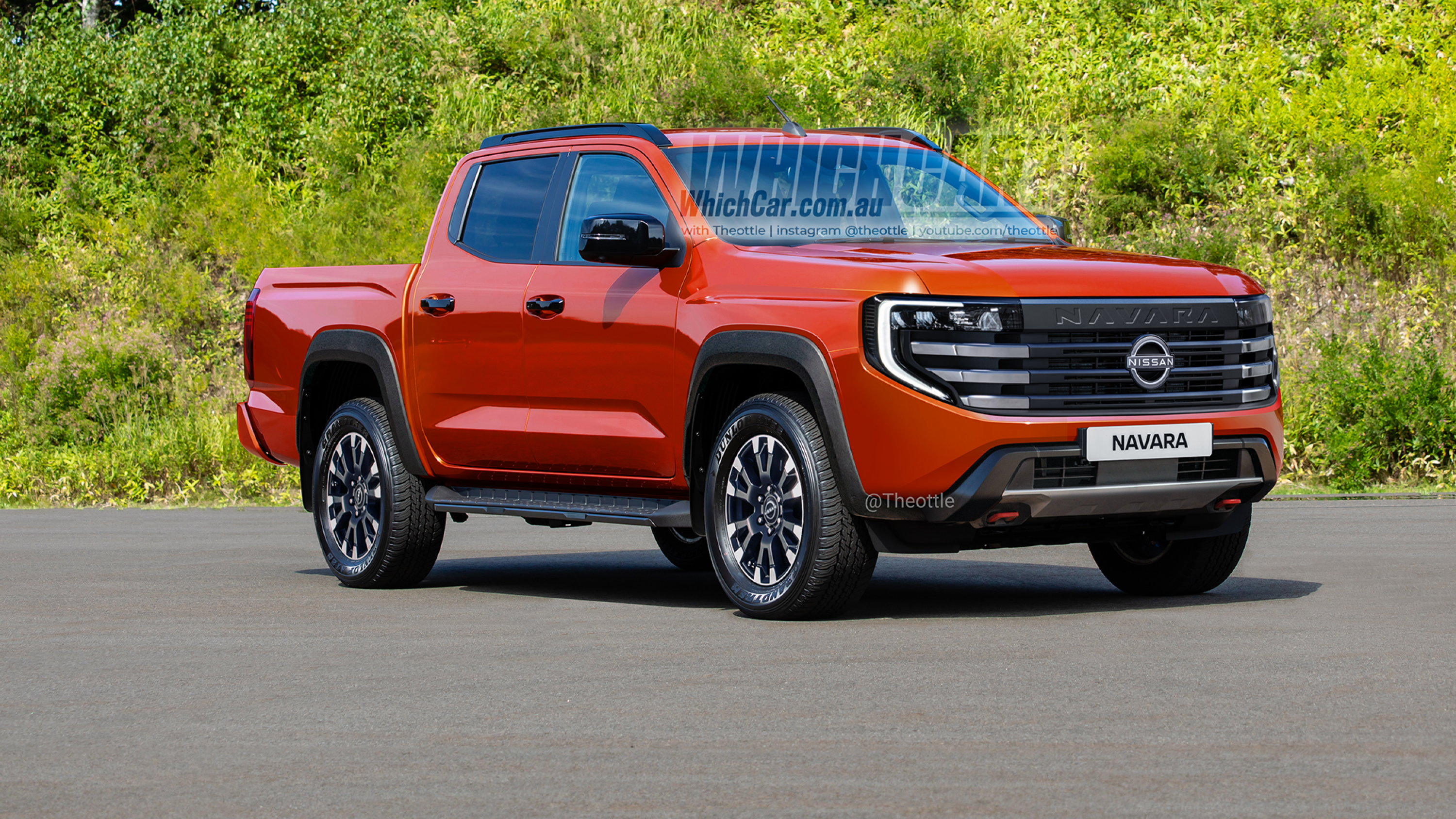
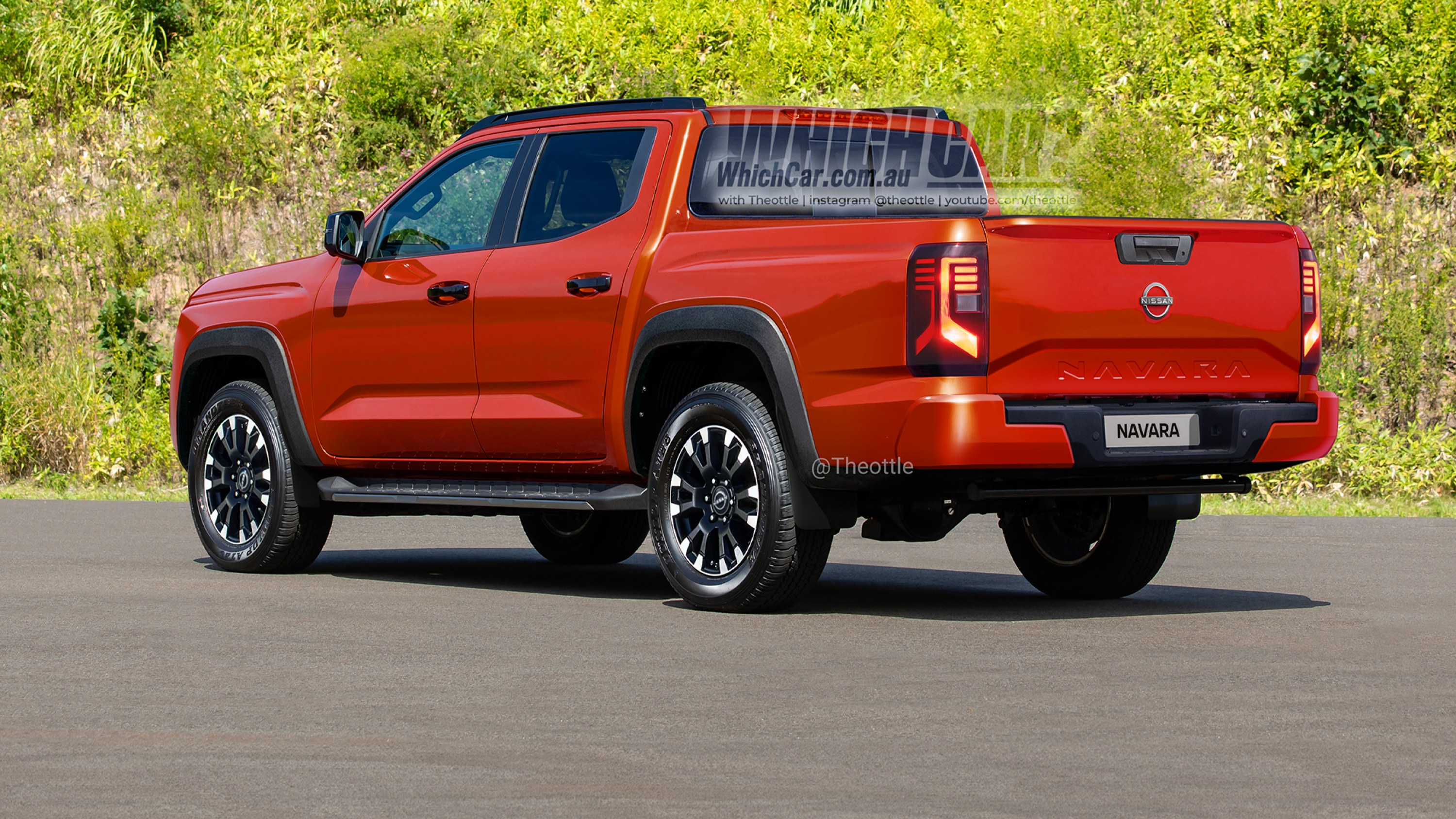
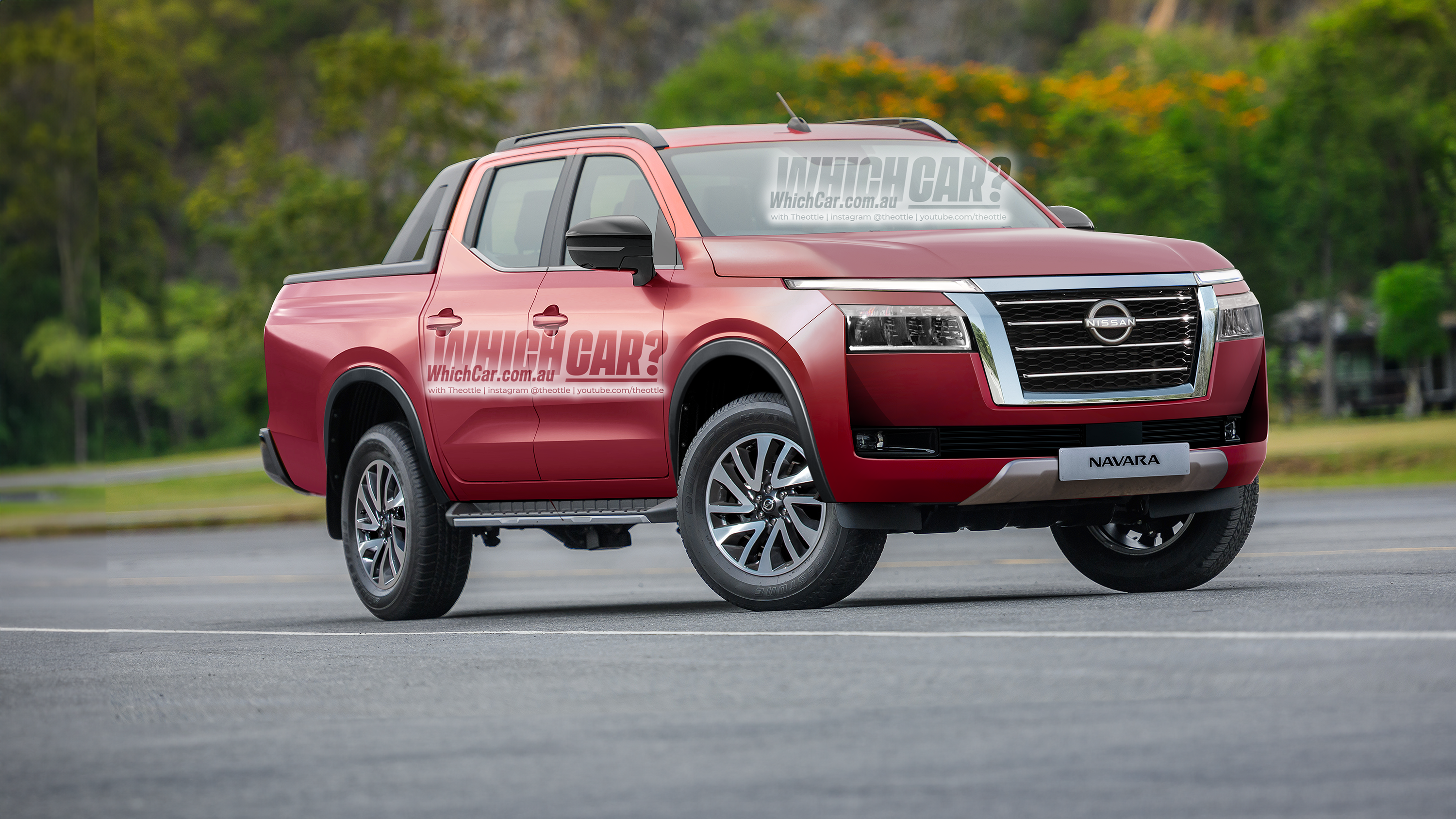
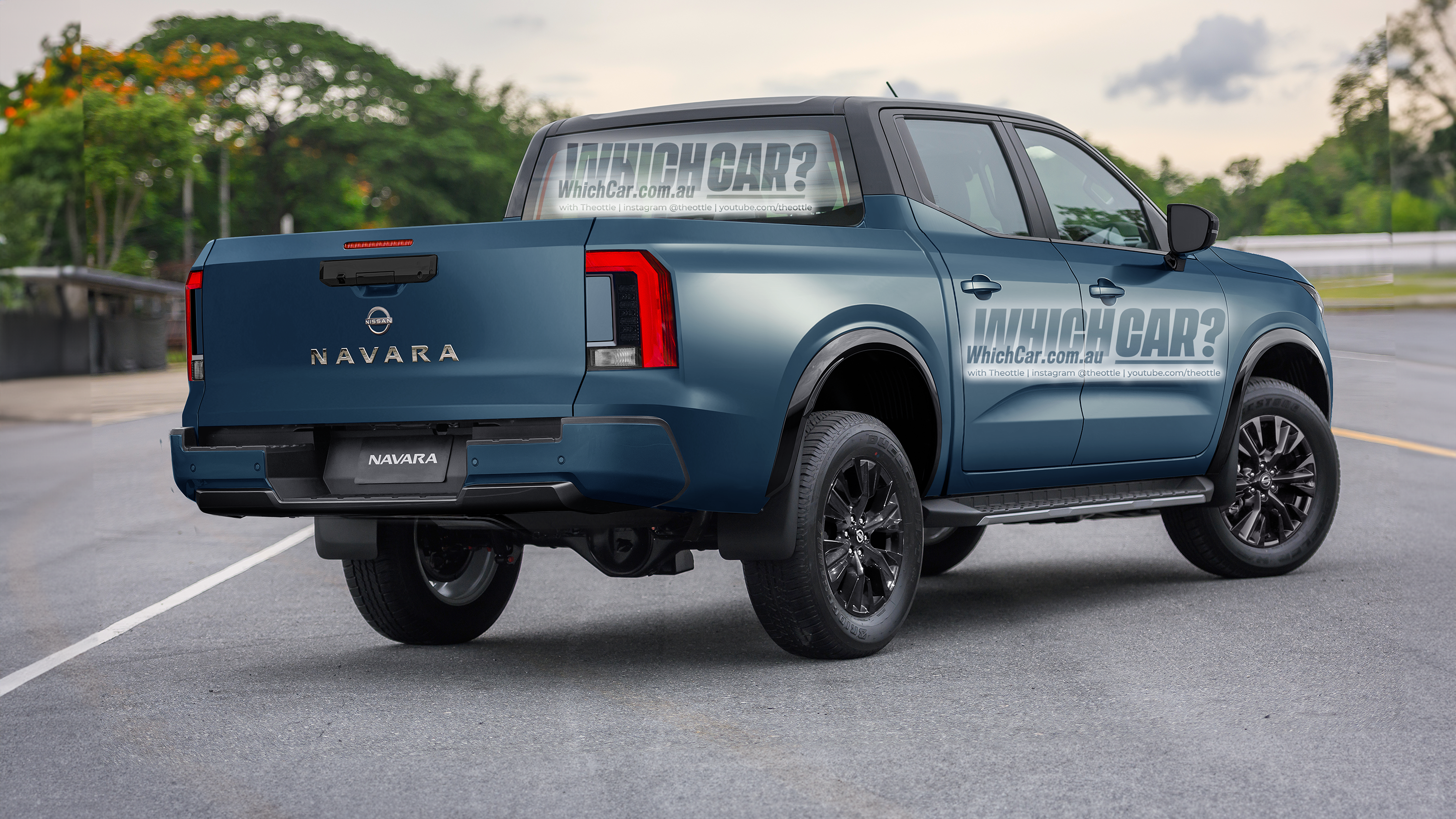
With a few distinct styling themes across its global line-up, it’s tricky to know just how the next Navara will look. How about this?
Last year – see below – our mate and rendering wizard Theottle delivered a speculative look at the 2025(?) Navara with styling features borrowed from its latest passenger models.
1
The above new take looks instead to the Interstar van, revealed earlier in February.
The design works well for the Navara, giving it a more American look, which is very much in vogue at the moment – just take a gander at the new Ford Ranger.
1
The cab and rear are Triton-inspired, of course, and that’s likely what we’ll see when the new model finally debuts.
What do you think of the design? Jump into the comments below to tell us your thoughts.
August 2023: New Navara imagined
1
The next-gen Navara will share much of its DNA with the incoming new Triton, but its expected 2025 debut will come roughly one year after Mitsubishi’s new ute.
Just how much it will share is still uncertain, but we asked our resident renderer, Theottle, to harness inspiration from the new Triton and imagine what the new-gen Navara might look like.
1
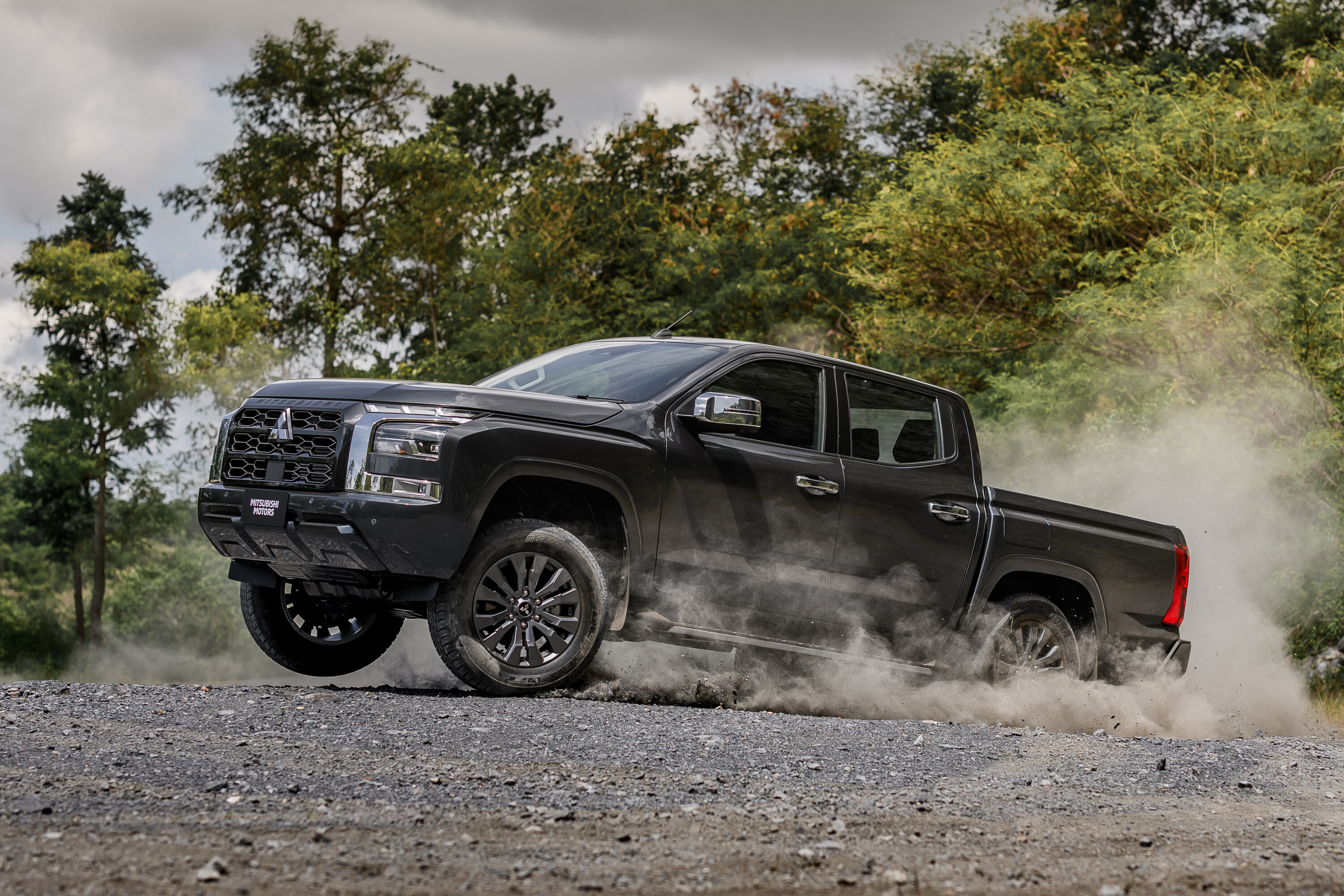
The sixth-gen Triton, revealed globally last month and already on sale in Thailand, is built on a new, stronger ladder-frame chassis, and it’s bigger in every dimension than the outgoing model – 15mm longer, 50mm wider and a longer wheelbase that now measures 3130mm.
Not only is it bigger and stronger, it’s also more lithe, thanks to the use of high-tensile steel.
The Triton is powered by a ‘newly-developed ‘4N16’ 2.4-litre turbo-diesel four-cylinder engine, with Australia getting a twin-turbo version producing 150kW and 470Nm. The vehicle will also adopt an electric power-steering system in premium variants, which is a first for the model.
Australia will receive Triton four variants: GLX, GLX+, GLS and GSR.
A weakness of the outgoing model has also been rectified, with the Triton’s braked towing capacity now at the industry standard of 3500kg.
Stylistically, the new Triton features a muscular front grille, broad shoulders, prominent fender flares, unique T-shaped tail-lights, and new alloy wheels – aspects of which have been employed in these renderings.
1
The current Navara hasn’t exactly been a sales juggernaut.
According to the most recent VFACTs sales report (July, 2023), a total of 4153 Nissan Navara vehicles have been sold so far this year.
For comparison’s sake, the two best-sellers, Ranger and HiLux, have achieved 31,884 and 32,763 sales respectively. Even the LDV T60 has outsold the Navara in 2023, shifting a total of 5340 vehicles so far.
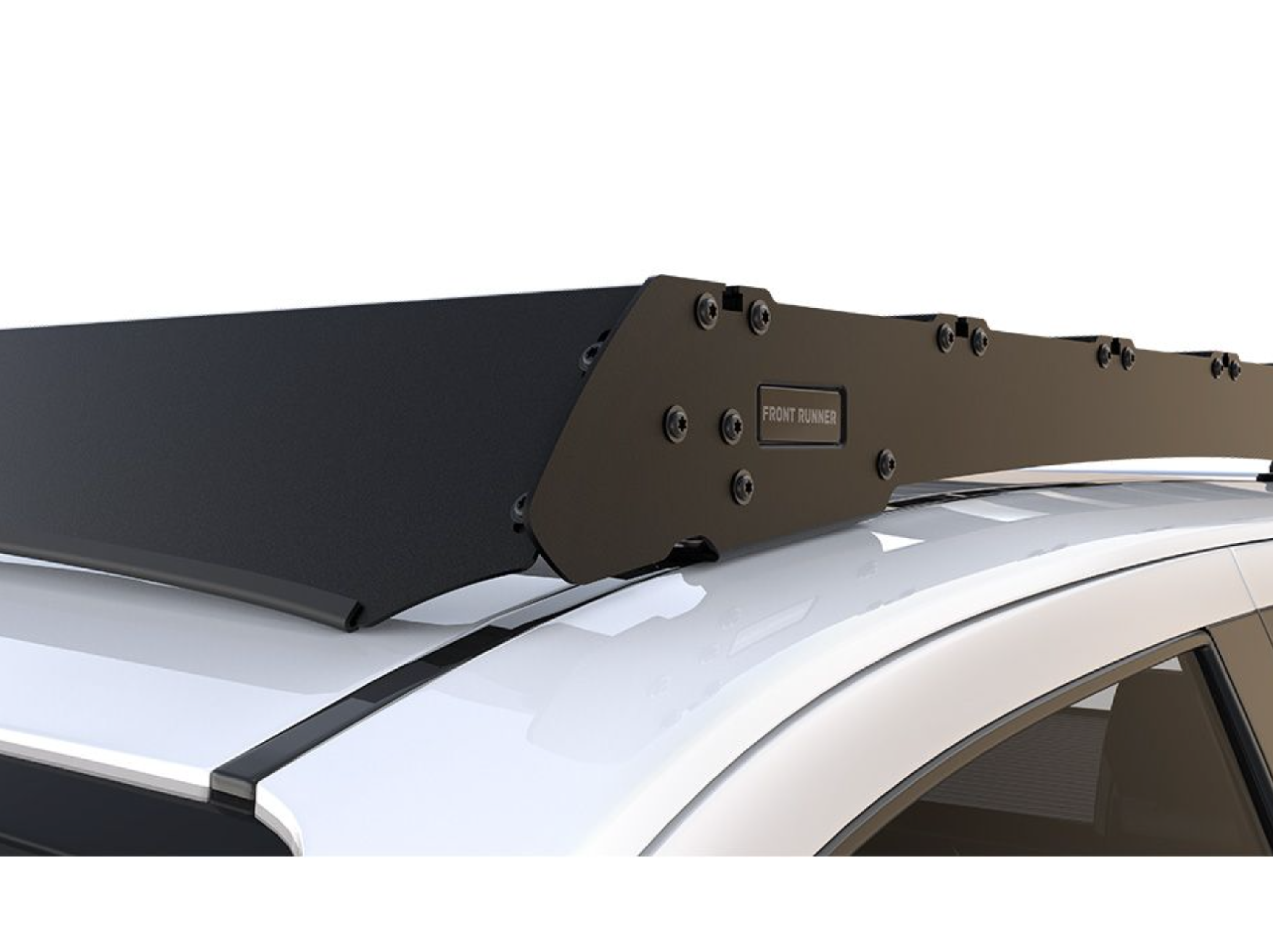
Frontrunner has been a leader in the roof rack world for many years and its gear, manufactured in South Africa, is designed to withstand the harshest climate and ensure a lifetime of dependability.
This also means the new Frontrunner Slimsport II roof rack is durable and hard-wearing enough to handle extreme conditions in Australia. The sleek new design of the Slimsport II range has a lightweight construction that makes it the ideal roof rack for loading all the gear you need for your next adventure.
With most Front Runner mounting solutions fitting the Slimsport II roof rack range, you can be sure there is something that will allow you to configure it so you can store your gear securely, including Front Runner jerry can holders, Wolf Pack storage boxes and aluminium tables. There are also side mounting options for things like awnings, ensuite tents, shovels, recovery tracks and much more. The Slimsport II range is even LED light bar ready.
3
There is nothing worse than listening to your roof rack whistle or feeling the drag when driving into a headwind, and the Slimsport II’s low-profile design reduces drag noise and also allows access to lower clearance garages or shopping centre car parks. The fit to your 4WD roof is sleek and form-fitting, which complements the look of your 4WD, and the wind deflector further improves the aerodynamics and reduces drag.
The Slimsport II roof rack range is manufactured using high-strength steel and black epoxy powder-coated T6 aluminium, which means the alloy is solution-treated at high temperatures to provide the maximum precipitation hardening and therefore maximum yield strength. The weight, dimensions and pricing of a Slimsport II roof rack are dependent upon which 4WD the rack is destined for.
3
The Front Runner Slimsport II Tray range comes with the foot rails needed to mount the rack to your 4WD. Drilling may be required for some 4WD models, so it is recommended you get the Slimsport II roof rack installed professionally. Those 4WDs that don’t require drilling can install the foot rails using the existing factory mounting points.
The rack kits contain installation instructions, and all the components needed to fit the Slimline II roof rack to your 4WD and the wind deflector. All Front Runner Racks are backed by a limited lifetime warranty, and you should refer to the website for all the warranty terms and conditions.
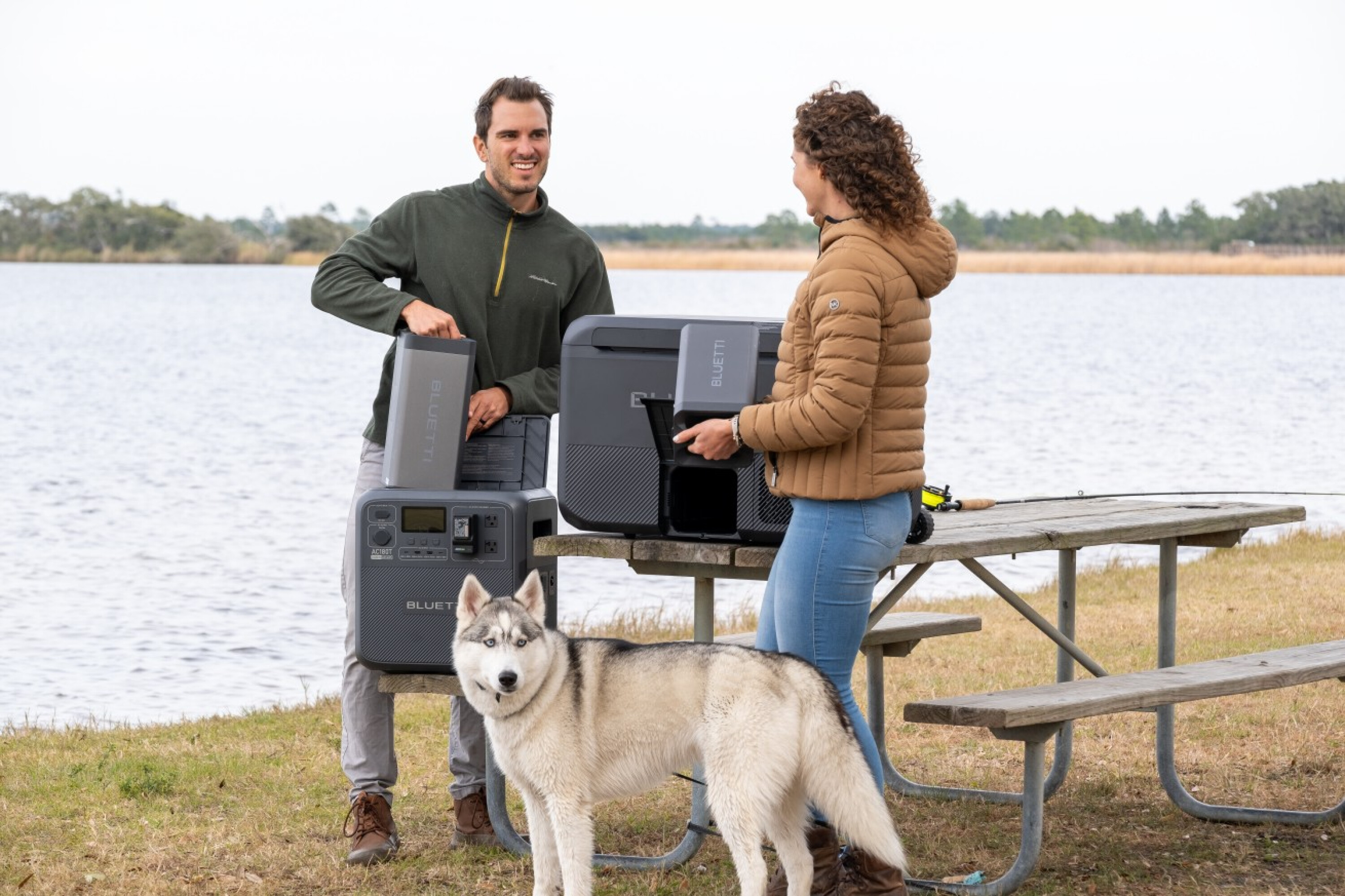
After the huge success of the BLUETTI AC500, which set a crowdfunding record of $12 million on Indiegogo, BLUETTI is back to shake things up by launching its first ecosystem SwapSolar on February 22 at 1am (AEDT).
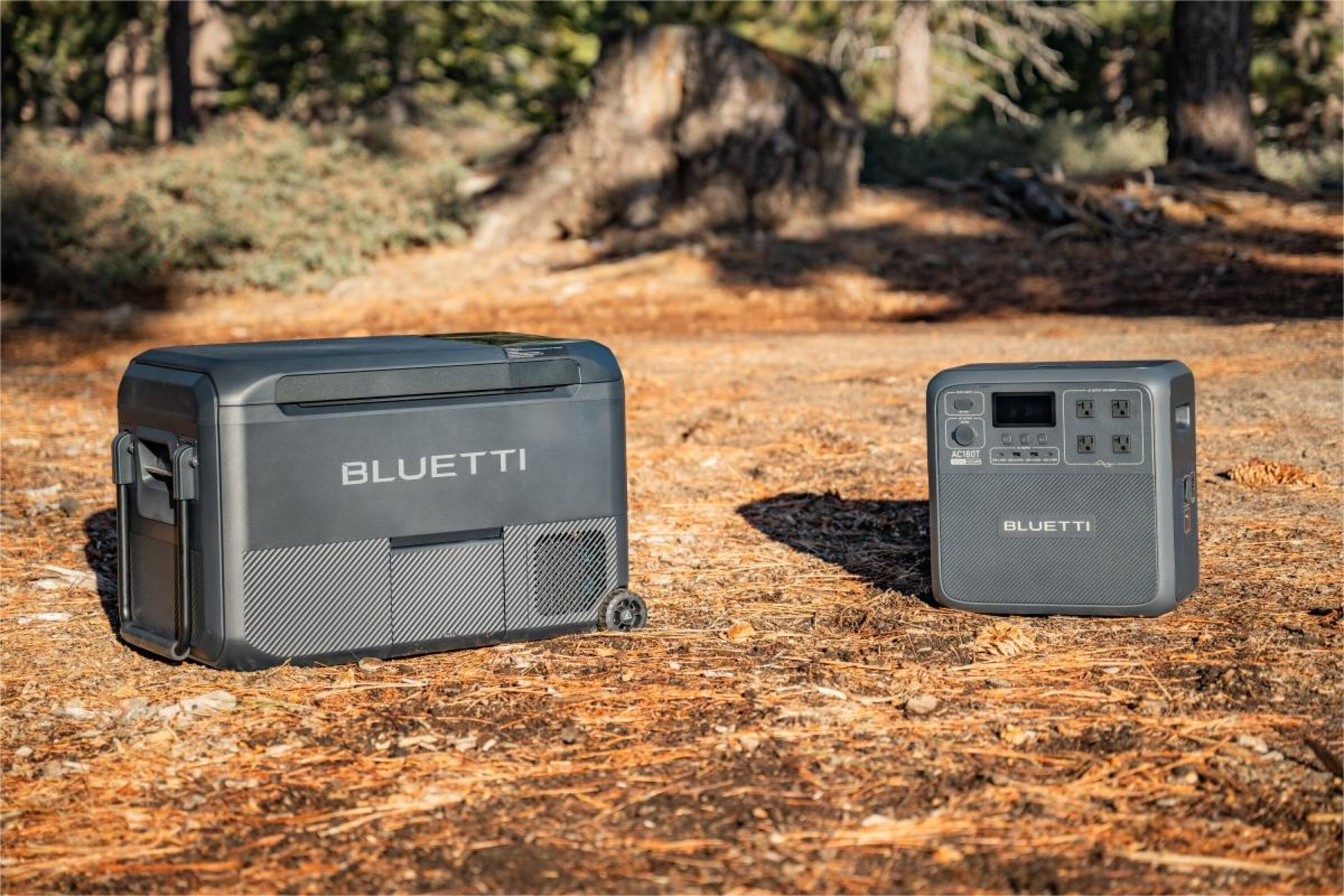
First unveiled at CES 2024, the SwapSolar includes the world’s first LFP-powered MultiCooler portable fridge and the AC180T hot-swappable battery power station. This groundbreaking duo offers an unprecedented blend of convenience and functionality for outdoor activities.
1
Meet BLUETTI SwapSolar: Two birds, one stone
The SwapSolar is not just a product; it’s an answer to your outdoor power needs, ice-making desires, and long-distance travel cooling cravings – all in one. The AC180T ensures your independent outdoor power supply off the grid, while the MultiCooler’s 3-in-1 design provides excellent coolness and efficiency.
As BLUETTI’s spokesperson, James Ray, aptly puts it, “We want users to savor the joy of outdoor life. SwapSolar is your ticket to 3-6 days of happy camping trip. Power up and keep your food fresh at once, it’s time to go wild with BLUETTI!”
Introducing BLUETTI MultiCooler
1
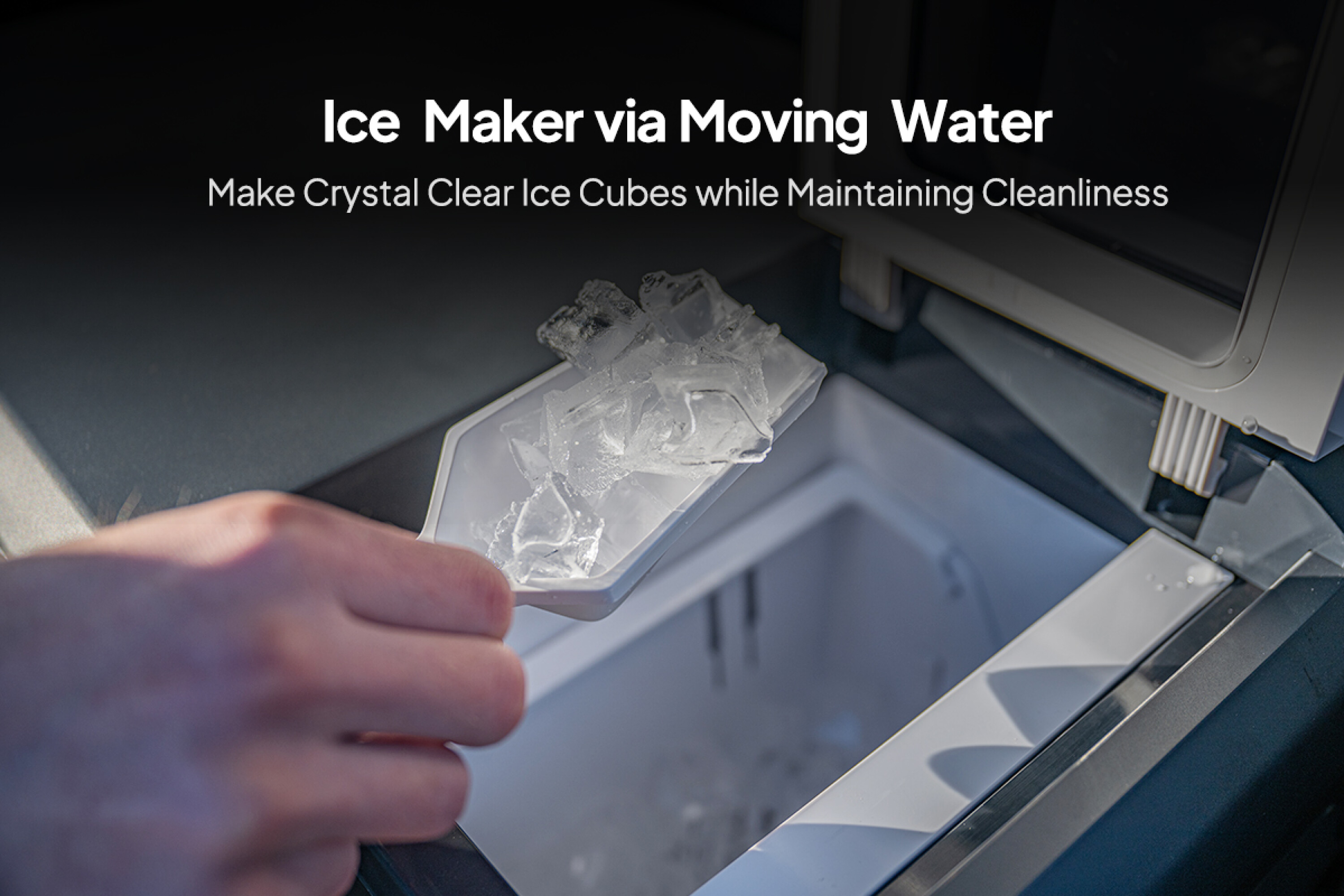
Imagine a fridge that does it all – ice making, refrigeration, and freezing – in one sleek design. The MultiCooler has a 42qt (40L) capacity, enough to hold about 60 cans of soda. With a temperature range of -4°F to 68°F (-20℃ to +20℃), it caters to all your temperature whims. Its powerful compressor ensures rapid cooling from 86°F to 32°F (30℃ to 0℃) in just 15 minutes! Plus, the built-in ice maker produces crystal-clear ice cubes in minutes, perfect for your fizzy drinks and cocktails.
Smart and portable design
Weighing approximately 52.9lbs (25kg) net, the MultiCooler is designed for easy lifting with side grooves. Got a full load? No problem. Use the wheels and drawbar for effortless transport. It’s even equipped with 45°tilt protection for rough terrain. Worried about stability in your car? The optional slider has you covered. And yes, it operates quietly at 30dB in refrigeration mode and 45dB in ice-making mode, ensuring a peaceful environment.
1
Easy control at your fingertips
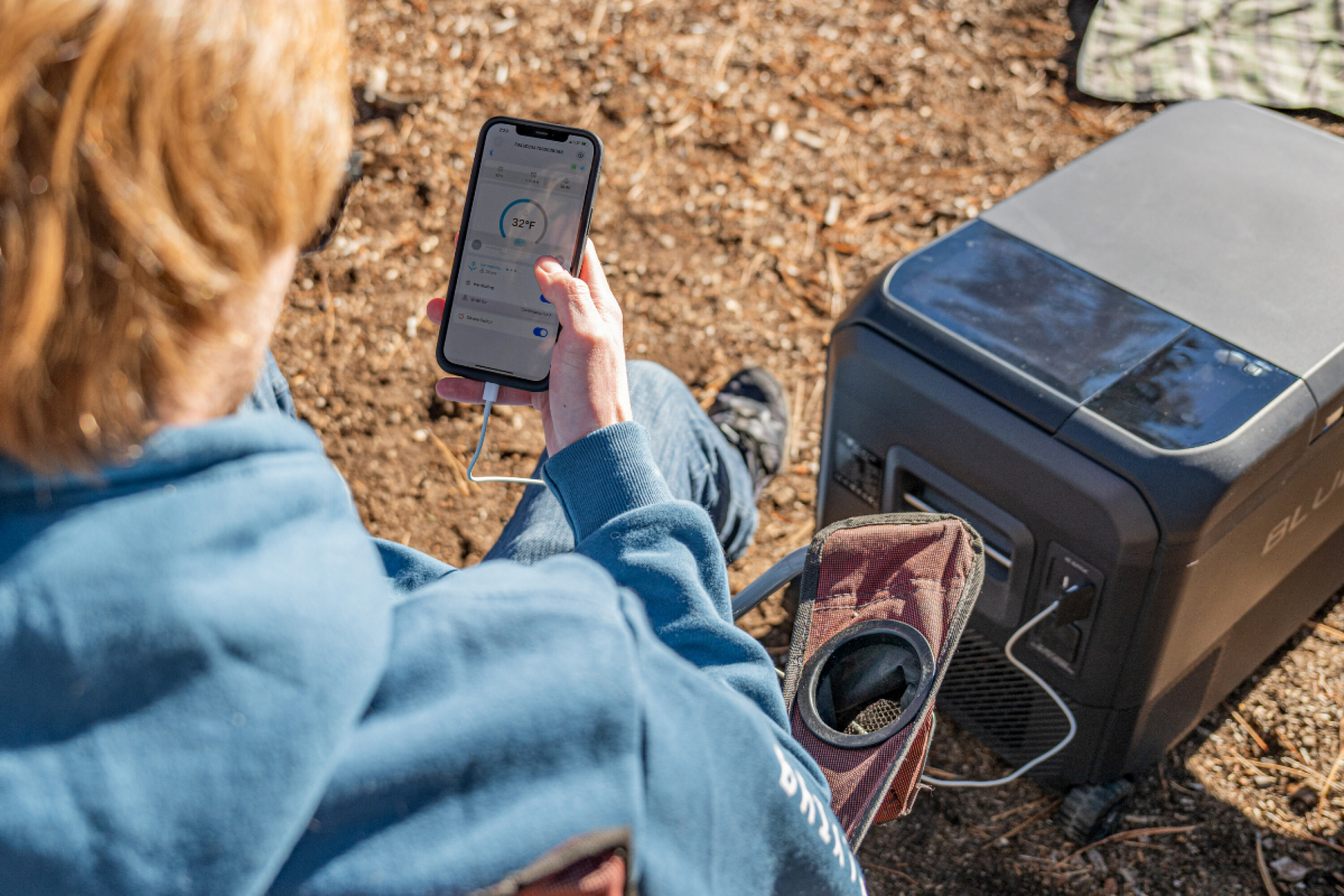
In addition to an intuitive LCD touch screen and a few touch buttons for easy use, the MultiCooler supports Bluetooth connectivity. Manage everything with the BLUETTI app – monitor temperatures in real time and adjust settings such as ECO mode and Self-Clean mode.
Versatile charging for any situation
The MultiCooler accepts four charging methods to keep your groceries at the right temperature. You can plug it directly into the wall or your car while making ice, a first in the industry. If you don’t want to drain your car battery, use one of the AC180T batteries to charge it for 3 days. With a battery inside and connected to solar panels, it will literally run non-stop as long as the sun is shining.
1
Introducing BLUETTI AC180T
Swappable battery for extreme flexibility
The AC180T introduces a removable battery design that allows you to replace its two B70 batteries(716.8Wh) from the top. It uses long-lasting and safe LFP batteries with 3,000+ life cycles and 5,000+ swap times. Since BLUETTI also sells these batteries separately, you can choose multiple battery packs to suit your needs. For longer trips and emergencies, just swap them out for instant full power anytime, anywhere.
To charge these batteries, plug the AC180T directly into a wall outlet for fast 1,440W AC charging or use solar panels for a constant power supply.
AC180T performance with battery
1 * B70 batteryu00a0
2 * B70 batteriesu00a0
Output power
1,200W
1,800W
Capacity
716.8Wh
1,433.6Whu00a0
Charging rate/ Time
850W; 80% in 60 mins, full charge in 90 mins
1,440W; 80% in 45 mins, full charge in 70 mins
Solar input
500W Max., 12-60VDC
Pricing and availability
BLUETTI offers a reassuring 5-year warranty for the AC180T and 2 years for the MultiCooler. Join the Indiegogo campaign starting February 22 at AEDT 1 am and enjoy the best deals on limited quantities. Deliveries are available to select countries in Europe, the USA, Canada, and Australia.
Productu00a0
Retail Price($)
Super Early Bird ($)
Limited Quantity
AC180T+MultiCooler
2198
1429
200
AC180T+MultiCooler+B70
2627
1719
100
MultiCooler+B70
1328
799
100
* Note: Prices are in USD per Indiegogo’s policy. Costs for non-US countries are based on current exchange rates. Shipping fees apply outside the USA; rates will specified on the purchase page by then.
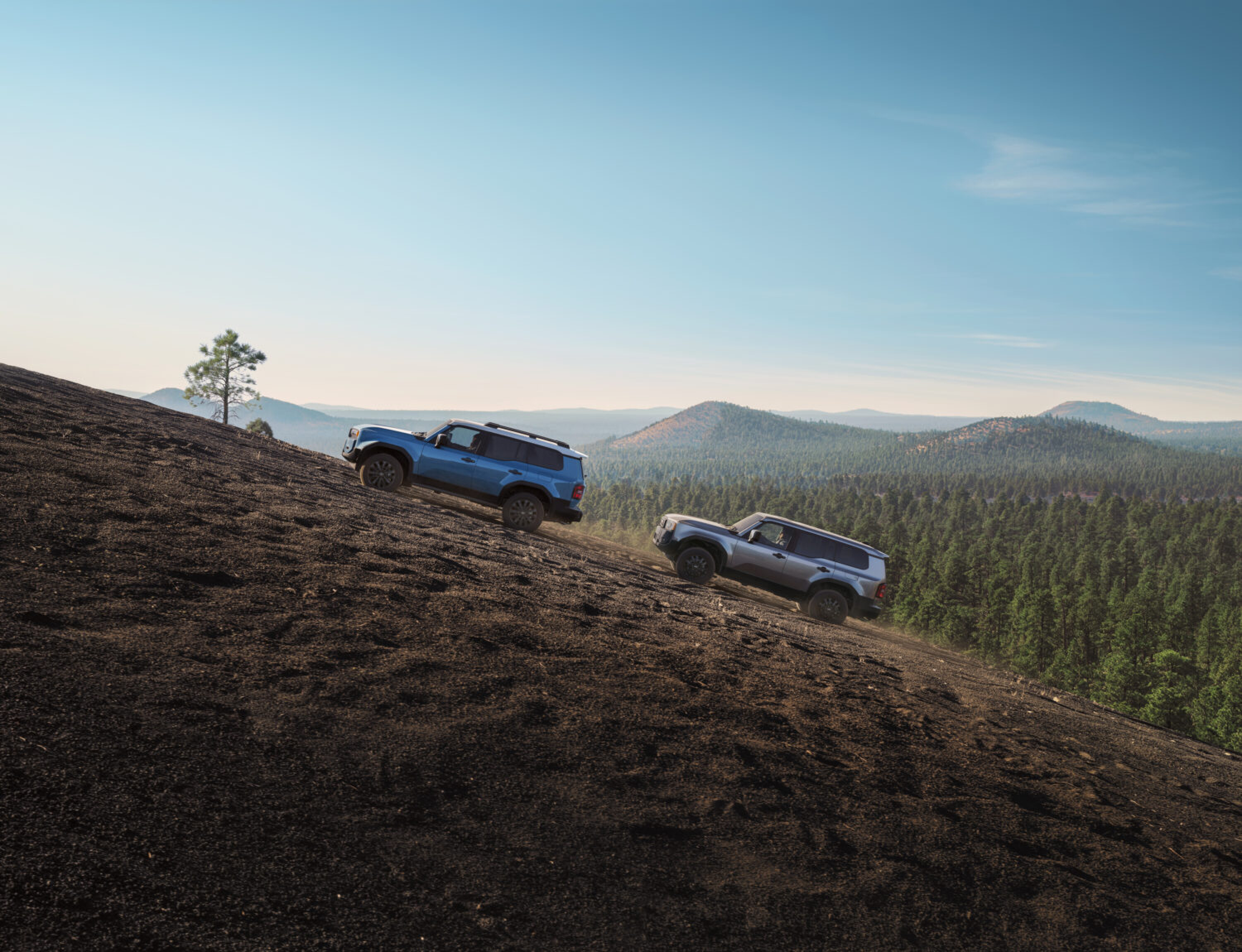
Following a two-year hiatus, the LandCruiser will return to the USA this year in the form of the 250 Series – or, as we know it, the Prado.
Unlike Aussie variants which will use old-school 2.8-litre diesel grunt paired with a 48-volt system when it lobs here later this year, US LandCruisers will be powered by a hybrid i-FORCE MAX powertrain mated to a full-time 4WD system.
That hybrid powertrain links an electric motor to a 2.4-litre turbo-charged petrol engine and eight-speed automatic transmission to produce 326 horsepower and 465 lb.-ft. of torque – approximately 243kW and 630Nm. A substantial increase on the diesel-powered 2.8’s 150kW and 500Nm.
There is speculation local Prados could get the i-FORCE MAX powertrain in the future .. just don’t expect it this year.
1
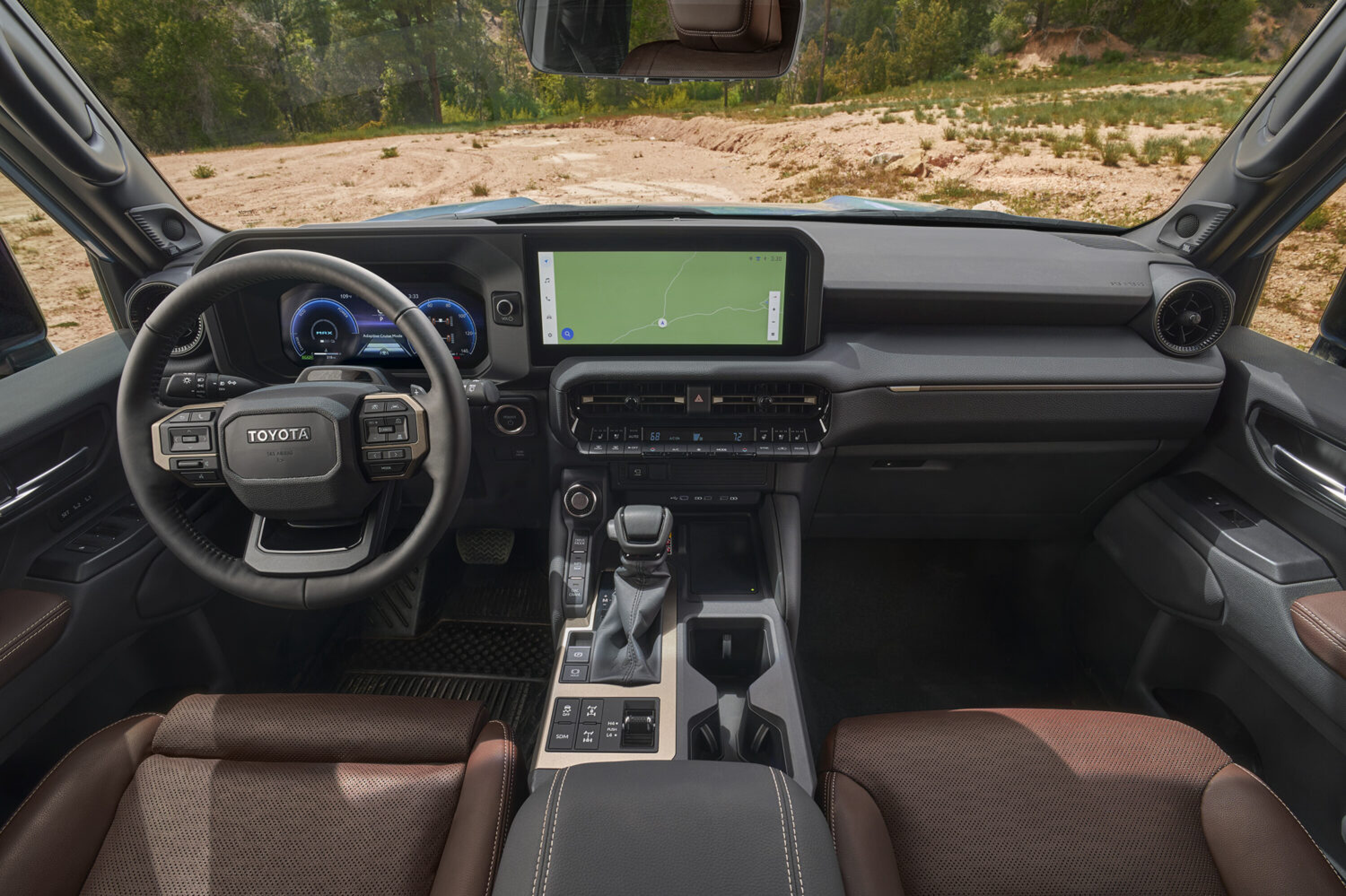
The three-model US line-up is expected to launch in US Spring 2024 (late March) with a price of US$55,950 (roughly AU$85,000) for the entry-level ‘LandCruiser 1958’ retro variant, distinguishable by its circular LED headlights. As with the more premium models in the line-up, it comes standard with full-time all-wheel drive, locking centre and rear differentials, a two-speed transfer case, CRAWL Control, and a 2400W AC inverter.
Standard equipment also includes heated cloth seats, blind-spot monitoring, automatic climate control, a seven-inch digital dash display, and an eight-inch touchscreen with wireless Apple CarPlay and Android Auto.
The mid-tier offering in the US will be known as the ‘Land Cruiser’ grade – confusing, we know. It drops the circular LEDs for rectangular units and adds heated front pews; a 12.3-inch full colour multi-information display; powered liftgate; a 12.3-inch touchscreen; and a 10-speaker sound system. To help off-road, it comes with a Stabiliser Disconnect Mechanism (SDM), Multi-Terrain Select (MTS), and a Multi-Terrain Monitor (MTM) system.
1
A Premium package can be added to the ‘Land Cruiser’ grade, which nets the owner a bunch of goodies including leather-trimmed seats, powered moonroof and a centre console coolbox. The range-topping First Edition gets all that and more, including a roof rack, rock rails and a front skid plate.
The Australian five-model line-up will consist of a new off-road-focused Altitude variant, as well as the VX, Kakadu, GX and GXL. It’s expected to launch locally in May or June this year.
New additions include a revised look, more tech, and 48-volt electricals for some variants
Toyota Australia has confirmed small price premiums for the drivetrain-enhancing 48-volt technology that headlines the updated 2024 HiLux range.
The mega-selling ute will arrive in dealerships in March sporting revised frontal styling and extra features in addition to the 48V battery system dubbed V-Active Technology.
The tech that promises improved driveability, performance, and efficiency is optional on 4×4 automatic dual-cab and double-cab chassis versions of the HiLux SR, standard on the same variants of the SR5, and standard on the Rogue dual-cab.
Ticking the V-Active Technology box for the SR adds $1025 or $1605, respectively, over the regular versions of the double-cab chassis and double-cab pick-up.
2024 Toyota HiLux V-Actice Pricing
SR 4×4 dual-cab chassis
$54,130
SR 4×4 dual-cab pick-up
$56,210
SR5 4×4 dual-cab chassis
$60,580
SR5 4×4 dual-cab pick-up
$63,260
Rogue 4×4 dual-cab pick-up
$71,530
All prices are before on-road costs
Options
Premium interior (SR5 only)
$2500
Premium paint
$675
The price of the SR5 double-cab chassis increases by $590, with the cost of the SR5 and Rogue dual-cabs both rising by $770.
The flagship GR Sport HiLux misses out on the tech.
The 48-volt system is paired to the HiLux’s familiar 150kW/500Nm 2.8-litre turbo-diesel four-cylinder, six-speed automatic transmission and 12-volt auxiliary battery.
Comprising a 48-volt battery, compact electric motor generator, and a DC/DC converter, Toyota says V-Active Technology will improve driveability, performance, fuel economy, and refinement of the 2.8-litre diesel.
1
The company has chosen the V-Active moniker to preserve Hybrid badges for its array of vehicles that employ more extensive petrol-electric technology.
Toyota suggests fuel-savings of about 10 per cent are possible, helped primarily by a new engine stop-start system.
Distinctively, it features two settings, with Long mode keeping the engine shut off for an extended period over the Normal mode.
V-Active also lowers the engine’s idling speed from 720 to 600rpm.
Official combined fuel consumption for 4×4 dual-cab versions of the SR, SR5 and Rogue using the standard 2.8L are 7.4, 8.0, and 8.4 litres per 100km, respectively.
1
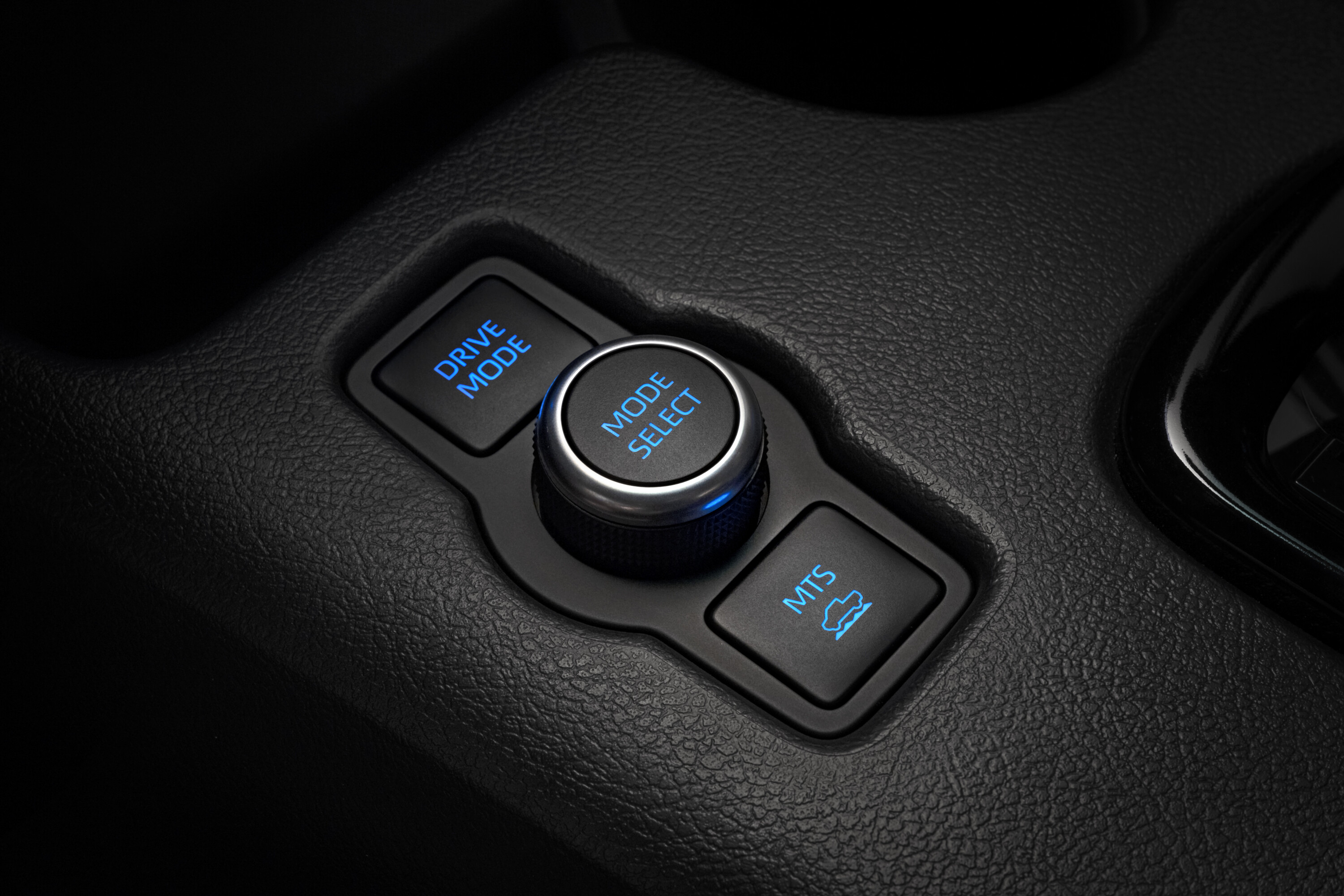
Variants fitted with 48-volt technology also benefit from a new MST (Multi-Terrain Select) dial, which sees the addition of six individual drive modes
The 48-volt option for the SR variant will be bundled with additional features, including dual-zone automatic climate control, keyless entry and push-button start, automatic up/down for the windows, and carpet floor mats.
The SR5, Rogue and GR Sport variants gain a wireless phone charger next to the gear shifter and two rear USB-C ports.
All SR variants – including those without the 48-volt option pack – now receive front and rear parking sensors.
In addition, all HiLux tubbed ute models have a new damping gas strut to make opening and closing the tailgate easier.
Toyota Australia has confirmed the new HiLux will retain its existing infotainment system with wired Apple CarPlay and Android Auto.
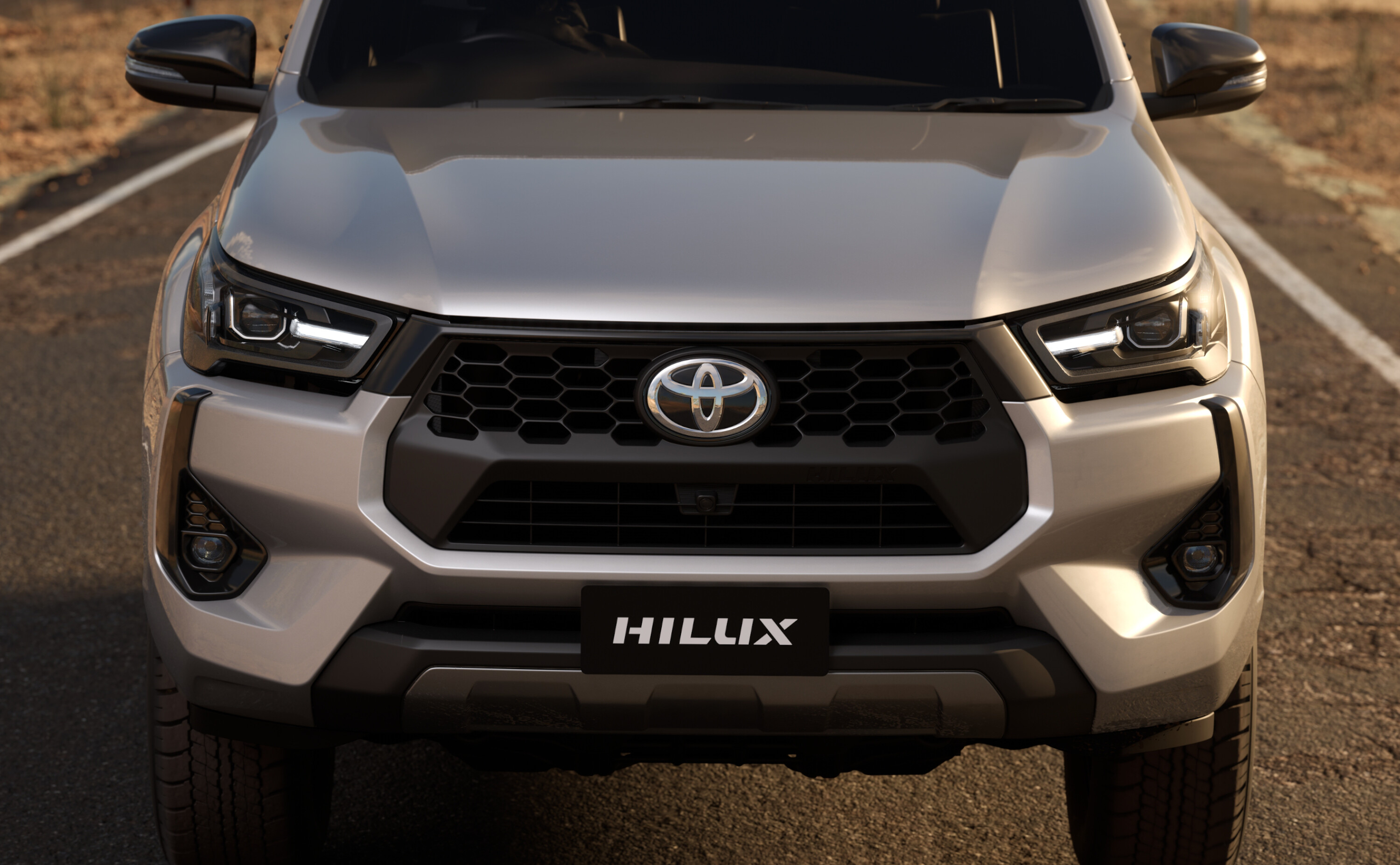
External revisions for the 2024 Toyota HiLux are limited to diesel-powered dual-cab models, and include a revised front end with an octagon shape for the grille, a trapezoidal lower section and a ‘bolder’ outer bumper that houses the fog lamps for the SR5 variant.
WorkMate diesel dual-cab variants include a new honeycomb mesh grille and a black lower and body-coloured side bumper finish.
Single-cab chassis and petrol dual-cab versions of the WorkMate retain the HiLux’s old styling that dates back to 2015 but receive a new black plastic finish for the bumper instead of dark grey.
SR models have a new silver lower-bumper finish, while the SR5 adds a black upper grille mould, dark-tinted headlight clusters, and gloss black trim for fog lamp bezels, side mirrors and exterior door handles.
Toyota Australia will be hoping the updates can help take the HiLux back to the top of the sales charts, after the arch-rival Ford Ranger ended its seven-year run in 2023.
The growing reliance on electronics when in the bush for things like fridges, battery tools, GPS, 12V ovens, induction cookers and pretty much anything else you can think of, has meant a growing reliance on auxiliary battery systems.
Charging or maintaining those systems when driving is simple enough, but what about when you set-up camp for a few days without any driving? You could run a generator but that relies on a limited supply of fuel; plus they’re noisy and not often welcome at camp. This is where solar comes in.
Portable or vehicle-based solar offers the flexibility to stay within remote areas without relying on fuel to recharge batteries. Simply connect a solar panel with a regulator to your batteries and away you go. Sounds simple, right? Until you go to purchase a potable solar panel and start hearing words like monocrystalline and amorphous silicon, and a grey cloud of confusion descends.
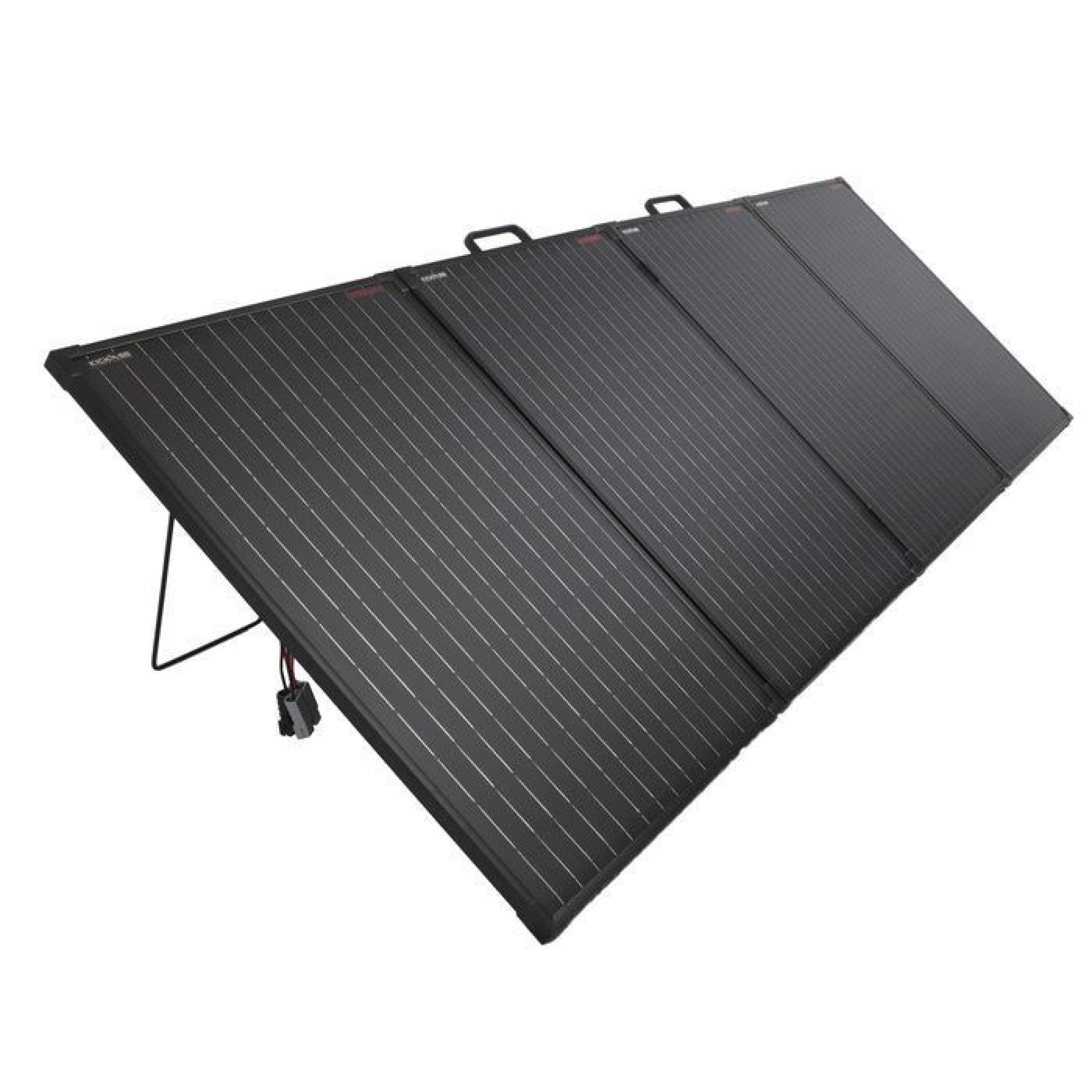
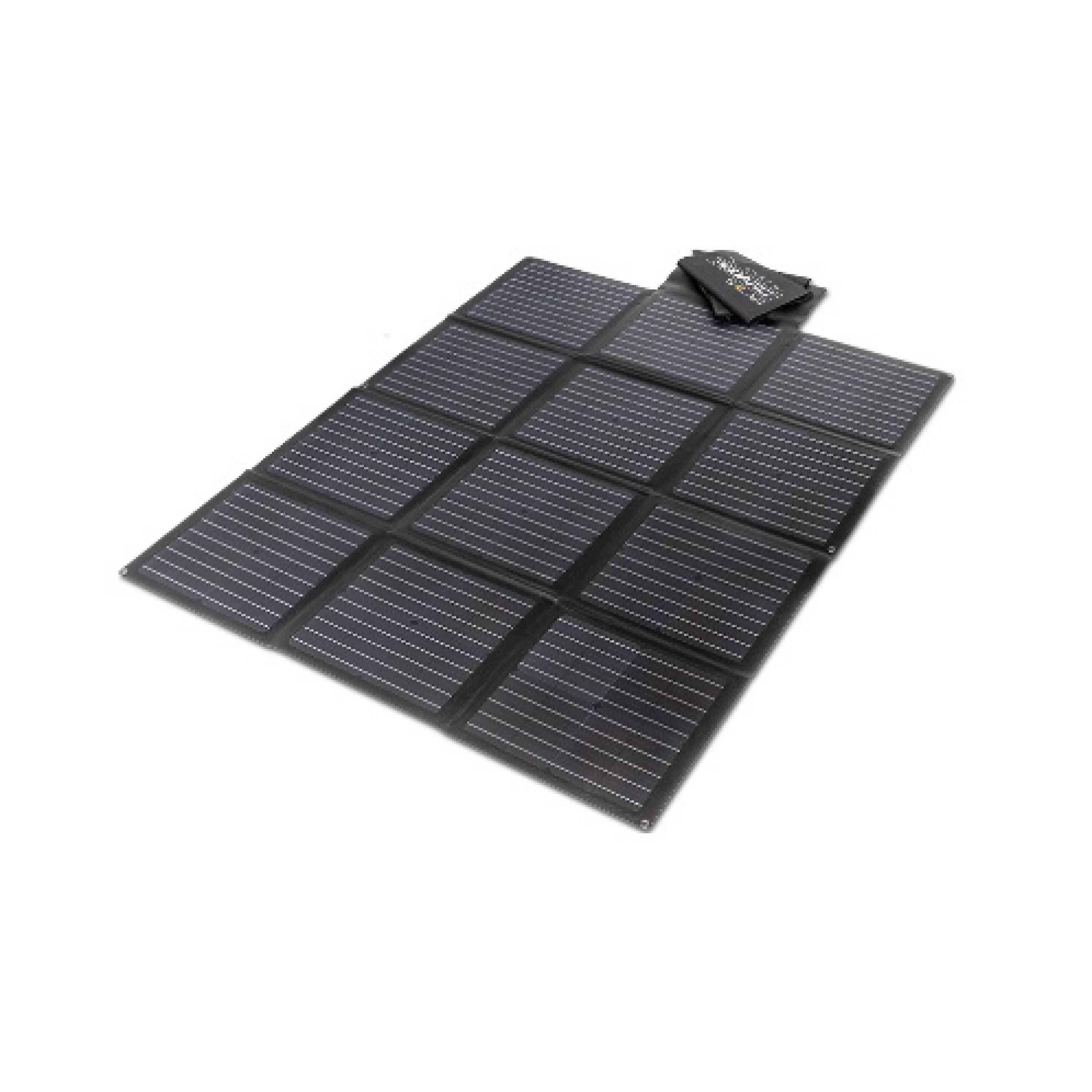
In this guide we’ve outlined some of the best solar panels on offer for four-wheel drivers, and we’ve split the panels in to three categories: Rigid; Folding/Flexible; and Solar blankets.
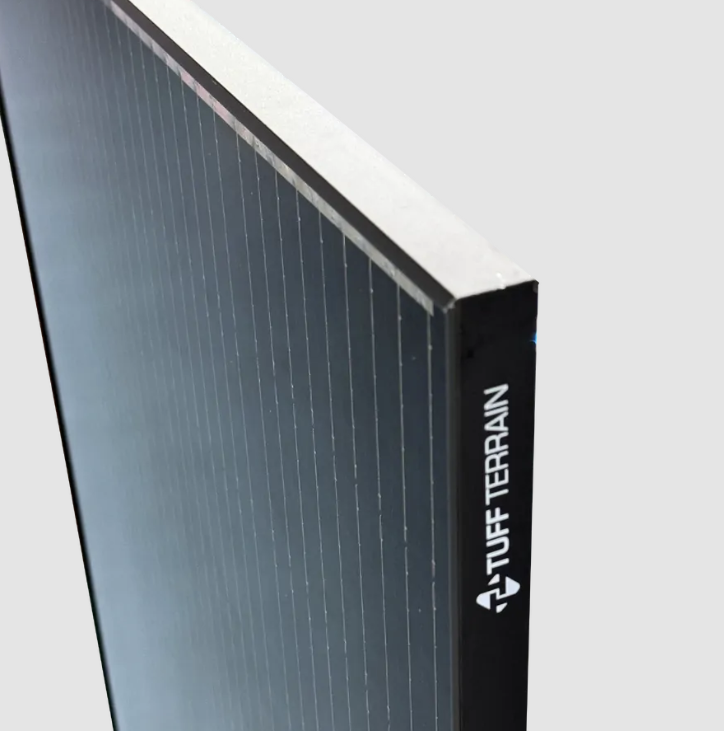
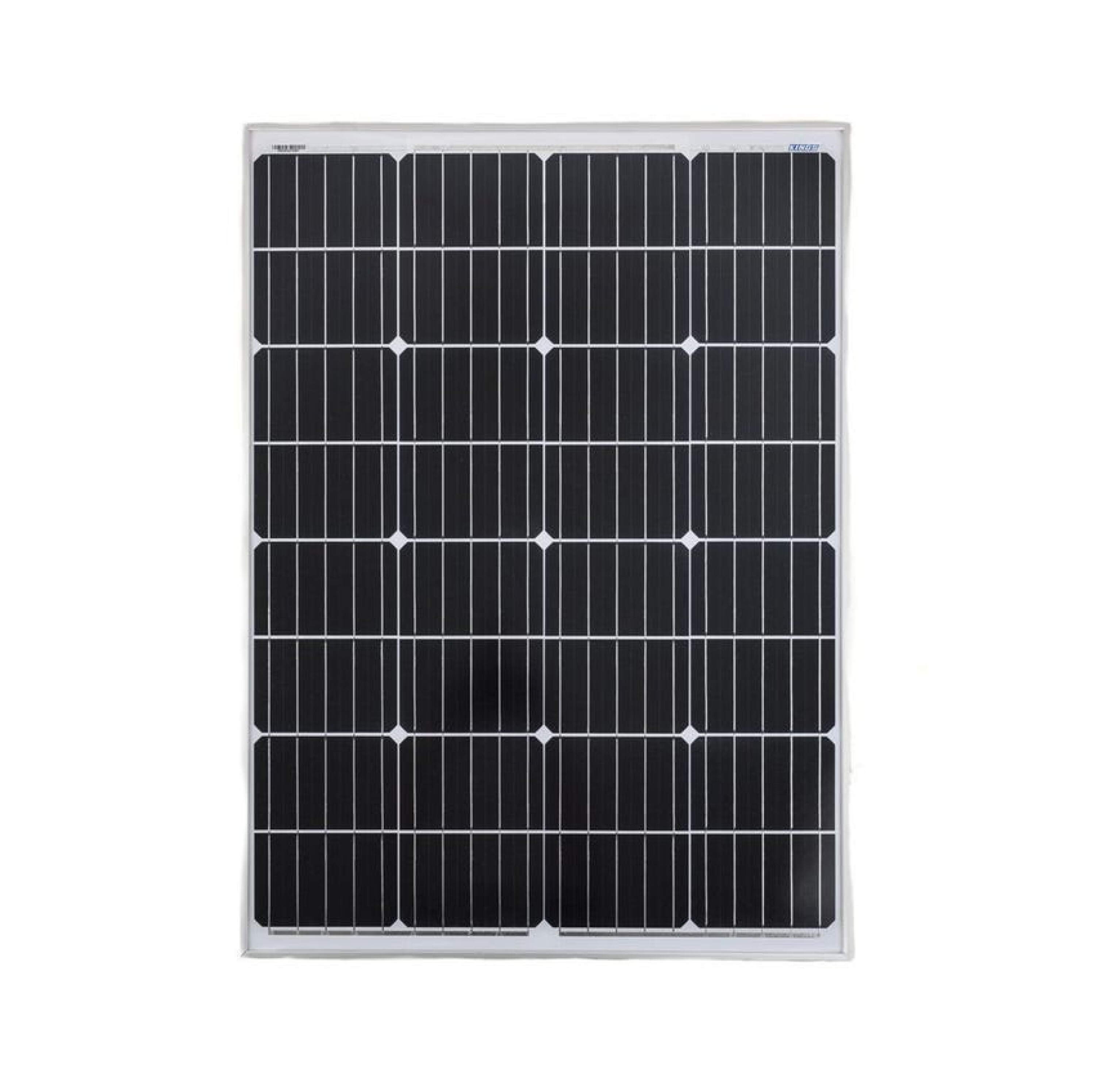
Tuff Terrain 12V monocrystalline solar panel (200W)
The Tuff Terrain 12V 200W monocrystalline solar panel provides 200W of power to run common 12V camp loads such as fridges, lights, and other off-grid gear.
Operating at 18.6 V, it is compatible with MPPT regulators and delivers reliable performance in a slim, 22mm, 10kg fixed-panel design. The 1400 x 700mm panel features universal mounting holes for up to M8 bolts and a robust aluminium frame built to handle corrugated roads, long trips, and hot conditions.
A 900mm lead with pre-fitted MC4 connectors allows quick connection to standard solar setups, making it easy to integrate into utes, vans, or campers. The kit includes the panel and the MC4 cable.
This panel is technically a fixed rather than portable unit, but with a massive 25-year warranty, we had to include it as it is a lifetime purchase.
It uses A-grade cells, which means it will maximise the power output from whatever sunlight is available. The panel also includes a diode bypass, which serves to minimise power drop caused by shade by redirecting power around shaded cells and features toughened glass to protect the cells.
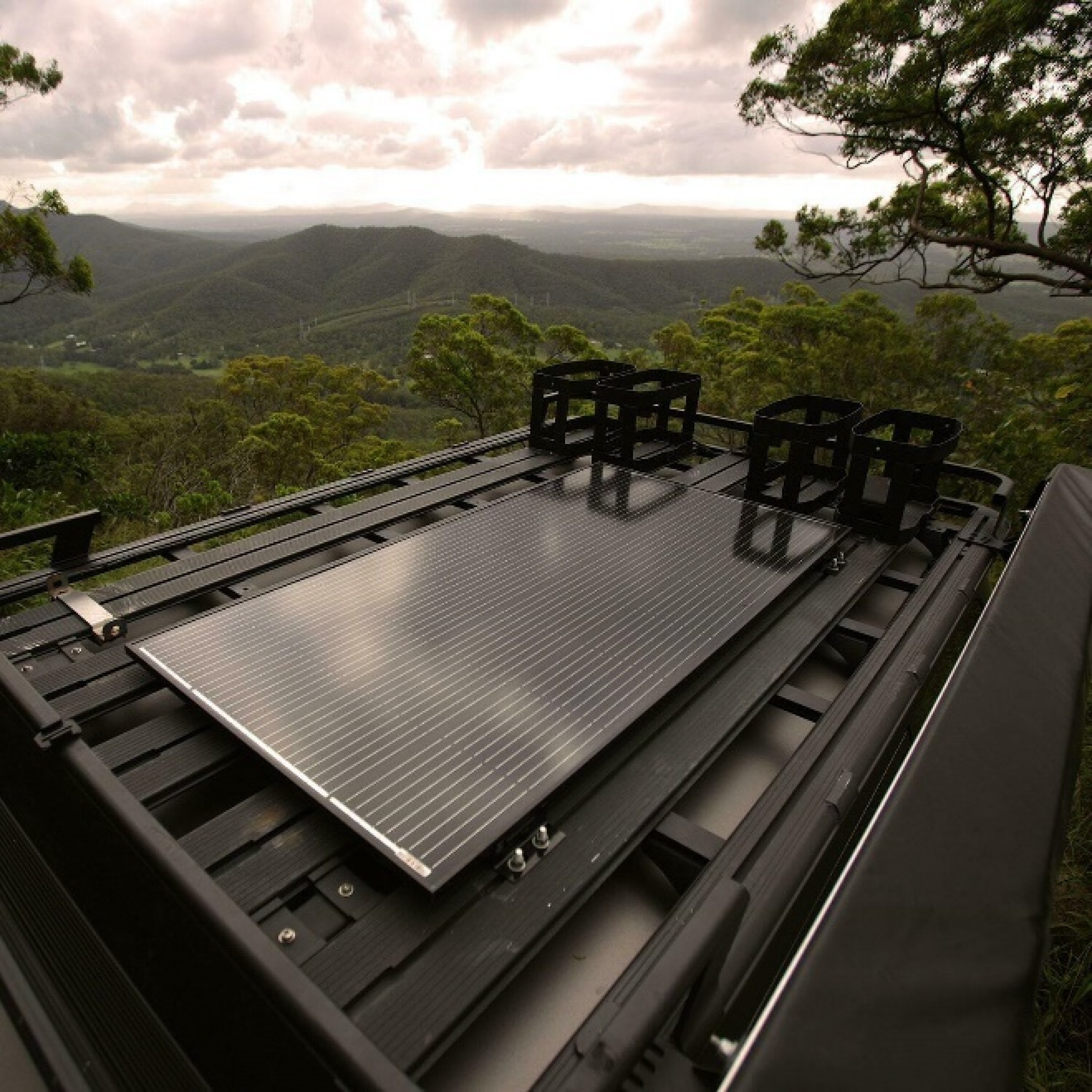
These top-range panels are designed to be permanently fixed to a vehicle or caravan and, as such, do not come with a stand of any sort. So, if using them as a portable option, you will need to jimmy up your own stand. They would likely outlive most vehicles and, with an operational temperature range of -40 to + 85°C, will work pretty much anywhere.
1
Power output
170W
Cell type
Class A Monocrystalline
Warranty
25 years
Weight
12.5kg
Pros
That warranty, a massive 25 years
Class A cells
Quality build
Cons
The price
Lack of stand to make it truly portable
At more than 1m long, it really suits bolting on rather than carrying as a portable panel
This panel is also technically a fixed rather than portable unit and is best suited to permanent mounting rather than being used as a portable unit.
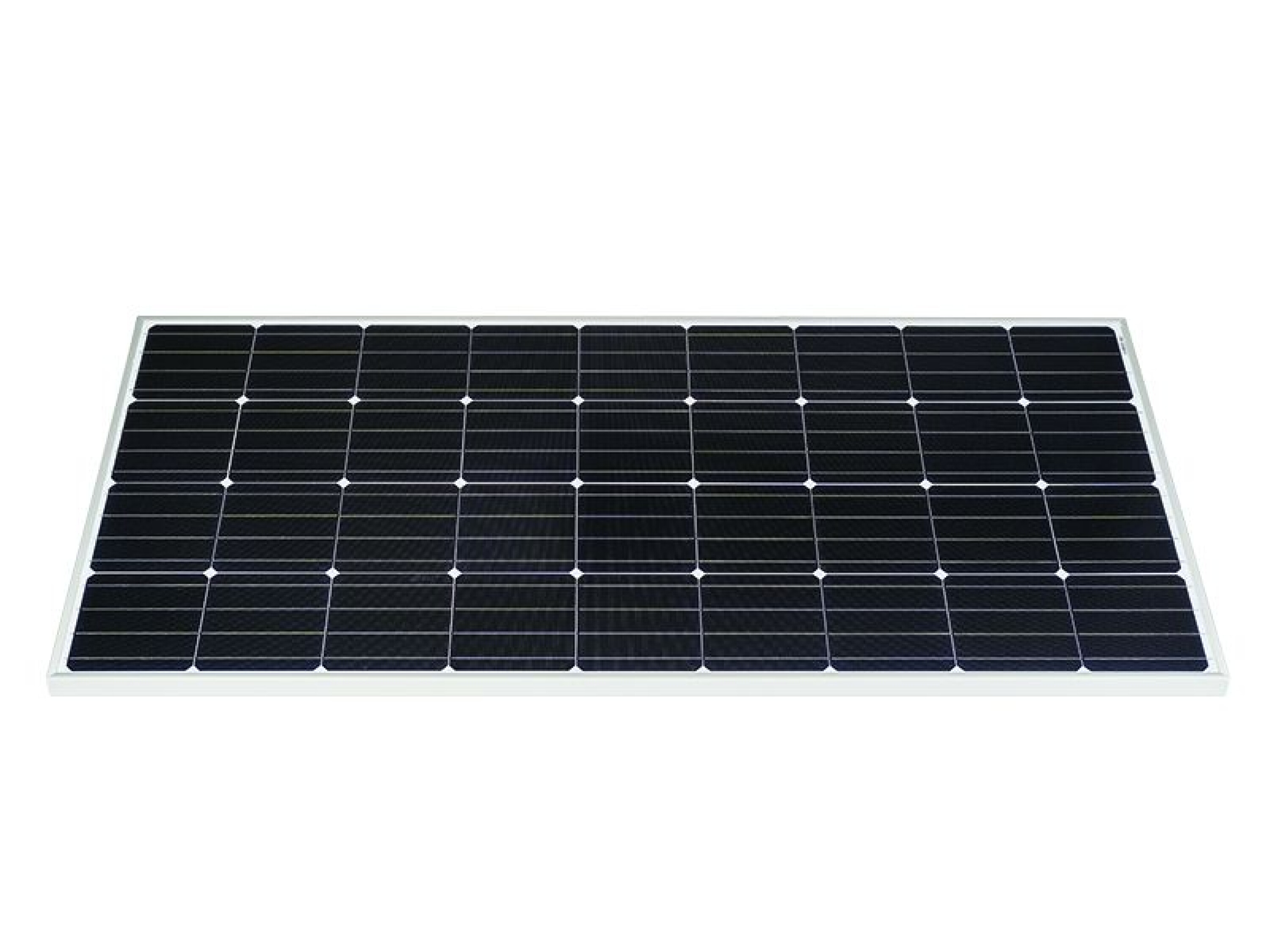
With 170W and a claimed 9.5 amps of power output, this is a great value option. Customer reviews indicate that even in overcast conditions this panel will output two amps of power; but without a bypass diode feature, shade will impact the output of the panel. The unit comes with a healthy 10-year warranty and utilises Class A monocrystalline solar cells. At only 17mm thick, this is a slimline panel that will assist in reducing wind drag and assist fuel economy.
1
Power output
170W
Cell type
Class A Monocrystalline
Warranty
10 years
Weight
10kg
Pros
Good value
Class A cells
Thin design makes this more aerodynamic than the competition
Cons
Reports of corner caps coming off and mounting bracket holes not lining up
No bypass diode to assist with shade functionality
Over 1.3m long, which would limit mounting options on some vehicles
As the budget-friendly option in this group, this panel is cheap. However, with only a one-year warranty this would suit the occasional user rather than someone looking for a long-term option.
With a maximum power output of around 6 amps, this panel is on the lower side compared to the competition and real-world reviews suggest achieving this output is near impossible. If you are a regular tourer that relies on off-grid power via solar then this is probably not the panel for you. But if you’re the type of camper that does one trip a year and doesn’t want to spend big on something that may not get much use, then this panel may represent great value. As you would expect from a cheaper panel, no bypass diode means that shade will severely limit the output.
1
Power output
110W
Cell type
Class A Monocrystalline
Warranty
12 months
Weight
7.4kg
Pros
Cheap (price)
Class A cells
Short enough to be mounted sideways on most vehicle roofs
Cons
Cheap (build) and a little over ambitious with output claims
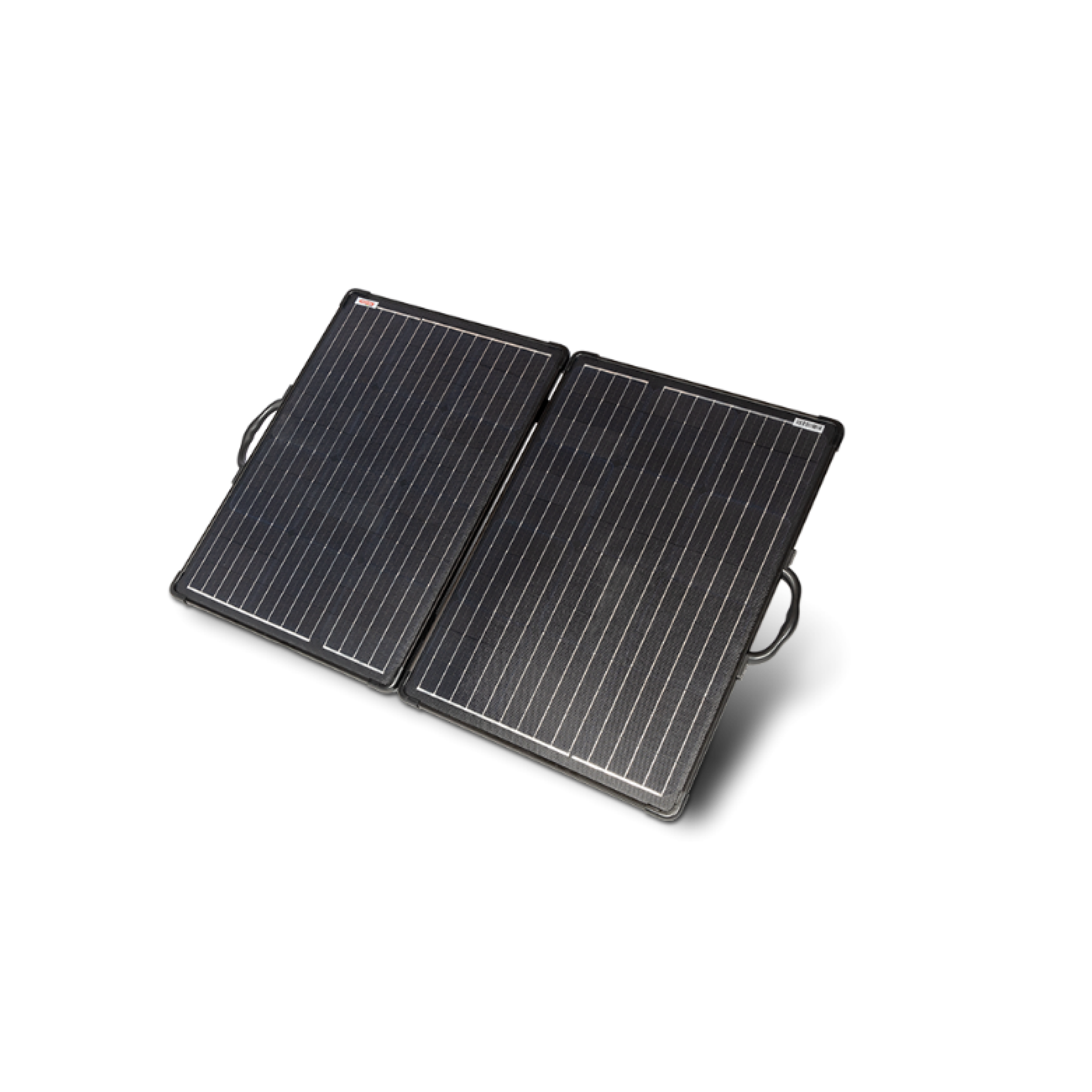
The gold standard. Redarc has been producing top of the line products for a number of years. Its solar panels, in particular, have an excellent reputation, but some might argue there is a badge ‘tax’ associated with this.
This panel comes with Anderson plugs already equipped, which makes it ready to plug in to a vehicle – a nice, simple, advantage over a lot of competitors. The panels fold up to a little over 500mm to fit in the average 4WD boot and includes a stand to allow it to be angled towards the sun when on the ground at camp. To make it tougher for touring, this product features an ETFE coating as opposed to glass. ETFE is more flexible than glass and can withstand higher temperatures. This also makes the panel very lightweight.
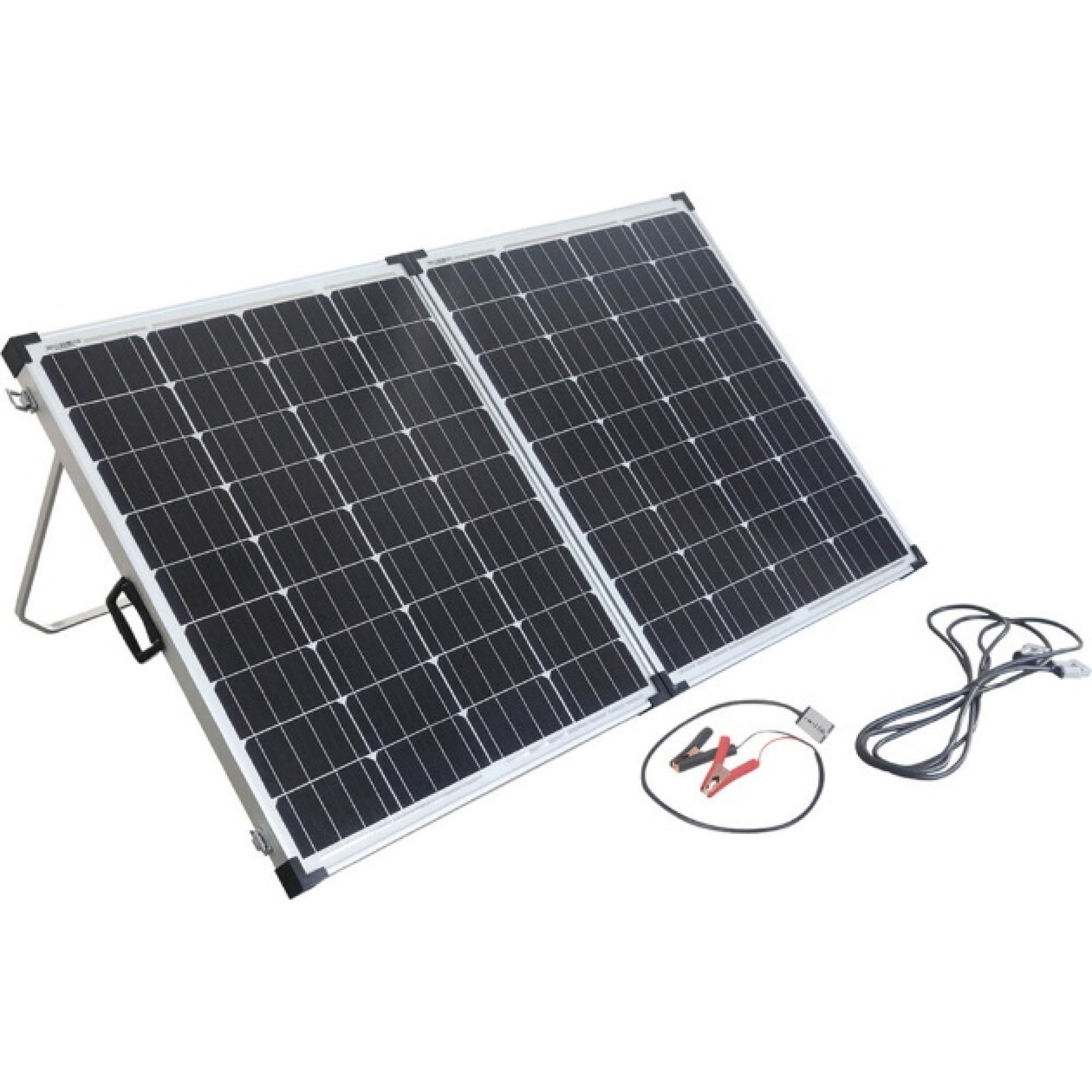
A budget-friendly option with a solid 160W output and pre-installed 5m cables and regulator, this panel comes ready to use right out of the box.
Inclusion of a 90cm long cable with alligator clips adds to the versatility and means this panel can be connected direct to a battery. With Class A monocrystalline cells, this panel outputs a genuine 160W or around 8.8 amps at a maximum. Users have reported it topping 10 amps in full sunlight. The panel includes an aluminium frame and dual stands to allow it to be angled towards the sun. A slightly larger folding size than a similar 120W unit means a little more space is required for transport.
1
Power output
160W
Cell type
Class A Monocrystalline
Warranty
12 months
Weight
10kg (approx.)
Pros
Good value
Regulator included
Anderson Plugs, alligator clamps and a long 5m lead pre-installed
Cons
Heavy compared to premium panels
The regulator may not be suitable for lithium batteries
Regulator mounted on the back of the panel means lifting the panel to see the read-out
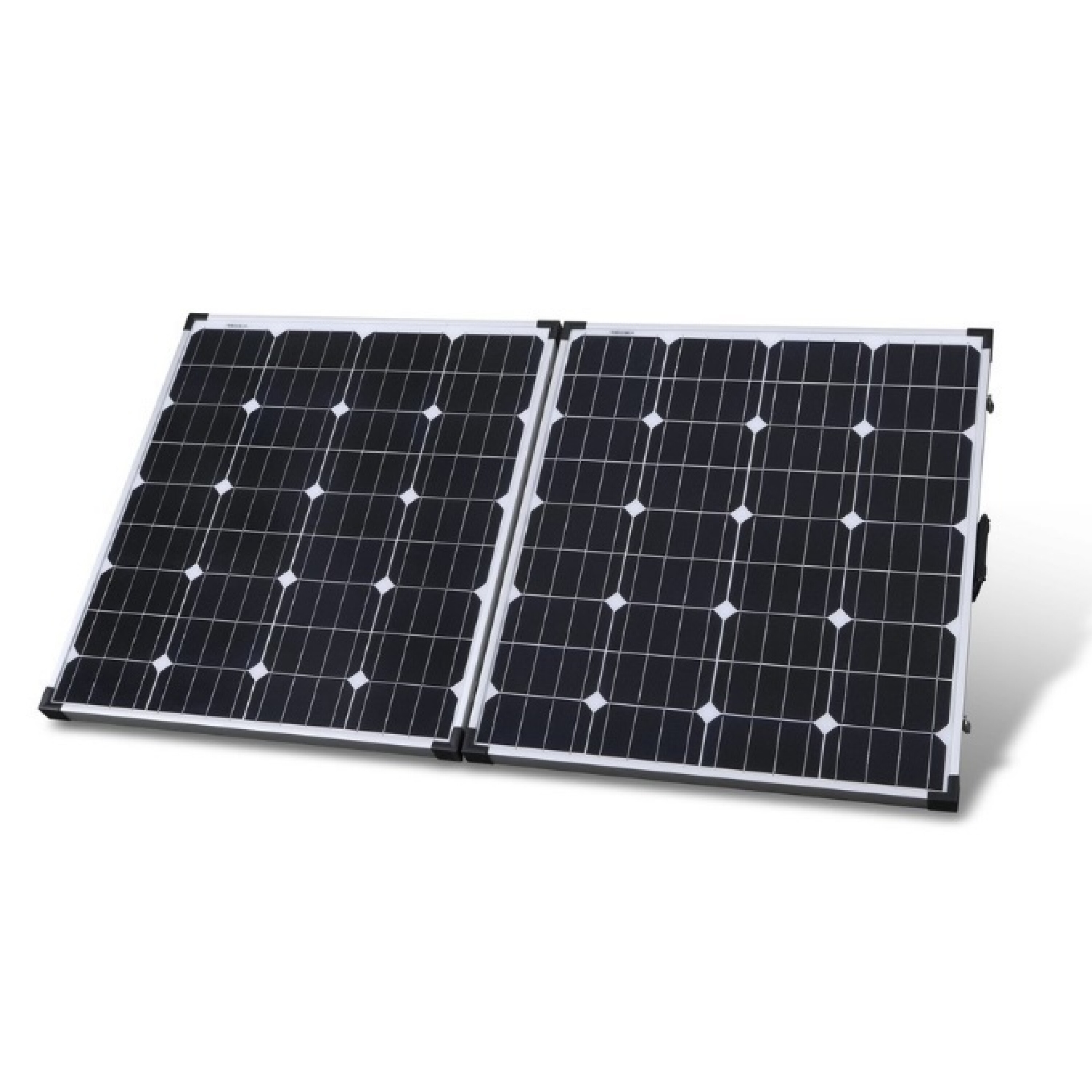
This is a like-for-like competitor with the XTM unit that includes excellent versatility thanks to the same built-in regulator and included cables.
The biggest difference between the two is the excellent warranty offered by the Powertech unit. This panel also includes a solid aluminium frame and stands to allow it to be angled towards the sun. The big question with this panel is: How much extra is peace of mind worth?
1
Power output
160W
Cell type
Class A Monocrystalline
Warranty
5/25 years*
Weight
15.5kg (kit weight)
*This warranty covers the panels for defects in construction and manufacturing for a period of 5 years and warrants that the electrical power will remain above 80% for 25 years.
Pros
Class-leading warranty
Regulator included
Anderson Plugs, alligator clamps and a long 5m lead pre-installed
The 200W package folds up to a very similar size to competitors’ 160W panels.
So, if you’re power hungry without a huge amount of extra space then this thin offering from Kickass is well-worth considering. This panel comes with pre-installed Anderson plugs and a regulator. The kit includes an additional Anderson-to-Anderson extension lead and a cable with alligator clamps meaning it comes ready to use right out of the box.
1
Power output
200W
Cell type
Class A Monocrystalline
Warranty
3 years
Weight
11.85kg
Pros
Thin design means this is one of the best closed-size to power ratios available
Weatherproof including hail-resistance
Full ready-to-use kit including extension cables and regulator
Cons
Pricey compared to 160W offerings
Magnets that hold the panels together when folded have been reported to be too weak
Cheap PWM regulator should really be a MPPT for this price
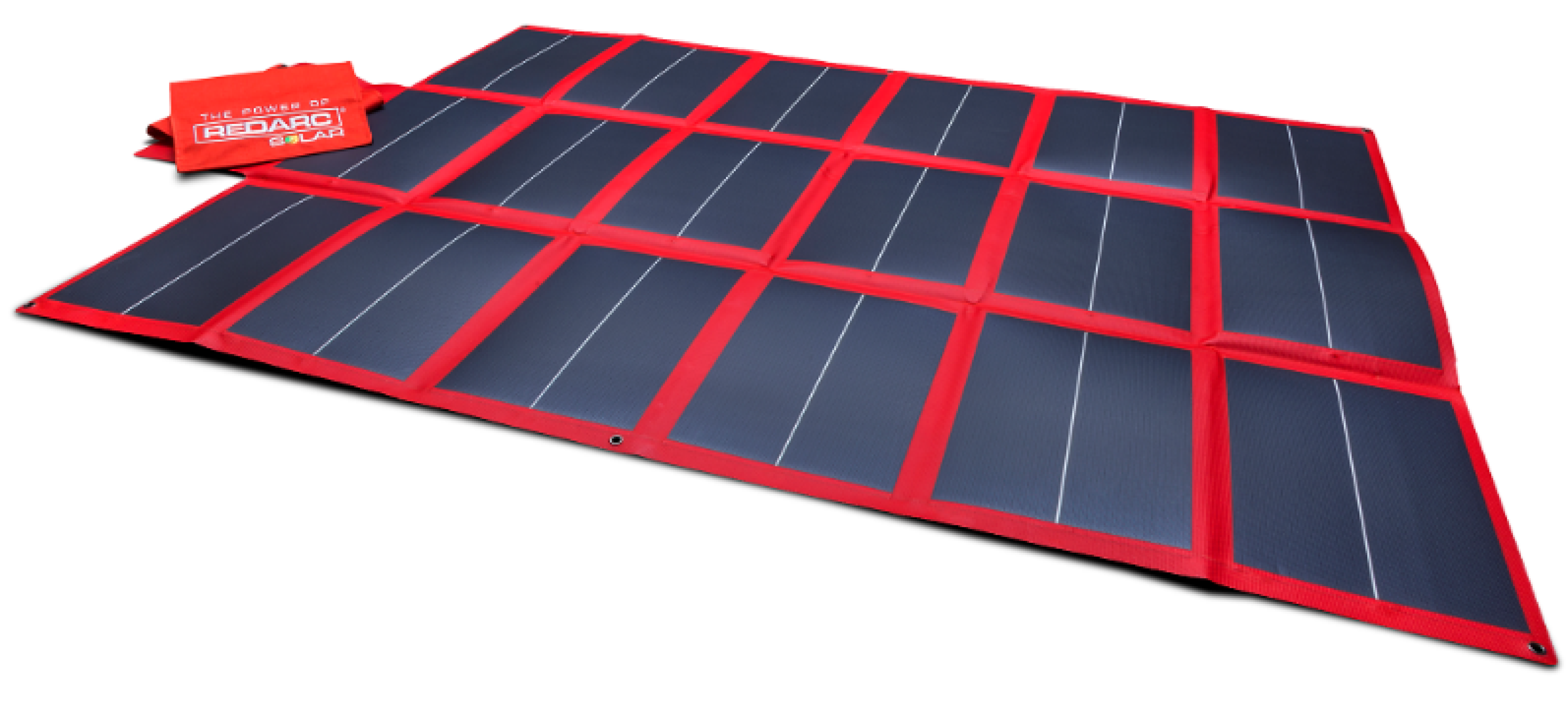
This Redarc unit is a premium folding solar panel at a premium price.
This top-quality unit features bypass diodes that connect each solar window, which effectively means if one window is blocked or shaded, then the remainder of the panel will still work. The panel is constructed with heavy-duty canvas and an anti-reflective, is scratch resistant with ETFE coating, which makes it tough and light. The Redarc panel comes pre-installed with Anderson plug connections but does not include a regulator.
1
Power output
240W
Cell type
Class A Monocrystalline
Warranty
2/25 years*
Weight
7kg
*This warranty covers the panels for defects in construction and manufacturing for a period of 2 or 5 years and warrants that the electrical power will remain above 80% for 25 years.
Pros
Outstanding power output in a small and lightweight package
Build quality
Bypass diodes that mean if one window is blocked the other 11 will work as normal
Cons
The price
For the money, a ready-to-use kit should be included
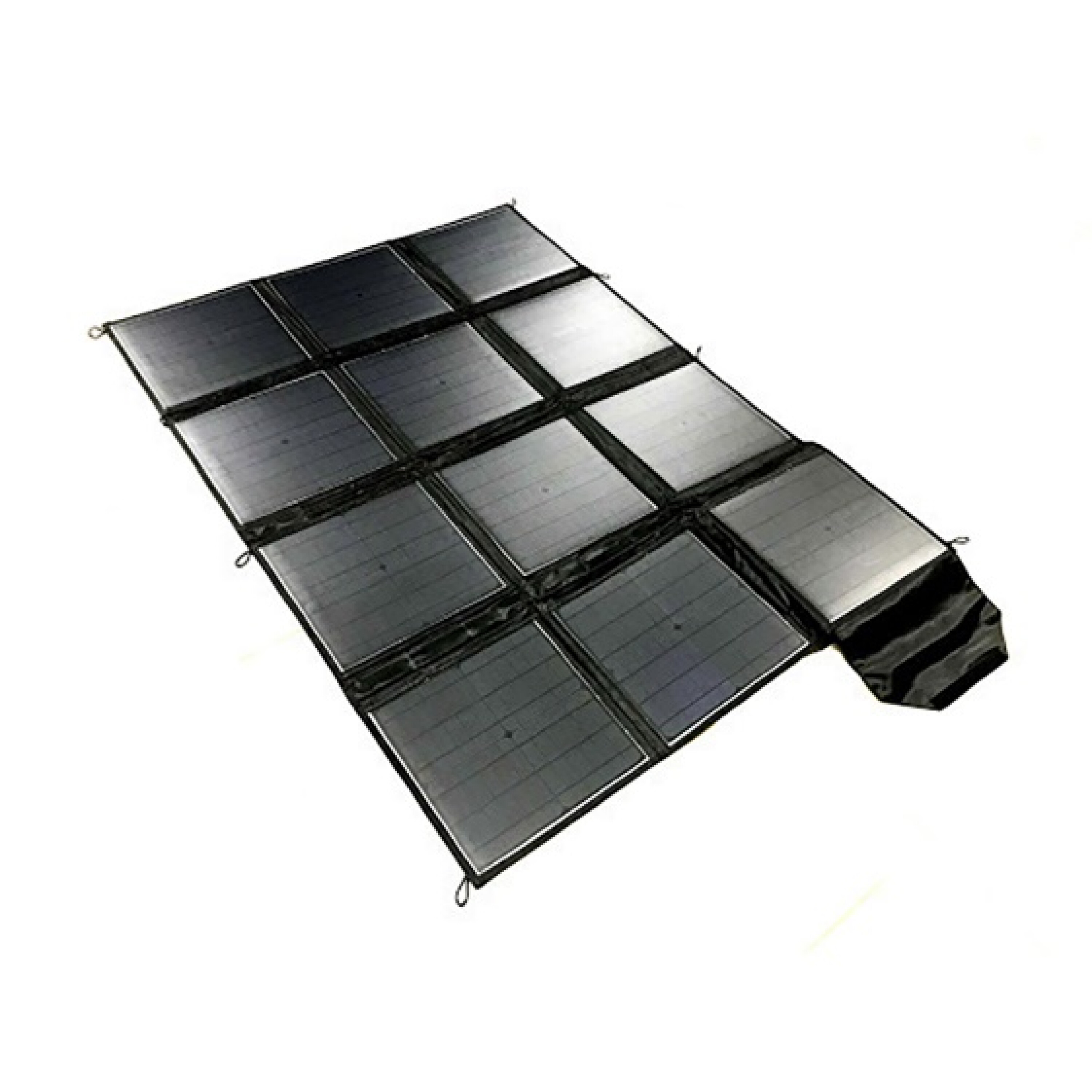
If the thought of spending more than $1000 on a solar blanket gives you panic attacks, then considering a KT blanket might be the way to go.
The unit comes with a confidence-inducing two-year warranty on the build and 25 years on the output. It also comes as a complete kit with regulator, cables etc included, so there’s nothing more to spend and the blanket is ready to be used right out of the box. This blanket includes a 12-window design for flexibility and includes a regulator that will charge all kinds of batteries, including lithium. The regulator also includes staged charging and is IP67 waterproof so a rainy day won’t hurt it. The open size of this blanket is quite large for a 200W unit indicates that the 200W output is very achievable and realistic.
1
Power output
200W
Cell type
Class A Monocrystalline
Warranty
2/25 years*
Weight
7.5kg
*This warranty covers the panels for defects in construction and manufacturing for a period of 2 or 5 years and warrants that the electrical power will remain above 80% for 25 years.
Pros
Good value
Warranty comparable to far more expensive blankets
Realistic output claims
Cons
Lighter grade nylon material compared to canvas of premium units
Heavier than premium units
The regulator is very good but an MPPT unit would be a welcome inclusion
Amorphous panels are designed to capture the full spectrum of light compared to conventional monocrystalline and polycrystalline solar cells. This means they work better in shade and overcast conditions.
Featuring the same heavy-duty canvas and ETFE coating as the monocrystalline panels, the amorphous version is every bit as lightweight and tough. With the better low-light performance, this panel would suit those that spend time camped in partial shade or in areas that are frequently cloudy (Tasmanians, I’m talking to you). Amorphous cells also cope with heat better, so would be a good option for those that spend time in the tropics.
1
Power output
112W
Cell type
Amorphous
Warranty
2/5 years
Weight
4.8kg
Pros
Unbeatable low-light performance
Build quality
Bypass diodes that mean if one windows is blocked the other 11 will work as normal
Cons
Pricey for output
For the price, a ready-to-use kit should be included
Output versus size is not as high as monocrystalline panels
We’re consuming more power when out and about than ever before. Fridges have been the norm for a while now but, with AGM and lithium batteries, four-wheel drivers have once again pushed the limits. Things like induction cookers are becoming more common; plus, we use our batteries to charge all kinds of electronics such as mobile phones, GPS units, camera gear and camp lighting.
This is where solar comes in. Portable solar panels come in all shapes and sizes: semi-portable/fixed panels, which work best bolted on to vehicles; folding rigid panels, which are super easy to set-up and pack-down; and solar blankets, which are lightweight and easy to transport.
Solar panels can be vital if you spend long periods camped at one spot without moving on, but buying a solar panel can be risky if you’re not sure what you’re looking at.
Cell construction
The most common cell construction you will come across is monocrystalline and, to a lesser extent, polycrystalline, which is becoming less common. We won’t get in to the technical aspects too much, but will note that polycrystalline is the cheaper of the two. Both types begin to lose output as temperature increases above 25°C, but monocrystalline cells lose less than polycrystalline cells. For this reason, monocrystalline cells are the more efficient of the two.
Monocrystalline cells are what you will find in the vast majority of portable panels on sale in Australia. These are great, cost-effective little cells, but shade, cloud and heat will severely limit their output. If you want to test this, try pouring some cool (not cold, as you may crack the glass) water over a solar panel on a hot day and watch the output increase briefly. Good quality monocrystalline cells will satisfy the vast majority of users.
‘Good quality’ is typically evident through the grade of the cell. Grade A cells are free of visible imperfections or defects; Grade B cells may have some slight defects but the power output will be the same. You will need to rely on manufacturers here because spotting those imperfections will be near enough to impossible for the layman.
If monocrystalline isn’t cutting it for you due to shade (cloud) or heat issues, the solution may be amorphous cell technology. These cells maintain a higher power output through overcast conditions and in high heat. These are far more expensive (up to double the cost of monocrystalline cells) but if you spend a lot of time in the tropical north where temperatures are regularly over 25°C or in the Apple Isle down south where it’s regularly overcast, then amorphous cells might be the only way to get reliable solar.
Design for purpose
When looking at a solar panel (be it rigid, folding or a blanket) the most important thing is whether it works for your needs and fits in with your set-up. If you have a lot of unused roof space then a rigid panel might suit you, but if you only have a tidy little space beside the fridge then a folding panel might work. Whichever design you go for, the panel needs to be built to work.
A rigid panel should be tough enough to resist hail and can be forgiven for not including a regulator and cables as it assumes a vehicle will be set up with those things. A folding panel should be light enough to transport and move around, come with functional stands and include a regulator and cables. Solar blankets should pack up small, be flexible and ideally should include a regulator and cables out of the box.
Output is obviously the most important thing to factor when determining which panel is for you. As a general rule of thumb, divide the quoted output in Watts by 18 to estimate the amps of power a panel will develop. (e.g. 200W panel would expect to develop around 11 amps of charging power at peak). Assess your power needs and remember this is a peak output not average.
Versatility
Fixed units are the least versatile of the group and can be used as portable panels in a pinch but are not designed for it. Folding panels and solar blankets are designed to be used anywhere, anytime. Units that come with regulators and cables genuinely meet the anywhere, anytime brief. Some top-of-the-line units lack everything required to be truly versatile but are better constructed and would be expected to last in the elements for longer than budget-friendly units.
Price and value
Hunt around eBay and you will find a bunch of very cheap panels. A low price is great and all, but with something like solar what we are really looking for is value. Many of the cheaper panels will underperform and not actually reach their quoted power output. In addition, cheaper panels are often poorly made and some time in the harsh Australian sun will see them quickly deteriorate.
For this reason, we’ve excluded eBay ‘specials’ from unknown suppliers and generally only included reputable manufacturers. We’ve also excluded anything below 100W, as less than this is simply not enough to keep up with even running a fridge on a hot day.
Value-adding inclusions like regulators and cables are highly rated here. A solid warranty ensures peace of mind and adds to that value.
How to avoid being ripped off
Unfortunately, this industry is rife with sellers claiming unrealistic power outputs from panels that simply cannot ever achieve it. The simplest way to avoid buying a claimed 200W panel that only outputs 100W is to check the size of the panel and compare it to the size of a reputable manufacturer’s panel. A panel that has half the area of a comparable reputable panel cannot output the same power. Monocrystalline panels should have a cell efficiency of around 15 to 24 per cent and any massive variation outside of this would be questionable.
Based on a 200W panel size of 1110mm x 992mm, the area required should roughly be 0.0055m2 per Watt. Use the following size guide as a reference when shopping. Any panel with a significantly lower area and you’re probably looking at a dodgy unit.
100W panel = 0.55m2
120W panel = 0.66m2
150W panel = 0.825m2
160W panel = 0.88m2
200W panel = 1.1m2
250W panel = 1.375m2
What to look for
Searching for solar panels can be overwhelming, but if you consider your power needs and the type of functionality you require, it begins to become clearer. Consider the level of portability you require and that will quickly decide whether you need a rigid, folding or portable panel.
When considering your usage, consider whether something ready to go out of the box is for you or maybe whether your existing top-of-the-line DC-DC charger accepts solar. Look at output and compare it to the size guide above. Ensure you will have enough output to power all of your gear (and don’t forget the toys). Ensure the panel you are looking at actually has a chance of meeting the quoted power output, and remember the quoted output is usually peak power. Less than optimal conditions will reduce this output.
The type of cells can be very important to people who spend a lot of time in extreme conditions. Amorphous may seem expensive, but if they work where others won’t then they may represent great value.
After-sales support
A well-known and respected brand with a good warranty and manufacturer support should provide confidence during the purchase process and many happy years of portable power. Try to cheap out and chances are you will be buying again in the near future. Be sure to check what the warranty covers, as many will have separate warranties on the build versus the power output.
4X4 Australia has been reviewing four-wheel drive vehicles, aftermarket products and camping gear for more than 40 years. When looking for the best swags in Australia there are some things that are essential to ensure you sleep soundly under the stars.
When we compared each of the swags in the list with hundreds out there we looked at the size, weight, durability and price. We also searched for additional features that make these swags stand out from the rest.
We looked at hundreds of user reviews and drew on our own experience sleeping in swags to make sure our recommendations are for the best on the market.
Disclosure: When you buy through our links, we may earn a commission. We also include products that we do not earn a commission from.
Sales figures show us each month what the most popular used cars are for Australian buyers, but popular doesn’t also mean best.
When it comes to the wildly popular ute segment, you should make sure the three models below are high on your list of cars to consider.
While the Triton definitely isn’t the last word in refinement, space, or comfort, it’s propelled as much by its strong value proposition as it is by its rugged mechanicals.
And there’s also the appeal of its conditional 10-year warranty, which – provided the previous owner had it serviced within the Mitsubishi dealer network – should leave you with enough warranty coverage to last the rest of the 2020s if you don’t breach the 200,000km distance cap. Yet even if servicing was handled elsewhere, the Triton still gets seven years and 150,000km of warranty regardless. Not bad at all.
Compared to its contemporaries, the MR Triton is a little on the small side in terms of footprint and load-carrying potential (though not by much). But a workman-spec GLX or GLX+ 4×4 auto can be had in the $30-36K region, which represents about a $10K discount on what they cost new. If you’re looking for a ute to last the long term, a fully warranted Triton is tough to beat.
Nissan’s first crack at the Warrior formula resulted in a rig that heaped a sizeable measure of off-road mods on top of a range-topping Navara – and it was all covered under warranty too. Developed by performance-car specialist engineering company Premcar, it worked like a dream when steered off the blacktop. Wanted a Ranger Raptor but didn’t have the budget? The Navara N-Trek Warrior was an affordable alternative.
Now, with its facelifted (but mechanically quite similar) replacement – the Navara Pro-4X Warrior – on sale, the N-Trek Warrior is a conspicuous bargain for those looking to take their utes somewhere muddy or dusty.
They tend to be priced in the low-$40K region, but higher-mileage examples can be found in the high-$30K realm. Considering a Toyota HiLux Rugged X or Ford Ranger Raptor of comparable age trades for about $10-15K more than a Navara N-Trek Warrior, that’s a cracking deal for something that’s outback-ready straight out of the box.
We love the D-MAX. It seems you do as well, given sales figures of Isuzu’s evergreen ute. The big draw is this vehicle’s proven reliability and both the affordability and availability of spare parts.
The four-cylinder 3.0-litre turbodiesel engine is mated to a bulletproof Aisin five-speed auto ‘box as seen in some old Prado models, so you know it’s not about to let you down.
While the D-MAX’s billygoating abilities may not be quite as athletic as some of its more modern rivals, it’ll mop up corrugated development roads all day without complaint. The interiors are workmanlike, but the plus side is that they’re easy to clean and not a lot goes wrong.
The facelifted D-MAX II LS-U from 2016 through to 2019 can be yours from a good deal less than $30,000, even with fairly modest mileages on the clock.
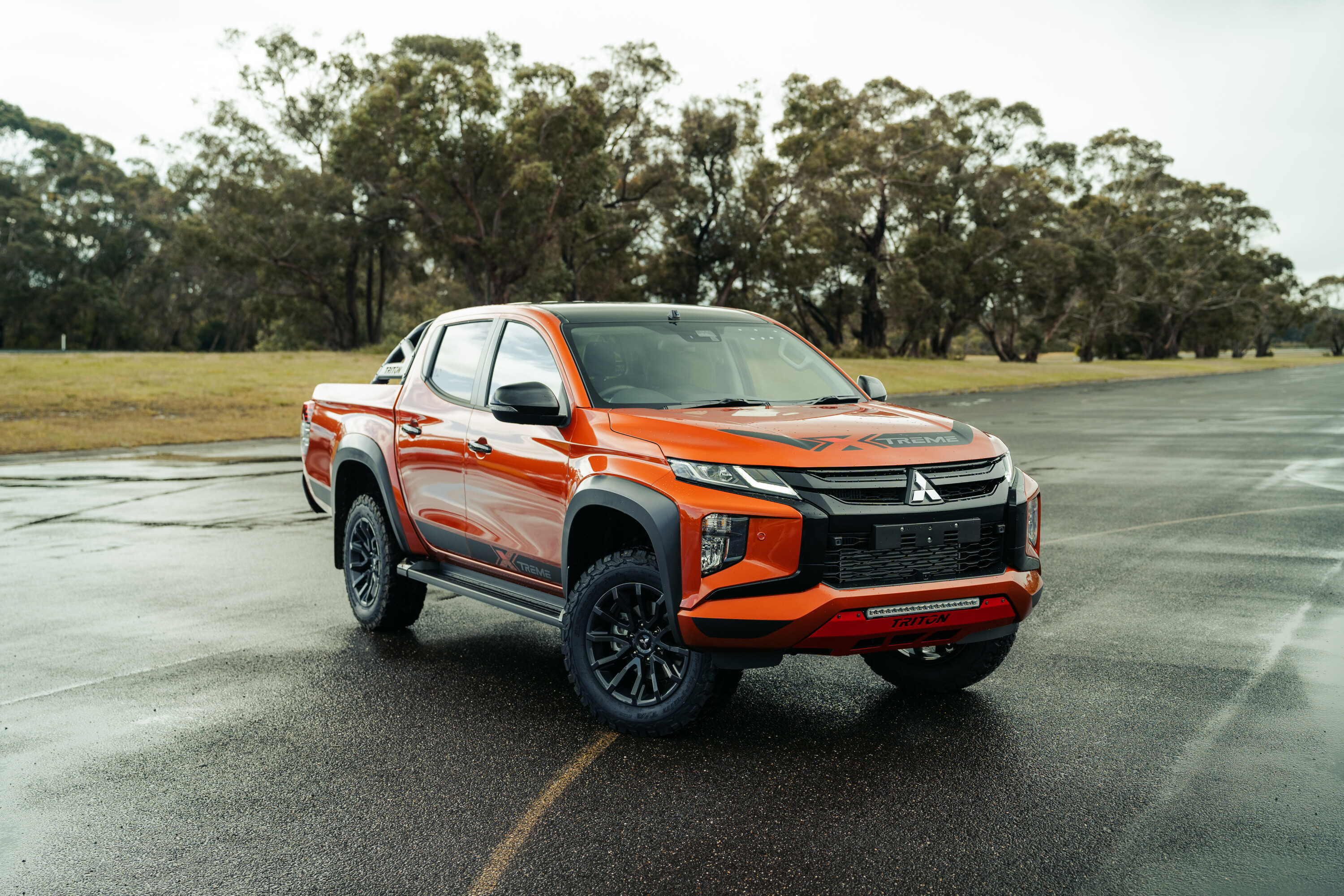
The fifth-generation Mitsubishi Triton was left without a factory-sanctioned halo variant until the very end when Australian second-stage manufacturer Walkinshaw launched the worked-over Triton Xtreme as a Nissan Navara Warrior rival.
It was a short 18 months from sketch to a limited 500-strong run, and the capability of the product in such a quick turnaround impressed Triton chief product specialist Yoshiki Masuda.
When asked if there’s a works Triton above GSR in the pipeline to rival the likes of the HiLux GR Sport, Ranger Wildtrak X, and Nissan’s Warrior, general manager marketing & product strategy Oliver Mann noted how the Walkinshaw relationship had shown Mitsubishi what was possible in our market.
“Global corporations have to make global decisions”
“We have looked at the vehicle and driven the vehicle, and we’ve been impressed with what [Walkinshaw] has done.
“It’s probably another one of those exploratory projects that explores where the pick-up proposition can go as a performance variant”, he told 4×4 Australia.
Masuda-san said: “Of course, you know, we want to have a more high-end model hero car and we want to expand in that direction”, but that currently, the launch line-up is the brand’s focus, followed by expanded single- and club-cab offerings.
“[Triton Xtreme] helped, I think, inform what the market opportunity might look like from an Australian perspective but obviously, global corporations have to make global decisions”, noted Mann.
1
Similar to Premcar’s targets with the Navara Warrior, Walkinshaw’s goal with Triton Xtreme goal was to craft a reliable, warranty-backed ute with upgrades that enhanced both off- and on-road capability.
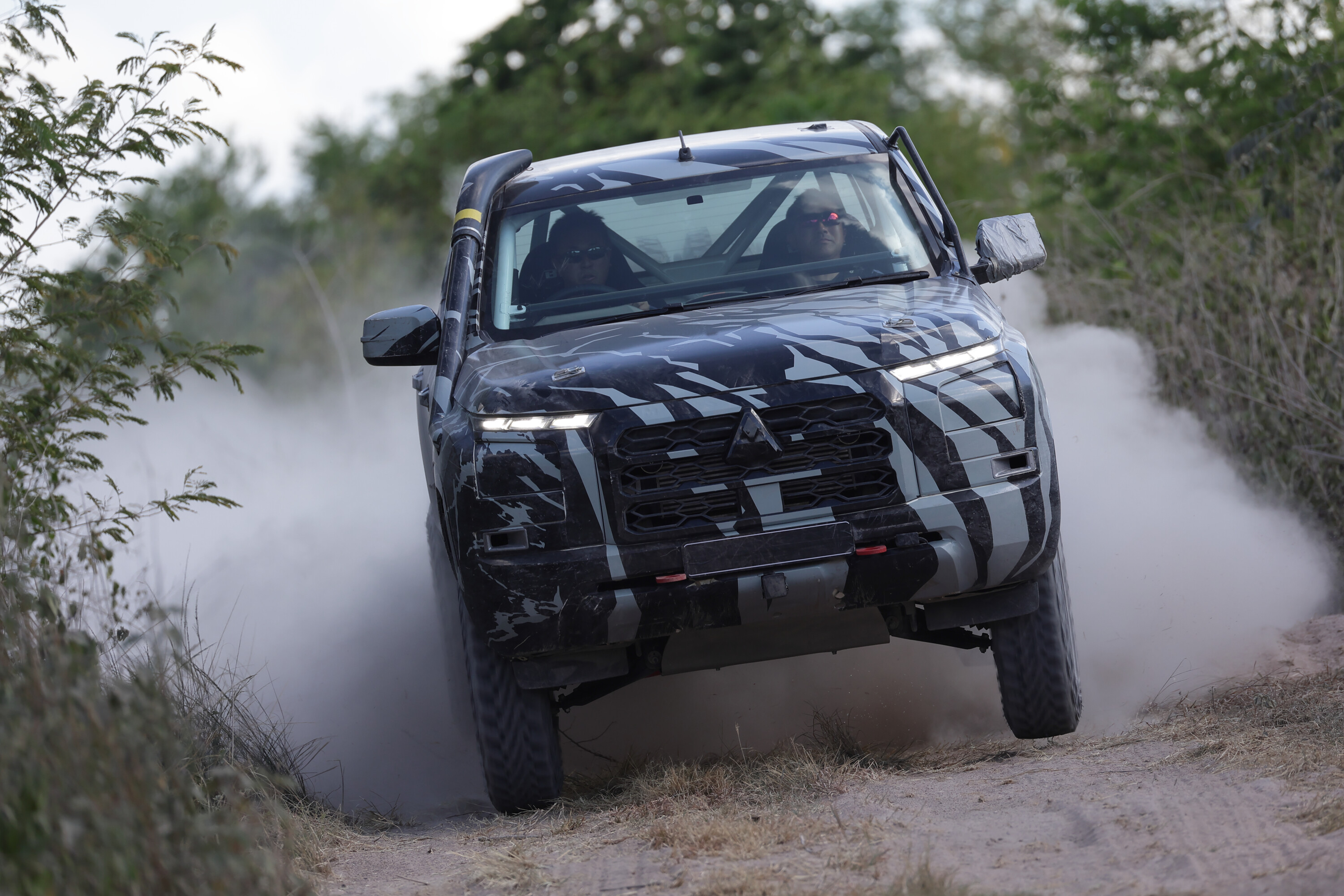
With the majorly enhanced sixth-gen Triton – its much stronger frame, 50mm wider track and 130mm longer wheelbase – Mitsubishi has an even sturdier base to work from, and Masuda-san reckons the Ralliart in-house tuning arm can make a tougher ute.
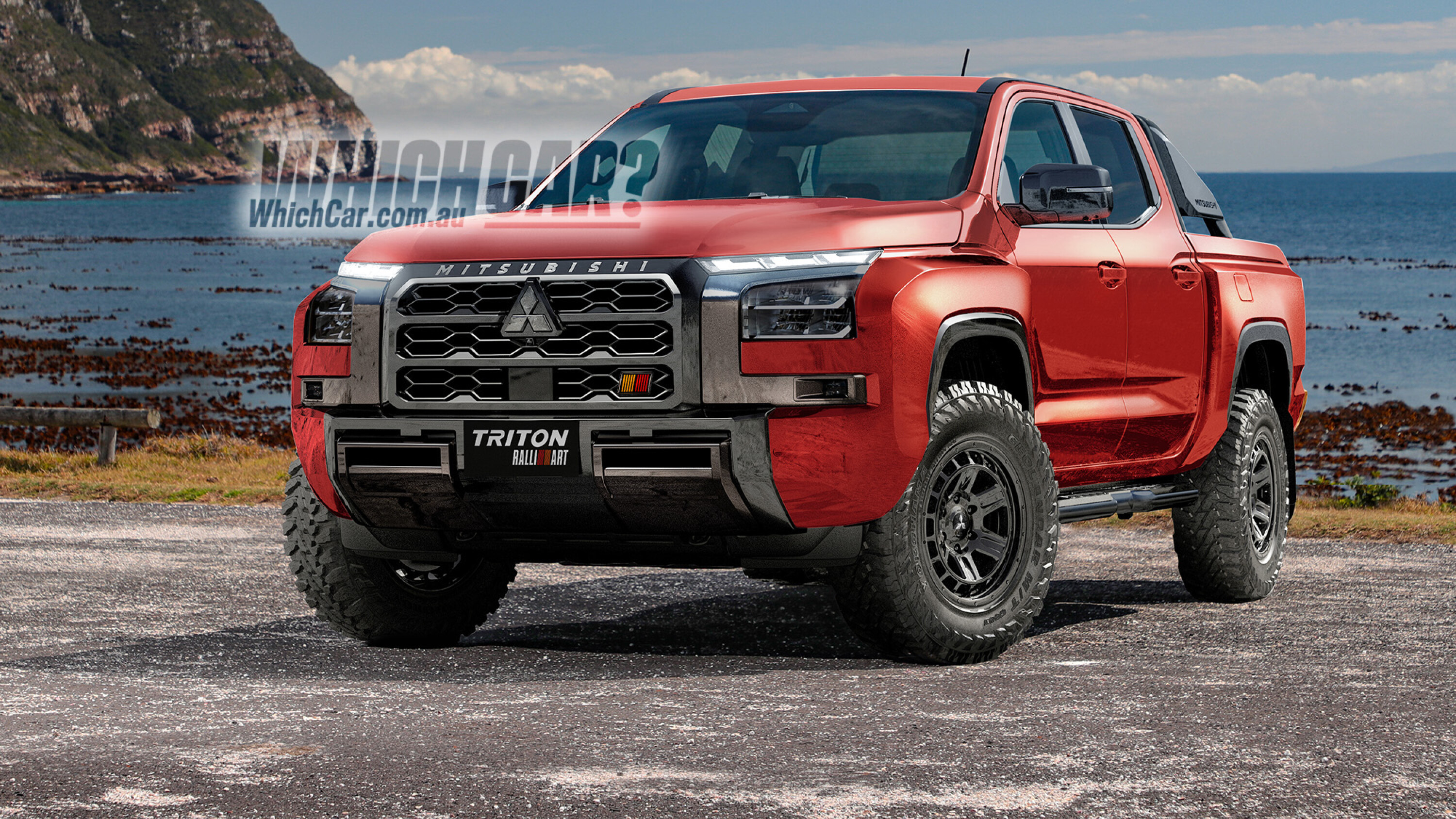
Expect similar upgrades to wheels and tyres for a Ralliart version; a suspension lift is a given. Extra underbody protection and visual enhancements are sure to play a part, too. We’ve already commissioned a speculative Triton Ralliart render to give you an idea of what to expect.
1
Mitsubishi developed the Triton’s frame with electrification front of mind, and is currently weighing up whether battery power or a plug-in hybrid powertrain (either petrol- or diesel-based) will best suit the ute application.
We also know Ralliart has been playing with the idea of performance-oriented plug-in hybrid tech, hinting at a tri-motor Outlander Ralliart halo concept in 2022. It’s possible this technology could feature in a future hi-po Triton – electric motors are famously not short on grunt, and a PHEV Triton could give Mitsubishi a true Ranger Raptor rival.
There’s another segment of dual cab buyers Mitsubishi sees potential in, though, those more interested in on-road presence, cabin presentation, and towing. The proliferation of older couples looking to explore Australia has seen the rise of plush specs including the $76,990 (before on-road costs) Ford Ranger Platinum.
Featuring 20-inch alloy wheels, quilted Nappa leather upholstery, heating and ventilation for the front seats, wood trim, brand-name stereo and more, the flagship Ford’s spec sheet reads more Mercedes than Mitsubishi.
The new Triton is capable of towing up to 3.5 tonnes (braked) and promises a more secure on-road drive with Australian-tuned steering bringing it closer to a large SUV than ever, so perhaps the luxe route is the one down which Mitsubishi should go.
Regardless of whether luxury or capability is where the Triton’s future variants will go, the team was not discussing details of a potential Ralliart or other halo. However, Masuda-san enthusiastically told 4×4 Australia that a ‘dream’ Triton is “really high up on my to-do list.”