Yes, it’s true, we include a set of Maxtrax on all our 4×4 builds as we reckon they are a great Australian-made product that can be the easiest way out of a boggy situation when exploring in your 4×4.
Maxtrax has also been a great friend of 4X4 Australia magazine since the product’s inception and we’re proud to carry them on our rigs. In reality, we hope we never have to use our Maxtrax as we prefer to do our driving without getting stuck, but while out on a recent photo shoot with our Ranger, we were reminded why we carry them.
It was a simple grassy track across a paddock, a bit wet in patches and it led into a section that was muddy, as it had been dug up by vehicles in the past. It didn’t look too hard and we cruised in using low range and all was going well… until the last little bit where a bit more speed would have been prudent.
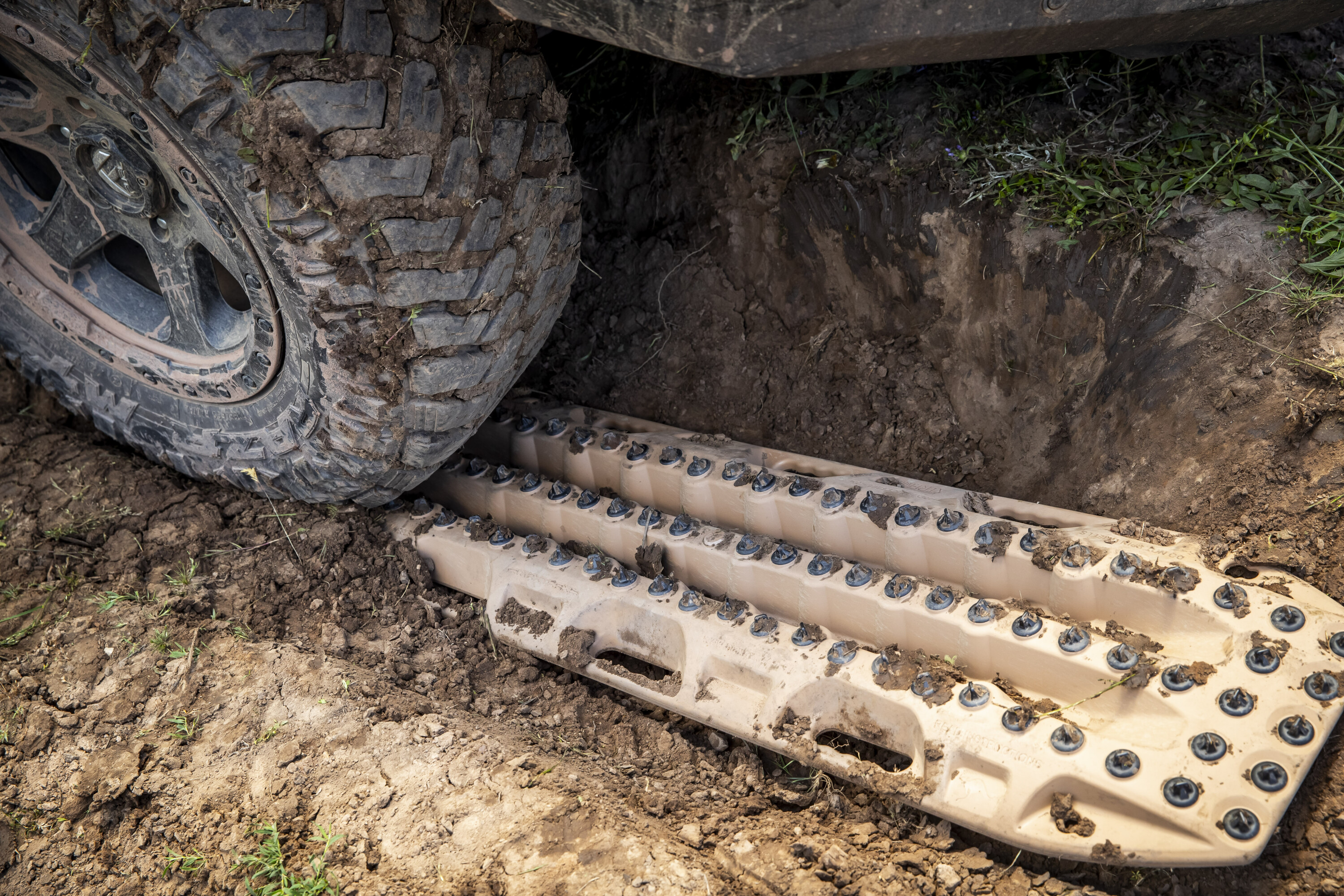
As the front tyres lost traction and the rear diff was hung on the centre of the track, progress ceased, and we couldn’t move forwards or backwards.
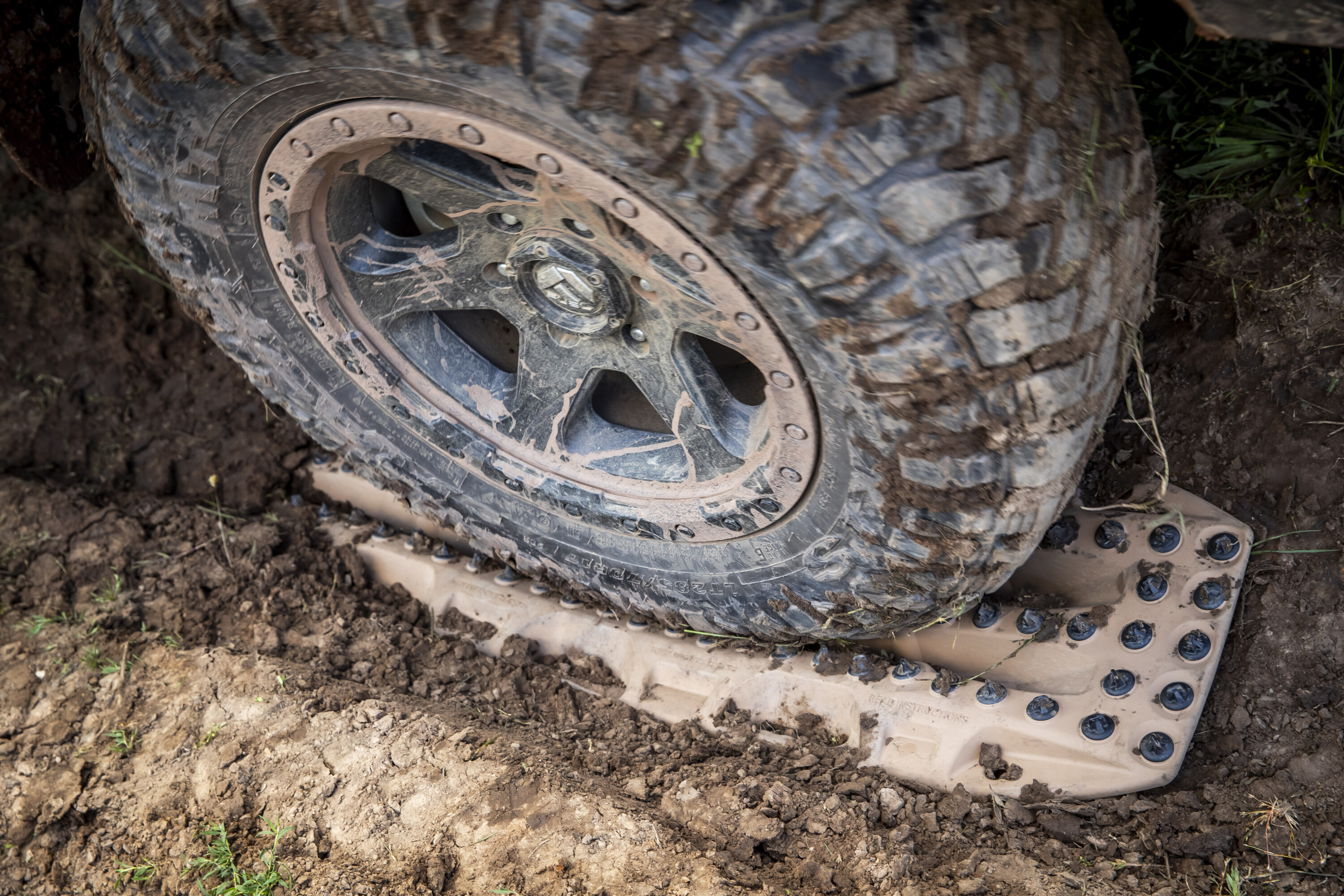
Inspecting the situation at hand we could have grabbed the shovel and dug our way out, used the winch on the front of the vehicle, pulled it out with the photographer’s vehicle… or opted for the easy way out. We chose the latter and grabbed a pair of Maxtrax Xtremes off the Rola roof rack and wedged them under the front tyres.
The Xtremes are an evolution of the Mk2 Maxtrax and are significantly different in that they use screw-in aluminium studs for the tyres to gain purchase on instead of the moulded composite ones of the other Maxtrax boards. This change came after users complained they were melting the composite studs off the boards by aggressively spinning their tyres on them, despite the manufacturer’s instructions not to spin the wheels.
The 88 alloy lugs are not only stronger and won’t melt away but they are replaceable should you lose or damage one or more of them. Replacements lugs are available direct from Maxtrax.
As always, the best way to use your Maxtrax is to make sure they are firmly under the tyres needing traction so that once the tyre turns it will pull the track under the tyre and lift the vehicle out of the bog, be that mud, sand, snow or whatever. They even work well for bridging a step or ledge.
Use all your vehicle’s available traction aids if you haven’t already. Make sure your tyre pressures are lowered, engage your lockers and low range and apply as little throttle as possible so that the tyre can climb on to the Maxtrax and get you out of the situation.
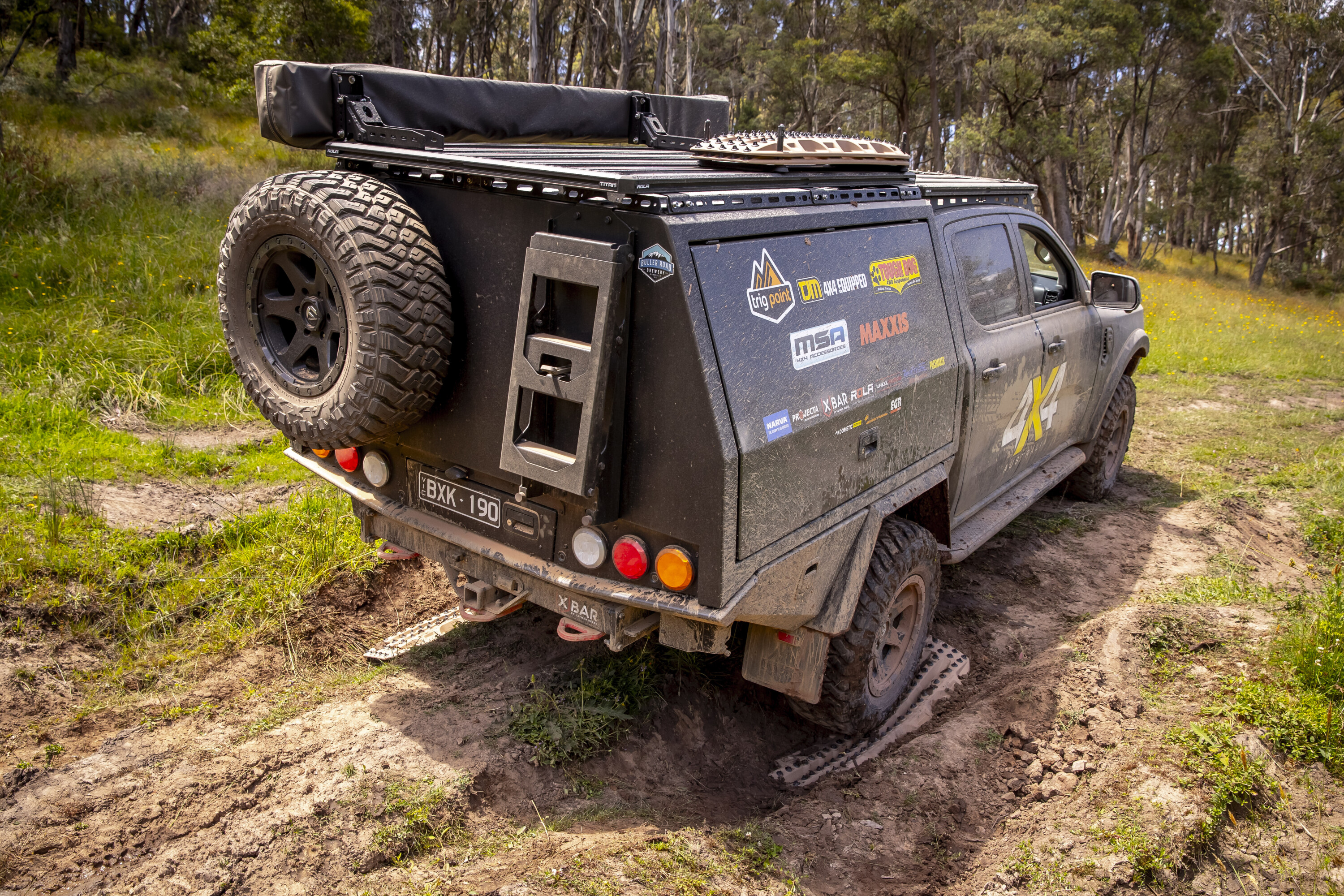
That’s just what we did here and after resetting the Maxtrax a couple of times to get them in the right position, we were out of the mud in a simple and safe way.
The Maxtrax Xtremes are the top of the range traction boards and at $519 a set they are not cheap, but look after them and they should last you many years. If that’s out of your budget you can still get the more affordable and still excellent Maxtrax Mk2 or the new, even cheaper, Maxtrax Lites. All Maxtrax variants are available in a range of colours… and we love our Desert Tan set.
No matter which Maxtrax you choose for your 4×4 you’ll be glad you have them on board when they get you out of a bog.
RRP: $519 (pair)
An increasing number of accessories designed to make living off the grid easier and more convenient is placing added demands on 12V systems, so Projecta has released its new Intelli-Range 12v power management boards to solve this problem.
Apart from providing convenient and reliable power when you’re beyond the black stump, Projecta’s Intelli-Range power management boards are simple and efficient to install. Being a complete and fully engineered solution, you can save loads of time when doing a DIY install … or save plenty of money if an auto electrician does the job.
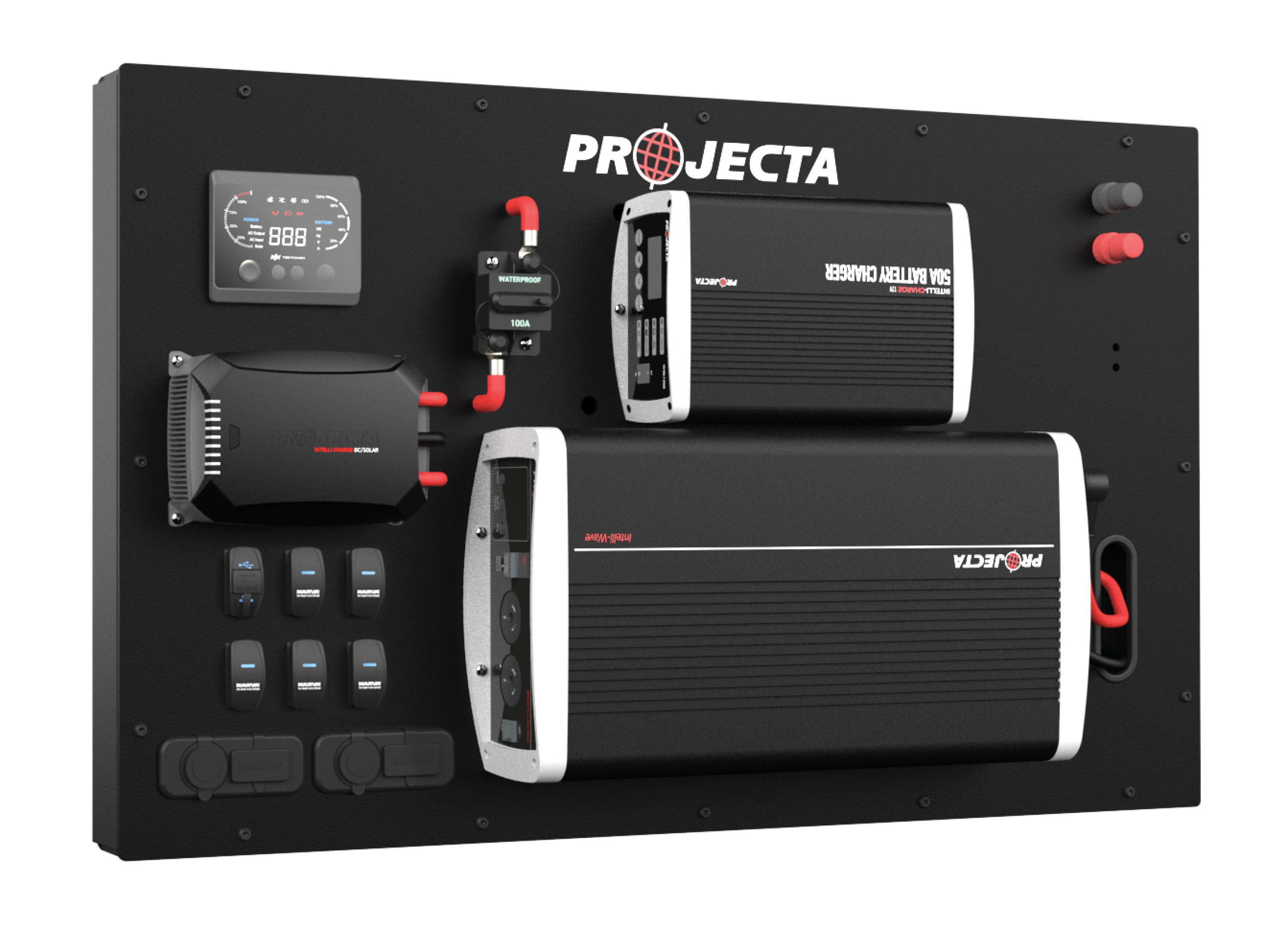
Another advantage of these boards is that each system can be installed with the correct cables and fuses every time, preventing potential issues like power outages, damaged batteries or electrical fires. The new boards suit a variety of applications, both recreational and trade, and the new boards are ideal for installation in your 4WD, RV, caravan and camper trailer.
“When setting up a power management system for use in a four-wheel-drive, caravan or camper, it can be difficult to know which individual hardware components to select, as well as all the ancillary equipment such as cables, relays, connectors, circuit protectors, switches and so forth, to get the system up and running properly.” said James Pearson, Projecta’s senior brand manager.
“The new Projecta Intelli-Range power management boards remove the hard work, allowing owners to choose from different power board options that best suit their needs, while dramatically simplifying the installation process. They can also be guaranteed that each board is fully integrated and ready to go once wired, saving time and money,” he added.
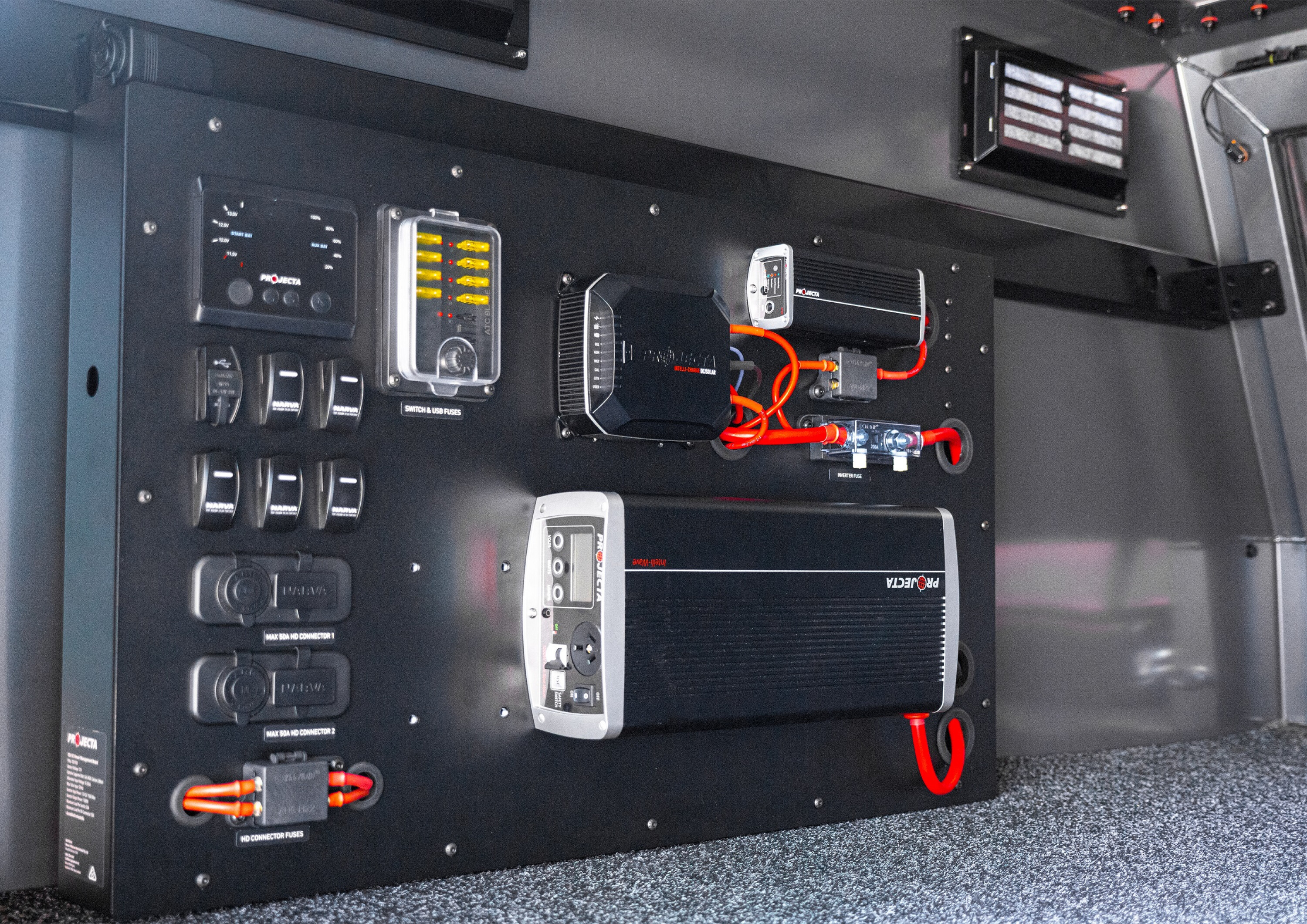
The boards locate most of your electrical accessories and components such as USB ports, 12V sockets, connector plugs, switches, DC/DC chargers and inverters in one location, resulting in a neat and professional appearance.
Depending on the model selected, the new Intelli-Range boards can successfully power and manage a range of appliances from lower current-drawing items such as fans, lights, phones and cameras through to more power-hungry equipment including fridges, microwaves, toasters, hair dryers, coffee machines and even induction cooktops and air conditioners.
Available in six models, common features include multi-chemistry compatibility covering Gel, AGM, Calcium and Lithium, while also providing futureproofing should you want to change your batteries down the track.
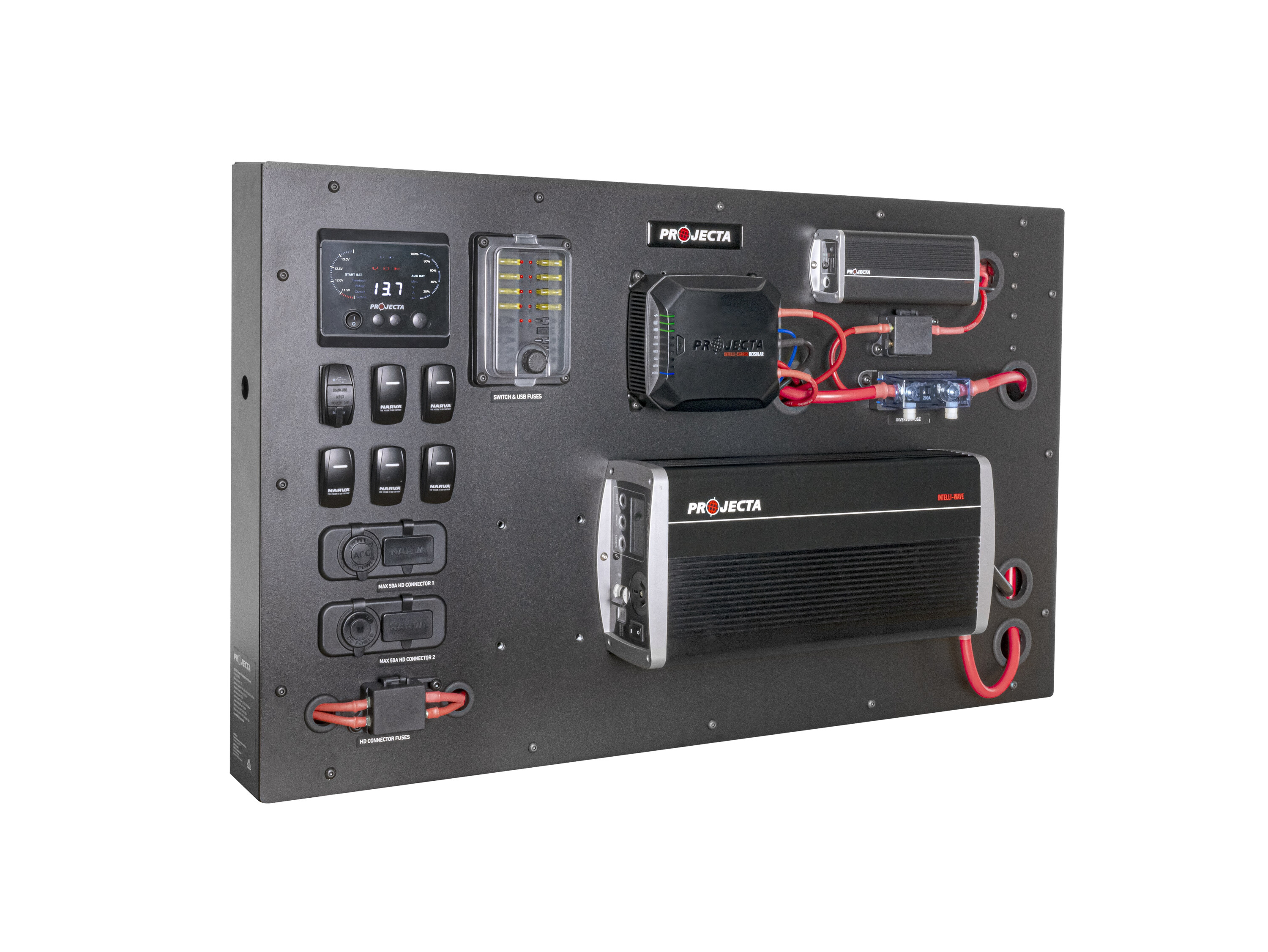
All the boards are solar panel compatible and model-dependent, and system performance can be monitored via either an in-built display or with Bluetooth using any smart device. For added protection all models aside from the entry-level ICBDC are equipped with a low voltage disconnect function, protecting expensive deep cycle batteries from over-discharge.
The new range utilises heavy-duty engineering and construction that’s designed to withstand demanding Aussie conditions and applications. The boards feature a sturdy and long-lasting heavy-duty steel mounting body that’s further enhanced by a powder-coated finish; the range is also equipped with circuit protection, giving Projecta the confidence to offer a generous five-year warranty across the line-up.
Pricing
| RRP (including GST) | |
|---|---|
| ICBDC | $2420 |
| ICB1000 | $3990 |
| ICB1500 | $4400 |
| ICB2000 | $5720 |
| ICB2000-HD | $11,399 |
| ICB3000 | $5999 |
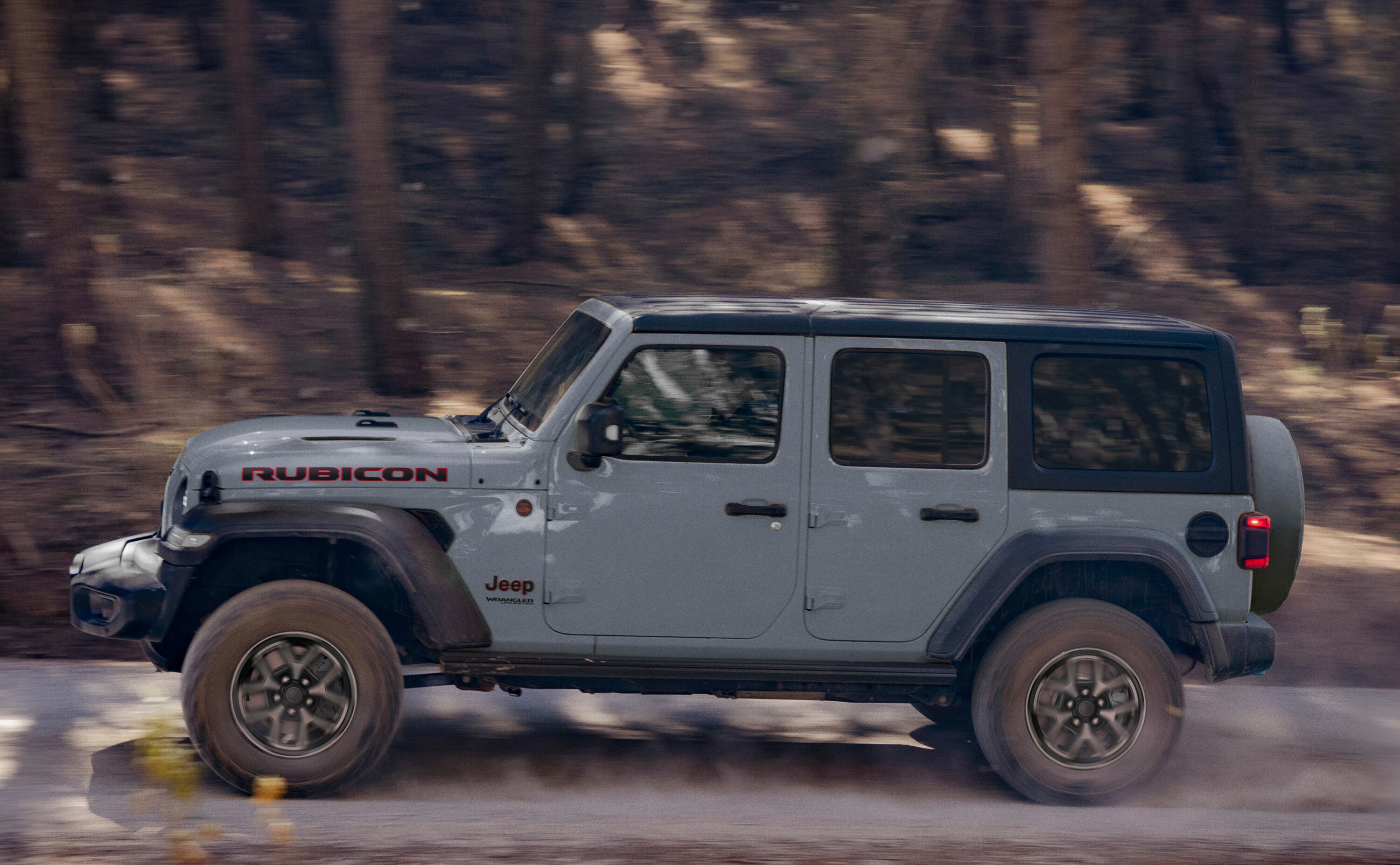
The facelifted 2024 Jeep Wrangler will arrive in local showrooms in April.
Jeep Australia has confirmed the Wrangler’s naturally-aspirated 209kW/347Nm 3.6-litre ‘Pentastar’ petrol V6 will be replaced by the 200kW/400Nm 2.0-litre turbo-petrol ‘Hurricane’ four-cylinder – down 9kW but up 53Nm.
The American brand claims that while power is similar, it is delivered at a lower RPM while offering better fuel efficiency and the same 2495-kilogram braked towing capacity.
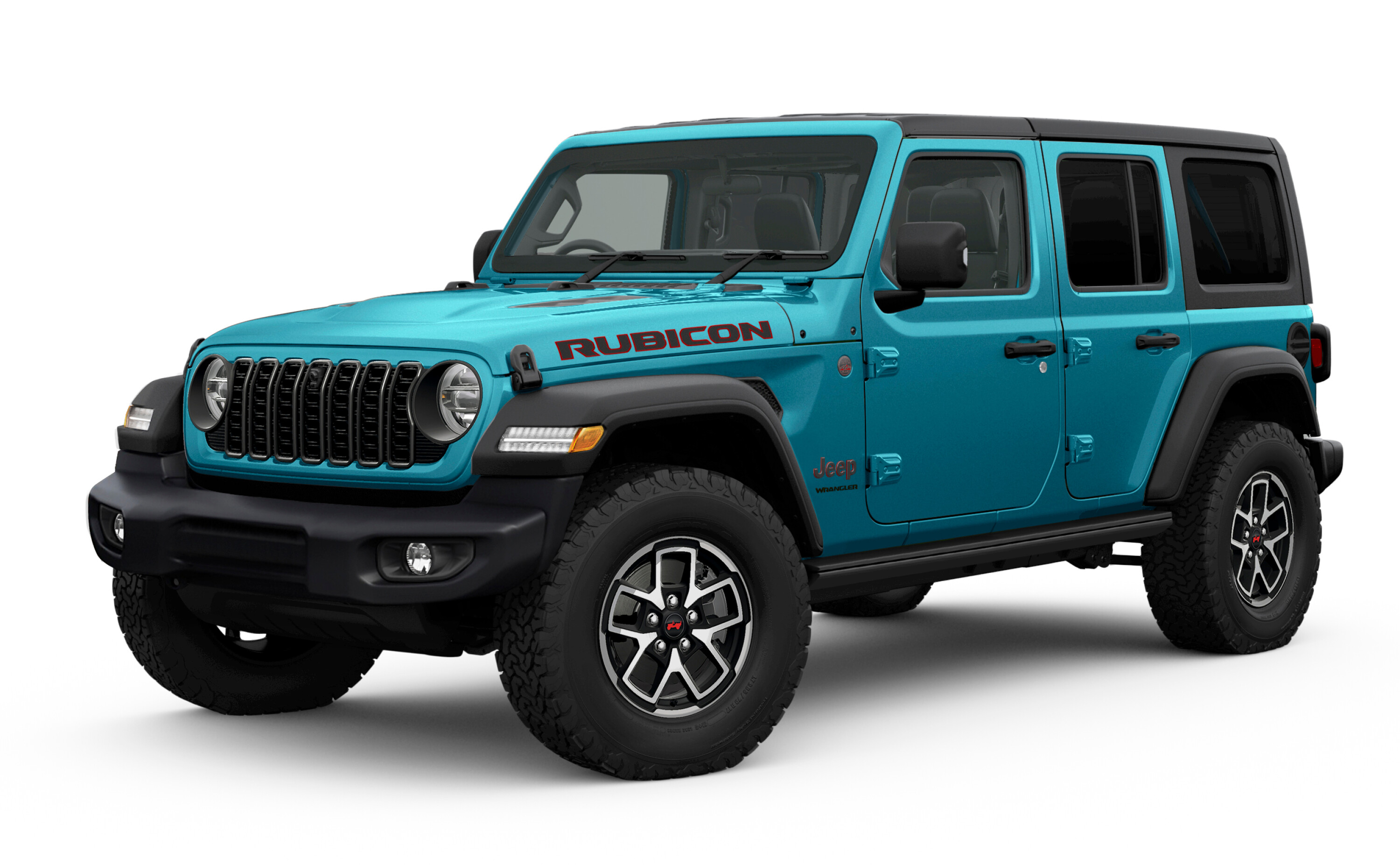
It is priced from $75,950 before on-road costs for the base Wrangler Sport S four-door – down $5500 over the pre-facelift Night Eagle following significant price hikes applied over the last four years.
The Wrangler Overland four-door variant has been reduced by $2000, while Rubicon two- and four-door models are unchanged.
As detailed in April 2023, the famous seven-slot off-roader has also received new technology, subtle design tweaks and improved safety features.
The biggest news for off-roaders is the addition of a full-floating Dana rear axle on Rubicon models – a first for the Jeep brand – to strengthen the vehicle’s rear end.
Interior upgrades include a larger 12.3-inch Uconnect 5 widescreen with wireless Apple CarPlay and Android Auto, and safety has improved with the addition of side curtain airbags in the first and second rows.
The entry-level Night Eagle has been replaced by a new Sport S model, adding Nexen Rodian all-terrain tyres, new-design 17-inch alloy wheels, a rear seat reminder, ambient LED interior lighting, a fabric dash panel, heated front seats and steering wheel, a 240-amp alternator, and automatic high beam.
All models feature a tougher ‘gorilla glass’ front windscreen that now houses the vehicle’s antenna, and NVH improvements.
The mid-spec Overland adds new-look 18-inch wheels with a no-cost alternative design, McKinley leather upholstery, 12-way power-adjustable front seats, anti-spin Dana M220 rear axle, black side mirrors, a hard seat back panel, and a soft spare tyre cover.
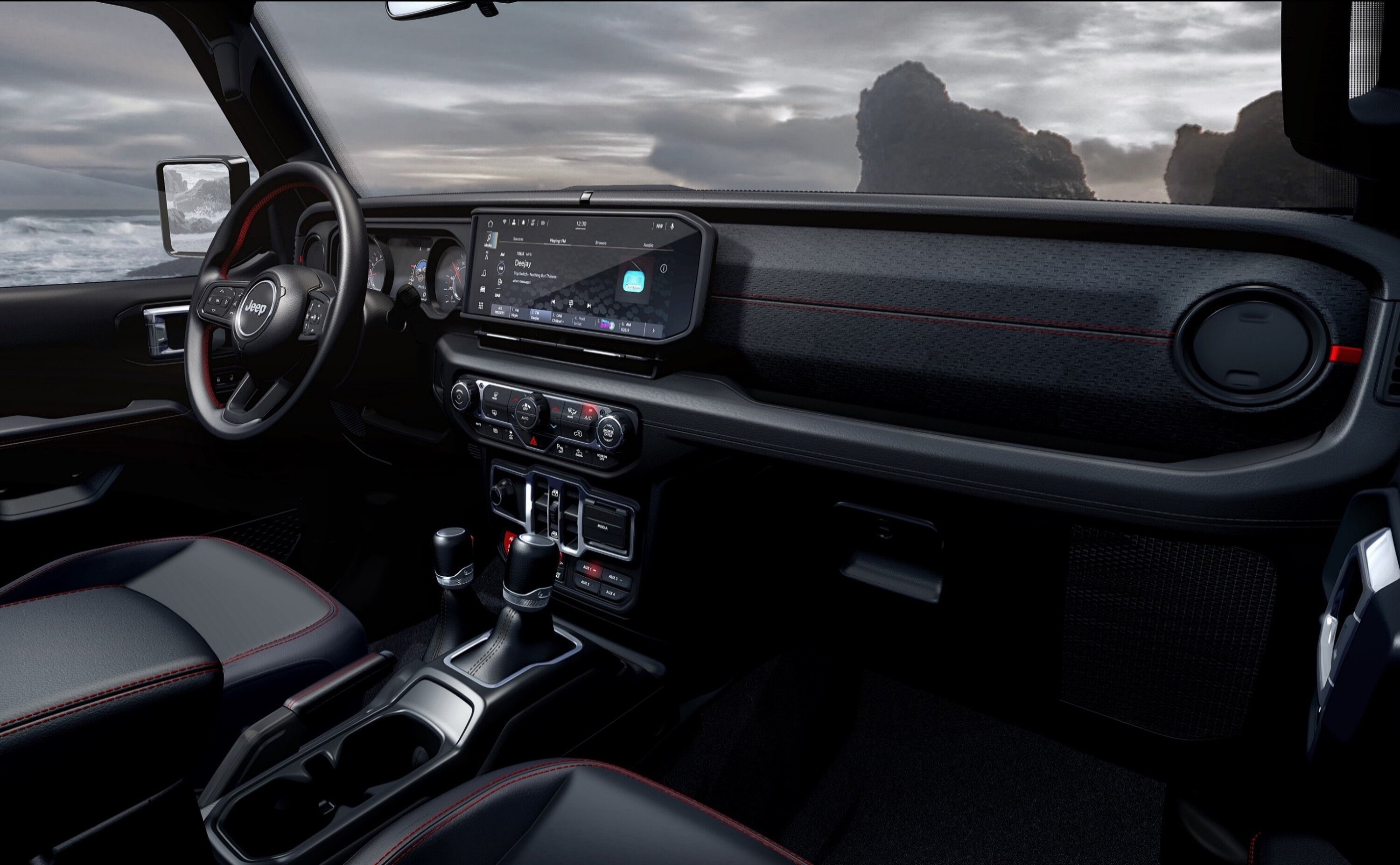
As before, the Rubicon flagship is available in two- or four-door form, with new additions including 17-inch alloy wheels, performance suspension, black Nappa leather upholstery, and a ‘premium wrapped’ dash panel.
It also receives a forward-facing TrailCam to eliminate “close-proximity blind spots during trail navigation and aids in power delivery on angled bends” – in addition to the full-floating Dana rear axle mentioned above.
The facelifted 2024 Jeep Wrangler is due in local showrooms next month. A similar update for the related 2024 Jeep Gladiator, unveiled at the Detroit auto show in September, is expected in Australia later next year.
2024 Jeep Wrangler pricing
| Model | Pricing | Change |
|---|---|---|
| Sport S four-door | $75,950 | down $5500 |
| Rubicon two-door | $83,950 | u2013 |
| Overland four-door | $84,950 | down $2000 |
| Rubicon four-door | $90,450 | u2013 |
| Prices exclude on-road costs.u00a0 | ||
2024 Jeep Wrangler features
| 2024 Jeep Wrangler Sport S features (replaces Night Eagle) | |
|---|---|
| 17-inch alloy wheels (new look) | Nine-speaker Alpine audio system |
| Nexen Rodian all-terrain tyres (new) | 7-inch semi-digital instrument cluster |
| 12.3-inch Uconnect 5 widescreen infotainment system (new) | LED headlights, tail-lights, daytime running lamps, and fog lamps |
| Wireless Apple CarPlay and Android Auto (new) | Keyless entry and push-button start |
| Ambient LED interior lighting (new) | Remote start system |
| Heated front seats (new) | Manual air-conditioningu00a0 |
| Heated steering wheel (new) | Autonomous emergency braking (vehicle) |
| Rear seat reminder (new) | Blind-spot alert |
| Fabric dash panel (new) | Rear cross-traffic alert |
| 240-amp alternator (new) | Adaptive cruise control |
| Automatic high-beam (new) | Front and rear parking sensors |
2024 Jeep Wrangler Overland features
| In addition to Sport S | |
|---|---|
| 18-inch alloy wheels (new look) | Soft spare tyre cover (new) |
| Black McKinley leather upholstery (new) | LED interior lighting |
| 12-way power-adjustable front seats (new) | Leather-wrapped shift knob and parking brake release |
| Anti-spin Dana M220 rear axle (new) | Body-colour fender flares |
| Black side mirrors (new) | Premium-wrapped I/P bezels |
| Hard seat back panel (new) | Dual-zone climate control |
2024 Jeep Wrangler Rubicon features
| In addition to Overland | |
|---|---|
| 17-inch alloy wheelsu00a0 (new look) | 32-inch off-road tyres |
| Full-floating Dana rear axle (new) | Tru-Lok front and rear locking differentials |
| Performance suspension (new) | Electronic front sway bar disconnect |
| Black Nappa leather upholstery (new) | Heavy-duty rock slider with step assist |
| u2018Premium wrappedu2019 dash panel (new) | Programmable auxiliary switch bank |
| Forward-facing TrailCam (new) | Grey exterior accents and badging |
| Rock-Trac active on-demand four-wheel-drive system with 4:1 transfer case | Off-road plus drive mode |
| 77.2:1 crawl ratio | |
After a month on the Gibb River Road I was looking forward to getting into Wyndham for some decent food, a shower and to relax in town.
I had been enjoying the Karunjie Track, with its amazing history and stunning scenery, before I popped onto the King River Road and after that it wasn’t long before I hit the tar heading into Wyndham.
To be honest, I wasn’t expecting too much around the Wyndham area, but boy was I surprised with what the town had to offer, so after booking into the local caravan park I headed off to explore the sights and sounds.
In an around Wyndham
My first port of call was Wyndham’s Five Rivers Lookout just a few miles out of town.
Aptly named for what you can view from the lookout, which is five rivers draining into Cambridge Gulf; the Ord, Durack, Pentecost, Forrest and King rivers. The massive waterway the rivers flow into not only provides an exit out to the gulf, but allows for recreational and commercial fishing.
You’ll find day facilities at the lookout as well as an information board outline the history of Wyndham. It states that the first indigenous people arrived in the area about 45,000 years ago, and that they lived throughout the Top End, with their descendants still living in the local area.
The first contact with white Europeans was in 1819 when Captain Phillip Parker King surveyed the coastline and named the Cambridge Gulf after the then Duke of Cambridge.
It wasn’t until 1879 that cattle pioneers looking for good country visited the area, and not long after gold was found to the south at Halls Creek in 1884. Wyndham was proclaimed as a town soon after and the construction of a meatworks and an export wharf were soon in the works. Wyndham was the main export port for cattle throughout the whole Kimberley region.
Down below the Five Rivers Lookout is the site where Wyndham was originally situated but in 1942 the town was evacuated for the fear of being bombed by the Japanese. The only casualty was the WA ship Koolama that eventually sank in the river.
The meatworks and other port industries continued for another 40 years but until the remaining businesses closed down due to economic hardship.
Today the port is used for shipping out iron ore, cattle, fuel and general freight, while Wyndham is now 10km away, built on solid ground away from the mudflats and massive wet-season tides.
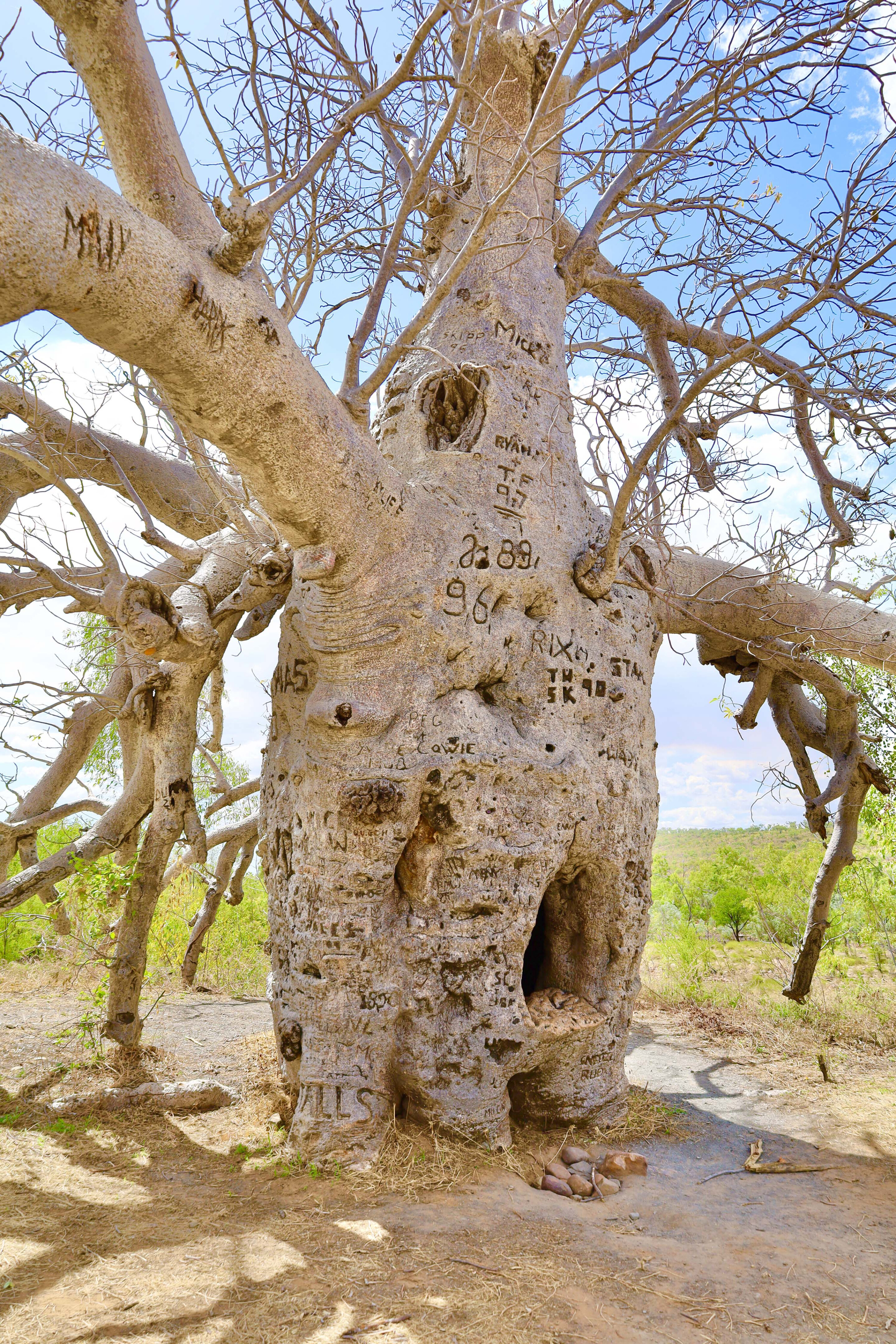
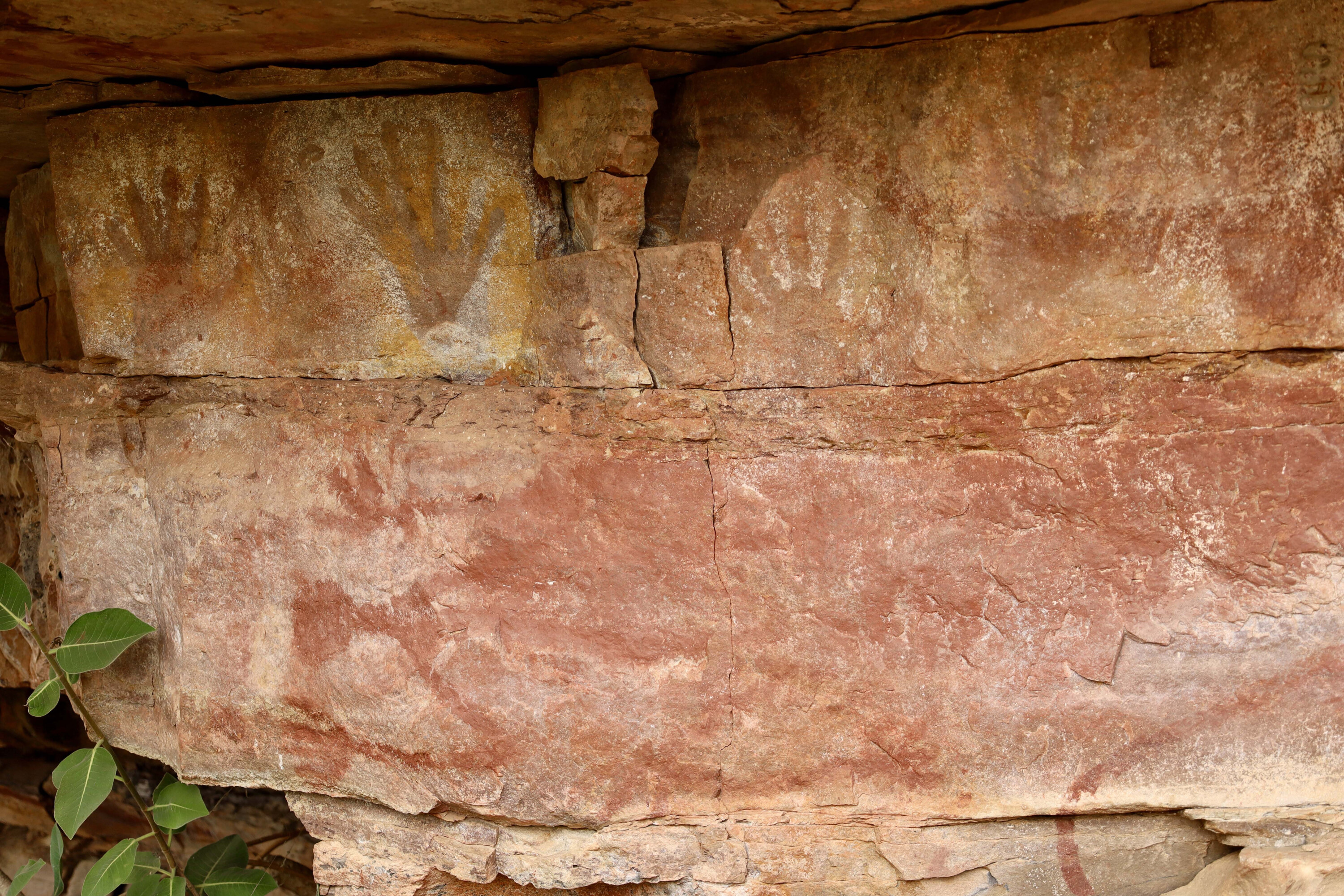
Around town there’s plenty more to explore. Head out along the King River Road and you’ll find the Boab Prison Tree in which Aboriginal prisoners were locked up overnight before facing the courts at Wyndham. Just past the tree there is some exquisite and fascinating rock art.
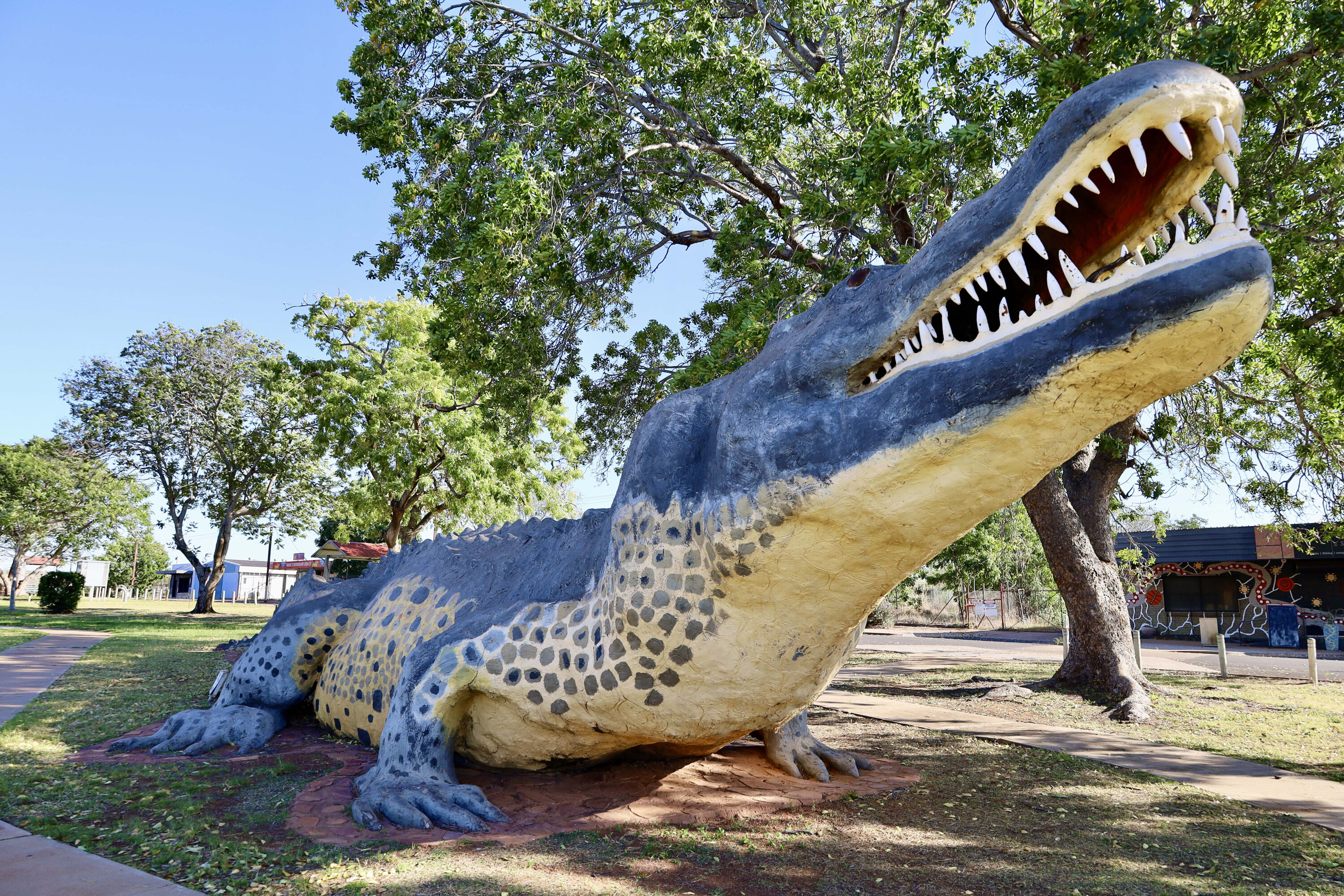
To the east you will find Parry Lagoons Nature Reserve and Marlgu Billabong, which is a permanent waterhole where dozens of different species of birds can be spotted, as well as several large saltwater crocs. This area is easily accessible in the dry season.
Overlooking Parry Lagoons Nature Reserve is a radio and telegraph station that was built in 1914 to assist with ships entering the harbour, as well as being used throughout WWI for naval intelligence. This station assisted in the tracking and sinking of the German ship SMS Emden.
After its closure, the station building was relocated to the Wyndham port precinct and used as the postmaster’s house, where it still stands today. The only relics left at the telegraph station site are the foundations of the building and water tank.
Exploring Kununurra
After a few days looking around Wyndham, I headed east along Parry Creek Road, skirting along the northern side of Ngamoowalem Conservation Park towards Kununurra, known as Kunnas to the locals.
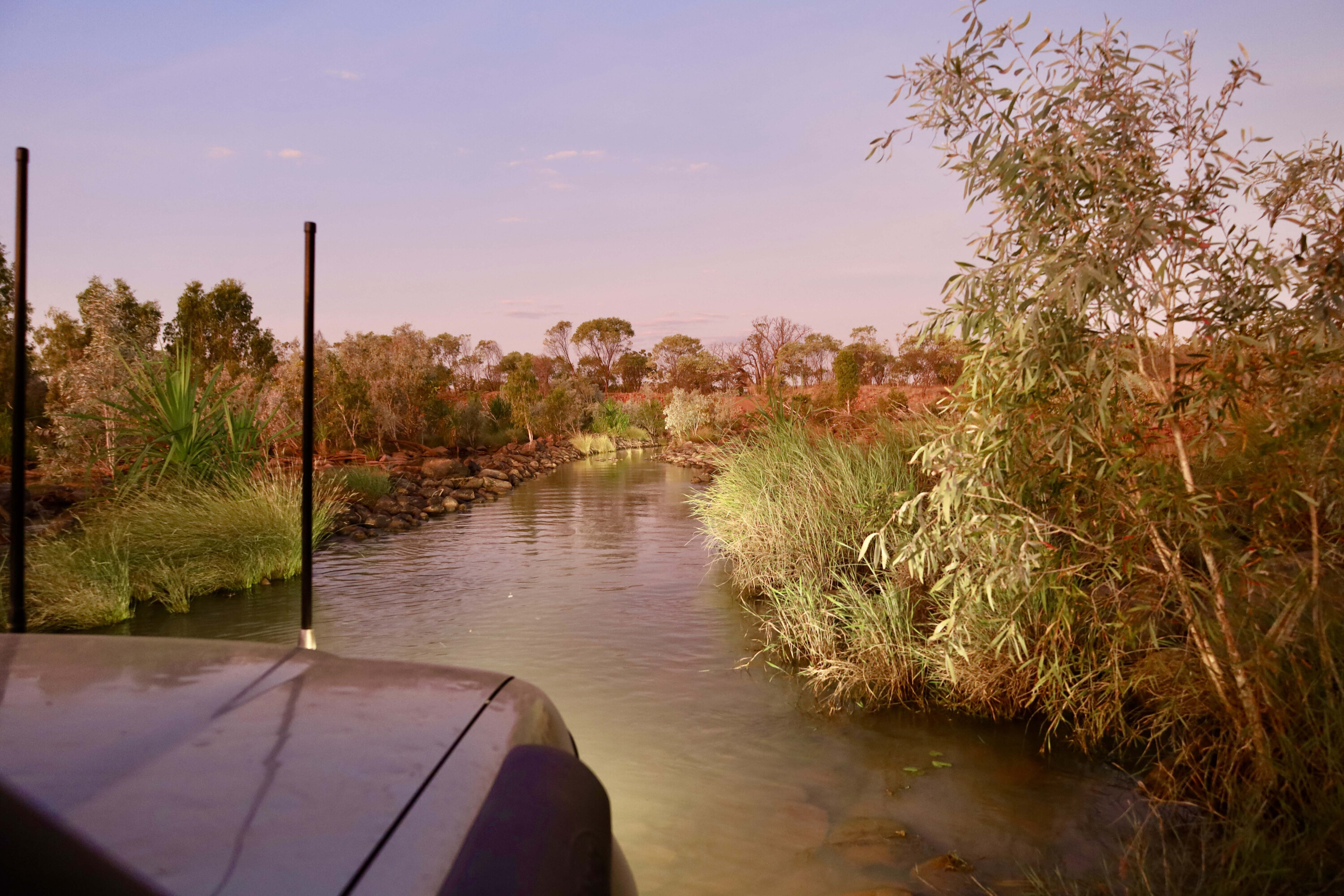
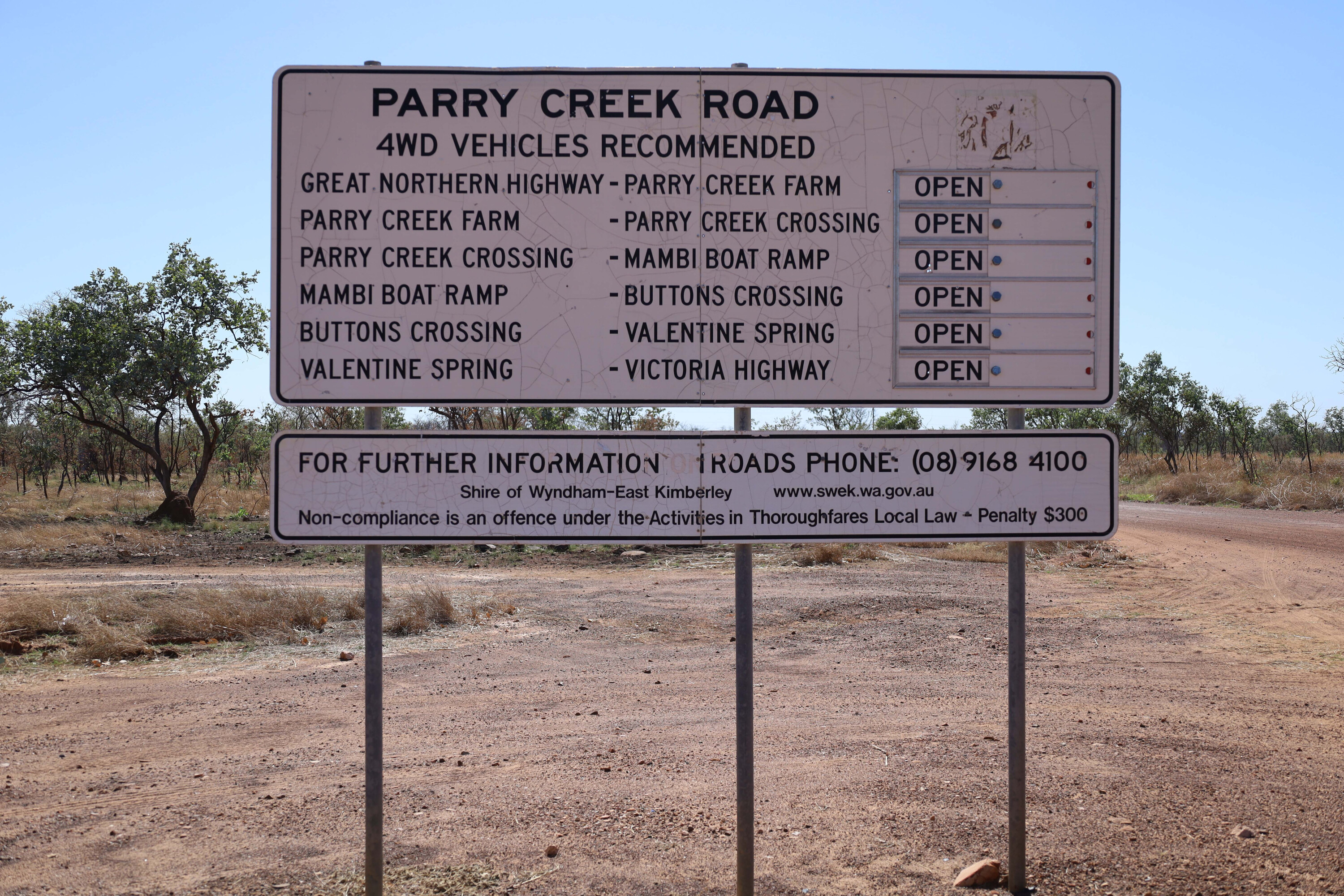
This dirt road is a good alternative to the tar, and it’s about 90km to Kununurra, with several camping options along the way. Hairy Dogs Fishing Camp is situated on the Ord River and is perfect for those chasing Barra. Further towards Kunnas, a short 4×4 track leads you into Middle Springs waterfall and Black Rock Falls.
I was there late in the dry season and even though there was water in the pools, it wasn’t very inviting. I can only imagine the huge volume of water that would crash over the rocks into the pools during the wet season.
Buttons Gap is also on the Parry Creek Road and while not really noticeable as a major landmark, several tracks here lead down to the Ord River where free camping is permitted.
With nearly 4km of campsites, some of which are in a private setting, this is a beautiful spot to camp just outside Kununurra. But remamber, this is big saltwater crocodile country, so be vigilant when camping and fishing, and definitely don’t swim in the river.
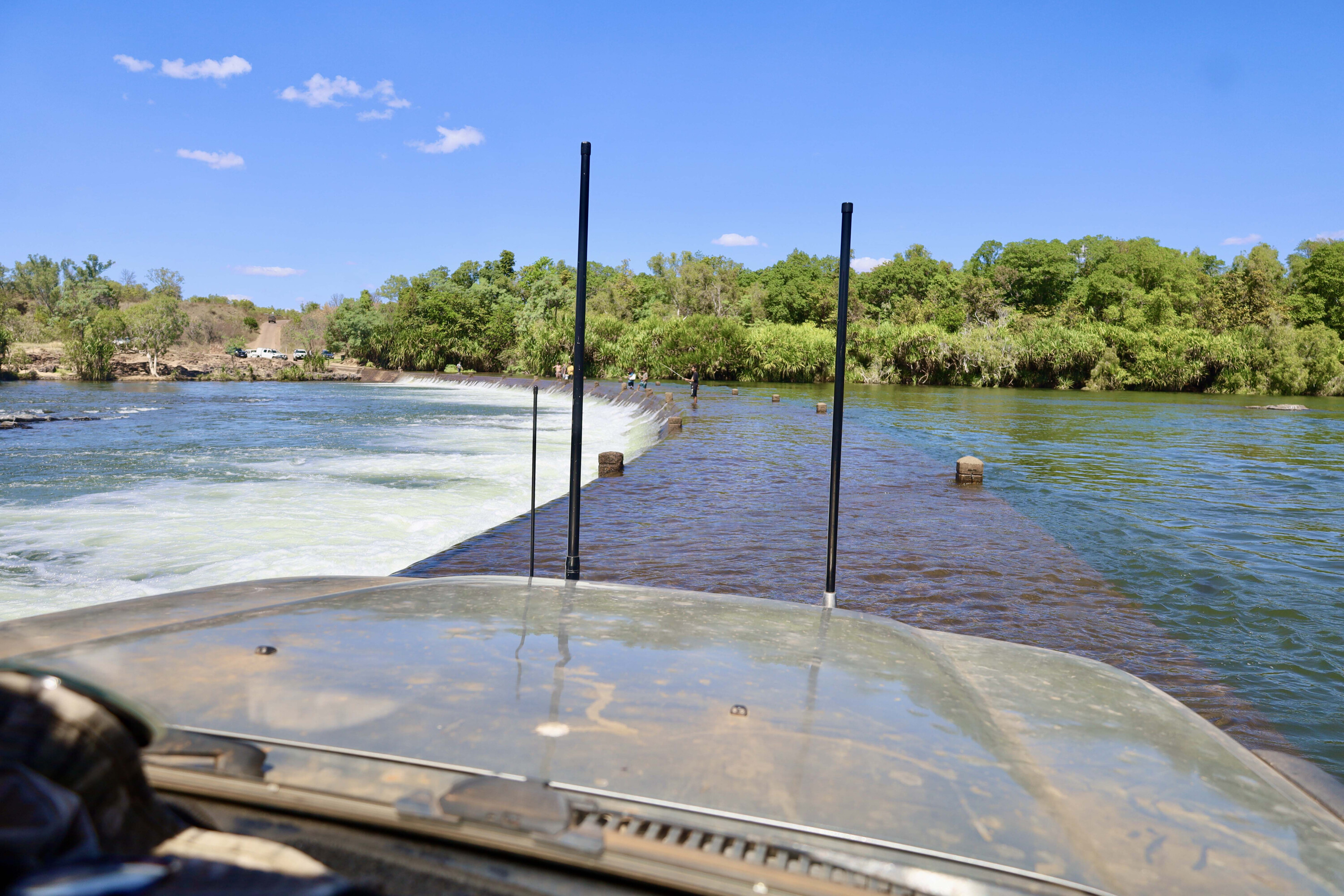
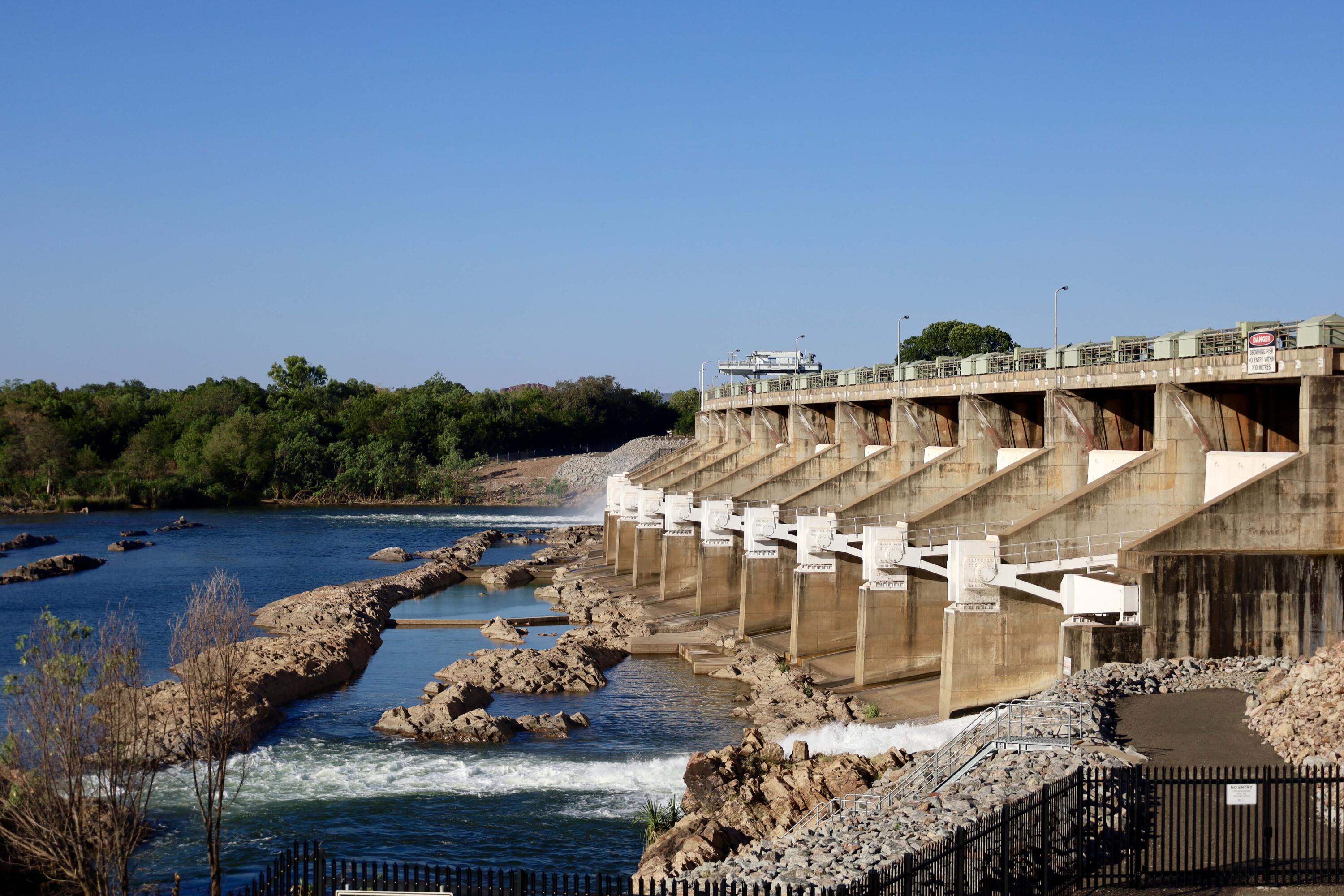
Further on towards Kununurra is the infamous Ivanhoe Crossing. This long curved concrete causeway holds back water upstream from the Ord River Dam wall, and with a single lane road on top it’s an exciting drive across. Keen fishos throw lures and live bait around trying to hook a barra here, and going by the amount of fish scales on the rocks around the river back, many fish are caught.
Head into town and you’ll discover that Kununurra is an interesting place where many cultures come together; with indigenous people, overseas fruit pickers and travellers all staying in town, it’s a busy place in the dry season.
Mirima NP, often regarded as the little Bungle Bungles, is only a few minutes to the east of town. The local Miriuwung people welcome visitors to walk around in Mirima to admire the towering eroded sandstone rock formations, and there are several walking trails.
The beehive-type rock formations date back millions of years and most of the trails lead you too lookouts or points of interest along the way.
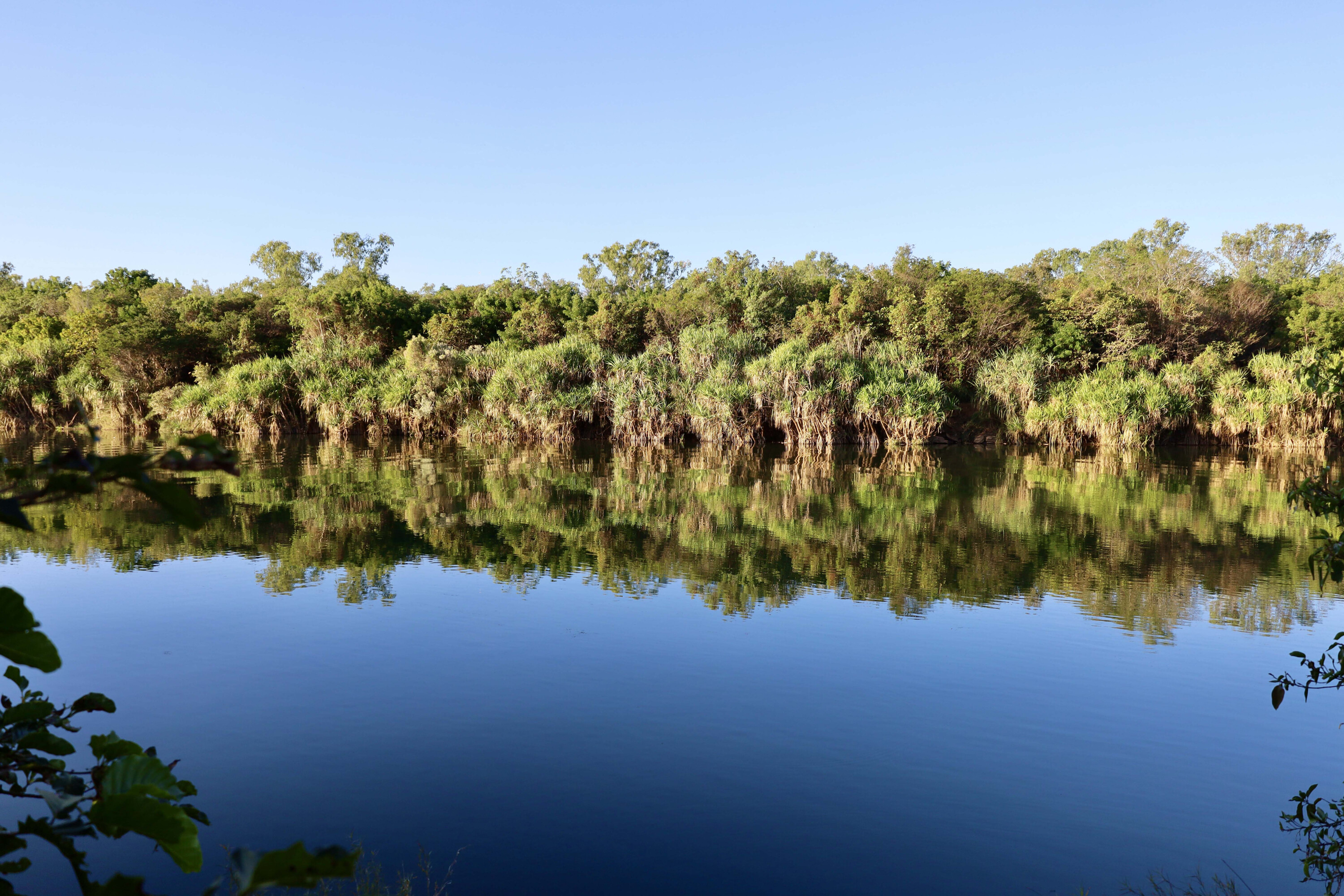
Kununurra is known as the food bowl of Western Australia, where crops and huge plantations of sandalwood trees grow in the fertile soil, and where abundant water is available from the Ord River irrigation scheme.
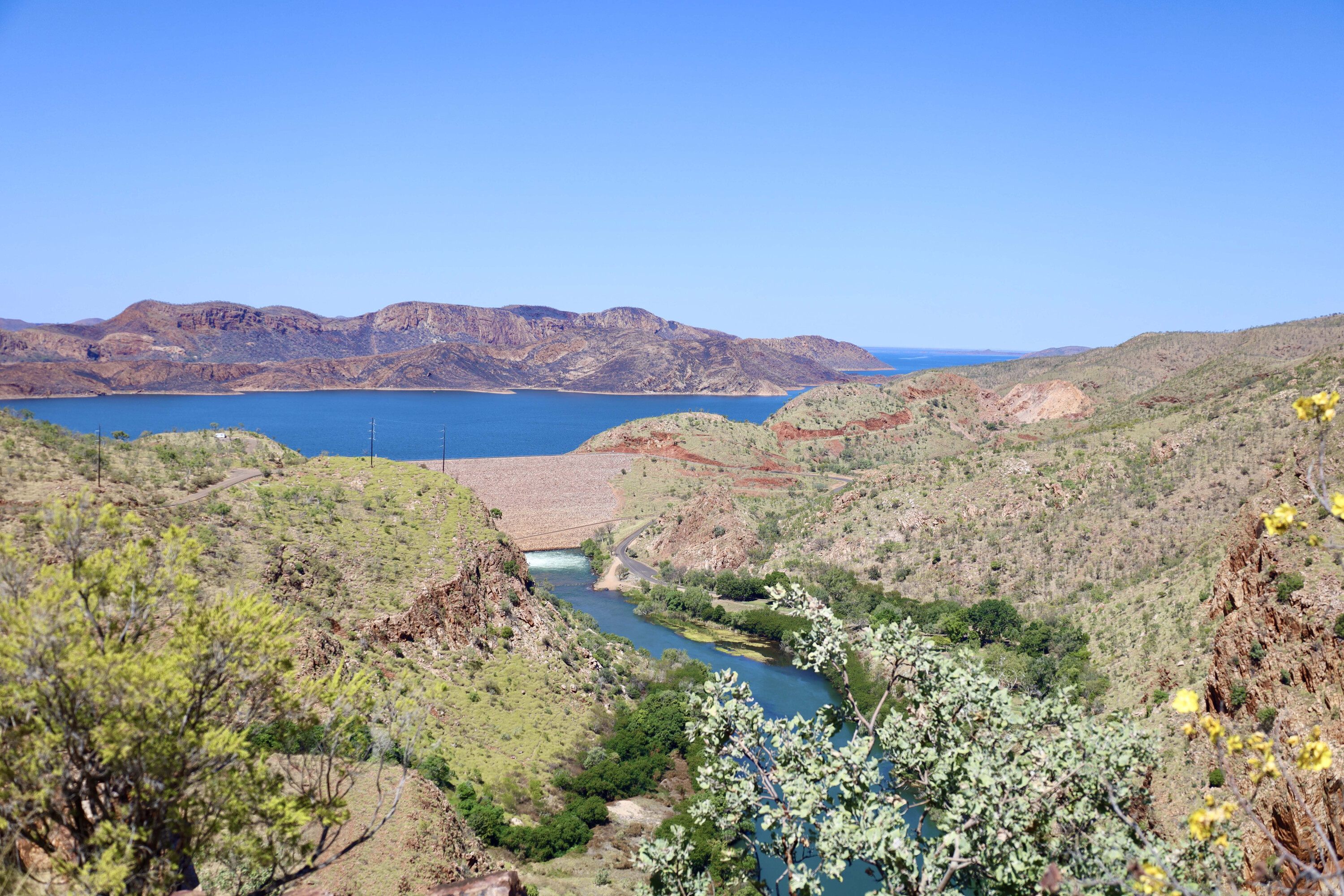
And speaking of water, no trip to Kununurra is complete without heading out to the massive Lake Argyle.
Spending time around Wyndham and Kununurra showed me just how much this area has to offer. Two things have stayed with me since my visit: one is that everything is huge up here and sometimes hard to capture through a lens, and the other is that I will be back for more as soon as I can.
More information
Where is it?
Wyndham and Kununurra are in the East Kimberly in WA, and this area is regarded as the gateway to the Kimberley and the Gibb River Road.
Cut off during the wet season, the whole area comes alive during the winter months when tourists flock to here. Located nearly 4000km northwest of Brisbane, Wyndham is accessible by road and weekly flights. You’ll need a 4×4 to fully explore the area and its culture.
What can you see and do?
From 2000 year old boab trees and Aboriginal culture including stunning rock art and sites, through to European history and some of the best landscape features in the Top End, there is something here for everyone.
Time spent in Wyndham can be spent exploring the Five Rivers Lookout, old Wyndham town, several cemeteries around town and various natural wonders. Mirima NP is right in the heart of town, there’s great fishing and just out of Kununurra a day can be spent at Argyle Dam, either on the water or by visiting the many viewing points high above the waterline.
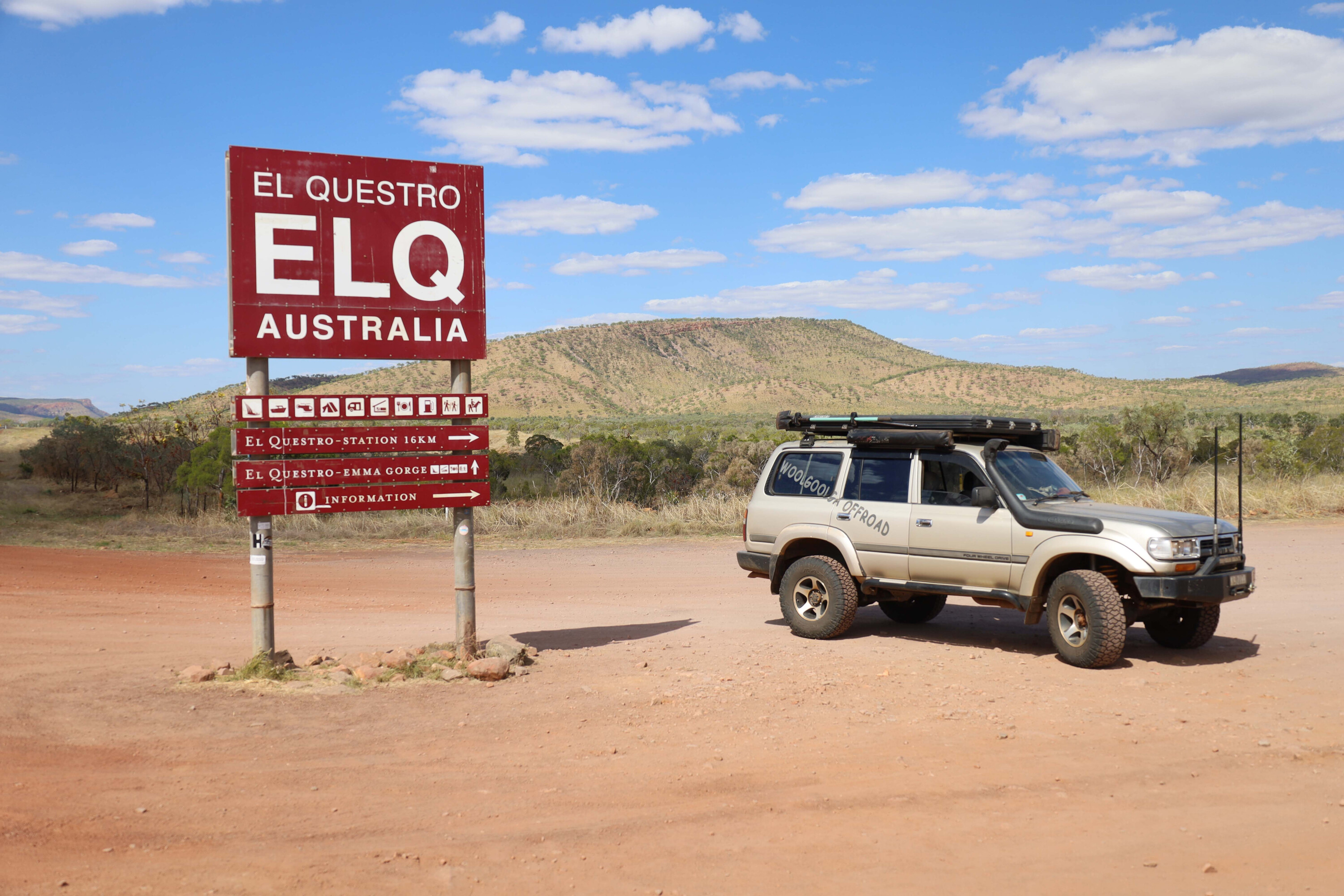
Midway between Wyndham and Kununurra is El Questro resort with its natural wonders including gorge walks, swimming holes and 4×4 tracks.
When and how long?
During the warmer months and wet season, generally from November through to March, the Top End becomes unbearable due to hot and humid weather. Heavy rainfall with the chance of cyclones often shuts the area down during these times.
A few days each at Wyndham and nearby Kununurra is enough time to explore most sites. To fully immerse yourself in the El Questro experience, you’ll need a week to wind down and relax.
There are plenty of camping and shopping options in the area. Information on seasonal closures, accommodation and activities in these areas can all be found online.
Contacts
We’ve put around 15,000km on the Maxxis RAZR MT772 tyres fitted to our Ranger and there’s plenty more life in them yet.
Probably at least twice that amount again, which is pretty good for a dedicated mud-terrain tyre that has also seen plenty of highway mileage. We went with the RAZR MT772 in a LT285/70R17 size which, incidentally, is the exact same size and model of tyre as we ran on our previous PX Ranger.
Interestingly, when we had them on the PX Ranger with its 3.2-litre diesel engine we were astounded by how quiet they were for a mud terrain tyre; however, on the RA Ranger with its more refined V6 diesel engine and quieter ride, we noticed straight away that we were riding on muddies. That says more about the difference in refinement between the two vehicles, but also about how differently the same set of tyres can perform on different vehicles.
We’ve had no complaints about the performance of this set of RAZRs no matter what we’ve driven them over. They are as to be expected of a muddy when driving on the road, with a bit of noise and reduced wet-weather traction, but they come into their own once you leave the blacktop and hit the tracks.
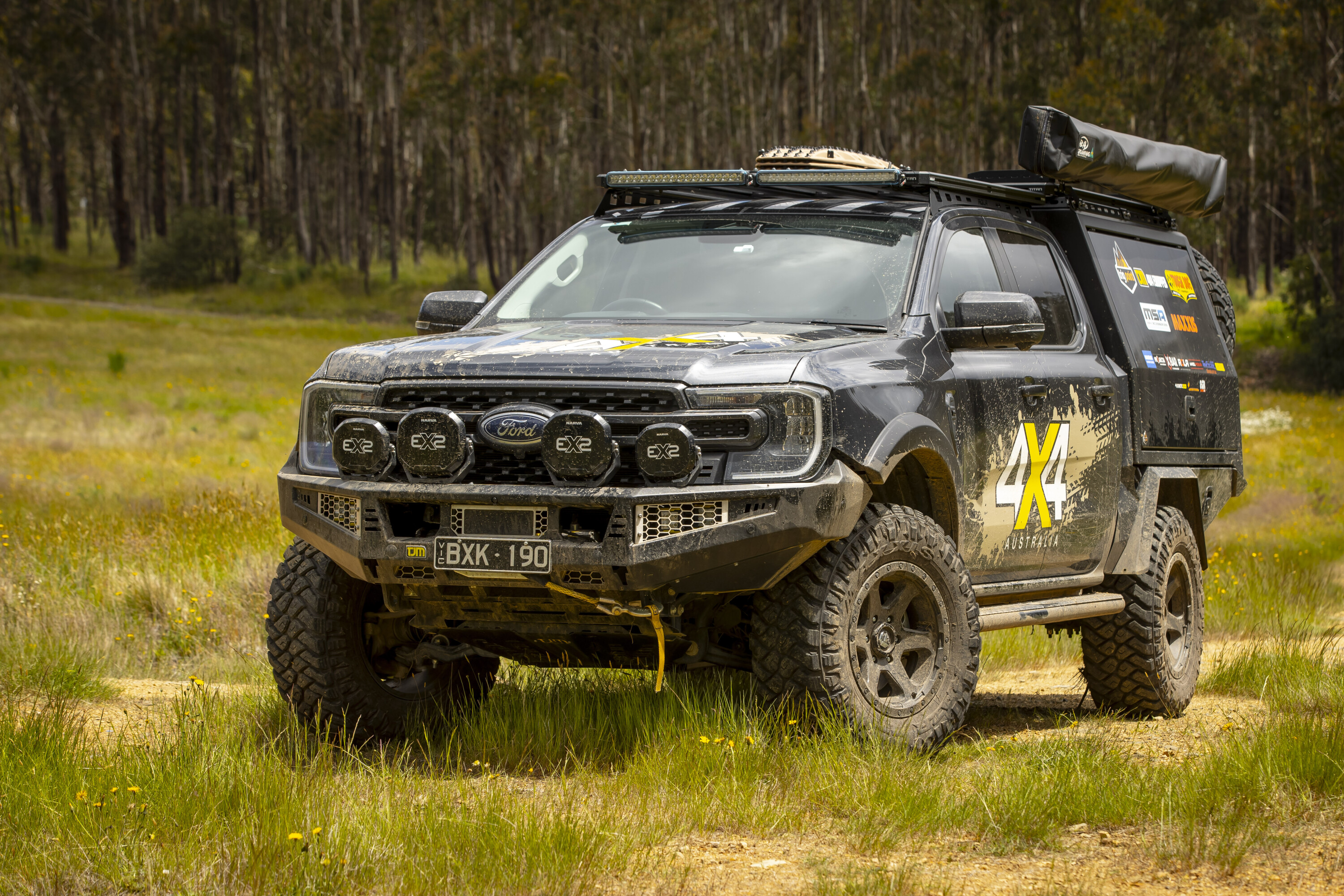
This is after all what mud terrain tyres like the MT772 are made for. With tyre pressures dropped to suit the tracks we were on, The RAZR MT772s always gave a surefooted feeling on gravel roads and plenty of grip on low-speed tracks.
The tyres aren’t showing any signs of chipping, damage or unusual wear which is testament to the unique compound that Maxxis has used for the RAZRs, and the three-ply sidewalls likewise remain unscathed. It’s always a good day on the tracks when you don’t have any tyre problems and we travel with confidence when running on RAZRs, these being our third set.
We gave the tyres a rotation after 7000km, introducing the spare into the rotation, so that they should all wear evenly. They are due for another rotation now before we move this Ranger on. The tread depth at the current mileage averages out around 10mm to 11mm down from the original 14.3mm, which theoretically means they should be good for another 40-45,000km of use. As mentioned, that’s good wear performance for a set of muddies.
Maxxis RAZR MT772 tyres are available in a huge range of sizes to suit replacement on all popular 4×4 vehicles and plus sizes all the way up to 37-inches.








With the demise of the Kelly Gang in Victoria 1880, and the end of the Governor brothers in New South Wales in 1900, our bushranger history should have been at an end.
However, it was not until 1902 in Queensland, with the capture of the Kenniff brothers, that things really started to settle down. Today’s explorers can follow in the tracks of these last bushrangers to sites covering vast distances of Queensland. The story, however, has its beginnings in a remote and scenic corner of New South Wales.
NSW: Early crimes, 1880s
Patrick Kenniff was born at Main Creek near Dungog, NSW in 1863 while his brother James was born in 1870 near Casino.
As a teenager Patrick was in trouble with the law for rounding up stray cattle. As the brothers grew older their crimes increased and gaol times were frequent. Their father, old James Kenniff, decided it was time to escape the suspicions that the family had attracted in the Northern Rivers area and to clear out to Central Queensland.
Main Creek today is the gateway to the scenic attractions of the East Chichester Forests and the lower section of Barrington Tops National Park. Free riverside camping areas are located at Frying Pan, Coachwood, Telegherry and the 4×4-access-only Currawong. Easy family walking tracks and remote driving up towards the Mountaineer trail make for great exploring.
Carnarvon Range: Crimes continue, 1891
The Kenniffs settled on an isolated property near Springsure, north of the Carnarvon sector of the Great Dividing Range.
The temptations to pick up ‘stray’ cattle and horses were too great and the Kenniff reputation began to re-emerge. Again, the family moved on, this time to the south of the range in the region of the Upper Warrego River. The family applied for a lease on a property which was a resumed section of the larger ‘Carnarvon’. The robberies continued.
In 1895, the brothers spent time on St Helena Island for horse stealing. The island prison is in Moreton Bay in Brisbane and a ferry trip today from Manly and tour of the island is highly recommended.
In December 1900 the government established the Upper Warrego Police Station adjacent to the Kenniff’s holdings and by the end of 1901 the family had lost all their land leases and were forced back on the road. The brothers were bitter of the authorities and of their neighbours and turned to unrestricted armed criminal activities.
Augathella: Police kept busy in a brand-new century, 1901
Due to its proximity to the Kenniff’s area of operations, Augathella became Kenniff Country, then as well as now. The brothers could slip into the town for relaxation or robbery and sympathetic locals would assist in the criminal activities.
A large signposted coolibah tree on an Augathella street corner is known as the Kenniff Tree. It was here that the brothers tethered their horses to ensure a quick getaway. Today there is a large free camping area with amenities in the centre of town. During this time, the father, James senior, still lived in the ranges in various campsites including Lethbridge’s Pocket.
Carnarvon: New challenges, 1901
Albert Dahlke had become manager of Carnarvon Station in late 1899, at the age of 26.
He was appointed by the owners, William Collins and his family who were based at Tamrookum near Beaudesert, far to the east. They expected him to manage efficiently and that meant to stand up to the Kenniffs.
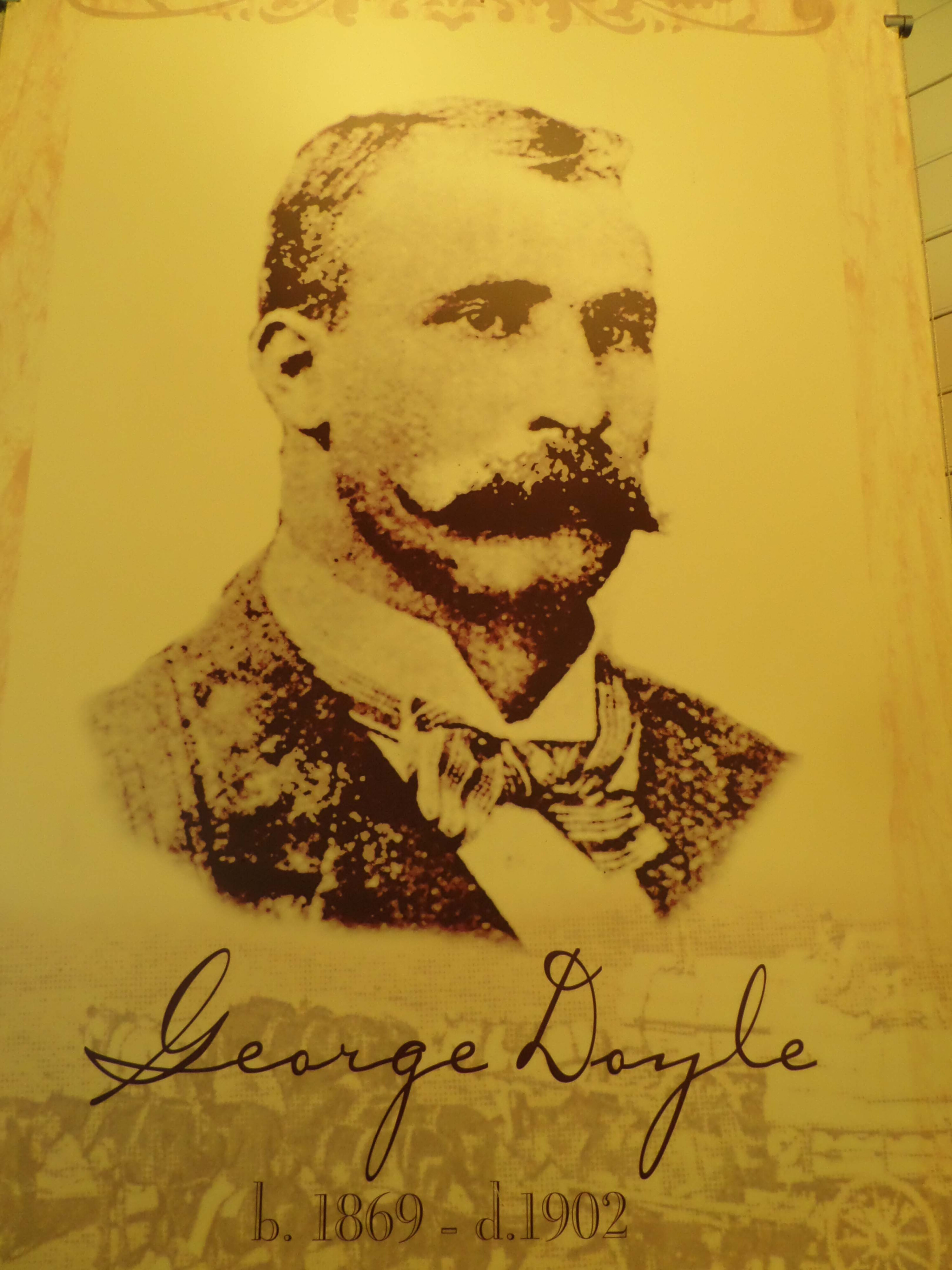
Adding to the Kenniffs’ frustration was the newly established Upper Warrego Police Station, built just 12km south of Carnarvon homestead. The station was staffed by Senior Constable George Doyle, Constable Stephen Millard and Native Tracker Sam Johnson. These were all men who could take care of themselves in the bush.
Lethbridge’s Pocket: Murder is committed, 30 March 1902
On Good Friday 1902, Senior Constable Doyle rode out from the Upper Warrego station with Tracker Johnson and property manager Albert Dahlke, to apprehend the Kenniffs on warrants of horse stealing.
The patrol camped the night at Mount Moffatt station and learned that the Kenniffs had headed north over the range in the direction of the camp in the isolated enclosed valley of Lethbridge’s Pocket.
The police patrol camped the next night at Marlong Plain ready for an early ride to the Pocket on Easter Sunday morning. Soon after reaching Lethbridge’s Creek, three Kenniff brothers, Pat, James and younger brother Tom were seen coming towards them.
When the brothers saw the patrol, they split up and raced away. Doyle and Dahlke captured and secured James while Tracker Johnson went back to retrieve the patrol’s packhorse.
In the short time that Johnson was absent from the group, he heard five shots fired from the direction of his comrades and then saw Pat and James Kenniff riding towards him. Johnson released the packhorse and escaped into the bush, eventually finding a bush worker named Burke who accompanied the tracker back to the scene of the shooting. They found the packhorse and Dahlke’s horse with blood on the saddle.
The two men left the scene without finding any trace of Doyle or Dahlke, and Johnson reported to Inspector Douglas after an epic 200km ride south to Mitchell.
Today’s access to the remote Mount Moffatt Sector of Carnarvon National Park is via Mitchell (220km) or Injune (160km). The two routes meet at Womblebank, where the road into the park becomes more difficult after rain.
This is spectacular sandstone country and sandy roads can become treacherous. Injune has a very informative Visitor Centre. It is well worth calling in. The round trip via Mitchell and Injune is recommended.
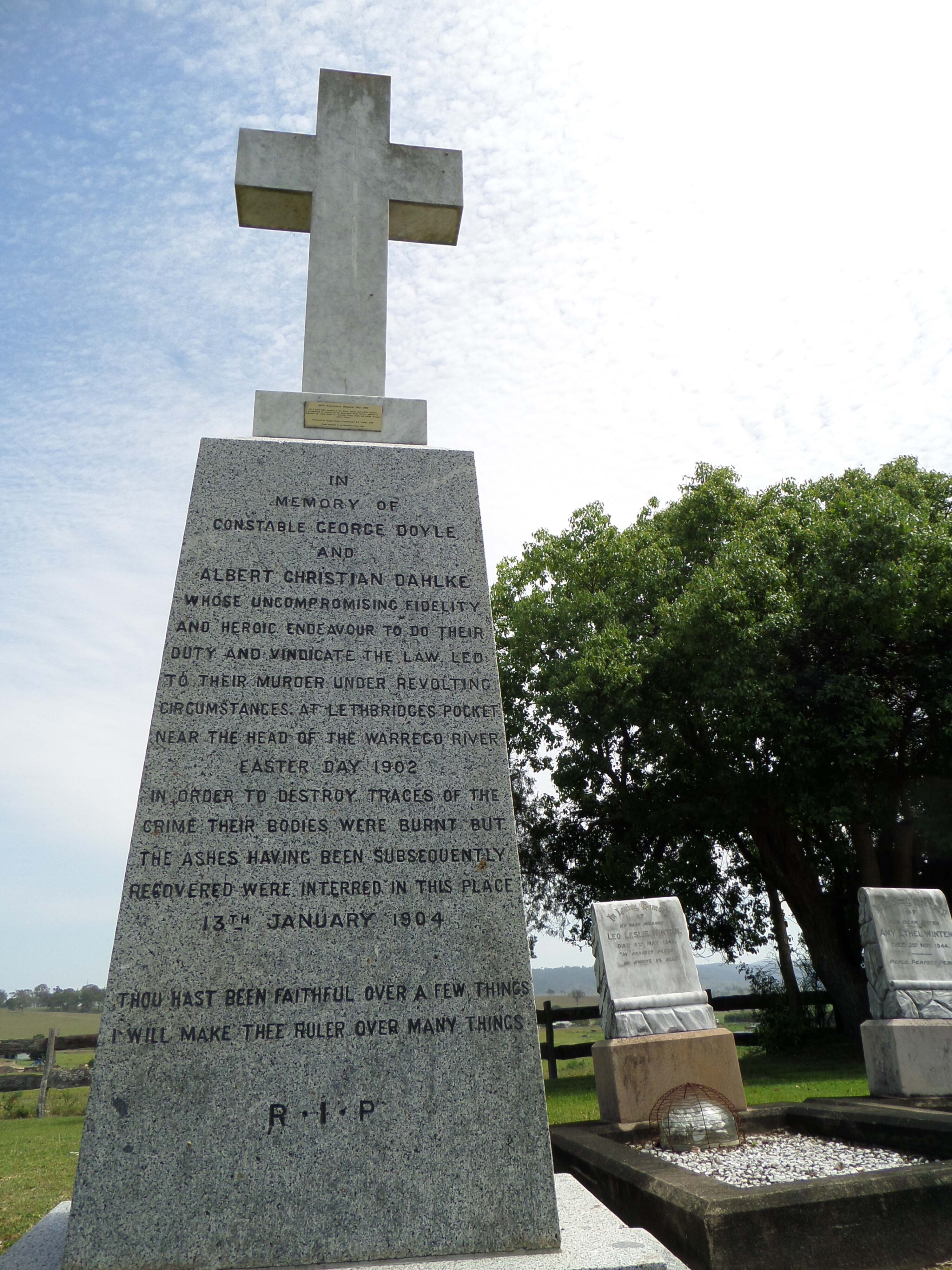
Today’s route into the park is similar to that taken by the police party on that fateful Easter day. The main scenic sandstone features can be seen or walked to along the way.
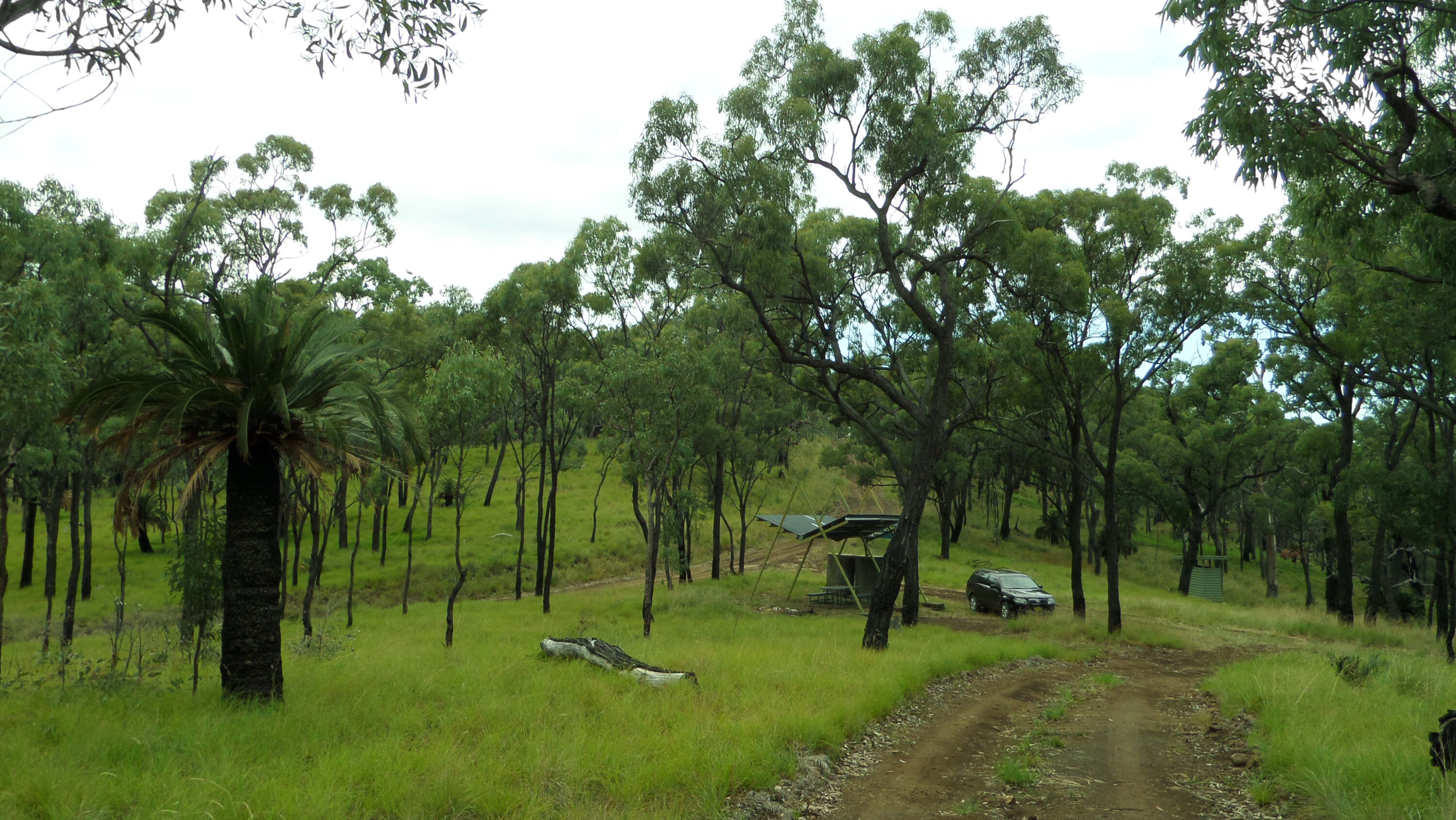
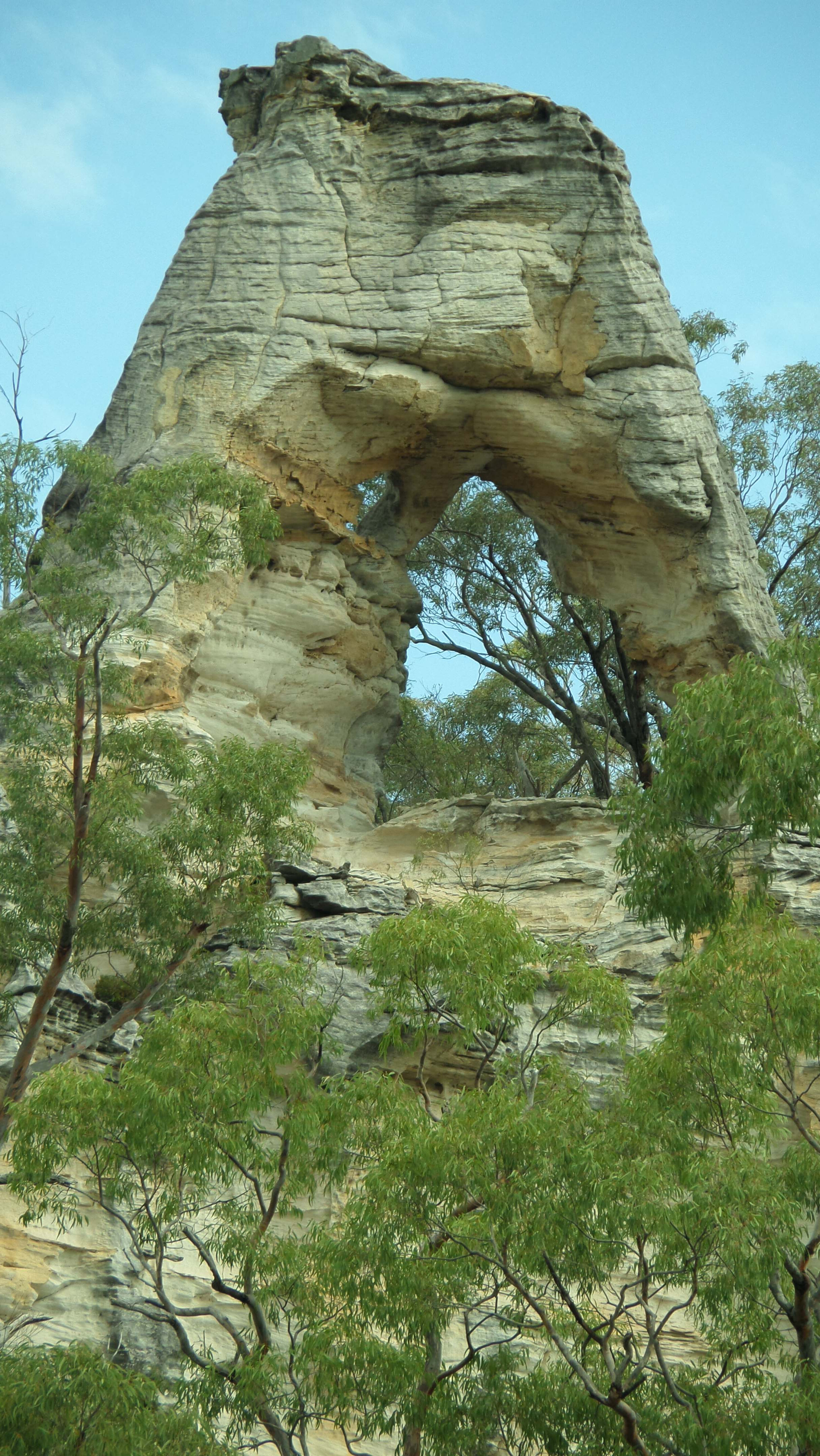
These include The Looking Glass, Cathedral Rock, The Chimneys, The Tombs, Marlong Arch, Kookaburra Cave, Lots Wife and Marlong Plain. These scenic features would have been familiar to the Kenniffs, but did they appreciate them? Camping areas are located at Dargonelly Rock Hole, West Branch, Rotary Shelter Shed and Top Moffatt.
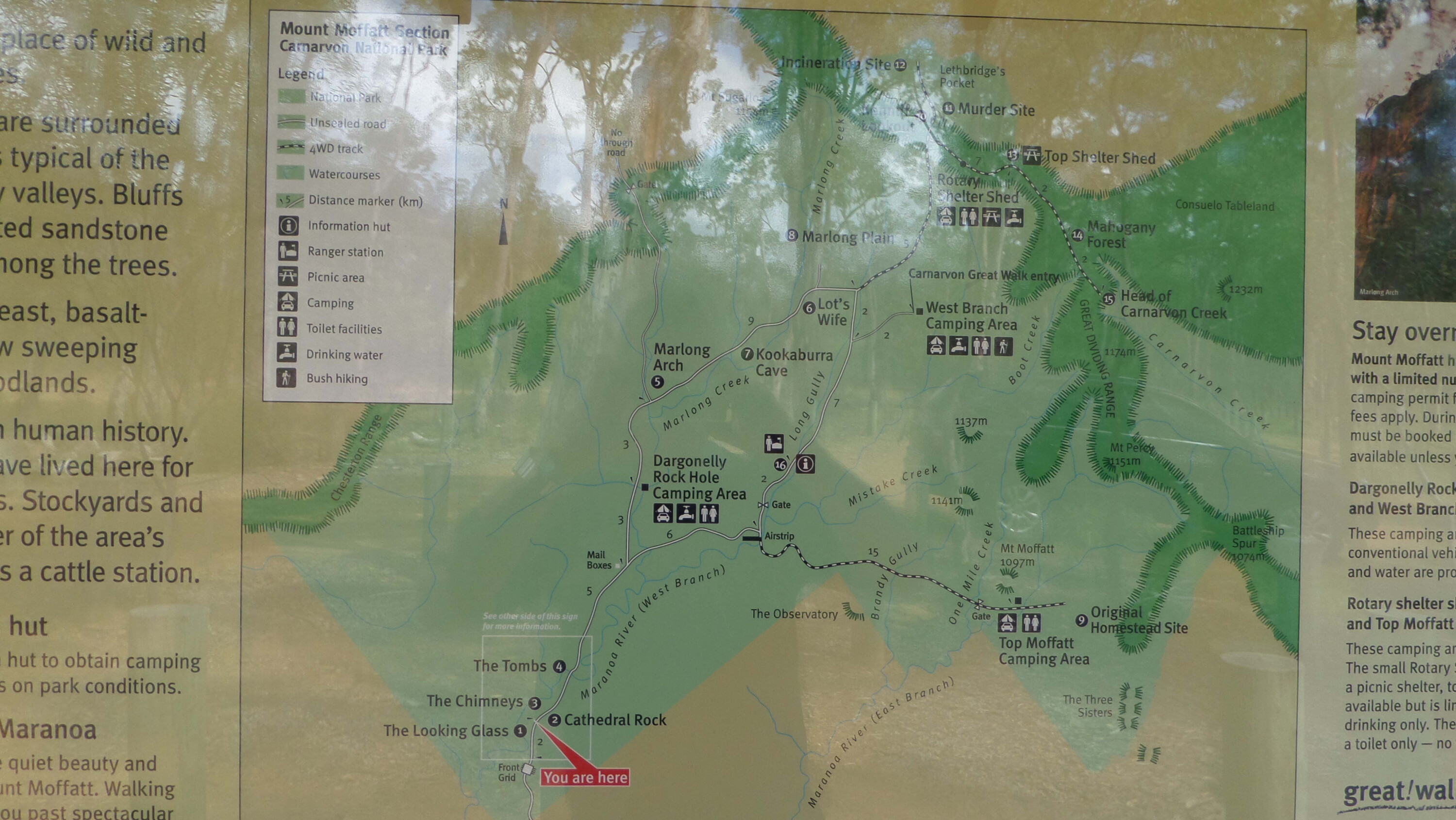
Lethbridge’s Creek: Return to the scene, 1 April 1902
A few days later Burke returned with Constable Millard. They rode farther down the creek and discovered Constable Doyle’s horse and the pack-bags full of ashes.
The contents of the pack-bags were later examined by a doctor. His report included finding amongst the ashes, fragments of human skull and vertebrae, broken teeth, buttons, a piece of stud, two peculiar pins (worn on the lapel by Dahlke) and a pair of metal rings. Nearly two weeks after the murder, the site of the incineration of the bodies was discovered by a police party.
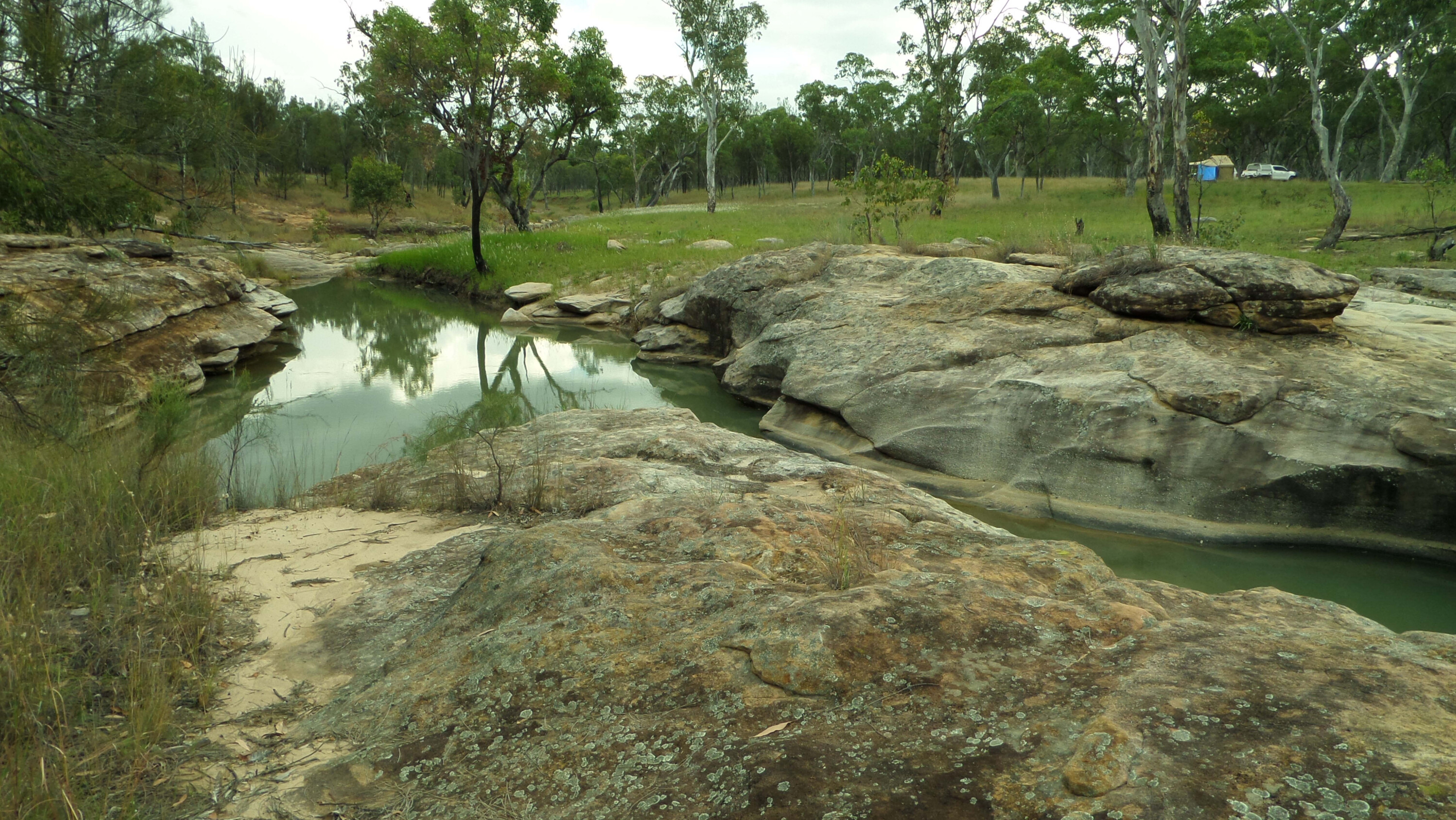
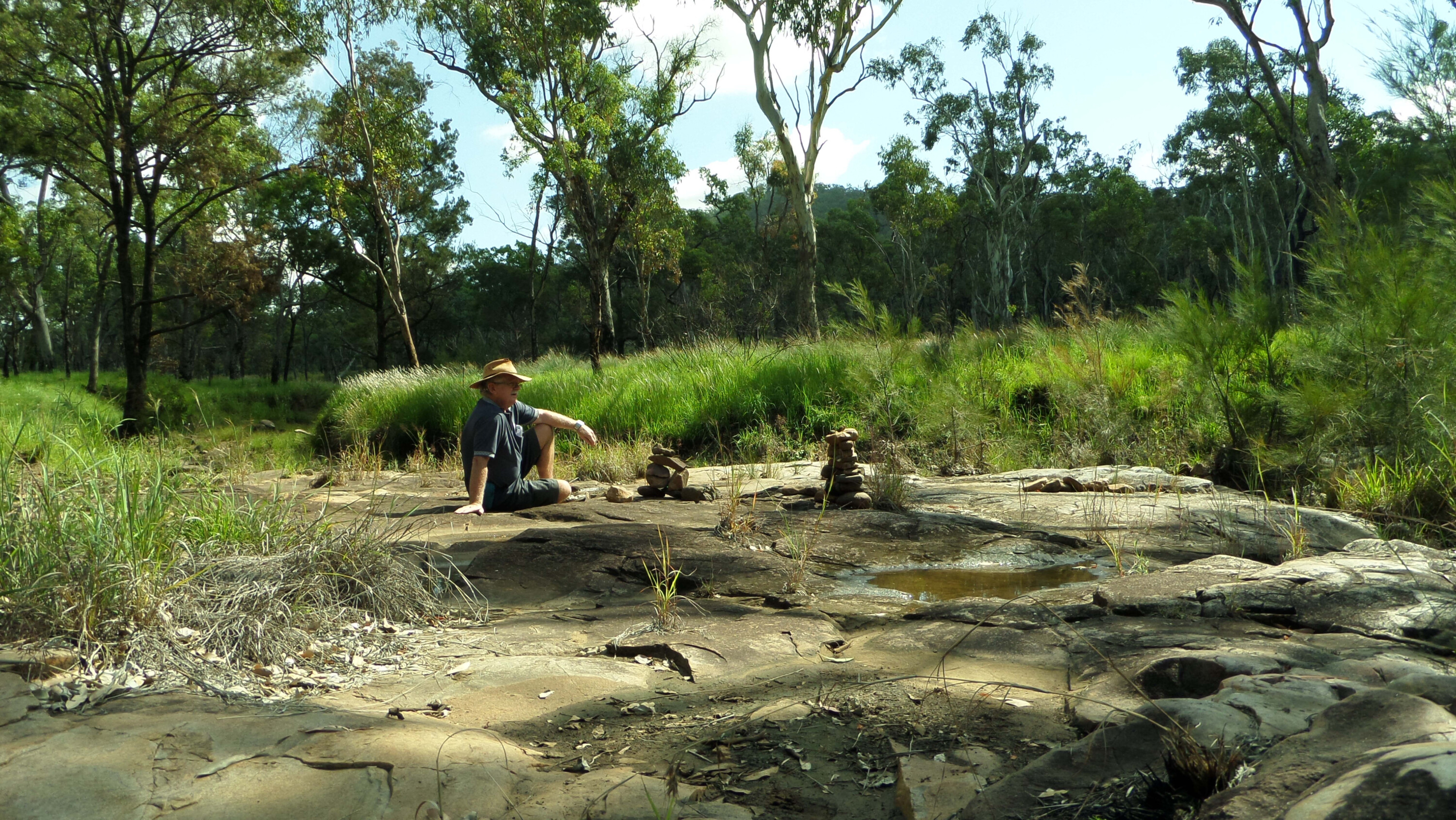
The Incineration Site is marked with a commemorative plaque on a stone. The site can be reached by continuing towards the park’s northern boundary, where a side road is designated as 4×4 only.
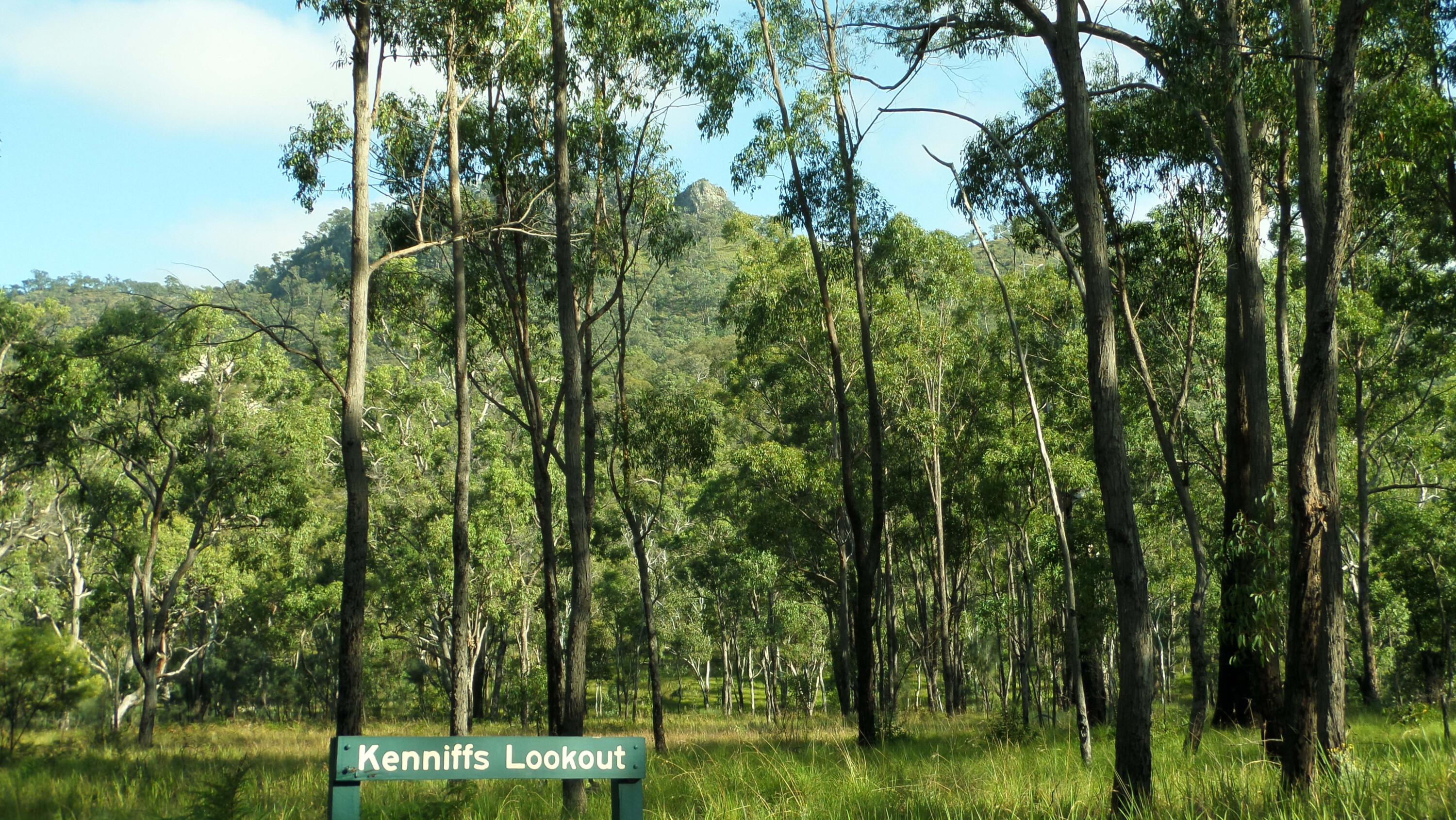
This road passess the peak known as Kenniffs Lookout and descends to the creek. Black soil is encountered on the descent which can be treacherous after rain. If doubtful, the walk is not long. This is the creek where the packhorse was found, and the murder site is upstream but is not marked.
It is now only a short distance to the slab of rock in the creek known as the Incineration Site. This is a very beautiful and solemn place. A gate here is the limit of exploration.
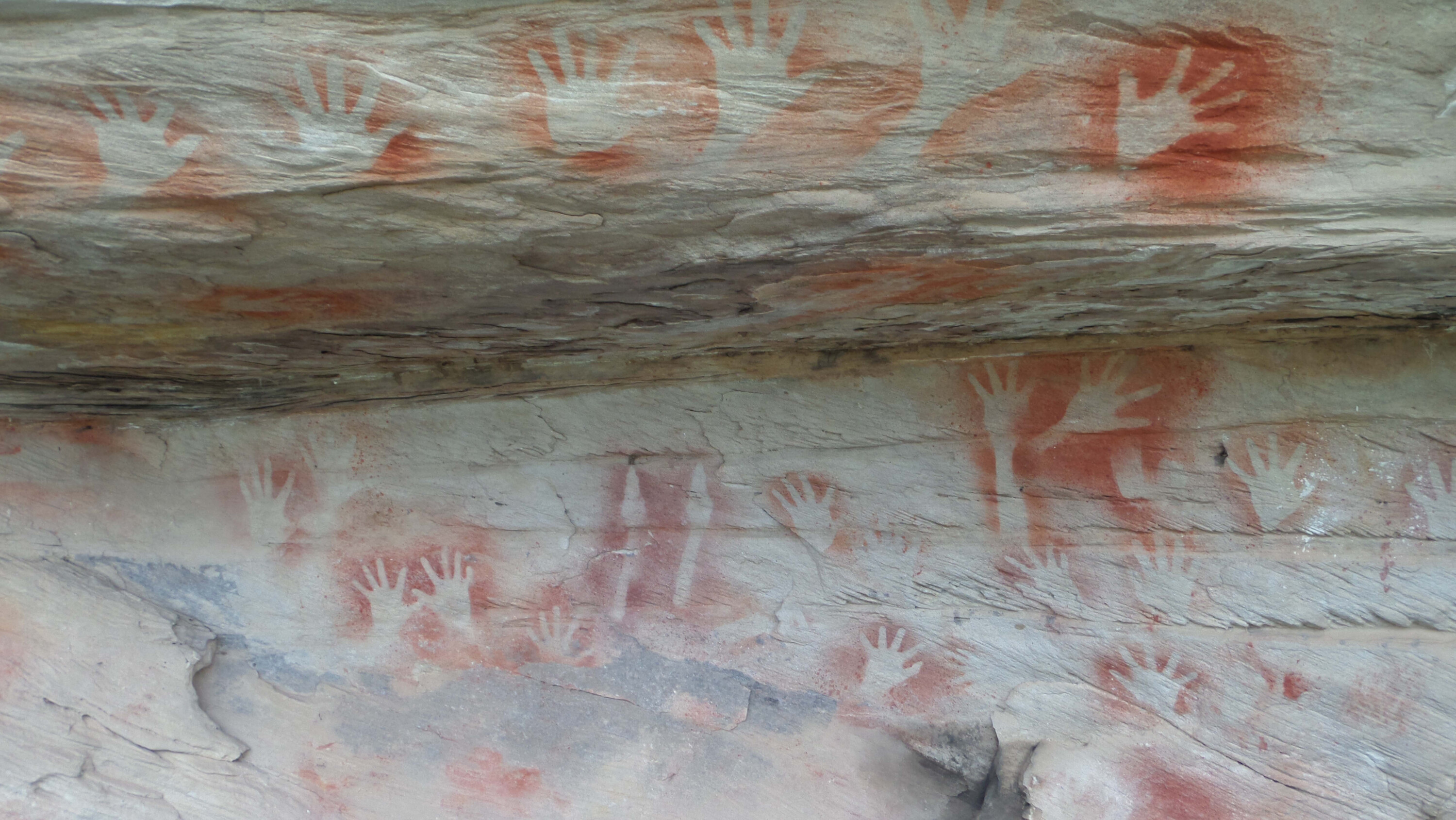
Mitchell: Round up the Kenniffs, 16 June 1902
About 7km southward from Mitchell along the road to St George, at a place now known as Arrest Creek, the brothers were surprised in their camp. There was no escape for Pat, and he was arrested at gunpoint, but James escaped into the scrub and surrendered later.
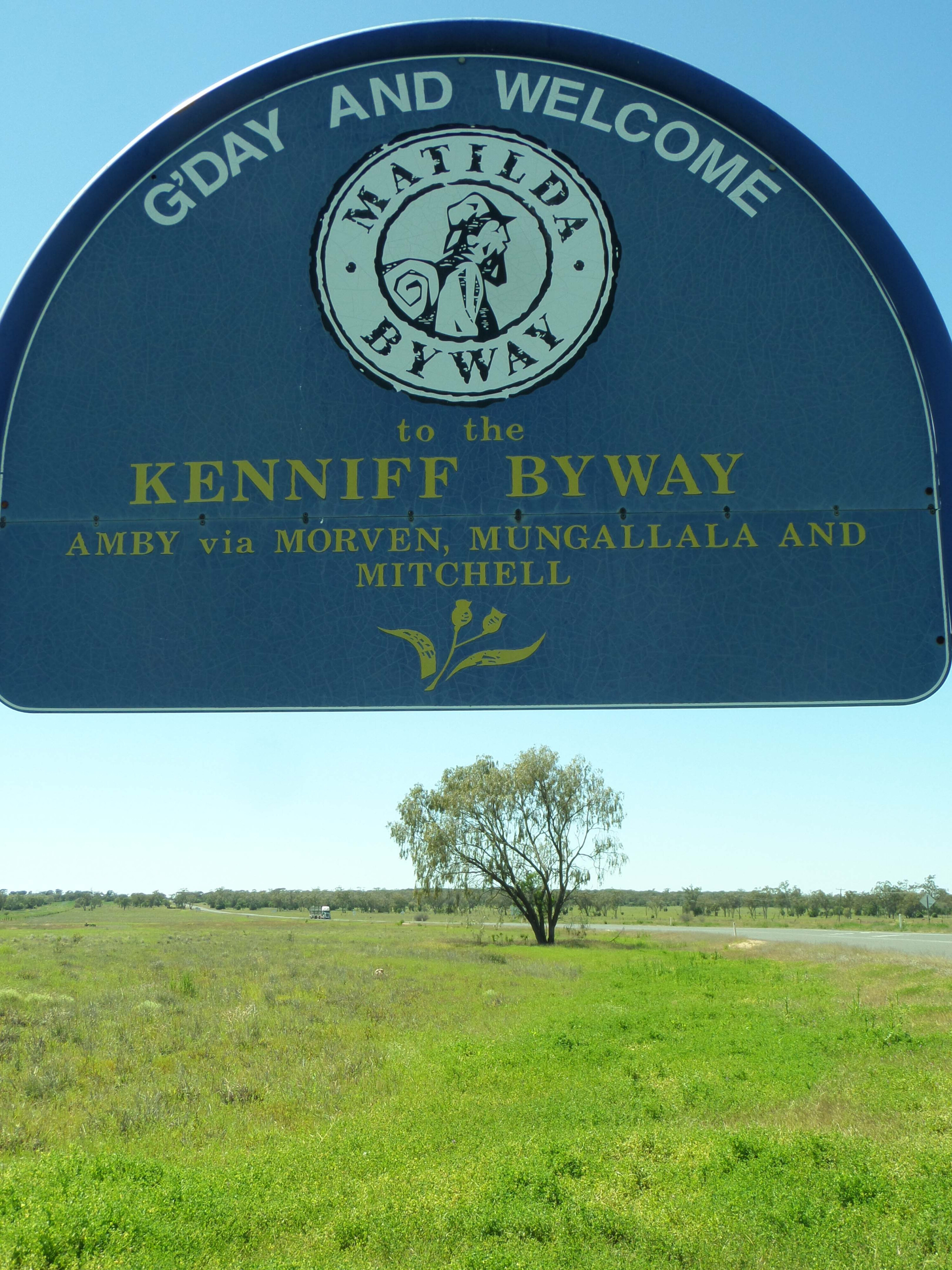
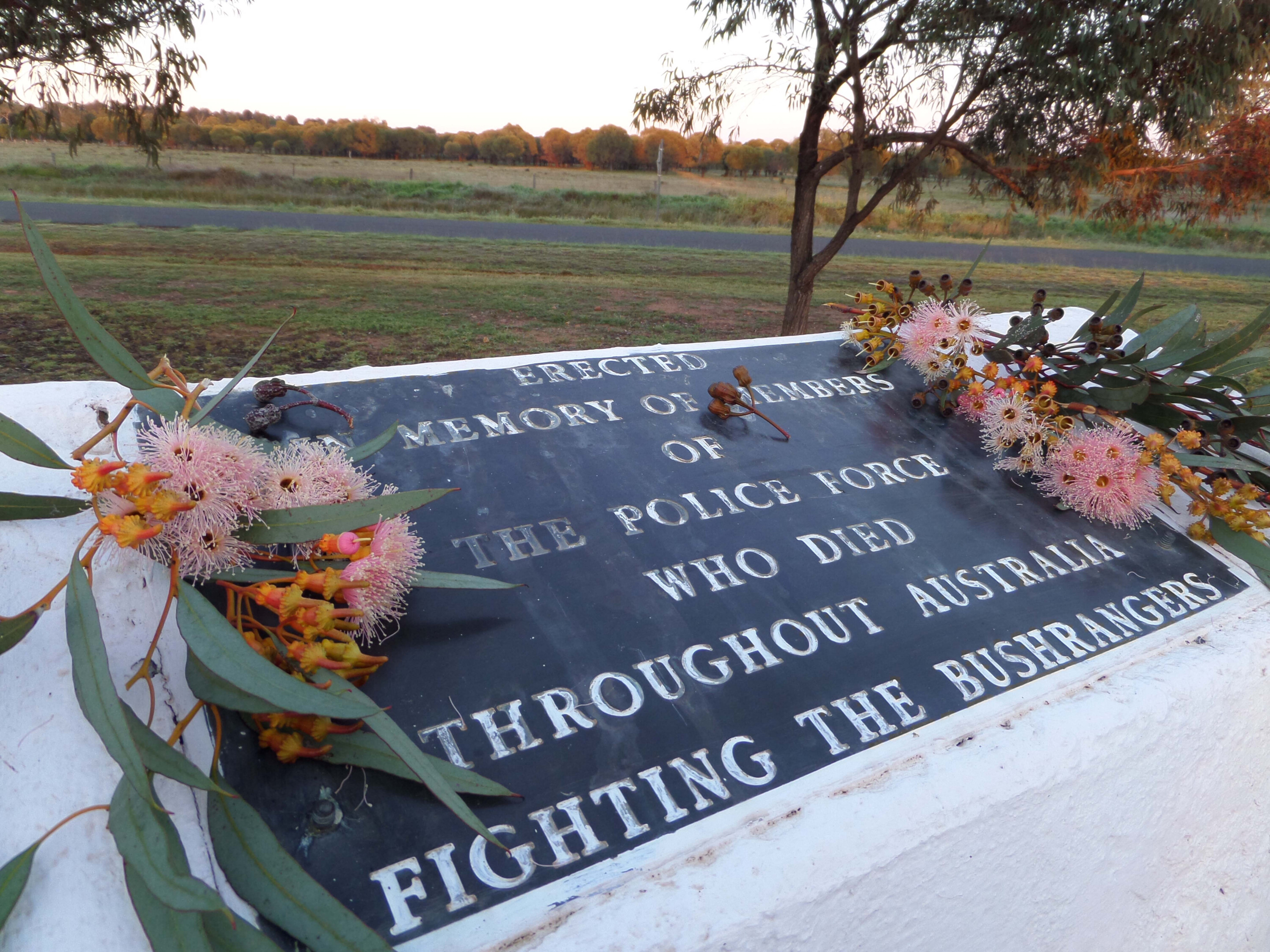
The site today forms an interesting roadside rest area. The Police Memorial here is dedicated to all the police officers in Australia who were killed by bushrangers. This is likely the only such monument in the country.
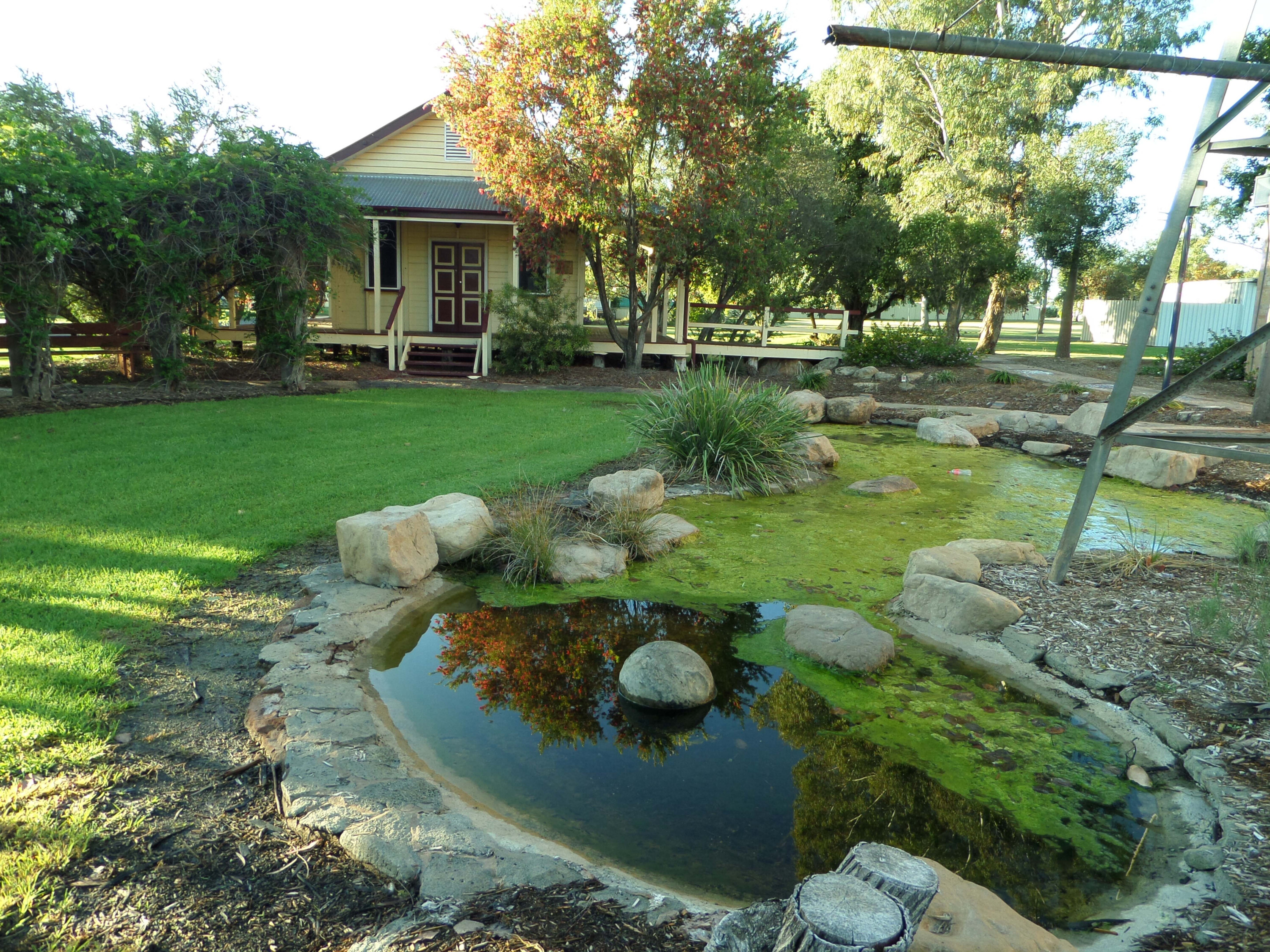
The striking rusty-red sculpture here marks the arrest of Pat Kenniff. In the artwork we see Pat pinned to the ground by two troopers while a native tracker watches behind for James. The Kenniff Court House in Mitchell was restored and officially re-opened in 1996. The brothers faced their committal hearing here to stand trial in Brisbane in 1902. Interesting Kenniff displays feature within.
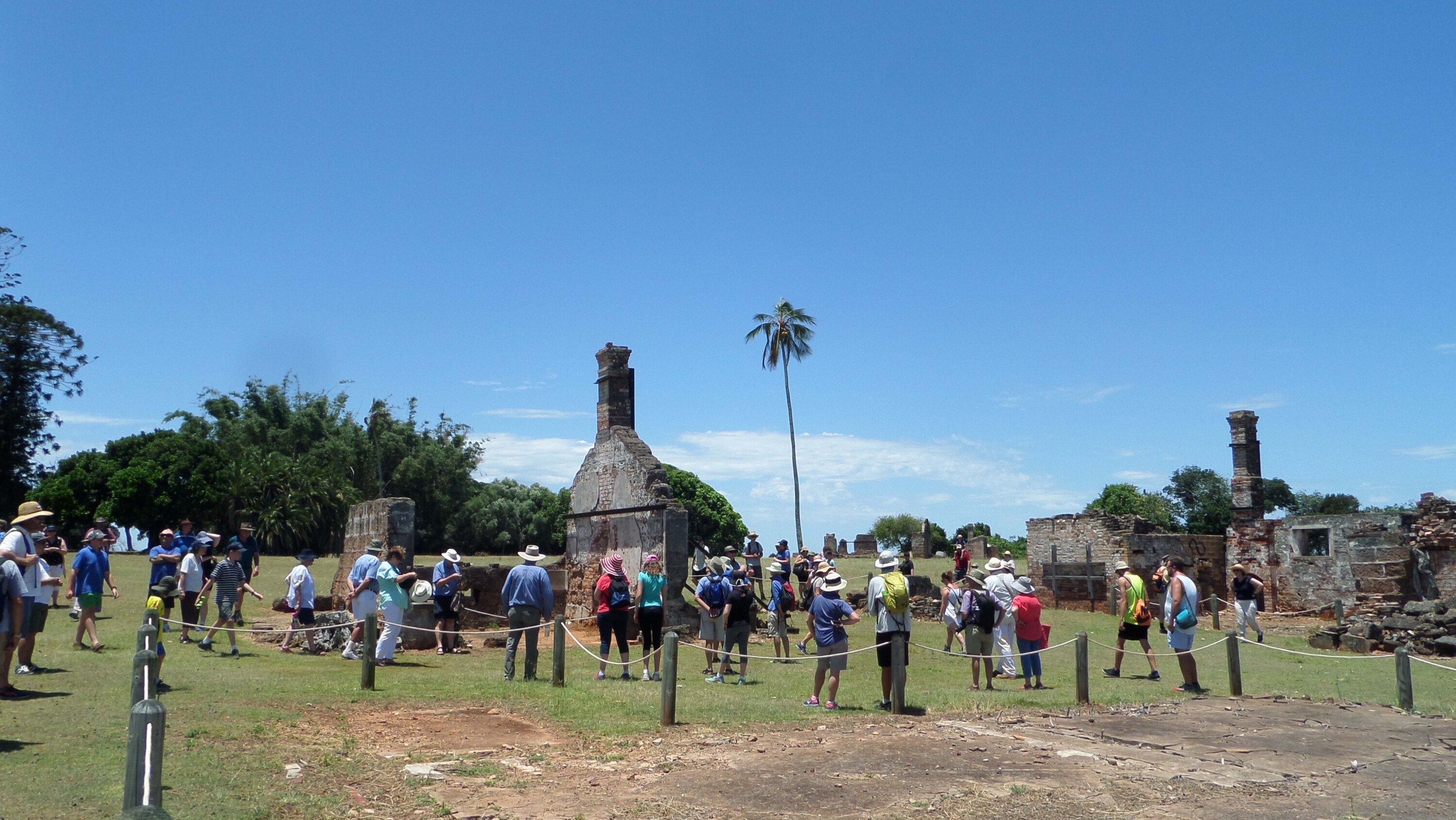
Brisbane: A verdict is reached, 8 November 1902
To continue in the tracks of the Kenniff brothers, we must leave the serenity of outback Queensland and venture into the wilds of the big city.
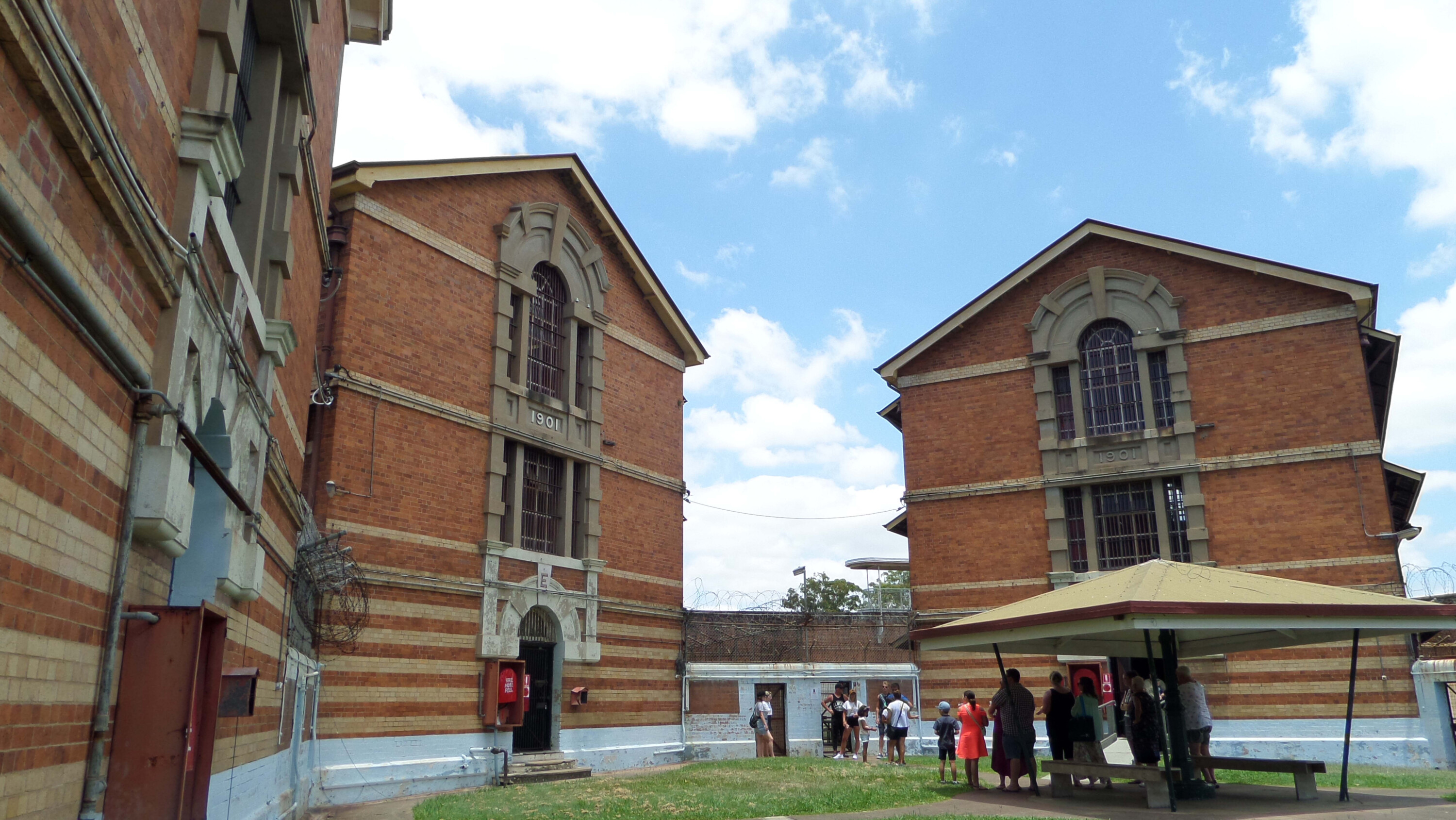
The Kenniff brothers were brought by train to Brisbane and lodged in Boggo Road Gaol, prior to their trial. As there were no witnesses to the murders and no bodies as such, the evidence would be all circumstantial.
The only witness at the scene was the tracker Sam Johnson and he did not see the shooting. The defence tried to rattle the Aboriginal tracker, but he stood his ground well and his solid testimony helped to convict the Kenniffs. This was a rare occasion where Aboriginal testimony helped send a white man to the gallows. Eventually both brothers were convicted of wilful murder.
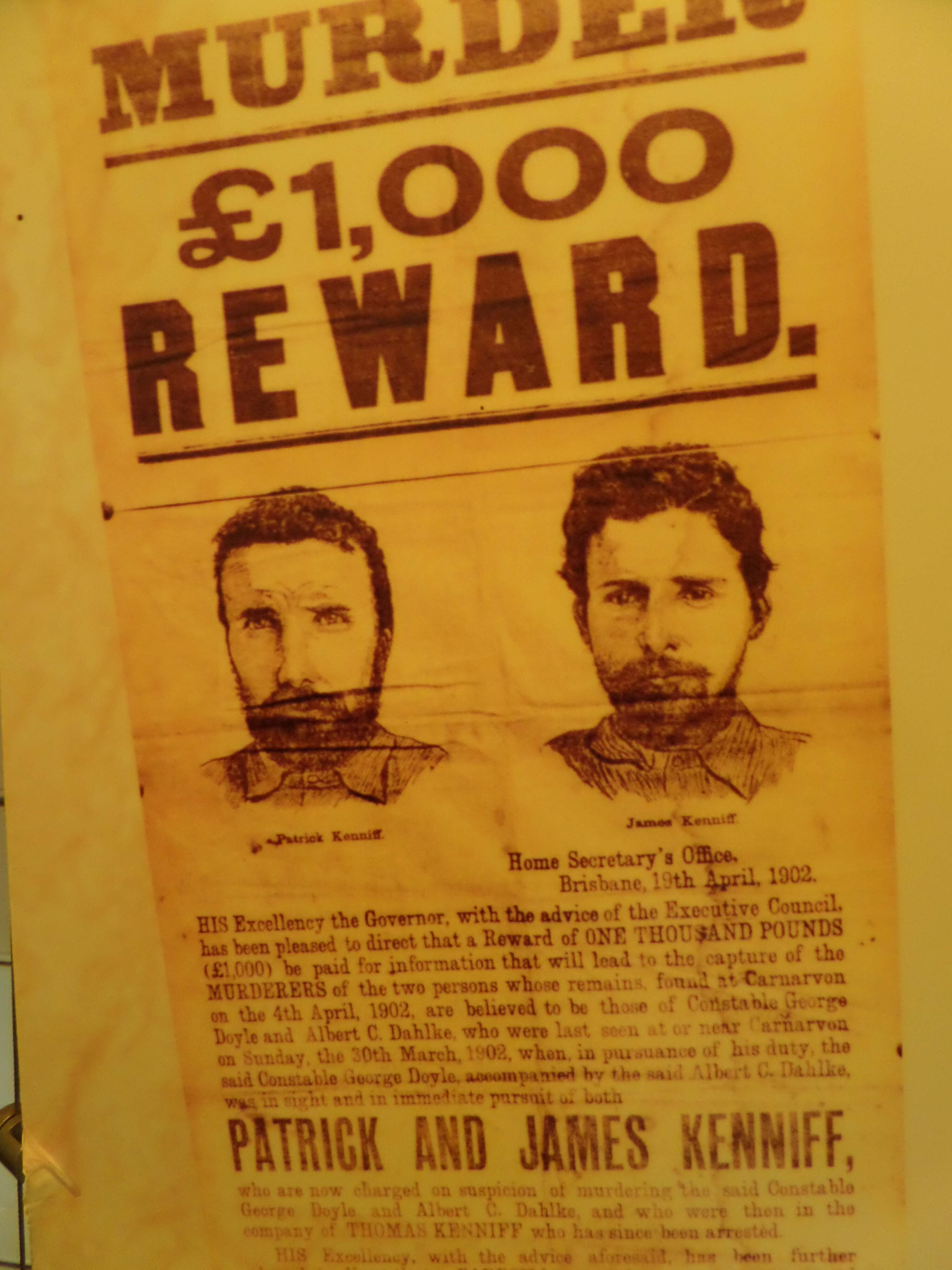
It was decided to commute James’ death sentence to life in prison.
The judge took the view that after tracker Johnson had ridden back along the track to get the packhorse after witnessing Doyle and Dahlke securing James, Pat had returned and in an exchange of gunfire, had killed Constable George Doyle and the unarmed Albert Dahlke and rescued his brother James.
It was thought that the two bodies were later placed on a rock slab near the creek, cut-up and burnt and the smashed ashes placed in the pack-bags on Doyle’s horse ready for isolated disposal. The Kenniffs somehow lost the horse in the scrub, and it was found, with its grisly contents of evidence, by Constable Millard.
Pat went to the gallows at Boggo Road Gaol on 12 January 1903. He and James proclaimed their innocence to the end. In 1922, Queensland was the first place in the British Empire to abolish capital punishment.
Boggo Road Gaol is open for tours in the No. 2 Division. The Kenniffs were held in the older No. 1 Division which was also the location of the gallows. This Division no longer exists but it looked very similar to the existing building.
The old gallows beam was removed and displayed in the 1829 Commissariat Store Museum at Queen’s Wharf. It may soon return to Boggo Road. Pat’s grave can be found in the shady gully behind the green work shed in South Brisbane Cemetery, not far from the gaol. He is the only executed prisoner to have a marked grave. In 2003, family members also installed a centennial plaque.
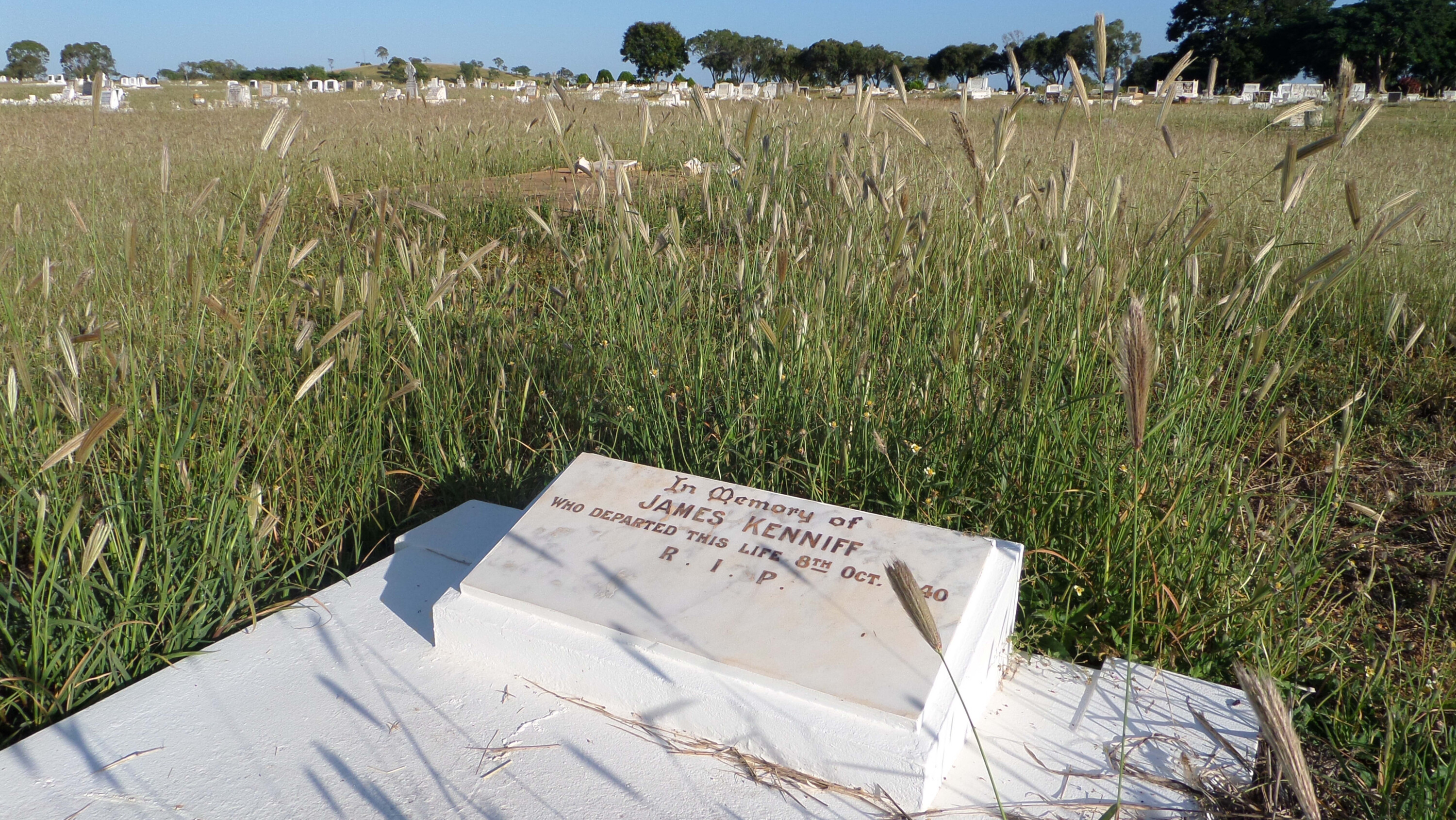
Final resting places: At peace in a new century
The final resting places of other participants in this story are spread wide across rural Queensland. All graves are clearly marked.
The scant mixed remains of Constable George Doyle and Albert Dahlke were buried in a private cemetery at Tamrookum south of Beaudesert on the property of Dahlke’s employer, the Collins family. The beautiful hillside cemetery has public access.
James Kenniff served his time on Saint Helena Island and in Boggo Road Gaol in Brisbane. He was released in November 1914. He died in 1940 and is buried in the Charters Towers Cemetery near the front fence. Tracker Sam Johnson died in 1919 and is buried in Longreach Cemetery near the back fence. Journalist and TV presenter Mike Munro wrote a book on the Kenniff brothers. He is a descendant, and his real name is Kenniff.
Resources
Mount Moffatt Section, Carnarvon National Park via Mitchell Phone: (07) 4626 3581 Website: parks.des.qld.gov.au/parks/carnarvon-mount-moffatt [↗]
Roma Visitor Information CentrePhone: (07) 4624 0204Website: https://www.maranoa.qld.gov.au/big-rig [↗]
Injune Visitor Information Centre Phone: (07) 4626 0503 Website: visitinjune.com.au/visitors-centre
Gregory Powell is a retired schoolteacher. He has written 13 books on bushwalking and bushrangers. His latest two are, Bushranger Tracks (2016) and Bushranger Tracks II-Beyond the Legends (2019).
Australian-owned manufacturer of leading communication technology, GME, has released the Aussie-made XRS-660 UHF that revolutionises the handheld market.
Building on the market-leading innovation of GME’s popular range of XRS Connect UHF CB radios, the XRS-660 offers several exciting new features, demonstrating GME’s commitment to developing new technology for UHF CB radio users.
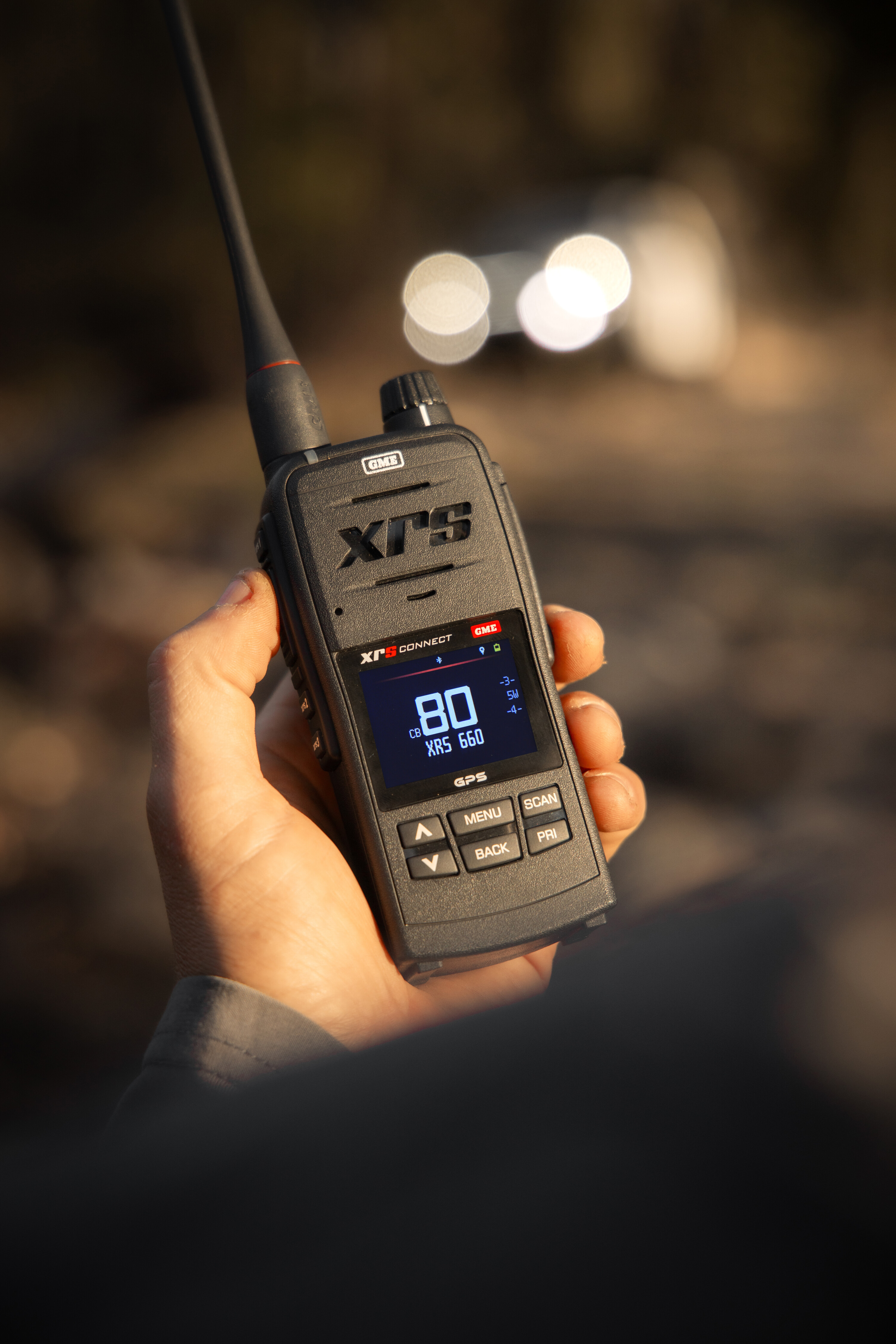
The XRS-660 is the first of its kind, with built-in GPS functionality ensuring true location awareness without relying on a smartphone to provide location data, making it perfect for new and existing campers, hikers, 4WDers, and those who work in regional and remote areas.
GME Group Marketing Manager, Tony Crooke, said: “For Aussies travelling or working in remote and regional areas, staying in touch is vital to ensuring they get home safe. That’s why GME is proud to launch the XRS-660 – the first-ever XRS handheld radio with GPS tracking capabilities.
“Building on the market-leading innovation of GME’s popular range of XRS Connect UHF CB radios, Australians can now have total peace of mind knowing they can communicate with their fellow travellers or workers all while their live location is visible, without mobile phone service.”
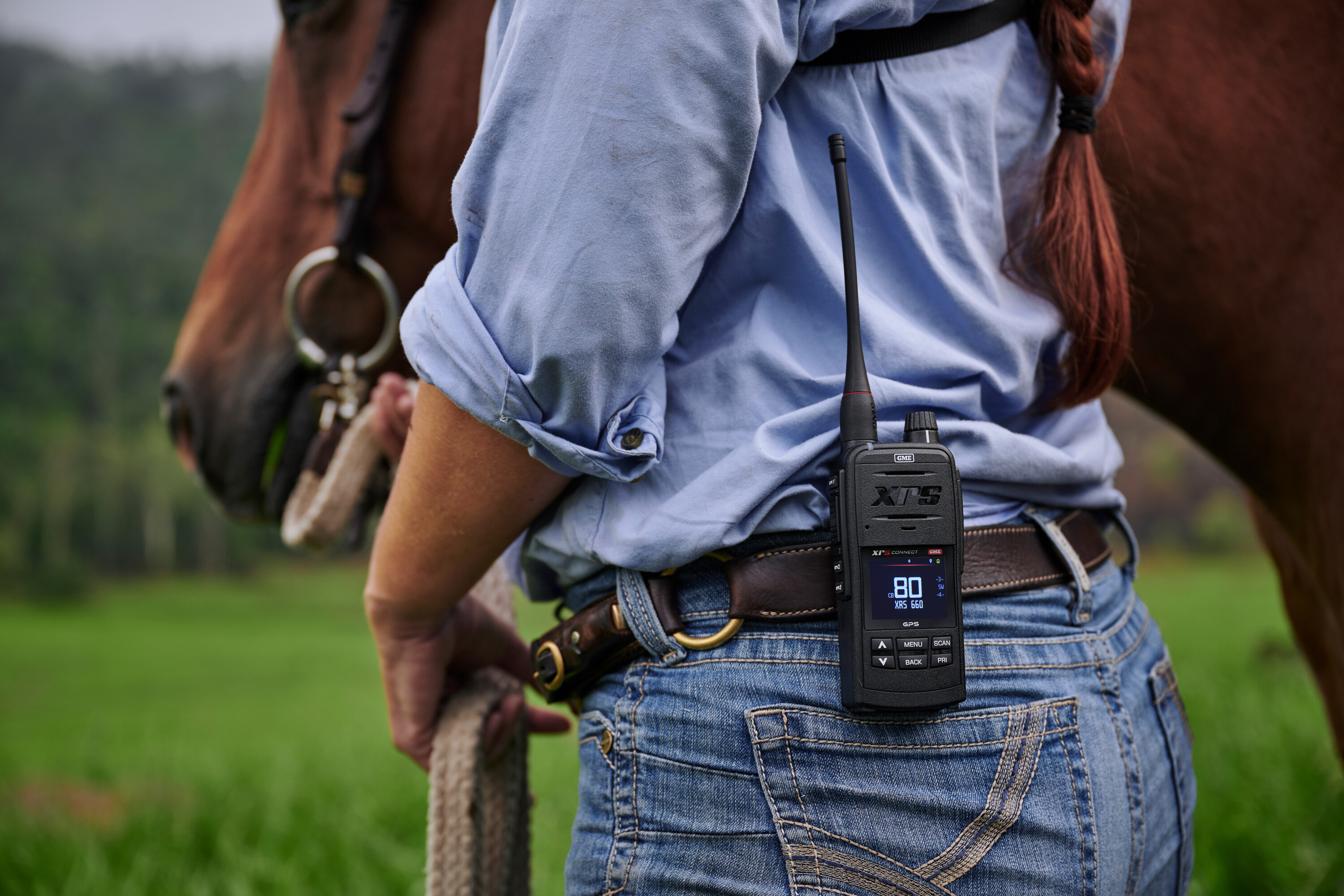
The XRS-660 offers several exciting new features including a Colour TFT LCD screen that provides the ultimate handheld radio display for all environmental conditions – even in full sunlight. It also features three user-customisable buttons.
“The colour TFT LCD screen is the first of its kind in a UHF CB radio and ensures the user has an easy-to-view display in all environments,” Crooke added.
The five-watt unit also has Bluetooth audio connectivity, allowing the XRS-660 to wirelessly connect to an extensive range of third-party audio accessories. To top it off, rugged IP67 ingress protection and a MIL-STD810G rating make the XRS-660 the toughest and most advanced handheld UHF CB radio yet, and it won’t matter if you drop it in a river or get it wet when fishing.
“The XRS-660 is a monument to Australian Manufacturing and goes to show that Australian businesses can still push the boundaries regarding technological advancements,” said Crooke. “The unit was designed and manufactured with the outdoor adventurer in mind, its advanced features and rugged chassis make it the perfect accessory for any adventure.”
In the box, you’ll find the XRS-660, a 2550mAh Li-Ion battery pack, a rapid desktop charger, an AC adapter, a belt clip and a quick start guide.
RRP: $549
Between inflation and rising production costs, the sticker prices of new cars seem to be increasing at a faster rate than they used to.
It’s a situation that isn’t helped by automakers who are keen to boost margins by steering customers toward feature-rich (and profit-rich) variants while simultaneously subtracting viable options from the bottom end of the product pool.
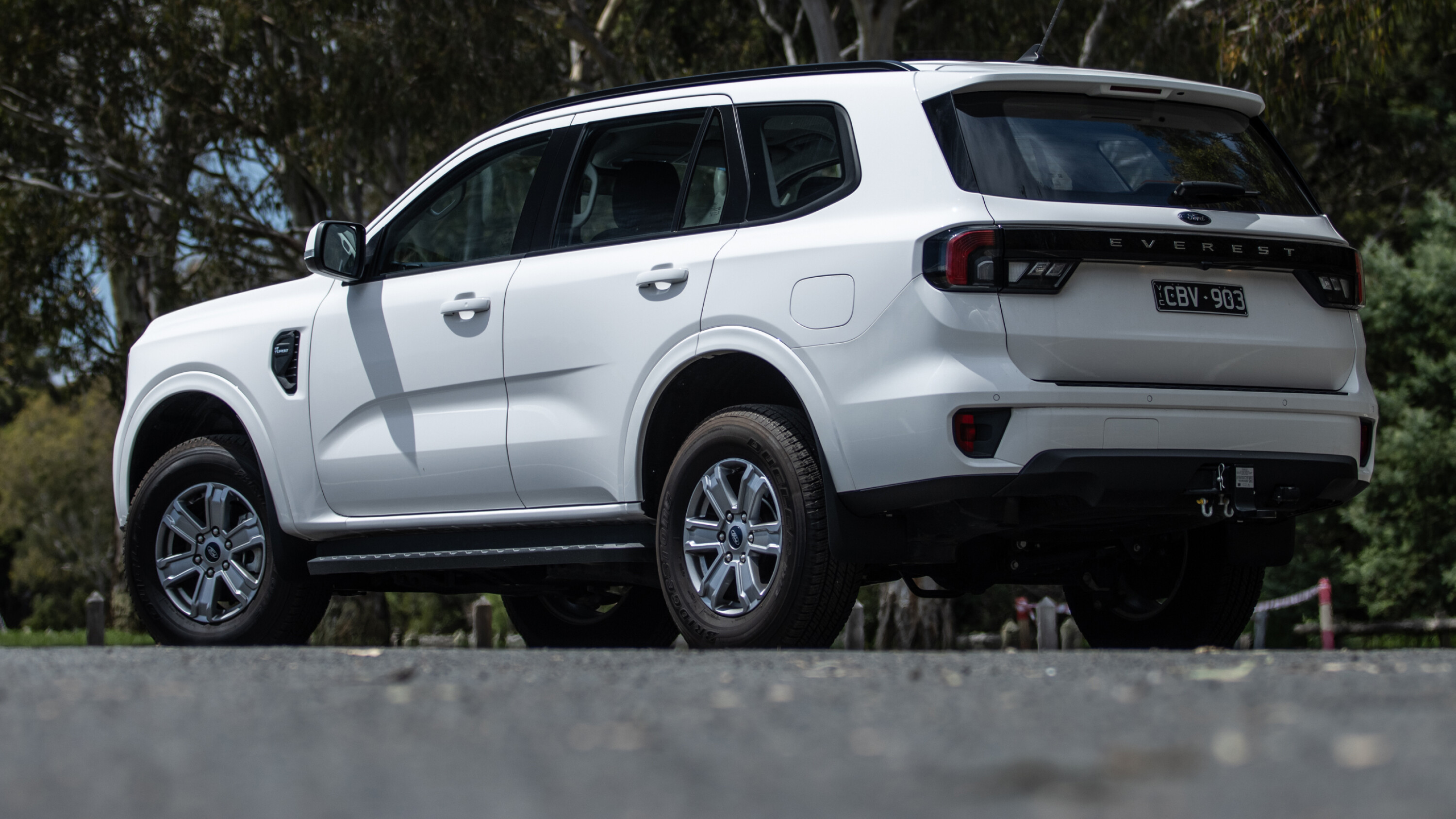
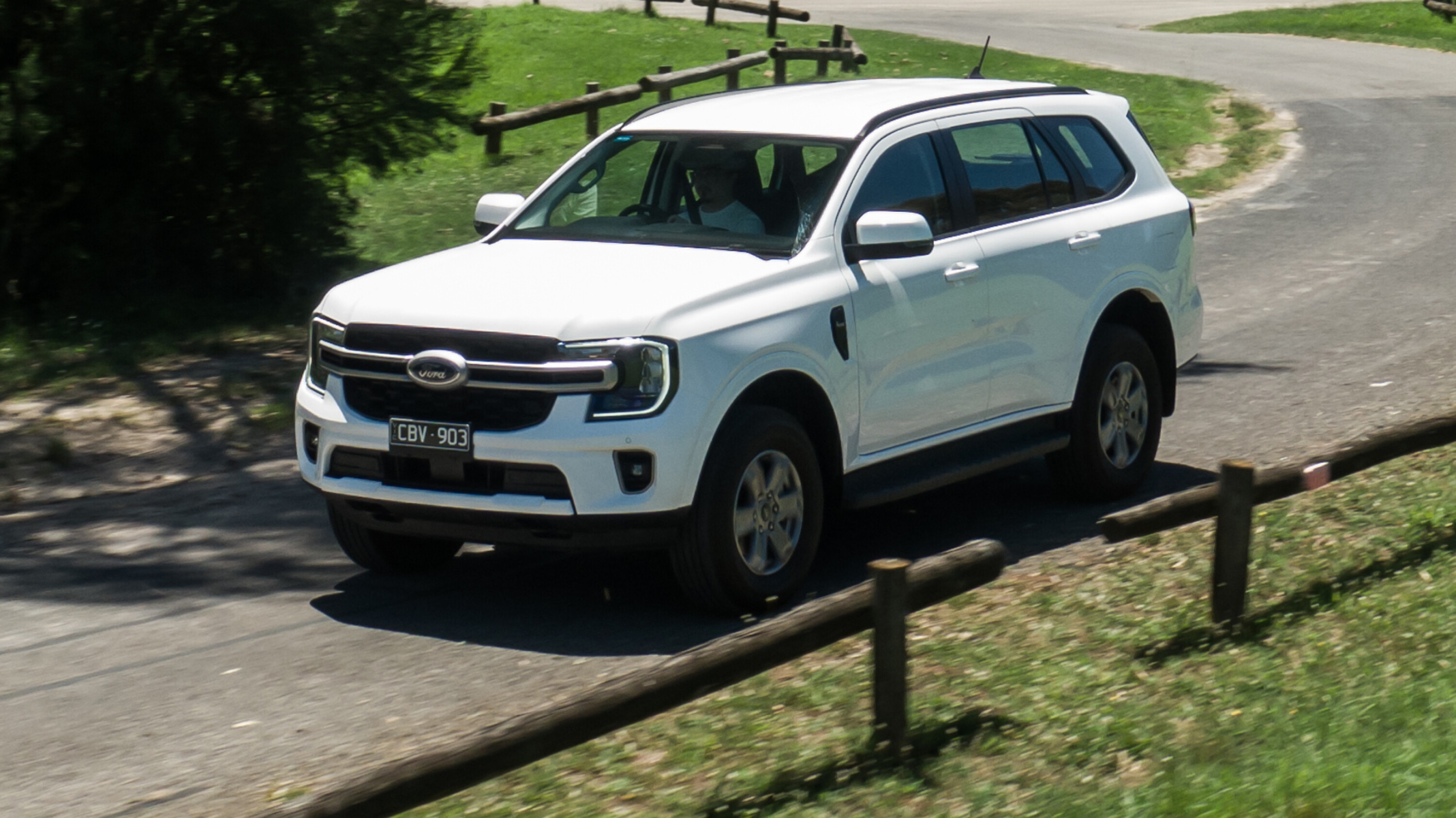
Mercifully, Ford’s Everest proves there’s still some good buying at the lower reaches of the spec-trum. The second-gen Everest has certainly impressed us since its 2022 arrival, but thus far the bulk of our experience with Ford’s COTY-winning SUV wagon has been at the upper end of the model walk-up.
However, a week in the boggo Ambiente demonstrated that the Everest is still a winner even when the front differential gets subtracted.
JUMP AHEAD
- How much is it, and what do you get?
- How do rivals compare on value?
- What’s it like inside?
- What is it like to drive?
- How is it on fuel?
- How safe is it?
- How long is the warranty and what are the running costs like?
- VERDICT
How much is it, and what do you get?
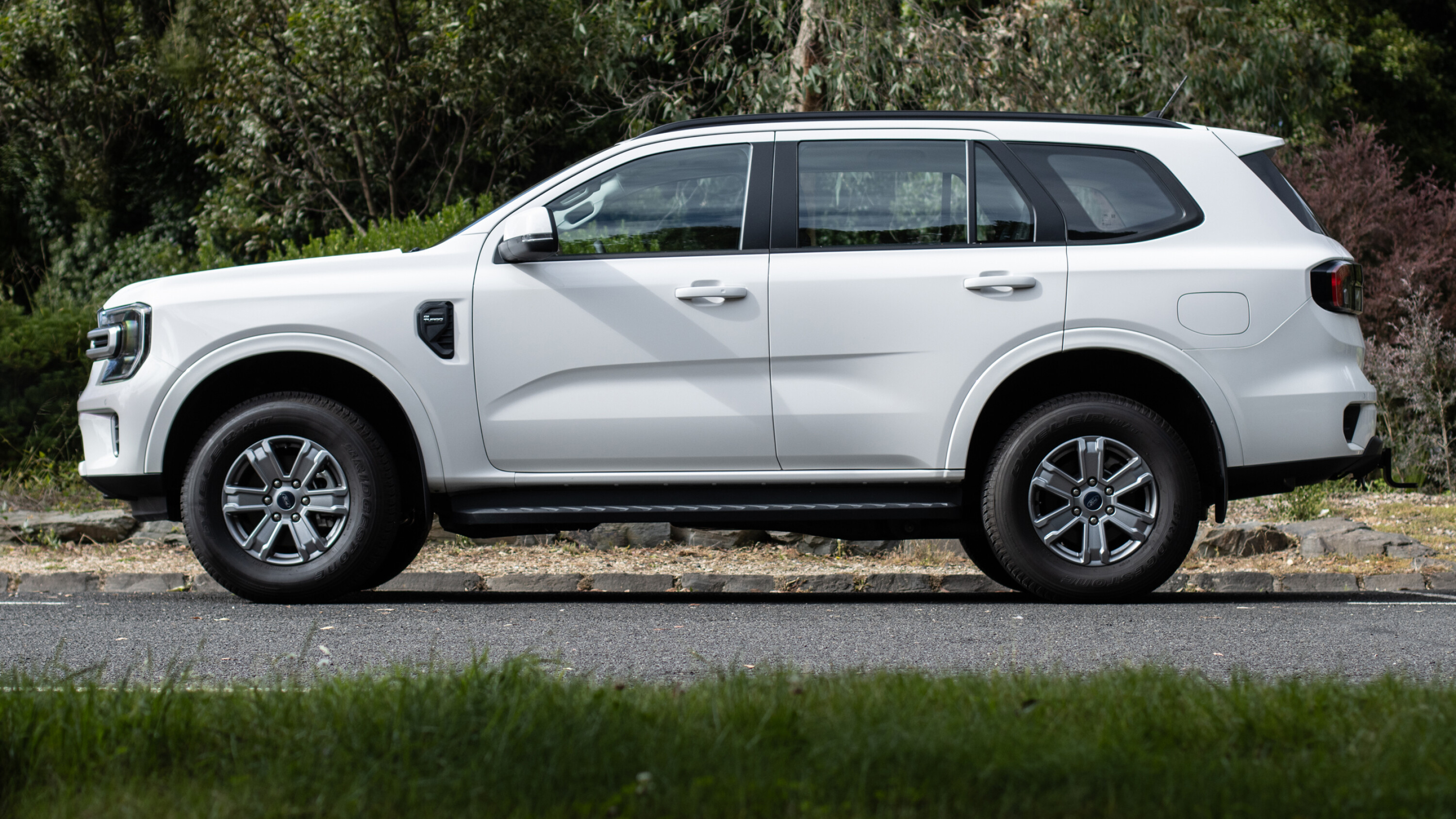
The Ford Everest Ambiente RWD retails for $53,990 before on-road costs, making it the most affordable in the Everest range.
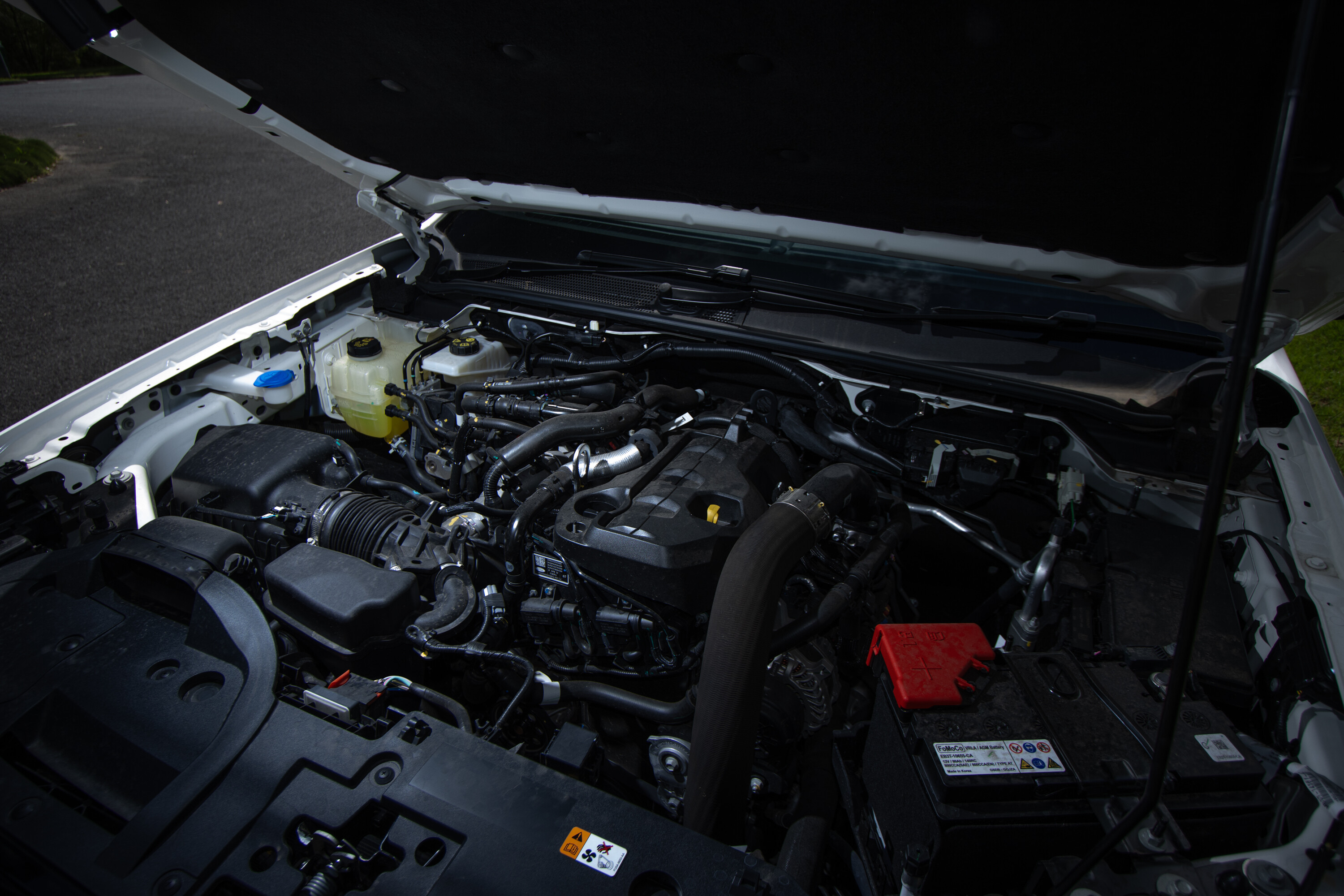
While you miss out on four-wheel drive traction, you still get the same 3.5-tonne tow rating and 154kW/500Nm 2.0-litre bi-turbo diesel as the 4WD model.
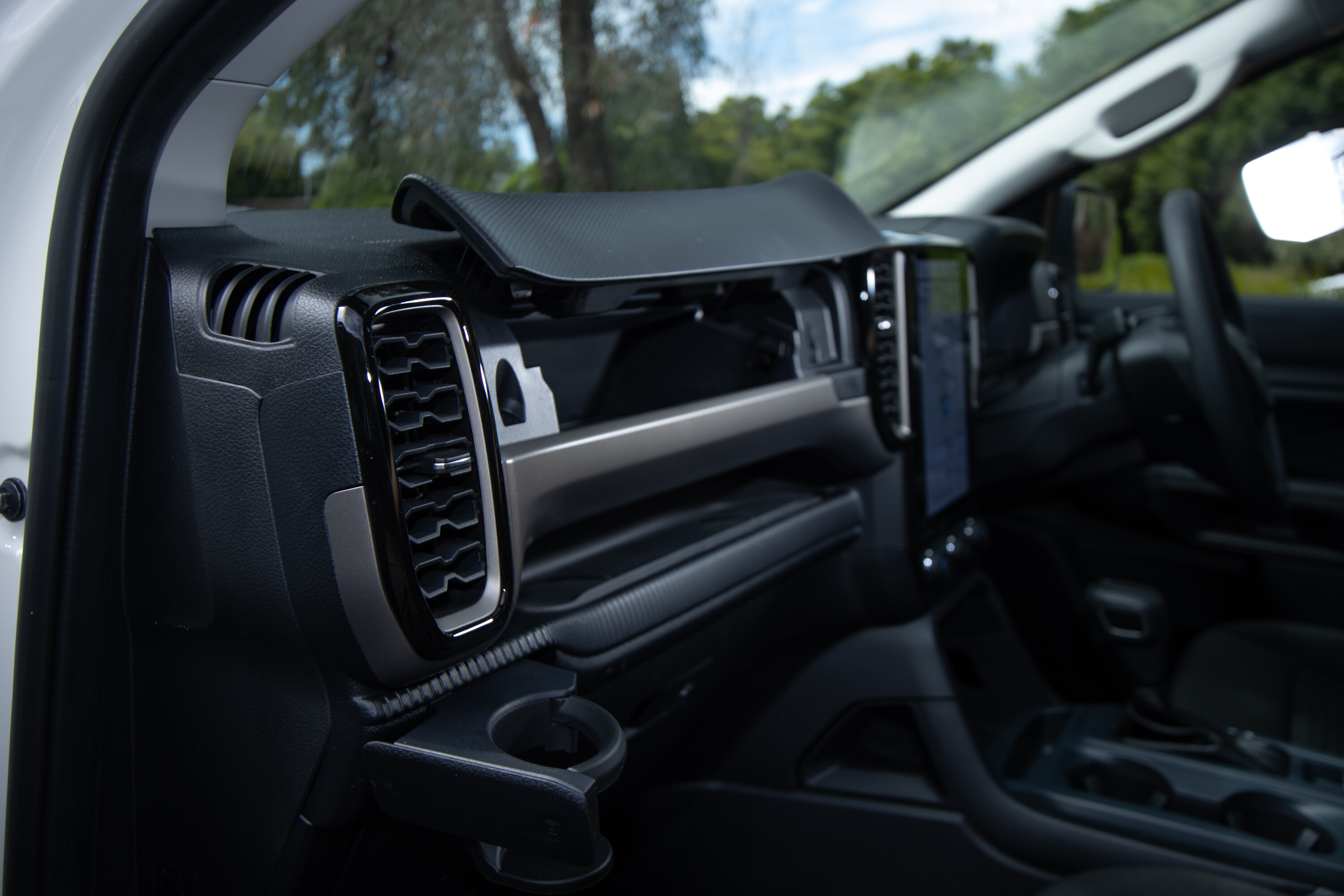
You also receive a 10.1-inch infotainment screen rather than the 12-incher of the Trend, Sport, Platinum and Wildtrak grades, but the 8.0-inch LCD digi-dash provides some tech sparkle that you wouldn’t normally expect to see in a base model body-on-frame SUV.
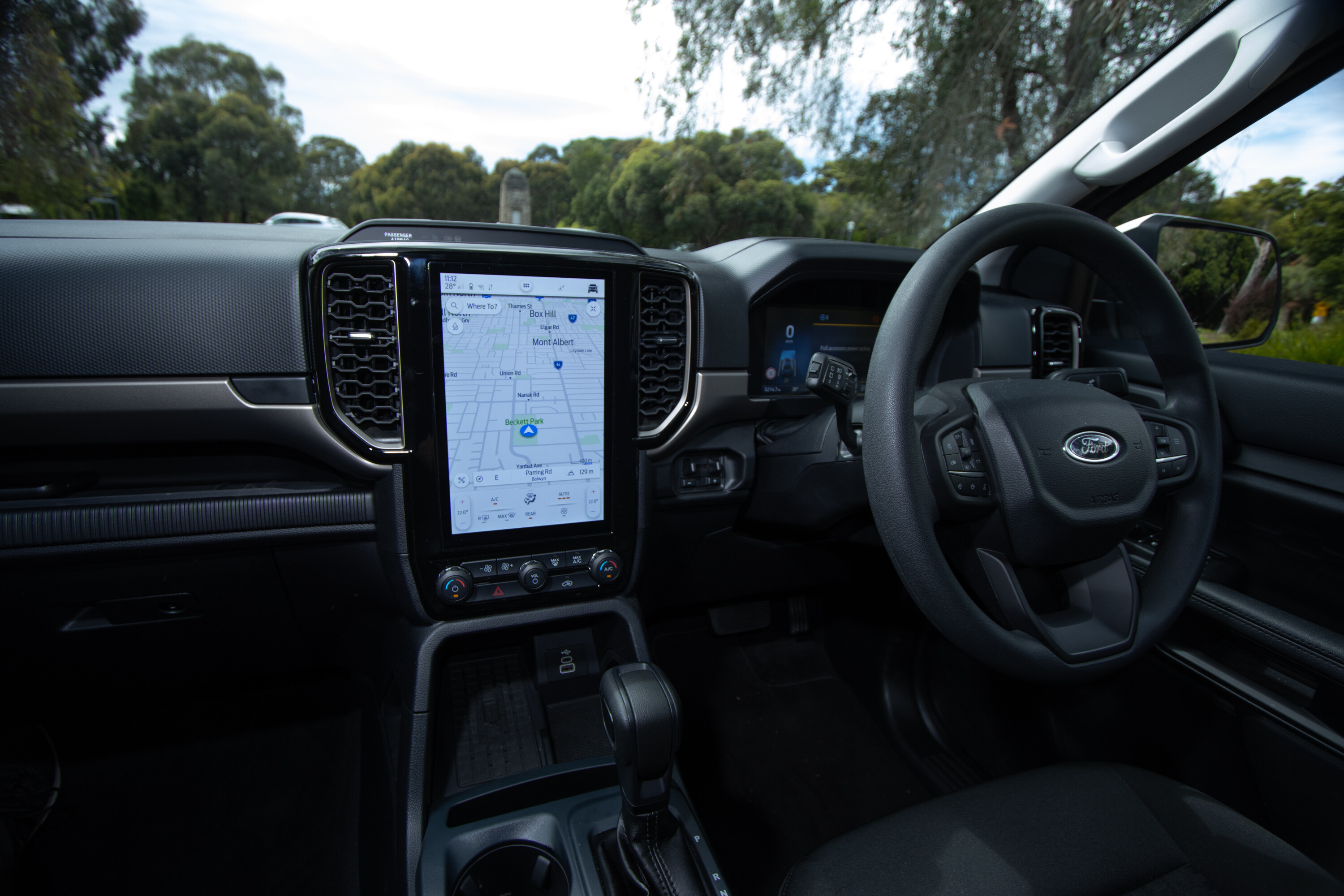
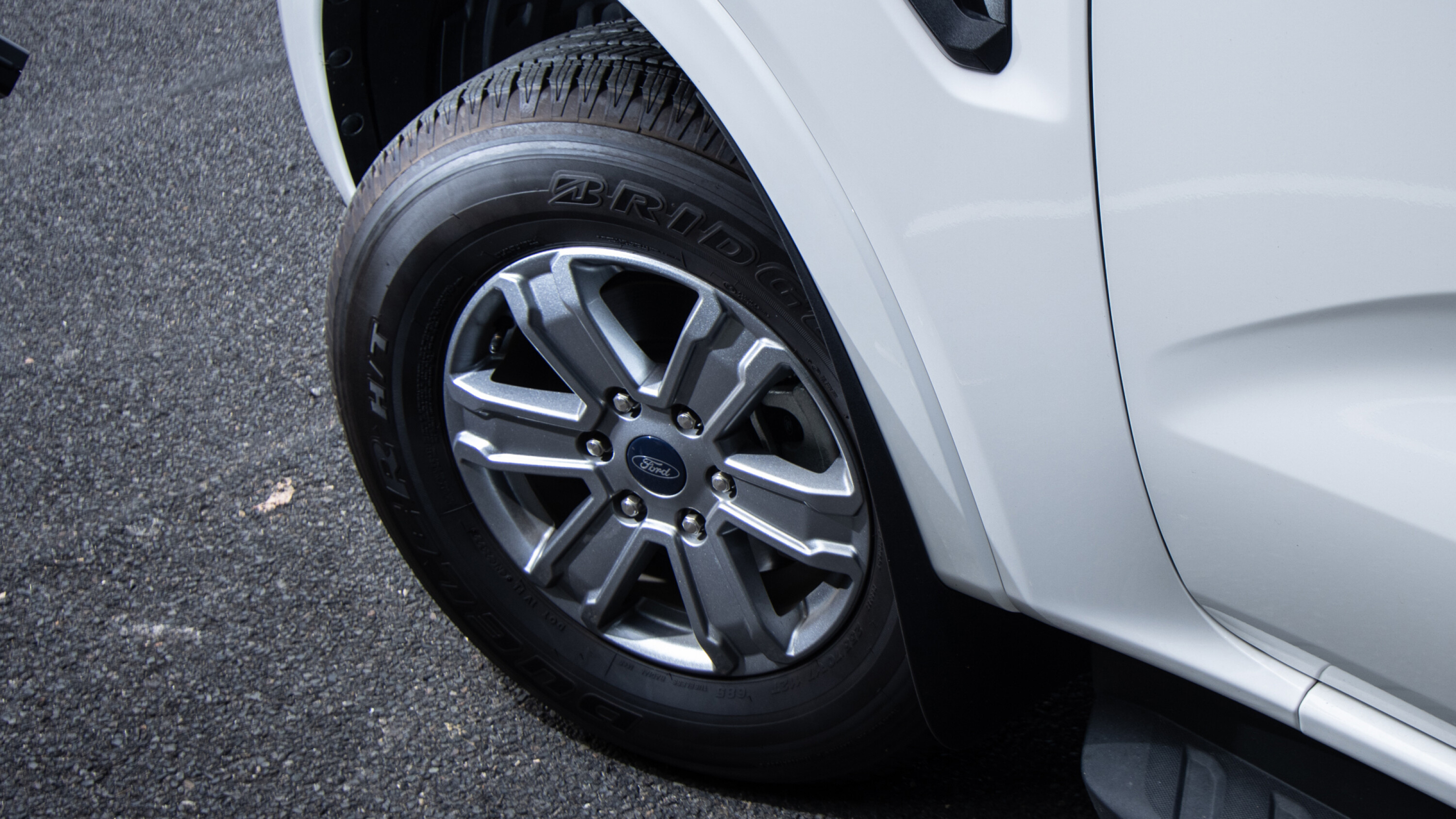
Dual-zone climate control is standard and pipes air to all three rows, and the front seats are manually adjusted. The wheels are 17-inch alloys, making them the smallest rims in the range but, as we’ll get to in just a sec, that’s actually not a bad thing.
The Ambiente is a five-seater as standard, but for an extra $1200 a third row of seats can be optioned in, as our test car shows.
Our tester was also equipped with the optional tow pack, priced at $1900, bringing the total as-tested sticker to $57,090 excluding on-road costs.
How do rivals compare on value?
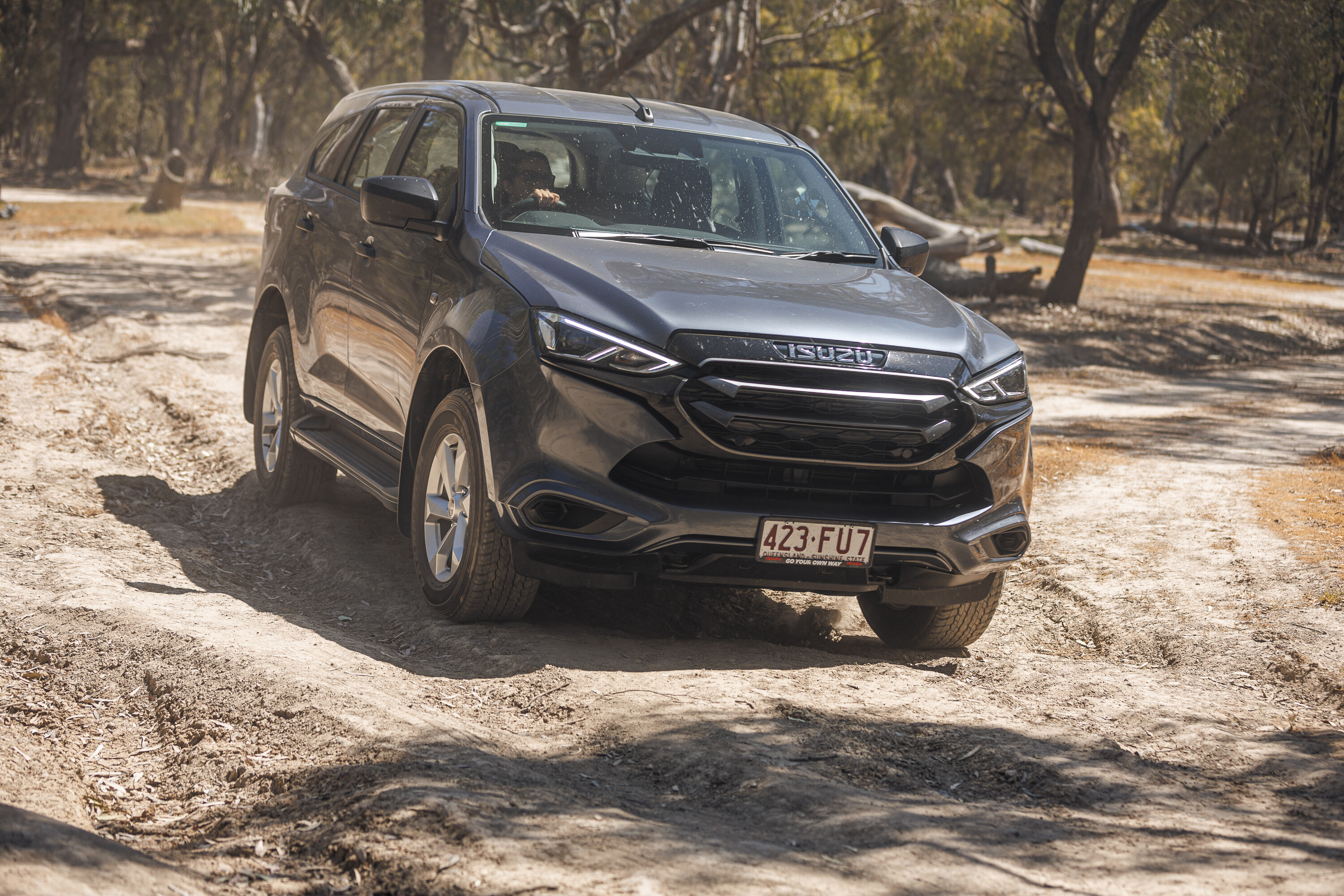
Direct rivals include the Isuzu MU-X, Toyota Fortuner and Mitsubishi Pajero Sport, with all following the same format of being based on a commercial ute, albeit with a coil-sprung rear end and wagon body.
The Fortuner is priced almost lineball with the Everest Ambiente RWD five-seater at $53,785 before on-road costs, but it edges ahead on value by virtue of its standard-fit 4×4 driveline – 4WD is a $5K option for the Everest Ambiente.
Meanwhile, Mitsubishi’s Pajero Sport GLX RWD is a $44,940 bargain and the Isuzu MU-X LS-M RWD retails for $48,900 (both excluding on-road costs).
Is the Everest sub-par value, then? Considering all of these rivals lag significantly behind the Ford on cabin comfort, equipment and driveability, perhaps not…
What’s it like inside?
The inside of the Everest Ambiente is a little like the inside of a Kmart: unexciting and unpretentious, but the basics are well covered.
Sure, you miss out on the 12-inch infotainment display of the Trend, Sport, Platinum and Wildtrack, but the 10.1-inch unit you get instead retains all of the crucial functions including sat-nav, wireless Android Auto/Apple CarPlay and sits above a wireless phone charging pad. The audio-visual department is pretty well stocked, then.
Perhaps snobs will dislike the transmission selector stick of the rear-drive Ambiente, which looks quaintly old-fashioned when compared to the low-profile puck of 4WD Everests, and the steering wheel is bare urethane.
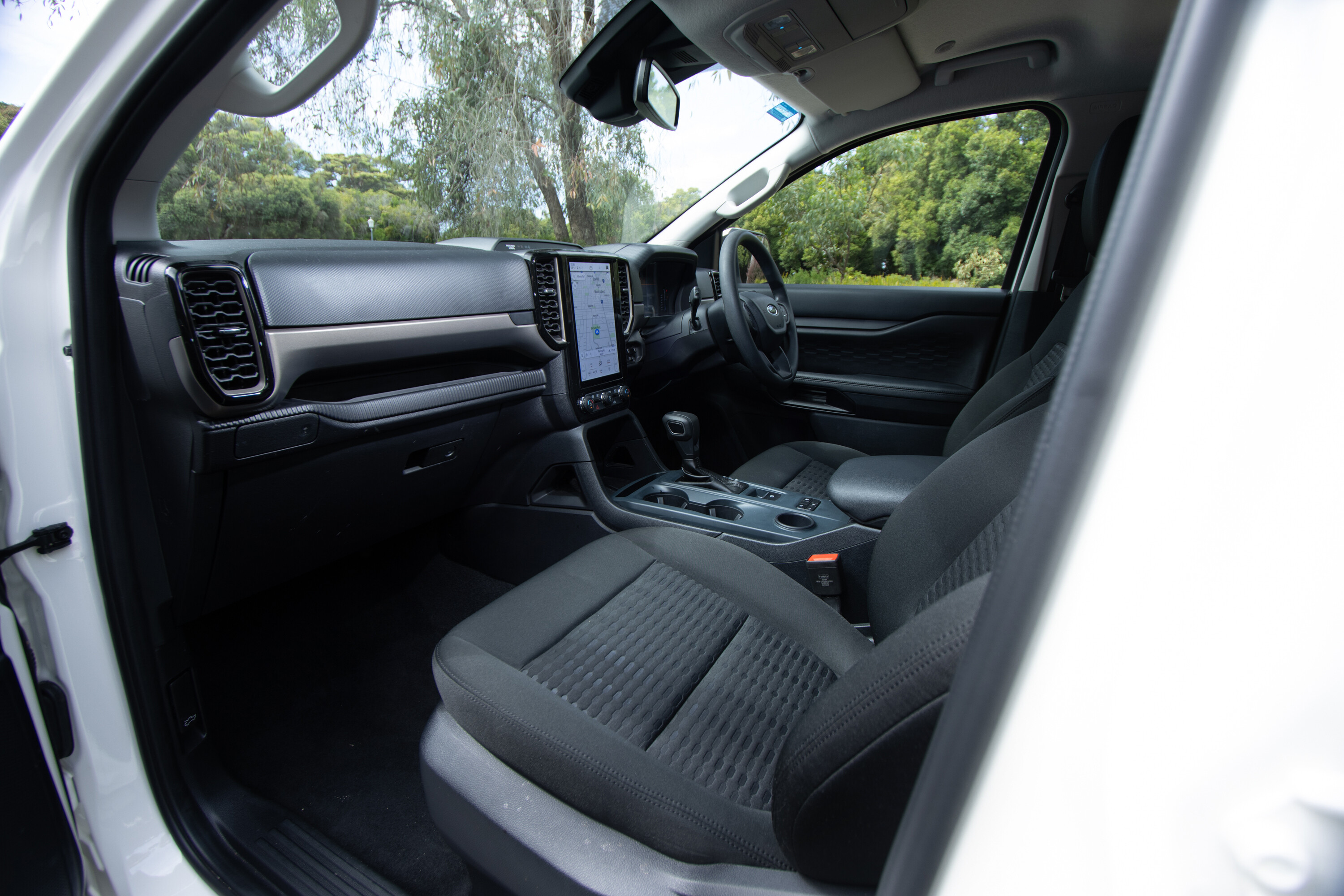
That said, it’s nice urethane, and sometimes a well-executed moulded plastic wheel can feel more pleasant to the fingertips than one wrapped in cheap pleather. This is one of those times, and the same rule applies to the Everest’s hardy fabric upholstery.
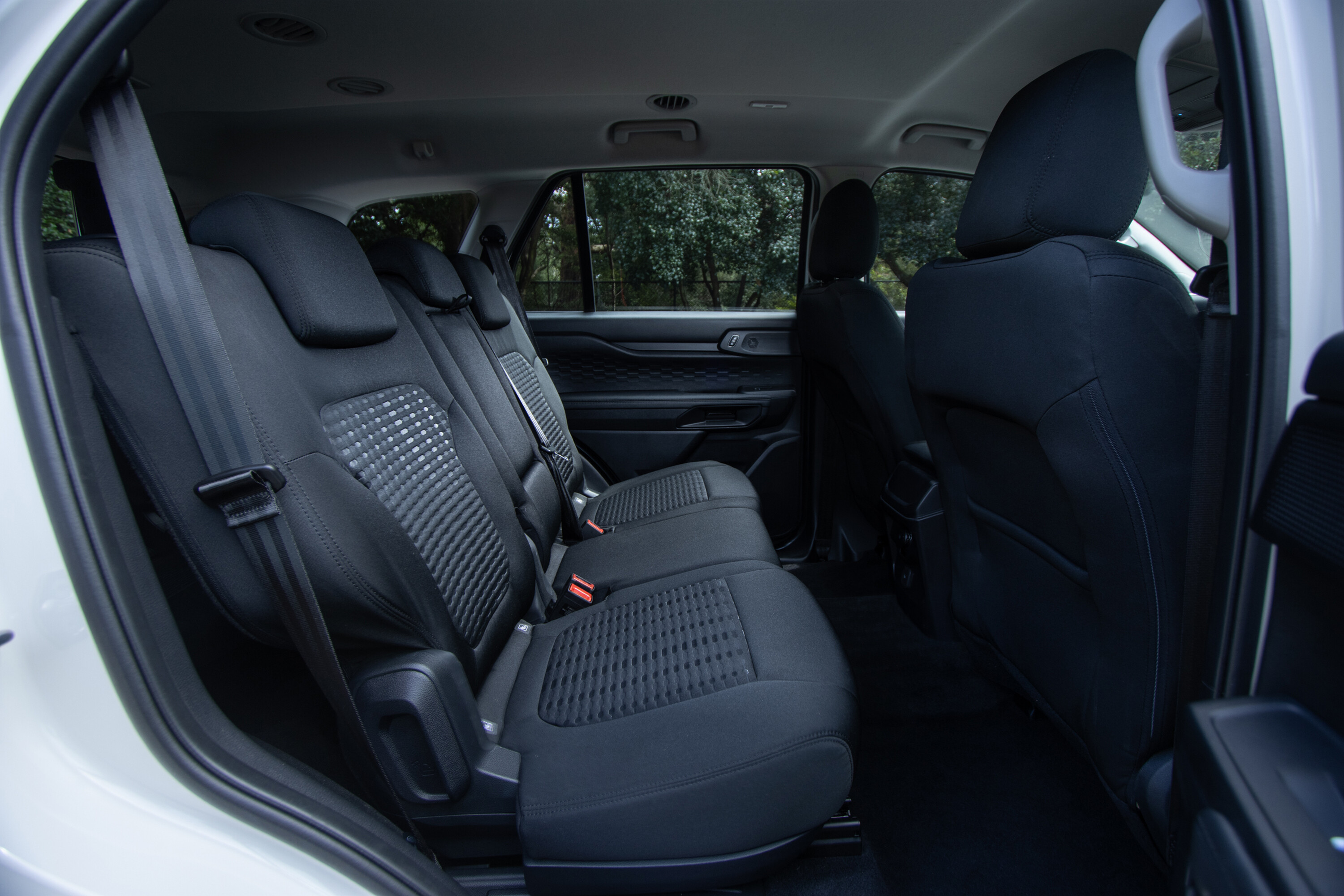
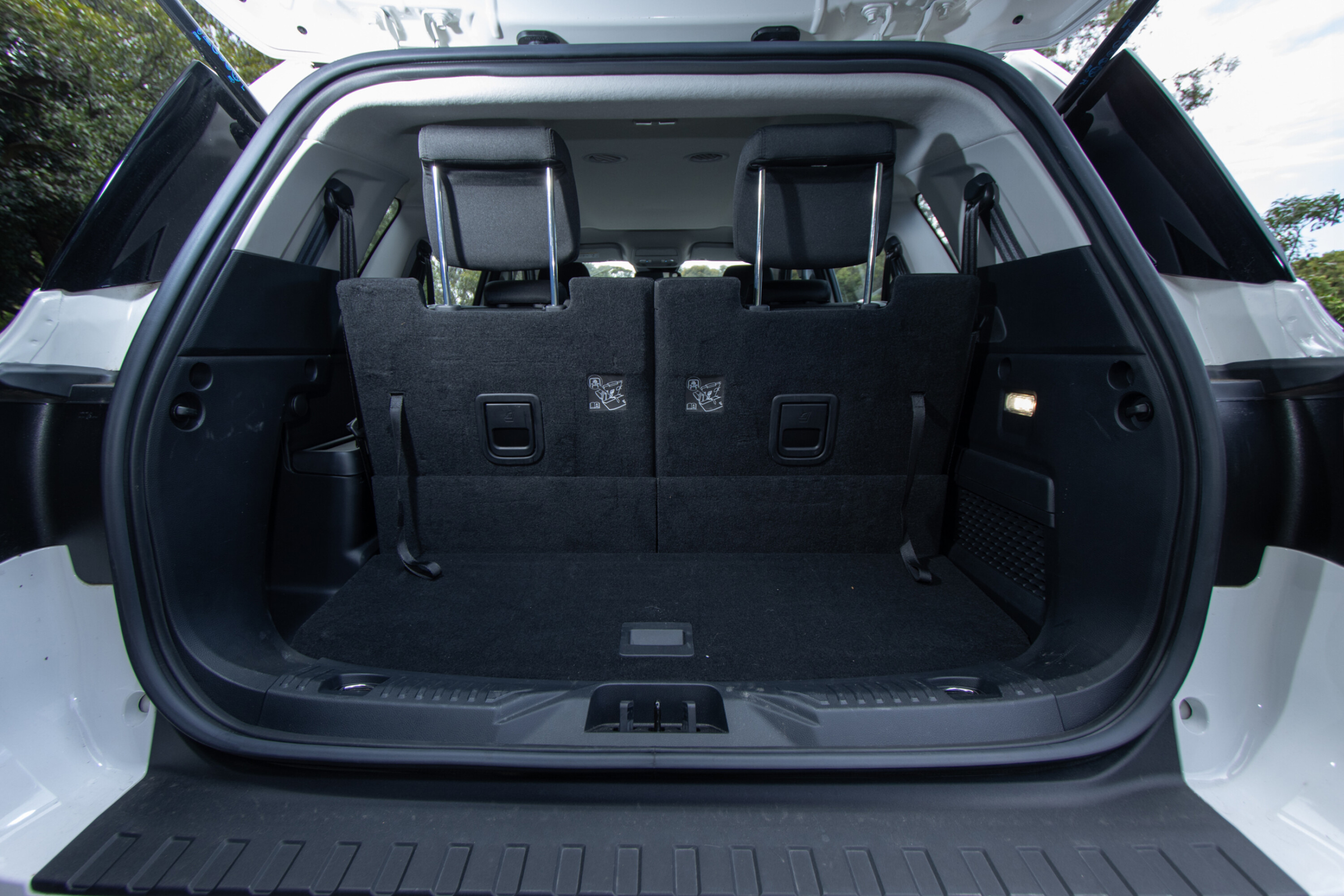
As for space, it’s abundant. Our tester was optioned with the seven-seat config, and even the third row is commodious enough for a small-to-medium adult.
Same goes for luggage capacity. When the third row is raised there’s a useful 259L for a couple of suitcases or a decent amount of grocery bags, while dropping the third row provides a sizable 898L – Which is the same capacity as the five-seat Everest Ambiente with all seats up. All rows down, you get a capacious 1816L cargo volume.
What is it like to drive?
Developing 154kW and 500Nm, the bi-turbo 2.0-litre turbo diesel under the Everest’s bonnet is the most powerful in the realm of body-on-frame 4×2 wagons.
Connected to Ford’s 10-speed automatic – no manual is available – it’s also got a gearing advantage over its closest rival, the six-speed-equipped Toyota Fortuner. That trans endows the big Everest with excellent around-town driveability, with an abundance of ratios that rarely sees the engine revving outside of the meatiest zone of its torque band, and shift logic that avoids hunting.
It means that when driven normally, the Everest feels pretty relaxed despite only having two litres of displacement up front, and that has the happy side-effect of rather good fuel efficiency as well – have a read of the next section for more on that.
However, that 2.0L is not the quietest diesel four-pot in the large SUV segment, and Ford should try and quell the gravelly note that penetrates through the firewall. Given most other aspects of the Everest are quite refined, engine noise spoils the ambience.
Ride quality is a big plus though. The Ambiente is the only Everest variant to roll on 17-inch wheels, and the chubby tyre sidewalls they bring give a plushness to the suspension that helps smooth out fractured tarmac with ease.
But the biggest drawcard should be that massive 3500kg tow rating. Anyone towing a horse float, a boat or a caravan will see that number and nod, and as the lightest member of the Everest family, the Ambiente RWD also has the highest payload as well, with 741kg able to be carried within the vehicle.
That’s an 83kg advantage over the V6-powered Everest Platinum, which equates to either a lot more provisions, a lot more fuel, or an entire extra human – important considerations for long-distance tourers.
If any of the terms in this section have left you scratching your head, these articles will help bring you up to speed!
- What is a Powertrain or Drivetrain?
- Power vs torque
- Car suspension explained
- Automatic transmissions (‘gearboxes’) explained
- Chassis control systems explained
- Car vs Ute vs SUV: How the vehicle you buy should guide the way you drive
- What is the WLTP emissions and range test?
Ford quotes a combined fuel consumption of 7.1 L/100km for the rear-drive Everest Ambiente, and considering we managed to return a 7.4L/100km result across our 100km test loop (consisting of 70 per cent urban and 30 per cent highway running), Ford’s factory claim seems pretty honest.
It’s a decent result for a 2.26-tonne behemoth and one that should deliver a real-world range of 1081km from the Everest’s 80-litre tank.
How safe is it?
ANCAP has awarded the Everest a full five-star crash safety rating, and all variants – including the Ambiente – come standard with safety gear like nine airbags, front and rear AEB, frontal collision warning, active cruise control, lane-keep assist, blind-spot monitoring, front and rear parking sensors, rear cross-traffic alert and a reversing camera.
How long is the warranty and what are the running costs like?
Ford’s factory warranty lasts for five years with no kilometre limit.
Maintenance intervals are every 15,000km or 12 months, with servicing costs tallying at $1345 for the first three years/45,000km of ownership, and $2480 for the first five years/75,000km (the fourth service is a sizeable $735 expense).
VERDICT
For those hunting a capable and comfortable tow rig with no expectations of going too far off the beaten track, the rear-drive Everest Ambiente has much to recommend it.
Despite its base model status, it feels more well-rounded and complete than other entry-level rivals and the driving experience is more akin to the very civilised Toyota Prado than it is to any other ute-based wagon.
Couple those virtues with very respectable real-world fuel economy, and the cheapest Everest shines.
Most four-wheel drivers are aware of the reputation of the 70 Series LandCruiser handbrake.
For more years than I can remember the handbrake on the Cruiser, no matter what model of 70 Series, is so close to useless it’s a joke to call it a brake at all. Over the years there have been several modifications and accessories developed in an attempt to rectify the situation, but most have been pretty ho-hum, with little improvement to the handbrake’s performance.
Finally, somebody has tackled the problem and come up with a solution that is close to perfect. Terrain Tamer has released the Electric Secondary Park Brake (ESPB), which is a complete additional parking brake that is electrically actuated. It’s designed to work in addition to the OEM handbrake, not just used in isolation.
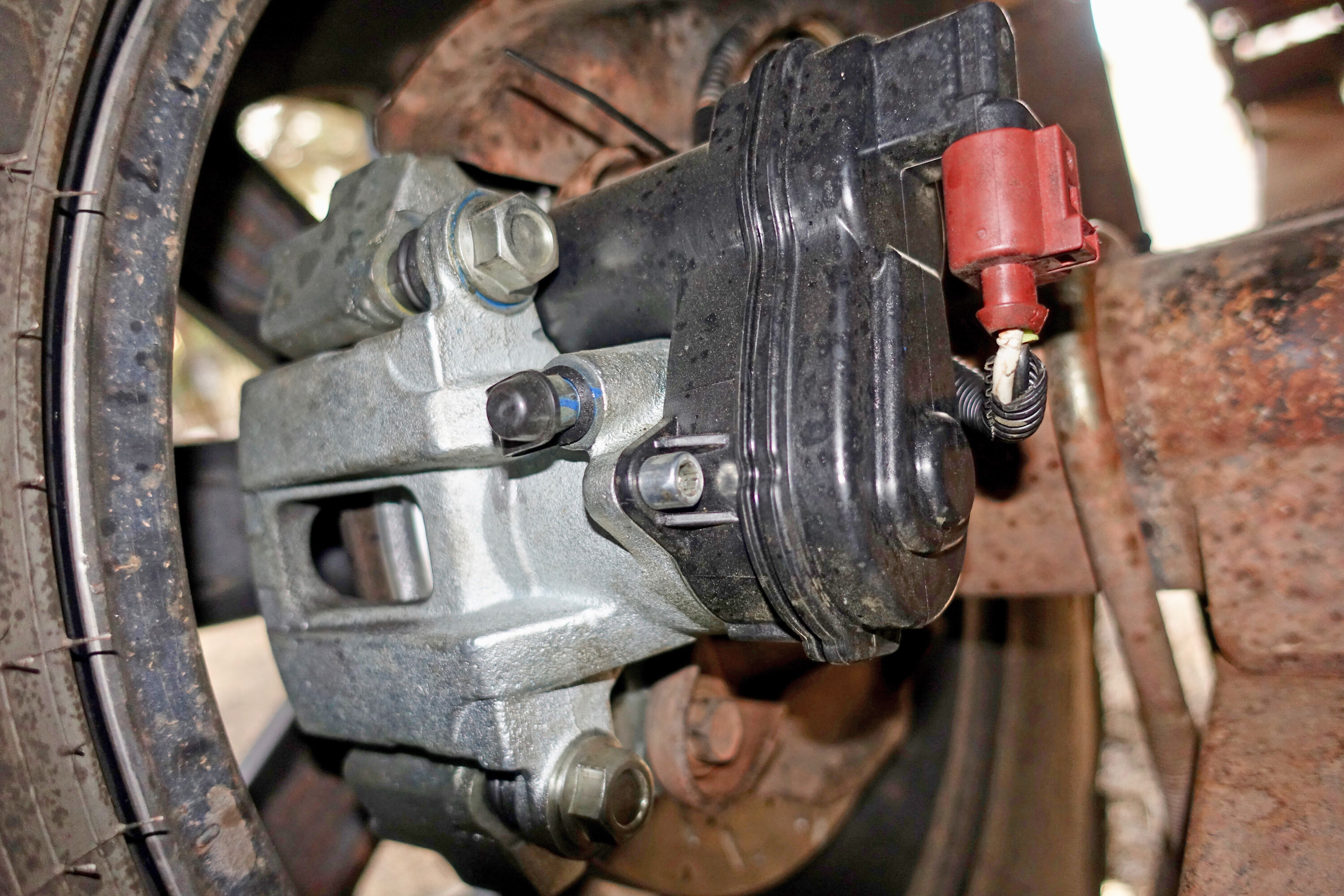
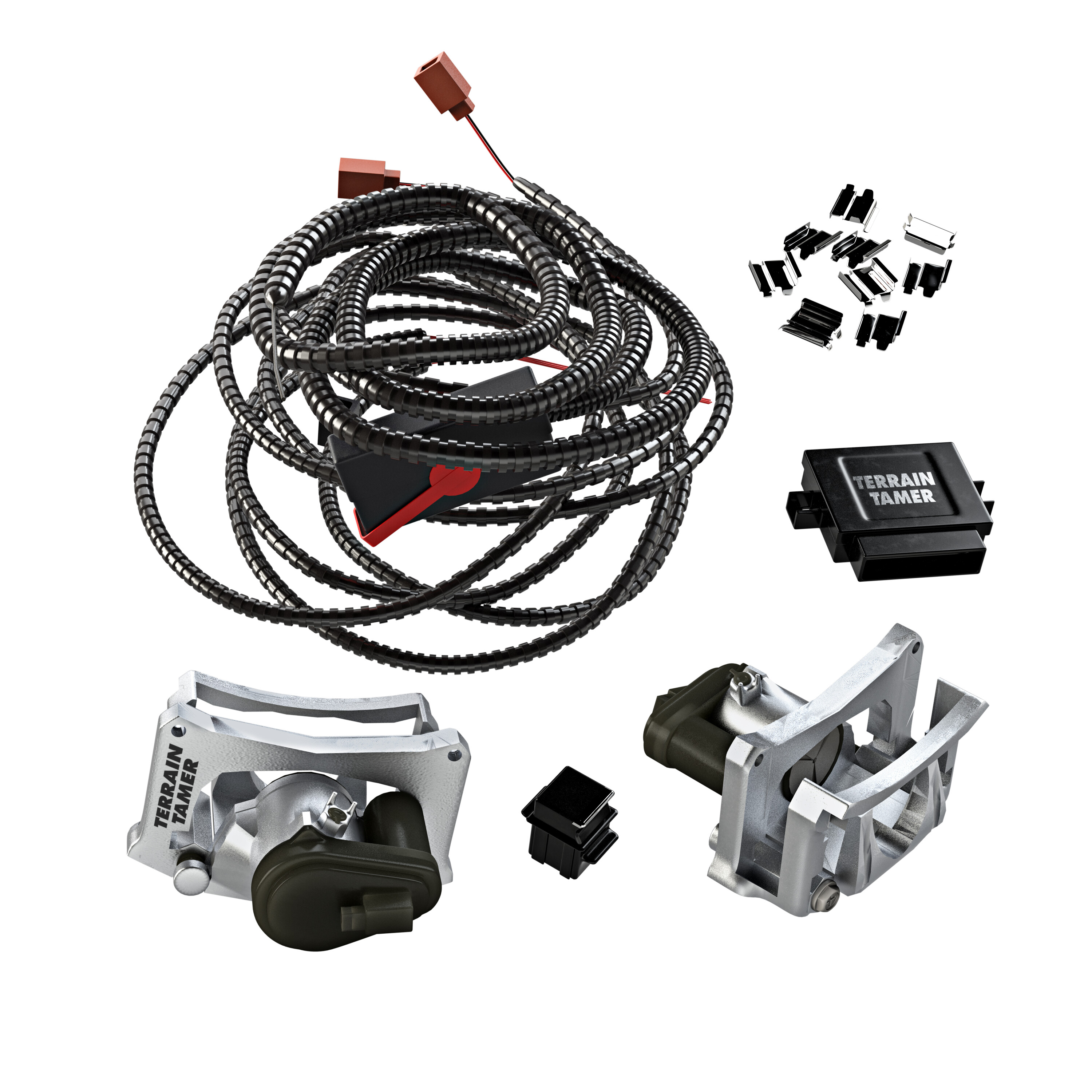
The complete kit consists of a wiring loom, control module, switch and, most important of all, two EPCB calipers. While these calipers operate as your normal disc brakes, they also function as an electrically operated handbrake on the standard brake disc on the rear wheels, leaving the factory fitted handbrake to still engage with the drum-in-disc brake – for what it is worth.
We’ve had a unit fitted to our hard-working 79 Cruiser for a few months now and while a good mechanically minded person could fit it in around five to six hours, we left it to the experts to do the job. Fitment requires electrical wiring work to be done under the bonnet and behind the dash, and the OE brake calipers are removed and replaced with the new units. It should be noted that the new calipers use OE-size rotors and pads, so there is no need to replace pads unless, of course, they are worn and require replacing anyway.
There are a couple of things to be aware of during the fitting procedure. Firstly, ensure there is good pressure and feel from the brake pedal after you have changed the calipers and bled the system.
Secondly, if the electrical connections are made in the wrong sequence, you will need to reset the motors in each of the new calipers. This isn’t a particularly difficult job but it highlights the importance of following the installation procedure correctly, and in sequence. There’s an installation video on the Terrain Tamer website.
Thirdly, like with any wiring that is routed underneath a 4×4 vehicle, you need to ensure it is up and out of the way, and protected as much as possible from any flying stones or debris that you’ll encounter on an off-road trip.
Once the wiring has been connected, the ESPB is a plug and play operation, with the unit’s switch on the dash operating the extra handbrake. The existing handbrake warning light also illuminates when the ESPB is operated, and the brakes stay engaged when the ignition is switched off.
This extra park brake doesn’t come cheap but if you are like a mate of mine who only just managed to stop his Troopy sliding into the drink while retrieving his boat at a ramp, then a couple of grand is a bloody good investment. Not to mention the necessity of a decent handbrake when you need to do a hill start in steep mountain country. There are lots of other reasons too, which makes this accessory a handy safety item.
RRP: $2719.20 Warranty: Two-year/40,000km warranty
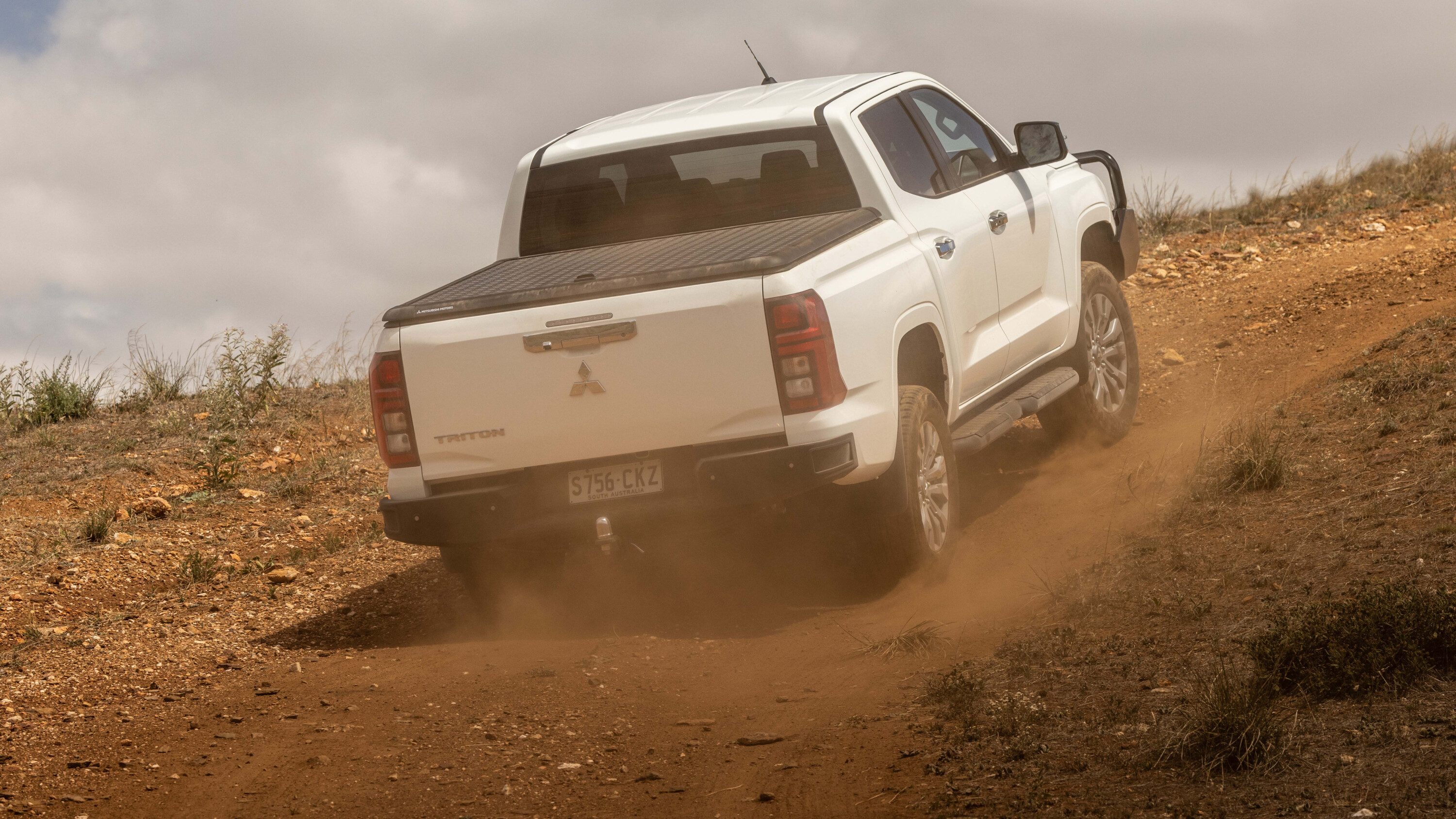
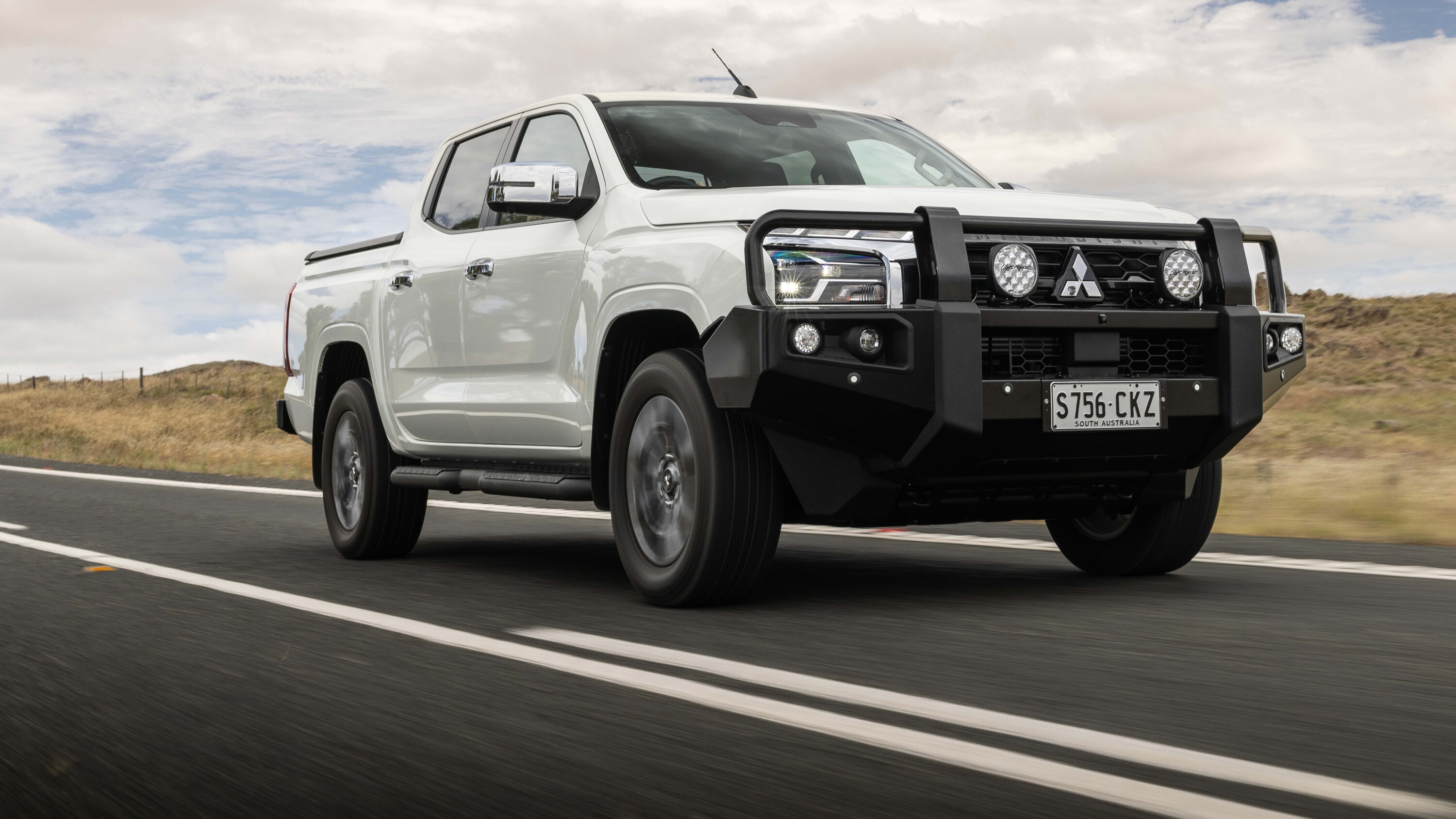
Transform your Mitsubishi Triton into the most capable 4×4 on the tracks, with these accessories and modifications.
We’ve listed all the accessories and modifications currently available for the 2024 Mitsubishi Triton, which will allow you to find what you need to tailor your new Triton to your specific needs.
At launch, most accessories are limited to Mitsubishi’s genuine items available through the dealer, as these were developed alongside the vehicle.
ARB said it plans to eventually offer the same accessory line-up for the new Triton as it did for the previous model – including bull bars, Old Man Emu suspension, Warn winches and long-range fuel tanks.
However, it has yet to receive a vehicle for accessory development and assessment.
Likewise, expect the big names like TJM, Ironman 4X4, Hayman Reese towbars, Safari snorkels and Clearview mirrors to release third-party accessories in the coming months once vehicles become available for testing.
This story will be updated as more accessories become available.
JUMP AHEAD
- Protection bars
- Towing
- Interior protection
- Auxiliary lights
- Suspension
- Side steps
- Canopies
- Sports bars
- Tub covers
- Tub & tailgate accessories
- Roof accessories
- Under vehicle protection
- Snorkels
- Other accessories
Protection bars
Mitsubishi Motors Genuine
Mitsubishi Motors accessories website [↗]
| 2024 Mitsubishi Triton protection bars | |
|---|---|
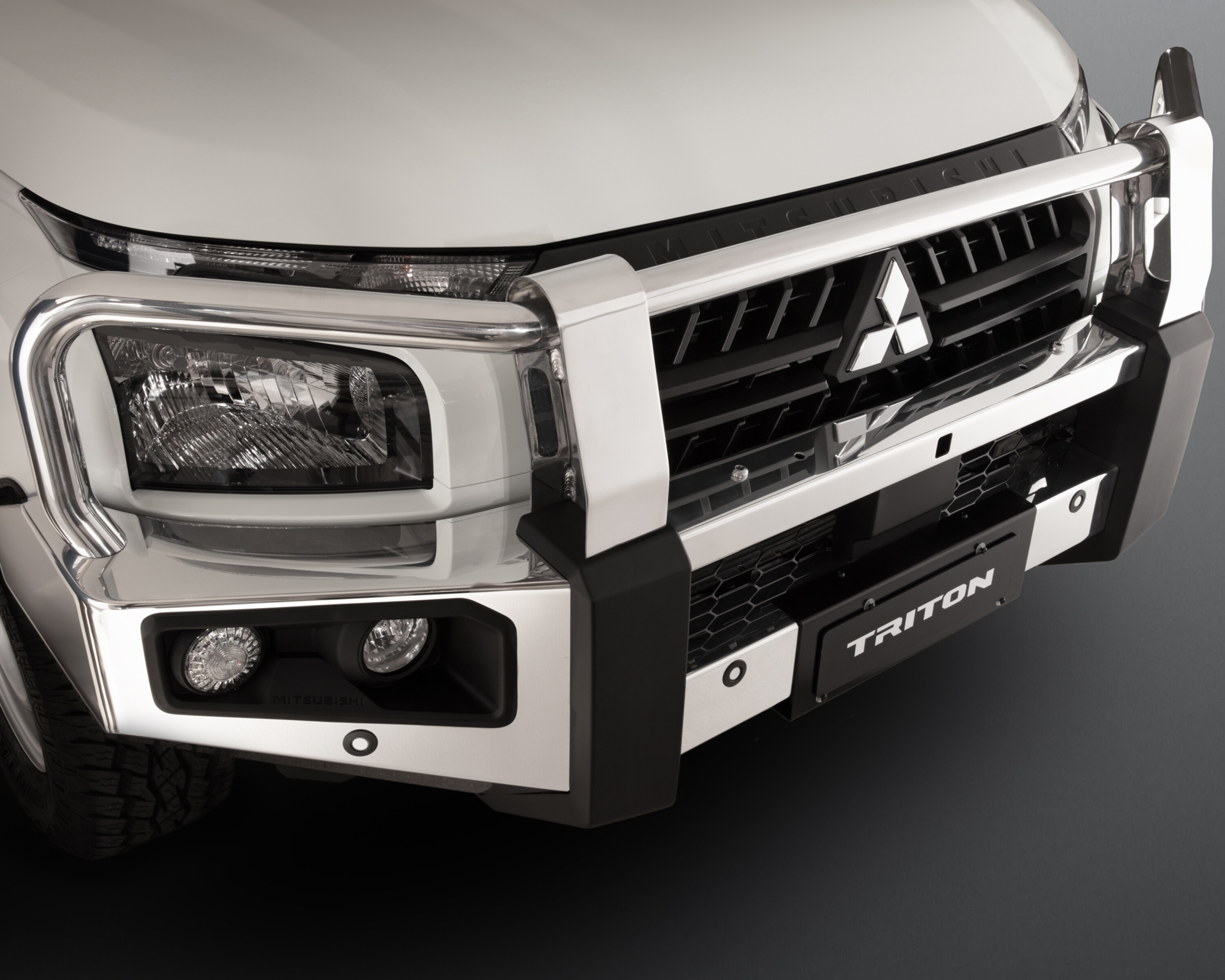
| Alloy Front Protection Bar (LED headlights) | $4300 RRP (available from June 2024) |
| Alloy Front Protection Bar (halogen headlights) | $4300 RRP (available from June 2024) |
| Steel Front Protection Bar (LED headlights) | $3700 RRP (available from June 2024) |
| Steel Front Protection Bar (halogen headlights) | $3700 RRP (available from June 2024) |
Mitsubishi notes that if a new Triton is fitted with a genuine front protection bar, the front cross-traffic alert system will need to be disabled due to interference. It remains compatible with all other safety systems.
Towing
Mitsubishi Motors Genuine
Mitsubishi Motors accessories website [↗]
| 2024 Mitsubishi Triton towing accessories | |
|---|---|
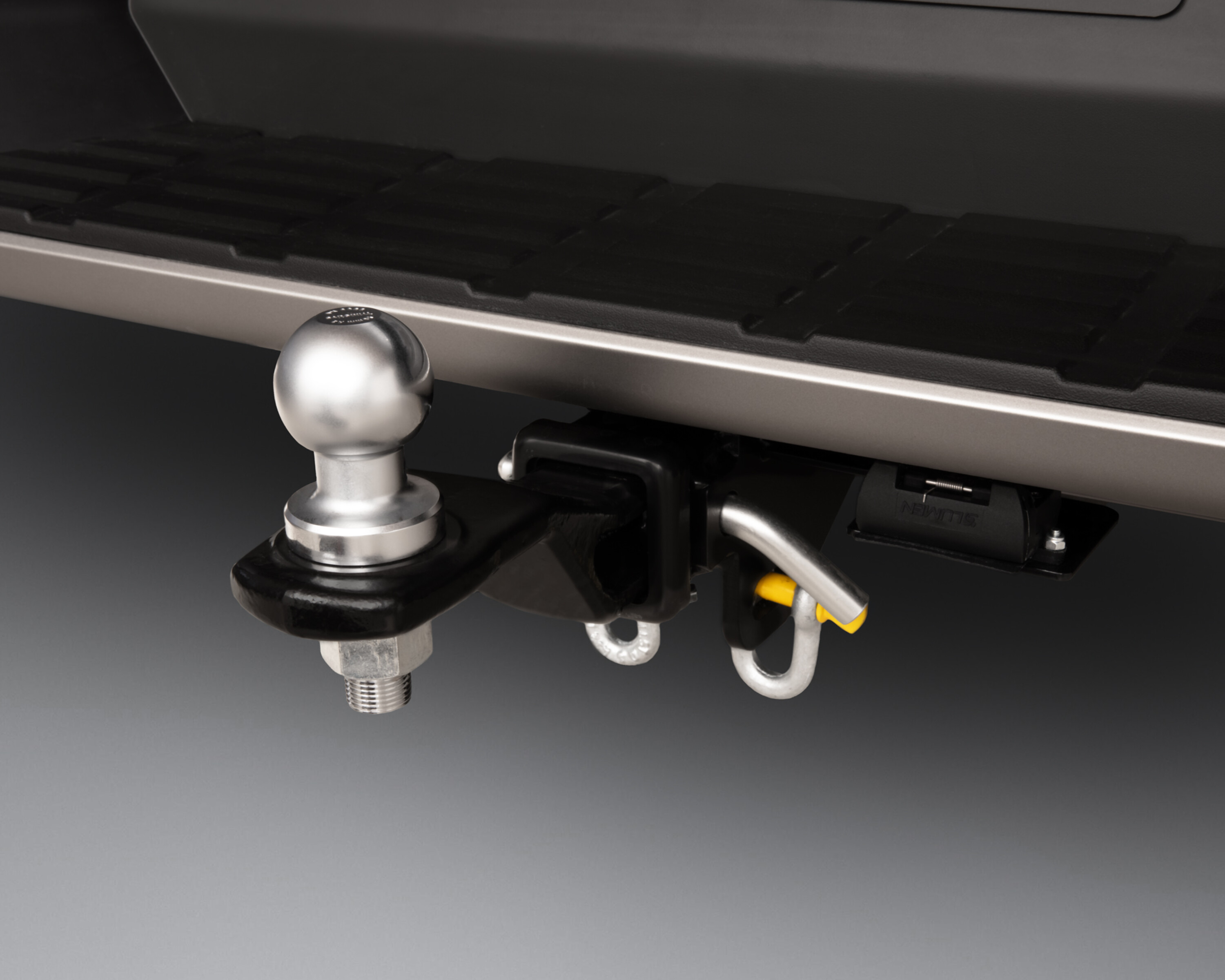
| Tow bar kit u2013 tow bar, tongue, wiring harness and 7-pin flat plug | $1450 RRP |
| Redarc electric brake controller with harness | $850 RRP |
| Towball cover | $7 RRP |
Interior protection
Mitsubishi Motors Genuine
Mitsubishi Motors accessories website [↗]
| 2024 Mitsubishi Triton interior protection accessories | |
|---|---|
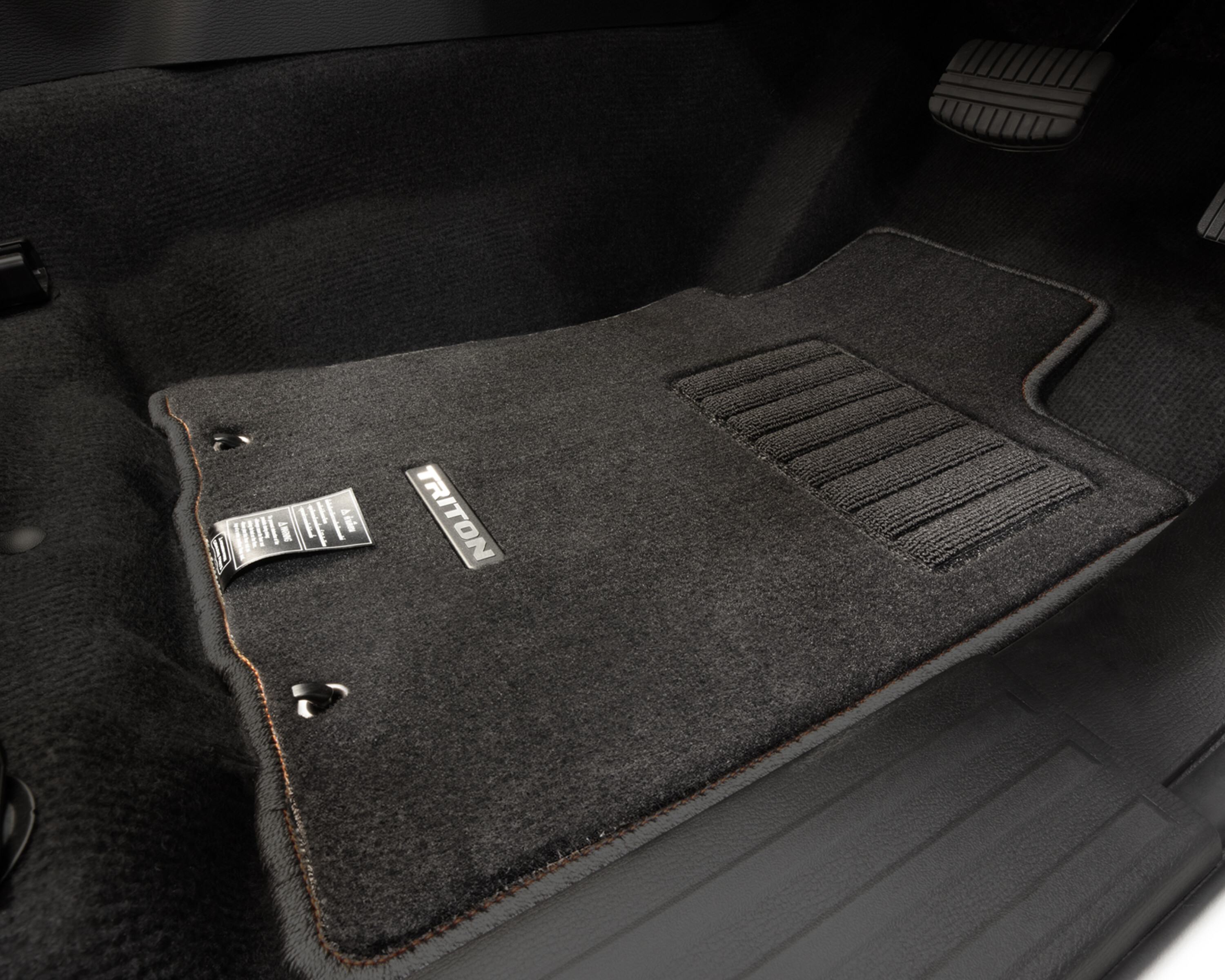
| Carpet floor mats w/ Triton logou2013 dual-cab | $200 RRP (front and rear set) |
| Carpet floor mats w/ Mitsubishi Motors logo u2013 dual-cab | $200 RRP (front and rear set) |
| Rubber high-edge floor mats u2013 dual-cab | $151 RRP (front and rear set) |
| Rubber low-edge floor mats u2013 dual-cab | $125 RRP (front and rear set) |
| Ashtray | $83 RRP |
Auxiliary lights
Mitsubishi Motors Genuine
Mitsubishi Motors accessories website [↗]
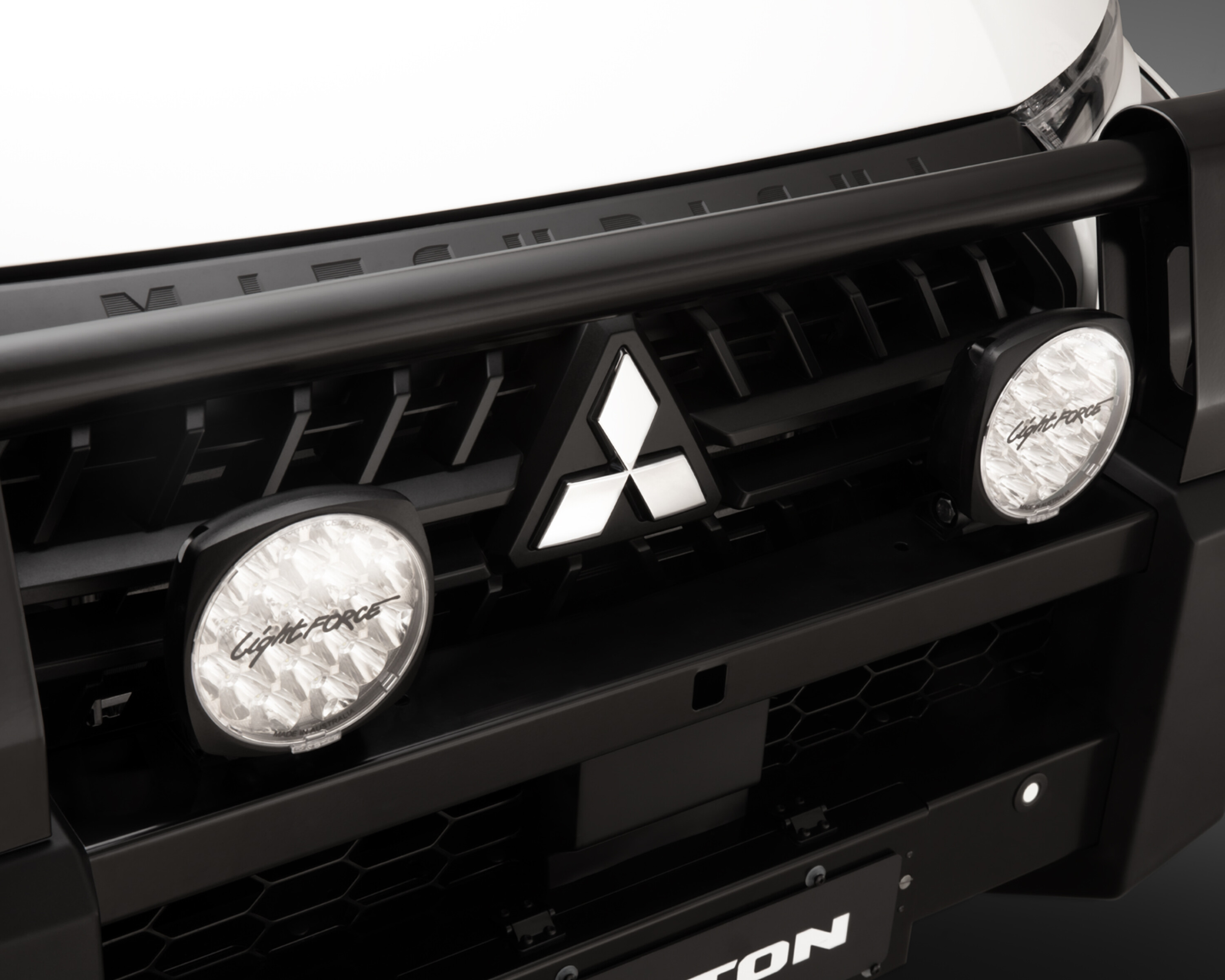
| 2024 Mitsubishi Triton auxiliary lights | |
|---|---|
| Lightforce driving lamps (x2) and wiring harness | $1295 RRP (available from May 2024) |
Suspension
This section will be updated when new accessories become available.
Side steps
This section will be updated when new accessories become available.
Canopies
Mitsubishi Motors Genuine
Mitsubishi Motors accessories website [↗]
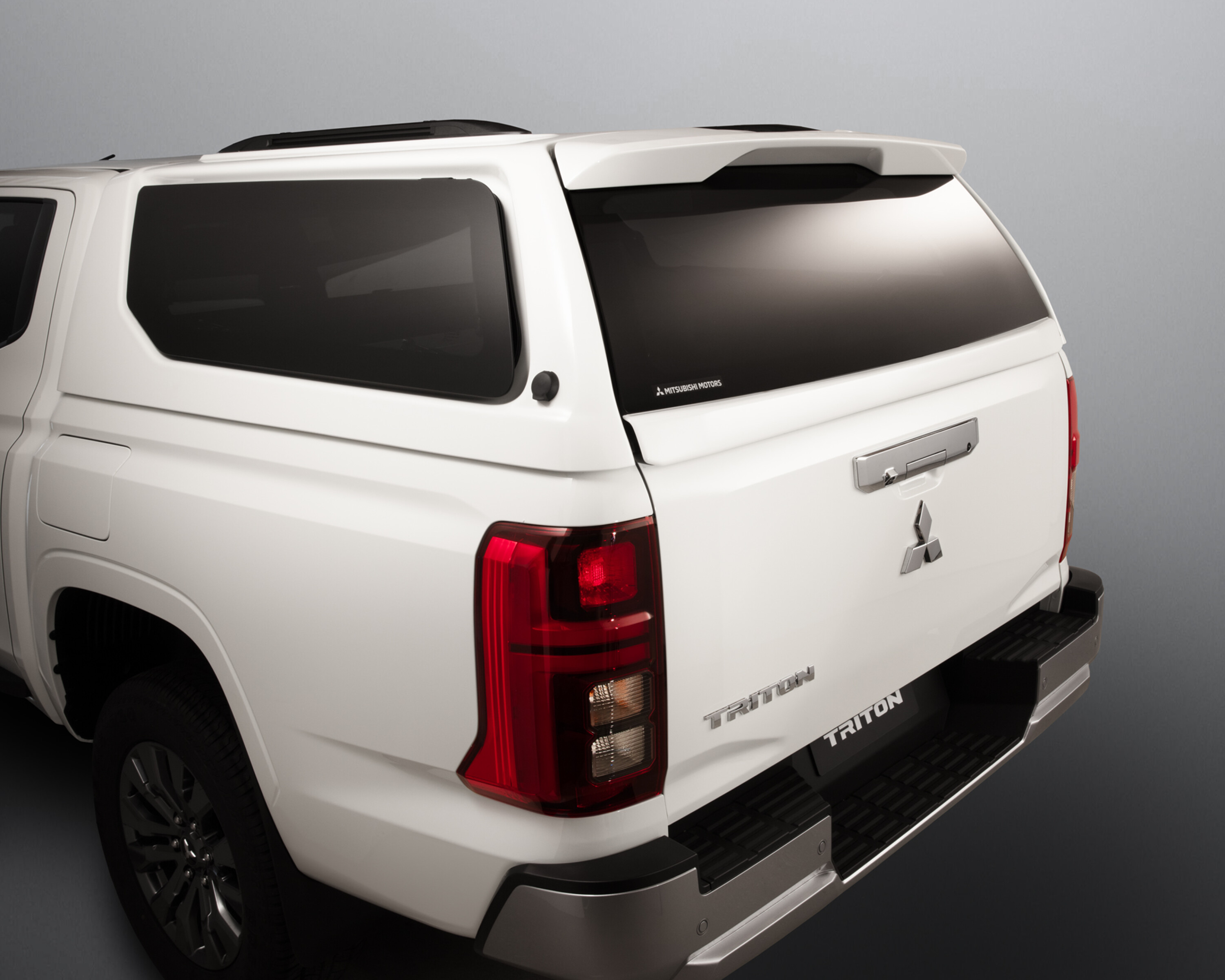
| 2024 Mitsubishi Triton canopies | |
|---|---|
| Two-tone canopy | $5100 RRP (available from July 2024) |
| Canopy | $4800 RRP (available from July 2024) |
Sports bars
Mitsubishi Motors Genuine
Mitsubishi Motors accessories website [↗]
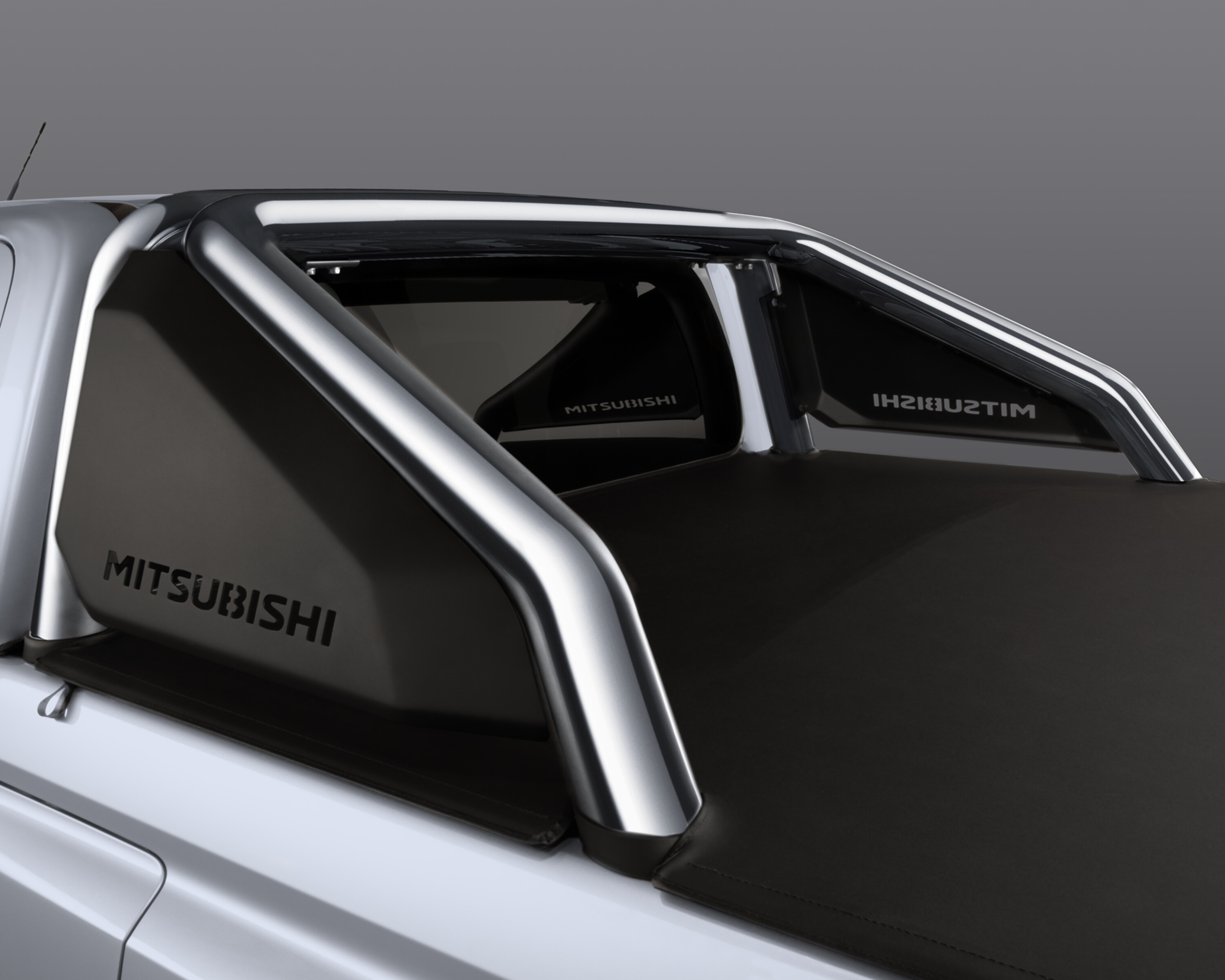
| 2024 Mitsubishi Triton sports bars | |
|---|---|
| Sailplane | $2750 RRP |
| Sports bar u2013 polished or black | $1575 RRP |
Tub covers
Mitsubishi Motors Genuine
Mitsubishi Motors accessories website [↗]
| 2024 Mitsubishi Triton tub covers | |
|---|---|
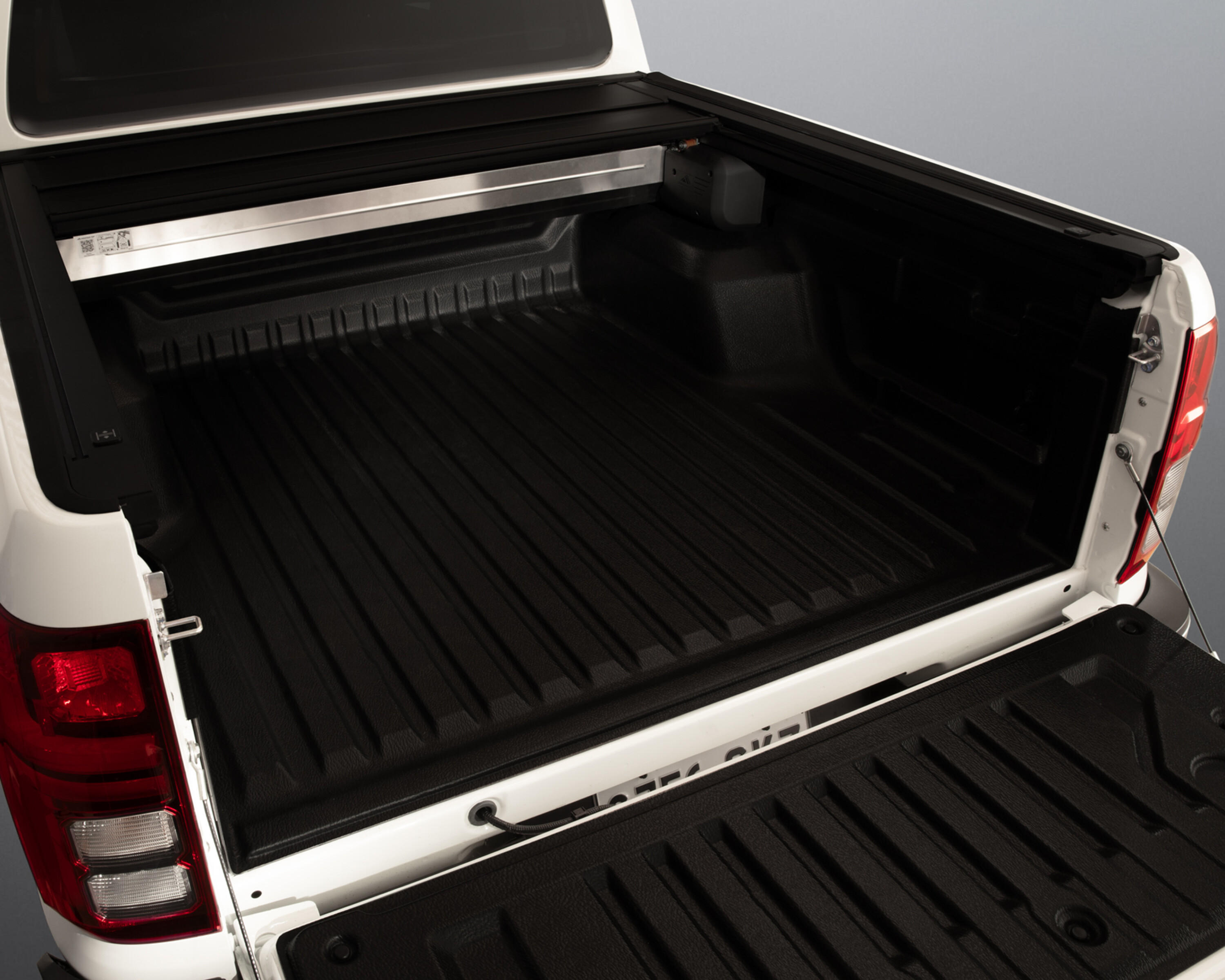
| Electric roll-top tonneau cover | $4200 RRP (not compatible with sailplane, available from October 2024) |
| Electric roll-top tonneau cover | $4000 RRP (sailplane compatible, available from October 2024) |
| Hard tonneau cover u2013 body-coloured | $3350 RRP |
| Hard tonneau cover u2013 black aluminium | $2750 RRP |
| Soft tonneau cover u2013 black | $900 RRP (sports bar compatible) |
| Soft tonneau cover u2013 black | $900 RRP |
EGR Auto
u2b06ufe0f Back to top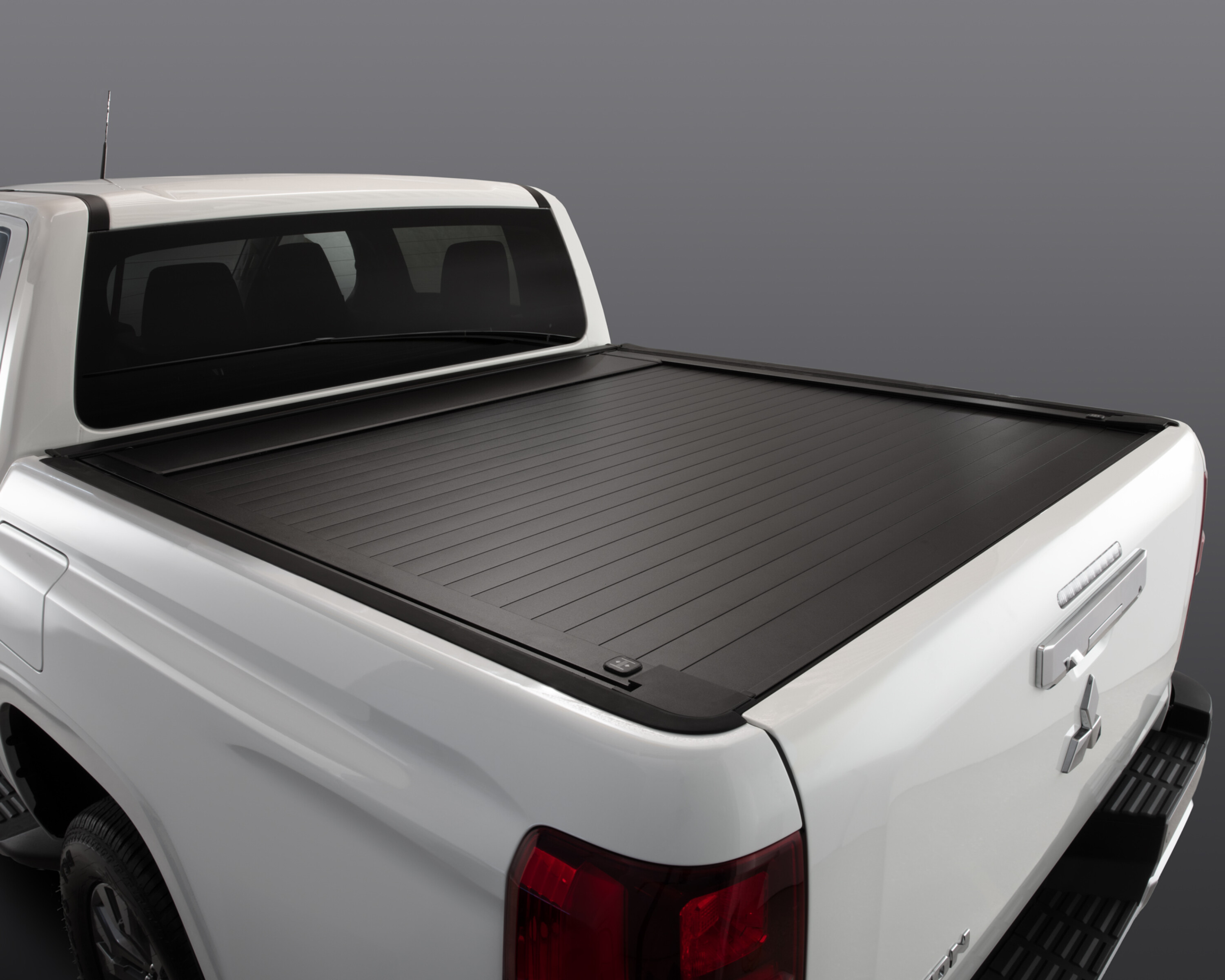
Tub & tailgate accessories
Mitsubishi Motors Genuine
Mitsubishi Motors accessories website [↗]
| 2024 Mitsubishi Triton tub and tailgate accessories | |
|---|---|
| Under tail tub liner | $750 RRP |
| Dust and water defence kit | $600 RRP |
| Cargo tie-down kit | $495 RRP (pick up models) |
| Rubber tub mat | $300 RRP |
Thule
| 2024 Mitsubishi Triton tub and tailgate accessories from Thule | |
|---|---|
| Luggage net | $89 RRP (via Mitsubishi) |
| Tie-down straps | $57 RRP (via Mitsubishi) |
Roof accessories
Mitsubishi Motors Genuine
Mitsubishi Motors accessories website [↗]
| 2024 Mitsubishi Triton roof accessories | |
|---|---|
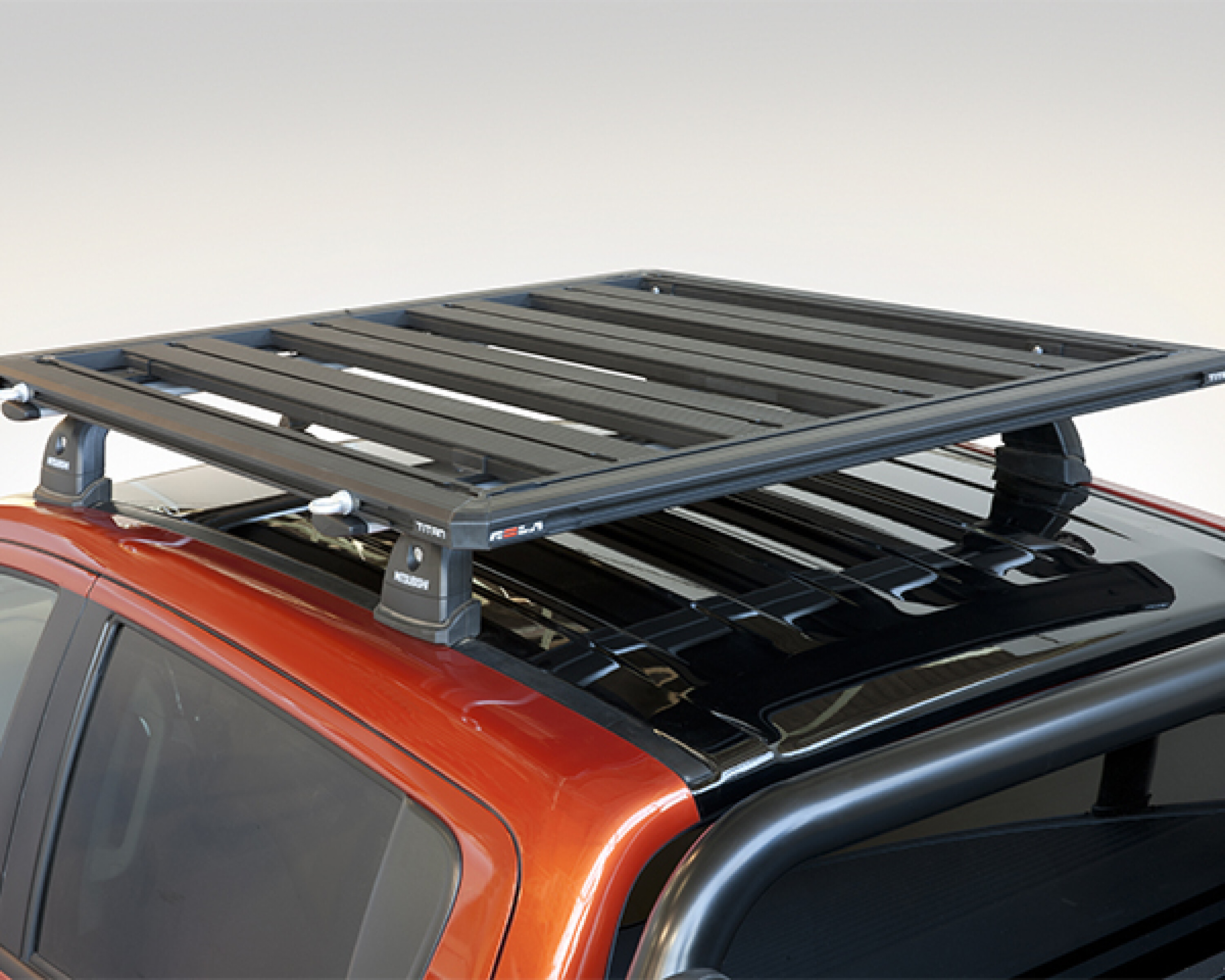
| Roof rack cross bars u2013 dual-cab | $650 RRP |
Rola
| 2024 Mitsubishi Triton roof accessories from Rola | |
|---|---|
| Titan roof tray | $862 RRP (via Mitsubishi) |
Thule
| 2024 Mitsubishi Triton roof accessories from Thule | |
|---|---|
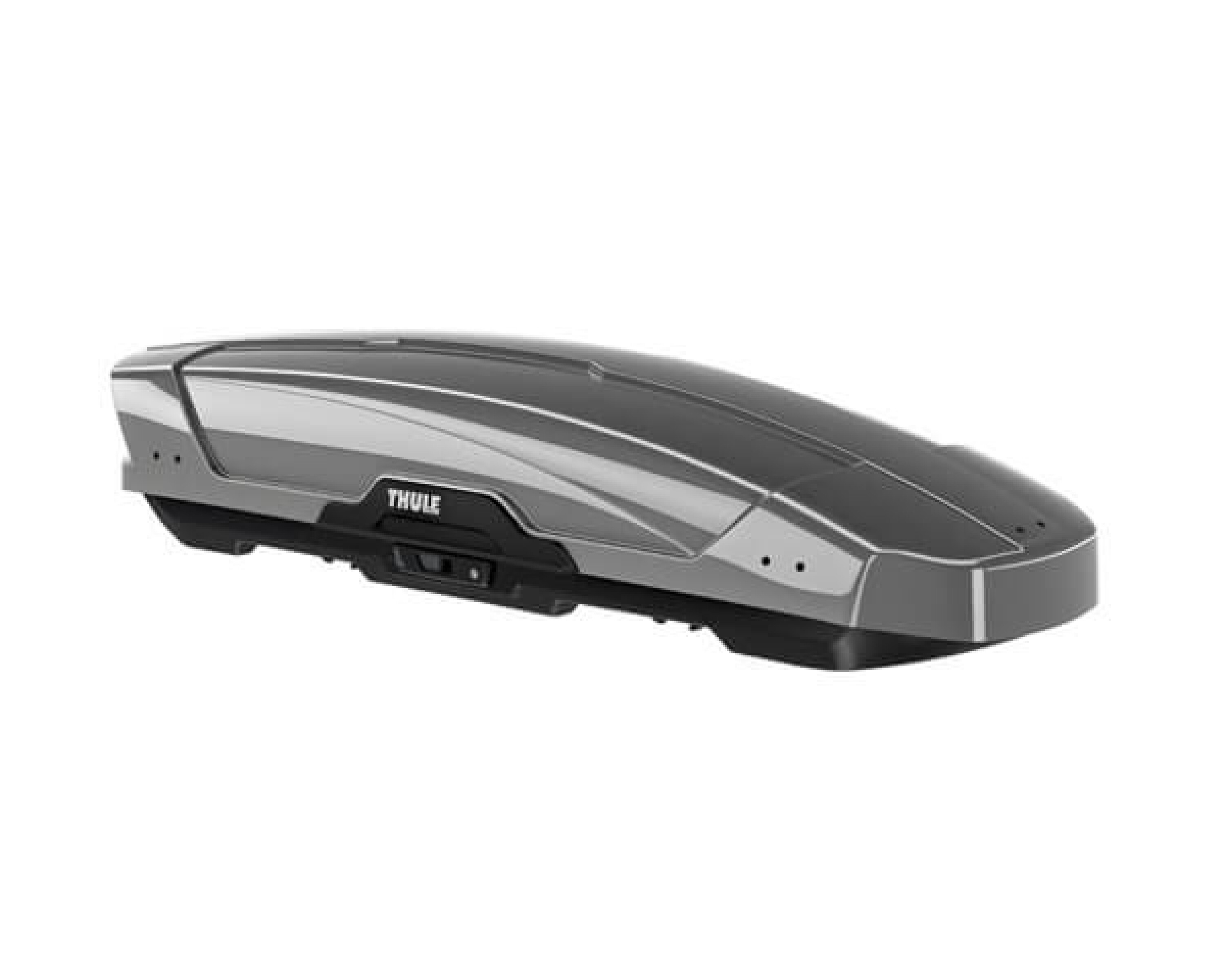
| Carrier Pod Motion XT Sport M 200 u2013 black or titan grey | $1317 RRP (via Mitsubishi) |
| Carrier Pod Motion XT Sport 600 | $1188 RRP (via Mitsubishi) |
| Water craft carrier | $527 RRP (via Mitsubishi) |
| Ski carrier | $510 RRP (via Mitsubishi) |
| Bike carrier u2013 black or silver | $459-$463 RRP (via Mitsubishi) |
Under vehicle protection
This section will be updated when new accessories become available.
Snorkels
Mitsubishi Motors Genuine
Mitsubishi Motors accessories website [↗]
| 2024 Mitsubishi Triton snorkels | |
|---|---|
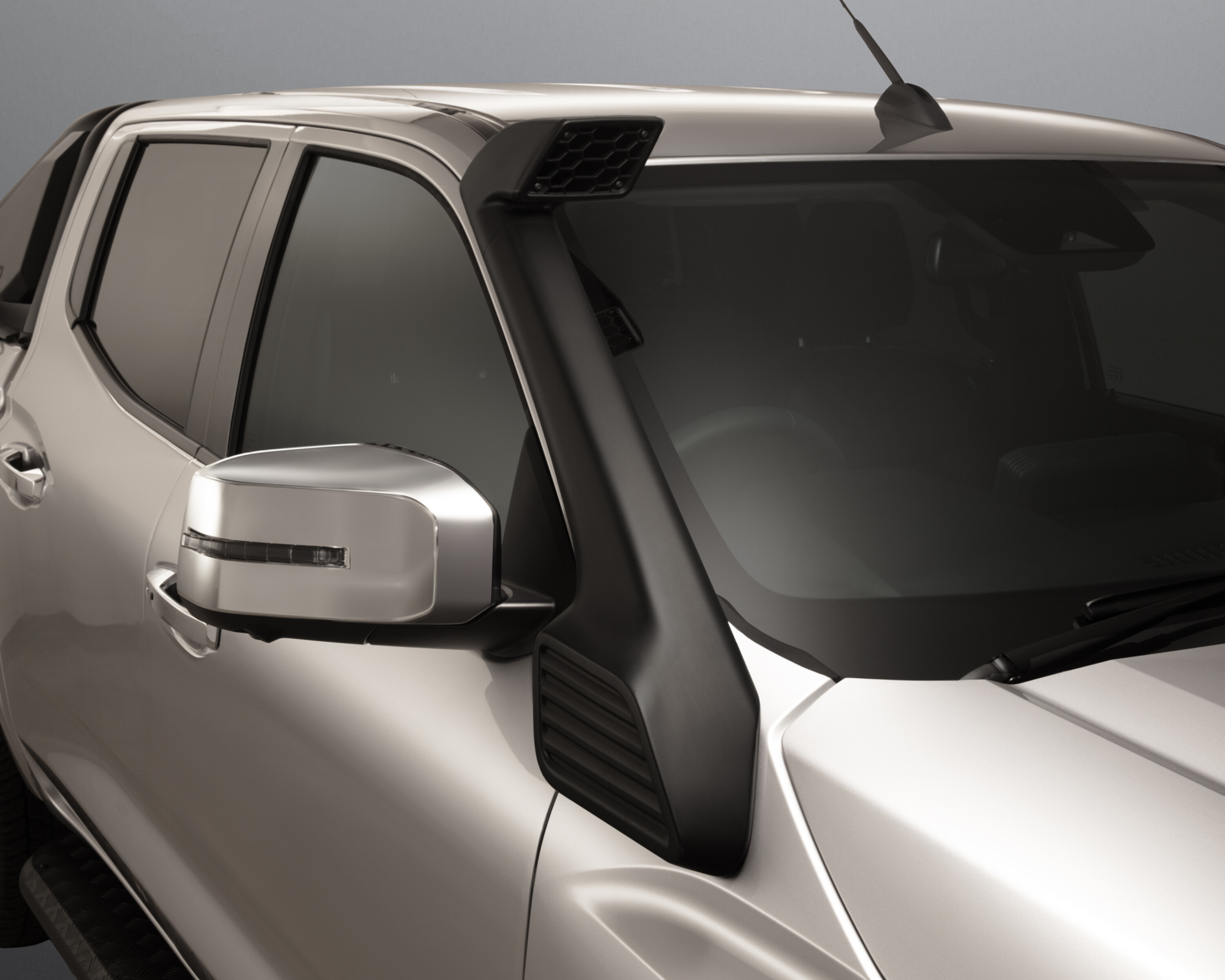
| Snorkel: $1100 RRP | $1100 RRP |
Other accessories
Mitsubishi Motors Genuine
Mitsubishi Motors accessories website [↗]
| 2024 Mitsubishi Triton additional accessories | |
|---|---|
| Fender flares u2013 GLS dual-cab only | $1300 RRP (not compatible with bull bars) |
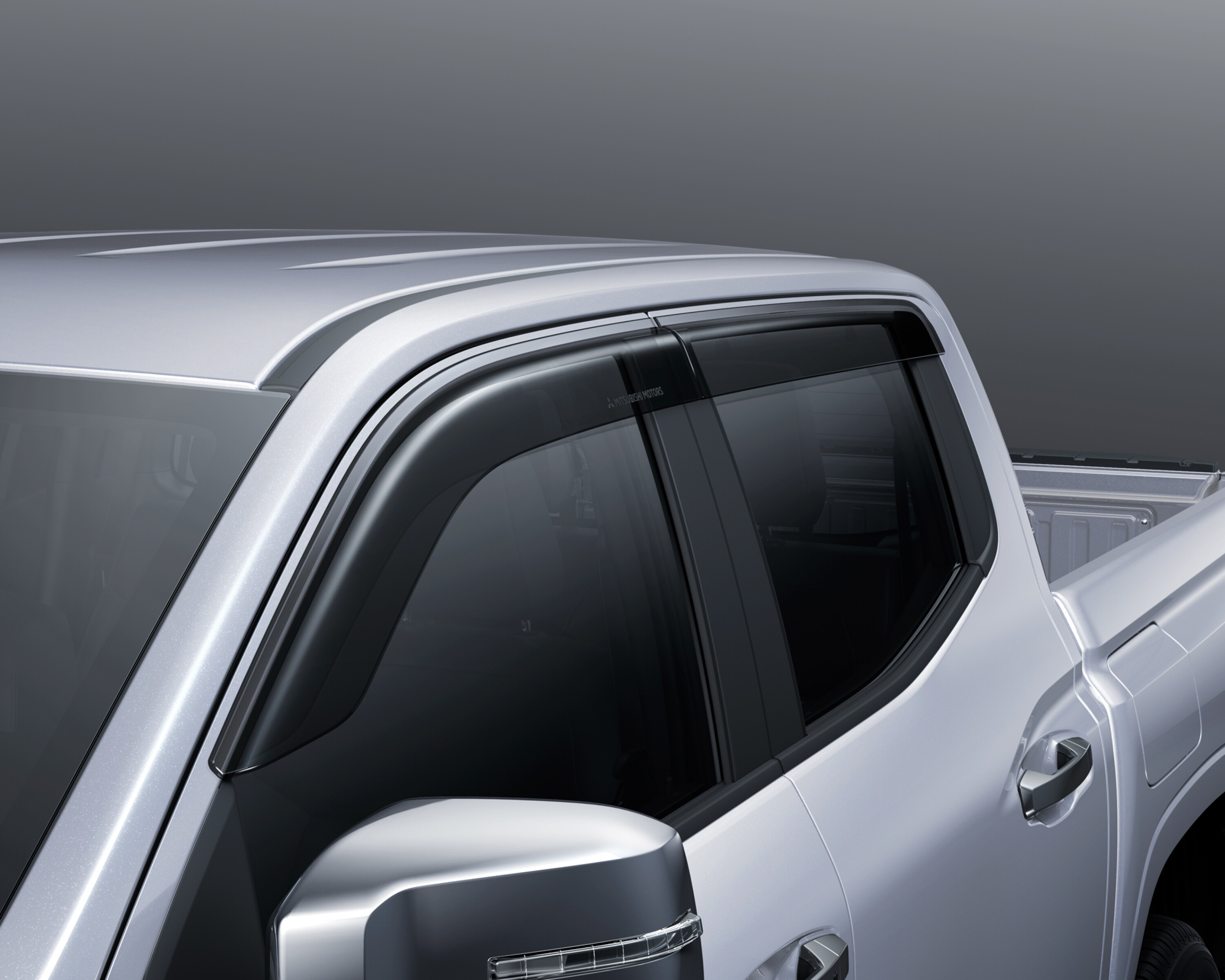
| Weathershields u2013 dual-cab | $330 RRP (2x front, 2x rear) |
| Mitsubishi grille emblem u2013 black or chrome | $200 RRP |
| Bonnet protector u2013 clear, matte or tinted | $195 RRP |
| Headlight protectors | $195 RRP (set of two) |