Tough Dog: www.toughdog.com.au [↗]
Opposite Lock: oppositelock.com.au [↗]
Instead, the iconic brand has refreshed its near-ten-year-old vehicle in 2024 by adding a 48-volt mild hybrid system dubbed V-Active technology. Interestingly, it’s the first such hybrid system to feature in a dual-cab ute in Australia.
Said technology is standard on the top-of-the-range Rogue model and is available as an option for SR (the model tested here) and SR5 double-cab 4×4 grades mated with the automatic transmission.
The nuts and bolts of it reveals that the system effectively pairs Toyota’s existing 2.8-litre turbo-diesel four-cylinder engine with a 48-volt battery, lithium battery, and motor generator which is attached to the engine by a dual-arm belt tensioner. The generator is mounted high in the engine bay so as not to hinder the vehicle’s 700mm wading depth, and it acts as a conduit by recovering energy when braking and decelerating and then feeding it into the 48V battery.
The point of all of it is to not only improve fuel efficiency and limit emissions, but also be of benefit in the day-to-day grind by providing a ‘smooth’ stop-start functionality. As a result, engine idle has reduced from 720rpm to 600rpm – plus Toyota says it’s added a ‘Long’ mode, which can leave the engine switched off as long as possible when parked up and using power, even with the air-con on.
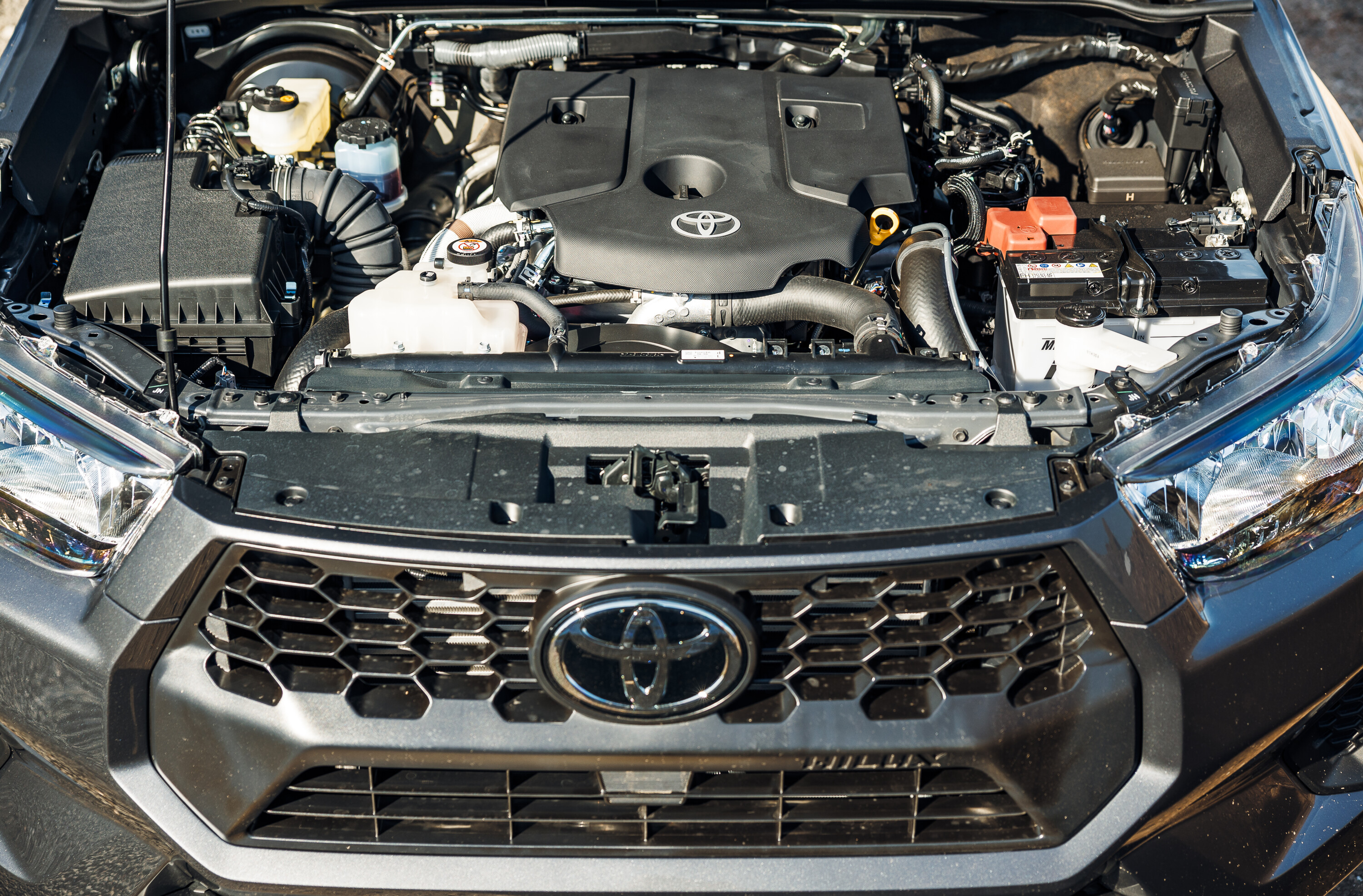
Overall output of the 2.8-litre turbo-diesel four-pot remains at 150kW and 500Nm, despite these additions. However, a closer look reveals fuel efficiency has slightly improved, as one would expect. Toyota is on record as saying the technology provides a (roughly) 10 per cent benefit to fuel economy across the model range. As an example, this SR pick-up variant on test is listed at drinking 7.4L/100km, while the variant sans 48V tech registers 7.9L/100km.
| u00a0 | 1GD (L/100km) | 1GD 48V (L/100km) |
|---|---|---|
| SR double cab-chassis 4×4 6AT | 8.4 | 7.6 |
| SR double-cab pick-up 4×4 6AT | 7.9 | 7.4 |
| SR5 double-cab chassis 4×4 6AT | 8.4 | 7.6 |
| SR5 double-cab pick-up 4×4 6AT | 7.9 | 7.2 |
| Rogue double-cab pick-up 4×4 6AT | 8.4 | 7.8 |
Whether it’s quieter at idle is extremely hard to say without using a decibel meter. Whether the 48V system makes the vehicle more spritely at low revs is also difficult to discern. In all honesty it’s barely noticeable and most punters wouldn’t even feel the difference. A back-to-back drive of both variants could provide greater clarity, though, but we predict the differences would be marginal.
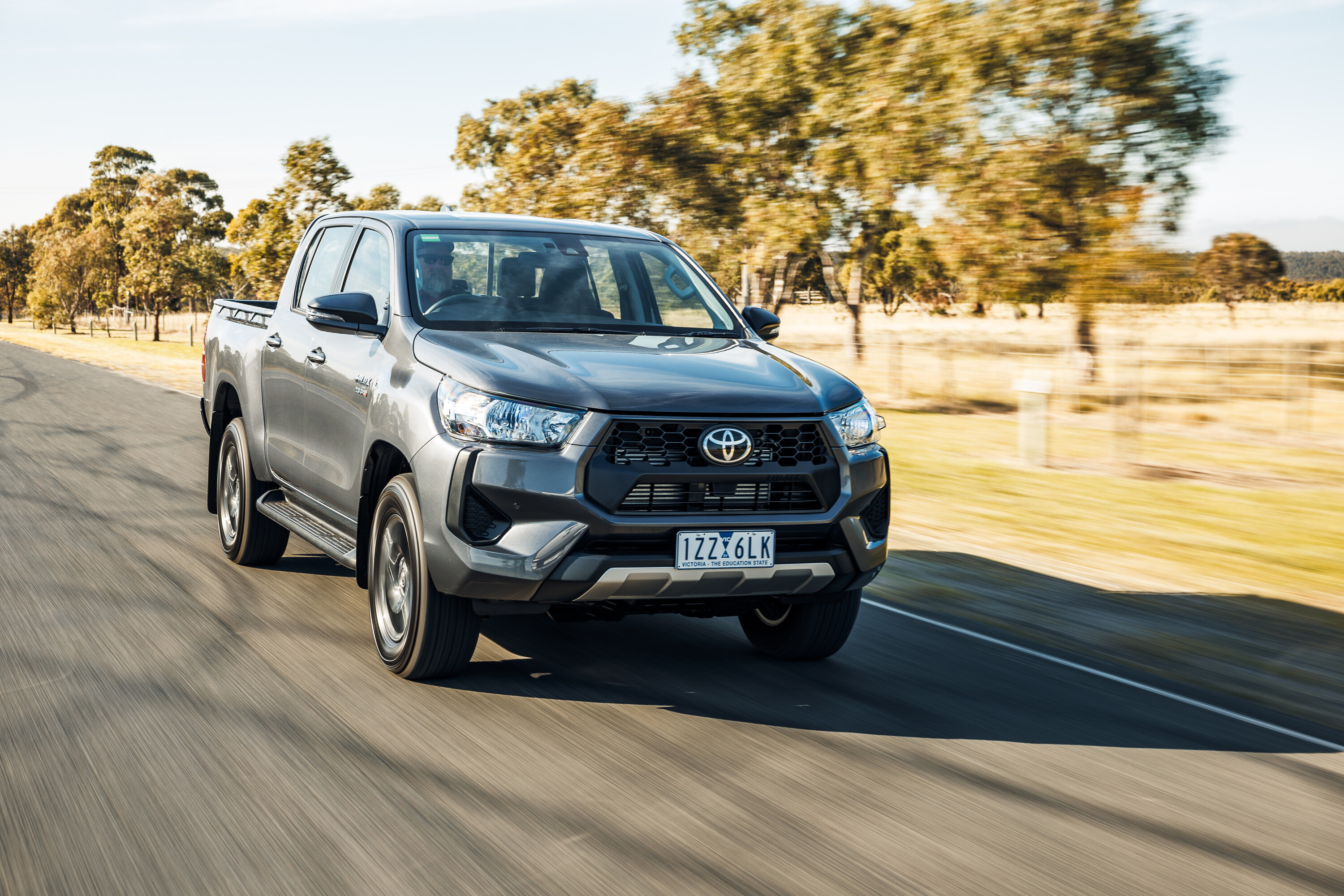
What the 48V system can’t help with – obviously – is the HiLux’s on-road ride quality, which remains very ‘past-gen’ – something you’re starkly reminded of every time you drive a next-gen Ranger. The ride is quite harsh, even for a dual-cab ute, and the suspension – leaf springs at the rear – is rudimentary on bitumen and higher speed dirt tracks. Still, and despite some intrusive engine yips and yaps, the 2.8-litre diesel engine combines nicely with the six-speed automatic transmission and is rarely left wanting.
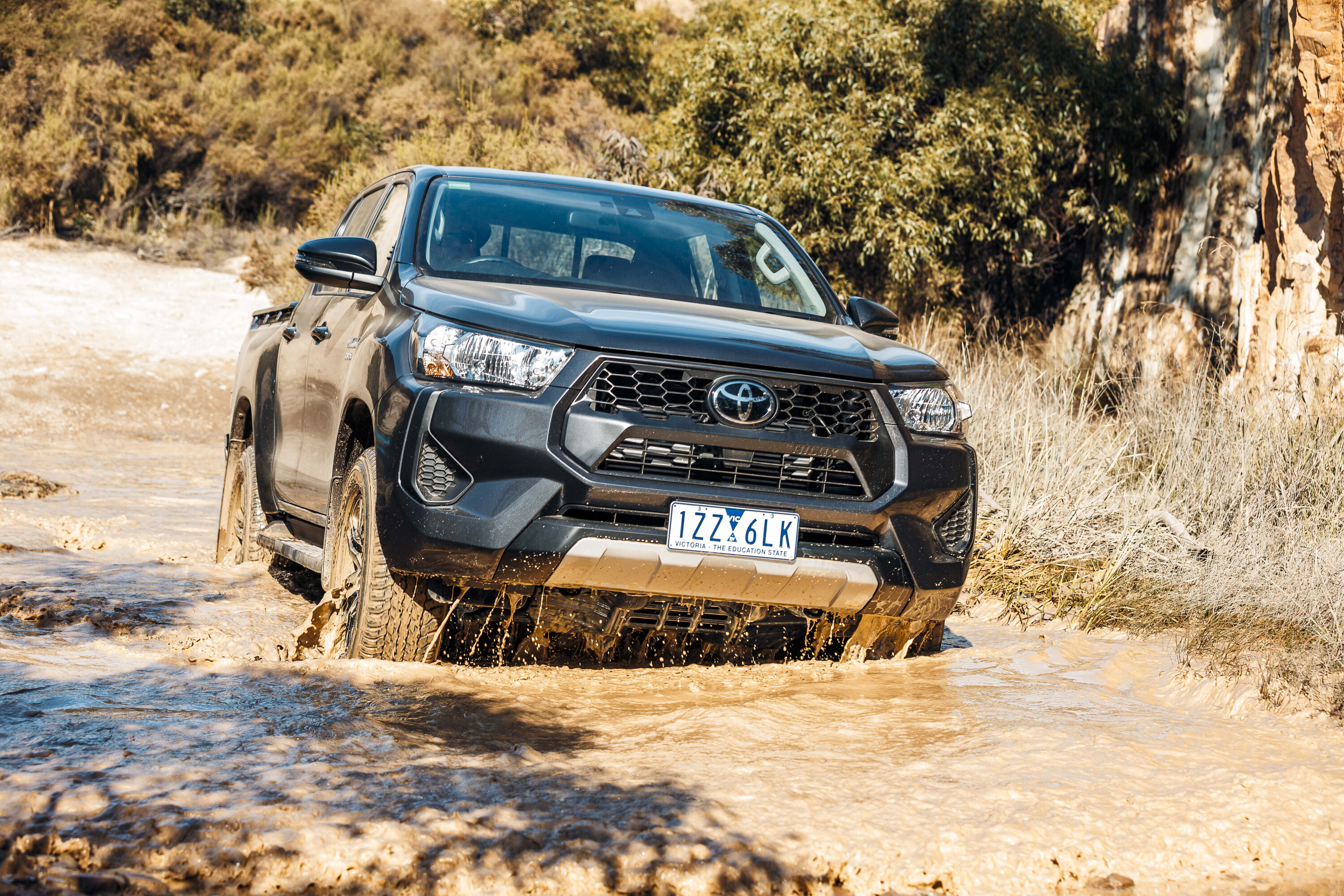
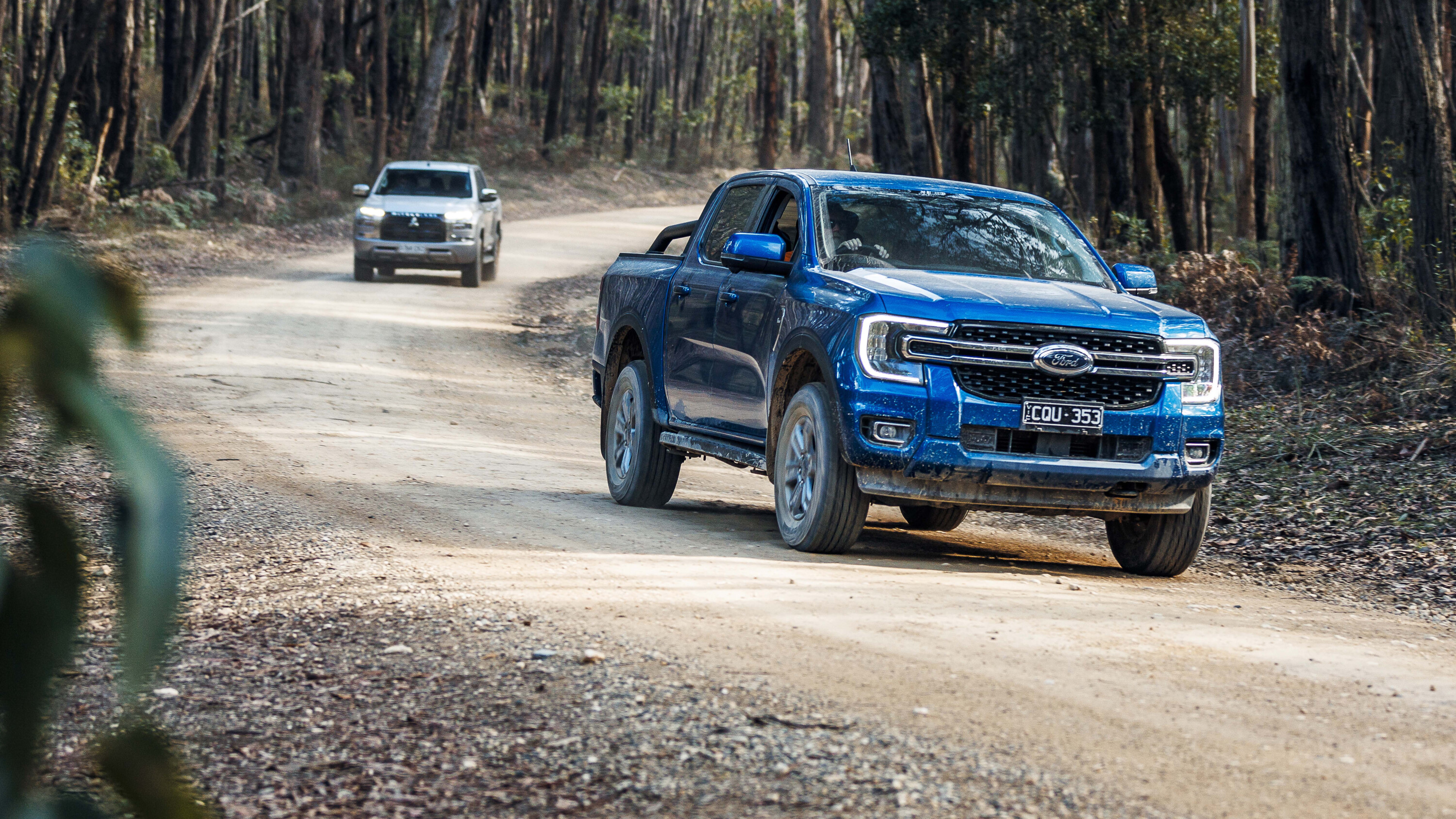
It’s better off-road, with the HiLux – mild-hybrid or not – remaining a gallant off-roader and somewhat of a benchmark in the dual-cab ranks for its prowess on rough terrain. That the vehicle is essentially nearing its 10th birthday in its current guise says plenty about the bones of the vehicle, and it’s always a pleasure when we take one for a dance on trickier tracks. On a recent off-road jaunt alongside a next-gen Ranger and all-new Triton – two vehicles that are considerably more modern in just about every way – the HiLux plodded along in its capable, reliable way, even outperforming both of its competitors at times.
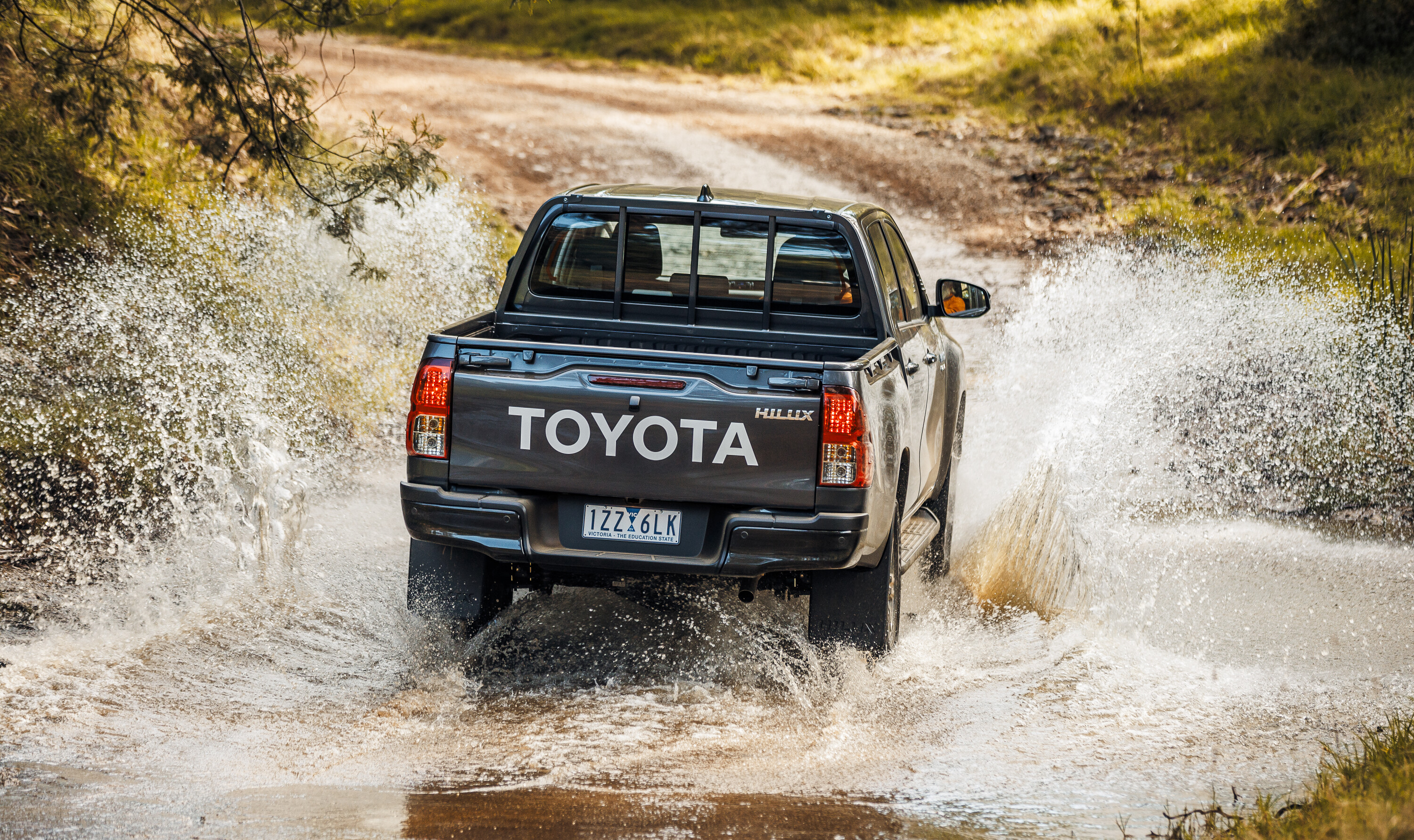
Utilising a part-time 4WD system, a major appeal of the HiLux for serious off-road tourers is its accomplished traction control system, which is world-class in its operation. Also new for 48V variants is Toyota’s Multi-Terrain Select system borrowed from the 300 Series, effectively a drive-mode selector with the choice of Auto, Dirt, Sand, Mud, Deep Snow, and Rock modes.
The SR model as tested is the lower-spec model in the HiLux hierarchy, and as such its interior does err more toward frugal than lux. The bare-bones interior features plastic … lots of plastic; the cloth-trimmed seats are comfortable yet need to be manually adjusted; there are no USB or power outlets in the rear … nada; and the eight-inch touchscreen is tiny by today’s standards – in particular when compared to the one in the Ranger. Still, the screen features the latest iteration of Toyota’s Smart Connect system and is effortless in its operation, easy to navigate, and wields Apple CarPlay and Android Auto.
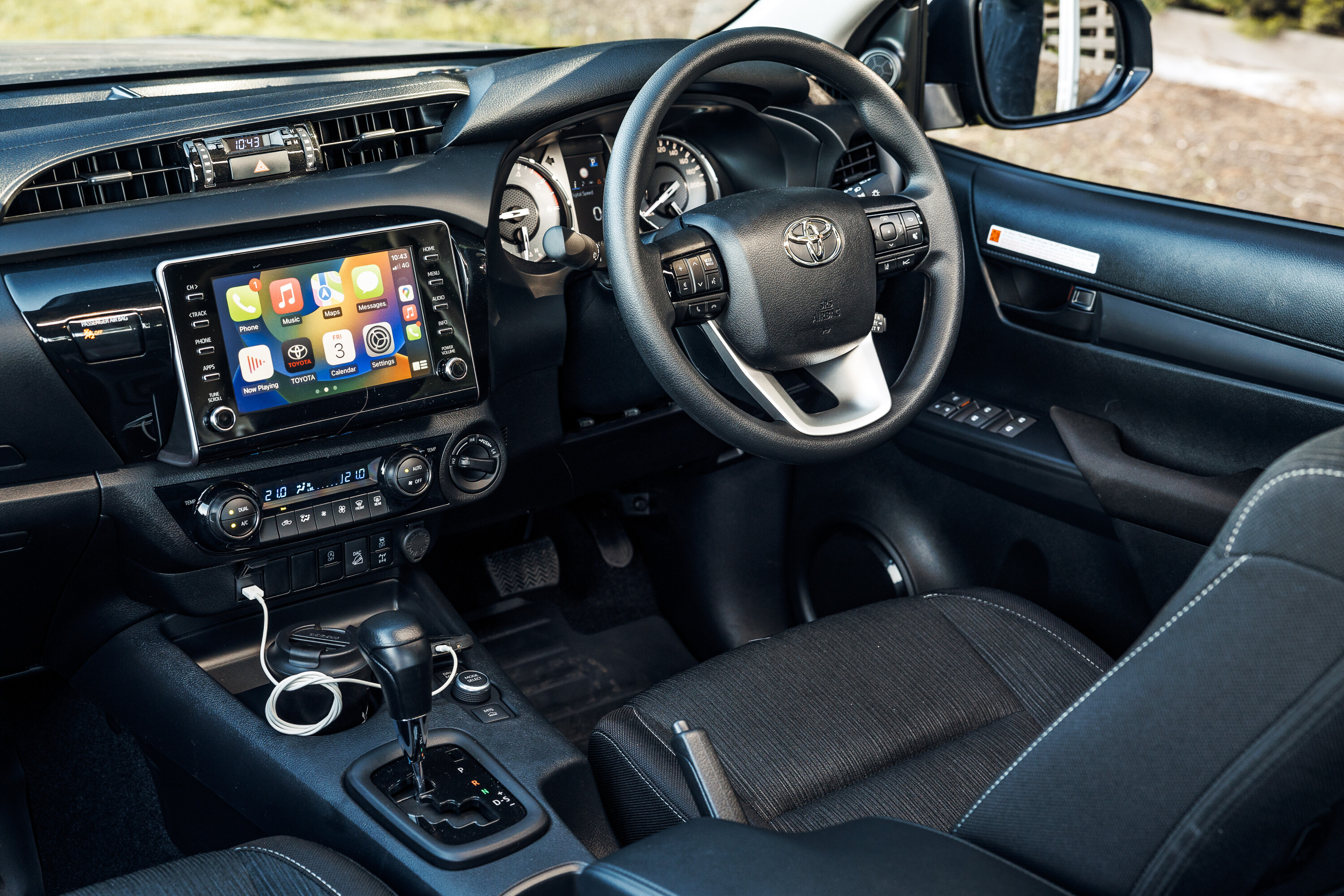
The centre console itself is intuitively laid-out, but only has one USB-C outlet and, due to a lack of space, one cup holder.
The rubber floor mats are a positive for off-road tourers, as they’re durable and can be ripped out and hosed down upon returning from an excursion. And despite the HiLux’s cabin being a bit narrower than something like a Ranger, there’s still ample room in the rear seats to sit three kids abreast – or three adults at a pinch.
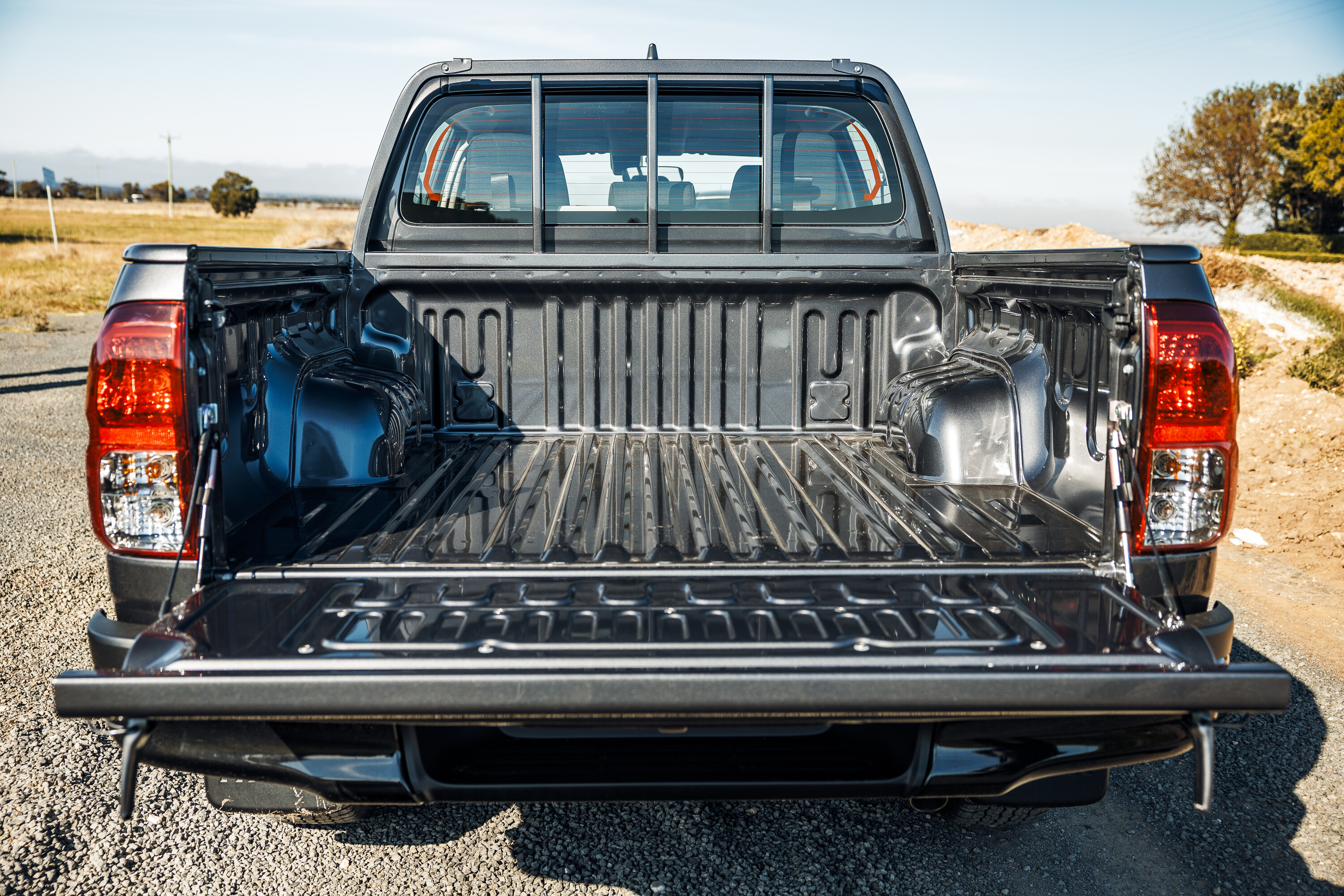
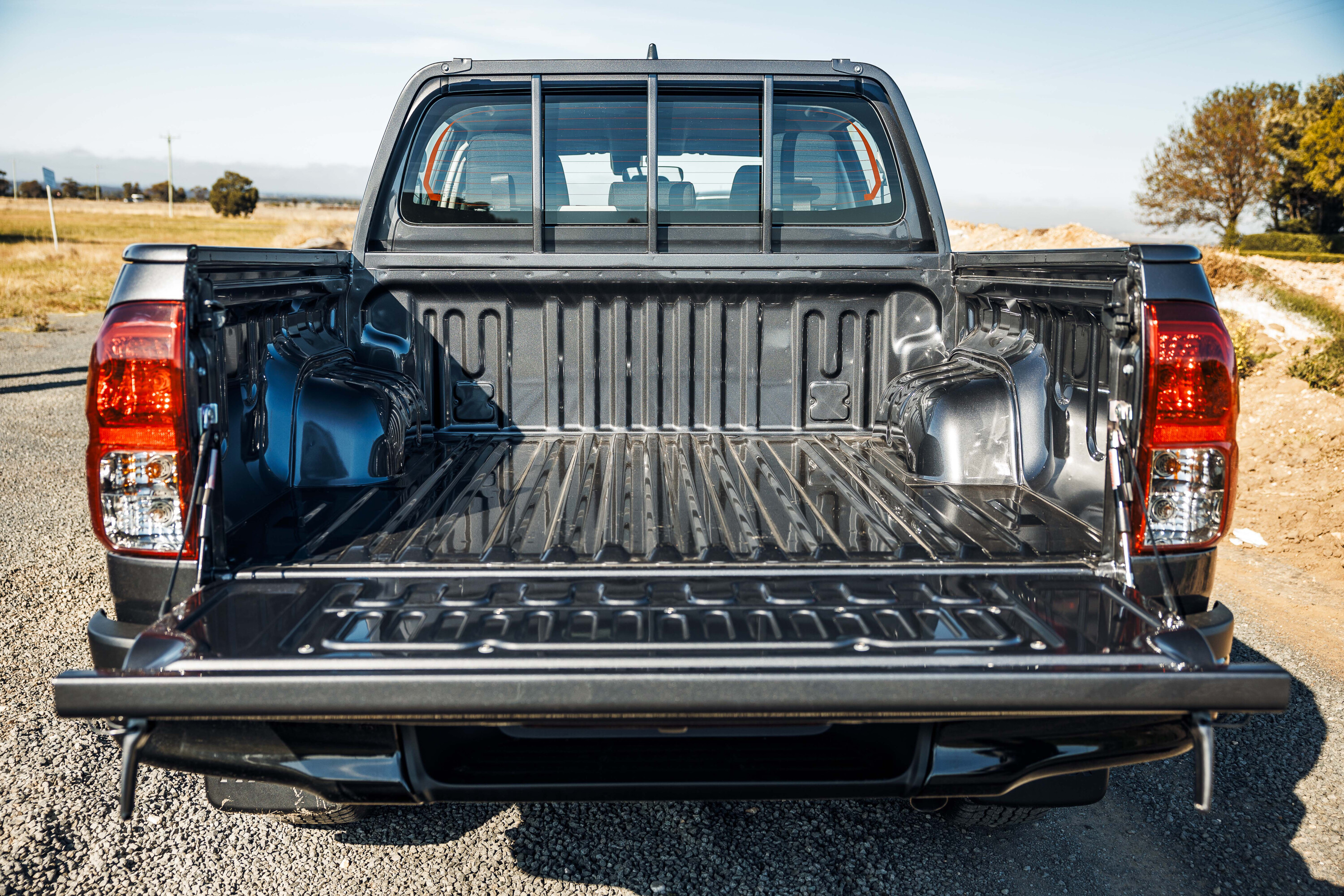
Much like the interior, the tray is fairly basic. It has no lining, so it’ll get scratched, and the SR grade has no tie-down points on the inside of the tub, with the hooks located on the outside – which seems like a bit of a strange decision by the boffins at Toyota. The tailgate itself is operated by two latches on either side of the gate, rather than a central clasp. Old-school. The tailgate is assisted, though, for weary arms.
| u00a0 | 1GD 48V max kerb weight | 1GD 48V payload |
|---|---|---|
| SR double cab-chassis 4×4 6AT | 2010kg | 1040kg |
| SR double-cab pick-up 4×4 6AT | 2135kg | 915kg |
| SR5 double-cab chassis 4×4 6AT | 2020kg | 1030kg |
| SR5 double-cab pick-up 4×4 6AT | 2150kg | 900kg |
| Rogue double-cab pick-up 4×4 6AT | 2286kg | 766kg |
The HiLux 48V is equipped with the latest Toyota Safety Sense tech: an enhanced Pre-Collision System (PCS); an updated Lane Departure Alert (LDA); Adaptive Cruise Control (ACC) with Road Sign Assist (RSA); and Adaptive High Beam (AHB).
The introduction of Toyota’s 48V V-Active technology mightn’t radically overhaul the HiLux, but the minute changes, including the addition of a selection of drive modes, are positive and a sign of the times to come. It’s something we need to be ready for, whether you like it or not.
| 2024 Toyota HiLux V-Actice Pricing | |
|---|---|
| SR 4×4 dual-cab chassis | $54,130 |
| SR 4×4 dual-cab pick-up | $56,210 |
| SR5 4×4 dual-cab chassis | $60,580 |
| SR5 4×4 dual-cab pick-up | $63,260 |
| Rogue 4×4 dual-cab pick-up | $71,530 |
| All prices are before on-road costs | |
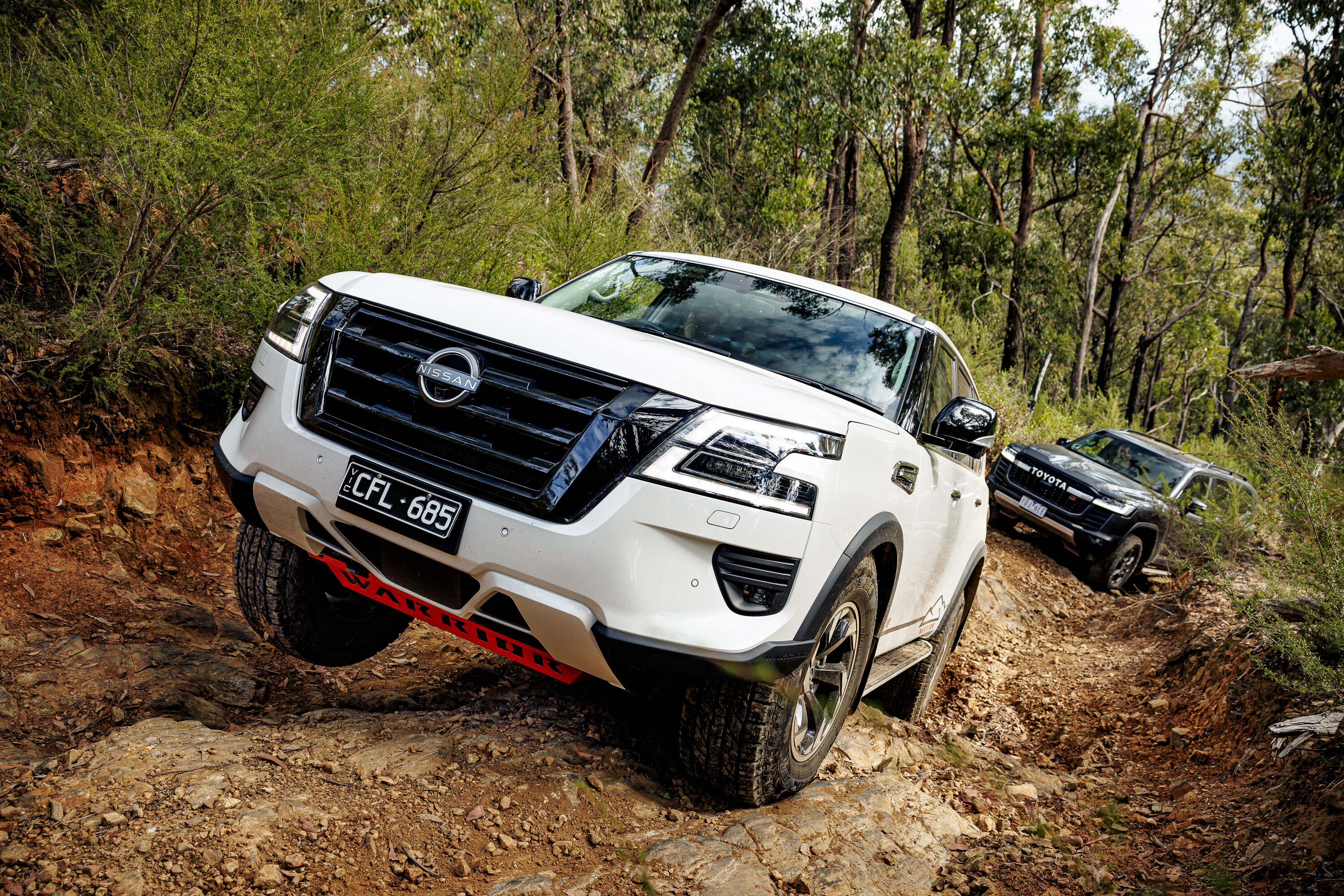
The inevitable comparison pits the two heavyweight champions of the large 4×4 wagon market – the Nissan Patrol and Toyota LandCruiser – against each other on serious off-road terrain, in a head-to-head battle that has been raging for generations. In this guise, we line up the Patrol Warrior against the LandCruiser GR Sport. Can the Patrol Warrior match or even outperform the considerably more expensive (more than $40K!) GR Sport?
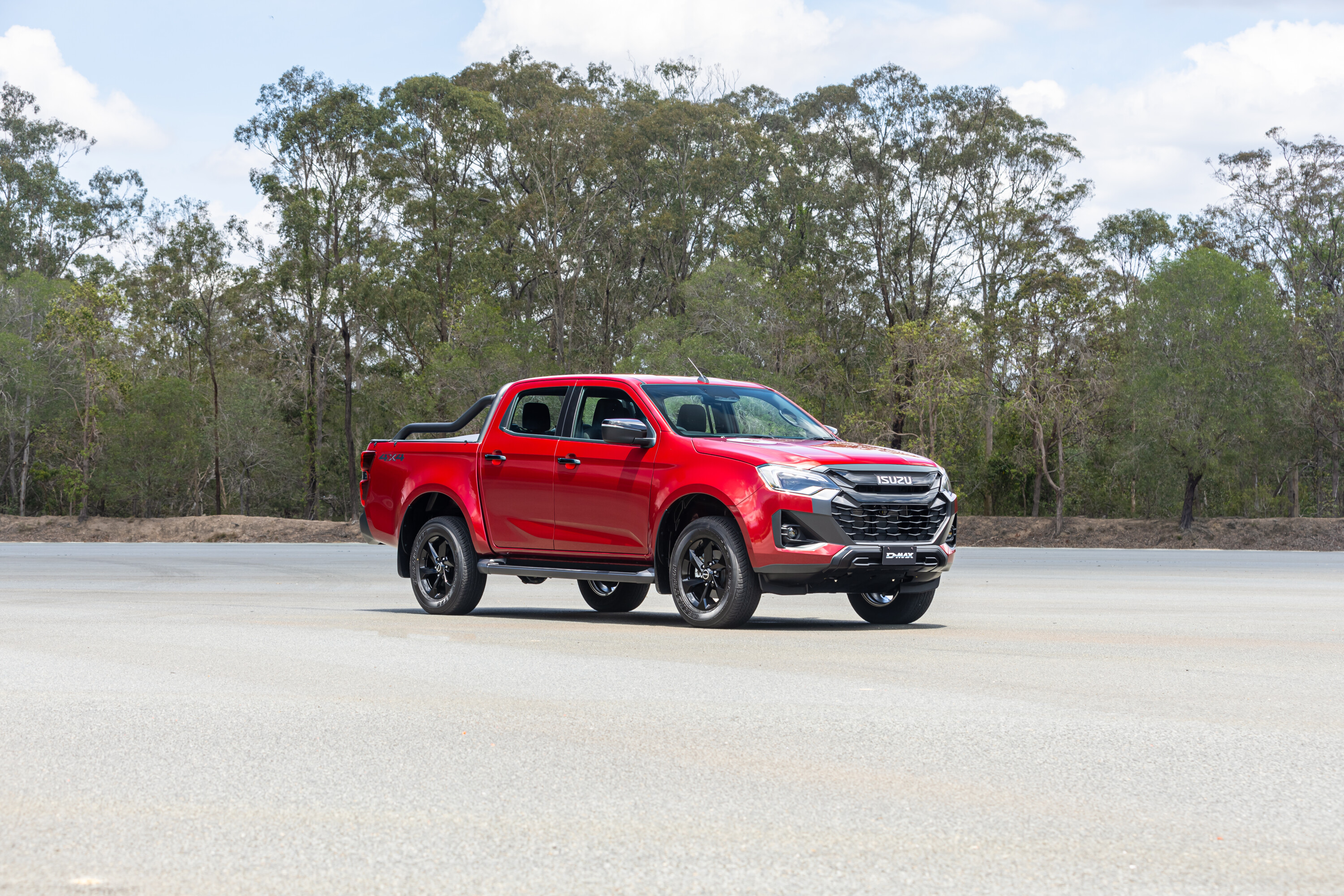
Isuzu has given its venerable D-MAX a midlife makeover, by enhancing style, adding more equipment and improving its safety – a new X-Rider variant has also been introduced. The D-MAX is already a fan favourite, but do these changes make it even more appealing? We tagged along on the press launch to find out.
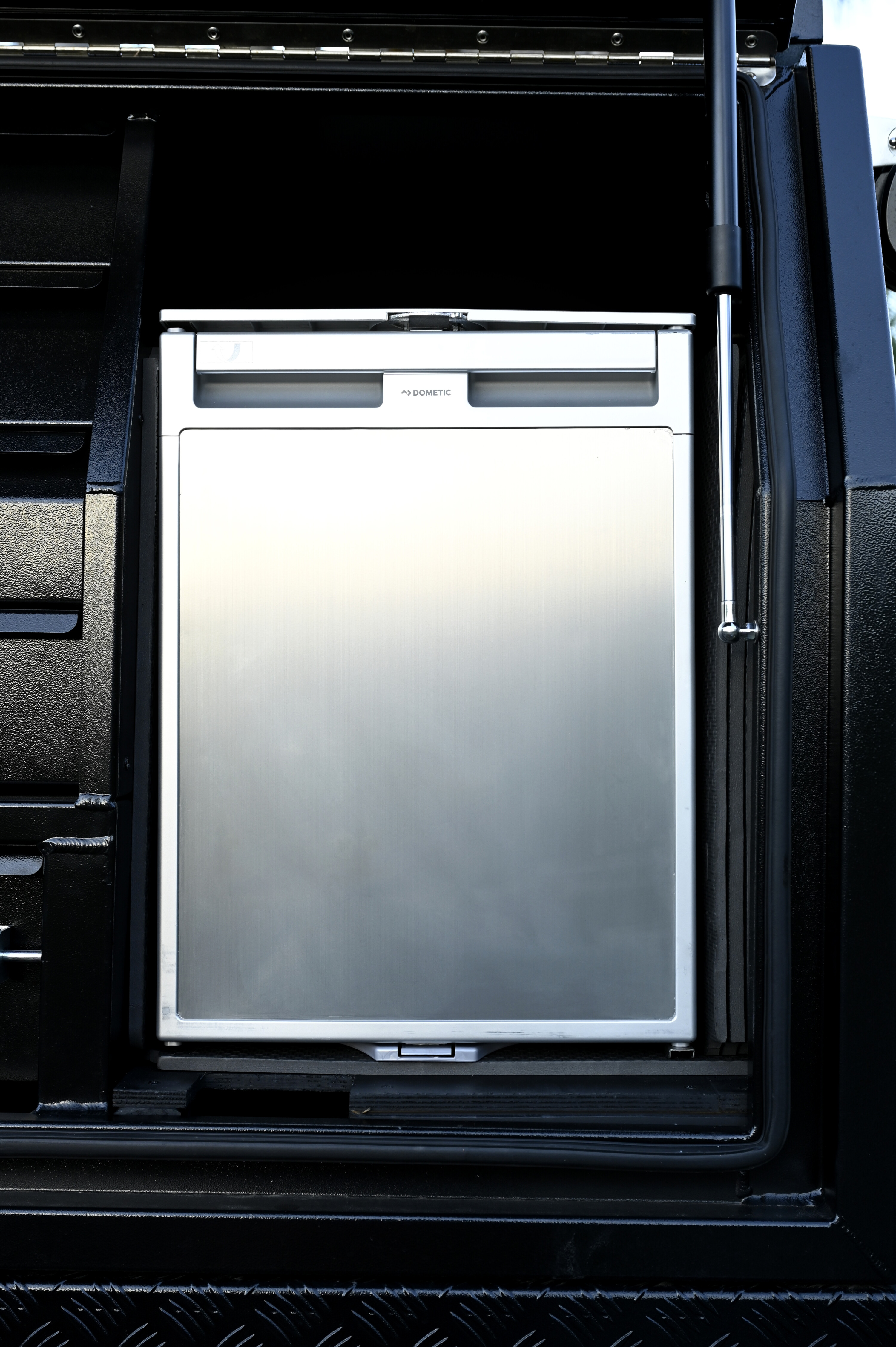
Our two in-house builds are ticking along nicely: the Ford Everest recently received a massive Aussie-made Safari Armax snorkel; and a Dometic CoolMatic CRX 50 upright fridge was loaded into the back of our Tradie Triton, making it a bit easier to enjoy a chilled beverage at knock-off time.
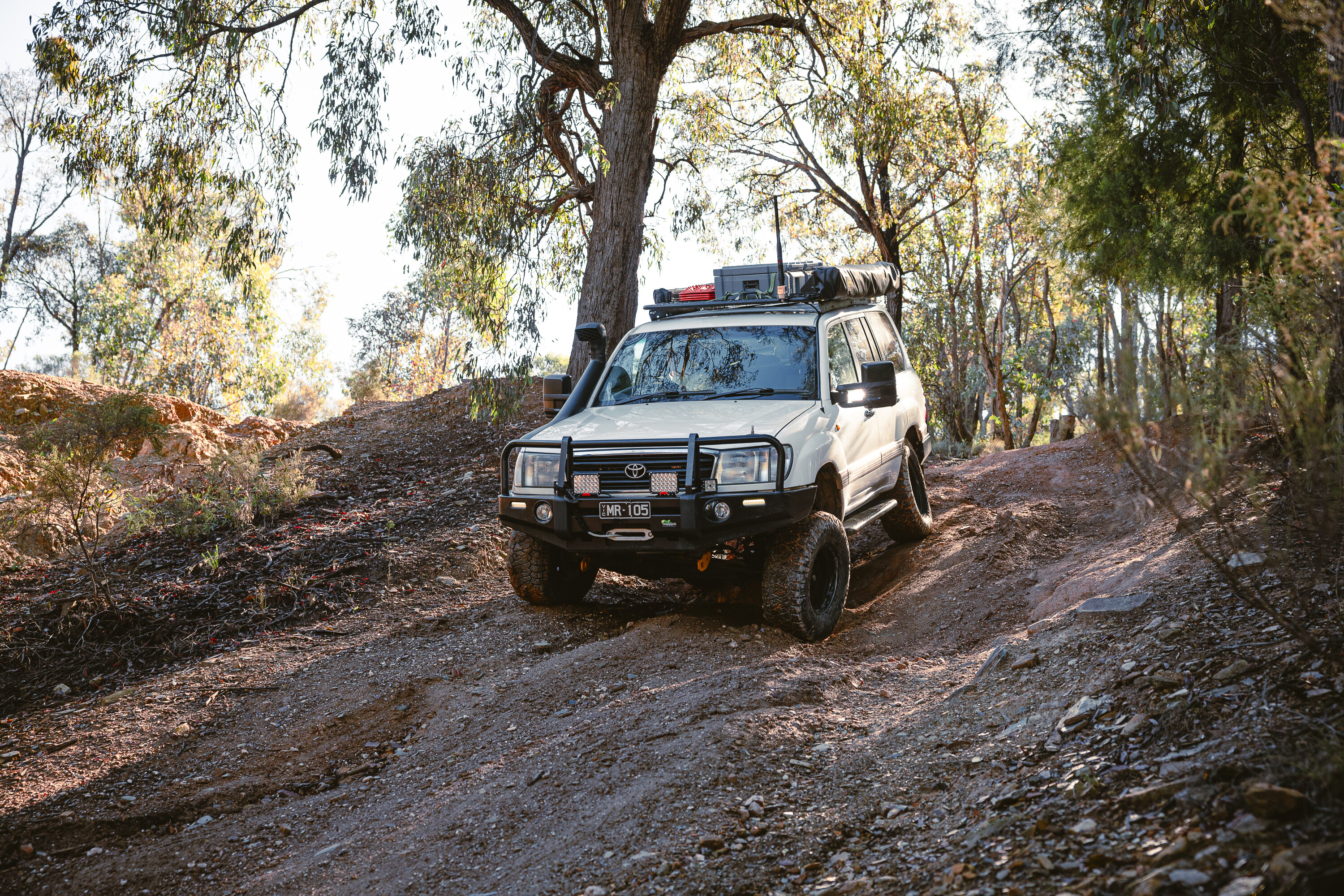
Take a quick peek at this 105 and you’d be forgiven for thinking it’s another custom Cruiser, but this special example is hiding a BMW M57 3.0-litre straight-six in the engine bay. Add in an assortment of high-quality kit, and this is one of the tidiest 105 Cruisers on the planet.
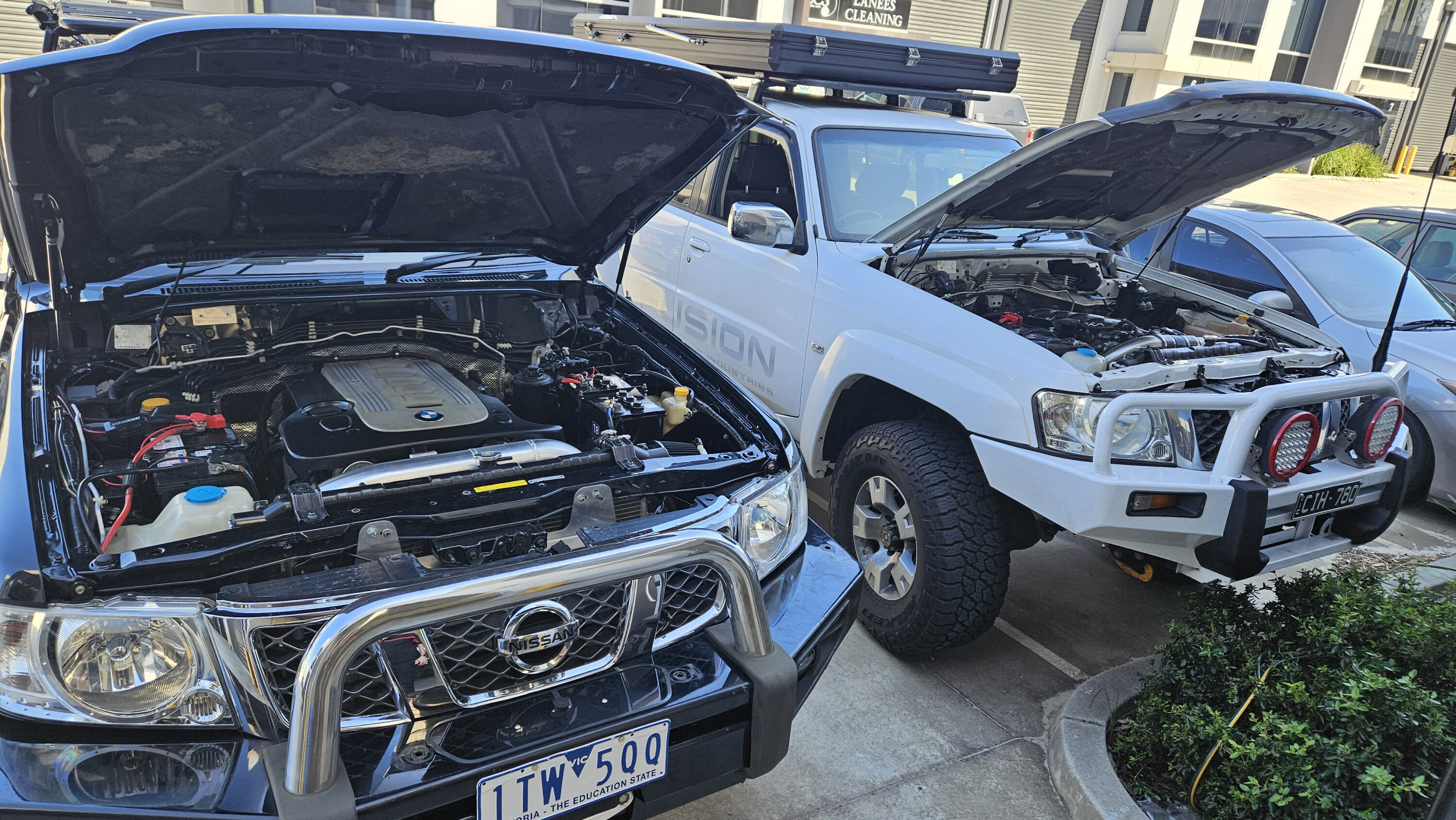
If you’re keen on doing a similar engine transplant on your own project, then we’ve included a comprehensive guide with everything you need to know on how to swap in a BMW M57 diesel engine – arguably one of the best diesel engines ever built.
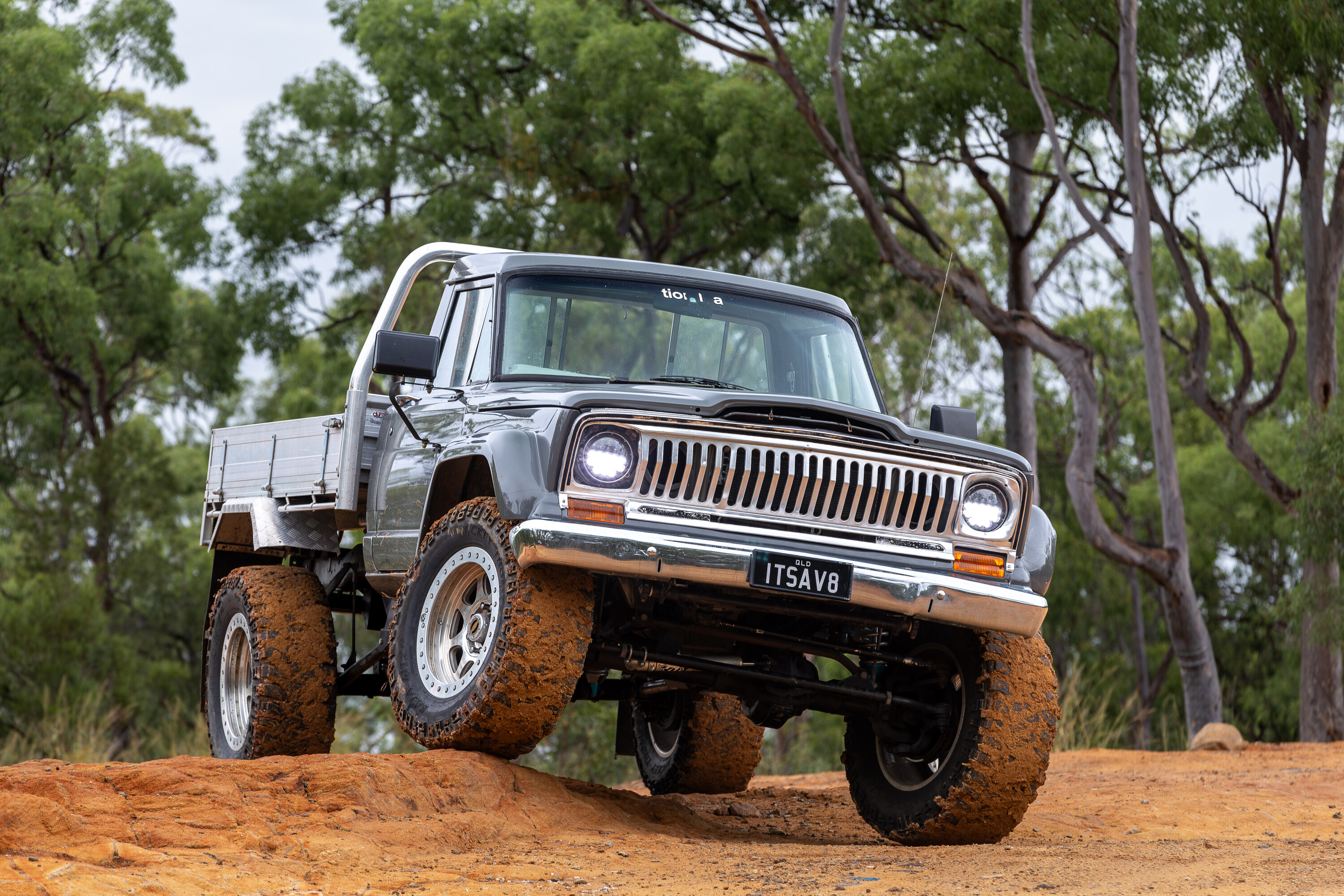
We’ve also managed to squeeze in a write-up on a one-off Jeep J20 with a 6.2-litre V8, 370kW/620Nm LS3 engine, 37-inch tyres and linked suspension. This old-school rig is everything you could possibly desire in a ute.
On the travel front, we explore Murray-Sunset National Park in Victoria, the gold-mining town of Maytown in Queensland, and the Witchelina Nature Reserve in South Australia’s north.
Be they for family, work, or adventuring, these light trucks have taken over as the rig of choice for so many Aussies that auto-makers are flocking to join the rush as more brands and models flood the segment.
In terms of sales, it’s been a two-horse race for the past five years, with Ford’s Ranger challenging the long-standing top dog, the Toyota HiLux, for sales supremacy. A decade ago, Toyota had the market lead to itself but in 2023, Ranger overtook HiLux as not only the best-selling 4×4 ute in Australia, but the best-selling vehicle overall.
While Toyota and Ford duked it out for number one, it was daylight to third place – a position the value-focused Mitsubishi Triton has occupied for many years.
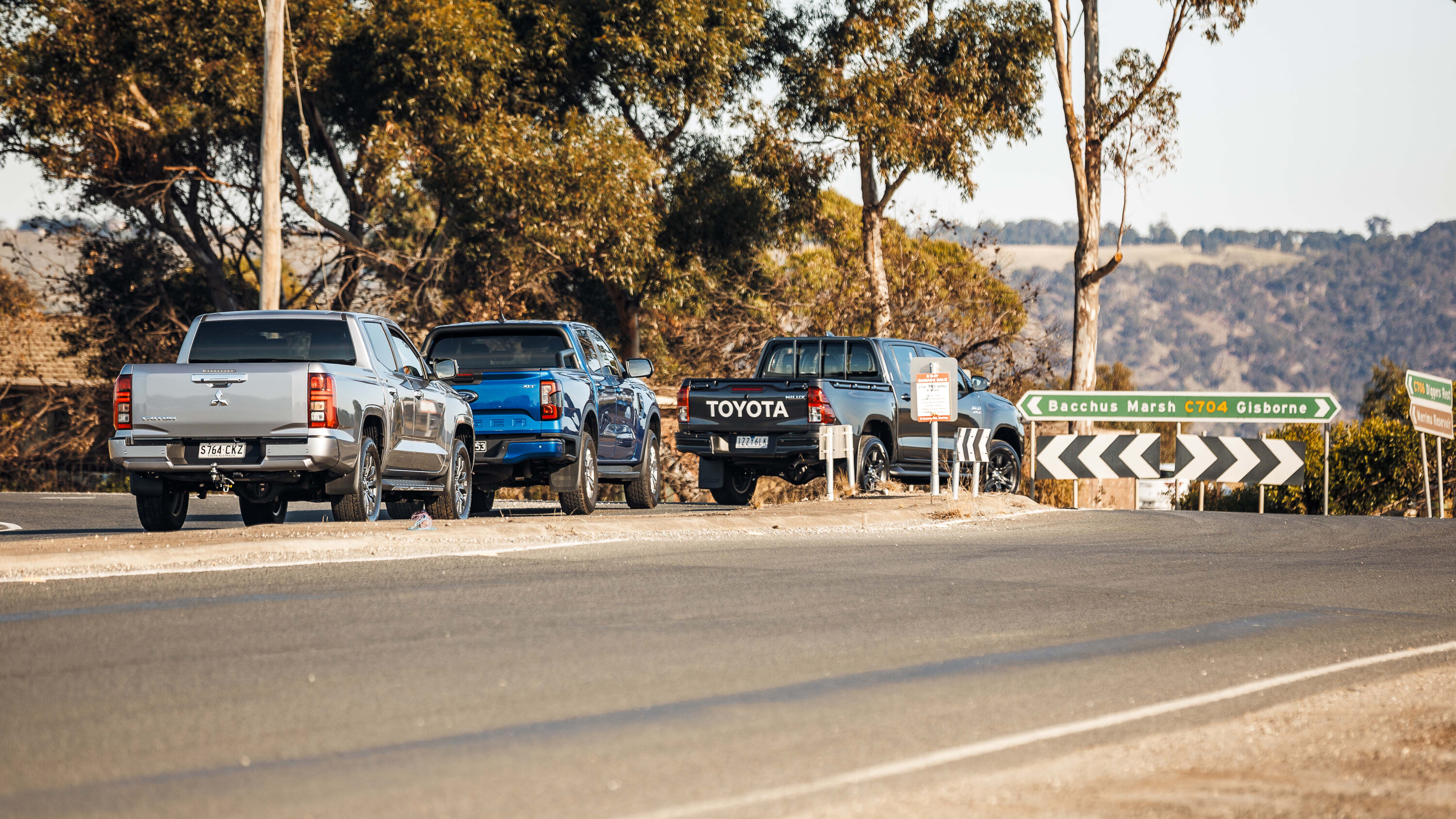
Yet the triple-diamond brand is fighting back – bullishly chasing better-than-ever penetration into the ute market. Its weapon is the all-new Triton, covering everything from rear-wheel-drive single cab-chassis to the leather-clad GSR Double Cab 4×4, with the promise of more to come.
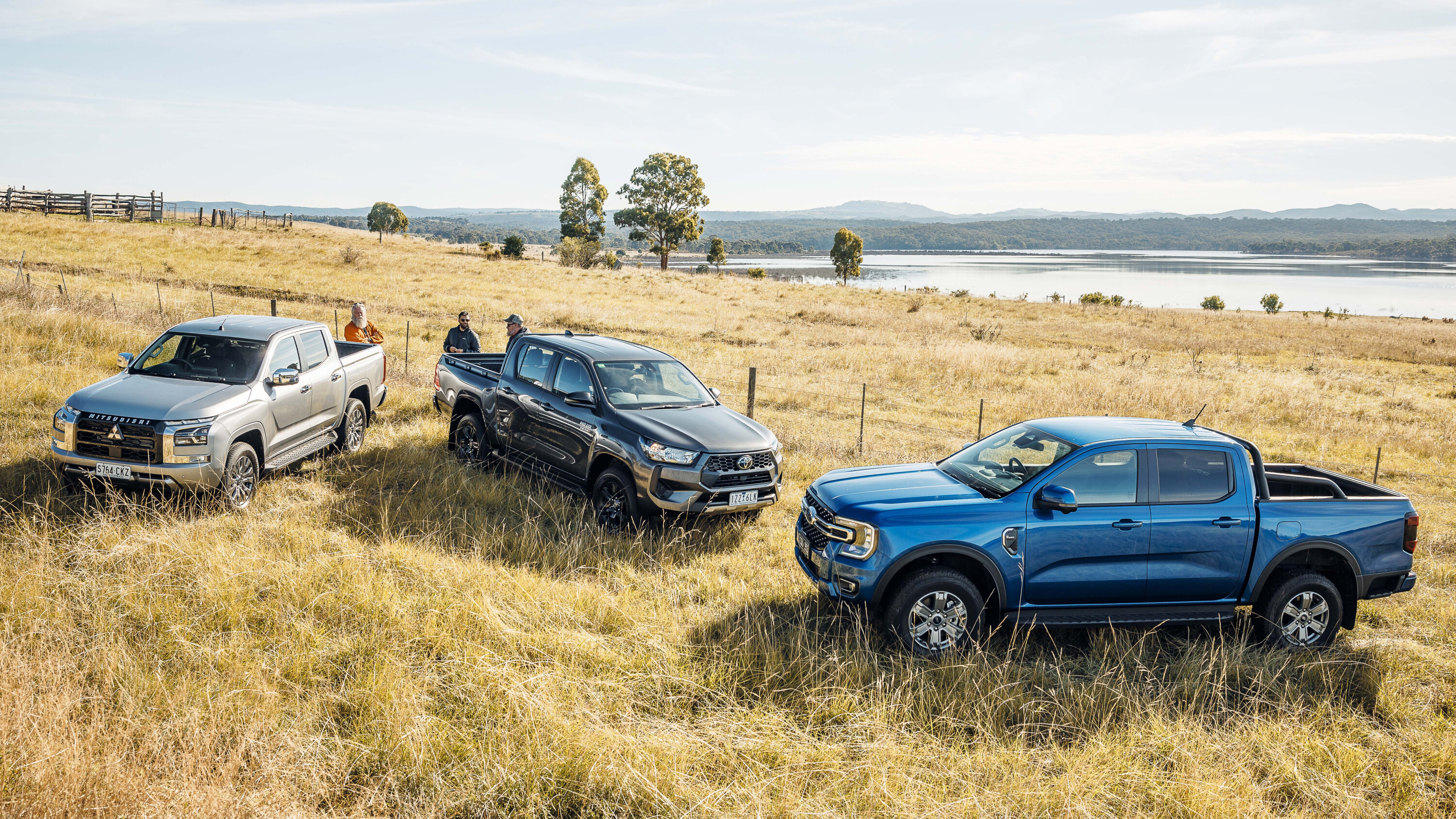
Dual-cab 4×4 models are the most popular in the segment so we’ve pitted the new Triton against HiLux and Ranger to see if it’s capable of upsetting the hierarchy.
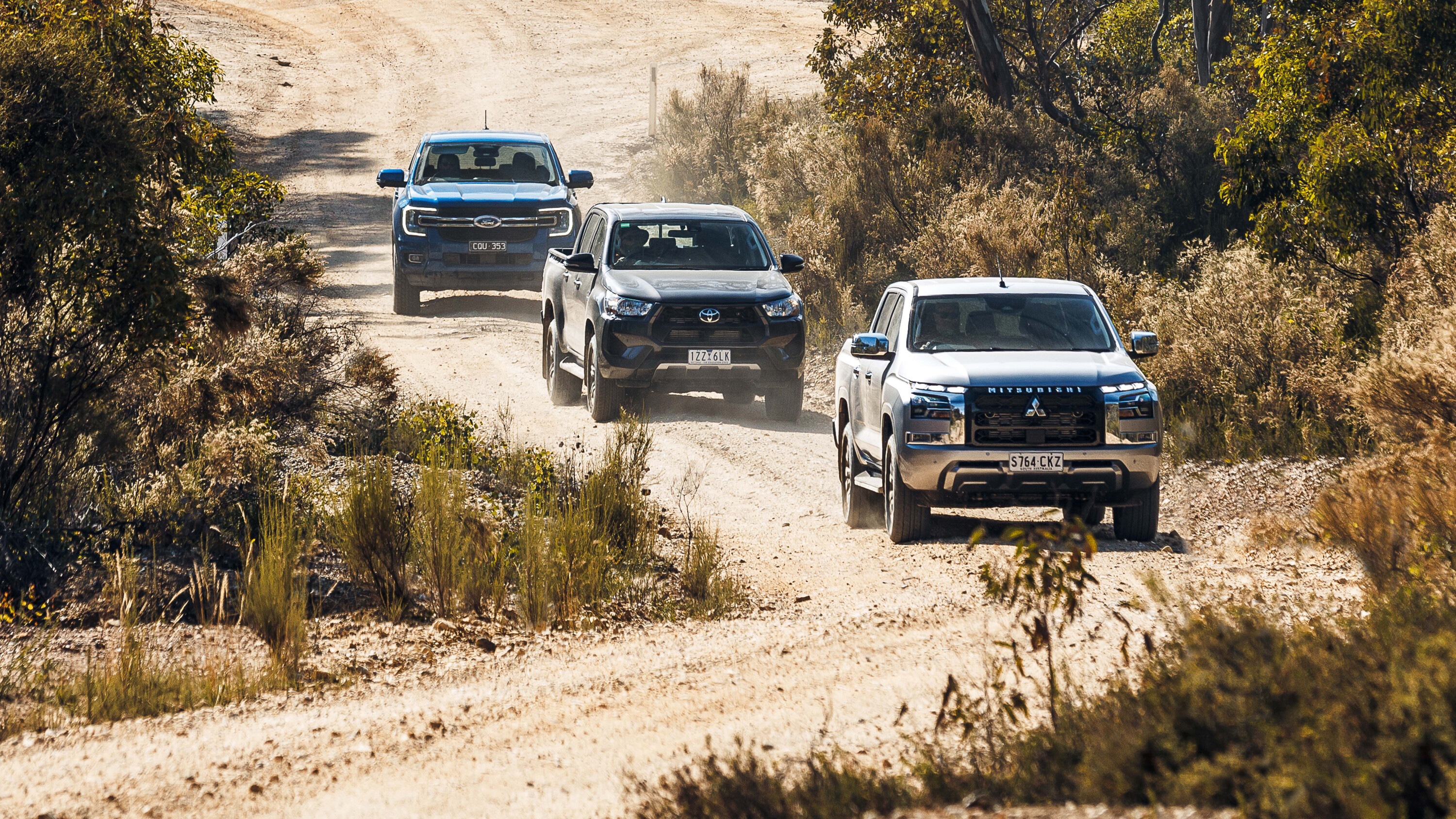
Next down the order is the fresh Mitsubishi Triton GLS at $59,090, while the Toyota HiLux SR ($56,210) is the cheapest vehicle here.
The HiLux is the odd one out in that it’s a low-spec SR while the Triton and Ranger are both mid-spec variants. But our SR HiLux was the only variant available with the latest MY24 updates including a 48-volt ‘V-Active’ mild-hybrid system.
The ideal comparison would’ve been with a HiLux SR5 with V-Active, which retails for $63,260.
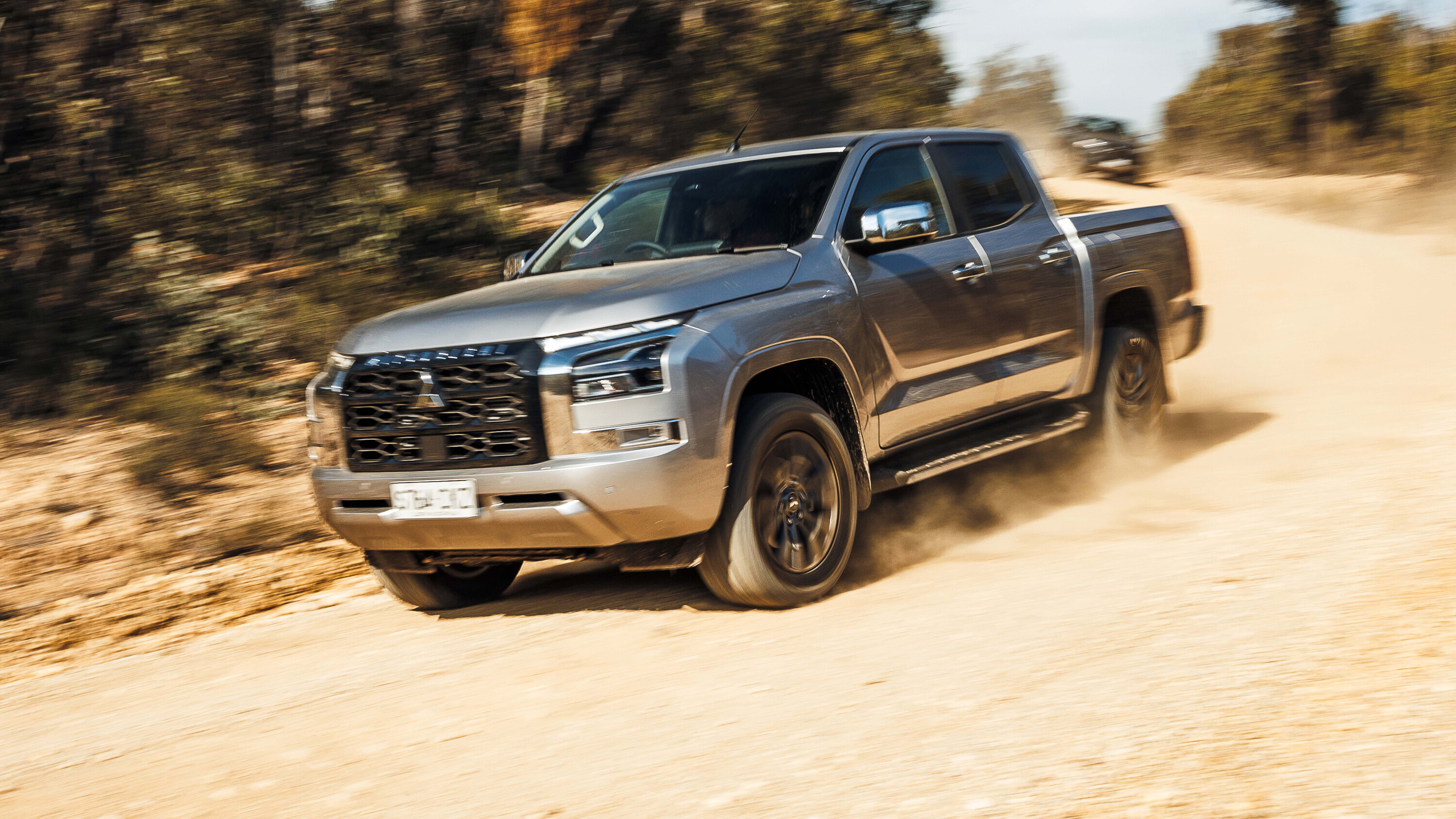
With that in mind, it’s great to see the Triton’s engine outputs increased to 150kW and 470Nm (up from 133kW and 430Nm in the previous model) so it can now compete with the class leaders, despite falling short of 500Nm.
It’s enough to make the new Triton GLS a sprightly performer, even though it won’t keep up with the other two utes in a drag race, which is hardly the point.
The twin-turbo 2.4 is quite raucous and harsh at certain engine speeds – really letting you know that it’s a diesel – and fails to match the refinement of the Toyota and Ford engines, not that they’re particularly refined either!
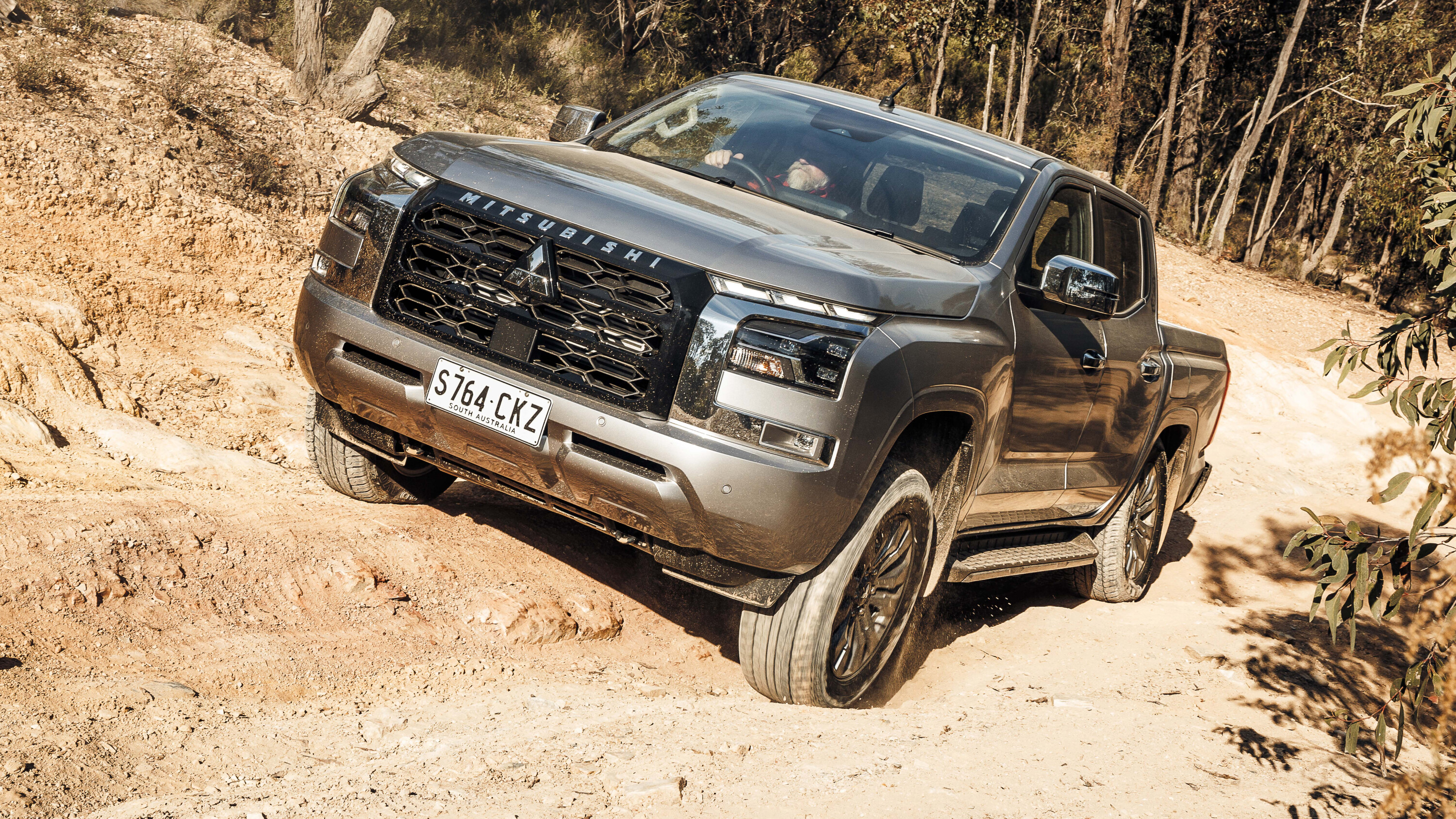
The Mitsubishi’s crude idle-stop system shakes the whole vehicle when it shuts the engine down and kicks back in again, meaning I was looking for the button to disable it every time I drove the Triton.
The engine is backed by a six-speed automatic transmission that really lets you know when it’s shifting gears, and is keen to downshift when decelerating and coming to a stop. Its aggressive calibration was noted by a few of our testers who said it felt like it was in a ‘Sport’ mode.
Despite its many updates, the Triton’s drivetrain feels more like a light commercial vehicle than the Hilux and Ranger equivalents, though that’s in keeping with what this dual-cab is meant to be.
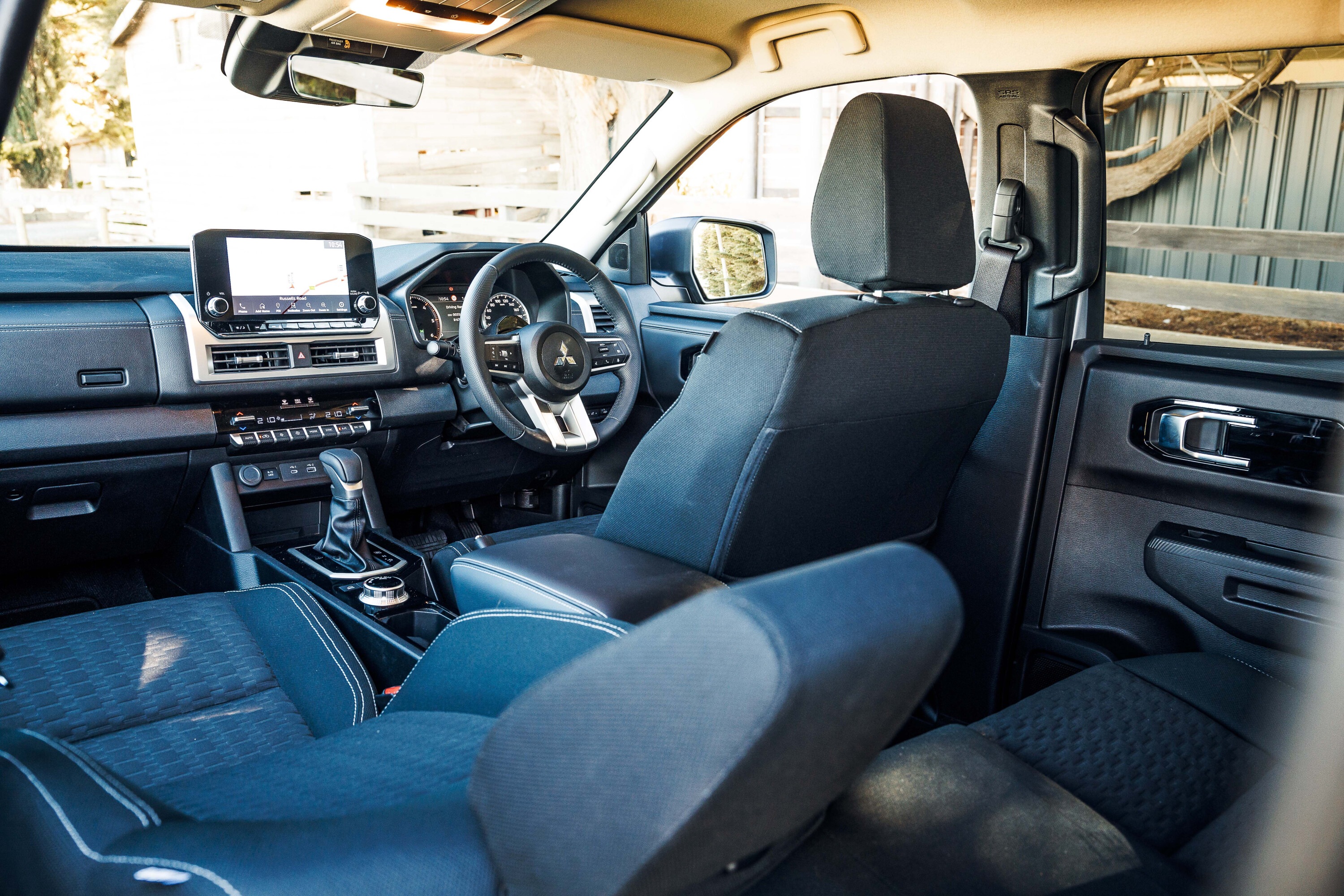
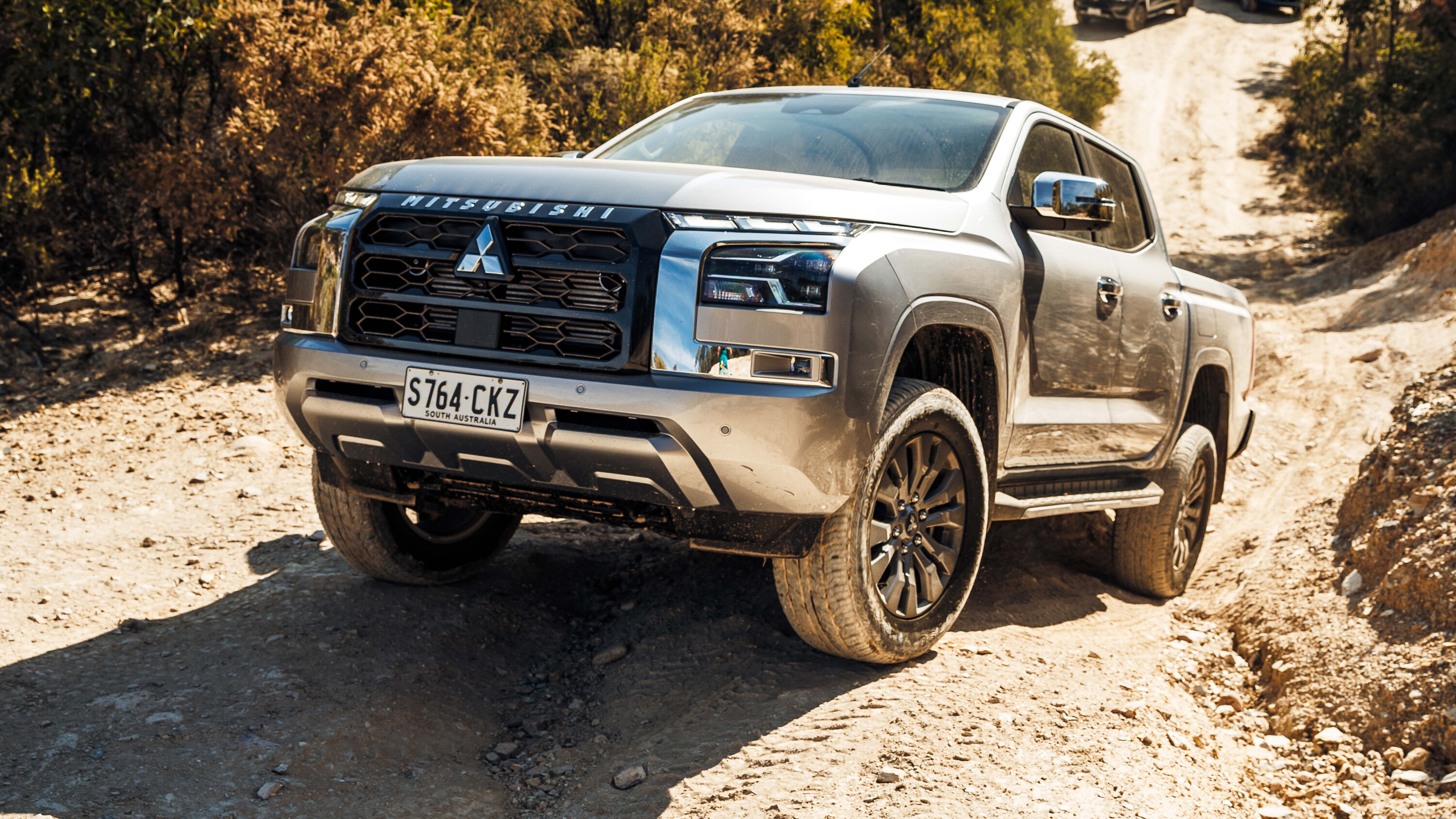
Where the new Triton really steps up from the old dunger is once you slip inside the cabin. It’s bigger, more spacious and much more modern, as you would expect in a new-generation vehicle, and is particularly well laid-out.
A generous 130mm wheelbase stretch and 50mm-wider body deliver tangible cabin-space gains and much-improved airiness, even if Ranger still rules here. In lieu of rear air vents, Triton retains roof-mounted air circulator, for better or worse.
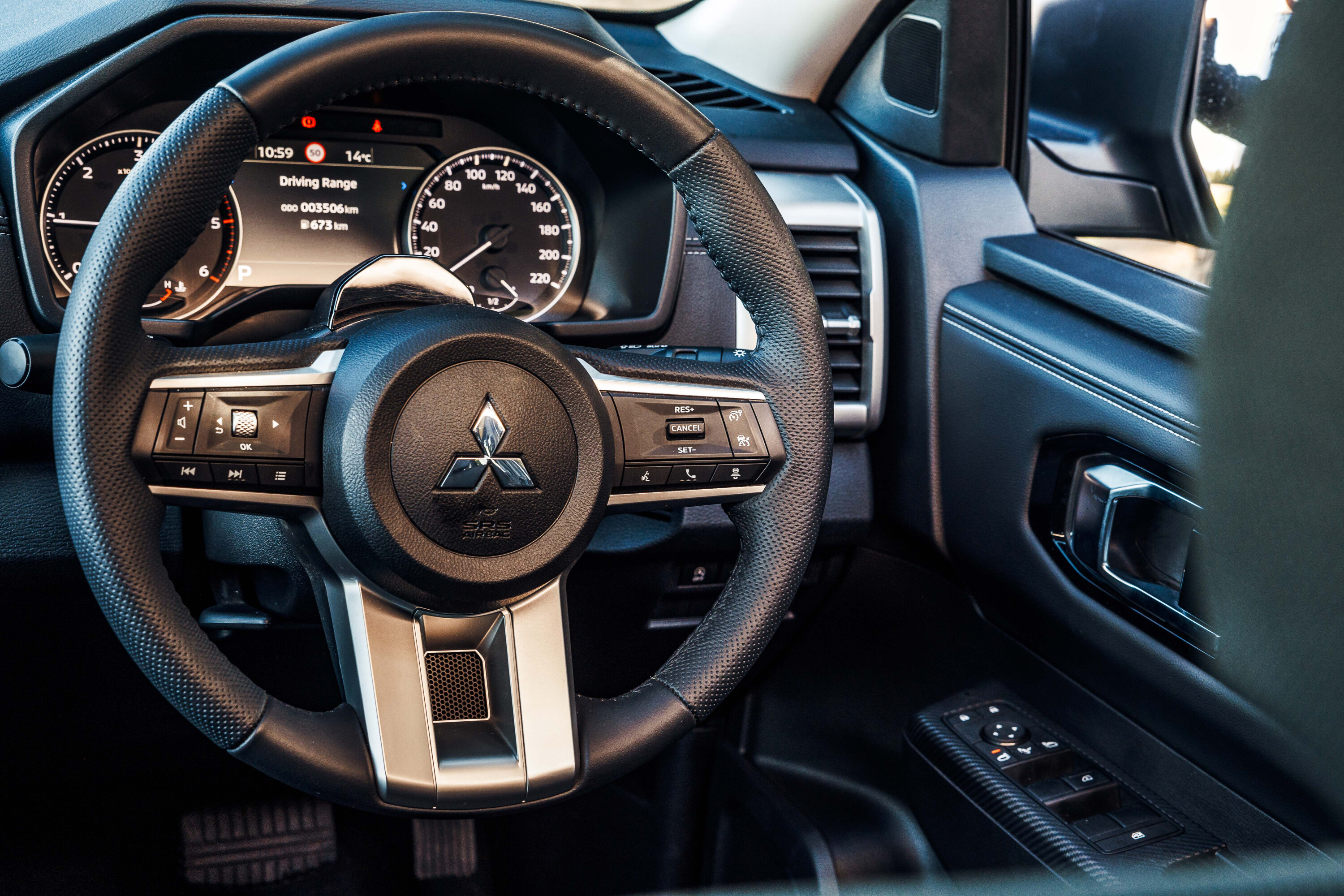
The neat steering wheel, classy gauge graphics, intelligent switchgear placement, and interesting upholstery transform the new Triton GLS’s interior from bin-liner to classy habitat.
A 9.0-inch multimedia touchscreen is standard across the new Triton launch range, and it’s placed high on the centre stack for great visibility. It’s much easier to use than the fiddly system it replaces and includes smartphone mirroring with wireless Apple CarPlay, wired Android Auto, navigation and two USB inputs (A and C).
The GLS adds wireless charging for compatible phones and another pair of USB outlets (A and C) at the back of the centre console for rear-seat occupants.
The multimedia screen has user-friendly physical dials for volume and track selection control, with large buttons below the central vents for the climate-control.
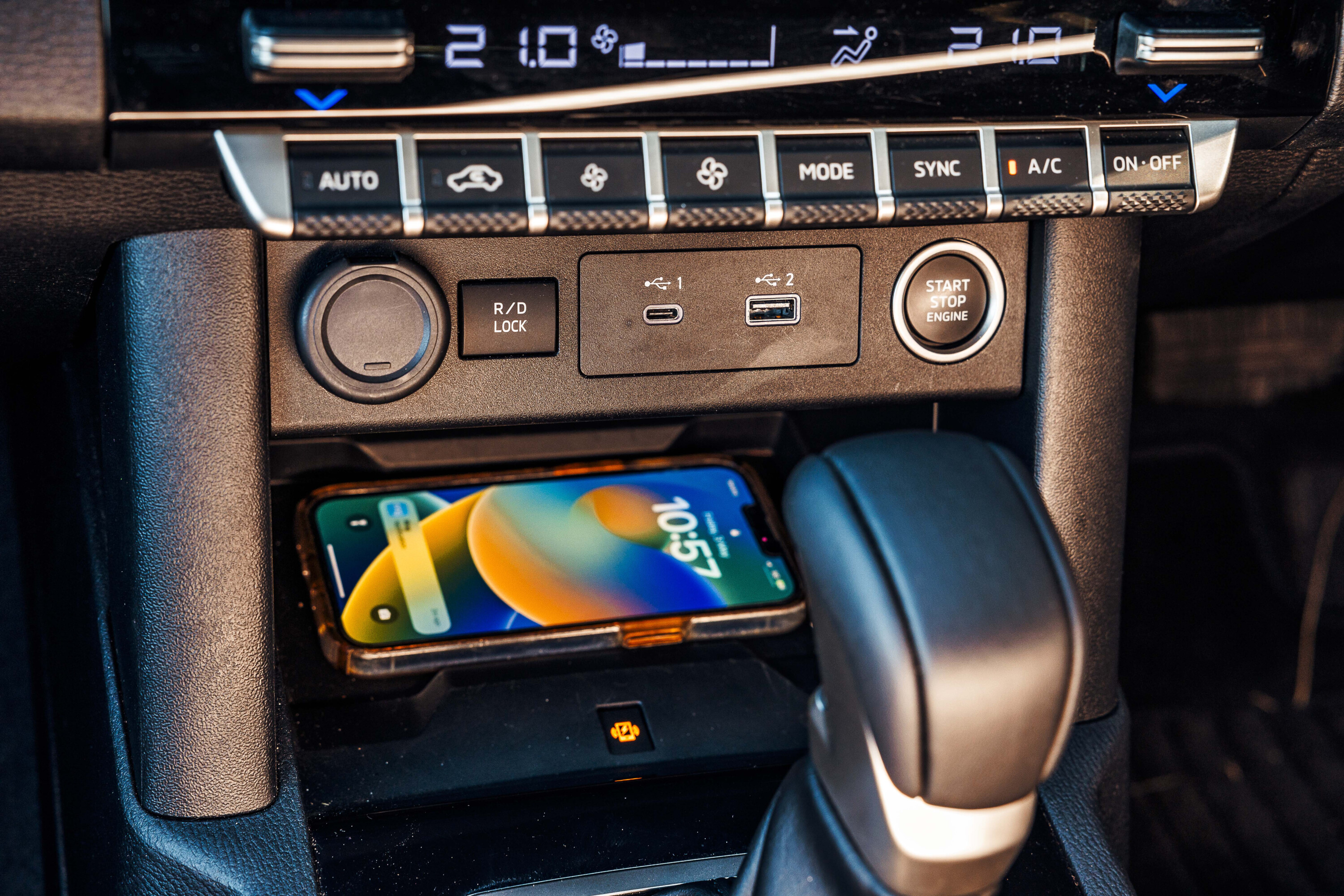
GLS and GSR Tritons get dual-zone climate, plus keyless entry/start. There’s even an old-school handbrake lever, which is a smart inclusion in a 4WD in preference to electric buttons.
The gauge binnacle houses large, easy-to-read analogue dials for speed and tachometer, with a multi-information screen in between them where you can access information such as the digital speedo, tyre pressures, fuel consumption and trip computer details.
The GLS’s cloth-covered seats are comfortable, and I had no trouble adjusting the driver’s seat and steering column to my liking. The new Triton’s extra cabin space is certainly noticeable and appreciated from the driver’s seat.
The rear bench is good for two adults or three smaller passengers with reasonable rake on the seat back. A clever inclusion for the rear-seat passengers are the air-conditioning vents that run through the roof to send plenty of air to the back and not just to the passenger’s ankles, where it goes in most dual-cab utes.
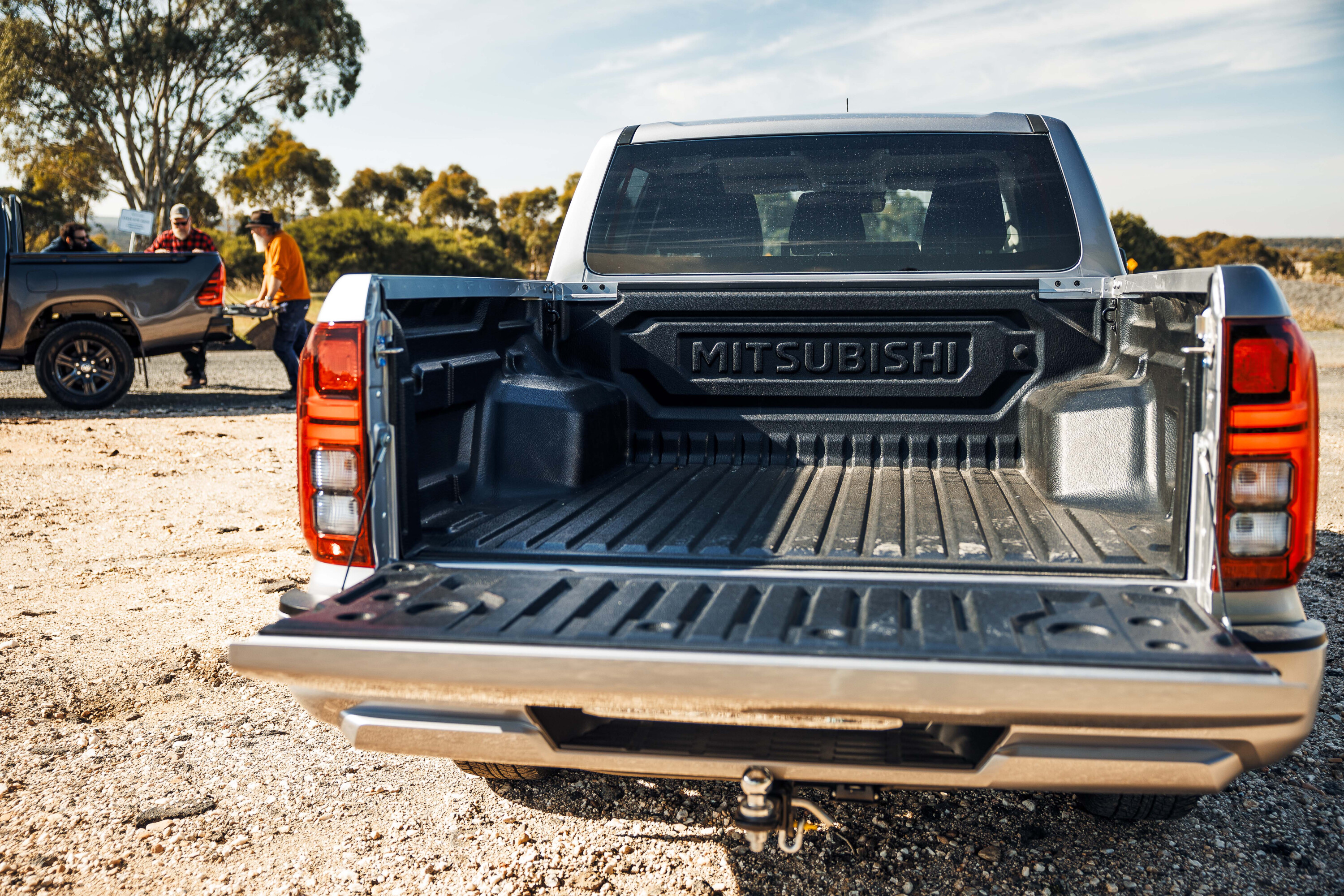
The smaller-than-usual size of the previous Triton was also noticeable in the cargo tray, so Mitsubishi has stepped up again here with a tub similar in volume to most of its competitors, and larger than some.
The GLS tub gets a durable plastic protective liner with tie-down points mounted low in the rear corners where they are most useful, but higher in the front where they are less than ideal. The tray has no lighting or power outlet, but also no sports bar or sailplane to impede loading from the sides.
Under the body is a conventional ladder-frame chassis with an independent front and a leaf-sprung live axle at the back. The front-end also features electric power steering and disc brakes, while the rear gets drums.
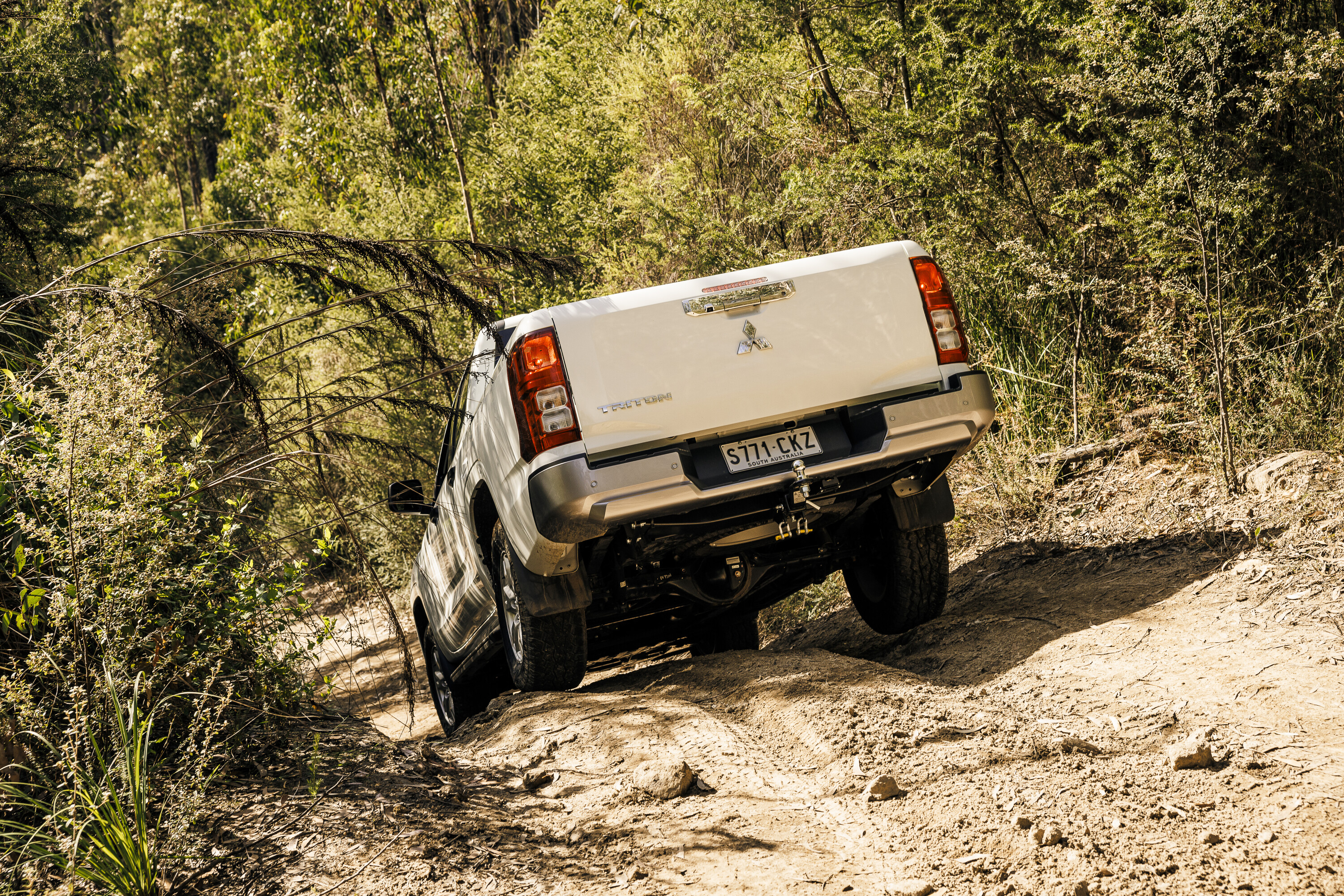
Triton’s suspension is stiff, giving it a traditional light-truck ride when unladen, but it should hold up well to hauling loads. It’s not as comfortable or absorbent as the Ranger when it comes to ride quality, with the Ford being unusually supple and forgiving.
On that subject, the Triton now has a 3500kg braked tow rating to match the leading utes in this class, and our test GLS offers a 1075kg payload. It is down on the other two utes here in terms of GVM and GCM, but being a lighter vehicle overall helps the Triton with capacity.
The new Triton has achieved a five-star ANCAP safety rating and it includes all the regular active-safety technologies such as AEB, stability control, lane-departure warning and intervention, and eight airbags. Welcome inclusions are rear cross-traffic alert and tyre-pressure monitoring on the GLS model.
Not so welcome is the driver monitor that beeps at you if you block its view of your face with your hand on the top of the steering wheel or if you’re looking at the centre stack to adjust the temperature or music.
That said, it’s not as intrusive or annoying as similar systems we’ve experienced, and different drivers find it better or worse than others.
The inclusion of full-time 4WD in the Triton’s Super-Select system could also be seen as a safety feature and one that neither of its rival utes featured here can offer. It’s definitely beneficial on wet and gravel roads, and even more so if you’re towing in the new Triton.
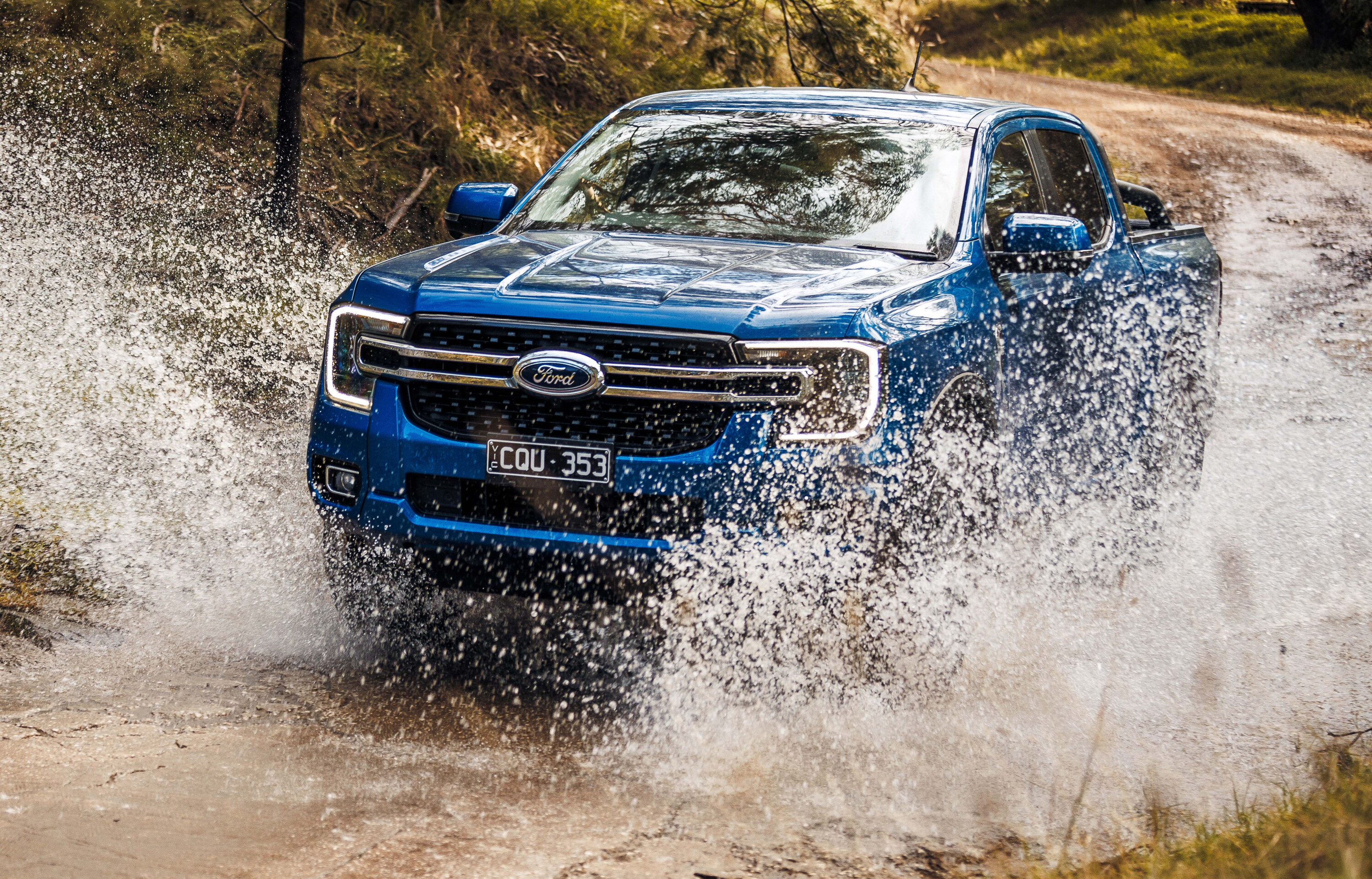
It’s this choice of drivetrains and an extensive model range that have helped the latest Ranger become Australia’s best-selling vehicle, with the mid-spec XLT being the most popular variant.
It might have the smallest-capacity engine in this group but the Ranger bi-turbo pumps out an impressive 150kW/500Nm making it also the most powerful. And it’s the most refined, offering the smoothest and quietest ride. This is helped by the inclusion of a seamless 10-speed automatic transmission that is less intrusive than the six-speed auto in the other two utes.
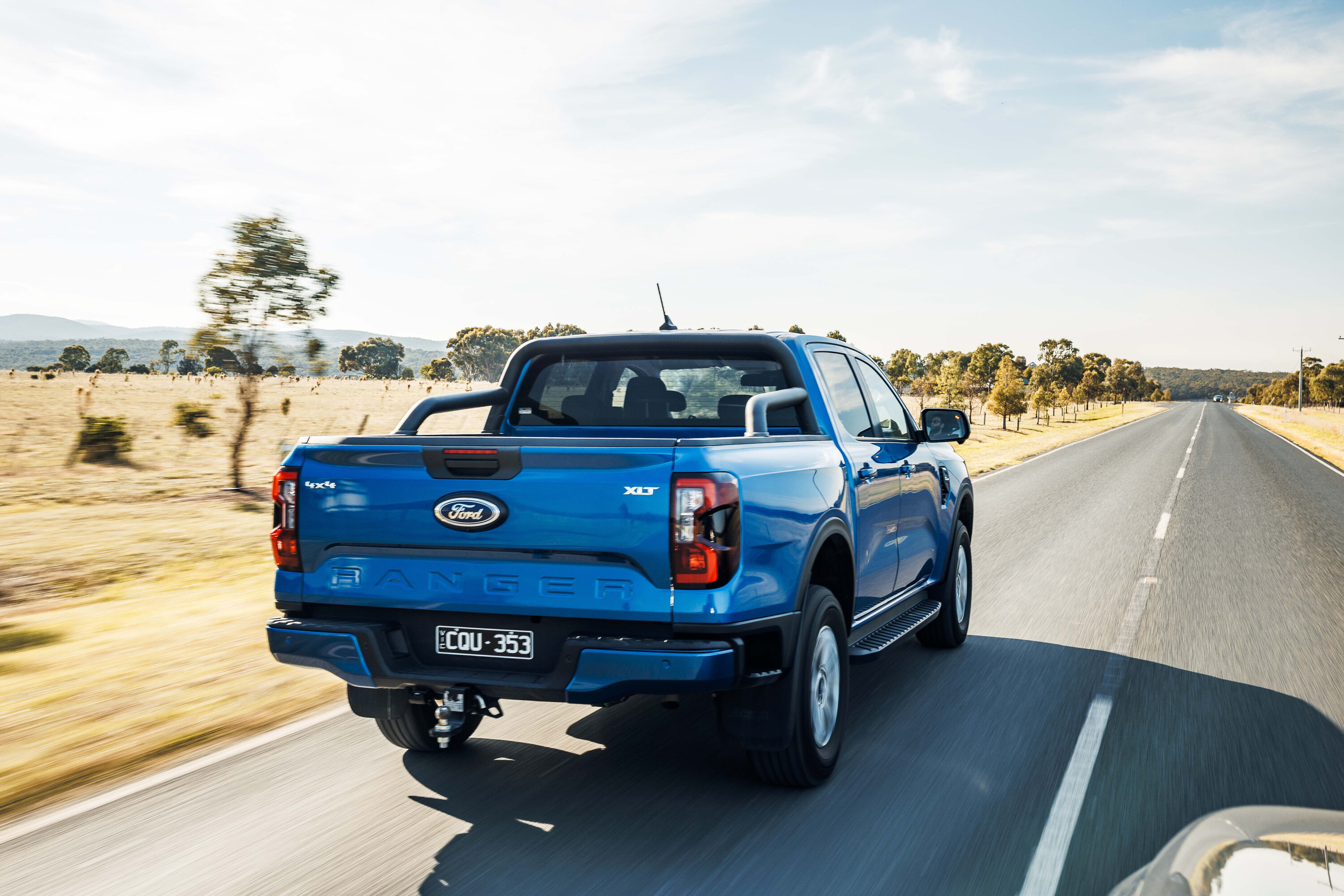
In this specification, the Ranger’s 4WD system is a part-time dual-range set-up – making the Triton the only vehicle in this trio to offer the benefits of full-time 4WD.
On top of its broad model range and choice of engines, the current Ranger is also an exceptionally well-sorted vehicle to drive and live with. A well-designed and spacious cabin makes living with the Ranger easy, and the size of its cabin makes it suitable for families. That said, none of these utes are capable of comfortably seating three adults across the rear bench.
From the driver’s perspective, Ranger’s cabin is user friendly and functional, with well-placed, simple-to-operate controls.
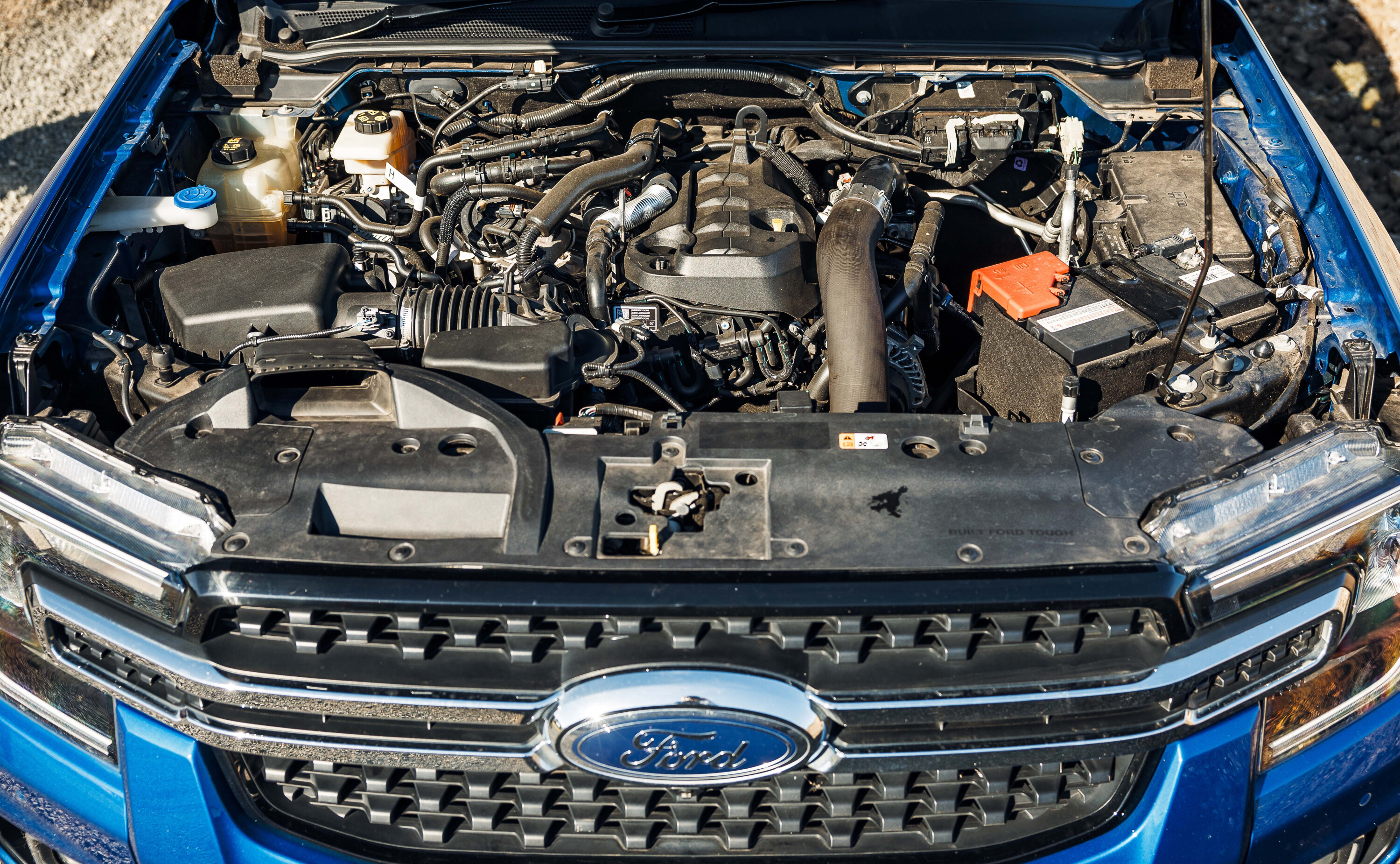
Personally, I prefer the landscape orientation of the Triton’s multimedia screen to the Ranger’s 10-inch portrait design, but that’s nit-picking.
The Ranger’s interior is large and airy, yet the hugely improved new Triton is now comparable in size and comfort. Safety-wise, the Ranger XLT also has all the expected electronic aids and a five-star ANCAP rating, but lacks tyre-pressure monitoring in this grade.
The XLT’s tweed-like trim looks impressive, as does its chunky leather wheel.
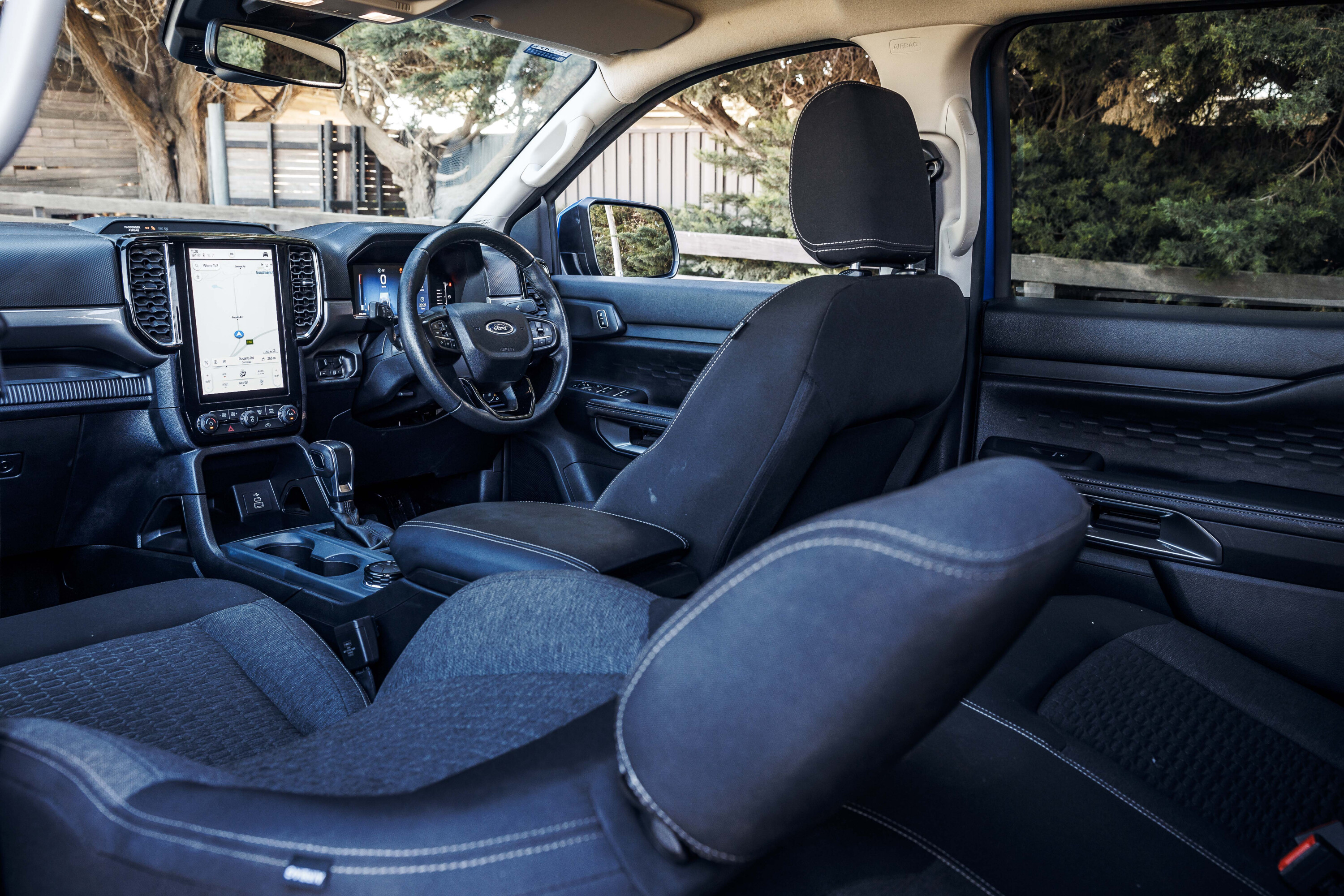
While the vast 10.1-inch portrait touchscreen appears daunting at first, it’s relatively simple once mastered, and there’s inbuilt navigation, wireless Apple CarPlay/Android Auto, six-speaker audio in XLT, plus three USB ports, and dual-zone climate with rear air vents.
For interior space, seating comfort and overall packaging, Ranger remains the class benchmark, though you’ll need to spend another $6K on a Wildtrak to get a proper premium interior with luxury-car equipment.
The Ranger’s large tray has its tie-down points mounted low and includes both a cargo-area light and 12-volt power outlet. So while it might be two years’ old, the Ranger still leads its category for overall usability and performance.
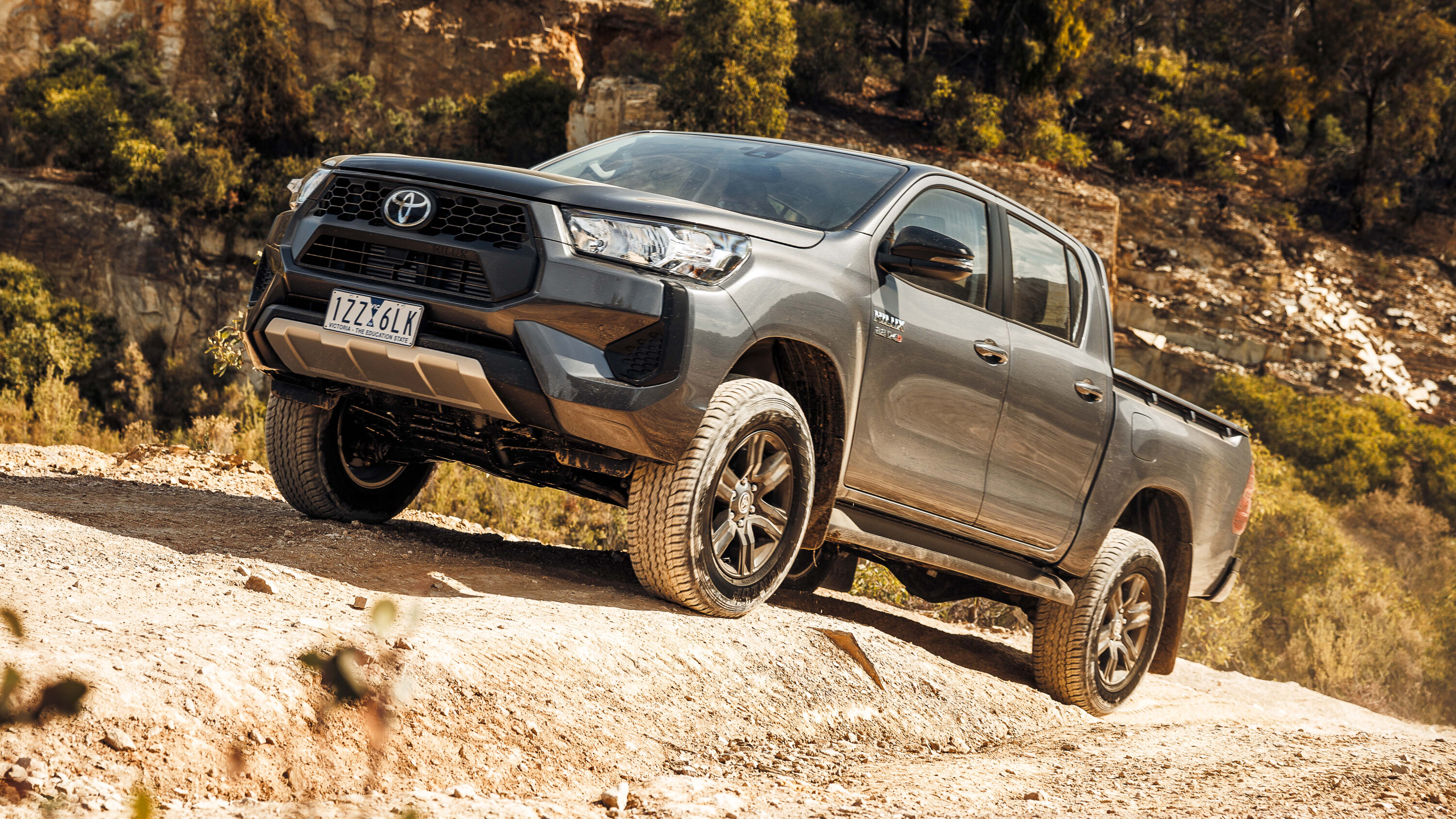
The HiLux is by far the oldest vehicle in this group, yet as we eagerly await an all-new replacement Toyota has delivered another significant update.
This latest refresh for MY24 includes ‘V-Active’ technology – a 48-volt system that boosts performance and efficiency with a small amount of electric power applied to the drivetrain. Other manufacturers call their similar systems ‘mild-hybrid’ but as the largest purveyor of proper hybrid vehicles, Toyota is avoiding that term.
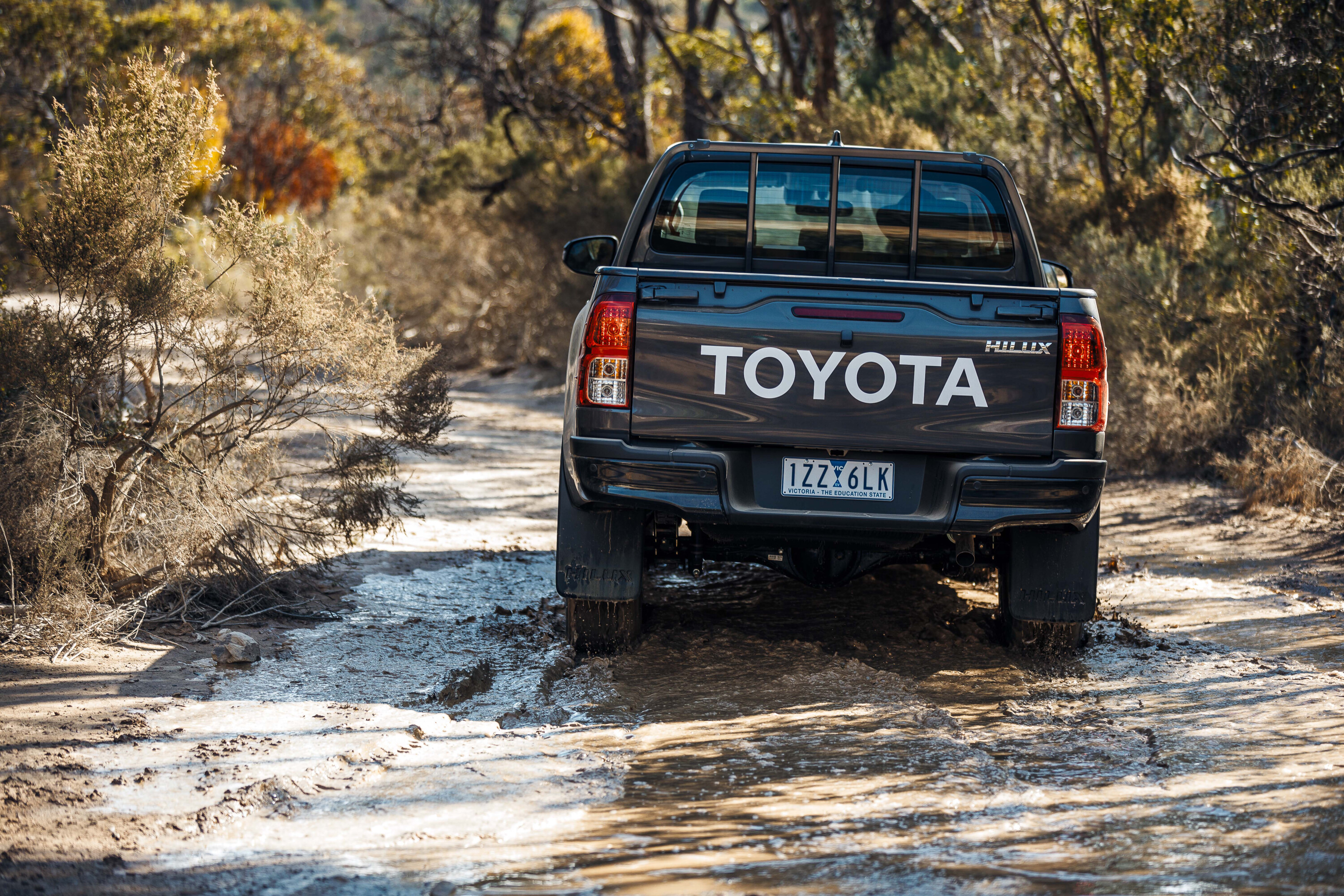
The outputs of its 2.8-litre turbo-diesel remain at 150kW/500Nm but V-Active does achieve a half-litre drop in combined fuel consumption to 7.4L/100km.
With its belt-driven starter/generator feeding a lithium-ion battery, it should make idle-stop systems smoother, prompting Toyota to include such a system in the V-Active HiLux. But in practise, it’s still annoying so I switch it off the first time it makes its shuddering presence known.
The only other change to the 2024 HiLux is the introduction of a drive-mode selector, giving drivers the choice of Auto, Dirt, Sand, Mud, Deep Snow, and Rock modes. New Triton and Ranger also have terrain systems.
The 48-volt HiLux feels punchy from the driver’s seat, but only side-by-side testing could confirm if it’s any quicker than a regular model. We think any difference would be negligible.
Toyota’s 2.8-litre turbo-diesel and six-speed auto have always been a strong combination, though like rival four-pot engines, the diesel gets raucous and loud under load.
Like the Ranger XLT, the HiLux’s four-wheel-drive system is part-time, dual-range only, so you can only use it in two-wheel drive on sealed roads. On gravel and off-road, Toyota’s excellent traction-control system makes HiLux one of the most capable and confidence-inspiring 4×4 utes.
Like the Triton, HiLux’s suspension set-up feels more commercial-grade than the Ranger’s. It’s firmer and easily flustered by rough terrain, though past experience tells us it carries a load better. The Ranger is really the exception in this group with its more compliant suspension making it more comfortable and forgiving in all situations.
The SR specification is more basic than the mid-spec models from Ford and Mitsubishi, but its well-equipped cabin includes an easy-to-use multimedia screen with Apple CarPlay/Android Auto and inbuilt navigation.
The HiLux’s cabin is narrower than Triton and Ranger, and you feel it in the driver’s seat and the back row. It’s not small, but also not as spacious as its rivals. The packaging favours front passengers, with the rear cabin undermined by a very upright backrest and less lounging room than its rivals.
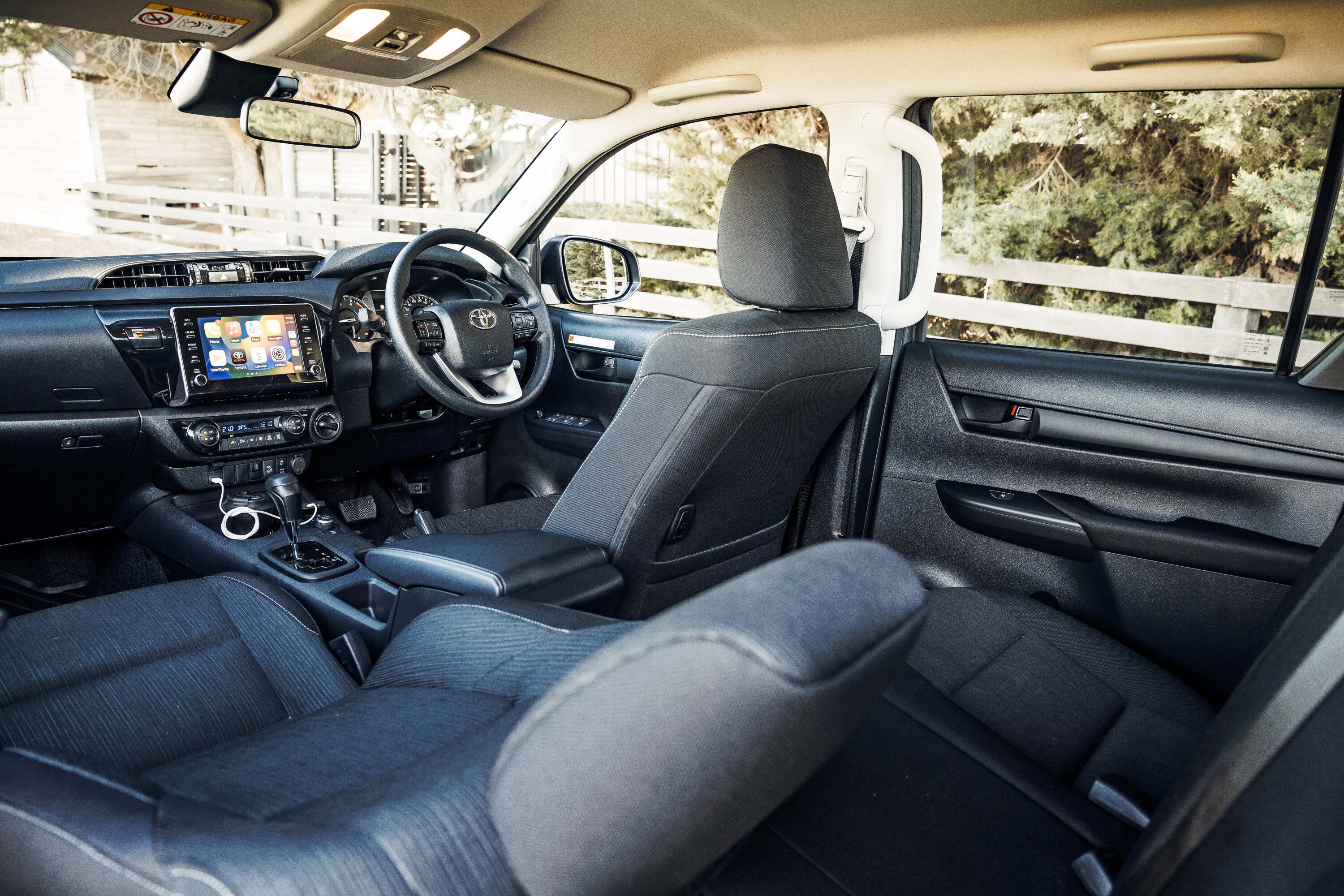
The near decade-old HiLux cabin is brimming with rock-hard plastics, though even in low-spec SR the seat trim is kinda nice.
HiLux’s new 48-volt auto model scores front/rear parking sensors, keyless entry/start, floor carpet, dual-zone climate control and four auto up/down power windows, though all the tinsel in the world can’t disguise Hilux’s tough-as-nails, commercial-vehicle DNA.
The pricier HiLux SR5 ($63K) gets leather wheel and gearknob, and panoramic view monitor for the 8.0-inch touchscreen but the same six-speaker audio as SR with wired Apple CarPlay/Android Auto connectivity.
It might be a bit more expensive but its additional features and comfort make it worthy of your hard-earned.
The new Triton is a massive improvement over the outdated previous model, and its cabin is a winner. It demonstrates that the competition is creeping up on the sales leaders like no other ute has to date, which makes us think that a new HiLux can’t come soon enough for Toyota.
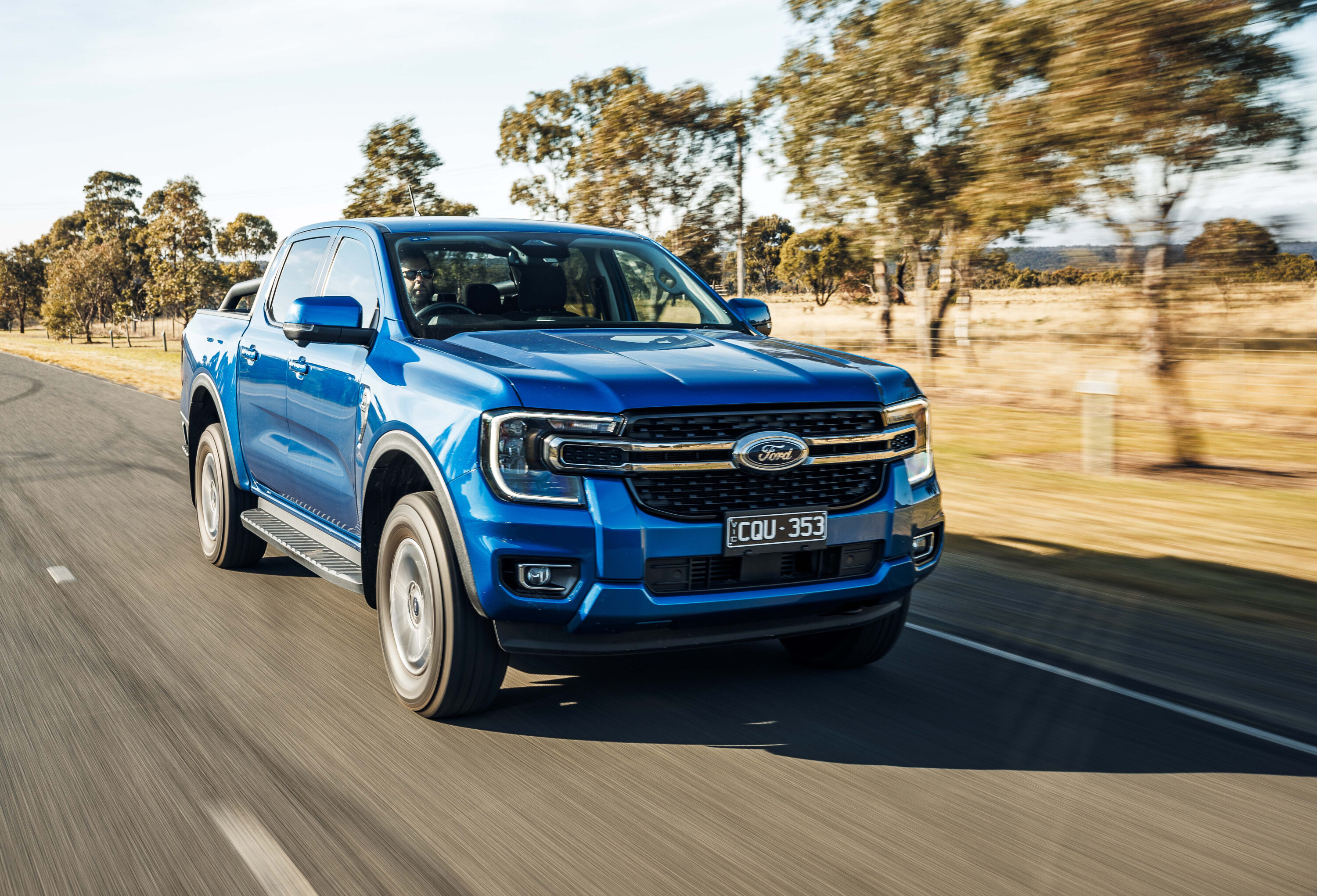
For its part, the HiLux feels its age, despite its many updates. But there’s essentially nothing wrong with it, and you can feel that in the way it drives.
That’s why it has been so popular for so long, and why it remains the first choice for bush owners and Outback adventurers.
The first challenge for Mitsubishi will be clawing back its third place in the ute sales race from Isuzu, and doing that without discounting prices. With more models to come in the Triton range, we think it’s on the right track and will provide an interesting battle ahead.
It was created by Plumbscan, a proudly Australian owned and operated company based in Perth that manufactures portable and built-in filter systems. Dijana Tesic, Operations Manager of Plumbscan, said of the system:
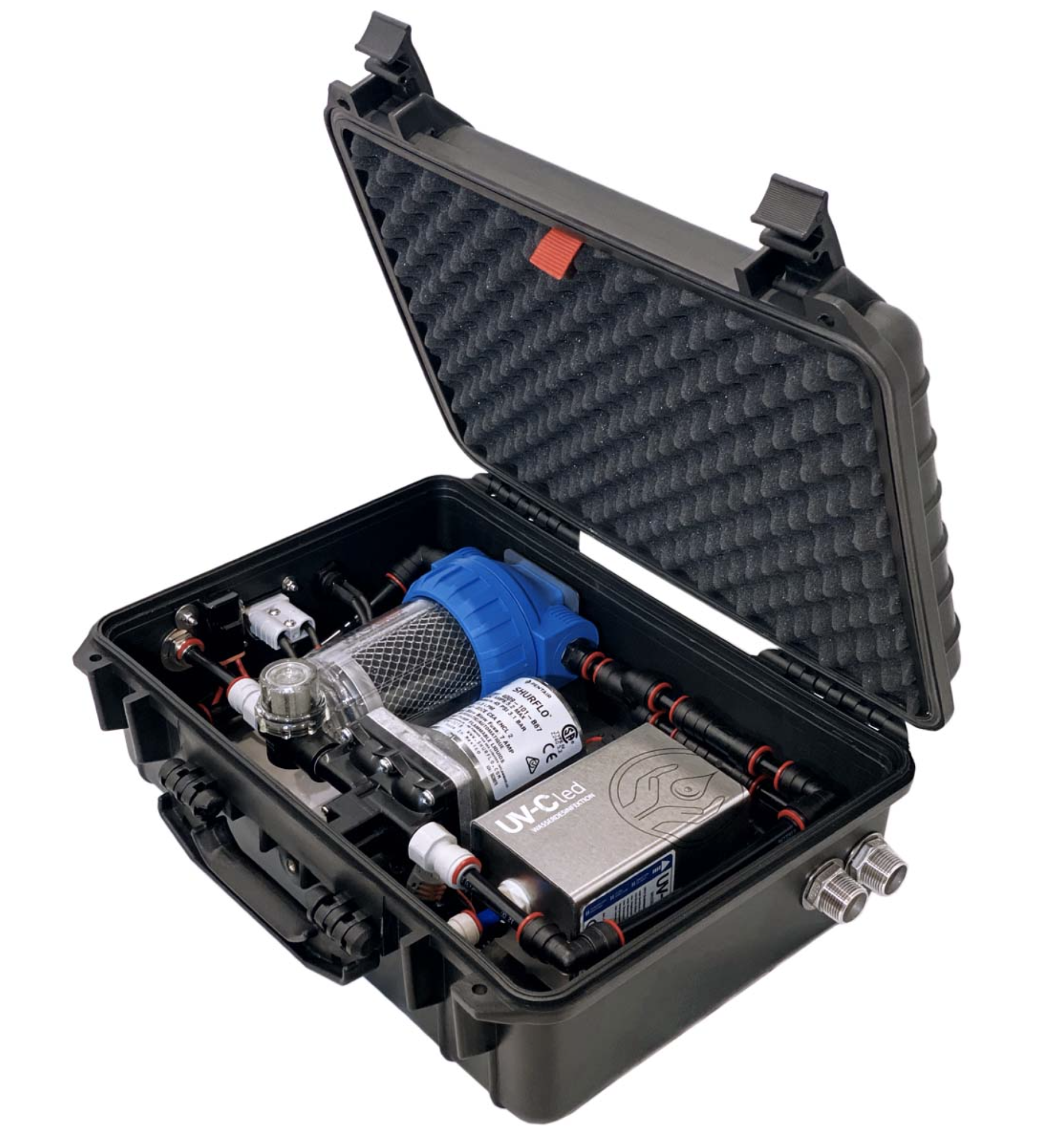
“With the WOMO-Xplorer, we have chosen the best quality materials known to be reliable, efficient and sustainable. Providing excellent filtering performance for fresh surface water from rivers, lakes, creeks, etc. and mains water. The 2-in-1 application in a portable carry case that is unique to the Australian market.
“With the WOMO-Xplorer our focus is on sustainability, low maintenance cost and minimising plastic waste. The UVC-led disinfection unit will last over 26 years when used for half an hour daily. The only component that needs changing, is a small 5-inch filter cartridge, which is made of 99.9% natural materials.”
The WOMO-Xplorer uses innovative UVC-LED water sterilisation technology and a ceramic-carbon cartridge filter to turn fresh water into clean, bacteria-free drinking water. This UVC-LED filter removes 99.999% of harmful viruses and bacteria. In contrast, the ceramic-carbon filter captures sediment and microorganisms making this a valuable piece of equipment for topping up your drinking water when on an adventure.
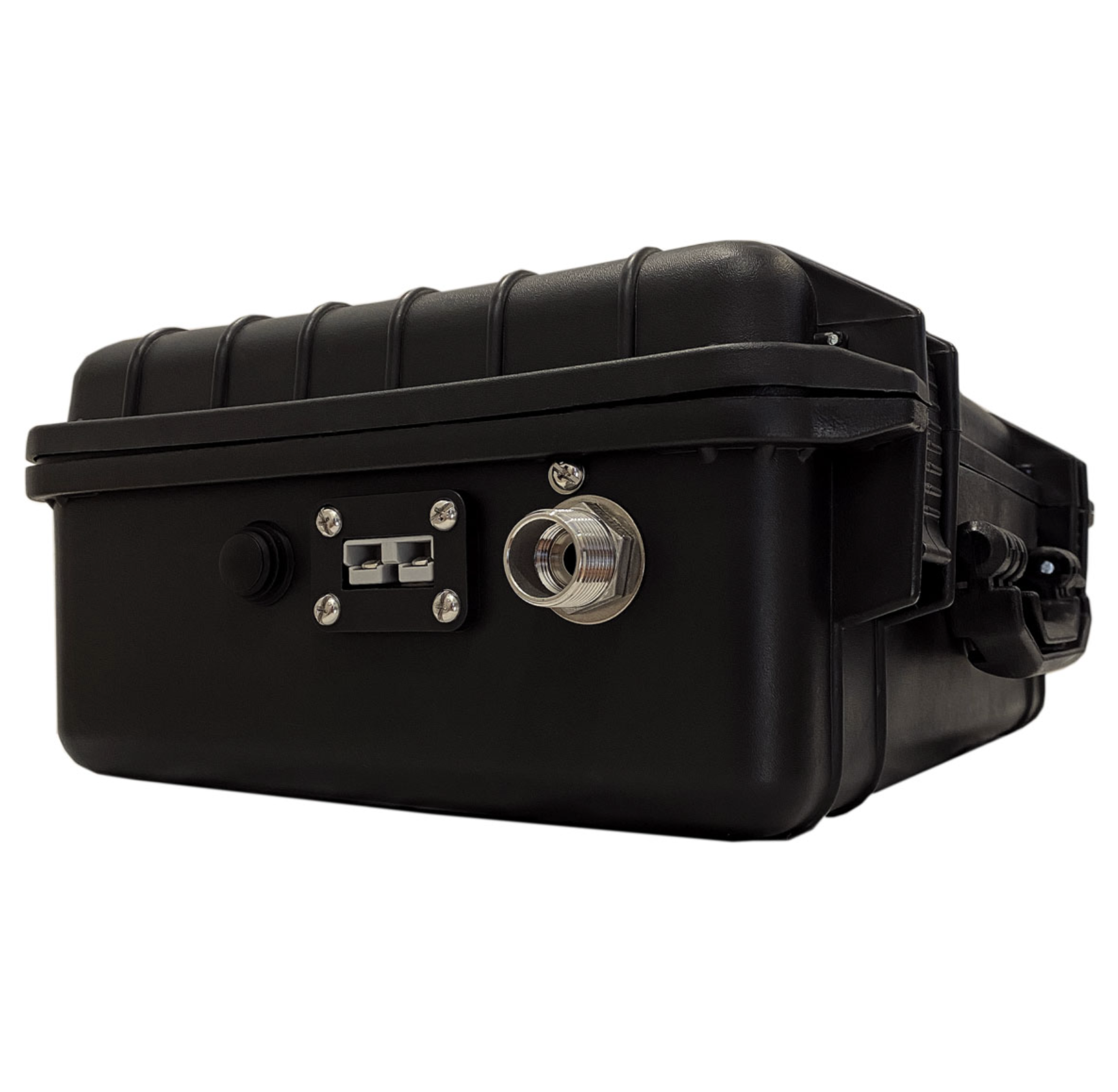
On one side of the heavy-duty reinforced carry case is a water inlet valve that goes through John Guest fittings, before the water flows through a four-stage filtration process. The first filter is a stainless-steel pre-filter that protects the Pentair SHURflo 11-litre per-minute pump from sediment before it reaches the ceramic 0.2 micron cartridge which eliminates microorganisms and diseases; while the 0.5 micron carbon block within the ceramic filter removes heavy metals, taste and odours, pesticides and toxic organic compound.
The UVC-LED filter then removes the viruses and bacteria. The water then exits via a hose connection to your water tank. There is also an Anderson plug connection to power the pump which can be connected to a jump starter pack or 12V battery and a waterproof power on/off switch. Next to the water outlet is a water inlet for connecting to a pressurised water tap which bypasses the pump but still sends the water through the filtration process.
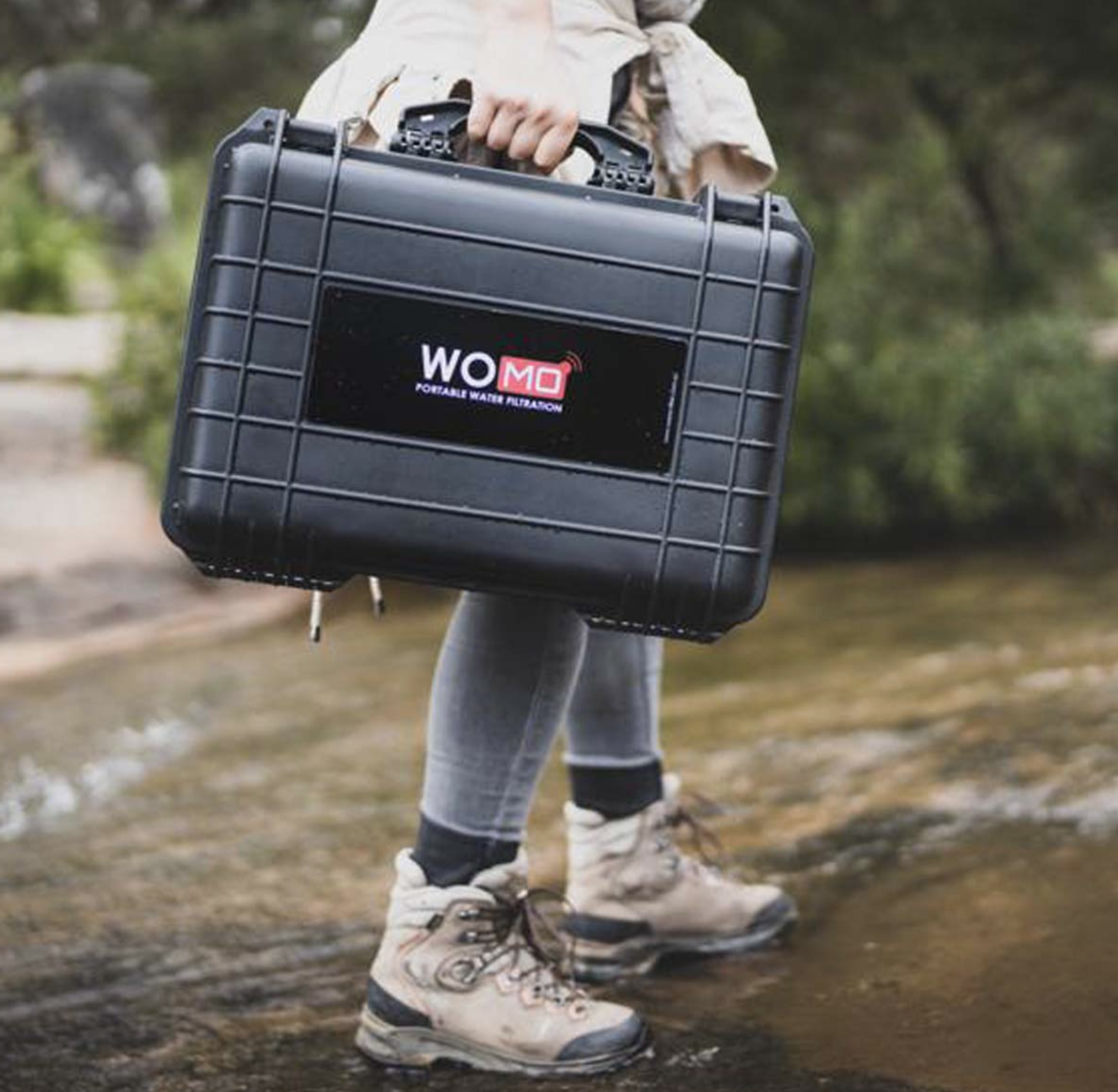
Dijana explained, “There is an incredible demand to travel ‘off-grid’ and to remote places. Thanks to low power consumption, the integrated water pump and UVC- LED water disinfection unit of the WOMO Xplorer can easily be run on a 12-volt car battery or jump starter power bank.”
The ceramic-carbon filter is replaceable after 35,000 litres of use, and the only things that will become landfill are two plastic rings on the filter, as the filter itself is biodegradable. The UVC-LED filter will last at least 26 years when used for half an hour daily.
Dijan concluded, “Water plays an important role and is an essential commodity while travelling. Our mission is to safeguard fellow travellers while on the go and keep exploring this beautiful country!”
This system has its roots in the Front Runner roof rack systems, adopting the proven reliability and versatility that is unmatched in the 4WD and overlanding industry. The Pro Bed Rack system is constructed to improve accessibility to a ute’s rear without intruding on valuable tub space, and it provides a hassle-free mounting solution for all overlanding, camping and adventure accessories.
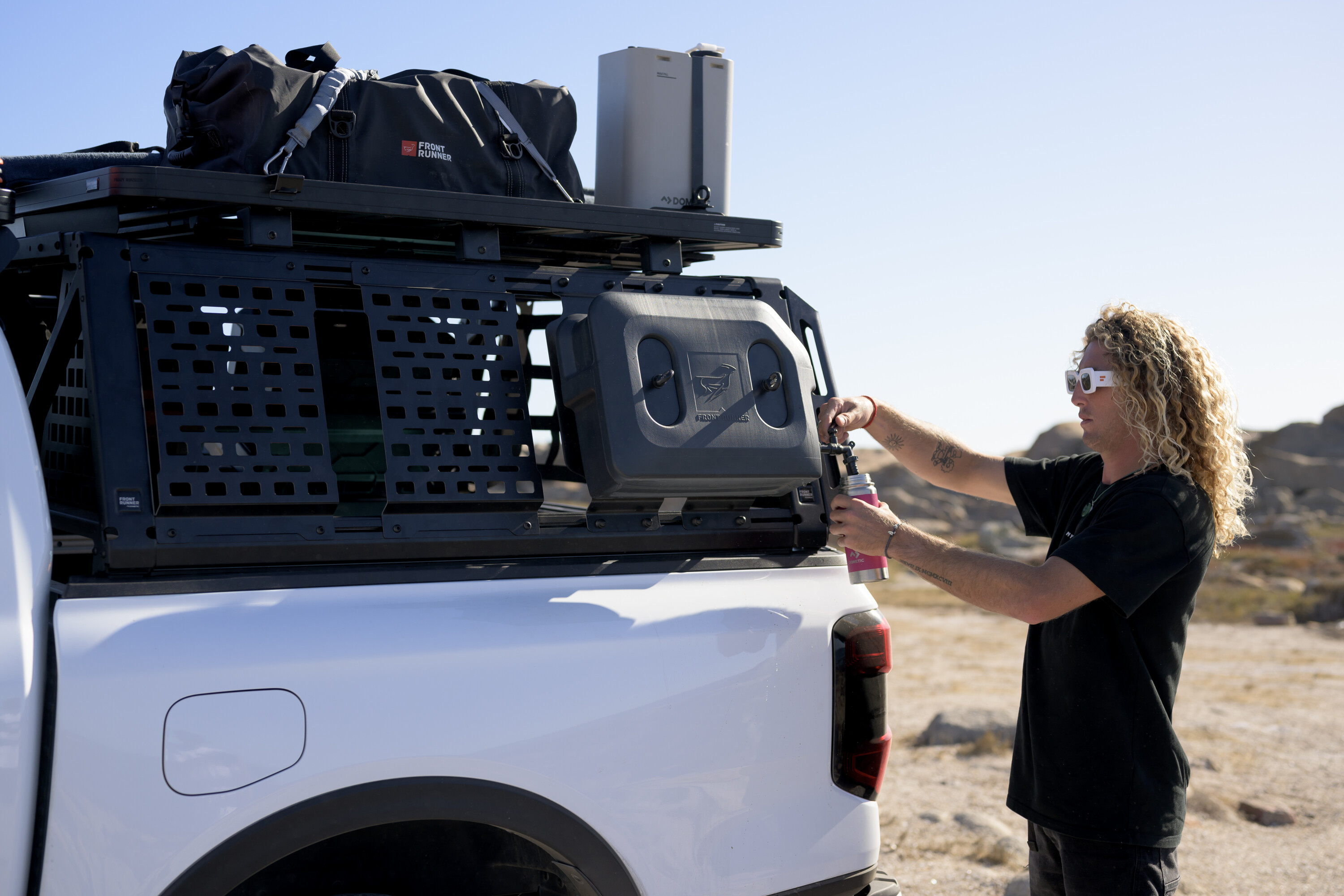
Constructed using steel powder-coated in black epoxy, the Pro Bed Rack system has multiple accessory channels and T-slots, which make for the quick and easy fitment of a wide range of Front Runner accessories such as a 20-litre water tank mount bracket, Wolf Pack pro mount bracket and much more.
The system is reinforced with fixed-top cross bars, enhancing its structural integrity. The cross-bracing at the front and rear also counters torsional stresses, to provide exceptional structural integrity and strength. The Pro Bed Rack System is durable and corrosion-resistant – the same as the Front Runner racks.
The Slimline II, Front Runner’s iconic roof rack, is an exceptional add-on storage option to the Pro Bed Rack. Known for its strength, durability and quality, it seamlessly installs onto the top of the Pro Bed Rack. It offers compatibility with more than 55 accessories to provide limitless customisation options.
| The Pro Bed Rack System currently fits the following models |
|---|
| Toyota Hiluxu202fDC |
| Ford Ranger T6u202fDC / Super crew |
| Ford Ranger T6.2u202fDC / Super crew |
| Jeep Gladiator |
| Ram 1500u202fCrew Cab 5u20197u201d bed |
| Ford F150u202fSuperCrew 5-1/2u2019 Bed |
| VW Amarok V6 Style specifications | |
|---|---|
| Powertrain | 3.0-litre turbo-diesel V6 |
| Max power | 184kW |
| Max torque | 600Nm |
| Drivetrain | 10-speed auto, permanent four-wheel drive |
| Fuel consumption | 8.4 litres per 100km |
| Price | from $73,740 plus on-road costs (and accessories!) |
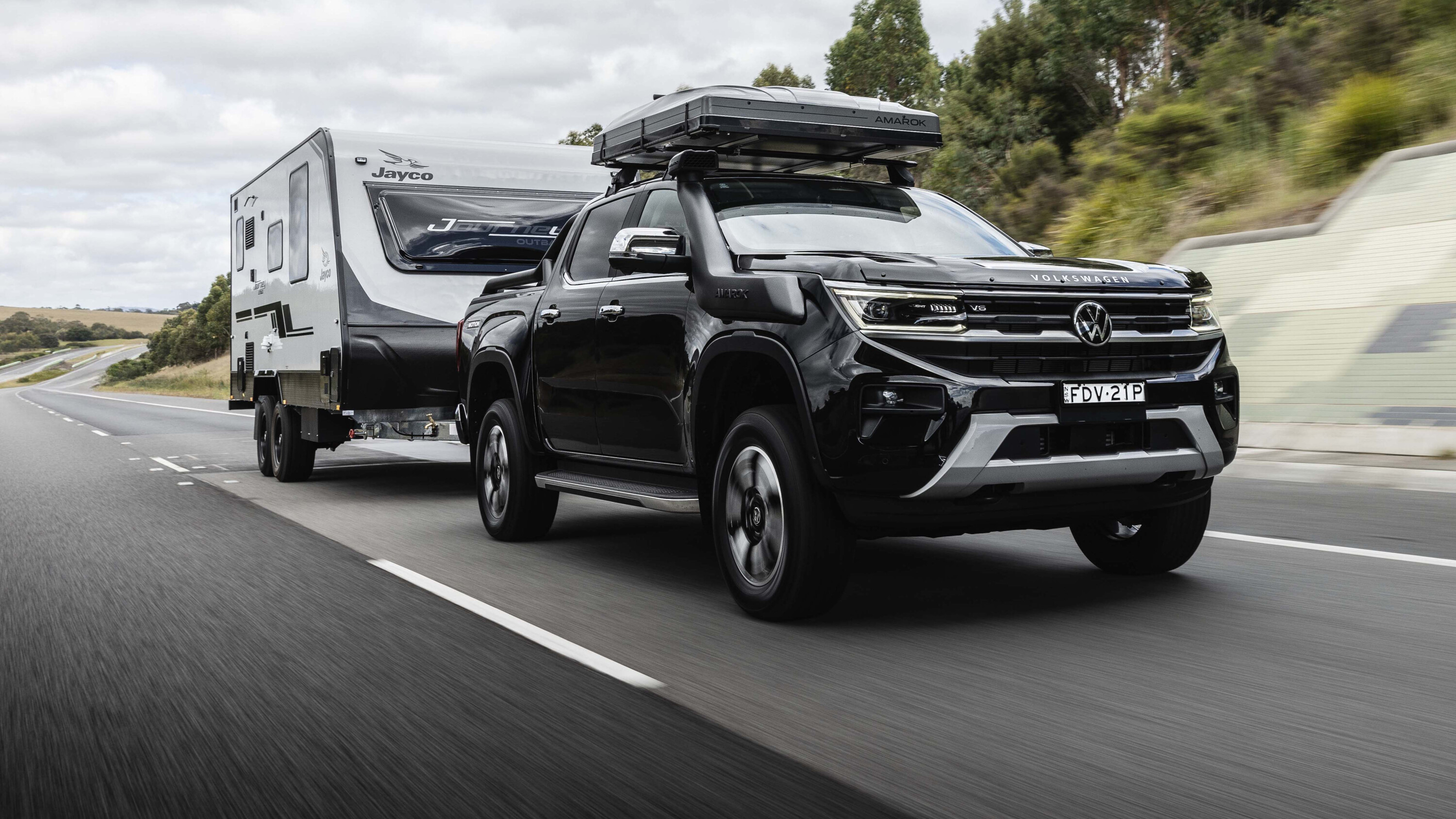
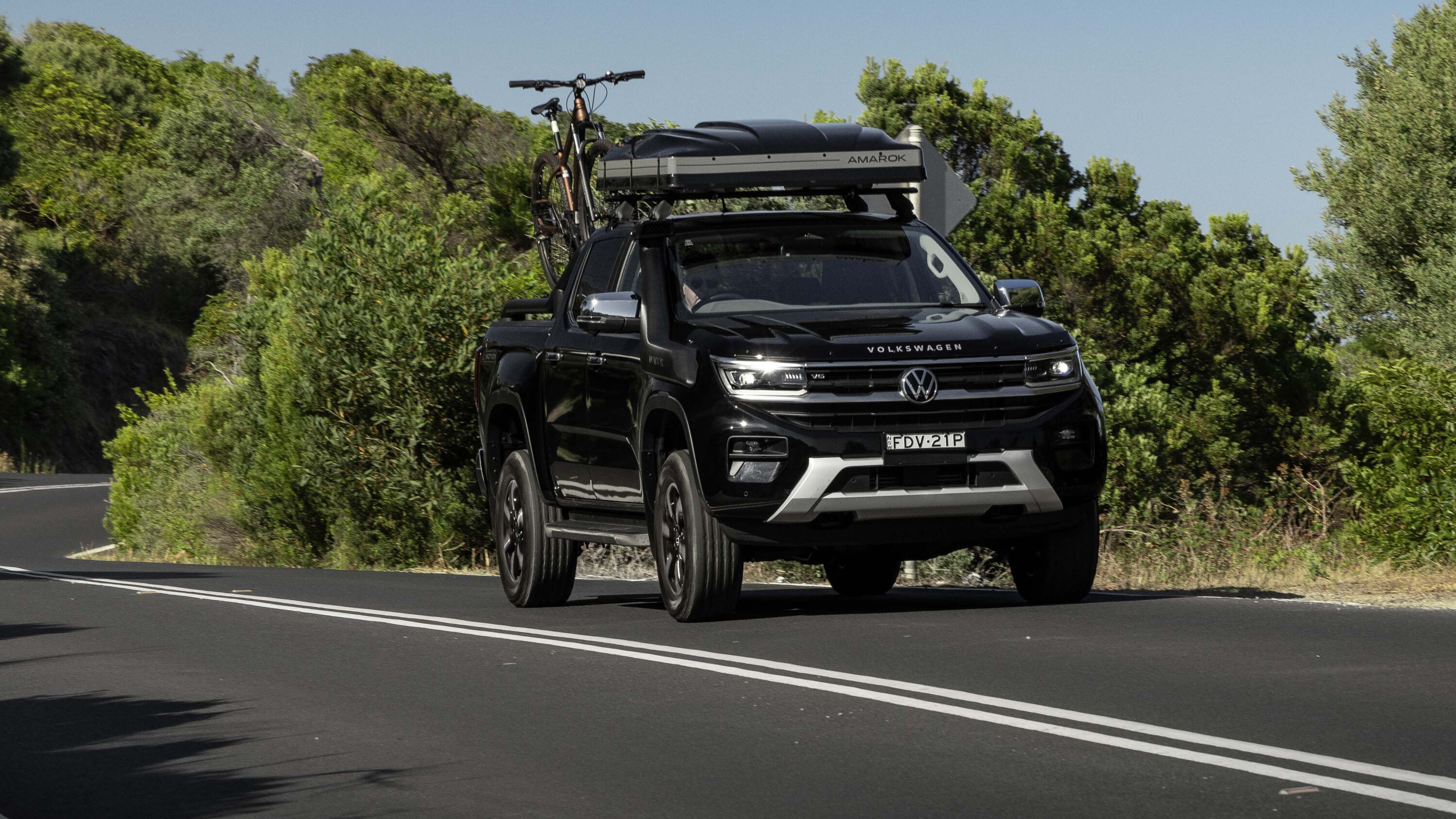
The first is the standard 40mm lift kit, which includes front and rear lifted suspension with the new shocks bumping ground clearance from 235mm to 275mm. The same lift is also available in a more hardcore heavy duty setup with the front suspension adjustments designed for the V6 diesel engine and/or a bullbar, while the rear can be specced with a 300kg constant loading.
Expect to add about $3800 to $4000 to your invoice for the kit, and you’ll get VW’s five-year/unlimited kilometre warranty cover for the vehicle, and the suspension has the same cover if fitted pre-delivery.
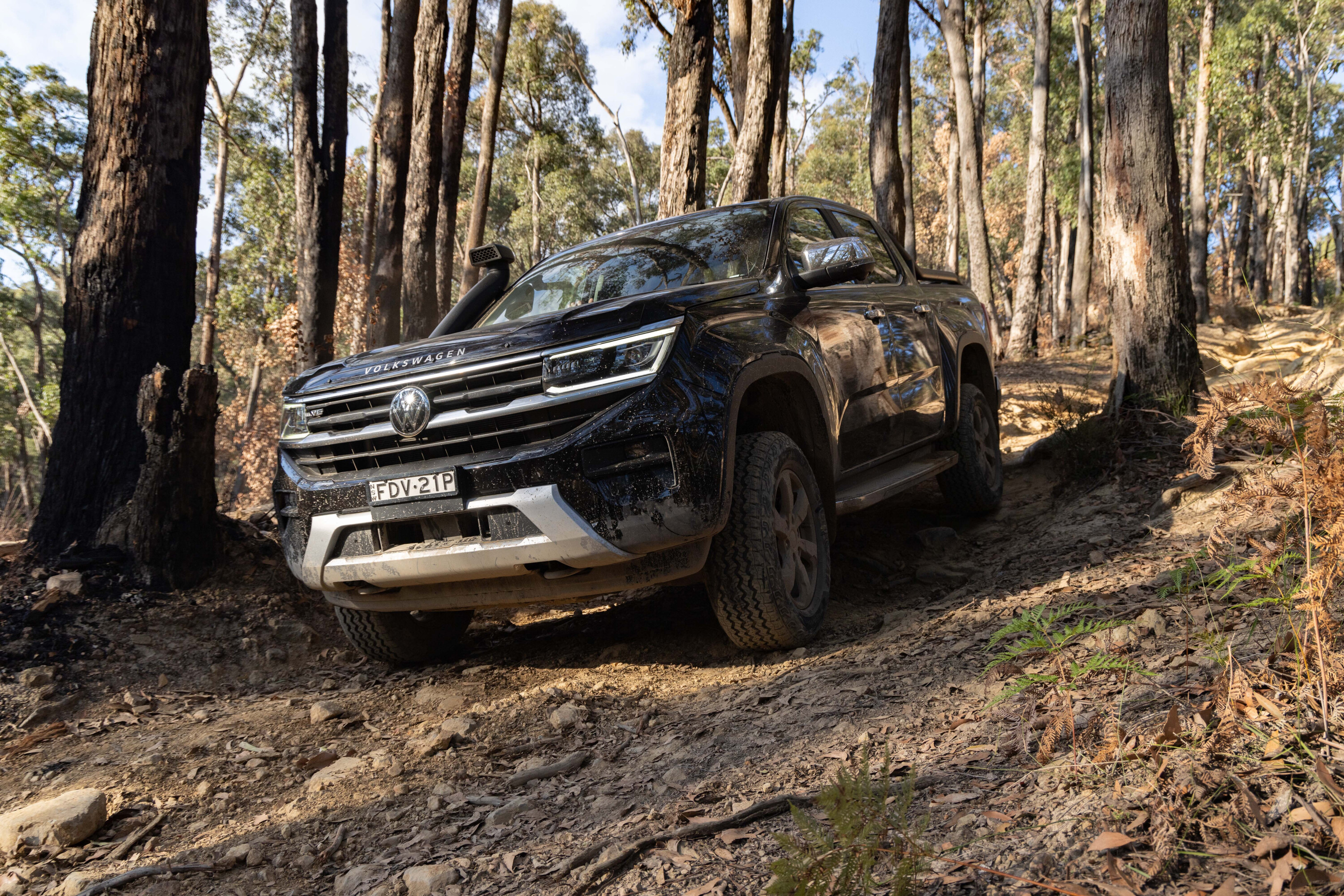
The V6 model I tested exhibited a very impressive ride and a more precise feel to the steering because, seemingly, some of the nose-heavy feeling has been counteracted.
It feels a sweeter steering thing in twisty roads, and less cumbersome for low-speed manoeuvres, too, thanks to the front-end having just a bit less of a lumpy feel.
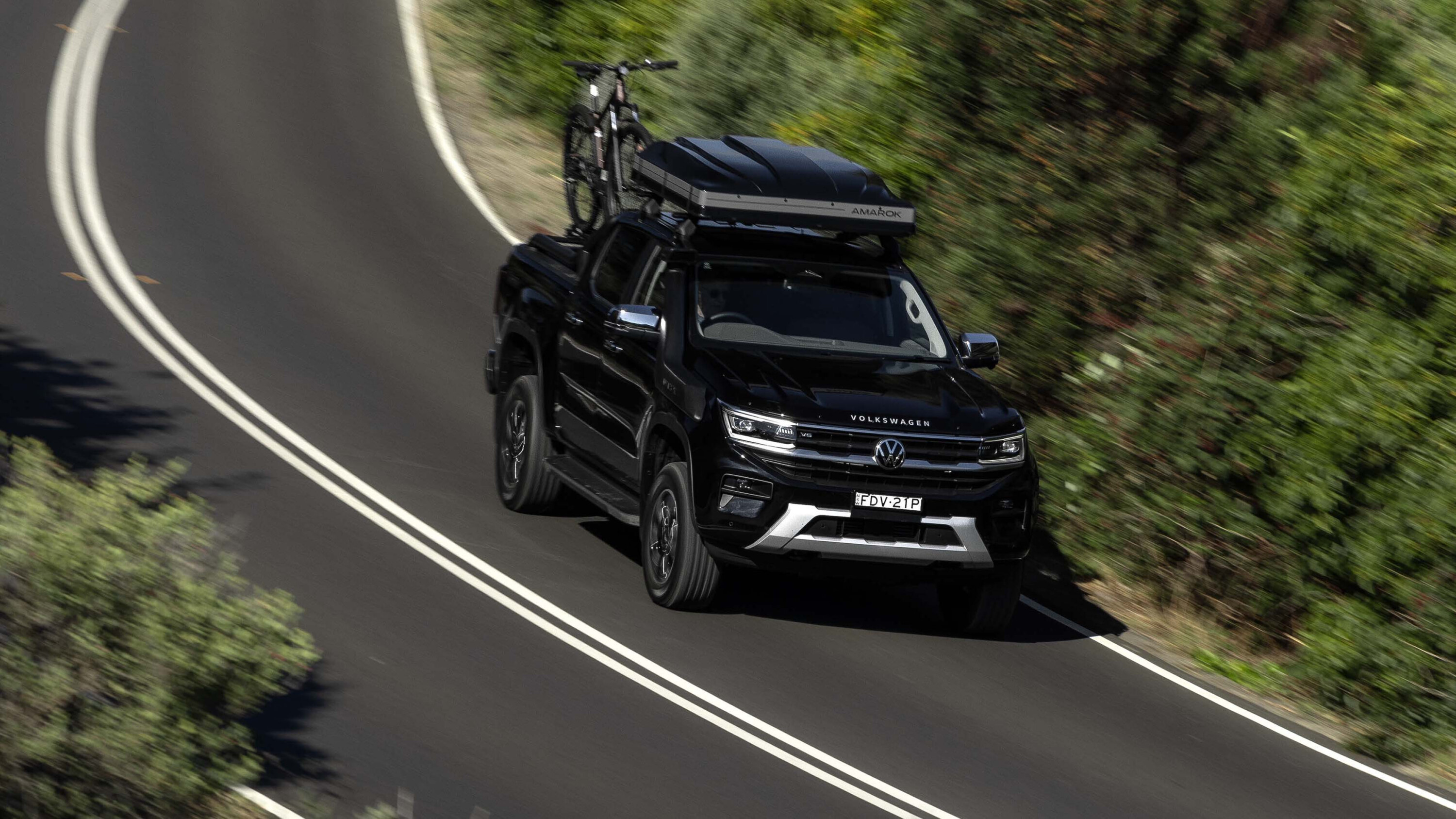
For context, I also drove a non-lifted example on this event, and to me there was a significant improvement to comfort levels in the lifted rig.
There’s a slight penalty to pay for the higher ride height – it’s harder to clamber in and out of, and there’s maybe a smidge more drama when you hit a very large pothole or bump at pace – but on balance, it’s money well spent.
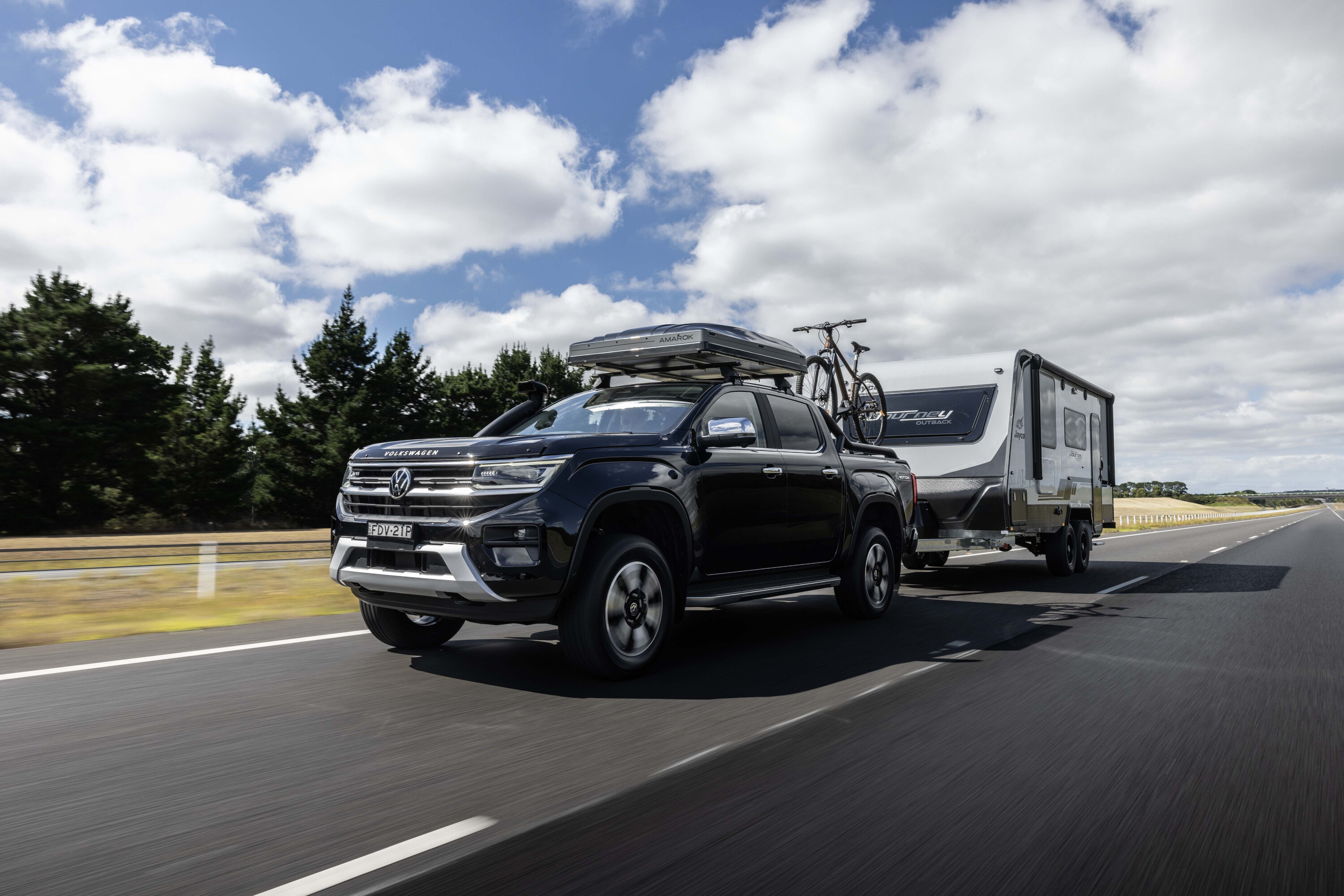
However, the suspension of the Amarok offered a surprisingly level drive, considering it had a 3100kg Jayco Outback caravan on the back.
For this task, the V6 version is the pick – extra power and torque, and permanent four-wheel-drive – and it’s heavier, which makes for a confident tow. I drove a four-cylinder without a lift-kit for comparative purposes, and it felt more prone to nose-tail bouncing. Not the case in the V6 with lift kit.
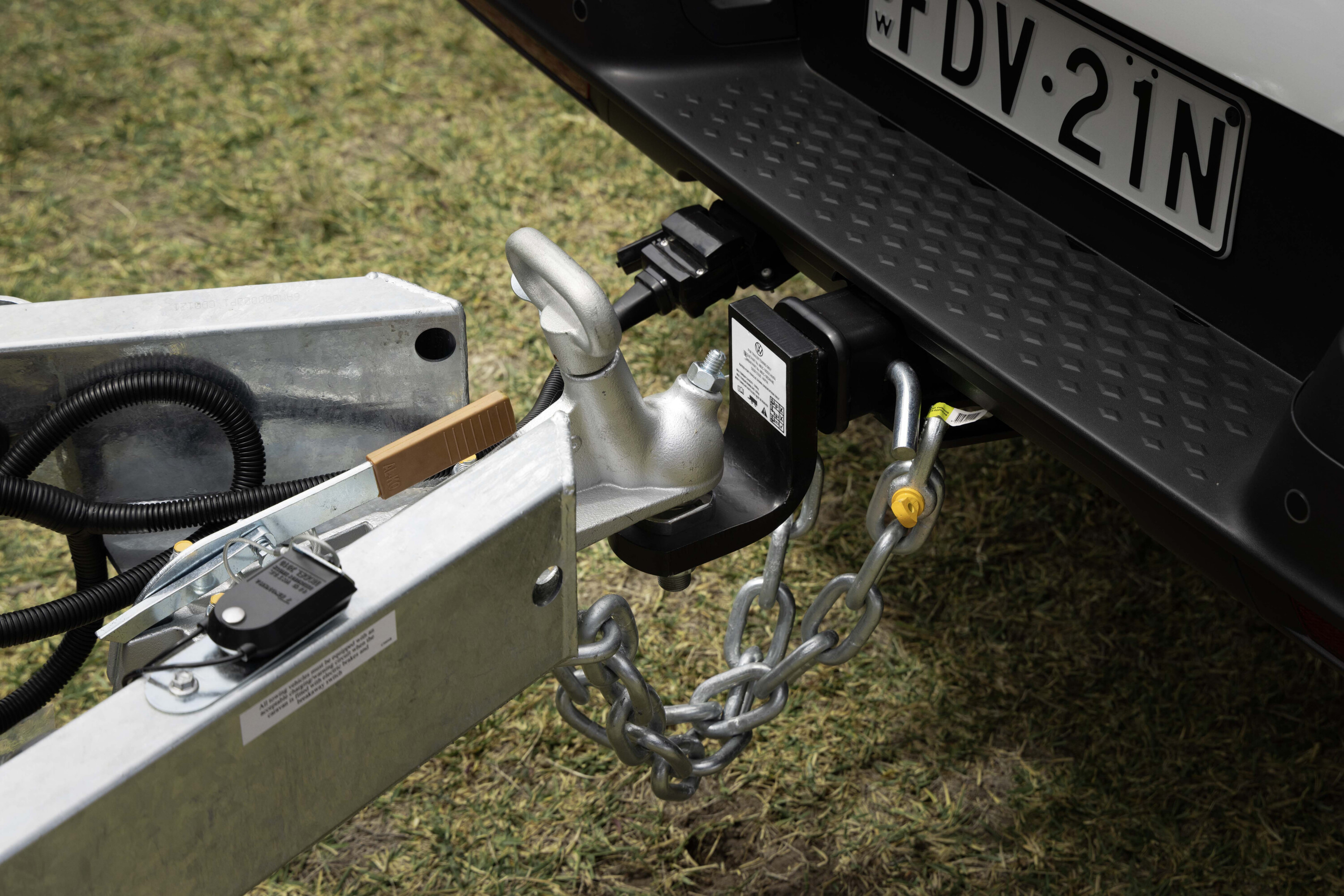
Also, the tech is terrific – all grades come with a standard electronic brake controller, tow bar, and configurable settings for multiple trailers, and a DIY trailer connection checklist and trailer light check.
And as we approached a climb that would have seen a stock Amarok about-face and retreat, we instead pushed on, with a 300m elevation from the base of the hill to the top ensuring some treacherous testing.
What surprised me, though, was when MotoKinetic instructor, Renato Loberto, said we’re leaving it in 4A.
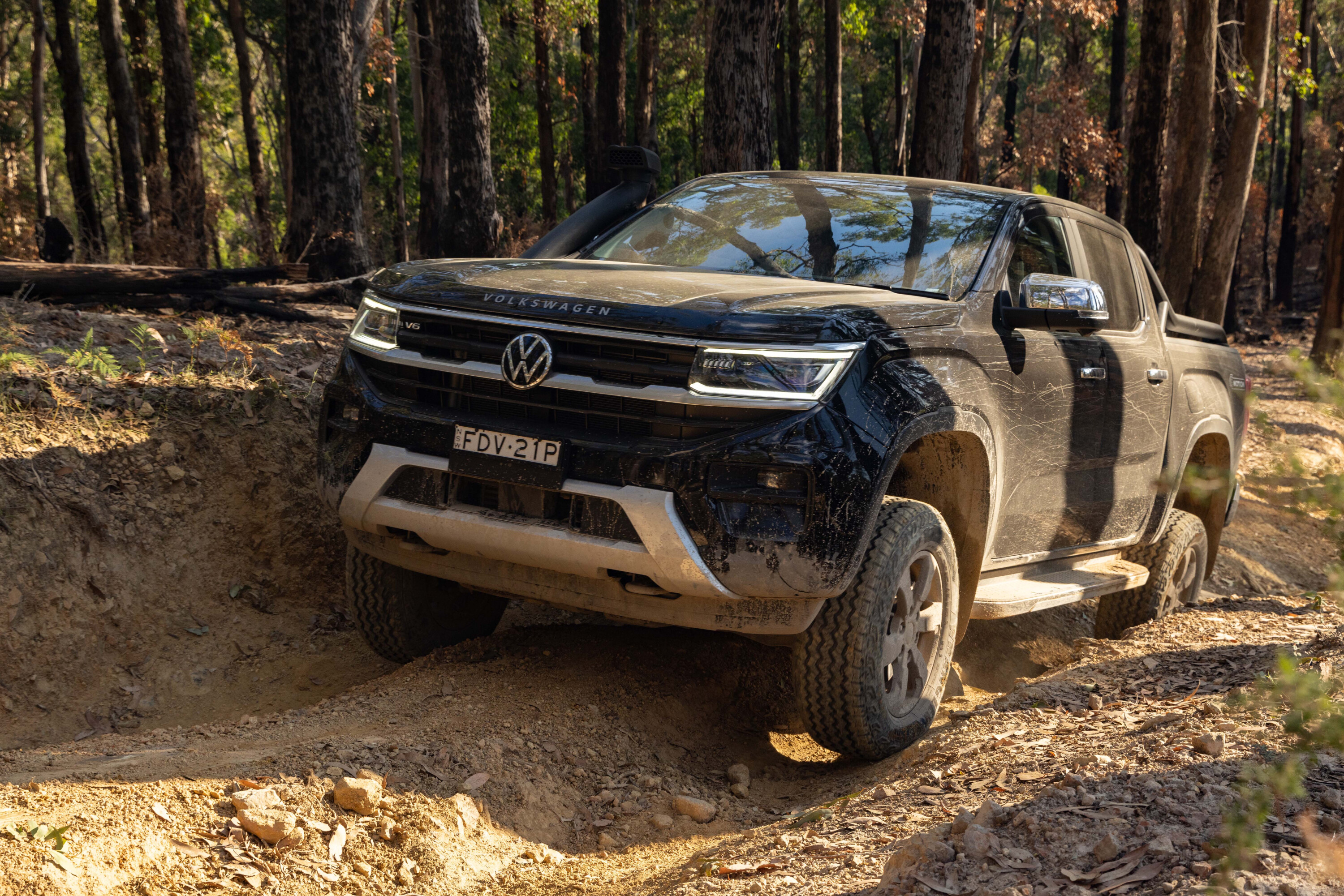
Oh, and stock tyre pressures, too…
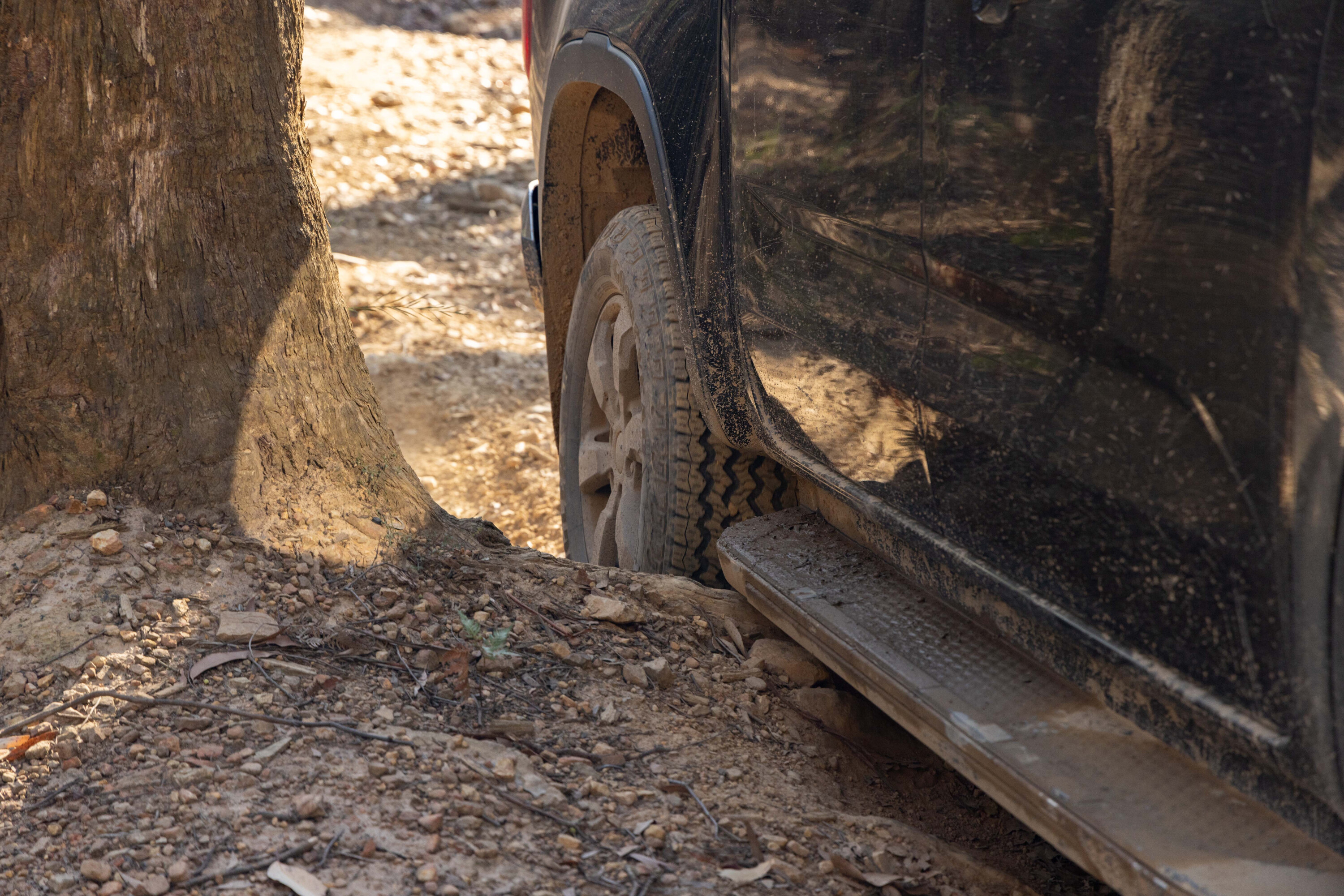
No issues with clearance at the front bumper, though, with the lifted ‘Rok easily meandering over the top of the root with a bit of encouragement with the throttle, and the 4Motion system apportioned torque to the tyre with the most traction – the one that was buried in a rut, with just a few centimetres between panel damage and glory.
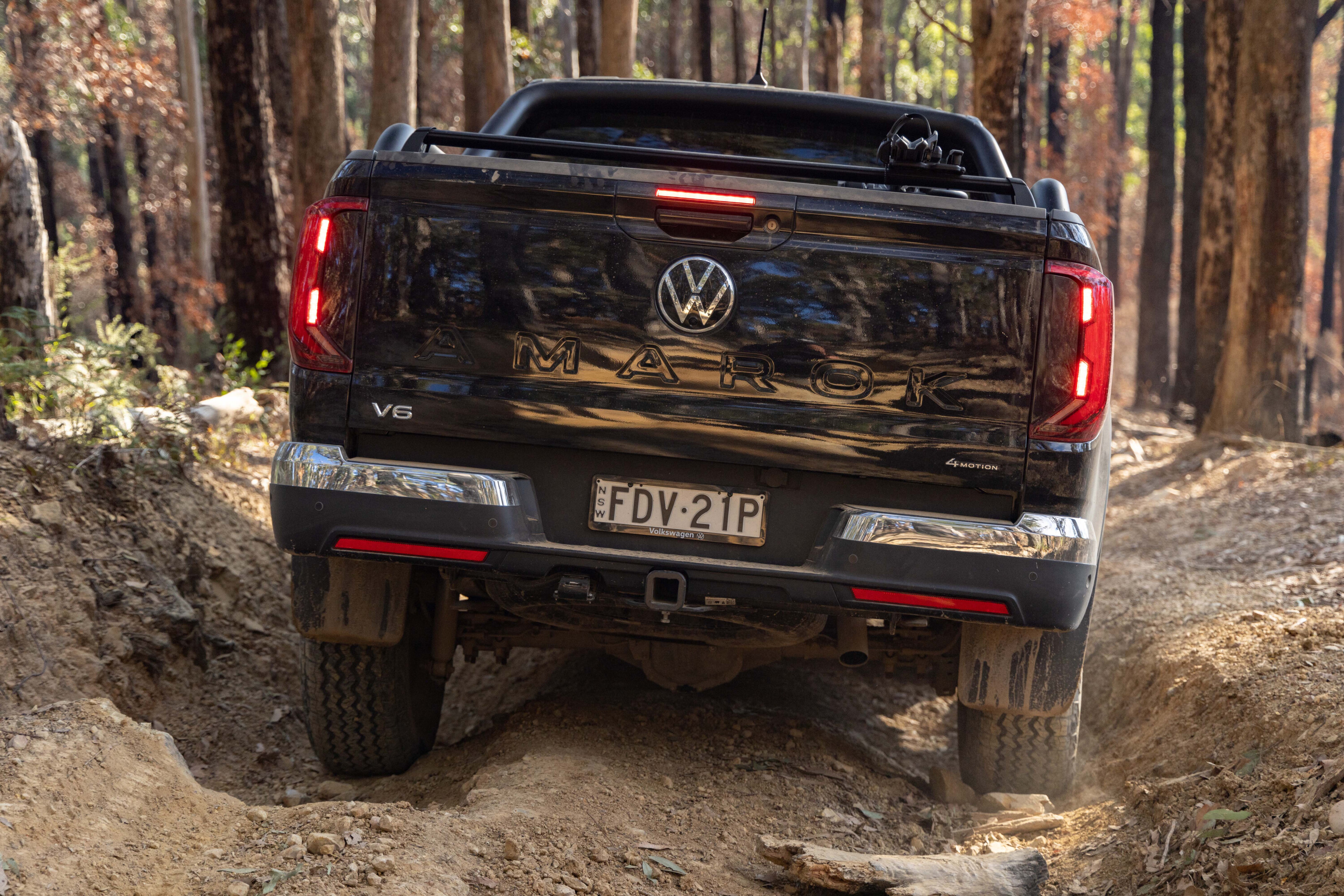
Excellent axle articulation ensured that when direction changes were necessary, there was no fear of beaching the machine on the middle of the track, and considering the ‘otherwise stock’ fitout, I was seriously impressed at how easy it was.
While the V6 takes a bit of driving to get it huffing up steeper bits in 4A, low range would have allowed it to lumber up, basically at idle. Still, a test worth doing.
Australia has a diverse aftermarket for accessories, and you might find what you want by shopping around.
Each product is constructed from durable, powder-coated stainless steel. When combined with the sealable lid, the double-wall insulation will keep the contents hot or cold for an extended period. Each product includes its own lid design with silicone rubber seals that create a snug fit, helping to limit spills.
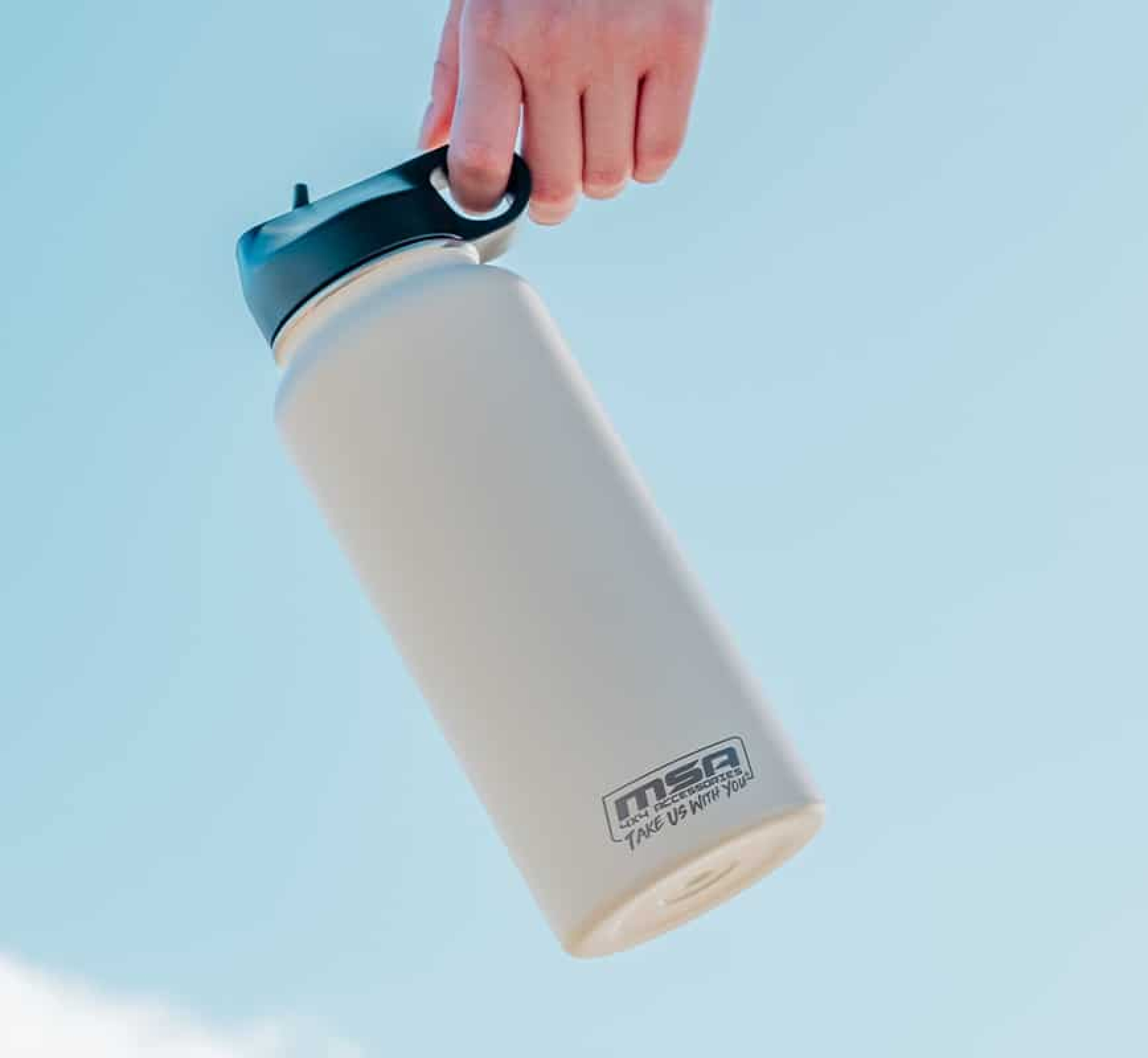
Whether at work or relaxing around an early morning campfire, the MSA 4×4 range of thermos products is versatile and suitable for different lifestyles. The easy-to-clean and durable construction provides a long-term solution to enjoying a hot or cold drink when and where you need it.
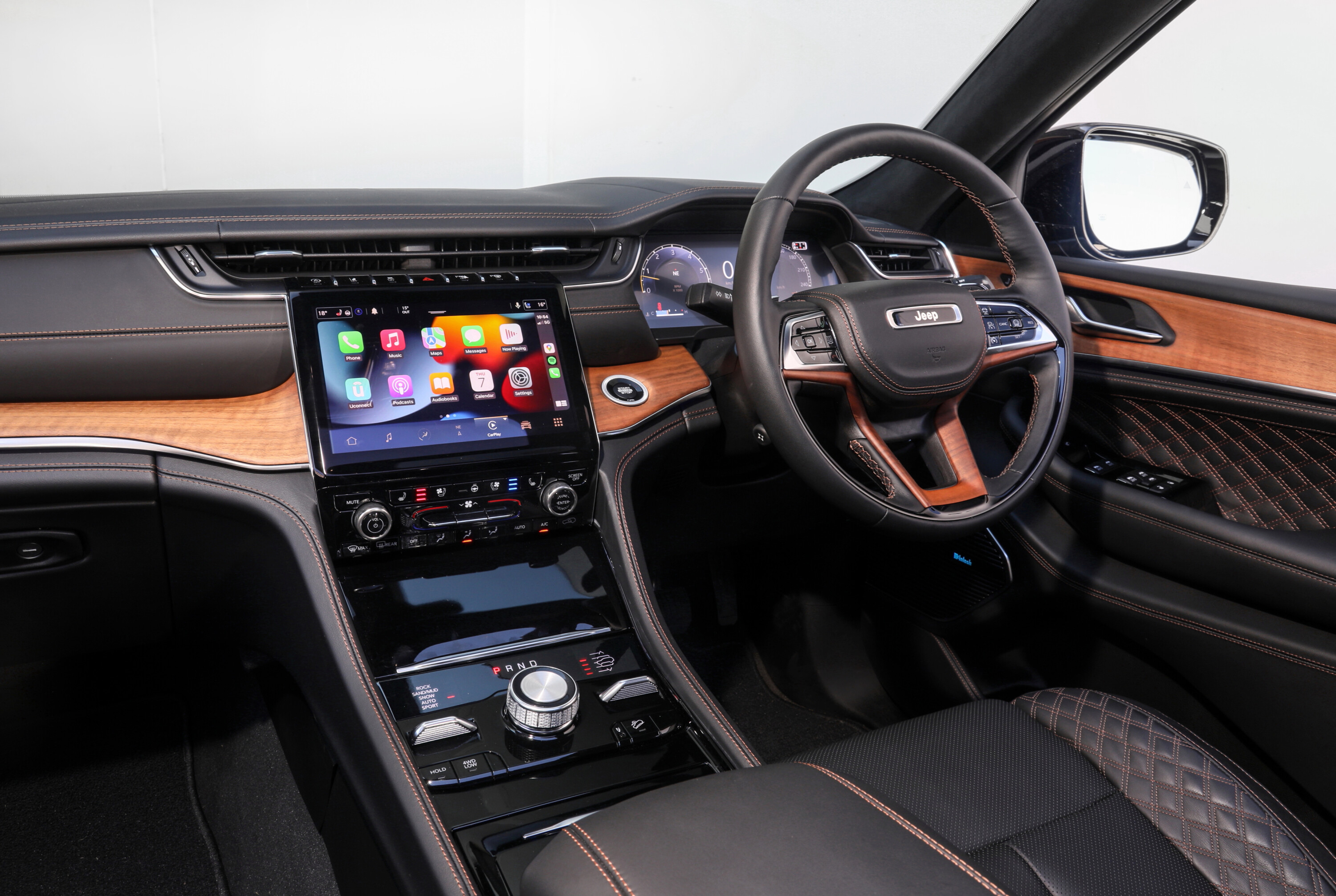
Effective May 17, 2024, all Model Year 2023 Grand Cherokee off-road SUVs have received a price cut between $11,000 and $28,000, with the largest reduction applied to the L Summit Reserve seven-seat variant.
It follows a $17,500 price rise for the ‘WL’ Grand Cherokee over the previous-generation ‘WK2’ model, which once beat the Toyota Prado as Australia’s best-selling large SUV in 2014 with V6 petrol, V8 petrol, V6 diesel and SRT performance options.
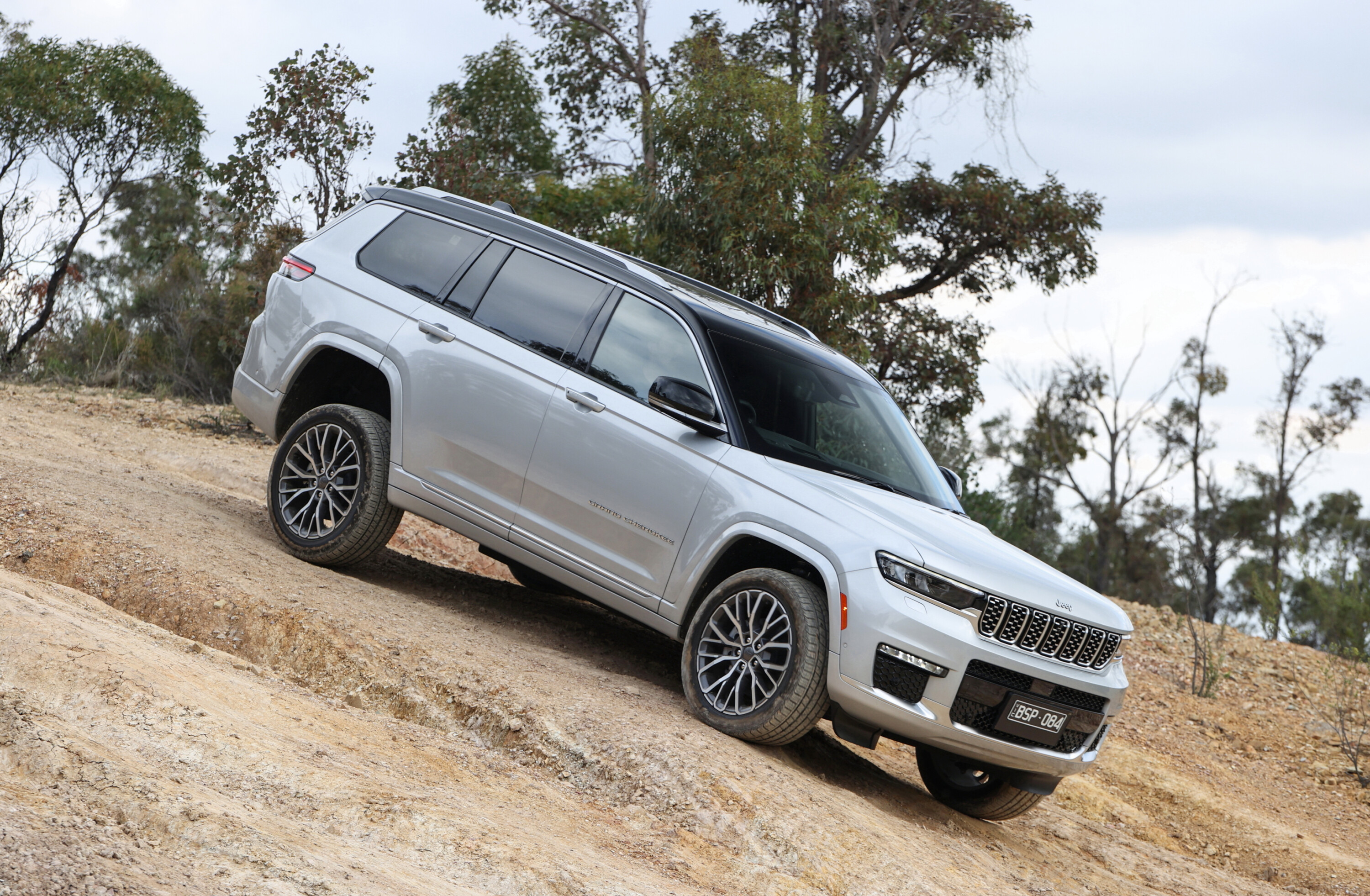
The generational increase has since fallen to $5000 over the last entry-level ‘WK2’ Grand Cherokee sold in 2022, with the 2023 Grand Cherokee Night Eagle five-seat now listed at $65,450 before on-road costs – down $12,500 from when it launched in mid-2023.
These reduced prices only applied to 2023-built Model Year 2023 versions of the Grand Cherokee and Grand Cherokee L, including the recently launched Summit Reserve PHEV five-seater.
It is unclear if Jeep Australia will continue to offer the Grand Cherokee at similarly reduced prices when 2024-built examples arrive or if it will return to its previous pricing.
VFACTS new-car sales data reveals 254 examples of the Jeep Grand Cherokee have been sold in Australia to the end of April, compared to 6899 Ford Everests, 6730 Isuzu MU-Xs, 3382 Toyota Prados, 830 Land Rover Defenders and 268 Mazda CX-90s.
Overall, Jeep sales in Australia sit at 940 to the end of April 2024, down from 1566 at the same point in 2023, 2161 in 2022 and 2452 in 2021.
For a full run-down on specifications for the 2023 Jeep Grand Cherokee and 2023 Jeep Grand Cherokee L, click on the featured article below:
| Model | Pricing | Change |
|---|---|---|
| Night Eagle AWD (5-seat) | $65,450 | down $12,500 |
| Limited AWD (5-seat) | $72,950 | down $11,000 |
| Overland AWD (5-seat) | $77,950 | down $20,500 |
| Summit Reserve PHEV AWD (5-seat) | $111,450 | down $18,500 |
| Prices exclude on-road costs.u00a0 | ||
| Model | Pricing | Change |
|---|---|---|
| Night Eagle AWD (7-seat) | $69,450 | down $13,300 |
| Limited AWD (7-seat) | $75,950 | down $12,800 |
| Overland AWD (7-seat) | $81,950 | down $21,300 |
| Summit Reserve AWD (7-seat) | $91,450 | down $28,000 |
| Prices exclude on-road costs.u00a0 | ||
What is GVM and why does it matter? And do you really need to upgrade the GVM on your vehicle? After recently jumping through the hoops of a GVM upgrade on our Ford Ranger build we thought it time to look at the topic again, and get the facts straight.
Gross Vehicle Mass is the maximum weight your vehicle can legally be when driving on the road, including fuel, accessories, passengers, cargo and any weight on the towbar. The GVM is not a figure that the authorities pluck out of the sky to ping you on, but is set by the vehicle manufacturers as to what they have designed and engineered the vehicle to safely and competently carry on and off road.
Load your vehicle in excess of the stated GVM and you are taking it beyond its safe rating, and should anything go astray when driving over weight, you could be liable for any damages, injuries or even deaths that might occur as a result of your actions.
It’s up to the driver to know the GVM of the vehicle they are in control of and the weight it is carrying at any time. Pleading ignorance on the side of the road after an accident won’t hold sway with authorities, or your insurance company, and you could be in for a world of pain as a result.
Let’s look at our 2022 Ford Ranger V6 Sport as an example here. Ford lists the kerb weight of the Ranger at 2264kg and gives it a GVM of 3280kg, so theoretically you can put 1016kg of people, luggage, cargo, and ball weight on and in it. But that doesn’t always correspond with the rated payload, which in the case of the Ranger is listed at just 934kg. Confusing? Yes, but this is the grey world we live in.
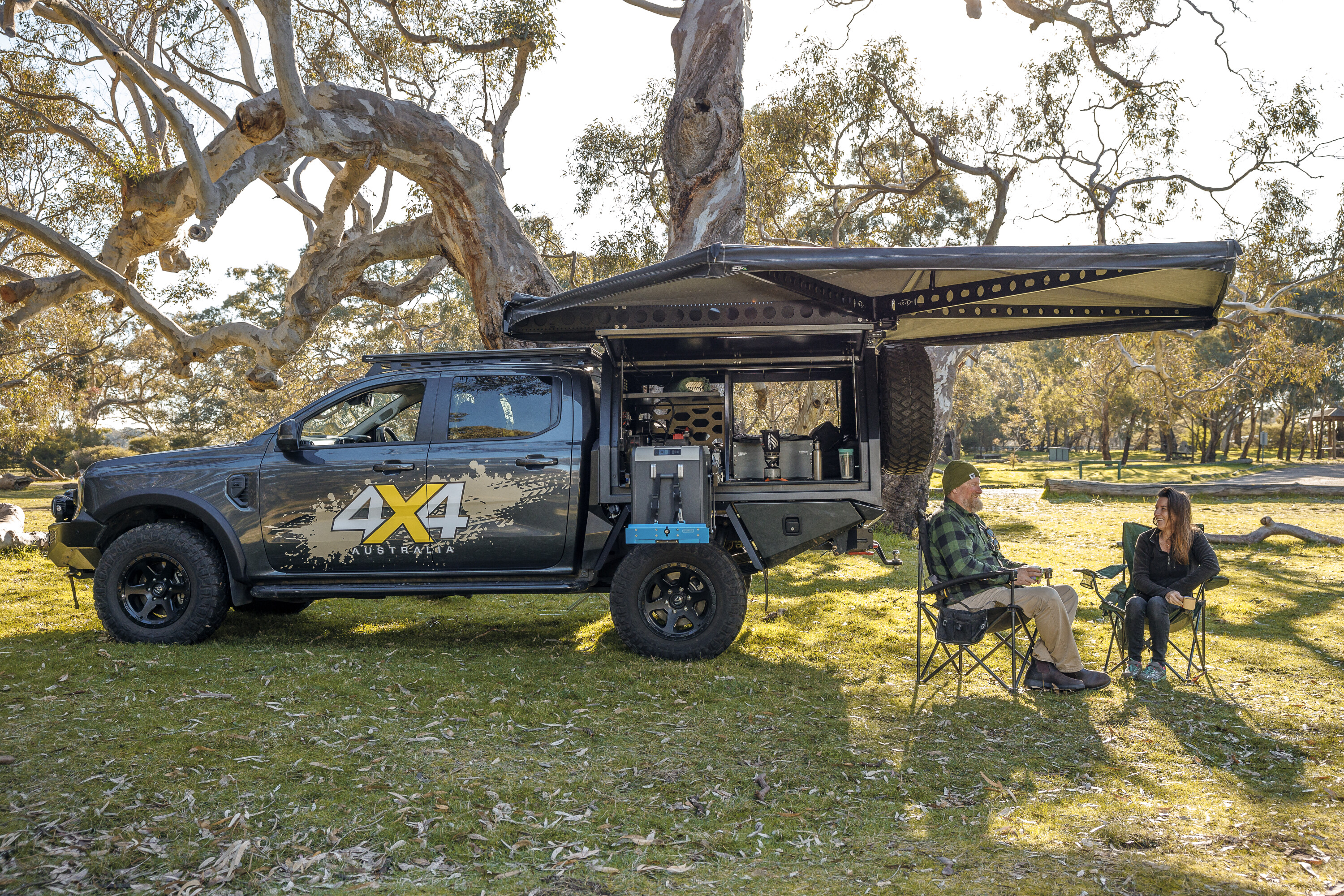
We also like to take everything away with us when we travel, including the kitchen sink, and also load the family into the vehicle, and all this stuff quickly adds up and eats into your payload and GVM.
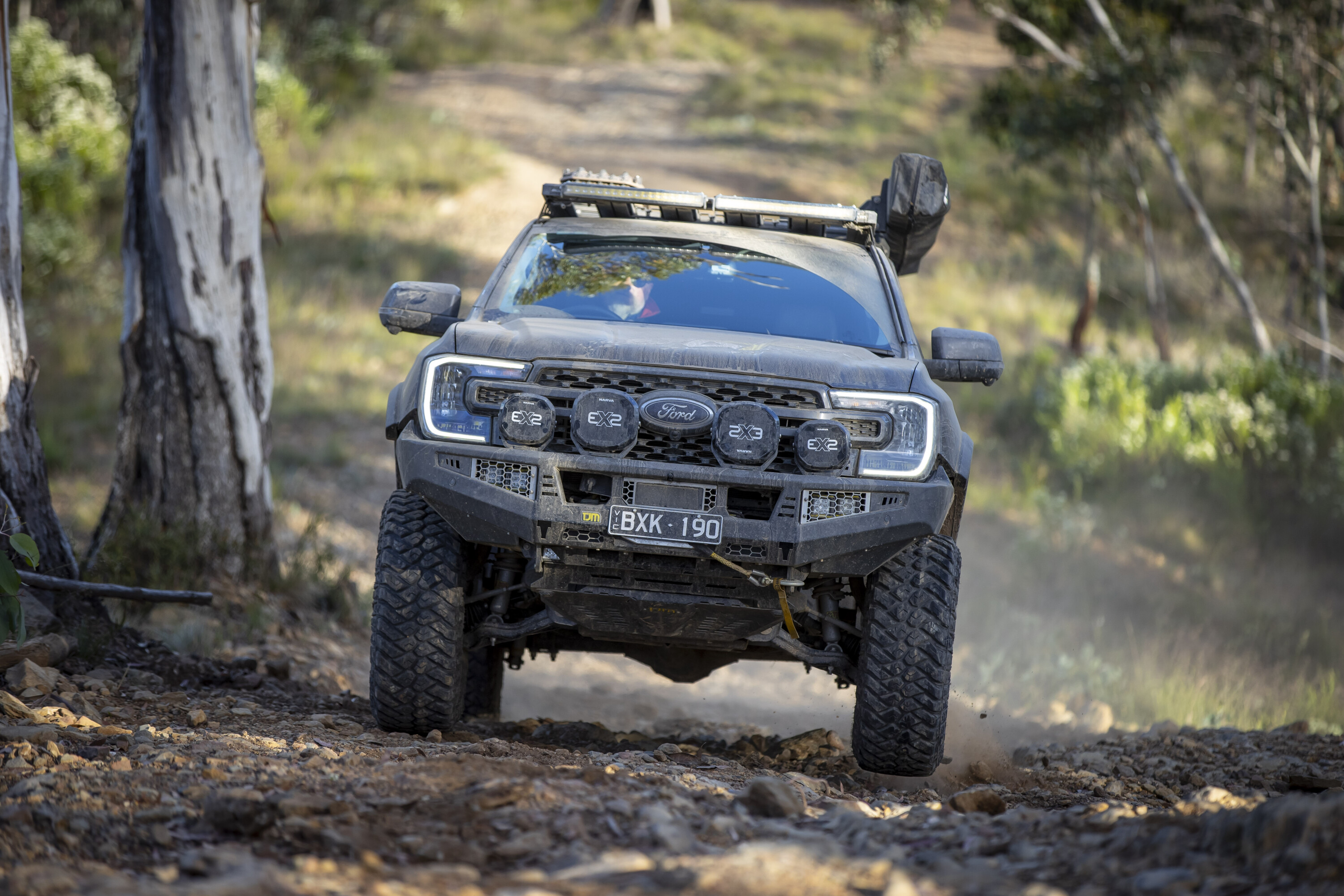
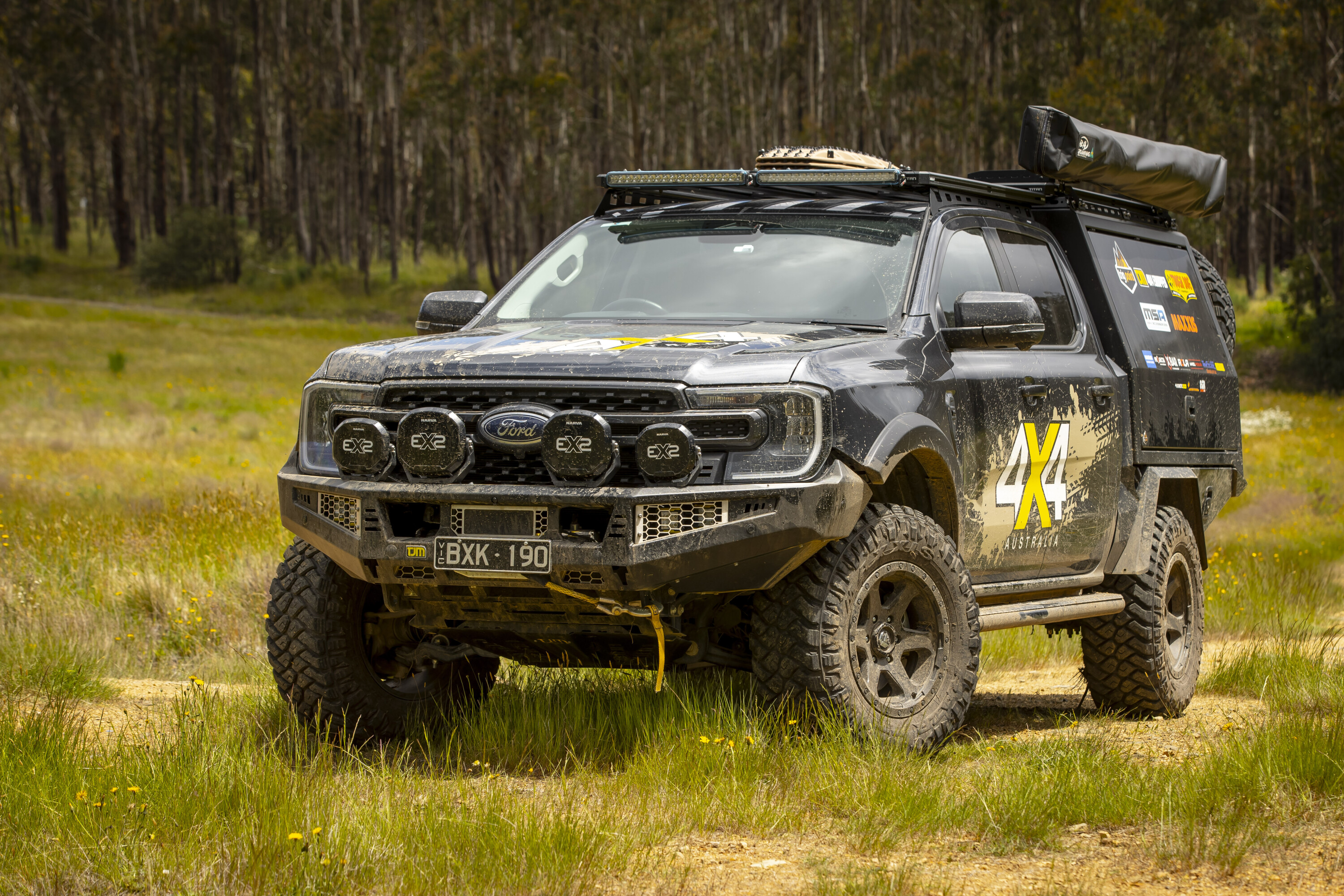
A bullbar with winch and steel underbody protection adds a heap of weight to the front of the vehicle and much of it is hanging out in front of the axle where it’s really felt when driving. Throw in some scrub bars and a few spotlights and an extra battery in the engine bay, and you could be looking at a couple of hundred kilograms on the front axle.
Mount a spare tyre or two up high on the back of the canopy and it’s in the worst place you could want it, hanging off the back of your chassis. Where you put your fridge, drawers, water tanks and everything else inside the canopy also needs to be considered, and ideally mounted forward of the rear axle. Even your oversized mud-terrain tyres add to the vehicle’s overall weight, even though they are carrying the vehicle and not being carried by it.
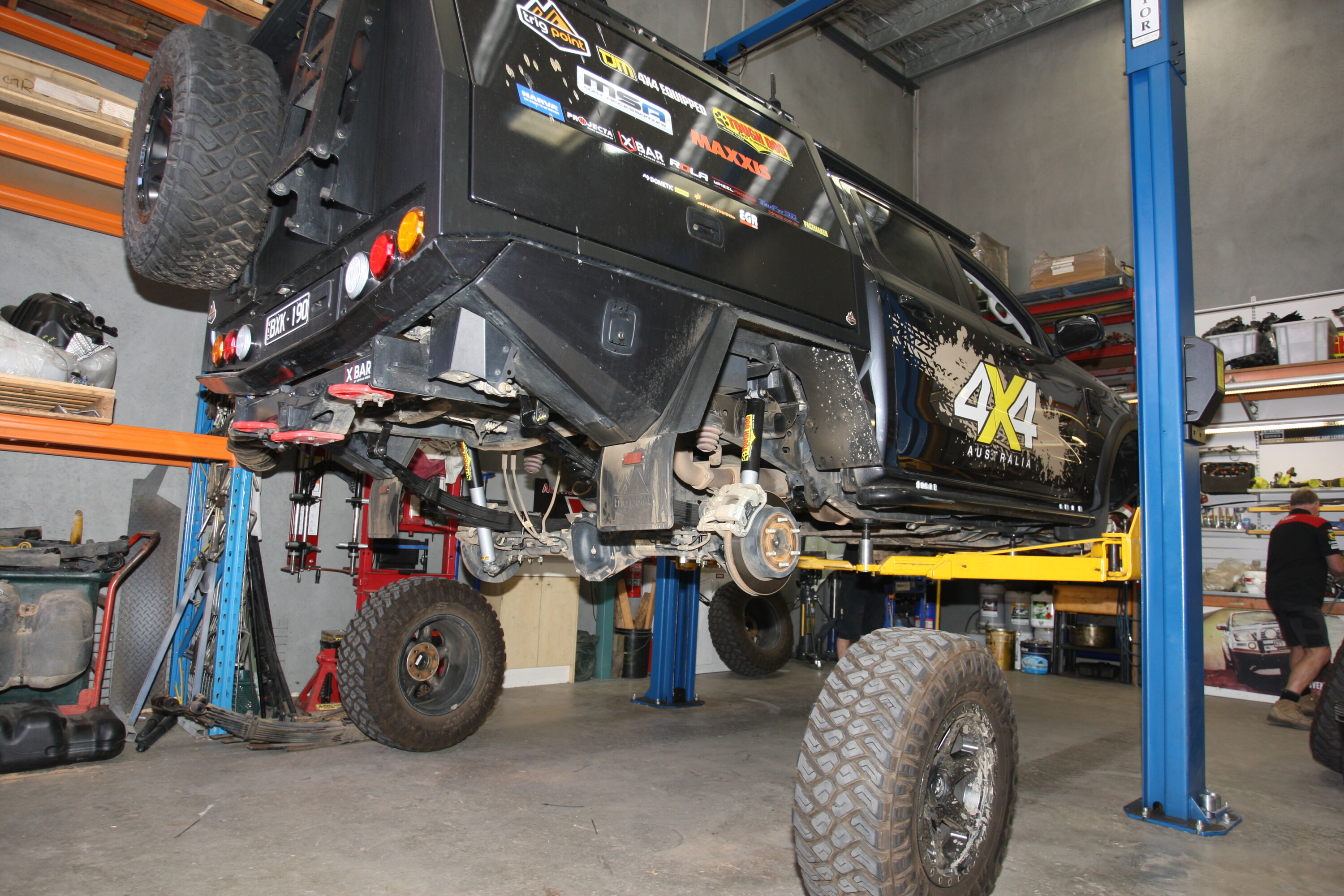
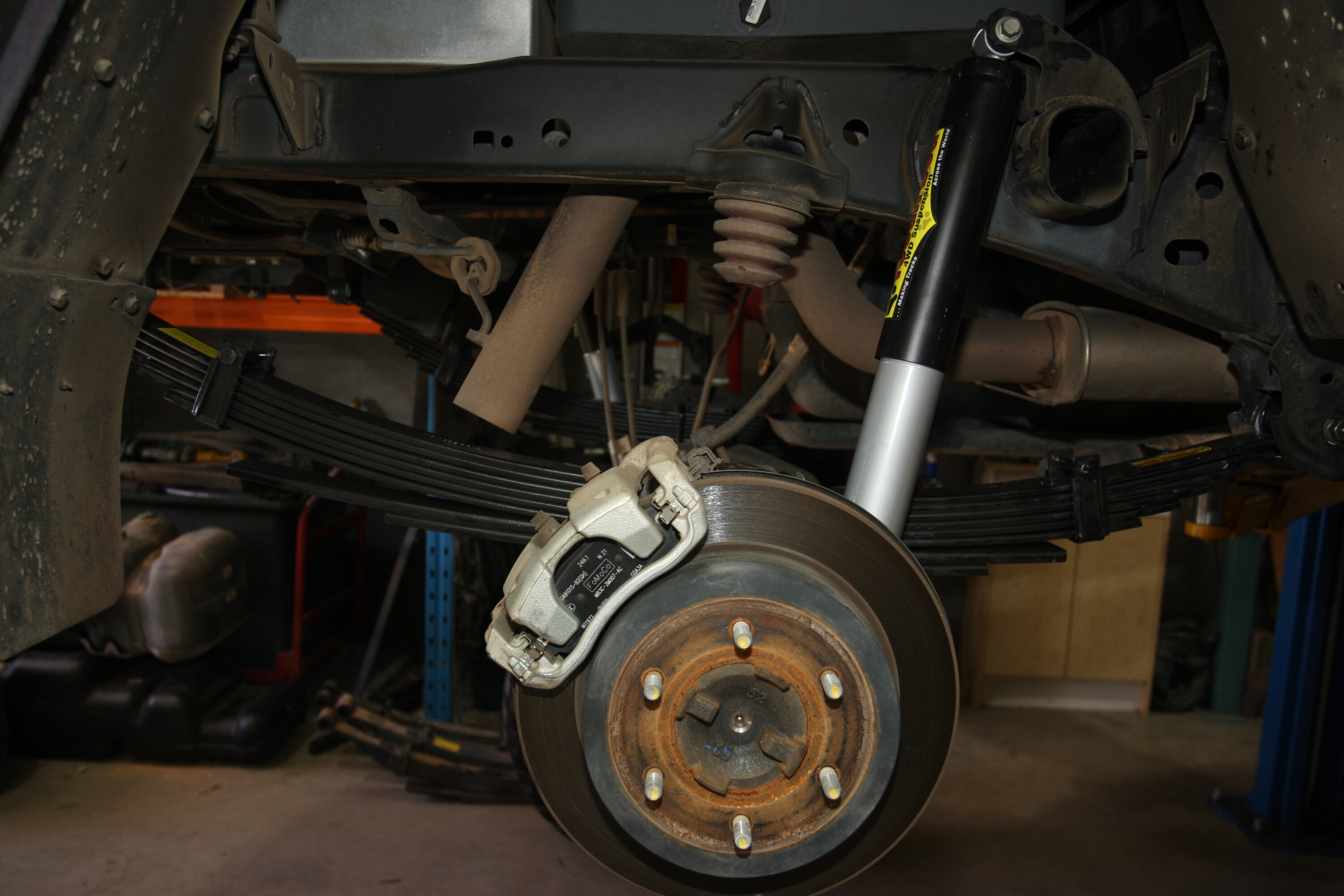
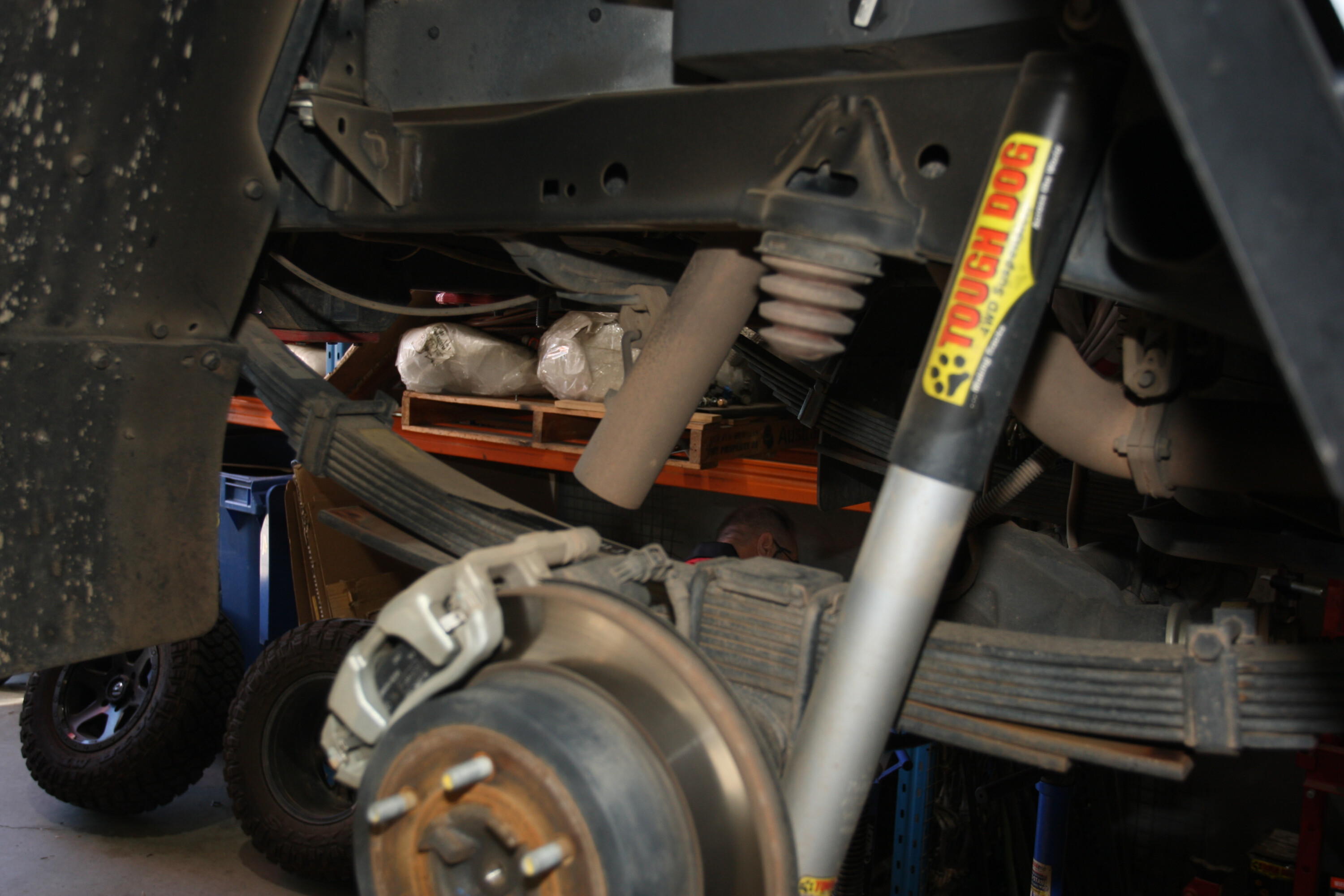
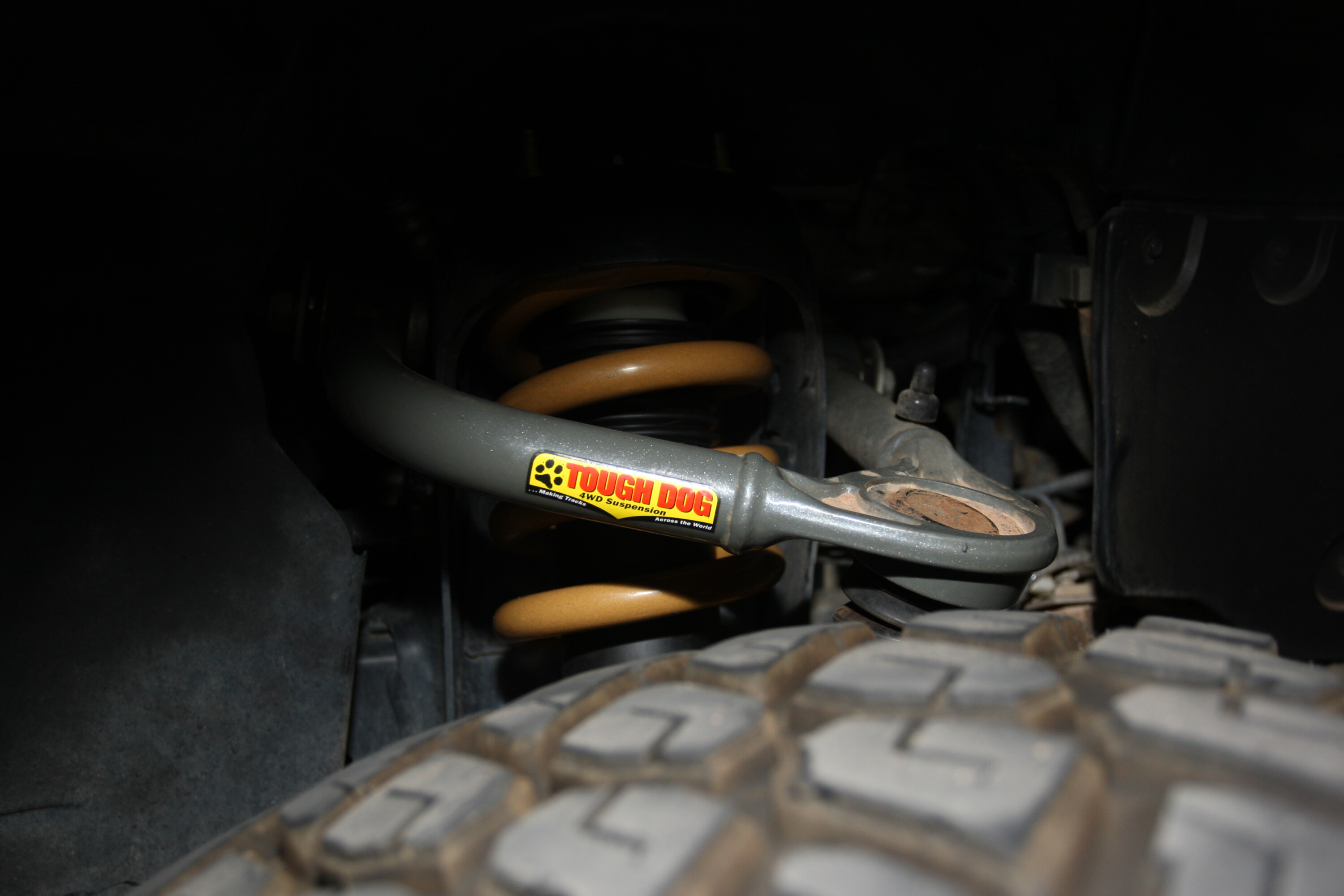
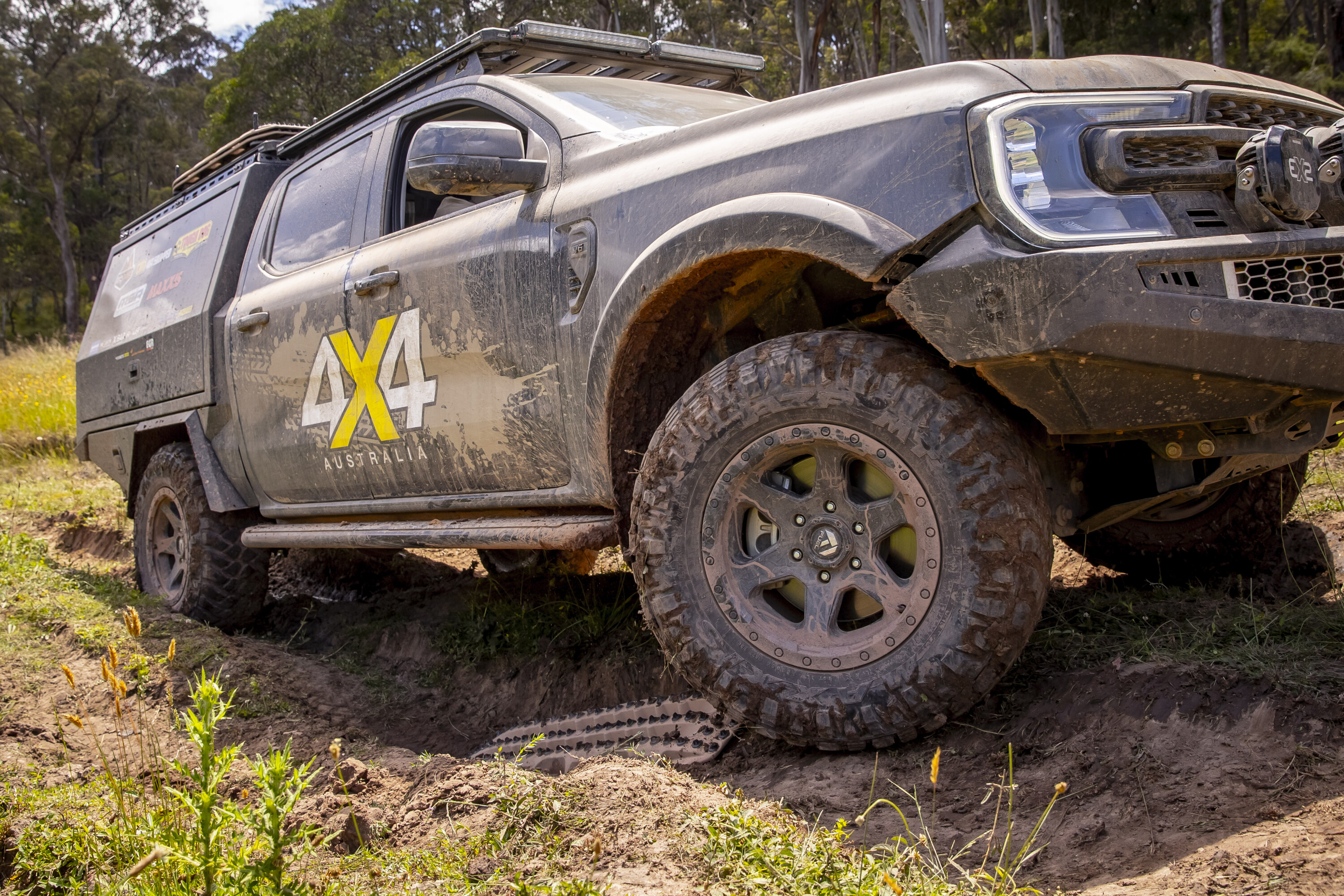
The replacement springs and shocks supplied by Tough Dog were chosen to carry the weight comfortably, and were the components used in the brand’s GVM upgrade kit for Rangers.
The Tough Dog kit includes 500kg rated rear leaf springs and complete replacement front struts with new springs and foam cell shocks on all corners. A centre bearing kit is part of the package to accommodate the raised ride height, and we chose to add Tough Dog’s replacement upper control arms to keep all the alignment angles in check.
But when we put the Ranger on the scales it came in at 3152kg, which didn’t leave a lot left of our 3280kg GVM. More worrying was 1436kg across the front axle, which is only rated to 1450kg, and 1716kg across the 1959kg rated rear axle. If we loaded up the Ranger with any gear we would soon be exceeding the legal limit. No worries, we thought; the upgrade kit takes the GVM up to 3750kg so we’ll just get it certified and be right as rain… or so we thought.
As the names suggest, the main difference here is one is performed before (pre) the vehicle is first registered, while the other is done at any time post registration. Pre-rego upgrades are the way to go if you have your kit in order as this is a nationally approved deal, and done as part of the SSM (Second Stage Manufacturer) scheme.
Post-rego GVM upgrades are done at a state level, and need to be approved by a local state-approved engineer or company. The approval still goes on a national register against the vehicle’s VIN but the certification may need to be updated if you move or sell the vehicle interstate.
But this gave us the benefit of building up the Ranger first and knowing exactly what weights we’d be working with. Whether pre- or post-registration, your approval goes through the relevant state and national bodies and, as with any big show, things are never as simple as they should be. Our Ranger was fitted with all the correct components for the Tough Dog GVM upgrade but as they were ordered individually and not as the approved GVM kit (which carries its own specific part number) we couldn’t get approval.
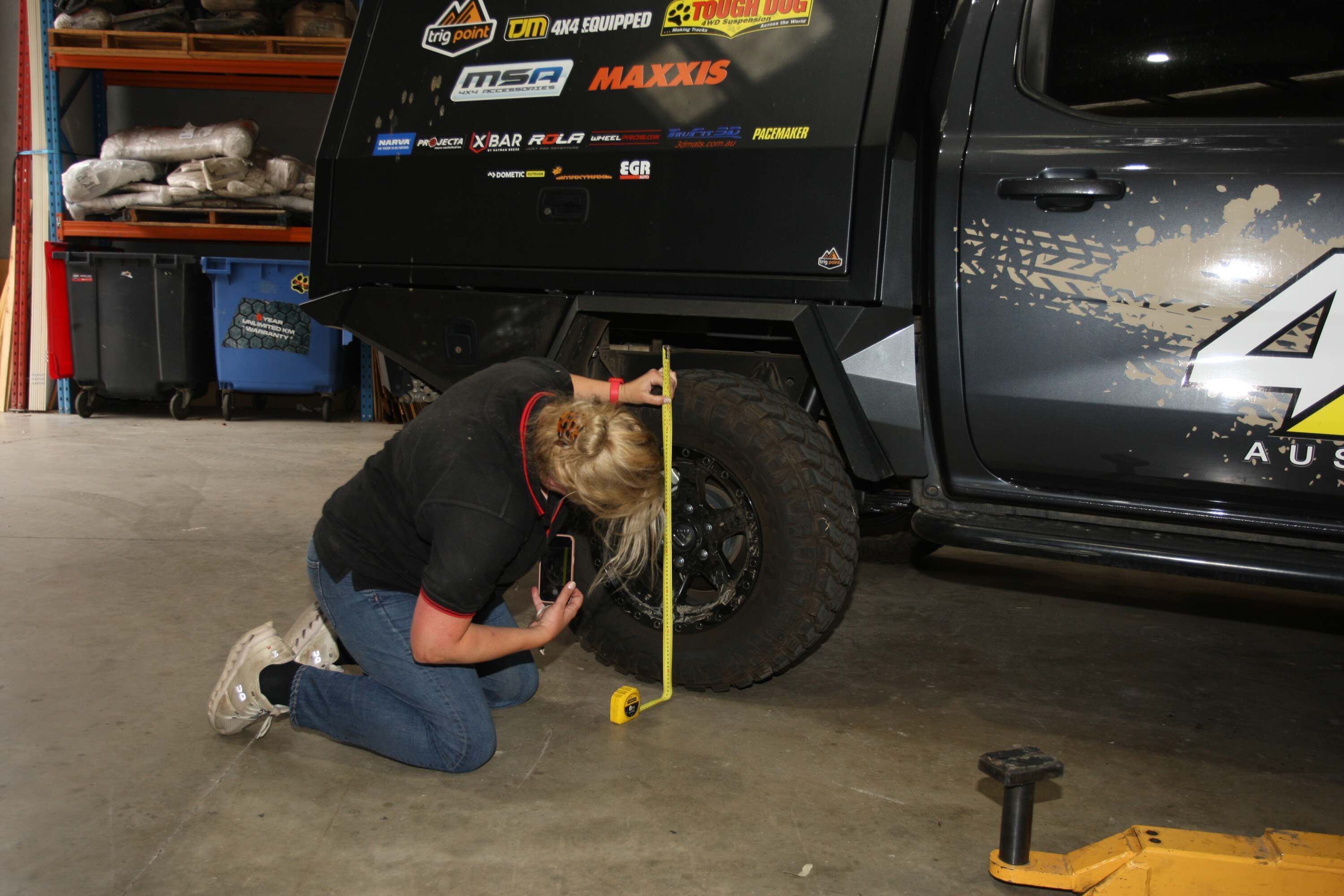
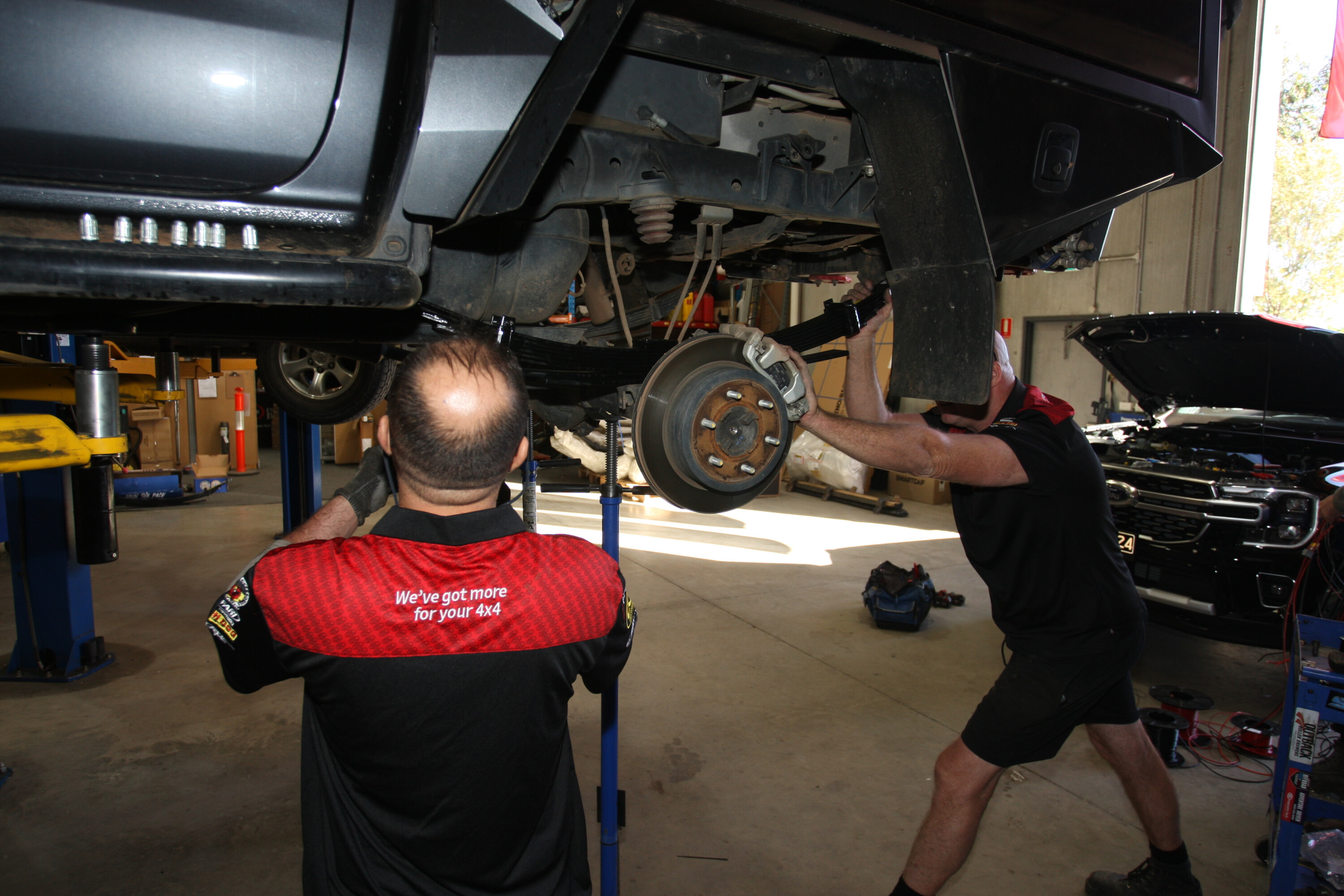
It also had to be fitted by someone approved to fit the GVM-upgrade kit; unless you are an approved GVM-upgrade kit fitter you can’t do it yourself. Luckily for us the team at Opposite Lock in Epping is a Tough Dog approved fitter and took on the job of replacing our suspension. The front struts, rear shocks and leaf springs all carried the exact same part numbers as those that were removed, but they were now from the GVM-upgrade kit.
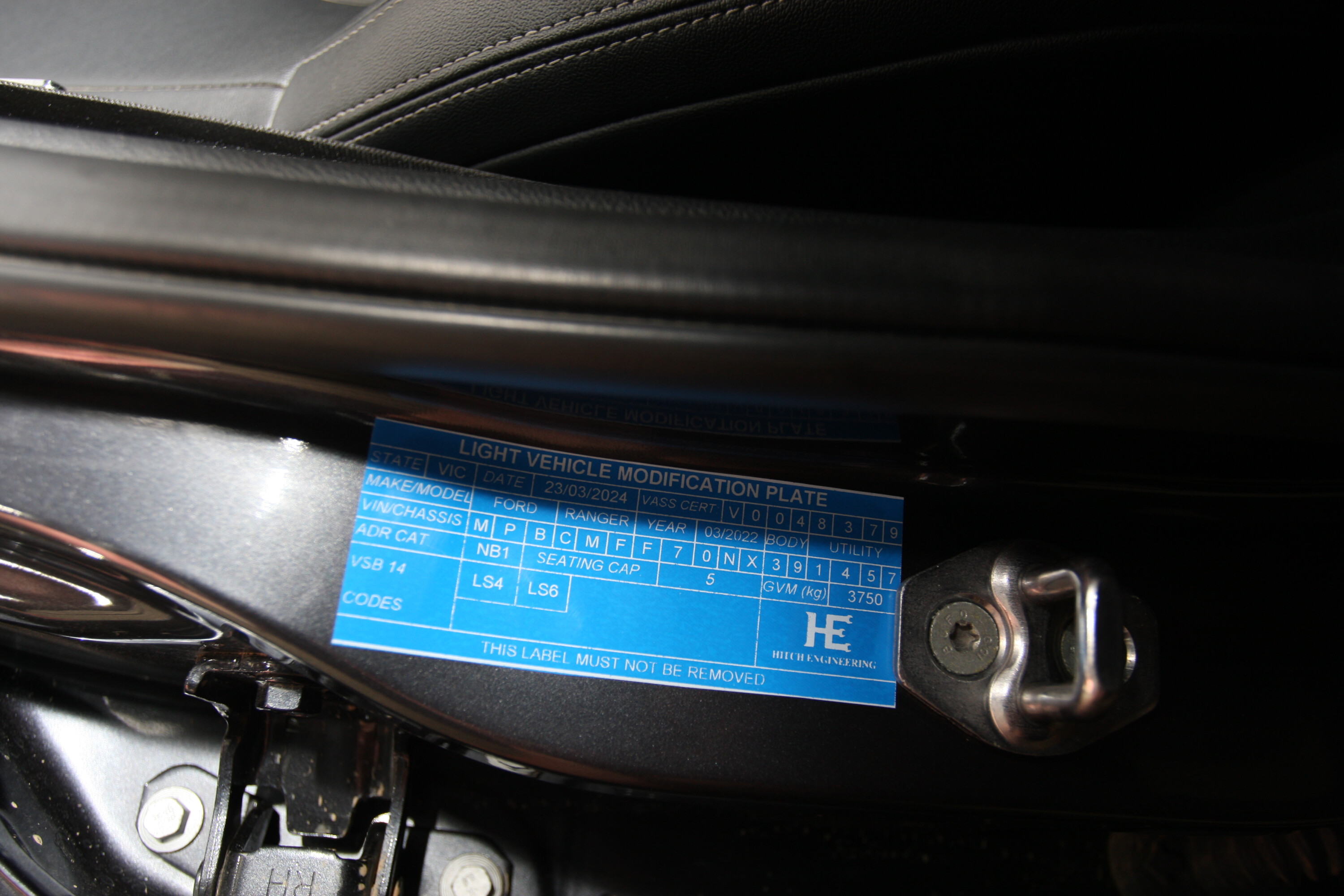
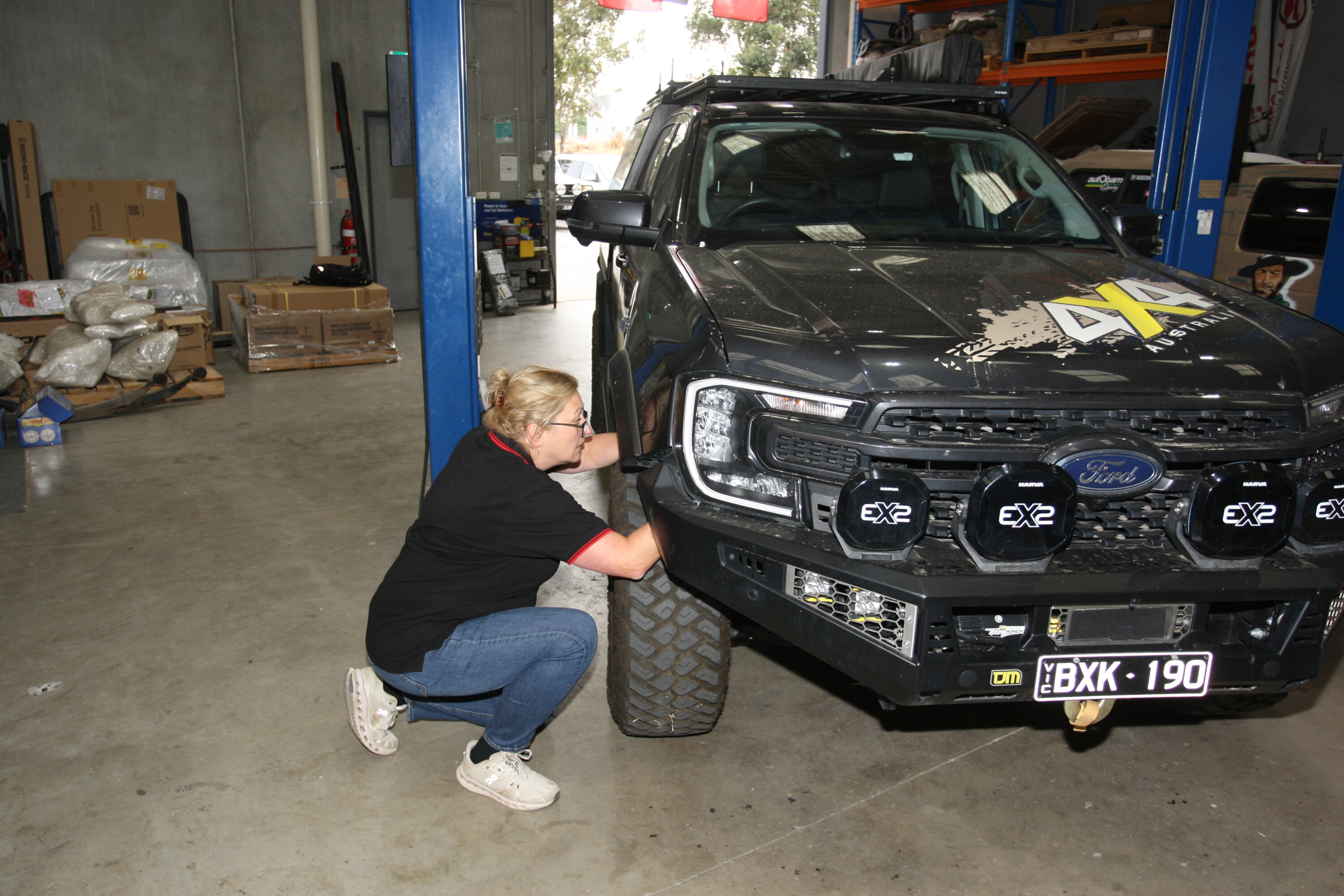
The kit also includes the front side indicators that are needed for vehicles with a GVM of 3500kg or more, and these come with the patch wiring and a template to suit the vehicle that makes it easy for the guys to drill the holes and fit them in the right place on the front guards. All in a day’s work for the proficient team at Opposite Lock, Epping. Once the GVM upgrade hardware has been fitted, it needs to be inspected and approved by an approved engineer, who in our case was Linda Hitch of Hitch Engineering Services.
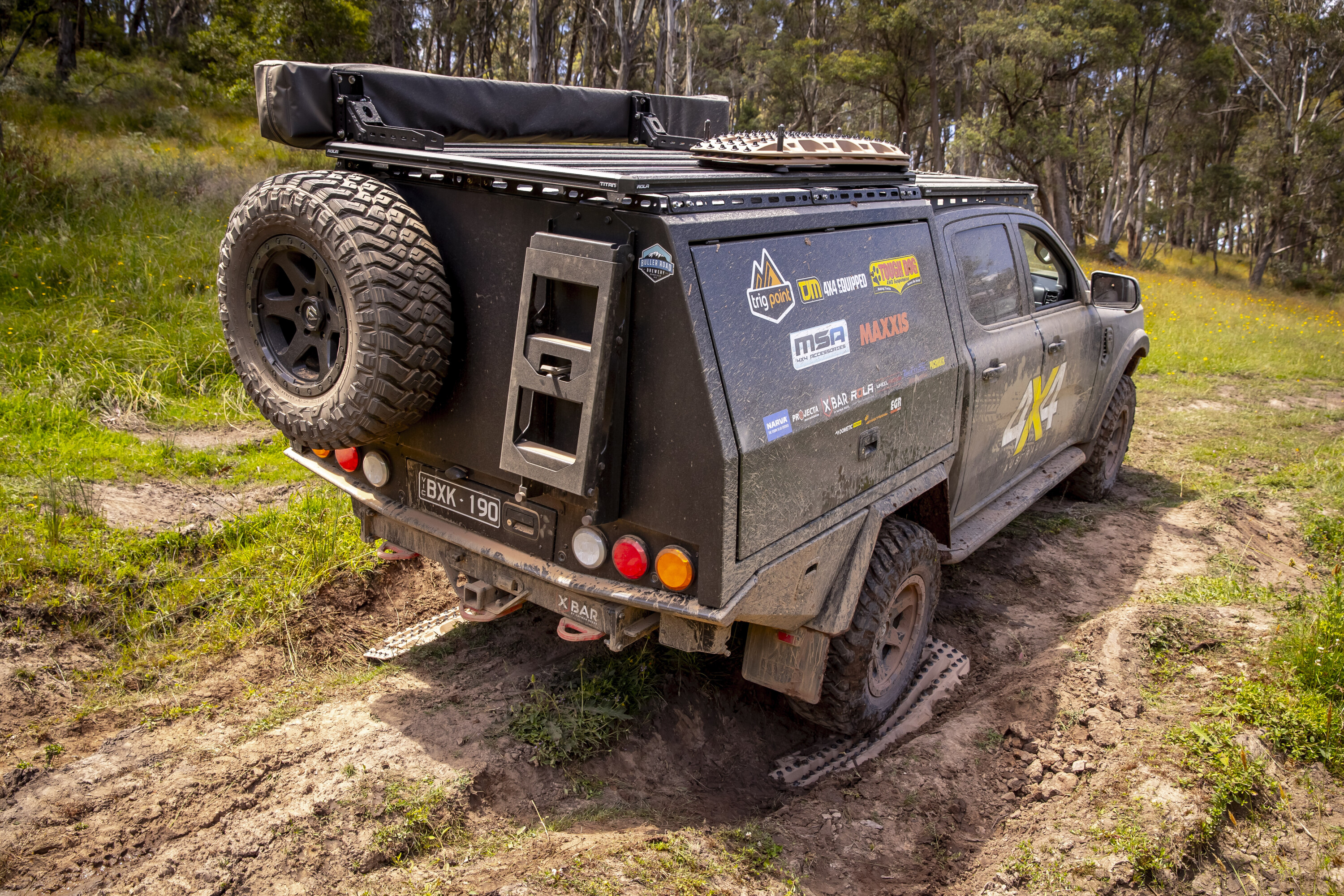
She also checked the ride height of the vehicle at each wheel to ensure it is within the allowed specification, sighted that the new placards and indicators were in the correct places, and checked the tyres for clearance on the body, ensuring that they don’t rub on anything at full steering lock and suspension travel.
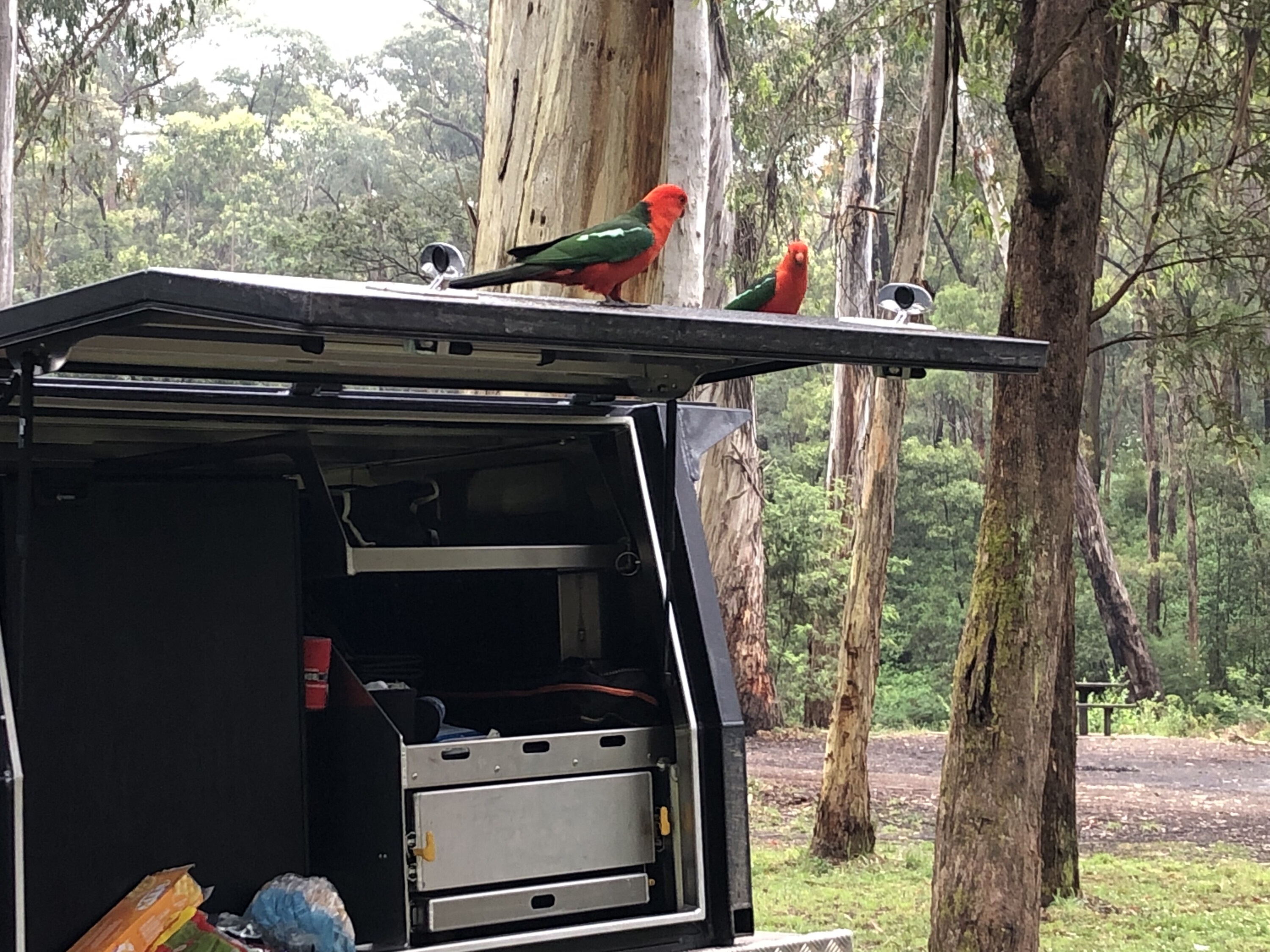
This federal pre-approval and certification means that individual vehicles needn’t be put through test drives provided that all the exact components of the kit are utilised; you cannot mix and match parts in a GVM-upgrade kit.
Once Linda had all her information logged into the system, it was just up to us to take the paperwork and vehicle to Vic Roads, where an inspector again gave it a once over before the updated weights were entered into the system.
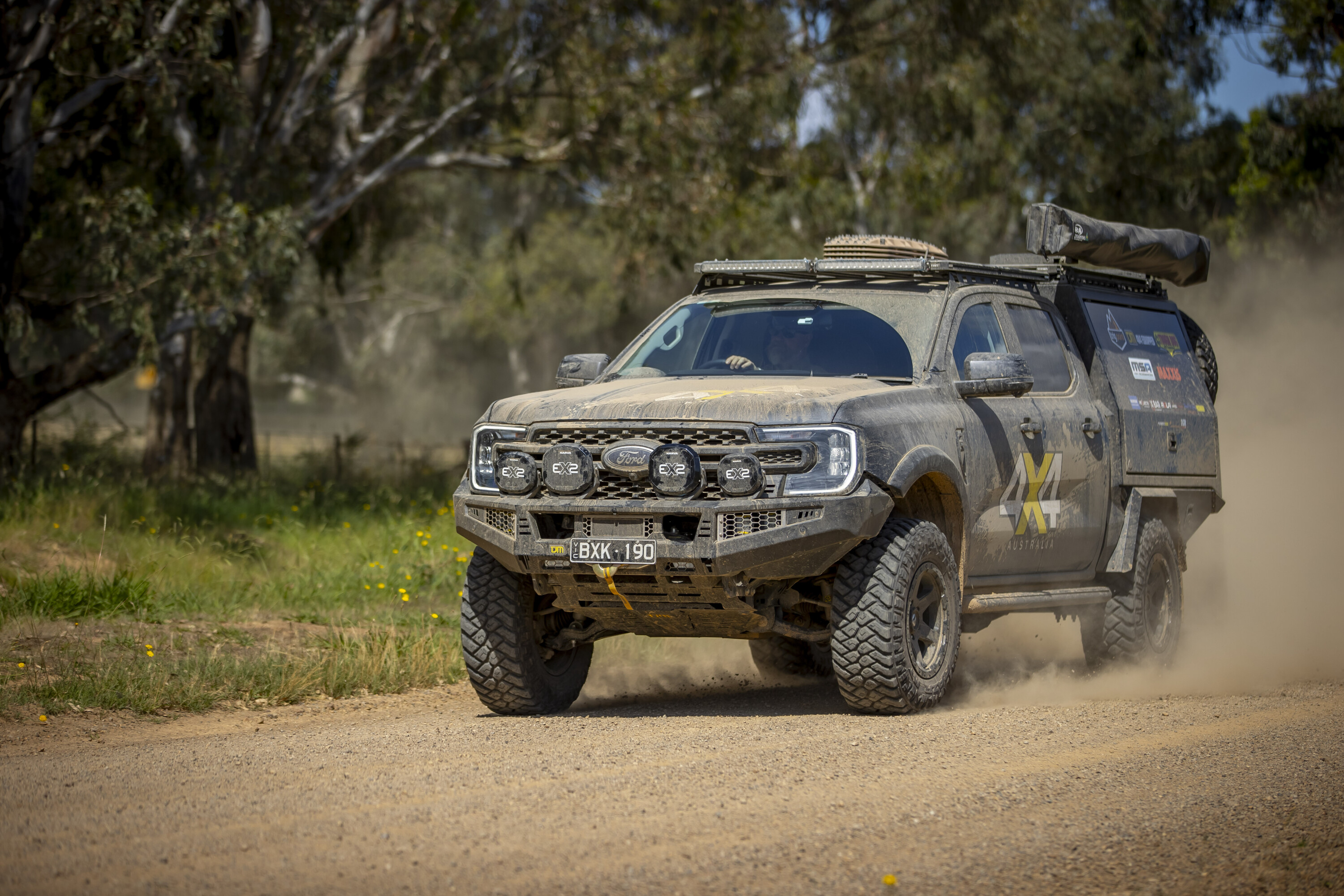
Dave was quick to tell us that GVM upgrades were some of the most common products he gets asked about, but first he questions customers why they think they need one, and what are their plans for the vehicle.
“People come in and say they have bought a new 4×4 and that they need a (pre-registration) GVM upgrade,” said Dave. “I ask them what they are going to be fitting to the car, what are they towing and what sort of use will the car get.”
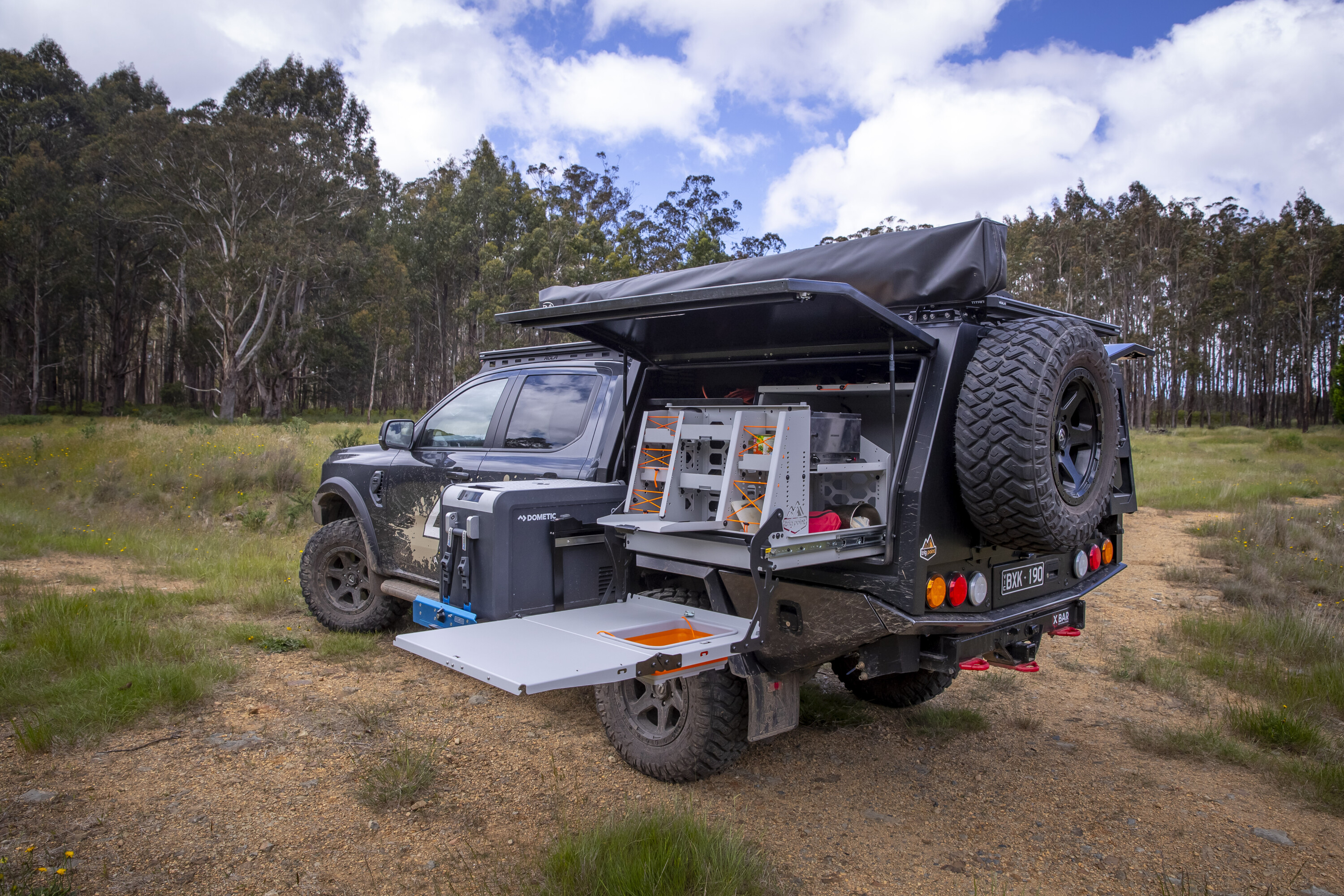
In the case of our Ranger’s Tough Dog kit the rear springs are rated for a constant 500kg load and as such are very firm and stiff, but they are perfect for the weight of our canopy and everything that is permanently carried inside it. The Tough Dog kit even comes with a recommendation to have a “permanent payload of no less than 300kg to assist in safe and stable driveability”.
“Some people fit a GVM upgrade because they read online that they need it, and then they complain that the car rides like a old cart,” said Dave.
Linda does a lot of work with Caravan Industry Victoria, so she deals with van manufacturers and the people who tow vans. She pointed out that someone towing a heavy van might want to look at a GVM upgrade.
“If you have a big van and are putting 300kg download on your towball, that (weight) comes straight off your GVM”, said Linda. For many new 4×4 wagons, 300kg is a large percentage of the payload.
Do your research and find out the weights of the accessories you plan to fit to the vehicle, how many passengers you will be carrying and how much cargo you will load up with. This will give you a rough guide as to the overall weight of your built 4×4, and how close you might be to its GVM.
If you are not close to GVM or won’t be carrying the weight all the time, you might want to reconsider the upgrade to find an alternative that better suits your needs, rather than impacting negatively on the ride and handling of your vehicle.
Tough Dog: www.toughdog.com.au [↗]
Opposite Lock: oppositelock.com.au [↗]
This bull bar is unique to the 70 Series in that it is large tube version of ARB’s Deluxe Bar, so it has 60mm tubing for the outer frame and 47mm tubes for the lower cross bar sections, resulting in a gutsy bar that’s up to the rigours of off-road work that 70 Series Cruisers are called upon to do.
Large driving light tabs allow for the fitment of a wide range of lights, while three tabs on the upper bar allow for up to three antennas to be fitted. Of course, this all-steel bar isn’t light, tipping the scales at around 80kg (without a winch), but the Troopy will soon be given a GVM upgrade, so the added weight of the bull bar won’t be problematic.
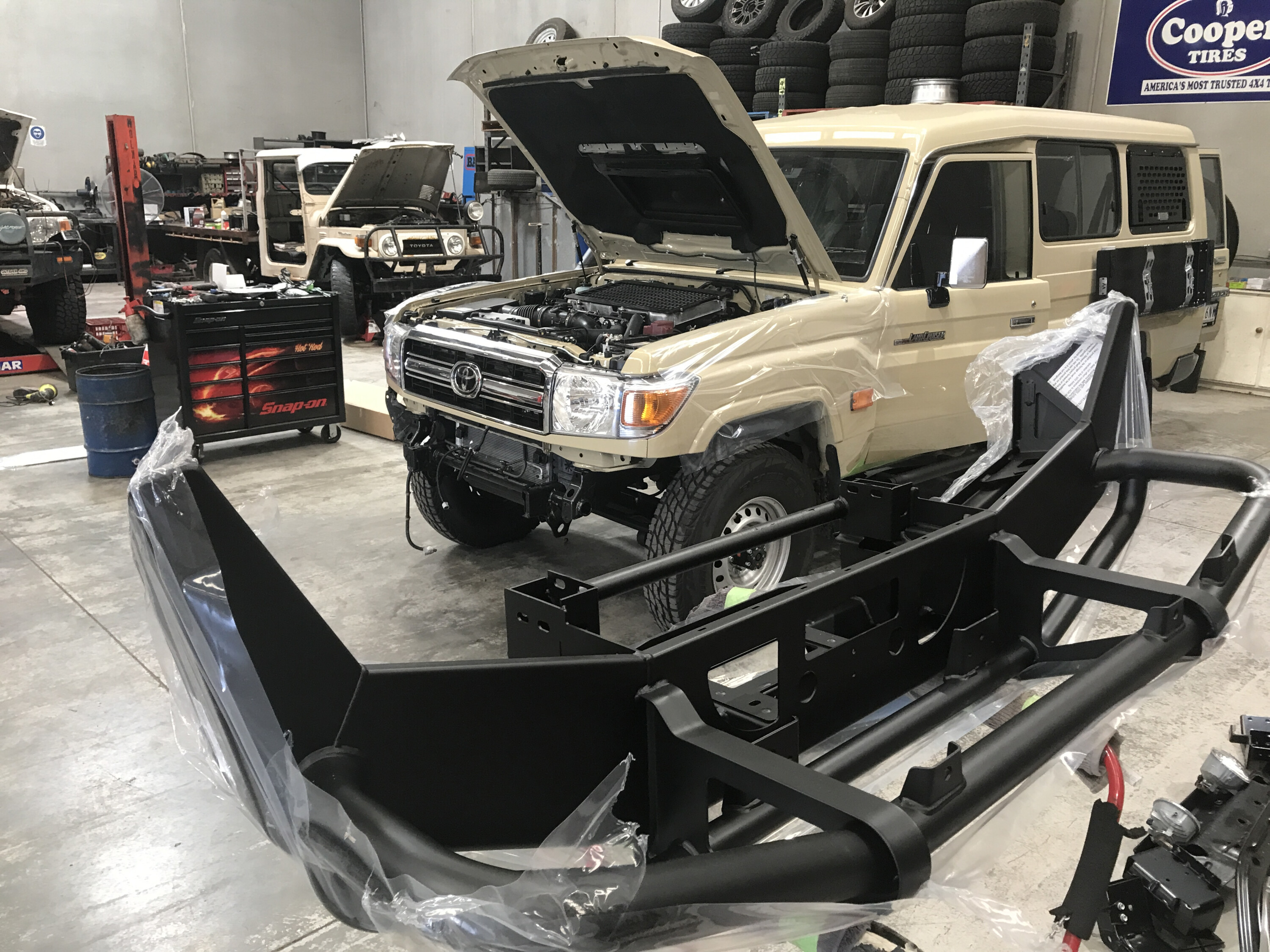
Fitting a bull bar is not as straightforward as it once was. As well as having to consider winch fitment, airbag compatibility and inbuilt LED lighting, even the 70 Series now comes with forward-facing radar as standard, adding to the complexity of bull bar fitment. As a result, the list of extra parts required has also lengthened, and includes a wiring extension harness for the radar unit and a wiring extension kit for the winch, to name just two.
We opted to fit a Carbon Tank 12,000lb electric winch for a number of reasons. Firstly, it weighs less than most other 12,000lb winches, and secondly, my son Trent has been using one for the past 12 months while leading expeditions for Moon Tours and he swears by it. We’ll bring you a full report once we have put this unit through its paces in the back blocks of Australia.
As well as the bar itself, we fitted a set of ARB side rails and side steps, and these are about the only things that don’t require an electrical wiring harness or an additional ECU to be added. I’ve run ARB side steps on all of my vehicles since 1988 (at least) and I wouldn’t drive my vehicles off-road without the protection they add.
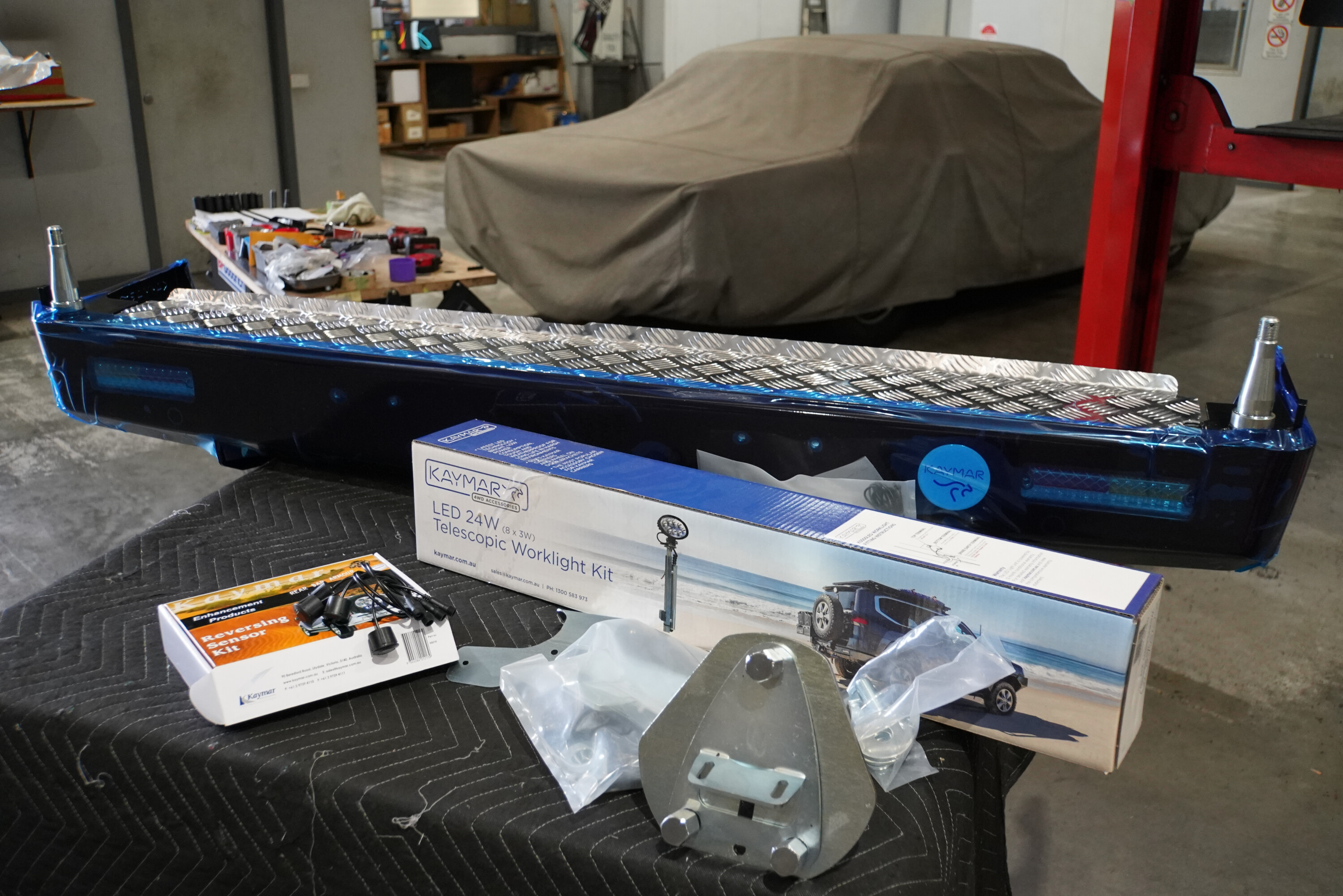
Down the rear end of the Troopy we fitted for a Kaymar rear-step towbar. Over the years I’ve run three Kaymar rear bars, one on an earlier Troopy and a couple on my GU Patrols. The Kaymar rear bar is impressive and I can’t fault it for strength and reliability. The machining processes have improved over the years and while not so obvious with the 70 Series bars, Kaymar’s bars for 200 and 300 Series Cruisers are more appealing to the eye than they once were, and they blend harmoniously with the vehicles to which they’re fitted.
We’ve added a couple of swing-away spare-wheel carriers and a high-mounted work light to the rear bar, the latter for those evenings in the bush when we’ll need some extra lighting to carry out repairs or just to cook an evening meal. While I opted for the twin spare-wheel carriers, you can also choose to fit a double jerry can holder instead of the left-side wheel carrier for those times you are travelling long distances between fuel stops, or when you want to carry a bit more water.
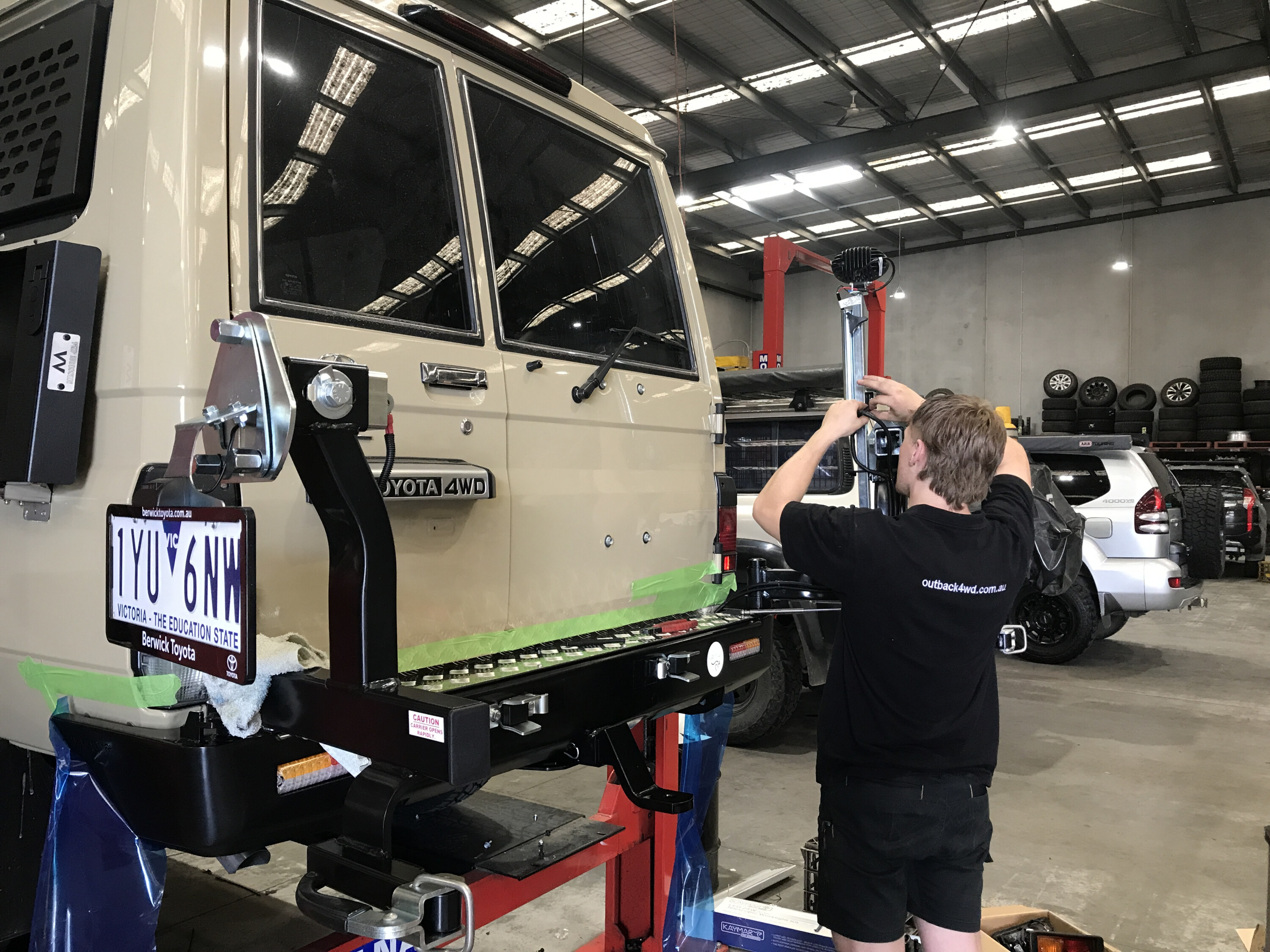
Kaymar bars are now available with auxiliary reversing sensors, which locate four sensors in the bar with a warning buzzer under the dash. We went with this option and although we wondered if it would be more of an annoyance than anything else, it has proven to be beneficial, especially when reversing into a tight parking space. It also makes it safer to reverse when people, especially kids, are around.
The power for the sensors is picked up off the vehicle’s reversing light wire, and while the control box can be located basically anywhere it will fit thanks to long leads, the warning buzzer needs to be positioned under or close to the dash. In addition to the wiring for the reversing sensors, the LED lights in the bar need a resistor box so they will work correctly.
When wiring in the trailer plug for our camper, we added a Redarc Tow-Pro Elite brake controller, which I reckon is the bees knees of brake controllers for any 4×4 vehicle. And, we’ve also added an Anderson plug outlet for when the camper is on the back of the Troopy, to help keep its batteries charged and the fridge cold.
Fitting the bulbar, winch, rear-step bar and tyre carriers demands a lot more equipment, time and expertise than what most people have at home, and I never fail to be surprised at how much electrical work is required these days for fitting just about anything. Luckily the crew at Outback 4WD know what they are doing and have plenty of experience in fitting equipment like this.
While I’ve been taking my vehicles to Outback 4WD for years, wherever you are, make sure you have a good 4×4 workshop as your backstop for all accessory fitting, repairs and servicing.