Gear

Gallery 1
Outback corrugations, low-hanging branches and tight bush tracks can give a four-wheel drive antenna a serious workout.
Constant vibration and the occasional scrape through scrub can take their toll, so choosing an antenna for remote touring means looking beyond signal range. It needs to handle the conditions you travel in while helping you stay connected, whether you’re communicating with other vehicles on the track, coordinating a convoy, calling out hazards or trying to maintain contact in isolated areas.
Reliable communications become particularly important when travelling beyond the main roads, where distances between vehicles can grow and mobile reception can be patchy or unavailable. A UHF CB radio is useful for vehicle-to-vehicle communication, sharing track conditions and coordinating movements through difficult terrain. A suitable cellular antenna can help improve connectivity where a compatible mobile network signal is available, supporting calls, messages and data when coverage allows.
No single antenna or communications system covers every situation, however. The right setup depends on where you travel, the equipment you use and how you plan to stay in touch. For remote trips, that means choosing antennas suited to your vehicle and terrain, installing them properly and considering a satellite communicator or personal locator beacon for emergencies beyond mobile coverage.
What makes an off-road UHF antenna durable?
A long whip and a big gain figure might look impressive on a bull bar, but they don’t automatically make an antenna suitable for off-road touring.
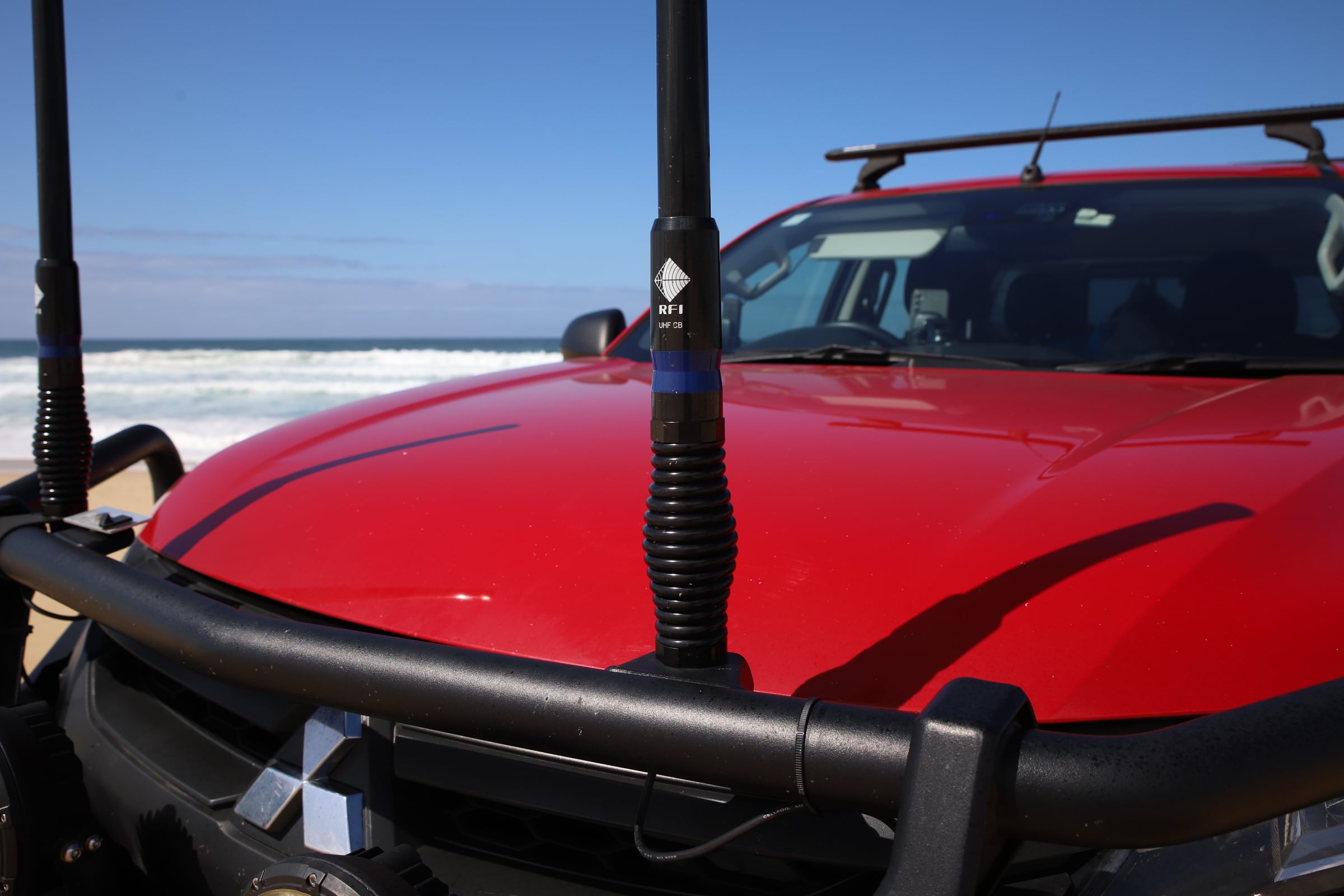
Corrugations can shake mounting hardware loose, while overhanging branches can catch an antenna and put strain on its base. A suitable off-road antenna needs to withstand these knocks without compromising radio performance. A spring-mounted design allows the antenna to flex when it encounters an obstacle, helping reduce the force transferred to the mounting point. The spring, ferrule and surrounding hardware also need to be strong enough to handle repeated impacts.
RFI’s CDX-TREME range (↗) features a heavy-duty spring assembly and reinforced ferrule construction. The removable whip can also be taken off when extra clearance is needed, following the manufacturer’s instructions. That’s useful when driving through scrub or overgrown tracks, particularly if your vehicle is fitted with a roof rack or rooftop tent.
1
Choosing the right UHF antenna gain
More gain doesn’t automatically mean better reception. The right choice depends largely on the terrain you travel through.
A higher-gain UHF antenna generally concentrates more of its radiation towards the horizon, making it well suited to relatively flat, open country. A lower-gain antenna has a broader vertical radiation pattern, which can be useful in hilly or mountainous terrain. If you spend most of your time crossing open plains, a higher-gain antenna may suit your needs. If you regularly travel through valleys and mountainous country, a lower-gain option may be a better fit.
RFI’s CDX-TREME UHF CB range (↗) includes compact and high-gain options, allowing you to choose an antenna that suits your vehicle and typical driving conditions.
Where to mount a 4WD UHF antenna
Even a good antenna can underperform if it’s mounted in the wrong spot.
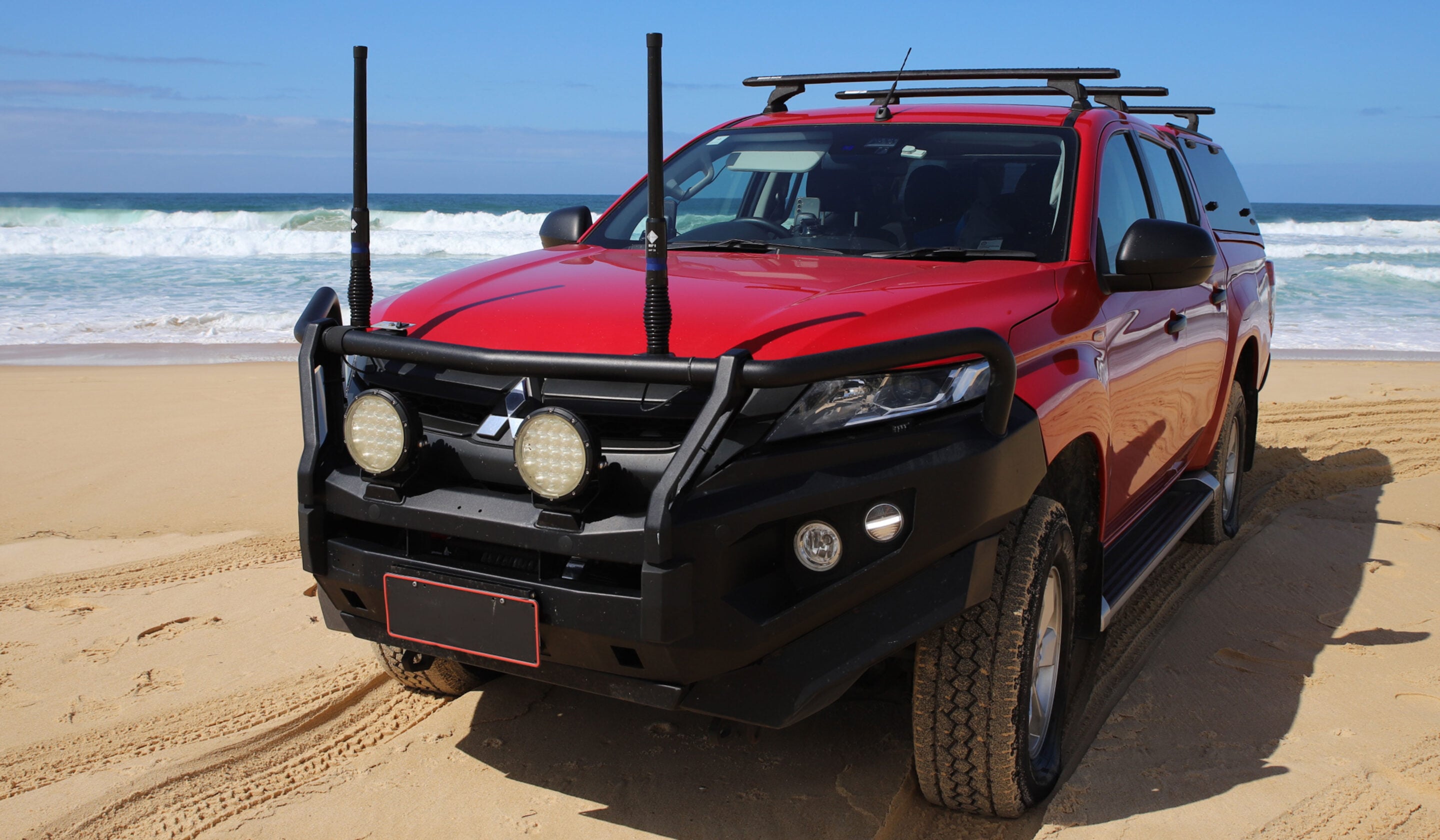
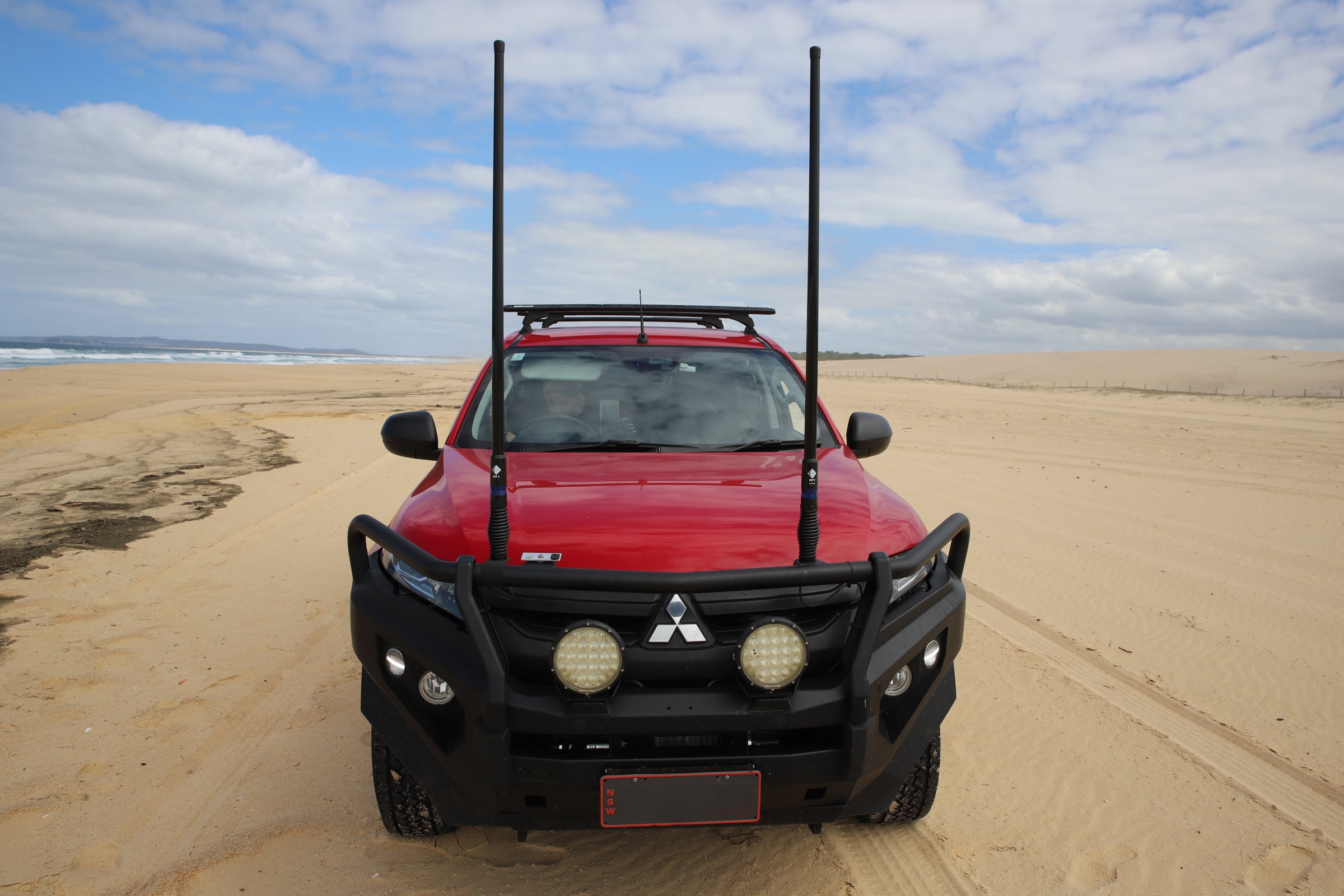
Bull bars, roof racks, vehicle pillars and other metalwork can affect an antenna’s radiation pattern. Mounting it as high as practical, with adequate clearance from surrounding metalwork, can help it perform as intended.
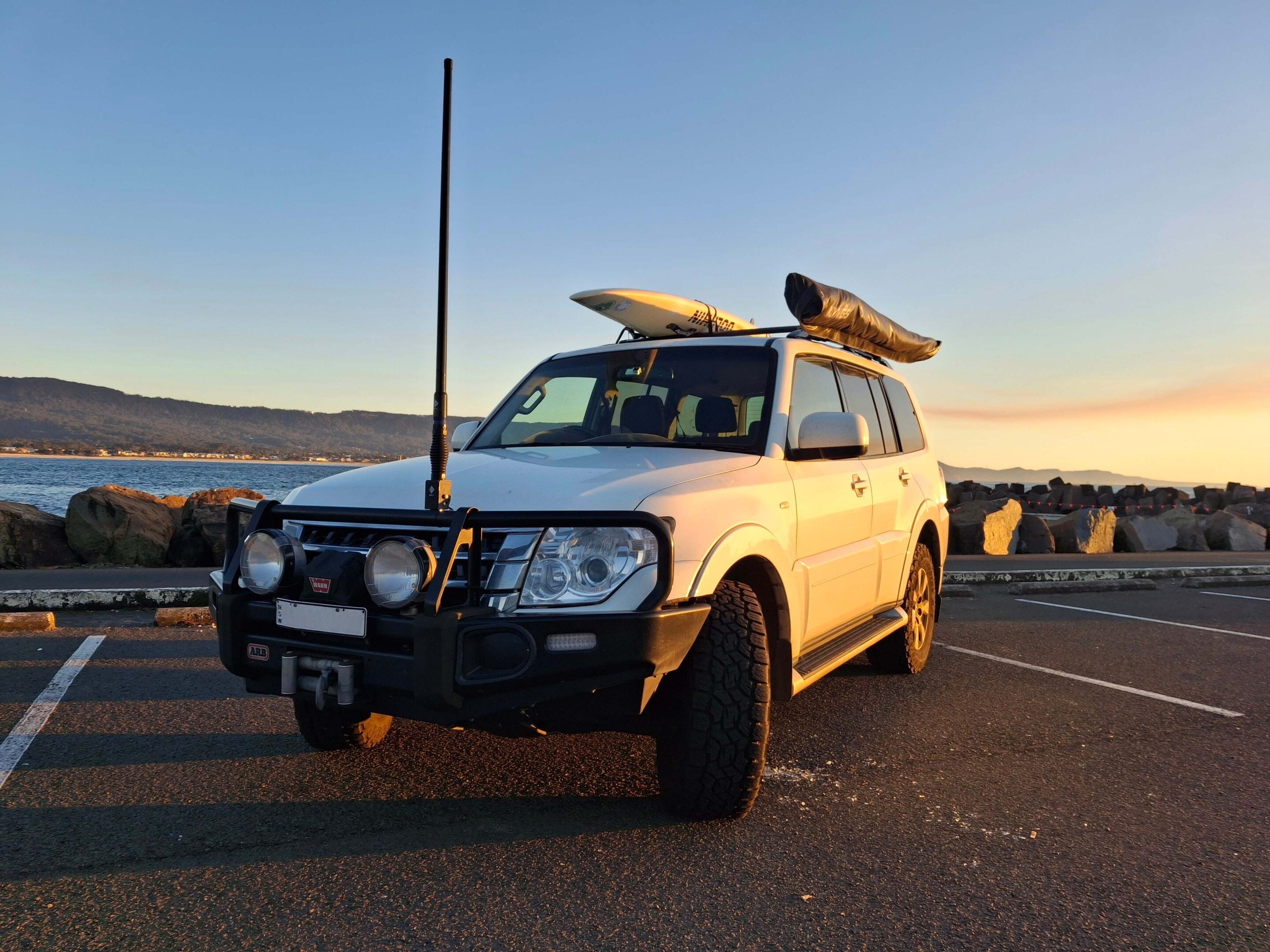
A bull bar is a common mounting point on touring four-wheel drives, although a bonnet, guard or other suitable bracket may work better on some vehicles. Clearance is another consideration, especially if you regularly drive through scrub or need to fit into low car parks. A compact antenna may be a better option if overhead height is a concern.
RFI (↗) offers a range of mounting options, including vehicle-specific brackets for selected models. Whichever position you choose, make sure the bracket is secure enough to withstand the vibration of corrugated roads. RFI also recommends keeping other antennas at least 600mm away to minimise interference.
1
UHF antenna cable and installation tips
The antenna is only one part of the setup. Damaged cable or loose connections can affect radio performance, even if the antenna itself is in good condition.
A coaxial cable that’s pinched behind trim, rubbing against sharp metal or pulled tight around a moving mount can develop faults. Protect the cable from abrasion, and check for water ingress or damaged connectors during routine inspections. When installing the antenna, keep the cable clear of sharp edges, avoid tight bends and leave enough slack for a spring-mounted antenna to move without pulling on the connection.
RFI’s CDX-TREME UHF CB antennas (↗) come with five metres of RG58 coaxial cable and an adaptor for the radio connection. RFI recommends leaving a loop of cable at the antenna base to accommodate spring movement. Check the bracket, cable and connections during routine vehicle inspections, particularly after extended travel on corrugated roads.
1
UHF CB vs cellular antennas for 4WD touring
A UHF CB radio and a cellular antenna serve different purposes, and many touring vehicles carry both.
UHF is useful for communicating with other vehicles, coordinating a convoy and calling out hazards on the track. Its effective range depends on terrain, obstructions, antenna setup and the equipment at the other end. A cellular antenna works with compatible mobile broadband or cellular equipment to help improve connectivity where a usable network signal is available. It can’t provide mobile coverage where there’s no compatible network.
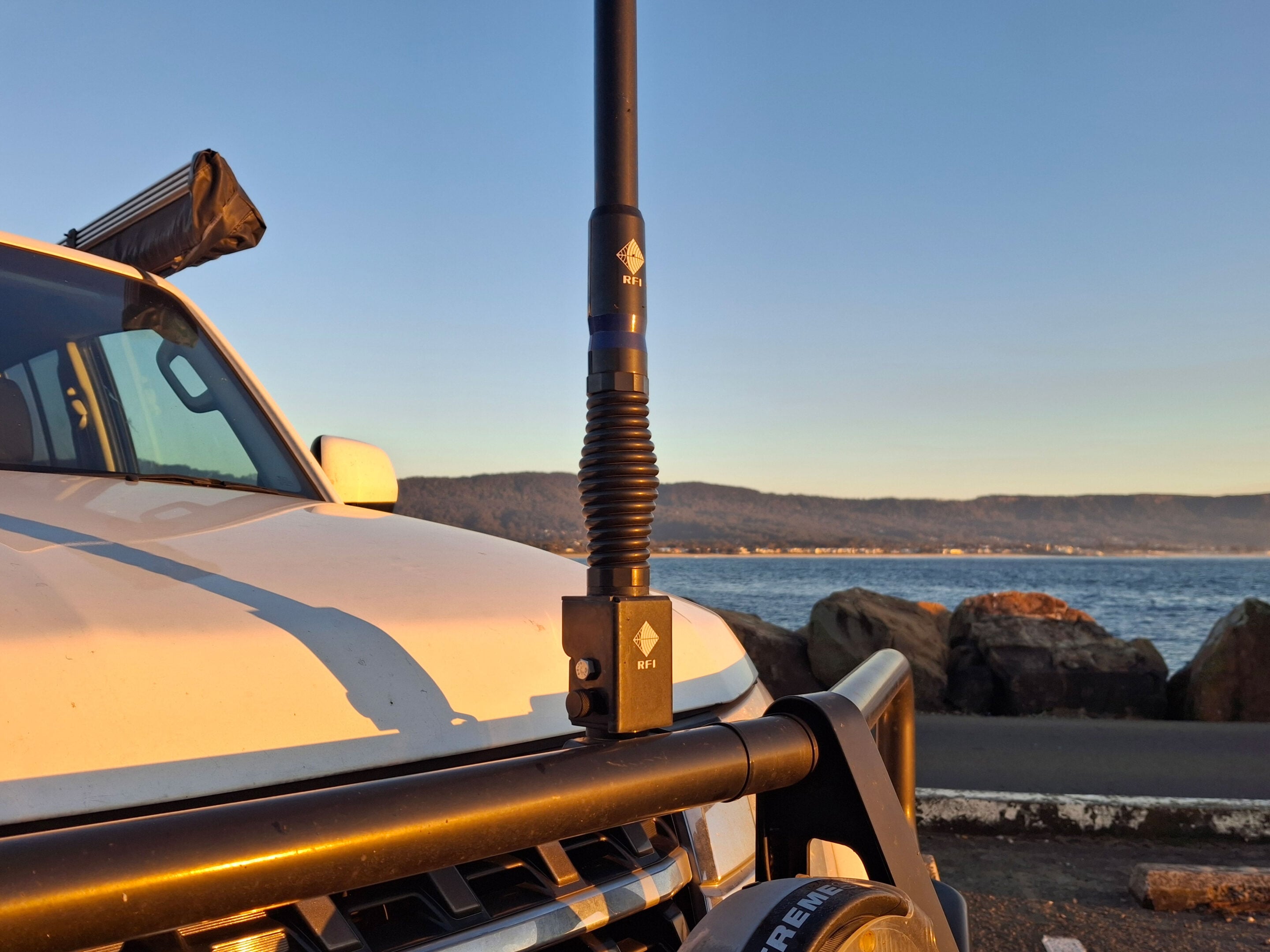
RFI’s CDX-TREME range (↗) includes dedicated UHF CB and cellular antennas. The cellular range includes compact and high-gain options, so check that your chosen antenna supports the frequency bands used by your cellular network and is compatible with your modem or router’s antenna connection. The two systems can complement each other on a touring trip, but neither covers every situation. If you’re heading beyond mobile coverage, a satellite communicator or personal locator beacon is worth considering for emergencies.
The best antenna for your four-wheel drive depends on where you travel, how you use your radio and the space available for mounting. Choose one that suits those needs, install it properly and check the hardware and connections regularly. RFI’s CDX-TREME range (↗) includes UHF CB and cellular options for touring vehicles.
1
Quickfire FAQs
What makes an antenna suitable for off-road use?
Robust construction, a flexible spring assembly and secure mounting hardware help it handle vibration and impacts.
Is a higher-gain UHF antenna always better?
No. Higher gain generally suits flatter terrain, while lower gain can be more suitable for hilly country.
Where should you mount a UHF antenna?
Mount it as high as practical, with adequate clearance from surrounding metalwork.
How often should you check your antenna?
Inspect the mounting hardware, cable and connections regularly, particularly after driving on corrugated roads.
Can a cellular antenna provide mobile coverage in remote areas?
It can help improve connectivity where a compatible network signal is available, but it can’t create coverage where none exists.
Follow 4X4 Australia on Google
Get more 4x4 news, reviews and gear stories from 4X4 Australia in your Google feeds.

We recommend
-
 Gear
Why your 4WD antenna matters when travelling remote
When you're pushing into the edge of mobile coverage, the right antenna can make the difference between a usable signal and a dead screen
-
 Electronics & Gadgets
UHF CB Radios: everything you need to know
A UHF CB radio is an essential, non-negotiable tool for any remote-area traveller