News


Gallery 1
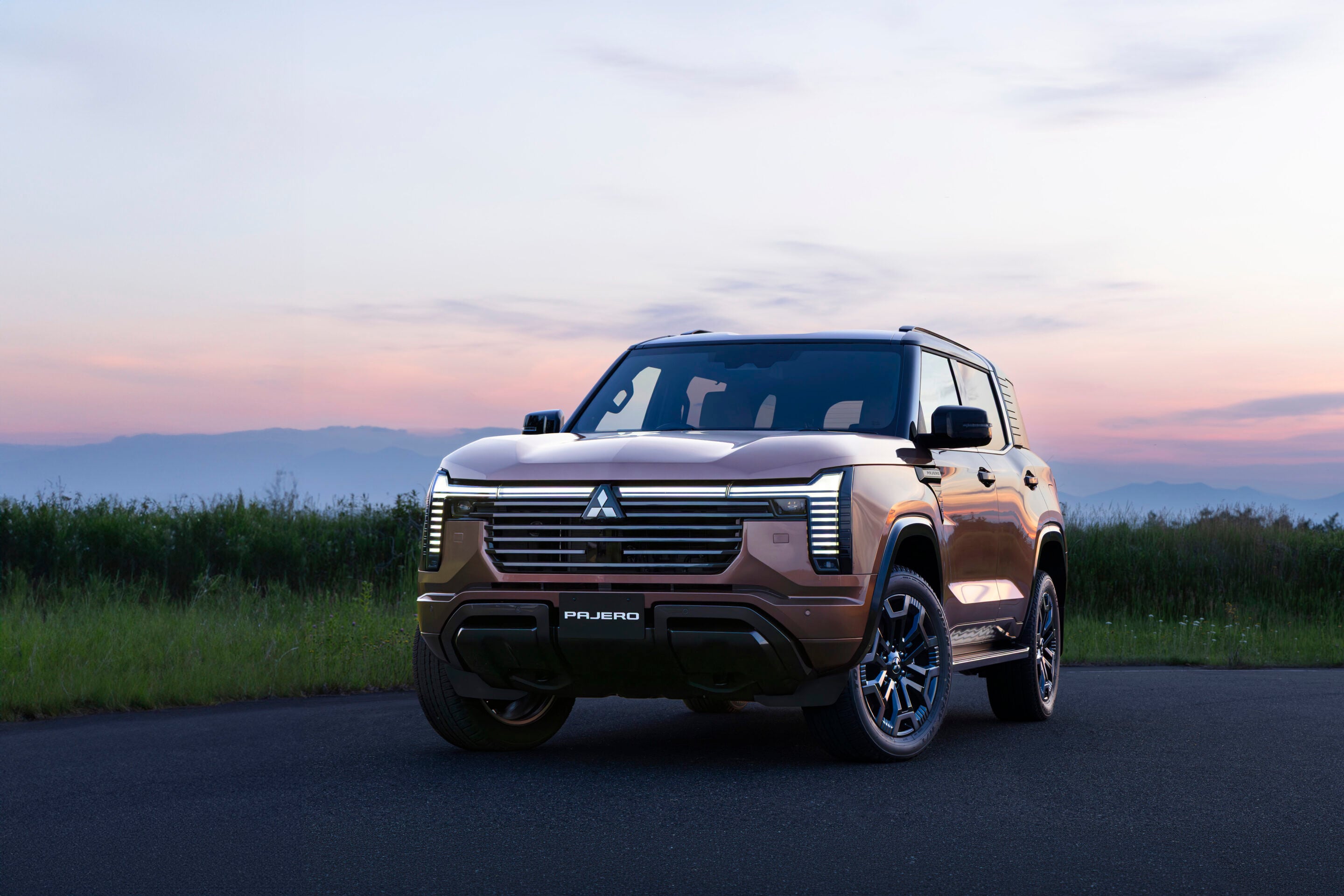
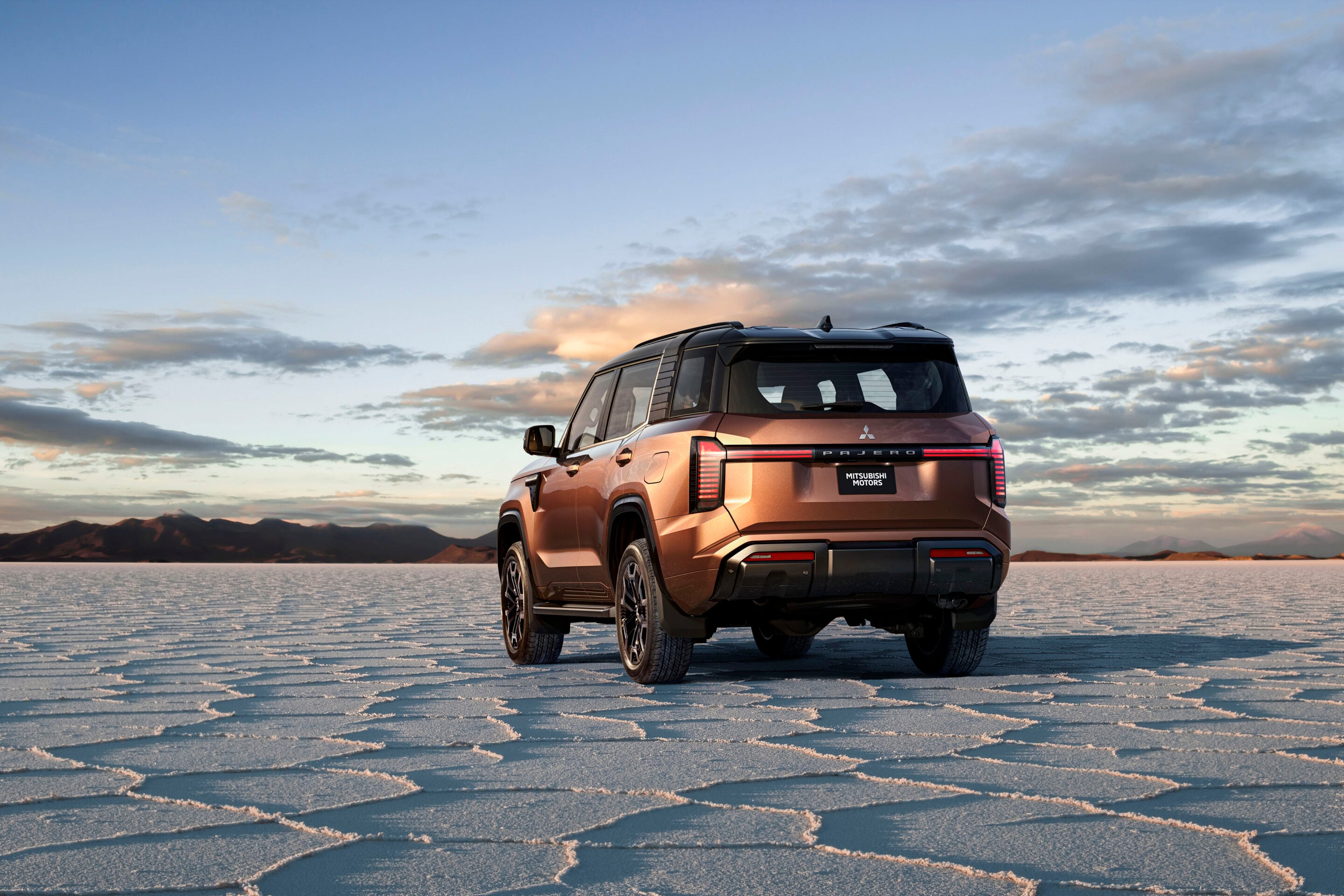
Mitsubishi has globally revealed its all-new Pajero, bringing back its iconic 4WD nameplate as a new-gen flagship SUV.
Built in Thailand, the new Pajero will launch there first before arriving in Japan and Australia. Mitsubishi plans to expand it into roughly 100 markets from 2027, with Australian pricing and specifications to be announced soon.
“Under our mid-to-long-term vision for the 2030s, we aim to enhance customer satisfaction and corporate value by developing distinctive products and strengthening our brand, while further reinforcing what makes Mitsubishi Motors unique,” said Keisuke Kishiura, president and chief operating officer of Mitsubishi Motors.
“The all-new Pajero is the first model to bring this vision to life. As our flagship model, it will lead not only the Pajero series to follow, but the entire Mitsubishi Motors lineup. Evolved with a new level of refinement, the all-new Pajero is a premium cross-country SUV that drivers can rely on in any situation.
“We will introduce the model to markets around the world in phases, and we hope customers will look forward to its arrival.”
1
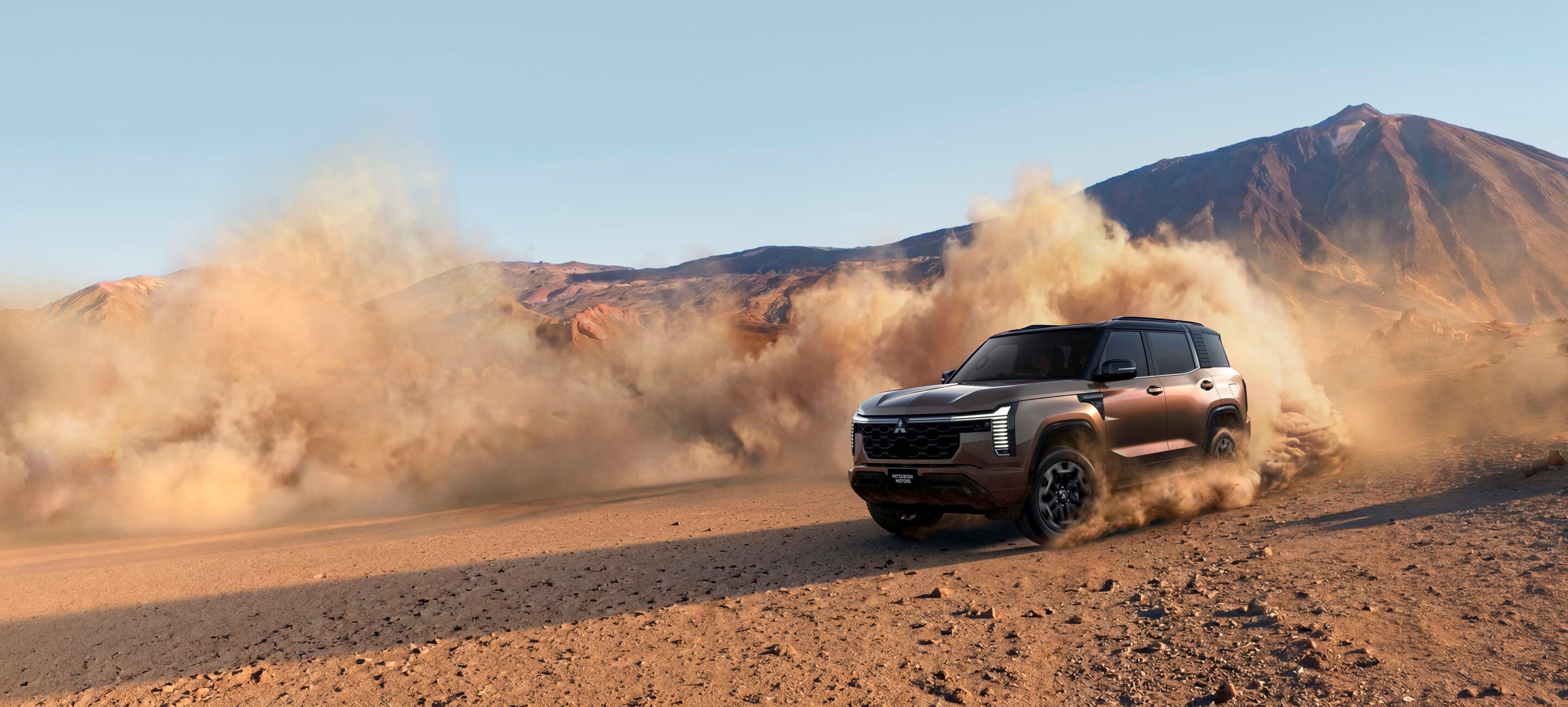
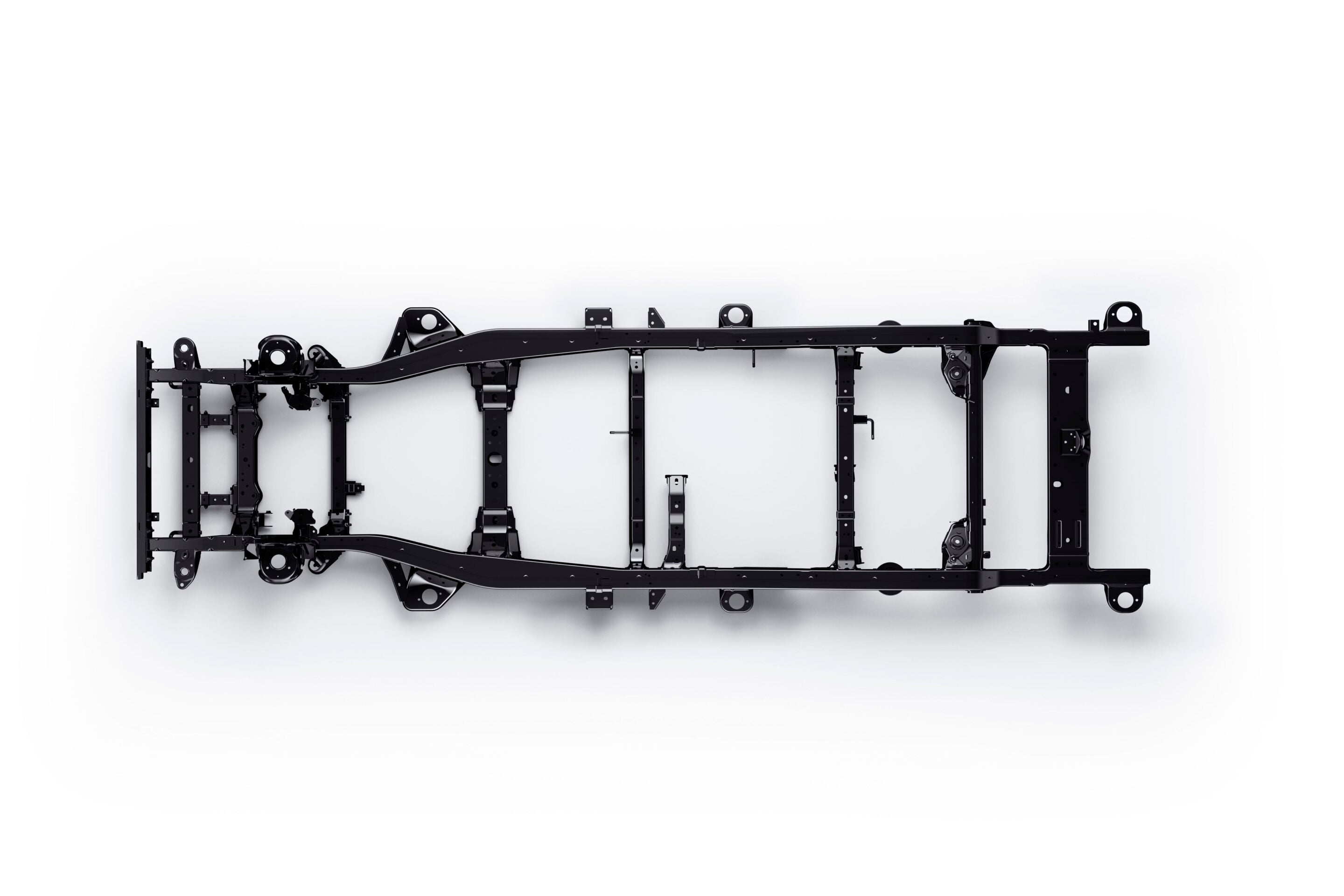
Under the bonnet is a 2.4-litre turbo-diesel producing 480Nm, paired with a new eight-speed automatic. The Pajero retains a proper ladder-frame chassis and Mitsubishi’s Super Select 4WD-II system, with 2H, 4H, 4HLc and 4LLc modes.
It also gets Mitsubishi’s Super-All Wheel Control (S-AWC) system, which integrates Active Yaw Control, stability and traction control and ABS to manage the vehicle’s behaviour across all four wheels. Seven drive modes are available: Normal, Eco, Gravel, Snow, Mud, Sand and Rock.
Built for off-road work
The new Pajero uses a highly rigid ladder frame, with increased use of high-tensile steel to improve rigidity while reducing weight.
Up front, the Pajero gets independent double wishbone suspension, while the rear uses a newly developed five-link rigid axle. Mitsubishi has also strengthened the body mounts to reduce vibration and improve ride quality over rough terrain.
Ground clearance is listed at 230mm, with a 30.4-degree approach angle, 22.6-degree breakover angle and 25.8-degree departure angle. The Pajero measures 4920mm long, 1925mm wide and 1910mm high, with a 2870mm wheelbase and a 52:48 front-to-rear weight distribution.
A 3D Multi Around Monitor uses four cameras to provide a view around the vehicle, including a front under-floor view that shows terrain normally hidden from the driver. It automatically activates when 4HLc or 4LLc is selected.
1
Interior gets a major upgrade
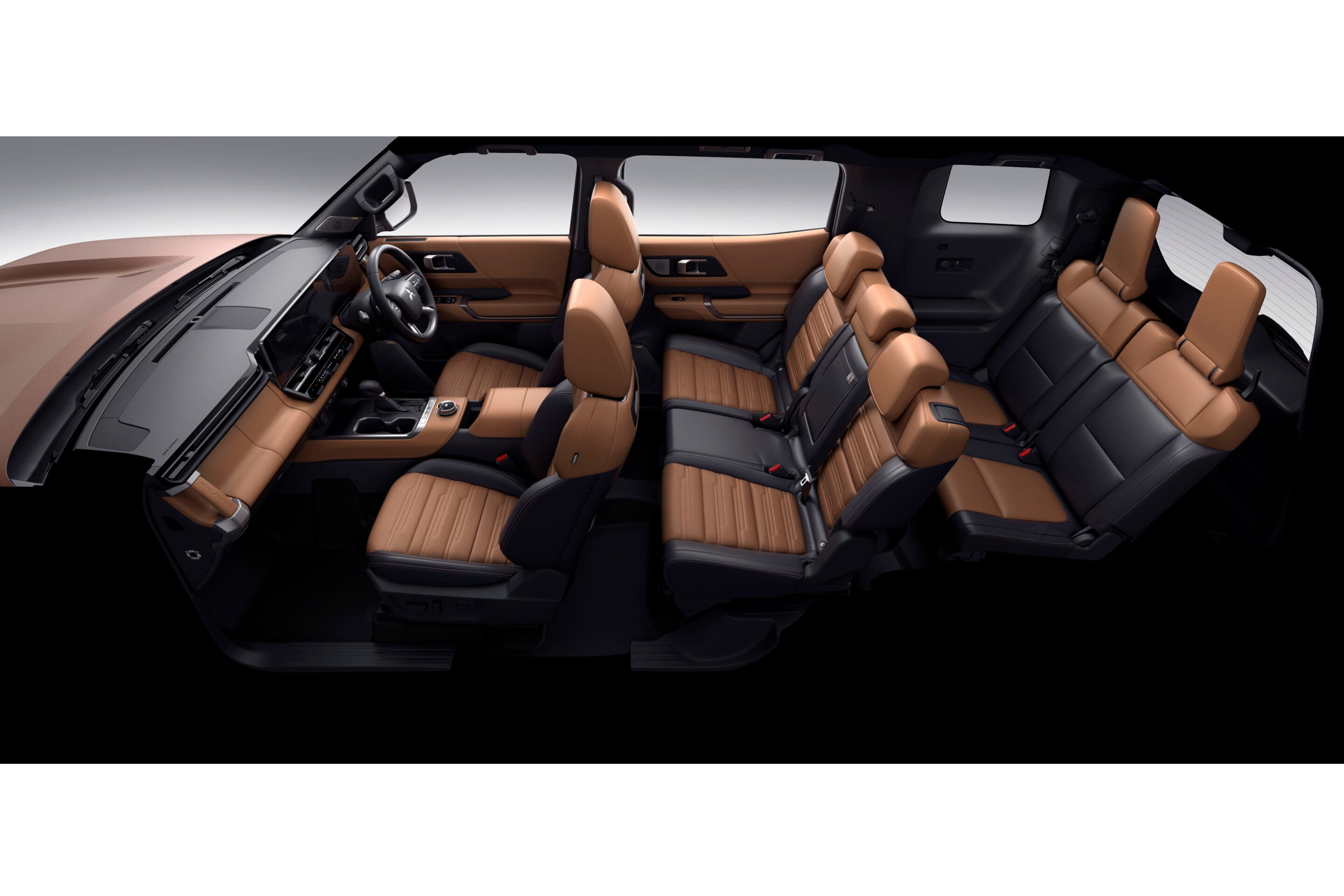
The new Pajero is a three-row, seven-seat SUV. The second-row seats have a 150mm sliding range, allowing owners to adjust passenger legroom and access to the third row. The second row can also tumble forward to make getting into the rearmost seats easier.
A five-seat version could also be offered in Australia, although we’ll have to wait and see whether Mitsubishi Australia confirms it will be part of the local line-up.
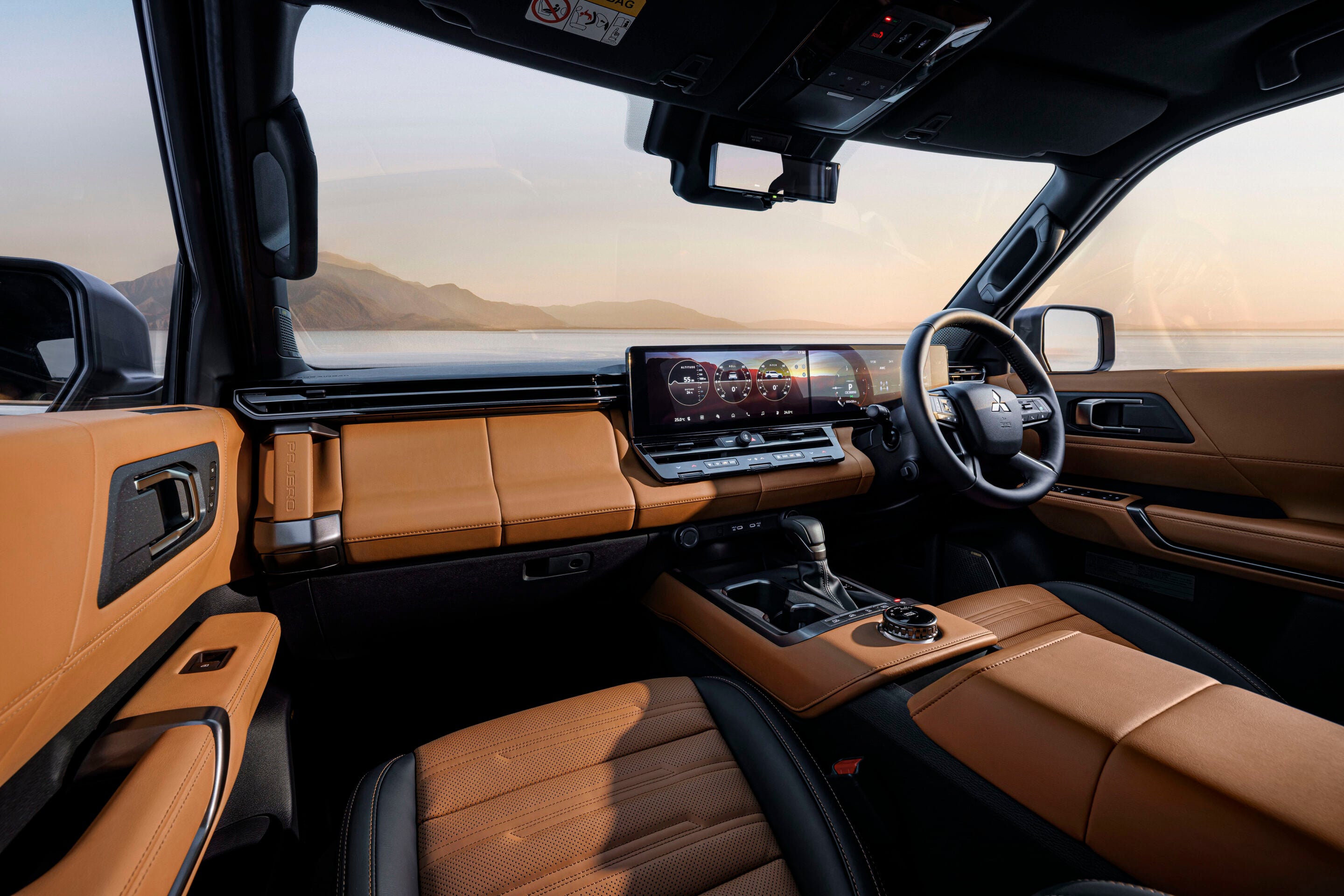
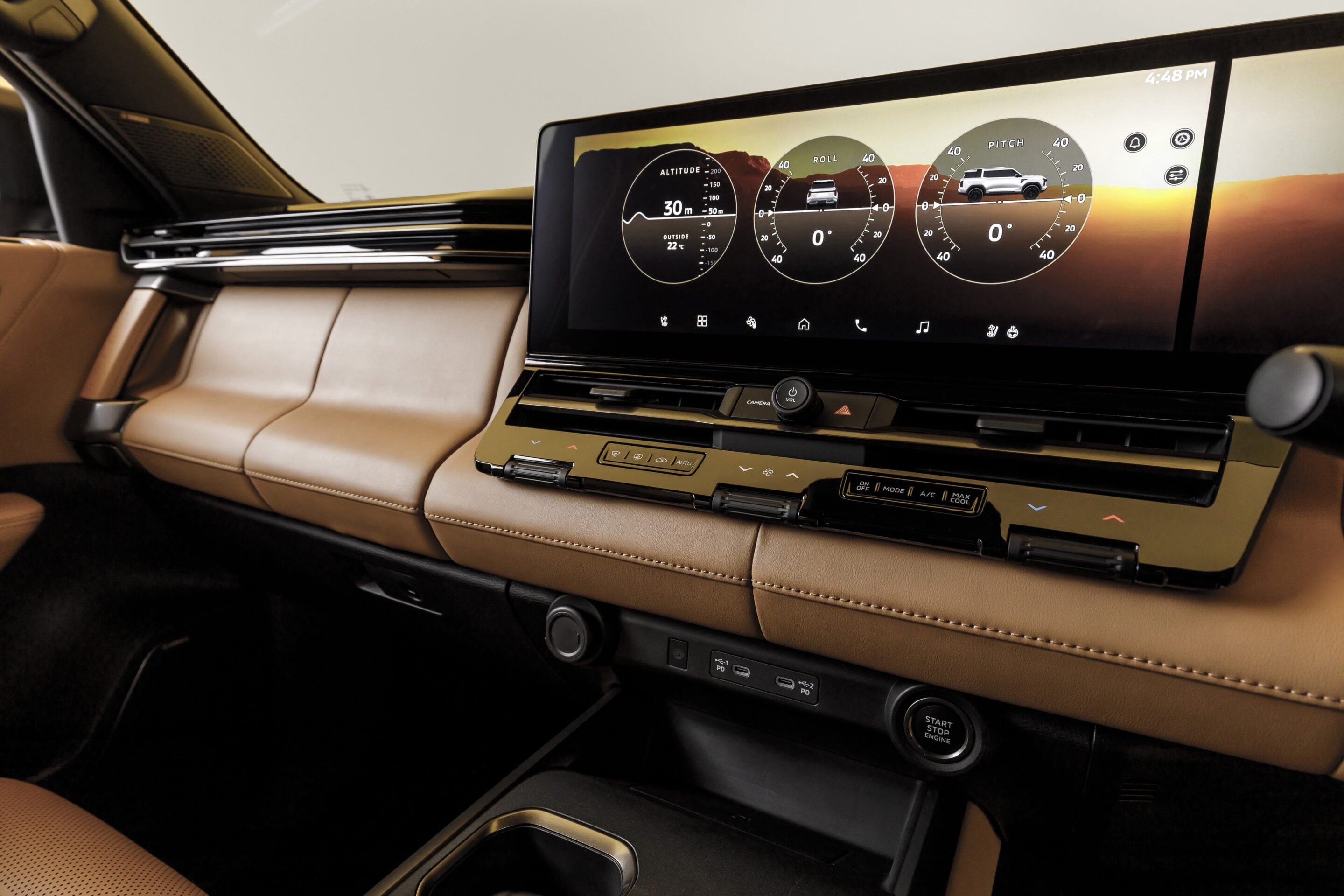
The cabin features a pair of 14.3-inch displays integrated into a horizontal dashboard. The Multi-Meter display brings back the look of the old Pajero’s triple gauges, while providing information such as altitude, compass heading, temperature and vehicle pitch and roll.
2
The front and second rows get seat ventilation, while three-zone climate control provides separate temperature settings throughout the cabin. Mitsubishi has also added acoustic glass and additional insulation to reduce wind and engine noise.
The Smartphone-link Display Audio system supports wireless smartphone connectivity for mapping, music and compatible apps. Mitsubishi Connect adds connected features including remote climate control, vehicle status checks and an SOS emergency call function.
A 12-speaker Dynamic Sound Yamaha Ultimate audio system, developed with Yamaha, is also available. It uses dual amplifiers and noise-compensation technology that adjusts the audio according to vehicle speed and road noise.
1
More safety tech
Safety equipment includes forward collision mitigation with pedestrian, cyclist and motorcyclist detection, junction assist, predictive forward collision warning and pedal-misapplication assistance.
Emergency Lane Assist can provide steering assistance if a lane-departure risk is detected, while Front Cross Traffic Alert monitors for vehicles approaching from either side at intersections.
Mitsubishi’s MI-PILOT system combines adaptive cruise control and lane-keeping assistance for highway driving. Eight airbags are fitted, including a centre airbag designed to reduce contact between the front occupants in a crash.
1
The Pajero is back
First launched in 1982, the Pajero became one of Mitsubishi’s most recognisable 4WDs, with more than 3.29 million produced across four generations.
The new model keeps the fundamentals that made the name famous, including a ladder frame, low-range 4WD, diesel torque and a rigid rear axle, while adding substantially more technology, safety and cabin refinement.
Australian pricing and specifications are expected to be announced soon, so keep an eye on this website if you want to hear the latest news first.
3
Key features
Engine and drivetrain
- 2.4-litre turbo-diesel engine producing 480Nm
- Eight-speed automatic transmission
- Super Select 4WD-II with 2H, 4H, 4HLc and 4LLc modes
- Super-All Wheel Control (S-AWC)
- Seven drive modes: Normal, Eco, Gravel, Snow, Mud, Sand and Rock
Chassis and off-road
- Ladder-frame chassis
- Independent double wishbone front suspension
- Five-link rigid rear axle
- 230mm ground clearance
- 30.4-degree approach angle
- 22.6-degree breakover angle
- 25.8-degree departure angle
- 3D Multi Around Monitor with front under-floor view
Interior and technology
- 150mm second-row sliding range
- 14.3-inch displays
- Multi-Meter off-road display
- Three-zone climate control
- Front and second-row seat ventilation
- Acoustic glass
- Wireless smartphone connectivity
- MITSUBISHI CONNECT connected services
- 12-speaker Dynamic Sound Yamaha Ultimate audio system
Safety and driver assistance
- Emergency Lane Assist
- Front Cross Traffic Alert
- MI-PILOT highway driving assistance
- Forward Collision Mitigation
- Predictive Forward Collision Warning
- Pedal Misapplication Assistance
- Eight airbags, including SRS centre airbag
Follow 4X4 Australia on Google
Get more 4x4 news, reviews and gear stories from 4X4 Australia in your Google feeds.


We recommend
-
 News
News2027 Mitsubishi Pajero reveal date confirmed
The new-gen Pajero will make its global debut in September, ahead of its showroom arrival by the end of 2026
-
 News
NewsMitsubishi Pajero nameplate to return after five-year hiatus
Mitsubishi has confirmed the Pajero nameplate will return, set for a global reveal at a world premiere later this year