News


Gallery 1
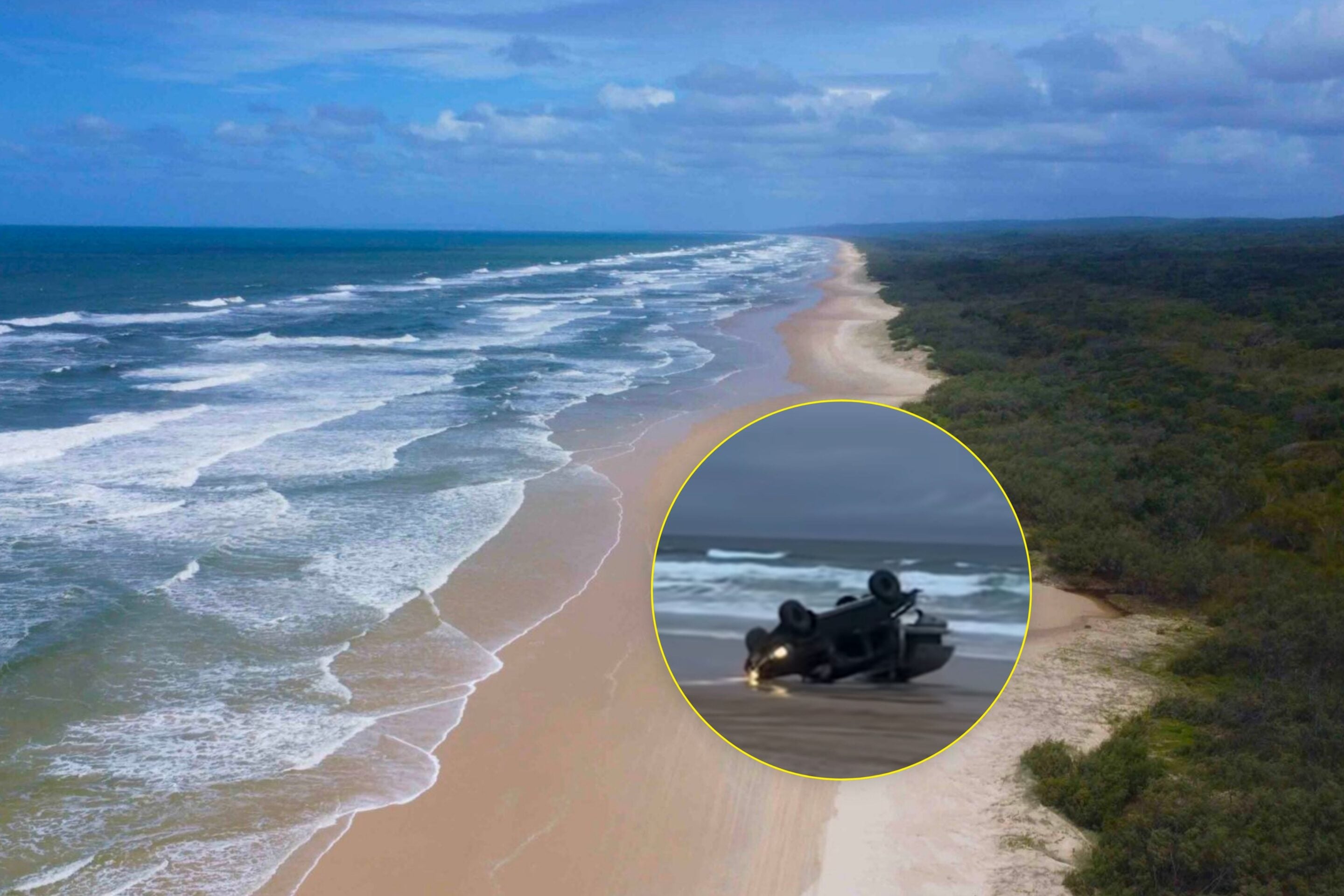
A viral K’gari (Fraser Island) rollover is a timely reminder that a 4WD can go from a harmless-looking fishtail to a rollover in a heartbeat.
Footage uploaded to the 9 News Gold Coast Facebook page (↗) on August 26 shows a ute fishtailing near Hook Point before a tyre digs into the sand and the vehicle rolls. The occupants reportedly avoided serious injury, while police are investigating the crash. It also highlights why knowing how a vehicle behaves on sand matters, particularly for drivers who don’t regularly head onto beaches.
How does a fishtail turn into a rollover?
A bit of sideways movement isn’t necessarily cause for alarm.
The trouble starts when the vehicle builds enough sideways momentum and a tyre suddenly bites into the sand. That tyre can effectively become a pivot point, with the vehicle still trying to travel sideways while the tyre stops, throwing the body over it. It’s more likely to happen when you’re carrying plenty of gear, running higher tyre pressures or travelling too quickly for the sand. A high centre of gravity only makes the situation less forgiving.
Don’t panic and don’t try to catch it with a massive steering input. If the rear steps out, steer smoothly into the skid and avoid suddenly winding on a heap of opposite lock. Big steering movements can make the vehicle snap back the other way and increase the chance of a tyre digging in.
Ease off the throttle and let the vehicle settle rather than trying to immediately point it where you want it to go. Better still, don’t get into the situation in the first place. If the sand is soft, chopped up or heavily trafficked, slow down.
How to stay safe when driving on the beach
K’gari’s beach speed limit is 80km/h unless otherwise signposted. That’s the maximum legal speed, not a suggestion that 80km/h is safe everywhere.
Soft sand, washouts, changing camber, parked vehicles, pedestrians and other traffic can all make a much lower speed appropriate. Queensland Parks advises drivers to check conditions, reduce tyre pressures before hitting the beach and drive to the conditions. For experienced sand drivers, this isn’t exactly groundbreaking advice, but it’s easy to forget when the beach is firm and open and the speed starts creeping up.
There’s also no prize for being the person who gets down the beach fastest. Keeping the ego in check is part of good beach driving. You don’t need to be a hoon to have fun in a 4WD, and pushing harder simply to show what the vehicle can do is a pretty poor trade-off when the consequences can be a rollover.
Know your vehicle and the beach
Dropping tyre pressures increases the tyre’s footprint and helps it float over soft sand rather than digging in. But there’s no magic pressure that makes a vehicle safe at speed.
How a 4WD behaves also depends on its weight, load, tyre setup, suspension, centre of gravity and the sand underneath it. A loaded touring rig with a roof rack and plenty of gear will react differently from an unloaded ute. Add speed and an abrupt steering input and things can get ugly quickly.
K’gari’s eastern beach is a road, not a free-for-all. Queensland road rules apply, and the beach has two-way traffic, pedestrians, wildlife and aircraft using sections as a landing strip. The surface can change dramatically over a short distance, too. The smart approach is to look well ahead, pick your line and adjust your speed to what the sand is doing. If it looks chopped up or soft, back off before the vehicle starts wandering around.
Beach driving isn’t difficult, but it has its own set of vehicle dynamics and it’s worth learning them before heading somewhere like K’gari. Knowing what a vehicle feels like when it starts to move sideways can mean the difference between a quick correction and a rollover.
A proper 4WD training course can teach drivers how tyre pressures, momentum, steering and throttle inputs affect a vehicle on sand, as well as what to do when things start going wrong.
Five things to do before and during beach driving
1: Drop your tyre pressures
Reduce tyre pressures before getting onto soft sand, using a pressure appropriate for your vehicle, tyres and load. Carry a reliable compressor so you can reinflate before returning to normal roads.
2: Slow down
Treat the posted speed limit as a maximum, not a target. Slow down for soft sand, ruts, washouts, traffic, pedestrians and changing conditions.
3: Look well ahead
Read the beach and pick your line early. Give yourself plenty of time to deal with softer sand, obstacles and other vehicles rather than making a sudden steering correction.
4: Keep your steering smooth
If the vehicle starts to move sideways, don’t panic and snap the steering from lock to lock. Make controlled inputs, ease off the throttle and let the vehicle settle.
5: Keep your ego in the glovebox
There’s no need to prove what your 4WD can do. Drive within your ability, leave plenty of margin for changing sand and traffic, and remember you’re sharing the beach with everyone else.
Follow 4X4 Australia on Google
Get more 4x4 news, reviews and gear stories from 4X4 Australia in your Google feeds.


We recommend
-
 Advice
5 essential sand driving tips every 4x4 driver needs to know
The beach and the desert will humble you fast. Here's how to stay safe on sand
-
 Explore QLD
Paradise found: A 4x4 trip to K’gari (Fraser Island)
Exploring K’gari – the world’s largest sand island – proves every bit as rewarding as its reputation suggests
-
 Advice
How to drive a 4x4 on sand: Beach, dunes and recovery basics
Beach driving looks simple, but sand can quickly bog a 4x4 or leave you exposed to changing tides