Reviews


Gallery 1
Part 1: Prado GX in the shed for a couple of months
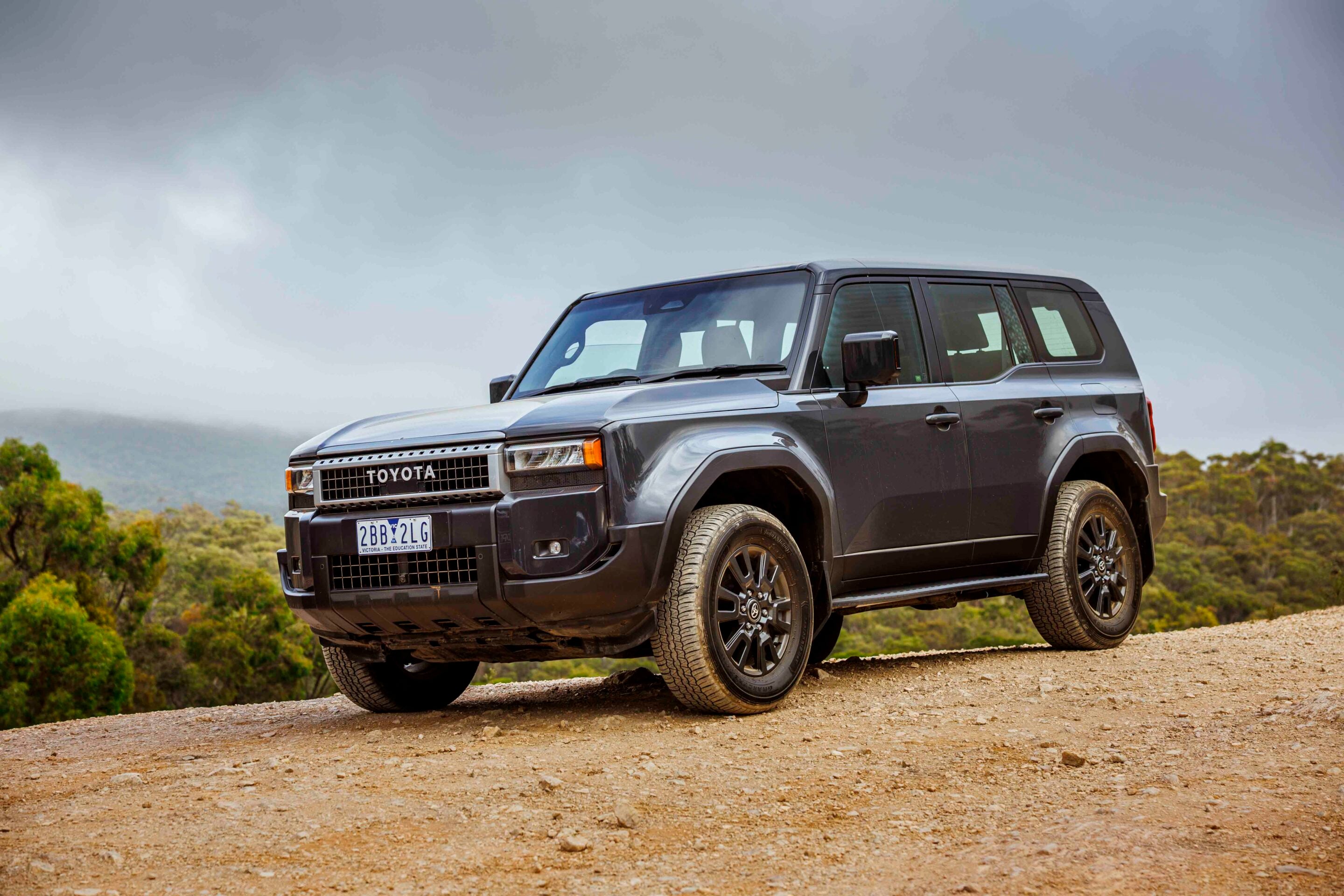
At the launch of the Prado 250 late in 2025, I came away from the drive in Kakadu NP saying that, for my money, the base-model GX grade represented the best value.
I’m not one of those base-model fanboys who want everything on black steelies with minimal features; there are plenty of luxe items I enjoy in a new vehicle. But, as one of only two models in the new Prado range to offer a five-seat configuration – the other being the high-specced Altitude model – I felt that the GX was the best package.
Following consumer backlash regarding the poor packaging of the seven-seat Prados, Toyota conceded and added a five-seat GXL to the model range, and this, for me, could be the best model. So when Toyota offered us a GX for a three-month test, we jumped at the chance to get back into the entry-level Prado.
8
The vehicle we have is a 2024-badged GX and was possibly one of the vehicles from that original launch program. It has 16,000km on the clock and has its fair share of bush pinstripes and evidence of a life well lived.
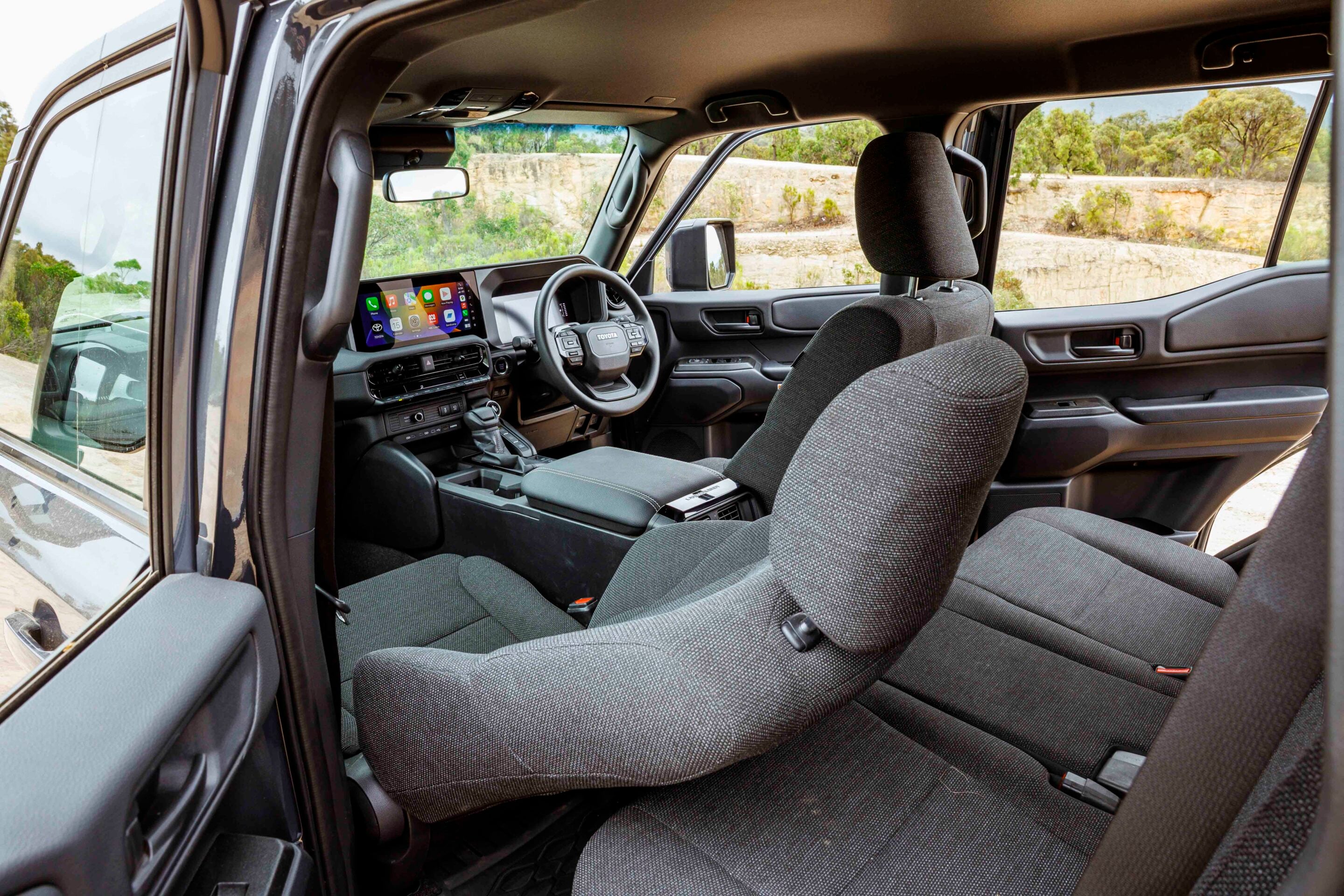
The GX comes with almost all the features you could want and nothing you can’t live without. Inside, it has cloth-covered seats, a 12.3-inch multimedia screen compatible with wireless Apple CarPlay and Android Auto, Bluetooth connectivity, cloud-based built-in sat-nav, dual-zone climate control, and a decent sound system. The cabin is big and comfortable and includes all the modern ADAS and safety features. The only thing I think it’s missing is a tyre pressure monitor, as this is only offered in the higher-grade models.
The 500Nm 2.8-litre engine and eight-speed auto combination provide plenty of power for highway driving and are smooth and refined around town. The large glasshouse offers great vision for both the driver and passengers, and the lack of third-row seating means there’s heaps of space in the cargo area. The cargo space is still compromised by the hybrid system battery under the floor, but nowhere near as much as it is in the seven-seat models.
Our first jobs for the Prado were a couple of comparative road tests, one of which was against its main rival, the Ford Everest. The other test you’ll need to wait a little longer to read, but it’s safe to say that the Prado impressed our drivers on both occasions.
Aside from being my daily driver, the Prado has been used as a workhorse by our photographers and videographers, who really appreciated the capacity of the cargo area and the general ease of use and drivability. This is the biggest Prado ever, and the amount of space in the front and rear seats has also been noted by those using the vehicle. It has the same wheelbase as a 300 Series LandCruiser and is bigger inside than an 80 Series.
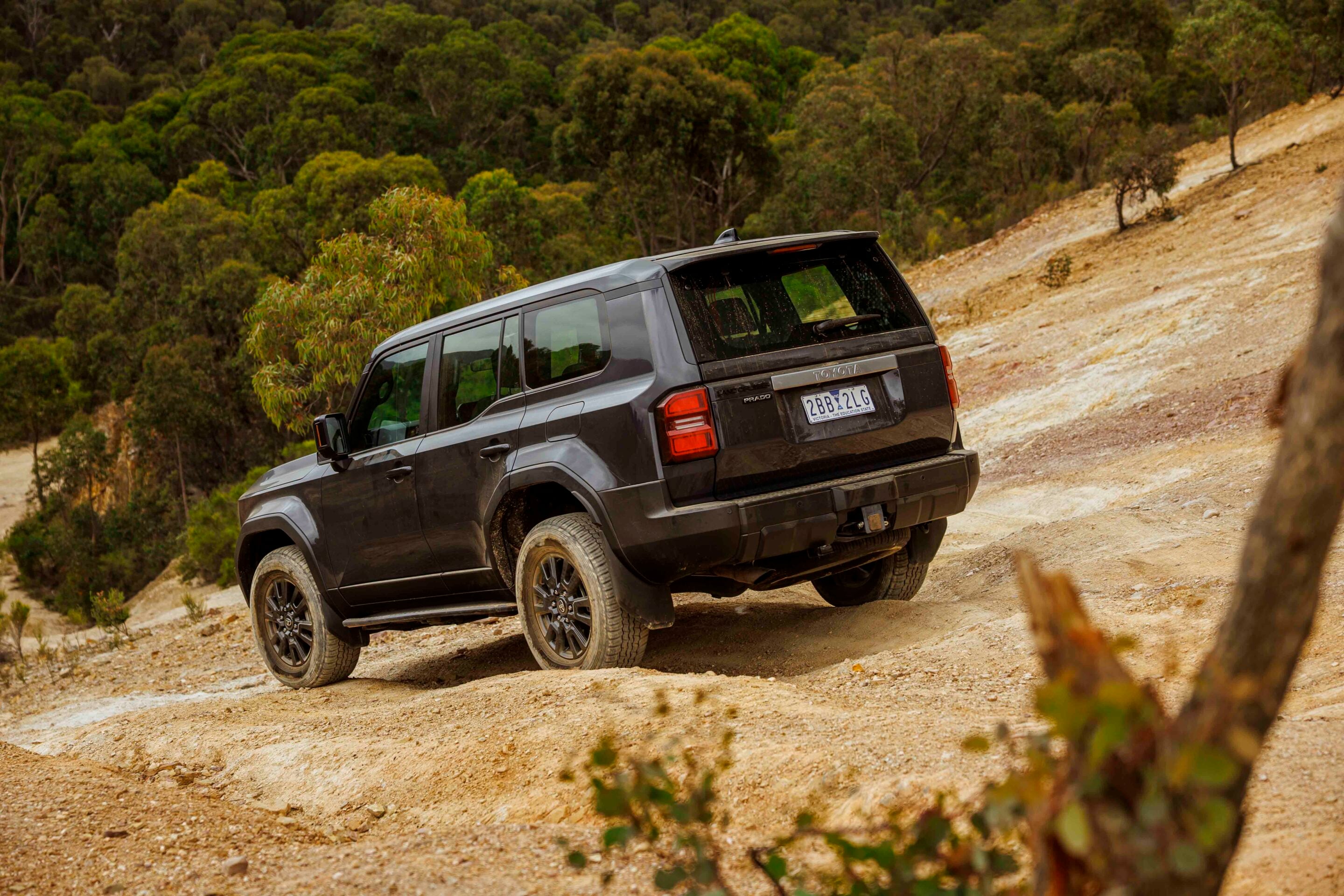
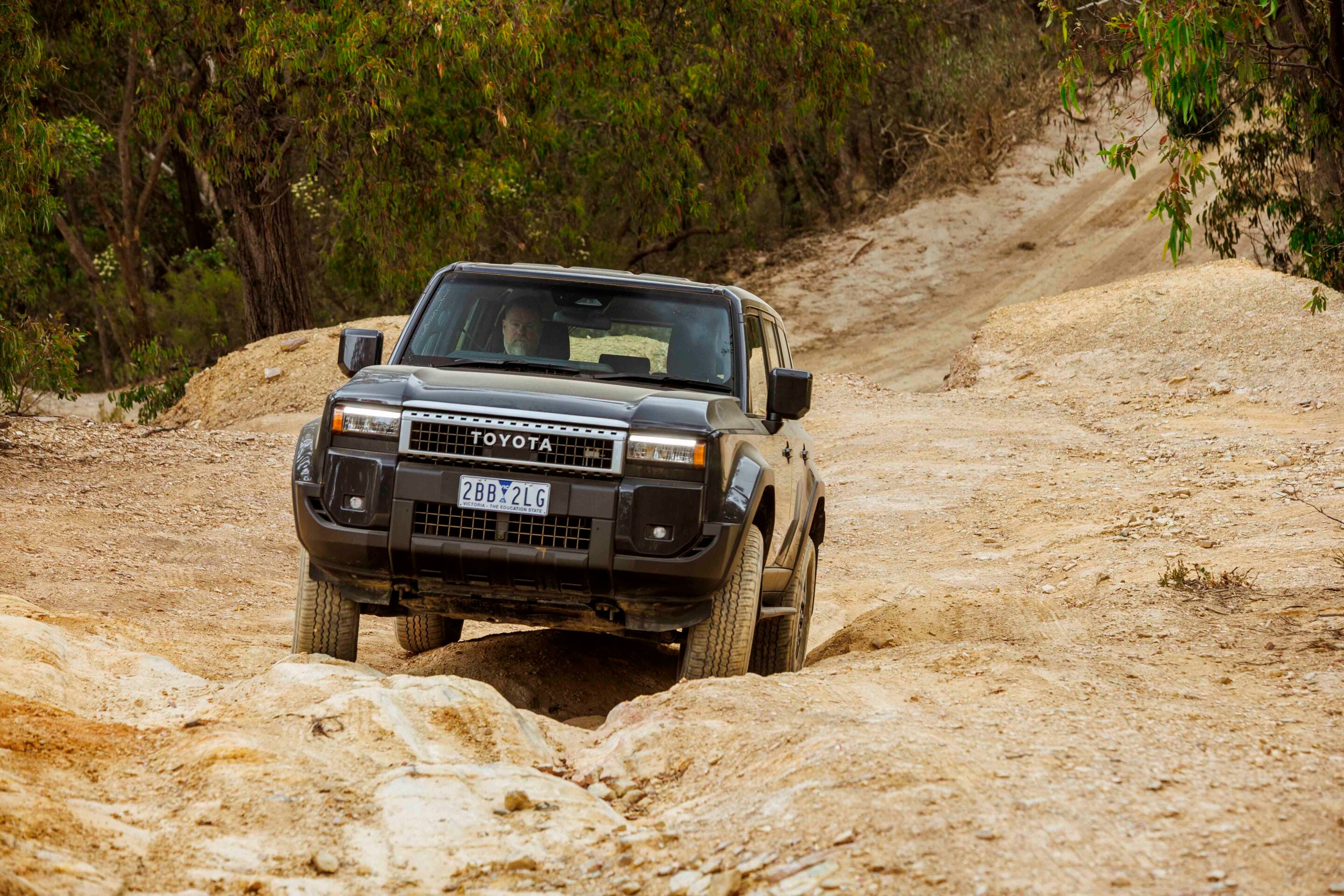
Its off-road performance has been great on the road tests, thanks mainly to Toyota’s responsive electronic traction control system, backed up by good axle articulation and the clever Crawl Control system. That said, the first thing we’d add with the money saved by buying the GX over the more expensive grades is a set of front and rear locking differentials for the best off-road traction.
- Kilometres when it arrived: 16,802km
- Average fuel: 9.2L/100km
Part 2: Time is up with the versatile yet simple wagon
Our time with the Prado 250 Series GX came to an end all too soon, as the base-model Toyota 4×4 wagon had become such a useful vehicle for whatever we threw at it.
Supporting photo shoots with the 4X4 Australia team, weekend escapes, hauling gear and general daily-driver duties, the Prado did it all with ease. It was that daily-driver aspect I particularly enjoyed, as it’s such an easy vehicle to live with. It’s simple to jump in and out of for a quick trip down the street, yet just as accommodating when loading it up with gear.
After folding the second row of seats down to carry larger items, I left it in that configuration as it made it simple to throw a pushbike in the back – and I don’t often need a rear seat. On one weekend, I was able to load four bikes into the cargo area, making the Prado a genuinely practical load hauler.
1
The fact that the 250 Series is bigger inside than any previous Prado is appreciated not just for carrying goods, but also for front-seat passenger comfort. The driver’s space is roomy and comfortable, with all controls easily at hand. The large, flat windscreen offers a great view of the road ahead, while the side windows provide excellent visibility around the vehicle.
Interestingly, some 250 Series owners have found the large, flat windscreen more prone to stone damage than previous Toyota 4x4s, although we didn’t experience that issue. We did, however, have a slow leak from one of the front tyres, which became evident while driving. It was manageable over the final week with the vehicle, but it would have been easier to identify and monitor if the GX was fitted with a tyre pressure monitoring system (TPMS), which is reserved for higher grades.
1
Another minor annoyance is the AdBlue warning displayed on the digital dash, which illuminates a low-level warning despite indicating there is still around 2000km of range remaining. While useful on long trips, I found the constant warning symbol distracting in everyday driving.
These are minor gripes in what is otherwise an exceptionally well-sorted package from Toyota. Even in this lower specification, it has most of what you need and little you’d miss. The exception is the 48V hybrid system, which offers modest gains in performance and fuel efficiency but is mounted in the rear, limiting load space and the ability to fit larger auxiliary fuel tanks.
The Prado, in any grade, is a great platform for building a capable touring 4×4, but the GX in particular is a true blank canvas. Just take a look at the Razed Products Prado featured on the cover of our April issue.
- Kilometres this month: 662km
- Average fuel: 9.0L/100km
Follow 4X4 Australia on Google
Get more 4x4 news, reviews and gear stories from 4X4 Australia in your Google feeds.