
Ford has revealed that it is gearing up to launch a rugged Ranger Super Duty model that will offer a 4500kg GVM, 4500kg towing capacity, and a whopping 8000kg GCM, putting it on par with many light-duty trucks.
While details are still thin on the ground, this heavy duty Ranger will be the first ever non-F-Series model to wear the venerable Super Duty nameplate.
For the uninitiated, the Super Duty badge has been around since the late 90s when Ford started applying it to beefed-up F-Series models ranging from the F-250 to F-600. The Super Duty trucks typically have heavy-duty chassis and driveline components to handle greater GVMs, towing and payload demands.
Ford Australia outlined that the Ranger Super Duty was born out of direct collaboration with local fleet customers who wanted an off-road-capable midsize ute that could do more, targeted at industries like emergency services, mining, utilities, forestry and more.
“Ranger Super Duty blends the smart features and advanced safety of our award-winning Ranger with heavy-duty capability and delivers what our buyers told us they needed but couldn’t get anywhere else,” Sondra Sutton Phung, General Manager, Global Truck, Ford Motor Company said.
“This work-ready vehicle will give owners the flexibility they need to get the big jobs done, with the confidence of a factory-backed warranty.”
Ford’s IMG Product Development team is developing the new model, led by 1500 designers, engineers and specialists based here in Australia, while manufacturing will take place in Thailand where the Ranger lineup is currently built.
Based on the numbers revealed, Ford appears to have leapfrogged the 1500-class ute segment altogether, also leaving the traditional dual-cab ute market in its dust, instead taking the fight to light-duty truck makers like Isuzu, Hino and Iveco with a ute capable of towing as much as an F-Series but likely to eclipse its carrying capacity.
Ford has not revealed the Ranger Super Duty’s maximum payload, but based on its 4500kg GVM it is likely to be up around the two-tonne mark depending on how much weight is added when beefing up the chassis and driveline – assuming it’ll be toughened up in a similar manner to its full-size US counterparts.
The good news for the off-road world, and commercial customers too, is that Ford Australia has said it is working with modifiers in the lead up to the 2026 launch. Whether this means it’ll launch with strong aftermarket support is not yet known, but this is likely given Ford’s recent work with ARB and others.
“Ranger Super Duty further strengthens our commercial vehicle portfolio, with an offering for all kinds of work,” Andrew Birkic, President and CEO, Ford Australia and New Zealand said.
“As we move closer to launch, we will continue to work closely with fleets and vehicle modifiers across Australia to be sure that Ranger Super Duty does everything they expect it to, and so much more.”
While little is known about specifications of the Ranger Super Duty, the weight figures suggest it could be a formidable force in off-road touring circles where Toyota currently holds a monopoly with its 79 Series LandCruiser.
Despite the widespread GVM upgrade options available, achieving even close to a 4500kg GVM with a 79-Series LandCruiser, or any other ute option for that matter, will cost you dearly. Not to mention, most GVM upgrades aren’t factory-backed.
There may finally be an off-the-shelf solution for GVM-hungry Aussie tourers when the Ranger Super Duty arrives in 2026 – but until we know more about the specifications of the new model we can only cross our fingers and hope.
This Black Friday, simplify your holiday shopping with BLUETTI’s exceptional deals on portable power stations, which are practical gifts for both indoor and outdoor use. The BLUETTI Black Friday sale runs from November 11 to December 3, so now is the time to snag some holiday gifts for your loved ones.
Get the Elite 200 V2 at a special launch price of A$2,499 from November 13 until December 3. Use the discount code to get an extra 5% OFF: PRElite200 (13 Nov- 3 Dec). It will be available for presale on BLUETTI’s website.
All-round power: BLUETTI Elite 200 V2 portable power station
BLUETTI’s latest innovation the Elite 200 V2 is a dream gift for anyone seeking cutting-edge, durable power for camping, home backup, or road trips. Built with automotive-grade LiFePO4 batteries, it offers over 6,000 charge cycles—over 17 years of daily use. With a 2,073.6Wh capacity and a 2,600W output, it’s powerful enough to run household essentials like refrigerators, microwaves, coffee makers, and even air conditioners. It charges quickly, reaching 0-80% in just 45 minutes with dual 1,800W AC and 1,000W solar inputs. Backed by BLUETTI’s proprietary technologies, the compact powerhouse is safe to use in caravans, campers, trailers, or small work sheds.
Practical gifts for homeowners: AC300 and AC500 home backup power series
The AC300 and AC500 home battery backup systems provide peace of mind for homeowners during power outages and substantial savings on electricity bills. On sunny days, the AC300 + B300K combo can harness up to 2,400W solar energy, fully recharging its 2,764.8Wh battery in around 2 hours. This stored solar power can then power the house at night or during blackouts. The AC300+B300K is now A$3899, down from A$4999. Go solar with AC300+B300K+PV350D set at a record-low price of A$4898.
For greater capacity, the AC500 + 2xB300K (5,000W/5,529.6Wh) setup is available for A$6599, down from A$8997, powering heavy-duty appliances such as a 5000BTU air conditioner for hours. By connecting solar panels, it charges fast at 3,000W, maximizing clean energy usage and further reducing energy costs.
Best value gifts for travellers: BLUETTI AC180/AC70+ Charger 1 alternator charger
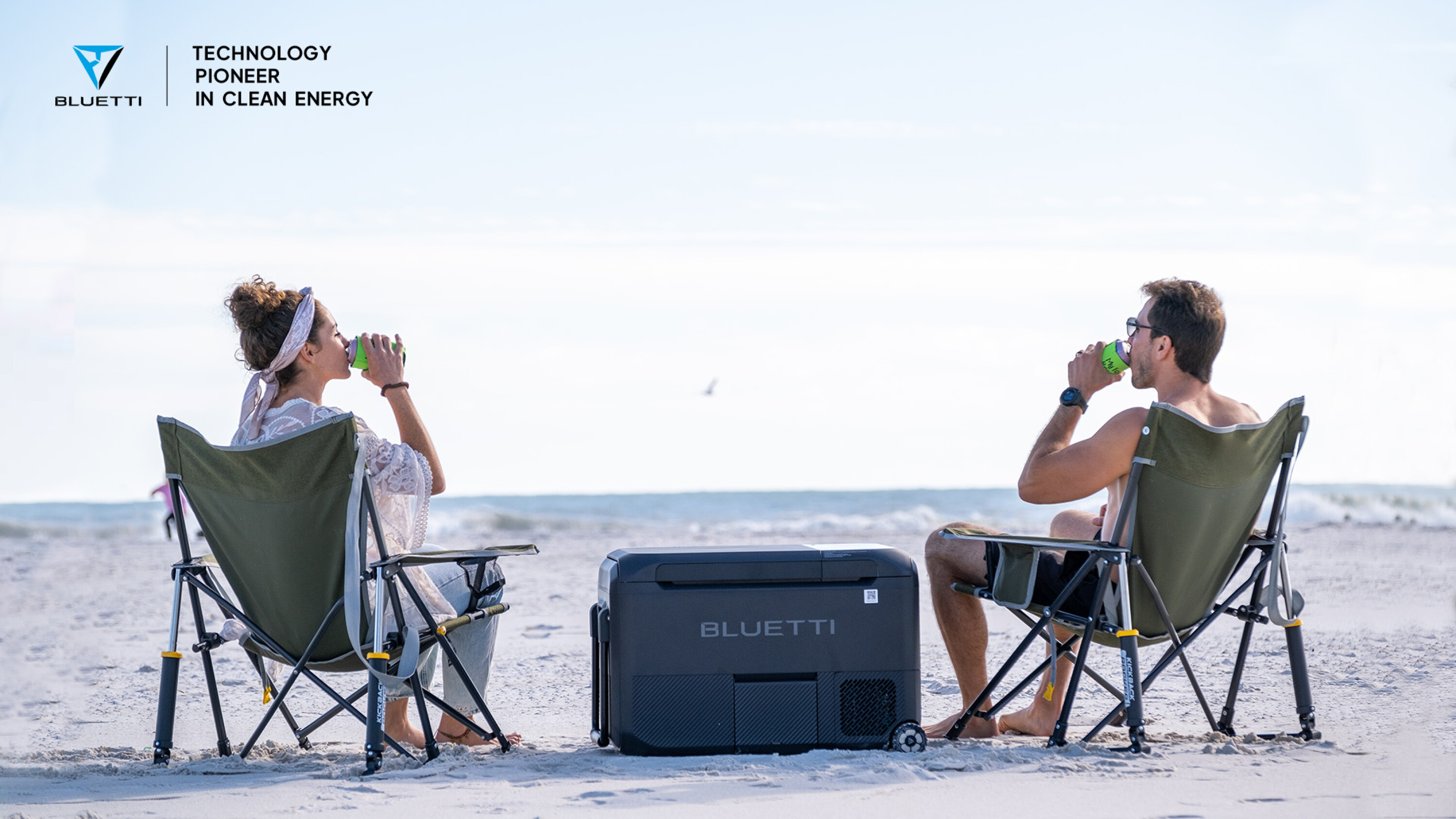
Compact yet powerful, the AC180 portable power station is a must-have for travelers, remote workers, campers, and anyone who needs reliable power on the go. At just A$1099 (drop from $1499), the AC180 packs 1,152Wh capacity and 1,800W output. It can keep a car fridge running for over 15 hours—ideal for camping, beach outings, or picnics. The smaller AC70 with 768Wh capacity and 1,000W inverter keeps phones, laptops, cameras, and drones charged during backyard camping or fishing trips. Originally A$1099, it’s now down to A$749. To solar charge it, get AC70+SP200L bundle at a member price of A$1368. For even faster 560W car charging, the new Charger 1 alternator charger suits multiple BLUETTI portable power stations, now also on sale.
Don’t miss out
Portable power stations aren’t cheap, so don’t miss out on BLUETTI’s Black Friday deals to get one at a discount for yourself, your family, or your friends. With a range of portable generators to choose from, you can’t go wrong, as they can be used for everyday life, camping, emergencies, or remote worksites.
Get more savings from BLUETTI this Black Friday
From November 11 to December 3, BLUETTI is offering exciting Black Friday surprises for customers shopping on its official website, including:
Lucky Draws: Enter for a chance to win fantastic prizes such as the AC2A portable power station, coffee mugs, hoodies, T-shirts, useful tools, and BLUETTI Bucks.
Social Media Prizes: Engage with BLUETTI on social media for a chance to win gifts like the EB55 power station, X20 power bank, and lifestyle gifts.
The period from Black Friday through Cyber Monday is the best time of the year to invest in portable power stations and solar generators. Don’t miss out on the best BLUETTI Black Friday deals—shop now to save even more!
Fresh on the heels of the release of the ever-popular LandCruiser Prado 250, Toyota has just announced the launch of the hotly anticipated full-size Tundra. Coming in at $155,990, with a 790NM 3.5L twin-turbo V6 paired with a parallel hybrid system, and a monster 4500kg tow rating, this is fully expected to be a big seller for the country’s most popular brand.
The Tundra arrives after a huge development program for Australia, which included an extensive re-working in the Walkinshaw factory for the RHD conversion “Toyota has never before worked with a third party to re-engineer a vehicle for right-hand drive so we needed to ensure that it met our high quality standards,” Toyota Australia Vice President Sales, Marketing and Franchise Operations Sean Hanley told us, “and the result is something that all parties can be proud of.”
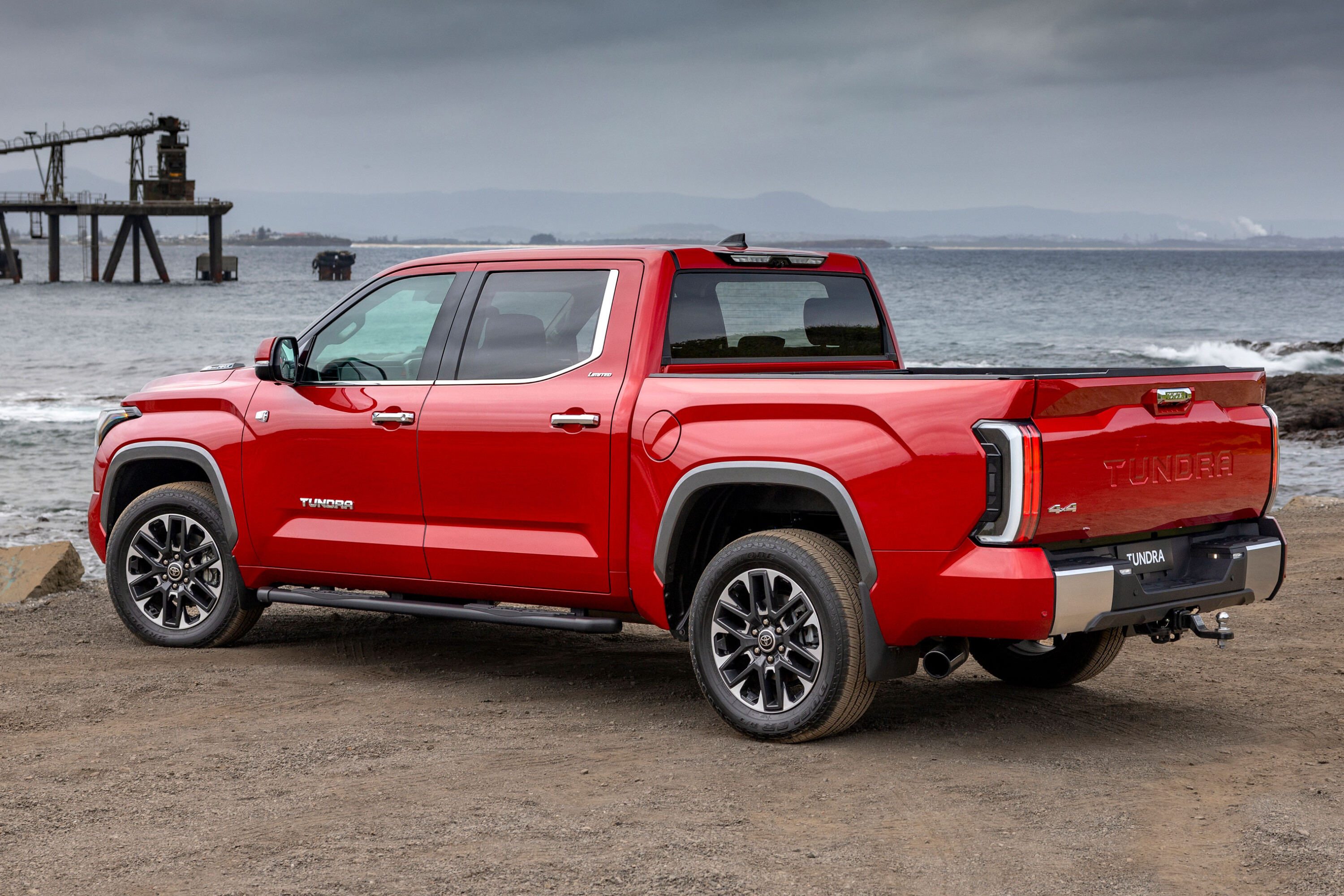
On top of sorting the steering wheel onto the correct side of the vehicle, Toyota also embarked on an innovative Tundra Insider programme which saw local customers evaluate the Tundra over 12 months, ensuring that it would meet the demands of Aussie buyers and be able to handle our conditions – “if it can survive in Australia, it can survive anywhere,” said Mr Hanley.
Brought in as a competitor to the other full-size utes on the market – chiefly the RAM, Ford’s F150 and the Silverado – we can only predict that the Tundra will only add to Toyota’s immense popularity among off-roaders, workhorse warriors and those who need something to tow their caravan or boat without breaking a sweat.
Engine
At the heart of the Tundra’s largest-towing-capacity-possible-without-a-truck-licence is the 3.5L V6 twin-turbo petrol engine. On its own this thing is a bit of a beast, putting out 290kW (or 388HP) and 649NM on its own. Paired with the parallel hybrid, those figures jump up into Supercar territory, with 326kW (437HP) and 790NM on tap. One can only imagine the figures this thing could be capable of with a few choice power-ups.
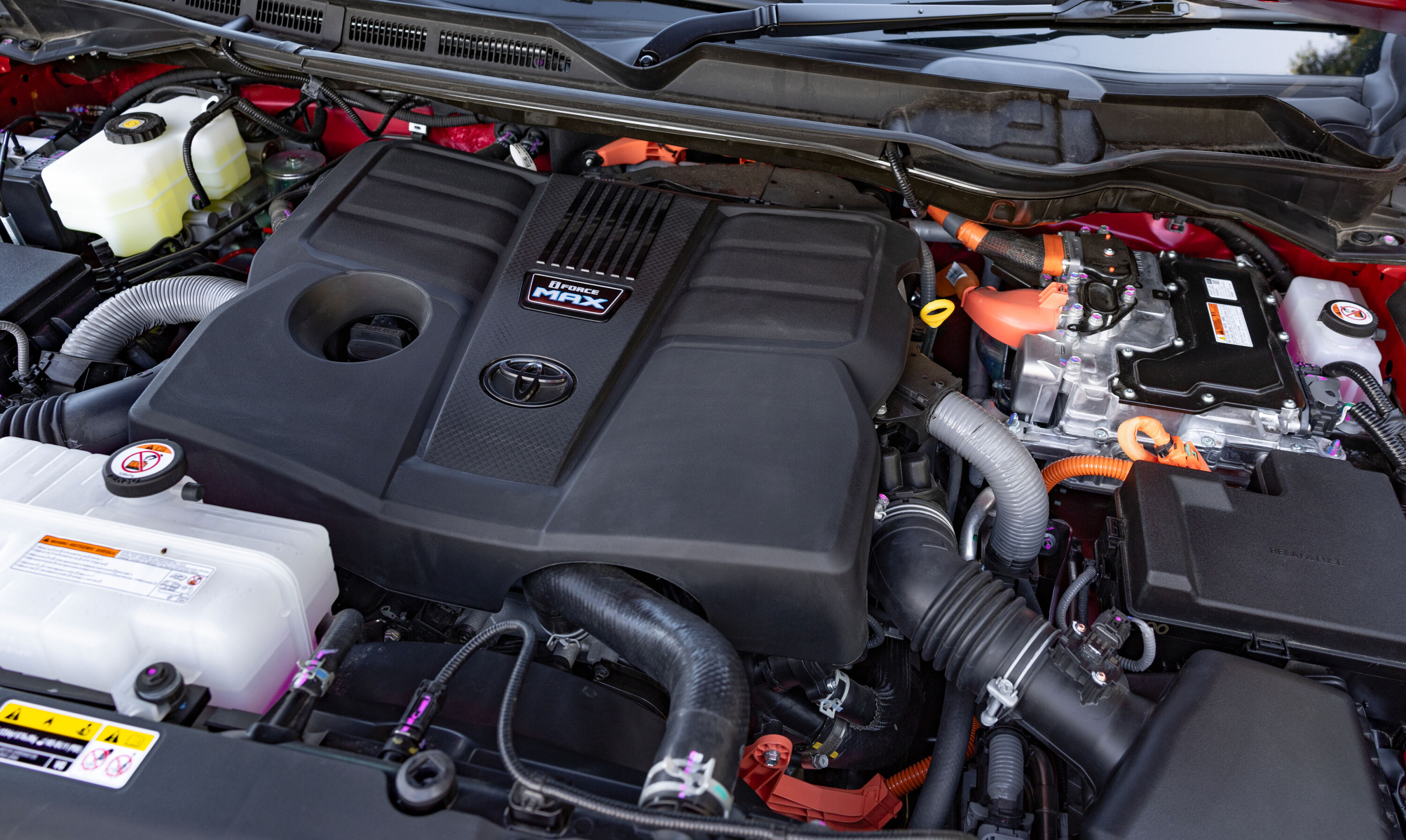
The i-FORCE MAX powertrain is an interesting one as well. Where a traditional hybrid has a complex transmission that can be run from either electric or ICE input; essentially one or the other. The parallel hybrid set-up in the Tundra is more of a “stacked” system utilising a normal transmission (a 10-speed auto in this case) and is designed to give maximum power and torque when you need it and maximum fuel efficiency when you don’t.
So, when you’re driving at low speeds in city environments, like stop-start traffic, the vehicle can run on electric-only. On the highway or with your 24-foot plate boat hooked up, the 288V NiMH battery delivers peak torque nice and low in the rev range – or at least that’s what it does in Tow-Mode. If you’re looking for to get your Dominic Toretto on, then flick it over to the Sport or Sport+ setting and the power delivery is tweaked to deliver optimum acceleration. In a nutshell, the Tundra aims to deliver more oomph precisely where it’s needed on the torque curve, giving big diesel-like towing and heavy-duty load carrying or providing sports-car acceleration for daily driving and general hooning purposes. It’s a neat system.
Comfort
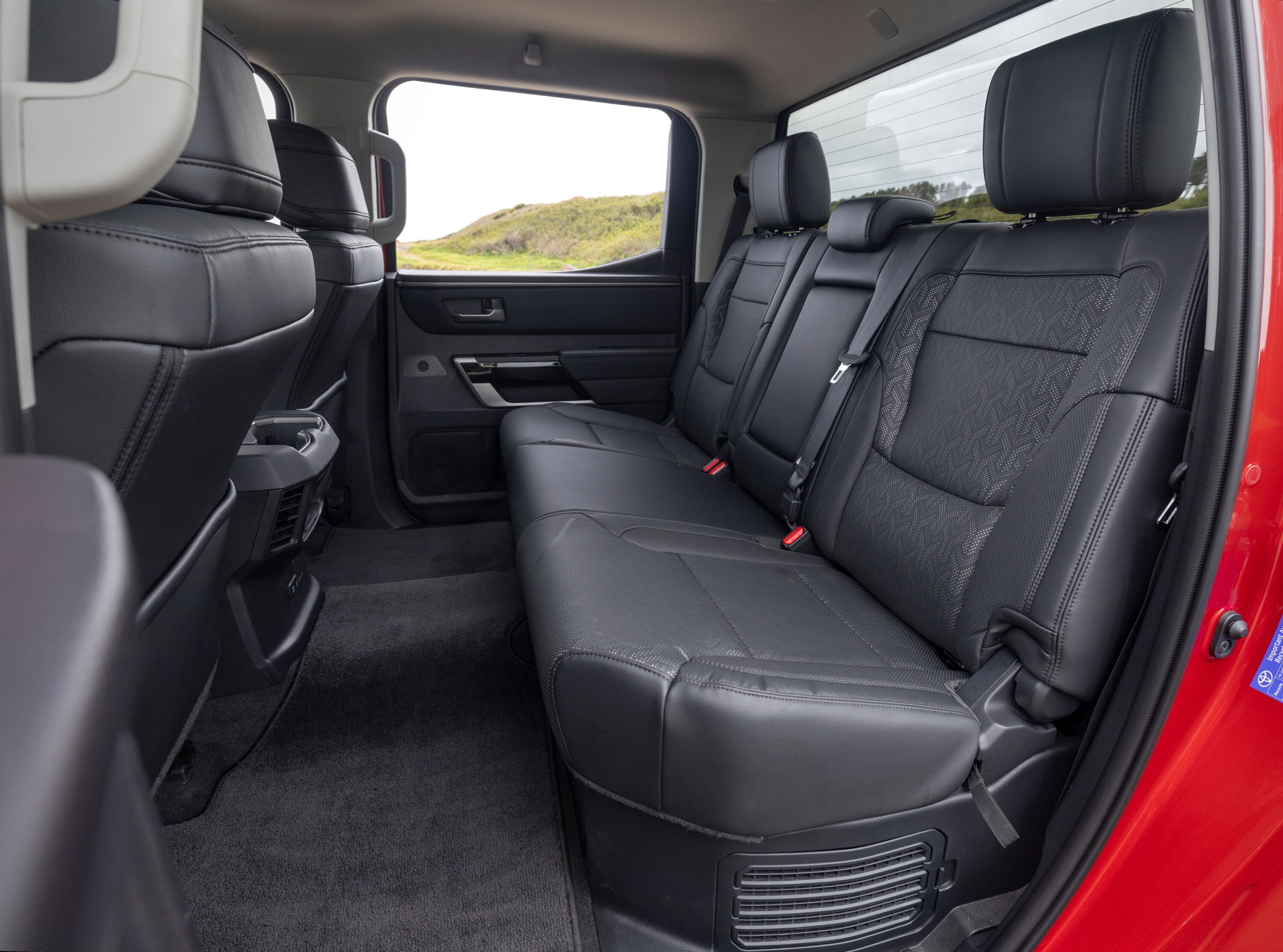
As you’d expect from a vehicle if this size, the interior is palatial. Synthetic leather heated and cooled electric seats keep you feeling like Arabic royalty and the 12.3in driver’s display lets you know what’s going on around the vehicle. The 14in touchscreen in the centre of the dash is the largest in the Toyota arsenal and offers everything you’d expect, including premium audio from the 12-speaker JBL system.
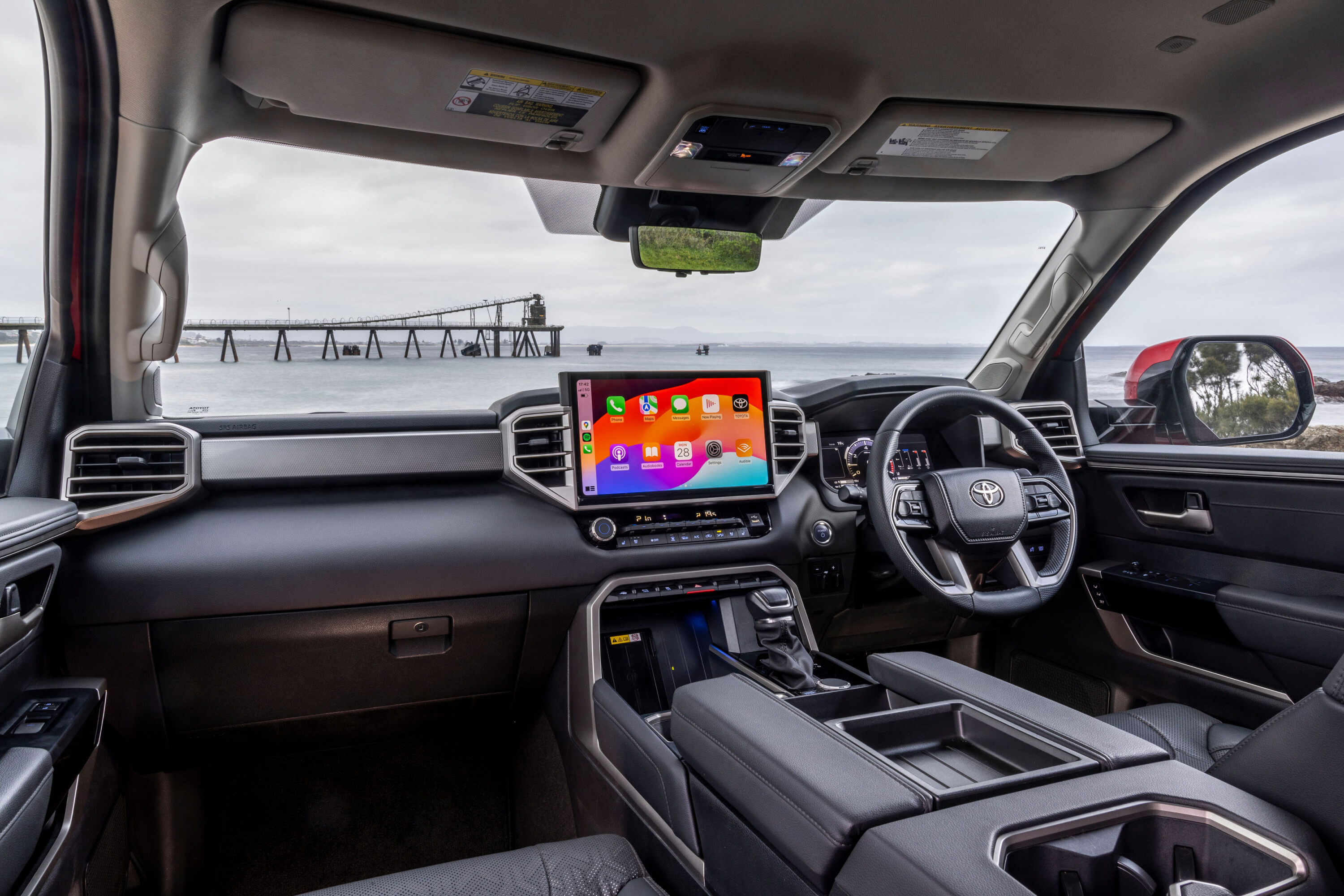
The safety inclusions list is longer than your arm, and the dual-zone climate control makes those hot summer days cooler than a high-five from Samuel L. Jackson. Unlike pretty much every other dual-cab on the planet, rear seat passengers have a huge amount of room, and if you’re travelling solo or as a couple, the 60:40 seats can be folded down or hinge forwards to give you even more storage. A lot of touches have been taken from the LC300 during the RHD conversion, which isn’t a bad thing at all, we reckon.
Oh, and the rear electrically operated sliding window should be compulsory on every ute. Just saying.
Towing & Off-Road Ability
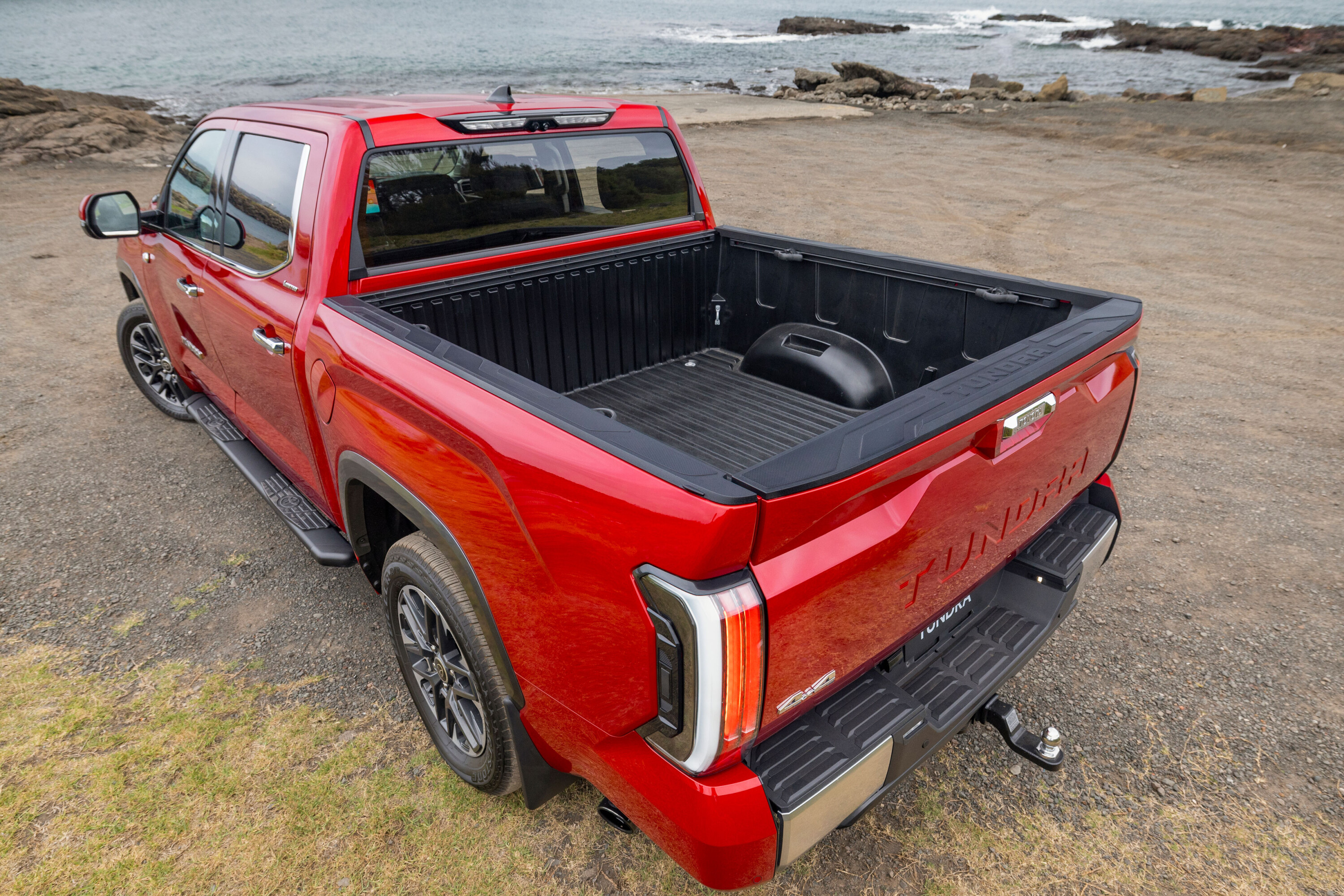
Ok, there’s a bit of fine print on this one. The standard Tundra tow pack is rated to 3500kg, you have to buy the 4500kg tow kit, which includes a brake controller, if you’re going to be pulling heavy trailers, but it will do it as stock. It’ll only take just over 750kg of payload, which is a bit anaemic with a vehicle this size, but it stacks up when compared to the other full-sizes on the market, so we can’t dock too many points on that one.
Suspension is a tried-and-true solid axle out back fitted with dual-rate coil springs that aim to provide ride comfort and load-carrying capability. Out front is a double A-arm independent set-up which may not be exactly world-leading but will still be able to handle Cape York corrugations and light to medium-duty off-roading without too many issues.
4WD engagement is about as basic as it comes these days. Road driving is a simple RWD affair while there’s the traditional 4-hi and 4-low once the bitumen is left behind.
In classic Toyota tradition of “why make three parts when we can make one part that fits three vehicles?” the chassis is the venerable TNGA-F ladder frame arrangement that it shares with the LC300 and 250 Prado. Not that it’s a bad thing by any means. The Tundra frame has been stretched by 850mm (over the LC300) and the track has been widened by up to 70mm to accommodate the Tundra’s swarthy dimensions. And in case you’re curious, they haven’t pulled a 70 Series on us, both front and rear track widths are equal at 1737mm.
The Other Stuff
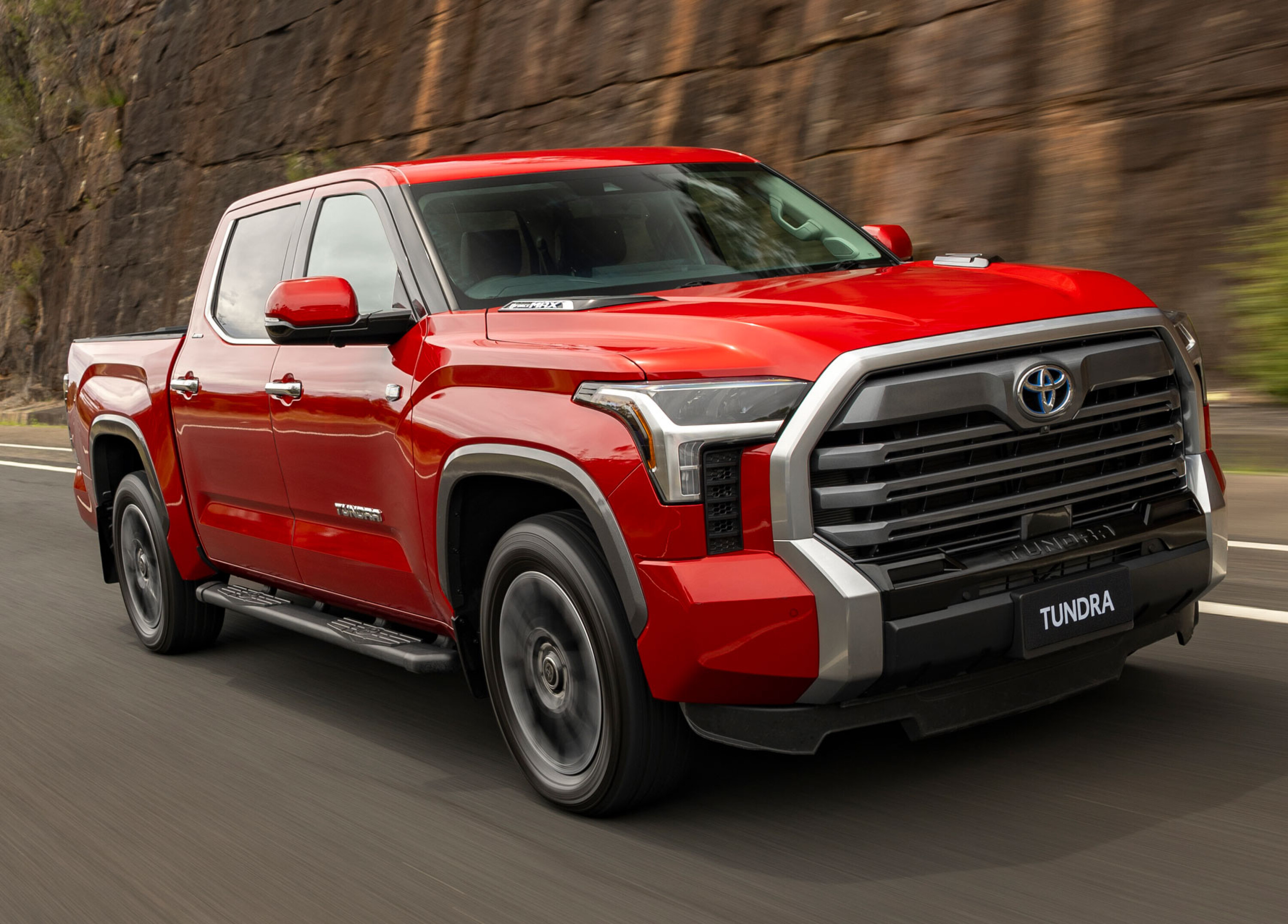
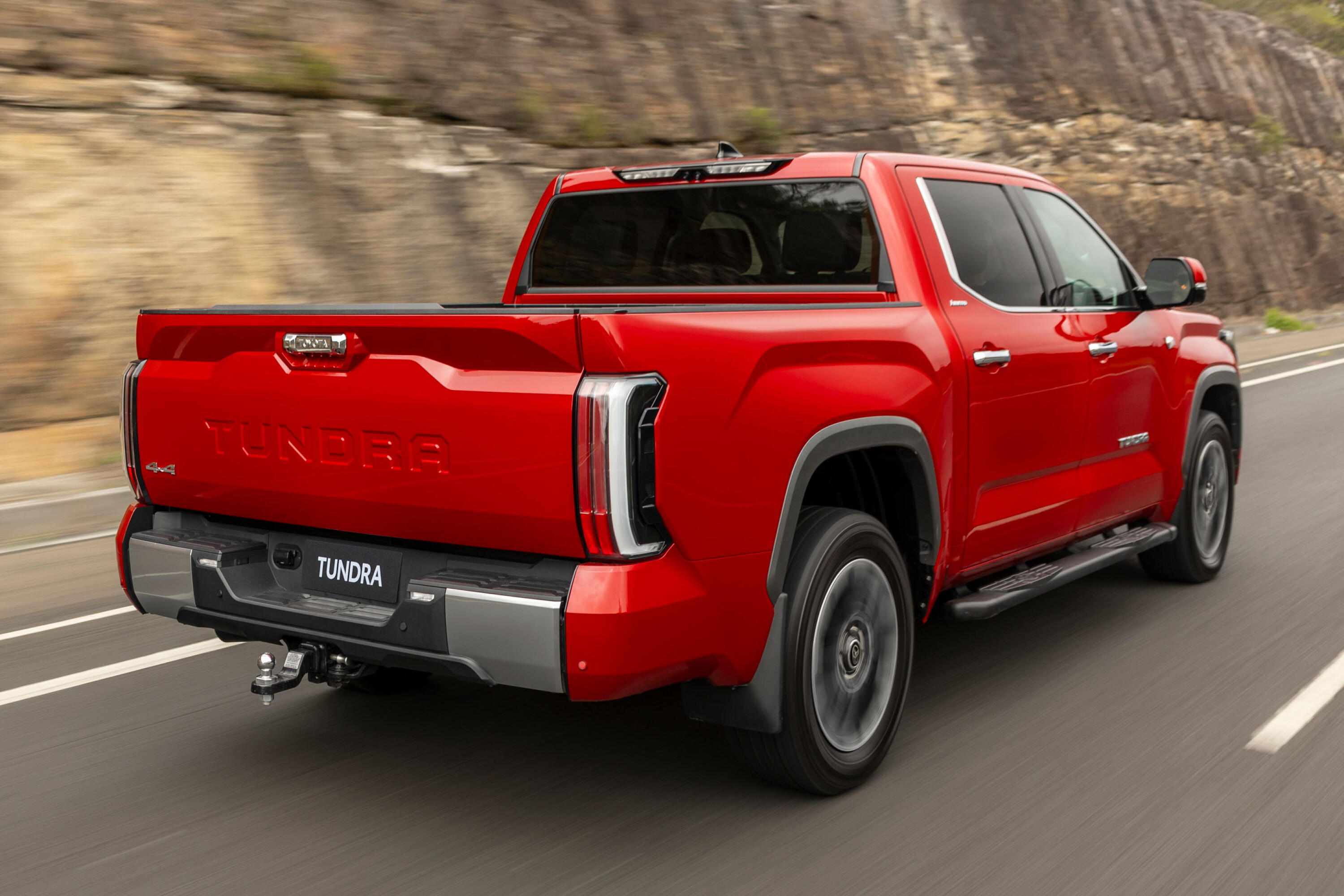
The Tundra is sprayed in your choice of nine exterior colours and rolls around on 20in black-n-chrome alloys for cool points. The electric power steering is borrowed from the LC300 and is incredibly well paired to such a large ute, while the brakes are up to the task with 354mm ventilated discs and four-pot calipers out front and the back copping 335mm ventilated discs and a single-piston caliper per side.
2025 Toyota Tundra Specifications
| QUICK SPECS | |
|---|---|
| Price: | $155,990 |
| Engine: | 3.5L twin-turbo V6 i-FORCE MAX; 326kW, 720NM |
| Transmission: | 10-speed auto; dual-range transfer case |
| Fuel Capacity: | 122L |
| Warranty: | 5-year, unlimited km |
| GCM: | 7825kg |
| GVM: | 3536kg |
| Kerb Weight: | 2778kg |
| Wheelbase: | 3700mm |
| Track: | 1737mm |
| Height: | 1985mm |
| Width: | 2040mm |
| Length: | 5955mm |
2025 Toyota Tundra Features
| EXTERIOR |
|---|
| LED lights + LED DRLs |
| Tub management system with side and back rails and moveable tie-down points |
| Heated, power-folding exterior mirrors with reverse tilt-down |
| Towbar, 3500kg tow ball and tongue (4500kg tow pack optional) |
| 12-pin trailer wiring harness |
| INTERIOR |
|---|
| Black synthetic leather seat trim |
| Heated and ventilated front seats with eight-way power adjustment |
| 12.3-inch digital instrument cluster |
| 14.0-inch touchscreen |
| 12-speaker JBL sound system |
| Wireless phone charger |
| Bluetooth wireless Apple CarPlay + Android Auto |
| Dual-zone climate control |
| Smart entry and start |
| Five USB ports and one 12V accessory socket |
| Door pockets with bottle holders (nice) |
| 60/40-split rear seat |
| SAFETY |
|---|
| Pre-collision AEB system with day/night pedestrian and daytime cyclist detection |
| Active cruise control |
| Lane departure alert with steering assist |
| Lane trace assist |
| Blind-spot monitor |
| Rear cross-traffic alert |
| Panoramic view monitor |
| Front and rear parking sensors |
| Trailer brake controller |
| Trailer reversing guide |
| Eight airbags |
| Two rear ISOFIX points |
Like many Australian four-wheel drivers, Craig Bartlett recognises that Nissan’s GQ and GU series of Patrols are some of the toughest, go-anywhere 4×4 vehicles ever made.
With big diffs, oversized gearboxes and sturdy chassis, these are almost the perfect vehicles for off-road travel anywhere you want to go in Australia.
We say almost as, while the TD42 engines are strong and reliable, they aren’t what you would call powerful, so motivating a heavily loaded Patrol with one is usually a slow affair. And let’s not even mention the many and varied smaller capacity engines Nissan once offered in these Patrols.
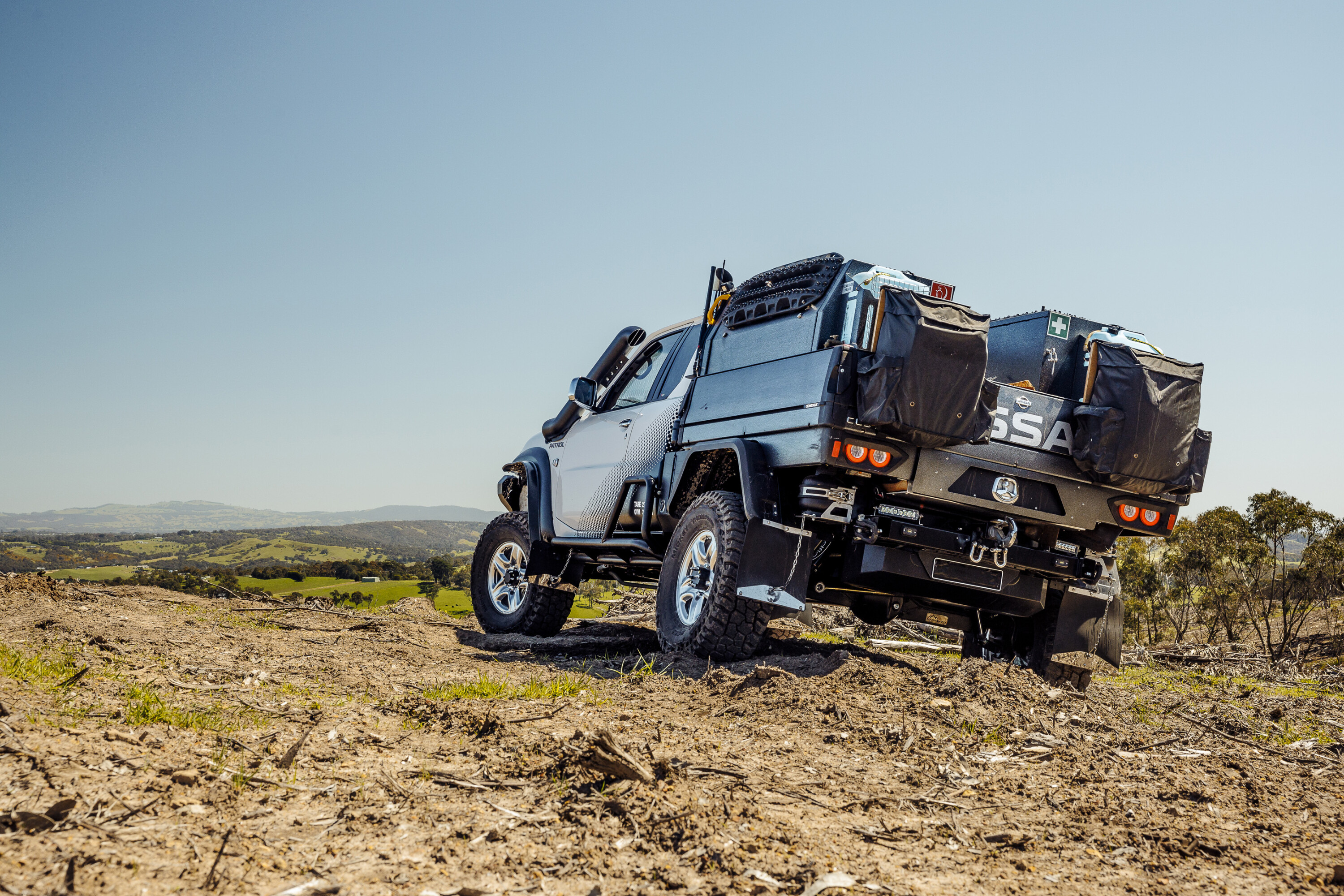
Craig, or CB as he is known to most, saw the potential of a Patrol as the perfect bush tourer but also knew the weaknesses in them.
“Other than poorly designed engines, front hubs and rear semi-float axles, these are hands down the strongest and most capable road going four-wheel drive ever made,” Craig says of the Patrol. “I waited forever to find an example with no ABS in white, as I wanted the larger, more modern cabin of the GU over a GQ.”
Craig eventually tracked down a GU wagon that he describes as being “mint”, however it had a blown ZD30 four-cylinder turbo-diesel engine. But that didn’t worry him as he already had plans to do away with the Nissan powertrain.
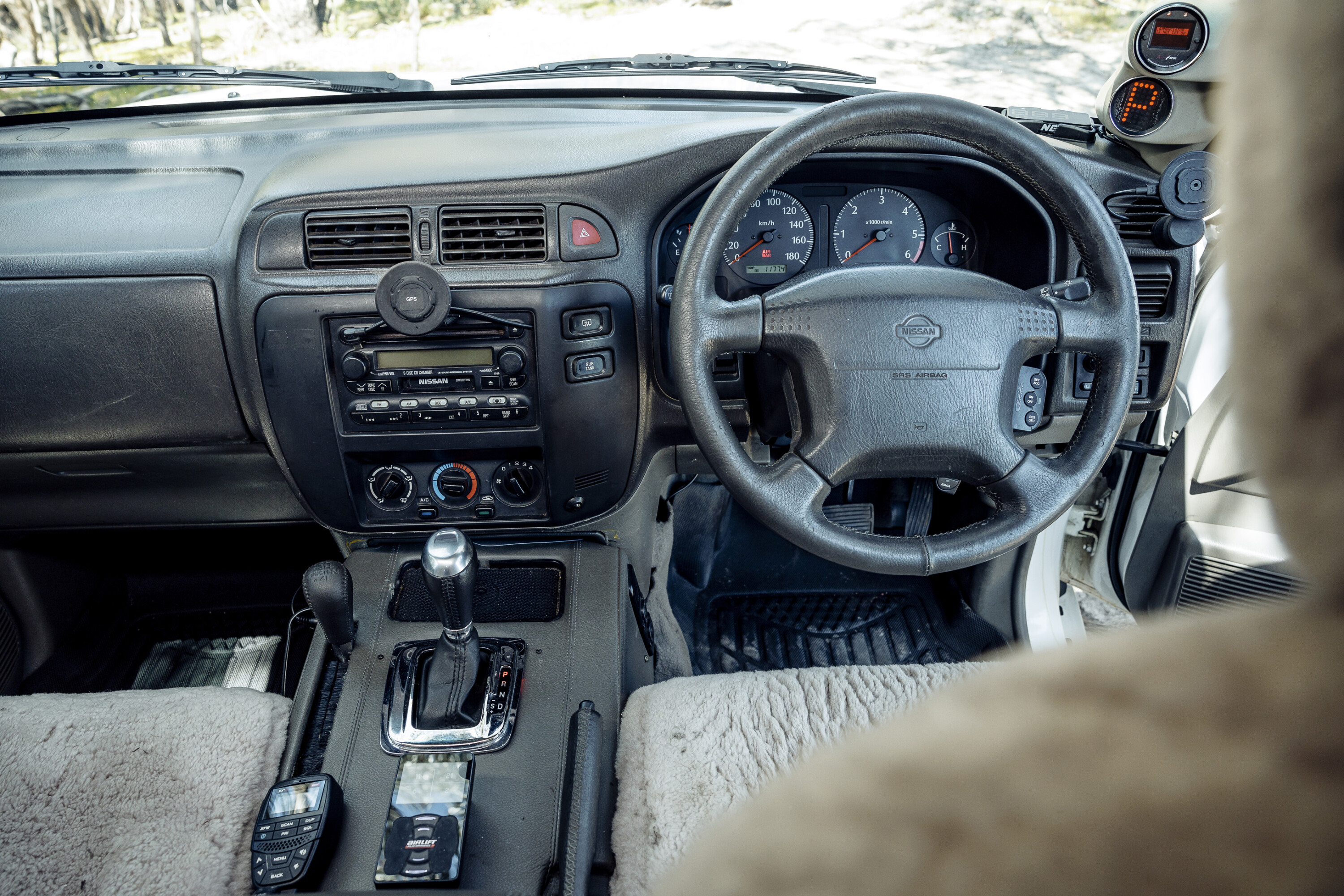
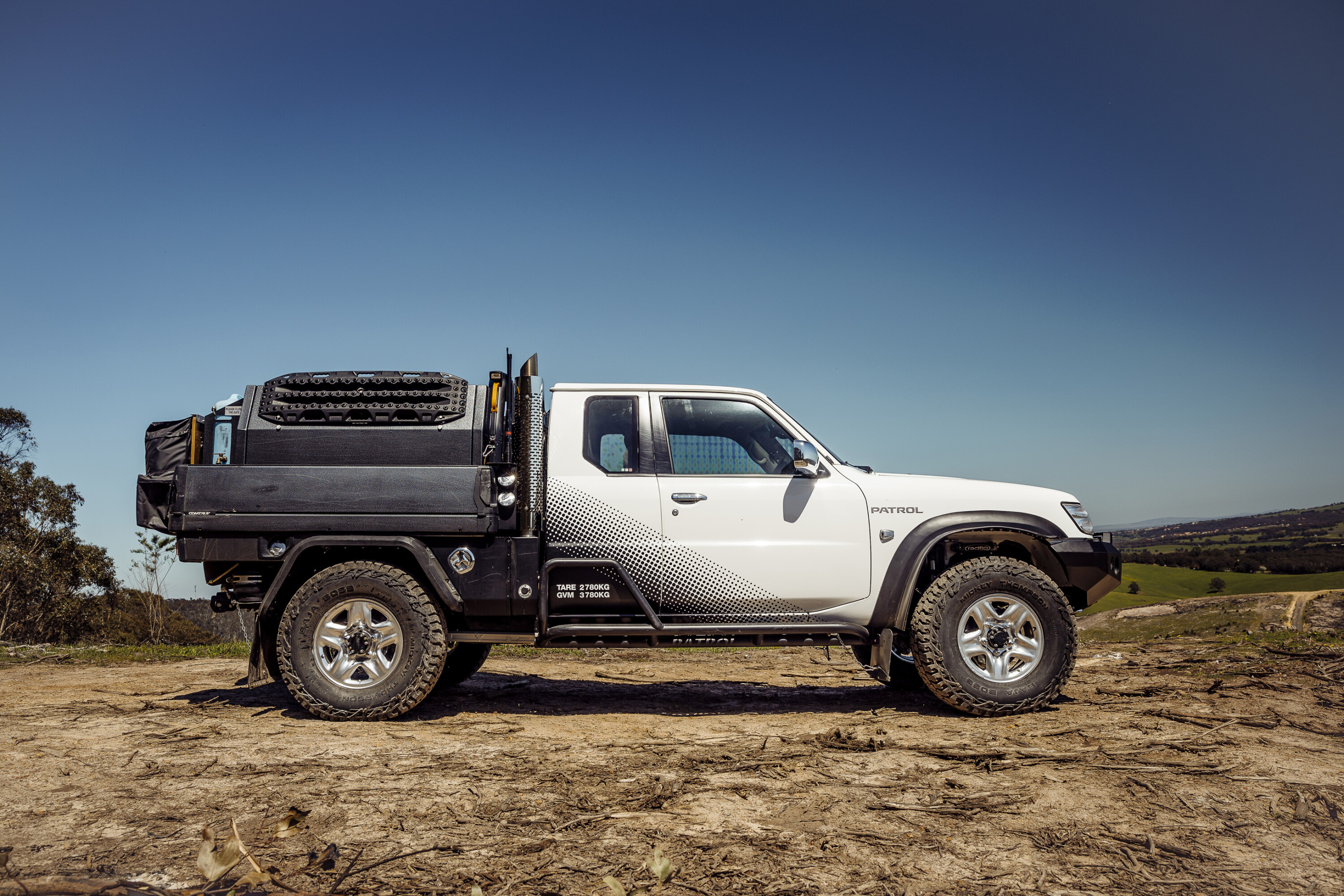
Craig didn’t just flick the Nissan engine and transmission, in fact the whole rear section of the Patrol wagon was lopped off and an extra-cab body was fabricated using a rear wall and window from a GU coil cab with custom side windows.
It’s a super neat conversion that gives 600mm of extra space in the ute’s cabin, enough to allow the fitment of a rear seat adapted from two-door Jeep Wrangler. The factory Nissan rear seatbelts were repurposed for the new rear seat, which allowed the setup to be engineer approved and legal.
To keep everything in proportion with the extended cab, the chassis received a 400mm stretch which also ensures that the rear axle is better placed under the load on the back of the chassis.
“The aim was for the cabin to look totally OE and clean like Nissan made an extra cab from the factory,” Craig says, and we reckon he has nailed the look. But there’s more to this Nissan than just a neat body and a unique look. A lot more!
Portal fix
High-riding Patrols on big off-road tyres are nothing unusual but CB’s Patrol has a stance that gives it a look all of its own.
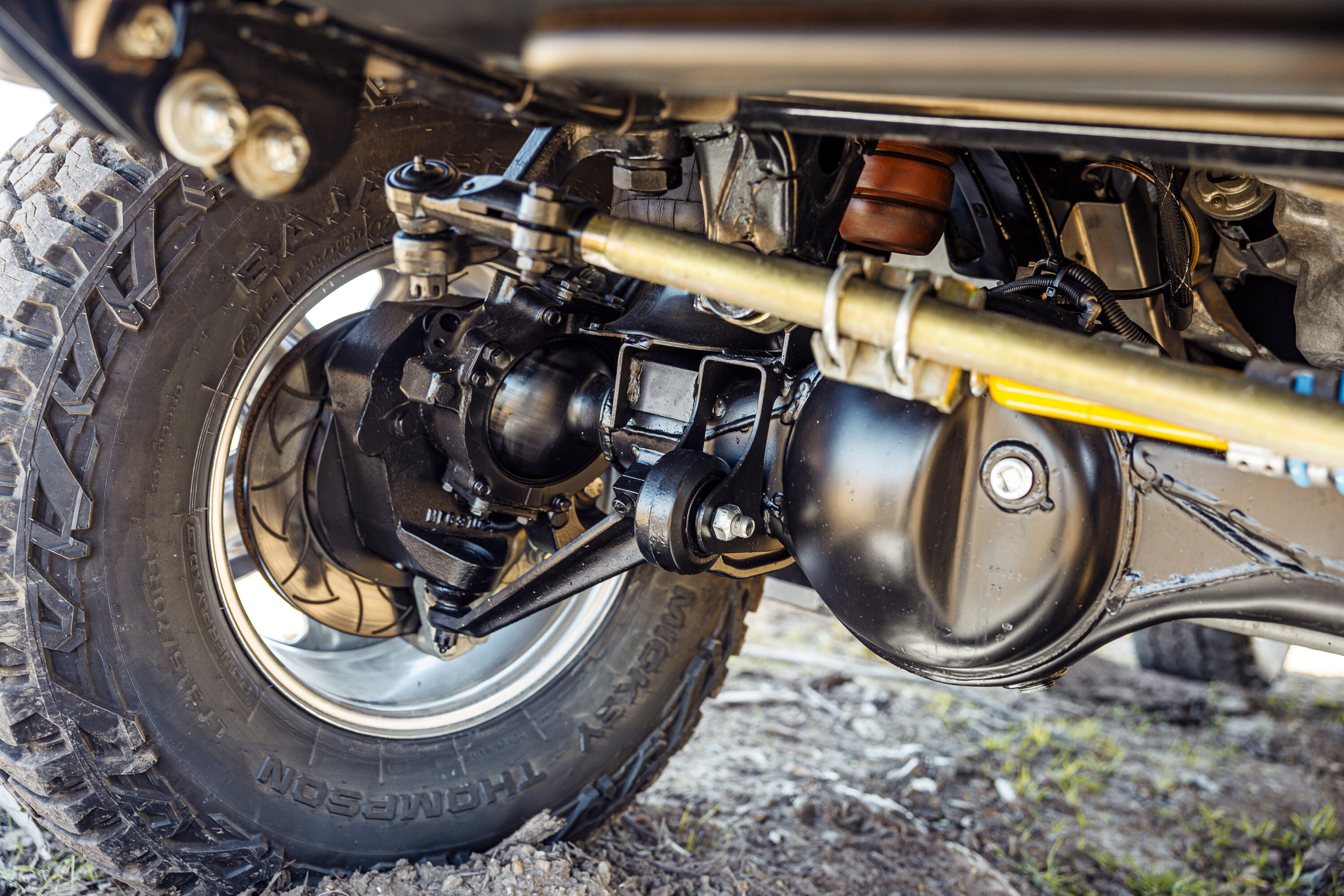
This comes thanks to a set of portal axles from Marks 4WD in Melbourne. While Marks portals have become popular under 70 Series LandCruisers of late, they were originally designed and made to fit under Nissan Patrols, which were the go-to hardcore rigs of the day.
The Marks 4WD portals have evolved over the years to be very different to the originals and, significantly, the later units use LandCruiser 70 Series hubs and brakes for both added strength and improved stopping power. This allows for the best wheel offset to be used, gives better (Toyota) brakes, and steps up the axles from semi-floating Nissan to full-floating 70 Series.
Since the demise of the GU Patrol and the rise of the VDJ 70 Series in popularity, Marks 4WD no longer makes portals for Patrols, but they still produce other products to improve Nissans for off road use…
Mighty mill
As mentioned, CB’s Patrol had a blown engine when he bought it, and his plans didn’t call for a Nissan mill to replace it.
A written-off SS Commodore was sourced for its driveline which included a 6.2-litre LS3 V8 engine and 6L80 automatic transmission.
Marks 4WD still manufactures its engine and transmission conversion kit for the LS into Patrol, and CB used this including Marks 4WD extractors and dual alternator mounting kit.
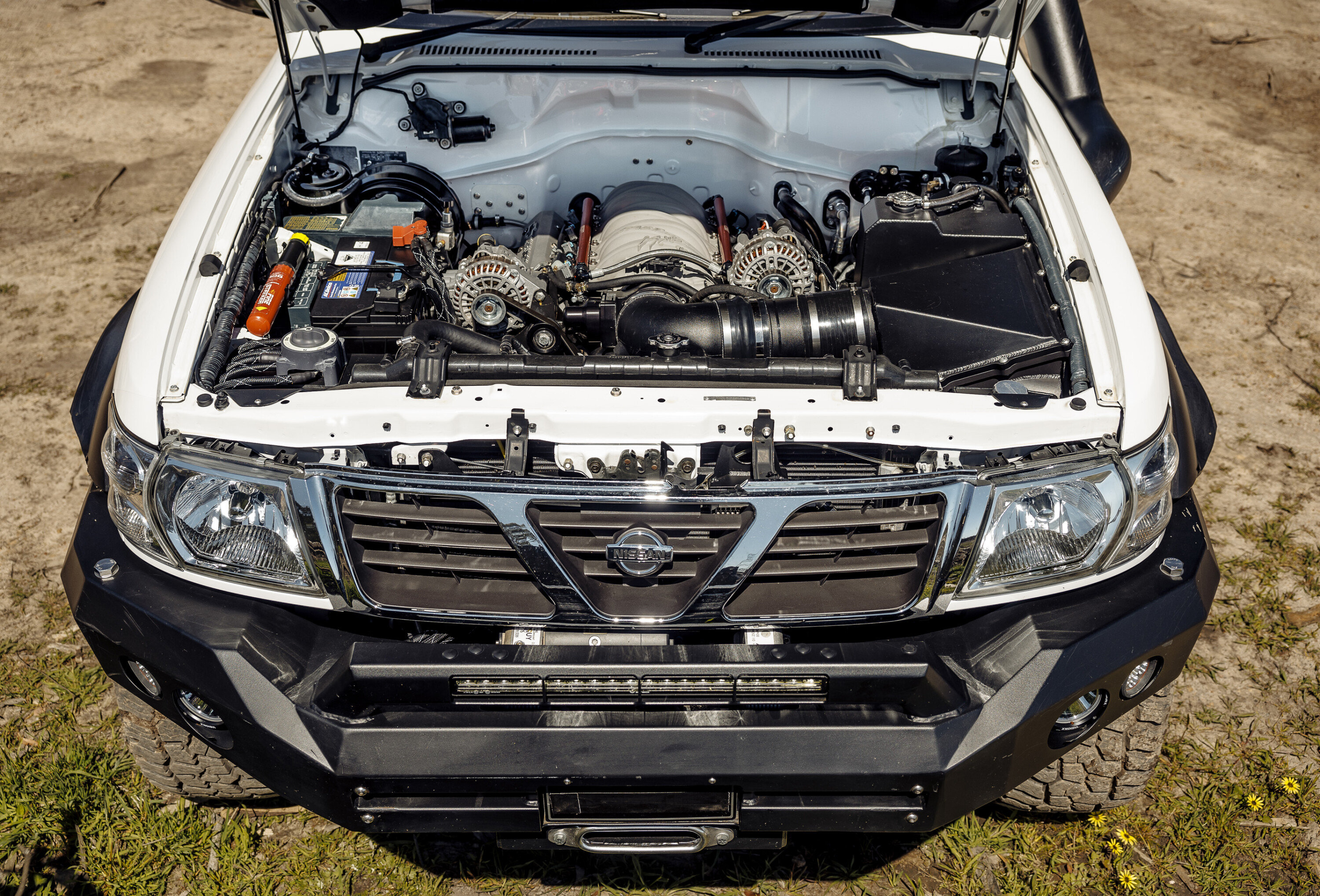
The front and rear Nissan diff housings have been braced for extra strength
Before the General Motors engine and trans went into the Patrol, the engine was sent to Taylor’s Precision Engines where it was freshened up with a Torque Spec camshaft, titanium pushrods, roller rockers, double-row timing chain, upgraded oil pump, FAST long runner intake, and a Yella Terra electronic throttle body.
A custom torque converter better suited to 4×4 use sits ahead of the six-speed auto transmission while at the back it is adapted to the Nissan transfer case which has been fitted with Marks 4WD reduction gears.
The front and rear Nissan diff housings have been braced for extra strength and fitted with heavy duty chrome-moly axles which link up with the portal boxes and LandCruiser 70 stub axles and brakes. The now full floating axles also give the Patrol a higher load capacity with the GVM now rated at 3780kg.
High life
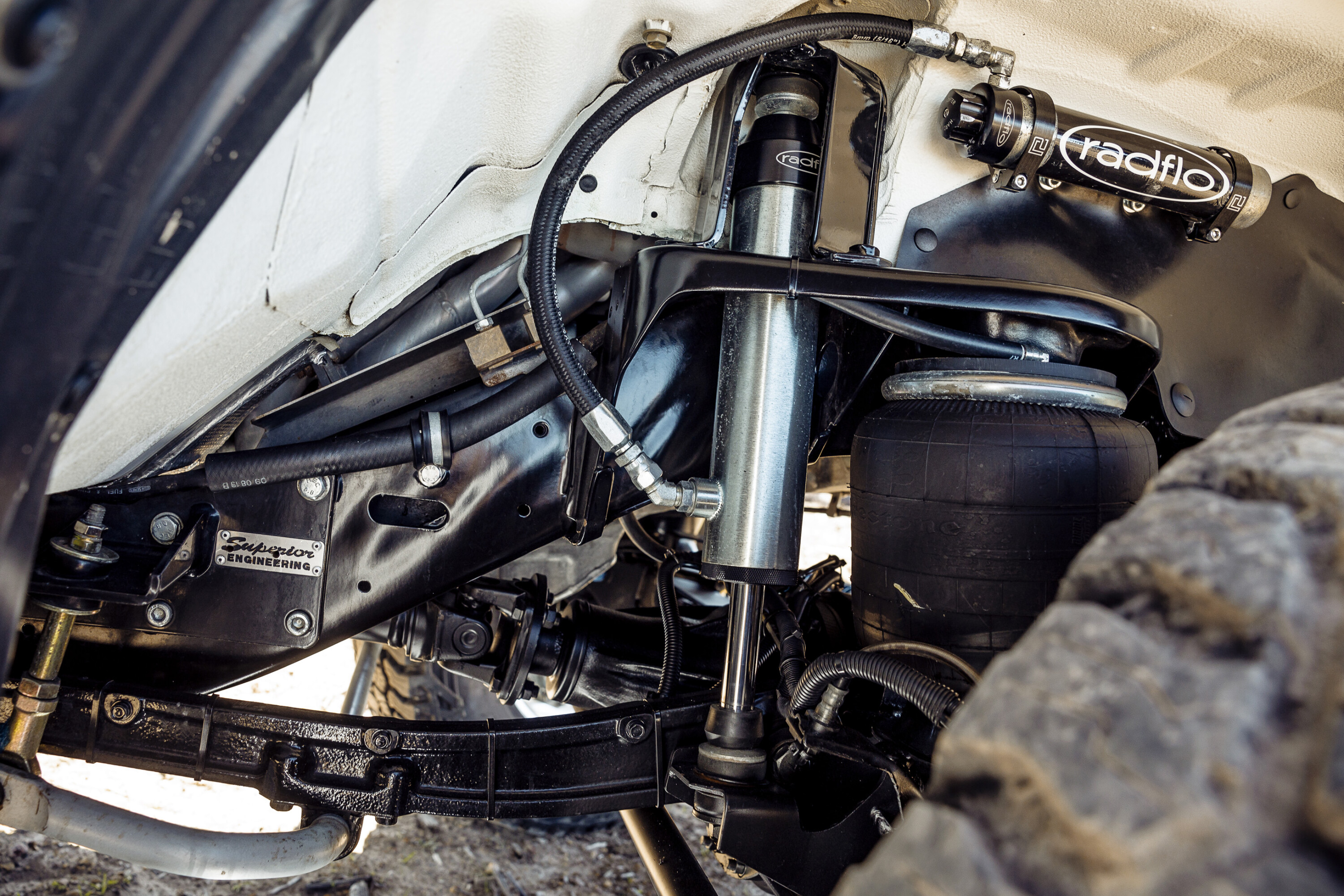
With the increased ground clearance afforded by the portal axles and 35-inch Mickey Thompsons, a huge suspension lift wasn’t really needed for CB’s Patrol. That said, quality suspension components have been used to control the vehicle over rough terrain and give the best ride possible.
Height adjustable Firestone airbags are fitted at each corner offering 10-inches of travel in the front and 13-inches at the back. These are controlled electronically from inside the cabin. Radflo remote reservoir shocks have been specifically revalved to match the air springs by Down South Motorsports, while BASF Cellasto bump stops cushion the blow should Craig decide to jump the Patrol or hit an unexpected rut a bit too hard.
Adjustable arms and links from Superior Engineering hold everything in place and control the steering.
Fully loaded
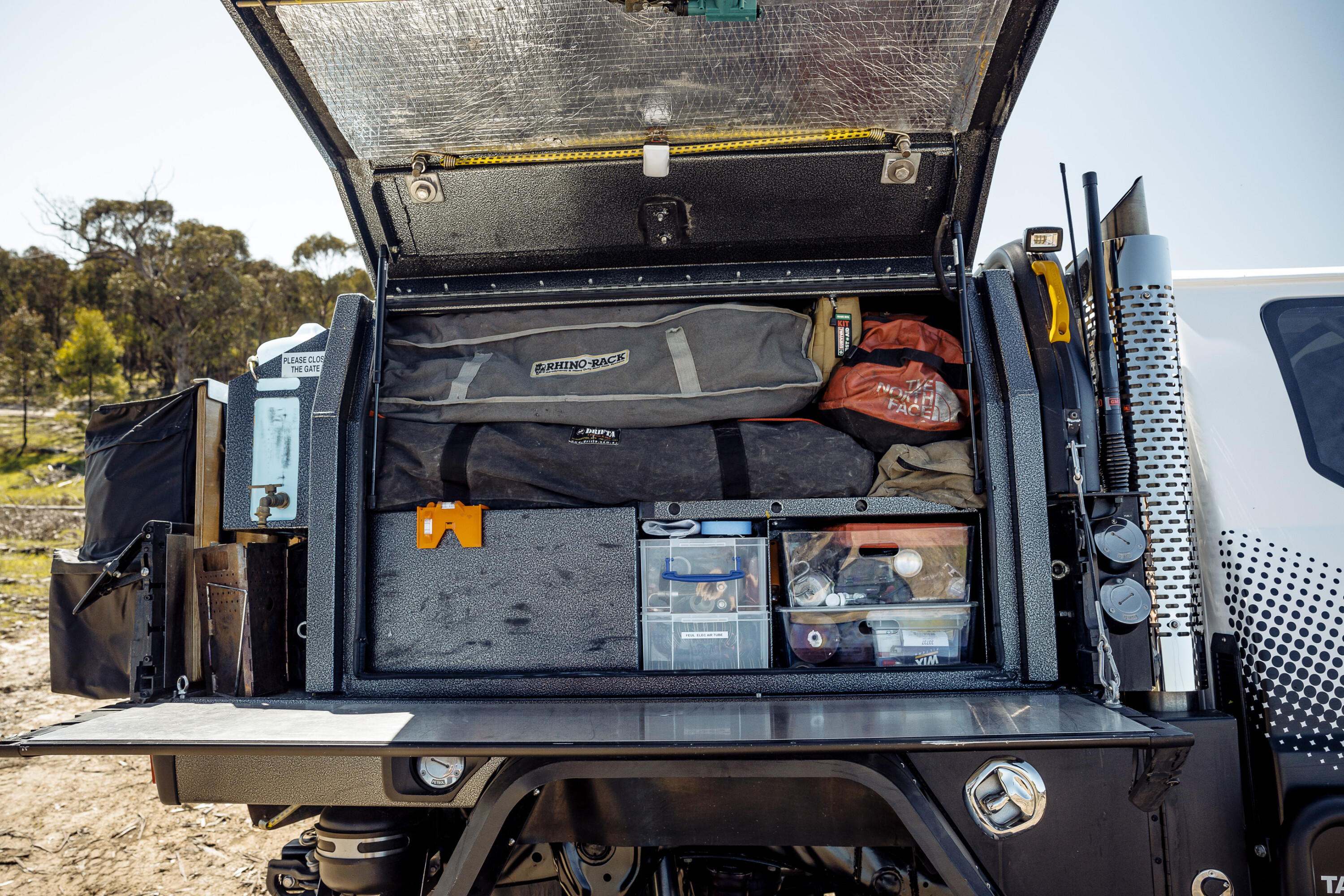
It would be a waste of time chopping a wagon into a ute if Craig didn’t make the most of the new load space on the back.
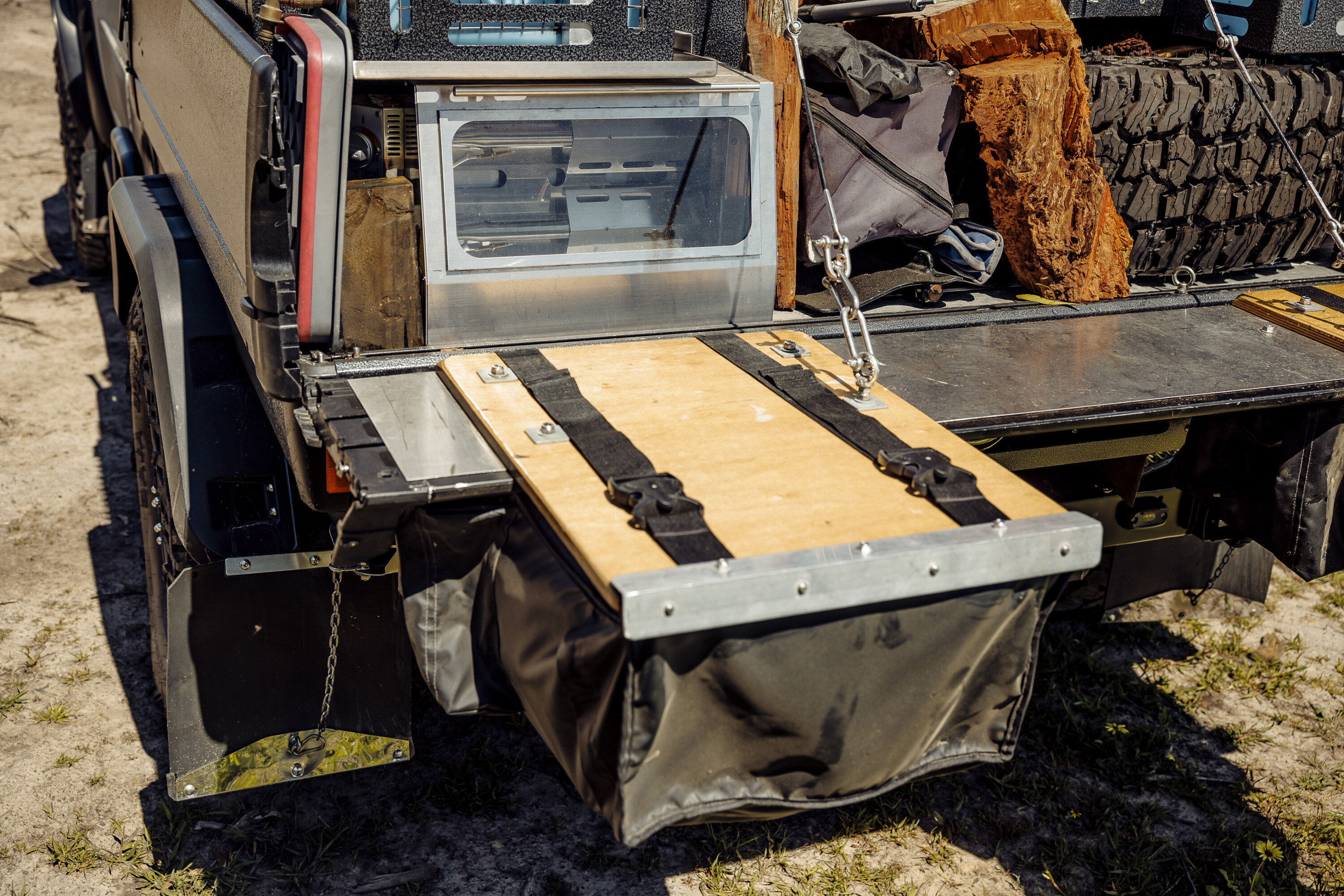
CB has capitalised on it with a pair of large tool boxes sitting on the custom tray to carry everything he needs. One of them contains an 80-litre upright Dometic fridge (there’s a 30L fridge in the cabin, too) while all of the camping, cooking and recovery gear also fits into or onto the boxes.
For more serious off-road trips, Craig removes the tool boxes and swaps out the 35-inch tyres for a set of 37s, which are easily accommodated thanks to the height-adjustable suspension.
Under the tray are three Brown Davis fuel tanks giving a total of 300 litres of fuel, so Craig should never run low even when feeding the thirsty V8. There’s also 60-litres of water storage in the headboard of the tray.
Many hands…
Massive vehicle builds like this don’t happen single-handedly and Craig had plenty of help along the way with his Patrol.
He’s quick to thank the team at his family business; Jan, John and Mark Bartlett at Bartlett Earthmovers; Jay Fagan at Conversion Electrics; Darren at Smithies Outdoors; Tom and Milan at Wholesale 4WD; Ben and Andy at Black Mamba Racing; Kevin at Brown Davis; Drew Pritchard at TJM; Coxie at TIG Industries, Mt Gambier; Rob at Raslarr Engineering; Ash Tappin, Automotive Wholesaler; and Sot Kavuki at Modified Vehicle Engineering.
When Craig originally embarked on the Patrol build it was planned that there would be another vehicle in the making, with his father building a LandCruiser 105 along similar lines.
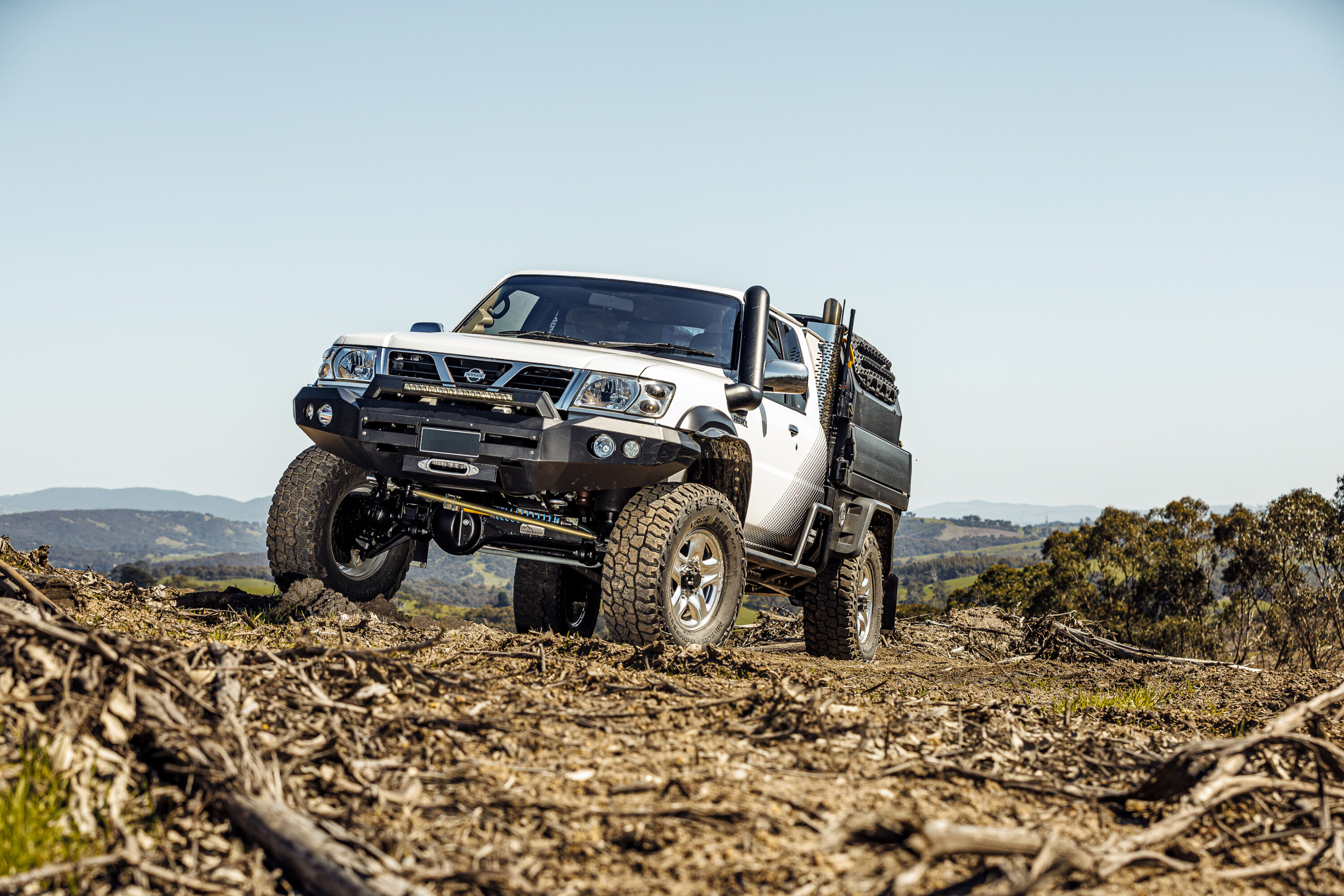
But his dad’s health slowed progress and the pair decided to pool their talents and focus on the Nissan, and the result is what you see here.
It’s a vehicle that they both enjoy and immediately after our shoot the pair of them set out for a weekend camp and off-roading in the forests around Cobaw.
“We got lost and ended up winching into the night!,” CB told us later. “It was tiring but a fun adventure.”
We reckon any drive in this weapon of a Patrol would be a fun adventure!
During the recent launch of the all-new Prado, Toyota announced it has changed the ordering process for this key vehicle.
The changes are intended to avoid long waiting times and uncertain delivery dates that the brand has experienced in recent years, most specifically on the current generation of LandCruiser, the 300 Series.
Waiting times for the 300 Series Cruiser blew out to up to 18 months, but what was most frustrating for buyers was the lack of certainty for a delivery date.
Toyota Australia Vice President Sales, Marketing and Franchise Operations, Sean Hanley said at the launch in Darwin that Toyota Australia currently holds 17,000 orders for the 250 Series Prado and that the company has an allocation of 25,000 vehicles for the first 12 months of sale.
Instead of buyers paying a deposit and adding their name to a waiting list for their vehicles, the dealers would now get a specific allocation of vehicles taken from Toyota Australia’s allocation and this would come with a build and delivery date.
Once a dealer has sold out of its allocation, it would not have any more cars to offer for sale until the company recessed a further allocation. The dealer allocation will be dependent on its past sales numbers and order interest.
Under this system the buyer’s order will be for a vehicle that is already on the build list with an allocation for Australia, and the buyer will have a better idea of when they will be able to take delivery.
Toyota has also implemented this allocation system to other popular models in its range including the top-selling RAV4 Hybrid and the LandCruiser variants.
The 250 Series Prado is on sale now with vehicles being registered and going out to owners.
As deliveries of the JAC T9 dual-cab ute begin to roll out to customers in Australia, JAC has announced an industry-leading program that will provide owners with a T9 loan vehicle whenever their own T9 is in the garage undergoing warranty repairs.
Part of JAC’s newly introduced All Road Assurance program – that also sees the Chinese company offer a seven-year unlimited kilometre warranty, seven years of roadside assistance and seven years of capped price servicing – the vehicle loan program is a collaboration between JAC and Carbiz that will keep customers on the road should any warranty issues arise.
“While JAC may be a new name to some Australians, we bring 60 years of global automotive excellence to this market. This program demonstrates our absolute confidence in the JAC T9’s quality and reliability,” said Ahmed Mahmoud, Managing Director of JAC Australia.
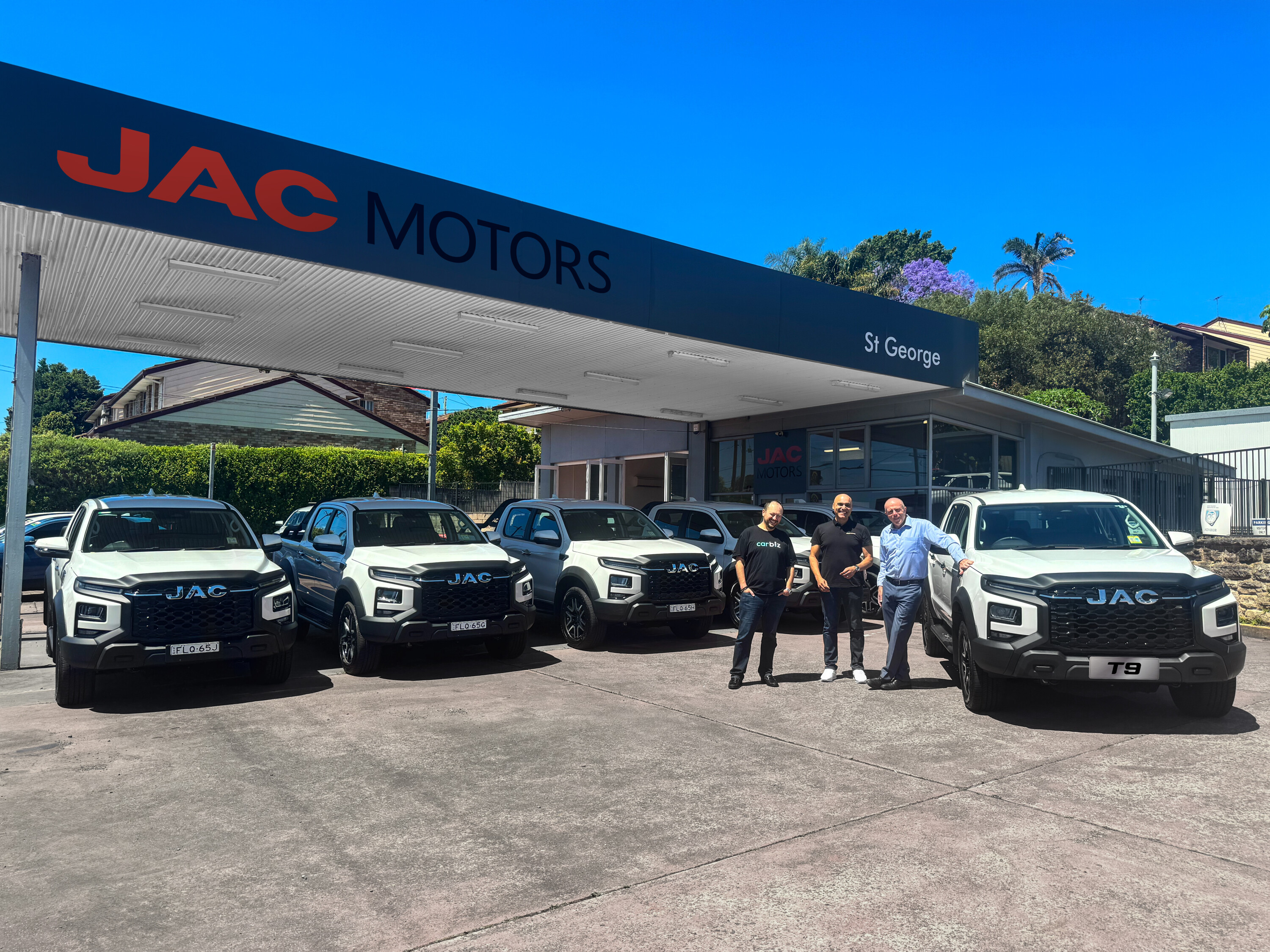
“We understand that a T9 is more than just a vehicle – it’s essential to our customers’ businesses, daily operations and family life. Getting them back on the road quickly is our absolute priority,” he said.
JAC All Roads Assurance includes ?
- JAC warranty loan vehicles, powered by Carbiz
- Seven-year warranty – unlimited kilometres and bumper-to-bumper coverage
- Seven-year roadside assistance – available nationwide, 24/7
- Seven-year capped price servicing
- Access to factory-certified JAC mechanics at every JAC dealership
- Dedicated Australia-based parts warehouse ensuring rapid parts availability
- Comprehensive dealer network spanning metropolitan and regional areas
- Factory-backed service support and technical assistance
- Genuine parts warranty protection
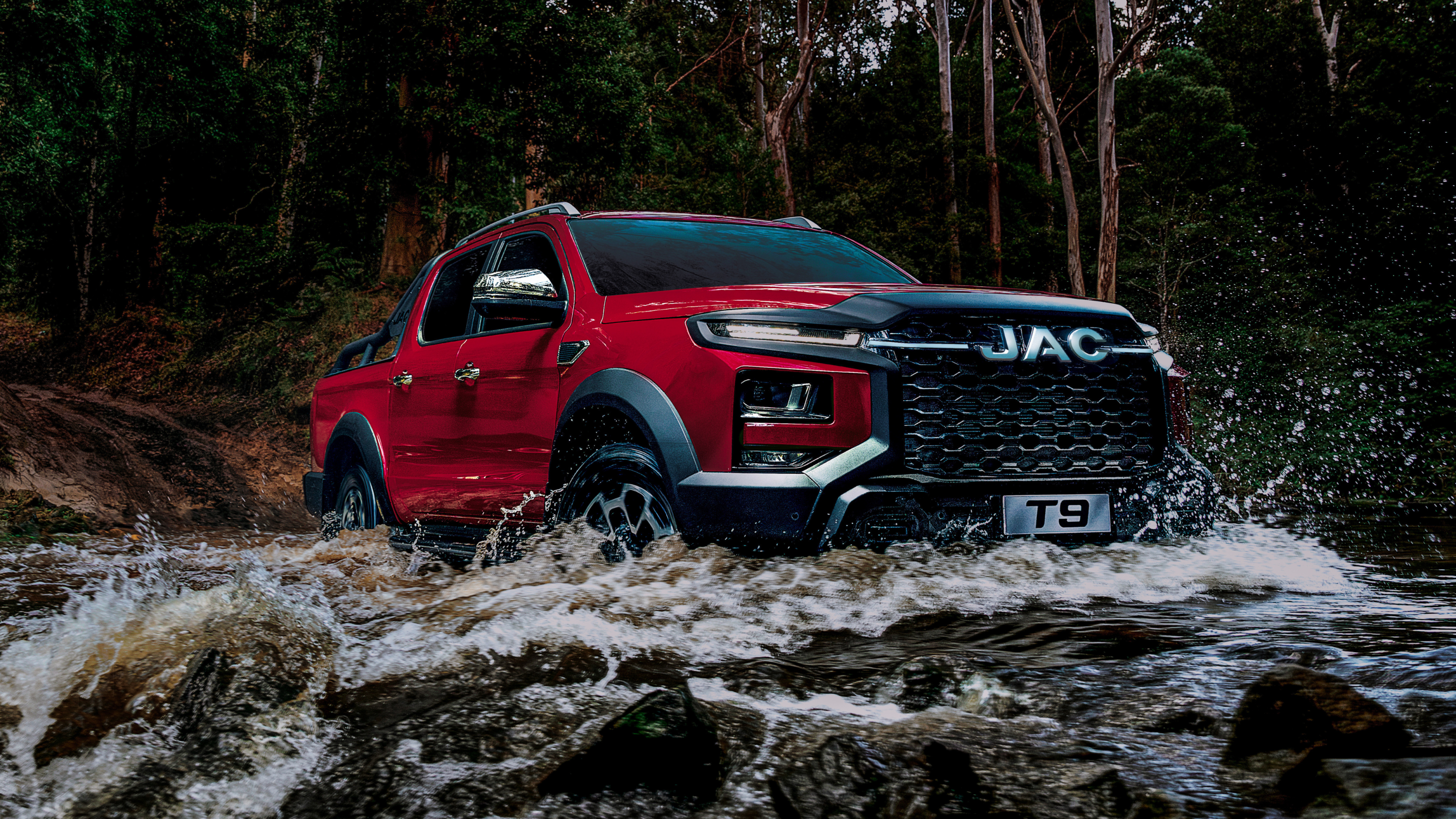
ANCAP gave the T9 dual-cab ute a five-star safety score in August 2024, which applies to all 2.0-litre diesel variants sold in Australia.
Both the Oasis and Haven models feature seven airbags including a front-centre airbags, as well a suite of active safety features including forward and reverse autonomous emergency braking; lane-keep assist; lane departure warning; lane change assist; blind-spot monitoring; rear cross-traffic alert; traffic sign recognition; a driver monitoring system; and adaptive cruise control with traffic jam assist. Stepping up to the top-spec Haven adds front parking sensors; and a 360-degree camera system.
Standard equipment for the Oasis includes 18-inch alloy wheels, highway tyres, a 10.4-inch infotainment system, six speakers, Apple CarPlay and Android Auto, DAB+ digital radio, keyless entry and push-button start, and a wireless phone charger. It’s also equipped with exterior LED lights, black leather-accented upholstery, a 7-inch digital instrument cluster, a cooled or heated centre console, rain-sensing wipers, and tyre pressure monitoring.
The Haven adds roof rails; rear privacy glass; puddle lamps; auto-folding side mirrors with chrome caps; black/brown leather-accented upholstery; and an auto-dimming rear-view mirror.
Customer deliveries are currently underway.
We’ve just placed an order for a brand-spanking new BYD Shark 6!
We can’t wait to get our hands on it and put it to through the 4X4 Australia torture test, where we’ll see how it copes off-road and beyond city lights. We’ll also aim to bring it on as many comparison tests and trips as possible, so there’ll be no shortage of Shark content in 2025!
“BYD Shark 6 production commences in December, with vehicles scheduled to arrive in Australia from January 2025,” BYD told us once the purchase was complete. “We’ll let you know when once your vehicle has been produced and is on its way to Australia.”
The Shark will launch in Australia at an alluring price of $57,900, with only one model variant available initially.
Powered by BYD’s DM-O (Dual-Mode Off-road) system, the Shark combines a 1.5-litre turbo petrol engine with dual electric motors, producing 321kW and 650Nm. This gives it enough juice to reach 100km/h from a standstill in just 5.7 seconds. A 29.58kWh Blade battery provides 100km of electric-only range and a total driving range of up to 800km.
Inside, the Shark features a 10.25-inch LCD screen, a 15.6-inch rotating display, wireless Apple CarPlay and Android Auto, and leather-wrapped steering. The driver’s seat is eight-way power-adjustable, with four-way lumbar support, while both front seats are heated and ventilated.
Colour options include Great White, Deep Sea Blue and Tidal Black. The Shark’s GVM is 3500kg, with a kerb weight of 2710kg and a braked towing capacity of 2500kg.
BYD’s local distributor, EVDirect, has collaborated with Ironman 4×4 to offer a range of aftermarket accessories for the Shark including bull bars, roof racks and tonneau covers, all backed by BYD’s six-year, 150,000km warranty.
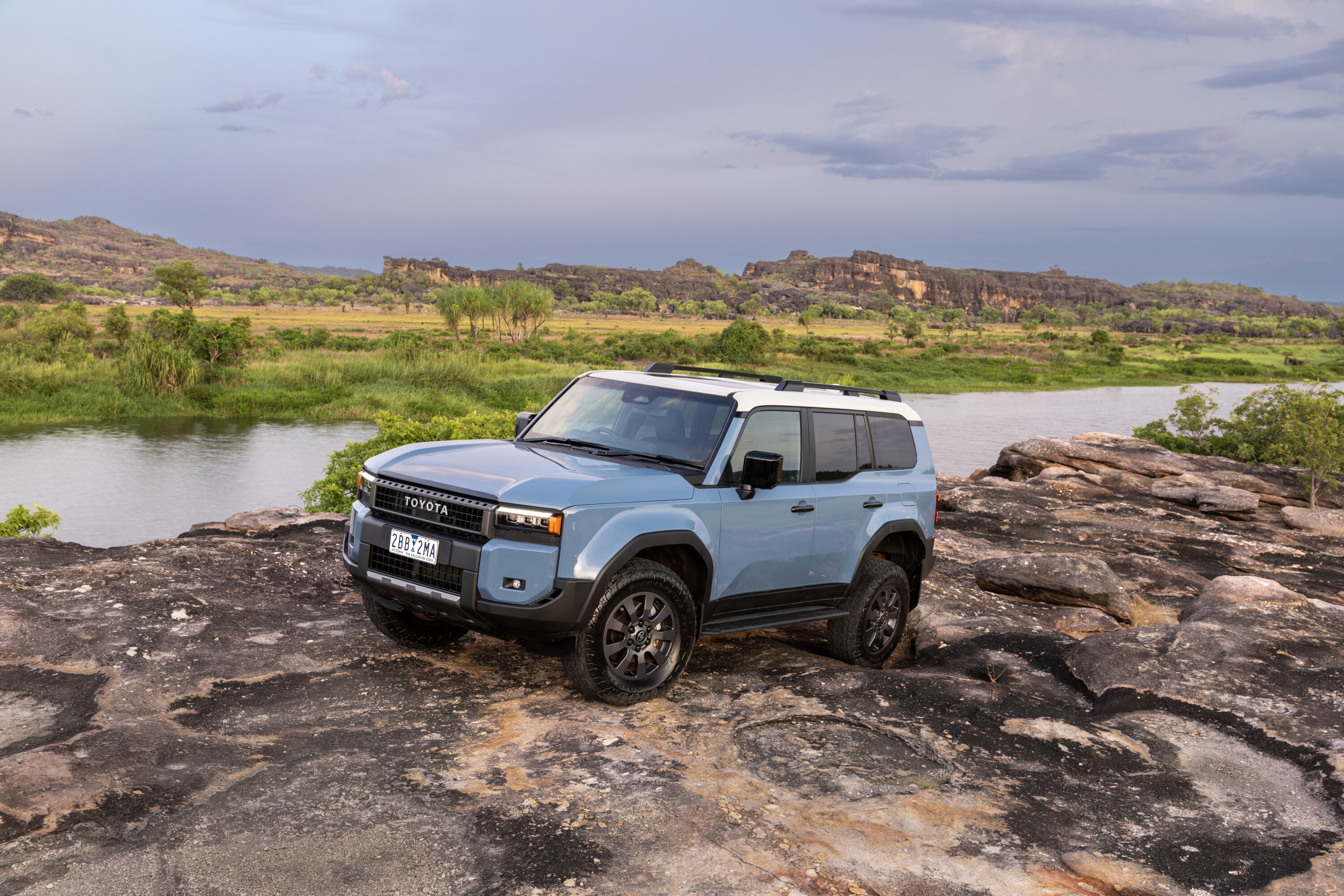
The 2025 Toyota LandCruiser Prado has officially launched in Australia, with the all-new SUV boasting a five-model line-up: GX, GXL, VX, Altitude and Kakadu.
The 2.8-litre turbo-diesel four-cylinder engine, assisted by 48-volt V-Active technology, produces peak outputs of 150kW and 500Nm, and it’s mated to a new eight-speed automatic transmission and a full-time all-wheel drive system, dual-range transfer case and a centre lockable limited slip differential.
“Australians love the LandCruiser Prado for its family-friendly amenity, supreme off-road ability and the durability and reliability that makes it worthy of the LandCruiser nameplate,” said Sean Hanley, Toyota Australia’s Vice President of Sales, Marketing and Franchise Operations.
“The all-new model takes everything that customers love about the LandCruiser Prado to a new level, along with a stylish new design, enhanced technology and greater comfort and driveability.
“With its outstanding practicality and superb on and off-road performance, the all-new LandCruiser Prado is the perfect SUV for the weekday urban commute and extended adventures beyond the tarmac,” he said.
Here’s an extensive analysis of all the specs and features, model by model ?
2025 Toyota Prado specs
| Dimensions | |
|---|---|
| Overall length | 4990mm |
| Overall width | 1980mm |
| Overall height | 1925mm (GX/GXL); 1935mm (VX/Altitude/Kakadu) |
| Wheelbase | 2850mm |
| Front track | 1664mm |
| Rear track | 1668mm |
| Weights and capacities | |
|---|---|
| Kerb weight | 2495kg (GX); 2535kg (GXL); 2570kg (VX); 2520kg (Altitude); 2595kg (Kakadu)u00a0 |
| GVM | 3100kg (GX); 3150kg (GXL); 3180kg (VX); 3100kg (Altitude); 3200kg (Kakadi) |
| Braked towing capacity | 3500kg |
| Unbraked towing capacity | 750kg |
| Fuel tank | 110 litres |
| Off-road specs | |
|---|---|
| Running ground clearance | 210mm (GX/GXL); 221mm (VX/Altitude/Kakadu) |
| Front overhang | 935mm |
| Rear overhang | 1205mm |
| Approach angle | 31u00b0 (GX/GXL); 32u00b0 (VX/Altitude/Kakadu) |
| Departure angle | 17u00b0 |
| Interior dimensions | |
|---|---|
| Length | 1930mm (GX/Altitude); 2685mm (GXL/VX/Kakau) |
| Width | 1600mm |
| Height | 1210mm (GX/GXL); 1190mm (VX/Altitude/Kakadu) |
| Seating capacity | 5 (GX/Altitude); 7 (GXL/VX/Kakadu) |
| Cargo capacity | 954L (second row seats upright – GX/ Altitude); 1895L (second row seats stowed – (GX/Altitude); 182L (all seats upright – GXL/VX/Kakadu) |
| Powertrain | |
|---|---|
| Engine | 2.8-litre turbo-diesel with V-Active tech |
| Model code | 1GF-FTV |
| Engine type | Inline four-cylinder turbodiesel engine |
| Valve mechanism | 16-valve DOHC, chain drive |
| Capacity | 2755cm3 |
| Bore x stroke | 92mm x 103.6mm |
| Compression ratio | 15.6:1 |
| Max power | 150kW @ 3000rpm – 3400rpm |
| Max torque | 500Nm @ 1600rpm – 2800rpm |
| Fuel system | Common-rail fuel injection |
| Drivetrain | Full-time four-wheel drive |
| Transmission | AL80F 8-speed automatic |
| V-Active system | 48V lithium-ion |
| Chassis, wheels and tyres | |
|---|---|
| Front suspension | Double wishbone with stabiliser bar |
| Rear suspension | Four-link rigid axle with stabiliser bar |
| Wheels | 18×7.5 alloy (GX/GXL/Altitude); 20×7.5 alloy (VX/Kakadu) |
| Tyres | 265/65R18 tyres (GX/GXL); 265/70R18 tyres (Altitude); 265/60R20 tyres (VX/Kakadu) |
| Spare | Full size spare tyre |
2025 Toyota Prado features
2025 Toyota Prado GX
| 2025 Toyota Prado GX features | |
|---|---|
| Five seats | Manual tailgate with glass hatch |
| 18-inch dark grey alloy wheels | Six-way manual driveru2019s seat |
| LED headlights and daytime running lamps | 7-inch semi-digital instrument cluster |
| Power-folding body-coloured side mirrors | Dual-zone climate control |
| Darkened front and rear bumpers | All-weather rubber floor mats |
| 220-volt rear power outlet | 12.3-inch widescreen infotainment system |
| Wireless Apple CarPlay and Android Auto | Built-in connected satellite navigation |
| DAB+ digital radio | 10-speaker audio system |
| Toyota Connected Services | Front and rear parking sensors |
| 360-degree camera system | Trailer sway control |
| Pre-wiring harness for tow hitch | Four USB-C ports |
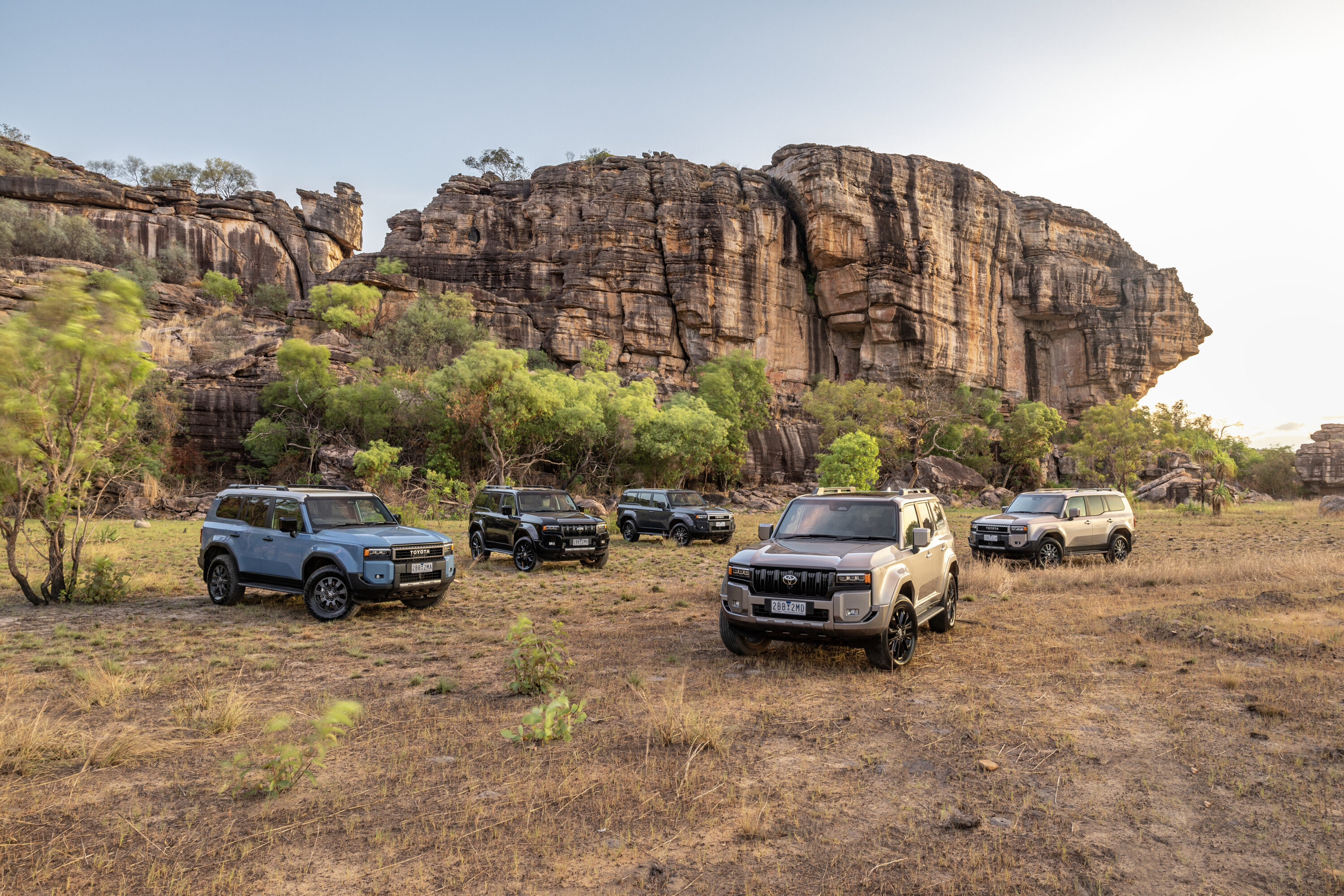
2025 Toyota Prado GXL
| In addition to GX | |
|---|---|
| Seven seats | Synthetic leather upholstery |
| Roof rails | Heated and ventilated front seats |
| Rear privacy glass | Eight-way power-adjustable driveru2019s seat |
| Silver front and rear bumper trim | Leather-accented steering wheel and gear shifter |
| Electric tailgate | Auto-dimming rear-view mirror |
| Rear climate control | Wireless phone charger |
| Six USB-C ports | |
2025 Toyota Prado VX
| In addition to GXL | |
|---|---|
| 20-inch dark metallic alloy wheels | Leather upholstery |
| Body-coloured front and rear bumpers | Driveru2019s seat power lumbar support and memory |
| Over-fender moulding and rear guard trim | Four-way power-adjustable passenger seat |
| Bi-LED headlamps with dynamic auto-leveling | Power-adjustable driveru2019s seat |
| Adaptive high-beam | Carpet floor mats |
| Refrigerated console box | Tyre pressure monitoring |
| 12.3-inch digital instrument cluster | 14-speaker JBL audio system |
| Adaptive variable suspension | Five selectable drive modesu00a0 |
| Multi-terrain select | Multi-terrain monitor |
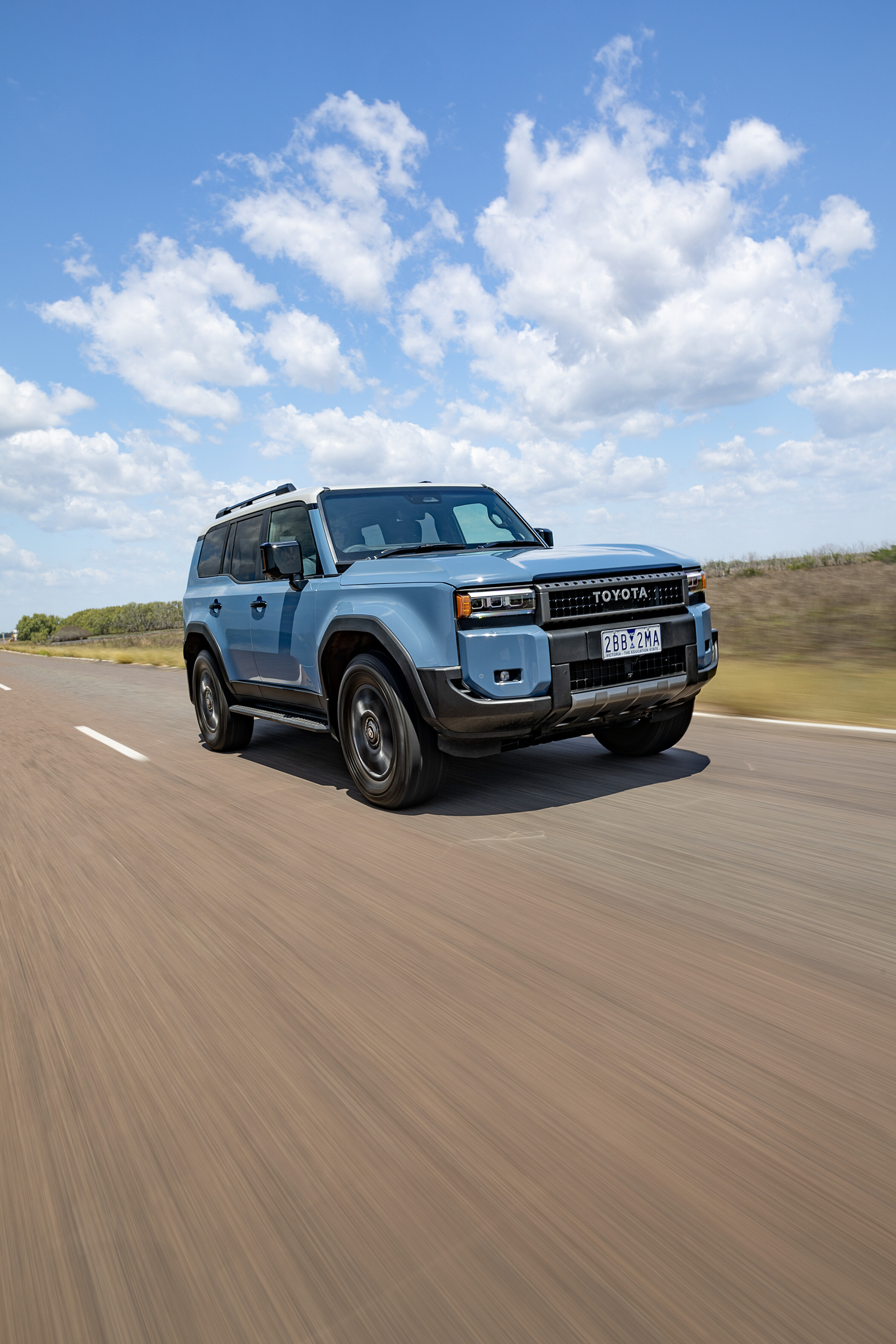
2025 Toyota Prado Altitude
| In addition to VX | |
|---|---|
| 18-inch matte grey alloy wheels | Moon roof |
| Toyo Open Country all-terrain tyres | Optional two-tone colours |
| Rear locking differential | Digital rear-view mirror |
| Stabliser disconnect mechanism (replaces adaptive variable suspension) | Heated steering wheel |
| Black door handles and tailgate garnish | Head-up display |
| Black over-fender mouldingu00a0 | Five seats (down from seven) |
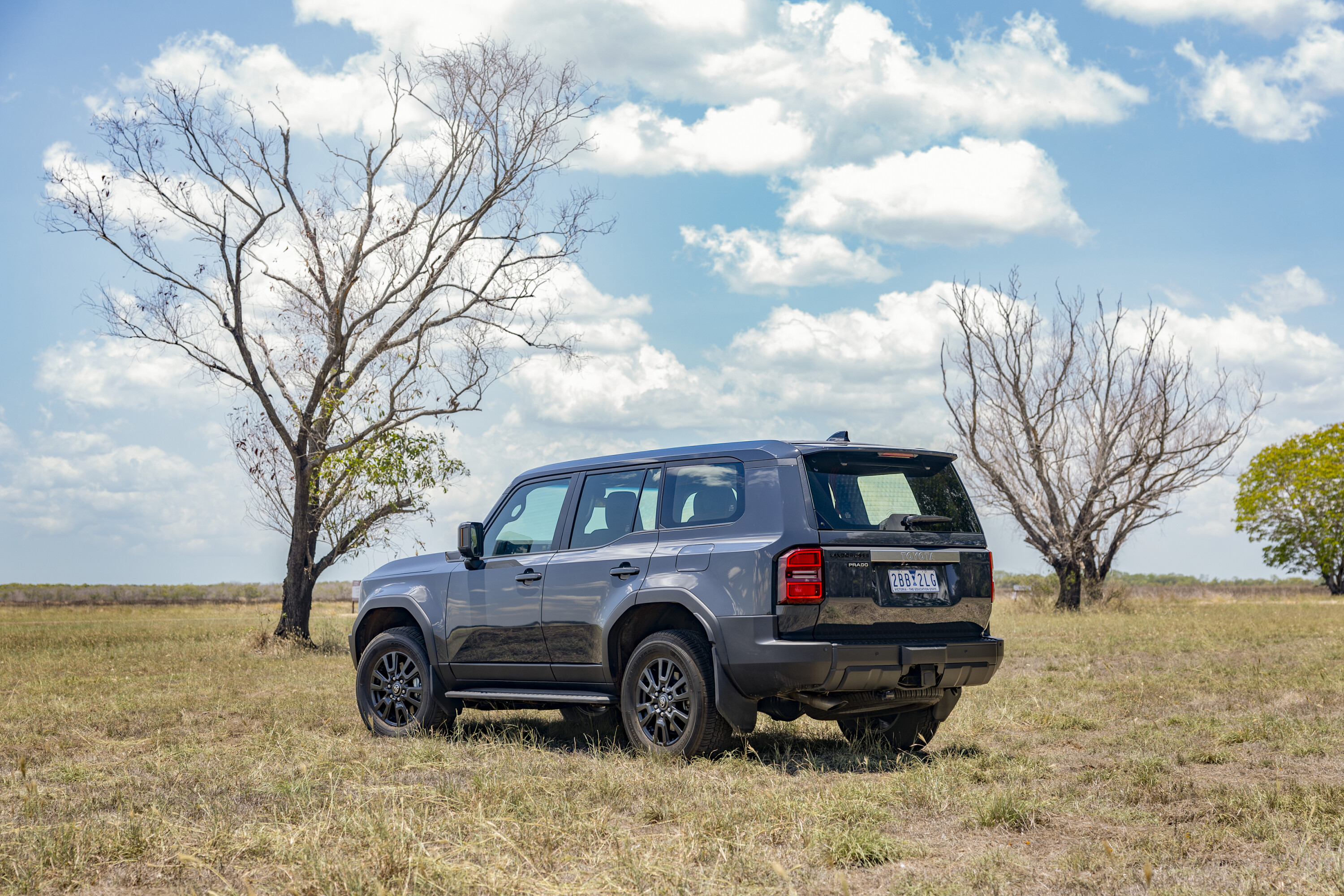
2025 Toyota Prado Kakadu
| In addition to VX | |
|---|---|
| Panoramic moon roof | Adjustable driveru2019s seat thigh support |
| Illuminated side steps | Digital rear-view mirror |
| Heated and ventilated rear seats | Head-up display |
| Heated steering wheel | Rear torque-sensing limited-slip differential |
2025 Toyota Prado pricing
| Model | Pricing |
|---|---|
| GX | $72,500 |
| GXL | $79,990 |
| VX | $87,400 |
| Altitude | $92,700 |
| Kakadu | $99,990 |
Toyota is presently launching its 2025 Prado up in the Northern Territory and we’re driving it through Kakadu National Park, but we can’t tell you about that just yet! Check back at 7pm on November 21 for those details.
What we can give you now as we jump into the cars is a refresher of what they told us already, and that is that the 250 Series Prado will ride on a variant of the same TNGA-F chassis that underpins the LandCruiser 300 Series, the Lexus GX550 and the Toyota Tundra pick-up.
It’s a bigger car than the 120/150 Series Prado and more akin to an 80 Series Cruiser in size. Styling-wise the boxy body takes many cues from the 60/62 Series Cruisers of yesteryear to give it a retro appearance, with the Australian models all featuring the FJ62-like rectangular headlights; while the round headlight as seen on the 250 in some other markets will not be offered here on any grade.
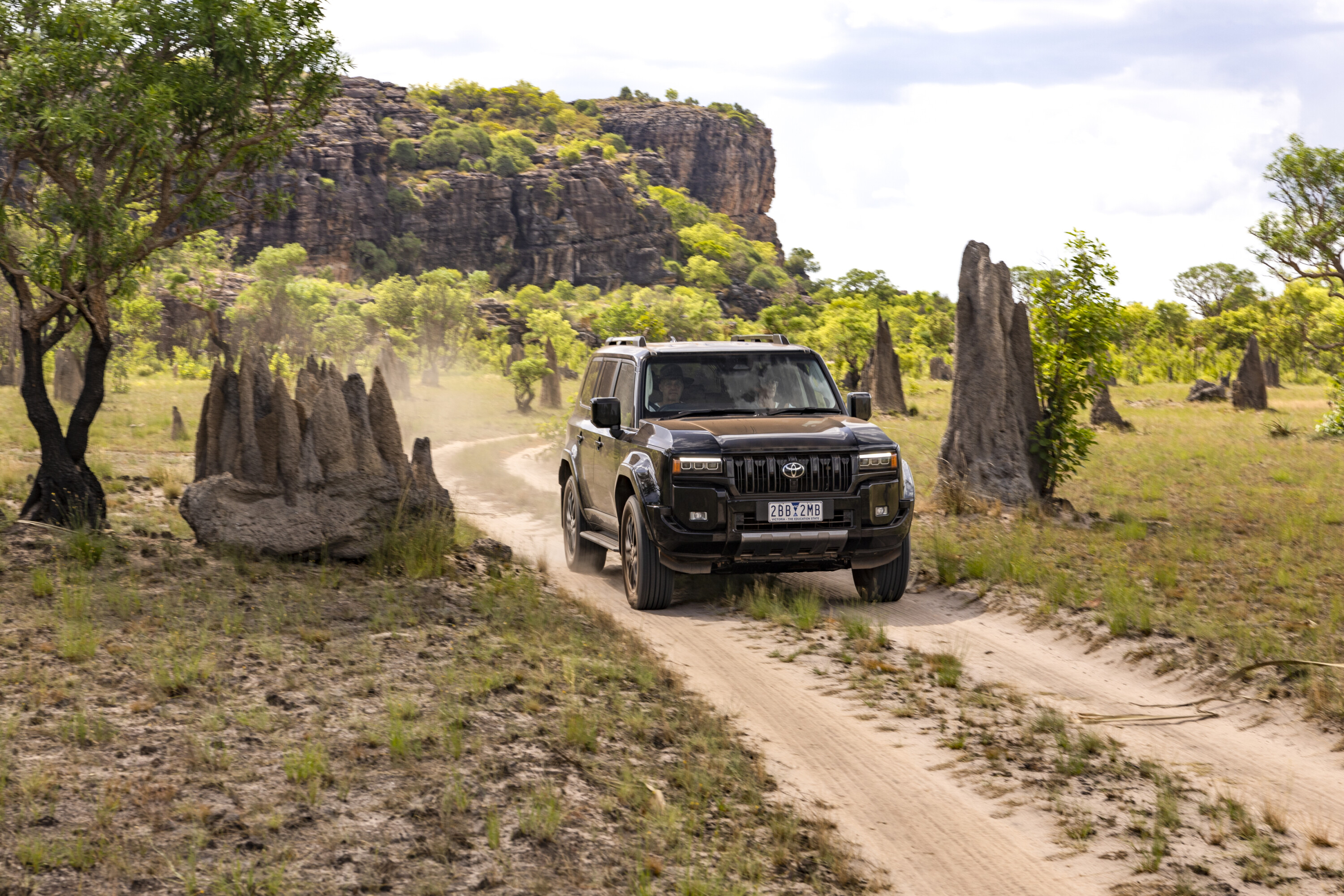
The new Prado will be sold here in five grades starting from the GX, then the GXL, VX, Altitude, and top-of-the line Kakadu models.
The Altitude model is now a full-time model rather than a limited edition, and it is the most offroad-focused of the new Prados. It is the only variant that comes with a locking rear differential and front sway bar disconnect mechanism, to give it better traction at the rear axle and more wheel travel at the IFS. It also comes on 18-inch all terrain Toyo tyres and is only offered as a five-seater, leaving more room in the back for cargo by ditching the third-row seats. Leaving the rear seat out also helps with payload.
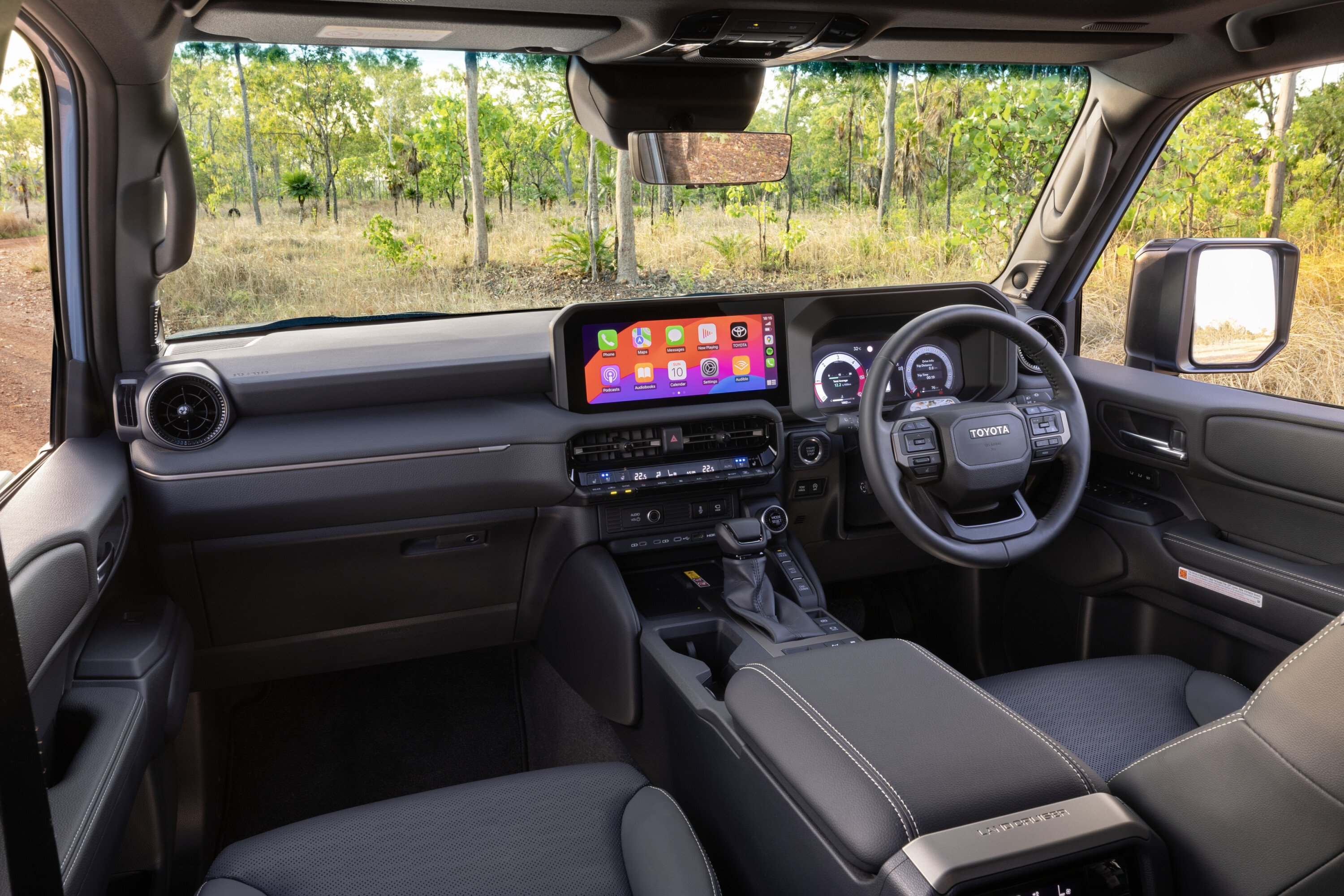
Inside, all models get the premium 12.3-inch multimedia screen that is compatible with wireless Apple CarPlay and Android Auto and has Bluetooth connectivity and cloud-based in-built sat-nav. The levels of trim vary with the model grades, but all seem to be very well-appointed and laid out. We were impressed with the dash layout and functionality of the LX550 when we tested it, and the Prado carries over most of that design. We’ll verify how well it all works (or doesn’t) next week.
All 250 Series Prados are powered by the 1GD 2.8-litre diesel four-cylinder engine, boosted by Toyota’s 48-volt V-Active technology. The tech doesn’t increase engine outputs and the mill still makes the respectable 150kW/500Nm we are familiar with from the previous Prado and current LandCruiser 70 models, HiLux and Fortuner variants. The engine is backed by a new eight-speed automatic transmission and a full-time/dual-range four-wheel drive system. The new Prado offers a 3500kg towing capacity with an integrated towbar that is pre-wired and ready to use.
Toyota has developed a range of bullbars and steel front bumper locally for the new Prado, offering both steel and alloy bullbars and semi-looped and loopless front bumpers. The local arm has also created 8000kg rated recovery points for the front of the new Prado and offers a rated recovery point that fits in the rear tow hitch receiver. For more recovery security, you can also get a Warn winch that fits in behind the front bumper and has been officially tested and approved by Toyota Australia.
For roof storage, Toyota has developed two- and three-bar rack systems for the 250 Prado, depending on the grade, with up to 90kg capacity. These are available with a range of accessories to carry all sorts of gear and sporting equipment.
Read our review on November 21, at 7pm!
When deliveries of the all-new Prado start rolling out, customers will have the option to add-on bespoke Toyota Genuine Accessories (TGA).
The broad range of equipment will not only improve the Prado’s off-road capabilities, but make it more customisable to individual preferences; be it the need for various storage configurations, increased protection, or go-anywhere potential.
Having access to development vehicles from an early stage – 2019 – gave Toyota Australia a head-start in creating a selection of steel and alloy bull bars that fully integrate with the Prado’s square shape, proportions and suite of safety technology including active safety systems, frontal crash systems, parking sensors, and all cameras surrounding the vehicle.
Four bull bar styles will be on TGA shelves: Premium Steel, Premium Alloy, Semi Hooped (Commercial) and Hoopless.
The bull bars are designed to easily accommodate the fitment of a wide range of additional accessories including a Toyota bespoke Warn-sourced 9000-pound winch that sits behind the number plate on all bull bars; a lightbar; and a range of antennas.
Sitting below the bull bars are newly developed front recovery points rated to 8000kg and a front bash plate made from 5mm pressed aluminium. Rear recovery points are also available and fit into the Prado’s standard towing hitch receiver. Additionally, Toyota offers a selection of on- and off-road rated tongues and towballs.
Giving the Prado the ability to stow large, bulky items, Toyota has also developed two- and three-bar rack systems that can carry up to 90kg. Both bars are compatible with other Genuine Accessories such as kayak, bike and ski carriers.
Other Genuine Accessories include a snorkel, cargo mats for five- and seven-seat grades, and a cargo barrier for five- or seven-seat grades.