
FOLLOWING on from our breaking story in the August issue of 4X4 Australia, Volkswagen has confirmed that an Amarok-based three-row wagon is in its planning for development.
At a meeting with journalists in Melbourne this week, VW executives admitted that plans for a wagon built on the ute’s ladder chassis underpinnings had been initiated back when the ute first launched in 2011. The plans had since been shelved, but they are now back on the table.
This turnaround comes with the introduction of the V6 TDI engine to the Amarok ute later this year.
At the meeting Volkswagen Group Australia (VGA) commercial vehicles director, Carlos Santos, said: “There is some very serious development happening at the moment for an SUV based on Amarok, which will be quite a large passenger vehicle. The discussion has been reignited because this V6 engine is able to be sold in the US, whereas the 2.0-litre would never get into the States.”
The V6 TDI engine is already sold in the US in both the Porsche Cayenne and VW Touareg.
This move will make the Amarok the only V6-powered offering in the one-tonne 4×4 ute segment in Australia. With 550Nm on tap it will also be the class leader for grunt, even if it still has a 3000kg tow rating; 500kg down on most of its competition.
Should an Amarok-based wagon eventuate it will land on the back of an SUV tsunami from VW, with new models replacing its Tiguan and Touareg wagons; plus there’ll be a new model in between the two and another one smaller than the Tiguan.
As the Amarok ute is currently one of the oldest utes available in its class, a new model is expected in the next two to three years. So any wagon would most likely be based on the second generation vehicle.
An Amarok wagon would compete with the likes of the Ford Everest, Toyota Fortuner, Holden Trailblazer, Isuzu MU-X, and Mitsubishi Pajero Sport; all wagons built on one-tonne ute platforms.
Nissan seems to be the only manufacturer missing, with no confirmed plans for a Navara-based three-row wagon. It’s something the company will be missing now that the GU Patrol is on its way out of production.
FORD Australia has slipped a Special Edition model in to its Ranger ute line-up, with an XLS-grade Ranger coming loaded with extras.
It’s a timely addition to the hot-selling Ranger range, and it coincides with Holden’s revelation of its updated Colorado line-up.
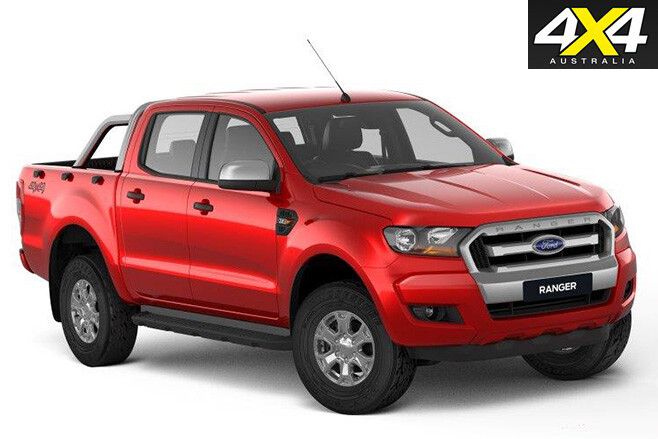
The Ranger 4×4 XLS Special Edition gets extras that would normally add $4900 to the base price, but for the regular XLS it’s just a $2500 hike.
Available only in double-cab ute variants, the XLS Special Edition sells for $49,970 with the six-speed manual and $52,190 with six-speed automatic transmission.
Genuine accessories that come on the Special Edition Ranger XLS include a polished sports bar, genuine Ford 3500kg rated tow-bar, side steps, and a load bed and tailgate.
CEO and president of Ford of Australia, Graeme Whickman, said of the new Ranger: “Already considered one of the most capable and desirable pick-up trucks on the market, we expect the Ranger 4×4 XLS Special Edition will help us narrow the gap to Toyota even further, with Ranger 4×4 now only 172 units behind the Hilux 4×4 year-to-date (July 2016).”
In fact, in July this year, more Rangers found new homes than Hiluxes (2357 v 2311). It has been a tight battle between the two off-road warriors this year, and the nail-biting dual for best-selling ute of 2016 should go right down to the wire.
The Ranger XLS 4×4 is available now from Ford dealerships.
IN A SIGN of the times the 2017 Range Rover Sport will adopt a four-cylinder diesel from 2017.
Dubbed the SD4 S, it will replace the TDV6 S as the price leader in the Range Rover Sport line-up. That means a $90,900 plus on-roads price tag and the least expensive way to get into a ‘proper’ Range Rover.
If that doesn’t sound too exciting there is good news, as the SD4 will come with the option of dual-range gearing, as part of a $5500 off-road option pack that also includes height-adjustable air suspension. The TDV6 Sport will also be offered with a dual-range gearing option in 2017 giving another option for drivers who want to run 19 inch wheels.
The TDV6 and the new SD4 both come with a more practical wheel and tyre spec in the form 235/65R19s, whereas the SDV6, with its bigger brakes, can’t run on 19s and has less-practical 255/55R20s instead.
The new four-cylinder diesel comes from the Jaguar Land Rover’s new Ingenium engine range, and despite being just two litres in capacity it claims a solid 500Nm and 177kW. Given the aluminium-monocoque construction of the RRS means a modest kerb weight of around 2100kg (for the SD4), the performance of this four-cylinder engine still should be pretty handy.
By way of comparison, the current TDV6 3.0-litre diesel claims 190kW and 600Nm, so a drop in both power and torque with the four but not as significant as you may think it would be. The 2.0-litre four is also lighter than the TDV6, and with an ADR fuel claim of just 6.2L/100km it’s 10 per cent more economical as well. To achieve its impressive power and torque outputs the Ingenium diesel uses a sequential bi-turbo arrangement.
The SD4 S also gains a bit of kit over the outgoing TDV6 S, including a bigger (10.2-inch in place of an 8.0-inch) touchscreen, sat-nav, autonomous emergency braking, lane-departure warning, front parking sensors and xenon headlights.
Interesting to note that the last four-cylinder turbo-diesel offered in the Range Rover in Australia was a 2.4-litre VM Motori that claimed just 80kW and 240Nm. It lasted from 1987 to 1990.
The Range Rover Sport SD4 S arrives in Australia in the first quarter of 2017.
FOTON has unveiled a kitted-up Tunland 4×4 dual-cab ute to showcase a range of accessories that can be fitted by Foton dealers around the country.
The Chinese company has added Toyo AT2 Open Country tyres wrapped around Dynamic Python alloy wheels, while an Airflow snorkel feeds clean air through the vehicle’s intake system.
A Carryboy canopy sits snugly on the tray and a Warn winch up front will get the Foton out of any serious strife. Finally, a full-featured tow kit is able to tow up to 2.5 tonnes.
The entire package has been raised with front and rear RidePro suspension kits.
The accessorised Tunland – like the one you see here – is expected to have a driveaway price of less than $40,000.
For comparisons sake, a non-equipped Tunland 4×4 single cab retails from $22,490 drive away; the dual cab will set you back $30,990.
The Tunland is powered by a Cummins 2.8-litre turbo-diesel donk that pumps out 120kW and 360Nm. The engine works in tandem with a Getrag five-speed manual transmission.
Standard features for the Tunland dual cab include rear parking sensors, dual front airbags, Bosch four-channel ABS, an eight-way adjustable driver’s seat, alloy wheels, air-con, Bluetooth streaming and remote keyless entry.
The fully accessorised Foton Tunland 4×4 dual-cab ute will debut at the National 4×4 Outdoors Show & Fishing and Boating Expo, held August 19-21 at the Melbourne Showgrounds.
Get your tickets to the 4×4 show here and use the discount code: AUSTRALIA!
The kitted-out Tunland ute will be on display in Hall 1, Exhibition Pavilion, Stand EP477.
This simple bush recipe takes very little time to put together. It might not quite be a stroganoff, but it’s close enough.
Ingredients
- Serves 2 to 4 (depending on amount of meat used)
- 500g-750g round or rump beef – cubed or cut into strips
- (the better the cut of meat, the quicker the cooking time)
- 1 or 2 onions – chopped
- 1 medium tin mushrooms in butter sauce
- 1 medium tin tomatoes (crushed would be best)
- 1 pack French Onion Soup Mix
- 1 pack (250ml) long-life cream or sour cream
- Salt & pepper
- Spring onions or parsley flakes (optional)
- Cooked pasta, rice, noodles or mashed potatoes (hot)
Optional hop-ups
- Big splash of port or wine
- Squirt of tomato paste (for a richer tomato flavour)
- Splash of Worcestershire sauce
- Hit of sweet paprika
- Garlic – crushed (or use minced garlic from a jar)
- Sprinkle of chilli flakes or minced chilli if you want a bit of a bite
Cooking it
Step 1: Heat a little oil in a large, heavy-based pan and brown the beef (in batches) over a high heat. Remove and set aside.
Step 2: Add a little more oil, heat and add the onions. Sauté until the onions are slightly softened.
Step 3: Add mushrooms, tomatoes, and soup mix. Stir to mix through and then add cream. Return the meat to the pan and stir through.
Step 4: Add some of those optional hot-ups.
Step 5: Bring to the boil then reduce heat, cover and simmer gently until the meat is tender. Cooking time will depend on the type/cut of meat used.
Step 6: Serve over hot cooked pasta, rice, noodles or mashed potato.
For extra campsite ooohs and aaahs, sprinkle some chopped spring onions or parsley flakes over the top.
Viv’s extra hints
This recipe makes plenty of sauce, so you can store the leftovers and have enough for another meal. The extra sauce is delicious over two-minute noodles for lunch the next day! To make this meal even quicker, use beef strips already prepared. You can also use sour cream instead of cream.
Viv’s camp cooking hints: Browning meat
Cooking the surface of a piece of meat at a high temperature until browned gives it both an attractive colour and a deeper flavour. When browning meat, it’s important to have the pan very hot and add the meat in batches. If you overcrowd the pan, it will cool down and the meat will stew rather than brown, thus becoming tough. This happens because moisture from the meat is released faster than it can be evaporated. Rather than searing, you end up simmering and steaming your meat pieces. The result is dry, tough and chewy meat.
Want more recipe ides? Browse our Bush Cooking collection for inspiration.
WE’VE compiled a list of some of the best touring gear currently on the market.
Whether it’s a nifty aftermarket addition to your 4×4, or a handy campsite tool, there are many ways to be better prepared for your next remote-area adventure.
From supercharger kits and radiators for your off-road steed, to pocket knives and cooking utensils – we’ve covered all bases.
We’ve even thrown in a neat book for fans of vintage 4x4s.
Happy travels!
BUILT TOUGH FOLLOWING 18 months of development, Terrain Tamer has introduced two new models to its range of heavy duty radiators. The radiators come complete with steel mounting brackets and are available for the Hilux KUN26 and 70-Series V8 LandCruiser models. Each features a fully pressed and fused aluminium tank design for superior strength. The heavy duty radiators are also manufactured with a low-level warning plug, allowing them to be fitted with an optional extra in-dash warning indicator device. Website: www.terraintamer.com
SUPERCHARGED PATROL IF 298kW of V8 is not enough for you, then Harrop Engineering has the solution. Its TVS2300 Supercharger Kit for the VK56 engine utilises the latest-gen Eaton TVS tech to deliver more power and torque – with gains of around 50 per cent achievable. The kit also features: a high-efficiency intercooler system; two-piece manifold design; front drive/front inlet design for less restrictive intake path; and a large intercooler core. It retains all factory accessories and it’s designed and manufactured in Australia. Pricing is expected to come in around $11,000. Website: www.harrop.com.au
LOST SIGNAL YOU’VE rocked up to a campsite, set up all of your gear, and are now settling down for a night under the stars with your favourite bottle of red. But, where the heck is the bottle opener? We’ve all been there! Leatherman’s latest release, the Signal, will get you out of that pickle, but it’s also equipped with a lot more tools. Tools include: pliers (needle-nose and regular); saw; combo knife; wire cutters; an emergency whistle; fire-starter; hammer; and a diamond-coated blade sharpener. There are 19 tools in total! RRP: $285 Website: www.leatherman.com.au
THEY SEE ME ROLLIN’ TWO brand-spanking-new sets of wheels have landed on the ROH Wheels catalogue: the Assassin and the Patriot. The Assassin is available in sizes 16×8, 17×8, 17×9 and 18×9 and features a matte-black finish with aluminium anodised bolts. The Assassin is suitable for the Hilux, Ranger/BT-50, Colorado, D-Max, Triton, Navara NP300 and Navara D40. The Patriot is sized 16×8, 17×9, 18×9 and 20×9 and also rocks a matte-black finish milled with aluminium anodised bolts. It’s perfect for the Hilux, Ranger/BT-50, Colorado, D-Max, Triton, Navara NP300, Navara D40 and 200 Series LandCruiser. Website: www.rohwheels.com
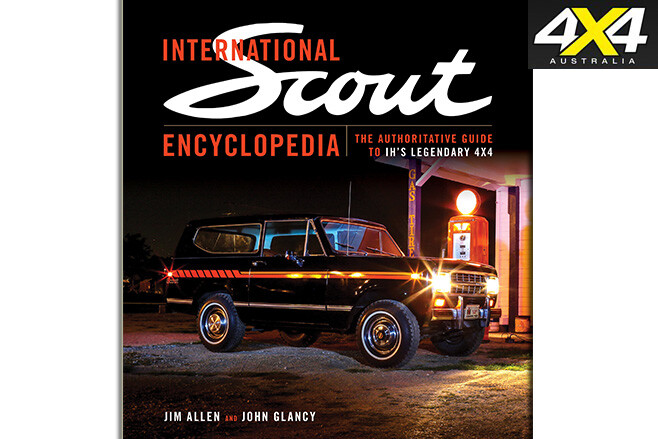
TOASTED SANGA NOTHING beats devouring a piping-hot jaffle in the middle of winter. The ARB Toastie Brander consists of two cast-iron plates, and the handles are formed from Manchurian ash timber. Not only will it melt two pieces of bread together with cheese and tomato, it will also brand the ARB logo onto both sides. Granted, this does nothing to enhance the flavour of an already glorious campsite cuisine, but it’s a great novelty on an awesome product. Website: www.arb.com.au
BACK UP MSA 4×4’s patented air lumbar support system will provide quality back support when you need it most. The system is designed so that it can be installed and removed in seconds, and its fully adjustable air-inflated bladder insert allows you to easily get comfy. Four bladders can even be installed for multiple support zones. It comes with a lifetime warranty. RRP: $109 (canvas); $129 (sheepskin) Website: www.msa4x4.com.au
HAVE you checked out the Australian Patrol Vehicles (APV) 6×6 LandCruiser-based rig in the September issue of 4X4 Australia magazine that is on sale now?
Here’s some killer footage of the APV prototypes undergoing testing in the Simpson Desert last year, and you can see how versatile and capable they are.
APV is now shopping these vehicles out to Special Forces and selected military buyers around the world!
The wow factor for you guys is that APV, through its civilian division Australian Expedition Vehicles (AEV), can build you a rig like this (or similar) in either 4×4 or 6×6 to suit your off-road touring needs.
The guys can perform chassis stretches, 6×6 conversions, auto transmission installations, canopy/camper fabrication and more, all to customer requirements.
APV is currently working with JMAX to incorporate its coil spring rear conversions of both the 4×4 and 6×6 APV/AEV vehicles.
All this makes APV your one-stop shop for a wild LC70 expedition rig.
Only last week, BBC released images of the British Special Forces driving Jordanian-modified LandCruiser 70s in the fight against ISIS in Syria.
The Al-Thalab Long Range Patrol Vehicles are equipped with sniper rifles, heavy machine guns and anti-tank missiles.
The 70-series Cruiser is the vehicle of choice for its well-proven and durable platform.
To get your own conversion rolling, contact the staff at APV/AEV.
They can be found at: 13 St Albans Road, Mount Louisa, Townsville, Queensland. Or, to may an enquiry, just give them a buzz on 0414 680 154.
STURT National Park is tucked away in the north-west of New South Wales. Within its 3500km2 lie flood plains, desert, jump-up country, gorges and much more for those willing to explore. The park also has significant Aboriginal sites that date back 20,000 years, and pastoralism that dates back well over 100 years.
Tibooburra, 332km north of Broken Hill, provides a great base for a few days before you explore the park. Here in town you can get fuel and groceries, as well as advice on exploring the Sturt. In fact, most people only call in to Tibooburra for an overnight stay when heading further west.
On the search for inland sea, explorer Charles Sturt pushed his way through Tibooburra back in 1845. A replica whaleboat that Sturt and his men dragged into this area is mounted in the town’s park alongside other historical gear, highlighting how machinery has advanced over the years.
There are numerous tourist drives within Sturt National Park, such as Gorge Loop Road, which starts 24km east of Tibooburra. This 100km loop road explores Mount Woods and the nearby pastoral museum.
The Jump-Up Loop Road to the north leads towards the Queensland border and the Silver City Highway. On this road you’ll find the Olive Downs campground, 55km north of Tibooburra. Here you can camp in a remote area and wander the ruins of Olive Downs station.
The 110km three-hour self-guided drive along the Jump-Up Loop Road takes you through some amazing and harsh country, including desert areas, gibber rock plains and red dune country.
The excellent loop is dotted with the odd tree and small rocky gorges, to give it a moon-like landscape. Be warned, though, this is a very remote, harsh area and you need to be well-prepared with food, water and communication. There is no phone reception here, so it’s best to advise someone of your travels.
Another highlight of Sturt National Park is to spend a night or two camping at Fort Grey. Located 110km west of Tibooburra, this campground is situated near Lake Pinaroo, where you can walk across the dry lakebed via Wells Walk to Sturt’s Tree. When full, this lake is alive with birds and other animals enjoying the cool waters of the outback.
Middle Road, which starts just north of Fort Grey, takes you eastward along the Wild Dog Fence (formerly the Dingo Fence) through a diverse landscape of low flood and gibber plains, and along the edges of red sand dunes. This 80km road passes the top end of Lake Pinaroo, offering vast views of the lake’s beauty.
Other highlights along the way include historic bronco horse yards and several bores. Middle Road is a relatively easy drive and it joins back on to Toona Gate Road, which is 75km north of Tibooburra.
Sturt National Park has stayed virtually untouched since the days of Charles Sturt’s expedition. With an array of endangered flora and fauna, as well as historical landmarks and significant tourist opportunities, it’s a park well worth a visit.
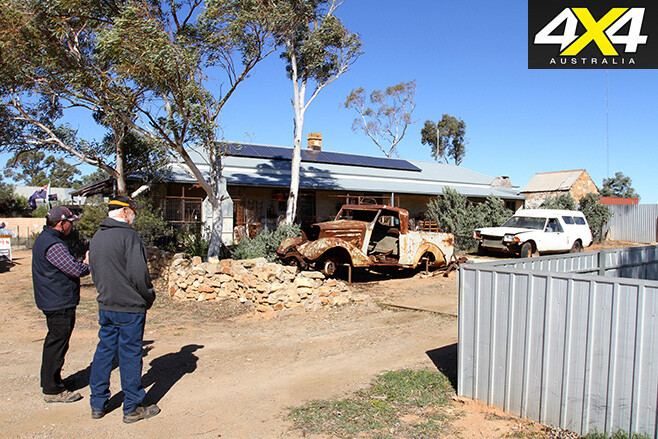
TRAVEL PLANNER
- WHERE: Located 1300km north-west of Sydney and 330km north of Broken Hill, Sturt National Park has hidden treasures and some great camping. The park covers more than 3500km2 and includes dunes in the jump-up country, semi-dried desert areas and a few flood plains. Within the park there are walking trails, ruins and lakes. This is one of NSW’s most remote parks.
- CAMPING: Fort Grey is located on the western side of Sturt National Park, with Lake Pinaroo close by. Fort Grey’s camping area has pit toilets, shelters with free gas barbecues, and several water tanks. There’s ample room for camper trailers, tents and off-road caravans. Unfortunately, no wood fires can be lit in this camping area, though gas barbecues are most welcome. Self-registration is available at Fort Grey for payment of camping fees, which at the time of writing was $5 per adult and $3 per child per night. Other campgrounds within the park include Olive Downs, Mount Woods and Dead Horse Gully.
- SUPPLIES AND FACILITIES: Out here in the Corner Country you need to be self-sufficient, as it’s a remote park. There is no phone service. Fuel and basic items can be found at Tibooburra. The Cameron Corner store, 140km to the west of Tibooburra, has both diesel and unleaded fuel, but it can be hit or miss. Campgrounds have basic facilities.
- MAPS AND GUIDES: NPWS has several visitor guides, which provide relevant and necessary information. Hema Maps’ Outback NSW covers the area and shows campgrounds, points of interest and other relevant information.
- TRIP STANDARD: When the conditions are good, this area can be traversed in most four-wheel drives and soft-roaders. Be aware of corrugations and the remoteness of this area. Your vehicle must be well-prepared and you need to be self-sufficient with spares, water, food and communication.
- FURTHER INFORMATION: Tibooburra NPWS is located in Briscoe Street, Tibooburra. The visitor centre also houses displays on local Aboriginal culture and wildlife in the area. Contact NPWS at Tibooburra on (08) 8091 3308, or visit the Office of Environment and Heritage website.
IT’S SAID breakfast is the most important meal, so why not start your day with a dead-set cracker of a dish.
Scotch eggs are easy to make, delicious and filling – the perfect campsite cuisine.
Check out Roothy’s other breakfast recipes: Spanish omelette and hash browns. Also, check out this behind-the-scenes look at how Roothy gets things done.
Before you arrive at your campsite, make sure you’ve packed a few snags in the old Engel.
Any type of sausage will do the trick, and Roothy’s gone with a pork and rosemary snag for this video.
Sausage meat works because it’s finely ground and sticky, which means it will hold its form and won’t (shouldn’t) fall apart when surrounding an egg.
The best technique is to cut an end off one of the snags and squeeze all of the innards out – making sure none of the skin finds its way onto the plate.
Whip out some pre-prepared, de-shelled boiled eggs and coat them with a layer of snag meat.
Roll the egg/sausage meat combo into a ball and coat them with corn-flake crumbs.
Throw them in a frying pan filled with some oil and they’ll be ready in next to no time.
Roothy even provides a free history lesson in this vid, explaining how the Scots made their way south to escape the economic problems of their homeland.
Most of them were skilled tradies, unlike the convicts that hailed from Ireland.
This dish takes less than 10 minutes from go-to-whoa and is the perfect way to kick off a day on the tracks.
It sure beats paying $20 for the same dish at a local brunch establishment!
Want more recipe ides? Browse our Bush Cooking collection for inspiration.
For its 2017 model updates, engineers from General Motors, including Holden personnel, have pulled the Colorado/Colorado 7 apart and put it back together with revised and new parts from one end to the other.
Some of the changes are global, while others are specific to the Australian-delivered Colorado and upcoming Trailblazer. 4X4 Australia got an exclusive chance to sample the upgrades prior to the car’s launch, which will be in mid-August.
Since its release in 2012 the Colorado has sold reasonably well, though without ever worrying the Toyota Hilux and Ford Ranger in a highly competitive and ever-growing ute market. The Colorado’s wagon sibling, the Colorado 7 – soon to be renamed the Trailblazer – has been less of a success.
After the Commodore, the Colorado is Holden’s best-selling model and will become more significant in Holden’s product mix once local production of the Commodore shuts down, late in 2017. Holden buyers looking for a two-wheel drive ute then won’t be able to buy the Commodore-based ute, which may boost the slow-selling Colorado 4x2s. And if buyers don’t take to the next-generation European-sourced front-drive Commodore in the same numbers as they do the current locally built rear-driver, then the Colorado could well be Holden’s best-selling vehicle.
With this in mind GM’s engineers, including Holden personnel, have pulled the Colorado/Colorado 7 apart and put it back together with revised and new parts from one end to the other. Some of the changes are global, while others are specific to the Australian-delivered Colorado and upcoming Trailblazer. To be frank, the Colorado needed a major overhaul as it fell short of competitor utes – particularly the VW Amarok and the Ford Ranger – in a number of key areas.
WHAT’S NEW CHANGES start with a relocation of the engine’s balance shafts, which are designed to counter the inherent dynamic imbalance of all inline four-cylinder engines.
In the case of the Colorado’s 2.8-litre diesel (see Italian Job breakout below) the twin shafts, located in the usual position under the crankshaft, have been moved forward 10cm. This change, along with newly designed engine and transmission mounts, is designed to address the much-criticised harsh feel of the current engine.
On top of this, Australian models get additional engine soundproofing to address the engine’s noise issues, including an injector insulator, metal timing cover and an oil-pan insulator.
Australian models also get a new torque converter for the six-speed auto that incorporates a centrifugal pendulum absorber, which allows the torque converter to lock up earlier and more often and makes for smoother shifts. Meanwhile, again for Australian models, the way-too-tall gearing of the six-speed auto has been addressed with the final-drive ratio shortened a significant amount from 3.73:1 to 4.1:1.
Chassis changes start with the adoption of electric power steering (EPS) in place of the hydraulic power steering, a change that mirrors the Ford Ranger – although Holden says it was working on EPS well before news broke that Ford was working on the same thing for the Ranger.
EPS is becoming popular these days, because not having to use power to drive a hydraulic pump results in marginal fuel savings, and fuel economy is one of the current holy grails of new-car design. EPS also allows the steering weight to be varied almost infinitely so you can enjoy both light and quick steering at parking speeds and slower, weightier steering at highway speeds.
Suspension calibration has been addressed with generally softer springs across the front of all ute variants matched to a beefier front sway bar. The wagon’s front springs and sway bar remain unchanged but, like the ute, there are new dampers all ’round. New OEM Bridgestone tyres bring lower rolling resistance, a softer ride and improved wet-weather performance.
The chassis control systems for both on- and off-road driving have been recalibrated. In particular, trailer-sway, electronic traction and hill-descent control systems have been tweaked. These changes are aimed at improving off-road performance for 4×4 variants.
As before, the Colorado retains a rear mechanical limited-slip diff in addition to ETC, which Holden says works better in situations such as turning out of a corner on a wet bitumen road. The mechanical limited slipper prevents the inner wheel from spinning, which means the potentially power-robbing ETC is not activated.
Additional changes aimed at improving general running refinement and NVH include a new body-mount system. Compression mounts were previously used on all ute variants and the wagon, but now a mixture of compression and shear mounts are used. Dual-cab utes and the wagon have eight mounts each, while single and extended-cabs have six mounts each.
Revised roof mouldings, exterior mirror mounts, door seals, sliding glass channels, B-pillar inserts and a thicker windscreen also improve refinement.
New or updated safety features include a driver’s knee airbag, a range-standard reversing camera and high-end active safety features such as collision alert, blind-spot monitoring, plus tyre-pressure monitoring on selected models. Holden’s hoping for a five-star ANCAP rating – currently only applied to dual-cabs and the wagon – across all variants.
The interior and dash have been revised, though we didn’t get to see this or the exterior redesign on this drive. Holden has since released the photos you see here.
What we know is satellite navigation is now embedded, which means you don’t have to rely on a silly phone app for navigation. Some models will also get remote start and auto headlights with LED daytime running lamps. Apple CarPlay and Android Auto are also part of a revised MyLink infotainment system.
THE DRIVE THE sneak preview of Holden’s MY17 Colorado was held over two days, initially at Holden’s proving ground at Lang Lang and then on Victorian country roads and forest trails. Along for the drive was Holden’s engineering team, Jeremy Tassone (vehicle development manager), Amelinda Watt (lead development engineer), Rob Trubiani (vehicle dynamics specialist) and Tony Metaxas (chassis control specialist).
We had access to a MY16 dual-cab for comparison purposes, an ‘integration’ wagon, a ‘pre-production’ dual-cab and a ‘manufacturing validation’ dual-cab, which was the closest of the four to a full-production vehicle.
Highlights at Lang Lang included a violent lane-change at 180km/h on the high-speed bowl and an equally violent ESP ADR validation swerve manoeuvre initiated by robot control. But the real test came on the on- and off-road drive, where the across-the-board changes could be felt.
Most impressive was the new EPS, which is light and quick at slow speed, with a nice on-road feel. The engine is noticeable quieter and smoother and the gearing of the manual much more real-world usable. The ride quality and general refinement, especially at slower speed on rough roads and trails, is also much improved.
Despite now meeting Euro 5 emissions standards (helped by the addition of a diesel particulate filter) the claimed power and torque figures – 147kW/500Nm (auto) and 147kW/440Nm (manual) – remain unchanged.
Not that this is an issue, as the Colorado (at least with the popular six-speed auto) is the fastest accelerating diesel ute in its class, helped in part by being lighter than its key rivals. The manual, despite having less torque than the auto, feels more spritely again – even more so with the shorter final-drive gearing.
That the Colorado is a better thing than before is not in doubt, though the acid test will be how it stacks up against the opposition – namely the best-selling Hilux and Ranger. We will only know how that pans out when we line up the MY17 Colorado in a multi-ute comparison test!
Seismic Shift
WHEN the current-generation Holden Colorado debuted in 2012 it represented a seismic shift in General Motors’ global approach to the light-truck market. No longer would GM look to Japanese manufacturer Isuzu for product in this market sector as it had previously done with vehicles such as the Rodeo and the first generation Colorado. Instead, it would build its own ute.
To this end GM mustered its global resources, including engineers from Holden, and corralled them in its Brazilian division headquarters. And after six years and two-and-a-half million test kilometres carried out in South America and four other continents, Holden produced a ute it would sell around the world.
This change from Isuzu-sourced to in-house development came about due to GM selling the last of its interest in Isuzu in 2006, a company it had held a one-third stake in since 1972 (and a controlling interest from 1999 to 2002). Isuzu was still involved in the development of this new ute but as a junior rather than a senior partner. Indeed, the current Isuzu D-Max shares its basic body shell and chassis with the Colorado but differs in powertrain, suspension details, bodywork and interior fit-out.
Italian Job
THE Colorado ute and its wagon sibling are both powered by 2.8-litre four-cylinder turbo-diesel from Italian diesel engine specialist VM Motori. Why? Because up until 2013 General Motors had a 50 per cent stake in VM Motori. Since 2013 VM Motori has been 100 per cent owned by Fiat Powertrain Technologies, which in turn is owned by the Fiat Group. The Fiat Group also owns Chrysler, which is why VM Motori diesel engines appear in a number of Jeep models including the Wrangler and the Grand Cherokee.