
WITH more than 25 years of experience within the four-wheel drive industry, Australia’s own Piranha Off Road Products is known for its expertise and reliability when it comes to aftermarket 4×4 equipment.
Piranha is most widely recognised within the 4×4 community for supplying and installing dual battery systems, but it also has a catalogue of “core products” within its expansive range. These products are either manufactured or assembled by the company within Australia, hence the Piranha branding.
Here are the highlights of Piranha Off Road Products’ “Core Product” range.
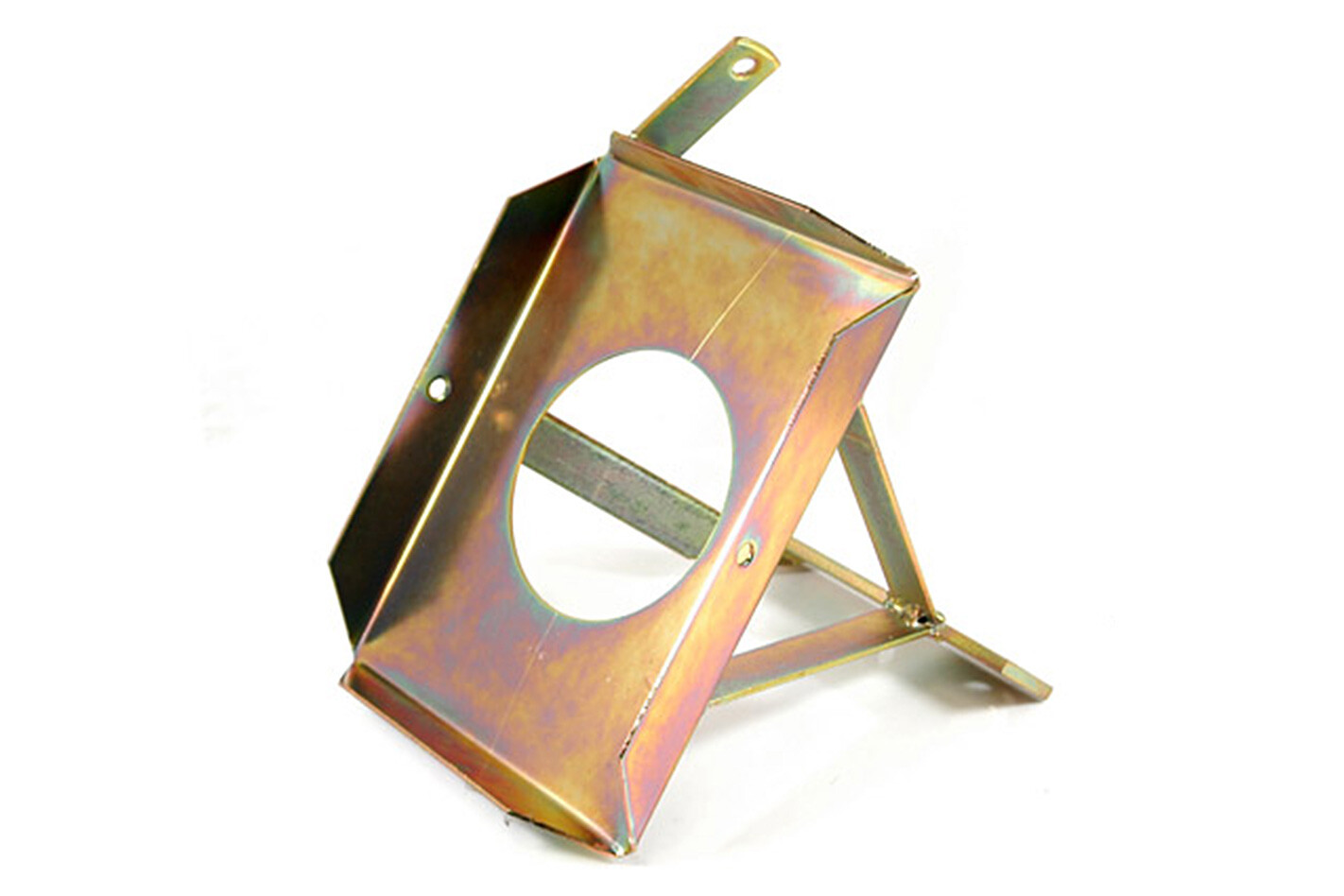
BATTERY TRAYS Piranha has a catalogue of more than 160 different battery trays. These trays are tailor-made to suit many 4×4 models, dating back to those made in the 1980s. RRP: From $195.
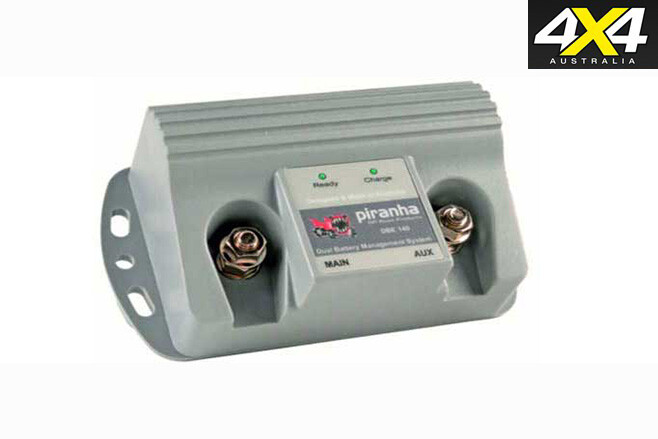
BATTERY MANAGEMENT SYSTEM DBE140SF and DBE180-SX battery management systems are designed to suit all dual battery management situations. In most applications, DC/DC isn’t required. RRP: DBE140SF $185; DBE180-SX RRP $425.
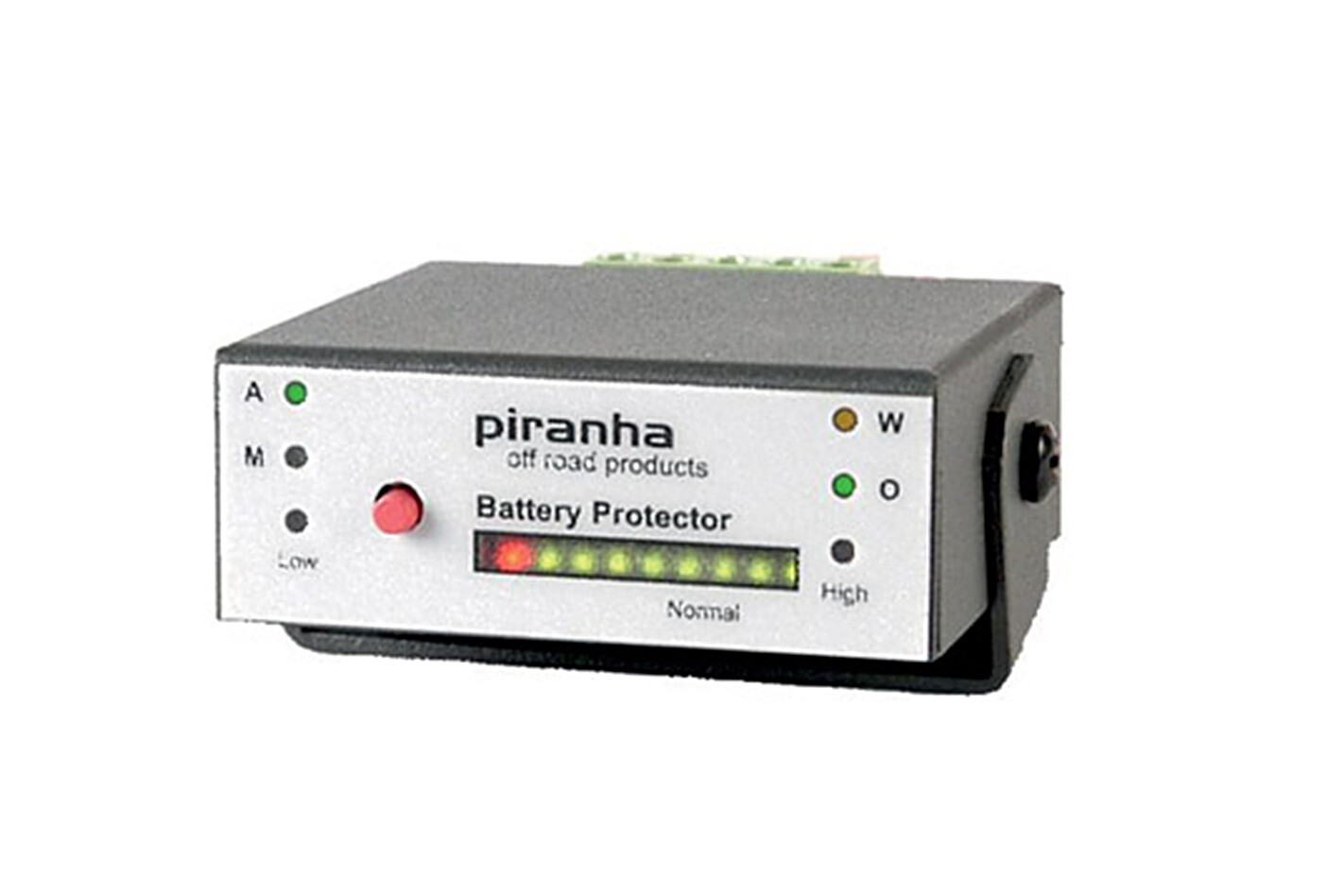
BATTERY MONITOR Piranha has three types of battery monitors that can be mounted in a 4×4’s cabin to keep you informed on the voltages of your mains and auxiliary gauges. The monitors work like a fuel gauge. RRP: $135.
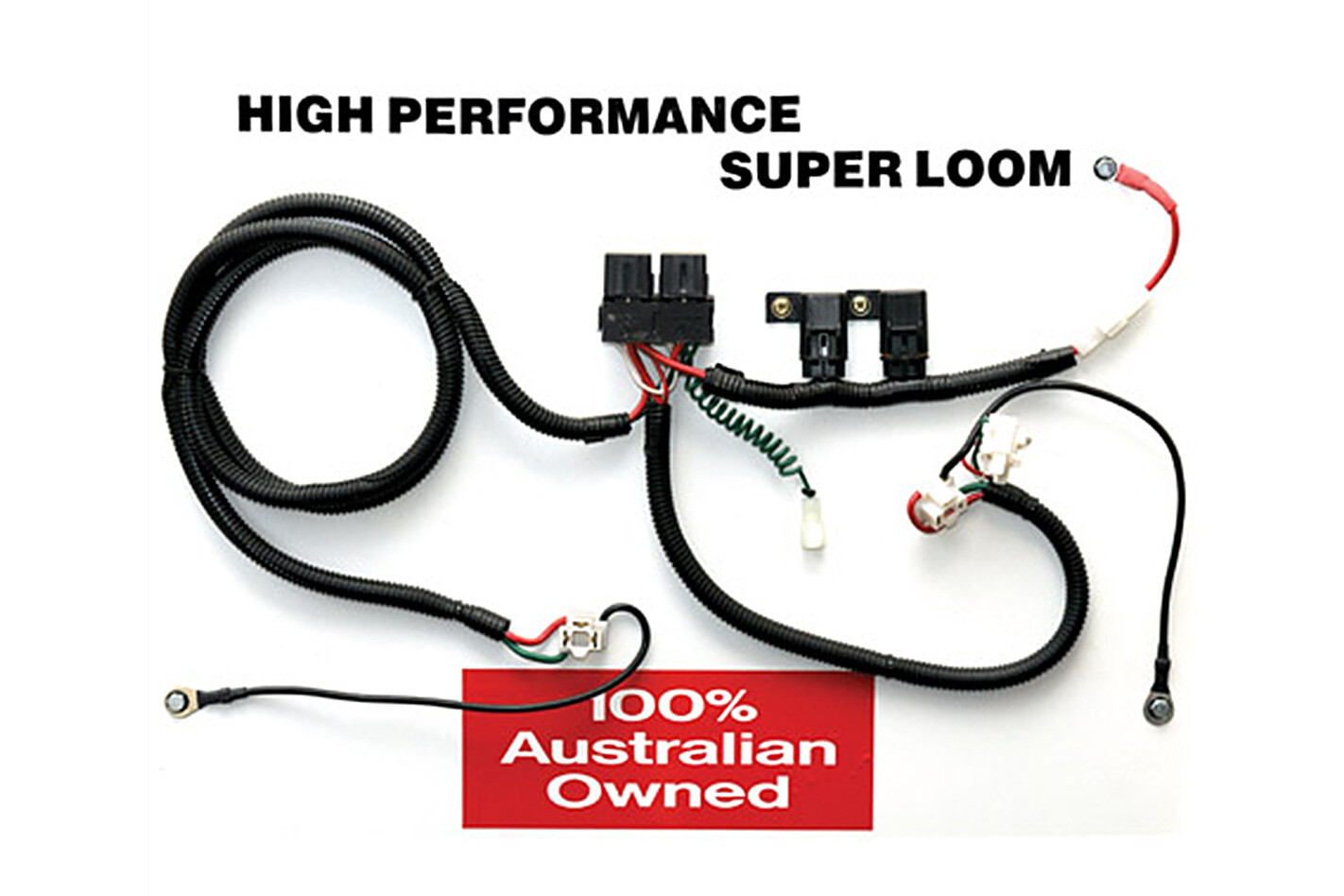
DRIVING LIGHT LOOMS Fit extra lighting to your 4×4 by utilising Piranha’s DL1 Driving Light Loom and LIDL3 LED Light Bar Loom. A good quality loom will make the world of difference when installing additional lighting to your rig. RRP: Driving Light Loom $85; LED Light Bar Loom $65.
FRIDGE SLIDES Piranha has two fridge slides on the market: FEFS and FEFS60. The FEFS slide suits Engel’s 29-, 32- and 40-litre fridges, as well as Waeco’s CF40, CF50 and CF60 fridges. The FEFS60 suits Engel 60- and 80-litre fridges, as well as Waeco CF80 and CF110 fridges.
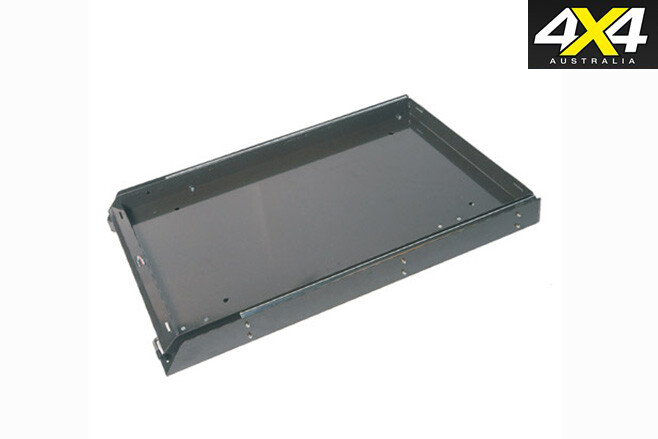
Both slides hold 130kg when fully extended, lock in open and closed positions and feature an 8mm stainless steel locking bar. RRP: FEFS $365; FEFS60 $450.
FALSE FLOOR Available to suit many popular models, the false door enables fridge slides and drawer systems to be easily mounted. The false floor is laser cut for precision, and it utilises existing factory bolts. RRP: $125.
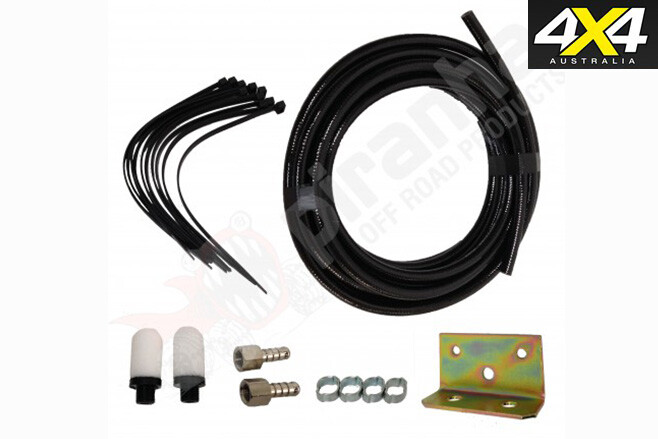
DIFF BREATHER KIT The universal diff breather kit acts a “snorkel” for your diffs. The kit features seven metres of hose, two filters, two brass fittings, hose clamps, a mounting bracket, cable ties and an installation guide. RRP: $75.
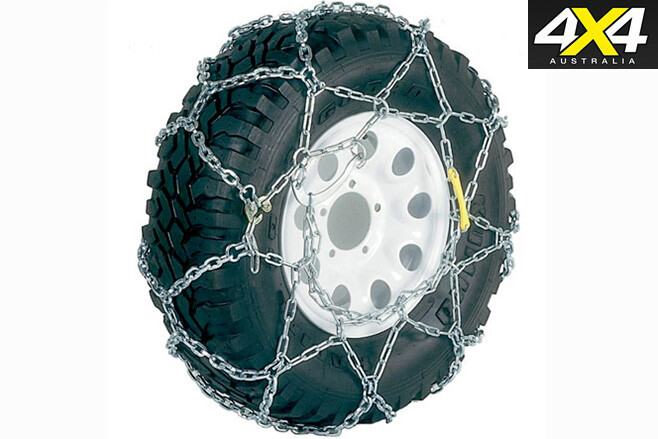
PIRANHA SNOW AND MUD CHAINS Stop by Piranha Off Road Products before you take off on that next snow expedition and get a set of snow (or mud) chains fitted. The range suits popular tyres, and the chains are built using high-quality, high-strength steel. RRP: From $300 per pair.
Piranha also supplies and installs the Safari Snorkel, as well as a range of specialty 4×4 starting batteries and cycle-duty batteries. RRP: Safari Snorkel $330; starting and cycle-duty batteries from $230.
Piranha’s head office is located in Boronia, Victoria. There are several manufacturing locations Australia-wide.
As a bonus, when products are installed at Piranha’s Boronia HQ or an authorised Piranha Distributor the warranty is extended to five years.
CONTACT Website: www.piranhaoffroad.com.au Address: Factory 4, 383 Dorset Road, Boronia, Victoria. Phone: (03) 9762 1200
THE revised Holden Trailblazer entered the surging ute-based wagon market late in 2016 off the back of the success of its competition, namely the Ford Everest (2016’s 4X4OTY), Isuzu MU-X, Toyota Fortuner and Mitsubishi Pajero Sport.
Co-developed alongside the significantly updated Colorado, the Trailblazer is effectively a wagon version of the Colorado ute, albeit with changes to its rear suspension and brakes.
The key changes to the new Trailblazer from its predecessor include repositioned engine balance shafts; revised fuel injection with addition injector soundproofing; a new torque converter; new engine and transmission mounts; new suspension dampers; electric power steering; new roof mouldings, exterior mirror mounts, door seals, sliding glass channels and B-pillar inserts; and a thicker windscreen.
The VM Motori 2.8-litre turbo-diesel claims 147kW and 500Nm (the same as before) and it’s mated to a neatly tuned six-speed automatic transmission – there’s no self-shifter. Despite the unchanged outputs the engine is now more refined than before, with the ride becoming more smooth and comfortable.
Revised fuel mapping and changes to the fuel delivery system has improved off-idle and low rpm driveability, while its top-end urge competes strongly against its competition.
Read our full 2017 Holden Trailblazer review
Swapping from hydraulic to electric power steering also improves the Trailblazer’s on- and off-road dynamics.
In its debut month, the Trailblazer recorded 147 sales nationwide (December, 2016).
Watch Fraser give the Trailblazer a head-to-toe examination in the above video, and read our full review in the January 2017 issue of 4X4 Australia.
Also, keep an eye out for 2017’s 4X4OTY, where the Trailblazer will strut its stuff against six of the year’s best 4x4s: the Toyota LandCruiser 79, VW Amarok V6, Haval H9, Holden Colorado LTZ, Mercedes-Benz G300 and Mitsubishi Pajero Sport.
The winner of the 2017 4X4OTY will be revealed at the Australian Motoring Awards, which takes place on February 1. The full 2017 4X4OTY write-up will then feature in 4X4 Australia’s March 2017 issue, in stores February 2.
AFTER another restful night at the Birdsville Hotel we were packed, loaded up and heading out of town at 8.47am. It had rained a little that evening and the cloudy sky again looked threatening, but we had been assured that the Birdsville Track was open, albeit quite boggy for the first 30km or so heading south out of town.
And boggy it was! The track was already very chopped up and we found ourselves slipping and sliding along for an hour at about 30km/h, all crossed up in sections and struggling for traction. David Cox called on the UHF to tell us he was pulling over to clear the mud from under the trailer’s guards.
It had become so chocked up that the wheels had stopped turning! We took the opportunity to brew a coffee and have morning tea, but by the time Dave caught up with us and we were ready to get going it was after 11am and we hadn’t even covered 50km of the 315km drive to Mungerannie.
Fortunately the worst of the mud was now behind us and we upped the pace as the road dried out. We pulled up for lunch at around 1pm but had to pack up quickly when it started to bucket down with rain once again. As we continued south the rain eased and eventually stopped altogether. The clouds even started to break up and by the time we arrived at Mungerannie the sun was shining.
My heart missed a beat when I saw the road sign near the entrance to the Mungerannie Hotel: “Birdsville Track – Mungerannie to Marree: Closed”. Could we be stuck here for the next week or so?
Phil at the Mungerannie Hotel assured us that the remotely operated road sign was faulty and that, in fact, the Birdsville Track was definitely open. We picked out a campsite, rolled out our swags and then headed back up the track a few kays to grab some sunset shots of the Off Road Icons. After another of Vicki’s fantastic meals, we headed across to the pub for what turned out to be a bloody big night; I reckon it was about 1.30am when the last of us pulled up stumps.
The following morning, while Fred, Wes and Patrick attempted to get Phil’s old Defender 110 going (it had lay dormant for two years), Mark and Dave removed the GQ Patrol’s alternator and pulled it apart in an attempt to clear it of mud and get it working again. While the alternator repair wasn’t successful, the old Landy was soon going, and Patrick proudly showed it off to anyone who would pay attention.
BANG! IT WAS 11am by the time we were back on the track and heading south to Marree under a sunny sky. I was travelling with Wang Qing in the 40 Series and, as his English was almost as limited as my Chinese, communicating was quite difficult. But we were having fun, and as we couldn’t hear the radio anyway, we start singing. It was a surreal experience: singing Disney tunes with a Chinese bloke while driving down the Birdsville Track in a 40-year-old LandCruiser.
We had a quick lunch stop where the track intersects the Cooper Creek and then fuelled up in Marree at around 4.30pm. So far the day had gone swimmingly: the sun had been out, the track was relatively dry and we hadn’t had any mechanical issues.
Bang! Just after we had passed Farina Ruins, the 79 Series LandCruiser’s onside rear wheel departed company from the vehicle. Suffice to say, Patrick, who was travelling in the 79 with Mark, was quite startled. As they got out of the vehicle to see what was going on, a couple of local blokes pulled up and told Patrick that they saw the wheel go “running across that paddock like an emu”. All of the wheel studs had broken clean off.
It was just after 6pm and the sun was setting. A still-faulty alternator in the GQ Patrol meant its headlights wouldn’t last long, so it was decided the bulk of the convoy should push on to Parachilna while Dave and Vicki in the tucker truck would wait with Mark Lowry for a flat-bed, which would haul the stricken Cruiser into Copley for repair.
As we sipped on our first beers at the Prairie Hotel at around 8.30pm, the Cruiser was already being towed to Copley, where the resident mechanic just happened to have a bucket-full of new LandCruiser wheel studs in his workshop. The repair was made in no time and Vicki, Dave and Mark were soon with us in Parachilna. What had at first seemed like a potentially trip-altering event was now but a distant memory.
SPECTACULAR SKYTREK IN ORDER to comfortably complete the spectacular 80km Skytrek loop on Willow Springs Station, you need to be ready to roll no later than 10.30am. As usual, we were running a little behind schedule, but we were confident we could make up the required time… so long as we didn’t encounter any more mechanical issues.
We were only 16km into the loop when we pulled up for lunch at Old Moxan’s Hut, which was built around the turn of the last century and permanently occupied by a station employee until the early 1960s; this small and basic hut was restored by the Nissan Patrol Club in 1993.
It was here that Michael Ellem poked his head under the Ford Ranger camera car in search of a strange noise; instead he noticed a big tear in a CV boot, which had been caused when one of the swaybar links had gone awry and the swaybar itself was contacting the boot.
Before you could say “fixing cars again”, the Hi-Lift jack was out, the Ranger had been secured, and four or five blokes started pulling things apart in order to remove the swaybar altogether. An hour later the job had been done, we had finished lunch and were back on track.
The Skytrek loop borders the Bunkers Conservation Reserve and it offers four-wheel drivers a great mix of terrain, travelling through gullies, across paddocks and up and over steep rocky tracks that offer impressive views of the property. Two of the highest points, Prominent Hill Lookout (704m above sea level) and Upalinna Lookout (747m above sea level) provide 360-degree views of the surrounding Flinders Ranges.
As it was nearing dusk, Wes Siler volunteered to forge on ahead in the GQ Patrol to try and get back to Parachilna before sunset, as the alternator was still buggered and the headlights wouldn’t last long. The other three Off Road Icons were set up atop Willow Springs Homestead Lookout for more sunset photography. It was about this time that the Defender’s rebuilt 300Tdi engine started to run rough and eventually stall. Oh dear, to come all this way and falter at the end of the trip.
While I blew the dust out of the air filter, Landy owner Sam Purcell slipped under the back of the Defender and drained the fuel/oil separator. Considering the trip we’d experienced so far, it was not surprising that there was water in the fuel. The Defender was once again running like a new one and, with the rest of the crew, we carefully drove back towards Parachilna, keeping a close eye out for wildlife.
After a second night gorging ourselves on the fine food at the Prairie Hotel, the ARB crew thanked the journos and the journos thanked the ARB crew, then we all wandered off to our respective rooms feeling somewhat deflated; our adventure was nearing its conclusion.
The final day in the Off Road Icons was a big one (505km) but compared to most of the other days on this trip it was relatively uneventful. Rather than just head down to Peterborough and then up the Barrier Highway to Broken Hill, Michael Ellem planned a route that would see us fuel up at Hawker and then turn off at Craddock, heading northeast along twisting and picturesque dirt roads and then southeast to Waukaringa Ruins, where we would have lunch at a very reasonable 1.40pm.
After lunch we drove up a hill that gave us a great view of the old Waukaringa Goldfield and Michael spent some time capturing the final images of the trip. From here it was only 20km down to the Barrier Highway for the final 200km blacktop run into Broken Hill and a farewell dinner at a pizza joint in town.
We had all been afforded the opportunity to partake in a once-in-a-lifetime experience, driving four old 4WDs across the Simpson Desert and, as luck would have it, through the Flinders Ranges.
Sure, there had been a raft of mechanical problems along the way, and the weather most certainly wasn’t on our side, but it was these challenges that combined to make what could have been a relatively easy trip into an unforgettable adventure. The fact we were travelling with a fantastic crew of people was the icing on the mud cake.
FAVOURITE ICONS
After two weeks driving the ARB Off Road Icons through Australia’s Red Centre, everyone grew to love the vehicles. Here are some of their individual thoughts.
Chris Collard: Overland Journal, USA “If I was able to import one of the cars you’ve got down here it would probably be the Patrol, the diesel Patrol. In the United States it’s kind of iconic, and it’s kind of an anomaly because we’ve just never had that vehicle, so I’d love a Patrol. It’s solid, easy to drive and comfortable.”
Fred Williams, Petersen’s Four Wheeler Network, USA “The Defender is the one vehicle that I would drive anywhere. The thing rides good, it’s got plenty of power (not too much), the suspension is dialed, the torque of the engine is great and it just looks right for crossing any desert in the world.”
Patrick Cruywagen, Land Rover Monthly and Leisure Wheels, South Africa “The Defender… unstoppable. Everyone loved teasing it at the beginning but it proved itself, especially when it pulled the food truck out. And also the 40.”
Wes Siler, Outside, USA “The Hilux is brilliant. It’s my favourite car here. It just gets up and goes; it gets through anything. It’s just a happy little car, easy and smooth and fun to drive.”
Sam Purcell, Unsealed 4×4, Australia “The Patrol. What a beast. It’s pretty unstoppable really and you can see why it’s such a popular choice for four-wheel drivers in Australia.”
Matt Glass, ARB, USA “The Patrol is an absolute tank. It just carried so much weight and has such a great centre of balance… the handling has been phenomenal.”
Mark Lowry, ARB, Australia “The Hilux is probably my favourite of all the vehicles because I owned one exactly the same. It was a very reliable vehicle for myself when I owned mine and this one has proven to be exactly the same; nothing has gone wrong with it.”
Sam Boden, ARB, Australia “The 40 Series… probably the most iconic looking of all the vehicles. It didn’t do much wrong. It had a slight electrical issue which forced us to tow it some 200km out of the desert, but from a rawness point of view you couldn’t get much more than the 40.”
David Cox, ex-Mt Dare Hotel, Australia “The Defender. Look, Land Rovers are not my favourite, that’s no secret, but that thing is just awesome. It plows along, it chugs along with virtually no trouble – apart from a little fuel/water issue – and it just sailed through everything with relative ease.”
Walking the halls of the annual SEMA show in Las Vegas in 2016, there was no denying that the JK Jeep Wrangler is still the top choice for off-road vehicle customisers. That’s pretty amazing when you consider that the JK is now more than 10 years old and is due to be superseded in 2017.
The Wrangler is basically a Meccano set for adults, which makes it easy to transform. Everything unbolts which makes it child’s play to modify the 4×4 to suit your individual requirements. At SEMA 2016, modded Jeeps were to be found everywhere, displaying all manner of mods – some functional, some purely for show, while others left you scratching your head and wondering what on earth they were thinking.
One exhibitor booth stood out in particular, as the complete vehicle package improves the base Jeep in every way. This was the 20th Anniversary JK350 from American Expedition Vehicles (AEV), which we had the pleasure of driving out into the Nevada desert following the show.
The Anniversary models mark AEV’s 20 years in business, and just 20 of the JK350 and RAM Prospector XL models will be built, sure to be snapped up by collectors. There’s no doubt that they’ve had the whole AEV catalogue thrown at them with a 6.4-litre Hemi V8 conversion, 4.5-inch suspension kit, 37-inch BF Goodrich tyres, all the interior and exterior body add-ons, and bespoke 20th Anniversary extras – it’s enough to triple the purchase price of your Wrangler.
This certainly isn’t just another modified Jeep, an AEV Jeep is more like a factory-made special. Years of producing show vehicles and special parts for the Jeep has given AEV a true feel for OE manufacturing, and all of its parts and conversions are either built to factory standard or exceed it.
Take the Hemi V8 engine conversion for example. The conversion is done using as many factory components as possible, including the engine and transmission control units. This means they can be serviced and maintained at any Jeep dealer. Any special parts needed are made in bulk by AEV in order to ensure there are plenty of spares available. In addition, all AEV parts have a factory look and finish. Only the wiring harness is modified, as AEV adapts the Wrangler wiring to the Chrysler V8 and transmission wiring, which in essence makes it a plug-and-play conversion.
Being an American company, AEV engine conversions are made for left-hand drive Jeeps, but the Australian distributors have adapted them for a few right-hand drive Jeeps that we know of. If this is something that interests you, it’s well worth investing the time and money if you really want that V8 roar and performance.
Many Jeep owners will tell you about the death wobbles they get from driving on oversize tyres and raised suspension. Not an AEV owner. This is because AEV’s suspension packages are researched, carefully matched and exhaustively tested to ensure optimum performance and reliability, both on- and off-road. The anniversary-edition JK350 sits on the 4.5-inch Dual-Sport suspension and 37-inch tyres, and drives better than a new unmodified Jeep.
There’s not even a hint of wheel wobble or shimmy, just the hum of those big muddies on the pavement. The only thing the AEV needs to change is to fit a bigger speedometer – when cruising at 90mph, you’re hardly on the gas and the dial is almost off the clock!
Off-road is where the AEV mods really shine. The 37s easily crawl up rock steps and float over the soft sand. The Dual-Sport suspension with its specially tuned Bilstein 5100 series shocks and optimised-geometry is stable, controlled and never unsettled, even when kicking soft sand up for the cameras. It works equally well on the rocks at low speeds, keeping the tyres on the deck and driving forward.
Not that the 6.4-litre Hemi V8 needs help moving this Jeep. It turns the Wrangler into a beast, which is only tamed by its suspension. The V8 bellows out through its AEV exhaust system. It’s mild enough when cruising at part throttle, but mash the pedal and the beast effortlessly leaps forward with a roar. The abundance of bottom-end grunt and low gearing makes crawling over rocks and up steep climbs a breeze. It rivals the most capable 4x4s you’d find stock in a showroom and doesn’t have any of the rattles, bumps and clinks you find in many modified and converted 4x4s.
External AEV parts include the heat-reduction bonnet and AEV front and rear bars. The front bar mounts a Warn Zeon with IPF LED lights, while the rear contains a water tank and AEV fuel caddy. There’s also an AEV roof rack, rear corner guards and side protection rails, which are a new product for AEV Jeeps. Also new are the Borah alloy wheels that were painted a custom bronze colour for this special-edition model.
The goodies extend inside with AEV gauges and premium leather-trimmed seats featuring bespoke 20th Anniversary stitching. The AEV ProCal allows the speedometer to be calibrated to suit the bigger tyres and any changes in gearing, as well as customising a host of other body controls and functions to the owner’s individual requirements.
Of course, nothing this good comes cheap. The AEV JK350 conversion starts at around US$16,000 on top of the price of your new Wrangler. By the time you add in the V8 conversion and all the extras that make this Anniversary edition so special, you’ll be adding more than US$70K to the cost.
However, for the money you’re getting a complete vehicle with quality fit and finish and performance that will exceed anything the factory builds. More importantly, you’ll be getting something unique and very special – shame they’re not building any RHD models.
AEV Prospector XL
For 20 years AEV has always been a Jeep company, but the Detroit firm has expanded to RAM vehicles. Its first vehicle is the AEV RAM Prospector XL, which is based on the 2500 heavy duty pick-ups. AEV is now looking at the IFS RAM 1500 RAM with its first vehicle on show at SEMA.
With a vehicle the size of a RAM, you could be excused for thinking that XL denotes Extra Large, however here it stands for the Roman numeral 40, which relates to the Prospector’s tyre size.
The massive 40-inch Toyo Open Country M/T tyres are tucked under the guards with just a 75mm suspension lift thanks to the clever design and clearancing of the wheel arches. The wheel arches are then finished in High Mark flares.
Other features on this 20th Anniversary Prospector include the AEV Heat Reduction Hood, a Raised Air Intake, 17×10 Katla alloys, AEV premium front bar, Vision X LED Light Bar, and a Bed Rack.
Like the Jeep, the Prospector still drives like a standard vehicle on the highway, except in keeping with the RAM theme it towers over almost everything. In the desert it was able to go almost everywhere the JK did, even if it took a few more lock-to-lock turns to get it through the tight stuff. The big Cummins diesel engine and 40-inch tyres made light work of the sand.
The RAM would be an incredible long-haul tourer with the ability to hold its own off road.
With RAM trucks becoming more common in Australia we can imagine the Prospector XL kit will be popular with owners here.
All AEV gear is available through the two local distributors: Murchison Products in Brisbane and Jeep Konection in Melbourne.
THEY say you never know how many friends you have until you have a ute, and that adage rang true when our Toyota Hilux SR5 was spotted in the office carpark.
No sooner had they seen the genuine Toyota towbar on the back of it, our ‘friends’ over at Caravan World magazine snared it for a week of caravan testing. The Hilux came to us with towbar wiring and a Redarc electric brake controller fitted, so it was ready to haul.
As it’s fitted with the six-speed manual gearbox this Hilux has the full 3500kg towing capacity, while ones fitted with the auto transmission are limited to 3200kg. Either way, the Toyota didn’t have any trouble with the caravans it towed.
Many folks say towing is easier with an automatic transmission – and that may be true – but the manual Hilux makes towing easy, as its hill-start assist works well to make the transition from brake pedal to accelerator easy and smooth when taking off. The manual gearbox is generally more fuel efficient as well, and the Hilux SR5 continues to impress in that regard with an average of 9.7L/100km this month.
Following the week of caravan testing the ’Lux got back into city-commute duties, and we must say we enjoy driving it in this environment as much as we do in the bush – the hill-assist system again makes driving easier in the stop/start tyranny of Melbourne traffic.
The interior is comfortable and accommodating, and the look of the dash, with its tablet-style screen, has finally grown on us. What hasn’t got any better is the lack of a volume dial or any other quick way of adjusting the sound coming from the otherwise quality system. I find this annoying every time I drive a new Hilux. Both the buttons on the tablet and on the steering wheel are slow to respond, and the tablet buttons are hard to use on bumpy bush tracks.
It’s not all city-living for the Hilux, as another so-called ‘friend’, Ron Moon, recently stole it from our grasp and was last seen belting through outback New South Wales in it. We’ll hear how it went out The Back O’ Bourke next month.
Total Kilometers: 3,275km Date acquired: OCT 2016 Price: $66,166 Km this month: 483km Av fuel: 9.7L/100km
HOT ON the heels of yesterday’s official confirmation of the Jeep Wagoneer and Grand Wagoneer being re-introduced to the American market, Ford has confirmed what we all already knew: it will be bringing back the Ford Bronco and the Ranger mid-size ute to the USA.
While this might have been the worst-kept secret in the industry, especially after a United Auto Workers (UAW) union staffer last year leaked that the two new vehicles would be built in Detroit, there is news in it for Australia. Both the new Bronco and the US Ranger will ride on the next generation T6 platform which is currently in development in Australia.
The T6 underpins the current Ranger and Everest wagon, and Ford has told us its Melbourne facility is working on the next generation of this body-on-frame architecture. However, what Ford wouldn’t say is whether or not the Bronco will come to Australia, only stating that it is “a global vehicle, so it will be considered for markets around the world.”
“We’ve heard our customers loud and clear. They want a new generation of vehicles that are incredibly capable yet fun to drive,” said Joe Hinrichs, Ford’s president of the Americas. “Ranger is for truck buyers who want an affordable, functional, rugged and manoeuvrable pick-up that’s ‘Built Ford Tough’. Bronco will be a no-compromise midsize 4×4 utility for thrill-seekers who want to venture way beyond the city.”
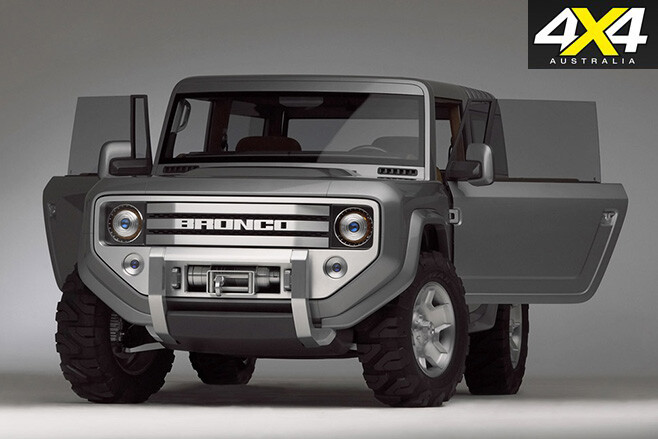
This points to the Bronco being a rugged and go-anywhere 4×4, but if it is to ride on the T6 platform we’re tipping it will be more Toyota FJ Cruiser with IFS than dual live-axle Jeep Wrangler. No details have been released on the Bronco other than it will be a 2020 model made in the USA. Hopefully it will stay true to its roots and be a capable two-door wagon.
Fan-made 2020 Ford Bronco renderings, designed by Bronco6g (www.bronco6g.com)
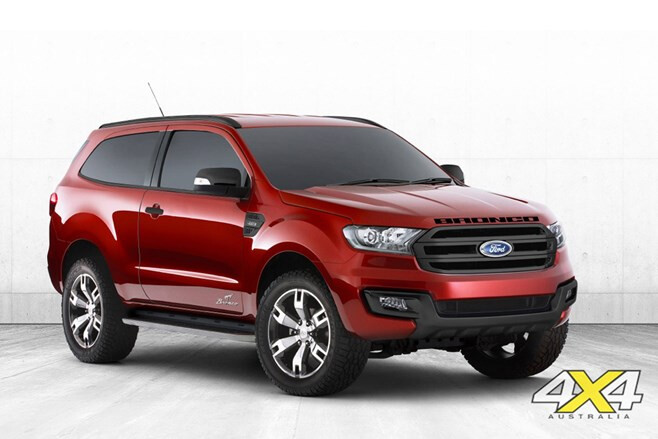
Bronco enthusiasts’ computer generated images have tipped what a new Bronco might look like, while we created our own way back when the Everest was first announced. But the 2020 Bronco could grow to be a five-door wagon.
“It’s different than Everest,” confirmed Ford’s product development boss Raj Nair. “It’s an incremental vehicle to Everest.”
“Australia remains the lead for our T6 platform,” Nair told Australia’s Wheel Magazine at the Detroit Auto show. “The Bronco is off our T6 platform but the engineering will be done in Dearborn.”
It has been said the US Ranger, also set to launch in 2020, will look nothing like the Ranger currently available here in Australia, so that points to a US-only body totally different to our Thai-built one. The US Ranger could also see a diesel engine return to that segment there. One of the Ranger’s key competitors in the USA will be the Chevrolet Colorado/GMC Canyon with Duramax 2.8 power that is selling well there.
Ford also confirmed at Detroit that its ever popular F-150 pick-up will get a diesel engine in 2018, and that will be a derivative of the Ford UK-made ‘Lion’ turbo-diesel V6 as found in Land Rover products.
It will be a case of everything old is new again when Bronco, Ranger, Wagoneer and Grand Wagoneer all return to the US market in 2020.
FCA boss Sergio Marchionne has put to rest rumours that Jeep’s planned Wagoneer and Grand Wagoneer luxury 4x4s had been shelved, stating that the full-size, seven-seat wagons will be manufactured at a refurbished plant in Warren, Michigan.
He also re-confirmed that the Toledo plant in Indiana, long-time home of the Jeep Wrangler, has been reconfigured to cope with the increased production demand of the upcoming JL Wrangler and its pick-up truck offshoot.
“The expansion of our Jeep line-up has been and continues to be the key pillar of our strategy,” said Marchionne. “Our commitment to internationalise the Jeep brand is unwavering, and with these last moves we will finally have the capacity to successfully penetrate markets other than the US which have historically been denied product due to capacity constraints.”
The comment about internationalising the Jeep brand is encouraging for Australians waiting for the Wagoneer, as previous reports had stated that it would not be made in right-hand drive. However, a Jeep spokesperson couldn’t confirm if RHD was on the table or if and when the new models would come to Australia.
The JL Wrangler will be coming to Australia after it goes in to production at Toledo during the last quarter of 2017 as a 2018 model. Petrol wagon variants, in both three-door and Unlimited five-door bodies, will initially be built, while the old Cherokee line-up is refurbished to also build the body-on-frame vehicles.
This is expected to be completed around March/April 2018 when production of the all-new Wrangler pick-up and diesel engine Wranglers will begin. As such we don’t expect to see JL in Australia until the second half of 2018.
Jeep is expected to keep producing the current JK Wrangler alongside the new JL for the period before the new section of plant is up and running. The JK and JL models will sell alongside each other for up to six months before JL production reaches full swing.
Jeep has confirmed the JL Wrangler will have a turbocharged four-cylinder and V6 petrol engines, as well as the V6 diesel VM Motori engine we know from the Grand Cherokee. An eight-speed automatic will also be offered in the body-on-frame Jeep, which retains its live axles front and rear.
Not much is known about the Wagoneer and Grand Wagoneer vehicles except that they will offer seating for seven. It’s also estimated that the top-model Grand Wagoneer could be priced as high as US$100,000 to compete with the likes of Ranger Rover in the USA. Whether or not Australian buyers would be prepared to fork out more than $100K for a Jeep remains to be seen. Jeep last used the Grand Wagoneer name on a version of the XJ Cherokee in the early 90s.
Marchionne’s news of US production comes hot on the heels of Ford’s announcement that it’s shelving plans for a new, multi-billion dollar plant in Mexico, instead re-investing in its US manufacturing facilities. President-elect Trump’s statements that he will heavily tax any vehicles manufactured outside the US but sold there seems to be having an effect on the car companies, though Jeep is no longer an American-owned brand.
FOLLOWING a year of negotiations, planning and two tough recce trips, the first 4×4 expedition to the remote Cleland Hills is now available to a select group of the public.
The five-day trip will leave from Alice Springs and travel via the small community of Haasts Bluff to an important and delightful waterhole on the eastern side of the Cleland Hills. The next two days will be spent travelling cross-country to Michael Terry’s famous Thomas Reservoir which he discovered in 1932. In 1968 Terry discovered the strange engravings, which the Cleland’s have become famous for, and we’ll be finding them!
From there, in the far north of the Cleland Hills, we will turn south and again travel cross-country to another important Aboriginal site in the southern Cleland Hills – one of the very few in Central Australia that has been investigated and considered one of the most important.
Once we leave this isolated spot and find the faint track network, we will head south to spend the last night at Kings Canyon Resort.
The countryside is in incredible condition following plenty of heavy rain over the last 12 months, so you will be seeing it and the waterholes in prime condition.
For more information and to book a spot on this exclusive expedition to these remote hills and view the remarkable waterholes and art sites for yourself, contact Brenton Schild at Papunya by calling 0418 136 640.
While trekking through some remote places in both the Victorian High Country and the Kimberley, mapping tracks and gathering information for Hema’s new region guides, we had with us a Spot Gen3 GPS tracker mounted in a RAM mount.
Because of WHS issues we were required to have the unit track our travels, checking in every morning and night, or if anything untoward happened.
The Spot is smaller than a mobile phone and easily fits into the palm of your hand. It weighs less than 115g – most of that being the four AAA lithium batteries required to power it when not connected to a five-volt USB connection.
The Spot system relies on the GPS satellite network for location data and a commercial satellite system with its attendant ground stations for message sending. The unit tracks your movements which can be sent via SMS text or email to up to 10 pre-selected contacts, and it can be followed on Google Maps.
When required you can send a number of basic messages. These include an all-OK check-in with GPS position, a Help message for non-life threatening events, an SOS function which triggers an emergency response from emergency call centres, and a custom pre-programmed message with your GPS location.
These messages can be delivered via email to a computer or text message to a phone, while emergency notifications will go to an international co-ordination centre which is then forwarded, for cases in Australia, to the Australian Maritime Safety Authority. It should be noted that messages are purely one way – Spot cannot receive a message from your contacts sent to the Spot device.
Once you have bought a Spot (cost is around $190-$220 depending on where you buy it) you need to activate the unit by setting up an account and following the instructions. It’s all pretty easy and you can dictate who receives messages from the device.
The package you decide upon will determine what tracking data you receive. For AUD$213 per year the Basic Service sends a track position every 10 minutes. This is enough for most people, although for an extra $65 per year you can upgrade to Unlimited Tracking, which allows you to trace your track every five, 10, 30 or 60 minutes. You can increase your tracking rate to every 2.5 minutes for another $195 over the basic service. There’s also a social network facility (free) where you can share tracks and photos, if you are into that.
We found the Spot very easy to use and reliable. It connected to GPS satellites quickly and easily, even when mounted inside the car behind the windscreen. This kept it out of the way but in a position with a relatively clear view of the sky overhead. It stayed connected to the GPS satellites and relayed the track info as required. The OK messages went out without an issue wherever we were and whenever we pushed the button, although we found it easier to remove the unit from the RAM mount to operate it. A 12-volt to a 5-volt USB cable (supplied with the unit) kept it powered up at all times.
There are a number of combinations with RAM mounts, so take your time and make sure it’s the right part for the equipment involved and the right length for where you want to mount it. We’re impressed with the quality of the mount and its ability to stay put once attached.
The Spot reassured our contacts that we were okay and where we were, giving us a feeling of security and safety. Yes, there are other devices that offer two-way communication as well as tracking, but they can’t match the Spot Gen3 for price and ease of operation, and you can’t put a price on peace of mind.
We’ve been thinking of buying a Spot and mount for our own travels, and now that coverage includes most continents (all but the Arctic and Antarctica) it’s definitely on the list!
RATED
Spot Available from: au.findmespot.com RRP: Spot: $220 (approx.); plus annual subscription of $195. We say: Easy to use, well-priced, provides peace-of-mind.
RAM mounts: www.ja-gps.com.au RRP: RAM mounts and holder from: $65 We say: Secure and well-priced.
ABOUT 8km from the low-level crossing of the Clarence River at Paddy’s Flat, you’ll find the turn-off on the left to the Clarence River Wilderness Lodge.
The track into the campsite is a scenic introduction to the adventures that lay ahead, as it winds its way down heavily timbered hills to where the Upper Clarence runs.
For most 4WD owners it’s getting harder and harder to find a place where you can simply veg out for a while; a place where you don’t have to have the suspension at maximum travel to cover every metre of ground; a place where your camp is not hemmed in by others. It’s called passive recreation, and we’ve got just the spot for you.
Clarence River Wilderness Lodge is just downstream from the confluence of Tooloom Creek and the Clarence River. It’s approximately 16km² of bushland, and your campsite is on level grassy ground just a step or two from the banks of the Upper Clarence.
Some years back Steve and Sharon Ross decided that was how they wanted to live. They had escaped the confines of Brisbane, and as time slipped by they decided they didn’t mind the idea of sharing this little bit of paradise with others. Punters can come down and settle in beside the river, or perhaps go out and explore a couple of easy tracks knowing they’ll arrive back at the campsite with plenty of time to enjoy a refreshing sundowner or dip in the river.
There’s no need to worry about packing your camping gear, either. Steve Ross is an industrious soul and he’s been busy building a variety of accommodation for those who would prefer a solid roof over their heads. There are two styles: the basic bushman’s hut for one or two people; and the lodges, which are better suited to families and have more in the way of cooking facilities and amenities.
You needn’t worry about this being one of those camps where you trip over the neighbour’s tent ropes. In keeping with the peaceful aim of the place, you are required to book ahead.
The reason for this is that Steve and Sharon have put a limit on the number of campers, with campsites kept at a reasonable distance from one another. Lying in your swag at night and being kept awake by the snoring from next door is nobody’s idea of fun.
Visitors are provided with a map of the property so they can spend some time exploring. There are a few tracks to check out: the Old Mine Site track takes you down a steep hill to a section of the Tooloom Creek that has a deep hole on the bend, and the remains of some old huts and recent mining activity can be seen here. There’s still a current mining lease down there, but it’s on Ross’s land, so you can come and go as you please.
The Eagle Hawk track takes you further down the Clarence. There’s a long stretch of river and it looks like great spot for a bit of water-borne enjoyment. Swimming, of course, but paddling around on something inflatable could be a lot of fun too. Just don’t forget that if you drift off downstream, you have to paddle back home against the current.
The Rose Garden track goes down to where an old Aboriginal lady lived, and here and there are the remains of her time spent in the area. The other track, which can be a bit of a challenge, is the Tower track. This track takes you up to a repeater tower – probably the only sign of technology you will see here – and a capable 4WD is needed.
The wildlife is one of the great attractions here, and the steep rock faces across the river from the campsite are often visited by yellow-footed rock wallabies. These little marsupials are often found quietly poking around the nearby bushland, and city-dwellers are often astounded at how close the animals allow you to approach. The rock wallabies took a fair bit of punishment from some wild dogs not long ago, but they look to have bounced back. Platypuses also inhabit the area but are harder to see.
Back at the campsite there’s a great camp kitchen set aside for occupants of the bushman’s huts; those who come in choosing to camp are usually self-contained. The walls are decorated with all the old bush implements Steve has found in his wanderings, and a lot of people like to try and work out the function of some of the more obscure items. It’s a great place for campers to gather if they don’t want to cook at their own camp.
The Upper Clarence is a stretch of water that begs to be explored. Canoes are available for hire and the Lodge now has a canoe service available so visitors can leave the campsite and be picked up at the Paddy’s Flat area. This is a great opportunity to experience river travel in the most relaxing way possible, but to make sure it’s not too restful Steve also ensures you negotiate a few rapids on the way. All safety gear and guidance is provided.
Isn’t this what real eco-tourism is all about?
Travel Planner
YOU could make it a day trip, but you’d miss an awful lot. Coming from Brisbane, travel through Beaudesert and Rathdowney on the Mt Lindesay Highway and cut through Woodenbong and Urbenville. From Urbenville head out of town on Tooloom Road, then turn left into Upper Tooloom Road.
If you get to the Paddy’s Flat Bridge you have to backtrack 8km.
If you’re coming from the south end, turn off the Bruxner Highway onto Paddy’s Flat Road just west of Tabulam, and then follow it 8km past Paddy’s Flat.
This is not called a Wilderness Lodge without reason. It’s remote, so this means you have to come in fully provisioned and fuelled. Tabulam to the south or Urbenville to the north are the last places to top up with fuel. There is a swap-and-go gas exchange available on-site, though.
For a number of reasons fishing isn’t permitted near the campsite, but there are plenty of other things to do. As mentioned there is no lack of wildlife, both in the water and out of it. Fire pits are provided, so sitting around a fire at night is something to look forward to. Wood is available at the office.
Ring before you leave so Steve and Sharon can let you know about the road conditions and the state of the river. You can bring your camper trailer or off-road caravan – in fact, many people bring their new off-road ’van in before taking it to the outback, just make sure the 4WD tow vehicle is powerful enough to get the ’van up some of the steeper grades. When you see the track, you’ll see why.
CONTACT CLARENCE RIVER WILDERNESS LODGE Phone: (02) 6665 1337 Website: www.clarenceriver.com