
A few mild and a few wild custom builds have been sent in by our readers this month.
Flick through some cool photos of your 4×4 here – it may end up in 4X4 Australia one day!
2015 TOYOTA LAND CRUISER 79 SERIES – DAHRIN WIRTZ
I have owned a lot of 4WDs, from the very basic to the very complicated. When the 79 came on the market I waited a few years to allow Toyota to iron out issues. Then I was told that the next-gen was coming out with a DPF, so I acted and ordered my Cruiser in November 2015 to avoid having the DPF. When it arrived in February 2016, I got to work on it and haven’t stopped. The 70 Series has a few issues such as wheel track, gear ratios and clutch, but it’s by far one of the best and most capable 4WDs on the market.
TOYOTA HILUX – JEREMY LANDT
275hp and 850Nm of locked and lifted Toyota Hilux is set up for off-road touring, with the works rolling on 35s. I’ve built this as is from the factory floor, with only the best components fitted.
2015 FORD PX RANGER – LOCKEY MCKEE
It’s got a 150L fuel tank, canopy, TJM rear bar, Ironman front and snorkel, EFS and Bilstein lift. Too many great places right at my door step in Alice Springs, but the next best places are some of the tracks around the Flinders Ranges. It has great range of 1500km, on average. It runs smooth on- and off-road.
1979 TOYOTA LAND CRUISER BJ40 – MICHAEL BEARD
The chassis has been extended eight inches in the rear to fit 45 Series rear leaves for more flex. It features a 1981 model 45 Series cab; 35-inch tyres; injected 304 Commy motor; Turbo 400 shift-kitted auto with 55 per cent reduction low range and 8 per cent reduction in high range crawler gears; a custom tray; custom fuel cell; custom bar work; custom interior; big stereo with two subs; and a Warn high-mount winch with in-cab controls. All the work has been done by myself and my dad in the home shed. Plenty more to list. Fully engineered!
2015 FORD EVEREST – MICHAEL HAWORTH
I have had it from new. It has an ARB 50mm lift (BP51 front and OME rear); full Rhino 4×4 underbody protection (prototype); Rhino Rack Platform roof rack; front e-locker; Rhino 4×4 bullbar with Runva 11XP Black winch; LED bar under roof rack; LED spotties on front bar; rear fridge slide and drawer system; 32-inch AT tyres; TJM steps; snorkel; dual battery system; water/fuel filter; catch can; awning; CB radio; and full vinyl protection wrap. My favourite spot is Wonnangatta Station, and it has been through most of the High Country and Little Desert. Other favourites are Billy Goats Bluff, Collingwood Spur, Zeka Spur, Blue Rag, etc. I often tow my homemade off-road camper trailer behind it, but I also tow a semi-off-road caravan.
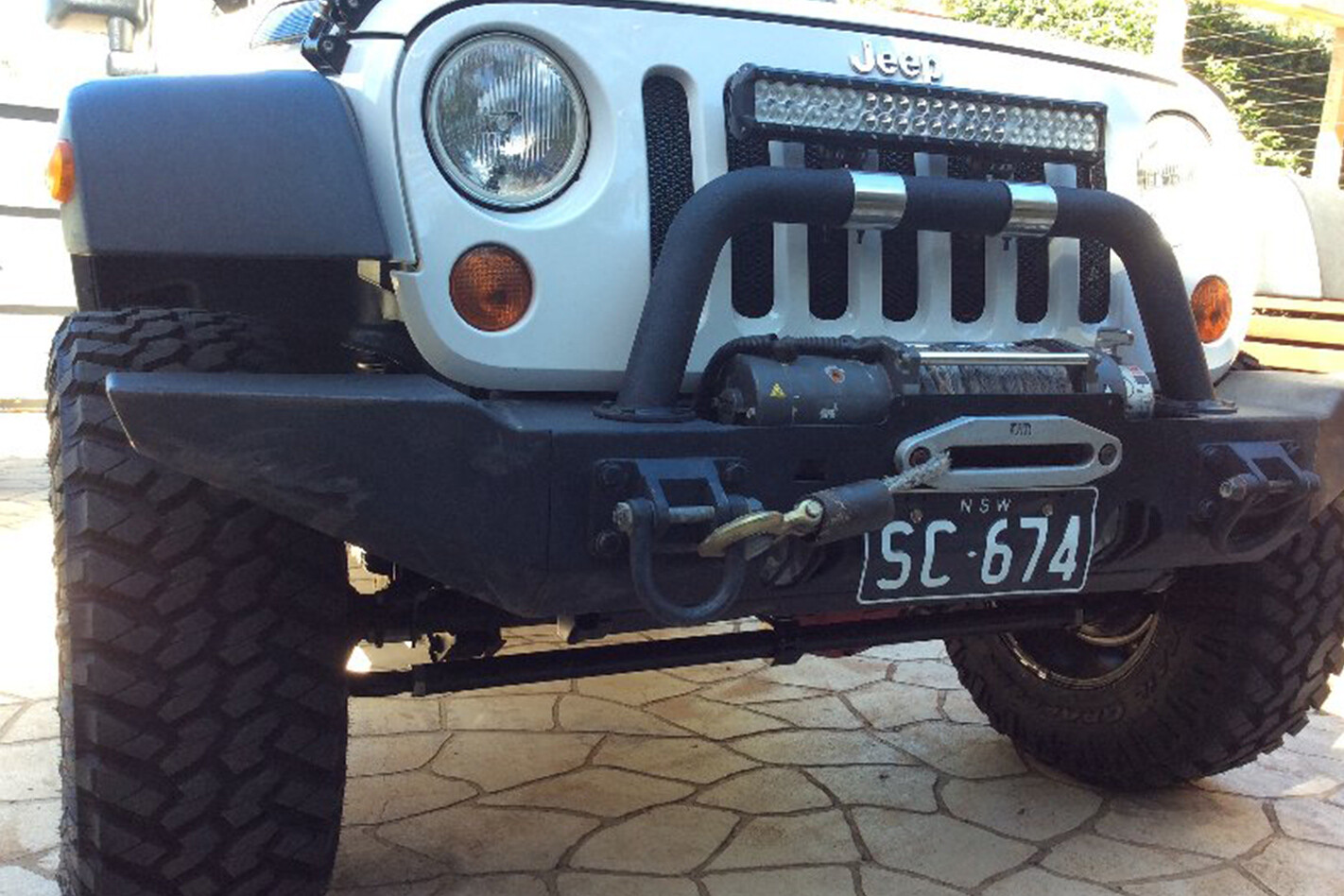
2012 JEEP WRANGLER JKU – STEVE CASS
Four-door with 3.6L Pentastar petrol and five-speed auto. I’ve owned since new. It’s set up for touring and hitting the toughest tracks. Complete with 3-inch lift, 34-inch muddies and proper suspension set-up configuration, including updated front end. It’s also got RR front steel bullbar with Warn winch; steel rock sliders and underbody protection; auxiliary fuel tank providing more than 150 litres; custom rear drawers and tailgate table; dual optima battery system under the hood managed by Redarc DCDC charger; and a built-in ARB compressor. Leather seating and customised interior where needed. I’ve travelled from Sydney to places like NT, Uluru, SA (Robe and Lake Eyre), and Queensland (Birdsville and the offshore islands). Love it, as it’s reliable, economical and goes everywhere and gets us back each time safely.
NOVEMBER is a big month for 4×4 events. Ron and Viv Moon have selected a handful of some of the best activities taking place around Australia. The most important track closures and openings are also included.
NO SERVICE, NO WORRIES (AUSTRALIA-WIDE) If you’re in an area without a mobile phone network, then Telstra’s Wi-Fi Calling allows calls to landlines and mobiles over an available Wi-Fi network. How does this help out on the tracks, I hear you ask? Voice services can be connected over compatible smartphones where no service was previously possible. For more info: telstra.com/wificalling
VRILYA POINT CLOSED (QLD) For the foreseeable future, visiting and camping on the beaches around Vrilya Point on the western side of Cape York has been stopped. There is now a gate blocking access and you’re not allowed to access the area by sea. For more info: www.cape-york-australia.com
OMEO MUSTER (VIC) The annual Caravan and RV Muster is on again at the Omeo Golf Course from November 10-12. There will be a number of golf events to participate in, a fishing comp, caravan displays, fireworks, live music, helicopter flights and a number of 4WD tag-along tours to get involved in. For more info: www.omeogolfclub.org.au
THE HUON SHOW (TAS) The Huon Show, known as ‘the show of the south’ will be held at the Ranelagh Showground on November 18. Events and activities include home crafts, a grand parade with a special WWI light horse display, livestock judging, vintage machinery, wood-chopping, and the ever popular dog high-jump event. Check out: www.huonshow.com.au4WD TRACKS OPENING SOON (VIC) Seasonal road closures for most of the Victorian 4WD tracks in national parks and reserves will end in time for the Melbourne Cup long weekend in November. For the latest on track openings and other track info, visit: www.4wdvictoria.org.au
COORABIE FARM STAY (SA) Coorabie is a pleasant place to stop for travellers heading across the Nullarbor. The property is south of the Eyre Highway near Nundroo, about 155km west of Ceduna, and is located near Fowlers Bay and the Scott’s Bay and Mexican Hat beaches. Coorabie Farm offer three types of accommodation, all with good facilities: donga-style air-conditioned rooms, 16 powered sites, and unlimited unpowered sites. Meals can be prepared for guests by prior arrangement. Accommodation needs to be pre-booked, so contact the managers on (08) 8625 6126.
FREE CAMPING AT BOULIA (QLD) Approximately 30 campsites on a first-come, first-served basis can be found among the beautiful gum trees at Racecourse Reserve on the banks of the Burke River at Boulia in Western Queensland. It’s a free camp and there is no water, power or toilets, so you need to be self-sufficient. Phone and Wi-Fi internet are available, while the town has basic requirements and a very good dinosaur exhibition at the Stonehouse Museum.
WILDFLOWER FLURRY (WA) The natural wildflower collection in Western Australia is the largest on earth, and it finishes with a flurry of colour in October and November throughout the forests and coastal heaths of the south-west of the state. For great information on where to see the best wildflowers, as well as help to plan your trip around Western Australia, download a free wildflower guide at: viewer.e-digitaleditions.com/t/52970-tourism-western-australia
THE Southern Highlands of New South Wales are part of the Great Dividing Range that runs along the east coast of Australia.
When the first settlers arrived in this part of NSW the area was covered in thick scrub, and when visiting it for the first time you have to wonder how they penetrated the dense forest and bush to find areas along the river flat enough to settle.
However, similar to many other barriers experienced by Australia’s first pioneers, these settlers used whatever tools they had available to cut through the scrub and convert an impenetrable environment into a place that was habitable and suitable for farming.
Due to this, we can now enjoy the Southern Highlands’ extensive green meadows and the spectacular valleys and gorges that make it a perfect 4WD destination.
This was our first visit to this part of NSW and we were keen to experience the bush camping along the banks of the idyllic Wollondilly Valley we had heard so much about. Departing from Sydney, take the M5 to Mittagong.
Once at the traffic lights at Mittagong’s town centre, take the right lane towards Berrima and Wombeyan Caves (Hume Highway), then continue out of town up a small hill before turning right onto Old Hume Highway towards Berrima and Wombeyan Caves.
Look for the Wombeyan Caves signpost 5km out of Mittagong and take the right-hand turn onto Wombeyan Caves Road. Once on Wombeyan Caves Road, the route starts to change dramatically. After 25km or so the road changes to gravel as you head towards the Nattai National Park, which also offers some interesting 4WD tracks.
The first historic point of interest encountered on this trip is the Bullio Tunnel, which was unbelievably hand-carved in 1899. When you exit the other end of the tunnel, the unsealed road leads to a descending track that hugs the valley walls, providing spectacular views as you enter the heart of the Highlands.
Drive with care along this narrow and windy dirt track – if you suffer from acrophobia, the best advice is to not pay too much attention to the sheer drop into the thick scrub below. It’s a bit like driving on sections of Bridle Track near Hill End; although the surface of this track is in much better condition.
You will also encounter numerous blind corners and barriers, highlighting the need to drive slowly. As you wind your way down to sea level, you’ll reach the heart of the Wollondilly Valley (and your campsite for the night) when you cross the bridge at Goodmans Ford.
Jump out of your 4WD to take in this picturesque view of the valley and the majestic Wollondilly River; this view, with the high valley walls, provides the perfect photo opportunity. Signs to the Wollondilly Station are nearby, and this riverside campsite is a hidden treasure. Don’t expect any mod cons, but it is pet-friendly.
Most of the riverside pitches are private and spacious, with flat, grassy areas alongside the beautiful Wollondilly River. The river offers easy access for swimming, canoeing or throwing in a line from your camp chair to try and catch some dinner.
The campground and its individual campsites have both two-wheel drive and four-wheel-drive-only access, and we chose to seek out the 4WD tracks that lead to some of the best camping spots along the river.
If you arrive at the campground and the owners are not in the office, you can contact them via a handheld radio that’s always left on the office table with the channel of choice clearly displayed. After setting up camp and getting the fire going, we decided to get out the camp oven, knead some dough, and bake some fresh bread in the open fire.
If you haven’t brought any firewood, you can purchase it at the main office.
The following morning we continued along Wombeyan Road to the Wombeyan Caves. If reaching the caves from the campsite, you’ll drive up steep terrain and wind your way along the track before crossing a high saddle into Wombeyan Creek and then down again into the valley of Wombeyan Caves.
Wombeyan is an Aboriginal name which basically means ‘grassy valley between mountains’, and it’s widely agreed the caves provided shelter for Aboriginals when they seasonally travelled through this area in search of food.
The Southern Highlands caters for all types of tracks suitable for both beginners and seasoned campaigners. The Wollondilly Valley in the Southern Highlands is one such place, where you can relax at a tranquil bush camp for a couple of days, or you can use the valley as a base to do numerous activities including serious off-roading.
The real attraction of Wollondilly Valley is the bush camping, the fishing on the river, and being allowed to light an open fire after a hard day of four-wheel driving.
If you’re looking for a mini adventure close to Sydney, Wollondilly Valley in the Southern Highlands will leave a lasting impression.
SOUTHERN LIFE
The Southern Highlands is a very popular destination for a number of reasons: the unsealed track that winds its way down into the Wollondilly Valley; picturesque waterfalls, valleys and gorges; the Wombeyan Caves; and some decent 4WD tracks, particularly in the neighbouring Nattai National Park.
SOMETHING FISHY
We took out the rods and did a bit fishing in an attempt to lure trout, carp or bass (fishing is possible all year ’round). If unlucky, you might snag a few unpalatable catfish. It doesn’t matter if you don’t catch any fish out here, as throwing a line along this peaceful river is as relaxing as it gets.
CAVE MEN
The impressive Wombeyan Caves were discovered in 1828 by a group of explorers led by John Oxley and John Macarthur. Oxley, who died later that year at a youthful 42, was responsible for much of the early exploration of the Southern Highlands.
Macarthur is known to many as the founding father of the Australian wool industry. In 1865, Wombeyan became the first area in Australia to be reserved for the protection of caves.
TRAVEL PLANNER
CAMPSITE Campsite of choice was on the river at Wollondilly Station, with the property adjoining the river on both sides. The campsites are generous in size, and some of the best and most isolated sites are only accessible by 4WD. Campfires are allowed.
TRACK CONDITIONS All tracks into the Southern Highlands and Wollondilly Valley are well-graded, unsealed roads. Wombeyan Road is a decent dirt track, but be wary as it’s narrow in places with steep drops. The scenic track takes you across the beautiful Wollondilly River Valley, from Mittagong to the Wombeyan Caves.
LOCATION The Southern Highlands are 110km south-west of Sydney. To get to Wollondilly Valley from Sydney, head for Mittagong then continue on the old highway. Approximately 4.5km from town, take the right turn into Wombeyan Caves Rd, and you’ll know you’re on the right track after passing under the sandstone tunnel. The camping spot is located at Goodmans Ford.
MAPS AND GUIDES Pick up some local tourist maps at the Mittagong Information Office, including the Southern Highlands map and directions (Phone: 1300 657 559).
New South Wales State map Series: UBD Map 270, 24th Edition, Scale 1:1 600 000.
CONTACTS
Southern Highlands Tourist Information: www.southern-highlands.com.au Wollondilly Campsite: www.wollondillyriverstation.com PHONE: (02) 4888 9207
THE Aussie Outback Solar Challenge was recently undertaken by Alan Johnson – and his son Michael – from Piranha Off Road, and the duo successfully crossed the Simpson Desert in a Suzuki Sierra that was converted to run on an electric motor.
The story within the story, however, is that the motor was powered by three banks of four Optima spiral-wound batteries that could only be recharged by the sun.
These batteries aren’t some special build from a secret laboratory unavailable to mere mortals; they’re off-the-shelf Optima D31A spiral-wound AGM batteries manufactured by Johnson Controls.
These batteries are available at Piranha Off Road and are used in many 4×4/camper-trailer applications as auxiliary power batteries. The batteries are also used extensively in 4×4 competition vehicles, as well as starting and winching applications.
So what makes them special? The first and most obvious is the unique design which houses the six cells configured as a spiral-wound sheet of positively and negatively charged lead grid separated with an Absorbed Glass Matt (AGM).
This design, introduced to Australia back in the early 2000s, has proven very successful and has changed the way we think about lead acid batteries.
The different design can be mounted in virtually any position, and it’s spill-proof and provides high resistance to vibration. Mix this with its ability to be used for starting, cycle-duty or fast-recharging – plus it lasts three times the life of a similar conventional lead acid battery – and it becomes a compelling choice of storage power.
The ability to quickly recharge was a significant factor when charging the three banks of four batteries using the five X Solar panels, the only source of power in the middle of the Simpson Desert.
After the crossing, which took seven days and five hours, the batteries were tested and found to be in top condition. Considering the number of times they were charged and discharged and the high to low temperatures they had to operate in, not to mention dust storms and sand ruts causing vibration, these batteries certainly topped the grade.
THE plug-and-play ScanGaugeII device monitors a four-wheel drive’s most vital systems and then logs and displays the information in real-time, providing the driver with essential, up-to-date system info.
This is sponsored content.
The device features more than 15 built-in digital gauges, and the gauge screen allows users to select and display four gauges at a time.
Built-in gauges include: average fuel economy, LHK/KPL, litres per 100km, kilometres per litre, KM/H, litres per hour, cost per kilometre, trip fuel cost, fuel system loop status, intake air temperature, fuel pressure, water temperature, MAP/ boost, RPM, throttle position sensor, battery voltage, ignition timing, engine loading, and horsepower.
The device also features five built-in trip computers to keep track of everything from fuel cost to distance travelled and everything in between – perfect for a remote-area getaway. Each trip computer starts automatically and information is available anytime during the trip.
The system also utilises an easy-to-use scan tool that shows both set and pending trouble codes.
In addition to the standard set of gauges, the ScanGaugeII features the exclusive X-Gauge programmable gauge system which monitors parameters such as transmission temperature, trip data and fuel economy information.
The ScanGaugeII also features the all-new Performance Monitor, for real-time performance measurements. The Performance Monitor gives users the ability to track a fourbie’s performance over short periods of time, distance and acceleration.
The ScanGaugeII comes with a three-year warranty and is suitable for all OBDII-compatible petrol, diesel, hybrid and LPG vehicles.
For more information, visit: www.scangauge.com.au
THE FORD Ranger once again sits atop the 4×4 sales charts, with 3769 new units leaving the showroom floor in September.
In further good news for the Blue Oval, the Ford Ranger was the overall monthly best-selling vehicle with 4318 (4×4 and 4×2) rigs sold – a 43.7 per cent increase compared to September 2016.
With 4×2 variants added to the mix Ford has sold 32,620 Rangers so far in 2017, which is an increase of 21 per cent over the same period last year.
“With its locally led design and engineering, we’re immensely proud that Australian customers’ feedback has allowed us to deliver a line-up of Ranger models that not only offer class-leading towing and strong payload capabilities, but also offer the safety and comfort to make them extremely liveable everyday vehicles,” said Greg Davidson, Sales Director of Ford Australia.
The Toyota Hilux 4×4 ended the month with 2907 sales, while Mitsubishi’s Triton secured third spot on the podium with 1532 sales.
According to the September VFACTS report, pick-up and cab-chassis 4×4 LCVs were the growth segments for new-car sales – alongside small and medium SUVs.
Compared to September 2016, the 4×4 LCV segment was up 11 per cent.
In fact, the SUV and LCV segments account for 58.6 per cent of sales so far in 2017, up from 56.3 per cent at the same time last year.
A big reason for this continual growth is sales of 4×4 utes and cab-chassis variants in the private sector, with private sales of LCVs increasing by 9.6 per cent compared to September 2016 (business sales of LCVs are also up 7.9 per cent). Diesel remains the go-to engine type in the LCV market.
Despite the ongoing sales success of LCVs and SUVs, fewer new vehicles were sold on the overall market – 100,200 sales were recorded, a 2.4 per cent fall compared with September last year.
“Any month over 100,000 total sales has to be seen as a strong outcome, proving there is continued value for the consumer out in the market,” said Tony Weber, chief executive of the Federal Chamber of Automotive Industries (FCAI).
“To keep this outcome in perspective, it has to be remembered that the September results of 2015 and 2016 were both very strong, and both those years ended in records.”
The Ford Ranger (4×4 and 4×2 variants) was Australia’s best-selling vehicle in September (4318 sales). This was followed by the 4×4/4×2 Hilux (3822), Corolla (3055), Mazda3 (2776) and Commodore (2547).
u00a0 | 4X4 | SEP 17 | AUG 17 | YTD |
1 | Ford Ranger | 3769 | 3067 | 28,026 |
2 | Toyota Hilux | 2907 | 3190 | 26,039 |
3 | Mitsubishi Triton | 1532 | 1653 | 14,827 |
4 | Isuzu D-MAX | 1076 | 1018 | 9075 |
5 | Toyota Prado | 1070 | 1127 | 12,071 |
=6 | Holden Colorado | 910 | 1524 | 13.142 |
=6 | Volkswagen Amarok | 910 | 757 | 6557 |
8 | Nissan Navara | 888 | 881 | 9867 |
9 | Mazda BT-50 | 856 | 661 | 6970 |
10 | Toyota Land Cruiser wagon | 840 | 1243 | 9575 |
REZVANI Motors, a California-based designer and manufacturer of high-performance supercars, has unveiled its street-legal Rezvani TANK.
A Jeep Wrangler lives beneath the composite shell of the 375kW 6.4-litre Hemi V8-powered TANK, which features an on-demand four-wheel drive system and a body-on-frame design.
Two LED fog lights sit below the grille, while a roof-mounted LED light bar will illuminate hard-to-see bush tracks.
However, for those wanting more off-road credibility, two option packs are available: Off Road Package and Off Road Extreme Package.
The Off Road Package offers a six-inch lift, 37 x 12.5-inch tyres, 1350 driveshafts (front and rear), Fox 2.5-inch remote reservoir shocks, and a Dynatrac ProRock 44/60 axle set with E-Lockers.
Stepping up to the Off Road Extreme Package nets you a Dynatrac ProRock XD60/80 axle set with air lockers and an air compressor, Dynatrac ProGrip front and rear brake kit, 1350 (front) and 1410 (rear) driveshafts, and Fox 2.5-inch internal bypass shocks with DSC.
Grid Off-Road wheels are standard, but aircraft-grade T6061 Forged aluminium custom design wheels are available as an extra.
Living up to its TANK name, the options list also offers a FLIR Thermal Night Vision system and Ballistic Armour (Kevlar armour, bulletproof glass, military-grade run-flat tyres, and a Kevlar-protected fuel tank, floorpan and radiator).
A Tow Package, with tow hitch and front-mounted winch, is also on the extras list.
Orders are currently being accepted for the Rezvani TANK, with pricing starting from US$178,500 (AU$230,000 approx.).
More details are expected to drop soon, so stay tuned.
WE LIVE in a digital age. Like it or not, there’s always at least one computer helping us get to wherever we’re going.
It’s the reason 4x4s use less fuel than ever before; it’s the reason they’re more powerful; and it’s the reason every time I look at my phone it’s full of photos of people’s lunch. Sarah Connor tried to warn us about this, but until the day computers finally rise up and enslave us all, we might as well make them work for us.
We spoke to Paul Farrell from Geelong Performance Centre earlier this year for our ECU re-mapping article (April, 2017) and it turns out he’s big on another kind of remapping, and one you might not have heard of.
Just like your engine, your automatic transmission is precisely controlled by a CU. Everything from what rpm it shifts at, to how hard it shifts, to when the torque convertor locks up, is all controlled by a file full of ones and zeros. And just like the ECU controlling your engine, a knowledgeable person with the right tools can weave their magic to make your transmission work better than ever.
TRANSMISSION REMAP EXPLAINED
SOUNDS great in theory, right? And it is, except the factory doesn’t always get things right. One of the worst offenders is the LC200. Out of the box it performs reasonably well from first gear all the way through to fourth, then it all falls apart.
The torque convertor locks in way too late, then it holds fifth gear from 70km/h to around 120km/h before it’ll finally lug over into sixth. If you’ve got larger tyres, you’ll rarely use sixth. This is where ECU remapping comes into play.
“What we do is read the factory calibration in the ECU,” Paul Farrell told us. “We can then go through and change whatever needs attention.”
With the factory file pulled out of the ECU, the tuner can change the transmission’s behaviour. The most common changes are locking up the torque convertor earlier, making it hold gears longer and making it click over into a gear earlier to use the full range of ratios through normal operation.
These remaps shouldn’t come as too much of a surprise either; they’re essentially what happens when you kick your stock auto shifter over into sport mode and it holds gears. A good tuner will leave one of the stock maps alone so you can always kick back to factory settings if you’re concerned.
HOW IT ALL WORKS
A MANUAL gearbox is a simple and straightforward affair; each gear has its own cog in the box, a big lever shifts them, power ensues. Automatic transmissions are a little more complicated. Rather than specific cogs for each ratio, they use planetary gears much like you find in a winch, with one feeding into the next. By using a series of brakes and clutches, the ’box is able to control what gears are engaged and what the final ratio will be.
The clutch has a complicated alternative, too. Up front, a torque convertor acts like two fans pointing at each other; although, they pump fluid not air. It lets the engine-side fan spin harder and harder until the transmission-side fan starts turning, which is what provides torque multiplication and what stops the 4×4 from stalling when you come to a stop.
At certain speeds the transmission can completely lock the torque convertor, giving you direct drive to the ’box. What’s all this got to do with programming?
Back when stubbies were in fashion and VL Commodores were considered high-tech, the transmission controlled all these different operations by pumping transmission fluid through complicated valve bodies that’d engage the different clutch packs, giving different gear ratios. This complicated system has now been replaced with simpler solenoids, all controlled by the CU.
The CU relies on a whole bunch of inputs, with everything from the throttle position and road speed to how many corners you’ve just taken all being considered before it’ll kick up or down a gear. The result is a more intelligent transmission that does what you want, when you want it, and one that can be easily modified without even dropping the fluid.
THE BENEFITS
THERE’S nothing worse than modifying for the sake of modifying, so what exactly is the real-world benefit of all this? In the case of the LC200, the biggest benefit is fuel savings. While torque multiplication is fantastic at low-speed off-roading, it does mean your engine is turning faster than it otherwise needs to, especially at freeway speeds. Locking up the torque convertor drops rpms, leading to a decrease in fuel consumption.
Changing the shift points gives a huge boost to driveability, too. At freeway speeds in an LC200, you no longer need to push through the speed limit to get it to drop into sixth gear. Paul’s modifications see it click into top slot a hair under 100km/h for huge fuel consumption savings – customers report a 2.0 to 3.0L/100km decrease in usage.
The same modifications allow the transmission to hold top gear under more load to avoid it juggling between fifth and sixth whenever there’s a slight rise in the road, and it will also lock the torque convertor earlier in fifth for a more direct drive and improved consumption figures.
A hidden benefit to locking the torque convertor earlier in the rev range is a reduction in heat. While the torque convertor is the key to making an auto transmission work smoothly, they also create heat when there’s an imbalance in speeds between the two sides.
Locking it up when that slip isn’t required helps reduce the heat produced, giving the transmission fluid a longer life and helping minimise wear on the ’box. Who said you can’t have your cake and eat it?
DOES IT HELP OFF-ROAD?
IF YOU’RE after a serious improvement in off-road ability, you might be a little disappointed. A transmission remap is about getting the auto to work how it should from factory. The problem is, most autos are near-on perfect already at slow-speed work. The torque convertor slipping is a positive thing that acts like reduction gears. As the torque convertor slips, you’re able to get the engine making peak torque while still keeping wheel speed low.
In some situations, like steep descents, momentarily locking the torque convertor can give you more engine brake; but the best off-road modification for an auto slush-box is still a large external cooler to keep temperatures under control.
That said, if you’re racking up the kays doing serious touring or towing, these modifications can save you huge amounts at the fuel bowser, and with lower running temperatures will make towing in hot conditions less of a concern. Both your wallet and peace of mind will benefit.
Paul did offer a little caution for people heading to their local Facebook tuner. “It’s very easy to stuff up,” he said. “There are countless hours in figuring out what does what, and getting it wrong can make the transmission perform worse than stock.”
SHOULD YOU REMAP YOUR TRANSMISSION?
SOME modifications are absolute no-brainers; if you’re heading bush without a winch, you’re probably a little light-on in the grey matter department. Others are situational. If you need them then they’re the best thing you’ve ever done; if you don’t, it’s throwing money away. A transmission remap is one that falls firmly into the second category.
If you find yourself doing a lot of long-haul driving, especially loaded with a camper, a transmission remap can literally pay for itself with fuel savings alone. The fuel savings on a trip to Cape York can easily save you in the hundreds, depending on where you’re travelling from.
That said, in the case of the LC200, the main benefits are only felt when you’re high in the gears. If you’re just puttering around town, then this may not be at the top of your to-do list.
The other main issue is that not every 4×4 has a problem that needs correcting. The LC200 is the main offender, with many others either spot-on from the factory or hydraulically controlled and only upgradeable with a valve body change. Paul let slip, however, that they’ve been pounding out the kays trying to get Nissan’s NP300 Navara shifting better.
CONTACTS GEELONG PERFORMANCE CENTRE 4 Tarkin Court, Bell Park, VIC, 3215 PHONE: (03) 5277 2503 WEB: geelongperformance.com.au
THE towing capacity of Volkswagen’s MY18 Amarok V6 range has been upgraded from 3.0 to 3.5 tonnes.
Despite the V6 turbo diesel generating the same 165kW and 550Nm, the re-design of the vehicle’s rear step assembly allowed the Australian Volkswagen Commercial Vehicles team to boost the V6’s towing capacity by 500kg.
A new 3.5-tonne rated genuine towbar will also be available.
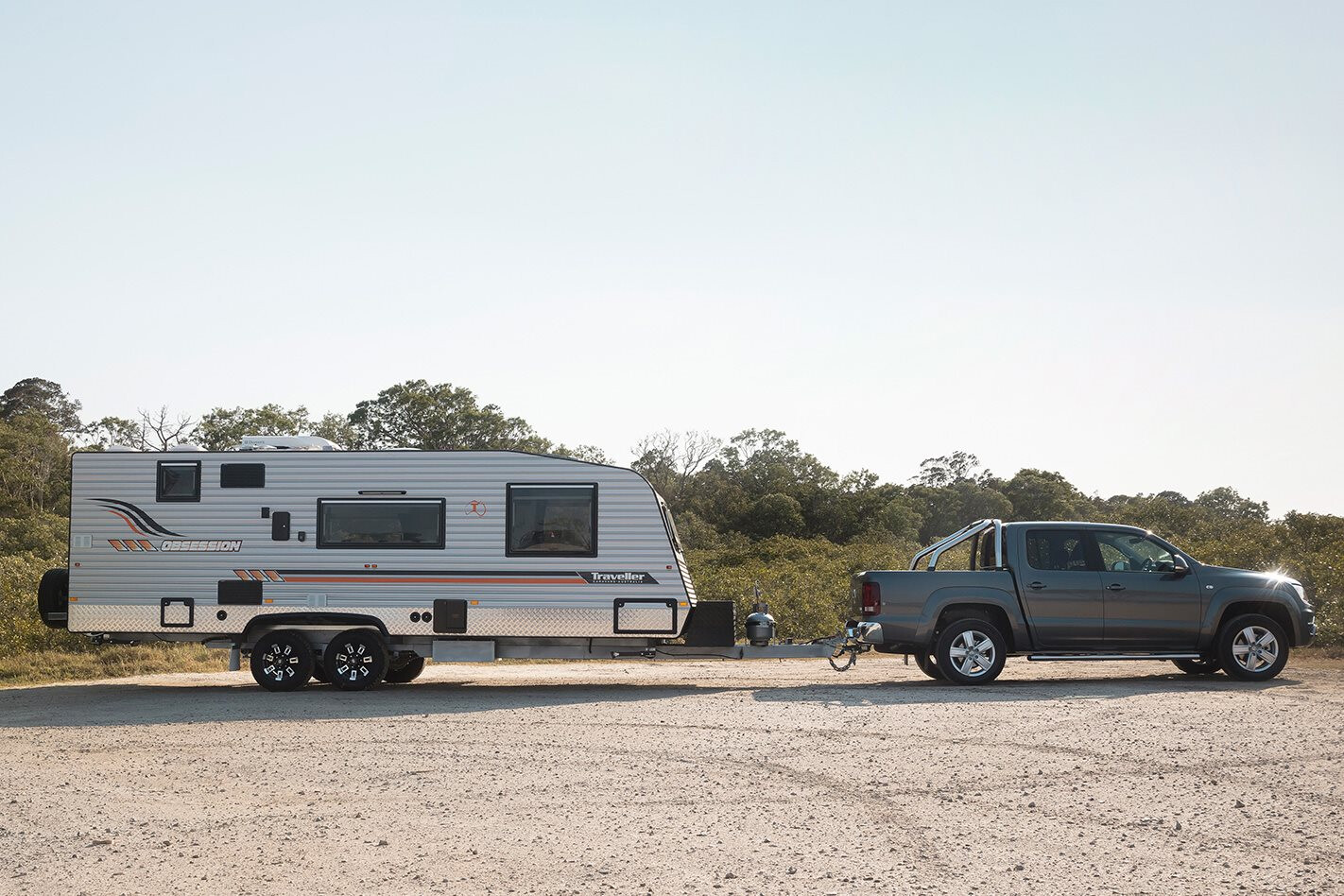
“We know that Amarok buyers use their vehicle for work and play. The ability to tow a caravan or a boat is at the very heart of the Amarok, and we’re glad that we’re able to offer this enhancement to our customers, and their weekends,” Mr Reid said.
The RRP of all V6 Amaroks remains unchanged: Sportline $55,490; Highline $59,990; Ultimate $67,990.
Customers can order an MY18 V6 ’Rok from VW’s national dealer network.
EFS 4WD, an Australian company that specialises in off-road suspension, has launched a range of Adventure Series rear bars onto the aftermarket scene.
This is sponsored content.
EFS accessories has been building heavy duty off-road suspension solutions for more than 50 years, but earlier this year expanded into the world of 4×4 accessories.
Designed and developed in Australia, the stylish Adventure Series premium steel rear bar range is made to survive harsh outback conditions.
63mm side protection tubes maximise protection when cutting through rocks and mud, while recessed LED lights are incorporated to prevent damage.
The rear bar also comes with a tow hitch, a checker-plate rear step, a trailer light plug cut-out and twin tow points.
The rear bars come complete with mounting hardware. The bars are ADR-compliant and the asking price is $950.00
The EFS Adventure Series rear bars are available for Toyota Hilux (2005+), Nissan Navara NP300 (2014+), Mazda BT-50 (2011+), Ford Ranger (2012+), Mitsubishi Triton (2015+), Holden Colorado (2012+) and Isuzu D-MAX (2012+).
Check out EFS’s range of Adventure Series barwork at: www.efs4wd.com.au or call 1300 EFS 4WD.