
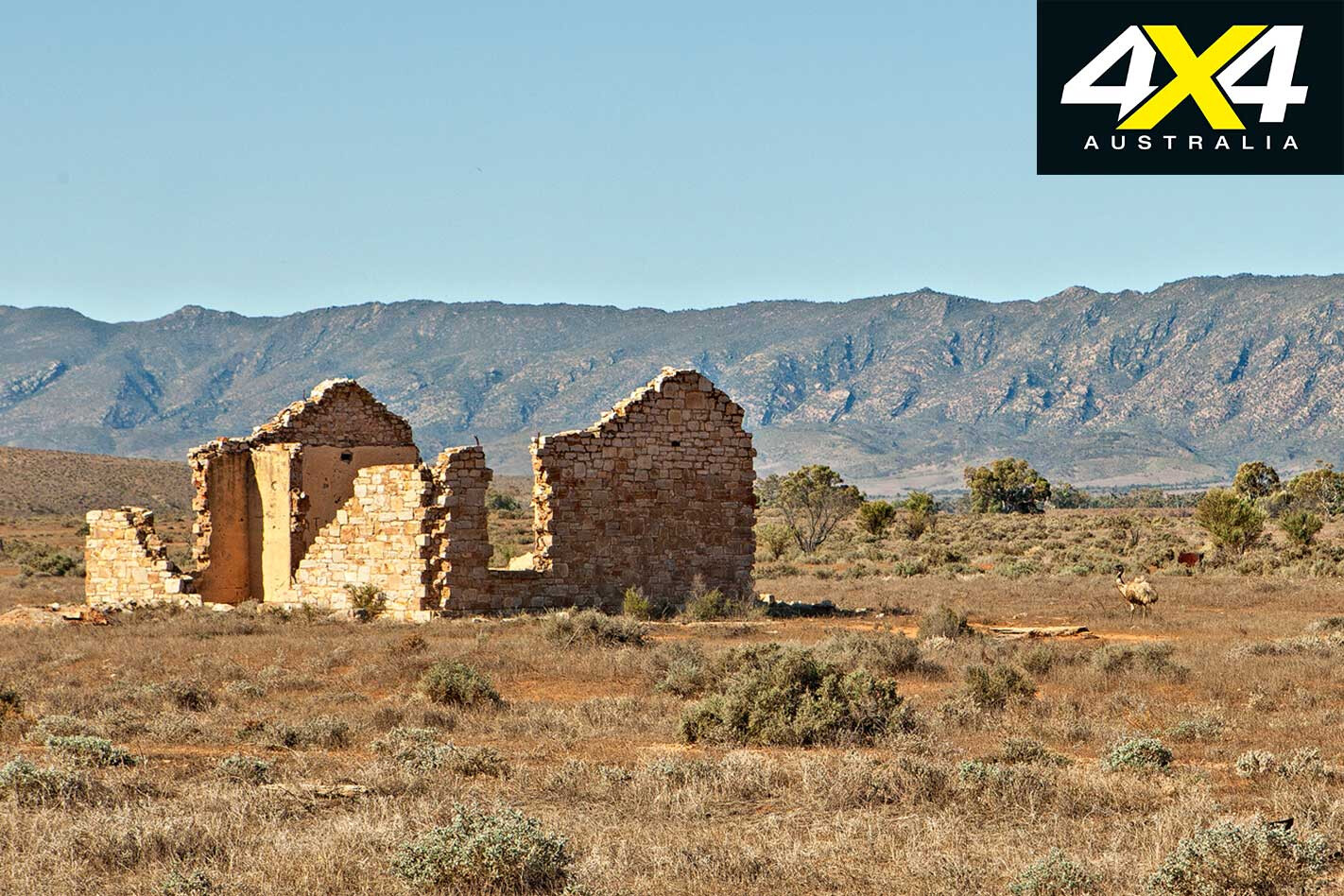
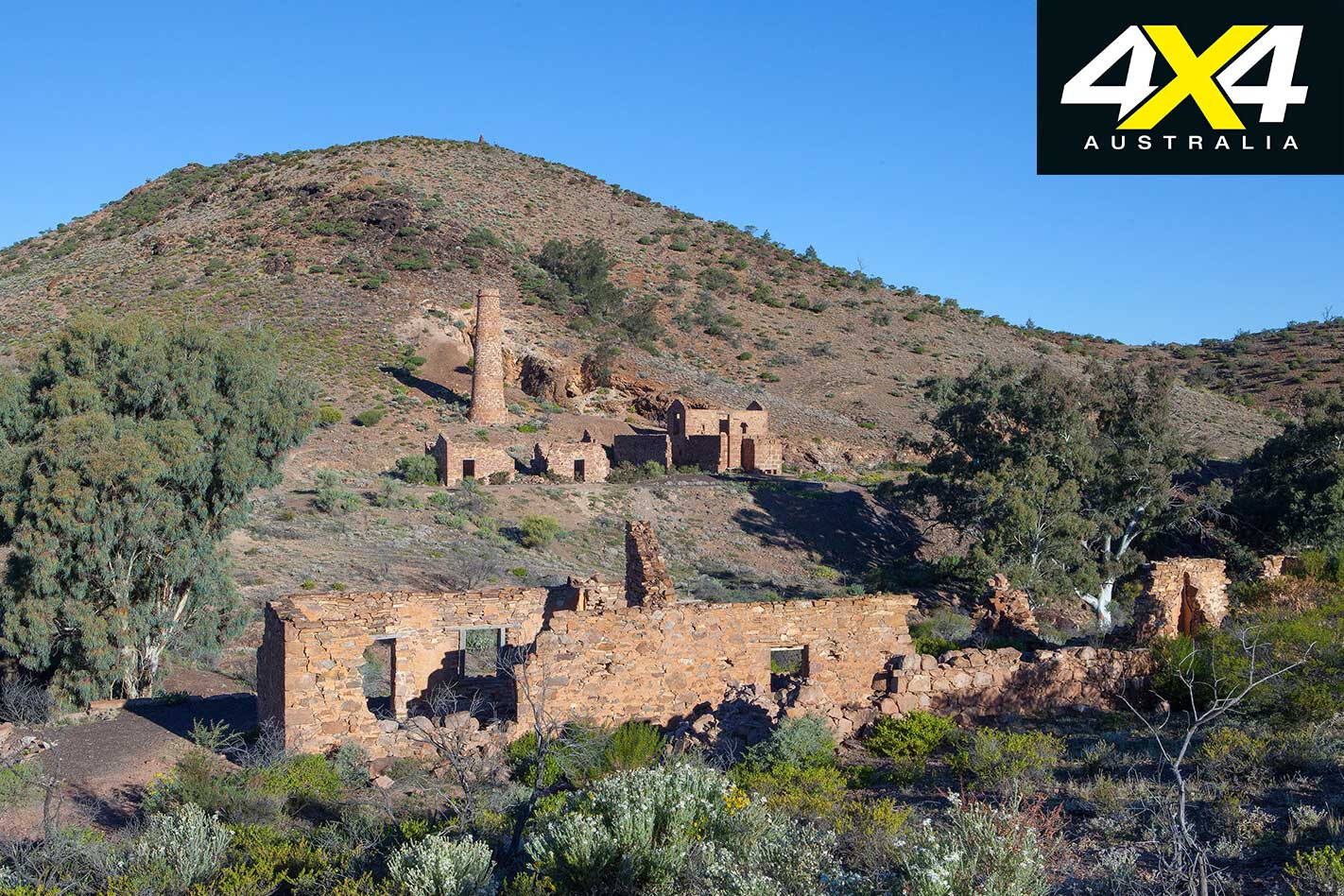
On Warraweena Private Conservation Park, east of Leigh Creek, you can find the ruins of the Sliding Rock copper mine.
In the 1870s, the mine supported more than 200 workers and a small town, but after a promising start the mine closed in 1901 due to falling copper prices, transport issues as a result of its isolated location and, surprisingly for such an arid area, flooding from underground water. Numerous ruins of substantial stone buildings are scattered around the mine site which you pass a couple of kilometres before reaching the Warraweena homestead.
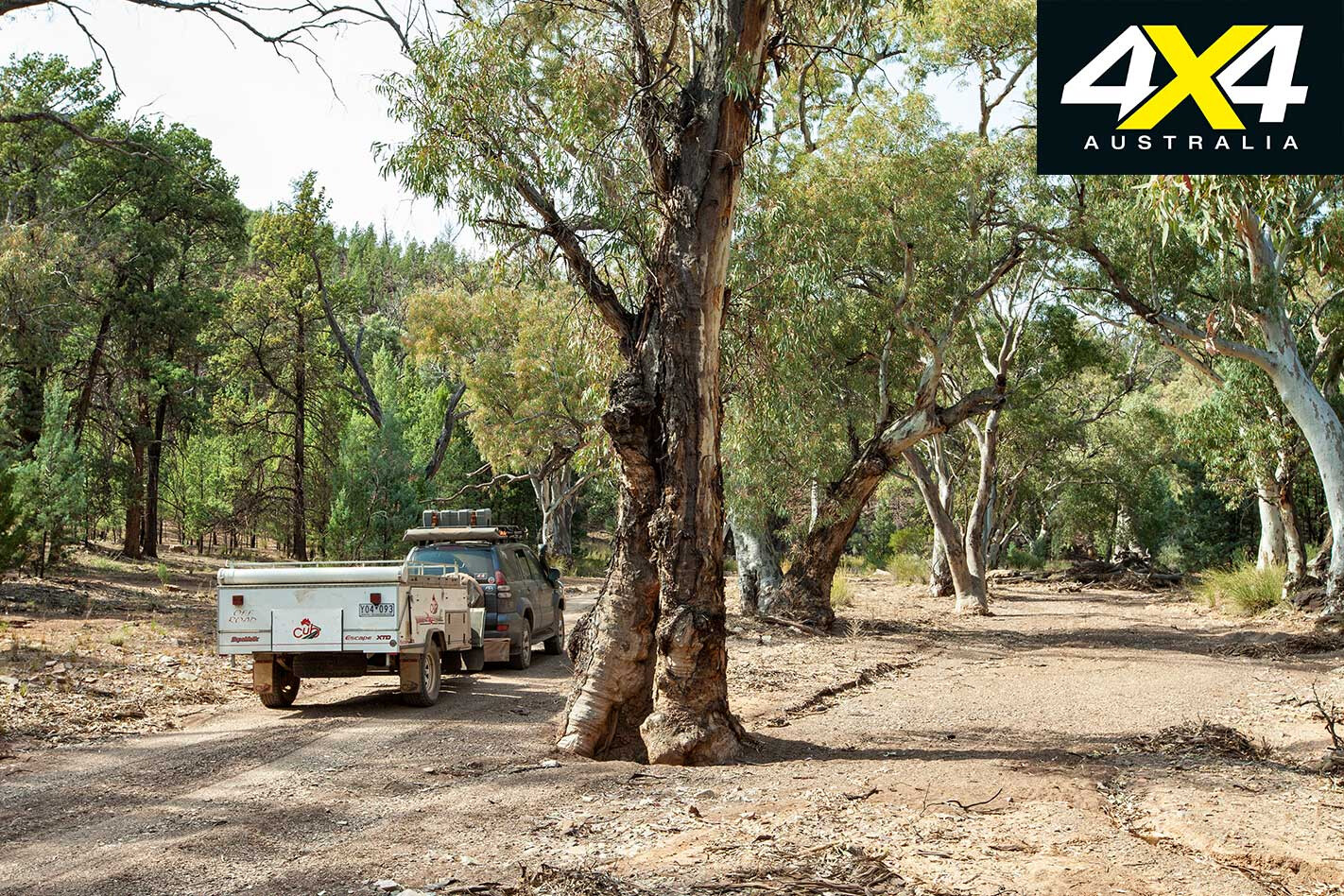
Wandering through the ruins it is hard to imagine this harsh and desolate landscape was home to a thriving community at the mine’s peak. This was and still is a challenging environment, and with summer temperatures of 40-50˚C, working underground as a miner might have been a preferable occupation to that of the blacksmith’s apprentice above ground.
Warraweena is a 355km² functioning sheep station that has opened its doors to tourists wishing to experience its unspoiled landscape. The property attracts mountain bikers and bushwalkers, as well as the 4×4 fraternity who come to pit their vehicles and driving skills against some of the station’s more demanding tracks.
Grey nomads exploring roads less travelled also frequent Warraweena, attracted by the history, solitude and rugged beauty of the northern Flinders Ranges.
Warraweena offers a range of accommodation from bush camping with some basic amenities along an extensive section of dry river bed, to the relative luxury of converted shearers’ quarters. An old homestead, no longer used as such, has a large kitchen, several bedrooms and communal areas ideal for use by groups planning to explore the property and other nearby attractions.
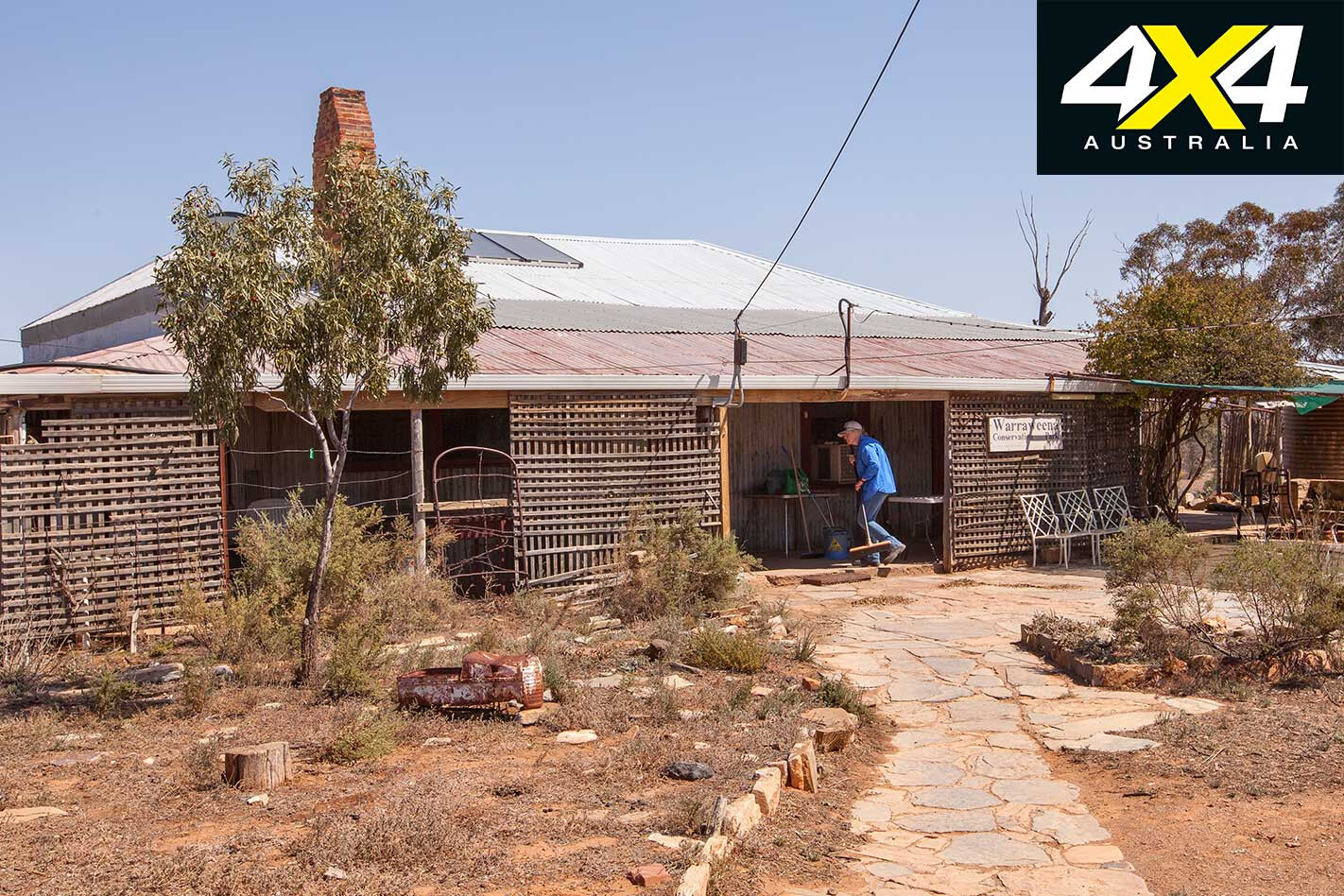
The road to Warraweena leaves the bitumen at the Beltana Roadhouse 30km south of Leigh Creek. A rough gravel road, which can be quite corrugated and rocky in places, snakes eastward, passing the all but deserted township of Beltana along the way.
Founded in the 1870s to service nearby mining activity, it fell on hard times when the mines closed. The arrival of the Overland Telegraph and Ghan railway kept the town alive, but once the railway was realigned farther west, Beltana’s fate was sealed and it’s now almost a ghost town.
The town is worth a stop to see some of the old buildings and soak up the local history which includes reminders of the Afghan cameleers who plied their trade throughout the SA outback.
The Flinders comes alive with colourful wildflowers after heavy rain and one of the more prolific wildflowers is an enduring legacy of those early Afghan cameleers. The Afghans used wild hop plants as padding in their camels’ saddlebags and as a result hop seeds were scattered wherever they travelled.
To this day, when conditions are right, wild hop plants burst forth to paint otherwise barren hillsides throughout the length and breadth of the Flinders Ranges with their vibrant red flowers.
From Beltana the road to Warraweena winds across the flat dusty plain, regularly crossing dry, rocky riverbeds scoured over eons by floodwaters pouring out of the ranges after heavy rain. In places, the road surface comprised roughly graded, fist-sized rubble and finding that the manager of Warraweena was called Rocky, I had to ask if they named the road into the Station after him or vice versa!
Most of Warraweena’s station tracks are rough going and best negotiated by high clearance 4x4s. The better known destinations are perhaps Mt Gill Track and the Copper Track, both of which offer 4×4 drivers something different and perhaps a little challenging.
We were there to tackle the Copper Track and, as this drive is one-way only and not trailer friendly, we had left our camper on Moolooloo Station, 95km by road to the south. Our return journey by way of the Copper Track followed a more direct 40km route skirting the foothills of the range.
The Copper Track was originally constructed in the early 1890s to connect the copper mines of Sliding Rock, Nuccaleena (30km to the south on present day Moolooloo Station) and another near the small town of Blinman farther to the south-east.
Today, access to the track requires payment of a modest fee at Warraweena in exchange for a comprehensive set of track notes and the combination for a locked gate at the start of the track near the Sliding Rock mine ruins.
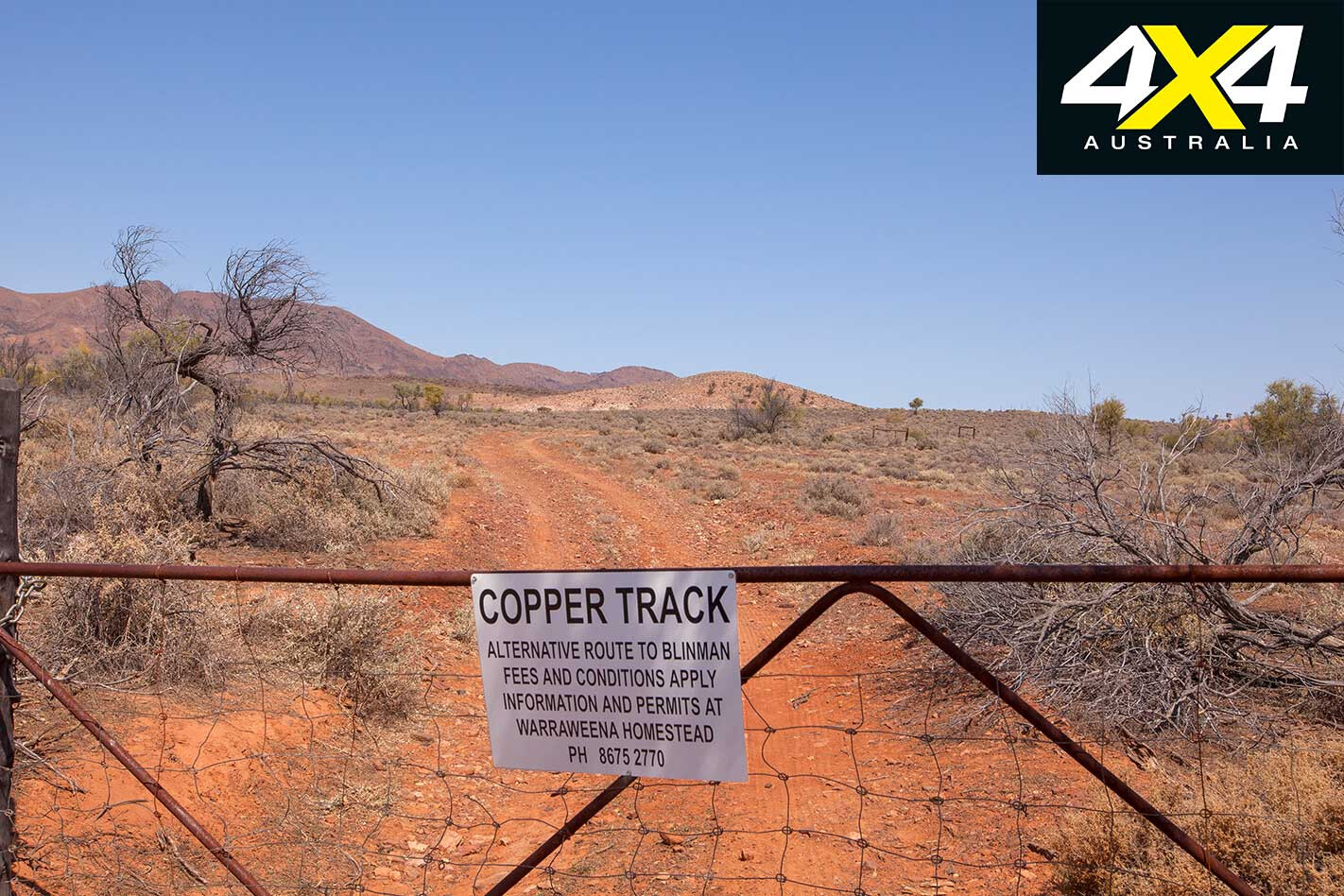
The northern Flinders are the eroded remnants of an ancient mountain range and steep red cliffs of shattered sandstone look out over the flat desert plains that stretch westward as far as the eye can see.
The track initially winds through an undulating landscape of low hills that parallel higher jagged peaks farther to the east. At the time of our visit it had been six months since any rain and the countryside was dusty and burnt dry, but it was easy to imagine that after good rain, with wildflowers and new growth, the Copper track would be particularly scenic.
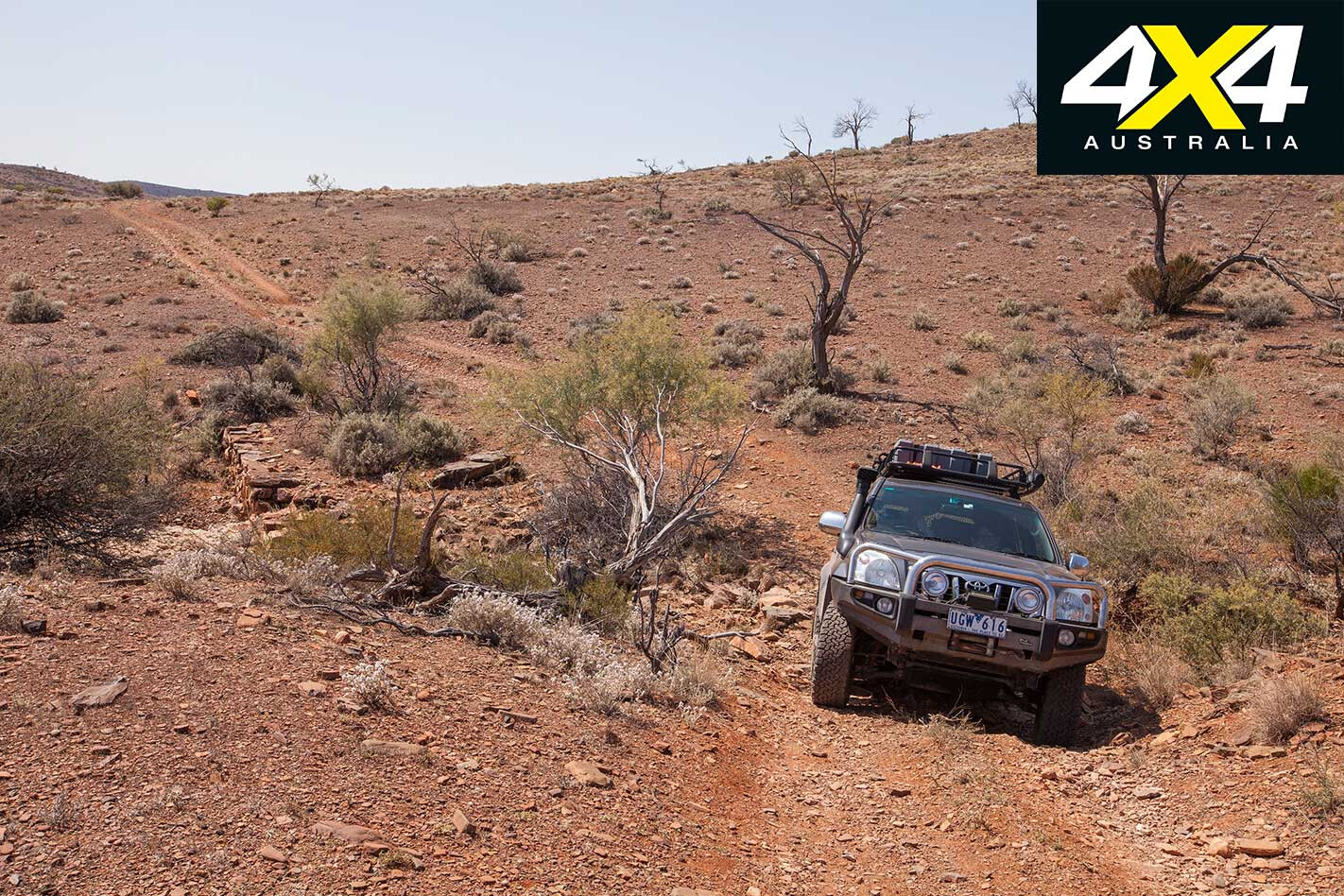
It is slow, given the track is unmaintained and cut by numerous small washaways and watercourses. A few of the waterway crossings display steep entry and exits and some care is advisable to avoid your front bar unintentionally doubling as a grader blade. This is also terrain where reduced tyre pressure can both help protect your rubber from the ever present sharp, slaty rocks and make for a more comfortable ride.
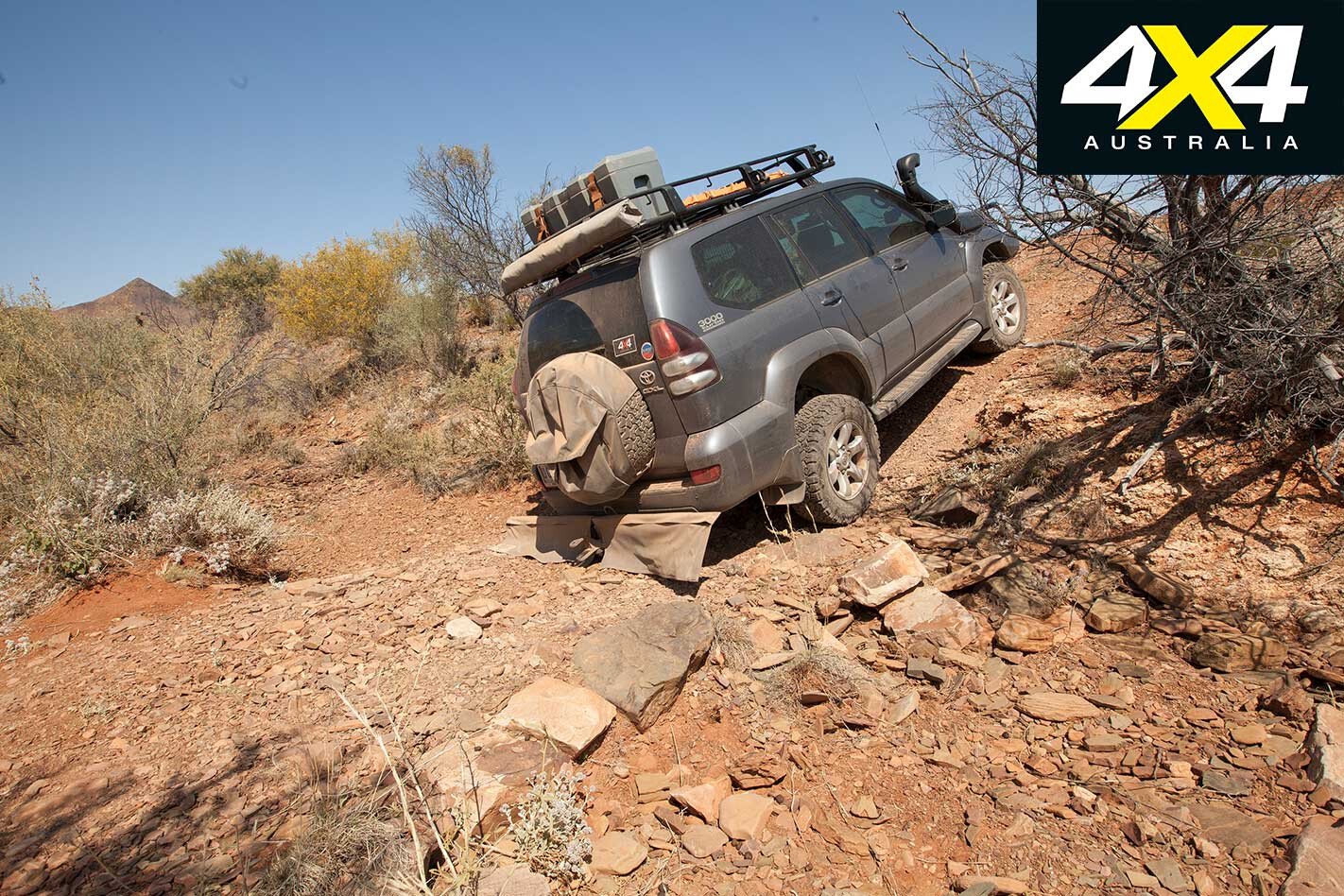
Old stonework from the original coach road can still be seen in some places where the track was built up to cross the deeper washaways. The dry sandy beds of large watercourses were regularly used by the early settlers as roadways because they often cut through otherwise steep and challenging terrain, making for easier travel.
The Copper Track is no exception and about halfway into the drive it drops into and follows Warrioota Creek. Numerous sawn stumps of large river red gums can be seen here where timber was cut 100 years ago to be used as sleepers on the mighty Ghan railway from Adelaide to the town of Oodnadatta.
Eventually leaving the creek, the track climbs steadily to a ridgeline which is the highest point of the drive. Here, a couple of hundred metres down a sidetrack, is Sladies Lookout, a bare hill with commanding views to the west as far as Lake Torrens. While undoubtedly a stunning place to watch the sunset with a bottle of bubbly, it’s still a long drive to anywhere on a track that is challenging enough in daylight.
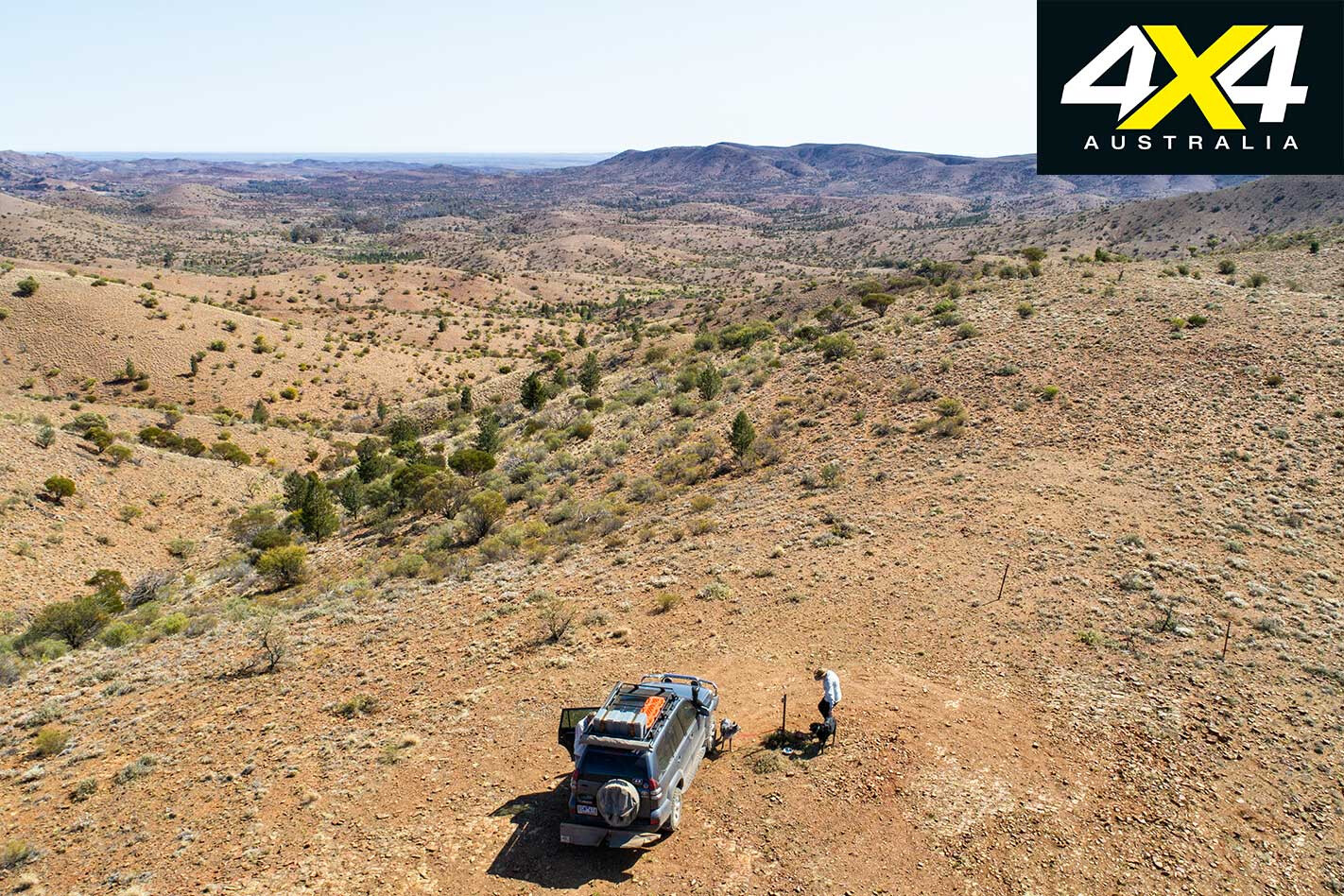
Descending from the ridge, the track enters Moolooloo Station and a landscape increasingly punctuated with picturesque native cypress. From here it is only a short distance on better quality tracks to the remarkably well preserved Nuccaleena Mine ruins which also date from the mid-1800s.
In its heyday Nuccaleena supported a small township with a hotel (a prerequisite in this dry and dusty environment), substantial stone stables, a goods store, blacksmiths workshop, general store, doctor’s surgery and numerous miners’ huts.
The mine operators spent £57,000 but produced only £13,000 of copper and, after losing what would have been a small fortune in the 1860s, Nuccaleena was abandoned after only six years.
From Nuccaleena the Copper Track follows station tracks until reaching the road to nearby Blinman via Glass Gorge – today a popular tourist drive. At Blinman, tourists can take underground tours of the workings, stock-up on supplies and take advantage of a range of accommodation from the local pub to various farm-stay options.
Whether you stay at Warraweena or one of the station properties near Blinman (such as Alpana and Moolooloo) this is an area that offers many unique and challenging 4×4 activities in a virtually unspoiled natural environment. But, whatever you do, make sure you put the 150-year-old Copper Track on your itinerary.
Travel Planner
WHERE Warraweena Private Conservation Park is located 500km north of Adelaide in South Australia’s Northern Flinders Ranges.
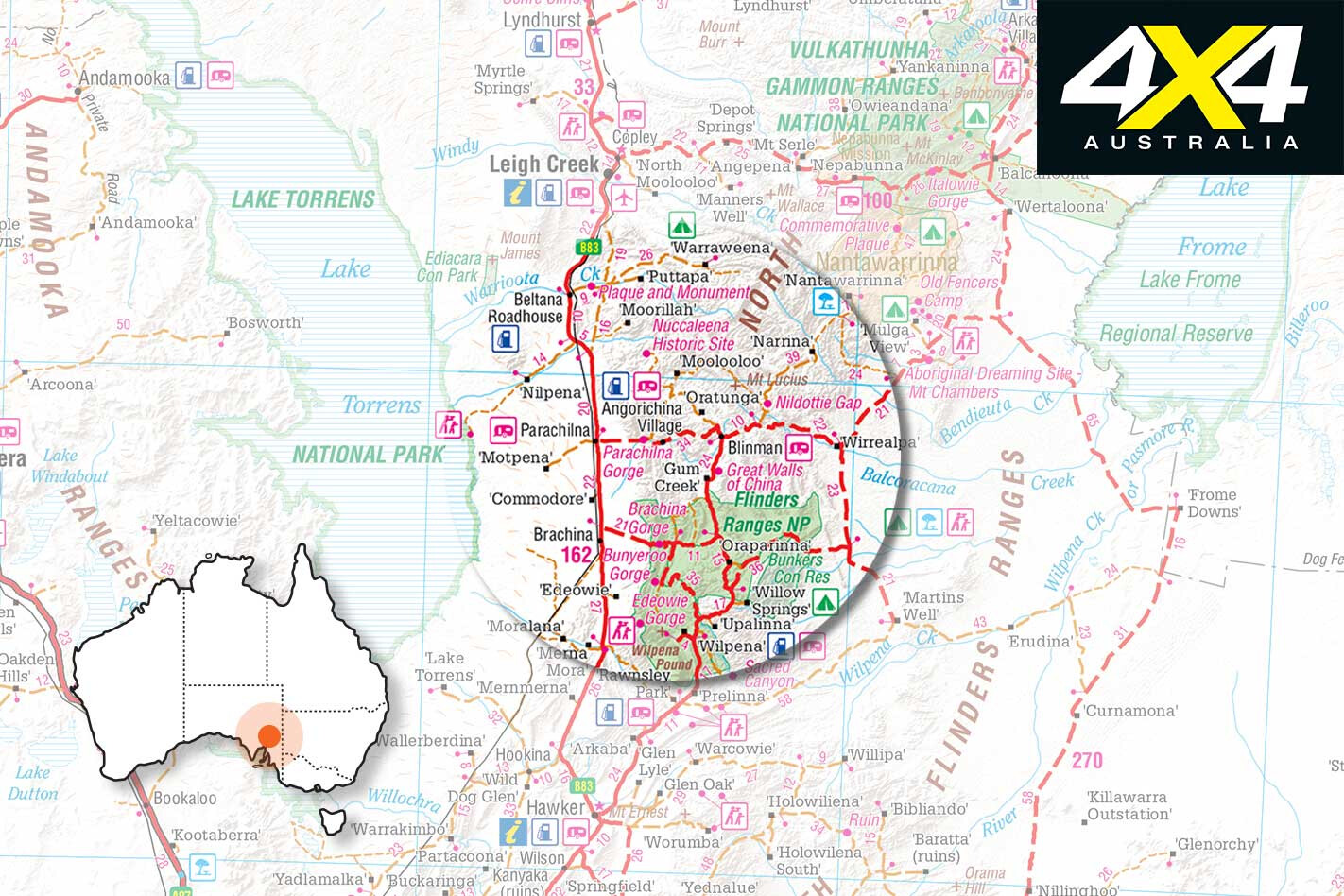
WHEN TO TRAVEL April to September offers pleasant conditions with daytime temps in the mid-20s, with single digits overnight. Summers are harsh and hot with temps often above 40ºC. In spring, after rain, the country is resplendent in wildflowers and fresh growth.
WHERE TO STAY Properties such as Warraweena, Moolooloo and Alpana offer accom from campsites to cabins and shearers quarters.
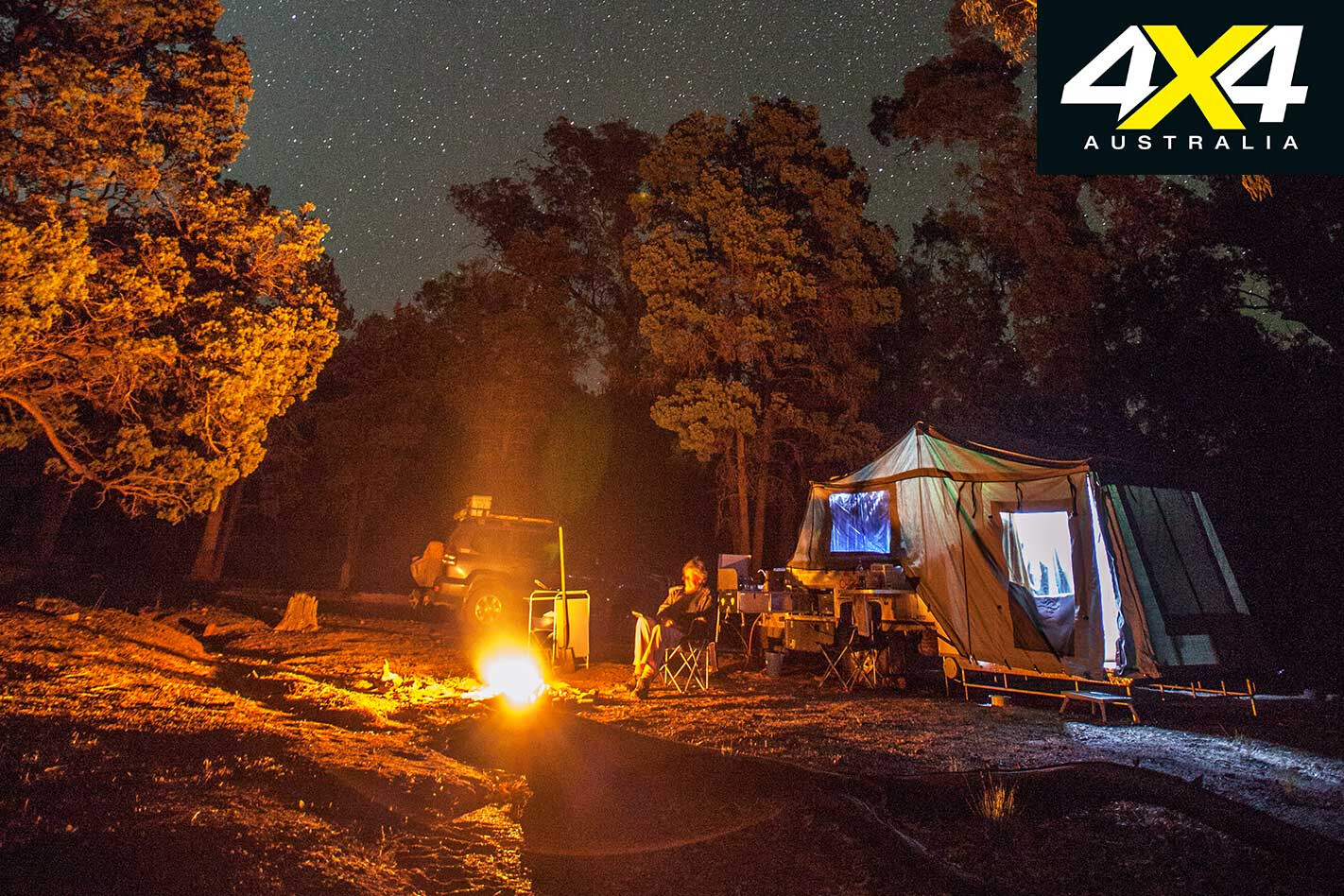
SUPPLIES Campers need to be self-sufficient as to food and water. Some basic foodstuffs such as frozen meat and bread are available at Blinman and Angorichina (the latter also supplies fuel).
ROAD CONDITIONS Rough and rocky is the order of the day, and anything other than major roads should be considered suitable for 4x4s only. The Copper Track is unsuitable for trailers but in dry conditions an experienced driver would not face any major challenges towing an off-road heavy-duty camper on other major tracks in the area.
CONTACTS Moolooloo Station Phone: (08) 8648 4861 www.moolooloo.com.au
Warraweena Conservation Park Ph: (08) 8675 2771 www.warraweena.com.au
There is no better form of escapism than going off-grid, but getting lost in the great and wide countryside can be dangerous for the unprepared.
Thankfully there are plenty of 4×4 gear on the market right now that got your back if you plan on going far.
Cel-Fi GO Pack
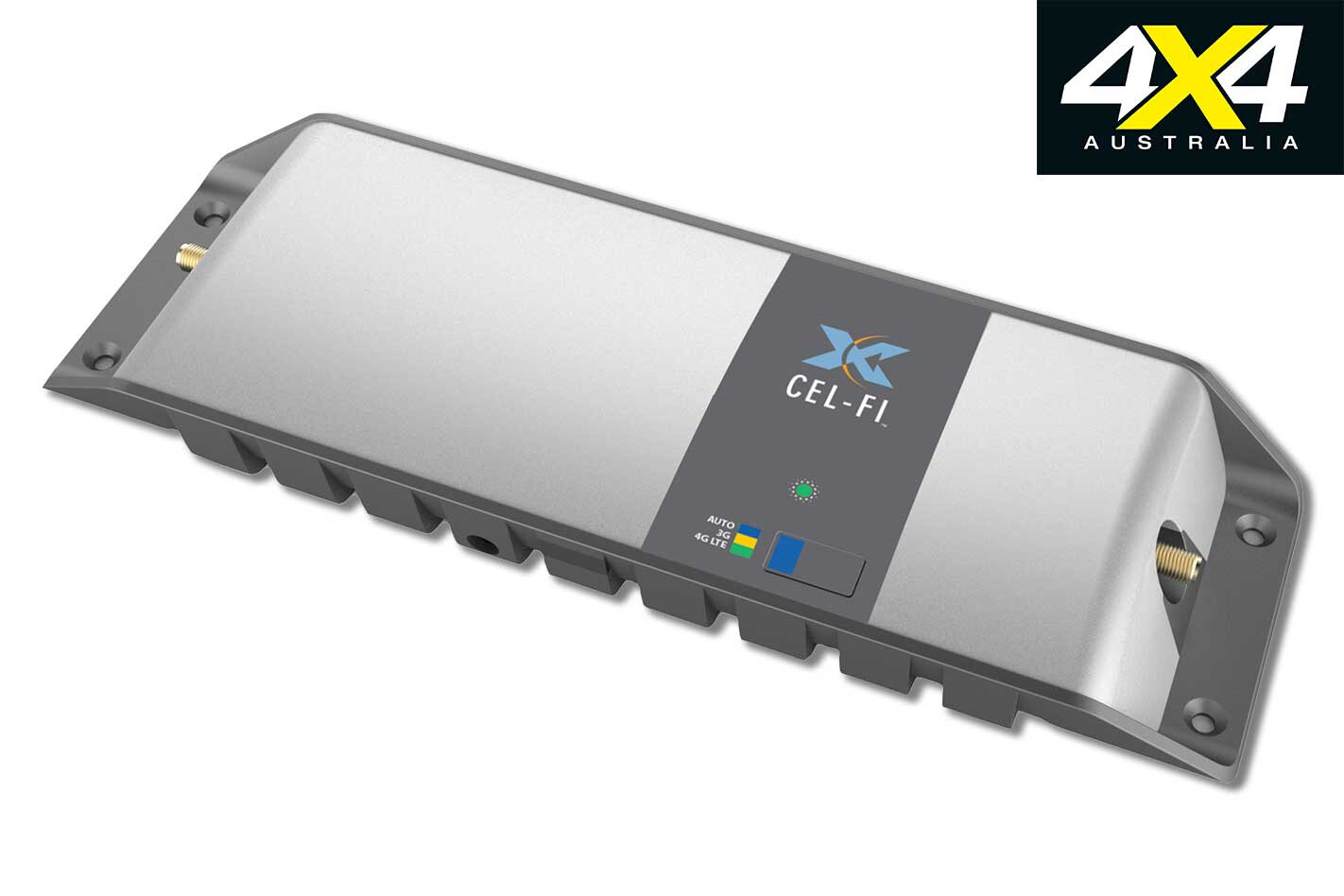
For those off-road tourers after maximum communications range, the Cel-Fi GO Pack is ideal. It is designed to boost and distribute a weak 3G or 4G mobile signal in remote areas and features a 100dB of system gain. The unit supports voice and mobile internet for multiple mobile devices and minimises the chance of dropped calls or a slow internet connection.
The 1200mm antenna is a GME AT4705B (698-960/1710-2170 MHz, 7/2.5dBi gain) and comes with a 4.8-metre low-loss coaxial cable. Also included is an adhesive internal antenna measuring three metres, and a 12V cigarette lighter DC lead of five metres. The system is locked to Telstra’s mobile network and has a band selection button, plus there’s a Bluetooth WAVE app for smartphones and PCs.
RRP: $1165.95 Website: www.powertec.com.au
Icom IC-M330GE
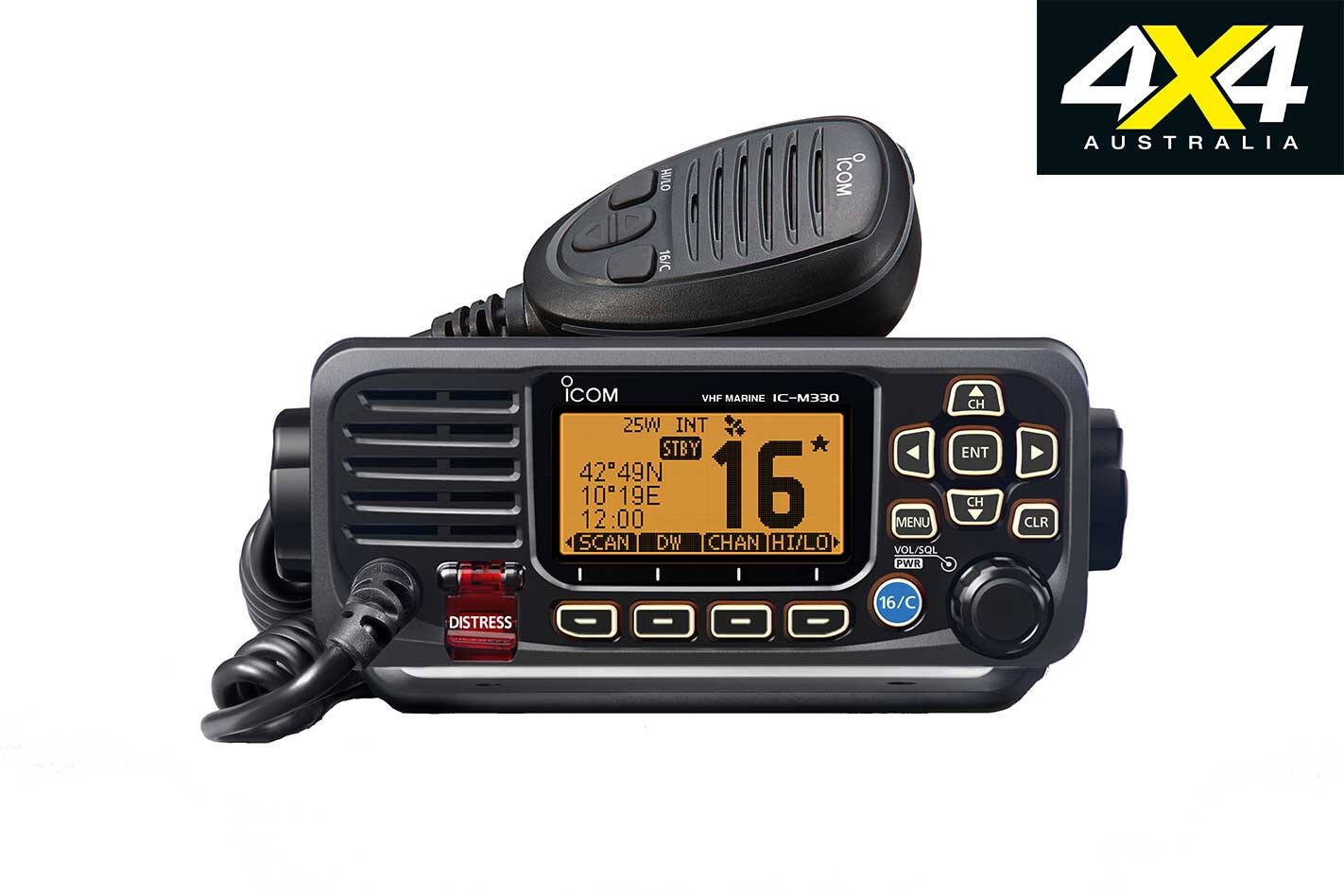
High-end radio manufacturer Icom has released a new VHF marine transceiver. The IC-M330GE includes an inbuilt GPS receiver (an IC-M330E, without GPS receiver, is also available) a clear full dot-matrix display, hand mic, new speakers for clear audio, an inbuilt Cass D DSC that monitors CH70 continuously (even when receiving another channel), and is IPX7 waterproof.
The unit is compact – 156.5mm wide x 66.5mm high and 110mm deep – so is ideal for watercraft with limited cabin space. The user interface is straightforward and is a combo of soft keys and directional keypad. The IC-M330GE (and E) also features AquaQuake, which prevents the audio being affected even when the speaker is waterlogged. It’s available in black or white.
Website: www.icom.net.au
ARB Frontier Tank (Pajero Sport)
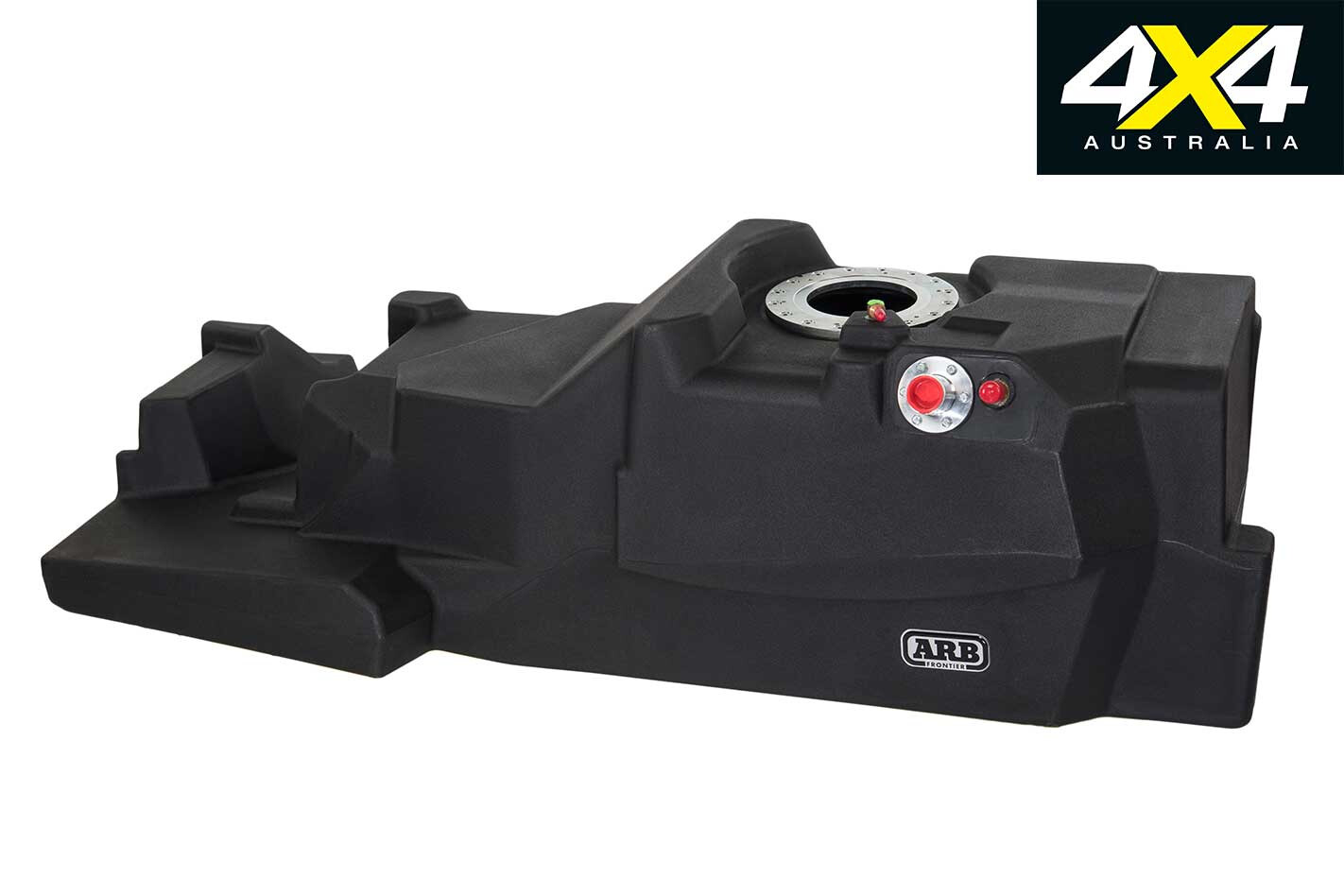
Frontier tanks are designed to increase the fuel capacity of your vehicle, by replacing the original equipment with a seamless, one-piece tank that is shaped to fit within the existing voids on the underbody of the vehicle.
These ARB tanks are tough, too, thanks to the use of crosslink polymer construction. This is a lightweight material that is designed to flex under impact rather than puncturing. With a wall thickness of 8mm, the Frontier is incredibly durable and is a full replacement system, meaning you don’t have to rely on dual fillers or a fuel transfer setup.
The Frontier tank for the Sport offers a claimed 58 per cent increase in capacity for Mitsubishi’s popular mid-sizer, bringing total capacity up to 100 litres.
Website: www.arb.com.au
Mutiny on the Bounty

One of the great historical stories of the past two centuries, the April 1789 mutiny on the HMS Bounty is recreated by renowned Australian author Peter Fitzsimons.
The author recounts the events preceding the mutiny in exacting detail, as well as the mutiny itself and both Bligh’s and the mutineers’ (led by Fletcher Christian and accompanied by Tahitian men and women, as well as the crew members) journeys after that event.
The mutineers eventually settled on previously undiscovered Pitcairn Island; their descendants reside there today. It’s a cracking yarn as usual from Fitzsimons, filled with drama and intrigue that sees the reader come to respect all parties involved in the mutiny and its aftermath.
RRP: $50 (hardcover); $20 (ebook); $40 (audiobook) Website: www.hachette.com.au
I AM NOT a huge fan of night-driving. The increased potential for an animal strike and, if off-road, the chance you may not see that yawning hole on the track means I keep after-dusk adventures to a minimum. This has become even more of an issue since the Land Rover Discovery joined the Walker household; driving long distances to and from a campsite invariably meant we’d be driving during the night.
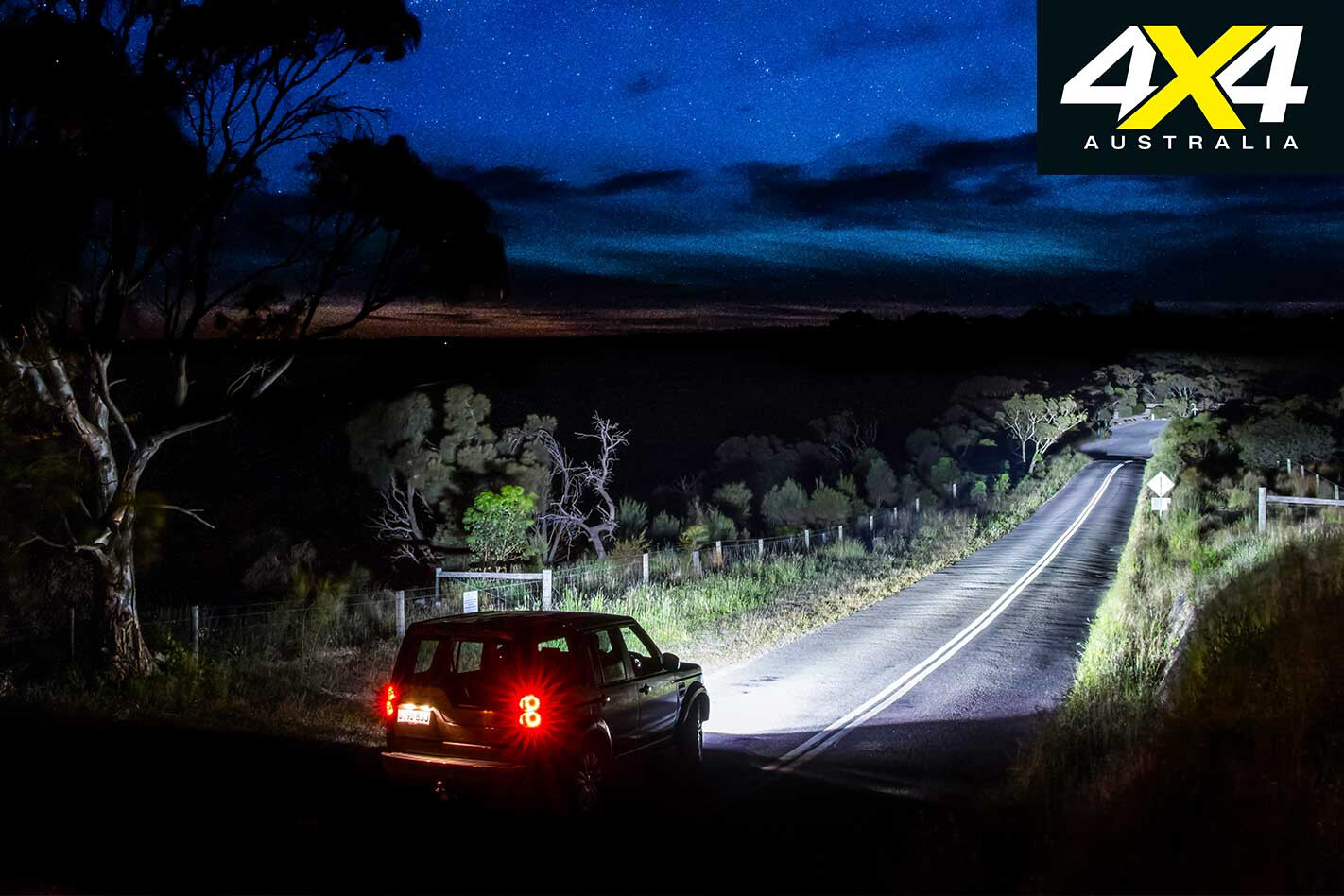
The Disco’s standard lights are – how can I put this not too bluntly – absolutely shithouse in the illumination department and most definitely not up to the task of night driving with any semblance of safety. So I started looking for a suitable driving light setup, coincidentally at about the same time Aussie lighting powerhouse, Lightforce, announced its new Striker LEDs.
Even though we’d be doing more night driving than in the past I still had plans to keep it to a minimum, so I wasn’t after huge lights. I also run the Disco sans bullbar, so needed a lightweight, easy-to-mount light – the Strikers were the ideal choice.
Weighing in at a paltry 1kg each and being rectangular in shape (and small in size) meant I could get away with fitting a genuine LR accessory light bar (ordered from the UK) to attach the lights to, and they’d remain relatively unobtrusive up the front of the Disco.
Plus, measuring only 146mm wide, 77mm deep and 118mm tall, their size would minimise the interruption of airflow to the Disco’s front end – it needs all the air (and anything else) it can get to help maintain a modicum of respectable performance.
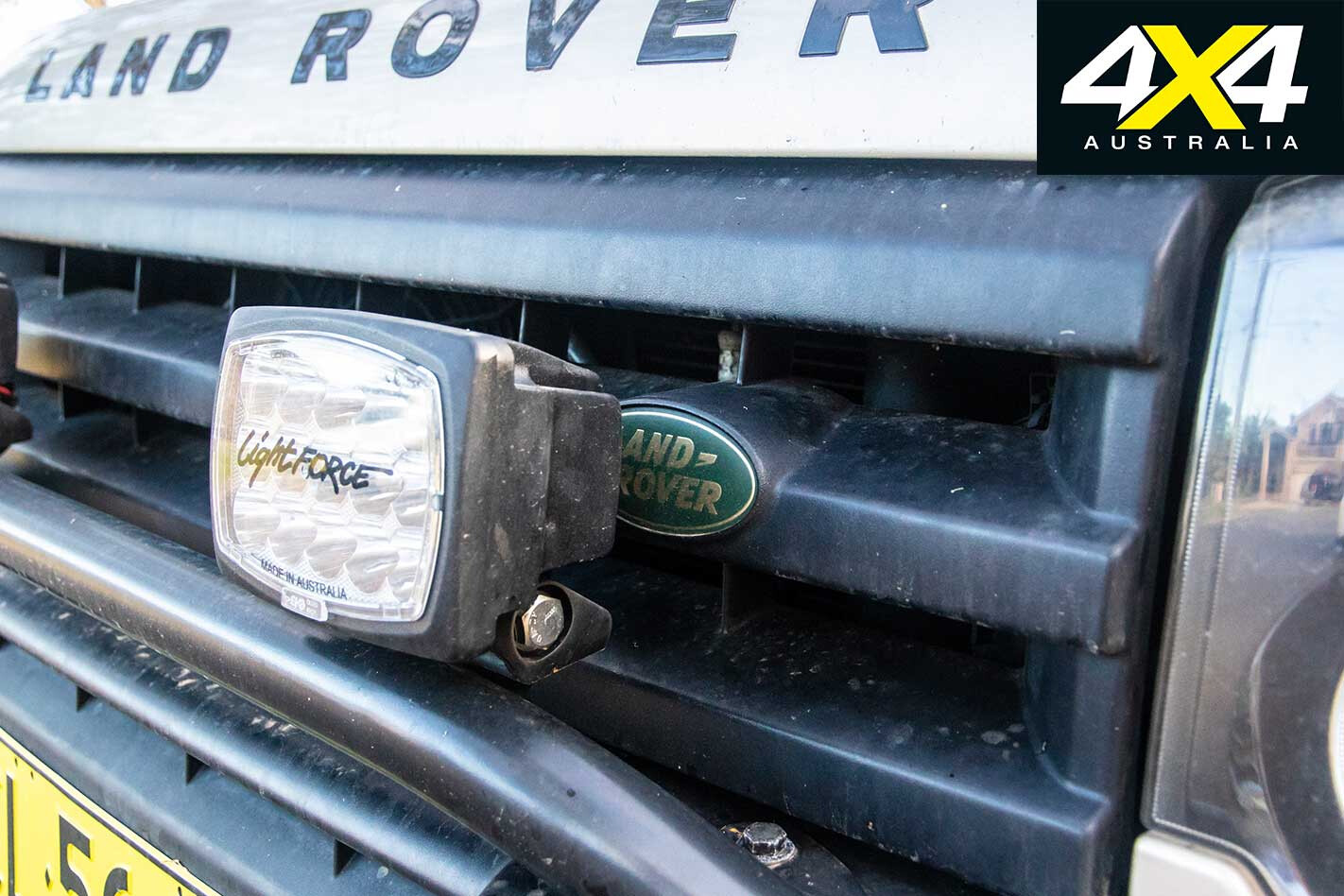
The Striker LED kit includes all you need to fit the lights yourself – plug-and-play wiring loom, switch loom, all the cable ties and crimps needed, and a dash-mount switch – and the wiring harness is clearly labelled, so even numpties like this writer can install them without issues. Having said that, as I was combining the fitment of the accessory light bar with a general service, I offloaded the light-fitting task to the team at Landy specialists, Graeme Cooper Automotive.
Aside from the usual dramas of affixing anything to a Land Rover (as in, pulling half the front-end off to get to the essential location for the attachment points on the factory-accessory light bar) the Strikers were a doddle to fit.
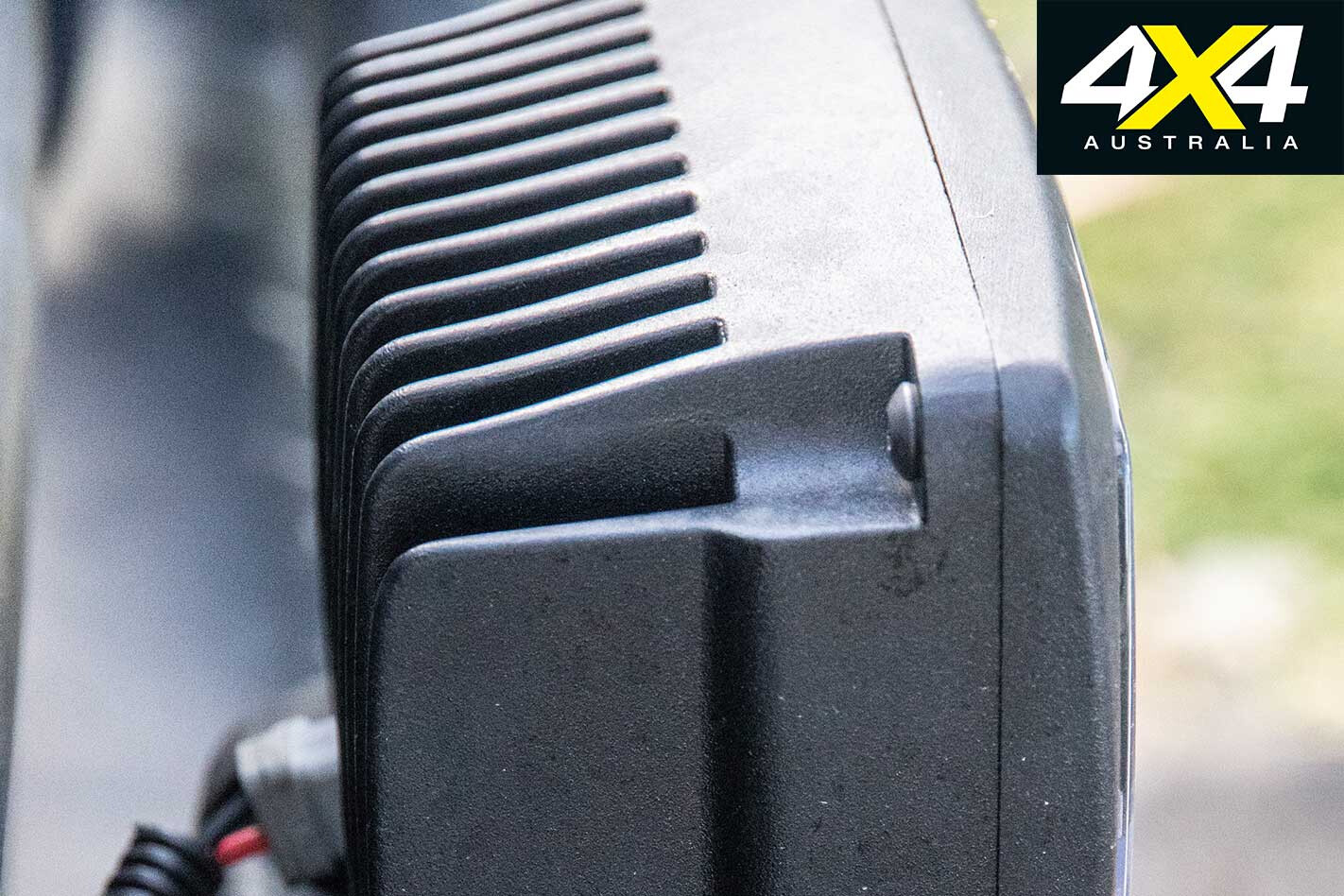
They fit well, too, thanks to the burly 17mm bolts included in the kit. That burliness continues in the lights themselves, with the diecast aluminium housing and bezel, along with the UV-stable powdercoated finish, all backed by a three-year warranty.
Lightforce claims one lux at a claimed (spot) beam distance of 754 metres – an impressive output from a 60W light. The lights (available as a pair or singularly) come with spot filters, and Lightforce also offers modular filters as accessories, allowing you to swap between full-spot, spot/flood, and full-flood light outputs if and when you need to.
Besides the distances you get from them, the lights also provide a nice ‘white’ light. This is thanks to the 15 Luxeon LumiLED LEDs in each light and their 5000K (Kelvin) colour temperature that produces an output that is closest to actual daylight. This also has the follow-on effect of reducing glare from road signs and ensuring the track ahead is easily discernible.
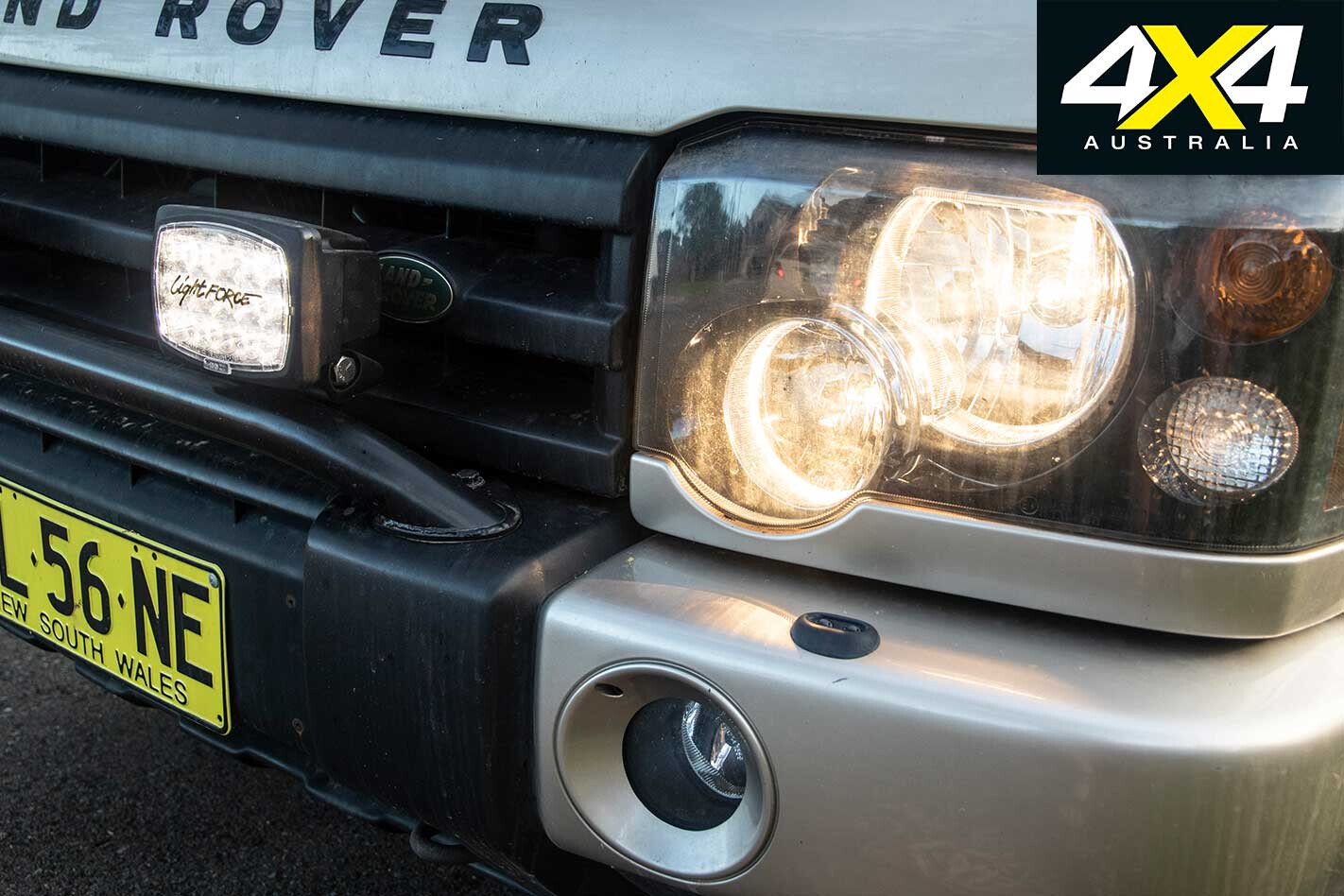
To grab that well-worn cliché that the performance of these lights is “like light and day” is nearly too easy in regards to what I have had to suffer with the Disco’s standard “high” beam (and that’s a better description than those candles deserve).
Needless to say, the difference is, indeed, amazing; driving remote tracks in the bush or hammering back to Sydney from the oldies’ place down the NSW far south coast is a completely new experience, now I can actually see the road from dusk onwards. I have used acombo spot/flood (or spread) beam via those additional filters for the best results for the type of driving we do.
For the $599 asking price, the Striker LEDs offer more than ample lighting performance. You can go bigger and brighter (as stated before), but for tourers after a compact, durable light for the more-than-occasional night drive, the Lightforce Striker LED is a great option.
For me, however, the pleasure of using these lights does come with a little bit of pain: on occasion I have to turn the Striker LEDs off for approaching traffic, and then I just have to hope the oncoming driver can see the big gold bus and its pathetically dim candles coming toward them.
Back in November when summer hadn’t even officially begun, seven people had died in our outback from dehydration.
A 27-year-old man died of dehydration while walking to the popular destination of Nature’s Window in Kalbarri NP. More surprisingly was that he was with a group of walkers, each carrying only a couple of small water bottles. The 8km walk proved too much in the heat – it was reported as 31°C in the town of Kalbarri, but it was possibly 10°C hotter in the rocky park.
A few days later a motorcyclist died while traversing the famous Gibb River Road in the Kimberley. He was supposedly an experienced motorcyclist, but, despite being well prepared, the conditions of mid-40°C temperatures claimed his life after he became bogged.
A family of three and a friend then became the next to lose their lives. The group was travelling from the Aboriginal community of Willowra to Jarra Jarra, 300km or so north-west of Alice Springs. Even more tragic was the fact that one of the victims was three years old and another 12 years old, while the older couple were just 19.
An elderly prospector’s body was found near his bogged vehicle in the WA Goldfields not far from Coolgardie. Again, he was an experienced prospector and local who had spent years in and around Coolgardie.
This final story has a happy ending. A young woman was driving near the WA-SA-NT border towards the aboriginal community of Blackstone when she took a wrong turn and her vehicle became bogged. In the week she was missing she stayed with her car and drank what supplies she had which included pasta sauce, coconut cream and lemon cordial. When she ran out she resorted to straining the windscreen washing water, and the day before she was found she started drinking her own urine.
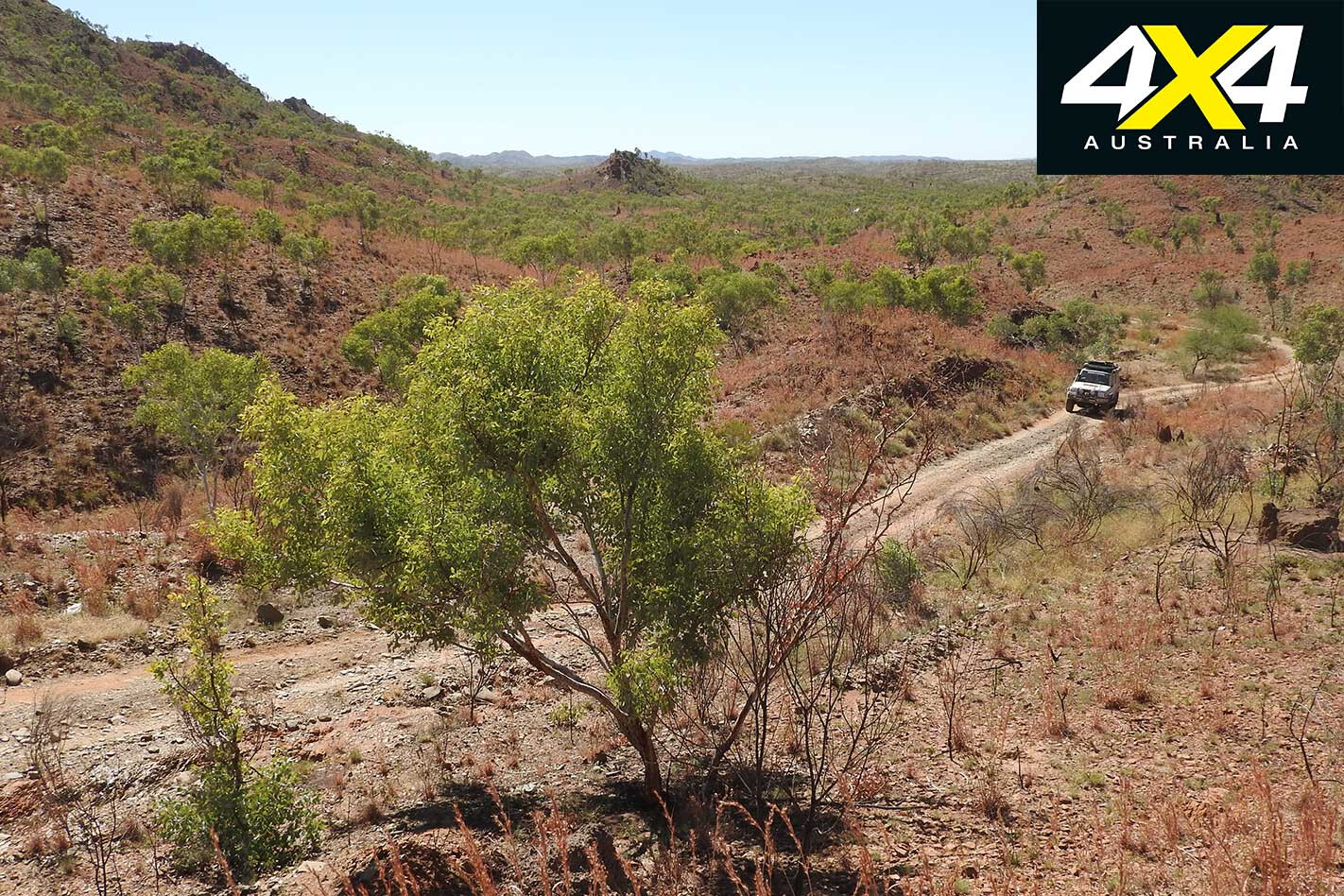
While police said she was ill-prepared for a trip into our remote outback in summer, she was extremely lucky having done everything right after she broke down; most importantly, staying with the vehicle. She may have lasted another day and was very, very lucky to have survived.
Newspaper reports indicate that in WA police respond to about 100 searches for people missing in the bush each and every year. That figure alone seems incredible and I wonder what the figure is for the whole of Australia.
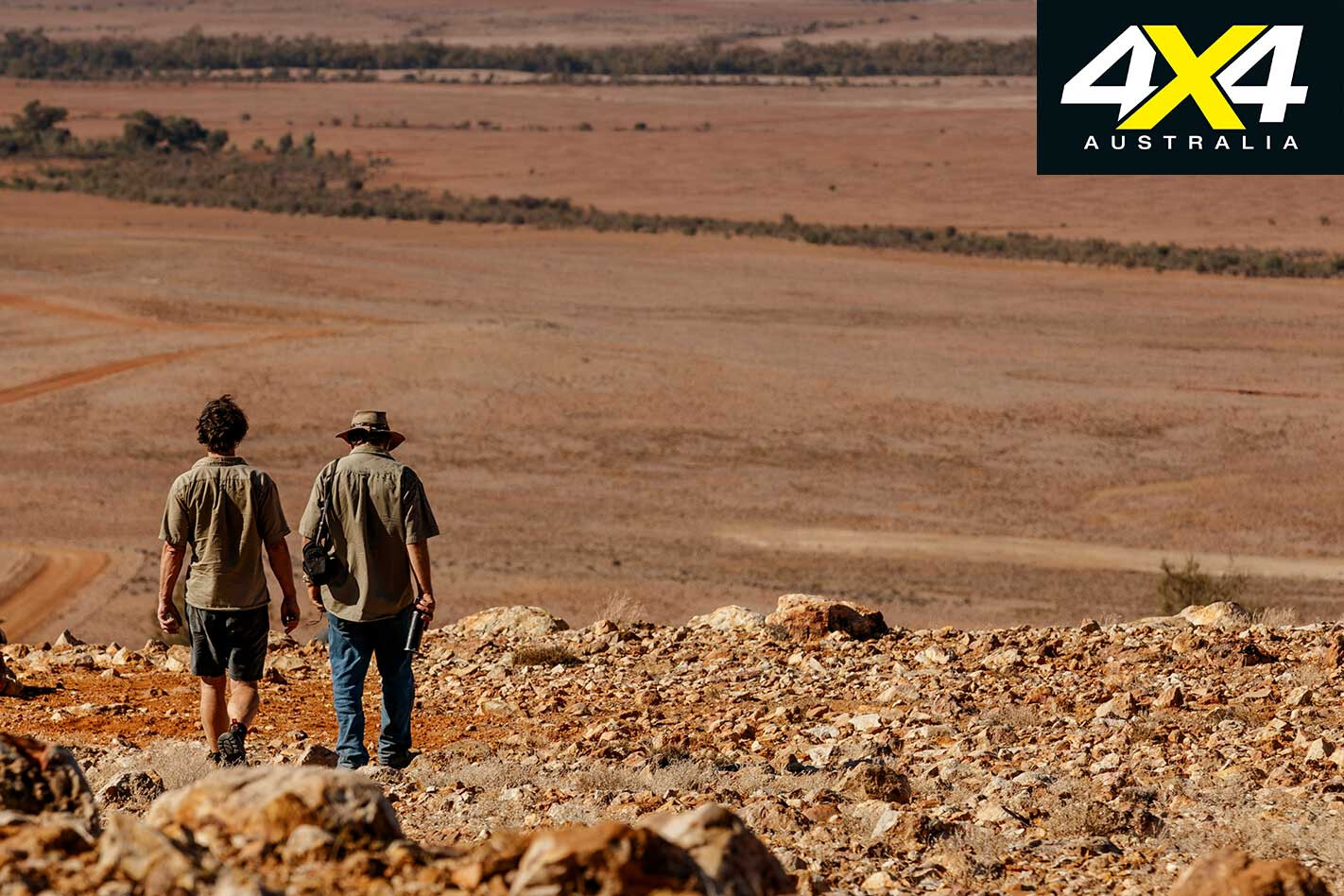
While it appears most have a somewhat happy ending, there are still people dying each and every year in our outback; and each year the same warnings are given seemingly without any bloody notice being taken.
Still, we’ll reiterate them once more: • Before you go, ensure your vehicle is in good condition. Carry some basic spares and a tool kit. As getting bogged is a common theme through these tragedies, carry some MaxTrax (or similar) and know how to use them. • Let somebody know your travel plans and keep them posted on your whereabouts and any changes to your itinerary. • Carry some form of emergency communication device – a mobile phone is NOT good enough! Try a Personal Locator Beacon (PLB) or a ‘Spot’, but only activate it if it’s a real emergency. • Carry 20 litres of water or more – one bottle for a family (as we have found on more than one occasion) just isn’t good enough. • If you break down, stay with your vehicle. There’s no guarantee you’ll be found, but it’s a darn sight better than walking away from a big, shiny object that offers protection from the elements and is much easier to see than a lone person wandering through the scrub.
KOREA’S third biggest brand has been in and out of Australia more times than the Libs have had prime ministers, but it’s back for what it reckons is a proper swing at the Australian market. It’s now a factory-backed operation, and its management reckons it can surprise one or two of the industry’s smaller players within a couple of years.
As part of its three-pronged re-engagement with Aussie punters, the Musso (Korean for rhinoceros) dual-cab ute will be expected to carry much of the weight when it comes to moving metal in the showroom.
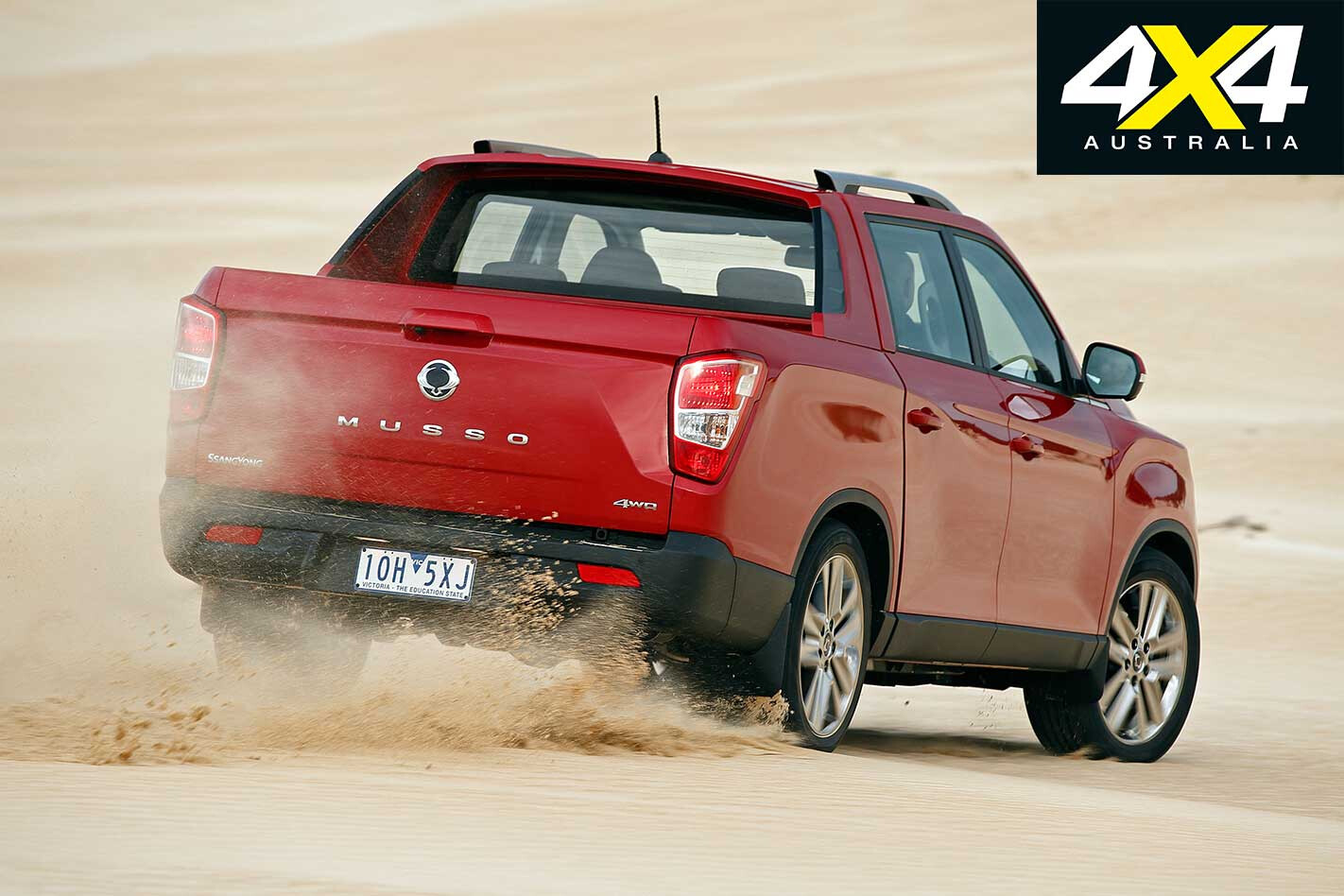
A few of you might remember the Musso Sport and Actyon Sport – and probably with not much fondness. Styling could only politely be known as polarising, while its range of hand-me-down Mercedes motors meant that SsangYong wasn’t much missed when it exited our market in 2016.
Well, a lot has changed in just a couple of years, and the reborn Musso ute is pretty well-equipped, offers half-decent powertrain specs, and has lost much of the visage that used to terrify the robber’s dog. As well, it’s offering sharp pricing and a warranty package that’s the best in the ute business.
Exterior-wise, SsangYong has calmed the design farm a lot over the last couple of years, especially around the front of the car. It’s still not contemporary by any stretch, but SsangYong has banished the sloped nose and goofily oversized headlights to the bad idea pile. It now sports a nose job that is less rhino and one of the most conservative across the sector, with a minimum of chrome and a dearth of sharp lines and angles.
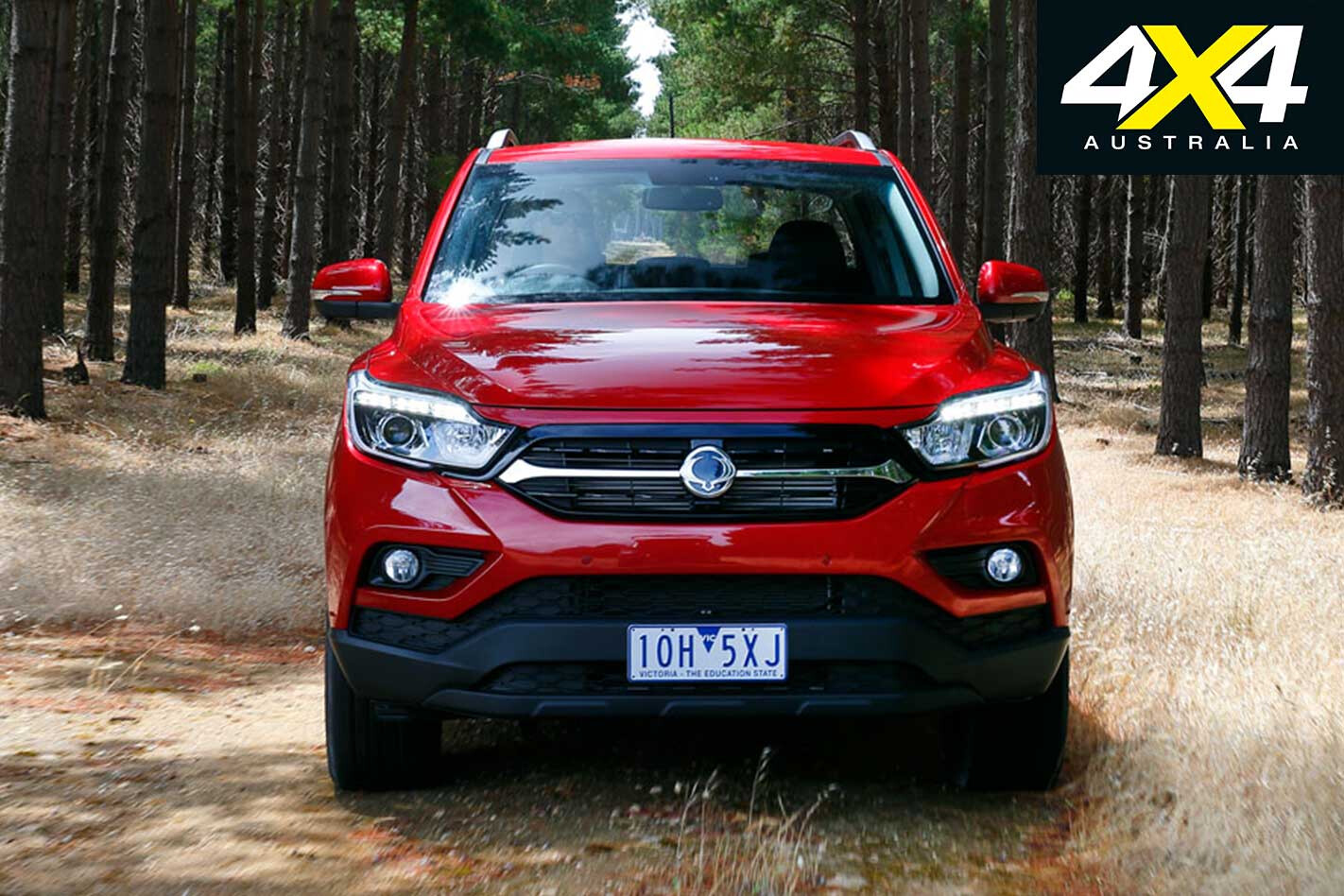
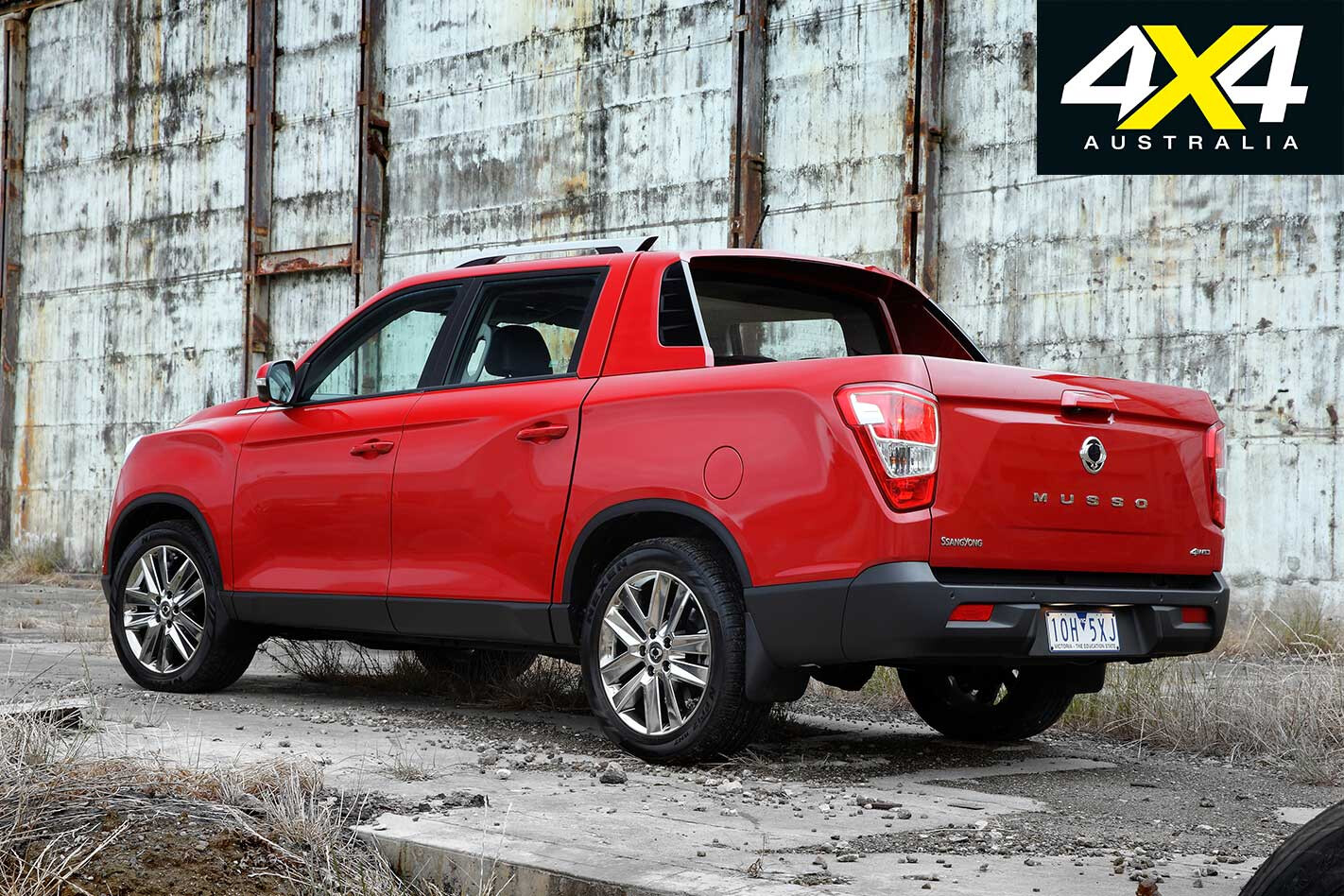
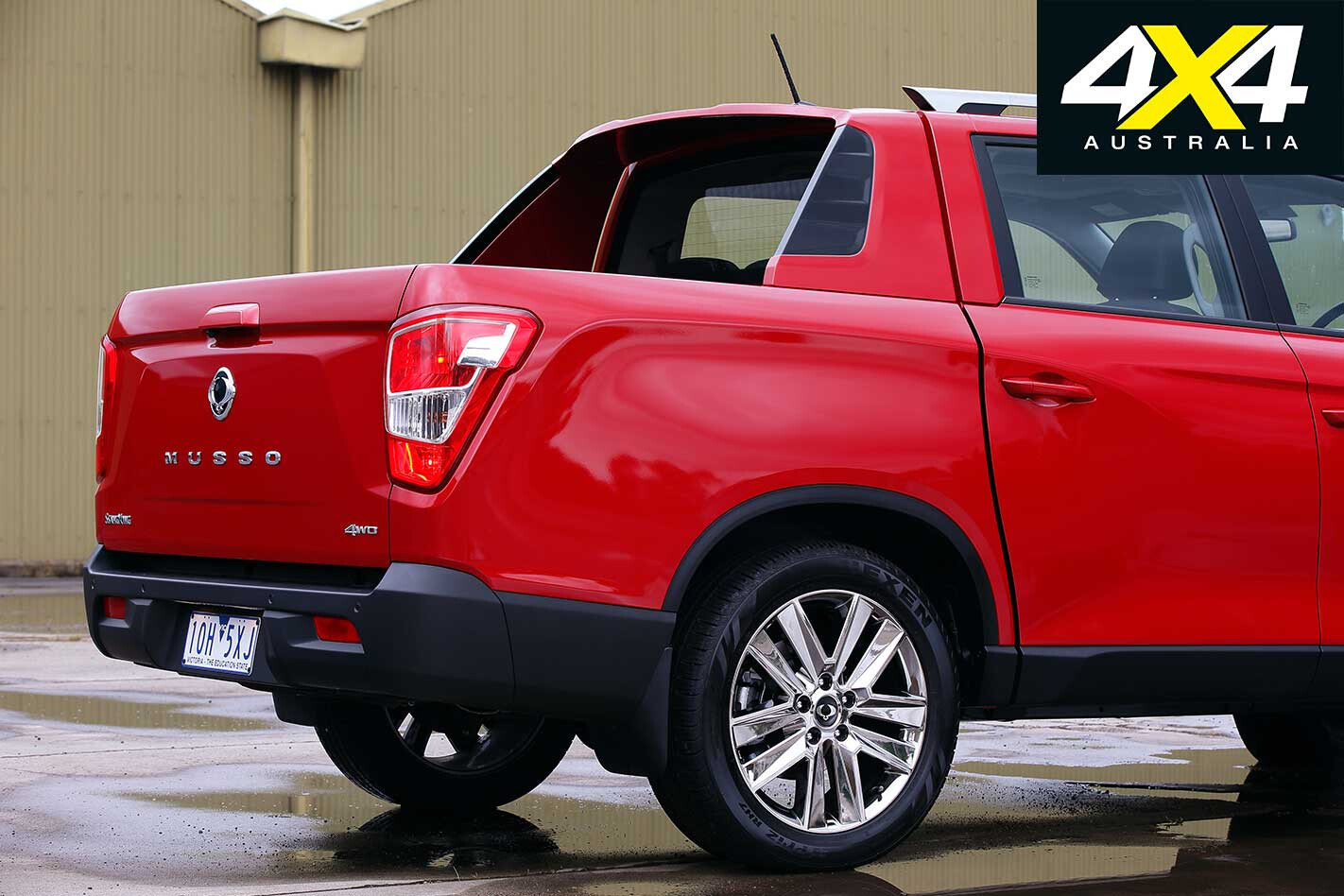
The theme carries around to the large but simple tail-lights and low-fuss bumper arrangement, though the designers couldn’t resist the urge to add a large character line along the sides that looks a bit out of place from some angles.
However, the new bumpers contribute to a reasonable set of approach, rampover and departure angles (22.8, 23.0 and 23.4 degrees respectively), while a ground clearance of 215mm beneath the axles isn’t too bad, either.
At 5095mm long it is 185mm shorter than a Mitsubishi Triton, and it’s slightly narrower, too. That odd-looking tray is 1300mm, a surprising 570mm deep and 1570mm wide. It’ll take a 3x3m folded shade on the diagonal, and the depth of the tub – about 45mm higher than the Triton – helps to keep gear out of sight. A version with a 1600mm long tray arrives early in 2019, and the width and height will remain unchanged.
Under the bonnet lies an in-house 2.2-litre single-turbo four-cylinder diesel engine, with 15.5:1 compression, timing chain and direct injection. It offers up 133kW at 4000rpm and puts out 400Nm between 1200 and 2000rpm.
On paper it comes up a few Isaac Newtons short on its competitors; blame that on the factory torque limit on the six-speed Aisin auto. The same engine makes 420Nm in the Rexton, which uses a different seven-speed slusher.
Fuel economy numbers are pretty sharp for the 2192kg Musso, with SsangYong claiming 8.6L/100km for the auto and 7.9L/100km for the manual. It’s got a 75-litre tank, as well.
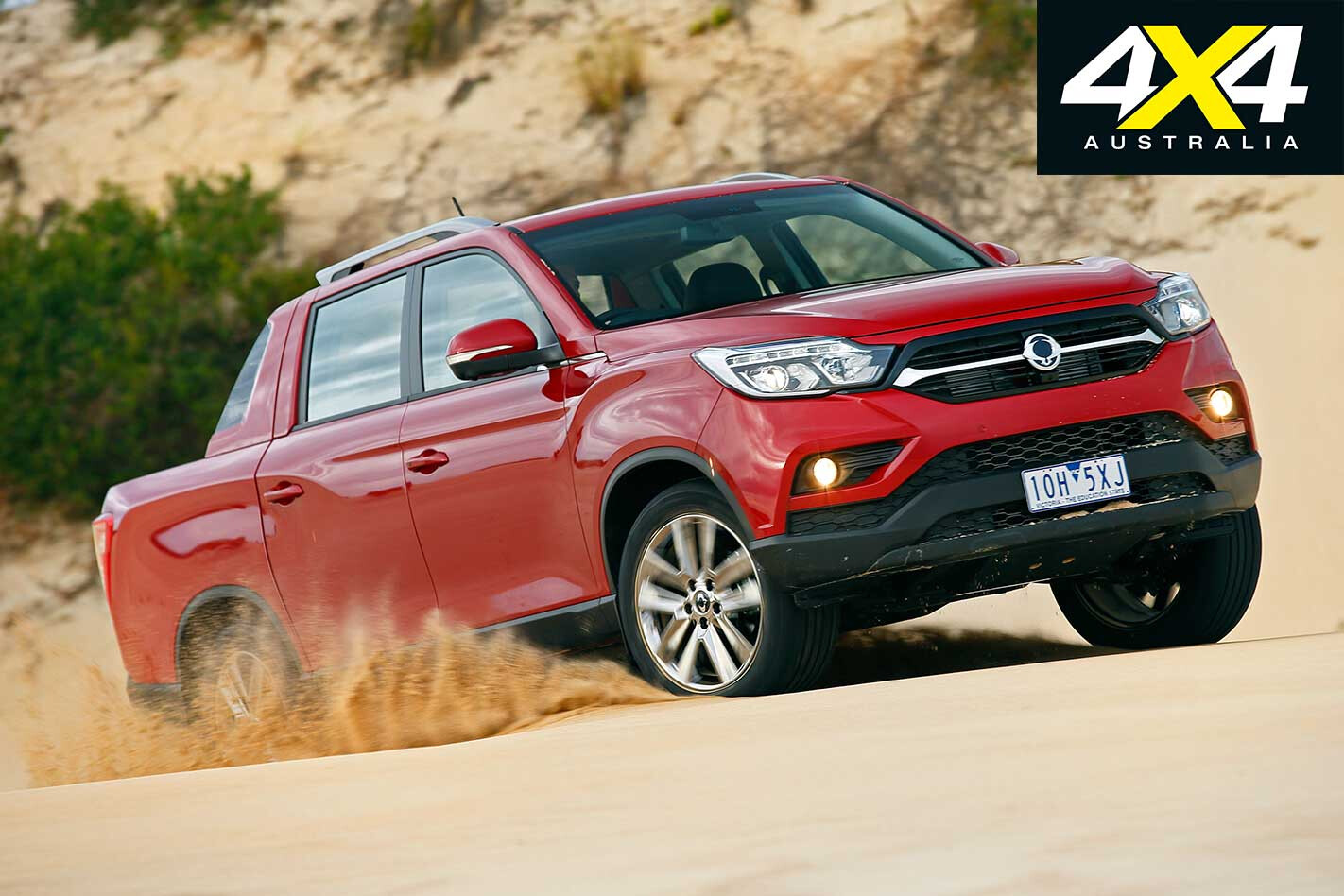
The driveline is part-time 4WD, with a locking diff out back and a dial-operated low- and high-range function. Our tester had a pretty primitive hill descent control, which had a bit of a mind of its own at times.
Suspension is coil springs all ’round, with struts up front and a live axle at the rear that’s fitted with disc brakes. It’ll still tow a claimed 3500kg (auto gearbox; the manual isn’t rated yet), thanks to an Australia-only spec towbar, and it’ll handle 790kg of payload on top of that.
In a few of months, SsangYong will add a 300mm-longer tray to the range, which will be offered with a leaf-sprung rear end. It’ll also be available with the coil/live axle set-up, but we’d imagine the payload numbers will need to change if the towing capacity carries over.
Inside, the Musso leaves a lot of its rivals in its dust. The interior is simple, fuss-free and verging on elegant, while most controls are well laid out and easy to access. The front seats – cloth on the base- and mid-spec and faux leather on the top-spec car – are nicely supportive, well-bolstered and well-suited to larger fellas. The rear seat, too, is surprisingly good, with ISOFIX child seat mounts, reclinable backs and plenty of head- and toe-room.
Value-wise, SsangYong has worked the books hard to give the Musso a fighting chance right off the boat – and its value, particularly in the area of base-level gear, is great. Automatic headlights and wipers, autonomous emergency braking, lane departure control and mirroring are standard from the $30,490 base model manual EX and up. Add two grand to the price of the base car and you’ll get a six-speed Aisin auto.
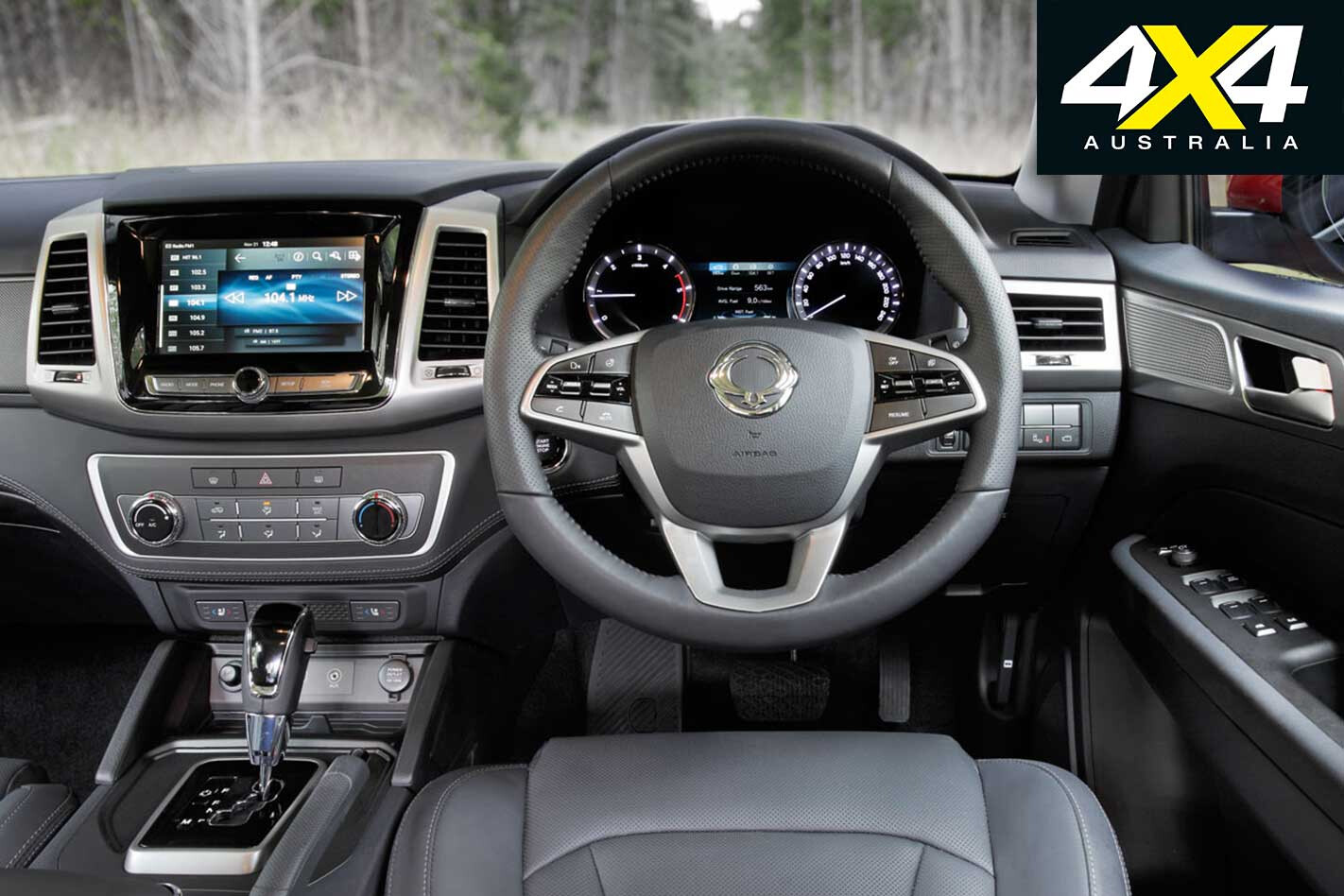
As you step into the mid-grade ELX at $35,490, you’ll start to see things like Apple CarPlay and Android Auto, 18-inch alloys, rear cross traffic alert, blind spot monitoring, a tyre monitoring system, tinted glass, fog lights, DRLs and tinted glass, while the Ultimate gets heated, vented and powered front seats, 20-inch chrome alloys, HID headlights, a sunroof and leatherette seating, all for $40,490.
Those prices are national drive-away, too, and SsangYong will offer everyone – tradies, private buyers and off-roaders – a seven-year warranty with seven years of roadside assist and seven years of fixed-price servicing.
On the tar the Musso is astonishingly quiet… like, genuinely astonishingly quiet. There’s very little tyre rumble, the diesel’s clatter is muted; in fact, it’s like a passenger car. The coil spring ride is a little busy, but it’s not uncomfortable at all.
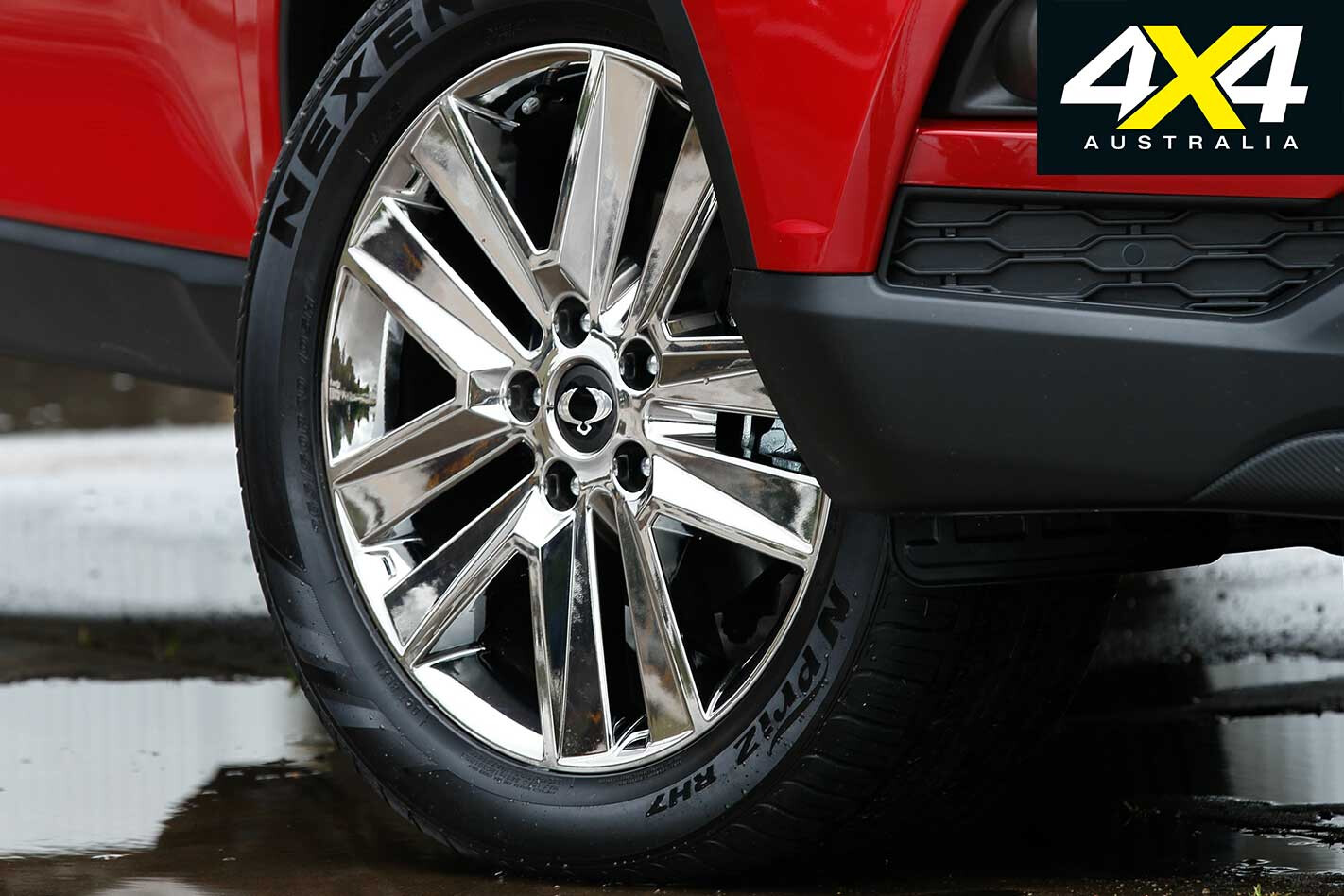
Out in the bush, one of the first things you notice about the Musso is a distinct lack of things like tow points and the like, though the company tells us it’s already got a factory bullbar well underway. Our mid-spec ELX is also running a road-biased Hankook tyre that won’t last long in more rugged terrain than the forestry roads we tried for an hour.
Despite that, the Musso did everything asked of it. That busy ride translates into stable gravel road manners, even unladen, and we’d wager it’ll settle further with camping gear in the back. The 2.2-litre engine pulls just fine, and the part-time 4WD system did its job well. There’s demonstrable flex from the tray if you look in the rear-view mirror in spots, and the rear doors shut with a twang rather than a thud, but for the minimal outlay, those who aren’t brand-bound might find a bargain-basement buy with the SsangYong Musso.

2019 SSANGYONG MUSSO DUAL-CAB SPECS: Engine: 2.2-litre 4-cyl turbo-diesel Max power: 133kW at 4000rpm Max torque: 400Nm at 1200rpm Transmission: 6-speed auto/manual Crawl ratio: N/A 4×4 system: Dual-range part-time Front suspension: Independent/coil springs Rear suspension: Live axle/coil springs Wheel and tyre: N/A Unladen weight: 2192kg GVM: 2880kg Payload: 790kg Towing capacity: 3500kg GCM: 5890kg Ground clearance: 215mm Fuel tank capacity: 75L On-test fuel consumption: 7.9L/100km
2019 SSANGYONG MUSSO DUAL-CAB PRICES: EX: $30,490 (manual) ELX: $35,490 ULTIMATE: $40,490
The rest of the gang

SSANGYONG will hit Aussie showrooms with three vehicles in total: the Musso, the closely related Rexton wagon and the small Tivoli. SsangYong is the third biggest brand in Korea, and it reckons one in five SUVs in the local market is a SsangYong.
There are 32 dealers across Australia, with more expected to sign up, and the brand will grow in the middle of 2019 with a mid-sized SUV joining the ranks, along with a heavily facelifted Tivoli.

We wonder if the brand should have waited a bit longer to launch with the long-tray Musso and the updated Tivoli, but SsangYong reckons dealers were desperate to get into the Musso which will sit nicely in a multi-brand franchise – and especially if that franchise already sells more expensive dual cabs. Watch this space, though, there’s more to come from SsangYong.
KWIAMBAL National Park is located in a secluded area in northern NSW, at a spot where the aboriginal people of nearby Ashford once called home, with plenty of food, water and shelter. White man’s history goes back to the turn of the century when tobacco was grown at nearby Ashford; nowadays all that remains are dilapidated tobacco sheds.
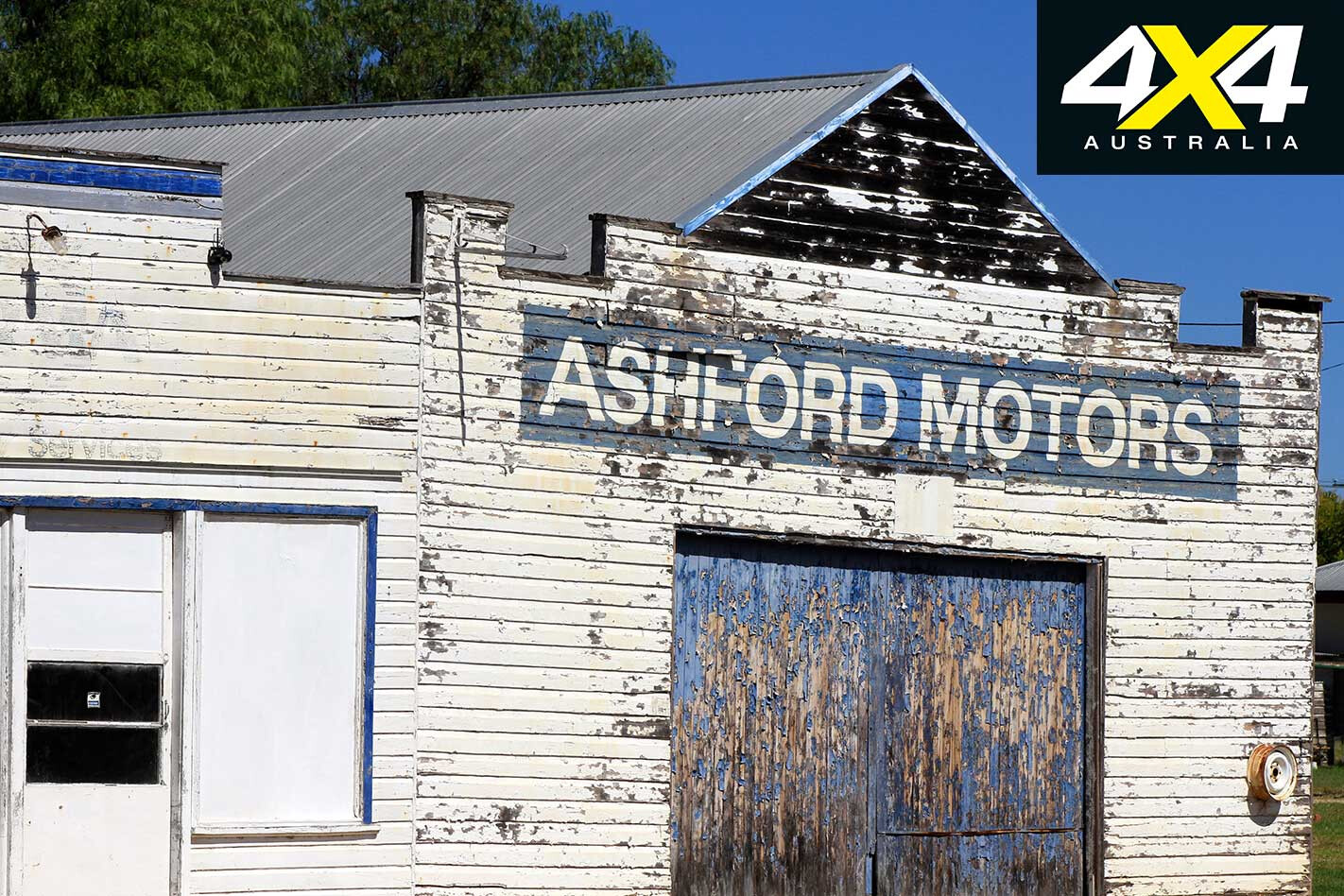
Getting to Kwiambal NP is an adventure in itself. Ours started at the quiet town of Ashford, where driving around the streets exposes plenty of old buildings – some are closed, like the old theatre and Ashford Motors, but others are still open, like the chemist, which is where you can buy souvenir tea towels. Country life, eh?
Some locals in Ashford recommended we drop by the nearby Limestone Caves, which have been a real drawcard to the area for years. The caves are located just inside Kwiambal NP’s boundary sign, so finding them is easy enough. It’s a 300m walk to the cave entrance and day picnic area, where you’ll find toilets, day shelters, a few tables and plenty of open paddocks where the kids can let off steam.
There’s information at the cave entrance, including Allan Cunningham’s 1827 travels, the history of the caves, and the mining of bat poo for fertiliser (there was so much, a small rail track and trolleys were used to cart it out of the caves).
As limestone is generally a soft rock, fossils were found in and around the caves. This allowed for prehistoric dating, and bones – found from ancestors of the thylacine, kangaroo and a pigmy possum – date back to the Pleistocene Age, which is 11,700 to 2,588,000 years ago.
Even before entering the caves you can see fossils that look like big worms – called rillenkarren – that have grooved outlines in the rocks, where acid rainwater has run down the hard rocks to create little drains or worm-like channels.
Plan to spend a good chunk of time exploring the cave system; we spent nearly three hours freely wandering. There are rooms as big as buses, ever-forming stalactites, stalagmites and white crystals, pathways leading to more rooms, and little cubby holes. You can also hear bats hiding in the darkness.
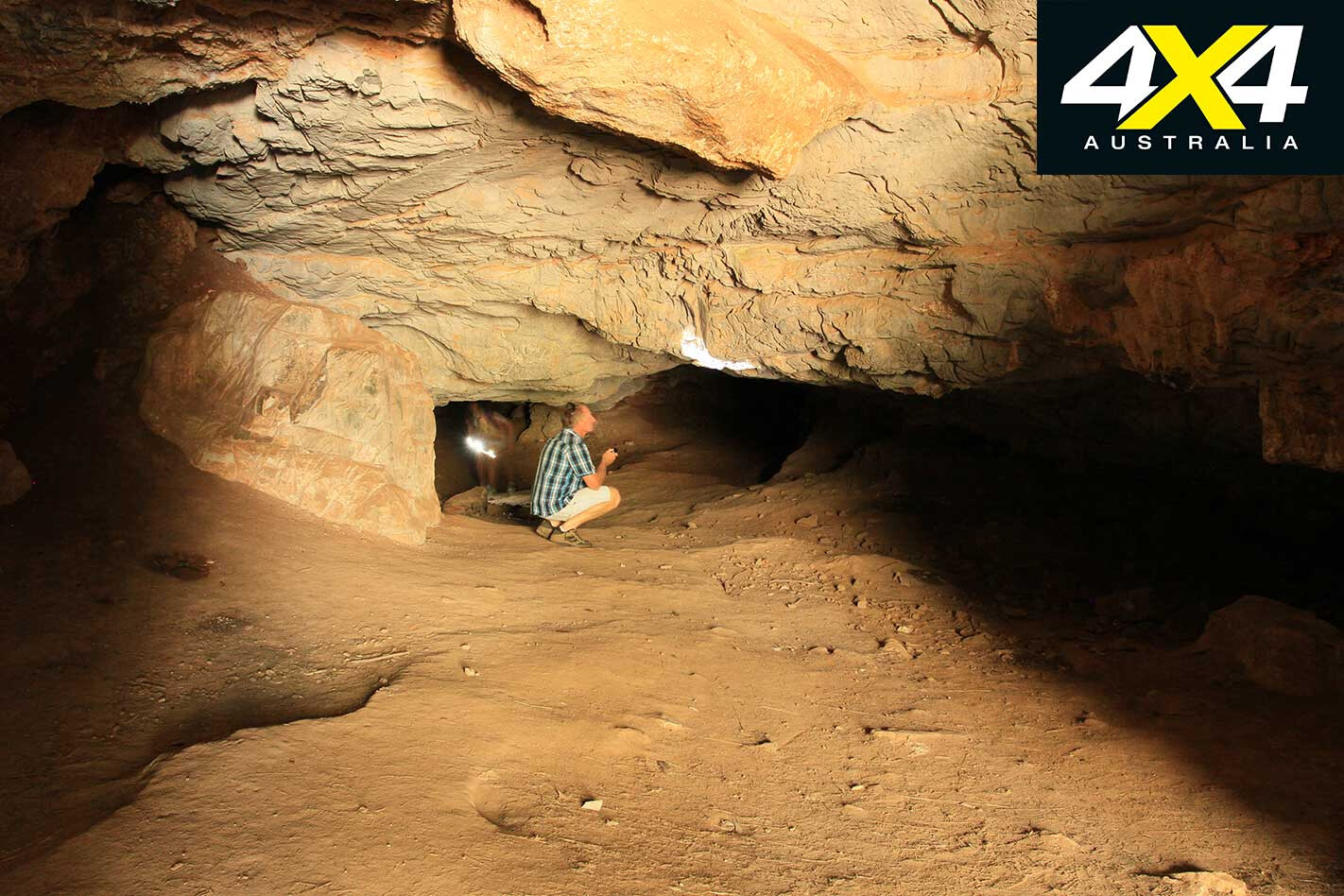
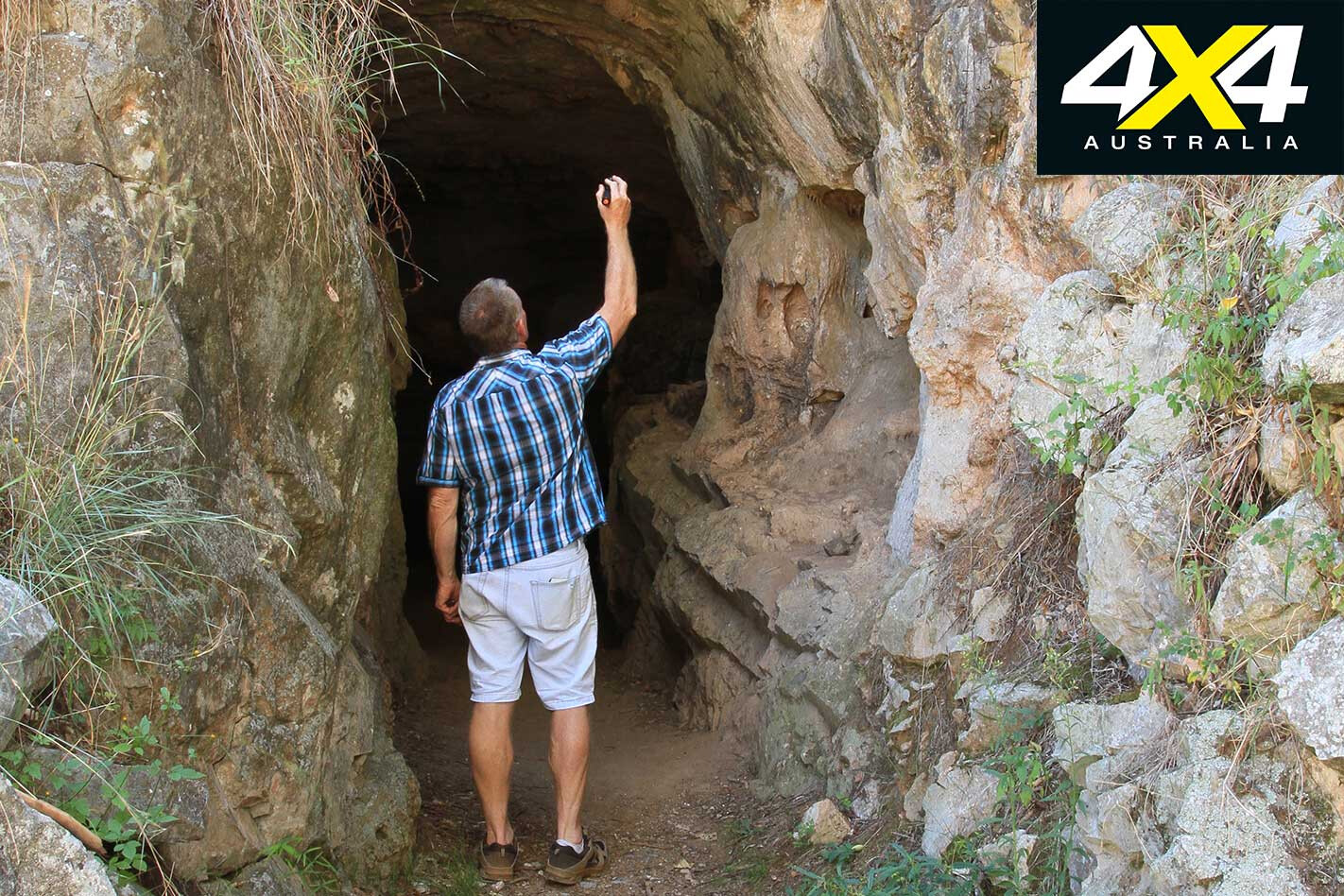
It’s estimated that there is nearly two kilometres of cave system that you can freely explore, and another three kilometres where you need specialised gear to belly crawl into different chambers. Remember to be cautious, though, as there are no walking markers inside the caves and it’s pretty dark – a good torch is needed to enjoy the experience.
Back on the scenic roads – Limestone Caves Road and left onto Falls Road – and you’ll pass a few shambled houses and yards. Most of the vegetation is dominated by the cypress pine, and estimates say that Kwiambal contains 15 per cent of the dry rainforest left in NSW.

Most people then head to Lemon Tree Flat campground, where you can camp without fuss beside the Severn River. There are no booked sites and it’s a popular spot, so don’t expect a sleep-in during peak times.
It’s a great base, with a pay station, pit toilets, barbecues, tables and a few walking tracks: the nearby NPWS walking tracks, which lead up-river to the junction of the Macintyre and Severn (and there are waterholes along the way); or the Dungeon Walk where, after heavy rain, the river water churns around the ancient rocks, causing all sorts of noise. From camp it’s a 1.5km walk, but it is well worth it.
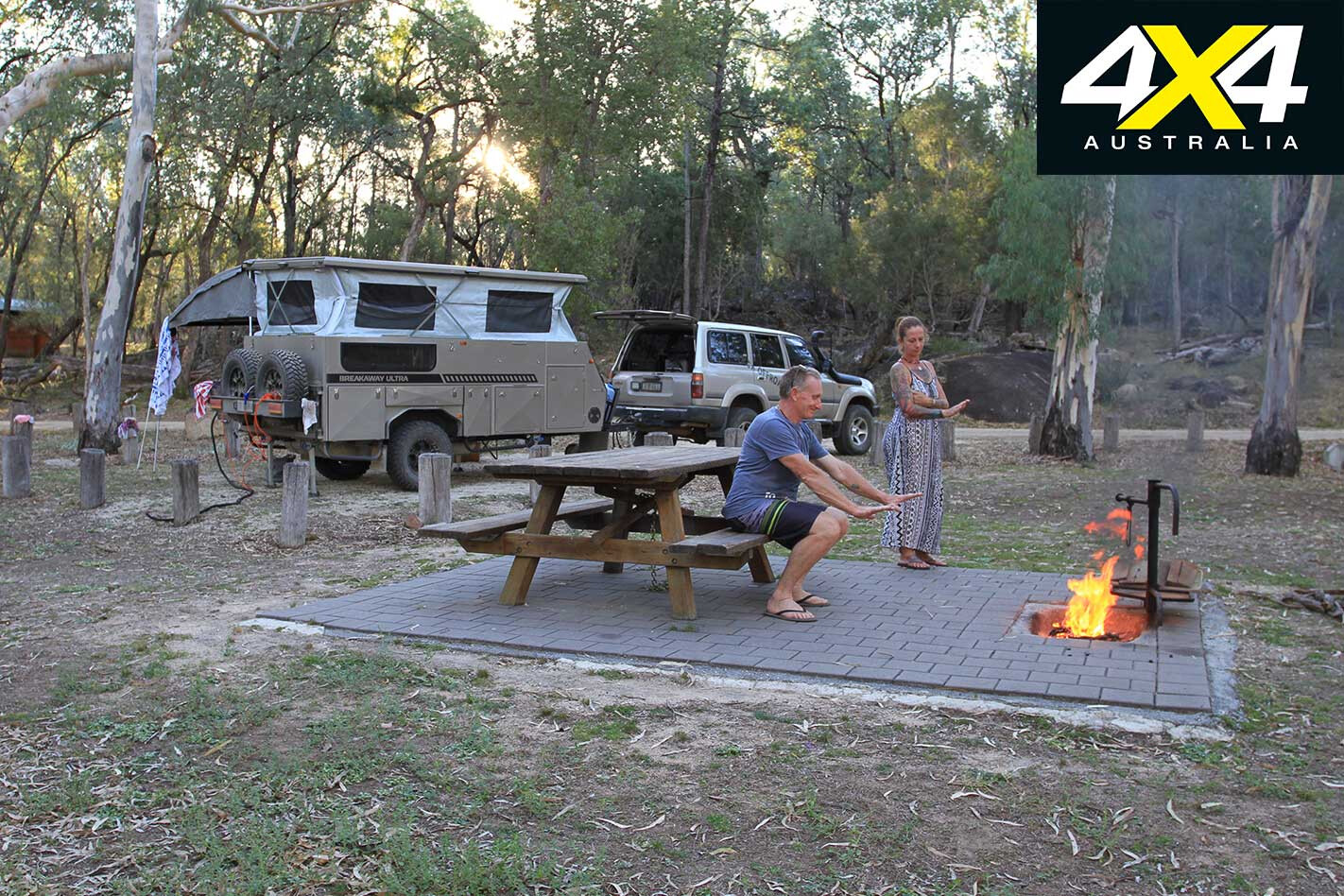
We got a heads-up regarding a brand-new campsite just four kilometres away called Kookabitta Campground. Still located on the Severn River, Kookabitta is more for walk-in campers with tents or swags, but it also has six sites for camper trailers. With only a limited number of trailer sites, it’s peaceful and has features like gas barbecues, clean toilets, fire pits with their own table and chairs, and great river access.
Another attraction in the park is Macintyre Falls and the surrounding walks. From either camp it’s a five-minute drive to the end of Falls Road, where you’ll find a selection of information boards, barbecue shelters and two viewing platforms to the massive granite gorges below (with signposted walks).
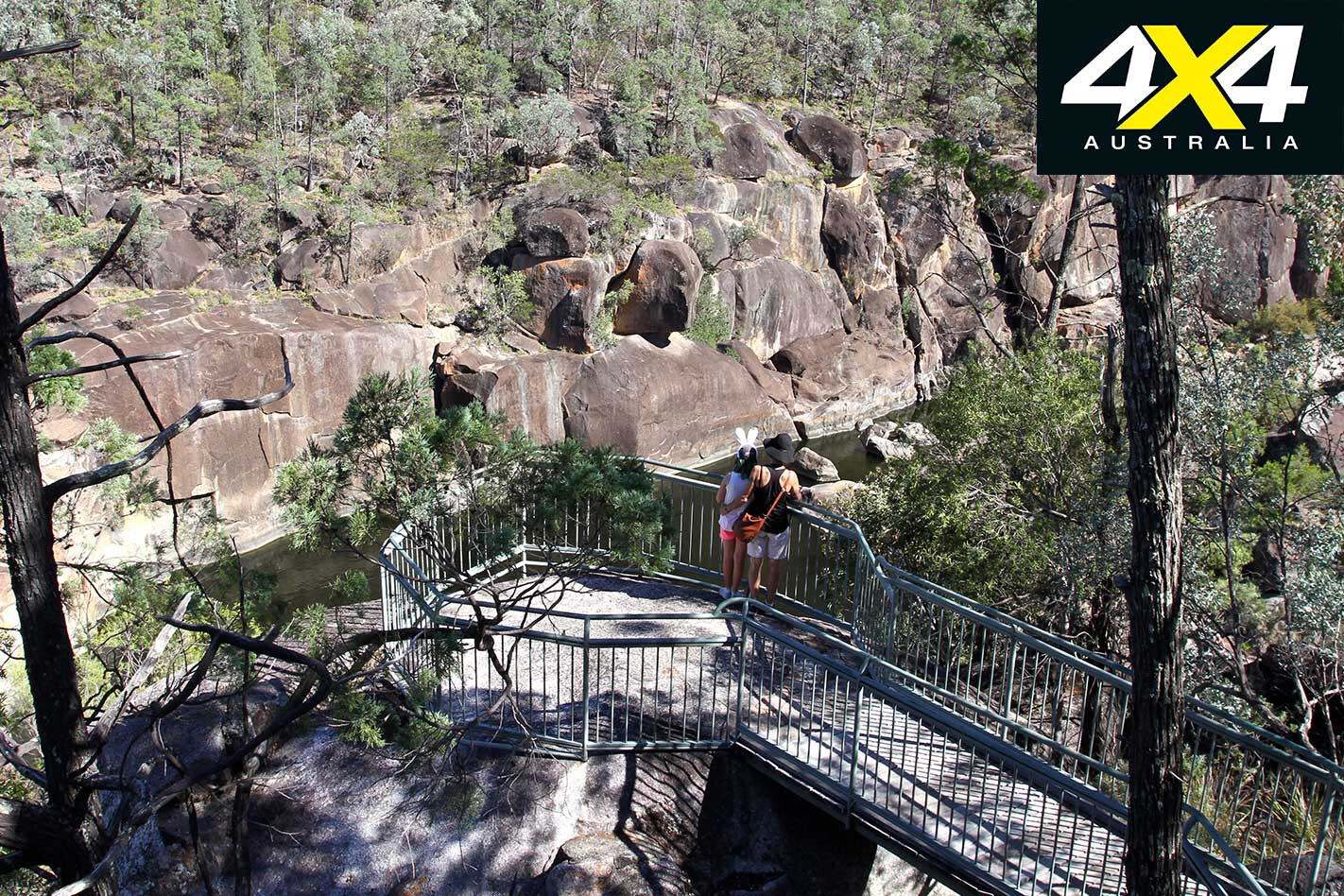
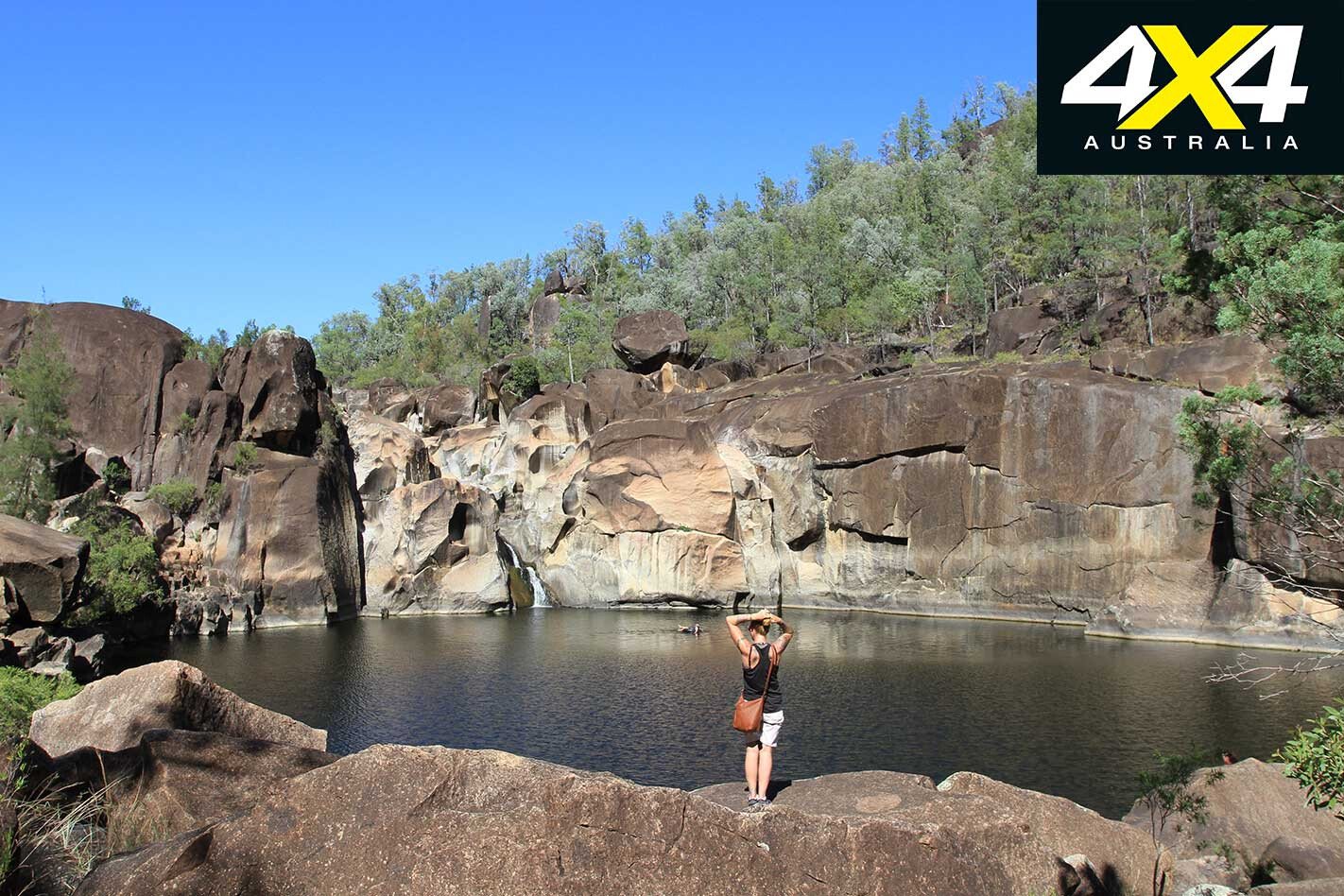
A popular walk is to Macintyre Falls down the 600m trail that winds its way to the bottom. We can only imagine what a sight it would be when Macintyre Falls flows with rage during peak wet times into the pool below.
If you’re fit you can tackle the walking track down to The Beach and Slippery Rock. It’s hard and rough, with short, steep sections down to the river below, but it’s worth the effort to witness the magnitude of the gorge. Making the effort in the warmer months can be rewarded with secluded swims in many of the waterholes.
Kwiambal NP is an isolated park with minimal facilities, but for the more adventurous it’s pretty darn good.
Travel Planner
WHERE Kwiambal National Park is 90km north of Inverell (via Ashford, northern NSW). Rugged and remote country, yet it has cultural and historical heritage.
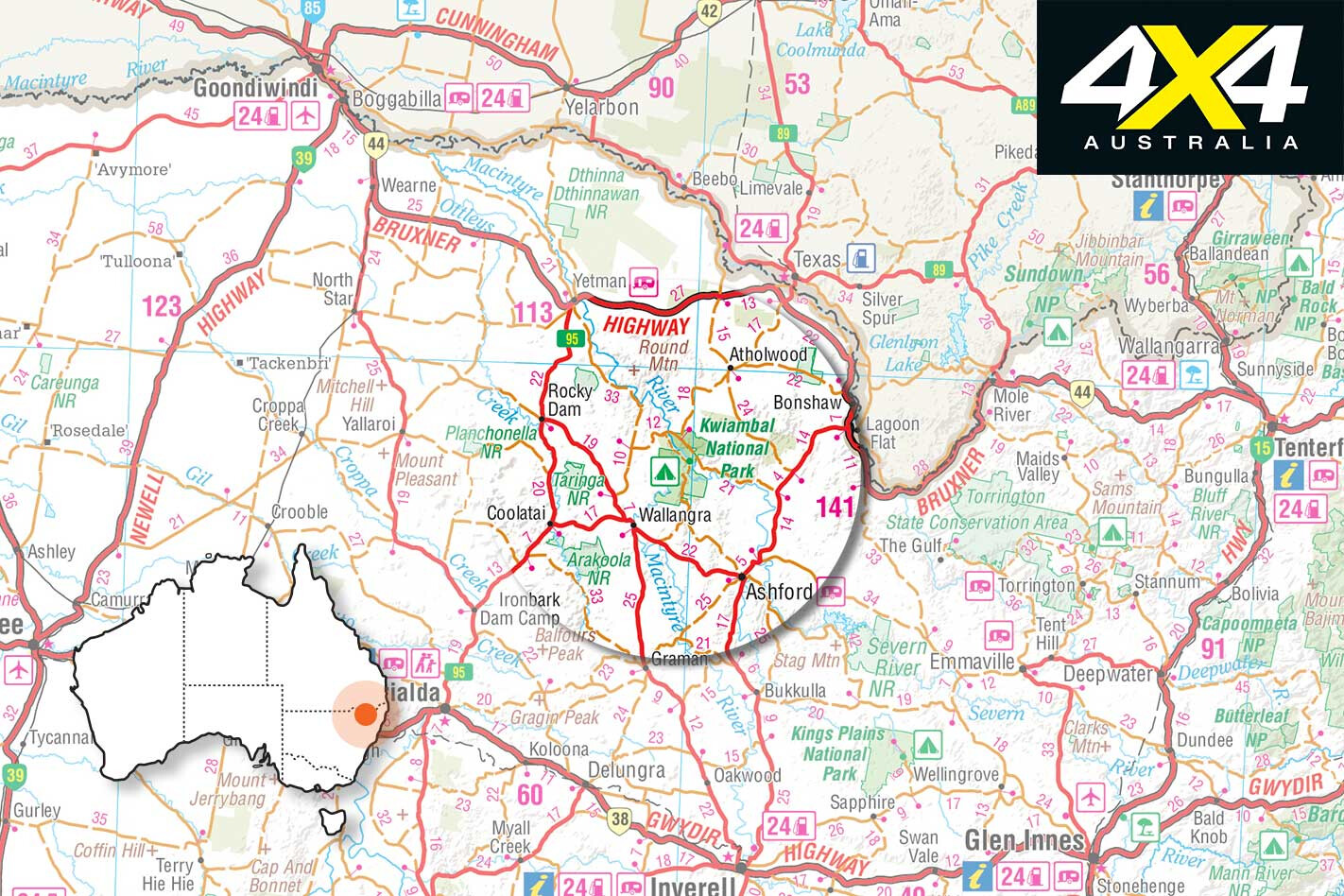
CAMPING AND ACCOMMODATION There are two camping locations in Kwiambal, both on the Severn River. Lemon Tree has open camping with no restrictions, and the newly opened Kookabitta has six bollard spots for trailers, as well as walk-in tent sites. For a glamping experience, NPWS offers Lavender Vale Cottage and Homestead. No bookings are required at either campground.
FACILITIES The two camping areas have pit toilets and tank water. The new Kookabitta campsite has free gas barbecues. Lavender Vale Cottage and Homestead has all the mod cons for a comfy stay. No bins at the campsites.
OTHER INFO Summer can reach temperatures of more than 40°C and winter -0°C, so be prepared. Accessing the nearby Limestone Caves is a true experience, but you’ll need a torch, good walking shoes and not be afraid of enclosed spaces. Nearby at Macintyre Falls you can swim in the Macintyre River, and go hiking on one of the many trails.
CONTACTS For road closures, fire bans, etc., phone Tenterfield NPWS on (02) 6736 4298.
RESTRICTIONS AND PERMITS NSW NPWS permits are required to enter and stay. No dogs, guns or unregistered vehicles.
In August 2016, Cornell Diesel Systems (CDS) relocated to a brand-new state-of-the-art, purpose-built facility in Sunshine West, Victoria. The site is huge – measuring approximately 4000m² – and is four times larger than the previous site, reflecting the growth in demand for a specialist diesel service.
Moving into bigger premises allowed CDS to increase its workload by accommodating more mechanics, which enabled CDS to broaden the scope of work it performs. Instead of focusing solely on diesel pump and injector removal and replacement, it has moved into engine replacements and repairs, as well as general repairs such as servicing, clutch replacements and brakes. It has also allowed the company the freedom to take up work on large vehicles.
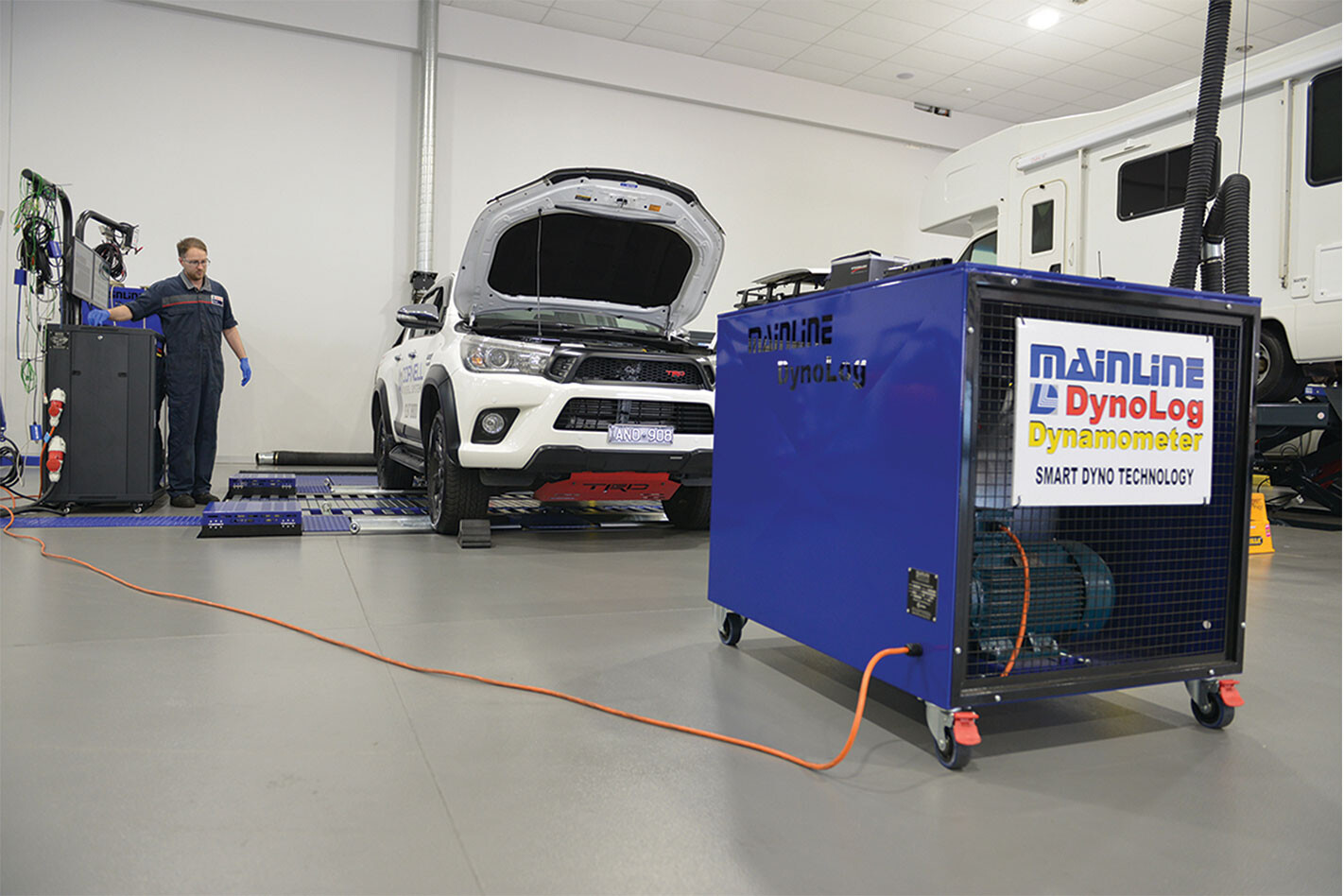
The bigger premises allowed CDS to install a 4WD dyno, which has helped grow the vehicle-performance-upgrade portion part of the business. The goal is to have the workshop full and to offer customers a state-of-the-art facility so that they feel confident and comfortable their vehicle is in the right hands.
KEEPIN’ IT CLEAN
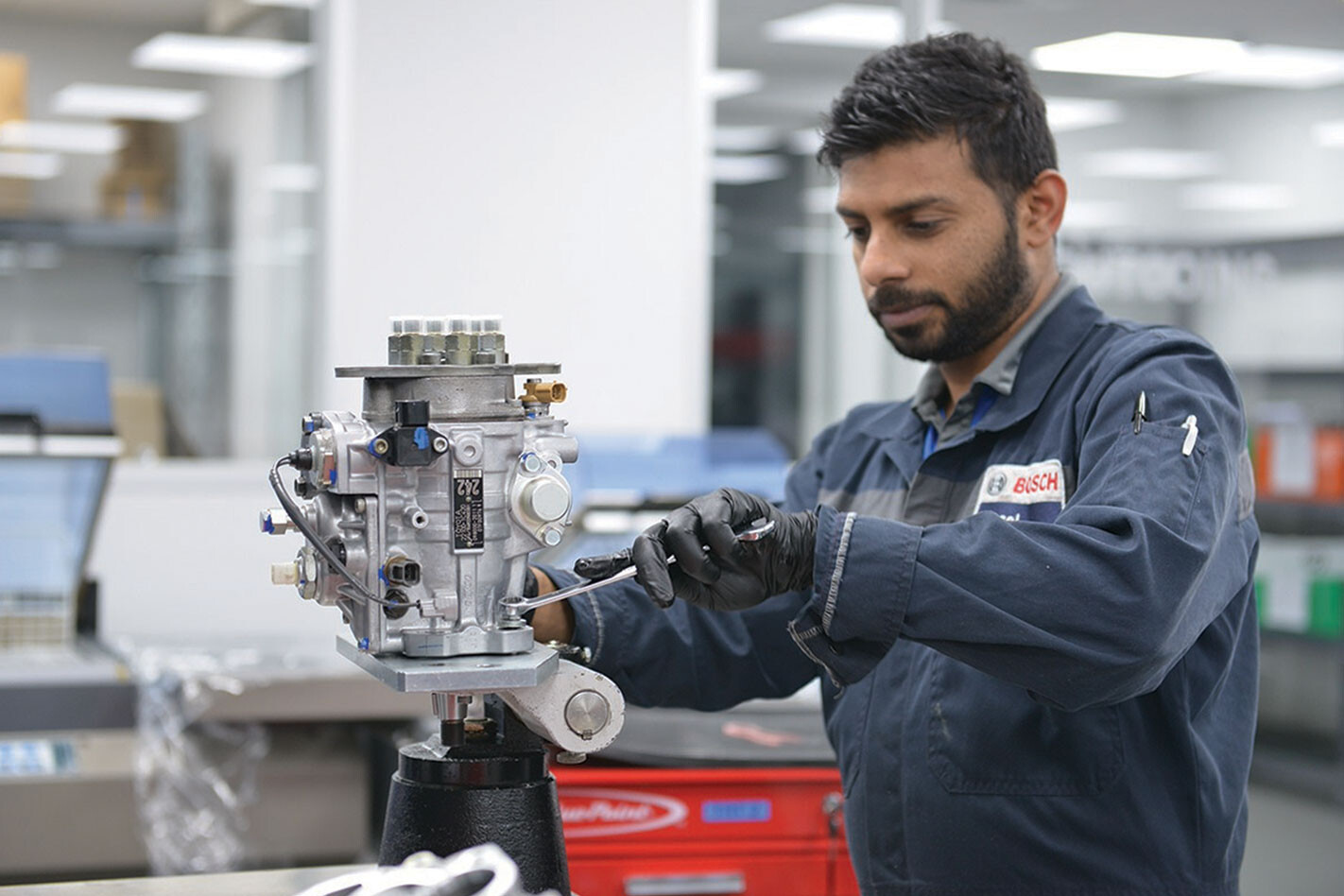
THE BUILD and test room covers approximately 500m² of floor space and was constructed as a pressurised clean room. In addition to strict temperature control, it includes HEPA and charcoal filters to maintain air quality. Controlling air quality is very important when it comes to repairing common rail pumps and injectors. All OEMs (including Denso, Bosch and Delphi) insist their pumps and injectors are assembled in a room where air quality and temperature are regulated to ensure internal parts have been measured accurately in a controlled environment, and to ensure they meet the OEM specifications, quality repairs and outcomes.
This adherence to cleanliness and controls is very high in the new premises – and for good reason, according to Anthony Grech, CDS operations manager.
“Cleanliness is very important, whether you are working on common rail components in the pump room or removing them from a vehicle in the workshop,” says Grech. “That is why CDS prides itself on the cleanliness of its premises, from the build and test room through to the workshop. Not only is it a clean and pleasant place to work in, but also a part of the requirements to be an authorised repairer.”
These requirements are at the behest of OEMs, who insist that common rail pumps and injectors are assembled in a clean room and tested in a controlled environment. Even when it comes to replacing diesel components on a vehicle, cleanliness plays an important role, as Spiros Katsoulis, CDS service manager, further explains.
“When removing common rail injectors from a vehicle, the capping and bagging of the HP fuel lines is recommended, as well as the capping of the HP common rail. General cleanliness of the work area is paramount. All of these precautions may seem over the top, but any dirt or contamination that finds its way into a diesel fuel system, whether it be mechanical or common rail, can have a detrimental effect on the performance of the diesel components or fuel system.”
PUMPING IT UP
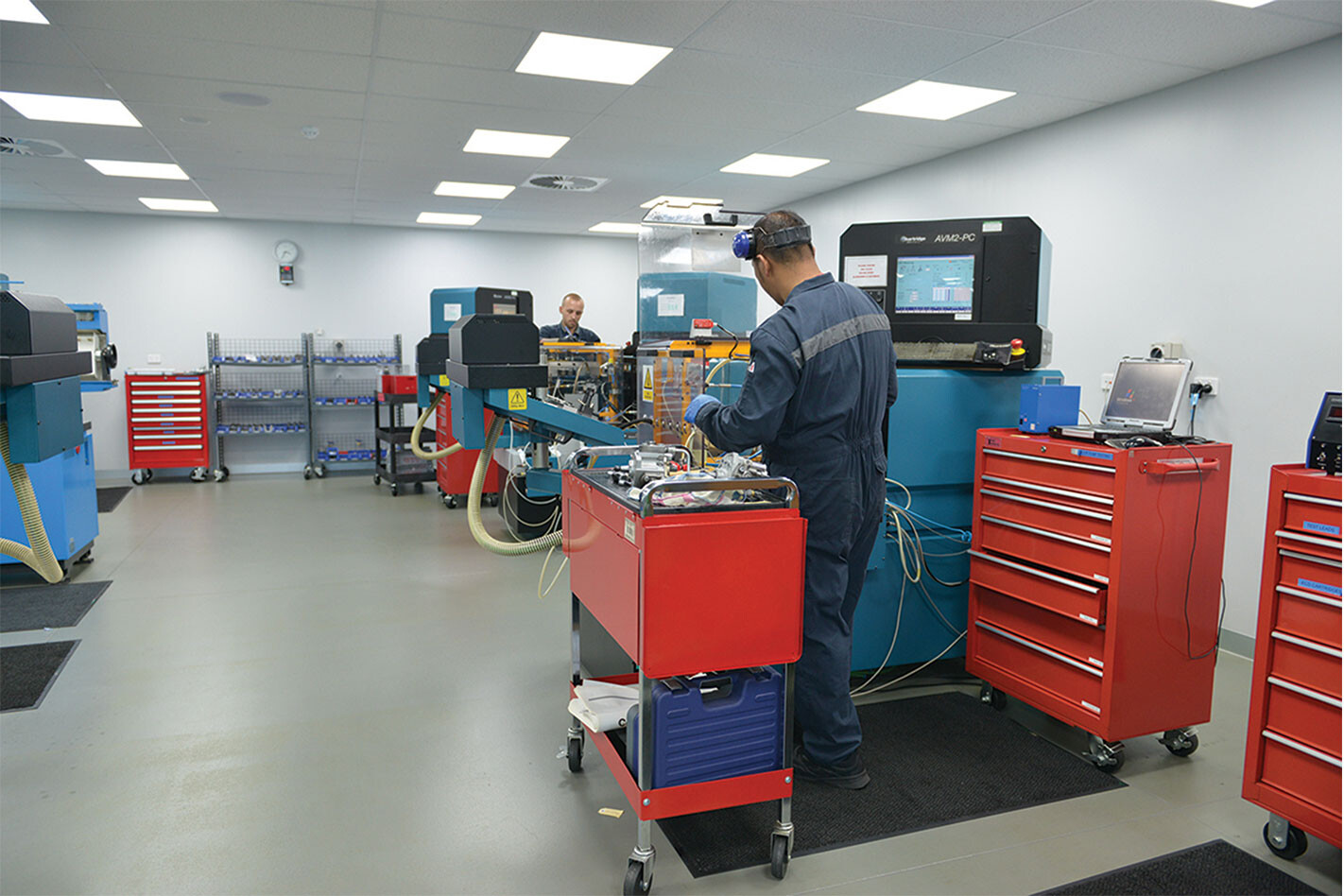
THE FACILITY boasts Australia’s most well-equipped pump room. The pump room is sectioned to separate various functions and ensures stringent cleanliness standards are maintained, which is essential for the service and repair of modern high-pressure diesel systems. Units are sorted and cleaned in the incoming and dismantling areas prior to being inspected and dismantled, and tools and equipment used in this area stay in this area. The pump room is equipped with a massive array of test benches, which points to CDS’s ambition to become the leader in the aftermarket diesel field.
“CDS’s goal is to be your one-stop shop for all your diesel needs, big and small,” affirms Grech. “We pride ourselves on having a large range of new and exchange products on the shelf, which in turn means the customers can get their vehicle back on the road quicker, limiting downtime. Having exchange products also means that we can offer quick turnaround times for repairs that happen in our workshop.”
AT THE FRONT END
THE CONFIDENCE in its product is another mainstay of the brand, with its exchange units built to OEM standard thanks, again, to its comprehensively equipped premises. This includes authorised tooling and equipment to test and repair the latest tech from big-name companies such as Bosch, Delphi, Denso, Stanadyne, Yanmar, VDO and Zexel. The vehicle workshop is packed with a full range of diagnostic scan tools to cover most Japanese and European applications. The workshop includes two quick diagnostic bays, 10 vehicle bays, three truck bays, the aforementioned 4WD dyno and a Bogie Drive dyno.
In terms of a one-stop shop for all your diesel requirements – and performance enhancement aspirations – dropping in to check out the massive CDS HQ is a no-brainer for making those 4×4 modification and tuning dreams come true.
See www.cornells.com.au for more information.
IT SEEMS some of the ‘hot air’ is coming out of the tyres of autonomous or so-called driverless cars.
For a good while now much of the mainstream media has been spruiking that the widespread adoption of driverless cars is just around the corner. Back in the early part of this decade when news about driverless cars first started to ramp up it was generally predicted that from 2018-on driverless cars would be increasingly commonplace on our roads.
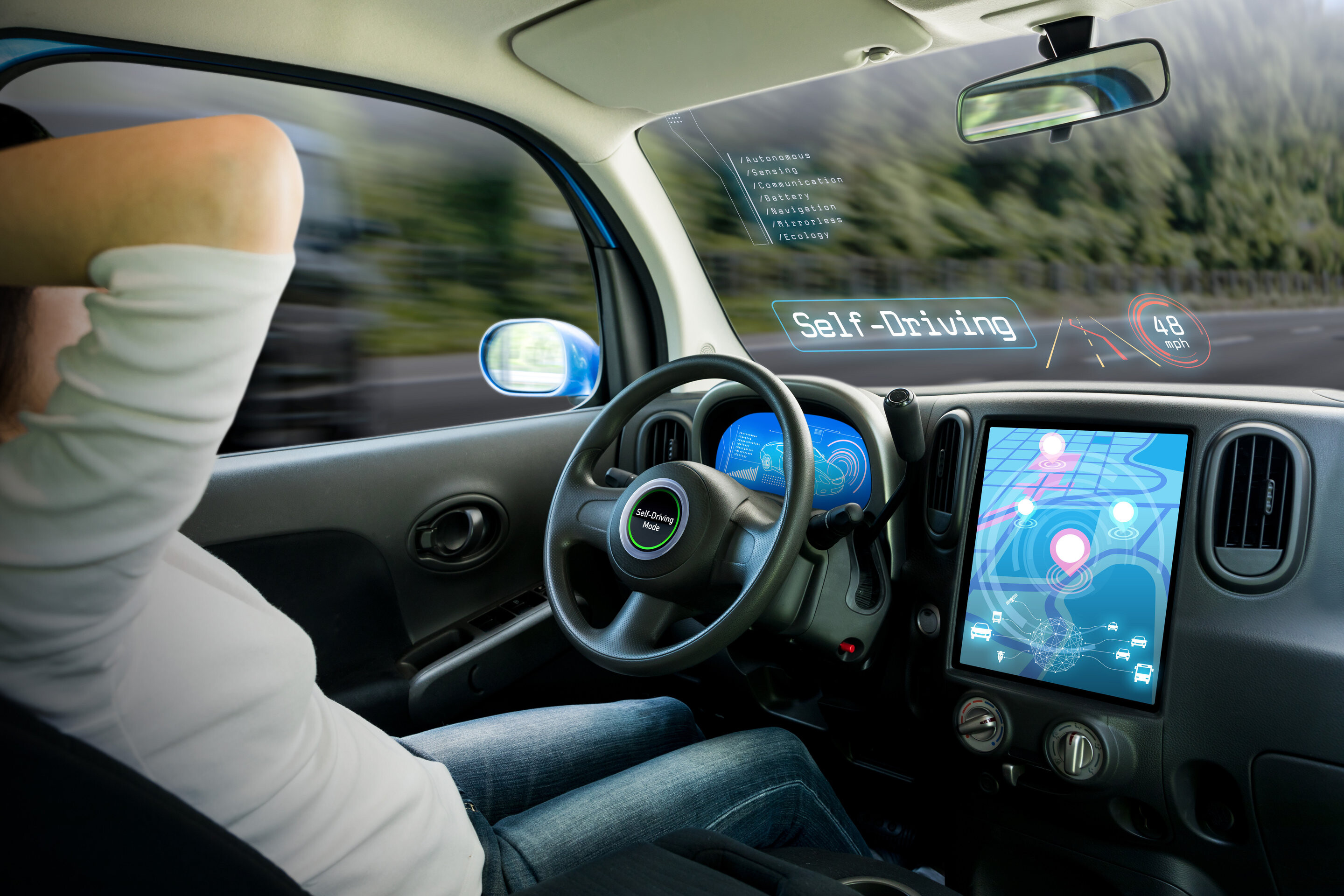
That, of course, hasn’t happened, and driverless cars are still restricted to relatively small numbers under trial in various parts of the world. Those ‘driverless’ cars that are being tested on public roads still have a back-up driver on-board should things go wrong, which has happened more than once. Most notably a pedestrian was killed by an Uber self-driving car under trial in the USA in March 2018, despite having a back-up driver on-board.
Now two very influential tech gurus have publically stated what many more cynical observers have been saying for a while, namely that nothing is going to happen in terms of driverless cars anytime soon.
First-up, Apple co-founder Steve Wozniak came out in early November and said, “I don’t really believe in auto-driving cars” at this point. “I don’t believe it’s quite possible yet.” Wozniak’s pronouncement is based on his experience with his Tesla car’s ‘Autopilot’ function. “Tesla makes so many mistakes… it really convinces me that an auto-piloting and auto-steering car driving itself is not going to happen.”
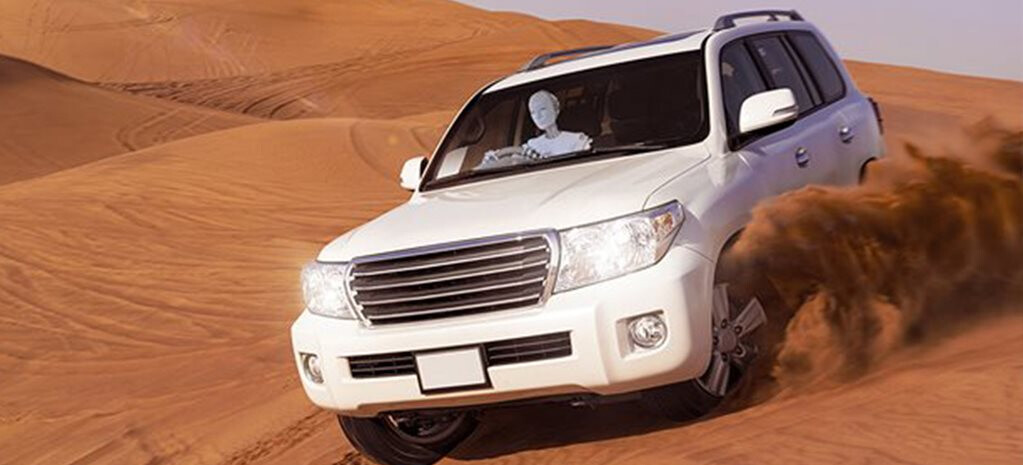
Perhaps more telling are the comments by John Krafcik, the chief executive of Waymo, the self-driving-car division of Google’s parent, Alphabet, which is generally regarded as the pioneer and now the leader in self-driving technology.
Krafcik said it will be decades before autonomous cars are widespread on the roads, and even then they won’t be able to drive in all weather and in all conditions.
Krafcik said: “It’s really, really hard. You don’t know what you don’t know until you’re actually in there and trying to do things.” That’s a common sentiment from the traditional automakers, many of whom have moved on autonomous cars development in fear of being blindsided by tech companies like Google and missing out on the next ‘big thing’.

In the meantime some of the technology central to driverless cars such as autonomous emergency braking, distance and lane keeping, speed-sign recognition and 360-degree monitoring, is finding its way into conventional cars to hopefully make them safer. Improved safety is, of course, one of the key arguments behind taking away the responsibility of driving from humans, so if you can install technology that can help make cars with human drivers safer, some of the rationale behind driverless cars evaporates.
That’s not to say driverless technology doesn’t have its place. Fixed-route shuttle buses and the like seem like a logical place for a start; or in taxis that have defined areas of operation, say in the CBD or tourist precinct of a big city. Limiting where a driverless car needs to operate will make navigation far easier, which is obviously a key element in driverless-car success.
Is a driverless future closer than we think?
REGISTRATION is open for the upcoming Drive to the Top event, to be held in Kosciuszko National Park in NSW.
The event, running from Thursday February 28 until Sunday March 3, will raise funds for the Hope Street charity, an organisation that empowers people to confront complex issues and explores pathways toward positive change.
Beginning at Jindabyne the trip will cover more than 600km in three days, before pulling up stumps at Tom Groggin late on Saturday.
Club 4×4 is organising $7000 worth of prizes to give away during the event, which have been donated by a host of 4WD brands. There’s also a prize pack up for grabs via a raffle, which can be entered by donating money at: https://tothetop2019.gofundraise.com.au/page/Club4X4
Full details on the prize pack can be found here: https://www.club4x4.com.au/make-a-difference-and-win/
WHAT’S INCLUDED?
Registration fee (driver/vehicle): $350
- Support vehicles, mapped excursions and experienced trip leaders covering 600+km of road.
- Three nights of camping.
- Ration packs of food from Thursday to Saturday.
- Celebration breakfast on Sunday with HopeStreet staff
- DTTT car sticker
- Three nights of camping.
- Ration packs of food from Thursday to Saturday.
- Celebration breakfast on Sunday with HopeStreet staff
To read more about the Hope Street Charity, visit: https://hopestreet.org.au
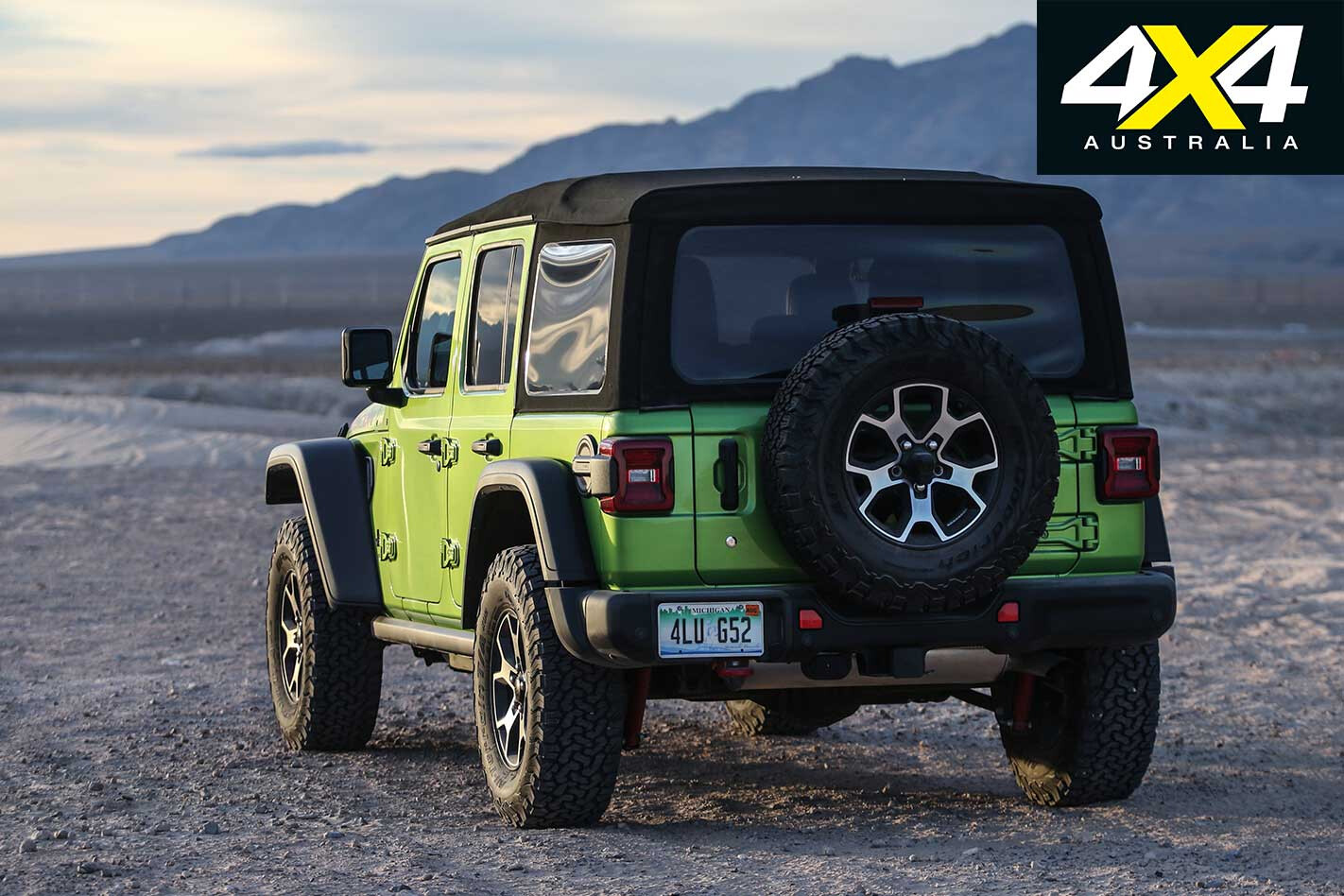
IT’S BEEN a long time coming, but the JL Wrangler will be in Australian showrooms in a matter of weeks and on sale in April.
In a win for off-road enthusiasts, the JL retains the familiar Wrangler platform of using a ladder-frame chassis with live axles and, in the case of the Rubicon models, locking differentials and extra low gearing.
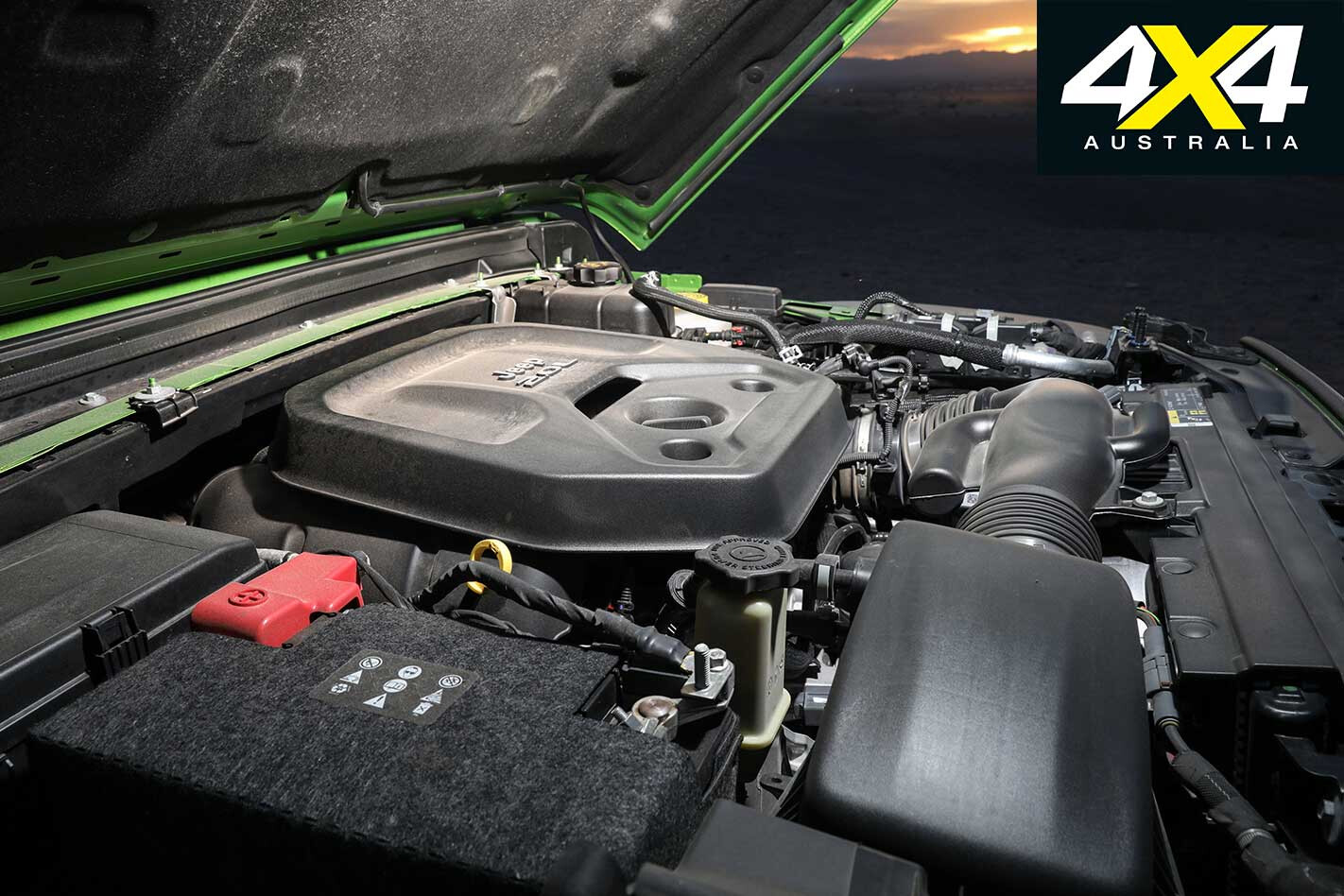
The standard 3.6-litre petrol V6 engine is also a familiar carryover, but among the many changes and inclusions that came with the JL, Jeep now also offers the Wrangler with an optional 2.0-litre turbocharged petrol four-cylinder engine.
The turbo 2.0 is available across the Wrangler range in the USA, including the Rubicons, but isn’t being offered in Australia, which is disappointing after our drive of this car. We were pleasantly surprised by this powertrain option when we had a short drive of the Rubicon in the USA last year.
I didn’t know the bright Mojito Green Rubicon was equipped with the turbo 2.0-litre when photographer Brunelli threw the keys to me on the sand dunes outside Las Vegas so he could shoot it driving by. I assumed it would be the V6 engine and actually noted once driving it that the engine was quieter than I remembered. Gone was the roar of a V6 engine, but there was also no indication of a turbocharger’s whistle either. The turbo four didn’t even come to mind.
What was notable was the added urgency the powertrain delivered when the accelerator was floored. Much more mid-range grunt pushing me back into the seat than I could recall a JL Rubicon ever delivering, and it put a smile on my face.
I put this new-found performance down to the now-standard eight-speed automatic transmission and the reduced weight of the JL thanks to its extensive use of aluminium panels. It was impressive and gave me added hope for the JL.
It was only when I returned to Brunelli and he told me it was the turbo engine that I fully realised why it went the way it did.
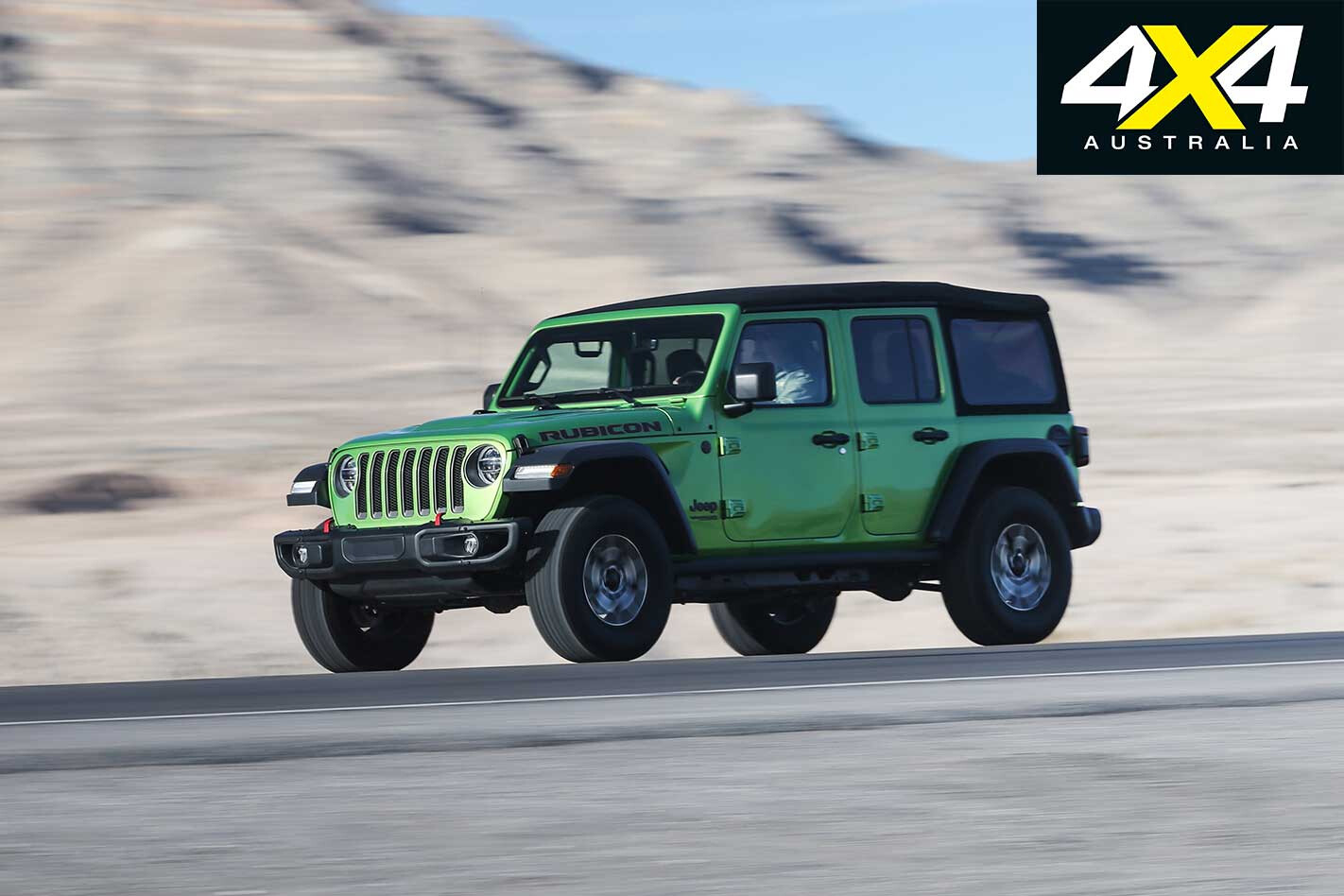
The turbocharged ‘eTorque’ four-cylinder engine is a US$1000 option on the Rubicon model in the States and is only available with the auto transmission, while the old V6 can still be had with a six-speed manual. However, the auto is a US$2000 option, so buyers are up for US$3K if they want the smaller, more efficient mill.
The eTorque part of the engine is what’s called a ‘mild hybrid’ system, which replaces the conventional alternator from the charging system with a 48-volt generator that feeds a lithium-ion battery. This system provides a short power boost to the internal combustion engine under heavy acceleration. There’s a 12-volt converter in the system to power vehicle accessories, and the starter motor is also a 12-volt unit.
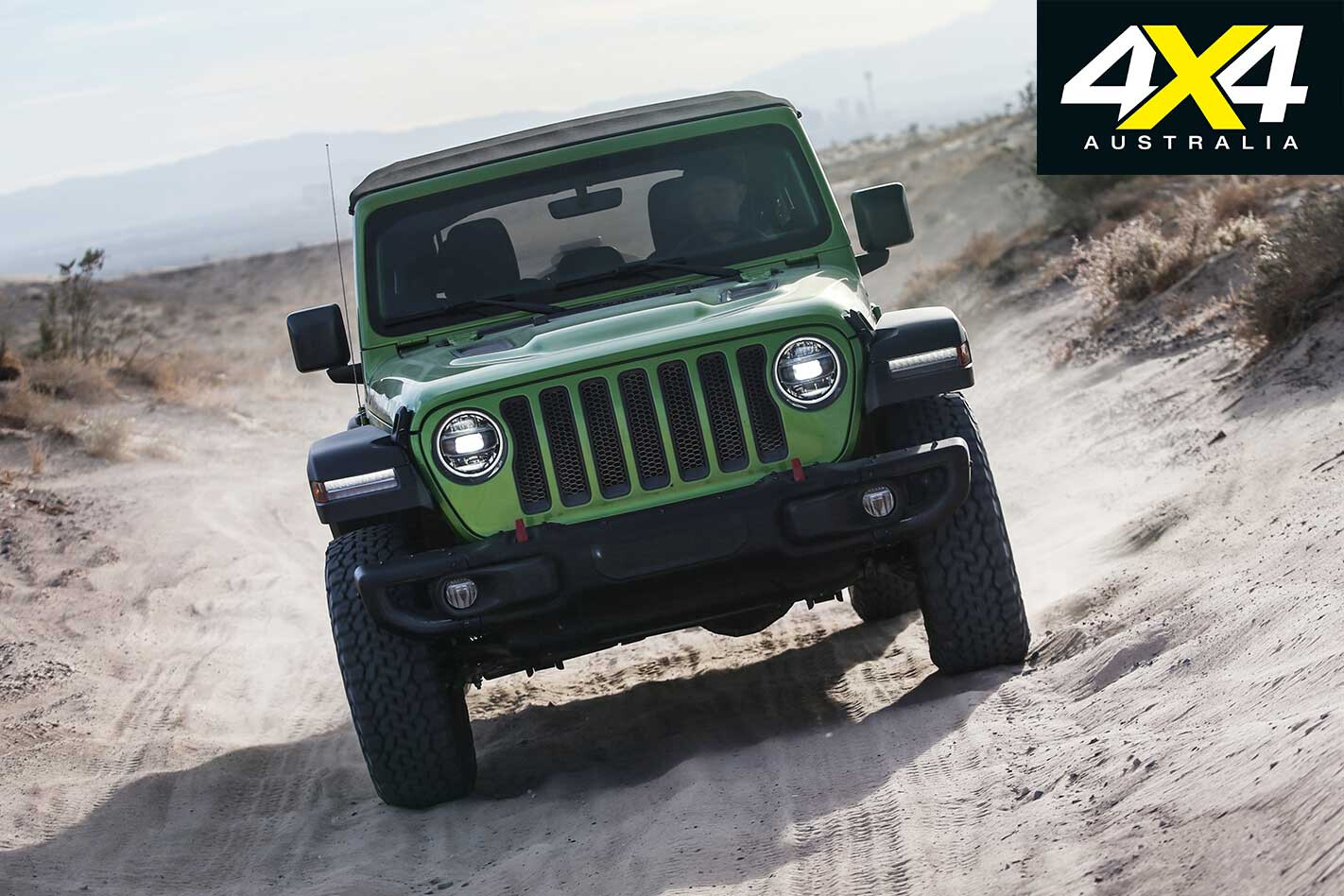
eTorque provides quick and seamless starting with the engine/idle-stop system, and it harvests energy during deceleration and braking to recharge the battery. It’s not a system you’ll notice, as there is no indication it’s operating and it’s nothing different from a conventional car; just that sweet boost in torque when you want it.
The eTorque four-pot makes 200kW at 5250rpm and 400Nm at 3000rpm. Compare that to the 209kW and 353Nm of the Pentastar V6 and you can see why this JL felt more grunty in the mid-range. That mid-range and bottom-end grunt would be appreciated for off-road use, especially when compared to the V6 which likes to rev hard to extract its performance.
The turbo-four matches the V6 in terms of payload and carrying capacities and trumps it in terms of fuel use, returning a claimed 11.7L/100km on the US EPA combined cycle compared to 14.0L/100km for the Pentastar.
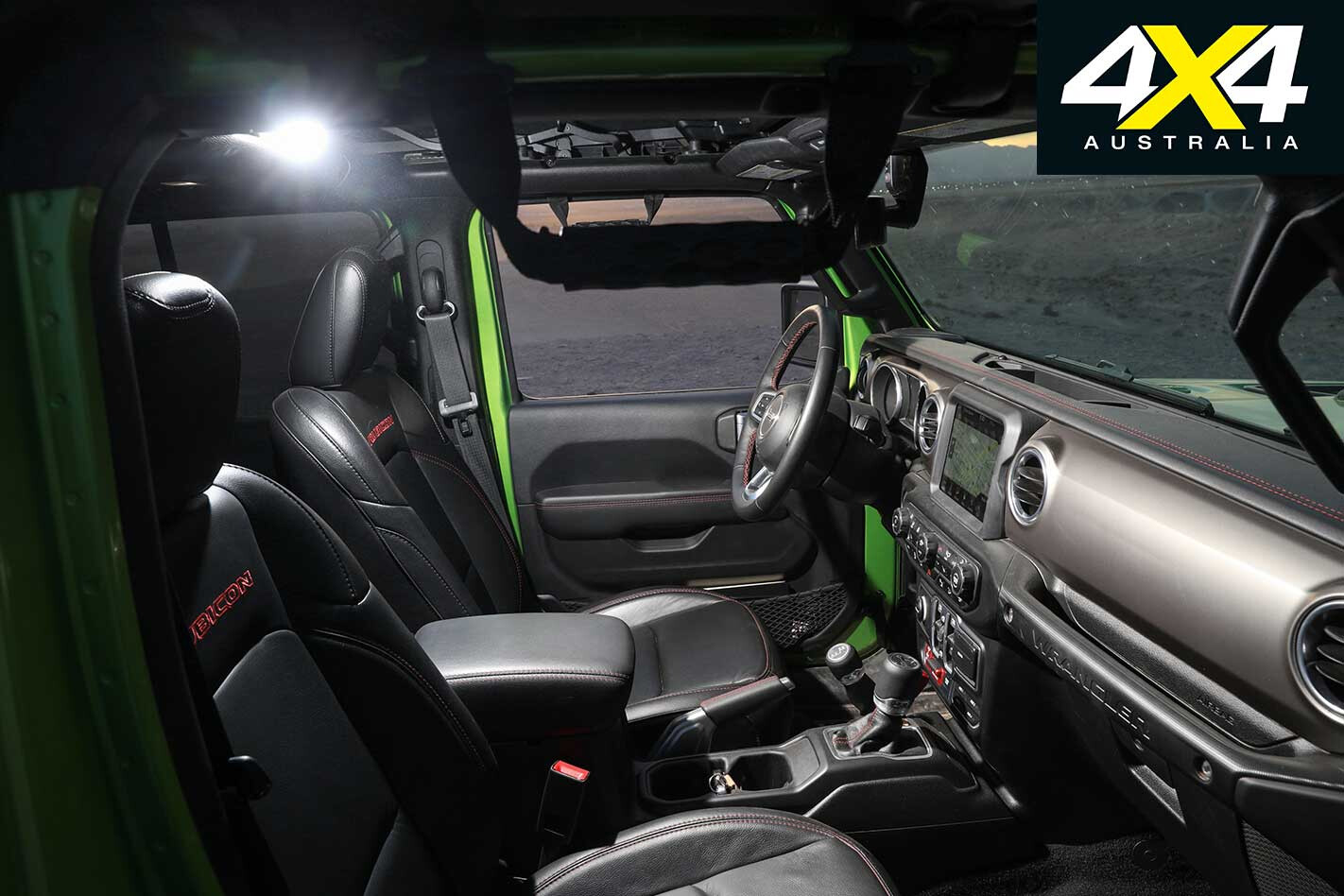
Other revelations from our quick spin in the JL Rubicon: the JL’s old-school press button exterior door handles have made way for modern grab-and-pull handles, and the now-aluminium doors feel almost featherweight when you open them. Even though they now have a check strap to stop them closing on your legs, they’re super light to open and close.
The dash is still instantly recognisable as a Wrangler, but it’s very busy in its layout, with a bigger touchscreen mounted up high. The Rubicon’s red-stitched leather gives a premium feel to an otherwise utilitarian cabin. The Wrangler is still a blast to drive in the dunes.
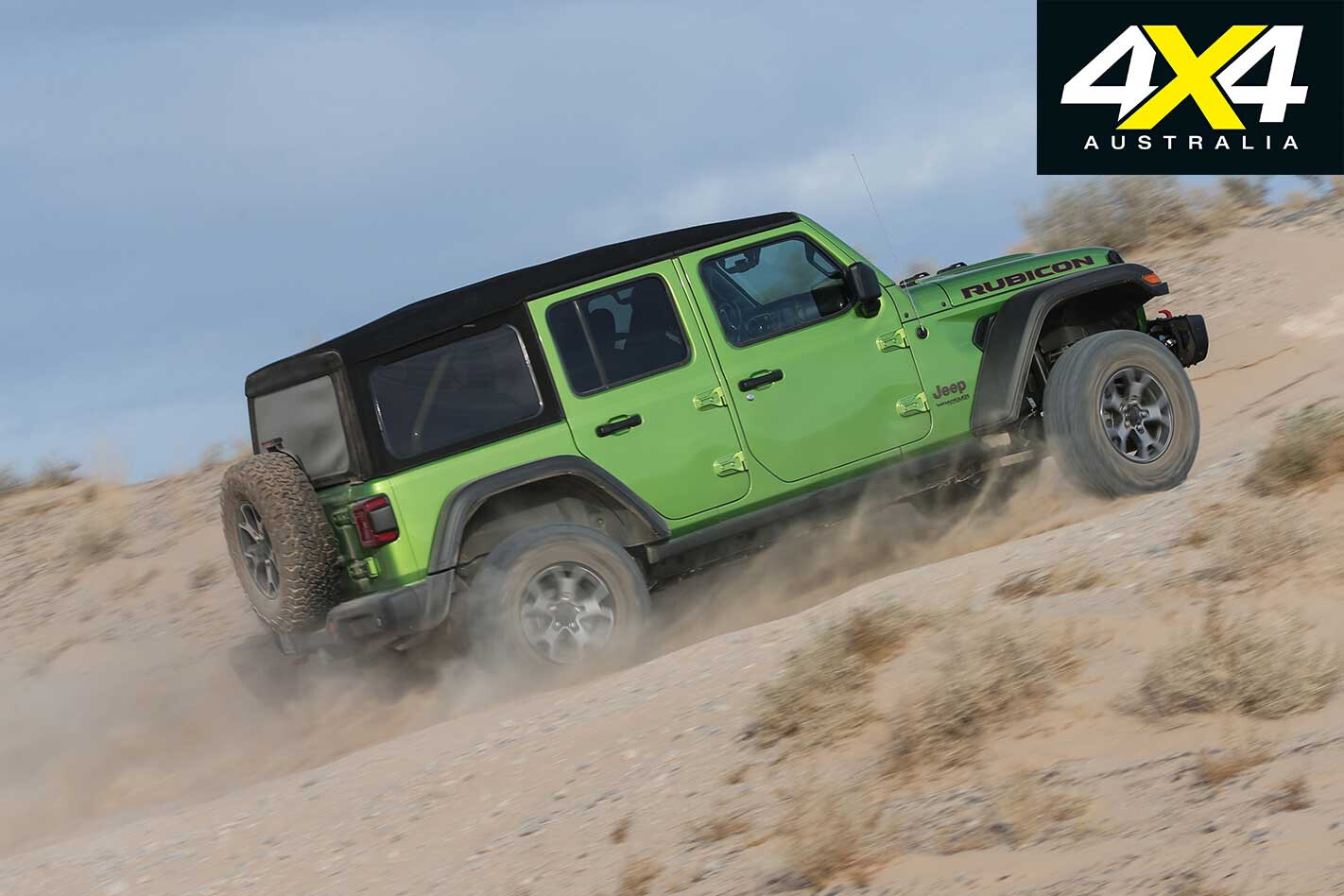
As mentioned, it’s disappointing that the turbocharged petrol engine isn’t coming to Australia, as a shorty JL with that engine would be a popular option for Wrangler buyers looking for an urban mall crawler rather than an off-roader; purely for its better fuel economy and drivability over the V6. It would equally be the choice of petrol engine for off-road use as well.
FCA Australia told us it hasn’t ruled out introducing the eTorque engine here at a later date and that it is still “looking into it”. Let’s hope they see the value in it.
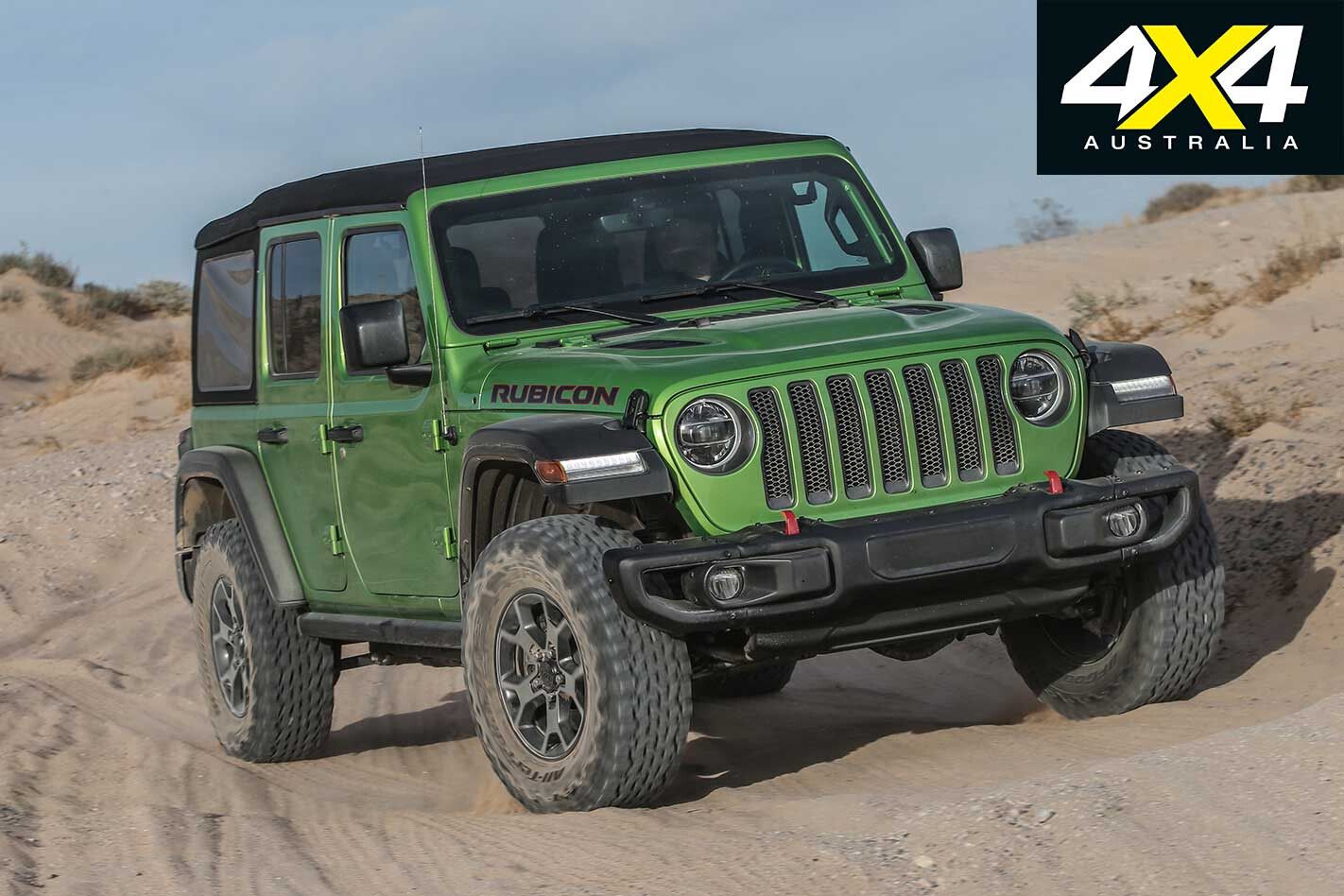
2019 JEEP JL WRANGLER RUBICON E-TORQUE SPECS: Engine: 1995cc, Direct-injection petrol, in-line 4cyl, turbocharged, 16-valve Max Power: 200kW @ 5250rpm Max Torque: 400Nm @ 3000rpm Gearbox: 8-speed automatic Crawl ratio: 73.3:1 4X4 System: Part-time with dual-range, locking diffs (f/r) Construction: 5-door removable top body on ladder chassis Front suspension: Live axle on multi-link and coil springs. Disconnecting swaybar Rear suspension: Live axle on multi-link with coil springs and swaybar Wheel and tyre spec: 7.5-inch alloys; LT285/70R17C, BFG KO2 Kerb Weight: 2034kg Payload: 404kg Towing capacity: 1587kg Seating capacity: 5 Fuel tank capacity: 81L Fuel consumption*: 11.7L/100km
*US EPA ‘Combined-Cycle’ claim