
THE heart of our great country is home to an abundance of quintessential outback tracks, dispersed with rock holes, rivers and gorges, and it’s often referred to as a ‘real’ 4WD destination.
The 4×4 Adventure Series team begins their journey of the MacDonnell Ranges at Alice Springs, before stopping by a number of iconic landmarks including Trephina Gorge, John Hayes Rockhole, Ross River Homestead, the gold-mining town of Artlunga and Tower Rock.
We then tracked the Hay River south through the Simpson Desert, one of Australia’s great desert journeys. Follow the journey here.
Season 5 Episodes
- Episode 1: Season 5 of the 4X4 Adventure Series has the crew kicking up red dust in Central Australia.
- Episode 2: From the fossicking fields of Gemtree to the relentless sand of the Simpson.
- Episode 3: The crew head along the Hay River Track to the Simpson Desert proper.
Season 5 Articles
- Part 1: The more remote gorges and ranges of the rocky heart of the country, east of Alice Springs, are the most welcome highlights of a Central Australia trip.
- Part 2: Following the Hay River through the Simpson Desert is one of the great desert journeys in Australia. Join us as we head south along the ephemeral river.
- Introduction: The concept behind Project Super Cruiser
- Update #1: The Super Cruiser starts to take shape
- Update #2: Team meets some build challenges
- Update #3: The Super Cruiser comes together
- Update #4: Project Super Cruiser hits the road
- Update #5: The Final Cut
Introduction: The concept behind Project Super Cruiser
Published 17th June 2019
WHAT DOES a family of seven do when they want to go on extended off-road adventures without a trailer in tow? Build a monster off-road rig with three axles and three rows of seats, and a decent-size service body on the back, of course. That’s the off-road freedom plan of MSA 4×4 proprietor Shane Miles and his clan.
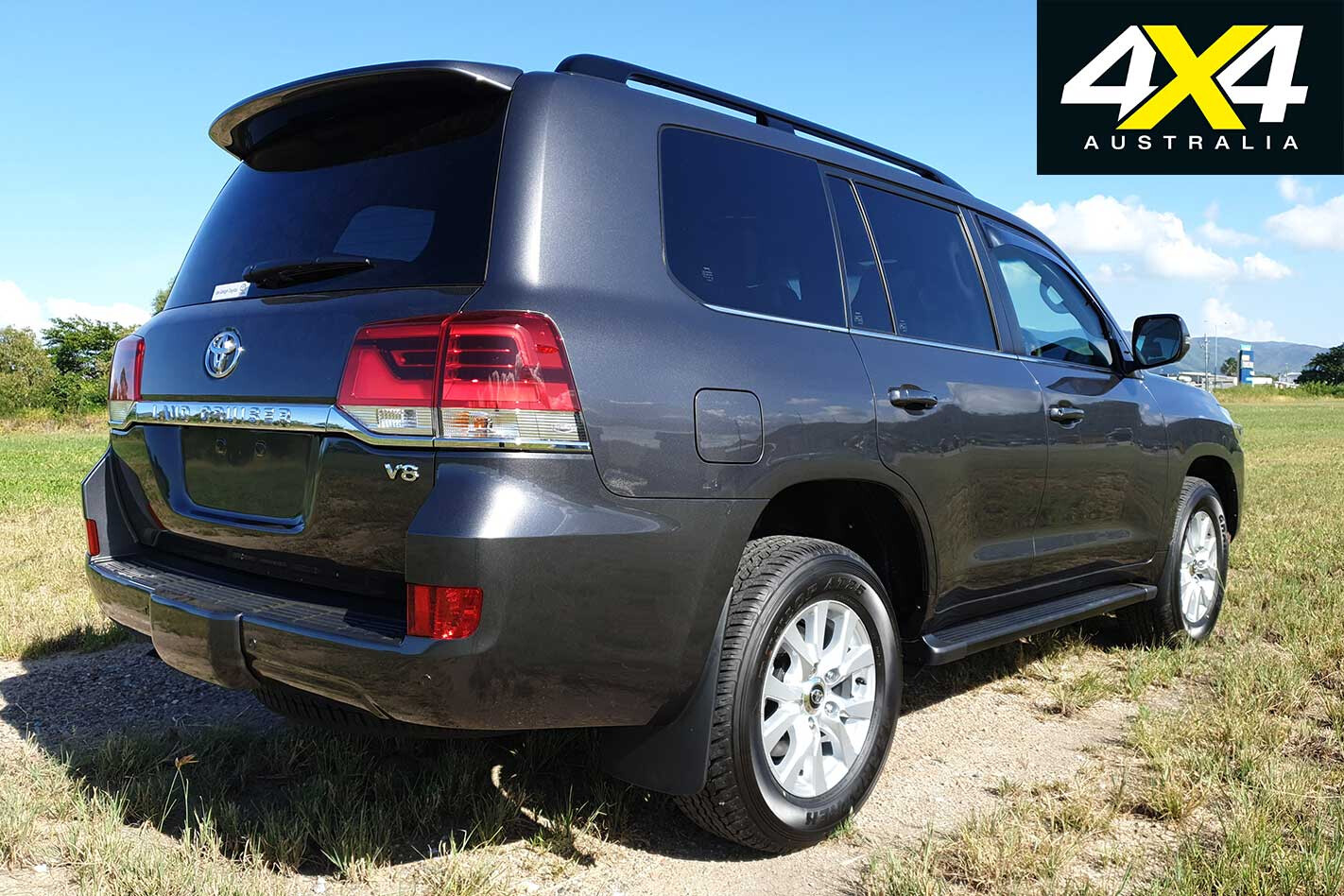
“Between Tameka, my fiancée, and myself, we have five kids, so there’s not really any sort of vehicle where I can put drawers, fridge slide and all our camping gear in,” Shane explains. “The only way we can tour anywhere is to travel with a very large trailer or a caravan; and being a bit more of a four-wheel driver I don’t really want to tow a trailer when we go to places like Cape York or across the Simpson Desert … and finding something that’s got six or seven seats, and also some sort of ute or tray-back, it just doesn’t exist.”
Shane has been searching for a solution to his dilemma for some time now and he’s done plenty of research into six-wheelers, but most vehicles with a third axle added are dual cabs – and five seats just won’t cut it (pun intended).
“There’s no use in me cutting a vehicle behind the second row of seats because I’d have to leave two kids at home,” Shane says of the traditional process of chopping the back off a standard 4×4 wagon and converting it into an extended 6×6. “The standard dual cab conversions, there’s a whole heap of companies that do them … but no one would do the third row.”
Then Shane met Mick McMillan from Australian Expedition Vehicles (AEV), and the two began to hatch a plan.
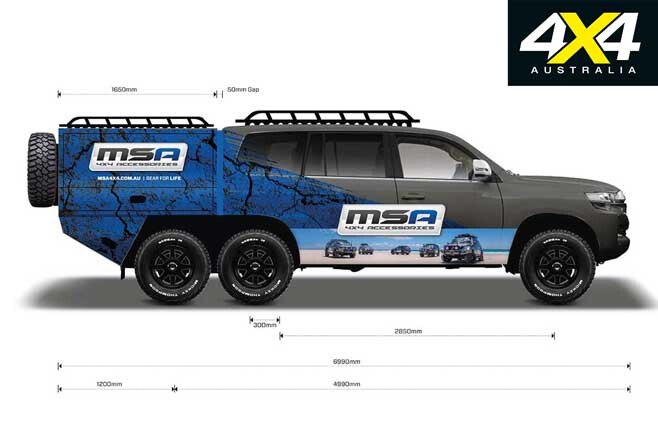
“I spent a lot of time talking to Mick at AEV, discussing whether we could do this; cut a wagon and keep the third row,” Shane says. “Mick’s was the only company that said ‘yes, we can do this, and it will be legal’.”
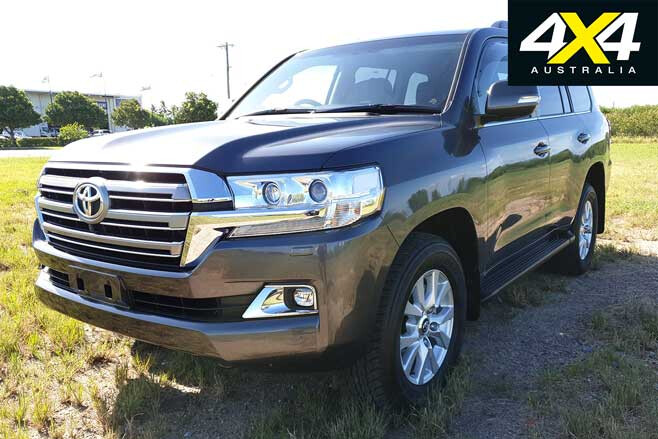
Shane initially considered using a Nissan Y62 Patrol as the basis for his six-wheel drive project, but eventually settled on a new 200 Series Land Cruiser VX. “The Land Cruiser is a really good touring car, with enough power to do what I want to do; and to tow … and they’re just so reliable, so that’s why I chose the 200,” he says.
From Mick McMillan’s perspective, Shane’s 200 Series Cruiser would be quite a unique project. “The brief that Shane gave us originally, he obviously wanted to maintain it as a family car, so maintaining the third-row seats would be a high priority, which is not normally what we do,” explains Mick.
“Normally people are going more for the load carriage, so we’re trying to make a small compromise here, which is he wants to carry the personnel, the people, but still maintain why people go for the 6WD, and that is load carriage and enhanced off-road capability.”
In addition to its three-row seating capacity, Shane and Mick have come up with a solution that will allow for fitment of a 1.9m Trig Point canopy on the back, as well as significantly increased load-carrying capacity thanks to either a 4450kg or 6000kg GVM upgrade, to be confirmed as the project progresses.
“Basically, I’ve got my three rows of seats, and I’ve got enough space for four drawers in the back and two fridges, as well as all our camping gear,” says Shane.
As well as practicalities, Shane is also intent on ensuring the Cruiser looks “just right”, and he has asked Mick for a shorter wheelbase extension than is normally the case with an AEV 200 Series 6X6 conversion. This will involve additional fabrication and other work.
As well as lengthening Land Cruisers and developing military-spec vehicles, Mick was involved in development of the JMACX 6WD system that will be fitted to Shane’s 200 Series. “We developed it with JMACX,” says Mick. “JMACX was doing heavy-duty single-axle Land Cruiser 79s at the time and I had just got out of (the ADF), where I was an engineer working on an acquisition programme that had six-wheel drives … and I helped (Jason McIntosh at JMACX) develop (the 6WD system) with his axle housing.
“Essentially it’s two JMACX coil-sprung axle housings on the same cradle. It’s a fairly standard geometry; there’s nothing difficult about it from an aftermarket point of view. It’s all either 80 Series, 100 Series or 200 Series coils and shock absorber-type setup.
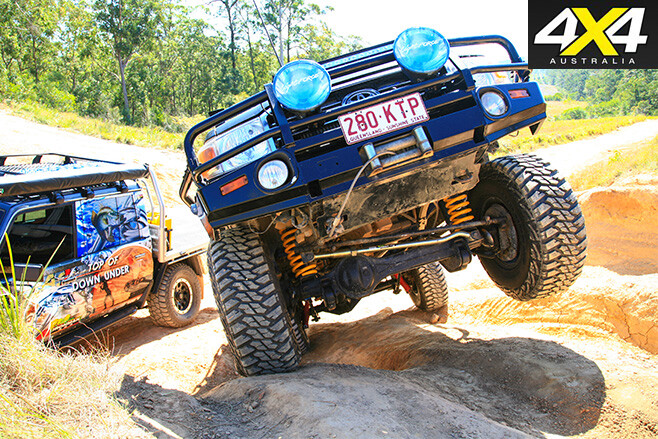
“The only variation is the centre diff housing, which is a Ford nine-inch diff, because with the Ford nine-inch, a commercial off-the-shelf product, you can buy a drive-through component, so you’re able to have 1:1 drive to the rear axle.”
Importantly, when completed, Shane’s triple-row, triple-axle LC200 will be legal in all states of Australia. “We have Federal Second Stage of Manufacture (SSM) approval, for both six-wheel drive in heavy and in a light-vehicle configuration,” confirms Mick.
So far Shane’s Super Cruiser, as he’s dubbed it, is in the early stages of its transformation from 4×4 to 6×6, and Mick McMillan has devised a precise workflow plan that recently began with the removal of the brand-new vehicle’s tailgate prior to undertaking more significant modifications.
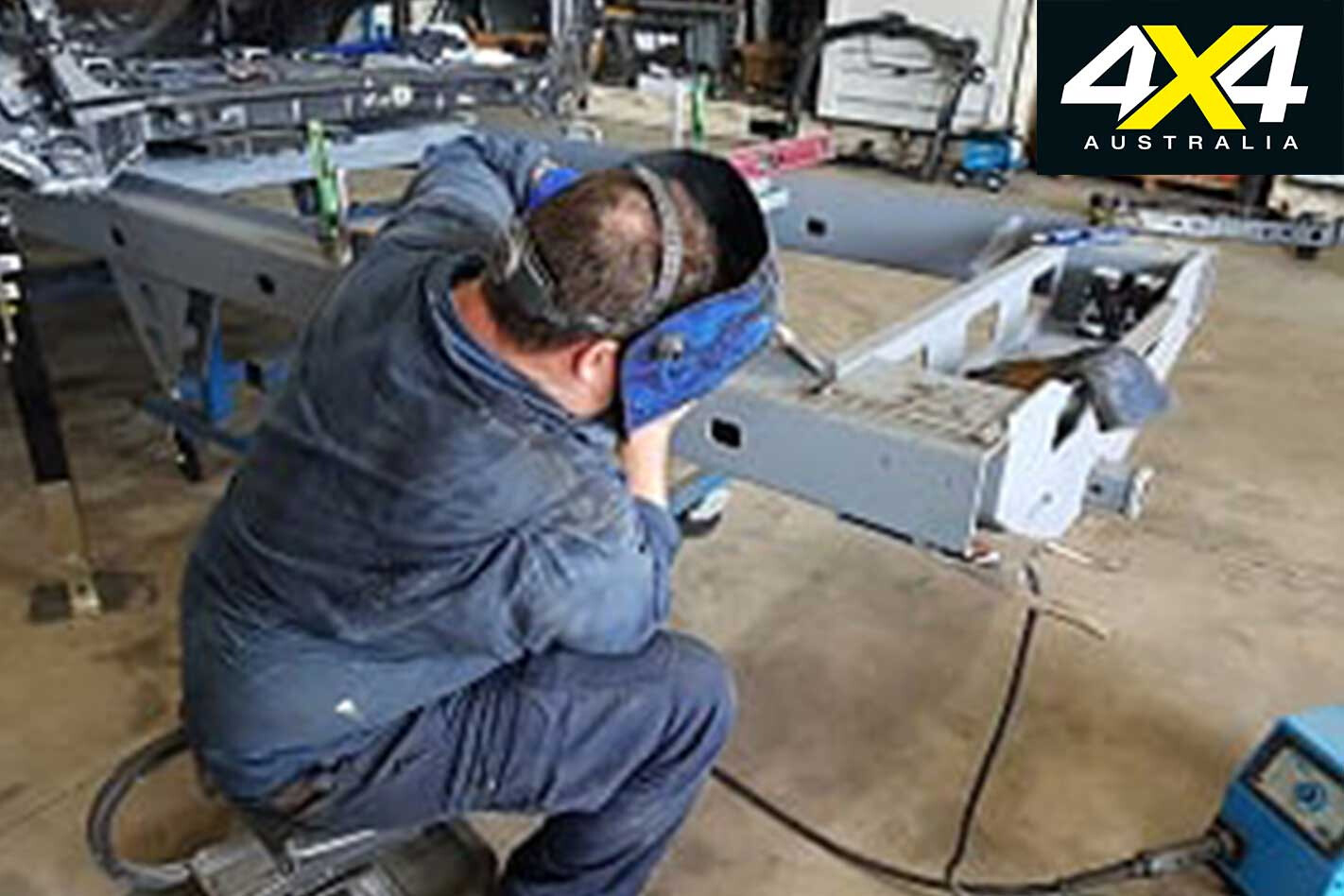
“The rear wheel arches have already been removed, internally, from the vehicle so we can start to access the rear of the car,” explains Mick. “We’ll now lift the cab – undo all the body bolts and jack the cab up – and that’s when we’ll start to cut the chassis off. There’s a reasonable amount of underbody prep as well, so we’ve got to prep the chassis, remove the coil tower supports and a few other bits and pieces.”
There’s a long way to go in the build process of what will undoubtedly become one of the most spectacular 6×6 Land Cruiser conversions ever undertaken, and it’s Shane’s intention to share the result as far and wide as possible.
“It will be doing 4×4 shows and I think the attention around it is going to be incredible,” predicts Shane. “We’re going to have some small catalogues printed up as well, with all of the people that have helped us along with this, and what it’s got on the vehicle.”
After the vehicle has toured Australia, Shane hopes it will garner some international attention as well. “It will definitely be at Overland Expo in Arizona next year … and possibly at the SEMA Show, either this year or next year, and then the plan is to take it to Africa at some stage.
“It’s going to be an internationally renowned vehicle!” says an understandably excited Shane.
Update #1: The Super Cruiser starts to take shape
Published 17th July 2019
When we last visited Project Super Cruiser, MSA 4×4’s new Land Cruiser VX was at Australian Expedition Vehicles (AEV) in Townsville with its tailgate removed, body lifted off its chassis and rear wheel arches cut out.
In the past month the project has moved along at brisk pace, with the rear of the Cruiser’s chassis cut off and a new extended section slipped over the top. A new JMACX coil-spring rear axle was fitted to the 6×6 cradle so the vehicle could be moved around (the centre axle will be fitted at a later date), and then the Cruiser was put on a flatbed and shipped off to David Taylor Spray Painting & Panel Beating, where major fabrication of the rear end’s bodywork started to take place.
The Super Cruiser is the first project of its type undertaken by AEV (most customers opt for a dual-cab conversion, not a full wagon with a service body on the back) and, as such, there has been a lot more fabrication work than had initially been anticipated, pushing the build schedule out further than planned.
“It’s not our normal conversion, as you can appreciate,” says Mick McMillan from AEV. “There’s a lot more (custom manufacturing) in panel beating than we initially anticipated. To make it look like a factory finish, we can normally achieve that with standard Toyota parts, but with this vehicle we’ve had to rely on the skill of a tradesman to put the bits and pieces together.”
MSA 4×4’s Shane Miles has spent a fair bit of time personally overseeing the panel work and, despite (or because of) the timeframe blowout, he’s impressed with how the job is progressing so far.
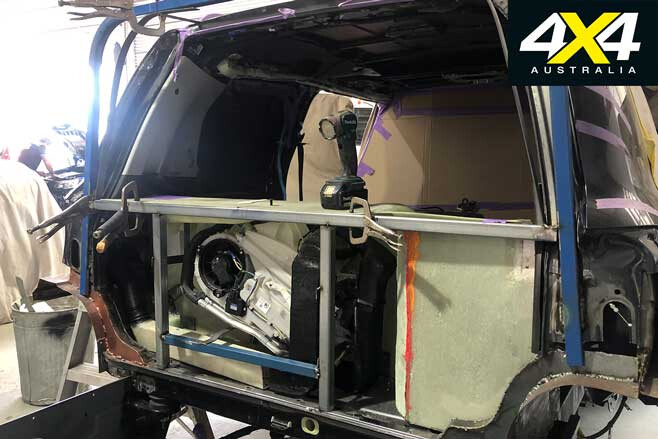
“They were going to put a Land Cruiser 79 rear panel in, which is what they usually do on a dual cab conversion, but the LC200’s body tapers in the further back it goes, so the 79 panel was too wide for it,” explains Shane. “They’ve got a custom-shaped glass section instead and they’re going to custom-fabricate the rear body section around that.”
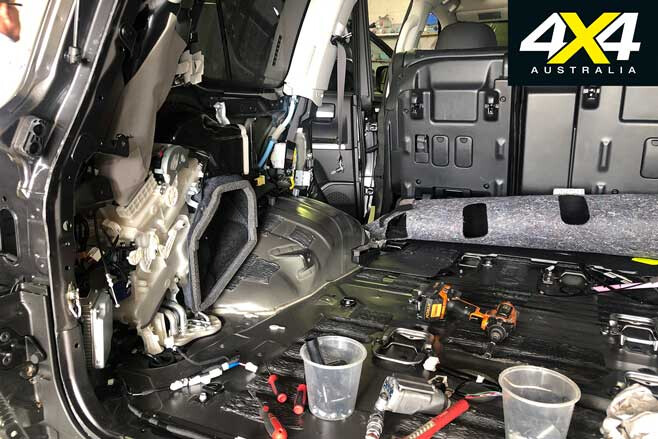
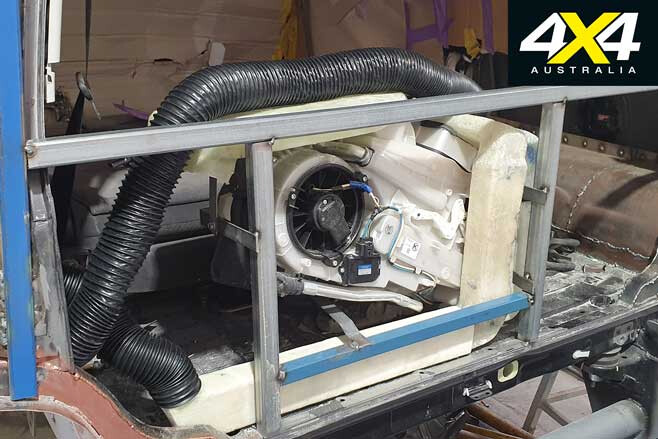
Another component that has added to the overall build time is the Land Cruiser VX’s massive rear air-conditioning unit, which used to be housed in the passenger-side rear quarter panel. “They’ve flipped it around and laid it down (behind the third-row seat) and then they’ve made up about half a dozen ducts to redirect all the air everywhere,” says Shane. “They’ve also made a panel that goes around the whole thing, and then that’s going to be trimmed in matching leather.”
To ensure the back of the Land Cruiser’s body has a factory look, the body fabrication team has made a wide-radius curve where the roof and the sides of the Land Cruiser meet up with the new rear panel. “It’s not just a square panel welded on there; it’s all shaped with a wide radius so it all looks factory,” says Shane.
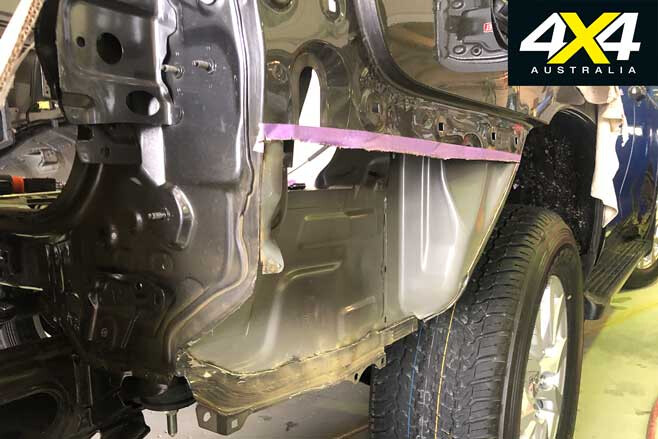
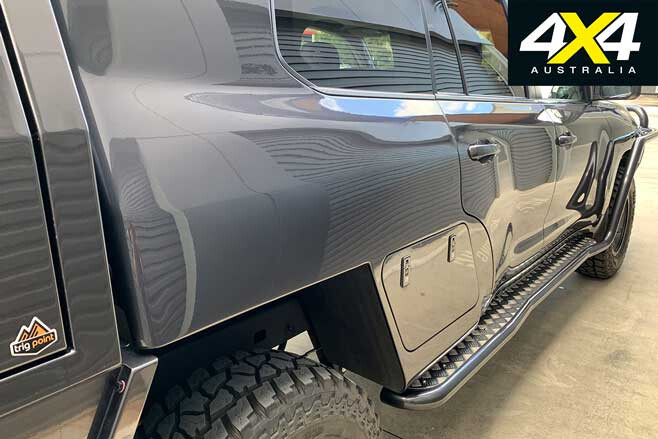
Another detail that will ensure the vehicle has a completely cohesive look when finished is the reshaping of the Super Cruiser’s rear wheel arches to match those of the Trig Point canopy.
“Instead of just moving the Cruiser’s curved rear wheel arches back about 700mm (to account for the extended wheelbase), they’re actually shaping those wheel arches to match the Trig Point body at the back, so it looks really cool,” says an excited Shane.
“Where the wheels have been moved back, they’re also going to put two nicely shaped tool boxes in there – that’s a week-and-a-half’s work for those two boxes alone – and then they’ve got to finish off the body and then spray the whole car.
“It looks a bit ugly at the moment, with all the rough edges, and the body has got to be blasted to get all the surface rust off it, but it’s still got about six weeks more work before the bodywork is complete and it gets sent back to AEV.”
The good news is that once back at AEV, Mick McMillan reckons the Land Cruiser shouldn’t take too long to complete. “For us to finish what we’ve got to do, we’re looking at probably one-and-a-half days to have it finally driving out the gate as a six-wheel drive,” he says.
The Super Cruiser will then be sent to TJM Townsville for fitment of a bullbar before it lands back at AEV where the side-steps will be extended and fitted, and then the Trig Point canopy will go on. “Shane has got some additional products provided by Icon, Rugged Brake Systems and all these other accessories that aren’t standard factory stuff that we’re going to fit, so we’ll probably add another day and a half for that,” says Mick.
Shane initially hoped to have the Super Cruiser finished by July for a trip across the Simpson Desert, but due to the extra fabrication work the expected completion date has been pushed back a couple of months.
“We’re going to miss the first trip I was going to do,” says Shane. “It’s now looking like we’ll get the vehicle back in September, which will still give us heaps of breathing space. I was going to try to get it into the Melbourne 4×4 Show – if it’s done by then there’s a stand that we’ll put it on there – but I’m just not sure.
“We have got a fair bit of stuff to do once I get it back here to MSA 4×4; I have got about a month’s worth of work to do on it, and there are people coming from all over the place to do other stuff on it,” adds Shane.
As they say, good things take time, and this Super Cruiser is certainly shaping up to be a good thing. Keep an eye out for the next issue of 4X4 Australia to see how Project Super Cruiser is progressing.
Update #2: Team meets some build challenges
Published 16th August 2019
WHEN WE asked Shane Miles from MSA 4×4 how Project Super Cruiser was coming along, he was about to board a plane back to the Gold Coast after spending the morning at David Taylor Spray Painting & Panel Beating in Townsville, where his six-wheel drive 200 Series Land Cruiser VX was still far from finished.
By now, all the bodywork should have been completed and the vehicle should have been back in the Australian Expedition Vehicles workshop having its Trig Point Canopy fitted … but there have been several unexpected delays, as is often the case with a first-of-its-kind build.
Sure, Shane sounded a little disappointed his Super Cruiser was taking longer than expected, but he was still very upbeat about what he had seen. And he now had a firm grasp of why the completion date had been pushed back.
“The bodywork has taken six, seven weeks longer than we predicted,” explains Shane. “They’ve come up against a heap of different obstacles, from unexpected things like the drainage channels from the sunroof and all sorts of other detail stuff.”
Of course, it’s not really all that surprising that there have been a few setbacks; after all, this vehicle is a bespoke one-off, and the artisans at David Taylor’s have not been cutting any corners … well, not figuratively. In fact, they have resorted to some old-school coach-building and have had to fabricate a lot of custom parts to turn this seven-seat 6WD Cruiser into a reality.
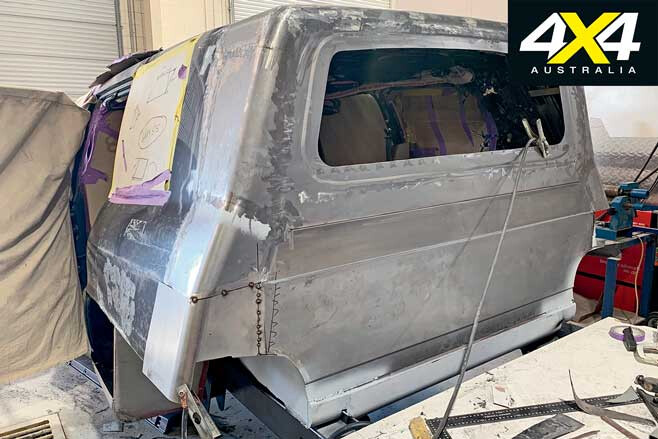
“There have been no shortcuts taken,” says Shane. “They could have done things easier; they could have just welded a square panel on the back, for example, and butted it up to where they’ve cut the rear of the vehicle, but that would have just looked like a square panel welded on there.”
Instead, they’ve fabricated a one-off rear panel and fitted a custom-made rear window to it, and then ensured it neatly matches up to the rest of the Cruiser’s bodywork.
“They’ve radiused every single join,” adds Shane, “and not a small amount; I’m talking probably a 70mm radius, so it looks like a factory finish … or as factory as it can.”
Shane wants the LC200 wagon’s body to mate up to its new canopy as neatly as possible, and to that end the team at David Taylor’s have not only fabricated those radiused rear corners but have also reshaped the rear wheel arches with a straight edge that matches those on the canopy. In addition, they’ve even widened the Land Cruiser’s rear bodywork where it used to taper in towards the tailgate.
“The body lines that tapered in towards the tailgate just didn’t look right, because there’s no longer a tailgate on the vehicle,” says Shane. “To make the vehicle match better with the canopy, they’ve had to widen those body lines to give it a factory look, which has all been achieved through meticulous custom fabrication.”
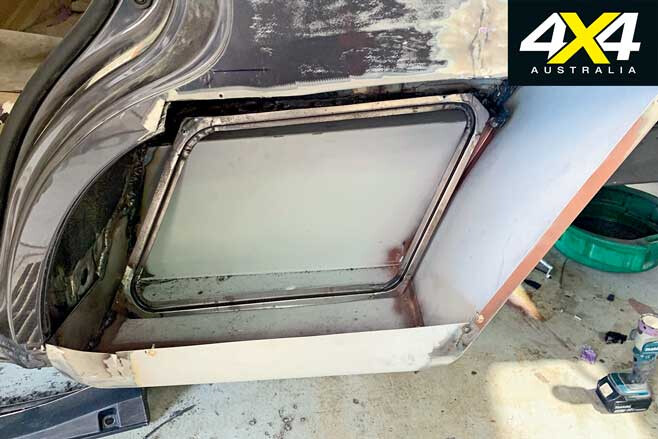
A further delay at the body shop is a result of a practical rather than a cosmetic reason. “We’ve added tool boxes in the area between the Cruiser’s rear door and the reshaped wheel arch,” says Shane.
“This means I’ll have two toolboxes that I can use to stow items. Originally they were just going to fill in that panel, but they thought that would be a waste of space … so these tool boxes, although they’ve added another two weeks to the project, they’re big enough that I’ll be able to put gas bottles down there, or even a generator.”
As well as all of the custom fabrication and bodywork, there have been several small hiccups such as the aforementioned drain channels for the sunroof.
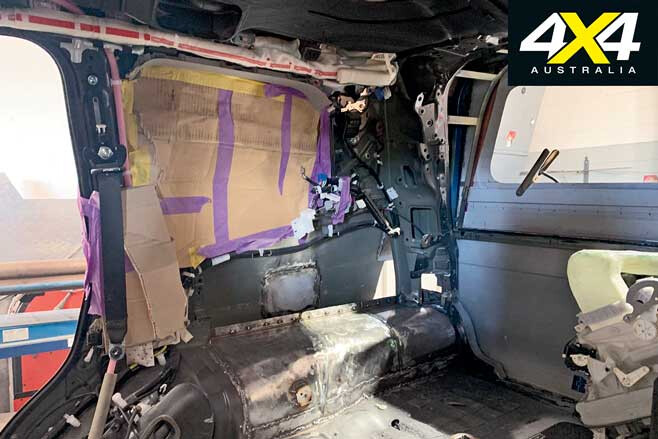
“There are all the little fiddly things like drainage lines, which we didn’t even know about,” says Shane. “There are two drainage channels so the water that gets into the rim around the sunroof can drain out; they run along inside the roof and down the back of the vehicle, and these have had to be rerouted. It’s all of this stuff, not huge things but a number of extra things that they’re finding along the way.”
Once the bodywork is complete the Cruiser will head back to AEV, where the Trig Point canopy will be test fitted before the Land Cruiser is sent off to be painted.
The paintjob is also unlikely to be a straightforward process. “What I’ve been told is, the Cruiser’s metallic paint, if you just undercoat it and paint it, the new paint will fade at a slightly different rate to the factory paint,” says Shane. “So, what they’re going to do is black the bodywork first … well, undercoat it and then black it, and then undercoat it again, then get it smooth and then paint it … that will prevent uneven fading over time.
“Mick McMillan at AEV will then go through and put all his stuff on it. Hopefully it will only be about three weeks before it’s got its canopy on, and its new Icon suspension and wheels, and Mickey Thompson tyres … and then there’s the TJM bar that’s going on, and the side rails extended side-steps, the exhaust, two Brown Davis long-range fuel tanks, a Trig Point water tank, an air tank … all that stuff will go on in a few weeks.”
Update #3: The Super Cruiser comes together
Published 21st September 2019
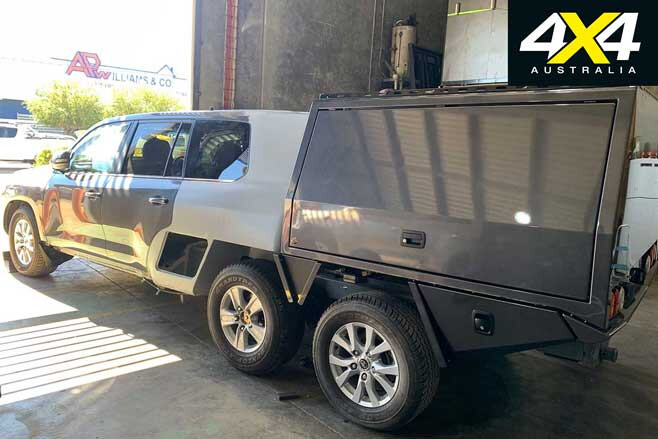
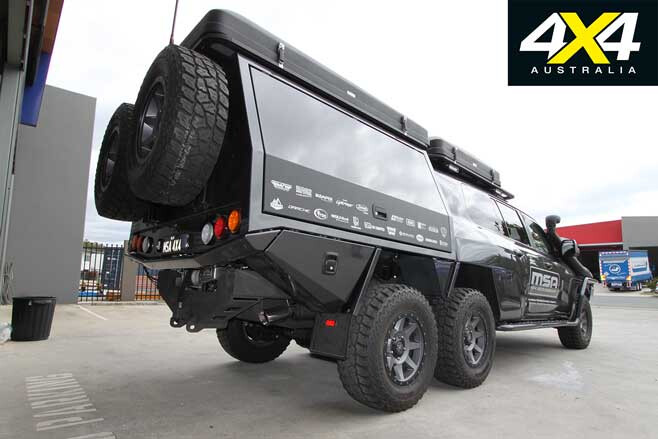
TAKE A look at these photos and you could be forgiven for thinking that Project SuperCruiser is, well, pretty bloody ‘big’? Yep, this six-wheel drive beast is like no other 200 Series Land Cruiser on the planet, and now that it’s starting to take shape there’s absolutely no doubt it’s going to cause a sensation when it hits the 4×4 tracks around Australia, as well as local and international show circuits.
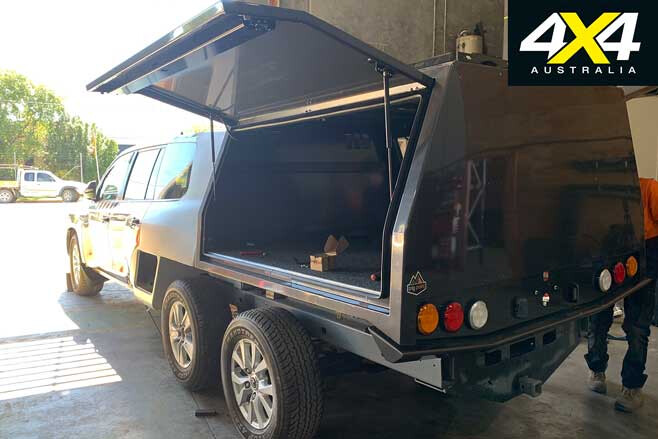
While the bodywork has taken longer than expected, by the time you read this the SuperCruiser will have been spray painted, had its interior fit-out, had an extra axle added, and its Trig Point canopy mounted to the chassis. After these steps, though, there’s still a fair way to go before it will be complete.
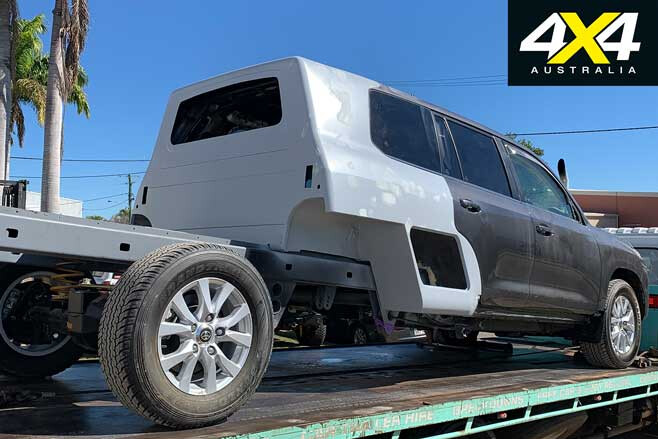
Last month we outlined why the SuperCruiser was taking longer to finish than anticipated, with lots of detailed bodywork required to ensure the vehicle ended up with a factory look. This involved reshaping the rear corners with neat, wide-radius curves, custom fabricating the rear wall and fitting a custom rear window, as well as adding toolboxes ahead of the centre axle.
There were other unforeseen issues inside, including relocation of the rear air-con unit and rerouting of wiring looms and plumbing. As you can see from these latest photos, even with the body still in primer it’s obvious the extra effort has paid dividends.
“In the last month they’ve done a lot more panel beating to ensure all the panels will line up with the Trig Point canopy,” explains the vehicle’s owner and proprietor of MSA 4×4, Shane Miles. “They’ve undercoated it and sent it around to AEV (Australian Expedition Vehicles), where they test fitted and mounted the Trig Point canopy. With that in place they had to line it up with the sides of the vehicle and ensure that the roofline and all the heights were perfect. They also had to line up the guards, so they aligned properly with the Trig Point.”
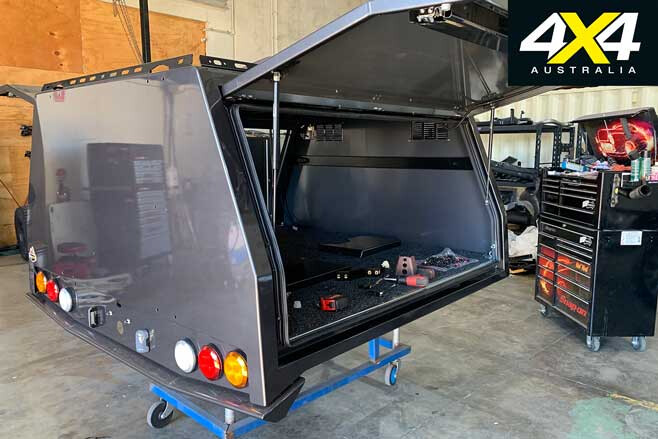
Mick McMillan from AEV was impressed with how the test fitting of the Trig Point canopy went – after all, this is a one-off vehicle, and the canopy was manufactured off-site. “As far as the fitting of the rear canopy goes, that was a day’s activity where Trig Point came to Townsville,” explains Mick.
“We levelled it off and made sure the length and fit was right, and it was probably one of the more seamless parts of what we’ve had to do on this vehicle, which is a testament of the ability of CAD to do what you want it to do. Our design process is quite robust, which means we were able to supply accurate information so the canopy could be manufactured off-site, without the vehicle, and the first fit proved it was a success.”
With the canopy on, everyone got an idea of what the project would look like. “When you see the photos you think, ‘wow, it’s a bloody road train’, but when you see it in person it’s pretty cool, and it’s really good to see all the body with the rear window in and the toolboxes, and where it’s cut and all the radiuses and stuff, it looks really good, it looks factory … as much as a six-wheel drive 200 Series can look factory, that is,” laughs Shane.
“It looks extremely long, but in fact it’s only seven metres long,” adds Shane. “It’s not that much longer than a HiLux with a body on it – it’s only about a metre longer.”
Picture: Lifting the Trig Point canopy into place
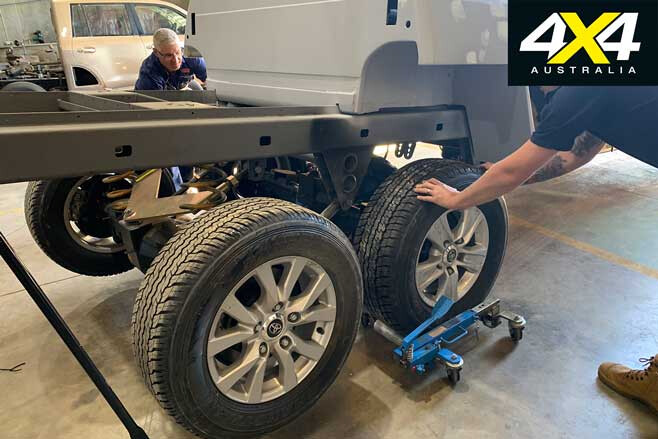
The six-wheel drive axle was also test-fitted to ensure everything fitted with the canopy in place, but this was removed once more before the SuperCruiser was sent back to the paint booth. “We’ve done the six-wheel drive axle, it’s already been test fitted, but we removed it so we didn’t cover it in overspray,” explains Mick McMillan. “So that will go back in and then we just have to do the final fit-out.”
In addition to relocating the rear air-conditioning unit and rerouting all of the associated plumbing, there was a lot of work for the auto electrician. “All the air-con has been fired up and is all working in the back, and all the electronics inside have been done,” says Shane.
“There was a lot of wiring that had to be removed – it was like spaghetti in there – so the auto sparky rewired everything. And an electronic rust prevention system has been installed; we put in a 10-pad ERPS, so that’s all been wired inside and outside, around the parts where there have been modifications and cuts, so that will keep any potential rust issues at bay into the future.”
Picture: Read air-conditioning unit
With the job taking longer than expected, Mick McMillan is keen to make up time in the next stage of the build. “The process now, we need to compress the timeline, because it’s taken longer than expected,” he says. “Once it’s back from the paint shop, the upholsterer will come through and do what he needs to do, and then we’ll fit up the door cards and the seats, and at the same time we’ll fit up the rear section with its brake lines, diffs, fuel tank and all the other components, and then once all that’s complete the rear module will just pop on.”
“We’ll get it to the point where it’s registerable, so it will drive out of here fully finished, and it will have a Federal sticker on it and a Queensland sticker,” says Mick. “This is because the vehicle is not in accordance with our Second Stage of Manufacture approval; it’s federally approved as a six-wheel drive, but the other components that are on the vehicle are not as per our Second Stage of approval, so we still need to put some Queensland modification codes on it.
“At this stage the Cruiser will be in the heavy vehicle category, which means it will be under the National Heavy Vehicle Regulations VSB6 Version 3. While it will have an SSM (Second Stage Manufacturer’s approval) for the six-wheel drive system, there are still additional codes that need to be put on it, because it’s a one-off vehicle. We need to ensure that we comply with all the requirements to make sure that this vehicle is legal in every state of Australia.”
How long will this take? Not long at all, says Mick: “Once we get it back after painting, we’ve got five to seven days of work on it, maximum, and I’m going to put the manpower on it to get it knocked over as quick as we can.”
With bar work, suspension, brakes and much more still to go, hopefully the boys aren’t being too optimistic, but as you can see from the pics much of the hard work on Project SuperCruiser has now been sorted.
Update #4: Project Super Cruiser hits the road
Published 22nd October 2019
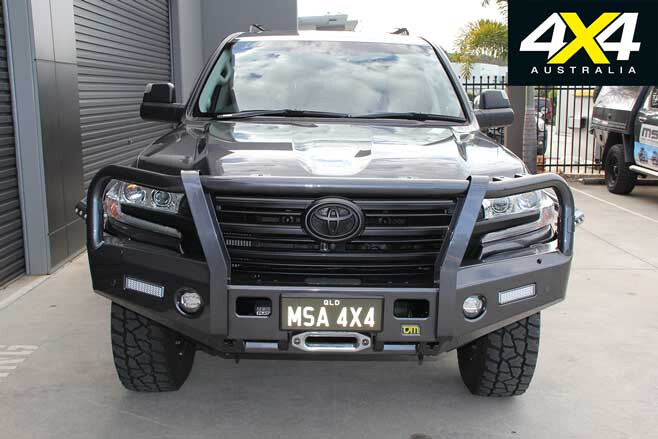
AFTER significant delays at the body shop, Project Super Cruiser has been signed off and is fully registered, and the massively stretched 6WD Land Cruiser triple-cab is now an imposing sight on Queensland’s roads.
MSA 4×4’s Shane Miles bought the brand-new 200 Series Land Cruiser VX around five months ago and immediately shipped it off to Mick McMillan at Australian Expedition Vehicles (AEV), where its transformation into one of the country’s most impressive custom vehicles began.
AEV removed the rear of the wagon, stretched the chassis, installed a JMACX 6WD system and sent the Cruiser off to David Taylor Spray Painting & Panel Beating, where all the major body fabrication took place. It was this body fabrication stage of the project that took significantly longer than expected; after all, no-one has ever built a triple-cab Land Cruiser before.
In the last Project Super Cruiser update, the craftsmen at David Taylor’s had finished fabricating the Land Cruiser’s new rear wall, and AEV had test-fitted the Trig Point Canopy and JMACX middle axle before the vehicle was shipped back to the body shop for painting. The next step was to put the whole thing back together.
“Because it’s a process we’re familiar with, it’s not a difficult one, and we can manage it quite quickly,” says Mick McMillan. “Apart from being slightly bigger in the body, it’s exactly the same process as our dual-cab builds.”
Having said that, Mick admitted reassembling the interior was far more complicated than usual, “because of the extra air-conditioning unit (in the rear), how it was installed, and the extra covers and cowlings that have been custom fabricated for the system”.
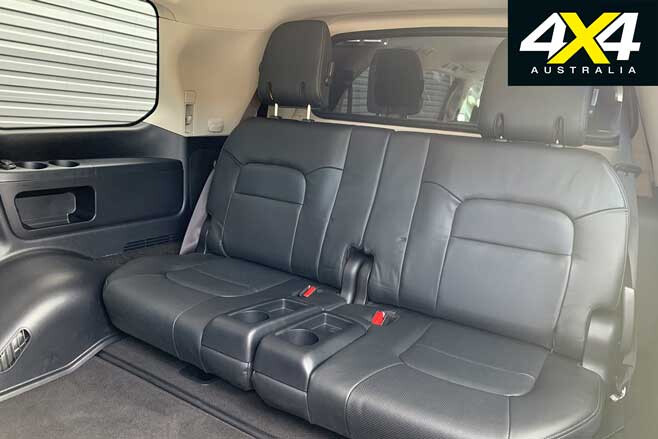
All of the effort and hard work put into the interior is reflected in its factory-like finish, and Shane Miles is more than happy with how it has turned out. “The finish inside looks incredible,” he says. “If it was done in the factory, that’s how it would have looked. It’s just unreal. They have used matching leather to trim the air-conditioning box, and have laid matching carpet over the wheel arches, and they’ve matched the roof-liner with the infill piece at the back … it’s just incredible the way they’ve trimmed it.”
As well as refitting the third axle and the Trig Point canopy, the team at AEV installed a 180-litre Brown Davis long-range fuel tank; Icon suspension kit in the front, middle and rear; Airbag Man air bags; an ARB twin-compressor; an Air On Board 18-litre air tank; Icon alloy wheels with Mickey Thompson ATZ P3 rubber; TJM bar work; and Warn winches front and rear.
“The Trig Point canopy fitting went smoothly,” says Mick. “We’ve had to make custom fuel fillers, so we’ve custom-manufactured the bracket in there, powdercoated it and fitted it. Normally it would be a single entry, but we’ve fitted two individual ones so Shane can fill the front and rear tanks in isolation.”
“The long-range tank, it’s a custom tank that we have developed with Brown Davis, so it has an AEV part number, but it’s essentially an LC79 long-range tank with some different brackets on it,” adds Mick. “It fits in the 200 perfectly and fuel capacity is 180 litres, so with the standard 90-litre tank Shane now has a total fuel capacity of 270 litres.”
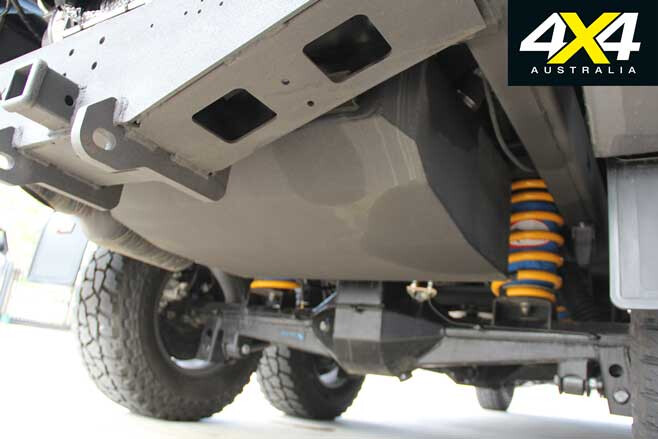
While the TJM Outback bullbar and side rails are standard 200 Series parts, AEV had to modify the TJM side steps due to the Super Cruiser’s extended wheelbase. “The side steps have been custom-made by us to Shane’s specifications,” says Mick.
“Shane actually sourced two sets of side-steps, and out of those two sets we’ve made one set to fit the vehicle. We’ve CNC-laser cut the top tread plate as a custom item, and we’re happy with the outcome.”
With reassembly complete, the next step was for AEV to fit the compliance plates before Mick and Shane headed down to a Queensland transport and motoring service centre to register the beast.
“Rego was awesome,” says Shane. “Mick McMillan had all of the documents ready – it was like he was talking in another language with the transit people – and at the end of the day it got stamped and I gave them my credit card and it’s all fully registered as a heavy vehicle.”
Yep, at around 5000kg (and with a 6000kg GVM) the SuperCruiser is no lightweight, and Shane had to get an HR (Heavy Rigid) licence to drive it. “It’s only a one-day test to do it; it’s a small practical and a small theory test,” says Shane. “You do instruction for about three hours and then you go and do the test, which is about an hour drive with a testing instructor, and a small theory test, and that’s it.”
So, what is the 6WD Cruiser like to drive on the road? “It’s just so nice to drive, it feels better than the ‘normal’ 200 Series that I had before,” says an obviously excited Shane. “It turns, it stops, it goes … it’s just so smooth, it’s unbelievably smooth; and it’s quiet.”
Once registered, Shane waved goodbye to Mick and pointed his Super Cruiser south from AEV’s HQ in Townsville towards MSA 4×4’s home base on the Gold Coast.
“I don’t know if it’s the Icon dampers or the progressive rate coils working together, but it is so damn smooth,” continues Shane. “Driving down the freeway, it feels just like a luxury car. I was expecting it to be military-like and vibrating and shaking, but I’ve never been so happy driving a car.
“With the windows up you barely notice an increase in road or wind noise; it’s similar to any other standard 200 Series wagon fitted with all-terrain tyres. The Mickey Thompson ATZ P3 tyres are really quiet considering their quite aggressive tread pattern.”
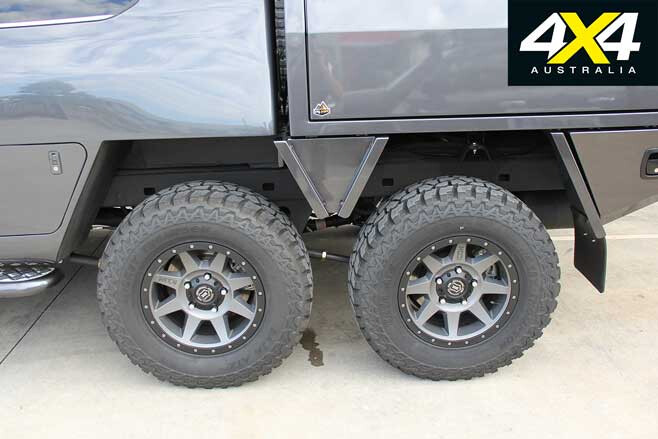
Of course, the SuperCruiser is now a fair bit heavier than a standard 200 Series wagon, and it has six wheels instead of four, which obviously has an affect on on-road performance, but Shane is more than content with how it went on its freeway shakedown.
“It’s really good,” he says. “You just need to push the ECT power button if you need a little bit more, but it’s really good.” While the ECT power mode doesn’t result in the Cruiser’s V8 producing more power, it speeds up the automatic transmission’s shift response, so it will drop a cog or two more readily when confronted with an incline, or when asked to provide more acceleration with a prod on the accelerator.
The Super Cruiser will be subjected to towing duties down the track, so the engine will soon score a few upgrades. “I’m possibly going to get a bit of exhaust work done, and there’s a PWR intercooler going on,” says Shane. “And Safari 4×4 are sending their head engineer up here to fit an ARMAX snorkel and ECU to it, so hopefully that will result in more than enough towing power. But just cruising back from Townsville to the Gold Coast, it had more than enough power.”
You might think a vehicle that measures a tad over seven metres long – with six wheels – would not be the most manoeuvrable thing on the road, and while Shane is unlikely to ever park it at the local Westfield shopping centre, he is surprised with how easy it is to drive. “Up here (in Queensland), you’re allowed to do U-turns at the lights where posted, and I can do U-turns at the lights,” he says. “If I have two lanes on the other side, I’m more than fine; the turning circle is incredible, not as good as standard, but still good.
“At roundabouts, you just drive it like a normal car. You don’t realise that there’s all this extra stuff (the extra length and extra axle) behind you. And visibility is good, too, because we have our new MSA 4×4 towing mirrors on there, you can see right to the back of the vehicle. And the reversing camera and the OE sensors and all that sort of stuff still work as they should.”
Of course, this is one Cruiser that won’t be confined to on-road duties, as Shane has big plans to take his family touring in the 6WD monster. It’s already fitted with Warn Zeon Platinum winches (front and rear) running synthetic rope, and two ARB Air Lockers (one in the front diff and one in the rear) are set to join the OE Toyota locker in the middle diff. And while the Rhino-Rack Backbone system is in place, other items still to be fitted include the Rhino-Rack roof trays for the cabin and the canopy, two rooftop tents, driving lights and more.
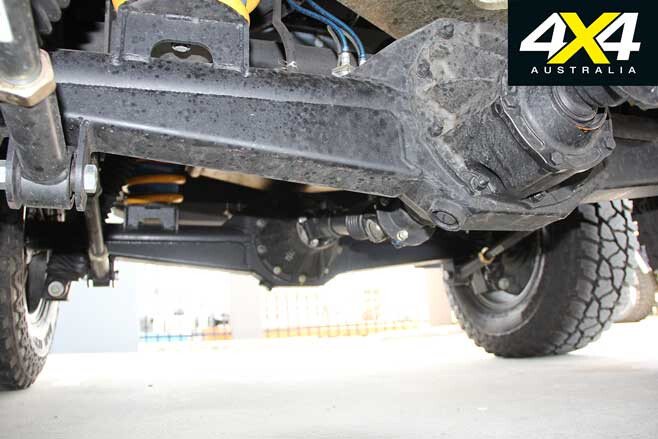
“The Rhino-Rack Backbone mount is installed but we still have to put the trays on, and then we can put the two iKampers on,” says Shane. “After that, all of the Lightforce products will go on – front driving lights, roof light bar, side lights and rear lights – and then we get to the electrical stage. We have five 60amp/h Revolution Power Australia Lithium batteries to go in the back, and a custom water tank in the back as well, and then we have four MSA 4×4 drawers and three MSA drop slides (one for the kitchen and two for fridges) to go in, and then it will be ready for the electrical fit-out.”
“The electrical fit-out will be huge,” adds Shane. “A Redarc RedVision system will be installed to control all the electrical items including the air compressors, water pumps, GME communications gear and all of the other electrical gear around the vehicle.”
While the Super Cruiser is still far from finished, Shane is already impressed by the way it looks, from the reshaped bodywork through to the Trig Point canopy. “The Trig Point canopy, I like the look of it,” says Shane. “It just looks like it’s supposed to be there. All the body lines look really good and the canopy fits really well with the body of the car. Before settling on the Trig Point, I spoke to Michael Ellem (Offroad Images), who has one fitted to his Land Cruiser 79, and it’s amazing that, considering where he’s taken it, it has been completely dust-free. The quality of the Trig Point is just next level, and I really like the profile from the rear, too.”
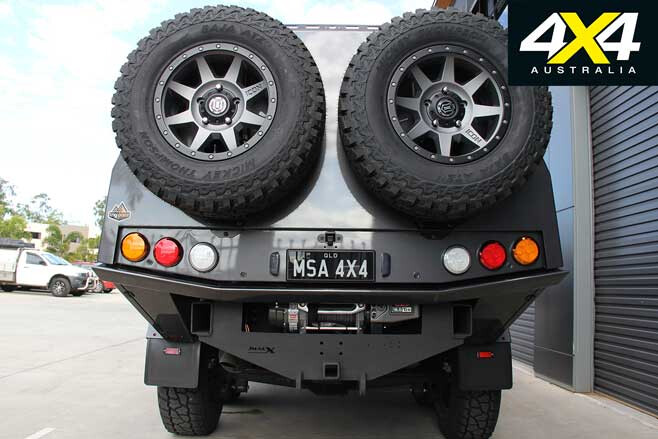
Shane is also impressed with the overall stance of the stretched Land Cruiser. “Most 200 Series Cruisers look too nose down, but with the Icon coil-overs, Mick McMillan wound them up 30mm and the vehicle sits reasonably level,” says Shane. “The rear is fitted out with Icon remote reservoir shocks and the JMACX variable-rate coils. JMACX offers a heap of suspension options depending on your requirements, but I wanted the variable rate springs so it would be a bit softer at the start of compression but still have good carrying ability when it’s loaded right up.”
“I can’t speak highly enough about the work that AEV has done,” says Shane. “I’ve watched over the whole project and it’s incredible, what they have done. I was concerned that it would look out of proportion and a bit odd, but once it has its roof racks on and all the other gear it’s going to look awesome. And it’s really cool that it drives so well; I was expecting a rough, horrible thing … something very military.”
ICON suspension and wheels
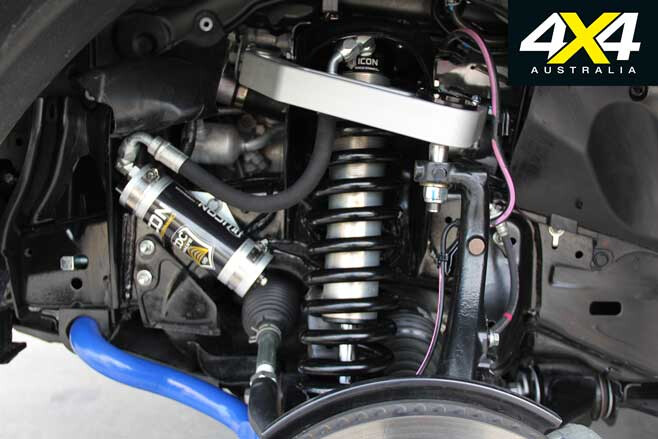
IN ADDITION to its trick JMACX 6WD system, the MSA 4×4 Super Cruiser has been equipped with top-shelf suspension components from US specialist Icon Vehicle Dynamics, which is distributed in Australia by Tough Vehicle Accessories. It also wears eight (six plus two canopy-mounted spares) Icon Alloys Rebound Satin Black 8.5 x 17 rims with a 25mm offset and a 1250kg load rating.
The front of the Super Cruiser sports a pair of Icon 3.0 Remote Reservoir CDCV (Compression Damping Conrol Valve) coil-overs and Icon billet aluminium control arms, while the rear has JMACX’s progressive-rate springs mated to Icon 2.5 Remote Reservoir CDCV shocks.
The Icon shocks feature corrosion-resistant plated bodies with one-inch shafts in the 3.0 Series and 7/8-inch shafts in the 2.5 Series, and they are fully rebuildable and re-valveable. A bolt-on design means they can be fitted without welding or cutting.
“The kit on Shane’s Cruiser consists of off-the-shelf items, but with three axles it’s obviously not what a standard kit would be,” explains Ashley Gibbons, director at Tough Vehicle Accessories. “It’s got the Icon 3.0 coil-overs in the front, so a much larger bore and piston size than what you would usually run on a 200 Series – you’d normally be running a 2.0 or a 2.5 – whereas because this is a very heavy vehicle we’ve gone with the 3.0 up front. It has remote reservoirs and compression adjustment, so Shane can really fine-tune it the way he wants it to be in terms of comfort and compliance.”
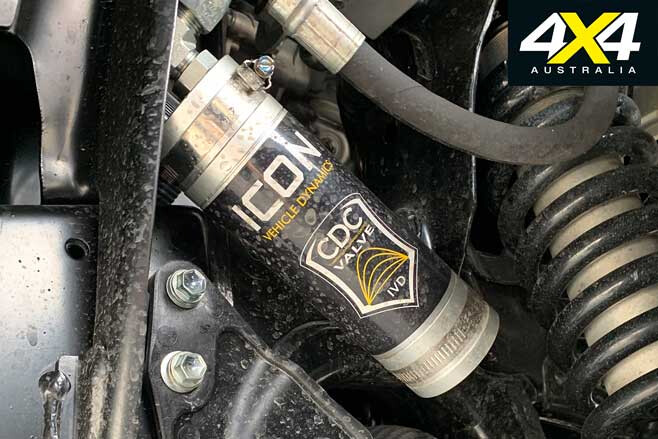
The compression damping adjustment is by way of a dial, so no tools are needed to make damping changes. The front coil-overs are also adjustable for height, but that is generally set prior to installation and then left alone. According to Shane, Mick McMillan set up the Super Cruiser’s front-end with 30mm of lift for a level stance.
“As well as the shocks, we’ve fitted Icon billet aluminium control arms at the front, which are adjustable at the mount so you can get the camber and castor correct,” continues Ashley. “And down the back-end it’s running 2.5 remote reservoir shocks – it’s got four of them being a dual-axle in the back – and all those shocks have compression adjustment as well.”
“It will take a little bit of tweaking once he plays with his loads to find the setting that he likes, or he might have two ‘go to’ settings, where he’s got one when the vehicle is loaded and one when the vehicle is empty,” adds Ashley.
The overall aim of the Icon setup is to provide the Land Cruiser with increased wheel travel and ride quality over stock, along with improved vehicle handling and decreased body roll. Going by Shane’s first drive impressions, it’s mission accomplished.
Update #5: The Final Cut
MSA 4×4’s stretched six-wheel drive ‘SuperCruiser’ is close to making its on- and off-road debut.
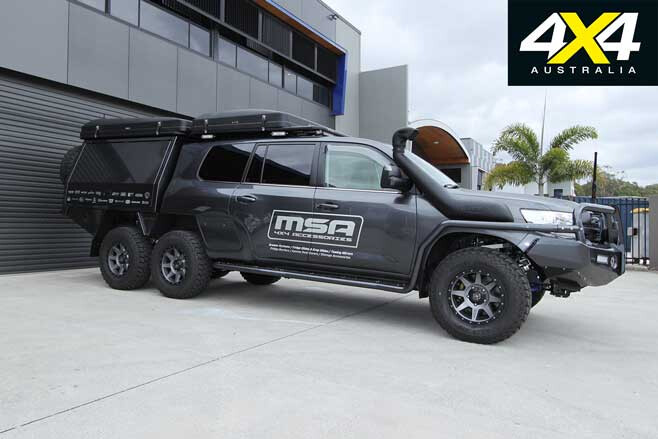
AFTER MORE than six months of hard slog, the finish line is almost in sight for completion of this epic 6×6 LandCruiser 200 build dubbed Project SuperCruiser by the bloke who dreamed it up, Shane Miles, proprietor of MSA 4×4.
Based on a brand-new 200 Series LandCruiser VX, the SuperCruiser has been stretched by Mick McMillan at Australian Expedition Vehicles (AEV), kitted out with a JMACX 6WD system, crafted by the bodywork specialists at David Taylor Spray Painting & Panel Beating, equipped with top-shelf Icon suspension and wheels, fitted with TJM protection equipment and a Trig Point canopy, had Warn winches mounted front and rear and a Brown Davis long-range fuel tank underneath, been tagged with new compliance plates, and registered as a heavy vehicle that can legally seat up to seven occupants.
Once the vehicle was registered Shane picked it up from AEV in Townsville and drove it down to MSA 4×4’s HQ on the Gold Coast, where the next (and final) complicated stage of the build recently commenced.
UNDER THE BONNET
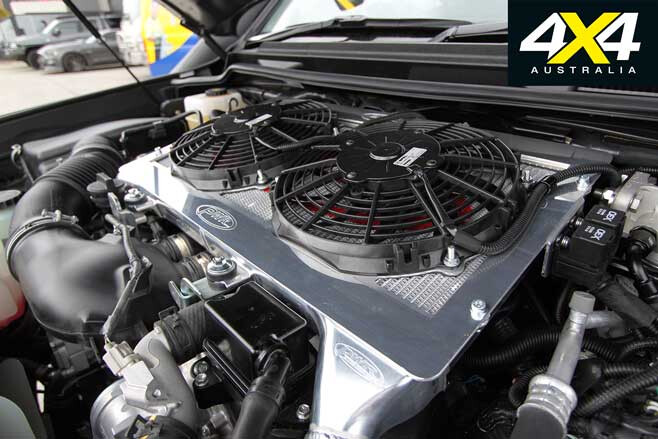
IN A QUEST for longevity, engine modifications have been limited at this stage to fitment of a PWR intercooler and a Safari ARMAX ECU system. The 4.5-litre twin-turbo-diesel V8 breathes through a Safari ARMAX snorkel and exhaust gases exit through a custom exhaust system.
“We ran twin 2.5-inch pipes back from the DPFs and they have nice, quiet resonators on there,” says Shane Miles. “It’s got the standard twin mufflers at the front and then twin 2.5-inch pipes all the way back to the twin resonators, and both DPFs have been retained.”
Take one look at the seven-metre-long SuperCruiser and you can imagine there’s a fair bit of added weight, but Shane says he’s quite happy with the performance it delivers, especially after fitment of the ARMAX ECU.
“We’re going to be around the five-tonne GVM mark when we’re full so, in a way, it will be like towing a ’van. So we’ve dropped a little bit of performance, but with the intercooler, the Safari ARMAX and the snorkel, it brings the performance right back up,” he says.
The ARMAX has several user-selectable modes to suit different driving conditions including towing and off-road driving, but perhaps of more importance are the built-in protection systems designed to prevent engine and driveline damage – the system constantly monitors the vehicle’s exhaust gas temperature (EGT) and if abnormally high the ECU decreases the amount of fuel injected into the engine, reducing load until a return to normal EGT levels.
The LandCruiser’s standard alternator has been flicked in favour of a fully sealed 220amp Rapid-Power alternator. This not only provides much more output than the OE 3094 unit, but, because it is fully sealed, it’s not prone to damage when driving in wet and muddy conditions as is the case with the vehicle’s original alternator, located in a vulnerable position at the bottom of the Cruiser’s engine.
Further engine protection is provided by Direction-Plus, which fitted a ProVent oil separator kit (catch can) and a ProVent fuel/water separator, the latter equipped with an alarm to prevent potentially costly engine problems.
UP TOP
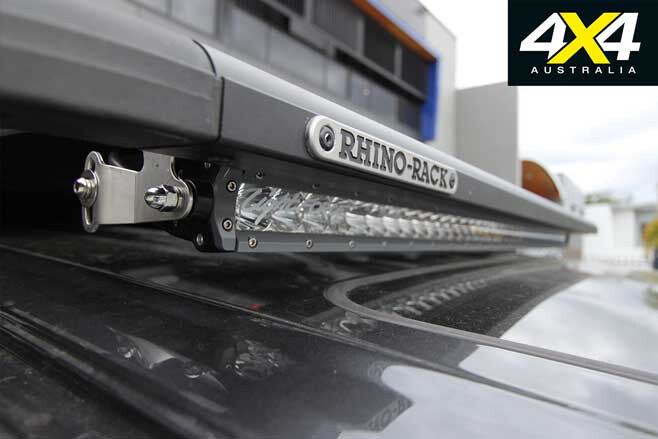
THE Rhino-Rack Pioneer Platform over the vehicle’s cab is affixed via a Backbone mounting system, and it sits close to the vehicle’s roofline for a low-profile look. There is, however, enough room for the Lightforce LED work lights on either side, as well as a Lightforce LED light bar up front.
The platform is also home to an iKamper Mini, which is a new pop-up tent from the manufacturer that’s still to be released to market, and it will be home to Shane and his partner Tameka when on big trips. It should be noted that all of this kit fits above the cabin without interfering with operation of the vehicle’s sunroof.
A much bigger iKamper Skycamp 4X is mounted to another Pioneer platform that’s bolted to the Trig Point canopy, and this will be home to the couple’s kids.
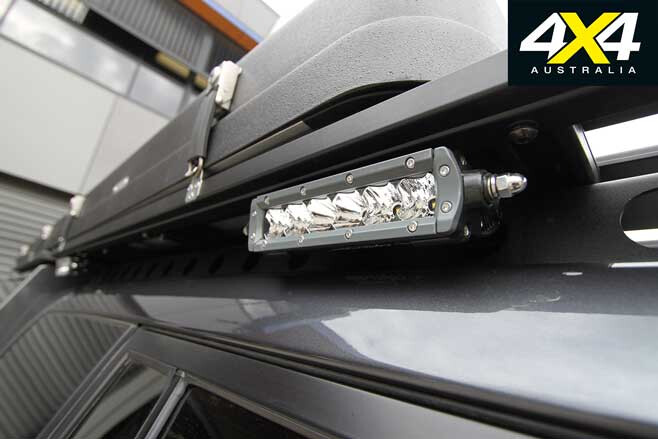
“When it’s open, it’s slightly larger than a king-size bed, so the kids, still being reasonably small, should all fit up there (they range in age from nine to 13),” says Shane, adding that if the oldest 19-year-old wanted to tag along on family trips he would these days likely do it in his own vehicle.
The rear Pioneer platform also provides a fitment point for a rear-facing Lightforce LED work light, a reversing camera and a Cel-Fi Smart Repeater Booster antenna on a neat ‘n’ tidy GME fold-down bracket.
UNDERNEATH
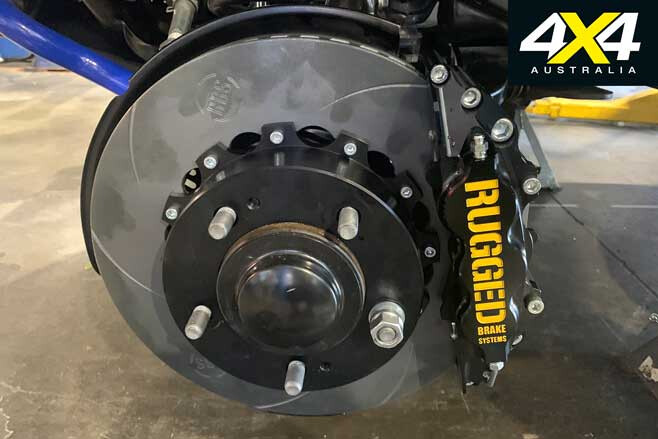
HAULING up the hefty SuperCruiser is a new brake package from Rugged Brake Systems. The standard front brakes have been replaced with the company’s Extreme Big Brake Kit which consists of slotted rotors designed specifically for four-wheel drive use and big six-piston calipers manufactured from lightweight aircraft-grade aluminium. The four brakes at the back have been upgraded with Rugged’s Blackline pad-and-rotor kit.
Traction comes courtesy of the Cruiser’s Mickey Thompson ATZ P3 tyres and locking diffs are fitted in all three axles.
“ARB Jindalee fitted a pair of Air Lockers,” says Shane. “They go in the front and the third diffs, because the centre diff (in the JMACX 6WD system) is already fitted with an Eaton mechanical soft-locker.” To prevent corrosion to the SuperCruiser, two ERPS (Electronic Rust Prevention Systems) have been fitted. “One runs around the chassis and there’s a separate one running around the vehicle’s cab,” explains Shane.
ELECTRICAL PACKAGE
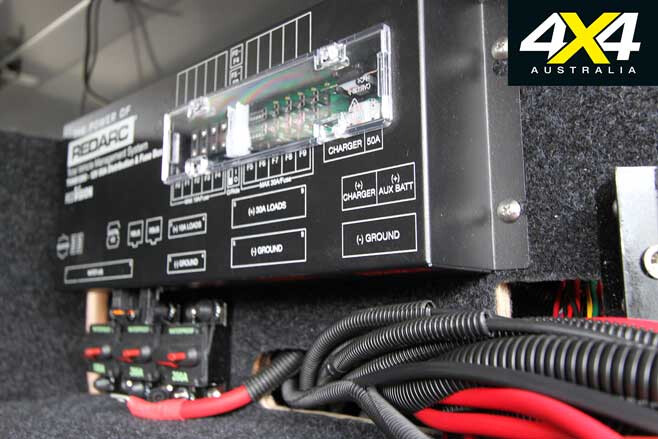
THE MSA 4×4 SuperCruiser will never run short of electrical power thanks to the fitment of six Revolution Power Australia 60amp/h slim lithium batteries, DC to DC charging and a Redarc RedVision system. “That gives us 360amp/h to run the two fridges, the lights and all the other stuff,” says Shane.
“We also put a second starting battery in – the newer 200 Series only has one starting battery where the earlier 200s had two – so we put the second battery back in there, and then the alternator leads to two BCDC1250 battery chargers to charge the six lithium batteries, and then there’s a Redarc Battery Management System (BMS) and the RedVision system, which is controlled via a touchscreen at the rear left of the canopy at a nice height and a nice angle.
“There’s also a 1000W Redarc inverter that leads to a double 240V power outlet just under the RedVision screen, and another double power outlet inside the cab, so we can charge camera batteries and stuff.”
OUT BACK
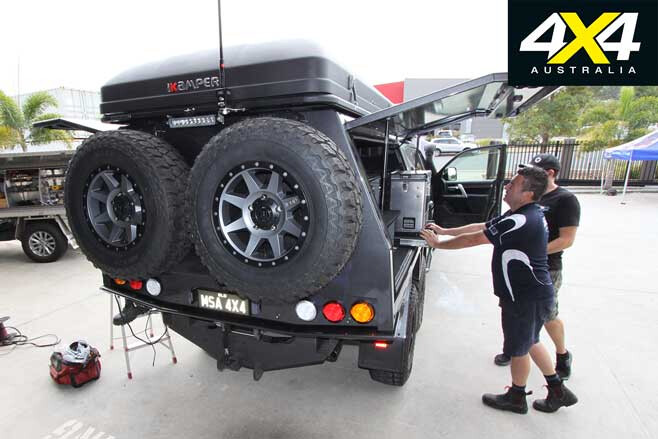
AS YOU’D expect, the attention-grabbing MSA 4×4 SuperCruiser’s Trig Point canopy has been kitted out with, you guessed it, a top-notch MSA 4×4 drawer system, and the company’s innovative drop-down fridge slides and fridge barriers.
“We put 1170mm drawers on the bottom and stacked 1030mm drawers on top of them,” says Shane. “On the driver’s side there are four drawers and a DS50 Fridge Drop Slide that will hold a SnoMaster 60L fridge, and this has one of our new Fridge Barriers that lines up perfectly with the top of the stacked drawers.”
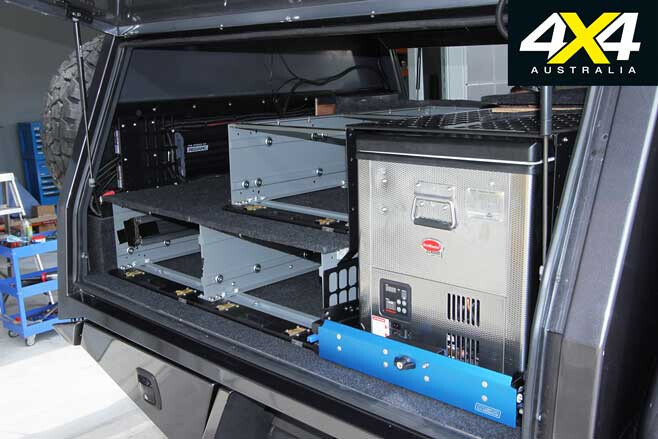
On the other side of the vehicle, there’s another Drop Slide, back-to-back with the other one, so the two Fridge Barriers line up at the front of the Trig Point … and then next to that is a Side Drop Slide, which houses a gas cooker with a barbecue plate on top. The cooker’s two gas bottles will be housed in a specially made storage box, and will be installed by a gas fitter, tested and signed-off.
“Across the top of the whole lot (the drawers and Fridge Barriers) is one big, flat deck for storing stuff, like bags and chairs and things like that,” adds Shane.
DONE AND DUSTED
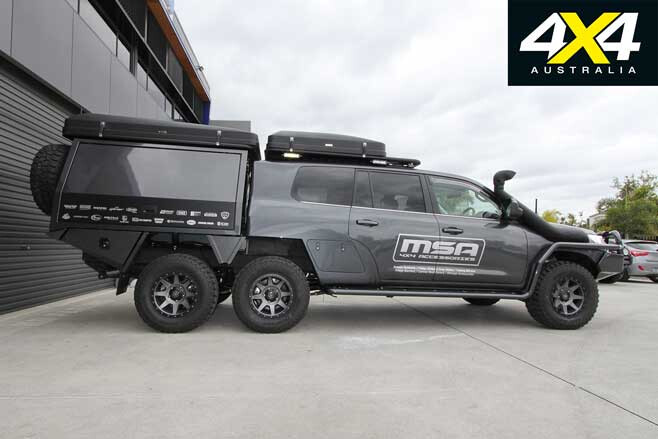
PROJECT SuperCruiser has taken significantly longer than expected but Shane Miles says he can now see light at the end of the tunnel, and can hardly wait to hit the road to get down and dirty in his new rig. His family is no doubt looking forward to getting away in their awesome new six-wheeler as well.
We’ve lined up a photo shoot with Shane and his mighty Toyota/AEV SuperCruiser in a few weeks’ time, so we’ll finally get to see how this six-wheeled beast performs on and off the road. Make sure you keep an eye out for a full feature in the next issue of 4X4 Australia.
The Readers’ Rigs feature in the November 2019 issue of 4X4 Australia features a several customised raised adventure-ready 4×4 rigs from our enthusiastic readers.
To get involved, post a pic and a description of your rig on our special site here or post it to our Facebook page and stand a chance to win an ARB High Output Air compressor valued at $335.
TOYOTA LC79 SERIES: MURAT HUSSEIN (4×4 Australia Readers’ Rigs Winner of the Month)
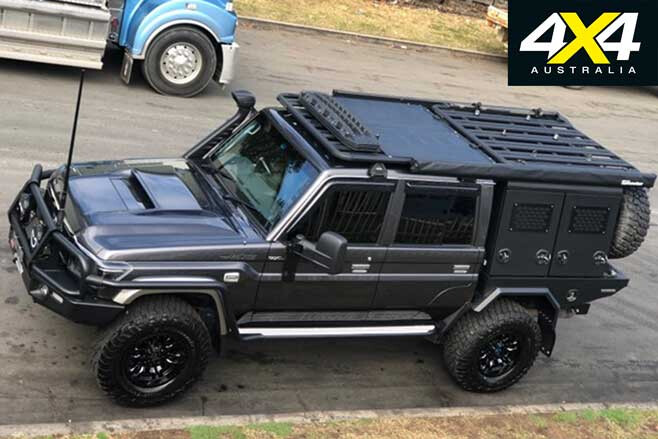
Mods include 2in OME suspension with GVM upgrade, rear JMACX diff housing with billet axles, rear JMACX high-clearance diff plates, Exedy heavy-duty clutch, JMACX upgraded brake booster, dual-battery setup, TJM winch, Outback Customs canopy and tray, ARB fridge on MSA 4×4 slide, two 100amp/h Revolution lithium batteries, two Rhino-Rack platforms w/ solar panels, and Sunseeker awnings. Future plans include engine work and a portal kit.
2003 NISSAN PATROL: PAUL THOMPSON
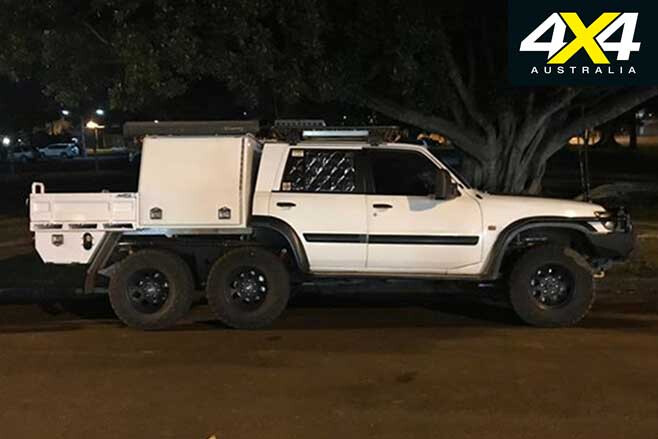
The Patrol has a five-tonne GVM and often tows a Bruder EXP-6 camper. Kit includes ARB Air Lockers, an Allison six-speed auto, Enerdrive lithium 200amp/h system, 60L SS water tank, 50L and 19L fridges, 3in Superior suspension gear, King front shocks, Wilwood front brakes, 10,000lb Warn winch (front), and 9500lb Warn winch (rear). I’m retired and travel full-time.
2014 CHEVROLET RG COLORADO: MARK ALBANS
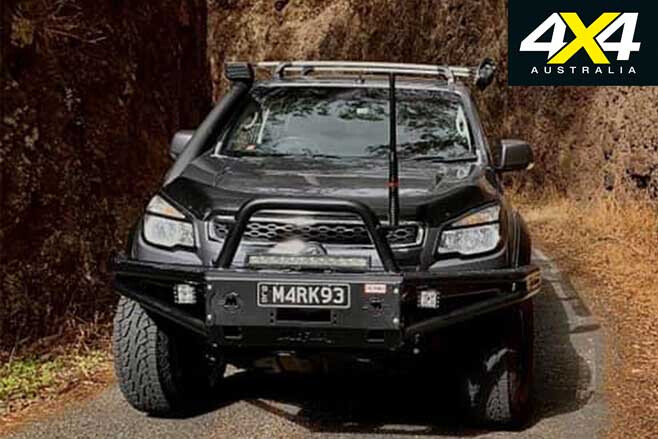
Tuned by WSM in Brisbane for 200hp and 656Nm, it features a three-inch exhaust, McArmor Fox Bar, STEDI C4 floodlights, a Hard Korr light bar, two-inch Outback Armor lift in the front with stock leaf springs in the rear, a dual-battery setup, a CFX50 fridge/freezer, and a Titan ute drawer in the tub. The best place I’ve taken it is Swan Gully.
TOYOTA PRADO: SEAN BOWDEN
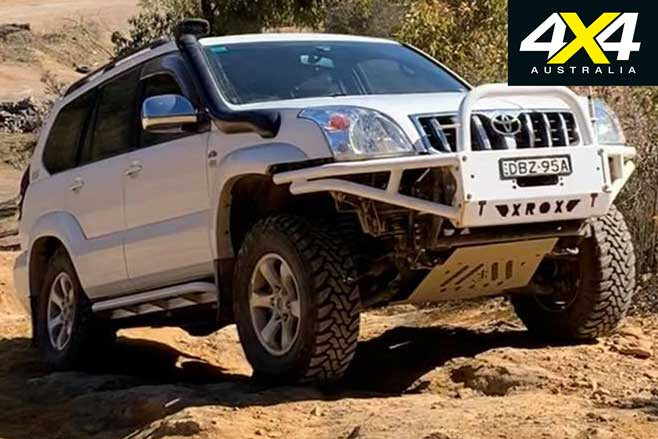
Picked up with 130,000km on the clock. Mods include BushSkinz bash plates, Southern Cross FabWorks rock sliders, Toyo Open Country M/Ts, Xrox winch bar and a GME UHF. I also have a Carbon winch and STEDI Type X Pro LED driving lights to be installed. Future mods include a Drifta drawer with EvaKool fridge, a Supa-Peg awning, and a Detroit auto-locker for the rear axle. Favourite spots include Abercrombie NP, Lithgow, Gardens of Stone/Baal Bone Gap, and many more.
NISSAN GU PATROL: TOMMY DELINAC
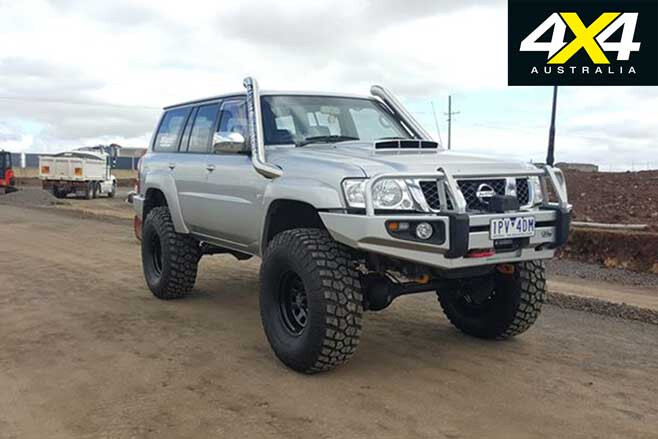
It’s running a six-inch lift with Dobinsons flexi-coils, six-inch Tough Dog big bore adjustable shocks, PSR upper control arms, BFGoodrich 40×14.5R17 KM2s on 17×9-30 Dynamics, Fairline Fibreglass bonnet scoop, and Fabwitz Industries twin four-inch stainless steel snorkels. It’s about to have a heart transplant to a stroked 6.0L turbo.
TOYOTA N70 HILUX: MATT APPLEBY
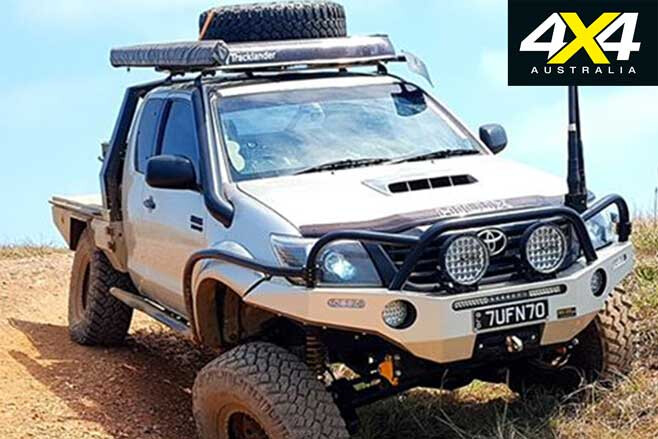
Kit includes Fox 2.0 10-inch RR coilovers with King springs (front), Aisin manual-locking hubs, TJM Pro Lockers, 4-link (adjustable custom links), Design Fab swaybar, 13-inch Airbag Man airbags, Fox 2.0 12-inch RR adjustable shocks (rear), and GQ disc brake rear conversion, four-inch Phat Bars snorkel, transfer box bash guard by PSR, engine tuned to 187rwhp/610Nm, Scott’s Rods three-inch exhaust, Forefront Industries top-mount intercooler, and a Runva 11XP premium winch. The Muzzbar, custom tray, front scrub rails and sliders are by SEQ Fabrication.
When I arrived, the air was so still I could hear the distant call of crows from kilometres away, and there was no one around as I wandered about the deserted railway station in the late afternoon light, feeling like the last man on earth.
As day turned to dusk, and then twilight, I saw a light in the distance. A train was coming, the intensity of its headlight growing and the high-pitched hum of the loco on the tracks becoming a roar before the heavily loaded freight thundered through the station at close to 100km/h, leaving a rush of air in its wake before silence eventually resumed.
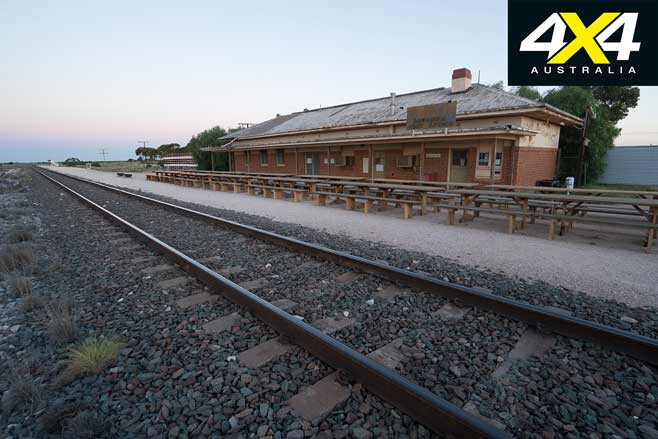
With a new moon, the starlight was brilliant, so I set up my camera for a time-lapse, retired to my swag and fell asleep under the spectacular star show above me. At midnight, I was stirred by a wind that had come up. Rawlinna is in a basin on the edge of the Nullarbor Plain and as the wind blew over the flat land it quickly increased to a gale, becoming so strong I had to take my camera from the tripod … and it howled all night. I was later told Rawlinna means wind.
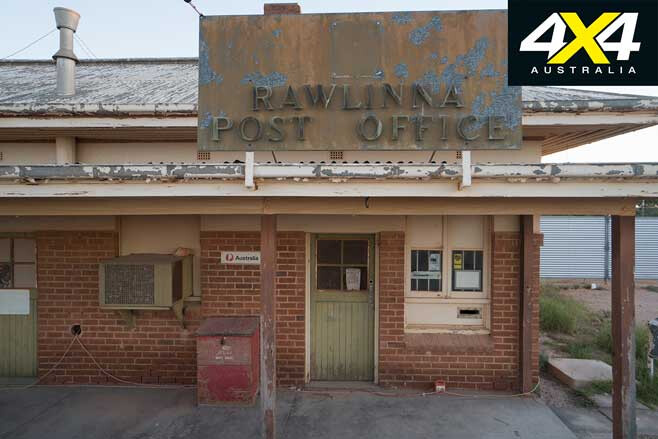
By dawn the air was still again, and I explored the station. The old post office and storefront looked like they could still open for business; they were built to last out of red brick and corrugated iron. The post office isn’t manned but apparently it’s still possible to post a letter here, as there’s a box and ‘6434’ postcode.
Across the tracks the tall water tower still stands but has certainly seen better days. These magnificent towers are striking features at many of the old sidings across the Nullarbor. During construction of the railway this place was one of the main depots, and it was named Rawlinna in 1915. Rawlinna also played a part in the construction of the Eyre Highway in 1941-42 for supplies arriving by train.
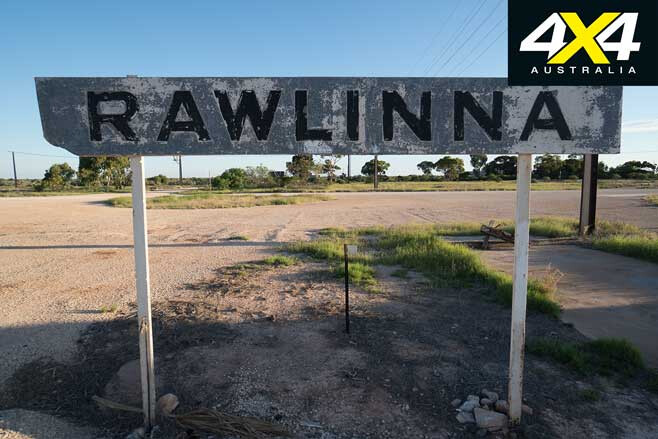
In 1901, when Australia was federated, Western Australia relied on the sea for transport. It was agreed a railway would link Western Australia to the other states and this was legislated in 1907. It was to join Kalgoorlie and Port Augusta by standard gauge and construction began at each site in September 1912, with work progressing quickly before it was joined at Ooldea on October 17, 1917. The Trans Australia Railway recently celebrated its 100-year anniversary at Ooldea.
When finished the distance was 1692km and the water to power the locomotives was provided by bores, however much of the water still had to be carried by the trains.
In the days of high track maintenance Rawlinna had a regular population with a school, the remains of which are on the edge of town. There used to be gangs based in Rawlinna, but then the track’s sleepers were changed from wood to concrete and regular maintenance wasn’t required. Trains also became longer with greater range, so today the town is virtually deserted, except for a ’roo shooter and some regular railway workers.
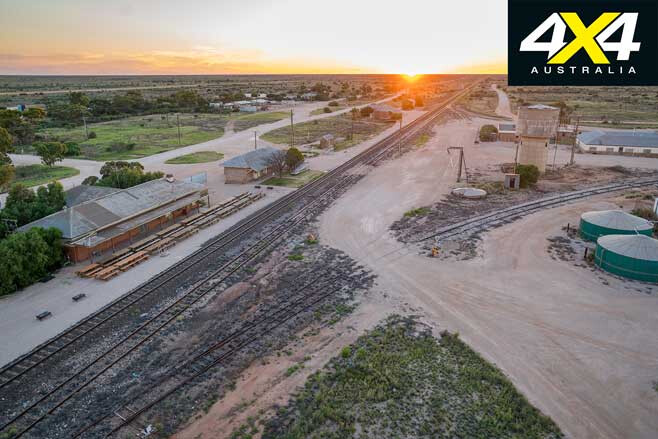
Close by is Rawlinna Station – one of the largest sheep stations in Australia. With an area of one million hectares (2.5 million acres), it can take up to eight hours to muster a paddock and the station can hold up to 80,000 sheep. In 2018 there were 64,000 sheep sheared for a wool clip of 1500 bales. Rawlinna is also the site of the Loongana Lime Mine, which is only a few kilometres from town and clearly visible. There are power lines heading out to the mine and workers’ sheds scattered about. Rawlinna also has a huge loop track. Some of the trains that head through the station here are 3km long.
Rawlinna is on the western edge of the Nullarbor, 910km from Perth, and heading east it’s flat for 660km until you reach Ooldea. Along this stretch the track runs dead straight for 478km, making it the longest straight section of track in the world. This is the true Nullarbor, where the horizon surrounds you and there are just occasional stands of trees.
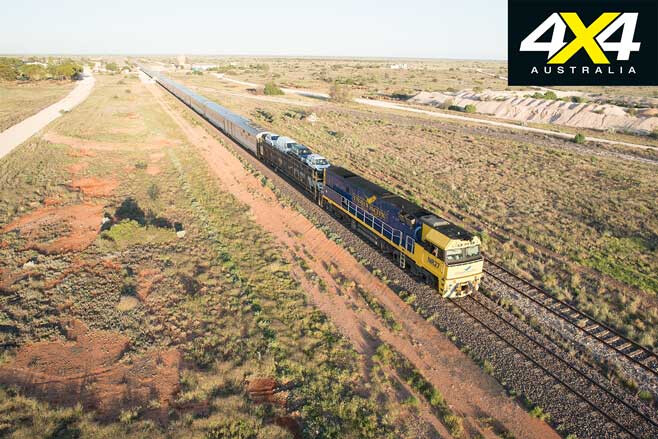
The permit-only unsealed road that runs beside the railway is for maintenance workers. You can access certain sections from the highway at Cook and Ooldea, and you can also drive out to Tarcoola from the Stuart Highway. I’ve travelled in both directions across the Nullarbor on the Indian Pacific, and looking out across the endless plain is mesmerising on this amazing train journey.
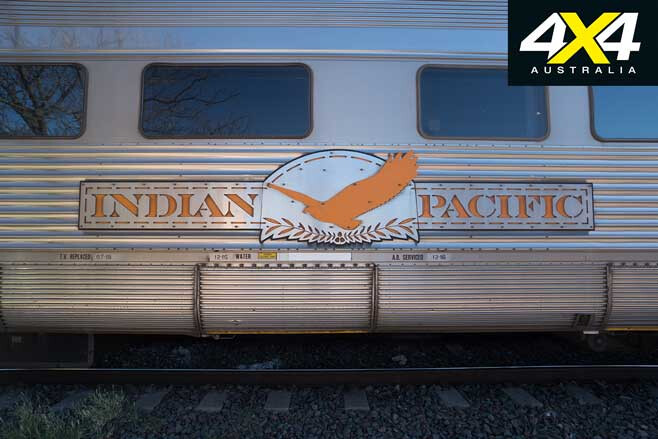
Just after sunrise at Rawlinna I glimpsed the Indian Pacific’s light as it headed towards me from the west. The train had left Perth a day prior and travelled through the night. It slowly pulled into the station, a single blue and yellow locomotive with an eagle emblazoned on its front towing a kilometre of gleaming silver carriages.
Eventually the passengers emerged; the two-hour morning tea stopover at Rawlinna is a regular schedule for eastbound passengers. Westbound passengers also stop here for an evening meal under the stars. If you are here, it’s a great opportunity to see the train pulled up in the middle of nowhere.
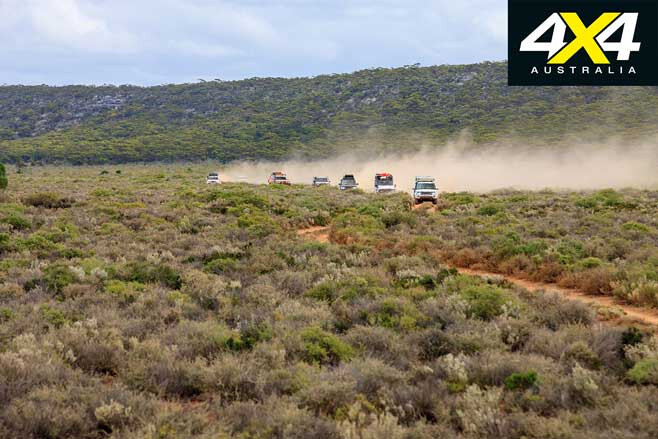
I had followed the same route as the train and driven the 375km unsealed Trans Access Road from Kalgoorlie out to Rawlinna. The road passes by mines and then through tall woodlands, and there are glimpses of the railway along the way. It’s a rough track in places and any potholes are filled with sharp stones, so be careful as this road can be a tyre killer. On occasions I left the road completely to bypass long sections of these stones. Close to Rawlinna the woodland turns to scrub and then flat limestone.
There are no services at Rawlinna, no shops nor accommodation, so you need to carry all necessities including fuel and water. As a result, the nights out here are magical; there’s no glow from any external lights and you can see the headlights of the trains coming from many kilometres away.
I took the Haig Road south to the Eyre Highway, which starts about 70km to the east of Rawlinna, at what used to be the Haig Siding. The 100km track to the highway is dirt with lots of gates, and this area quickly becomes impassable after rain. During the day kangaroos rest under low bushes on the side of the track.
Once you reach Cocklebiddy you feel like you’re back in the real world. There’s a shop, accommodation and a pub … with great food. You can also fill your tank and water bottles, and have a shower.
There are a few attractions around Cocklebiddy, so it’s worth staying around if you have the time. There are about 20 huge caves on the Nullarbor, which is the largest karst (limestone) area in the world. If the rainfall was higher there would be more extensive weathering and the landscape wouldn’t be so flat.
Many of the caves have lakes of clear water and are frequented by divers. The track to Cocklebiddy Cave is 12km west of Cocklebiddy and 10km north. The cave has been explored underwater for more than 6km, and while you can see the entrance, access is closed to the public.
There are also blowholes near the highway close to Cocklebiddy – these amazing holes blow air when the cave breathes as air pressure falls and rises. Air movement in caves has been measured at about 70km/h, and smaller caves breathe air with more force.
To the east is the Eyre Bird Observatory, established by Birds Australia in 1977. It’s in the old telegraph station building that was built out of limestone in 1897, which was left as a ruin in 1930 and restored in 1977. You can stay overnight or day visit for a fee, but you must contact the caretakers and book ahead. The turnoff is 17km east of Cocklebiddy, and it leads to a scarp, with the last part of the track descending a cliff and is 4×4-access only.
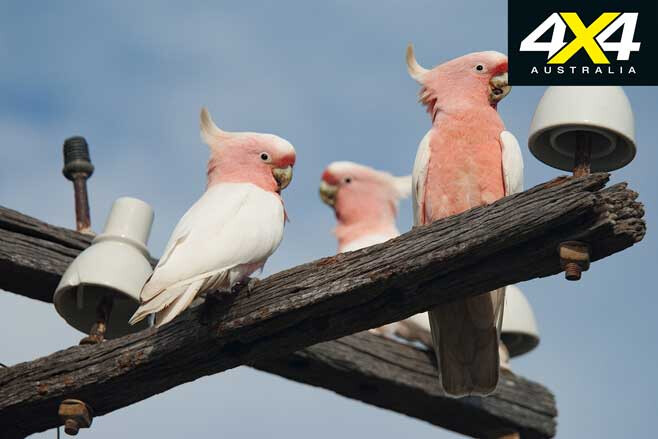
The bird observatory is obviously popular among twitchers, and around the station are many Major Mitchell’s cockatoos, along with a huge range of other bird species in the area. There are also possums, kangaroos and other fauna.
The observatory runs courses at different times of the year, including one on bird photography. There is also a museum with amazing collections including whale bones and old tools and gear that were used by the original settlers. You can walk down to the beach from the telegraph station, and the coast is beautiful with pure white dunes.
South of Cocklebiddy is some stunning coastline, much of it part of the Nuytsland Nature Reserve which covers more than 500km of coast. There are tall dunes, cliffs, coves and unique vegetation such as rare species of banksias. The wide variety of wildlife you’ll see includes eagles and dingoes, and offshore there are whales, seals and dolphins, while beneath the waves are reefs and crayfish. The one thing you won’t see too much of is people.
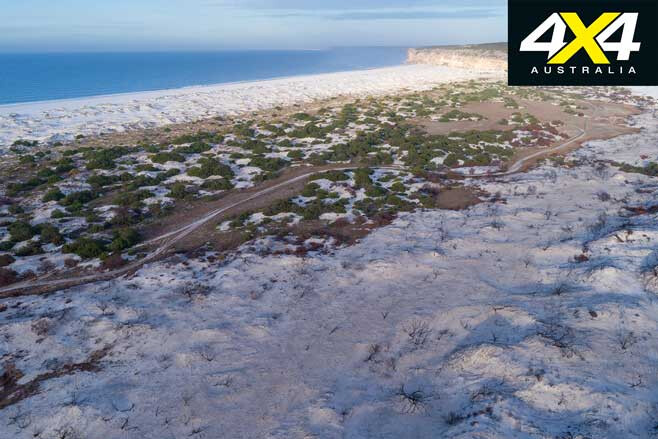
If you head down to Twilight Cove there’s a good chance you will want to stay for a few days, so head off with this in mind. The track to Twilight Cove starts behind Cocklebiddy Roadhouse and is only 26km, but it’s rough rock in places. There are also soft sand sections, so you’ll have to reduce tyre pressures. The track is also narrow and heavily vegetated, so it can scratch your vehicle. It may also be impassable after rains, so come prepared and bring recovery gear.
When you get close to the coast the track traverses a major dune system. In 2017 a huge bushfire ravaged these dunes and trees were burnt out for as far as you could see. On the last section before the beach the track gets soft and you have to traverse steep sand hills.
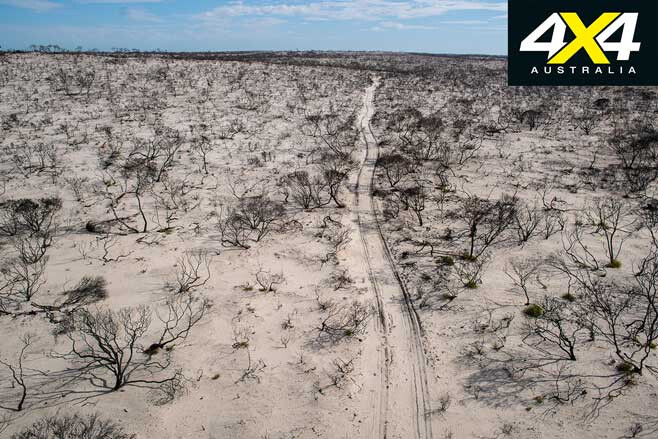
There are high dunes, and to get onto the beach you have to cross over them. It’s a long, open beach and there are nice sites to set up a camp among the dunes. Close to the water the sand is very soft, and the waves break on the shore forming deep gullies, so it can be a treacherous beach for driving on in anything but very low tides and swell.
At the western end of the cove are the magnificent Baxter Cliffs; these 70 to 100m spectacular cliffs have amazing bands and patterns in them. They stretch continuously for 190km, from past Israelite Bay to the west, and at Twilight Cove they head inland all the way to Eyre. The Cove was named after a ship called Twilight that was wrecked here in 1877, when the Telegraph line was being built. There are also signs of the past including the remains of old telegraph poles.
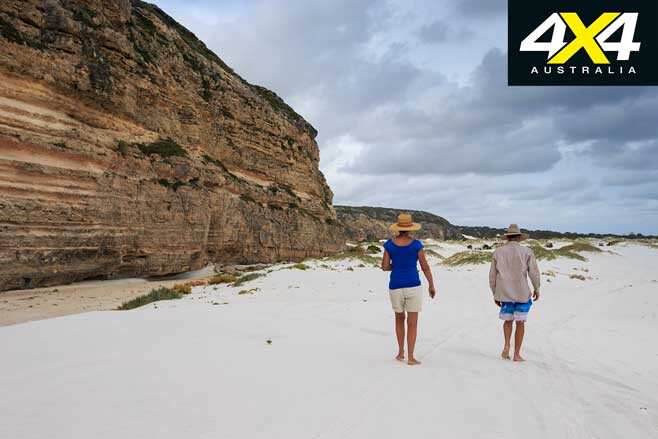
If you like the isolated beach life, this is a great spot. I’ve been stopping here for 20 years on my regular trips across to WA. There is terrific beach fishing, it’s good for a swim in the warmer months, and the photography is great. Who doesn’t love a magnificent isolated beach?
THE Mercedes-Benz G-Professional wagon and cab-chassis range has run its course in Australia, with the brand’s local arm pulling the model from its line-up. To get one, you’ll need to scoop one of the few that remain at dealerships.
The G-Pro was built on the older, live-axled W461 platform – think: square, small cabin – but prospective buyers will now have to look at the second-gen G-Class (W463) if they want to own their own Gelandewagen, with M-B Australia currently only offering the V8-powered 430kW/850Nm G63.
Still, there are a few G-Pros residing in dealerships across the country, with Mercedes-Benz Australia’s media relations and production communications manager, Ryan Lewis, telling us that both body styles are still around for the time being, with the majority being in cab-chassis configuration.
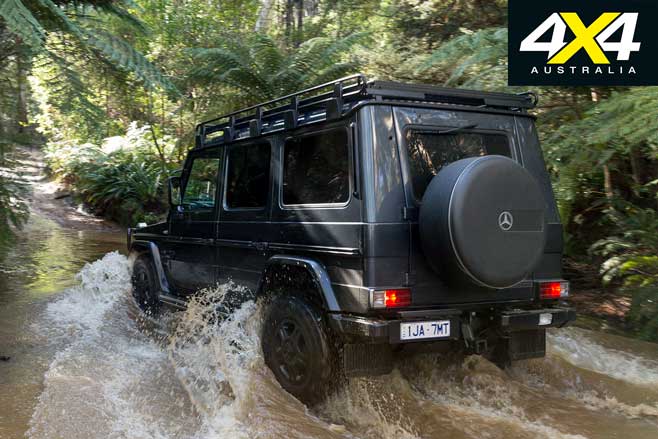
When asked of a successor to the G-Professional, Lewis said Mercedes-Benz Australia would be interested.
“There’s nothing to announce regarding a successor on the new platform at this stage,” he said, “but if a new G-Pro is confirmed we would certainly be interested.”
The G-Class is a true off-roader with almost 40 years of military heritage, and the G-Pro came about as a military vehicle for the civilian market, created courtesy of a supply contract between Mercedes-Benz Australia and the Australian Defence Force.
Powered by a 3.0-litre V6 turbo-diesel engine the G-Pro can only muscle up 135kW (at 3800rpm) and 400Nm (at 1200-1600rpm), and it sends it through a five-speed automatic transmission.
Despite steep price tags – the G300 cab-chassis is priced at $119,900; the wagon at $109,900 – the utilitarian vehicles are quite basic in their design, lacking the luxury of a car you’d expect with a price tag greater than $100K.
The 16-inch alloy wheels are wrapped in all-terrain rubber; the floors are lined with rubber mats and no carpet; and the dash layout is old-school. Still, they’re a solid, reliable off-roader, with triple diff locks and four-wheel coil suspension … you can thank their military heritage for that.
CREATING an interesting and unique custom 4×4 vehicle to promote your business at shows and on the tracks is getting harder all the time.
Like how many catalogue-built Ford Rangers and Toyota Hiluxes have you seen? And chopped, stretched and portal-axled LandCruisers are a dime a dozen these days. Standing out from the crowd requires something different, and that can often mean getting your hands on the newest vehicles as they come onto the market.
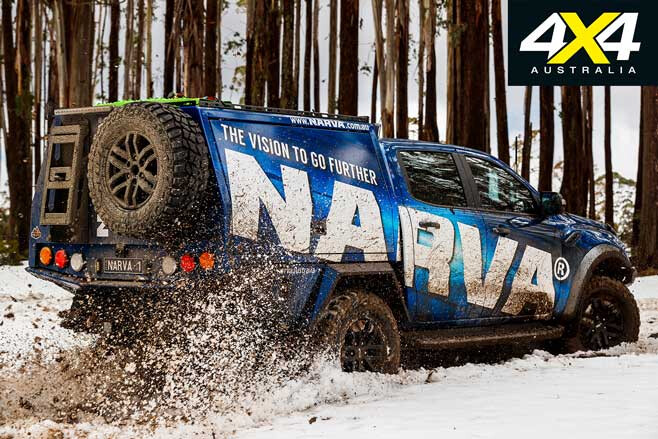
Brown & Watson marketing manager Jake Smith went through the options when considering the build for his new company car to promote B&W’s Narva brand.
Jake looked at fully kitted Cruisers and American pick-up trucks during his deliberations before settling on the then yet-to-be-released Ford Ranger Raptor, knowing that the off-road-focused ute would be hot property in 2018 and onwards.
Being one of the first to kit up any new model opens up the challenges of getting the right accessories, as many aftermarket companies won’t have them readily available yet and they could take months to engineer and make them.
Jake’s previous work vehicle was a regular PX Ranger, so he had a pretty good idea of what he wanted for his Raptor but, despite being based on the Ranger, the extra width of the Raptor meant some accessories wouldn’t be a straight bolt-on fit.
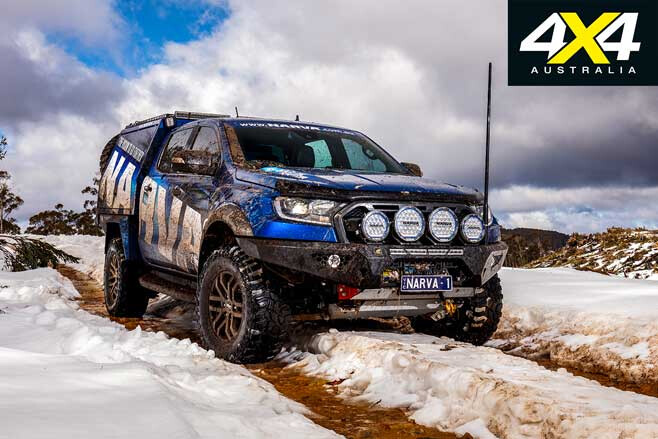
The Raptor presents another interesting conundrum as it already comes fitted with some of the best off-road suspension and tyres from the factory, but, again, Jake’s plans called for alternatives. He wanted a full-service body fitted to the back of the Raptor, but the wide wheel track and reduced load capacity of the Ford Performance vehicle required some very careful planning.
“I chose a canopy from Trig Point as it’s one of the lightest in its class, but super strong,” says Jake. “That was very important considering the Raptor doesn’t have a great load-carrying capability.”
The aluminium Trig Point canopy mounts straight to the chassis and doesn’t sit on a tray, which in itself is a weight saving over tray-mounted units. It required wider wheel arch flares to cover the wider track and has an inbuilt 70-litre water tank and integrated rear protection bar. Naturally, it’s fitted with Narva LED tail-lights and is chock-full of Narva and Projecta electrical goodies.
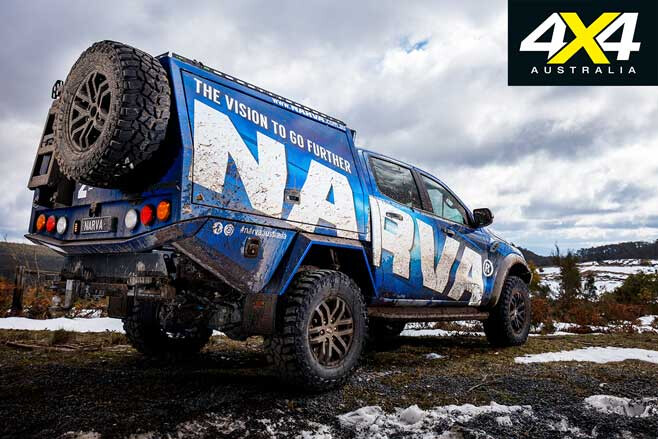
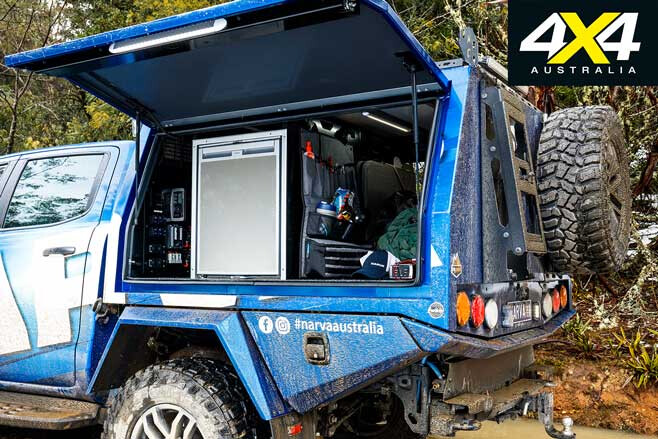
The 12-volt setup starts with a Projecta 25amp DC/Solar Lithium dual-battery system feeding a 100 amp lithium battery and a 1000W Projecta pure sine wave inverter. Projecta Smart Battery Gauge and Low Voltage Disconnect units help manage the power storage, while a host of USB, Anderson and Merit power sockets are fitted to power various accessories. The power management system is mounted to the headboard inside the canopy.
Some of the accessories permanently mounted inside the canopy include full LED strip lighting and an 80-litre Dometic upright refrigerator.
“I chose the stand-up fridge due to its light weight,” informs Jake. “It weighs no more than 25-odd kilograms compared to your standard 60L fridge and drop-down slide, which combined would weigh in at closer to 80kg.”
Despite the constant attention to weight-saving in this build, the additions of the canopy and its accessories, a 150-litre Brown Davis long-range fuel tank, a steel bumper and winch upfront and additional lighting, the Raptor was on its weight capacity, so upgrading the factory-fitted Fox suspension was needed.
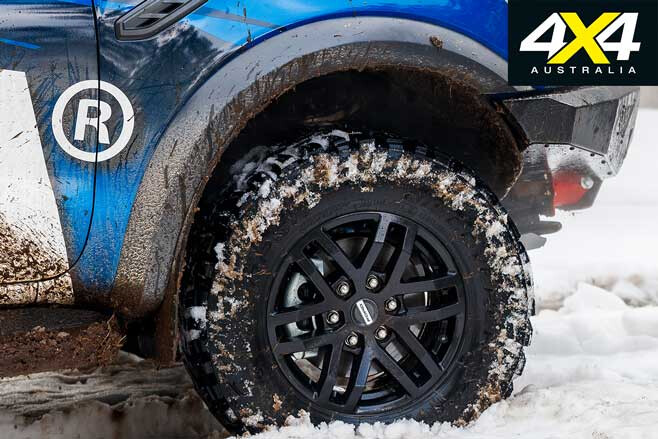
CalOffroad helped here, supplying coil springs which are 100kg constant rate and 20mm taller in the front and 400kg constant load and 30mm taller under the rear. The factory Fox shock absorbers are retained while the original tyres have been replaced with larger 305/65R17 Cooper STT Pro rubber.
As Narva is best known for its automotive lighting, it should come as no surprise to find that Jake’s Raptor is loaded with extra LED lights. Starting at the front of the car, concealed in the Offroad Animal bumper are an Explora 22-inch single-row LED light bar and Narva 90mm DRL/Fog lights, while on the bar are a pair of Ultima 215 and Ultima 180 LED driving lights.
Up on the roof is a pair of Explora 22-inch double-row LED light bars shining forwards, while a duo of work lamps shine to the sides, and there’s another LED light bar illuminating to the rear.
You might think that Jake is afraid of the dark, but you need to remember that this vehicle is a rolling showcase of the products he represents. We’ve got to say that with its bold sign-writing that complements the factory Ford blue, the Raptor project represents the Narva brand well.
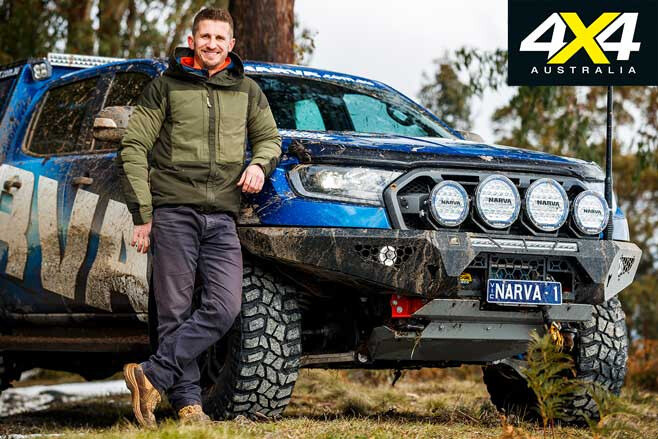
We’ve seen plenty of Raptors wearing fibreglass/plastic canopies over the factory ute tub, but this is the only one we’ve spotted with a full custom body fitted to the back, so it certainly catches attention.
Jake says he’s always being stopped by people wanting to check it out and wanting to know more about the canopy, and he never misses a chance to talk up the lights and other Narva products.
Jake also says he couldn’t be happier with the way his company car has turned out. “If I had all the money and was building it for myself, I wouldn’t change a thing.”
A TOTAL of 1197 converted RAM 2500 and 3500 pick-ups have been issued with a recall notice due to an issue with the vehicles’ steering system.
According to the ACCC recall report, the “drag link jam nut may loosen and may result in the drag link separating from the adjuster sleeve”.
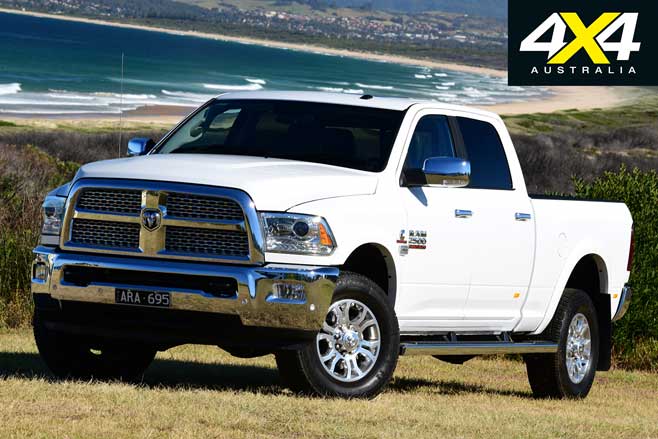
“If the drag link separates from the adjuster sleeve, the steering may become difficult to operate or potentially fail, increasing the risk of an accident or injury to vehicle occupants and other road users,” the recall report says.
The affected vehicles were supplied nationally by American Special Vehicles and sold via authorised RAM dealers between January 1, 2015 and December 31, 2018.
For a full list of affected vehicles, click here: https://www.productsafety.gov.au/system/files/VIN%20list_9.xls
Owners of affected vehicles will be contacted via mail, advising them to contact their closest RAM dealer to organise free reparation.
After a number of unfortunate setbacks in rally events in South Africa and Morocco, Fernando Alonso scored his first rally podium – a third place finish – at the recent Al Ula-Neom cross-country rally in Saudi Arabia.
Alonso and navigator, five-time Dakar rally motorcycle champion Marc Coma, started the 765km rally strong with a fourth-place finish in the first stage, trailing the leader by 7min 24sec.
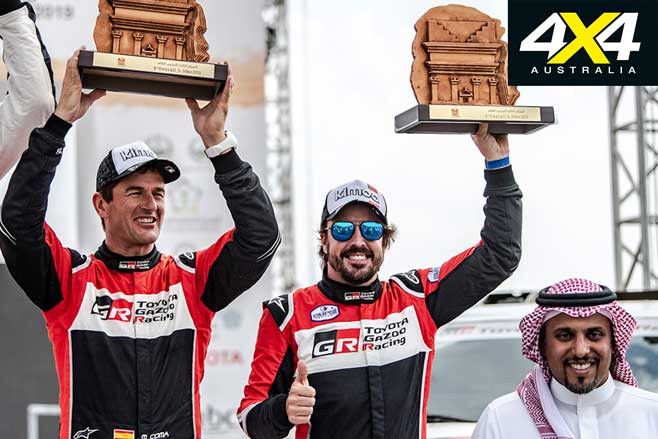
The duo managed to maintain their position in the second stage despite their V8-powered Toyota Hilux rally ute picking up a puncture and dropping behind the leader by an additional 7min 35sec.
In the penultimate stage, Alonso clawed back a position with a third-fastest overall finish, and successfully managed to secure it in the final stage with a total time of 6 hours, 52 minutes and 12 seconds, 16min 20sec behind the leader.
“[Fernando and Marc] raced a brand-new car here, which is earmarked for the Dakar Rally, so they had to balance their pace with the need to preserve the car,” said Glyn Hall, team principal.
“In the end, they achieve a maiden podium against local crews who know the terrain very well, which bodes well for January’s Dakar Rally.”
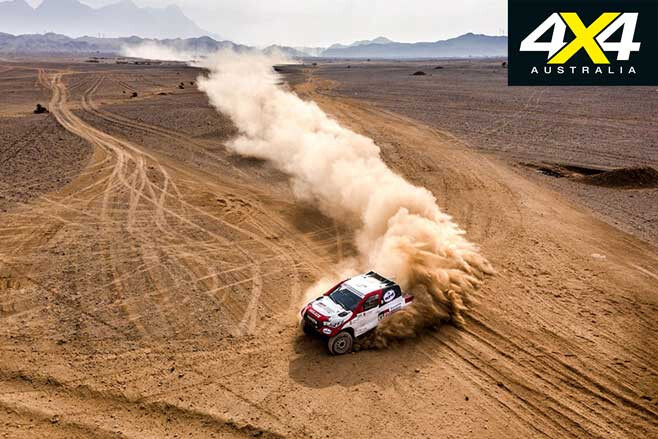
The Al Ula-Neom cross-country rally was the final competitive stop for Alonso and Coma to familiarise themselves with their Toyota Gazoo Racing Hilux. The pair will continue private testing before joining their fellow teammates at the 2020 Dakar Rally next January.
Prior to Al Ula-Neom, Alonso has had a rocky start in acclimatising himself to the rigours of rally raids, despite returning competitive times.
At his debut in the Lichtenberg 400 in South Africa, Alonso rolled his Hilux while running third in the initial stages and later hit a flock of birds, dropping him out of contention. At the Morocco Rally, Alonso hit an unmarked ditch, breaking his suspension in the process which dropped him to 27th in the standings despite being amongst the top 10 quickest competitors throughout the rally.
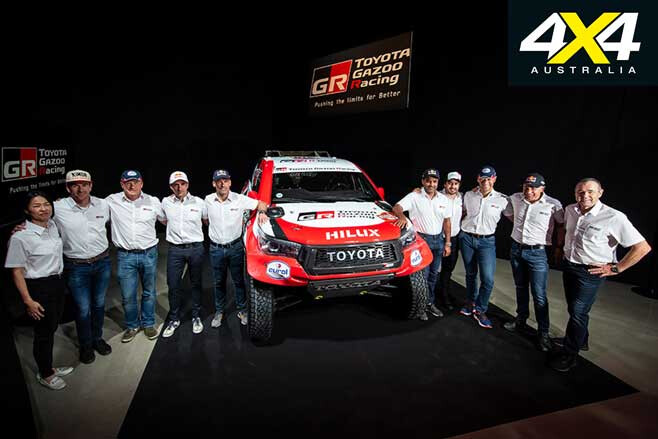
Alonso and Coma will join three other crews from Toyota Gazoo Racing at the Dakar Rally in Saudi Arabia. For the 2020 Dakar rally entry, Toyota Gazoo Racing has fielded a team that features a broad mix of Dakar champions, veteran rally-raid specialists and relative newcomers.
The 2020 Dakar Rally will take place solely in Saudi Arabia, with the event starting on January 5 in Jeddah and finishing in Al-Qiddya on January 17.
IT’S that time where we round up the best custom 4x4s of the year and hand the responsibility over to our readers to vote for a winner.
The December 2019 issue of 4×4 Australia features an eclectic selection of custom fourbies we’ve analysed and ogled throughout the year, with more than 20 pages dedicated to the top class of 2019. Vote for a winner from November 14 and you could be the lucky winner of a Maxxis Tyres voucher valued at up to $2000.
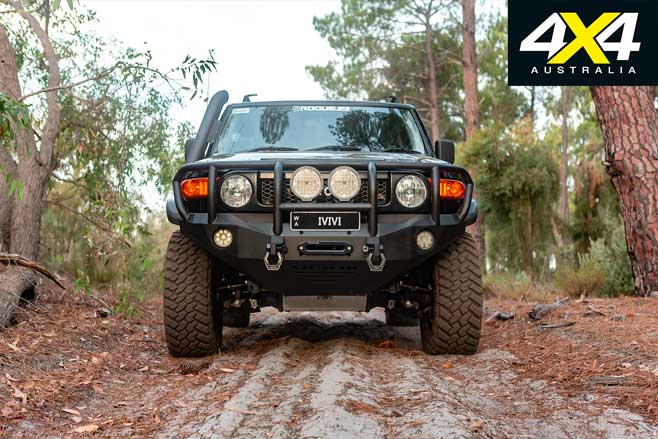
It wouldn’t be the December issue without the annual Christmas Gift Guide, where we’ve listed a heap of great stocking-stuffing ideas from a number of aftermarket companies: Ironman 4×4, MSA 4X4, Thunder Auto, Clearview Accessories, HEMA, MaxTrax, Narva, Projecta and Lightforce.
But wait, there’s more. Matt snared the keys to Harrop’s supercharged Ram 1500 and hit the hills in pursuit of an adrenaline kick. Performance is effortless, but it drinks more than the 4X4 crew around a campfire.
MSA 4X4’s ‘SuperCruiser’ 6WD build has finally wrapped up, with the beast of a thing finally transformed into an epic go-anywhere people mover. We finally get a look at how it tracks off-road.
Complete coverage of our desert drag race is also in this issue. We lined up seven dual-cab utes on a dusty claypan and pushed the pedal to the metal – first to reach 800 metres wins.
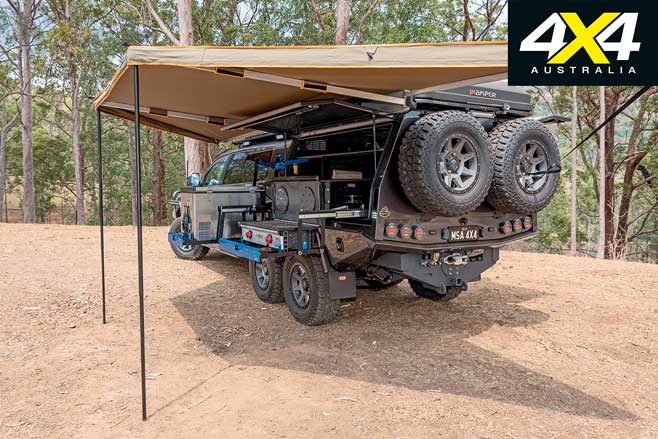
WHAT ELSE IS THERE? – JL Wrangler Rubicon V6 hits dirt – New Colorado LSX in the Flinders. – R&R along the Murray River. – Four-wheeling in Lightning Ridge. – Patrol, Ranger and Hilux in the shed. – Readers Rigs, columns, product reviews and heaps more.
The December 2019 issue of 4X4 Australia is out November 14.
SCUDERIA Cameron Glickenhaus (SCG), a boutique supercar manufacturer, will unleash its SCG Boot to battle the new Ford Bronco in Class 2 of the Baja 1000.
The 650hp (485kW) SCG Boot has undergone more than 1600km of hard off-road testing, with SCG claiming that includes more than “700 miles in Johnson Valley, California”.
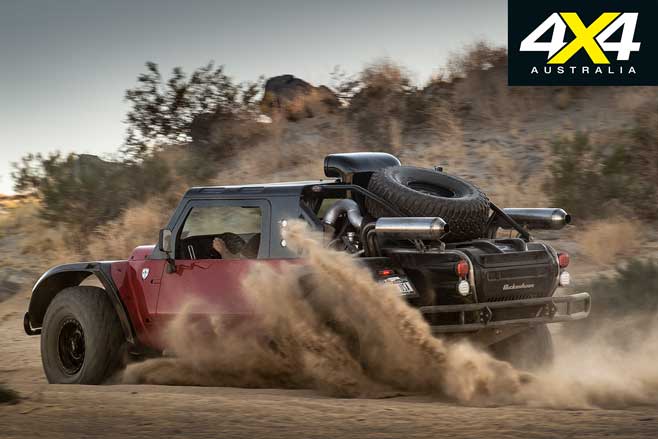
“The Boot has exceeded everyone’s expectations for handling, performance and, most of all, comfort over extreme terrain,” the company said in a statement on its website.
“We tested the Boot over 102mph (164km/h) off-road and it still had a lot to give,” it added.
SCG will use a base-model Boot to pre-run the Baja, which features 19 inches of suspension travel (front and rear), aided by Fox coil-over three-inch internal bypass shocks and 4-wheel independent A-arm suspension. It runs Method wheels wrapped in 39-inch BFG rubber.
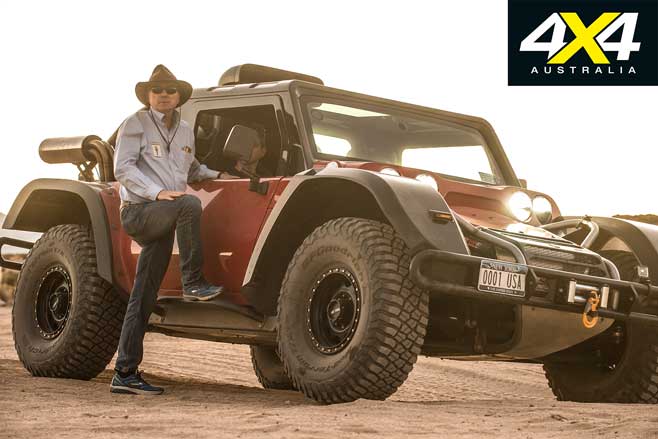
The Baja trim package provides the Boot with 22 inches of suspension travel via Fox 2.5 coil-over (front and rear) and Fox 3.0 bypass (front) and 3.5 bypass (rear) shocks, as well as 4-wheel independent A-arm suspension. Smaller 37-inch BFG tyres are used instead.
Other goodies of the Baja trim package include FIA- and SCORE-certified roll cage, door bars, race harnesses and window netting, as well as an auxiliary fuel tank, a Lowrance race GPS and radio comms.
The Baja 1000 will run from November 19 to 24, 2019.