
OFFROAD Images have been in the photography game for over 25 years. They have provided creative to clients and the magazine industry as a preferred supplier of photography, primarily to the automotive scene and specialising in anything which has been designed to be used in the Outback.
REDARC Australia spoke to Mike Ellem, owner of Offroad Images, to get his experience on RedVision and how it’s benefited him as a photographer.
REQUIREMENTS
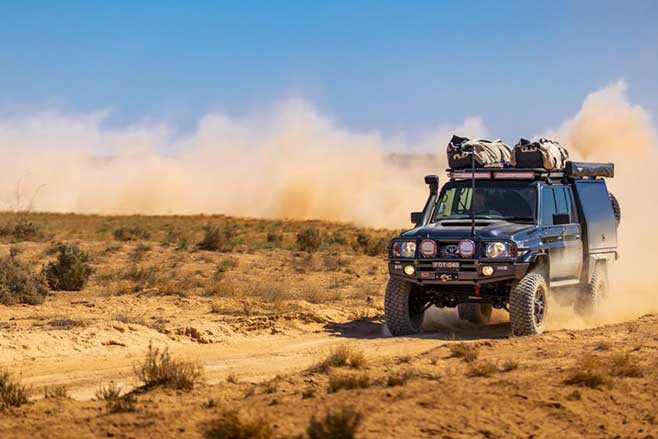
Michael Ellem: Whilst our demands on power are extremely high and important to every shoot that we do, we are just photographers, not electrical engineers. So, it was important that we understand what is going on in the back of our vehicle.
We used to cart around generators and we never really knew when the fuel would run out, so we were always worried about the result of a power outage.
With the various inverter systems, we have run, I must admit, I never was really confident in how much time I would get out of the systems. I would watch the Voltmeter tick down and simply pack up everything even if it wasn’t fully charged … knowing that we might need to conserve our photography and filming the following day.
So, we need to be confident in every aspect of the equipment we use and understand how much power we have, are using and how much power we are creating. Our creativity as photographers stops without the powered systems.
THE VEHICLE
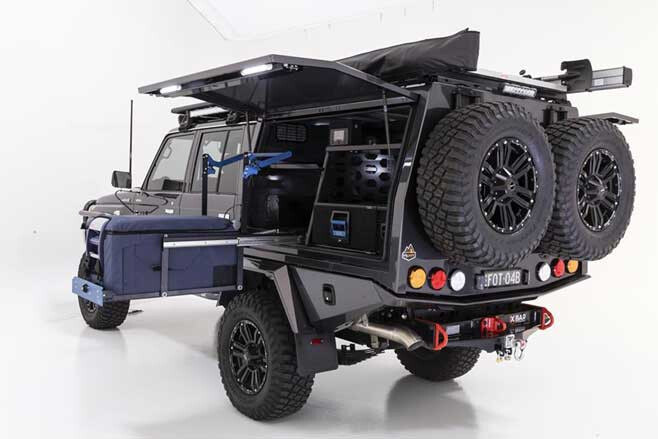
We have built a specialised vehicle to work for us as a camera truck. It’s a 79 Series Dual Cab Cruiser with a Trigpoint service body on the back. It was important to us that the service body and everything within it would be self-sufficient as everything inside the service body is a vital asset to our photography and filming.
BATTERIES
Four 60Amp lithium batteries from Revolution Batteries Australia, which is probably the most reliable battery on the market.
BATTERY MANAGEMENT SYSTEM
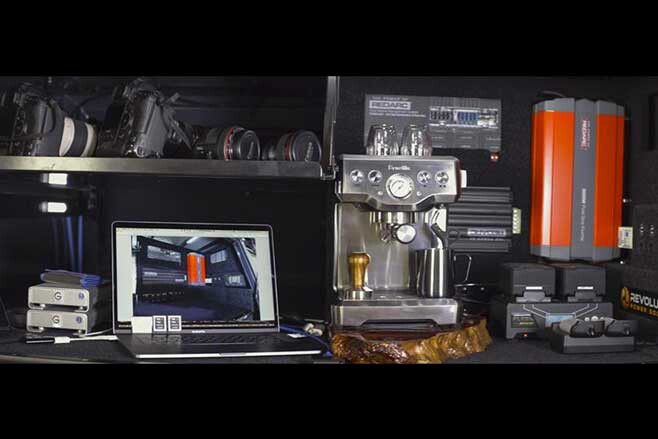
The Manager 30 battery management system handles the charging of these batteries, including deciding where the charging power comes from. It will distribute charge from the 300 watts of solar on the roof, or from the alternator as we drive, or from a 240V outlet if I plug into power. It can also utilise a combination of these power systems to ensure charging is kept up to the efficient levels.
3000W PURE SINE WAVE INVERTER
We photograph and film remotely and depend 100 per cent on the reliability of our camera and lighting platforms. But these are only as good as the charging systems. On a daily basis, we charge camera, drone, lighting systems with huge power requirements via our Pure Sine Wave Inverter. We also run computer systems as we copy, back-up and edit data in the middle of nowhere.
ENTER REDVISION
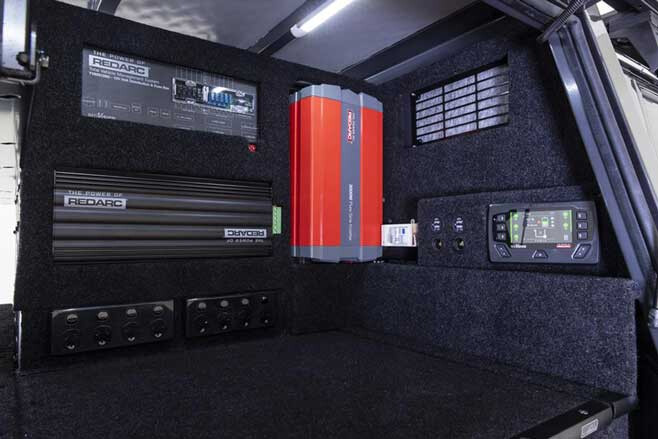
Now, this is the part that I love. RedVision is so easy to use, but also and most importantly, so easy to understand. At a glance, I can see battery and water levels in an easy to understand graphical layout. At the touch of a button, I can analyse power coming in and power going out. This is so important as I can easily understand how long we will be able to work for, and how many camera, lighting or drone batteries we will be able to charge.
I can even look into the history of our power usage. We have various lights set up throughout the service body which are all turned on and off via the Redvision controller. Importantly, we have a Redvision controller on the left and right side of the service body, so all this information is easily accessible.
I have to admit, the system REDARC configured meet every part of our demanding power requirements, but also allows us to run a full coffee machine ensuring that the crew working with us are all happy.
After all, when you ask these people to get up at stupid hour, clean cars and move lighting gear around, the least you can do is have the ability to make an awesome coffee while they take in the location as the sun rises.
We also run a 60-litre ARB fridge and a Travel Buddy oven, plus various USB and Cig sockets, all controlled by dual RedVision monitor controllers in the back, and via the app on my iPhone in the front.
WHAT I LOVE
As explained the ease of use is really important to me, but I was also really impressed by the quick reference display of power available and at a click of a button, I have a visual and graphical display of where the power is coming from and how much power is coming in and going out of the system.
The Revolution Lithium Batteries with REDARC Manager30 and RedVision monitoring give me a longer draw of power meaning more power and most importantly, an easy to understand interface provides me peace of mind of percentage and usable hours of battery remaining. Absolutely amazing.
Alu-Cab Generation 3 Expedition Tent
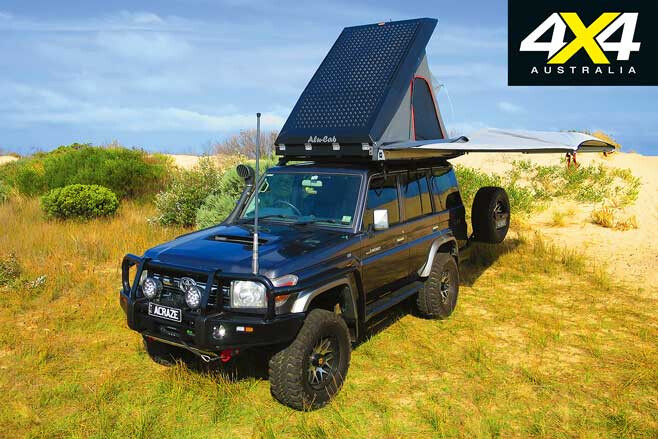
Ironman 4×4 Accessories is now the Australian distributor for Alu-Cab, and the Generation 3 Expedition Tent is one of the brand’s signature products.
This hard-shell rooftop tent features lightweight aluminium construction and a streamlined aerodynamic profile. The wind-resistant gas strut pop-up design means you can literally set up (or pack away) camp in seconds, while the tent’s dual-layer canvas provides protective insulation.
Additional features include triple point window/door access with rear door awning, quick release ladder that stows away inside tent when closed, 75mm high-density foam mattress with zip-off cover, integrated cargo rails for optional load bars, and internal storage pockets, USB ports, 12V power outlet and lighting.
The tent weighs 88kg and measures 2300 x 1400 x 280mm when closed, yet it offers a generous interior height of 1600mm when open.
RRP: $5600 Website: ironman4x4.com
EFS Awning Range
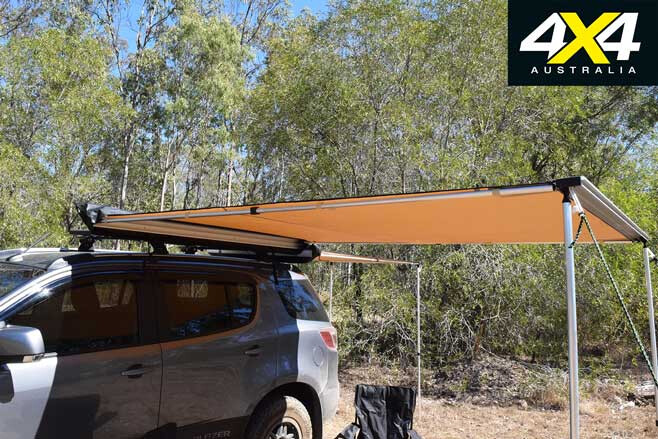
EFS 4X4 Accessories has developed a new awning range that’s made from tough 280gsm rip-stop poly-cotton canvas with a 50+ UV rating. Housed in a heavy-duty UV-treated black nylon bag, the awnings feature aluminium camlock poles, additional canvas corner reinforcements, high-quality zips and materials, Velcro fasteners, and are supplied with included mounting brackets, ropes and pegs.
Optional extras include side and front walls. The awnings are available in the following sizes: 2.5 x 2.5m ($268); 2 x 2.5m ($254); and 1.4 x 2m ($240). Side walls and front walls to suit range in price from $65 to $81.
RRP: From $240 Website: www.efs4x4.com.au
Yakima SkyRise HD tent
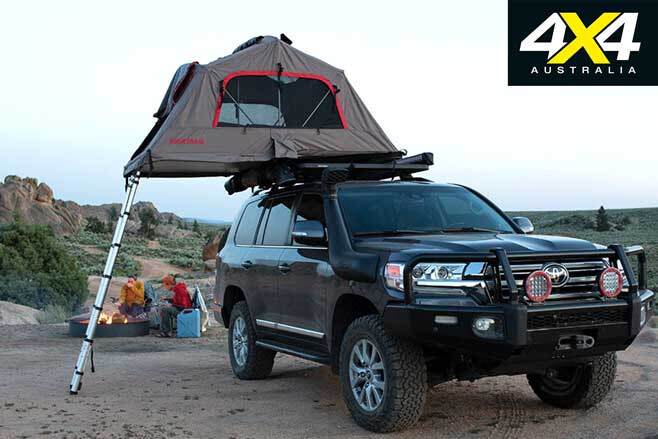
The all-new Yakima SkyRise HD tent body is ruggedly constructed with 600D Ripstop polyester fabric and a 3000mm waterproof PU coating. Paired with a weather-shedding waterproof rainfly, the rooftop tent is claimed to provide complete protection from the elements.
Weighing it at just 52kg, the SkyRise HD Tent offers room for up to three campers, and features include extra-large windows, doors and skylights, a thick wall-to-wall foam sleeping pad, guy lines and D-rings for windy conditions, abrasion-resistant tent floor with textured finish for durability, height adjustable ladder with auto-close function, and tool-free and lockable vehicle mounts for easy installation and removal.
RRP: $2200 Website: www.yakima.com.au
We’ve plucked out some new off-road rubber that has hit the aftermarket recently. Swipe away!
Goodyear Wrangler AT SilentTrac
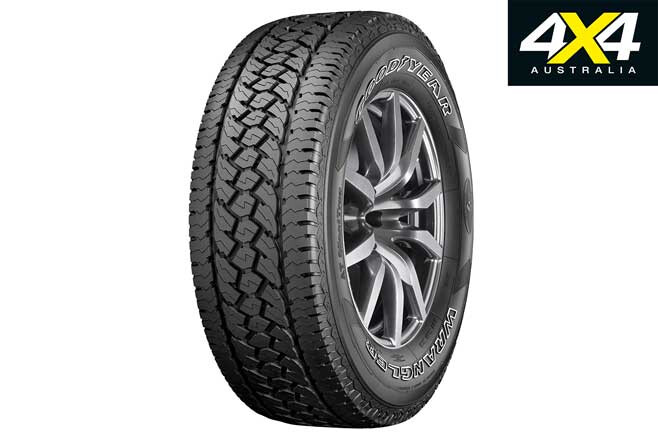
Goodyear has developed a new all-terrain tyre called the Wrangler AT SilentTrac. Available in a wide range of sizes in both Passenger (P) and Light Truck (LT) constructions, as its name suggests the tyre has been designed to provide quiet and smooth on-road performance thanks to a thick rubber layer under the tread that absorbs vibration, as well as an angled-block tread design.
The tyre provides improved mileage performance compared with its predecessor, the Wrangler AT/SA, thanks to more wearable rubber volume and an optimised cavity shape. As you’d expect of an all-terrain tyre, Goodyear claims tough off-road performance thanks in part to its ‘DuraWall’ technology which consists a robust compound and thick gauge layer to provide resistance against cuts and punctures when driving in off-road terrain. The new Wrangler AT SilentTrac is available in a range of sizes to suit 15-inch rims through to 18-inch rims.
RRP: $199 (205R16) to $379 (285/60R18) Website: www.goodyear.com.au
Cooper Evolution M/T
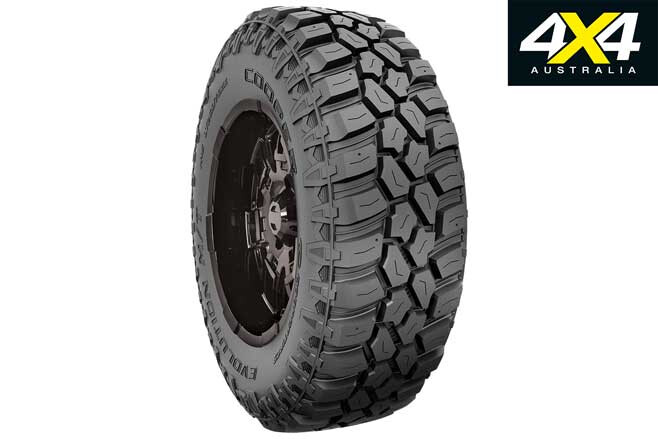
The Cooper Evolution M/T is a new mud-terrain tyre with an 80 per cent off-road bias. It features V-shaped sidewall “climbers” designed to offer added grip on rocks and other slippery surfaces while providing added sidewall protection; deep and wide “mud slingers” between the tread blocks to aid mud clearing and provide extra traction; and a high-strength, high-tensile body ply that’s claimed to be 20 per cent stronger than most other brands for resistance to rock cuts and impact damage when driving off-road.
The Evolution M/T has also been designed to provide optimum cornering and stability on mud and dirt, and it packs the latest generation noise-reduction technology. The Evolution M/T is available in a wide range of sizes to suit rims from 15-inch to 20-inch including popular 31X10.50R15, 285/75R16, 285/70R17 and 275/70R18 sizes. See the website for full size availability.
RRP: From $269 Website: coopertires.com.au
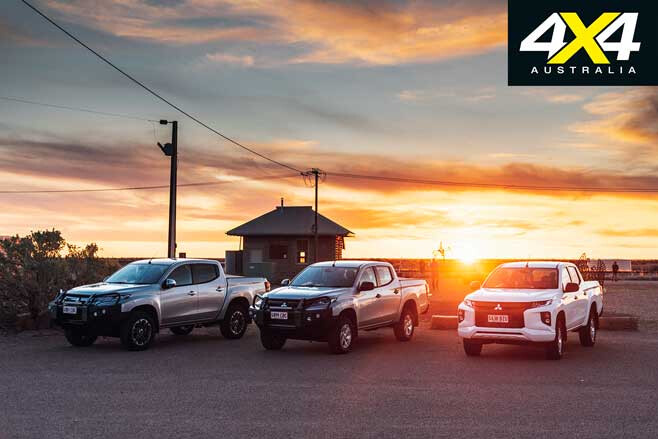
KEEN TO highlight the Triton’s off-road capability, Mitsubishi recently held the launch for the 2020 version of its popular Triton 4×4 ute at Warraweena Station in the spectacular Flinders Ranges of South Australia.
If you like scrabbling up steep rocky inclines and forging through creek beds and deep gorges, then Warraweena is the place for you, with a number of drive loops graded from ‘easy’ to ‘hard’. No matter which you decide to tackle, you’ll need a 4×4 with high ground clearance to traverse most of the 4×4 tracks on Warraweena, so it wasn’t surprising that Mitsubishi removed the sidesteps from the Tritons we sampled prior to letting us loose in the demanding conditions.
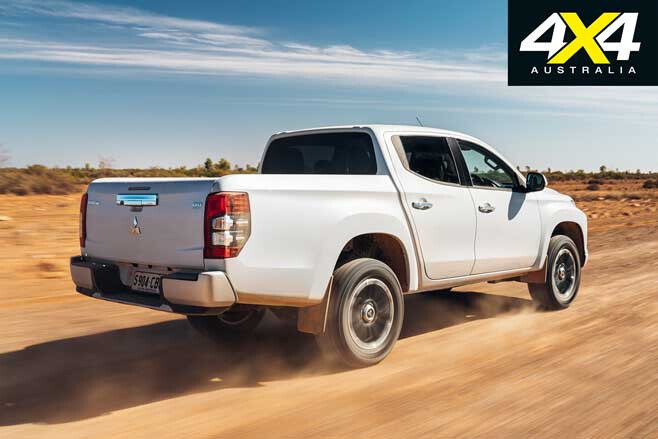
New features for MY20 Triton GLX and GLX+ models include the fitment of 245/70R16 Bridgestone Dueler all-terrain tyres, while the GLX+ also scores a standard rear diff lock (previously exclusive to the top-spec GLS Premium) and the fitment of a roof-mounted rear air circulator for better airflow inside the cabin. Both GLX and GLX+ retain Mitsubishi’s Easy-Select 4WD (essentially a fancy name for a two-speed, part-time 4×4 system).
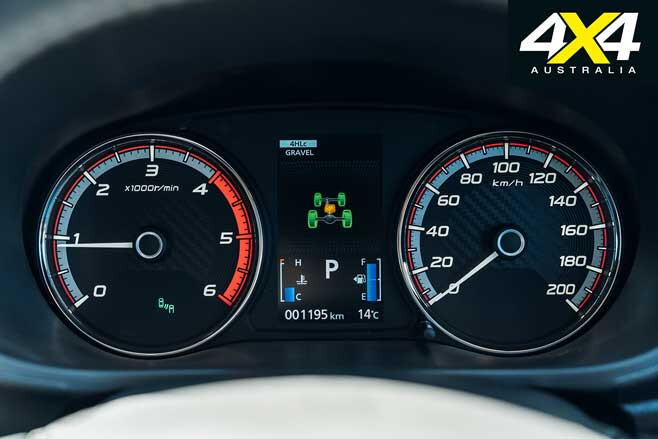
The GLS model grade scores a standard rear diff lock for 2020, and GLS and GLS Premium models are equipped with 265/60R18 Dunlop Grandtrek highway tyres and Mitsubishi’s Super-Select 4WD-II (selectable on-demand 4×4) system. Super-Select 4WD-II incorporates an ‘Off-Road Mode’ system (available on both manual and auto variants) with ‘Gravel’, ‘Mud/Snow’, ‘Sand’ and ‘Rock’ settings, which tailors engine power delivery, automatic transmission response, traction control response and stability control reaction, to suit different driving environments. Both GLS and GLS Premium are also now equipped with keyless entry and push-button start.
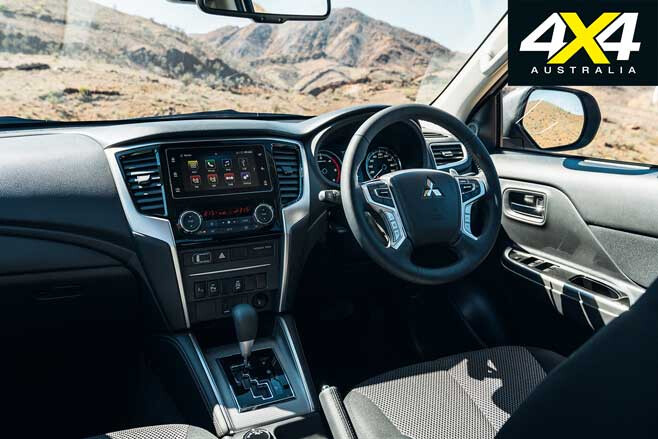
The interior is unchanged, and it’s slightly narrower in the body than the competition but with reasonable leg room front and rear and good fit and finish. Tilt-and-reach steering wheel adjustment makes it easy to get comfortable behind the wheel and, while fitting three adults across the rear seat is a squeeze, the seat back has good rake. As for the roof-mounted air circulator, it works surprisingly well, pumping cool air from the front vents and moving it around the cabin efficiently.
On the road the Triton offers a more dynamic driving experience than many of its competitors and, although ride quality is on the firm side when unladen, it’s reasonably compliant. The GLX+ felt marginally smoother over bumpy gravel roads no doubt thanks to its higher profile 245/70R16 rubber, but there’s not much in it. The GLS models have the advantage of selectable full-time 4WD, which is handy when roads change from sealed to gravel to sealed again, but with effective traction and stability control systems the part-time only set-up in the lower grade models is not a deal breaker.
The Triton’s 2.4-litre turbo-diesel (133kW at 3500rpm and 430Nm at 2500rpm) is not as potent as many of its four-cylinder competitors, but on-road performance is still impressive, thanks in part to its smooth-shifting close-ratio six-speed auto (the only transmission option on test). The engine is also relatively smooth and quiet, and in-cabin noise insulation is effective.
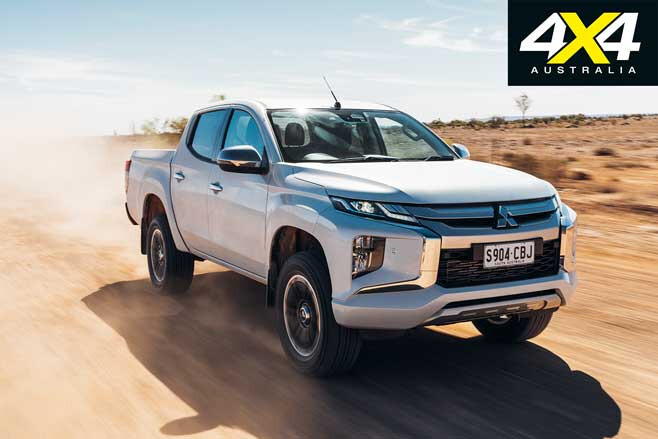
GLX+ models (and up) certainly benefit from the fitment of the standard rear diff lock, especially in steep and slippery terrain with ruts that see suspension travel pushed to its limits. Having said that, the traction control system is rendered inactive when the rear diff is locked, so in some off-road scenarios the Triton will actually go further with the rear diff lock disengaged. Rear axle articulation is acceptable, but it doesn’t take much for the Triton to lift a front wheel into the air in undulating terrain.
Low range gearing is respectable, with an overall reduction in first gear of 39.5:1 combining with the auto’s torque multiplying effect to make light work of most inclines. On steep downhill runs, however, lower gearing would certainly come in handy.
Hill Descent Control helps in this respect, but this is part of the ‘Off-Road Mode’ package that’s only available on GLS and GLS Premium models; so if you’re driving a GLX or GLX+ you’ll need to rely on the brakes to arrest speed. We sampled the GLS’s various ‘Off-Road Mode’ settings on the tracks around Warraweena, but other than slightly altered throttle response it was difficult to pick much of a difference.
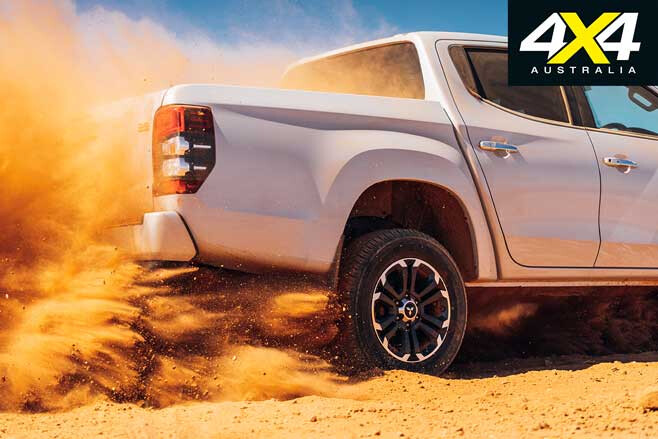
With sidesteps removed and a claimed 205mm of ground clearance on GLX+ and 220mm on GLS models, the Tritons we sampled at Warraweena only scraped their bellies a couple of times. The biggest hits occurred when the rear bumper grounded when exiting creek beds, but this is common among dual-cab utes with their long rear overhangs.
The Triton’s payload varies from 845kg to 1095kg depending on model grade and its towing capacity is 750kg/3100kg (unbraked/braked), the latter figure down slightly on most class competitors. There are six tie-down points in the tub.
The Triton safety package is comprehensive, and all models are now available with Forward Collision Mitigation (FCM) with pedestrian detection and Lane Departure Warning (LDW), so long as you tick the ADAS box when ordering a GLX. Other safety kit across the range includes seven airbags, Adjustable Speed Limiter, Emergency Stop Signal function (ESS), Emergency Brake Assist system (EBA), Hill Start Assist (HSA), Active Stability Control (ASC), and Trailer Stability Assist (TSA).
Mitsubishi has managed to keep a lid on pricing which is vitally important on a vehicle such as Triton, which many buy mainly because you get a lot of standard equipment for the money. This is the reason Triton is the third best-selling 4×4 ute in the country.
While the MY20 Triton might look the same as the MY19 model, the few upgrades made across the range are certainly beneficial, especially the addition of a rear diff lock on GLX+ and up, further enhancing the vehicle’s off-road capability.
2020 MITSUBISHI TRITON 4×4 VARIANTS (AUTO) SPECS: Engine: 2.4-litre I4 turbo diesel Power/Torque: 133kW/430Nm Gearbox: six-speed man/auto 4×4 System: part-time 4×4 (GLX-GLX+); selectable full-time 4×4 (GLS-GLS Premium) Crawl Ratio: 39.5 (auto) Kerb Weight: 1780-2045kg GVM: 2900kg Towing Capacity: 3100kg GCM: 5885kg Departure angle: 22° (GLX+); 23° (GLS) Rampover angle: 24° (GLX+); 25° (GLS) Approach angle: 30° (GLX+); 31° (GLS) Wading depth: 600mm Ground clearance: 205mm (GLX+); 220mm (GLS) Fuel Tank Capacity: 75 litres ADR Fuel Claim: 8.6L/100km (auto)
| 2020 Mitsubishi Triton pricing | |
| Single-cab | |
| 4×4 GLX Cab Chassis 2.4L Man Diesel | $32,990 |
| 4×4 GLX Cab Chassis 2.4L Auto Diesel | $34,590 |
| Club-cab | |
| 4×4 GLX Cab Chassis 2.4L Man Diesel | $35,490 |
| 4×4 GLX ADAS Cab Chassis 2.4L Auto Diesel | $38,790 |
| 4×4 GLX+ Cab Chassis 2.4L Auto Diesel | $41,490 |
| Dual-cab | |
| 4×4 GLX Cab Chassis 2.4L Man Diesel | $36,240 |
| 4×4 GLX ADAS Cab Chassis 2.4L Auto Diesel | $39,540 |
| 4×4 GLX 2.4L Pick Up Man Diesel | $37,490 |
| 4×4 GLX 2.4L Pick Up Auto Diesel | $39,990 |
| u00a04x4 GLX ADAS 2.4L Pick Up Man Diesel | $38,290 |
| 4×4 GLX ADAS 2.4L Pick Up Auto Dieselu00a0 | $40,790 |
| u00a04x4 GLX+ 2.4L Pick Up Man Diesel | $40,990 |
| 4×4 GLX+ 2.4L Pick Up Auto Dieselu00a0 | $43,490 |
| 4×4 GLS 2.4L Pick Up Man Dieselu00a0 | $45,140 |
| 4×4 Toby Price Edition Pick Up Man Dieselu00a0 | $48,140 |
| 4×4 GLS 2.4L Pick Up Auto Dieselu00a0 | $46,990 |
| u00a04x4 Toby Price Edition Pick Up Auto Diesel | $50,640 |
| 4×4 GLS Premium 2.4L Pick Up Auto Dieselu00a0 | $51,990 |
Sink your claws into this! A Hennessey VelociRaptor Ford Ranger is now available exclusively to the Australian and New Zealand markets, but a limited run of just 25 units are being built.
Built at KPM Motorsport in Adelaide, the VelociRaptor Ranger is based on the 2019-2020 Ford Ranger XLS dual-cab models that utilise the 3.2-litre turbo-diesel engine and six-speed auto/manual transmissions (capable of 147kW and 470Nm in standard trim).
Expert tuning house Hennessey Performance then upgrades the engine management software and throws in a performance exhaust system and high-flow intercooler, bumping output up to 181kW (at 3300rpm) and 590Nm (at 2200rpm) in the process.
Ensuring it has the infrastructure to match the power hike, a Stage 1 ICON coil-over suspension upgrade is utilised, providing the vehicle with four inches of lift. This is balanced by 18-inch alloys wrapped in BFGoodrich KM2 285/70R18 rubber.
The rig also has the show to match the go courtesy of front and rear bumper upgrades, a Ranger Raptor grille insert, colour-coded fender flares, and Hennessey and VelociRaptor exterior badges.
Earlier this year, tuning expert Hennessey released its VelociRaptor Ranger to the US market, which differs from the Aussie offering as it uses a different trim level and the US-spec 2.3-litre EcoBoost petrol engine amped up to produce 260kW and 521Nm.
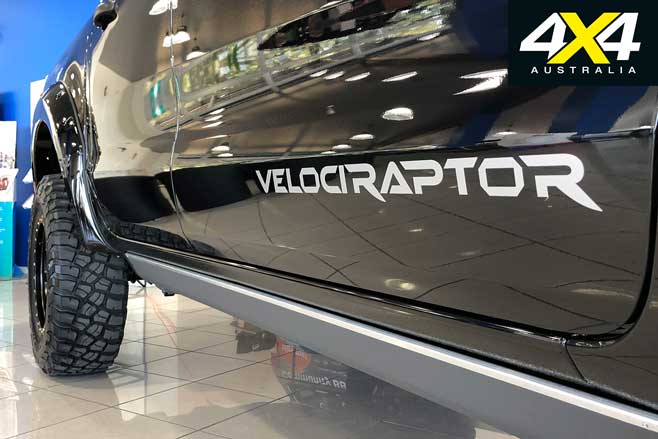
The complete turn-key cost of the Aussie VelociRaptor Ranger is estimated to be from $90,000-$100,000, and it comes with a three-year/60,000km limited warranty.
Stay tuned for official pricing.
THESE two products to recently land in ARB catalogues would make great additions to your 4×4 in time for the end-of-year retreat.
ARB Tailgate Assist – 2015+ Hilux SR & SR5
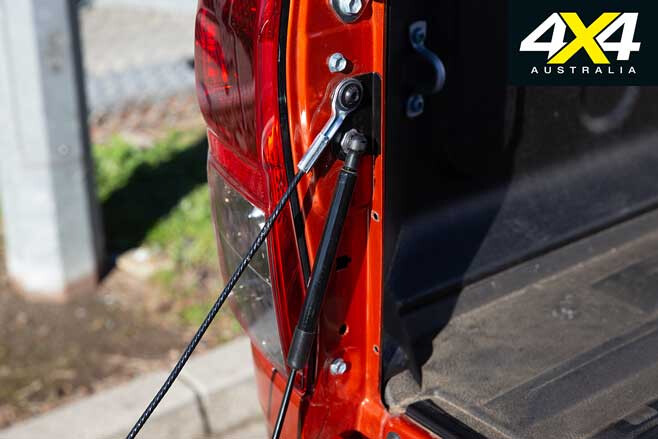
The innovative ARB Tailgate Assist is now available to suit 2015-on Toyota HiLux SR and SR5 models. The Tailgate Assist safely controls the opening speed of the tailgate and reduces the closing effort by more than 50 per cent, allowing for easy one-handed operation of the tailgate, which has obvious benefits when a driver is carrying something in the other hand.
ARB Tailgate Assist systems are model specific and, in the case of the 2015-on HiLux consists a gas strut and a torsion spring, along with vehicle-specific hardware including mounting brackets and tailgate cables.
RRP: $299 (Australian East Coast Metro) Website: www.arb.com.au
ARB Summit Sahara Bull Bar for Ford Everest
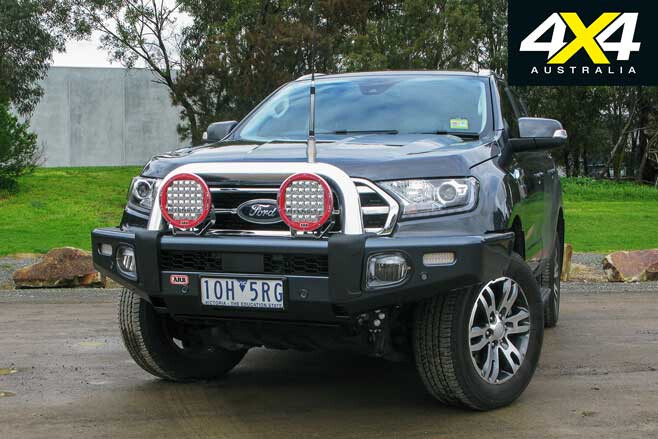
ARB’s Summit Sahara Bull Bar is now available to suit Ford Everest Ambiente, Trend and Titanium models, including those equipped with adaptive cruise control and semi-auto active park assist.
The winch compatible Sahara Summit Bar features durable steel construction with a multi-fold upswept and tapered wing design for strength and maximum approach angle, a 30mm radius on the wings and centre section, a split pan for airflow to the vehicle’s cooling system, two-piece buffers, LED indicator and clearance lights and provision for fitment of fog lights.
The bar can be supplied with or without the polished or painted centre tube, and the Summit Sahara also has provision for fitment of a range of driving lights and antennas, and twin Hi-Lift jack points. It’s finished in a hard-wearing black powder coat or can be optionally colour coded to suit individual vehicles.
RRP: $2262 (Aust. East Coast Metro) Website: www.arb.com.au
NEED some fresh reading material? These two books – Islands of Australia and The Camping Cookbook – are great additions to your off-road library.
Islands of Australia
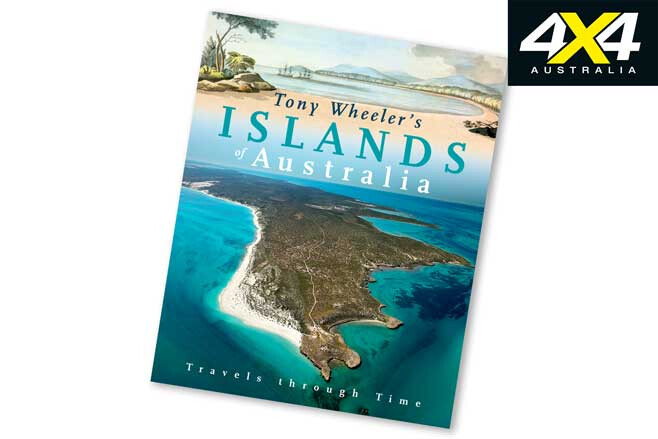
Australia is not just an island continent; it’s a continent of more than 8000 islands.
In this new photographic travel/history book, Islands of Australia: Travels through Time, travel writer Tony Wheeler (Lonely Planet co-founder) takes readers on a journey around the Australian coast and beyond to discover the stunning natural features, unique wildlife and chequered histories of our remarkably diverse islets, cays, atolls and archipelagos.
Islands of Australia takes you on a visual journey around the coast from eco-resorts, pristine beaches and dive sites to guano mines, prisons and subantarctic volcanoes. Discover why the Whitsundays should have been called the Whitmondays, encounter Australia’s only known pirate, witness mutiny and murder on the Bounty and Batavia, meet giant lizards and friendly quokkas, and discover rich Indigenous cultures.
Islands of Australia takes you behind the tourist brochures to discover our islands’ fascinating, complex and sometimes dark histories, and it will leave you itching to visit and discover more about our history and natural heritage.
RRP: $39.99 Website: tonywheeler.com.au
The Camping Cookbook
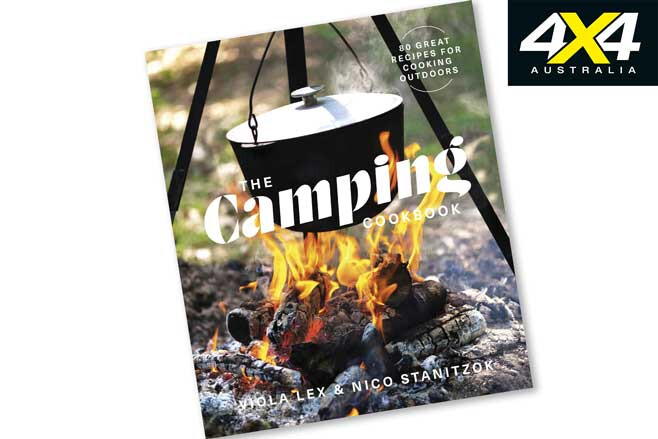
The Camping Cookbook will inspire you to light a fire and enjoy delicious recipes you can rustle up when camping.
Penned by chef Nico Stanitzok and lifelong camper Viola Lex, The Camping Cookbook includes more than 80 sweet and savoury camping recipes, each with a symbol that tells you which is the best way to cook the dish (open fire, grill or camping stove). As well as traditional campfire favourites such as barbecue chicken, grilled corn on the cob and kebab skewers, there are recipes for campfire breads, grilled camembert, quick pancakes and even chocolate cakes baked inside oranges.
As well as outdoor cooking hacks and clever tips, you’ll find checklists of camping essentials and must-haves such as barbecue sauce, ketchup and dukkah.
THE centre of Australia contains plenty of quintessential outback roads, vistas and trails, and it’s the setting for Season 5 of 4X4 Australia’s Adventure Series.
Our Red Centre Adventure begins in Alice Springs and cuts east through the MacDonnell Ranges, where the crew stretches their legs at Trephina Gorge before continuing on to Ross River Homestead.
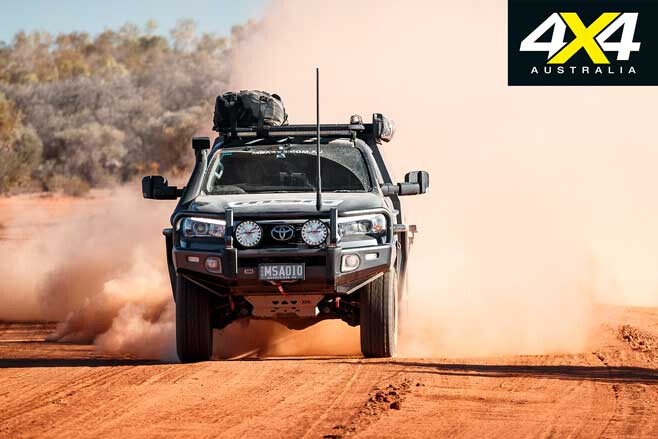
An issue with Ron’s Patrol forces him to make a sudden diversion to Alice Springs for some mechanical aid, but it’s not long before he re-joins the group.
Following a good night’s rest, the next destination is the iconic gold-mining town of Altunga, where group leader Ron Moon will spin a yarn or two on the area’s rich history.
The beautiful Ruby Gap National Park is next on the itinerary, followed by a stopover at the Hale River Homestead for a quiet brew or two. The episode wraps at picturesque fossicking fields of Gemtree, 140km north-east of Alice Springs.
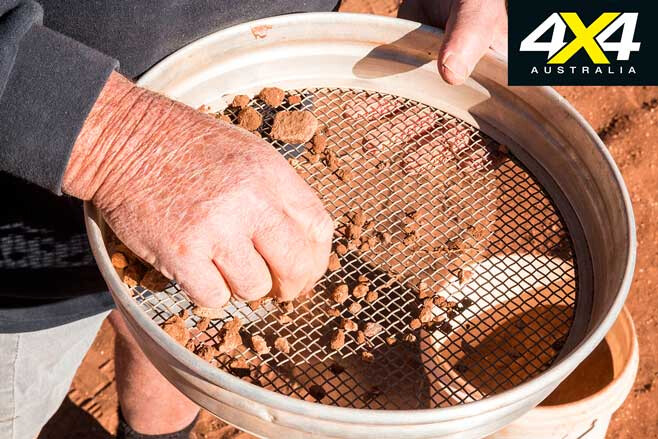
Stopping at a number of hidden secrets along the route, our journey through the red and dusty centre of Australia should hopefully inspire you to do the same.
In episode 2, the crew departs Gemtree in pursuit of Tower Rock, before heading east into the Simpson Desert. Stay tuned!
WITH THANKS MSA 4X4: www.msa4x4.com.au
WITH most modern camper trailers you have to give up a modicum of home comforts when hitting the tracks, but if you have a big family and a big budget, no luxury is too difficult to have in your overland rig.
That was the thinking behind an Australian family of eight, who commissioned Queensland-based SLRV Expedition Vehicles to build an 8×8, two-storey luxury motorhome version of its Commander vehicle.
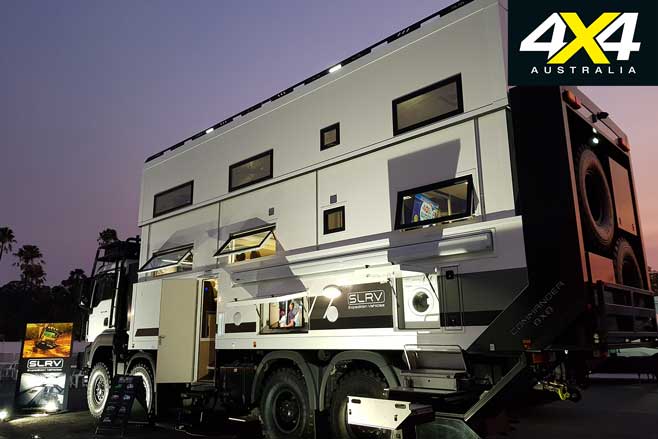
According to SLRV, the Commander 8×8 2 storey is its largest creation to date. Built on a MAN TGS 8×8 truck with a torsion free-mounted body to eliminate the flex between the body and the truck frame when going off-road, the 12-metre long behemoth features a custom actuator lifting system that can lower or raise the upper level of the cabin.
Inside, the Commander 8×8 is outfitted with double-glazed windows, 10 beds with a main bedroom and an electric drop-down guest bed, a 10-person lounge, ducted heating and cooling, a separate en-suite bathroom, four 32-inch TVs, and satellite TV and internet.
The kitchen features two convection microwaves, two induction cooking tops, two 200-litre under-bench fridge/freezers, and a 75-litre drawer fridge/freezer. The Commander 8×8 also features an external kitchen with a slide out-induction cooktop, complete with an attached sink.
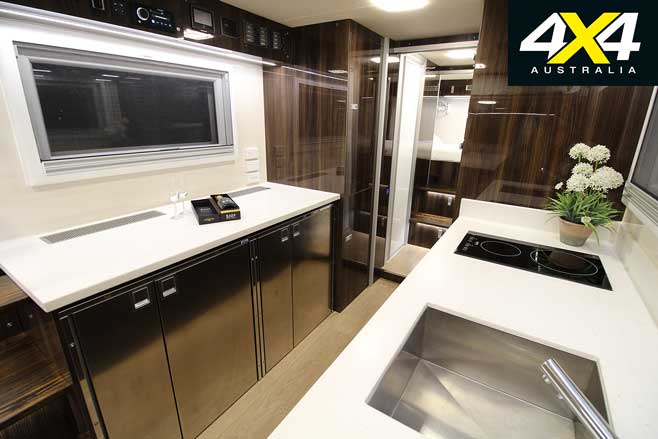
“The owner [of the Commander 8×8] wanted it to be like a luxury unit with all the mod cons. A massive challenge out in the arid regions of Australia,” said SLRV Expedition Vehicles’ Warwick Boswerger.
With the number of on-board amenities – and intended to be (almost) fully self-sufficient when out in the middle of nowhere – keeping the Commander 8×8 powered was a challenge for the off-road RV specialist. To keep the lights on and appliances running, the motorhome is equipped with an array of Mastervolt lithium-ion batteries that are recharged by a 2kW solar panel system, a Cummins Onan 9.5kW on-board diesel generator, and what SLRV claims is a world-first with an RV 9.5kVA alternator.
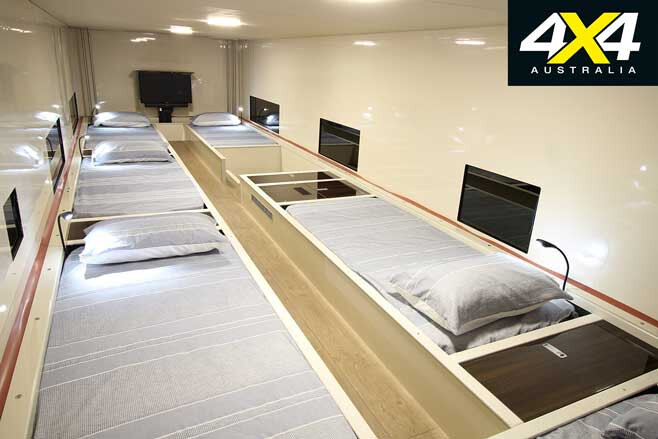
“Powering this vehicle forced us to think outside the box,” said Boswerger. “We had to design an electrical system that not only powered all the appliances, it had to recharge and keep powering over and over out in the remote wilderness.”
The plumbing uses two separate systems that can store up to 1000 litres of water, with tanks for grey and black water, and an isolated plumbing system to dispense drinking water.
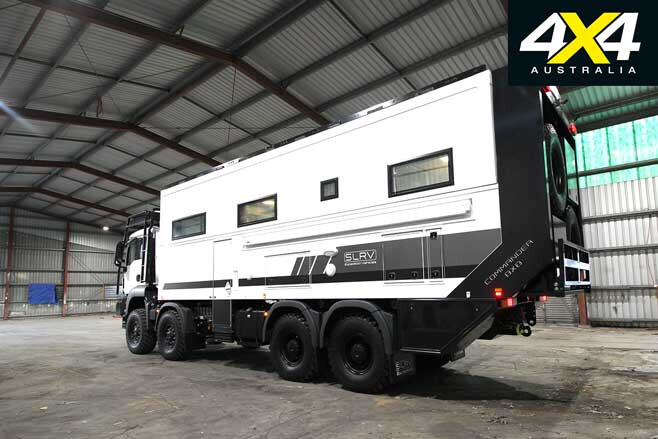
Built to traverse Australia’s remote wilderness, SLRV fitted the Commander 8×8 with a host of off-road gear including a Bozcrome front bar with a 30,000lb hydraulic winch, Bozcrome rear winch receiver with a 20,000lb hydraulic winch, Bozcrome radiator and sump guard, GME 80-channel UHF Plus antenna, four Narva LED spotlights, a Narva 812mm LED light bar kit, roof rack and windscreen bars, and a Tow-Pro brake controller.
While the company builds a wide range of specialty 4×4 expedition vehicles, the Commander 8×8 is by far its largest and most advanced commission, taking 13 months to design and build.
“We never shy away from a challenge. It keeps us at the forefront of expedition vehicle design and this build stepped it up again with a couple of world firsts,” said Boswerger.
WE LOVE BEING able to feature some of the best and most interesting modified 4×4 vehicles from around Australia and the world each month in 4X4 Australia.
These vehicles show there’s no end to the ingenuity and imagination of 4×4 owners and drivers. All sorts of vehicles are covered, from vintage Jeeps to diminutive Suzukis and the latest LandCruisers and Patrols, and nothing is off limits when it comes to the modifications performed.
Whether you’re simply adding a set of all-terrain tyres, a long range tank and a bullbar for long-distance touring with the family, or going all-out with 44-inch tyres, a V8 conversion, competition suspension and a roll cage for a rock crawler, the way you kit your fourby is a reflection of you and what you do. Everyone is different and has unique tastes and requirements, and the next bloke will probably do things differently to you; but it’s always interesting to see what others are doing.
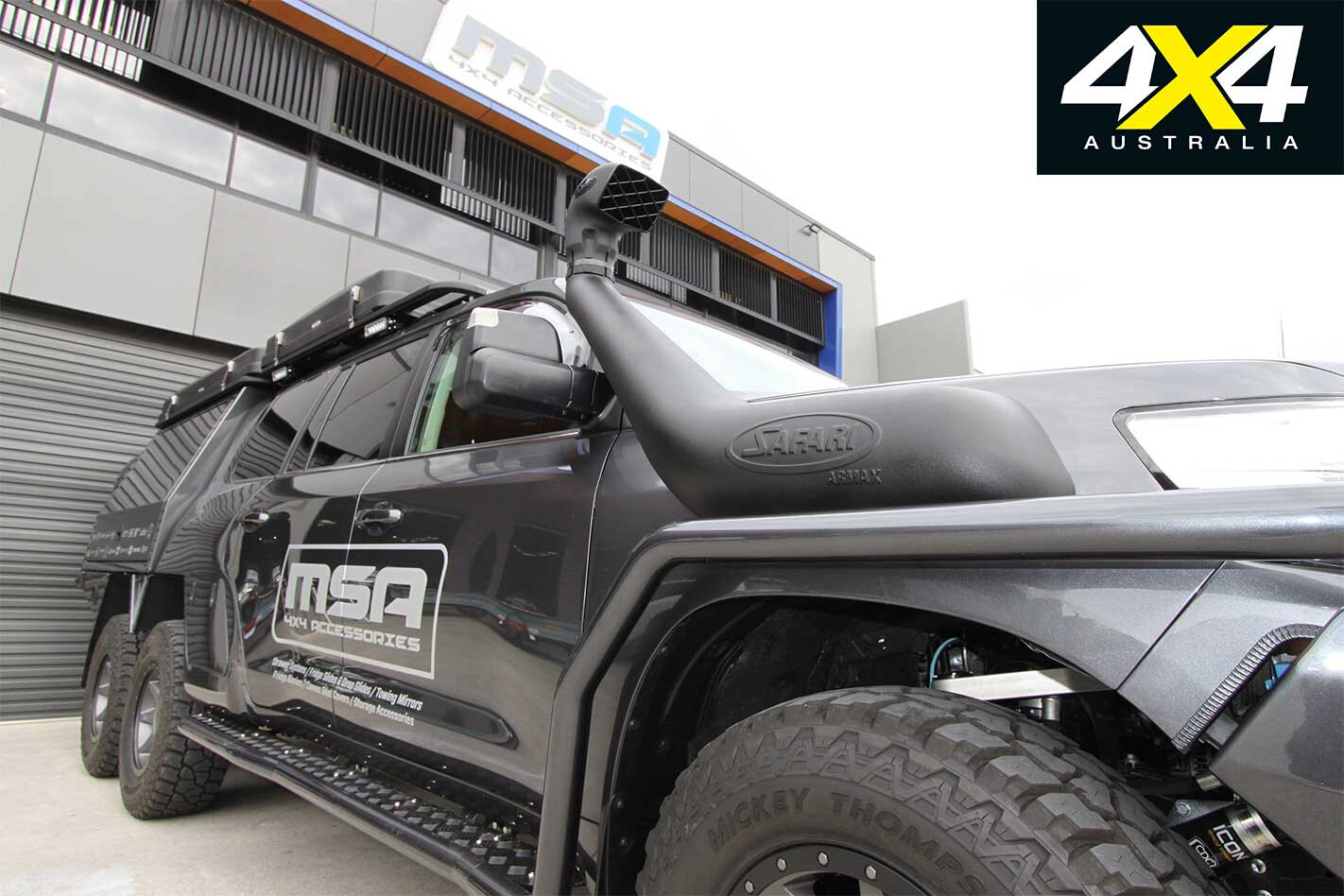
How about the insane 6×6 LandCruiser build by MSA 4×4 Accessories, which we’ve been following this year? We have that completed truck in the December 2019 issue (in stores now). Or the sweet, black Jeep Gladiator on 37s we saw last month in the November issue? Two very different builds for different people and probably not to everyone’s liking, but interesting all the same. There are elements and accessories on each of them that we could adapt to our own builds.
It’s always fun to look back and compile our favourite Custom 4x4s of the Year, and that’s just what we’ve done in the December issue. Now it’s over to you to vote for your favourite rig and, in turn, go in to the draw to win a Maxxis tyres voucher valued at up to $2000.
Speaking of Maxxis, I’ve been mighty impressed with the Maxxis RAZR muddies fitted to our Ford Ranger. The Ranger is my interpretation of how a modern 4×4 ute can be built-for-purpose using some of the best products on the planet, to tour over any terrain. The Ranger is now more capable, functional and enjoyable to drive, so it has achieved its goals so far. However, it’s not finished yet and there are more goodies to come. Stay tuned!