
THE ANNUAL SEMA Show is the biggest and wildest showcase of automotive art and engineering on the planet. It brings together vehicles of all descriptions and disciplines including nut and bolt restorations, wild customs, hot rods, street machines, 4x4s, off-roaders and trucks. Builders from around the world bring their latest creations to the SEMA Show in Las Vegas to put them on the big stage.
But the SEMA Show is not your average car show. It’s a trade show, so there’s business to be conducted and thousands of products and services from a global pool of manufacturers and suppliers who are all on display looking for buyers.
To get more exposure for your product among so much competition, exhibitors are invited to enter their products in the New Products Showcase. 4X4 Australia attends the show as a judge for the Global Media Awards program, which includes 30 judges from media around the world. Some 3000 products to suit all types of vehicles make it in to the showcase and the GMA judges are asked to select 10 products that would do well in our market.
Here is 4×4 Australia’s selection for the 2019 show.
Cooper Tires Evolution M/T
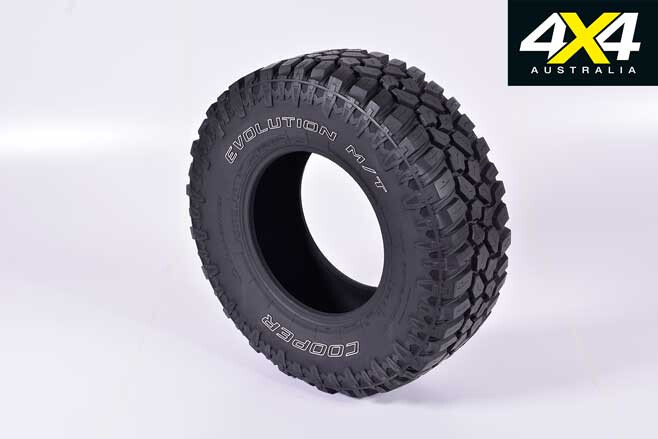
Many Australians love their Cooper tyres for four-wheel driving and touring, so any new product from the American brand is exciting. The Evolution M/T is a new muddy from the team at Cooper, and it will sit in the range between the existing STT Pro and the ST Maxx 4×4 products.
Employing ‘Earth Diggers’ to give the user more traction and ‘Mud Slingers’ to keep the tread clear, this tyre is made to get you through the rough stuff. It’s tough, too, using Cooper’s cut- and chip-resistant rubber compound and heavy-duty sidewalls to protect against punctures. The Cooper Evolution M/T is available through your local Cooper Tires dealer.
More info www.coopertires.com.au.
Icon Vehicle Dynamics Ford Ranger coil-overs
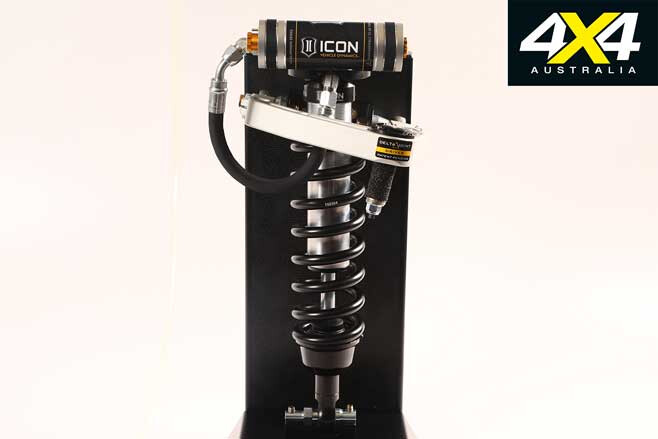
The Ford Ranger is a new vehicle to the US market and the aftermarket brands are jumping on board to get products for it. One such brand is the manufacturer of quality suspension systems, Icon Vehicle Dynamics.
Icon’s 2.5-inch remote reservoir coil-overs for the 2019 Ranger feature the brand’s height-adjustable coil-over design with a 10-way adjustment for dampening control to improve ride and handling. Unfortunately for us, these are for the US-made Ford Ranger and will not fit directly into our models yet, but Icon is working on more products for the Aussie market.
More info www.iconvehicledynamics.com.
MSA 4×4 Towing Mirrors
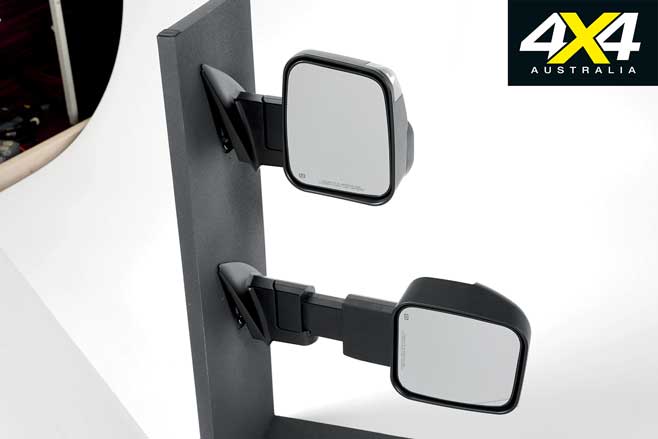
We love seeing Australian 4×4 brands represented on the world stage at SEMA, and this was the first time MSA 4×4 Accessories had its kit here. On display were the new MSA 4×4 Towing Mirrors, a product we have had a bit of experience with and have grown to love.
The MSA mirrors are unlike other towing mirrors in that they’re not strapped onto your factory mirrors, nor do they look like elephant ears flapping on each side of your fourby like truck mirrors. The majority of 4x4s used by Aussies are smaller than US pick-up trucks and the big mirrors look out of place on them.
The MSA rectangular mirrors can be turned upright or on their side to improve rearward visibility and can extend outwards for an even better view. Cleverly, when you turn the mirrors upright or on their side the adjustment functions of electric mirrors work as normal. Likewise, any wing mirror blinkers or lights are also integrated into the MSA units.
More info www.msa4x4.com.au
Factor 55 Rope Retention Pulley
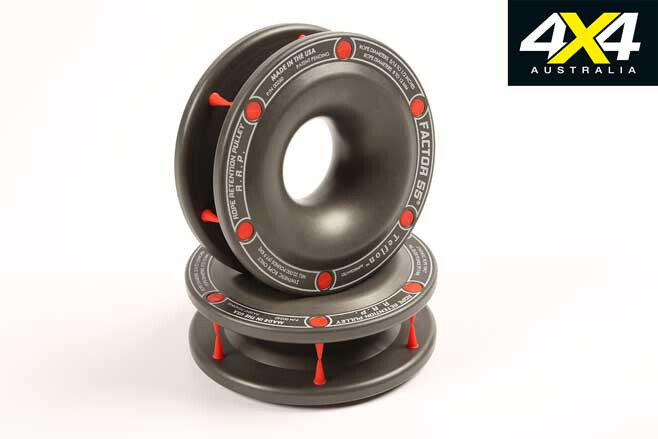
Spun alloy discs in lieu of traditional snatch block pullies for vehicle recoveries have become a big thing over the last couple of years as they are simpler with no moving parts and are lighter and easier to carry, making them well-suited to use with synthetic ropes.
One problem that has come up when using these products is the possibility of the winch rope slipping out of the pulley groove if ever any slack gets into the rig. This shouldn’t happen in most 4×4 recovery situations where there should always be tension on the rope, but in some conditions such as competition or rock crawling, where a user might drive the vehicle on the winch, it is possible.
Leading American manufacturer of 4×4 recovery products, Factor 55, has come up with a solution to this potential problem with its latest recovery pulley. The Factor 55 Rope Retention Pulley incorporates little rubber ‘fingers’ in the pulley groove that hold the rope in position as it becomes slack.
More info www.factor55.com
The Bracketeer Fire Extinguisher Bracket
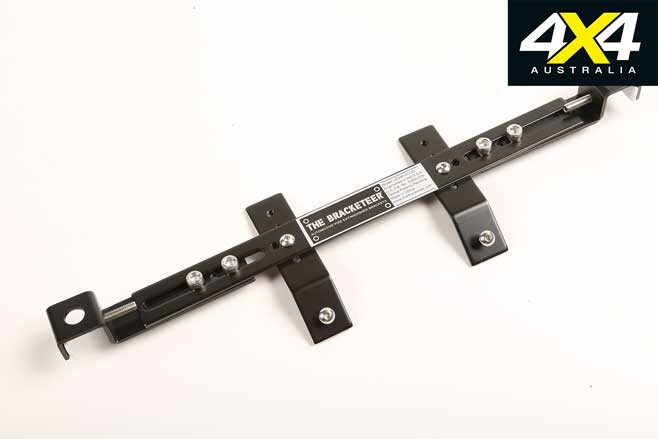
Usually when you are fitting a fire extinguisher to your vehicle you will need to fabricate a custom bracket to mount it safely and securely. The Bracketeer is an adjustable bracket that can be fitted between your seat rails, either by using the clamping mounts or through the holes direct to the seat mounting bolts. It’s simple and safe with no need to drill holes or modify the vehicle in any way.
If you’re like us and you move from car to car on a regular basis, the Bracketeer is easily transferable between vehicles – it’s one product that fits all. You can see why fleet owners and government bodies in the USA are insisting their vehicles are fitted with fire extinguishers using the Bracketeer.
The icing on the cake came when we met the designer and owner of the Bracketeer and he greeted us with a familiar Aussie accent. Simon is an Adelaide ex-pat now living in the USA, where he designed the product.
More info www.thebracketeer.com
Pro Eagle Phoenix air jack
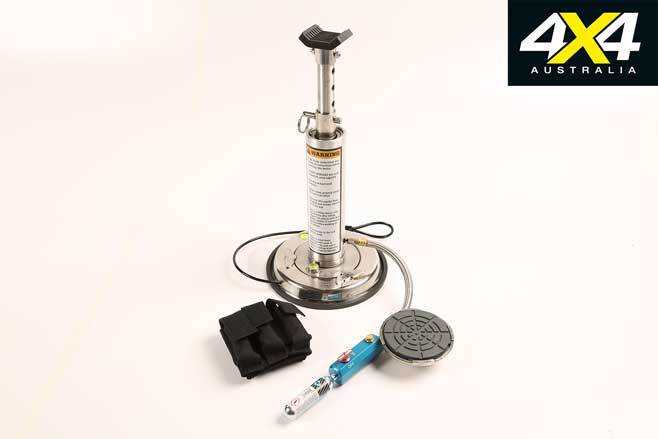
We’re fans of Pro Eagle’s trolley jacks that have big wheels to make them suitable for off-road use and for lifted vehicles, but this is something different from the team there. Designed more for UTVs, side-by-sides and other lightweight vehicles, the Phoenix portable air jack uses compressed CO² for a quick and easy lift.
The gas is carried in separate canisters and runs through a regulator so you can control the speed and amount of vehicle lift, more than 610mm in total.
Pro Eagle jacks and the Phoenix air jack are available through the Australian distributor, Pro Eagle Australia.
Advance Adapters
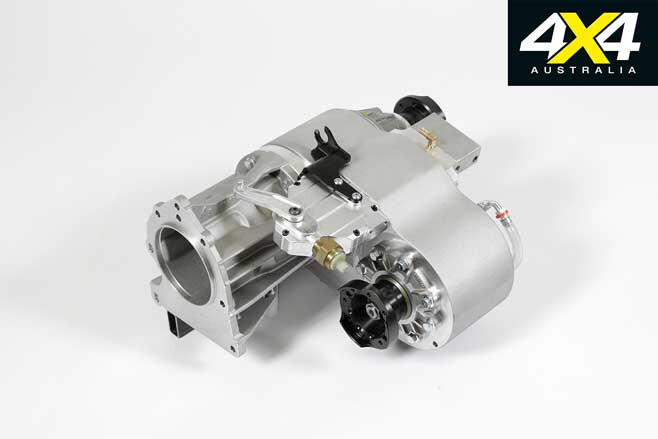
Anyone into hardcore off-roading will know of the Atlas transfer cases from Advance Adapters (AA). They are heavy duty units designed to be tough and dependable, while giving drivers more options for gear ratios and drive selection, such as 2WD low range.
For 2019, AA debuted a kit to put its Atlas cases behind the new eight-speed transmission in Jeep JL Wrangler and JT Gladiator vehicles. The DIY install kit is designed to bolt straight in behind the stock transmission using all OE drive shafts, shifter and support member. Just the kit to get the ultimate transfer case in your new Jeep.
More info www.advanceadapters.com
RSI Smartcap Canopy
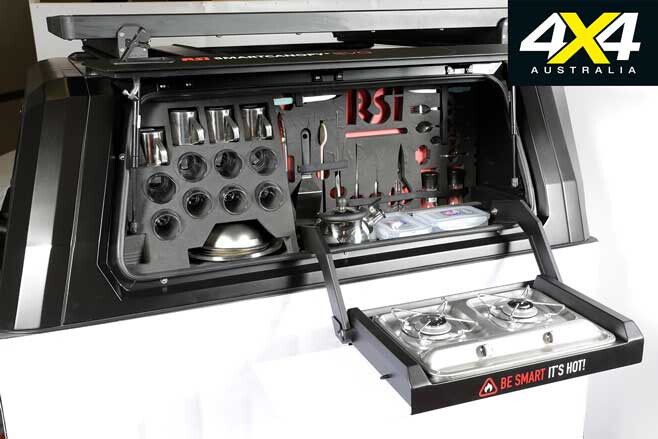
Americans call what we would call a ute canopy, a truck cap. Basically a canopy that sits on the factory ute tub. RSI (Rock Solid Industries) makes its canopy or cap (or whatever you want to call it) in South Africa, where the ‘Bakkie’ or ute is just as popular as the 4×4 ute is here. What makes the RSI Smartcap different to the plethora of fibreglass and plastic canopies we are familiar with here, is that it’s made from 409-grade stainless steel for strength and durability.
What really impressed us about the RSI canopy is the range of clever accessories available for it. These are made as swappable units that fit in behind the side windows and include a basic box, a camp kitchen with stove, and tool drawers. These are easily interchangeable to transform your canopy from weekday workhorse to weekend camper.
Then there’s the SmartRack that fits on the canopy, which slides outwards and down to make loading and unloading gear easier. All clever stuff. We didn’t realise it when we were at SEMA Show, but the RSI products are available in Australia.
More info www.rsismartcanopy.com.au
Roadster Shop RS4 Bronco chassis
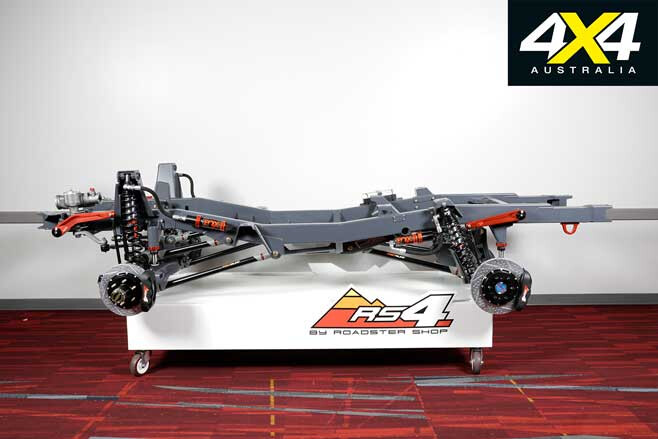
Okay, we admit this is a product with a very limited market, but it was just so goddamn gorgeous that we fell in love with it. I could fit a set of wheels and tyres to the RS4 chassis and just have it on display in my pool room. The Roadster Shop is best known for its top-tier hot rod and street machine builds, but has got its boots dirty with this chassis to suit the classic Ford Bronco.
Made with adjustable triangulated 4-link suspension, Fox Racing coil-over shocks, Dana 44 and 60 diffs by Currie, and loads of neat anodised alloy machined parts, the RS4 is designed to slip straight under your classic Bronco, be it restored or hot-rodded. It’s ready to fit your choice of drivetrain and 1966 to ’77 first generation Bronco bodies. We spotted the RS4 under a couple of Bronco vehicles out on the show floor and it’s a neat fit.
More info www.roadstershop.com
Road Armor bed rack system
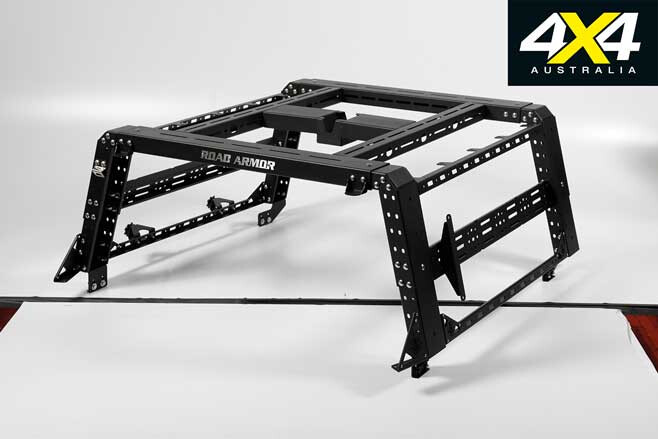
Jeep Gladiators were everywhere at the SEMA Show and there were some pretty trick tray set-ups on them. A product featured on some of the better builds was the TRECK Rack from Road Armor.
The TRECK rack is a bed rack that is designed to fit on a range of factory cargo tubs and give users a platform on which to mount accessories like a rooftop tent, MaxTrax, fuel, cans, lights, shovel, external speakers or a spare wheel. There’s even a bottle opener available to fit. The rack is height-adjustable to three heights and can be swapped between vehicles.
More info www.roadarmor.com
I have clocked up more than 20,000km on the Cooper AT3s now, which made me realise I’ve been slack performing their second rotation. At their 10K rotation, they showed a measured wear of 1mm; boding well for their longevity. The first rotation also saw me make a pair of locating studs so I could refit the Amarok wheels with much less swearing.
While a big share of the distance travelled so far has been on blacktop, there were some sojourns into the red and rougher outback. The AT3s have been to Lake Gairdner and environs, for Speed Week, the Barrier Ranges for the Outback Challenge, and the drought-ravaged Far West NSW for the Cliffhanger 4WD Event. There’s also been some beach work and track exploration along Australia’s East Coast.
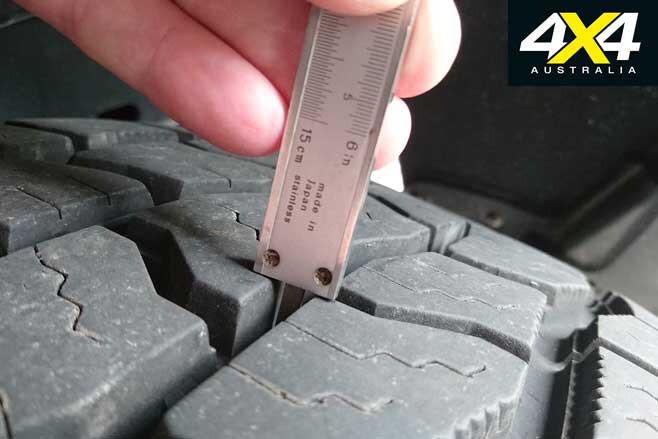
It was at “Cliffy” that the AT3s suffered their first and only (thus far) puncture. In rocky terrain that was tearing apart the competition cars’ tyres, and which was plenty lumpy enough to mask a deflating tyre, my aftermarket TPMS warned of the slow leak and saved the tyre. I remain amazed at where one finds those damned tek screws!
The AT3s sound like they may be developing a weeny whine as they wear, although they show no visible sign of whine-inducing ‘heeling and toeing’. The upcoming tyre rotation will correct any that might exist, so I’ll soon find out. Mind you, driving a mate’s GU Patrol ute with 35-inch muddies from the Flinders Ranges to Sydney last week reminded me that, comparatively, the AT3s are whisper quiet!
So far I’ve been impressed by the performance of the Cooper AT3s. Let’s see what they’re like in another 20,000km.
RATED Available from: coopertires.com.au RRP: $399 (LT265/70R17) We Say: Minimal wear and quiet performance. So far, so good.
We had turned onto the Toupna Crossing Road on our second attempt to get to the Millewa River Road, our first effort thwarted by a small creek that had oozed across the track and was about 30 metres wide with lots of sloppy mud on either side.
Earlier, we had been turned back by ‘Road Closed’ signs in another indication that the Murray River, so tantalisingly close, was running at its normal high Spring water level and limiting access to several spots along its length.
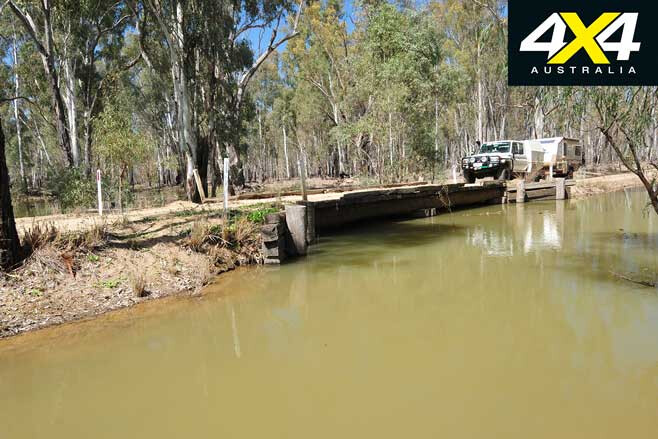
We were in what is now the Murray Valley National Park on the NSW side of the river, east of the town of Mathoura and downstream from Tocumwal. While by far the most extensive area of park is centred around the red gum forests just east of Mathoura, outliers of the park dot the river up nearly as far as Mulwala, about 110km east.
In all, the park covers nearly 42,000ha of red gum country and, with the adjoining Barmah National Park of more than 28,000ha on the Victorian side of the river, forms the largest river red gum forest in the world.
The Murray Valley NP was, up until 2010, a state forest, where logging helped sustain many of the communities along the river, especially Mathoura. Certainly from our drive through it, the park needs better management, with the most obvious issue being the thinning of the many red gum saplings that have sprung up since logging was banned. These dense stands demote the growth of big trees that supply nesting hollows and, in the end, are nothing but an increased fire hazard.
Interestingly, the forest as we know it is a relatively recent phenomenon. About 60,000 years ago a series of seismic events changed the course of the river, while a fault line – the Cadell Fault – can easily be seen along the Cobb Highway between Echuca and Deniliquin. This ridgeline blocked the flow of the stream to form the Old Barmah Lake, and about 8000 years ago the Murray was probably flowing north via what we know as the Edward River and Gulpa Creek.
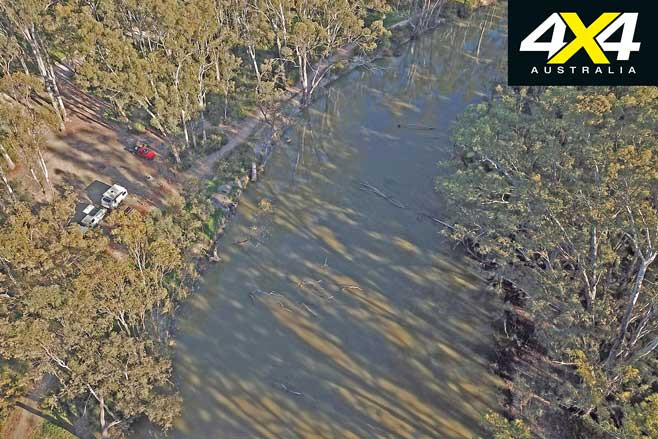
Recent research, and long-standing Aboriginal folklore, indicates that only 550 years ago or so, Aboriginal people carved a channel through a sandbar which allowed the Murray to flow in its present course and formed what we know as The Narrows, or The Cutting, downstream from Picnic Point.
This damming of the river allowed the formation of a delta and the wide expanse of the red gum forest, and ongoing Aboriginal management of the region with fire-stick farming kept the forest regrowth down, in turn forming a rich mosaic of grassy country and open forest.
When Charles Sturt came through this region in 1830 he was struck with the cleared country and recorded two instances of the Aboriginals burning the land to keep it that way; he complained there were many dense reed beds but few trees.
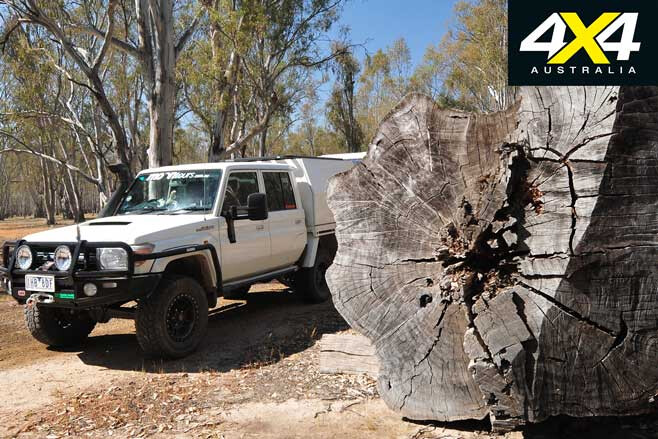
When white settlement arrived in the early 1840s the sheep and cattle they brought with them helped keep the country open, and the red gums formed an open forest. From 1853 paddle steamers started plying the river, the boilers relying on the dead timber along the rivers for fuel.
Logging of the forests started in the early 1860s and within 15 years the rapid decline in timber being harvested led to the government of the day imposing a ban on logging. After that, good management sustained the logging industry until its forced closure in 2010.
The situation on the southern side of the river was much the same, with the National Park being gazetted in April 2010. However, like their NSW brethren, many of the locals aren’t impressed with the situation or the management of the area’s 500 or so feral horses. Parks Victoria earlier this year drafted a plan to cull numbers to 100 within three years and to totally eradicate them by some later date. Both locals and horse lovers aren’t happy!
Rather surprisingly, locals have said that the number of visitors to the area around Mathoura has dropped since it was gazetted a National Park. Some of my friends who used to regularly go up there hunting and fishing have stopped visiting altogether.
And most of the good camping is now restricted to the adjoining regional parks, along with a plethora of private campgrounds on both the NSW and Victorian sides of the river – so the National Park status has added little to the area’s attractions, it seems.
Where does that leave the keen four-wheeler and camper? Well, on the NSW side of the Murray you’ll find an excellent spot at Edwards River Bridge in the regional park, and this is where we camped for our first night in the area.
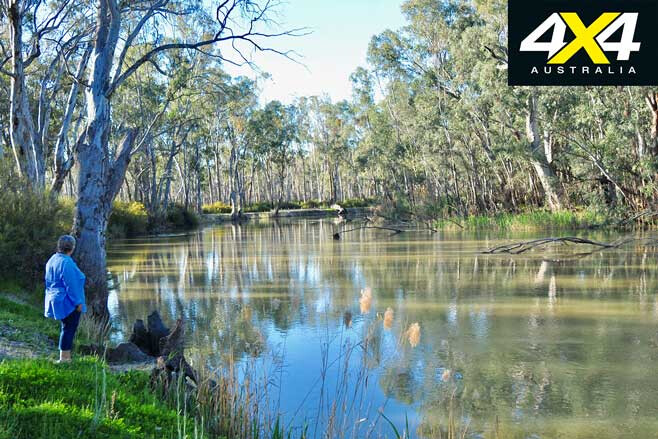
It’s a very pleasant spot with only six or so camps along a long stretch of water, while a day-visitor area has gas barbecues and associated facilities. Being a regional park, you can walk your dog. On the other side of the river, tracks lead to a few more riverside camps.
The Edwards River is an anabranch of the Murray and flows north towards Deniliquin, and there are a number of tracks giving access to the river, along with a designated camping spot at the Benarca campground just outside Deniliquin.
The Edwards is narrower than the Murray, with less current and more trees and obstructions, making it ideal for those who want to go for a paddle; there is an excellent launching ramp for paddlers located at the Edwards River day-use area.
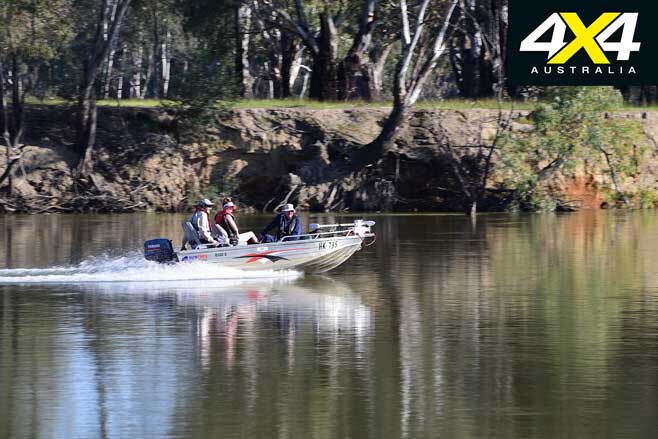
There’s another designated camping area a little south of Mathoura at Swifts Creek at The Narrows, where the Murray River is at its most confined. Farther upstream is the Woperana campground, west of Tocumwal, and the excellent Quicks Beach near Barooga. Upstream from here is Mulwala campground (also known as Hinches Beach campground), located just downstream from Yarrawonga.
Elsewhere in the park there are smaller, less-developed spots to camp, but we found access difficult to much of the river with high, steep banks making life arduous. Back near Mathoura, Picnic Point offers a large caravan park close to the Murray, where there is also a good boat ramp and pleasant barbecue facilities.
This whole region of red gum is a Ramsar-listed wetland of international importance, where more than 200 species of birds have been recorded, with many such as the eastern great egret, the cattle egret and straw-necked ibis nesting here. The area is also home to 35 species of mammals, 28 species of reptiles, 10 species of amphibians and up to 550 species of plants.
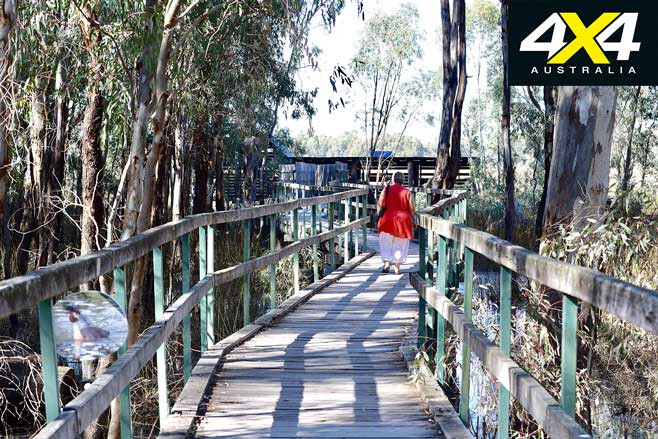
A few of the native animals are declared threatened including the blue-billed duck, fishing bat and squirrel glider. There are also, by all accounts, 40 threatened plant species including the Moira grass; and while Parks Victoria reckons its threatened because of wild horses, others blame the high water levels brought on by irrigation and environmental flow requirements.
If you’re into bird watching the Reed Beds Bird Hide, passed on the way to Picnic Point or the Edwards River Bridge camping area, is a favoured spot to look for our feathered friends. This whole area is great for bird watching with ducks, cormorants and swans on the waterways, ibis and spoonbills in the shallows, and colourful wrens and treecreepers flitting in amongst the scrub.
Galahs and corellas screech from the treetops, while kookaburras laugh from dead branches, magpies stroll around on the grassy areas and herons wait patiently for a fish to swim by. At one point a magnificent white-breasted sea eagle took off from a branch directly above me; I don’t know who got the biggest fright!
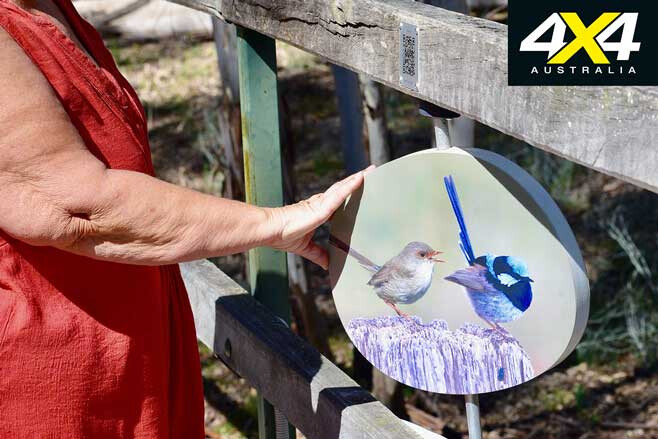
Rather surprisingly we only saw one ’roo for the whole time we spent in the forest, even though there was plenty of green grass for them to feed on, or so it seemed to us. Maybe the encroaching spindly stands of gums are keeping them away?
With our meander along the river road bearing little fruit and our exploration of the smaller sections of the park eastwards offering little to stay our wanderings, we crossed the river into Victoria and headed for Carters Beach, one of three popular riverside camps west of Tocumwal and in the Murray River Reserve. Others include Doctors Bend and Ulupna Creek East, and all are located on sandy bends of the river. These wide, sandy beaches are ideal for swimming, fishing or just lazing around, and, as it’s outside the National Park, you can bring your dog.
There were a few campers in residence when we arrived and, with a reasonable dirt road giving access, a few ’vans and campers were dotted along the shore. A group of young canoeists arrived and I spent a lively half-hour with them talking about the delights of paddling such a great river as the Murray, something I had done many years previously on a number of occasions. I highly recommend it.
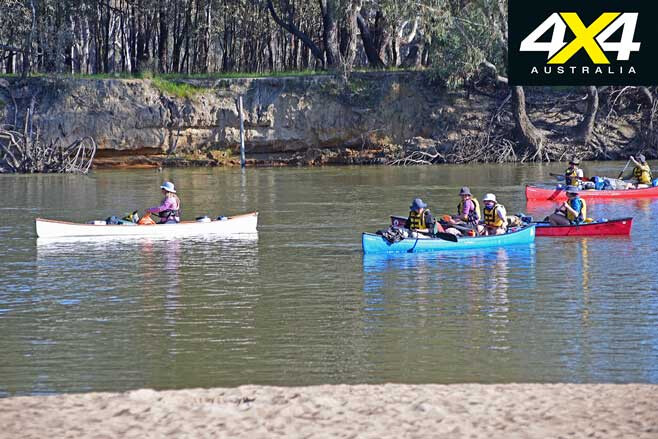
The next day we cruised into the heart of Barmah NP and, while we have camped here on numerous occasions in the past, this was the first time we have been here since it became a National Park. Once again access was restricted because of local flooding, so we contained ourselves to the area around the Barmah Lakes camping area, which is easily reached from the small hamlet and supply point of the Barmah township itself.
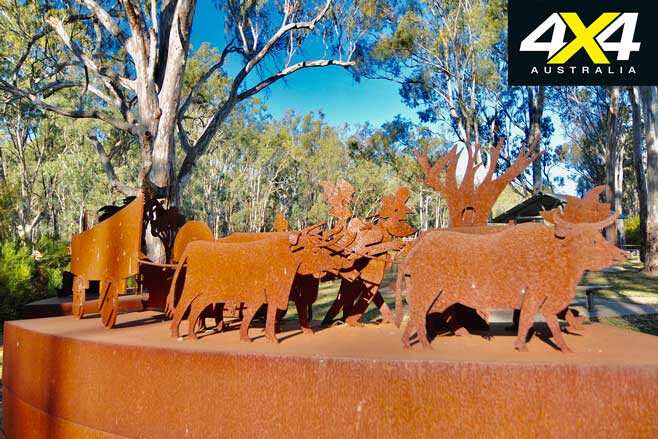
We settled into our camp, the area around the shallow waters of the lake dotted by some big red gums, and we made sure to stay away from them when setting up the camper. Then we wandered off and explored around the nearby area and the old heritage-listed mustering yards, which gives an idea of the cattle-grazing tradition of this area that’s often overshadowed by the forestry operations. The forest had been grazed since the 1880s and, even in the last year of grazing, 30 families were still mustering cattle here.
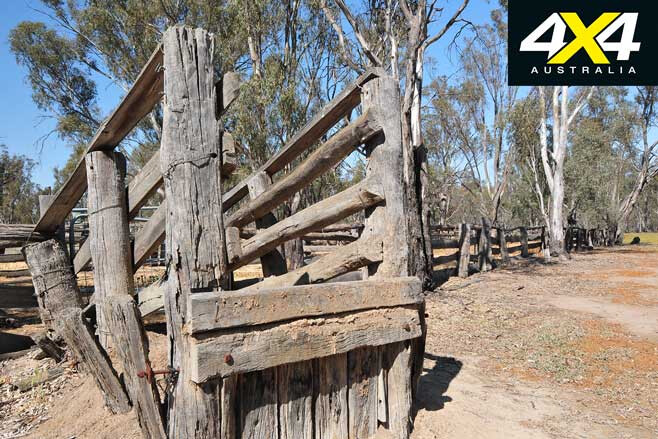
The history of the cattlemen is being kept alive by the Barmah Muster, which these days is more of a social event with friendly competitions, trail rides, entertainment and the like, but it’s still held every year. By all accounts it’s a great family occasion and one we must put on our calendar of things to do.
There is an easy walking trail near the Dharnya Centre with informative signs, which among other things take you to an Aboriginal cooking mound and a canoe tree, both graphic indications of the people’s long-term association with the country. We also found a nice campsite just outside the National Park in the adjoining Murray River Reserve, just before you cross Broken Creek north of the Barmah township. With easy access to the water and a few open areas right beside the creek, it’s a top spot and one we’ve added to the memory banks for our next visit.
Our time exploring the red gum forest around Barmah and beyond had come to an end, and it was with regret we packed up and headed back home. Next time, I’ll be back with a canoe and maybe even a fishing rod!
Travel Planner
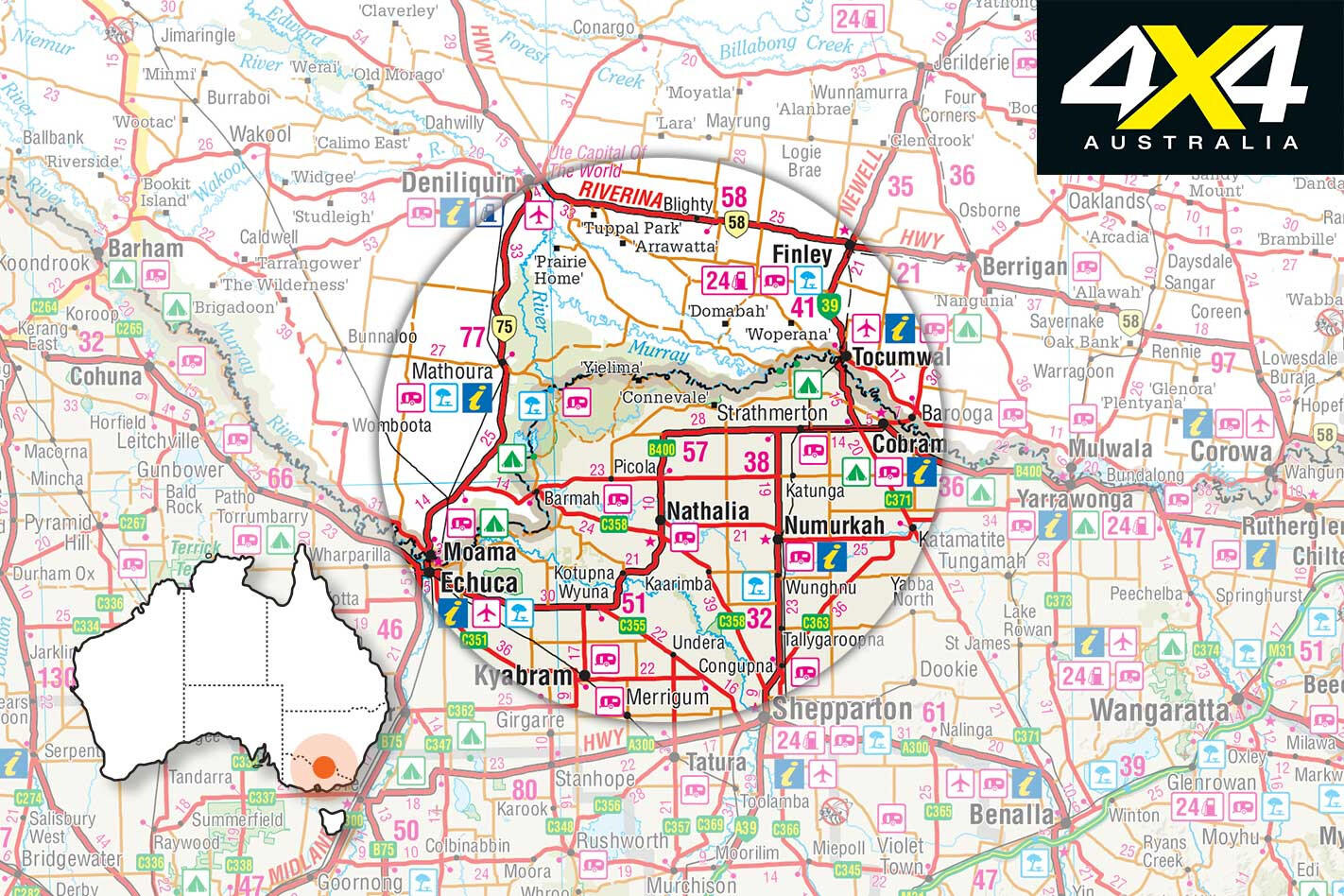
The red gum forests are approximately 260km north of Melbourne. It pays to check the relevant park websites to see road closures. Fines can result from driving on closed roads.
Murray Valley NP: www.nationalparks.nsw.gov.au/visit-a-park/parks/murray-valley-national-park Barmah township: www.murrayriver.com.au/barmah Mathoura: www.murrayriver.com.au/mathoura Barmah Muster: www.barmahmuster.com.au
LDV Automotive has added a stretched version of its T60 dual-cab ute to its line-up, with the all-new T60 Luxe Mega Tub boasting one of the biggest trays in the segment.
With a tray length of 1800mm, the budget-friendly Luxe Mega Tub’s tub is now 275mm longer than the regular T60 ute and, according to LDV, can store bikes standing upright and fit a typical six-foot tradie ladder.
There’s also an extra 315mm in the wheelbase (to total 3470mm), and the tray features an inner tray line for added protection. Hard lids and roller tops will be available, according to LDV.
“Size matters, and by bringing the T60 Luxe Mega Tub to market we’re broadening our offering in the most competitive segment in Australia,” said Dinesh Chinnappa, LDV Automotive’s General Manager.
“It’s clear owners want a vehicle that blurs the lines between weekend lifestyle and week-day workhorse,” he added. “The T60 Luxe Mega Tub is the perfect ute to do just that – and a premium of just $1500 over a regular T60 means it’s significantly better value than any other LWB ute in the segment.”
The Luxe Mega Tub mirrors the powertrain and running gear of the existing T60, which means it gets the 110kW/360Nm 2.8-litre turbo-diesel engine – mated to either a six-speed auto or six-speed manual transmission – and a rear on-demand diff lock.
Earlier this month, Volkswagen unveiled its Amarok XL and XXL models, with the wheelbases stretching to 3405mm (XL) and 3745mm (XXL), and the tray length extending to 1865mm (XL) and 2205mm (XXL).
Aside from the gargantuan price discrepancy between the Amarok and LDV, a vital difference between the stretched T60 and Amarok is that the T60 version is built on the same production line as the regular T60 – unlike the conversion applied to the VWs by Adelaide-based Adaptive Manufacturing.
While pricing for the VW versions hasn’t been finalised, it’s expected to cost around $15K on top of the price of the car; in comparison, with a $34,990 sticker price, the Luxe Mega Tub will cost just $1500 more than the regular T60 dual-cab.
The Luxe Mega Tub will be available from December 2019.
LDV T60 DUAL CAB DRIVEAWAY ABN PRICING (MT/AT) Pro: $28,990/$30,990 Luxe: $33,490/$35,490 Luxe Mega Tub: $34,990/$36,990 Trailrider: $36,990/$38,990
FORD Australia has hand-picked a suite of aftermarket kit and given the Everest Trend more off-road nous, with the launch the Ford Everest BaseCamp accessories pack.
Exclusive to the Trend – the most popular Everest in the Blue Oval stable – the accessories pack is available for both the 3.2-litre/six-speed auto and 2.0-litre bi-turbo/10-speed auto variants.
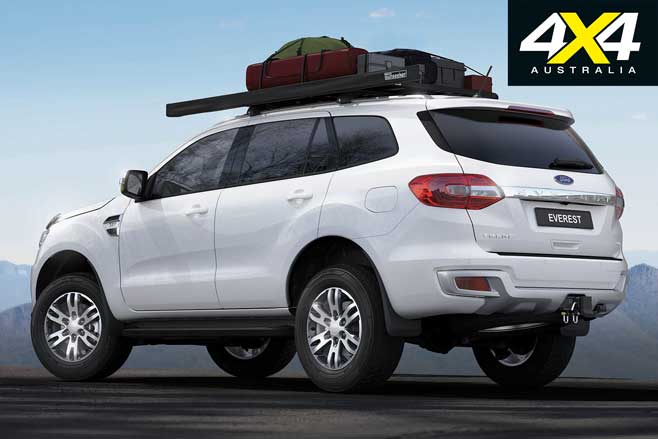
The pack, consisting of a mixture of Ford Licenced accessories, Genuine Ford accessories and specific components selected by the boffins at Ford, is stamped with a manufacturer’s list price (MLP) of $2000, which includes fitment at a Ford dealership.
For that coin, punters get a 76mm-diameter black nudge bar, a Genuine Ford bonnet protector and snorkel, a Ford Licensed LED light bar, a Pioneer platform affixed with a Sunseeker awning, and black roof-mounted carry bars. Despite already featuring a handy wading depth of 800mm, the snorkel, in particular, is a notable addition to the Everest, especially for the intrepid 4×4 explorer who prefers dust to tarmac.
In addition, a Genuine Ford tow bar is included, which is rated to 3000kg (for the 3.2-litre) and 3100kg (for the 2.0-litre bi-turbo).
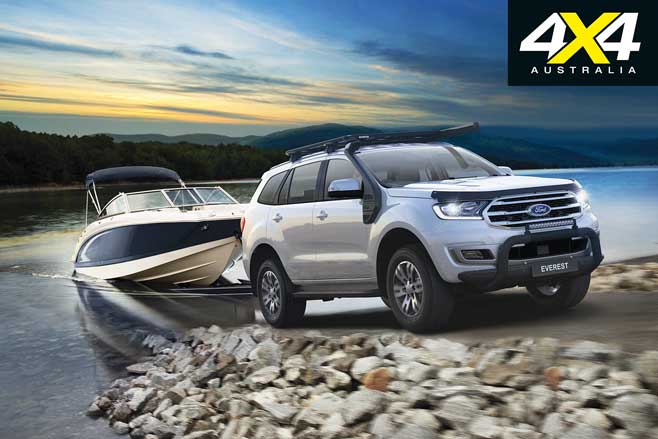
“We know that Everest owners have a keen sense of adventure, and the off-road, off-the-beaten track capability engineered into the Everest 4WD is something we know customers love about their vehicle,” said Kay Hart, President and CEO, Ford Australia and New Zealand. “Now, with the Everest BaseCamp accessories pack, we’re making it easier for customers to get adventure-ready features in a convenient, affordable way to make those weekend escapes a reality.”
The BaseCamp accessories pack provides the Trend with an assortment of useable, practical 4×4 gear, and it seems nicely priced, too, with Ford Australia claiming the kit equates to $6000 worth of value. It’s available now.
OF THIS year’s Baja 1000 field of 264 vehicle entries, the spotlight was undoubtedly focused on the Scuderia Cameron Glickenhaus Boot and the Ford Bronco R.
Both first-time entrants were inspired by 1960s Baja rigs, and both went head-to-head against each other as the sole entrants of the Class 2 unrestricted cars/trucks category.
The two-day cross-country rally, which was held over 1288km of cross country tracks, concluded with the Boot crossing the line with a total time of 33hrs 59min 14sec, a gnat’s whisker of just 46 seconds before the 34-hour cut-off mark.
https://www.instagram.com/p/B5R6t22ll4f/?utm_source=ig_embed&utm_campaign=loading
Unfortunately for Ford, the Bronco R copped myriad race-stopping damages to its components, before malfunctioning cooling fans forced the team to call it quits after 933km.
According to a CNET report, the decision was made to retire the Bronco R in the interest of safety as the next section of the course involved driving over mountainous terrain where recovery would be nearly impossible. Instead, the team nursed the Bronco R to the Baja 1000’s finish location in Ensenada, Mexico, on tarmac.
Despite being handed a comfortable lead by the Bronco R’s misfortunes, the Boot’s journey wasn’t all that smooth-sailing, either, with the team having to stop to deal with a broken spindle with just 78km to go.
Fortunately, the chase team managed to deliver the parts and the Boot was fixed just in time to make it across the finishing line to take a class win.
Top honours for the Baja 1000 was taken by brothers Alan and Aaron Ampudia in a ID Design Ford Raptor Trophy truck, who crossed the line in 16hrs 10min 36sec, 10min 30sec ahead of Dakar-winning Australian Toby Price and Qatari Nasser Al-Attiyah in a Ford F-250 Trophy truck.
NOT TO be confused with the X-Runner, Isuzu UTE Australia this month launched an alternative that’s easier on the hip pocket: the Isuzu D-MAX X-Rider.
Targeted at the thrifty 4×4 segment, the X-Rider is available in six-speed manual and six-speed auto configurations and is priced at $39,990 and $41,990 respectively. The limited-edition model is based on the D-MAX SX platform and, interesting, this variant is typically priced at $44,600 (manual) and $46,700 (auto).
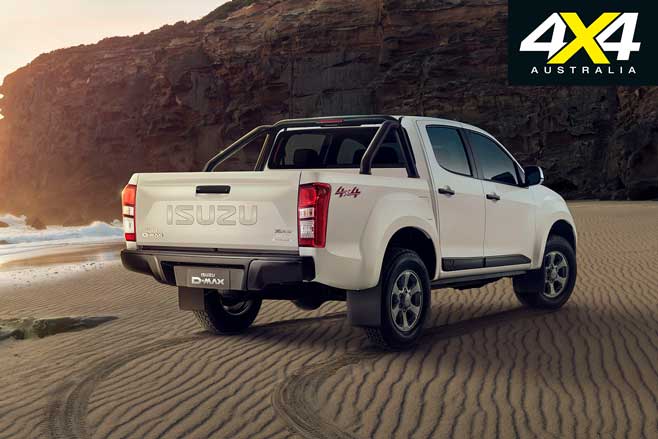
The changes applied by Isuzu UTE Australia for the X-Rider are entirely aesthetic, with the vehicle retaining Isuzu’s trusty 3.0-litre 130kW/430Nm turbo-diesel powerplant, as well as the same running gear.
For the X-Rider, ISUZU Ute Australia has added a satin black sports bar, blacked-out B-pillars, X-Rider badging, X-embossed door mouldings and 16-inch gunmetal grey alloy wheels. The X-Rider is available in three colours: Splash White, Titanium Silver and Obsidian Grey.
For comparison’s sake, the D-MAX X-Runner is based on the top-of-the-range six-speed-auto LS-T model and was also limited to visual changes, including 18-inch wheels, matte-black styling, X-Runner branding and a bunch of genuine Isuzu UTE accessories. The X-Runner was limited to 645 units and priced at $54,990.
The D-MAX X-Rider is available now from Isuzu UTE Australia’s dealer network.
MSA 4×4 Accessories has returned from the 2019 SEMA Show with a Global Media Award, with the Australian company winning the coveted prize for its innovative MSA 4×4 Towing Mirrors.
It’s no mean feat, either, with more than 2400 companies showing off more than 3000 products at this year’s event.
The Global Media Awards are voted for by a group of 30 international journalists from 19 countries around the world, who vote to recognise the companies that manufacture speciality products and accessories that have mass appeal to consumers.
MSA 4×4’s director, Shane Miles, was in Las Vegas to accept the award. “We’re extremely proud that our new Towing Mirrors have been recognised by the international media” he said. “It’s taken years to develop a mirror that, when not towing, was not disproportionate to the styling of the vehicle, and matched the size of the vehicle.”
As the name implies, the Towing Mirrors are designed to offer enhanced vision for towing, yet remain unobtrusive in the day-to-day scramble. The mirrors are designed so that a large single mirror pivots on a heavy-duty extension slide, so that it can return to its normal position once the tow rig has been disconnected.
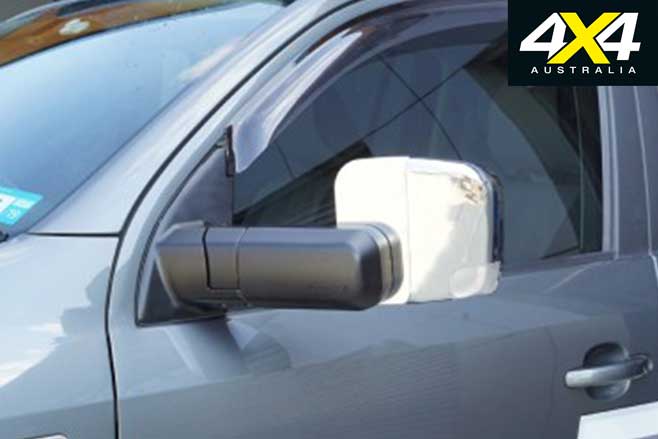
The newly patented Towing Mirrors come with a five-year warranty, with the product to be available in Australia from early December 2019. However, pre-orders can be made through MSA 4×4’s stockist network.
We’re hoping to install a set on our Project Ranger soon, so stay tuned!
MSA 4X4: msa4x4.com.au
BACK IN 2018 Holden did a limited run of LSX-badged Colorado 4x4s and they must have done alright, because despite the initial disappointment of the special edition not actually having an LSX engine fitted, folks snapped them up quickly. In fact, they were so popular that when Holden updated the Colorado range for 2019, the LSX returned as a full-time variant.
The LSX is based on the low-grade LS variant, but it muscles up with grey 18-inch alloy wheels, a gloss black grille, a new design black sports bar, black wheel arch flares, soft tonneau cover, ‘COLORADO’ decal on the locking tailgate, and a digital radio. Despite the exterior extras, the LSX retains the charm of a hosed-out interior with vinyl-covered floors and rubber mats – the no-frills interior trim many four-wheel drivers like in a car.
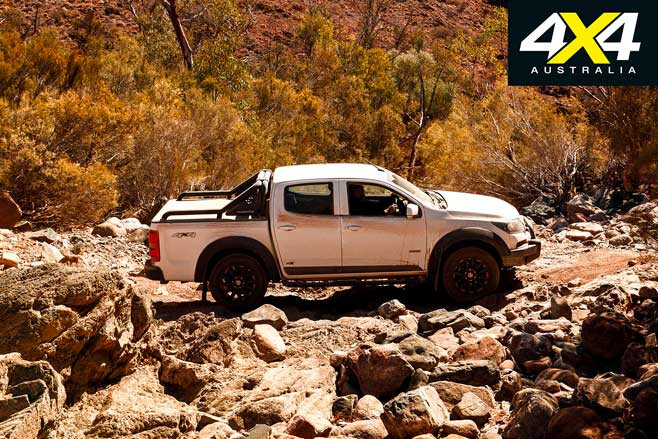
The new LSX is designed to appeal to buyers who want the tough-truck look without all the bells and whistles, and it’s priced at $46,990 (manual) or $49,190 (auto). The engine remains the grunty yet efficient stock 500Nm 2.8-litre Duramax, and the drivetrain remains the same as any other new Colorado. The only thing we can complain about is the lack of a factory-fitted locking diff in the front or the rear.
We enjoyed driving the Colorado so much that when we had an LTZ model last year, we racked up more than 15,000km during three months of use, which saw us travel to Stradbroke and Fraser islands and to Finke and back via the Oodnadatta Track. So when Holden said they’d like us to take the new LSX on our next adventure to the Flinders and Gammon Ranges in South Australia, we jumped at the opportunity.
When we told them where we were planning to take the LSX, Holden slapped on some factory extras including a genuine accessories steel front bumper with a Warn Zeon 10-S winch fitted, and a set of Goodyear Kevlar all-terrain tyres, a tow bar, side steps and underbody protection plates, all of which can be optioned from your Holden dealer. The optional extras took the price of this Colorado up to $53,440.
I had my doubts about running the highway-tyre-looking Goodyears on the harsh rocky tracks of the Flinders Ranges, but they proved me wrong.
On the highway drive from Melbourne to the southern tip of the Flinders, the Colorado reminded us of what we like and don’t like about it. We love the punchy 2.8-litre engine and its smart-shifting six-speed auto transmission; equally, we love the way the engine sips fuel as you cruise along on highway drives.
We’re not so in love with the NVH that comes from said engine, as it’s noisy and rattly and you really know about it in the cabin. Thank goodness then for the standard inclusion of Apple CarPlay that keeps the tunes flowing and makes taking and making calls easy. The Colorado is a comfortable highway cruiser, sipping diesel in the low 10L/100km range and with plenty of punch for overtaking.
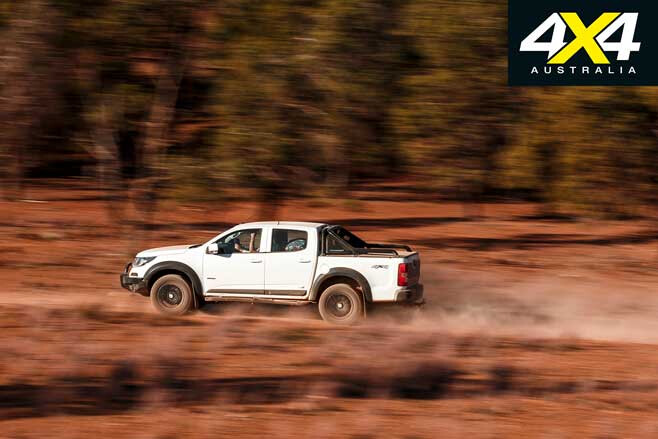
Once we left the sealed roads behind and hit the gravel of the Southern Flinders, the Colorado felt just as at home as it did on the highway. The sounds of dirt under the tyres blocked out any complaints about engine NVH, and the suspension is well-tuned to the conditions. As mentioned, the Holden doesn’t come with a factory fitted locking rear differential which many of its competitors do, but what it does have in lieu of a locker is an LSD.
A limited-slip differential comes in handy on gravel roads. Most 4×4 utes have an open differential and rely on the locker when off-road and electronic traction control for gravel road control, but ETC is annoying as it cuts your throttle.
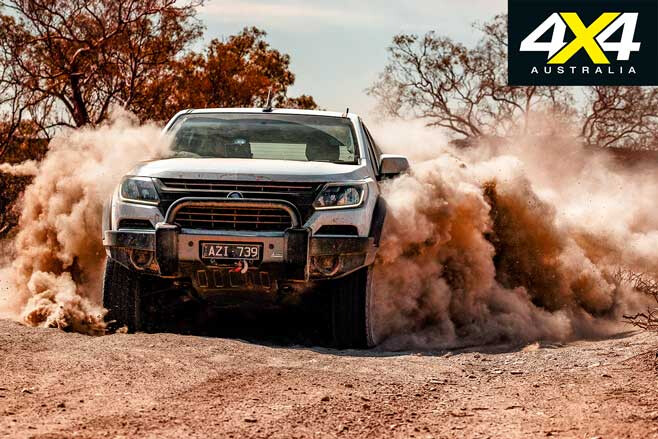
The LSD calmly controls any wheelspin and allows the driver to get on with the job. This is particularly handy when pulling out from a stop at intersections on dirt and wet sealed roads in town, especially when you have 500Nm underfoot; so kudos to GM for retaining the old LSD.
The LSD also helps when climbing steep and scraggly tracks in low range, and there’s plenty of that sort of driving to be had in the Flinders. Sure, the ETC covers traction as well, but the LSD does it in a more progressive manner and without interfering with your throttle. The extensive refresh of the Colorado range back in 2017 included a recalibration of the ETC, which greatly improved its reaction time and the car’s ability to ascend steep and rutted tracks. It still falls short of a locker-equipped vehicle on the toughest terrain, but it will go way farther than the pre-facelift models.
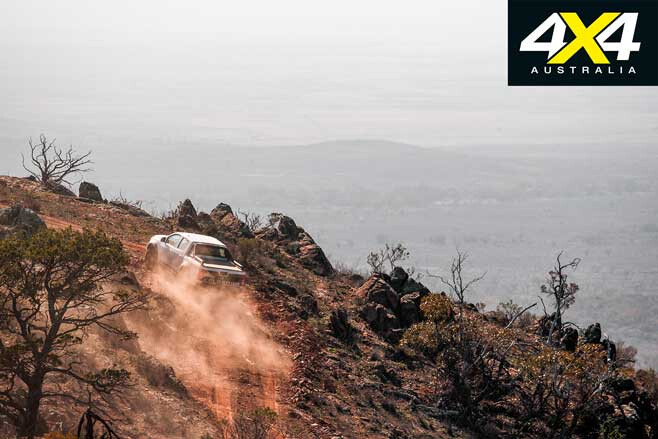
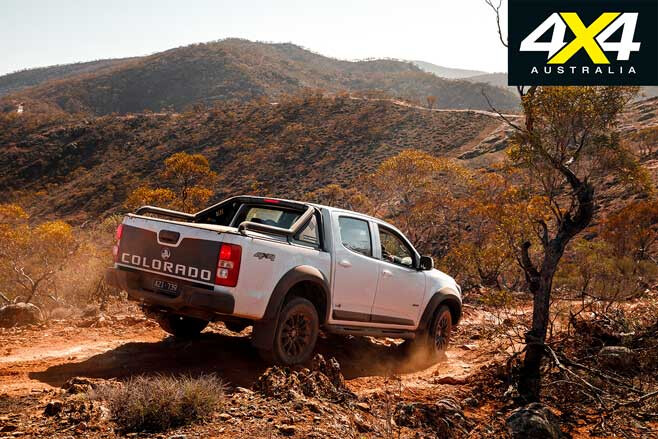
With all that grunt available and a steep 2.62:1 low range in the transfer case, climbing the steepest of terrain posed no problem for the Colorado. Hitting the tracks of the Bendleby Ranges, Willow Springs Skytrek, Warraweena Conservation Park and the iconic gorges of the Flinders is a must for any 4x4er touring through this area, as they provide challenging driving and spectacular views over the harsh and rocky landscape.
The rocky terrain also brought forth a big issue with the Colorado in this trim. Holden quotes the Colorado as having 215mm of ground clearance and an approach angle of 28.3 degrees with the standard front bumper – that angle should be a little better with the genuine steel bumper fitted to this vehicle.
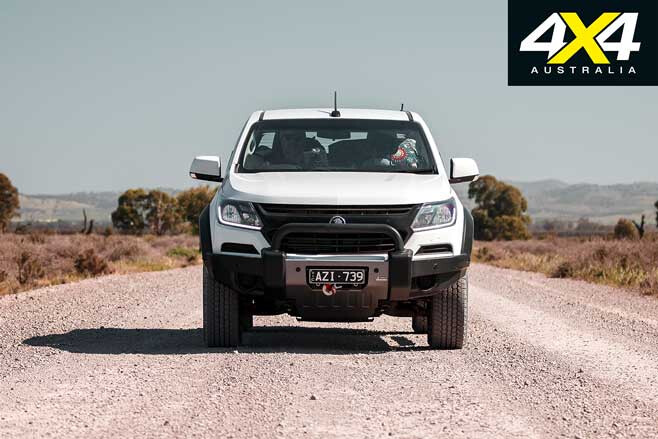
Not earth-shattering off-road numbers when compared with most new 4×4 utes, but this LSX seemed to find every rock in the Flinders with its bash plate and side steps. Even high crowns on the gravel roads scraped the underbody protection, and it was particularly bad when descending the steep hills and the weight of the car compressed the front suspension.
We put this down to the added weight of the steel bar and Warn winch over the front end, as we didn’t find any such issues with our bog-stock LTZ last year. As a result, the front bash plate was reshaped by the terrain and we lost a side step, as they are only lightly secured to the body.
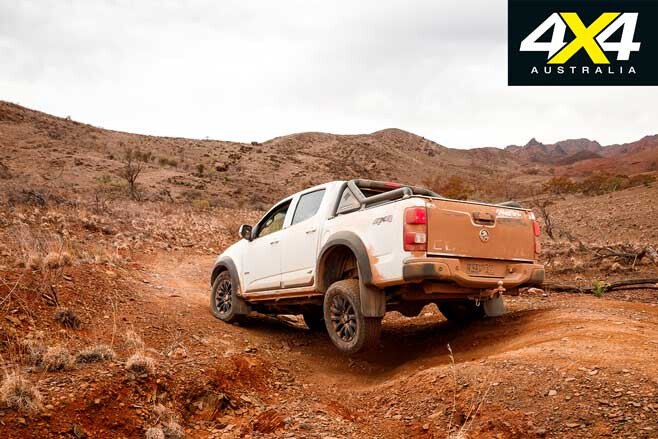
We’ve heard stories of Colorados busting sumps in such conditions without proper underbody protection, and we doubt this car would have survived without the optional plates. The simple fix for this would be to install a pair of heavier and/or taller front coil springs and, let’s face it, all of these utes need a lift in ride height for better clearance.
Aside from the clearance issues the LSX proved its muscle on the hills and on the highway. It’s competent and comfortable with grunt to burn, and provides excellent economy and brawny good looks with the LSX extras. A special shout-out to those Goodyear Kevlar all-terrain tyres – despite their soft-roader looks, they came away from the harsh, punishing rocky tracks of the Flinders unscathed … much to my surprise.
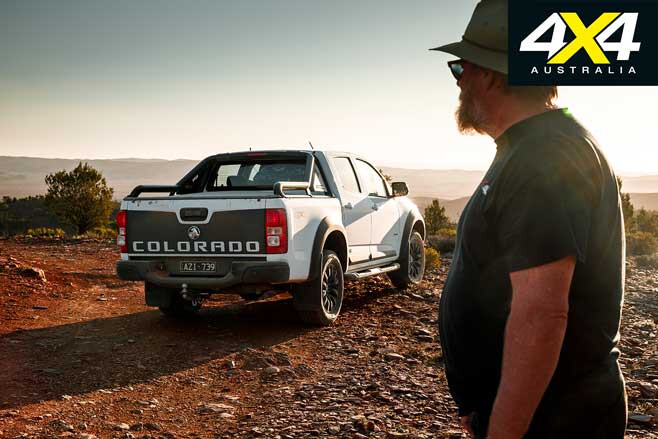
2019 HOLDEN COLORADO LSX SPECS: Engine: 2776cc inline-4 16v common-rail turbo-diesel Max Power: 147kW at 3600rpm Max Torque: 500Nm at 2000rpm Gearbox: six-speed auto Crawl Ratio: 43.3:1 4×4 System: Part-time with high and low range Construction: Ladder chassis/4-door pick-up body Front Suspension: IFS with coil springs Rear Suspension: Live axle on leaf springs Wheel & Tyre: 18-inch alloys with 265/60R18 tyres Kerb Weight: 2103kg GVM: 3150kg Payload: 1047kg Towing Capacity: 3500kg Departure angle: 23.1° Rampover angle: 22.1° Approach angle: 28.3° Wading depth: 600mm Ground clearance: 215mm Fuel Tank Capacity: 76 litres ADR Fuel Claim: 10.7L/100km On-test Fuel Consumption: 11.2L/100km
WITH a new decade almost upon us, now is a better time than ever to prep your fourbie for an off-road adventure.
The 2020 Gear Guide is the bible for dirt-chasing enthusiasts, with a range of the best aftermarket componentry to make your 4×4 the ultimate go-anywhere machine.
Not only have we listed some of the best new kit currently on sale, we’ve also spent time analysing and testing a heap of products including Terrain Tamer’s parabolic springs, a Dometic fridge/freezer, TJM Pro Lockers and a CTEK battery management system.
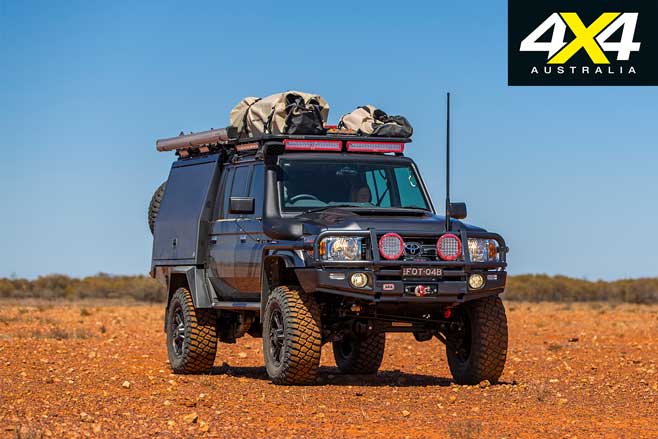
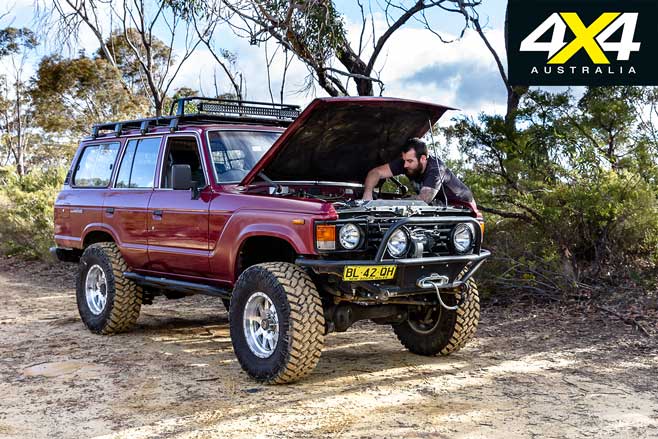
The easiest way to learn how to build the perfect tourer is to ogle at those who have already done climbed the mountain. To this end, we’ve included some of the best custom 4x4s roaming the Aussie countryside: two mighty 79 Series rigs and an immaculate GU Patrol ute.
We also took three popular dual-cabs decked out in Ironman 4×4 kit – Ranger, Hilux and Triton – to the hills, for a proper off-road workout. Plus, Dan Everett simplifies the process of updating an old-school 4×4, by outlining the 10 areas you need to focus on to make an ageing 4×4 perform as-new.
WHAT ELSE IS THERE? – A closer look at Club 4×4 Insurance. – LED Driving Light comparison. – Shock Absorber buyers’ guide. – Synthetic Rope buyers’ guide. – 4×4 Battery buyers’ guide. – Roof Rack buyers’ guide.
The 2020 Gear Guide is on sale now!