
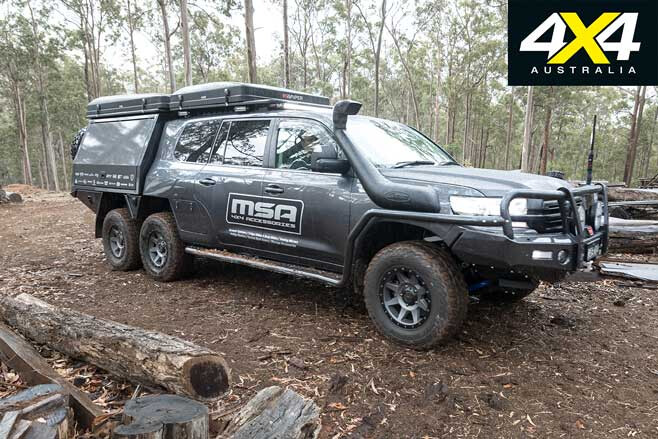
WHAT STARTED as a conversation between Shane Miles at MSA 4×4 and Mick McMillan at Australian Expedition Vehicles (AEV) has, after more than half a year of hard slog, finally transformed into what would surely be the most impressive family off-road tourer in the country.
2020 CUSTOM 4X4OTY: Vote now for a chance to win!
Shane wanted a vehicle big enough to take his family of seven to the most remote parts of Australia, in comfort and without towing a trailer, so he needed a vehicle with three rows of seats yet still with enough cargo capacity to carry all of the gear and supplies required for extended trips away, and with a pair of rooftop tents to sleep everyone.
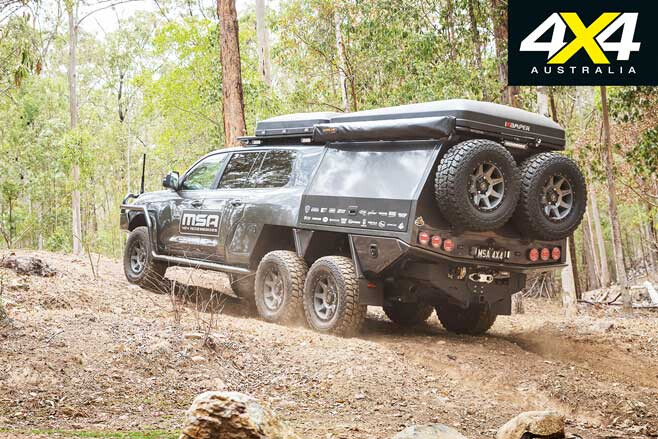
Mick McMillan, who has plenty of experience building six-wheel drive vehicles using the 6WD system he co-developed with JMACX, came up with a plan: extend a 4×4 wagon’s chassis, cut off its tailgate but retain its third-row seating, equip it with a JMACX 6WD system, and fit a bespoke service body on the back. The result would be a rig that would fulfill all of Shane’s requirements.
The pair then set about putting their incredible plan into action. Shane bought a new 200 Series Toyota LandCruiser VX wagon and shipped it off to AEV, while Mick came up with the methodology and timeline to transform it into a 6WD SuperCruiser. The only problem was a project like this had never been attempted before.
Custom Fabrication
AEV HAS plenty of experience transforming 70 Series and 200 Series Cruisers into 6WDs, but none of these retained three rows of seats; so this project would require some special attention at the body shop.
The first step in the vehicle’s transformation went as planned; the tailgate and inner rear guards were removed, the body was lifted off the chassis, the rear of the chassis was cut off and a new extended section was slipped over the top. A JMACX coil-spring rear axle was then fitted to the 6WD cradle and the Cruiser was sent to David Taylor Spray Painting & Panel Beating, where new rear bodywork was to be fabricated.
Some delays at this early stage of the project were not entirely unexpected. “It’s not our normal conversion,” explained Mick at the time. “There’s a lot more custom manufacturing in panel beating than we initially anticipated … we’ve had to rely on the skill of a tradesman to put the many bits and pieces together.”
The bespoke bodywork included fabricating the rear panel for the Cruiser from scratch, and fitting a custom made rear window. “It’s not just a square panel welded on there,” said Shane. “It’s all shaped with wide-radius corners, so it has a factory look to the finish.”
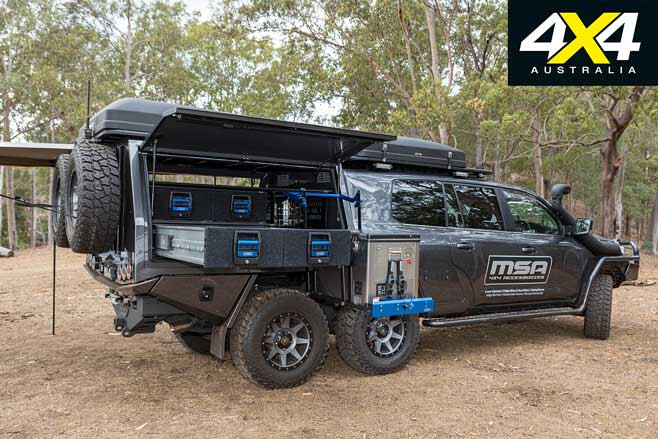
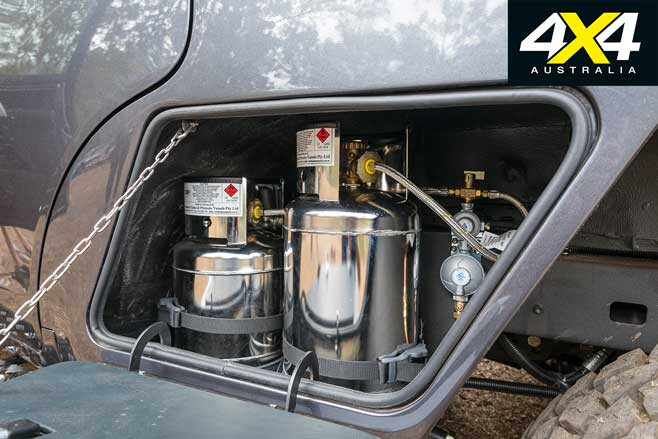
The build crew then decided to add a couple of toolboxes between the rear doors and the wheel arches. “The toolboxes, although they added another two weeks to the project, they’re a huge bonus … they’re big enough to fit gas bottles or a generator,” said Shane.
The Cruiser’s rear wheel arches were also reshaped with a straight edge to match the Trig Point canopy, resulting in a cohesive overall appearance.
Then there were several issues to be taken care of inside the cabin of the LandCruiser, which in VX specification included a large rear air-conditioning unit that had to be flipped on its side and relocated, along with all of its associated wiring and plumbing. And then the team discovered the drainage pipes from the Cruiser’s sunroof would need to be rerouted, along with significant amounts of wiring. In all, the extra fabrication and fiddling around to complete this one-off job added about three months to the overall build time.
Taking Shape
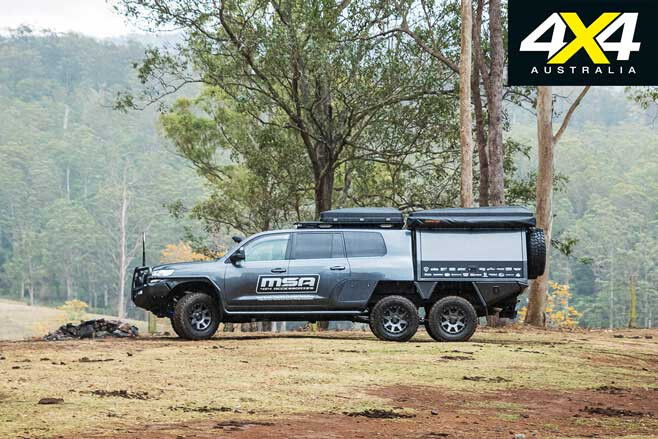
ONCE THE body work had been completed, the Cruiser was sent back to AEV where the Trig Point canopy was test-fitted, and the crew could stand back and take a good look at what they had created.
“When you see the photos you think, ‘wow, it’s a bloody road train’, but when you see it in person it’s pretty cool … it looks really good, it looks factory … as much as a six-wheel drive 200 Series can look factory, that is,” laughed Shane. “It looks extremely long, but in fact it’s not that much longer than a Hilux with a body on it.”
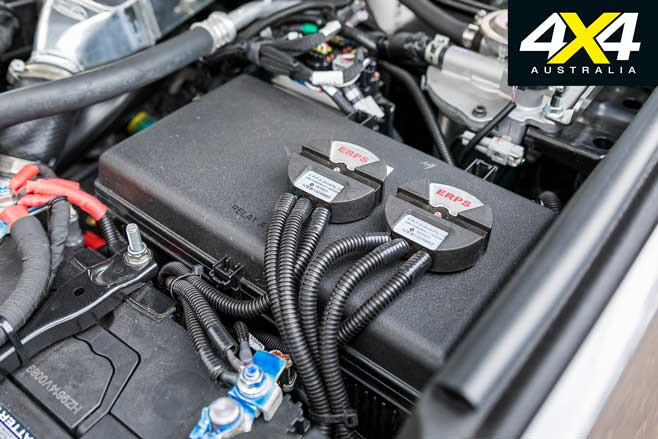
At this point in the build an auto electrician was engaged to sort out all of the vehicle’s interior wiring, as well as to fit two Electronic Rust Prevention Systems (ERPS); one for the body and one for the chassis.
With the test fit of the canopy done, the vehicle was sent back to the body shop for painting, before it returned to AEV where the whole vehicle was put back together.
Reassembly of the interior involved fabricating several unique covers and cowlings for the rear air-conditioning system, but the hard work put into it is reflected in its factory-like finish, with leather trim, premium carpet and a matching roof liner.
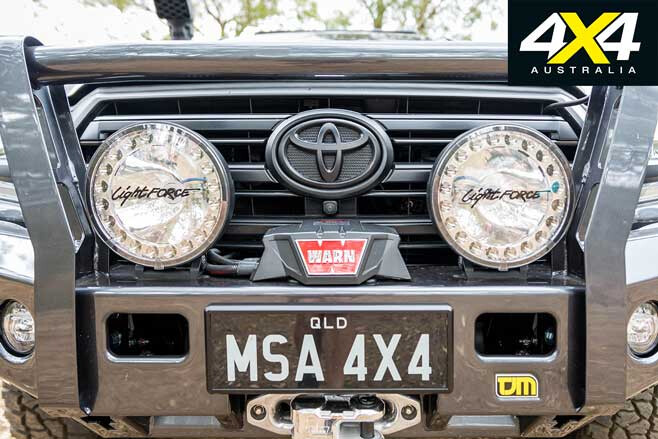
With the third axle in place and the Trig Point canopy fitted, the next step was to start equipping the Cruiser with accessories. AEV installed a 180-litre Brown Davis long-range fuel tank; Icon suspension in the front, middle and rear; Air Bag Man airbags; an ARB twin-compressor; an Air On Board 18-litre air tank; Icon alloy wheels with Mickey Thompson ATZ P3 rubber; TJM bar work; and Warn winches front and rear.
The TJM Outback bullbar and side rails are standard 200 Series parts, but the side steps are custom jobbies. “Shane sourced two sets of TJM side steps, and out of those two sets we’ve made one set to fit the vehicle,” explained Mick.
On the Road
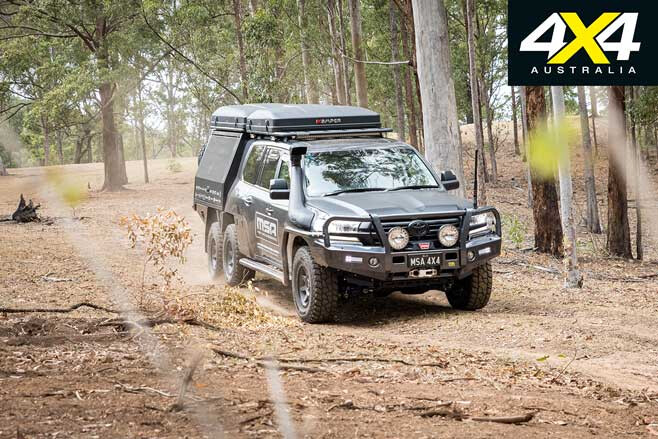
ONCE THE vehicle was kitted out with its running gear and AEV (a second stage vehicle manufacturer) fitted compliance plates, the SuperCruiser was registered as a heavy vehicle.
With ‘MSA4X4’ plates attached, Shane proudly drove his SuperCruiser down the freeway from AEV in Townsville to MSA 4×4 on the Gold Coast.
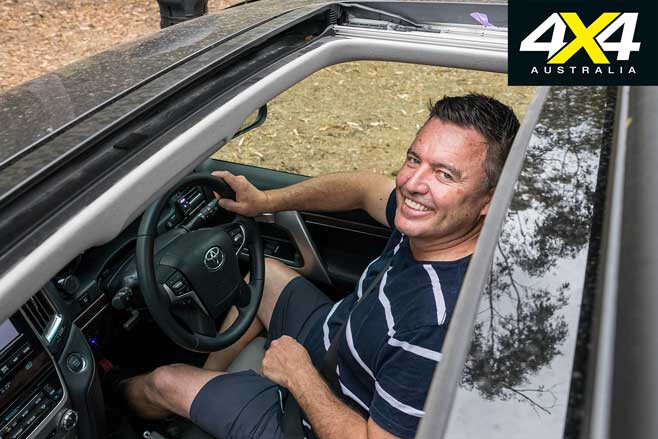
“Driving down the freeway, it felt like a luxury car,” said Shane. “I was expecting it to be military-like and vibrating and shaking, but I’ve never been so happy driving a car … it’s similar to any other 200 Series wagon fitted with all-terrain tyres.”
As you’d expect, performance was slightly blunted by the Cruiser’s 6WD driveline and its extra weight, but initial impressions were still good. Shane was also impressed by its manoeuvrability.
“At roundabouts, you just drive it like a normal car,” he said. “You don’t realise that there’s all this extra stuff (the extra length and extra axle) behind you. Visibility is good, too, because we have our new MSA 4×4 towing mirrors on there, you can see right to the back of the vehicle. And the reversing camera and the OE sensors and all that sort of stuff still works as it should.”
Final Fit-Out
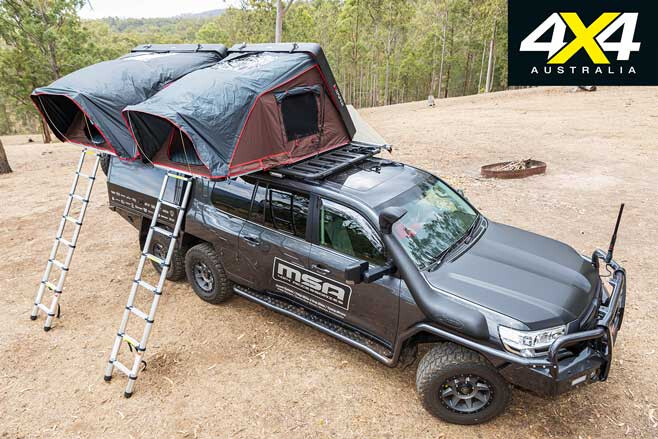
WITH THE vehicle back on the Gold Coast, there was still plenty of work to be done before it would be ready for its first off-road family foray. Under-the-bonnet mods are limited to the fitment of a PWR intercooler and a Safari ARMAX ECU system, while the engine breathes through an ARMAX snorkel before spent gases are expelled via a 2.5-inch aftermarket exhaust system.
“We’re going to be around the five-tonne GVM mark when we’re full, so in a way it will be like towing a ’van. So we’ve dropped a little bit of performance, but with the intercooler, the Safari ARMAX and the snorkel, it brings the performance right back up,” said Shane.
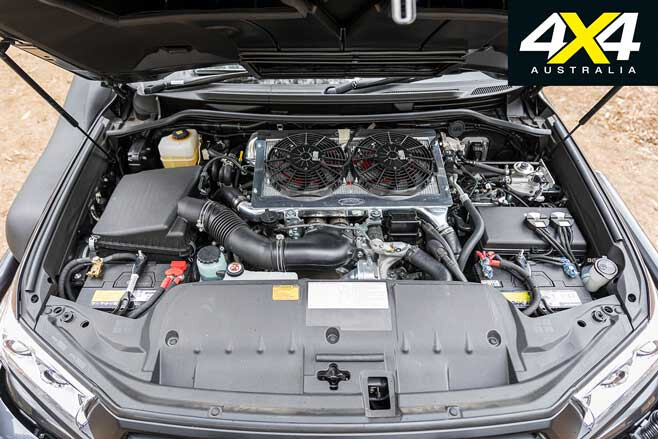
The ARMAX ECU system offers several user-selectable modes to suit different driving conditions such as towing or off-road driving, and it has built-in protection systems designed to prevent engine and driveline damage; it constantly monitors the vehicle’s exhaust gas temperature (EGT); and if abnormally high the ECU decreases the amount of fuel injected into the engine, reducing load until a return to normal EGT levels.
Direction-Plus fitted a ProVent oil separator kit (catch can) and a ProVent fuel/water separator to provide further engine protection, the latter equipped with an alarm to prevent potentially costly engine problems. To ensure the vehicle is 100 per cent road legal, Shane has kept the DPF system intact despite the fitment of the aftermarket exhaust.
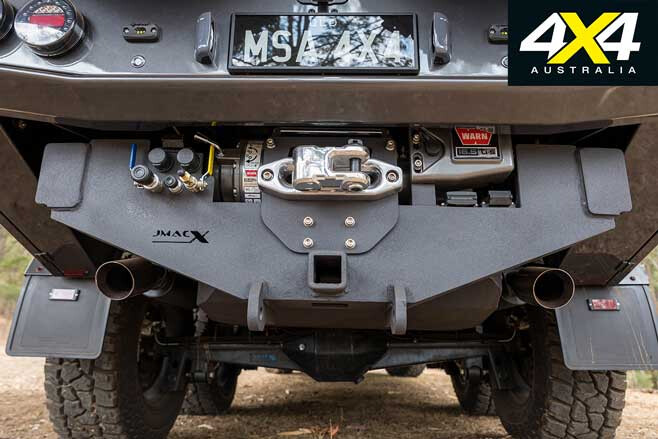
“It’s got the standard twin mufflers at the front and then twin 2.5-inch pipes all the way back to the twin resonators, and both DPFs have been retained,” he said.
Like earlier model 200 Series LandCruisers, you’ll see this one is equipped with two starting batteries. Shane’s theory was if there’s space to fit one in there, then fit one in there. The OE alternator, located in a vulnerable spot at the bottom of the engine, has been replaced by a 220amp Rapid-Power alternator, which not only provides more output but is also fully sealed, so it’s not prone to damage when driving in wet and muddy conditions.
Should the big Cruiser struggle in off-road conditions, Warn Zeon Platinum winches have been fitted front and rear, while ARB Jindalee fitted Air Lockers in the front and rear diffs. The middle diff sports an Eaton mechanical soft locker.
To haul up the extra weight of the SuperCruiser, Rugged Brake Systems has replaced the OE front brakes with an Extreme Big Brake kit consisting of slotted rotors and big six-piston calipers manufactured from lightweight aircraft-grade aluminium. The four brakes at the rear have been upgraded with Rugged’s BlackLine pad-and-rotor kit.
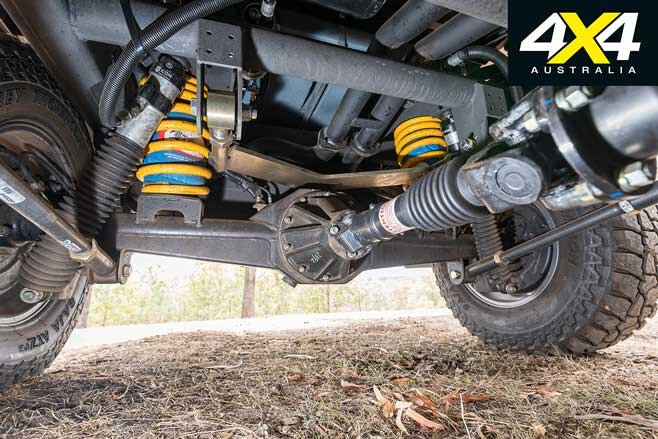
Tough Vehicle Accessories supplied the Icon Vehicle Dynamics suspension package. Up front this consists of Icon 3.0 Remote Reservoir CDCV coil-overs and adjustable Icon billet aluminium control arms, while the rear has JMACX’s progressive-rate springs mated to Icon 2.5 Remote Reservoir CDCV shocks.
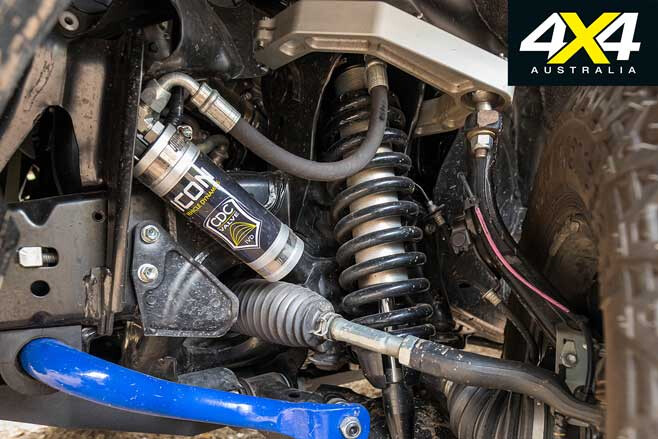
The shocks are manufactured from corrosion-resistant CAD-plated bodies with one-inch shafts in the 3.0 Series and 7/8-inch shafts in the 2.5 Series, and they are fully re-buildable and re-valve-able. They also offer tool-less compression damping adjustment by way of a dial, so they can be tailored to suit different load and driving conditions.
The SuperCruiser’s alloy wheels are also Icon units, and there are eight of them – six on the ground and two spares mounted to the back of the Trig Point canopy. They are called Rebound Satin Black 8.5 x 17 rims and have a 25mm offset and 1250kg load rating. The Icon alloys are wrapped in LT285/70R17 Mickey Thompson ATZ P3 tyres.
Camping Setup
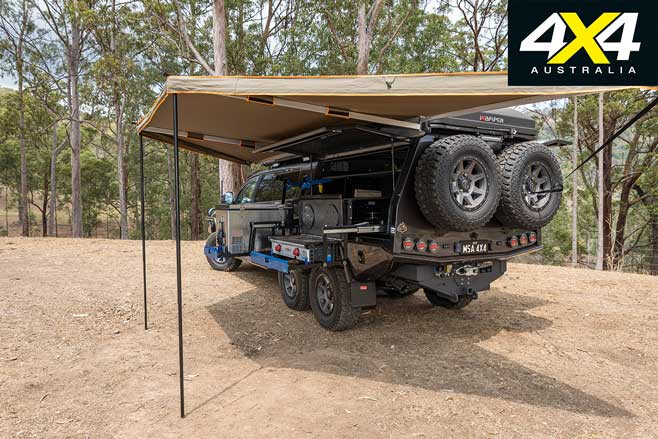
CAMPING WITH a family of seven requires plenty of load-carrying capability, lots of sleeping space and a generous power supply, and the SuperCruiser’s got all this in spades. As it’s mounted directly to the vehicle’s chassis, the Trig Point canopy offers a lower floor height than a tray-mounted service body, which means it’s easier to reach gear in the back. Shane has kitted out the canopy with an MSA 4×4 drawer system, MSA drop slides and MSA fridge barriers.
“We put 1170mm drawers on the bottom and stacked 1030mm drawers on top of them,” said Shane. “On the driver’s side there are four drawers and a DS50 Fridge Drop Slide that holds a SnoMaster 60-litre fridge, and this has one of our new fridge barriers that line up perfectly with the top of the stacked drawers.”
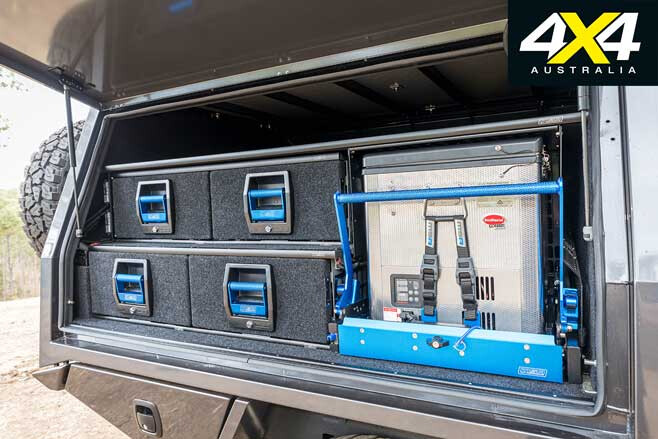
The cooker resides on the other side of the canopy, also in a fridge barrier, and across the top of all this is a flat floor that’s ideal for storing bulky items like bags and camp chairs.
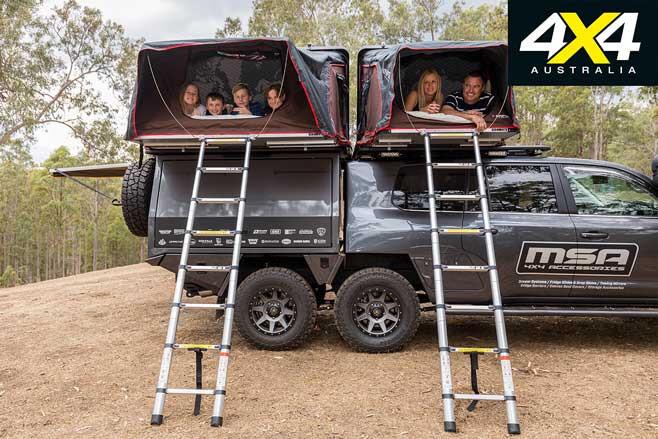
When it comes to accommodation, there are two iKamper rooftop tents up top. A Rhino-Rack Pioneer Platform on the Cruiser’s roof home to an iKamper Mini, while there’s a bigger iKamper Skycamp 4X for the kids atop the Trig Point.
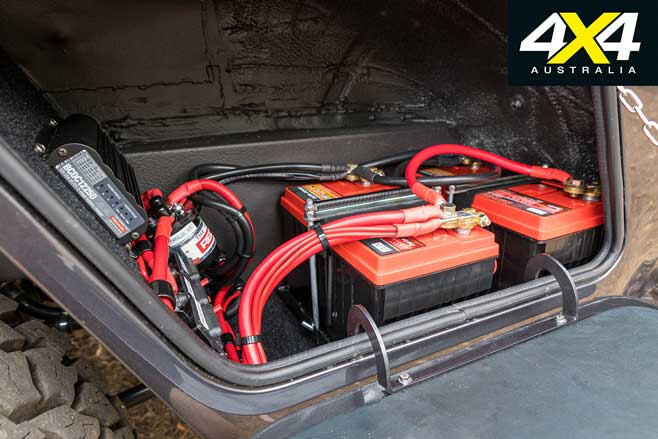
Ensuring there’s plenty of power for fridges, lights, accessory charging and more, there are six Revolution Power Australia 60amp/h Slim Lithium batteries hidden away in the canopy, and these are managed by a Redarc DC to DC charging setup and a RedVision system. There’s also a 1000W Redarc inverter that leads to a double 240V power outlet in the canopy, and another one inside the vehicle’s cabin for charging camera batteries and other equipment.
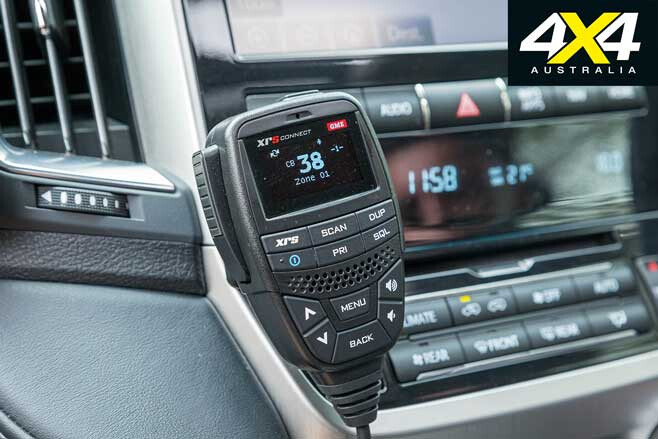
Making sure Shane and his family don’t trip over in the dark are Lightforce LED work lights on either side and at the rear, while there’s a Lightforce LED light bar up the front of the Pioneer Platform. The Rhino-Rack setup also provides a fitment point for a reversing camera and a Cel-Fi Smart Repeater Booster antenna on a GME fold-down bracket. Plus, there’s a GME XRS UHF radio inside the cabin for vehicle-to-vehicle comms.
There are a few small things still to be completed, but Shane has given the SuperCruiser its first official shakedown run with his entire family along for the ride.
“We went out to Witheren Heights Bush Retreat (near Canungra),” said Shane. “There’s a bit of dirt to get in there and then the tracks are quite rutted … and over the back side of it are really nice, hilly areas with open campgrounds and a few streams running through there, and four-wheel driving and stuff as well.
“I took the family with me and they absolutely loved it,” he said, adding that there was plenty of space for all seven of them; although, at 19 years of age, their eldest one is now happy to tag along on family trips in his own vehicle.
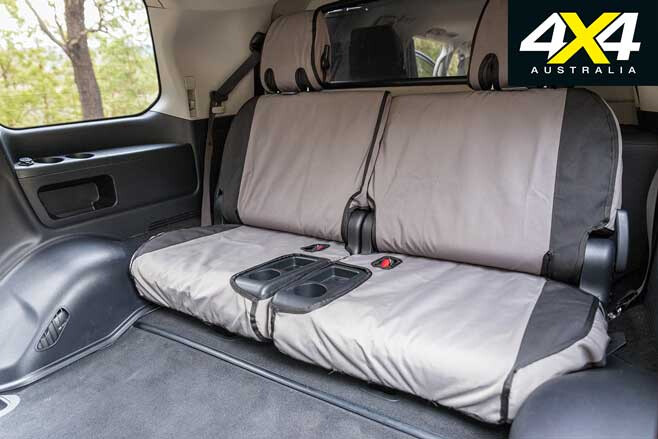
“We’re a blended family,” explained Shane. “Tameka and I both have 13-year-olds, and they were in the middle seats, and then we’ve got the 10- and 11-year-olds, and they were seated in the back row. There was heaps of room; more than enough space. They have heaps of leg room, they all have their own individual cupholders and it’s really cool. They love it; they’ve all got their spots now and their charge points for their electronics and stuff.”
Once they’d found the right campsite, Shane said it didn’t take long for the kids to set up the two iKampers.
“We set up around a campfire and played with everything on the car. The kids set up the rooftop tents and they were up there just mucking around, and there was heaps of room for them in the bigger of the two tents.
“Those iKampers are so quick and easy to set up and pack up; you don’t dread packing them up because it’s just not a chore.
“The Darche 180° awning, it covers the area we use as a kitchen perfectly, and we can pull the barbecue/cooker out really quickly because it’s mounted on a drop slide,” he added.
Off-road Performance
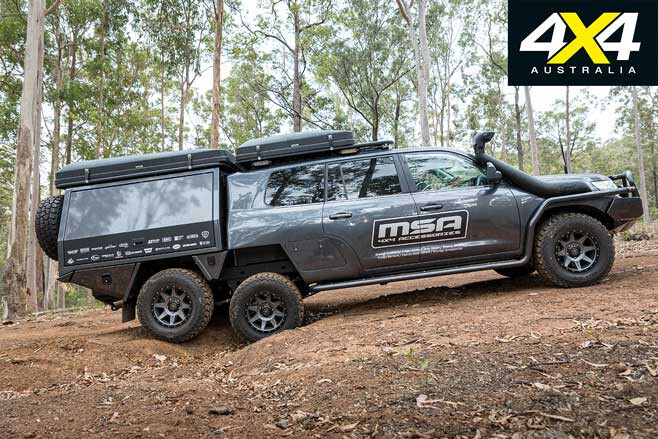
DESPITE ITS overall size, Shane is quite surprised by the manoeuvrability of the SuperCruiser and says he’s measured the turning circle and reckons it’s tighter than a LandCruiser 79.
“We went out and did a bit of four-wheel driving and the thing is just incredible off-road,” said Shane.
“I put it into low range and the traction is amazing. The wheels went down into ruts that were a foot-and-a-half deep and it had no problems whatsoever.
“The wheel travel is just incredible, the way the rear wheels articulate – one wheel will drop down into a rut and the other one just keeps driving, then it drops into the rut and the other one takes over.”
While the tracks at Witheren didn’t present too much of a challenge, Shane is confident the SuperCruiser will have no problems tackling more serious off-road terrain in the future thanks to the fitment of front and rear air lockers. The fact he has Warn winches front and rear will also instil plenty of confidence as he becomes more familiar with driving the vehicle.
Off-road Capable?
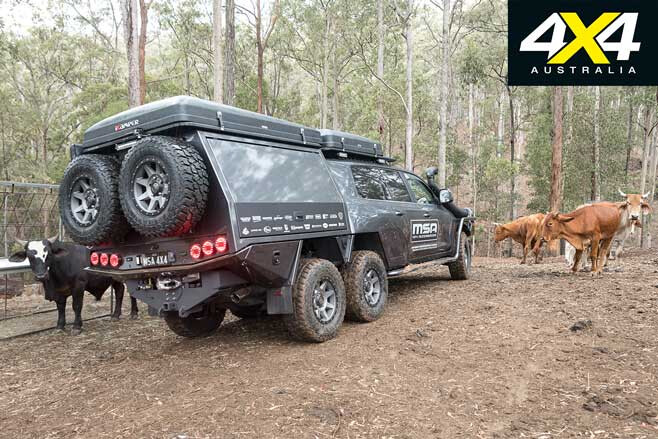
THERE’S BEEN a some social media hoo-ha about the SuperCruiser being too big to be effective off-road, but Shane disagrees.
“The turning circle (14.2m) is fantastic,” he said. “It’s my daily driver and I haven’t had any issues driving or parking it.” There’s some tyre scrub at the rearmost axle on full lock, but an Airbag Man self-levelling system should resolve this (like a truck with a lazy axle).
As for off-road axle articulation, that’s one of the highlights of the six-wheel drive system; there’s plenty of it. And it has locking diffs and two winches!
What’s Next?
THE EXTENDED build time meant Shane and family have had to postpone a few trips but there are still plenty being planned.
“Because we missed the bigger trips we had planned, we’re going to do a lot of smaller weekends away, like Stradbroke, Morton and Fraser islands, and then next season we’ve got a trip planned up the Cape with some family and friends,” said Shane. “We’ll also do some open days and trade shows, including Brisbane next year.”
Shane’s also keen to ship the SuperCruiser stateside next year, to attend the Overland Expo in May and to take his family touring. “At Overland Expo we can use it to show off MSA 4×4 products and all the other equipment that’s been fitted to the vehicle, but that’s its secondary purpose,” said Shane. “It’s really all about family, with some promotion along the way.
“We’ll do four, five or six weeks touring in the US, probably around the canyon area, Monument Valley, the Colorado Rockies and then further east to Moab … so we’ll just go and drive around those parts.” So was the SuperCruiser worth all the heartache, time and expense that was involved in its creation?
“Absolutely! I love it,” exclaimed Shane. And so does his family.
BlackWolf, Victorinox and Pelican have released a selection of backpacks and ruck cases that could make the world of difference this holiday season. We take a closer look.
Blackwolf Sync 30 Daypack
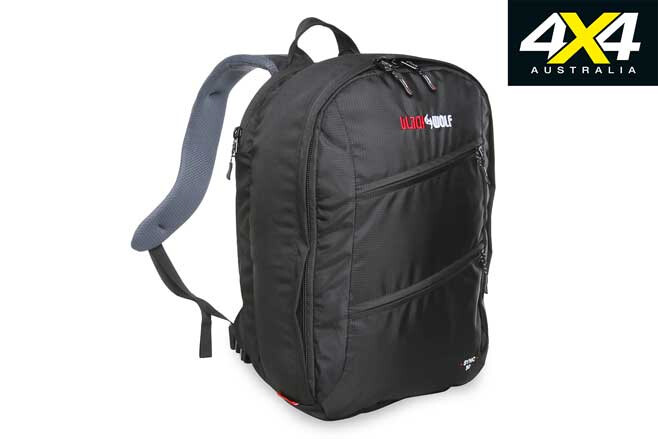
The Sync 30 Daypack from BlackWolf features an air-mesh travel backing that’s designed to keep you cool while you’re wearing it. This breathable daypack weighs in at only 1kg and is made from 420D Mini Ripstop PU, making it the ideal crossover pack for weekend trips, day hikes and mini-adventures.
Additional features include padded shoulder straps for all-day use, removable waist belt and sternum strap for added pack stability; internal organiser; removable key holder; padded laptop holder; an internal mesh water-bottle pocket; and RFID protected pocket to ensure your electronics are protected from skimming.
On the outside the Sync 30 has low-profile front pockets (one lined with tricot to protect sunnies and the like) and a pull-out rain cover, and it features sturdy No. 10 zippers. It’s available in black or titanium.
RRP: $129.99 Website: www.blackwolf.com.au
Victorinox Altmont Active
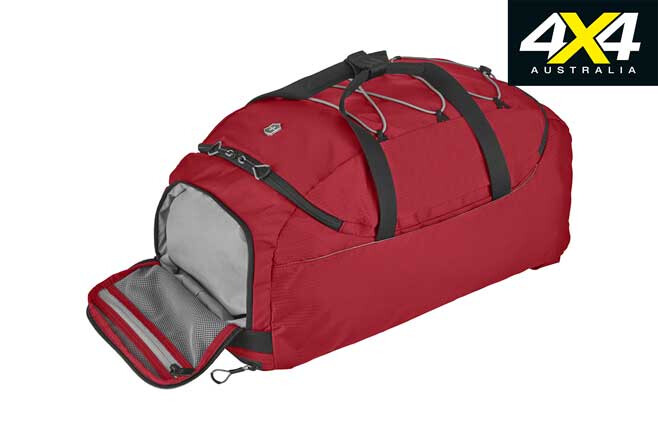
Victorinox has launched its lightest ever backpack range, reducing the weight of its Altmont Active bags by 30 per cent. Made from lightweight, durable and water-repellent nylon, Altmont Active bags feature multiple pockets, an exterior cord system for use with gear loops, compression-moulded back panels, an airflow system, and adjustable sternum and shoulder straps.
There’s also a mesh water-bottle holder in the main compartment and a dedicated space for a hydration bladder. A reflective print aids visibility at night and the packs are available in a variety of colours (black, dark teal and red) in sizes ranging from 18 to 35 litres.
To suit individual requirements, users can choose between a compact style, cap or roll-top models, an expandable version, or a rucksack that converts into a duffle bag. There are also optional rain covers ($45.95-$49.95).
RRP: $219-$319 Website: www.victorinox.com
Pelican R60 Personal Utility Ruck Case
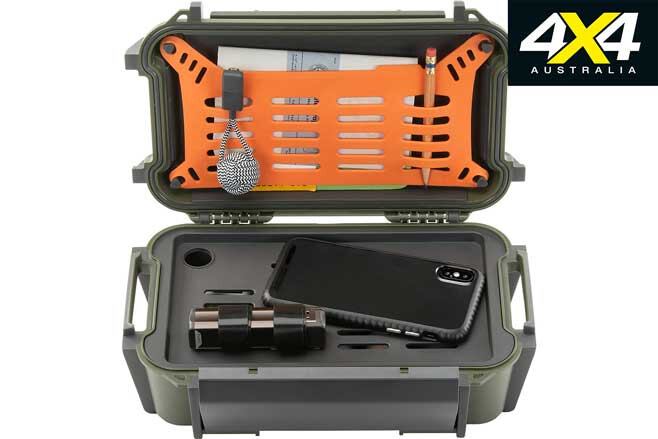
The Pelican R60 Personal Utility Ruck Case is claimed to be a crushproof, dustproof and adventure proof storage system for small items. Measuring 283mm x 174mm x 99mm, it features IP68-rated protection from water, dirt, snow and dust, a dual-pivot hinge latch, an abrasion- and impact-proof ABS outer shell, snap-in flexible lid organiser, rigid divider tray, MOLLE (Modular Lightweight Load-carrying Equipment) style loop system with Velcro straps, rubberised protective bumpers, and a built-in pressure valve.
It’s claimed to be waterproof to a depth of two meters for up to 30 minutes and is covered by a lifetime guarantee. It’s available in green, brown, black or orange.
RRP: $89.95 Website: www.pelicanstore.com.au
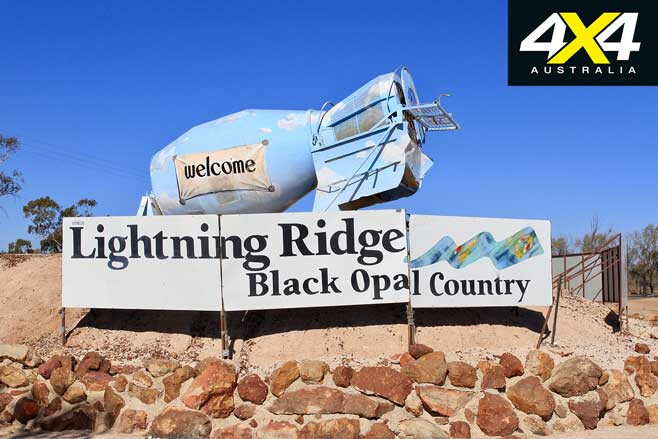
Lightning Ridge is one of those iconic places in Australia you need to visit at least once in your life to discover its history, natural yet harsh beauty, and the rough characters that call this place home. Most travellers know that Lightning Ridge (or The Ridge, as known by locals) is home to some of the best opal in the world and where lost people seem to go to in an attempt to escape their problems.
There’s no doubt it’s a bloody hot, remote and isolated area, but The Ridge seems to be busy all the time with travellers passing by or making it their own destination. We made the mistake of turning up without booking accommodation in advance at one of the four parks in town. Luckily, just 3km away, is Lorne Station, which is an old shearing property that has opened its gates to campers.
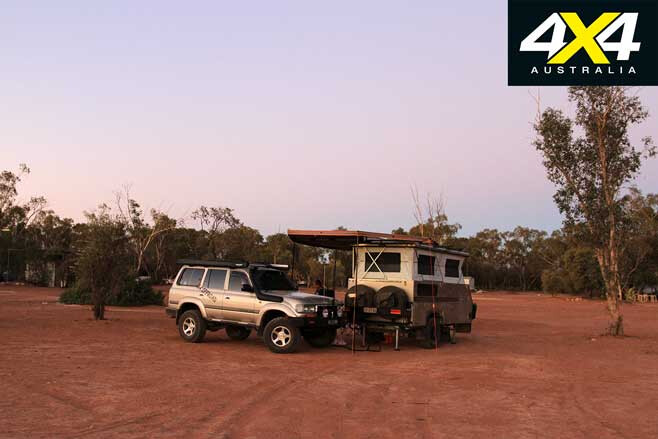
With nearly 4000ha to camp on we were guaranteed a spot at this down-to-earth park with basic facilities, where you can set-up for a day or for several weeks. Lorne Station itself allows you to fossick on its mullock heaps around the property and, while we didn’t get lucky finding any colour, the managers reckon plenty of others have.
These days Lightning Ridge is a tourist town, with coffee shops, art galleries and, in the cooler months, parks packed with southerners who flock here to soak in the artesian water that comes from nearly a kilometre underground.
Some say that soaking in this mineral-enriched water heals you of your aches and pains and may even add a few years to your life, but all we know is that once you get past the sulphur smell it certainly feels good to take a dip in the 40°C water.
Hit up the local tourist information centre and they will be more than happy to load you up with an array of booklets and advice covering the self-guided tours around town and its outer reaches. Of these, the most popular around-town tours are the four car doors.
There are green, red, yellow and blue car doors scattered around town, all with a different theme, and you follow these and discover different quirky highlights. Most take around 30 minutes, and all start in the middle of town.
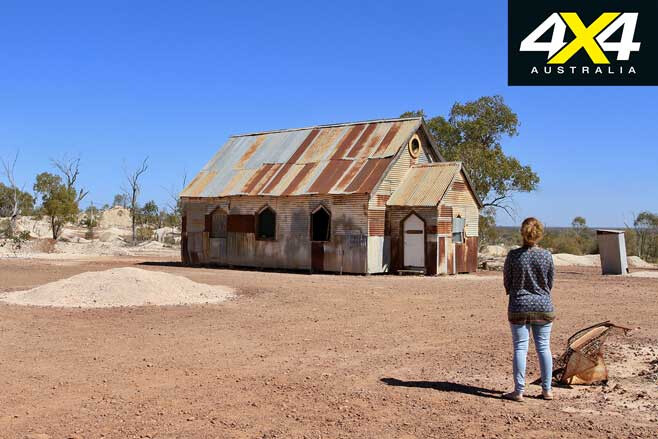
Depending on which one you take, they offer up tidbits such as history, unusual houses made of weird materials (like the bottle house or the castle complete with a moat), or a drive to a tin church that was built for a movie, while others take you to some of the original mines, lookouts, old car relics and much more.
The area around Lightning Ridge was used by pastoralists for huge sheep stations in the 1800s and opal wasn’t discovered here until 1901, when a boundary rider named Jack Murray picked up some ‘pretty rocks’. Fired from his job, he spent Sundays digging up these rocks, and later on he and a mate walked 700 miles to White Cliffs and sold their small diggings – and the rush was on.
It was hard work in the early days when miners dug the hard ground by hand, then had to haul the dirt and rock to the surface. On the yellow car door tour, you’ll be led to one of the original and largest open-cut opal mines in NSW, and reportedly the richest black opal source ever found. Here at Lunatic Hill it was said that men had to dig three times deeper than other areas to find any fortune.
As word spread of black opal being found here, a village called Nettleton grew nearby, down on the Three Mile Flat workings. Over the next 60 years the ‘hole’ got so big it became too unsafe to work around, but they kept going and in 1986 a huge hand-size black opal was found, which had an estimated value of $6m. Today the area is fenced off to the public, but several viewing areas provide a good view over this massive hole.
From the air, Lightning Ridge looks like it’s covered in a million mole hills, but these are all mullock heaps – dirt taken from vertical shafts deep in the ground where miners are looking for that seam of colour … and hopefully their fortune.
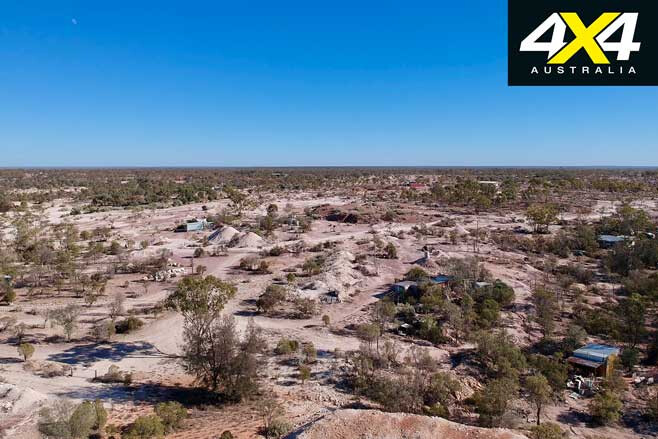
Mine claims around here are generally 50 x 50m², in which any number of holes can be sunk. Wandering around the mines on the claims is a big no no, and at night it would be especially dangerous to do so.
Wanting more than the normal tourist route we were told about ‘other’ opal fields about 100km to the west of Lightning Ridge, called the Grawin opal fields, where things were a lot tougher. The drive across to the Grawin via Cumborah is all tar, but things got pretty rough and ugly as soon as we hit the turn-off into the Grawin. There’s no shire council out here to maintain the roads, and most locals leave there tyres at 20psi due to the unforgiving and relentless corrugations.
The 20km drive into the fields is like something out of a Mad Max movie, with 40-plus-year-old trucks working the area, unregistered, with no doors and with weird mining gear welded onto the back.
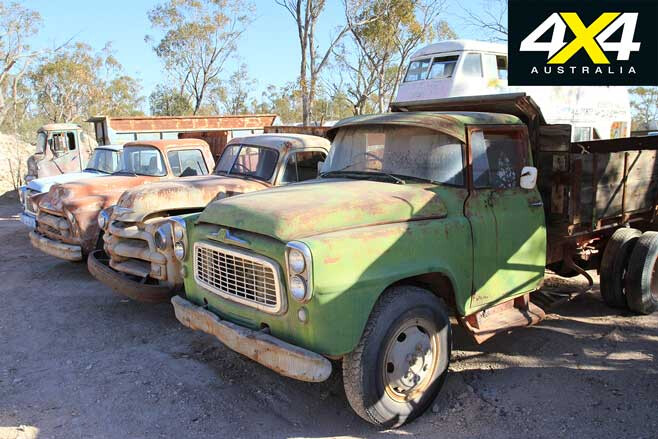
There’s nothing pretty about this area as it’s all coated in a whitish dust reminiscent of baby powder – it’s on the trees, the makeshift dwellings and the vehicles, and, trust me, it gets in everywhere.
A few years ago someone had a vision out here and created the ‘Pubs in the Scrub’ after visitors kept dropping in looking for something to do. Nowadays there are several ‘pubs’ (more like licenced sheds) where you can grab a feed and a coldie.
We found that you can free camp behind these as long as you spend a few dollars inside, and for that they will give you the heads-up where you can noodle or fossick in legal mine dumps around the area. The two most popular spots are up near the Sheepyards (one of the original mine areas) where, after 50 years of mining, the piles of rock and dirt are as large as a footy field and more than 10m high.
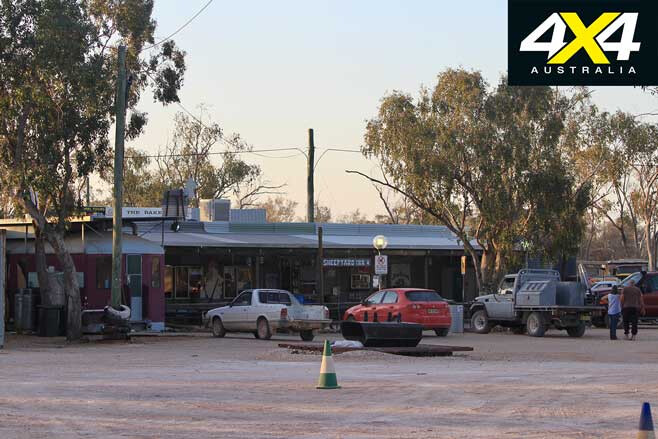
Every few hours a mine truck will drive to the top of these piles and dump a few more tonnes of rubble – just don’t get in their way. It’s a unique community where they work hard looking for that elusive big opal full of colour.
In 1905 the first opal was found nearby at Hammond Hill, but it wasn’t until 20 years later that the first substantial piece of rock created an ‘opal rush’ to the area. During the war-era, mining was conducted by candlelight and, as per The Ridge, it was all dug by hand using a pick and shovel. It wasn’t until the 1950s that ‘proper’ tools, jack hammers and trucks made an appearance in the area, making things a little easier.
By the 1990s, better gear like giant vacuum cleaners and hydraulic equipment made life much easier. These days the trucks and machinery have the right-of-way on the road, and we didn’t see too many number plates on anything – the rough roads must shake them off! Local rumour has it that when the local constabulary show up for a drive around, the town goes quiet and it’s hard to find anyone about. Maybe that’s why there’s no real population count.
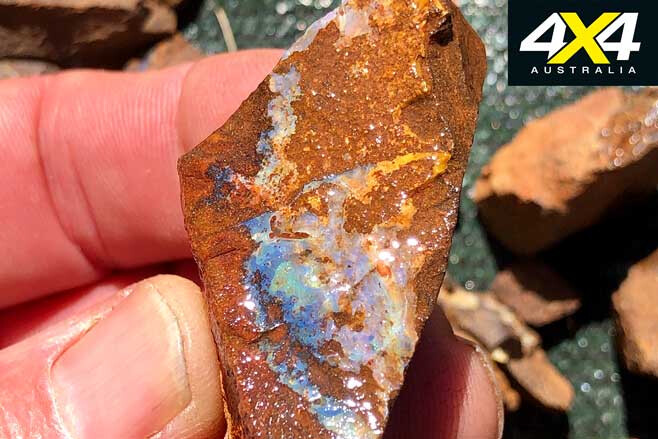
Another ‘pub’ out here is the Club in the Scrub, where you can also free camp, book a basic cabin, have a yarn to a local (maybe get a few opal mining tips), play a round of outback golf, have a feed or just relax and take in the memorabilia adorning the walls.
The Lightning Ridge area is alive with quirky and unique characters, tours, signs and more, and anyone who takes a trip to this iconic area will not be disappointed.
Travel Planner
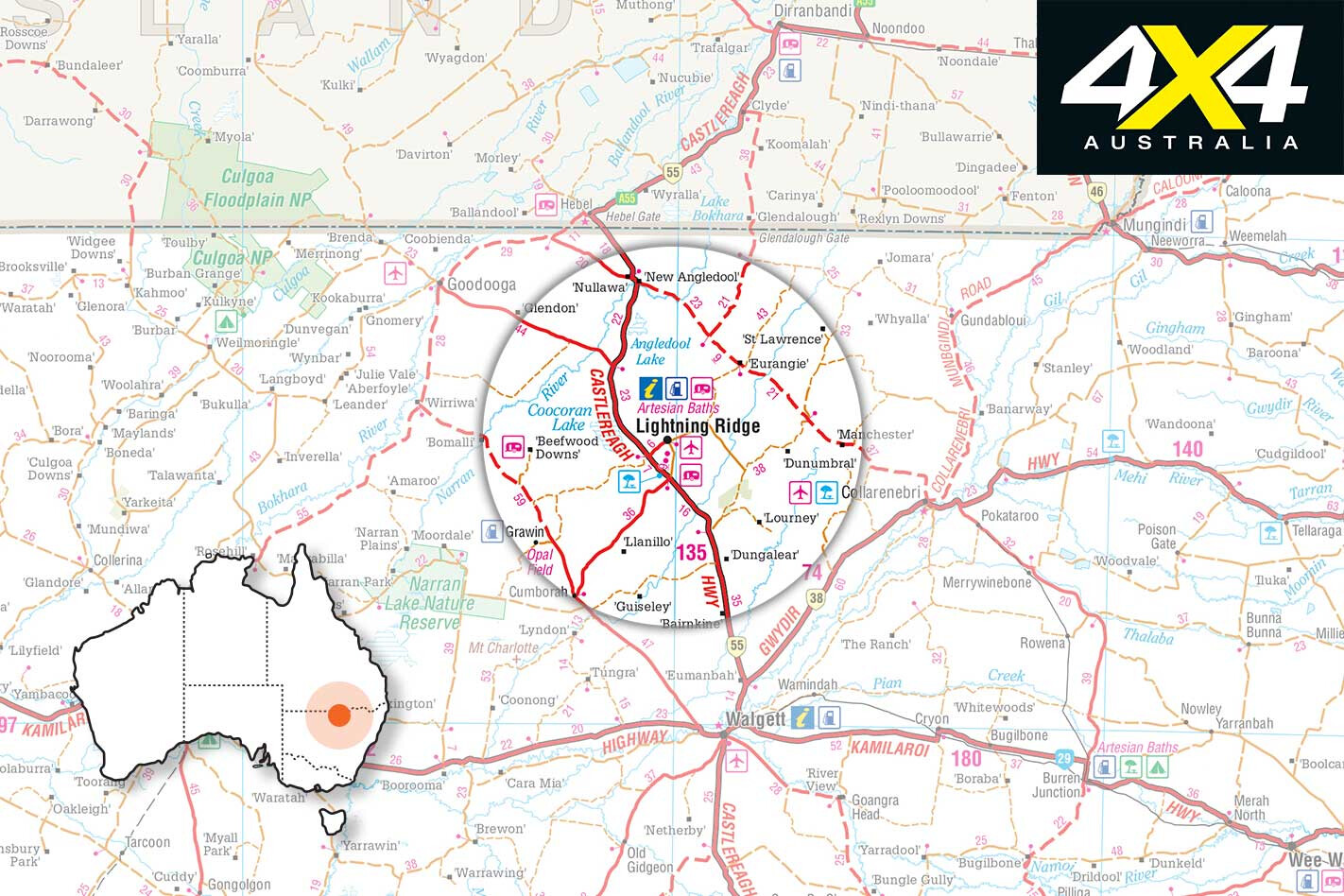
General information: lightningridgeinfo.com.au Lorne Holiday Station: (02) 6829 1869; www.lornestation.com Club in the Scrub: (02) 6829 3810; www.theclubinthescrub.com.au Sheepyard Inn: (02) 6829 3932 Glengarry Hilton: (02) 6829 3983
BRIGHTEN up the festive season with these new 4×4 lighting solutions by EFS, Ironman 4×4 and Narva.
EFS 4X4 Accessories X3 Tactical Torch
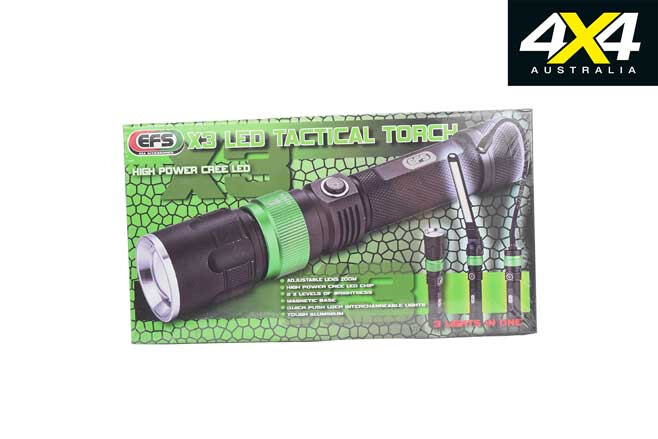
Offering plenty of versatility, the EFS 4X4 X3 Tactical Torch is a three-in-one LED light with a raft of clever features. The key to the X3’s versatility is its three interchangeable lights: Torch, Blade and Flexi.
The adjustable LED Torch head has a Cree XPG LED delivering 250 lumens, and it provides wide- and short-angle focus for nearby or long-range illumination. The LED Blade head transforms the X3 into a work light and features a COB LED with an output of 350 lumens, and a magnetic base.
The Flexi head has a Cree XPG LED that emits 200 lumens and its flexibility allows the user to see in hard-to-reach cracks and crevices.
RRP: $104.99 Website: efs4wd.com.au
Ironman 4×4 Megatom & Eclipse LED driving light
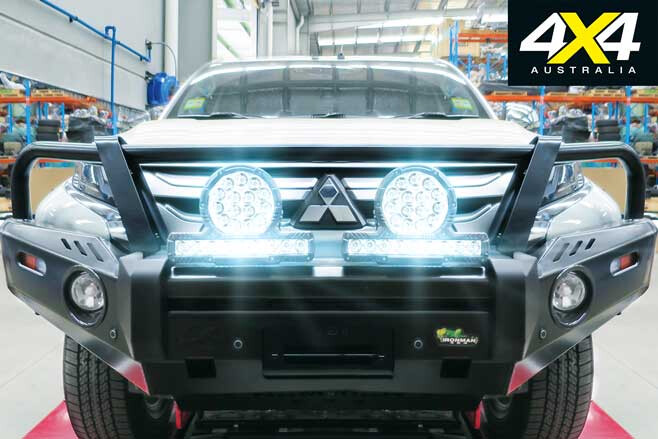
Ironman 4×4 has released two new LED driving lights: the Megatom and the Eclipse. The Megatom is a two-in-one LED driving light/light bar combination that can be installed with the light bar positioned at the bottom or the top. Housed in a tough diecast alloy housing, and supplied with a stainless steel mounting bracket, the Megatom is IP67 waterproof rated.
Each of the Megatom’s lights can be operated independently of each other for a combined maximum 120W high lux output (driving light 75W/light bar 45W) with a 90° beam spread. The Eclipse is a 75W LED driving light with additional 24W “Side Shooters” that offer a combined 99W high lux output with a 140° beam spread. It has a diecast alloy housing, is IP67 waterproof rated and has a shockproof polycarbonate lens.
RRP: Megatom: $495 each; 2 x light wiring loom $88 | Eclipse: $220x each; 2 x light wiring loom $50 Website: www.ironman4x4.com
Narva Generation II Performance LED Globe Conversion Kits
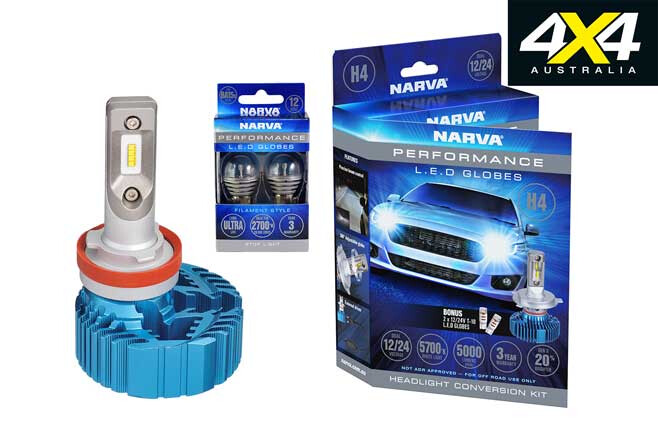
For those wanting to upgrade their vehicle’s old halogen headlights, Narva has developed Generation II Performance LED Globe Conversion Kits. Available to suit 12V and 24V applications, the kits are claimed to project a crisp white light (5700°K) for impressive penetration down the road, as well as a favourable colour rendering index for optimum depth perception and increased safety.
Output from the globes is claimed to be up to 80 per cent greater than traditional headlamp arrangements and, according to Narva, the LED performance globes have a sharp, precise beam cut-off that provides maximum output without dazzling oncoming traffic.
As is the case with most LED set-ups, the Generation II Performance LED globes offer improved durability, and an external driver and adjustable heatsink provide cooling to allow the globes to deliver more than 30,000 hours’ run time without brightness diminishing over time. The LEDs’ inherent shock and vibration resistance characteristics also aid longevity.
The kits have been designed for fast and easy fitment, and are available for a wide range of globes including H1, H4, HB3, HB4, H7, H8, HIR2, H15 and H16, while a selection of Resistor modules and CAN bus modules to suit are also available at additional cost. Narva has also released a new range of 12V/24V Performance LED Signalling Globes to complement the headlight conversion kits.
RRP: From $199 Website: www.narva.com.au
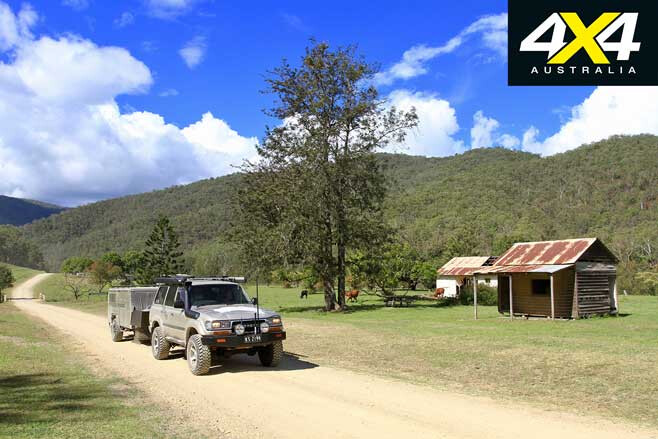
It was back in the early ’90s when a mate introduced me to four-wheel driving with a camping trip up the back of Coffs Harbour, and from that moment I was hooked on this whole new world off the bitumen.
Every spare chance I had I headed bush with old paper maps hoping to find new tracks, fishing holes and secluded camping spots around the coast – and boy did we have some great adventures. We also competed in a few competitions around the state, and took off on epic trips into the heart of Australia.
It was about this time when I started my journey in photography, back then shooting on 35mm film and hoping for that one great shot. Over the years my photography has grown, and taking photos is a bit easier these days with the amount of gear available; but there is still a thought process about image capture. I love getting up at the crack of dawn to wait for that magic hour of colour, trying to get that perfect landscape shot after hiking up a mountain or capturing those stunning desert colours everybody talks about.
Before long, mates wanted to come along with me on trips after hearing about my exploring, so I formed Woolgoolgaoffroad, which was like an informal 4WD group for anyone who wanted to join us on a day out. Kicking around the NSW north coast has been my backyard for all these years, where the bush and ocean meet, so I have had no shortage of places to go.
Roll the clock to now and there’s been some bloody good water under my bridge: driving three 4WDs; living out of camper trailers; being support vehicle for bike riders across desert areas; hosting many camps; working with a national camping chain; plus a few years with an off-road store in Coffs Harbour. And with all this experience it wasn’t long before I saw the potential to write a 4WD book on tracks around the Coffs Coast area.
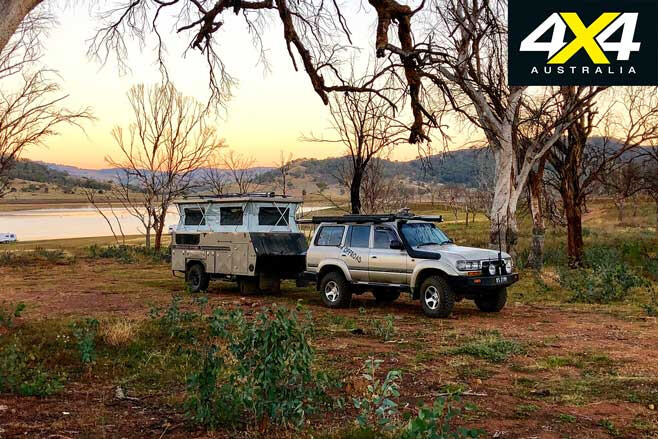
With this new project I found myself taking more and more time off work to seek out new destinations and explore, so last year I made the decision to semi-retire and do the grey-hair, big-lap nomad thing. But it seems like I am busier than ever, collaborating with great Australian companies with advertising, destination write-ups and product reviews through to setting up customer appreciation camps and weekend drives, as well as supplying magazine content.
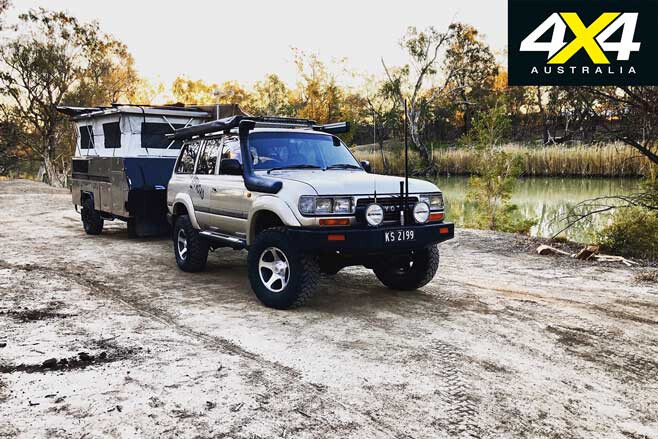
With 12 months of planning, buying a hybrid off-road trailer, rebuilding my 80 Series Cruiser and downsizing into a storage shed, the nomad plan came to fruition this year. Making the decision to rebuild the LandCruiser was an easy one, as it is easy to maintain, it’s a fantastic off-road truck set-up for touring, and I know all the squeaks and rattles in the old girl (built in Sept 1991). Plus, it has no electronic garbage.
Spending plenty of time in the 4WD industry I’ve seen the introduction of many ‘lower standard’ accessories to the market, and I’ve stayed well clear of these, choosing to fit only good quality Aussie accessories to the LandCruiser. And my camper trailer is extremely comfy, capable on and off the road, and if the weather turns crappy I can jump in there and whack on the radio or get stuck into some emails that seem to be never-ending.
Over the years with my outback trips I’ve seen areas covered in flood and drought, and it never ceases to amaze me that people who have never ventured outback will say there is nothing to see. However, waking up in the morning, seeing tiny footprints in the sand, the amazing variety of birdlife in outback waterways and the history that this country holds is nothing short of spectacular to me.
I love the remoteness of hard-to-get-to places and the dirt and dust that you travel through for days – it’s all part of the adventure and it really can make you appreciate life in a different way. Seeing wildflowers as high as my knees or hiking out into dry lake beds where early explorers blazed trees and left relics is what my life is all about now.
Meet the Expert Name: Kev Smith Role: Writer/Photographer Experience: More than 30 years
FOR the ultimate turn-key tourer, 4×4 Megastores reckons it has the answer.
The Australian brand recognised there was space in the 79 Series market for a complete turnkey offering that could balance off-road pursuits with day-to-day life.
Enter the Toyota 79 Series Rambler Edition by TJM, which combines off-road gear from TJM, a body from Spinifex Manufacturing and the knowledge of 4×4 Megastores, to create a practical and functional 4×4 that’ll take you anywhere.
In this video, the Trenton, Shelly and their four boys provide an insight into their turn-key 79 Series dual-cab, which frequently transports them away from the bright lights of the city.
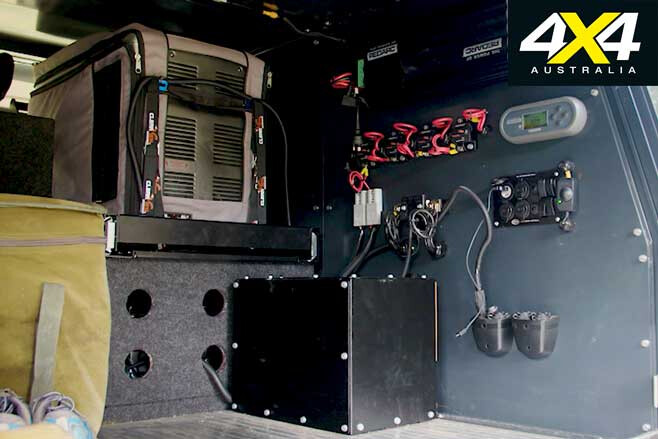
The family fourbie is set up for long-distance touring, so to this end it has water tanks, two large fuel tanks, a tyre pressure system, 200W solar panels, a 100amp lithium battery, two fridges, and an epic REDARC electrical fit-out in the canopy.
The Rambler package is available for single- and dual-cab variants of Toyota’s 4.5-litre turbo-diesel V8-powered LC70. Expect a four- to five- week build time.
For a full list of features offered with the Rambler package, visit: http://www.4x4megastore.com.au/rambler-edition/
THE ARRIVAL of the Ram 1500 with its 5.7-litre Hemi V8 engine has been seen by some as the new alternative for V8 ute buyers who might have once looked to Ford and Holden for their vehicles of choice. With no locally made utes available anymore and none of the popular 4×4 midsize utes offering a petrol engine option, let alone a V8, these full-size American pick-ups are really your best option.
With prices for the Ram 1500 Express V8 DS starting from $79,950 driveaway from Ram Trucks Australia, you can get into one for around the same price an old 2WD Holden or Ford ute from HSV or FPV would have cost. Ram variants including the more modern 1500 DT are available from importers other than Ram Trucks Australia.
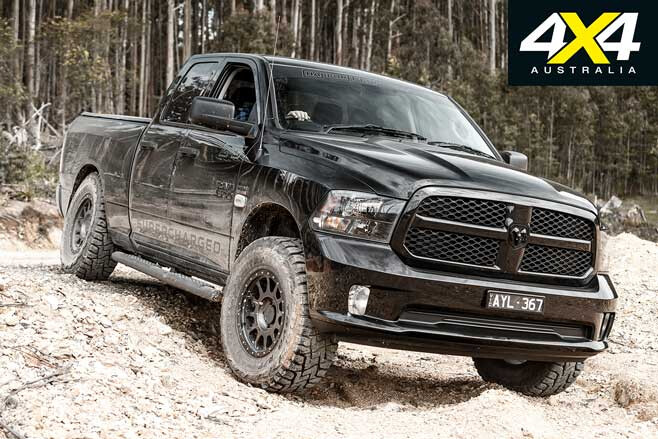
The standard Ram 1500 Laramie V8 was a great jigger when we tested it in standard trim last year but, like most petrol engines, the Hemi V8 lacks the torque and grunt of a big diesel powerplant. You need to step up to the Ram 2500 to get the awesome Cummins inline-six-powered models, or the Ram 1500 EcoDiesel V6 that has just been launched here. However, you won’t land either of them on the friendly side of $100K.
Melbourne tuning house and supercharger specialist Harrop Performance nabbed a base-spec Ram Express 1500 V8 and applied its talents to rectifying any lack of bottom-end mumbo. How did it do that? It simply bolted a big, fat supercharger to that V8 engine.
While hot-rodders have been bolting blowers to the top of V8s for generations, there’s a lot more to it when you want to engineer and produce a product to OE (original equipment) standards, as Harrop does. Harrop has been successfully developing supercharger kits for Ford and Holden V8 cars for years and even has packages for 4x4s, such as the Y62 Patrol with its VK56 5.6-litre V8 and the Toyota Tundra with its 5.7-litre V8. FCA’s modern Hemi V8, as found in the Ram or Jeep Grand Cherokee, was the logical next step.
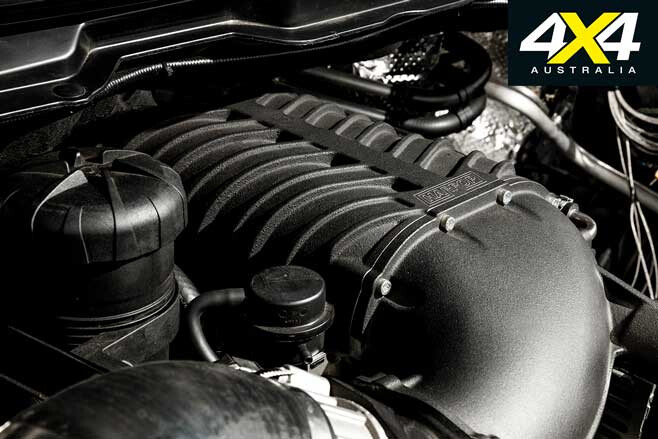
Central to Harrop’s supercharger packages is the TVS supercharger. This is a Roots-style positive displacement blower using high helix, four lobe rotors to pump more air into an engine, and it’s available in a range of sizes from 900cc displacement for smaller engines right up to the 2650cc unit for bigger mills like the Hemi V8.
In stock form, the Ram’s 5.7-litre V8 makes 291kW at 5600rpm and 556Nm at 3950rpm. Fitted with the 2650cc pump in its V, feeding just 5psi of boost into the intake, the Ram showed 333kW at 5600rpm and 580Nm at 3800rpm. Before you say that’s not a big gain, those numbers are measured at the rear hubs on the hub dyno at the Harrop Performance Centre. When the power losses through the driveline are taken into account, you could estimate around 410kW and 700Nm at the flywheel, which are far more impressive numbers.
Want more? The guys at Harrop say that with the right engine and transmission mods, this supercharger package is capable of producing upwards of 745kW, or more than 1000 horsepower in the old money. That would be one hell of a killer truck!
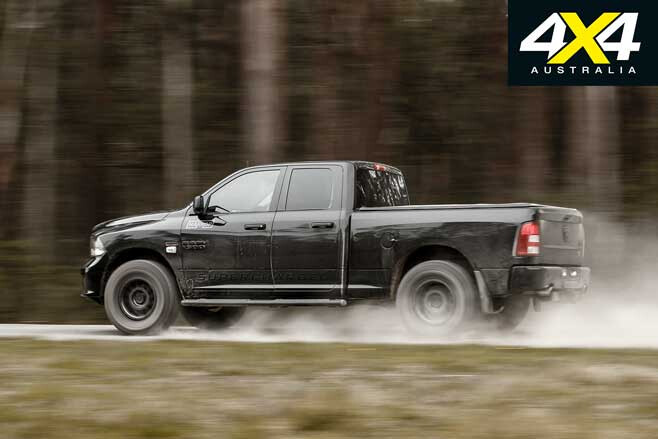
So how does it go? As it stands with just 5psi of boost, the supercharger package delivers just what it sets out to do. Nail the throttle and the Ram truck shoots off the mark without needing to build on the revs to get the best performance out of it; the grunt is there right from the get-go. At lighter throttle applications the added grunt translates to a more drivable package as you don’t need to wring its neck to get the best out of it, making it ideal for off-road work or towing. That’s especially pertinent if you bought your Ram for its 4.5-tonne towing capacity.
While it delivers more than enough grunt, the one attribute of the diesel engine the supercharged V8 can’t emulate is efficiency … the blown Ram certainly likes a drink. It might have been that we only had it for a couple of days when we drove it non-stop, gassing the accelerator whenever the road opened up in front of us and smiling from ear-to-ear, but, yes, it gulped down the 98 octane. We’re sure it would be better with more liberal use of the loud pedal, but who doesn’t like the sound of a V8?
We did some light off-roading in the Ram and it walked over uneven and rutted terrain with ease. The low-range ratio gives plenty of control and the throttle only needs to be lightly pressed to make use of the added torque. The stock suspension works well enough and clearance was never an issue, but what truck wouldn’t be better with bit of a lift. The 35-inch Toyos also worked a treat in the muddy conditions we encountered.
The Harrop kit includes the TVS2650 supercharger, a 55mm-thick dual-pass intercooler, upgraded injectors, all the required hardware and an ECU tune. It is designed to work with the stock intake, which is great if you run a snorkel, and the test vehicle retained its stock exhaust system. The package will sell for $15,990 fitted at one of Harrop’s approved installers around the country, and it should be available around the time you’re reading this.
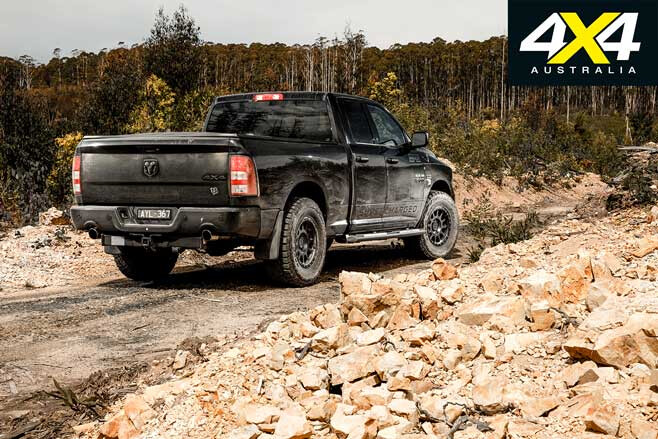
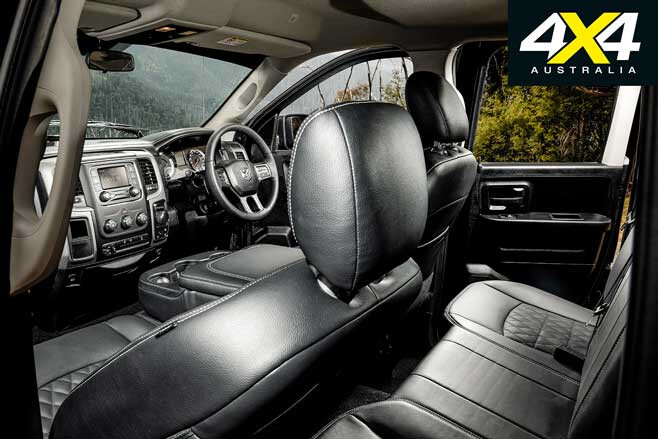
Aside from the engine mods, the Harrop Ram is otherwise pretty stock. Stock suspension, exhaust system, eight-speed auto transmission and mainly stock interior. The seats have been updated with leather covers for added prestige and comfort and they complement the monochrome exterior you get when you tick the Black Pack option. Obviously the wheels and tyres have been upgraded, with Method alloys wrapped in 35-inch Toyo Open Country R/T rubber improving looks and off-highway performance.
If you’ve always baulked at the high price of imported American pick-ups, you should consider that you could be driving a supercharged Ram 1500 just like this one for less than $100,000, and then you might think again. Take a ride in this truck and you’ll seriously be thinking about it.
THE Ford Ranger remains the king of the 4×4 hill, with the Blue Oval ute edging out the Hilux and Triton to be the best-selling 4×4 in November 2019.
Managing a total of 3218 sales last month, the Ranger outsold the Hilux by 343 units and the Triton by 423 units.
20 BEST-SELLING 4X4s, NOVEMBER 2019

Total sales in Australia’s Light Commercial Vehicle (LCV) segment dropped considerably in November this year, when compared to November 2018. Just 19,065 LCV units were sold last month, which is a dramatic 8.8 per cent drop compared to the same month last year. This correlates with the other segments across the board, marking the 20th consecutive month of decreasing sales.
The chief executive of the FCAI, Tony Weber, said the market is tough at the moment, but he remains optimistic.
“The industry has been looking for a lift for some time now and has activated multiple levers to achieve some stimulation, including incentives, sales and special vehicle editions,” he said. “However, the appetite for new vehicles remains suppressed.”
Weber added that there has never been a better time to purchase a new vehicle.
“With over 60 brands and more than 350 models, the Australian market is one of the most competitive in the world. This is great news for consumers who have an abundance of choice and pricing options when it comes to selecting a new vehicle.
“Now, with the holiday season upon us, is a great time to act,” he said.
On the year-to-date sales charts, the Ranger, Hilux and Triton remain the best-selling 4x4s.
10 BEST-SELLING 4X4S IN 2019 (YTD)
The Toyota Hilux (4×2/4×4) also remains the best-selling vehicle on the overall monthly charts, shifting a total of 3687 vehicles in November. As always, it’s shadowed by the Ford Ranger (4×2/4×4) which registered 3491 sales for the month. The Triton (4×2/4×4) rounded out the top three, with 3123 total sales.
The Red Centre Adventure kicks up another notch, as we depart the fossicking fields of Gemtree with the Simpson Desert in our sights.
In Episode 1 the crew began the epic journey at Alice Springs, cutting through the MacDonnell Ranges and stopping at Trephina Gorge, Ross River Homestead, Altunga and Hale River Homestead, before finally arriving at Gemtree.
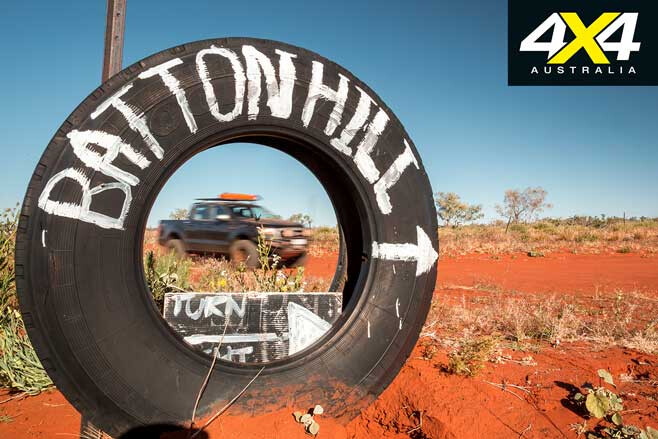
In this episode – after trying their luck trying to strike it rich at Gemtree – Ron guides the convoy north to Tower Rock, before turning south-east in pursuit of the hard-to-find Boxhole Crater.
Battling relentless corrugations along the Plenty Highway the crew continues east to Batton Hill, where the traditional owners lead an eye-opening Bush Tucker Tour of the region.
Camp was set up for the night at Goyders Pillar, which wrapped up another epic episode.
In Episode 3 of the Red Centre Adventure, the team heads deeper into the Simpson Desert.
WITH THANKS MSA 4X4: www.msa4x4.com.au
A DISTRIBUTION agreement has been signed between TAG Towbars and the Brink Group, which means TAG Towbars will now distribute Brink’s range of European Towbars throughout Australia and New Zealand.
Not only does this allow Brink to grow its presence within TAG’s distribution network, but the alliance also means TAG will begin to expand its portfolio of towbars into the European vehicle segment within Australia and NZ.
With more than 30 years of experience designing and manufacturing towbars in Australia, TAG has a wide range of towbars and wiring solutions that suit more than 90 per cent of vehicles in Australia. Brink, on the other hand, has 1000 different towbar models and wiring kits in its repertoire, and about 25 million vehicles utilise its towbars worldwide.
“In addition to the Brink European range manufactured in Europe, Brink Thailand will be manufacturing the new generation TAG Towbars that have been designed, developed and tested in Australia,” the statement reads. “Not only do the towbars meet the stringent ADR62/01 standards, but the Brink manufacturing facilities also meet and exceed IATF 16949 quality standards prescribed by the global vehicle manufacturers.”
Brink’s European range of products will begin arriving locally early in 2020, and this will shortly be followed by the arrival of Thai-manufactured equipment.