WE USHER in the new decade with a bang, with the 4×4 Australia January 2020 magazine brimming with off-road goodness and ready for your eyeballs.
The new issue officially hits shelves on Thursday, January 9, but subscribers have already started to receive the mag in the mail.
What better way to start the New Year than to preview all of the new 4x4s that’ll land locally this year. And by golly there are some good ’uns … Gladiator Rubicon, 2020 D-Max and the all-new Defender, to name but three.
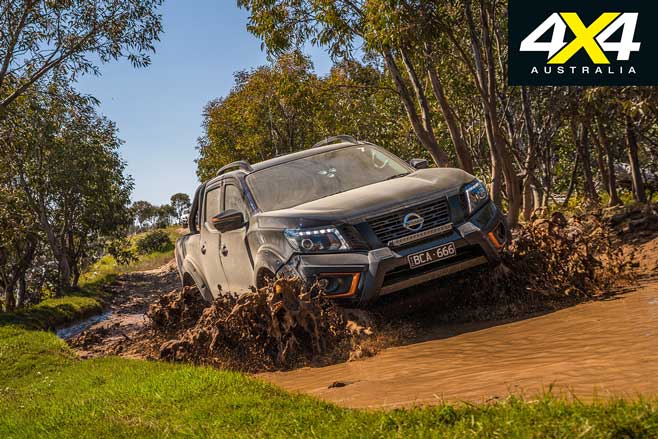
Speaking of the Gladiator, we spent a day carving through the sand dunes of Nevada in a US-spec version. Plus we also drove two new Nissans coming soon to local showrooms: the Navara N-Trek Warrior and the Patrol Ti.
On the custom 4×4 front we delve into a wild HJ75 LandCruiser build – shoehorned with an LS1 V8 from a VX SS Commodore – which roams the outlaw territory of the Victorian High Country. Plus, we take a look at another V8 transplant, this time an LSA V8 into a classic Defender 90.
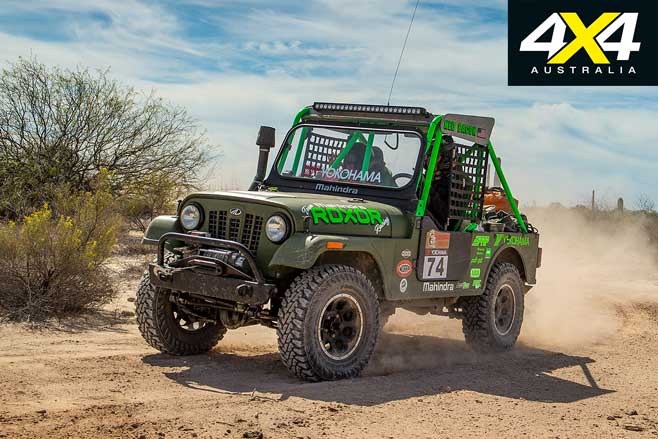
The Jeep Girls, Ashley and Brittany, take Synergy Manufacturing’s Jeepster Commando for a spin north of Los Angeles; Chris Collard follows a Mahindra Roxor UTV to the wilds of Mexico; and we feature our comprehensive 2020 mud-terrain tyre test.
WHAT ELSE IS THERE? – Dirk Hartog Island, Western Australia – Binns Track, Northern Territory (part II) – Kennedy Developmental Road, Queensland – Diff drops explained – Product tests, columns and more.
The January 2020 issue of 4X4 Australia will be in stores from January 9.
JAPANESE tuning company Dream Automotive Design and Development (DAMD) is famous globally for its range of body kits, particularly to suit the Suzuki Jimny.
In recent years the tuning house has crafted body kits to turn the pint-sized Jimny into both a mini G-Wagen and a mini Defender, known respectively as Little G and Little D.
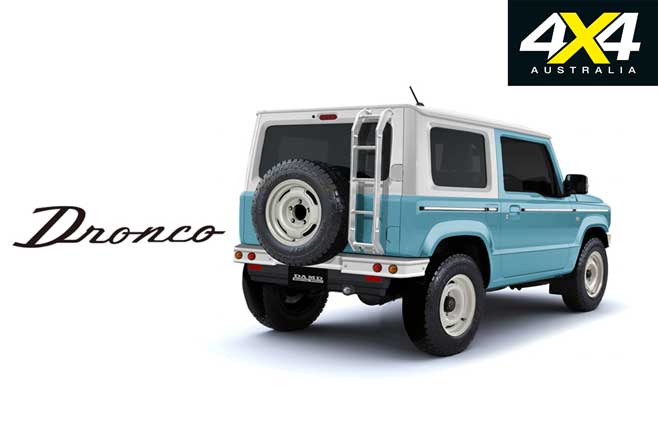
And now DAMD has created the retro-inspired Jimny “Dronco”, an obvious homage to the classic Ford Bronco of the 60s and 70s.
Details are scarce but, as can be seen in the photos, the tidy vehicle features a redesigned front and rear fascia, steel wheels and a rear ladder.
The DAMD website says the vehicle is “currently under development”, and that it’s “scheduled to be released in 2020”. It adds: “details such as sales price and parts will be distributed as soon as they are decided”.
The 2020 Ford Bronco is set to launch in the USA this year in both three-door SWB and five-door LWB form, based on the brand’s T6 platform.
We spotted the new Bronco off-roader testing in the Australian outback last year, but Ford Australia confirmed at the time that it won’t be coming to local showrooms.
IF YOU can’t wait until the Ford Ranger Raptor gets its lauded Mustang V8 transplant, there are mobs around the country that’ll do the aftermarket conversion to satiate your desire for more performance.
Here’s a handful of tweaked 4x4s that have received the V8 treatment.
Duramax V8-powered Ranger
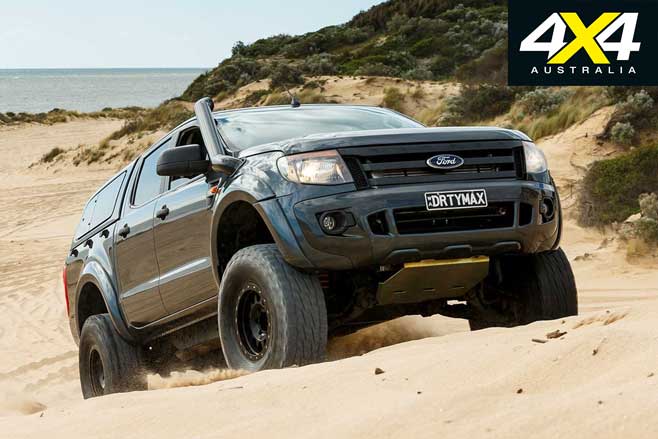
Australian company OzMax has carved out a reputation for its Duramax kits and conversions, and this example typifies the brand’s meticulous build quality. The 3.2-litre engine and six-speed transmission of the PXI Ranger were ditched and in their place went a 6.6-litre Duramax V8 and Allison transmission. At twice the capacity of the original engine, the V8 ran at up to 468rwhp and 1320Nm on a dyno. Read the full review here.
Coyote V8-powered Ranger
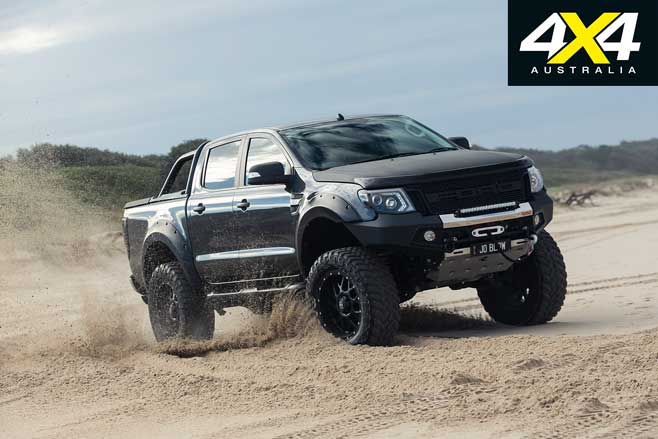
Queensland-based Diesel Leaders spent close to a year fitting this Ranger with a supercharged V8 and associated hardware, with the end result proving that good things (344kW of them) come to those who wait. The heart transplant was a slow and steady process, with a custom exhaust and heavy duty springs among a host of other key updates. Full review here.
Duramax V8-powered GU Patrol
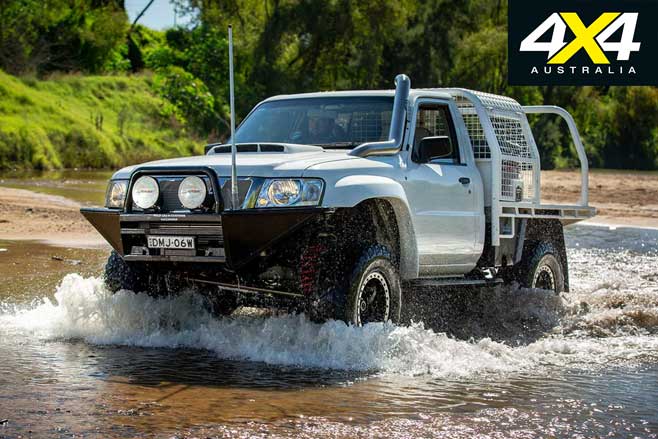
Another vehicle to be graced with the uber-popular 6.6-litre Duramax V8 and Allison six-speed combo is this fine GU Patrol ute, with a dyno run registering 335kW and 1200Nm at the rear wheels. The Patrol comprises a long list of weaponry including a front ARB Air Locker, reworked suspension, a three-inch suspension lift and a two-inch body lift, and a custom-made titanium exhaust system. Read the entire write-up.
LS3 V8 Colorado
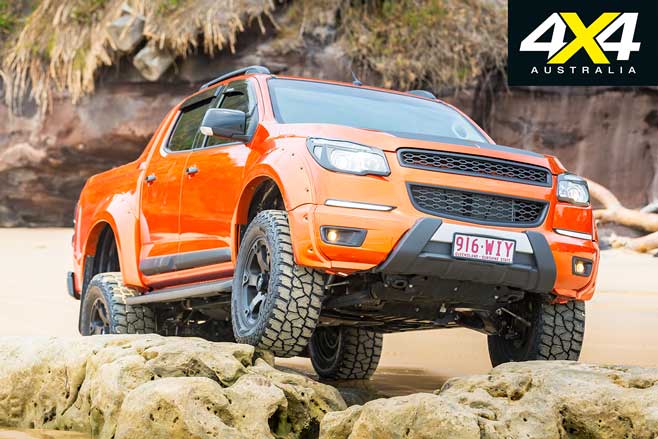
Who can forget Killa Special Vehicles’ Killarado? This special example seen spewing out sand from its tyres features a General Motors LS3 V8 engine previously found hiding in the engine bays of high-end HSV performance cars. The LS3 musters around 580Nm and runs it through a 6L80E six-speed automatic transmission. Check it out here.
Harrop Superado
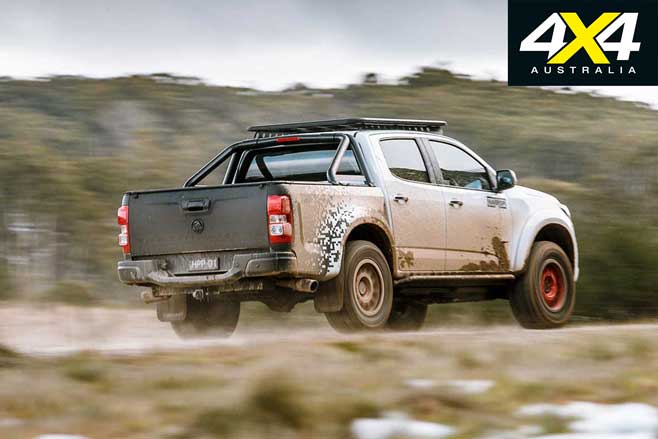
Harrop Engineering teamed up with Killa Kustoms to create the Superado. Using the Killa Kustoms Colorado as a base, Harrop turned it into an undeniable performance beast by slapping on a big ol’ Harrop-Eaton TVS2650 supercharger.
The V8 conversion is available in a few different forms: a naturally aspirated LS3 crate engine, an LS3 with a TVS supercharger, an LSA, or an LSA with the factory supercharger replaced by the TVS2650. Teamed up with bigger brakes, new suspension and a three-year driveline warranty. Full review here.
Lexus V8-powered Hilux
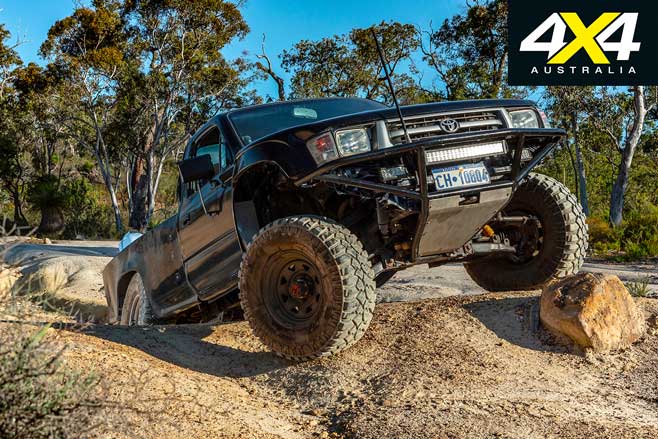
Countless hours of spanner work turned this once bog-standard 1999 Hilux into an epic PreRunner, shoehorned with a 4.0-litre V8 Lexus engine good for 250hp. The V8 runs through a Toyota R151F five-speed manual, which then runs to a rear diff-mounted ARB Air Locker. A complete overhaul of the suspension system caps off a ball-tearing custom 4×4. Read about it here.
Holden One-Tonner
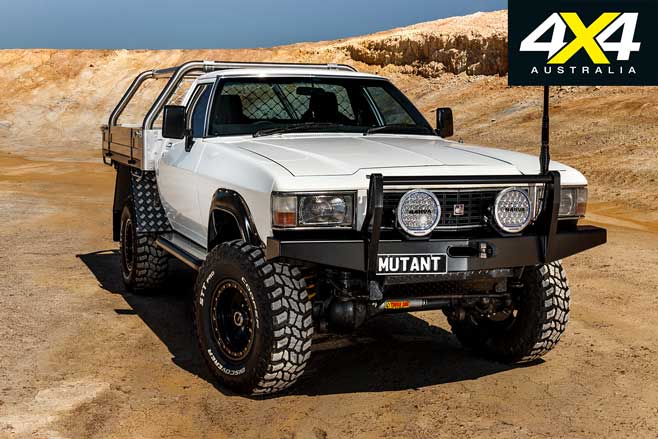
We simply had to include Mark Allen’s Holden One-Tonner in this list of V8 conversions. The 6.2-litre LS3 and six-speed auto used in the build were both transplanted from a written-off Maloo R8. Mark also acquired a 1990 GQ Patrol, with its chassis used as the underpinning for the entire build. If you haven’t read about it yet, you can follow the entire build from go-to-whoa here.
THE Ford Ranger has stamped 2019 shut with a comprehensive victory on the 4×4 2019 sales charts.
The Blue Oval ute finished off the year with a total of 37,004 (4×4) sales, edging out its long-term nemesis – the Toyota Hilux – by a not insignificant 679 units. The Hilux was the best-selling 4×4 in 2018, but sales dropped in 2019 by 5.8 per cent; reflective of overall market trends.
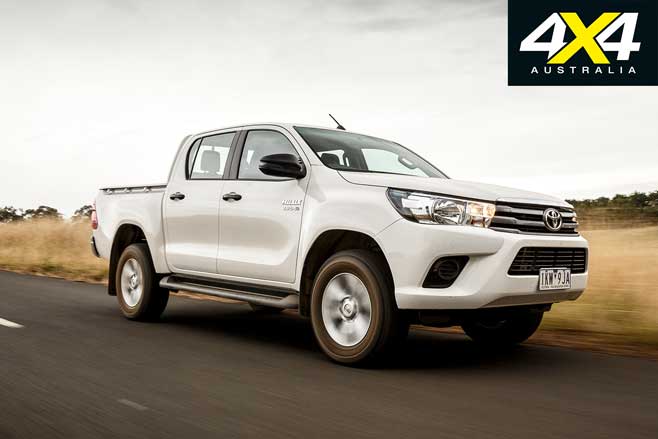
Interestingly, Ford sold more Ranger 4x4s in 2019 than it did in 2018, bucking a trend in the market which saw a dramatic drop in new vehicle sales. Case in point, 90,244 fewer new vehicles were purchased in 2019 (a year-to-date drop of 7.8 per cent), and 12,337 fewer LCV vehicles were purchased during that same time.
Despite the drop-off in sales, the LCV segment experienced annual growth of 0.6 per cent to claim a 21.2 per cent share of the overall new vehicle market.
“2019 reflects a tough year for the Australian economy, with challenges including tightening of lending, movements in exchange rates, slow wages growth and, of course, the extreme environmental factors our country is experiencing,” said Tony Weber, the chief executive of the FCAI.
10 BEST-SELLING 4X4s in 2019

It was business as usual on the monthly 4×4 charts, with the Hilux, Ranger and Triton once again occupying the podium. Isuzu’s D-Max also ended the decade with a flourish, shifting 1394 units in December and climbing to fourth spot on the charts.
20 BEST-SELLING 4X4s, December 2019
The Toyota Hilux (4×2/4×4) was once again the best-selling vehicle on the annual charts, registering 47,649 sales in 2019. The Ford Ranger (4×2/4×4) closed out the year in second spot with 40,960 sales, while the Corolla trailed in with a total of 30,468 sales.
With Ford Australia gearing up to bring V8 power to its local Ranger Raptor, perhaps buyers may pocket their hard-earned in anticipation. It’ll be interesting to see how sales pan out in the immediate future … keep your eyes peeled!
It’s not often I find myself defending Toyota, a company whose 4x4s I nevertheless admire, but here I am. What brings me here is the problem with the diesel particulate filters fitted to current Hilux, Prado and Fortuner models (specifically with the 2.8-litre diesel engine), and the class-action lawsuit recently filed on behalf of owners of the same.
The lawsuit covers vehicles sold from October 2015 on (which was when the 2.8 arrived) and claims “Toyota Australia has engaged in conduct that was misleading or deceptive and, in the circumstances, unconscionable”. Much of the subsequent mainstream media coverage carried the same tone.
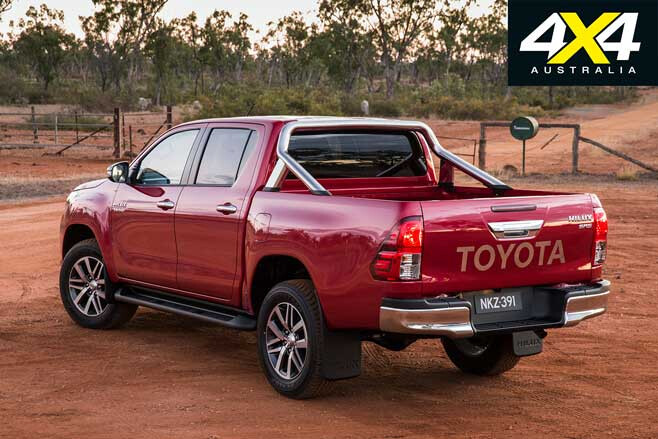
The problem is that the diesel particulate filter (DPF) can become partially or even completely blocked, which has a negative effect on performance and fuel consumption, and can lead to excessive exhaust smoke and even the engine shutting down altogether. When functioning properly, DPFs self-clean by heating up and burning off the collected soot in a relatively ‘clean’ process called filter regeneration.
In the broader world this is not a Toyota-specific problem but is more symptomatic of a not-perfect technology that is used so that diesel engines can meet the ‘Euro 5’ exhaust emissions standard in force in Australia today.
While Euro 5 doesn’t mandate the use of a DPF, the allowable level of diesel particulates is very much reduced compared to the previous standard, Euro 4, and the DPF is the industry-wide solution to these demands. In the case of a light commercial vehicle like the Hilux, the level of allowable particulates is reduced by a massive 92.5 per cent to just a faction of what it was under Euro 4, so no easy task for even the most sophisticated technology.
In part Toyota is a victim of its own success due to the sheer number of 2.8s sold since late-2015, given the Hilux has been Australia best-selling car during that time, and most Hiluxes have the 2.8. Add to that the strong sales of the Prado, 99 per cent of which have the 2.8, and all Fortuner models, which only come with the 2.8.
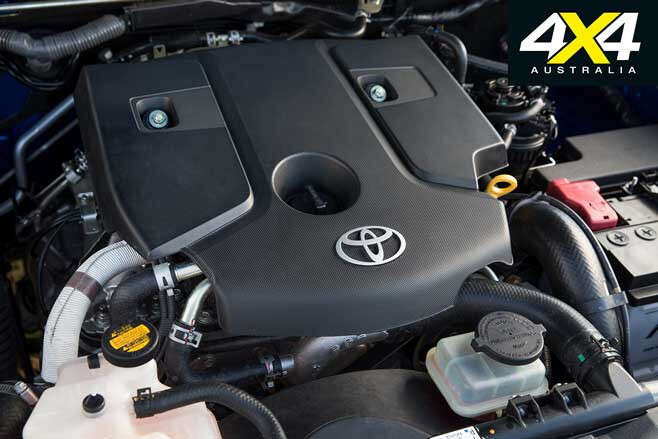
No other engine has sold here in such big numbers in that time, so even if there’s a standard-occurrence, across-the-board problem with DPFs, more 2.8s will be affected simply because there are more of them on the road in the first place.
At the risk of offending Toyota owners, perhaps being more conservative – let’s say sensible – in their car choice also may mean they don’t drive as briskly as others, being the good, sensible folk they are? Driving more slowly, especially for shorter distances and in urban environs is more likely to bring on an issue with the DPF.
DPFs have had problems ever since Euro 5-compliant cars were first imported from Europe nearly 10 years ago, as Euro 5 implementation kicked off in Europe well before it did here. Right from day one a common fix for a car presenting at the dealer with DPF issues was that the mechanic would take it out onto the closest freeway and give it decent boot along.
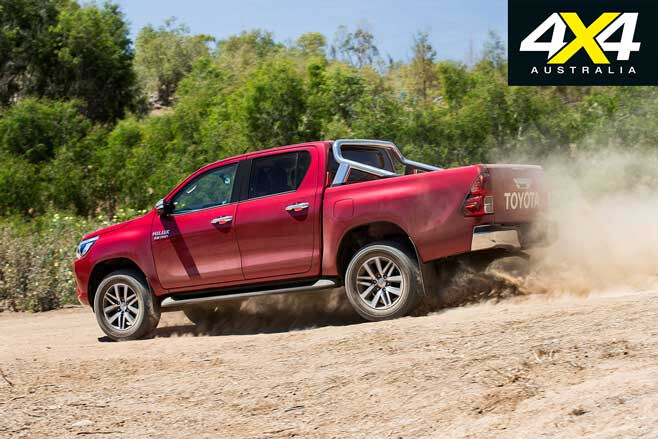
Regardless of all this, Toyota has moved to address the issue for owners reporting a problem via a free-of-charge re-programming of the engine ECU and/or a replacement of the DPF. Since mid-2018 Toyota has also starting fitting a manual DPF regeneration switch to its relevant new models, but states not everyone will need to use it, which reinforces the fact that this is a car-usage related issue.
In the broader picture, it should be noted that the high-tech diesel revolution in passenger cars and light commercials started in Europe more than two decades ago due to a diesel’s lower ‘greenhouse gas’ production compared to an equivalent petrol engine.
Consequently, European Union bureaucrats saw diesels as climate-change saviours without seemingly foreseeing the particulates problem, or diesel’s high production of nitrogen oxides, which is also detrimental to human health and an issue addressed by Euro 6. And perhaps the car companies at the time were remiss in not pointing out to the bureaucrats that while diesels may address the greenhouse issue they will bring problems of their own…
The Readers’ Rigs feature in the Summer 2020 issue of 4X4 Australia features a collection of modified utes from our enthusiastic readers.
To get involved, post a pic and a description of your rig on our special site here or post it to our Facebook page and stand a chance to win an ARB High Output Air compressor valued at $335.
2011 JEEP CHEROKEE KK: FRED REITZ (4×4 Australia Readers’ Rigs Winner of the Month)
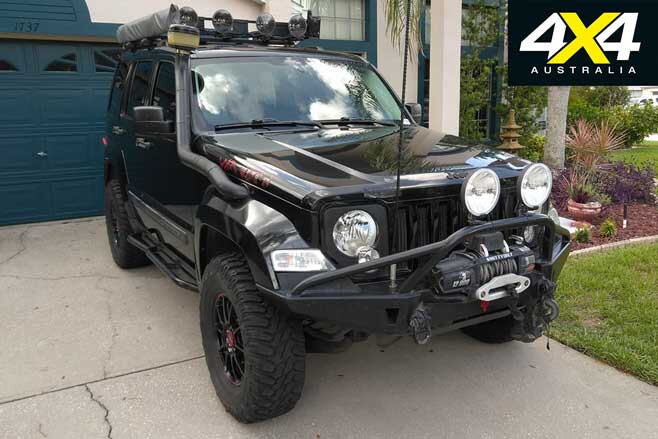
Modifications include a 3.5-inch OME/JBA lift and upper control arms, ARB diff breathers and fridge, Hella lights, custom-fabbed snorkel, ATH front and rear bumpers and rock sliders, a Detroit rear locker, LOKKA at the front, CB, UHF and VHF, and a Panasonic Toughbook with satellite GPS.
TOYOTA HILUX: SEAN PHILLIPS
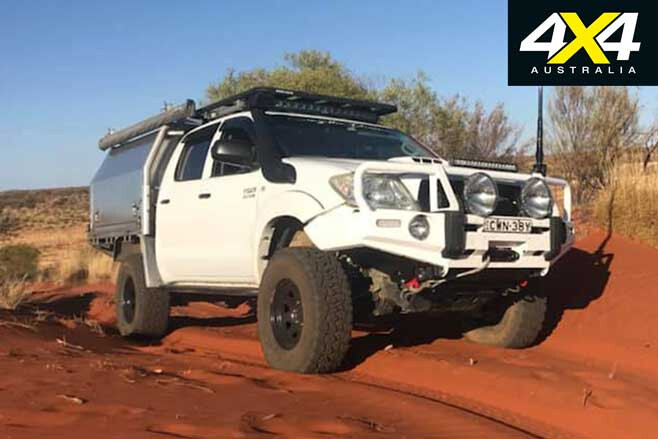
It has a custom canopy, rear-seat storage platform, catch can, compressor, front-mount intercooler, two micron fuel filter, TJM Pro Locker, 4.1:1 diffs, Fox 2.0 shocks, three-inch lift, 285/75R16 tyres, in-cabin winch controls, 75W Lightforce spotties as fog lights, raised towbar brackets, and a slide-out 120W solar panel beneath the Rhino-Rack.
HOLDEN COLORADO: DAVID TRIPEPI
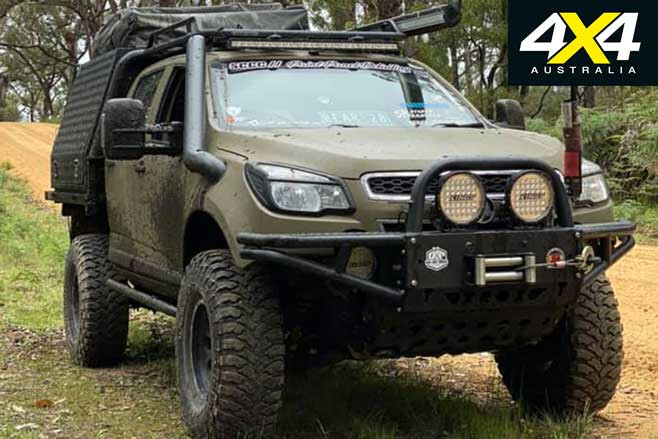
Mods include a four-inch EFS/Bilstein/Kings suspension lift, full Raptor liner in Military Green, two-inch body lift; 315/75R16 Comforser CF3000 tyres, and MW canopy. The best place I’ve been with it would have to be Portland and Wombat/Lerderderg Forest in Victoria.
2007 TOYOTA PRADO: NICK FIRTH
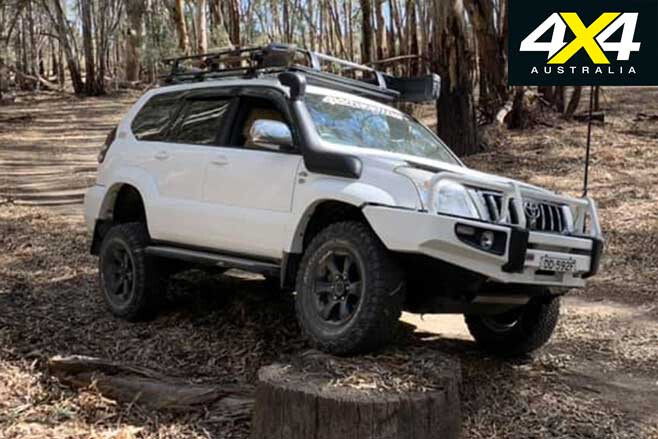
The Prado has been set up mainly for touring, with a two-inch Ironman 4×4 Foam Cell lift, BFGoodrich All-Terrains on painted factory rims, dual batteries, an Engel fridge in lieu of the rear passenger seat, UHF, Sony audio head unit, 270° awning, steel side-steps, ARB deluxe bullbar, Safari snorkel, Kaon bash plates, and a rear door cage and table.
2019 FORD RANGER RAPTOR: KATHRYN MARMARA-STEWART
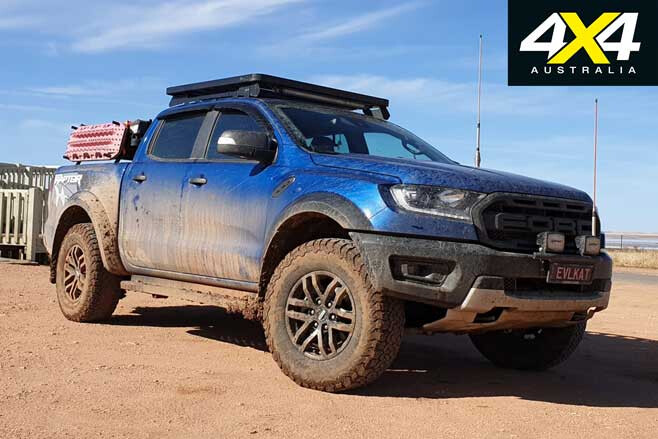
In addition to the factory mods I have Front Runner roof and tub racks, a 60L ARB Elements fridge on a 1400mm RV Storage Solutions fridge slide, Lightforce LED Strikers and a 30-inch single-row light bar, two GME UHF antennas, GME XRS-370 UHF and UNIDEN 9060 UHF units installed in the cabin, and a TJM air onboard module four-port setup with an ARB onboard compressor.
2009 TOYOTA HILUX: MIKE HALLIDAY
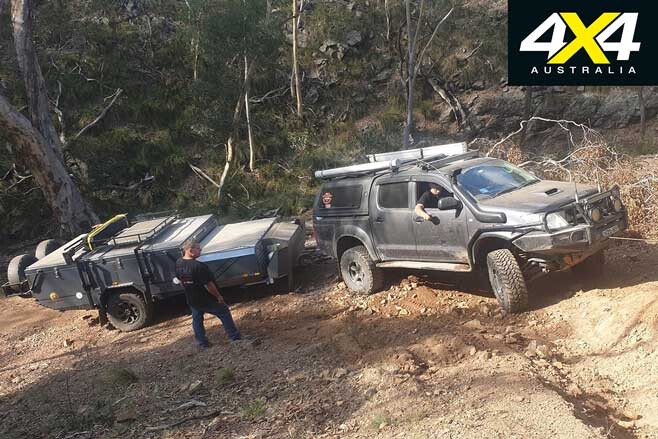
Mods include three-inch Ultimate suspension, Pedders rear disc brake conversion, ELockers front and rear, ARB bar work, a Pouty’s custom tray and canopy, Safari snorkel, and Nitto Trail Grappler tyres. Probably the best trip so far would be to the Victorian High Country. Cape York is on the cards soon, too.
THIS IS the third National Luna fridge we’ve owned over the past 20 or so years, and I’ve always been a little surprised (and miffed) when they’ve failed after about 10 years and haven’t been worth repairing.
Still, we keep getting them, so we must be impressed with them in other ways. We give our fridges a hard time and probably use them off-road more than most, as we spend six to nine months on the road each year. So anything we use gets a near-continuous and pretty hard life.
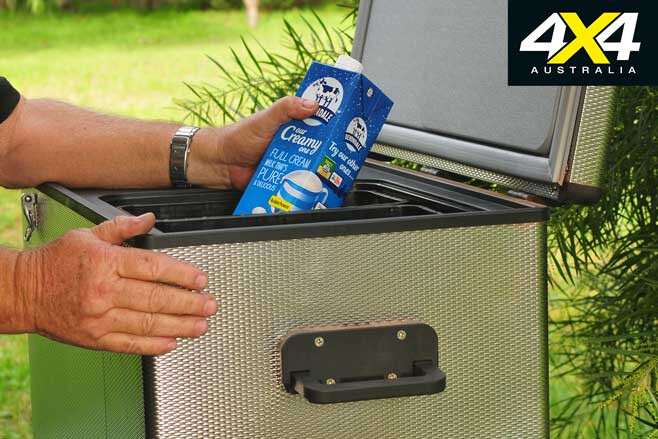
All National Luna fridges come with German-engineered and built Danfoss compressors and controllers, while each unit has National Luna’s own fan-assisted condenser, full wall-plate evaporator system, control panel and interface for maximum efficiency.
This 60-litre fridge/freezer is a twin-compartment, dual-control unit; the left-hand freezer bin offering 25 litres of space and the right-hand fridge bin 35 litres. The freezer compartment is wrapped with 60mm-thick insulation, while the fridge area sports 42mm-thick insulation.
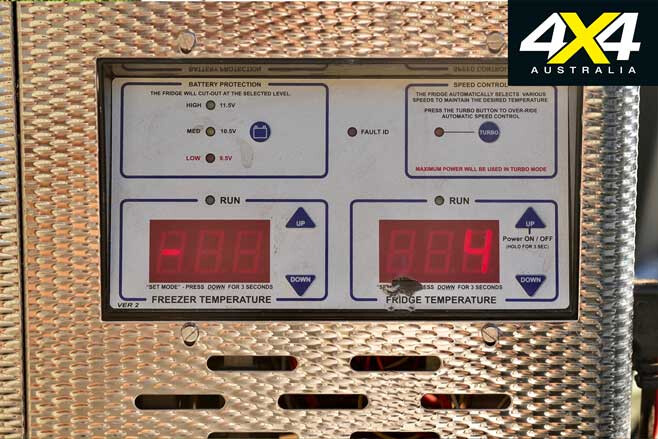
Two control panels on the front of the fridge mean you can set the temperature independently; the freezer box anywhere between 20°C and -24°C, and the fridge between 20°C to -12°C.
Battery consumption is rated by the manufacturer at a healthy current draw of 34.72amp/h for a 24-hour period. This is measured with a seemingly practical setting of -10°C and 4°C over 24 hours in ambient temperatures of 21°C for 12 hours (simulating overnight), 32°C for seven hours (morning/evening) and 43°C for five hours (midday/afternoon). I normally run the freezer at -6°C and the fridge at 4°C and the current draw is very reasonable. A choice of 12/24V DC and 240V AC are all built-in and the unit will automatically select to run on mains power whenever it is available.
The unit measures 535 x 750 x 425mm (H x W x D) and if you don’t have a drop-down fridge slide (which I haven’t at this stage, as this new fridge was too big for my previous slide) you’ll find it a pretty tall unit, making access a little inconvenient. Five supplied plastic baskets help alleviate that issue to some degree.
National Luna fridges are more expensive than similar-sized units in the Aussie marketplace, so you’re paying for that German compressor, all-metal construction and three-year warranty. Even so, would I get this sized unit again? Probably not.
Instead, I would go back to the National Luna 50-litre Weekender (40-litre fridge; 10-litre freezer) we had, which would fit on my fridge slide. The Weekender isn’t as tall and we made better use of the 40-10 configuration than the 35-25 of the current unit.
RATED Available from: www.nationalluna.com.au RRP: $1995 We Say: Expensive, but worth considering.
There was a time when all of our 4×4 vehicles were short wheelbase (SWB) two-door rigs and the ability to comfortably carry a family in the suburbs was never really a consideration. The original Jeeps, Land Cruisers, Patrols, Land Rovers, Suzuki 4x4s and even Range Rovers were all simple shorties, many of them with removable soft-tops.
Times have changed and shorties are now the exception to the rule, as passenger comfort takes precedence over off-road functionality. While we have more choices of 4WD vehicles now than at any other time in history, there are currently only two two-door SWB 4×4 wagons on sale in Australia: the Jeep Wrangler and the Suzuki Jimny.
Interestingly, both of these new-for-2019 models can trace their heritage back to the original models from their respective marques, and both of them carry over some styling features to pay homage to their forbears. But don’t be fooled, these are modern vehicles, and as such are a far cry from the utilitarian vehicles they were spawned from.
Let’s see how they line up…
Suzuki Jimny – Small Box
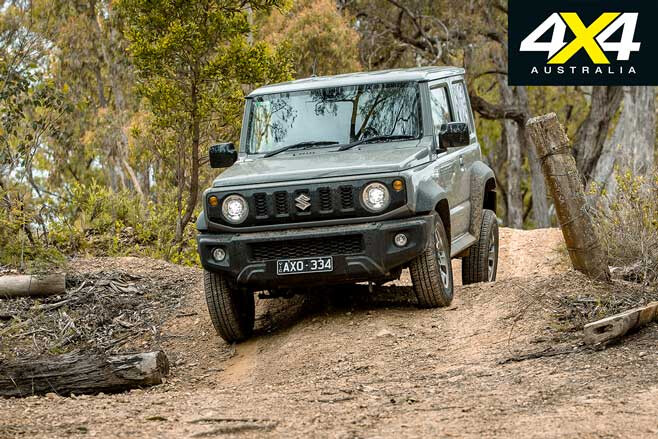
The Jimny returned to the Australian market early in 2019 as an all-new vehicle that was launched internationally a few months prior. The new Jimny is a descendant of the original Suzuki 4×4, the 1970s LJ10. The LJ10 progressed to the LJ20, LJ50, LJ80, Stockman and Sierra variants with soft- and hard-top bodies, short and long wheelbases and even a ute version, but it always stayed true to its simple and functional design roots.
The new Jimny is available in just one body style, one wheelbase and one model variant, albeit with the choice of automatic or manual transmissions. It retains the lovable boxy styling of its predecessors and hasn’t lost any of its off-road charm, either.
The Jimny starts at $23,990 (+ORC) when fitted with the manual gearbox, and you can add $2000 if you prefer an auto.
Powertrain & Performance
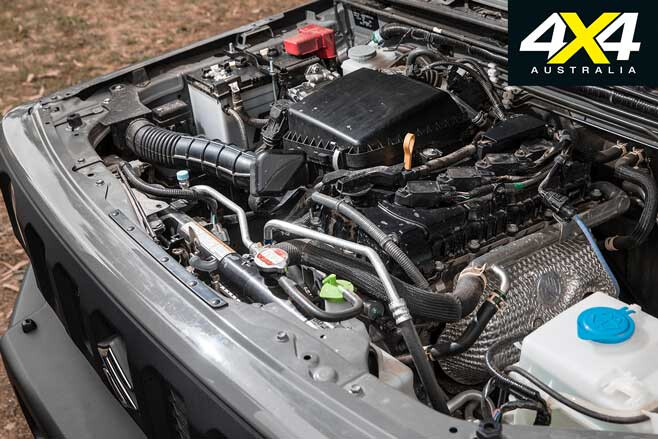
The Jimny’s one and only engine offering is a naturally aspirated 1.5-litre, petrol-fuelled four-cylinder, which makes just 75kW and 130Nm. While that doesn’t sound like much by today’s standards, it’s enough to comfortably get the lightweight Jimny up to highway speeds and over the steepest terrain. But there are plenty of times when your right foot is planted to the floor when accelerating or overtaking, and you wish the engine had a bit more poke. You need to plan any overtaking moves well ahead in a Jimny.
As mentioned there is a choice of stick-shift or auto transmissions and, like the Jimny’s styling, these are more retro than racy. The automatic has just four forward ratios, with fourth being an overdrive, while the manual, as tested here, offers five forward gears but top is one-to-one with no overdrive.
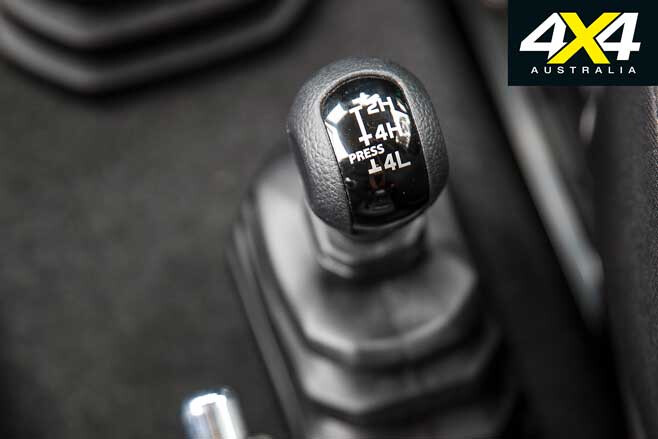
This is the shortcoming of the Suzuki’s powertrain as, while it gets up to speed swiftly, it’s left revving high and noisily at highway speeds where an overdrive would be more than appreciated. If you believe that just four gears in a modern transmission is acceptable, the auto Jimny is slightly better on the highway due to its taller overall gearing. But the Jimny is a made-for-fun fourby that encourages you to drive and use a manual gearbox.
The four-wheel drive system is a simple affair as well, with a part-time transfer case that includes low range, running out to open diffs in live axles front and rear. Electronic traction control is the only factory traction aid, so you’ll have to turn to the aftermarket for locking differentials.
On-road ride & Handling
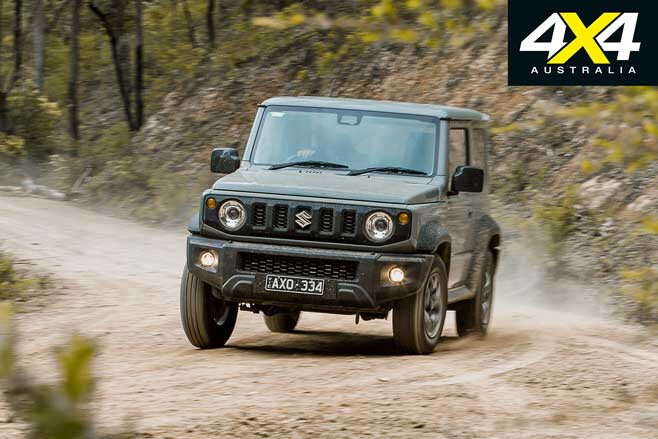
No matter how you look at a Jimny, it’s obviously a narrow track, tall-riding wagon rolling on live axles and skinny 80 aspect tyres; so it’s never going to be a scalpel-sharp corner carver. This is a traditional off-road vehicle, so fast corners need to be treated with due respect. That said, it can still be fun to pedal with some pace, particularly on gravel roads where the tyres have a bit more give.
The highway ride is surprisingly good. It’s no luxury car but it’s more comfortable and forgiving than you might expect, with none of the fore-aft pitching that was once a hallmark of shorties. Coil springs and a three-link setup are used to suspend the Jimny front and rear. The factory dampers feel like a compromise in all conditions, and we think the chassis would benefit greatly from a quality set of shocks.
Off-road
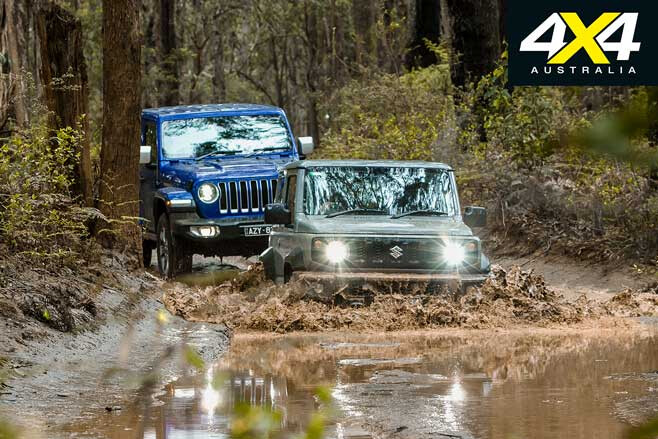
We should count our lucky stars that Suzuki opted to stay true to the Jimny’s design and heritage when it gave us this latest model. Car companies these days too easily opt for the soft option when bringing out a new model, and true off-road vehicles are getting harder to come by. Just look at Suzuki’s own Vitara, for example.
With its light weight, dual-range transmission, good ground clearance, excellent driver visibility, live axles and coil springs, the Jimny is a great little off-roader. We say little due to its diminutive size, and we doubt the Jimny will find many willing to drive it on an off-road lap of the country, but for a weekend play toy it hits the mark directly.
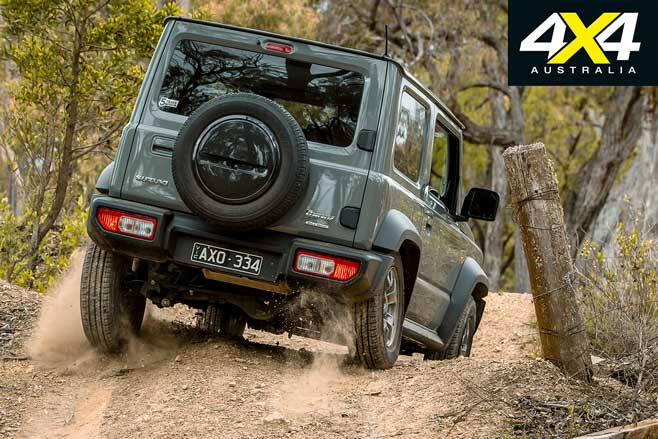
Of course, there’s always room for improvement. The relatively small 195/80R15 tyres tend to bounce over and drop into rocks and holes that larger, more common wheel sizes will just roll through. This creates a harsh and jolting off-road ride even with the tyre pressures dropped accordingly. Any increase in tyre size will benefit the Jimny in both off-road ride quality and capability. A little suspension lift using quality aftermarket springs and dampers wouldn’t hurt, either.
The factory electronic traction control works okay but is far from the latest and greatest version of this system. Some all-terrain or mud-terrain tyres would be the first step to improve traction, with aftermarket lockers being the ultimate.
Cabin & Accommodation
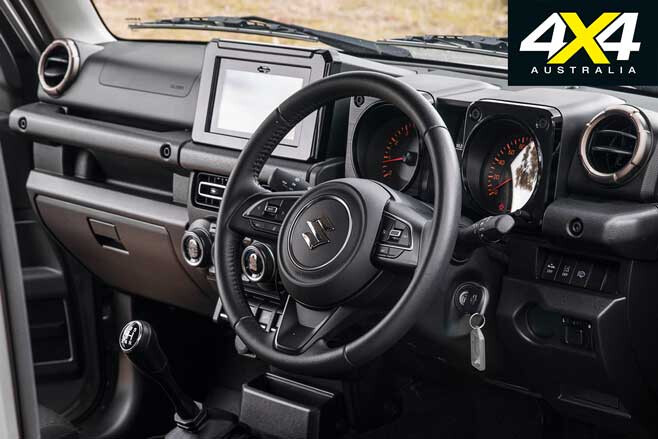
Despite its small overall dimensions, the interior of the Jimny offers a lot more space than you might think. From the driver’s point of view, the Suzuki offers more elbow, leg and headroom than the bigger all-over Jeep. That’s the beauty of putting things in boxes, it makes the most of any and all available space. Form follows function and all that.
The feeling of space within the Jimny is helped by the absence of some creature comforts. The console and drink holders are tiny, the small door pockets have no bottle holders, and the seats are relatively small when compared to other (bigger) vehicles. The flat windscreen and low door windows enhance the open-space feeling as well.
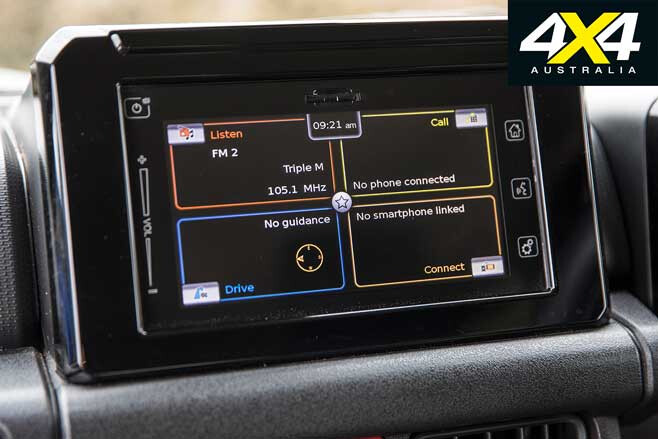
It’s not lacking anything you need. There are power windows and mirrors, single-zone climate-control air-conditioning, and a large A/V screen for satnav and audio functions. That screen becomes hard to read if you wear polarised glasses, a fault that few other vehicles seem to suffer.
The rear seat accommodation isn’t great and would be best kept for small kids on short trips; but, face it, you don’t buy a Jimny as a family car, so that back seat is best removed altogether to increase cargo space. The rear seat does split and fold individually but not totally flat, and removing it would open up a lot more usable space. With the seat upright there is very little cargo space behind it.
Practicalities
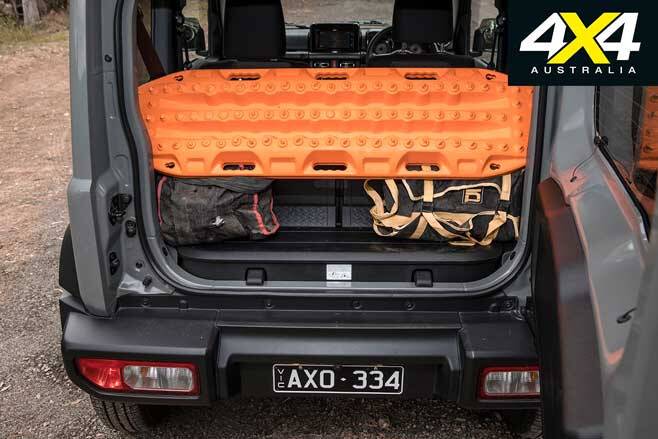
Size is everything when it comes to the practicalities of the Jimny, which is limited by its stature and capacity. A 1435kg GVM leaves you with around 340kg of payload. Towing is limited to 1300kg braked and 350kg unbraked. The 40-litre fuel tank is tiny and you’ll be looking for a fuel stop within 400km.
Seeing the worldwide popularity of the Jimny, the aftermarket has come to the party to help rectify many of its shortfalls, and there’s a growing list of equipment available to make it a better off-roader. Suspension, wheels, storage, bullbars and even supercharger and turbo kits are all available if you look for them.
Jeep Wrangler Overland – Pure & Simple
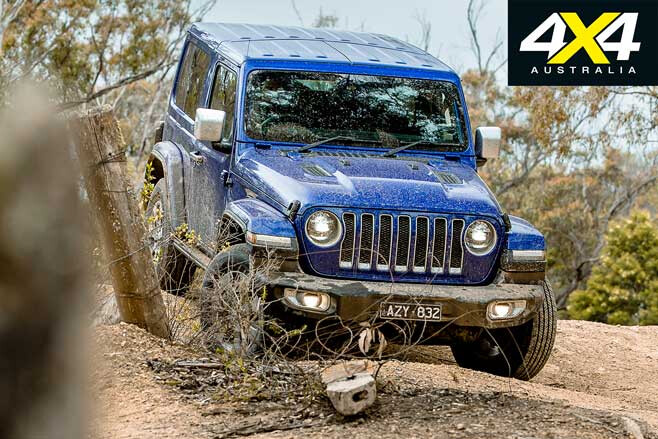
Jeep’s JL Wrangler line-up hit our shores not long after the Jimny did in the first part of 2019, and with it came the surprise that the traditional SWB two-door model would only be available in Sport S and Overland model grades, and only with the V6 petrol and eight-speed auto transmission powertrain. Significantly, this meant no off-road focused Rubicon shorty and no diesel engine or manual gearbox.
While this disappointed many purists, the Wrangler remains one of the best off-road wagons in showroom trim, and the JL ups the on-road ante over any Wrangler before it with improved refinement and features.
A Jeep Wrangler shorty will cost you $48,950 in Sport S trim level or $59,450 as an Overland as we have here.
Powertrain & Performance
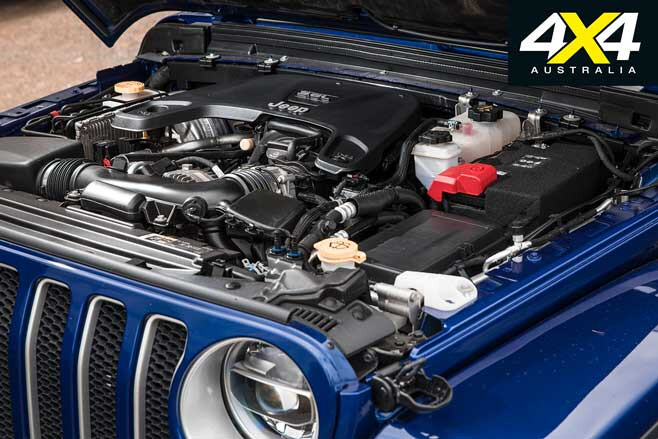
Jeep’s 3.6-litre Pentastar V6 engine was considered state-of-the-art for petrol mills when it was introduced almost 10 years ago. It might be getting long in the tooth, but there’s nothing wrong with it and it feels like it has a new lease of life in the lighter JL Wrangler now that’s it’s backed by the excellent eight-speed auto.
The two-door JL Overland is 138kg lighter than the equivalent four-door model with the same powertrain, and this allows it to make the most of its 209kW and 347Nm. The ‘little’ Wrangler feels sporty by comparison as it willingly spins up in revs and shoots through the gears. Jeep’s claimed numbers put the shorty half a second ahead of the four-door in the zero to 100km/h dash. We can only imagine how much fun it would be if we could row through those gears with a manual ’box, but no such luck for us Aussies.
The eight-speed TorqueFlite auto built under licence from ZF helps the Pentastar achieve better fuel numbers as well as performance. The official ‘combined’ fuel economy figure is 9.6L/100km, so it can make the most of that 66-litre tank. The four-door Wrangler gets an 81-litre tank and claimed 9.7L/100km combined cycle.
On-road ride & Handling
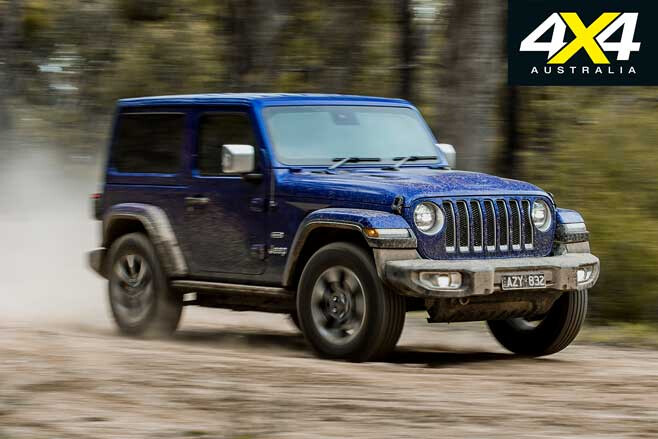
The Wrangler is an overall bigger vehicle than the Jimny, and that affords it more suspension travel, bigger wheels and tyres, and hence better overall ride and handling. The Jeep still uses live axles front and rear, in its case suspended on a three-link front and five-link rear arrangement with coils.
The Overland’s 255/70R18 tyre size is a good compromise for both handling and ride. It is tall enough to give a smooth ride, while low enough to not move around too much when pushed hard. The Dueler H/T pattern is definitely aimed at on-road use.
With the JL model, the Wrangler moved to electrically assisted power steering, which is well suited to this type of vehicle. It delivers enough feedback to the driver at higher speeds yet offers plenty of assistance at low speeds, both when driving on tracks or when parking around town.
Off-road
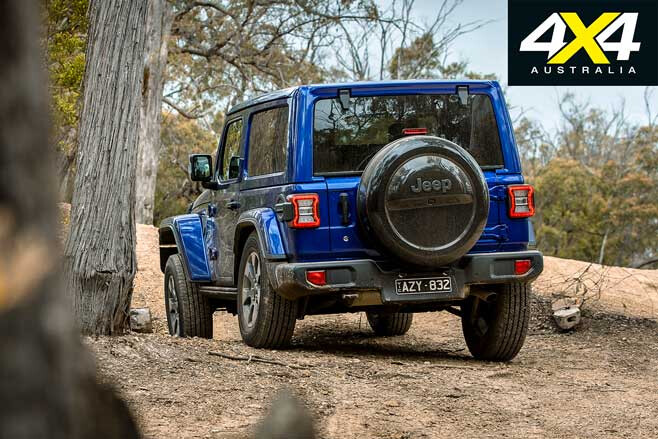
Any Jeep Wrangler is a good off-road vehicle, and the short wheelbase variants are better than the long ones as they are easier to manoeuvre in tight spaces and have a far better ramp-over angle than the long wheelbase models. We didn’t experience any of the belly scraping with this Overland shorty that we have experienced with Rubicon-spec Unlimited JLs. It does, however, still suffer the poor departure angle of its longer brethren, and will scrape its back bumper on many exits.
Sure, the Overland doesn’t get all of the off-road hardware of the Rubicon, but its open diffs and electronic traction control will get it most places people will want to go.
In the absence of a SWB JL Rubicon, off-road enthusiasts wanting a shorty might be best off opting for an entry level Sport S and going wild with aftermarket gear. Like all non-USA-spec JLs, the Overland’s transfer case offers the choice of 2WD, full-time 4WD, locked 4WD high-range and locked 4WD low-range.
Cabin & Accommodation
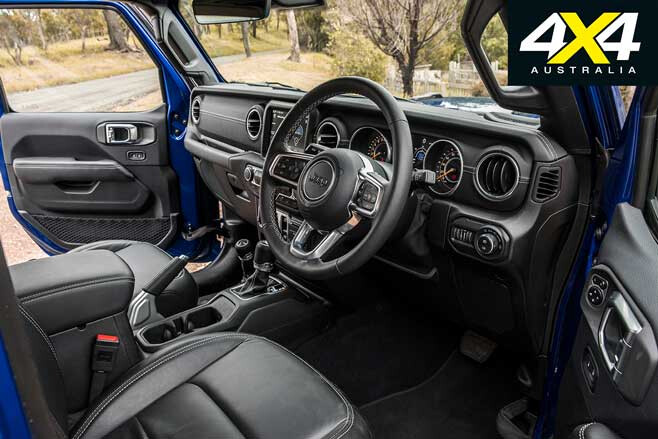
In Overland trim the JL interior is a nice place to ride. It’s comfortable, well-appointed and everything is easy to find and operate. It offers more space than the Jimny’s cabin but is still best suited to just two passengers. Again, we’d be throwing that rear seat to the rafters and maximising the Wrangler’s cargo space. Compared to Jimny, there’s also more space behind the rear seat when it is in use, but not a lot. The rear seat only folds in one piece.
The one big thing the Jeep offers that no other vehicle does is an open interior. Whether you simply remove the front roof panels or you have the time to completely remove the top, open-air motoring is what traditional four-wheel driving is all about. You can even fold the windscreen flat to the bonnet for a full flow-through cabin; there’s nothing else like it in this day and age.
It must be noted that only the Sport S specification in both two- and four-door comes standard with a soft-top, and only the two Rubicon models have the soft-top offered as an option. A hardtop is standard on Rubicon and is all that is offered on Overland variants.
Practicalities
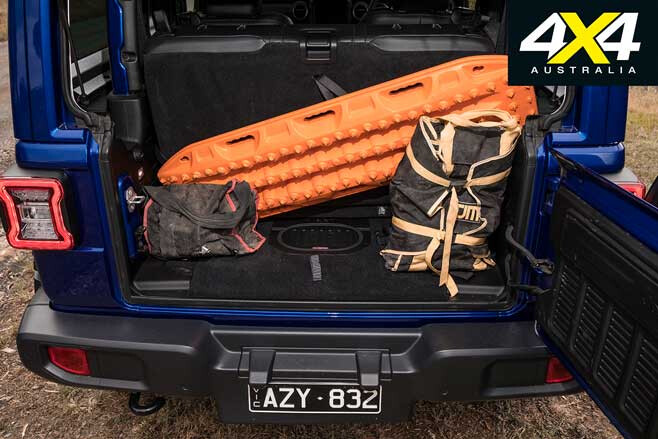
With its extra size, capacity, refinement and comfort, the Wrangler is a lot more practical than the Jimny; but you would expect that at twice the price. Towing capacity for the shorty Jeep is 1497kg braked, while payload is a modest 551kg. As mentioned, the tyres are a sensible and practical size and a +1 upsize to all-terrain rubber will vastly improve your tyre choices and the vehicle’s off-road ability.
The Jeep Wrangler is the most accessorised four-wheel drive in the world, so you can get everything you need, and plenty that you don’t need, to modify your Wrangler to your desires. Wheels, tyres, snorkels, half doors, suspensions, complete axle assemblies, custom roofs, lights, engine conversions … the sky is the limit! Careful research into what you need to get the Jeep where you want to go will see you equip it to do anything.
Suzuki Jimny vs Jeep Wrangler Overland verdict – Get Shorty
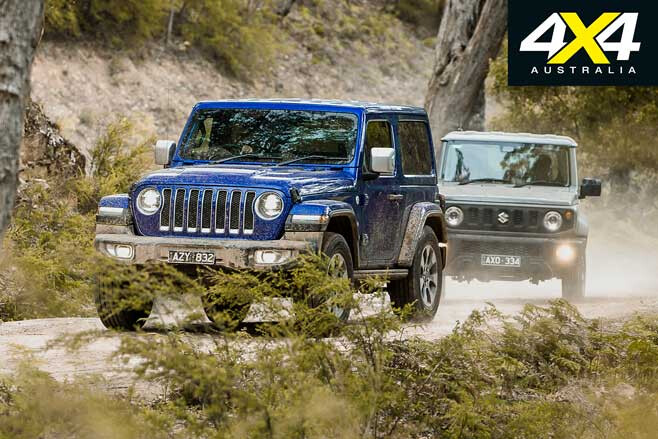
While their respective manufacturers have stuck to traditional off-road values in their design and construction philosophies, and these are the only two two-door 4×4 wagons you can buy at the moment, they are very different in many ways. Buyers might think they both look cute, but we doubt the Overland and the Jimny would attract the same buyer type.
Price has the most to do with this. You can buy two fully-kitted Jimnys for the cost of a Wrangler Overland, but the Suzuki will never be able to offer the comfort and refinement of the Jeep.
Of course, if you are after a soft-top your choice has been made for you. We reckon it’s criminal that Suzuki doesn’t offer a soft-top Jimny, especially when you consider the fun we had in older open-top Suzuki 4x4s. C’mon Suzuki, give us a soft-top … and a ute while you’re at it.
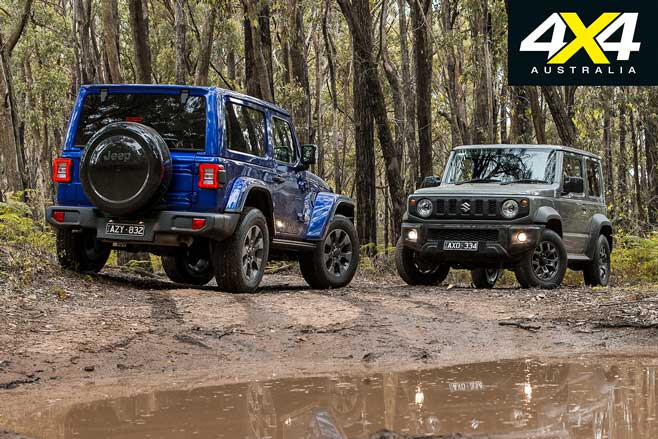
If the lack of a soft-top Suzuki can be considered a crime, then the absence of a SWB Wrangler Rubicon, or any Wrangler with a manual gearbox, should be a hangable offence.
Omissions such as these are taking the joy out of what should be fun fourbies made for enthusiasts. There are enough boring SUVs in the marketplace. Bring on the fun factor and option either of these little rippers correctly and you’ll find yourself driving miles of smiles.
Specifications
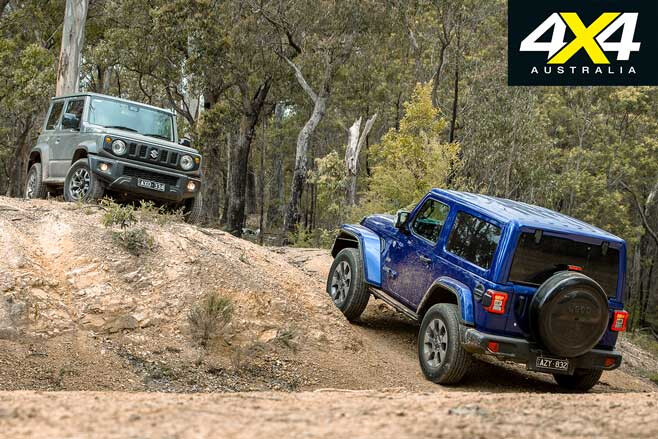
| u00a0 | Suzuki Jimny | Jeep Wrangler Overland |
| Engine | 1462cc OHC petrol inline 4-cyl | 3604cc DOHC petrol V6 |
| Power | 75kW at 6000rpm | 209kW at 6400rpm |
| Torque | 130Nm at 4000rpm | 347Nm at 4100rpm |
| Gearbox | 5-speed manual | 8-speed automatic |
| 4×4 System | Part-time with 2WD (rear); locked 4×4 high and low | Part-time and full-time 4×4 w/ locked high and low range |
| Crawl Ratio | 36.23:1 | 44.2:1 |
| Construction | 3-door body on separate frame chassis | |
| Suspension (f) | 3-link leading with coil springs | |
| Suspension (r) | 3-link leading with coil springs | 5-link leading with coil springs |
| Wheel/tyre spec | Alloy/195/80R15 | Alloy/255/70R18 HT |
| Departure Angle | 49u02da | 29.2u02da |
| Rampover Angle | 28u02da | 26.2u02da |
| Approach Angle | 37u02da | 34.8u02da |
| Wading Depth | 300mm | 760mm |
| Ground Clearance | 210mm | 260mm |
| Kerb Weight | 1095kg | 1762kg |
| GVM | 1435kg | 2313kg |
| Payload | 340kg | 551kg |
| Towing capacity | 350/1300kg | 750/1497kg |
| Fuel capacity | 40 litres | 66 litres |
| ADR fuel claim | 6.4L/100km | 9.6L/100km |
| Test fuel use | 8.9L/100km | 10.6 litres/100km |
It doesn’t take much to transport the human imagination. A simple sound or smell, a sensory trigger that can send your mind tumbling back through the years. And classic cars are notorious for their ability to propel the observer back in time.
The smell of 1970s’ vinyl, one of those horrible dusty tartan blankets that everyone seemed to have in their cars, or – for less-fortunate souls – the crawling sensation of your butt growing numb while riding in the back of a leaf-sprung 4×4 … all potential fuel for a sentimental time warp.
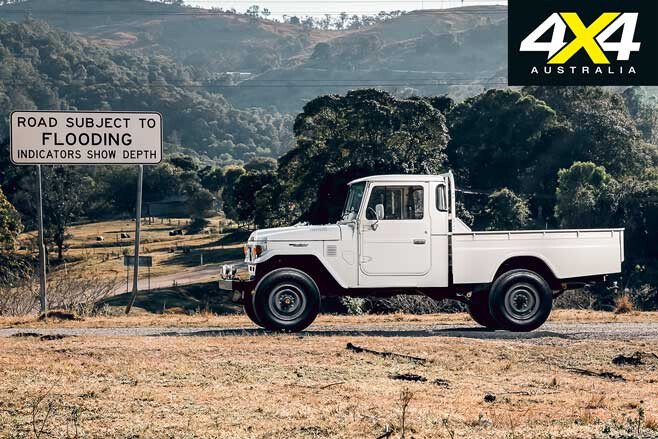
I may be getting a little ahead of myself to suggest an FJ45 Land Cruiser is an evocative time capsule. However, there was a definite flicker in the space-time continuum when I climbed behind the wheel of Doug Quayle’s absolutely immaculate Cruiser ute.
I’m not kidding; there was even a new car smell. I turned the key and the mighty 2F petrol donk fired to life instantly and idled smoothly with barely a shudder. The tough, torquey 2F may be beloved of forklift owners the world over (the 2F also had a long and stellar career as an industrial engine), but finesse isn’t usually one of its finer points.
The gearbox clicked into gear with a precision belying its crude commercial origins. As I rumbled down the dirt road I could have been a cow-cocky time-warped straight out of the late-70s, albeit now equipped with a splash of historical elegance.
This 1984-model FJ45 has been restored to the point where it’s effectively a new vehicle. “I’m actually a little terrified of driving it,” says Doug, with just a little chagrin. “I threw a birdcage in the back of it the other day and then freaked out a bit because I was worried I’d scratched the bed of the tub.”
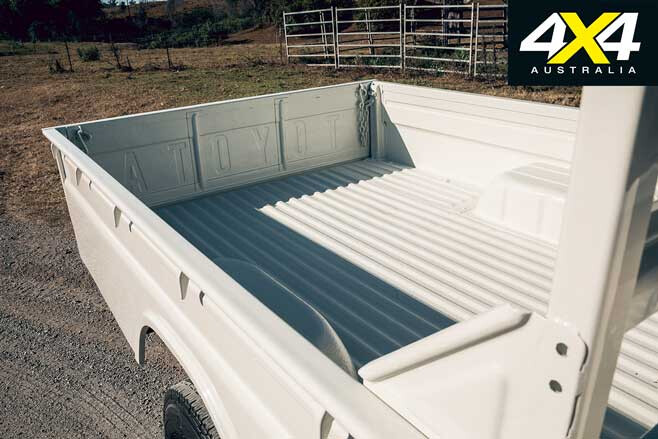
It’s a good thing Doug has more than just one and Cruiser to play with, because I get the impression that driving this one can be a little stressful. I nearly breathed a sigh of relief when I parked it!
For Doug, the Toyota Land Cruiser badge has a long-held affection that stretches back to his family’s Queensland roots, “My father bought my mother an early green FJ55 and that was what my mum drove both me and my three siblings to and from school in,” he recalls. “They were so rare back then, everyone used to stop and stare at it, and then we had a brown 55 after that.”
The family affair with Toyota has its roots even further back than Doug’s childhood, “My old-man’s best friend, as a kid at school, was a kid from Longreach,” Doug explains. “He spent his entire childhood heading out there and consequently we did too.”
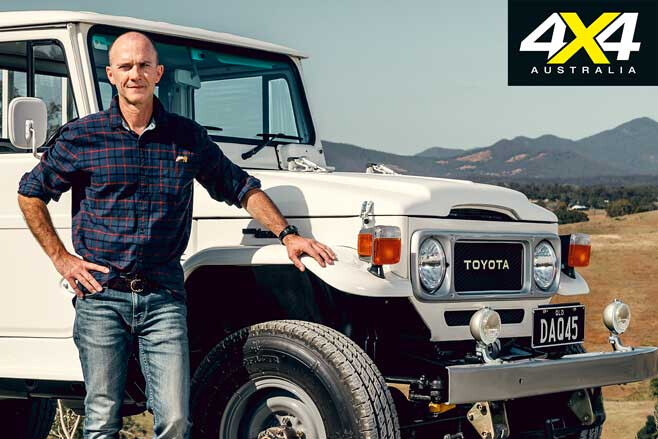
Due to those strong friendships forged by Doug’s father at school, Doug spent much of his formative years in Western Queensland. “I was always out around the Longreach and Barcaldine area and these Land Cruisers were everywhere, and they were revered.
“There was always a big deal about such and such getting a new Toyota … a new Land Cruiser was like the currency.
“I very nearly followed a life and a career out there, in the end I didn’t … but I still head to the bush several times a year. I just love it, it’s just a part of the world I love.” Nodding towards the Toyota, Doug adds, “And these things were just part of the backdrop really.”
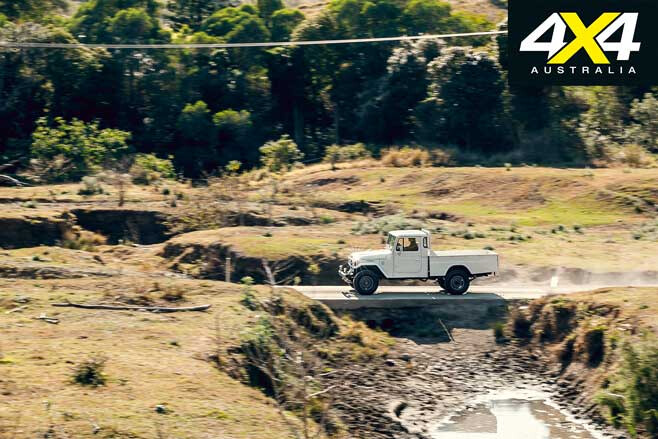
It comes as no surprise that Doug has more than one Land Cruiser, however the desire to bring an FJ back to this kind of condition, as with so many resto projects, didn’t start that way. Doug nearly looks sheepish when he says, “It totally got away from me mate, totally.”
Enter FJ Toyota specialist, and proprietor of Hendra Motors, Ray Saggal. Ray was effectively tasked with not only carrying out the mechanical work, but also project-managing the restoration. Ray was asked by Doug to find a neat FJ45 to tidy up. This truck was found in a prestige caryard in Sydney, “It was a pretty tidy car already,” admits Ray. The brief from Doug, however, was that the ute had to have the factory tub and, even more importantly, a factory headboard – the Holy Grail of 40 Series ute fans.
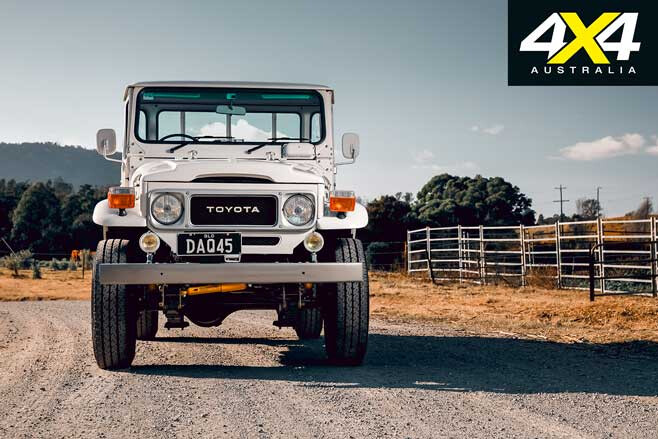
However, the idea was that the ute was just going to get a bit of a mechanical check-over and a tidy-up before hitting the road. And the rest, as they say in the automotive restoration world, is history. It’s the car nut equivalent of saying, ‘Okay just one more drink’.
“Once you do a little bit it’s hard to stop,” Doug admits. “Once you fix a few oil leaks, what about doing the rest, the suspension’s sagging a little so you fix that, you keep going and going.”
This FJ originally had a fibreglass roof and a fibreglass front apron. Clearly these non-original parts were not going to cut it.
While 2H diesel LX Cruisers tend to be the sought-after unicorns of the 40 Series world, this ute is a pretty basic spec. No power steering and no air-conditioning to complement the 2F petrol and four-speed combo.
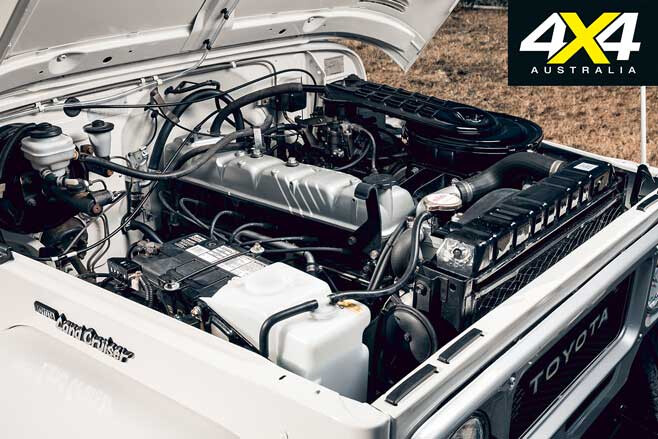
It’s a bread-and-butter spec for working hard, chasing sheep and swigging a decent amount of petroleum along the way. Regardless, it proved a solid basis for the yearlong build. “Pick up the groceries, throw a couple of sheep in the back, tow huge loads; I just loved seeing them work,” says Doug.
Half of the build time was spent getting panel and paint sorted. Ron from Crash Smash Repairs in the Brisbane suburb of Northgate was tasked with braving the three different shades of white found on the cab, and then digging deeper to eliminate any and all rust that may have been lurking in the shadows and seams. The interior of the tub was also lined with stone-guard and then painted.
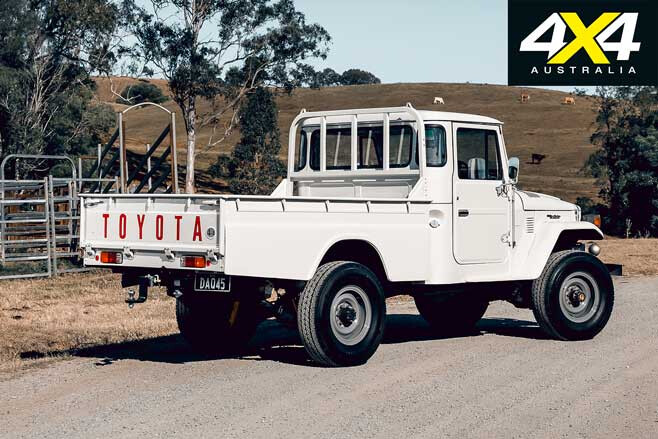
The biggest challenge of this build was actually locating parts, according to Ray, though he is torn when asked on what he is most proud of. It’s probably the fog lights or, to be more clear, the OE factory switch that controls the fog lights. I’m not sure how many people ticked this option box back in 1984, but I can’t recall seeing any 45 Cruisers getting around with this option. I have to admit, it’s a tasteful addition.
The chassis was water blasted and painted, and the body was massaged back into a rust-free glistening state. The engine was sandblasted and painted (the internals, unsurprisingly for a 2F, needed no attention).
Every seal in the vehicle has been replaced; every part of the interior has been replaced; the seats were even re-trimmed in the original vinyl; and then there’s the addition of the mentioned fog light switch!
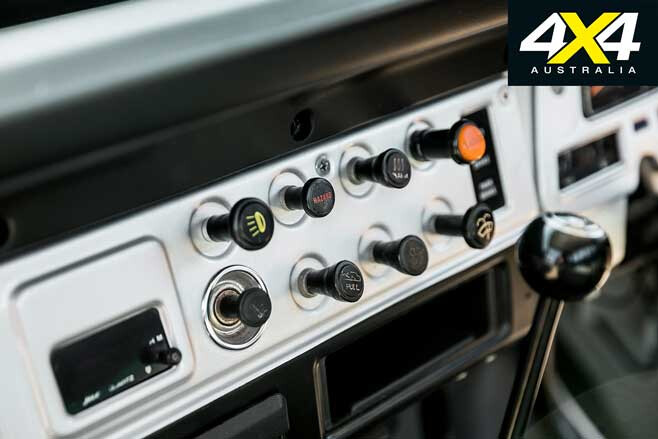
No Bull Accessories provided the interior vinyl floor covering. However, while the original vinyl left a gap at the back wall, this covering runs all the way to the back, covering the layer of Car Builders sound- (and heat-) deadening that was installed. The glass was all in good nick, but the windscreen was replaced for good measure.
Another area of debate was the colour of the lettering on the tailgate. While internet forums buzzed on the topic, it took some computer mock-ups to settle on the red that now looks so right. The Dune Beige trucks all had black lettering as standard.
Doug’s ute ended up being a nut-and-bolt restoration that has managed to capture the ethos of an off-road era, when suburban Australia was just discovering the far-flung reaches of the Australian interior. While the Thiess Brothers, and later Toyota Australia, were supplying vehicles to support burgeoning infrastructure projects, the average Aussie was starting to wake to a bigger Australia and had a more affordable and reliable means to access it.
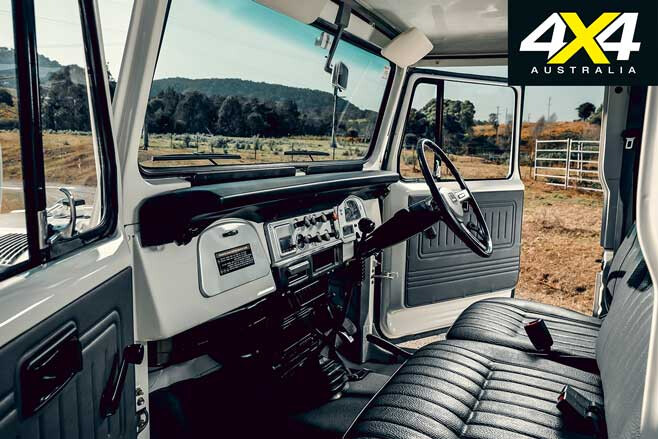
For Doug, however, his ute plays the part of evocative time capsule, a homage to the hardworking inhabitants of the rural back blocks. “It’s a beautiful thing to drive, it’s great to sit in and look out over that bonnet, and yet unless somebody really knows what it is, nobody notices, it just passes through the world.
“It’s fun seeing something reborn, something that’s had a hard life, and giving it a new life.”
Clearly bringing an old 4×4 warhorse back to life isn’t a cheap exercise and I had to ask Doug, when there are more obvious, exotic automotive options to explore, why the old Cruiser? With a shrug he briefly contemplates the horizon before replying, “In a world of Justin Biebers, the aim is to be a Johnny Cash.”
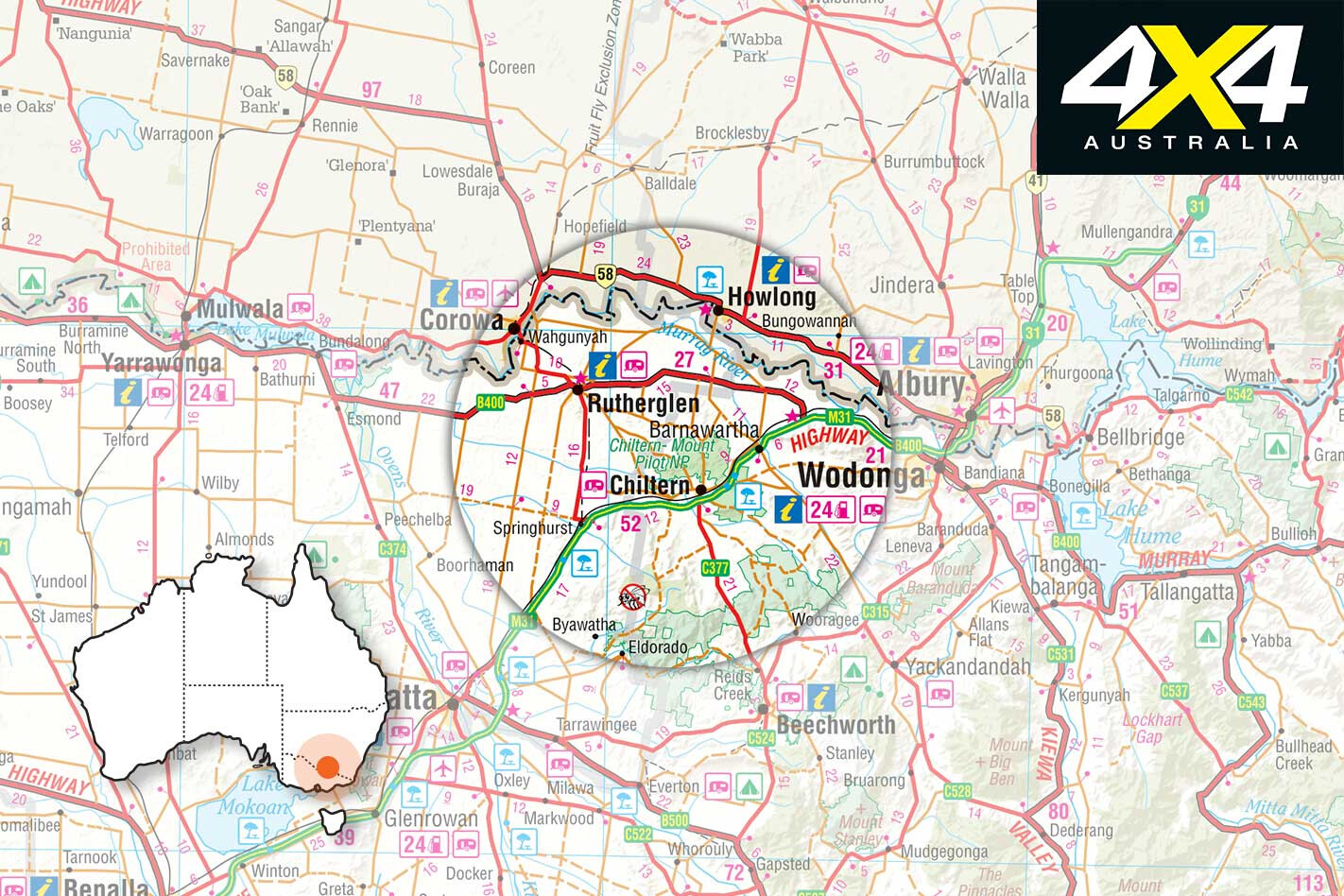
We had turned onto an ever fainter track amongst the maze of vehicle routes that cut through the open eucalypt forest in the far western section of the rather disjointed Chiltern-Mt Pilot National Park in north-eastern Victoria.
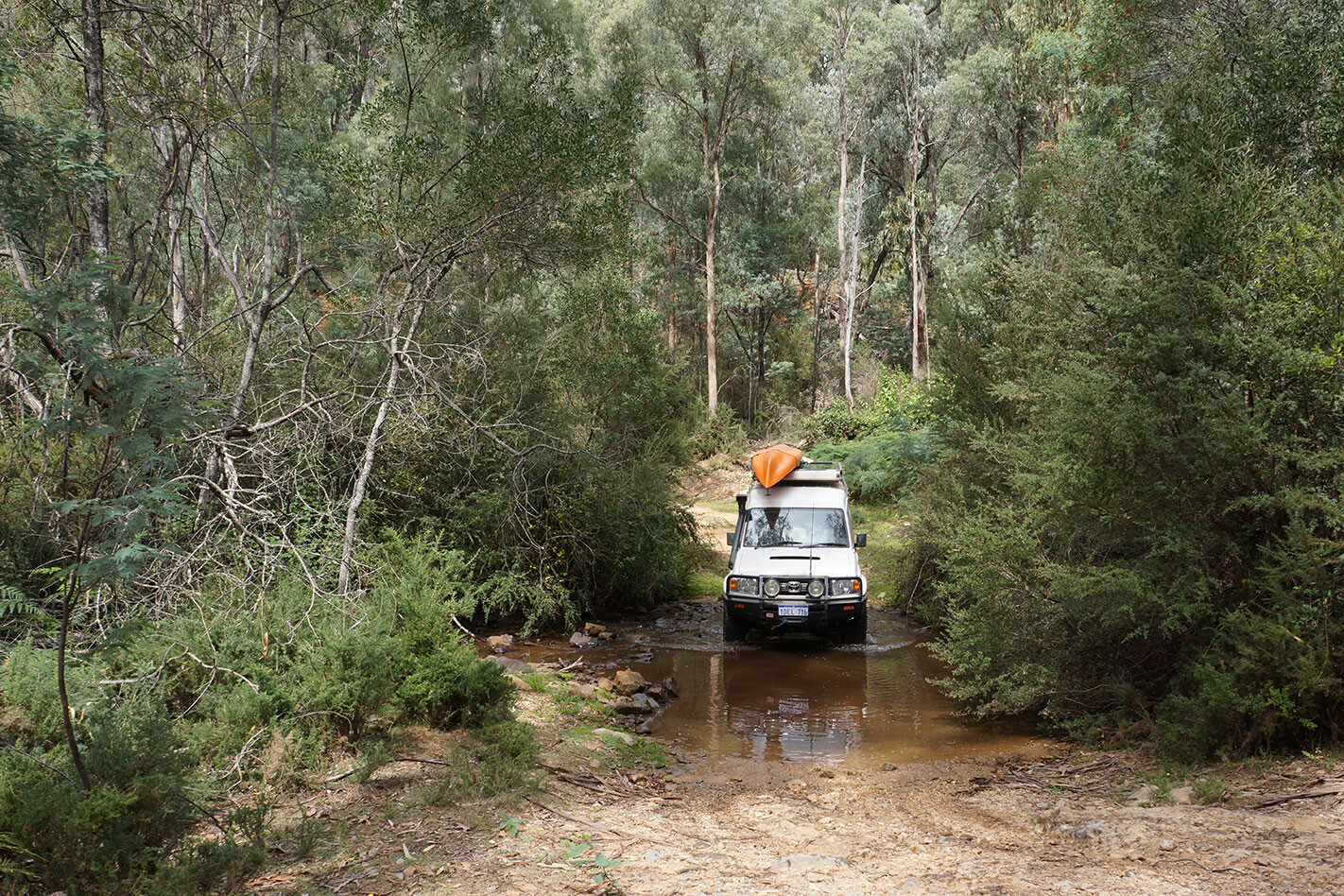
We were looking for the Indigo Goldfields Cemetery, or what remained of it, and while it was marked on the park brochure, no other maps showed its location. We were just about to turn down yet another track when I spotted a lone weather-worn and almost camouflaged concrete post just off the path in among the scattered scrub of grey box, wattle and bush pea. It was what we were looking for.
Gold had been discovered near here in late-1858 and by January of the following year there were more than 20,000 people in the immediate area. Supposedly some 59 souls are buried at this lonely, near-forgotten spot, but apart from a sign and four concrete posts marking the corners of the cemetery patch, nothing else remains. Most of the grave markers were, by all accounts, made of wood, and they either rotted away or were used for firewood in the tough times of the 1930s.
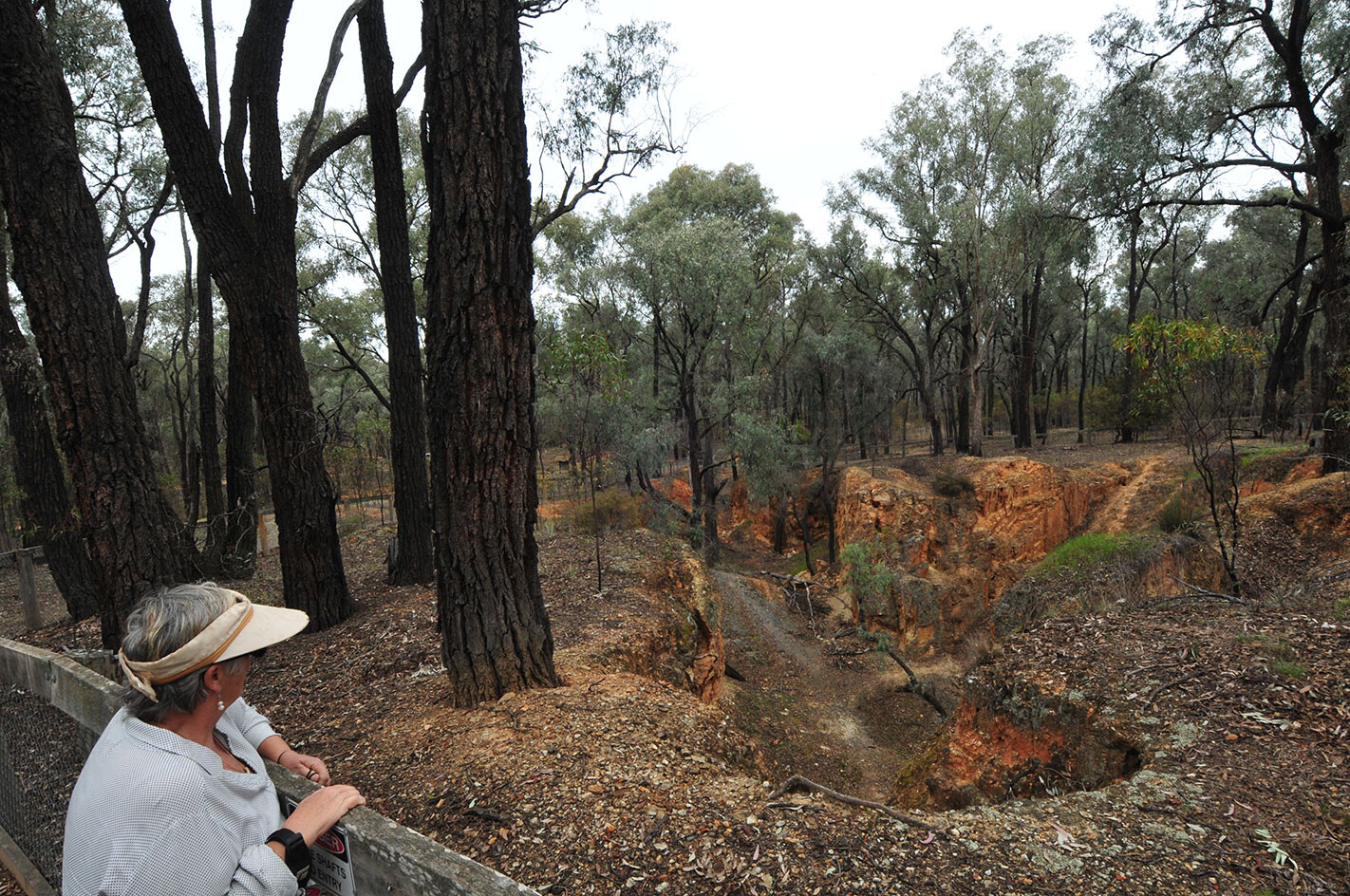
A few kilometres away there’s a much more impressive reminder of those heady days of gold and fortunes made and lost, which can be seen at the remains of the Magenta Mine. Today the mine is easily reached via some bush tracks; although, they get rather steep along Pipeline Track, which would be slippery and exciting in the wet. The mine is now fenced, but a couple of viewing platforms keep everyone safe and give an eagle-eye view of the open cut and shafts.
Mining commenced on this gold-bearing reef in 1860, and the open cut was worked to a depth of 15m or so when a couple of shafts were sunk following the rich vein of gold to 30m or more. The mine closed in 1910 but was revived during the Depression in the 1930s. In all, around 13,000oz of gold was recovered from here and processed nearby at the stamper battery, the few scattered remains of which can be seen just off Battery Hill Road, 3km north of the small town of Chiltern.
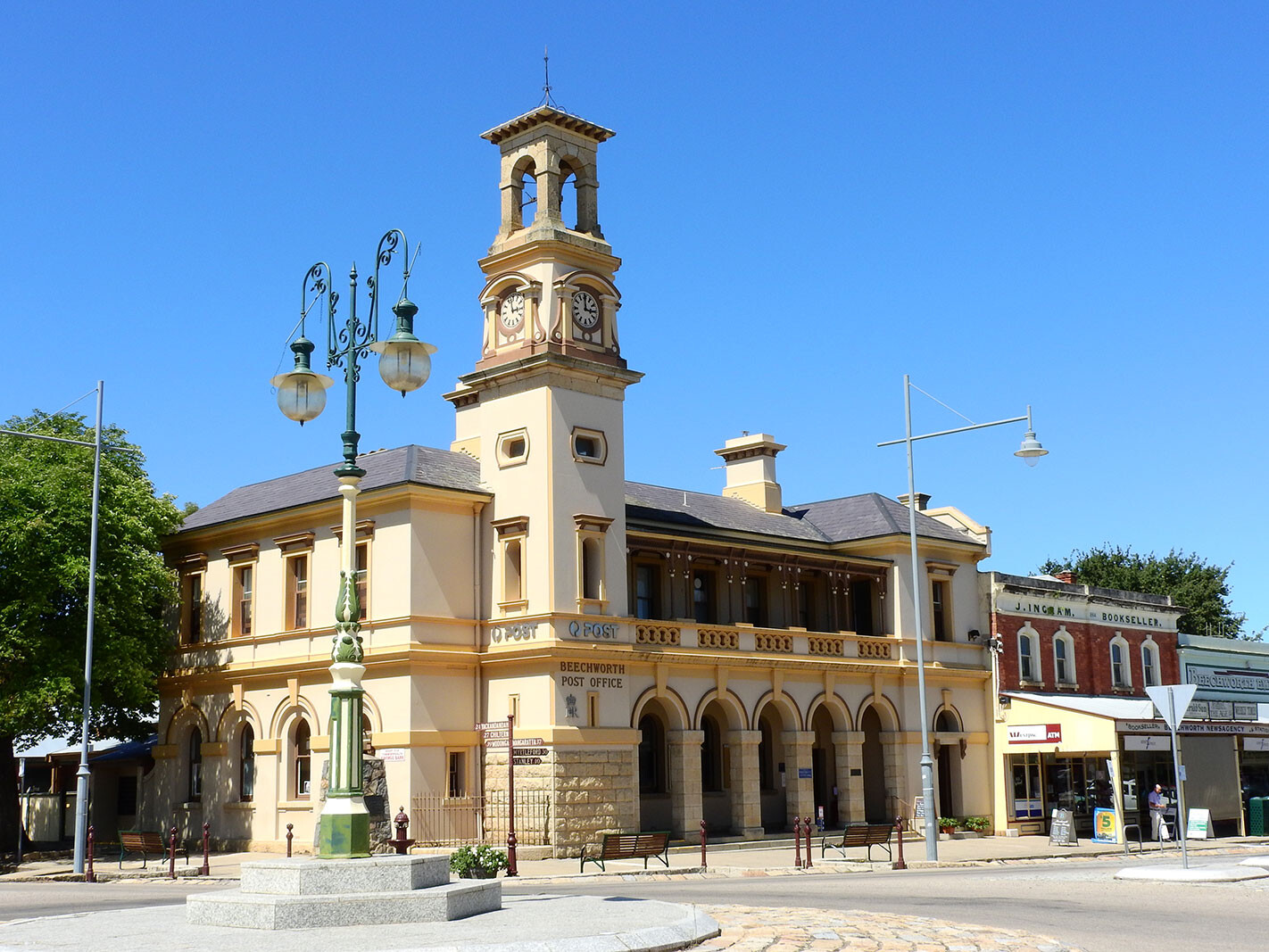
Our wanderings through this area had started a few days earlier when we had visited the historic town of Beechworth, tucked in amongst the foothills of the Great Dividing Range in north-east Victoria. A favoured destination for many, the town offers a range of modern-day delights and historic attractions befitting a town that was once, briefly, considered to become the capital of the newly fledged colony of Victoria.
Aboriginal people had long wandered the hills and valleys of the region, spending the hot summer months in the mountain country and returning to the lowlands in autumn and winter. The explorers Hume and Hovel had passed along the western edge of the ranges in 1824 and, while Melbourne was founded in 1835, the colony of Victoria wasn’t established until 1850.
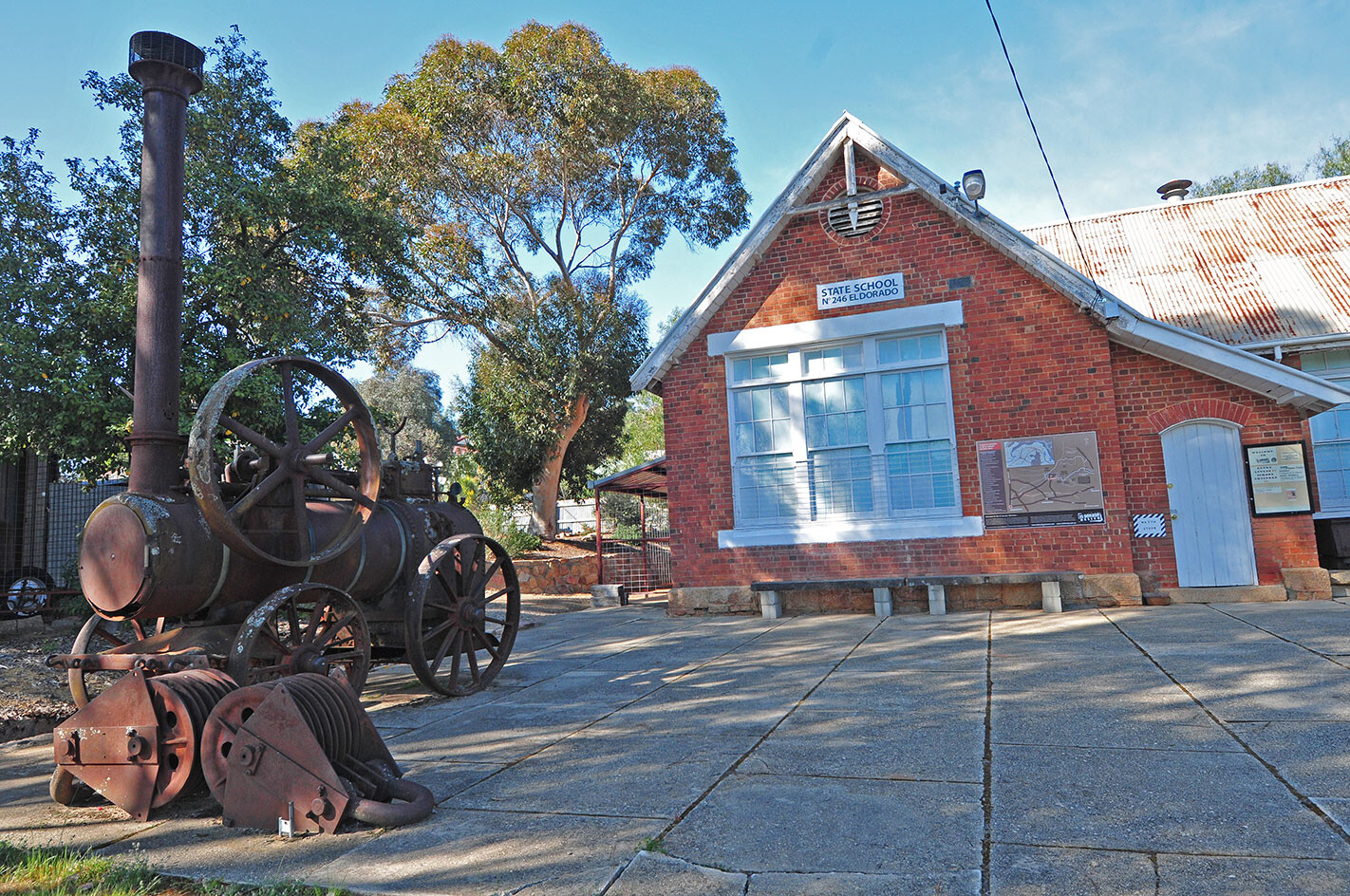
Earlier, in 1840, ex-Navy captain William Baker had established his land holdings along Reedy Creek, just west of what was to become Beechworth, and named the property, rather prophetically one would think, ‘Eldorado’.
Gold was then discovered in Reedy Creek, downstream from Beechworth, in February 1852, and by the end of the year the creek had more than 8000 hopefuls seeking their fortunes at their own ‘Eldorado’. By 1853 the town of Beechworth had taken on some semblance of permanence and the amount of gold coming out of the ground was staggering.
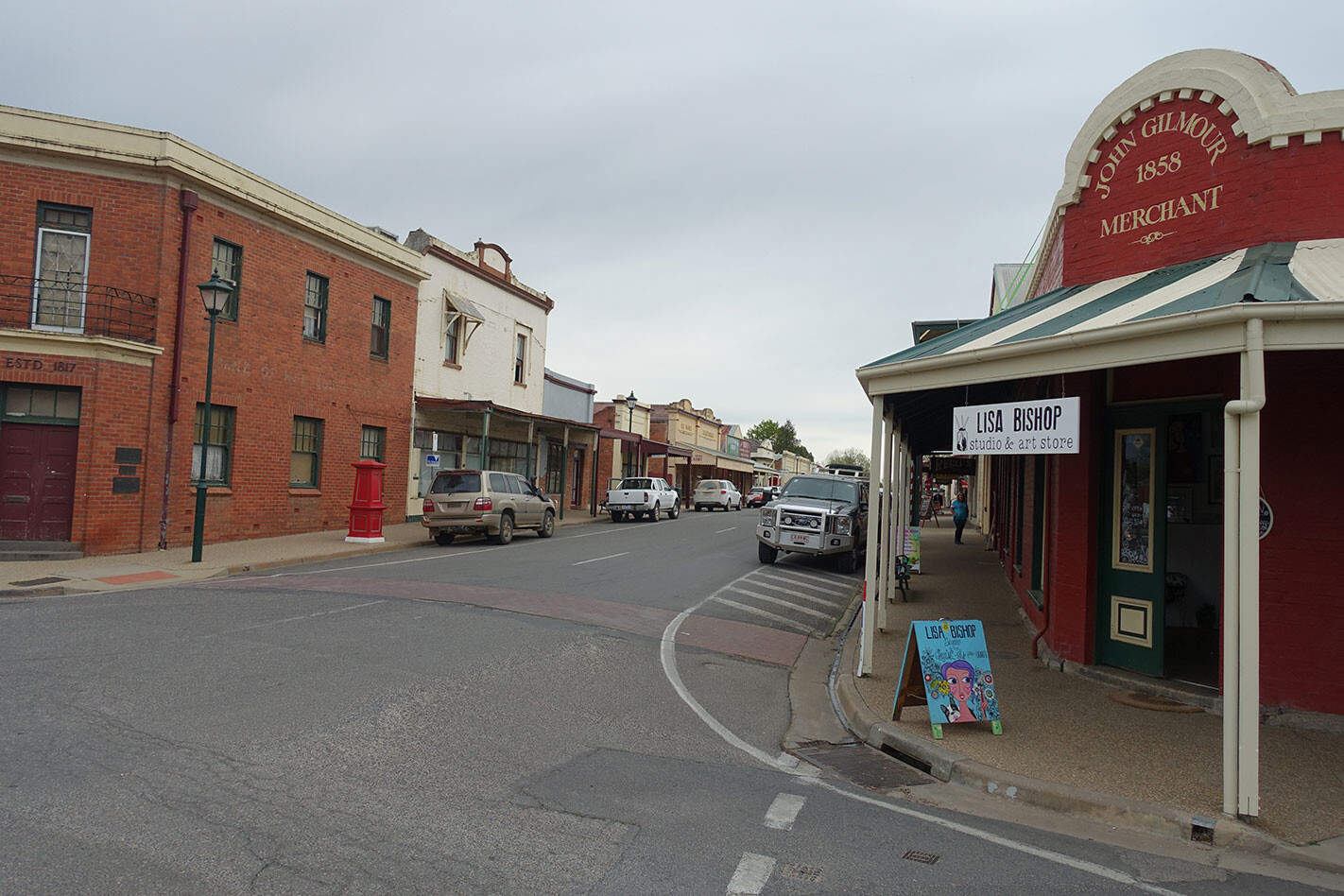
In 1857, gold production peaked with 14,000oz of gold (worth nearly $31 million in today’s money) being transported from Beechworth to Melbourne every fortnight. In the 14 years after the discovery of gold, more than four million ounces were shipped to Melbourne and who knows how much was smuggled out?
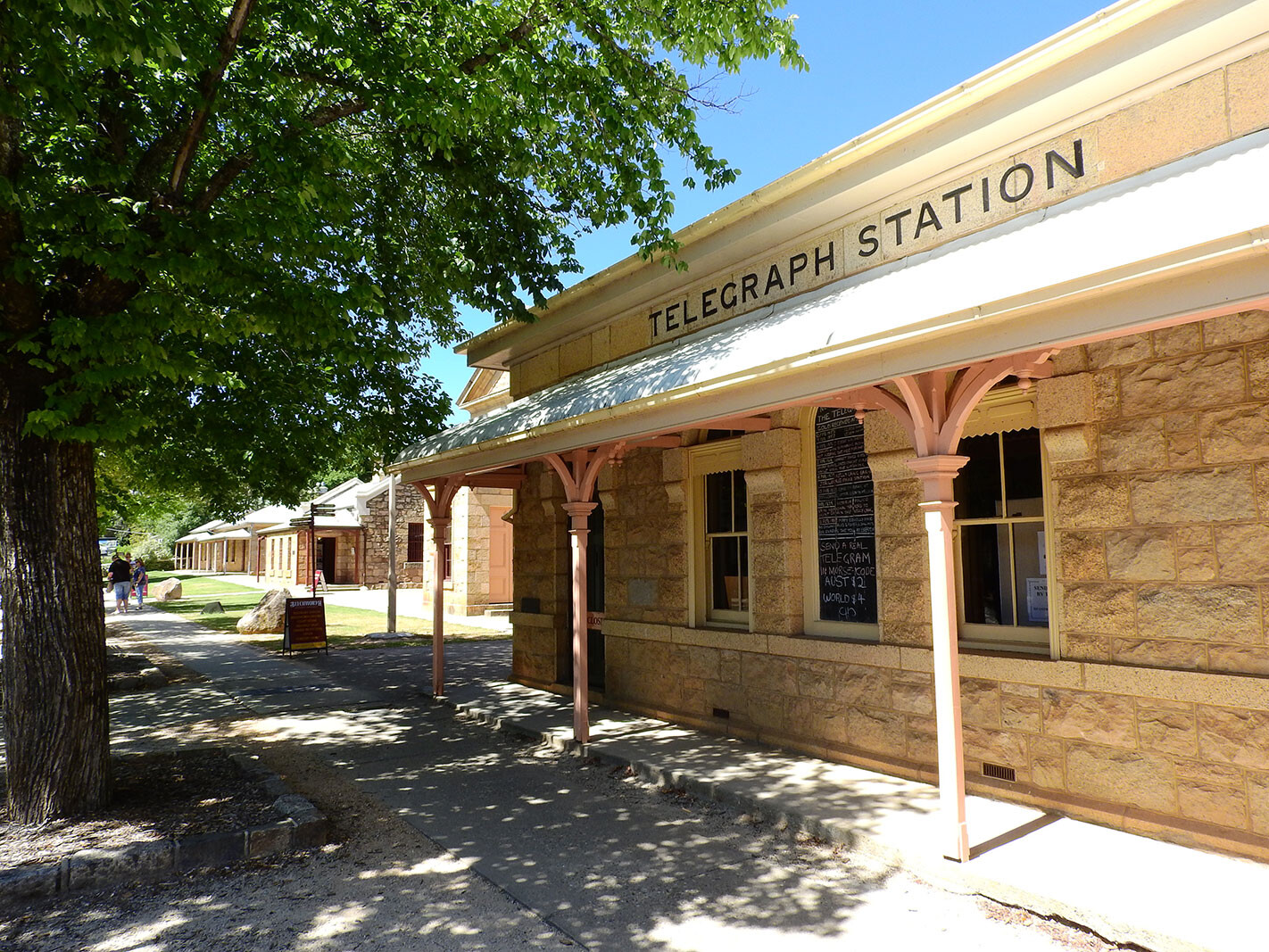
Once you’ve explored Beechworth’s many historic buildings, and taken in the museum and the delights of the bakery and the ice cream shop, take the Gorge Scenic Drive to see some of the works the early miners did in their quest for the yellow stuff. The 800m-long Rocky Mountain Tunnel built under the township to divert water and access gold is pretty darn impressive, I’ve gotta say. In seven years from 1869 the tunnel produced 6500oz of gold.
While there’s a heap of 4WDing to be done along the forest tracks between Beechworth and Yackandandah, on this trip we turned west and headed to Woolshed Falls where Reedy Creek plunges over the escarpment. Here you can also see where the early miners diverted the water to access the pool at the bottom of the falls, to recover gold that had collected there. Years ago we dived here, but we only found number plates.
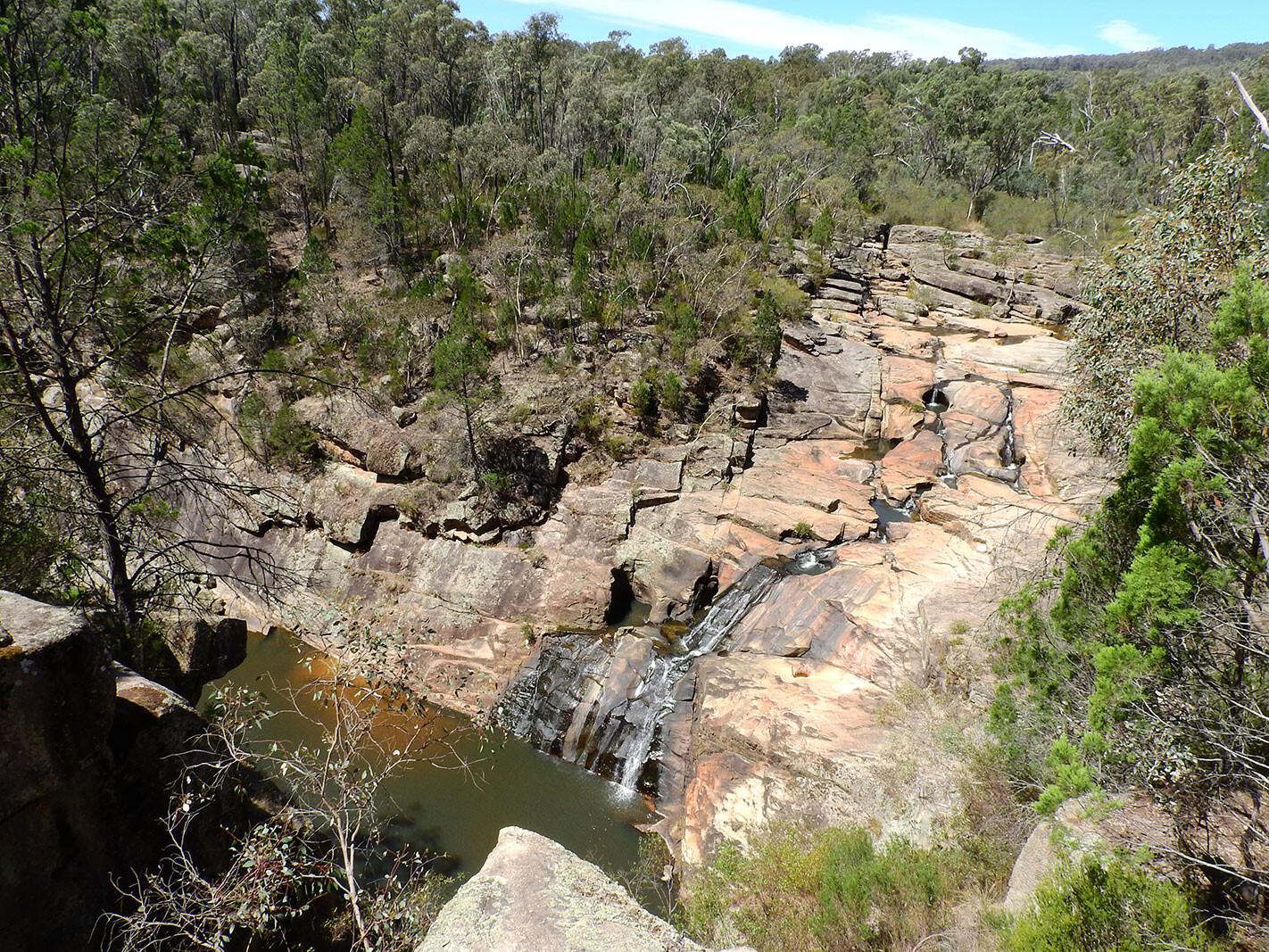
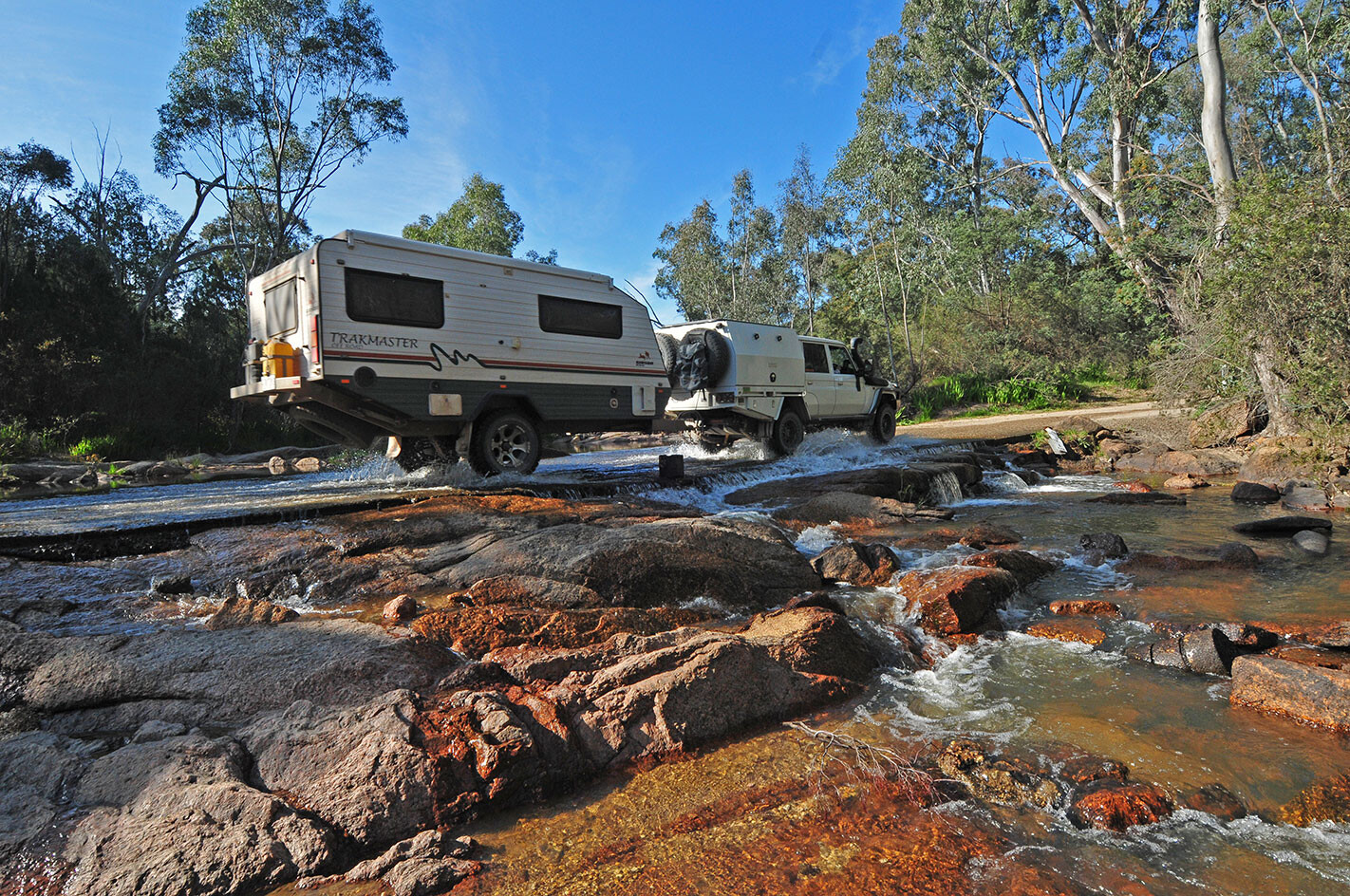
From Woolshed we headed via a reasonable dirt road towards Eldorado, crossing Reedy Creek at a sandy but shallow crossing and passing through the Chiltern-Mt Pilot NP. This pleasant 4WD trip winds through ironbark and stringybark forest, which in spring can be coloured with blooming wattles, orchids and bush peas.
This park also contains the highest number of mammals, birds and reptile species recorded in any box-ironbark forest in the state, with more than 200 bird species being documented here. These include such rare and colourful birds as the regent honeyeater, swift parrot and the turquoise parrot, along with the square-tailed kite.
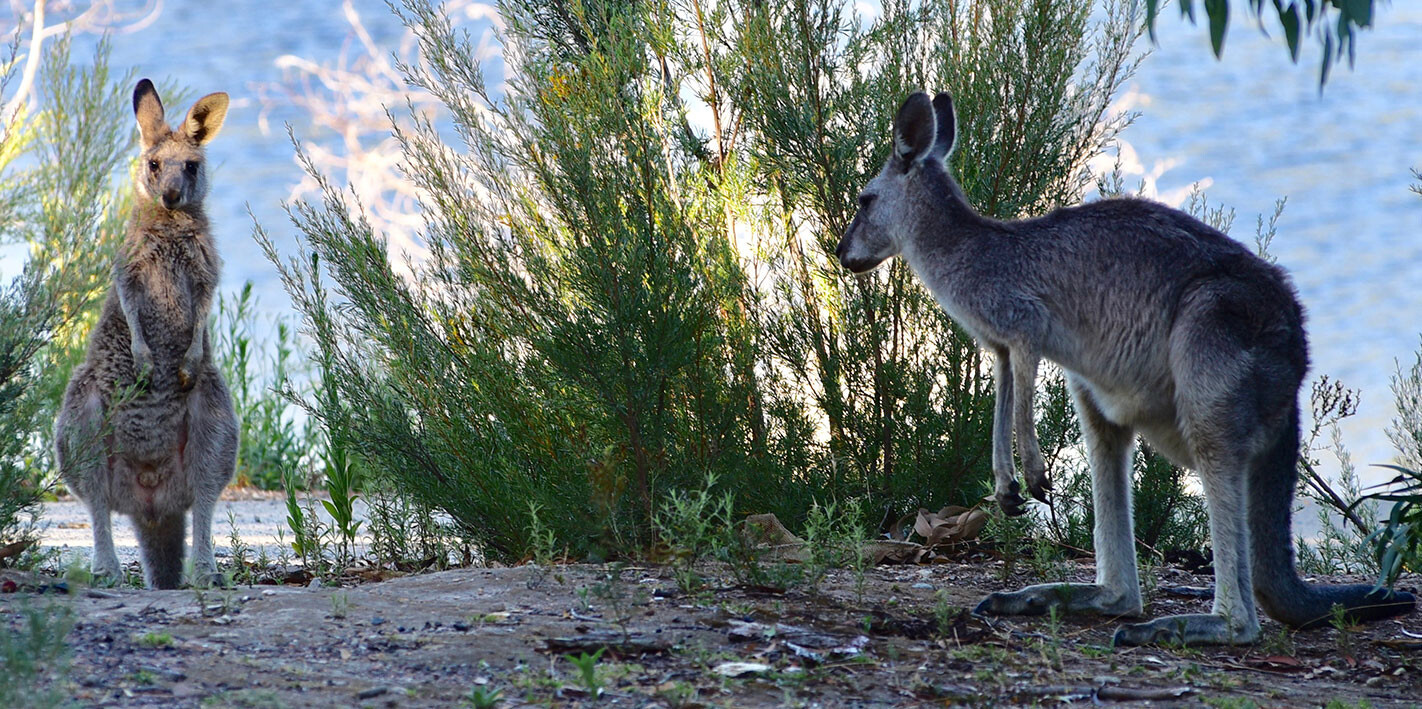
Eastern grey kangaroos are often seen grazing in the open areas in the early morning or late afternoon, while swamp wallabies can be spotted darting out from the rocks or thick scrub alongside the creek. Tree-dwelling animals such as the tuan, squirrel glider and the diminutive sugar and feathertail gliders also inhabit the forest but are rarely seen. However, the larger common brushtail and ringtail possums can easily be spotted on a night walk around your camp.
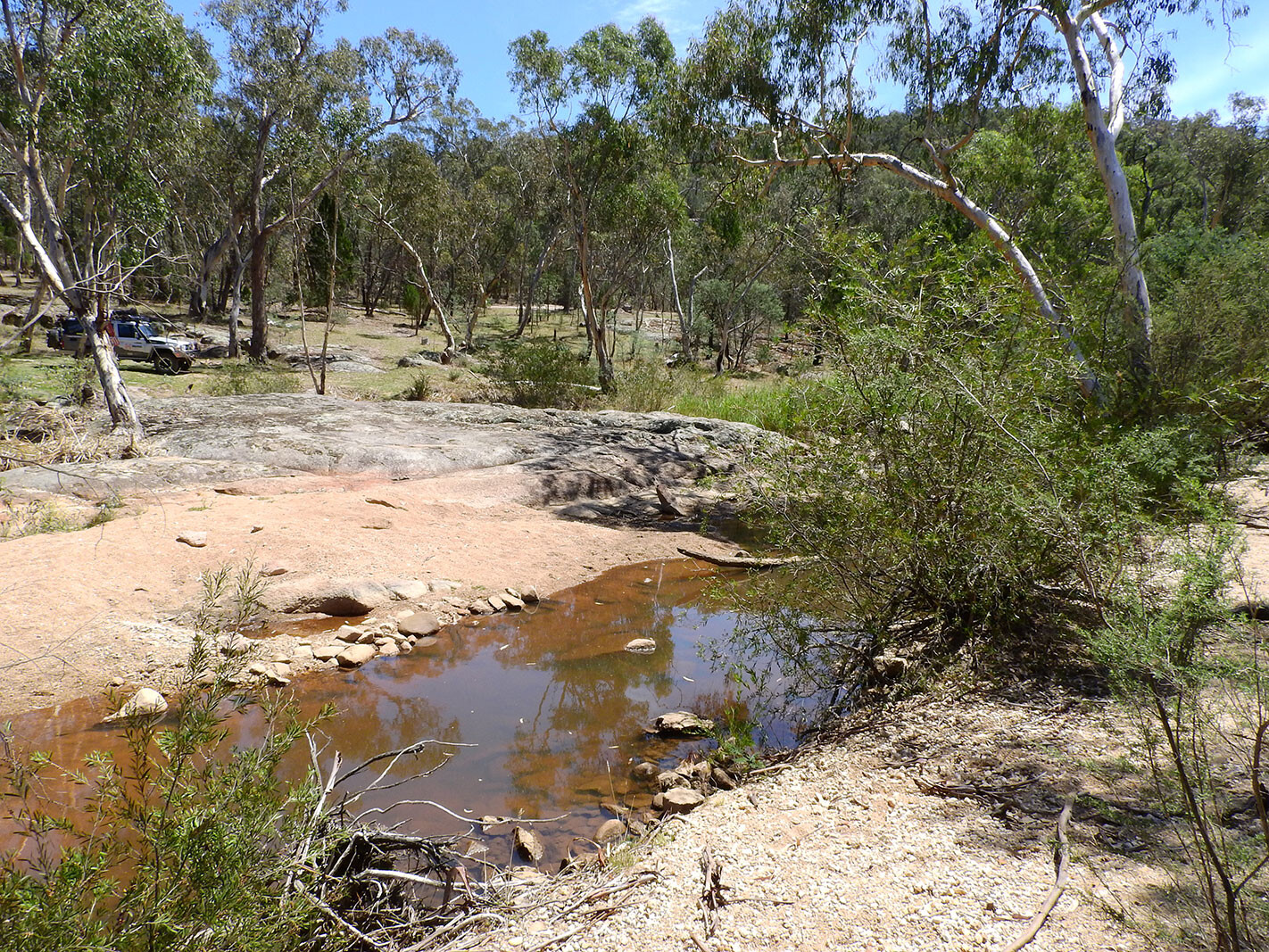
This area of the national park and along Reedy Creek is also an area where prospecting with hand tools and panning for gold is still allowed, although the pickings, I’m guessing, are pretty thin after all those early miners worked the hills and creeks back in the 1850s and ’60s. You need a current Miner’s Right Permit to prospect and must stay within the designated area.
With so much gold coming out of the region back in the mid-1800s it attracted the attention of a few crooks, the most notable of which was Ned Kelly, and some of his gang had grown up in the Reedy Creek area.
Local legend has it that the famous armour worn by the gang was made at a forge site in the valley (kept secret for the present until further research and excavations are carried out), while the Kelly Caves near the old townsite of Sebastopol was used by the gang as a lookout and hideout. Certainly, Joe Byrne, Ned’s trusted lieutenant, shot Aarron Sherritt near Sebastopol after he had betrayed the gang, which then led to the famous Glenrowan siege as the group was now wanted for murder.
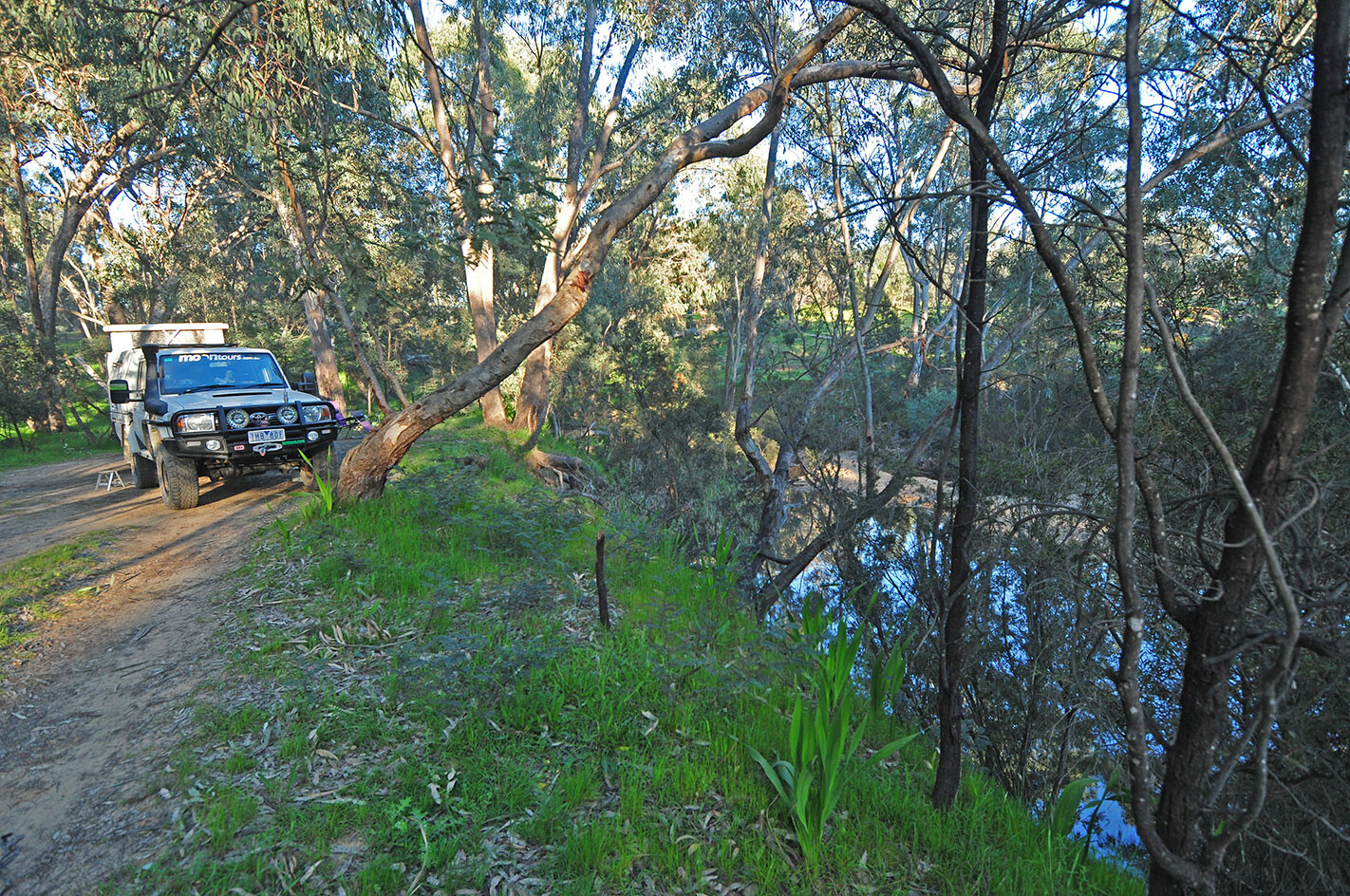
We’ve always found a pleasant camp along the creek when we have travelled through the area, and this time was no different as we propped on a high bank just west of the aforementioned Sebastopol. It’s hard to believe that there is nothing left of this once booming town that had a main street 2km long with more than 80 businesses plying their trade. For our visit, a couple of ’roos grazed on the green grass not far away from our camp and next morning the dawn chorus of birds was almost deafening.
Later that morning we headed into the small hamlet of Eldorado, which bears the partially healed scars of mining and dredging along nearby Reedy Creek. The town has a rich heritage displayed in the local museum, while a number of walking trails take you to points of interest. There’s also McEvoy Tavern, reputedly the smallest pub in Victoria; no other excuse is needed to enjoy a coldie here!
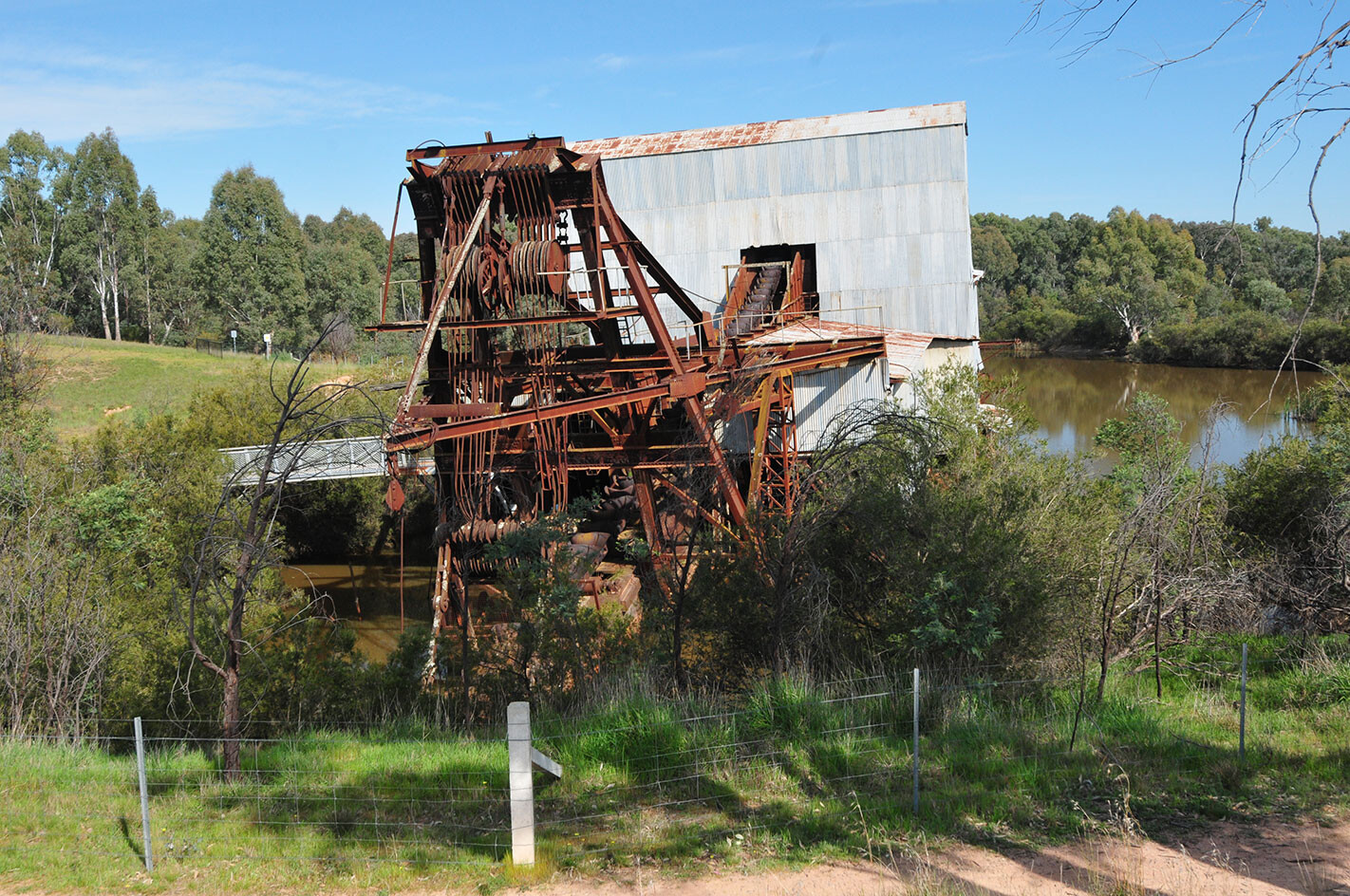
Just out of town you’ll find the Eldorado Dredge, once the biggest working gold dredge in the southern hemisphere and, during the 1930s, the third biggest drawer of electric power in the state after Melbourne and Geelong. It is a monster, with its bucket line capable of digging down 30m in front of the machine, while it spewed out the unwanted soil and rock behind it. In its 18 years of operation up to 1954, it produced more than 70,600oz of gold and nearly 1400t of tin concentrate. In the process it changed the river flats forever.
From the dredge we took the Old Coach Road through the varying scenery and habitats in the park to Mt Pilot, which at 545m is the dominant peak in the area. Its bare granite dome gives a great 360-degree view across the plains to the north and west, to the ridges and peaks of the Great Divide to the east, while to the south the flat-topped bulk of Mt Buffalo is easily seen.
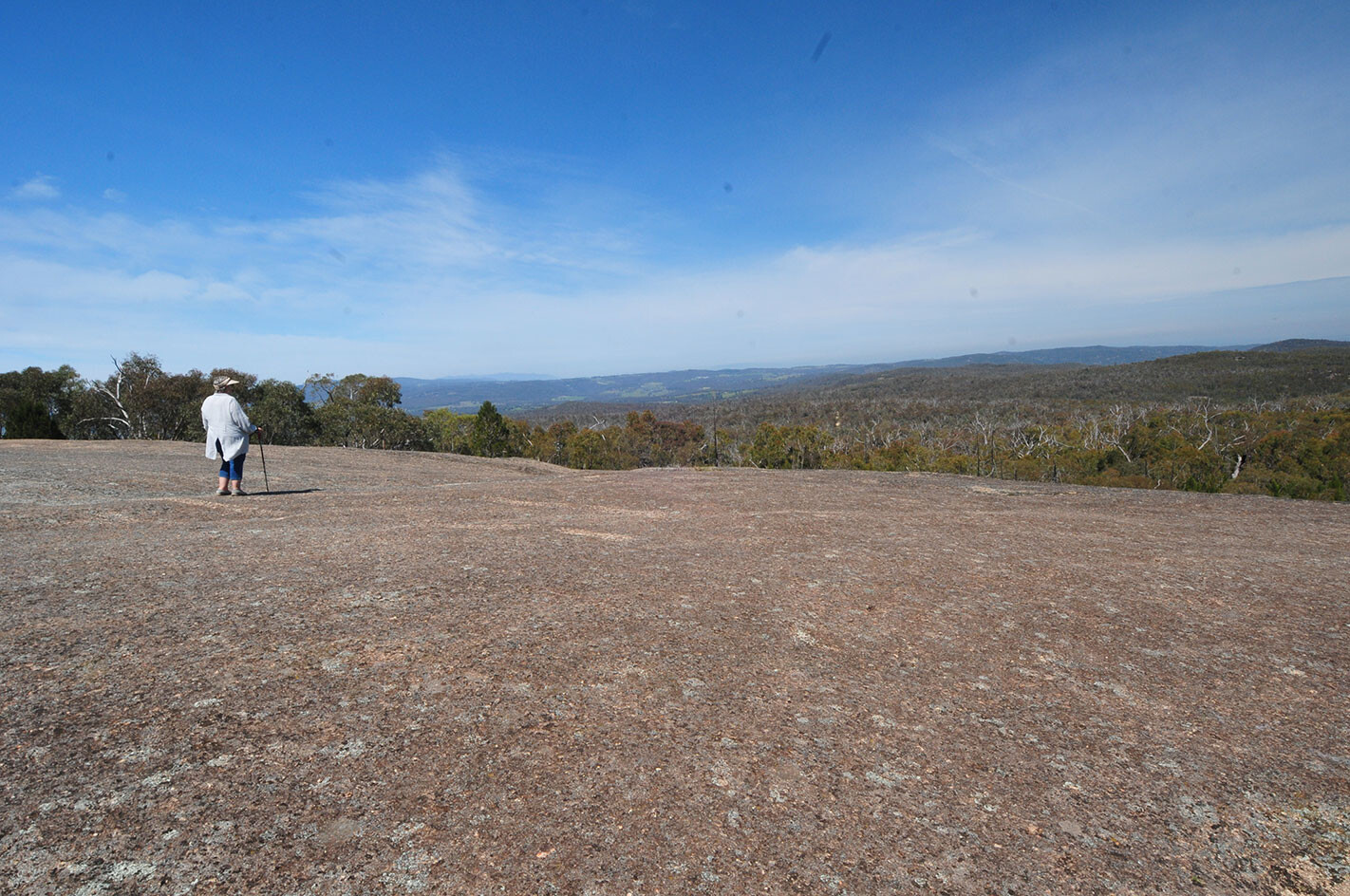
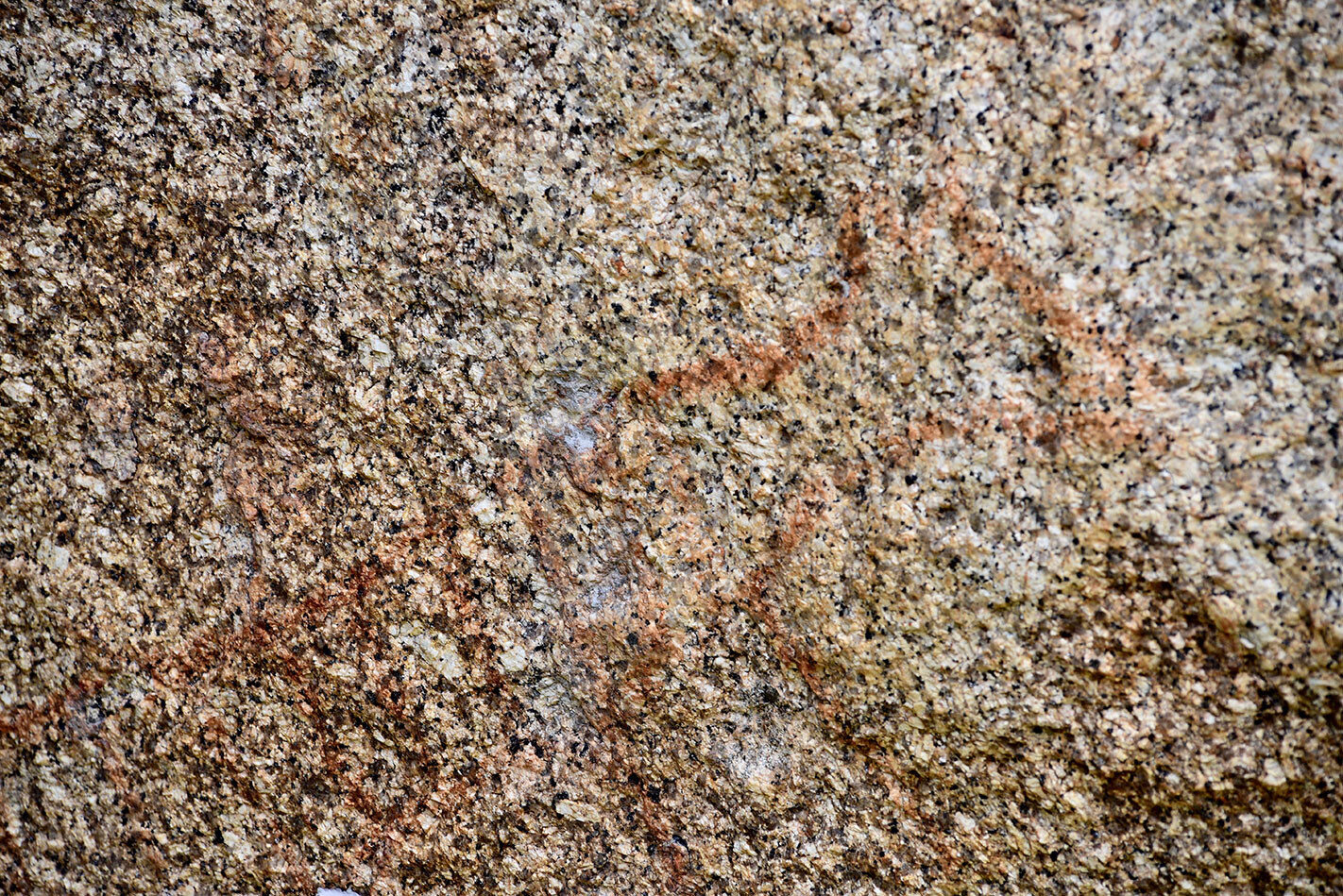
Nearby on the western side and at the foot of Mt Pilot is the Yeddonba Aboriginal Cultural Site, where a short walking track along the edge of some great granite tors takes you onto a boardwalk and to an Aboriginal shelter and art site. Here you’ll find some very faint painted art, the age of which is pretty hard to determine, but the faded outline of one drawing gives a clue.
The painting almost certainly depicts a Tasmanian Tiger, which became extinct on the mainland about 2000 years ago. So you’d have to think this art is at least that old. Nearby, and passed by on the walking track, are other rock overhangs and caves once used by the Aboriginal people as occupational shelters. It’s well worth a visit.
Taking Black Dog Creek Road we wound our way westward through the park and adjoining farmland, first to the Honeyeater Day Use Area, which is located beside what was known during the days of gold as the Golden Bar Dam. The mine nearby of the same name reached down 195m, but all you’ll see today is an empty silt-filled dam, some deep holes and mounds of tailings scattered through the bush.
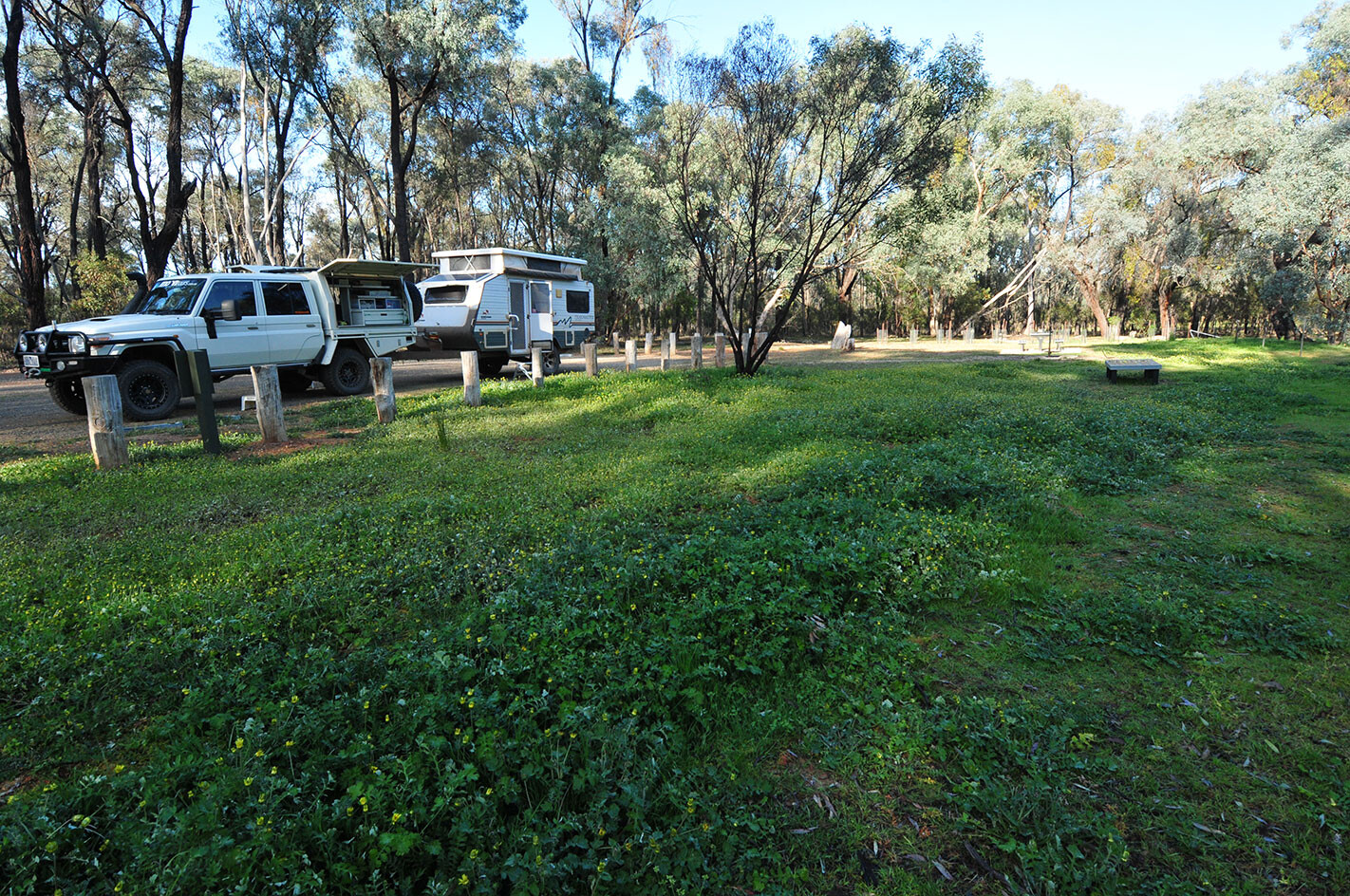
From here we headed to the previously mentioned Magenta Mine and the old cemetery before we pulled up for the night at the Tuan Campground, on the western edge of the park. It’s a spot I wouldn’t rave about, but it suited us for one night, being close to the historic town of Chiltern and to a couple of favoured bird-watching sites at Chiltern Valley Dam No. 1 and No. 2.
With our wanderings around Eldorado over for another year we headed south, but we’ll be going back, like we have been on and off for the last 40-odd years. Yep, we enjoy it that much!