STARTING your day with a lung-full of fresh mountain air scented with peppermint gum, while admiring a vista out over treetops and valleys to the rocky peak of Mt Buller, takes some topping. It’s the sort of view you could lose yourself in for hours, but my photographer mate Bill has other ideas and is already nudging me to get out of my swag and rattle some pots and pans.
We’d driven the two-and-a-half hours from Melbourne the afternoon before and spent the night yarning around a crackling log fire in his rustic bush cabin, set in a secluded location just a short hop from the village of Merrijig.
Best known as a jump-off point to the Mount Buller ski slopes, Merrijig hosts a popular annual rodeo each March and is home to the Hunt Club Hotel, a landmark watering hole renowned for its generous steaks, friendly atmosphere, and walls decorated with memorabilia from George Miller’s The Man from Snowy River, which was filmed on location nearby.
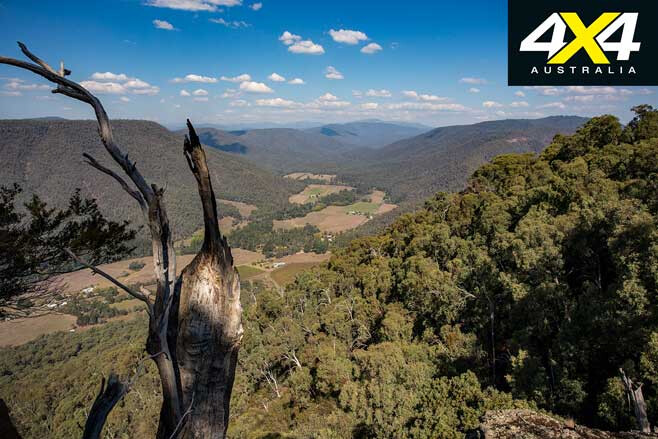
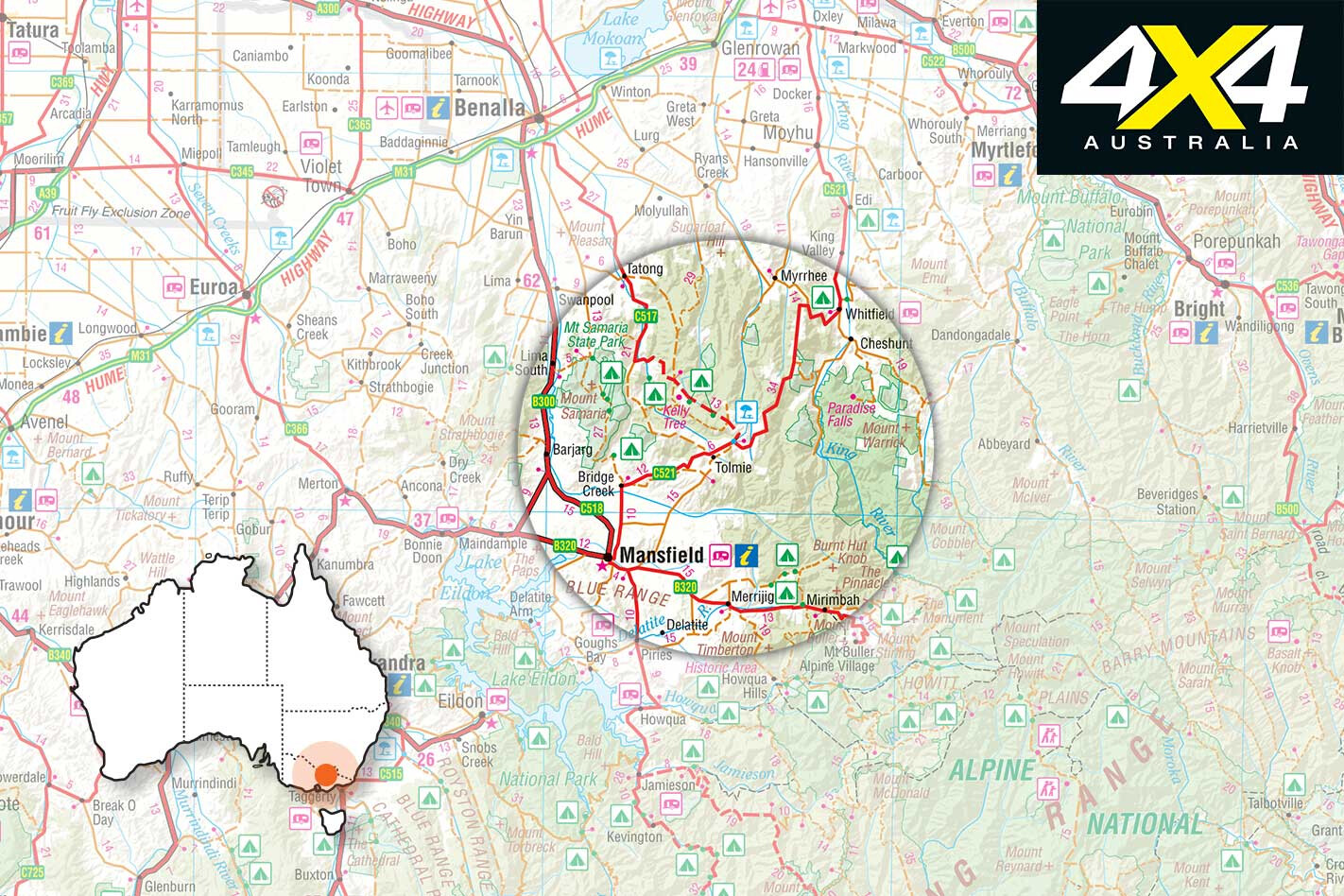
Some 23km west of this horsey hamlet is the thriving rural hub of Mansfield, well-known to many Victorians as the centre for all manner of outdoor adventure activities. The picturesque hills and valleys surrounding the township are crisscrossed with tracks and trails that draw hunters, trail bikers, trout fisherman, horse riders, mountain bikers and 4×4 enthusiasts like bush flies to a sweaty shirt-back. Rock up here on any given holiday weekend and you’ll find the streets abuzz with activity, as mud-splattered, swag-laden 4x4s restock fridges and fuel tanks before going bush.
It was a love of the bush and outdoor adventure that also led Bill and his wife Sally to build their bush cabin here, on a timbered ridge overlooking Buttercup Creek, some 30 years ago. Ready easy access to a vast sprawling wilderness was the bonus for Bill, a former Australian Geographic photographer of the year whose passion for trout fishing and outdoor photography has since led him and his trusty 60 Series LandCruiser (aka the Snow Leopard) to traverse many of the rugged tracks through the surrounding hills and valleys.
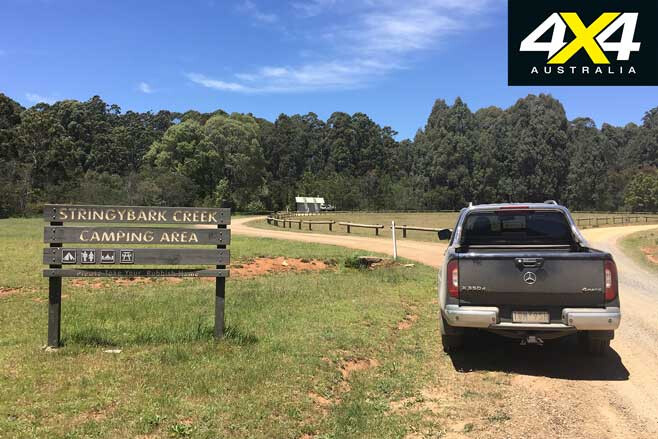
There’s no sign of the Snow Leopard today, however, as editor Raudonikis has asked us to put some miles on a schmick Mercedes-Benz X-Class, which we’re soon piling swags and kit into before heading to our appointment with one of this country’s most infamous bush locations.
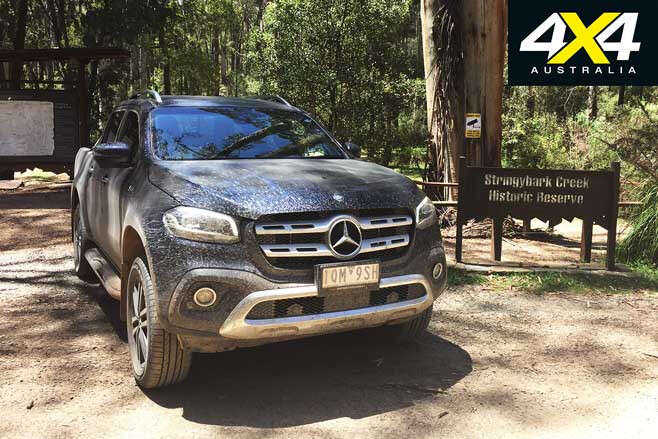
The name Stringybark Creek will resonate with even casual students of Australian history as the site where notorious bushranger Ned Kelly and his gang bailed up a party of mounted police, shooting and killing three of them in the ensuing melee.
These days, historians consider those events as the catalyst for the ramping up of police efforts to catch the Kelly Gang, leading to the final confrontation with police at Glenrowan on June 28, 1880. Ned was famously captured during the siege there and was later tried and hanged for the murder of Constable Lonigan, while his brother Dan and associates Joe Byrne and Steve Hart perished in the ensuing hotel fire.
Despite this, Stringybark Creek hasn’t always been afforded the prominence in our national folklore it deserves. In fact, a few years ago I took some visitors there and it was only after much thrashing about through waist-deep grass that we eventually located a tin marker riveted to the so-called Kelly Tree, marking the spot where the shootout was said to have occurred.
However, the site scored a major Heritage Victoria-approved overhaul in late 2018, following collaboration between Forest Fire Management Victoria, the Department of Environment, Water, Land and Planning, and Victoria Police. So, with a couple of days up our sleeve, and Bill’s ever-present trout rod stowed in the tray, we decided to go and see firsthand how our tax dollars had been spent.
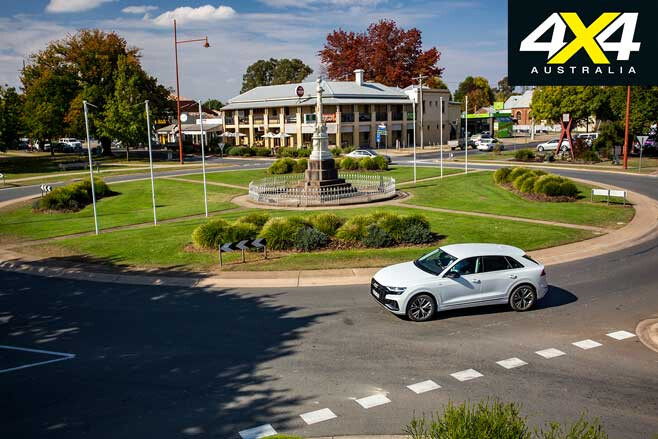
Heading back into Mansfield via dusty Buttercup Road, we pass a group of early morning horse riders, out for a canter in the bracing mountain air. Drizabones give way to Lycra out on the main road, as colourfully-attired cyclists pant their way to the start of the 17km climb up the flank of Mt Buller. The bitumen leads us back to Mansfield and we circle the main roundabout, where a handsome monument memorialises the fallen policemen – Constables Thomas Lonigan and Michael Scanlan, and Sergeant Michael Kennedy – killed at Stringybark Creek.
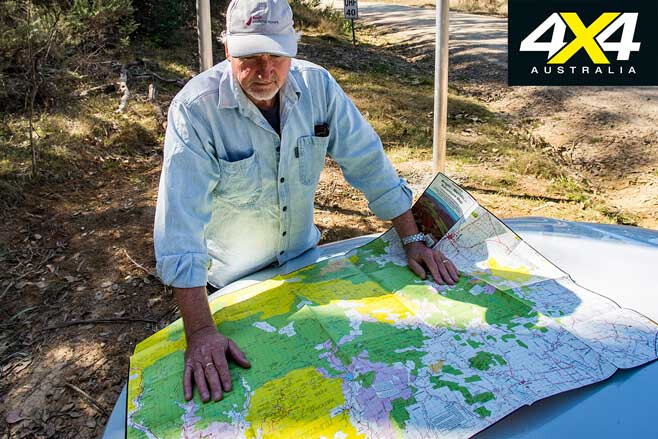
After grabbing a shot of locally roasted coffee at the Mansfield Coffee Merchant, we head out of town on the Mansfield-Whitfield Road (C521) destined for Stringybark Creek Historic Reserve. The reserve sits in the foothills of what was once known as the Wombat Ranges, near a crossroads of back country stock routes formerly used by horse and cattle thieves.
The isolated spot is these days part of the Toombullup State Forest and easily accessed by vehicle from either Benalla (50km) or Mansfield (40km). This is the epicentre of ‘Kelly Country’, described in the 1881 Royal Commission on the Police Force of Victoria as being that portion of north-east Victoria where, “… the peculiar characteristics of the country afforded special facilities for the operations of such lawless characters as the Quinns, the Lloyds and the Kellys, who, if pursued by the police, could seek refuge in the vastness of the mountains and defy all the attempts of the authorities to arrest them.”
It’s an apt description for Stringybark Creek, which wends through a forest of thick-trunked eucalypts, hemmed by dense bracken and wattle that forms an almost impenetrable screen. It’s overgrown and inhospitable, which is likely what drew the Kelly Gang here.
It’s also a strangely beautiful place and, as you wander about with birdsong ringing through the towering gums, you get a sense of the panic and terror that must have ensued when the bush quiet was interrupted on that fateful day by the shattering boom of Ned’s Snider-Enfield carbine.
In the space of a few hours on Saturday, October 26, 1878, the Kelly Gang went from being horse thieves and brigands to murderers and cop-killers, an event that sealed their fate and eventually led to the killing or capture of the entire gang. Constables Lonigan and Scanlan died where they were shot, near their tent, while Sergeant Kennedy was killed a quarter mile north-west while trying to flee. A fourth, Constable Thomas McIntyre, escaped and made it back to Mansfield, and it was his evidence that eventually saw Ned hanged at Melbourne Gaol in 1880.
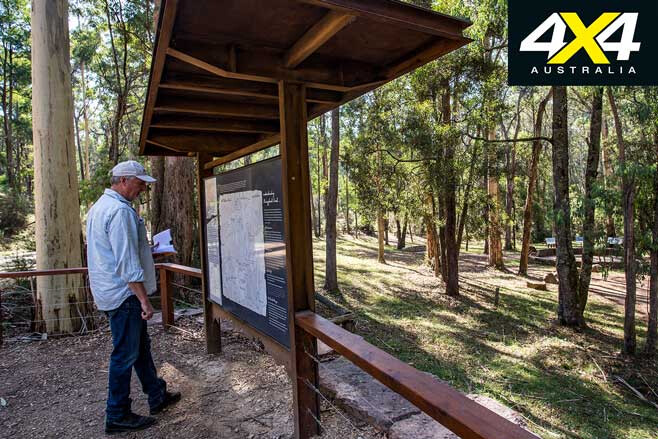
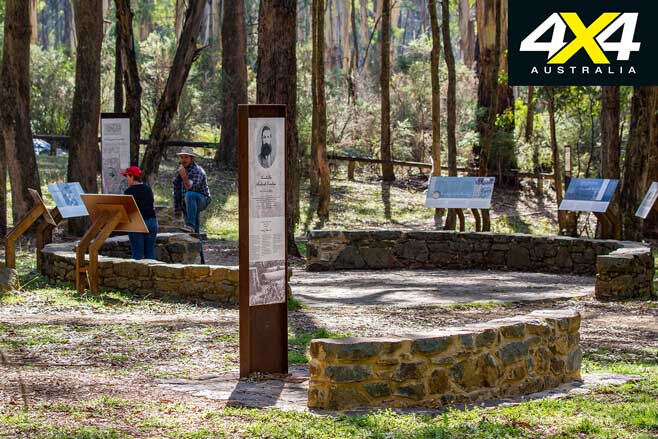
While there has been a marked tree of some sort – variously known as the Police Tree, the Brond Tree, the Lonigan Tree and more commonly the Kelly Tree – at Stringybark Creek since soon after the tragedy occurred, the story has never been told with the rich level of historical detail that’s now on display. The entire fascinating but tragic story, including events leading up to and following the attack, is told via a series of memorial plinths and detailed interpretive signage within the Historic Reserve.
It’s a trove of historical information that’s bound to satisfy even the most ardent of Kelly Gang aficionados, but for those still curious as to why and how Ned took the wayward path he did, some of the answers lie not far away at the former hideout of another notorious bushranger, Harry Power, whom Ned was a keen understudy of in his own early days.
Long before Ned and his gang had their encounter at Stringybark Creek, Harry Power, convict and career criminal, had identified these craggy, eroded hills, with their caves and commanding views over the King Valley, as the perfect place for an outlaw’s camp. From his bush eyrie the expert bushman could see everyone and everything that came and went in the valley below.
He reportedly relied on dogs and a noisy peacock at nearby Glenmore Station – home of Ned Kelly’s grandparents – as part of his early warning system. But the critters failed Harry one stormy morning in June 1870 when police raided his well-stocked camp, helping themselves to breakfast before hauling the notorious horse thief and cattle duffer away. Ironically, Harry believed his young student Ned had dobbed him in for the 500-pound reward on his head, when in fact the culprit was Ned’s uncle, Jack Lloyd.
While the legend of Harry’s erstwhile apprentice eventually far outshone that of the crafty old teacher, Ned failed to outlive his criminal mentor, swinging from a rope at Old Melbourne Gaol in 1880 for the murder of Constable Lonigan. Harry, for his part, was eventually released from gaol in 1885, but met his end by drowning while drunk in the Murray River in 1891.
Kelly Country is laced with the fascinating histories of bushrangers like Harry Power and the Kelly Gang, but of the many sites of significance throughout the region, perhaps none are more poignant than that main street memorial in Mansfield.
Erected in 1880 while the Gang was still at large, it symbolises the momentous impact the Stringybark Creek murders had on the broader Victorian community. It was a time of such fear and community outrage that the Kelly Gang became the first and only persons in the state’s history to ever be declared outlaws. As Ned himself said in his famous Jerilderie Letter, “I am a Widows Son, outlawed and my orders must be obeyed.”
While out on a drive of Land Rover’s new Defender in north-west Namibia, the crew came across this 20-tonne semi-truck bogged in a river bed. The gravel road heading north from the town of Opuwo had been washed away in a flash flood forcing a detour along the bank, in to the sandy river bed and back up to re-join the road.
MORE DEFENDER NEWS
The soft sand in the river bed was too much for the heavily loaded truck and when the Land Rover crew came across it, the driver had been stranded there for three days.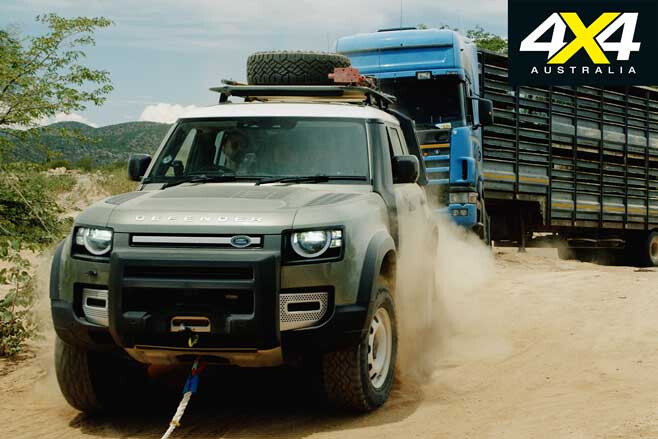
Not a problem for the team from Land Rover Experience which swung in to action hooking up two of the yet to be launched new Defender 110s -– a D240 diesel and a P400 petrol model. While the towing capacity of the new Defender is rated to 3500kg the duo punched well above their weight, using their combined 844Nm of torque, low range gearing and 4-wheel drive to pull the heavy rig out of the sand and back up on to the road.
The new Land Rover Defender goes on sale in Australia in August this year priced from $69,990 (plus on-road costs) for the D200 110 long wheel base. It will be joined by the short wheelbase, 3-door Defender 90 later in the year.
Stay tuned to Which Car next week as we bring you our first driving experience of the new vehicle from Namibia.
Bushranger 4×4 is giving you the opportunity to gear up for your next 4×4 adventure with its giveaway competition.
Head over to the competition website here, answer a question and be in the running to win an awesome prize pack for the 4WD Owner, Win a REVO 10S Winch, Night Hawk VLI Driving Lights & Light Bars, Recovery Gear, Compressor, Wheelie Bin, Diggar Shovel, Tyre Repair & Merchandise kit!
The competition is simple to enter, and grab an extra entry for any friends that you refer that enter. What are you waiting for?
With utes displacing passenger cars as the dominant choice of motor vehicle in the Australian market, Nissan has opted to update its Navara dual-cab with better refinement for occupants.
The headlining change in the Navara range is to be found in all MY2020 dual-cab variants, which will come fitted with a new acoustic windscreen, and new sound-absorbing material in the centre console, firewall, and transmission tunnel.
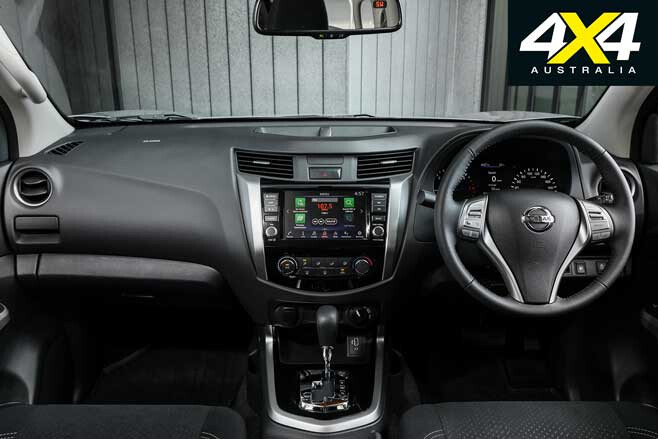
With the Navara’s 2.3-litre inline-4 turbodiesel being far from the most refined engine, Nissan has also fitted a new engine cover, which it claims will help minimise engine noise.
In addition to the NVH improvements, the mid-range dual-cab ST variant will come fitted with the “Black Styling Package” as standard.
The package introduces black versions of the Navara’s grille, front fog light surrounds, sport bar, and mirror caps.
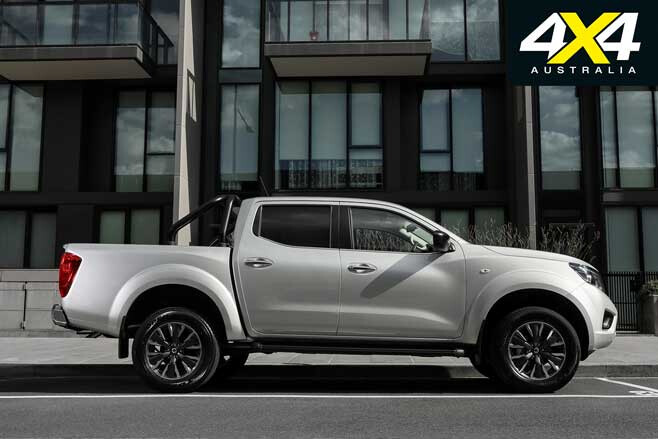
Besides adding some black exterior elements, the styling package also brings bigger 18-inch wheels to the dual-cab ST package, up from the standard 16-inch items, which is said to raise its ground clearance to 228mm as well as its approach, departure, and ramp-over angles.
“These changes deliver even more of what our customers want from their Navara,” said Nissan Australia managing director Stephen Lester. “Not only do they add more refinement right across the Dual Cab range, but they also unlock a new tough look for one of our most popular models, the Navara ST.”
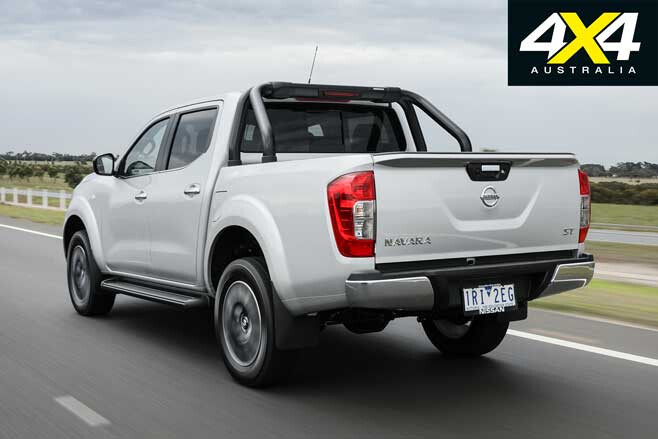
The new improvements have also brought a minor price hike across the dual-cab range, with the RX, SL, ST-X, and N-TREK variants copping a $350 increase, the range-topping N-TREK Warrior sees a $500 price hike, and the “Black Styling Package”-equipped ST bears an $850 rise.
The updated Navara models will go on sale this month with the following prices for the 4×4 models:
| Model | Transmission | Price | Price Change |
| Dual-Cab RX 4×4 | 7AT | $44,200 | +$350 |
| Dual-Cab SL 4×4 | 6MT | $45,400 | +$350 |
| Dual-Cab SL 4×4 | 7AT | $47,900 | +$350 |
| Dual-Cab ST 4×4 | 6MT | $48,750 | +$850 |
| Dual-Cab ST 4×4 | 7AT | $51,250 | +$850 |
| Dual-Cab ST-X 4×4 | 6MT | $53,600 | +$350 |
| Dual-Cab ST-X 4×4 | 7AT | $56,100 | +$350 |
| Dual-Cab N-TREK 4×4 | 6MT | $56,800 | +$350 |
| Dual-Cab N-TREK 4×4 | 7AT | $59,300 | +$350 |
| Dual-Cab N-TREK Warrior 4×4 | 6MT | $63,490 | +$500 |
| Dual-Cab N-TREK Warrior 4×4 | 7AT | $65,990 | +$500 |
News out of the USA overnight see two of the biggest names in the 4×4 recovery and off road industry join forces at Warn Industries has bought Factor 55. While Warn recently celebrated seven decades in business, Factor 55 has only been around for eight years but has fast become the leader in closed loop recovery hitches and other recovery equipment.
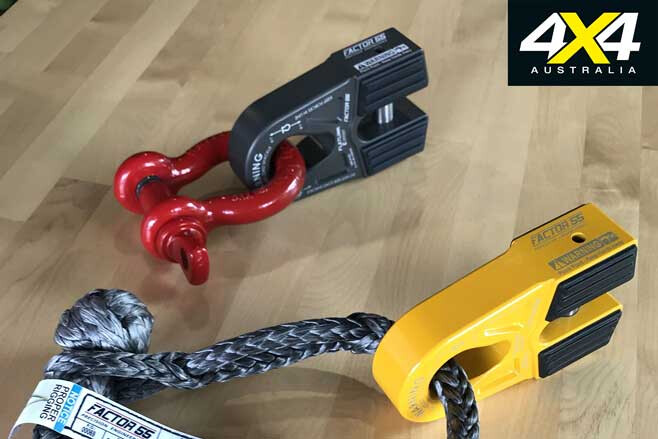
Boise, Idaho based Factor 55 reinvented the way people attach the winch lines to vehicles when it introduced and started mass producing its closed-loop hitches and systems. Products such as the Factor 55 Prolink and Flatlink replace the traditional hook that is used to attach the winch line to an anchor point or another vehicle to create a rig that is safer for all users. The Prolink and Flatlink products have expanded in to ranges of gear and can be seen on the front of recreational, professional and competition vehicles, 4x4s, and UTVs around the world.
Factor 55 has also branched out to producing a range of other recovery products including synthetic ropes, soft shackles, pullies and complete vehicle recovery systems.
Warn has long been the leader and the brand to follow in vehicle mounted winches and in recent times has responded to the popularity of closed loop hitches with its own Sidewinder and Epic Hyperlink hitches but they haven’t gained the global traction of the now renowned Factor 55 products.
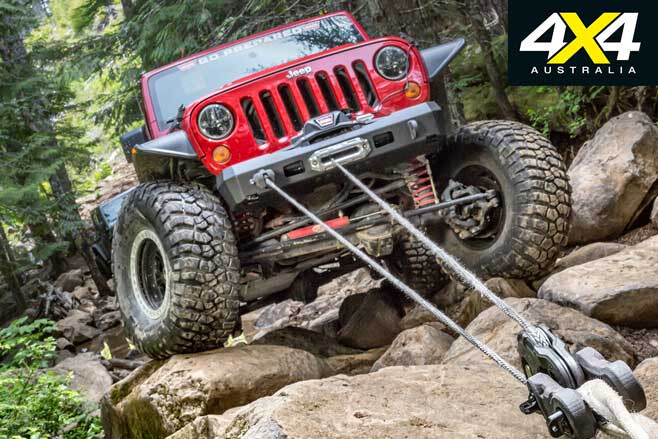
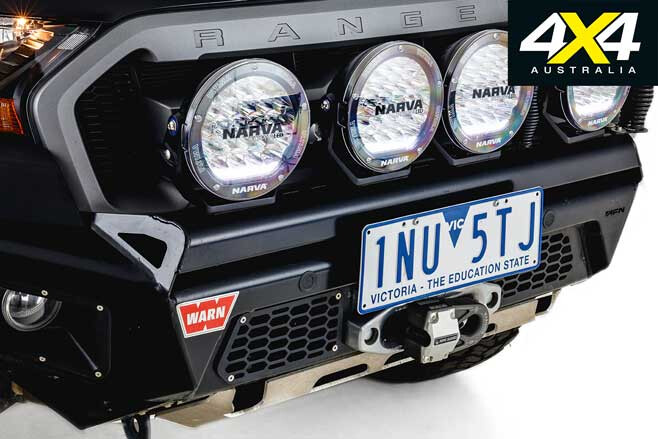
The joining of these two premium brands that operate in the same sector seems like a marriage made in heaven as they both have excellent products and Warn has a massive global business base. Our own Ford Ranger uses a Warn Zeon winch up front with a Factor 55 Flatlink fitted to its synthetic line.
“Given their premium brand, experienced engineering design capabilities, and specialization in closed system winching products, we feel strongly about the complementary nature of the Factor 55 product offering and realizing the benefits this partnership brings,“ said Kyle Shiminski, Vice President & General Manager of Warn Industries in an official statement announcing the purchase. “We look forward to working closely with Michael (Michael Costa, Factor 55’s President) and the entire Factor 55 team, and continuing their history of premium, innovative products for more secure winch and rigging operation.”
Michael Costa went on to say, “We are excited to be part of the Warn Industries family, joining forces with a company with a rich history of market leadership, innovation, and a highly-recognized, premium brand. We are very proud of what we have accomplished over these eight-plus years at Factor 55, and partnering with another premium brand where our products accompany one another so well is a great feeling. Our team will maintain their focus on designing and introducing the high-level of product ingenuity Factor 55 customers have grown accustomed to. We look forward to continuing that tradition in addition to drawing upon resources available as part of Warn Industries.”
Both Warn and Factor 55 are proud American brands that do their design and development, and much of their manufacturing in the USA. Factor 55 will continue to operate out of Boise, as a division of Warn Industries which is based in Oregon.
Warn winches and Factor 55 products are available in Australia through leading 4×4 accessories outlets.
Volkswagen has revealed a design sketch of what its next Amarok ute might look like. Shown at a recent in-house conference, the artwork provides a hyper-exaggerated, sneak peek of what we might expect the Ford-based 1-tonner to look like when it appears in showrooms next year.
It was already known that the next-generation Amarok will be built on a platform shared with the next-gen Ford Ranger although how much of the new vehicle will be VW and how much will remain Ford is yet to be seen.
The sketch does show that the Amarok’s boxy wheel arches remain as does the full-width grille that is a staple of current VW models. Vehicle designers have wild minds and these sketches usually tell us more of what they would like, not what the engineers and marketeers will ultimately give us.
Thus you can forget about the oversized aggressive off-road tyres, long-travel suspension and ungainly bonnet scoops as seen in the drawing, some of which we will be happy to go without.
We already have a pretty good idea of what the new Ranger will look like thanks to images of a prototype gained by Wheels Magazine last year. This was snapped in Melbourne and is said to be the real deal.
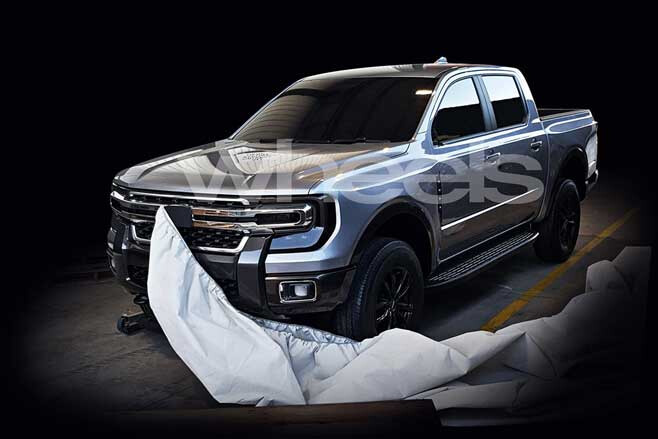
On paper, the product of a Ford and VW amalgamation should be a good thing. The current PX Ford Ranger is Australia’s best-selling 4×4 and is popular around the globe while the aging Amarok remains the best driving ute in its class.
With the demise of the Mercedes-Benz X350d it also remains the only V6 diesel-powered ute in the category and the most powerful. Let’s hope some of those VW power plants make their way in to the next Amarok and it isn’t just a rebadging exercise.
We expect the next-gen Amarok to be revealed sometime next year possibly as a 2022 model but not until the covers come off the new Ranger sometime before that.
*Article updated 3:10pm, March 18, 2020
A recall has been issued for 2323 Isuzu D-Max Crew Cab models by the Australian Competition & Consumer Commission (ACCC) over a fault in the ute’s rear suspension.
According to the ACCC, the recall pertains to “an insufficient diameter of the front eye” of the rear leaf spring found in D-Max Crew Cab models sold between January 2018 and February 2020, which may cause a fracture to the assembly.
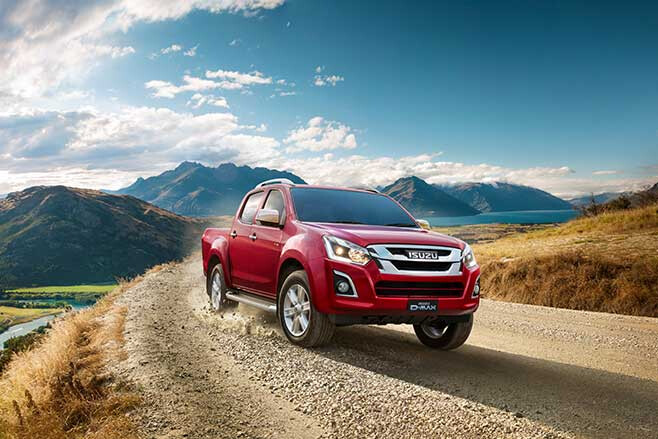
A fracture to the leaf spring can cause the parking brake cable to be unintentionally applied due to the rear axle being unsupported, severely compromising the safety and operability of the vehicle.
The full VIN list of D-Max utes affected by this recall are listed here.
This voluntary recall is an expansion of an earlier one issued in April last year for 4717 D-Max Crew Cabs sold between January 2018 and October 2018.
According to Mark Harman, manager of PR and sponsorship for Isuzu UTE Australia, around 12 per cent of D-Max utes involved in the last recall have yet to have the issue rectified.
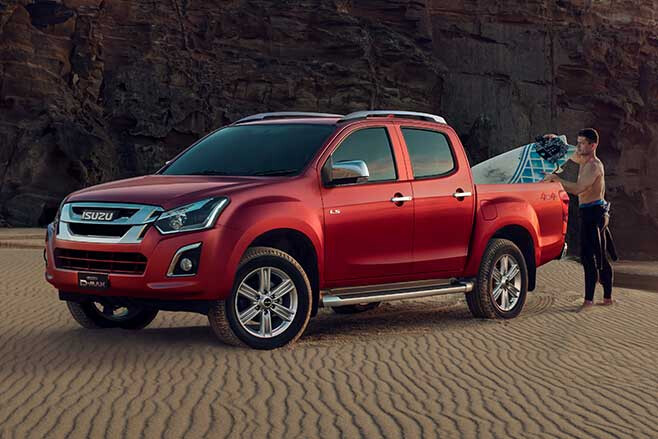
“So far there hasn’t been any case of suspension failures related to the D-Max’s rear suspension in Australia, despite that we are concerned that the issue exist and it doesn’t meet our standards. As such we would like owners to bring their D-Max ute in to have the issue rectified,” said Harman.
Isuzu UTE Australia will contact all known owners of affected vehicles, and owners should get in touch with their nearest Isuzu UTE dealer to arrange an inspection and replacement of both the rear leaf spring assembly and parking brake cable.
Because we live in a world that has more money than sense, Dutch car designer Niels van Roij has taken a swing at creating the two-door Range Rover that Land Rover canned shortly after its debut.
Called the Adventum Coupe, the coach-built two-door Range Rover is based on the standard Range Rover, of which only the bonnet, fenders, boot lid and 5.0-litre supercharged petrol V8 engine remain.
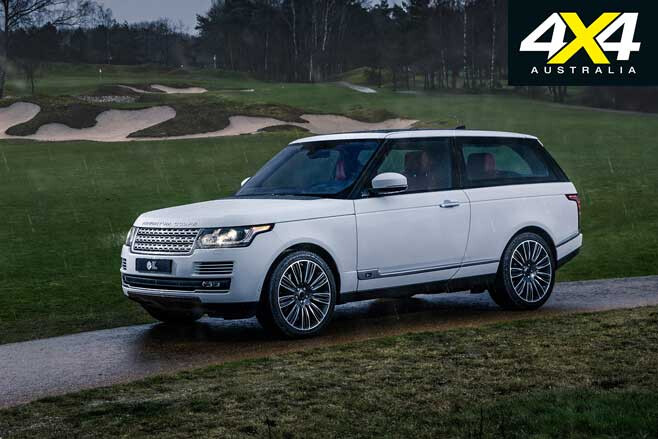
According to Niels van Roij Design, the Coupe’s front doors are completely new, the original Range Rover’s B-pillar climate control vents have been discarded, and the rest of the body is fitted with hand-beaten aluminium panels.
Like the cancelled Range Rover SV Coupe, the Adventum Coupe also features a twin captain-chair arrangement in the back and a list of customisable options from the upholstery to the teak flooring.
Strangely, despite being created by an independent coachbuilder, the Adventum Coupe has a starting price of just €270,000, which is nearly €30,000 cheaper than the original Range Rover SV Coupe’s reported asking price.
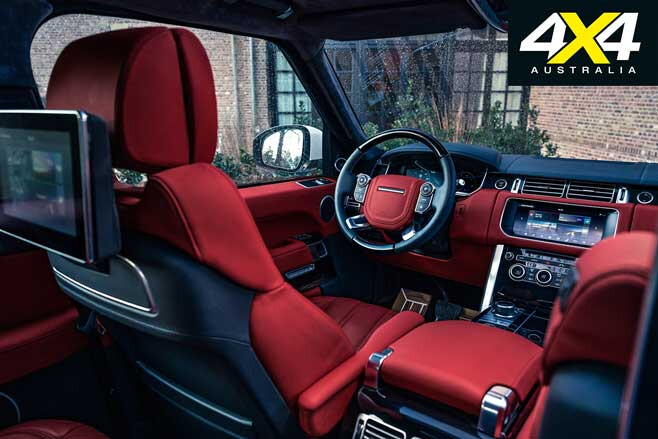
That being said, the Range Rover SV Coupe would have been equipped with a more powerful variant of the Range Rover’s standard supercharged V8… and would have come with factory aftersales coverage.
Land Rover had originally planned to produce 999 examples of the SV Coupe, 20 of which were originally earmarked for Australia, each sporting a price tag “in the vicinity of AUD$500,000”.
The SV Coupe was cancelled a year after its unveiling following declining sales and Brexit concerns, with the resources ploughed into its development being instead diverted into new product development.
Despite yesterday marking the official reopening of the Simpson Desert after the summer closure, significant flooding on the eastern side of the desert and around Birdsville has resulted in several road closures restricting access to Birdsville and the desert.
Parks Queensland has closed the desert from Birdsville to Poeppel Corner due to flooding with conditions to be reassessed on April 3. In addition to that, Queensland road closures around Birdsville include the Birdsville Track (Eyre Developmental Road) from Birdsville to the South Australian border, the Birdsville Developmental Road from Birdsville to Windorah, and the Diamantina Developmental Road from Bedourie to the Barcoo Council Boundary.
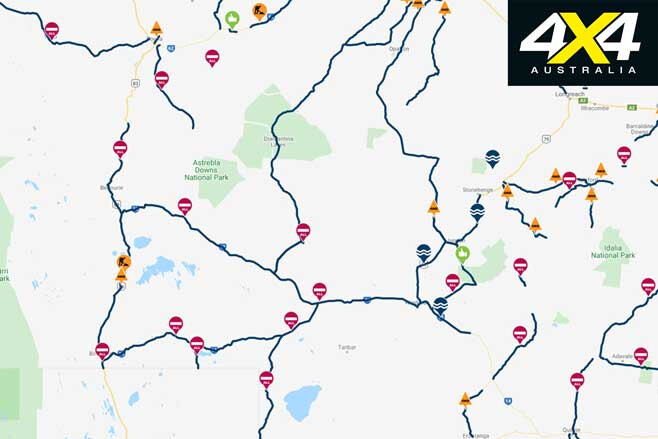
In other words, if you’re already in Birdsville you might find it difficult to leave until roads reopen.
The story is different on the western side of the Simpson Desert with the Mt Dare Hotel reporting that it’s still possible to enter the Simpson Desert from the Mt Dare side for those keen to do some exploring and willing to exit on the same side.
For the latest up to date reports on prevailing conditions and road-closure information, see the following sites:
Also check out the Mt Dare Hotel and Birdsville Hotel Facebook pages for more local information.The Australian Competition & Consumer Commission (ACCC) has announced a recall for 102,616 Mitsubishi MQ and MR Tritons sold around Australia over a fire risk.
The fire risk outlined by the ACCC is related to the incorrect installation of Mitsubishi’s genuine accessory towbar’s wiring harness on Tritons that were sold between February 2015 and December 2019.
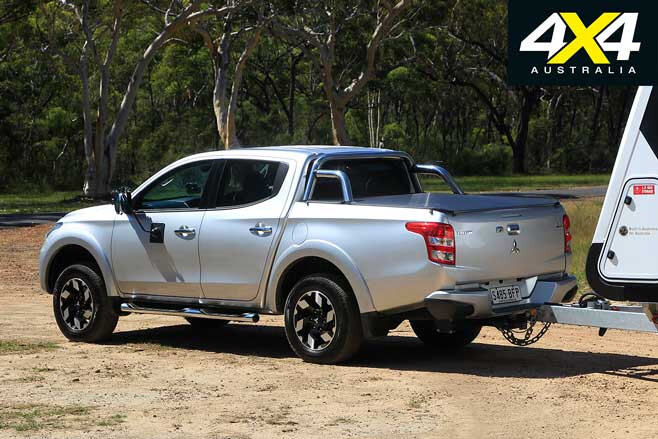
An incorrect installation of the towbar may allow liquids to leak in and come into contact with the towbar’s electrical circuits, which may cause “the harness and its surrounds to overheat, burn, or catch fire”.
Mitsubishi Motors Australia will be writing to affected owners and advise them to bring their Tritons into their preferred dealer to have the towbar issue rectified free of charge.
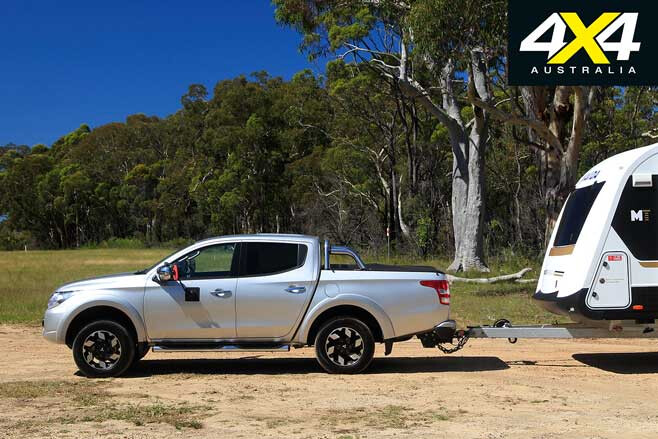
For more information, owners can contact Mitsubishi Motors Australia on 1800 931 811, or see the full VIN list of affected Tritons here.