
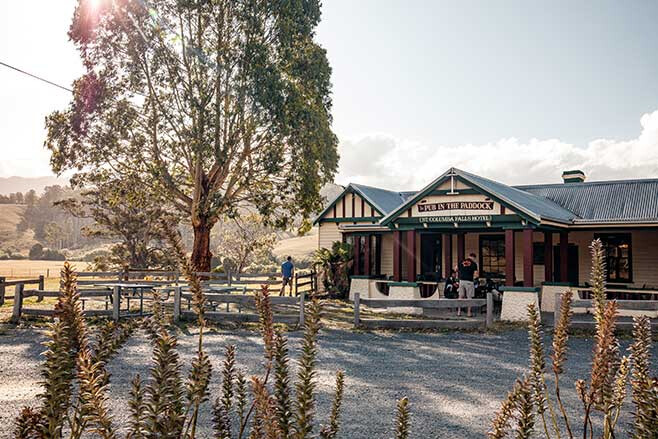
NESTLED in the quiet rural village of Pyengana, around two hours’ drive from Launceston or just one hour from St Helens, the Pub in the Paddock is a great place to wash away the dust (or mud) after a day’s four-wheel driving in some of Tassie’s most spectacular country.
The Pub in the Paddock has been licenced since 1880, and today it’s managed by the friendly and entertaining Rowena and Scott Codyre. On the day we showed up at the front door the pub was locked, as Rowena and Scott were attending a special function, but they showed up some 10 minutes after us, opened the doors and welcomed us in.
ISUZU I-VENTURE: Takes on Climies Track
The walls of the pub are adorned with memorabilia that tells some of the stories of the area’s rich local history, while the friendly locals love nothing more than to have a chat with visitors. And then there’s Priscilla…
Priscilla resides in a paddock out the front of the pub and is famous for her drinking habits. Yep, Priscilla is the pub’s beer-drinking pig, and she has become quite the celebrity over the years. These days Priscilla sticks strictly to the light stuff – her preference is to guzzle only specially watered-down beer, but she does so with enthusiasm!
As well as tap beers (James Boag’s Draught and Iron Jack), the Pub in the Paddock has a restaurant that offers a classic menu of home-cooked pub food including chips, wedges and pies, ranging through to fish and chips, chicken Parmigiana, pork sausages, Scotch fillets and more. And much of the menu relies on local produce.
For those who want to stay the night, the pub has six rooms with shared facilities. Alternatively, there’s plenty of camping space over the road in the Pyengana Recreation Area, which has toilets and hot showers.
Pyengana is the ideal base to set out and explore the surrounding area and is not far from the coastal town of St Helens, which boasts some of Tasmania’s best beaches, as well as Binalong Bay and The Bay of Fires.
The Pub in the Paddock is a top country pub.
PUB ESSENTIALS
HOURS: 10.30am until late (Tue to Thu); 10.30am to 4pm (Sun to Mon) BEERS: Iron Jack $6.30 a schooner; Boags Draught : $6.30 a schooner MEALS: Light $9 to $16; Mains $20.50 to $33; Desserts $7 to $9.50
ACCOMMODATION
ROOMS/PRICES:Single $65; Double $95; Twin $95; Family $125
CONTACT INFO
- MANAGERS/OWNERS: Scott and Rowena Codyre
- ADDRESS: 250 St Columbafalls Road, Pyengana, Tasmania
- PHONE: (03) 6373 6121
- WEBSITE: pubinthepaddocktas.com.au
The yearning for freedom isn’t something you can buy. It doesn’t come free with a Chinese swag, you won’t find a subscription for it online, and you certainly can’t download it on the app store.
2020 CUSTOM 4X4OTY: Vote now for a chance to win
It’s engrained in us, an all-consuming hunger deep within. Those endless outback plains, the morning mist rolling in through the high-country valleys, the setting sun bathing the inland lakes of Fraser Island in pinks and oranges while the campfire cackles behind us.
That call of the wild was something Jamie couldn’t pass up. The idea of loading his family into their very own adventure machine, setting off for the horizon and never looking back held more appeal than a thick wallet.
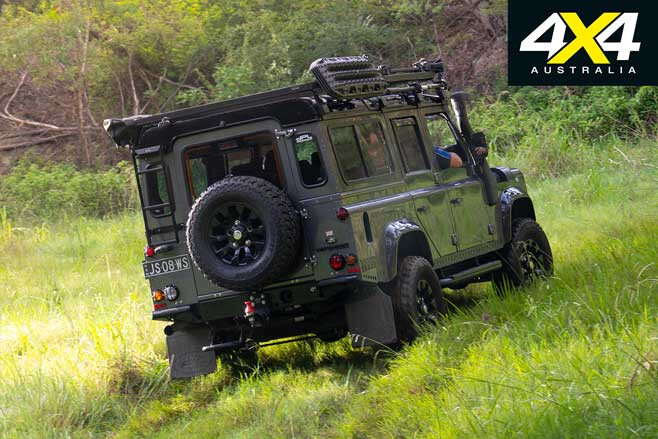
The build was meticulously planned. The starting platform, one of the most iconic 4x4s ever built and the very embodiment of continent conquering adventure, the Land Rover Defender. Starting with one of the last models rolling off the production line came with a bunch of positives. It’s one of the most customisable vehicles on the planet, with a huge aftermarket helping you produce the Defender of your dreams. It’s also one of the newest vehicles you can buy with live axles at each end, and coil springs holding them in. Of course, it also came with a few negatives.
The utilitarian nature of the green oval meant the only transmission option available is a manual cog-swapper. With poor health seeing Jamie unable to dance three pedals at once, the call was made to Sydney outfit Davis Performance Landys (DPL) to not only get the Land Rover ready to take on the ends of the earth, but remove the clutch pedal in the process.
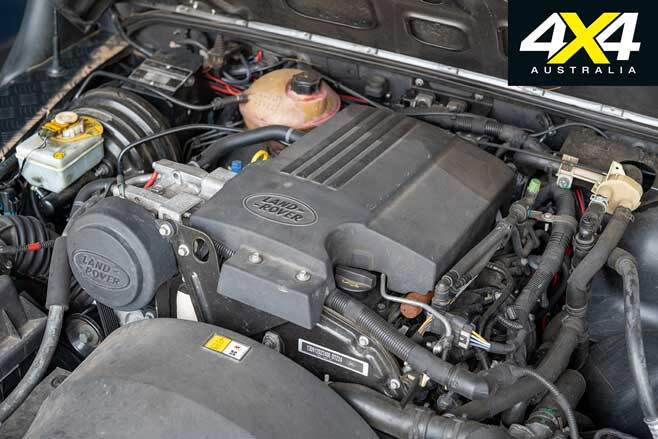
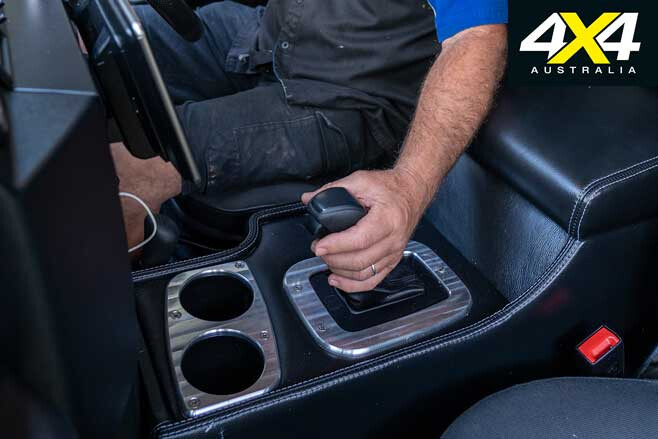
With the Defender on the hoist, the first task was to yank the old manual cog-swapper and replace it with an automatic trans. The factory 2.2L turbo-diesel engine rattling away under the bonnet is the same unit found in Ford’s PX line of Rangers, making an auto conversion a reasonably straightforward affair. DPL lined up a Ford 6R80 transmission (the same unit found in Rangers, Mustangs and F150s), and with a host of custom parts slotted it in between the 2.2L motor and the factory transfer case.
Custom front and rear driveshafts were required to connect the heavy parts together, and a stand-alone ECU controls the trans through a Ranger shifter on the inside. The new auto trans-friendly centre console also did away with the old cable handbrake, with a new electronic unit replacing it.
The new auto not only has a lower first gear, it has a taller final gear, making it better in stop-start traffic as well as highway cruising. That constant power delivery makes it smooth as butter in technical terrain as well.
While the spanners were out under the bonnet, the team got to work getting more power to the ground out of the Duratorq motor with an ECU remap to suit the new exhaust system. An upgraded intercooler and set of Samco intercooler pipes allowed them to wind the wick up even further. While the auto trans was getting its own oil-cooling system fitted, an engine oil cooler and fan was also installed, further lowering temps.
With drivetrain sorted it was time to turn their attention to the suspension. Those coil springs mentioned before? They’re sitting in the skip bin next to the manual shifter. In their place, DPL has fitted a full air-ride suspension.
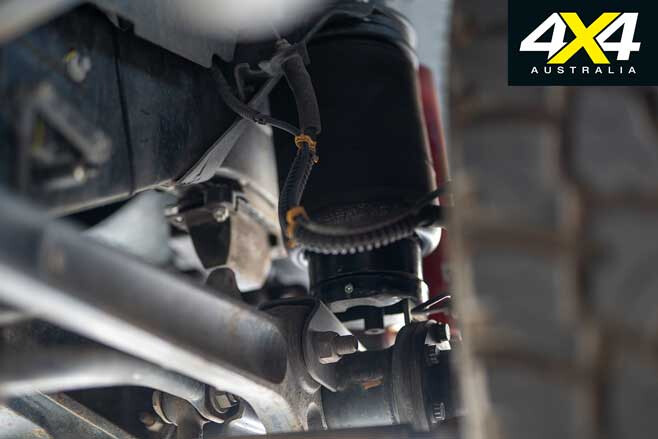
The onboard air system allows the Defender to be dropped lower than stock for ease of access, then lifted sky high to clear challenging terrain all at the press of a button. A full suite of KONI Raid shocks have been paired to match, with the front shock mounts requiring a little custom work to suit the huge range of suspension travel now available. A set of heavy-duty steering arms have also been installed.
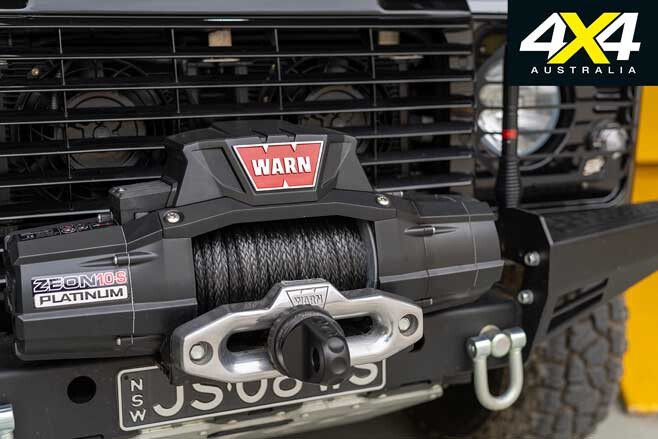
Moving outside and the front of the Defender has had a serious attitude adjustment. Leading the way is a stout bullbar sourced from the UK and customised within an inch of its life by DPL; it not only helps improve approach angles, it also serves as a permanent home to Jamie’s get-out-of-gaol free card, the Warn Zeon 10-S Platinum 12V winch.
Mounted underneath is a 6mm-thick alloy sump guard from Front Runner, ensuring the oil stays in the engine no matter how rocky the terrain. A pair of headlight guards have also been fitted, allowing the Defender to push through dense scrub knowing it’ll come out the other side in one piece.
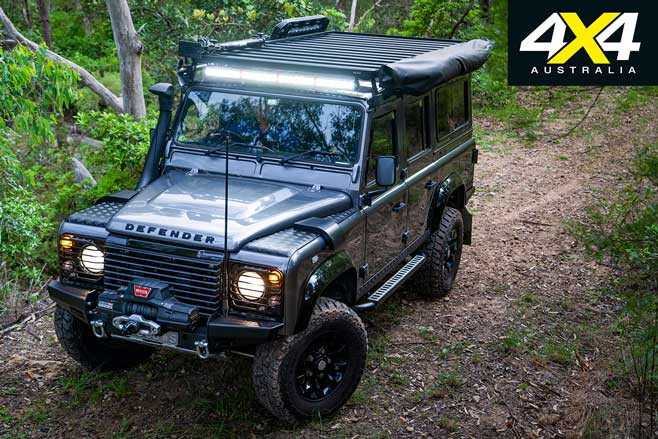
Moving back, the flanks of the Defender have been up-armoured from front to rear. Starting at the front, Front Runner fender guards give the signature checkerplate look on either side of the bonnet, with matching pieces along both sills and rear quarters.
The rear tail-light lenses also have sturdy shielding, with the rear bumper high and tight thanks to Terrafirma bumperettes attached to the rear crossmember. Above that, a lightweight alloy ladder gives easy access up onto the full platform roof rack for ease of storage. It also houses a set of black MaxTrax, as well as huge wrap-around awning, shovel and high-lift jack.
On the inside, the adventure-in-comfort theme has been continued. Taking pride of place on the dash is a monster Alpine Halo 9 floating touchscreen unit, giving Jamie access to everything from mapping software to digital radio and Apple CarPlay. It’s parked next to the similarly tech-spec’d GME XRS Connect unit, fitting out the old-school styled Defender with cutting-edge technology. Finally, moving all the way to the rear and the cargo space has been decked out with a full drawer storage setup, giving convenient access to everything required for the long haul.
While the team at Davis Performance Landys has unarguably built one of the most capable and comfortable tourers in the country, sadly Jamie’s health declined before he’d had a chance to truly head off into the great unknown with it. Time waits for no man, if you’re dreaming of adventure big or small, lay out a plan, build the vehicle, and live one hell of a life.
They drive like a tractor
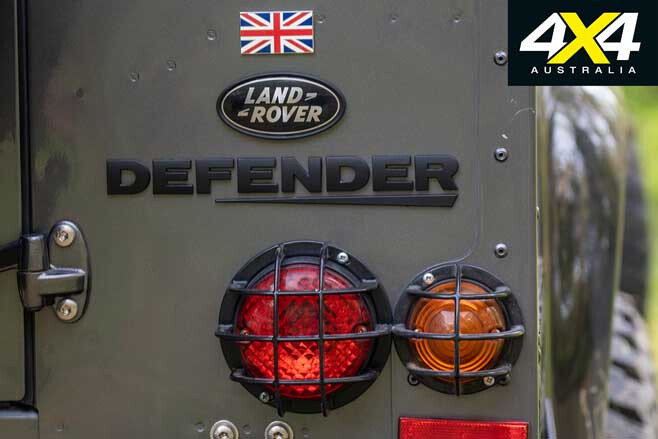
While the Land Rover Defender is unarguably the symbol for serious overland travel, they’re often bad-mouthed for their odd ergonomics.
There’s a pretty good reason why they feel like a tractor … they kind of are tractors. You see, post WWII England was a bit of a bleak place, and there was no financially viable way for the Rover company to continue producing luxury cars. Instead, it raided the parts bin looking for something that’d help the largely agricultural island rebuild, and give people much needed affordable transport.
The original prototype Land Rover was based on a Jeep frame, with a Rover drivetrain, and handmade aluminium body (as steel was heavily rationed at the time). Complete with a centre-steer configuration and power take-offs to run farming equipment it was intended to plough the fields through the week and drive into town on the weekend.
FOLLOWING in the footsteps of the recently revealed bi-turbo diesel-powered D90, LDV has launched the next-generation T60 Trailrider 2.
The T60 Trailrider 2 is the second vehicle in the Chinese brand’s shed to utilise SAIC’s in-house-designed 2.0-litre D20 diesel engine; however, this variant features a single-scroll turbocharger rather than the D90’s bi-turbo arrangement.
This means the Trailrider 2 puts 120kW and 375Nm through either a six-speed manual or six-speed automatic transmission – up from the first-gen 2.8-litre’s 110kW and 360Nm. For comparison’s sake, the all-new bi-turbo engine in the D90 generates 160kW and 480Nm.
“We continue to develop our product offering throughout our fast-growing range, so we’re delighted to announce the arrival of the next-gen Trailrider,” said Dinesh Chinnappa, General Manager, LDV Automotive.
“With the addition of the lighter and more efficient 120kW diesel engine, Trailrider 2 is a formidable ute, as comfortable on the worksite during the week as it is towing jet skis at the weekend.”
Off-road specs for the Trailrider 2 include a 27-degree approach angle, 24.2-degree departure angle, 215mm of ground clearance, 21.3-degree rampover angle, a wading depth of 550mm, payloads of 895kg (manual) and 865kg (auto), and a towing capacity of 3000kg.
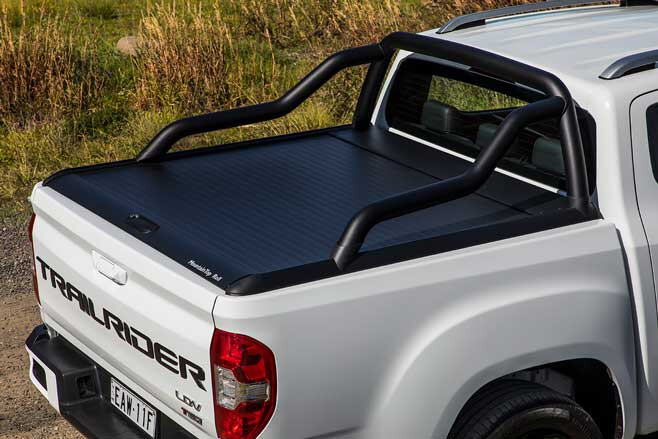
Despite its sub-$40K price tag, the Trailrider is equipped with a bunch of advanced safety tech, sans AEB – including a 360-degree rear view camera, lane departure warning and tyre pressure monitoring – to give the budget-friendly offering a five-star ANCAP safety rating.
LDV T60 Trailrider 2 pricing (ABN holders)
– LDV T60 TRAILRIDER 2 (manual): $37,990 – LDV T60 TRAILRIDER 2 (auto): $39,990
If you were to go to the Means dry lakebed east of Los Angeles, California, at Christmas time you would find a desolate, cold and lonely desert. It’s either complete silence or a howling windstorm around the rocky outcrops. You may spot a couple of four-wheel drivers picking their way across the remains of the WWII bombing range still faintly etched into the lakebed, a reminder of the intensity of the bombs exploding as men prepared for war.
In contrast, if you went in early February you would have found ‘Hammer Town’ had risen from the desert floor, with its population peaking at more than 50,000 people from across the world in preparation for a modern form of war. A town has risen but its life will be fleeting, as it will be returned to the desert within a few short days.
Those eight days will be epic, as the faithful prepare to destroy the desert trails in the main event with extravagantly expensive Ultra4 race cars. Welcome to the King Of The Hammers … the world’s toughest one-day off-road race held each year in the Johnson Valley.
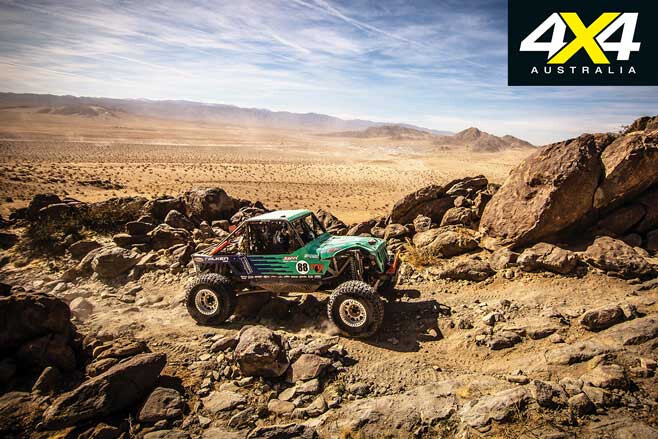
The line-up consists of multiple forms of racing vehicles, including motorbikes, ATVs, trophy trucks, tuff trucks, and Ultra4 race cars that are custom-built with no rules around their specifications other than a few safety details.
If you want 1100hp, do it and show us on race day how that works, while most will run from 600 to 900hp on 40- to 42-inch tyres. The vehicles can traverse rock trails that you’re hard-pressed to walk and then hit the open desert and do nearly 200km/h. The main race held on the Friday of Hammers week is 340km and takes the winners more than seven hours to complete.
The Aussies
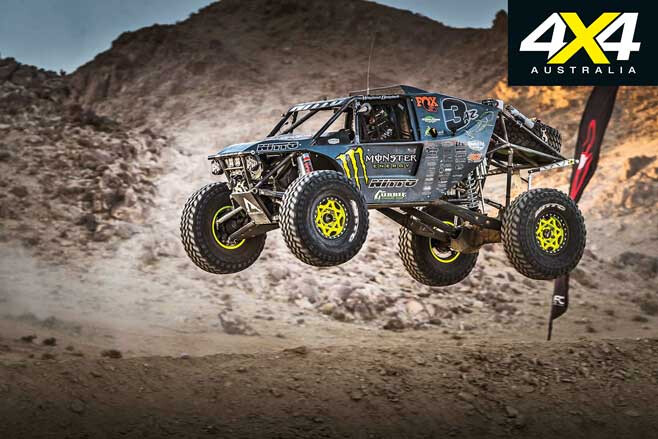
Hammers has run for 14 years now and many Australian teams have competed with varying degrees of success. In 2020, there were two Australian teams in Hammertown and this is their story.
Pip Justice and Tim Nolan are seasoned competitors having won Australia’s premier competitive four-wheel driving event the Tuff Truck Challenge four times, and they were looking for what’s next. To compete in the world’s hardest one-day off-road race seemed like a logical next step and, over a period of two months, the Texas-based crew at Rufus Racing helped secure an Ultra4 buggy with race pedigree, including a win in the 2014 King of The Hammers at the hands of Loren Healey.
The car was prepared by Rufus Racing and was ready on the lakebed when Pip and Tim arrived at Hammer Town in late January. A few days were spent putting the final touches on the car, and this is when they found that the power steering system needed a new pump. After that and during one of the test runs, the left front stub axle broke.
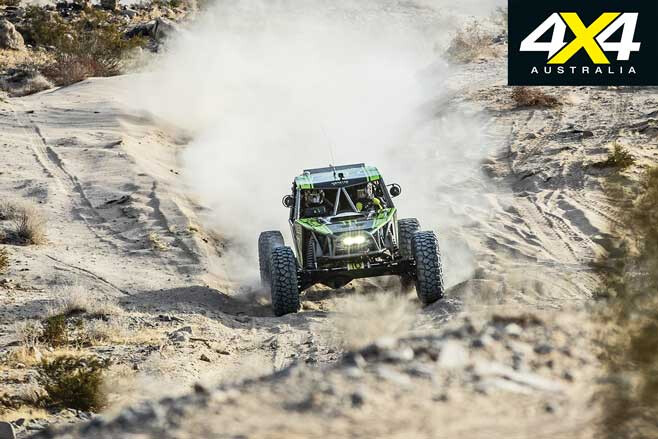
Made of 300M steel it broke in a way that had the team baffled as to how it failed. Fortunately, a new part was available in Hammer Town. The winch too was certainly not the latest piece of recovery equipment fitted, so Warn Industries donated its latest winch offering to the cause and on race day it proved invaluable according to Tim, the team string-puller (aka co-driver).
On race day the boys started 38th off the line and within the first 80km had been overtaken by at least 10 other cars, but their plan was to run their own race.
Love Tap
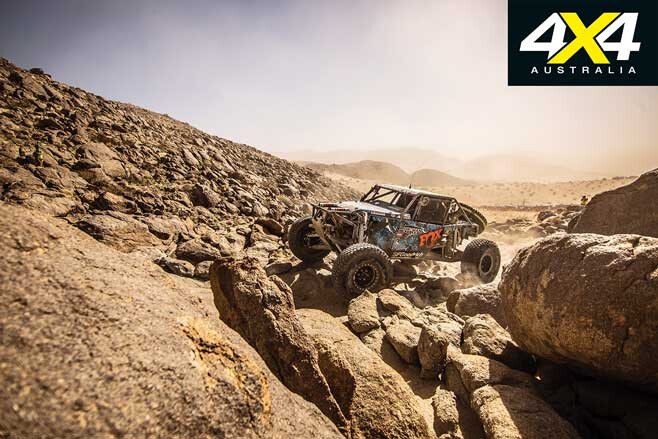
Hammers is a race of attrition, where finishing beats most competitors. At the 100km mark, doing 140km/h, the boys got a love tap in the rear from the car’s previous owner to tell them to get out of his way. A couple of times they bicycled up on to two wheels, so-much-so that gravel was flying in through the front window. Completing the race in 14th place, with a time of 9:35:48, without any mechanical dramas or punctures, is a testament to the vehicle prep from the team at Rufus Racing, and Pip and Tim’s skills.
Barry Smethurst and Cam Stewart from Victoria’s Road Runner Offroad attended Hammers for the second time, having received a real hiding in their 2019 campaign. Barry is well-known in the Aussie competition scene having competed in many premier events over the years, and he had taken the big step of purchasing an Ultra4 to keep based in Texas at Twisted Fabrications Inc.
The new car was only secured two months prior to the race and required an extensive amount of race prep involving a full strip-down and rebuild. The car arrived on the lakebed requiring the Road Runner vehicle wrap to give it the Aussie flavour and turn it into Barry’s pride and joy.
No Hands
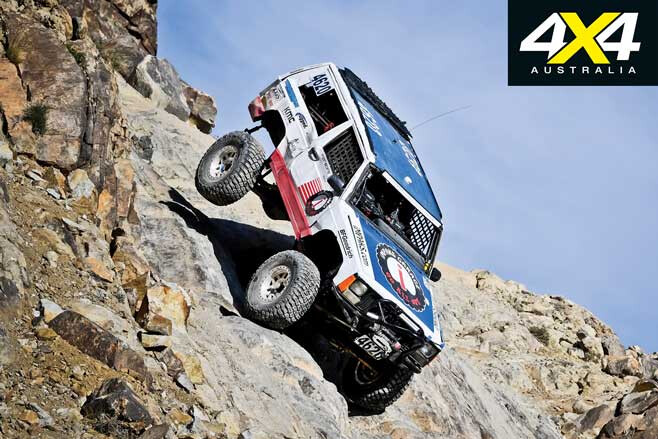
Barry’s race plan was to compete in two classes, the first being the Every Man Challenge (EMC) 4800 class and the Main Ultra4 race 4400 class. The EMC qualifying race was the first time they got to really give the car the berries, but not far into the lap the steering wheel came off in Barry’s hands because he hadn’t clipped the quick-connect properly. This led to a hectic few moments as they avoided a cameraman while Barry steered by holding the steering shaft until he brought the car to a stop. After correctly refitting the steering wheel they qualified 20th.
The EMC race went great until after the first pit when a number of issues reared their heads: firstly, cylinder number one was not getting fuel due to a blocked injector filter; and the second was overheating issues caused by vapour locks in the heads. These would plague the boys for the rest of their week.
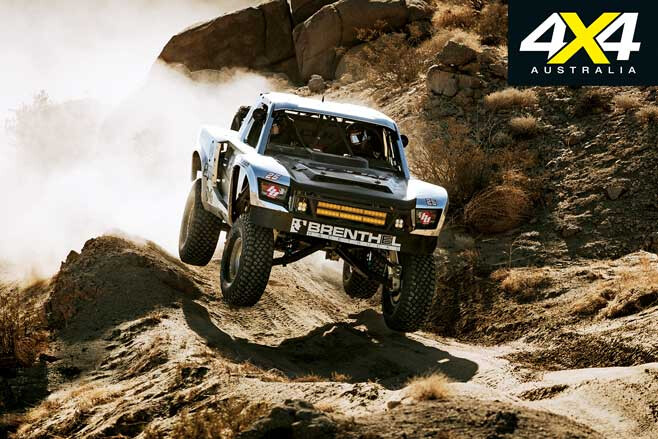
The third issue was an earth wire breaking on one of the cooling fans and needed a trail fix. But what finished them off was the alternator failing and the battery going flat leaving the boys with a DNF. Naturally, the team was gutted by this result, but in true Aussie spirit they got to work prepping the car for the 4400 race. This prep led the team’s sponsor Maxxis to upgrade the tyres from the 37-inch to the larger 40-inch sticky Trepador hoops.
Race day was a fight with the team only able to finish two of the three laps before timing out. At one point the throttle spring broke requiring Barry to manually pull the throttle back with his foot until the next pit stop where it was repaired. The brakes were also sticking on and boiling the brake fluid, and the cooling system continued to have issues with airlocks, leaving the team feeling rather defeated by the end of the week.
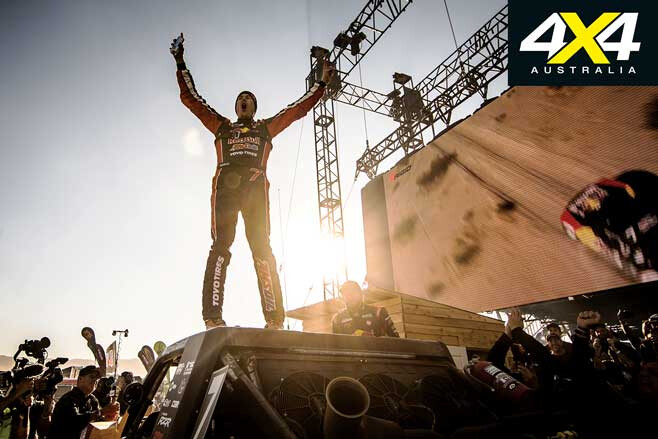
To race at Hammers is always going to hurt, it’s just a question of how much and what you do with the pain.
For 2020 the win went to Josh Blyler with a time of 07:06:32.488. As for Pip, Tim, Barry and Cam, they plan to return in 2021 to again attempt to tame the beast called King of The Hammers.
More Hammertime
To enjoy more in-depth content head to the Facebook page ’Aussies at the Hammers’ or follow these links:
– Aussies at the Hammers Facebook page – Interview with Pip and Tim of Justice Motorsports – Interview with Barry and Cam of Road Runner Offroad
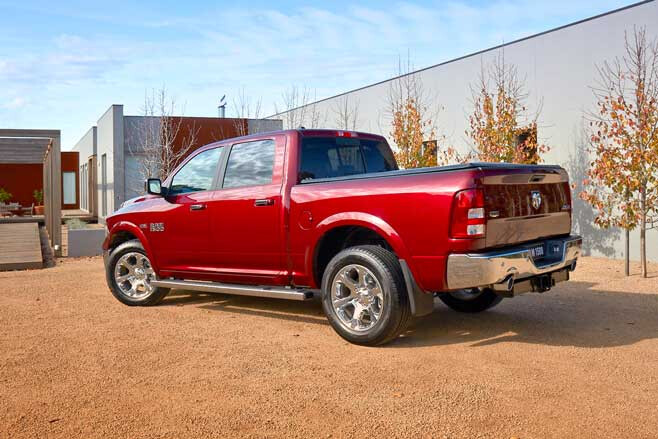
A TOTAL of 438 diesel-powered MY2014-2019 RAM 1500 pick-ups have been issued with a recall notice, due to an increased risk of a vehicle fire.
The fault centres on a manufacturing defect, with the ACCC recall report stating that the big rig’s EGR cooler may crack and cause coolant to leak into the intake manifold.
“There is an increased risk of vehicle fire, which may cause an accident or injury to the vehicle occupants, other road users or property damage,” the recall report reads.
The complete VIN list of affected vehicles can be downloaded here.
The affected vehicles, supplied by American Special Vehicles, were sold Australia-wide by authorised RAM dealers, and they were available for sale between January 1, 2014, and December 31, 2019.
Owners of affected vehicles will be notified by an authorised RAM dealer, to organise free reparation.
Just last month, RAM Trucks Australia bucked the declining sales trend, with a total of 178 vehicles finding new homes (up by 14.1 per cent over March 2020; and 27.2 per cent year-to-date). Amazing considering the overall market was down 52.3 per cent in April compared to March.
Australia’s deserts account for an estimated 70 per cent of the continent’s land mass. Pretty impressive, but not half as impressive as actually getting out there and exploring and camping in one (or more) of them.
Nothing beats that sense of utter remoteness offered by the combination of an endless red, sandy horizon, topped by the blue skies synonymous with this country’s desert regions.
The attractions of touring the desert regions go beyond that sense of isolation and remoteness and also take in the rich ties this landscape has with all Australians, whether it is the eons-old indigenous culture, or the more recent European explorers’ history.
Indeed, it is this sense of retracing the steps of these early explorers that is a big draw for visitors, and something that is far more enriched by the chance to also experience that ‘sense of place’ so ingrained in indigenous culture – along with the physical reminders of their long residence here, in the form of reliable waterholes, petroglyphs, etc.
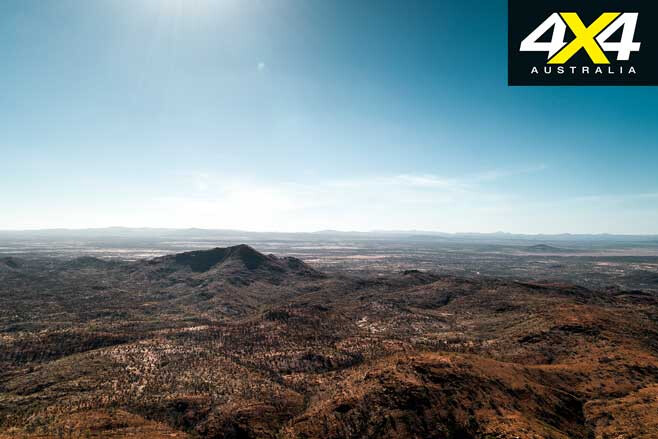
The other appeal is that, rather than being ‘the same thing every day’, a week or two (or longer) exploring one or more of Australia’s deserts really brings home just how unique each of them is, in terms of the wildlife, indigenous links, terrain, camping, the actual driving challenge and plenty more.
It all sounds impossibly romantic, of course – packing the 4×4 and heading into the desert – but that romantic notion of outback escapism needs to be, firstly, backed by a whole lot of research, preparation, planning and a big dose of that sense of adventure.
Once that is out of the way – and the actual pre-trip prep can be more than half the fun – is when the real adventure starts. Do all that right, and all you have to focus on is enjoying one of the world’s best off-road destinations. Let’s go…
Planning sure does pay
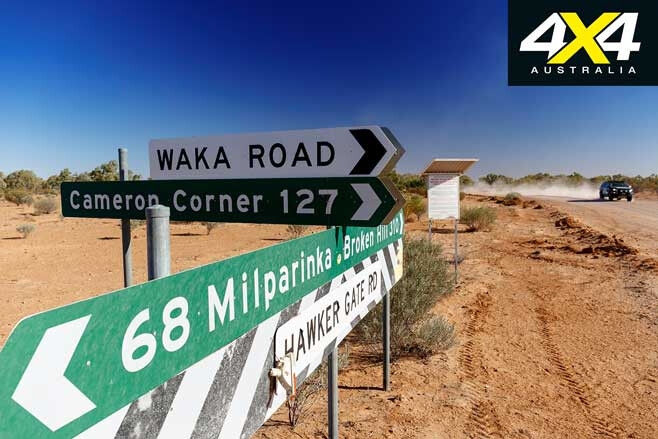
For this writer – and I am sure for most off-road tourers – poring over a series of maps is an integral part of the trip planning process, regardless of your destination. With a focus on desert travel, having access to a number of maps – and accurate ones – is key to effective trip preparation.
The reasons are many and include the obvious of seeing where your destination is in relation to your starting point, along with giving you a great overall ‘visual’ of the country you will be covering in terms of access tracks, refuelling points (whether in towns, aboriginal communities, or likely fuel drop-off/caching points), whether there are any water sources in the region, and – of course – the total distance of the route/track you will be following.
Large area maps are your best starting point (think: Hema’s excellent Great Desert Tracks maps), and from there you can move down in map scale and also start utilising digital mapping. These are great to mark potential campsites, refuel points, or places of interest.
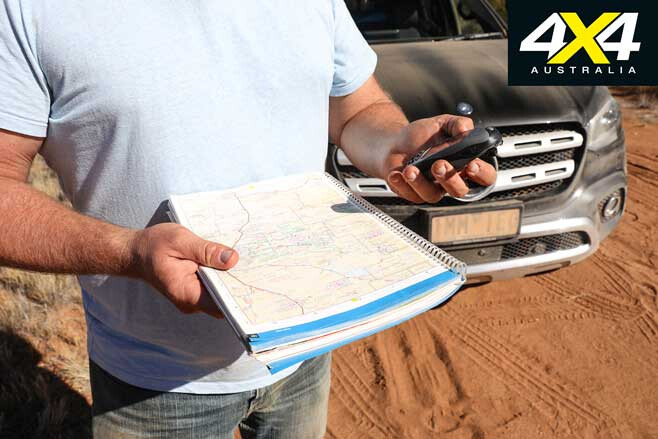
Again, Hema has its excellent phone and iPad-based app, Hema Explorer, as well as its dedicated GPS units, the Hema HX-1 and HN7. Other mapping-based planning software includes one of the most extensive: ExplorOz.com.
Some, but not all, of Australia’s deserts are comprised of both national parks and aboriginal-owned land, and one of the first checks you do need to do is that based around any essential permits you may need to traverse these lands. Most states’ national parks and the various indigenous land councils have online permit systems that are, generally, pretty easy to access and fill in.
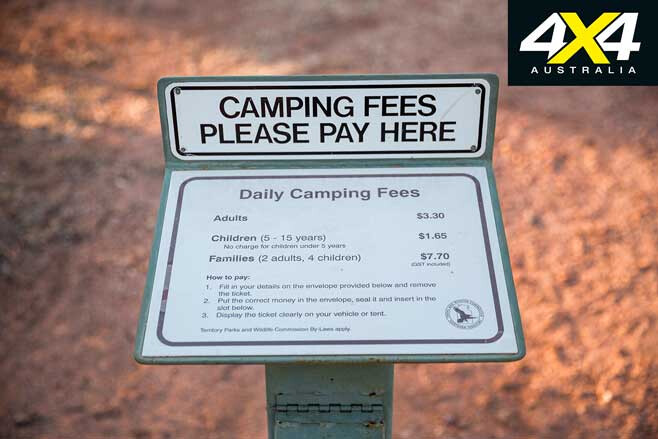
Some permits may take longer to acquire than others, though, so bear that in mind and make sure you give the relevant authorities plenty of notice of your travel dates. By doing this it allows any communication to and from regarding your trip plans to be undertaken, thus ensuring the relevant authorities know exactly where you are – and how long for.
As an example: this writer had a potential Arnhem Land trip quashed years ago after gaining approval from the Traditional Owners thanks to plenty of transparency in communication, only to have it stopped by a tie-wearing office-bound bureaucrat in Darwin. Just sayin’…
A parched land

With the distances and remoteness of Australia’s deserts, planning for a trip here involves accounting for a number of unique factors, starting with one of the essentials: fuel usage. Think of some of the longer desert tracks in Oz, such as the 1619km Canning Stock Route (CSR) or the 1324km Anne Beadell Highway, and you soon realise an accurate estimate of fuel consumption is crucial to a successful desert adventure.
As most know, any vehicle will use more fuel when driving off-road. Add in the mechanical effort needed to push a two-tonne-plus vehicle through sand and you will need to factor in far heavier consumption than ‘normal’.
This would also be a good time to check on maps and/or any online resources as to the longest distance between re-fuelling points. As an example, the distance between fuel points on the CSR is a heady 977km, necessitating the planning of a fuel drop (usually at Well 23 on this track).
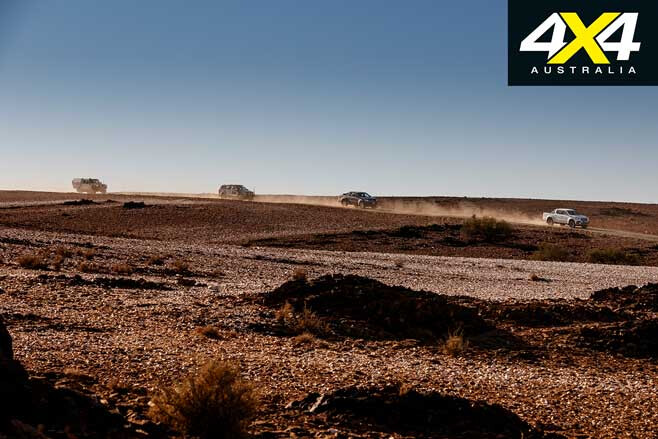
Some adventurers (mostly, but not exclusively) will have the capacity to lug the required amount of fuel – usually in jerrycans, sometimes in addition to a fitted aftermarket long-range tank – but that will depend on your vehicle’s load-carrying capacity. The temptation is to put jerrys up on the roof rack, but the additional load up high does affect vehicle handling.
Plus, you will need to check, not your roof-rack load capacity, but the maximum permitted load for the vehicle’s roof. You might be surprised how little that big, burly four-wheel drive wagon of yours is legally allowed to carry up top. An alternative to roof-stored fuel is to fit an aftermarket rear bar that incorporates twin jerry-can holders (or, a single jerry holder and spare wheel carrier).
The other liquid essential on any desert trip is water. And by this we mean not only having enough water on-board for keeping everyone hydrated, but for other essential activities such as cooking, washing up, personal hygiene and potentially having to top-up vehicles’ radiators.
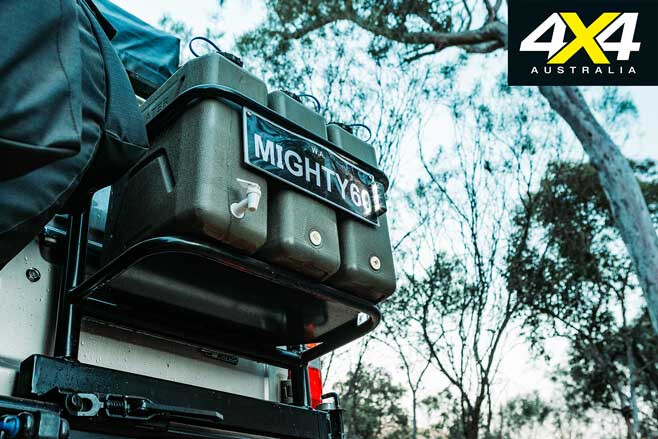
Again, distance and amount of resupply points plays a part in estimating how much you will need, but we’d recommend at least 20 litres per day, per person. Yep, that sounds a lot, and it soon adds up in terms of weight and eating into your vehicle’s load capacity. However, in this instance, it’s best not to quibble.
A further tip that applies to both water and fuel storage is to ensure your jerrycans/containers are in excellent condition and that you don’t store all the liquid in one or two containers. If the unfortunate does happen and it springs a leak, you could lose a significant portion of your water/fuel supply – something to be avoided anywhere, but especially in arid country.
Perpetual motion
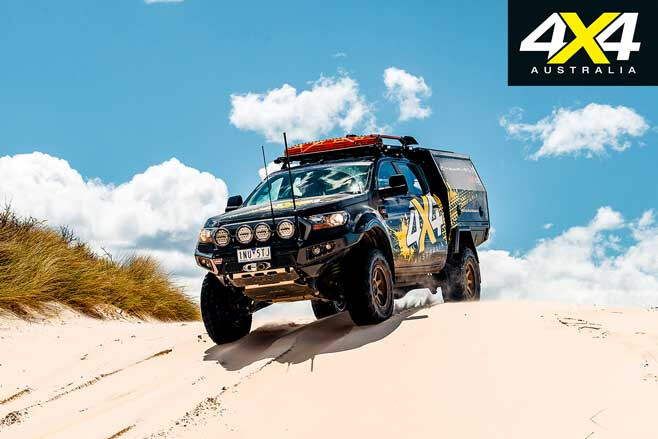
Vehicle setup for desert travel combines all the regular mods you would do to your rig to improve its off-road and remote-area capability (think: barwork for protection against animal strike and to mount lighting; all-terrain – or preferably – mud-terrain tyres; aftermarket suspension; dual-battery setup; fridge/freezer; snorkel; recovery gear; reliable comms; roof-rack), along with desert-specific tweaks.
Having a vehicle that is in tip-top condition is paramount and one of the first things you need to address as part of the desert-expedition planning process. A full going-over by a mechanic who specialises in outback travel prep is a must-do; checking for suspension (and tyre) wear and tear, as well as ensuring all engine plumbing is in robust condition and that all accessories are securely – and correctly – fitted, will mean you have already significantly reduced the chances of breaking down.
The next step will be for them (and you) to draw up a list of essential spare parts that you will need to carry in the event that something does break – and this may still happen regardless of how ‘new’ the gear is fitted to you rig (the desert is an unforgiving place) and get them to show you how to replace/fit it.
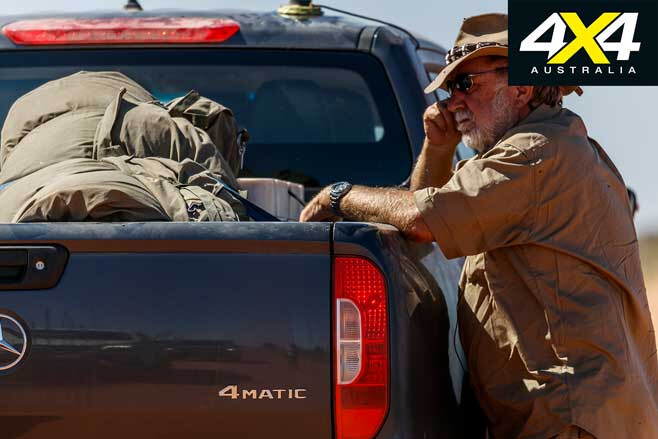
We’re not all accomplished bush mechanics (tip from this writer: travel with one!) but more basic repairs, such as how to plug a punctured tyre (yep, a puncture-repair kit is another must-pack), should be within your skill-set if you plan on spending time in remote areas. And, don’t forget to carry a second spare wheel/tyre; rough desert tracks can be murder on even the toughest tyres. Even though tyre plugs can work miracles, if you tear a sidewall, there’s no plugging that, so having a second spare brings with it plenty of reassurance.
Driving through desert country usually means negotiating myriad dunes and these are often taller/deeper than your vehicle. Fitment of a sand flag is non-negotiable as it assists any oncoming traffic being able to see you, thus avoiding a head-on collision.
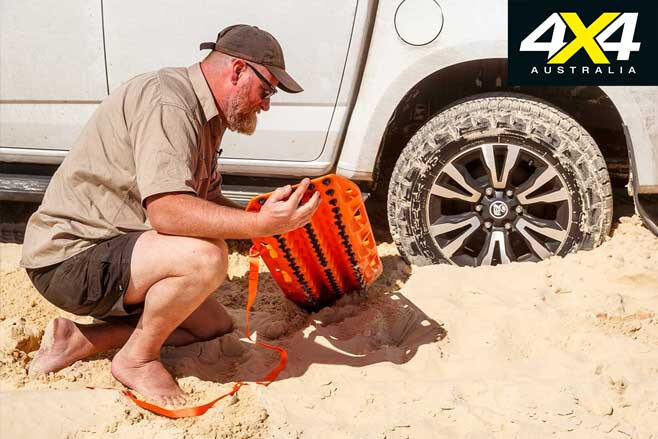
Packing specialist sand-recovery gear – on top of your normal recovery kit, which should include snatch straps, shackles, ropes, gloves, tyre levers, jack, etc. – is another must. A set (or more) of Maxtrax offers great insurance for desert travellers; these sand recovery jobbies are very robust and also very easy to use. Plus, they don’t weigh much, offering excellent recovery bang-for-bucks.
The final piece of the vehicle puzzle is an effective comms setup. Not only does a reliable UHF radio (or satphone; this is more for any emergency situation, as is a Personal Location Beacon) ensure you’re never totally stranded if the worst-case scenario eventuates; being able to call on the channel occasionally to see if there is any other traffic approaching helps reduce further the chance of a vehicle-on-vehicle incident.
Speaking of which, it goes without saying that at least one, but preferably more, of your expedition crew should have the latest First Aid training – and a comprehensive First Aid kit should be packed.
Basecamp
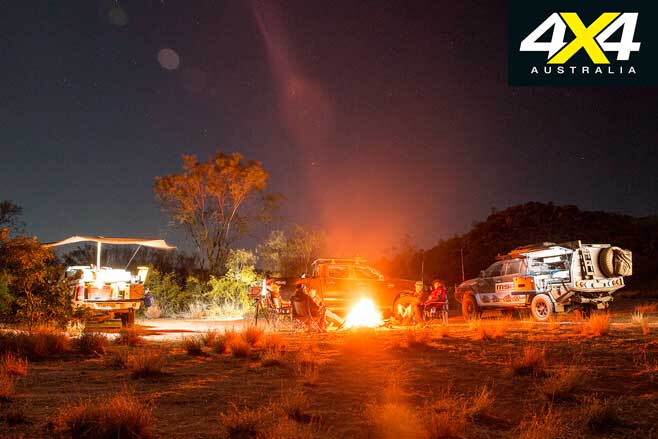
Nothing beats pulling up in the middle of the desert in the evening, cooking up a storm and cracking a coldie as the sun sets over the dunes. That sounds like a dream scenario but, as long as you have the required remote power requirements to keep the lights glowing and the fridge cool, you’ll get to enjoy that dream-like outback dining experience every night. And it does all come down to power.
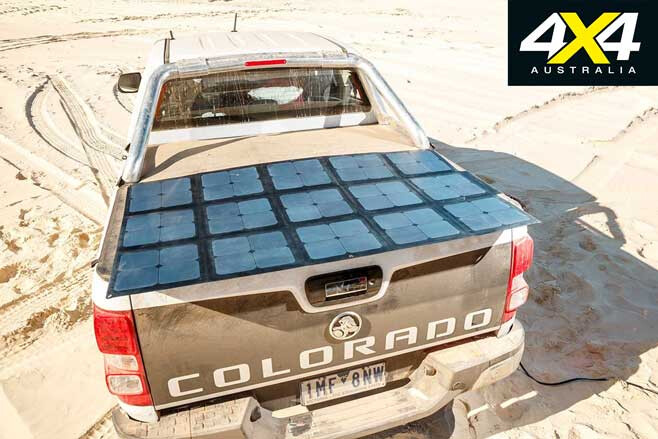
To this end, it’s worth expanding your regular off-road power options, such as a dual-battery setup, to include a system that incorporates the ability to utilise the power of the sun. Portable solar panels are, these days, cheap, reliable and pretty much a standard inclusion on desert travel equipment lists.
With the desert touring season usually the time of clear days – every day – being able to set up some solar panels at camp makes the question of reliable power moot. There are myriad solar panel systems available, so you will need to research what suits your particular vehicle/requirements best. It’s worth the time invested, though, and a prime example of just what is achievable in terms of reliable mobile power options for tourers can be seen in 4X4 Australia’s long-term Ford Ranger, as featured in 4×4 Australia’s 2020 Gear Guide.
Also worth tackling is a course on basic auto-electrical repairs – or at least having some knowledge of how your vehicle’s auxiliary power setup works in case you have to troubleshoot some power-related problems.
Travelling with a portable fridge means you will be able to keep food fresh for a decent amount of time in the desert. Making it last longer is possible by selecting a fridge/freezer combo unit, where a portion of the fridge is a dedicated freezer. Another trick to ensure fresh grub for longer is to get your local butcher/food supplier to cryo-vac your meat. By vacuuming all the air out, the use-by date of meats in particular can be extended significantly.
Time is different out here
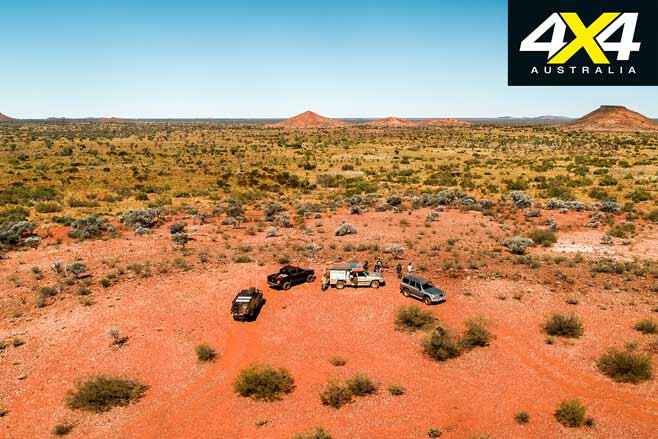
One thing often forgotten in the dreaming, researching and final planning of the big desert adventure is just how much time it can take. Driving in sand is where you need to balance momentum and patience, and also where you need to realise it will take longer to negotiate numerous dunes than it would to traverse a long, straight outback road.
Even though the actual distance between two points may be ‘not that long’, driving in soft sand, having to perform the occasional recovery, and stopping to take in your surrounds, all takes time – and makes for the perfect excuse not to rush.
There’s no reason you can’t stay at Camp 15 on the Madigan Line for more than one night – you’ve spent months and lots of money planning and prepping to get yourself out to a destination few people will ever experience, so make sure you allocate enough time to soak it up properly. After all, you’ll be on ‘desert time’, in a place that has seen thousands of years of indigenous inhabitants and a few hundred years of explorers traversing it. We’re sure it – and you – will cope with spending a little bit of time out there…
Storming the desert, successfully…
Former 4×4 Australia Editor, Dean Mellor, has been fortunate enough to traverse some of this country’s most spectacular desert country, and is a huge fan of not only Australia’s red heart, but also being thorough and considered in your preparation.
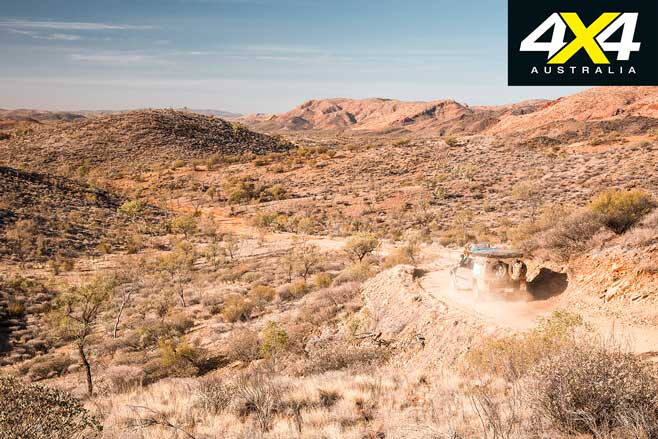
“One of the most satisfying things about preparing for a desert expedition is figuring out exactly where you want to go, where you want camp (to see what want to see and experience what you want to experience), and where you’ll be able to source supplies (fuel, water and food).
The best way to plan a trip is using a combination of maps including an overall map of the area in which you’ll be travelling and several detailed maps. A paper map is the best option to cover the general area, and these days I rely on electronic maps – Hema Explorer on my iPhone, iPad and HX-1 Navigator provides Hema mapping as well as topographic mapping, covering all of Australia.
Carrying enough fuel and water is essential for any desert trip. When calculating fuel usage, remember that your vehicle will use more fuel in trying off-road conditions than it will cruising on the highway, and always throw in a good safety margin. Perishable food, of course, will need to be stored in a portable fridge/freezer, and you should always make sure this is working properly before departure, and that you have spare fuses/leads/plugs etc. and a small electrical repair kit.
Thorough vehicle preparation is important prior to setting off on a big trip. If you don’t have a lot of mechanical skills yourself, make sure your vehicle gets a thorough going-over by a specialist 4WD mechanic, and ask them what spares you’ll need to carry with you and what tools you’ll need to make minor repairs.
If you suffer a major mechanical breakdown, or some other big problem when you’re in the middle of the desert, you’ll want to make sure you’re carrying a remote-area communications device such as HF radio, a satellite phone or a satellite communicator, and make sure you test it before you leave and that your subscription is up to date.
As well as supplies, tools, spares, comms and navigation equipment, some essential items you’ll need for desert touring include a complete vehicle recovery kit, a tyre repair kit (tools, plugs, patches, glue, tyre levers, working jack etc.), electrical power supply (dual battery system, charging set-up, inverter etc.) and all the obvious stuff like camping gear, lighting etc.
You’ll also need a comprehensive (and up to date) first aid kit, and you should make sure your first aid training is current. When travelling, some personal items I always carry with me include a Leatherman, a camera and a handheld UHF.
No matter how prepared you are, many things can still go awry on desert expeditions. I’ve seen all sorts of stuff break on trips from shock absorbers and leaf springs to sway bars and CV joints. Although I have a modicum of mechanical knowledge, I’ve usually been fortunate enough to travel with people who would easily pass as bush mechanics. If you don’t know how to fix stuff, you should learn to… or travel with someone who does.” – Dean Mellor
FORGET everything you’ve come to know about the Land Rover Defender over the past decades. In fact, forget Defender all together and ignore the lettering across the front of this new model. Let’s just call it the new Land Rover.
Why, you ask? Because comparing this new Land Rover to any model that came before it is irrelevant. The L663 Land Rover bares no commonalities to the Defender and Series models of the past, save for a few token style elements that pay homage to the classic models.
MORE DEFENDER NEWS
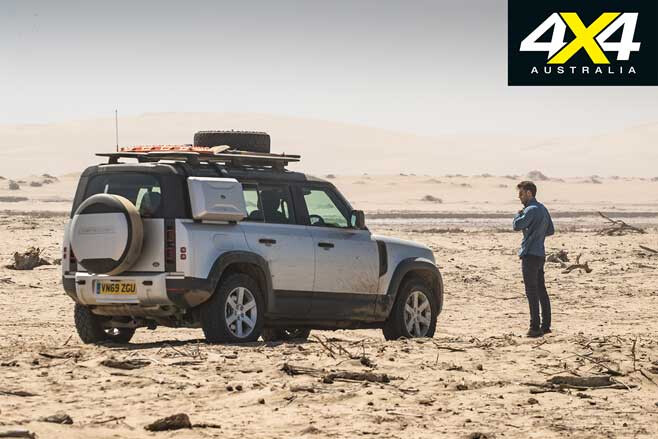
What we have here is an all-new Land Rover that applies the brand’s ‘Breadth of Capability’ slogan to a nameplate that was essentially a commercial vehicle. To do this Land Rover had to retain the go-anywhere off-road ability of the model with vastly improved on-road dynamics and manners. While other recent new Land Rovers have laid on the luxury to extend their breadth in that direction, the L663 is all about practicality and everyday usefulness to appeal to more buyers at a more affordable price point.
When the new L663 Defender arrives in Australia in August as the 110 wagon, it will start at $69,990 for the entry level D200 and run through a nine-variant range to the $137,100 X P400. The short wheelbase Defender 90 will arrive later in the year and is expected to reflect a similar model range at a $3-5K lower price point.
Engine variants
The model range includes three engine variants: two versions of the 2.0-litre diesel in the D200 and D240, plus the 3.0-litre six-cylinder turbocharged petrol P400. We’re yet to see a full list of features and equipment, but it will be interesting to see the difference between a $70K and a $140K version of the same vehicle. Notable is that none of the new Defenders will come with full carpets … even at $140K! If you want something a bit more refined over the vinyl floors, carpet mats will be available from the dealer.
Dimensions and suspension
It’s hard not to draw comparisons with the old Defenders, and the 90 and 110 designations refer to the three-door short wheelbase and five-door long wheelbase wagons which respectively ride on 2587 and 3022mm wheelbases; not quite the 90 and 110 inches from where they take their names.
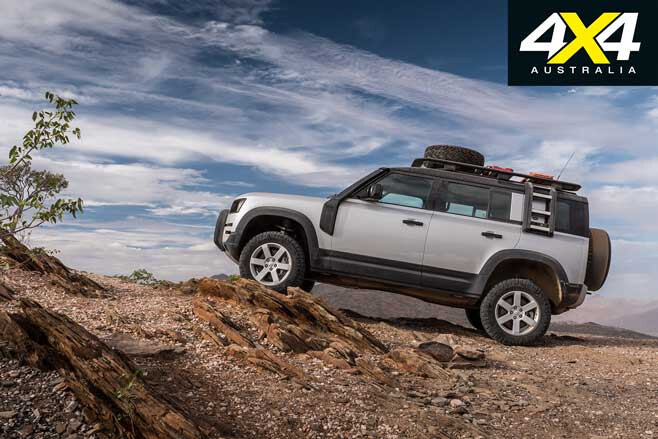
Like all modern Land Rovers, the L663 rides on an aluminium monocoque chassis with independent, height-adjustable air suspension. Some lower spec variants will be offered with coil springs but most new Defenders will ride on air, and it’s the height adjustability that allows them to maintain their off-road ability.
While the aluminium platform, dubbed D7X, is derived from the D7U platform that underpins the Range Rover and Discovery models, it is significantly tougher, employing steel instead of alloy sub-frames to mount the suspension to the chassis, which in turn employ larger bushes, knuckles and other components for enhanced durability over tough terrain.
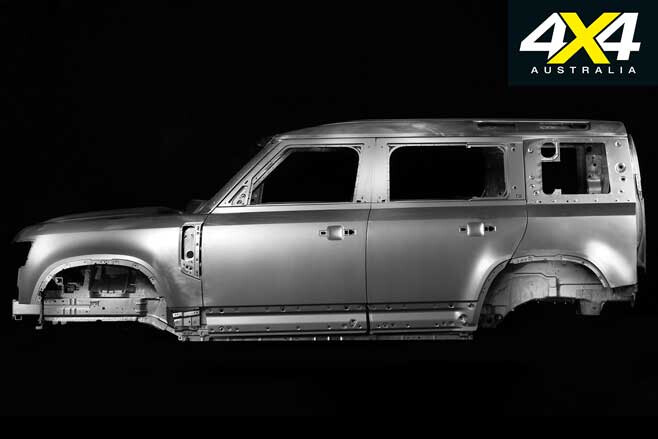
The D110 is a large wagon that can be equipped with third-row seating. A novel option is a centre ‘jump’ seat for the front row to allow three across up front so the 110 can be configured as a five-, six- or seven-seat vehicle. The jump seat comes as the Defender will be offered in some markets (not in Australia) as a commercial vehicle with only front seats, with panelled sides instead of windows, and riding on coil springs.
Interior
The cabin is much more user friendly than anything that has borne the Defender badge in the past. For starters it’s wider, so the driver’s right arm doesn’t have to reside outside the cabin and you won’t have a handbrake digging into your left leg and the door handle into your right. The cabin is spacious, open and airy throughout its big glasshouse including the ‘alpine’ windows in the roof that are a nod to past designs.
Another bit of nostalgia is the dash which incorporates the shelf and grab handle that will be familiar to anyone who has spent time in an old Land Rover. It’s fitted into a modern dash with a small – by modern Land Rover standards – screen for sat-nav, audio and other displays, while a stubby transmission shifter protrudes from a small panel of switches.
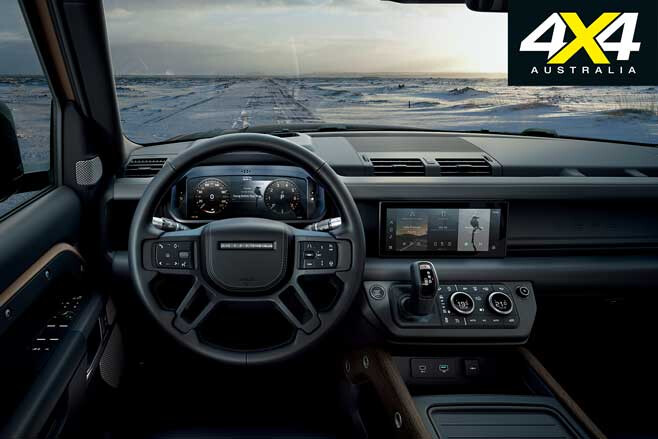
Terrain Response 2
The only transmission offered is an eight-speed automatic with no manual gearbox option. Four-wheel drive is full-time with high and low range and auto locking centre and rear diffs, and Terrain Response 2 is standard.
TR2 is now programmable for each setting, so you can dial in and save your preferences of how you like the feel of the steering, the transmission shift points and how quickly the differentials lock up. It’s a great system but it gets away from the simplicity of Land Rover’s groundbreaking original Terrain Response; although, you can always set and forget it in the Auto mode.
Drive impressions
Our first taste of the new Land Rover came in Namibia driving a D240 variant looking very traditional in its Pangaea Green paint with white roof and white steel wheels. The overall look of the new vehicle is sure to be polarising, as it takes no prisoners with a design that is modern while incorporating hues of the classic Land Rovers of the past.
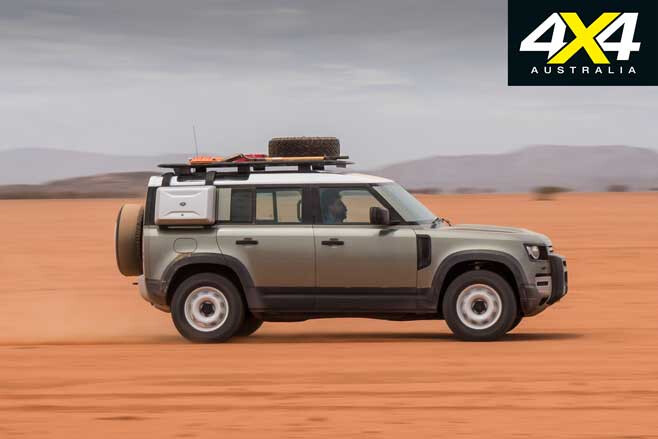
The vehicles on this trip were fitted with the Expedition package which includes a raised air-intake snorkel, expedition roof rack, a ladder to access the roof on the passenger’s side, and a storage box on the driver’s side. They were also fitted with Goodyear Duratrac all-terrain tyres to conquer sharp, rocky tracks in confidence.
The D240 is powered by the 2.0-litre Ingenium diesel engine that makes a sprightly 177kW and 430Nm, making light work of the steep African terrain and sandy tracks. The diesel engine is stunningly quiet both at idle and under load and you’d be hard-pressed to pick it as a diesel from within the cabin.
The eight-speed automatic transmission is perfectly matched to the modern powerplant, giving smooth and refined shifting. The engine is relatively small but the power and torque figures are on the money; though it will be interesting to drive this combination with a heavier load on board than what we had here.
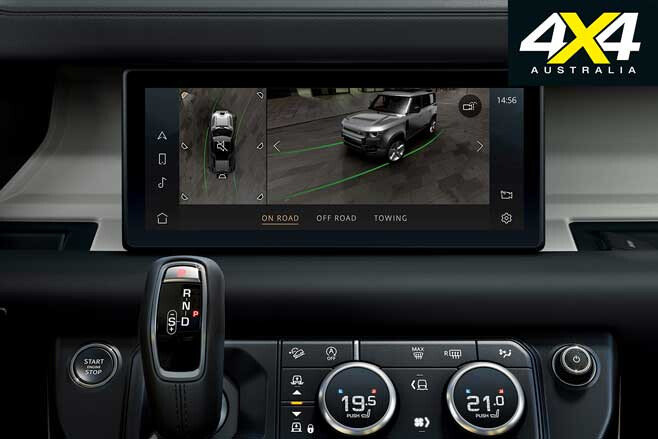
Speaking of loads, the new Defender has a payload of around 900kg depending on the spec of the vehicle (and hence its weight), and a towing capacity of 3500kg for Australia.
Our drive in Namibia took us northwest from the Kaokoland capital of Opuwo to a bush camp in a dry river bed on the escarpment above Van Zyl’s Pass. The tracks were mainly loose sand twisting through scrubby bush, and the new Defender handled them with ease, in a far more surefooted manner than any old Defender.
Van Zyl’s Pass is a steep, 600m, rocky descent from atop the escarpment, down towards the Atlantic coast, and it marked the first real off-road obstacle for us in the new car. With the four-wheel drive system locked in low range and the Terrain Response 2 set in Rock Crawl mode, the D240 edged its way down the tricky slope.
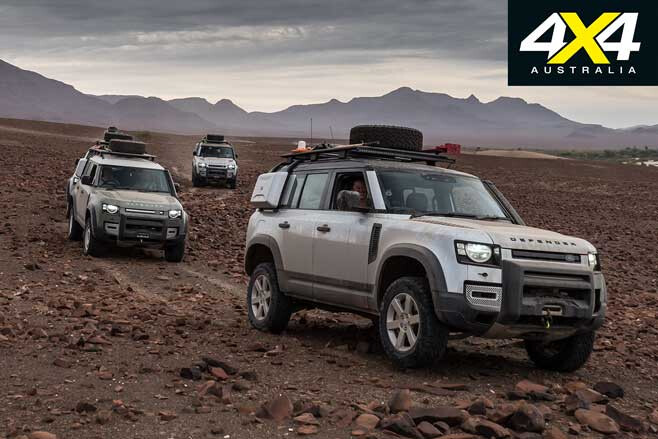
The car’s 360-degree cameras afford the driver a view in front of the vehicle and to the sides of the front tyres, which is helpful in such terrain where a sharp rock can easily slice a sidewall open; and believe me, you don’t want to be jacking up a car to change a flat here.
The low-range/low-gear engine braking is good, but, even so, the descent still required the driver to hover a foot over the brake to control speed. We found the sensitivity of the brake-by-wire system to be odd, providing little to no retardation at minimum brake input and then jolting the vehicle to a stop if squeezed a tad more.
We brought this up with chief engineer, Steven Frick, citing it as a problem, and he said we weren’t the first to note it and it is something the company will look at on the production vehicles. All of these cars were pre-production models and calibration of the brake-by-wire system should be easy to refine to get the right feel and performance. It’s something we’ll certainly look for when we get to drive production vehicles back here in Australia later this year.
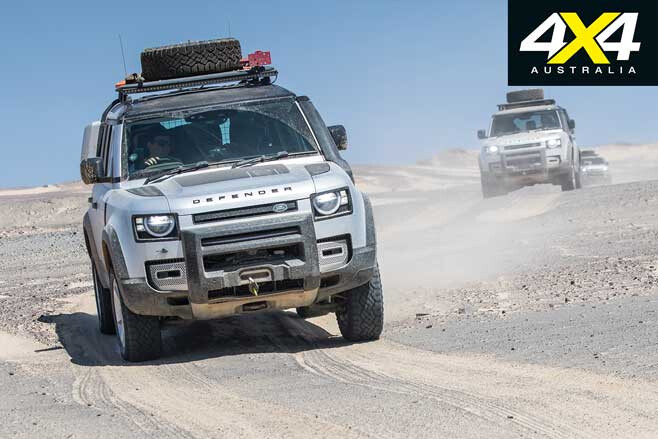
With the air suspension raised up to its highest you get a quoted 291mm of ground clearance (up from the standard 218mm) and we found this plenty to clear rocky obstacles with careful wheel placement. The performance of the suspension is limited when in its high setting and bangs as it tops-out over uneven surfaces, so you want to drop it back down as soon as possible. That said, Land Rover quotes 500mm of suspension travel which is pretty good for an independent design.
Other key figures for off-road use are 38°, 40° and 28° for approach, departure and ramp-over angles when the suspension is raised, and an impressive 900mm of wading depth without the raised air intake as fitted to these vehicles.
We got to test that out when we reached the Hoarusib River, which was dry just 24 hours earlier. Now it was flowing fast over the wide, sandy crossing and our Land Rover guide chose to walk it before driving across. It was waist deep and the current strong, but the vehicle crossed it without a problem. There’s a new wading mode in the Terrain Response which, if it detects the vehicle starting to float, can extend the suspension a further 70mm to try to find traction on the surface below.
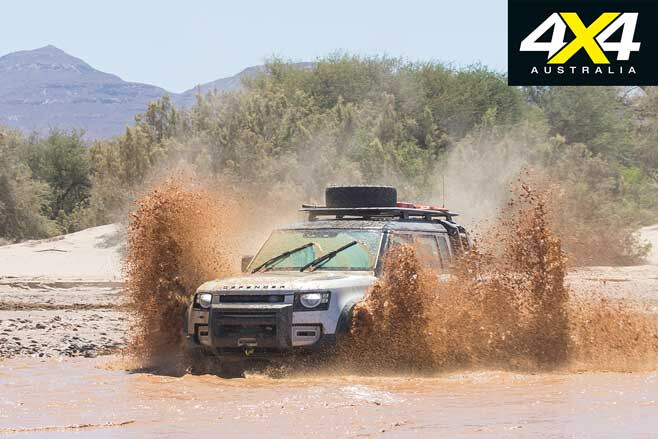
We also got to drive the P400 110, and what a pleasure that was. This is powered by Land Rover’s new 3.0-litre inline six-cylinder, turbocharged petrol engine, which is also boosted by an electric supercharger feeding from the 48-volt electrical system. The theory is that the electric supercharger provides the boost at low revs before the turbocharger wakes up as the revs climb.
It works too, with 294kW on tap and 550Nm from as low as 2000rpm. That torque feels almost diesel-like in its delivery, making the P400 a pleasure to drive both at low speed over off-road terrain and quicker over fast-flowing roads.
We didn’t get actual fuel figures on this drive, but at fill-up time the diesel D240s were taking almost half as much fuel as the petrol P400s, and that’s driving over the same 680km route, of which only 4km were on sealed roads.
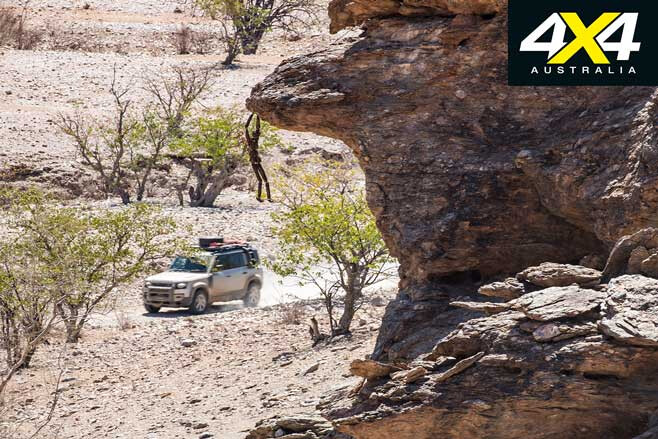
It was on these flowing open roads that the true ‘breadth of ability’ of the new Defender revealed itself. Never before has a Defender felt so composed at speed – it is a real confidence-inspiring high-speed tourer. The steering is perfectly weighted and the communication of the suspension through to the driver is superb for such a large vehicle. The L663 feels right at home on high-speed sand and gravel roads, which is something you would never have said about a Defender in the past.
It’s this new-found performance and on-road manners that make this new Land Rover such a revelation which, depending on sale price, should be hugely popular in a big country like Australia. Sure the base price starts around $70K, but we reckon you’ll be looking at a D240 for starters and then by the time you start ticking off the options you want, most buyers will be looking at a $90K purchase.
Even then it’s a lot of car for the money, but it’ll be competing with the V8 Nissan Patrol and Land Cruisers for the family fourbie buyer. We’re all for a new entry to the large 4×4 wagon market, and this new Defender has been worth the wait. And it’s just a few months more before we get to drive it on home soil.
NEW car sales in Australia continued to tank in April under the effects of the global pandemic, with the total local market down 48.5 per cent over the same month last year.
This represents the largest single decrease of any month of sales since VFACTs figures were first recorded back in 1991.
4×4 utes continue to sell well compared to other vehicles, but even they are down 39.2 per cent over last April and 19.9 per cent year to date. The Ford Ranger and Toyota Hilux still dominate the segment, not just in 4×4 utes but 4x4s overall.

Hilux took the honours for April, selling 1883 4×4 units over the Ranger’s 1419, to pull back on the Ford’s overall year-to-date lead in the 4×4 market.
Holden Colorado sales seem to have gone back to normal after a boom in March, as the model is run-out following the closure of the Holden brand. A total of 780 Colorados found new homes in April compared to 2186 in March, and we’d suggest you get in quick if you want to secure one of the heavily discounted Holdens before they are all gone forever. The Holden Colorado and Trailblazers will drop off the lists altogether in the coming months.

Mitsubishi Triton also cooled dramatically in April, with its 355 sales dropping it way down the sales chart; its third spot year-to-date is pretty secure, though.
That said, another poor month for Triton will see the Toyota Prado nipping at its heels. The Toyota Prado, LandCruiser wagons and LC79 utes all outsold the Mitsubishi in April to help Toyota maintain its overall market leadership for the year, with 18.7 per cent of the overall new car market.
It will be some time yet before we see a turnaround in the market as buyer confidence improves. New and refreshed models for the Isuzu D-MAX, Toyota Hilux and Ford Ranger in the third quarter should help push things along, but we don’t except to see numbers like we had back in the 20-teens.
THE budget-friendly Mahindra Pik-up has been refreshed, with the 2020 model receiving a new front grille among a number of updates.
In addition to that more aggressive front-end, the Pik-Up’s lighting set-up has been updated with the model gaining static bending projection headlamps, daylight-running LEDs, and a new fog light assembly.
However, there’s also been a slight price hike, with both the Single Cab 4×4 S6+ and Dual Cab 4×4 S10+ rising by$1000.
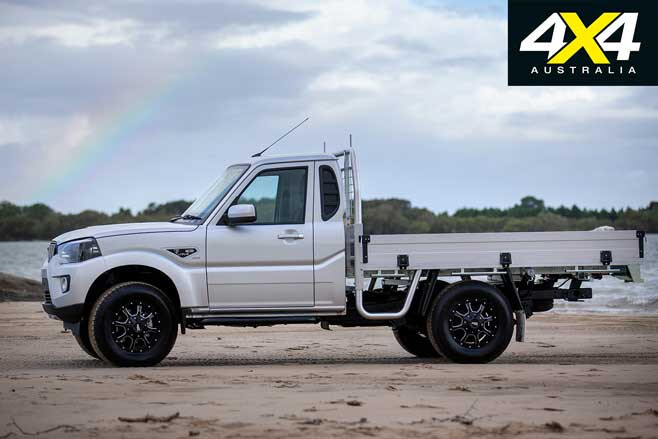
Mahindra also launched an all-new, factory-backed Pastoral Pack for its Single-Cab S6+ 4×4, said to be targeted at rural, trade and fleet buyers. The Pastoral Pack comprises a winch-compatible steel bullbar, bash plate, side brush rails, a snorkel, tow bar, canvas seat covers and a vinyl floor.
The range remains powered by the 2.2-litre, four-cylinder turbo-diesel engine, capable of generating 103kW and 320Nm, and it continues to run a six-speed manual transmission, Dana Spicer axles, and an Eaton self-locking diff.
Sitting on a heavy-duty ladder frame chassis, the Pik-Up maintains a 2500kg towing capacity and a 34-degree approach angle.
The 2020 Pik-Up comes with a five-year, 100,000km limited warranty.
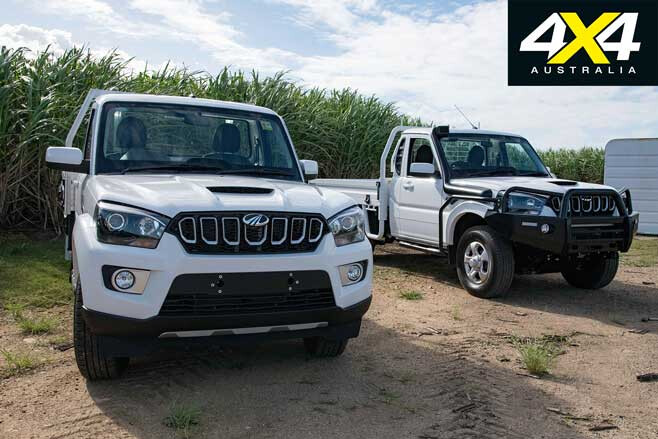
2020 Mahindra Pik-Up Pricing
Single Cab Pik-Up 4X4 S6+ c/c: from $27,990 drive away Single Cab Pik-Up 4×4 S6+ c/c (Pastoral Pack): from $35,990 drive away Dual Cab Pik-Up 4×4 S10+: from $32,990 drive away.
We’ve been impressed lately with the long wheelbase SsangYong Musso XLV that launched in Australia midway through 2019. So much so that we thought we should take another look back at the SWB Musso that has been with us a while longer.
While the refined driveline, spacious cabin and great value for money are the key things that have impressed us with the Musso, the locally developed optional suspension package is the icing on the cake, giving the Korean pick-up more ground clearance, better suspension control and improved off-road ability.
Last month we tested the Musso XLV with the Ironman 4×4-developed suspension kit, as well as a host of other quality factory accessories, but were yet to drive the standard wheelbase model with it. So here we have the short wheelbase Musso in base-spec EX manual trim. At just $30,490 driveaway, it is a great value ute to base a build on.
Ironman sprung
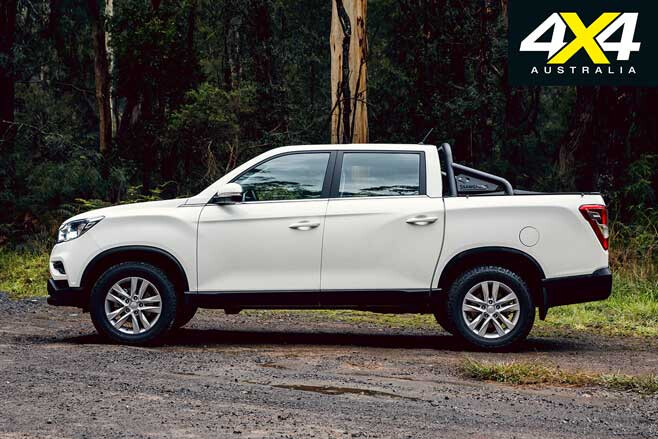
This Musso has been fitted with the Ironman 4×4 springs to give it the needed 30 to 35mm of lift, but not the full kit that also would include shock absorbers. Other extras include the black sports bar, tonneau cover, 18-inch alloys with AT tyres, floor mats, and a front underbody protection plate that also comes from Ironman 4×4 and is being evaluated to become a factory-offered accessory.
Even with these accessories on-board, the Musso is still driveaway for around $36K, which is outstanding value. Especially when you consider SsangYong’s seven-year warranty, roadside assist and capped-price servicing package, which is standard on all new models.
As mentioned, the optional suspension package was developed here in Australia with Ironman 4×4. SsangYong offers it as just the coil springs, as on this car, in what it calls the Performance Suspension kit; or springs and shocks as the Constant Load kit, as fitted to the XLV we tested last month.
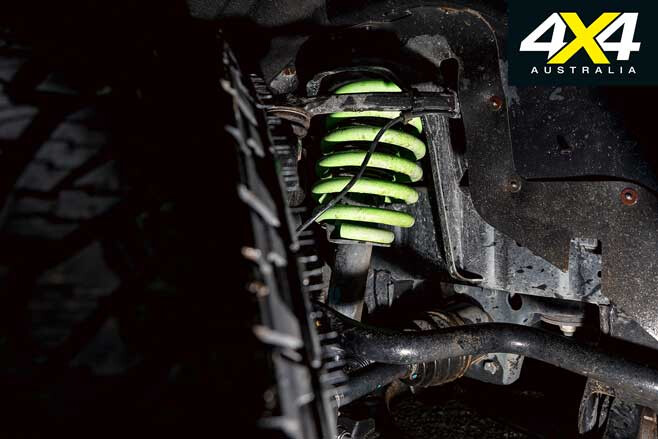
“Factory fitted OEM suspension needs to be configured to suit the widest audience, the broadness of application and customer expectations,” says Ironman 4×4’s director of Suspension Product, Kristian Ristell, who headed up the development. “This means we can’t target a specific area of performance without affecting another, and for this reason OEM suspension is always a compromise.”
A common criticism of the Musso is the factory ground clearance, which is quoted as 216mm for the SWB or 220mm for the LWB, where it is more noticeable due to the wider ramp-over angle and longer rear overhang. The suspension kits go a long way to rectifying this, with an added 30 to 35mm of height with the Performance kit and 35 to 40mm when fitted with the Constant Load kit.
“This kit is a fully fledged Ironman 4×4 suspension upgrade that is also available from SsangYong dealers for even greater dynamic competence and capability. It caters for more demanding requirements such as off-road driving or heavier load carrying,” says Ristell.
On road review
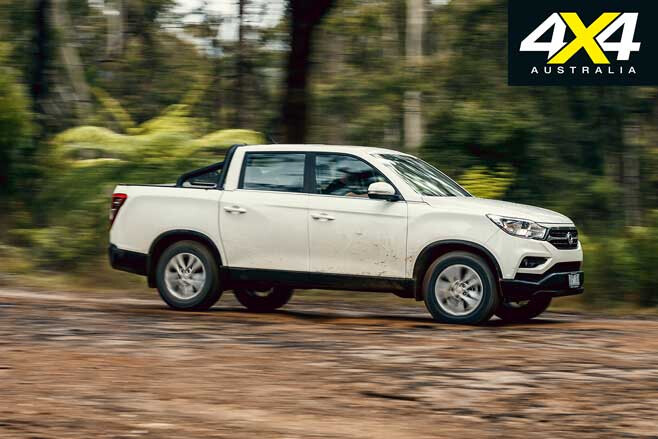
Jumping in the SWB EX after the XLV you are greeted with a familiar wide cabin; although, the EX misses out on the large touchscreen with Apple CarPlay and Android Auto that the up-spec Mussos get. Still, it’s spacious and comfortable and one of the best laid-out cabins in the one-tonne 4×4 ute segment.
The shifter for the six-speed manual gearbox feels a little loose and vague at first use (although you soon become acclimated to its gates), particularly reverse gear which, like most six-speed boxes is across to the left and up beside first gear, but there is no lockout to prevent accidental selection when going for first cog.
Its operation reverts to second nature out on the road, and the ratios are well-suited to the 2.2-litre diesel engine. The engine is only rated to 400Nm with the manual as opposed to 420Nm with the auto, but due to short overall gearing, the smooth little mill feels more sprightly when matched to the manual over the auto, which itself gave no reason to complain.
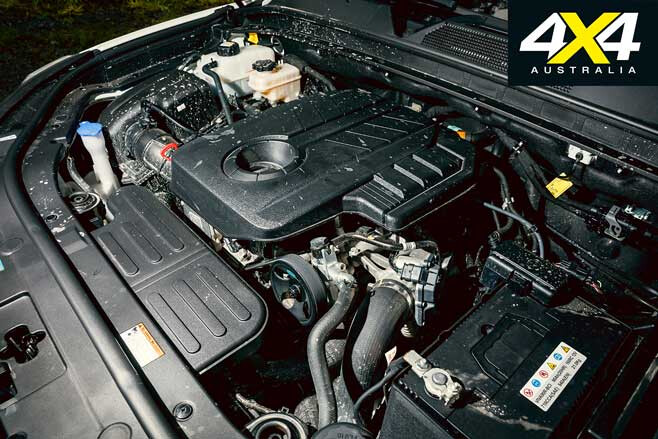
The manual is only offered in this entry-level EX specification and not the higher spec models, but you’d have to really like manual gearboxes to choose one over the $2000 Aisin auto option.
The suspension feels well-weighted and doesn’t appear to lose too much by retaining the factory shock absorbers. It is a bit jittery on rough surfaces, but you get that in any unladen ute and it would smooth out with some weight in the tray.
Off road review
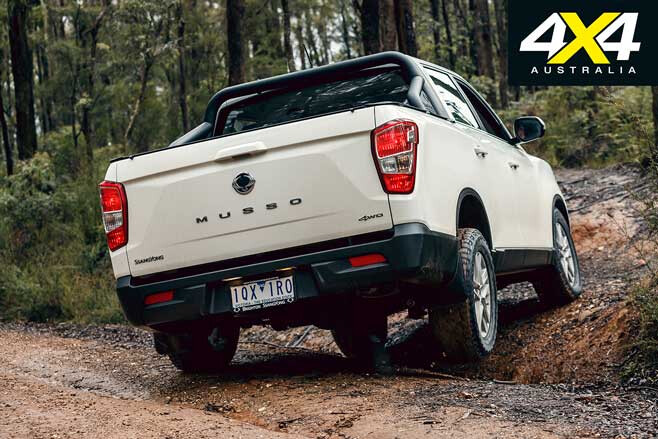
While the SWB Musso doesn’t suffer clearance issues as badly as its bigger LWB brother, a quality suspension lift inevitably makes any 4×4 better. The Musso uses a traditional part-time, dual-range 4×4 system with electronic traction control and an auto-locking rear differential. This diff tightens up once slip is detected and is not driver selectable like many lockers.
The raised suspension does provide some added clearance, but the bottom lip of the front bumper still rides low and we touched it down a few times without hitting the underbody protection plate. However, we didn’t feel the rear bumper touching down on this car as we did on the LWB Musso.
The suspension works well over rough roads and rutted tracks, although travel is limited and the Musso soon lifts wheels. This is where that auto locker comes into force; you feel the initial wheelspin and then feel it lock up and drive you onwards. It is surprising where this will get the Musso, and the vehicle makes a great general touring 4×4.
Practicalities
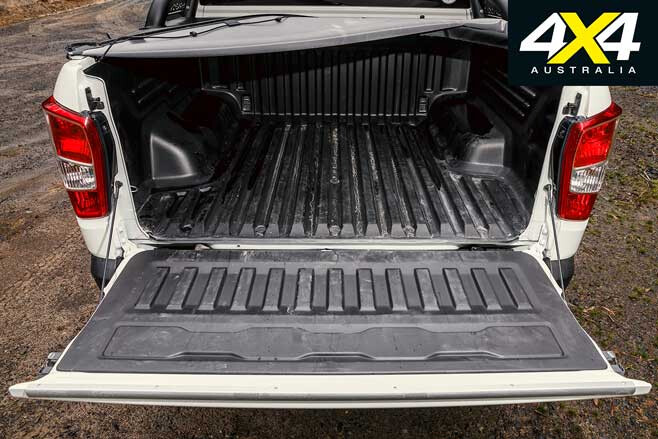
The tray of the Musso appears stubby when you look at it, especially if you’ve spent time with the XLV which has an extra 300mm in tub length. Part of the reason for that is the depth of the tub, which is massive and has plenty of room. We had a 250cc motocross bike in there with the tailgate down, just as you would in most double-cab utes. Having tie-down points down nice and low really helps with this. Plus, there’s also a 12-volt power outlet in the tub.
In terms of capacities the SWB Musso, like its bigger brother, is rated to tow 3500kg but the payload is a lower 790kg.
The Musso is more than just a budget ute – a lot more really – and it drives and performs better than some of the more popular, expensive vehicles in the one-tonne ute market. With a growing range of quality factory accessories, and some from the aftermarket, the Musso becomes an even more attractive option.
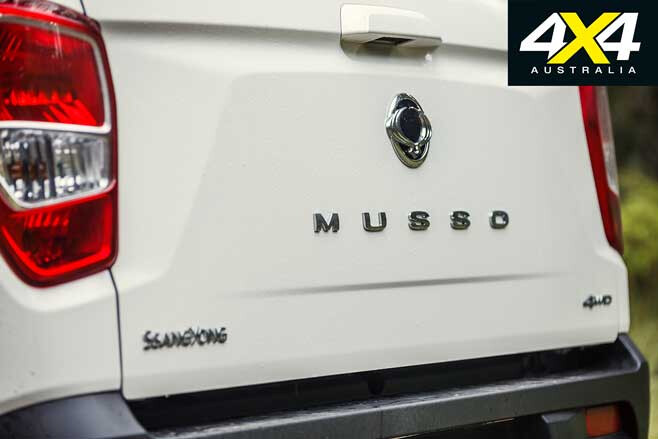
SSANGYONG MUSSO EX SPECS: Engine: 2.2-litre 4-cyl turbo-diesel Max Power: 133kW at 4000rpm Max Torque: 400Nm at 1400-2800rpm Gearbox: 6-speed manual 4×4 System: Dual-range part-time Kerb Weight: 2080kg GVM: 2880kg Payload: 790kg GCM: 5880kg Towball Capacity: 3500kg Departure angle: 25.0° Rampover angle: 24.1° Approach angle: 24.7° Wading depth: N/A Ground clearance: 245mm Fuel Tank Capacity: 75 litres ADR Fuel Claim: 7.9L/100km Test Fuel Use: 9.8L/100km Price: $30,490 (driveaway) As-tested price: $36,021.47 (driveaway)*
*SSANGYONG MUSSO EX ACCESSORIES FITTED Carpet mats: $153.12 Sports Bars: $1012.75 Tonneau: $550 Hankook A/T: $250 (each) Lift kit: $396 Underbody Protection: TBA (approx $620) 18-inch alloy wheels: $1800