
When I picked up the 4X4 Australia Ranger in Melbourne for our impending Tassie adventure, it had been fitted with a new set of Goodyear Wrangler MT/R Kevlar muddies, which was reassuring since I was expecting to encounter a fair bit of mud in the island state.
The Wrangler MT/R Kevlars are the same LT285/70R17 size as the Maxxis RAZRs that were fitted previously, those tyres having done a tough stint on the Ranger on its 2019 trip through the Flinders Ranges.
Mounted to the Ranger’s good-looking KMC XD Addict 2 alloy rims, the new MT/Rs certainly look the part thanks to their aggressive open-block tread pattern that wraps around on the sidewalls. The MT/Rs also feature a somewhat unique asymmetric tread design, which Goodyear claims benefits both “aggressive traction” when driving off-road and “superb handling” when driving on-road.
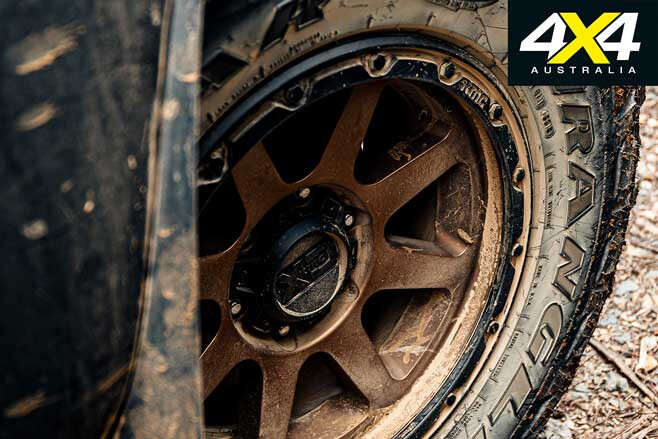
My first taste of the MT/Rs was on dry roads, firstly commuting through Melbourne and then, once off the Spirit of Tasmania I, on the highway from Devonport down to Longford. This leisurely cruise on the highway, with a freeway section thrown in, didn’t yield much information when it comes to on-road grip, steering and braking, but it did highlight the noise generated by the MT/Rs which, while not excessive, seemed more noticeable than some other new muddies we’ve tested before. Sure, muddies generally get louder with age when the edges of the tread blocks start to flare, but the MT/Rs were too new exhibit this type of wear.
The next day I got to sample the MT/Rs on wet bitumen and gravel roads, and Goodyear has obviously gone to great lengths to ensure they perform well in such conditions with their unusual asymmetric tread pattern. There are few sipes on the inside tread blocks, which are chunky items spaced far apart, no doubt aimed at gaining purchase in slippery off-road conditions, as well as quickly clearing away mud. And while the outer half of the tread pattern is also quite chunky, there’s an obvious longitudinal channel and a lot more siping in the tread blocks, clearly aimed at maximising water dispersion when driving on wet roads. Just look at the overall tread pattern and it’s quite clear to see what the Goodyear engineers have tried to achieve with this asymmetric design: a combination of off-road grip and on-road performance.
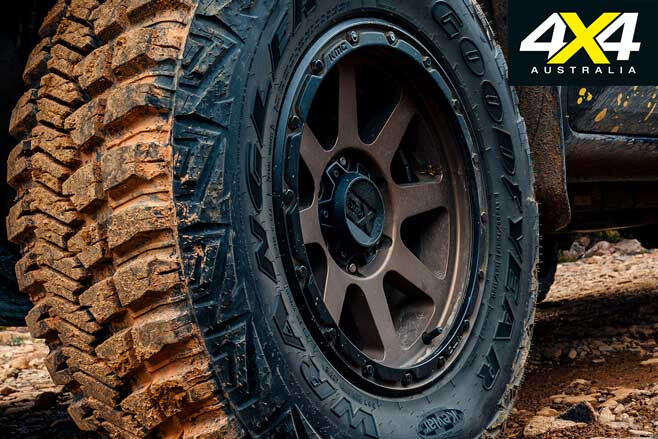
The tread compound is also important when it comes to on-road grip, especially in wet conditions, and while the use of silica in tyre compounds is nothing new, it’s the blend that dictates how a tyre performs in terms of rolling resistance and grip. In the MT/R, Goodyear claims to have come up with a special blend it imaginatively calls ‘Advanced Silica Compound’ that’s claimed to enhance off-road traction and wet on-road grip. Wet-road performance certainly proved impressive, with good steering feel in sketchy conditions, plenty of grip and strong braking performance.
Tassie provided an opportunity to test the MT/Rs in a wide variety of conditions including gravel, undulating rocky tracks, high-country hills, muddy sections, hard-packed sand and, on the West Coast, what the locals call quicksand. I ran 35psi on the road and dropped pressures once off the blacktop, down to 28psi on gravel roads, to 23psi on gnarly off-road tracks and as low as 16 to 13psi on super-soft sand.
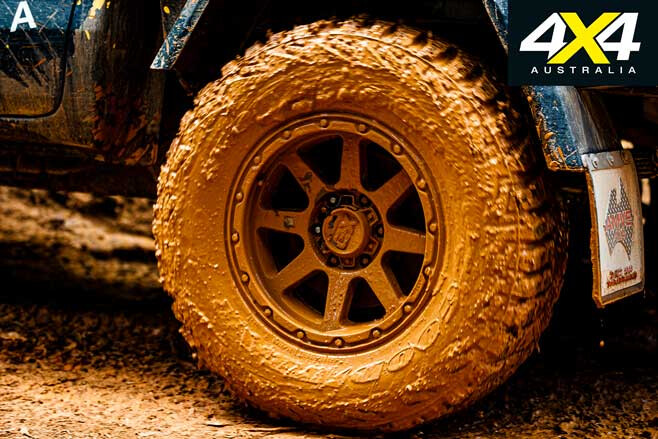
The MT/Rs did not disappoint, offering good traction no matter the surface. They also copped a pounding on some of the narrower tracks we encountered, with tree roots and rocks attacking the sidewalls at every opportunity but inflicting no visible damage – not even a scratch. As well as traction ridges that see the tread pattern continue over to the sidewall, the MT/R has a Kevlar reinforced sidewall construction, which proved impervious to damage despite my sometime wayward off-road driving that saw me occasionally brush up against rocks and other obstacles.
When lowering tyre pressures for soft sand driving, the MT/Rs didn’t ‘bag-out’ too much in the sidewalls, even at 13psi when recovering one of the other vehicles on our Tassie adventure.
Tassie is only a small state and, so far, we have only put around 3000km on the MT/Rs, but there’s plenty more off-road work ahead for these muddies.
RATED Available from: www.goodyear.com.au RRP: $499 ea We Say: Strong performance on and off the road, albeit a little noisy.
MSA 4X4 Accessories’ head honcho, Shane Miles, brought along his six-wheel drive LandCruiser 200 Series on a recent jaunt we took to the Apple Isle.
Fitted to the massive rig is the brand’s clever towing mirrors, which have been punished over many kilometres by the team before bringing it to market.
In the above video, Shane shows Deano some of the mirror’s nifty little tricks and its clever design. For example, they’ll fold inwards or outwards if you happen to clip a tree on a tight bush track.
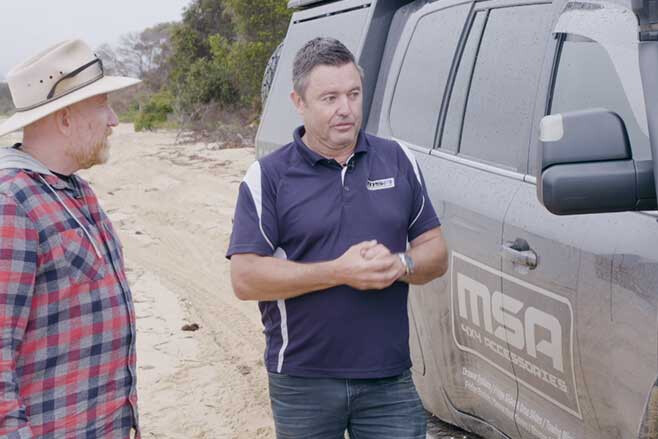
The mirrors, which remain unobtrusive in their design, provide the driver with full vision for the length of the trailer or caravan being towed.
“The key was to design a mirror that, when not towing, still looks proportionate to the size and styling of the vehicle. We needed to design a set of mirrors that just look right,” said MSA 4×4.
“Our new MSA 4X4 Driving Mirrors feature a unique design with a large single mirror that pivots on an extremely heavy-duty extension slide, that allows the mirror to be returned to its normal “non-towing” position, to avoid the extended mirrors permanently protruding off the sides of the vehicle.”
The mirrors are ADR-compliant and come with a five-year warranty.
More information: www.msa4x4.com.au
- Introduction
- Update 1: Fitting In
- Update 2: Midsize Triton
- Update 3: Towing with the Triton
- Update 4: Photographer’s Impression
- Update 5: No Fuss, No Frills
Introduction
A new year and a new long-term test truck for the magazine, as we welcome this Mitsubishi Triton GLX+ to the shed. The Triton finished 2019 as the third best-selling 4×4 in Australia, launching with a full reskin early in the year and receiving an up-spec towards the end of the year.
The new look came with a heavy load of standard safety equipment to give the Triton more safety kit than any other 4×4 ute on the market, including those that cost almost twice as much. The standard inclusion of rear cross-traffic alert puts it ahead of European rivals such as the Mercedes-Benz X-Class and VW Amarok, in terms of standard safety equipment.
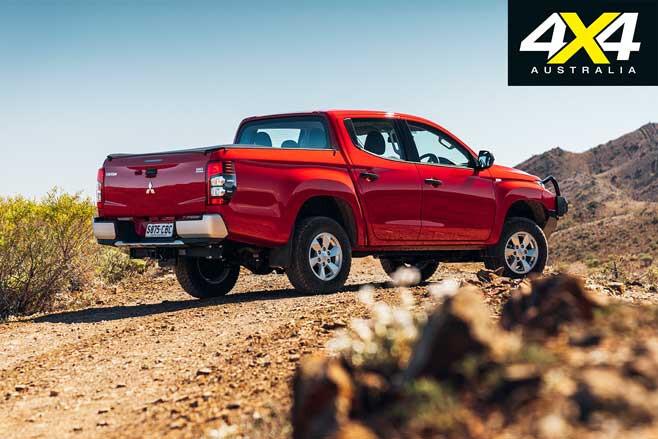
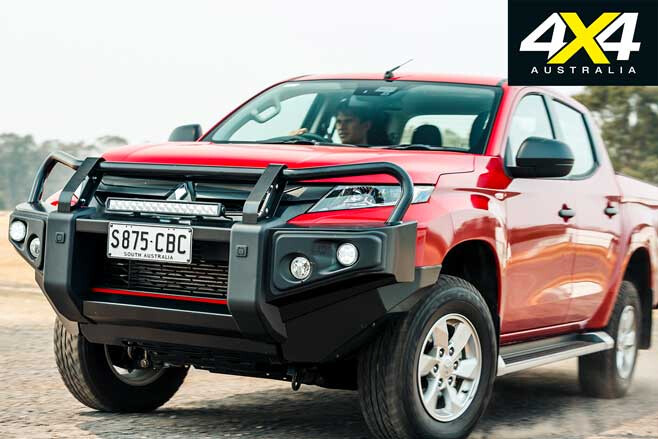
Our demo model comes with more than 6000km on the clock and a few factory extras including the steel front bar, LED light bar, a tow bar, floor mats and a tonneau cover. These add around $7K to the drive-away price, but on current pricing you could drive out in a GLX+ with all this kit for $47,668. That’s a lot of truck for less than $50K, The Triton owes its sales success to sharp pricing and value for money.
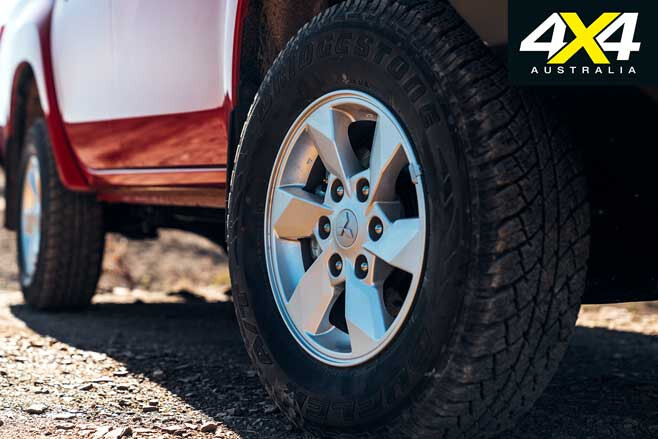
There was good news for off-roaders with the 2020 updates, with the rear diff lock dipping further down in the range so that this GLX+ specification now has it as standard; it was previously only offered in the top-of-the-range model. Also new was the inclusion of 245/70R16 Bridgestone Dueler all-terrains to the GLX and GLX+.
These worthy additions add to a long line of standard features including the Super Select 4×4 system that gives the user the option of full-time AWD, as well as the usual RWD and locked 4×4 settings. There’s a comprehensive A/V system with Apple Carplay/Android Auto, and all the bits and bobs you expect in a mid-range pick-up.
We look forward to putting the Triton through its paces over the next six months. It’s always been an honest toiler that gets on with the job without any pretence; it’s not everyone’s bunch of grapes, but when you consider the safety package and drive-away pricing, it bears further investigation beyond the flash and glamour of some of the more popular 4×4 utes.
4×4 Shed Log #1: 2019 Mitsubishi Triton GLX Current mileage: 6775km Price: $50,403 (as tested)
Update 1: Fitting In
The Triton finds its place in the shed during its first month with us.
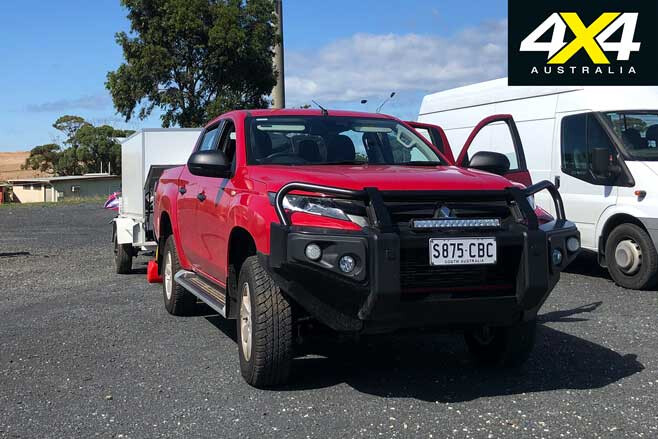
The Mitsubishi Triton hasn’t left town for its first month with us, but it hasn’t been laying idle either. As always when you have a ute, especially one with a towbar, mates appear from everywhere wanting to borrow it.
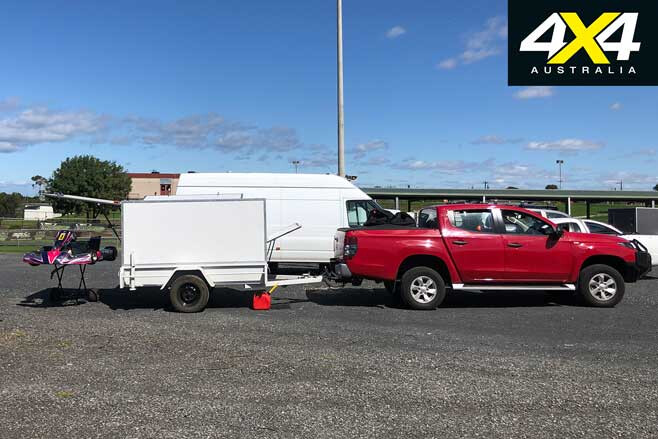
This time it was Louis from MOTOR Magazine who was looking to tow his go-kart trailer over a weekend and the ZL1 Camaro he regularly drives strangely enough doesn’t have a hitch. I happily swapped keys with him and, as expected, the Triton made light work of the relatively light kart trailer. For the record; the ZL1 attracts a bit more attention than the Triton does. It goes a bit better, too, but it can’t tow a trailer or go off-road.
The MOTOR team nabbed the Triton again for use as a camera car on a shoot with the Camaro at the racetrack, and it gave us the chance to bag these pics.
Back in Melbourne, the Triton has slipped into commuter mode and is a very easy vehicle to live with for this use. It really is an appliance that you just use and it does the job without fault. It’s an easy vehicle to get in and out of, offers plenty of outward vision for the driver and is reasonably comfortable.
The Triton is one of the few 4×4 utes on the market that has a steering column that is adjustable for both height and reach, yet with my 185cm frame in the driver’s seat I still find the steering wheel a long way away and would prefer it closer. It is less than ideal, but moving the seat further forward would have my knees touching the steering wheel.
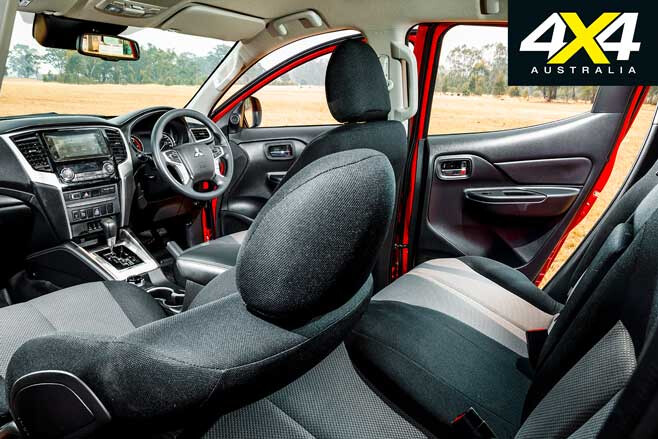
Speaking of moving the seat forward, the only problem we’ve had with the Triton came when Tristan Tancredi drove it and was unable to slide the seat forward any more than a few centimetres. There was obviously something jamming the left-hand seat slide, but looking under it didn’t show anything. Removing the seat revealed a five-cent piece that had well and truly wedged itself into the rail preventing full travel. The offending bent and buckled coin was removed to make things right.
While most of the cabin controls and functions within the Triton are simple and easy to operate, a personal hate of mine is the absence of dials to control things like the audio volume and cabin temperature.
Car companies seem hell-bent on doing away with dials and replacing them with buttons even though dials are more tactile, easier to use without having to look at, and faster responding to inputs. In this age when safety experts are always preaching about driver distractions, you’d think having the simplest controls for regular function would be a no-brainer. Mitsubishi isn’t the only company at fault here, most of them are guilty of disregarding knobs.
The cabin is otherwise well-appointed with all the stuff you want; single-zone climate control, a decent-sized display screen with access to Apple Carplay/Android Auto, and good storage compartments. Just as important, it doesn’t have the stuff you don’t want; there’s no keyless entry or start button, and no power tailgate at the back. Even so, it’s still frustrates when it doesn’t let you remove the key from the ignition before you put it in park, and the self-locking doors function can’t be switched off.
The Triton has proved itself easy to live with in town, so now we just have to get it out and get it dirty.
4×4 Shed Log #2: 2019 Mitsubishi Triton GLX Current mileage: 8018km Price: $50,403 (as tested) Mileage since last update: 1243km Average fuel consumption: 11.1L/100km
Update 2: Midsize Triton
Is it true that good things come in small packages?
While many of us love the big truck feel and ride of some of the larger offerings in the one-tonne 4×4 segment, the appeal of that extra size soon fades once you’re back in town and looking for a spot in the local carpark.
With long wheelbases and even longer overall lengths, some of these double-cabs can be a real pain in the butt to park around town. And speaking of butts, many urban parking spots aren’t marked for five-metre plus utes and they will leave their tail hanging out past the designated space.
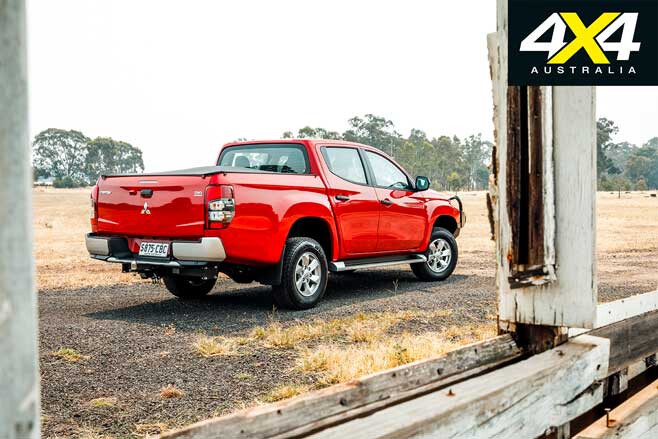
Thankfully the Mitsubishi Triton isn’t one of these utes and is actually one I don’t mind driving around town. With its total length coming in at 5305mm, and more importantly the wheelbase at 3000mm, the Triton is one of the easiest utes for the urban adventure.
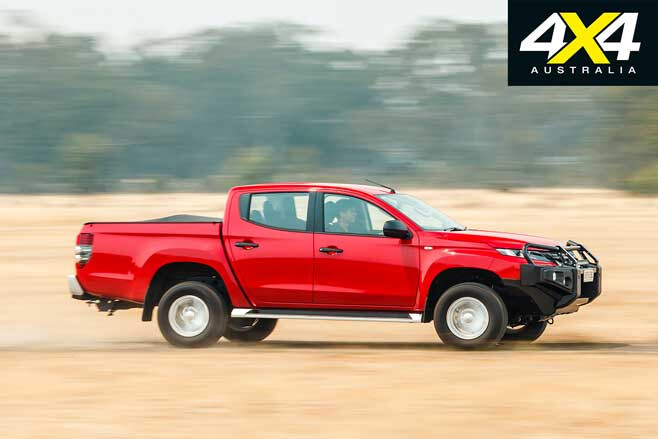
While the short wheelbase might not be the best thing for carrying a load in the tray, as it puts most of the load behind the rear axle, it does make the Mits more manoeuvrable, both in town and out on the tracks. Its 11.8m turning circle is really noticeable when you’re exploring places like the high country or desert scrub where tracks twist and turn in between bushes.
Defying its size, the GLX+ has a healthy payload of 945kg and Mitsubishi has wisely kept its maximum towing capacity at 3100kg. While that might be 400kg down on some of its competitors, in the real world the Triton is better off with its 5885kg GCM (Gross Combined Mass) leaving you with a solid 830-usable kilograms you can still load in to the car. That maximum towing capacity isn’t always what you make of it until you line it up against the GCM and see what you can carry in the car as well.
Triton is one of the best in this regards allowing you to still carry a few mates and some gear in the car when you have a heavy trailer on.
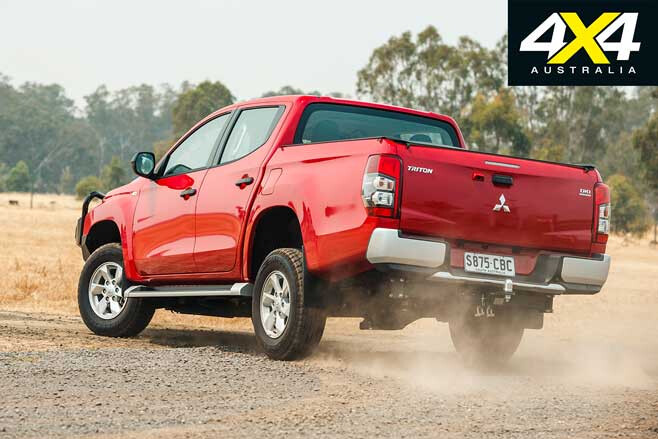
The Triton’s 2.4-litre diesel engine punches above its weight too. Like all inline four-cylinder engines it can be a tad harsh when you wring it to get the full 133kW and 430Nm out of its four pots, but for general duties it’s refined and smooth. It mates well to the six-speed auto transmission, again making for ease of use.
Sometimes it is true that good things come in small packages, err smaller packages, and this rings true with the user-friendly Triton.
4×4 Shed Log #3: 2019 Mitsubishi Triton GLX Current mileage: 8338km Price: $50,403 (as tested) Mileage since last update: 320km Average fuel consumption: 11.3L/100km
Long-termer options Triton GLX with red paint: $43,490 Tow bar kit: $1170 Black protection bar with fog lamps: $4193 Rubber mat set: $107 LED light bar: $708 Soft tonneau cover: $735
Update 3: Towing with the Triton
The Street Machine gang won’t be taking our long-term Triton to the apocalypse – 15/5/20
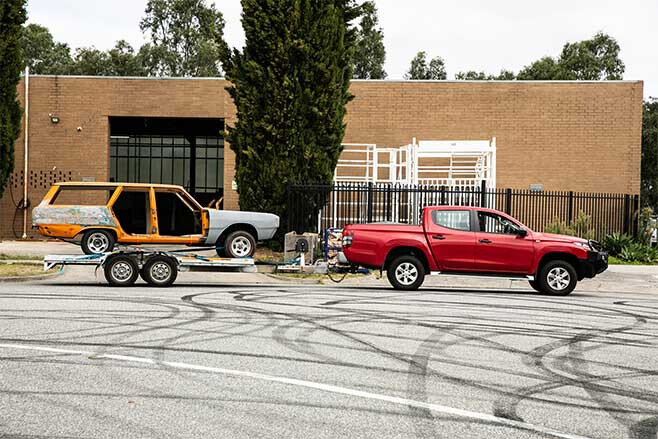
WITH CORONAVIRUS on the tips of everyone’s tongues, and grubby little fingers, the Street Machine Carnage workshop decided to take action and prepare for a Government mandated Stage Four Lockdown.
There was no time to prepare so we grabbed a hire trailer and laid our oil-stained hands on the keys to 4X4 Australia’s long-term Mitsubishi Triton GLX+.Street Machine Carnage is a YouTube based car-modification channel that modifies, builds and sometimes destroys performance cars for the purposes of entertainment. As a consequence we spend a lot of time towing with dual-cab utes and other SUVs, and usually over long distances.Jumping in the first time, we were surprised by the basic interior with rubber flooring and cloth seats that felt like a call back to the ’90s. Even the ignition key feels basic with the blade-like key shaft that threatens to penetrate you every time you sit down. We should be thankful it needed to be inserted to start the car.
But it’s not all bad, the standard reverse camera and screen is excellent and we had no trouble reversing with the hire trailer, which are notoriously evil beasts with short drawbars and poor maintenance records. The side mirrors are large and clear, and combined with the centre screen we had no dramas.Out on the road the Triton never felt lacking for power. It never struggled to match traffic on the freeway on-ramps or held up traffic in any way. The 2.4L MIVEC diesel is a strong performer and despite it only having 133kW and 430Nm we didn’t miss any of the power that we usually have access to while driving its competitors.
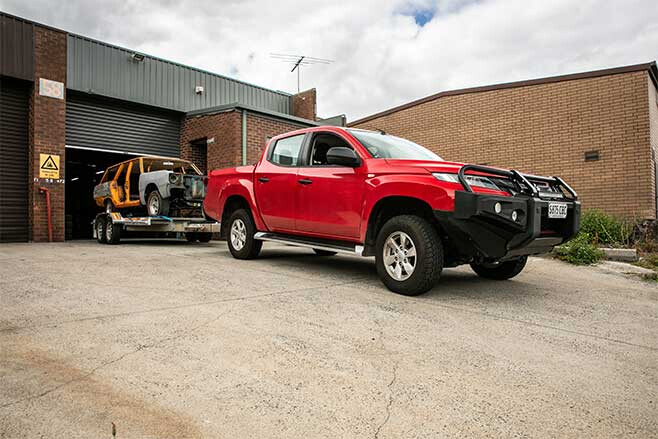
However we have to admit the heavy-duty leaf-spring rear suspension had us voicing a few choice words when we hit bumps. Despite having a towing capacity of just 3100kg the rear suspension feels surprisingly firm, probably more so than it needs to be. When combined with the less than compliant bucket seats it made the hour-long drive less than pleasant.
We certainly wouldn’t want to be travelling for a full day in those seats with that suspension – ’90s flashback again. But the Bluetooth stereo was adequate and the automatic air-conditioning worked so it wasn’t a total time warp back to the days when tradies had iron butts and all the entertainment that an AM radio could provide.So we can’t say that our first experience with the Triton GLX+ was an unqualified success. Sure, it got us out of a jam and now we have the Valiant wagon locked away in the home garage to be worked on if and when the Government lock us all inside to curtail the spread of COVID-19.
As we write this, Level Three restrictions have just gone into effect in Victoria, but is the Triton really the car that we’d want to be locked into for the Apocalypse? Sorry, but we can’t say it is. Diesel dual cabs have come such a long way in the past 20 years and we can’t help but feel that the Triton is lagging a long way behind. – Scott Taylor – Street Machine
Update 4: Photographer’s Impression
Our ace snapper gets out of the passenger seat for a suburban dad’s rating of the Triton – 23/6/20
I GOT my (clean) hands on the Triton long-termer because of coronavirus. You see, usually when we go out to shoot a car for a review – in this instance the short-wheelbase SsangYong Musso for last issue – it’s just a matter of jumping in with the journo and heading into the scrub.
I’ll jump out when we see a good-looking track, clamber up to the top to photograph the car coming up, jump back in and away we go. But due to social distancing I needed a separate car, and I don’t think my trusty Falcon would have been quite up to the job … if only it was an AU!
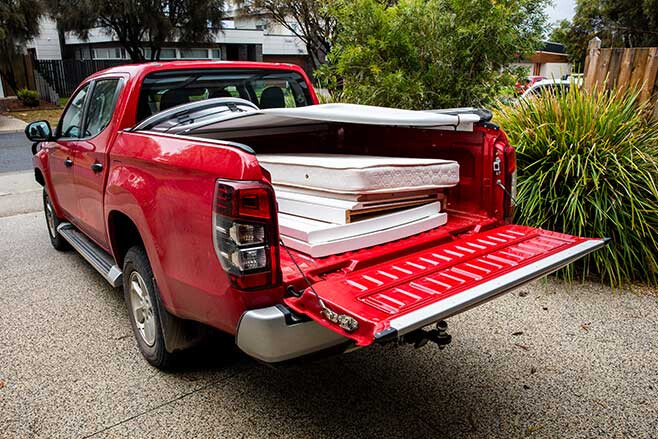
So I was thrown the keys to the Triton. This meant I had access to it over the weekend, and when you suddenly have a dual cab at your disposal, tasks that are normally a pain or not feasible with a sedan become no hassle.
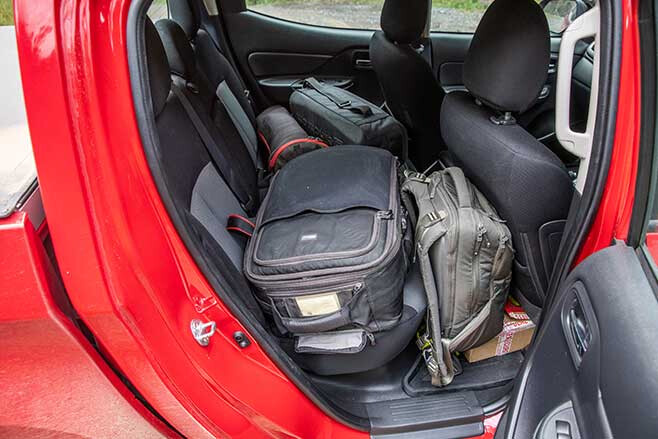
Some friends lent us a cot in between having kids, but they needed it back after having a third and it doesn’t fit in my car. Talk about perfect timing! The cot was disassembled and it fit in the tray without a drama.
I mingled right in with all the other dual cab owners at the local Bunnings carpark as well, picking up a couple of 20kg bags of play sand and a miniature slide to keep my sixteen-month-old boy, Charlie, entertained in these times of self-isolation.
The amazing thing with the Triton is that it does everything you need of it. It happily got me down some steep terrain on the shoot; that usually, as a passenger, I don’t need to stress about. And it was just as happy getting around suburbia to run basic errands.
Is it the perfect fit for a full-time photographer/suburban dad? Almost.
The problem with utes as a snapper is the risk of leaving gear in the tray, even if you have a lockable canopy. For this reason alone, a wagon would be the safer bet – Nathan Jacobs
Current mileage: 9167km Price: $50,403 (as tested) Mileage since last update: 573km Average fuel consumption: 11.2L/100km
Update 5: No Frills, No Fuss
Our time with the Triton has ended, and it will be missed by everyone who borrowed it over the past six months – 12/7/20
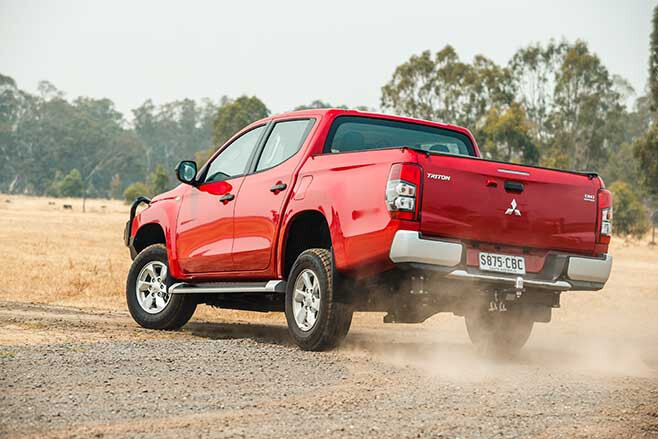
OUR SIX months with the Mitsubishi Triton has come to a close, and while our hopes to take it out and about as we normally would with a long-term test car were thwarted by the Beer Flu pandemic, it has still seen plenty of use around town.
In fact, the Triton has probably seen more varied use than other vehicles we’ve had in the shed. The old adage of ‘you’re everyone’s mate when you have a ute’ has never been truer, and the Triton has been passed around the office to tow trailers and race cars, haul garden waste, pick up hardware from Bunnings and carry motorbikes in its tray.
The Triton, therefore, has proved very versatile when it comes to carrying a load in its tub, and most said it did the jobs called of it without any fuss.
Versatility is the biggest trait of any double-cab ute, and the Mitsubishi delivers that in a value-packed Triton that is usually more affordable than the competition. The GLX+ is the second lowest in the range of double-cab 4×4 auto Tritons, yet for $41,490 drive-away it comes with all the features you need for a one-tonne ute.
The cabin is comfortable and easy to live with, even if it’s not as big as some of its competitors inside. There’s standard big screen info with Apple CarPlay, a rear diff lock for off-roading and all the creature comforts you could want in this price range. It has a 945kg payload and 3100kg towing capacity and, significantly, the towing doesn’t eat in to your payload as much as it does on some other utes thanks to the 5885kg GCM.
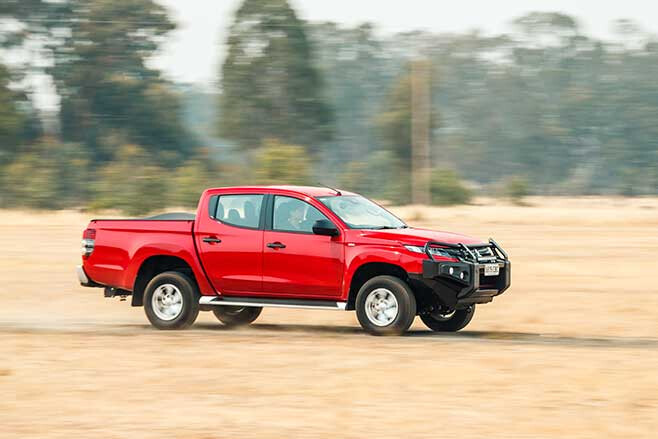
The only real off-road driving we’ve been able to do in the Triton has been as a photographer’s car on a couple of photoshoots, and it was surefooted and competent on the tracks and simple to use for a less experienced four-wheel driver. This particular car was one from the original model launch on the rugged Warraweena Conservation Park in the Northern Flinders Ranges, South Australia, where Deano was able to give it plenty of bush driving.
A feature we often debate the value of in a 4×4 vehicle is the availability of full-time 4×4 as well as locked 4×4 high and low range. The Triton is one of the few 4×4 utes available that offers this, however it is not fitted in the GLX+. You need to step up to the GLS to get that in the Super-Select system.
I’ve always argued you don’t need full-time 4×4, but during a particularly wet time in Melbourne, I went looking for it in the 4×4 selector dial to curb the amount of wheel spin I was getting on the slick roads in 2WD. When pulling out in traffic, the wheels would spin and activate the electronic traction control and cut my throttle, potentially creating a dangerous situation. This is the case in most other 4×4 utes that are all part-time 4×4. So they are 2WD when on-road.
Full-time 4WD would have been a blessing in these conditions, but when I turned the dial, I found I only had locked 4×4, which is not suitable for on-road use. So there was a great argument for the full Super-Select 4×4 system as found in the other Triton models and worthy of consideration for anyone buying a 4×4 ute.
Current mileage: 10,070km Price: $50,403 (as tested) Mileage since last update: 903km Average fuel consumption: 10.3L/100km
FANCY a new intercooler? Perhaps a pre-filter system? How about new shocks for your Wrangler?
GARRETT PERFORMANCE INTERCOOLER
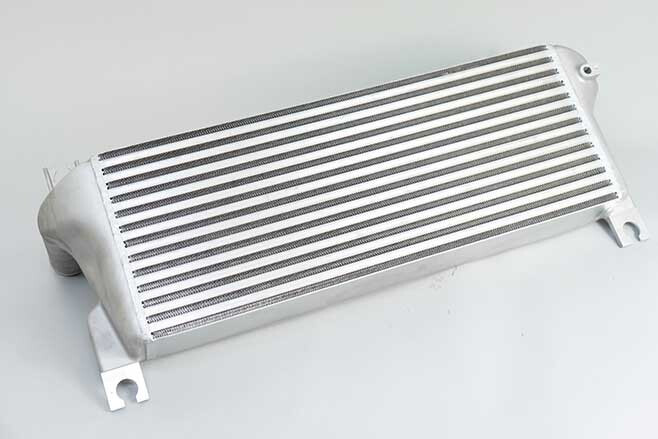
Boost the performance of your 4×4 by adding a Garrett direct-fit performance intercooler to the mix. The Garrett Powermax Direct Fit Performance Charge Air Cooler is designed to work with MY 2011-19 Ford Ranger PXI and PXII, as well as the Mazda BT-50 (3.2L and 2.2L diesels). The intercooler can be installed in two hours, and reuses stock bolts, hoses and clamps. The intercooler supports up to 499kW, with the unit boasting a 218 per cent larger core that helps to reduce intake manifold temperatures by an average of 32˚C.
Website: www.gcg.com.au
PRELINE-PLUS PRE-FILTER KIT
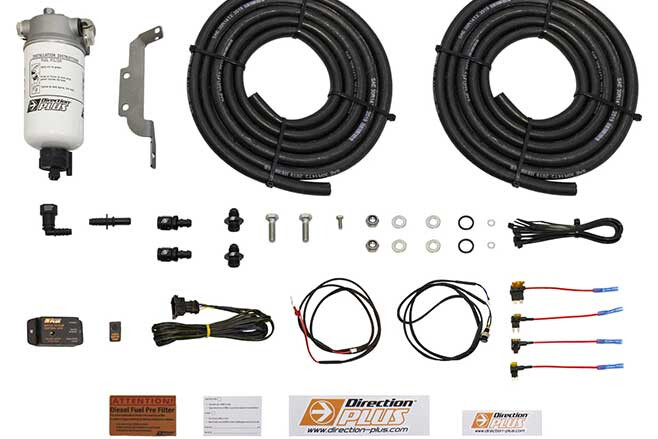
Protect your Colorado’s diesel fuel system from corrosion and abrasion with a Direction-Plus PreLine-Plus PL602DPK pre-filter system. Specifically designed to cope with extreme weather conditions and poor fuel quality, the pre-filter kit ensures a high degree of water separation and particle pre-separation. The kit comes with a 100 per cent water separation efficiency rating (based on 300μm droplet size), to meet specifications set by leading manufacturers of diesel fuel injection systems. In addition, the PreLine-Plus kit features a multistage water alert function, notifying the driver if water is detected in the fuel.
RRP: $596.73
Website: www.directionplus.com.au
OME WRANGLER LIFT
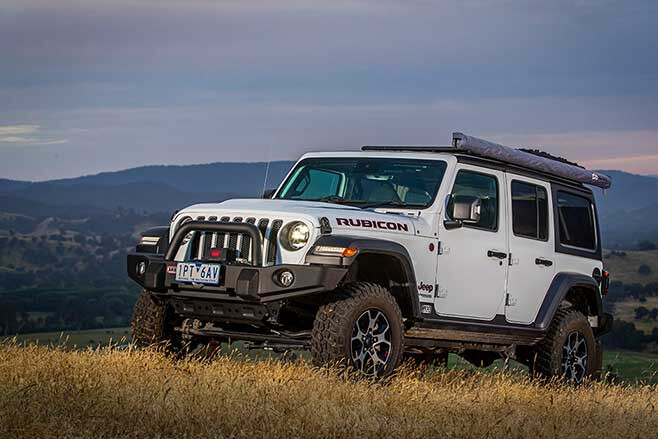
Old Man Emu’s Nitrocharger Sport shocks for the all-new JL Wrangler are specifically designed and tuned to give it a two-inch lift and also cop a beating on the tough, rocky tracks JL Wrangler owners are bound to encounter. “During the development of Old Man Emu’s Nitrocharger Sport shock absorbers, particular focus was placed on how well they are matched to the specific springs they’ll be controlling; with Ride Control Engineers tailoring shock absorber valving to work with the different springs in the range, often resulting in multiple shock absorber options for each vehicle,” ARB says.
Website: www.oldmanemu.com.au; www.arb.com.au
WITH travel restrictions easing across the country, here’s a state-by-state guide to parks and track closures due to the coronavirus pandemic.
Victoria
DESPITE a spike in coronavirus cases in the Garden State, the Victorian Government has continued with its decision to ease restrictions across the state.
Most parks and tracks were reopened to the public earlier in the month, and these will remain open. Fishing, boating and bush-walking is also permitted, with Parks Victoria adding a few non-negotiables: – Do not gather in groups of more than 20 people. – Check that the park is open before travelling. – Avoid parks that are usually busy on a weekend. – If a car park is full, no more people can visit that site.
In addition, the ski season has also began, with a few changes implemented by Parks Victoria. Visitor numbers will be limited at Mount Buffalo National Park, Mount St Gwinear (Baw Baw National Park) and Mount Donna Buang (Yarra Ranges National Park). “Once capacity is met, entry to the park will be temporarily halted to manage visitor numbers,” a Parks Victoria statement reads. “Vehicles will be permitted to enter as other vehicles leave.”
Sites that remain closed include Redwood Forest in Warburton, Buchan Caves Reserve, Lower Glenelg National Park and Point Nepean National Park.
For more information, please visit: www.4wdvictoria.org.au/
New South Wales
The NSW National Parks and Wildlife Service (NPWS) began easing travel restrictions from June 1, reopening most campgrounds and permitting recreational activities including bushwalking, fishing and birdwatching.
High-risk activities (rock climbing, abseiling and canyoning) should be avoided, “to avoid increasing demand for emergency services”.
Before you pack your bags, remember that booking is now required for all camping and accommodation in all NSW national parks. Back-country camping requires you to complete a mandatory Trip Intention Form.
The NSW snow season has also officially begun, with Thredbo opening on June 22, Perisher on June 24 and Charlotte Pass on June 26.
There are some closures still in place. To find out more, visit: https://www.nationalparks.nsw.gov.au/
Tasmania
The majority of Tasmania Parks and Wildlife Service (PWS) facilities, parks and reserves were reopened to the public from June 15; while the 30km travel limit has also been lifted.
Some campsites – including the Overland Track, Frenchmans Cap, Arm River, Pine Valley, Scott Kilvert and Walls of Jerusalem – require registration.
Otherwise, it’s back to business as usual in the Apple Isle, with some of the state’s major attractions – including Three Capes Track and Dove Lake – open to the public.
For more information, visit: https://parks.tas.gov.au/
South Australia
South Australia has opened its borders to the NT, Queensland, Tasmania and Western Australia, with people entering directly from these states no longer required to quarantine for 14 days.
All South Australian parks were also reopened on June 1; this includes campsites, group facilities (firepits, barbecues, etc.) and bookable accommodation (shearers’ quarters). A limit of 20 people per gathering is still in place, though.
“The risk of COVID-19 transmission from outdoor parks, playgrounds and equipment is low and can be managed by following important social distancing and hygiene precautions,” the SA Parks website says.
More info: https://www.parks.sa.gov.au/
Queensland
All national parks and state forest sites previously closed for COVID-19 have been reopened. However, there are some restrictions still in place to support Queensland Health directives: – limiting the number of campsites. – limiting the number of people who are able to access amenities at any one time. – keeping showers closed.
Queensland Parks also advises the public to only enter areas where there are empty spaces in car parks. Cooloola and Bribie Island remain designated Restricted Access Areas sites, while other site closures remain in force.
“Travel restrictions remain in force under the Queensland Chief Health Officer public health directions for designated Indigenous community areas,” Queensland Parks says on its website. “National Parks in Cape York Peninsula along with Boodjamulla National Park in north-west Queensland remain closed to the public living outside the designated areas, as there are restrictions on travel for recreation and tourism purposes.”
To stay up-to-date, and to see where bookings are essential, visit: https://parks.des.qld.gov.au/
Western Australia
From June 6, restrictions were eased in Western Australia, allowing the public to travel throughout WA and into the Kimberley region.
Changes still in force include to the online booking service, which allows campers to book up to 180 days in advance (previously 28 days).
Despite the re-opening of public spaces, sensible precautions still need to be taken. ” The four square metres of space per person rule, with particular attention to shared facilities and areas such as ablutions, sheltered barbecues and other communal areas, must be followed,” WA Parks says.
The following WA attractions and sites remain closed: Penguin Island Experience, Crystal Cave at Yanchep National Park and the Danggu Geikie Gorge Boat Tour.
Some restrictions remain. More information: https://parks.dpaw.wa.gov.au/
Northern Territory
Travel restrictions in the NT were lifted on June 5, with the public no longer required to quarantine for 14 days before entering a remote community.
“Residents can move freely between their communities, homelands, country and town,” says the NT Government website.
“Any non-residents wanting to go into a remote community must still must follow all the requirements of land councils and local communities, including checking if you need a land council permit to go there,” it adds.
For information, visit: https://coronavirus.nt.gov.au/
WE take a closer look at three new products on the market: Narva’s Colt 1000 LED spotlight, a Rhino-Rack Backbone system for the Nissan Navara, and Rubicon tent rack and Hutch roof-top tent combo.
NARVA COLT 1000 LED SPOTLIGHT
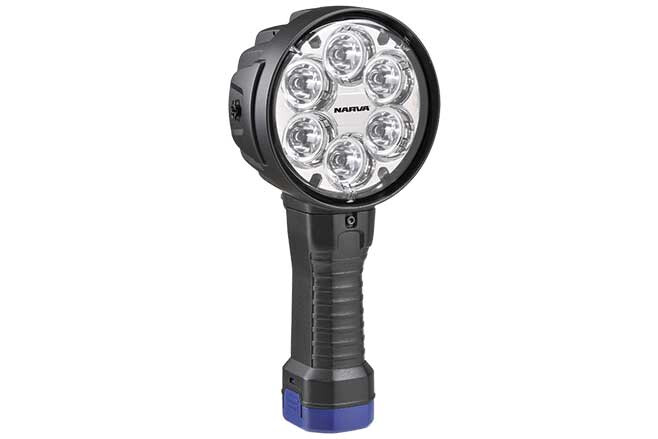
FIND your way back to your tent with this heavy duty handheld spotlight by Narva. Featuring six high-powered LEDs (producing 2500 raw lumens), the spotlight has a spot beam range of up to 244 metres. Enclosed in a heavy duty casing, the unit is fully sealed and waterproof (IP66 rating). Other features include a 5700K light output, a foldaway hook and an ergonomically designed handle. The Colt 1000 is powered by a rechargeable, removable 7.4V lithium battery, and a 240V AC charger is included.
Website: www.narva.com.au
RUBICON TENT RACK + HUTCH ROOFTOP TENT
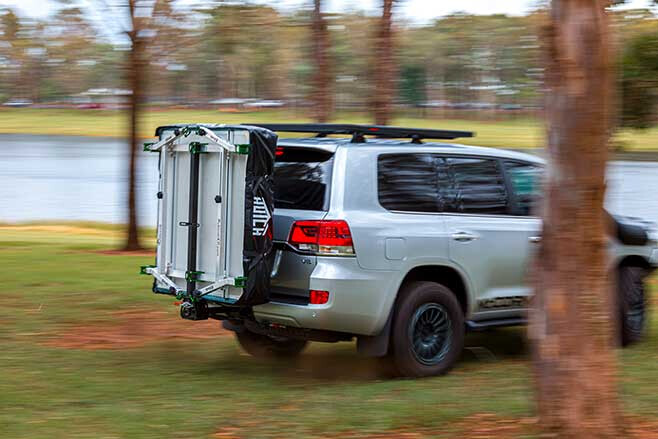
Combine a Rubicon tent rack with a Hutch tent and you’ll be catching zeds as soon as you get to camp. One person can easily set up and pack down the tent in five minutes, and it can be erected on any terrain four adjustable legs and feet. It is rear-mounted, freeing up the roof racks and reducing wind resistance – plus, it can be easily dismounted when left at home. The tent is made from a high-quality, rip-stop poly-canvas that is breathable, waterproof, mould and mildew resistant, with UV protection. RRP: $1799 (Rubicon hitch tent rack); $1599-$1899 (Hutch roof-top tent)
Website: www.mccormacks4wd.com.au
RHINO-RACK BACKBONE FOR NAVARA
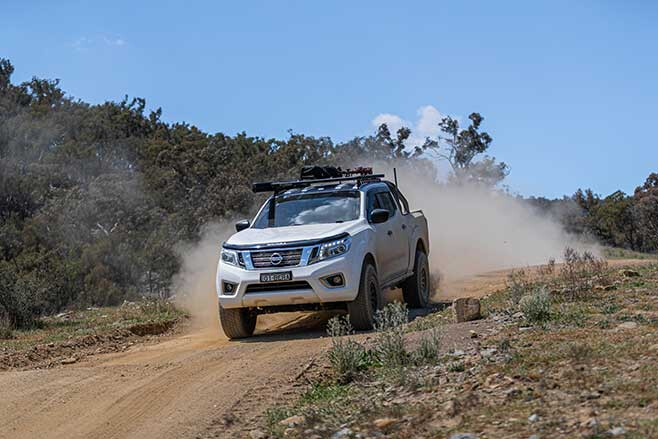
Rhino-Rack has introduced the Nissan Navara NP300 Dual Cab Backbone system. The Backbone system is constructed from non-corrosive stainless steel, so it’ll survive long stints beneath the harsh Aussie sun. The system is connected to the roof of the Navara via three bases on each side, evenly distributing the weight of the gear loaded on top. The Backbone system pairs perfectly with Rhino-Rack’s Pioneer platform, allowing the consumer to easily connect and carry existing Rhino-Rack accessories, including add-ons such as kayak carriers and spare tyres.
RRP: From $496 (Rhino-Rack Nissan Navara NP300 Dual Cab Backbone); $1595 (Rhino-Rack Backbone and Pioneer Package)
Website: www.rhinorack.com.au
IT IS probably no coincidence that Britain’s most influential all-wheel drive shares its initials with the brand once regarded as the ‘Best Car in the World’.
From inception, the Range Rover was intended to be an executive off-roader that could haul polo ponies on Sunday, drive to the office on Monday and unashamedly share garage space with its owner’s Rolls-Royce.
Conceived by engineering director Spen King, the Range Rover could trace its lineage to a ‘Road Rover’ prototype from the 1950s that combined a Land Rover driveline and chassis with more car-like styling.
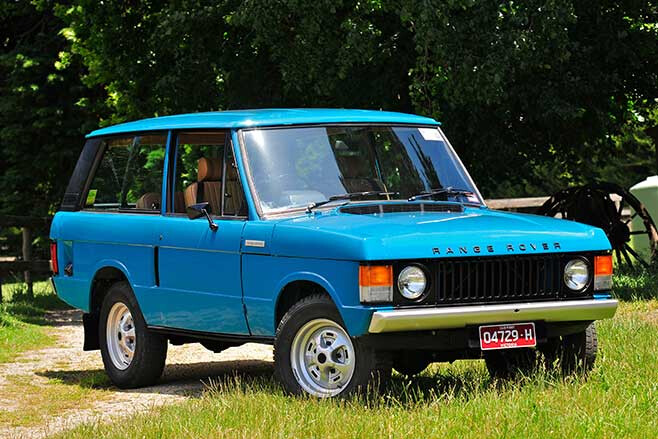
King’s prototype began testing in 1967 and was introduced to a gobsmacked 4WD world three years later. Under the bonnet was Rover’s familiar all-alloy V8, the same one used in the company’s sedans, but de-tuned to deliver 97kW and maximum torque at 2500rpm.
Constant four-wheel drive eliminated the need for lockable front hubs. Instead, a centre differential fed power to all four wheels and could be locked via vacuum control. A floor-mounted lever engaged the very serious low-range gear set which cut speed in first to less than walking pace.
The original Range Rover came with two doors, vinyl seat trim and a four-speed manual transmission with no automatic alternative. Australian deliveries began in 1972 and were priced at around $7500. That money would have bought one and a half FJ55 Toyota LandCruisers with four doors and more power, but the ‘Toorak Tractor’ offered greater prestige.
In 1980, a three-speed Chrysler automatic transmission became available, and the four-speed manual was replaced in 1984 by a five-speed.
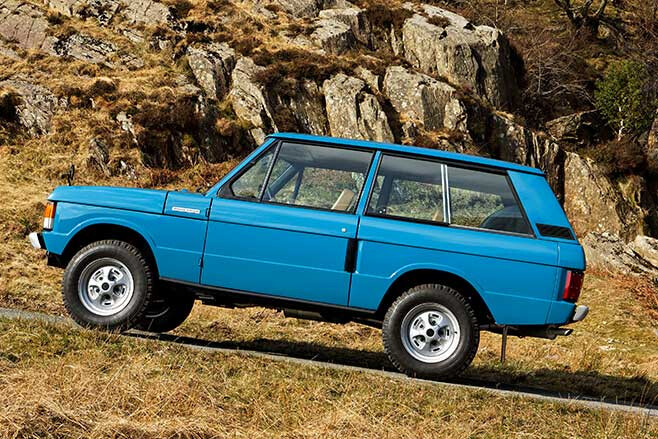
In 1982 the body was altered to accommodate a pair of additional doors and interior improvements. Power steering, which was optional on early models, had been standard since 1978 on Australian-delivered Range Rovers.
The Highline variation released in 1984 was distinguished externally by alloy wheels and inside by the standard automatic transmission (manual optional), upgraded trim, air-conditioning, electric windows and mirrors. By this time the price had surged past $40,000 yet sales remained strong. In 1985, Range Rover had its best year internationally since the model’s inception with more than 13,000 vehicles sold.
To help counter the power-sapping potential of unleaded fuel, an EFI engine with 110kW was announced in 1986, accompanied by a ZF four-speed automatic transmission.
Big news for Range Rover buyers in 1989 was the introduction of a 134kW 3.9-litre fuel-injected V8, powering a revamped version of the well-appointed Vogue. Introduced a few months earlier with a 110kW engine, the Vogue was packed with features including ABS, leather upholstery, power front seats and sunroof, and cruise control.
In 1993, the LSE Vogue’s wheelbase was extended from the standard 2540mm to 2743 and came with mandatory auto transmission, climate-control air-conditioning, a CD player and remote central locking. The LSE’s air-assisted suspension was destined to cause problems in later life. It was also the first Range Rover to breach the $100,000 mark.
ON THE ROAD
IN AN era when semi-elliptic springs were standard fare in the 4WD world, the all-coil Range Rover was a revelation when it debuted.
Huge amounts of spring travel and a rear-axle stabilising strut allowed the Range Rover to adopt seemingly impossible wheel and body angles while picking its way through ruts and over boulders that would stop virtually any non-military all-wheel drives.
Later versions with stiffer springs and air-assistance kept body roll under greater control but at the cost of increased mechanical complexity and diminished off-road versatility.
Arguments rage among enthusiasts over the benefits of the Boge load-levelling strut. Some say the device should be retained to maintain traction and maximum wheel deflection in rough conditions. Others recommend ditching a worn-out Boge in favour of stiffer springs and uprated shock absorbers.
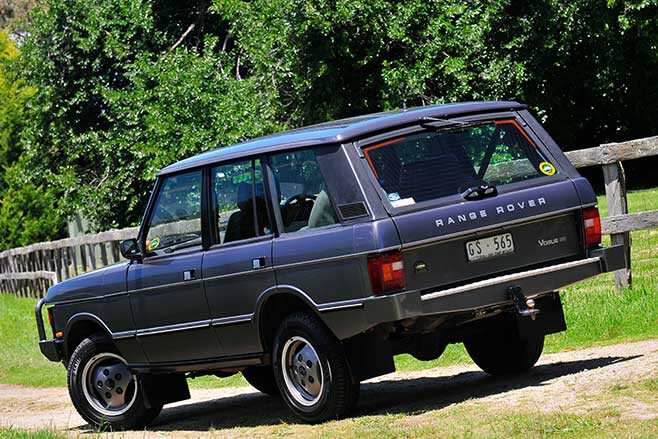
Range Rovers fall typically into two categories. There are the super-serious off-road versions with jacked-up suspensions and massive tyres to match. These aren’t much chop for highway or everyday driving but are brilliant in the dunes or rough country.
The majority are later model Vogue or Highline versions with automatic transmissions and minimal exposure to bush bashing. That’s just as well because the Vogue’s deep front air dam seriously compromises ‘ramp angle’ and would likely be left lying on the track after trying to attack a steep embankment. Those with air-suspension should definitely be kept well away from the really rough stuff.
Where Range Rovers of any age shine is on corrugated dirt. The soft-walled radial tyres deal with minor surface imperfections and the long-travel coils take care of almost anything else. On roads that will have car T-sprung 4WDs twitching and bunny-hopping, a Rangie will waft along at speeds that would be impressive on smooth bitumen.
The recirculating ball steering, power-assisted or manual, is geared reasonably well with 3.4 turns lock-to-lock in pre-power-assist models and 3.75 turns when assisted. An 11.3m turning circle is exceptional for a biggish all-wheel drive and being nimble pays dividends when trying to edge between rocks and big trees.
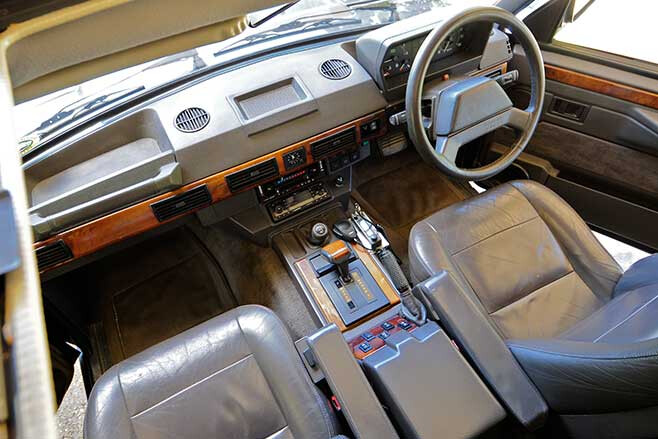
A high-set driving position combined with huge windows provides great visibility in all directions, and the strange instrument binnacle on top of the dash puts necessary information right in a driver’s eye line. The rear seat on two-door models folded into an untidy heap, but later models used an improved seat stowage system that left more space for cargo.
Performance with the 3.5-litre engines feels more spirited from behind the wheel than against the stop-watch. Early manual versions took a leisurely 18 seconds to reach 100km/h while the 112kW Vogue with a four-speed automatic transmission was timed at a reasonably slick 12.2 seconds. Top speed of the 1970s models was 155km/h, however the later and heavier Vogue could manage just 145km/h.
Fuel consumption in the 14 to 18L/100km range is common to all versions. Early manuals can manage 12L/100km at constant highway speeds and the 3.9 auto is typically around 16L/100km, but that can quickly go past 25L/100km in rough going with low-range engaged.
The fuel tank was originally a reasonable 86 litres but was reduced to a barely adequate 76L in four-door models.
Some owners seeking extra performance replaced the original V8 with a 4.4-litre version as sold in the Leyland P76 and Terrier truck. These can be easily modified to produce more than 200kW, but serious off-road enthusiasts caution against using Holley-type carburettors which don’t perform well in steep terrain.
BUYING
LOW VALUES and high maintenance costs have resulted in stocks of early two-door Range Rovers becoming seriously depleted. By the late-1980s, very good 10- to 15-year-old versions had dropped below $2500 and a reconditioned engine or transmission would cost more than a complete vehicle.
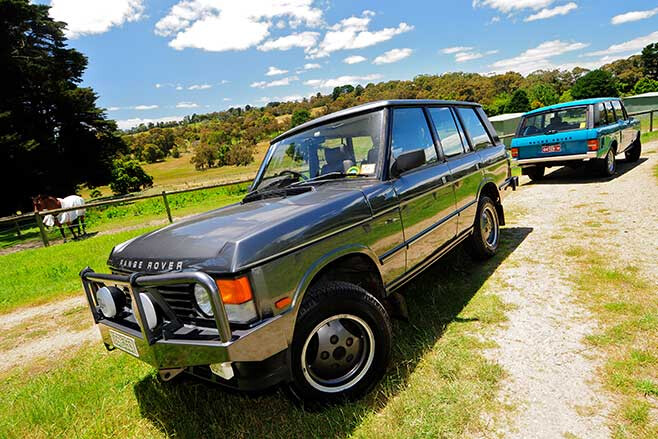
The significant decline in retained values extends to Vogue and early LSE models as well. These generally sell for less than $10,000 and only the best pre-1995 cars will climb past $15,000.
Short-wheelbase models without the more complex suspension are preferable for serious off-road use and have often been modified for improved performance in extreme conditions.
Having set your mind to finding the best early Range Rover available, collective owner wisdom suggests acquiring a tired or mildly damaged one to provide spare parts, you might need them.
BUYER’S CHECKLIST
Suspension & Brakes
Rear-end droop with some weight on board is a signal that the expensive Boge load-levelling strut has had its day. These are no longer available new and can only be reconditioned by specialists. Springs droop due to age and hard use so look for inconsistent gaps between tyre and wheel arches on all corners. Brakes should maintain decent pedal resistance when held down for 20 to 30 seconds, but replacement parts are available. Check that ABS on later models is still working.
Body & Chassis
Mainly, aluminium panels won’t rust but they dent and bend and suffer poor alignment after crash repairs. The chassis and steel body frame need to be inspected on a hoist for rust and off-road damage. Look at areas beneath sills, radius arm and rear A-frame attachment points and the lower firewall. From inside, check the front door posts for bubbling or repair patches, also the footwells, steel bonnet and tailgate and inner wheel arches. Drooping front doors are a sign of rust around the hinge mounts. Test all handles including the tailgate, to ensure they operate easily.
Engine & Transmission
Aluminium engines demand more careful maintenance than those with all-iron components, and any sign of overheating or exhaust smoke is a danger signal. Check the dipstick for creamy, emulsified oil, which signifies internal water leaks from corroded or cracked cylinder heads. Hesitation from early engines can be due to torn carburettor diaphragms. Check the exhaust manifolds for cracking or repairs. Driveline lash is common, but serious clunks when the throttle is closed suddenly or whining that is clearly audible inside the cabin signifies some costly wear. Make sure that the low-range selector engages easily and that the handbrake, which is mounted behind the gearbox, will hold on an incline.
Interior & Electrics
Range Rovers came with vinyl, cloth and leather seat trims and some with timber veneer decoration. Choosing the best interior available will save plenty in refurbishing costs. Replacement trim is available second-hand but may need to be bought as a set so everything matches. The more electrical items fitted to a Rangie, the more opportunity for failures. Keeping a spare alternator stowed somewhere in the car is worthwhile. Air-conditioning, where fitted and working, is a bonus, as the big windows let in lots of heat. Window winders and seat adjusters are easily broken.
OWNER EXPERIENCE
BEVAN FENNER is a founding member of the Victorian Land Rover club and provided bountiful knowledge when brother John and nephew Matthew (who rallies a Range Rover) set about returning their 1977 model to absolute stock condition.
“Getting a good spare vehicle was crucial,” Bevan said. “There wasn’t too much rust but the roof had holes in it so the entire top off the spare one was used. We even removed the air-conditioning as it wasn’t stock.”
Graeme Schache has owned Range Rovers since 1977 and acquired his 1989-build Vogue when it was just six years old.
“I could have had a Jaguar for the same money, but I play drums and there’s plenty of room in the back and it is a really nice, smooth vehicle to drive,” he said.
Several years ago after a botched air-con repair caused the original engine to overheat; Graeme had a new 4.2-litre short motor fitted in place of the 3.9. He has also modified the rear seat to accommodate an on-board refrigerator.
JEEP Australia has announced a new Sport S specification will join the local JT Gladiator line-up before the end of the year.
Pricing is yet to be locked in but expect the new entry-level Gladiator to come in around $10K cheaper than an Overland, which would point to a $65K starting price.
The full specification of the Sport S is also TBC, but expect it to come with the Selec-Trac 4×4 system, no locking diffs or swaybar disconnects, 17-inch alloy wheels, and black roof and fender flares.
Inside there will be manually adjustable cloth seats, and a smaller seven-inch UConnect display screen in lieu of the 8.4-inch screen in the Overland and Rubicon.
The petrol V6 engine and eight-speed auto transmission will remain the only powertrain offering for the Gladiator in Australia for the foreseeable future, with no plans to introduce a diesel option here.
If anything, a petrol-hybrid system is more likely before any diesel engine, in line with the brand’s announcement that all of its models will have EV or hybrid options available.
Once the Gladiator Launch Edition runs out, the three model – Sport S, Overland, and Rubicon – line-up will bring the Gladiator range in line with that of the Wrangler.
THE long-awaited new Jeep pick-up truck has arrived in Australia and will initially be available in three specification levels including a ‘Launch Edition’, which is basically one with the lot and will be limited to just 100 units.
We’ve driven the JT Rubicon overseas, but our first taste of the ute on home soil was a brief stint in an Overland model.
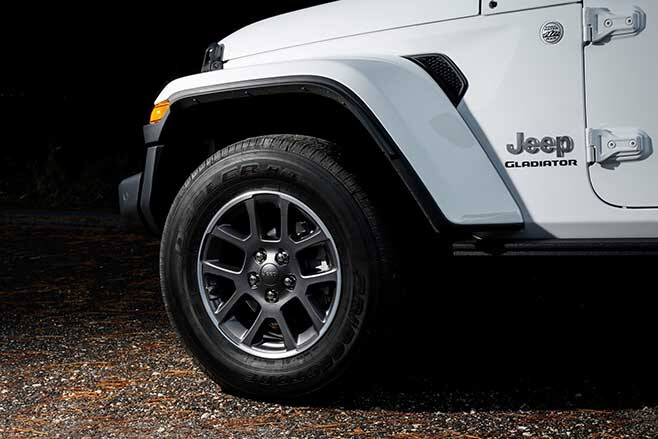
While the Rubicon gets all the off-road kit such as front and rear locking diffs, extra low gearing, front sway-bar disconnect, Fox shocks and muddies, the Overland forgoes all that but adds heated leather seats, 18-inch alloys, and body-coloured roof and flares.
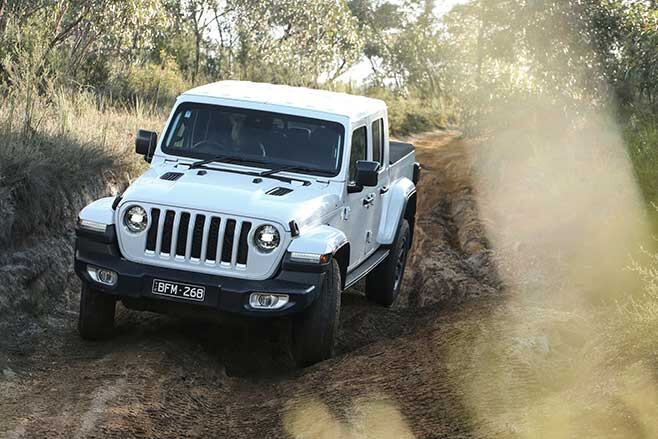
The Overland starts at $1000 less than the Rubicon, at $75,450, but you can lux-up your Rubicon with the leather seats and painted bits ($2535), or get the Launch Edition which has all the features of both at $86,450.
Our test Overland was fitted with the ‘Lifestyle Adventure Pack’, a $3850 option that adds a roll-up tonneau cover, cargo management with adjustable bed rails, spray-in bedliner, a lockable storage compartment beneath the rear seat, a removable Bluetooth speaker, an auxiliary switch panel with four switches for accessories, a 240-amp alternator, and a700-amp maintenance-free battery. Other accessory and dress-up packs are available from Jeep.
Australia gets the ‘international’ specification Jeep Gladiator just as it does with the JL Wrangler, and that means it comes with a transfer case that has 2WD, full-time 4×4, high range locked 4×4 and low range locked 4×4, as opposed to the traditional part-time 4×4 systems in the US models. The international spec also has smaller tyres than the US; 255/70 R18 on the Overland and 255/75 17s on the Rubicon and Launch edition models, while the Yanks get proper 33s on their Rubicon.
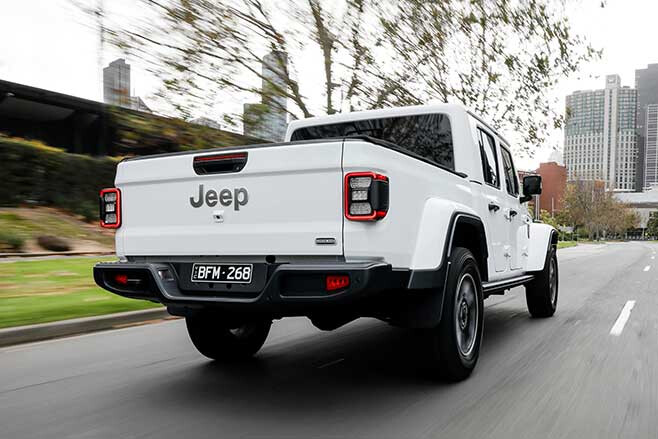
A lot of pundits have been quick to criticise the Jeep pick-up for its capacities and engine choice in a mid-size ute market full of diesel-engine-powered utes that can carry near-enough to a full tonne and tow 3500kg. Jeep has been forthcoming in saying up front that it is “not here to compete in the traditional ute market”. That the Gladiator is “a lifestyle vehicle and not a work truck”.
With that in mind you need to look at what the JT is more than what it is not. It’s a Jeep ute first and foremost. Wrangler owners will get what that means, but for the uninitiated it mans this is a vehicle that is built for off-road use. That means live axles on long-travel coils front and rear, which you won’t find on any other mid-size ute on the market.
The JT is the only ute available with a removable roof. The standard roof is a hardtop that is fully removable, or you can simply remove the panels above the front seat passengers for an open-air experience. A soft-top is available as a $3575 option, and the windscreen can be folded forwards down onto the bonnet. Even the doors are easily removable to let the elements in; try doing that on any of the other mid-size utes.
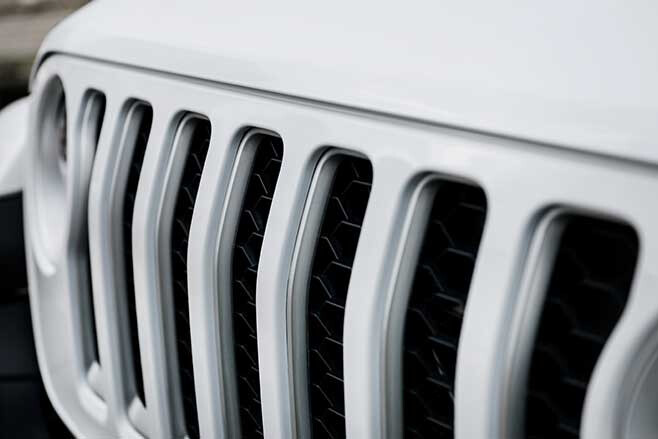
The Gladiator is only available here with a V6 petrol engine with an eight-speed auto transmission. There’s no manual or diesel engine offering, but this makes it the only mid-size ute available with a petrol engine. You have to step up to other American pick-ups for more petrol powertrains, as found in the left-to-right converted Ram 1500 and Chevrolet Silverado full-size rigs. The Jeep is factory built in right-hand drive.
If you think of the Gladiator in relation to the Wrangler, the JT adds more usability but comes at the expense of some of that off-road ability. While the massive cargo tub looks like it can be filled up with all that stuff you can’t fit in your JL, the maximum payload is just 627kg (Overland), and so it’s around the same as the Wrangler wagon. You need to be very mindful of any cargo accessories and people you carry in a Jeep, be it wagon or pick-up.
The other compromise is the rampover and departure angles, which are both less than that of a Wrangler. The extra wheelbase makes the truck ride nicer, but it grounds out easier under the belly and in the tail.
So the Gladiator isn’t as good off-road as a Wrangler, but it’s better than any other mid-size double-cab ute and has similar carrying capacity to its Jeep stable-mate, but it can’t match other mid-size utes for load or tow hauling.
DRIVE IMPRESSIONS
We didn’t have any load in the tray or on tow for this quick spin, but we did get it out to the Melbourne 4×4 Proving Ground for a bit of off-road use.
The familiar 3.6-litre V6 engine was its usual peppy and willing self, ably aided by the smooth-shifting auto. The Gladiator might only have a 2721kg towing rating, but I doubt this revvy petrol engine with only 347Nm would like to be hauling much more than that at any rate.
The Overland’s suspension feels soft and a bit vague on the highway and backroads; it certainly lacks the control of the Fox shocks equipped to US-Spec Rubicons we’ve driven in the past, so it will be interesting to drive the similarly equipped Rubicon here soon.
The soft suspension translates to a supple and comfortable ride on gravel roads and dirt tracks. While it doesn’t have the wheel articulation of the Rubicon model with its swaybar disconnected, the standard set-up is pretty good off-road. It certainly has more suspension travel than any of the more popular mid-size utes.
This makes the Gladiator a capable machine on uneven terrain, even without the Rubicon’s hardware. Electronic traction control helps in lieu of locking diffs, but the Overland scrabbled a bit for traction on our set piece melon-hole hill climb that is enough of a challenge to stop many other open-diffed utes.
The reduced rampover angle of the long wheelbase ute meant we grounded out the sliders when descending one particular step, but we managed to avoid clipping the tail.
INTERIOR
Anyone who has driven a JL Wrangler will be familiar with the interior of the JT Gladiator. In this Overland it’s very well-appointed and a nice place to ride. With its big centre screen, heated leather seats and full suite of features, the Overland is up there with the best appointed and equipped mid-size utes on the market, and priced accordingly.
If you’re coming from any other ute you’ll find the Jeep interior cramped at first, particularly around the pedals with the transmission hump infringing on your boot space. But it’s a cabin you get used to and, personally, I find it a comfortable and nice place to spend time. Lift off the roof panels on a sunny day and it delivers a truly unique driving experience.
The Gladiator’s rear seat is reasonably spacious and has enough leg- and head-room for my 185cm frame. It feels to have more space than the rear seat of a Wrangler.
FINAL THOUGHTS
The Gladiator is very much its own vehicle. It’s first and foremost a Jeep, and that makes it a lifestyle vehicle and not so much a workhorse. It also makes it hard to compare it to the familiar mid-size 4×4 utes that are so popular in Australia.
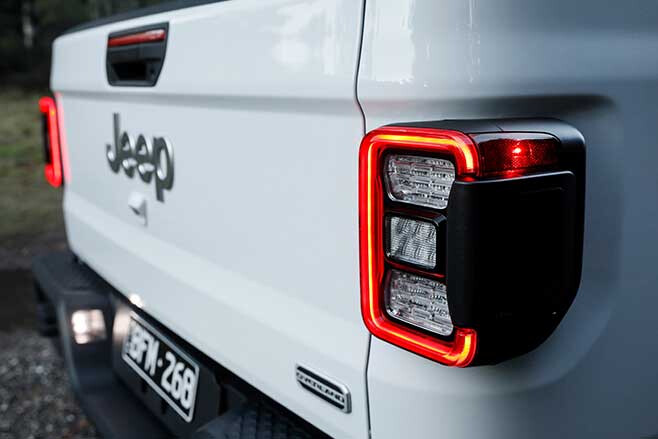
The Jeep lifestyle is one like no other, and if you want that in something more than just a Wrangler then the Gladiator could be for you. To get the full Jeep experience we’d say go for the Rubicon over the Overland, and you’ll get unrivalled off-road ability to set it apart from anything else off the showroom floor.
SPECS
Engine: Pentastar 3.6-litre V6 Max power: 209kW @ 6400rpm Max Torque: 347Nm @ 4100rpm Transmission: 8-speed automatic Transfer case: Selec-Trac with full-time and part time 4×4 and low range Crawl ratio: 47.79:1 Steering: Electro-hydraulic Suspension: live axles on links, coil springs, stabiliser bars (f/r) Tyres: 255/70-R18 Base weight: 2104kg Payload: 527kg Towing capacity: 2721kg GVM: 2631kg GCM: 5080kg ADR combined fuel use: 11.2L/100km Approach/ramp-over/departure angles: 40.7°; 18.4°; 25.1° Ground Clearance: 249mm Wading depth: 760mm
THE corks keep popping over at Range Rover for its 50th birthday celebrations, with the British marque unveiling the limited-edition Range Rover Fifty.
In a nice touch, the run will be limited to just 1970 vehicles globally to pay homage to the year the original Range Rover was launched.
Now in its fourth generation, the Range Rover first arrived in Australia in 1972. Click HERE to read all about the brand’s 50-year history.
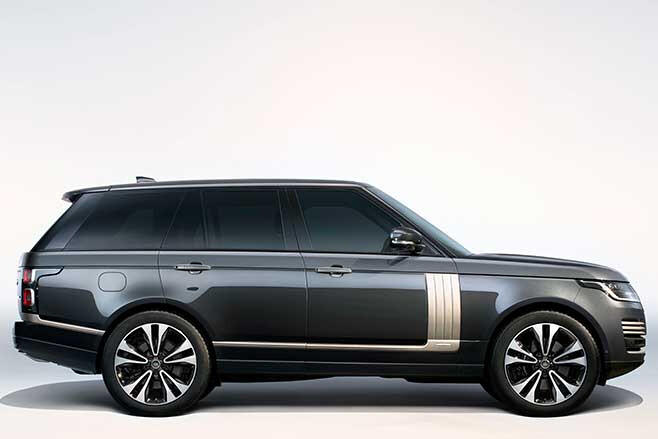
“In the world of luxury vehicles, the Range Rover has always stood apart as peerless and enduring,” said Gerry McGovern, Land Rover’s Chief Creative Officer. “Its unique and pioneering sensibilities together with an unrivalled engineering approach have been the intrinsic values which our customers have admired since the first of the breed was revealed in 1970.”
The limited edition Fifty is built on the SWB Autobiography platform, with the addition of bespoke ‘Auric Atlas’ exterior accents and the choice of two unique 22-inch wheel designs.
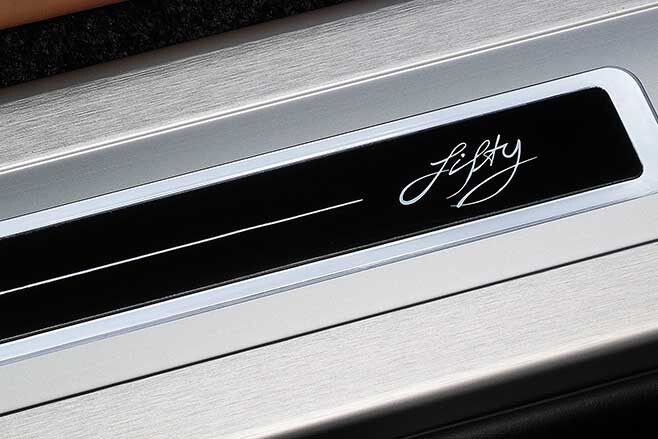
Giving the Fifty a heightened sense of distinction is the badging, which features a ‘Fifty’ script personally penned by Gerry McGovern. The script appears on the exterior, as well as on the headrests, dashboard, illuminated tread-plates, and on a unique ‘1 of 1970’ centre console commissioning plaque.
A handful of limited edition Fifty vehicles will be available in Australia, in SWB configuration. They will be powered by the 386kW/625Nm 5.0-litre supercharged V8 engine. The V8 Auto SWB it’s based on is priced at $274,210.
Four colours are available: Carpathian Grey, Rosello Red, Aruba, and Santorini Black.