
VICTORIAN Scott Round wanted something different for his 70 Series LandCruiser build and forwent the common LC79 ute for a Troop Carrier with the works.
2020 CUSTOM 4X4OTY: Vote now for a chance to win!
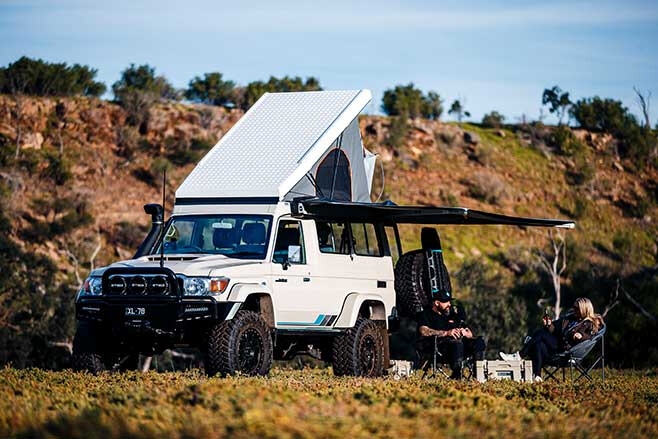
In doing so, he created the first LC78 to be fitted with Marks 4WD portal axles, but that’s not all there is to his unique Troopy.
The venerable Troop Carrier is the 4×4 vehicle of choice for so many adventurous travellers due to its outback-proven heavy duty platform and the ability to accommodate a couple for self-sufficient remote-area touring.
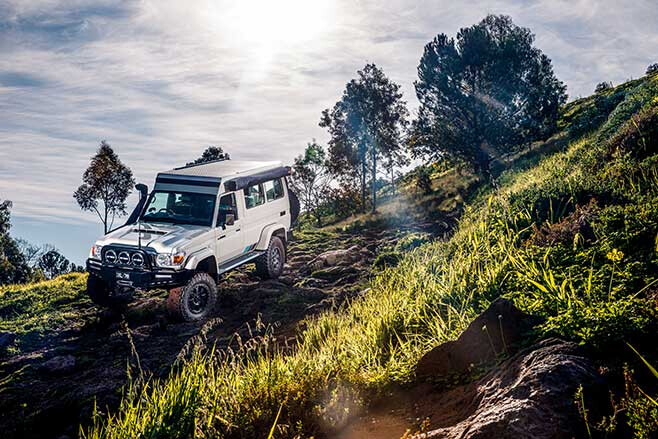
The Troopy body hasn’t changed much in 35 years, so there are a host of modifications and equipment you can get for them with some clever camper conversions done professionally and by enthusiasts. The Troopy is also popular with surfers and it was this that attracted Scott to the versatile model.
“To me, it’s just the ultimate setup,” says Scott who lists surfing, snowboarding and camping among his favourite ways to get away from work. “Travelling and exploring are important to me, just to get away and break the everyday grind.”
Scott’s work 4×4 is a nicely kitted up Ranger, but he was looking to take a vehicle to the next level for this build. Extra Large in more ways than one.
POP-TOP PICK
“I wanted something I could hop in the driver’s seat, start the key and be gone for a weekend, a month, or two, or more,” he explained.
“I always loved the idea of the Troop Carrier with a rooftop conversion – it’s an icon of Australian adventure,” he says. “I also wanted something unique that hadn’t been done, and the idea of putting a 78 on portals has intrigued me.”
Pop-top camper conversions for Troopies have been popular for decades, but have improved in their simplicity and usability in recent times. When Scott was researching the available options he came across a recently converted new model available from the Queensland Alu-Cab distributor, Mick Tighe 4×4 in Toowoomba. Mick is also the Queensland dealer and installer for Marks 4WD Portal Axles, so when the two of them started talking, plans were hatched and the Troopy became Scott’s.
The idea was that Mick would undertake the portal axle conversion and registration in Qld and Scott would fly north and take the long way home, exploring in his new rig. But 2020 had other ideas for that plan.
Mick had already chopped the top off the Toyota and fitted the Hercules conversion from Alu-Cab. The Hercules is a pop-top tent that erects in seconds and, unlike common rooftop tents (RTT), is accessed from within the back of the Troop Carrier giving you stand-up space within the vehicle and access to the cargo inside without having to step outside in poor weather. It is lower and more streamlined than traditional RTTs, so better for fuel consumption and you can still fit roof racks atop it to carry more gear; perfect for Scott’s quiver of surfboards!
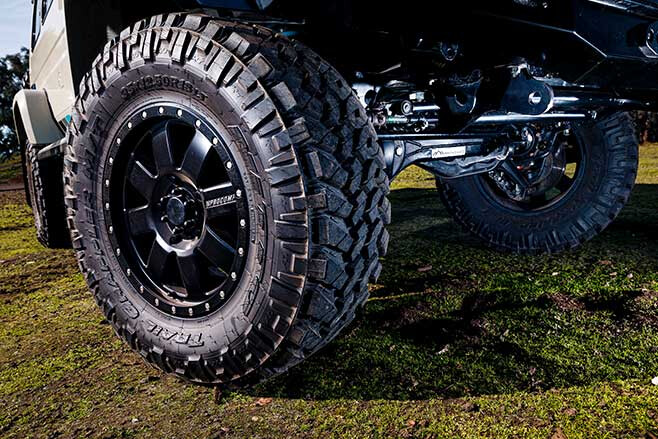
Scott’s idea to also fit Marks Portals to the Troopy was relatively straightforward, as Mick has fitted plenty of sets to LC79 utes and a few LC76 wagons. But LC78 Troopies have a unique rear wheel arch which required a specific flare to cover the wider wheel track and 35-inch Nittos.
“The flares took a lot of work and longer than expected to get right,” recalls Mick Tighe. “These were the first ones we did and we made them to cover the widest legal wheel and tyre combo with the portals.”
The portal axles widen the track by 80mm while correcting the difference in track from front to rear. More significantly, they give the vehicle a 150mm lift under the differentials and allow the use of a shorter suspension to give more a stable vehicle. They are approved Australia-wide with 35-inch tyres as part of the Second Stage Manufacturer scheme.
The Troopy copped the full Marks 4WD kit that included the heavy-duty one-piece swivel hubs and park brake upgrade to rectify the well-known Toyota weakness. The Marks park brake uses a brake drum setup mounted on the back of the transfer case that is derived from a Nissan setup.
Mick fitted the portals under the Troopy using Ironman 4×4 suspension with Foam Cell Pro shocks and a 30mm rear sway bar. Wheel specifications for the portals are fairly specific, meaning that the choices are limited, but we reckon Scott has nailed it with his selection of Pro Comp Trilogy alloys in 18-inch, wrapped in Trail Grapplers.
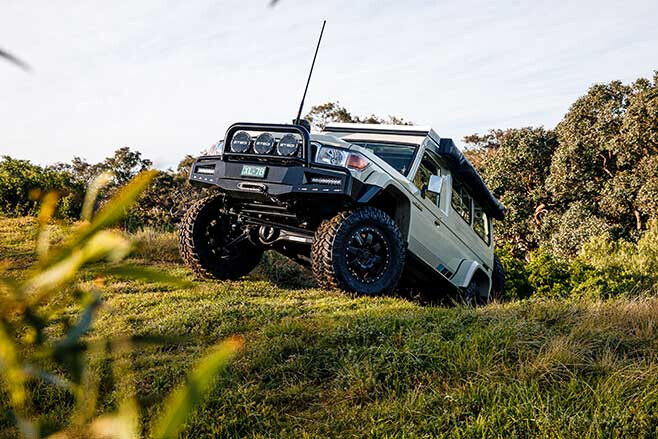
The wider track, high stance and 35s give the Troopy a real purposeful look that is not so tall and narrow as the stock vehicles are. It’s a much tougher stance that adds a bit of modernity to the ageless Toyota.
COLOURING IN
ADDING to the unique look of the XL78 is its colour and graphics. Scott likes playing with design and logos, and all the company vehicles for his concreting business look neat. He wanted something special for the Troopy and worked with Paul at iStyle Studio in Brisbane for the unique vinyl wrap.
The car was originally white but Scott wanted a more retro look and the chosen colour is a pale seafoam green that changes from white to beige to green depending on what light it is in. The sill stripes tie in with the corporate colours on Scott’s company cars and trucks.
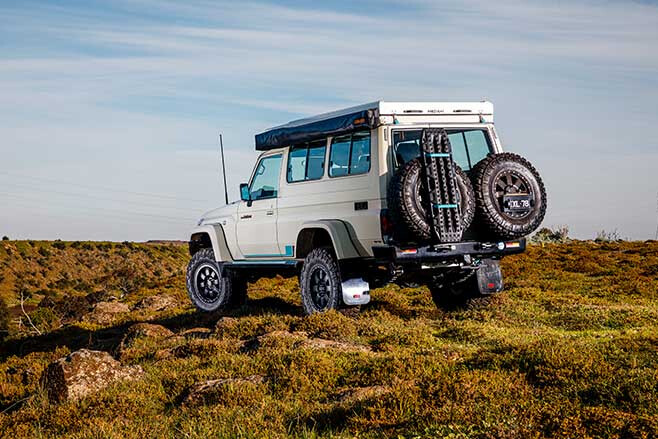
A few pieces that were custom made for the Troopy include the front bar, side-steps and rock rails. These had to be wider than standard 70 Series items and the work was done by ATD Customs in Crows Nest, Qld. The front bar is a real neat piece with its integrated fog lamps, LED indicators and mounts for Stedi lights, Ironman winch and GME aerial. It’s available in a shorter version for regular width 70s in case you’re wondering. Clayton and the crew at ATD also modified the Kaymar rear bar and wheel carrier to take the 35-inch tyres and laid them back on an angle to better hug the back doors.
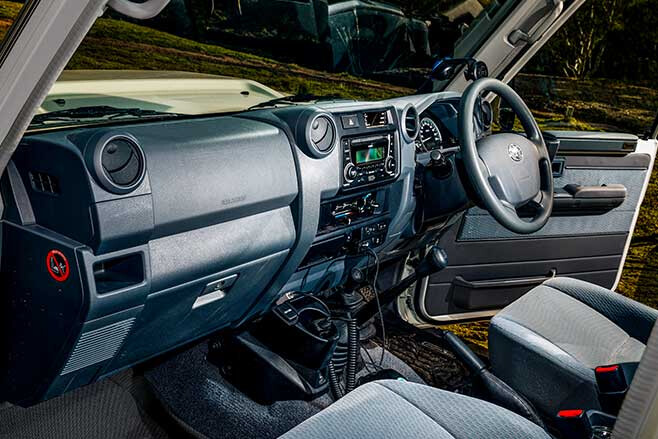
Mechanically, the Troopy remains standard with its 4500 V8 diesel engine, five-speed manual gearbox and factory lockers. Even the exhaust was still stock when we photographed it, but Scott says that will be changing soon. There’s still a lot more to go on the vehicle to make it the escape machine he wants including fitting out the back of it, installing some FPV GTP seats up front, and fine-tuning all the accessories for life on the road.
For now, Scott is just happy to have the car back in Melbourne where he can get all those final touches sorted. His plans of taking his time to drive it home down the coast were thrown out the window by the pandemic and subsequent lockdown.
“Once I got the call from Mick to say it was ready to go, I had to fly to Queensland, get all the paperwork together and drive straight back, hoping there would be no problem crossing the borders,” Scott recalled. “Now I just can’t wait to start using it!”
Once it was home, the registration all had to be transferred to Victoria and get those ‘XL78’ plates fitted.
“Getting this vehicle back to Victoria in the midst of a pandemic, border closures, and shutdowns, was an experience. I’d like to thank ABS Ringwood, Ironman 4×4 and Alu-Cab, and Marks 4WD who were all super helpful and accommodating to get that done,” said Scott.
“I’m also extremely grateful to Mick and his team, Clayton at ATD Customs, and Paul at iStyle, for bringing my vision to fruition. The experience building this car with these blokes has been absolutely outstanding and the results better than I could ever imagine. Now I’m really looking forward to the future in this thing.”
It goes to show that having a plan and vision, then working with some of the best names in the 4WD industry to make them a reality, sure pays off with stunning results.
Mick Tighe tells us he has another portal and Alu-Cab equipped Troopy ready for registration as we go to print and another in the works. We reckon there will be a bit more demand for them once the world sees Scott’s XL78.
YOU can now buy a Ford Ranger XLT dual-cab without a rear tub, with Ford Australia unveiling the Ranger XLT Double Cab Chassis.
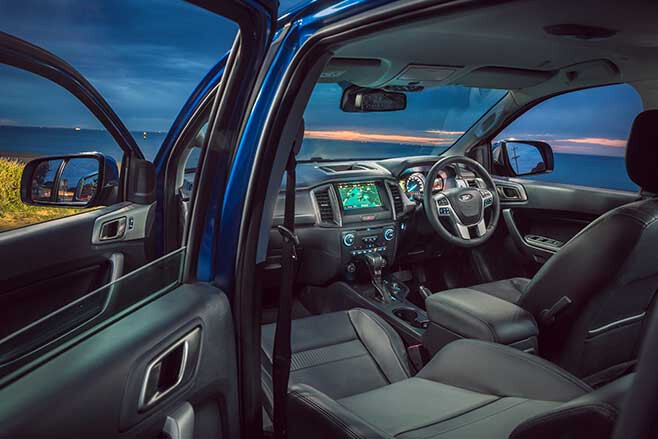
To be available in dealers from December this year, the top-spec model – for a Cab Chassis – is laden with standard kit which places it on par with the Ranger XLT pick-up range, sans the rear tub of course.
This means buyers who opt for the Cab Chassis variant needn’t worry about the hassle of removing the tub before adding an aftermarket canopy or tray set-up … unlike what we did with our 4X4 Australia Ford Ranger.
“Customers looking for Ranger’s high safety and equipment levels who want to add their own customised canopies or personalised tray set-up can now do so with far more ease,” said Andrew Birkic, President and CEO, Ford Australia and New Zealand.
“Owners have told us that they want to save time and money with a ready-to-go, high-spec Ranger Cab Chassis that they can purchase straight off the showroom floor, and the 4×4 XLT Double Cab Chassis is here for these customers, be they tradespeople, adventurers or explorers,” he added.
The XLT Double Cab Chassis will be available with the 157kW/500Nm 2.0-litre bi-turbo and 10-speed auto combination ($59,940), as well as the proven 3.2-litre turbo-diesel in six-speed manual ($56,240) and six-speed auto ($58,440) guises.
For comparison’s sake, the XLT dual-cab pick-up retails for $57,240 (3.2-litre/six-speed manual); $59,440 (3.2-litre/six-speed auto); and $60,940 (2.0-litre/10-speed auto).
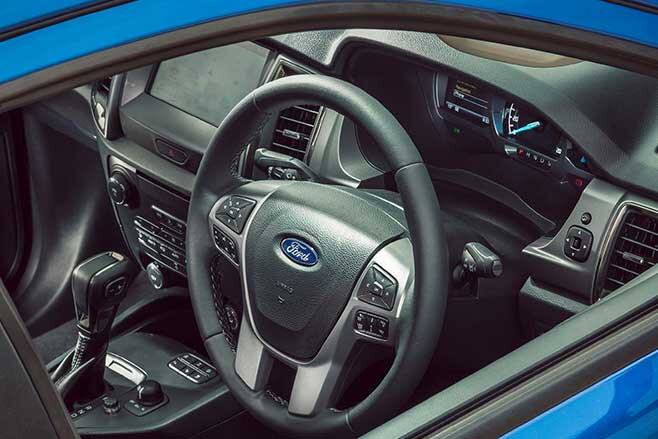
Regular Ranger features remain including a suite of safety kit (AEB and Pedestrian Detection) for a five-star ANCAP rating, built-in sat-nav, Apple CarPlay/Android Auto, an on-the-fly 4WD system, and a 3500kg towing capacity.
Ford Ranger 4×4 XLT: Pricing
Double Cab Chassis (3.2L/six-speed MT): $56,240 Double Cab Chassis (3.2L/six-speed AT): $58,440 Double Cab Chassis (Bi-Turbo/10-speed AT): $59,940 Super Pick-up (3.2L/six-speed AT): $57,440 Super Pick-up (Bi-Turbo/10-speed AT): $58,940 Double Pick-up (3.2L/six-speed MT): $57,240 Double Pick-up 3.2L/six-speed AT): $59,440 Double Pick-up (Bi-Turbo/10-speed AT): $60,940
THE new Land Rover Defender has only just lobbed on Australian shores, but the 2021 model will be here soon and bring with it new six-cylinder diesel engines and short-wheelbase Defender 90 models.
All of the diesel Defender 110 models that landed in 2020 were sold prior to arrival, creating a shortage of them and, as a result, only the petrol-fuelled P400 110s are currently available.
This was due in part to the factory shutdown due to COVID and global demand for the diesels. Land Rover expects no such shortages when the 2021 range lands in February.
“The factory should be back up to 100 per cent (production) when our 2021 cars are built in November,” Land Rover Australia’s James Scrimshaw told 4X4 Australia. “There will be no supply issues with the 2021 model.”
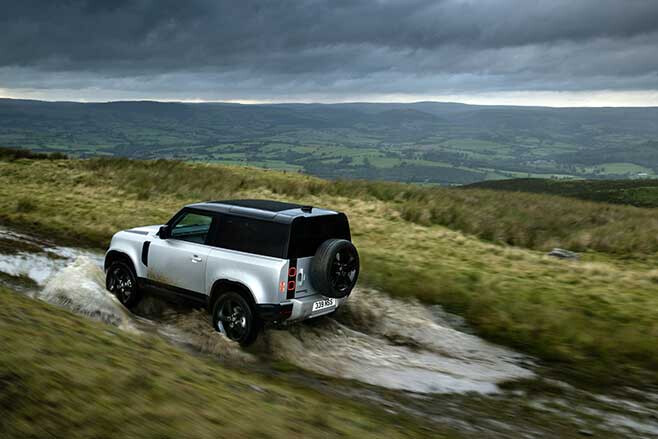
As expected of a vehicle that is just six months old, any changes to the 2021 Defender are minor and, in fact, limited to the level of standard safety equipment. All 2021 Defenders have Blind Spot Assist, Clear Exit Monitor, Adaptive Cruise Control, Rear Collision Monitor and Rear Traffic Monitor as standard. New colour choices will be available, as well as the X-Dynamic option package.
More significant is the fact that the three-door Defender 90 will join the five-door Defender 110 in the Australian range, and a new 3.0-litre six-cylinder diesel engine will also become available. Along with the new P300 petrol engine for the D90, the Defender range will now sport a total of five engine options; two petrol and three diesels.
The D300 ‘Ingenium’ diesel engine promises 220kW and 650Nm in both Defender body styles, and it’s enough to propel the little Defender 90 from zero to 100km/h in an-almost sporty 6.7 seconds. The inline six-cylinder engine uses twin sequentially set-up twin-scroll turbochargers and features a 48-volt mild hybrid (MHEV) system.
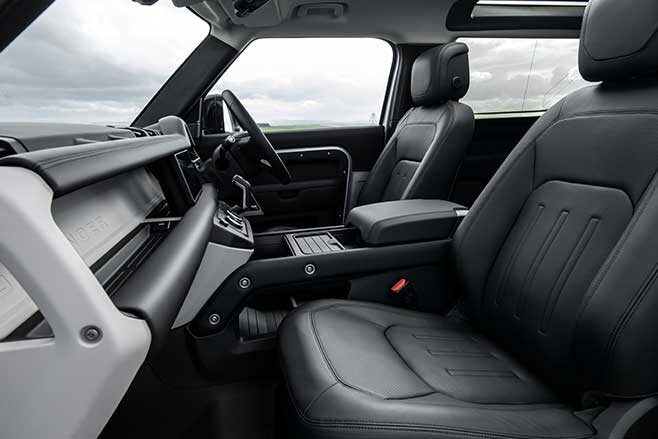
While the D200 and D240 four-cylinder Ingenium diesel engines weren’t short on torque, they have been replaced with the six-cylinder MHEV engine labelled D200 and D250 and tuned to produce 500Nm and 570Nm respectively. The short-lived four-cylinder diesel has been discontinued in the Defender range. The D200 engine is only available in the Defender 90, while the 650Nm D300 will be particularly appealing to those wanting to tow or drive a heavily laden Defender.
The P300 petrol engine is also exclusive to the Defender 90 and is now the only four-cylinder engine in the range. It produces 221kW and 400Nm, while the top-of-the-line P400 makes 294kW and 550Nm.
Defenders use an intelligent full-time four-wheel drive system that continually varies torque to the front and rear axles based on sensor data from the vehicle’s surroundings and driver inputs, to distribute all torque to one axle or the other as required. A locking rear differential is available as an option and part of option packages.
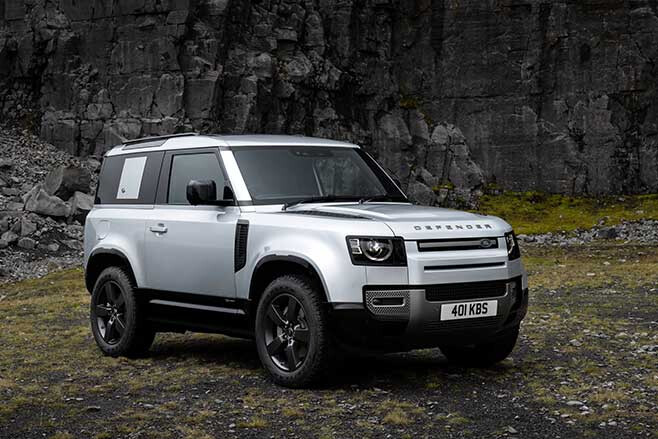
Speaking of option packs, a new X-Dynamic pack adds style to the Defender range, with bespoke trims and finishes available on both Defender 110 and 90. The First Edition Defender 110 has been discontinued as it was limited to the first run of five-door wagons that arrived in the country, while a First Edition Defender 90 P400 will be available.
Also just released in some markets but not yet for in Australia, the Defender P400e PHEV combines a turbocharged 2.0-litre petrol engine with a proper EV drivetrain and plug-in compatibility. Land Rover Australia says it is definitely interested in the P400e and is looking to introduce it and the 90 and 110 Hardtops to the range some time in the future.
2021 DEFENDER 90 PRICING – PETROL
Defender 90 P300 – $71,500 Defender 90 S P300 – $80,390* Defender 90 SE P400 – $95,290* Defender 90 HSE P400 – $105,190* Defender 90 First Edition P400 – $106,190 Defender 90 X P400 – $134,690
2021 DEFENDER 90 PRICING – DIESEL
Defender 90 D200 – $78,590 Defender 90 S D250 – $87,490* Defender 90 SE D300 – $89,390* Defender 90 First Edition D250 – $104,990 Defender 90 X D300 – $132,590
2021 DEFENDER 110 PRICING – PETROL
Defender 110 P300 – $74,500 Defender 110 S P300 – $83,390* Defender 110 S P400 – $91,790* Defender 110 SE P400 – $98,290* Defender 110 HSE P400 – $108,190* Defender 110 X P400 – $137,690
2021 DEFENDER 110 PRICING – DIESEL
Defender 110 D250 – $82,590 Defender 110 S D250 – $90,490* Defender 110 SE D300 – $92,390* Defender 110 HSE D300 – $101,690* Defender 110 X D300 – $135,590
TO overcome strict EU emissions regulations and return the Jimny to the EU market, Suzuki has re-released the Japanese off-roader in light-commercial vehicle guise.
To do this Suzuki has ditched the rear seats, in turn transforming the rear compartment into a large storage area with a flat floor and a cargo partition. When compared to the four-seat version with its rear seats folded down, the two-seater has an extra 33 litres of storage capacity – up to a total of 863 litres.
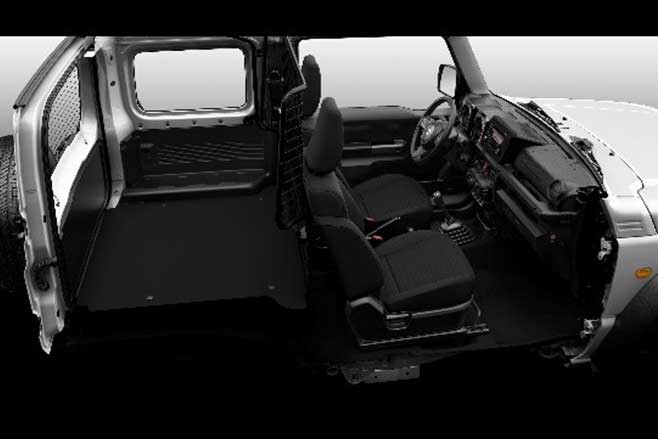
It’s axing just two months ago followed a new EU ruling which stated all new cars must emit no more than 95 grams of CO2 per kilometre. Despite its lithe weight of just 1135kg (with the rear seats installed), the Jimny was said to emit north of 150g/km – so it was shelved in the EU, despite strong sales.
By reclassifying the Jimny as a commercial vehicle, it is now subject to less stringent CO2 regulations. Other than the loss of rear seats, an increase in storage capacity and a revised 1090kg kerb weight, the two-seater is otherwise unchanged.
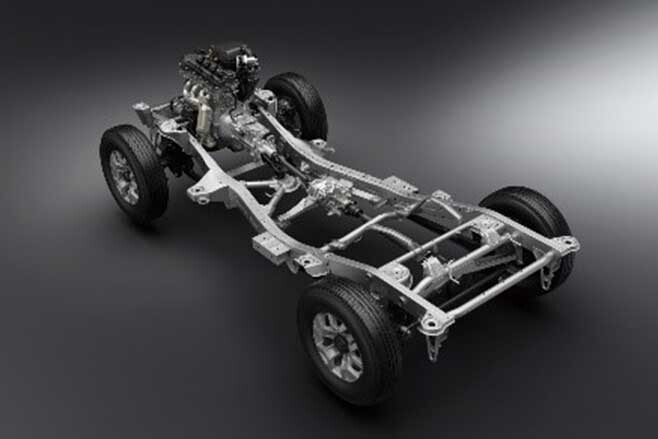
This means it’s still powered by a 75kW/130Nm 1.5-litre petrol engine; it utilises a part-time 4WD system with low range; and all of the safety features of the passenger vehicle are retained. The two-seater boasts ground clearance of 210mm, a 37-degree approach angle, 28-degree rampover angle and 49-degree departure angle.
A two-seat Jimny loaded with kit in the rear sounds like a winner to us for camping trips – Does it tick all of your boxes?
ONE OF our party was bogged!
The soft sand between the edge of the lagoon and the open sea was super soft – a bit like quicksand really – while the narrow, shallow outlet channel the lagoon had carved through the sand towards the sea, had a sheer, but luckily, low bank on each edge; just enough to slow one’s approach and exit. The sea itself was remarkably calm, with just a low swell rolling in onto the beach; but the tide was running in, which was not the best time to get bogged.
The last vehicle in our convoy to drop into the outlet channel climbed up the little step onto the surrounding sand, but with its speed washed away it quickly went down in the squelchy sand. We parked two of our convoy out of harm’s way and went to the rescue with the well-equipped 4×4 Australia Ranger.
A couple of shovels were quickly deployed ensuring we didn’t dig down too far, as the water table wasn’t that far below the surface. Then we employed a couple of MaxTrax, hitched a snatch strap and the little Hilux popped out and was soon on terra firma. That was our only incident on our run south from Temma on the west coast to the low rocky headland of Sandy Cape. We were lucky!
MACQUARIE HARBOUR
WE HAD left Queenstown a couple of days earlier and wound our way down the range from that historic enclave where, perched on the edge of Macquarie Harbour, one of the largest natural harbours in Australia, is the small but important village of Strahan.
Originally established in the 1870s as an access point for the nascent mining industry, it soon became an outlet for the Huon pine and fishing enterprises that sprang up around here. Today it thrives on tourism and is well worth a stop of a few days or more.
The narrow outlet of the vast inlet is at Macquarie Heads, and this raging, rock-strewn opening has earned the name of ‘Hell’s Gate’. The harbour’s sinister reputation was added to when the area’s first settlement was a convict prison on Sarah Island, established in 1822. During its 11 years of existence the prison gained fame as one of the harshest in the country … and that is really saying something! Today the ruins can be visited via a cruise of the harbour (and heads), and it’s an informative, enjoyable way to spend a day.
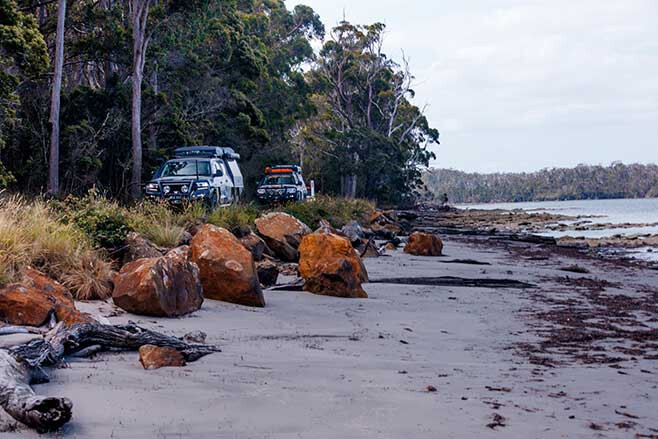
Out at Macquarie Heads, we set up camp for the evening, the camping area a bit more crowded than normal as it was a long weekend in the state. Next day we dropped on to the sand at the Heads and drove the Ocean Beach 10km north and took the exit which led back into Strahan.
We had a pretty easy drive on this last trip, the sand being firm and effortless to drive on; but it’s not always so, with winter storms stripping the beach of sand and leaving very little, if any, to drive on. If in need of more adventure, this beach drive can be extended as far north as 8km to the mouth of the Henty River, the river being generally too deep and wide to cross to go any farther.
From Strahan we headed off to Zeehan and checked out its great little museum, before finding our way on to the Montezuma Falls track. This route follows the easement of the North East Dundas Railway which was opened in 1898 to service the rich mines in the area. Today it’s a challenging and often wet and muddy 4WD trail, the route being much more eroded and rougher than the times I have driven it in the past. Still, the view of the falls, one of the tallest in Tasmania, at the end of the 4WD track, is impressive and worth the drive.
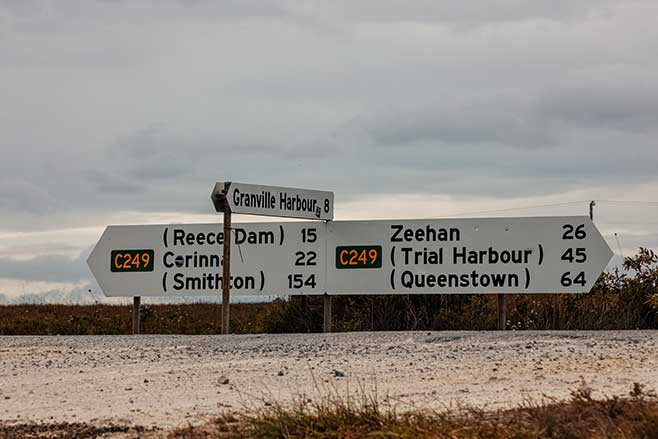
For those who don’t want to accept the 4WD challenge, the falls are also accessible via a walking track (again following the railway easement) from the other side of the chasm that guard the falls. This route begins at Williamsford, which is accessible via a good road from near Rosebery.
Back at Zeehan, after our drive to the Falls, we headed to the Zeehan Bush Camp for the night before exploring the town and enjoying the local museum, which I reckon is one of the best in all of regional Australia.
GOLDEN MAGNET
WE headed north, taking the drive to Corinna and the ferry across the mighty Pieman River. Established in 1881 when gold was discovered in the tributaries of the Pieman, Corinna once had a population of around 2500 people which is pretty hard to believe now. Back then the town was serviced by two hotels, a post office, and a number of stores and shops.
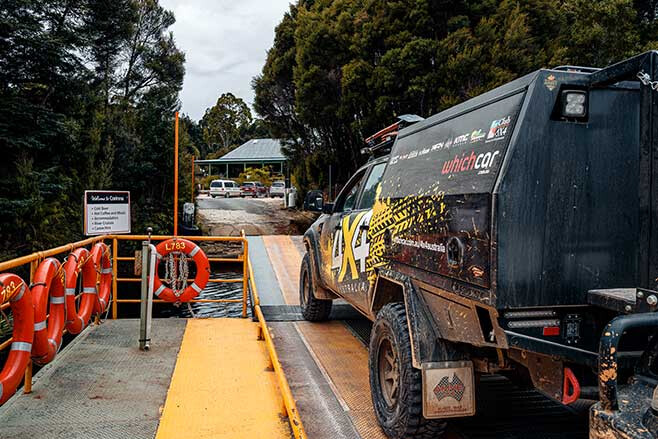
In 1883 the largest gold nugget found in Tassie was unearthed near here and weighed in at a goodly 7.5kg, worth around $567,000 today. Legend has it, though, that the nugget was smuggled into Tassie from Victoria to boost the area’s gold potential and attract more people!
The town, sitting on the edge of the river and the Tarkine Wilderness, the largest temperate rainforest in Australia, is a lot quieter today, while the Tarkine Hotel caters for the passing throng and those wanting to stay awhile. Apart from enjoyable cruises on the river onboard the MV Acadia II, there are a number of walks in the surrounding forest, while canoeing, boating and birdwatching are extremely popular ways to pass the time.
On this latest foray we didn’t stay too long, just long enough to have a beer and a meal before heading north on what is officially known as the Western Explorer Highway. It’s a pretty good gravel road for most of the way, crossing the major streams of the Savage, Donaldson and the Lindsay rivers on bridges and passing through some magical rainforest before climbing onto high button grass plains.
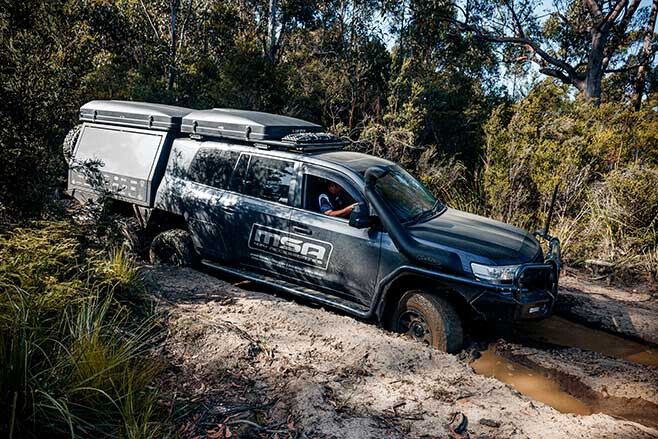
Before reaching the bitumen east of Couta Rocks the road passes the junction of the Balfour Track. Eastward leads a short distance to the old mining town of Balfour and the scattered ruins of this once important mining settlement. Westward, the Balfour Track leads to the Sandy Cape Track and is very much a challenge, even for the best set-up and experienced four-wheel drivers.
This time around we chickened out as the area had been receiving some heavy rain and the bog holes along the way would have been extremely deep … plus our time in the ‘Apple Isle’ was getting short.
Instead we headed for the tiny fishing outpost of Couta Rocks and then north to the bigger settlement of Arthur River where we set up camp in the national park campground, went and found some fuel and a beer or two before calling it quits for the night, with the weather forecast warning of rain and strong winds.
SANDY CAPE
We woke next morning to patches of cloud which cleared a little as we backtracked to Couta Rocks and pushed on to the small scattered fishing hamlet of Temma, where we lowered our tyre pressures and slipped onto what was the Sandy Cape Track. We stopped briefly at Lookout Point that gave a splendid view south towards our destination, Sandy Cape.
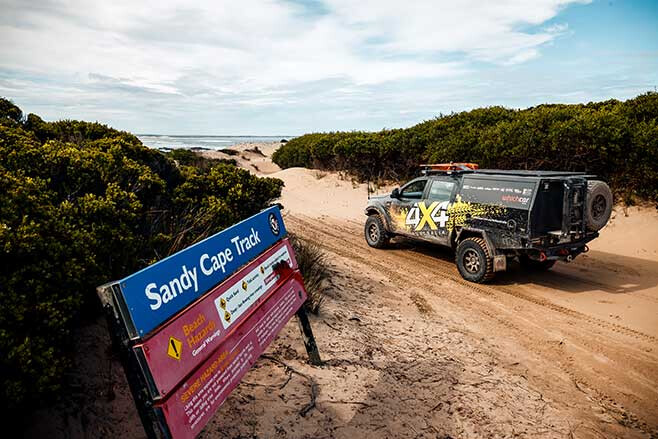
The beach looked benign enough from our vantage point, while the long strip of sand stretched away in a gentle arc into the haze of sea mist, which hung thin and vapourish over both the land and water. The sea itself was nearly as calm as the proverbial mill pond, but a weak sliver of white water oozed its way along the shore where a wave, if you could call it that, washed onto the white sands.
The beach itself was backed for much of the way by thick, verdant scrub, but at its mid-point a series of tall sinuous dunes, a few hundred metres inland from the sea, broke the strip of green into two. At the beaches’ farthest end a smudge of darkness indicated where sand ran into stone, while a speck of white marked the whereabouts of the lighthouse that perches on these distant rocks. Above us the sky was a rich cobalt blue; we were lucky the weather forecasters had got it so wrong!
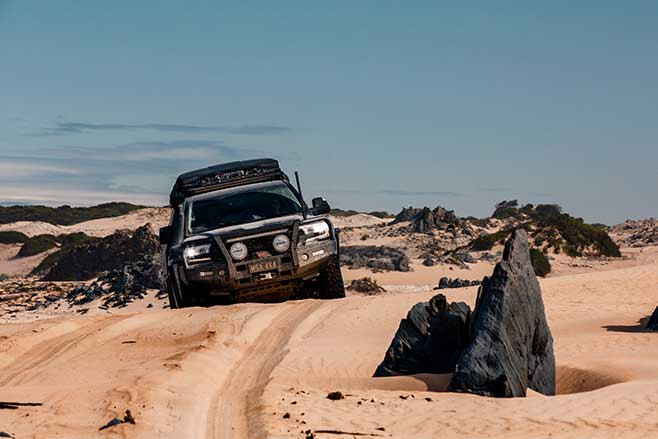
Soon after our expansive view south we dropped onto the beach, crossed Greens Creek and ran south, the waves just washing up a short distance away from our vehicle tracks. The tide had dropped to its low point an hour or so earlier and would start running in strongly in the next hour or so; it’s not the best time for a run along a dicey beach, but one we had to live with and hope we didn’t have too much trouble with.
The Thornton River was next, its tannin-stained water backed up into a large lagoon just behind the steeply shelving beach. A thin strip of running water was the lagoon’s outlet as it raced its way towards the open water. The first vehicle skipped through the creek, bounced over the lip of sand on the far side and ploughed its way across the soft intervening beach between ocean and lagoon.
The second vehicle in our convoy did the same, carving deep tracks in the soft sand and I followed staying away from the furrows, but still bogging down in one soft section before reaching safety on the far side. Our fourth and last vehicle wasn’t so lucky. After a quick recovery we pushed south along the sand crossing the next two creeks flooding across the beach easily and without an issue.
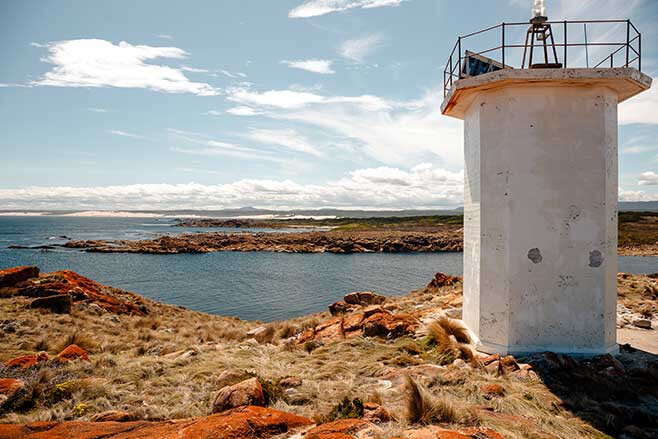
Once at the Cape we found our way via a maze of sandy tracks and checked out the view from near the lighthouse, which is more a cement box with a light on top than a ‘real’ lighthouse. I was surprised to find we had good Telstra mobile phone reception here – aaah, the wonders of modern technology, just when you had thought you’d gotten away from civilisation!
The calm, sunny weather was way too much and we wandered back to the protected beach on the inside of the cape and enjoyed an invigorating swim in the cool waters of the Southern Ocean. Then, with the tide beginning to run out, we turned our heads for home; sadly our quick circumnavigation of Tassie was over … but we’ll definitely be back.
TRAVEL PLANNER
THE best guide to 4WD touring/camping in Tassie is, 4WD Tracks in Tasmania, by Chris Boden.
QUEENSTOWN: West Coast Wilderness Railway: www.wcwr.com.au
STRAHAN: www.strahanvillage.com.au/en/explore.html
The bush camping at Macquarie Heads is basic but pleasant. A small fee is payable. See: www.campingtasmania.com/macquarie-heads-camping.htm
Zeehan Museum is one of the best regional museums in Australia: www.discovertasmania.com.au/attraction/westcoastheritagecentre
You can bush camp at Trial Harbour and Granville Harbour. There are no facilities, so be prepared.
At Corinna (https://corinna.com.au/) you can stay in the small camping area near the pub or in a range of accommodation. Take a cruise on the MV Acadia II along the Pieman River. Take note: The ferry at Corinna has a 6.5-tonne GVM capacity and a max vehicle length (wheelbase) of 9m – inc. tow tug and camper or caravan.
The Arthur-Pieman Conservation Area takes up much of the coastal area of western Tasmania from Arthur River in the north to the Pieman River in the south.
For access info and a Drivers Recreational Pass go to: https://parks.tas.gov.au/explore-our-parks/arthur-pieman-conservation-area
Camping fees are also required. At Arthur River you can choose between the national park campgrounds or the excellent Arthur River Cabin Park, see https://arthurrivercabinpark.comNote: There is no fuel at Arthur River or Corinna. The nearest fuel in the north is at Redpa or Marrawah, or in the south at Zeehan or Waratah.
TASMANIA was the perfect setting for Season 7 of the 4X4 Adventure Series, with the Apple Isle trip beginning on a cold and wet summer’s day at the iconic Jacob’s Ladder.
In this series we venture to Bridport; air down for beach fun on the run to Bellingham; stop by Derby; tour the historical Blue Tier Forest Reserve; have a brew at the Pub in the Paddock; and tackle the Peron Dunes in pursuit of the Friendly Beaches.
Down south we explore Hobart and its surrounds; head to Australia’s southern-most point at Cockle Creek; and then head back up to Strahan via Queenstown, cutting through iconic bush tracks.
We dawdle through the town of Zeehan, before getting back in our 4×4 convoy with Montezuma Falls on the itinerary. It was then on to Granville Harbour, the small fishing town of Temma, and a Sandy Cape run to Sandy Cape Light.
MSA 4X4 and MAXTRAX tagged along in their respective 6WDs, with the MAXTRAX 6×6 encountering some drivetrain gremlins en-route to Montezuma Falls.
A 4×4 trip to the small but beautiful state of Tasmania should be on every off-roader’s bucket list.
Season 7 Episodes
- Episode 1: Apple Isle adventure begins at the iconic Jacob’s Ladder.
- Episode 2: From Hobart in the south to the state’s wild west coast.
- Episode 3: Tracing the west coast north to Sandy Cape.
Season 7 Articles
- Part 1: From the beaches, mountains and forest of the north-east of Tasmania to the great cliffs of Freycinet NP.
- Part 2: Mount Wellington to the southern-most point in Australia, and then up to the Central Highlands.
- Part 3: Exploring the state’s west-coast gems, before tackling the soft stuff at Sandy Cape.
THE INEOS Grenadier has been out and about in Europe and the UK over the weekend, showing off its boxy, built-for-purpose design.
A prototype Grenadier was on display at the annual Concours of Elegance at Hampton Court Palace, near London, where it lined up with some of the iconic 4×4 vehicles from which this all-new vehicle has taken its inspiration.
While the Concours is the playground of exotic, classic and sports cars, the line-up of classic 4x4s was impressive to say the least. Alongside the Grenadier was a Mercedes Benz two-door soft-top G-Wagen; a Toyota FJ40 LandCruiser; JUE477, which is the world’s first production Land Rover from 1948; and a WWII Willys Jeep. Esteemed company indeed.
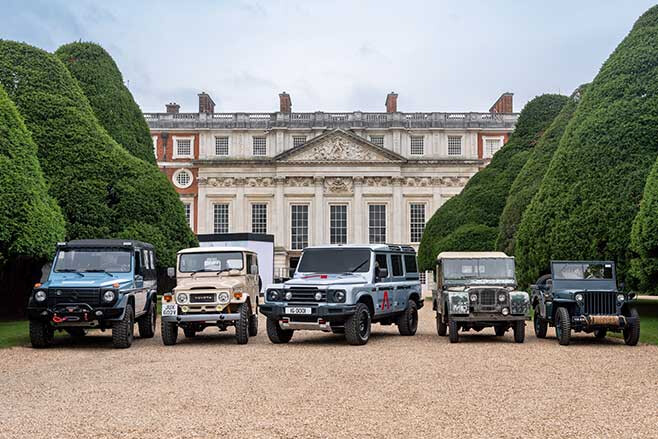
Elsewhere in Europe, Grenadier prototypes have been spotted on the route of the Tour de France, where Ineos is the naming sponsor of the British team. This is among other high-profile sponsorships, where the Grenadier name can be seem on the Mercedes-Benz F1 Team and Ineos Team UK contesting the Americas Cup Trials in New Zealand.
After revealing the controversial look of its Grenadier wagon and pick-up vehicles earlier this year, Ineos is now well and truly in to the testing component of vehicle development. The company is in the process of building more than 100 prototype vehicles for global trials, which can now be done with the vehicles undisguised.
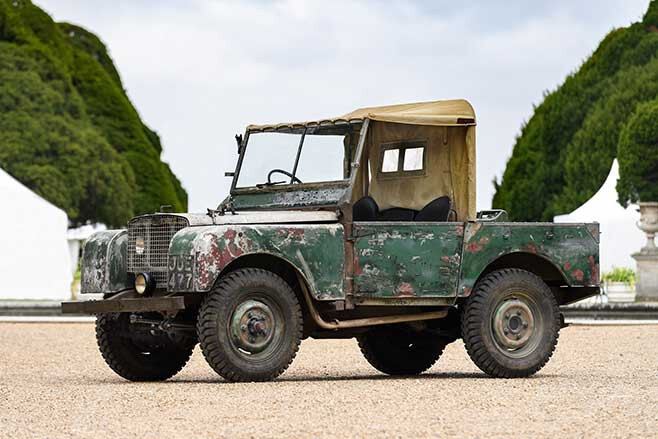
Over the coming year, testing will be conducted in the UK and Europe – specifically at INEOS’s partner Magna Steyr’s Austrian test facility – in the USA, and in Australia and New Zealand. The test locations are chosen to take in all conditions including extreme hot and cold weather, and the results will be used for calibration and durability of the BMW-sourced 3.0-litre six-cylinder petrol and diesel engines and eight-speed ZF transmission.
Keeps your eyes open for the Ineos Grenadier prototypes if you’re touring in outback Australia over the coming months, and be sure to send us some photos if you spot them.
YOU never know when you’re going to need winch and recovery support, so ensure your equipment is up to scratch.
IRONMAN 4X4 RECOVERY POINTS: 2018+ JIMNY
Ironman 4×4 has released rated recovery points to suit 2018+ Suzuki Jimny vehicles. The recovery points – powdercoated red and compatible with Ironman 4×4 bullbars – are designed to be fitted in pairs to allow the use of an equalisation strap and multiple attachment points. The radius edge of the points has also been redesigned so that any shackle, including soft shackles, can be used. Each recovery point has a working load limit of 3500kg, and they’re designed to connect to a recovery device via a 4.75t shackle (or rated soft shackles). All units are NATA tested and approved.
Website: www.ironman4x4.com
CARBON OFF ROAD HIDDEN WINCH MOUNTS
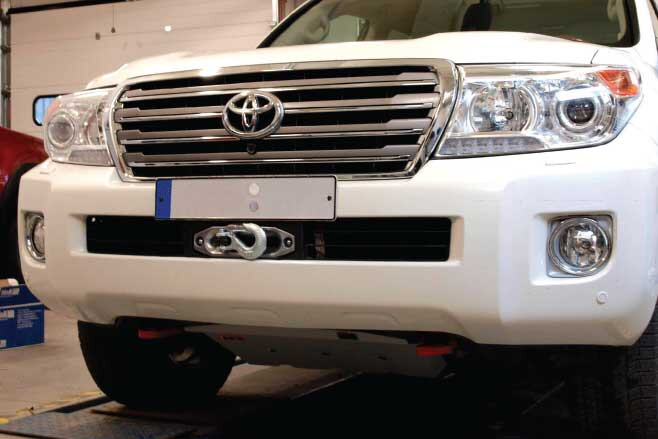
Carbon Off Road has added in-bumper winch cradles to its range of accessories, allowing you to mount a winch to your 4×4 without the need to fit a heavy bullbar. To maintain the OE look of a vehicle, the cradles generally mount behind the vehicle’s bumper. With a range to suit Toyota, Ford, Mitsubishi, Volkswagen and Isuzu vehicles, the Carbon Off Road winch cradles weigh between 10 to 15kg (depending on application) and come complete with instructions. RRP: $895 Website: www.carbonoffroad.com.au
WARN M8274 WINCH
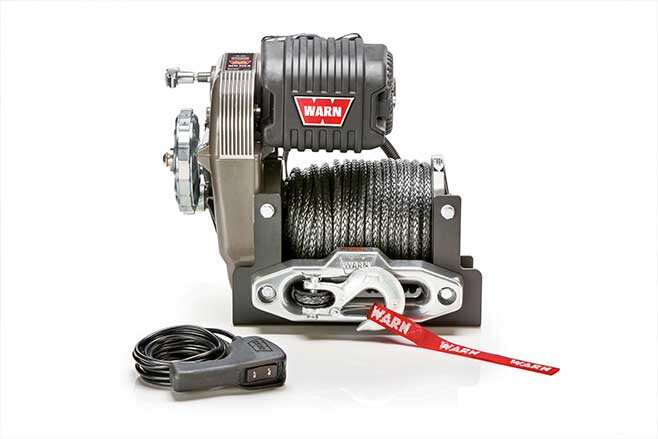
Warn has revealed new and improved versions of its legendary M8274 and M8274-S winches, now with a pulling capacity of 10,000lb. Formerly capped at 8000lb, the extra 2000lb of pulling power is achieved courtesy of a new high-output 6hp motor. In addition, Warn has switched from solenoid control to an Albright contactor, and it has improved the units’ durability by adding a stainless-steel clutch handle, two Oilite bushings and a bolt-and-washer assembly – replacing the retaining ring – on the brake shaft. The upgraded winches are also now available with the option of either Spydura synthetic rope or steel rope. Website: adventurewarehouse.com.au/
Our journey along the wild west coast of Tasmania begins at MacQuarie Heads, with an easy beach run up past the quaint town of Strahan to Zeehan, a once-bustling town previously known as the Silver City.
After a squiz at the local museum, we tackled a muddy 4×4 track that leads to Montezuma Falls. It was here where the MaxTrax 6×6 encountered an issue with its uni-joint, and a massive winch recovery delayed proceedings.
Some of the crew ditched the recovery operation and continued on to Montezuma Falls, a must-see natural attraction. The recovery was eventually successful come nightfall, thanks of course to Ron’s old Patrol.
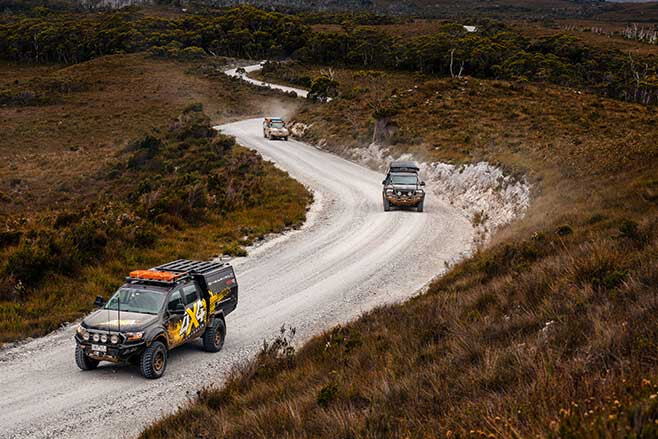
After a well-earned kip back at Zeehan, the crew travelled to Granville Harbour and on to Corinna, before heading back to the west coast and arriving at the small fishing town of Temma.
Sandy Cape was on the itinerary the following day, with plenty of sand driving on the cards. And, yep, one of our vehicles got bogged.
It was here, at the Sandy Cape Light, where our amazing Tasmania adventure ends.
IN DECEMEBER 2019 Jeep Global President Christian Meunièr said Jeep would be, “the greenest SUV brand in the world”, as it would have EV or PHEV variants of every model in its range, available by 2022.
The next step in this evolution was revealed overnight, with the wraps coming off the Jeep Wrangler 4xe PHEV. The Wrangler is the quintessential Jeep vehicle, and the 4xe PHEV will be going on sale in the United States, China and Europe in 2021, with no mention of Australia or right-hand drive availability.
All we have to go on is the comment by Jeep Australia MD Kevin Flynn, who said: “We are excited about these technical developments and advances and are monitoring the take up of electrification in Australia.
“We will be ready to launch our PHEV strategy as soon as consumer appetite, regulations and infrastructure suggests the time is right.”
Whether or not that strategy will include the Wrangler 4xe, or other models such as the Compass and Renegade 4xe models that were revealed last year, remains to be confirmed.
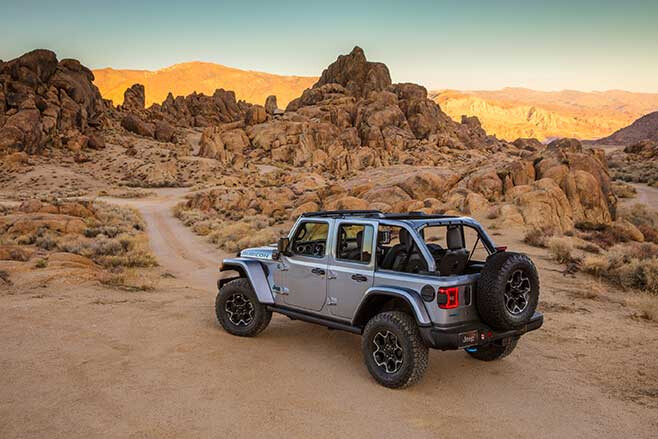
The Wrangler 4xe is built on a traditional Jeep ladder chassis, and as a PHEV it features both a petrol-fueled internal combustion engine and a pair of electric motors. It retains the Wrangler’s four-wheel drive system with dual range full-time transfer case, and Jeep says it keeps its ‘Trail Rated’ off-road ability.
It is available in both Sahara and Rubicon models and, like regular Wranglers, the Rubicon gets extra low gearing in both the transfer case and axles, locking differentials, a disconnecting front swaybar, underbody protection, and other hardware to make it supremely off-road capable.
The powertrain uses a 2.0-litre turbocharged petrol four-cylinder engine backed by an eight-speed automatic transmission. There are two electric motors, the first mounted at the front of the engine to which it is connected via a drive belt, and the second motor within the transmission.
The liquid-cooled motor at the front of the engine replaces the conventional alternator and starter motor, for charging both the 400V lithium-ion battery pack battery pack for the EV system and a conventional a 12-volt battery to run the vehicle’s accessories.
The second motor replaces the torque converter to provide added torque to the drivetrain and it is controlled by a pair of clutches. When the binary clutch is closed, torque from the petrol engine and the electric motor combine through the automatic transmission for maximum drive.
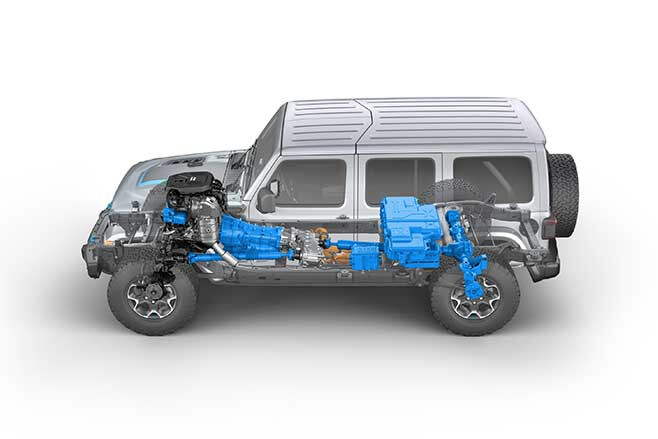
A variable clutch mounted behind the electric motor manages engagement with the transmission, to improve drivability and efficiency.
Combined, the petrol-electric drivetrain can deliver up to 280kW and 637Nm. That torque directly on the throttle should make the 4xe Wrangler an absolute weapon to drive off-road. It can also provide up to 40km of pure electric, zero emissions driving without needing a charge.
A 400-volt, 17-kWh, 96-cell lithium-ion, nickel manganese cobalt battery pack is mounted in an aluminium housing underneath the rear seat, as low as possible.
All high-voltage electronics, including the wiring between the battery pack and the electric motors, are sealed and waterproof and the Wrangler 4xe is capable of water fording up 760mm, just like any other Wrangler.
The Wrangler 4xe is certainly an interesting vehicle. There’s no doubt the additional torque supplied by the electric motor and the reduced fuel consumption of the PHEV drivetrain would make the Jeep amazing off-road; but it remains to be seen what effect the added weight and complexity of the system will have on drive ability.
Price would be another issue, with a Wrangler Rubicon already costing up to and above $70K. What would be the added purchase cost? And are we ready for a $90K Wrangler?