
SEEMINGLY we all know someone whose chipped LC200, LC79, Ranger 3.2 or Amarok V6 makes more torque than you could jump over: “She’s good for 800Nm mate! Goes like a rocket.” Or perhaps it may be 900Nm, or 1000Nm, or more. Just depends on the ‘someone’ in question!
Well, if you’re sick of hearing this over and over, here’s how to shut them up. Just tell them that by itself 1000Nm counts for nothing and you can produce 1000Nm by doing absolutely nothing once you have the ‘test apparatus’ in place. Here’s how it works.
You need a decent-sized mate who tips the scales at 102kg. You also need a metre-long truckie’s wheel-wrech with an old metal tractor seat welded to one end of the spanner. The same tractor that supplies the seat also has rusted near-solid wheel nuts on its large-diameter rear wheels. Attach the spanner to one of those wheel nuts so that the spanner is horizontal to the ground and then have your mate sit on the tractor seat welded to the other end of the spanner, without his weight touching the ground.
Now have a beer as that is all there is to be done. Thanks to the force of gravity acting down on your mate there’s a 1000Nm twisting force (or torque) being applied on the wheelnut at the other end of the spanner.
It works like this. Gravity (measured as an acceleration of 9.8 metres per second per second) acts down on your mate’s 102kg mass to produce a downwards vertical force of 999.6 (9.8 x 10²) Newton on the end of the spanner, Newton (N) being the standard measurement of force in the metric system.
One metre away at the other end of the spanner, the twisting force or torque being applied to the nut then becomes 999.6 Newton-metres (Nm). Let’s call it 1000Nm. If the spanner was two metres long, and thus providing double the leverage, you’re looking at 2000Nm of torque at the nut.
Now while all of that may sound impressive, it unfortunately counts for nothing. Yep, nothing. With no movement at the nut you’re not producing any power, and power is what gets things done. Torque is just the enabler.
If the rusted-on nut starts to turn on the stud then you’re producing power, which is being spent overcoming the friction between the nut and the stud.
“Huge torque numbers are only useful if you can produce them at significant rotational speeds”
When it comes to engines, huge torque numbers are only useful if you can produce them at significant rotational speeds. Our 1000Nm being produced at an engine speed of just one revolution per minute would produce just over one tenth of one kilowatt (kW). But if you can produce 1000Nm at 1000rpm you’re already up to a handy 105kW, while 1000Nm at 2000rpm will net you close to 210kW, which is more than handy.
Power is of course, a product of torque multiplied by engine speed. For any given engine speed, doubling the torque will double the power. Likewise, for any given torque output doubling the engine speed will double the power.
So by themselves, huge torque numbers count for nothing. But if you have lots of torque, then it’s a lot easier to produce effective power. And it’s power, rather than torque, which is the ultimate arbiter of the performance capability of your 4×4, even if the torque flavours the nature of the power delivery.
Without useful torque an engine has to rely on high revs to make decent power, which is not ideal for many reasons, not the least being driveability and reliability.
AS the double-cab mid-size ute market continues to flourish, vehicle manufacturers are rushing to introduce models at the upper end of the price range – as this is where the most money is to be made and where the models are that buyers are wanting.
It’s no longer the case that a simple Ranger Wildtrak or Hilux SR5 will feed the greed; buyers’ want more and are prepared to pay for it. $60K and up is where the 4×4 ute market booms and where the manufacturers like to be selling their utes.
Now these manufacturers are only too keen to load their products up with faux-leather seats, larger diameter alloy wheels, plastic bolt-on accessories, gaudy stickers and a swathe of other goods that allow the car companies to charge more for the cars, but don’t really do anything to improve the driving experience of the vehicle. Buyers are still flocking to aftermarket accessory manufacturers to get gear that actually makes the cars better and the OEMs are missing out on their dollars.
One OEM that has got it right is Ford Australia, its Ranger Raptor a hit with its bespoke suspension and extra kit, but those features made it a stand-alone model and a pricey one at that. Still, the price hasn’t stopped buyers from snapping up the off-road ready Raptors.
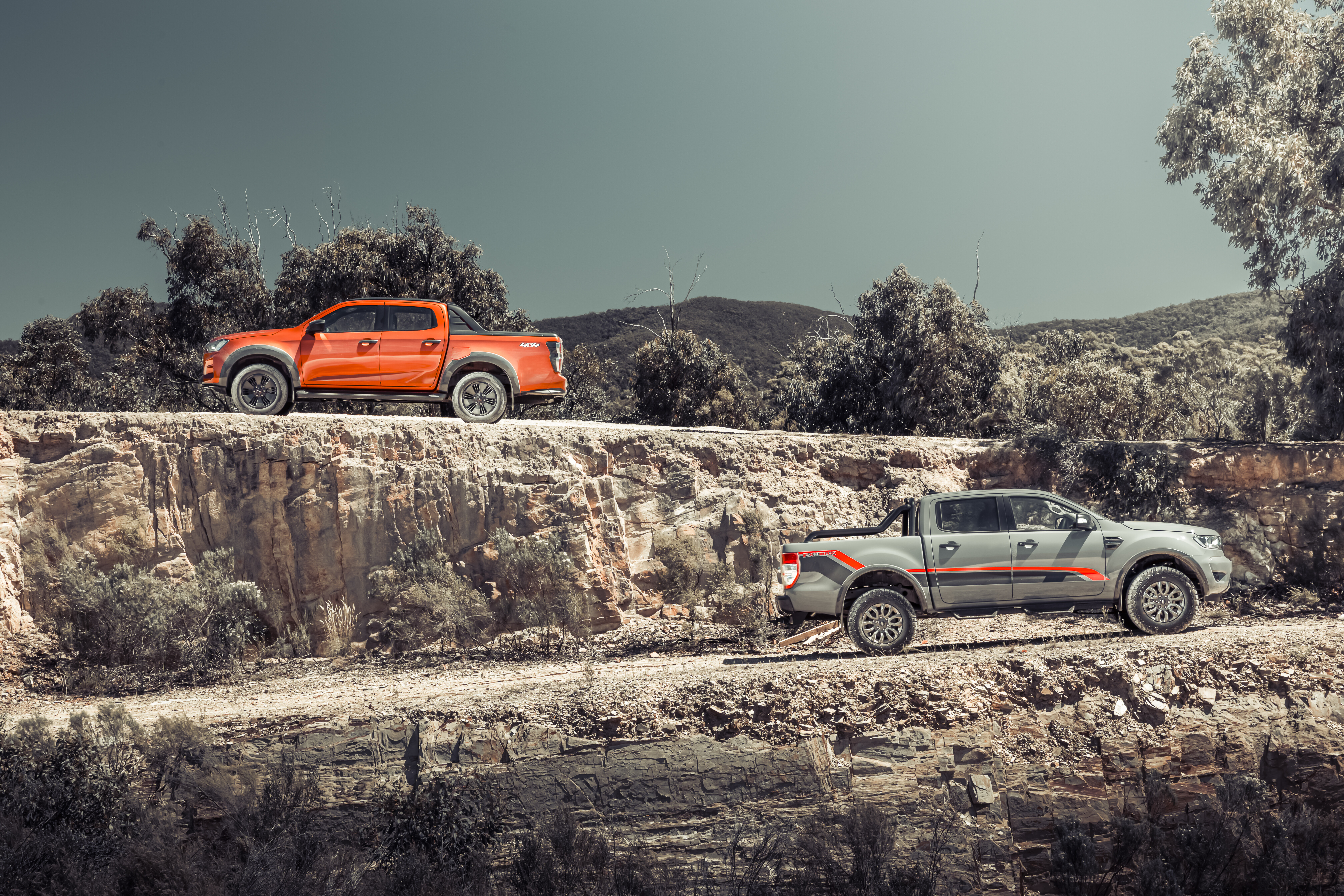
Now Ford is taking some of that technology developed by Ford Performance for the Raptor and trickling it down to lower priced variants to make it more accessible to more buyers.
Welcome to the Ford Ranger FX4 MAX, a new variant to the Ranger line-up that borrows from the Raptor’s styling and employs some of its suspension technology, while also addressing some of the limitations that kept the Raptor off the shopping lists of some buyers.
We’ve lined it up here with the top-of-the-range model of the new kid on the block, Isuzu’s D-MAX X-Terrain. At $62,900 the X-Terrain is priced to compete with the $63,290 Ranger Wildtrak, but we look to find out if its worth the extra few grand to step up to better mechanical components than just bling and add-ons.
FORD RANGER FX4-MAX
AT $65,940 the Ford’s latest Ranger slots in between the 2.0-litre-powered XLT and Wildtrak double-cab models in the existing line-up. It pays tribute to the Raptor range-topper with its borrowed grille and the availability of the previously exclusive to Raptor Conquer Grey paint colour but the FX4 MAX is more than a Raptor-lite styling exercise, it’s what’s under the skin that makes it special.
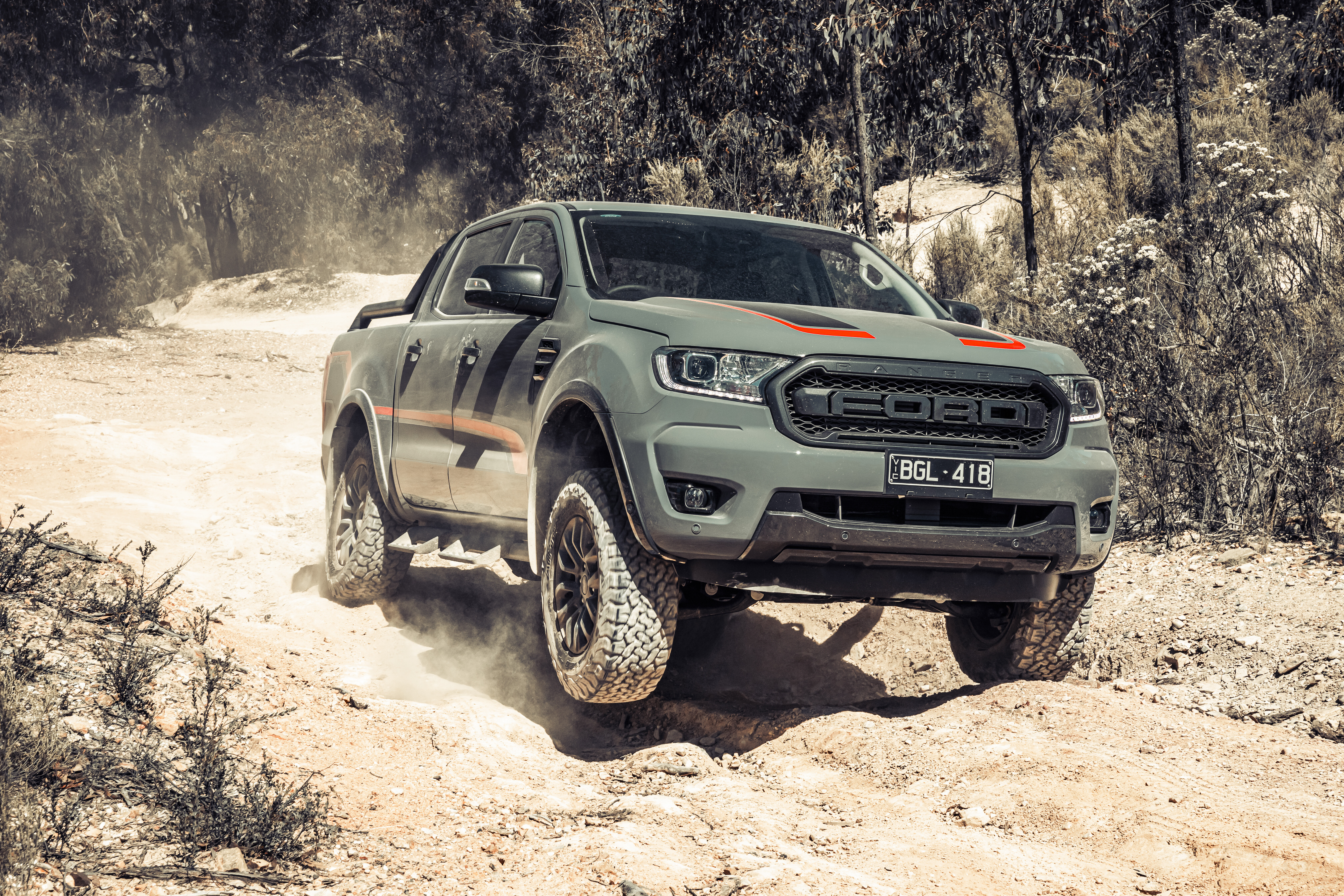
The FX4 MAX is more than a Raptor-lite styling exercise, it’s what’s under the skin that makes it special
POWERTRAIN & PERFORMANCE
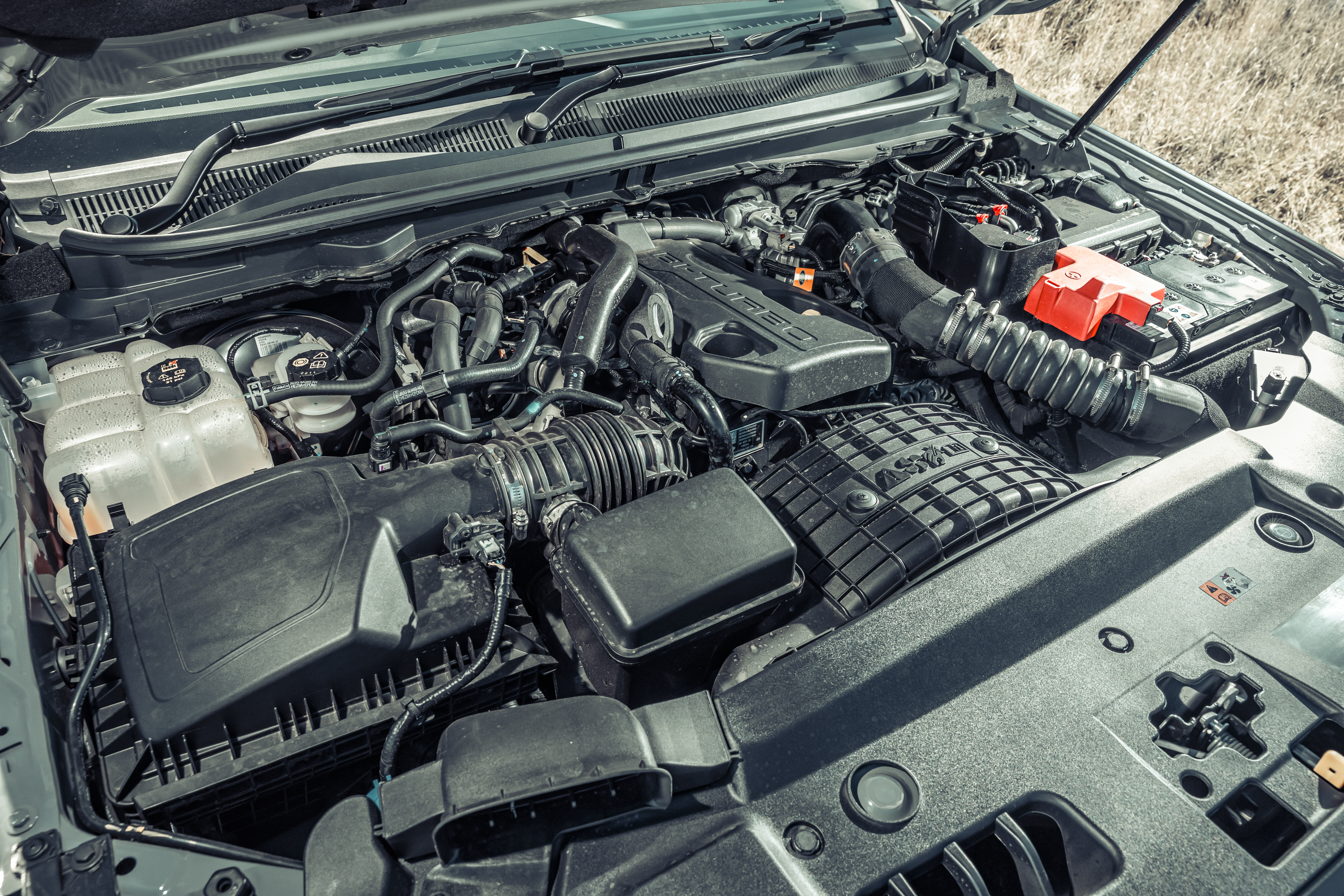
THE Ranger FX4 MAX is only offered with the small 2.0-litre diesel engine and 10-speed auto transmission option and not the larger 3.2-litre diesel and manual gearbox offered elsewhere in the Ranger line-up. This is not totally a bad thing as the 2.0L makes a peak 500Nm of torque at 2000rpm as opposed to the bigger engine’s best of 470Nm, and is more economical.
As we’ve said in previous tests of Rangers with this powertrain, the 2.0L feels like it is working harder to make that grunt while the 3.2L does it lazily and the smaller engine needs every one of those 10 ratios in its transmission to keep the Ranger moving forward.
For its part, the 10-speed is generally smooth and efficient but it can get a bit lost between gears at times, especially at part or varying throttle applications. The tuning of the throttle itself could also be improved on, as it is slow to react requiring a fair amount of input to get the car moving from a standstill and then lunges forward requiring you to immediately back off. This is one car that would really benefit from an aftermarket throttle controller or even an OE one like Toyota fits to the Hilux.
The remainder of the drivetrain is standard 4×4 ute fare; part-time dual-range four-wheel drive with a driver-selectable locking rear differential. As in other Ranger models, the electronic traction control remains active on the front axle when the RDL is activated to give the car the best chance at getting over difficult terrain.
ON-ROAD RIDE & HANDLING
THE Ranger FX4 MAX’s best parts are in its chassis tuning and while primarily designed to improve off-road and gravel-road performance, they are equally as impressive on the blacktop.
The model-specific calibrated springs – coils up front and leafs under the back – and two-inch monotube Fox shock absorbers work with a thinner front swaybar to better control the body movement over any surface. This is a good thing for both performance and safety as the driver is more relaxed and less fatigued over longer drives.
The all-terrain tyres and 31mm taller ride height (over an XLT Ranger) do nothing for the dynamics and on-road traction, but these factors are more than tamed by the quality suspension components.
OFF ROAD
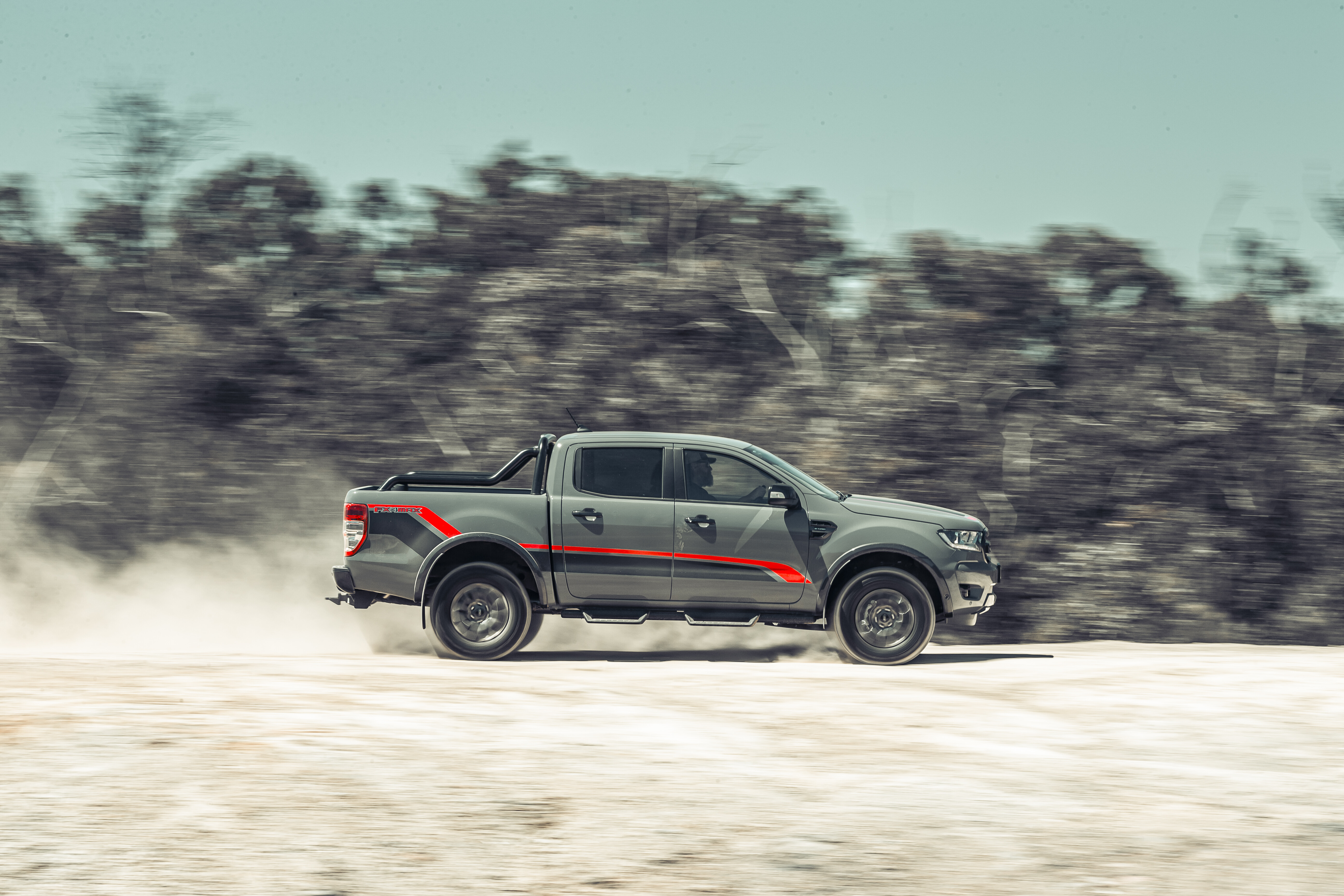
FORD’S PX2 Ranger has always been one of the better performing mid-size 4×4 utes when taken off road and the Raptor variant is arguably the best. With its better equipped and calibrated suspension, increased ride height and BF Goodrich all-terrain tyres, the FX4 MAX lies somewhere in-between the Raptor and the standard varieties, so is still near the top of the class.
Those Fox shocks, while not the full internal by-pass dampeners as fitted to the Raptor, provide that much appreciated control over the roughest terrain, the extra height gives ground clearance while the tyres supply traction and more importantly, durability. The rear Fox shocks are the remote-reservoir type for long duration of off-road pounding without fade.
Ford also fitted hydraulic rebound stops front and rear to increase large amplitude control without compromising on-road comfort. The specs of the springs allow more axle travel as does the smaller diameter front sway bar. The way Ford allows the ETC to remain active across the front axle when the RDL is engaged gives the best tractive ability short of front and rear lockers.
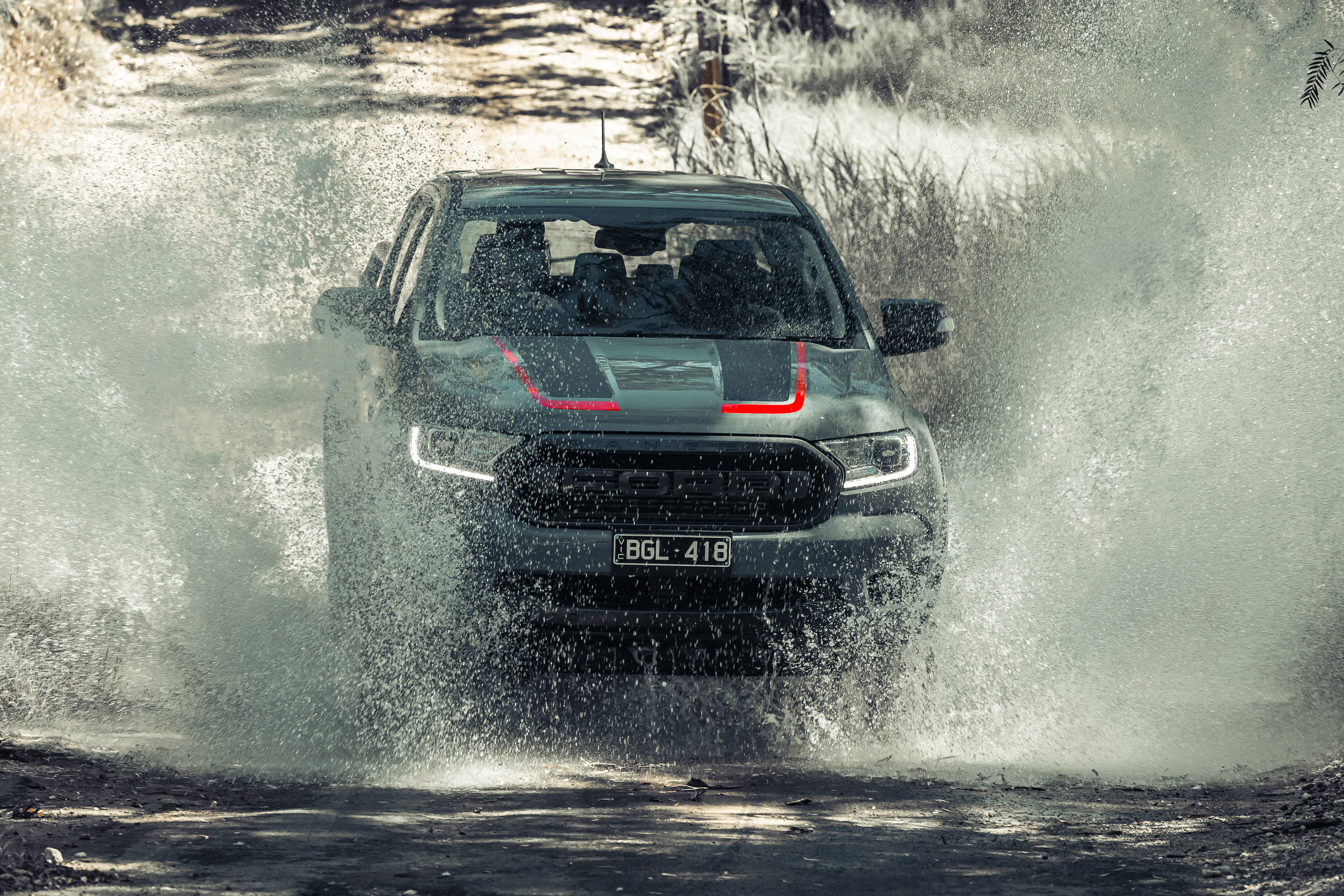
A couple of off-road negatives include the design of the FX4 MAX-specific side-steps which instead of being one long step, have two separate steps along their length, giving you twice as many edges to get hung up on. Also, the way the 2.0L engine draws its intake air from above the off-side headlight instead of inside the ’guard as the 3.2L does, makes it more susceptible to sucking in water on creek crossings.
CABIN & ACCOMMODATION
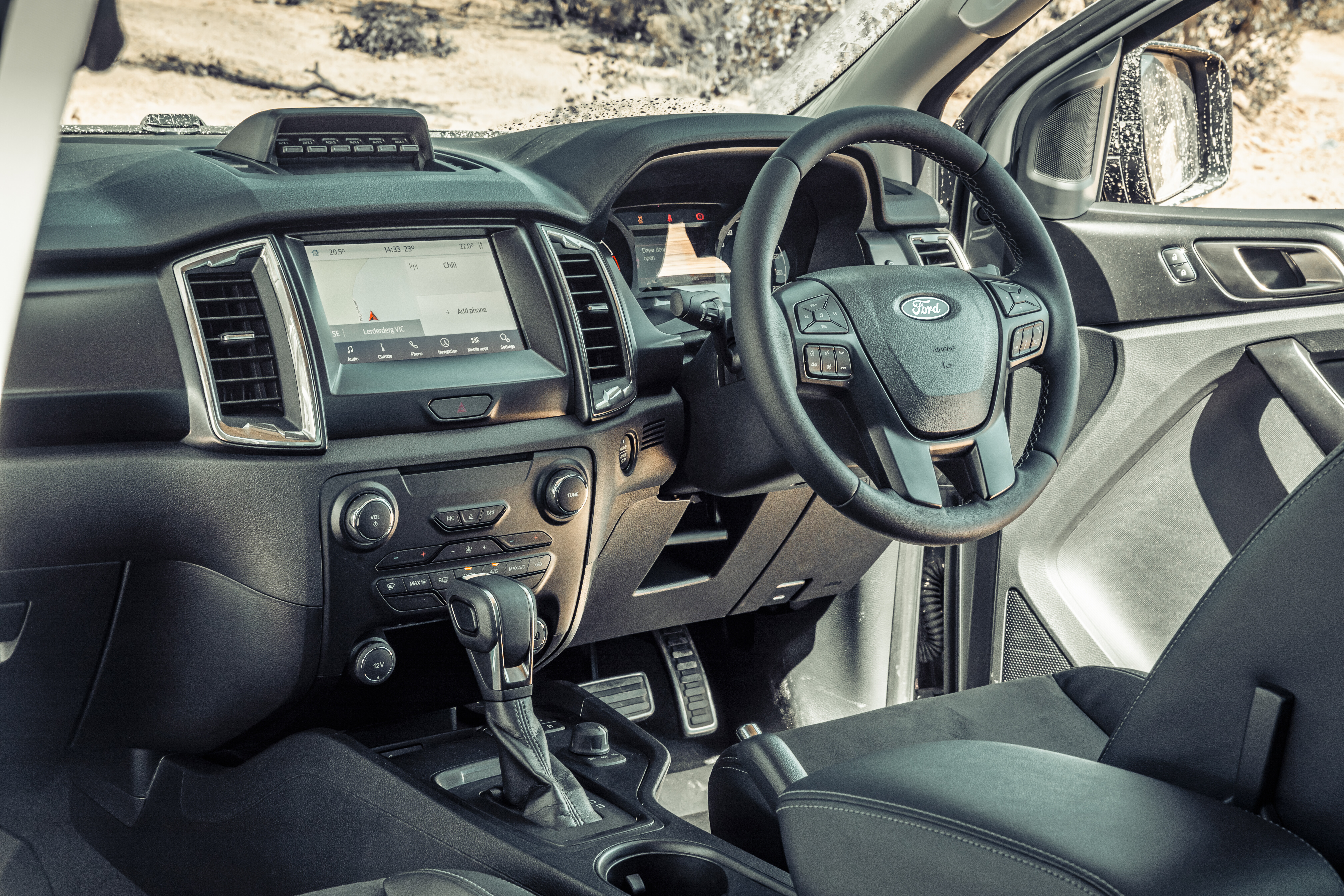
THE Ranger’s cabin has always been a nice place to ride and drive and the FX4 MAX is treated to a few dress-ups such as suede-trimmed seats with model-specific stitching, a thick leather-wrapped steering wheel, sports pedals for the driver and all-weather floor mats.
A unique inclusion and something we’d like to see filter through to other Rangers, is the auxiliary switch panel that sits high on the dash for all your accessories such as lights, fridges, winch and whatever else you need switches for. The Ranger’s dash is notably lacking in anywhere to put extra switch gear, so this would be great to offer as a retro-fit accessory itself. To help power additional accessories, the FX4 MAX gets an uprated 250amp alternator.
A few things we don’t like – still no reach adjustment for the steering column, the buttons for the HVAC are still small and dark, and those new side-steps are so wide you have to step over them each time you get in and out of the car.
PRACTICALITIES
THE big positive to the FX4 MAX’s uprated suspension is that unlike the Raptor, this car retains it 3500kg towing capacity and 981kg payload thanks to its use of leaf springs under the back.
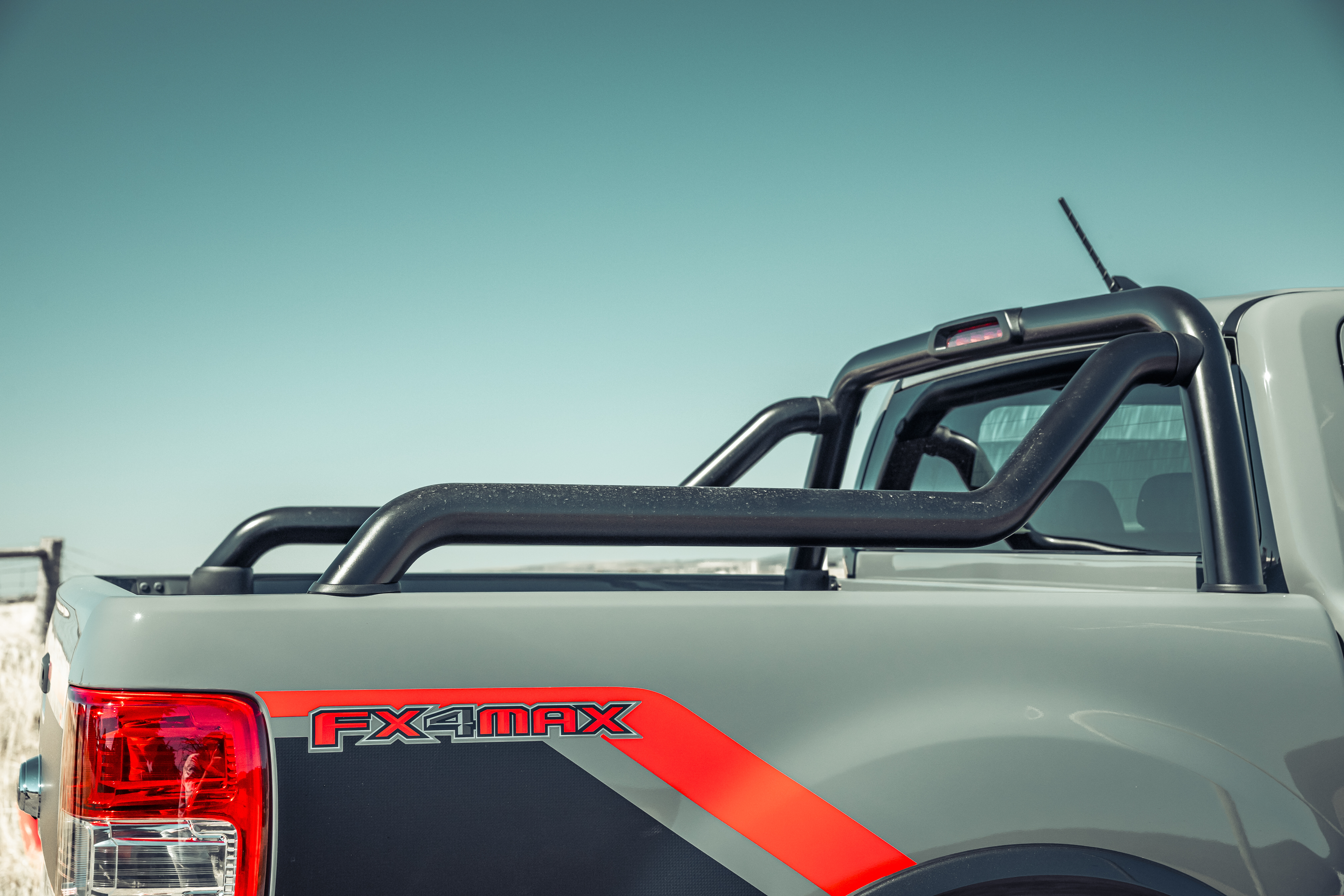
The cargo tub is nice and big to carry that load with tie-downs in the corners and a 12-volt power outlet fitted, but the so-called sports bar does nothing but get in the way when trying to access or load from the sides of the vehicle.
The $700 optional stripe package as fitted to this vehicle failed to make the car any faster even though the stripes are red!
The 265/70-17 BFG All Terrains are a common size if you need to change them and will do for most users. The spare is a matching BFG as well. All-weather floor mats are a welcome inclusion, while the 800mm quoted wading depth is handy although we’re still wary of that air-intake location.
ISUZU D-MAX X TERRAIN
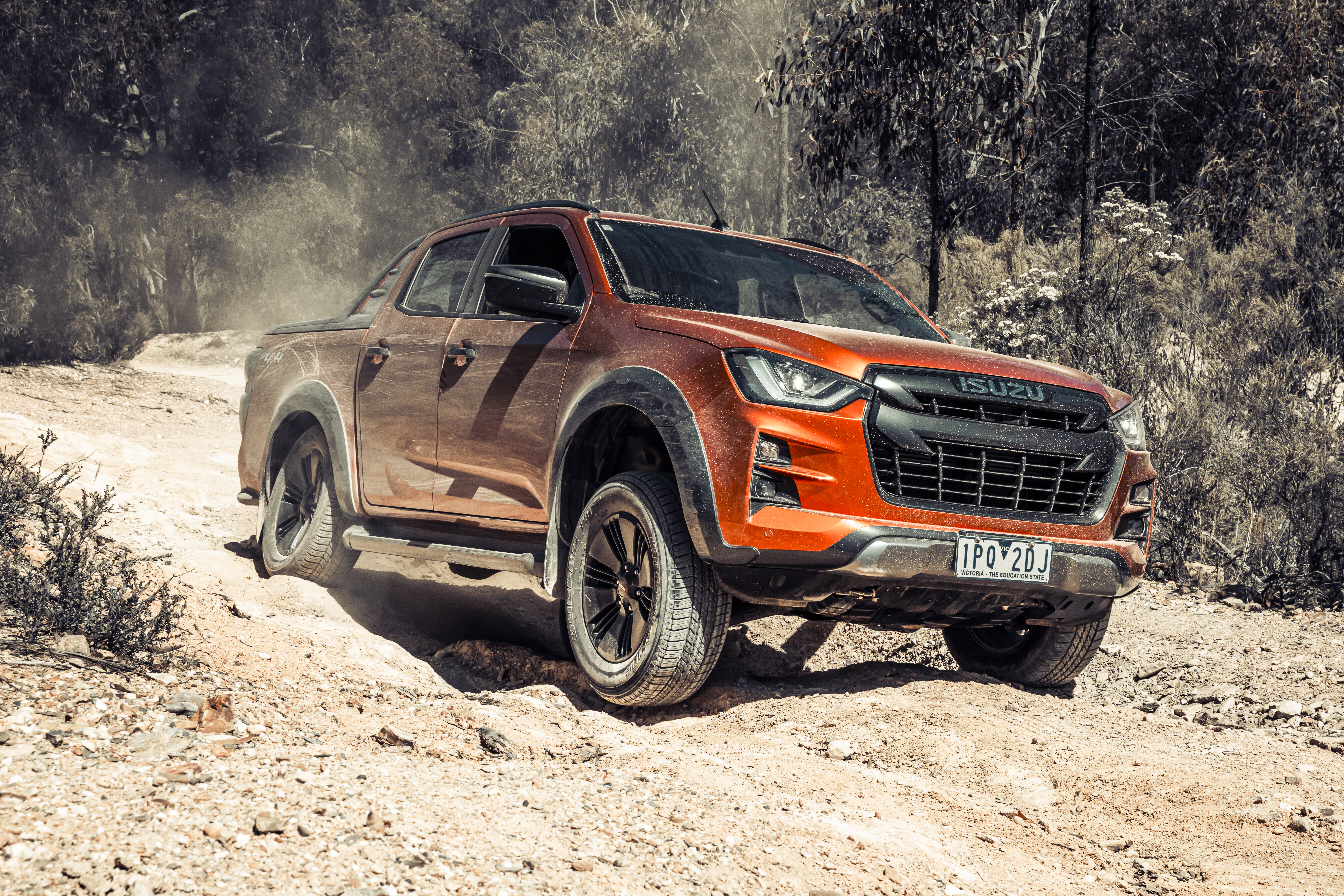
ISUZU’S all-new D-MAX ute has been a hit since it landed in Australia back in September 2020, so much so that supply has had trouble keeping up with demand. That said, it’s now a regular among the top 10 selling 4x4s in the country and this shows no signs of slowing down.
The D-MAX X-Terrain caps the four-model line-up and all of them are powered by the same drivetrain and include the full suite of safety features. It’s only the level of comfort and convenience, and appearance features that vary across the range and at $62,900, the X-Terrain has the lot of them.
POWERTRAIN & PERFORMANCE
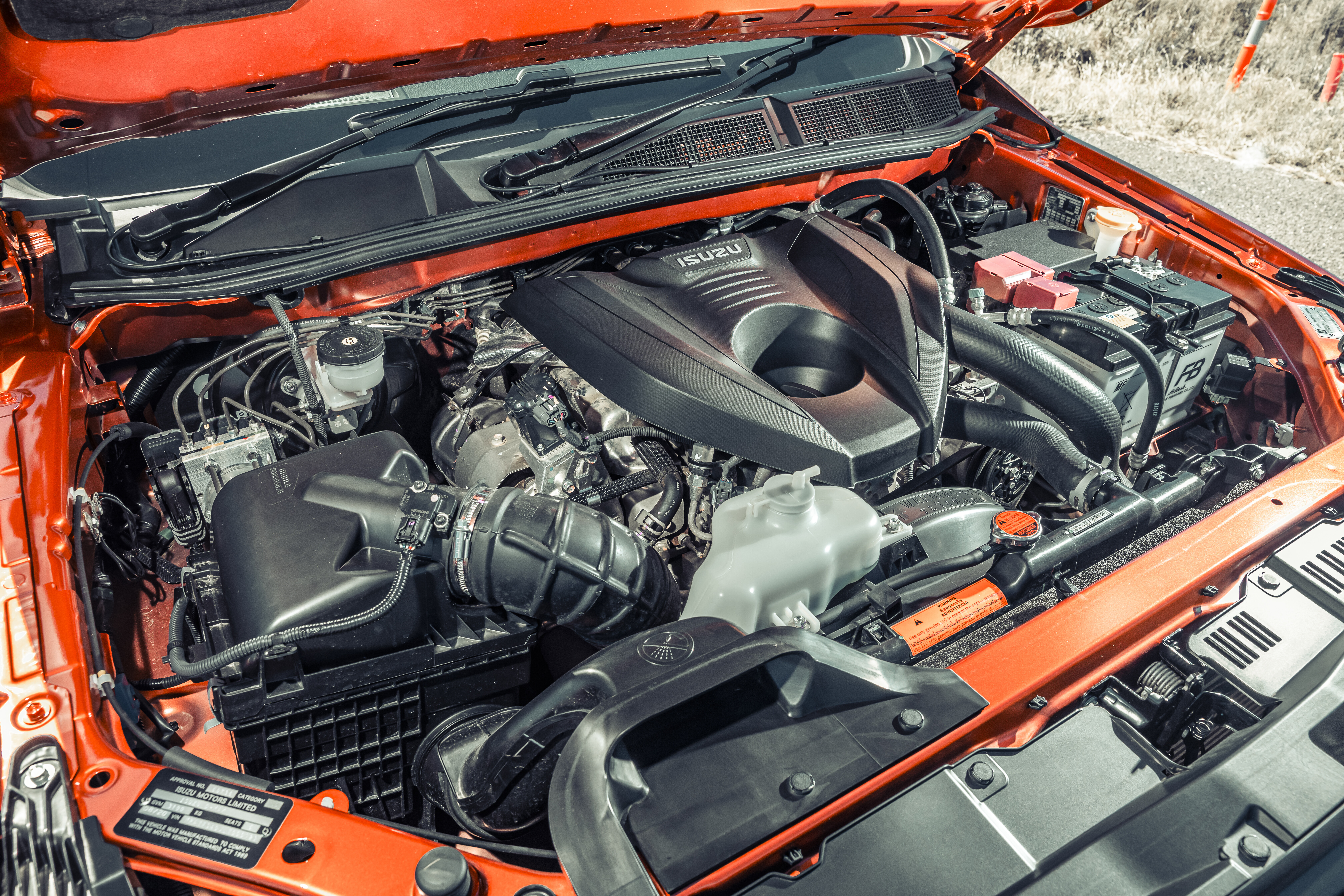
AS mentioned, all D-MAXes get the same powertrain, so that means the venerable 4JJ engine which in this latest iteration has a new engine block, cylinder head, pistons, fuel injection system and turbocharger; is essentially a new power plant but hopefully will retain the legendary dependability of this family of engines. These changes boost the engine with an extra 10kW and 20Nm to deliver 140kW at 3600rpm and 450Nm from 1400 through to 3250rpm.
The performance still falls below the 500Nm as delivered by the Ford engine and you feel this behind the wheel no matter the terrain. It might feature many new parts but this still feels like an older generation of diesel engine compared to the class leaders.
The 6-speed auto is the latest generation of that box by Aisin and as always, offers nothing to complain about. The 4×4 system is part-time with low-range and new to the D-MAX’s drivetrain, is a driver-actuated rear diff lock where none had been fitted in the past.
ON-ROAD RIDE & HANDLING
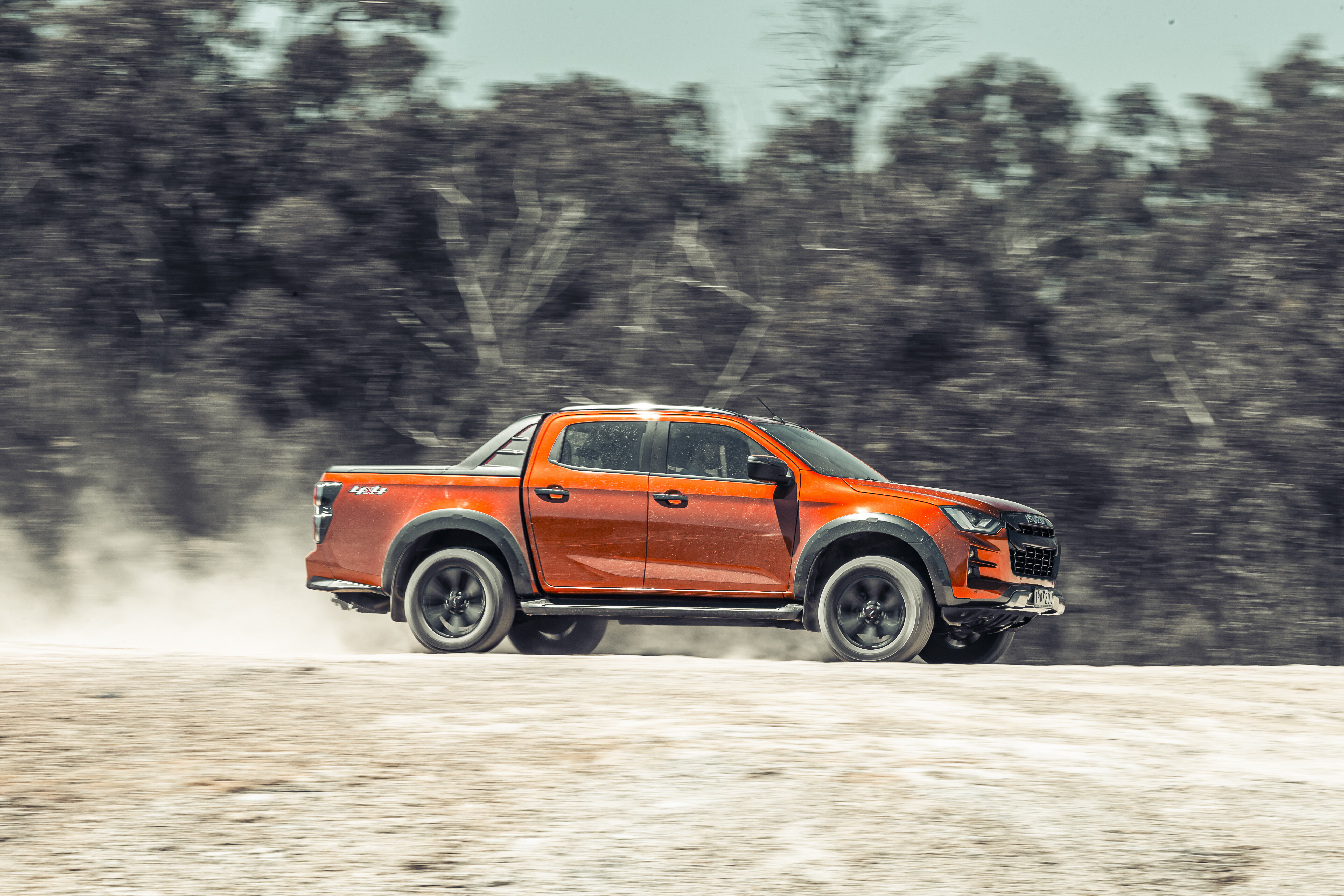
WITH a new chassis and redesigned suspension the latest D-MAX is a big step up in ride and handling over the previous generation. It still follows the tried and proven formula of IFS with coils up front and leaf springs over a live axle at the back, but fresh calibrations and mountings set it apart.
Isuzu offers two different spring settings in the D-MAX with firmer leaves under the two lower-spec ones and softer springs under the upper-spec models like the X-Terrain here. The leaf packs are unusual in that they use only three leaves in them and in this X-Terrain, they seem to struggle a bit with taming the rear-end of the car; and this is without a load on board. The front-end feels better controlled, but it’s like the rear-end is something from another car altogether.
This big revelation when driving the D-MAX back-to-back with this Ranger is the massive difference a set of quality aftermarket shock absorbers can make to any vehicle.
The Isuzu’s heavy-hitting line-up of active safety features will be appealing to many buyers, and there’s no denying they can save lives and limit injury. However the calibration of the some of the self-steering and lane keeping features on the D-MAX is too extreme and negatively affects the drive on multi-lane and country roads.
OFF ROAD
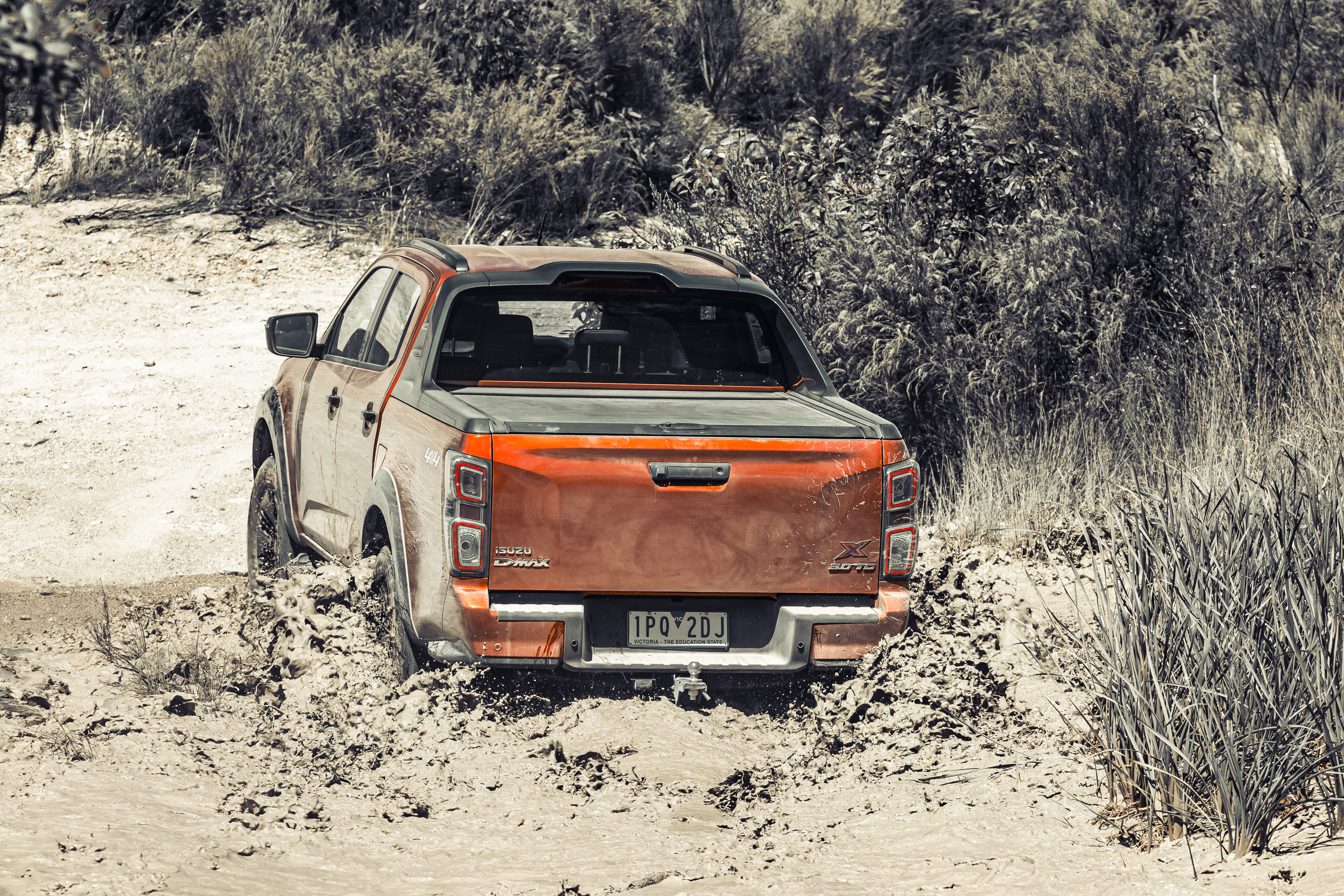
THE biggest improvement to the D-MAX’s off-road ability is the inclusion of the RDL, even though its use cancels out the ETC in full so the front axle becomes a single spinner. The calibration of the ETC is still a bit slow, however it is better than that of the old model. A bit more wheel travel at the rear axle helps keep the tyres on the deck so as to not rely too heavily on the traction aids.
Short front and rear overhangs help with clearance and Isuzu quotes an 800mm wading depth for the D-MAX even though the air intake is located above the grille in a similar way to that on the 2.0L Rangers.
Driving on gravel roads is vastly improved over the previous D-MAX although that loose rear-end still requires the driver’s attention. Some of the electronic driver’s nannies can be annoying when driving off road, especially passing through long grass or water when all sorts of systems start to sound alarms.
CABIN & ACCOMMODATION
WITH the X-Terrain being the top-of-the-line D-MAX, it comes pretty well-loaded inside and the interior of all new D-MAXes are a step up from the old models in terms of fit and finish.
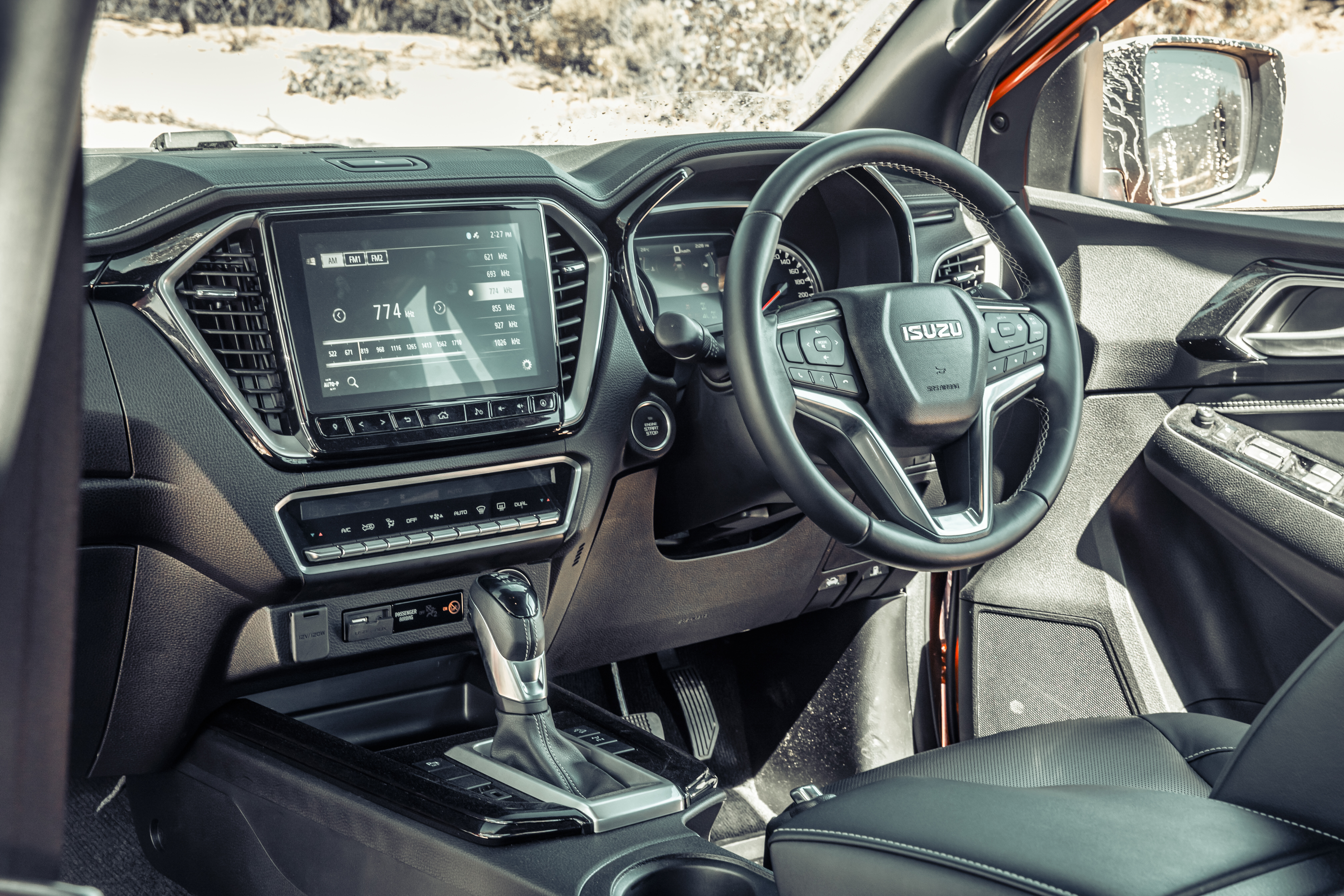
There are leather seats with power adjustment for the driver’s pew, no heating or cooling though; tilt and reach adjustment for the steering column; a big 9-inch AV screen with all the usual connections but it uses small buttons instead of tactile dials for controls; climate control; adaptive cruise control (which is only an option on the FX4 MAX); and a suite of electronic safety features that put the D-MAX at the head of the mid-size LCV class.
All up, the new D-MAX cabin is a nicer place to ride and drive than it ever was in the past, particularly in the two upper-spec models.
PRACTICALITIES
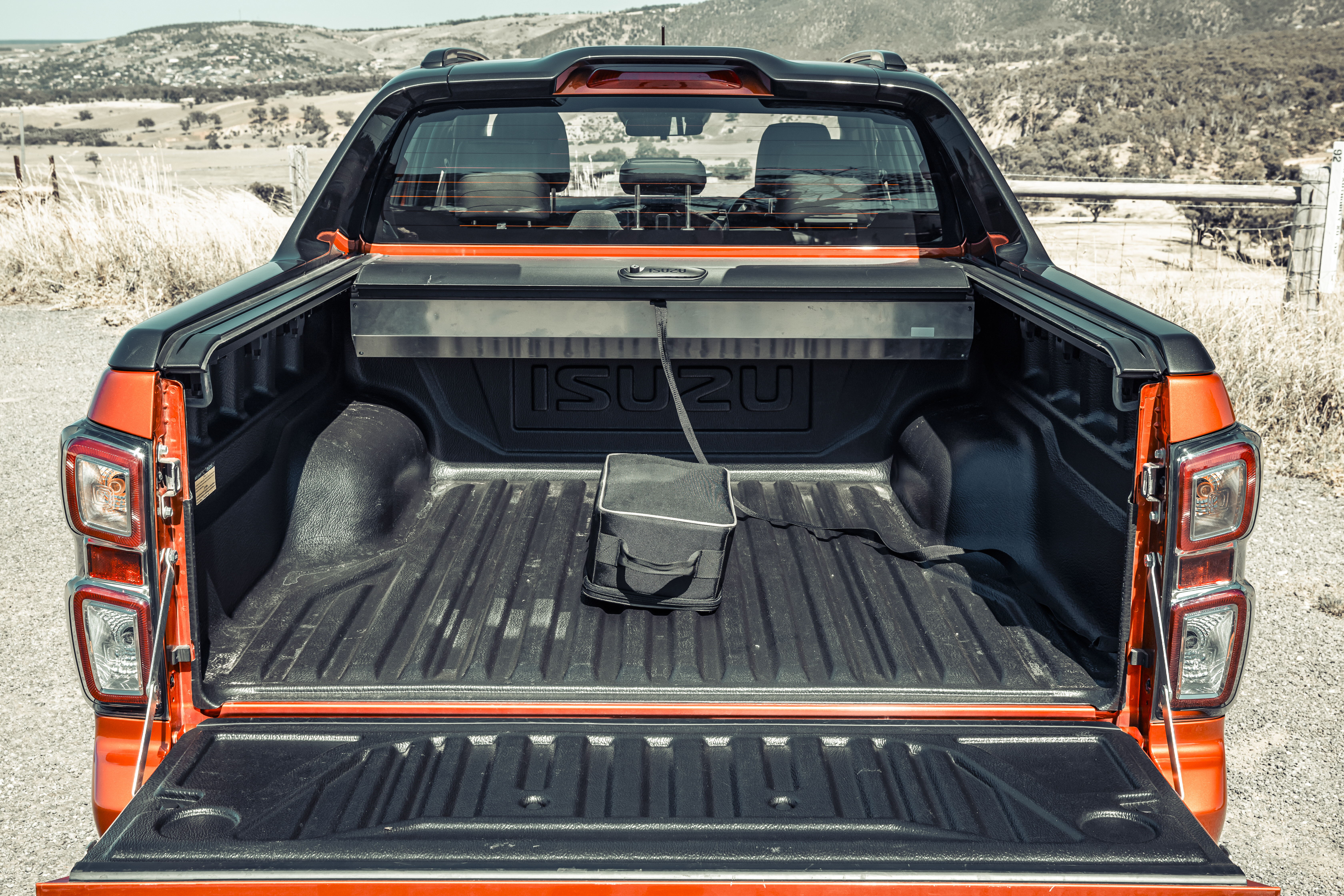
ALL 4×4 D-MAXes get the class standard 3500kg towing capacity and in this top-spec’d (read heaviest) X-Terrain, maintains a 970kg payload. The tub is spacious and includes a roller hard cover. These cars will be great for security and weather protection but can also be a hindrance, depending on what you’re carrying.
The sail-plane is exclusive to the X-Terrain but serves no purpose and is for styling only and it too can get in the way when loading the tub. There are four tie-down points in the tub but no 12-volt power outlet. The 800mm wading depth and 18-inch wheels are standard, although you can fit 17s as specified on lower-spec models if desired.
THE WINNER
THERE’S no denying that Australian ute buyers prefer a bit of kit on their mid-size pickups and are happy to pay for it, but choosing between these two mid-$60K high-spec examples comes down to your personal preferences. Do you want to spend the extra dollars on equipment that improves the driving performance over any terrain but especially off road, or are you happy to spend it on superfluous styling features?
Ford Australia has done another exceptional job of improving the suspension of its Ranger with changes made for the FX4 MAX. The Fox dampeners work beautifully to control body movement on any road surface and the tweaks to the springs and other suspension hardware supplement a worthwhile package for any new Ranger. It’s a factory package that will suffice for most ute owners, negating the need to fit aftermarket suspension and unlike the Ranger Raptor, maintains the payloads.
The new D-MAX is a step up from the previous model but still falls short on performance when compared with the market leading Ranger and Hilux. It claws back some points on paper with its class-leading safety features, however the calibration of some of those need some refining, especially when driving off road. The interior of the X-Terrain is a great place to travel and deserving of the top-grade model, however the suspension control still feels unsettled, especially when driven alongside a well-sorted package such as that in the FX4 MAX.
The lower list price of the X-Terrain would allow the buyer to source and fit an aftermarket suspension system to improve its control and the performance of the chassis in a similar way as Ford has done with the FX4 MAX but for our money, it would be the fully factory-backed Ford offering for us.
Talking Points
- Passes testing on The Schu00f6ckl
- Production due to start in July 2022
- Australian deliveries expected late 2022
THE INEOS Grenadier – the utilitarian off-road vehicle conceived by British businessman Sir Jim Ratcliffe after Land Rover refused to sell him the rights to continue building the classic Defender – has passed the next stage in its gruelling schedule of pre-production testing.
With Austrian auto firm Magna Steyr enlisted as its development engineering partner, the latest test location was the mountain known as The Schöckl near its Graz plant in Austria.
“We’ve made great strides since the very early versions of the Grenadier I drove a year ago,” said Sir Jim. “The Schöckl is a proper challenge for any 4×4. Today was a real test for our prototypes, and they came through very well. There is still work to do, but I am confident that the Grenadier will do the job we have developed it for.”
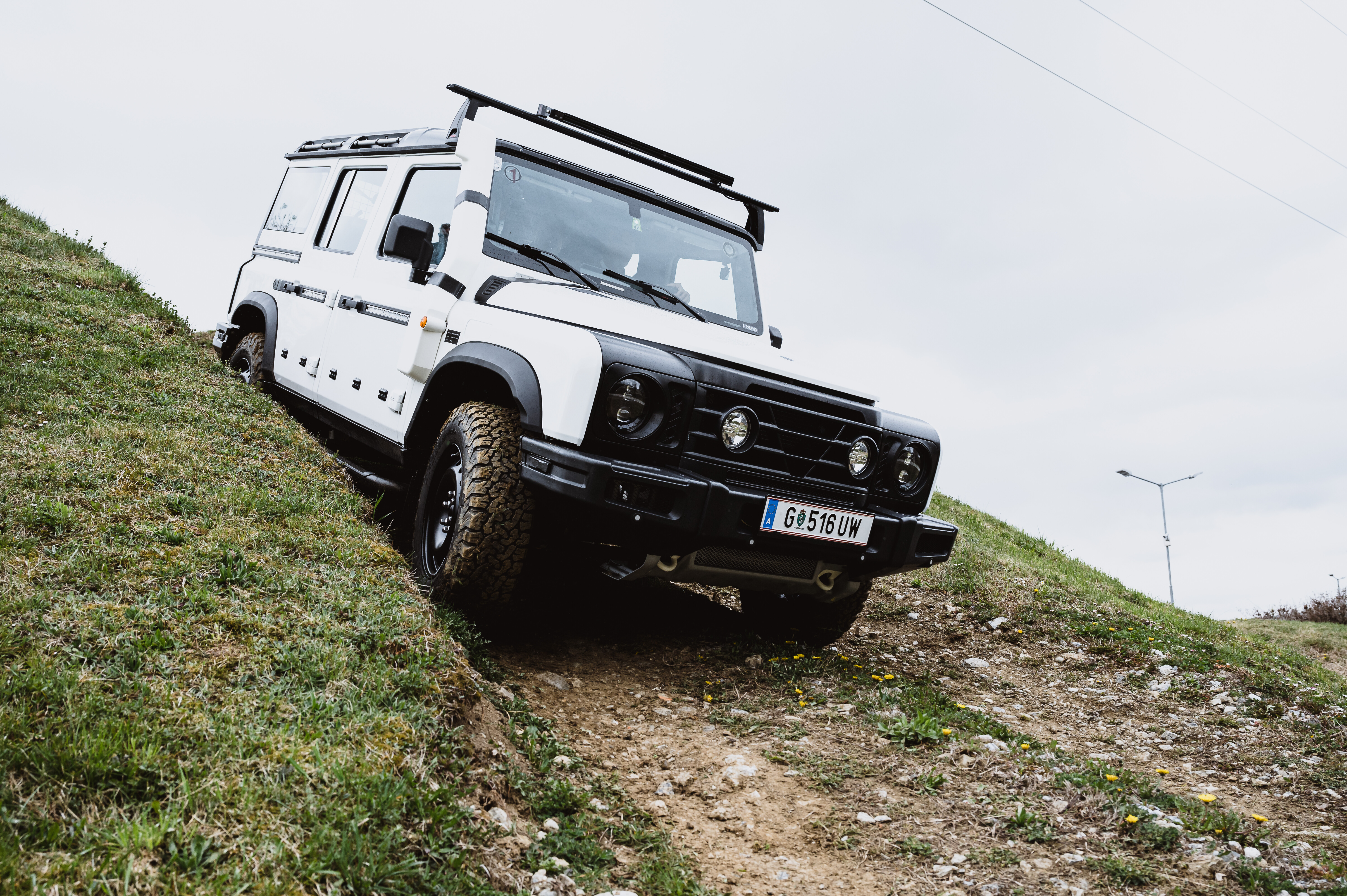
Renowned for their unforgiving and destructive hard-rock terrain, the Styrian mountains have been used for decades by Magna Steyr. Most significantly, more than four decades of the Mercedes Benz G-Wagen have been developed and proven on The Schöckl prior coming to market. The G-Wagen is manufactured at the Graz Manga Steyr plant.
To achieve its rigorous testing targets, INEOS has revised its project timings and pushed back the start of Grenadier production. This latest sign-off from the boss puts INEOS Automotive a step closer to its intended production vehicle start date in July 2022.
Conquering the Schöckl follows testing cold weather engine calibration in northern Sweden; with hot weather testing in some of the world’s harshest environments including Death Valley in the USA and the dunes of the Middle East, set to start shortly. Testing in Australia is also slated for further down the track.
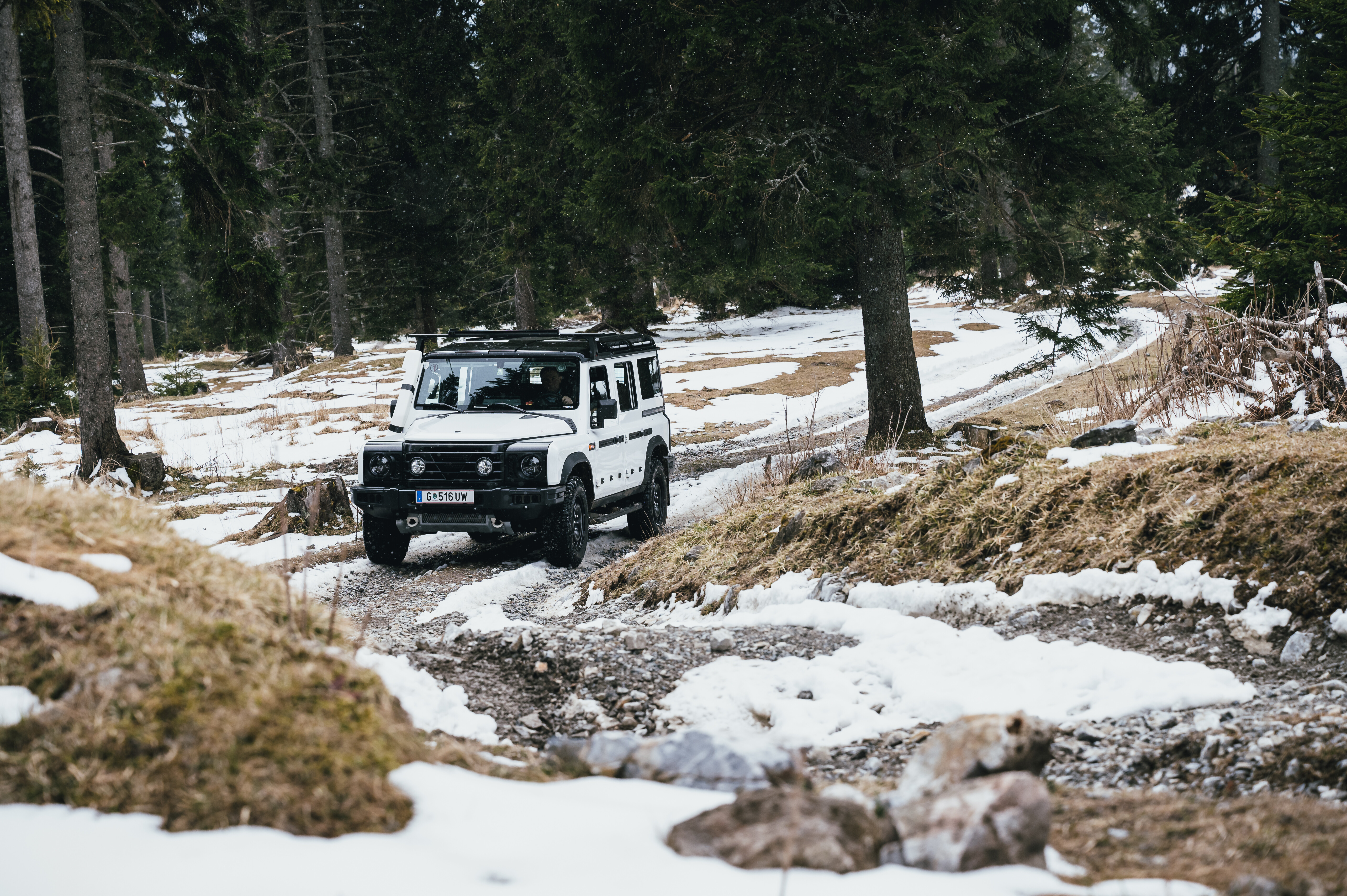
The rigorous testing process will see more than 130 second-phase Grenadier prototypes rack up 1.8 million kilometres in extreme environments around the world.
The Grenadier could be described as the lovechild of the Mercedes Benz G-Wagen and the old Defender. It’s a traditional utilitarian 4×4 created in a similar mould to these two iconic vehicles with a boxy flat-sided body atop basic ladder-chassis frame, suspended on coil springs and live axles.
The Grenadier will be powered by BMW six-cylinder petrol and diesel engines and feature a dual-range four-wheel drive driveline with the option of locking axles.
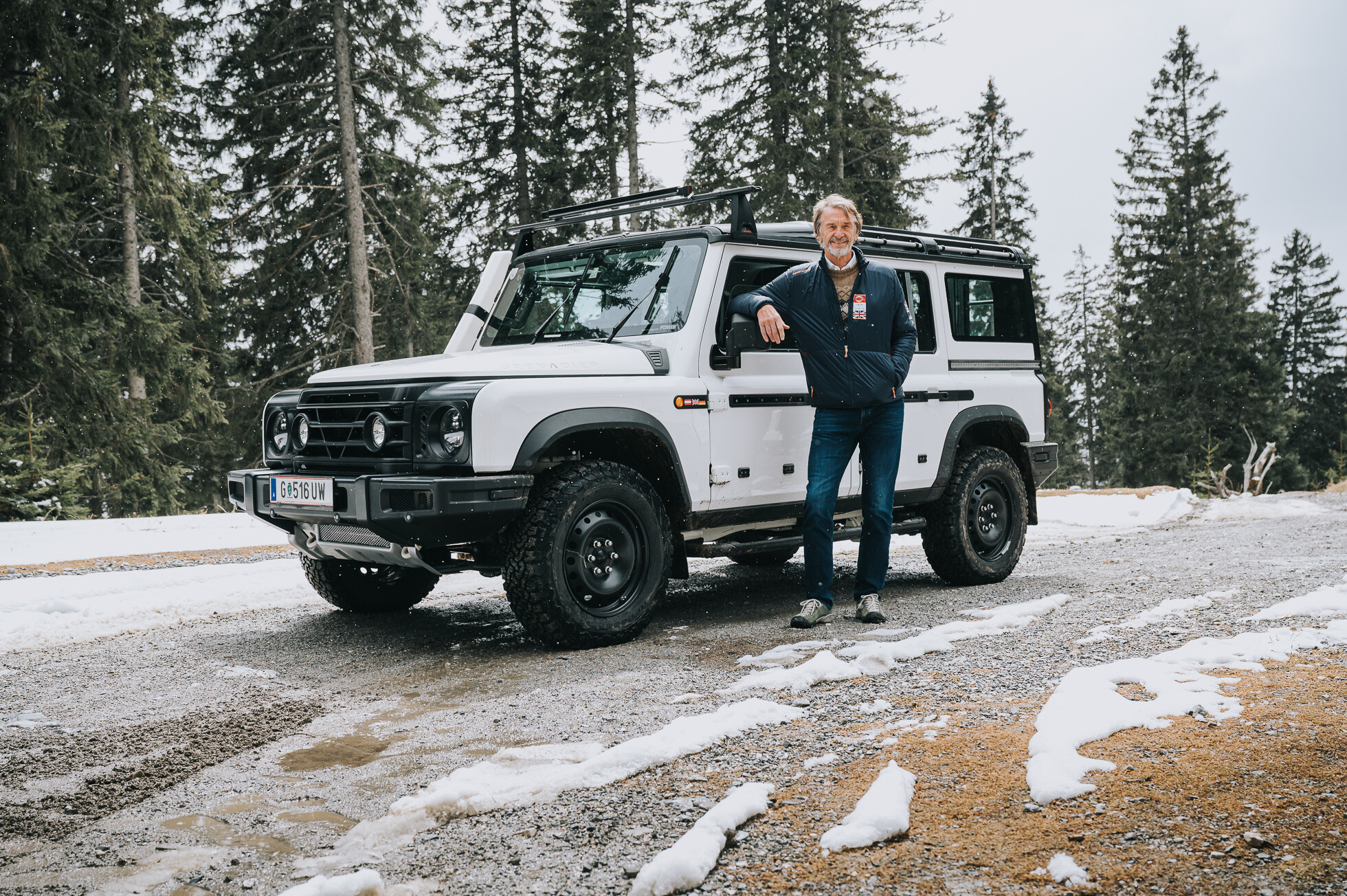
The Grenadier will initially be offered as a five-door wagon and four-door double-cab pick-up, with INEOS not ruling out further body styles in the future.
The INEOS Grenadier is being developed for markets around the world including Australia and New Zealand, with deliveries expected here in the latter part of 2022.
AH, CAMPER trailer touring. A bit of a pain in the arse to be towing something around the tracks, let’s be frank, but ever so worth it for the luxury that befalls you at camp. Fully equipped kitchen, room for the family, hot shower, comfy bed and space to retreat out of the elements. Keep your swags, plebs, this is luxury living gone mobile.
You’d think, then, that when I took the Cub Drifter II dual-fold hard-floor camper trailer away for an overnighter in the Blue Mountains National Park at six months pregnant, I’d be sitting pretty. And don’t get me wrong, it’s a fine-looking camper trailer. One of the best dual-fold family setups I’ve seen for off-roading, in fact. More on that shortly. But was I sitting pretty?
Unfortunately, as is increasingly the case with camper trailer and caravan reviews these days, I wasn’t actually able to use the Drifter II, lest I soil it for the inevitable owner. Instead, we were met at our chosen campsite by the manufacturer, who brought the camper along for the once-over. It is for that reason that this review will be more of a “here’s what it’s got and how I think it might go”, than a “hell yeah, I bloody loved it”.
Back at camp, I was setting up my alternate accommodation. No camper, no worries; I’d pitch my beloved ultralight hiking tent, purchased for its piddling weight and Chinese-made price tag. Inside I’d roll out my plush self-inflating camping mattress, bought on a whim from BCF the day before because I’m-too-goddam-pregnant-now-for-that-flimsy-hiking-thing. I’d arrange my mandatory six pillows for head and back and hips and tum comfort. Happy as an upwardly-duffed Larry, right? As I cast my eyes to the sky, I had a moment of doubt.
“Just scud, don’t worry.” This came from fellow 4X4 Australia journo, Scott Mason, who came along to take photos. Scott’s got a brooding, man-of-nature vibe about him that gives you the impression he knows stuff. You know the type, committed creative who clutches a camera like a bible and follows crap weather around to get sexy photos.
As he quietly eyeballed the clouds in the northwest sky through plumes of his own durry smoke, I felt reassured. “Just scud,” I nodded, amused by how ridiculous the same words sounded coming from my mouth. Time to check out this camper trailer.
GONE DRIFTIN’

ONE of the largest rigs in the Cub range, the Drifter II is designed for comfortable off-road family touring. It’s named in honour of an early ’70s model of Cub, examples of which occasionally can still be seen cruising the tracks. This is a testament to Cub’s long history of manufacturing Australian-made and off-road-ready campers that go the distance.While the dual-fold configuration of the Drifter II is something you’ll see ad nauseum on the stands of Johnny-come-lately brands selling cheap imports at RV shows, the point of difference with this one is manufacturing quality, a focus on weight reduction through clever design and excellent resale value.
Sure, it’s not as affordable as other offerings on the market at around $45K and so won’t suit everyone, but if it’s off-road reliability you want, this is a great place to look. And she’s a pretty stylish and comfortable unit to boot.
FAMILY-FRIENDLY TOURER

THIS big girl sleeps up to six in the main body of the camper. There’s a quality pocket-coil queen-sized main bed at the front over the drawbar, a double medium-density foam mattress at the rear, and a U-shaped dinette between that converts to a third bed, more than adequate for a couple of tuckered out little kiddos.
In its lounge form, the latter is the ideal place for board games or cards with the crew, the central, wind-up table pivoting with ease to whatever position you require it. Handy, too, for those dinner times when it ain’t just scud in the sky.
This rather palatial interior is topped off with under-seat storage, quick-access storage hidey holes beneath the main bed, bedside reading lights, USB charging outlets and privacy curtains sectioning off the beds at either end.There’s great airflow thanks to twin roofline vents and oversized windows on all sides. Three of these are protected from rain by Cub’s ingenious, easy-as-pie two-pole window awning system. Wonderful news for anyone who has ever spat expletives at those godforsaken three-pole arrangements, which require the exact amount of tension and a foot rub to do what you want them to.
But my favourite feature in this style of camper trailer is the roll-up café blind that opens up the whole middle panel beneath the awning, creating what real estate agents like to call a ‘seamless indoor/outdoor living space’. Simply put, your husband can offer you tasting rights to whatever he’s cooking without you having to move from your comfy reading nook in the lounge area.
OVERNIGHTERS OR EXTENDED STAYS
SET up without the side awning, the Drifter II sits on the same footprint it occupies in transit, which will come in handy when setting up at tight bush campsites. This is also the ideal arrangement for quick overnight stops, something camper trailers aren’t usually known for.
With the help of Cub’s whisper-quiet winch and a smart design with no internal poles to tension, one person can have the Drifter II set up and ready for the family to sleep and hang out in within minutes. The benefit of this cannot be overstated when your road-weary and ravenous progeny are snapping at your ankles, seemingly oblivious to the long and aching months you spent lovingly gestating them.
The awning will add to your set-up time somewhat, as awnings typically do. You’re probably looking at about 20 minutes for two people to erect the awning, once you’ve got it down pat. It comes standard with a weather shield end wall to protect the kitchen area, while a full set of walls and floor is optional should you wish to maximise your internal living space. As with the rest of the tent, it’s Australian-made Dynaproofed canvas from Wax Converters. In short, top notch stuff.
With capacity for quick overnight stops and comfortable extended stays alike, the Drifter II is a versatile camper that will adhere to whatever style of touring you prefer.
OUTDOOR LIVING



THE kitchen pulls out the side beneath the aforementioned café blind and has a sink plumbed to the hot-water system, a three-burner gas stove plumbed to one of two 4kg gas bottles housed on the drawbar, and a couple of storage drawers beneath the sink. There’s a fridge slide that can take up to a 95L Waeco and a 1400mm pantry drawer. Sitting atop these at the drawbar is a luggage rack for hauling extra gear to camp.The external shower provides somewhere to hose off those grubby rugrats at the end of the day – just BYO shower tent. There’s 180L of freshwater on board, stored across two tanks that ride high out of harm’s way on the underside of the camper.

There’s plenty of external lighting sustained by two 100amp/h batteries and a Projecta 12V DC-DC charger. These are stowed in a slide-out storage drawer for easy access when it’s needed – no rummaging around in pokey under-bed storage compartments trying to change a fuse. The Drifter II is set up for 240V power for when you find yourself camped in civilisation. It’s also solar-ready with a solar input Anderson plug, but BYO solar panels.
OFF-ROAD CAPABILITY
THE Drifter II has all the hardware that would see it travel easily across the rough stuff. But first, let’s talk about weight.As mentioned, there are a lot of imported campers in a similar dual-fold style that promise all the bells and whistles as well as off-road capability. But they’re heavy. The folks at Cub, being seasoned pros at manufacturing off-road products over the past 50 years, understand that a camper is only as off-road as its weight and dimensions will allow. The Drifter II weighs a touch under 1400kg tare, with a 1900kg ATM. That’s around 500 to 600kg lighter than most competitors in its class. When it comes to off-road adventuring, that’s a huge advantage straight off the blocks.

The Drifter II rides on Cub’s own independent suspension system with twin shocks, supporting an Australian galvanised steel chassis. Both are manufactured at Cub’s factory in Sydney, along with all other components of the camper. It’s got 17in six-stud alloy wheels with Goodyear Duratrac tyres and a rear-mounted spare. The underside is extremely clean and tidy, with heaps of clearance and nothing to jag on rocks or branches.There’s an off-road ball coupling as standard, 12in electric brakes, rear recovery points, and a galvanised steel stone-guard with a couple of jerry can holders tucked behind.

The ‘Xtreme Off Road’ upgrade pack swaps out the hitch for a Cruisemaster DO35, the tyres for 265/70R17 Goodyear Mud Terrains and gives you an extra 50kg payload.Like I said, I didn’t get the opportunity to put the Drifter II through its paces, but the track into our campsite was hairier than expected – steep, windy and slippery from a summer of relentless rain – and it managed just fine. Which was one thing on the way in, when the sun was shining intermittently, and another thing entirely the next day …
WHEN GOOD SCUD TURNS BAD
I’LL be honest, I’d never heard the word ‘scud’ until that day in the Hawkesbury. But as day turned to night and thunder growled menacingly in the distance over the range, my confidence in ol’ storm boy Mason’s assertions of a clear night ahead dissipated. Scud my arse.An hour later we were all huddled beneath the awning of the Drifter, where the boys had lined up their swags as far out of the bucketing rain as possible. And I’m talking end of days rain. Cats and dogs. Relentless torrents for a solid three hours.
I thought of my poor little tent, which I’d placed strategically on the far side of the sprawling campground away from snoring swaggies, and as I eyed the sheets of water covering the ground I wondered what state I’d find it in when the rain eventually eased enough for me to get to it.
Finally, propped in my surprisingly dry fortress of pillows pulled in tight away from the tent’s sodden edges, I drifted into a fitful sleep to a deafening chorus of thunder and deluge as my baby rolled in my belly beneath my hands, seemingly in response to the fray. Yep, the comforts of the Drifter II – standing strong like a lighthouse yet housing no one – sounded pretty bloody good to me in that moment. Where do I sign?
SPECS
TARE: 1390kg ATM: 1900kg TOWING LENGTH: 5510mm TOWING WIDTH: 1940mm TOWING HEIGHT: 1710mm
AVAILABLE FROM: cubcampers.com.au RRP: From $45,000
THE lines are becoming blurred … and that’s a great thing for the 4×4 owner. Several years ago, BFG launched the successor to the KM2 which in itself was a very solid tyre throughout its lifespan.
So, it was somehow surprising that the KM3 managed to raise the eyebrows of many experienced 4×4 experts. I mean we all expected great things from the KM3, considering its lineage, but I can still recall the moment I realised how damn quiet this thing was on the tarmac. This was an aggressive mud pattern with all the right stuff, like construction, advanced compound and sidewall armour, and yet it was quiet!
What was this sorcery? And would it last after a solid off-road wear-in period? Well, after 80,000-odd kilometres (and including my current second set) driving every type of terrain you can experience in this country, I can report on its long-term performance. Let’s break it down …
MUD
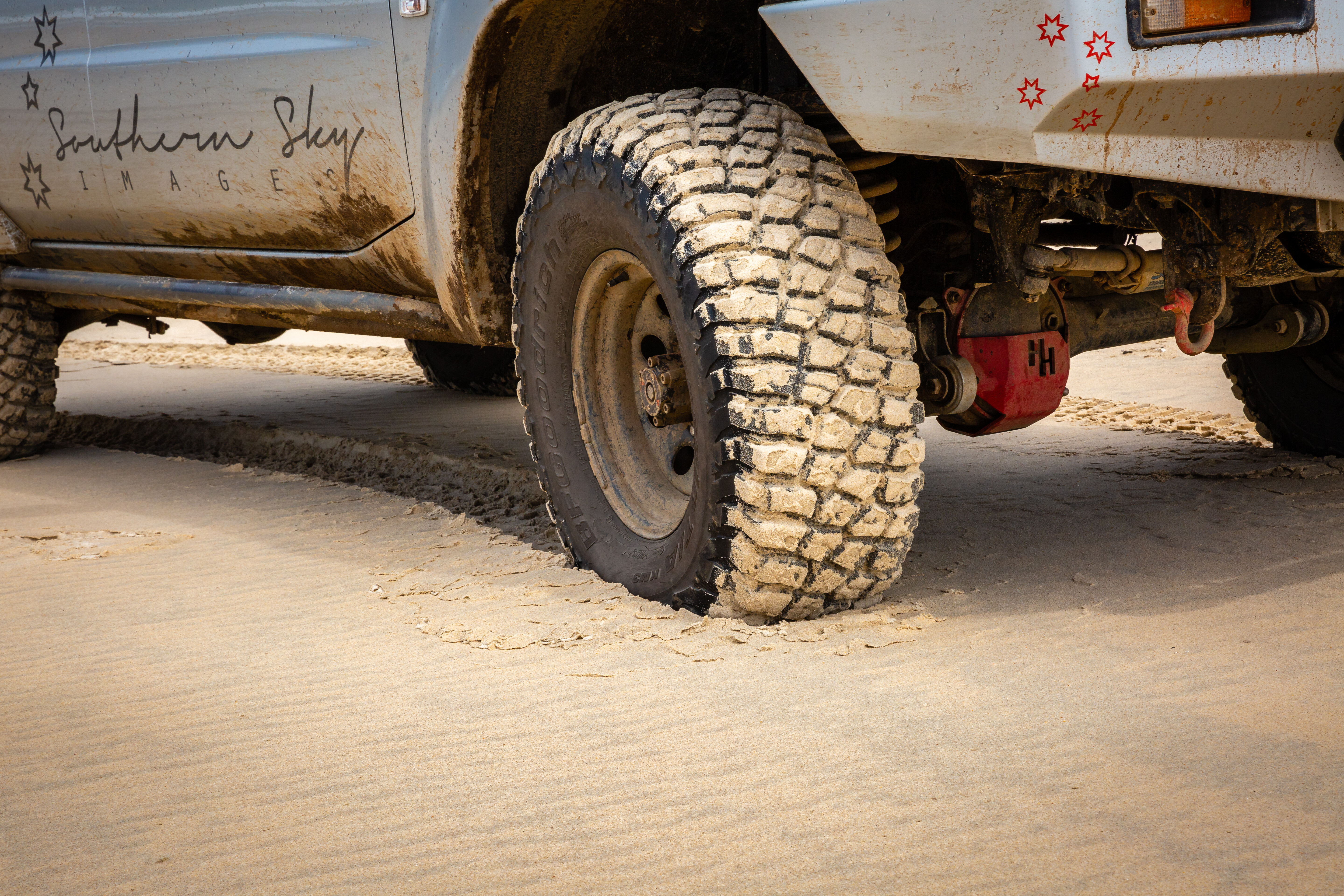
WELL, you would expect it to work well in mud and yes it does, very well indeed. Ejection of the sticky stuff that otherwise turns your tread into a slick is excellent, even at low wheel rpm.
The little bars that fill the tread gaps, the wide open blocks and the flexible compound and blocks all seem to do their jobs well resulting in good directional control, steerage and most importantly grip. It equates to very confident and effective mud driving.
The sidewall technology really bites in at low pressures, when the tread is flat against the ground, and especially in ruts, rounding out this tyre’s mud prowess.
SAND
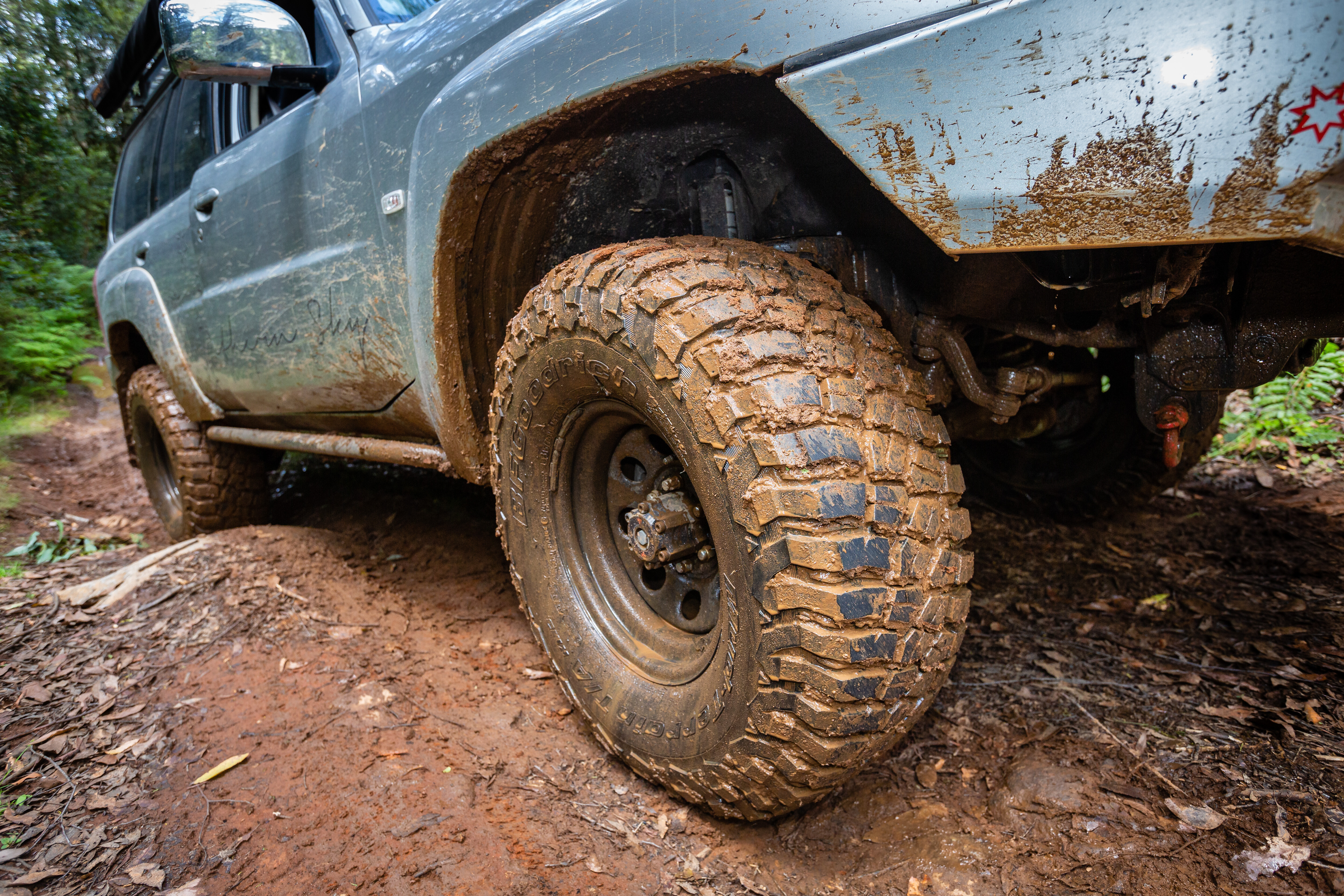
HOW do they perform compared to other muddies? Just fine. To be honest I could not tell if they were better or worse, I’ve found the biggest help on sand is to lower tyre pressure no matter the tyre, so that’s exactly what I did, same as always.
Driving sand is easy no matter the tyre if you are running the right pressure. I had no issues at all driving the softest of desert dunes and beaches. The only thing I did note was that I had to drop pressure more than in the past with older-technology tyres to get a good bagged-out tyre.
Modern sidewalls are stiffer than they used to be for sure and despite the lower pressure, that stronger sidewall seems to also make for a stronger bead connection, meaning I have not rolled a bead despite some aggressive beach driving.
A Mud Terrain is not ideal for sand driving. Why? Ideally you want as large a footprint on the ground as possible to evenly spread the load of the vehicle while not digging into the surface. You want low rolling-resistance and ‘floatation’. The open blocks of a muddie allow the tyre to sink in straight away, and they also increase rolling resistance, so, sand is not the tyre type’s forte at all.
DIRT AND GRAVEL
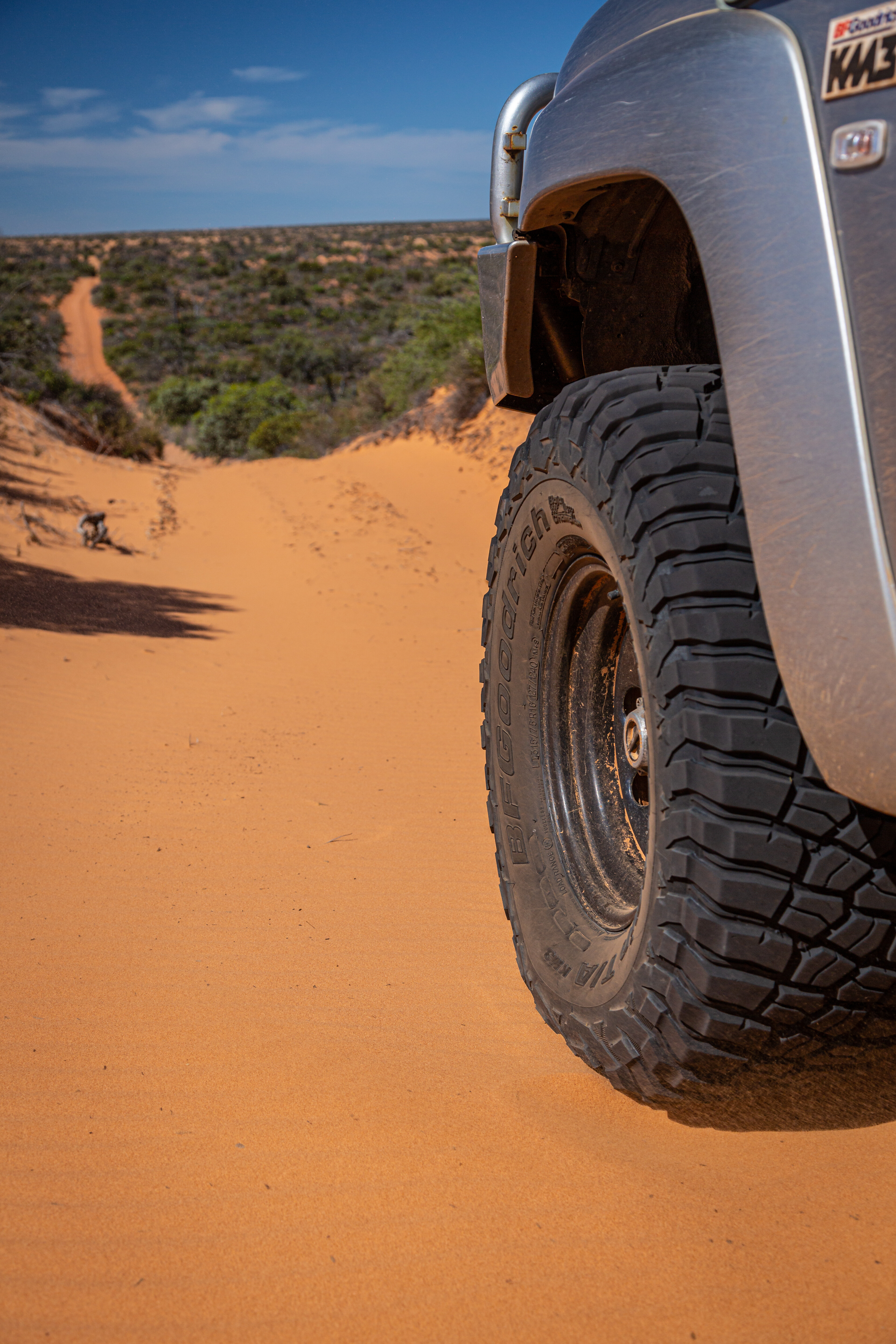
THIS is an area which I find really interesting with a mud terrain. So, how did the KM3s fare? Best I have driven, hands-down.
On a multitude of gravel and dirt roads with varying levels of corrugation or clay content I never felt unsafe, even when I deliberately pushed them hard with steering input, braking, acceleration and combinations of all inputs.
Lateral and directional stability are fantastic, it is a driver’s tyre, and by that I mean it allows the driver to not have to worry about traction in what is arguably the most driven type of terrain, and I love that.
ROCK
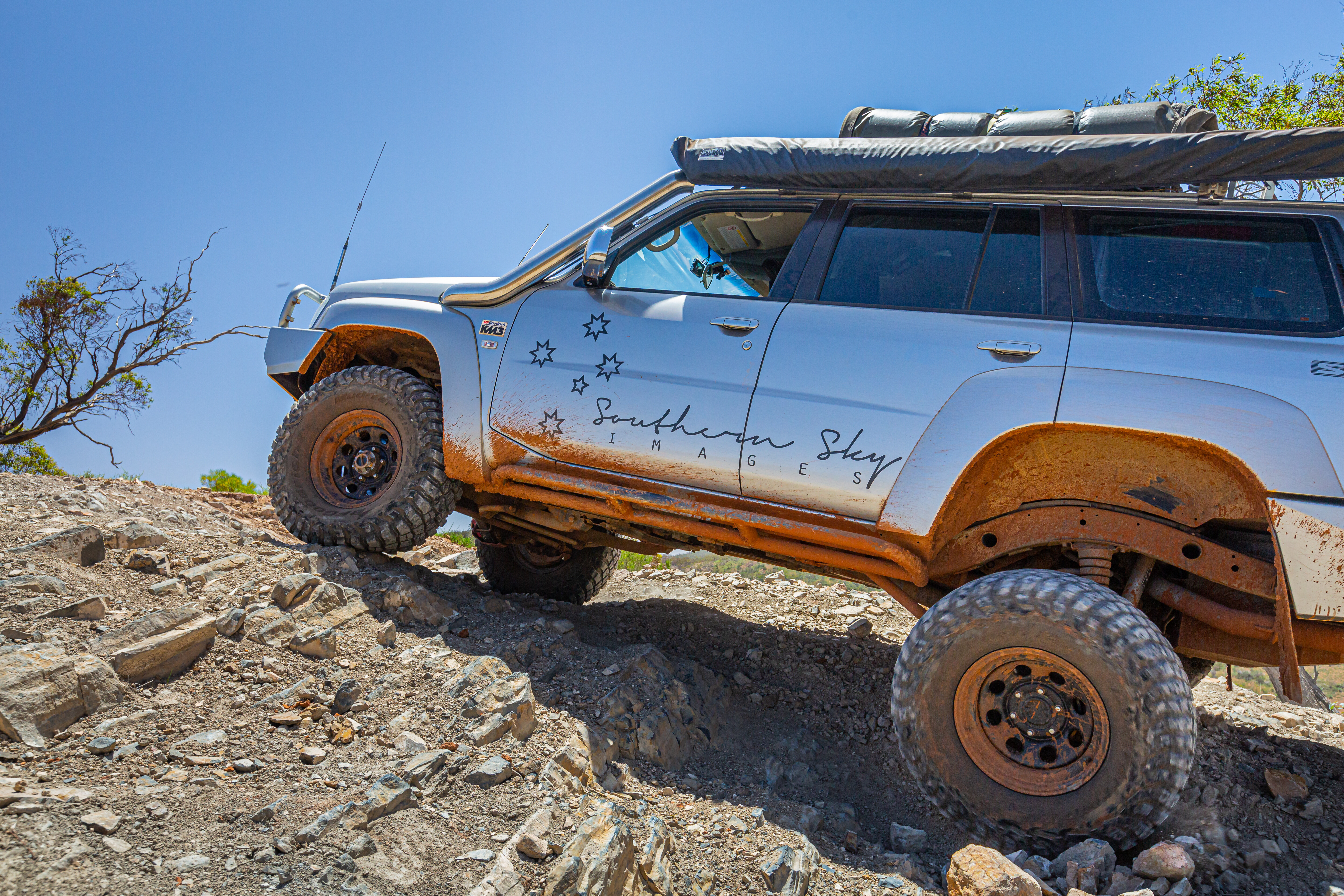
FROM smooth river rock to the sharp pointy stuff that you find in the Flinders Ranges, the level of grip is excellent. Would I say it is better than the rest? No, I cannot say that definitively.
In some cases, it comes down to soft vs hard compound and there are some specialty tyres that offer excellent grip on rock at the expense of mileage, but to have a tyre with top-tier grip on rock, and have it come out the other side without tears and rips in the tread blocks is impressive.
Its willingness to ‘mould’ itself to the terrain (at correct pressures – as for any other tyre) means it is a handy asset for the driver, offering plenty of useable surface to aid traction.
HIGHWAY
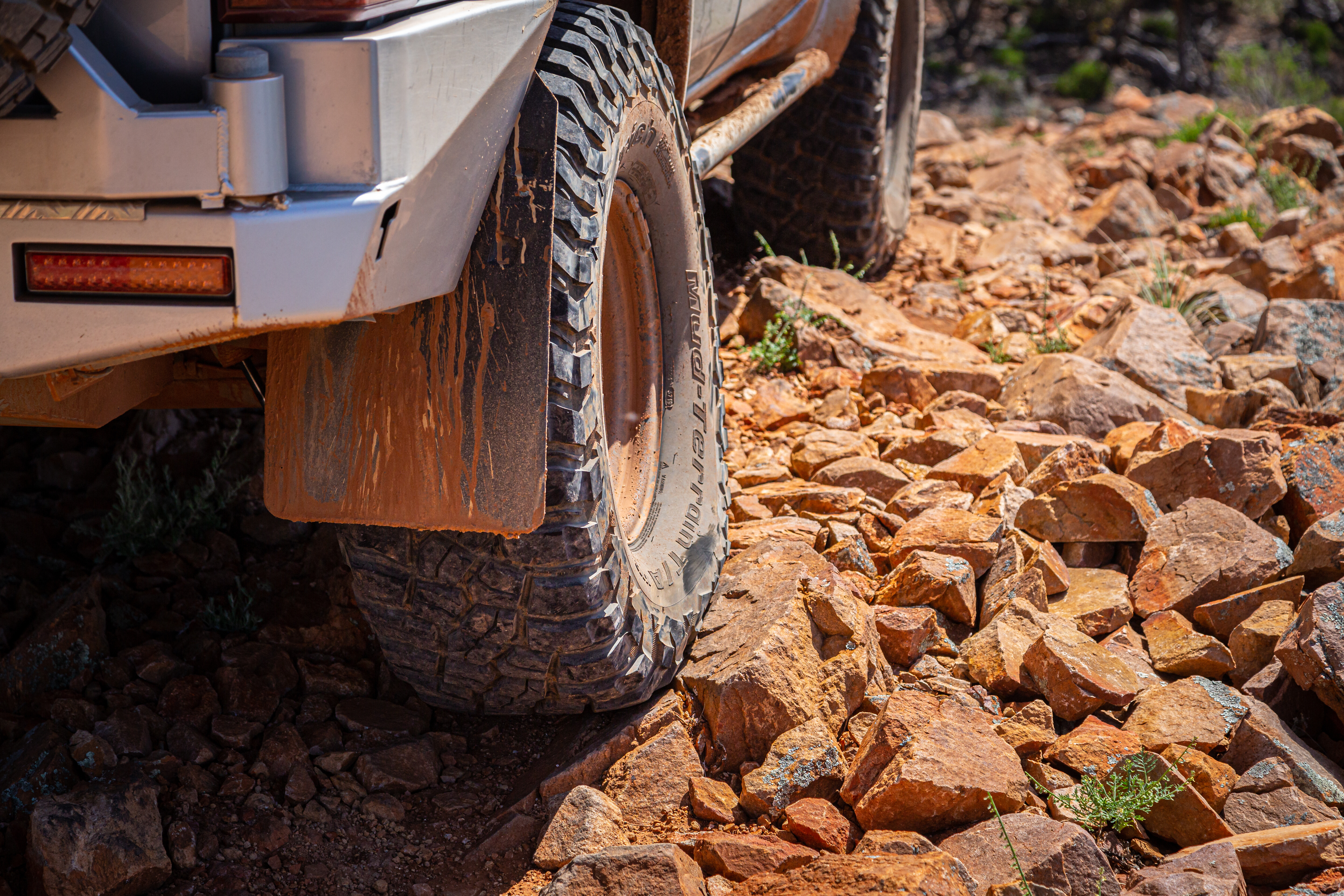
EASILY the best mud terrain on the tarmac, for two reasons. First, it is not noisy like a muddie of old design. It is surprisingly quiet with excellent harmonics, and I can tell you it did not get noticeably noisier with wear throughout the lifespan.
Second, the lateral and directional grip are excellent with no obvious weak points. Many mud-terrains have a weakness, be it a tendency to break traction sideways or be poor in braking, particularly in the wet.
This tyre’s tread pattern in combination with the grippy silica compound (which acts at a microscopic level with the road surface) is very well-rounded.
WEAR AND PUNCTURES
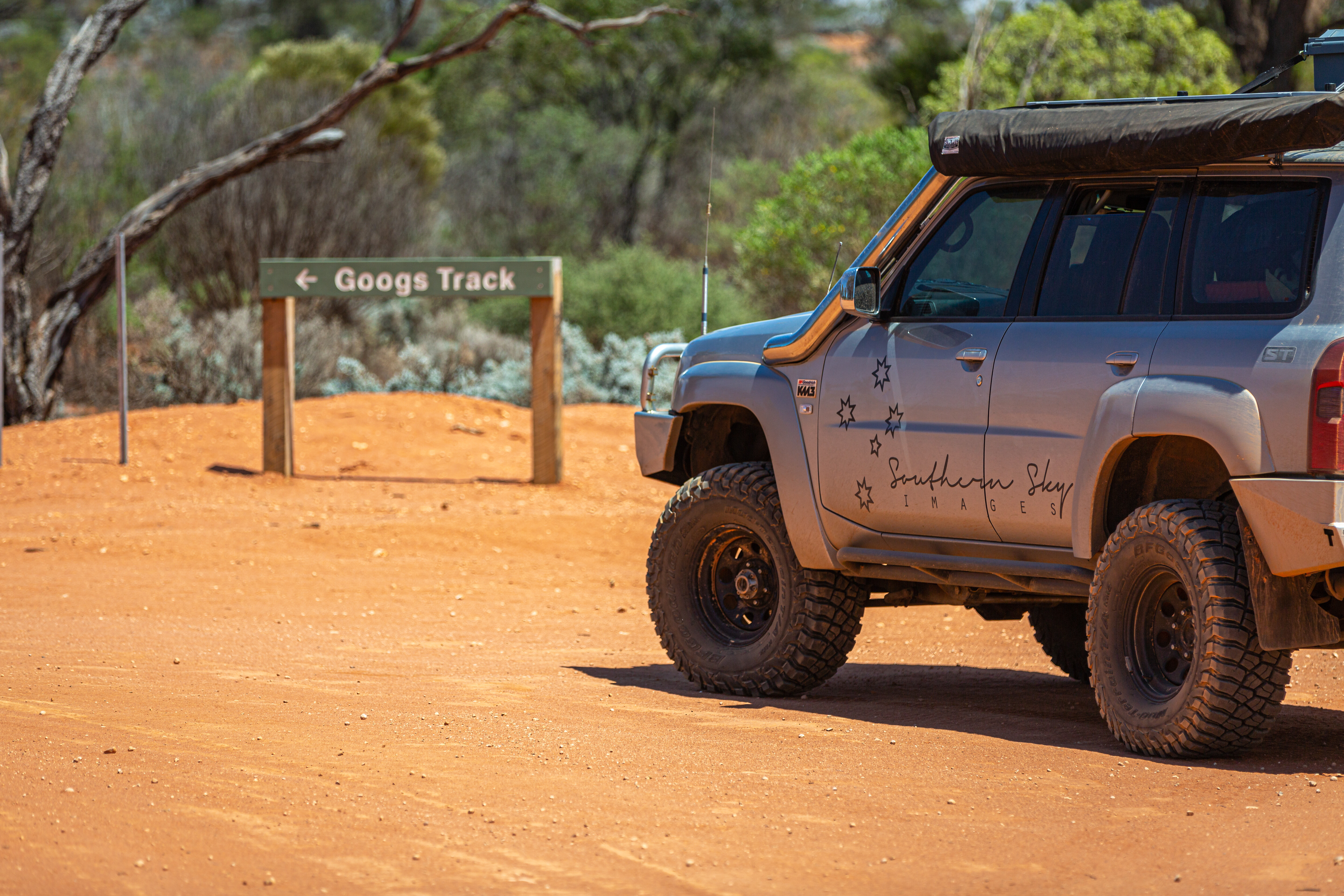
THE golden question is mileage right? Hmmm yes, it is, but it isn’t either …
I don’t want to leave you hanging, so I will say I predict more than 70,000km and more if you rotate, balance and run correct pressure. That includes a majority of off-roading and a willingness to run down to a legal but pretty useless level for serious touring.
But I cannot say for sure; I replace my tyres well before they reach the twilight years. What I can say with certainty is this; they are one of the best two wearing muddies I have run but they have offered the best performance over that time by far, which is the most important element for me. So, no, they won’t chip, fall apart or fail like some others have done over time, they offer excellent mileage and overall class-leading performance.
I have not had a failure or single puncture over the two sets. Part luck maybe, but I suspect it is running correct tyre pressure in conjunction with solid carcass construction. I have given the tyres plenty of opportunity to fail with the terrain I have driven but once again, it’s a driver’s tyre.
The fact I am not sweating about punctures when I travel cross country (i.e. not following tracks) across the deserts nor have to worry about my mate Stephan who runs the same on his rig, means we get to enjoy the driving and experience that much more. Worrying about the tyres holding up is not a pressing concern for the work we do, running it as a weekender and daily driver is a no-brainer, it is a great tyre.
OVERALL
THE KM3 is an excellent off-road tyre for the Australian environment. Its performance over any type of terrain is solid and class-leading in nearly every category. It will take an exceptional new (future) tyre to see me bolting on a different pattern.
PRESSURE
WHEREVER I go, I adjust tyre pressures to suit the terrain and vehicle weight. This is the single-most important factor in extracting the best performance from any type of tyre. I also rotate tyres about every 7-10,000km (better yet would be every 5000km) and have a re-balance done with it.
Talking Points
- JPP 50mm lifted suspension kit now available for 4xe PHEV
- Jeep to install charging stations on iconic trails
WHILE most buyers of electric vehicles (EV) and plug-in hybrid electric vehicles (PHEV) would be excited by the fact they can purchase a car charging station to install at home, owners of Jeep’s Wrangler 4xe PHEV have access to a whole catalogue of accessories and performance parts that are more likely to ignite their passions.
Yes, Jeep offers a 240-volt home charger for the 4xe, but an advantage of the car being built on an existing and already heavily accessorised model means that most of the gear you can buy and fit to your Jeep Wrangler can also be fitted to the PHEV version.
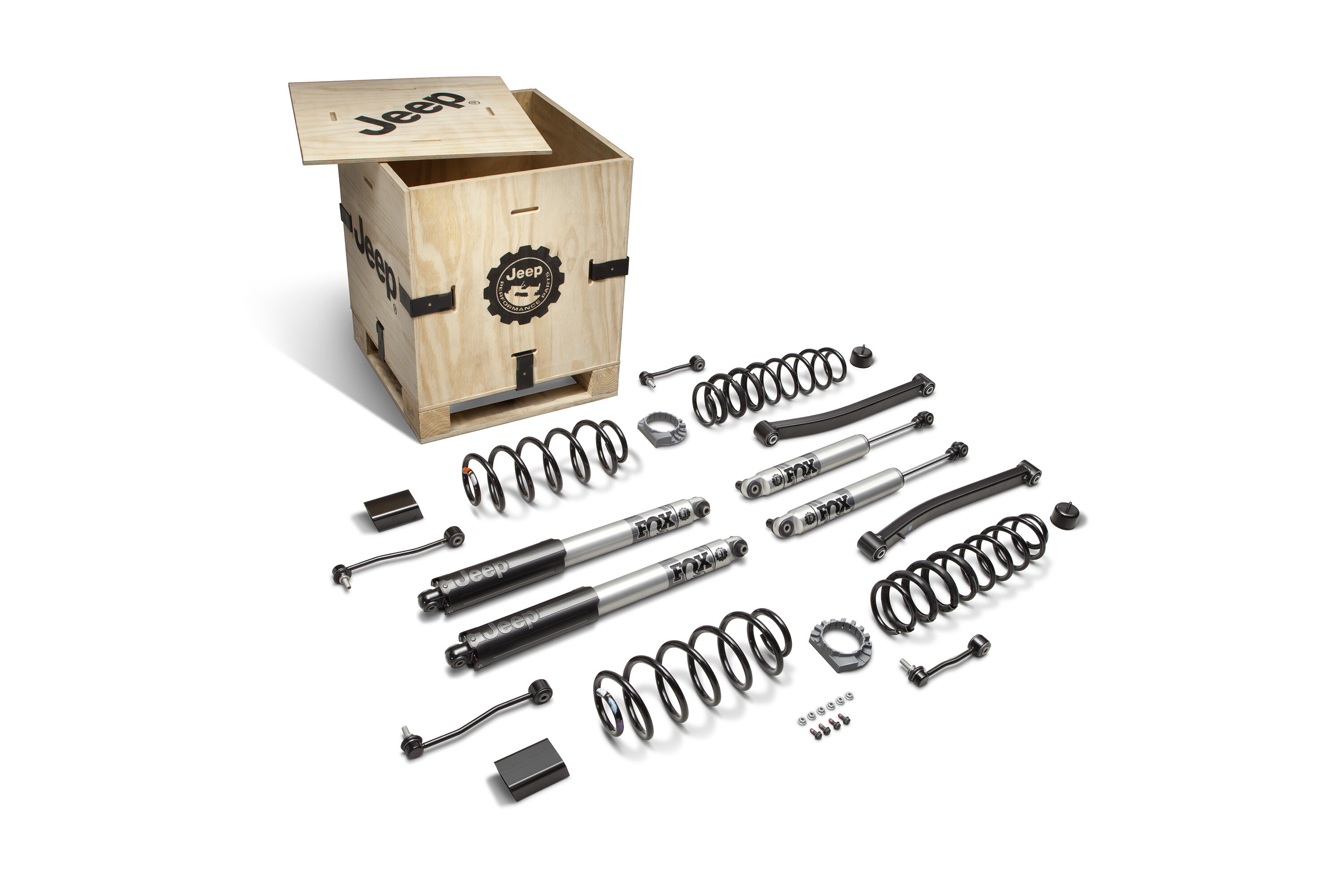
The most recent kit to come from Jeep Performance Parts (JPP) for the Wrangler 4xe is a 50mm lifted suspension kit specifically designed for the unique weight distribution of the PHEV model. The JPP kit includes four coil springs, four FOX shocks, front lower control arms, front and rear stabilizer links, front and rear bump stops, and all installation hardware.
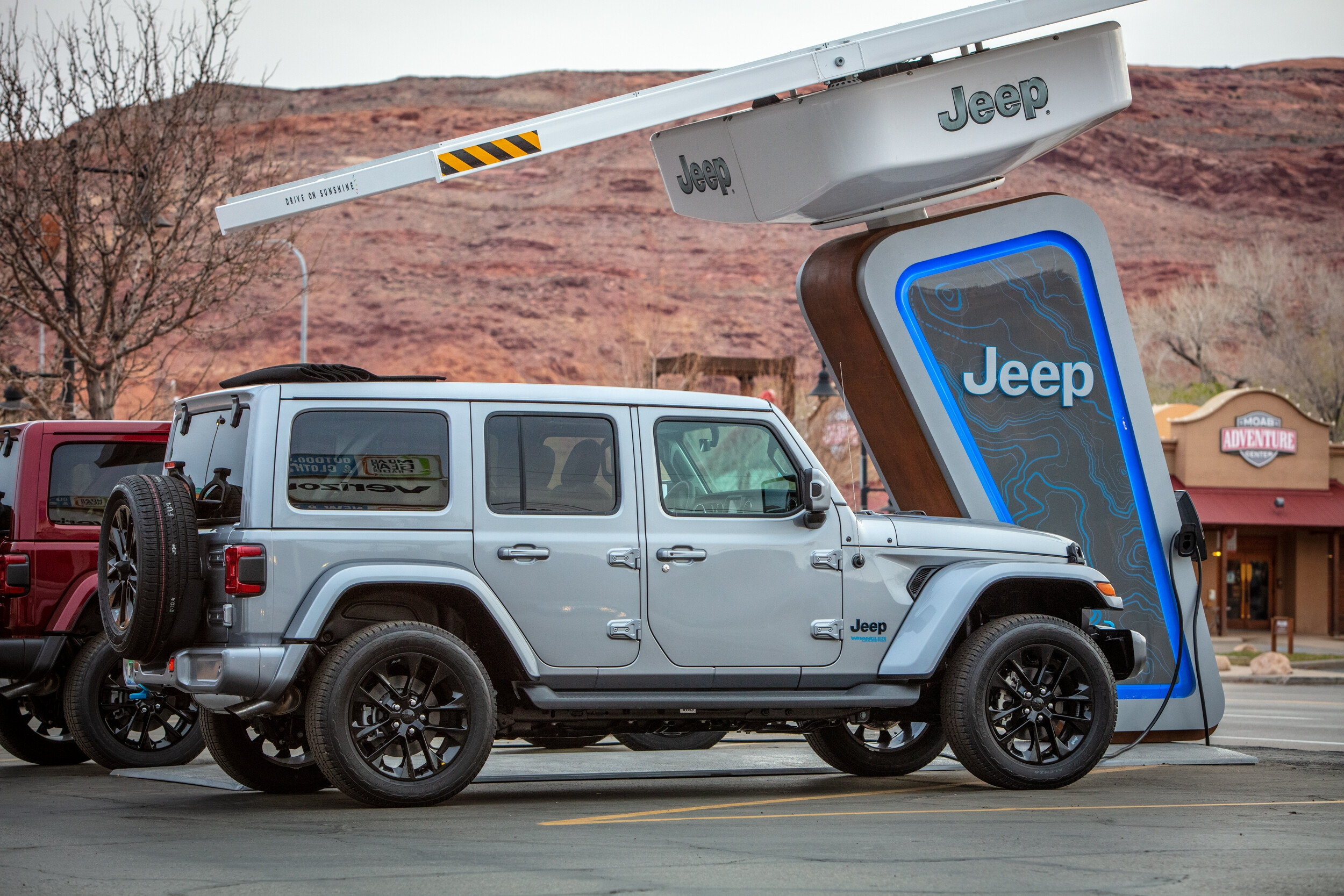
The Jeep Wrangler 4xe powertrain uses a pair of electric motors and a 400-volt battery pack with a fuel-efficient, turbocharged, four-cylinder petrol engine and eight-speed automatic transmission.
The 17kWh, 96-cell lithium-ion, nickel manganese cobalt battery pack and electric motors obviously add weight to the Wrangler Unlimited, requiring a unique suspension set-up for the PHEV.
The battery pack is mounted beneath the rear seats and all high-voltage electronics, including the wiring between the battery pack and the electric motors, are sealed and waterproof to preserve the Wrangler’s 760mm water-fording depth.
It’s not only the factory supported JPP suspension that will fit the Wrangler 4xe. As one of the most heavily modified and accessorised vehicles on the planet, the Wrangler is massively supported by the aftermarket gear industry and many of those products made for a regular Wrangler will fit in a 4xe.
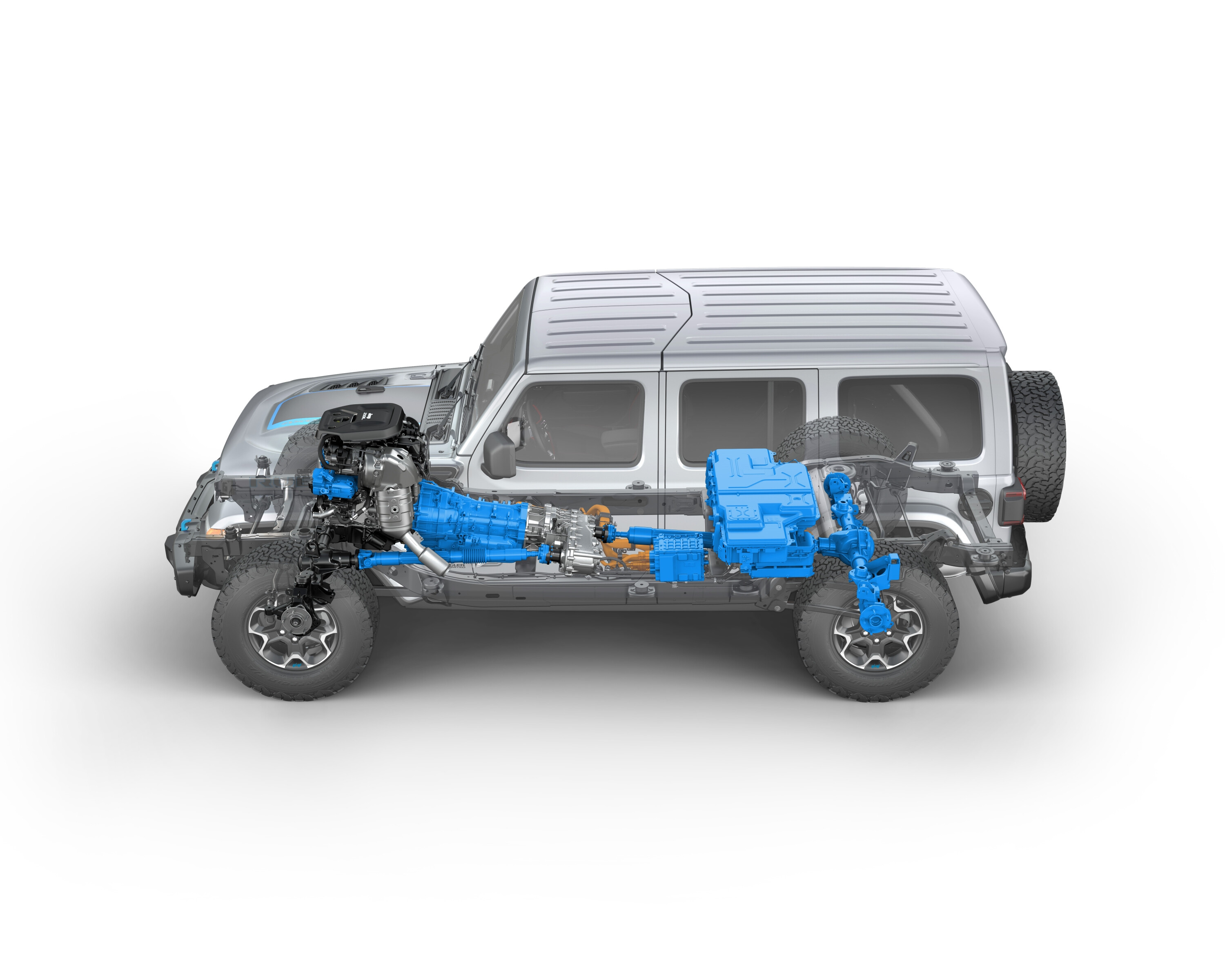
Not only is Jeep equipping its PHEV Wrangler for the off-road adventures you would expect a Wrangler to venture out on, but it is equipping the remote trails with EV charging stations to ensure owners can make the most of their vehicle’s potential.
Jeep is installing charging stations at what it calls its ‘Badge of Honor Trails’ including three of the most iconic trails for the Jeep brand: Moab, Utah; the Rubicon Trail in Pollock Pines, California; and Big Bear, California.
These charging stations will either be directly connected to the power grid or use solar power to generate electricity, and more are planned to open in the coming year.
The 240-volt, Level 2 charging stations can charge the 17-kilowatt-hour battery pack in the Jeep Wrangler 4xe in about two hours, to give the PHEV Jeep around 34km of pure electric range.
The 4xe’s PHEV system is backed up with a turbocharged four-cylinder petrol engine.
“Electrification opens a new chapter in the Jeep brand story, and it brings an entirely new level of excitement and enjoyment to our enthusiastic owners,” said Christian Meunier, Jeep Brand Chief Executive Officer. “Key to making Jeep brand the greenest SUV brand is assuring our owners can enjoy the benefits of electric propulsion wherever they go, including the most iconic off-road trails in the country.”
The Wrangler PHEV is available in the USA in high-spec Sahara and Rubicon models.Unfortunately for us, it is only manufactured in left hand drive configuration, so, just like the diesel Wrangler and Gladiator and the recently debuted V8-powered Wrangler 392, the Wrangler 4xe PHEV is not for us.
Talking Points
- Ranger outsells Hilux for the first time in 2021
- Everest sales strong in April 2021
- Sales down for 79 Series
There’s been a bit of movement on the new 4×4 sales chart in April, with the Ford Ranger outselling the Toyota Hilux for the first time this year.
Add in 4×2 models and the Ranger was the top-selling new vehicle overall for the month, stealing that title from the Hilux.
Interestingly, the five top-selling vehicles overall in April all have four-wheel drive or AWD variants, with the Ford Ranger being the top-selling individual model (5021), followed by the Toyota RAV4 (4506), Toyota Hilux (4222), Toyota LandCruiser (3177) and Mitsubishi Triton (2458). With three of those five top-sellers, Toyota remains the best-selling brand in the country.
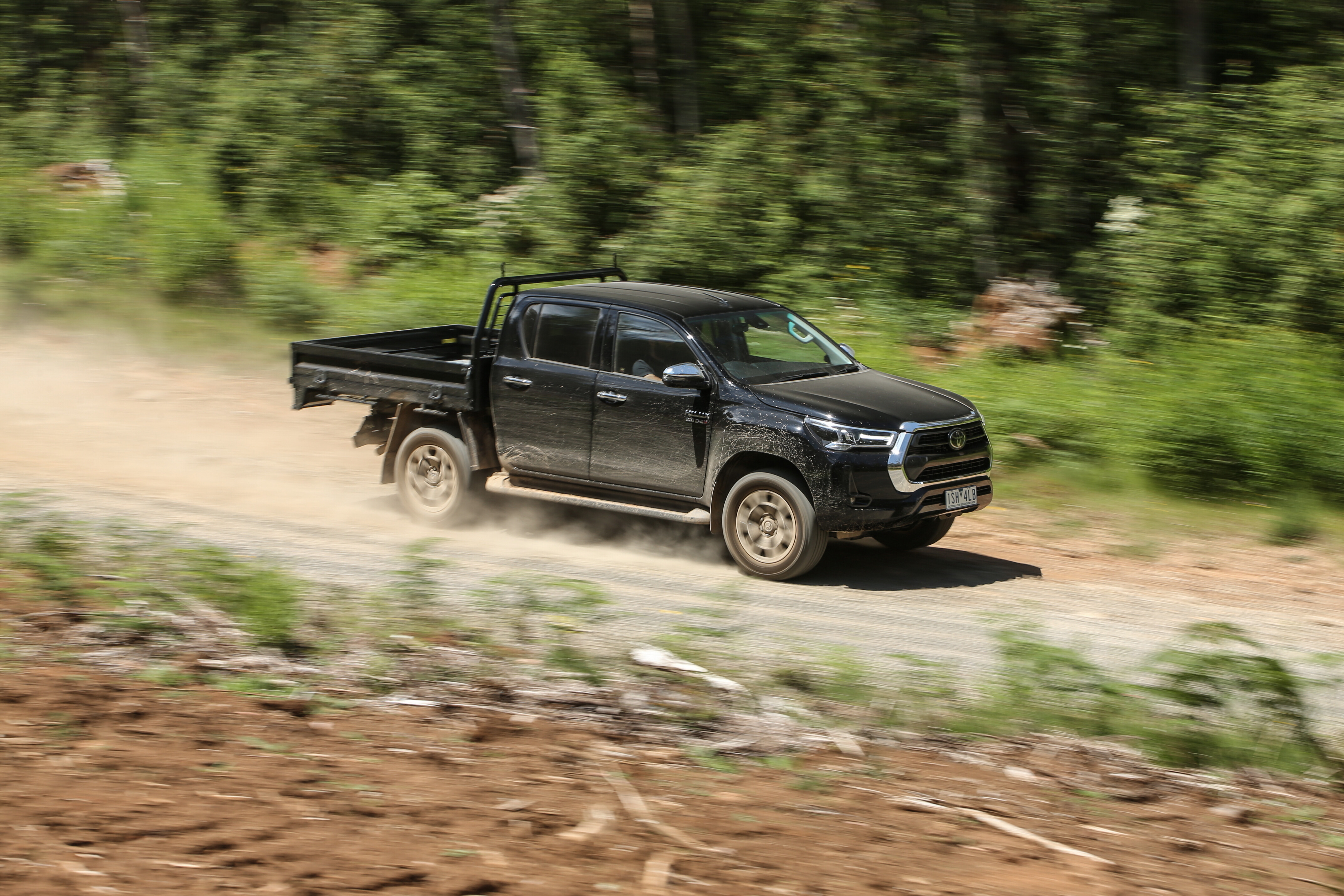
With 92,347 units moved in April, the overall market was up on the same month in 2020, but it’s a bit unfair to compare it with that time which was the height of pandemic instability in Australia.
Chief Executive of the Federal Chamber of Automotive Industries, Tony Weber, put it in better context when he said, “Historically the April result is between 70,000 and 80,000 vehicles, so the 2021 result is very significant.”

A nameplate we don’t usually see among the monthly Top 10 4×4 sales in the Ford Everest, which has been slowly gaining traction in the market. Its 958 sales includes 4×2 variants but it’s enough to slot it into ninth place for the month.
As well as offering a choice of 4×4 and 4×2 models the Everest has the unique choice of the 3.2-litre and 2.0-litre diesel engines, five- and seven-seat interiors, and across four grades.
The Isuzu MU-X really owns that market of mid-size SUVs that are smaller than the Toyota Prado. Its totals are also spread across 4×4 and 4×2 variants, and with a new MU-X expected some time in the second half of 2021 its popularity with family buyers should stay strong.
Notably absent from the Top 10 best-selling 4x4s in April was the Toyota LandCruiser 79 Series. Buyers are reporting a lack of LC79s in stock around the country and these could be one of the many new cars suffering shortages due to the lack of electrical components.
Stock shortages will continue to present problems for some manufacturers in the coming months, but sales of 4x4s are expected to remain healthy through May and June as businesses get into their new vehicles before the end of the financial year.
4X4 SALES: APRIL 2021
- Ford Ranger: 4671
- Toyota Hilux: 3315
- Toyota LC200: 2595
- Mitsubishi Triton: 2256
- Isuzu D-MAX: 1576
- Toyota Prado: 1370
- Isuzu MU-X: 1179
- Mazda BT-50: 1214
- Ford Everest: 958
- Nissan Navara: 922
4X4 SALES: YEAR TO DATE
- Toyota Hilux: 14,191
- Ford Ranger: 13,786
- Mitsubishi Triton: 7762
- Toyota LC200: 7664
- Isuzu D-MAX: 5610
- Toyota Prado: 5347
- Mazda BT-50: 4297
- Toyota LC79: 3814
- Nissan Navara: 3417
- Isuzu MU-X: 3315
Talking Points
- What we think the 2022 Ranger Raptor will look like
- Significant changes expected for the new model
Last week Ford Australia released news of its Ranger Raptor X, which brings a range of styling tweaks to the top-of-the-range Raptor model to see it through to what we expect will be the end of the PX2 model at the end of 2021.
But what of the next Ranger; will we see a Raptor in 2022?
With the popularity of the current Ranger Raptor and its success as a halo model for the brand, we’d have to say that an all-new one will be a definite yes; but what form it will take and what will power it are a long way from being revealed.
We expect the 2022 Ranger will be shown by the end of 2021, but whether or not it will make showrooms by the end of the year is still unknown.
We expect the new model to bring significant changes to the popular ute
We expect the new model to bring significant changes to the popular ute but we’re pretty sure it will stick to the proven ladder chassis, with a choice of two- and four-wheel drive, a diesel engine, and IFS with a leaf-sprung live rear axle.
The long-serving 3.2-litre, five-cylinder diesel engine is expected to be pensioned off and the current 500Nm, 2.0-litre, four-cylinder engine will become the standard powerplant; hopefully Ford will see fit to adapt a manual gearbox to the bi-turbo engine.
The new Ranger will be developed for global markets including the USA, so there will be petrol powertrain; but whether that will go on sale in Australia is yet to be revealed. EV and hybrid power also can’t be ruled out, as they become essential to any new vehicle plans.
The PX2 Raptor wasn’t released with the rest of the Ranger models back in 2015, so a new Raptor might not be seen for a while longer. In the USA, the new F-150 has been on sale for almost a year and the Raptor version has only recently been shown and is yet to go on sale.
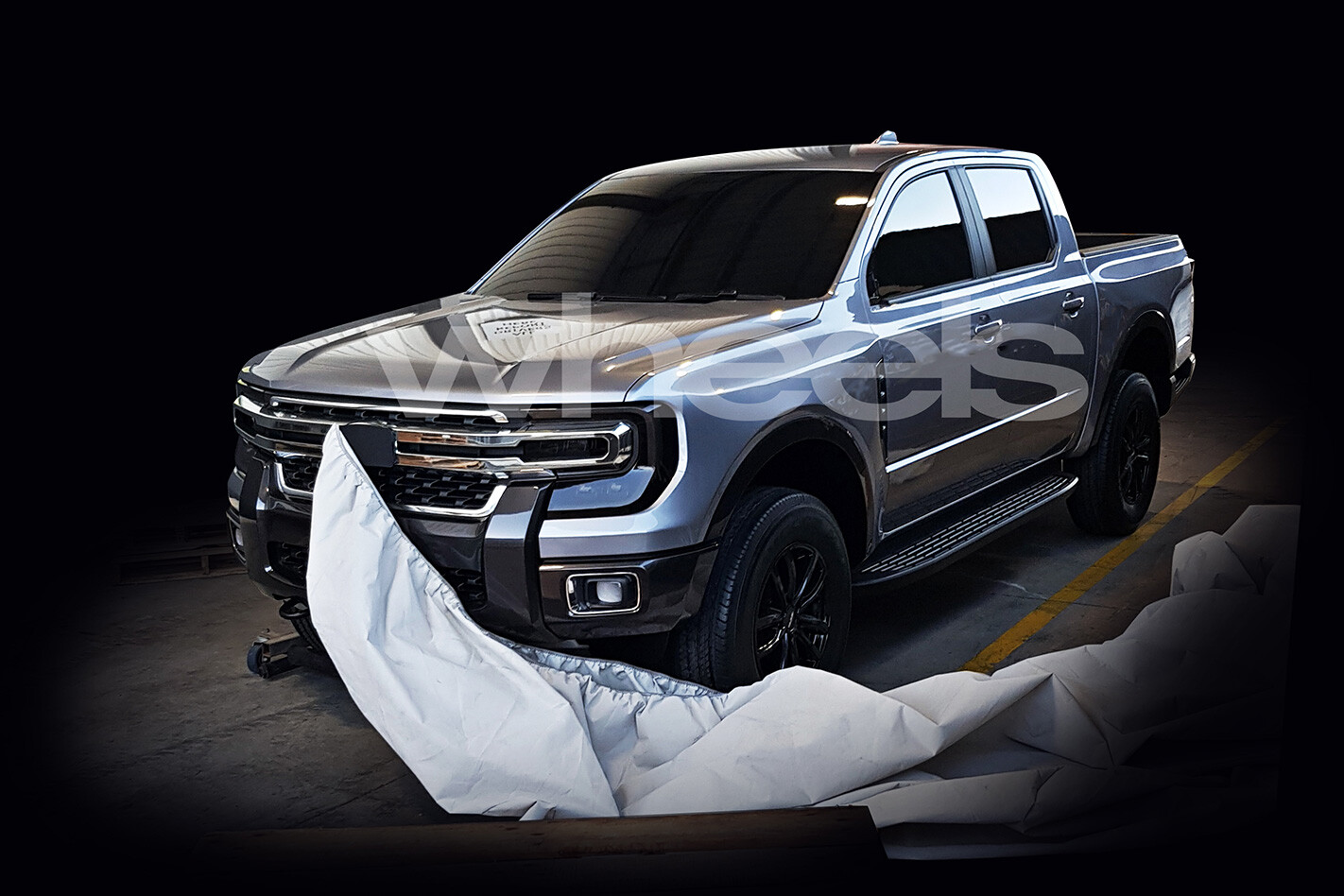
Also looking to the USA and its current T6 Ranger and Bronco models and we get a hint of what we could see in a new Raptor.
The Bronco, which seems to be everywhere in the media but is yet to go on sale following production delays, is available with the optional 2.7-litre V6 EcoBoost petrol engine which we think would be the perfect mill to power a new Raptor. And with the Yanks also pining for a Ranger Raptor, they wouldn’t expect anything less under the hood.
The 2.7 makes 231kW and 542Nm in the Bronco, so it would be killer in the awesome Raptor chassis. Expect it to be backed by the 10-speed auto and an on-demand 2WD/4WD system with a seven terrain Multi Terrain System also taken from the Bronco.
The key to the current Ranger Raptor is its bespoke Ford Performance-developed suspension which includes a widened wheel track front and rear and a unique back half of the chassis to accommodate a coil-sprung, Watts link-equipped rear suspension.
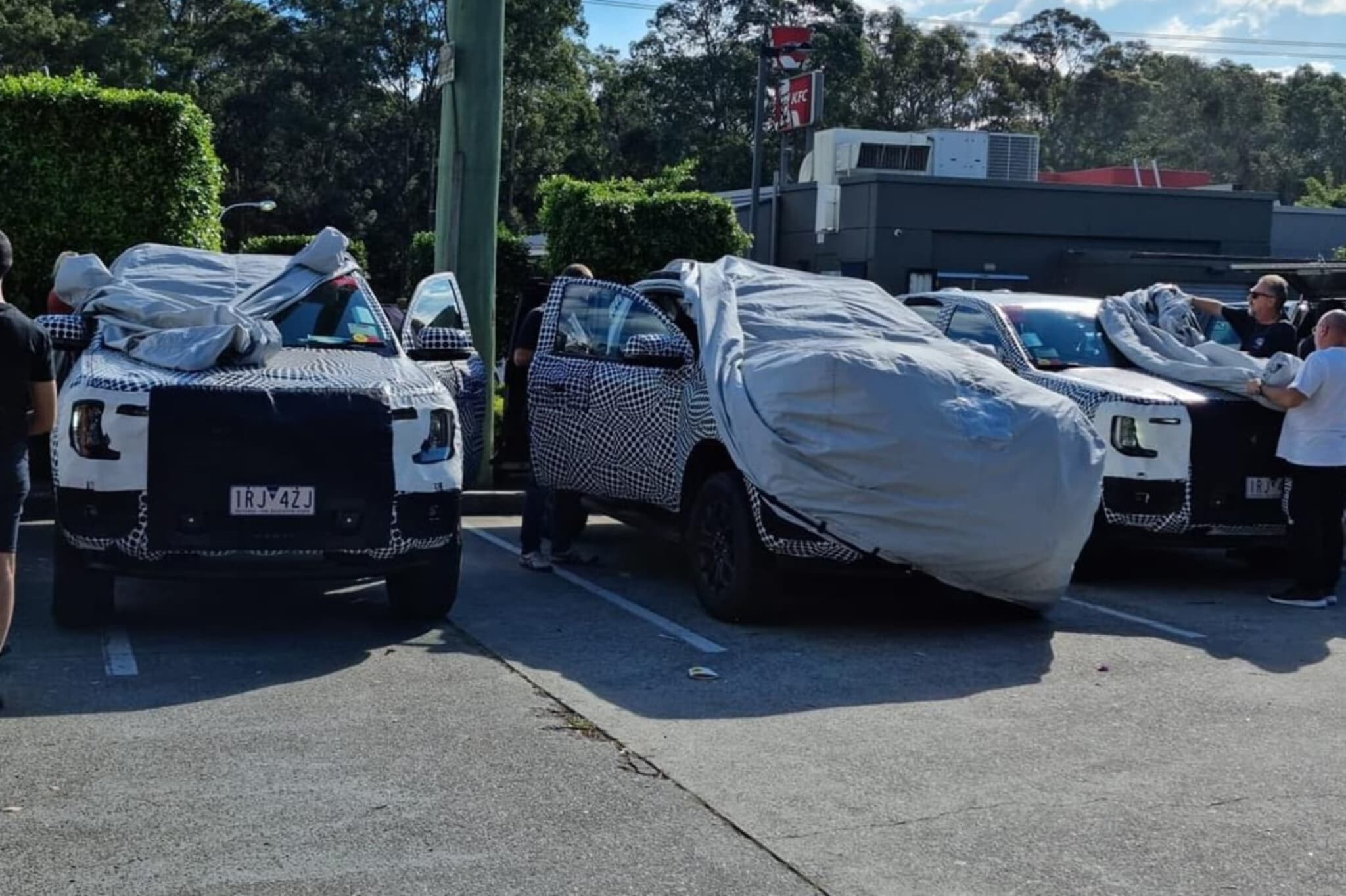
Throw in the model-specific Fox dampeners and BFGoodrich tyres and it’s an off-road-ready package that doesn’t require too much messing with.
Interestingly, the Bronco also runs a coil spring rear suspension but misses out on the Watts link, instead getting a cheaper- to-produce Panhard rod for lateral location of the rear axle.
However, the Bronco does get tyres up to 35-inch in diameter, so a step up from the current Ranger Raptor’s 33s wouldn’t go astray. Bigger is better, right?
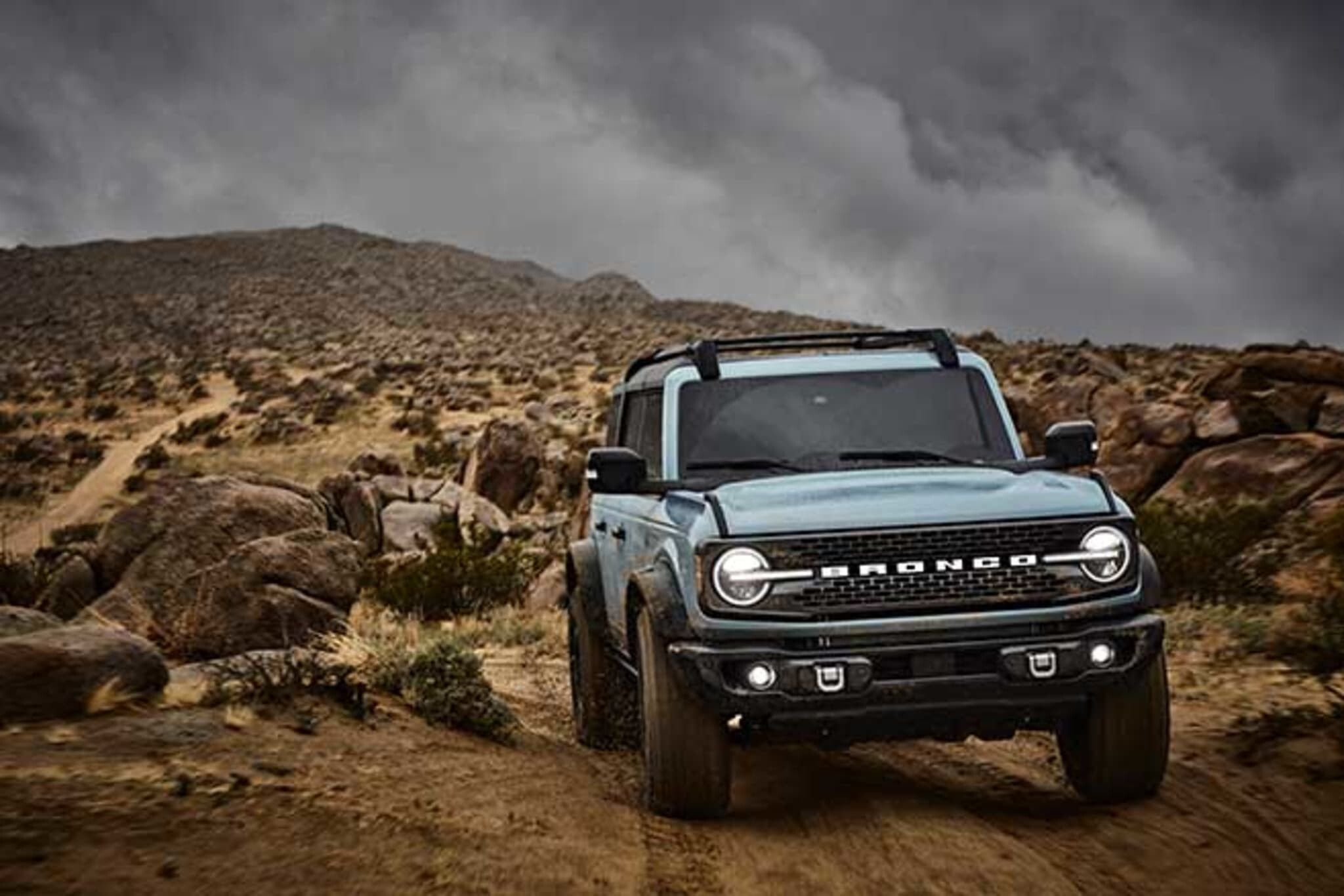
Bronco Down Under?
Despite being on the same T6 chassis as our Ranger and Everest models, the Bronco is only made in left-hand drive and there are no plans for a right-hook version. But you’d have to think that while the Australian engineers are developing the T6 platform for both left- and right-hand drive markets, it shouldn’t be too hard to give us a RHD Bronco.
Fresh spy photos of next model Ranger production mules out testing in Australia and around the world are dropping every week, each one giving us a better idea of what the new Ford will look like.
We looked at the image leaked to Wheels Magazine back in 2019, had a close look at the more recent spy photos and checked out the front end on the 2021 F-150 Raptor and asked Brendon Wise to come up with this rendering of what we think a 2022 Ranger Raptor might look like.
Let us know what you think of it in the comments below.
THE mid-size SUV marketplace comprises a mix up of vehicles that all do different jobs. On one hand you have the light-duty people movers like the Toyota Kluger, Mazda CX9, Mitsubishi Outlander and Kia Sorento which are hugely popular, yet bucking the trend is the off-road capable Toyota Prado that outsells them all most months.
Since Mitsubishi hammered the nail into the coffin of its legendary Pajero 4×4 wagon late last year, the Prado really has had that end of the segment all to itself.
Below the Prado you have the smaller 4×4 wagons that owe their existence to the popular 4×4 utes and are wagon derivatives of the light trucks. Mitsubishi has passed the iconic Pajero nameplate on to its Triton chassis-based wagon and now calls it the Pajero Sport, whereas older versions of this wagon were called the Mitsubishi Challenger.
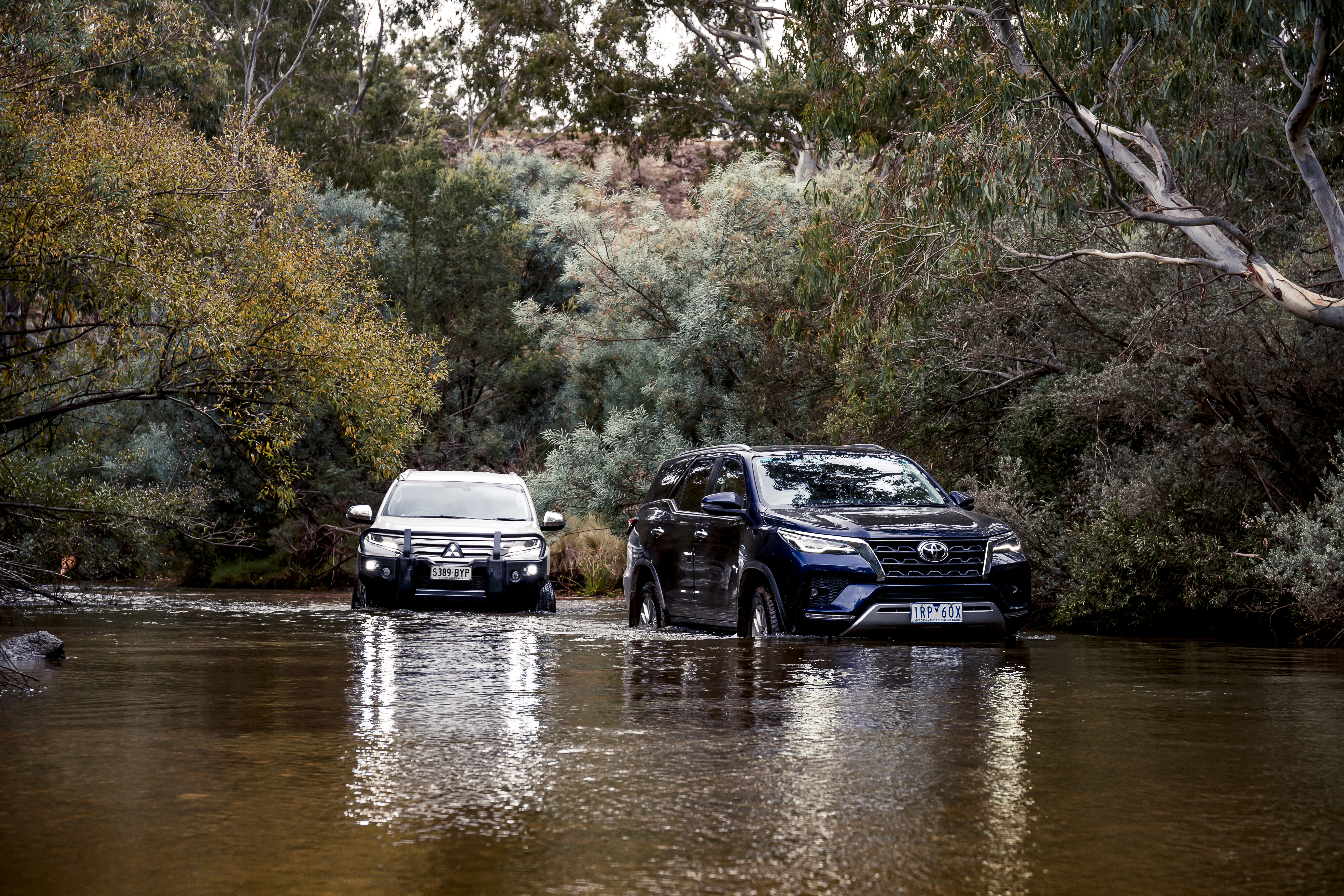
Toyota has this niche in the market covered as well with its Hilux-derived Fortuner wagon, and if you want to trace its roots back to earlier models you could call it the successor to the once-popular Toyota 4-Runner wagon.
Other vehicles in this segment include Ford Everest and Isuzu MU-X but today, we’ve got the top-specifications of the Fortuner and Pajero Sport here to see which best fills the family 4×4 role.
When we say these wagons are based on their light-truck siblings, they share a chassis with the utes but the chassis has a shorter wheelbase and the rear leaf springs which allow the utes to carry heavy loads, are replaced with a coil sprung multi-link suspension to deliver better ride and handling than the load haulers. Rear disc brakes are also included in lieu of the drum brakes fitted to the back of the respective utes.
Instead of a ute’s cargo tub, both of these wagons are fitted with third row seating to carry up to seven passengers.
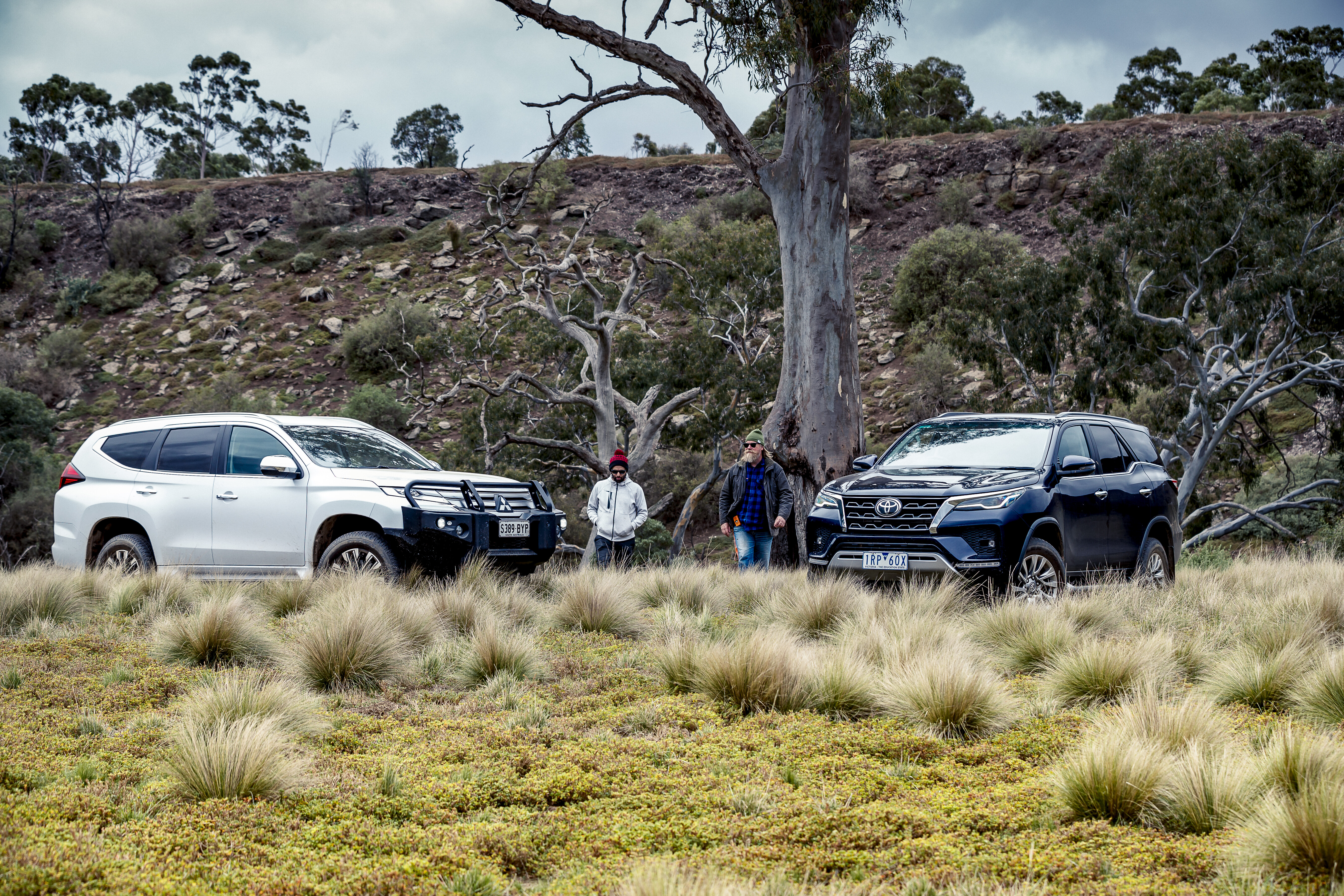
PAJERO SPORT EXCEED
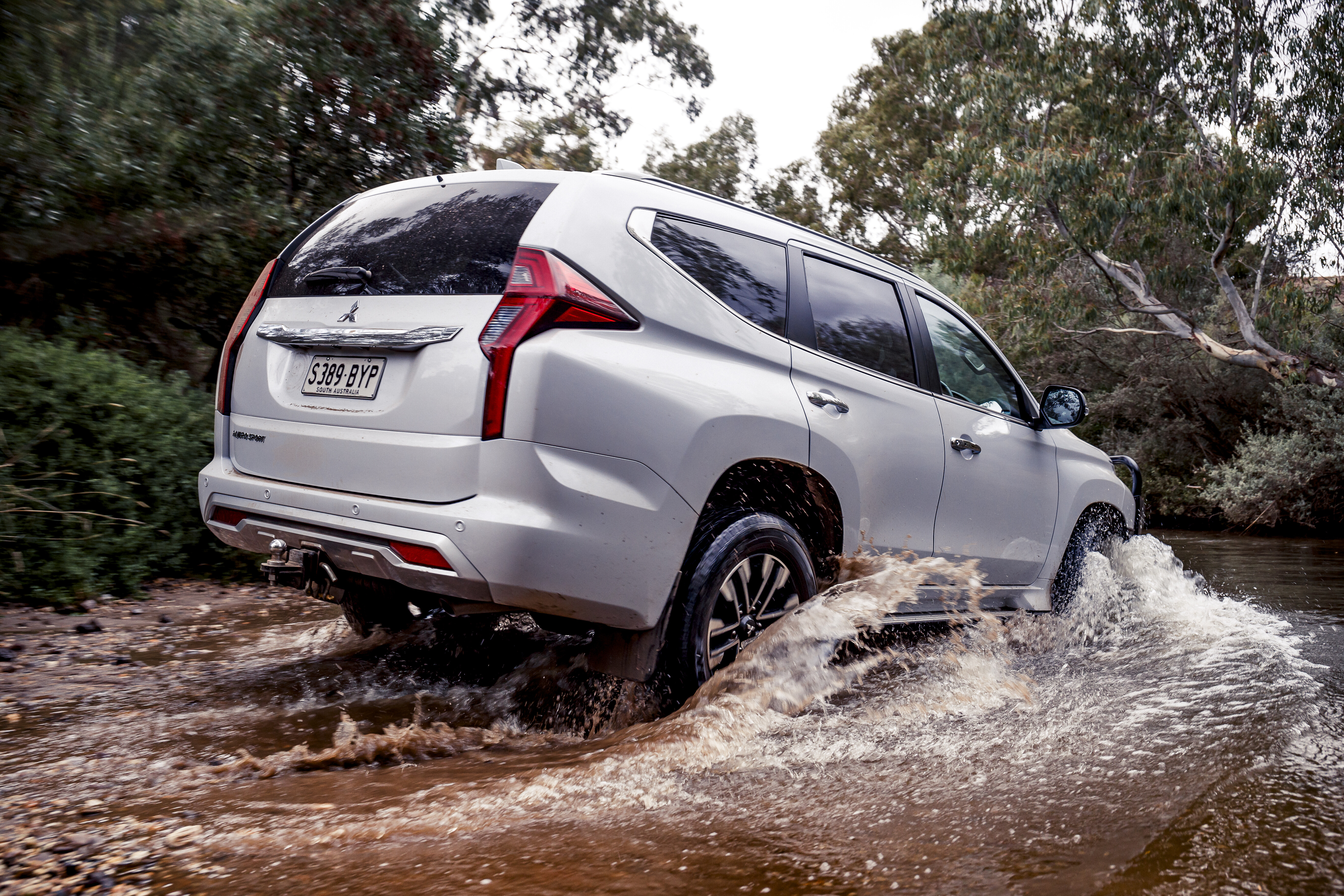
THE Pajero Sport was launched back in 2015 but received a mid-life refresh at the start of 2020. This included updated styling and a handful of new features such as a power tailgate and remote operation via a phone app.
The Exceed is the top end of the four-tier Pajero Sport range which includes variants with five or seven seats and all of them are four-wheel drive. The Pajero Sport Exceed is priced from $59,990 driveaway for private buyers.
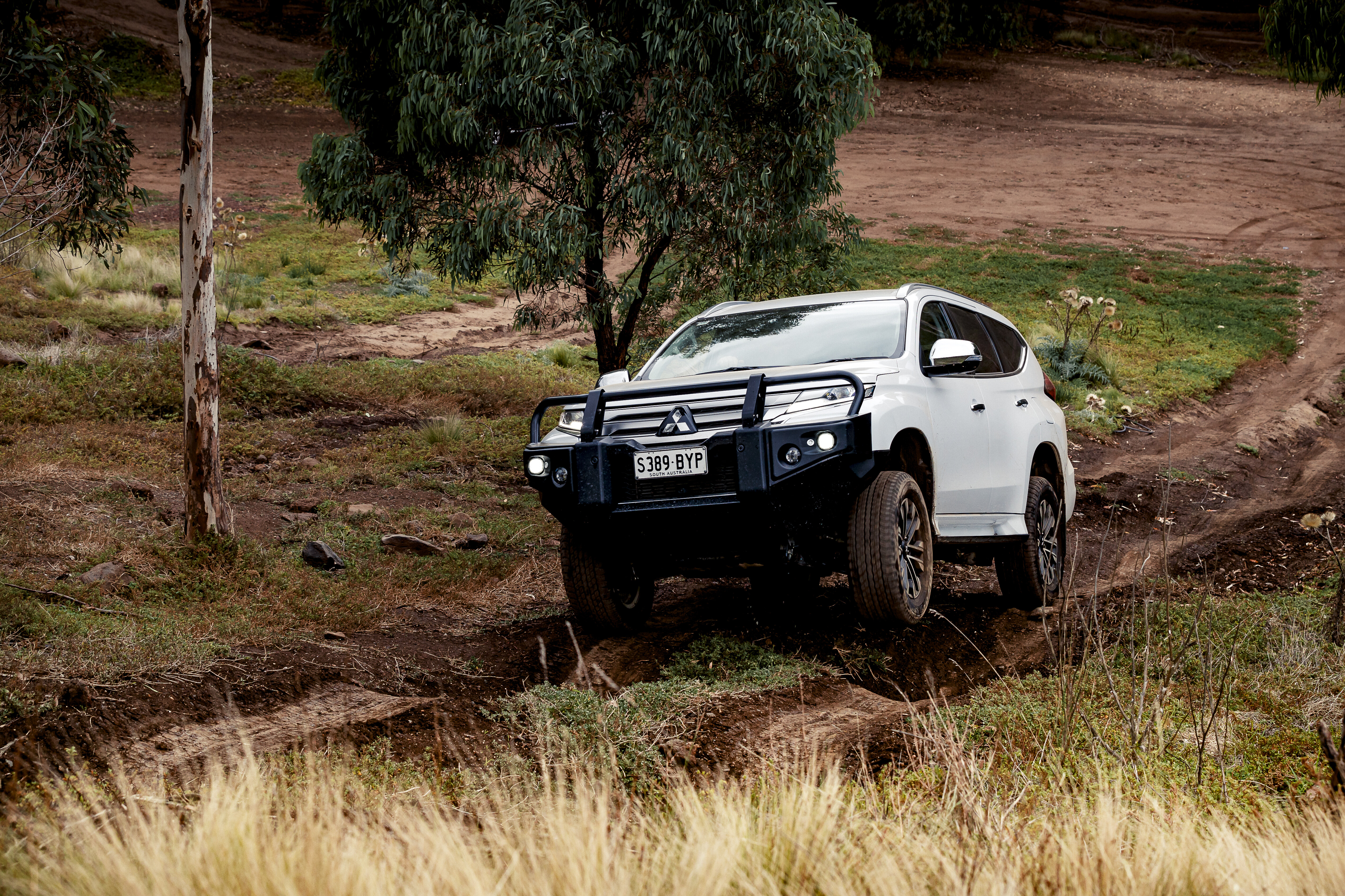
POWERTRAIN & PERFORMANCE
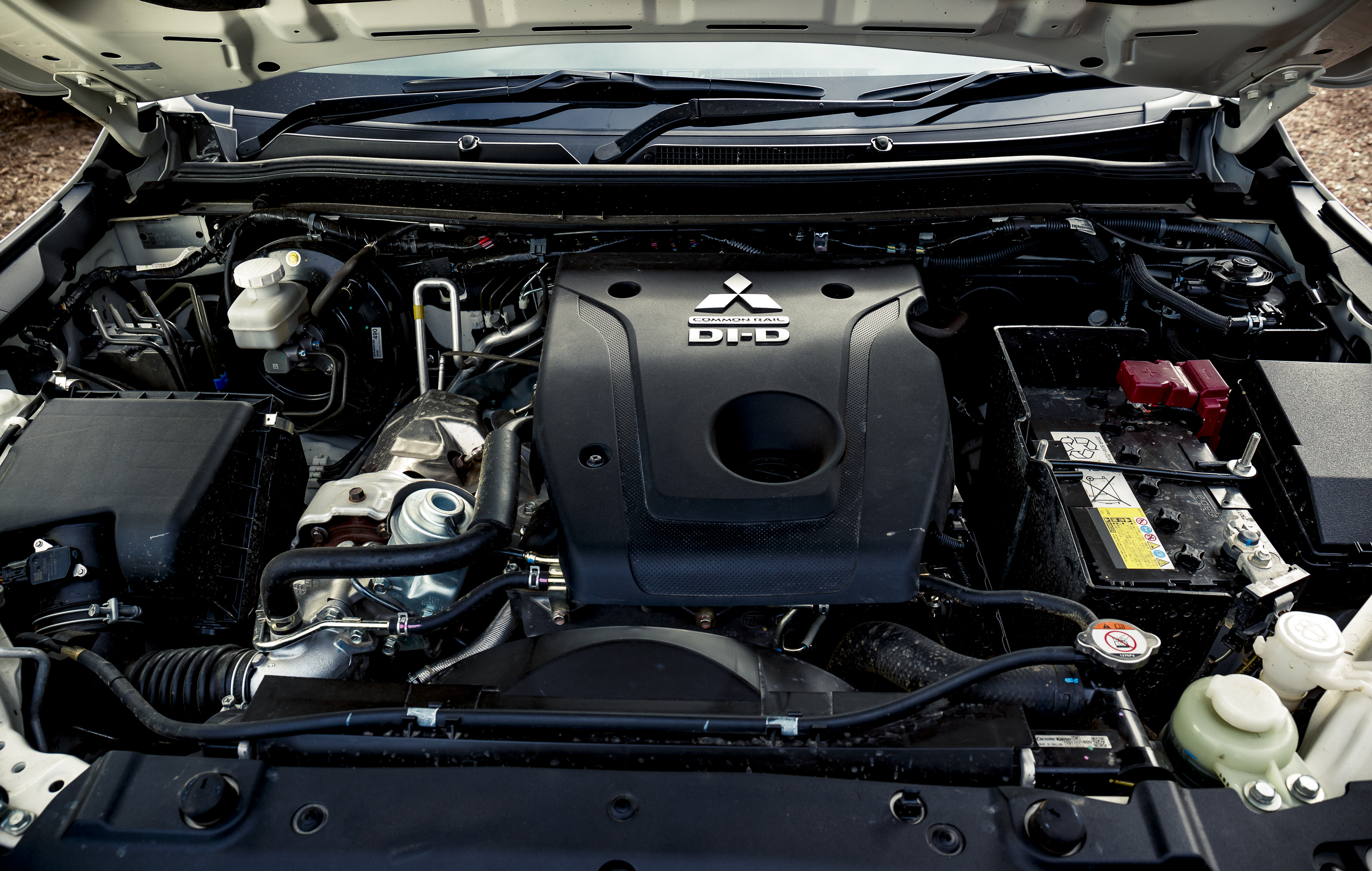
PAJERO Sport comes with a 2.4-litre diesel engine that makes 133kW and 430Nm of power and is only offered with an 8-speed automatic transmission – no manual gearbox is available.
Four-wheel drive comes from Mitsubishi’s proven Super Select 2 system that gives driver the choice of 2WD, full-time 4×4 and locked 4×4 in high and low range in the transfer case. It is backed up by a driver-selectable rear differential lock for when the going gets tricky. The Sport also gets a drive mode selector that optimises the chassis electronic systems for various terrain conditions including Sand, Mud and Snow, Gravel roads and Rocks.
The engine delivers adequate performance for a family wagon but could never be described as sporty. The acceleration is linear from the initial throttle input through to the upshift and is relatively quiet and refined for a 4-cylinder diesel engine.
For its part, the 8-speed automatic transmission is smooth and does its job without complaint. We did however, feel a bit of backlash in the drivetrain when commuting at light throttle. This was more evident when driving in the full-time 4WD setting than in 2WD and was only a minor annoyance.
ON ROAD RIDE & HANDLING
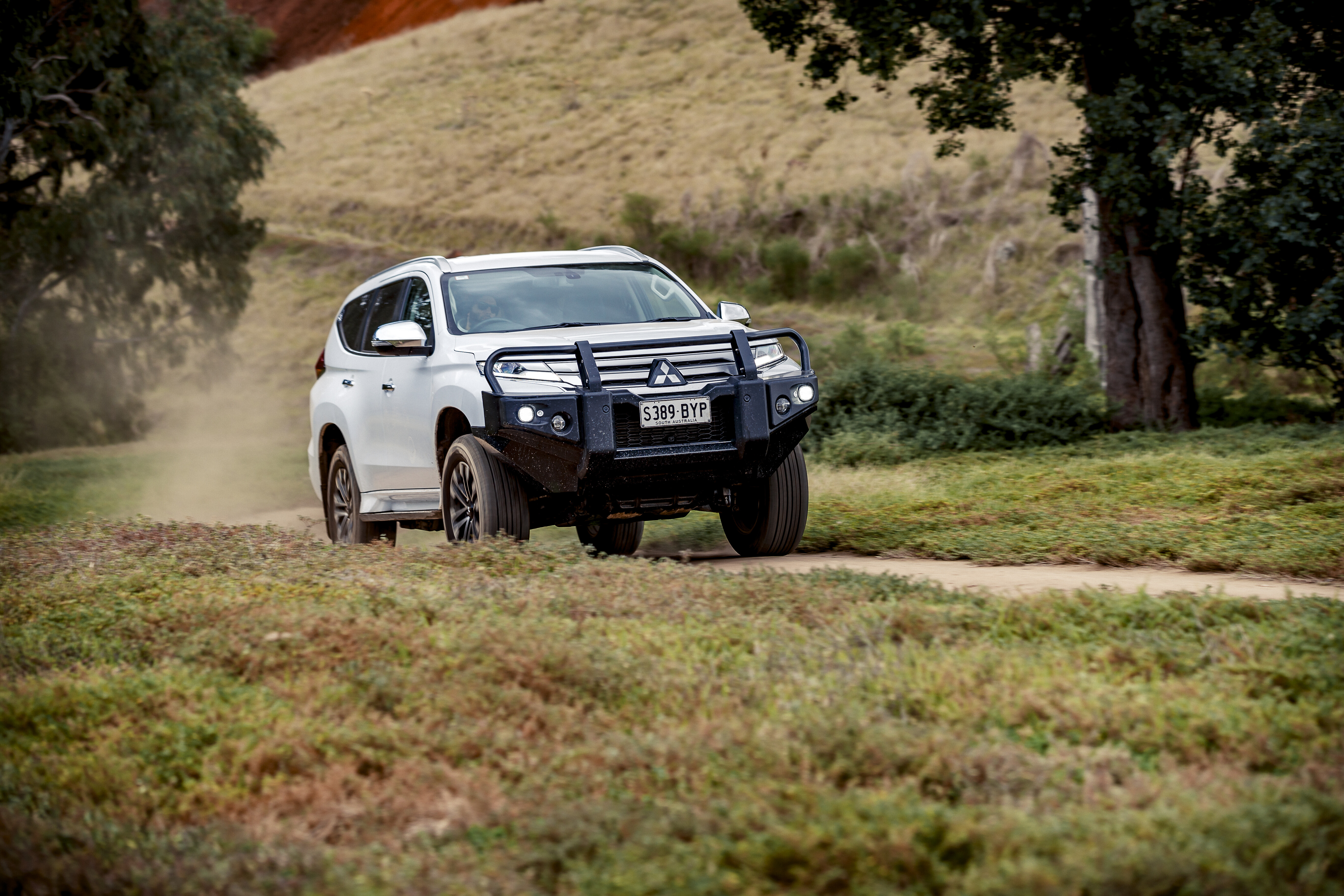
AS mentioned, the Pajero Sport employs a traditional ladder-frame chassis derived from that found under the Triton ute. Under its back end, the live axle is located by a three-link system with coil springs and a Panhard rod in lieu of the leaf springs under the Triton. The front end shares the double wishbone and coil design with the Triton.
The Pajero Sport’s suspension is soft and delivers a supple and comfortable ride across sealed roads and rough terrain. That compliance also allows the chassis to pitch and wallow on its suspension and like the performance of the engine, the suspension could never be called sporty which leaves us still looking for the ‘Sport’ in the model name.
The fully independent, monocoque chassis Pajero was more sporty than this vehicle. The suspension borders on loose and felt like it had 414,000km on it, not the 14,000 as displayed on the odometer. This wouldn’t be helped by the addition of the steel bullbar fitted to the front end on the factory suspension.
OFF-ROAD
THE shorter wheelbase when compared to the Triton means that the Pajero Sport has a tighter turning radius than the load-hauling ute and thus is more manoeuvrable wherever you are driving it.
The shorter distance between the axles is also beneficial when you are off road as it improved the ramp-over angle, meaning the wagon is less likely to get hung up on the sills or chassis in the middle of the car.
The Paj didn’t suffer any clearance problems on our test but its tractive ability was found lacking on our set hill climb. Using just the electronic traction control with and without the rear diff lock (RDL) employed and in the various modes of the terrain selector, the Paj failed to get up our hill which was greasy on the first day of our test.
It did get up there on day two when the track was dry and with the RDL switched , while the Toyota did it relatively easy on both days.
CABIN & ACCOMMODATION
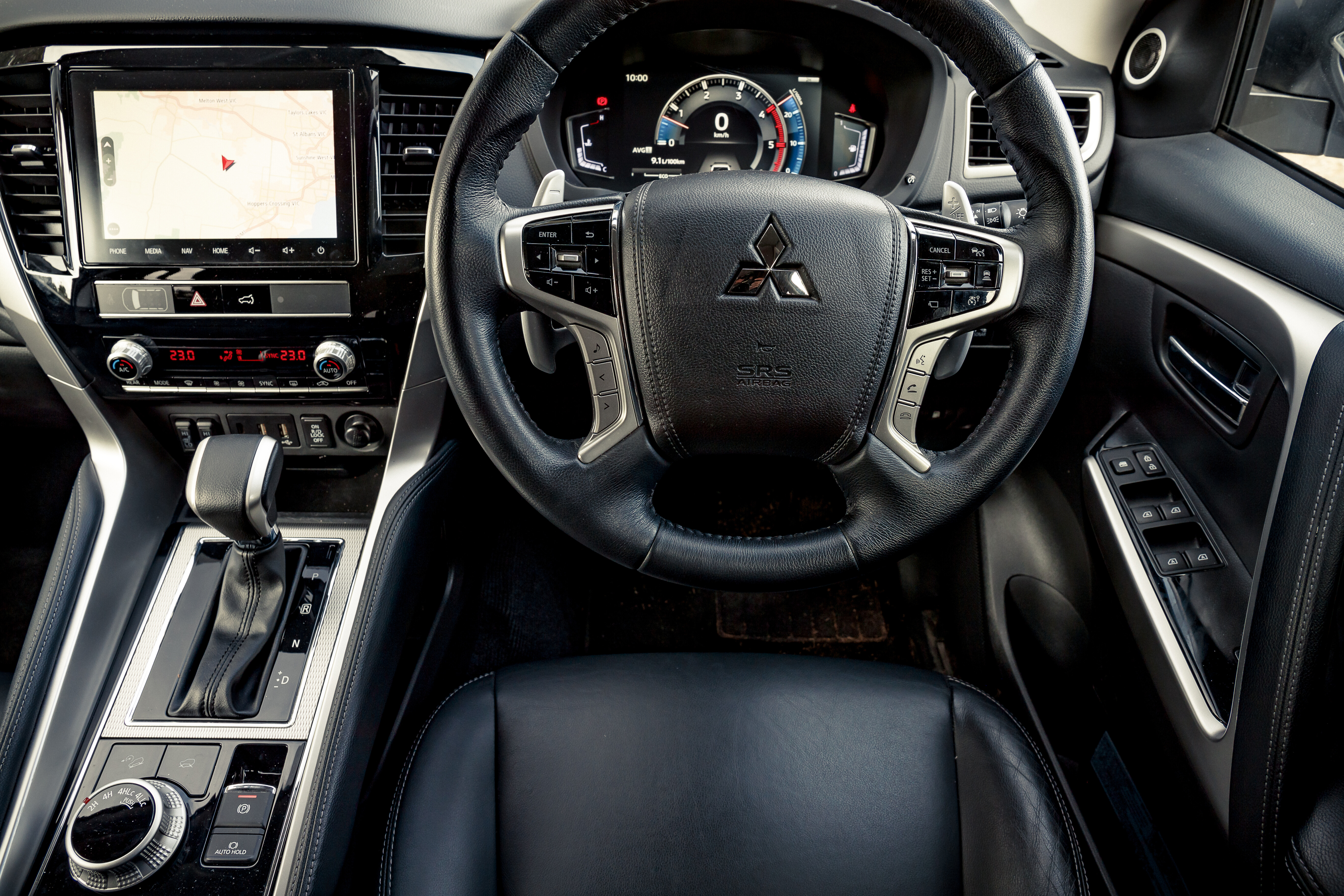
THE Pajero Sport feels big and airy inside, even if not as spacious as the now discontinued Pajero proper. The power adjustable, heated leather front seats are comfortable and with the tilt-and-reach adjustable steering column, allow you to get in the best position for driving.
The second row seat is equally as comfortable and both sides tilt and roll forward to allow access to the third row. The second row does not slide fore and aft to allow for more leg room in the second or third row of seats. Not that it is needed in the third row, as we found the seat quite spacious with enough leg and headroom for an average-height adult, although the position would best be suited to kids on anything but short trips.
The Exceed has dual-zone climate control (left and right) a large AV screen with inbuilt navigation as well as access to Apple CarPlay and Android Auto, although it does annoyingly have only small, fiddly buttons for volume control, a pet hate of our testers who prefer more functional and tactile knobs or dials.
Part of the 2020 update to the Pajero Sport included a phone app that allows the user to remotely access the vehicle status including fuel level, find their car, and open and close the power tailgate. This app is also accessible via an Apple Watch.
Extra points for the abundance of power options in the cabin with two USB ports in the front of the console, two more for the rear seat as well as three 12-volt outlets and a 150W-220-volt inverter outlet. There’s another 12-volt plug in the cargo area. A modern family wagon can’t have enough power outlets to keep everyone and their devices charged.
PRACTICALITIES
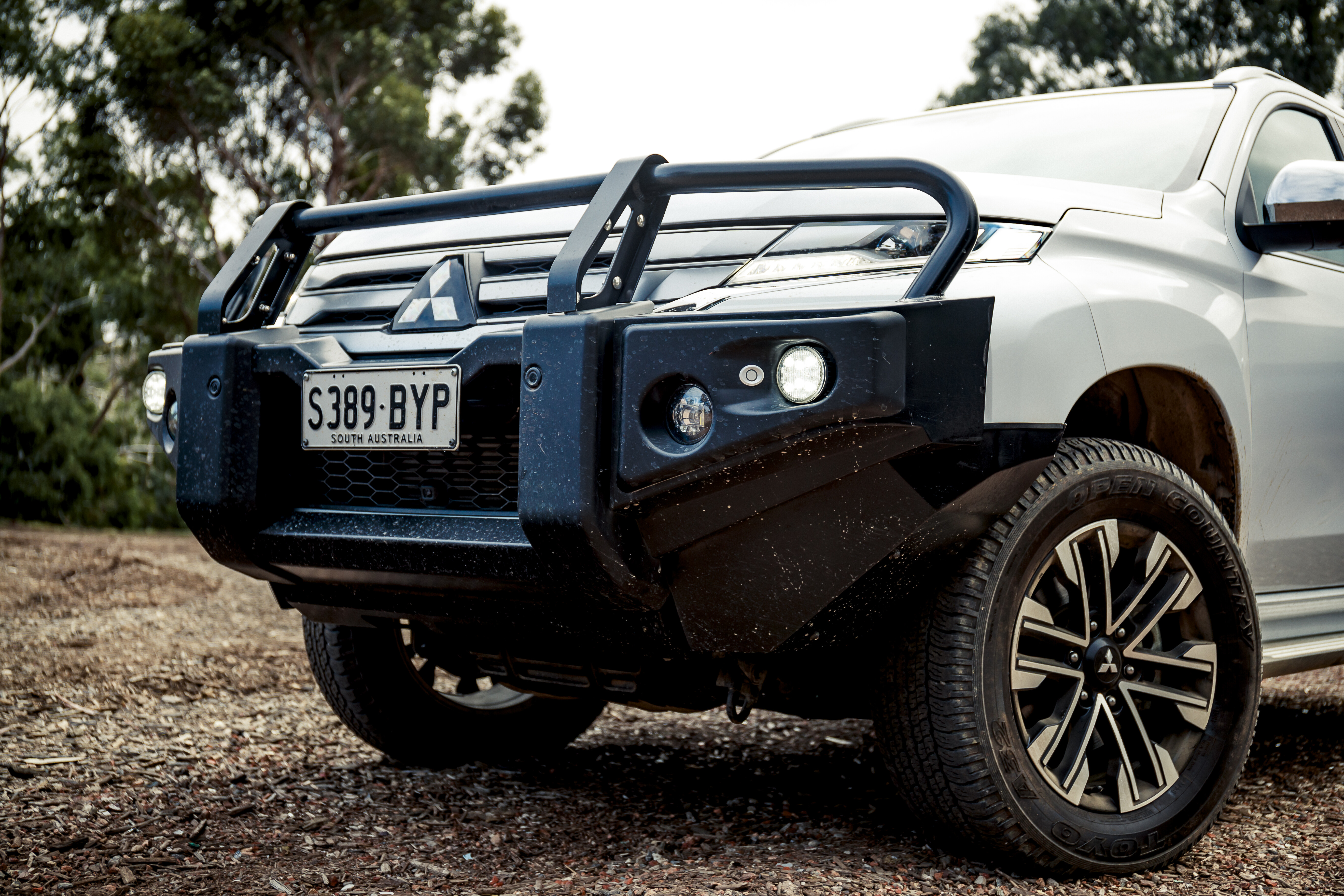
THE Pajero Sport is a rugged 4×4 wagon built to take on any road with the right accessories. Thankfully, it is well-supported from the aftermarket companies as well as Mitsubishi which offers a range of kit such as the bullbar fitted to this test car.
In Exceed spec it has a 670kg payload and is rated to tow 3100kg. The engine breathes in through the inner ’guard and the wading depth is quoted at 700mm. The fuel tank carries 68 litres of fuel, so it’s getting on the small side of what you might want for touring in Australia.
The Exceed rolls on 18-inch alloys with a matching spare, and the tyres a now common 265/60-18 size. Pajero Sport uses an electric park brake, which is not automatic in its operation as similar devices are in other vehicles.
Mitsubishi bolstered the Pajero Sports safety systems with the 2020 update adding autonomous emergency brakes (AEB) radar cruiser control, blind spot warning, lane change assist and rear cross-traffic alerts to the usual ETC, ABS and ESC. There’s also what Mitsubishi calls Ultrasonic misacceleration Mitigation System which warns the driver if the car thinks he or show has accidentally hit the accelerator pedal instead of the brake.
TOYOTA FORTUNER CRUSADE
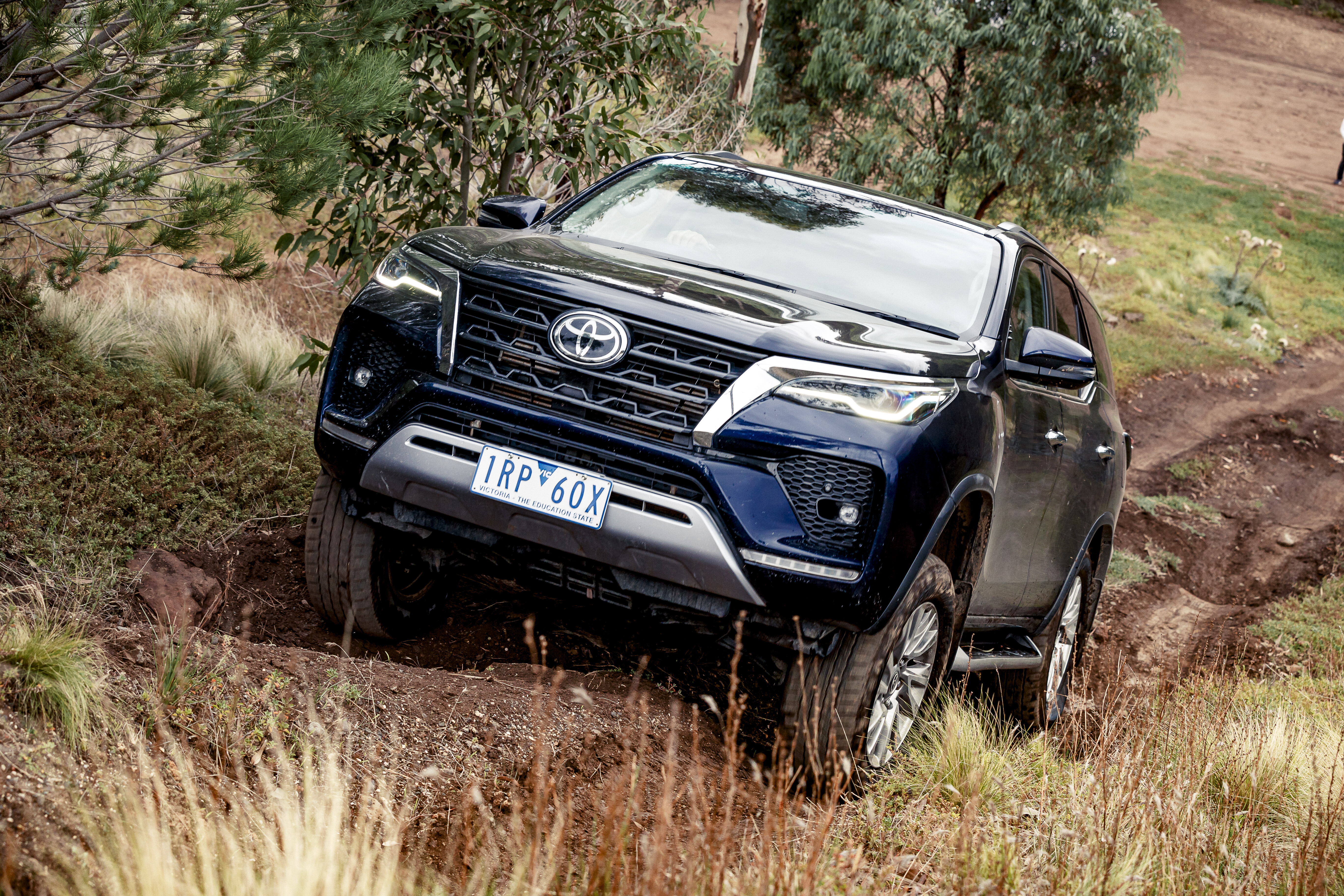
LIKE the Pajero Sport, the Toyota Fortuner was first released in Australia in 2015 and received its mid-life refresh in 2020. This came in September with the introduction of the heavily revised 2.8L diesel engine that was introduced across the Hilux, Prado and Fortuner models at the same time and has certainly breathed new life in to the Toyotas. In fact, with 500Nm and 150kW now on tap, the performance of the Fortuner represents a significant difference between these two family wagons, with the Fortuner feeling far more sporty than the Paj Sport does!
Like the Pajero Sport Exceed, the Fortuner Crusade is the top specification in the model line-up, although there are only three models offered by Toyota. They do however, offer interior option packs to the GX and GXL models to up-spec them with leather trim and extra features. The Fortuner Crusade sells for $61,140 plus ORC so it will cost buyers a few thousand more than the driveaway price of the Pajero Sport Exceed.
In addition to the engine upgrades the 2020 refresh included updated styling inside and out, with added features including improved headlights and improved safety kit, although this is limited to the inclusion of front parking sensors.
POWERTRAIN & PERFORMANCE
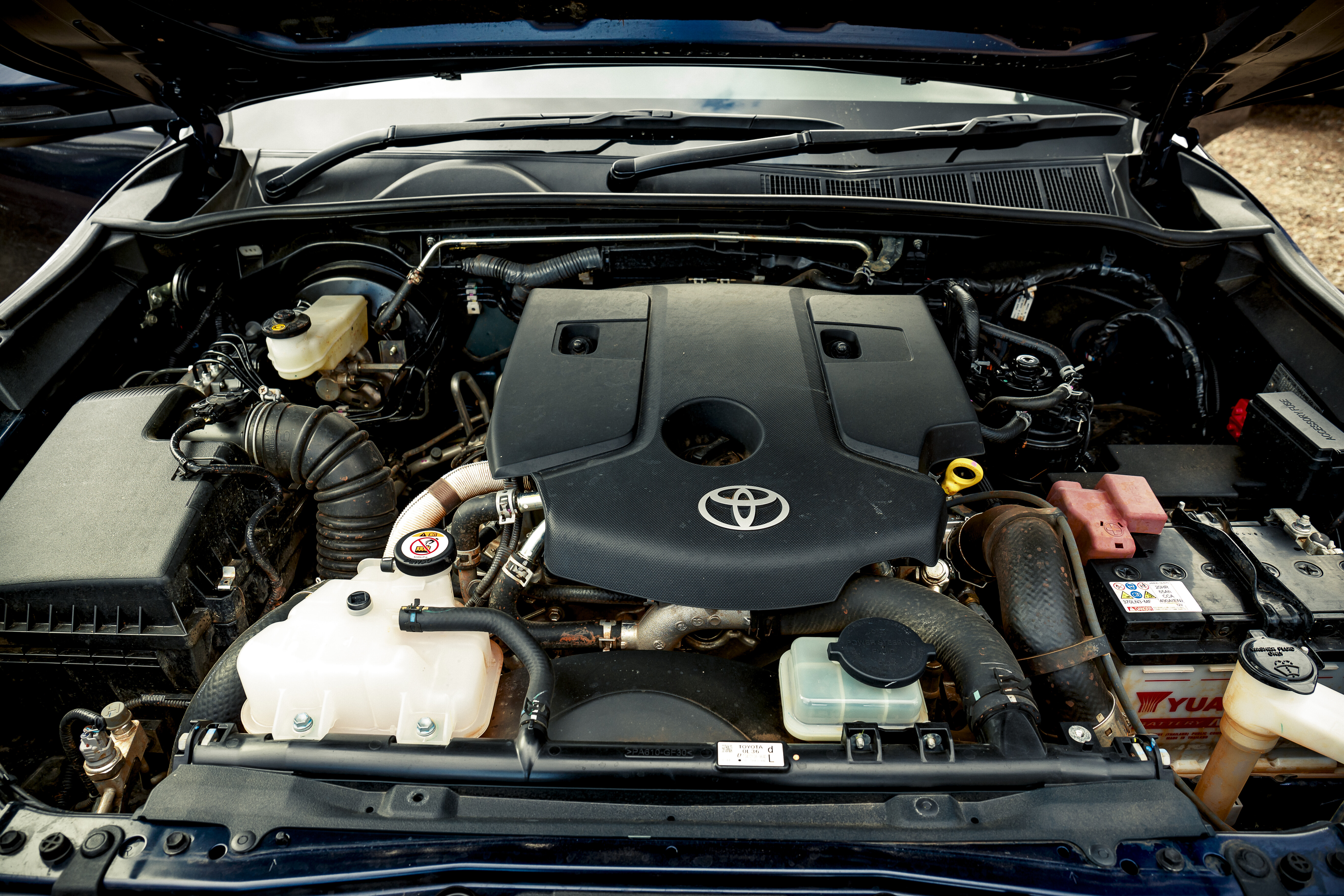
ALL Fortuners get the improved 2.8L diesel engine and it’s backed by a 6-speed automatic transmission only, while the 4WD system is part-time only with locked high and low range and a rear differential lock. It doesn’t give you that full-time 4×4 functionality that Mitsubishi’s Super Select 2 system does in the Pajero Sport.
The updated 1GD-FTV 2.8L engine gained 20kW and 50Nm over the pre-September 2020 model and that 500Nm of torque puts it up there with the torquiest 4-cylinder diesels in the class, namely Ford’ 2.0-litre bi-turbo engine as found in the Everest and Ranger models.
With 150kW coming in at 3400rpm the Fortuner is a more exciting car to drive than the Pajero Sport as you really feel that extra power when you put your foot down. The Toyota engine is a touch harsher and noisier than the Mitsubishi’s under such throttle application although neither of them are intrusive. The auto transmission is positive and direct in its shifts, further adding to that sportier feel. Both of these cars have paddle shifters behind the steering wheel for manual gear shifts.
ON-ROAD RIDE & HANDLING
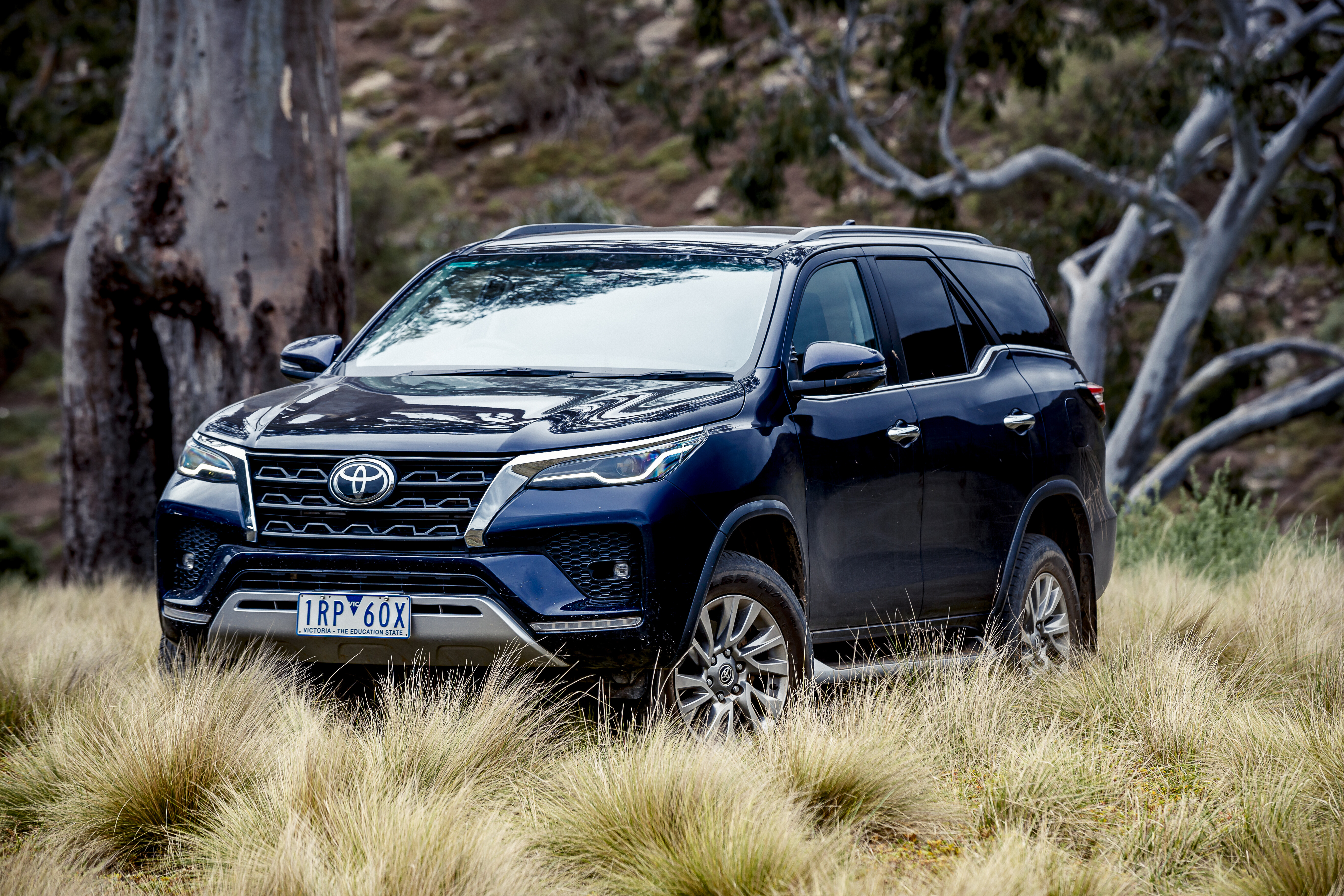
LIKE others of its ilk, the Fortuner rides on a ladder chassis derived from that of a ute, in this case the ever popular Hilux, and it has a shorter wheelbase and a coil spring, multi-link rear suspension.
Toyota has set the Fortuner’s suspension up to ride firm and composed, although not too firm as to be uncomfortable as you might find in many 4×4 utes. The five-link rear suspension provides plenty of control for improved dynamics when driven back-to-back with the softer Pajero Sport.
Toyota also tweaked the hydraulically-assisted power steering with the 2020 update to make it easier to turn at lower and parking speeds, yet still retain plenty of feedback for the driver at road speeds, and it has succeeded in this regard. The steering combines with the firmer and more controlled suspension to make the Fortuner a better ‘driver’s car’ than the Pajero Sport.
CABIN & ACCOMMODATION
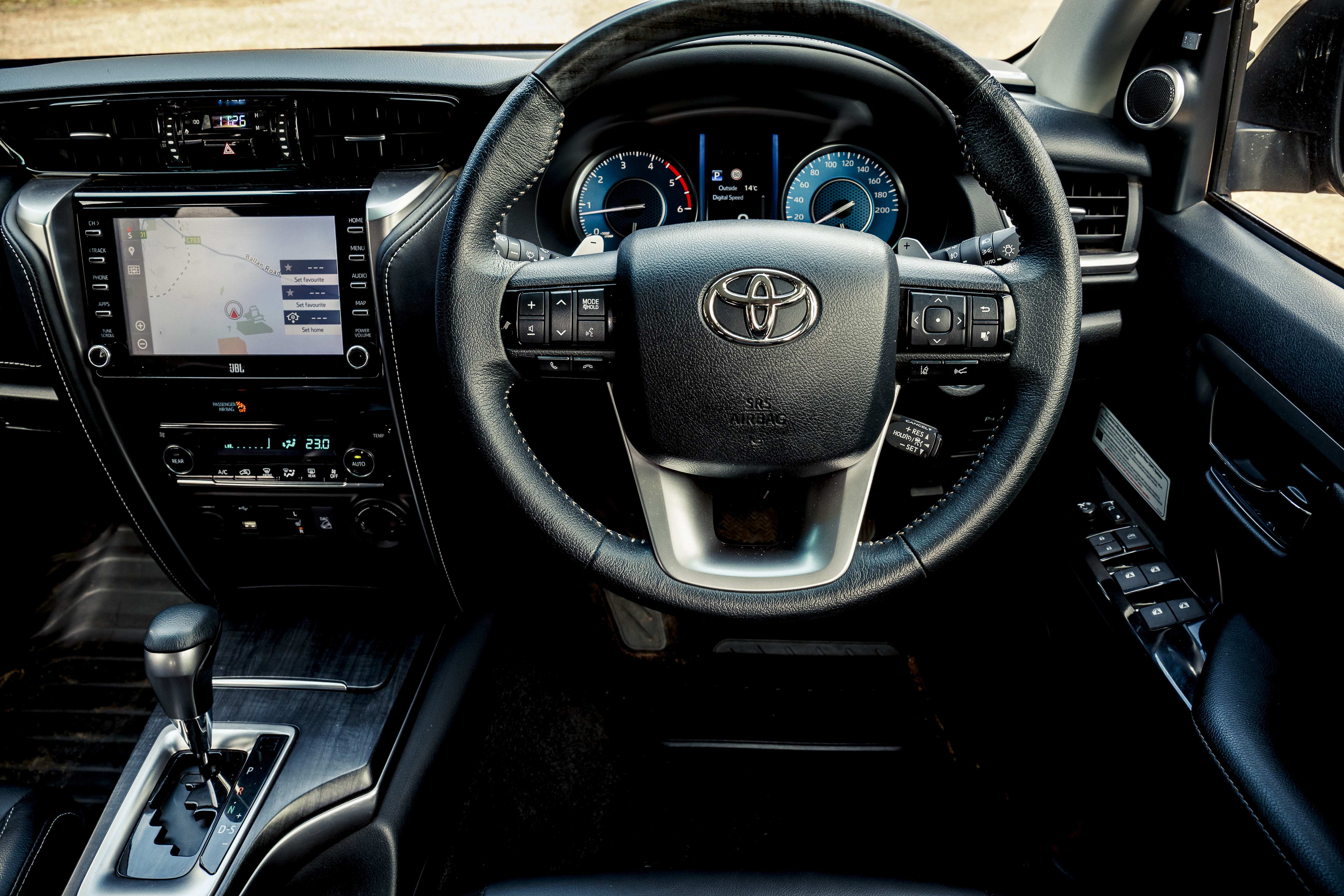
LIKE the Pajero Sport Exceed, the Fortuner Crusade is well-appointed in terms of interior trims and equipment. The now bigger AV screen has its own satellite navigation as well as access to Apple CarPlay and Android Auto and the gauges ahead of the driver have a fresh look and updated features in the information screen.
The steering column is adjustable for both reach and height, while both front seats are power adjustable and heated. The climate control system is single zone, however there is a button to switch the rear air on and off.
The second row seat in the Fortuner slides fore and aft to allow extra legroom for the rear passengers depending on which row they are occupying, however the third row doesn’t offer the same space, notably the headroom, as that offered in the Mitsubishi. Our average-sized passenger said he felt more cramped in the rearmost seat of the Fortuner and stated that he wouldn’t like to have to sit there for long.
A standout feature of the Crusade’s cabin is its excellent JBL sound system, while it only has a single USB outlet in the front along with a 12-volt plus a 12-volt and 100W-220V outlet in the rear. There’s also a 12-volt in the cargo area.
PRACTICALITIES
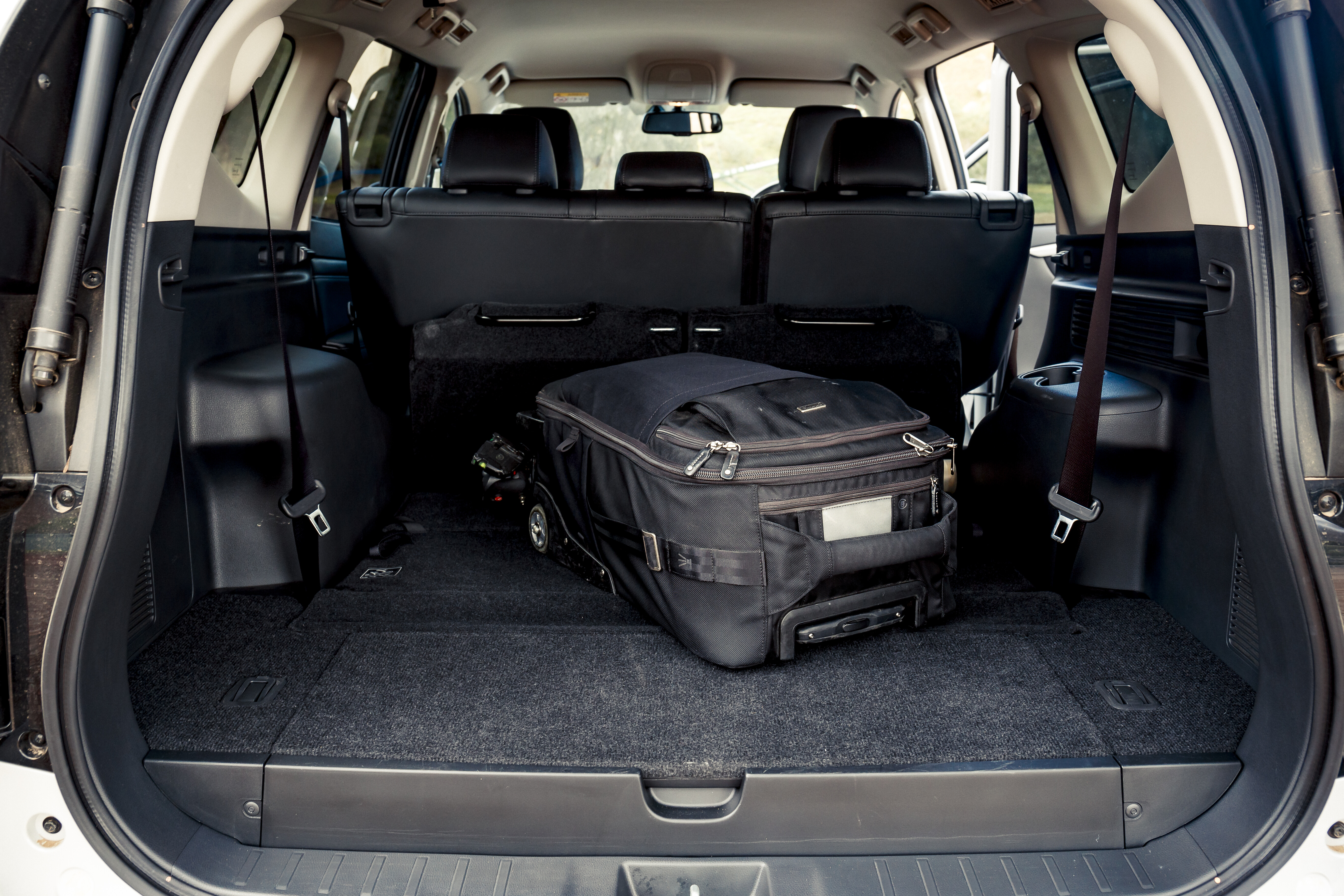
WHEN Toyota updated the Fortuner back in September, it raised the towing capacity to 3100kg so that it now matches the Pajero Sport. In Crusade trim the payload is rated at 645kg on a 2800kg GVM.
The Fortuna Crusade’s 18-inch alloys also wear the popular 265/60-18 size tyre so finding replacements shouldn’t be an issue.
The engine takes its air from the inner ’guard and wading depth is 700mm. Toyota offers a healthy range of factory accessories and the aftermarket supports the Fortuner well for any gear you may need. The standard fuel tank holds a handy 80-litres of diesel.
THE VERDICT
THESE two wagons are very similar in size and specification on paper so it might look like the Pajero Sport Exceed would be the better buy due to its lower driveaway price. But a decision shouldn’t be based on price alone and for our money, we’d find the extra dollars to put the Crusade in our garage.
While the Mitsubishi might edge the Toyota out for rear seat space and safety equipment, the everyday dynamics and performance of the Toyota more than make up for this. The Fortuner accelerates, rides and handles better than the Pajero Sport in all conditions and then leaves it behind when the going gets rough off road. It is more of a driver’s car, if ever you could call a 7-seat SUV a driver’s car and this makes it a better and safer touring vehicle.
While the Pajero Sport and Fortuner both reside in that crowded mid-size SUV segment, they both bring an extra level of capability to the category than the softer equivalents in the class, the respective Mitsubishi Outlander and Toyota Kluger can offer, giving adventurous families wider scope for their travels.
Talking Points
- ARB 4×4 accessories available from Ford Dealers
- Covered by Ford new vehicle warranty
Ford Australia has announced it will offer a range of vehicle accessories made by aftermarket accessories giant ARB for its Ranger and Everest models.
These parts will be available through selected Ford dealerships and be covered by the vehicle’s full five-year/unlimited kilometre warranty.
Both the Ranger ute and Everest wagon are built on the Australian-developed T6 platform, so there is some cross-over between the parts available for them.
ARB accessories offered under this deal with include popular items such as bullbars, sidesteps, rear steps, electric winches, spotlights, canopies, storage solutions and suspension systems.
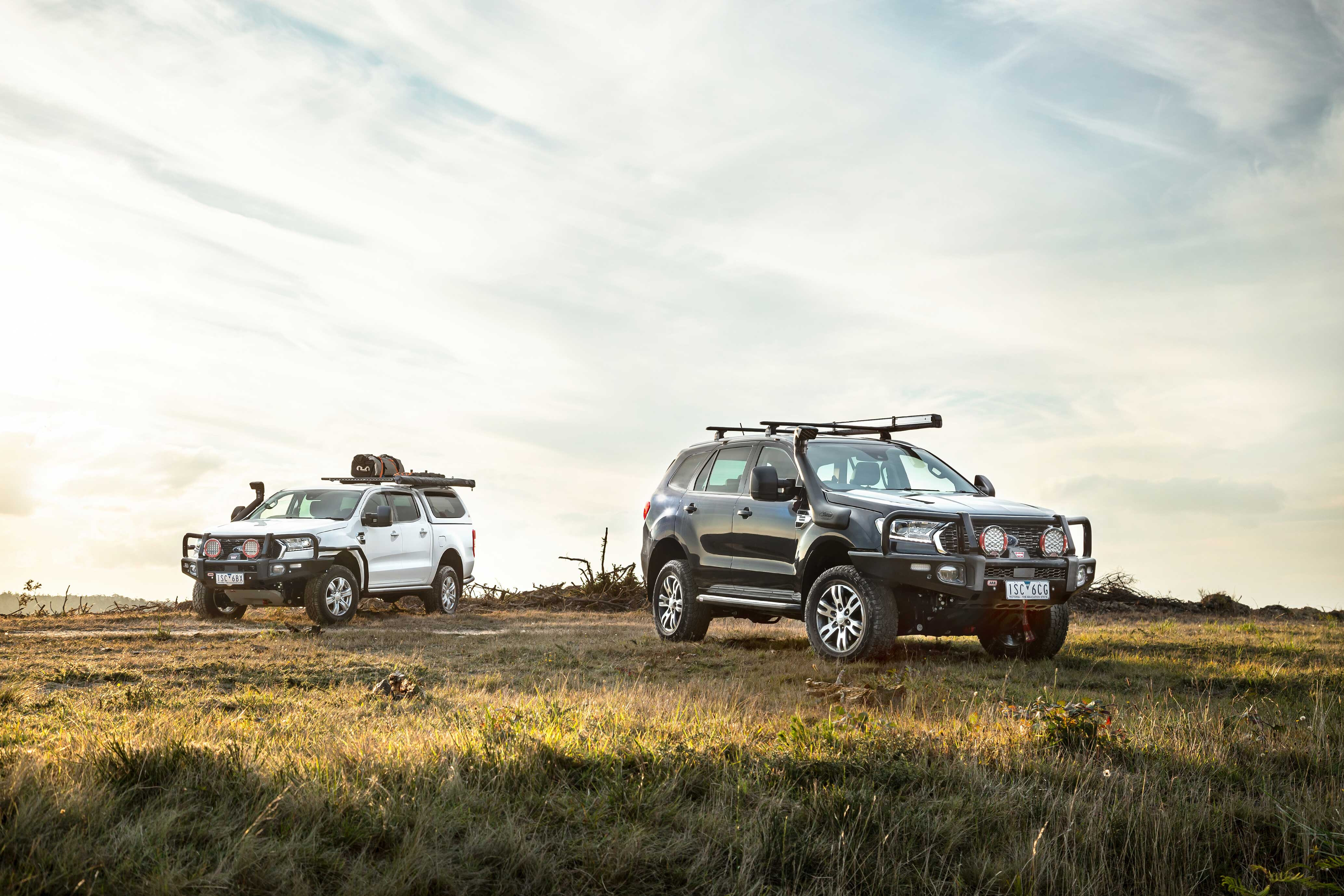
These accessories are designed in Australia by ARB 4×4 to better equip the vehicles for the owners’ personal requirements, be they outback touring, off-road driving, towing or tradie work.
Ford Australia’s engineering team tested and validated the ARB products over thousands of kilometres of driving including in outback South Australia and at Ford’s proving ground at Lara, west of Melbourne. The testing allowed Ford to warrant the accessories to match their vehicle warranty, which exceeds that offered by ARB.
“We are very proud to welcome ARB on-board as they are known globally and respected in the off-road community for their state-of-the-art manufacturing processes and stringent quality controls,” says Andrew Birkic, President and CEO of Ford Australia and New Zealand. “A lot of our customers have told us they’d love to be able to access a wider range of quality off-road accessories through our Ford dealership network, and this collaboration will mean they can head off-road safely with access to a range of ARB accessories.”
Just like the Australian-developed Ford Ranger which is sold in more than 180 markets globally, ARB is an Australian company creating vehicle accessories for global markets where it has garnered a reputation as being some of the best products in the world.
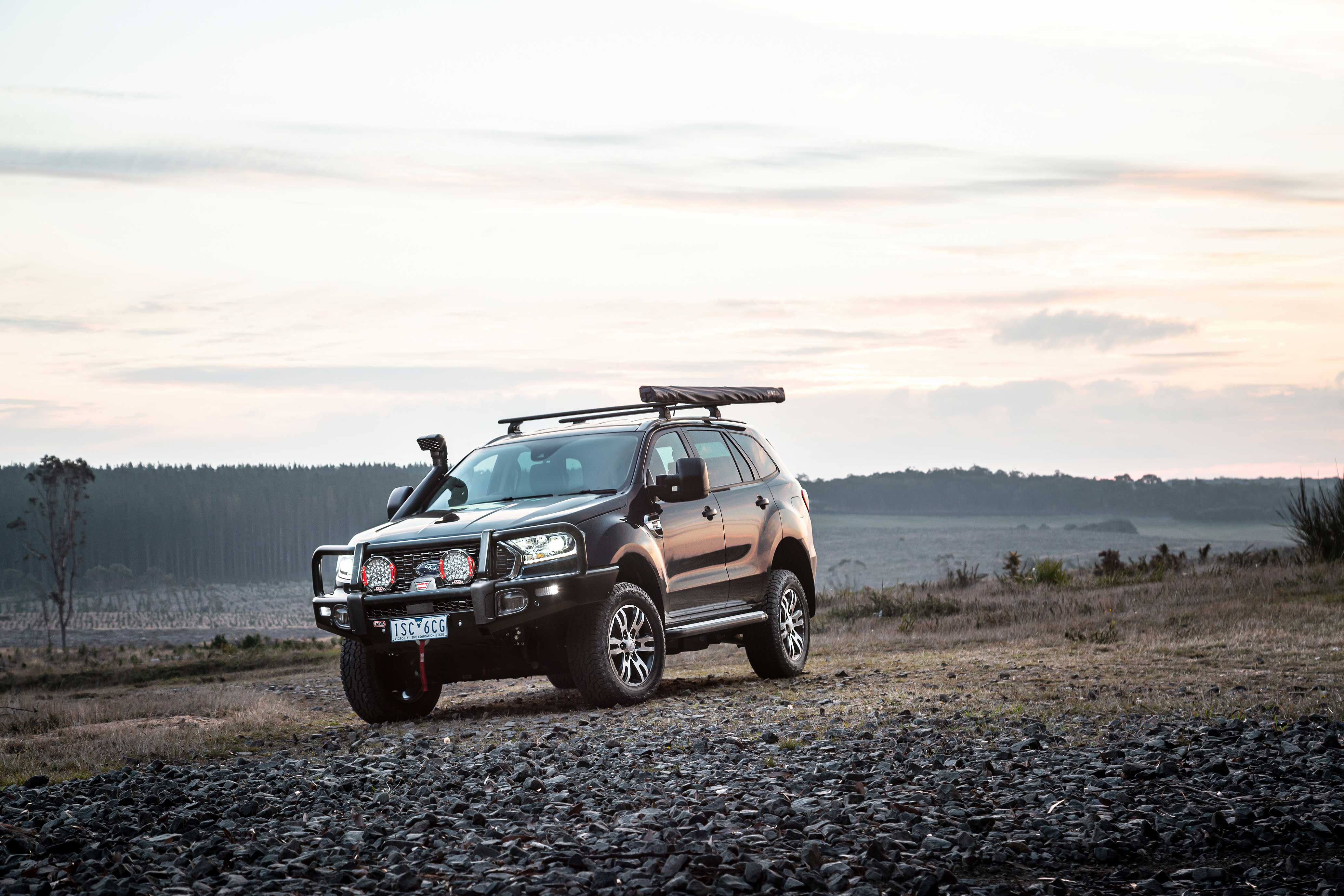
As such, ARB off-road accessories are revered in many markets including the USA, where demand for their products is huge. ARB exports its products to more than 100 countries around the world.
“ARB is truly honoured to be working with Ford at a global level. This collaboration is a great testament to the progressive vision of Ford and ARB to deliver to customers highly capable off-road vehicles with a broad range of best-in-class accessories,” says Andrew Brown, Managing Director of ARB 4×4 Accessories.
This partnership with ARB 4×4 Accessories follows on from a similar one in the USA where Ford Performance offers protection bars and equipment for the US model Ranger, F-Series and Bronco vehicles, some of which is branded ‘Ford Performance by ARB’. No such co-branding will be seen in Australia, where the products will retain ARB branding.
Such collaboration between the OEM and the aftermarket industry comes at an important time in the development of new vehicles and accessories, as the complexity of the vehicles continues to challenge aftermarket engineers.
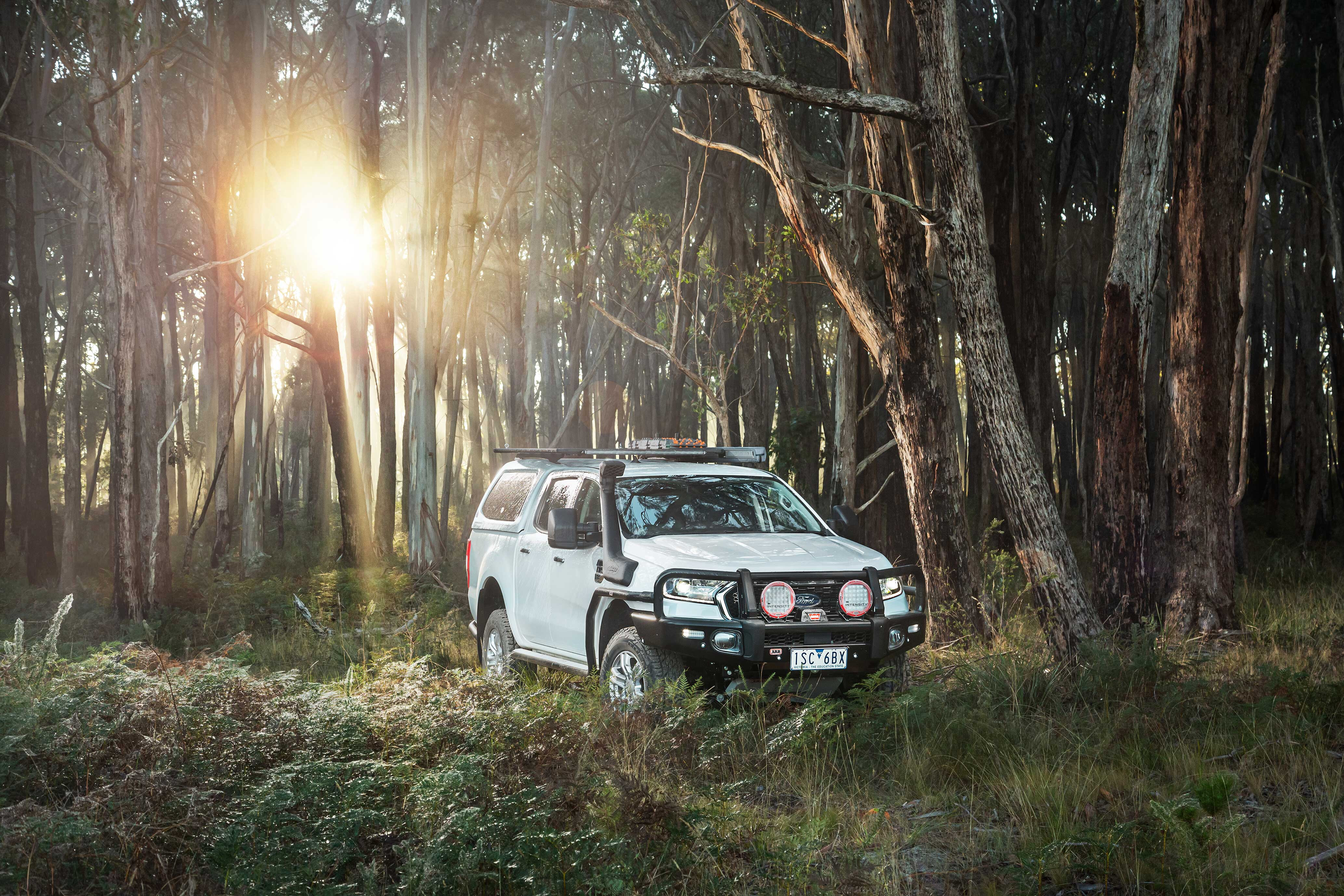
Cameras and radar systems fitted to the front of new vehicles for safety systems such as Autonomous Emergency Braking (AEB), pedestrian and cyclist detection, and radar cruise control, present challenges in the design of items such as bullbars, as anything fitted to the front of the vehicles could affect the operation of these safety systems.
Ford will continue to offer its Genuine Ford Accessories products for the Ranger and Everest alongside the ARB products, including a steel bullbar for the Ranger which Ford says does not compromise the vehicle’s five-star ANCAP safety rating.
This rating was achieved prior to more stringent testing procedures introduced by ANCAP back in 2018, and ANCAP no longer tests vehicles fitted with accessories such as bullbars. The ARB Deluxe bullbar (part number 3440400) for Ford Ranger models from 2015 onwards (which includes the current model Ranger) also passed this older testing to not affect the car’s ANCAP rating.
The roll-out of Ford-backed ARB 4×4 Accessories will hit Ford dealers in the second half of 2021.