
During the 19th Century, the Walhalla-Woods Point Gold Belt was bursting with heavily-populated towns filled with men hoping to strike it rich. As the gold began to run out, so too did the population. Eventually, what were once villages filled with schools, churches, hotels, hospitals and homes became mere ghost towns.
Over the years, little has been done to maintain this intriguing part of Victoria’s history. Evidence of the past has been further concealed by the devastating fires that have swept through the region periodically.
Today, this fascinating part of the Victorian High Country stands as a ghostly reminder of the goldrush. You wonder what secrets the trees would tell if they could talk. Or what story lies behind a pile of stones in a burial ground. Broken bottles and buried china are just a few of the treasures waiting to be found which hold the key to unlocking history.
Historical markers and well-maintained walking tracks on the Gold Belt lead the way to sites where, with a little imagination and some historical documentation, pieces of the puzzle start to fall into place.
Tourists can access the archival ‘goldmine’ via the small towns along the belt, including Walhalla, which sits about three hours east of Melbourne. Here, you get a peculiar understanding of what life might have been like in one of these defunct mining towns. Walhalla and nearby Erica and Rawson are home to a sprinkling of residents, although these places are barely recognisable as the heavily populated townships they once were.
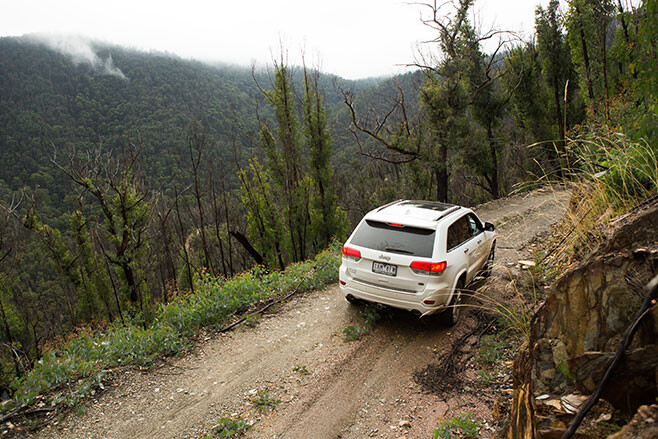
From each town, tourists can travel on day trips along Aberfeldy Track. There are several sealed roads suitable for two-wheel drive vehicles, but most are accessible by four-wheel drive only. For those looking for a little adventure and to explore the region more deeply, it’s advisable to have appropriate equipment for the challenging routes that lie ahead.
LOCATION
The Aberfeldy Track is in West Gippsland, Victoria, about three hours east of Melbourne. The track is open year round, but be wary of fires during summer and it can get very cold during winter. There are various tracks accessible via 2WD but a 4WD will serve you better on these roads if you really want to explore. Be aware. The area gets very wet and slippery during the colder months.
ACCOMMODATION
Walhalla’s North Gardens Camping Ground, Coopers Creek Recreation, Aberfeldy River Camping Area (Baw Baw National Park) or Brunton’s Bridge. Most camping is free on a first in first serve basis.
Located on the spectacular Sapphire Coast in the far south of New South Wales, Bournda National Park is Mother Nature’s playground and offers something for everyone.
Whether you’re into camping, walking, bike riding, swimming, fishing, sailing, bird-watching or water sports, you will love Bourdna National Park. The kids will have as much fun playing in the park as the adults will exploring.
The Sapphire Coast
Bournda and Tura Beaches stretch out for miles, the blue ocean hitting the golden sand, to form part of the Sapphire Coast, while Wallagoot Lake is a wonderful spot for swimming and other activities. Bournda Lagoon’s still waters are also a popular destination in summer, with the six-kilometre Bournda Track the ideal way to explore the Lagoon’s upper reaches, as well as Bournda Island.
Rock fishing opportunities are in abundance at Boulder Bay and White Rock in the northern end of the park, where you are likely to catch salmon and tailor. Alternatively, you can launch a tinnie at Wallagoot Boat Club or Scott’s Bay to explore the area.
Freshwater Bondi Lake, nestled behind the coastal dunes, is an important habitat for threatened waterbirds like the little tern, pied oystercatcher and hooded plover, and it’s also listed as a nationally significant coastal lake and a great spot for bird-watching.
Bournda National Park camping
The park has one large camping ground that has been set up to accommodate tents, camper trailers and caravans. The campground is well set out, but the showers can be a bit of a hike if you choose a site at the western end (sites 40-54).
The facilities do come with a substantial price tag – $35 for an unpowered site for a family with four kids – but the hot showers and laundry are well worth it.
There are a number of sites to choose from and the National Parks and Wildlife Service’s (NPWS) website encourages people to ring 1300 0PARKS (1300 072 757) to make a booking. However, contacting the Merimbula NPWS Office can help in securing a spot that suits your needs. The local rangers know the park and are able to give information that the office in Sydney can’t.
Most campsites have plenty of room for a camper trailer and for the kids to run around.
While camping here, be prepared to really get in touch with nature. It’s not unusual to wake up to the sound of kangaroos hopping by the tent and kookaburras laughing nearby. The small beaches can entertain the kids for hours, but keep an eye out for jellyfish and other potentially harmful creatures.
Wallagoot
Turingal Head is on the north side of Wallagoot Lake and the rock formations here are an amazing sight. The picturesque bay is shaped like a wineglass, hence the name Wineglass Bay, and grants good access to Wallagoot Gap when the tide is out.
Before heading to the Wallagoot picnic area, marvel at the amazing water spectacle created by an opening in the steep cliffs. The picnic area is located next to Wallagoot Boat Club and is a great place for families to stop, particularly in summer, where the kids can have a swim in the lake while you cook up a feast on the free barbecues.
Hobart Beach
From the campground, there is a 900-metre track that leads to Hobart Beach. It’s definitely worth the look, and those who can drag themselves out of bed at 5:30am will be rewarded with a breathtaking sunrise over the beach.
Tathra
The old wharf in the historic town of Tathra is the perfect spot for a sit at the cosy café or throwing a line in for some fishing. The wharf was constructed in the early 1860s and was the main source of transport to and from Sydney, playing a large part in the economic and social development of the area. Saved from demolition in 1974 by a group of dedicated supporters, it is the only original steamer wharf along Australia’s eastern coastline.
The wharf was used as a passenger terminal and the transit point for exports such as cattle, dairy products, railway sleepers, coal, and many other items. The cattle race was the only one incorporated into a wharf at that time. The bullock and horse teams had to double up to haul the heavily laden wagons up to the headland. It is now described as a ‘gem of craftsmanship’. You can easily spend a couple of hours here, especially if you’re a keen angler.
It is not uncommon to spot a seal or fairy penguin playing in the surrounding waters of Montague Island, a nature reserve nine kilometres off-shore from Narooma.
Tathra Wharf is also a popular place for whale-watching. From late September to late November, humpback whales make their way to the rich breeding grounds of Antarctica to rear their young after spending most of the winter in the warmer Queensland waters.
White Rock
On the way back, keep an eye out for the White Rock turn-off, which can be easy to miss – GPS comes in handy here. The area is known for its rock fishing and can only be accessed via a rough 2WD track, but a 4WD is highly recommended when travelling this road.
The view from the top of the rocks is nothing to rave about, but there is a hard-to-find path leading around to the right that takes you to a spot where the crystal-clear water meets the deep blue sky – a spectacular view. The sound of pounding waves and screeching seagulls makes this secret place almost perfect.
A couple of kilometres south, in the parking area near Bournda Lagoon, there is another lookout with stunning views of the lagoon and ocean beyond. There’s no signage, so it takes a bit of exploring to find it, but when you do, you’ll be glad you didn’t give up.
Walking tracks
Bournda National Park has several walking tracks, most of them graded as easy, that will reward you with stunning views of the coastline. The most challenging hike is the nine-kilometre Kangarutha Track, starting at Kianinny Bay in the north to Hobart Beach campground in the south. But it’s possible to break the walk into shorter sections.
If you get a chance, add a stop at Scott’s Bay to the to-do list and check out Scott’s slab hut, which dates back to 1890. Built by Thomas Scott, an Englishman who came to Australia at the age of 17, the cottage now known as ‘St John’s Wood’ has since changed hands a few times and is now in the care of the Bournda Trust.
Bournda National Park is a place of breathtaking scenery and a wonderful family destination. It’s definitely an area that offers something for all ages.
Australian choices in utes are limited to vehicles built in Asia plus the odd European make. It’s for this reason many Australian companies, such as Queensland-based Performax, are looking to import and convert American pick-up trucks, but are they worth the cost?
The Toyota Tundra is a comfortable and capable ute both on and off road. The petrol V8 has a $118,990 price tag once imported and converted – for that amount of money, buyers could put two, top-of-the-line Hilux utes on the road with change – at $51,740 for an SR5 Hilux diesel, one must question the value of the American option.
The Tundra becomes an option for a traveller chasing an alternative to a Land Cruiser Sahara, or a premium vehicle more useful than those currently available in our country. There is no doubt Hilux is more realistic in most people’s budgets but is a Tundra worth two-times a Toyota Hilux?
Both of these four-wheel drive Toyotas are designed for hard work – steel bodies, pickup tubs on a ladder-frame chassis, live axles and leaf springs down back, double wishbones and coils up front. But aside from company badges, there are not a lot of similarities between these two four-wheel drive utes.
The Tundra carries a smoother, less fussed style, even while crowned by a huge chrome grille, perhaps contributing to its weight of 2560kg, 600kg heavier than the Hilux.
The Tundra is almost six metres long and two metres wide, sits 1930mm high and has 264mm ground clearance. The Hilux is just more than five metres long and 1860mm high with 210mm of clearance; it’s also narrower in the body at 1835mm.
All this translates to a bigger cargo tray for the Tundra with a 1.69m long by 1.68m wide bed (1.27m between the wheel arches) which has a damped tailgate that opens and closes with a soft touch. The Hilux tub is 1.52m long and 1.5m wide. Its tailgate opens, drops and shuts with a bang.
Strange then that the Hilux is rated to carry 835kg, well ahead of the Tundra’s 705kg but it wins points back with a towing capacity of 4000kg, compared to the Japanese-built Hilux’s 2500kg tow load.
Cabin and accommodation
The body differences are obvious enough when the pair are parked side by side, and again more noticeable when climbing from cabin to cabin.
An SR5 Hilux is not short of gizmos these days – Bluetooth connectivity, rear view camera, satellite navigation and all. The fit and finish is smart.
The Tundra Platinum version matches all that and betters it with extras such as heated and ventilated front seats, leather all round, a very clever infotainment system and a powered drop-down rear window.
Four-wheel drive is engaged with a dash-mounted control as opposed to the Hilux’s old lever. The Tundra has 13 cup-holders, the Hilux a mere seven although why you need that many in a vehicle with five seats is beyond us.
The Tundra is more like the Landcruiser Sahara in touch and feel, particularly when it comes to accommodation, with more occupant room in all directions; the front seats are great for long hauls, the driving position excellent and three adults across the back seat don’t have to be the best of friends as they do in the ‘Lux.
Drivetrains
A 5.7 litre petrol V8 with a slick six-speed auto is always going to beat a four-cylinder diesel with five-speed auto in delivering road speed. The three-litre Hilux motor is smooth enough, an honest worker on the highway or through the bush. The Tundra’s engine, as found in the Lexus LX570, is a top performer for a commercial vehicle, running sweet at about 1800rpm for an effortless 100km/h with plenty left to overtake and the auto box is slicker than the one found in the SR5.
Neither motor is troubled finding decent torque on dirt or tar, there’s just an extra 200Nm of it from the V8, which means it’s easier to keep up with, or clear of, the traffic.
But this is where the Tundra is twice the truck – at a claimed 15.7L/100km it uses almost twice as much petrol as the Hilux uses diesel.
On road
There is little contest here. The big Toyota ute is a quick and comfortable truck for the road, while the Hilux is hampered by a shorter wheelbase, narrower track, lighter weight and blue-collar drivetrain. There is little wrong with the steering and handling of the Hilux but, compared with the Tundra, the ride is firm to lumpy when the road gets rough. Nor can the Hilux driver hope to match the pace of the Tundra on the open road.
It’s when the road narrows and turns to dirt that the smaller Toyota makes up some ground. It doesn’t mind being pushed over bush roads, where it’s allowed to move around a tad, holds its road speed and doesn’t need as much track space as its big American cousin.
In more open country, on tar or dirt, the Tundra steers and handles with surprising ease. The steering may not have quite the weight of the Hilux tiller, especially on the initial turn-in, but there’s rarely any doubt about the direction of the front wheels. A superior ride quality, better driving position, V8 punch and sleeker auto transmission means the Tundra is a nicer proposition for a long distance drive.
Off road
Beach or bush, the Hilux is a proven offroad worker, but the Tundra is a surprising offroad hauler. Despite the all-American ute’s bulk, and allowing for road-biased tyres, it does not disgrace itself in the rough. Much of its capability when the track turns nasty is down to that drivetrain grunt and smarts. Low-range gearing is very good, there’s a limited-slip rear differential and higher ground clearance.
The Tundra remains comfortable in the rough, it doesn’t pitch passengers around as much as the Hilux. But it is big and, sitting on a longer wheelbase than the smaller Toyota, may get hung up quicker.
The Hilux approach angle is 30 degrees, compared to the Tundra’s 26 degrees; departure angles are 23 degrees and 21 degrees respectively. The Hilux is easier to place and will go further when the track narrows.
There’s no doubt the Tundra will take on a 6.5/10 track (dry) without drama. The Hilux would be comfortable enough on an 8.5/10 trail, after that it begins to rely more on driver skill.
Verdict
The Tundra was designed for North America and that shows in many aspects of this fine machine. It’s big and it’s thirsty, even compared with some of its US rivals, but it’s also very comfortable and very capable. It’s understood the 2016 Tundra will be sold in the US with a 5-litre, turbocharged V8 diesel option for those worried by the petrol engine’s thirstiness and we can expect that to filter through to the imports here.
Critics in the US there suggest the current Tundra is a bit soft as a full-sized pickup when compared with rivals from General Motors, Ford and Dodge, yet that ‘softness’ is what many here will find appealing. It is less of a truck than the other big Yanks, more like a Sahara or Lexus with a ute tray.
So for those with the dollars, and a decent-sized shed, the Tundra is a very handy, and luxurious, truck for smooth and rough conditions – it’s also covered by Performax’s four-year, 120,000km warranty with 24-hour roadside assist if purchased through the company or its national outlets.
The Hilux remains Australia’s most popular ute, despite this generation being older than rival utes and with, perhaps, less than 12 months left to run before a new model appears. Toyota’s reputation and solid engineering help this Hilux stay with the pack. Here the diesel auto SR5 is a worker but not as sophisticated in its ride or road manners as many rivals or the Tundra. The Hilux dresses up well but it’s more of a commercial vehicle, the Tundra is more of an all-rounder.
So is a Tundra (costing about $A55,000 in the US) twice as good as a 2014 Hilux? Probably not. But if you want the luxury and towing capacity there is only one choice.
Special thanks to Performax and to Land Cruiser Mountain Park for a great facility to test drive these vehicles. Special thanks to JAXQuickfit Tyres at Mitchelton in Brisbane for great service to fix a flat tyre.
Toyota Tundra Crewmax specifications
- Engine: efi petrol v6
- Capacity: 5663cc
- Max power: 284kw @ 5600rpm
- Max torque: 543nm @ 3600rpm
- Gearbox six-speed automatic
- 4×4 system: dual range, part time
- Construction: ladder frame
- Front suspension: double wishbones with coils
- Rear suspension: leaf springs, live axle
- Kerb weight: 2560kg
- Gvm: 3265kg
- Payload: 705kg
- Towing capacity: 4000kg
- Seating capacity: five
- Fueltank capacity: 100 litres
- Claimed fuel consumption: 15.7litres/100km
- Price: $118,990
Toyota Hilux SR5 Diesel Auto Double Cab specifications
- Engine: 4-cyl turbo diesel
- Capacity: 2982cc
- Max power: 126kw @ 3600rpm
- Max torque: 343nm @ 1400-3400rpm
- Gearbox: five-speed automatic
- 4×4 system: dual range, part-time
- Construction: ladder frame
- Front suspension: double wishbones with coils
- Rear suspension: leaf spring, live axle
- Kerb weight: 1945kg
- Gvm: 2780kg
- Payload: 835kg
- Towing capacity: 2500kg
- Seating capacity: five
- Fuel tank capacity: 76 litre
- Claimed fuel consumption: 8.7litres/100km
- Price: $51,740
Let’s tackle the elephant in the room – the new KL Cherokee looks different. It has a unique style that sure is polarising, but love it or hate it the new Jeep is unique for more than just its looks. For a start, the KL Cherokee could be the only all-new 4×4 wagon launched in Australia this year. That’s all-new, not an update or revised powertrain – that’s something that comes around on ever decreasing occasions.
It replaces the more traditional looking KK Cherokee that hasn’t been sold here for some months so the new car fills a hole in Jeep’s range.
The Cherokee has its own place in the 4×4 wagon market in that it’s smaller than most others, almost a compact SUV, yet in true Jeep style it still offers offroad capability with a choice of three drive trains including single range all-wheel drive; dual range AWD; and dual range 4×4 with a locking rear differential.
This makes it a difficult vehicle to pigeonhole but if you were looking for comparative wagons, you could consider the Toyota FJ Cruiser and Suzuki Grand Vitara, although they are still very different rigs. On looks alone the Cherokee is in a world of its own.
Kl Cherokee arrives in four specification levels, initially with two different engines. All grades get the new nine-speed automatic transmission with no manual offered at all.
The Cherokee Sport is 4×2 only and also the only model in the range to feature the 2.4-litre four cylinder petrol engine.
The Cherokee Longitude is single range, part time 4×4 (Active Drive 1) and gets the 3.2L petrol V6 engine. This is a smaller bore and stroke version of the excellent 3.6L Pentastar engine as found in Grand Cherokee and Wrangler Jeeps.
The Cherokee Limited is mechanically the same as the Longtitude but adds features and a bit of bling, while the Cherokee Trailhawk is the 4×4 enthusiasts’ model with the most offroad potential.
The Trailhawk runs the same V6 engine and nine-speed auto powertrain but adds Active Drive Lock with a 2.92:1 low range in the transfer case and a manually selectable locking rear differential. It also rides 25mm higher than the lower spec models to give it 221mm of ground clearance.
The Trailhawk is the most visually striking of the Cherokees with its bold fender flares, bonnet black out panel, unique grille treatment and stand out red recovery points at the front and back. Incidentally those recovery points are rated to 1-ton (US) each. Underneath the Trailhawk, skid plates protect any low lying mechanicals.
All of the 4×4 Cherokees get the Selec-Terrain system with modes for Auto; Sport; Snow; Sand & Mud while only the Trailhawk adds a Rock setting to the dial.
Trailhawk also gets a Selec-Speed feature that controls vehicle speed downhill just like hill decent control but also operates on the flat and uphill with the set speed adjustable from one to nine km/h via the gear shifter. It’s a system that works extremely well, with smooth progress and not the noisy, jerky activation that some similar systems have. Hill descent control is also included but really redundant with Selec-Speed.
In fact, almost everything on the Cherokee works as you would hope it to. Both engines offer plenty of power especially the 200kW/316Nm V6 which, it should be noted, runs happily on regular ULP. The nine-speed auto is smooth when you are cruising and precise and sporty when you ask it to be. Behind the petrol engine, it makes plenty of use of the ratios to keep the motor as efficient as possible.
Manual gear selection is via the floor shifter with no steering wheel paddles offered. Even when gears are selected manually it only prevents the transmission from self shifting past that ratio.
The suspension is full independent and works nicely on both sealed and gravel roads. It shows its passenger car origins when the track gets tougher though, as it has very little downward travel and picks up wheels with regularity. It relies on the tractive systems, both mechanical and electronic, to pick up the slack.
The ride is firm without being rigid and a good compromise between dynamics and comfort. We did note excessive road noise on some surfaces but it was quite refined on others. Nothing unusual there from today’s new cars and tyres.
Cherokee Longitude and Trailhawk ride on 17-inch alloy wheels and tyres while the Limited gets 18s. The Trailhawk gets 245/65-R17 Yokohama all-season tyres on its bespoke alloys but they are very tame tread by offroad standards. Spare wheels are full size steel.
If you’ve been waiting for the diesel Cherokee you’ll have to wait a little longer. It’s due to get here in the third quarter of the year and will be offered in Limited spec only and powered by a 125kW/350Nm 2.0L turbo diesel also backed by the nine-speed auto.
It will have Active Drive II 4×4 system which is like Active Drive 1, but with low range but no locking rear diff as in –Trailhawk. There will be no diesel-fuelled Trailhawk model at this time. It seems that just like the petrol-only Wrangler Rubicon, someone in Jeep USA thinks that petrol engines will better serve the offroad market. We also think that there would be a market for the 2.4L four-pot petrol in the higher-spec 4×4 range as the one we drove got along alright on the open road of northern South Australia.
Even without up-spec four cylinder models or a diesel engine, the Cherokee, especially the Trailhawk, offers buyers something not available in showrooms today. It’s a compact SUV with a modicum of offroad ability and rugged construction.
The Limited and Trailhawk both have a premium feel to them and if you’re not put off by the looks they’re worth considering. We’re even thinking of swapping our Grand Cherokee Overland for a Trailhawk, so you’ll see a bit more of it in 4X4 Australia.
Jeep KL Cherokee specifications
- Engine: Transversely mounted V6 petrol
- Capacity: 3239cc
- Max Power: 200kW @ 6500rpm
- Max Torque: 316Nm @ 4400rpm
- Gearbox: 9-speed automatic
- Crawl ratio: 48:1
- 4X4 System: Part time/on-demand with locking 4×4 and low range
- Construction: Monocoque 5-door wagon
- Front suspension: McPherson strut with sway bar
- Rear suspension: Independent with 4-link, coils and sway bar
- Wheel and tyre spec: 245/65-R17 on 17 x 7” alloys
- Kerb Weight: 1862kg
- GVM: 2495kg
- Payload: 633kg
- Towing capacity: 2200kg
- Seating capacity: 5
- Fuel tank capacity: 60L
- ADR fuel consumption*: 10L/100km
Jeep KL Cherokee 4×4 range and prices
- Cherokee Longitude $39,000
- Cherokee Limited $44,000
- Cherokee Trailhawk $47,500
See more 4×4 road test reviews
Multi Drive Technology’s Southern Scorpion 6×6 LandCruiser conversion will go anywhere a regular 4×4 LC79 will but will do it with three tonnes of gear on its back.
That’s the claim from MTD and, after spending a day with the Scorpion, we’ve no reason to dispute it. While there may not be a huge market for massive 6×6 utes, the three-tonne payload of this one provides the platform for a serious camper conversion on the back without the problems of GVM and weight over the back axle that come with a regular LC79.
Geelong-based MTD is a part of Kinetic Engineering Services and has been in the engineering business for close to 40 years. It has built 6×6 conversions for many industrial and recreational users including the mining sector, emergency services, DSE, fire fighting and others requiring a heavy duty offroad vehicle.
Some of its conversions have been done specifically for customers overseas so it’s good to see there’s still some one building and exporting vehicles out of Geelong. Generally these conversions have all been on LandCruiser 70 Series utes but there also has been Toyota Troop Carriers done.
With recent publicity about AMG 6×6 vehicles in the Middle East, the crew at MDT thought it was about time they created a showpiece to display the many aspects of their skilled team.
Most of the vehicles built at MDT are functional and plain but the one they have dubbed the ‘Southern Scorpion’ is not one of those. It has MDT’s six-wheel drive conversion, a chassis stretch, widened rear track, Paradrive seats and fabricated style-side body among the jobs that are all done in-house and available to the public and industry.
The Scorpion started as a new LC79 double cab-chassis. In fact it only had a few kilometres on it when we took it out for a test drive. The chassis has been lengthened one metre exactly from behind the cabin but the reinforcing extends all the way up under the cab to ensure superior-to-OE strength. All of the chassis from behind the cab is fabricated from scratch.
The rear axles are factory Toyota units with braced housings, offset centres and factory locking diffs but they have been widened to match the front wheel track (see side bar). The axles are mounted on custom leaf spring packs with a cantilever system between them so that as one axle moves up it pushes the other one down to keep a wheel on the ground as much as possible for the best traction. The system clearly works as we evidenced when traversing uneven terrain on our test drive.
The drive splitter installed between the rear axles to cope with this cantilever arrangement is one of MDT’s own designs and improves on alternative efforts that have the drive running through the first rear axle diff. The splitter reroutes the drive upwards to a tailshaft that runs to the rearmost diff.
This required reconfiguring the Toyota diff housings to locate the centres as required, with the rearmost diff centre offset to the left of the vehicle. The driveshaft is positioned so that it isn’t fouled as the rear axle moves through its travel arc.
The drive splitter is fitted with its own Detroit Locker differential so, combined with the three Toyota cross-axle diff locks and the transfer case, you could say there are five locking diffs in this vehicle.
The front and rear diff locks are actuated using an OE-style dial on the dash so there’s nothing tricky or unusual about operating the Scorpion. It’s just an extra large, extra heavy duty ute. You can drive it anywhere but it sure would pull a crowd in a shopping centre car park, once you find an extra-large spot.
The styleside tray on the Scorpion is made by MDT and not one based on a Toyota wellside. The company will be making these for normal 4×4 LandCruisers in both single and double cab models.
The tray is made from fibreglass over a steel frame. MDT designed it and made the timber bucks to form the moulds. It is finished with LED taillights, wide flares, a fabricated rear bumper and a custom fuel filler. The rear bumper even has parking sensors. A custom wing, or sail plane, mates the rear of the cabin to the tray to give it a less squared-off look and on this vehicle MDT reshaped the back of the cab to achieve a better fit and look.
Keen ’Cruiser spotters might also notice that the ends of the factory front bumper have been reshaped as well to clear the 35-inch Toyo M/T tyres fitted to 16-inch alloy wheels. The neat wheel centre caps, fuel filler cap and Southern Scorpion badging on the tailgate are all pieces made in house as well.
The Scorpion logos continue inside, where they are applied to the four custom trimmed Paradrive seats. The Paradrive brand also is part of the Kinetic stable and the seats are fitted to many of their modified vehicles where long hours behind the wheel will be required.
They are a huge improvement over the minimalist Toyota seats and when trimmed in leather, add an element of luxury to the otherwise workhorse LandCruiser. The suede roof lining, full length centre console and GPS/camera screen entertainment unit and speaker system are also nice touches not normally found in a spartan 70 Series.
The Southern Scorpion ate up our short offroad test drive in a quarry but, to be honest, so would have any 4×4 LC79. Likewise it felt like any other competent ’Cruiser on the tracks around the property. But factor in the 5.75-tonne GVM of this unique vehicle and you see where all this clever design and engineering starts paying dividends.
All that engineering comes at a cost. A vehicle built just like this Southern Scorpion will cost you in the vicinity of $180,000; all approved, on the road and including the purchase price of the donor LandCruiser. You might think that’s a lot of money but MDT is already working on one for its first customer and it will be going to the Middle East.
In fact, the customer shipped the 4.0L petrol V6-powered 70 to Australia for the conversion and hopes to find a market to sell them back over there. Also consider that an AMG 6×6 will cost you more than $1million if you can get one and the Scorpion starts to look like great value.
Few buyers would want the full luxo four-seat interior of the Southern Scorpion and many not the styleside cargo tub so you could knock some dollars off the cost there. Enough to invest in a serious camper box to go on the back that would otherwise be too big and heavy for a regular 4×4 cab-chassis and the finished product would be easier to drive than a light truck conversion such as a Canter or Iveco.
Someone asked “why would you do that?” when we showed them a pic of the MDT Scorpion. With its heavy GVM and retained offroad ability, we can think of plenty of reasons why you would.
Track Correction
A common complaint with the VDJ7X LandCruisers is the disparity between the front and rear wheel tracks. Aside from the burden it places on offroad ability in sand and mud, and the added fuel use from creating two sets of wheel tracks, the instability it causes has become a concern for many industries that use these vehicles.
A common fix is to fit wheel spacers to the rear axle to widen the rear track but this is illegal and you won’t find industrial users doing it. You also could fit different offset wheel rims but this means different wheels front and rear and the need for at least two spares, plus the wider wheels can still put excessive load on the wheel bearings.
Kinetic Engineering has come up with an approved, road legal fix by fitting extensions to the axle housings that take the entire stub axle outwards and uses longer and stronger half shafts. This takes the load off the bearings and fixes the problems created by the narrower rear end.
This is just one of the many engineering fixes that Kinetic has done, including GVM upgrades for LandCruiser 70s, chassis extensions, dual battery fitting kits, Paradrive seats and general engineering jobs. With its in-house design team, 3D modelling, prototyping, machining and fabrication skills, Kinetic has the ability to take a good idea to production. Just as it has with the Southern Scorpion.
Find them at www.kineticeng.com.au or 03 5278 5300.
Ask a random group of strangers about the usefulness of a 12V oven drawing six amps and the likely response may not be overwhelmingly positive. However, when observed in action it’s another matter altogether.
Recently on a club trip, the convoy stopped for a short break to allow everyone to catch up. I traced the waft of baked goods to a friend’s vehicle armed with a tray of sausage rolls – their popularity immediately increased.
The 12V Travel Buddy is a clever bit of kit, powered by a cigarette plug attachment. The oven is designed and manufactured in Australia, constructed from insulated stainless-steel so the oven can be used on the run, without fear of burning occupants, clothes or other materials it may come into contact with.
Ideally it should be mounted in a dedicated area where it can’t move around and risk clocking someone in an accident.
For simplicity, the controls are limited to a on/off dial with an integrated two hour timer, which helps limit the current draw. When the timer expires, the oven switches off automatically, sounding a bell. The oven door has a snip lock to keep its contents secured and a light confirms the oven is on.
Like household ovens, it needs to be preheated to operate effectively and can reach up to 170 degrees Celsius. For groups of smaller items such as sausage rolls, it’s better to use small oven foil trays and load them up before you open the door, to minimise heat loss.
For cooking on the go, particularly for those who regularly clock up heaps of miles, the Travel Buddy is a winner.
It can cook and heat as you drive, without impacting on your battery reserves.
It will keep you fuelled up with tasty tucker for your trip – you can’t get much better than that.
We say: Ideal for mile munchers. RRP: $205 Contact: www.12-24voltovens.com.au
Having extra battery power while on the road is an absolute must for our high-tech camping world of 12V fridges, lighting and the myriad of must-have 12V appliances.
The Projecta HP2000 features twin 22 amp, sealed, maintenance-free, Absorbed Glass Matt (AGM) batteries, providing 44 amps of long-lasting deep cycle power that is spot on for all manner of camping accessories. The unit has both cigarette and merit-style plugs to allow most appliances’ cables to be used.
As a rough guide, a 44 amp battery will power most 12V fridges for about 20 hours (dependent on fridge), your car radio for 50 to 60 hours and the ever-faithful camping fluorolight for up to a whopping 70 to 80 hours – plenty of stress-free camping.
The HP2000 is also aimed at jump starting either 12V or 24V vehicles, so, regardless of whether you drive a car, truck or a boat, you’ll be able to get yourself going again. The long, fully-insulated, pure copper jump start cables feature heavy-duty alligator clamps that are stored on the in-built side arms – a great place to keep them out of the way when not in use and always there when you need them.
For those tiny, but potentially expensive incidents of hooking the clamps to your battery the wrong way, never fear, as the HP2000 has in-built reverse polarity protection as well as a short circuit alarm and switch, which is automatically reset. If you’ve got the latest, greatest, electronically controlled computer management system looking after your engine, the HP2000 will protect it through its Automatic Surge Protection.
There’s even a useful row of in-built LED lights to help with side-of-the-road repairs, so day or night, you’ll be able to easily operate your extra power. Recharging the HP2000 is an easy affair through your choice of 12 or 240V leads, so there’s no need to skimp on battery power while on the road; simply plug the unit into your cigarette socket or power outlet to recharge on the run, or plug it into the wall at home or caravan park. Either way, the Automatic Charge Controller will prevent overcharging, regardless of how long it’s left on-charge. An easy-to-read battery meter lets you know the state of the AGM batteries, so there’s no real reason to not have useful power on hand.
There are a few small changes with the current version of this jumpstarter, now called the HP2012. First up, it’s a different colour (grey), but also has easy-to-read LED displays, now only 12V, plus more idiot proof controls to ensure you and your vehicles safety.
We say: powerful, reliable and handy. RRP: $600 Info: http://www.projecta.com.au
Get the latest info on all things 4X4 Australia by signing up to our newsletter.
Lobs Hole Ravine is one of the Snowy Mountains’ best-kept secrets. There are no big signs directing the way, just a glimpse of wooden gates and a sign off to the right of the Snowy Mountains Highway. The sign says ‘Lobs Hole Ravine Road Ravine Camping Area 22km’ and is a lovely side-note to a larger trip around the Kosciuszko National Park. Once through the rustic log gates, the well-formed track meanders through open forest for a couple of kilometres to a sign-posted heritage walk.
History of Lobs Hole Ravine
The remains of a homestead dating from the late 1800s are only a 30 second walk from the track; there are more pioneer ruins in the area, such as the Jounama Homestead, abandoned in the 1950s.
Past the homestead, which sits a few kilometres past the gate, the track begins its descent into the valley, dropping through differing terrain over 15km to Lobs Hole. Like many 4×4 recommended tracks, this is quite narrow in places but not as steep as some of the tracks on the Victorian side of the border. These days the track, like many in the Snowies, provides access for Snowy Hydro maintenance crews to the powerlines that criss-cross the region.
In the mid-18th century, sections of this route were used to reach the now-abandoned Kiandra gold diggings higher in the Snowies. For some miners the valley was something of a respite from the bitter, snowy cold of a Kiandra winter. It was also supposedly a sneaky route for cattle thieves.
The approach to the valley offers some sensational views. You’ll know you’re close to the wide grassy campgrounds of the old town as you pass the tail-end of Talbingo Reservoir with its drowned trees. Hook right here and there’s an accessible shoreline allowing you to plonk in a boat for some fishing.
Lobs Hole has its own mining story to tell, too. In the 1870s copper was discovered and the area soon had houses, schools, a police station and, of course, a pub. It was all over by the 1920s.
After crossing the Yarrangobilly River, which varies in depth depending on the season, look around and you will find remnants of the past such as the crumbling packed-earth walls of the old pub and various pieces of steam-era equipment scattered around. There are grates over some of the deeper mining holes in the area, juxtaposed with present-day water and weather monitoring equipment for the Snowy scheme.
When to visit
The Yarrangobilly River edges the valley to offer plenty of opportunity for a relaxing splash in the warmer months. Fishing is possible but we haven’t heard of too many recent boasts.
There are no facilities at Ravine campground so everything (except possibly water that should be boiled) must be brought in and more importantly, carried back out again, including toilet paper – people visit the area for the beautiful scenery, not to look at your waste and rubbish.
As for camping, there are plenty of grassy flat areas to set up tents or camper trailers and there’s the usual population of kangaroos to set the scene. Look up at the hills that surround this picturesque valley and there are some stunning rock formations that almost mimic scenery from the Kimberley or Northern Territory, with horizontal layers of hard rock that form bands across the slopes.
If you want to make a round trip of it, you can climb out of the valley to the Cabramurra/Kiandra Road near Three-mile Dam.
Yep, for a long weekend of relaxation, it’s a terrific spot.
Cairns is a unique part of Australia, aptly described by the catch-cry, ‘rainforest to reef’. Lush vegetation stops just above the high tide mark, mimicking a photo straight out of a touristy postcard.
Beyond the coast, as you travel inland, you are greeted by the contrasting landscape of thundering waterfalls which spill into crystal clear pools and spill into the winding rivers that interrupt the tropical beaches you have left behind.
The rain that drives these waterfalls is the devil in the detail when it comes to a holiday or weekend getaway in northern Queensland. The Great Dividing Range runs close to the coast in this area and forms a barrier to the precipitation, except for during heavy monsoons.
Just a short drive from Cairns, over the range, travellers are greeted with a baldly different environment from those portrayed in the postcards. Growing in popularity, the Undara Lava Tubes and the Chillagoe limestone caves are just a couple of attractions in this drier region. Between these two well-known destinations is a network of back roads that hold secrets from the mining booms of the 19th and 20th century.
Roads and rail lines opened up this country to prospectors and mining companies chasing the mineral of the month. The remnants of these essential links to the outside world remain a fascinating access route to some truly brilliant countryside that is accessible for nine months of the year and is characterised by dazzling blue skies and refreshing rivers and streams.
A great alternative to the sometimes unreliable weather of the coast, this area has a distinct wet season between December and April, when monsoonal deluges can occur charging the rivers and rendering unsealed roads impassable.
North Queensland itinerary
Most trips in the hinterland can be completed in a day or as an overnight journey but a four-wheel drive is essential in some spots. Here are three great drives in the area:
Petford to Herberton
West of Cairns you pass through the township of Mareeba which is the last major town for stocking up on supplies and reasonably priced fuel on your way west towards Chillagoe.
Beyond the next small town of Dimbulah the road gradually rises through dry vegetation with forests of northern cypress pine and silver-leaved ironbark before dropping into Emu Creek’s valley. Emu Creek is one of the many picturesque streams that traverse this country and make it exceptional.
After crossing the Emu, you soon arrive at the small township of Petford, about 144km from Cairns. Here you leave the bitumen and head south, running alongside the creek, towards Irvinebank and Herberton.
The best of the many creek-side stops you’ll come across is at Castle Rock. This stop, about 6km from the bitumen turn-off, is popular with campers. There is plenty to do here with safe swimming, pleasant creek-side exploration and spectacular views from the top of the rock. Continuing south, the road follows the creek to the old mining town of Emuford about 18km from Petford.
Emuford is famous for the well looked after remains of the old mine stamper battery which can be found by turning right just before the bridge crossing of Emu Creek. There’s an amazing collection of relics from a bygone era here, some still in working order and generally open to the public.
After crossing the Emu, the road veers east and some care needs to be taken along the winding dirt track. About 6.5km from Emuford, Gibbs Creek flows close to the road and a track leads to some nice camping and swimming areas.
To the right of the main road there are several useful camping sites next to the permanent pool. The main road continues east following the meandering Gibbs Creek through some picturesque countryside until you get to Irvinebank where there is fuel, food and accommodation in a town rich in mining history. The pub is a good source of information on the area and it’s pleasant just walking around.
From Irvinebank it’s not far to the bitumen and the lush forests and pastures of the Atherton Tableland. For a tad more adventure, try the scenic drive up to the unfortunately named Mount Misery, which is signposted from the town.
You can take this route up over the mountain, through tall wet sclerophyll forest and then down to the Silver Valley Road where you can go left to Herberton or right toward Mount Garnet.
Lappa to Mount Garnet
This is a beautiful drive. For most of its length it follows the old mining railway line that was constructed in 1902 and closed in 1960. The road passes through many narrow cuttings and across high embankments above stone pitched tunnels that survive in excellent condition despite the ravages of many wet season floods.
These have endured much better than the rail bridges, evident only from the stone headstocks. Definitely of interest to railway buffs but always worth an exploratory stop.
About 7km past Petford, up near the crest of the Featherbed Range, is Lappa Junction. The old pub sits near the Mount Garnet turnoff and the public is welcome to drop in and have a look through the collection of memorabilia, although the hotel’s licence has long since expired.
The road south to Mount Garnet was upgraded by the local council in 2012 so, with the exception of some of the creek crossings and any detours, it’s easy to sit back and enjoy the scenery. First point of interest is Frazers Lookout which is the big orange bluff a couple of hundred metres to the east of the road, 5km after Lappa Junction. When the grass isn’t too long, it’s an easy walk with rewarding views.
You cross many small streams along the road and one of the larger ones is Deep Engine Creek, about 11km along the road. The road detours through the creek and the rail bridge is long gone. There is an area to stop on the south-east bank and a track that leads you away from the road. The sandy creek bed allows for an easy explore upstream and the birdlife is prolific.
For the energetic cross-country walker, a boulder-capped hill rises 100m above the surrounding countryside for excellent views and curious rock wallabies. At the 22km mark along the Lappa – Mount Garnet road, a track veers off to the east at a signpost – the barely legible old signs indicates it goes to Mareeba and Emuford. This can provide a more testing and scenic detour as it rises through granite boulder country. A little further along the road, a well-formed road leads east to Gurrumbah mining area and beyond that sits California Creek – the largest stream along this road.
California Creek flows for a good part of the year and can be a bit tricky to cross at the end of the wet season due to its sandy bottom and strong flow. It does provide a good spot to cool off and a small grassy area makes for a good, low-impact overnight campsite.
Beyond here, the road rises steadily until it passes through a gap in the range at about 760m – late afternoon is a great time to be driving through. The eastern hill is an easy ascent – be sure to stop at the 800m summit ridge for one of the most spectacular views. Through the gap and you start to re-enter civilization. Once you’ve passed the gap, you’re just 16km from Mount Garnet. However there are some fairly earnest 4WD detours that can be incorporated in this drive.
The two turn-offs before the California Creek crossing meet at a high plateau after negotiating some rough and steep ascents. The northern-most road is shown on some maps and GPS files as Woepen Road.
The southern road, which heads east about 800m before California Creek, passes through the old mining area of Gurrumbah at around 5km from the Lappa Road.
A new mine has opened, so while it’s okay to explore around the old diggings, keep away from any areas of recent activity and obey warning signs. Eventually, you come to a fork in the road with the option to turn right to cross a creek or to go straight on a less distinct track which ascends the ridge next to the dam.
Driving straight ahead higher into the country is a rough climb and not one you want to try when towing a trailer. It can be done without diff-locks but good tyres and reasonable clearance are essential.
If you decide to travel right at the fork, the road will lead you straight into a sometimes slippery crossing of Wet Creek. This seems to be the more regularly used road and is in better condition. Past a photogenic old shack, this track follows Wet Creek then up and over into the Reid Creek Valley.
When you reach the intersection, Mount Garnet sits to the south or a left turn will lead you on an easier climb into the high country
In less than 4km you will be up and over the ridge, rejoining the first road at a creek crossing. Enthusiasts can return to the Lappa Road via this route but it’s tough going. Otherwise it’s a pleasant drive of about 6km of winding road, descending the Gregory Creek Valley towards Emuford.
A highlight is a very nice little campsite next to an usually dry waterfall about 3km from the Emuford Junction. The road comes out just a couple of hundred metres north of Emuford.
Woepen Road to the west has some short, steep and very rough, rocky sections and is a better “down” route.
Further down the track you will find a series of bluffs, just a few metres to the south of the road, which provide some of the best views in the area. Self-sufficiency is the order of the day in these areas. Roads are mostly decomposed granite or coarse gravel and rocks.
Almaden to Mount Garnet
Almaden lies about 25km further west of Lappa Junction. The road roughly follows the railway line to the south and forms part of the Savannah Way as an alternative route.
West of town you will come to an intersection with a hard-to-miss signpost. The road to Mount Garnet is broad and wide to accommodate mining trucks, so watch your speed on loose gravel and on tight bends, and keep to the left over crests.
There are three majors watercourses en route: the Sandy Tate, the Rocky Tate and the Lynd rivers.
Then there are a couple of noteworthy detours. About 7km from the turn-off is an interesting rocky pinnacle. A quick scramble to the top provides the best views anywhere along this road, but if you travel further a track to the left leads you to “Sheba’s Breasts”, a jumble of boulders, and an easier climb to the summit.
The Sandy Tate is a broad stream with anabranches and tracks to campsites of varying quality, mostly downstream. The place is full at Easter with hundreds of campers but outside of holiday periods, the place is often empty.
You will need your 4WD to get to some of the better spots and there is room for smaller camper trailers.
Despite its size, the river usually dries up by September so, depending on the season, it’s either swimming and rafting or easy walking along the sandy riverbed. The rail bridge crosses just upstream and the Savannahlander to Mount Surprise rattles through a couple of times a week.
Continuing south, the Rocky Tate comes up after a further 31km. Another big seasonal stream, the camping opportunities here are less inviting due to a lack of shade.
After the crossing you come to an intersection and a choice. The left fork takes you to the Gulf Developmental Road, just to the west of Mount Garnet. To the right, a longer route also takes you to the Gulf Developmental Road, but to the east of Mount Surprise.
Both roads cross many seasonal streams that are pretty after the wet, however the Mount Surprise route crosses the scenic Lynd River. The usually permanent river is a great lunch stop with its beautiful avenue of tall paperbarks lining the banks.
A 4WD is usually required to get across the soft, sandy bottom safely. This is also the best way to go if you are continuing your adventure through north-west Queensland and the Savannah Way.
All these main roads are driveable for most of the year, with the optimum times being from April to September.
The temperatures are cooler (mid to high twenties during the day and cold at night), everything is green and larger streams are mostly still flowing. The wildlife is exceptional, particularly the bird life with red-winged parrots and bustards being notable.
Responsible camping is essential as anything you leave behind will end up floating into the Gulf of Carpentaria. Take it with you.
Accommodation
Official free camping with some facilities at Eureka Creek, main road west of Dimbulah; and Archer Creek, Kennedy Highway between Innot Hot Springs and Ravenshoe.
Informal roadside camps along Lappa Road, Tate River roads and Emu Creek Road (use common sense and good camping practices). Private camping, caravans and accommodation at Dimbulah; Mt Garnet; Irvinebank Tavern; Mt Surprise; Innot Hot Springs.
Small tourist accommodation sites at Almaden (Tamarind Gardens) and Emu Creek Holiday Station (cabins and camping) between Dimbulah and Petford, look for the sign just near the railway crossing.
Mention a 4WD island adventure and most people immediately think of Queensland’s popular Fraser Island. Yet Moreton Island offers a similarly beautiful setting for a weekend (or longer) trek – and for many adventurers, it’s a lot closer than its northern neighbour Fraser.
Visiting Moreton Island
Although it borders and protects Moreton Bay just off the coast of Brisbane, Moreton Island takes longer and costs more to get to. But once you’re there, it offers stunning slices of sandy, sub-tropical paradise. Moreton is only about 35km from north to south and a little more than 10km wide, so if your idea of a trek is to drive over everything at 100km/h then you’ll be soon bored.
Moreton, like most worthwhile destinations teeming with nature, is a place that rewards visitors who take the time to slow down, look around and take a walk.
Morton Island ferry
After rolling off the MICAT ferry, a long weekend on Moreton begins with a quick look at the Tangalooma wrecks before heading north up the hard-packed beach toward the island’s ‘capital’ of Bulwer. Like any beach drive, the tide can be tricky so if it starts to close in, drop the tyre pressures and take a right onto the sandy ‘high tide’ access track south of Bulwer.
Like many remote-area townships, Bulwer is home to a few friendly locals, and a place to stop for a much-needed cool drink, light meal and a few grocery basics. Accommodation is also available for those looking for a hot shower and a night in a bed, with a range of units, beach houses and ‘glamping’ sites – it’s in a lovely sheltered location on the island’s north-west and close to many of Moreton’s beach-side campsites adjacent to Combuyuro Point.
Bulwer
Bulwer is also an obvious kick-off point for exploring the north of the island. After a beautiful drive through some relatively high country and past Five Hills Lookout, the Bulwer-North Point Road passes the Yellow Patch area (one of the island’s five camping zones, in addition to its designated camping areas) to Cape Moreton. There is plenty to explore here, including the lighthouse and surrounding headland.
The headland, which the lighthouse is built on, is the cause of the island’s existence. Over millions of years, slowly migrating sand, washed in by the incessant action of the Coral Sea, has built up behind it. The lighthouse was Queensland’s first and was built using convict labour from locally quarried sandstone in 1857.
These days it’s automatically operated, so the adjacent cottages are listed by the National Estate, but in the past, there have been enough government and other workers living here to sustain a school. It’s a great spot for whale-watching, so check the season and bring your binoculars.
North Point
By the headland are the park-like campsites of North Point. Toilets are provided and the sites here are bollarded, which may affect vehicle-based campers. The adjacent Honeymoon Bay is an intimate cove tucked into the brilliantly coloured rock headland. It faces north so it’s beautifully sheltered – take a towel but wear stout shoes as the rocks can be harsh.
Heading south-east from the headland, crossing Spitfire Creek, delivers you onto the eastern side of the island, with its glorious beach-side designated campsites scattered along terrific white sand. Although facing south-east and open to the breeze, some of the sites are tucked under trees and into stable dunes to provide a terrific vista for overnight stays.
Blue Lagoon
Blue Lagoon isn’t too far down the eastern shore and is another great place to stop and soak up some beauty and tranquillity. It’s right next to the Bulwer/Blue Lagoon Rd which links back to Bulwer.
Sitting further south, overlooking the eastern shore, sits the Rous Battery gun placements which stand as a reminder of past hostilities. In 1943, a Japanese submarine torpedoed the hospital ship Centaur off Moreton, but the slowly crumbling bunkers are at odds with the natural beauty of the place.
Also in the southern part of the island are the dunes of Big and Little Sandhills. Sand tobogganing is a hoot for the kids here and you can also have a lid-skid on the western shore near where the MICAT ferry arrives and departs.
Kooringal
Kooringal is the island’s southernmost village and like Bulwer, it’s in a terrific little setting on the inland side of the island. It’s an array of summer holiday homes/beach houses with a few permanent residents. There’s also the Gutter Bar, a shop and pub, with an adjacent eatery that serves up a legendary seafood platter during peak months.
Onto the eastern beach, be wary as it can be treacherous if you get the tides wrong. Eventually you reach Middle Road to traverse the island. Middle Road is two tracks – one each for east and west traffic. Moseying along this track will project another of Moreton’s distinct and beautiful environments – bushland of majestic reddish-barked gum trees and banksias.
Tangalooma resort
Middle Road also leads to the western side of the island, not far from the Tangalooma resort. The resort is a private area and as vehicles aren’t permitted to drive on the shore adjacent to it, there’s a back-track around it.
Tangalooma wrecks
One of the most enduring images of Moreton Island are the Tangalooma wrecks. Fifteen old ex-government boats were deliberately sunk on the western side of the island to form something of a haven for small crafts.
There is an element of both adventure and faded glory when exploring the rusting hulks and it’s a terrific area for a snorkel and a swim, with the ships close enough to the shore to swim out to. The crystal-clear water provides the perfect spot to visit the habitat of local marine life and coral formations. Dolphins also frequent the area.ere are more scattered remains of sea-craft closer to Bulwer, too, and they provide a foreground as you watch the sun go down over Moreton Bay and the mainland.
Moreton Island is the perfect place for a long weekend away, or an even longer, relaxing stay in this beautiful environment.