
The third-gen Nissan X-Trail offers more of the same in a fresh cloak. Watch the first drive video of the Nissan X-Trail, put through its paces by the 4×4 Australia team.
X-Trail History
The X-Trail is one of the mainstays of the compact SUV class, even if it has outgrown the segment. This newer, bigger model is available with a choice of petrol or diesel engines, 2WD or AWD, and five or seven seats. The AWD is not offered with seven seats but Nissan execs claim this is what the market wants. Pricing for the petrol AWD, which we’ll concentrate on, starts at $33,980. Diesel engine models won’t arrive until the third quarter of 2014.
When Nissan launched the second-gen X-Trail seven years ago it claimed the practical, boxy styling of the original was so successful it didn’t want to mess with it. So it’s a surprise to see the boxy styling gone for the swoopy more modern look of the third-gen model. Regardless, this should appeal to more buyers. It does however leave the X-Trail looking like so many other cars in its class.
Engine
The four-cylinder petrol engine is the carried over 2.5-litre mill making 126kW of power and 226Nm of torque with a fuel consumption rating of 8.3L/100km. It’s backed by a Constantly Variable Transmission that Nissan is calling a next generation CVT. It has seven ‘stepped’ ratios to give a more conventional feeling when accelerating and reduces the engine flare-up evident in earlier CVTs.
AWD comes from the latest generation, single-range All Mode 4x4i system offering 2WD; Auto 4×4 and locked-4×4 operation. Auto 4×4 is front wheel drive biased but directs torque to the rear wheels as low traction roads demand it, while the 4×4 lock splits the torque 50:50 front:rear and only operates below 40km/h.
This power train is adequate, certainly not sporty, but does the job. The engine feels a bit lacking, is harsh when leaned on for overtaking and doesn’t have the grunt a turbo-diesel would offer. The TD, a 1.6L taken from the Dualis, could be worth waiting for.
Interior
The CVT is good as far as CVTs go but still not a favourite with us here at 4X4. And, unfortunately it’s the only option in the AWD X-Trail. The AWD system coped well on a short bush track loop on the launch. But, conditions didn’t vary enough to challenge it for traction.
It’s the X-Trail’s functional interior that will be of more relevance to most buyers. It’s loaded with features, has a versatile three-way split back seat and an adaptive storage system in the cargo area. We did try out the third row seat in a 2WD X-Trail and it is very tight and only good for small children. The rest of the interior is comfortable and spacious and offers great vision to the outside though a large glass area and huge front screen. Something missing in many new cars today.
Verdict
The X-Trail has always been popular in its class – even with growing competition. This new model should ensure that continues, with the up to date styling sure to attract even more buyers.
Price Guide*
X-Trail AWD petrol/CVT X-TRAIL ST 2.5L $33,980 X-TRAIL ST-L 2.5L $39,080 X-TRAIL Ti 2.5L $44,680
See other 4×4 Australia road tests and first drives
For all the latest 4WD and off-roading news and reviews subscribe to our monthly magazine today.
The Land Cruiser 70 Series has just turned 30. We take a look at its past, present and future.
Land Cruiser beginnings
The year was 1984 and The Cosby Show was a ratings winner, the first Apple Mac had just been unveiled, Bruce Springsteen was Dancing in the Dark and Scarlett Johansson, Katy Perry and Mark Zuckerberg were in nappies. Oh, and Toyota launched the Land Cruiser 70 Series.
Many four-wheel drives have a long model cycle but I doubt when it was launched in the era of big, curly bouffant hairstyles and spandex miniskirts that anyone would have predicted the 70 Series would still be in production in 2014. By the time the 70 Series came along, the Toyota Land Cruiser had already built a solid reputation as a tough, no-nonsense 4WD that could be relied upon in Australia’s harsh environment. Leslie Thiess (later Sir Leslie) imported the first Toyota Land Cruiser 20 Series to Australia in 1958, and subsequently put 13 of the vehicles to use on the Snowy Mountains Scheme.
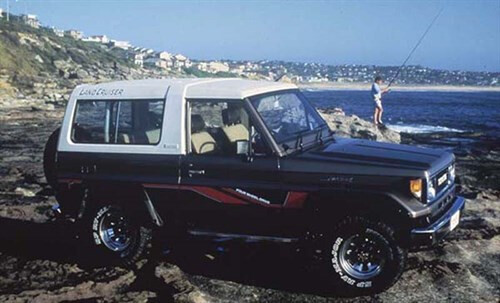
In February 1961, Thiess (Sales) Pty Ltd was appointed sole importer of Toyota automotive products for Australia, and over the next few years it built up an impressive sales and service network throughout the country. It wasn’t long before the ubiquitous Land Cruiser 40 Series became a favourite with industry and farmers alike, as well as those who wanted a simple, robust and reliable vehicle to take them to remote parts of Australia.
By 1980, the 40 Series was 20 years old and it was starting to show its age; it had remained virtually unchanged throughout its model life and was about to lose sales to a more modern competitor from Japan, the new Nissan MQ Patrol, which was offered in short- and long-wheelbase wagon variants, as well as in ute form. To counter the MQ wagon, Toyota launched the Land Cruiser 60 Series in 1981, but it still relied on the ageing 40 Series to hold onto its share of the commercial and short-wheelbase market for the next few years… until the launch of the 70 Series at the end of 1984.
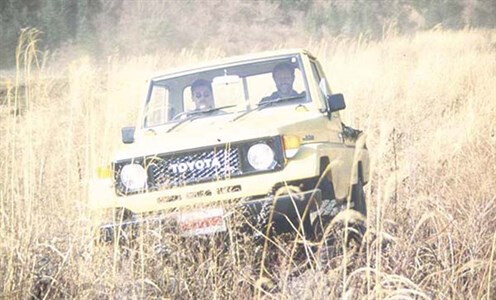
The 70 Series’ chief engineer Masaomi Yoshii was mindful that the new Land Cruiser should not sacrifice any of its toughness, so it was based on a strong ladder-frame chassis with live axles and leaf spring suspension. The angular 70 Series was quite a modern-looking design back in the 1980s, and it was more comfortable and better appointed than its predecessor, and featured a stronger and more rigid box-section chassis.
However, in typical conservative Toyota fashion, the styling wasn’t too much of a departure from the previous generation – despite the 70 Series’ very angular bodywork, the new Cruiser retained externally added fenders and a relatively flat windscreen that gave it a strong family link with the 40 Series, although it also had some modern features such as curved glass.
Models, models and more models
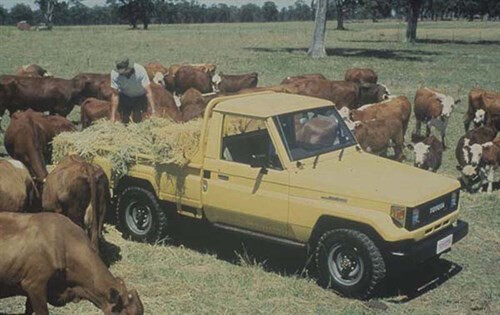
The 70 Series was initially offered in a range of body styles and chassis configurations with a wide selection of petrol and diesel engines to ensure it had access to every nook and cranny of the commercial 4WD and recreational 4WD market.
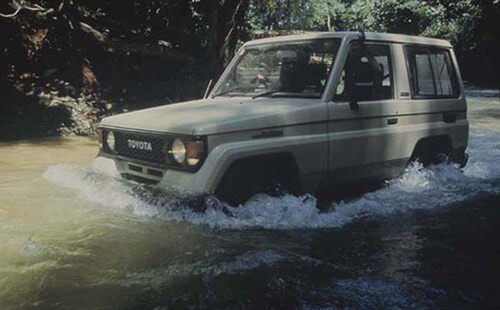
The short-wheelbase FJ70/BJ70 was available as a soft-top or van; the mid-wheelbase FJ73/BJ73 with a fibreglass reinforced top (FRP); and the long-wheelbase FJ75/HJ75 as a pick-up, cab-chassis or TroopCarrier. In addition, there was a coil-spring variant of the short-wheelbase model called the Bundera (RJ70), which also had lighter-duty HiLux running gear.
In the long-wheelbase ute, cab-chassis and Troopie models, the 2H diesel engine was carried over from the 40 Series – a 4.0-litre, six-cylinder, overhead valve donk (76kW/240Nm) – while the 3F 4.0-litre OHV petrol engine (110kW/303Nm) was a revised version of 40 Series’ 2F powerplant.
The 3F was also available in the short- and mid-wheelbase models (FJ70, FJ73 and RJ70 Bundera Deluxe), but the base-spec powerplant in the RJ70 Bundera was the 22R 2.4-litre four-cylinder petrol engine (74kW/174Nm).
A 3B 3.4-litre four-cylinder diesel engine (67kW/217Nm) was also offered in the short- and mid-wheelbase BJ70 and BJ73 models respectively. In 1986 the 2.4-litre petrol engine was offered with optional fuel injection, and a 2LT 2.4-litre turbodiesel engine (64kW/188Nm) was introduced in the Bundera (LJ70). A 13B-T 3.4-litre turbodiesel engine (91kW/285Nm) was now used in the mid-wheelbase BJ74 and the naturally aspirated 3.4D could be had in the BJ70 Bundera. It was as though Toyota wanted to offer a 70 Series to everyone. The cab-chassis and Troopie variants proved the most popular however, with industry and private buyers. The 75 models were reasonably comfortable, had decent performance, excellent offroad capabilities and were offered with options such as air conditioning, diff locks, a snorkel and long-range 90L fuel tank (in addition to the 90L main tank).
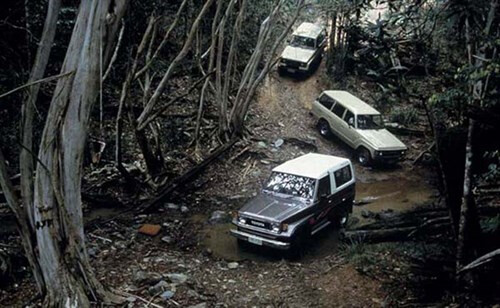
A payload that was in excess of 1000kg made these vehicles ideally suited to long-distance, remote-area travel, and it wasn’t long before Troopies were being converted into offroad campers.
Bye, bye, Bundy
A significant upgrade in March 1990 was the introduction of the venerable 1HZ OHC 4.2-litre diesel engine (96kW/285Nm), an engine that would see service in the 70 Series for the next 17 years. Of far less significance was the introduction of the 1PZ 3.5-litre five-cylinder diesel engine (72kW/221Nm) that saw service in the short and mid-wheelbase PZJ70RV and PZJ73RV models respectively.
By 1991, the writing was on the wall for the smaller Cruisers and Toyota Australia dropped the coil-spring Bundera from the 70 Series line-up, as well as all of the mid-wheelbase models, leaving just the short-wheelbase FJ70RV/PZJ70RV to sell alongside the long-wheelbase 75 models.
By 1993 the shorty had been deleted from the 70 Series line-up for good, but the 75 Series was now available with the 1FZ-FE DOHC 4.5-litre six-cylinder petrol engine (158kW/373Nm), making it the most powerful 70 Series to date. It was the far more economical 1HZ 4.2-litre diesel, however, that was a favourite with industry, farmers and remote-area travellers, not just for its better fuel economy, but also its simplicity and reliability.
Despite all of the engine changes and a few equipment and trim upgrades from 1985 to 1993, the Land Cruiser 75 was essentially the same vehicle that had been launched eight years earlier, and it remained that way for the next six years until the launch of the 78/79 models in October 1999.
Bundera
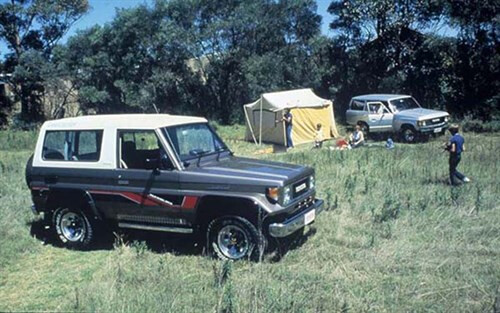
THE Bundera was essentially a light-duty short-wheelbase version of the Land Cruiser 70 Series. It was the first coil-spring Toyota 4WD and its five-link suspension system would eventually be used in the Land Cruiser 80 Series wagon launched several years later. The drivetrain in the Bundera was the same as that used in the HiLux of the day, including engine options and differentials. The Bundera also had distinctive front-end styling with a wider grille and integrated indicators. However, the downfall of the Bundera was that the coil-spring suspension didn’t work so well with the vehicle’s short wheelbase and, on the road, it exhibited significant pitching and rolling, leading to it being dubbed the ‘Blundera’ by many at the time. Off road, the Bundera was far more effective, and fitted with quality aftermarket suspension it would even behave respectably on the road. Unfortunately for the Bundera, and for the other short- and mid-wheelbase 70 Series models, three-door 4WDs never proved as popular in Australia as their more practical five-door counterparts, and all of these models were dropped from the 70 Series line-up by 1993.
A new era
It’s difficult to overstate the improvement in ride and handling heralded by this upgrade. Those used to the bone-jarring ride of the all-leaf-spring models over rough surfaces were in for a real treat; the front-end revisions resulted in vastly improved steering precision and reduced body roll while the longer leaves at the rear improved ride quality both when laden and unladen.
Modern Turbodiesel
The recreational 4×4 ute boom was still in its infancy in 2001 and while many cockies and miners were quite content with the 70 Series’ naturally aspirated 1HZ diesel engine, Toyota could see that private buyers would appreciate an oil burner with a bit more grunt.
Toyota was also facing some stiff competition in the form of Nissan’s 4.2-litre turbodiesel GU Patrol and Ford’s new turbodiesel F250, available with six- or eight-cylinder turbodiesel engines. Enter the 1HD-FTE in 2001 – a 4.2-litre OHC six-cylinder turbodiesel engine (122kW/380Nm) available in both the 79 cab chassis and the 78 Troopie.
The new turbodiesel powerplant, pinched from the 100 Series wagon minus the intercooler, offered similar performance to the still available 4.5-litre petrol engine, without the penalty at the fuel bowser. Mated to the top-of-the-range RV spec, the 70 Series now offered comfort as well as performance, with standard features such as cloth-covered bucket seats, carpet, remote central locking, power windows, a CD player and even alloy wheels (on the 79).
For those after something a little more basic, the 1HZ diesel engine was still available in spartan base-spec models.
The mighty TDV8
Arguably the biggest revamp of the 70 Series took place in 2007 with the introduction of the 1VD-FTE 4.5-litre V8 turbodiesel engine. Although it remained essentially unchanged from the A-pillar back (other than the introduction of the 76 Series wagon to the line-up), the front-end of the 70 was redesigned to accommodate the new TDV8 engine and to give it a more modern look – gone were the externally added fenders, and a whopping big scoop sat in the middle of the bonnet for the top-mounted intercooler.
Considering its 4.5-litre capacity, the TDV8 offered relatively modest peak outputs of 151kW and 430Nm, but the claimed torque peak was available from as low as 1200rpm all the way through to 3200rpm, making this a seriously tractable engine perfectly suited to the 70 Series. Toyota even claimed an improvement in fuel economy compared to the superseded 4.2-litre six-cylinder turbodiesel engine. Other changes with the 2007 model update included revisions to the chassis, a wider front track, minor suspension upgrades and a new steering pump, all aimed at refining handling, stability and comfort levels. Noise and vibration levels were also addressed with the introduction of a new front floor panel and a new front body silencer, a reinforced gearshift lever aperture, a bonnet silencer, dash inner and outer silencers and apron seals.
When the new model range was launched, both the 1HZ diesel and the 4.5-litre petrol engine were dropped from the line-up, making the 70 Series the diesel-only proposition that it is today. The 79 cab-chassis and the 78 Troopie were each available in three spec levels and the new 76 wagon was available in two spec levels. None were yet available with ABS or SRS airbags.
Despite the lack of safety features, the 76 was an immediate hit with recreational 4WDers who wanted a no-nonsense, live-axle, four-door 4×4 wagon with seriously capable offroad ability, decent load-carrying capacity, a powerful yet frugal powerplant and something not as big as a Troopie.
For many, the 76 represented all that the Land Cruiser wagon once was – the 200 Series wagon, with its ever-decreasing payload capacity, independent front suspension and complicated electronic traction control, was no longer seen as a viable vehicle for long-distance, remote-area travel. The 76 wagon filled that gap and Toyota even offered an up-spec GXL variant for that very reason.
The current line-up
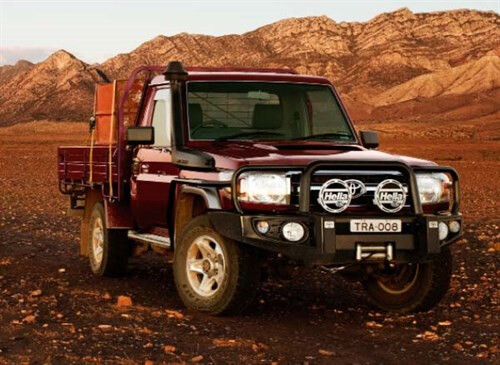
The current 70 Series line-up was introduced in August 2012 and, as well as SRS airbags, included the addition of ABS. The new model was essentially engineered to appease the big mining companies that had introduced strict OH&S policies relating to the safety equipment on vehicles that their employees could operate. As well as adding ABS, Toyota took the opportunity in 2012 to introduce a new 79 double cab model. At the time of its launch, Matthew Callachor, executive director sales and marketing Toyota Australia, said the Land Cruiser double cab was developed as a direct result of the company’s long-term commitment to the mining and rural sectors.
Two model grades are currently offered in double cab, TroopCarrier and wagon variants (WorkMate and GXL) while the single cab chassis has three model grades (WorkMate, GX and GXL) giving a total of nine models in today’s 70 Series line-up. Compared to the original 70 Series, the current GXL grades are positively luxurious, with features such as the aforementioned ABS and SRS airbags, standard diff locks (optional on GX), remote central locking, power windows and alloy wheels (except Troopie). All grades are equipped with a sound system featuring Bluetooth connectivity and voice recognition, and the new interior offers height- and reach-adjustable steering wheel, a neat and functional dashboard design (with a cupholder) and reasonably comfortable, cloth-covered bucket seats on many models.
Despite all of the changes over the years, the Land Cruiser 70 Series still retains all of the attributes that have always made it such a versatile offroad vehicle in Australia: excellent ground clearance, a tough box-section separate chassis, live-axle suspension, a simple part-time 4WD system with manually locking hubs, good low-range gearing, good load-carrying capacity, good touring range, a variety of body styles to suit different uses, and, most importantly, an unequalled dealer network with service and back-up all over the country.
What’s next?
So what’s next for the venerable 70 Series Land Cruiser? Does it look as though the legendary workhorse might be retired in the next few years?
Big mining companies such as BHP, which make up most of the fleet sales for the 70 Series in Australia, have introduced mandatory five-star safety ratings for vehicles on their fleets and, even with the introduction of ABS and SRS airbags, the 70 can’t meet this requirement without stability control and a full complement of airbags. In fact, Toyota even admitted that it would not have bothered developing the 79 double cab model had it known this five-star requirement was to be introduced.
Nevertheless, 70 Series sales are still strong in Australia. “Last year almost 20 per cent of the global 70 Series volume was sold within the Oceania Region,” Toyota Australia product public relations manager Stephen Coughlan told 4X4 Australia. “The vehicle remains popular within the Middle East, Africa and Australia. The single cab chassis is easily the most popular model in the 70 Series line-up in Australia but the new double cab is also popular. Since its local introduction, the double cab has been particularly well received. Whilst the bulk of 2013 sales (53 per cent) were, not surprisingly, the single cab, the double cab accounted for 34 per cent of the mix, followed by the wagon (seven per cent) and TroopCarrier (six per cent).”
Exactly how much longer the 70 Series will remain in production is anyone’s guess, but it certainly has a few years left in it yet. “I can confirm that the Land Cruiser 70 Series remains a work in progress and will continue to be for years to come,” Stephen said. “Last month Toyota Japan commemorated the 30th Anniversary for the start of global production for the 70 Series and to mark the occasion they’ve reinstated the model to the Japanese line-up for a period of around one year. The press release heralding this initiative has sparked a renewal of interest in this iconic family of rugged trucks.
“Many local buyers for this vehicle are repeat purchasers, who know they’ll be able to drive the truck for years and years. The 70 Series range is almost unapologetically rugged. It’s a heavy-duty workhorse and whilst some may suggest it lacks some of the creature comforts, many owners tell us this is something they find endearing. Lockable hubs, a lever-style transfer, long-range fuel tanks – all make the vehicle a straightforward, go-anywhere machine.”
More 4×4 Australia news and reviews.
Subscribe today to keep up to date on all the latest 4×4 Australia news and reviews
Get the best seat in the house and cushion your tush with this innovative camping chair, from Renetto.
These chairs come in varying levels of comfort with some making you wonder why you bothered, and others testing the luxury of your lounge room sofa. So what would you think if you found a chair that was collapsible, weight rated to 150kg, folded down like a standard camp chair and came with a canopy which doubles as its own built-in backpack?
The Original Canopy Chair by Renetto has got you covered (literally) with its innovative camp chair. The unique selling point is its waterproof canopy that provides 100 per cent UV protection utilising 600D heavy polyester fabric. When you’re ready to go, simply fold the chair, wrap the canopy around the frame using snap-lock buckles, and two shoulder straps will appear. With these straps you can throw the chair on your back leaving your hands free for fishing gear, lunch, or whatever else you need to enjoy a few hours in the great outdoors.
The Original Canopy Chair has a 16mm powder coated steel frame, an oversized seat with wide arm rests and two beverage holders. The canopy has integrated an overhead pocket which is ideal for sunglasses, keys, or your latest copy of 4X4 Australia. Perfect while waiting for the fish to bite.
While the canopy might sound a bit claustrophobic – it isn’t. It slips up and down easily and readily accommodates taller people. And the protection from the sun is ideal for those times when you have little shaded relief. Oodnadatta Track anyone?
Benefits
- The canopy acts as a heat reflector and keeps the evening drizzle at bay.
- It’s an inexpensive and highly practical choice.
Rating
WE SAY: Versatile, durable and compact. RRP: $59 Buy: www.renetto.com.au
Subscribe today to keep up to date on all the latest 4×4 Australia news and reviews
A GU Nissan Patrol with a custom built camper that’s ready to drive around the world.
The more 4WD trips you go on in a four-wheel drive, the more proficient you will become in planning and packing, allowing you to make the most out of your trip. Experience teaches us what works for individual styles of camping and holiday activities. Eventually we learn to separate the essential from the non-essential, and establish our own ideas on how we can customize our vehicles to suit our travels.
GU Patrol history
Four-wheel driver Justin Lewis has taken DIY fit-outs to a whole new level. How does a rear-tray camping unit complete with central heating, shower, toilet, modern stylish kitchen, large comfy bed, café style seating and ready-to-relax-at-the-flick-of-an-electric-roof-raising switch sound? To make our little to-do list seem inferior, the build quality of this home-garage fit-out is good enough to embarrass a number of after-market companies.
Justin did have a little incentive; he needed to keep his loving wife Jen comfortable on their next excursion. You know those typical trips that start out with you parking your pride and joy in a large shipping container, kissing it goodbye and then praying that it makes it in one piece to Vladivostok, Russia before embarking on an epic world tour.
Being a young Sandgroper and living in the beautiful state of Western Australia, Justin’s earliest memories of four-wheel driving are spending every possible family holiday in an FJ40 and trusty Cargill Camper. It wasn’t long before the family joined a four-wheel drive club for frequent trips away among the safety and camaraderie of a large group.
“Heading to Wedge Island for the weekend was almost an expedition at that time but we also fitted in regular visits to the Yeagerup Dunes and the Warren River further down south,” Justin said.
Travel tales and tips
As soon as Justin could legally hold a set of keys, his first four-wheel drive was parked in the driveway – a Toyota Hilux. Justin was quick to point out that he’s not a brand loyalist, and for that very reason he’s owned a variety of models and makes over 27 years. It’s hard to argue with his firm belief that the best vehicle is the one that will successfully meet the majority of your current needs and be fit for your intended purpose.
Justin’s obviously learned a lot over the years on what defines a reliable setup for him. His expeditions have covered the Canning Stock Route, Gunbarrel and Anne Beadell highways, Simpson Desert, Cape York, Gibb River and the Birdsville Track, plus exploring the Northern Territory, MacDonnell Ranges, Finke River and some cooler climates around spectacular Tasmania.
With an enviable list of must see locations ticked off, Justin has had plenty of opportunity to work out what must-have upgrades are genuinely functional.
“It’s (the central deserts) as remote as you can get – total silence, stars illuminating the sky, unlike suburbia. You need to be self reliant and well prepared, no shops and few people. Isolation! It all helps you wind down from the daily grind.”
“There was this one time a sea eagle flew right alongside the vehicle whilst driving on the beach for 20km on the south coast.”
Enjoying the tranquillity of your destination is one thing, but you have to spend plenty of time and energy to get your vehicle set up for a safe trip. Mother Nature is your most unpredictable challenge – she can bless you with sunshine or suddenly transform the landscape to test all your driving skills and the capability of your vehicle.
Camped in the Victorian Desert on one occasion, Justin explained that they were surrounded by the predictable dry dusty conditions until dark, ominous clouds came rolling towards them, slowly blanketing everything in a cloak of darkness. Flashes of lightning, accompanied by deep rolling thunder, periodically illuminated the night sky. They awoke the next morning to see the landscape flooded and the once dusty tracks waterlogged from the heavy rains.
Just as each trip can provide some unique and often challenging conditions, they can also reward us with life changing experiences. Justin and Jen’s international odyssey will surely be the adventure of a lifetime.
From Vladivostok they’ll be making their way across Russia, Mongolia, the ‘Stans’ and the Pamir Highway, Europe and the east coast of Africa to Cape Town. Hence Justin’s 2006 TD4.2 GU has been officially christened the Globatrol.
Justin purchased the Patrol in 2010. “We chose the Patrol specifically for the trip that we are about to embark on. I’ve been a fan of the TD42 Patrols for a long time – fairly simple vehicles with absolutely bulletproof drivelines, seriously capable and with a fantastic range of accessories to suit my needs.
“I’m not sure of the fuel quality in some of the countries we are intending to explore, but I’m fairly comfortable with the TD42 being mechanical fuel injection and not too fussy on fuel so it’s pretty hard to stop one. Fairly simple to work on and service and a popular vehicle worldwide so parts availability is always there.”
Keeping modifications in check and not stepping too far outside OEM simplicity is a real benefit when it comes to sourcing spares and repairs. Justin’s retained the Patrol’s legendary limited-slip tail end with a manual transmission. He’s warmed the TD4.2 with a mild upgrade on the turbo that gives a little more boost but it’s been specifically setup for low down torque and not chassis twisting acceleration. Cool air is delivered via a Safari Snorkel, keeping the air intake above the dust and high water.
For comfort and to keep everything well clear of the ground, there’s a King coil spring upgrade with a 3-inch lift plus OME shocks and steering damper. Putting the power to the ground is a set of ROH Impact rims, shrouded in some Cooper ST-MAXX tyres.
Comms and navigation are covered by a Uniden UHF and a Codan HF radio. There’s a Samsung laptop with Ozi Explorer program and a Samsung Galaxy tablet running Ozi Explorer and Sygic for street navigation overseas.
Keeping a look out for trouble, there’s a Navman MiVue Crash Cam up front with reversing camera at the back. In addition to a set of daytime running lights to make sure you always see the Patrol coming when things get dark, the Patrol has some Narva HID extreme driving lights and an impressive 40-inch light bar beautifully mounted on the front of the camper unit, which also has LED taillights fitted.
There’s an ARB compressor to keep the tyres in check, whilst a Redarc dual battery system with Redarc DC to DC charger takes care of all electrical demands. Justin also has fitted three 80-watt solar panels to top everything up when not on the move.
Should Jen and Justin get into trouble, there’s a robust 9000lb Warn winch. Plenty of fresh drinking water is housed in two separate tanks – an 80L unit under the tray and a 40L one on the front of the camper.
The custom camper
As for accommodation, there’s the superb, custom-built camper body on the tray. Seriously, this palace has to be seen to be believed.
“The camper shell is manufactured from aluminium with a mixture of composite materials. The camper is bolted directly to the tray support rails and not to the tray of the vehicle so it’s not relying on the tray for support,” Justin said.
The camper roof is raised via four electric actuators; it takes around 15 seconds to fully extend. Internally it’s pretty compact as the body tapers upwards to make the whole unit more user friendly when leaning over on awkward terrain or navigating overgrown tracks.
If the outside looks like full-factory finish, the inside is even better. There’s café style seating for two with a swing out table and 60L Engel fridge to keep food fresh and drinks cold. Plenty of storage is built in under the large comfortable double bed, with additional storage cubbyholes throughout, and a cross-width storage space accessible from outside the camper.
Next on the features list is central heating, an internal shower when required and a standard height porta loo.
The kitchen not only looks great, it’s very functional – the sink is supplied with unfiltered water and filtered water via a Seagull IV filter cartridge.
A Webasto diesel cooktop (no gas, no vents, less dust), quality Narva lighting and a large Projecta 2000-watt inverter takes care of the electrical needs.
“Upgrades to the turbo and exhaust system would have to be one of the key changes, the before and after is quite dramatic. I’ve gone for low-end torque with the chosen turbo and it’s removed the doughy performance off the line and generally made the whole package more pleasurable to drive, particularly when heavily loaded.
“The suspension upgrade is the most important modification as it transforms the vehicle into a platform for all the accessories,” he said.
“The camper is what converts the vehicle into a comfortable choice for long duration travel; all the other options are aimed at enhancement and increased safety. I’ve pretty much completed all the work myself, but I’m lucky to have mates in the industry for advice and assistance where needed.”
Justin’s camper design was crafted with total functionality in mind. What he’s been able to achieve in such a confined space with the features, fixtures and finish you’d expect of a mass-produced unit of much larger dimensions is nothing short of engineering genius.
If you want to know more about Justin and Jen’s amazing adventures or see the Globatrol in action, then check out their website www.globatrol.com.
We put 10 popular compact SUVs through their paces, both on tarmac and off the beaten track.
All the vehicles tested are the popular petrol automatics, most of them in mid-spec guise. Testing them both on- and off-road, as well as their performance and economy, we drove them with four adults on board to see how they cope with a load.
In rating the vehicles we gave special priority to those with, firstly, a full-size spare and, secondly, a high-mounted engine air intake, as these are both critical parameters if you wish to take these vehicles off-road.
Top 10 Compact SUVs
1st: Subaru Forester 2.5i-L – Uniquely different!
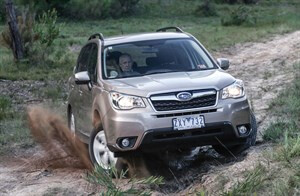
The Subaru Forester is unique in a few significant ways. Instead of the class-typical arrangement of an in-line four-cylinder mounted east-west, the Forester has a four-cylinder horizontally opposed (‘boxer’) engine mounted north-south.
In terms of interior space, the Forester’s cabin is comfortable and roomy, although the rear-seat passengers sit lower than seems necessary. Boot space is also a little compromised by the floor, which is raised to accommodate the full-size spare that’s unique to Australian-market models.
Read a review of the 2016 Subaru Forester
Still, it wins in this contest thanks to the fact that it does nothing wrong and just about everything well. It’s a genuine all-rounder and no doubt benefits from the vast experience that Subaru has with this type of vehicle.
Specifications: Subaru Forester 2.5i-L
- Engine 2.5-litre ‘boxer’ 4-cyl petrol
- Power/Torque 126kW/235Nm
- Gearbox/4×4 system CVT/Full-time
- Tyre/wheel spec 225/60R17 99H
- Full-size spare Yes
- Kerb weight 1479kg
- GVM/payload 2015kg/536kg
- Towing 1500kg
- Fuel tank 60 litres
- On-test consumption 11.4 litres/100km
- 80-120km/h 7.0 seconds
- Price $35,990 (plus on-roads)
2nd: Mitsubishi Outlander LS – Room to move
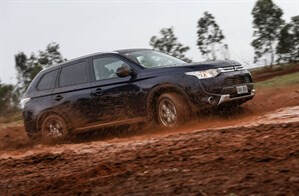
This third-generation Outlander is one of the newest vehicles here, having been released in Japan in mid-2012 and arriving in Australia late that year for the 2013 model year. In March this year it received a facelift that included a suspension rework, tweaks to the CVT, new NVH control measures for the petrol engines and a styling refresh.
Additional practical points include the biggest payload and a 1600kg towing capacity, all of which help make the Outlander a very practical choice as a family getaway vehicle.
Specifications: Mitsubishi Outlander LS (7-Seat)
- Engine 2.4-litre 4-cyl petrol
- Power/Torque 124kW/220Nm
- Gearbox/4×4 system CVT/On-demand
- Tyre/wheel spec 225/55R18 98H
- Full-size spare Yes
- Kerb weight 1530kg
- GVM/payload 2210kg/680kg
- Towing 1600kg
- Fuel tank 60 litres
- On-test consumption 12.6 litres/100km
- 80-120km/h 7.1 seconds
- Price $36,490 (plus on-roads)
3rd: Hyundai ix35 Elite – The all rounder
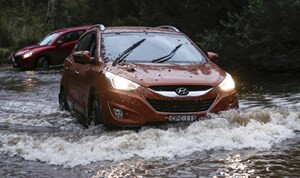
For the past 10 years Hyundai has been the fastest-growing car company in the world and it has achieved that thanks to vehicles that are well equipped, nicely finished and offer good value for money. And despite some early glitches, build quality and reliability are now also part of the Hyundai experience.
As part of the Series II upgrade the ix35 received locally tuned suspension (springs, dampers and anti-roll bars) as well as new sub-frame mounts to help reduce cabin NVH. The result is a vehicle with tight, relatively neutral handing and a ‘sporty’ feel to the way it steersand drives.
Specifications: Hyundai ix35 Elite AWD
- Engine 2.4-litre 4-cyl petrol
- Power/Torque 136kW/240Nm
- Gearbox/4×4 system 6-speed auto/On-demand
- Tyre/wheel spec 225/60R17 99H
- Full-size spare Yes
- Kerb weight 1585kg
- GVM/payload 2060kg/475kg
- Towing 1600kg
- Fuel tank 58 litres
- On-test consumption 10.4 litres/100km
- 80-120km/h 7.7 seconds
- Price $35,990 (plus on-roads)
4th: Renault Koleos Bose – A golden oldie
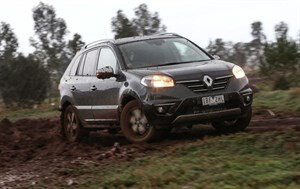
The Renault Koleos is the last of the four vehicles here that satisfies our two critical off-road criteria: it has both a full-size spare and a high-mounted engine air intake. But they are by no means its only virtues.
Inside though, the Koleos feels small, particularly in the rear seat, although luggage space is reasonable. It’s also the only vehicle here with the handy advantage of a split tailgate. Another bonus is the 2000kg towing capacity, the equal best here.
Specifications: Renault Koleos Bose AWD
- Engine 2.5-litre 4-cyl petrol
- Power/Torque 126kW/226Nm
- Gearbox/4×4 system CVT/On-demand
- Tyre/wheel spec 225/60R17 99H
- Full-size spare Yes
- Kerb weight 1721kg
- GVM/payload 2200kg/479kg
- Towing 2000kg
- Fuel tank 65 litres
- On-test consumption 13.3 litres/100km
- 80-120km/h 7.5 seconds
- Price $38,990 (plus on-roads)
5th: Toyota RAV4 GXL – Class staple
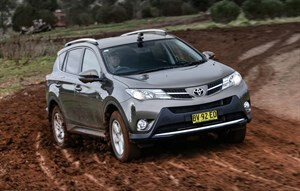
The RAV4 is one of the biggest and heaviest vehicles in this test, and offers mid-field performance combined with fuel economy that’s towards the back of the class.
Off-road the RAV4 is a mixed bag. It comes standard with a temporary spare, but a full-size is available for an additional $300. A full-size spare would eat into the available boot space though, which is good without being great. Inside the cabin there’s plenty of space for the rear-seat passengers and comfortable seats for those up front.
Specifications: Toyota RAV4 GXL AWD
- Engine 2.2-litre 4-cyl petrol
- Power/Torque 132kW/233Nm
- Gearbox/4×4 system 6-speed auto/On-demand
- Tyre/wheel spec 225/65R17 102H
- Full-size spare Optional (+ $300)
- Kerb weight 1618kg
- GVM/payload 2130kg/512kg
- Towing 1500kg
- Fuel tank 60 litres
- On-test consumption 13.0 litres/100km
- 80-120km/h 7.1 seconds
- Price $38,190 (plus on-roads)
6th: Honda CR-V VTi-L – The surprise packet!
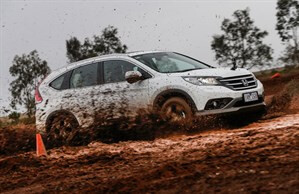
This Honda CR-V is the fourth generation of a vehicle line that dates back the better part of 20 years. Over that time the various CR-Vs have not rated too highly off-road, but this latest-generation model ticks a number of off-road boxes.
The engine, which likes lots of revs, is a mid-field runner in both economy and performance, although the five-speed auto is one of the better ones in this test.
Specifications: Honda CR-V VTi-L
- Engine 2.4-litre 4-cyl petrol
- Power/Torque 140kW/222Nm
- Gearbox/4×4 system 5-speed auto/On-demand
- Tyre/wheel spec 225/60R18 100H
- Full-size spare Yes
- Kerb weight 1580kg
- GVM/payload 2100kg/520kg
- Towing 1500kg
- Fuel tank 58 litres
- On-test consumption 12.0 litres/100km
- 80-120km/h 7.2 seconds
- Price $42,290 (plus on-roads)
7th: Mazda CX-5 Maxx Sport – The people’s choice
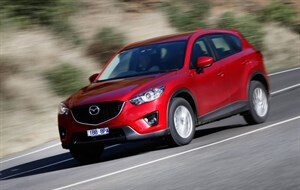
Mazda’s CX-5 is Australia’s most popular SUV and even out-sells the likes of Toyota’s ever-popular Prado and Jeep’s new sales star, the Grand Cherokee. As a road car the CX-5 is hard to fault.
The cabin is about middle-of-class for space, although the boot is relatively shallow. A 1800kg tow rating is a bonus.
Specifications: Mazda CX-5 Maxx Sport
- Engine 2.5-litre 4-cyl petrol
- Power/Torque 138kW/250Nm
- Gearbox/4×4 system 6-speed auto/On-demand
- Tyre/wheel spec 225/65R17 102V
- Full-size spare No
- Kerb weight 1559kg
- GVM/payload 2071kg/512kg
- Towing 1800kg
- Fuel tank 58 litres
- On-test consumption 11.1 litres/100km
- 80-120km/h 6.5 seconds
- Price $36,620 (plus on-roads)
8th: Volkswagen Tiguan 132TSI Pacific – Euro Alternative
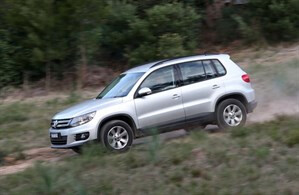
Driving the Tiguan after the other vehicles here feels so different it’s almost like it comes from another planet. It’s easily the quietest and the most refined and has a solid, substantial feel that none of the others come close to matching.
The Tiguan’s on-road dynamics are also first class. However, its small and somewhat drab interior is a disappointment. Worst of all is the tiny boot, the Tiguan’s Achilles heel. Although the Tiguan is ranked behind the CX-5, there’s really nothing in it – it just depends on your priorities.
Specifications: Volkswagen Tiguan 132TSI Pacific
- Engine 2.0-litre turbo 4-cyl petrol
- Power/Torque 132kW/280Nm
- Gearbox/4×4 system 7-speed DSG/On-demand
- Tyre/wheel spec 215/65R16 98H
- Full-size spare No
- Kerb weight 1626kg
- GVM/payload N/A
- Towing 2000kg
- Fuel tank 64 litres
- On-test consumption 12.6 litres/100km
- 80-120km/h 6.1 seconds
- Price $36,390 (plus on-roads)
9th: Nissan X-Trail ST-L – Family focus
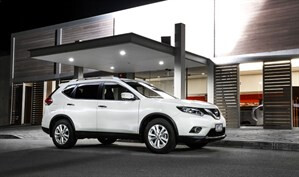
The X-Trail is the newest vehicle in our test, and it’s a significant departure from both its first- and second-generation incarnations. Where the earlier X-Trails were very much at home off-road, this new model prioritises comfort, space and interior packaging, making it arguably now more of a ‘crossover’ vehicle than a compact SUV.
On the road the X-Trail feels big in this company and offers a soft ride that can get unruly when the vehicle is laden and on poor roads. Plenty of bodyroll too, and not the best in terms of steering response and dynamic ability.
Specifications: Nissan X-Trail ST-L
- Engine 2.5-litre 4-cyl petrol
- Power/Torque 126kW/226Nm
- Gearbox/4×4 system CVT/On-demand
- Tyre/wheel spec 225/65R17 102H
- Full-size spare No
- Kerb weight 1543kg
- GVM/payload 2080kg/537kg
- Towing 1500kg
- Fuel tank 60 litres
- On-test consumption 11.5 litres/100km
- 80-120km/h 7.0 seconds
- Price $36,190 (plus on-roads)
10th: Ford Kuga Trend EcoBoost – Drivers delight
In many ways the Ford Kuga doesn’t deserve to finish at the tail of this field. If it weren’t for a number of off-road and practicality shortcomings it would in fact be right up the top of this list.
Off-road the Kuga has the benefit of decent wheel travel and good approach and departure angles, but that’s where the good news stops. One other significant negative is the very modest 1200kg towing capacity.
Specifications: Ford Kuga Trend EcoBoost AWD
- Engine 1.6-litre turbo 4-cyl petrol
- Power/Torque 134kW/240Nm
- Gearbox/4×4 system 6-speed auto/On-demand
- Tyre/wheel spec 235/50R18 97H
- Full-size spare No
- Kerb weight 1657kg
- GVM/payload N/A
- Towing 1200kg
- Fuel tank 60 litres
- On-test consumption 11.4 litres/100km
- 80-120km/h 7.7 seconds
- Price $36,240 (plus on-roads)
Get the latest info on all things 4X4 Australia by signing up to our newsletter.
Take a first-hand look at ARB’s new Old Man Emu BP-51 suspension, put through it’s paces at the Jeep Australasian Safari Tour.
We got a first-hand look at ARB’s new Old Man Emu BP-51 suspension at last week’s Australasian Safari where long time campaigner, Reg Owen was running a development set underneath his Isuzu MUX off road racer.
Reg says the new by-pass coil-overs performed flawlessly in the gruelling race and the only time they pulled them out over the six days of competition was to fine tune the piston shim stack in the rears for the race conditions.
Picking up a BP-51 strut from Reg’s trailer after the event it is obvious the quality of these units is top notch. The aircraft quality hard anodized strut with its internal by-pass system is beautifully made and should be up to the task of any recreational off road adventure as well as extremes like the Safari.
The OME BP-51 has been launched by ARB in a limited range of applications with more to be available soon.
Mitsubishi Outlander Off-Road Review
Price and specifications
- Price: $47,490
- Engine: 2.0-litre 4-cylinder, 87kW at 4500rpm, 186Nm at 4500rpm
- Electric motors: 60kW/137Nm (front wheels), 65kW/195Nm (rear wheels)
- Transmission and 4WD system: High range CVT, constant four-wheel-drive
- Braked tow capacity: 1500kg
- Spare tyre: None; tyre repair kit
- Fuel tank: 45 litres
- Fuel use (claimed): 1.9L/100km
- Fuel use on test: Between 0L/100km (on electricity around town) and 11.2L/100km (country driving)
- Approach/departure angles: 21.5 degrees/22.5 degrees
- Ground clearance: 190mm
WHAT’S THE DEAL?
PHEV stands for plug-in hybrid electric vehicle. The Outlander PHEV uses the Outlander’s mid-sized SUV body but uses a smaller 2.0-litre engine and twin electric motors. It can drive purely on electricity for about 35-40km and be recharged in five hours. However, you’ll need a 15-amp powerpoint, which has a longer earth pin and won’t fit in most regular powerpoints.
The PHEV can also run purely on petrol, with the specially tuned engine acting as a generator for the battery cells, which sit beneath the floor. The engine also directly drives the wheels through a CVT transmission for additional power.
All that complexity doesn’t come cheaply, though, with the base PHEV priced at $47,490 (plus on-road and dealer costs). That’s $11,000 more than the equivalently specified petrol Outlander, and $8000 more than the diesel.
The better equipped Aspire we tested is $52,490 and brings things such as leather seats, electric front seats, sunroof, radar cruise control and a colour touchscreen with satellite-navigation.
![IMG_0333[1]](https://media.4x4australia.com.au/uploads/2025/02/0b0a1518-img_0333-1-_500x333.jpg)
PRACTICALITY
Other than the odd badges denoting it’s a PHEV it looks and smells like any other Outlander. But because of the additional hardware (and software) lying beneath the third row of seats are not there, limiting capacity to five people. Still, there’s respectable head and leg room for all, although three wider bums across the rear could get squeezy.
The load space is also useful, although the underfloor storage compartment has been taken up by the chunky charging cable. Some badly done faux metal strips inside do nothing for the ambience, which is lifted by the leather trim and central screen. But that central screen has some frustrating menus and small buttons that make selecting things more difficult than they should be.
ON THE ROAD
At 1810kg the PHEV is 280kg heavier than other models and it feels it on the road. There’s some sloppiness to its cornering manners and it can lumber into bumps. But its independent suspension front and rear deliver reasonable control and make it easy to manoeuvre around town.
There’s some tyre roar at higher speeds but the cabin is otherwise hushed enough to make it a comfortable long distance cruiser. Speaking of which, the petrol engine and 45-litre fuel tanks means you can cover up to about 500km in regular driving.
Don’t get excited by the claimed fuel use of 1.9 litres per 100km. It’s unachievable unless you’re going to drive it gently for 30 or 40km between charges. If you do it’s effortless enough, only relying on the engine up bigger hills or when you press the accelerator further down. Plus you have to factor in higher electricity bills; it’s about $3.50 for a charge.
On the open road the PHEV is less convincing, mainly because you’re carrying around so much extra weight, which takes its toll on fuel use. It’s not difficult to use more than 10L/100km, which is worse than most diesels of similar performance.
![IMG_0342[1]](https://media.4x4australia.com.au/uploads/2025/02/3ff18acc-img_0342-1-_500x333.jpg)
OFF-ROAD
Mitsubishi makes no secret of the fact the PHEV is more soft-roader than off-roader. The owner’s manual says it has been designed to “occasionally travel on unpaved roads, to campgrounds, picnic sites and similar locations”. It also warns against driving on “steep slopes” and on a “flooded road”, which could damage the hybrid system or cause or short circuit.
In other words, don’t get too adventurous with the PHEV.
That’s reinforced by the spare tyre, or lack thereof; there’s only a repair kit which is close to useless out of town.
Our testing showed its four-wheel-drive system isn’t too smart and is prone to spinning one or two wheels. We pressed the “4WD Lock” button thinking it would have the effect of a differential lock. It turns out it’s more about constantly feeding drive to the front and rear wheels with the electric motors and it’s still very capable of wheelspinning one or two wheels.
Like all of the city-based SUVs, wheel articulation is limited, which doesn’t help with the rough road traction. And a quick scan underneath reveals there’s only basic underbody protection, so a decent whack with a rock could wreak havoc.
But for greasy and muddy roads the PHEV quickly adjusted its drive accordingly and provided decent traction.
Ultimately that’s what it’s about – additional traction on wet, muddy or snow-covered roads and the occasional foray down a gentle dirt track.
![IMG_0366[1]](https://media.4x4australia.com.au/uploads/2025/02/90859c40-img_0366-1-_500x333.jpg)
VERDICT
Price is the biggest deterrent to the Outlander PHEV, which is otherwise a practical, easy to live with SUV that can be environmentally friendly in small daily drives.
But it’s a car best confined to the suburbs and while it can tackle gentle off-road obstacles it’s not up to more serious adventures.
MORE: Mitsubishi Outlander Range Review MORE: Mitsubishi Outlander Specs, Range & Price
4×4 Australia’s Mark Allen checks out Lightforce‘s new LED180 driving lights on his Land Cruiser and gives them the thumbs up.
See the video interviews with the competitors of Team Jeep, in Leg 7 of the 2014 Australasian Safari Tour.
With the finish line just around the corner, see the final interviews before Team Jeep closes the Australasian Jeep Tour for another year.
With the event successfully running since 1985, we look forward to seeing where the tour will head too next year, with bigger and more adventurous terrain to cover.
See videos of the other touring leg’s here.
See the video interviews with the competitors of Team Jeep, in Leg 6 of the 2014 Australasian Safari Tour.
We check in to see how Team Jeep is traveling, coming into the 2nd last leg of the 2014 tour.
Having crossed a large part of regional Western Australia, local towns along the route directly benefit from an economic boost as over 500 participants comprising of competitors, crews, officials and spectators come into town and stay overnight.
Towns the Safari have visited in this tour include Kalbarri, Gascoyne Junction and Carnarvon.