
You probably don’t understand exactly how a DC-Solar battery charger works. But that doesn’t mean you don’t expect that magic little box to work without any dramas.
How hard can it be to provide a decent charger for a technology that’s been around since at least the 1800s? Well, it turns out it is pretty hard, unless, of course, you’re from Brown and Watson International (BWI), and even then it’s no piece of Pavlova.
Established in 1954, BWI is an importer, exporter and developer, and was once involved in everything from manufacturing transport equipment to toy wholesaling and furniture. Nowadays, it owns Projecta and the Australian rights to Narva lights, with its Melbourne-based headquarters employing full-time designers and engineers – not to mention three laboratories that test everything from lumens to vibration durability.
The crew also does pretty good sandwiches, so 4X4 Australia recently dropped in to have a bite to eat (disclosure) and to see exactly what goes into delivering a quality product to a customer. Here’s what we learned…
Start at the start It should go without saying that a product starts with the customer and what they need, but it’s maddening how many companies get it wrong. BWI marketing manager George Davies says to get it right a company needs to work closely with end users, installers and service people. “I still remember the day a guy called me up and asked if he could use an air compressor to go scuba diving,” George says. “I said no. But thanks for the enquiry anyway. Put that one on the product checklist.”
Jokes aside, once the customers’ needs are determined, the company can then survey the market for existing offerings and develop a detailed technical and functional brief for a new product.
Find the right gear When you know what people want, you then need the right stuff to make it all happen. The folks at BWI call this “sourcing technology solutions to meet the brief”.
For example, with Projecta’s newly released DC-Solar battery charger, the IDC25, BWI wanted to make a voltage/power converter (the part of the system that boosts the input voltage up to charge the auxiliary battery) that was efficient and could operate under a range of conditions. George says they did this by working with an IC manufacturer to extend their standard solution to meet the performance needs of Projecta.
BWI was able to select the best supply partner to work with on the product, with price, technical competence and experience major considerations.
Design and simulations With a supply partner recruited, the project can move to the design stage, where both the electronic and mechanical design can be finalised and detailed. BWI does this by using 3D CAD modelling with simulations for functions like stress and thermal management.
Once design in the virtual computer environment is complete, functional prototypes can be made. George says these usually take several iterations and allow all the computer simulations to be tested in the real world. It’s an important step because there are usually unforeseen conditions in the real world that need to be addressed.
“If you have done a thorough job of the early stages of the development, then the issues that arise usually can be addressed by software or minor hardware changes,” he says.
“With IDC25, we had to make a number of adjustments to the control software at this point to deal with “real world” conditions, like the solar coming on and off instantly (which happens when you drive through a tunnel).”
Choose your weapons If the prototypes work, you’ll need the tools to manufacture the end product, which for BWI can include plastic moulds, extrusion dies, circuit boards (PCB) and many jigs and fixtures for production and production-line testing.
When the tools are finished, trial parts are produced and checked. Changes are then made to the tools to correct any minor errors and adjust the fit of all the parts to ensure the finished assembly fits together perfectly.
Test the pilot Now you should be ready for the first pilot run of a product. This is where all the major testing makes sure the product isn’t going to cark it. Parts should be subjected to a lengthy test and validation program.
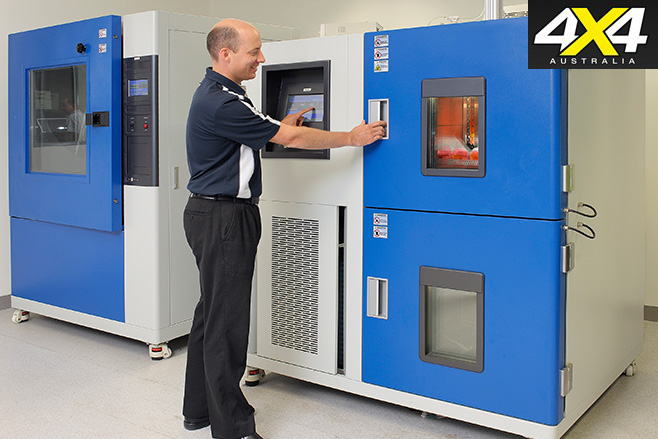
At BWI this typically includes field trials to test the product in the real world, as well as many lab tests, such a ingress protection tests, which check for dust and water resistance; and thermal shock tests, where the product is continuously subjected to rapid temperature change (typically minus-40°C to plus-80°C) to test the durability of the mechanical structure and electronic assembly.
Next is the barrage of electrical tests, such as reverse connection, over-under voltage and voltage surges. These tests should ensure that when a product hits the market, it does what it’s supposed to – for a long time.
More testing The last step, but certainly not the least important, is the ongoing testing of the production runs. This varies greatly depending on the type of product, but in the case of the IDC25 charger it includes a burn-in test of each charger for two hours, followed by a full-function test (input voltage, output voltage, voltage set points for each charge stage, etc.) to ensure every unit meets the specifications set.
And, evidently, that’s how a Melbourne-based company like BWI can survive in a market flooded with cheap imports – by going the extra mile to ensure quality.
In the Razorback canopy the 0.8mm Zincalume (zinc alloy steel) offers the same high degree of rust protection as that seen on most utes these days.
With the same material and the same finishing process, the canopies also match utes better than most and, if you’re in an accident, the same panel beater that repairs your ute can repair your canopy.
The Razorback canopies are made by SammitR (SMM) and are rated to carry 100kg (dynamic load) on the standard-supplied roof rails – there is no need for internal bar work or bracing. They’ve also been bench-tested to a huge 400kg loading.
It may not be legal to carry this much weight on roof racks, but it is an impressively high figure. Aside from the standard bolt-on rails, a Rhino track and roof rack system can be added to carry more equipment including roof-top tents, mountain bikes, kayaks and snow boards.
Plus, the complete range of tradie-related mounts makes it a one-size-fits-all canopy for work and play.
Weighing 75-85kg, depending on the model, the canopies are claimed to match the weight of a smooth-finished fibreglass canopy. So you’ll pay no weight penalty even though the Razorbacks are rated to carry higher loads.
Automotive two-stage rotary locks are used in the rear lift-up door, which incorporates remote central locking and is easily wired in with the standard-supplied canopy-wiring loom. Side lift-up windows incorporate two T-locks, while sliding versions use an internal latch to secure. The glass is an automotive-grade, tinted safety glass.
Impressively, the opening at the rear of a Razorback canopy can accept a 44 gallon drum and the side lift-up windows can take a 20-litre water drum. So, while you may not cart a 44 around, there is enough roof height to mount a fridge on top of a drawer unit, which you can’t always do without a raised roof profile.
While the overall roof line is not much different to most other canopies, the inherent strength of a metal structure allows an improved (stronger and more durable) door system, which takes up less vertical space at the hinge area, allowing a larger opening. Mating the metal canopy to your ute is a double-sealing gasket combined with four (twin cabs) or six (extra cabs) clamps. There is no need to drill into the ute body.
Another advantage of a rigid metal structure is that you can clamp the whole unit down evenly onto your ute, without twisting or warping.
The over-rail design of the canopy, while also helping with water ingress, also hides the ‘join’ between ute and canopy, providing an ‘improved’ and smoother-finished look.
A standard rear window demister, internal light (which can be set to turn on when the rear door is opened) and a high-set brake light follow the trend of making this canopy seem like an original part of your ute. All this gear is pre-wired into the standard loom.Even car alarms can be included, with the wiring into the canopy providing ultimate protection from thieves – your work and play toys will be safe.
So, if you’ve just forked out for a beaut ute and want a durable, strong and practical canopy for your work gear during the week and the camping gear and kids’ toys on the weekend, the Razorback certainly ticks all the right boxes.
Rated
We Say: Durable, strong and practical. INFO: Contact Razorback on (02) 9627 7499, or (02) 9627 7000 or visit www.razorback.com.au
For more information and tips on Gear, check out our page here.
Reaching the Australian continent’s northernmost point in a 4WD has become the stuff of off-road legend, whispered about over campfires and laughed about over painful-to-watch ‘Fail’ videos on YouTube.
Smashed, drowned and ruined vehicles litter the annals of Cape history, to say nothing of the countless bruised egos and emptied wallets. Words such as ‘Gunshot’ and ‘Nolan’s’ are thrown around in bush banter as badges of honour for those who have faced such challenges. Few drive away from them unscathed.
The notion of a trip to The Tip became even more intimidating when VW invited journalists to drive the torturous route in Amaroks. Standard Amaroks. (Well, mostly. Our six-strong convoy was fitted with aftermarket snorkels from German aftermarket supplier Seikel.)
The aim of the drive was to throw Amarok’s Core Edition models, the company’s tilt at entry-level ute supremacy, at some of the toughest terrain Australia has to offer to see how the vehicles fared.
Three days, 13 blokes, six Amaroks and more than 400km of corrugations, 4WD-swallowing ruts and windscreen-deep water crossings. Was this fast blast to The Tip destined to be a disaster or delight?
The fire: Day 1
It was mid-August, the Dry in this part of Australia; that’s winter for the rest of us. The Dry, between June and October, is the best time to visit Cape York Peninsula, according to Queensland’s Department of National Parks, Sport and Racing. The Wet (November to April) is too wet and many tracks become impassable, or, at the very least, troublesome.
And there are Wet Season closures from December to June, July or August “depending on weather and road conditions”.
Our convoy – with VW staffers in the first and last vehicles – swept out of Weipa, as slick as a Route Irish military convoy in war-time Iraq. We were heading east for our day’s-end destination of Moreton Telegraph Station, about 133km away.
We powered along over smooth dirt roads and stretches of bitumen at a fair clip when, seemingly only minutes later, our trip was over before it had really begun. The convoy was stopping, coming to an abrupt halt at the side of the track that stretched away into the distance. There was what looked like a controlled burn just outside of Weipa, so we all got out of our vehicles to watch expert snapper Chris Benny as he busied himself capturing the spectacle.
Acrid smoke tickled our nostrils. The heat from the flames was intense. Hundreds of lizards and countless other wildlife species fled from the bushland on one side of the road, which was alight, to the relative safety of the other side, which wasn’t. Mindful of the threat of snakes, we stutter-stepped around scattering wildlife. Birds were busy dive-bombing the scurrying creatures below, gorging themselves on the spoils of this mass exodus. It was a wild sight; indicative of what was to come in this largely untamed wilderness.
With shots in the bag, and no bites from the freaked-out fauna, we drove off, turned left onto the legendary Old Telegraph Track (OTT) on our way to Moreton Telegraph Station. Driving the OTT gave us ample time to check out our eight-speed auto Amarok Core on the go.
The Amarok has been around since 2011 and it’s won 4X4 Australia’s Ute Of The Year award two years in a row. It has attracted its fair share of fans among 4WD journos and four-wheel drivers.
For the MY16 line-up (on sale from October), the range is the entry-level Core Edition, Highline and Ultimate. The Trendline will be discontinued from October. The company’s rationalisation of the Amarok range will chop 26 variants down to 18.
The Core Edition, since being made available earlier this year, had become “very competitive at entry-level point”, VW Commercial Vehicles product marketing manager Nick Reid told us at that morning’s briefing. He reckoned the Core had started “to really hit a sweet spot” in the market and, with the model, VW aimed to grow its “penetration at that entry-level of the market”.
The bi-turbo diesel 2.0-litre four-cylinder engine (132kW/420Nm in our auto) and slick-shifting eight-speed automatic transmission with single-range full-time 4WD remain. Core standard specs include, air-con, front/rear power windows, height-adjustable front seats, tray illumination, rear fog lights, hill-descent control, hill-start assist and an electronically engaged, mechanical rear diff-lock.
The Vee Dub also comes with a body-colour front bumper, 16-inch alloy wheels with Pirelli Scorpion ATRs, multi-function trip computer, Bluetooth (with audio streaming), leather-clad multi-function steering wheel, multi-function instrument display and a new SD card-friendly audio system.
Safety gear includes front, side and side-curtain airbags, anti-skid brakes with brake assist, and stability and traction control. There are no parking sensors or reversing camera.
Inside, the Core is ready for play all the way: it has room aplenty, comfortable cloth seats and rubber matting on the floor.
This Amarok coped well with slip-and-slide dirt and sand tracks, and admirably soaked up corrugations. Like any ute, it rides better with a load in the back, but the Amarok’s leaf-sprung live rear axle is not a deal-breaker when it comes to ride comfort.
The Amarok has a fight on its hands – especially in a market crowded with new utes, not the least of which are new versions of the Ranger, Triton, Navara and Hilux.
As we neared Moreton Telegraph Station, bathed in late-afternoon sunlight, we saw the first of many “Beware! Achtung! Crocodiles!” signs in this part of the country. It was a not-so-gentle reminder that in Cape York, this last frontier of real adventure, man is not necessarily top of the food chain. I kept this in mind.
Gunshot CK: DAY 2
Up with the sun the next day, our Core convoy was scheduled to drive 129km from Moreton Telegraph Station via Bramwell Junction to Eliot/Twin Falls.
At Bramwell Junction Roadhouse, our group was met with derision by a few of our fellow Tipsters.
One lady was so besotted with her own joke that she repeated it along the entire convoy, from our tail-end Charlie all the way to the lead vehicle, cackling as she went.
“Anoraks,” she chortled. “The Anoraks are here.”
“Where are you goin’?” she asked me.
“The Tip,” I replied, knowing she was setting me up for a knock-out joke.
“Well, you got this far, at least!” she screeched and off she trotted to her Land Cruiser or something else similarly hard-core suited and booted.
With her taunts ringing in our ears, we continued on the OTT.
Termite mounds, some two-metres tall, had stood guard on either side of the track for much of the way. The air was dry and dusty and warm, but not uncomfortably so. That didn’t matter, though, because we were about to get our feet wet.
The first few creek crossings were easy enough and made for handy lead-ups to what was to come. Smooth progress was simple once the rear diff was locked and off-road mode was selected. The rest was up to the driver, who needed to wisely pick a way down the approach, maintain steady momentum through the water, and then up and out the other side. Easy. No need to gun your way through; just steadily throttle and the Amarok’s more than capable tech will back you up.
These VW’s have a 500mm wading depth and we were deeper than that pretty much from the start, so it was a good thing we had the snorkels.
Nick Reid, at the previous day’s briefing, had said that the Amarok Core was “better experienced than explained” – and we were definitely about to experience it. The next creek crossing, a seriously tight, twisty switchback affair caught out a few drivers; scraped front bumpers and banged-up trays were the result, but that was about it. The auto’s low-low first gear, in lieu of a low-range gear, and the Amarok’s unflinching hill descent control – it holds your desired speed downhill – proved an unbeatable off-road combination on the tougher sections of this track.
The standard rear diff-lock and front-wheel traction control helped get the Amaroks over most obstacles, including the very steep and greasy muddy uphills we often faced.
After working our way through numerous creek crossings, we suddenly faced the Big Daddy of all 4WD challenges: Gunshot Creek. There are, in fact, numerous ways through Gunshot, most of them near-vertical extreme, but we found our planned route and one of the support Amaroks gave it a good crack. It didn’t work out as planned, so we back-tracked more than 20km onto the bypass road and continued on.
Later, at our Eliot Falls campsite, we jumped off towering rock faces, and ducked and dived under the cool water of the waterfalls there.
The tip: Day 3
The final day was a 167km run from our camp to The Tip.
We whizzed through several creek crossings, with ominous-sounding names, such as Mistake and Cannibal, scattered along the 40km route to the Jardine River. We were excited at the prospect of taking on Nolan’s Brook, the last great challenge of this trip, so those other smaller crossings barely registered as we punched our way through them.
Nolan’s Brook is right up there with Gunshot as a 4WD-killing, hope-dashing, pride-smashing off-road obstacle; many have tried, a lot have failed.
As we pulled into the area around Nolan’s, one bloke there advised us that he’d heard that sending three vehicles – and only three – at a time was the way to go, otherwise the creek’s base would be so churned up, it would be almost impossible to get across.
There were more than two ways across but, it turned out, we needn’t have worried.
Having picked a careful line, we eased into the water gently, took a sharp right turn to avoid a deep hole or two, and kept a steady pace across the creek. That was the way to go, and only a couple of us had to be snatched out.
We watched as a three-vehicle convoy trailing behind us, carefully scoped out the crossing, decided on a plan, drove it and moved on.
Having conquered Nolan’s, we had lunch on its banks, savouring the peace and quiet and throwing around congratulatory back-slaps.
From there, it was a solid thrash over corrugations, with our utes settling better on the rough stuff than you’d ever expect of an unladen ute, to the Jardine River ferry.
North of the Jardine River, we raced over well-maintained dirt roads at a healthy clip to Bamaga, parked as near to the northern edge of Australia as legally possible and then took a short walk across a rocky point to The Tip for the obligatory series of photos.
That night at Punsand Bay’s Corrugation Bar, smiles were wide, beer was cold and tall tales were told. We all agreed that The Tip was tops.
2015 Volkswagen Amarok Core Edition (auto)Engine: 2.0-litre bi-turbodiesel Max power: 132kW Max torque: 420Nm Transmission: Eight-speed auto Fuel: 8.3L/100km (ADR Combined) CO2: 219g/km (ADR Combined) Safety rating: Five-star ANCAP Turning circle: 12.95m diameter Dimensions: 5254mm (L), 1944mm (W), 1834mm (H) Warranty: 3 years/unlimited Service: Interval 12 months/15,000km Price: $44,490 (plus on-roads)
The last time 4X4 Australia spoke with talented metal fabricator and mechanic Darren Vassie was about 18 months ago.
At that time he was driving a white 80 Series Land Cruiser wagon rebuilt from the ground up. He was also working for a company that manufactures camper trailers. Since then, Darren has flicked the camper trailer job to focus on his own burgeoning fabrication business and another impressive 80 Series, a blue dual-cab ute.
But while the old white wagon was built solely as a reliable and capable family tourer, this blue dual-cab has dual roles: to promote his skills and business, and to function as a family tourer when there’s time to get away from said business.
“I’ve got my own business now,” Darren explains. “It’s called Custom RV Creations & Repairs. It’s all about four-wheel drives; building bars and rock sliders – basically, Pimp My Ride for four-wheel drives.”
As well as building equipment for four-wheel drives, Darren also performs fabrication and repair work on trailers, caravans and motorhomes, and he’s a specialist in steel, aluminium and stainless steel welding. But it’s the 4x4s that are his real passion, and that’s how this unique vehicle came into being.
“What I’ve done with this dual-cab ute build is what I want to do with the business,” Darren says. “It’s a hobby of mine that I want to turn into a big part of the business. I thought if I’m going to go back into business again, I’d rather be doing something I like doing instead of something just to be at work.”
You might think Darren chose an 80 Series for this project because he already had plenty of experience with the model, but that wasn’t the main reason. As he puts it, quite succinctly: “I didn’t want to go with a lavishly expensive vehicle to start with, in case I stuffed it up.”
And this 1993 model petrol-powered 80 Series was anything but lavish or expensive. In fact, Darren picked it up for just $3500 with a popped petrol engine. A good engine was sourced for just $500 and Darren then sold a few parts from it to recover some of the cost. He chose Toyota’s 4.5-litre twin-cam four-valve petrol six-pack because, as he says, “If I went for a diesel, it would’ve cost a lot more.”
Cut ’n’ shut With so many dual-cab utes on the market these days, you might ask why Darren would go to the effort to convert a Land Cruiser wagon himself. Well, for one, he wanted a vehicle with live axles and coils front and rear and, two, he needed a project that would show off his metal fabrication and mechanical skills to potential customers.
“Being a business vehicle, this is the first time I’ve wanted a dual-cab truck,” Darren says. “And basically I had to prove myself.”
“I stripped everything out of it; went back to a bare shell, except the dash, then I measured it all up, cut it, got a 75 Series window for the rear, formed the whole rear wall by hand, and just tried to finish it off really nicely. It has a nice curve right around it.
“I then reinforced it all; I’ve used some parts out of the wagon section [to do this]. I’ve cut the reinforcement out and re-used it in the rear of the dual-cab. The engineer was really happy with all the work that I did.”
He must’ve been a happy engineer, because he signed off on Darren’s work and the dual-cab Cruiser is completely legal.
“With the hood lining inside, it’s come up real nice,” Darren says. “You wouldn’t even know that it had been cut; it looks like it came off the factory floor that way.”
Box on the back As well as the cut-and-shut job on the body, the alloy tray on the rear is also Darren’s handy work.
“It’s full alloy,” Darren explains. “It’s only a 1200mm tray, so it’s quite short. It has a full drawer system in it, so you have two drawers either side, and it has a partition wall in the middle.
“On the passenger side I have a drop-down MSA slide for the fridge – it’s an 80-litre Waeco – and there’s a section behind that where you can put a couple of cartons of tinnies. There are a couple of custom-made tables that slide in the back underneath the two spare-wheel carriers.
“On the driver’s side, you have your instrument panel, so all your switches and gauges and whatnot. It has a Redarc BMS 1215 battery charger in it, so it’s a 240V charger with a DCDC, and solar input as well.
“There’s a switch box with some outlets for charging phones and accessories. Each side has a Narva 10W floodlight when you open the doors, sitting inside on both sides. It’s all individually switched, it’s all Narva switching, and it has inbuilt circuit breakers so there are no fuses.”
The exterior of the tray has been painted in HSV Voodoo Blue to match the Cruiser’s refinished bodywork – it was originally white – and sitting between the two spares mounted on the back is a Narva LED work light. In fact, all of the lighting is Narva, including the taillights and indicators on the custom-built rear bar.
Darren also custom-made the two toolboxes that sit below either side of the tray. “One has a 120 amp Century battery in it and a water pump,” he says. “I’ve connected a shower up to it, so I have a hot water exchange unit, under the floor, hooked up to the cooling system of the car, so I can have hot showers out the back.”
Matching the high standard of the canopy’s exterior, the interior has been finished with nicely trimmed marine carpet, and the drawers are all individually lockable.
Wait, there’s more Not content to fit any old off-the-shelf bar up front, Darren manufactured his own. It houses a 12,000lb Dobinson winch running plasma rope, and incorporates a pair of 100W Narva driving lights. It also has mounting points for the pair of Narva 225 HID driving lights.
Of course, Darren also fabricated the neat-looking rock sliders, as well as the roof racks on the cab and the tray, and even that tidy stainless steel snorkel.
“The engine is still standard,” Darren admits. “It’s just got extractors and a two-and-a-half-inch exhaust and the custom stainless snorkel.”
The five-speed gearbox remains standard, too, as is the transfer case and the limited-slip rear diff; although, Darren has fitted an Eaton E-Locker in the front diff to aid off-road traction.
So why not put a locker in the rear? “It’s been purely built as a tourer,” Darren says. “It’s not the heavy-duty off-road thing, it’s not a rock crawler, but if you need to go off-road, it can.”
These days, with three kids under the age of 10, Darren does a lot of four-wheel drive touring rather than heading out bush to simply conquer off-road obstacles. “We do a lot of destinations; we don’t actually go out and play,” he says. “Fraser Island is a big one for us, Double Island, Teewah Beach, Cape York – I always try and do that at least once a year.
“We try and do our little trips, too, off to the dams in the South East Queensland area. We don’t go too far off the beaten track; even though we’ve got the shower and all that, my wife, with the kids, she doesn’t want to be too far away from civilisation in case something happens. Cape York is really the farthest we’ve been away… ”
Even for Brissie-based Darren and his wife Sally, Cape York is still a bloody big trip if you’ve got three kids in tow, but he says there’s plenty of room in the back and he’s set up the Cruiser to keep them entertained. “We’ve got three kids – six, eight and 10 – and we’ve got TVs in the headrests; it’s got a Blaupunkt stereo system in it with DVD, Bluetooth, Wi-Fi, so they watch all their DVDs with surround sound all the way.”
The interior of the Cruiser is pretty much standard; although, in a concession to comfort, the factory front seats have been re-padded and recovered, offering vastly improved lumbar support.
How does it drive? As you can see, this 80 Series sits a fair bit higher than a standard Land Cruiser. “It has a full Dobinson three-inch suspension front and rear,” Darren explains. “It has all the castor correction in the front, a steering damper, extended sway bar linkages front and rear.
It has all new adjustable upper and lower control arms on the rear; the sway bars have been lowered on the rear as well. It’s got Airbag Man bags on the rear, and 500kg overweight springs in the rear, too.
“Oh, and it also has a 50mm body lift. Everything has been mod-plated, so it’s 100 per cent legal.”
“With the airbags in the rear, it’s stiffened up a fair bit,” Darren says. “Considering it’s such a tall vehicle, it drives quite well. I’ve rebuilt everything, I’ve gone through all the driveline, as in all the steering; it’s all been rebuilt.
There are Dobinson drag links, front and rear, so the diffs are back in the right spots, all the brakes have been completely overhauled and rebuilt, all the bearings, so it does drive quite smoothly.”
Of course, being a big petrol engine, the 80 Series gulps down the go-juice. “It is thirsty mate,” Darren laughs. “It gets around 22 litres per 100km.”
Not content with the present fuel consumption and performance, Darren says he’s considering dropping a 5.7-litre V8 under the bonnet sometime next year; although, that’s likely to further upset the bank balance each time he fills the 170-litre long-range fuel tank.
Going, going… Although he’s extremely happy with how his dual-cab 80 Series has turned out, Darren doesn’t plan to hang on to this rig. Not for too long, anyway. “I’m using it as a promotional vehicle for a while,” Darren says. “The next one I want to do is a 200 Series. When that’s finished, I’ll sell this one off and just keep turning them over.
“This Cruiser is basically just something that I built for the business, so I knew I’d be turning it over, but I just had to prove myself, with what I could do here.”
And prove himself he has; this 80 Series Land Cruiser is one of the nicest dual-cab conversions we’ve seen in a long time.
For more Custom 4x4s visit our page here.
The red dirt road headed north across saltbush plains that make up the main landform in this semi-arid part of Australia, situated between Peterborough, on the edge of the Flinders Ranges in South Australia, and Broken Hill, tucked into the lower, sparser Barrier Ranges in far-western New South Wales.
A few low hills, startlingly obvious above the plain, were scattered across all points of the compass and were tinged blue by distance and the warm, still air that surrounded us. Directly to our north, the Olary Ranges were just low, rounded, rocky hills; their status as some of the oldest rocks in Australia reinforced by the fact that their sharp edges and rocky surfaces had been softened by space and time.
Just off to the west of the road, as we headed north across the saltbush plain, the entry to the White Dam Gold Mine was passed with some workings being seen in the distance. Everything looked a bit quiet when we went by and while this small mining venture has been a success as far as gold production has been concerned, exploration work has been continuing to find more reserves.
Quickly after the White Dam access track, you rattle across the grid that is the boundary to the Boolcoomatta Reserve. This reserve is run by Bush Heritage Australia and is one of the few private conservation reserves that allows the general public to enter, drive around and camp; hence our interest in the place.
Boolcoomatta is about 630sq km in size and up ’til 2006 it was a working sheep property; although, it had been conservatively grazed for nearly 150 years before then. In fact, Boolcoomatta got a mention in one of CJ Dennis’ poems, A Song of Rain, written around 1915.
Apart from the saltbush plains, there are open mulga woodlands, bullock bush scrubland and, along the creeks, hardy red gums shade natural waterholes. Along with red kangaroos, eastern grey kangaroos, euros and Gould’s wattled bats, there are rare mammals here, including yellow-footed rock wallabies and the dusky hopping mouse.
All up there are 118 species of birds, including pink-eared ducks, spotted harriers, plains wanderers, regent parrots, blue-winged parrots, elegant parrots, crimson chats, orange chats, white-fronted chats and the nationally vulnerable, slender-billed thornbill, along with a heap more.
For this journey, we checked into the homestead and met the caretakers, as the mangers were away for a few days. The old homestead buildings and nearby shearing shed, both built from local stone, are a delightful relic from the past and are worth investigating. The managers’ quarters are in really good condition and can be rented out.
With directions from the caretakers, we headed to the camping area to check it out and we were pleasantly surprised, even though it was small, at its location and bush-bred facilities. With no fences between the wildlife and us, we had ’roos and emus wandering through our camping area in the evening and early morning, while the birdlife in the morning was enchanting.
There are a couple of designated self-drive routes on the property, which will keep you busy for a couple of days. We found the Western Hills Tour to be the most interesting and spent a lot of time wandering around the old mining sites that can be found on this leg. Also on this route is Dome Rock, a low but obvious sheer rock outcrop crowning a low-rounded rocky hill. It’s a great spot to enjoy a beer or wine at sunset.
One thing for sure is you will see big mobs of ’roos and wandering flocks of emus wherever you go, but the delightful yellow-footed rock wallabies confine themselves to the most rugged country and take a bit of finding. Still, most people who love our desert and semi-arid country will enjoy a couple of days here.
Adjoining the west of the reserve is the little-known Bimbowrie Conservation Park that covers some 720sq km and was only proclaimed in 2010 with little fanfare. We knew nothing about it until we visited Boolcoomatta and since then a management plan for the park has come to light, with access to much of the park allowed to independent and self-sufficient travellers.
Our travels didn’t include this park… but we’ll be checking it out soon! Boolcoomatta is situated about 100km west of Broken Hill and about 26km north of Mingary on the Barrier Highway. Bookings are a must.
Info and contact
Boolcoomatta is situated about 100km west of Broken Hill and 26km north of Mingary on the Barrier Highway. The campsite is situated south of the homestead, (at 31°59’5.5”S 140°30’56.4”E) and is open from April to October each year.
Bookings are essential. Visitors must be completely self-sufficient. The area is remote and little travelled. The best time to visit is winter or early spring.
To find out more Visit: www.bushheritage.org.au/our_reserves/state_southaustralia/reserves_boolcoomatta Email: [email protected] Call: 1300 628 873
Click here to explore more of South Australia.
People are always asking me, ‘what’s Milo’s future? ’After being hammered for more than a million kilometres, surely she’s got to die sooner or later?
Yes, probably, but we’ll have to wait to find out, because, with LowRange in full song, I’ve got no plans to take her off the tracks yet.
Milo’s Future A lot of Milo’s future is wrapped up with Roo Systems owner Glen ‘Hasbeen’ Hadden. The Roo team do most of Milo’s servicing and are always looking for things to improve. Gleno was pulling my leg (below), suggesting maybe we line Milo with sound-deadening aluminium foil to make her more comfortable. Harden up, mate! Actually, that sounds pretty good. Does it come in pink?
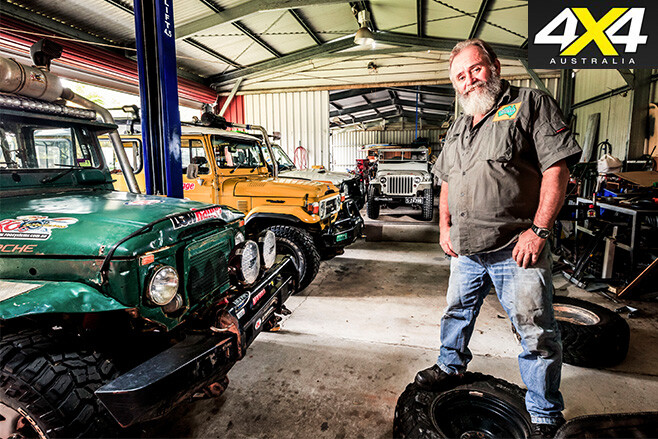
Locker room One of the latest modifications made to Milo has been the fitment of eLockers, back and front. I’ve had a great run out of Air Lockers and Pro Lockers in the past, but they’re last century’s technology compared to these. It doesn’t get much simpler than two wires feeding a magnet. What’s that? It needs to be simple? Yeah, and I hope your seat warmer gets stuck and roasts your bum, too!
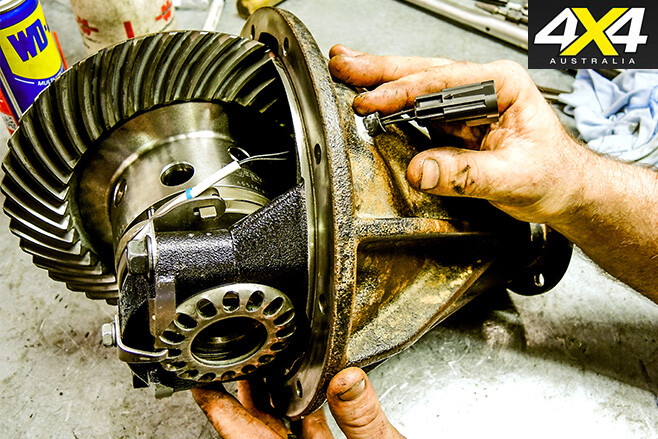
Cutting-board dash Ha! Roo Systems bloke Aaron (below right) tested the eLocker buttons while trying hard not to laugh at Milo’s cutting-edge dash. Actually, it’s made of cutting boards, the nylon variety. Easy to work, great vibration and electrical insulation and… looks like crap, but you can’t haveeverything. The Narva switchgear is basic but strong and has been through hell and back. No, there’s no ‘climate control’. That’s what the flaps are for.
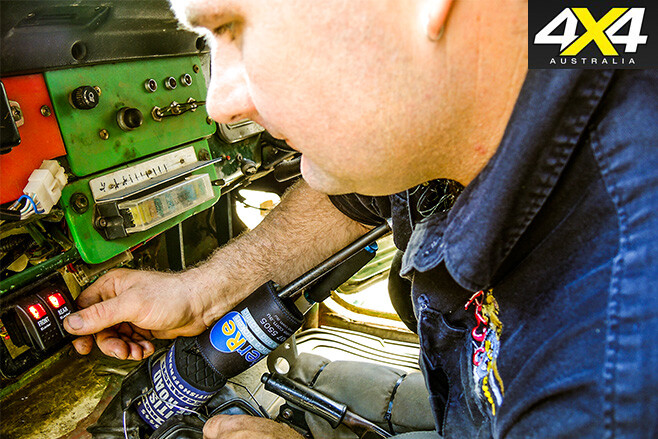
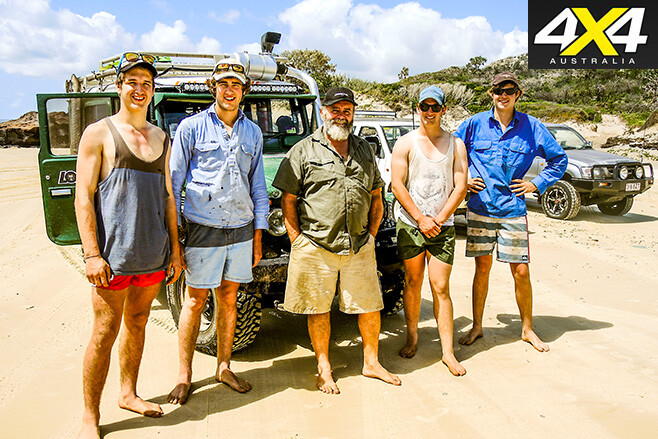
Gen 4×4 Milo usually draws a crowd when there are people around and it’s always good shooting the breeze with the new generation of enthusiasts, like the young blokes (right top) up on Fraser. I reckon the off-road lifestyle just gets stronger all the time, probably a reaction to the crowded and busy city life, eh?
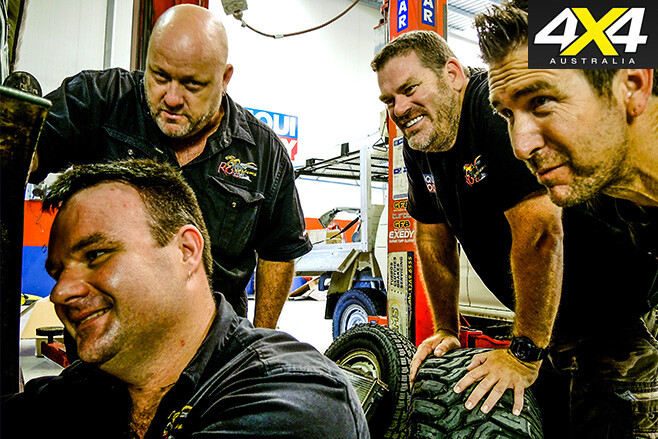
Power in numbers Roo Systems’ Aaron, Wayne (Uncle Fester, the workshop manager), Gleno and Peter (right) are the guys most responsible for Milo’s 13BT growing power from the original imported grey motor’s 35kW to more than 89kW on the four-wheel drive dyno. That and help from Terrain Tamer’s Allan Gray mean Milo’s drivetrain looks like it will outlast her body.
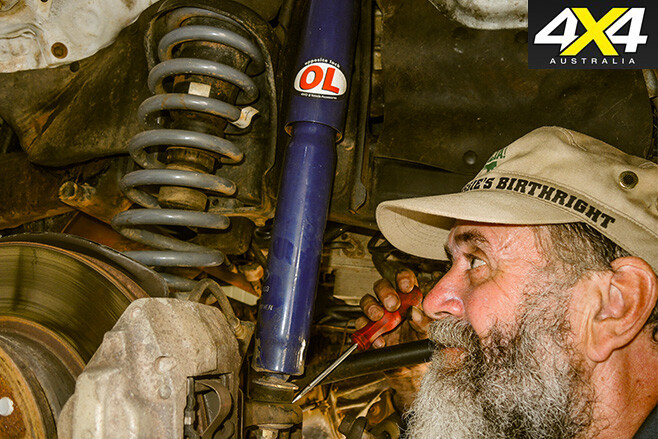
Spring cleaning Meanwhile, the 76 is up on the hoist for another suspension check (right). Product testing is a large part of the work and it’s hard not to like it. I mean, people give you things, you take them out and flog them silly – it’s a great excuse to go hard off-road! OL’s new Aussie-made suspension held up after a hard Cape trip!
Willow Springs Station in South Australia is home to the Skytrek 4WD track.
Constructed in 1995, it links together station roads, old mining and goat shooters’ tracks, as well as 26km of newly created track along the ridge tops. In 2012 the track course was changed a little, but it’s still an exhilarating drive.
Skytrek is 80km in length and will take you at least six hours to complete. That in itself should give you an idea of the type of track you’re about to encounter. But before you can access it, you’ll need to collect the key from the Willow Springs Homestead, and pay a fee of $65 per vehicle (you get a $5 discount if you’re staying on the station).
From there, the main thing you need is a vehicle with low-range 4×4, and the experience and know-how to use it. Almost everything else you should know about the track will be provided by the homestead.
Don’t be put off by all the rules and instructions. In these days of health and safety gone-mad, the track managers have been forced to point out the obvious; you can only reminisce about the days when natural selection and survival of the fittest was all the go.
The upside is that you receive a fantastic booklet outlining 50 points of interest clearly signposted along the track. These range from natural features and aboriginal artwork to buildings and the station itself.
You’ll need to drag yourself out of your swag reasonably early to get started, because, to allow you plenty of time to complete the track before dark, keys won’t be issued after 10.30am.
At the starting point, reset your tripometer to zero to easily locate the sign-posted attractions which appear at regular intervals. Not all of them will warrant a stop, but that’s the beauty of the information booklet; you can screen them and only stop when something interests you.
The driving itself is not technically difficult; although, there are certainly some steep hills with a few twists and turns to negotiate. Your brakes will thank you if you make use of those low gears and some engine braking on the steep descents. There’s nothing quite like the reek of overheating brake pads to pollute the clean smell of the outback air.
The 200 Series Cruiser took it all in its stride; BFG All Terrain tyres and the V8 engine ate up the steep ascents with ease. There’s nothing quite like that feeling you get when faced with a windscreen full of blue sky.
Overall, the track is quite rocky with a few ruts on the steep bits; probably attributable to people who don’t know how to operate a 4WD in low range or don’t know the joy of lowering the tyre pressure for off-roading. There is also the odd patch of bulldust to keep an eye out for. Overall, the track is challenging and interesting, without being too extreme.
Don’t let the early stages of the track lull you into a false sense of security, though. It gets more demanding towards the end – around Nathan’s Knob Lookout – which is a challenging way to finish off the day.
It’s a good thing you don’t need to be 100 per cent focused on challenging track the whole time, because the real highlight of Skytrek is the scenery, and it is stunning. The tops of the many hills offer gorgeous 360-degree views that are well worth a stop.
The gum-lined creek beds provide a great contrast to the open, rolling hills and rocky slopes. The scenery is every bit as good, if not better, than the rest of the Flinders, and is definitely enhanced by the remoteness.
That said – you won’t be alone. There are plenty of emus, kangaroos and goats around, and you might even spot some sheep. In another example of how much thought the mangers have put into Skytrek, there are two drop toilets strategically located along the track; convenient, as there aren’t a huge number of trees to hide behind when nature calls.
This is probably partly why the surrounding landscape has not been festooned with the strips of toilet paper that all too often desecrate remote locations.
If you need to stretch your legs after a day doing Skytrek, there are walking trails marked out around the homestead. These range from a short return walk of less than five kilometres to Yacca Lookout through to a full 12km circuit. Again, you are provided with an information sheet.
The nearby lookout at Stokes Hill comes highly recommended as the place to take cheese and biscuits to watch the sunset. Or you could just happily sit around your private campfire and reflect on a fantastic day’s 4WDing.
Click here to explore more of South Australia.
The tsunami of 4×4 ute products and the popularity of them among buyers have ensured a strong support for the sector from the aftermarket accessories suppliers.
Many folks who would once never have considered a ute have been swayed to them by their ever-improving levels of safety and equipment, their versatility, rugged construction and relative value for money.
Massive aftermarket support also makes it easier to tailor a ute to your specific needs, and many buyers who have previously been wagon owners have given themselves the best of both worlds by fitting a canopy over the ute’s cargo tub.
Choosing a canopy can be just as hard as choosing the ute itself; there are just as many, if not more models, styles and options available and getting it right can prove a challenge to the uninitiated.
Traditionally, canopies have been made from fibreglass, but these days there are composite and metal options available as ’glass is becoming less environmentally acceptable.
Then there are side windows – sliding, lift-up or none at all? Do you want internal lining and lighting? Locks and security? What about load on top – can it carry a roof tent or racks? So many variables and choices; which way to turn?
One choice that is often overlooked is that of the pressed steel canopy. These have been available in Australia for many years, most recently under the Razorback brand name via ProEx products, but they are actually made by a Thai company called Sammitr.
Sammitr has now taken it upon itself to import and distribute its canopies and products in Australia, though they will still be available under the Razorback brand name as well. A warehouse, showroom and office have been established in Melbourne and a network of approved dealers and installers is being established nationwide.
Sammitr (pronounced saam-mit) is a huge family-owned automotive company that makes everything from 4×4 accessories to complete truck bodies, CNG fuel systems and the logistics associated with that fuel delivery. Its OEM contracts include pressing steel panels and components for many of the vehicle manufacturers in Thailand and it’s these same heavy-duty presses and vehicle-body steel that are used to make its canopies.
4X4 Australia visited Sammitr’s Bangkok headquarters and manufacturing facilities, as well as its impressive new factory that adjoins many of the vehicle manufacturers in the Gateway district on the Eastern Seaboard. These companies include Toyota, Isuzu, Ford/Mazda and General Motors, and most of the popular one-tonne utes that we drive here are made in this district and shipped globally.
If you thought one-tonne utes were popular here, you’ll be amazed when you see the number of them in Thailand. The Toyota HiLux is the most popular car sold there and that only supplanted the Isuzu D-Max a few years ago.
Utes are everywhere in Thailand and South East Asia and in turn so are canopies, so the local market is very important to Sammitr. However, like here, most of the product seen on the streets is of the composite or fibreglass variety. Stamped steel is a premium product, and is priced as such, but like anything, you get what you pay for.
The advantages of a steel canopy are obvious. For starters there’s the strength of steel; unlike other materials used for canopies, a Sammitr (SMM) steel canopy does not need additional reinforcing if it needs to a carry load on roof racks, or a roof-top tent. They will carry as much weight as most vehicle roof racks and are rated to 100kg dynamic and 400kg static. They are available with numerous rack and rail options to suit various load requirements, be they for work or recreational gear.
Another advantage is the finish. As the SMM canopy is pressed from the same 0.8mm hot-rolled sheet steel as the panels on your car, it is a perfect match to the whole vehicle. The paint finish should also better match that on the car as it is applied to the same type of surface.
Steel is also more easily repaired than composite or ’glass products, as it will dent rather than crack and break on impact, and can be repaired by any panel beater or even paintless dent removal specialists. At the end of its life-cycle, steel is recyclable unlike fibreglass or most plastics, so it’s better for the environment as well.
The pressed steel panels of the SMM canopy are welded together over a steel frame, just like those on a car, to obtain that OE appearance and quality. One of Sammitr’s hallmarks is that it aims to produce all of its products to OE quality and to this end, its products carry ISO quality certification. The painting process is just like for an autobody in that multiple coats of primer and protective undercoat are applied before the final, colour-matched layer goes on.
Like other canopies, SMM products can be fitted with a myriad of different window and internal options to suit your needs. Lift-up or sliding glass windows or solid steel panels are available depending on your access and security needs.
Sammitr even offers an airconditioning unit for the canopy, which is well-suited to the home market in Thailand, where passengers are carried in the cargo area as often as gear. This might be an option your dog would appreciate! Because the SMM canopy is designed to house passengers it also features an internal latch release and all models bar the Tradesman come with central locking, internal lining and a light.
Aside from the aforementioned higher cost of the SMM canopy, the only other negative is that they are heavier than plastic ones. That said, most of the weight in any canopy is in the glass and the weight of steel over plastic is a small price to pay.
Currently the SMM canopies are available in three different models – the Tradesman, V2 and top-of-the-range V4 – to suit most popular single-, extra-and double-cab utes. Sammitr is a very progressive company and new designs and products are always on the drawing board.
Some of Sammitr’s other products include suspension parts, and it manufactures these for some well-known and respected brands in the Australian 4×4 business. It makes leaf springs for everything from utes to heavy trucks, and the spring packs used under its CNG-converted Toyota Vigo (HiLux) are massive. Sammitr is looking to expand its 4×4 accessories product range from canopies to other products including vehicle protection bars, roof racks and even roof tents, so it is a brand you may be hearing more of here in the future.
When it comes to wild, weird and wonderful 4x4s, trucks and hot rods, there is no place like the annual SEMA show in Las Vegas to bring out the wackiest! SEMA (Specialty Equipment Market Association) represents the leading aftermarket gear manufacturers from around the globe, and each November they take over Vegas for a massive exhibition to showcase their gear and vehicles.
SEMA is the place to see the wildest vehicles, the latest products and the who’s who of the automotive aftermarket industry. It’s also the place that Australian manufacturers hit the world stage with some of the hottest gear in town and are often accepted as leaders in their fields.
There’s nowhere like Las Vegas for glitz and glamour, so we sent Cristian Brunelli to SEMA in 2015 to capture the bling in this gallery.
Each year, we at the magazine like to gather a group of our favourite supporters and get away for a weekend of what we love most – 4x4ing.
Past trips have been to Fraser Island, Broken Hill, the Victorian High Country (VHC) and other great off-road locations, but when we asked our Melbourne contingent for ideas on where they would like to go this year, they all agreed the last VHC trip was so good we should do it again.
Taking a trip to the VHC in the middle of winter does restrict the number of tracks you can cover, but it also presents the opportunity to drive though some snow if you know the right tracks and have the appropriate permits. Snow covered tracks are something you won’t find anywhere else in Australia, and we were keen to explore them.
Most of the invited crew met in Mansfield on the first day of the trip and the who’s who of the aftermarket 4×4 industry lined up with some pretty impressive rigs. Representatives from ARB, Cooper Tires, Lightforce, Marks 4WD, MSA Products, Narva, Terrain Tamer and TJM were all there – some with two cars – while the crew from Ironman 4×4 would meet us later that night with another two vehicles.
There was no shortage of equipment or the knowledge to use it, so we thought we were ready for anything the tracks could throw at us.
With clear skies overhead and the promise of snow on top of the range, the convoy left town and after a quick stop to unload some gear at our accomodation, Jamieson Valley Retreat (see sidebar), we set off for the mountain tracks.
The Jamieson to Licola road is closed through the winter, but permits to drive it can be obtained via 4WD Victoria. Since it crosses Mount Skene, we had obtained the permits and weren’t disappointed as we approached the summit.
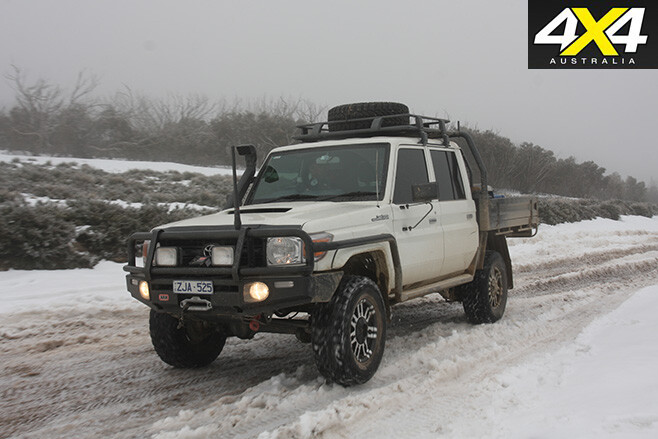
At just over 1500 metres high, you can be pretty sure of encountering snow on Skene during winter, and the white stuff lined the road from about one kilometre from the top. At 500 metres from the summit it got deep and untracked, so it was time to drop tyre pressures and put the vehicles to the test.
Our ride for the weekend was the recently completed MQ Triton from TJM, and, with front and rear Pro Lockers in, its 33-inch muddies cut a track though to the top.
We thought we’d made it easy for the rest of the group to get up through the snow, but after Jason, in the TJM Mazda, slid off the side of the track and needed a lengthy recovery, it took some time before we all got to the summit for the obligatory group photos.
Due to that delay and the weather closing in fast, we headed back to play on some of the tracks further down the mountain. The permit to cross Mount Skene is for the main road only and rules out any off-roading, with stiff penalties for getting caught doing so.
Jason led us up one steep and gnarly track that soon stopped his Mazda despite his best efforts, so we challenged Leigh in the Marks 4WD LC79 to have a go. The Cruiser is a formidable bit of kit, with a tuned V8 diesel, six-speed auto conversion and a set of prototype Marks 4WD portal axles. Marks has been doing portals for Nissans for years; these are the first set for the Land Cruiser and we were keen to see how they performed.
The V8 bellowed up the hill and, as expected, the Cruiser went further than the BT-50, but then it slid sideways and backed the tray hard into the bank. The mud here was greasy and another lengthy recovery was needed to get the Cruiser out.
This recovery highlighted the best part of these trips. We had all the big names in the 4×4 accessory business there, many of them rivals in the market, but on these weekends, rivalries are pushed aside and everyone pitches in to help.
And while you can only have so many hands on in a vehicle recovery like this, those who weren’t actively involved were only too happy to stand back and offer friendly advice. This camaraderie continued back down the mountain at the retreat and later in the pub for dinner.
There aren’t many industries where you can have staff from competing companies all enjoying time together over some 4WDing, a good meal and a few beers. It just shows that these great Australian 4×4 brands are built on the fantastic people staffing them; it’s no wonder our products are so well regarded around the world.
The group went back over Mount Skene again on Saturday, this time crossing over the now icy summit and enjoying the 4WD tracks on the other side, taking a steep and circuitous route to reach the old mining town of Woods Point. A stop for a pot at the Kevington pub on the way back to Jamieson Valley paved the way for another good night.
After a look through Valley Retreat owner Freddie’s photo gallery, some of the group had to make their way back to town, while the remainder took off on another 4×4 trip out toward Mount Terrible. It was a more relaxing drive this time – the perfect way to end a great weekend with top people.
So where are we going next year, guys?
For more 4×4 Explorations, check out our page here.