
IT IRKS us that Holden and now Ford Australia use American product codes for some of its 4×4 models but don’t deliver the good stuff with them. Holden has adapted the Z71 moniker to its top-of-the-range Colorado, and now Ford is using the FX4 tag for a special edition Ranger.
These model designations in the US usually designate heavy duty off-road suspension and all-terrain tyres as part of the off-road packages, while here it applies to extra features and sticker packs but no real hardware upgrades.
Despite the borrowed name, we love the look of Ford’s new FX4 pack special edition Ranger ute. Built on the XLT-spec Ranger it delivers good looks without the usual gaudy chrome, and without the unnecessary extras that come with the Wildtrak.
There will initially be 2131 versions of the limited edition FX4 produced, retailing for $58,915 for the double-cab manual and $61,115 for the double-cab auto. They should be in Ford dealerships in February.
Extras over and above the already high XLT spec include black roof rails, side steps, sports bar, grille, exterior mirrors, and bonnet and tailgate wraps. Unique 18-inch grey alloy wheels, FX4 decals and FX4-branded leather-accented seats complete the look.
It might not come with any extra off-road kit, but we reckon the FX4 is the best-looking Ranger in the line-up. Let’s hope Ford and Holden get with the program if and when they bring out Raptor and ZR2 packages for their local utes.
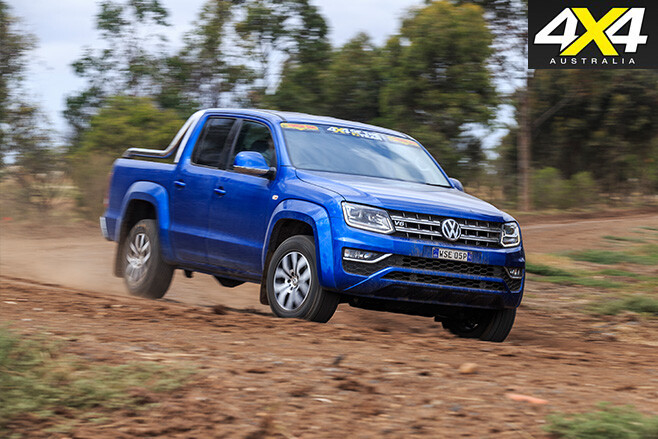
THE Amarok V6 diesel represents the first significant change to the Amarok since the eight-speed automatic four-cylinder models arrived in early 2012, around a year after the debut of the original four-cylinder manuals with their dual-range part-time 4×4.
The V6 comes with a beefed-up eight-speeder and at this stage is only available with a single-range full-time 4×4 system (with auto-proportioning and auto-locking centre ‘diff’) similar to that successfully employed (former 4X4 Ute of the Year winner) with the four-cylinder engine.
The V6 brings a significant jump in power (plus 48kW) and an extra 130Nm over the four-cylinder models, at a modest $3000 premium in Highline specification and $4000 in Ultimate spec.
Our test vehicle was the Ultimate. The cheaper Highline loses the heated leather 14-way adjustable seats and the paddle shifters. The Highline also gets 18- rather 19-inch alloys, a more basic sports bar and sidesteps, and 47kg payload hike (up to 911kg).
Leather and seat heating is optional on the Highline but not the 14-way adjustable seats. The test vehicle was fitted with an ‘off-road pack’ which brings AT tyres on 17s and deletes the sidesteps.
The winner of the coveted 4X4 of the Year award will be announced at the Australian Motoring Awards (AMAs) on February 1.
The AMAs, to be held at Crown Casino in Melbourne, will also present the WhichCar Style award, the MOTOR Performance Car of the Year and the Wheels Car of the Year awards.
Keep an eye on 4X4 Of The Year throughout the night on February 1 to be the first to find out which vehicle has been awarded the 2017 4X4OTY award. Or tune in to our Facebook page!
2017’s strong field of 4X4OTY contenders includes: Haval H9, Holden Colorado, Holden Trailblazer, Mercedes-Benz G300, Mitsubishi Pajero Sport, Toyota Land Cruiser 79 Series and the Volkswagen Amarok V6.
MORE 4X4 OF THE YEAR
HOME: 4X4 OF THE YEAR 2017
The seven most interesting 4×4 vehicles of 2016 get together for a week to determine the 4×4 Of The Year.
THE FINALISTS
Meet the seven most interesting 4×4 vehicles of 2016 battling it out to be crowned 4×4 Of The Year.
THE RESULTS
Only one of the seven best 4x4s from 2016 can be crowned 4×4 Of The Year 2017
4X4 OF THE YEAR HOME
Finding Australia’s Best 4x4s
Tacos date back to the 18th century in the Mexican silver mines. Today, it’s a fast-food staple and a combination of American and Mexican cuisine.
With no tortilla, this recipe is a twist on tacos — a great dish for the camp oven and one the kids will enjoy.
INGREDIENTS 1/4 cup butter 2/3 cup milk 1 packet Taco seasoning mix 2 1/2 cups instant potato flakes (approx 2 packets). You could also use left over mashed potatoes but you need to omit any butter and/or milk 1 onion – finely chopped 1 to 2 cloves garlic – crushed (or use readymade) 500g minced beef 1/2 cup salsa Shredded lettuce Tomato – chopped 1 cup grated cheese Sour cream Guacamole – optional
METHOD Preheat oven to (180°C or 350°F) or preheat camp oven and place a trivet in the bottom.
BASE
- In a pan, melt butter, add the milk and 1 to 2 tbs of the Taco seasoning and mix to combine (amount of seasoning depends on how much flavor you want in the potato mix).
- Remove from heat and add potato flakes and mix until well combined.
- Press the potato mixture into the bottom of a 25cm (10-inch) pan.
- Place in the oven and bake for approx 7 to 10 mins or until it turns golden brown (for the camp oven, place the dish on a trivet and bake).
- Heat a little oil in a pan and add onions and garlic. Cook over a med/high heat for a few minutes, then add the minced beef and sauté until browned. Make sure you break up the mince so there aren’t any lumps.
- Drain any excess liquid.
- Add the salsa to the cooked mince along with the remaining taco seasoning and continue to mix well.
- Bring to the boil and cook for a few minutes.
- Spoon the mince mixture into the baked potato pie base, place in the oven (or camp oven) and bake for 15 mins or until the crust is golden brown.
- Let the pie cool for 5 mins, then top with the cheese, lettuce and tomatoes.
- Cut into slices and serve with some sour cream and guacamole. Or you could spread the sour cream and guacamole on top of the baked mince and then cover with cheese, lettuce and tomatoes.
For an extra ‘kick’ add some chilli. You can also include some drained corn kernels and finely chopped red capsicum to the mince mixture.
For more tasty ideas, visit 4X4 Australia’s Bush Cooking recipes.
THE brakes of a 4×4 are great until you slap an extra tonne or two on the back, which is why most states require any trailer that weighs more than 750kg to have its own braking system.
It’s a good bet that, unless it’s a box trailer with a roof-top tent, any camper trailer will be close to double the weight limit and come fitted with electronic brakes. All well and good, except without a controller on your 4×4 they’re next to useless.
To give our 60 Series LandCruiser a bit more versatility, 4X4 Australia busted out the soldering iron and installed the Tow Pro Elite from Redarc. Here’s how we did it.
1. CIRCUIT BREAKER We optioned our controller with a 30A circuit breaker kit. We started by physically laying out every component to see where things would and wouldn’t work. The driver’s side kick panel fitted perfectly, with enough length for each cable and a secure mounting position for the module.
2. POWER CABLE With the module in place we set about mounting the fuse in the wiring kit and feeding the power cable through the engine bay and into the cabin. A small incision in an existing firewall bung protects the cable from cuts. The kit comes with a crimp and heat shrink to join it onto the module’s wiring loom.
3. THREE TAILS With the power sorted (but not connected to the battery) three more tails in the wiring loom need connecting. The white tail needs a solid earth – we connected it to a nearby bolt through the body. A second tail needs to be soldered and spliced into the sensor on the brake pedal. If you have a more complex 4×4 it may be easier to run a longer cable and tap into a tail-light to get the signal.
4. BLUE CABLE In a standard 7-pin trailer plug the brakes are controlled by the blue wire. We soldered and heat-shrank a 5m length of matching-size blue cable to the tail at the module. We ran it along the kick and sill panels through to the rear to ensure it was protected along the way.
5. TURNING DIAL With the main wiring sorted it was time to mount the dial. This needed to be in an easy-access location. This model operates in automatic mode 90 per cent of the time, but in tricky off-road situations manual operation is the key. We replaced an unused dial on the dash near the steering wheel with the included template and connected it to the module. We can now control the brakes on any trailer we’re legally allowed to tow. The entire installation took less than an hour.
TOYOTA’S 70 Series dates back more than 30 years, and this latest round of significant updates is the first in four years.
Many are a result of mandatory emissions compliance and industry safety demands. All variants get a new five-speed manual gearbox that brings a much-welcome taller top gear as well as a taller second gear. All models also get auto-locking hubs, cruise control, and electronic stability and traction control.
Single Cab models then get additional curtain and driver’s knee airbags and thicker frame rails, among other changes, which results in five-star ANCAP safety compliance.
Euro 5 emissions compliance changes for the 4.5-litre V8 diesel run to piezo injectors and a diesel particulate filter, which combine with the new gearbox to lower the fuel use by around 10 per cent – not an insignificant result.
For 4X4OTY we tested the LC79 GXL Double Cab. The cheaper WorkMate has 16-inch one-piece steel wheels and vinyl seats, while the lockers become a $1500 option. Toyota offers five genuine-accessory trays for the Double Cab with either headboard or under-tray mounted spare wheels. Prices range from $2325 for a basic alloy tray with headboard spare to $6088 for the heavy duty tray with under-mount spare.
The winner of the coveted 4X4 of the Year award will be announced at the Australian Motoring Awards (AMAs) on February 1.
The AMAs, to be held at Crown Casino in Melbourne, will also present the WhichCar Style award, the MOTOR Performance Car of the Year and the Wheels Car of the Year awards.
Keep an eye on 4X4 Of The Year throughout the night on February 1 to be the first to find out which vehicle has been awarded the 2017 4X4OTY award. Or tune in to our Facebook page!
2017’s strong field of 4X4OTY contenders includes: Haval H9, Holden Colorado, Holden Trailblazer, Mercedes-Benz G300, Mitsubishi Pajero Sport, Toyota Land Cruiser 79 Series and the Volkswagen Amarok V6.
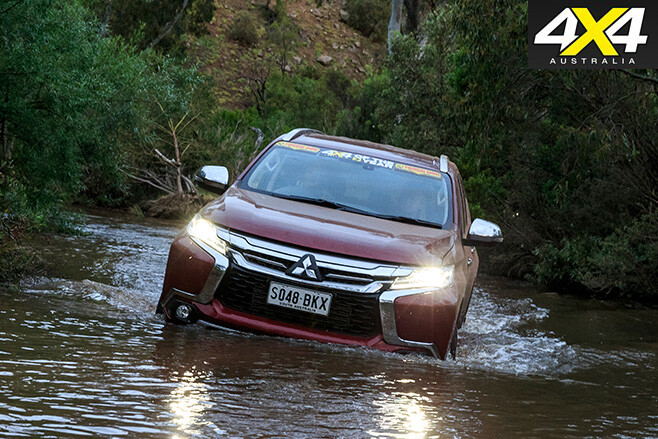
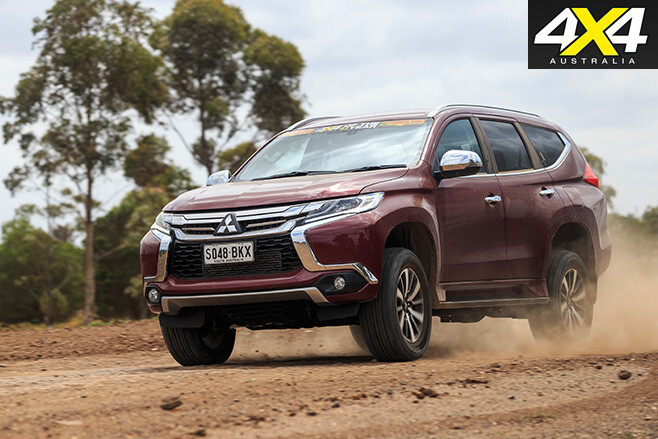
THE Pajero Sport is based on the Triton ute that arrived early in 2015 and was a finalist at last year’s 4X4OTY.
Aside from the body and the coil-spring rear suspension, the notable change from the Triton is an eight-speed automatic in place of the Triton’s five-speed auto.
There’s no manual in the three-model range and all have Mitsubishi’s now unique Super Select 4×4 system that offers the functionality of full-time 4×4 but with the option of 4×2. Otherwise it’s Triton engine, Triton front suspension and a shortened and modified Triton ladder-frame chassis.
Our test vehicle was the Pajero Sport GLS. The more expensive Exceed gains autonomous braking, blind-spot monitoring, external view cameras and a rear DVD system. Below the GLS is the GXL, which loses the third-row seats but gains payload and luggage space.
The winner of the coveted 4X4 of the Year award will be announced at the Australian Motoring Awards (AMAs) on February 1.
The AMAs, to be held at Crown Casino in Melbourne, will also present the WhichCar Style award, the MOTOR Performance Car of the Year and the Wheels Car of the Year awards.
Keep an eye on 4X4 Of The Year throughout the night on February 1 to be the first to find out which vehicle has been awarded the 2017 4X4OTY award. Or tune in to our Facebook page!
2017’s strong field of 4X4OTY contenders includes: Haval H9, Holden Colorado, Holden Trailblazer, Mercedes-Benz G300, Mitsubishi Pajero Sport, Toyota Land Cruiser 79 Series and the Volkswagen Amarok V6.
MORE 4X4 OF THE YEAR
HOME: 4X4 OF THE YEAR 2017
The seven most interesting 4×4 vehicles of 2016 get together for a week to determine the 4×4 Of The Year.
THE FINALISTS
Meet the seven most interesting 4×4 vehicles of 2016 battling it out to be crowned 4×4 Of The Year.
THE RESULTS
Only one of the seven best 4x4s from 2016 can be crowned 4×4 Of The Year 2017
4X4 OF THE YEAR HOME
Finding Australia’s Best 4x4s
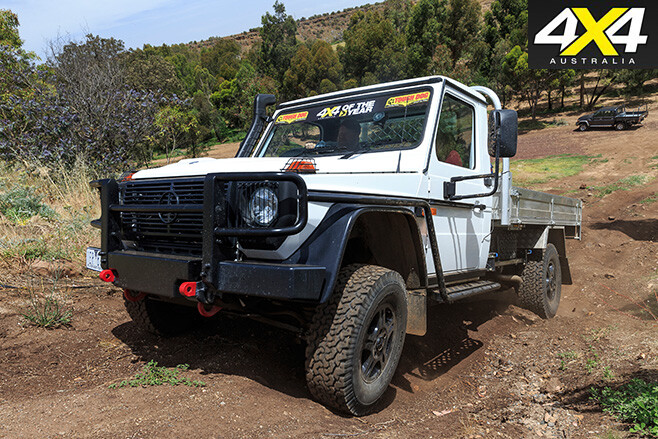
CONCEIVED in the early 1970s and in production before the end of that decade, the G-Class is Mercedes-Benz’s longest running model and even outdates Toyota’s venerable 70 Series.
This G-Class Professional G300 is the latest in a long line of G-Class variants to be sold here over the years and joins the G350 and G63 AMG wagons introduced back in 2011.
There’s only one engine, an extremely low-tuned version of Mercedes-Benz’s ubiquitous V6 diesel that’s designed to run on the world’s poorest quality diesel. A five-speed automatic is the only gearbox offered and it’s mated to the G-Class’ trademark dual-range full-time 4×4 system with its triple diff locks.
The bullbar, snorkel, light protectors, all-terrain tyres and air-con are all standard. Options include a walk-on bonnet with a 100kg load rating and cyclonic pre-filter for the snorkel. The tray is aftermarket and not an official M-B accessory.
The winner of the coveted 4X4 of the Year award will be announced at the Australian Motoring Awards (AMAs) on February 1.
The AMAs, to be held at Crown Casino in Melbourne, will also present the WhichCar Style award, the MOTOR Performance Car of the Year and the Wheels Car of the Year awards.
Keep an eye on 4X4 Of The Year throughout the night on February 1 to be the first to find out which vehicle has been awarded the 2017 4X4OTY award. Or tune in to our Facebook page!
2017’s strong field of 4X4OTY contenders includes: Haval H9, Holden Colorado, Holden Trailblazer, Mercedes-Benz G300, Mitsubishi Pajero Sport, Toyota Land Cruiser 79 Series and the Volkswagen Amarok V6.
MORE 4X4 OF THE YEAR
HOME: 4X4 OF THE YEAR 2017
The seven most interesting 4×4 vehicles of 2016 get together for a week to determine the 4×4 Of The Year.
THE FINALISTS
Meet the seven most interesting 4×4 vehicles of 2016 battling it out to be crowned 4×4 Of The Year.
THE RESULTS
Only one of the seven best 4x4s from 2016 can be crowned 4×4 Of The Year 2017
4X4 OF THE YEAR HOME
Finding Australia’s Best 4x4s
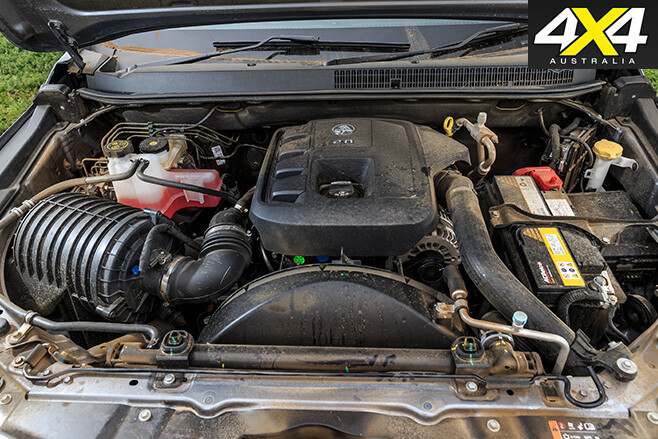
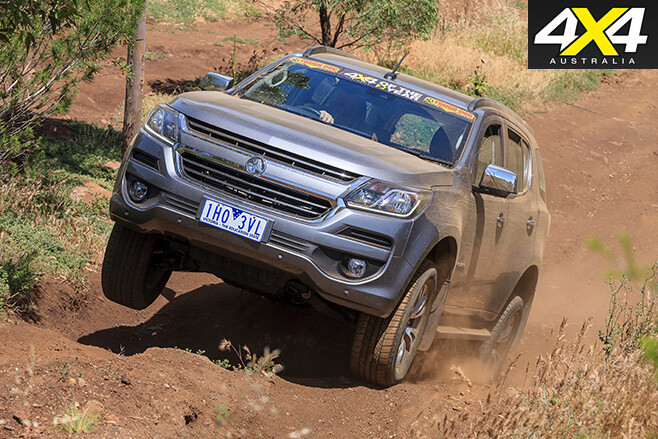
TRAILBLAZER is a new name for what was previously called the Colorado 7; a seven-seat wagon based on the Colorado ute, in this case the much-revised MY17 Colorado.
All the detail changes of the ute have been made with the wagon; although, with the suspension, only the dampers on the wagon have been changed whereas the ute gets new springs, dampers and front swaybar.
As with the ute the vast majority of the changes are aimed at addressing refinement issues found in the previous model. Over Colorado 7 the Trailblazer also gets a new dash and more tech kit such as Apple CarPlay and Android Auto smartphone integration, as well as embedded sat-nav in the top-spec model.
We tested the Trailblazer LTZ. The cheaper LT gets 17s but loses tyre-pressure monitoring, embedded sat-nav, heated leather seats, driver’s electric adjustment, premium audio, auto wipers, climate control and all the high-end safety features such as the forward collision, lane-departure, rear cross-traffic and blind-spot incursion warnings.
The winner of the coveted 4X4 of the Year award will be announced at the Australian Motoring Awards (AMAs) on February 1.
The AMAs, to be held at Crown Casino in Melbourne, will also present the WhichCar Style award, the MOTOR Performance Car of the Year and the Wheels Car of the Year awards.
Keep an eye on 4X4 Of The Year throughout the night on February 1 to be the first to find out which vehicle has been awarded the 2017 4X4OTY award. Or tune in to our Facebook page!
2017’s strong field of 4X4OTY contenders includes: Haval H9, Holden Colorado, Holden Trailblazer, Mercedes-Benz G300, Mitsubishi Pajero Sport, Toyota Land Cruiser 79 Series and the Volkswagen Amarok V6.
MORE 4X4 OF THE YEAR
HOME: 4X4 OF THE YEAR 2017
The seven most interesting 4×4 vehicles of 2016 get together for a week to determine the 4×4 Of The Year.
THE FINALISTS
Meet the seven most interesting 4×4 vehicles of 2016 battling it out to be crowned 4×4 Of The Year.
THE RESULTS
Only one of the seven best 4x4s from 2016 can be crowned 4×4 Of The Year 2017
4X4 OF THE YEAR HOME
Finding Australia’s Best 4x4s
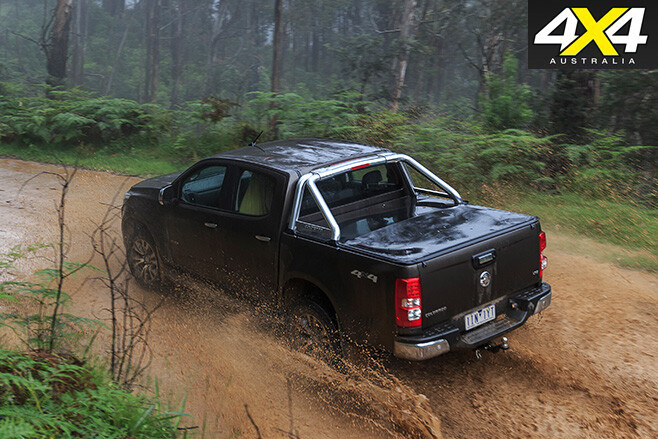
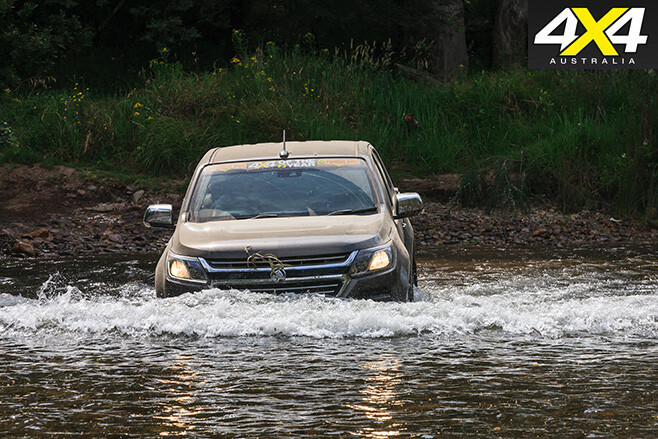
AFTER several unsuccessful attempts at bringing its 2012-launched Colorado up to scratch, Holden has finally pulled the whole thing apart and started again.
It has moved the engine’s balance shafts, added sound deadening, changed the engine and body mounts, installed a new torque convertor, recalibrated the suspension, added electric power steering, and installed a thicker windscreen, new window seals, roof mouldings and mirror mounts.
The maximum power (147kW) and maximum torque (500Nm) figures from the 2.8-litre VM Motori diesel remain unchanged, but Holden claims the low rpm torque is now stronger.
Colorado also gets a new dash, extra kit and a new front-end treatment to keep it current.
Our test vehicle was the Colorado LTZ. Heated leather seats are an option on the LTZ. The less expensive LT has 17s and a smaller touchscreen, and loses the embedded sat-nav, tyre-pressure monitoring, power driver’s seat, auto wipers, climate control, tonneau cover, sports bar and the high-end safety features.
The work-spec LS loses sidesteps and fog lights and has 16-inch steel wheels, but it has the highest payload.
The winner of the coveted 4X4 of the Year award will be announced at the Australian Motoring Awards (AMAs) on February 1.
The AMAs, to be held at Crown Casino in Melbourne, will also present the WhichCar Style award, the MOTOR Performance Car of the Year and the Wheels Car of the Year awards.
Keep an eye on 4X4 Of The Year throughout the night on February 1 to be the first to find out which vehicle has been awarded the 2017 4X4OTY award. Or tune in to our Facebook page!
2017’s strong field of 4X4OTY contenders includes: Haval H9, Holden Colorado, Holden Trailblazer, Mercedes-Benz G300, Mitsubishi Pajero Sport, Toyota Land Cruiser 79 Series and the Volkswagen Amarok V6.
MORE 4X4 OF THE YEAR
- HOME: 4X4 OF THE YEAR 2017: The seven most interesting 4×4 vehicles of 2016 get together for a week to determine the 4×4 Of The Year.
- THE FINALISTS: Meet the seven most interesting 4×4 vehicles of 2016 battling it out to be crowned 4×4 Of The Year.
- THE RESULTS: Only one of the seven best 4x4s from 2016 can be crowned 4×4 Of The Year 2017
- 4X4 OF THE YEAR HOME: Finding Australia’s Best 4x4s
In fact the whole south-west corner of WA is special. Many of the coastal place names are French – a legacy of the early French explorers who bumped into the west coast of Australia in their search for new lands. It’s a reminder of how close we came to speaking French instead of English!
Perth is a long, long drive from Melbourne so, with time an issue, we flew into Perth on a warm spring afternoon, picked up a hire car and headed south. Through the roadside trees there was the occasional glimpse of a brilliant orange sunset as the setting sun dropped below the horizon of the Indian Ocean.
Our destination for two nights was Dunsborough 250km south of Perth to see if the famous Cape Naturaliste coastal scenery lived up to its reputation. Dunsborough is a quiet, laid-back, country town for most of the year, but it’s a popular summer holiday destination with many rental properties owned by absentee Perth landlords. Dunsborough has at least one famous resident.
If you’re passing through town make sure you drop into Christian Fletcher’s gallery for THE best exhibition of landscape photography anywhere in Australia. While Christian’s name might not be well known outside photographic circles, his images are. He is arguably Australia’s top landscape photographer with a string of awards to his name including both Western Australian and Australian Landscape Photographer of the Year in 2011.
While some of Christian’s images sell for thousands of dollars and grace board rooms around the country, he’s worked hard to get where he is – including washing dishes to pay for his photography in years gone by.
After a sumptuous breakfast in one of the local cafes we headed out to Leeuwin – Naturaliste National Park. The road to Cape Naturaliste passes a turn-off to Sugar Loaf Rock, 2km to the east on the coast. This outcrop of rock is one of the most photographed locations in WA and well worth a visit.
At the point there is an easy 4km walk around the point from the lighthouse with idyllic views over the deep blue Indian Ocean. We only had to gaze out to sea for a minute or two to see the telltale plume of a whale exhaling, or dolphins and seals playing in the water. Seals were also visible sunning themselves on the rocks.
September to December is whale watching season as it’s this time of the year that these huge mammals come in close to shore to breed and protect their young from the predators in deeper waters.
A whale watch boat tour from Dunsborough enabled us to get up close and personal with three Southern Right Wales less than 500 metres offshore. A female and calf in the company of a male, they seemed quite unperturbed by our presence and at one stage even came in closer to have a better look at us (at 80 tonnes and the size of a bus this can be a bit worrying).
Surprisingly, there is no food for these whales in the waters off the south-west coast of WA and the adults possibly won’t have eaten for six months. Despite this the mother whale produces some 300 litres of milk a day for her calf, fattening it up in preparation for their migration further south into much colder waters. Only 10% of calves survive to maturity, although once fully grown they have no natural predators.
If based in Dunsborough for a few days you might also want to visit the famous Margaret River wine district 46kms south. If you are missing the bright lights, the city of Busselton, famous for its two kilometre wooden jetty, the longest in the Southern Hemisphere, is 23km to the east.
From Dunsborough our drive south-east towards the Stirling Range passed through tracts of State Forest and National Park. While heavily logged in years gone by, we saw several stands of Karri – a truly impressive tree with their huge smooth trunks reaching skywards.
It would be easy to spend several days in any number of locations in the south-west with walks, waterfalls and other points of interest in abundance. At Pemberton, roughly halfway to the Stirling Range, we took a 27km detour to the fishing village of Windy Harbour near Point D’entrecasteaux. A lookout above Windy Harbour has expansive views of the Southern Ocean and it was immediately obvious how the place got its name.
The sound of the wind and boiling sea was truly awe inspiring – like a monster trying to tear down the cliffs that were stopping its northward journey. The wind racing up the cliff face and over the top was almost impossible to stand up against. Looking at the waves crashing over the rocks at the base of sheer cliffs it’s easy to understand why so many old sailing ships perished on these shores and why there were so few survivors.
After heading east to Denmark we turned inland and travelled through drier woodland to the small regional town of Mount Barker. Here we stocked up on supplies for the next few days and refuelled before travelling the last 20km to our destination.
The craggy peaks of the Stirling Range rise abruptly from the surrounding plains and make an impressive sight when approaching from the south. They have a very unusual appearance, different from anything else I’ve seen in Australia. With very few taller trees to break the otherwise low dense shrubbery that hugs the valleys and ridges, from a distance the hills look as if they have been neatly clipped.
The Park has only one camping ground, Moingup Springs, in the centre of the Park on the main Chester Pass Road. Non-campers and those seeking a little more in the way of facilities generally stay at the Stirling Range Retreat 11km further north. A roadside cafe near the Retreat offers eat-in and takeaway meals.
The Retreat, owned and operated by Tony and Ayleen Sands, provides basic supplies (frozen bread etc). There is a range of accommodation options including powered and unpowered camp sites, on-site vans, motel style family rooms, and rammed earth cabins.
We chose one of the rammed earth cabins and found it functional and cosy with its reverse cycle air-conditioning. I was reminded of the “make do” approach required when living in the bush while recovering a book I had lost under the bed. At some time in its past one of the bed legs had broken and been replaced with suitably shaped piece of tree branch!
The Retreat is set on 35 acres with several easy walks that allow visitors to explore the surrounding bush. While the wildflowers steal the show many of the eucalypts and other native trees also sport showy masses of flowers. There’s no shortage of bird life seeking either insects or nectar from the abundant flowers. Almost every day a flock of the endangered short-billed black cockatoos would descend on the Retreat raucously arguing with each other at every opportunity.
We’ve all heard stories about the beauty of the WA wildflowers, but nothing prepares you for the reality. Wherever you look something is flowering and every step taken uncovers another unfamiliar bloom. It is hard to believe the kaleidoscope of colour as wildflowers seem to try to outdo each other for the showiest bloom.
To protect the delicate environment and sandy soils there is little public vehicle access to tracks in the Park. The main sightseeing road is the 115 km Stirling Range Drive that loops through the Park. This two-wheel drive gravel road runs east-west through the centre of the Park and then back along the northern boundary. Every corner brings amazing scenery with rocky ranges, some cloaked in mist, rising steeply on either side of the wildflower fringed road.
In the centre of the Park on the Stirling Range Drive there is a small car park with a walking track that follows the ridge 400 metres to a lookout. While taking in the view, the tranquillity of the moment was suddenly lost as a wedge-tailed eagle silently glided up over the lip of the ridge only metres away. With a wingspan of more than two metres these are truly impressive birds.
It took me a few seconds to have the presence of mind to point my camera in the general direction of the bird and grab one quick shot as it continued slowly on its way. While I wish I’d reacted more quickly, with the distinctive Stirling Range in the background this photograph is probably my favourite from the entire trip.
From the main road near the Stirling Range Retreat a bitumen road runs to Bluff Knoll 7km to the east. At 1099 metres is the third highest peak in WA and the walk to the summit is one of the major attractions of the Park. There are well marked walks to several other peaks within the Park, but as they are all rated Class 4 or harder a modest degree of fitness is required.
Shortly before our arrival the weather had taken a turn for the worse with mid-day temperatures of 5 degrees and heavy showers threatening to sleet. While approaching storms only permitted a couple of kilometres of the 5km Bluff Knoll walk the views were spectacular.
Our time in the Stirling Range passed quickly and it wasn’t long before we found ourselves on the bitumen for a five hour drive back to Perth. Of course, after a week of very ordinary weather, the clouds parted and the sun came out as we made our way into Perth airport for our flight back to Melbourne.
The south-west corner of WA and particularly the Stirling Range is such a delight that even the less than perfect weather conditions couldn’t dampen our plans for a return visit soon.
TRAVEL PLANNER
WHERE The Stirling Range National Park in the south-west of Western Australia is located 100km north of Albany and 340km south-east of Perth.
WHEN TO GO Summer months can be very hot. September to October is “wildflower season” and is regarded as the best time to see the Park at its colourful best.
WHAT TO BRING If camping, plan to be totally self-reliant while staying in the area. The weather can very changeable and a range of clothing from shorts to jumpers is advisable.
FOOD AND FUEL There are no fuel outlets in the Park. Some basic food supplies can be purchased from the Stirling Range Retreat and a nearby roadside cafe provides eat-in and takeaway meals. The nearest major centre is Mount Barker 75km south-west by road.
ACCOMODATION Moingup Springs camp ground in the centre of the Park on the main Chester Pass Road has toilets and gas barbeques but no water. Stirling Range Retreat 11km further north offers a full range of facilities with powered and unpowered camp sites, on-site vans, motel style family rooms, and rammed earth cabins.
DRIVING CONDITIONS The road from Mt Barker in the south is bitumen while the western access from Cranbrook has some gravel sections. The main Stirling Range Drive through the centre of the Park is a wide well formed gravel road suitable for all types of vehicles.
MAPS Hema maps (paper and GPS) are recommended for travel in this area.
IMPORTANT CONTACTS Department of Parks and Wildlife, phone 08 9842 4500.
Stirling Range Retreat, phone 08 8088 2389.