
AS WE eagerly await the arrival of the Australian-developed Ford Ranger Raptor in just a few months, the vehicle which it harvested its DNA from has scored some pretty cool electronic updates for the 2019 model year.
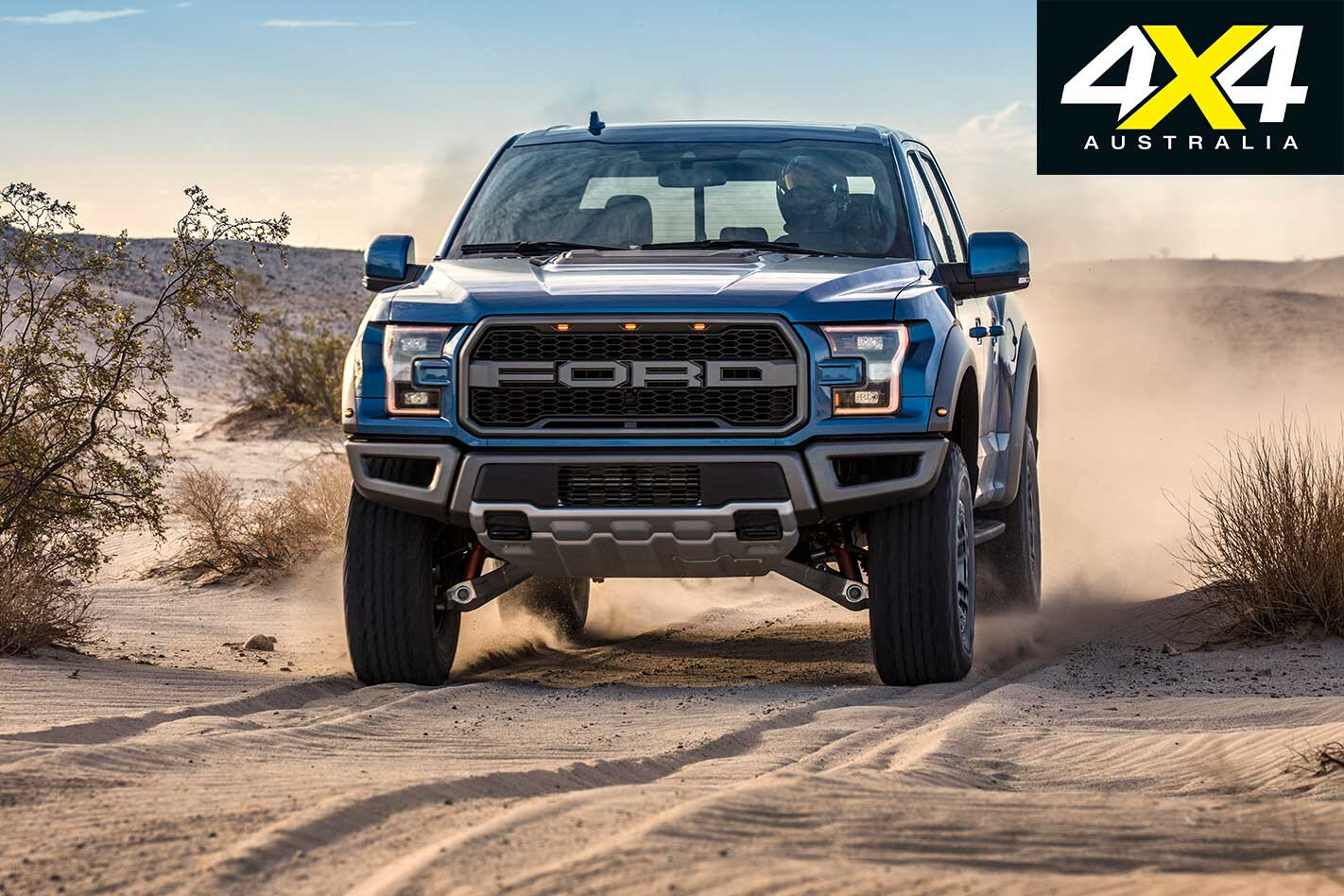
The Ford F-150 Raptor was the original desert-storming Raptor, and its competition-developed 3.0-inch Fox Racing shocks are now fitted with electronic controls which sense what terrain the Raptor is being driven over – even when it is over and above the terrain.
The all-new electronically controlled Fox Live Valve technology continuously adjusts damping in real-time using inputs from sensors in the suspension and vehicle body, to maximize comfort, handling and bottom-out resistance.
It also works with the Terrain Management System (TMS) to optimise the shocks for the selected terrain, and that includes Raptor’s unique Baja Mode. It even senses when the F-Truck leaves terra firma and adjusts the shocks to the best setting to absorb the landing.
The 2019 F-150 Raptor gets further new technology in the form of what Ford calls Trail Control. Like Toyota’s Crawl Control, and a similar system used by Jeep, Trail Control keeps the vehicle at a set speed between 1.6km/h and 32km/h, automatically applying throttle and brakes to make driving over difficult terrain easier.
This allows the driver to concentrate solely on wheel placement and navigating the vehicle via the steering, while he/she can override the system at any time using the pedals.
Our past experience with Toyota’s Crawl Control reveals the system to be noisy, jerky and annoying, while the Jeep system is totally the opposite, giving smooth and controlled progress. Let’s just hope Ford gets the calibration of Trail Control right in the Effie.
We doubt Australia’s Ranger Raptor will get either of these new features in its first iteration, but don’t rule them out for future updates.
While the US F-150 Raptor is powered by a stonking 335kW/691Nm EcoBoost V6 petrol engine backed by a 10-speed automatic, the Ranger will make do with a 157kW/500Nm 2.0-litre bi-turbo diesel backed by the same 10-speed and MTS. The Ranger Raptor also gets Fox internal bypass shocks, but they’re not to the same spec as the F-150’s units.
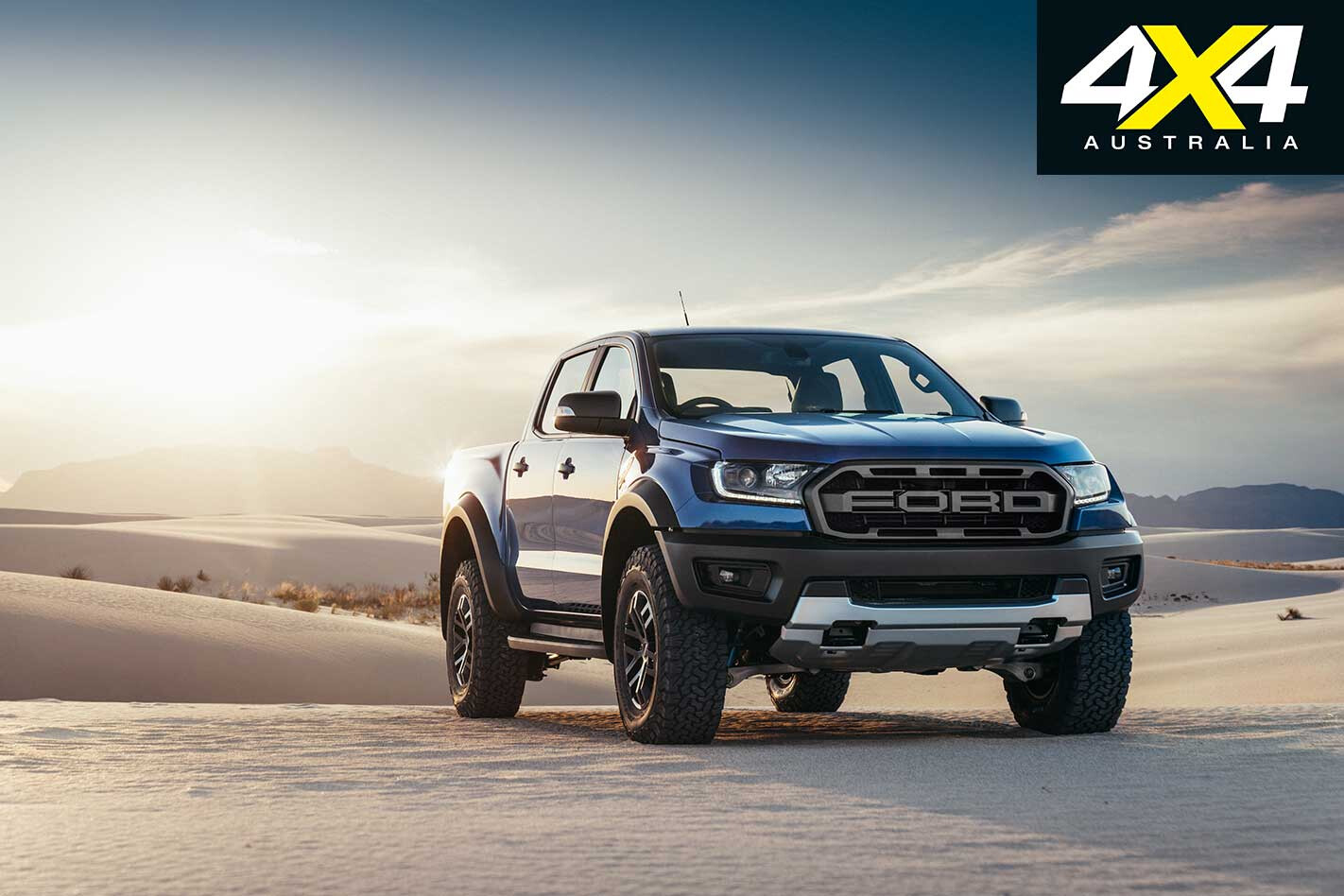
Ranger Raptor goes on sale in Australia in the third quarter of 2018, while the left-hand-drive F-150 Raptor is not officially sold here but is available through importers and steering conversion experts such as Harrisons F-Trucks, Performax and American Vehicle Sales.
While the Ranger Raptor will be priced from $74,990, you can add another $100K if you want a right-hand-drive F-150 Raptor here.
AUSTRALIAN designed and manufactured 4WD and outdoors product are some of the best in the world, and it’s always nice to see some of the leading Aussie brands get recognition for their outstanding work. Just like local brands REDARC Electronics and Oztent, who recently claimed awards at the Good Design Awards.
Hosted annually by Good Design Australia, the Good Design Awards program is one of the oldest and most prestigious international design awards in the world, promoting excellence in design and innovation since 1958. It is recognised by the World Design Organization (WDO) as Australia’s peak international design endorsement program. In this, the 60th year of the awards, products were recognised over 28 categories.

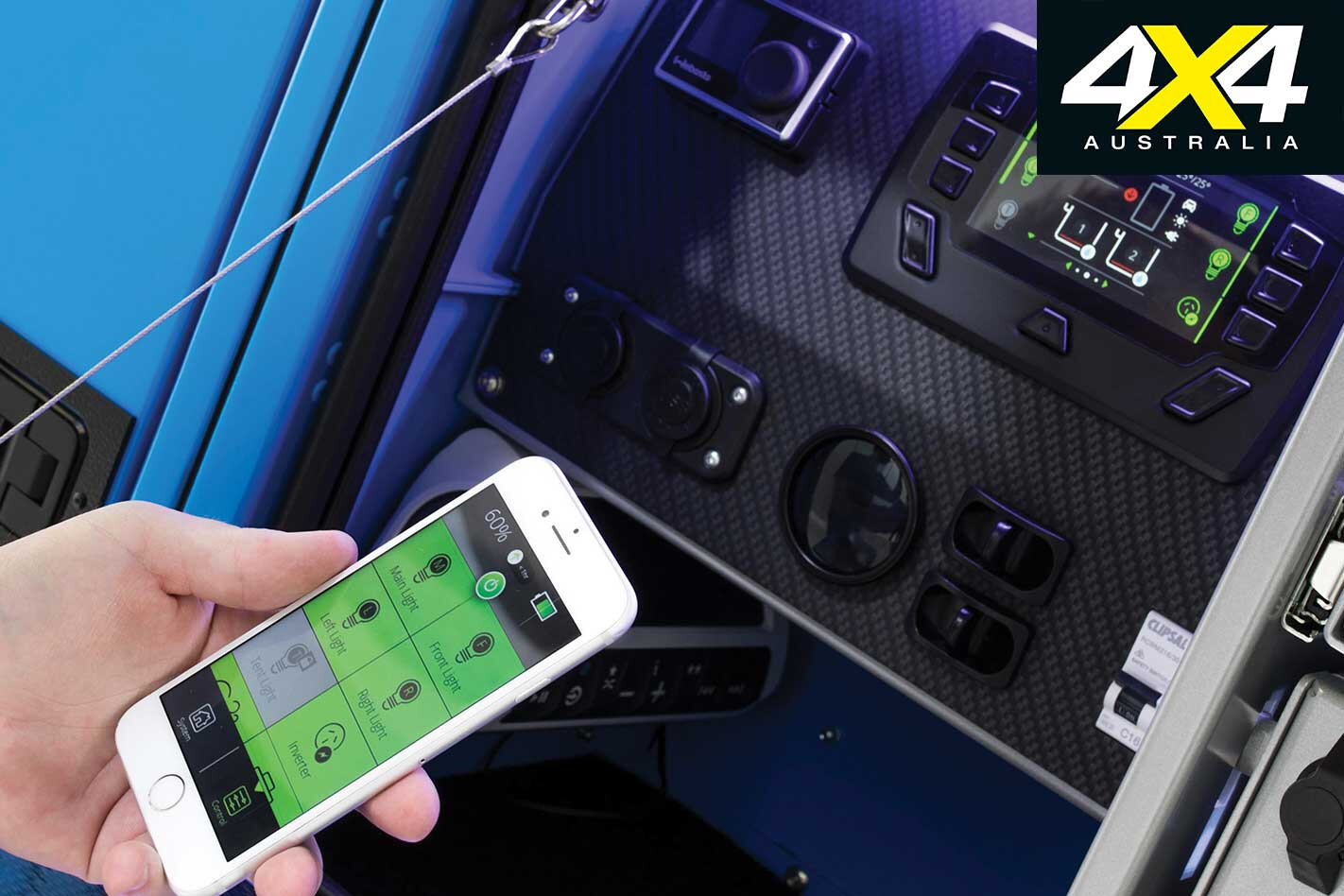
REDARC Electronics scored in the Product Design Sport and Lifestyle category in recognition of outstanding design and innovation for its RedVision Total Vehicle Management System. The RedVision system sets a new level of automation in the recreational vehicle industry, as it allows users to control multiple on-board devices such as switching lights, inverter, water pumps and other loads such as televisions, electric steps and fridges.
The system can be switched on or off through the in-vehicle display or through the RedVision app via a smartphone. It also provides the user with the ability to monitor water levels, temperature, energy (battery power) consumption and storage, with the battery information available when used with a REDARC Manager Range Battery Management System.
“This is a true testament to the R&D and innovation we put behind each and every one of our products,” said REDARC Managing Director, Anthony Kittel. “Our Vision for REDARC is to produce highly innovative products and RedVision is one great example of that.
“We are proud to provide the highest quality, designed, developed and engineered products. They are built and tested in Australia to withstand the harshest conditions,” he stated.
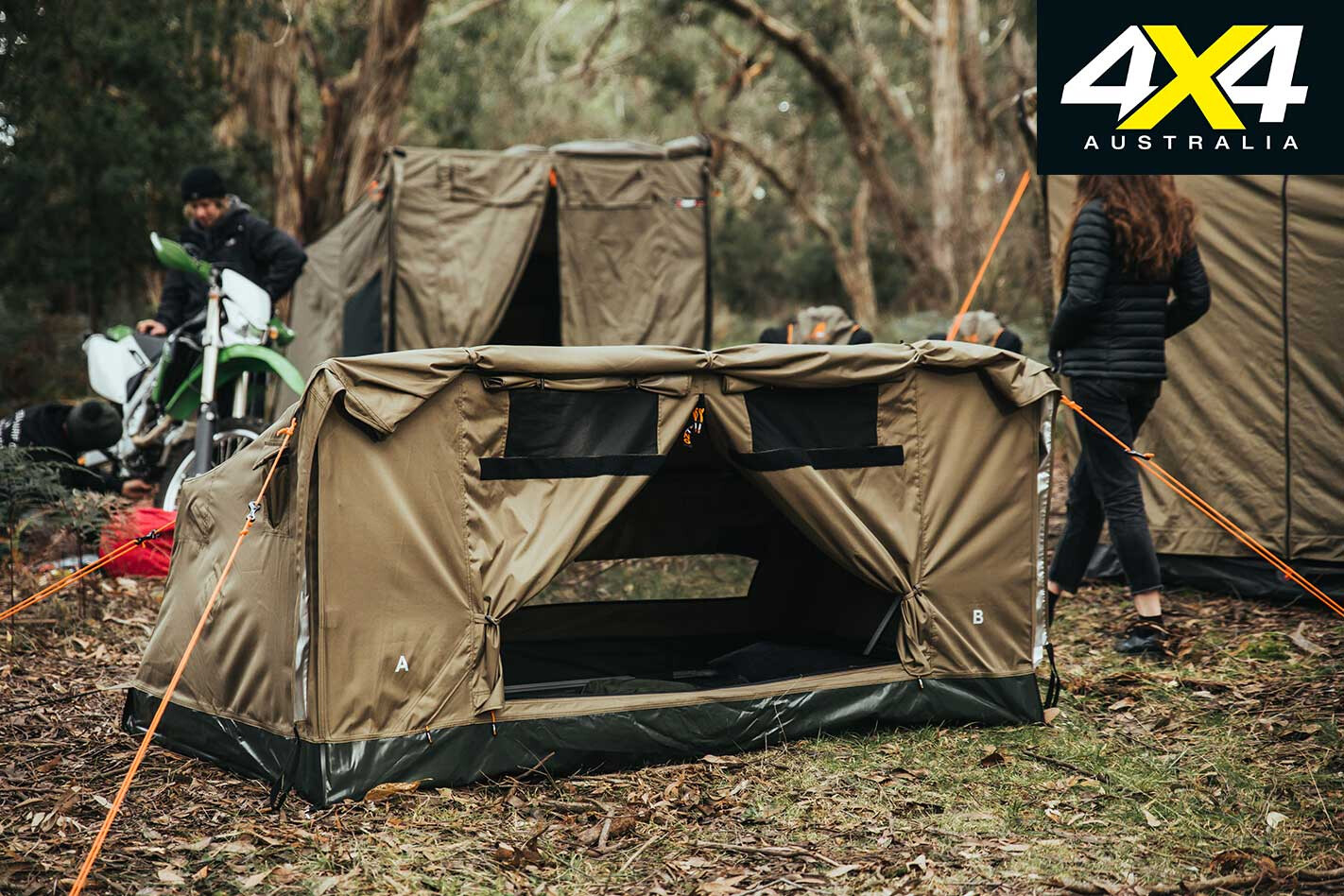
Oztent was awarded two Good Design Awards; one for its RS-1 King Single Swag and another for its HotSpot heated camping chairs and accessories.
The RS-1 swag uses Oztent’s well-proven and widely loved 30 second frame from its range of 30 Second Tents, to create a large accommodating swag that is both fast and easy to erect. It is made using Oztent’s new CPAI-84 flame-retardant ModCan material and incorporates an awning with a reflective underside designed to flip over and act as a fly, to cater for all weather conditions.
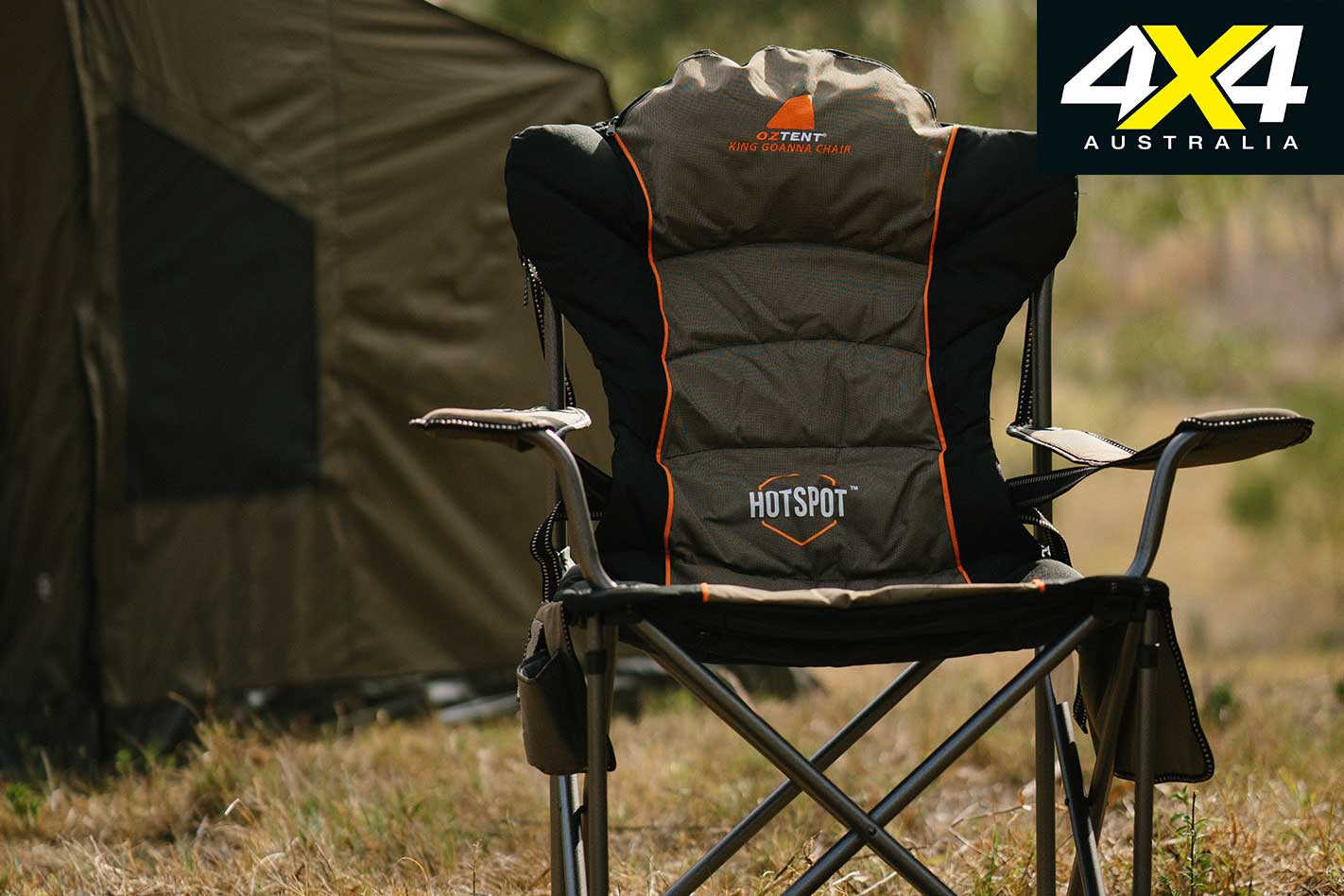
The Oztent HotSpot camping chair uses the latest technology in transportable thermal pouches and fits them within the chair to keep the occupant warm on those cold nights camping in the mountains. It needs no power for up to an hour and has been tested for up to 500 uses, and it can heat or cool by reheating in hot water or chilling out in an Esky.
“Our team is passionate about creating the best experience for our customers at every level,” said Amanda Viglione, Managing Director of the Oztent Group. “So it’s wonderful to see their sweat and dedication achieving such accolades from an organisation known for setting international best practice standards in design evaluation.”
For more information on the Good Design Awards visit www.good-design.org. For details on Oztent and REDARC products, take a look at www.oztent.com.au and www.redarc.com.au.
Other winning products familiar to 4WDers at the 2018 Design Awards include the Narva 215 LED driving lights, the Power Hub from Projecta, and Rhino Rack’s Batwing awning.
EARLIER this week Ford Australia revealed details of its 2019 updates to the PX Ranger, the big news of which was the inclusion of the 157kW/500Nm 2.0L bi-turbo diesel engine and 10-speed automatic transmission lifted straight from the off-road-focused Ranger Raptor.
This engine and transmission combo will be optional on Ranger XLT and Wildtrak models at a cost of just $1200. Elsewhere across the range, the grunty 3.2L five-cylinder diesel and 2.2L four-cylinder engines remain available.
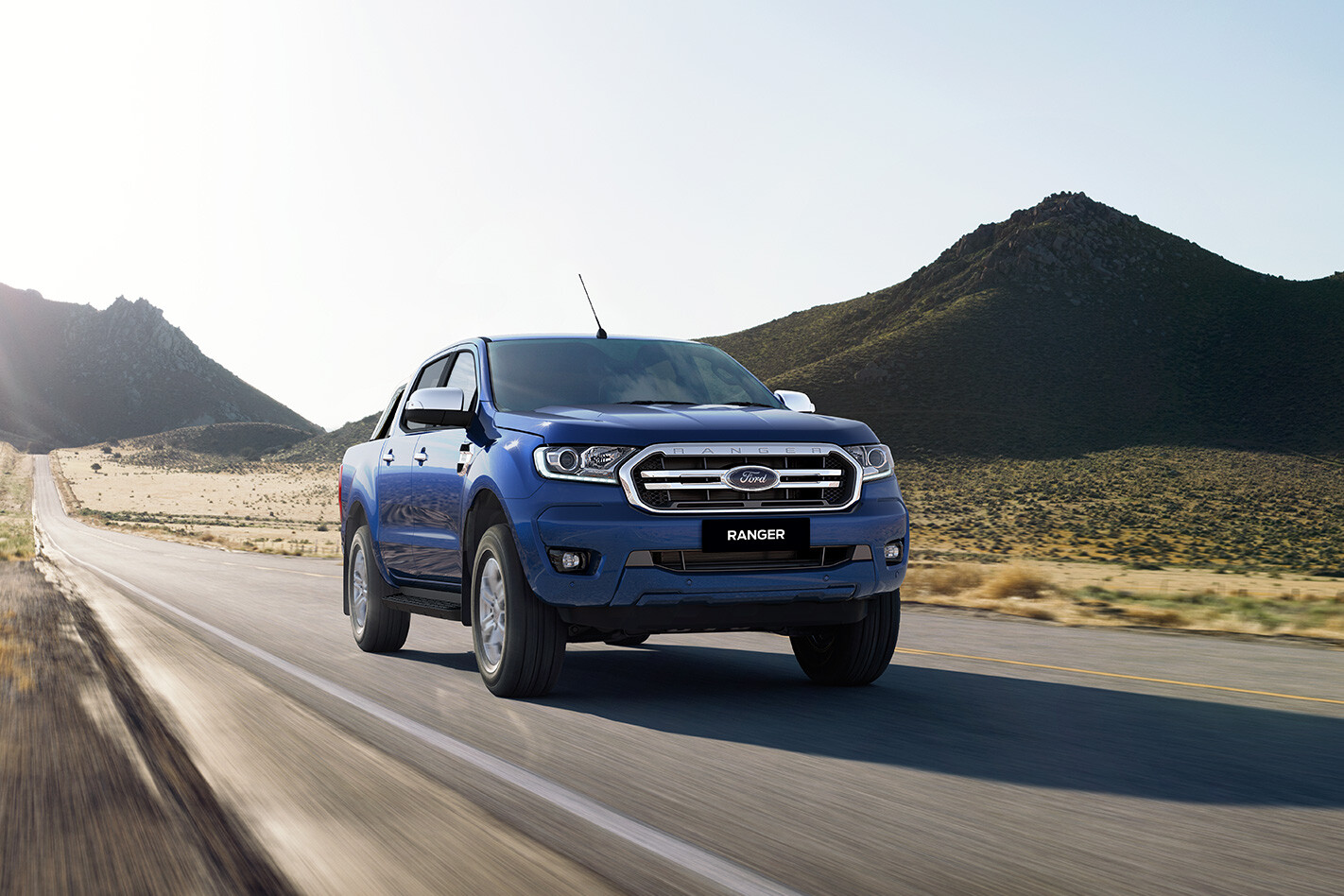
Across the Ranger line-up all variants now benefit from more features including a five-year unlimited kilometre factory warranty, free map updates on SYNC3 system, a service price promise and low price tyre guarantee through Ford dealerships.
Ranger XLT will be available with a class-leading tech package which includes Autonomous Emergency Braking (AEB), semi auto active park assist, Traffic Sign Recognition (TSR), a Driver Impairment Monitor, adaptive cruise control with forward collision alert, Lane Keep Assist/Lane Departure Warning, and auto high beam. This is a $1700 option on Ranger XLT and comes standard on the Wildtrak.
The MY19 Ranger goes on sale in September 2018.
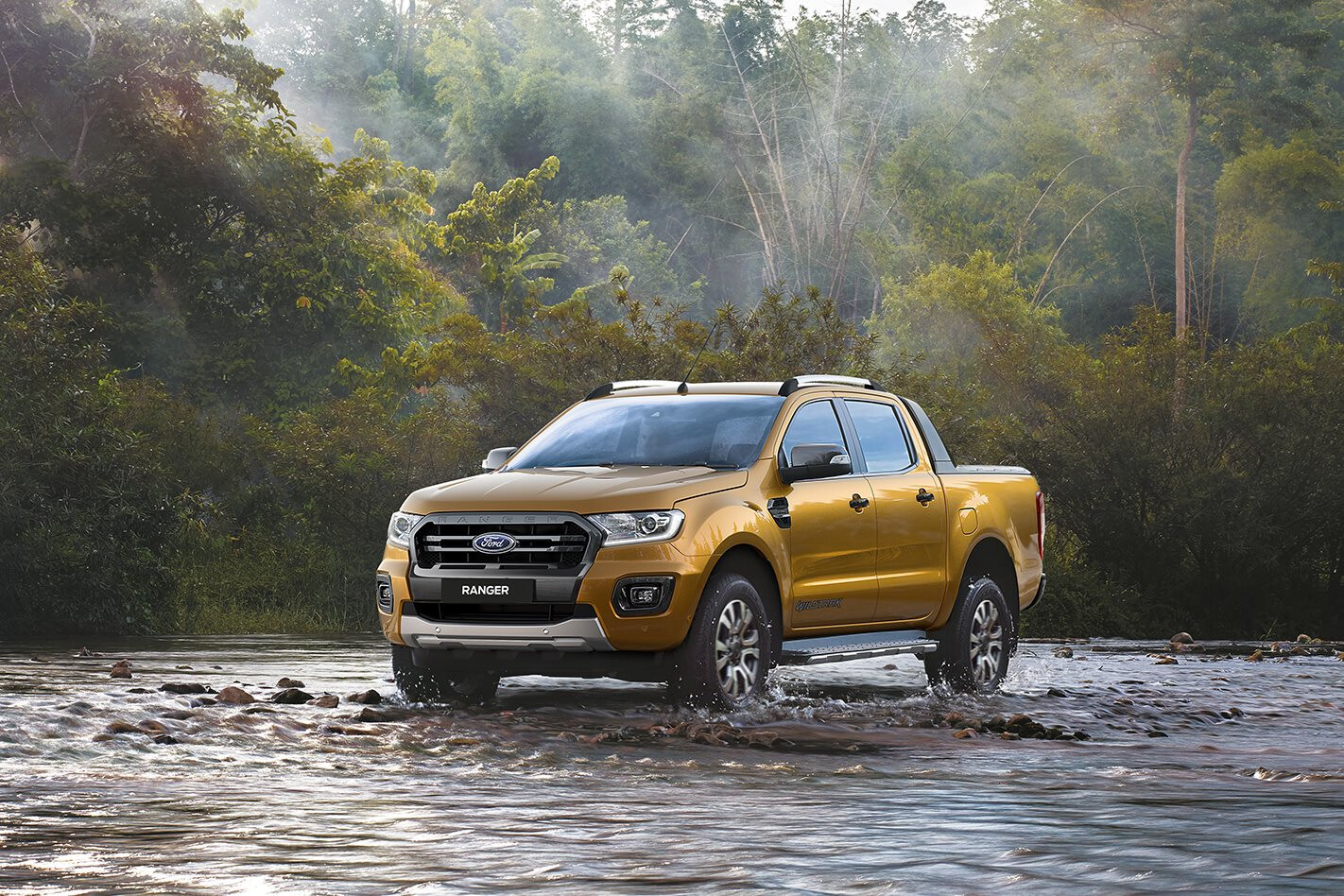
MY19 RANGER 4X2 PRICING
4×2 XL Single C/C 2.2L Low Rider MT: $27,990
4×2 XL Single C/C 2.2L Hi-Rider AT: $33,690
4×2 XL Super C/C 2.2L Hi-Rider AT: $36,190
4×2 XL Double C/C 2.2L Hi-Rider AT: $38,190
4×2 XL Double P/up 2.2L Hi-Rider AT: $39,690
4×2 XLT Double P/up 3.2L Hi-Rider AT: $50,290
4×2 XLT Double P/up 2.0L Bi-Turbo Hi-Rider AT: $51,490
MY19 RANGER 4X4 PRICING
4×4 XL Single C/C 3.2L MT: $41,890
4×4 XL Single C/C 3.2L AT: $44,090
4×4 XL Super C/C 3.2L MT: $44,390
4×4 XL Super C/C 3.2L AT: $46,590
4×4 XL Super P/up 3.2L AT: $48,090
4×4 XL Double C/C 2.2L AT: $46,090
4×4 XL Double P/up 2.2L AT: $47,590
4×4 XL Double C/C 3.2L MT: $46,390
4×4 XL Double C/C 3.2L AT: 48,590
4×4 XL Double P/up 3.2L MT: $47,890
4×4 XL Double P/up 3.2L AT: $50,090
4×4 XLS Double P/up 3.2L MT: $49,190
4×4 XLS Double P/up 3.2L AT: $51,390
4×4 XLT Super P/up 3.2L AT: $56,190
4×4 XLT Super P/up Bi-Turbo AT: $57,390
4×4 XLT Double P/up 3.2L MT: $55,990
4×4 XLT Double P/up 3.2L AT: $58,190
4×4 XLT Double P/up Bi-Turbo AT: $59,390
4×4 Wildtrak Double P/up 3.2L MT: $60,590
4×4 Wildtrak Double P/up 3.2L AT: $62,790
4×4 Wildtrak Double P/up Bi-Turbo AT: $63,990
MY19 RANGER OPTIONS
Prestige Paint: $600
XLS SYNC® 3 Pack: $1,950
XLT Tech Pack (new features): $1,700
XLT Optional Leather Seats: $1,650
18-inch Black alloy wheels for XLT: $750
18-inch Black finish alloy wheels for Wildtrak: $500
THE next-generation Holden Colorado will be longer and wider than the current model, according to GMH insiders.
At a recent Holden Colorado drive day, 4X4 Australia twisted (softly) the arm of a member of the Colorado engineering team for a glimpse at the future of the popular 4×4 ute, and it was confirmed the next-gen Colorado is already well into development.
Holden will also put the final nail in the coffin in regards to its past partnership with Isuzu and go alone with chassis development (the current model still shares some of the Isuzu chassis and engineering). The vehicle will be designed with the global market in mind, so expect some of the US-spec Chevrolet Colorado DNA to filter through to the new model as well.
The development work to this point doesn’t look like including a petrol powerplant option, with local engineers adamant diesel power is the priority (backed up by both research and sales) and confident of meeting upcoming Euro 6 emissions regulations.
Holden reps wouldn’t comment on the potential of a hero model – ala the US-only ZR2, with its front/rear electronic diff locks, wider track and Multimatic DSSV dampers – but we’d be unsurprised if a variant of this off-road beast didn’t appear here in the next-gen model.
With Ford’s Ranger Raptor and the incoming Mercedes-Benz X-Class TDV6, there’s a definite buyer market looking for such a rig, and we’d expect Holden to take it a step further than HSV’s just-released Colorado SportsCat.
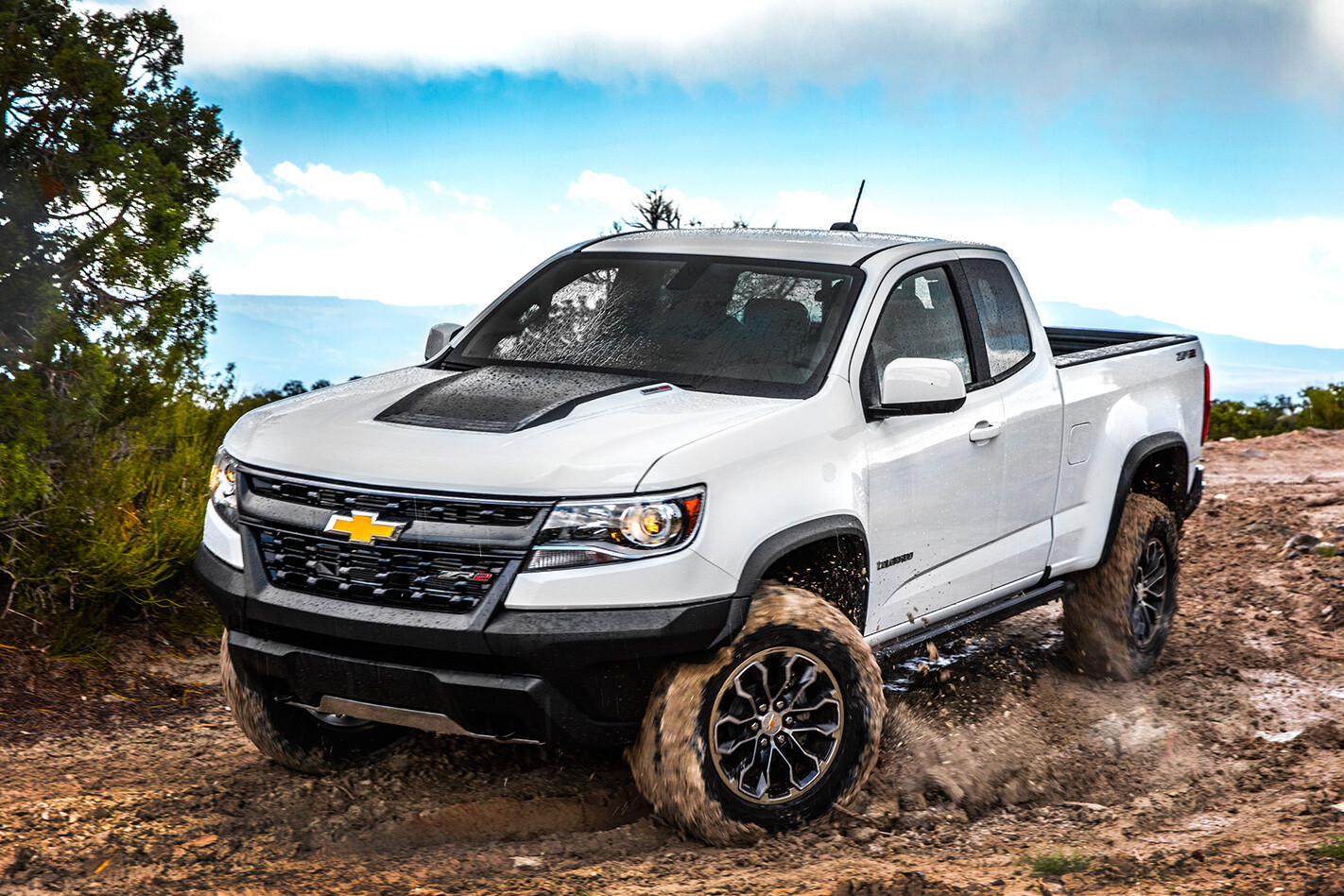
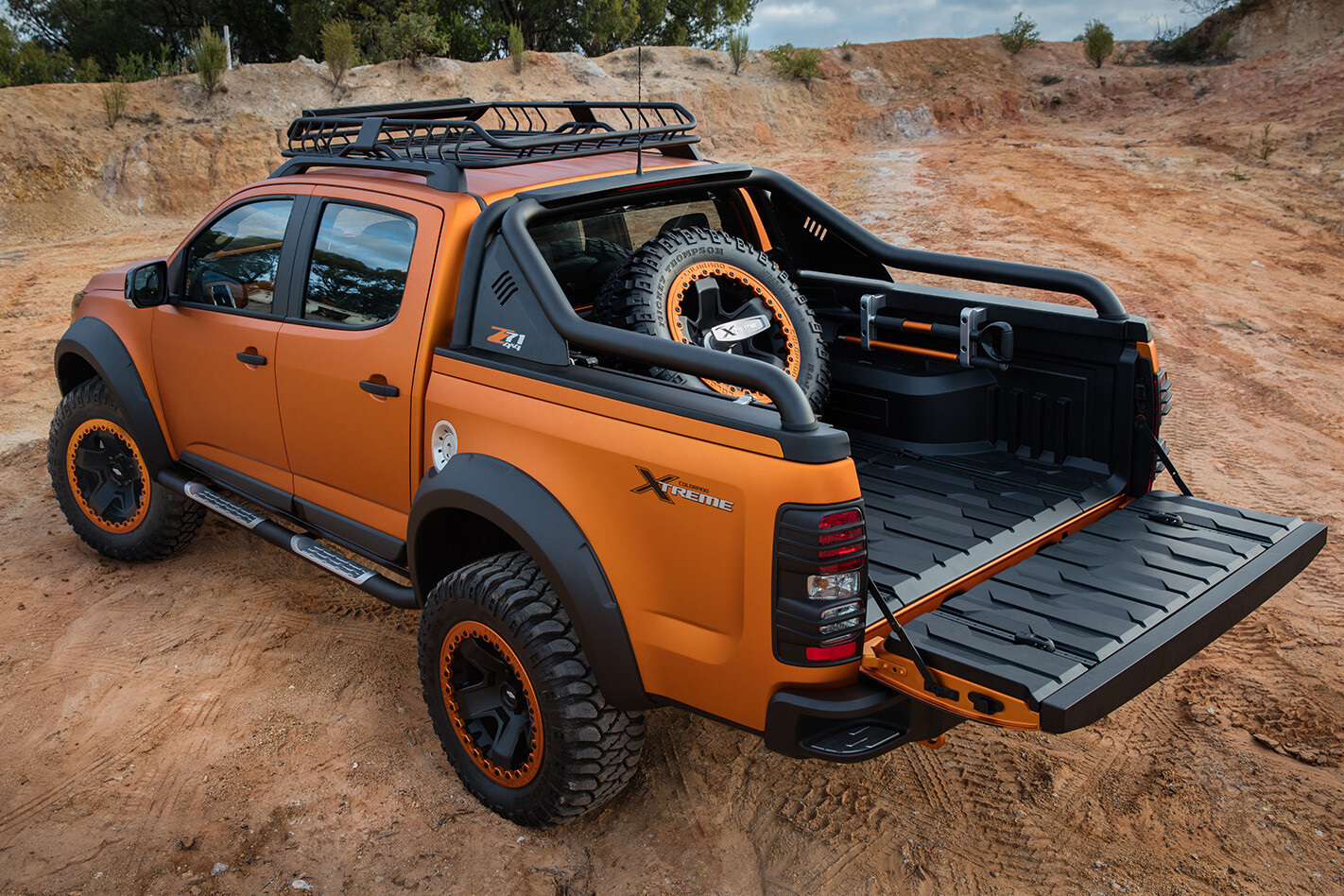
In the meantime, we might expect a dressed-up version of the current Colorado taking cues from the Holden-designed-and-built Colorado Concept (pictured) that was shown at the 2016 Bangkok Motor Show.
Without any powertrain or radical suspension upgrades it would be more akin to Toyota’s recent Hilux Rugged X offerings.
The current-model Colorado still has plenty of life in it, though, with a recent advertising campaign pushing the vehicle’s versatility and focusing on its appeal as an all-round lifestyle vehicle – i.e. the ultimate family tourer that also allows its owners to tackle their favourite outdoor pursuits.
Further to this – and following on from the reveal of the MY19 Ford Ranger and its engineering and safety updates – is news that Holden is looking to fit auto-emergency braking to the Colorado sooner rather than later, ensuring it keeps at the front of the market in relation to driving and safety tech.
HERE are five reader-submitted 4x4s picks that was recently featured on the June issue of 4×4 Australia.
To get involved post a pic and a description of your rig on our special site here or post it to our Facebook page.
We feature a bunch of readers’ rigs in the magazine each month, where we award one lucky punter with a $200 voucher to spend at Piranha Off Road.
2015 FORD EVEREST: MICHAEL HAWORTH (4×4 Australia Readers’ Rigs Winner of the Month)
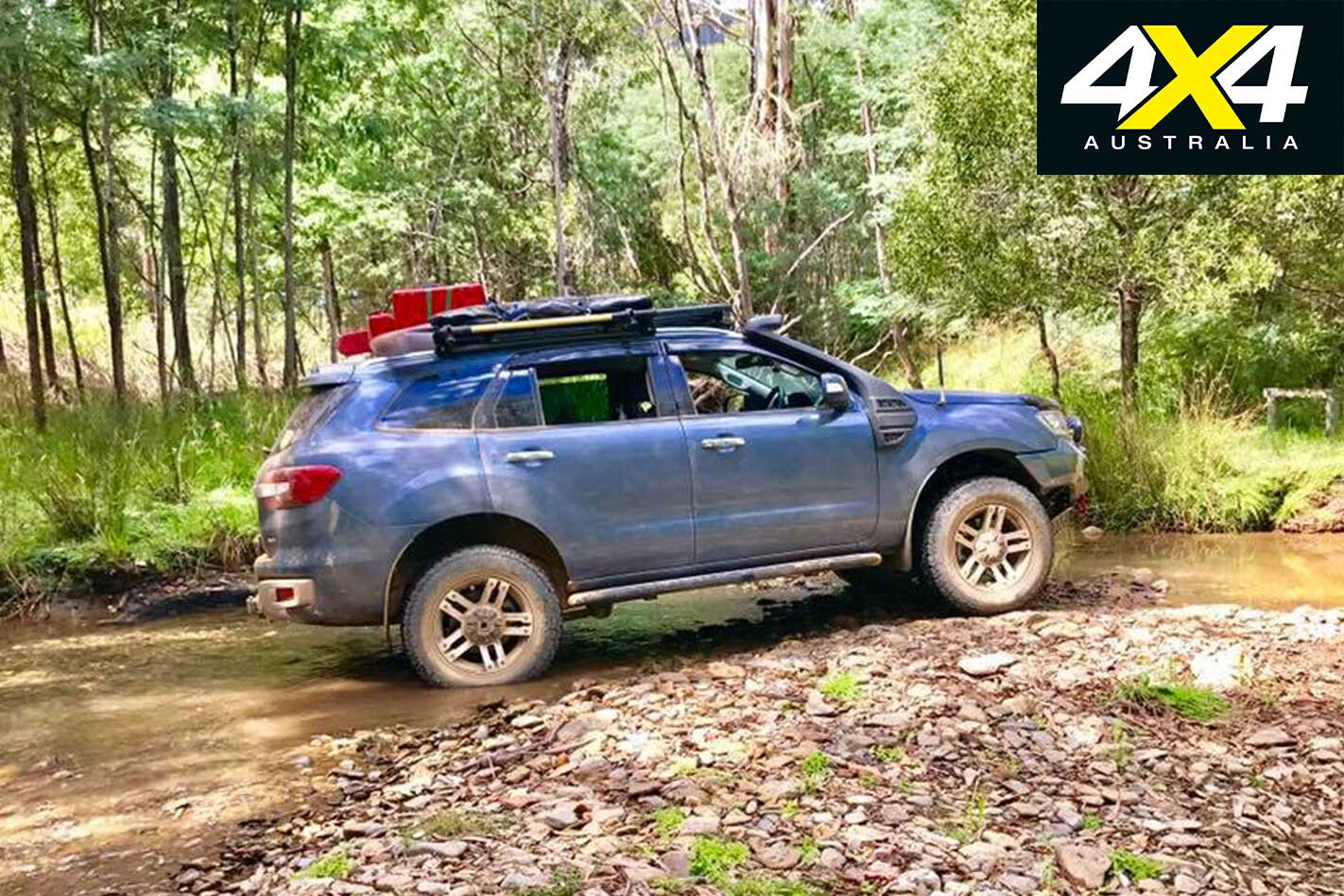
I have had it from new. It has an ARB 50mm lift (BP51 front and OME rear), full Rhino 4×4 underbody protection (prototype), Rhino-Rack Platform roof rack, front e-locker, Rhino 4×4 bullbar with Runva 11XP Black winch, LED bar under roof rack, LED spotties on front bar, rear fridge slide and drawer system, 32-inch AT tyres, TJM steps, snorkel, dual-battery system, water/fuel filter, catch can, awning, CB radio, and full vinyl protection wrap.
My favourite spot is Wonnangatta Station, and it has been through most of the High Country and Little Desert. Other favourites are Billy Goats Bluff, Collingwood Spur, Zeka Spur, Blue Rag, etc. I often tow my homemade off-road camper trailer behind it, but I also tow a semi-off-road caravan.
1994 TOYOTA LAND CRUISER 80 SERIES: FIONA HENDRY
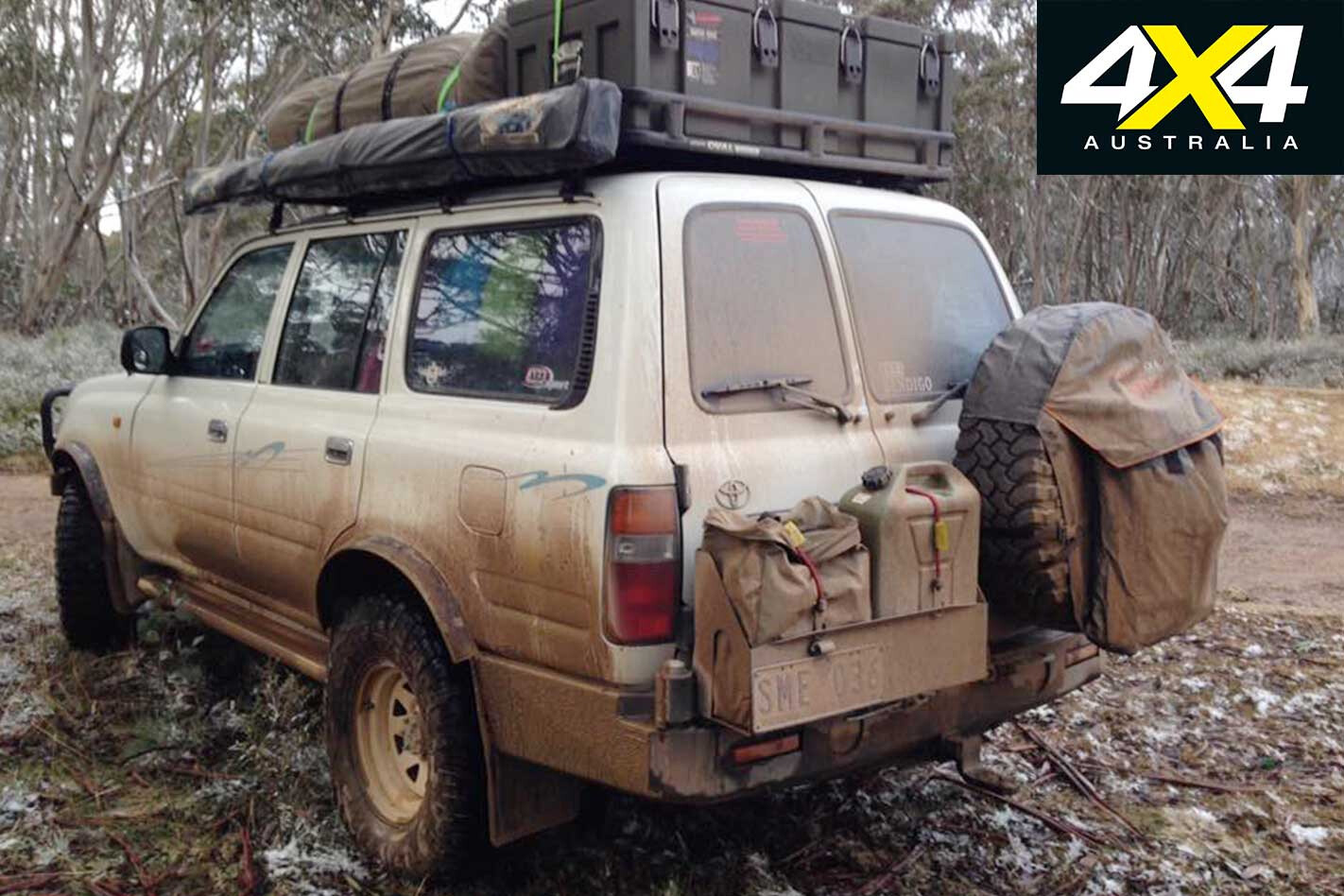
We purchased this six-seater in August, 2007. It has a standard 1HZ diesel engine with extractors, and a dual-battery system.
We added a two-inch lift, Tradesman roof rack, Safari snorkel, light bar, driving lights, 12,000lb winch, Batwing awning, side-steps, cargo barrier, DIY rear drawer system with 40-litre Engel fridge, 20-litre water tank, Polyair bags, 40-channel UHF, ARB air compressor, rear locker, Raslarr rear bar with spare tyre carrier and jerry can holder, and a set of 33-inch Mickey Thompson mud-terrain tyres.
My husband, my four kids and I love going on trips anywhere in the Vic High Country and camping in our Travelander double swags. Our best camp would have to be Currawinya National Park, QLD, and our best place is the Canning Stock Route.
2012 JEEP WRANGLER JKU CRD: NICK SUTHERS
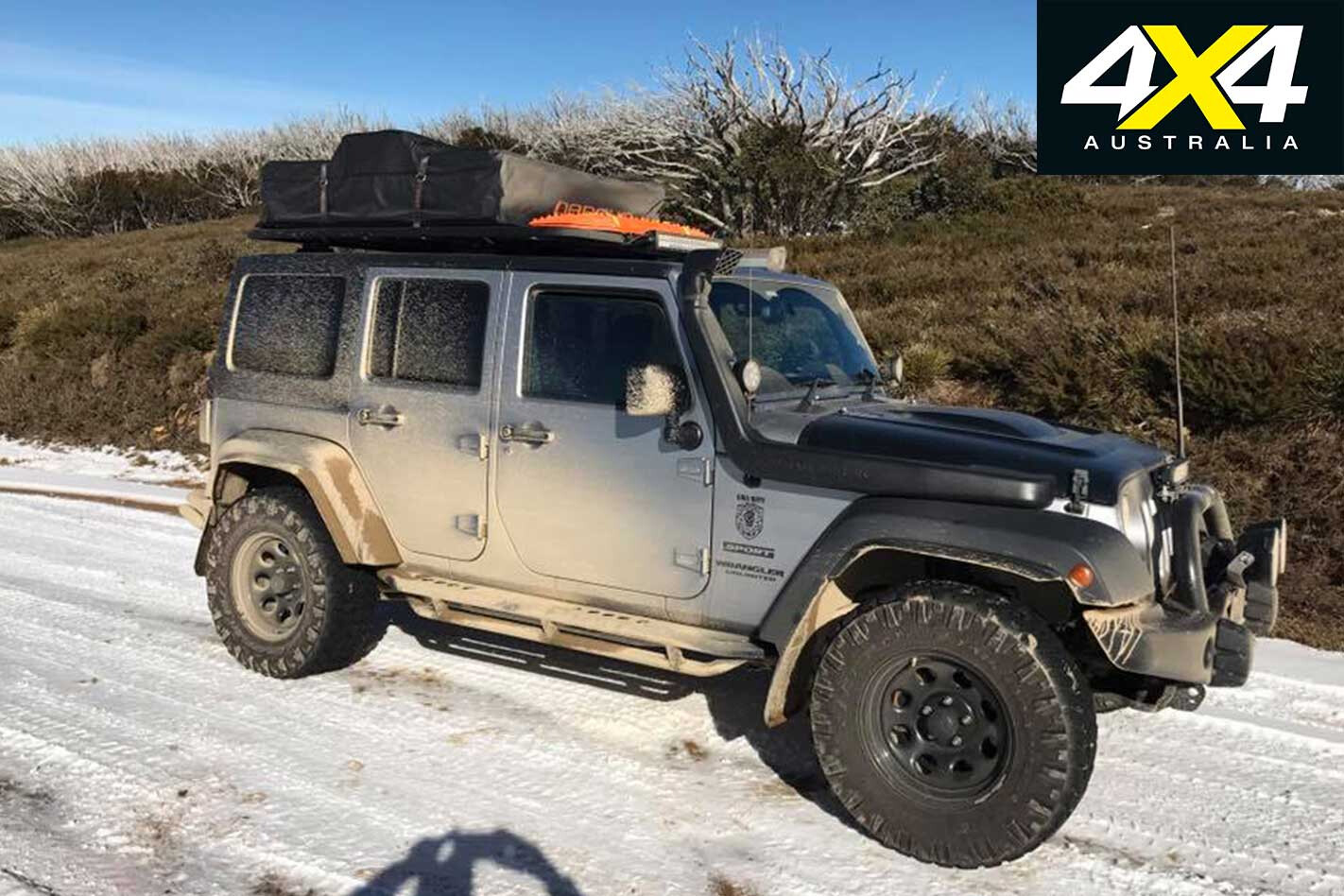
Had it for four years. It started as a new stock JKU CRD, but since then I’ve built my own drawer system with Waeco fridge and Travel Buddy oven, and made a tailgate table.
It’s got dual batteries, rear camera, AEV 2.5-inch lift, bullbar, rear bar with water storage and tyre carrier, fuel caddy, AEV bonnet, snorkel, Smittybilt rock rails, four LED spotties and roof light bar, AEV roof rack, Darche roof-top tent, ARB rear locker, ARB onboard compressor, twin UHF antennas, winch, side awning, and on and on!
Favourite places visited are the Victorian High Country and Beachport, South Australia. On the list for next year are the Oodnadatta Track, Uluru and Kings Canyon … oops, almost forgot the full Outlaw stainless steel performance exhaust.
1999 NISSAN GU PATROL 2.8: BRYCE JAMES
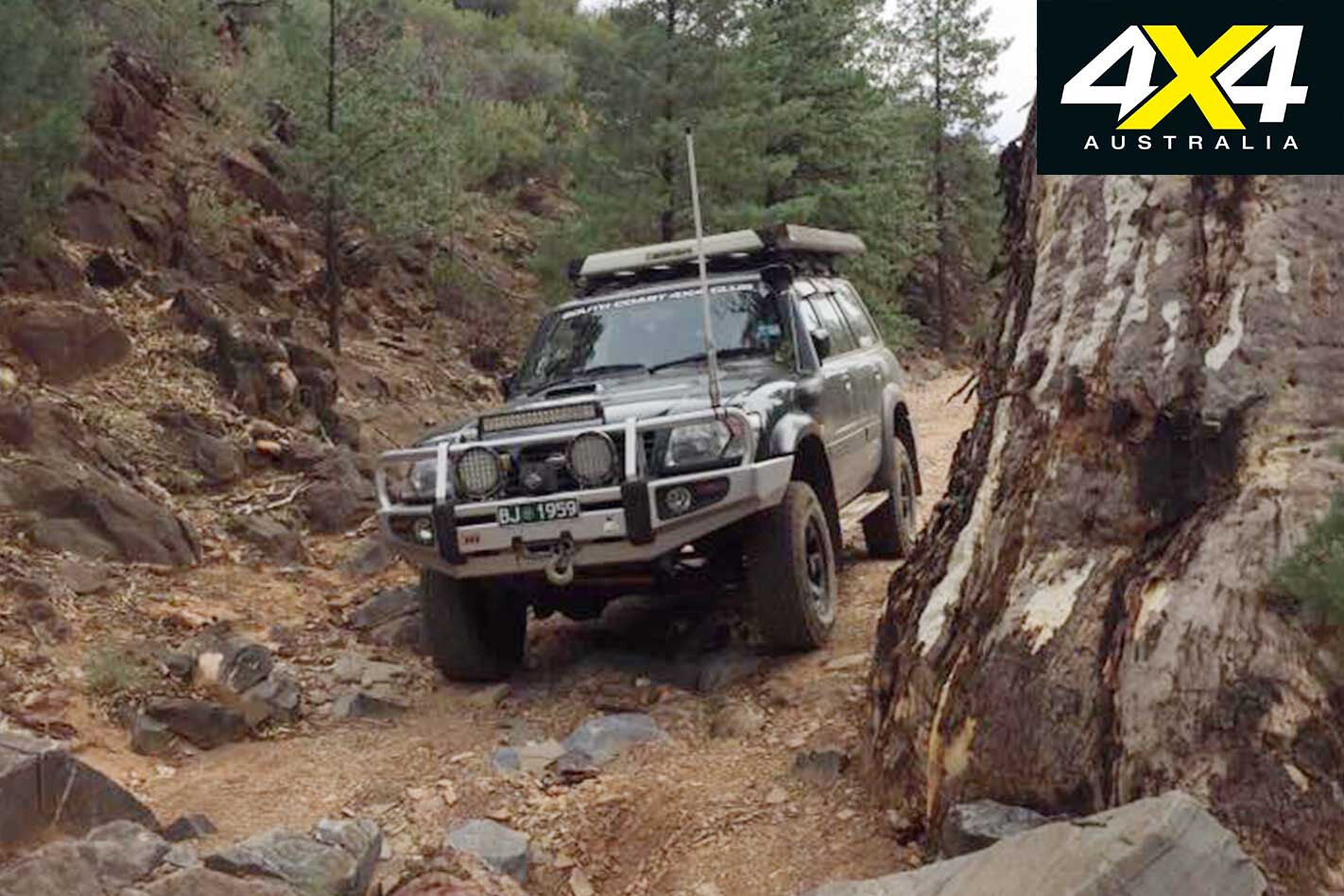
I bought it in 2003 with 79,000km on the clock. First mod was the tyres to Bridgestone 10ply ATs. Second mod was the two-inch lift. It just went crazy after that: Steinbauer chip, roof rack, awning, Engel fridge, dual batteries, ARB bullbar with 12,000lb winch, LED spots, three-inch exhaust, UHF radio, blocked EGR with Catch Can, and more.
Best locations are Warraweena, Arkaroola, Flinders Ranges and the Simpson Desert.
2012 LAND ROVER DISCOVERY 5.0 V8: BRIAN ELLOY
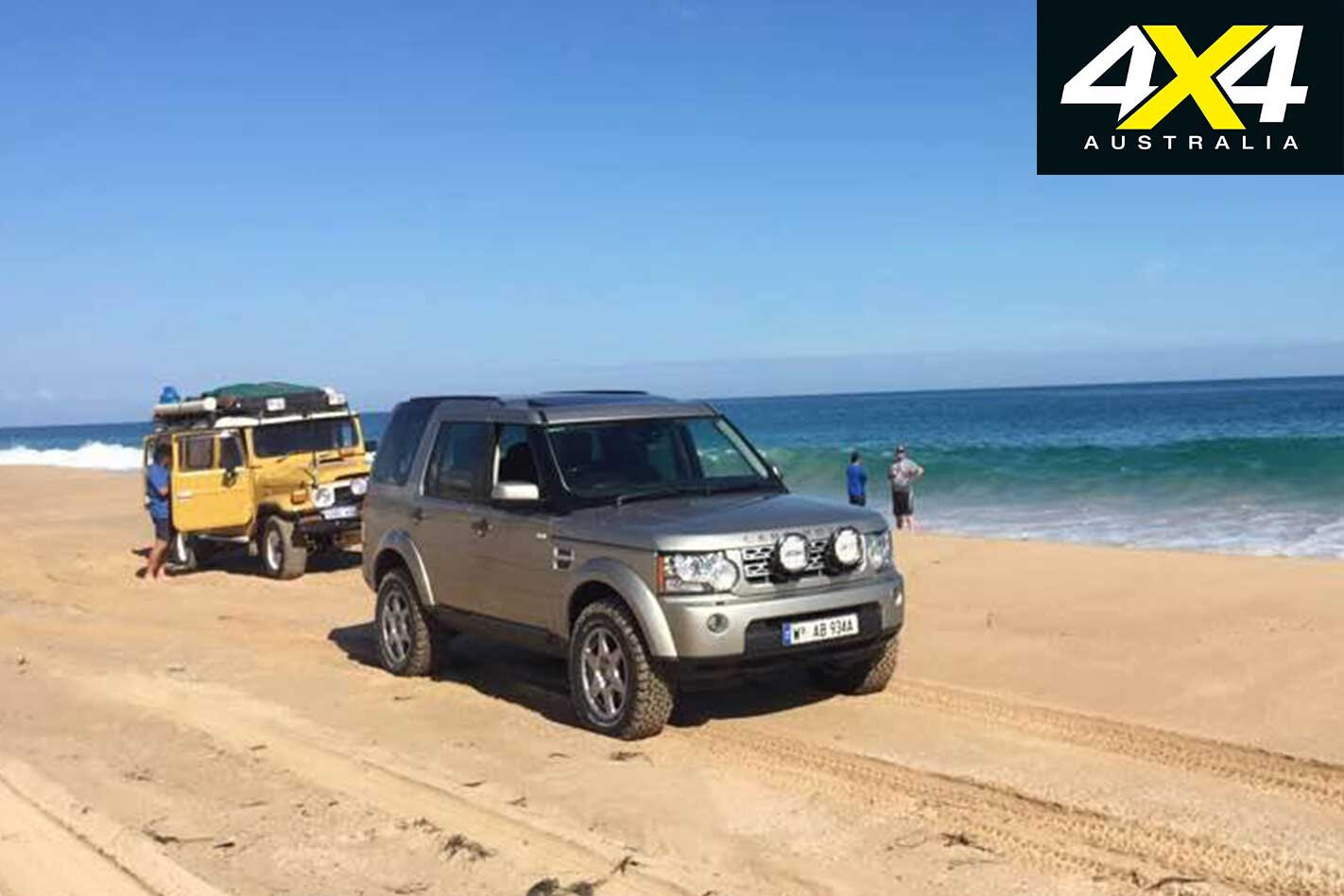
It has the factory rear locker and a two-inch lift by swapping out the control rods on the air suspension. The only mods are 18-inch Compomotive rims, BFG K02s and LED spotties.
Probably the best fun I’ve had in it was at Lennard Track in Wellington Dam, WA, when she crawled right on up the hill climb and put a few other fourbies to shame. She loves a good beach run, too: Wilbinga dunes or Preston Beach.
Celebrating our readers’ pride and joy with Readers’ Rigs
So you live in Perth and want a 4X4 weekend getaway. Look no further than the charming forest village of Dwellingup nestled under towering jarrah trees.
This feature was originally published in 4×4 Australia’s February 2011 issue
Once a timber town, Dwellingup was incinerated in 1961 when 26 lightning strikes ignited an inferno that also eliminated the mill town of Nanga. Today, it’s all about the heritage of the area, and with Lane Poole Reserve to the south offering a number of water-based activities on the Murray River, Dwellingup has a lot to offer.
Start with a visit to the information centre to pick up a copy of the Nanga Heritage Circuit trip notes, a must to avoid getting lost in the spider web of tracks. The Forest Heritage Centre is worth a look around and if you like camping with creature comforts, then the Dwellingup Chalets and Caravan Park is the place to stay.
For a more basic camping experience, Lane Poole offers a number of excellent campgrounds along the river. Baden Powell and Chuditch are great for tents and camper trailers; Nanga Mill is better for caravans (pick a site by the river).
With something for everyone in the family to do, the four-wheel drivers can set off knowing they won’t be keeping anyone waiting.
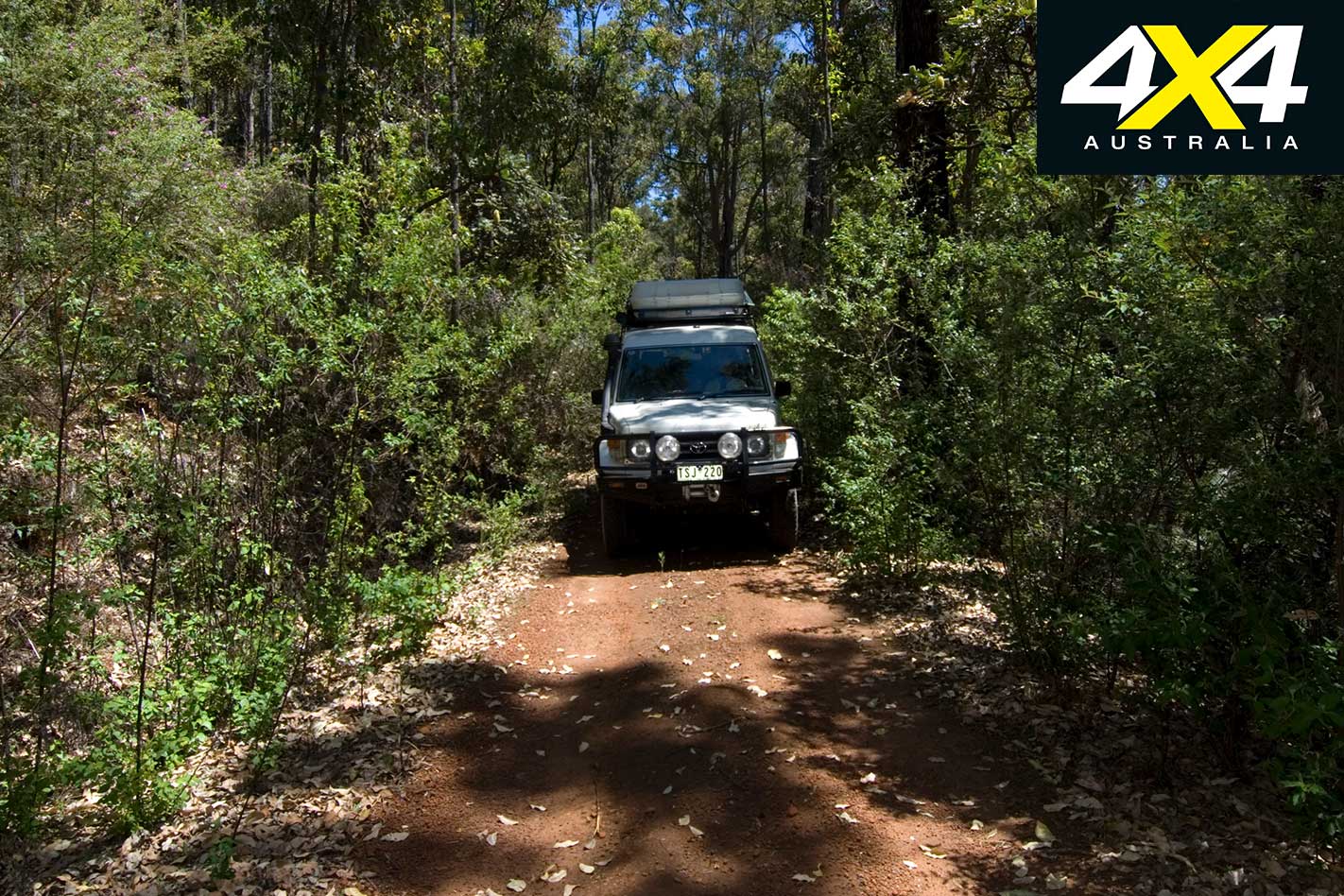
From Dwellingup, the road becomes unsealed about 9km into Lane Poole, near the Baden Powell campground; continue by following the signs toward Nanga Mill, travelling about 12km along an extraordinarily scenic drive. The circuit (and trip notes) start at Dingo Road, where you should stop to engage 4X4 and set your odometer to zero before turning right.
Follow those trip notes like a bible, and do take the time to stop and examine the numerous heritage sites. There are old trestle bridges tucked high up in the tree canopy, and decaying timber tracks and tramways cutting your path.
In some sections, the track narrows to a corridor of branches and the odd deep pothole filled with water can get you into strife if caution isn’t used. Watch for wildlife: emus sometimes bolt down the track in front of your fourby as if leading a convoy.
After about 39km you’ll veer right onto King Jarrah Form, and you will need to watch carefully for markings carved into tree trunks and stumps. You’ll cross the King Jarrah Walk Trail and after another 6km the circuit ends and you will return on Dawn Creek Road.
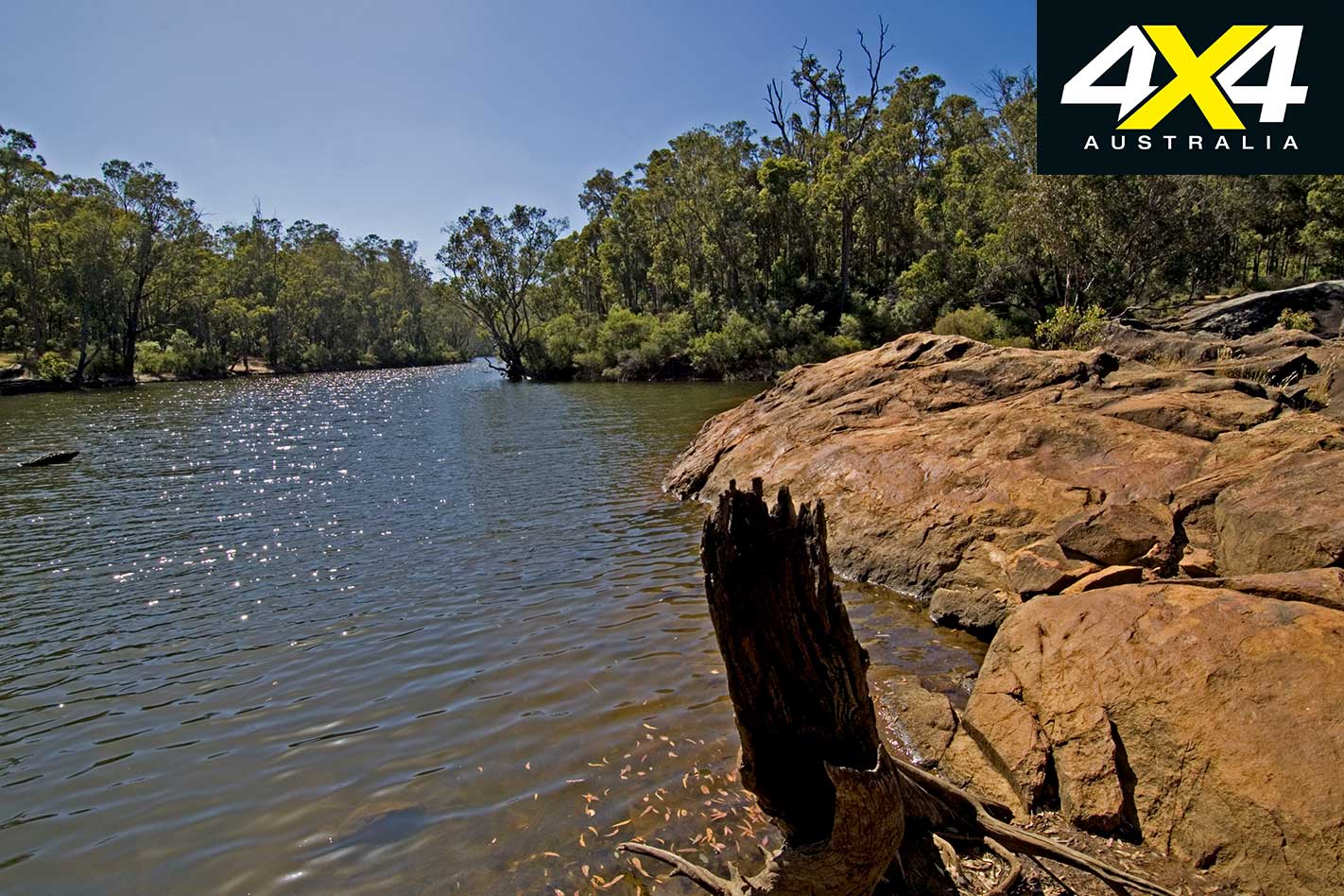
When it is warm, rafting, canoeing, swimming and fishing on the Murray River are all great fun. The 1000km-long Bibbulmun Track traverses the reserve, as do many other walking tracks. For mountain bikers, there is a 10km loop and also a section of the Munda Biddi Trail.
The place is fun, it is pretty, and it is nearby. So pack up those toys and head south-east of Perth for a weekend getaway that you will want to return to again and again.
Travel Planner
WHEN TO GO Anytime that the track is dry and/or open.
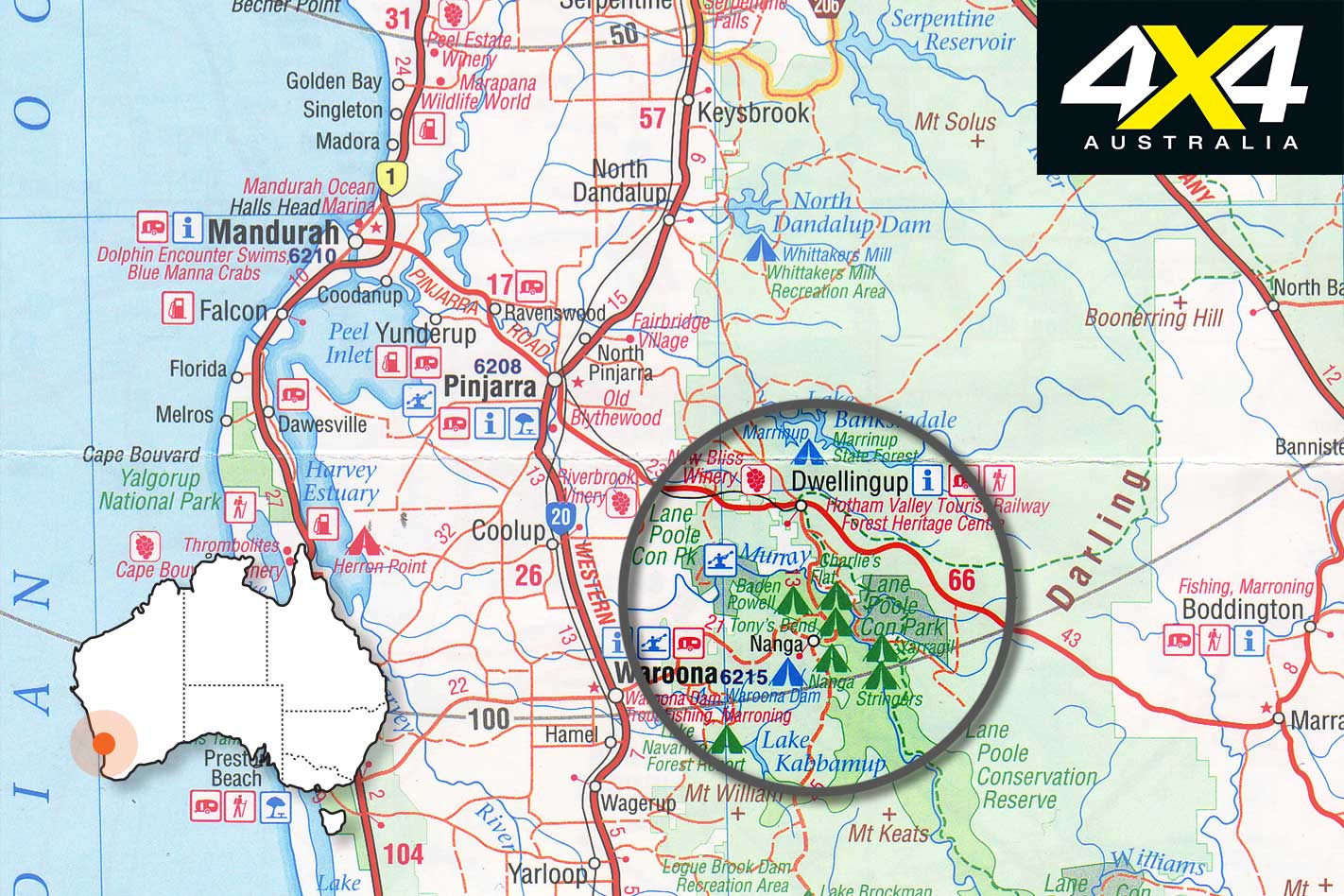
CIRCUIT DISTANCE 50km, or 105km return from Dwellingup.
TO START/FINISH Travel 100km south-east of Perth via the Mitchell Freeway, turning east on Mundijong Road then south on the South Western Highway, branch south on Del Park Road to Dwellingup.
COORDINATES Dwellingup Information Centre (pick up trip notes here): S32°42’46” E116°03’44” Dingo Road/start of circuit: S32°48’19” E116°05’34”.
SUPPLIES, FUEL Dwellingup
WHAT TO BRING Food and water, recovery gear
VEHICLE REQUIREMENTS 4X4 with high clearance
WARNINGS Very narrow track in some sections. Travel circuit in a clockwise direction (and hope no one comes along the other way!) Deep potholes, limited pull-outs, no U-turns.
CAMPING & ACCOMMODATION Numerous campgrounds (toilets only) in Lane Poole Reserve, Dwellingup DEC office; 08 9538 1078, dec.wa.gov.au. Dwellingup Chalets and Caravan Park; 08 9538 1157, dwellingupcaravanpark.com.au.
FURTHER INFORMATION Dwellingup History and Visitors Information Centre, 08 9538 1108, murray.wa.gov.au.
MAPS Nanga Heritage Circuit trip notes – essential to avoid getting lost. Guide to Lane Poole Reserve, Dwellingup DEC Nanga topographic map
4X4 OPPORTUNITIES Captain Fawcett Commemorative 4X4 Track, running south for 105km from Dawn Creek Road to Quin Danning Inn, near Boddington.
RIVIAN Automotive, an electric-car start-up company based in Detroit, USA, plans to debut its first electric all-wheel drive “truck” in 2020.
Before that, however, the vehicle is expected to be unveiled at the 2018 LA Auto Show.
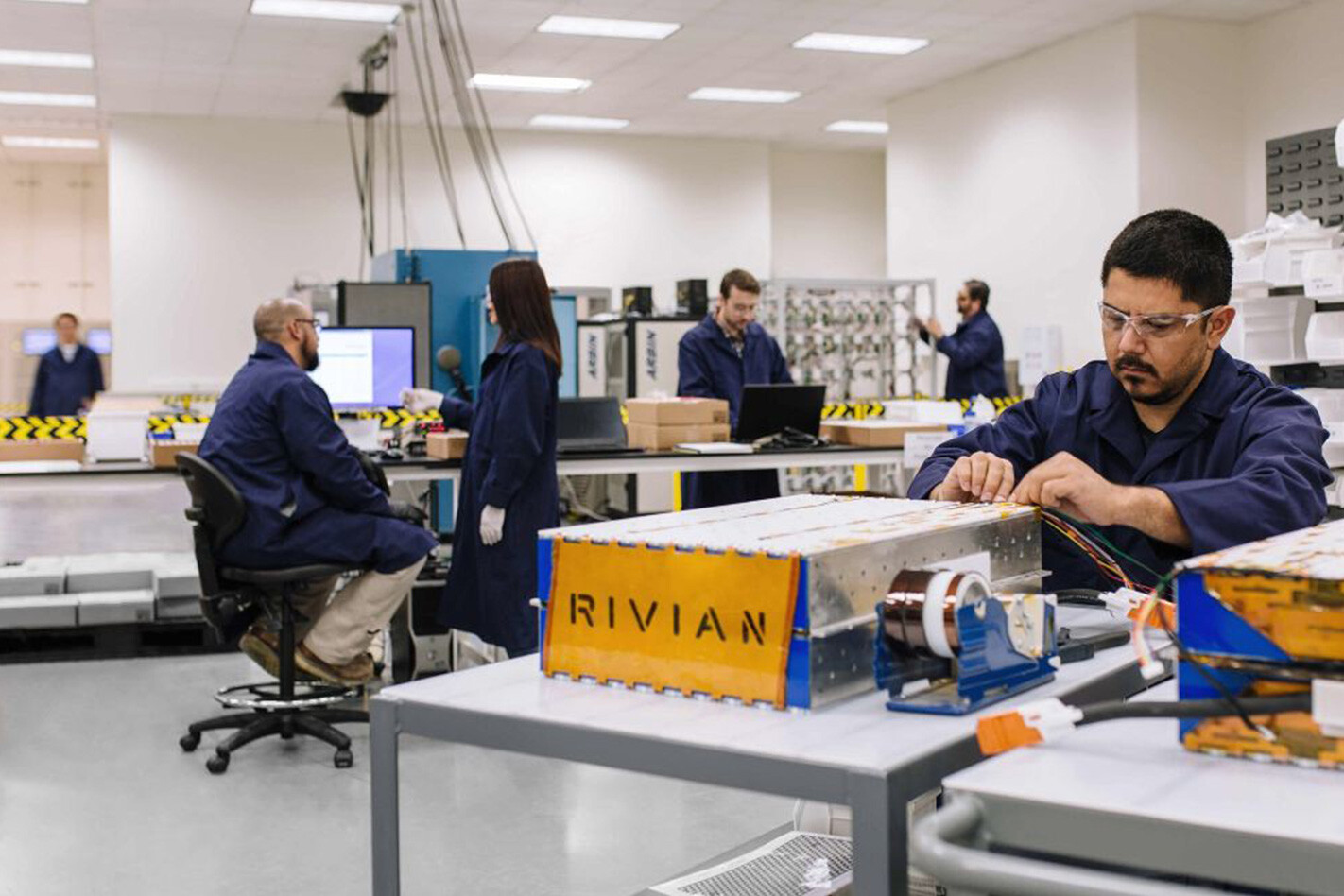
Information at this stage is scarce (and there aren’t any photos), but what we do know is that – courtesy of engadget.com – there will be two premium all-electric vehicles that’ll share the same all-wheel-drive platform: a five-seat pick-up ute (reportedly called A1T) and a seven-seat passenger SUV (A1C).
The A1T is set for a 2020 debut, while the A1C is set to debut a year later.
Watch next: Bollinger B1 at the 2017 SEMA Show
The A1T is said to have a fording depth of 1.1 metres, 360mm of ground clearance, and capable of climbing 45-degree inclines.
Engadget also stated that different battery packs will net you various ranges. For example, the base 80kWh pack will deliver 200 miles (322km); while the most expensive models can fetch 450 miles (724km) on a single charge.

The vehicles are designed and engineered in Michigan and California, and they will be built in a 2.6 million square foot manufacturing facility in Normal, Illinois.
“At Rivian, we’re creating electric adventure vehicles that get you to the mountain and back on a single charge,” a Rivian promotional video stated. “That fords streams with your family and gear safely intact. That navigate the backcountry in silence, and of course do it all with zero emissions.
“… [We] will transform how you explore the world.”
Just like we’ve done with the Bollinger B1 all-electric truck build, we’ll be keeping a close eye on the Rivian electric truck.
THE second episode of the 4X4 Adventure Series will be stuck to the front of the June issue of 4X4 Australia, which will be in stores on May 24.
In this episode we venture to the historical gold mines scattered throughout the Victorian High Country, retelling stories of the hardships faced by those who confronted the region’s brutal challenges.
As always, the magazine is brimming with new 4×4 metal, travel yarns from near and far, and a superb custom Wrangler that’s wowing Americans across the ditch.
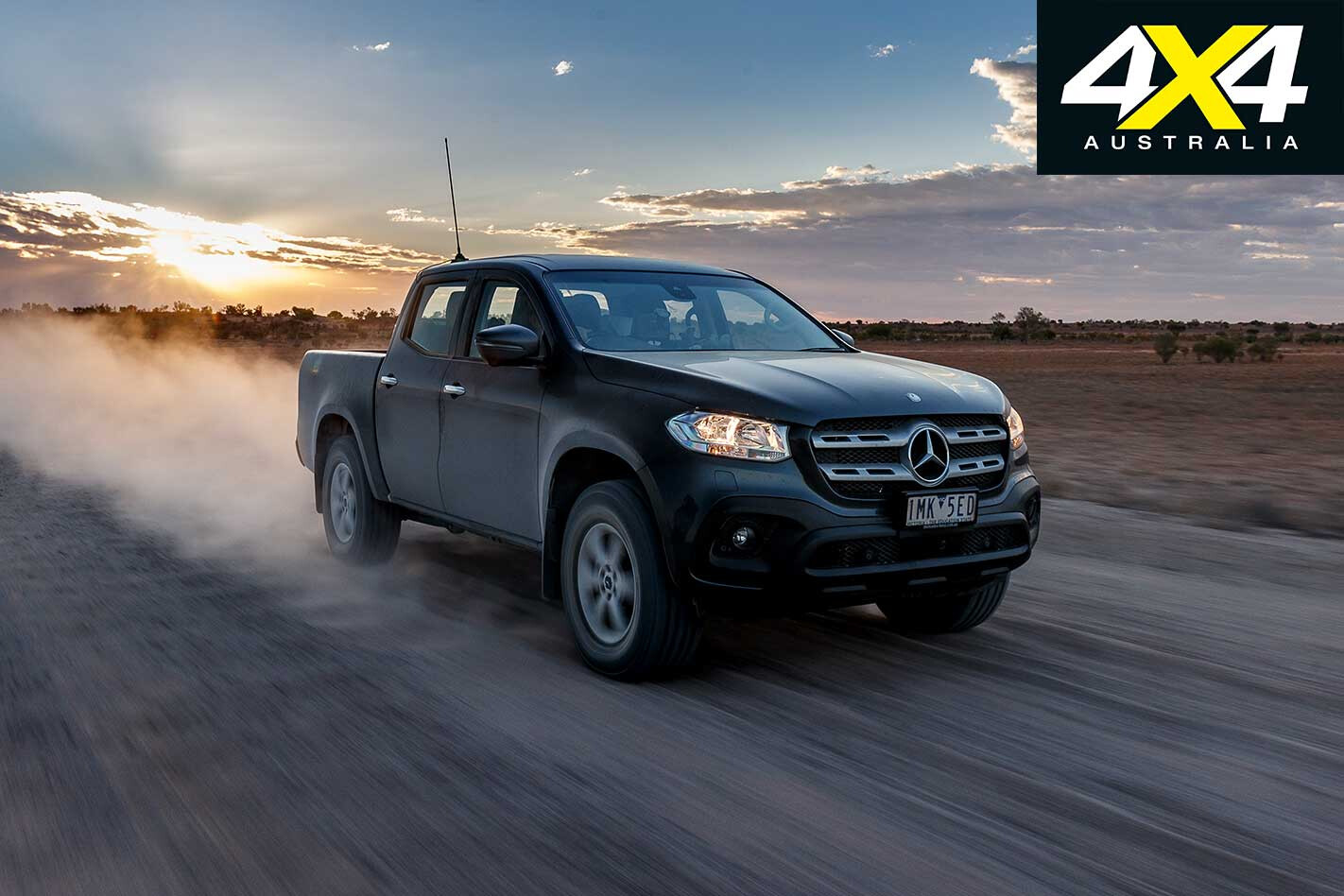
Mercedes-Benz’s new X-Class faces its most rigorous challenge yet: the Australian Outback. Plus we discover if Mahindra’s budget beaut Pik-Up dual-cab is good value, or just cheap.
We also celebrate 70 years of Land Rover with a party in Cooma, and we head to the northern reaches of the Tip in part two of our Cape York adventures.
WHAT ELSE IS THERE?
- Holden 1 Tonner – the merge begins
- Resident Patrol Ti-L heads interstate
- Travel: Vic High Country, 2018 ARB Eldee Easter Festival, 2018 Drive 4 Life
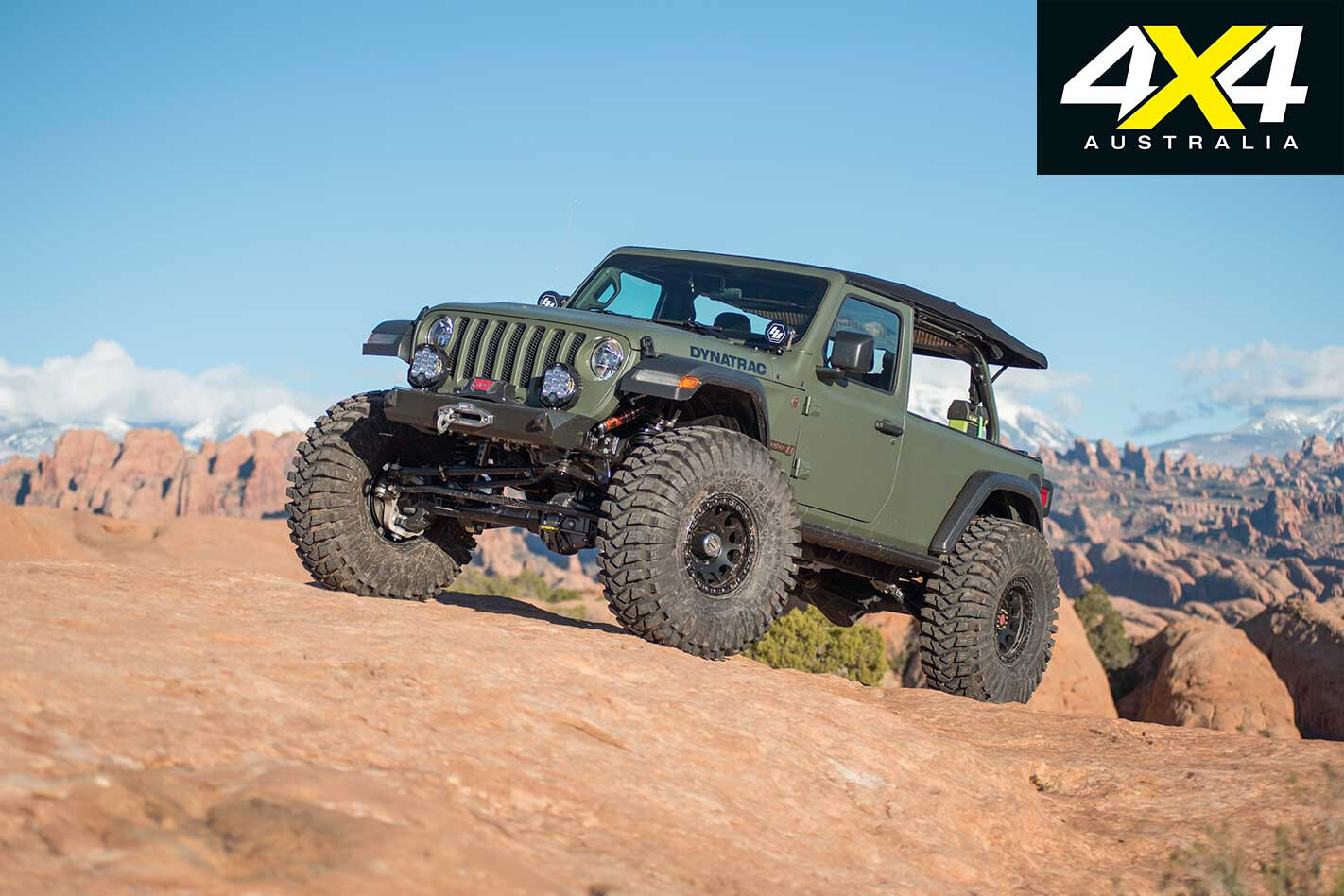
- Complete coverage of the 2018 Easter Jeep Safari in Utah.
- Hilux Heroes and revamped D-Max/MU-X tested.
- Product tests, and monthly rants by Fraser and Ron
The June issue is in stores May 24, or pick up a subscription via Magshop.
YOU CAN feel it in your bones: it’s just before you wet your tyres in Washpool Creek and the range looms above your line of sight. It’s usually an easy crossing, barely sill depth, and flowing clear and clean over a stony bed.
There’s a rich history here, which you begin to experience as you pass a small cluster of buildings that are all that’s left of the township of Lionsville. Farther into the bush, the names of other towns long vanished and reclaimed by the bush are Malara and Solferino.
The track roughly follows the route of the old packhorse mail run between Grafton and Tenterfield, which began about 1883. This mail took up to three days to complete one-way, depending on the weather.
The mail went from Grafton to Lionsville, over the range to drop down to the Rocky or Timbarra River, before climbing up to Poverty Point where gold mining was carried out until recently. From there, the next leg was to Tenterfield.
From the crossing at Washpool Creek the Lionsville road climbs steadily up the escarpment, where the changes to the flora become noticeable. The dry sclerophyll forests at the lower levels are replaced by dense gullies and tall trees that stretch to the sunlight, with a profusion of tree ferns and elk horns thrown into the mix. It’s nearly always damp here because the sun seldom reaches the lower reaches.
The bush, as it always does, has reclaimed its own here. However, you may occasionally come across a lump in the scrub, which, on closer examination, may be the remnants of a shaft.
We followed a track that branched off from the Lionsville road not far from the Jerrawarra Flora Reserve sign. According to the 1:25,000 Malara map, it looked to head in the direction of where we thought the old Solferino township might lie. We eventually reached a point where options for turning around were limited, so we proceeded on foot.
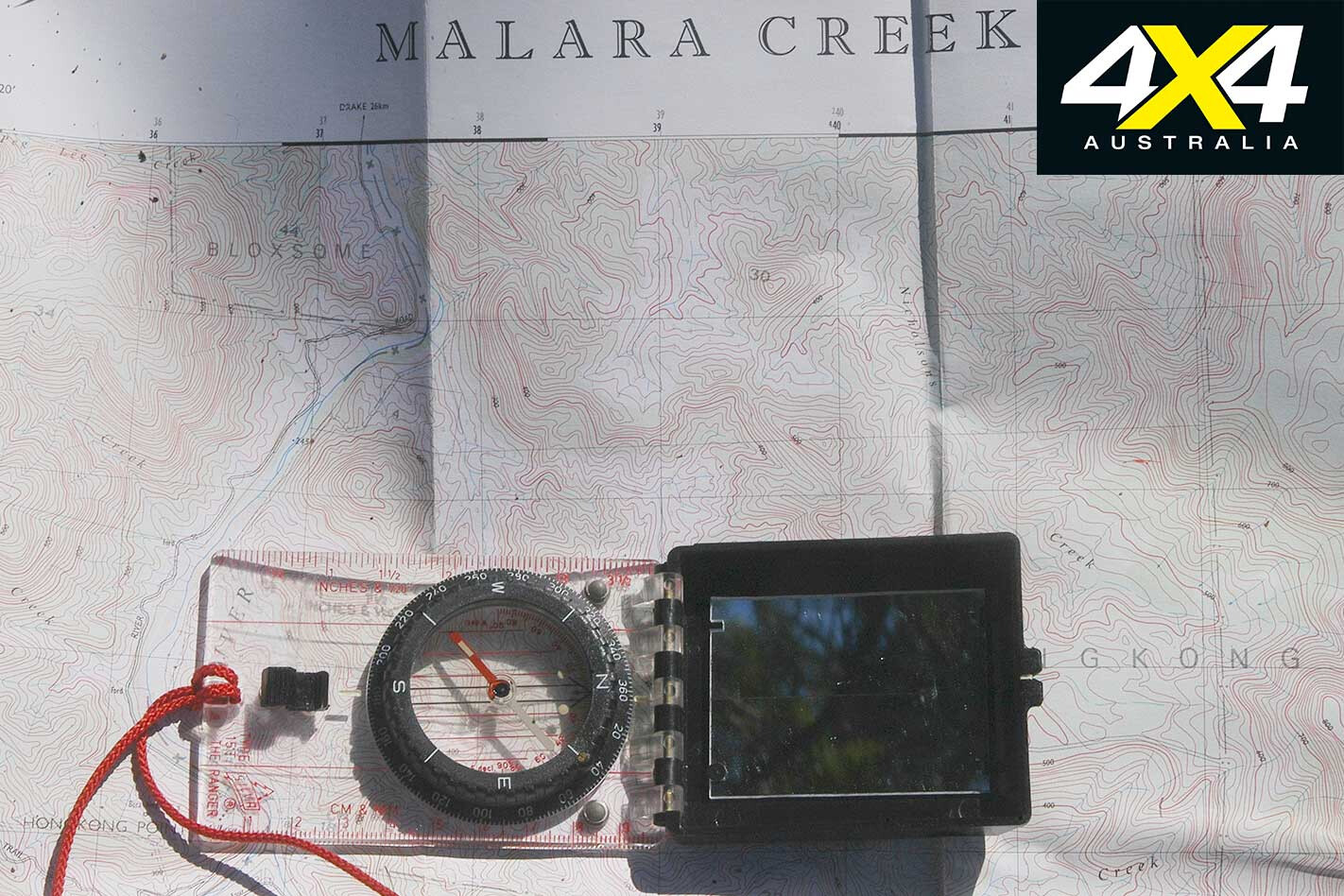
After less than a kilometre the track became overgrown and we soon arrived on a small plateau. All around is evidence of the area’s mining past, and, without knowing for certain, we assumed this amount of mining activity would have meant some sort of township nearby. Could this have been the site of Solferino? Finding history about this place was never going to be easy, with the bush wasting no time in reclaiming the efforts of human endeavour.
Partway up the trail is the Jerrawarra Flora Reserve. The name comes from the local Aboriginal name that means “small hairy man” – clearly the Yowie legend may well have had its roots here.
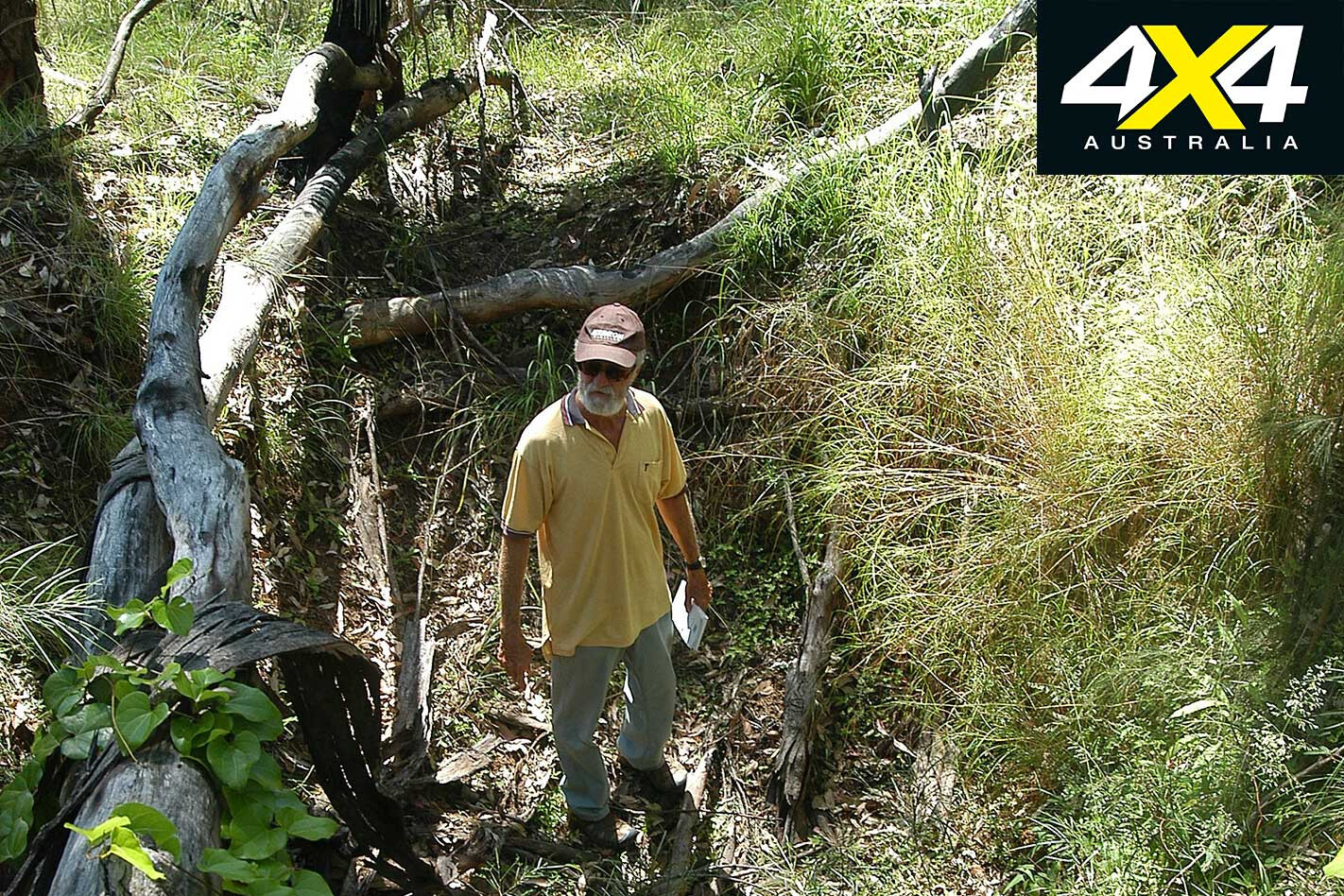
A local once told me the Aboriginal people believed this creature lived in the trees and would swoop down and grab either the first or second man in a line going through the bush.
There’s no way to know if this is true, but it’s also said that when the cedar cutters came here the local Aboriginal people would put the white man either at the front or the back of the line when they showed them where the cedar grew. The white fellas thought this a mark of respect, but they had not heard the stories.
At the top of the range – about 700 metres above sea level – is the Billilimbra Road T-intersection. After turning left here you’ll follow the track to its intersection with Letterbox Road; its name handed down from when the previously mentioned Grafton-to-Tenterfield packhorse mailman came this way.
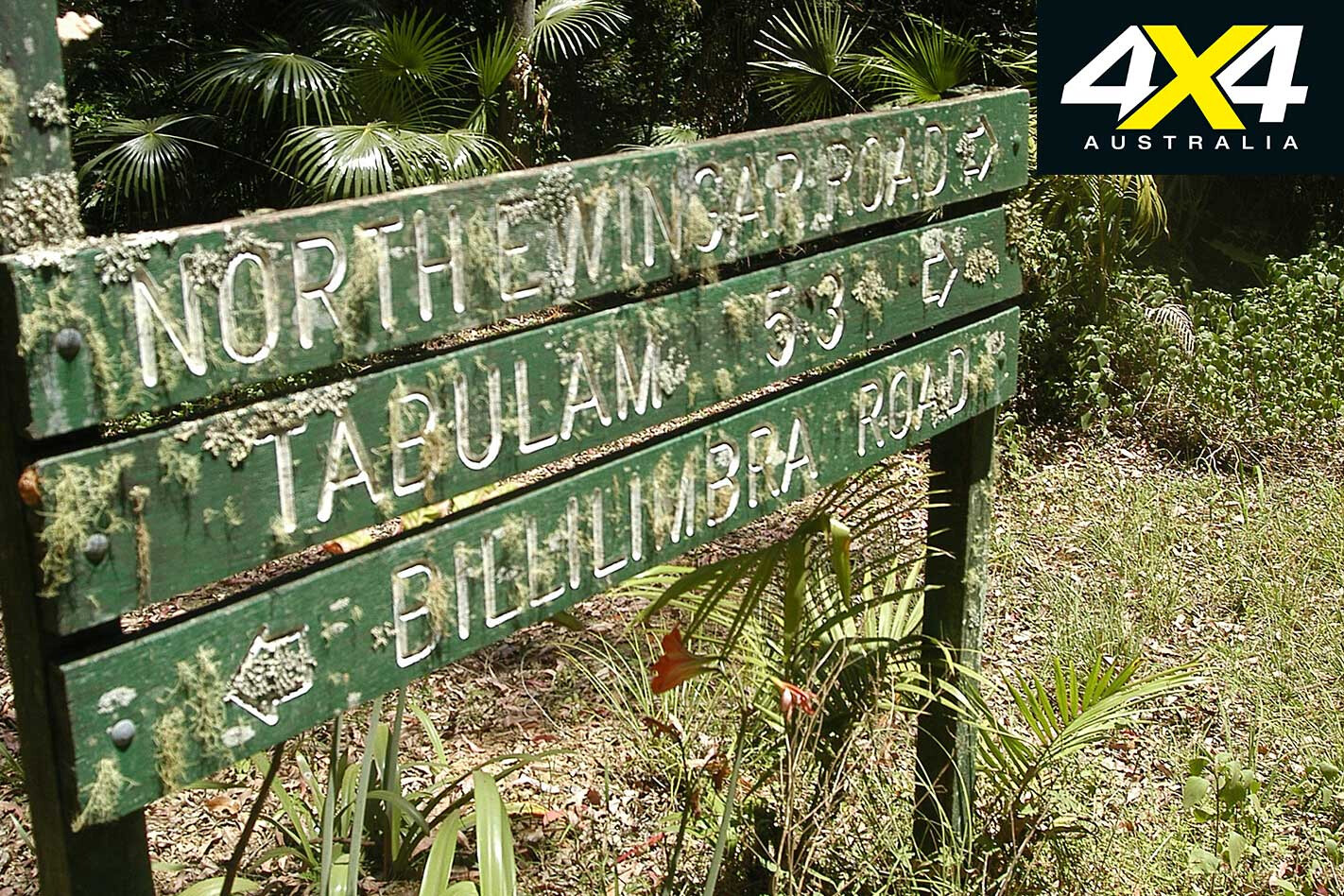
The track basically follows the route he took. Letterbox Road eventually joins the Malara Creek fire trail – you used to be able to follow this track and cross the Rocky River, but the landholder at the Rocky River end has locked it due to the actions of an irresponsible few. You can still follow the track, though, but it’s a one-way trip only.
The scrub closes in on both sides as you proceed along Billilimbra Track, and it’s advised to fully retract your vehicle’s radio aerial. I didn’t and lost mine. You could previously follow this track all the way across the range to Grafton Road, but, with the creation of the Washpool NP, the track ends rather suddenly at Berry Creek.
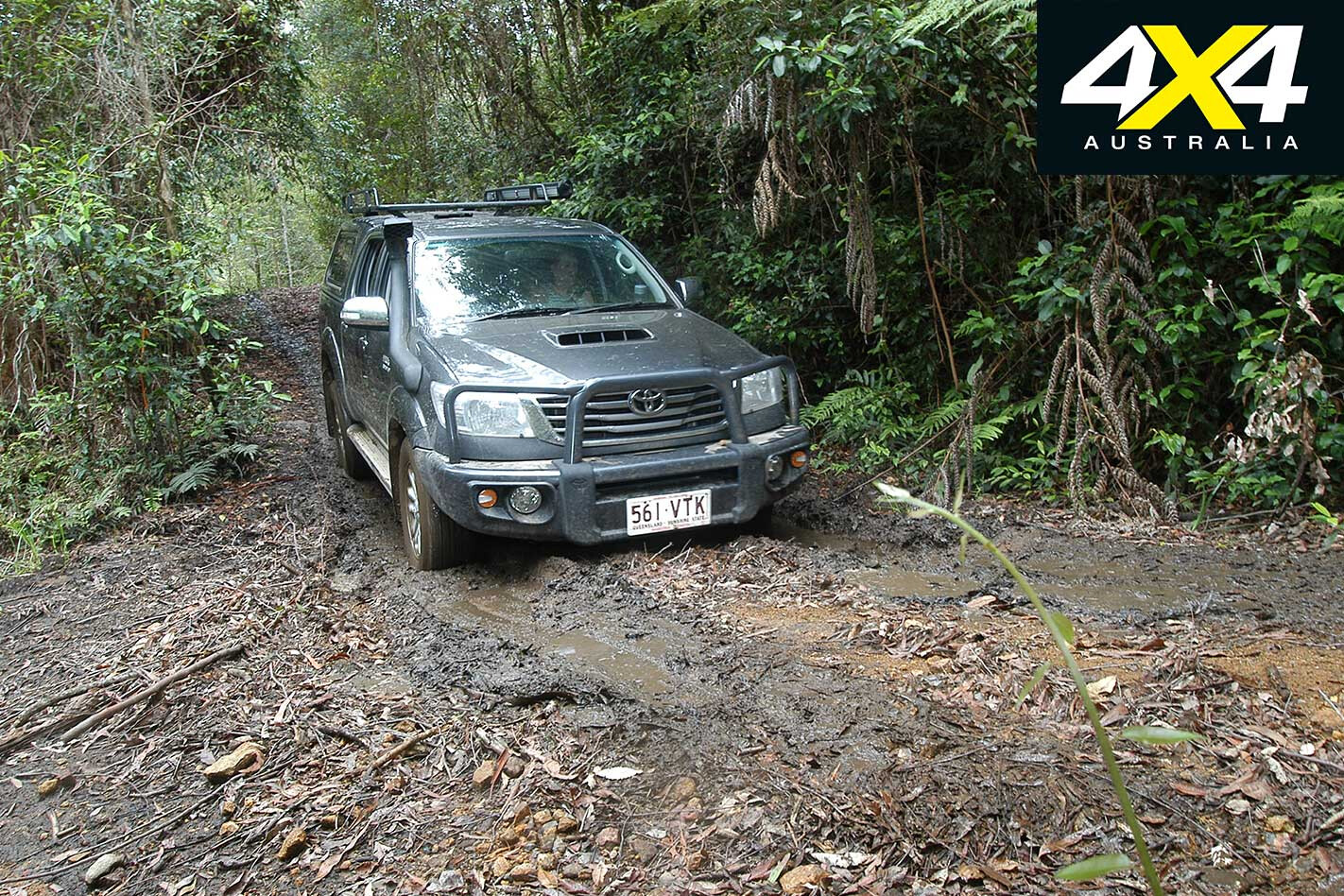
This is a pretty good place to stop and have a look around, as the crystal-clear, icy cold creek flows over rocks and cascades downhill on the western side of the range. Once done, you must turn back and retrace your tracks.
This is a region of huge interest for the avid explorer, as old logging/management tracks often spear off into the scrub, meaning it could take days to check them all out. Some go in a loop and rejoin a track you have already been on, while others end without ceremony or any particular reason. If you intend on doing any exploration, a chainsaw would be worth the investment.
Backtracking to the T-intersection allows you to continue along the main Forest Road, where you must keep an eye out for Elkhorn Road to your left as it meanders down to Ewingar Creek. This is alluvial country and the glitter you may see in the sandy bottom is mica, not gold.
On a hot day, a place like this is great for a rest stop, especially for kids, who will enjoy a splash in the creek and can explore farther up or downstream from the crossing.
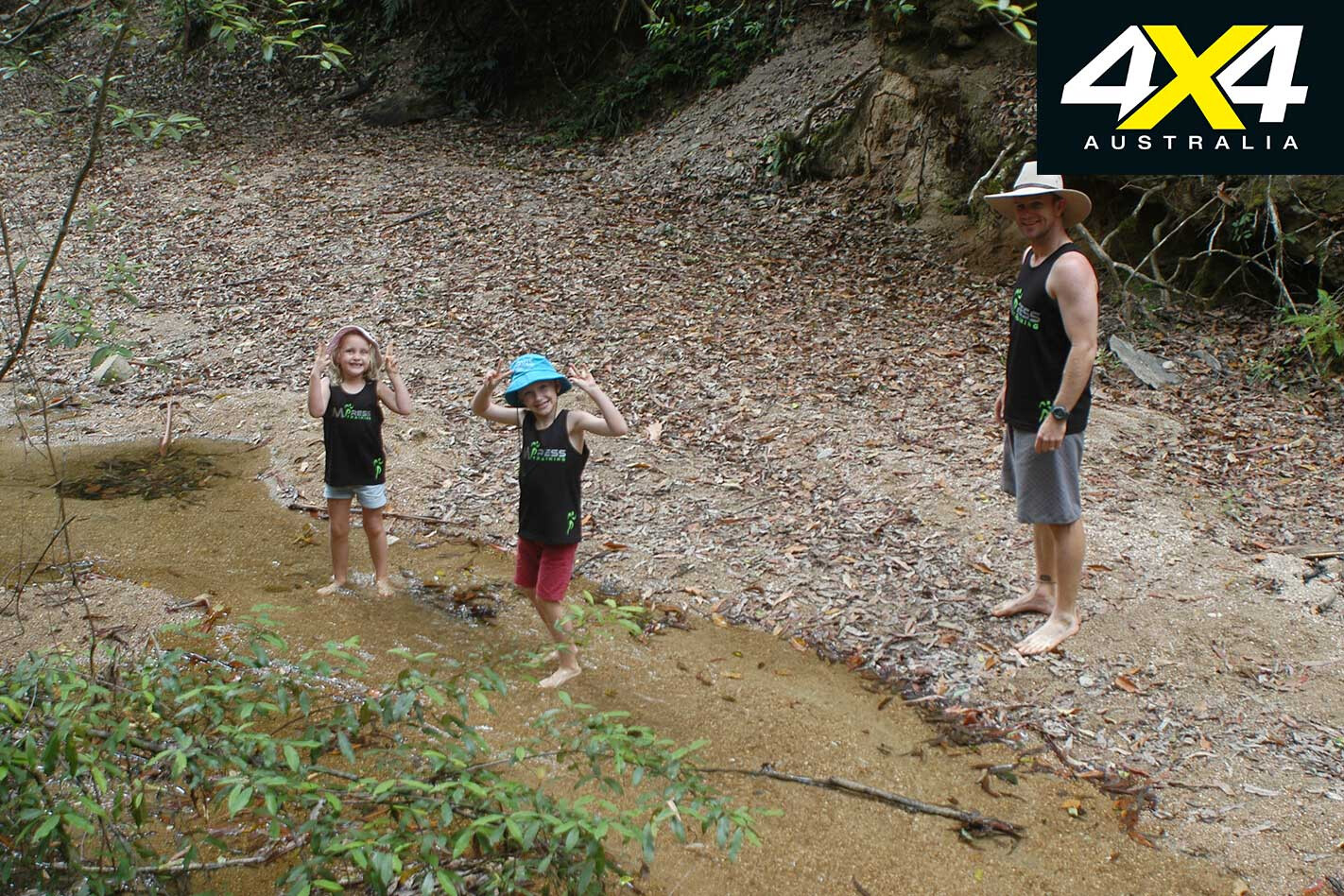
Once you’ve dried off at Ewingar Creek you can continue on Elkhorn Road to the intersection with Bulldog Track, which will take you past some unusual rock formations, oddly enough resembling the profile of a bulldog. However, some reckon it looks more like a Murray cod in profile.
Either track will eventually bring you to Plains Station Road, where you will be on bitumen all the way back to where it joins the Bruxner Highway. From here, it’s an easy run back to Ballina or Byron Bay.
Fast Facts
This is an easy day-trip out of Ballina, Byron Bay or nearby Grafton, but a fair bit longer if you’re coming from the Gold Coast. There is free camping along the banks of the Washpool Creek or, alternatively, free camping along the Clarence River at Alice, where there is a low-level bridge.
Good maps for this area are the CMA Malara Creek and Bulldog Rock sheets. They are 1:25,000 and show all tracks mentioned.
There are no major towns a reasonable distance from the Washpool, but limited supplies and fuel can be had at Tabulam. This means being self-sufficient.
Four-wheel driving isn’t difficult, but if it gets wet it can become challenging and it’s best not to tempt fate. There’s always the chance of a tree clogging the track, too, so don’t forget an axe or chainsaw.
This is still an active forestry area and if logging is underway some tracks may be closed. Log trucks use the main forest roads so keep an eye out for them and don’t stop for long in the middle of a used road.
GETTING THERE
Heading south along the Clarence Way you will come to the Aboriginal settlement at Baryulgil. Take the right turn here and head towards Lionsville after crossing some braided channel of the Clarence. Once through Lionsville you’ll see some cattle yards on your right, as well as the track that goes to the crossing of Washpool Creek.
CRYSTAL CLEAR
Paulo Marcolini is best known for his part in the discovery of the Garibaldi Crystal Mine in about 1912. His miners struck a wall that sounded hollow, so they put a charge in and when the dust cleared were amazed at the sight of all this crystal. A local tourist attraction, it came to the attention of a Dr Stroebel in 1924, and great quantities of the crystal were shipped to Germany for the manufacture of optical lenses.
Peering over the stitched leather-lined dashboard of the hefty Lexus LX as it points skyward up a dirt ridge is a reminder of the capabilities of the 200 Series Cruiser architecture beneath. A few scrabbles as the traction control searches for grip and it’s soon up and over, barely fussed by the dirty fracas beneath.
Only the broad 12.3-inch infotainment screen is showing signs of the commotion outside, a thin layer of dust descending across its face. While the LX wears a Lexus badge and is brimming with Lexus luxury inside, it’s pure Land Cruiser beneath the skin – which is a good thing.
But one area those Land Cruiser genes have been missing over the two-decade lifespan of the LX is with the 200 Series’s V8 diesel engine.
What has purely been a petrol-fuelled proposition until now has taken the logical step and adopted diesel propulsion for the first time, propelling it into sharp focus for those who have traditionally gravitated to a Range Rover – or a top-shelf Land Cruiser Sahara – in the quest for luxury, efficiency and off-road ability.
The 4.5-litre twin-turbo V8 diesel is identical to that used in the 200 Series, right down to its 200kW and stonking 650Nm.
It’s barely fazed by our dirt-crawling expedition, the effortless torque rush solving any issues shifting the weighty body. Cruising at 110km/h, too, is a relaxed and comfortable affair, the six-speed auto slotting between fifth and sixth gear and keeping the engine in its torque sweet spot. It’s quiet, too, adding to the ambience of what is one of the most cossetting and sumptuous cabins this side of a limousine.
However, at that speed it’ll slurp upwards of 11 litres of diesel per 100km, well up on its 9.5L/100km claimed consumption. Brief 130km/h blasts in the Northern Territory show its bluff nose doesn’t slink through the air particularly cleanly, consumption rising further.
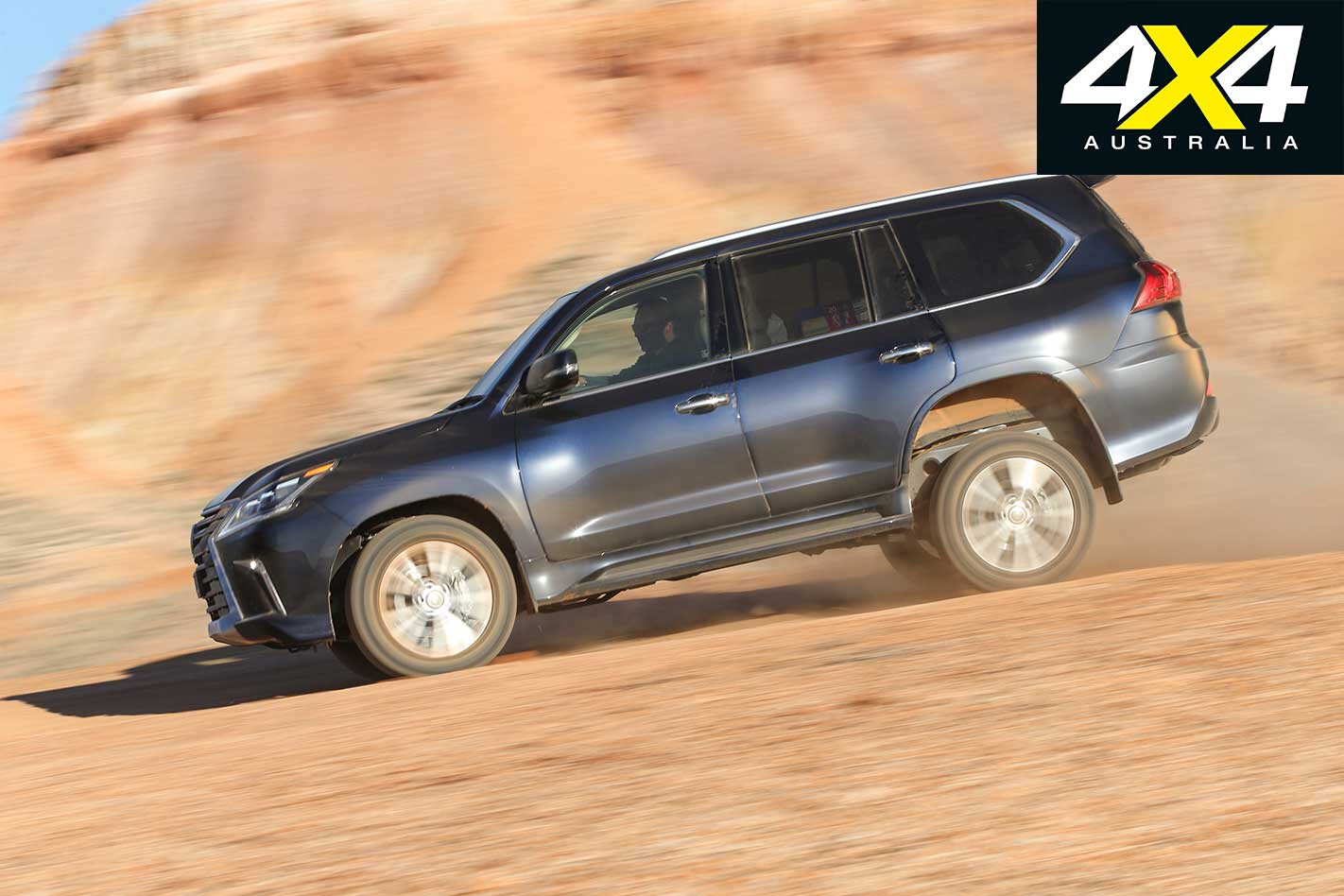
For outback cruising, though, few will do it in the style and comfort of an LX, even with the standard 20-inch tyres. It’s a sizeable set of hoops and one boasting a 50-series profile. Not ideal, then, for rocks and sand – or for finding a replacement anywhere between Bathurst and Broome. To be fair, though, we punished them over nearly 4000km of shaly/rocky/corrugated roads and never copped a puncture.
Despite the low sidewall, the tyres contribute to a superb ride, which is more a credit to the adjustable-height hydraulic suspension that replaces the Cruiser’s fixed-height coil springs. It’s beautifully supple, smothering small and big bumps alike. And the body control is superb and as the big LX approaches the limits of its travel it controls things nicely.
Corrugations, too, are still felt, but not the bone-jarring affair they otherwise could be. Across a broad selection of surfaces we were struggling to find somewhere the LX’s suspension didn’t make for a terrific ride.
Of course, the LX’s big drawcard is its ability in the rough stuff, something that hasn’t changed from the LX570 that’s still on the Lexus shopping list.
Core mechanicals team with nicely tailored software to make for easy progress. It’s a supremely capable machine, one that benefits from the additional height when the suspension is in its highest mode; an extra 50mm is added to the front and 60mm at the rear, something only on offer below 30km/h.
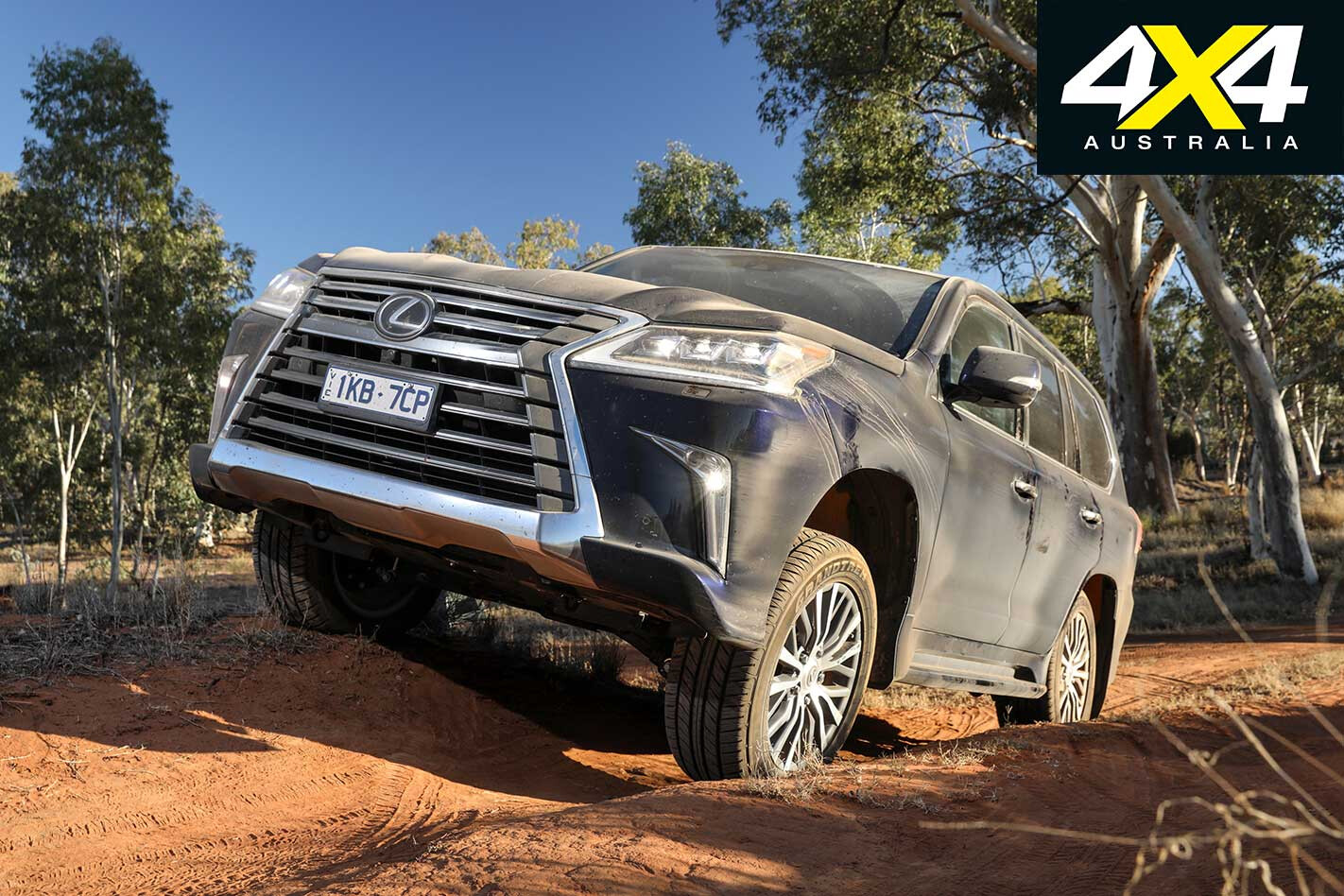
It’s a supremely capable machine, one that benefits from the additional height when the suspension is in its highest mode; an extra 50mm is added to the front and 60mm at the rear, something only on offer below 30km/h.
That extra clearance – lifting it to about 280mm – also improves the approach and departure angles at its regular height, which at 25 and 20 degrees respectably trail those of a Land Cruiser (32 and 24 degrees). That’s important given the unique Lexus bumper that makes for a very different look to the Land Cruiser at its nose; lights, bonnet and grille are also unique to the luxury marque, with similar changes at the rear.
Yet the luxury occasionally lags behind a 200 Series Sahara, at least when it comes to a list of features. Rear DVD screens and ventilated front seats are missing, for example, as are heated back seats. That’s why the LX450d undercuts its petrol-fed cousin by almost $10k, with a sticker price of $134,500. And the LX oil burner misses out on the third row of seats that’s of little use in the outback, but handy for family duties in town.
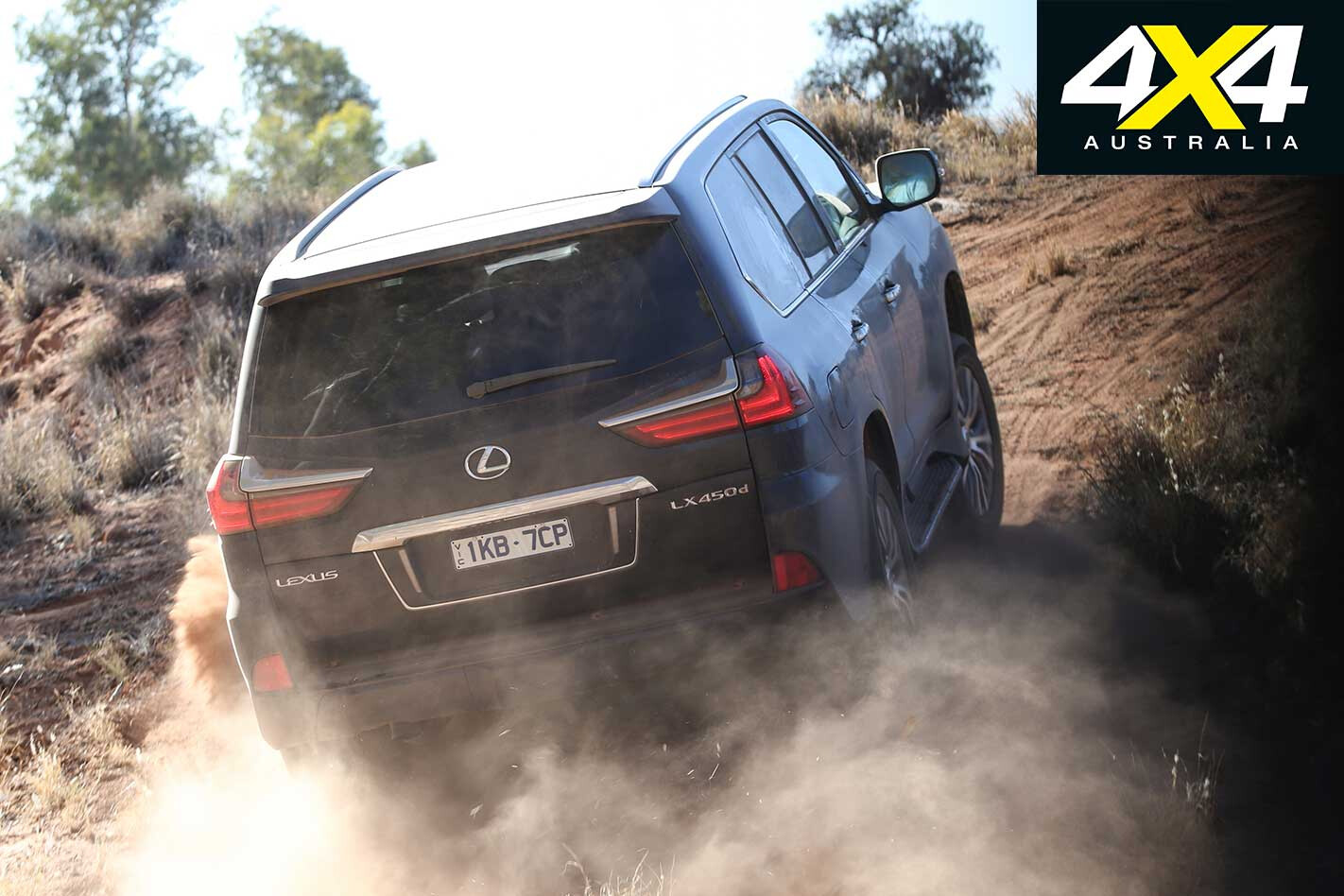
Blame it on weight. The extra kilos of the diesel donk combined with things such as the adjustable suspension system meant having to strip equipment out to adhere to the 3350kg GVM.
The biggest ticket item to be left on the floor, though, is the dual fuel tanks that give a 200 a sizeable 138-litre hold. Instead, the LX does with the single 93-litre tank, reducing its touring range considerably. Relying solely on the officially quoted figures, the LX450d will only cruise past its petrol-powered cousin by about 20km, each just falling shy of the 1000km mark.
That, alone, will tilt some people towards a Sahara, which is still a mighty fine piece of kit – taking the luxury fight to the LX on so many fronts.
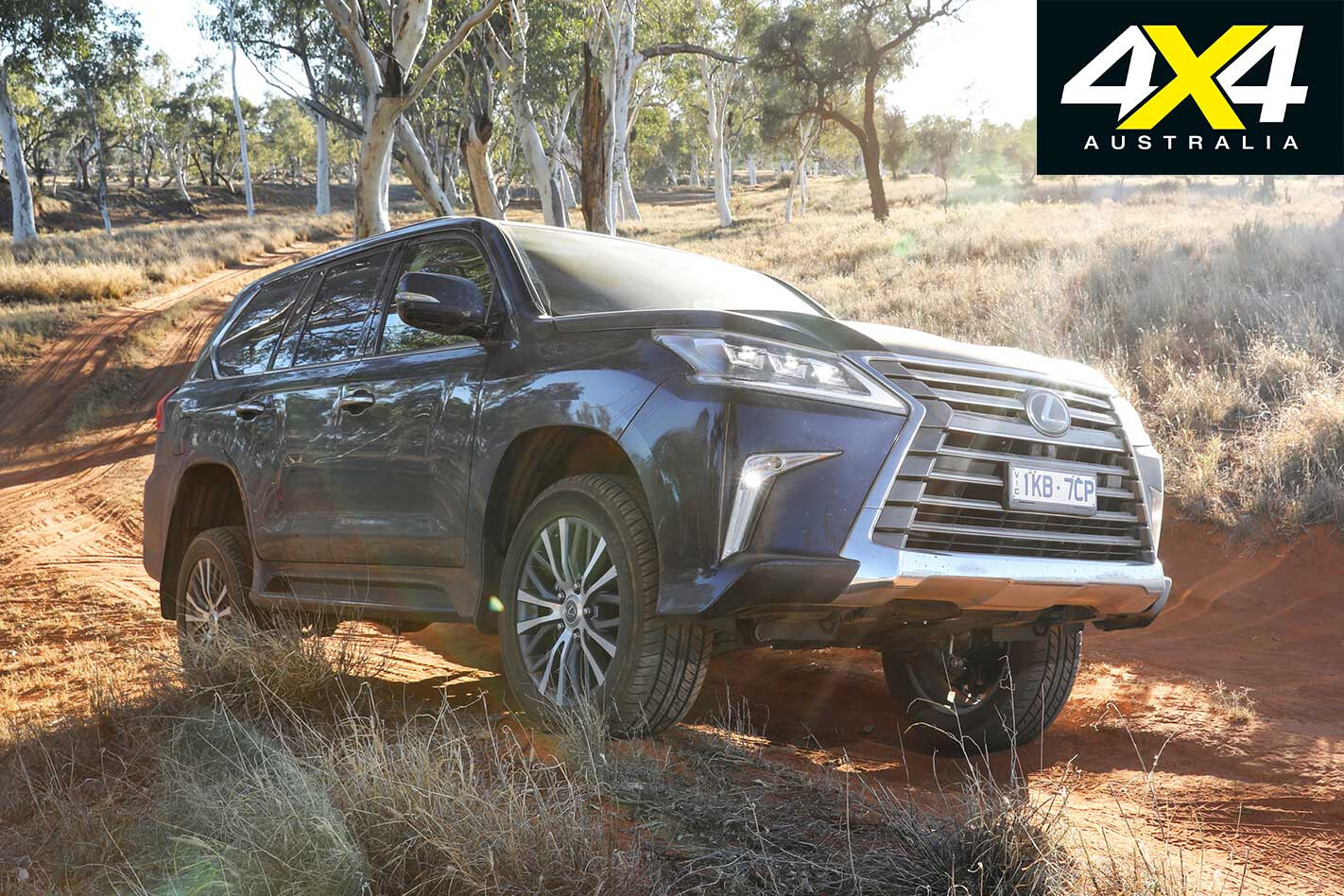
Elsewhere, though, the LX has genuinely useful features. The automatic high beam system includes a matrix of LEDs that can block out other traffic, providing better illumination on country roads. Of course, it won’t help once you plonk a big set of spotties up front, but it’s terrific when you limit it to the vehicle’s lighting system.
That dabble with accessories opens an interesting quandary with the LX.
Other than its unique body panels that will limit some of the 200-Series accessories to the Toyota side of the ledger, the unique suspension will also cause issues, unlikely to have the vast range of aftermarket options of a LandCruiser.
Still, the Lexus LX450d adds to the appeal of what is effectively a top shelf LandCruiser. It does so with unique styling and some supple suspension that give the LX a character removed enough from the 200-Series it now shares an engine with.
Lexus LX450d Specs Engine: DOHC 32-valve V8 twin-turbo diesel Capacity: 4.5-litre (4461cc) Power: 200kW @ 3600rpm Torque: 650Nm at 1600-2800rpm Gearbox: 6-speed auto 4X4 system: full-time dual-range Construction: separate chassis Front suspension: independent/coil springs with hydraulic height adjustment Rear suspension: live axle/coil springs with hydraulic height adjustment Wheel/tyre spec: 285/50 R20 Kerb weight: 2670kg GVM: 3350kg Payload: 680kg Towing capacity: 3500kg Seating: five Fuel tank size: 93 litres ADR fuel claim: 9.5L/100km Touring range: 978km Price: $134,500