
As far as bragging rights go, Kosciuszko National Park (690,000 hectares) is the largest of the alpine national parks and reserves that stretch from eastern Victoria to the Snowy Mountains of New South Wales and through the Brindabella Ranges of Canberra. It is the biggest national park in NSW and has the highest mountain on the Australian mainland – its namesake, the 2228-metre Mount Kosciuszko.
This feature was originally published in 4×4 Australia’s September 2012 issue
Blanketed in metre-deep snow between June and October, spring delivers a dazzling carpet of wildflowers and an invitation to explore the environment of glacial lakes, alpine meadows, snow gum patchwork forests and beautiful rivers.
The wilderness experience attracts a cross-section of adventure junkies including 4X4 enthusiasts, hikers, kayakers and mountainbikers. Fishing, camping, rafting, and caving are all popular.
Aborigines lived throughout the mountains for thousands of years, although the extreme winter conditions of the alpine area made life difficult. According to the NPWS website, during the mating season of the Bogong moth, Aborigines would hunt the insect across the mountains as part of ceremonial rituals. Even today, there are still many areas within Kosciuszko of special Aboriginal importance.
Other evidence of historical significance are the cattlemen’s huts and the pioneer and mining ruins. While cattle graziers were the pioneers of the area, a short gold boom between 1859 and 1860 turned Kiandra into a bustling community of 4000, with 14 hotels. Nowadays it’s a ghost town with only a couple of buildings left standing.
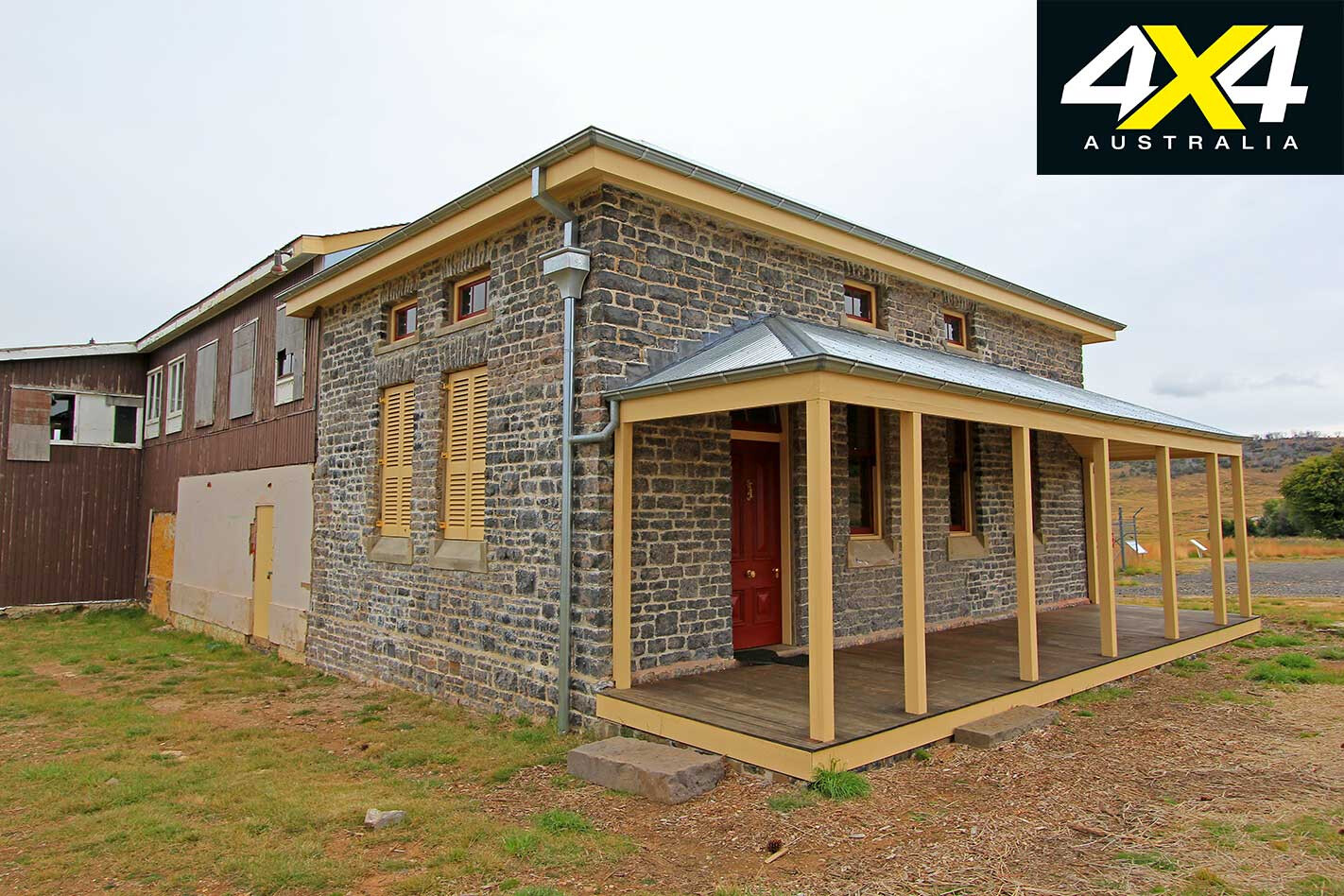
A self-guided heritage walking trail starts at the restored bluestone courthouse and explores the former township with interpretive signs providing an idea of what life was like in that era.
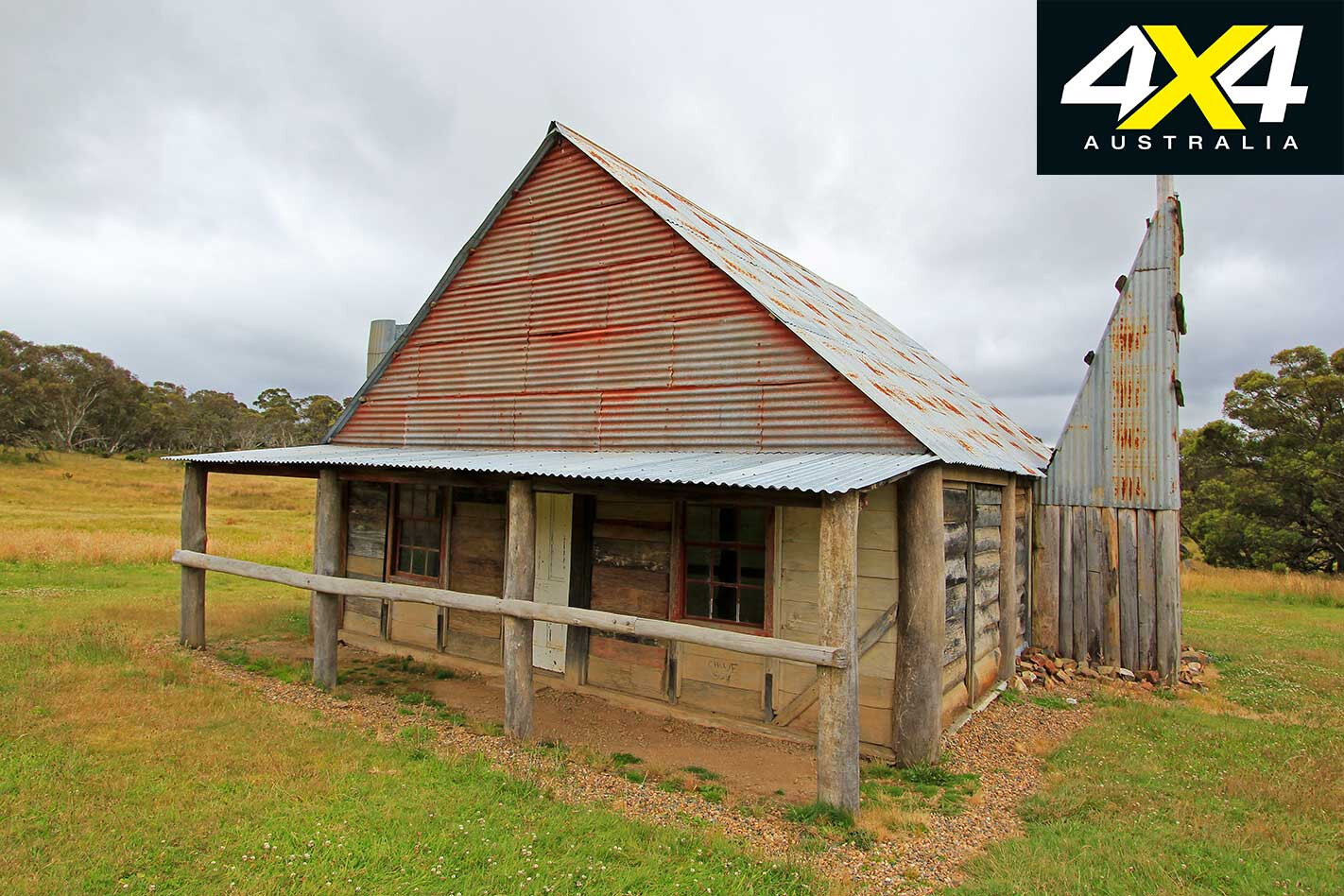
With the removal of cattle from the national park in the 1950s and 60s, mountain huts were abandoned, yet have survived thanks to the efforts of volunteers such as the Kosciuszko Huts Association and various four-wheel drive clubs.
The huts provide emergency accommodation for adventurers caught out in extreme weather conditions. There are a number of huts scattered through Long Plain with horseholding yards, opening-up the northern boundary to horseback riders.
The park is accessible via two major arteries that cut through the park; the Snowy Mountains Highway and the Alpine Way, connected via the Link Road. The Alpine Way services the snowfields further south, connecting Jindabyne to Khancoban, whereas the Snowy Mountains Highway links Tumut to Cooma.
There are also several backroad options, such as the Snowy River Road from Victoria that crosses the border at Willis adjoining the Barry Way; and the Boboyan Road that cuts through Namadgi National Park south from Canberra and joins the Snowy Mountains Highway just out of Adaminaby.
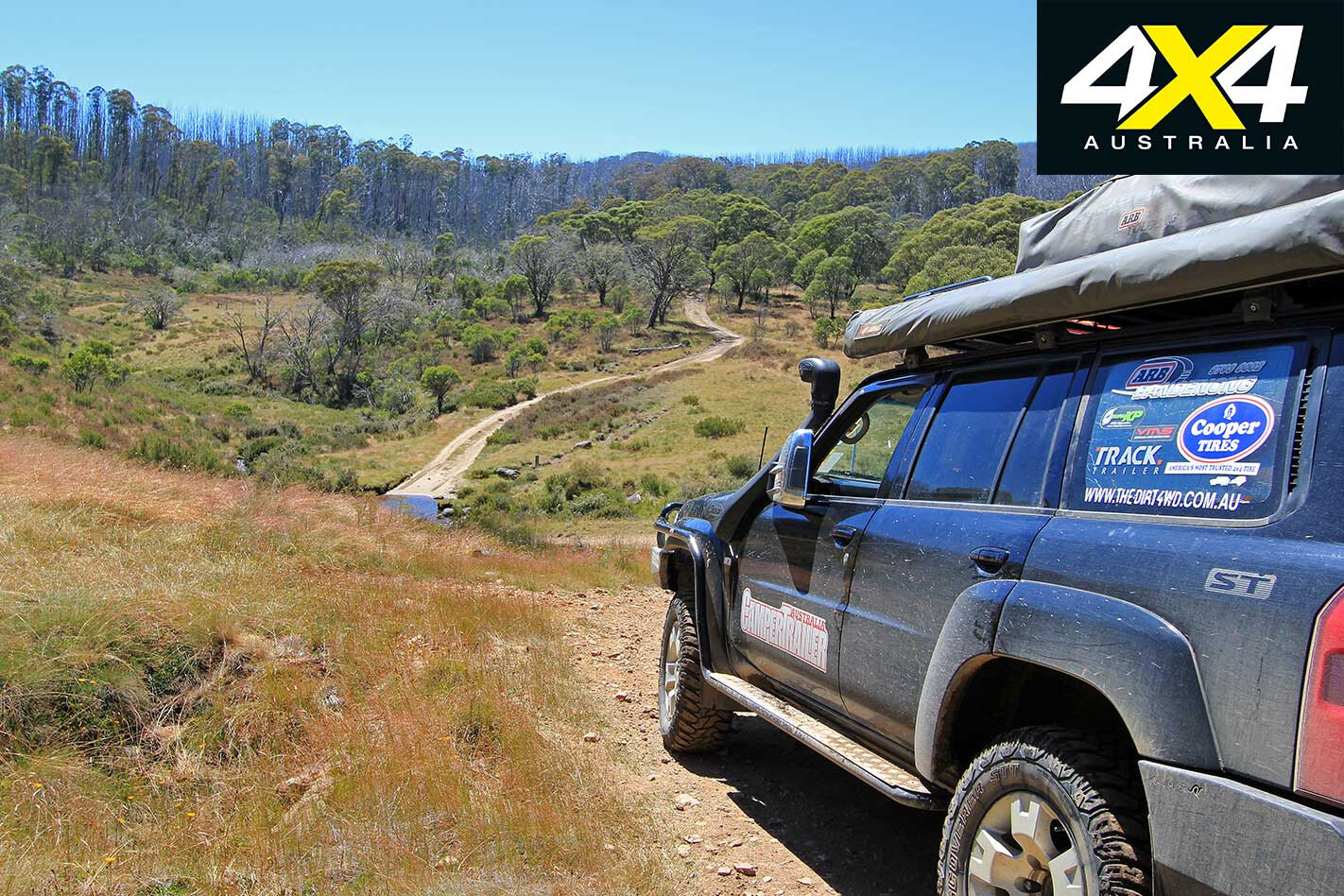
North of Adaminaby, the Snowy Mountains Highway meanders towards Tumut, passing the Providence Arm of Lake Eucumbene. About 40km from Adaminaby, take the left turn onto the Link Road to access the camping area at Three Mile Dam, a short 5km drive up the road. You can’t miss the mining relics on the right-hand side. Scouring the surrounding landscape reveals a series of races cut into the earth to supply the sluicing operations.
The alluvial gold was found in ore coated in thick clay. The preferred method of the day to extract the gold was via hydraulic sluicing using high-pressure water, supplied by the Three Mile Dam, to wash away the clay. The downside of this approach was the local area sustained significant erosion as a result.
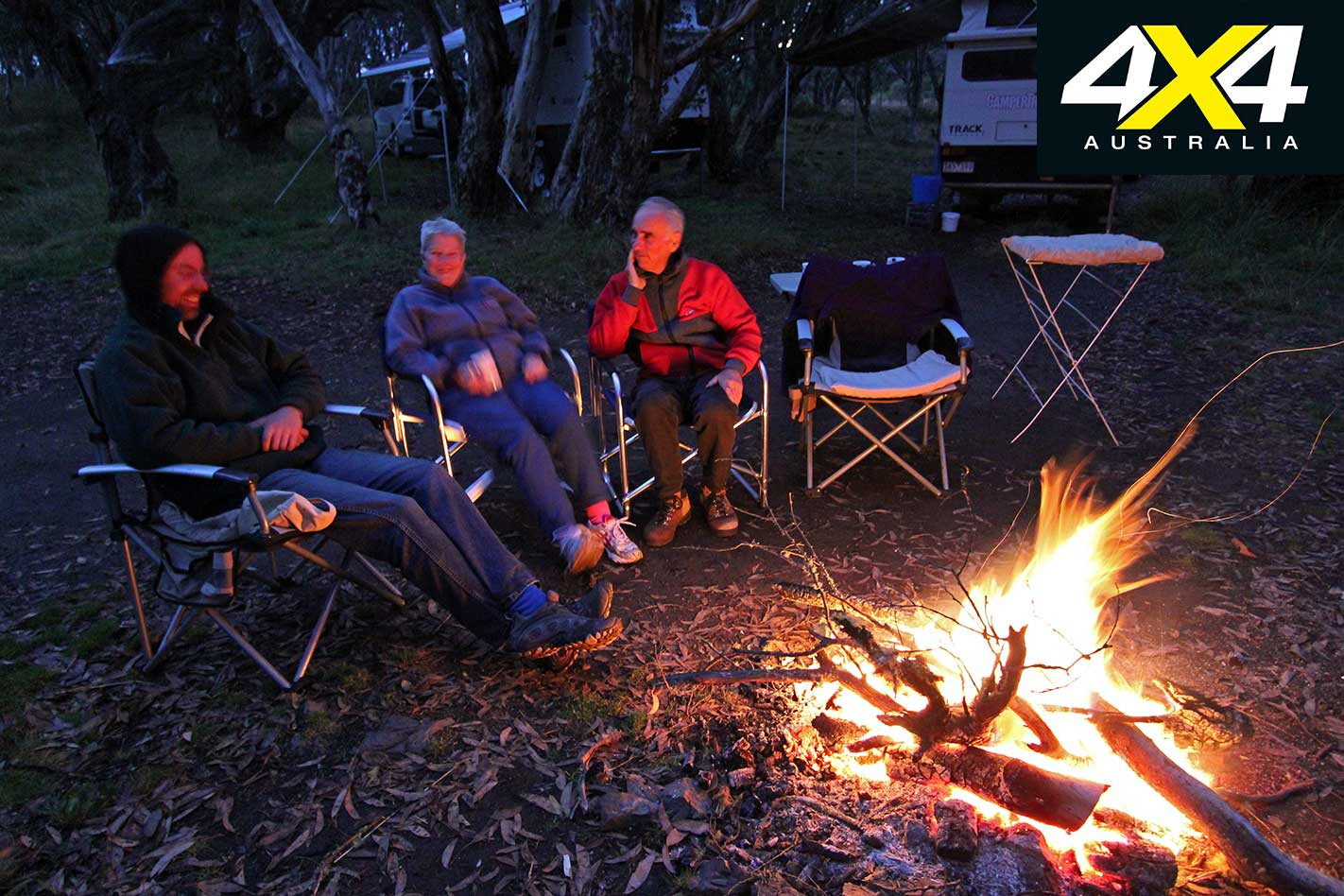
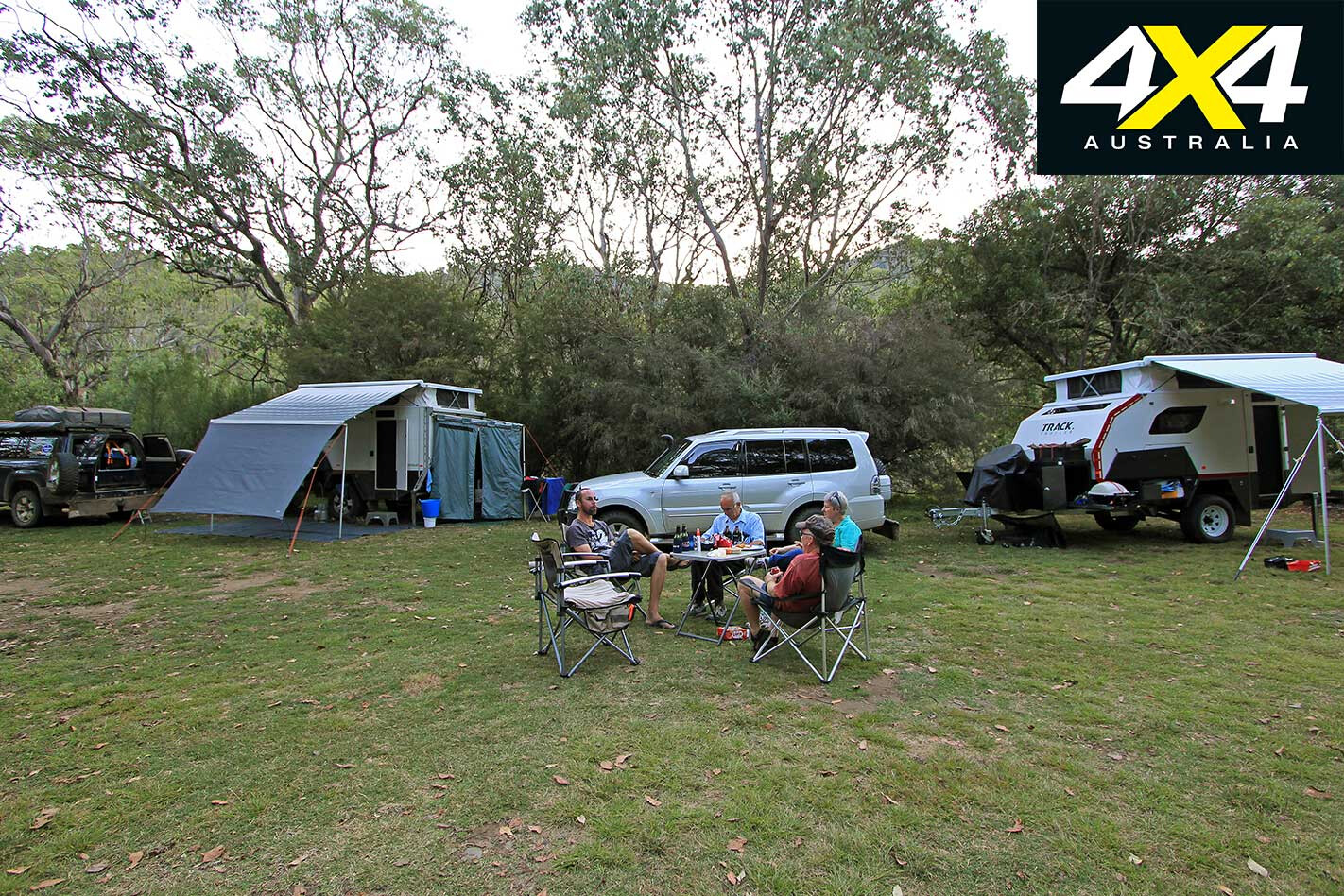
Free camping is available on both sides of Three Mile Dam. The western side has a peninsula that stretches out into the middle of the water with some snow gum shelter. There are a couple of fire pits, a picnic table and a pit toilet out near the road. Water is available from the dam, although the Parks website recommends boiling if for five to 10 minutes before use.
The surrounding landscape is largely grassy plains with scattered snow gums. A 3km loop walking trail, known as Goldseekers Track, begins opposite the western entrance to Three Mile Dam. It passes through snow gum woodlands to reach an ore-crushing battery relic before looping back.
Further north, there are plenty of cattlemen’s huts to explore along Long Plain. The Long Plain Road leaves the Snowy Mountains Highway to the right about 20km north of Kiandra. The unsealed road weaves across the grassy woodlands as it heads north towards the Goobarragandra Wilderness area. Keep an eye out for wild brumbies along this stretch, hiding among the trees.
There are neighbouring campgrounds at Long Plain Hut, Cooinbil Hut, Coolamine Homestead and the Blue Waterholes. The Coolamine Homestead site features four buildings including a log cabin, referred to as the Cheese House, built to store food, while Southwell House and Campbell House are classic slab and weatherboard homes. Horse hair was used to insulate the roof and newspapers line the walls, now protected from vandalism by plastic sheeting.
It is interesting to see what went in a 1939 newspaper: advertisements for the Ford V8, Malvern Star and Metters Automatic gas cookers.
Beyond Long Plain Hut, Long Plain Road heads north following the path of an old stock route to link up with forestry roads. Access to Brindabella National Park is possible via a rather long detour along Broken Cart Trail, Boundary, Bramina, Barnetts and Brindabella Roads. Access is not guaranteed and wet weather will close the roads.
A better bet is to explore the area around the Blue Waterholes accessed from the Blue Waterholes Fire Trail. Walking tracks explore the gorges, caves and waterfalls. Bring a torch and good walking shoes as you cross the creek a number of times. Walks range from 2.5km to 6.3km.
Backtrack along the Long Plain Road to the Port Phillip Fire Trail junction and turn left. This road navigates to the Tantangara Reservoir which is part of the Snowy Mountains Hydro-electric Scheme. When water levels allow, you can cross the reservoir to the Pockets Saddle Road and explore the nearby huts on foot.
Pockets Saddle Road returns to the Snowy Mountains Highway, near the top northern Providence Arm of Lake Eucumbene. Still in the northern end of the national park, Yarrangobilly Caves are in a pretty pocket of bushland east of Talbingo Reservoir.
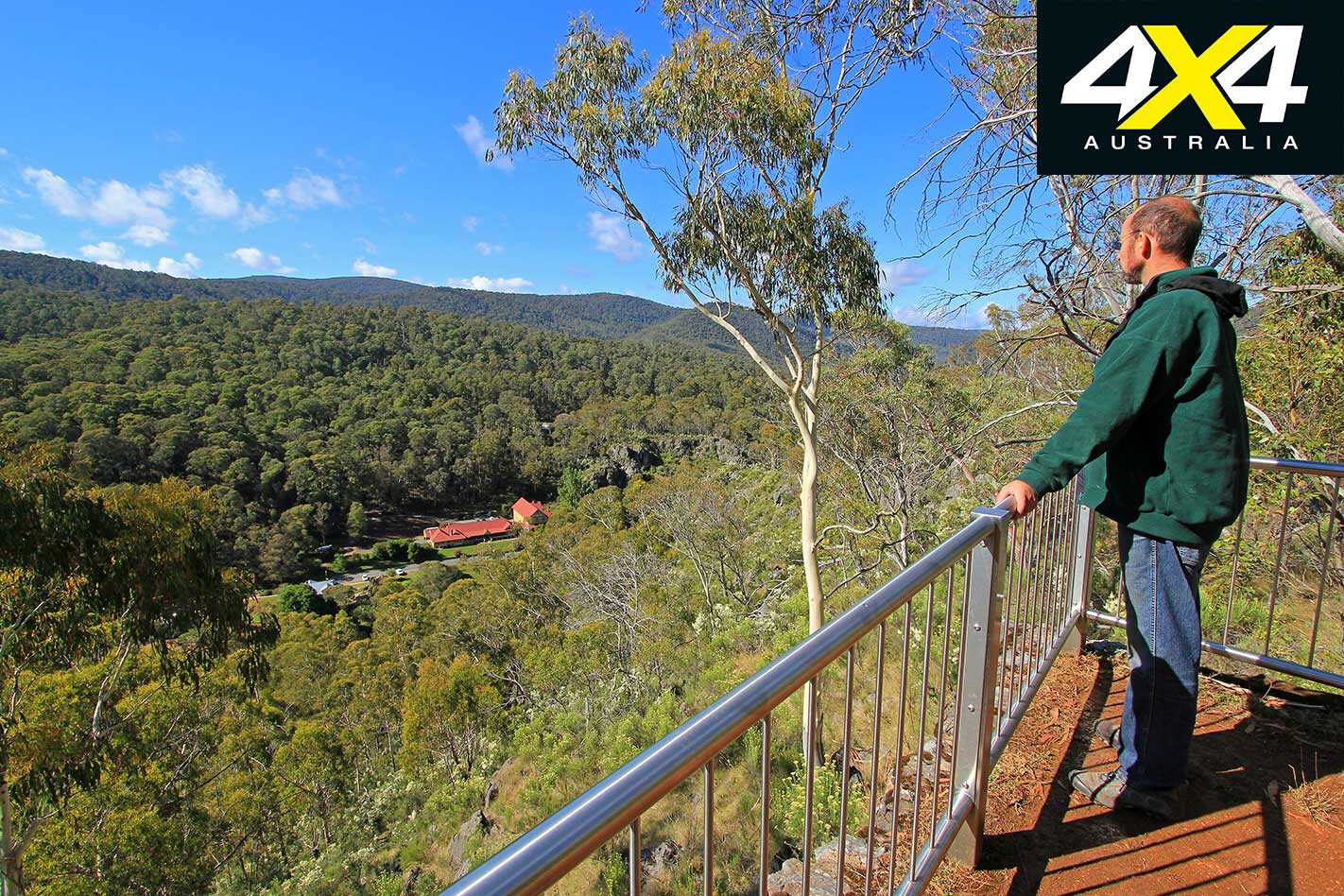
As the name suggests there are a number of caves to explore (free) either self-guided or guided, plus bushwalks, a large thermal pool (27°C), or just eyecatching natural surroundings in which to enjoy a picnic.
Wood-fired barbecues are available here but you need to bring your own wood. There is no camping but heritage-style accommodation is available at Caves House. The closest camping is at Yarrangobilly Village, a further 8km along the highway towards Tumut.
The Lobs Hole Ravine Road is another good touring track (37km) that kicks off from the Snowy Mountains Highway about 5km past Yarrangobilly Village. It loops back to the Link Road just west of Three Mile Dam. The crossing of Yarrangobilly River designates the trail as 4X4 only. There are several walks to pioneering ruins along the way and good views of the Yarrangobilly arm of Talbingo Reservoir as you descend into the valley.
The trail leads to Lobs Hole Ravine, once the site of a village and copper mine, evident by the mining relics. The last point of interest is Wallaces Creek Lookout, before you hit the Link Road. A detailed trip description recounting the history of the area is included within the Guide to Kosciuszko National Park.
Fuel is available at Cabramurra, Australia’s highest town at 1480m. The road from Cabramurra links to Khancoban and the Alpine Way, which services the ski fields and the magnificent camping areas of Geehi, Tom Groggin and a number of smaller sites along the Thredbo River. The Cabramurra to Khancoban section is only open in summer.
Leaving Cabramurra the road drops down to the Tumut Pond Reservoir, another component of the Snowy River Scheme. The road continues to climb up and down many more steep, narrow and winding mountain ranges, periodically offering a glimpse of the surrounding wilderness from the rooftop of the ranges.
Camping permits are required in the southern section of Kosciuszko NP. You can buy these online, by phone or stop in at any of the Parks offices or agents. The NSW Parks Office in Khancoban has an ATM to purchase tickets after-hours with a daily ticket valid for 24 hours.
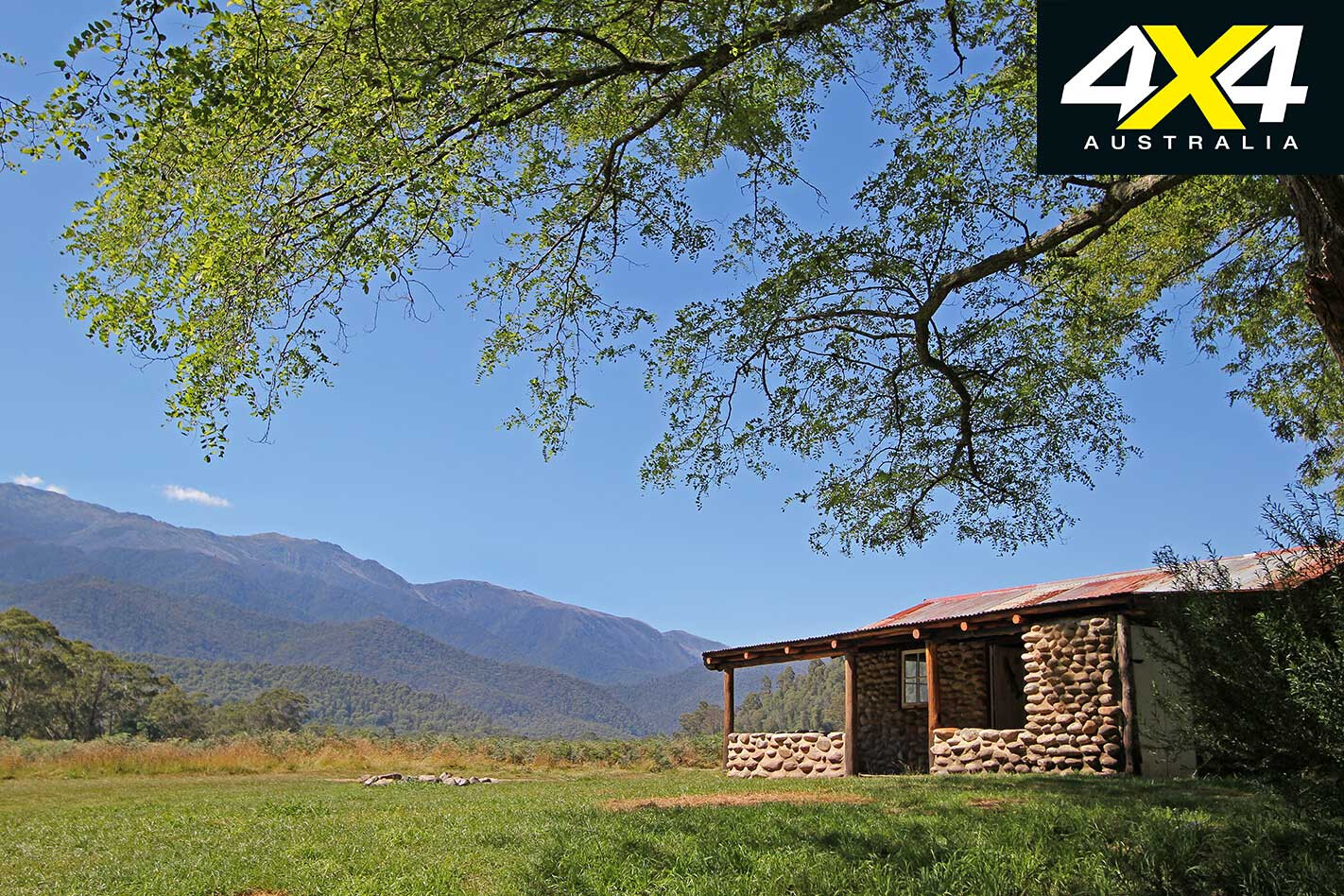
The Geehi Camping area is one of the best in the region offering camping for all vehicles on the banks of the Swampy Plains River. There are pit toilets, a couple of picnic tables and a few very cool huts, made from river stone.
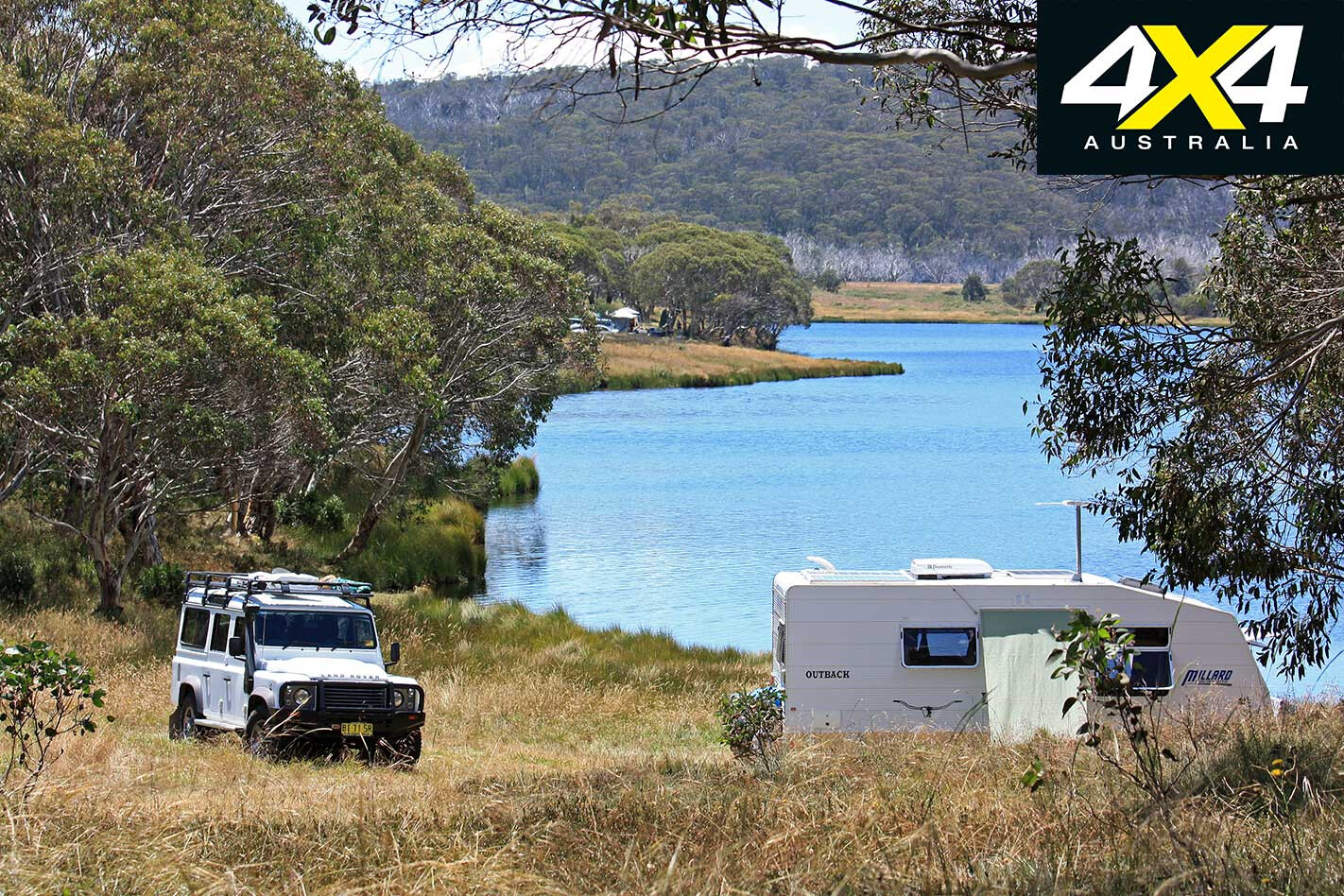
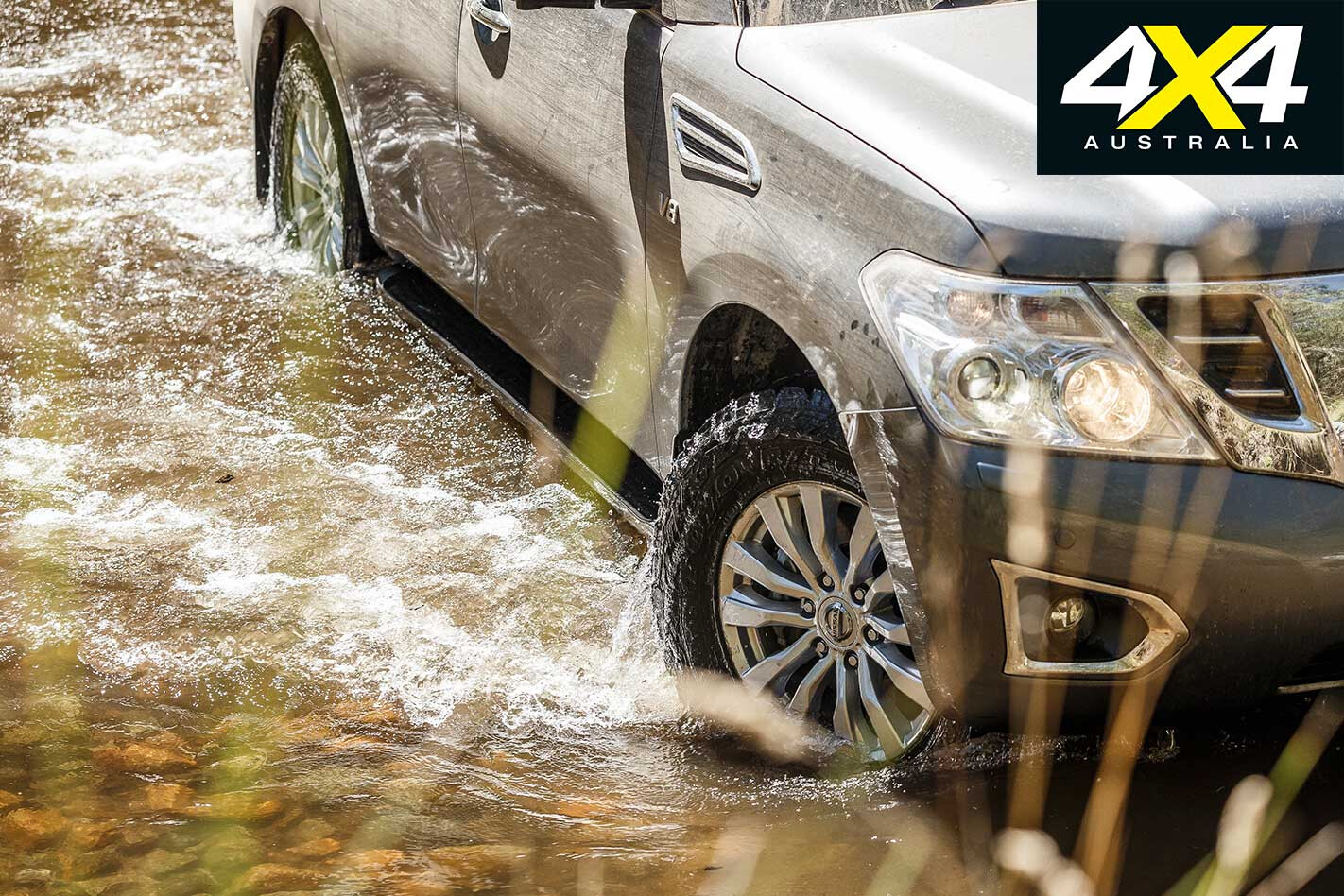
Follow the track to the Swampy Plain River crossing and the Geehi Hut. If the depth and the flow of the river are okay, 4X4s can cross to Behrs Flat and follow the loop track to the other huts. Keebles Hut (also known as Nankervis Hut with a picture of a big trout on the door) is a particularly spectacular location, with plenty of shade, a deep swimming hole and views up the valley to Mt Townsend and the snow-capped peaks during the cooler months. The track leads on to the Old Geehi Hut.
Tom Groggin, on the banks of the Murray River and the Victorian border is a larger, more open grassed camping area, popular with kangaroos. You can cross the river into Victoria at the ford and take the trip up to Davies Plain Hut or Mount Pinnibar.
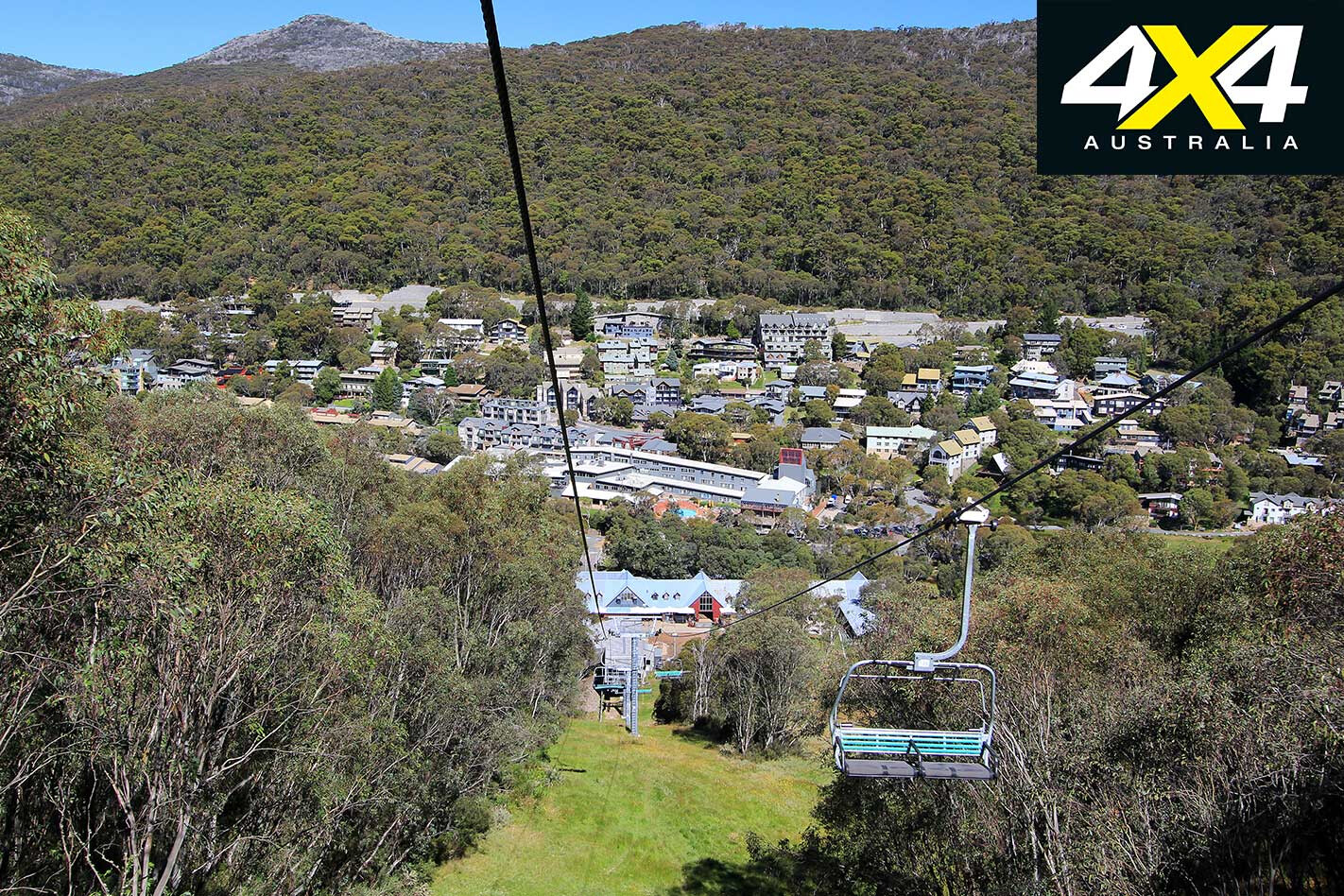
The Alpine Way ascends steeply from Tom Groggin and is not recommended for caravans. Thredbo village is open all year round with plenty of activities to keep you moving. Summer day passes provide the best value, bundling the scenic chairlift, bobsled, a round of golf, tennis court hire, access to the leisure centre for $45 per adult or $90 per family. Equipment hire is available at an additional cost.
The scenic chairlift rises 560m over 1.8km taking 15 minutes each way and offers spectacular views of the surrounding landscape. You can continue up the gentle rise on foot towards the Kosciuszko lookout (4km return) or the summit (13km return) past the glacial Lake Cootapatamba.
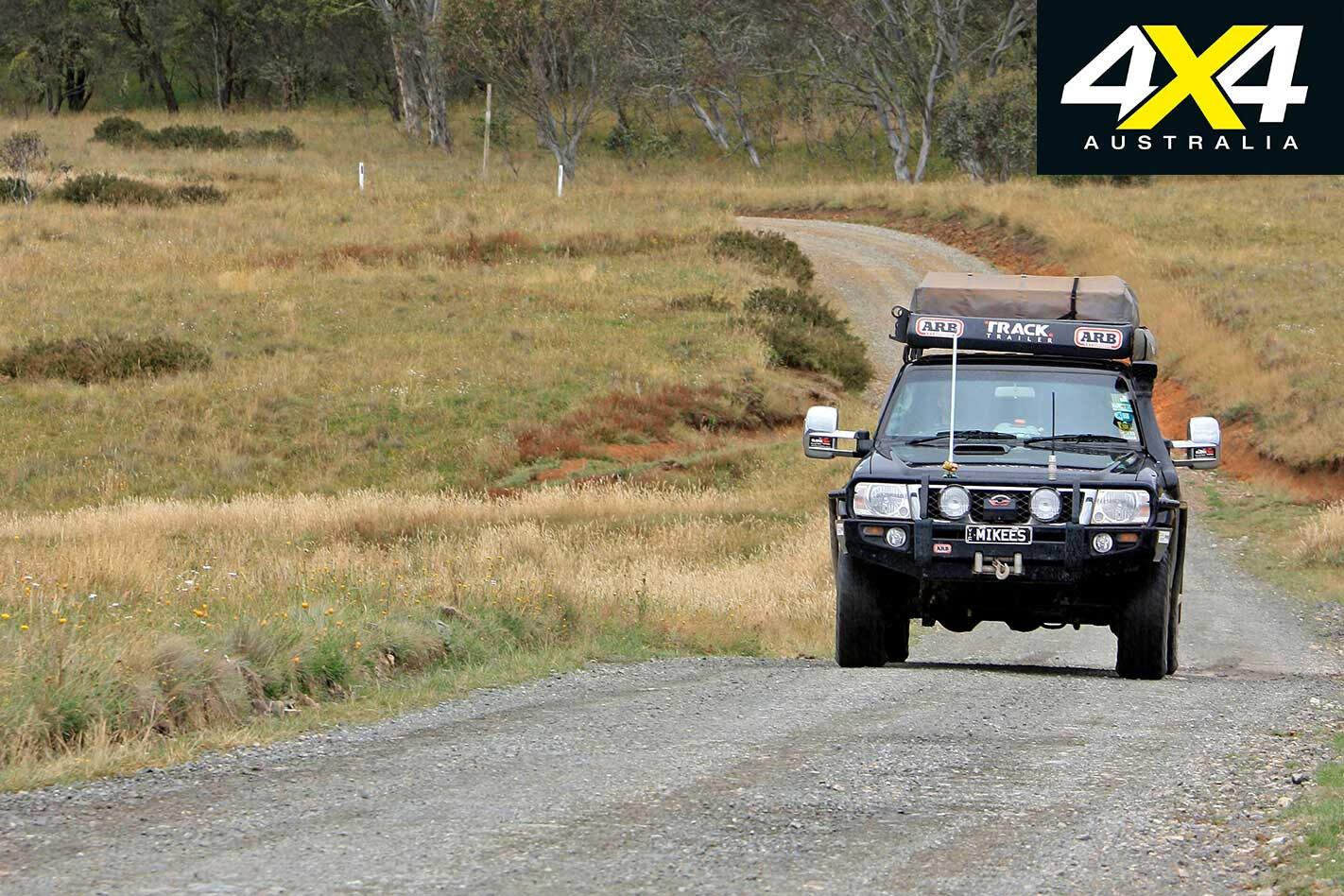
Back down at Thredbo village, continue along the Alpine Way to discover the campgrounds on the banks of the Thredbo River. Thredbo Diggings is the best offering for camper-trailers; the others are loaded with bollards flagging their intentions as tent-only camping areas. It’s a further 22km to Jindabyne to enjoy the expansive views over the lake.
That concludes our Kosciuszko National Park experience. It’s always sad to leave an area knowing you have only scratched the surface with so much more to enjoy. Yet that’s the Achilles heel of being the biggest alpine national park in the region – there will always be more to come back to. Not such a bad thing when it is as good as it is.
Travel Planner
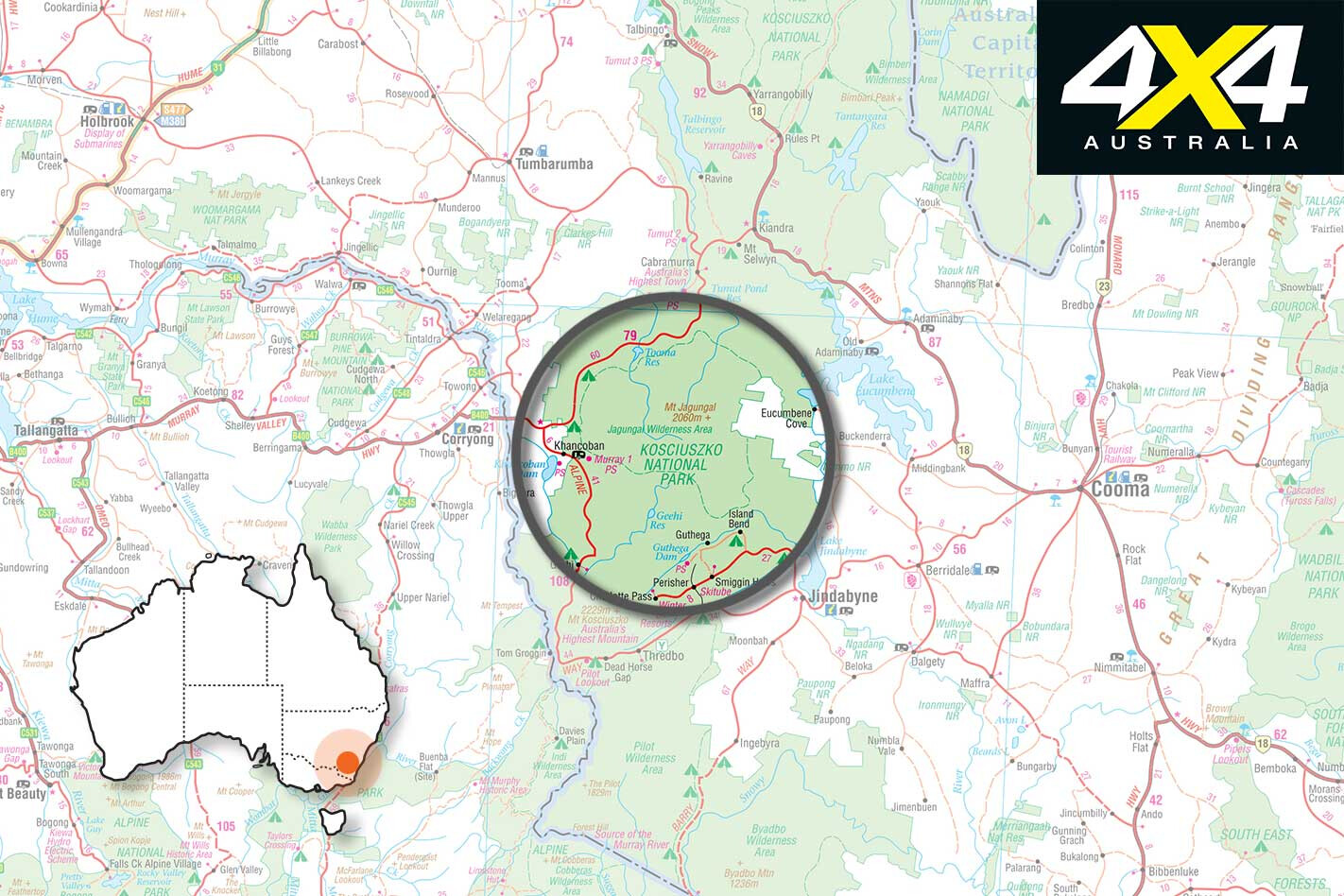
WHERE Kosciuszko National Park is 190km south of Canberra and is flanked by Jindabyne, Cooma, Tumut and Corryong.
CAMPING There are campgrounds scattered throughout the national park. Camping fees are included in the vehicle entry fees, where applicable.
SUPPLIES Tumut, Cooma, Jindabyne, Corryong. Basic provisions only are available from Adaminaby, Cabramurra, Khancoban and Thredbo Village.
TRIP STANDARD Easy to medium. In summer, most tracks are easy-going but can quickly change after rain. River crossings will pose the biggest threat and should be walked to ascertain flow and depth. More technical trails, such as the Victorian Davies Plain and Mount Pinnibar, will require additional care. Check with Parks offices on the latest track conditions before you travel.
MAPS & GUIDES Hema Snowy – Kosciuszko Map, second edition, 1:200,000. Kosciuszko visitor guide is here.
CONTACTS NPWS Parks Contacts: Jindabyne 02 6450 5600 Khancoban 02 6076 9373 or 02 6076 9382 Tumut 02 6947 7025 Yarrangobilly Caves 02 6454 9597 NSW national parks website
PERMITS AND ACCESS A vehicle entry fee is payable in Kosciuszko NP. From the long weekend in June to the long weekend in October – $27/day. Thereafter, $16 per day. Short breaks or annual passes available. Contact NPWS. Yarrangobilly Caves: $3 vehicle entry; cave tours from $15 adults; $10 concession; $38 families (two adults, three kids).
I RECENTLY fitted a pair of heavy-duty recovery points to the front of my Defender, but in doing so I had to remove the OE steering guard, sometimes referred to as a wombat bar.
The Land Rover wombat bar was an Aussie-market item designed to protect the steering linkages from damage in the event of an animal strike. It consisted of a bit of tube steel with less-than-perfect welds and was situated below the relevant steering components.
While it may have provided some protection in the event of an animal strike, it certainly wasn’t strong enough to protect against big off-road hits, so I had planned to replace it with a more substantial bit of kit regardless of the fact it had to go in order to fit the recovery points.
I had a look around at a few options and settled on an Aussie engineered and made steering guard from APT Offroad. The APT steering guard is a well-made bit of kit and, importantly, is competitively priced.
The kit consists of steel side skirts that mount to the vehicle’s chassis rails, and a replaceable alloy bash plate. The side skirts, made from 8mm 350-grade laser-cut steel plate with black powder-coat finish, incorporate recovery eyes, so now the Defender has four recovery points up front.
The bash plate is made from 6mm-thick 5083-grade aluminium, which APT says is the thickest and strongest aluminium that can still be folded. It has a number of holes in it for drainage and ventilation.
The APT kit is supplied with high-tensile bolts and is very easy to fit using existing chassis holes. It’s compatible with most bullbars on the market, too, and it certainly provides far superior protection to the flimsy OE setup.
The finishing touch is a subtle laser-cut APT logo in the front of the bash plate. It’s a great piece of kit that provides excellent protection at a good price.
RATED Available from: aptoffroad.com.au RRP: $280 + shipping We say: Superior protection and well-priced
AFTER an epic two weeks exploring the Victorian High Country in the Y62 Patrol, it was back to the blacktop for ANU-576, but thankfully not limited to the city commute.
A weekend run to Adelaide and back was on the cards, and the big Nissan is a beaut highway tourer. With its luxuriously appointed and spacious interior, and that powerful V8 engine backed by a smooth-shifting seven-speed automatic transmission, the Patrol makes easy work of long-distance drives, and Melbourne to Adelaide passes like a quick trip.
It’s during a solo drive like this when you really appreciate some of the finer features of the Ti-L Patrol. The Bose audio system is a killer; the leather seats are big and comfortable and can be heated or cooled to your liking, depending on the climate; while the active cruise control makes keeping your speed on the right side of the law much easier.
A lot of four-wheel drivers will tell you all these comfort and convenience features are unnecessary and just something else that could wrong in the bush, and when I’m driving my old Land Cruiser I tend to agree with them.
But it’s a case of ‘you won’t miss them until you’ve had them’, and I find I want those features again when getting out of the fully equipped Patrol and into lower spec 4x4s. You might scoff at heated leather seats, but how many of you would buy a new vehicle without air-conditioning or power windows? You won’t miss them until you’ve had them.
One feature I’ve become accustomed to – and one Nissan hasn’t got right – is the voice recognition software for using the phone. I spend a lot of time in cars, and having an easy-to-use Bluetooth phone system is essential and made even better (and safer) with voice-command dialling. But the Patrol’s system never works. It never gets the message and I end up screaming at it in frustration – it’s lucky the unit is integrated into the dash, because I would have thrown it out the window a long time ago.
I reckon it must be a Japanese thing, as the voice command in every Toyota 4×4 I’ve driven is equally as useless and frustrating. Unlike the systems in the Ford Everest and Ranger, Jeeps, and most recently the Mercedes-Benz X-Class, which all work very well, allowing safer use of the phone while driving.
Driving to Adelaide was also the first time we’d done some serious highway miles with the Toyo Open Country R/T tyres fitted, as well as the Ironman roof rack and accessories mounted up top. The car developed a wind noise that seemed to be coming from up top, which was strange as nothing up there had changed or moved since the High Country trip.
I spent the first six hours of the drive trying to pin the annoying whistle down – stopping and adjusting the light bar, moving the awning and playing with the rack itself, but to no avail. It was only when the climate control switched from re-circ to fresh and the note of the whistle changed that it twigged it was something else.
Opening and closing each of the windows changed the tune again and revealed that the passenger rear window was cracked a millimetre inside the rubber, and that was where the whistle was coming from. It was such a relief to get back to the quiet cabin which remains rattle-free, even after its recent bush bashing.
The Toyo R/Ts are also quiet on the road, but, along with the roof rack, they didn’t help with fuel consumption. The Patrol slurped 14.31 litres of PULP on its interstate trip. Not too bad, really, when just sitting on the speed limit on the highway.
Follow the journey of 4×4 Shed’s 2017 Nissan Patrol Ti-L – Part 1 – Part 2 – Part 3 – Part 4
4×4 Shed Log: 2017 Nissan Patrol Ti-L Current mileage: 12,614km Date acquired: Dec 2017 Price: $88,990 + ORC Mileage this month: 1940km Average fuel consumption: 14.31L/100km
The humble loaf of bread is one of the oldest prepared foods in the world has been pretty much a staple for many.
This article was first published in the August 2011 issue of 4×4 Australia.
Preparing bread on the move and in a camp can be quite tricky since one would have to put in time to knead the wheat dough to make a good loaf of bread. For those who don’t have the time to knead the dough, this white soda bread recipe might be just what you are looking for to sate your need for a good loaf of bread.
INGREDIENTS – 3 cups plain flour (a strong bread flour would be good if you have it) – 1 level tspn castor sugar – 1 level tspn bicarbonate of soda – 1 tspn salt – 1½ cups buttermilk or sour milk (you may need more, or less)
INSTRUCTIONS – Preheat the oven to 230°C (425°F) or heat your camp oven – you need a hot oven for this bread. – Sift the flour, caster sugar and bicarb soda into a large bowl. Make a well in the centre and pour in most of the buttermilk (leave a little bit behind, you may or may not need it). – Now mix: It’s best to use one of your hands with your fingers outstretched like a claw, and bring the flour and milk together. – Add more buttermilk if necessary to form a soft dough that isn’t too wet or sticky. Do not knead the mixture or it will become heavy, treat it like you would a scone dough. – Turn the dough onto a lightly floured work surface and just bring it together a little more to form a smooth-ish shape. Pat the dough into a round shape about 4cm high and cut a deep cross in it – this allows the heat to penetrate as it’s cooking. – Place the dough on a baking tray in the preheated oven 230°C for 15 minutes, then turn down the heat to 200°C (400°F), and cook for a further 30 minutes. – When cooked, the loaf will sound slightly hollow when tapped on the base and be golden in colour. You can turn it upside down for the last 15 minutes of cooking to finish off browning the bottom. – Remove and cool on a wire rack.
Viv’s Hint You can make things savoury by adding herbs, bacon, cheese, etc. Or sweet by adding sultanas and/or currants, chocolate, cinnamon powder, etc.
An isolated, rugged plateau at the junction of the Warrumbungle and Liverpool Ranges in central-west NSW is home to an amazing array of wildlife, including many uncommon species that are at the western-most limits of their known distribution.
This feature was originally published in 4×4 Australia’s March 2011 issue
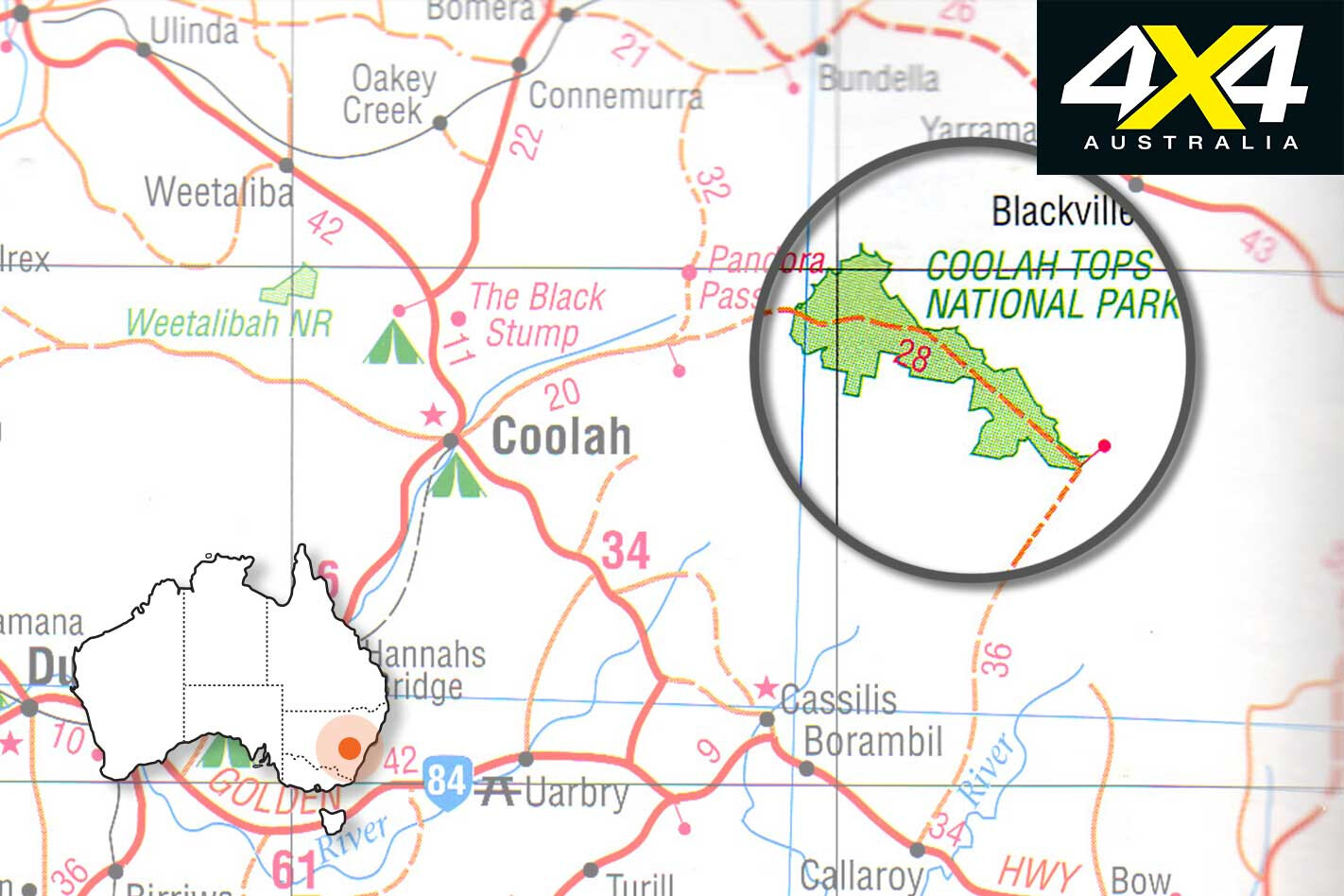
Situated 30km east of the little town of Coolah, 12,117ha Coolah Tops National Park is an island of tall forests, waterfalls and jagged cliffs surrounded by cleared farming and grazing country.
Aborigines from the Kamilaroi tribe lived in these mountains for thousands of years since there was a plentiful supply of food and water. Kangaroos, wallabies and possums were hunted for their meat, while their skins were used for shelter and warmth as the nightly winter temperatures can often drop to -10°C.
Due to the plateau’s isolation, the Kamilaroi people living on Coolah Tops were able to hang on to their way of life for 30-40 years longer than Aborigines on the surrounding plains who were either killed or pushed further west by the onslaught of European settlement.
The road from Coolah up to Coolah Tops twists and winds through cleared and semi-cleared grazing country for 30km before it arrives at a thick wall of vegetation that marks the park boundary.
Prior to it being gazetted a national park in 1996, Coolah Tops had been a forestry reserve that was selectively logged for over 100 years. Fortunately, most of the gnarled old snow gums on the plateau were useless to the timber cutters due to their hollow limbs, which provide an important refuge for many tree-dwelling marsupials and nesting birds.
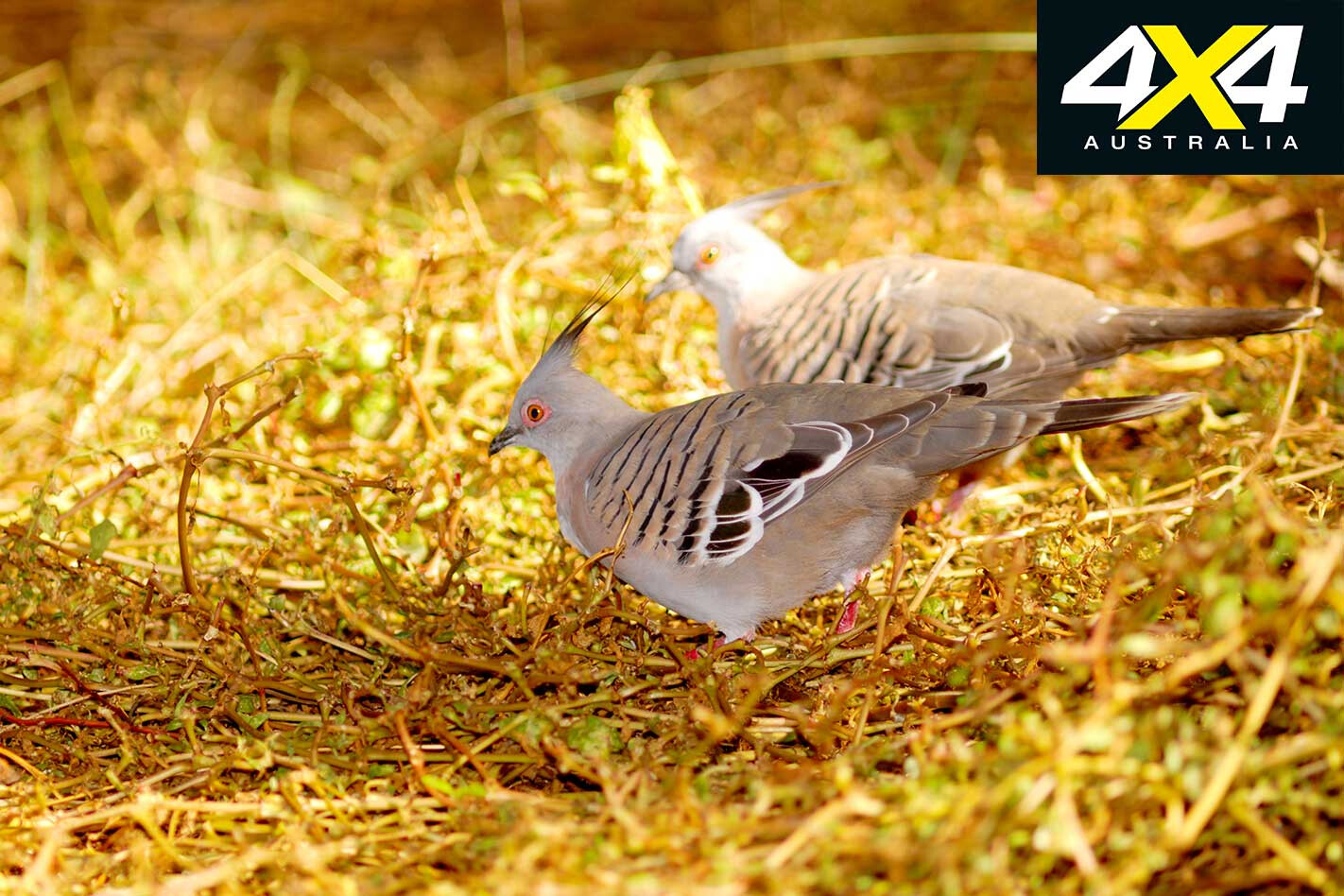
The park is probably one of the best places in Australia to see the beautiful greater glider. These amazing nocturnal marsupials are the largest member of the glider family and have been known to cover almost 100 metres in a single glide. They spend their days huddled up asleep inside the hollow limbs of trees, emerging just after dark to feed on the tips of certain eucalypt leaves.
Apart from large owls, the only other predator on Coolah Tops is the introduced fox that can easily catch the slow-moving glider on the ground. Fortunately, the NPWS is baiting for these feral pests and I saw good numbers of gliders when I went looking for them with a torch at night.
An old forestry road runs for about 30km through the length of the park. Various forestry roads and four-wheel drive only tracks branch off it, providing visitors with plenty of opportunities to explore this spellbinding plateau.
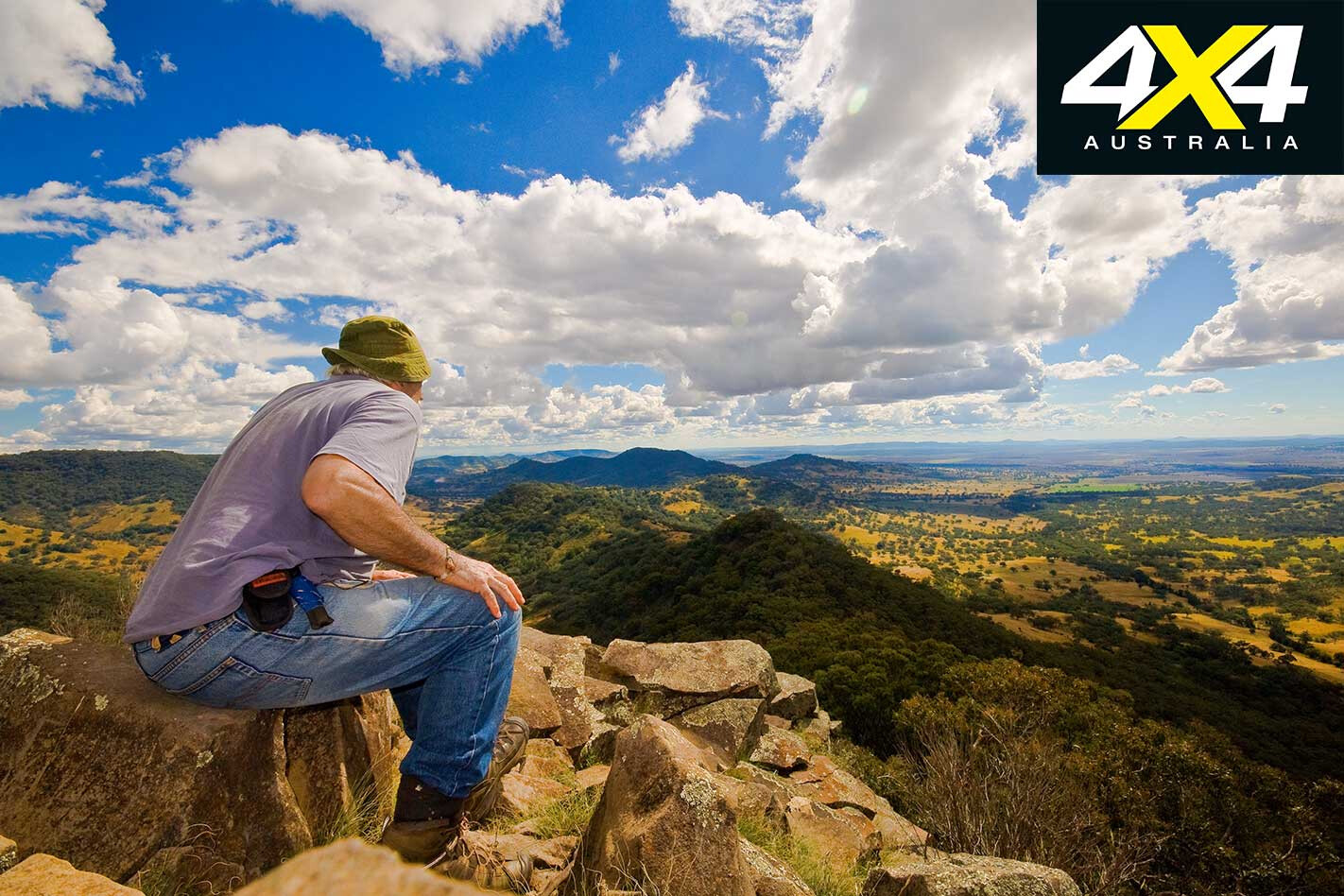
There are three campgrounds and five picnic areas at Coolah Tops, each offering a slightly different perspective on the wildlife, geology and vegetation. My preference is the Barracks Camping Area, just off Pinnacle Road, about 5km in from the park entrance.
Surrounded by ancient snow gums and other shrubs and bushes, the open grassy camping area is a good place to spot kangaroos and red-necked wallabies in the early morning and late afternoon. Apart from the toilets, picnic tables and barbecues, the Barracks has a large shelter shed which is an ideal place to relax in during wet weather.
From the Barracks Camping Area it’s only a short drive (about 5km) up to the Bundella Lookout car park and the start of the hiking track out to Pinnacle Lookout.
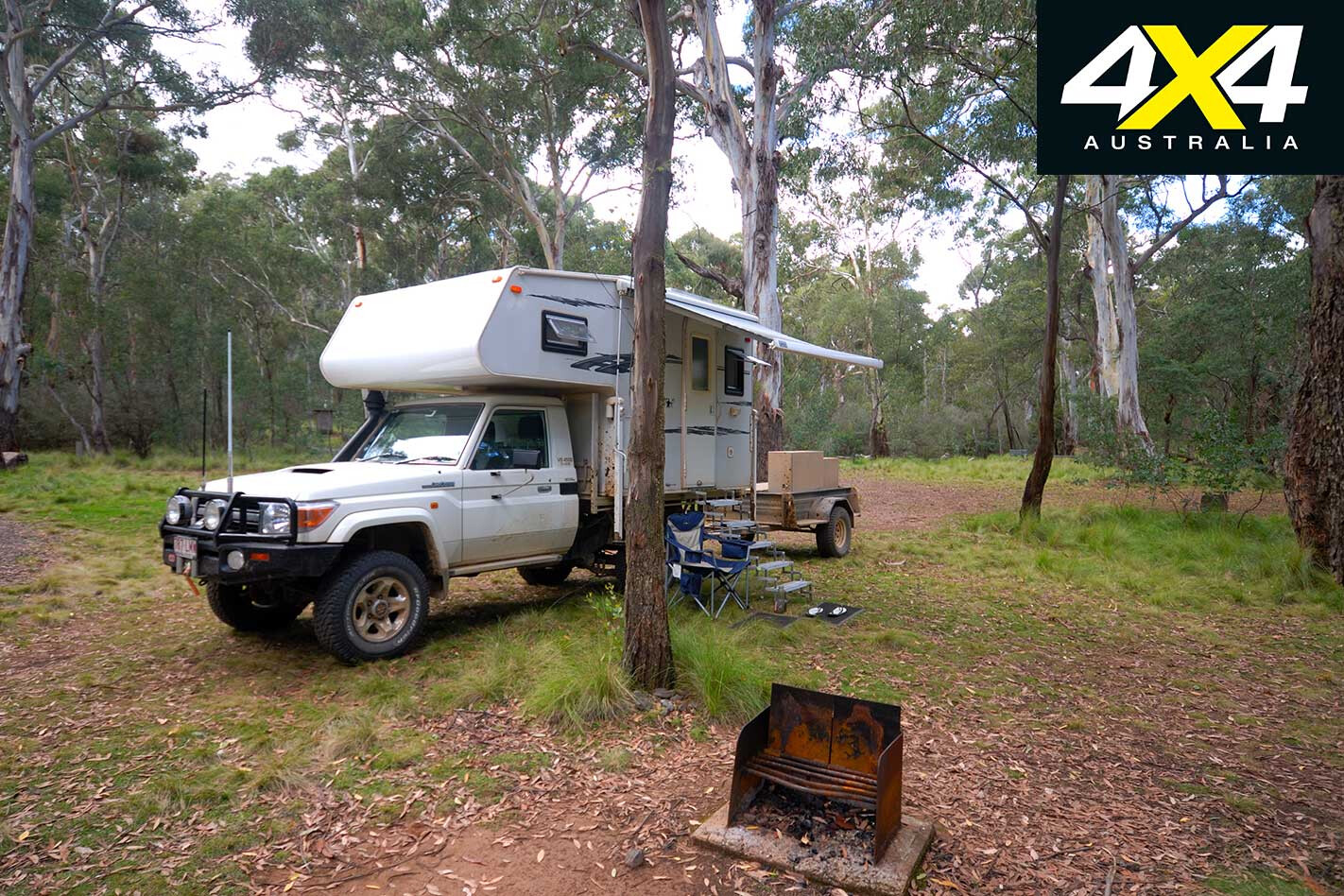
The narrow, stony 500m track out to Pinnacle Lookout is easy to negotiate and once you reach it there are magnificent views over the plains to the north and the Warrumbungle Range to the north-west. This is an excellent place to scan the surrounding cliffs with binoculars for peregrine falcons, wedge-tailed eagles and other birds of prey.
If you want to do a bit of four-wheel driving, turn off the main forest road onto Talbragar River Road (about 12km into the park) and head down to Talbragar Falls.
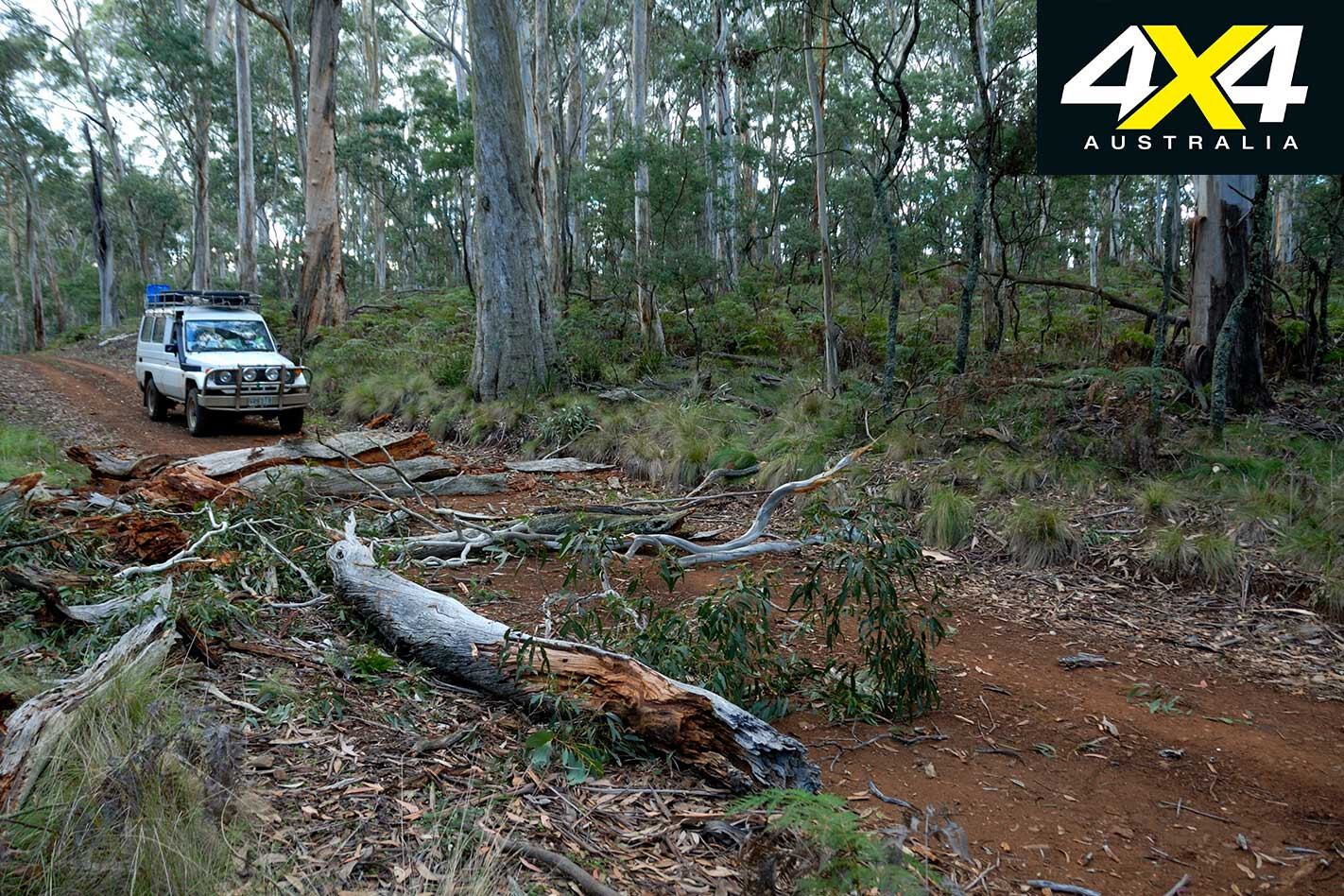
The narrow, 2.8km track winds through tall stands of forest ribbon gum and mountain gum with a thick understory of bracken and tree ferns before eventually reaching a spot where you can pull over and walk 50m to a lookout over the falls. The trail is steep and, although not dangerous, it shouldn’t be attempted after heavy rain due to the slippery nature of the soil.
There are numerous other small waterfalls scattered throughout the park and all are best seen after heavy rain. If you don’t feel like slumming it in a tent you might like to stay at Brackens Hut, about 2km further on from The Pines Camping Area.
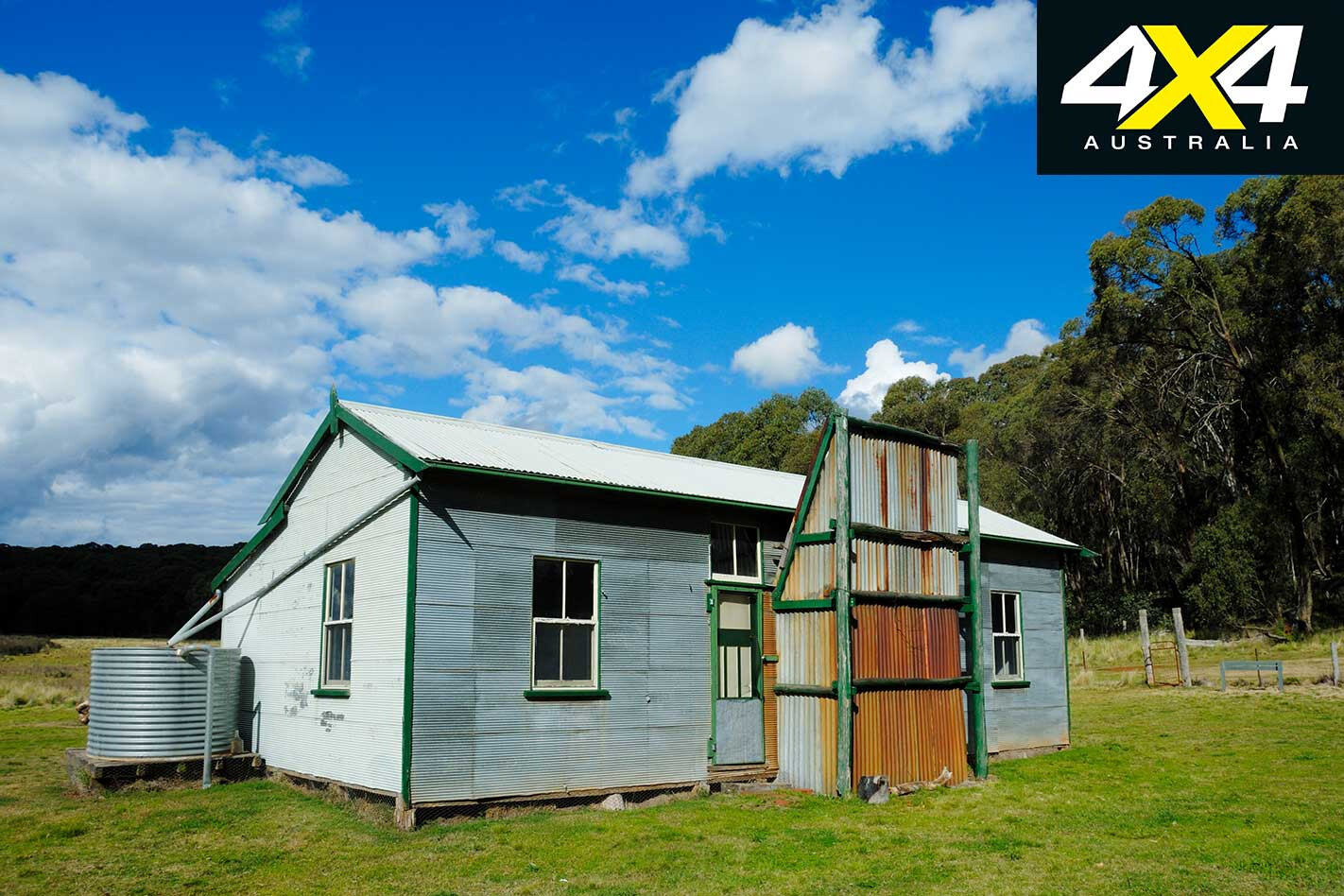
Luxurious it is not, but at $22 a night for as many people as you can squeeze in, it’s a bargain. This old selectors hut has been tidied up by the NPWS and has a fireplace and four bunk beds, but no mattresses, electricity or running water. There is an old drop toilet outside with most likely a red-back spider hiding under the seat.
Travel Planner
LOCATION About 30km east of the small town of Coolah, in central-west NSW.
WHEN TO GO Throughout the year, although winter nights can get very cold.
SUPPLIES and FUEL You can obtain fuel and supplies at Coolah.
ACCOMMODATION There are three camping areas that are free of charge and no need to book. If you wish to stay at Brackens Hut ($22/night for the whole hut) contact the NPWS in Coolah on 02 6372 7199.
MAPS The Hema South-East NSW map will get you there.
FURTHER INFO You can email the NPWS in Mudgee at [email protected]. General enquires in Sydney 1300 361 967 nationalparks.nsw.gov.au.
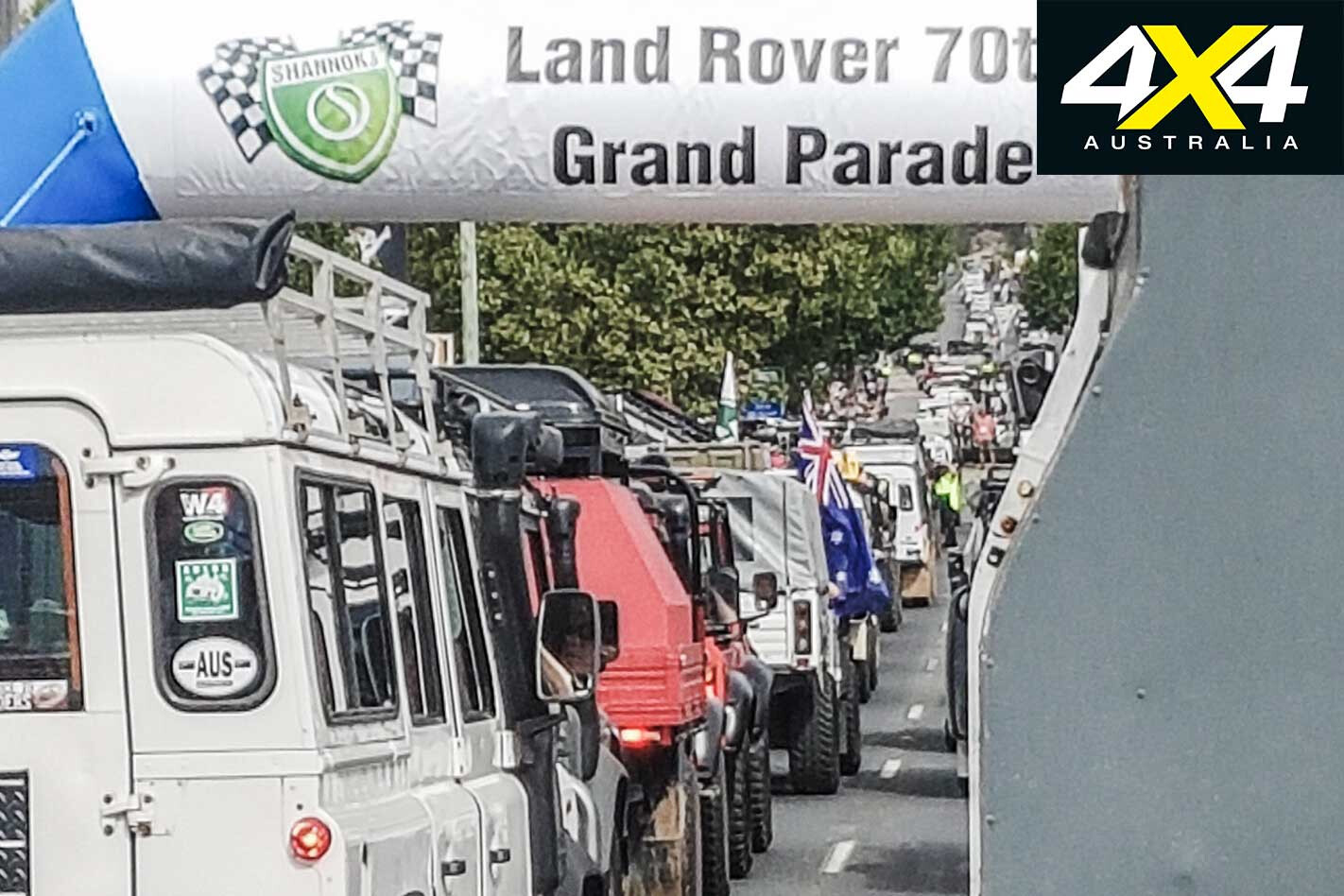
Bumper to Bumper. The traffic on Easter Sunday in Cooma was at a near standstill, but, unlike Sydney traffic during rush hour, this gridlock was a circumstance to rejoice.
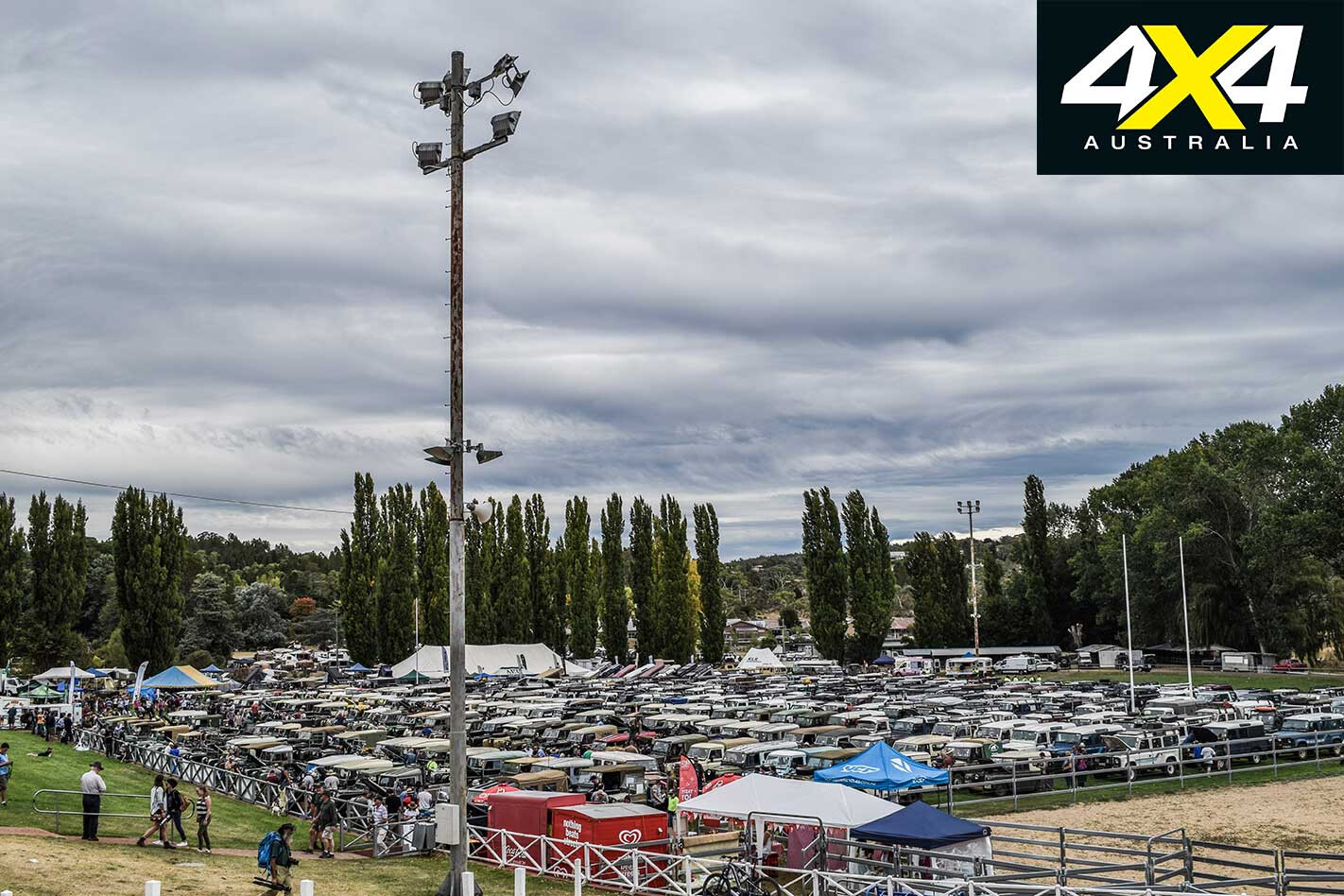
It was caused entirely by the hundreds of Land Rovers participating in the Grand Parade during the Land Rover 70th Anniversary celebrations held in Cooma, NSW, over the Easter long weekend.
Why Cooma? Well, this vehicle, renowned as the farmer’s friend, has a long history with the region that extends beyond the marque’s paddock-pounding credentials. The Snowy Mountains Hydro Scheme started construction in 1949, a year after the launch of the Land Rover Series 1.
While the Hydroelectric Authority had initially tested ex-military Jeeps to support its efforts in the high country, Land Rover rapidly established its credentials on the challenging tracks that formed the lifeline of construction works.
Ultimately, more than 700 Land Rovers were imported to support the Snowy Mountains Scheme. And while that number may not sound like a lot by today’s standards, consider that, in the mid-1950s the population of Cooma peaked at 16,000, this equates to one Land Rover for every 22.8 people at the time.
Little wonder this town, on the doorstep of the Snowies, has cemented its place as a spiritual hub for Land Rover in Australia, and it’s a fitting location for every 10-year anniversary since the 50th in 1998.
While the Snowy Hydro Scheme can claim a lot of credit for Land Rover’s establishment as a mainstay in Australia, this vehicle has seen service in many other walks of life. From rural fire services to the bloke on the land, a Land Rover Series 2 is arguably as iconic as an FJ Ute.
The Australian Army took on the Series 2 in 1958, commencing a long-term relationship that lasted 55 years when, in 2012, the ADF’s fleet of customised Land Rover ‘Perentie’ 110s were phased out in favour of the Mercedes-Benz G-Wagon.
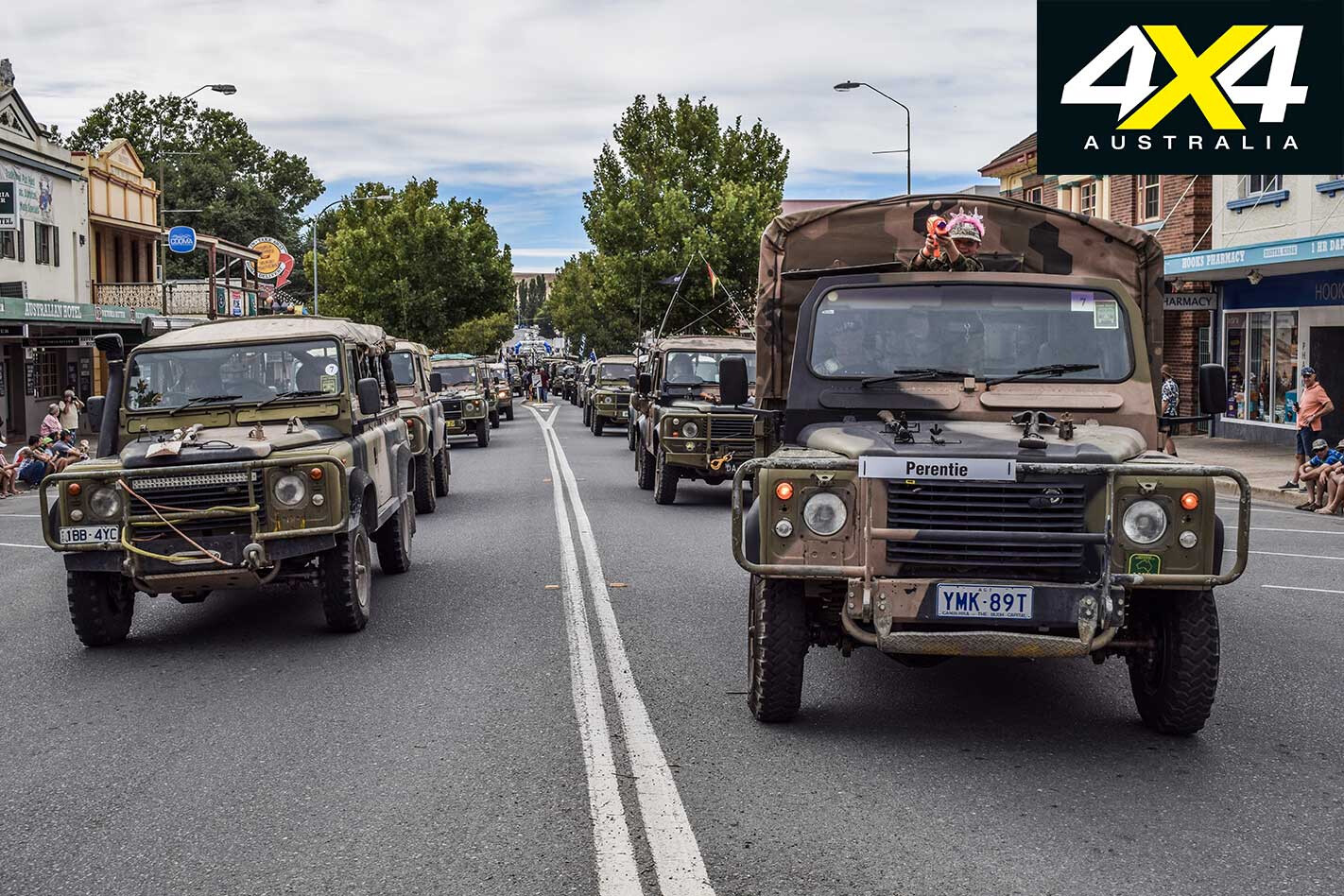
Still, the Army’s loss is a gain for a new generation of enthusiasts, keen to capture their own piece of Land Rover history as Defence surplus is released under public auction. Australian Frontline Machinery has sold almost 2000 Ex-Defence Land Rover 4x4s and 6x6s at auction over the last four years, with more yet to be released.
Any wonder then that the 70th Anniversary celebrations attracted so much support and interest. In total, more than 900 vehicles were registered for the event, with 1600 registered participants taking part in a full weekend’s program including navigation trials, off-road trials, tag-along tours to visit local sites of interest, live music, and a gala dinner.
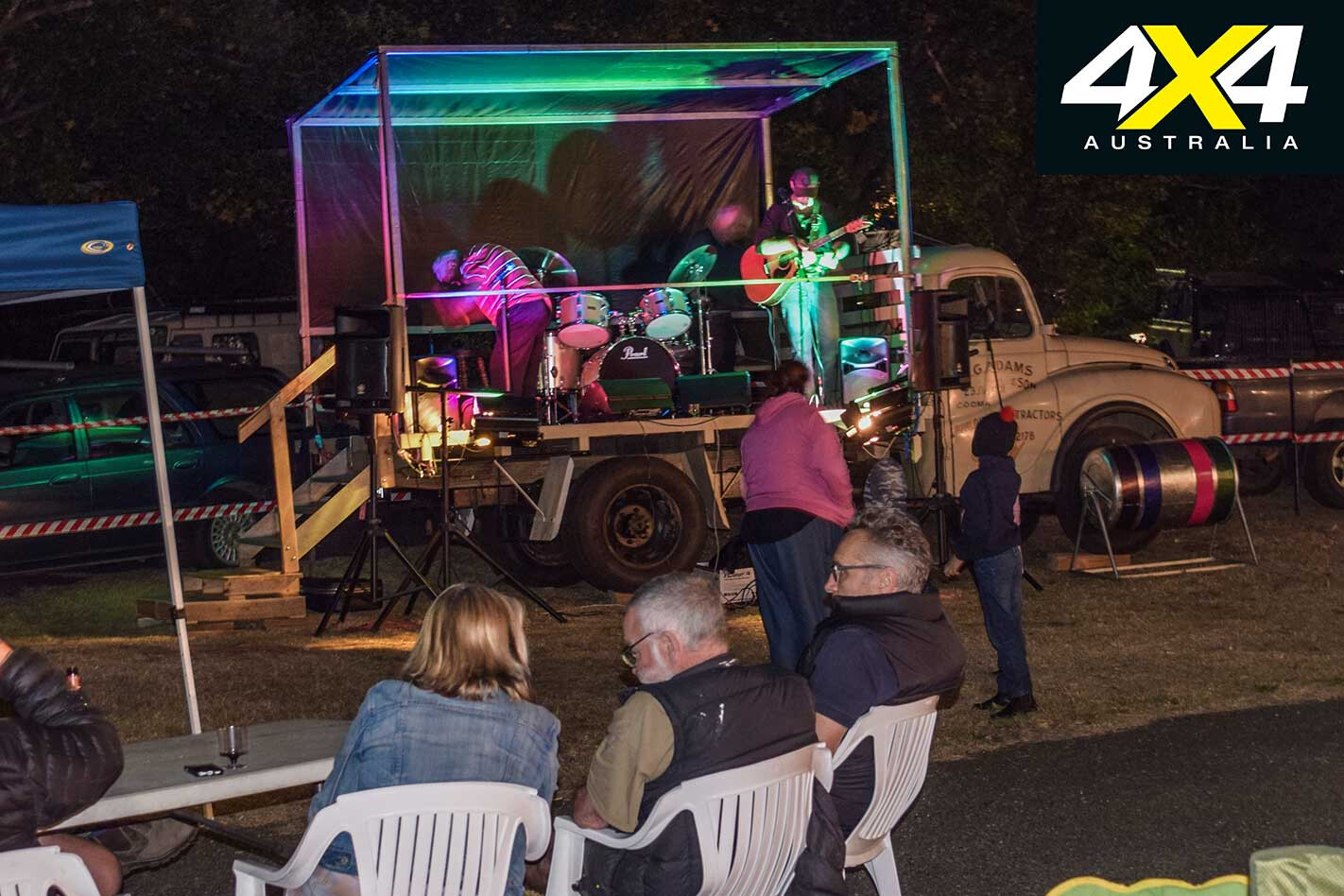
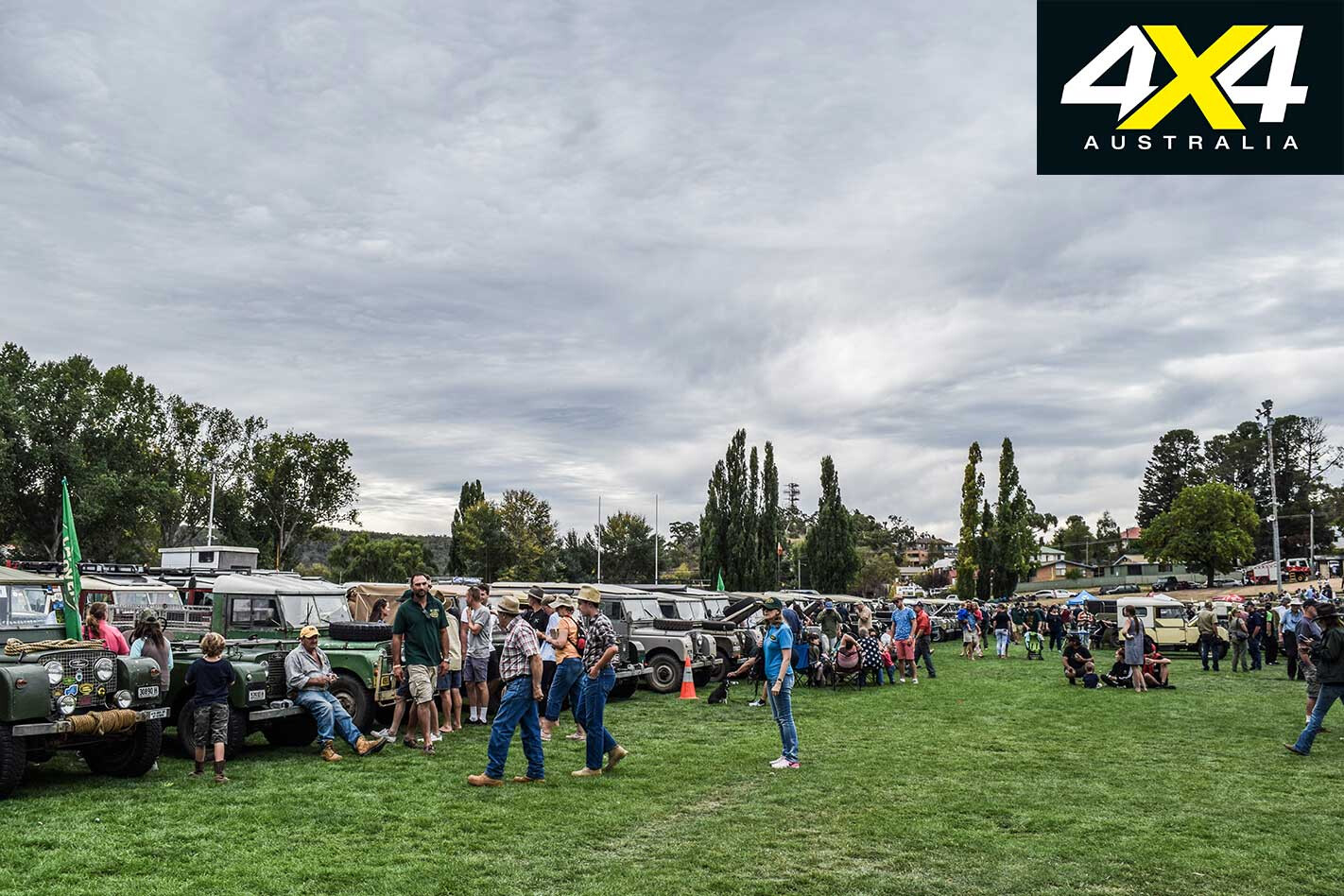
Open to the public on Sunday, the Cooma Showground hosted an impressive array of activities and exhibits. The main event was the Street Parade with an impressive 700 vehicles taking part, and most were displayed at the showground for the enjoyment of owners and enthusiasts alike.
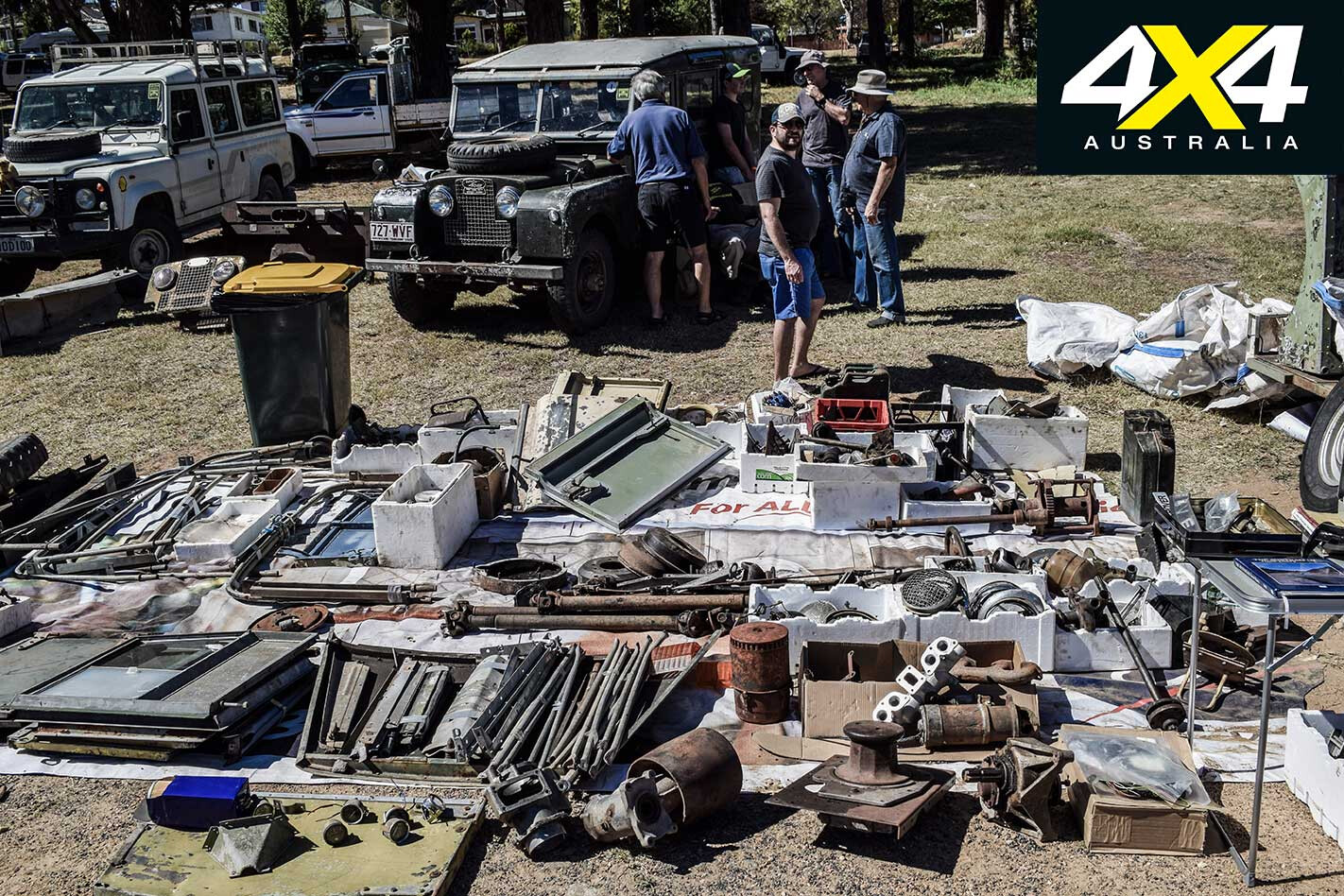
The swap-meet was a magnet for those looking for rare parts and items without an RRP tag, and there was so much on offer we reckon you could have built a Series 2 from the ground up.
While many commercial exhibitors focused on Land Rover parts, accessories and servicing, there was plenty of general vehicle equipment on display, too. Some brands and products were new to the market and showed the ongoing strength of the 4×4 sector and the initiative of those operating within it, and 4WD Industries took out the prize for best exhibitor.
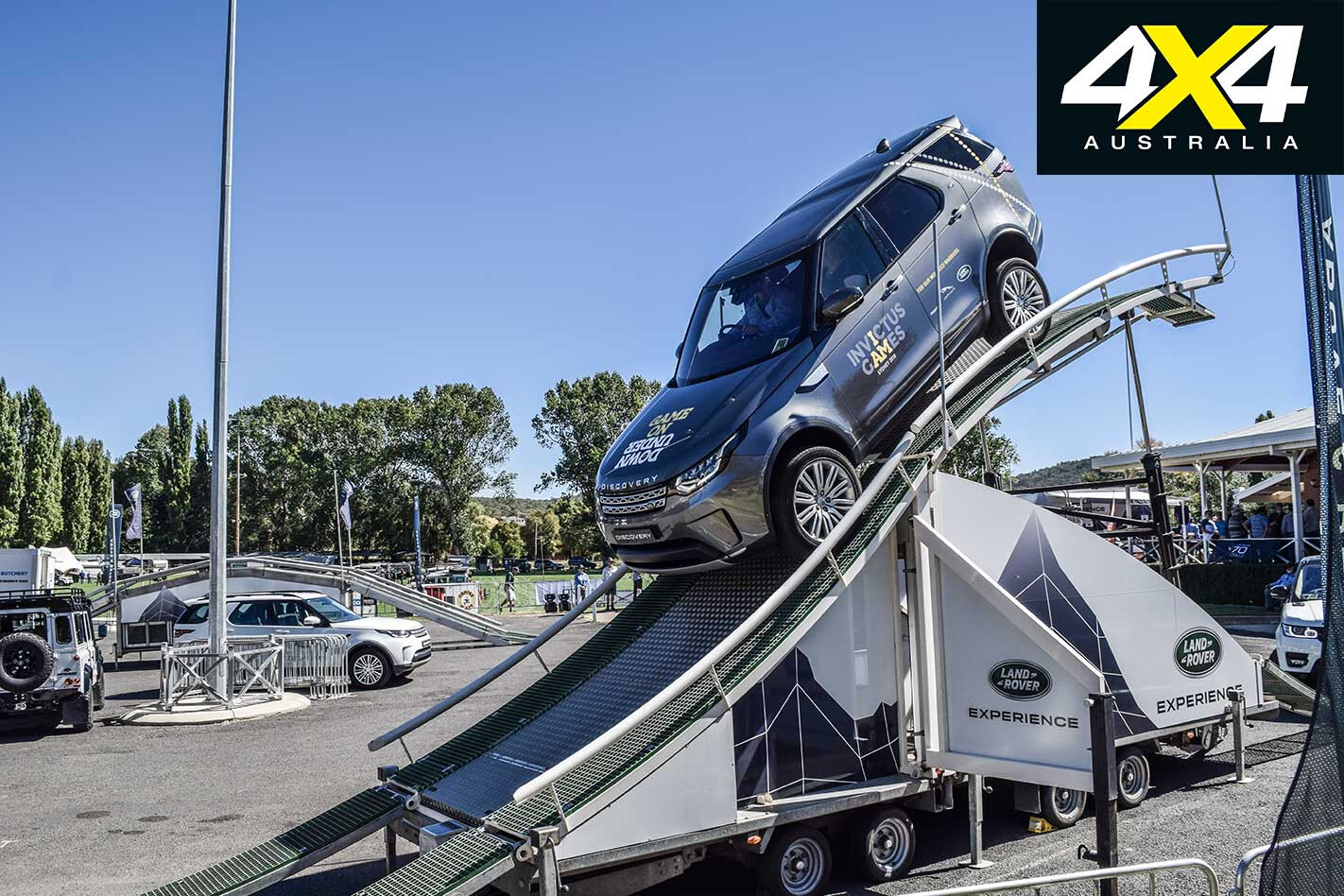
The team from Land Rover Experience were there as well, happy to show punters how to unlock the potential and better understand the capabilities of their Land Rover. Visitors were able to join one of the expert instructors over the Terrapod driving course, especially designed to demonstrate handling and capabilities of the Land Rover and Range Rover brands.
The crowd-pleaser was undoubtedly the 42-degree hydraulic hill climb and descent ramp, towering six metres into the sky.
Camping at the Showground was booked out months in advance and you could see Landies parked outside every hotel in town. Spend a few quiet moments with a cleansing ale or a brew at one of the town’s many pubs and cafes along the main street, and you were guaranteed to see dozens of Land Rovers crisscrossing the township on their way to and from events, enjoying all that Cooma had to offer.
The town stepped up to host a fantastic event and it was clear that visitors were only too pleased to enjoy the services and hospitality that were on offer everywhere they went. In the end, 4000 people lined the streets for the parade, and noting that Cooma only has a population of 6000, it has been estimated that the four-day event brought in more than one million dollars to the local community.
We’re already looking forward to the 80th Anniversary celebrations.
Movie Trivia
Did you know, according to RoverWorks website, there are more than 1781 Land Rovers used in movies, TV series and music videos? The Defender being the most commonly used model in TV series and feature films. Meanwhile, Range Rover and Range Rover Sport have more appearances in music videos than all other luxury SUVs.
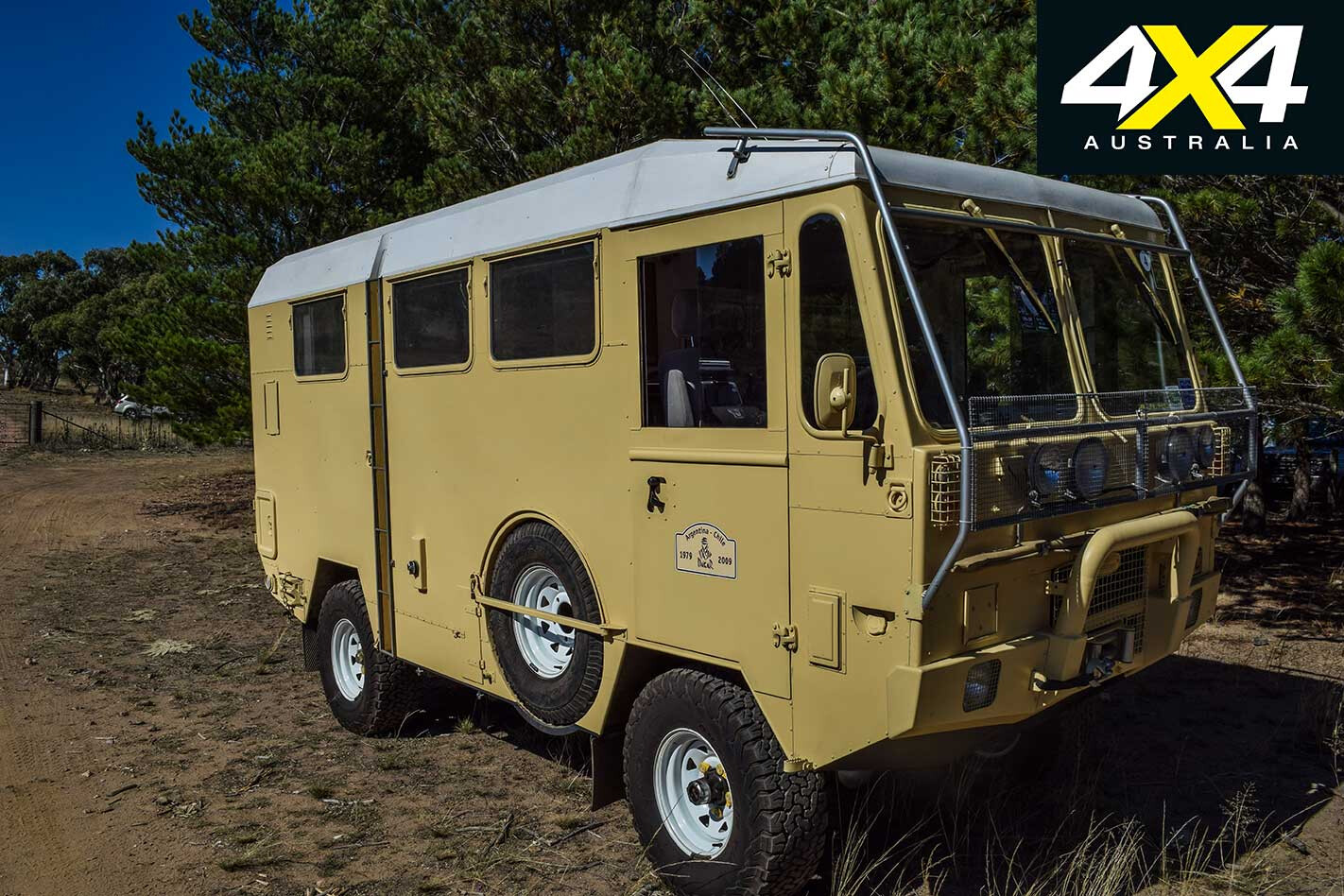
In 1995, the movie Judge Dredd showcased a customised Land Rover called a City CAB. Thirty-one City CABs were built for the movie, based around the 101 Forward Control chassis originally manufactured in the 1970s for the British Army.
And while James Bond liked his Aston Martins, he also has a soft spot for Landies. He drove a Defender in Casino Royale and Spectre. Range Rover also made appearances in Octopussy, The Living Daylights, Tomorrow Never Dies, Casino Royale and Quantum of Solace.
And who could forget Lara Croft driving a Defender TD5 110 in Tomb Raider?
Off-Road Trials
The 70th anniversary event was not an event reserved for static displays. The half-day off-road trial event, sponsored by Bearmach, allowed registered attendees to test their mettle in pursuit of trophies, grille badges and bragging rights.
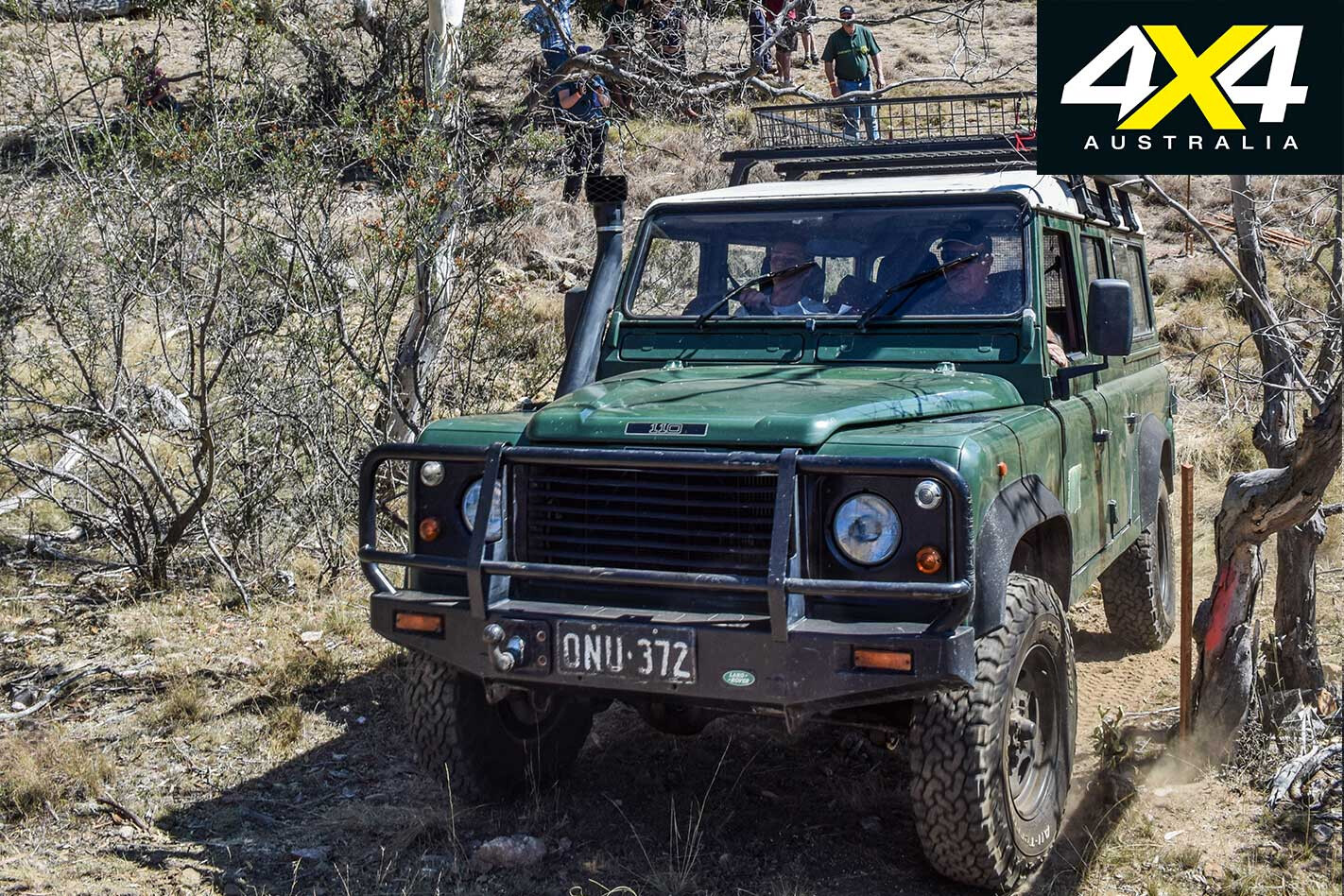
The challenge had three categories: short wheelbase, medium wheelbase and long wheelbase. Walking the track before the event kicked-off, it was clear that some of the tight corners were going to prove a challenge for anything other than a compact rig.
But who could begrudge an 80-inch wheelbase Series 1 model 1948 Land Rover the opportunity to show-up its modern-day rivals? The Defender 110s, 130s and a suite of Perenties didn’t stand a chance. The other best efforts were reserved for some of the Range Rovers that were able to hit the mark (rather than the course markers) with terrain management and cornering.
One outstanding entrant was 16-year-old Kyle Stewart on his L-plates. He and his Dad drove their 1997 Defender 110 (which has an impressive 904,000km on the clock) all the way from Queensland for the event. Not only did Kyle complete the course, but he was the youngest entrant on the day. We reckon we’ll be seeing more of Kyle in years to come.
The Mini Me
Richard Edmunds from Tasmania is a Land Rover enthusiast. He is a fitter and turner by trade and decided to put his hands (and mind) into creating a 5/8th scale working model of his treasured Series 1. This little beauty took him four years to complete, including a handmade diff, bearings … the lot!
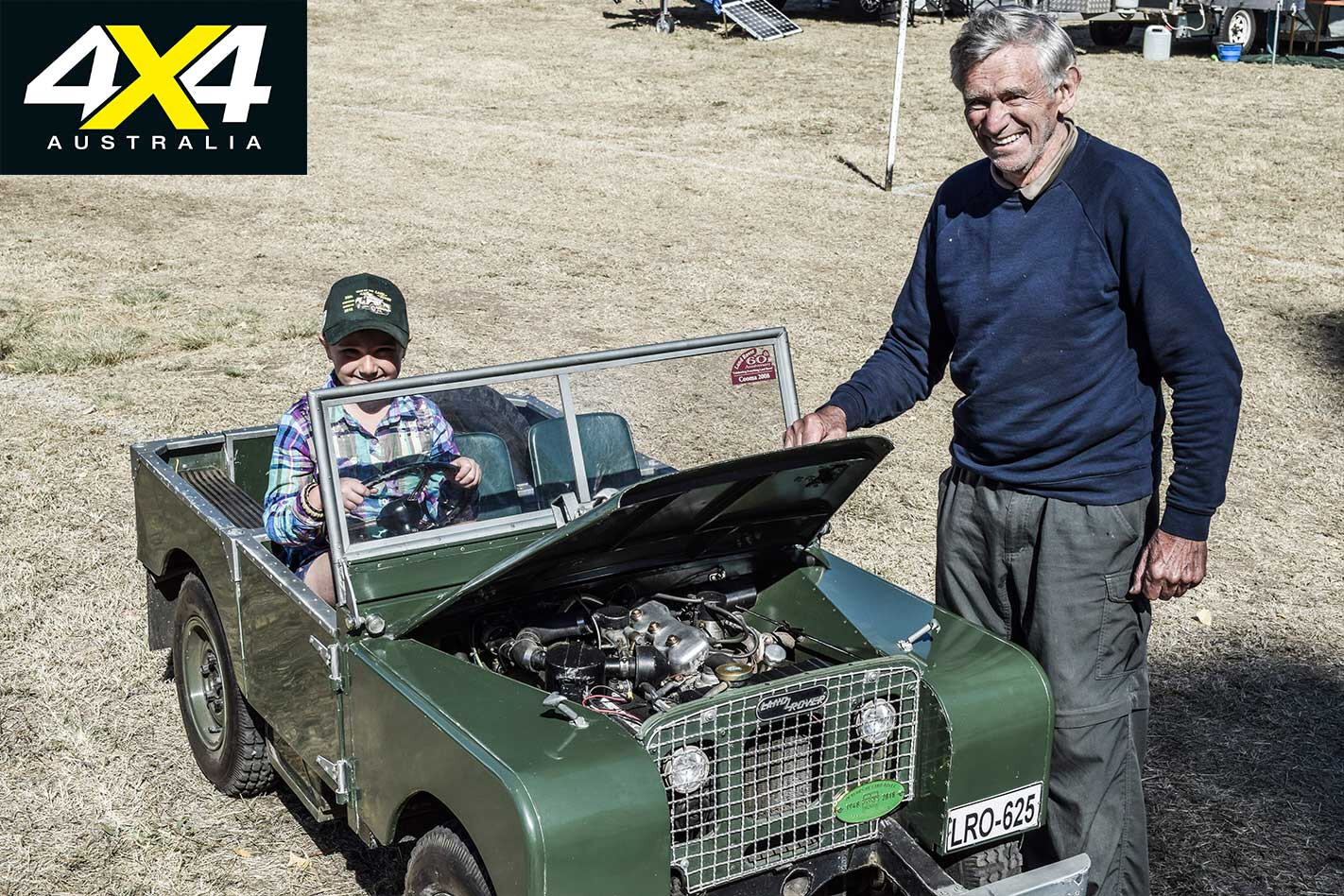
It should be recognised that this isn’t Richard’s first foray into miniaturisation. He’s also created working scale models of a 1926 12-cylinder Sunbeam Race Car and a Fowler VF Crawler Tractor. When we asked him, “Why?” Richard simply said, “Why not? Life is full of little challenges – and I love challenges.”
He went on to explain that he’s always had an appreciation of cars. “I was always interested in engines. I used to tinker and fiddle with things. But ever since I was knee-high to a grasshopper, I wanted to build an engine. But it took until after I’d retired to start living that dream!”
Enthusiastic
The 70th Anniversary event attracted participants from across the country. A walk around the vehicles displayed at the Showground for the show-and-shine event revealed plated vehicles from every State and Territory in Australia – with the exception of the Northern Territory (did we miss you?).
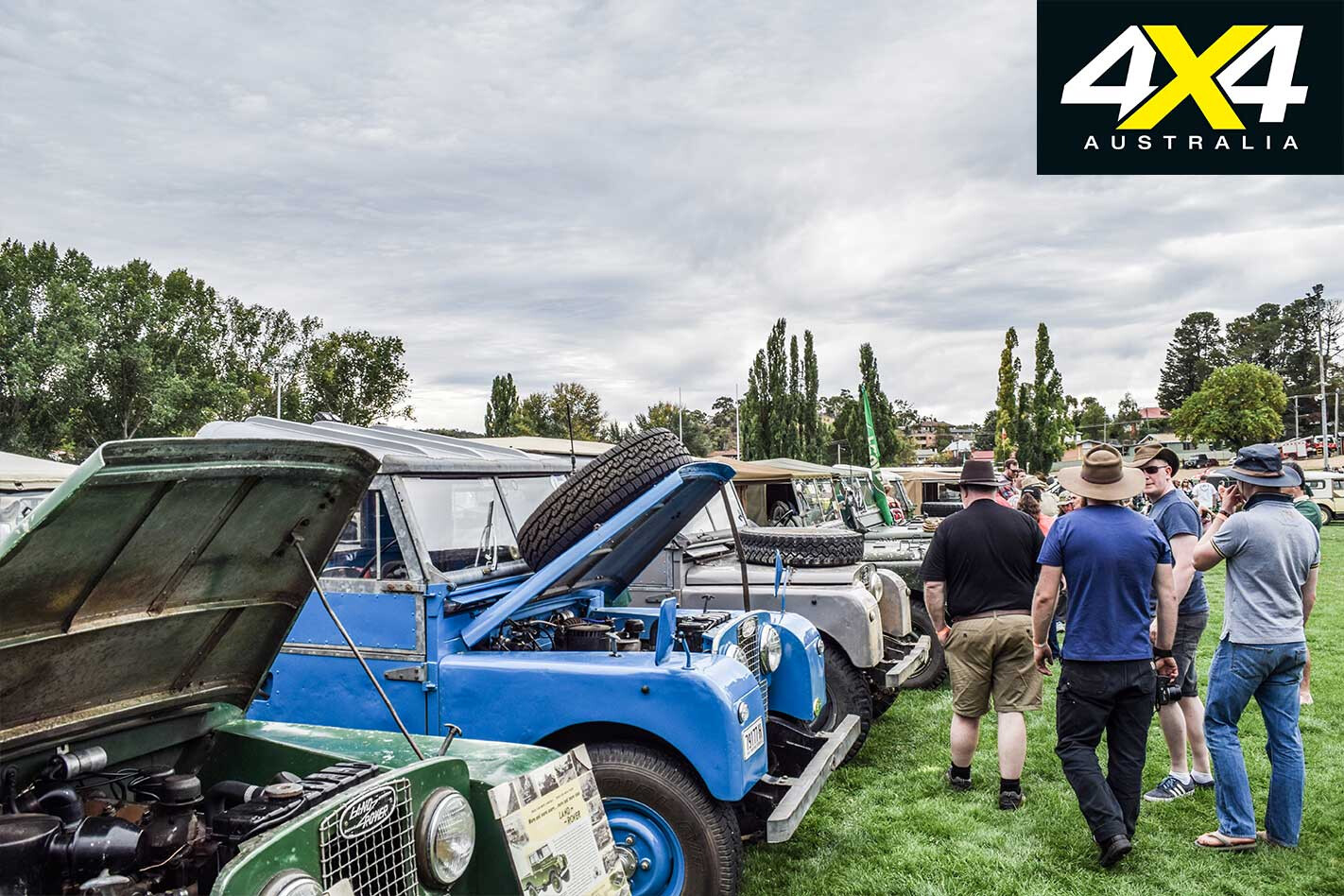
This turnout was indicative of the success of the previous 10-year anniversaries. The rundown over the last three events look like this:
• 50th Anniversary: 540+ vehicles • 60th Anniversary: 767 vehicles • 70th Anniversary: 900+ vehicles
REMEMBER the sand-scorching, orange, LS3-powered Holden Colorado from the May 2017 issue of 4X4 Australia? Of course you do, it was one of the most popular stories we ran last year.
Since that initial vehicle, the company behind it, Queensland’s Killa Kustom Kables & Conversions, has built a few more of them including current model Colorados and an LSA version it calls the Killarado.
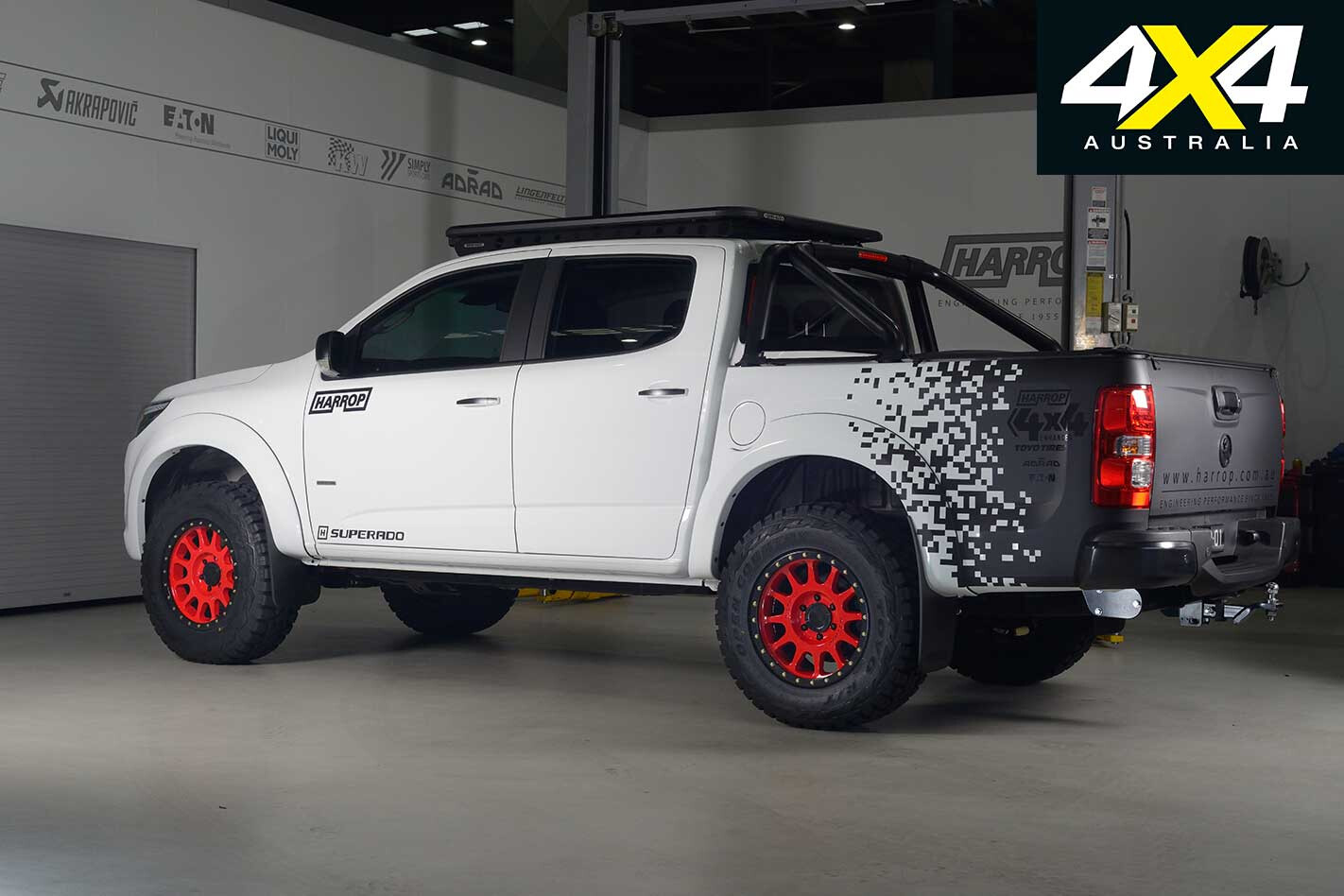
Now, Victoria’s Harrop Engineering has teamed up with Killa Kustoms to be the southern agent, and the team at Harrop has waved its magic wand over the V8 Colorado to create the Superado.
Like everything Harrop does, the Superado takes the original product and bumps it up to the next level. They crank all the dials up to 11 and do it with an OE attention to detail, engineering and reliability. The Superado doesn’t stop with just the V8 engine swap, but it includes a matched suspension package, uprated wheels, tyre and brakes, and a host of other options.
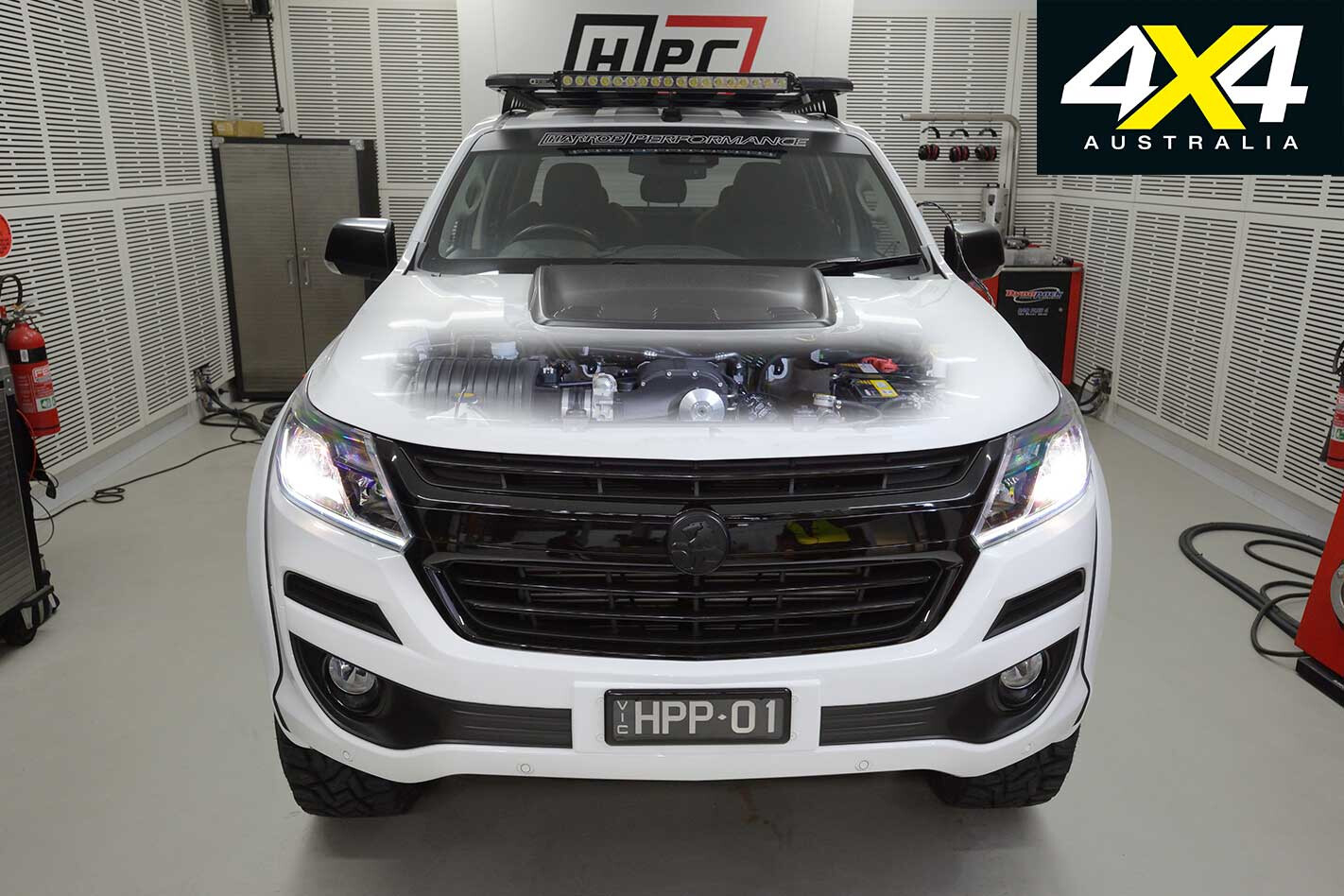
Harrop is, in fact, offering two tailored versions of the Superado. The white car you see here rides on 18-inch Method Race Wheels wearing Toyo’s excellent Open Country R/T tyres,and it has an off-road-tuned suspension package.
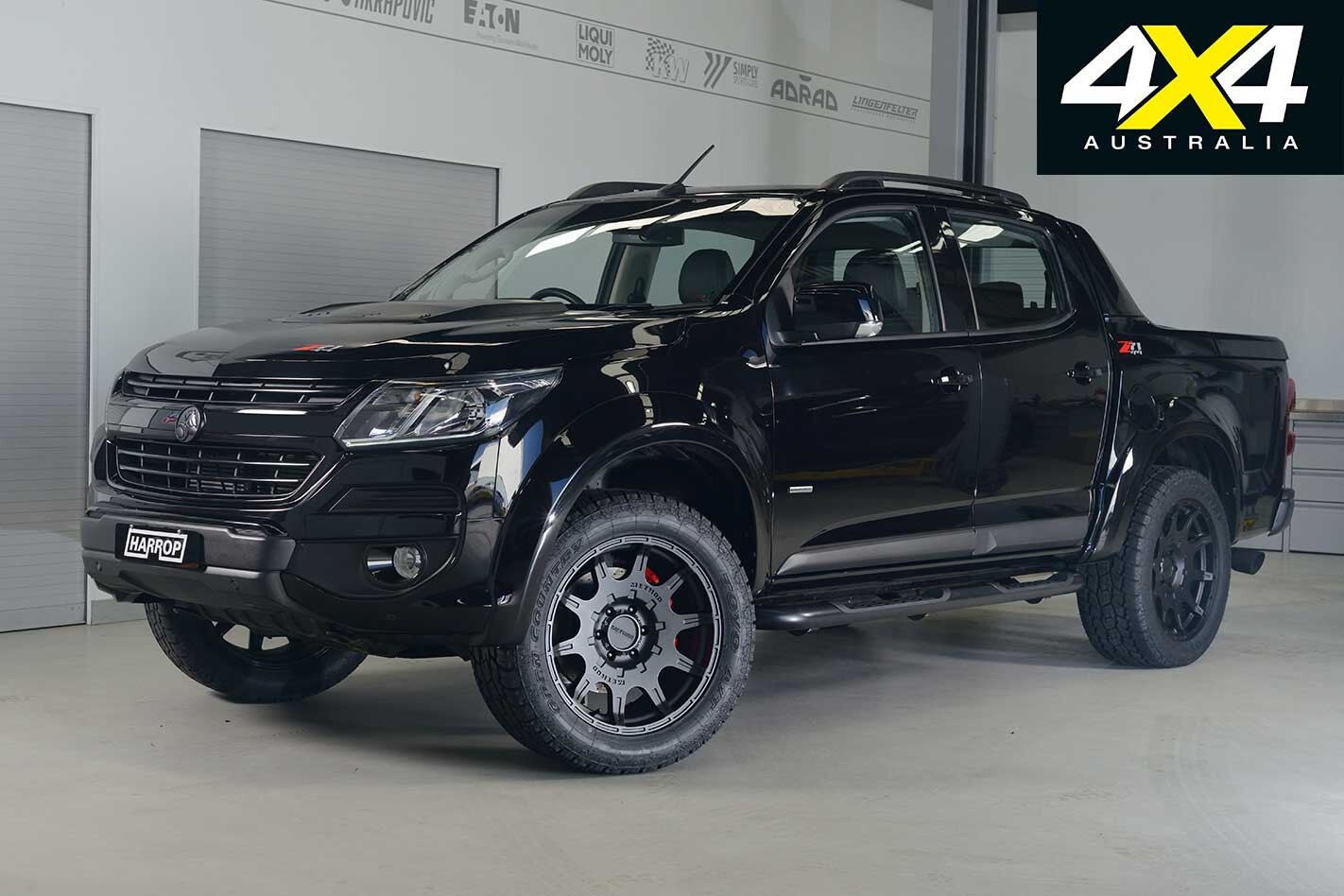
While the black Z71 car sports 20-inch Methods and lower-profile Toyo AT2s for a more urban look and improved on-road characteristics. It also has the factory supercharged LSA engine.
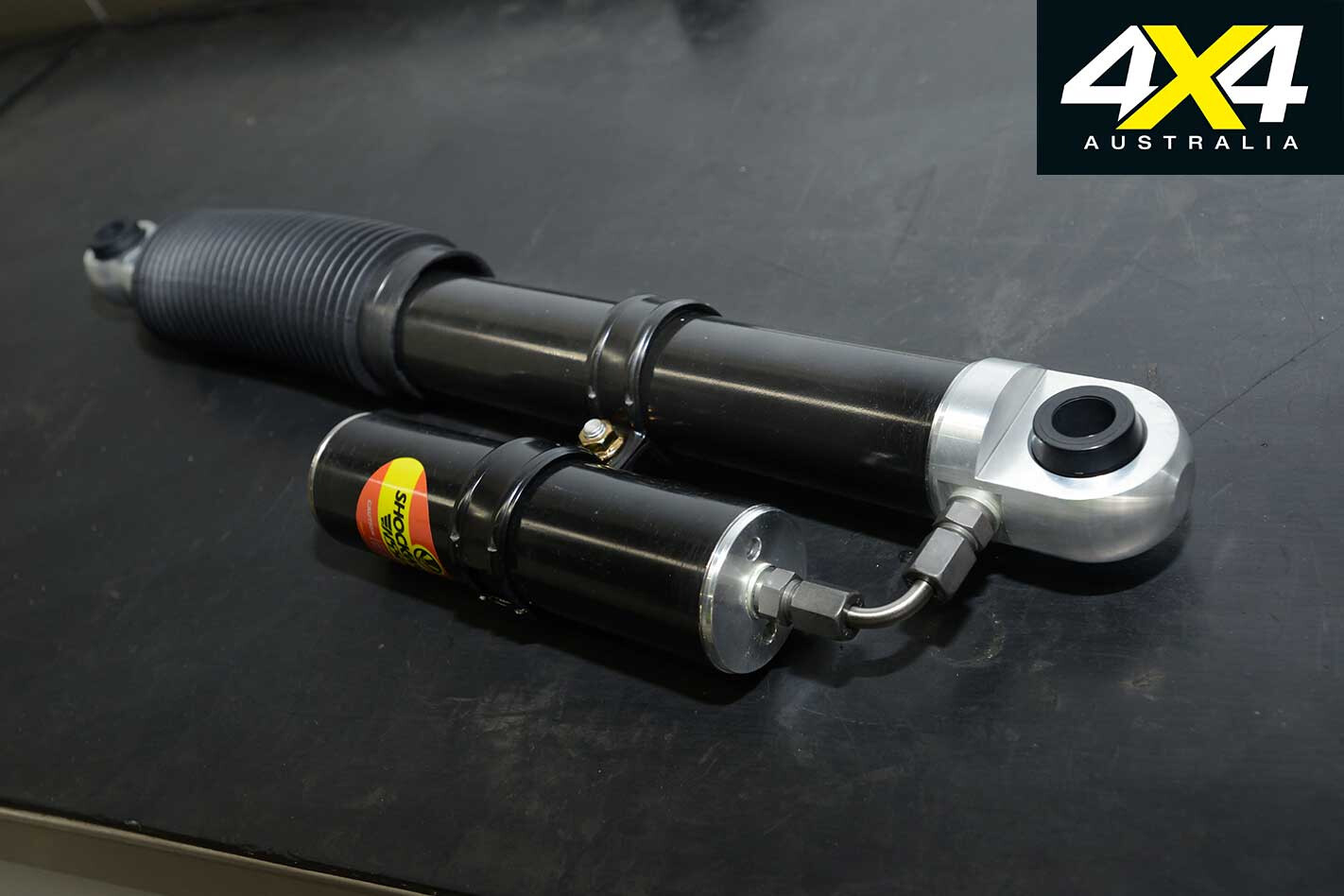
Both on- and off-road variants have a Harrop suspension package featuring remote reservoir dampeners from Victorian suspension specialists, Shockworks. These are then tailored to the vehicle be it for the street or more off-road usage.
There’s a big brake package offered that includes Harrop six-piston front callipers and massive 355mm rotors, to deliver a firmer pedal feel and superior braking performance than Holden ever could. These also fit behind the specific Method wheels but will not go behind factory Holden 18-inch alloys.
Engine choices are the GM 6.2-litre LS3 – either naturally aspirated or equipped with a Harrop TVS2650 supercharger kit – or the factory supercharged LSA 6.2L. Only the 6L80 six-speed auto is offered, and the four-wheel drive system remains GM’s part-time set up including low range. Add in a set of Harrop E-lockers, for the ultimate off-road weapon.
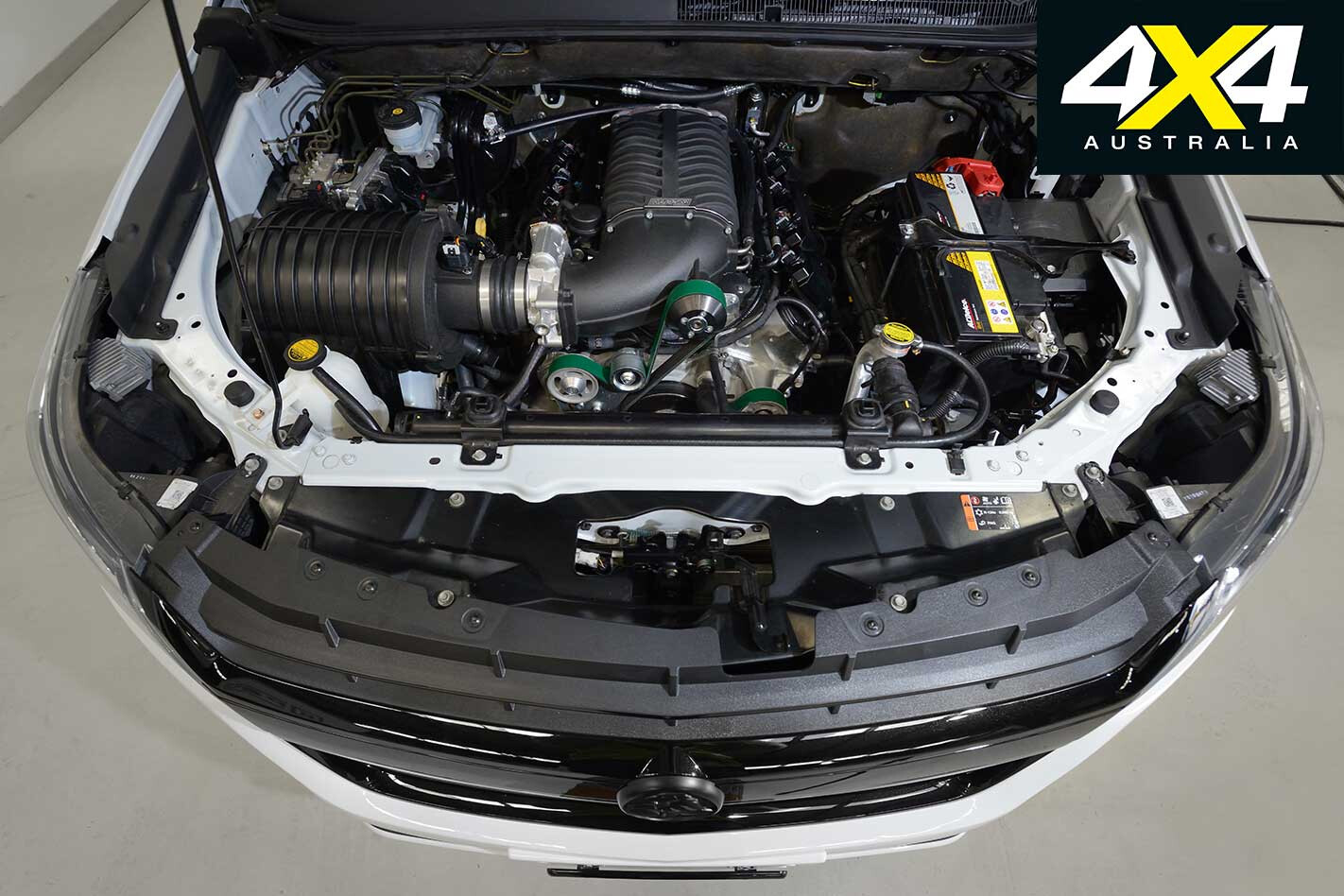
Styling options for the Superado include barwork, lights, roof racks, bonnet scoop, decals and a bespoke leather interior, so you can tailor the vehicle to whatever your tastes. Go wild and extreme or keep it a sleeper that only reveals its identity when the throttle is mashed.
What’s all this performance cost? That depends on what options you check, but rest assured the Harrop packages are tried and tested to be as good as or better than the factory in terms of reliability, something few engineering firms can offer. And no OE factory offering can deliver the feel and performance of the full Superado conversion.
TWO of the biggest off-road racing events on the planet are on this week, and one of them is right here in Australia. The other is the iconic Baja 500 through Mexico which attracts the biggest names in the sport, while the local one is the Finke Desert Race in the Northern Territory.
The Finke, as it is known, runs south from just outside Alice Springs down a rough, dusty and mainly unused track for 230 punishing kilometres, to the remote Aboriginal town of Finke. Here the competitors camp overnight on the footy field; the lucky ones might get some sleep, while others will be repairing their cars and bikes, before turning around and doing it again for the return to Alice the next day.
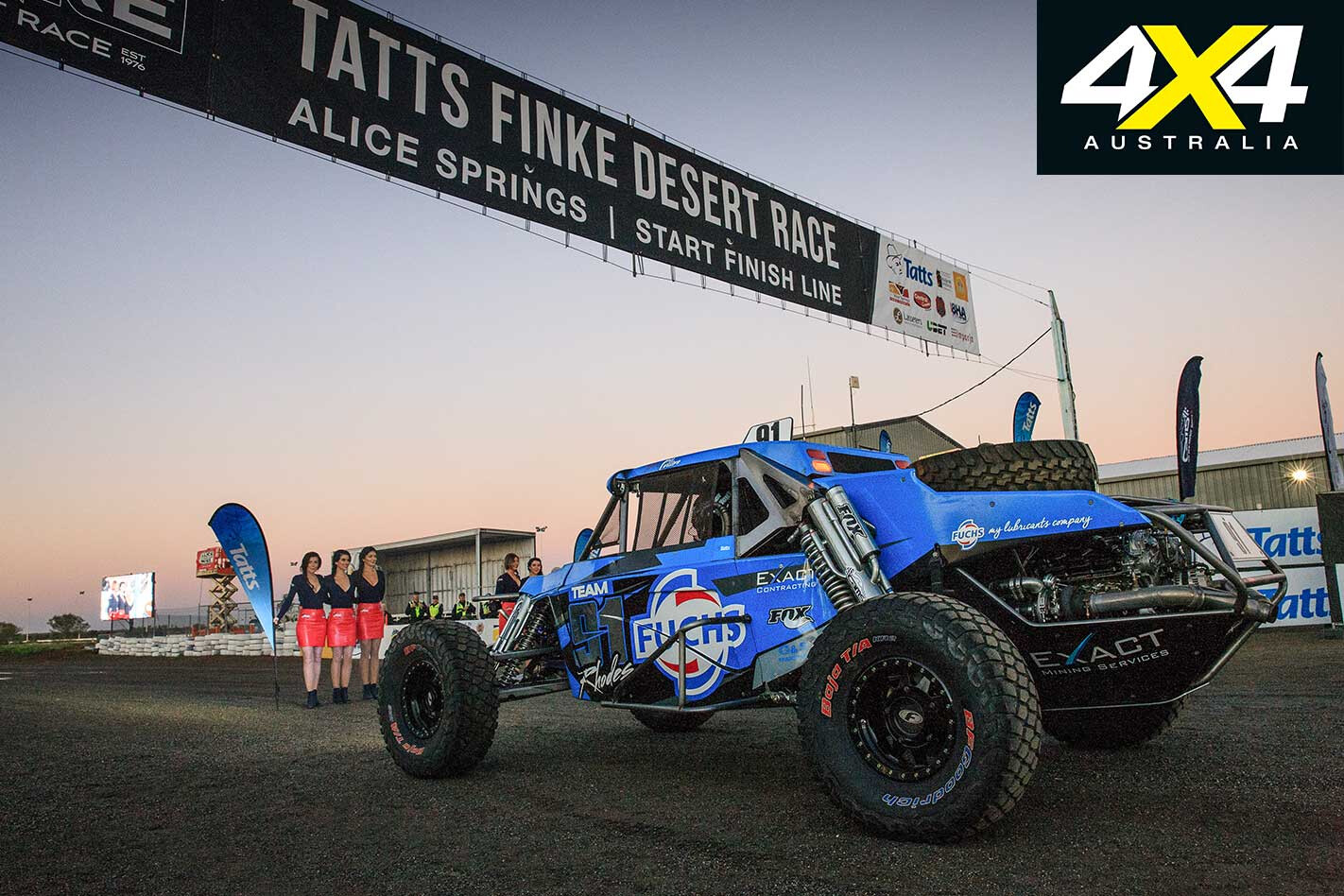
Finke runs over the Queen’s Birthday long weekend, which this year falls on June 8 to 11. The festivities start off with a street party in the heart of Alice Springs on Thursday night, while scrutineering for the 500-odd bikes and more than 100 cars and buggies happens on Friday.
The action gets underway with the prologue, which is held near the start/finish line on Saturday. This is a great way to catch the action without having to venture too far from town. Race-day Sunday starts early, with the cars leaving from 7:00am and the bikes following. Then, those that are still running will start arrive back at the finish line mid-morning on the holiday Monday.
Finke is like the Mount Panorama of off-road racing, attracting spectators from around the country. Fans camp at bush-sites along the length of the track, where they can get up close with the action to see the jumps, bumps, spills and thrills as the competitors race by. There really is nothing like the experience of a 700hp Trophy Truck bellowing past you through the bulldust at 150km/h!
Five-time Finke winner and Australia’s only Dakar Champion, Toby Price, will be back again this year after missing the bike race in 2017 due to injuries sustained at Dakar that year. He ran in his Trophy Truck but failed to finish, stopping with engine trouble just 40km from the finish line.

Toby will be running the ‘Finke Iron Man’ in 2018, where he will compete on both his KTM bike and Trophy Truck. He last tried this in 2016 when he won the bike class and finished second in the truck, even though he only drove it for the first time just weeks before hand.
This will see him race to Finke in the Truck on Sunday morning before returning to the start-line by aircraft to again make the 230km dash on his bike, and then do the same again for the return leg the next day.
“Since I attempted the double in 2016 and we didn’t claim the win in the truck category, I’ve been extremely keen to try again and was gutted when I was injured last year and couldn’t do the bike,” Price said. “We’ve had a couple of months to prepare the truck and the bike and I’m feeling good. I can’t wait to get out and do our first test with the truck, this is going to be extremely challenging but rewarding if we can get it done.”

If you’re currently traveling in Central Australia or keen to get there from anywhere in the country, point the 4×4 towards Alice Springs to catch all the wild and dusty action of Australia’s greatest off-road race.
More info at www.finkedesertrace.com.au.
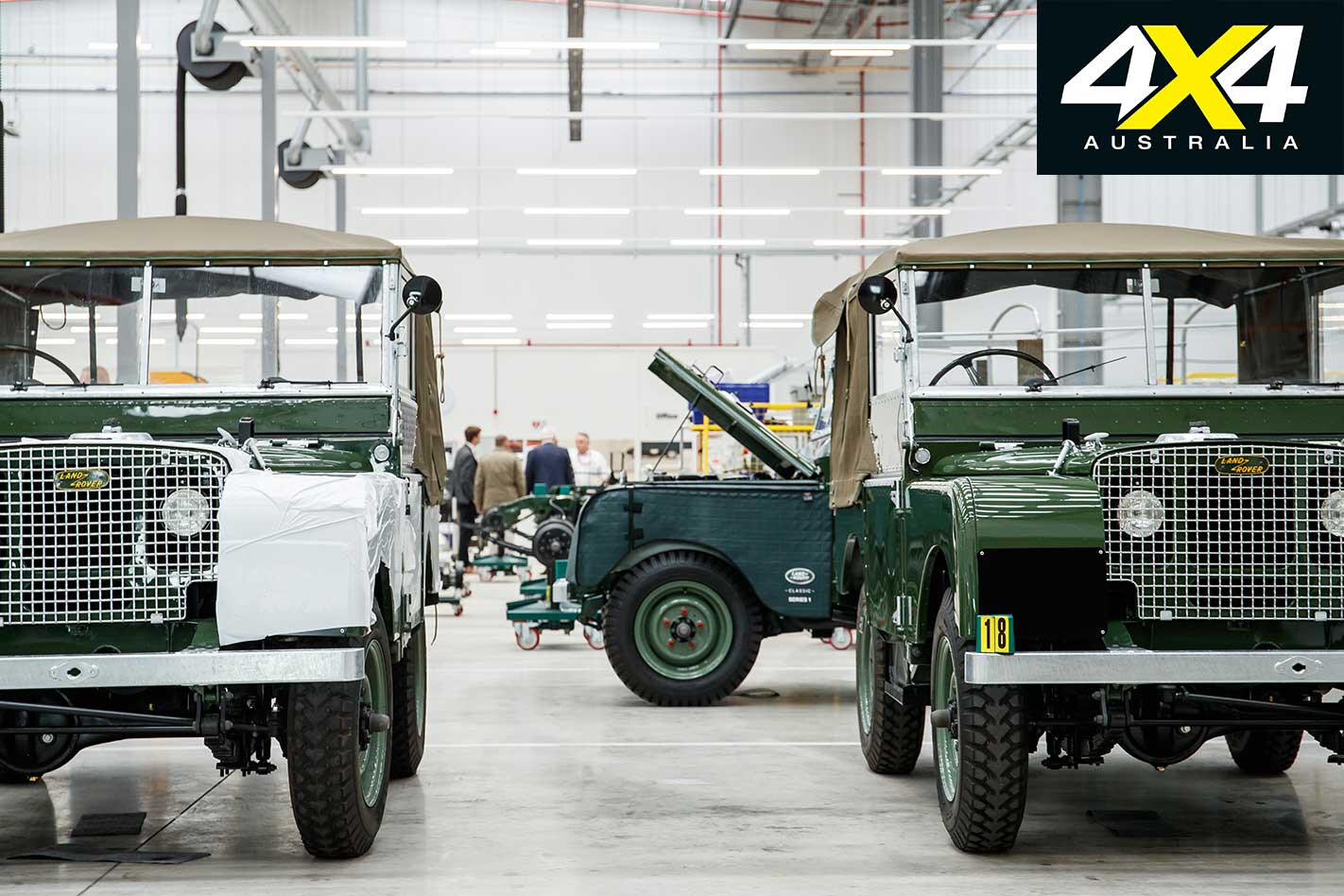
Seventy years ago, when Maurice Wilks scratched out the profile of what would become the first Land Rover in the sands of a Welsh beach in 1947, it’s doubtful Rover’s then technical chief had any inkling that his basic, box-on-wheels design would, in its final four-wheeled form, become so entrenched in global off-road culture.
The brand’s introduction to Australia happened soon after its 1948 launch, and since then the Green Oval badge has been a large part of our 4×4 scene, with Land Rovers serving as touring vehicles, competition rigs, army transport, and truly remote expedition rigs.
We sat down with three of Land Rover Australia’s (LRA) longest-serving employees – Geoff Stubbs, James Scrimshaw and Brett Lewis-Driver – to chat about the Brit off-road icon’s presence Down Under. With close to 100 years combined experience working for LRA, these guys have definitely seen it all.
An icy reception
For Australia – and unbeknownst to Wilks – the timing of his beach sketch was near-perfect; the country was just about to embark on its biggest-ever engineering project: the Snowy Hydro Scheme. The Land Rover Series I was revealed to the world in 1948 at the Amsterdam Motor Show.
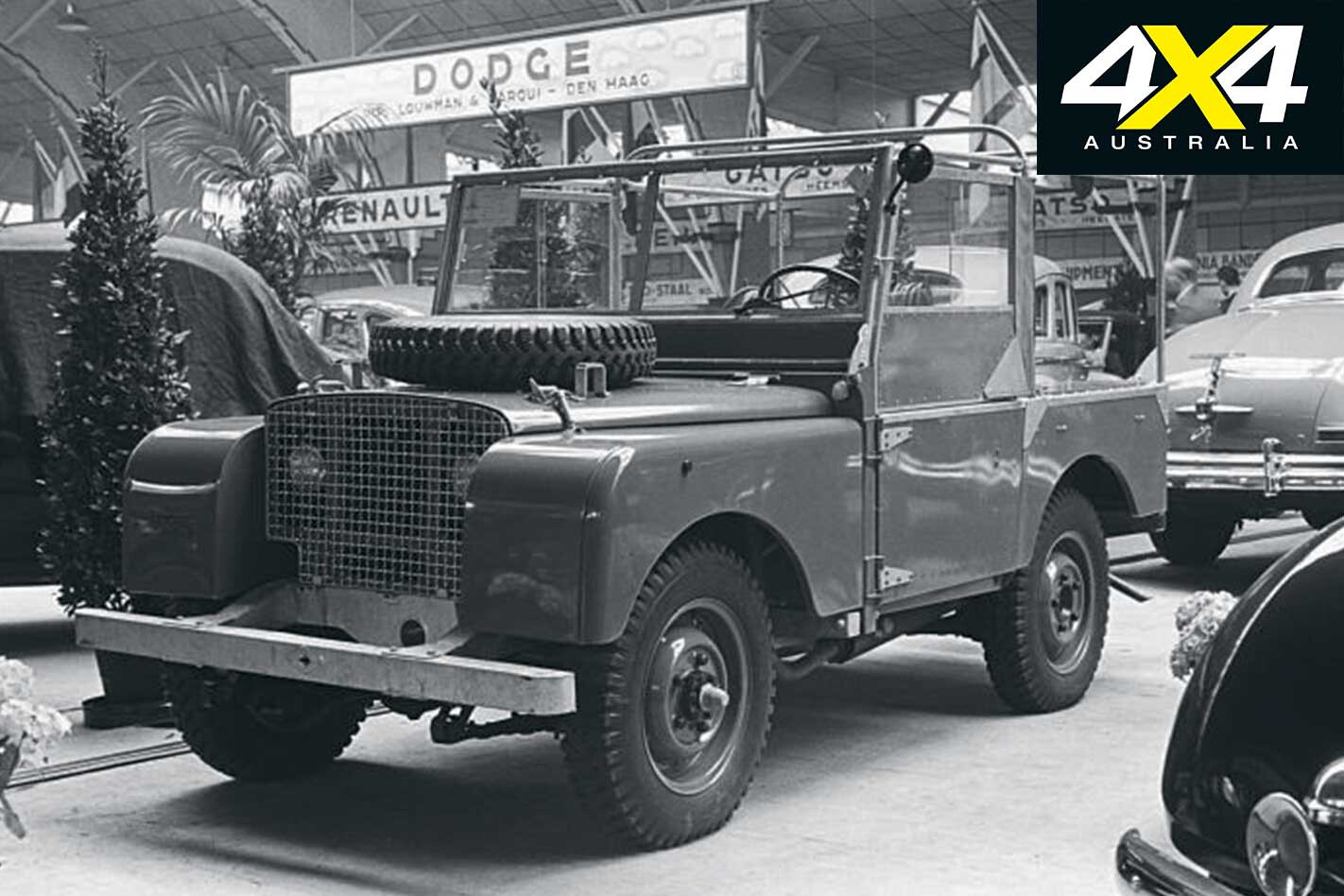
In October 1949, the first Land Rovers arrived in Australia, just as the Snowy Mountains Authority realised it needed a robust, go-anywhere vehicle to transport engineers, field workers, office staff and supplies through the rugged alpine country that the Snowy project comprised (until that point, they’d been relying on horses).
As well as the rugged terrain, the Scheme saw up to 100 temporary camps and more than 1500km of roads and tracks. The new Land Rover fit the bill for this, and so began its long relationship with Australia.
The initial number of Land Rovers used by the Snowy scheme was small, only growing after the first few years; in 1953 the fleet was expanded significantly, and by the late 1950s there were more than 300 Landies trundling around the Snowy region, of varying types (initially 80-inch vehicles, but soon joined by the Series I wagon and derivatives, even including wagons with Perspex roofs for when members of the Royal Family visited).
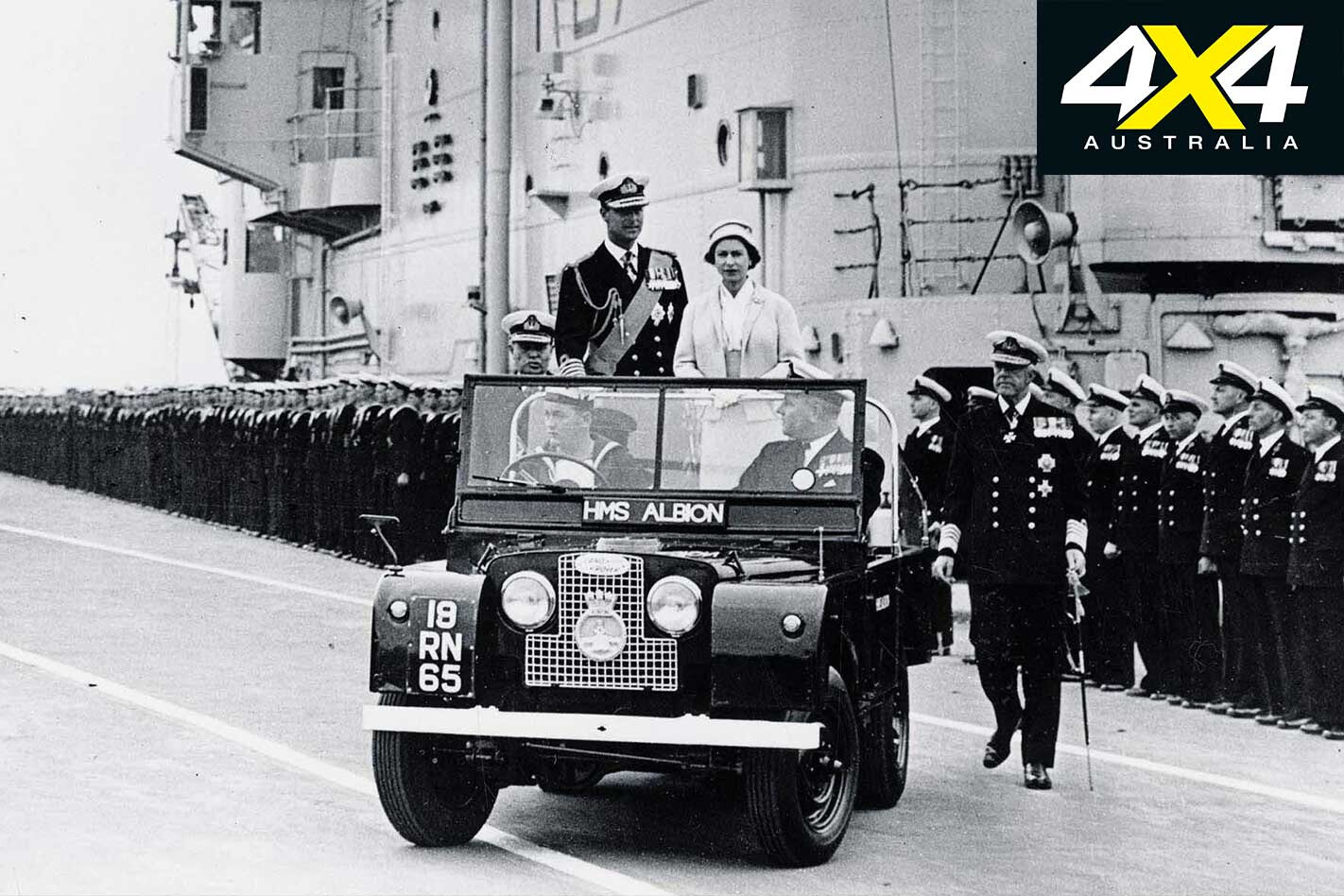
On top of this was the additional number of vehicles used by private contractors in the region. In total, there were more than 715 Land Rovers on fleet over the 15 years from 1951 to 1966.
The Snowy Scheme is a long time ago now, but it hasn’t lessened LRA’s appreciation for how that project influenced the brand’s presence here – even today.
“It’s a great story – and great history,” says James Scrimshaw, Product Public Affairs Manager, Jaguar Land Rover Australia (JLRA). “Every photo you go back and have a look at in regards to the history of the Snowy Mountain Scheme, they feature a Land Rover somewhere in it … it’s an important part of our history for us.”
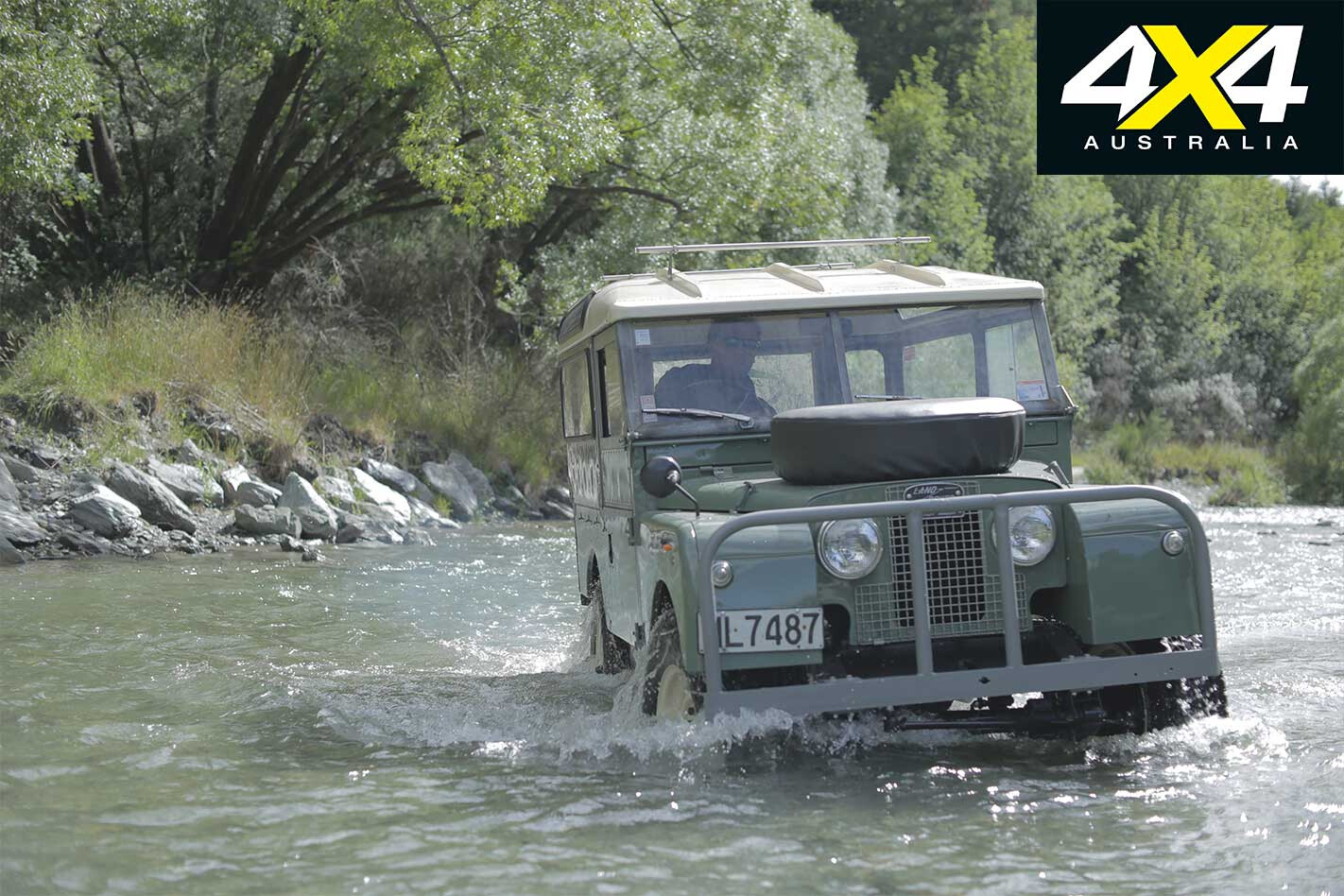
James also mentions the rural and farming communities in Aus, who took to this ‘new’ go-anywhere vehicle straight away, thanks to its ability to lug plenty of gear for that fencing job, sheep mustering, or general farm inspections.
Even today, driving through this vast country’s rural and outback areas, it’s a solid bet that you’ll spot at least a few Landies, from any era and in various states of being, parked in fields or near farm or station houses. And it wasn’t only the cockies and civilian departments that became part of the Australian Land Rover family.
Defensive manoeuvres
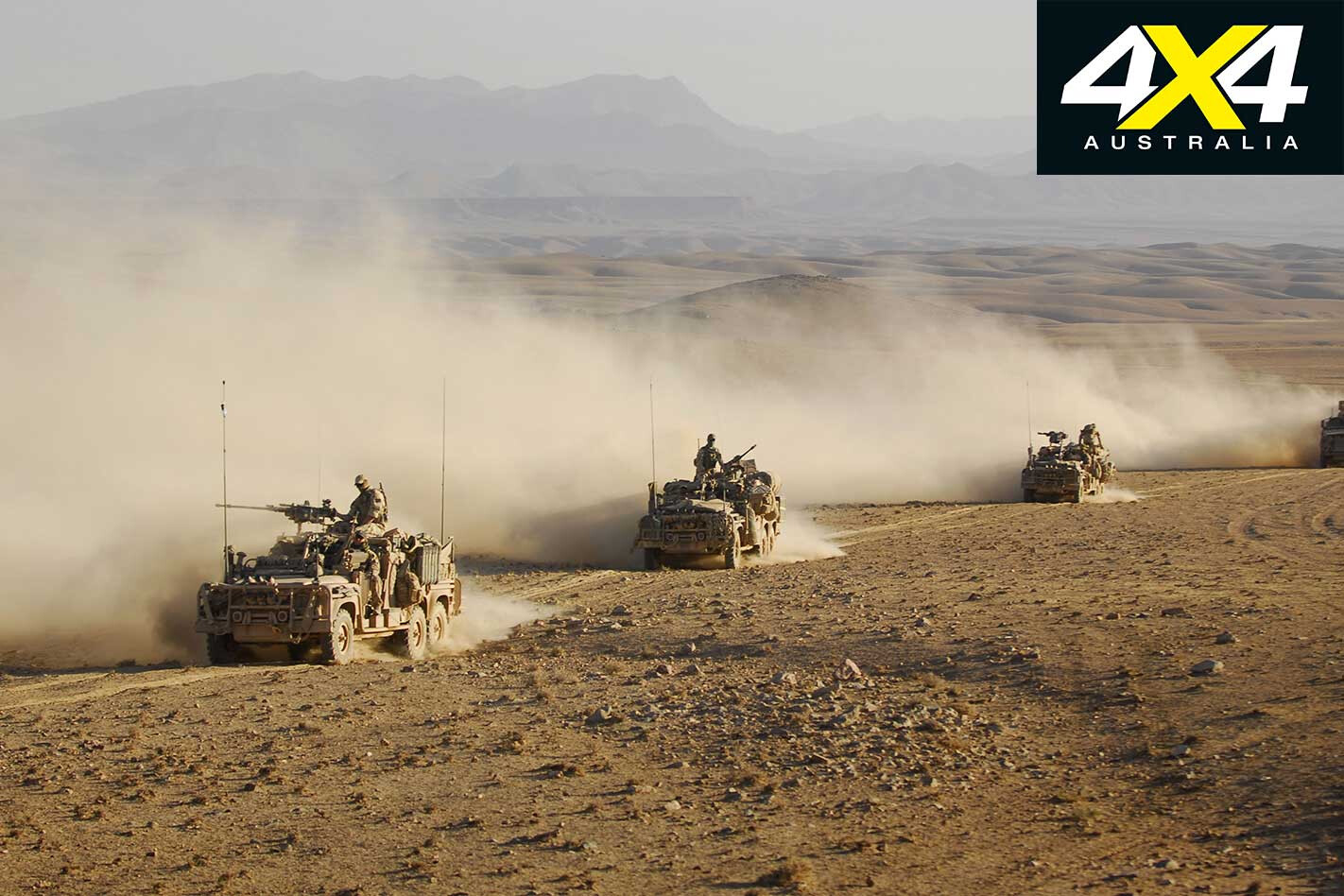
It’s hard to know what passing motorists must have thought as they were driving along the Eyre Highway on the Nullarbor Plain, only to be confronted by a group of three heavily modified, SAS-spec Long Range Patrol Vehicles, complete with helmeted drivers.
Geoff Stubbs, Senior Network Analyst JLRA can remember, though; after all, he (along with Brett Lewis-Driver) was one of the drivers charged by Land Rover and the Australian Defence Force (ADF) with the delivery of these highly modified Landies to SAS HQ in Western Australia.
Geoff Stubbs elaborates: “When we produced the two first ones for the SAS – who were based in Perth, of course – we were going to put them in the army system to deliver them,” he remembers. “The army said it would take about two-and-a-half months. We thought ‘bugger it’, so we drove them over. It took us three days.”
Brett Lewis-Driver, Network Development Manager JLRA, chimes in. “It was really fun driving because you’d have to drive it with a helmet on (the LRPV had no roof). I remember driving it down to Canberra and then going through Macca’s drive-through in an LRPV – it was quite cool!” he laughs.
This was just one humorous moment in a very long relationship between Land Rover and the ADF that began back in the 1950s. Things got far more serious – and more interesting – when Land Rover won a government contract bid in 1980 to produce both one-tonne and two-tonne vehicles for the ADF.
Interestingly, Land Rover was not alone in chasing military business; Jeep and Mercedes-Benz also put in bids for the one-tonne vehicle contract, and Benz also threw its hat in the ring for the two-tonne work as well. Once contracts were won, it got very busy…
“The trials started in 1984, we got the contract in ’86 and started supplying,” says Stubbs. “We supplied some subsequent stuff, some of which we call Light Green vehicles, which are not the full military-spec vehicles.”
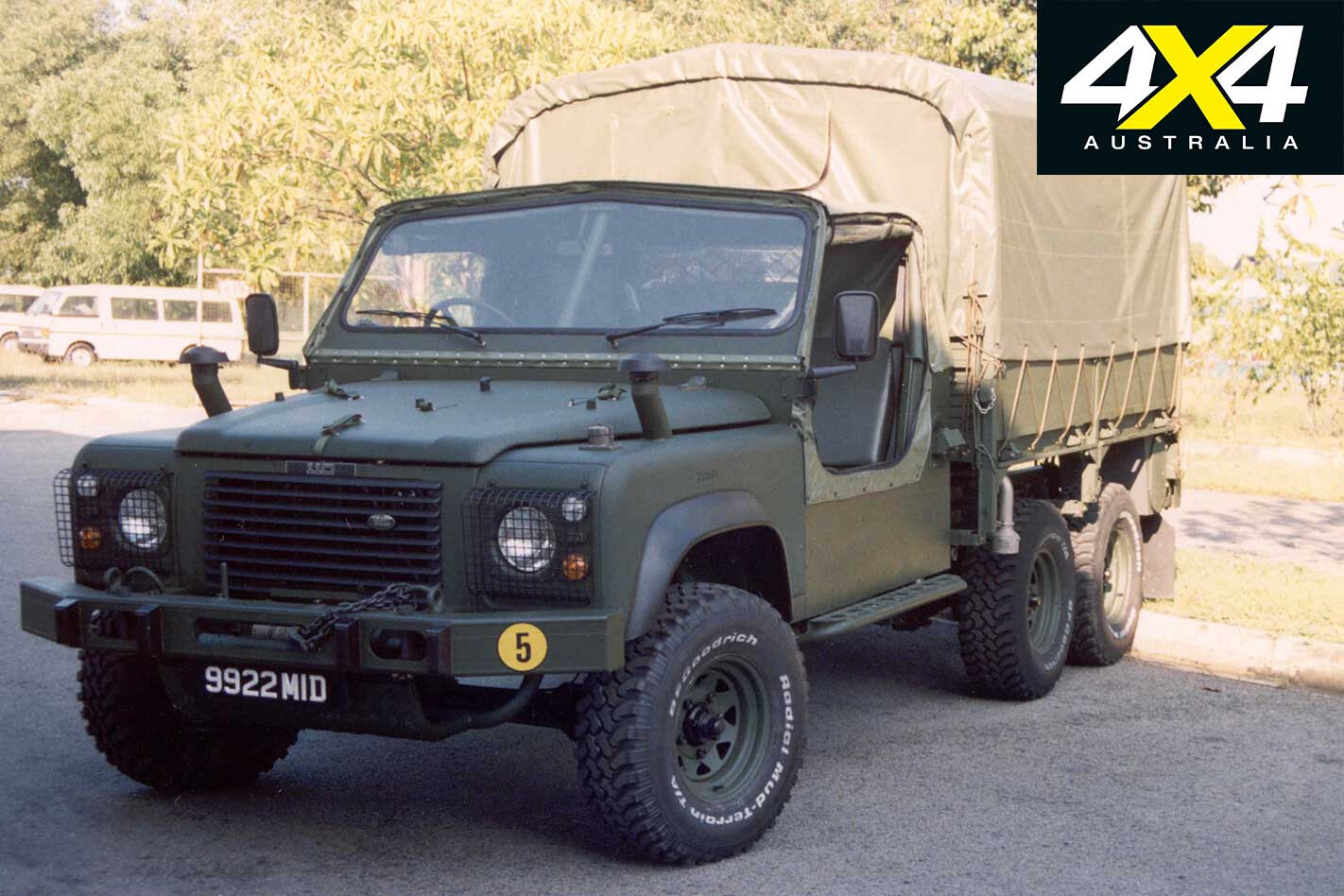
LRA had, at Moorebank, NSW, what Stubbs dubs “the world’s shortest production line, at 30 feet in length” for the military vehicles and produced “one-and-a-half vehicles a day” during the course of the contract. Production speed was slow out of necessity; the ADF wanted a large number of variants, from officer transport to ambulances, to gun carriers, to mobile rocket launch pads. The Army Landies built in Australia were the true definition of ‘hand-built’.
“The whole way it was approached, rather than go okay ‘we want this’ and then off the order went, they wanted all sorts of derivatives,” Stubbs says.
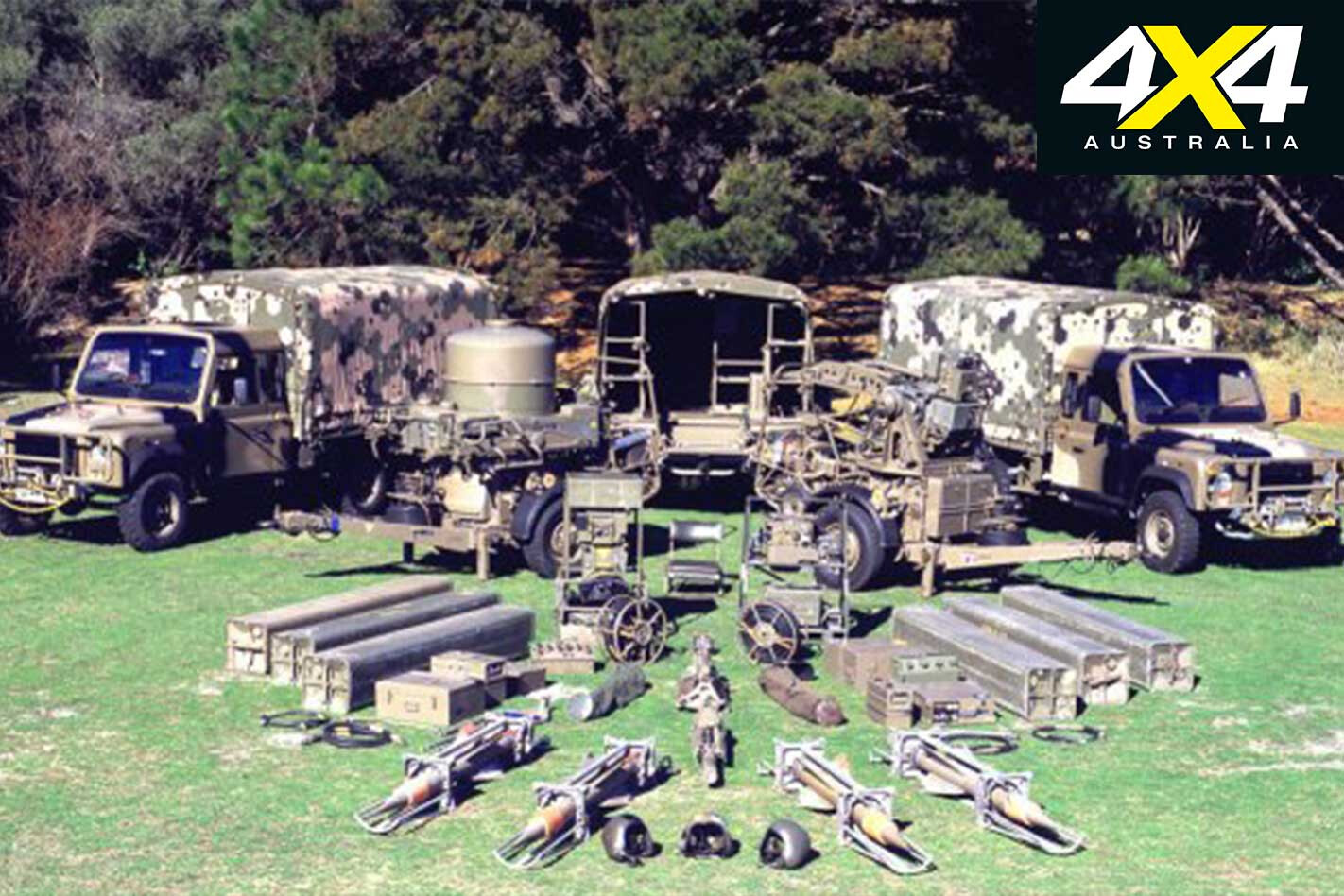
“Every time the people running Perentie spoke to the users, they wanted something different. So what we would do was build up a spec to as close as we could get to what they wanted in discussion with them, build a couple of them and send them off for user acceptance trials, get them back and finalise one before turning it out. So you got a huge number of derivatives; the smallest number was the SAS Long Range Patrol Vehicle – we made 27 of them.” (The LRPV were a true ground-up build, says Geoff, due to the unique requirements.)
Brett Lewis-Driver was working as a mechanic on the Army project at that point, and further explains how hands-on the Perentie team was.
“You look back and it was such an amazing place to work; the people there were great. You’ve got a whole crew of draftsmen drawing up chassis or drawing up components that needed to go into the car, and we’d sit downstairs and make them. And the best bit was half the time trying to break them.”
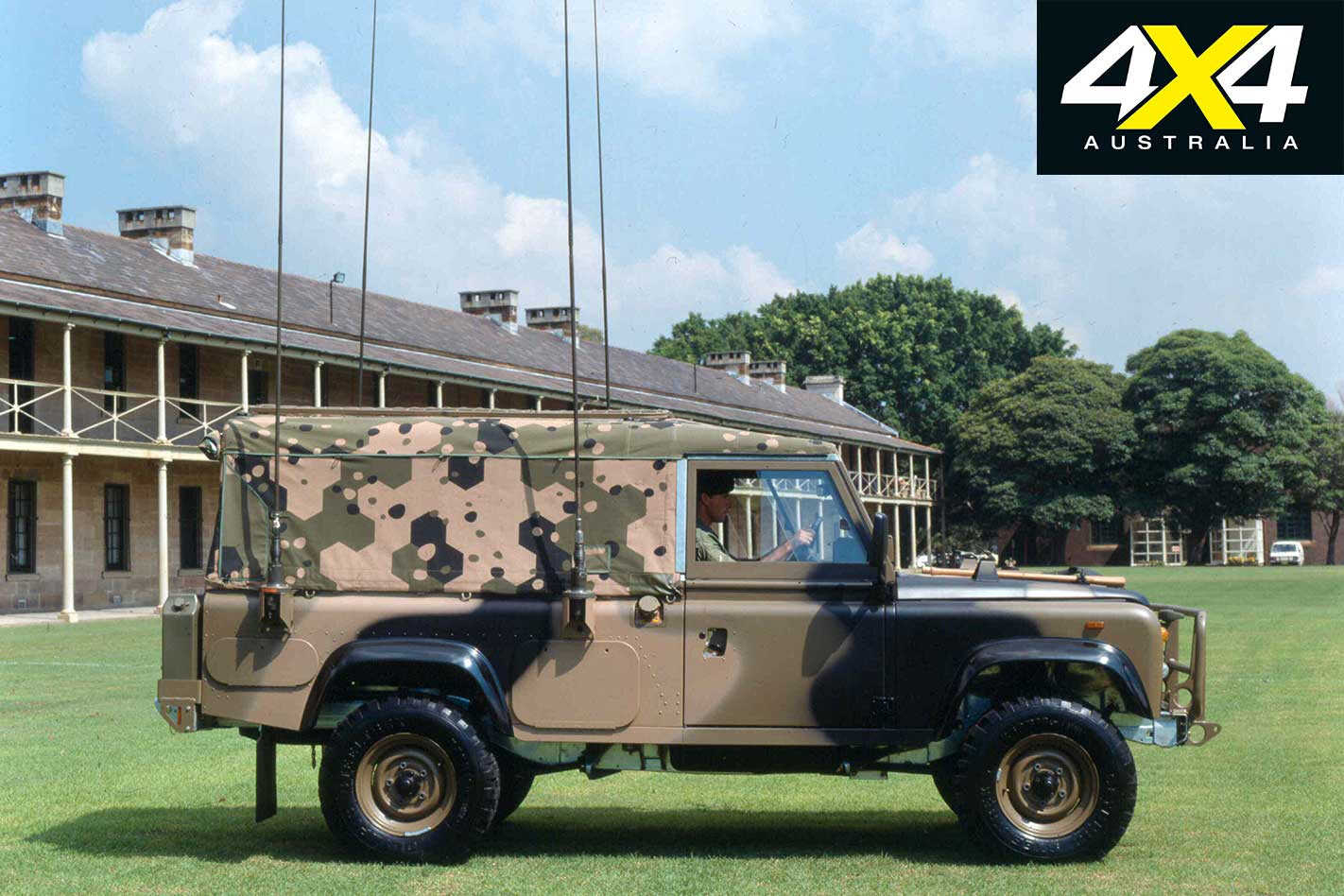
James Scrimshaw was also involved. “During that period there was a huge range of vehicles, ambulances, etc.,” he says. “My role was doing scheduling, telling these guys what to build each week. You know, ‘two ambulances, one LRPV for this week’. Next week it was something else. We had a full parts supply based out of Sydney; we had a bunch of mum-and-dad businesses all building parts. Some of the people we still work with now, and we still supply parts for army Land Rovers right now.”
The local influence
Speaking of Army Land Rover parts, one of the ‘small’ problems the LR team had to solve was that of the centre diff.
“All the army Land Rovers were using the LT95 gearbox – the original four-speed ’box – and one of the weaknesses was the differential in the centre that distributed drive front and rear,” Stubbs explains.
“If you didn’t put it in before you went off-road you got a lot of shuffling of power back and forward and it would eventually fail. Put it in, lock the distribution front/rear and it was not a problem.
“Various people were trying various fixes, and one of the more interesting ones was getting hold of a whole bunch of railway sleepers, loading the vehicle to maximum gross weight and driving it in figure-eights. Nobody could stand driving it for more than an hour. We’d go through two to three sets of tyres a day doing it.
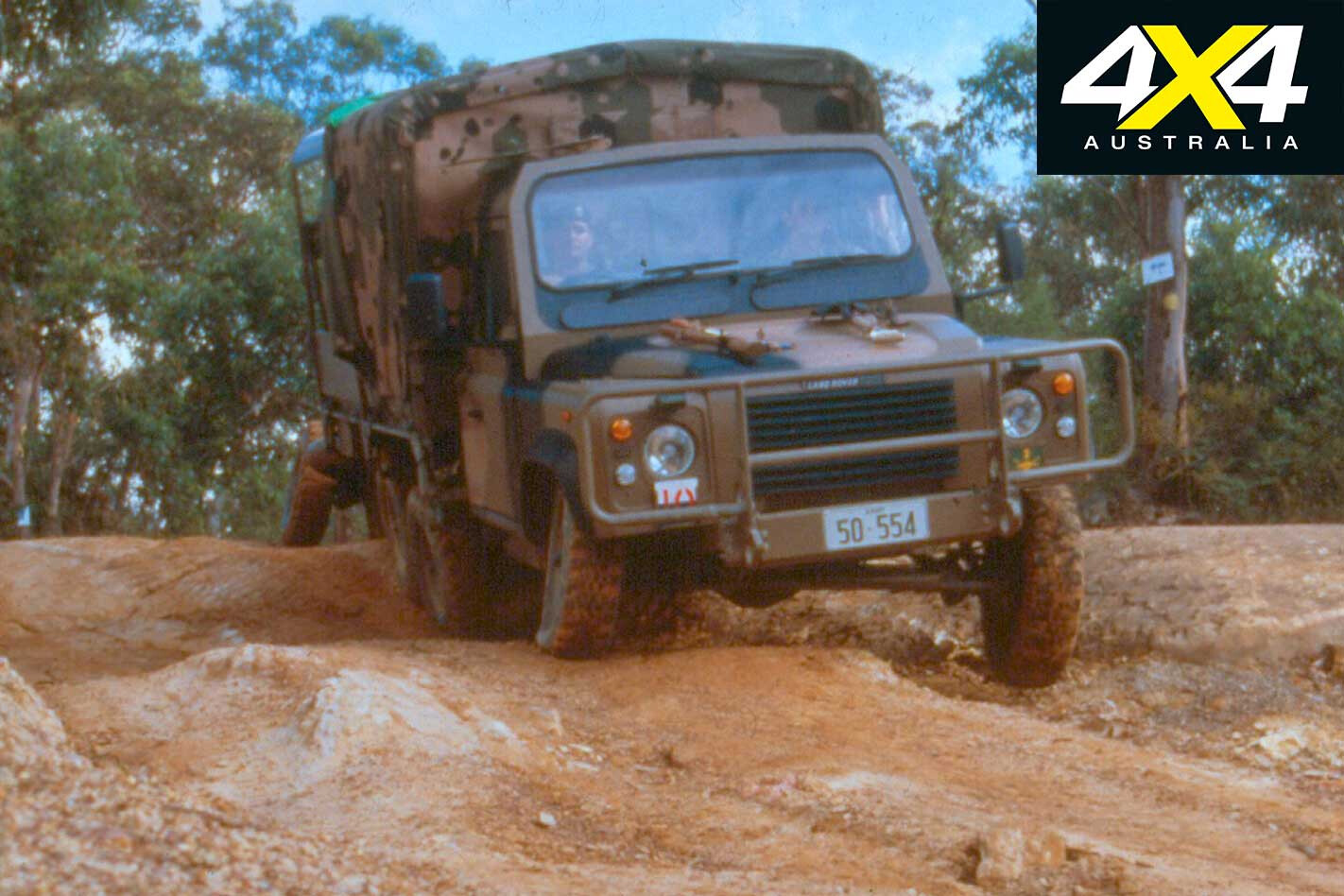
“We eventually figured out the problem and developed a fix for it which was not making it physically strong; it was a lubrication problem, so we Ni-For’ed the cross in the diff – Nickel plated, Teflon impregnated – and where we were getting a normal one (stock diff) lasting three-quarters of a kilometre, a strengthened one would last around 1.2 and we ran out of tyres doing the Ni-For one. It was really identifying the problem and doing something about it.”
The Aussie team produced the 6WD setup for the Land Rovers, and also solved one final ‘problem’: sourcing an appropriate powerplant.
As Stubbs recounts, “Because they wanted diesel and we only had a 2.25 which wouldn’t pull a soapy stick out of a dog’s arse, we had three different prototypes. I think we had a Ford engine in one, but the Isuzu engine was the easiest to put in because it was a four-cylinder so it was short.”
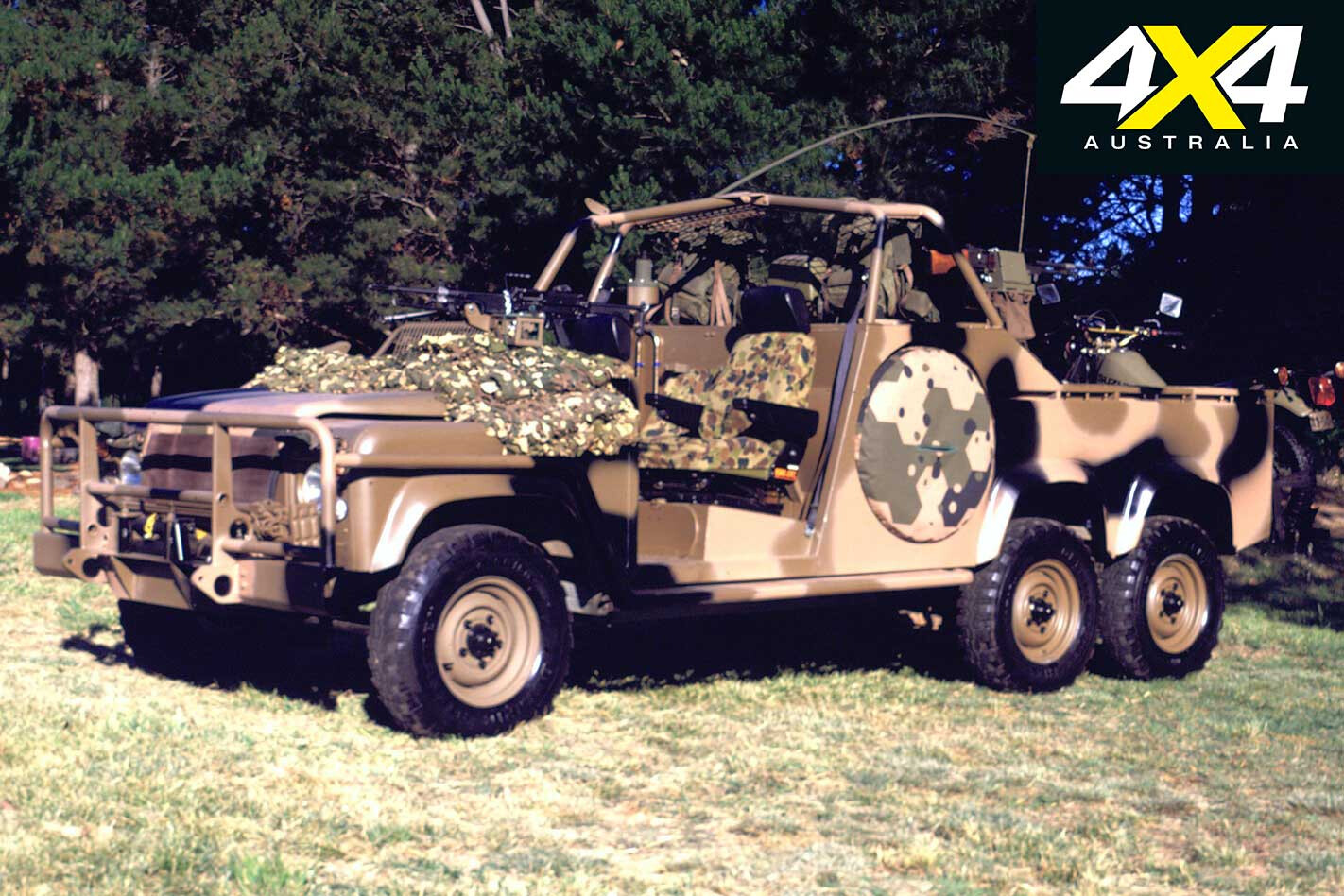
Isuzu’s 3.9-litre diesel was renowned for being noisy, leading to another Oz LR fix.
“We mounted the air cleaner on the engine; we had it originally mounted on the firewall,” says Stubbs. “The sheer amount of air coming in and the transference of noise were pretty horrendous; we mounted it back on the engine so it was silenced by the engine mounts. We got the noise down … and turned it out that way for the civilian market as well.”
Dirty deeds Down Under
It was March 1986 when the Camel Trophy 4×4 event arrived Down Under. The by-then famous off-road challenge had been held in some of the world’s most rugged locations, so it was only natural that organisers would choose the remote north of Queensland and the Top End of the Northern Territory in which to run the Down Under edition. Competitors were driving UK-spec short-wheelbase 90s, while the support crew enjoyed the extra space of 110 wagons.
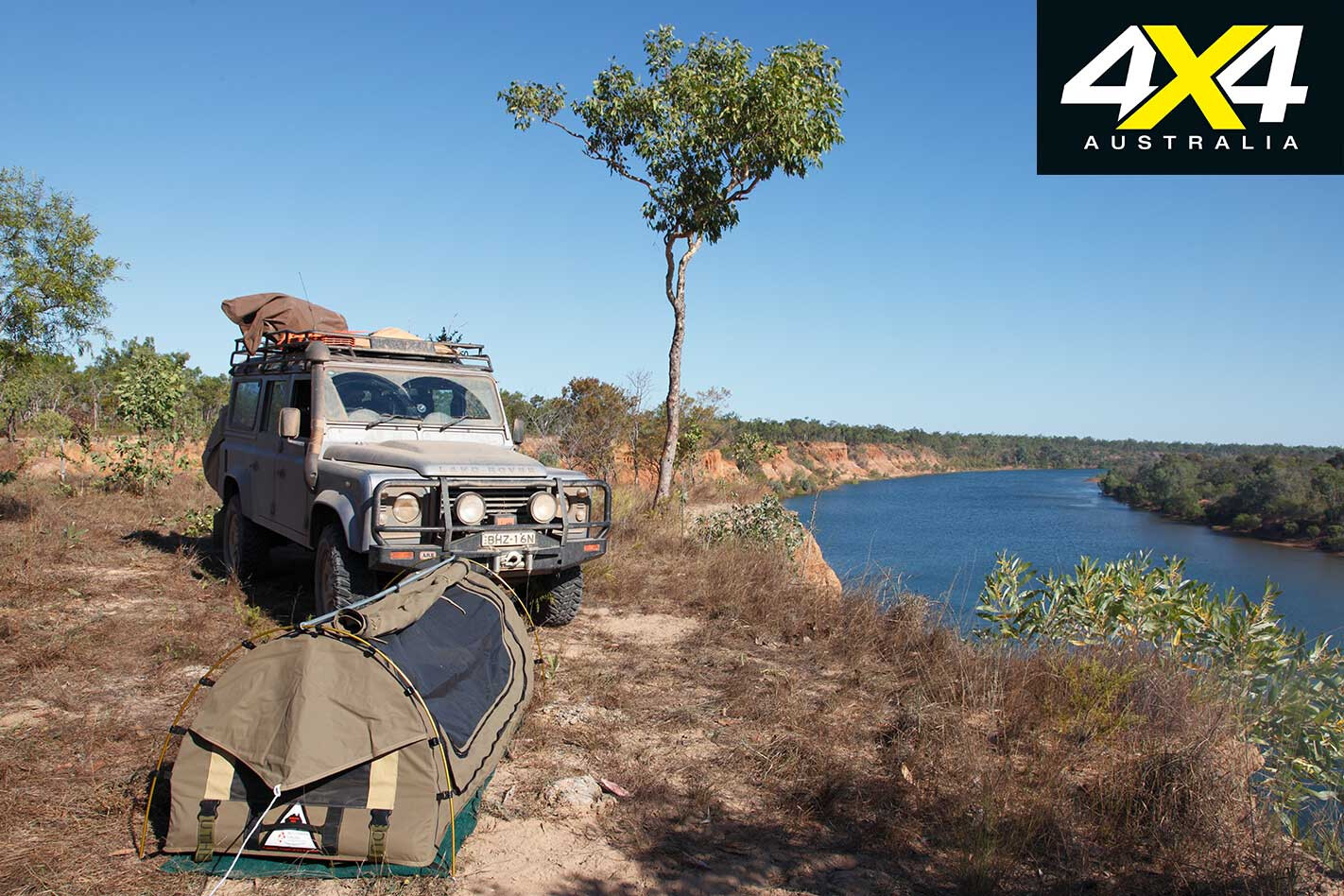
The route started in Cooktown and headed west via a number of old bush tracks, across private properties and through numerous large and small waterways, then onto parts of what is now known as the Savannah Way.
Logistically, it was a huge undertaking, with LRA spending three months (and plenty of cash) preparing and planning for the event, which included a few recces (both airborne and ground-based). Geoff Stubbs was one of the men behind the planning, as well as a judge (along with John Ayre) on the event. He remembers how unprepared the competitors, and even more so the accompanying international media were for the, ahem, rather unique Aussie wildlife.
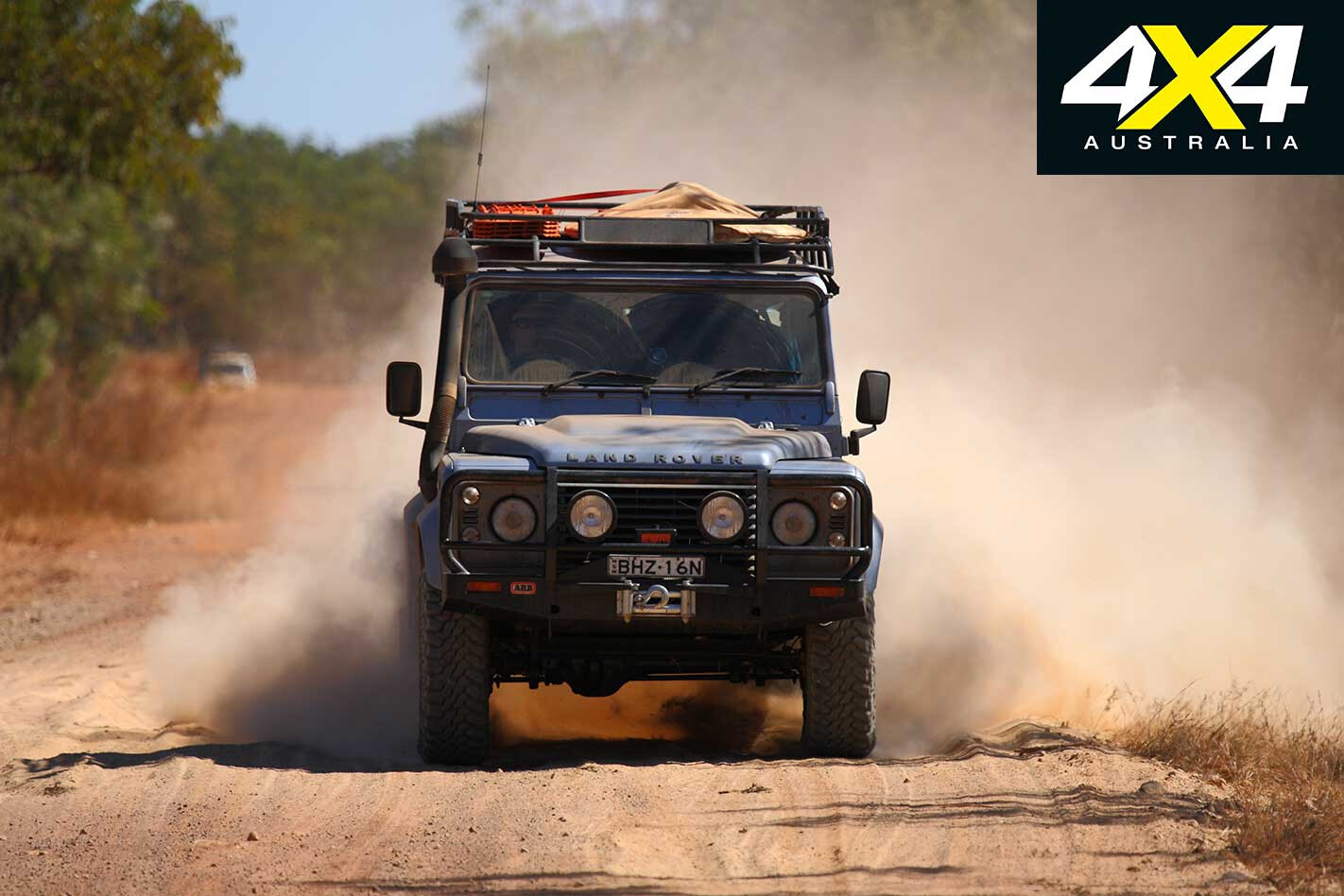
“Given it (the event) had mainly been held in places like Brazil … the journalists didn’t associate our form of desert or our type of terrain with danger,” he says. “For them, jungle equalled danger … we had a bit of a job persuading them that there were a few nasties around.
“I’ve got some fascinating memories of it,” he says with some amusement. “One of these was when we were crossing the Calvert and Robinson Rivers, and they were tidal where we were crossing – you’d put a stick in the water and you’d go back and see if the tide was going in or going out because you’ve got to cross at low tide.
“At this point in the event, people were getting pretty tired and would sleep all over the place. I went down with John Ayre to check the water and there was a crocodile coming out of the water – a fair sized one – so we bolted back, leapt over a Dutch journalist who was sleeping, and advised him to depart in our direction at fairly high knots!” he laughs.
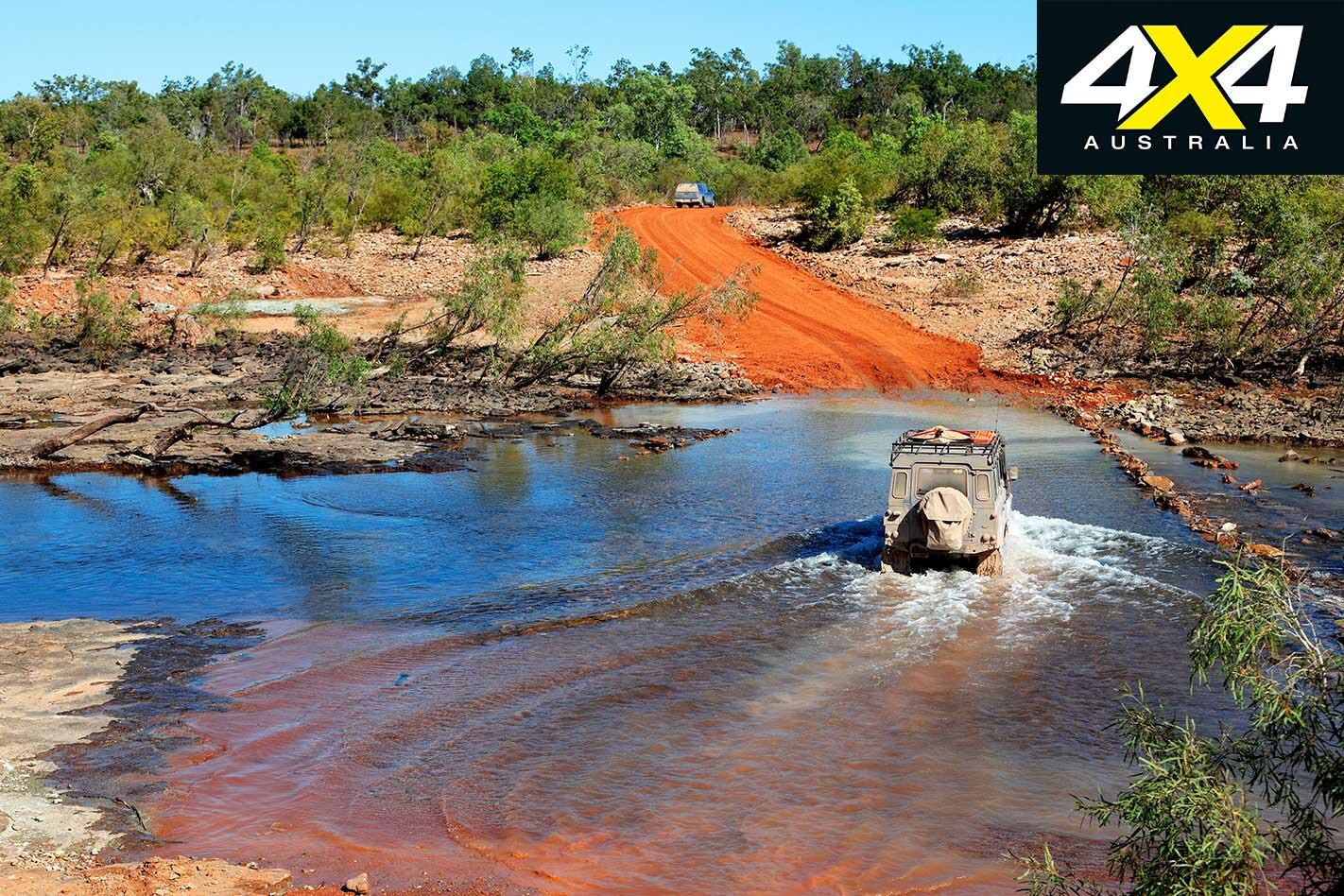
Impressively, the vehicles got through unscathed, an impressive result when you see old footage of the Australian event with Land Rovers nearly totally underwater at some river crossing, or tipped on their sides on tracks, waiting to be winched back up so the team could continue.
The Camel Trophy is just one ‘event’ that has enhanced Land Rover’s reputation in Australia. Years later, in 2003, the company would run a similar event globally – the G4 Challenge – with an Aussie leg through WA’s Kimberley region.
Explorers’ Club
Land Rover has had a long association with exploration and adventure, both globally and here in Aus. Len Beadell is one of Australia’s celebrated modern explorers, using Landies during his many desert forays, while the Leyland Brothers completed the first east-west crossing of Australia in a Series III.
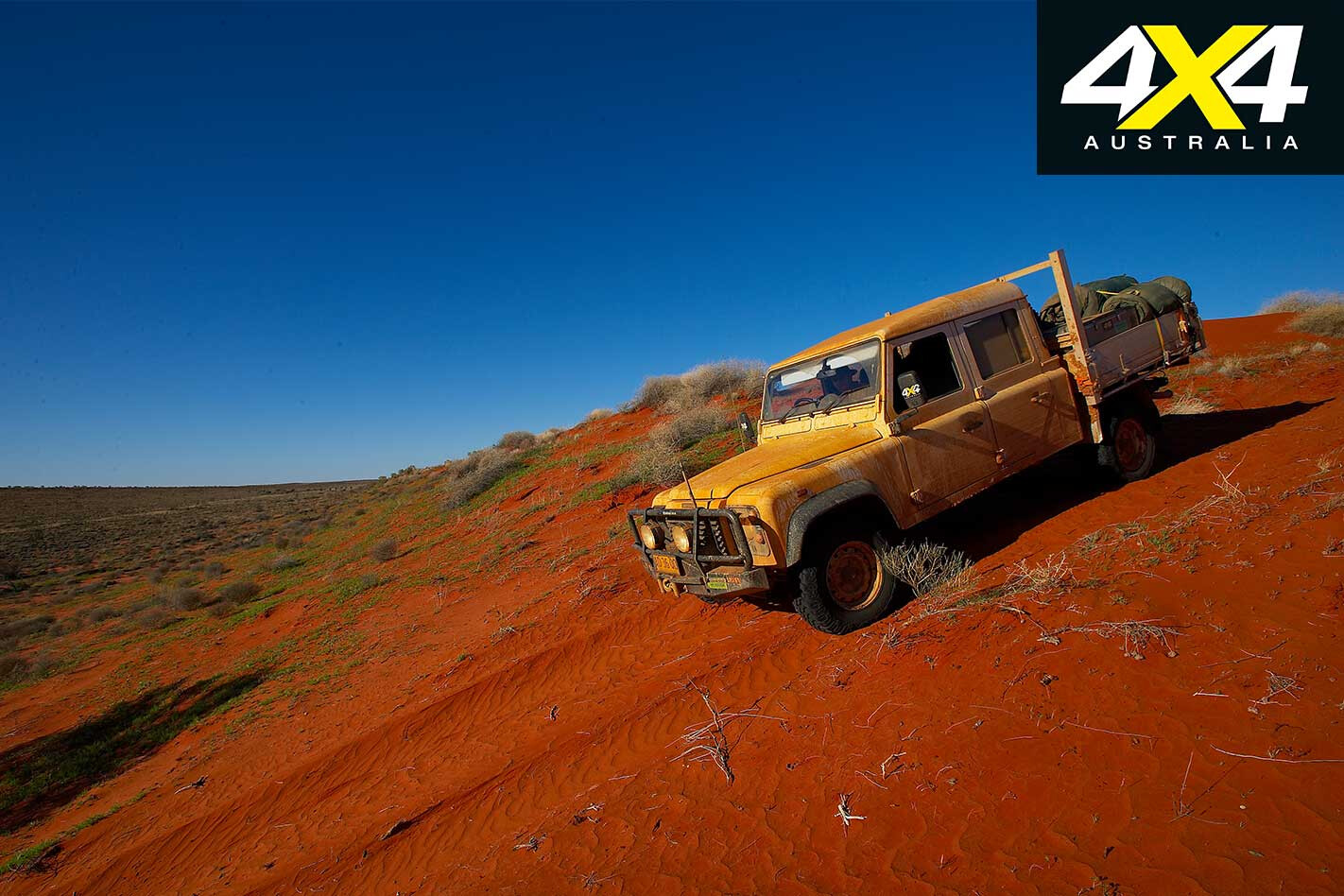
Another exploratory undertaking – by LRA itself – was a retracing of the 1896 Calvert Expedition a century later, in Discoverys. This epic adventure (led by the late Ian Glover) took participants through some of Australia’s truly remote country.
One of those, (former 4X4OTY judge) Phil Poulter, recounts on the LRA website: “One night I walked about a kilometre from our camp and sat on top of a tall sand dune looking back at the dull glow of our campfire … I thought to myself, ‘No human being has probably ever set foot in this place.’”
Even 4X4 Australia has enjoyed exploratory adventures aboard a Land Rover. In 2009, this writer was part of a small team charged with finding a route that would extend the NT’s Binns Track from its current northern termination point of Gregory NP to Litchfield NP farther north.
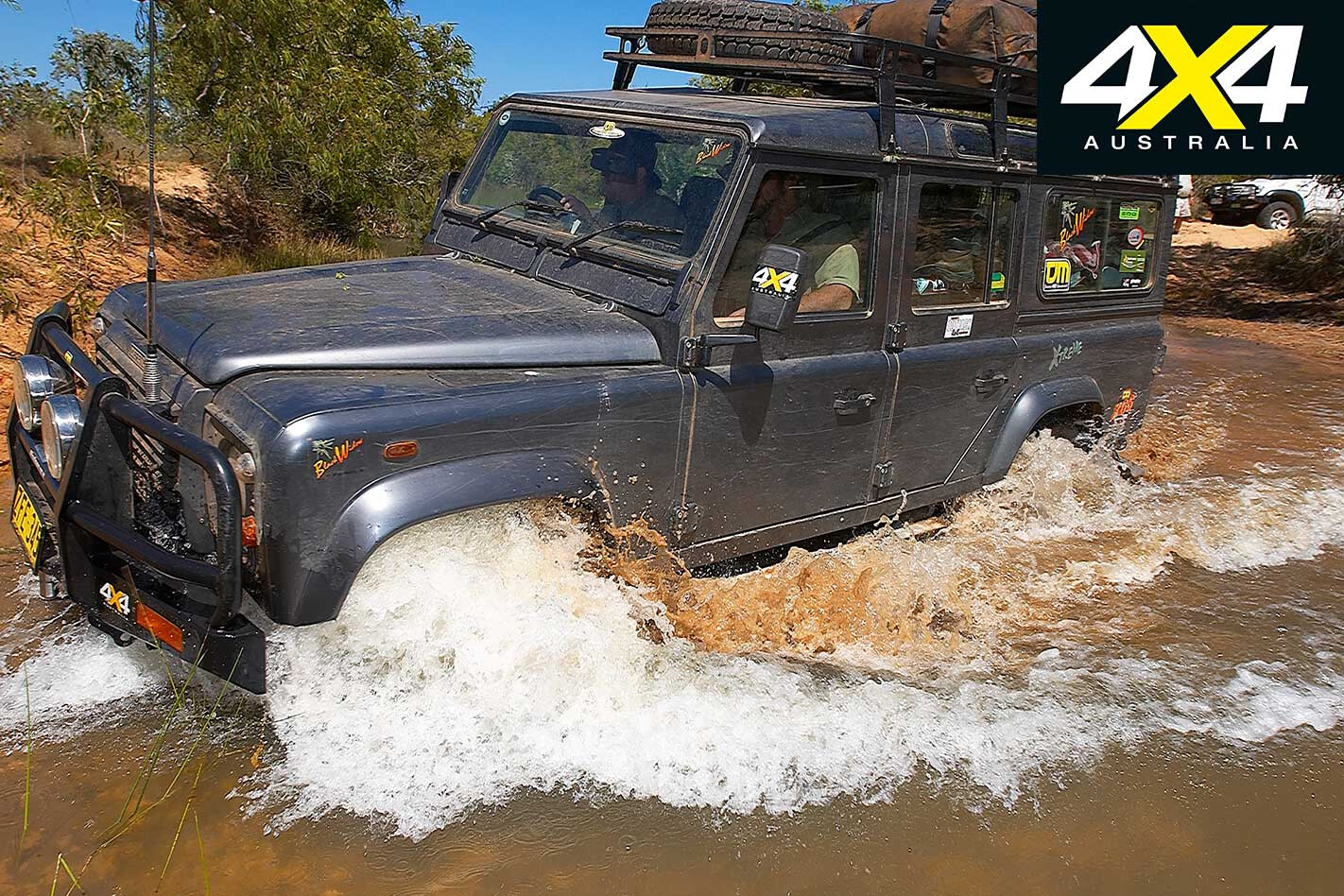
Driving a Defender following barely discernible old stock routes and crossing numerous rivers through remote parts of the Top End, it was an awesome, but in terms of the ultimate goal, sadly an unsuccessful adventure. However, it’s still one highly cherished memory.
Other 4X4 Australia expeditions utilising Land Rovers included the 2006 Madigan Line trip, with then-editor Dean Mellor piloting a Defender 130 dual-cab ute across the red heart of the country; Ron Moon’s 1995 “Footsteps of Hann” expedition through WA’s Kimberley region (Defenders and a Disco); and his 2004 expedition following the NT/QLD border south-north to the Gulf, with a Defender TD5 as the 4X4 Australia rig. And in 2014, Ron and current editor Matt Raudonikis both drove Discovery 4s as part of the Great Australian Bight Expedition.
Talkin’ bout our generation
Land Rover in Australia today is far removed from the brand of the 1950s. From a small model range for many years – Series/Defender and Range Rover – to today’s multiple models, it’s been a long, sometimes rough and winding, road for the off-road icon.
In 2018, sales are healthier than ever in the Australian market, spread across every model, from the Range Rover Evoque and Discovery Sport through to the top-tier Range Rover. The brand has an effective presence in every market niche in Australia now – bar one…
“We are sort of at a plateau point at the moment where we’ve reached peak until we get some new products,” says Scrimshaw. “Without having Defender in the line-up as well – that’s a big piece of the puzzle as to what the potential could be. Once we get that vehicle back into the mix you’ll see the numbers start to kick back up again.”
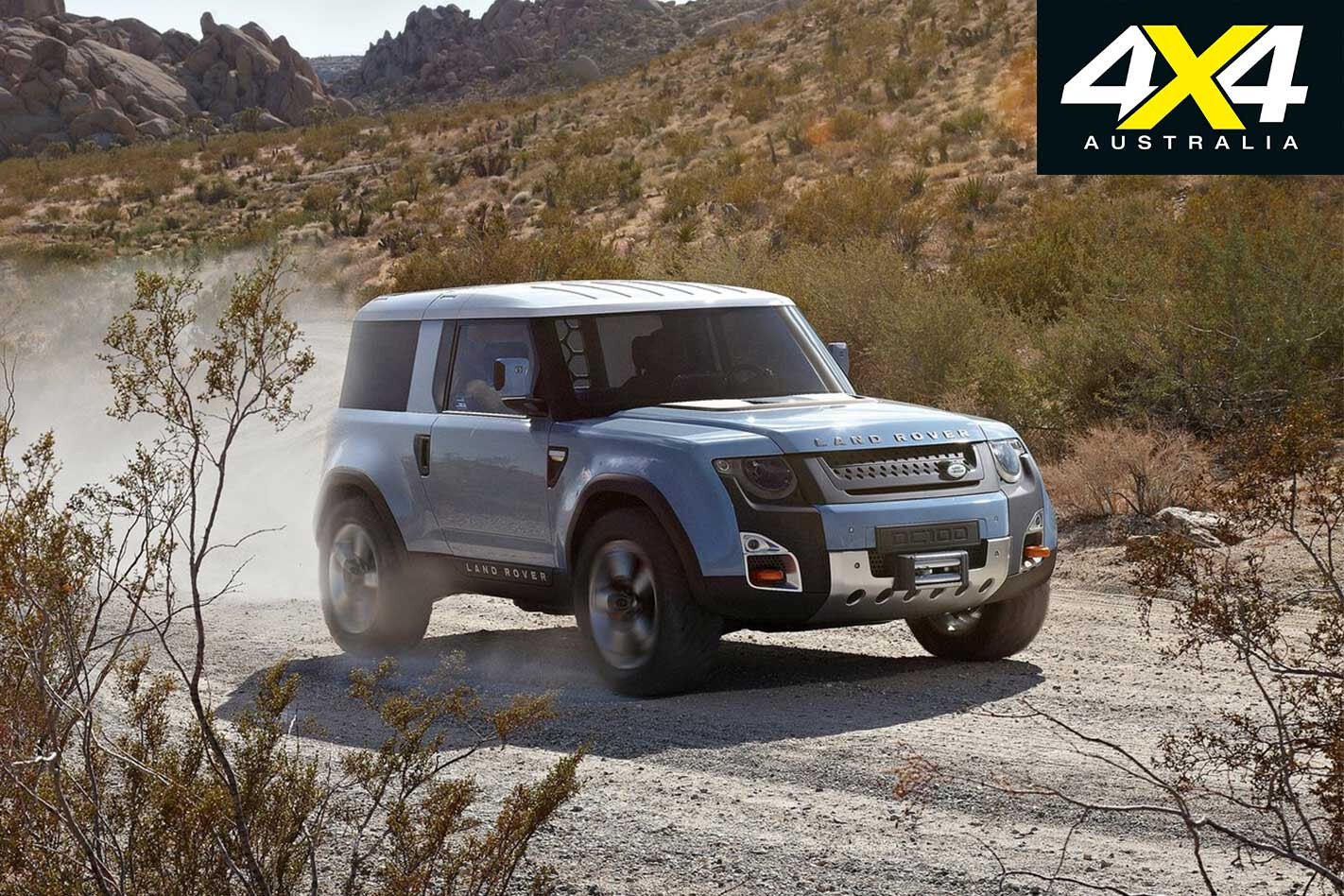
When asked about the new Defender the LRA trio go surprisingly quiet (besides mentioning the possibility of perhaps an expansion of dealerships into larger rural areas to cater for its future demand). James Scrimshaw, who has seen it, jokingly offered to draw the side profile silhouette for me.
Sadly, he only got to the two wheels before stopping, saying, “I can’t remember the rest.” I refrained – just – from clobbering him with my notebook…
On a serious note, it’s also impressive to see how the Brit company treats its global ‘family’. Brett Lewis-Driver cites the example of when Terrain Response was first introduced with the Disco 3, in terms of the actual input LR’s international branches have on the product.
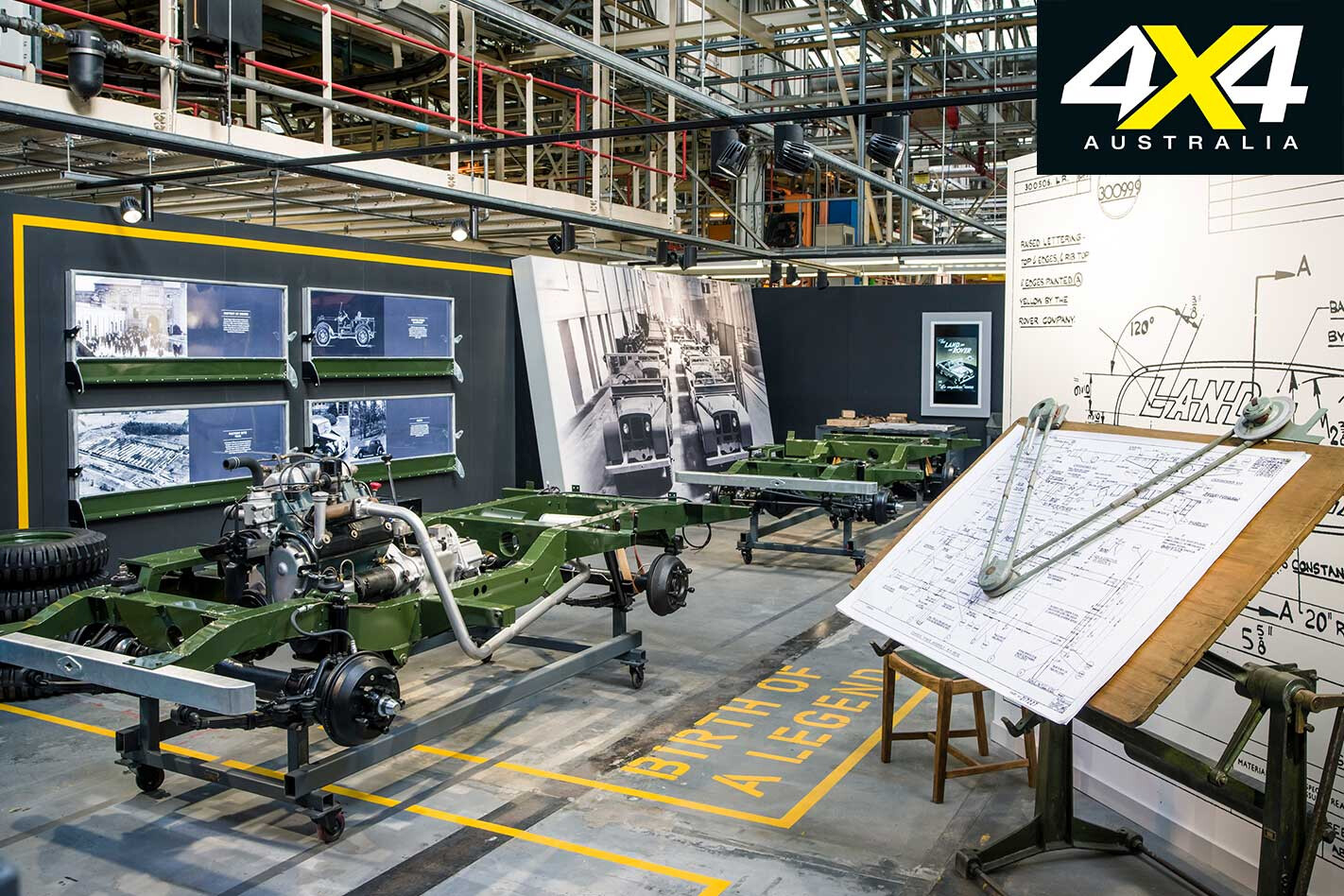
“I was part of the global, in-house off-road user group, so what we would do is gather all of the markets from around the world and go to one location and do presentations,” he says. “The engineers were always so excited about the markets’ presentations because they wanted to hear feedback as to what was working and what wasn’t.”
Geoff Stubbs sums it up best in terms of how the brand today still offers Australians that same chance for adventure, just with the added benefit (and comforts) of the brand’s technological developments.
“One of the things that put it into context for me (after starting off in the era of leaf springs), was when we brought in the latest Disco and I was running-in one of the launch vehicles,” he recounts. “I had a weekend to clock up maximum kilometres – you don’t pass that up. I got up at 5.30am on a Saturday and did 1400km in 16 hours. I am no spring chicken, but I got home and thought ‘f–k that was easy’.
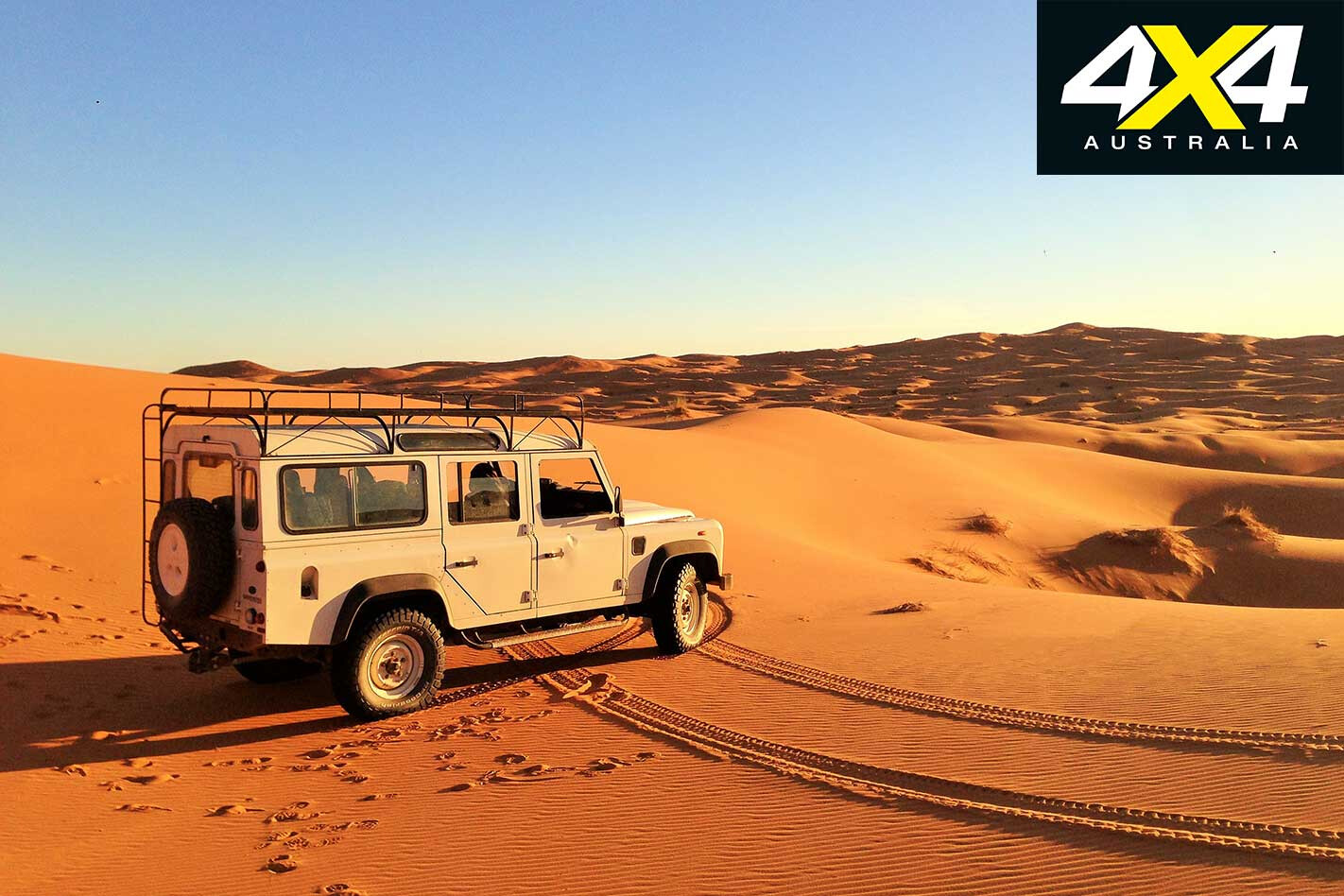
“One of my prior experiences was driving a 6×6 Land Rover around Australia without air-con. It’s about 17,000km and the max speed was 97km/h. I don’t really want to repeat that! You’d get into the new Discovery to do that effortlessly and it just says it all in terms of the new tech.”
For off-road tourers in Australia – and indeed the globe – we can only hope those engineers involved in the upcoming Defender have also taken on board what the team from Down Under wants. Succeed in that and the Land Rover brand can look forward to even stronger ties to Australia, for many years to come.
The four-wheeled saviour
The Land Rover Discovery is, without doubt, one of the most significant models in Land Rover’s long history. That applies globally, but it was especially so here in Australia.
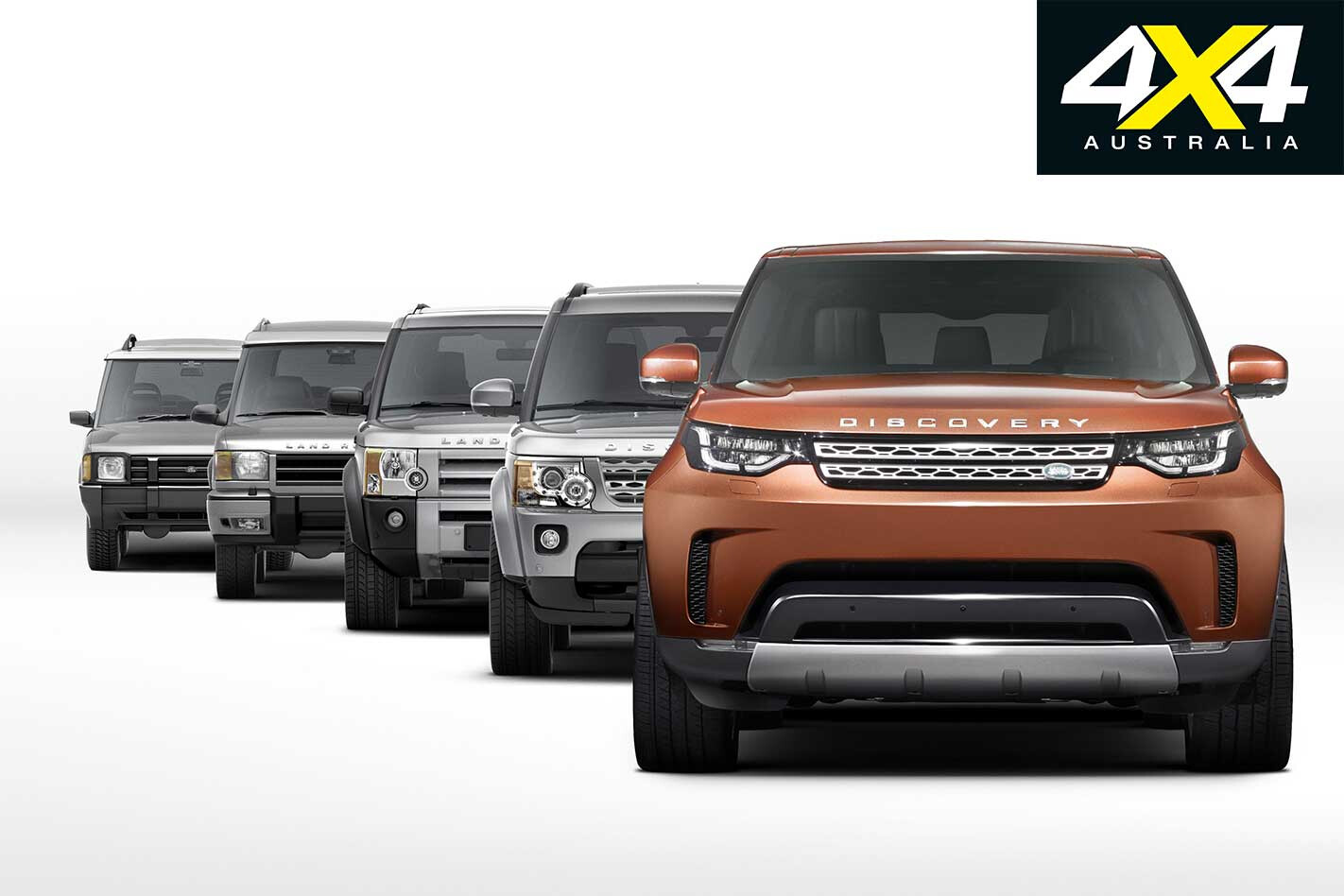
Up until its Down Under launch in March 1991 there was only the Range Rover and County for local buyers, with the former already climbing high in asking price and thus out of reach of a large percentage of buyers. The Discovery’s arrival – in three-door, 3.9-litre V8 petrol form, backed by a five-speed manual gearbox – was a huge boost for Land Rover Australia. James Scrimshaw agrees.
“It was huge,” he says. “When we first launched it, it was $44,990 and it was the three-door manual V8. It was a pretty big car. We only had two cars on the market at the time, we had the County and we had the Range Rover – so the Range Rover was quite expensive in comparison and then this car came in.”
The Disco’s various updates – four-door, auto gearbox, etc. – kept it humming along sales-wise, and gave the brand a new lease on life Down Under. This was further emphasised with the roll-on effect of Discovery 2 in 1999, then the game-changing Discovery 3 (’05) and 4 (’09), all of which were great sales successes for Land Rover.
“It (original Discovery) was the resurgence of Land Rover in Australia,” Scrimshaw affirms. “It carried us right through the 1990s and the 2000s (including Disco 2/3/4), so for the past two decades it’s been the most important car for us, definitely.”
Four wheels good, six wheels better
The Land Rover 6×6 vehicles, built to supply the Australian Army as part of Project Perentie, were incredibly unique.
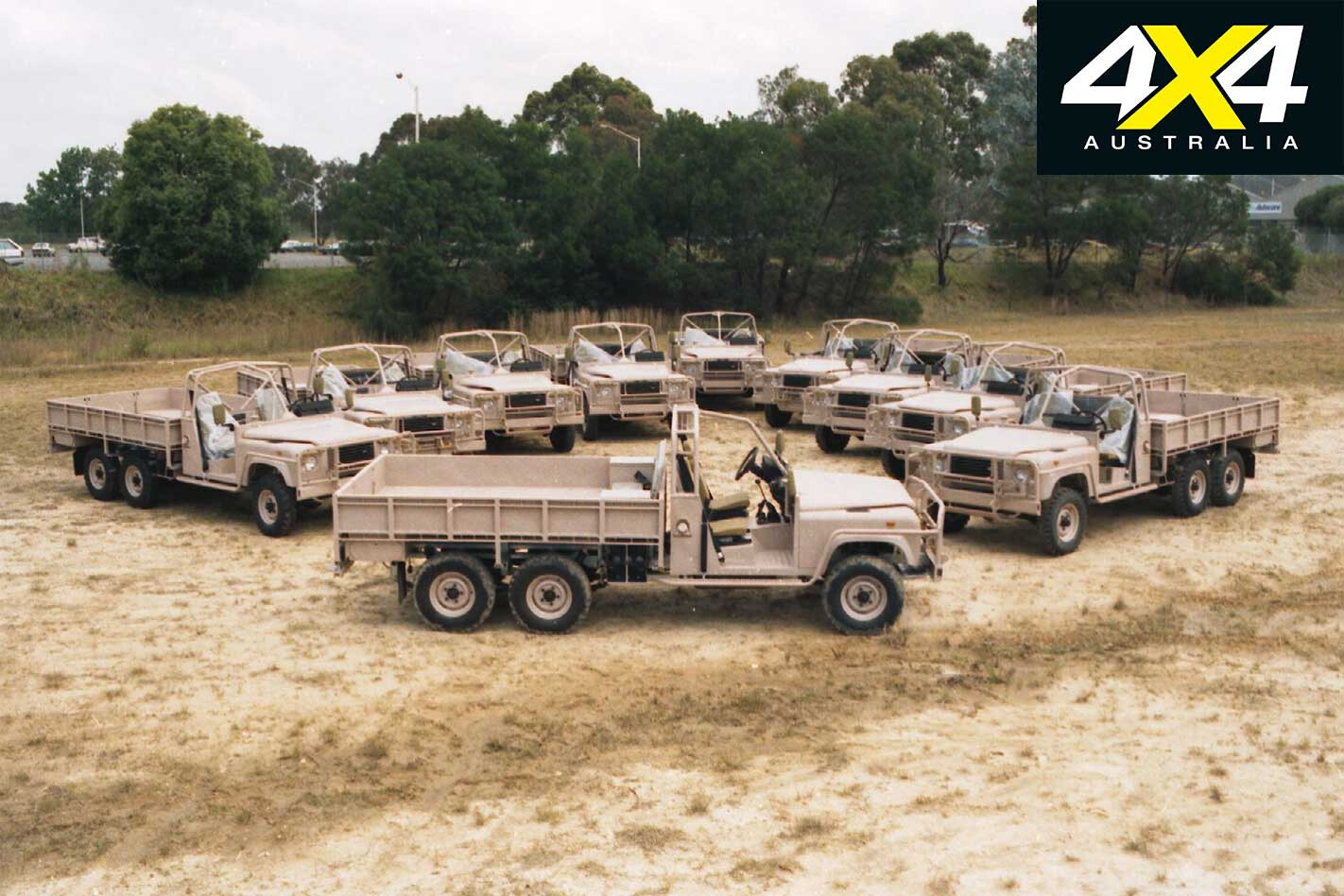
It had been a long slog even to get to contract approval stage for Land Rover Australia, with the company bidding for both the 1-tonne and 2-tonne payload vehicle contracts and having to wait two years while the Australian Army tested LRA’s vehicles, as well as the competitor Jeep (J10) and Mercedes 300GD, before full-time construction could begin.
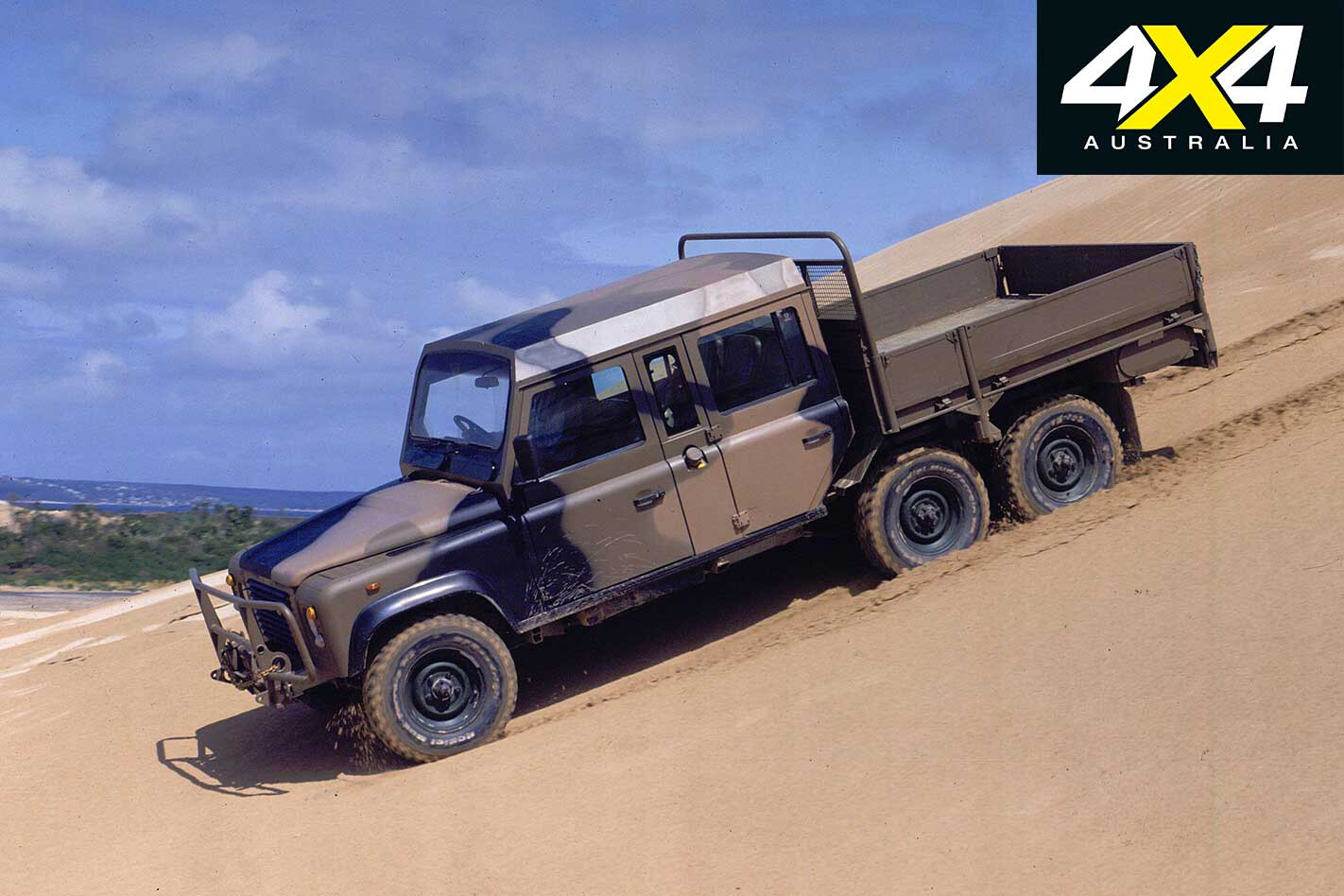
The vehicle’s many mods from the ‘standard’ 4×4 110 (and earlier 6×6 Landy) included a wider cab (capable of carrying combat-gear-equipped troops three-abreast), a wider track front and rear (a heady 200mm wider than the 110) and a (comparatively) ‘beefed-up’ 90kW/314Nm Isuzu 3.9-litre turbo-diesel.
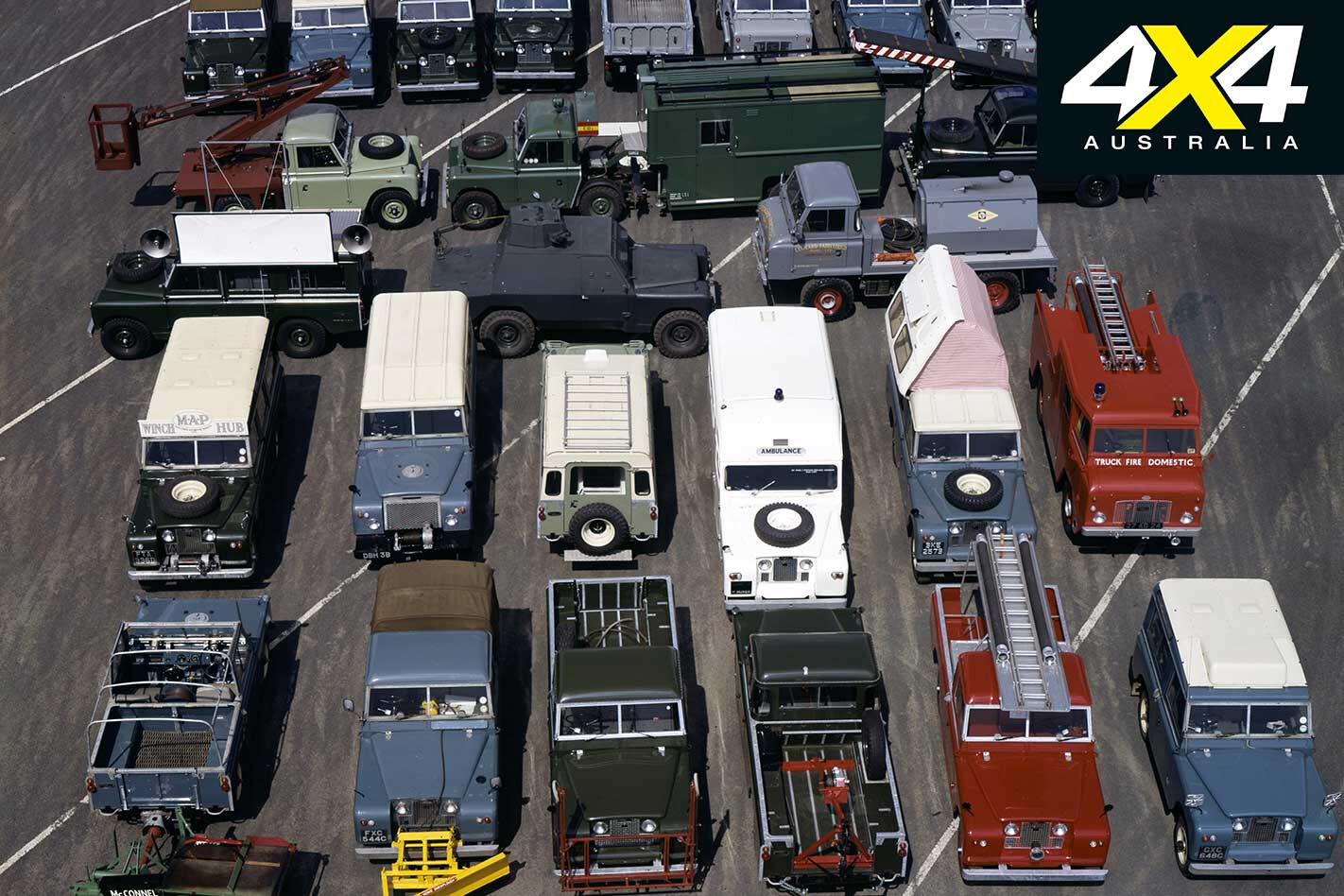
The eventual contract saw LRA building and supplying 588 6×6 vehicles. This 588 comprised eight variants: Cargo, Cargo with winch, Air Defence with winch, RBS70 and a separate Rapier variant, winch-equipped ambulances, a general maintenance rig (also winch-equipped), an electronics repair vehicle, and the famous LRPV (with, yep, a winch of course).
On top of these, there were numerous other variants, including dual-cab, firefighting, mobile command post, light-armoured, personnel carrier, a variant light enough to be transported by helicopter, and a Comms vehicle, among others.
THE National 4×4 Outdoors Show and Fishing & Boating Expo will roll into the Melbourne Showgrounds from August 17-19, 2018.
The 4×4 industry’s finest will line the halls of Melbourne’s “biggest outdoor adventure show”, with heaps of products, demonstrations and decked-out fourbies to drool over. Punters will also be able to get a hold of some great deals throughout the event.
This year’s show will have something for both newcomers and the seasoned veterans. Plus, a new building, the Boulevard Pavilion, will increase the exhibition space by a further 3000m².
As well as the many great bargains on quality products, the 2018 show will feature exclusive special guests, 4WD training, test drives and a proving ground.
“If you drop by the Amarok V6 4×4 Proving Ground at this year’s show, not only can you put a car through its paces, you can get some great driving tips on how to get the most out of it from the expert trainers at 4WD Victoria,” the expo newsletter reads. “On our specially-designed proving ground they will demonstrate the highlights and pitfalls so that next time you take to the tracks you put skill and safety first.”
Last year, more than 35,000 enthusiasts attended the event, while more than 200 retailers, exhibitors and industry experts graced the stands.
Tickets are available now, head to https://4x4show.com.au/melbourne for more information.
*IMAGES courtesy of National 4×4 Outdoors Show and Fishing & Boating expo