
DUAL-cab utes have taken the 4×4 market by storm, and it’s for a damn good reason: versatility. Actually, versatile doesn’t really drive home the point enough. They’re the Swiss Army Knife of off-roading, with attachments and electric blenders folding out of nooks and crannies you never thought possible. All you need to do is set them up right.
The problem, like any 4×4, is knowing how to build it to suit your needs, and knowing where best to spend your money. After all, what should you get first, the coffee percolator or the meat-pie oven? The upgrade paths are endless, with a $5000 build looking significantly different than a $25,000 build.
We’ve pounded out countless kays in and out of dual-cab utes over the past few years, everywhere from the tropics of Far North Queensland to the wide expanses of the Outback, all in the endeavour to help you build the ute of your dreams. Geez, we’re nice blokes!
The chances are you’ll be kicking off any new build with the basic components, typically spending less than $5000 to make the vehicle yours and not just one you’ve borrowed from the dealership. With that in mind we’ve put the following builds together as a foundation to start from – not the end goal.
Hardcore Weekender
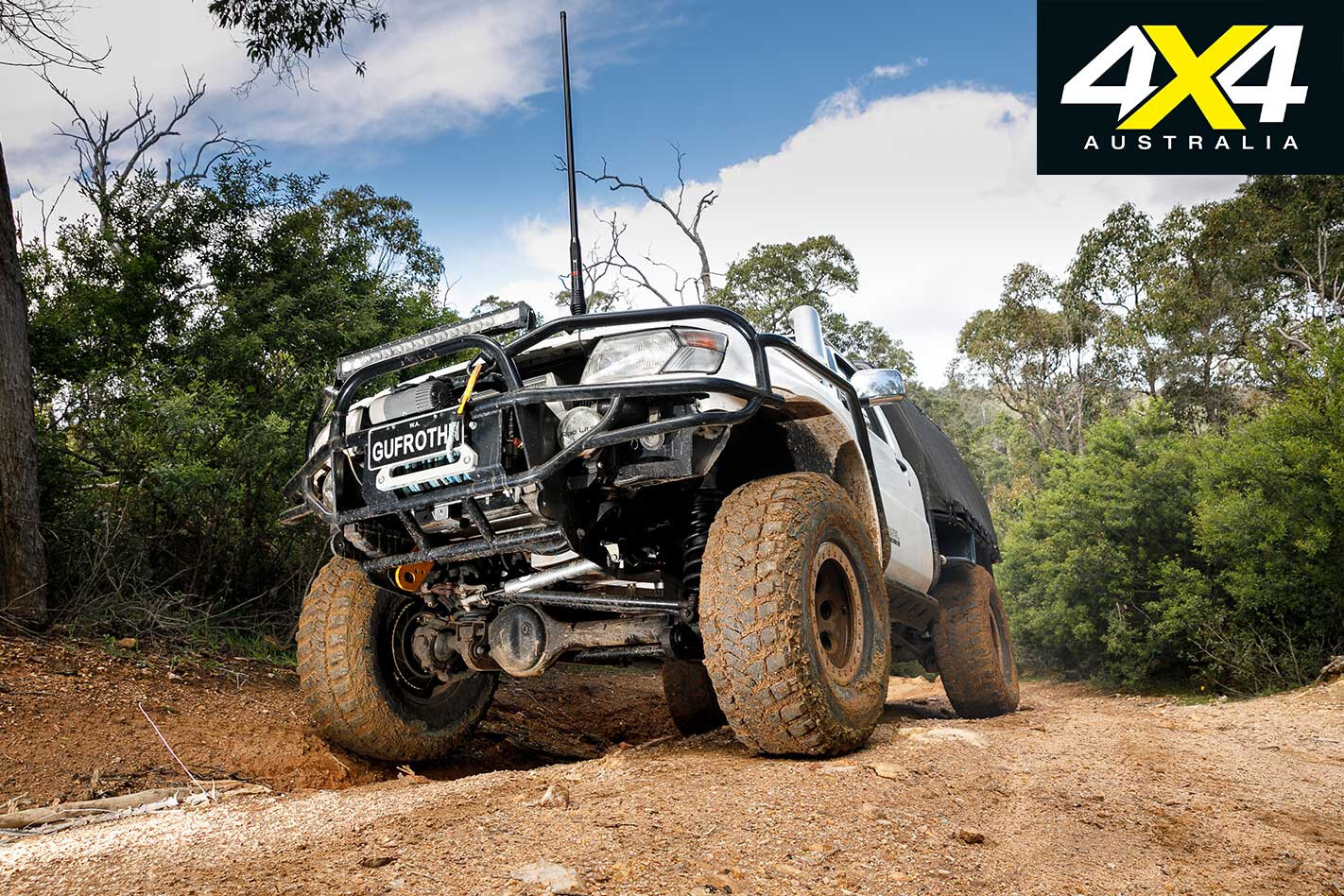
If you’re building a 4×4 for hardcore weekend duties, there are two things you need to accept: it’s horrendously expensive, and you’ll eventually beat your 4×4 to pieces. Ask me how I know.
The smart money for the first round of modifications should be centred on protecting your 4×4’s expensive-to-repair bits. A winch and recovery kit also made the list, because you will get stuck off-roading on standard tyres and suspension. A pair of handheld UHFs and an eager mate in the passenger seat will help to navigate through tricky terrain.
Rock Sliders – $1000 Winch – $1000 Bash plates – $500 Bullbar – $1000 Recovery kit – $300 Handheld UHFS – $200 TOTAL: $4000
Remote Tourer
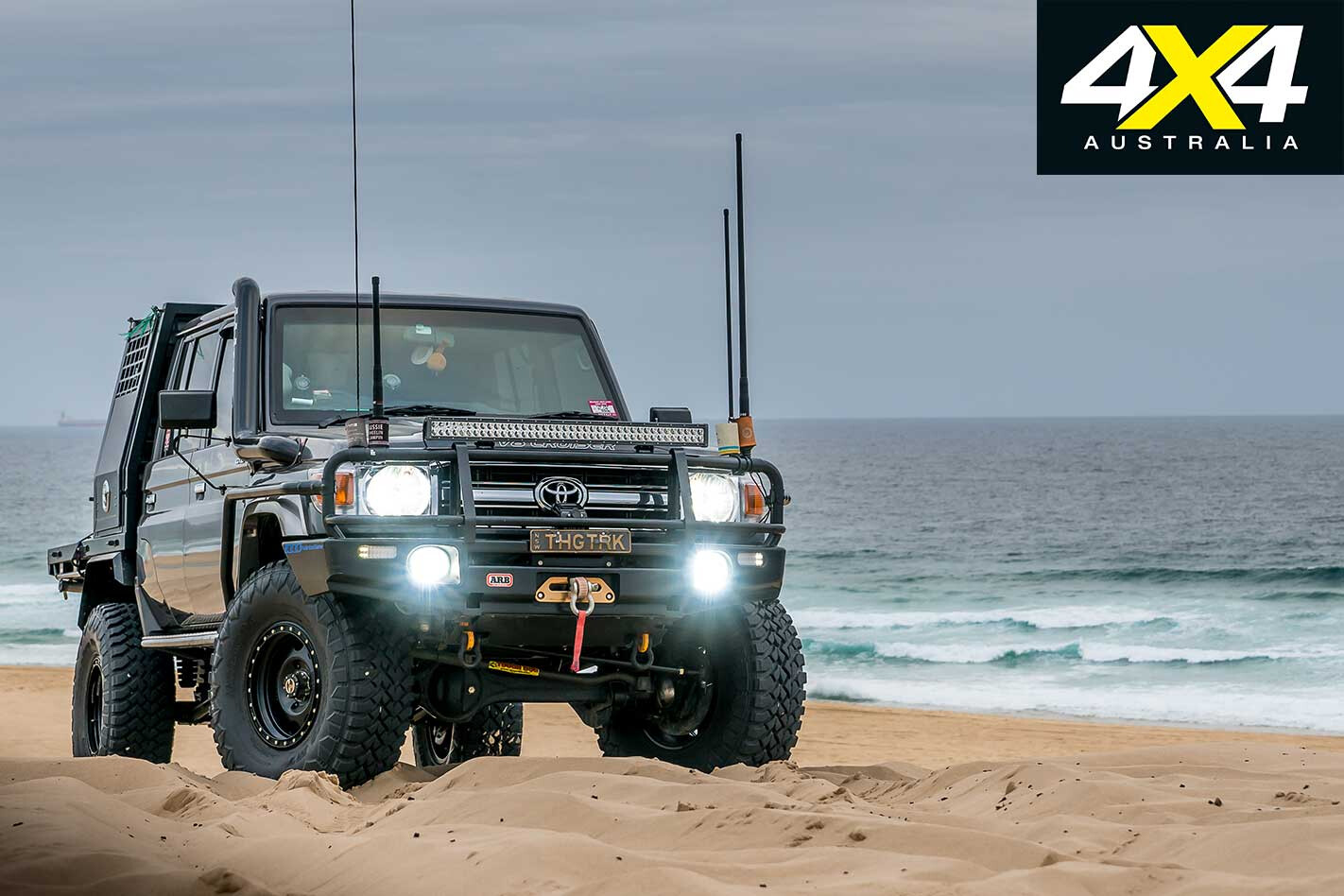
If you’re heading past the black stump then you’ll have an entirely different set of requirements, and a priority is protection from animal strikes. A busted radiator could leave you stranded without reception.
Likewise, a set of driving lights (decent ones) will ensure you spot suicidal kangaroos well before you reach them. A set of stock-sized ATs are also essential to cope with the damaging destinations you’ll be driving to. A half-decent UHF is required should you need to call for help, and a good quality ice chest because you’re too poor to buy a fridge just yet.
Stock-size A/T Tyres – $1250 Bullbar – $2000 Driving Lights – $1000 Ice chest – $450 UHF – $300 TOTAL: $5000
Family Wagon
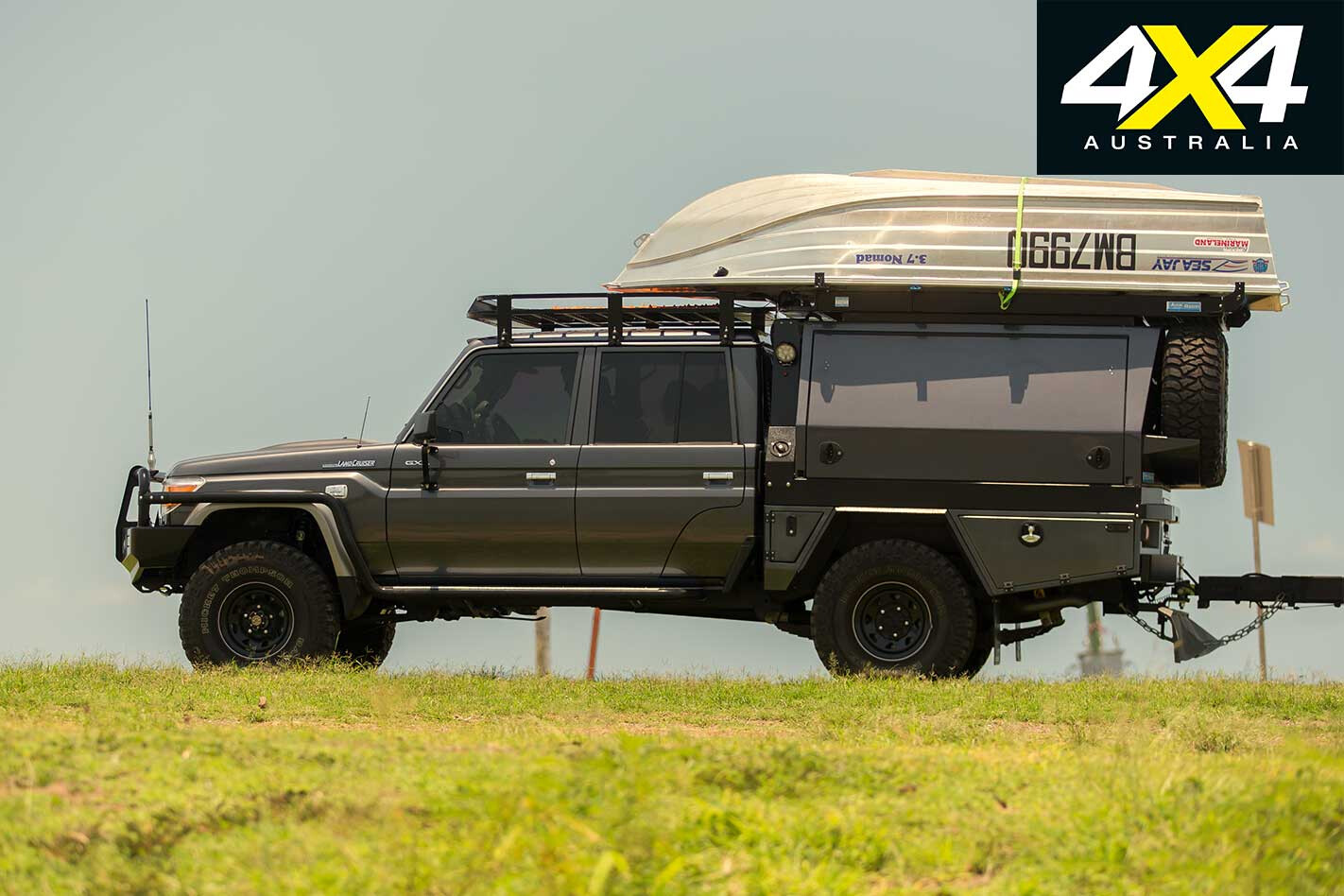
If National Lampoon’s Vacation seems more like a documentary of your last holiday than a bit of slapstick humour, then you’re in luck. A priority here is storage. As practical as a dual-cab ute is, you’ll quickly run out of room when you load them with RC cars and push bikes.
Unexpected storms can also leave you with a wet sleeping bag. Option up a canopy as your very first purchase, as it’ll double your storage space for camping gear and give you bona fide weatherproof storage. A set of quality canvas seat covers and 3D floor mats not only make you feel like you’re always on an adventure, but they make cleaning up easier.
Finally, a decent winch and a hidden winch mount in the stock bumper should give you the confidence to explore trails with your progeny in the back seat.
Canopy – $3000 Canvas seat covers – $250 Floor mats – $200 Winch and hidden winch mount – $1550 TOTAL: $5000
Follow our ‘How to build a ute guide‘ here: – $15,000 budget – $25,000 budget – more than $25,000
“Lion!” No matter how soundly you’re sleeping it’s the one word guaranteed to raise you immediately from slumber in the African bush.
This feature was originally published in 4×4 Australia’s June 2012 issue
I unzipped the rooftop tent’s gauze and stuck my head out (not a good thing to do, by the way, when camping on the ground because a prowling predator might bite it off). “Where?” I hissed from the relative safety of the roof of my Defender.
My wife nuzzled under the doona beside me, two eyes blinking comically through the little slit she’d left as she peered out, also hoping to spot the cat. “Just crossed the stream. Two lionesses. Hunting.” My friend Riaan, from Johannesburg, was tracking the cats with his binoculars, which were remarkably effective under the light of the full moon. Damn. Missed them.
Counting animals in Zimbabwe’s Hwange National Park can be as exciting as it is frustrating. But make no mistake: despite the terrible economic, political and social problems that have devastated the country in recent years, there is still plenty of wildlife to be found there.
The annual Hwange Game Census (or game count as it’s more commonly known), organised by Wildlife and Environment Zimbabwe (WEZ), attracts volunteer counters from around the world, including regular contingents of Australians, like ourselves. The count takes place over a 24-hour period timed to coincide with the last full moon of the southern African dry season (usually in late September or early October).
The theory is that, as the ground water evaporates at the end of winter, animals will congregate around the remaining water sources. As all mammals need to drink at least once every 24 hours, the idea is that most can be recorded by watchers placed at strategic waterholes and streams.
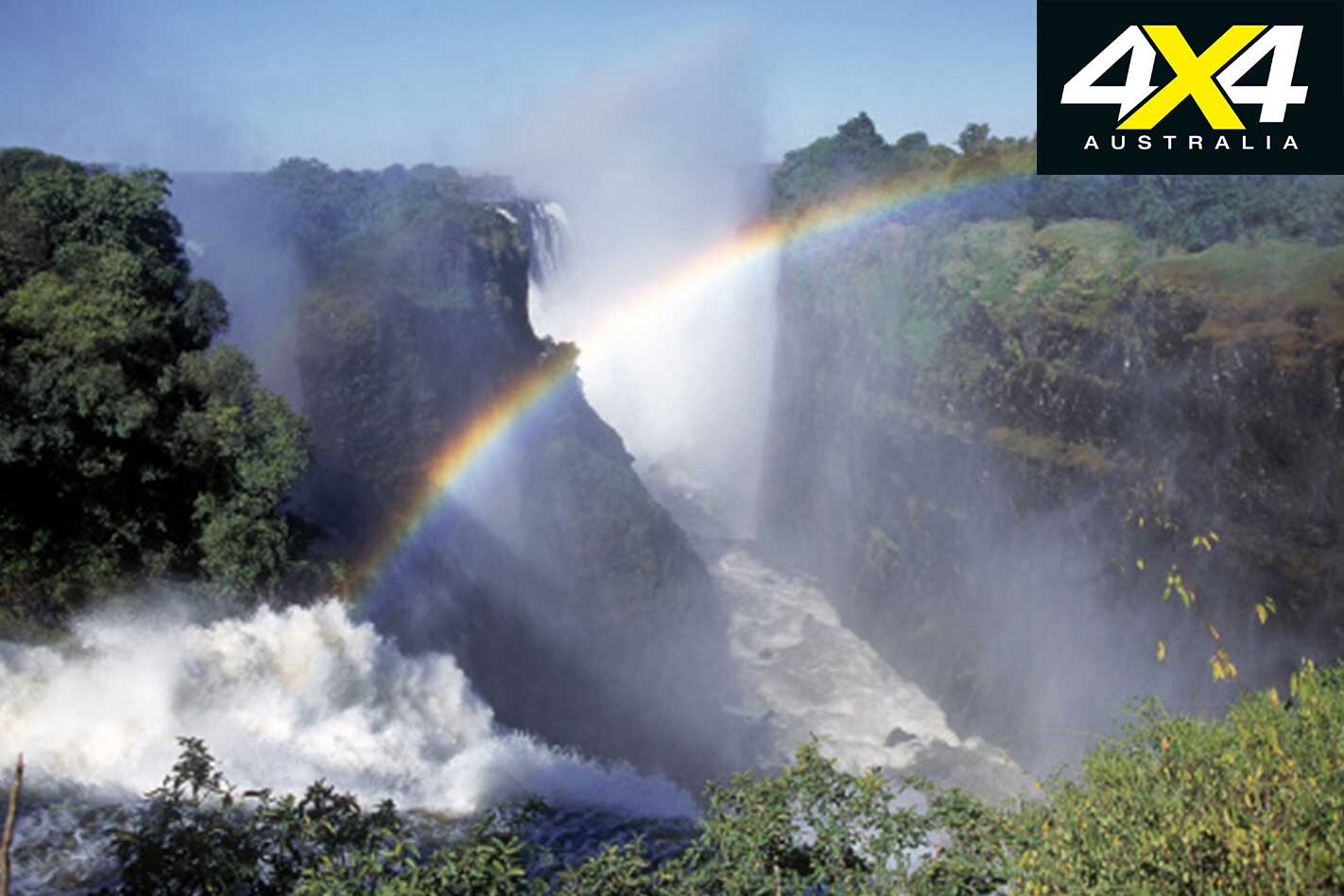
The count is co-ordinated out of Hwange’s three main rest camps: Main Camp, Sinamatella and Robins. Our team of friends from Australia and South Africa was based out of Robins Camp, in the north-west of the park only 30km east of the Botswana border, and about 100km south of the famous Victoria Falls.
After receiving our safety brief (stay in your cars at night time) over a braai (translation: barbecue) we split ourselves into two groups in order to cover our assigned water points.
Team Land Rover – Nicola and me in our 1997 Land Rover Defender 300 Tdi and Riaan and Annelien and their two kids, Leyla (eight) and Adriaan (six) in their 1994 V8 Defender 110 – head south out of the camp the next morning to cover the Little Toms waterhole, about 10km from camp.
Heading a few kays further down the track to the Big Toms waterhole are the Toyotas – Brett and Claire Martin from Mansfield, Victoria, in a rented Toyota HiLux dual-cab, and Dewald and Bettie Botha from South Africa, in a LandCruiser TroopCarrier with an interesting connection to Australia.
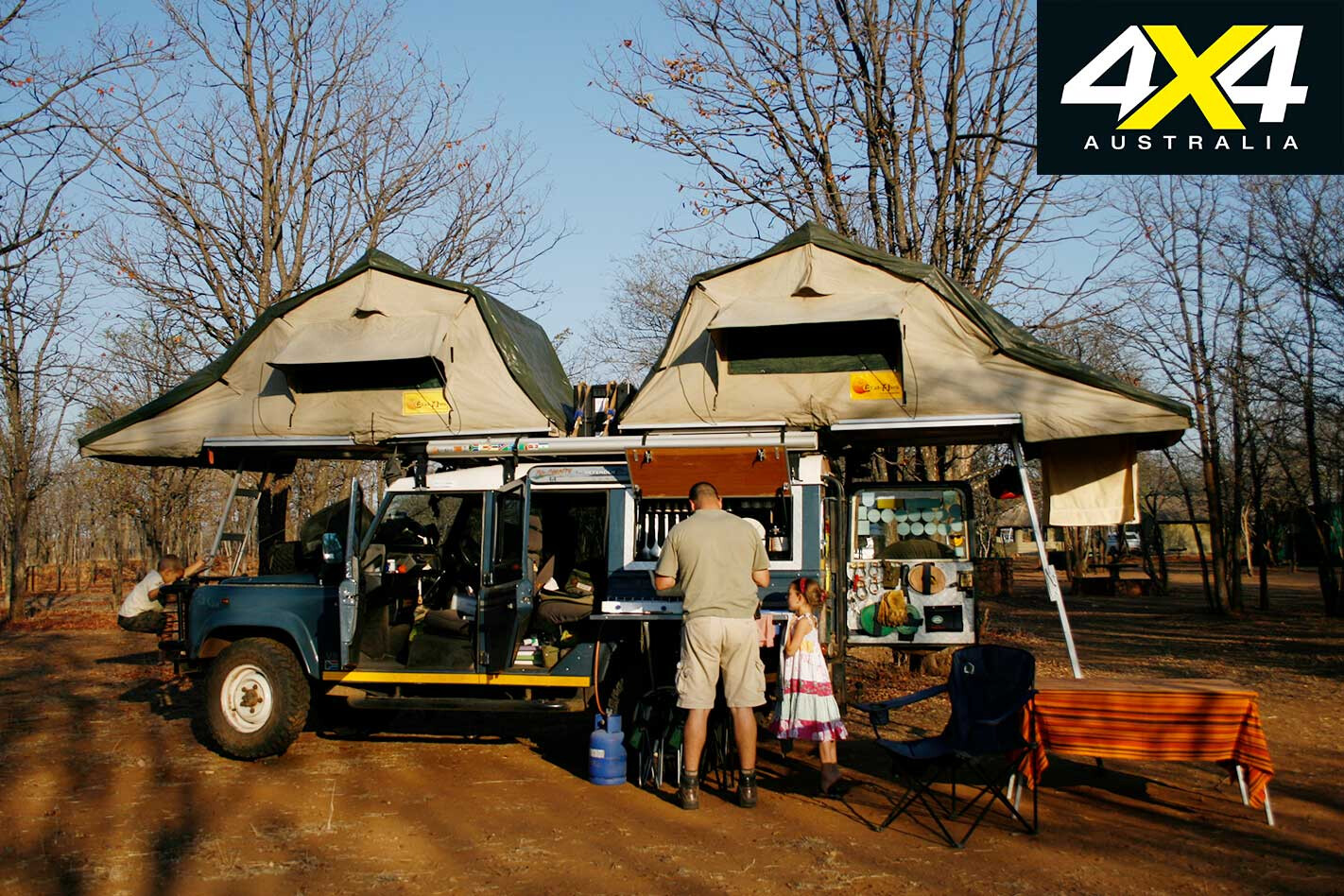
Dewald, an engineer, and Bettie lived in Western Australia for a couple of years while he oversaw the construction of a nickel processing plant. While in Australia they bought the Troopie, had it converted into a camper, and explored a good chunk of Australia in their spare time. They shipped the Cruiser and themselves back to South Africa at the end of the contract.
Brett, who manages Martins Garage, a Nissan dealership, had rented his HiLux – fully kitted with rooftop tent, fridge and camping gear – from Hemingway’s Vehicle Hire, across the border in Livingstone, on the Zambian side of Victoria Falls. It was no problem to bring the vehicle into Zimbabwe, where local car-hire options were limited and expensive.
Hwange, Zimbabwe’s flagship national park, has suffered from underfunding and a lack of visitors in recent years, but despite that the roads are generally in good condition. A two-wheel drive with high ground clearance could cover most of the park in the dry season, but a 4X4 is recommended, especially in the wet (October to April).
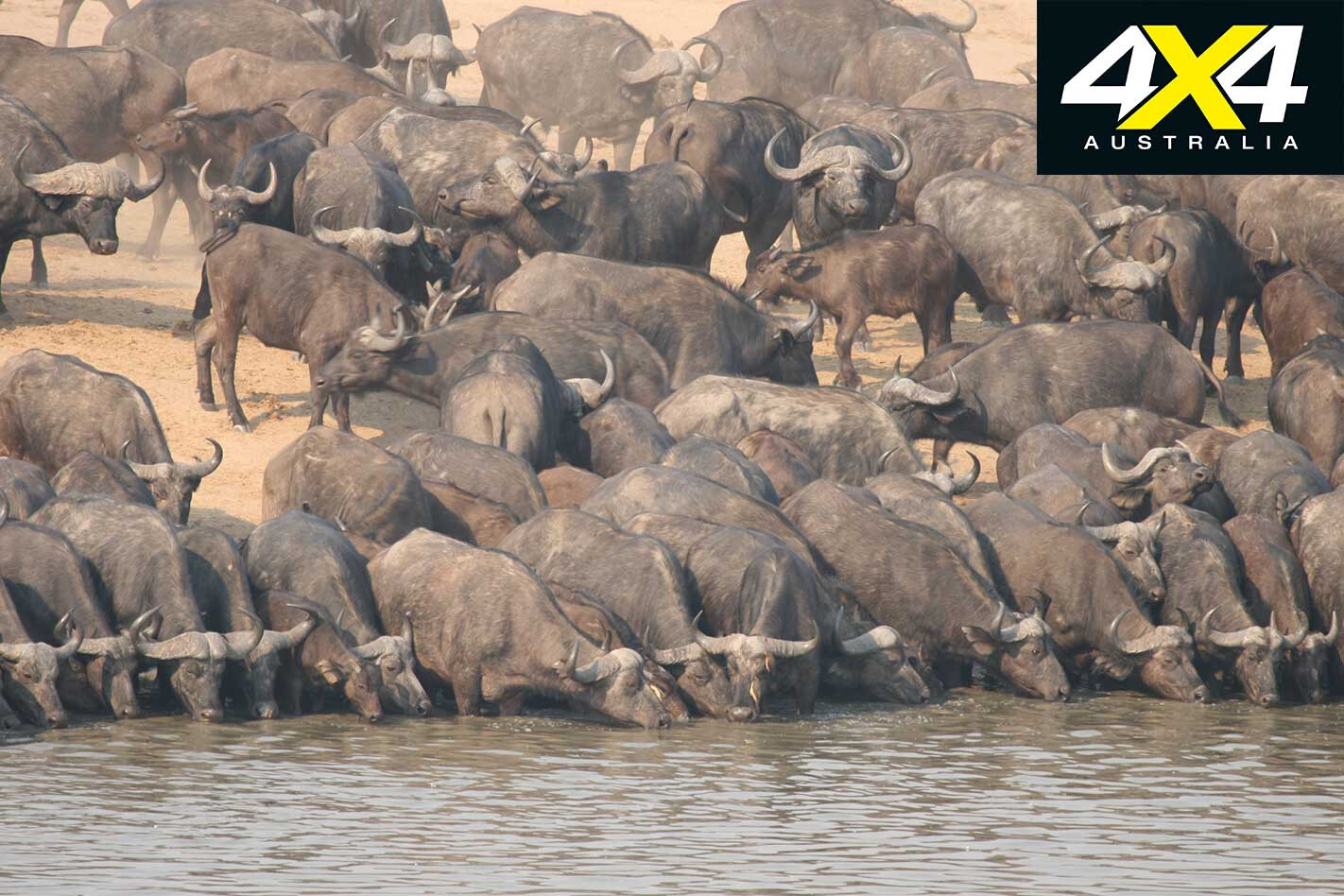
The long winter sun had sucked the last of the moisture out of the air and long yellow grass swayed in parched vleis (floodplains) between bush dried the colour of khaki and grey. On our drive to the waterholes we passed a big herd of at least 300 Cape buffalo. Despite their seemingly cow-like passivity, these animals are known as Black Death for the danger they can pose if you disturb one on foot.
Big Toms and Little Toms are waterholes sunk when this part of Hwange was a cattle farm owned by Herbert Robins (who, incidentally, was born in Australia before moving to Rhodesia – as Zimbabwe was then known). On his death, Robins bequeathed his farm to the national park.
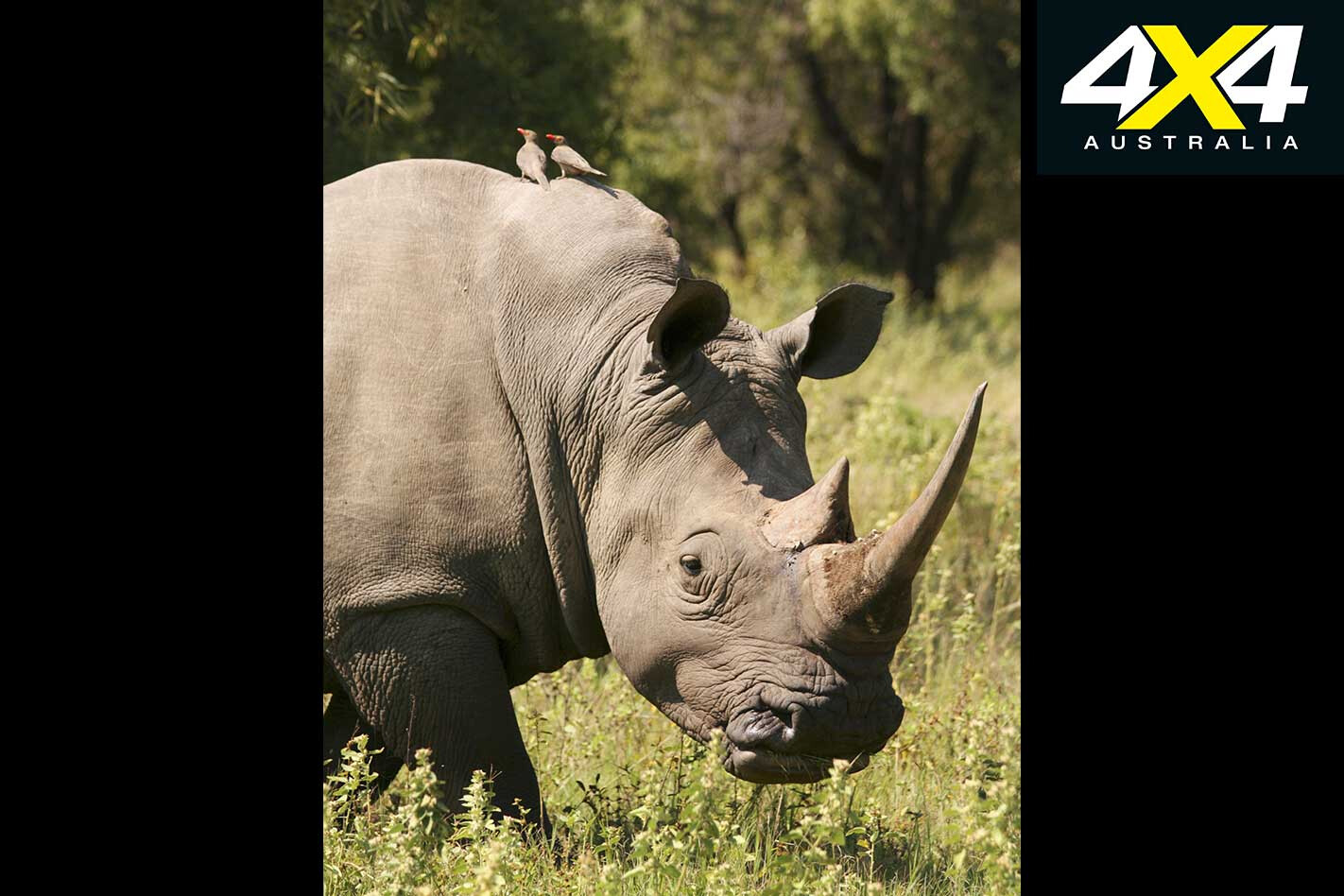
Poaching unfortunately occurs in every African national park, but parts of Zimbabwe have been particularly hard hit. Rhinos – whose horns are used in illegal traditional Chinese medicine – are being killed at an alarming rate.
The zebra and kudu antelope drinking at Little Toms scattered into the bush when we arrived. However, within half an hour the animals were back, eyeing us nervously and perhaps just startled by the unusual appearance of humans.
Our count began at midday and the day was Africa-hot, with temperatures hitting the high thirties. However, at Little and Big Toms we were lucky to have thatch-roofed viewing hides to count from. Our job was to record the different types of species, the sex of the animals if possible, whether they were adult or young, and make notes of anything unusual, such as injury or poor condition.
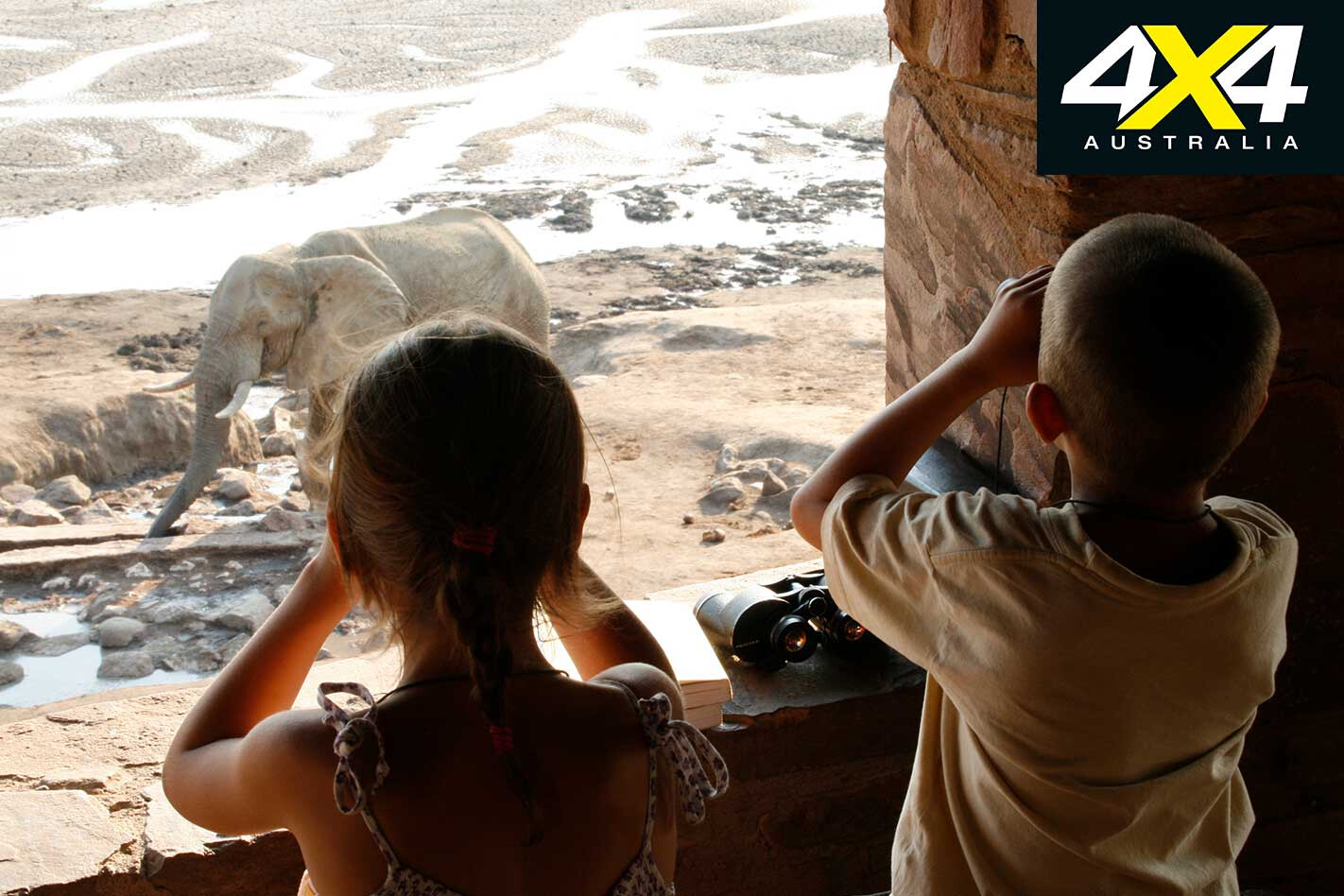
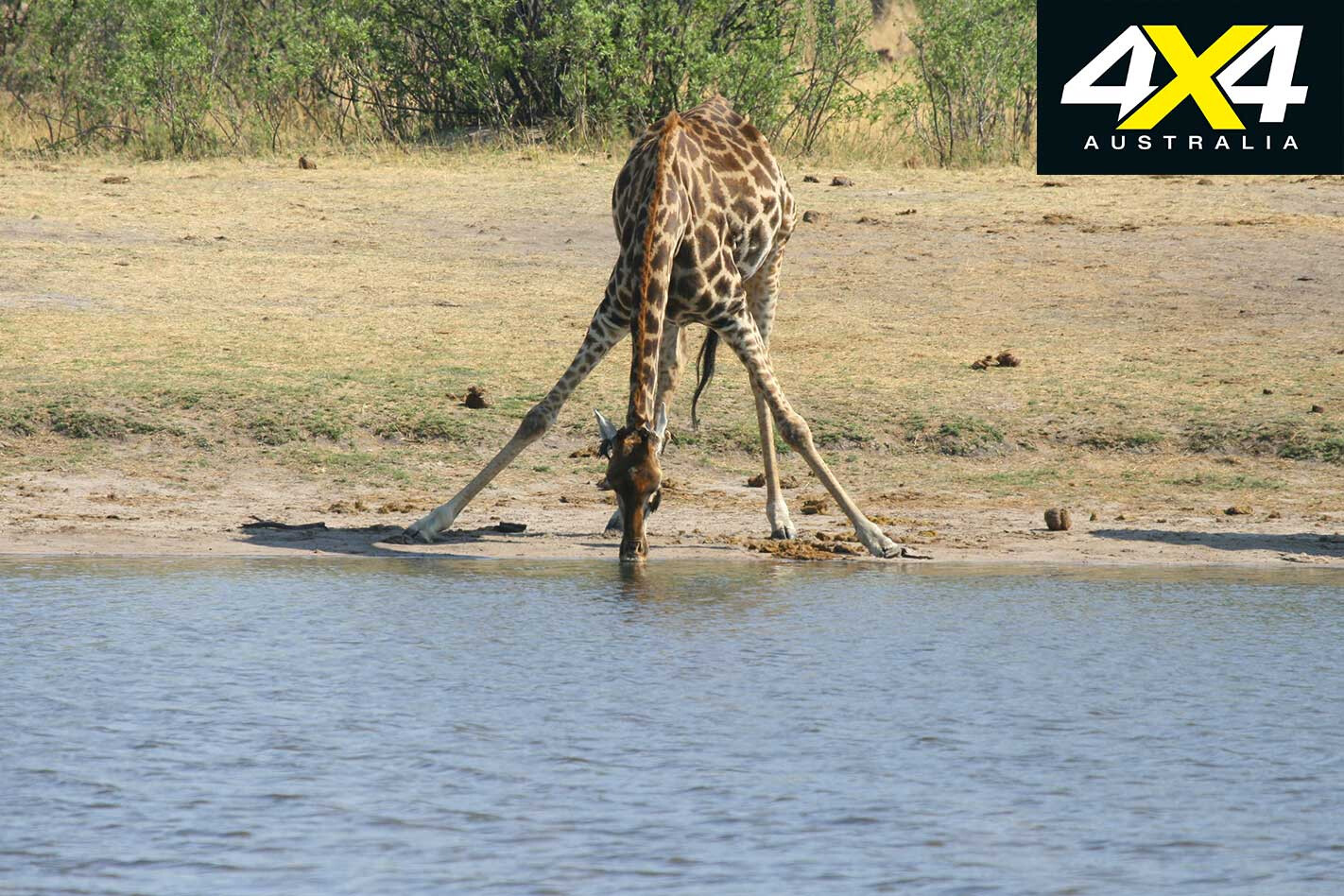
A pompous pair of warthogs and a gangly giraffe came down to the water to drink, but much of the game we noticed was drinking about 100m upstream from the main waterhole. We suspected there might be a sweet spring up there.
As the sun lost its sting we decided to leave the hide for the night and reposition ourselves in the bush overlooking the stretch of creek where most of the game had been drinking. We loaded the Land Rovers (and the only pair of kids I know in the world who could sit quietly in the back of a truck colouring in for 24 hours) and moved camp.
The game count is the only time tourists can be out in the national park overnight unsupervised. It’s also the only time guests can drive off-road, and we picked our way carefully around anthills, aardvark holes and trees whittled down to toothpicks by passing elephants.
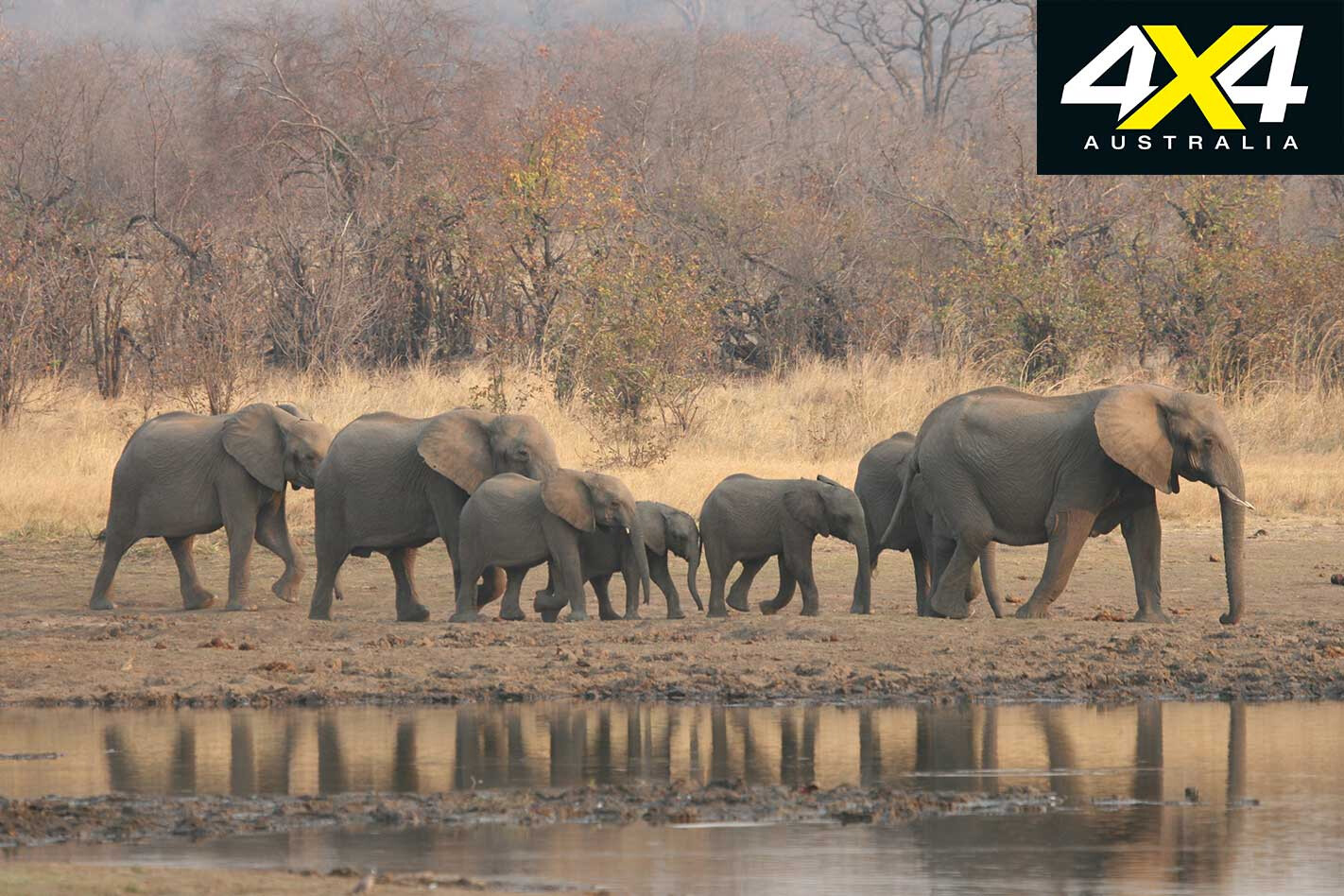
Hwange is known as the Kingdom of the Elephants, and for good reason. Tens of thousands of these giant beasts live in the park or pass through here on their way to and from neighbouring Botswana in search of food and water. In Hwange the elephants drink at night, leaving the shade of the bush for the lure of water in the cooler hours and as soon as the sun set an endless night-time elephant parade began.
Riaan, Annelien, Nicola and I divided the night into two, tossed a coin, and they picked the first shift.
It was about 11pm when Riaan hissed into the darkness that he’d seen two lionesses cross the stream, not 30m from where we had parked the Landies. Nicola and I missed them, but when we took over at midnight there was plenty of night noise out in the bush to keep us wide awake. We sipped coffee and packet soup from flasks as hyenas whooped and some startled zebra brayed.
The last few hours before dawn dragged, as even the elephant extravaganza slowed, but the whole exercise was worth it to see the sun come up over Africa. We’d strung shade cloth between the two Defenders to make an improvised hide and as the 24 hours drew to a close we treated ourselves to bacon and eggs in the bush.
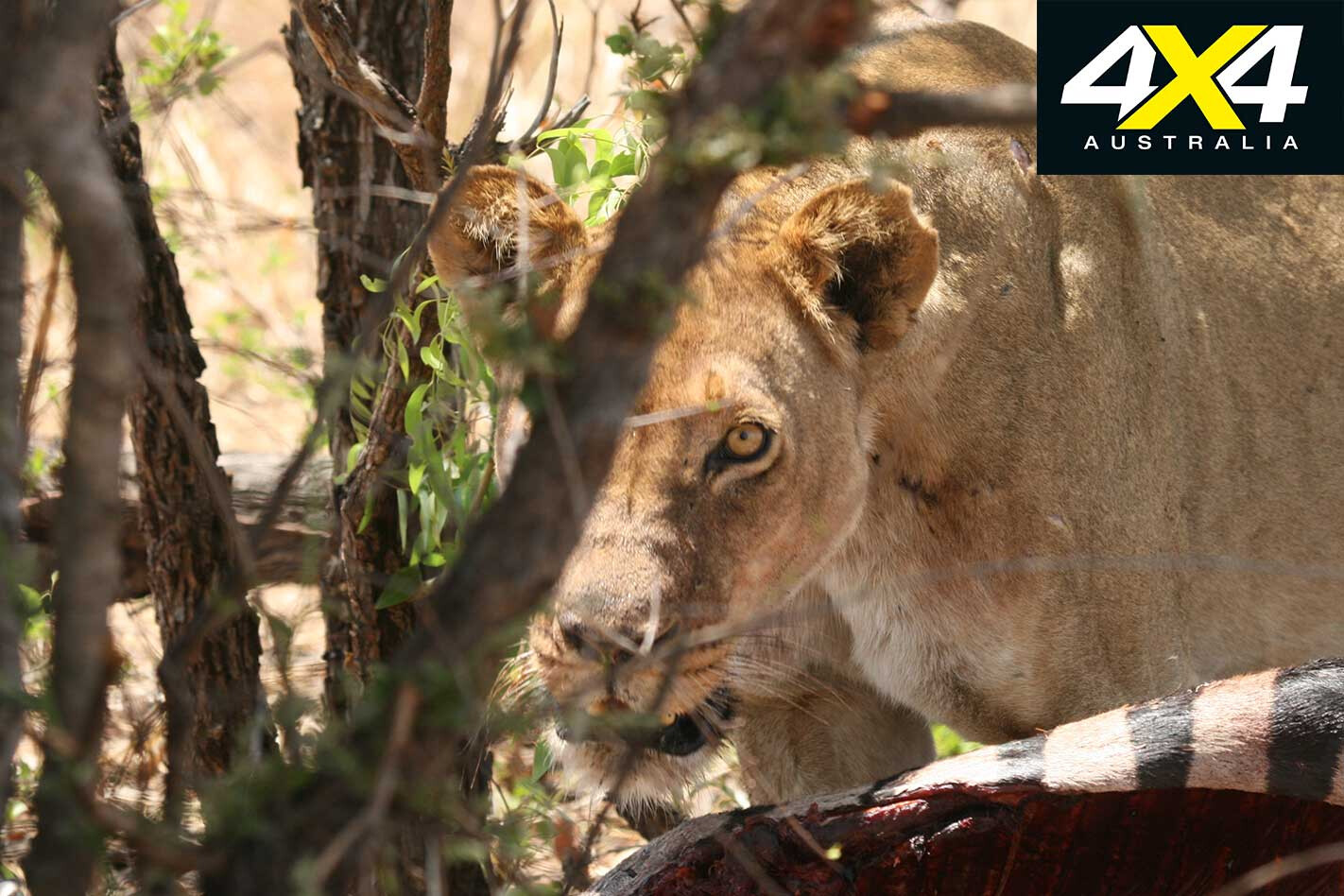
As Nicola and I led the way out of the bush and re-joined the dirt road back to Robins, a muscular, wild-eyed lioness broke from the scrub and took about half a dozen menacing strides towards us. Heart pounding and expletives flying we skidded to a halt. There in the bush was the snarling lioness and her sister, and the remains of a zebra, whose last mortal calls we’d heard in the night, from less than 100m behind our encampment.
As the bigger lioness dragged her striped kill away from the road and under the shade of a tree, we saw why she’d acted so protectively. With the girls was a cub – new life and a ray of hope for a small pride of lions in a big, troubled country.
Count me in
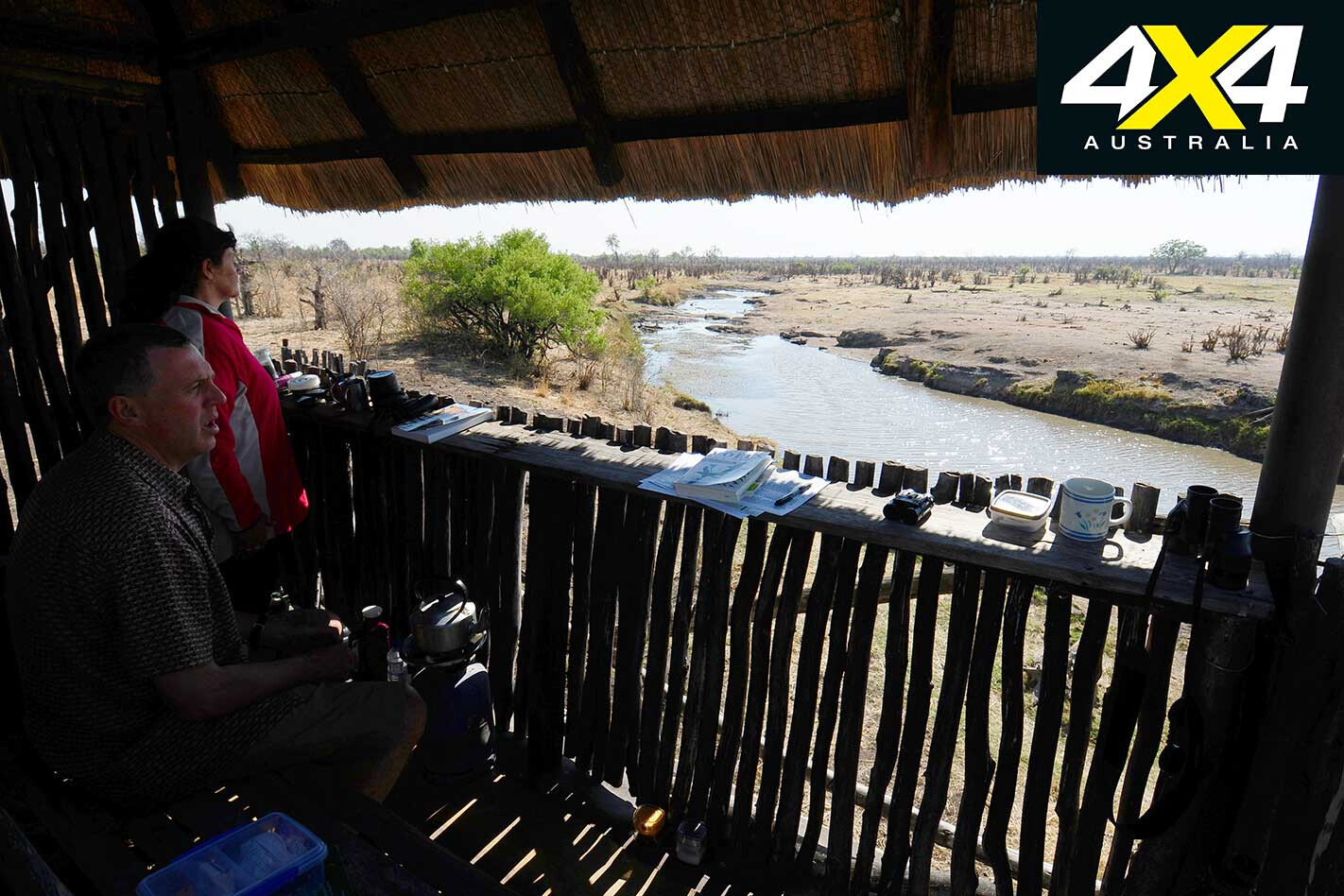
First run in 1972, the Hwange game count is the longest continuous-running game census in southern Africa.
It provides the Zimbabwean national parks authorities and wildlife researchers with crucial data on wildlife diversity and numbers.
There were 38,451 animals recorded in the 2011 census, covering a total of 46 different species.
The majority of animals counted – 61.5 percent or 23,569 individuals – were elephants. While declines in the numbers of several species were noted, this was the highest number of elephants ever counted. Cape buffalo were the next most numerous animal, with 3433 recorded.
Is Zimbabwe safe?
Zimbabwe’s wildlife, like its people, has suffered under decades of misrule and economic mismanagement. President Robert Mugabe’s disastrous policy of confiscating and redistributing white-owned farms crippled the economy and the local currency spiralled into oblivion after years of rampant inflation.
Today, however, the opposition Movement for Democratic Change (MDC) has a hard-won place in a coalition government and the country has swapped its worthless dollar for the American greenback. All is far from perfect in Zimbabwe, but the measure of stability brought by the change in currency means that fuel and most goods can be readily bought.
While violence and intimidation of the MDC and its supporters is, sadly, a feature of local elections, this does not manifest itself in the form of animosity or danger for tourists. By African standards its crime rate is low and its people are welcoming.
Out of Africa
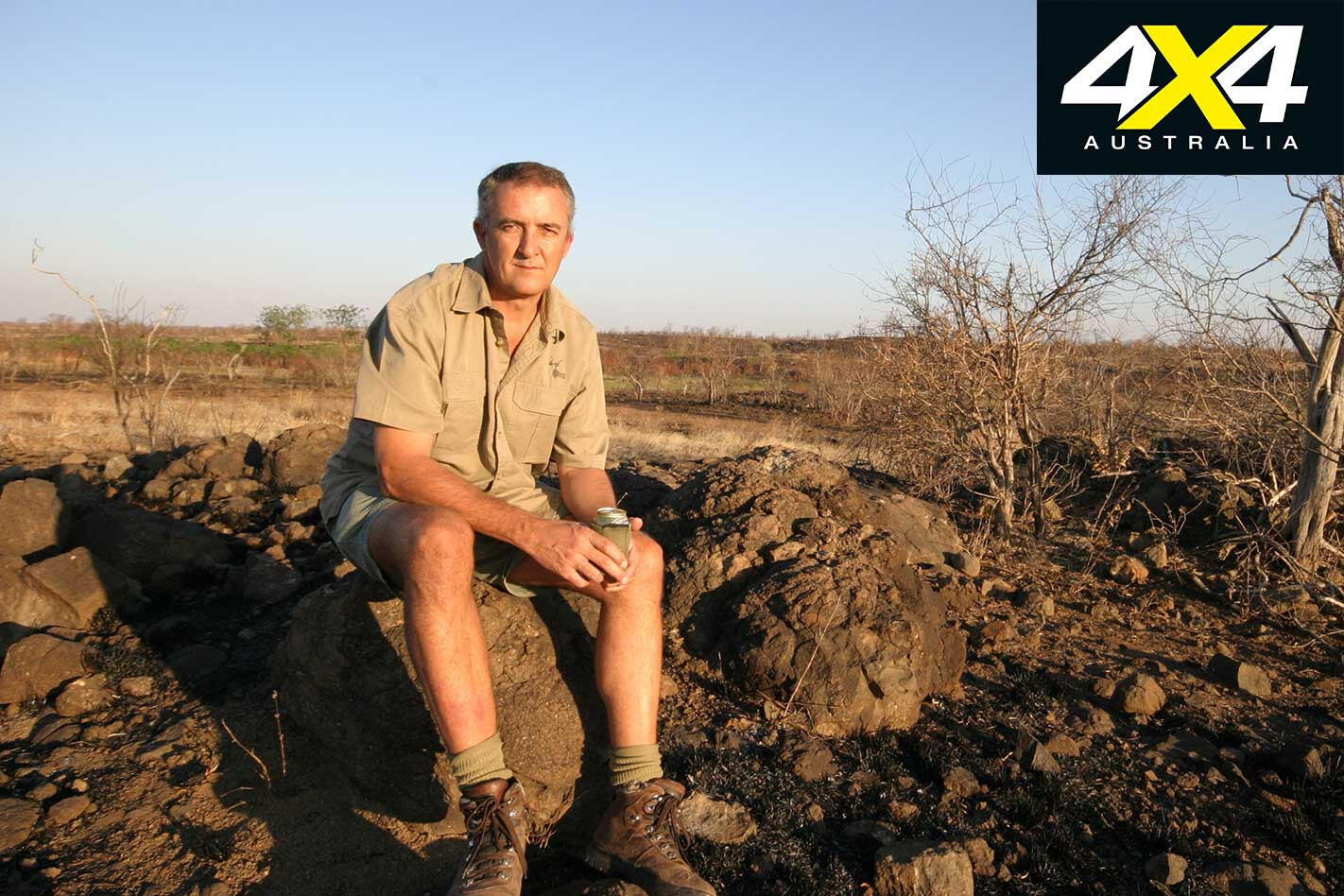
Tony Park is a freelance journalist and the author of eight novels set in southern Africa, and three biographies.
Tony grew up in the western suburbs of Sydney and worked as a newspaper reporter and in public relations before quitting full-time work to follow his mid-life crisis dream of writing fiction.
A short holiday to Africa in 1995 with wife, Nicola, turned his life around and gave him the material he needed to write his first novel, Far Horizon, a thriller set on an overland tour trough South Africa, Zimbabwe, and Zambia.
Having been bitten by the Africa bug, Tony and Nicola have been back to the continent every year since and now spend half their lives in Australia and the other half in the African bush where Tony researches and writes a book a year.
A 4X4 enthusiast and diehard Land Rover tragic, Tony soon worked out that it made more sense to buy and garage a vehicle in Africa, rather than blow money on renting one every year when he returned. These days he owns a 1997 300 Tdi Defender hardtop kitted for long-range touring and stored with friends in Johannesburg between trips.
He and Nicola have travelled extensively throughout South Africa, Namibia, Zambia, Botswana, Zimbabwe, Malawi and Mozambique. They have also visited Kenya, Tanzania, Rwanda and Uganda on research and writing assignments.
His novels are thrillers, mostly set in contemporary Africa. They confront the problems facing the continent – crime, corruption, poverty and poaching – and also celebrate Africa’s wide-open spaces and huge array of majestic wildlife.
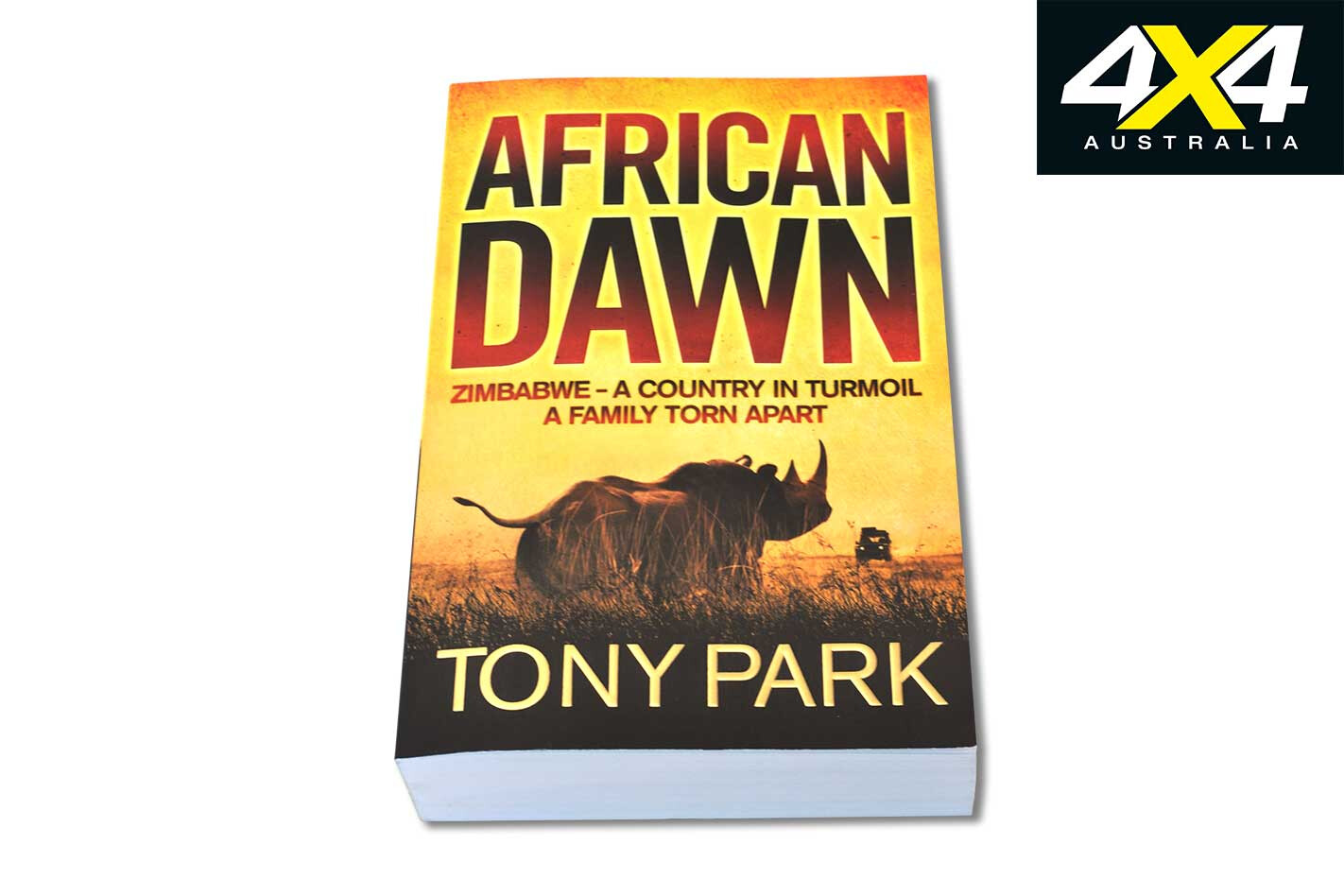
In order of writing, his books are: Far Horizon, Zambezi, African Sky, Safari, Silent Predator, Ivory, The Delta and African Dawn. His ninth novel, Dark Heart, set in Rwanda, is due for release in November 2012. He is also the co-author of three non- fiction biographies: Part of the Pride (with Kevin Richardson); War Dogs (with Shane Bryant); and The Grey Man (with John Curtis).
Tony is also a Major in the Australian Army Reserve and served as a public affairs officer in Afghanistan in 2002.
He lists his four great loves in life as his wife, Africa, beer and Land Rovers – order depending on the circumstances.
You live half your life in Africa. Why? Tony: My wife, Nicola, and I visited southern Africa on a short holiday in 1995 and fell in love with the continent, especially its wildlife. We now spend six months of every year there, where I research and write my novels.
What sort of vehicle do you drive? Tony: I own a 1997 Land Rover Defender 300 Tdi hardtop called Broomas (named after a polar bear – it’s a long story), which lives with friends in Johannesburg when I’m in Australia.
Scariest moment in Africa? Tony: Having two hungry lionesses circle our tiny dome tent in Mana Pools National Park in Zimbabwe’s Zambezi valley. My life flashed before my eyes.
Are your novels based on real-life experiences? Tony: My novels are thrillers, set in contemporary southern Africa, so they deal with the real-life problems of the continent, such as crime, corruption, and poaching, but I also try to show the beauty of the continent.
The latest, African Dawn, deals with the tumultuous recent history of Zimbabwe including the invasion of white-owned farms and the plight of the endangered Black Rhino. There is also a strong message of hope in the book. And plenty of 4X4s and sex.
In the fifth 4X4 Shed update on our Nissan Patrol I talk about not missing something until it’s gone.
In specific, the many comfort and convenience features of the Ti-L Patrol that many potential buyers would deem unnecessary, but are taken for granted when you drive such a car. I just got back into the Patrol after a month of driving a slew of gutless mid-sized utes, and the idea of not missing it ’til it’s gone couldn’t ring truer.
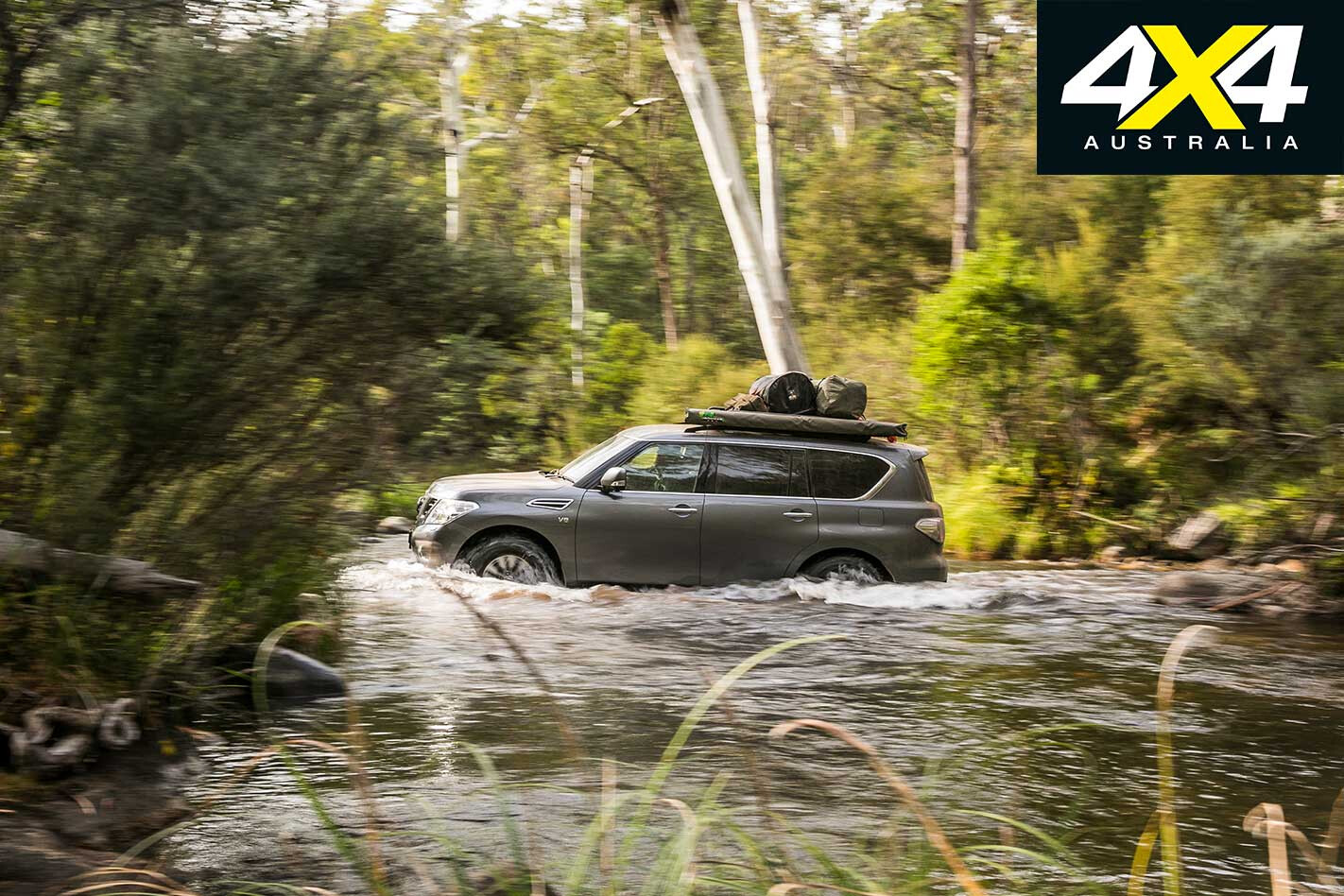
From the ease of entry through a big door opening, to a spacious and well-appointed cabin, and then that stonking 5.6-litre V8 performance, the Patrol is a very hard act to follow indeed. Especially when you consider that none of the popular 4×4 utes can match the Patrol in any of these aspects.
We share our offices with the crews from Wheels and MOTOR magazines and I often hear the terms performance utes and sports utes bandied around the joint.
Back when Ford and Holden were still making great two-wheel-drive utes locally you could get away with such terms, but you can’t apply it to any of the factory production 4×4 utes. Those 2WD Ford and Holden utes proved there is a market for hot-rod versions of them and again, they are missed now that they are gone.
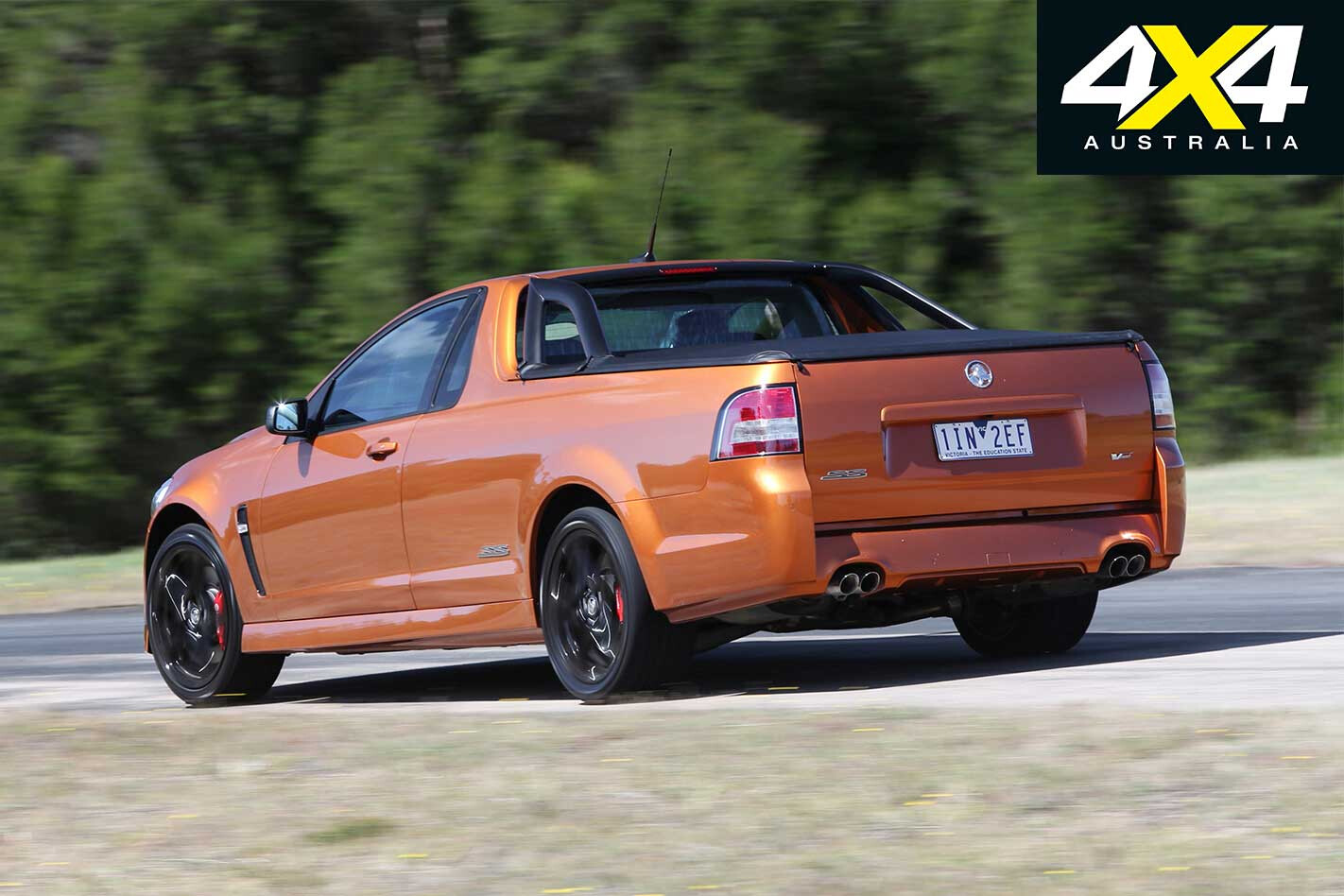
While many 2WD ute buyers may be switching to 4×4 mid-size utes, they’ll be sorely disappointed by the performance of the lazy diesel engines. It astounds me why the manufacturers haven’t brought out petrol, V8-powered variants to serve the market what it is sorely missing. Thankfully the aftermarket is answering the call, but it isn’t the same – or affordable, for some.
Ford, Holden, Nissan and Toyota all have modern V8 engines that would slot right into the current crop of 4×4 utes, but none of them have the balls to do it. General Motors has in its LS/LT range of petrol V8s – what is arguably the best, most versatile internal-combustion engine ever made – and it goes well into any vehicle, 4×4 utes included.
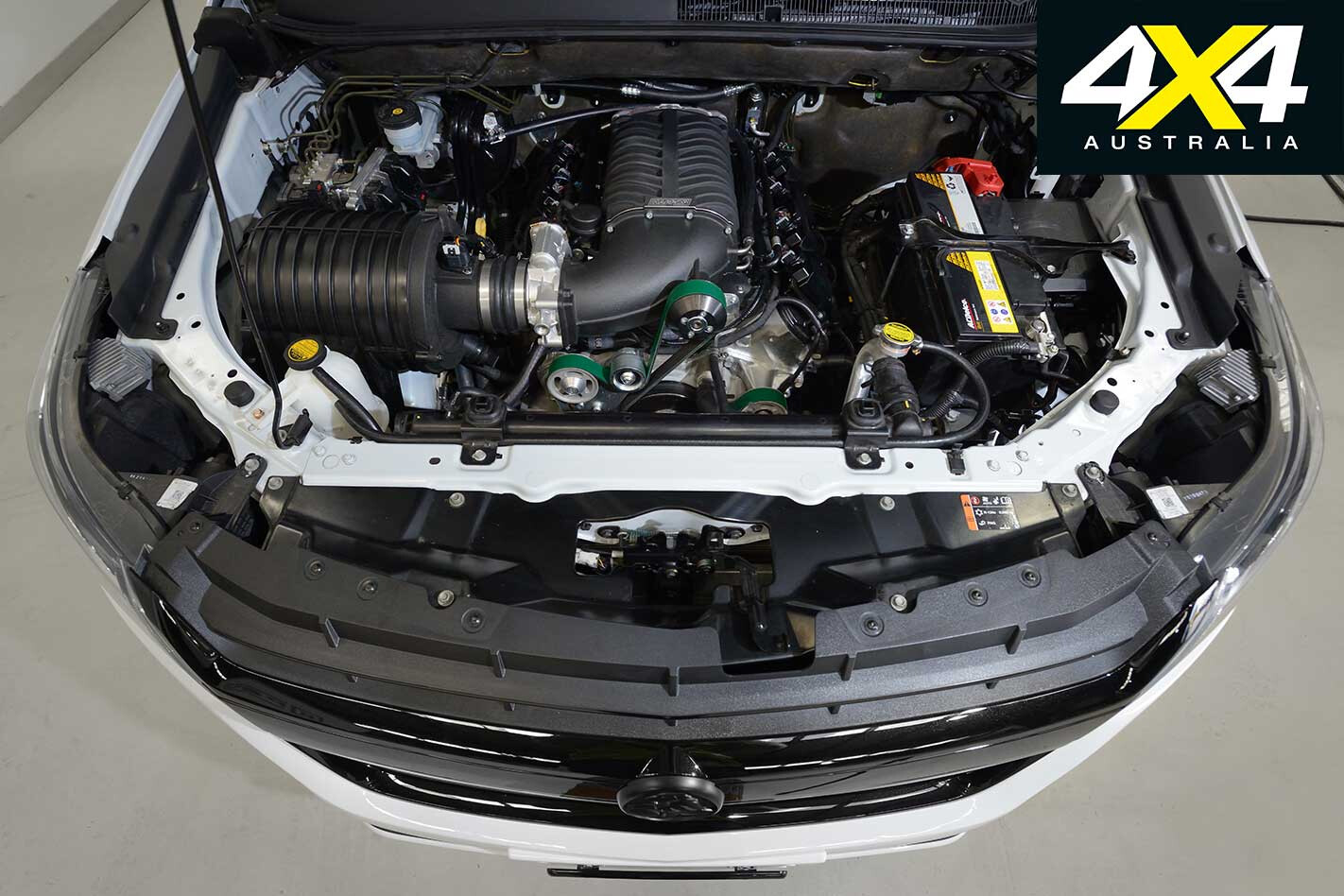
The modern GM V8 is relatively light and compact thanks to its aluminium block and heads and single cam-in-block construction. There’s no bulk of overhead camshafts, no unnecessary and unreliable turbochargers to get in the way or fail, and no bloody DPFs, AdBlue or other crap to mess you around. Just pure, efficient performance.
In the meantime, the car companies will serve up another Black Edition or sticker pack ute to fool the masses.
The vehicle was scrambling as I flicked the locker switch on the Cruiser’s dash, the tyres biting more positively as the V8 responded precisely to my measured response to the rocky, shaly step we had encountered halfway up the steep-sided hill along the Limestone Creek Track.
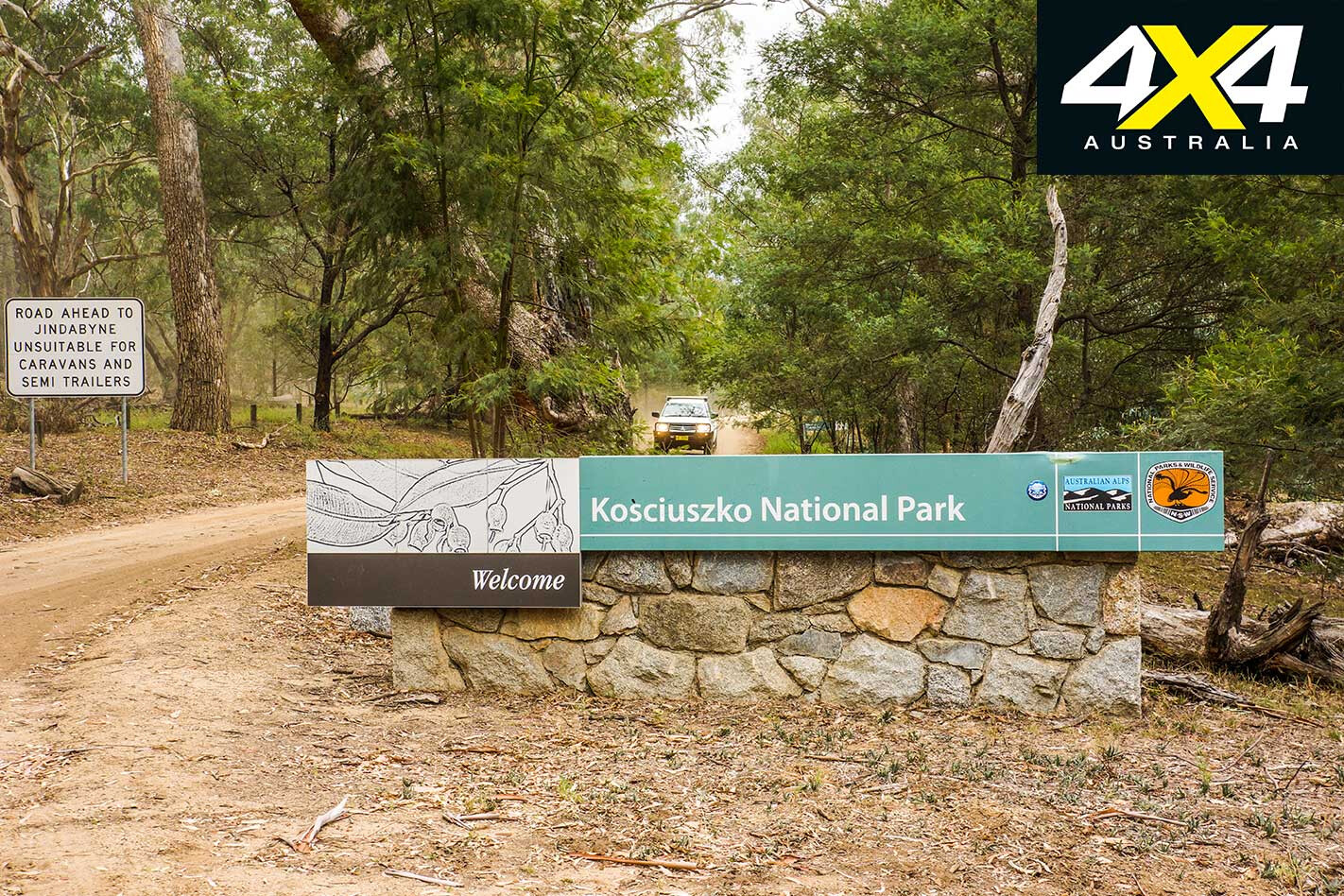
Our trip had started a few days earlier when we had driven up the Snowy River Road (officially Barry Way) and found a campsite just north of the Vic/NSW border. This was beside the Pinch River in the very southern section of Kosciuszko NP and a stone’s throw from the slow-flowing waters of the once mighty Snowy River.
Scrub crowds the flat, sandy banks close to the river where once they had been regularly swept clear of any debris, alive or dead.
Dammed in the 1970s as part of the great Snowy River Hydro Scheme, the river was deprived of its annual floods and the scrubs and trees have reclaimed the soil along the river’s edge. Recently, annual flows have increased, or so they say, with water being released down the river in spring in an effort to replicate nature, but the pulse of water is just a shadow of its former self.
This is vastly different terrain to the rest of the Australian Alps, with the area in a ‘rain shadow’ and receiving far less moisture than those hills and mountain tops a relatively short distance to either the west or east. The resultant dry but still steep mountains are clad with white Cyprus pine and white box woodlands, which immediately bring to mind Banjo Patterson’s famous words…
“And down by Kosciuszko, where the pine clad ridges raise Their torn and rugged battlements on high Where the air is clear as crystal, and the white stars fairly blaze At midnight in the cold and frosty sky.”
Before the road was completed in 1961, cattle had been driven south from the Monaro district of NSW, first to settle the country around Wulgulmerang and Omeo in the 1830s before a stock route was established, which saw up to a thousand head of cattle at a time, driven south to the markets at Bairnsdale.
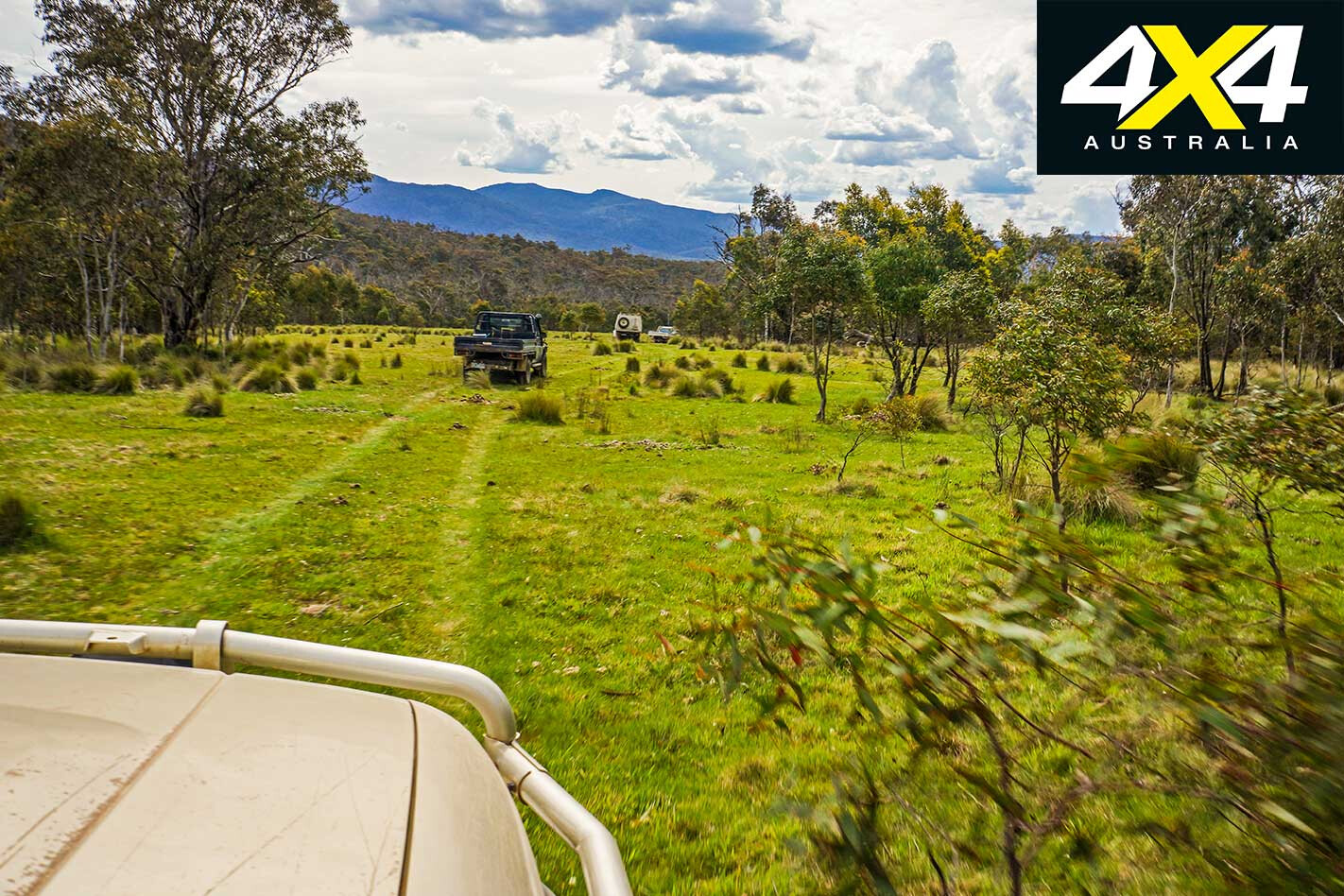
It was an arduous and dangerous undertaking, with the cattle and wagons being jostled across the rugged country and down the notorious ‘Pinch’ into the Snowy River valley before climbing the ridge to a low pass and onto the Gelantipy Plains.
The country was so steep that the wagons, forced to traverse long sections of the valley edges, removed their wheels from the high side of the wagon to keep them in some form of level attitude.
For us it was a lot easier and, after a brief but close encounter with a few wild horses, we crossed into Victoria at Willis, which the straight-line section of the border – known as the Black-Allan Line, after the two surveyors who marked it – passes through. The cairn they built here, or what remains of it, can be seen beside the boulder that marks the completion of the road being built.
A few kilometres south we turned onto the Ingeegoodbee Track, dropped tyre pressures and slipped all the rigs into low ratio for the climb that begins immediately when one leaves the main Snowy River Road.
Like most travellers on this challenging, longish route, the first stop was at the crest and helipad of Mount Menaak, which normally offers fine views of the surrounding precipitous country, but drifting fog and bracing mist limited the view and cooled our ardour for anything outside the vehicles.
Dropping down to cross the Ingeegoodbee River we again climbed through dry forest into snow gums before coming to the heart of McFarlane Flat. The main track passes to the south of the larger snow plains where James McFarlane built his hut in the early 1830s.
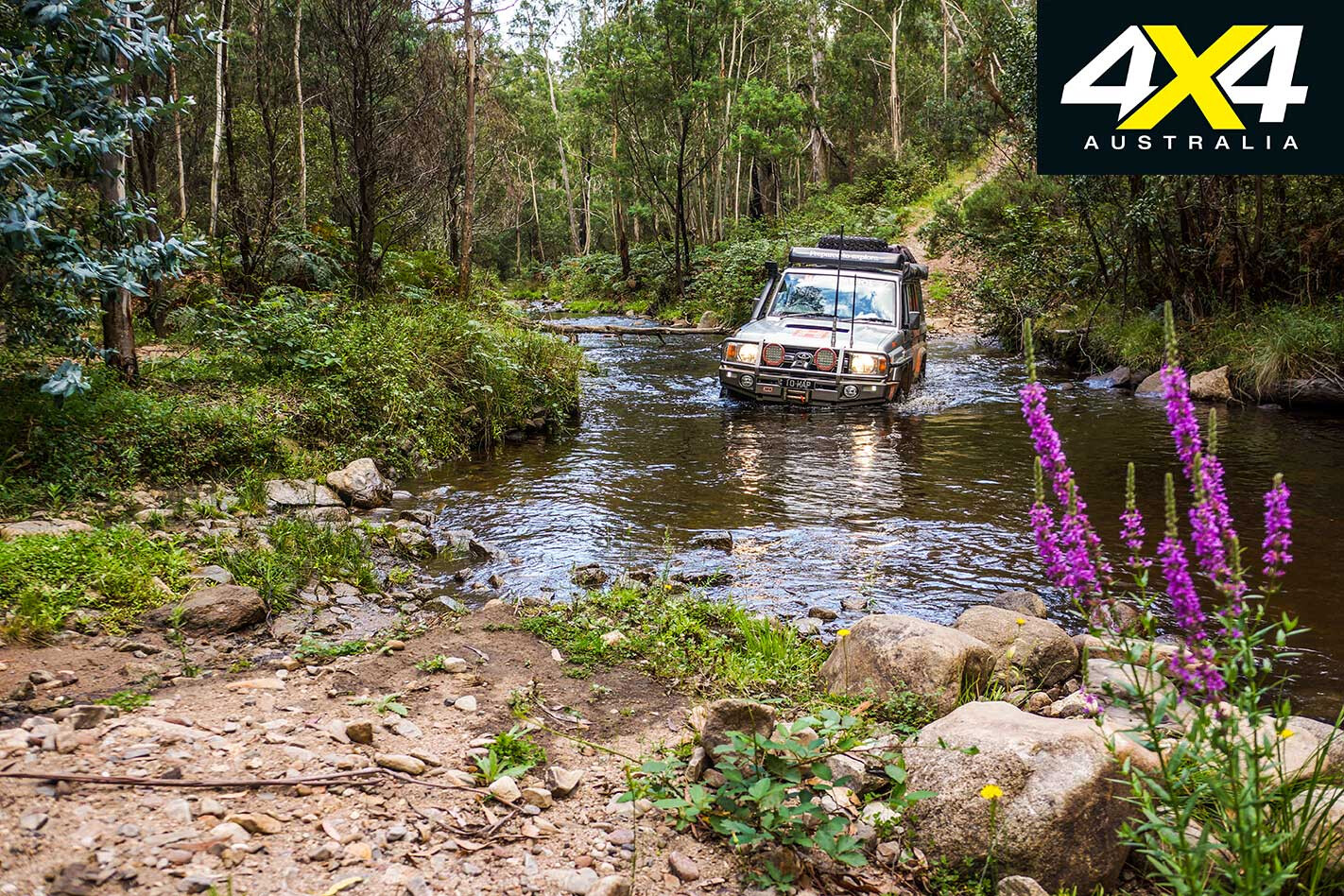
Some say this was the first European residence in what was to become Victoria, predating even the illegal Henty’s camp at Portland. The debate is open to conjecture, but little remains of that first hut; a small pile of stones mark the site a few metres from the burnt-out remains (from the 2003 fires) of Buff Rodgers Hut, the last hut built here in the early 1980s.
Wild horses are commonly seen through here; in fact, in the last three visits in the two years previously we have seen horses on each occasion. They are skittish, though, unlike the ones we had seen on the Snowy which have grown used to campers and travellers; these ones making for the cover of the scrub in double quick time.
From here the track west and south to the main road dips down to cross the Berrima Creek before climbing again to once more plunge into the Suggan Buggan River valley.
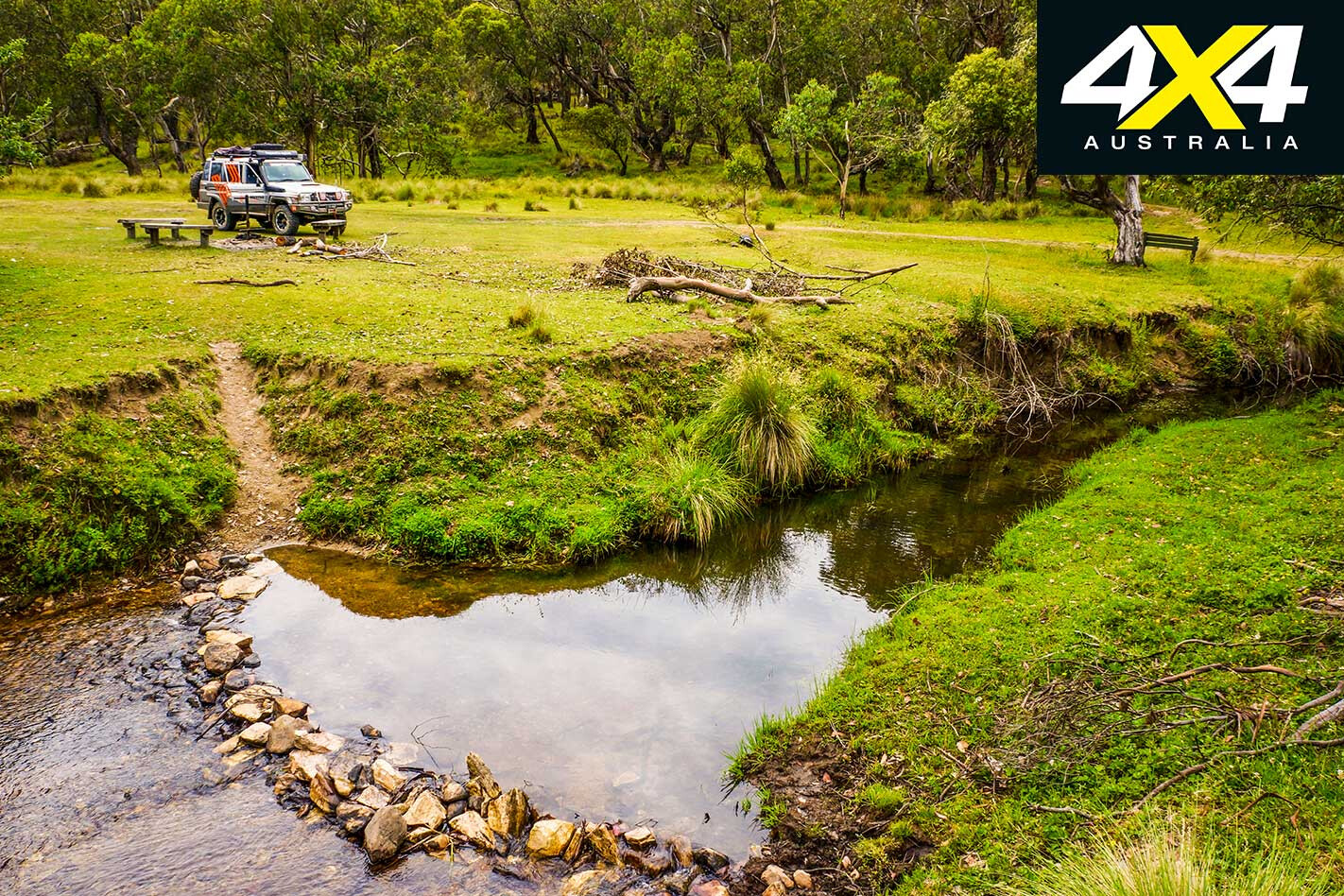
The climb from here to the edge of the Ramshead Range, and then dipping to the Free Stone Creek under the broody bulk of Mt Cobberas, is challenging to say the least. And that’s in the dry – if the track is wet, be prepared for some heavy-duty, long winches.
That evening we camped at the pleasant and popular Native Dog campground, and the next day we climbed the hills on the Limestone Creek track.
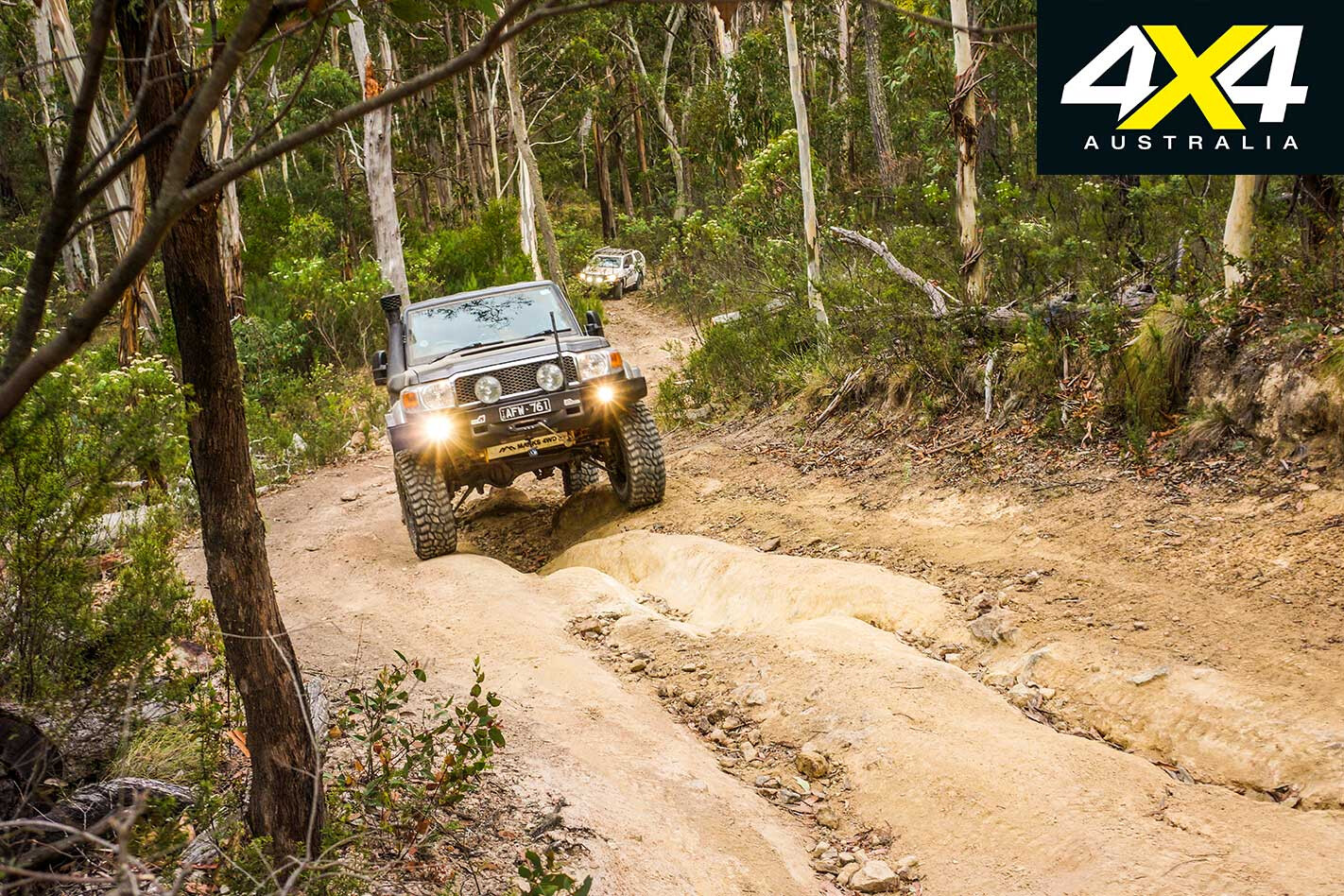
The first part of this track is pretty easy and skirts the edge of Limestone Creek where, away from the small block of private land, there are some pleasant grassy campsites to enjoy. Again, we saw wild horses – one a good-looking white stallion – but like most of the horses running wild they need a good feed and worming.
A short detour under the bulk of Round Mountain brings you to ‘The Poplars’ or McCarthys, the track ending on the banks of an incipient Murray River.
The poplar trees themselves and the pleasant small camp spot on the NSW side of the stream have long gone. They were cleaned up by overzealous NSW park officials who declared that the area was a wilderness zone and vehicle access and the trees would not be tolerated on that side of the waterway.
What you are left with on the Victorian side of the border is a pretty poor excuse for a camp, but NSW is still pushing for the access road to be gated farther back from the border.
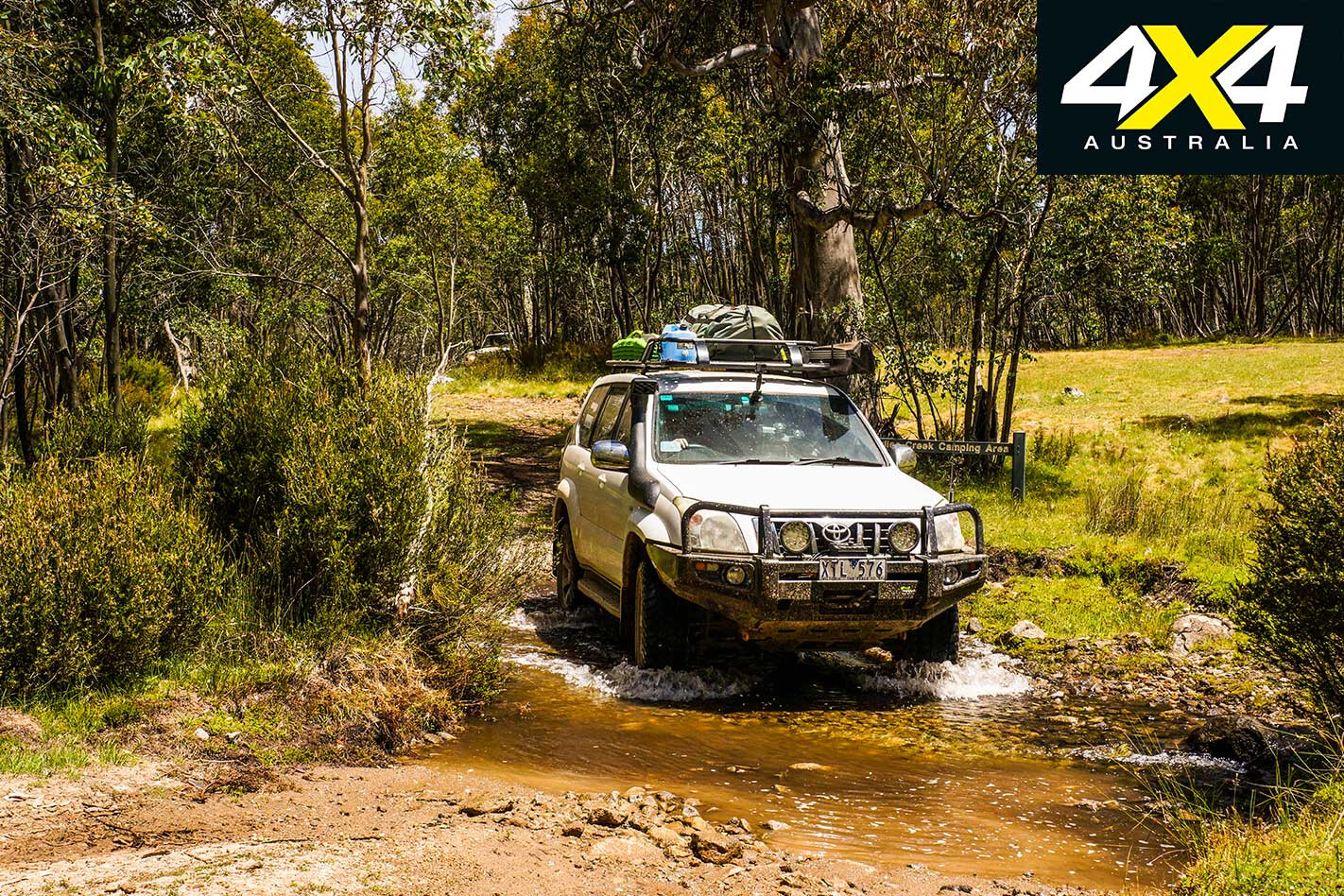
Climbing the steep hill from McCarthys, the track is soon on the ridgeline that is dominated by the grey skeletons of dead trees towering over the new growth that is like an impenetrable wall of green.
From here the route is pretty easy, first crossing Charlie Creek with its pleasant camping and old hut site (the hut long gone), followed by a few short scrambles to the crest of snow-gum covered hills before coming to Davies Plain Hut.
The small snow plain here lies on the edge of the Indi Wilderness Area, while the gentle trickle of water known as Davies Plain Creek is a couple of hundred metres north from the hut. It’s a top spot to camp and is one of my all-time favourite places in the Victorian High Country.
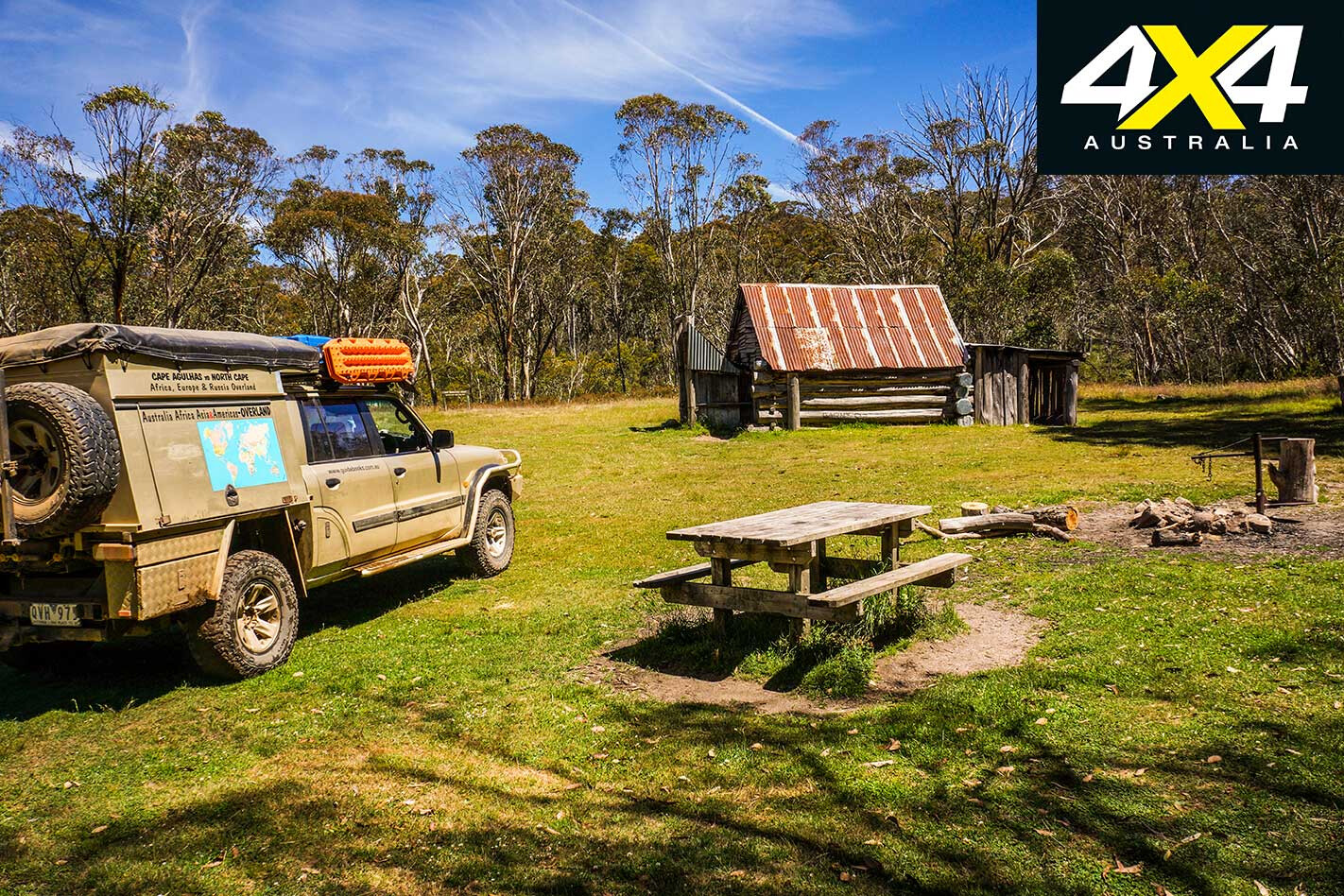
Back in 2002, we were with the managers and some friends who took what was to be the last mob of cattle up onto their grazing lease on the Davies Plains. It was a memorable experience made even more poignant by the huge, devastating fires the year afterwards and the government’s subsequent banning of cattle from the High Country.
Next day, we dropped down the hill to Buckwong Creek and onto the Murray River crossing, where the river has grown a little since seeing it at Poplars.
While the NSW side is within the Kosciuszko NP and has a large, popular campground nearby, on the Victorian side is Dogmans Hut and its small camping area which is nestled up to the fast-flowing stream. These are top places to enjoy, act as a base to explore the mountains, fly fish in the clear waters of the rivers, or float down the stream for a kilometre or two.
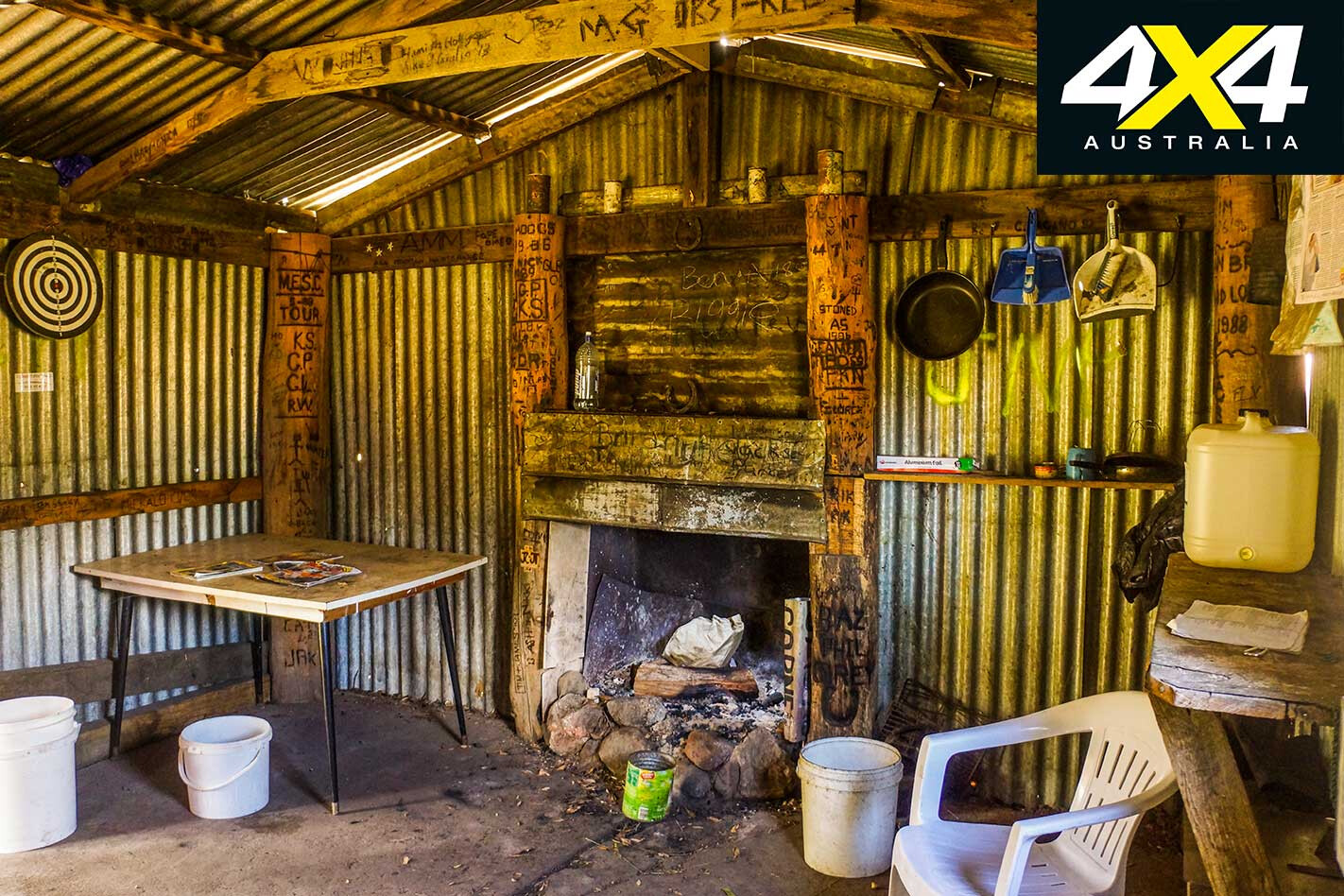
Tom Groggin Station, which takes up a chunk of cleared land on the south side of the river, was once one of the biggest grazing properties in Victoria, its lands stretching up to the high peaks of the Australian Alps on the NSW side, as well as on the Victorian side of the border. Today, it is less than 1000ha, but it is still delightfully picturesque.
Established as a grazing property in 1855 the property was visited by Banjo Patterson in 1890 and the then manager, Jack Riley, has been widely credited with the inspiration behind the famous poem, The Man from Snowy River.
Tearing ourselves away from this exceptional stretch of pristine water, which is so different to its more normal appearance farther downstream, we headed to the crest of Mt Pinnibar, which is a long, challenging clamber to the top.
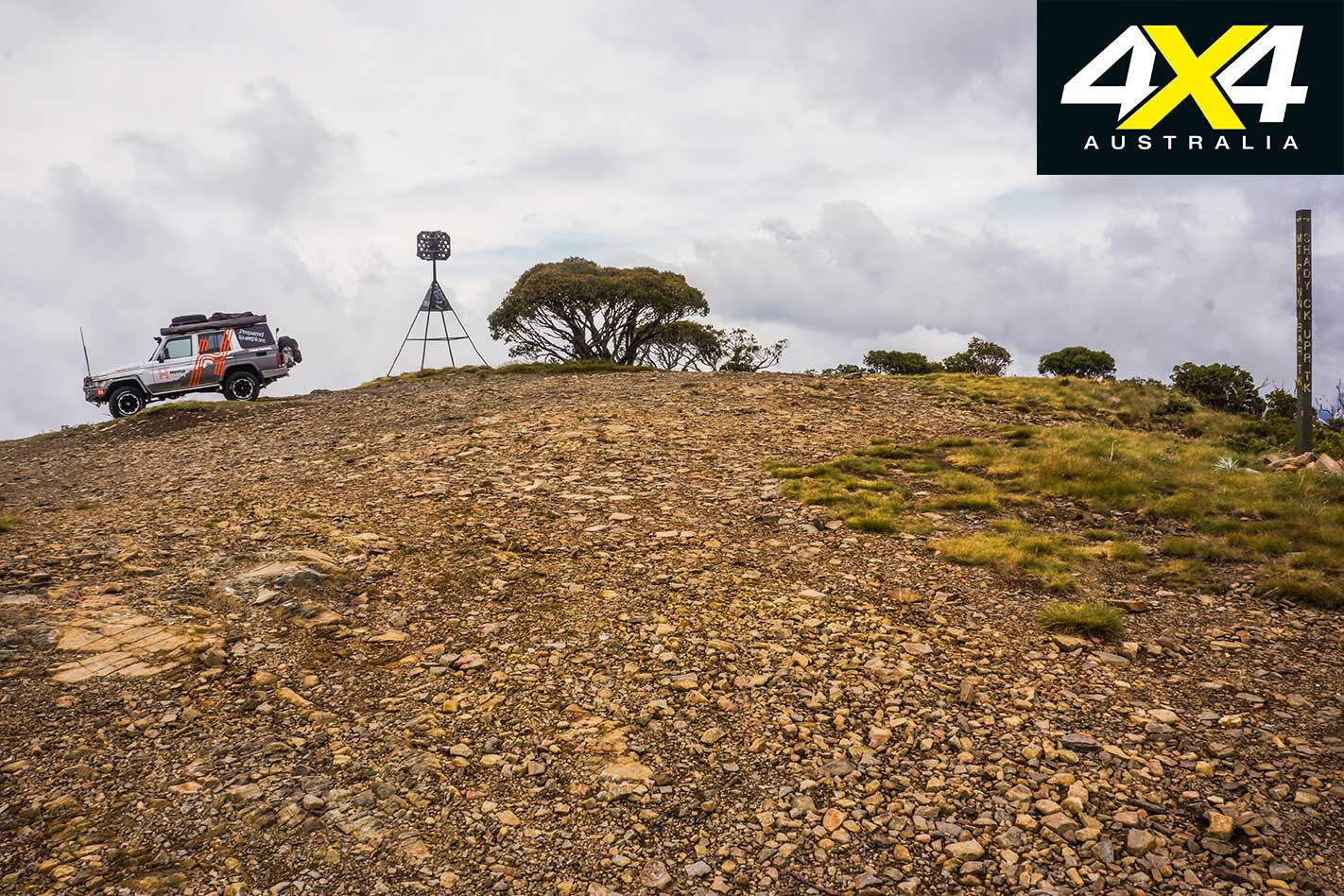
At nearly 1800 metres the peak gives outstanding 360-degree views, while dominating the eastern horizon is the high peaks and ridgeline of the Australian Alps with Mt Kosciuszko, our nation’s highest peak, almost lost in the menagerie of lofty summits.
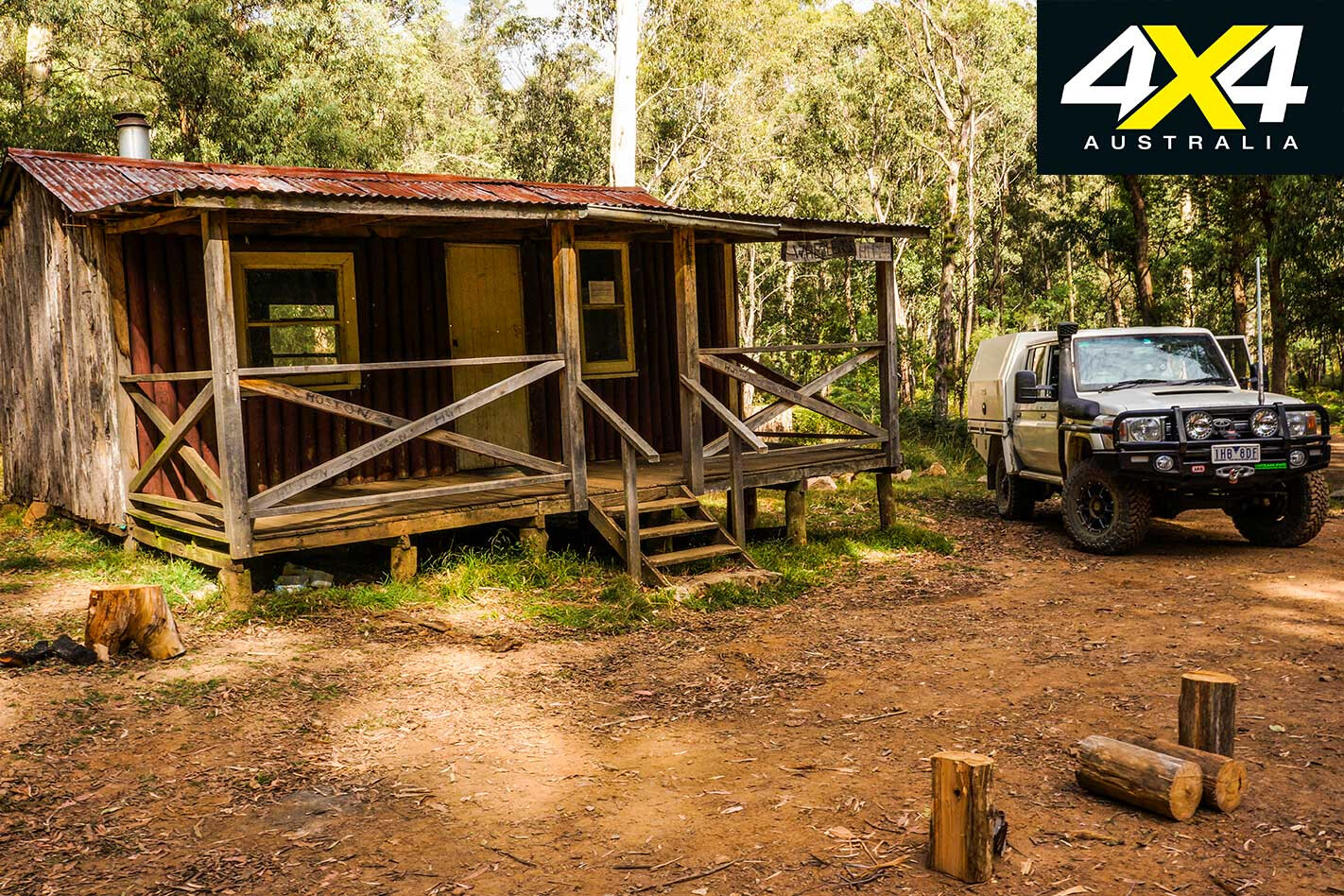
Wandering through delightful alpine ash forest we found our way to Gibson Hut (sometimes known as Mt Pinnibar Hut) on the low banks of Shady Creek before pushing on to Wheelers Creek Hut on the stream of the same name. Both spots offer pleasant camping for wandering four-wheelers and are popular with fisherman and deer hunters.
From here, we climbed and wound our way through the hills on the Wheelers Creek Logging Road to the more major Benambra-Corryong Road, which is a good dirt thoroughfare where we climbed up to Sassafras Gap, the watershed of the Great Dividing Range, and dropped down the other side to follow the Gibbo River for a short time where there are some pleasant camping areas close to the road.
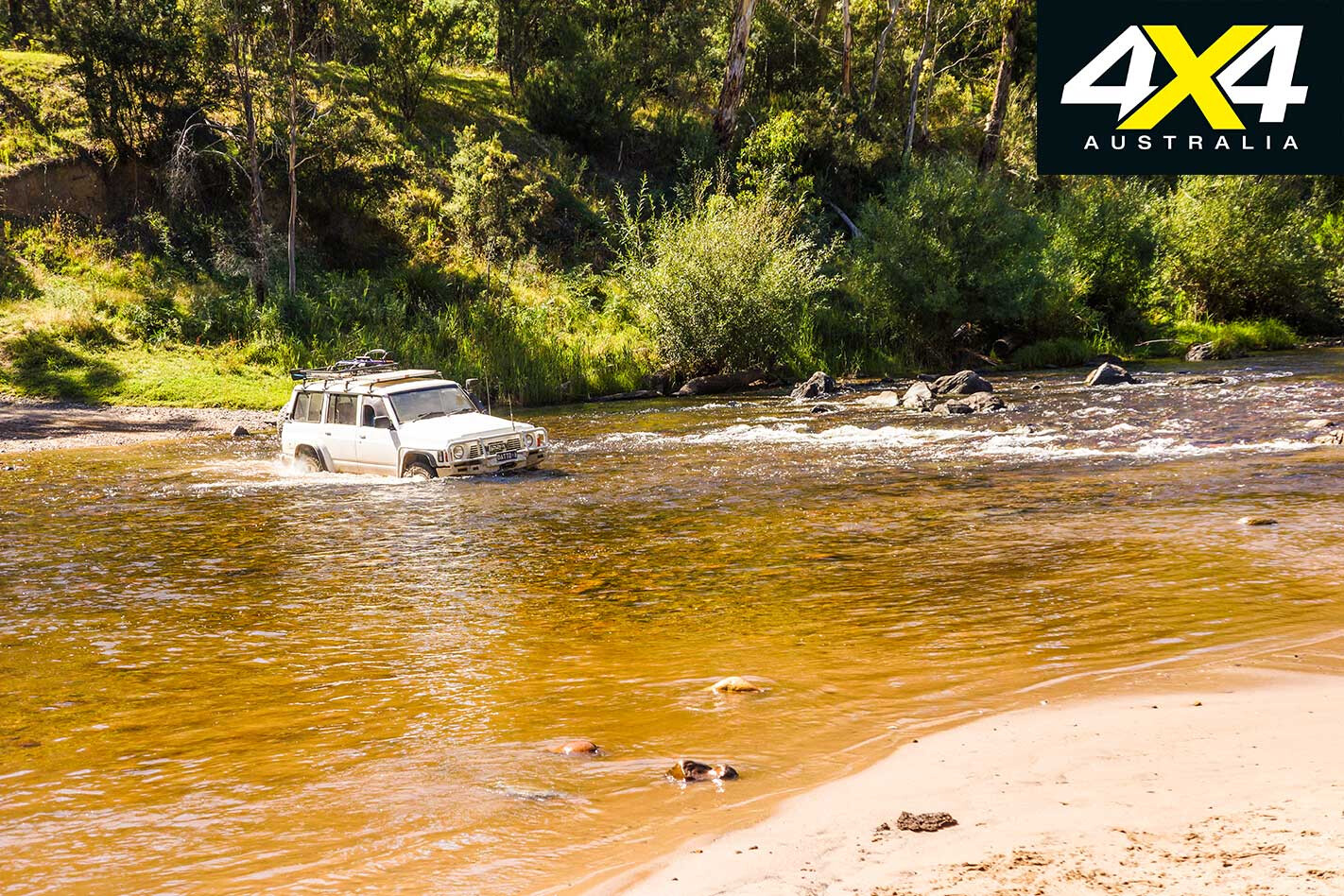
With the road south turning to bitumen it was time to get off it, and we dodged onto the gravel of the Tablelands Road and cruised effortlessly through open grazing land to the ford across the Mitta Mitta River at Taylors Crossing. This is an enjoyable spot to camp and, with river access up and down stream, it is a good spot to throw a canoe in and go for a paddle. Otherwise, you can cast a line and catch some trout, laze around doing bugger all, or head off on more bush tracks to hidden huts and old goldfields.
Nearby is Kennedy Hut on the edge of the Mitta, just a kilometre or so downstream, while the lesser known and visited Wombat PO hut is a few kilometres off, tucked away almost hidden, amongst the tall timbers of the steep-sided valleys of Four Mile Creek and its tributaries.
Our huts, high plains and mighty rivers sojourn was over, though, and after a day soaking up the sun on the banks of the Mitta we headed south to Benambra and historic Omeo. We’ll be back, of course; once you visit the High Country, you will always return!
Travel Planner
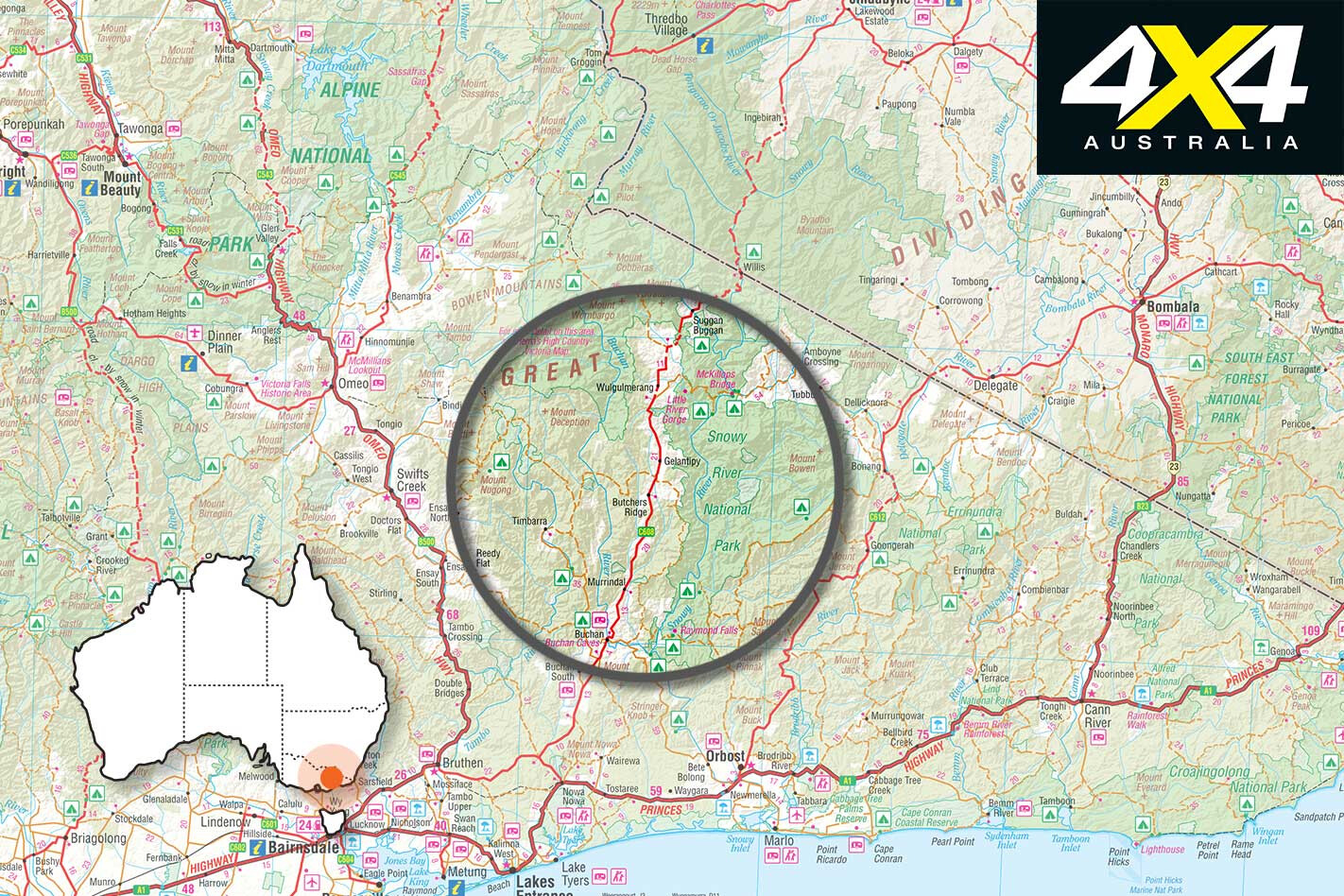
Most of the tracks are closed over winter. For more details see: www.4wdvictoria.org.au Best guide book for the region: The High Country Victoria from www.hemamaps.com Omeo: www.visitvictoria.com/Regions/Gippsland/Destinations/Omeo Tom Groggin Station: www.tomgrogginstation.com.au
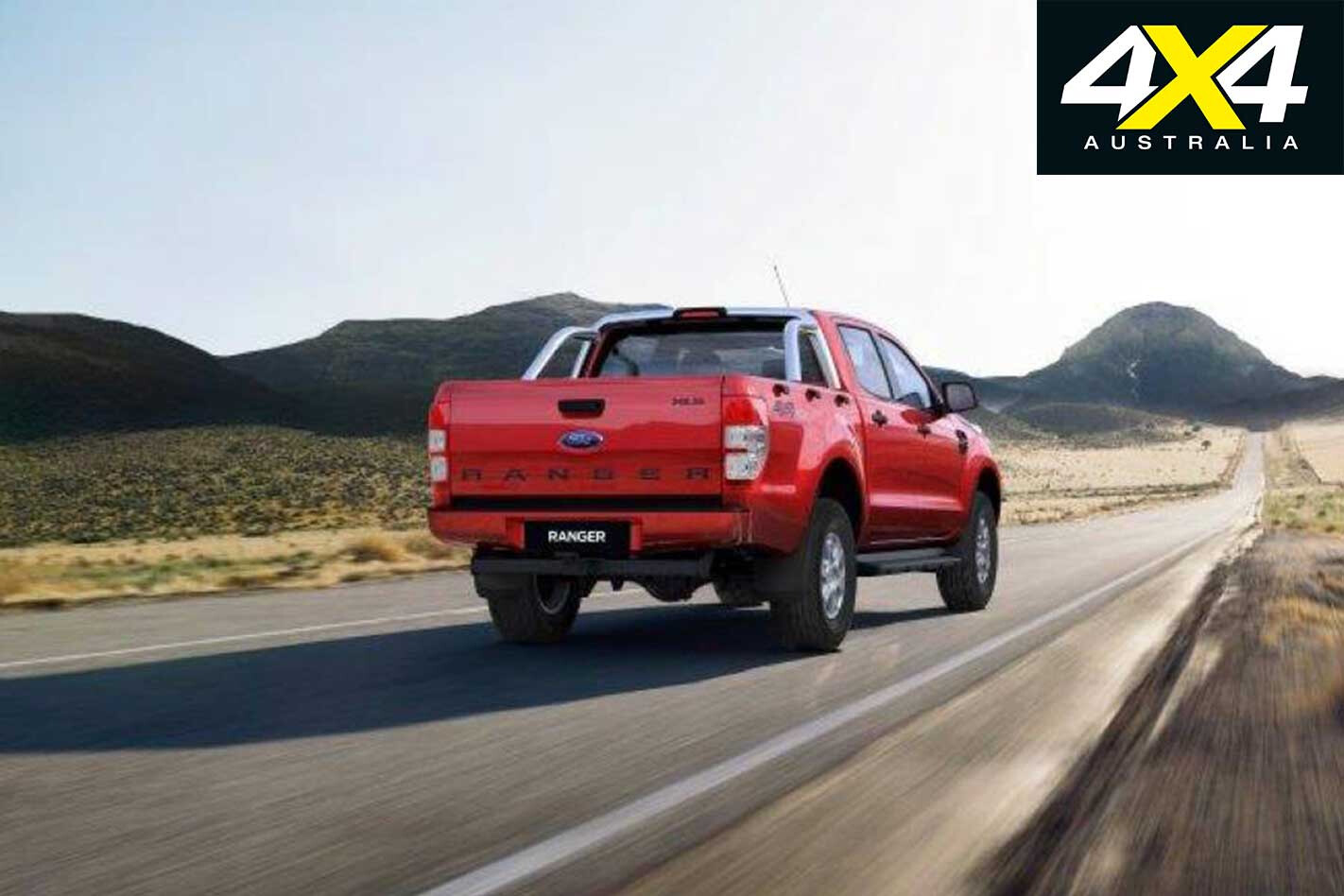
YOU may remember an ACCC notice back in December 2017, where 59,000 Ford Rangers were recalled due to a fire risk – “when driven over long grass, affected vehicles may accumulate vegetation under the vehicle near the exhaust system”, the report said.
Well, there’s been a development in the story, with Ford Australia adding more vehicles to the affected list.
The new VIN list of affected vehicles can be found here: https://www.productsafety.gov.au/system/files/17S43S1%20VINs.pdf
The Rangers affected by this recall were sold nationally between July 12, 2016 and April 5, 2018.
At the time of the original recall, Ford Australia said: ““The recall is in relation to a risk of fire due to grass or vegetation accumulation near the DPF that produces very high temperatures during regeneration mode.
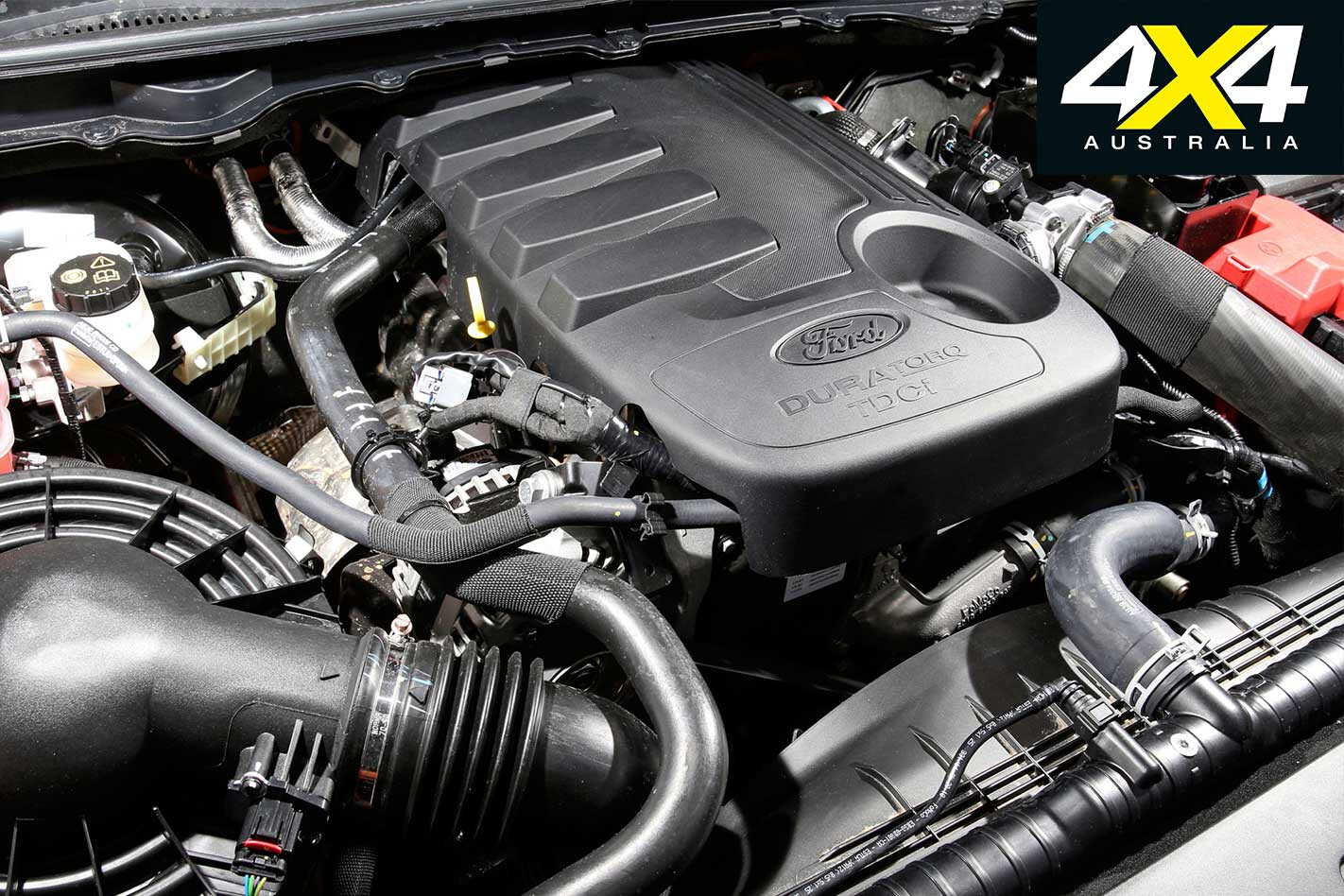
“The DPF regeneration can radiate a considerable amount of heat which could create a fire risk if sufficient grass or vegetation accumulates in this area.”
Ford Australia is currently contacting owners of affected vehicles, advising them that parts are now available for reparation.
“Owners should contact their nearest Ford dealership to arrange for the installation of an exhaust heat shield on all affected vehicles,” the report states. “In addition, an underbody shield must be fitted on 4WD and 2WD vehicles with increased ride height (HiRider) to prevent grass accumulation.”
WELCOME to 4X4 Australia’s Ute Test, where we have put all of the popular 4×4 dual-cabs through their paces off-road and on-road. Plus, we tested each vehicle carrying a 900kg total payload.
The last time we gathered all utes together was in late 2016 for our Max Load and Tow Test. Before that, back in late 2015, we gathered them together for an on- and off-road comparison test. This time, we have effectively combined the two with on-road, off-road and load testing all in one.
Since the late 2015 test, five of the nine utes are new or have undergone significant mechanical revision. Only the Hilux, Ranger, BT-50 and Triton are effectively mechanically unchanged; although, all have undergone equipment or style changes in that time.
The Mercedes-Benz X-Class is all-new to this class; although, at the same time, a little familiar as it uses the Nissan Navara as a starting point in its design.
Then there’s the Amarok, which sports a new and much more powerful engine in the form of a 3.0-litre V6 diesel in place of the 2.0-litre bi-turbo diesel tested previously. In between the 2015 test and the 2016 Load and Tow test, Holden’s Colorado has undergone a complete top-to-bottom rebirth, and in many ways is a ‘new’ vehicle. It certainly feels like it to drive.
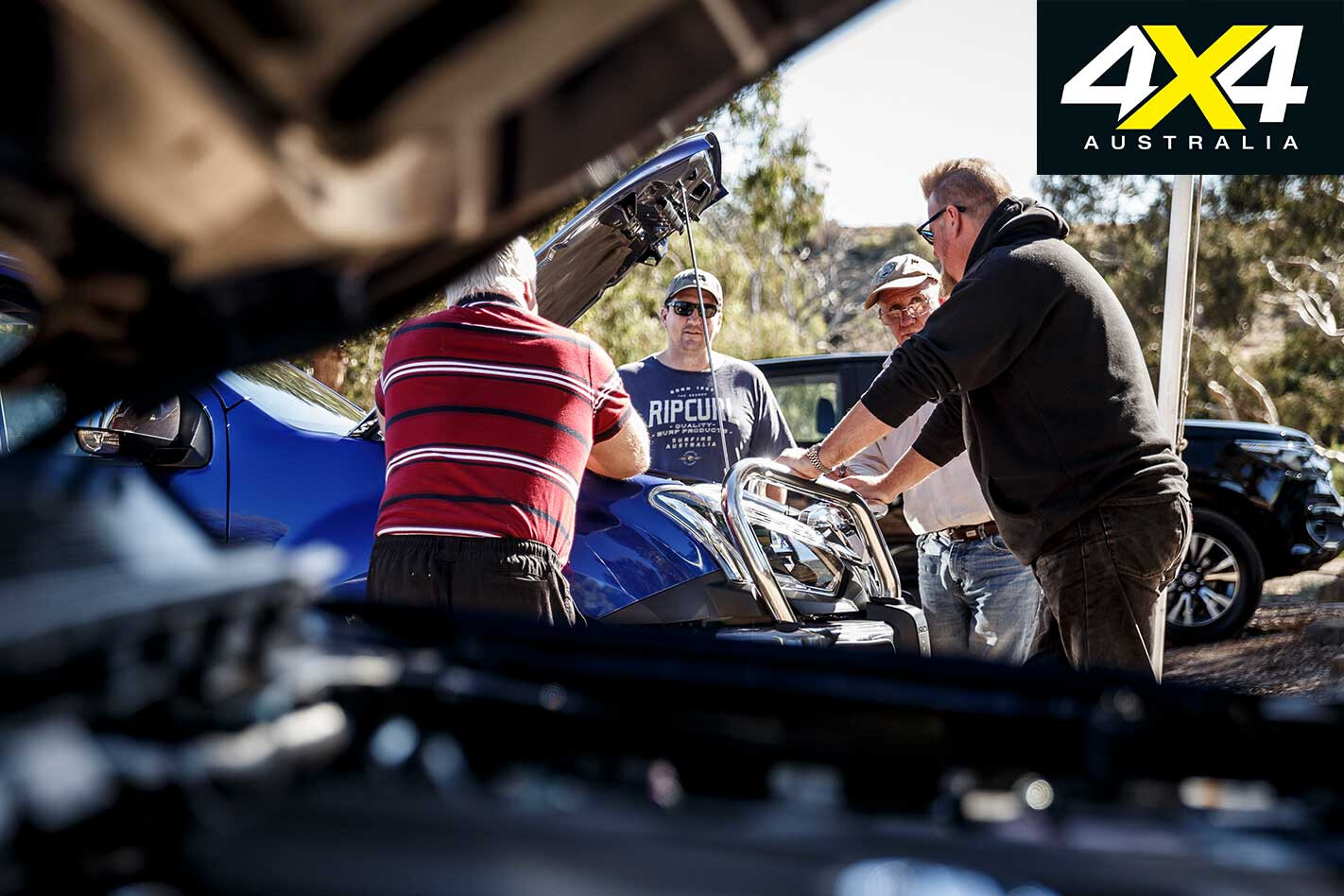
The Isuzu D-Max has been revised twice since the last test. For the 2017 model year the changes were led by an engine upgrade and the addition of a six-speed automatic replacing the previous five-speeder. For the 2018 model year the D-Max has undergone a minor but not insignificant chassis revision.
The Nissan Navara has also been updated twice since the 2016 Load and Tow test, with changes to the suspension – especially at the rear – on both occasions.
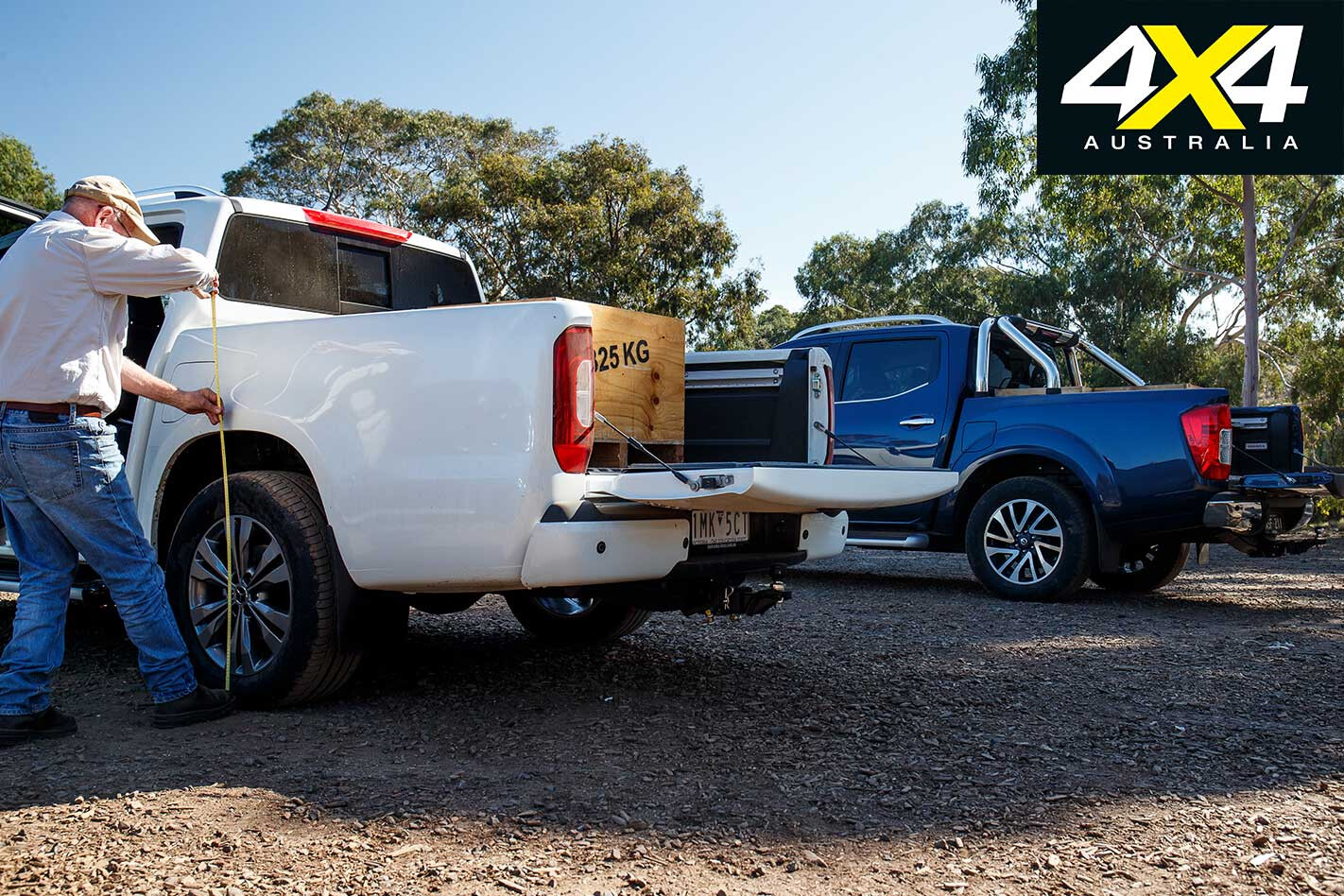
The Hilux SR+ variant tested here, which adds alloy wheels and sat-nav and slots in between the work-spec steel-wheeled SR and the recreational-spec SR5, didn’t exist the last time we gathered all the utes together. It only appeared in late 2017 as part of a shake-up of the Hilux range.
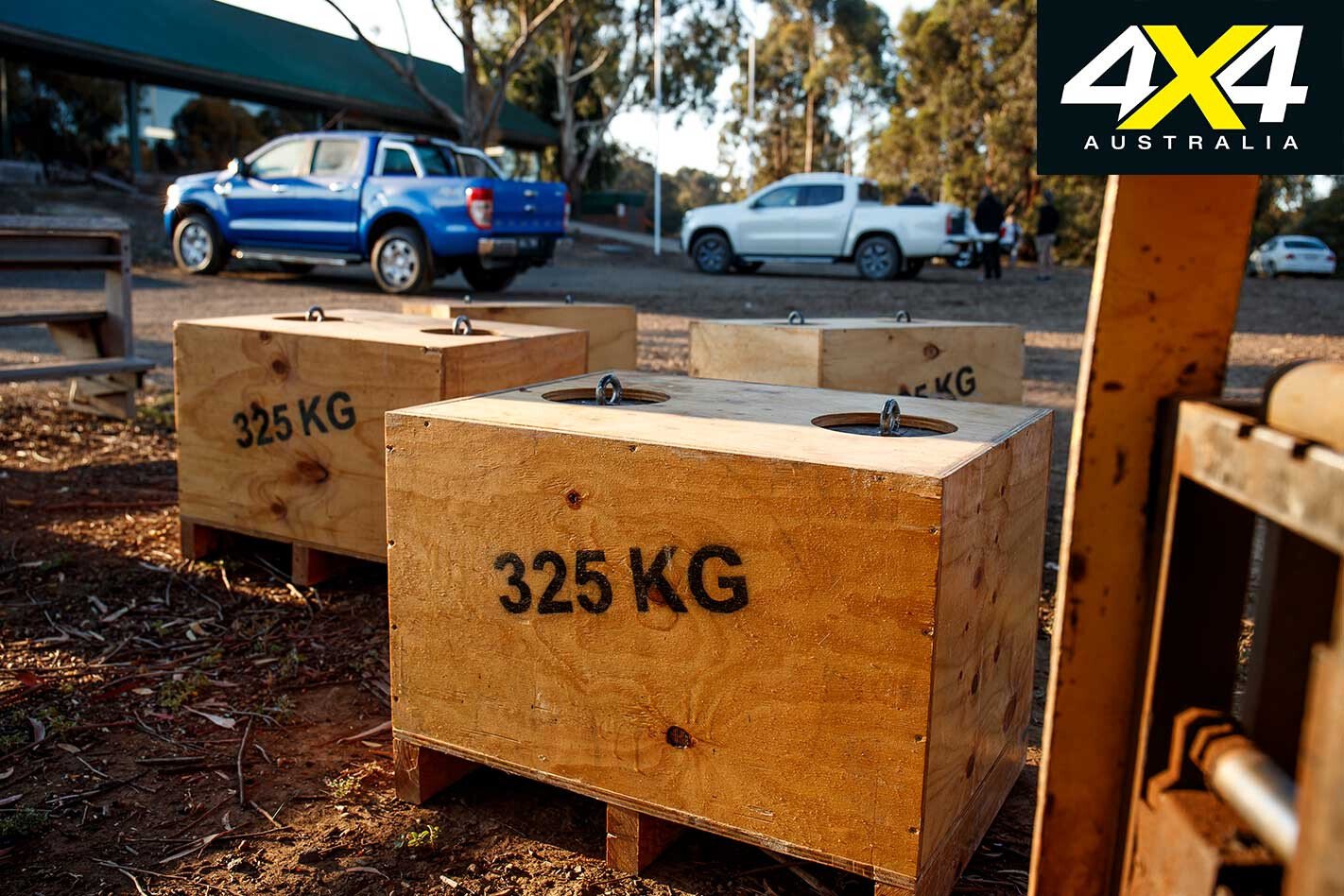
The on-road test involved ride and handling evaluation as well as performance testing; the off-road test involved set-piece hill climbs, obstacle negotiation and water fording; and the payload test involved a total payload of 900kg, made up of 650kg in the tub, driver and two passengers (and towbars/bullbars where fitted) – so close to max payload for the utes, especially those with the lighter payload ratings.
The Contenders
- Ford Ranger XLT: Ford’s PX Ranger is proof that Australia is the perfect place to design and develop a ute.
- Holden Colorado LTZ: The Colorado arrived in 2012, but it’s the rebirth it underwent in 2017 that really counts.
- Isuzu D-Max LS-T: Isuzu’s D-Max is more stayer than sprinter, but isn’t that what utes are made for?
- Mazda BT-50 GT: There’s a lot of Ford Ranger in Mazda’s BT-50, which by and large is a good thing.
- Mercedes-Benz X250d: Dual-cab 4x4s are booming – not just in Australia but across the globe – and Mercedes-Benz wants a slice of the action.
- Mitsubishi Triton Exceed: With ongoing factory discounts, the Triton is the cheapest of the mainstream 4×4 dual cabs available in Australia.
- Nissan Navara ST-X: Nissan’s Navara D23 is less than three years old, but it has already been updated twice. Is it finally right?
- Toyota Hilux SR+: Think of a dual-cab 4×4 and you probably think of Hilux. Most people certainly do.
- Volkswagen Amarok V6 Sportline: Volkswagen’s long-serving Amarok has a new – and potent – lease on life, thanks to V6 diesel power.
The Results
- Results and verdict: Nine utes, but only one winner…
TODAY’S four-wheel drive market is dominated by dual-cab utes, with prospective owners lured by the advertised promise of ultimate versatility.
However, there are still plenty of buyers who shy away from the ‘workhorse’ utes; their harder-riding rear-leaf-spring suspension, rear drum brakes, and lack of third-row seating can be deal-breakers for some. For these buyers, a ute-based 4WD wagon is the better option, with the added benefits of (in most models) an additional row of seating, four-wheel disc brakes, more comfortable coil-spring rear suspension, and a more secure (albeit smaller) cargo space.
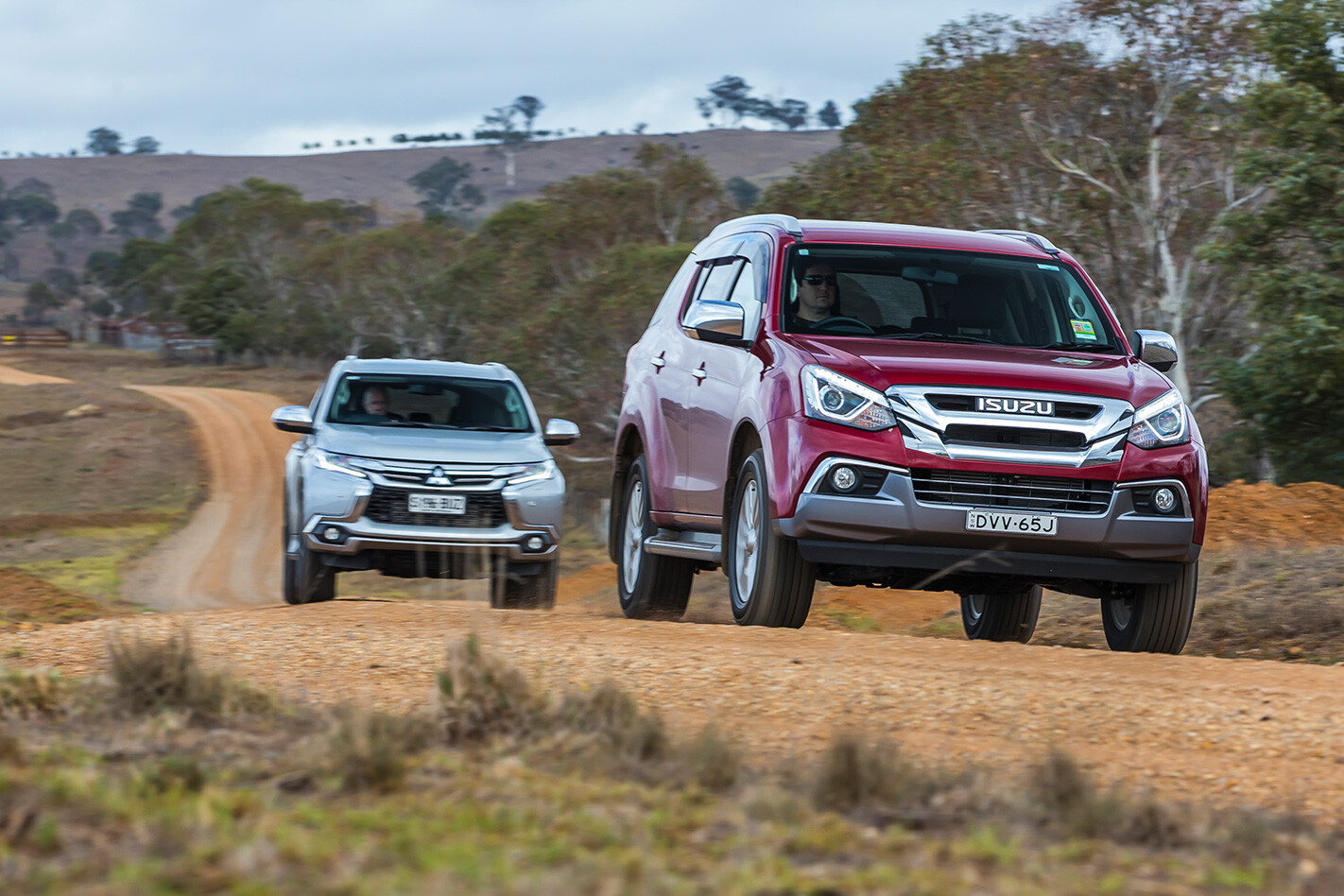
Ford, Holden, Isuzu, Toyota and Mitsubishi all produce mid-size 4WD wagons based off the same platforms as their respective ute models; Ford’s Everest shares the Ranger platform, Toyota’s Fortuner rolls atop a Hilux chassis, Isuzu’s MU-X’s donor is the D-MAX, and Mitsubishi’s Pajero Sport is derived from the popular Triton ute.
These wagons promise plenty: strong, ute-based underpinnings and genuine off-road capability combined with decent on-road manners, all in a relatively compact size compared to large 4WD wagons (think: Toyota Land Cruiser, Land Rover Discovery and Nissan Patrol).
We’ve chosen the two best-selling wagons in this segment – the Isuzu MU-X LS-T and the Mitsubishi Pajero Sport Exceed, both top-tier models – to see if they fulfil the promise of the best of both worlds when it comes to off-road adventure and around-town duty.
PRICE AND EQUIPMENT
OFF the showroom floor the Isuzu MU-X LS-T asks $56,200 from buyers; the Pajero Sport Exceed will set you back $53,650.
The MU-X is powered by Isuzu’s venerable 3.0-litre four-cylinder turbo-diesel engine, backed by a six-speed auto gearbox. The Pajero Sport Exceed runs a 2.4-litre turbo-diesel and offers an extra two cogs via its eight-speed auto.
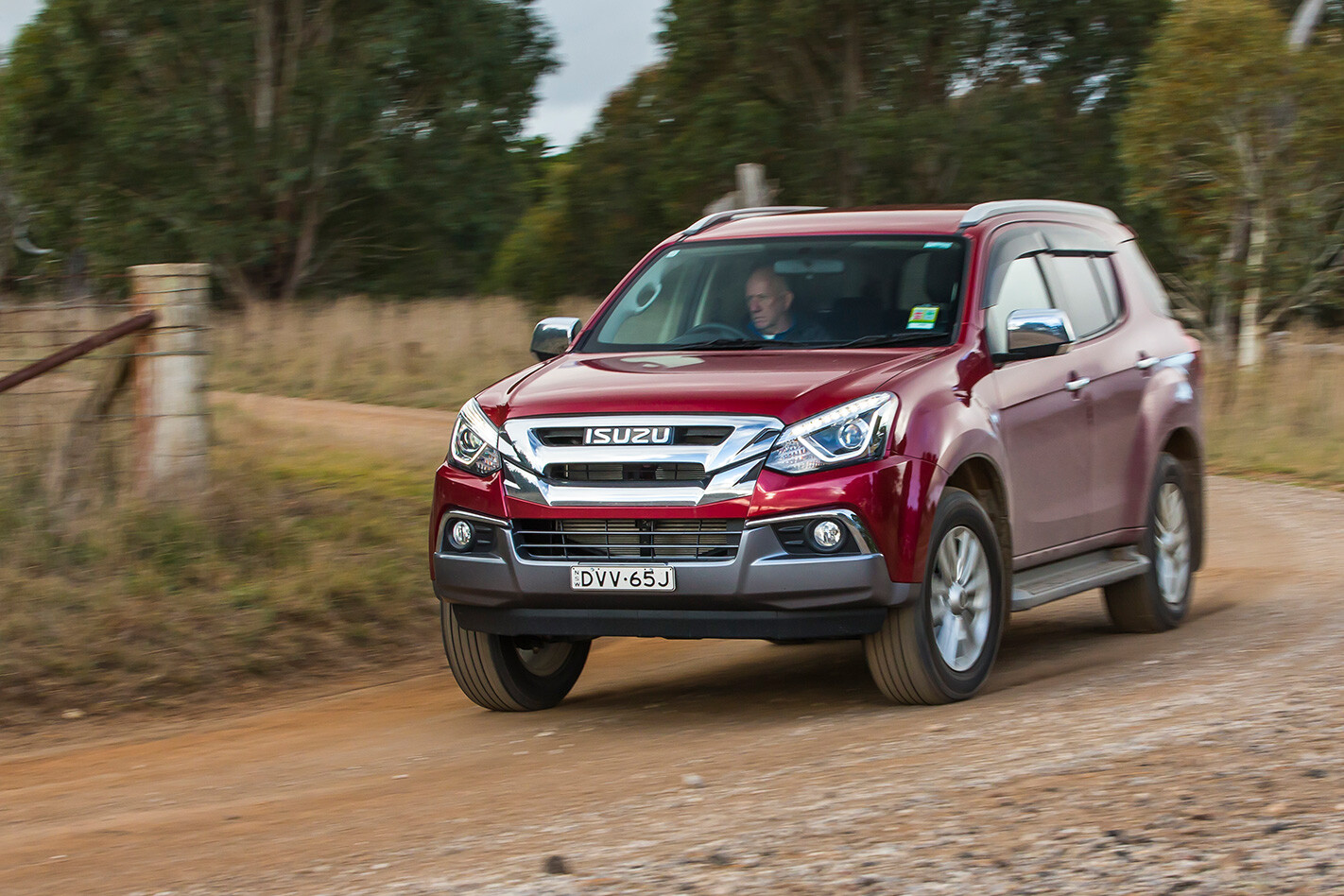
Both wagons contain myriad safety features including reversing cameras, ABS, EBD (Electronic Brakeforce Distribution), ESC (Electronic Stability Control), EBA (Emergency Brake Assist), Hill Start Assist (HAS), Hill Descent Control (HDC), and each manufacturer’s version of a trailer/tow assist system. Yep, it’s an impressive pile of acronyms.
To these, Pajero Sport adds blind-spot warning, adaptive cruise control, forward collision mitigation and the nifty Multi-Around Monitor – basically a birds-eye-view of the Exceed from above that helps spot obstacles that may be obscured from the driver’s in-cabin viewpoint. It also has one more airbag than the MU-X (seven, opposed to six). Both vehicles are ANCAP five-star rated.
Standard kit for both reflects their top-model specs and includes leather-accented seating for the MU-X (driver’s seat is electric adjust) and the same on Pajero Sport, but with the driver and front passenger’s pews heated as well. Both vehicles have DRLs and keyless entry/start.
Our test MU-X LS-T had factory accessories fitted – tow bar, door scuff plate, slim-line weather shields, rear bumper scuff plate and floor mats – while the Pajero Sport Exceed was as-is, with no additional gear fitted.
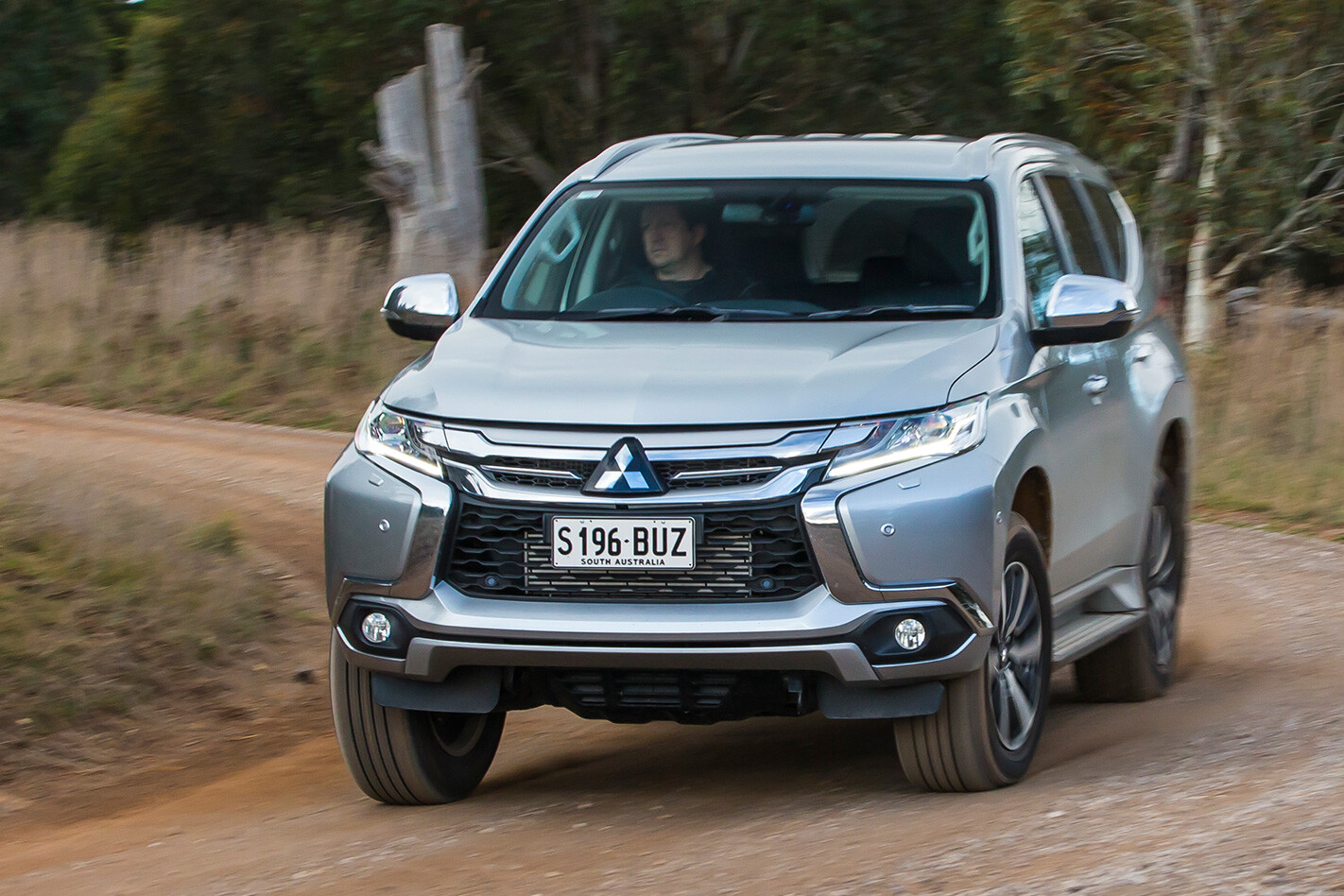
WINNER: Pajero Sport
INTERIOR AND CONNECTIVITY
BOTH interiors are well-featured and comfortable. The MU-X’s leather-accented seats offer a slightly firmer feel and more support, while the Exceed’s full leather jobbies provide adequate support and a more luxurious appearance. The driving position in both affords adequate outward vision, with the MU-X’s larger glass area giving it the slight advantage. The MU-X falls down, though, with a tilt-only steering wheel (the Exceed offers tilt and reach adjustment), necessitating a bit more fiddling around with the seat to get the ideal driving position.
Conversely, the Exceed’s centre console is overtly wide and noticeably eats into driver legroom. Instrumentation and switchgear on each vehicle is sensibly positioned for easy access; although, both brands could do with making the text/symbols larger (or is it just this reviewer’s ageing eyesight?).
The interior styling in the MU-X is more subdued than that of the lairy Pajero Sport, with its overt use of chrome accents throughout the interior (and exterior) somewhat overbearing.
The MU-X feels more generous when it comes to interior space. The second- and third-row seats of the Isuzu offer more space than those in the Pajero Sport; although, slightly surprisingly, it is the Pajero Sport’s second-row seats that feel more comfortable. Even though both third rows are really only for preteens, an adult could bear at least a couple of hours in the third row of the MU-X – there’d be no chance of that in the more cramped Pajero Sport, though.
The MU-X third row is easier to operate when lifting up and packing away, being a simple two-step process (thanks to the seat base being set into the floor) as opposed to the Pajero Sport’s more fussy three-step procedure. Accessing either of these third rows (via the second-row seat being moved forward on both vehicles) is relatively straightforward via a lever on the side of each vehicle’s second row which pushes/folds this row forward, but even with the second row tilted/folded forward there ain’t much squeeze room – only the aforementioned kids or an incredibly flexible contortionist need apply.
With the third-row seats down, the MU-X cargo area offers a decent 878 litres of volume, easily beating the Pajero Sport’s relatively small (for the vehicle’s overall size) 673 litres. For those keen on camping, that extra 200 litres is gold when it comes to stuffing gear inside. Both have numerous nooks for storing phones, books, games, etc.
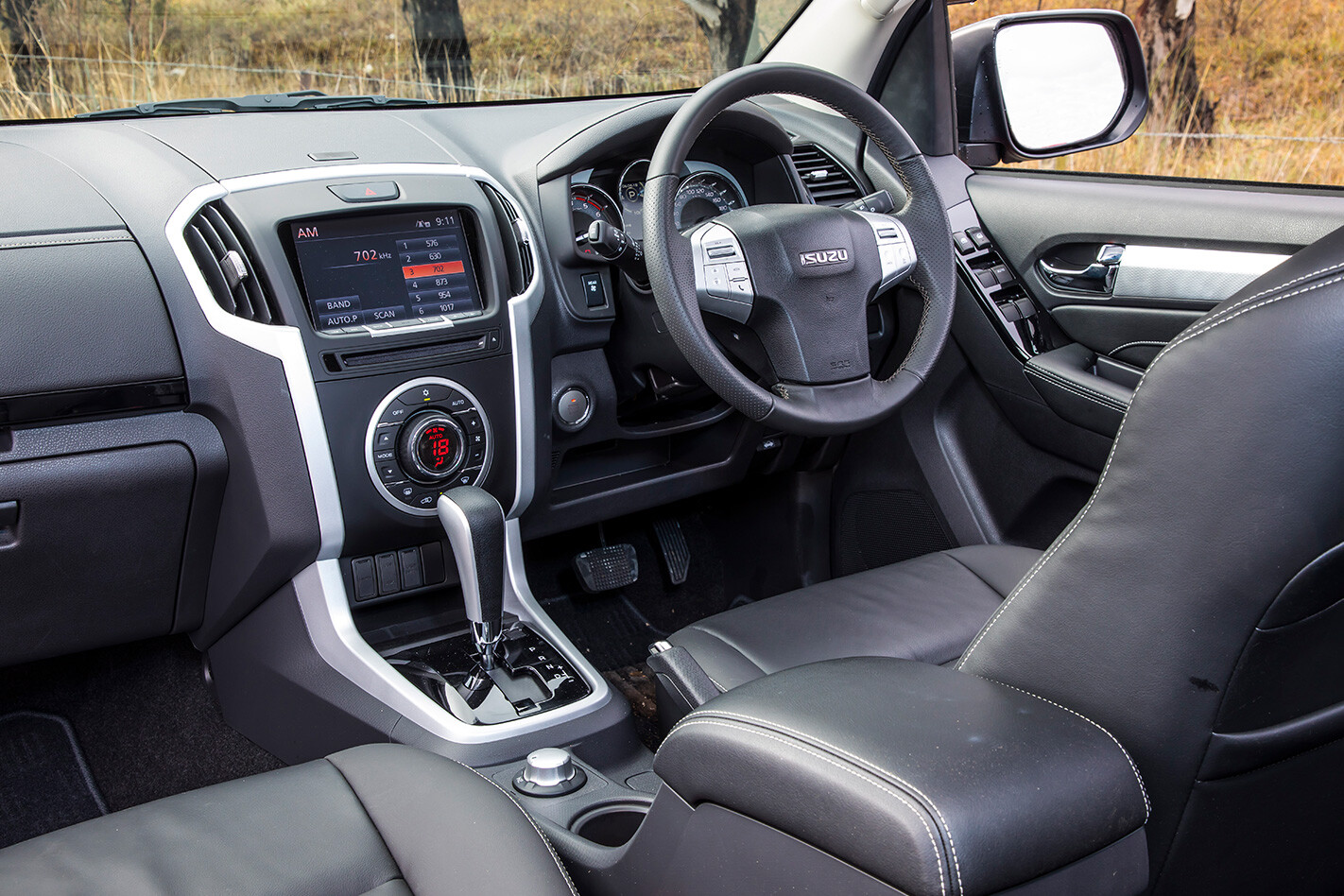
In terms of in-cabin entertainment, the MU-X seven-inch multi-media touchscreen includes all the usual entertainment options such as DVD, CD, MP3, USB, iPod input and Bluetooth, as well as a rear-mounted DVD player with a 10-inch screen. The Exceed ups the ante with a same-sized touchscreen but one that is inclusive of Apple CarPlay and Android Auto.
WINNER: MU-X
ON-ROAD RIDE AND HANDLING
FOR high-riding 4WD wagons, both vehicles offer decent handling on the bitumen due to firm suspension, reasonably well-controlled bodyroll and respectable – if not lively – performance. Both vehicles run 18-inch alloy wheels: the MU-X runs 18-inch alloys shod with Bridgestone Dueler 255/60R18 H/T tyres; the Pajero Sport uses 18s and the same tyre, but in 265/60R18 format.
The MU-X’s slight disadvantage on-road is its part-time 4WD system that sees it operating in rear-wheel-drive-only on sealed surfaces. The Pajero Sport features Mitsubishi’s excellent Super Select II drive system that offers a constant all-wheel drive mode for optimum traction on bitumen. This isn’t really noticeable in dry conditions, but once the road becomes wet and slippery it offers additional tractive assurance.
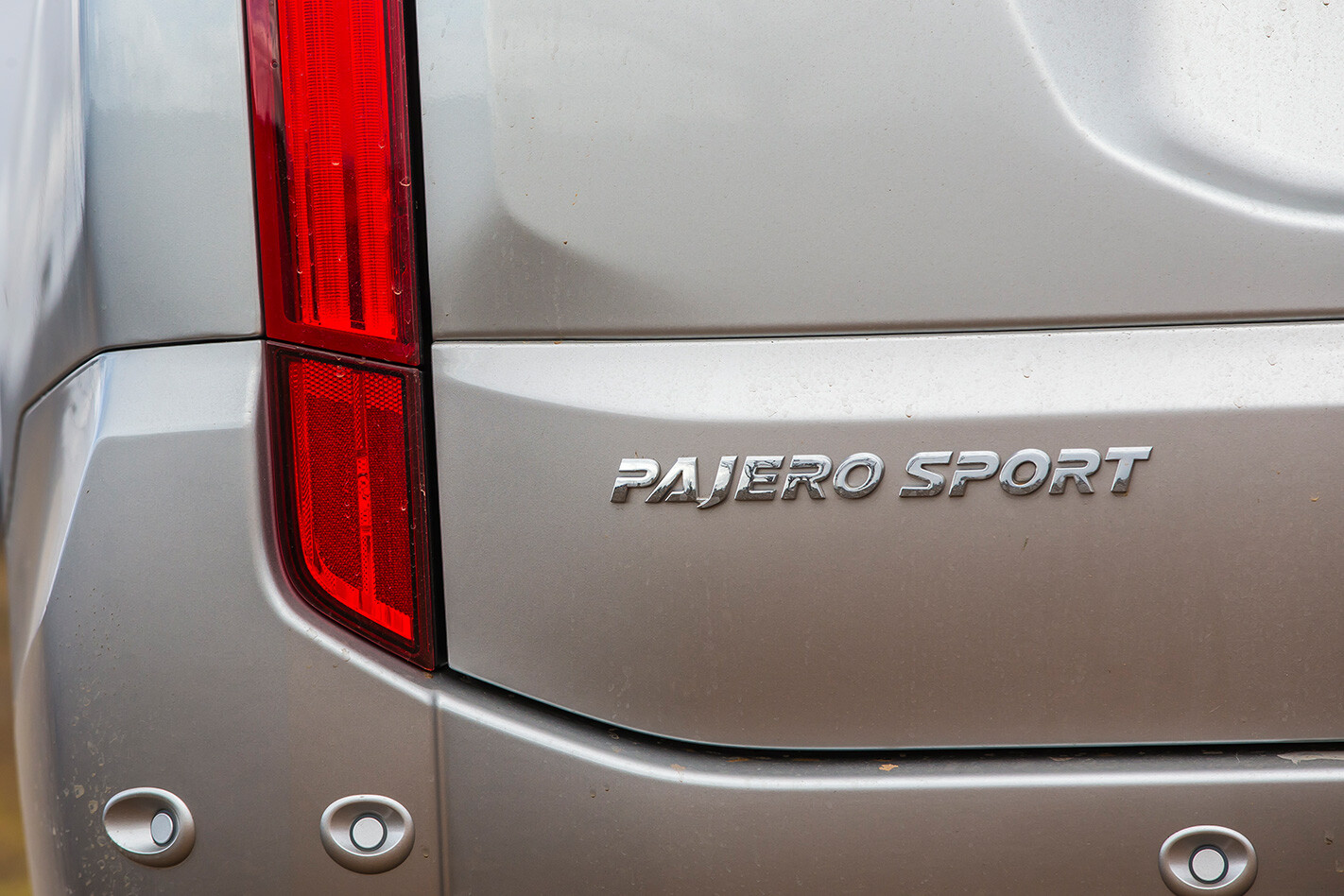
The Pajero Sport lives up to its moniker with a more lively on-road driving experience; the steering is more direct and the body and chassis seem more tied-down with less bodyroll, compared to the MU-X.
The engines are near-identical in output: the MU-X 3.0-litre produces 130kW and 430Nm; the Pajero Sport’s 2.4-litre offers 133kW and 430Nm. Neither is a powerhouse, but they do generate acceptable performance. The Pajero Sport’s eight-speed auto makes the most of its extra ratios to respond quickly and more smoothly than the MU-X to any sudden throttle application. The MU-X’s under-stressed 3.0-litre still does the job, and it’s only slightly slower once it has kicked down a gear or two.
Claimed combined fuel consumption is 7.9L/100km for the MU-X and a smidge more – 8.0L/100km – for the Pajero Sport.
WINNER: Pajero Sport
OFF-ROAD
THE Pajero Sport Exceed offers a full suite of off-road driving tech: 2WD; 4WD High (4H) for sealed surfaces; 4WD High with the centre diff-lock activated (4HLC) to ensure equal drive is sent to the front and rear axles (only for loose surface roads, i.e., dirt tracks, etc.); and low-range 4WD (4LLC), which also keeps the centre diff locked for optimum traction on rugged tracks and loose surfaces.
Along with its electronic traction control (ETC) system and Hill Descent Control (can be set at speeds ranging from 2km/h to 20km/h), there is a manually-activated rear differential lock (used to ‘lock’ drive equally between the rear wheels) and an Off Road Mode that allows the driver to toggle between Gravel, Mud/Snow, Sand or Rock. This mode alters throttle response, output and braking to suit the particular surface ‘mode’ selected. All of this, combined with ample wheel travel from its solid-beam rear axle, transforms the Pajero Sport Exceed into a capable off-roader in the rougher stuff.
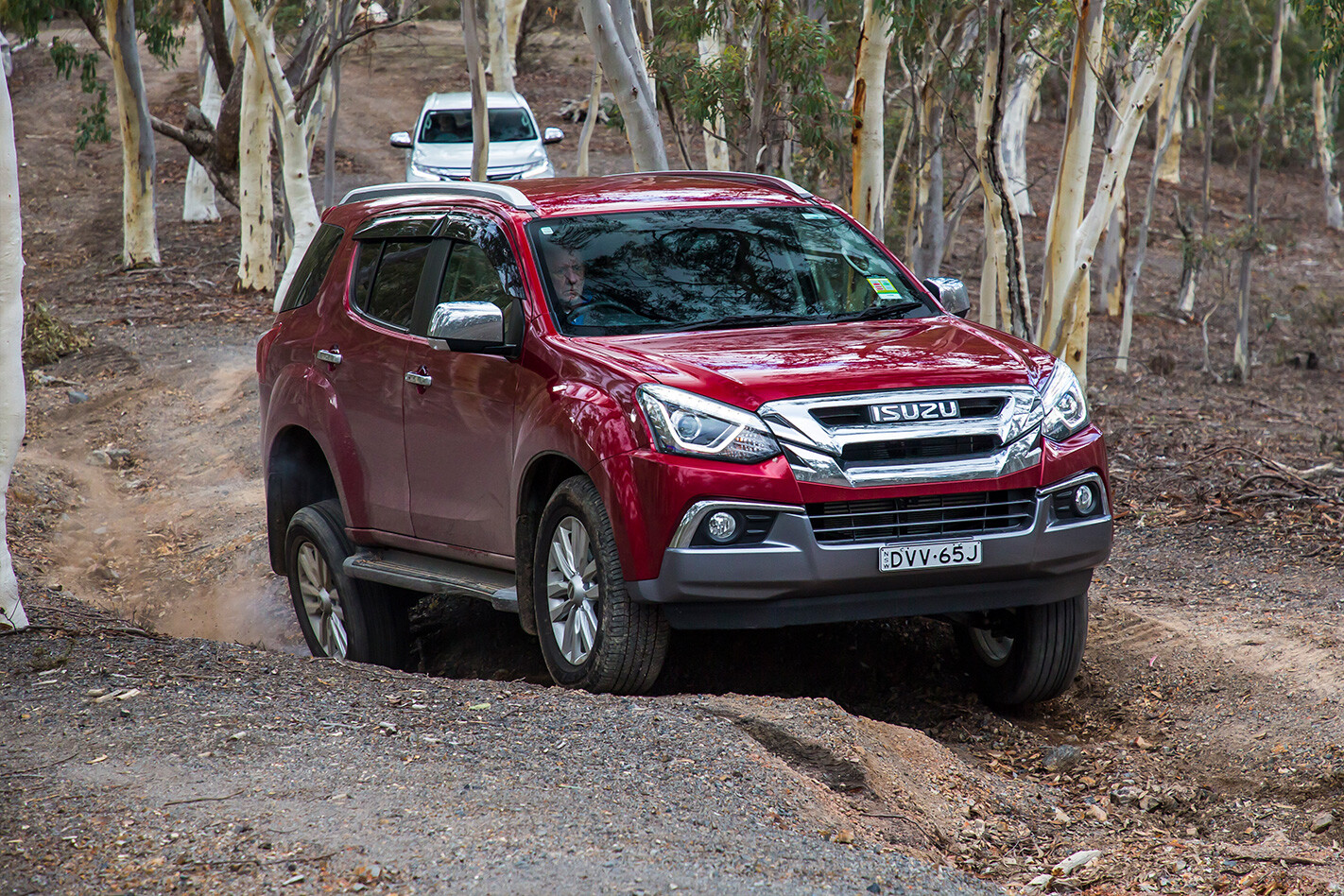
The Isuzu MU-X’s ‘Terrain Command’ system allows the driver to easily select 4WD (High and Low) when on loose surfaces, via its rotary dial. The MU-X has plenty of ground clearance, short front and rear overhangs, and a well-proven tough chassis, which should all point to high off-road capability. It is, however, let down by its reliance on an electronic traction control system that is not as effective as the Pajero Sport’s. There is no option for a rear diff lock with the MU-X, and this, along with slightly less rear wheel travel and that ETC, sees the MU-X scrabbling for traction on ascents the Pajero Sport easily negotiates.
For those who tow a caravan or camper trailer, the Pajero Sport Exceed and Isuzu MU-X LS-T are more than capable, thanks to their trailer-sway control systems and braked towing capacities of 3100kg and 3000kg respectively.
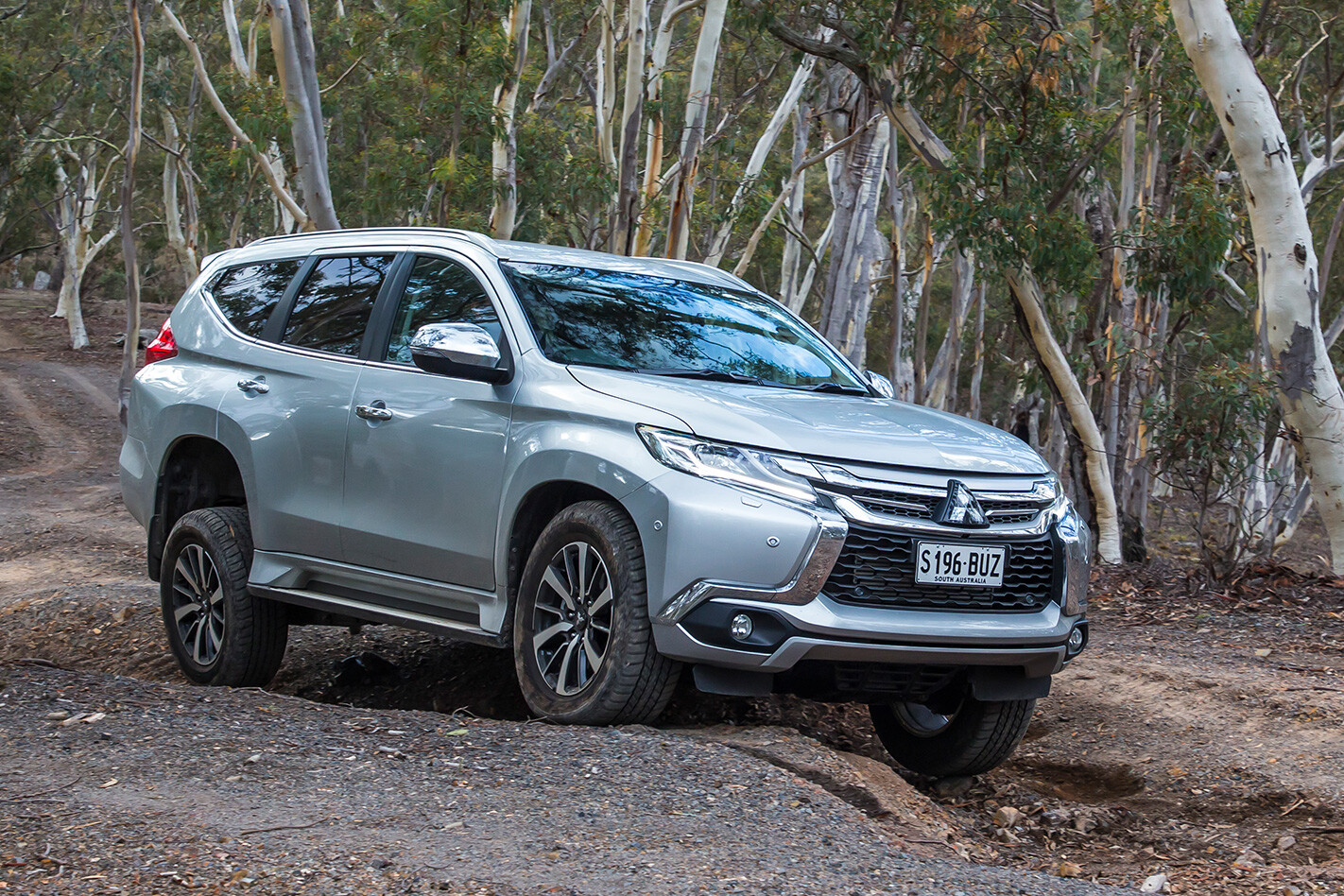
WINNER: Pajero Sport
WARRANTY AND SERVICING
THE MU-X LS-T comes with a five-year/130,000km warranty, plus five years complimentary roadside assistance and capped price servicing for the first five services.
The Pajero Sport has a five year warranty/100,000km warranty but offers only 12 months of free roadside assistance. The Pajero Sport’s capped price service deal is for three years or 45,000km.
WINNER: MU-X
VERDICT
ISUZU UTE has worked hard to push the MU-X in the crowded mid-size 4WD wagon marketplace, and it’s definitely working as the MU-X is the clear segment leader in sales. The sales success is not only through clever promotion at core markets; the MU-X sells well because of Isuzu’s reputation for building no-nonsense, reliable vehicles, with the MU-X’s perceived mechanical ‘simplicity’ viewed as a boon by buyers who travel to remote areas. The MU-X’s other advantage is the proven reliability of its drivetrain, as well as its large interior – especially in the cargo area – where being able to fit a family of four or five, plus all their gear, is a key selling point.
For the more discerning driver or off-road tourer, however, the vehicle’s dynamics let it down on-road and especially off the bitumen, where its Traction Command system – specifically the ETC – isn’t up to the task.
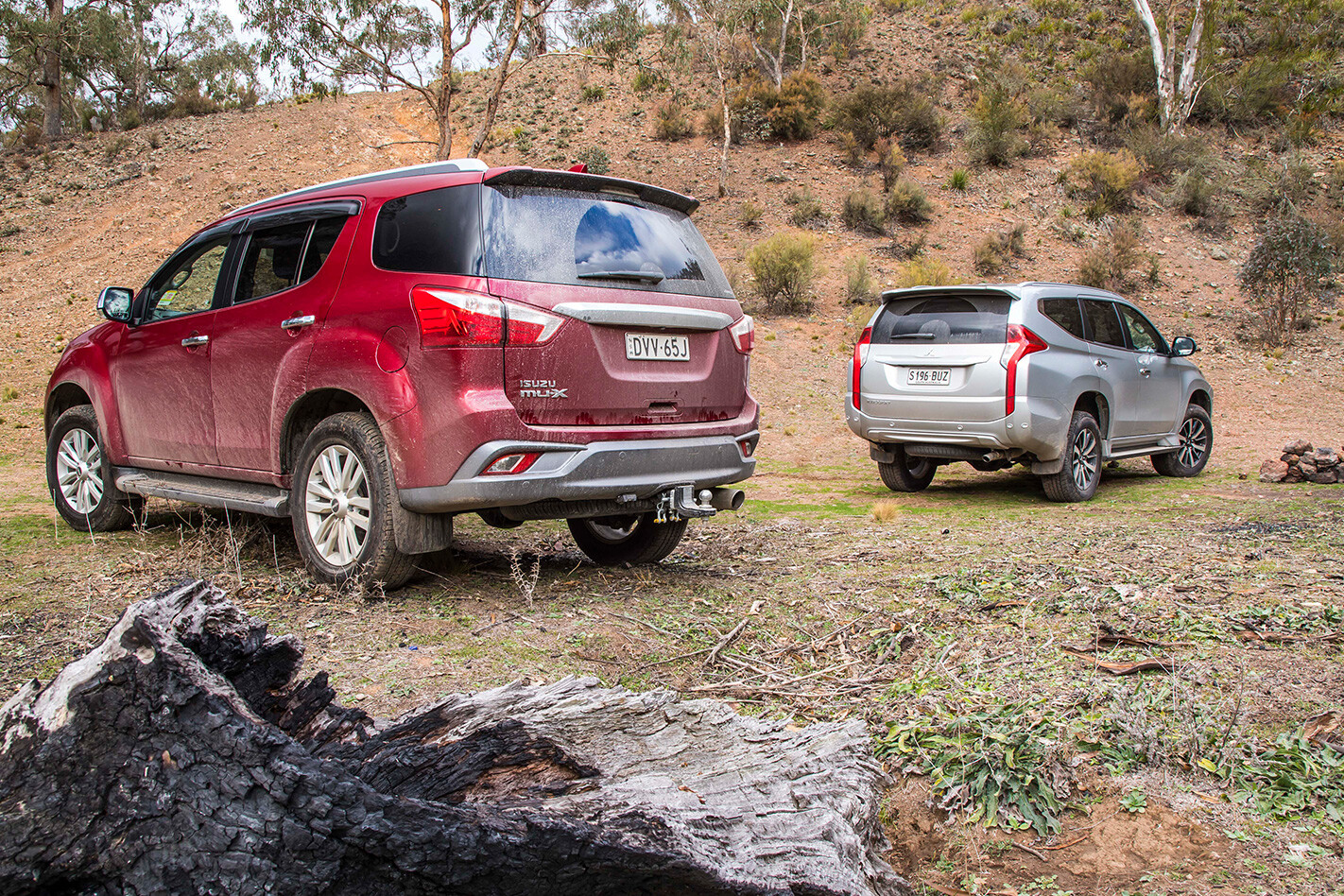
The Pajero Sport Exceed is a more divisive vehicle in terms of styling, with its wedge-shaped silhouette contrasting sharply with the more ‘traditional’ squarish profile of the Isuzu. However, once inside and behind the wheel the Sport Exceed is the more rewarding vehicle in terms of ride and handling, whether it’s on bitumen or tackling a steep, rutted mountain track. The direct steering, smoother eight-speed auto, ability to select constant 4WD on bitumen for optimum traction, and impressive off-road capability, all combine to see the Mitsubishi Pajero Sport Exceed as the more complete overall package and the better offering of these two vehicles.
PERTH-based brothers Harpaal and Sarpal Gill have taken a four-wheel drive icon – the venerable BJ40 Cruiser – and turned it into an off-road monster.
The aim of the one-of-a-kind Cruiser build was to combine the proven attributes of the original BJ with the solid – and “newish” – drivetrain of the more modern 79 Series. So, the aim was to blend old-school cool with new-school ease-of-use.
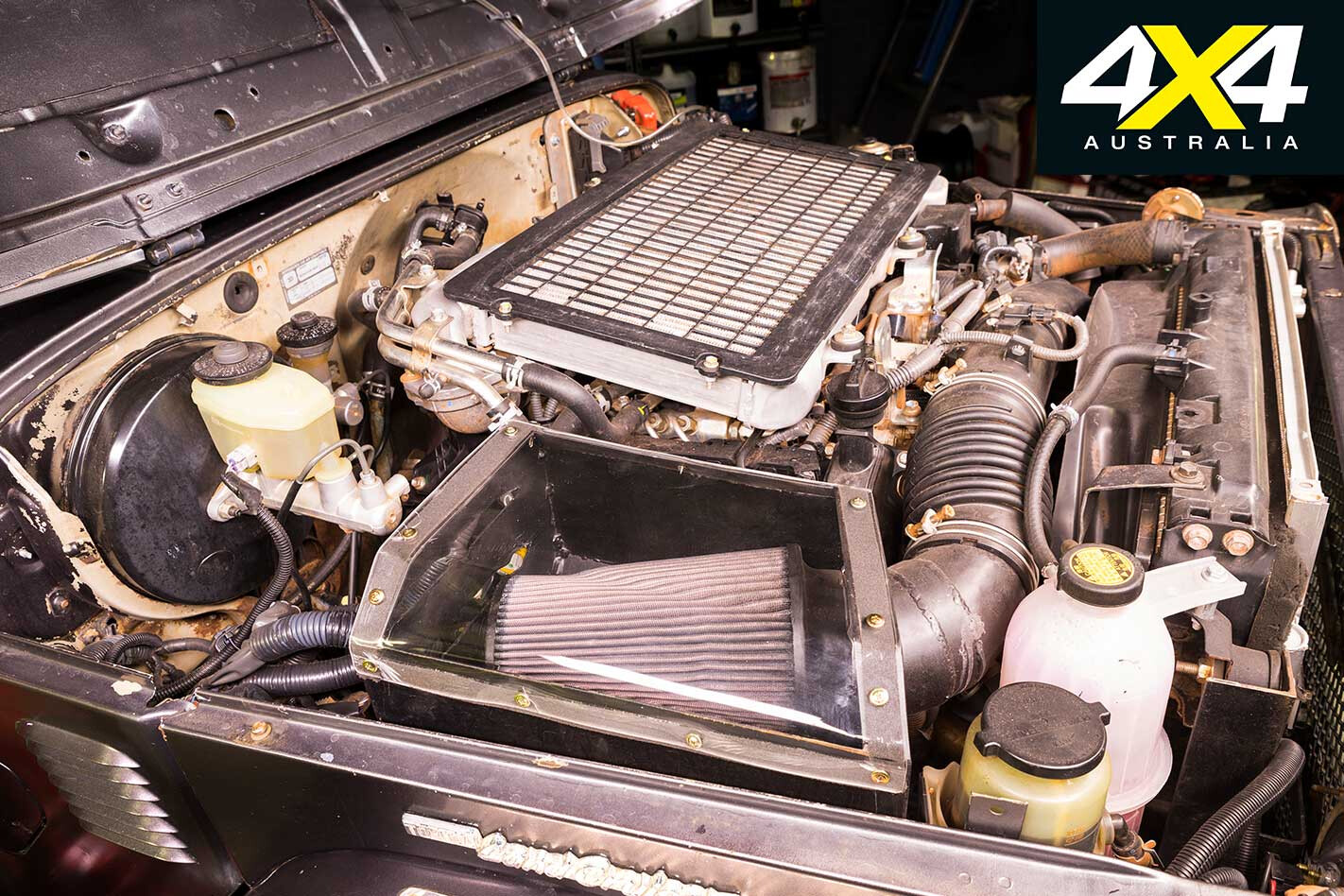
To do this, the Gill brothers found a way to slot in a 4.5-litre turbo-diesel V8 from an LC79, and then they built a full custom suspension system which is highlighted by a neat four-link rear with Nolathane bushing.
The project was completed in-house, thanks to the skillsets of the brothers – metal fabrication, metal machinist, draftsman, mechanic and hydraulic fitted – as well as the fact the guys own an automotive repair and tyre outlet.
Watch the video to hear the unique Land Cruiser growl, or pick up a copy of 4X4 Australia’s July 2018 issue for head-to-tail coverage.
Pack your bags, load up your rig, and head for the countryside as it comes alive this July to September with plenty of activities from camel races to rodeo events, and wonderful outdoor camping and beach activities.
OUTBACK QUEENSLAND CAMEL FESTIVAL (QLD)
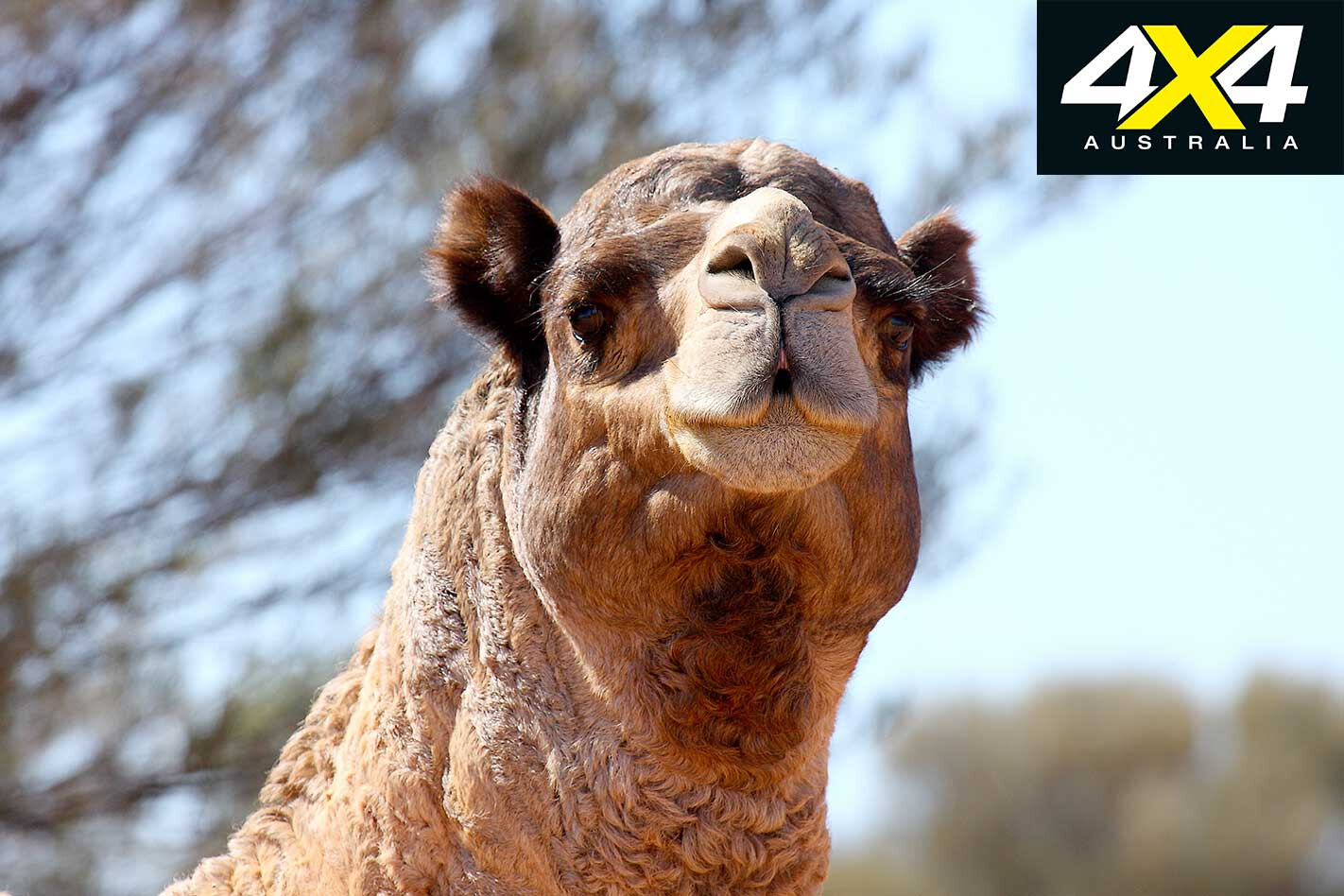
The Outback Queensland Camel Festival comprises three big camel races: Bedourie (two-day event on the second weekend in July), Boulia (three days on the third weekend in July) and Winton (last weekend in July, and a single-day event).
Camel racing has been run in Australia since the late 19th century, and the Boulia Camel Race is the second richest professional camel race in the country and promotes the longest running camel race in Australia. These events are great to follow, with plenty of accommodation and campsites available.
See www.thediamantina.com.au for more info.
DARWIN LIONS’ BEER CAN REGATTA (NT)
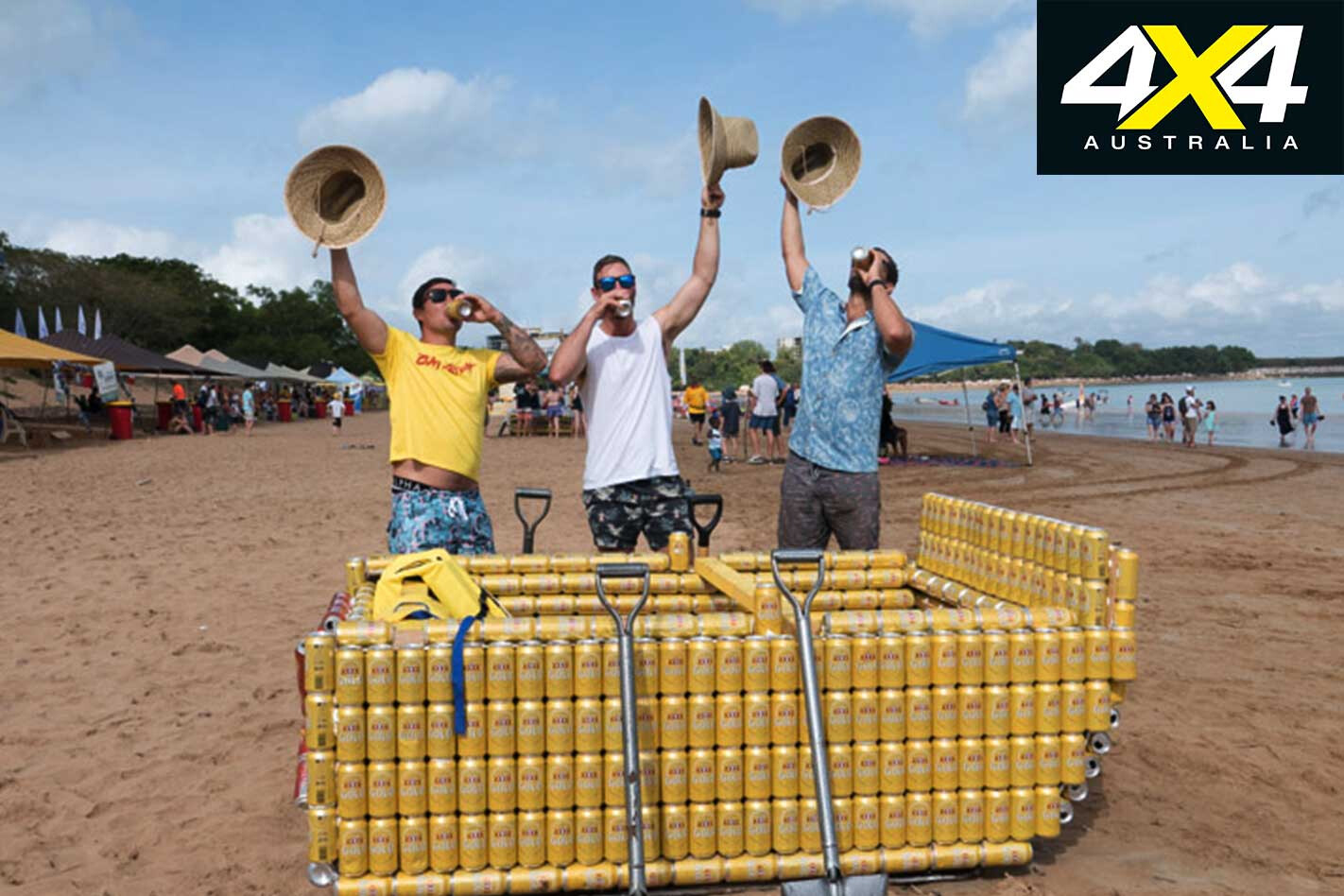
The crazy and fun Darwin Lions’ Beer Can Regatta will be held on July 22 and promises to be plenty of fun for the whole family.
The event kicks of at 10:00am and will run until 5:00pm. Held at Mindil Beach, Darwin, there are beach-based events for all ages – sandcastle building, running events and thong throwing – and some fun water activities as well.
There is a bar facility on-site, so no BYO grog. The popular Mindil Beach Sunset Market food and craft stalls will be trading all day.
Head to www.beercanregatta.org.au for more info and to see photos of some of the best boats over the years.
MT ISA MINES ROTARY RODEO (QLD)
The Southern Hemisphere’s largest rodeo takes place at Mt Isa each year, and in 2018 runs from August 9-11.
The rodeo promises to be busy and action-packed, hosting bull riding, bareback riding, steer wrestling, roping, barrel racing and other challenging events. Extra entertainment includes a concert to celebrate the rodeo’s 60th year.
Jimmy Barnes, Shannon Noll, the McClymonts and more to star in a series of concerts over the three days. For the whole line-up and schedule of events visit www.isarodeo.com.au.
LOUTH RACES (NSW)
A great excuse to spend a few days in beautiful outback NSW, the Louth Races is hosted by the Louth Turf Club and is celebrating its 60th anniversary in 2018. The races will be held on Saturday August 11 (with lead-up events starting from August 8).
Louth is located on the banks of the Darling River, 132km north-west of Cobar. The Louth Turf Club stages a seven-race program, and all the usual amenities such as betting, bar, barbecue and afternoon tea will be available at the event. Camping spots with firewood, toilets and a few showers are available at the racecourse as well.
See www.louthraces.com for more details.
2018 BIRDSVILLE RACES (QLD)
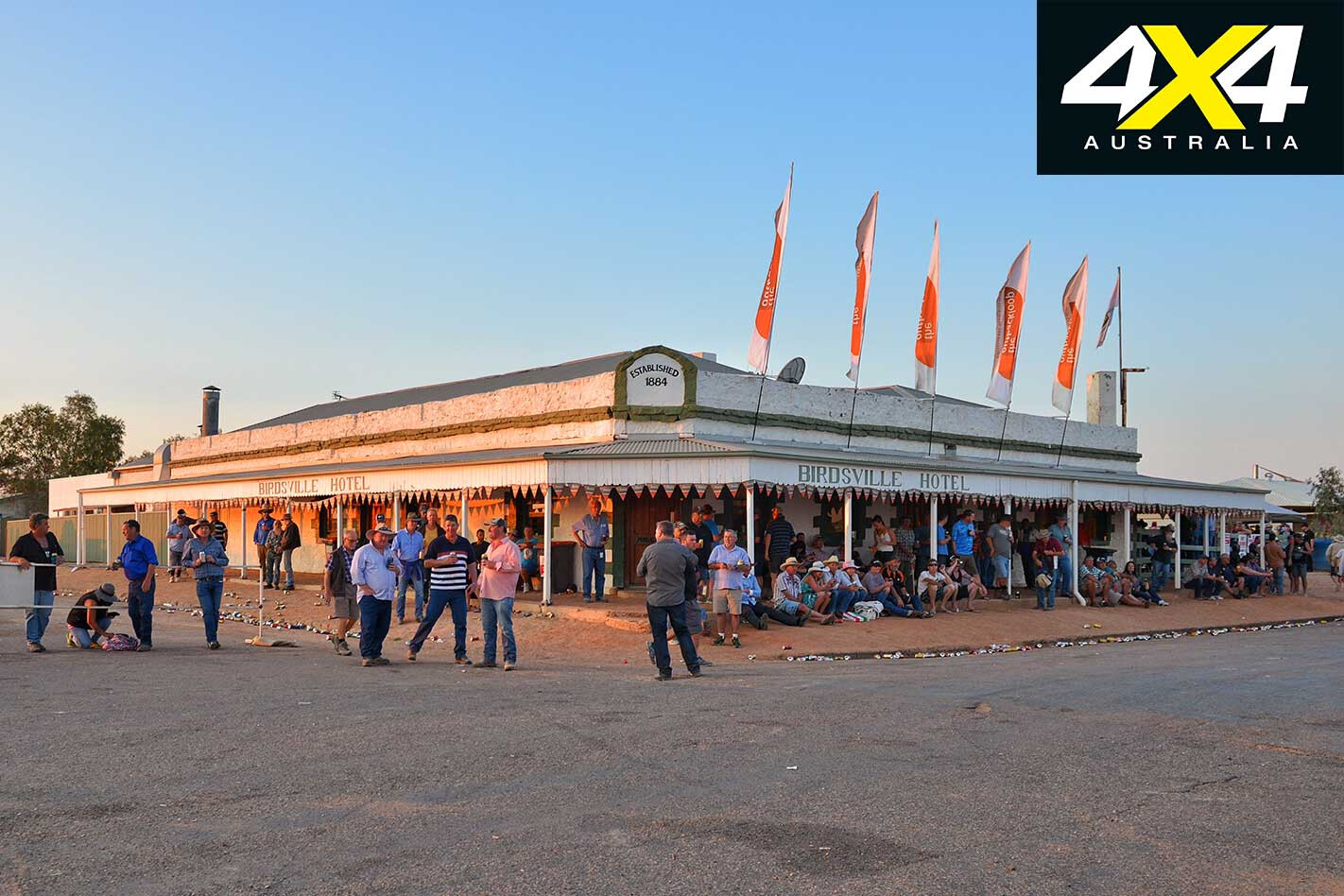
The remote town of Birdsville will come alive with festivities once more from August 31 to September 1, for the annual Birdsville Races.
Each year punters from all over Australia flock to the iconic outback town for a jam-packed program of thoroughbred racing, unique outback entertainment and wacky festivities.
Tickets are on sale now, with two-day racing passes starting from $69.90. At days’ end the legendary Birdsville Hotel comes alive as the go-to drinking hole, where the celebrations kick on well into the night. It’s a must-do adventure that should be on every tourers’ bucket list. Tick it off this year!
Visit www.birdsvilleraces.com for more info.
TEAGLE EXCAVATIONS ARB PINES ENDURO 400 (SA)
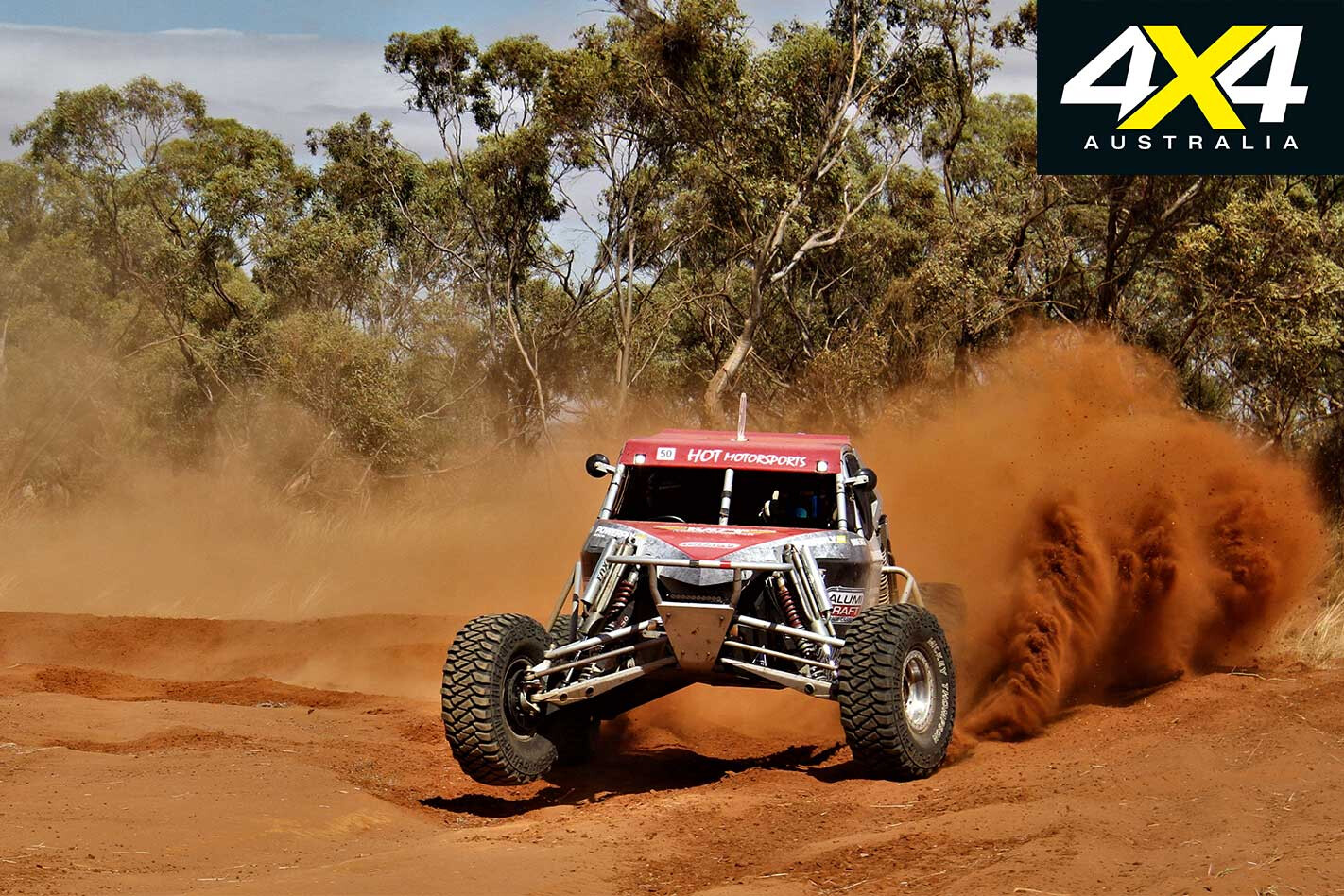
Round six of the ARB Australian Off Road Racing Championship (ORRC), held from Friday Sep 21 to Sunday Sep 23, offers three days of off-road racing near Millicent.
The ARB ORRC runs over six rounds at six different locations in 2018. The series showcases the skills of drivers and navigators, racing through a mix of terrain in search of glory.
See www.offroadracing.com.au for more info.
SEVEN EMU STATION (NT)
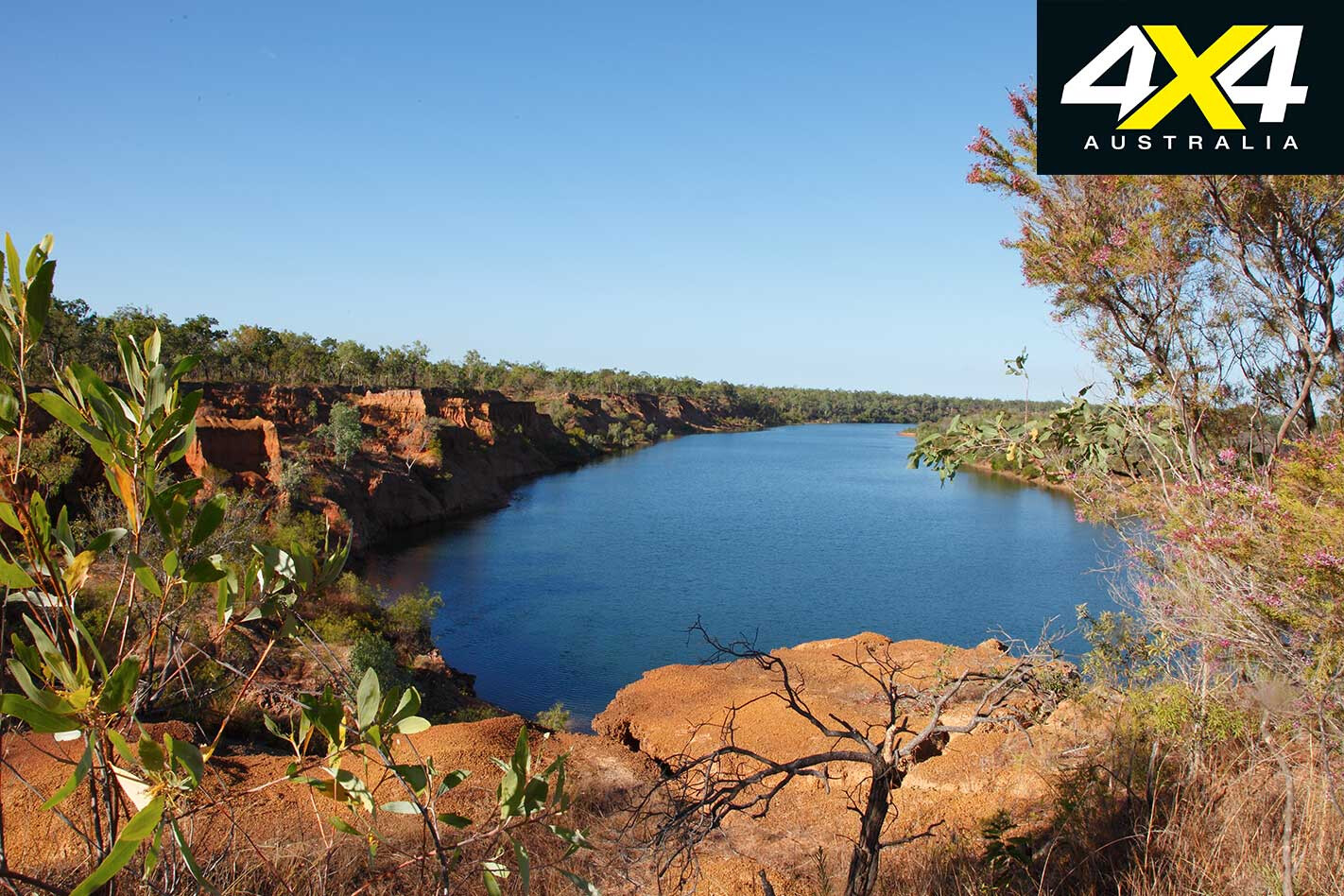
For those touring the Top End and Gulf this season, Seven Emu Station, located 85km south-east of Borroloola in the Gulf Country, is a great way to spend a few days camping, driving, fishing and enjoying the cliff-side campsites that overlook the Robinson River. The working cattle station covers 4300km² and includes part of the Australian Wilderness Conservancy’s Pungalina-Seven Emu Sanctuary.
Check out www.sevenemustation.com.au for more information.
When we went looking for some tougher tyres for our 2017 Nissan Patrol that’d be more dependable for off-road work, the good folks at Toyo came up with something special: they had a set of yet-to-be-released tyres and they asked us not to show anyone, even after they were fitted.
They’ve been released for a few months now and we’re more than happy with the performance of our Toyo Open Country R/Ts.
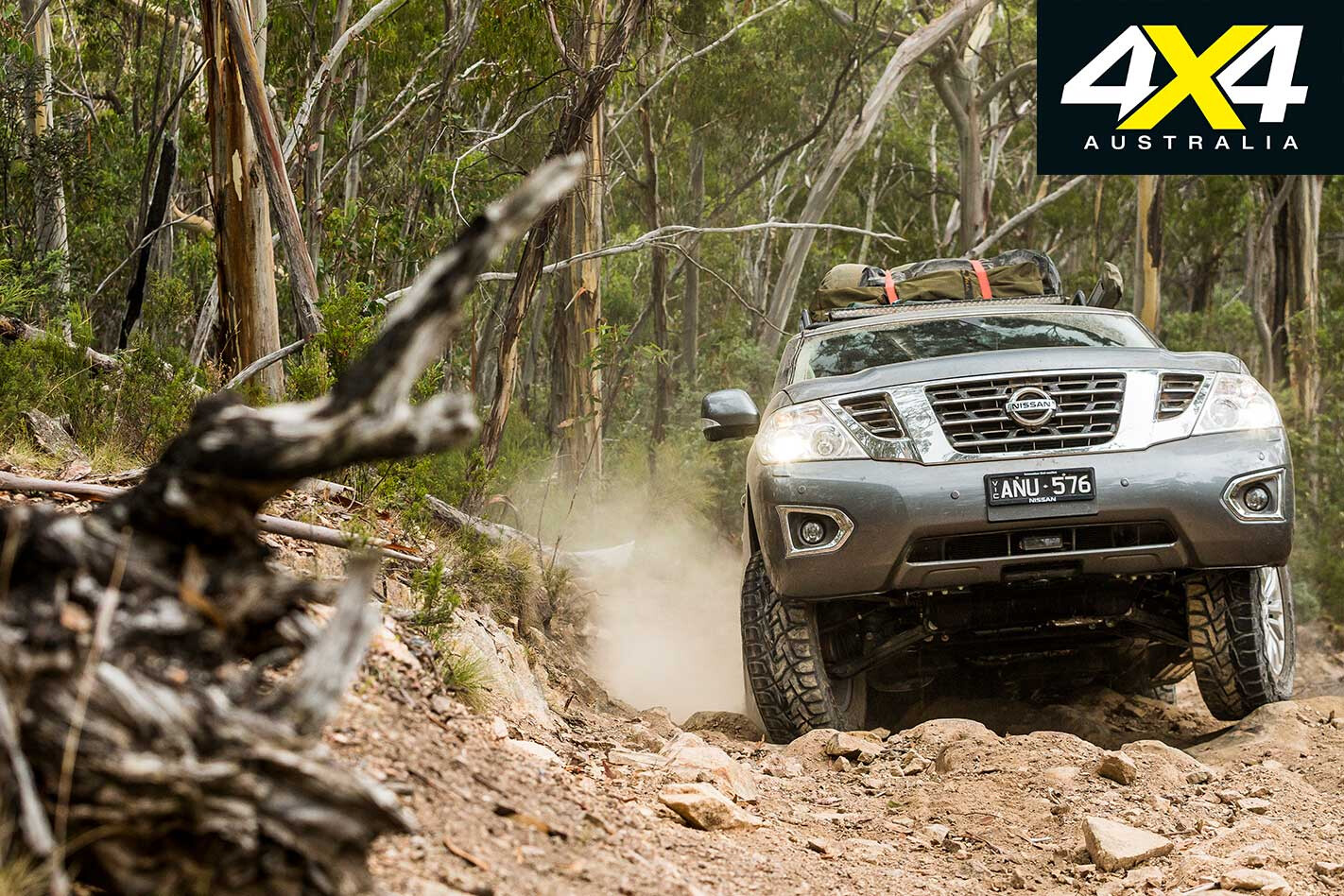
The Open Country R/Ts fill in a gap between traditional All Terrain (A/T) and Mud Terrain (M/T) tyres available for off-roaders. In Toyo’s case, the R/T slots in between its Open Country A/TIIs and the Open Country M/T tyres. As one might expect of a product that sits between two existing products, the R/T is a hybrid of styles, blending the best attributes of both the A/TII and M/T.
Most 4WD owners want a tyre that’s durable, delivers better off-road traction and has that chunky look people associate with an off-road tyre.
So you could say they all want a Mud Terrain tyre, but many owners don’t want the added road noise, the more rapid wear rate, decreased handling performance and the poor wet-road characteristics of a muddie. The Mud Terrain is made for off-road use, and that’s where it works best … not on the road.
The Open Country R/T (Rugged Terrain) has the chunky looks of a muddie many buyers want on their 4×4. The tread blocks on the shoulder are big and bold, with open spacing between them that not only looks the part but improves traction when in mud or snow and protects the shoulder of the tyre against abrasion.
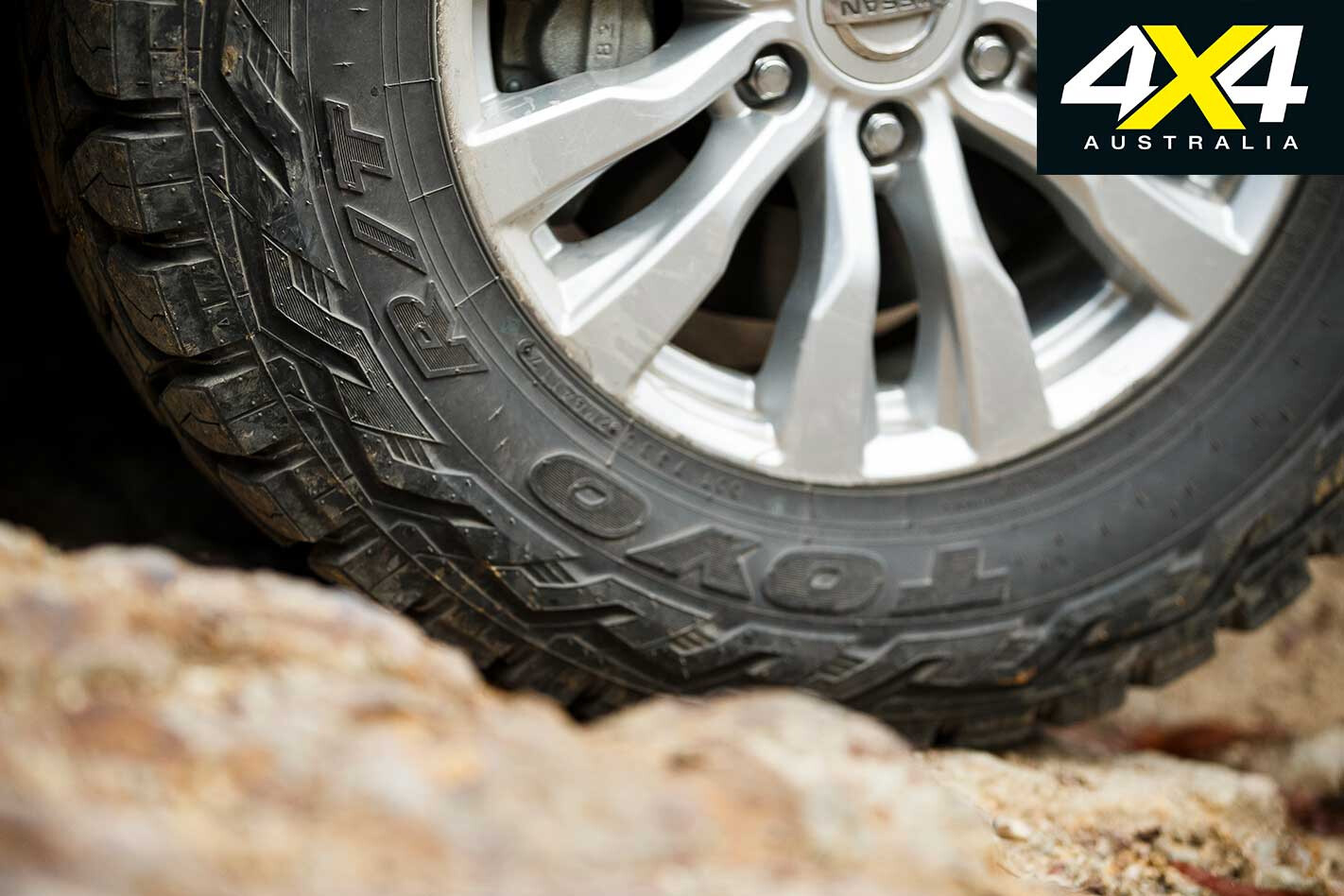
It also has the durability of a muddie by using the same three-ply heavy-duty construction of Toyo’s Open Country M/T.
However, look to the face of the tyre tread and you’ll see the blocks much closer together, where they put more rubber on the road for improved handling and braking, as well as a quieter ride. The tread blocks also link up with each other to improve stability by reducing the squirming action you get with more open tread blocks.
These on-road, long-wearing attributes are also enhanced by the rubber compound borrowed from the A/TII. It all adds up to a tyre that delivers the best of both worlds for on- and off-road performance.
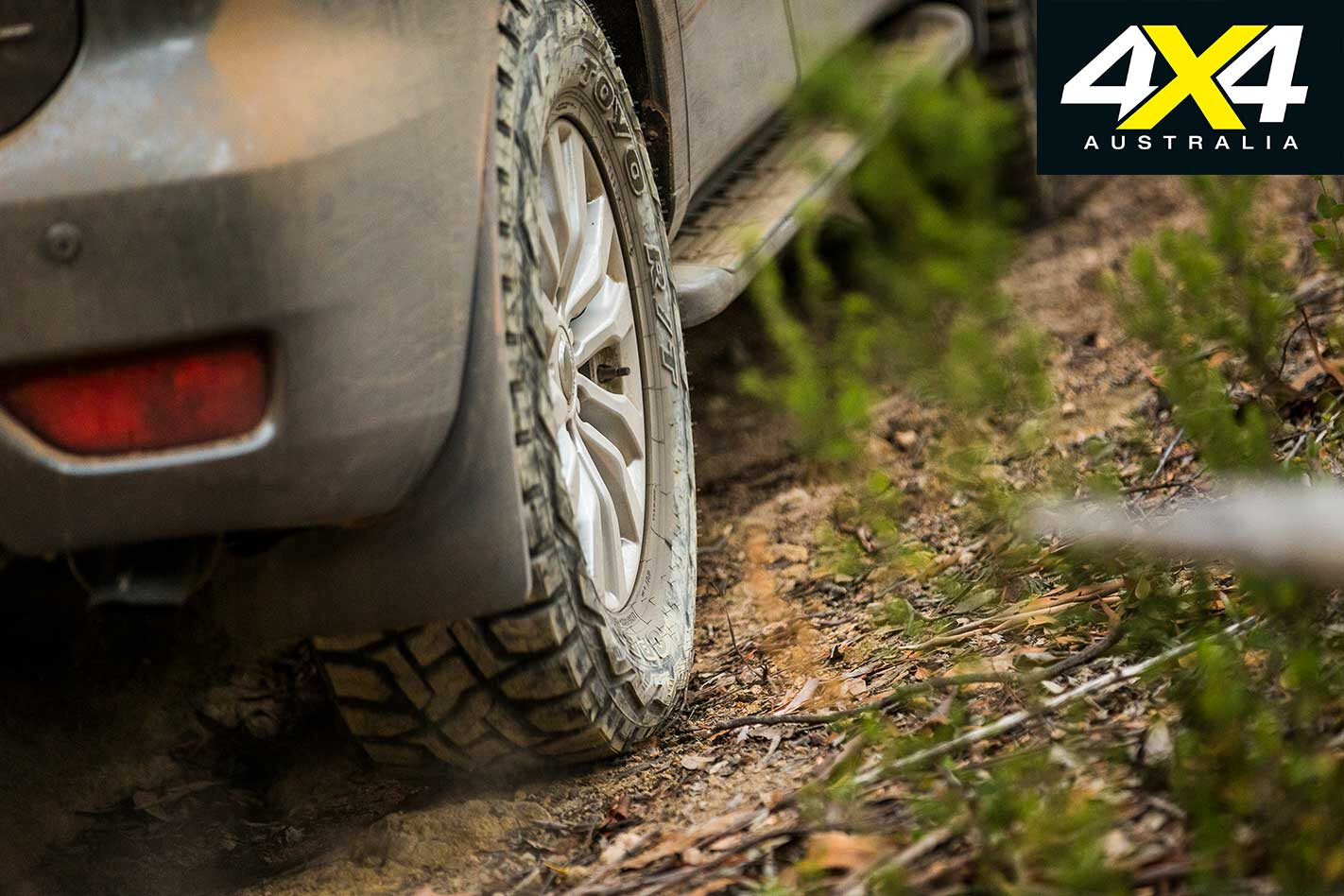
The guys at Tyrepower Reservoir fitted a set of LT285/65-18 Rugged Terrains to our Patrol Ti-L, which were just a smidge wider and taller than the standard 265/70-18s.
Straight out of the tyre shop you could feel the extra depth of the tread blocks as you slowed to a stop, but they weren’t noticeably noisier. Certainly not as bad as a set of muddies. The steering felt a tad heavier with the new tyres on, but it was nothing bad and actually felt better.
The first big trip for the Toyo R/Ts was over two weeks in the Vic High Country, where they were subjected to all sorts of terrain. Over loose rocks on steep climbs, river gravel, swampy mud and fast gravel roads, they never felt challenged and offered the confidence against punctures afforded by the heavy-duty light truck construction.
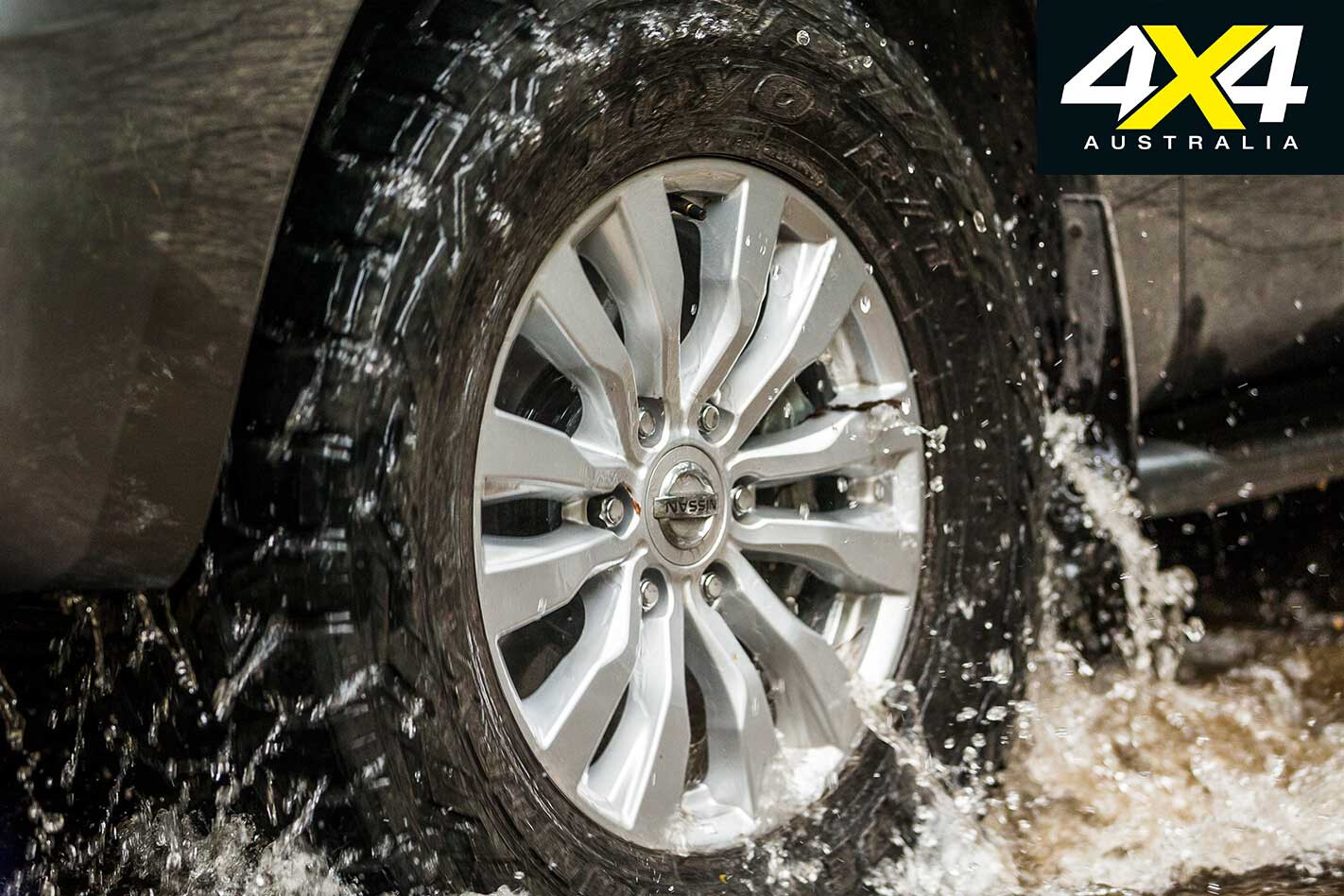
Around town and on an interstate highway drive, the tyres were quiet and precise, again giving confidence but this time in braking and dynamics. They truly did give us the best of both worlds.
Toyo’s Open Country R/Ts showed us you don’t need to compromise between a road tyre and a muddie. The Rugged Terrains provided just what we needed for a vehicle that spent as much time on the road as it did off it.
The Open Country R/T is available from your Toyo Tires retailer, in a wide range of sizes to suit 16-, 17-, 18-, 20- and 22-inch wheels, all in Light Truck construction.
RATED Available from: www.toyotires.com.au RRP: POA We Say: Durable, reliable all-rounder