
IGNORE the grumblings of “Kakadu, Kaka-don’t”, this globally famous 20,000km² national park can fill half a year’s worth of weekend adventures – and you’ll need all that time to do this huge world wonder some kind of justice, with some of the lesser-known areas of the park worth exploring just as much as the more popular ones.
Our northern Kakadu adventure kicks off with a leisurely 1.5-hour run from Darwin via the Arnhem Highway before you reach the park entrance. The temptation here is to punch through to the main tourist hub of Jabiru, but to do so means you’ll miss one of Kakadu’s less-visited highlights: the Waldak Irrmbal (West Alligator Head) track, which heads north to Pococks Beach located on the park’s northern coastline, abutting Van Diemen Gulf.
This drive is a cracker and if you have a spare day it is well worth camping somewhere along this route. Two Mile Hole and Four Mile Hole are great fishing spots, with Two Mile Hole (12km in from the turn-off) allowing some access to the Wildman River, plus a billabong just before the river.
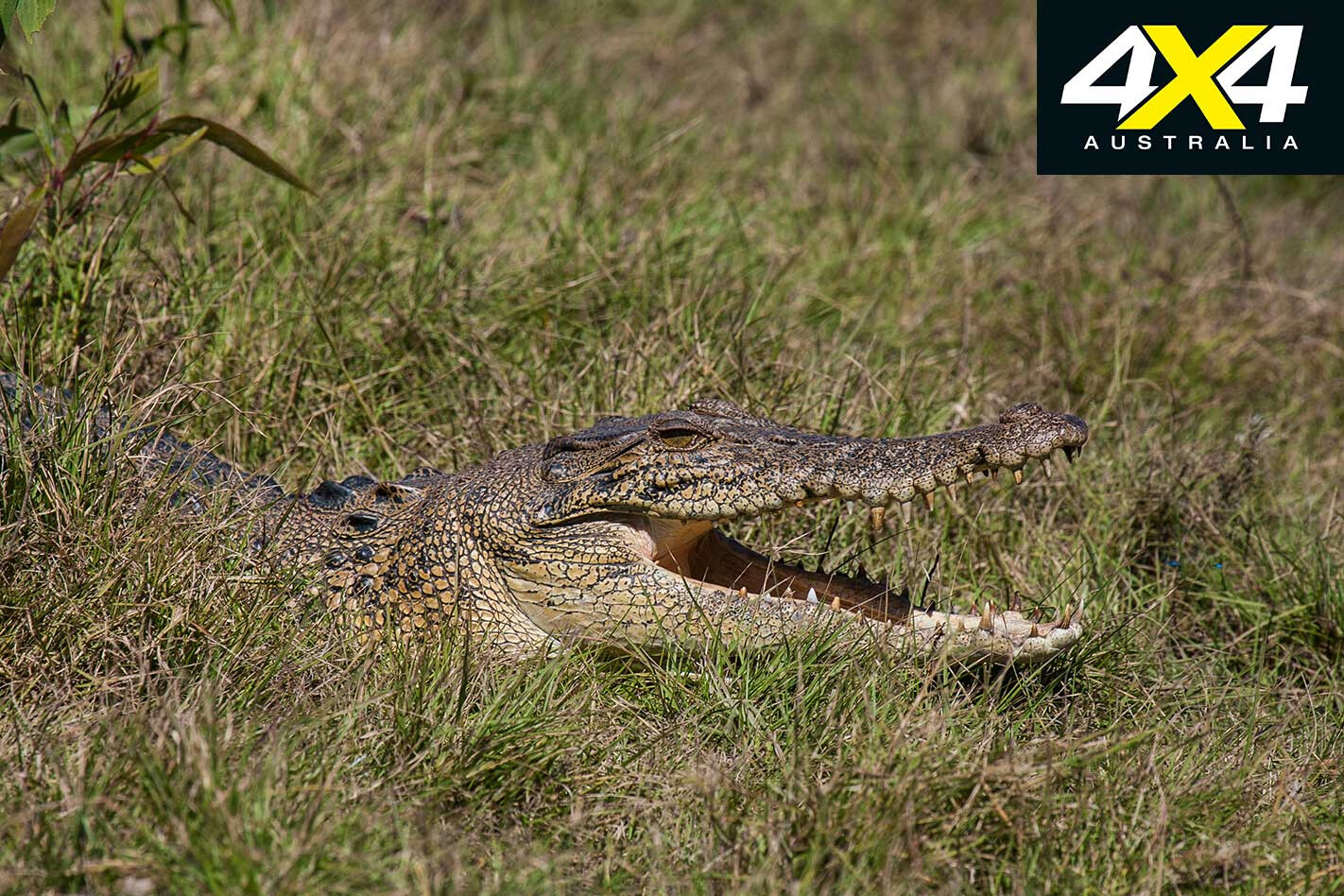
However, be aware that this is saltwater croc country; this writer has seen a sizeable salty sunning itself in the long grass beside the billabong at Two Mile, only spotted when its head moved as we walked toward the billabong’s banks. There is a small campsite here.
Four Mile Hole is even better for fishing and is reached by backtracking four kilometres south from Two Mile to the Two Mile/Four Mile junction. Four Mile is, itself, reached via another junction – turning left and driving for about 15 minutes will see you at the Four Mile camping area, which has no facilities. So, if you’re looking to doss down here, be prepared.
Returning to the main Waldak Irrmbal track and continuing north for a farther 50km is challenging in parts, but a great experience overall; the near-flat Manassi Floodplain that dominates this part of the park is only occasionally interrupted by stands of savannah forest, which increases in density (and is joined by huge palms) as you near Waldak Irrmbal and Pococks Beach itself.
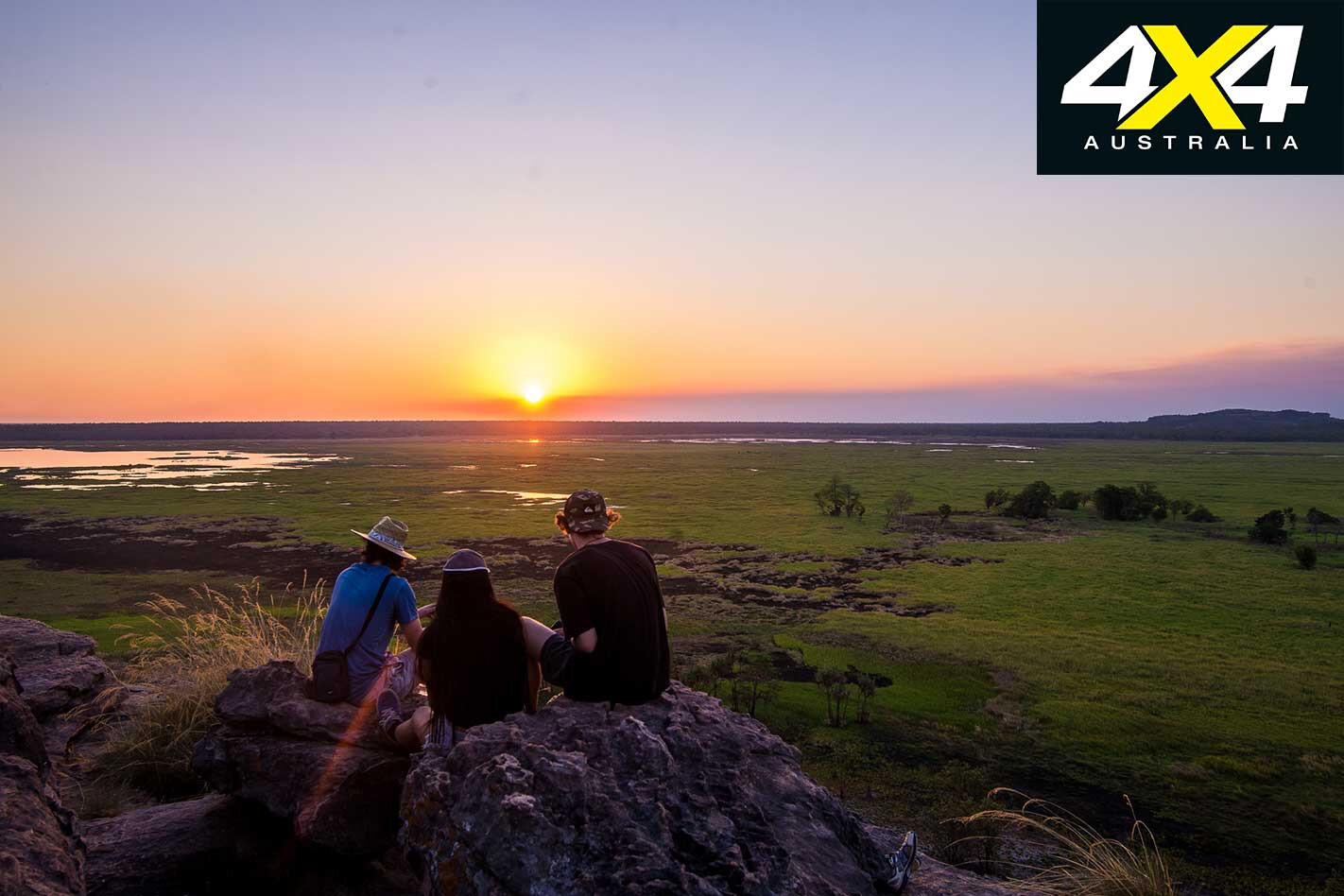
The facilities at Waldak Irrmbal are relatively basic, but both Jungle Camp and Pococks Beach campsite offer a far more remote camping experience than you’ll find at one of Kakadu’s more easily accessed (and thus popular) campsites.
You can explore Pococks Beach (be croc-aware; saltwater crocs are found here) by foot, and it’s also worth exploring east of the campsites. The rocky outcrops and mangroves near the mouth of the West Alligator River are full of things to check out.
It’s also worth keeping an eye out for the native orange-footed scrub fowl – or easier – its nest. This ground-dwelling bird builds what is more appropriately dubbed a huge mound (they can be up to 4.5m tall and 9m in diameter) that is quite a sight. Just be prepared for noise during the night if your camp is too close to said nest…
The next day is the 80km return south via Waldak Irrmbal track, before reaching the Arnhem Highway and turning left. However, instead of following the highway all the way to Jabiru, follow it until you see a signposted 4×4-only track that leads south.
This is a great ‘shortcut’ that, again, takes you away from the heaving dry season crowds on the bitumen roads and passes by some beautiful waterholes – Bucket, Alligator and Red Lily billabongs – before you ford the southern ‘tail’ of the Alligator River and join Old Jim Jim Road, another 4×4-only route.
Eventually, and a bit sadly, you’ll have to rejoin the bitumen at the Kakadu Highway, the park’s other main thoroughfare. For this second night we’d recommend camping at Yellow Water (located slightly north just after you rejoin the Kakadu Highway) and partaking in the next morning’s sunrise cruise on this huge waterhole; birdlife, saltwater crocs and turtles can be easily seen here.
For the final day continue north along the Kakadu Highway to the Nourlangie turn-off. Nourlangie contains some brilliant rock art and some short walks that take you to all the main sites.
Next stop is Jabiru for the excellent cultural centre before (hopefully) timing your drive right and reaching Ubirr – another globally lauded rock-art site – where, after perusing the eons-old artwork, you walk to a vantage point that looks over the park’s northern floodplains for sunset. It’s brilliant.
EXCITEMENT is building for the pocket-rocket Jimny, slated to land on local soil by the end of the year.
Footage posted to YouTube by DPC Cars has amped the excitement dial up to 11, with the video showing the pint-sized off-roader confidently tackling all sorts of off-road obstacles – puddles, moguls, ascents and descents – on tarmac, mud, dirt and even snow.
The fourth-gen Jimny retains its boxy dimensions, ladder-frame chassis, live front and rear axles and dual-range transmission.
Additions include a stiffened chassis, dual front, side and curtain airbags, dual sensor-brake support, Electronic Stability Control, and a multimedia screen with Android Auto and Apple CarPlay.
A 1.5-litre petrol four-cylinder engine has been confirmed, and it’s mated to either a five-speed manual or four-speed automatic transmission with part-time 4×4.
Let’s hope Suzuki brings the Stockman back, too!
Only three-and-a-half hours’ drive south from Darwin, this 293,000-hectare park offers plenty for adventurous travellers, with numerous outdoor activities on tap, along with some (very) comfortable campgrounds and amenities close by. Plus, it is significantly rich in the culture of the local Jawoyn people.
In short, it’s a brilliant weekend away for the active family; your 4×4 will not be tested too harshly here – except in terms of how much outdoor gear you can jam in to cater for all the park has to offer – but it is a definite must for that Darwin weekend destination list.
This spectacular national park centres on a deep gorge carved by the Katherine River through rugged sandstone. It also includes numerous waterfalls, more than 100km of walking tracks, a number of lookouts that offer those less mobile some fantastic viewpoints over the park’s unique landscape, and a great campground.
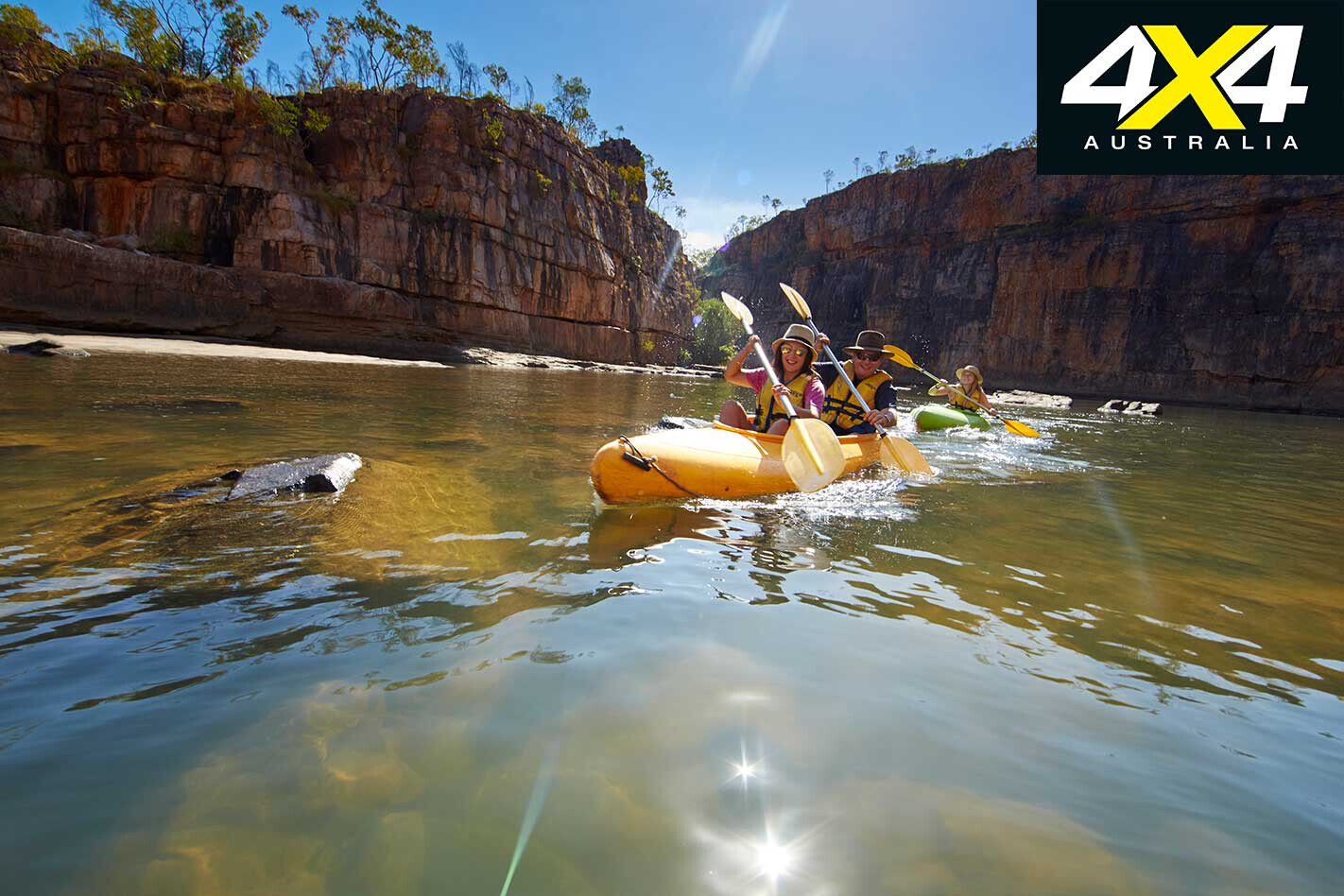
It is the Gorge itself (also known as the Katherine River and comprising nine gorges) that is the park’s centrepiece, with good reason: this waterway offers excellent canoeing and kayaking, with the potential to paddle for as long (or short) a time as you like. For the less active visitors who still want to experience the gorge’s many charms, there are daily boat tours through the gorge.
Canoeists can either head farther into the gorge, using a hire canoe or paddling their own (a small fee applies for this), or you can paddle downriver in kayaks/canoes. Whichever way you float, you’ll be shadowed by an ageless and spectacular landscape, and have the chance to spot plenty of wildlife including turtles, barramundi and – if you’re lucky and a quiet paddler – the odd freshwater croc sunning itself on a sandy beach or semi-submerged tree.
A long, leisurely day of paddling starts at Gorge 2 (there’s no canoeing allowed in Gorge 1 anymore) and should see you reach the eastern end of Gorge 3, while still allowing for plenty of swimming stops along the way, a check-out of the Jawoyn rock art dotted along the cliffs, and food breaks at some of the pretty sandy beaches that line parts of the gorges.
If you’re keen for an overnight journey, there are canoe campsites at Gorge 4, 6 and 9, with toilets at Gorge 4 and 6. This is a brilliant experience if you have the time.
For those super-keen and not afraid of challenging portages (the rock bars and rapids get bigger farther into the gorge system), the campsites of 6 and 9 are worth all that sweat and strain as you will be pretty much on your own. You can even throw a line in and try your luck for a barra (legal size is 550mm).
For walkers, the Big Bopper is the Jatbula Trail; although, that covers four days. But, don’t despair, there are myriad tracks that range in distance from a couple of hours to overnight that offer a true insight into this park’s history, geology and culture.
The park’s southern section includes seven walks, with the Baruwei Lookout walk perfect for young and old adventurers, while the overnight Jawoyn Valley walk takes you to some impressive rock art.
Most visitors to Nitmiluk think that the gorge and surrounds are ‘the park’, but it’s well worth tacking on a side-trip to Leliyn (Edith Falls), in the park’s northern section, on your return day to Darwin. The walking tracks that start at the expansive picnic and camping area (unpowered sites only) take you to great swimming at the upper and lower pools of Edith Falls.
If you’re keen and have the time to take the longer walk (8.6km) to Sweetwater Pool (actually the final camp for those tackling the Jatbula Trail) you’ll revel in this amazing waterhole. If you have the time, you can even make this walk an overnighter. Whatever you do and however you wish to experience it, Nitmiluk is, without doubt, a brilliant Top End experience.
Although the image of a proper custom 4×4 rig often includes big tyres, huge suspension lifts, and enough lighting power to drown out the sun, some of the most essential modifications are those that you cannot see.
Modifications like an ECU or extra components like a battery tray don’t often cross the mind of the casual 4×4 owner, and can add extra hidden cost to your modification plans. In light of that we have taken the liberty to highlight these essential and often overlooked 4×4 gear for your convenience. You’re welcome.
Projecta BM320 Smart Battery Meter
For those who tow caravans, camper-trailers or camper-vans, Projecta’s new BM320 Battery Meter is ideal.
The BM320 Smart Battery Meter is suited for use with 12V Wet, AGM, Calcium-type and Gel batteries up to 320amp/h in capacity. The battery data is easy to see thanks to the unit’s full-colour 2.4-inch LCD interface that actually includes two screens.
Screen one is for the beginner user and includes all information needed to check battery performance (voltage, charge/discharge, capacity remaining and time to empty/full), while the second screen provides additional info such as ambient temperature, battery capacity reading (ampere hour) and state-of-health (SOH).
There are two inbuilt alarms (low capacity and SOH) and a real-time clock with date and battery status display. The unit is super-accurate and also boasts self-learning capabilities to track and monitor battery SOH.
Website: www.projecta.com.au
Safari 4×4 ARMAX

Safari 4×4 has released the new ARMAX Engine Control Unit (ECU) that is designed to work in conjunction with your vehicle’s OE ECU to produce up to 30-35 per cent more torque, 20-25 per cent more power and improved throttle response.
The ARMAX is also claimed to improve fuel consumption while reducing turbo lag. The unit is rated to IP68 for dust- and water-ingress protection (it is operable to a depth of one metre) and it also includes an Exhaust Gas Temp (EGT) control to monitor operating temperatures – a must for modern turbo-diesel engines.
The unit is backed by Safari’s engine protection systems that offer constant live monitoring of your vehicle during operation.
Website: www.safari4x4.com.au
Piranha Off Road cabin-mount battery tray: for Ford Ranger PX
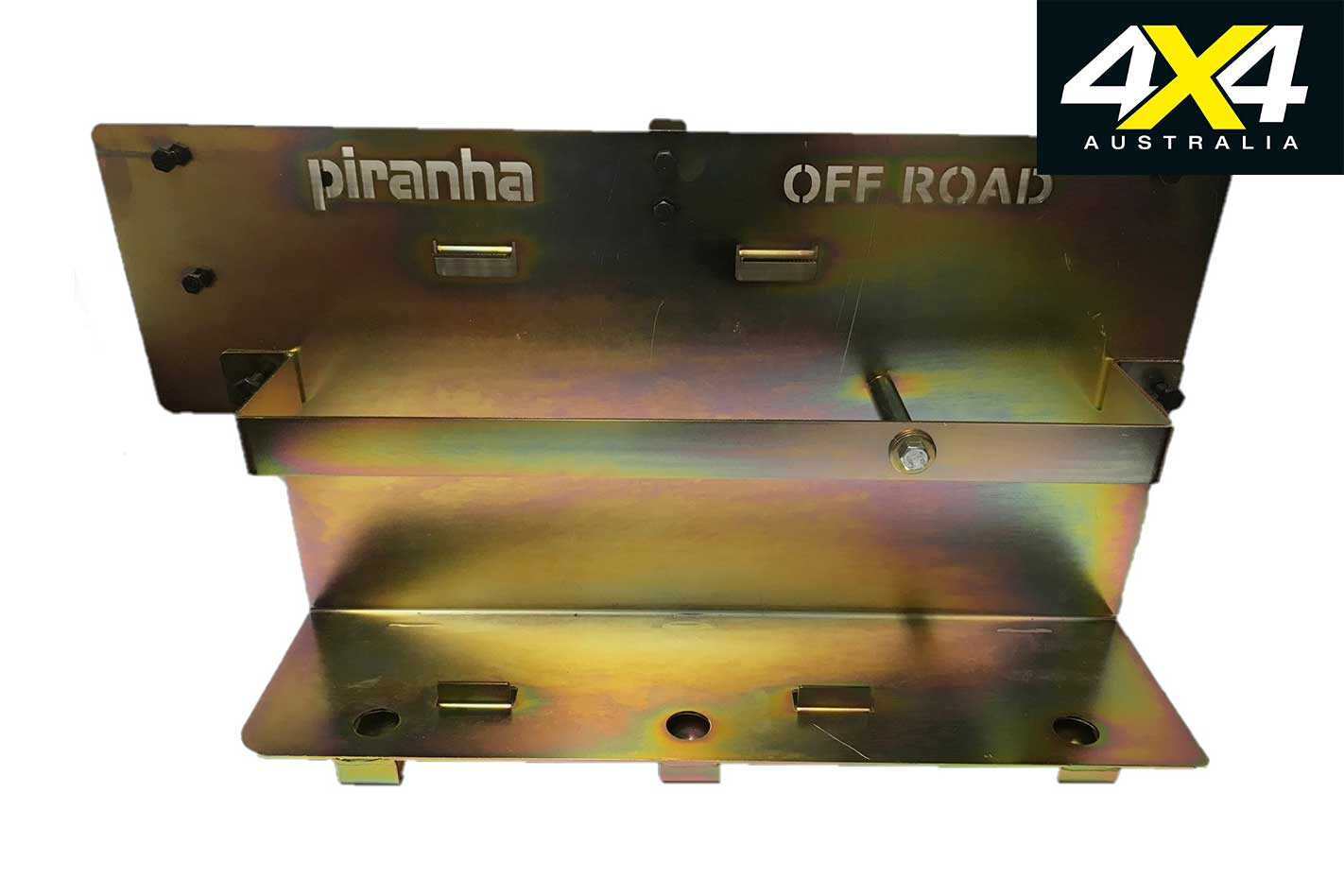
Piranha Off Road has expanded its impressive auxiliary battery tray range for Ford’s popular Ranger PX to three, with this new cabin-mount tray.
Already available in under-body and tub fitment versions, this new cabin-mount model is ideal for the remote tourer who will be off the grid for a few days and is keen to keep all their food (and beer) cold. This cabin-mount tray fits neatly behind the Ranger’s rear passenger seat on the driver’s side of the vehicle. It can be fitted with either a 100amp/h or 150amp/h battery, which means plenty of fridge time.
Designed in Melbourne, the tray’s 3mm steel is electro-plated for longevity and durability. By fitting this tray in-cabin, it frees up space under-body for a long-range fuel tank; plus, being out of the tub means more space for gear.
RRP: $365 Website: www.piranhaoffroad.com.au
JUST over an hours’ drive from Darwin, Litchfield National Park will fulfil that cliché of transporting you to another world. In this case, one of huge waterfalls, challenging four-wheel driving (in the southern section of the park), big rivers, even bigger wildlife (read: saltwater crocs), numerous bushwalks, loads of safe swimming options, and excellent camping.
The park is a microcosm of the Top End; smaller than its famous neighbour Kakadu, Litchfield gives visitors with limited time the chance to gain a real sense of the Top End’s timeless appeal.
The bitumen run from Darwin to the park’s northern gateway, the township of Batchelor, is the quickest way to enter the park. Follow the Litchfield Park Road into the northwest corner of the park where you’ll find all the famous attractions such as Florence Falls, Buley Rockhole, Tolmer Falls and Wangi Falls directly off this main sealed route.
The Tabletop Swamp and The Lost City are accessed via dirt tracks off this main road as well. You won’t be alone up here in this northern section – day visitors, tourist buses and the like swamp this part of Litchfield during the dry season.
Swimming in the Top End is generally a no-go due to the proliferation of dangerous saltwater crocodiles in the region’s waterways; however, most of the pools at the bottom of Litchfield’s many waterfalls are croc-free (Parks NT checks each one at the end of the wet season), so you can escape the park’s warmth and humidity with a dip in Florence, Wangi or Tjaynera Falls, Walker Creek or Buley Rockhole.
For those looking to escape the Litchfield crowds, you can explore dirt access tracks south of the main drag that will take you to Tabletop Swamp or The Lost City and its eerie rock formations.
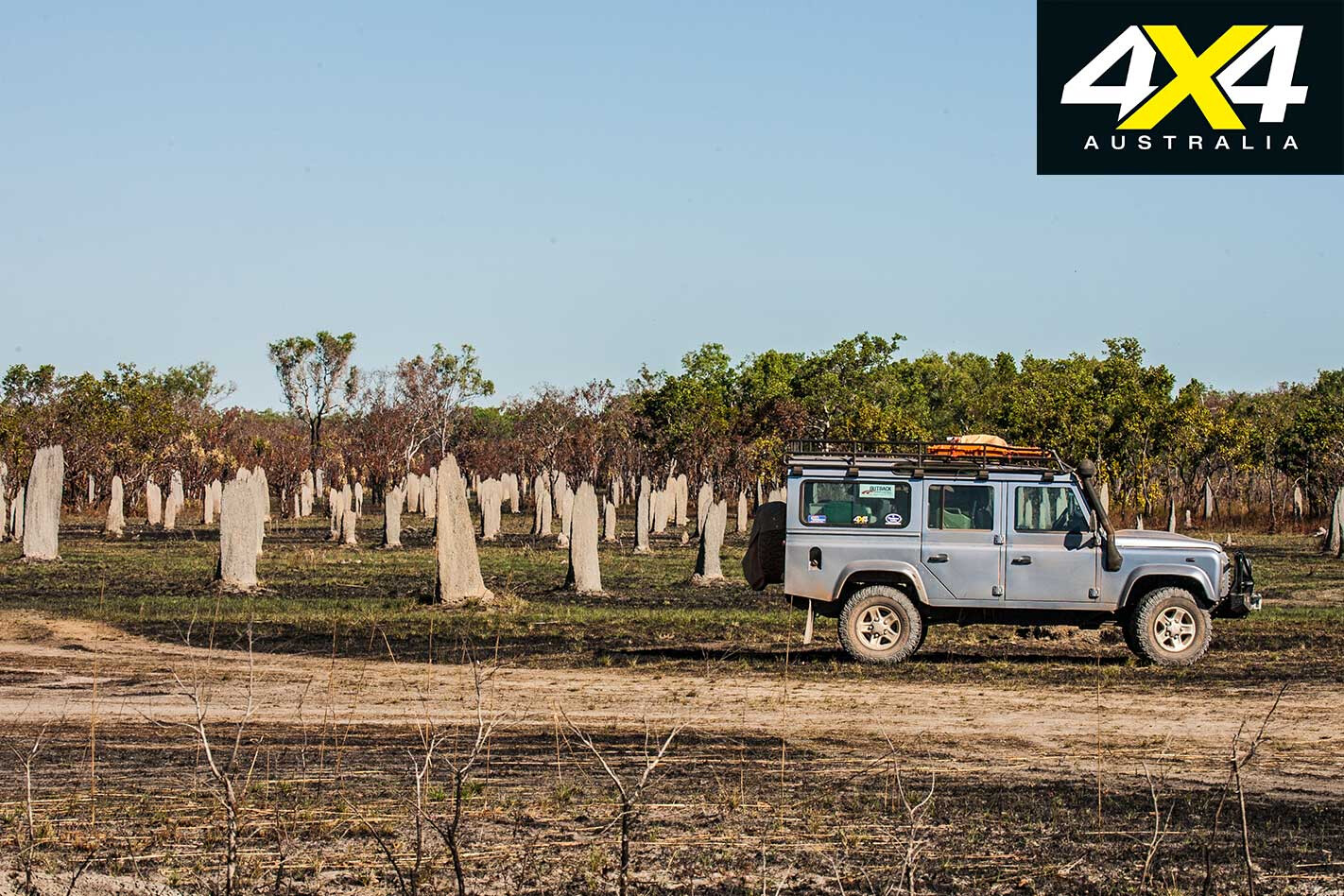
For a more remote, wilder experience, we’d highly recommend spending the day and night in this part of the park (and camping at Wangi Falls). Then we’d suggest heading into the deep south of the park, via the 4×4-only track that takes you south from Greenant Creek. This track swaps between slightly challenging and straightforward, with a big dose of fun.
There are some great highlights along here, not the least being the numerous water crossings – the Reynolds River crossing, in particular, is a cracker, with its winding path across this wide waterway – but also make time for a stopover at historic Blyth Homestead in the upper section of this track, and also for a swim at nearby Tjaynera Falls.
Blyth Homestead was an outstation of Stapleton Station and was the historic home of the Sargent family. The building wasn’t always at this location, though; Harry Sargent had dismantled the building at its original location (at a neighbouring station) and transported it using a team of horses.
It was rebuilt at its current location after Sargent discovered the abandoned Mt Tolmer Mine, which he hoped would supplement his grazing income. Plus, this location was close to a creek and springs, so water supply was never an issue. It was, much later, sold to the Townsend family, and then in 1986 was included in the newly-formed Litchfield National Park and is now Heritage-listed.
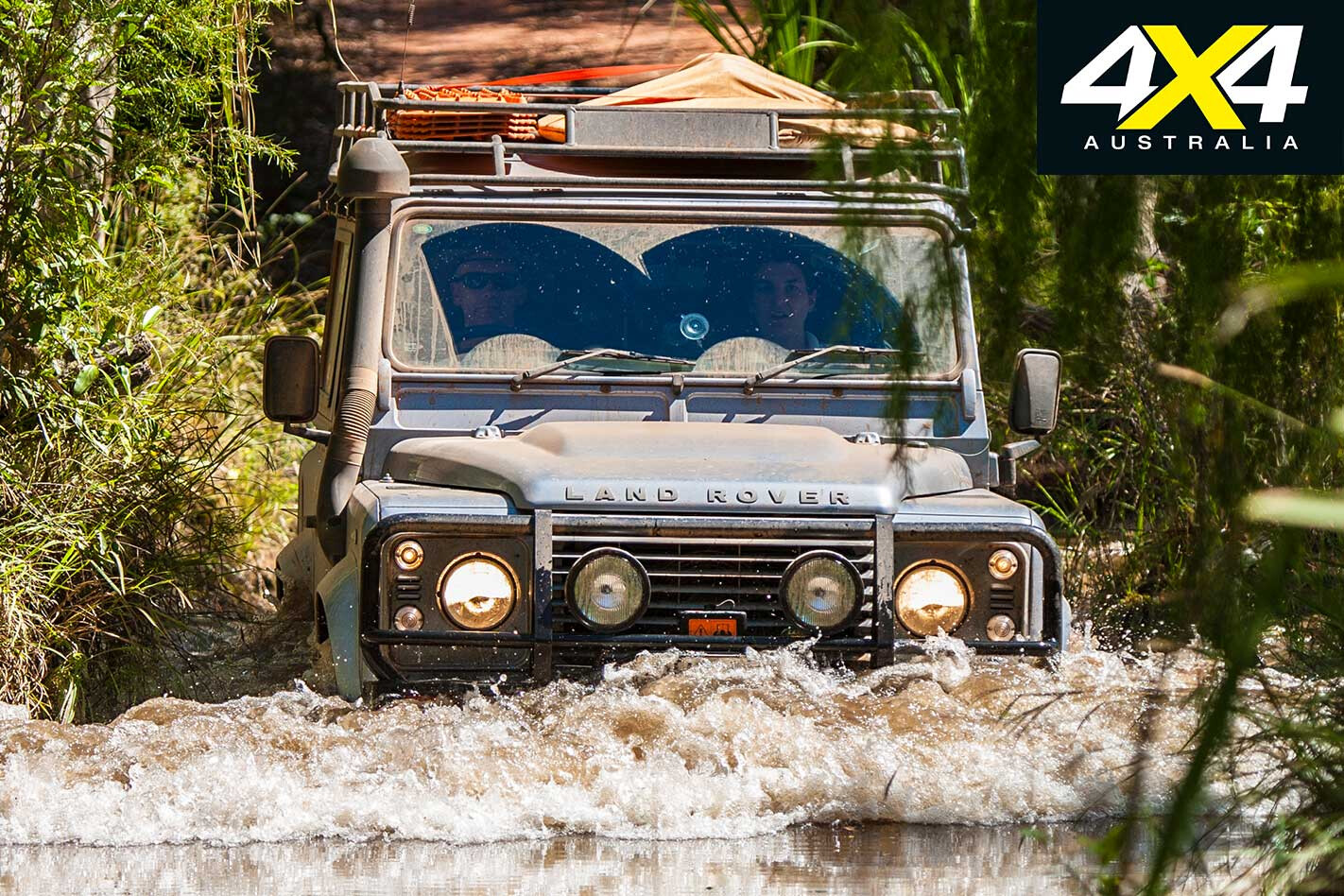
More water crossings follow as you continue south before reaching Surprise Creek Falls, another fantastic swim spot and also a good place to camp for the second night. From here you can continue to the park’s southern exit/entry and turn east on to Daly River Road which, in turn, takes you back to the Stuart Highway.
For those who wish to stick to the north-western section, where a large percentage of the waterfalls are located, you can still camp at Wangi Falls and then loop north and east to take in Cascades, Walker Creek (great swimming here) and the Bambook Creek Tin Mine area.
For those keen to explore the park on foot there are plenty of walks to choose from, ranging from short strolls to various swimming holes, through to longer walks and the big Tabletop Track, a 39km, two- to three-night loop that is accessed via Florence Falls, Greenant Creek, Wangi Falls or Walker Creek (these can be linked separately, i.e. Greenant Creek to Wangi Falls as shorter overnight walks).
This is a relatively serious undertaking reserved for experienced hikers (you have to lug plenty of water with you, along with all the rest of your gear). Birdwatchers will also be kept busy trying to spot some of the 169 recorded bird species inside the park.
BASED out of Broken Hill and running over four days (September 26-29), the Outback Challenge is one of Australia’s most iconic and globally revered off-road events.
More than just a ‘race’ the Outback Challenge is a true 4×4 adventure designed to test the country’s most skilled off-road drivers and navigators as they tackle some of the NSW outback’s toughest terrain. The event is also a cracking way to showcase this part of Australia’s unique and spectacular landscape.
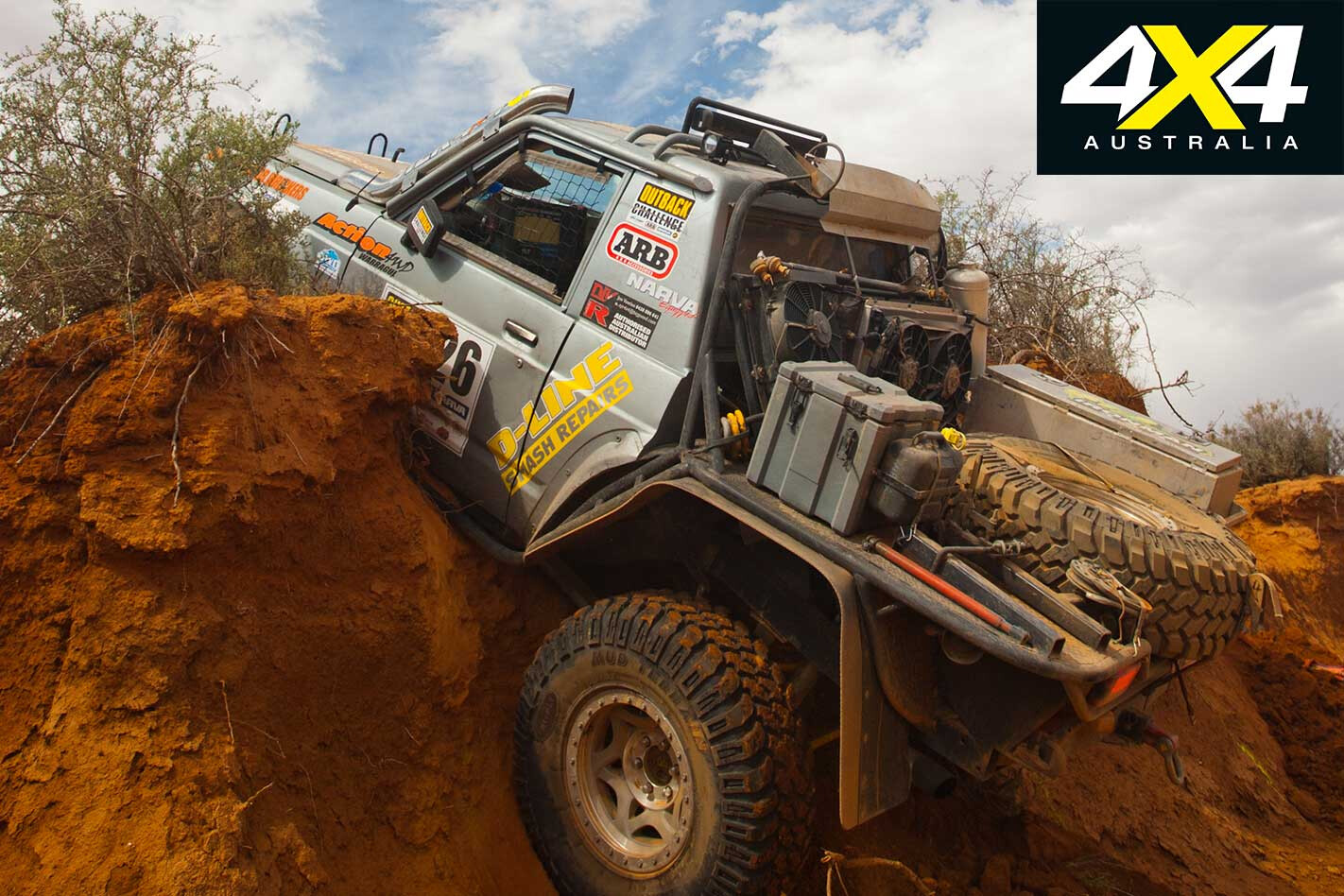
Through every stage, each team must navigate via GPS to hundreds of virtual waypoints. This year’s event differs from previous ones with a base-camp style setup, meaning teams venture out each day then return to the same finish point after the stage(s) are completed.
The four-day frenzy begins on Thursday, September 26, with competitors able to sign in and get their vehicles scrutinised before the first of two stages. There will be a day stage and an awesome night stage on the Thursday, before the next few days of full-on competition.
Teams have to be self-sufficient (carry spares and all other gear), and the event is guaranteed to test the toughest off-road rigs while keeping the spectators on hand highly entertained by the driving and – no doubt – fast vehicle recoveries.
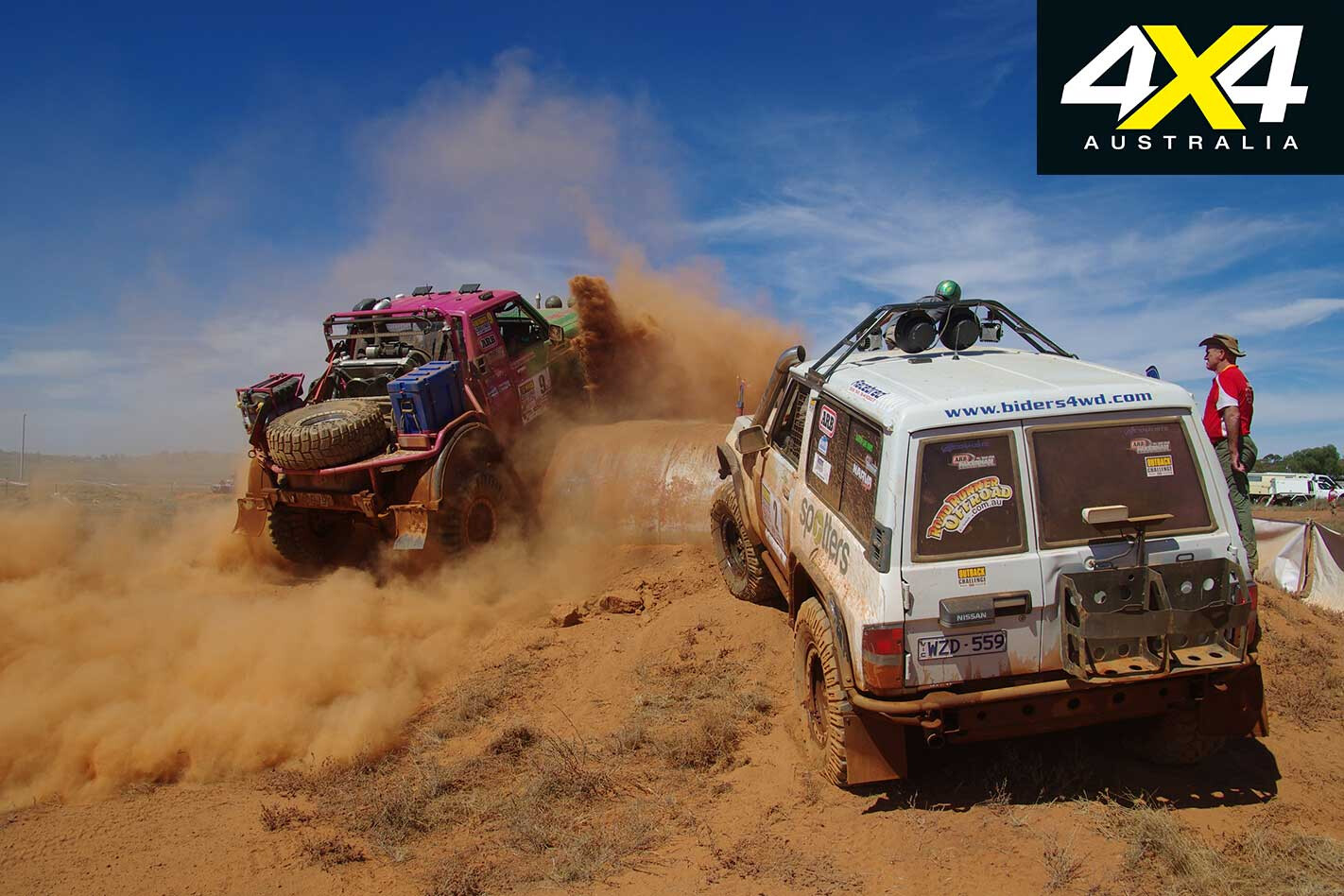
The last stage – the 150km-long Mad Max – is a brutal but spectacular way to end the competition. This monster stage comprises a single 150km lap of a course that takes competitors through three massive outback stations north-east of Broken Hill, with just two fuel stops along the way.
Mad Max is described by Outback Challenge organisers as ‘natural terrain with few marked tracks’. In other words: a truly tough test of driver, navigator and vehicle. Not only do they have to keep themselves and their vehicle in one collective piece, they have to try and do that while racing against a challenging eight-hour time limit for that stage.

For off-road competitors, the Outback Challenge is definitely on the top of the ladder for Aussie 4×4 events, and for spectators it is also a must-see; not only are you getting the chance to witness top-notch off-road driving, you can also stay on after the epic four days of the event and explore more of the Broken Hill region.
You can even plan your own future assault on the Outback Challenge. It’s gonna be epic and an event that shouldn’t be missed!
Website: www.outbackchallenge.com.au Phone: 1300 788 105
IT’S IRONIC. While we all look at a 4×4 as a tool to take us on literal journeys, they often take us on metaphorical ones.
The trials and tribulations of building the 4×4 of our dreams are often enough to rival any journey you’d take locked in low-range with the tyres aired down. While Jordan’s immaculate Isuzu D-Max might be a one of a kind, its story is one that we are all familiar with.
As an apprentice chippy (a family tradition) Jordan spent years longing for a 4×4 – a key to unlocking the countless adventures to be had far beyond city lights, and one he always felt out of reach of his modest earnings. Fast forward a few years and Jordan finished his trade and shifted his focus to building the 4×4 he’d been lusting for.
It’s fitting then that he chose Isuzu’s D-Max as the foundation, a history of hard work forged directly into an adventure machine, much like Jordan himself. The facelifted D-Max sports Isuzu’s venerable 4JJ1 under the bonnet, a 3.0L turbo-charged diesel engine capable of pounding out 8-second ¼-mile passes with just the right amount of crazy.
Jordan’s kept his relatively stock, however, with a DPU performance module courtesy of Down Under Diesel Tuning tweaking the engine for more grunt. It howls through the dependable Safari snorkel, while an HPD catch can and Munji solid intercooler pipes add ticks to the reliability column.
But we digress; you’re here for the canopy, aren’t you? That oh-so-smooth operator is a trick unit zapped together by the guys at Tough Tinnies on the south coast of Queensland. While it looks heavier built than a Russian babushka, the whole unit is easily removed with the unfortunately named Jackoff system.
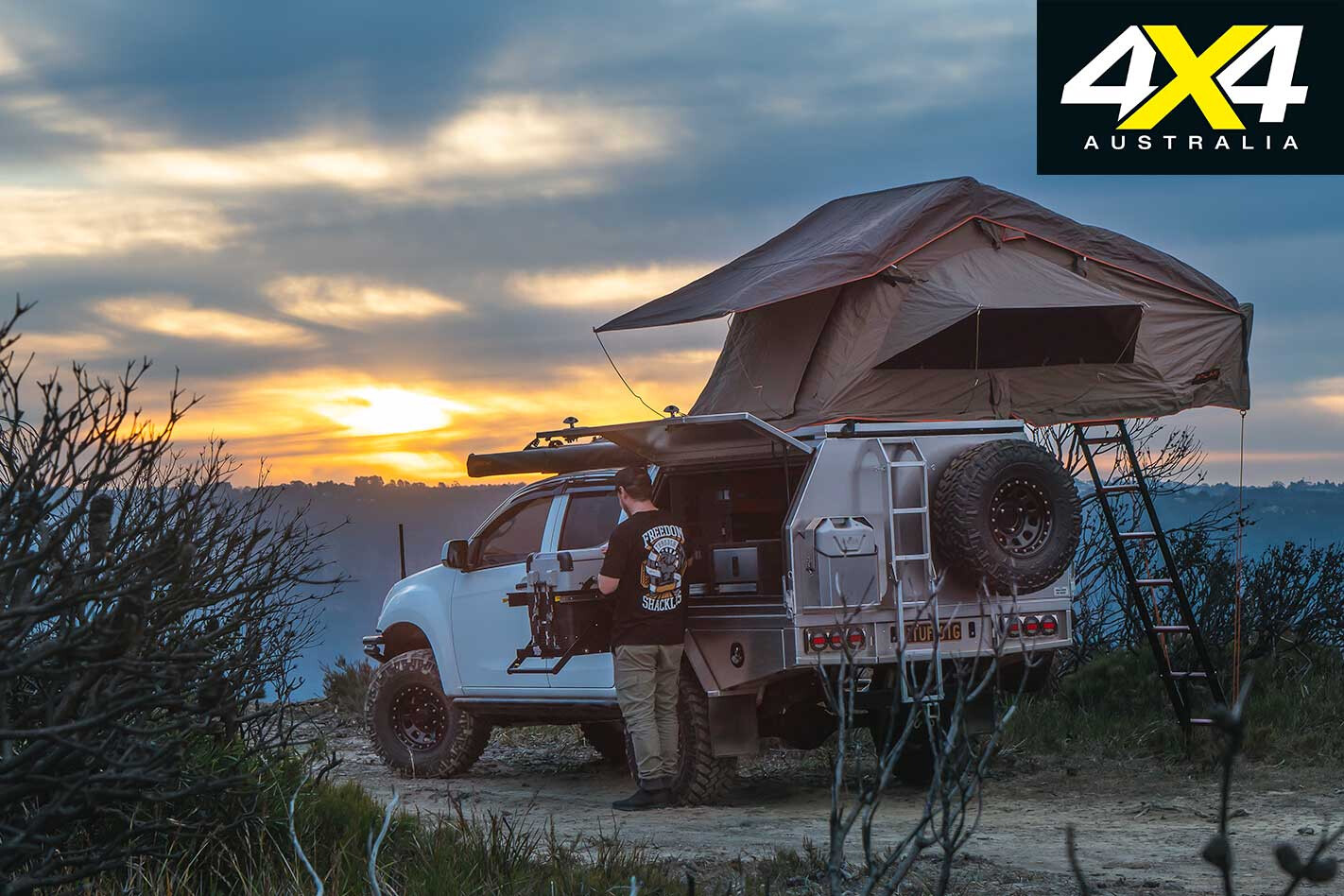
A few clasps popped and a set of legs slid in, and the D-Max is free to roam the tracks while his home on the road is safe and sound back at camp.
Jordan’s been through a few tray setups and canopy fitouts, so he knew exactly what he was after with the Tough Tinnies setup. Think Goldilocks and three different bed setups and you’re on the right path.
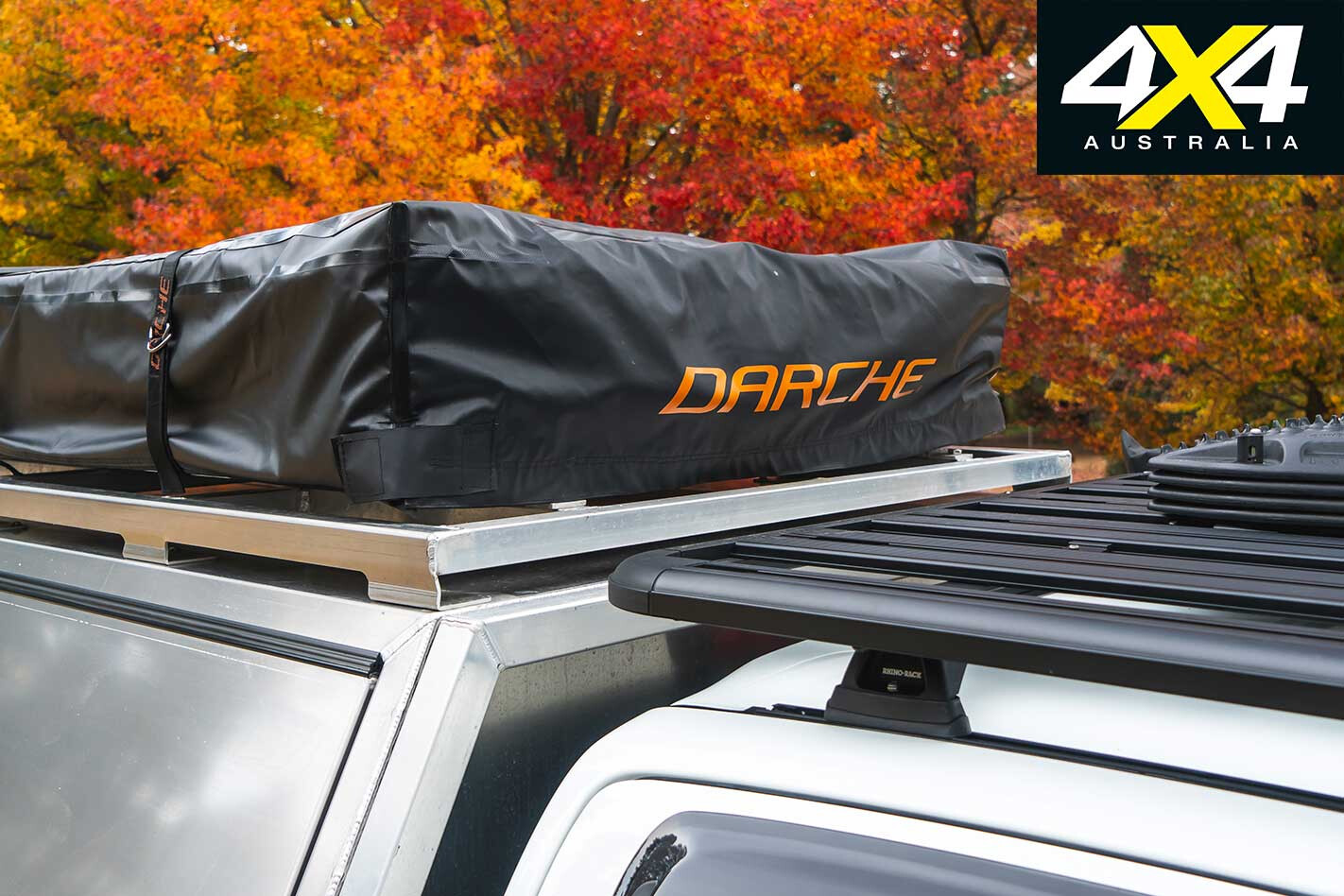
Jordan’s finally settled on a Darche Hi-View roof-top tent for a comfy night’s sleep. “I had a hard-shell rooftop tent before,” he told us while setting up the Darche. “You couldn’t beat the setup time, but it felt claustrophobic inside. I shipped it off to Tasmania and ended up going back to the Darche setup.” He’s paired it with an Eclipse roll-out awning to give plenty of shelter against inclement weather.
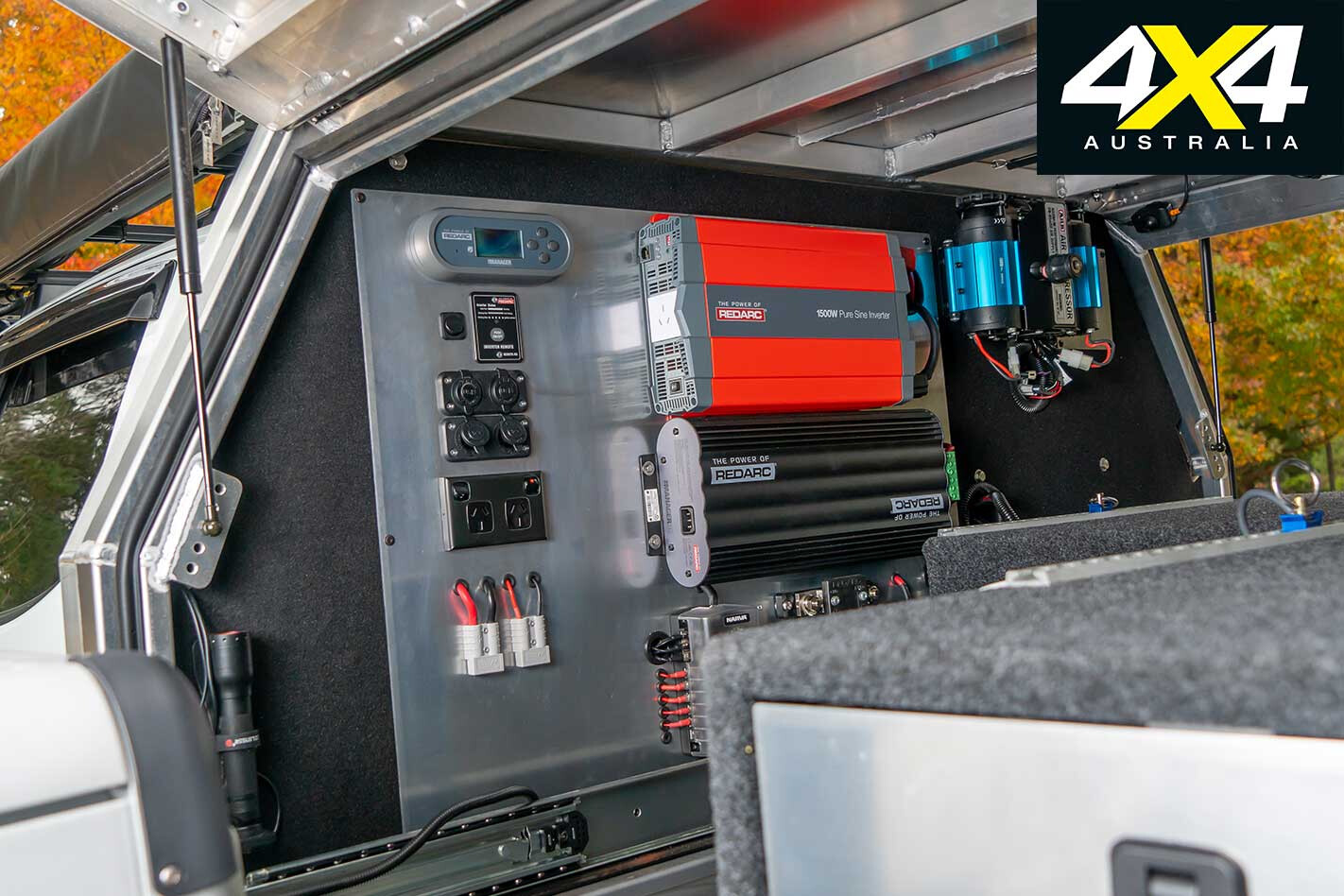
Opening up the canopy doors is like letting a kid loose in a candy store, if the kid is a 4WDer, and the candy store is the best electronics gear on the market. The legs of the setup is a Betta Batteries lead-crystal battery (more on that later) but the brains is a comprehensive Redarc system headed up with a Manager30.
While battery management used to require a precise flicking of toggle switches, the Manager30 setup handles anything Jordan can throw its way, coping with a combination of 240V, 12V and solar inputs then optimally charging whatever batteries Jordan’s running at the time.
It feeds a bank of Narva products and power outlets, but the ‘pride of the fleet’ for Jordan is the huge Redarc 1500W Pure Sine Wave invertor, perfect for the morning coffee.
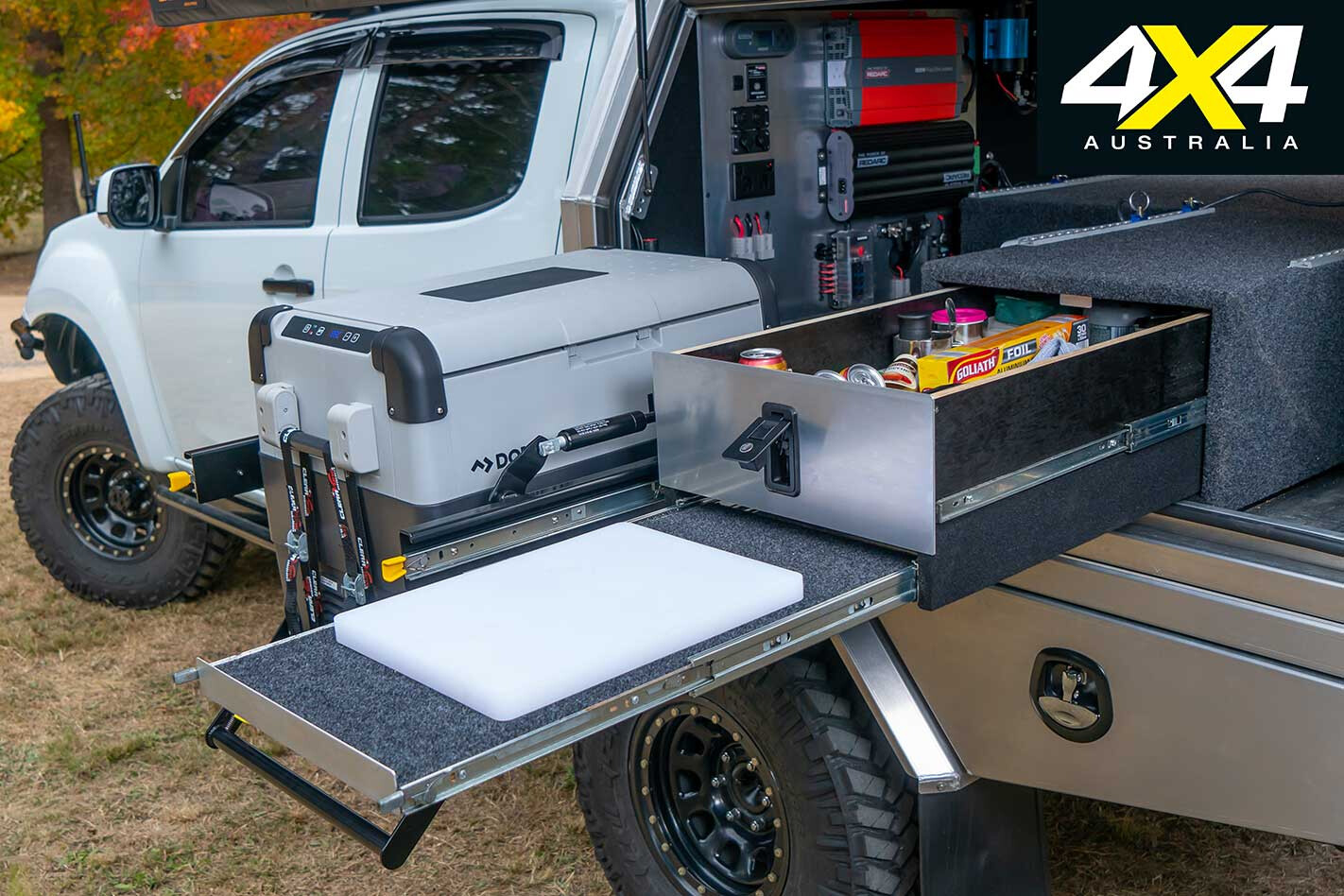
The rest of the canopy is a perfect mesh of form and function. Three individual drawers inside the main body provide plenty of room for nicknacks and gear for the long haul, while the passenger’s side not only houses a hidden prep bench under the drawer but also a Dometic fridge on a Clearview drop slide. There’s LED lighting throughout, with additional storage along both flanks and a handy trundle drawer in the rear.
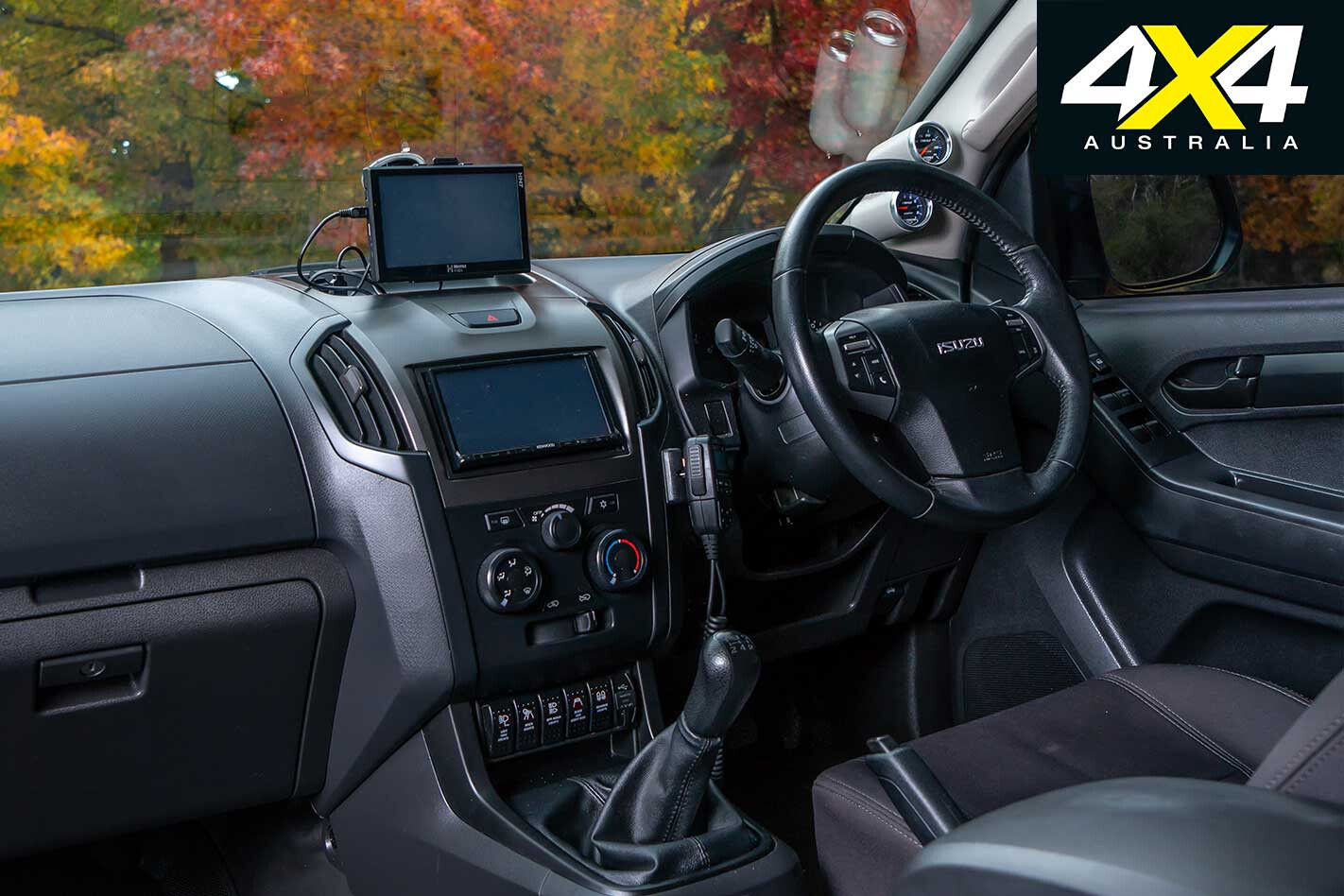
While the rear end of Jordan’s D-Max is a no-holds-barred kind of affair, up front things are a little more understated. Two huge screens dominate the cockpit. Up top a Hema HN7 keeps him on the right path no matter where he strays, while a Kenwood double DIN unit adds a little Xzibit style pimpin’.
On the practical front are twin AutoMeter gauges keeping a watchful eye on boost levels and exhaust gas temperatures, with a plethora of rocker switches to activate everything from the canopy lights to North Korea’s guided missile program.
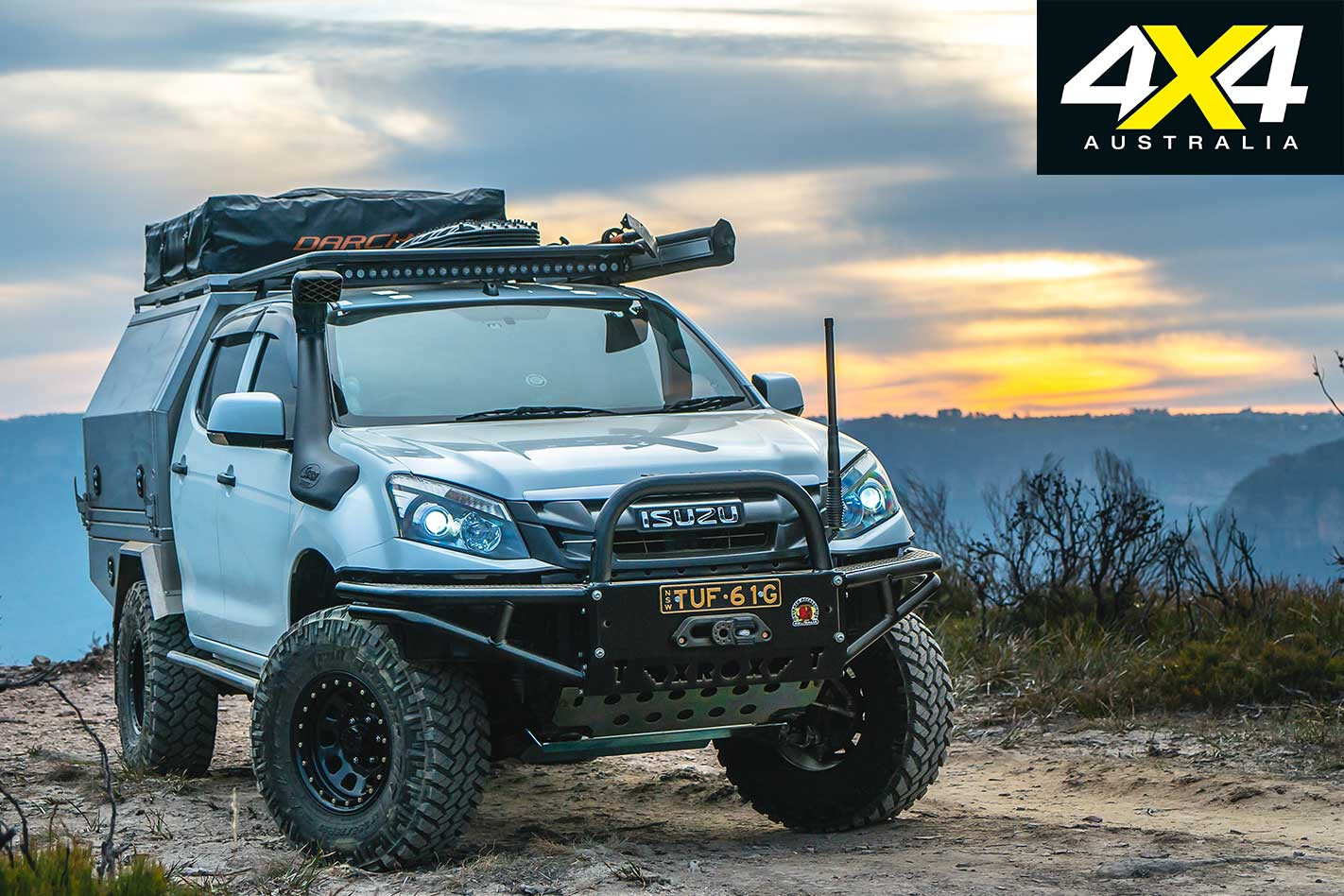
On the outside Jordan struck gold somewhere between a hardcore weekender and a kilometre-proven tourer, never scared to lift a wheel or pull up to camp. The Xrox bar leads the way, with a Warn winch slotting in behind the Factor 55 fairlead and flat link.
Bushskinz bash plates protect the radiator, front diff and engine sump, while South Cross Fabrication rock sliders keep wayward rocks from stoving in both flanks. Up top a Rhino-Rack platform mounts the LED light bar and MaxTrax, as well as provides additional storage should Jordan fill the shipping-container-sized canopy below it.
The suspension is a mix and match of DIY components to get the required clearance for the 285/75R16 Nitto Trail Grapplers, but there’s a set of King’s 2.5 shocks going in shortly to make things ride a whole lot smoother. Drive is put to the ground at both ends through a set of Harrop eLockers, sending drive to every wheel, while eagle-eyed readers may notice something a little unusual with the front hubs.
“They’re some of the strongest hubs on the market,” Jordan tells us. “They’re a direct bolt-on from a 1992 Jackaroo and help stop the CVs spinning when I’m not in 4×4.” While they may save a modicum of fuel, they also mean a snapped CV on the tracks won’t spin itself to pieces back on the blacktop.
In an age of instant gratification and she’ll-be-right-mate, it’s refreshing to see not only the drive required to build something right, but the finished product itself. Keep an eye out for Jordan on the tracks and give him a wave for us. If you don’t see him, chances are he’s in the shed building it just that little bit better again.
CRYSTAL-WHAT?
ABSORBED Glass Mat, Lead Acid, Lead Crystal, Lithium. While it might seem like the Tuesday night menu at your local methadone clinic, they’re just some of the terminologies you’ll have to play with in the auxiliary battery game.
Absorbed Glass Mat (or AGM for short) is your run-of-the-mill heavy-duty battery; they’re cheap, sensitive to discharge levels, and great for the slow draw of components like fridges and lighting. Lead Acid is your standard main battery; they pack a punch in an affordable package but work best for fast, big hits of draw (like starting an engine).
Lithium has been touted as the next big thing; they’re incredibly light weight and the ability to be drawn far lower than an AGM battery makes them a hell of an option, but they’re more expensive than a sherbet habit in the ’80s, and they don’t cope with heat.
Lead-Crystal seeks to fill the void: a cross between an AGM and a Lead Acid, Lead-Crystal batteries are significantly cheaper than Lithium options but offer far more usable power and a sturdier construction than their AGM counterparts.
THE STYLE of my Tonner bullbar has been one of the hardest decisions for me to make. It’ll totally transform the looks from both the front and sides of the vehicle, for better or worse.
Genuine Holden Overlanders, country utes, tradies and general Holdens of the era utilised four- or five-poster style bars, while some others incorporated two posts with curved outer loops. A look around a fair-dinkum country town will see some huge examples of bars that may help frontal protection from animal strikes with their oversized dimensions, but simply don’t cater for off-road use.
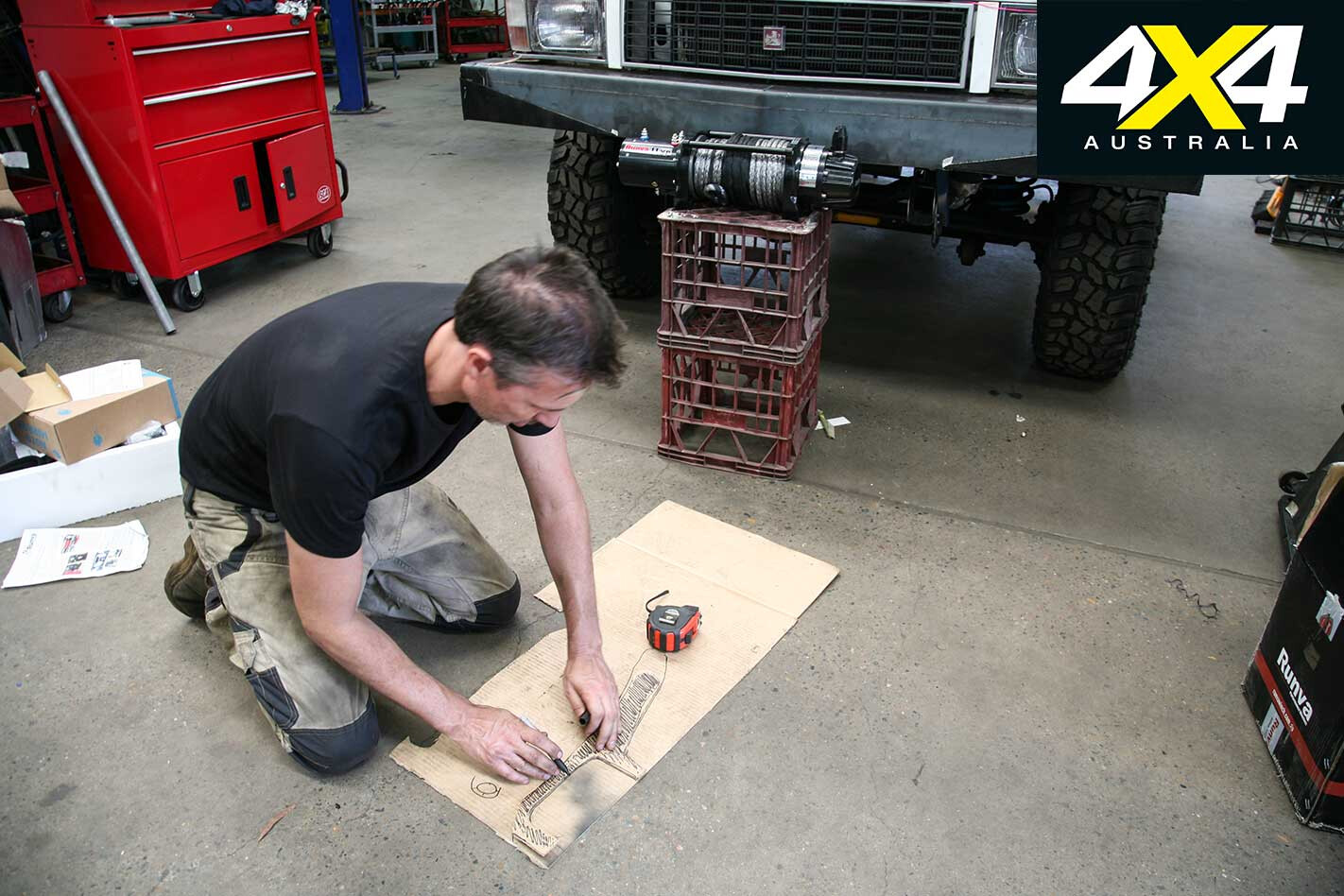
Jason at Total Care 4WD was willing to make pretty much anything I wanted and, given there were no airbags or other safety issues restraining us, I started doodling my perfect bar.
While animal strike protection and off-road approach angles would need to be catered for, so was fitting an electric winch and decent-sized driving lights. The winch would be recessed into the bar and behind the Holden grille, so having the Runva 11,000 pounder on-hand during the build was vital.
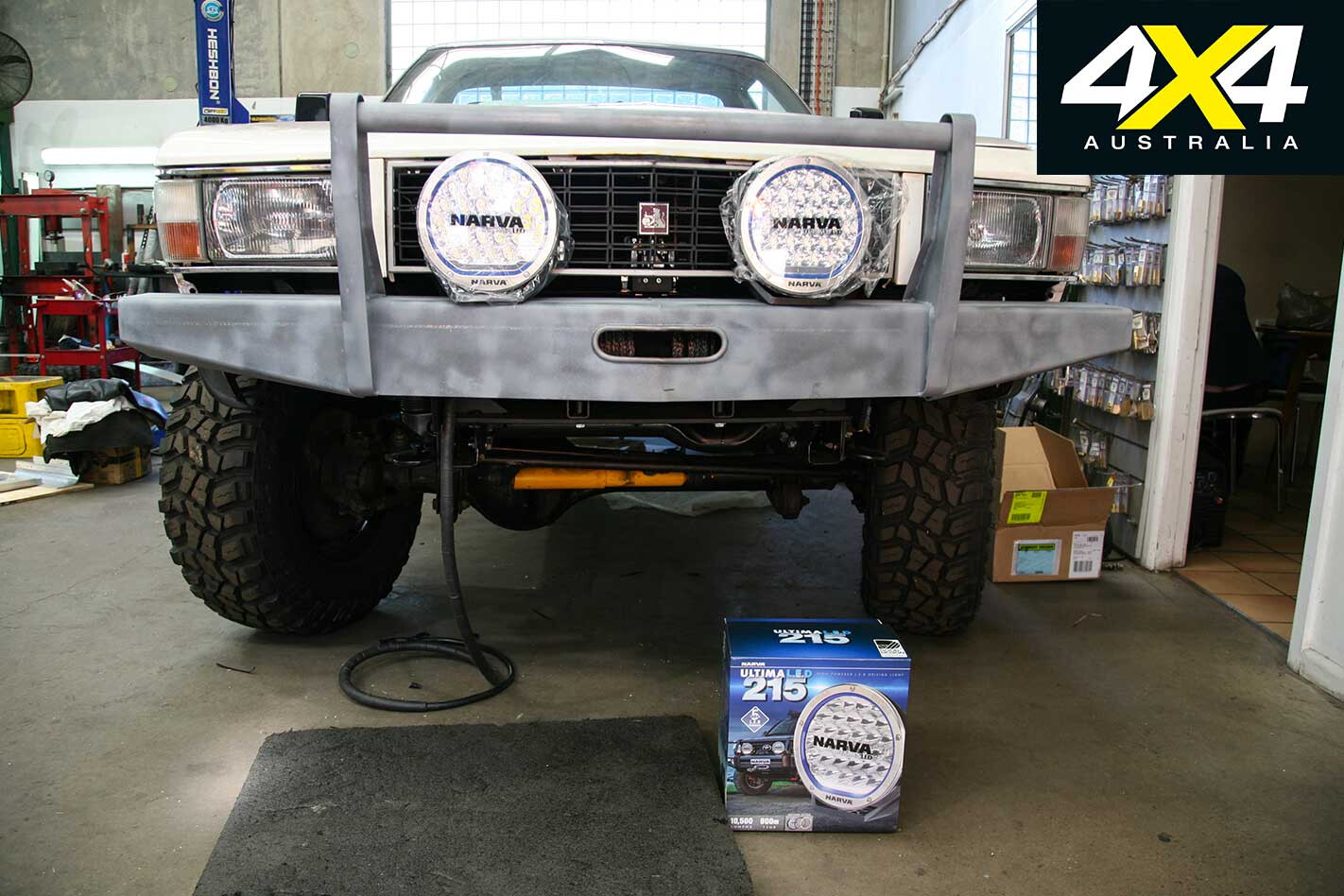
I’ve gone for a set of the newly released Narva Ultima LED 215 driving lights to grace the Tonner. While I know they’ll chuck a heap of light on the road, both far and wide, they also have a nice, shallow body that’ll fit perfectly into my custom bullbar. We’ve also incorporated a couple of top-mounted tabs for sand flags, UHF antennas and the like.
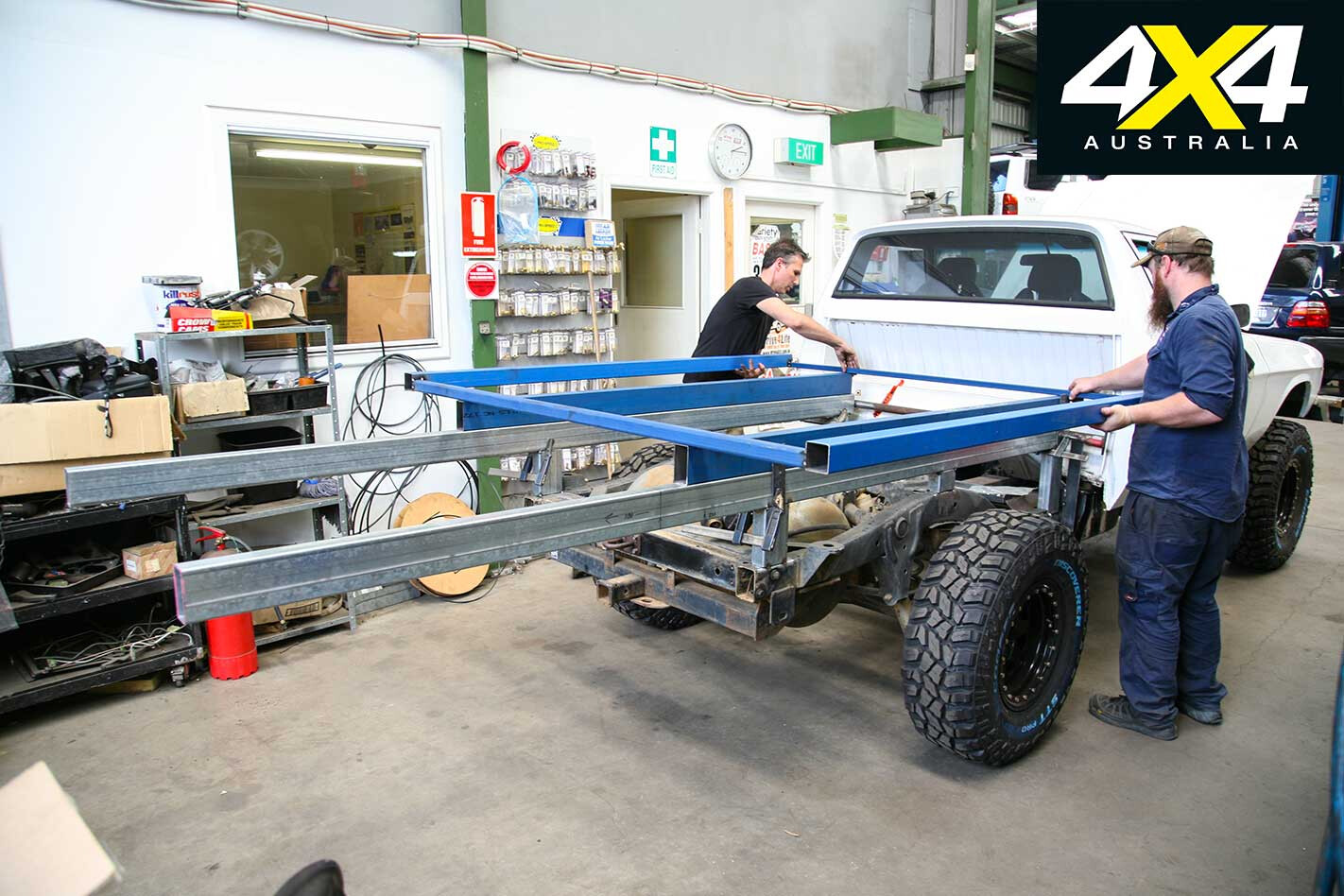
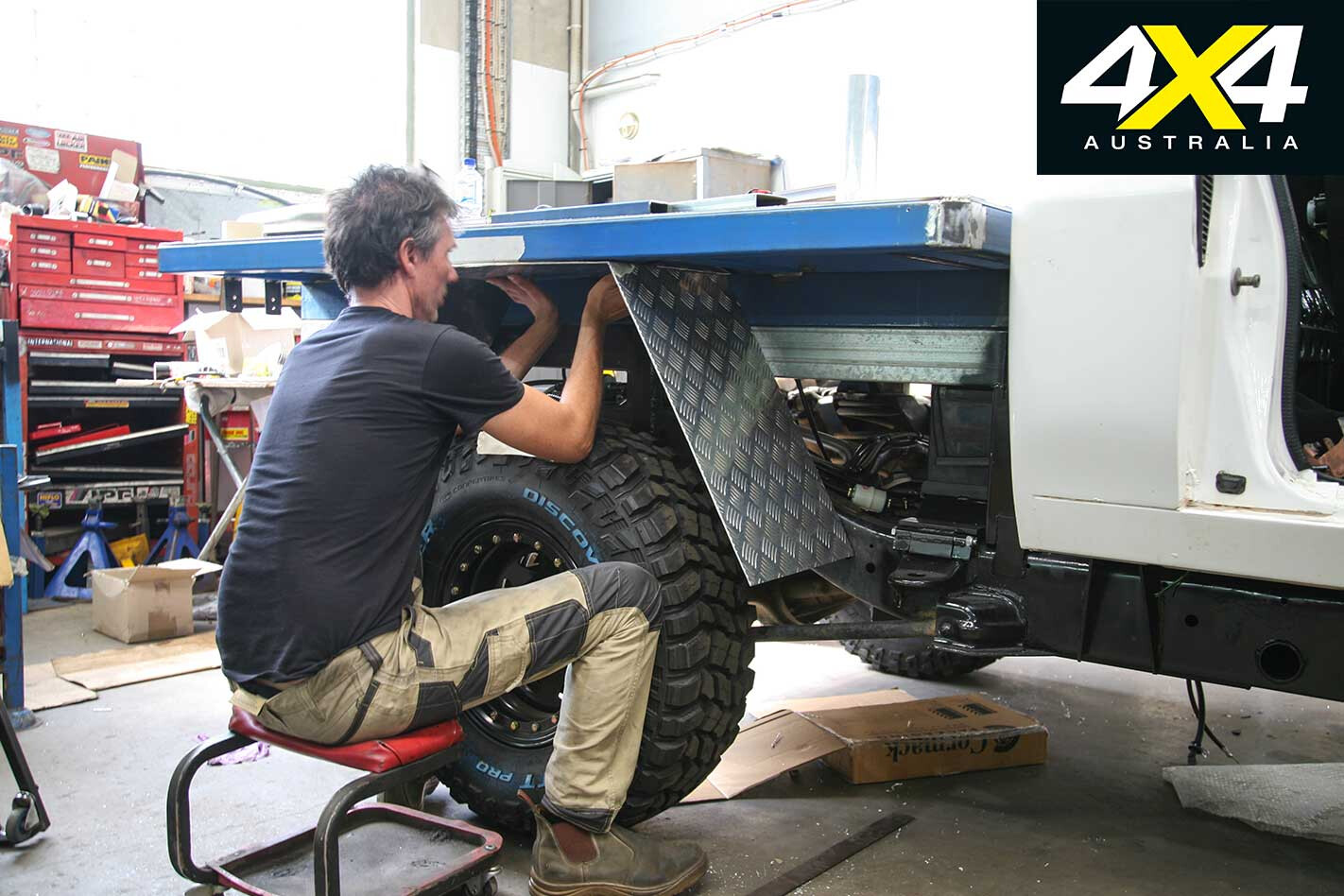
At the rear end, the build of the tray is to be relatively simple, with a rectangular section of steel outer lined with alloy checker plate on top to provide a totally flat surface. Three fold-down, removable side-boards and a pair of 3.5-inch round stainless steel hoops at the front and rear of the tray, with the rear one being removable, makes for a multifunctional system.
Day-to-day driving will see the tray empty, other than perhaps a pair of removable storage boxes that’ll no doubt be home to recovery gear, a few ropes and general tools. Later, if space permits, I’ll add a couple of under-tray tool boxes at both the front of the tray and perhaps a tapered set at the rear.
Being able to remove the side-boards and rear hoop will allow a removable canopy to be used for more covered and secured storage, or even some form of slide-on camper setup. That’s for when I nick off on extended trips and don’t have to cart dirt, bricks, sand or household goods for every man and his dog … because most ute owners seem to get roped into moving stuff.
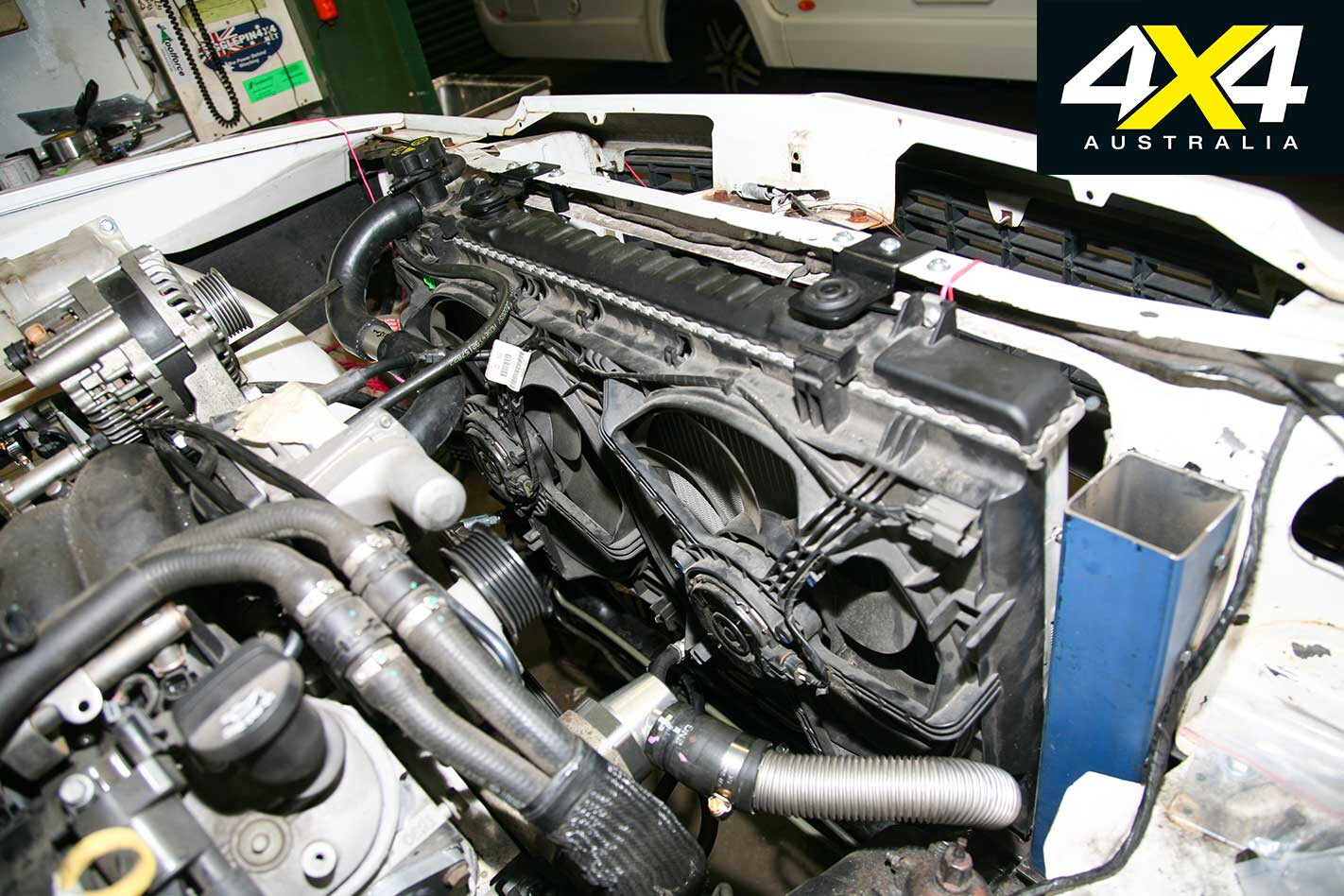
My initial radiator plans were to utilise an adaptor kit from Marks 4WD Adaptors to use a viscous coupling fan, and source an off-the-shelf radiator from a Cruiser or Patrol. Unfortunately, no matter how much swearing, how many different radiators and even changing to a shorter water pump snout on the front of the LS3, the sloping shape of the front of the Tonner bonnet and the slight angle the engine sits at wouldn’t allow fitment without butchering.
So, off with the viscous coupling kit and in with the standard Maloo radiator with twin thermo fans, making for plenty of room – luckily we kept it all from the donor R8 Maloo ute. We figured if that radiator kept the behemoth engine cool in the Commodore engine bay, it should do so in the ol’ WB’s.
Reliability-wise, the most I’ll do is carry a spare thermo fan motor just in case one spits the dummy after a mud or water run. Not what I wanted, but sacrifices in custom builds will always pop up from time to time … so we dealt with it.
A few people suggested sticking with the standard Patrol rear diff, given it’s one of the best LSD types available. While my Tonner won’t be a comp vehicle, it still needs to (read: I want it to) be ultra-capable for playtime and general 4x4ing, and my reply was, “If it’s not locked, it’s not locked, and no amount of tightening an LSD will compare.” So, I’ve dished out for a rear TJM Pro Locker, plus a LOKKA auto locker from 4WD Systems for the front diff.
I’ve used TJM Pro Lockers in my old 105 Series Land Cruiser for about eight years, and to say I was happy with them is an understatement. Flick that switch and ya locked and ready to rumble through almost any terrain. Flick that switch again and you’re back to easy open-diff driving for both on- and off-road. The front auto locker allows far more steering ability compared to a manual front locker, plus it is bucket loads cheaper to purchase and install.
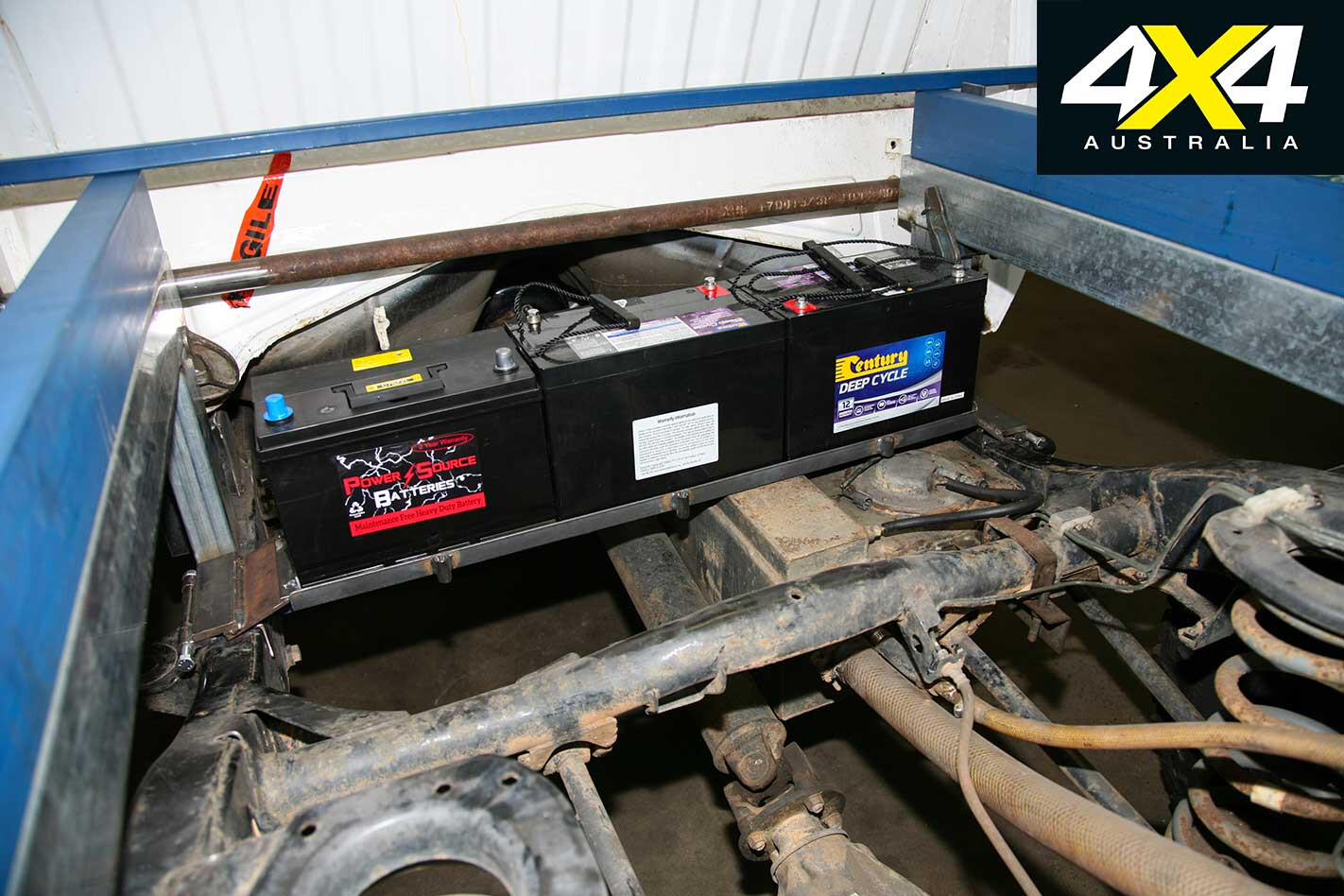
Given I wanted to fit dual air cleaners with flat panel filters (from a 70 Series Land Cruiser) behind each headlight, that then feed into the induction system in the centre of engine block, there was no real estate left for a starter battery, let alone an auxiliary unit.
That got the fabricators at Total Care 4WD knocking up a triple battery tray that rests between the chassis rails, directly behind the Tonner cab. This keeps the weight central, low-mounted, cool (from engine bay heat) and easily accessible if needed.
The triple-battery setup (one starter and two auxiliaries) will be controlled via a Projecta DC/solar charger system that will see both auxiliary batteries treated as one large battery, which can be charged via the alternator and/or solar while driving and via solar while parked at camp. Obviously, the starter battery is automatically disconnected once the engine is flicked off, so as not to discharge it.
How to mount the spare wheel has been giving me a headache for more weeks than I can recall. I didn’t want it poking out the rear on a carrier, I didn’t want it recessed in the centre of the tray were I couldn’t access it, and no, I didn’t want it on top of the cabin or taking up valuable space in the tray; although, that would have been the easy way out.
Long Ranger managed to modify a GQ Patrol long-range tank with a flat top surface that allowed the whole spare wheel to lie on. A few well-positioned straps and a locking device should keep the Cooper 33-inch mud terrains and steel Dynamic imitation beadlock rims in place.
Over the last few months of building my perfect 4×4, I’ve had dozens of people asking me how much fuel the 6.2-litre LS3 will use. Short answer is: “Stuffed if I know, but it’ll return plenty of smiles per gallon.”
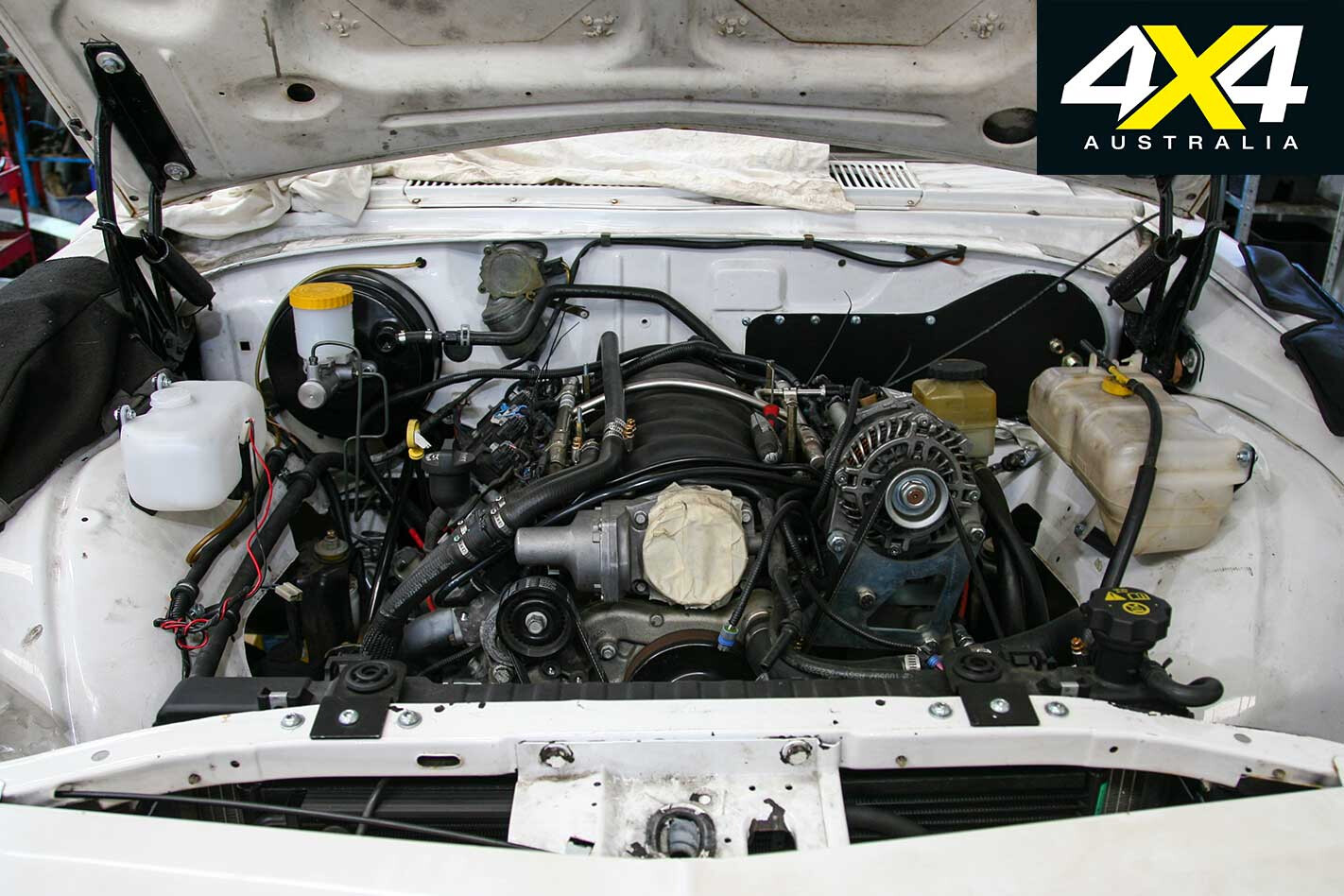
I’ve got a few mates running the 6.0-litre LS2 in Commodores and they all concur that they suck bucket loads with a heavy boot on the cranky pedal, but driven sensibly at highway speeds returns 10 litres per 100km or better.
The 6.2L is reported to use less than the 6.0L, but, given weight changes of the whole vehicle, different diff ratios, larger diameter rubber, and changed aerodynamics of my mutant Tonner, I revert back to my first answer of “stuffed if I know”. I’ll get back to you once I have tucked a few thousand kays of hardtop, dirt, mud and sand trips under my belt.
The Tonner has weighed in at 2008kg, which is down from 2050kg as the Tare weight on my GQ (wagon) paperwork; albeit, that’s with the bullbar, long-range tank, second tank and everything else in place, which would be on top of a standard vehicle. That has allowed me to finalise specs with Tough Dog to wrangle the correct weight coil springs under the Tonner. We’ve also got a custom 3.5-inch exhaust system dangling off the Marks Adaptors extractors … yep, music to the ears!
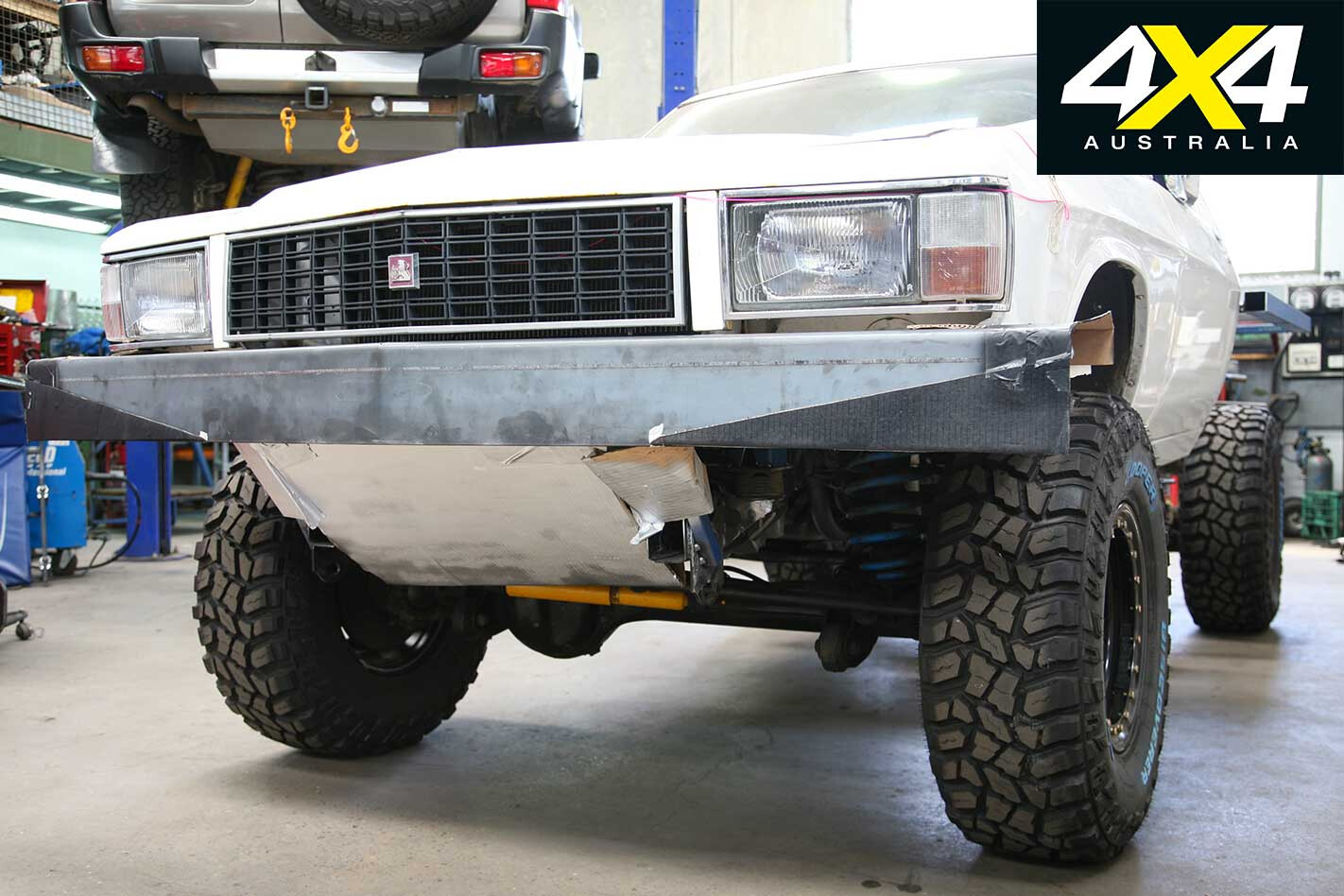
The tray has been finalised with some neat alloy mudguards, and side-steps have been formed to marry with the front flares and finish up just past the rear of the cab to enable use as a step-up into the high tray. At the time of writing, all the custom metal work has been removed and sent for spray painting … frog green it will not be.
Hopefully this time next month it’ll all be back together, the engineer has signed off and it’ll have a nice set of NSW number plates. So be sure to clock back in for the grand finale that is my perfect 4×4: a 1 Tonner on ’roids.
THE SLICK red rock of Moab in Utah, USA, is considered by many to be a Mecca for off-road driving and mountain biking. It has unique terrain that attracts disciples of each discipline from around the world to take on its many challenges.
For off-roaders, Moab is usually tackled by modified 4×4 vehicles with big tyres, lifted suspension, extra low gearing and plenty of body armour.
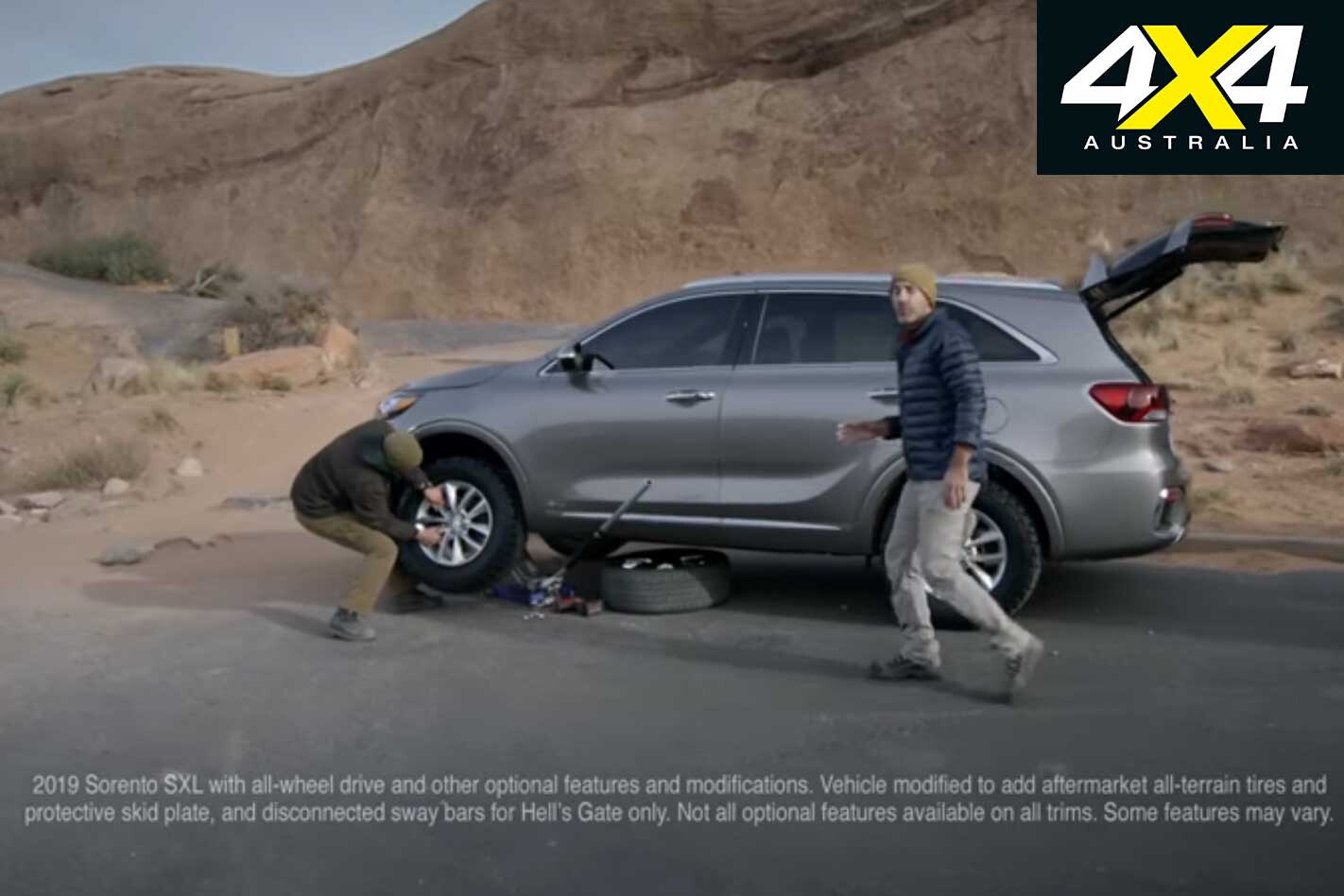
Social media has thousands of videos of vehicles on the rocks at Moab and plenty of instances where things go wrong, and when they go wrong here it happens in a big way. The rocks are so steep in places, vehicles flip over backwards as they ascend and roll dramatically back to where they started.
One of the most iconic and often videoed obstacles at Moab is Hells Gate, a steep V in the rock on the Hells Revenge Trail. Steep and daunting to say the least, Hells Gate is the stuff of locked diffs, sticky tyres and plenty of driver skill. This is not the place to be bringing your single-range family SUV on a weekend outing. Or is it?
Kia USA reckoned its Sorento SUV was up to the challenge and set out to prove it. Equipped with just some all-terrain tyres and underbody protection, the Sorento was otherwise stock standard as it took to the tracks.
When the team arrived at Hells Gate, they disconnected the factory swaybars to try and give the car some more wheel travel. These SUVs don’t have much travel to start with and, as you can see in the video, the Sorento still doesn’t have a lot with the bars disconnected.
How did the Kia go? Watch the full video to find out.
A TOTAL of 57 Mercedes-Benz X-Class vehicles may be leaving owners feeling a little flat, due to a software glitch with the tyre pressure monitoring system (code RY2).
*This story has been updated with comments from Mercedes-Benz Vans at 4:15pm 19 July 2018
The fault with Merc’s all-new dual-cab means a warning message may fail to display in the instrument cluster, when tyre pressures fall below the minimum level.
The full VIN list of affected vehicles can be found here: https://www.productsafety.gov.au/system/files/VIN%20list_45.xlsx
The glitch, affecting vehicles on sale nationally from May 1 to June 30, 2018, could cause “uneven tyre wear and change the steering and braking behaviour of the vehicle, increasing the risk of an accident.” – How did we ever survive without tyre pressure monitoring systems?
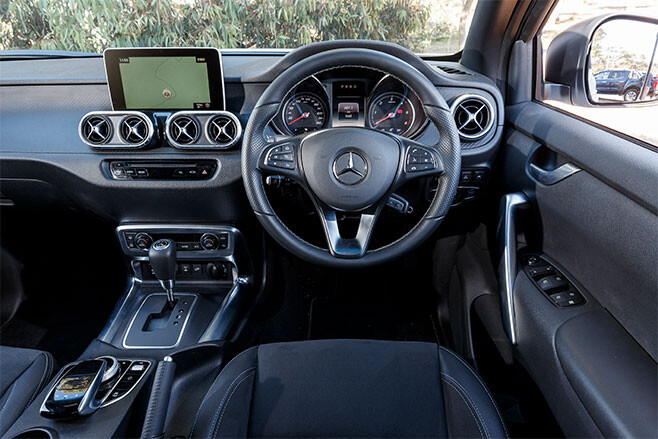
“There are 57 vehicles impacted by the recall in Australia, of which 7 have already been sold to customers,” Blake Vincent, PR and Corporate Communications Manager of Mercedes-Benz Vans, said. “The other 50 have already had the error rectified and are now ready for sale.”
The ACCC recall notice advises affected owners to contact their nearest Mercedes-Benz Vans dealer for inspection and reparation.
In the meantime, just head down to local servo and check the tyre pressures if they’re feeling a bit flat. It’s pretty easy.