
A recall notice for the 2018 Chevrolet Silverado 2500HD has been issued by the ACCC over concerns on the fitment of seatbelt buckles for the rear right and rear centre seats.
According to the ACCC, the aforementioned buckles may have been torqued incorrectly and may pose a danger to passengers in the event of a crash. The recall only names six Silverado 2500HD as listed in the VIN list here.
As the affected Silverados were sold by HSV, the Australian tuner will contact all affected owners directly, and owners of the affected vehicles are advised to get in touch with the HSV Customer Care at 03 9265 9500, or their nearest HSV dealer to arrange and inspection and repair of their vehicle.
If you’ve been watching the videos that came with this issue of the magazine and the two before it, you’ll know we had a pretty good trip through the Victorian High Country.
Ronnie Moon planned the route to capture some of the best places the High Country has to offer four-wheel drivers during a two-week adventure, and we reckon he nailed it. Stunning landscapes, challenging tracks, historical mountain huts and goldfields, as well as some top camps with great mates.
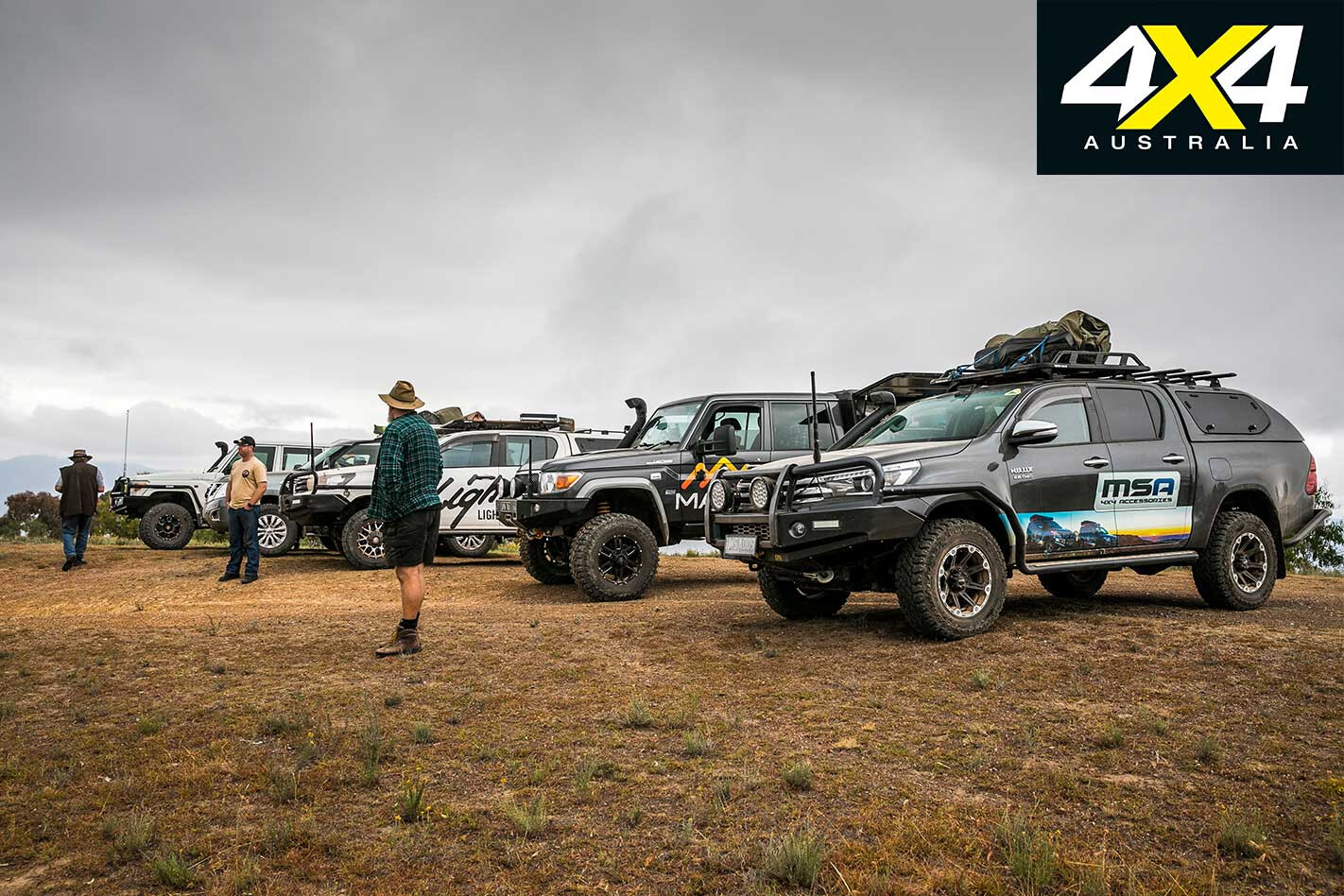
To join us on this adventure we gathered some of the best brands in the 4×4 industry, and some of those guys took the time to join us on the trip.
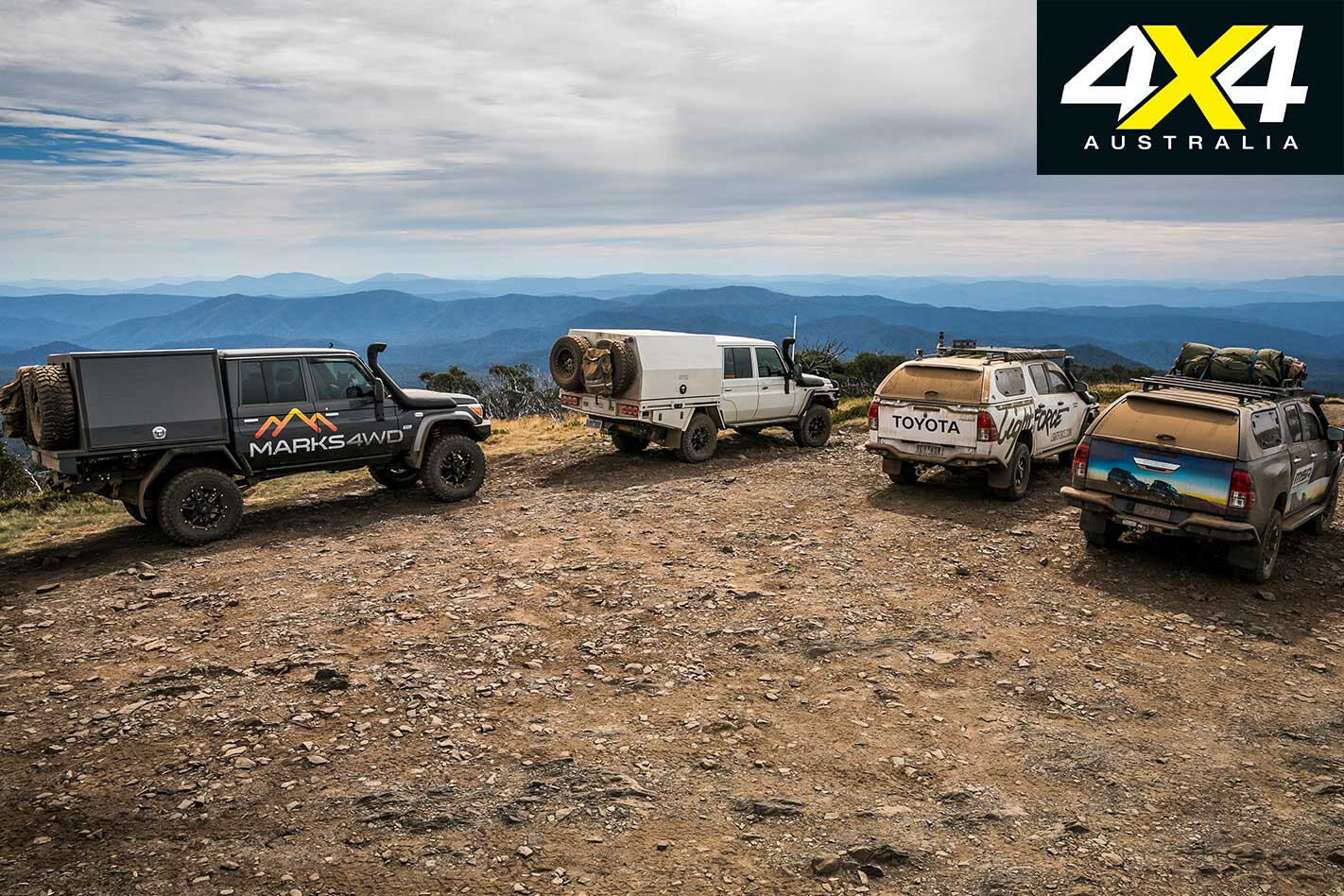
Lightforce was the principle sponsor of the video series, and Lightforce’s Craig Brumby joined us in his freshly-kitted out Toyota Hilux. Leigh Hardman from Marks 4WD brought his amazing portal axle and auto trans-equipped Land Cruiser 79 double-cab, which made light work of the tracks.
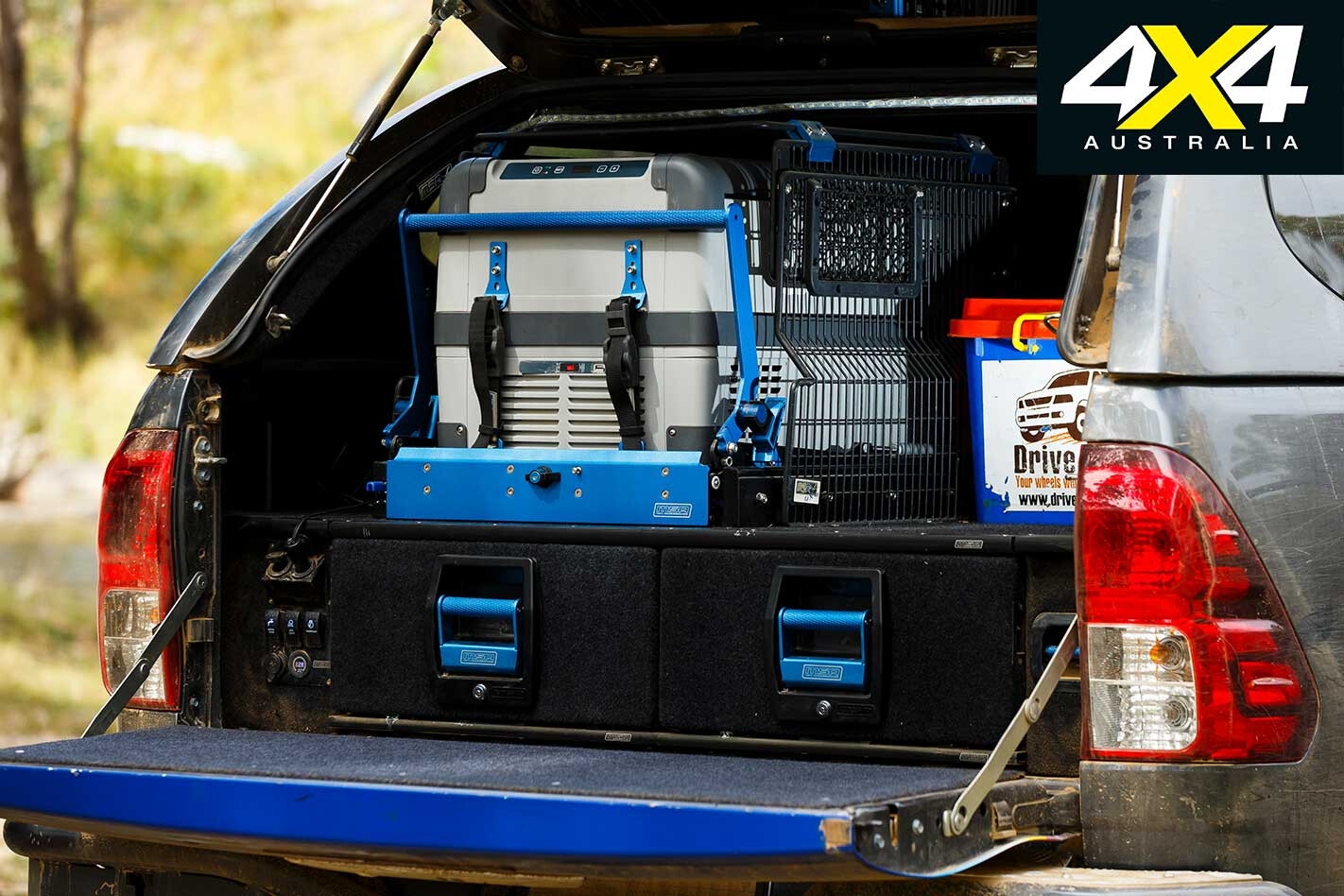
GT took care of the catering on the trip and he was driving MSA Accessories’ fully-equipped Hilux. Having the MSA drawer system and drop-down fridge slide in the ’Lux made his task easier, and we all know you have to keep the crew well fed and hydrated. We also brought our then long-term test Nissan Patrol along for the ride, while Ron was in his trusty LC79.
Other supporters included Toyo Tires, who sent us a set of its yet-to-be-released Open Country R/T tyres to fit to our Patrol; while Ron scored a set of Open Country M/Ts on his Cruiser. Ron’s Cruiser also has a pair of Clearview’s wide wing mirrors on it, as well as a set of Lightforce’s amazing HTX230 HID/LED combo lamps.
We also put a Lightforce 40-inch LED light bar on the Ironman rack on the Patrol. So we had a solid group of well-eqipped 4x4s and a top crew along for the ride.
Snowy Start
Nothing symbolises the High Country as much as the Snowy River, so we thought that was the ideal place to start this adventure. The convoy assembled on the banks of the Snowy close to the Victoria/New South Wales border, before making the long, low-range climb up into the mountains proper.
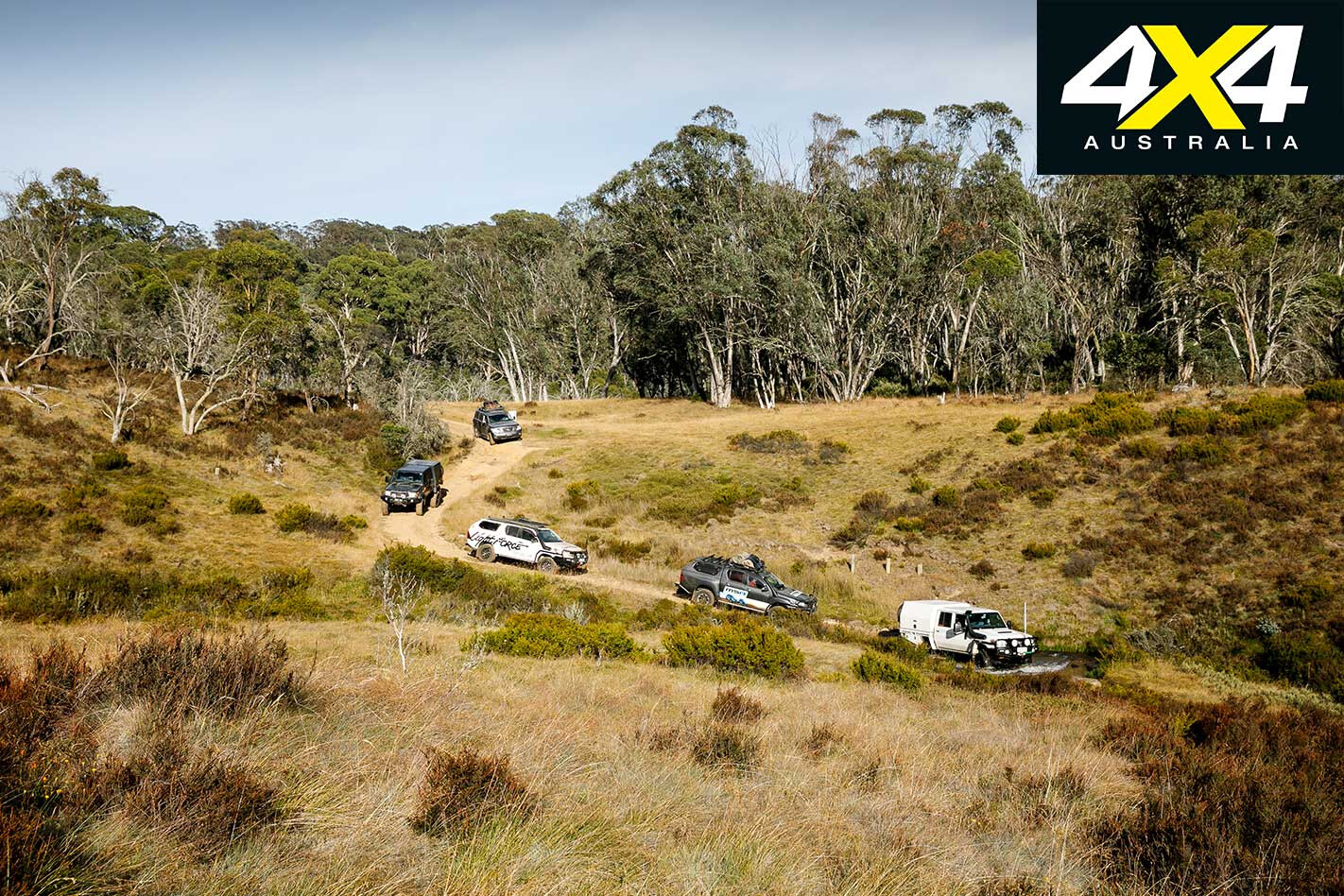
Steep, rocky climbs, gnarly descents, river crossings and stunning mountain views all became the norm for the two weeks of off-road driving. The High Country is one of the few places, perhaps the only one, in Australia where you can drive for weeks and be in low range the entire time.
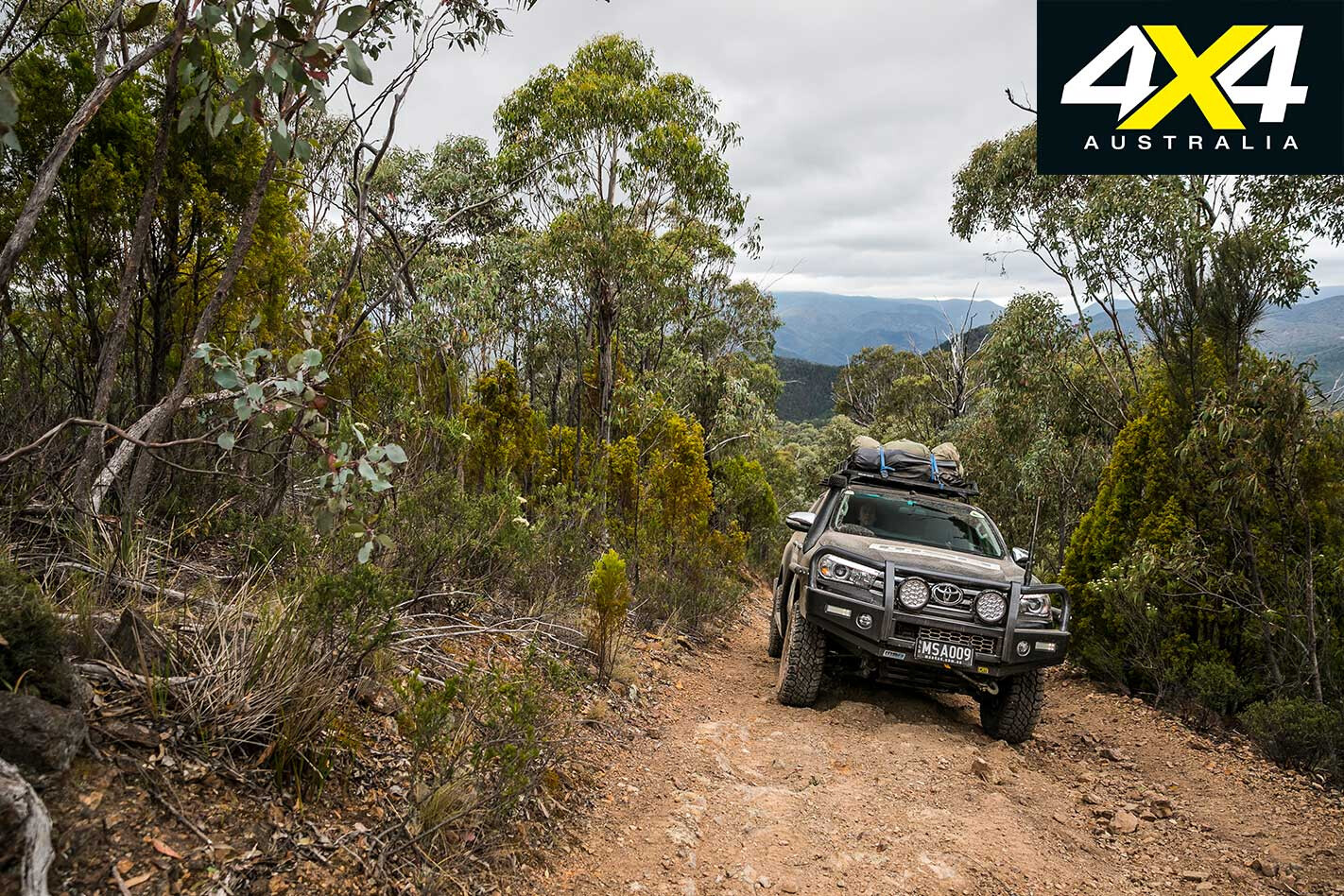
Our adventure wasn’t just about the driving experience; Ron’s knowledge of the history of the area is incredible and his stories along the way, as we visited the historic huts and locations, were mesmerising.
Travelling mid-week we had many campsites to ourselves, but what soon became interesting was the people we met along the way. Aside from the occasional 4×4 traveller passing in the other direction, and the National Parks and forestry workers we encountered, for the first four days we didn’t speak to another soul.
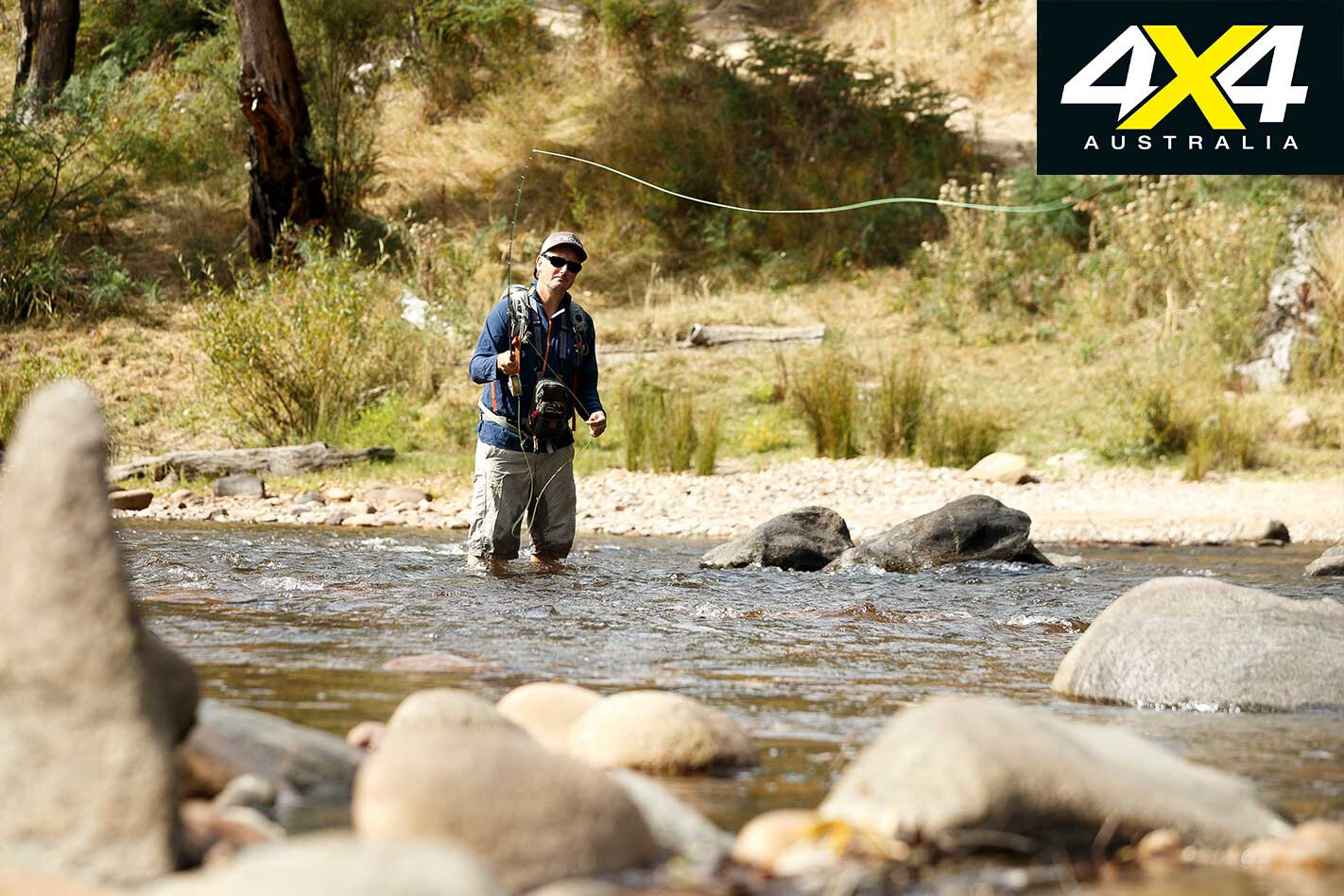
Then when we camped at Taylors Crossing on the Mitta Mitta River near Benambra we caught up with regular 4×4 Australia photographer Michael Hurren. When Mick isn’t shooting music videos or off-road racing, you’ll finding him wading up a river or stream in the High Country, Snowies or New Zealand, casting flies into the water in search of trout.
We were amazed when Mick’s afternoon effort hooked close to 30 small trout in the knee-deep river in just a few hours, all of which were released back into the fast-flowing stream.
Then, as we were packing up camp at Taylors Crossing, a lone walker crossed the footbridge where the Australian Alps Walking Track crosses the river. John was trekking solo the 655km track that links Walhalla in Victoria with Tharwa in the ACT, and it was interesting to chat with him about why he was doing it, how he planned ahead and what few things he was carrying in his backpack.
Interestingly, he carried a small solar panel on the back of his pack so that he could keep emergency items like his phone and radio charged over the three-week journey. It made us better appreciate the comforts of our fully-loaded 4WDs with our big, comfy swags and fridges full of food.
Log Splitter
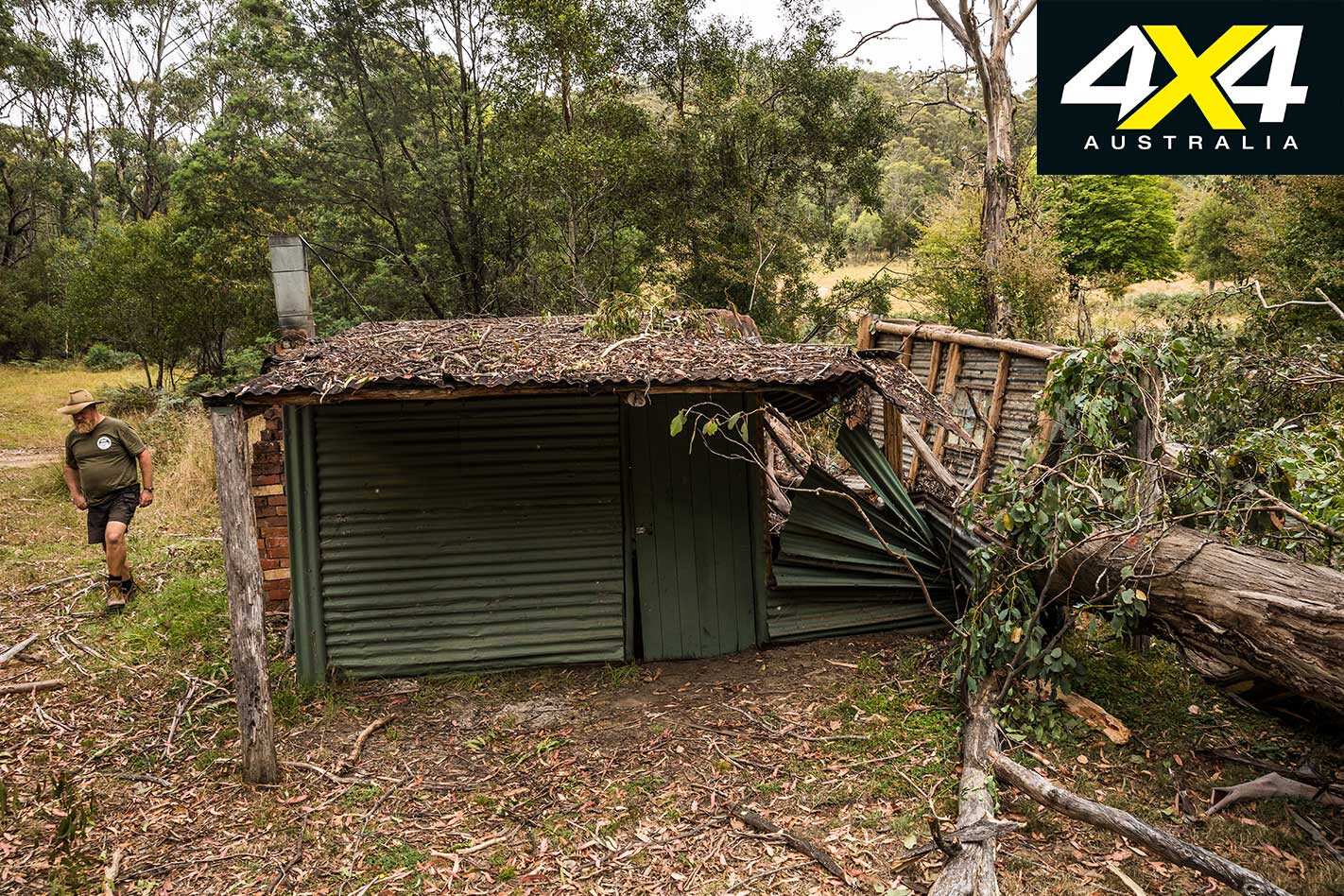
Later that morning we arrived at PO Hut to find a massive mountain ash had fallen and dissected the old tin building. Stopped here for a smoko break were two blokes travelling around in their Patrols for a couple of weeks, enjoying the tracks and the scenery. We bumped into them several times over the next week as we criss-crossed the tracks, including a big night at the Dargo Pub.
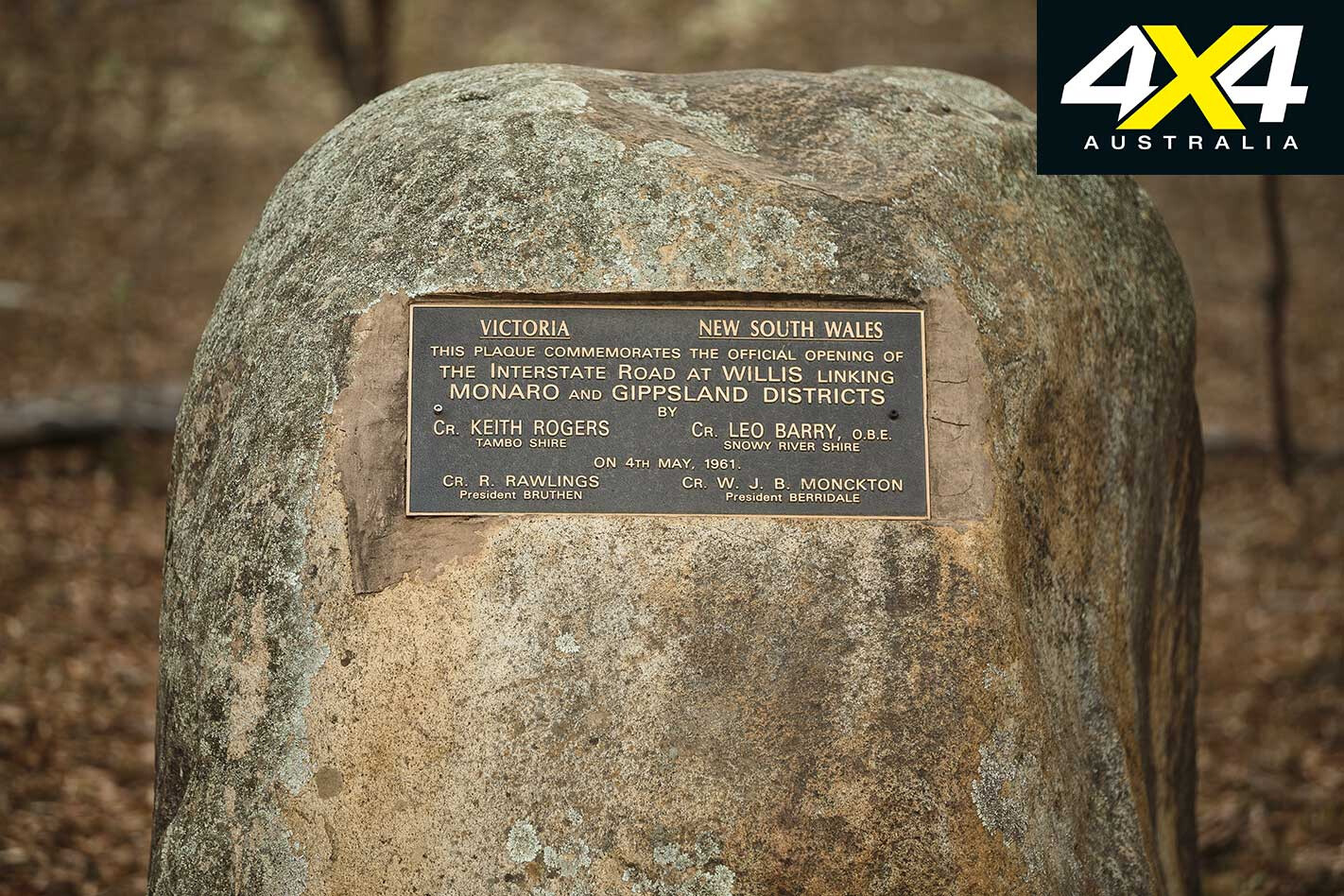
Then there was Ted Gilliam, who we bumped into near the old mine site at Glen Willis. Ted is a diesel engineer who has spent the last five years working with a group of blokes and Parks Victoria to restore and get running the old Ruston diesel engine, which has been there since the 1940s.
Ted was only too happy to spend some time with us and tell us all about the project. You would’ve met Ted if you watched episode two of our DVD series.
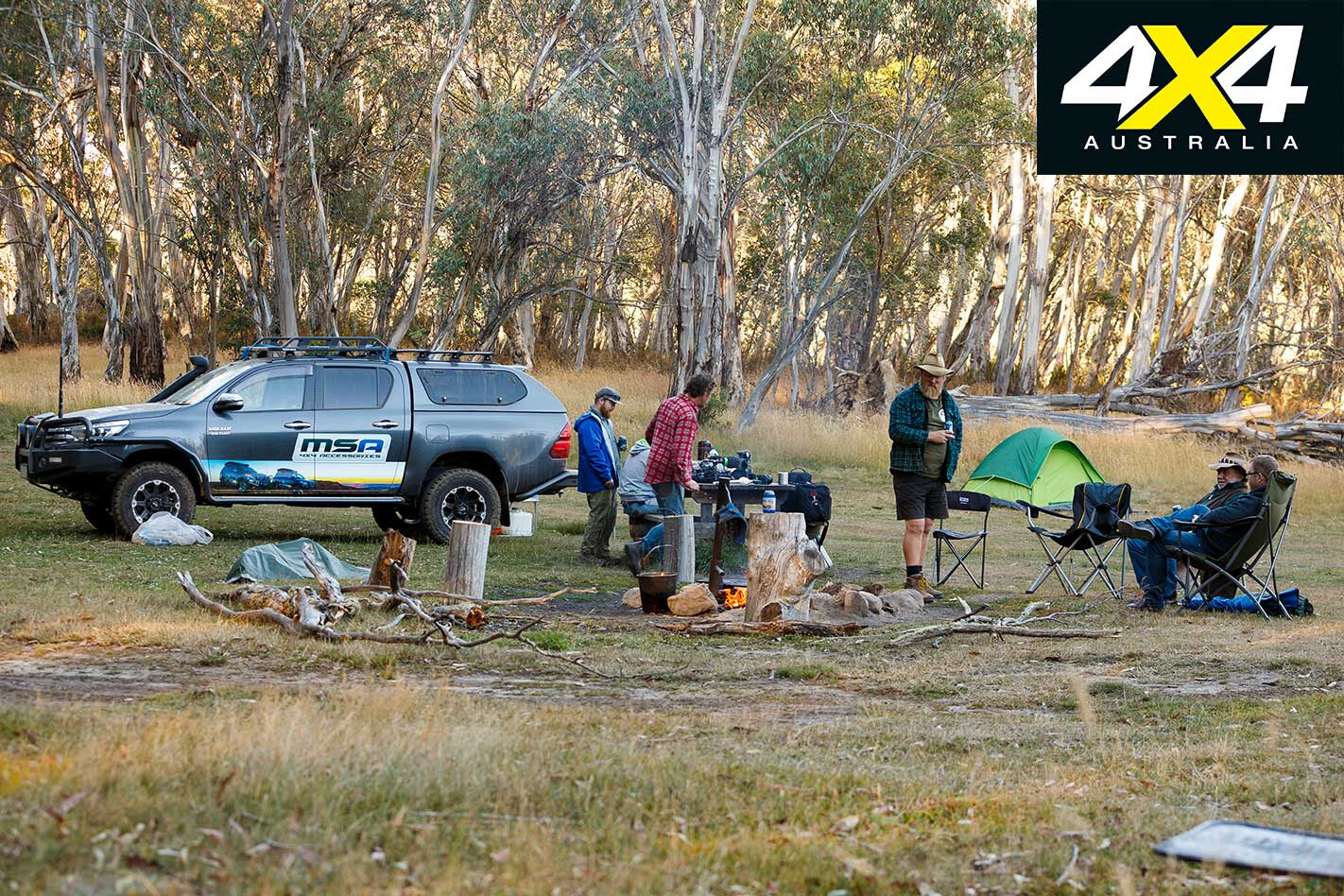
That night in camp near Omeo, Ron recognised a Classic Range Rover he knew belonged to an American couple who were overlanding around the world, so he stopped in for a chat with them.
These weren’t the only international tourists we came across four-wheel driving in the High Country; there were also folks from Italy and France, which just goes to show the appeal this amazing location has to travellers from around the globe.
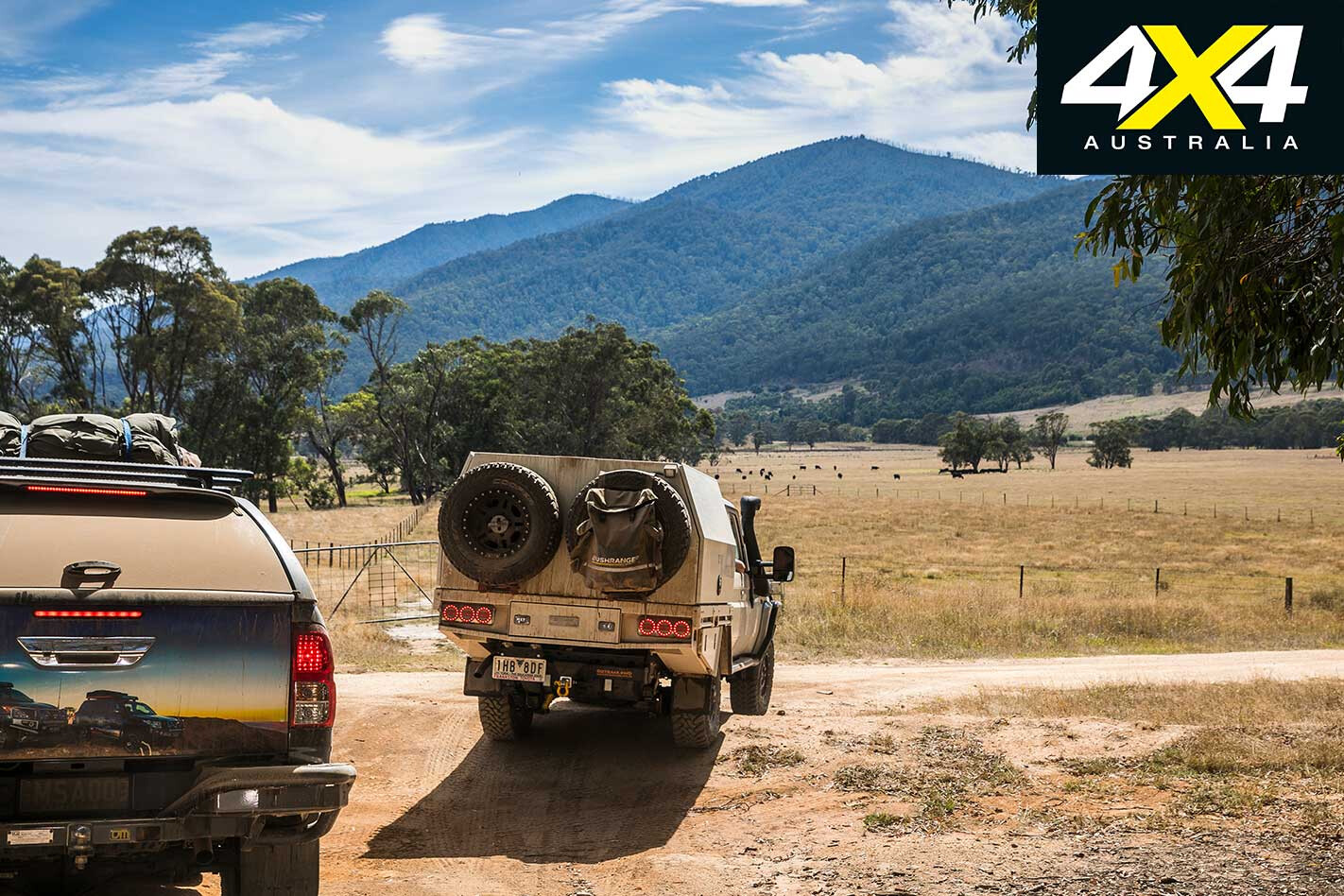
There were plenty of folks to chat with in the hotels in Omeo and Dargo, as you can’t beat the hospitality and atmosphere of these bush pubs for a great night out. The bush telegraph was in operation as we left Dargo and headed out along the ridge towards the trig point on Mount Blue Rag. Low cloud and fog blanketed the area and four-wheel drivers heading back along the road told us not to bother, as there was nothing to see up there through the fog.
We ventured back down the range to Talbotville and just about had the expansive campground to ourselves. There were a couple of other fellas there, but they were having a party all on their own, which we best thought we should stay away from.
Mountain Celebrities
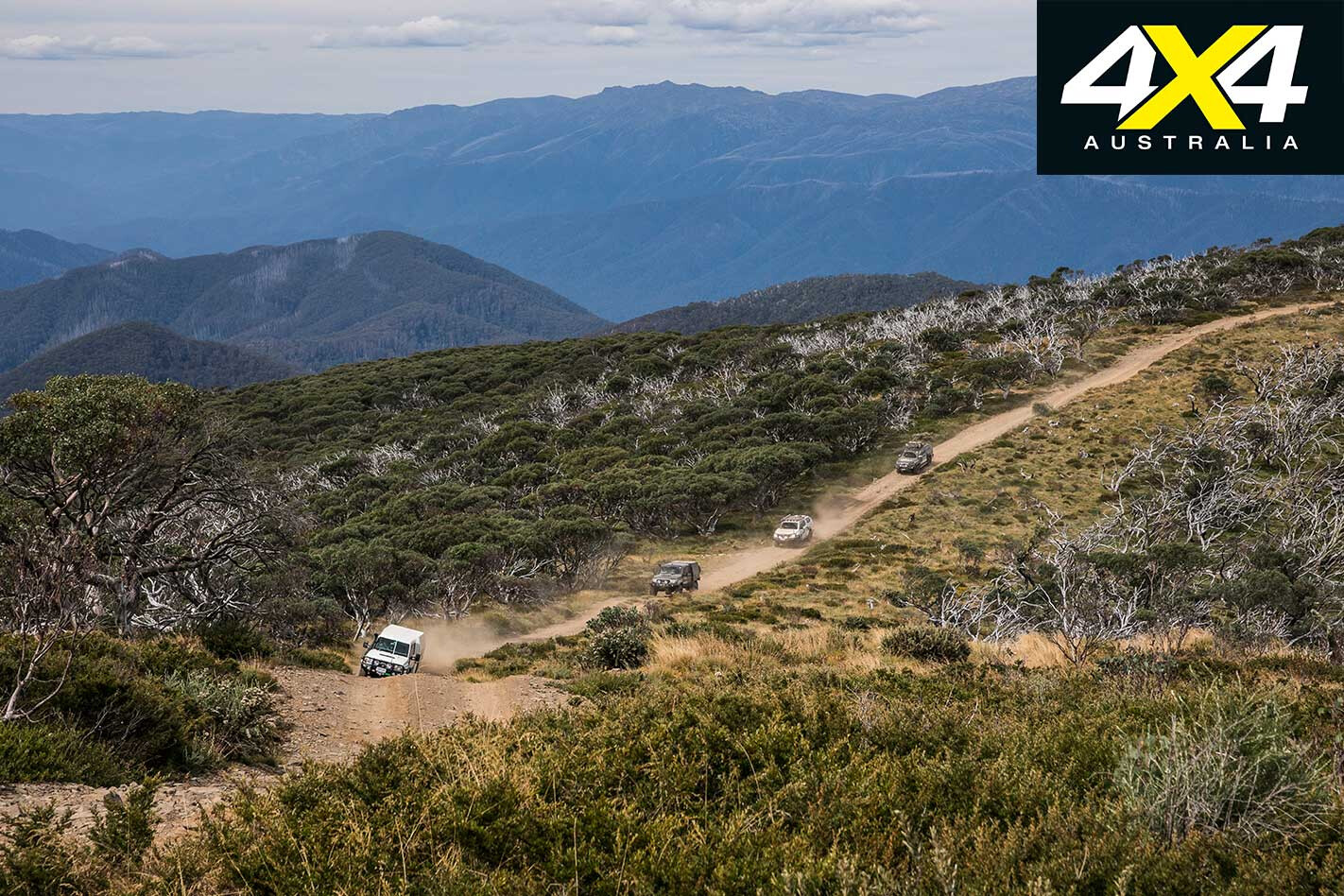
It was coming out of Wonnangatta Valley up the Zeka Spur when we came across the Italian travellers, but for the rest of those three days we didn’t see another vehicle or person. It wasn’t until after we’d driven along King Billy and stopped at Lovicks Hut for lunch that we met some more travellers in their 4x4s.
The ladies in this group recognised Ron as the face on their Vic High Country guide book and took the chance to have the author sign it for them and get a selfie with the man himself. Talk about a celebrity!
A couple more legends joined us that night for camp at Bluff Hut. The old hut here before it burnt down was known as Stoney’s Hut, and Graham Stoney and Charlie Lovick, two of the last High Country cattlemen to have run stock over these parts of the alps, sat around the fire with us and told tales of the old days and how things have changed in the mountains ever since the cattle stopped grazing there. A pair of nicer blokes you will not find anywhere.
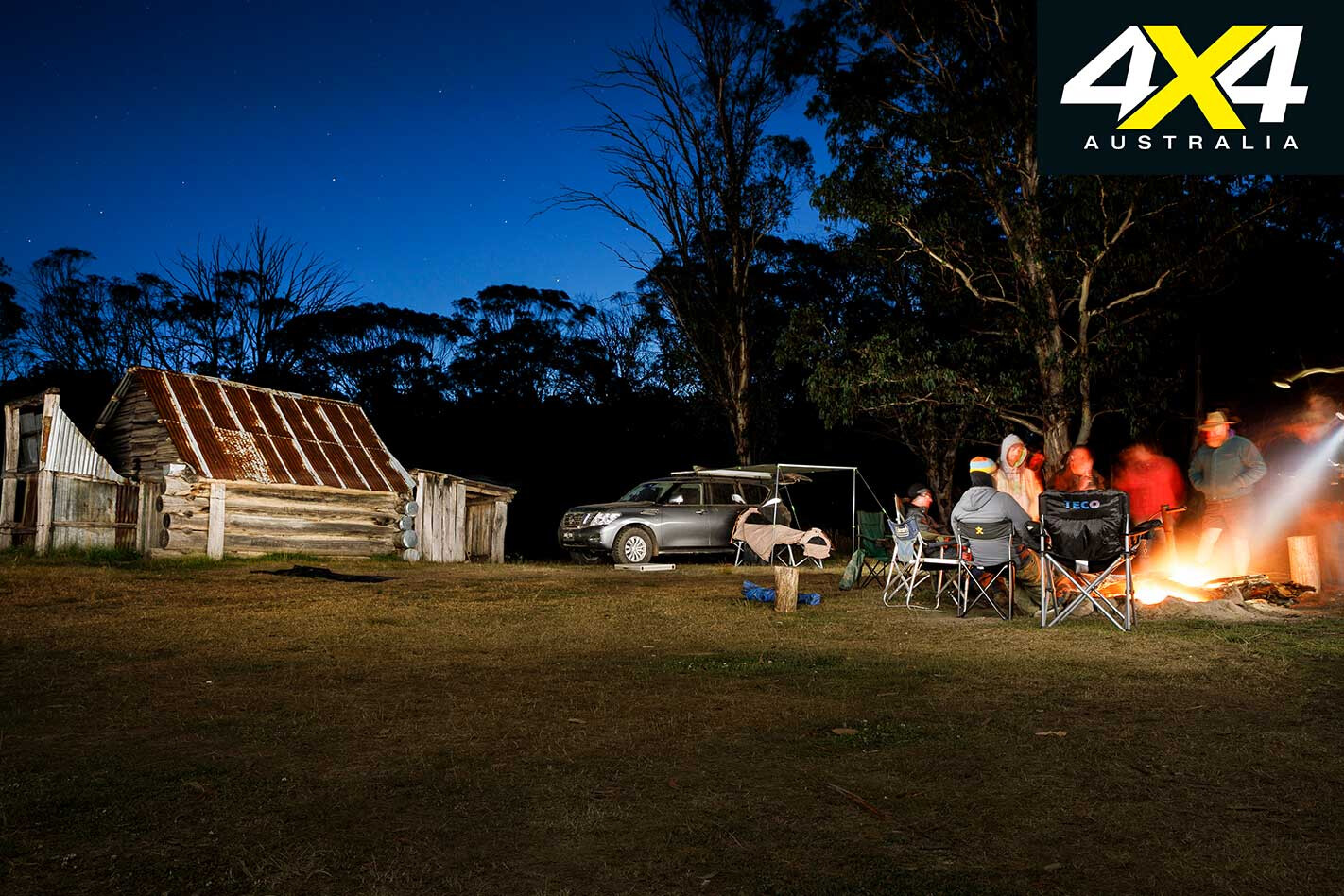
If you’re interested in the High Country cattlemen and their history, the Mountain Cattlemen’s Association of Victoria has a great website and hosts a fantastic get-together each year that celebrates all things mountain life. Check the site at: www.mcav.com.au
As our convoy headed back down the range we were flagged down by a couple of bushwalkers, one of whom had rolled his ankle and was looking for a lift. We took him through to Bindaree Hut where we met up with Bruce McCormack who was able to send the wounded walker back to Merrijig in his support vehicle.
Bruce is another bloke who comes from a long line of mountain cattlemen, and he was out on one of the guided horse rides his family offers in the mountains; this one heading along the Howqua Valley.
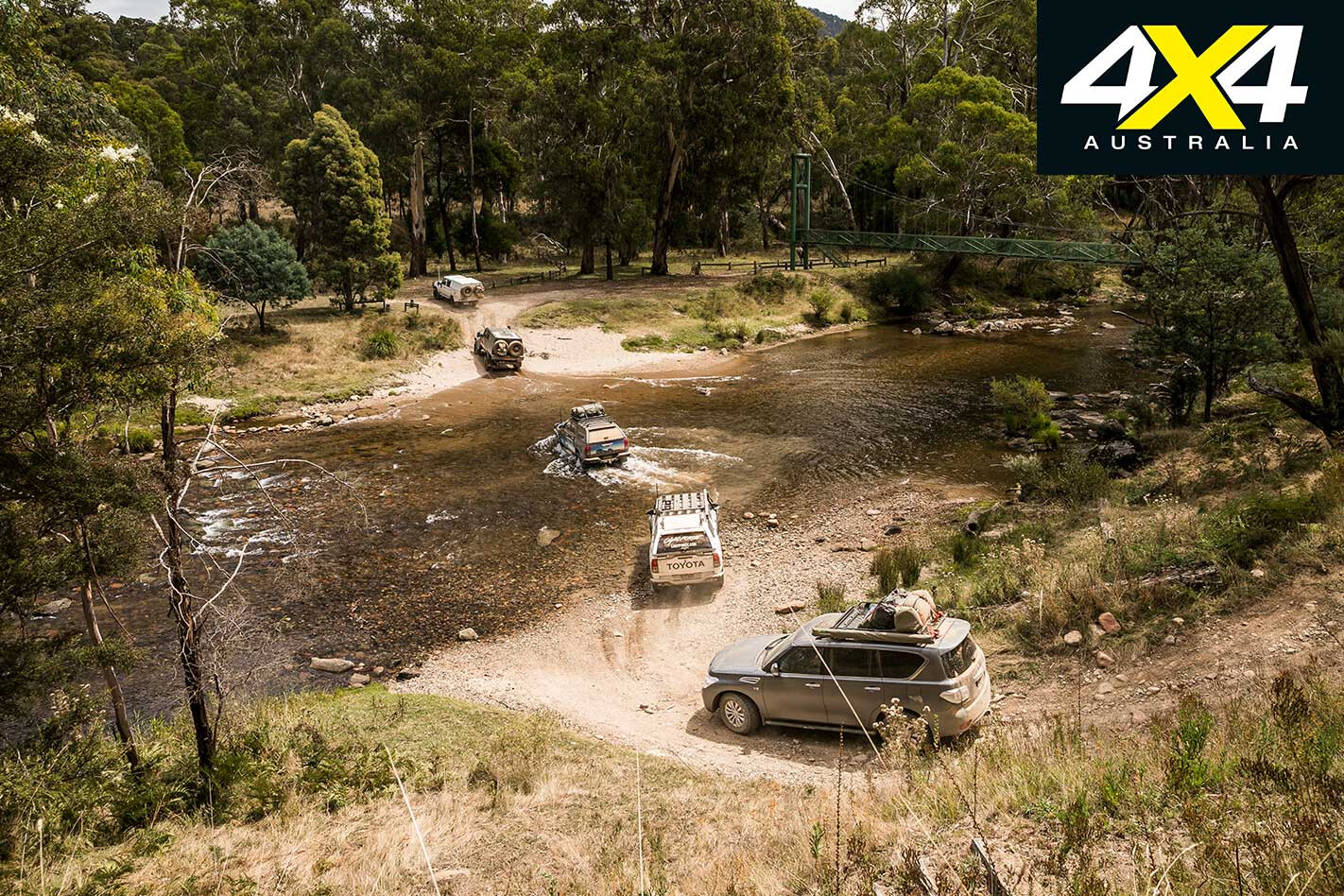
Joining one of McCormack’s rides is another great way to experience the High Country and hear stories of mountain life. They offer many rides, from one-day trips to Craigs Hut, to multi-day treks and mustering rides. Have a look at www.mountainvalleytrailrides.com.au for more details.
Speaking of Craigs Hut, this was where we finished our trip, linking the Snowy River with the hut that was made for the film The Man From Snowy River. With its stunning location and reasonably easy access by car, Craigs is one of the most popular places for High Country visitors. It was originally built for the film, but was burnt down in one of the many fires that are always a threat in the alps.
Four Wheel Drive Victoria’s (FWDV) Alison McLaughlin joined us at the hut to tell us about the work FWDV did with some of the local 4WD clubs in rebuilding the hut and the ongoing work in maintaining it.
Craigs Hut was a fitting place to end our drive and look back on the two-week journey and the many people we met along the way. The High Country is a diverse place and attracts a diverse range of users. Local four-wheel drivers are just one group; we also met international travellers, mountain bikers, fishermen, horseback riders, cattlemen and people responsible for the maintaining the tracks and huts.
Some of these folks helped forge the legends of the High Country and some are there to preserve it, while others are simply there to enjoy the beauty and spectacle the alps have to offer. There’s something up here for everyone, and it’s no wonder the High Country is one of Australia’s favourite off-road destinations.
RANGE Rover has added the 3.0-litre twin-turbo SDV6 engine to its Australian line-up.
The diesel engine, capable of delivering 202kW and 625Nm, ups the output of the outgoing 3.0-litre TDV6 (190kW and 600Nm) by 12kW and 25Nm.
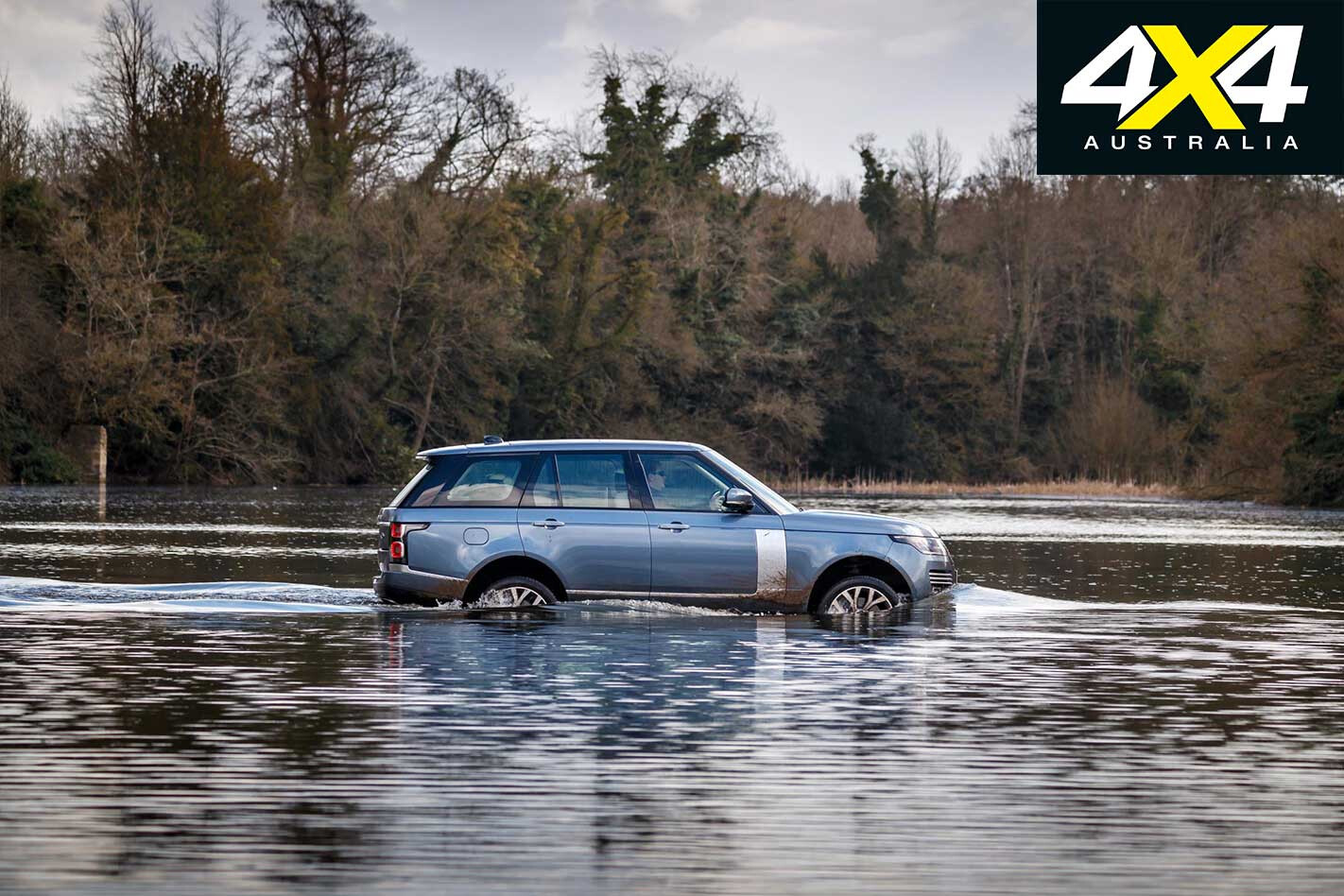
The SDV6 sits alongside the more powerful 4.4-litre SDV8 diesel (250kW/740Nm), which is now available with an enhanced eight-speed automatic gearbox said to cut fuel consumption.
Land Rover’s petrol offerings remain the P400e plug-in hybrid electric and the barnstorming 5.0-litre V8 supercharged engine.
“Range Rover is the original luxury SUV and the most capable and refined vehicle of its kind,” Nick Collins, Vehicle Line Director, Jaguar Land Rover said. “The latest updates ensure customers enjoy the peerless comfort they’ve come to expect, with more choice, convenience and safety than ever.”
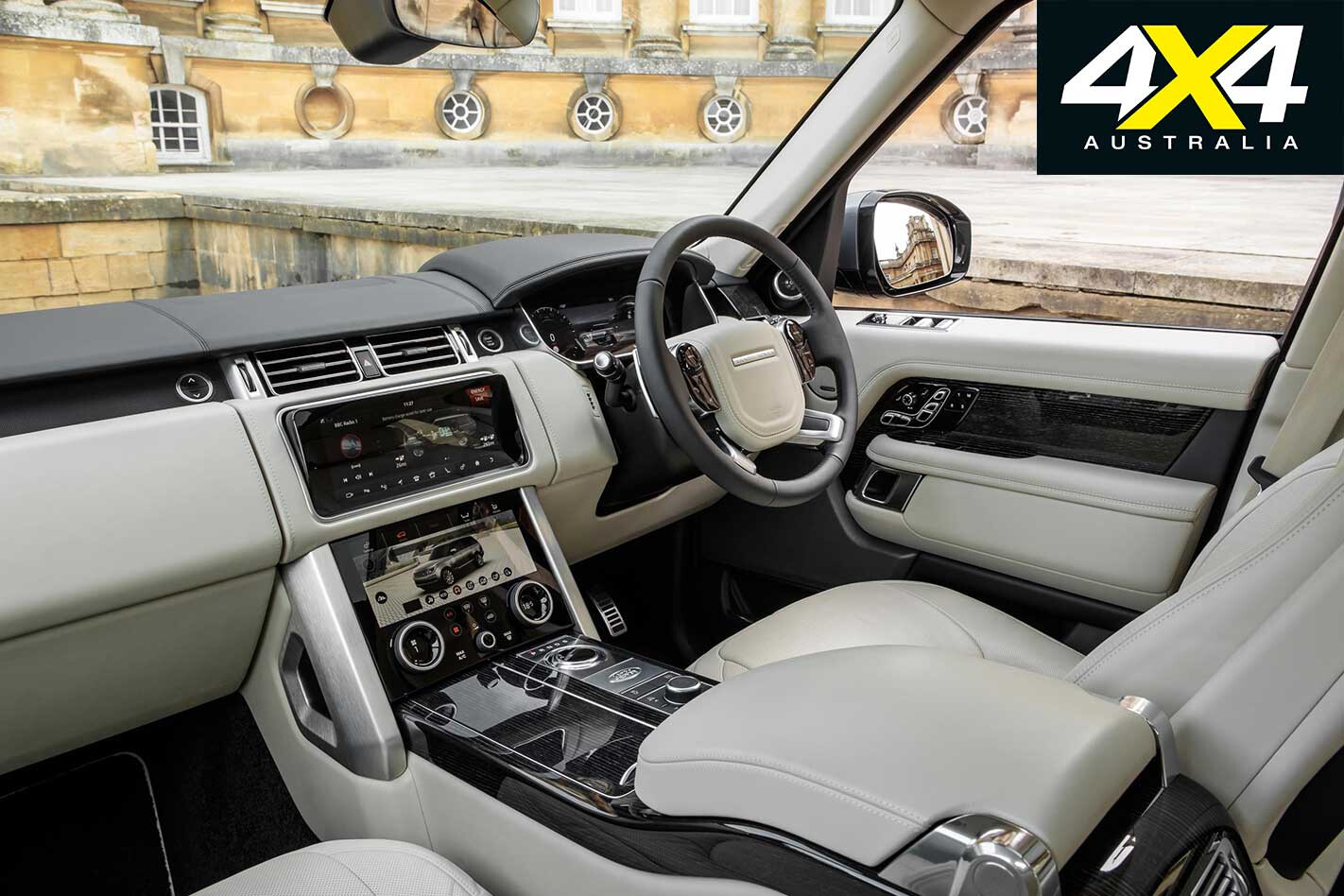
As well as the local acquisition of the SDV6 engine, Land Rover has revised the Range Rover’s driver assistance technology to include Adaptive Cruise Control (ACC) with a Stop and Go function, which enables the driver to maintain a set distance to the car in front and even stop (for up to the three seconds) before following the vehicle again.
Also new is ACC with Steering Assist, which keeps the vehicle on track by using lane markings or by tracking the vehicle in front.
The new SDV6 boasts a fuel consumption figure of 7.7L/100km.
CFI Australia is the only DENSO-authorised remanufacturing facility. All injectors remanufactured by CFI Australia are treated like a new injector and refurbished back to a new level injector, using only genuine DENSO parts.
This process ensures quality and reliability, like a new injector, when fitted to your vehicle. A new compensation code will be generated for each injector, based on the testing completed by DENSO-calibrated equipment. Not only will the vehicle ECU be compensating for the injector correctly, but it will also be meeting emission standards to provide longevity for the engine.
When a DENSO injector goes in for remanufacturing, it goes through various stages and high-end machinery. By the end of the process, the injector is remanufactured to OE standard specifications.
First, the injector’s original information is recorded and then parts are removed and replaced with genuine DENSO components. After the rebuild, each injector is tested and an individual code is issued, making it unique. The code holds specific fueling and timing information, which is uploaded to your engine’s ECU. This means they are fully calibrated to release the right amount of fuel into your engine at the right time.
The final step is important, as the tolerances inside your common-rail diesel injector are small – it can be up to 30 times finer than a human hair. One injector can easily be injecting up to 20 per cent more diesel than the rest of your injectors. That’s why each injector needs to be coded.
Coding detects the differences in how much fuel flows through each injector. It also tells your vehicles ECU how much fuel to give, so each cylinder is getting the same amount.
Bonus: Until the 31st of October 2018, CFI Australia has a $100 Cash Back Offer available on selected Toyota Fortuner, Hilux and Prado injectors*

To ensure you are purchasing a genuine product, purchase DENSO injectors through authorised service outlets. Visit www.cfiaust.com.au or call 03 9267 8700 for a list of authorised service outlets and for terms and conditions.
*Injectors included in the Cash Back Offer are product codes: 095000-7780, 295050-0460, 295700-0550, 295700-0560 and 095000-8290. For full terms and conditions, visit www.cfiaust.com.au
Since I bought the Land Rover Discovery TD5 I have been slowly planning what I want to do with it. Its main task is as the family’s camping vehicle, but it will also be my bike transporter.
This led me to look for a suitable bike carrier for the Disco; the vehicle’s tall roofline makes a roof-mount carrier possible, but it would need a bit of a physical stretch to lift the bike up there. So, I turned my sights toward a spare wheel-mounted bike carrier, with Yakima’s new two-bike SpareRide (an evolution of the company’s highly regarded SpareTime carrier) my new tester.
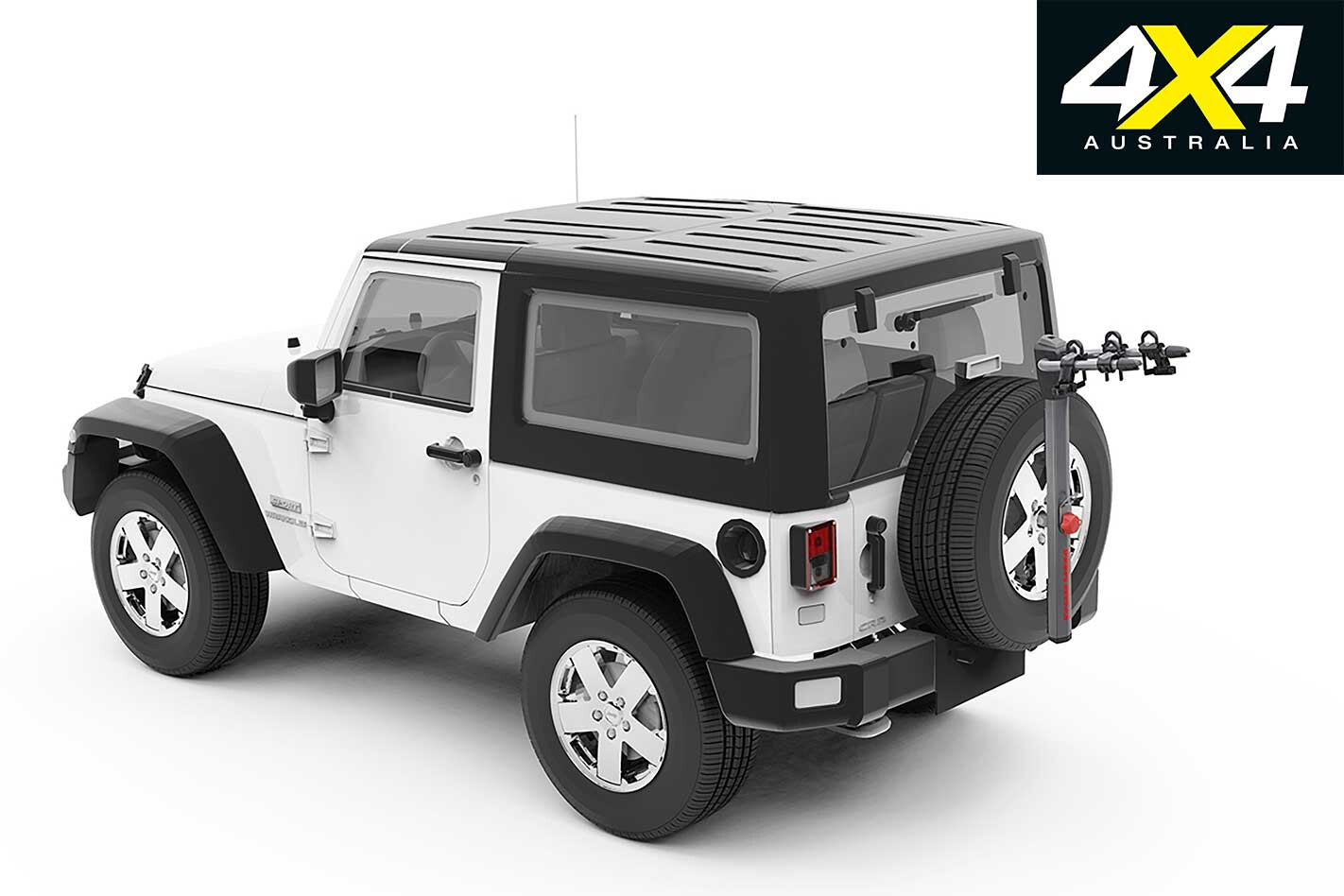
Fitting the SpareRide to the spare wheel was easy, all you need comes in the box, with Yakima offering three different-length support tongues to ensure it can be fitted to spare wheels of various widths. The SpareRide comes with a mounting plate that sits against the spare’s mount and which you then thread the appropriate tongue through.
Once you’ve refitted the spare wheel over the new bracket/tongue arrangement, slide the SpareRide onto the tongue, ensuring it slides past the minimum recommended mounting point (an engraved line on the tongue). Then, it’s just a matter of ensuring the rubber skid mounts on the SpareRide sit up against your spare and you lock it all in place via the lockable red knob (while also fitting the lock loop so that it faces upwards; a cable lock is easily fitted).
The SpareRide weighs 9.7kg, making it slightly awkward to put on, but the benefits of the extra heft are its steel construction and robust engineering. After ensuring the SpareRide is in place and secured, it’s time to load the bikes and take advantage of a cool feature of the SpareRide cradles.
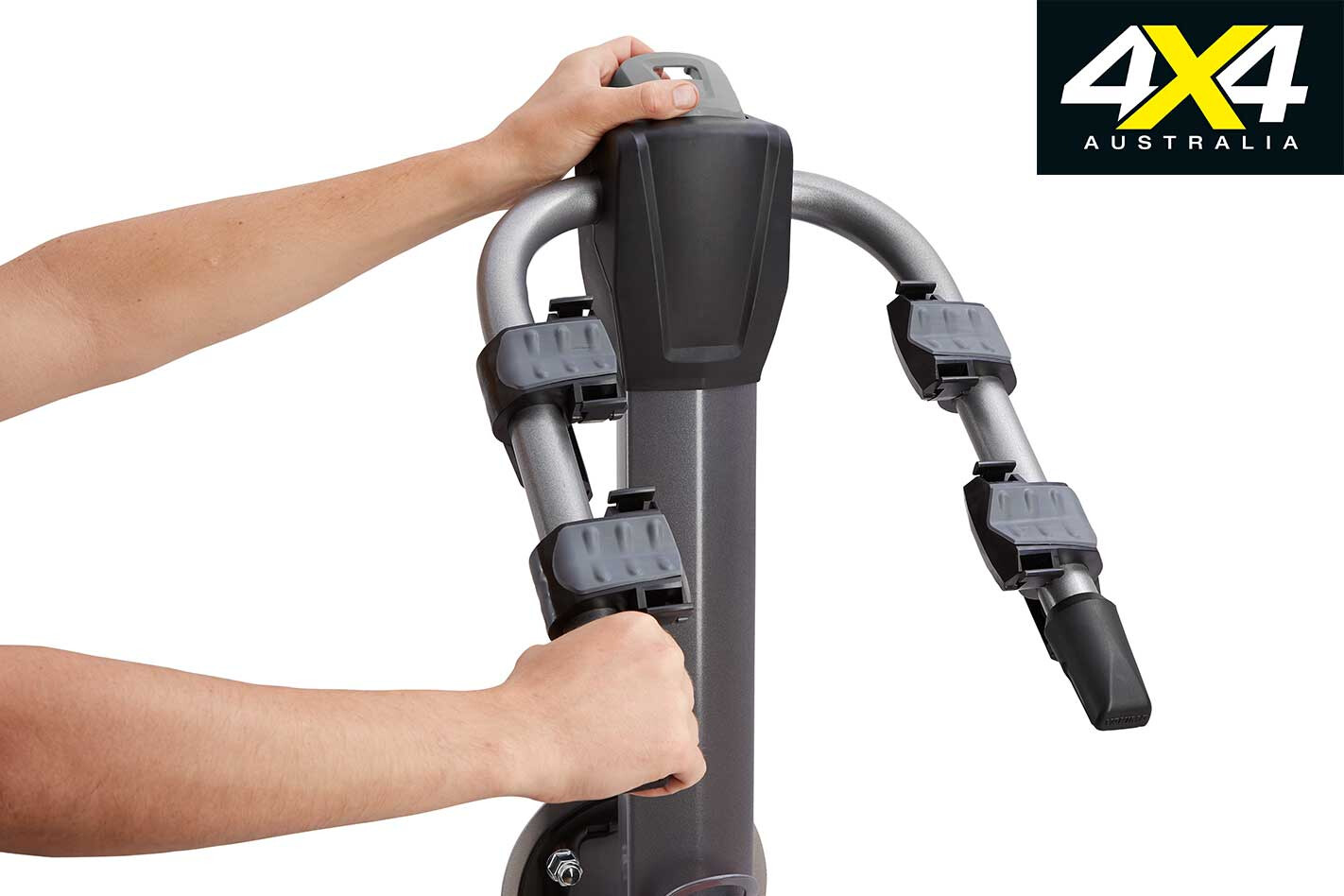
Firstly, you lift up the large grey lever at the top of the SpareRide, which unlocks the cradles, allowing you to set them to horizontal. Then, you can fit your bike, taking care to ensure the downtube is tight against the third cradle, dubbed the ‘anti-sway cradle’ by Yakima, that sits underneath one of the top ones on each arm. This is to ensure the two bikes don’t sway around when transported and thus risk banging into each other.
The cradles are secured via zip strips that are fed through the cradle ratchet, and the job is done. One important note, however, is that bikes with non-horizontal top tubes will need one of Yakima’s bike adaptor bars that mimic a horizontal top tube.
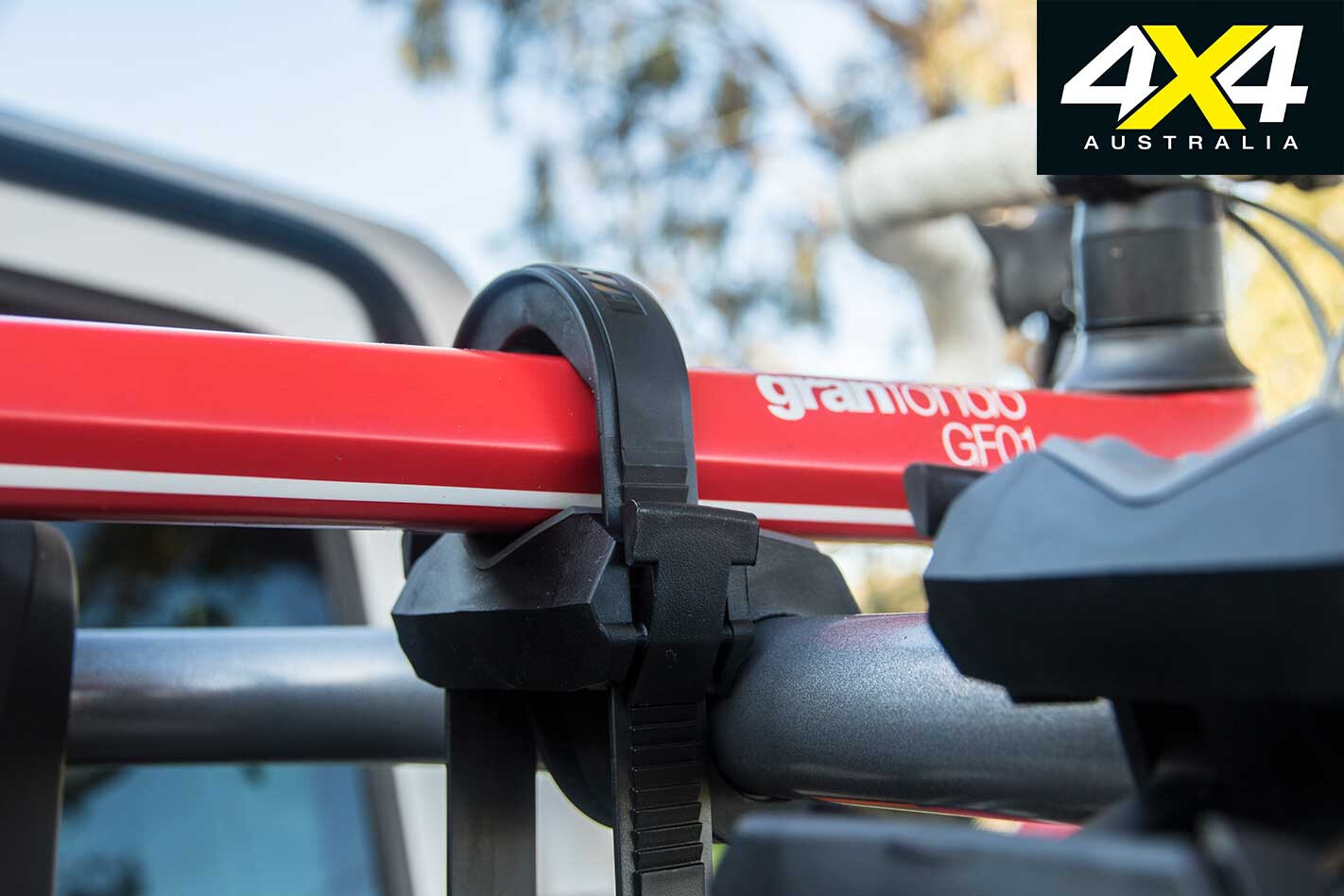
My only tiny drama is the Disco’s off-centre spare wheel; the bike wheel juts out to the driver’s/road side a bit. The other thing I would recommend is to check your tail-lights are still visible. It’s also worth picking up a small number plate to attach to the rack – again, to avoid any legal issues.
So far it has worked flawlessly. When not in use and folded up, it sits close to the spare with no issues in clearance or vision obstruction from the rear-view mirror. The ease of operation – and mega-tough build – should see the SpareRide last for many years of cycling road trips.
RATED Available from: www.yakima.com.au RRP: $369 We say: Easy to install, will last for yonks.
Whether it is climbing out of a muddy slope amidst a torrential downpour or crossing a river, challenges are all part and parcel of what makes for a good 4×4 adventure.
Though that being said, getting stuck can not only be frustrating, but out in the wilderness, it can be distressing, which is why these 4×4 gear are more of a necessity for anyone planning their next 4×4 trip.
MSA 4X4 Water Bra
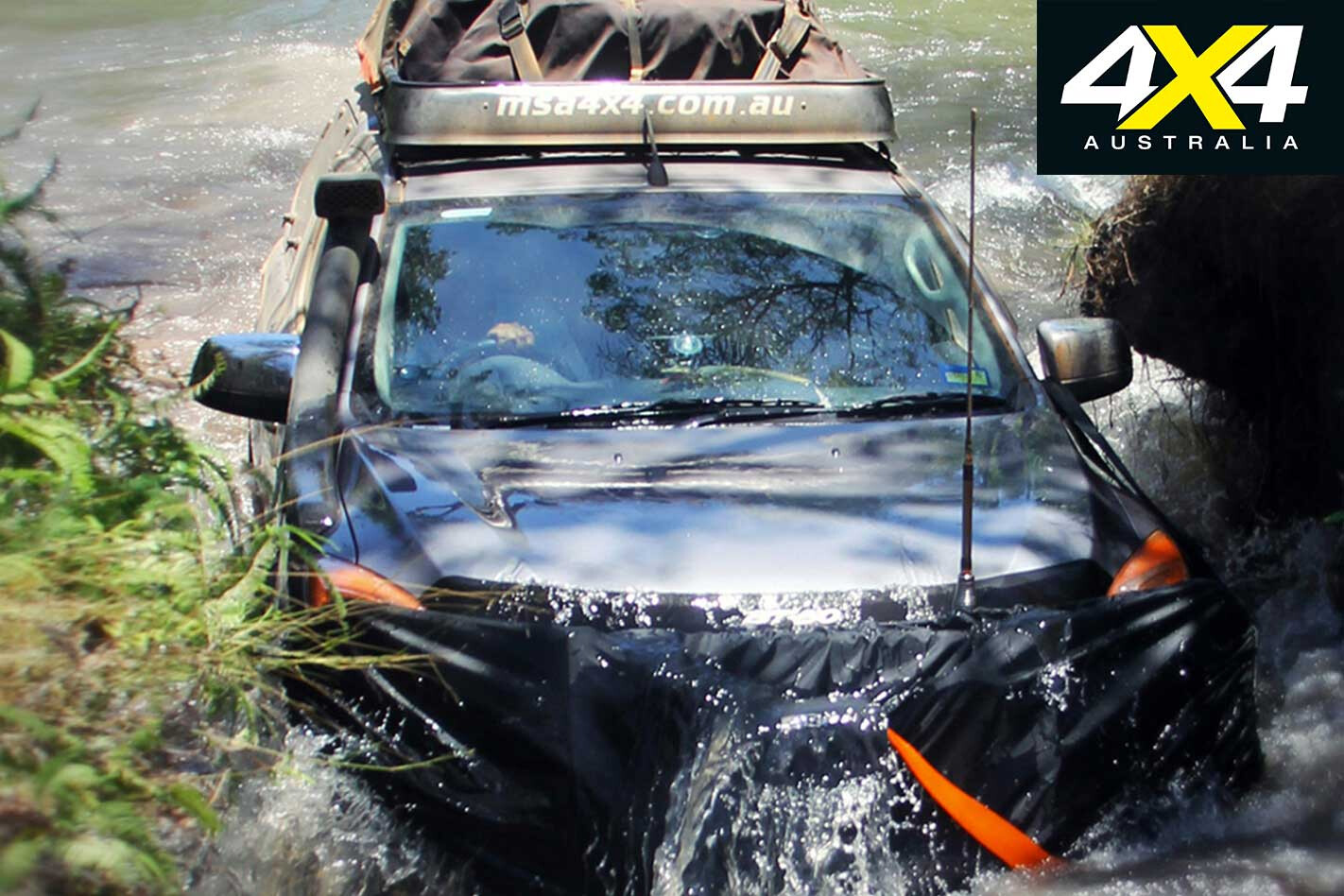
Deep water crossings are one of the toughest challenges when driving off-road. Even with a snorkel fitted there’s still the chance water will enter the radiator and/or engine and cause a costly failure. The MSA 4X4 water bra can be fitted to any 4×4 vehicle and takes no more than 10 seconds to do so – very cheap and effective insurance against a costly engine or radiator repair or replacement.
The water bra is made from tough 420-Denier PVC-backed Oxford nylon, and features 50mm side-straps and shock cord (there’s certainly no dangerous occy straps here!) for safe fitment.
Fitment takes two people (one either side) and the bra is simply pulled over to cover the vehicle’s front, with the side straps hooked around the rear-view mirrors and then cinched down. A canvas carry bag is also included.
RRP: $149 Website: www.msa4x4.com.au
Maxxis Razr MT
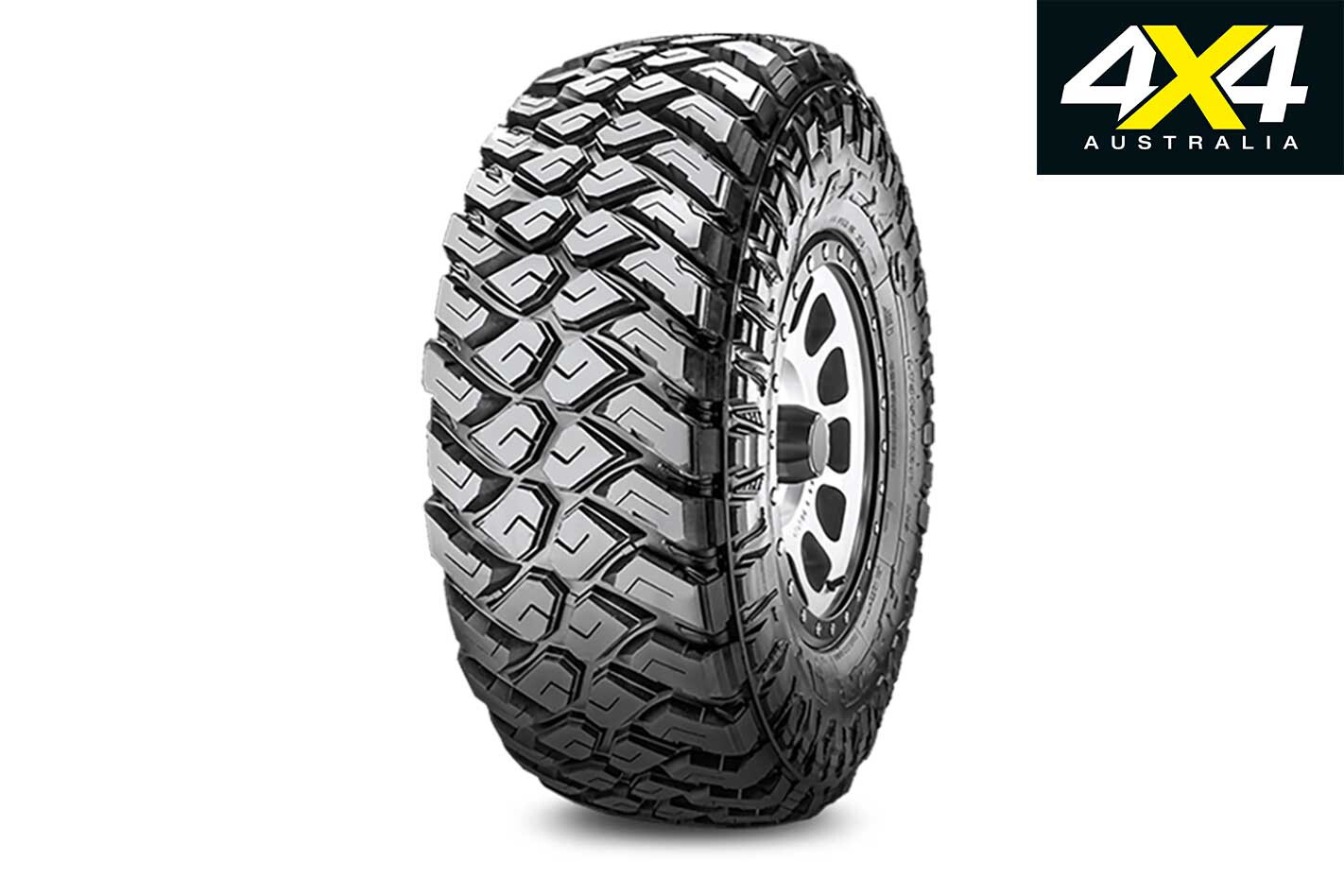
Maxxis has released the Razr MT, and it is packed with expected toughness and impressive tyre technology including an evolutionary cut-and-abrasion-resistant tread compound, in combination with a new three-ply casing construction and the company’s latest developments in ‘harsh terrain’ tread pattern.
These include a deeply sculptured centre block that retains excellent traction but also quietens the on-road noise, along with stone and mud ejectors that ensure the tyre keeps on gripping. This means for 4×4 ute owners, a durable tyre that will perform in the most rugged conditions.
The Maxxis Razr MT is available in 22 sizes, starting from 15-inch and going all the way through to big-bopper 20-inch wheels. What’s not to like?
RRP: Prices start from $253 Website: www.maxxistyres.com.au
R.M. Williams recovery kit
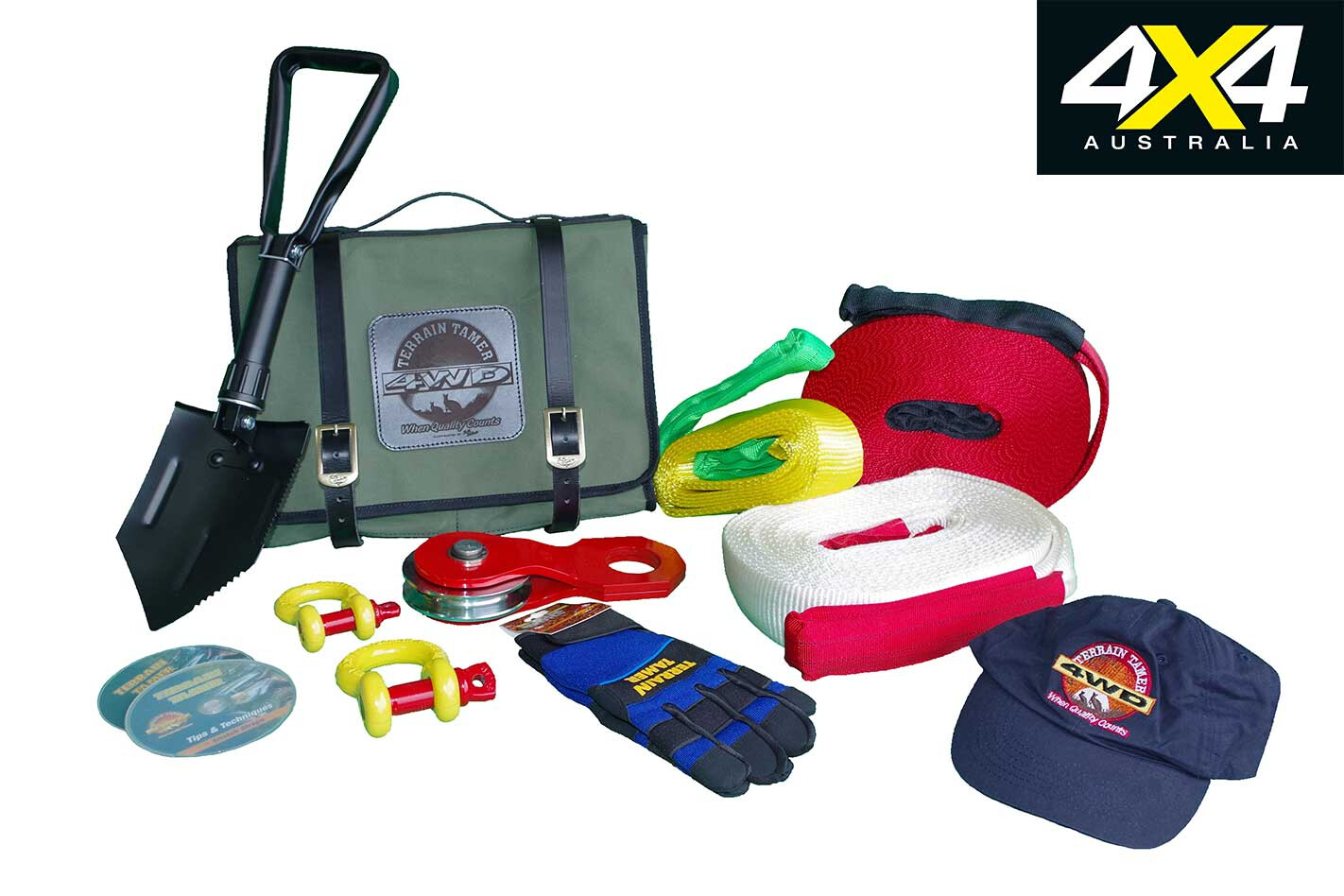
Terrain Tamer has partnered with outback icon R.M. Williams for this top-notch recovery kit.
As you’d expect from R.M., the recovery bag itself is robust, made from a medium-weight hard canvas and complemented by Aussie-made leather straps (and a TT patch) that utilise a unique stitch pattern and is tested for strength before being released for sale. R.M. Williams buckles finish off the bag.
The kit comprises a Terrain Tamer snatch strap, winch extension strap and tree-trunk protector, as well as a 10-tonne rated AVM snatch block, two Terrain Tamer safety-yellow bow shackles and a tri-fold shovel. Add in a set of rigger’s gloves (with padded palm and neoprene knuckle and cuff) with Velcro adjustment and you’ve got a great go-anywhere recovery solution.
Website: www.terraintamer.com
Less than three hours’ drive and you’re at arguably Australia’s best barramundi fishing destination: the Daly River. This 351km-long waterway winds its way past the town of Daly River and the aboriginal community of Nauiyu and offers plenty for (obviously) the angler, but also for Top End history buffs, birdwatchers (thanks to the river and the many surrounding lily-covered billabongs) and off-road tourers.
The area has been the home of the Malak Malak people for eons, with the discovery of copper back in 1882 at Mt Hayward seeing Europeans arrive in more significant numbers (and the occasional conflict; four miners were attacked by members of the indigenous population with consequent – and devastating – repercussions).
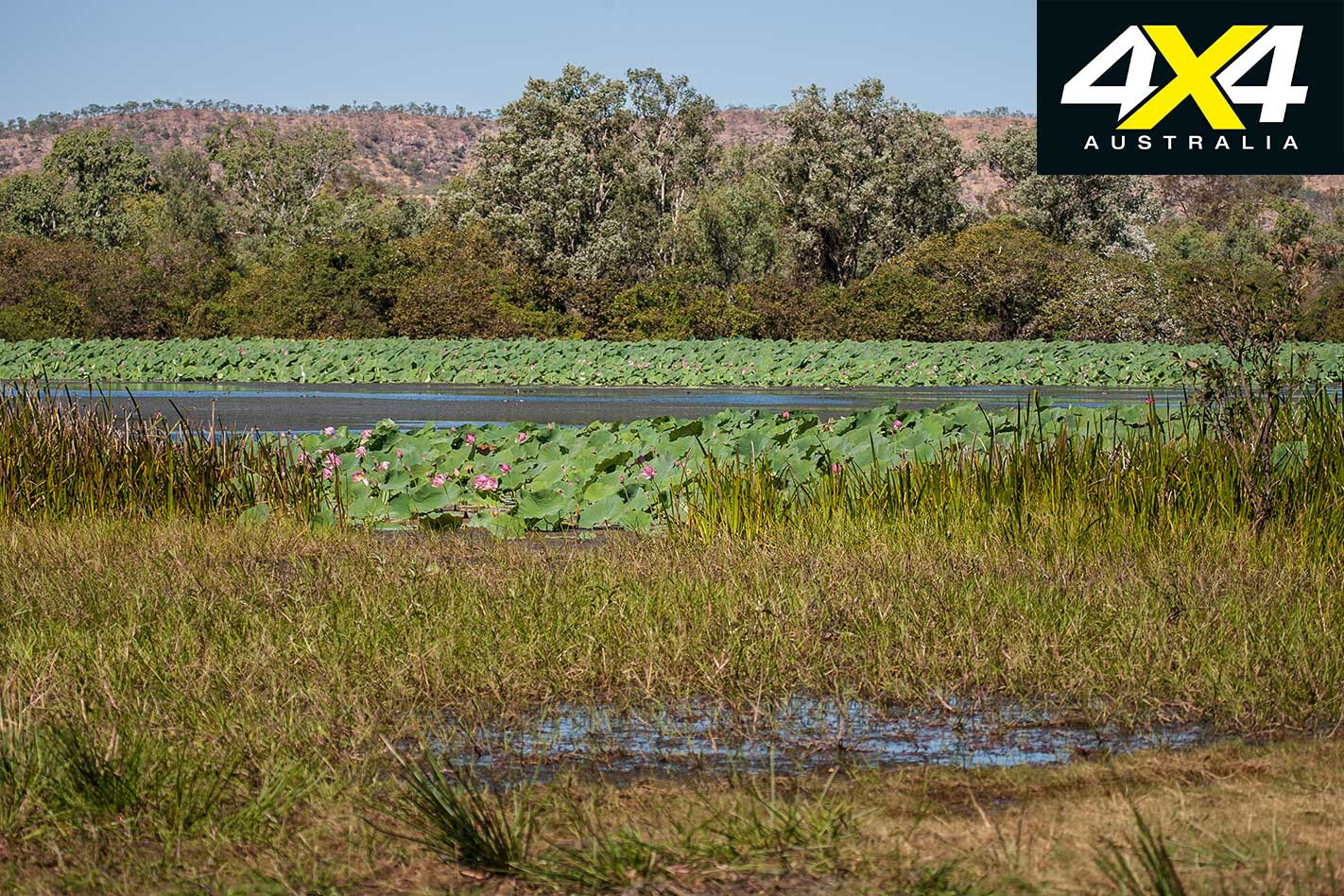
There is little remaining of the copper mine today, besides the mineshafts. The next European visitors to the region had more success; Jesuit missionaries established a small mission (now in ruins just near the Day River Mango Farm – accommodation is available here, allowing visitors to check out the ruins) and then, much later in the 1950s, Roman Catholics moved to the community of Nauiyu, now the area’s main town/centre, with the majority of the population Roman Catholic.
Visitors to the area should definitely check out Nauiyu; besides the obvious resupply and refuel opportunities, the community’s Merrepen Arts Centre is brilliant. Visitors can purchase indigenous artwork here for reasonable prices (without the big city markups) in a variety of styles and formats, ranging from paintings to shirts and weavings. The community’s church is also worth a look.
Of course, it is the big (some say biggest) barramundi that most visitors come to the Daly River for. Arrive just after wet season is over and the roads (and the Daly River Crossing itself) are passable and you’ll be in with a great chance of snaring that big barra – or multiple barra.
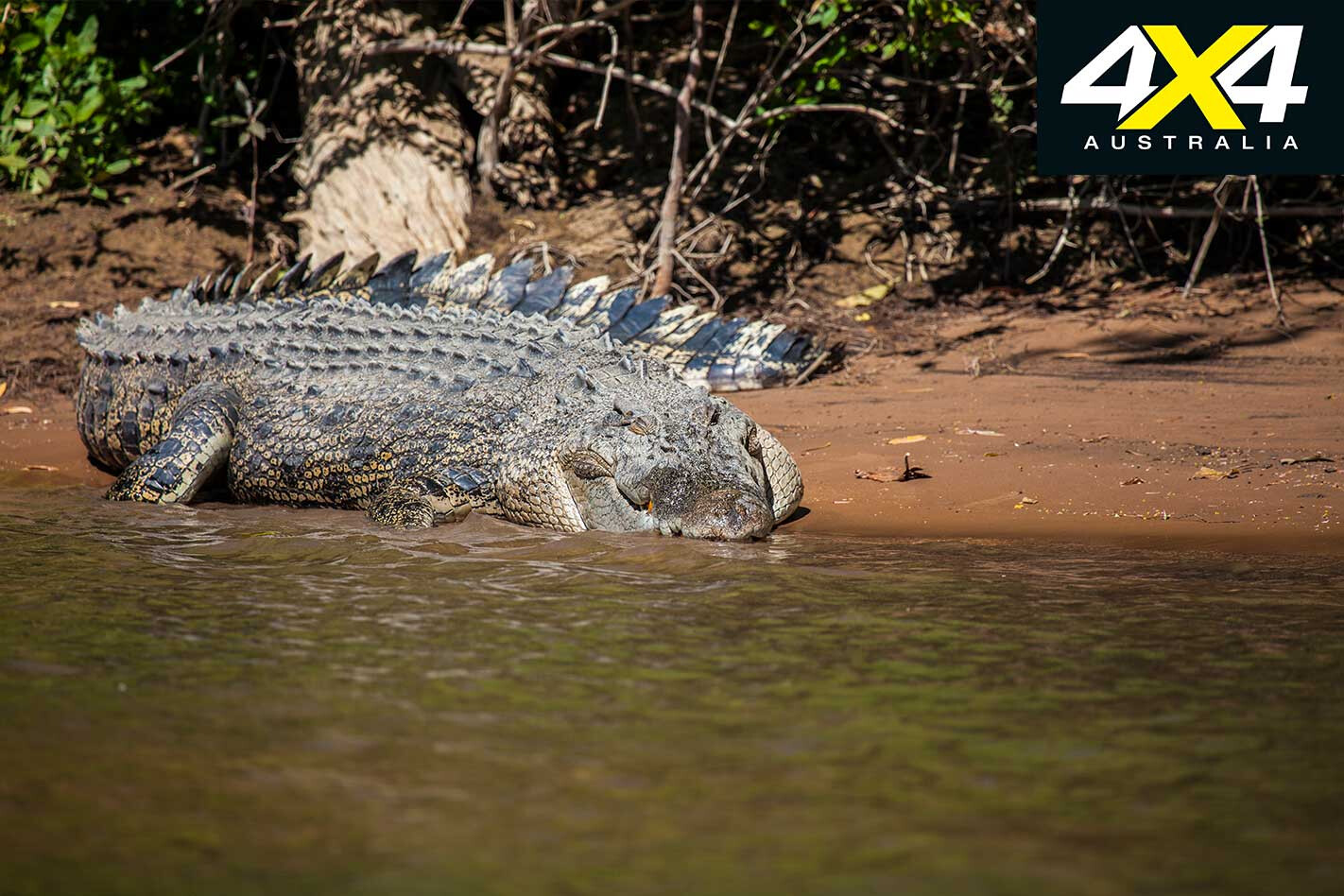
There are numerous accommodation options around here that revolve around the hunt for barra, or you can camp down beside the river if you wish. However, it’s not only the barra that are big; as with most Top End waterways, the Daly River is home to both species of crocodile, and some of the saltwater crocs lazing on the river’s shore are indeed bloody huge – as in longer than some tinnies. Cruising along the river in your boat, throwing out a line and ogling the massive crocs is great fun though.
There are a number of short four-wheel drive adventures surrounding this area, including a day visit out to the community of Peppimenarti (you will need to apply for a visitor’s permit beforehand), or a trundle down to some of the nearby large billabongs for some bird spotting.
Alternatively, there’s the 1.5-hour drive to Oolloo Crossing and the chance to camp in this pristine, remote part of the area. The crossing here is rarely used due to the build-up of sand banks on the opposite side of the river (and the fact it is now Aboriginal Land and thus requires a permit) but the bush camping on the banks above the river is great. You can even launch your tinny here if you wish to hook a barra or two.
As well as the same-named crossing on Oolloo Road, there’s the Douglas River Esplanade Conservation Area, slightly north of the crossing. This conservation area contains some fantastic thermal springs that are great for washing the dust off and simply relaxing. There are nine campsites here, with plenty to occupy both those on a day visit or those camping.
The Arches (a rock formation carved by the river’s flow) is well worth an hour of exploration, as is The Weir. Keep an eye out for water dragons, snakes and other native wildlife that live in this riverine environment.
Going from Daly River/Nauiyu to Oollo Crossing and the Douglas River Esplanade Conservation requires some backtracking, but a long weekend would make this more than worth the effort. For lovers of the big NT waterways, barramundi fishing, croc-spotting and a rich and thriving indigenous culture, it’s a no-brainer.
THE aptly named ‘Thug Truck’ is perhaps the meanest 79 Series making tracks on Australian dirt.
The immaculate set-up, pieced together by owner, Blake Oldham, has been reworked both inside and out to make it one of the most capable 4x4s on the planet.
More than a few pennies have been spent on the rig since Blake left the showroom floor, but the results clearly speak for themselves.
The daily-driven Cruiser sports 37-inch tyres, has had a rear coil conversion, and its 4.5-litre V8 pumps out 204rwhp and 680Nm. Read the full review here.
WHAT IT’S PACKING: – Johnny Joints – King shocks (front and rear) – Comp Rods radius arms – Tough Dog adjustable Panhard rod – 37-inch Hankook Dynapro MTs – Method 311 Vex beadlocks – Kinetic Engineering axle-widening kit – AAA Exhausts stainless-steel snorkel and airbox – 3.5-inch turbo-back exhaust – Diesel Care pre-filter – Redarc BCDC charger – Optima batteries – ARB Deluxe bar, scrub bars and rock sliders – Runva 12,000lb winch with Dyneema rope – Factor 55 hitch – Lightforce LED light bar – GME aerials and UHF – FPV GT deep bucket seats – Cruiser Consoles interior fit-out – Coldy’s tray
This southern adventure in our famous national park begins with a straight bitumen run down the Stuart Highway to Pine Creek, and then turning left and following the Kakadu Highway into the park itself.
Just inside the southern border is the excellent Goymarr Tourist Park. Tracking north from here you soon reach the turn-off to one of Kakadu’s most famous waterfalls – Gunlom. Following this dirt road will bring you to the falls (made famous in the original Crocodile Dundee movie) and it’s easy to wile away a day here swimming in the lower pool.
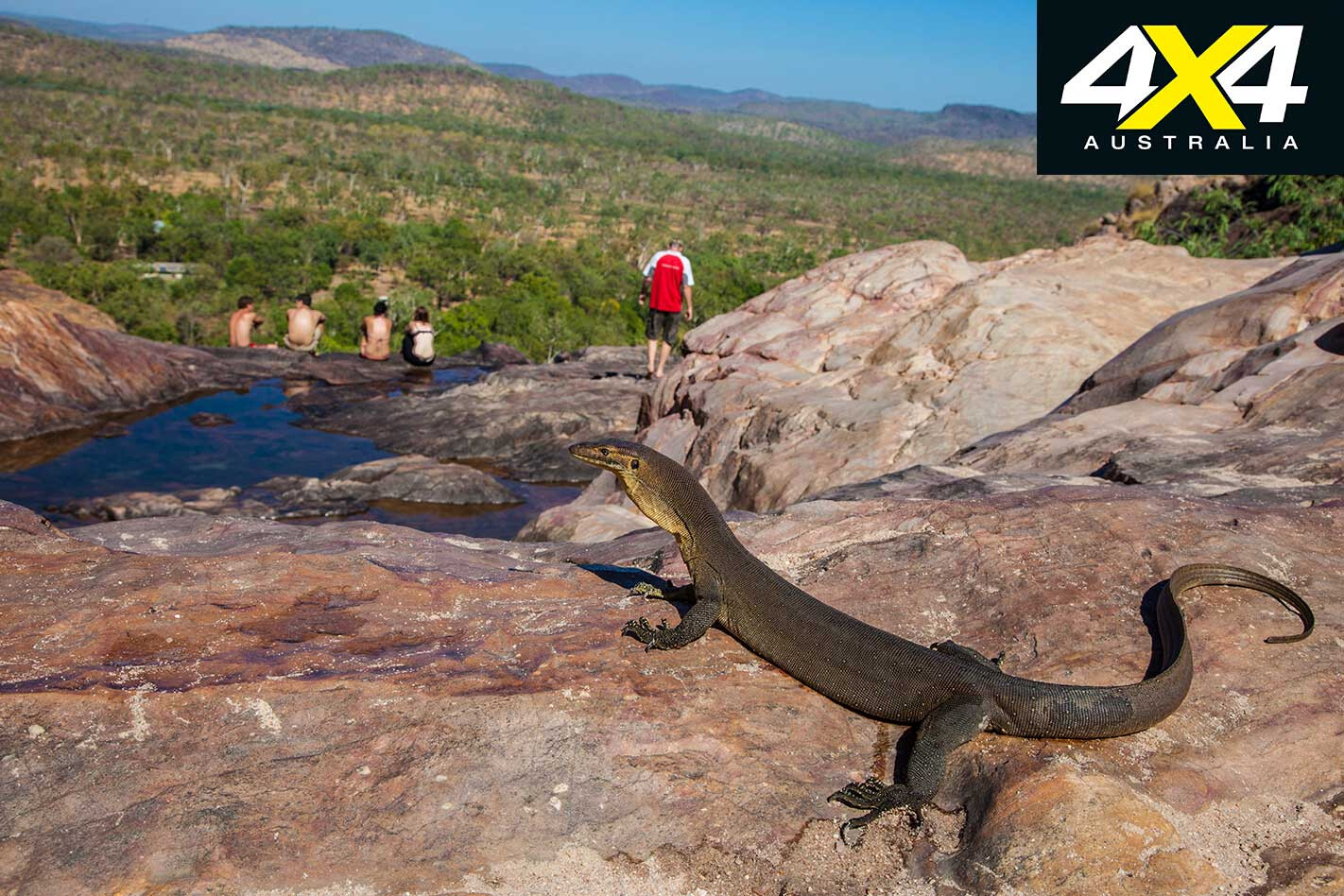
But, for the best Gunlom experience, we highly recommend tackling the short but quite steep walking track that takes you to the top of the falls and the rockpools that feed it from above. These are perfect swimming holes, with the final rockpool before the drop offering spectacular views over the park’s western and southern landscapes.
You can camp at Gunlom, but for that truly remote bush-camping experience in this busy park we’d suggest driving farther south-east to Jarrangbarnmi Campground (Koolpin Gorge).
This campsite requires a permit (be sure to book well ahead), but the effort is worthwhile as it is sublime; the campsites are nestled beside Koolpin Creek and short walks (2km return) take you to remote plunge pools and waterfalls. It’ll be hard to return to camp.
Leaving this heaven-on-earth behind the next day, you will backtrack to the Kakadu Highway and continue north to the turn-off of the 4×4-only track to Maguk (Barramundi Gorge). This is yet another beautiful location – some short walks take you to one of the park’s best swimming holes.
A one-kilometre level walk from camp sees you reach a beautiful, long plunge pool, with the waterfall at its eastern end (and easily reached by swimming). There’s also a separate walking track that takes you directly to the top of the waterfall, where you can take a dip in the plunge pools above the falls.
From Maguk, it’s a short return to the highway and then a farther drive north to the Graveside Gorge turn-off. This (very) remote campsite needs to be booked ahead and the drive in will take around three hours along the 44km of rocky, tricky terrain. It’s worth it, of course, if you wish to see another spectacular part of the park.
Farther north from here – and again back on the Kakadu Highway for access – is Jim Jim Falls, one of Kakadu’s most famous destinations. The drive in here is 4×4-only and is slow-going until you reach Garamarr campground. This campground is sizeable (it can handle 200 people) and has excellent facilities.
From here, the access track to Jim Jim Falls (and its beautiful plunge pool) continues, and you can also turn right to tackle the extra 10km to pretty Twin Falls (there’s a water crossing here and a snorkel is advised for your vehicle). Twin Falls Gorge is accessed via a boat shuttle these days (you used to be able to float in there with a lilo, etc.) but, as with everything in this park, it’s worth the time and effort.
For both Jim Jim and Twin Falls you can also gain access to the plateau above, but both are steep and challenging walks (four hours for Twin Falls; six hours for Jim Jim). The many walks in this area take you to some fantastic locations, and it makes a fitting final night in Kakadu National Park.
Equally fitting is the last day’s journey out of the park. Rather than taking the bitumen of the Kakadu and Arnhem highways, we’d recommend backtracking south slightly from Jim Jim Falls and taking the 4×4-only Old Jim Jim Road, as this tracks west through some fantastic floodplains and waterways. A great morning tea/lunch spot is Giyamungkurr (Black Jungle Springs) camping area.
From here it’s a straightforward run northwest to the Arnhem Highway and, after a few days in what seems like a totally removed, wild and untamed land, a return to ‘civilisation’.
SALEEN Automotive, the company most known for tweaking Mustangs, has pointed its spanners towards the F-150 yank tank to create the epic Sportruck XR.
Unveiled on the American company’s Facebook page, the Sportruck XR, based on the previously released Sportruck, will include both naturally aspirated and supercharged engines – the ’charged donk with 700+hp (522kW+), a Saleen-tuned exhaust and high-performance filters.
“Continually adding to our line-up of performance vehicles is paramount to Saleen Automotive,” Saleen CEO, Steve Saleen, said. “We are introducing an off-road truck to our high-performance vehicles line-up with the Sportruck XR,” he continued.
Built in collaboration with Greg Foutz – Foutz Motorsports fame – the Saleen Sportruck XR runs 2.5-inch coil-over shocks up front and 2.5-inch Smooth Series shocks down back, as well as Saleen rear leaf springs and a Saleen bump stop with frame gusset.
Info and pics are scarce at this stage, but what we do know is that the XR will come to a halt courtesy of 13.8-inch ABS vented front rotors with two-piston calipers and 13.8-inch ABS vented rear rotors with single-piston calipers.
A Black Label edition turns the dial further, with the addition of upper and lower Racecraft control arms and specially made spindles and shocks, for increased travel.
As well as Saleen’s design touch on the front and rear bumpers, wheel arches, grille, side steps tailgate and hood, the XR sits on 17.0 x 8.5-inch six-spoke alloys surrounded by General Tire Grabber X3 rubber. 17.0 x 8-0-inch chrome and carbonite wheels can be optioned.
The base Sportruck starts at US$51,000 for US buyers, so expect to add a few digits for the XR variant.