
IT’S A DAUNTING prospect, wandering into a tyre retailer for a new set of all-terrains and being bombarded with dozens of options that include everything from something that looks like it was created for a Mars Rover to something thoroughly Hume Highway. That’s indicative of the task at hand.
Being a tyre on a modern off-roader is no easy task, especially in Australia. As well as having to deal with a few tonnes of laden 4×4, those nondescript round black things also have to stop and corner confidently on wet and dry bitumen, they’ve got to deal with mud, sand, snow and gravel, and they’ve got to go the distance, resisting punctures over some of the harshest terrain in the world. Some do it better than others, and how well a tyre performs will often depend on what you drive it over.
This brings us to an expansive skid pan in Queensland at the Mount Cotton Training Centre. Along with dozens of tyres, we’re joined by tyre fitting experts from Tyre Right, a retailer with no affiliation to any tyre brands. The focus is on 17-inch all-terrains, a popular configuration for everything from dual cab utes to serious SUVs, and our selection of seven aftermarket tyres shows the diversity in design under the all-terrain banner.
Testing Times
FOR THIS test we’re using a VBOX data logger to measure G-force, speed, track position and angle. Our tests include dry and wet braking, dry and wet cornering, as well as an off-road loop.
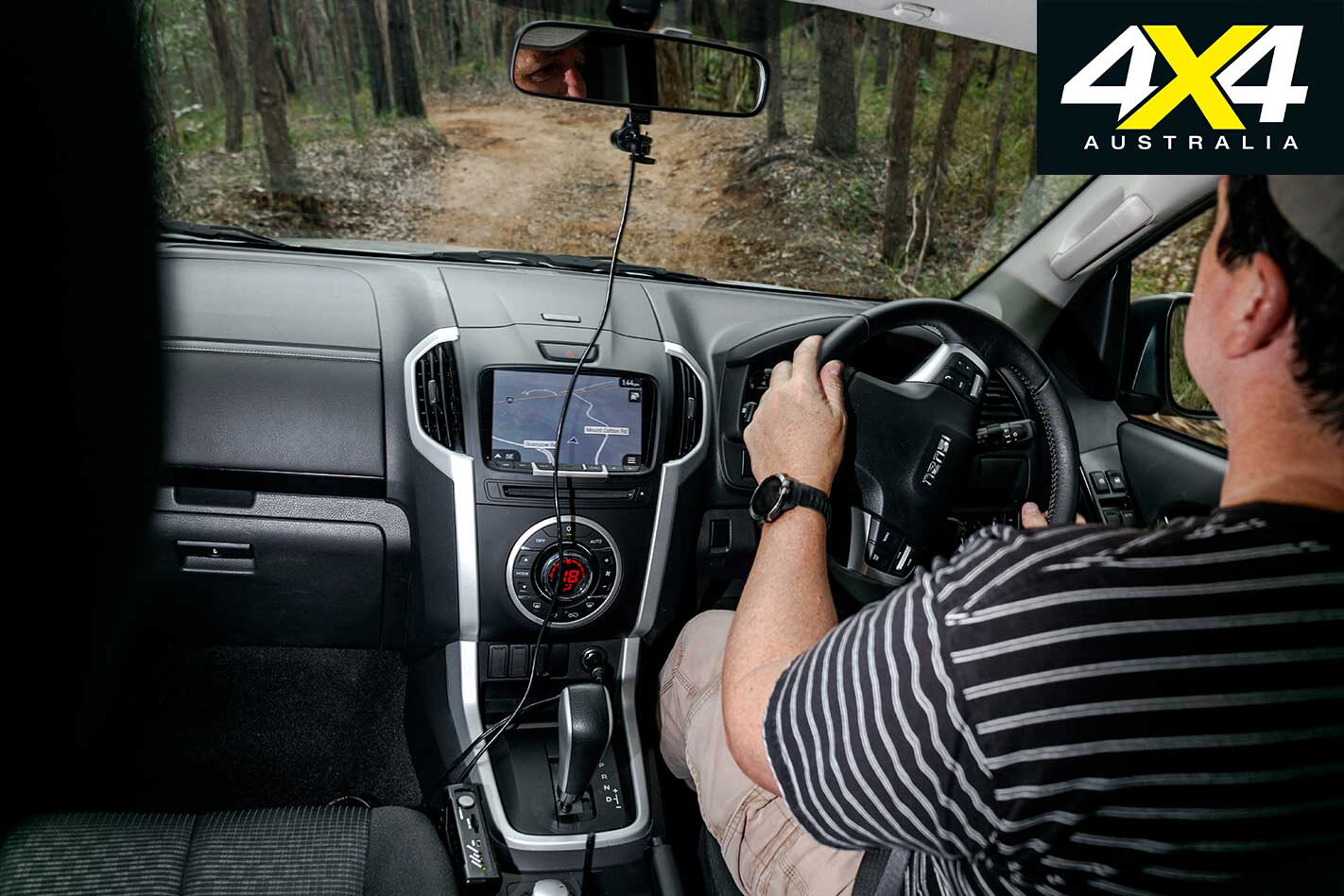
For each discipline a tyre is given a score out of 100, with the best getting the maximum score and others ranked according to how far they were from the winner. We’re also tackling a challenging off-road track with gravel, rocks and mud. We know it can’t possibly cover every Australian track condition, but it gives us an idea of how each will perform in more challenging terrain.
Given the variability of off-road surfaces and the propensity for them to change after each pass, we’ll be relying on the bum and brain of 4X4 Australia’s Justin Walker for a broad performance assessment, rather than 1s and 0s from hard data we’re collating on the blacktop.
If he’s happy it’ll get an off-road gain in the form of a five per cent boost to the sub-total; if he doesn’t like the performance it’ll lose five per cent. It’s not perfect, but with the absence (and difficulty) of hard data it is a way to reward or penalise depending on how the tyres traversed our mix of loose gravel, mud and rocks.
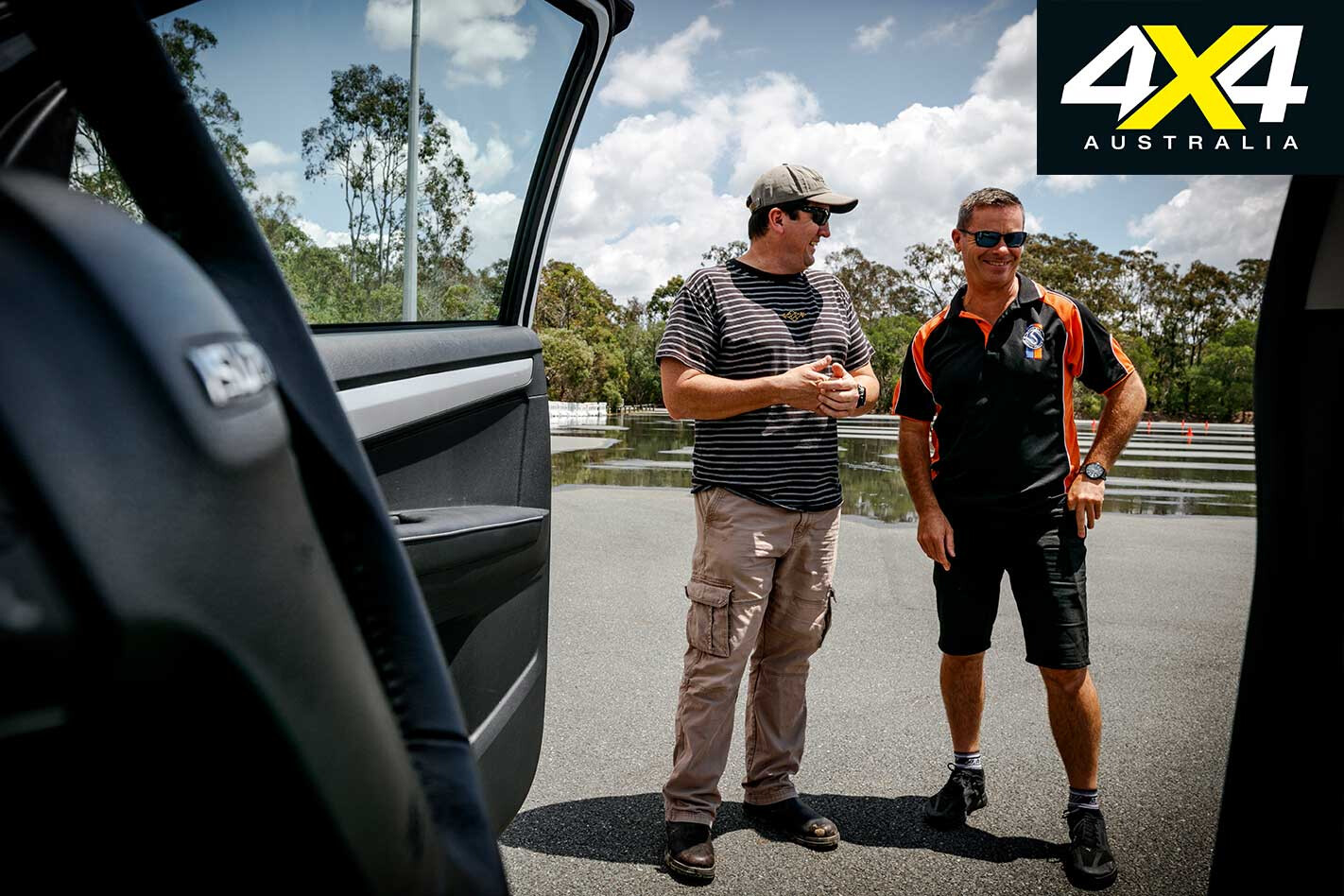
The bitumen run is being done by former Australian Drivers’ Champion Paul Stokell, one of Australia’s most accomplished steerers. He’s a man who knows all about precision and pace, two things being put to the test throughout the day.
The price of each tyre will be taken into account, and neither driver knows which tyre they’re driving, only relying on the feel, grip and attitude of the car.
The Contenders
- Bridgestone Dueler AT (LT): Black sheep of the test shows its true colours on the road.
- Dunlop Grandtrek AT25: Grandtrek revels in the wet, but not in the mud.
- Falken Wildpeak AT: All-rounded character beneath a tough appearance.
- Goodyear Wrangler AT Adventure: Off-road focus fails to wrangle the points.
- Hankook Dynapro AT M: Jack of all trades pick lands squarely in the middle of the pack.
- Maxxis 700 AT: Strong performance metrics bolster underdog’s claim to the title.
- Nexen Roadian AT: Nexen exemplifies “you get what you pay for” mantra.
- Seven tyres, one winner! Tallying the numbers reveals one clear winner.
What’s an A/T?
There is no official industry definition of an all-terrain tyre, which may explain the vast differences between them visually. Tyre manufacturers acknowledge that an all-terrain typically has more aggressive tread blocks with bigger spaces between them. That, of course, is relative to what you’re comparing it to.
The 4×4
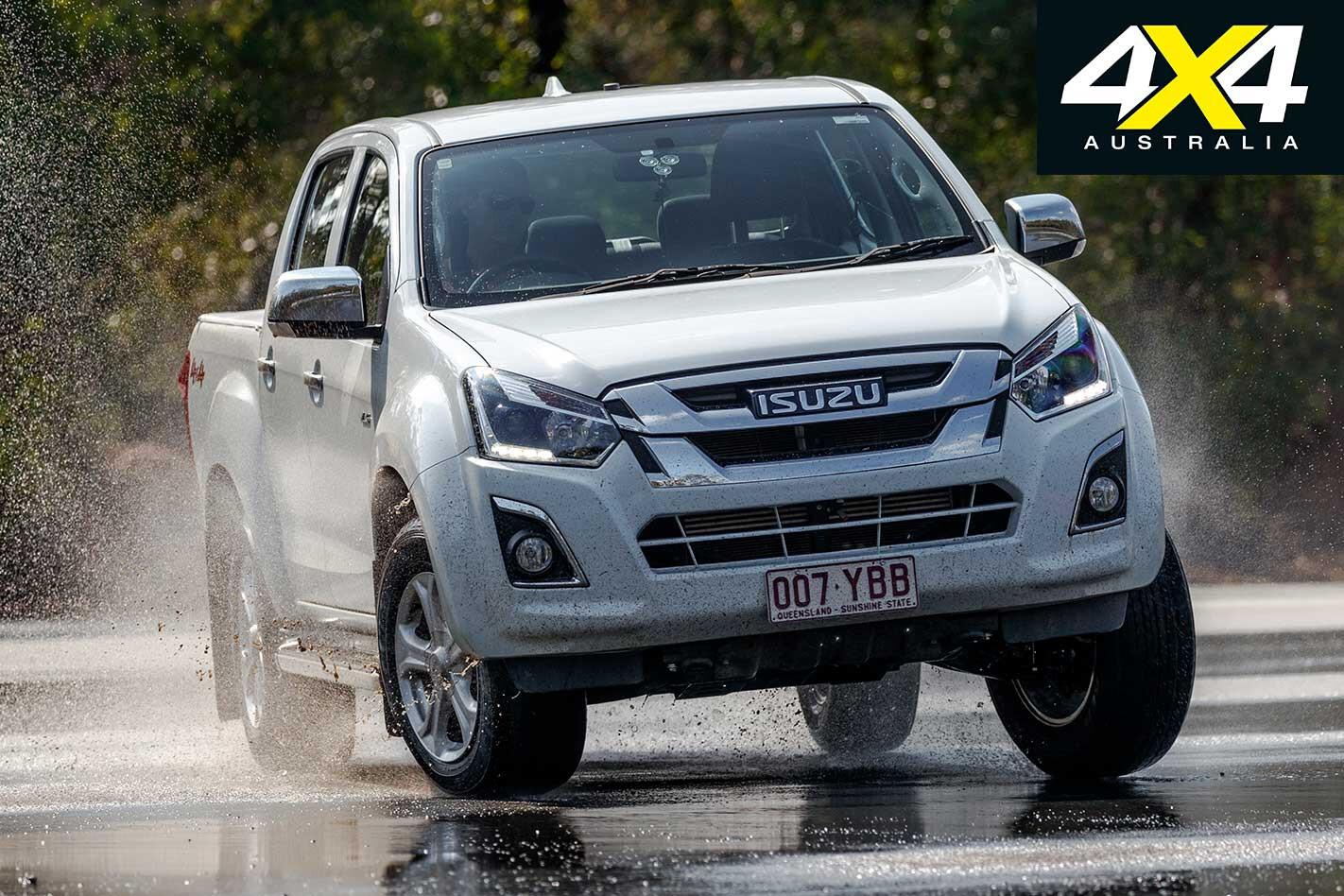
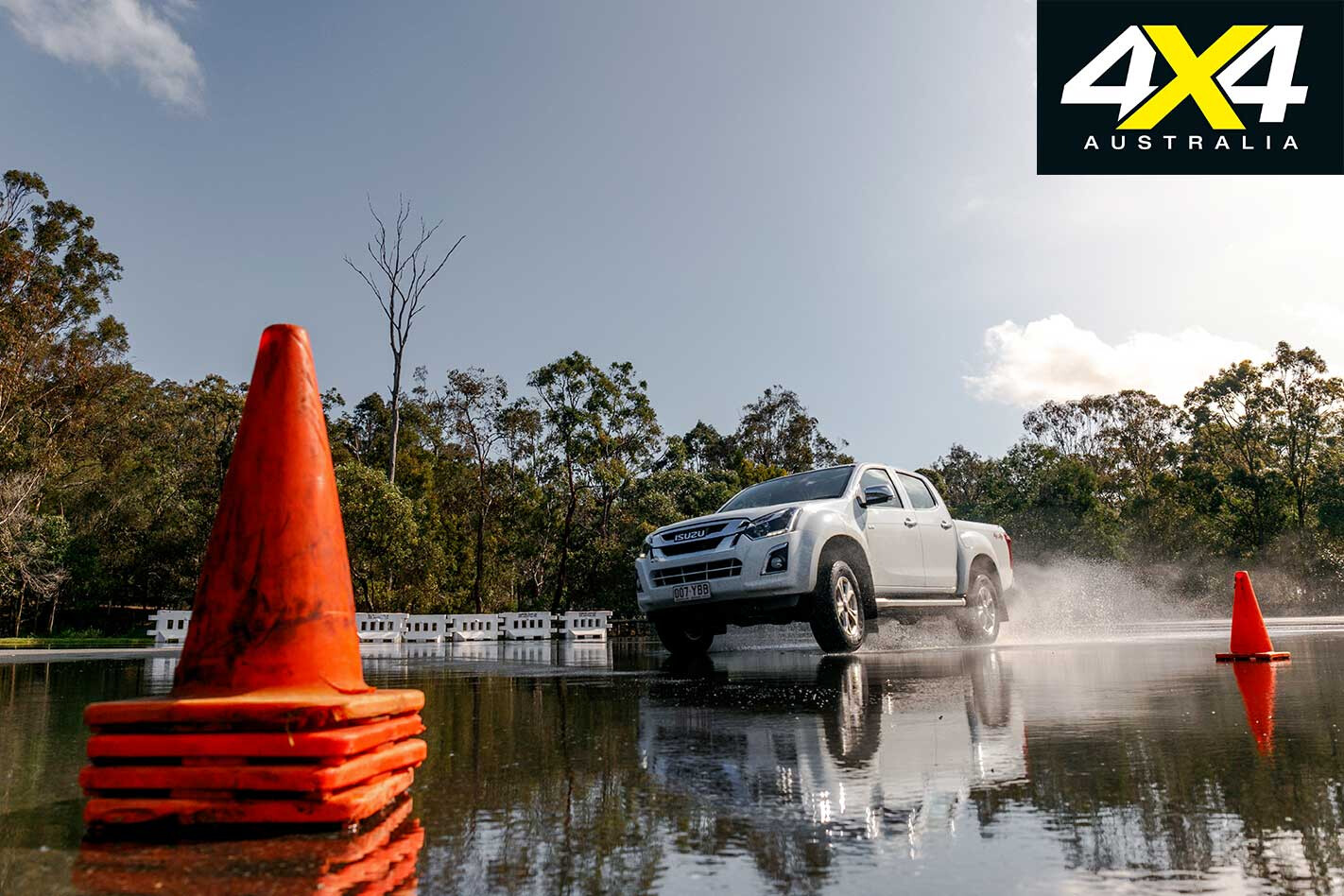
OUR TEST car was an Isuzu D-Max LS-U, complete with 17-inch alloy wheels. Its standard fitment road-focused Bridgestone Duelers were used as a baseline tyre, tested twice during the day for consistency; they were also used to establish the test course, a mix of sweeping and varying radius corners.
For our tests the stability control system was switched off, allowing Paul Stokell to bring the tyres to their grip limits without electronics cutting in. The absence of interference from occasionally inconsistent chassis electronics allows the properties of the tyres to shine – or flop.
For all tests the tyres were brought up to the pressures recommended on the placard, the Tyre Right crew in charge of fitment and balancing.
Measuring Equipment
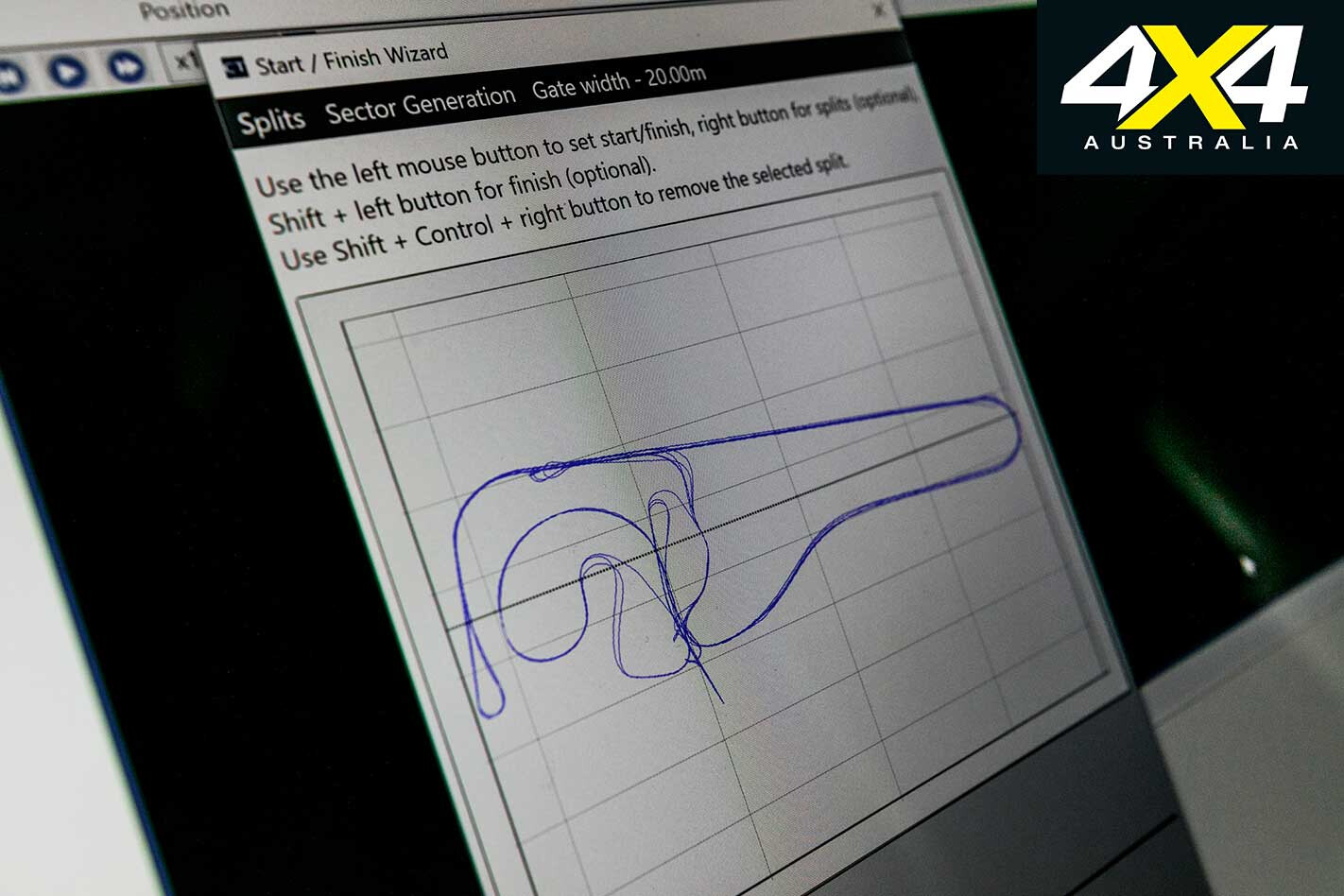
Our data was collected with a VBOX video data logger, before being analysed on the accompanying Circuit Tools and Test Suite software. They’re powerful programs that allow data to be plucked from individual sections of a course or track.
Measurements are taken 10 times per second and include everything from lateral and longitudinal G-force measurements, to speed down to the one-hundredth of a kilometre-per-hour and time down to the one-hundredth of a second.
The main measurements we looked at were speeds in corners, the G-forces on the vehicle and stopping distances. For overall cornering performance we looked at the distance it took for each set of tyres to get through the corner.
To measure stopping distances the vehicle was driven 7-10km/h above the test speed, and then the brake pedal was mashed to activate the ABS system, ensuring the ABS was pulsing by the time the car was decelerating through the test’s upper speed threshold.
The Tests
• Dry braking from 100km/h • Wet braking from 100km/h • Dry cornering x 2 • Wet cornering x 2 • Off-road course • Price analysis
Test Shortfalls
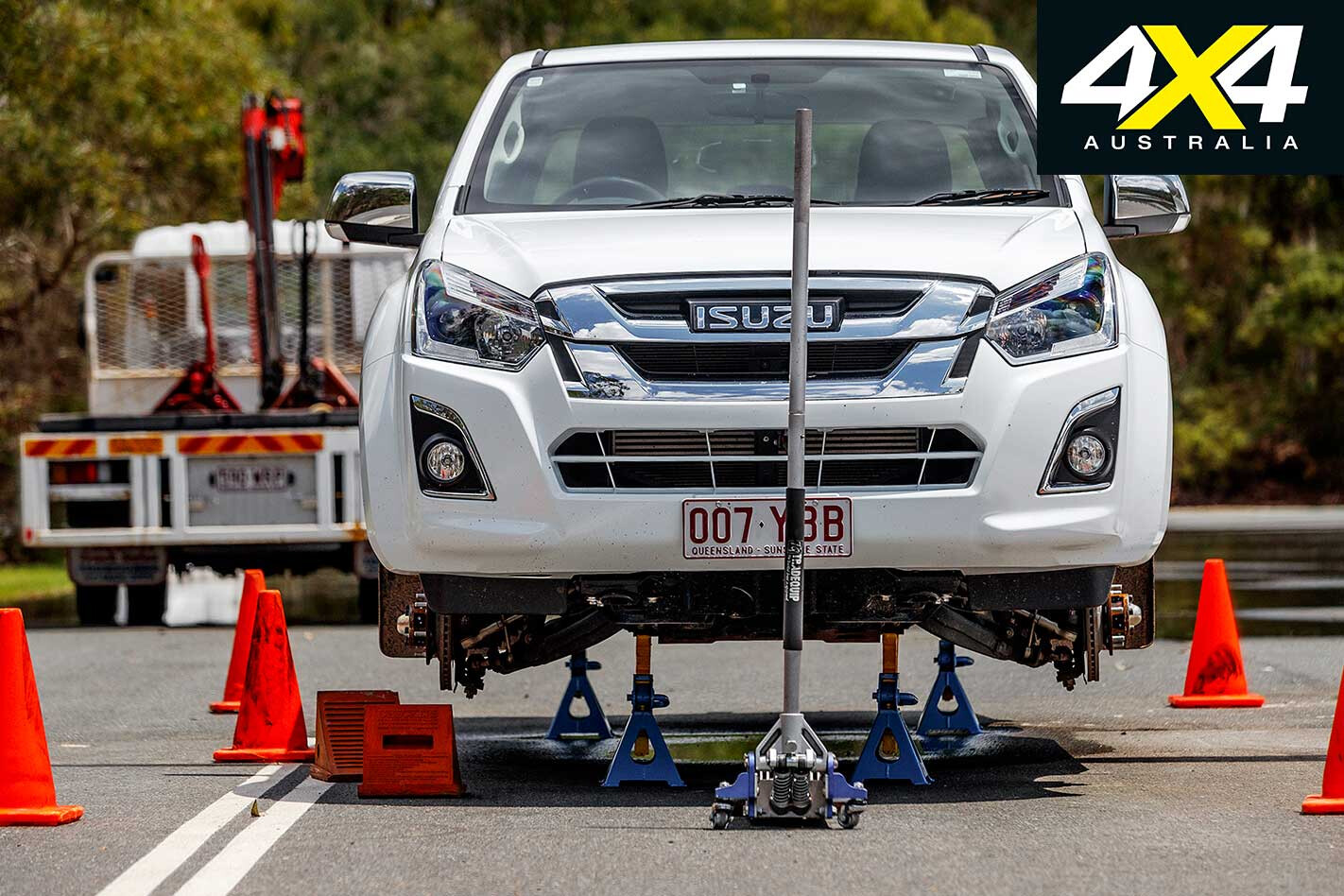
There are some things we’re not evaluating in this test, most notably puncture resistance and wear levels. They’re two big issues for off-roaders but are a challenge to accurately test in a relatively short time. Rest assured, it’s on our list for the future.
Another thing we didn’t test is rolling resistance, something that can noticeably increase fuel use. The more aggressive nature of all-terrain tyres means they tend to resist rolling more, in turn requiring more throttle input (fuel) to keep spinning.
Off-road focus fails to wrangle the points.
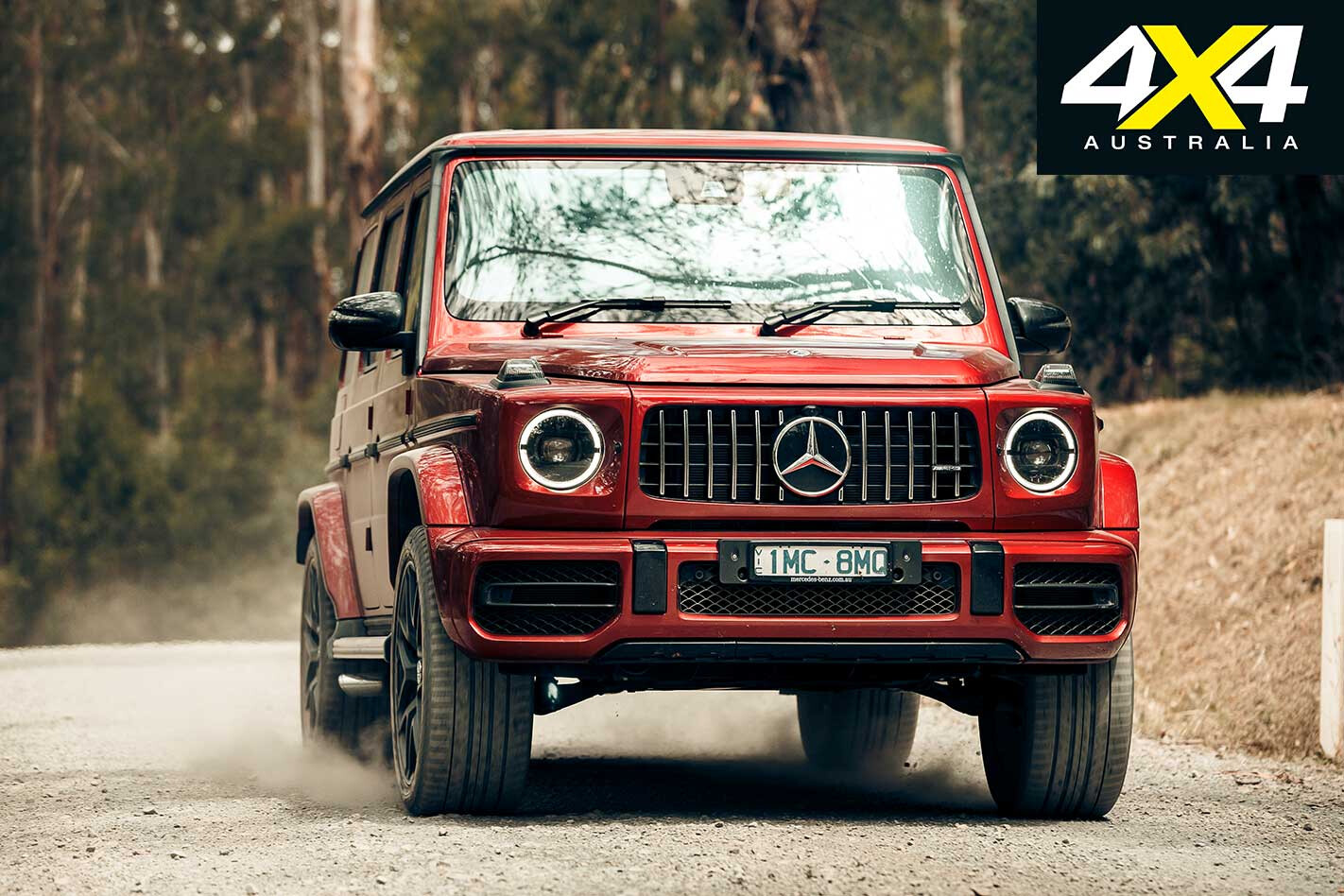
IT’S A VEHICLE that doesn’t make sense however you look at it. A two-tonne, high riding 4×4 wagon with military heritage that’s fitted with a twin-turbocharged V8 powerplant from one of Europe’s most respected sports saloon tuning houses.
Yet you can’t help but be amused by AMG’s G63 off-roader from the time you lay eyes on its chiselled, purposeful body, to when you first hear the rumble from the side-exiting exhaust outlets and experience the brain-scrambling performance.
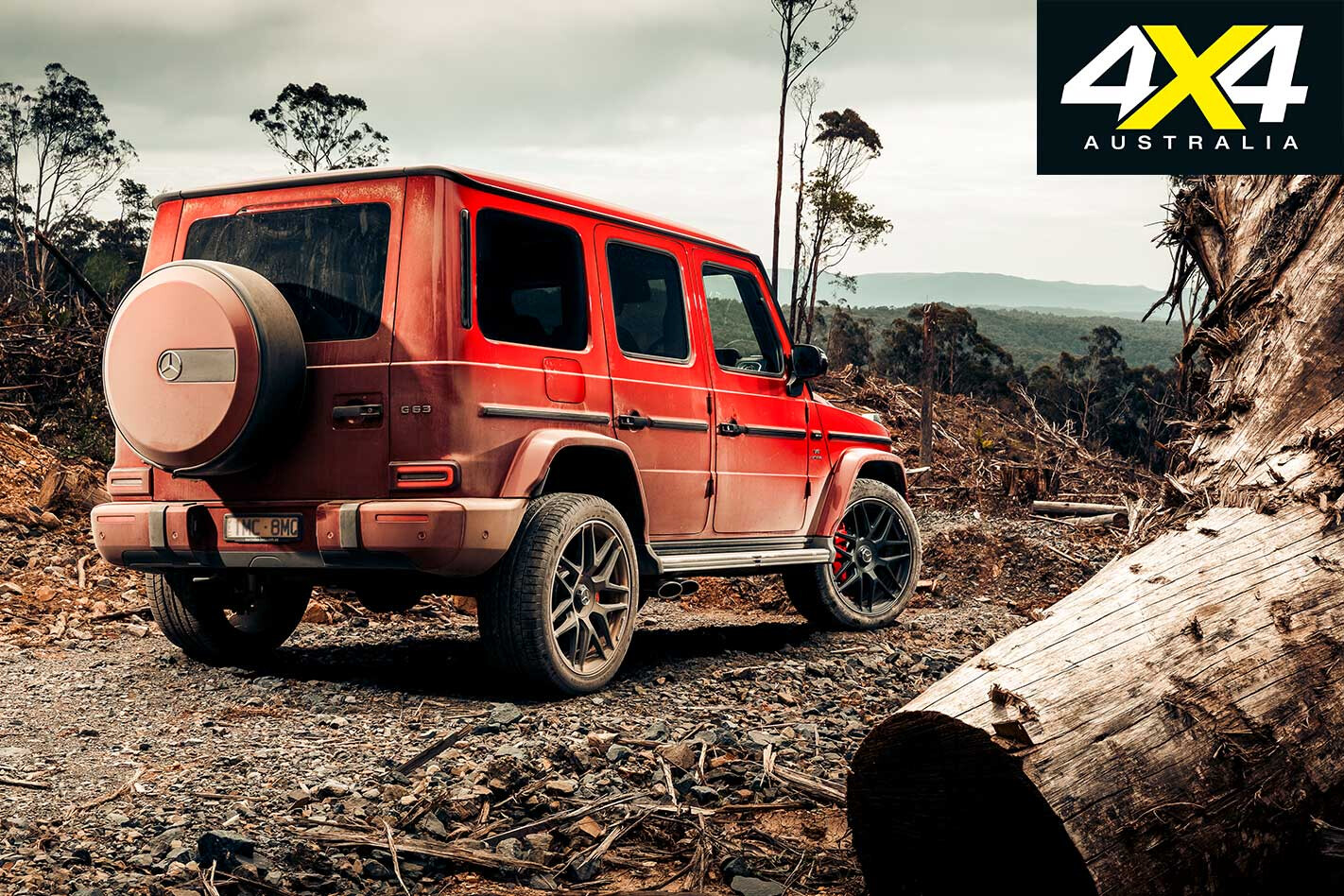
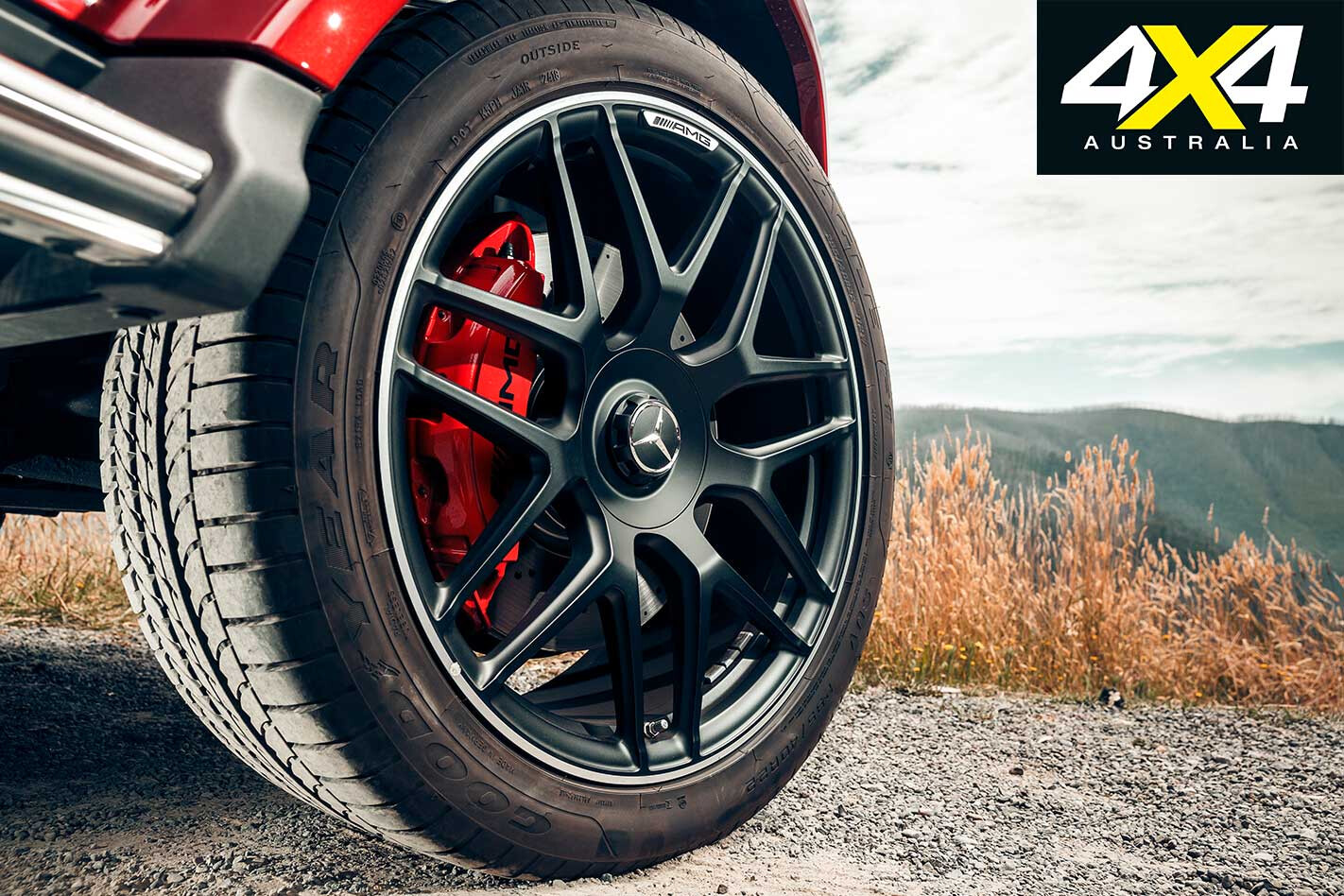
We say this is AMG’s off-roader, but those massive 22-inch forged alloy wheels and low profile asymmetrical tyres are hardly the kit you’d equip for an adventure on the Canning Stock Route or through the Sahara Desert. They are more relatable to the bellowing 430kW engine that is snuggly wedged in-between the front pair of oversized wheels and tyres.
The G-Class is Mercedes-Benz’s hard core off-road wagon with nigh-on 40 years of heritage as a military and NGO vehicle, and it can take people to all corners of the globe and back again. The high-performance gurus at AMG simply dial back the off-road practicality and wind up the go fast dial to create something truly unique. It’s akin to a Land Rover Defender fitted with a Range Rover’s luxury interior and supercharged V8 petrol engine, or a Lexus take on the LandCruiser 70 Series.
Not that the G63 isn’t off-road capable; it’s just that at more than $250,000 and with wheels that each probably cost the price of a new Jimny, we weren’t about to take it any place where we might scratch it. Even that stunning red paint is a $3900 option.
If you’re thinking this G-Class looks a bit different – a little rounder on the edges, wider across the beams and slightly more aerodynamic – you’d be right, because the 2018 G-Class signalled the first major model refresh of the distinctive wagon.
Much of the refresh centred on passenger comfort and drivability and, as such, the body is both longer and wider than the 40-year-old originals to give 68 more millimetres of elbow room on the front and 150mm more legroom in the back.
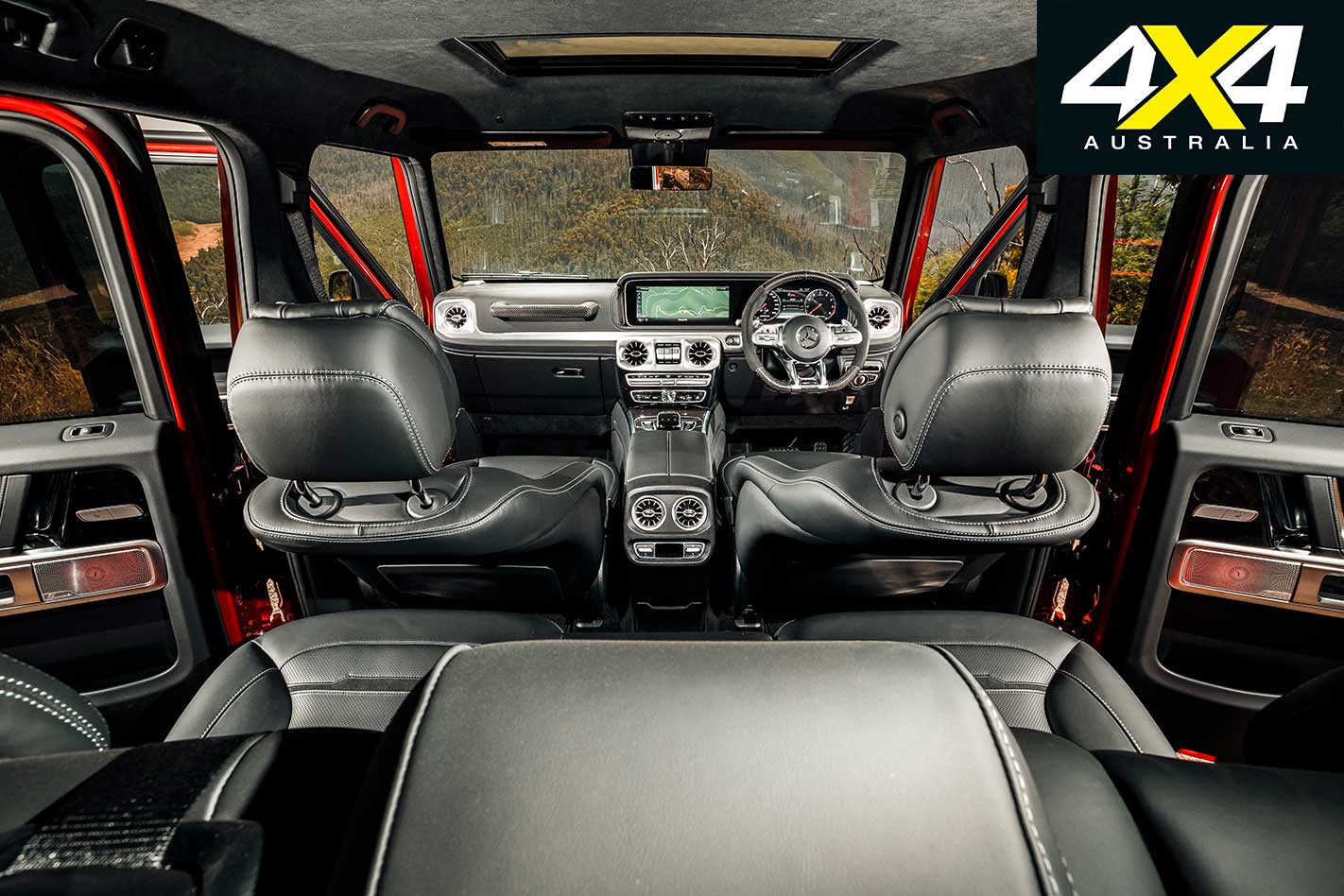
Being familiar with the old G300Cdi Professional, the windscreen of the new G63 is noticeably broader between the A-pillars, and it’s a longer stretch from the driver’s seat to the passenger door; not that you need to operate manual winders as you do in the G-Professional.
The 2018 G-Class has an all-new interior with large screens for displaying the gauges and sat-nav/entertainment systems. In this G-63 spec it’s all luxury with, the type of trim and equipment befitting a quarter-million-dollar prestige car.
In fact, the whole of the 2018 vehicle is all-new; although, there are a few items carried over from the 40-year-old icon. The exterior door handles are one of them and give that G-Wagen familiarity when you operate them with push-button actuation.
The doors themselves, despite being made of lighter materials, still close with a solid thump you won’t find in many other modern vehicles; and the sound of the door locks is akin to securing a bank vault. The other carry-over parts are the windscreen wipers and the rear-door-mounted spare-wheel carrier.
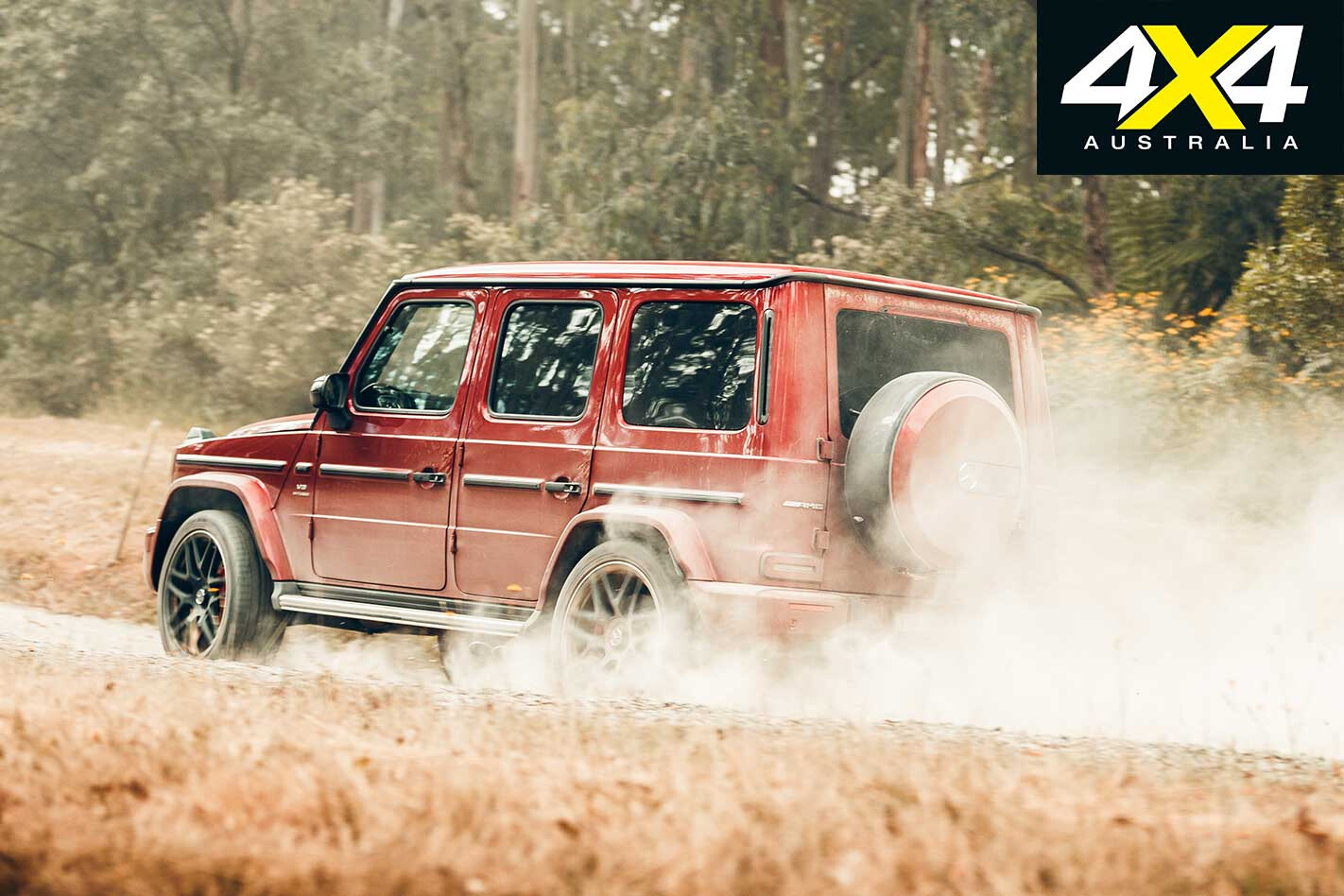
The ladder-chassis design is retained, but it’s a new chassis mounting new suspension configurations (front and rear). The rear remains a live axle riding on coil springs, but it’s now located by a redesigned five-link set up for improved stability and handling while retaining axle articulation. The biggest change is at the front, where an independent suspension design using wishbones replaces the live axle that has been a hallmark of the vehicle since its inception.
It all comes together well to deliver a G-Class that handles and drives like no other G-Wagen before it. The steering is lighter yet more direct, with less turns lock to lock and a tighter turning radius. The independent front end is more precise and accurate when driving with intent, better befitting a vehicle wearing the AMG badge; even if it remains the most truck-like vehicles from Affalterbach. It might be the sportiest G-Wagen ever, but the G63 is no sports car.
The twin-turbocharged 4.0-litre V8 petrol engine’s 430kW and 850Nm of power might sound like sports car figures, but it’s still fitted to a ladder chassis under a tall wagon body. Yes it pumps out a sound that suggests AMG has angered the gods, and it propels the G63 with cannonball-like drive.
It’s amusing that such a mean-spirited wagon is fitted with auto idle stop to save fuel and reduce emissions, but fortunately the button to switch that system off is positioned right next to the start button.
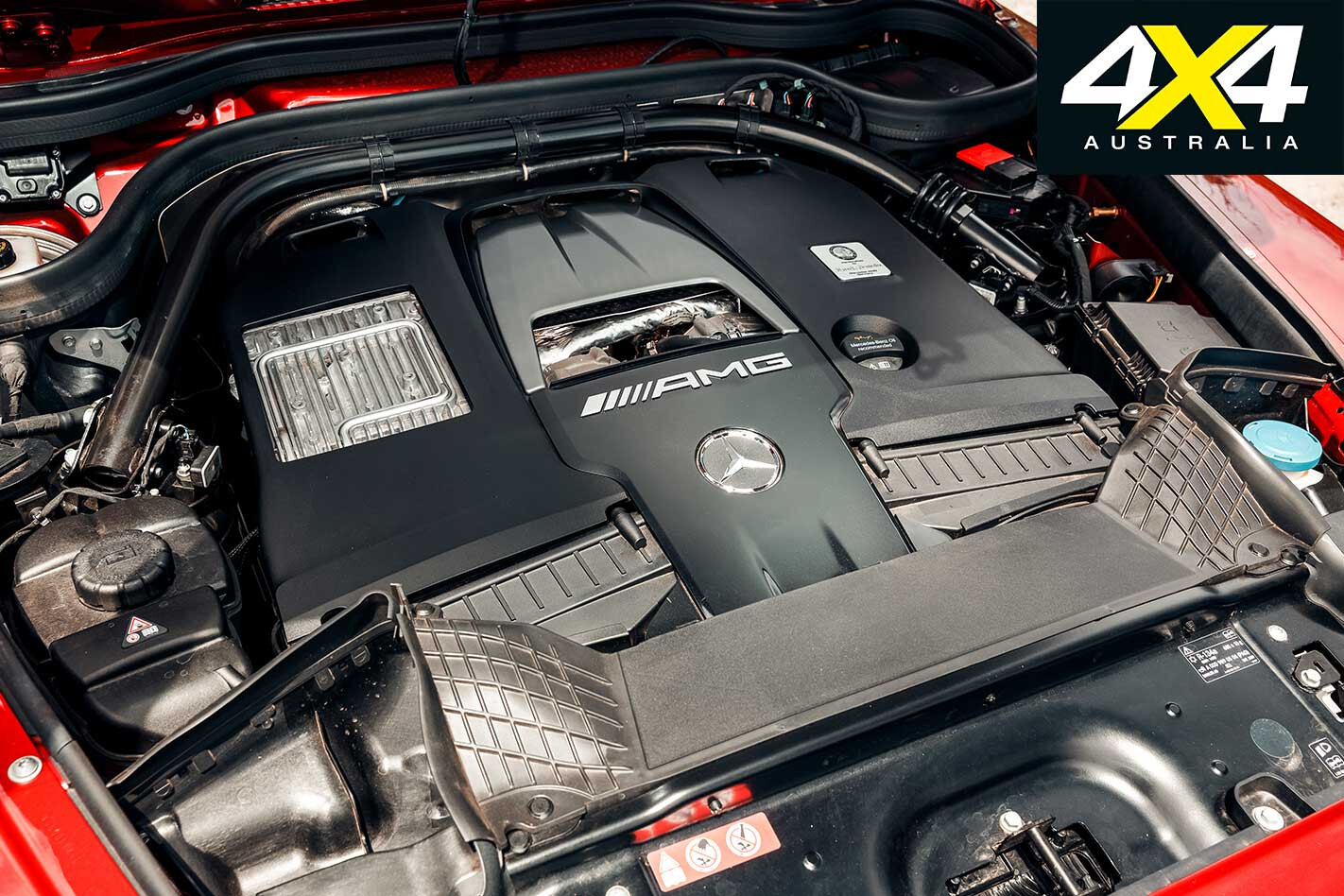
Drivers of the G63 will want to revel in the engine’s audible delights when they’re at idle or bellowing at full throttle between the mountain bends. The start-up procedure always goes: ignition button (start), auto-stop (off), exhaust system (loud)! Yes, those side-exiting exhausts are tuneable to deliver a low rumble or offensive bellow, and the latter is the typical selection.
The engine, nine-speed auto transmission and AMG-tuned suspension also have selections to tailer the drive experience to the driver’s preference. We found that switching from Comfort to Sport in the suspension settings helps control the fore and aft pitching under acceleration and braking without any of the harshness of the Sport+ setting, while the Manual setting in the transmission is best for holding the gears when carving along mountain roads.
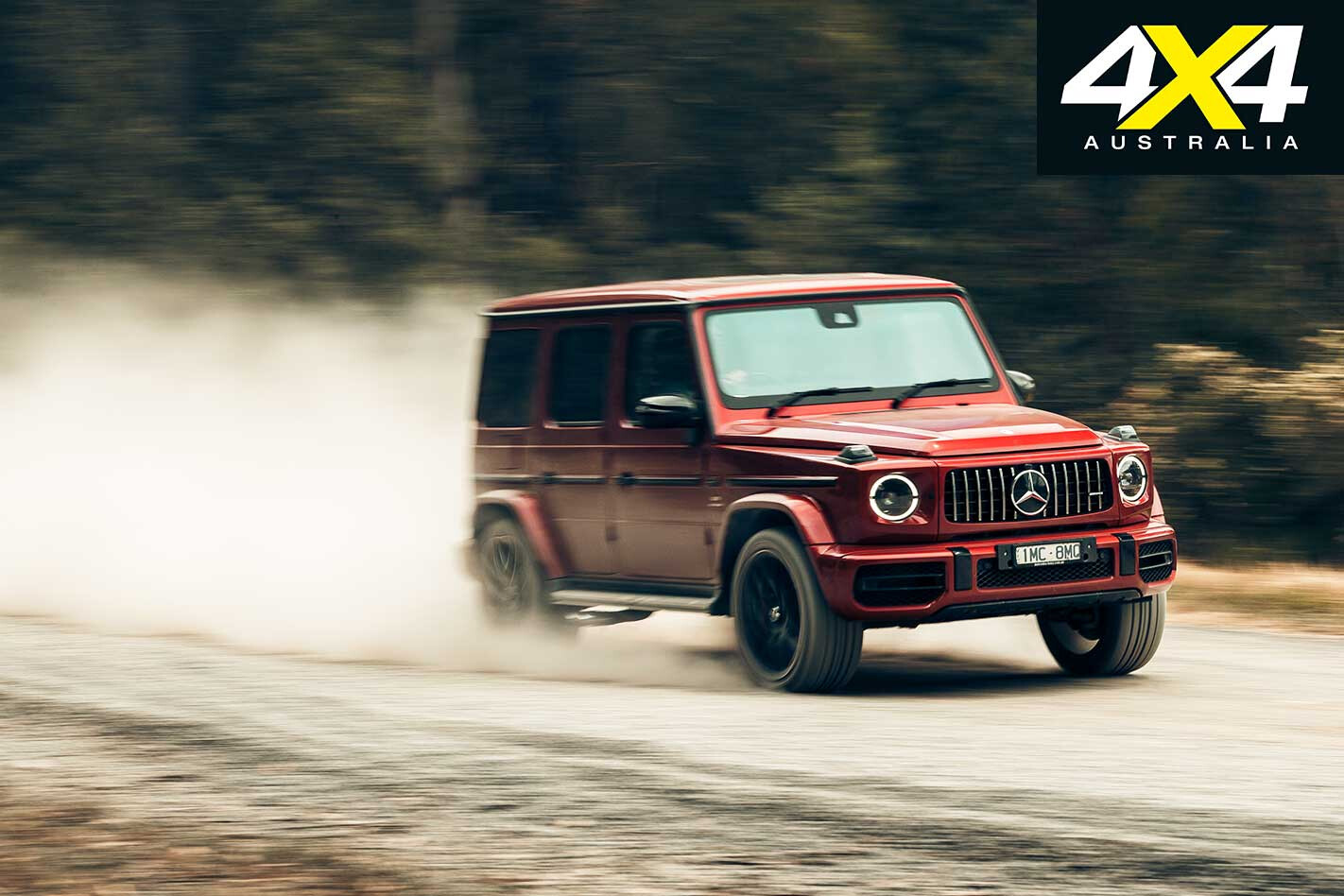
Mountain roads really are the home ground of the G63. We did take it on a rough gravel road and were surprised at the ride compliance for such a sporting wagon on low profile tyres. We also ventured off-road for some light work with some wet tracks and mud, and the G never struggled for traction or grunt. But we limited the off-roading to that due to the type of the vehicle this is.
For now, the AMG G63 is the only version of the new G-Wagon available in Australia. The old, live-axle G300Cdi Professional is still available here, but it really is an agricultural vehicle by comparison. The non-AMG enhanced G350d has been launched in Europe and features Benz’s slick, new straight-six cylinder diesel engine.
Due to the demand of the G63 here, it will be last quarter of 2019 or later before the more off-road-suitable G350d reaches our shores, if at all. That would be a shame if it doesn’t arrive, as the ‘new’ G-Class is a step above the old and, while the G63 is a lot of fun, the G350d might be the best of the breed.
New technology and materials have given 4×4 enthusiasts a whole slew of new 4×4 gear such as Dometic’s portable solar blanket, Black Wolf’s lightweight Tuff Tent and Carbon Offroad soft shackles, that promises to make life on the tracks easier.
Dometic PSB150 portable solar blanket
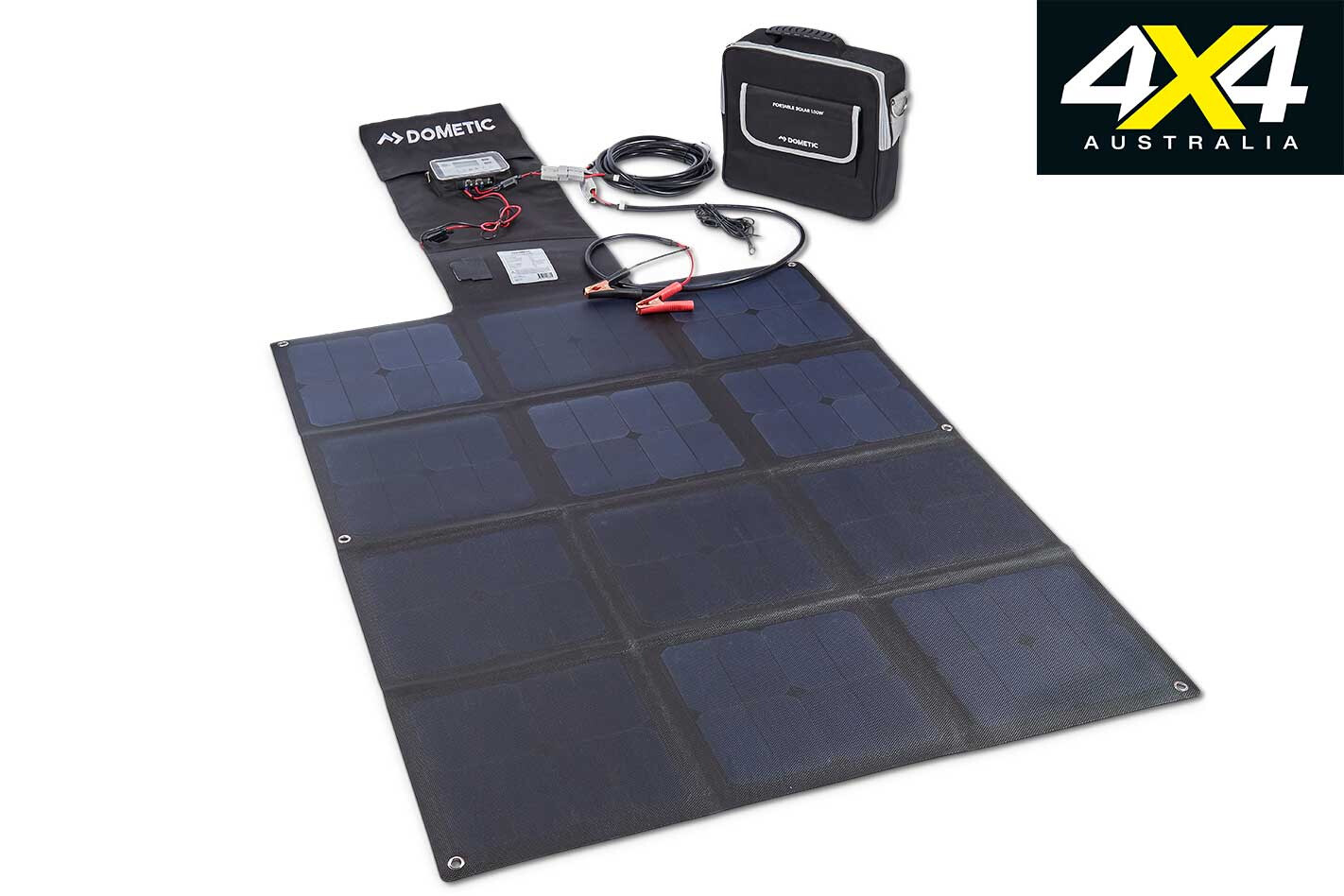
This new remote power solution from Dometic is built tough and light, coming in at around one-third the weight of a glass solar panel of an equivalent size. The PSB150 uses C60 SunPower monocrystalline cells and has an EFTE anti-reflective and scratch-resistant coating, ensuring it is up to the task of bush travel power-ups.
The PSB150 has six different battery charge types – AGM, GEL, Wet, Lithium Iron Phosphate, Calcium and LTO – and features an inbuilt LCD screen that displays charging current, voltage, charge capacity, fault codes and the type of battery being charged. Also included is a five-metre cable, Anderson connector, alligator clips and a handy carry bag.
The unit has protection systems that cover reverse polarity, over-voltage and over-heating. It is rated to IP65 for dust resistance and water splashes.
Website: www.dometic.com
Black Wolf Tuff Tent 10
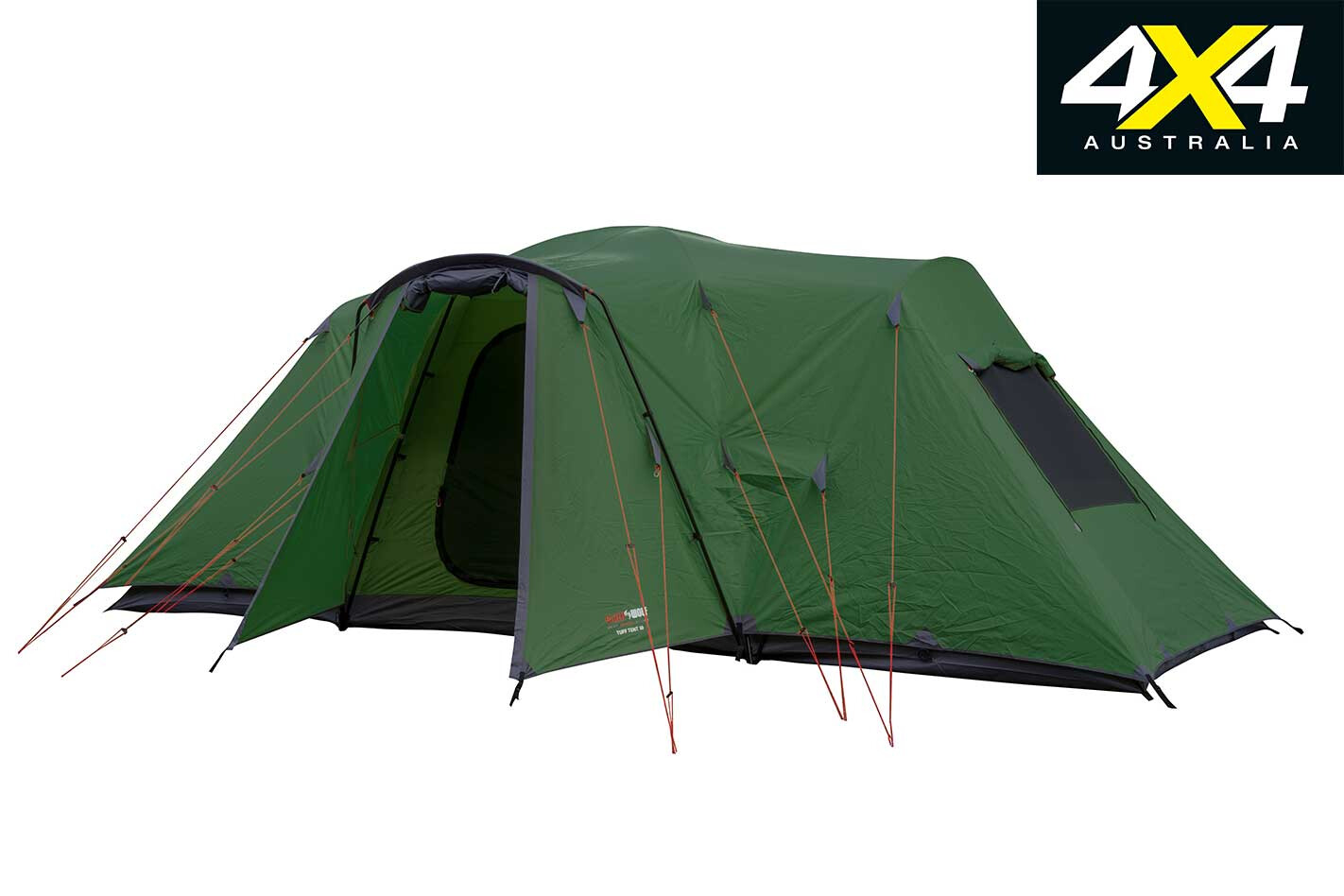
This new uber-tent from Black Wolf (BW) is ideal for the large camping family, with three rooms and enough space for up to 10 people (it measures six metres in length). As per the rest of the BW Tuff Tent range, this model is built tough and light (for its capacity) at 23kg.
The heavy-duty 150-denier polyester fly combines with the 300D polyester floor, beefy 19mm steel poles and numerous guy ropes to make this bush accommodation option able to cop plenty of wild weather and keep everyone inside dry and sheltered. On top of that, the floor is tape seam-sealed (as is the fly).
For warmer conditions the tent has plenty of ventilation, with the gusseted windows (all include no-see-um mesh) so they can be kept open even during heavy rain. The three rooms are separated via curtain dividers (these can be rolled back for a more open space).
Website: www.blackwolf.com.au
Carbon Offroad Monkey Fist soft shackles
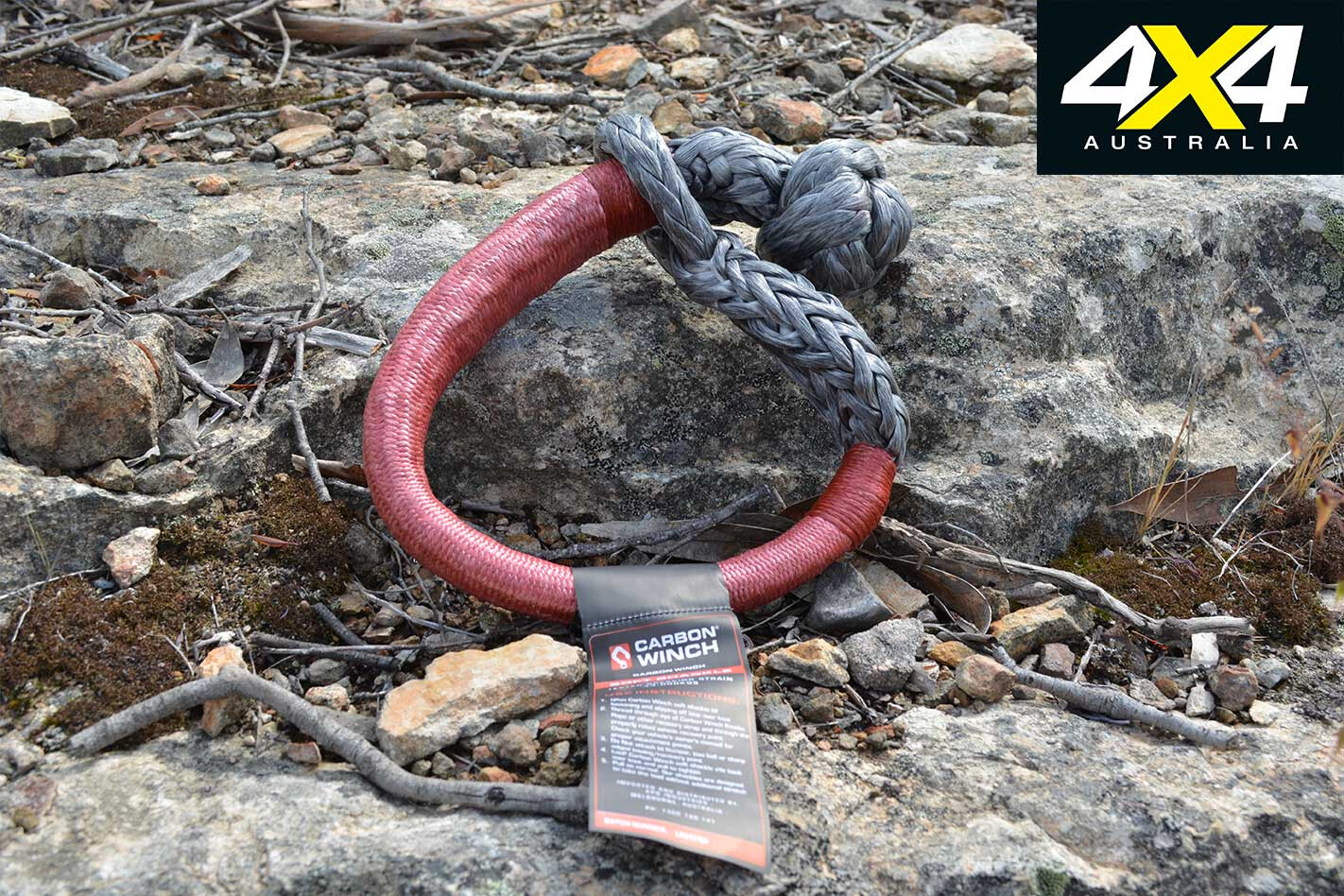
The Carbon Offroad Monkey Fist 12mm Dyneema soft shackle is rated at a 14-tonne minimum breaking strain and, with a super heavy-duty braided tight sheath over the Dyneema core, is built to take some abuse. The oversized Monkey Fist knot ensures zero chance of the shackle coming apart during a recovery. Plus, the removal of a solid metal item ups the safety aspect of the process itself.
Disassembly of the shackle after load is applied is just as easy if not easier than a steel shackle. The soft shackle is considerably lighter than its metal equivalent, doesn’t sacrifice any performance, is highly corrosion-resistant and is more ‘flexible’ in use. It’s a no-brainer to go the soft option.
WHITE dunes stretch endlessly as kilometres of undulating sand hills blend into a horizon of sky and sea. With no clearly defined track ahead, I feel slightly unnerved. There’s not a car in sight and the thought crosses my mind that it wouldn’t take much to get lost out here.
“Just keep the ocean on your left” we’d been advised before leaving, “and look out for the green markers”. So, here we are, in the middle of what feels like the Sahara, and the only signs we’ve seen so far are a couple of ‘one way’ and ‘keep out’ signs. Where are these markers?
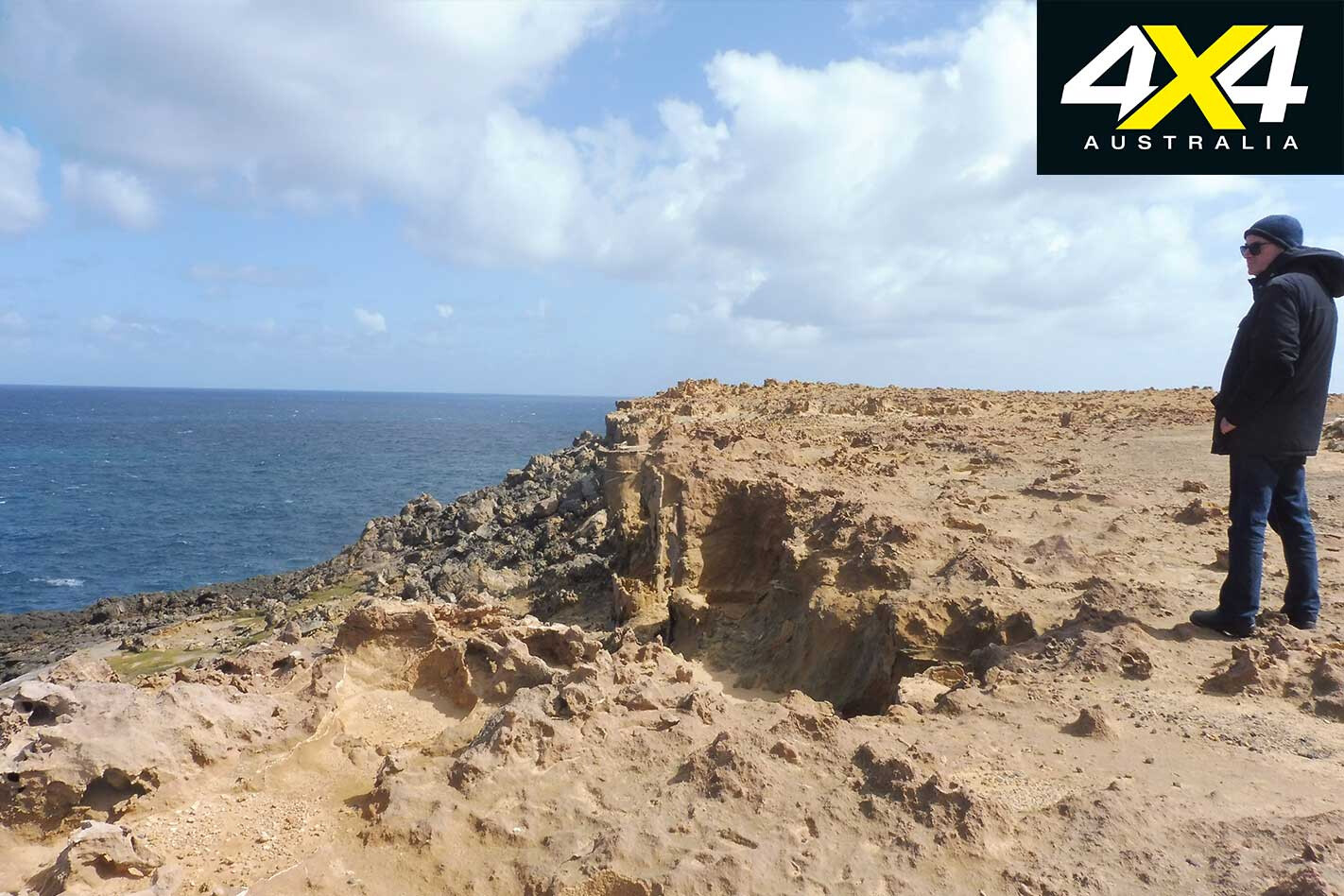
The wind is ferocious out on the dunes and at one stage, stepping out of the Colorado, I’m nearly blown away. In the distance, the wild spray of the Southern Ocean is visible, and, underfoot, the white sand is as pure as talc. It’s spectacular and we’re keen to explore; however, the wind has obliterated any tyre marks in the sand and there are no other cars in sight.
We’re in the middle of Discovery Bay Coastal Park, on the southwest coast of Victoria, on a vast complex of sand dunes; 1800 hectares of them that stretch all the way to the South Australian border. There are very few places in Victoria where you can legally drive on sand dunes, but here, tucked in behind Swan Lake Campground about 50km west of Portland, you’ll find some of the best dune driving in Australia.
This is a pretty special area to explore and test out your sand-driving skills; however, a permit and membership is required before you arrive. The dunes and adjoining campsite are managed by the Portland Dune Buggy Club, a club that was formed in 1969 and, by the mid-’70s, the area was officially declared a ‘designated dune buggy area’. Along with Parks Victoria, the Portland Dune Buggy Club is the sole regulator of vehicle activity here.
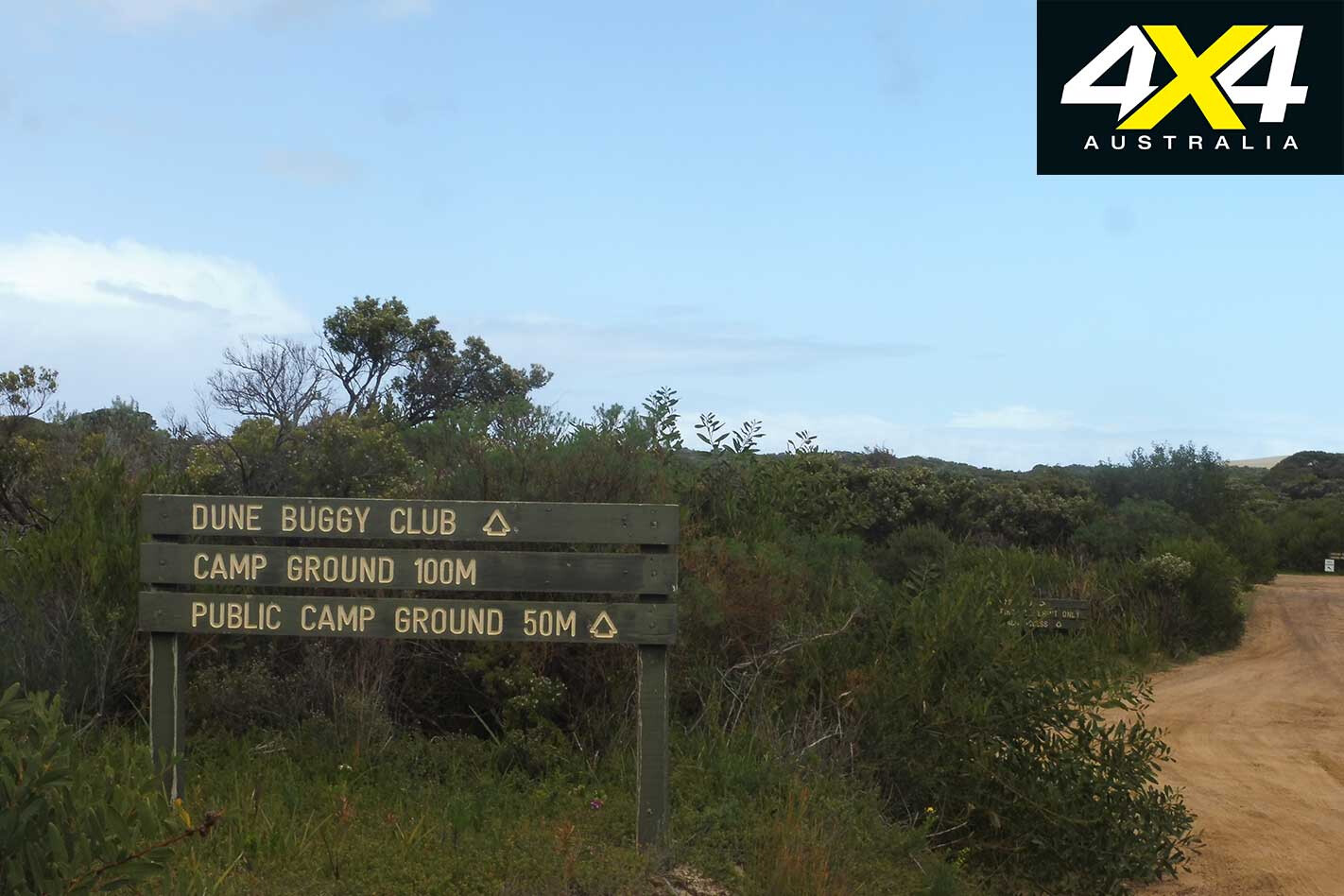
Coincidentally, our friends, who are part of a four-wheel drive club, were camped at Swan Lake that same weekend. We were camped nearby at Narrawong and had mentioned meeting up with them, but things don’t always go as planned.
We ventured to Swan Lake on the second day of our visit. It’s a large area that’s fairly exposed to the elements, with bore water, drop toilets and fire pits. The campsite has direct access to the dunes; however, when we arrive the place is virtually deserted. There are heaps of campers and trailers, but all the cars have gone.
Fortunately, we met Ron from the Portland Dune Buggy Club, who’s just walked one-and-a-half hours back to camp after his buggy broke down on the dunes. We spoke to him and discovered that both clubs had left earlier that morning. There’s no phone reception in the park, so we have no way of communicating with our friends who are now out of UHF range.
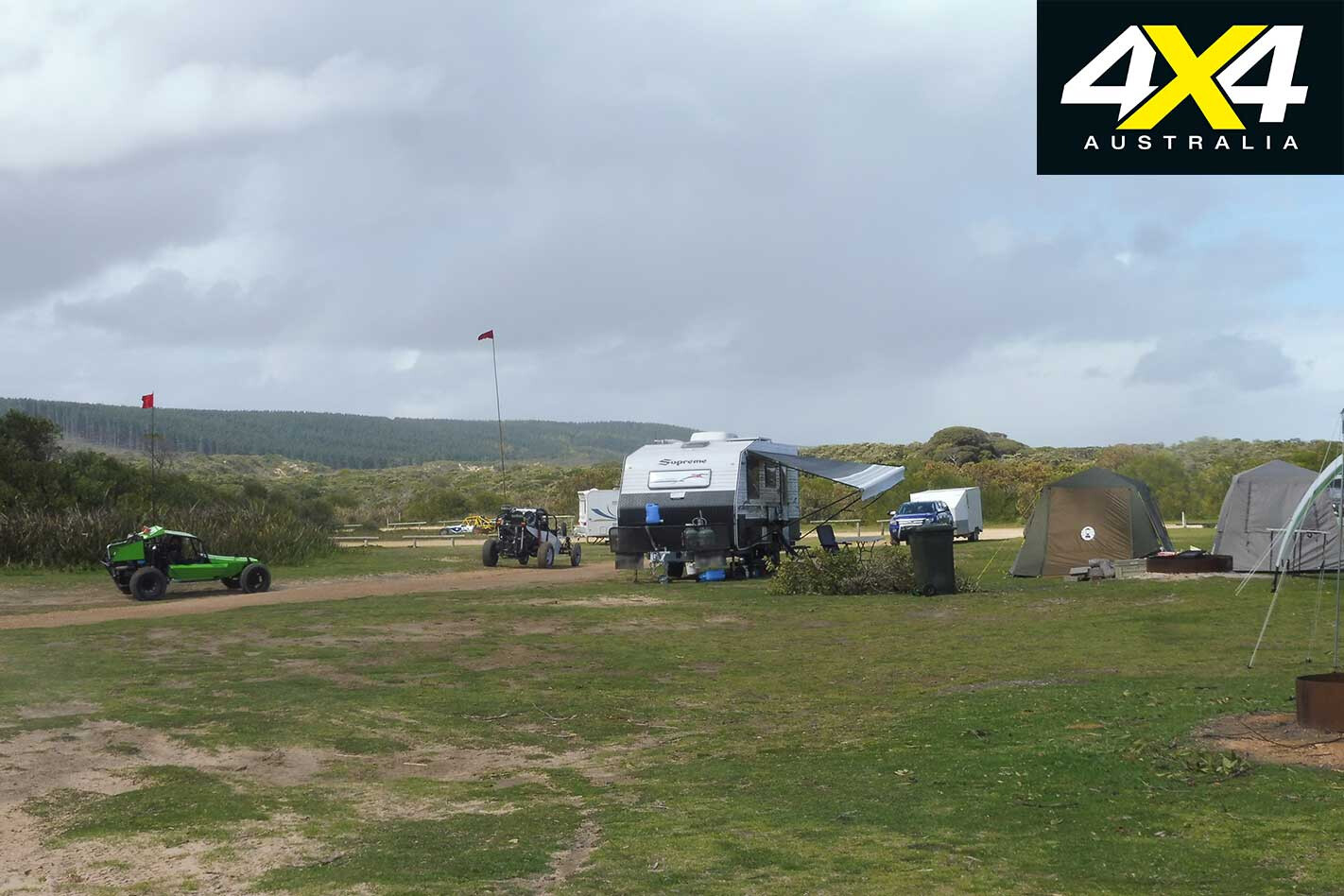
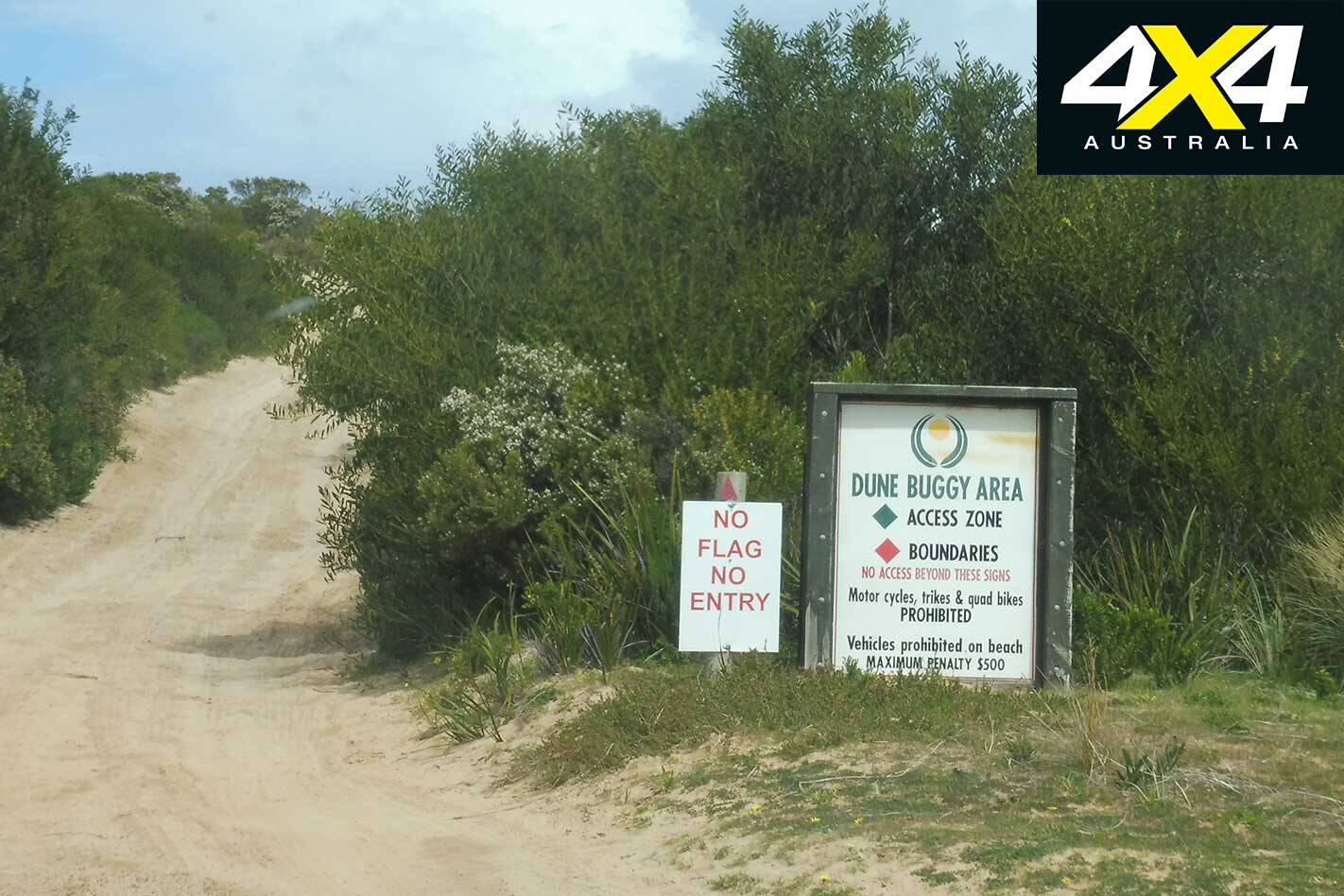
Ron points us in the direction of the flags which the dune buggy club provides. A sand flag is essential before you hit the dunes as you need to be easily visible out here. As the sign says at the start of the track, ‘no flag, no entry’.
We tell him we’re hoping to find, if not our mates, at least some other vehicles on the dunes. “You’re bound to find someone out there,” he says. He gives us the lowdown and tells us to stick to the green markers. “Keep the coast on your left,” he says, “and you’ll be right.” We lower our tyre pressures to 15psi, cable-tie the huge bamboo flagpole securely to our bullbar and set off.
Out here in the middle of the dunes your driving skills are tested, not to mention your strategic skills with the shifting soft sand, the sharp descents and minimal track markings. These are the largest moving sand dunes in Victoria and they change constantly due to the prevailing winds which sculpt them.
It takes a bit of getting used to as, unlike a formed track, there’s nothing in front of you. There are no obstacles or trees to potentially hit and there are few, if any, landmarks. Instead, there are flows, dips and unexpected drop-offs.
There are only a certain number of cars allowed on the dunes at any one time; however, out here we couldn’t see even one of them. Where were those 30 other cars? And we still haven’t seen a green marker.
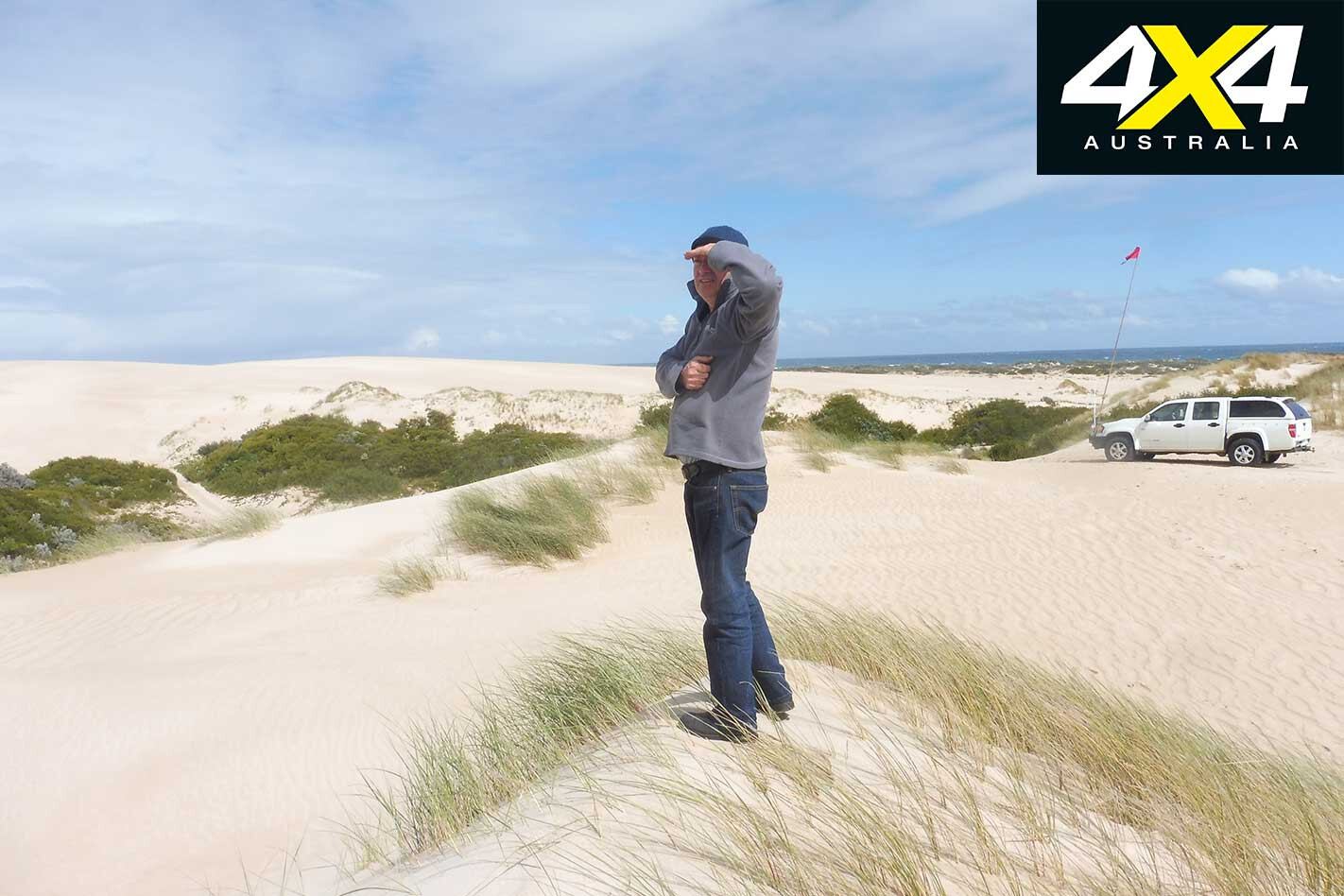
It feels like the Sahara, exciting but a tad unnerving. We drive for a while and tackle a few sand hills without venturing too far. Driving in soft sand is a challenge as it’s beautifully soft and smooth yet slippery and disconcerting at the same time. Hit the dunes straight and with the right momentum all is good, but things can get interesting if you take the dunes slightly at an angle.
Descending slowly down a couple of the sand dunes the Colorado is pressed to nearly red line as we crest the next hill, and some dunes are so high that, as we reach the top, all we can see is sky. There are no marked tracks and, at one stage, we take a crest and end up on the beach.
Driving on the beach is strictly prohibited, as is driving on vegetated areas, so we quickly do a U-turn and back-pedal. We have no intention of staying down there amidst a rising high tide and very little beach. The fines would have been the least of our concerns.
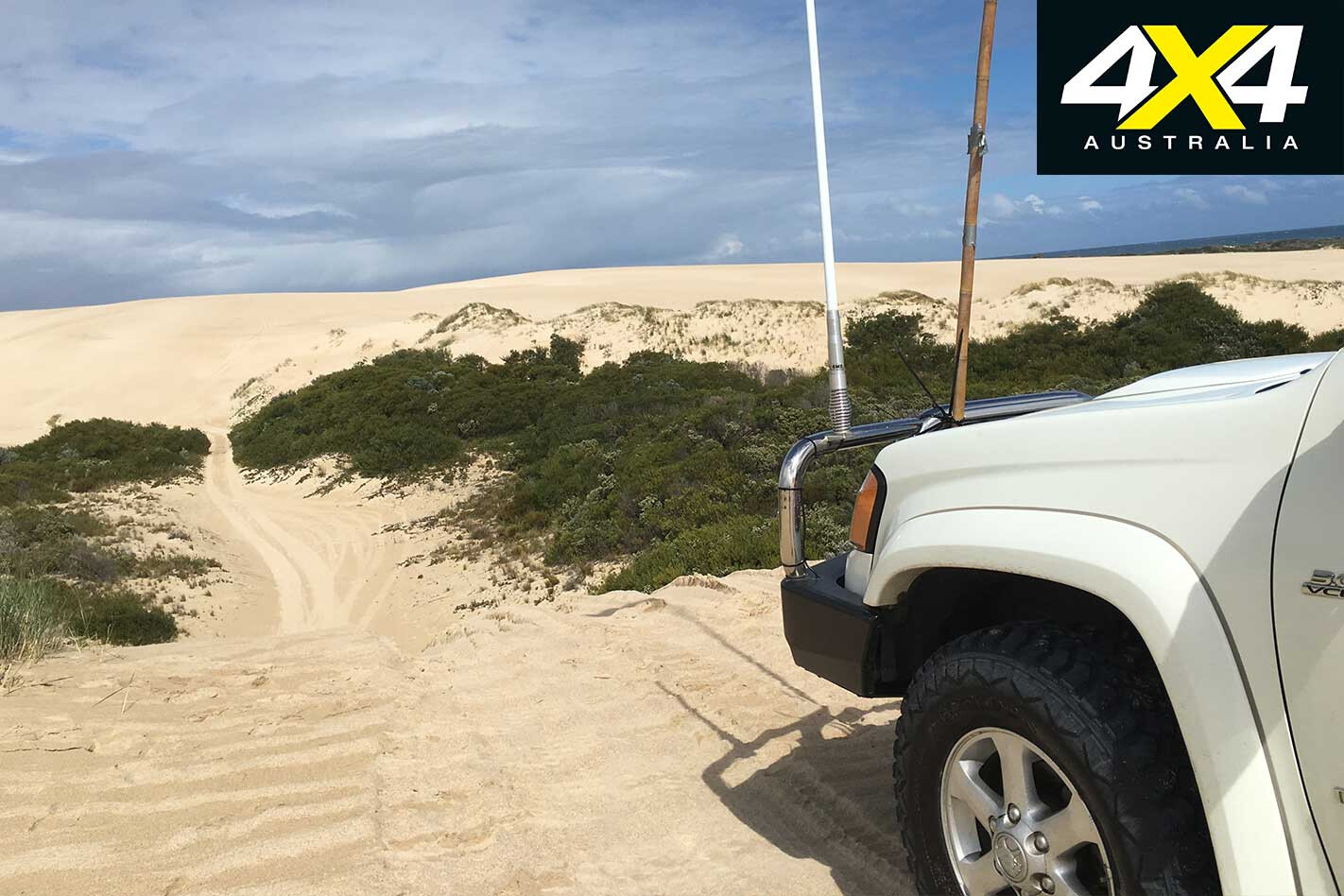
Eventually we spot a couple of other vehicles and join them. To our surprise, up the top of the dune where they stop, we meet up with Ron again. He’s back in his dune buggy, doing what he loves best.
Given we aren’t technically part of a convoy we’re thrilled when he offers to show us around, kind of a personalised tour of the dunes. He’s been part of the Portland Dune Buggy Club since its inception – nearly 50 years – and knows this place like the back of his hand.
Following a dune buggy is an exhilarating experience. They’re fast, furious, loud and exciting to be behind as we weave through the sand dunes. I had to remind Doug that the Colorado isn’t a dune buggy, but it was still clearly important to keep up the momentum. Seems that when driving on soft sand there are two main rules – more power and don’t brake – but rule number one is to keep the foot to the floor.
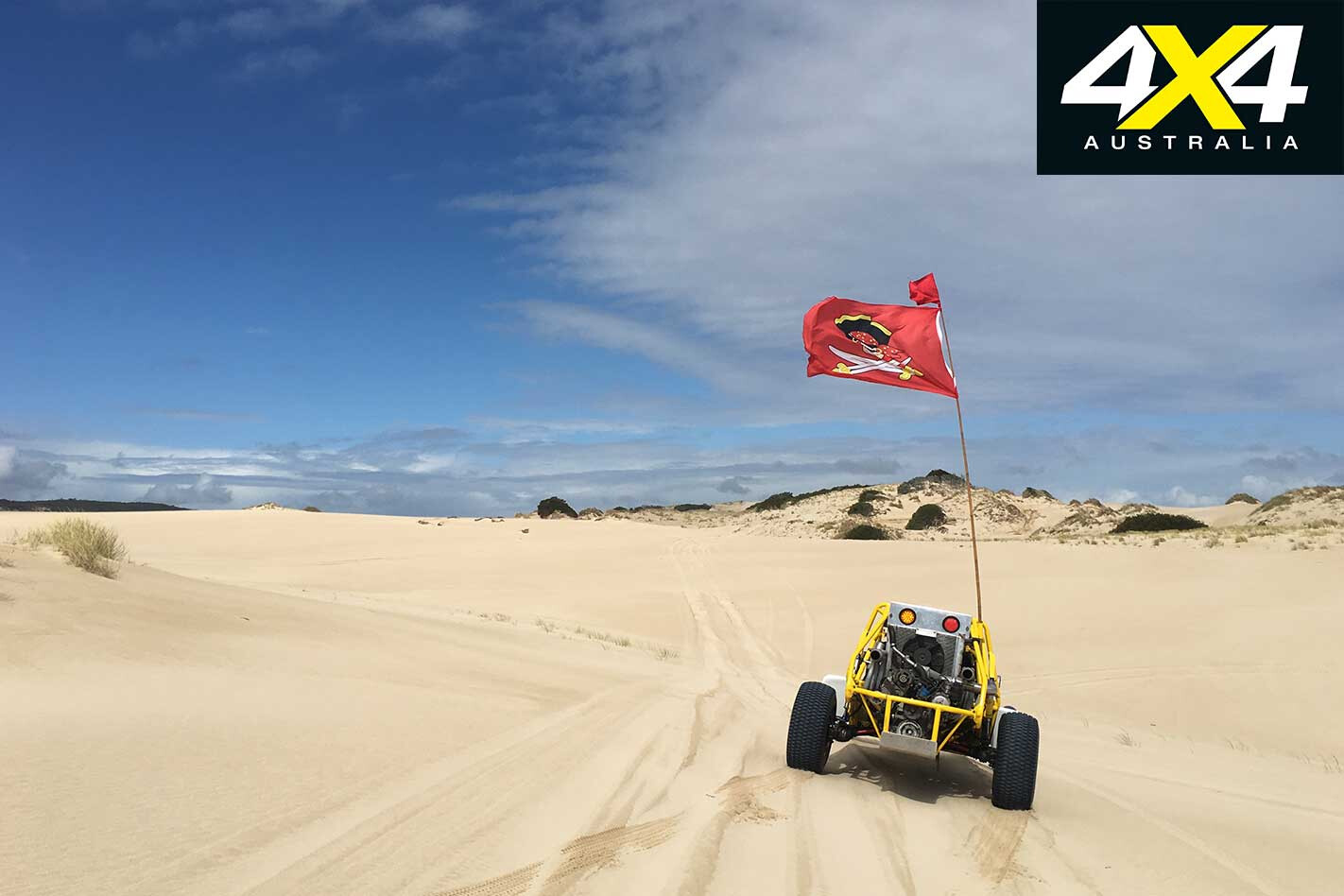
We finally see familiar cars as we’re exiting the access ramp. The timing is perfect as the sky darkens and we arrive back at Swan Lake Camp within minutes of a ferocious hailstorm that rips down awnings and has us all scrambling for cover. Within minutes, it passes and we’re able to adjust our tyre pressures, take down the flag and enjoy a well-earned drink before we shoot back to nearby Narrawong.
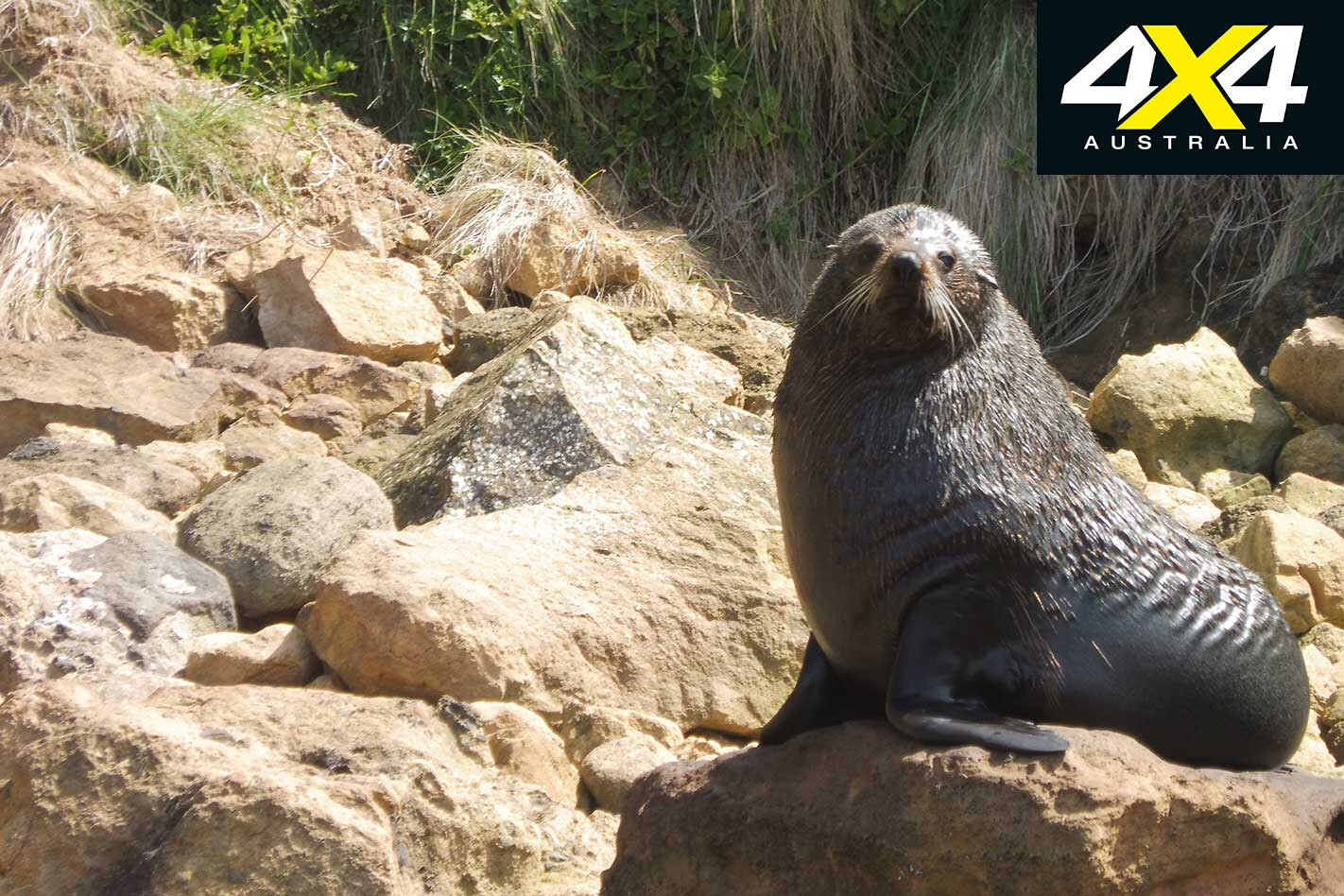
The momentum continues the next day out on the water, off nearby Cape Bridgewater, where the star attraction switches from sand dunes to seals. This place is home to a large colony of Australian and long-nosed fur seals, the only mainland breeding colony in Australia, and the best way to see them up close and personal is on a Seals by Sea boat tour.
Seals by Sea Tours are accessed by a walkway from the carpark near the café, which is the central point of the tiny town. From the café it’s about four kilometres to the blowholes, the Petrified Forest and lookouts of the Great South West Walk.
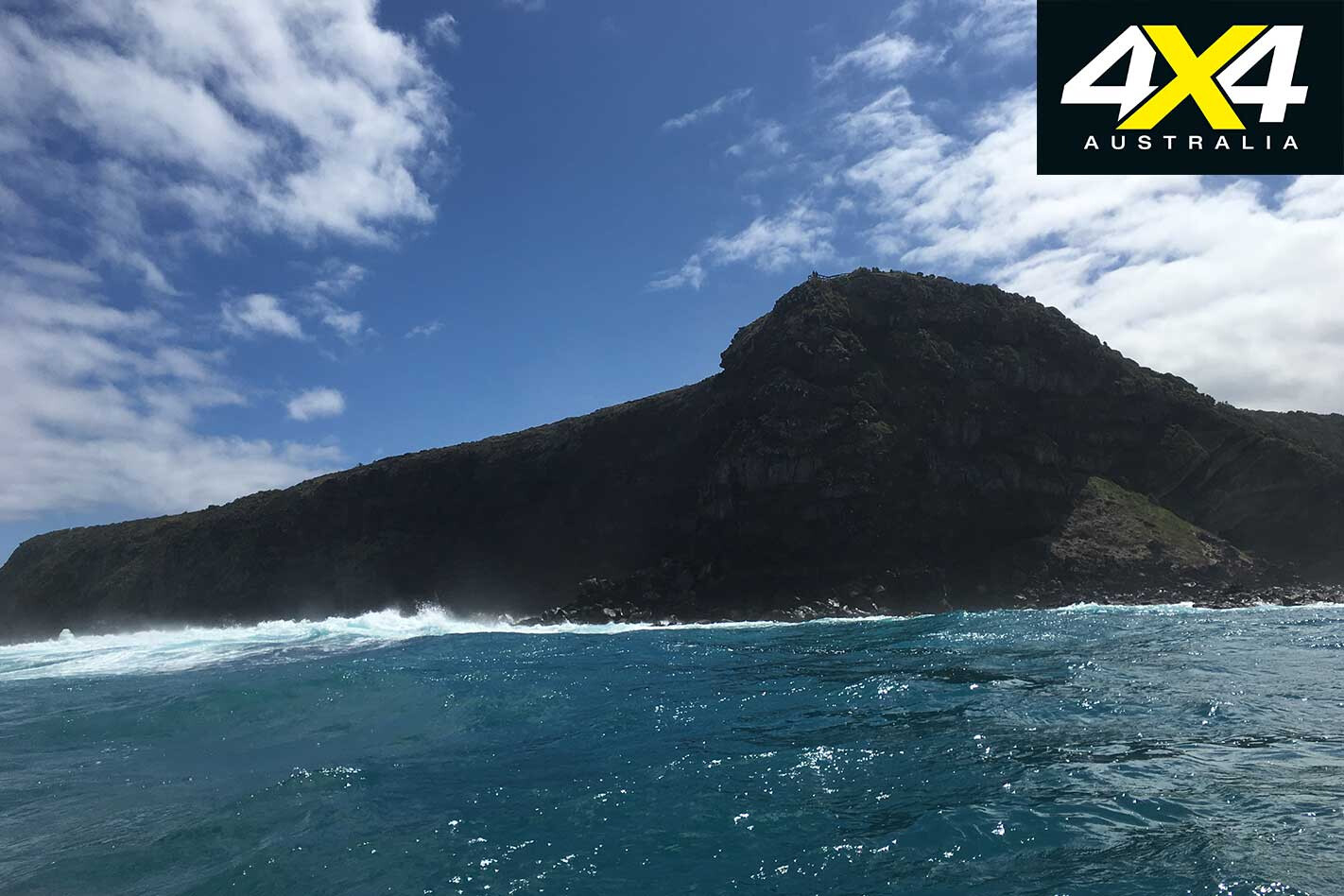
To walk around the cape takes about three hours, but this, like most of the Great South West Walk, which this area is renowned for, can be tackled in sections. The steep walk down to the rustic pier to access the Seals by Sea boat tour takes about 15 minutes and, down on the rocks as we wait, the excitement amongst our small group of seven is almost palpable.
Safely onboard and geared up, it’s a thrilling start as we speed out to the break. As we approach the rock platforms, we slow down and enjoy our first glimpse of the seals, ducking and diving in the water whilst others laze on the rocks, seemingly oblivious to our presence.
Our skipper Richard informs us their numbers have increased from 600 to 2500 in the 20 years the tour has been operating. At certain times of the year dolphins, blue whales, killer whales and penguins are all seen out here.
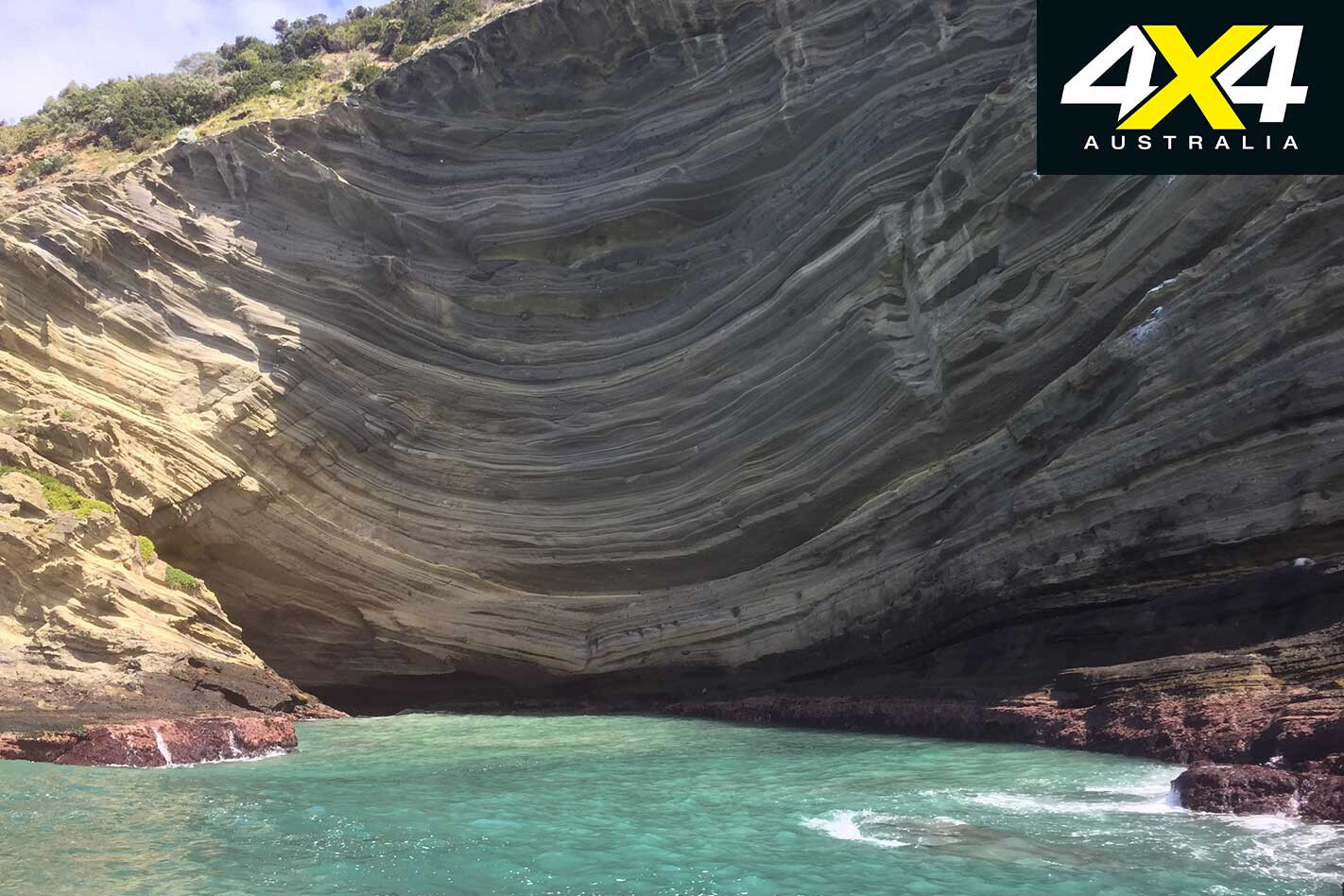
As we motor on beyond the rocks it’s hard not to feel miniscule as we gaze up at the towering cliffs. Above us, Stony Hill, the highest sea cliff in Victoria, rises 130 metres above sea level. “This was once the rim of an ancient volcano,” Richard chortles from the back of the boat. “You can see the crescent-like cliffs, they’re part of an ancient volcano that once shaped this place.”
Soon, we’re riding the waves again before eventually slowing down to enter the cave. Inside we can hear (and smell) the seals before we see them and, as our eyes adjust to the darkness, we marvel at the pink sedimentations of the cave. It’s an awe-inspiring and humbling feeling to be in their habitat.
The area around Cape Bridgewater and Discovery Bay might be slightly off the beaten track, but it offers plenty of adrenalin-packed adventure. Just remember to book your dune buggy membership before you head out to Swan Lake campground and, to make the most of the experience, come with a group.
Sand driving is no place for solo driving, unless you’re lucky enough to be escorted by a dune buggy. However, I can’t guarantee that Ron will be out there to guide you through these epic dunes, much as I’m sure he’d like to.
Travel Planner
DISCOVERY Bay Coastal Park is approximately 420km from Melbourne via the Hamilton Highway, and 490km from Adelaide via the Riddoch Highway.
To get to Swan Lake Campground in Mt Richmond, travel west of Portland to Nelson for 30km. Here you’ll find the turnoff for Swan Lake Road and campground, a steep, loose-gravel road with a few sharp twists.
The site is on the Great South West Walk, 16km from Lake Monibeong. The site is accessible with 2WD but is 4WD essential beyond the campground.
Advanced bookings and payment required. Fire pits, toilets and bore water (though not suitable for drinking) are available. Campers need to be completely self-sufficient.
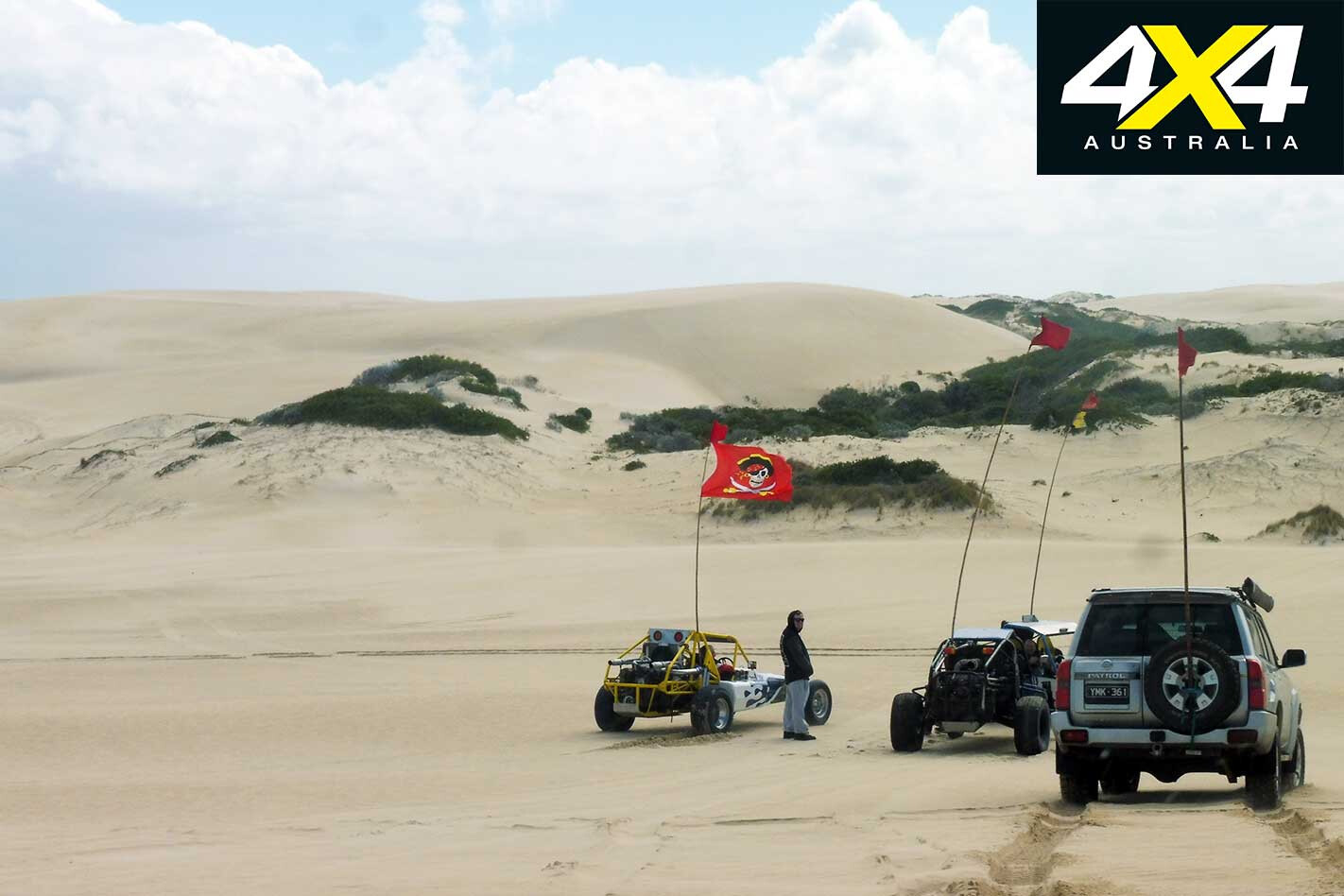
To drive on the dunes beyond the campsite requires a membership from the Portland Dune Buggy Club. A four-day temporary membership costs $50. It is essential to carry emergency gear and UHF radio. No motorcycles or quad bikes allowed on the dunes.
Portland Dune Buggy Club Web: www.portlanddunebuggyclub.com.au Email: [email protected] Phone: (03) 5529 2468
Membership
There are two membership options available to enable you to drive on these dunes, either a 12-month membership, or a four-day temporary membership which is perfect for a long weekend and the most commonly organised. These are mainly used by four-wheel drive clubs but are also available to the general public and include camping fees at Swan Lake.
Seal the Deal
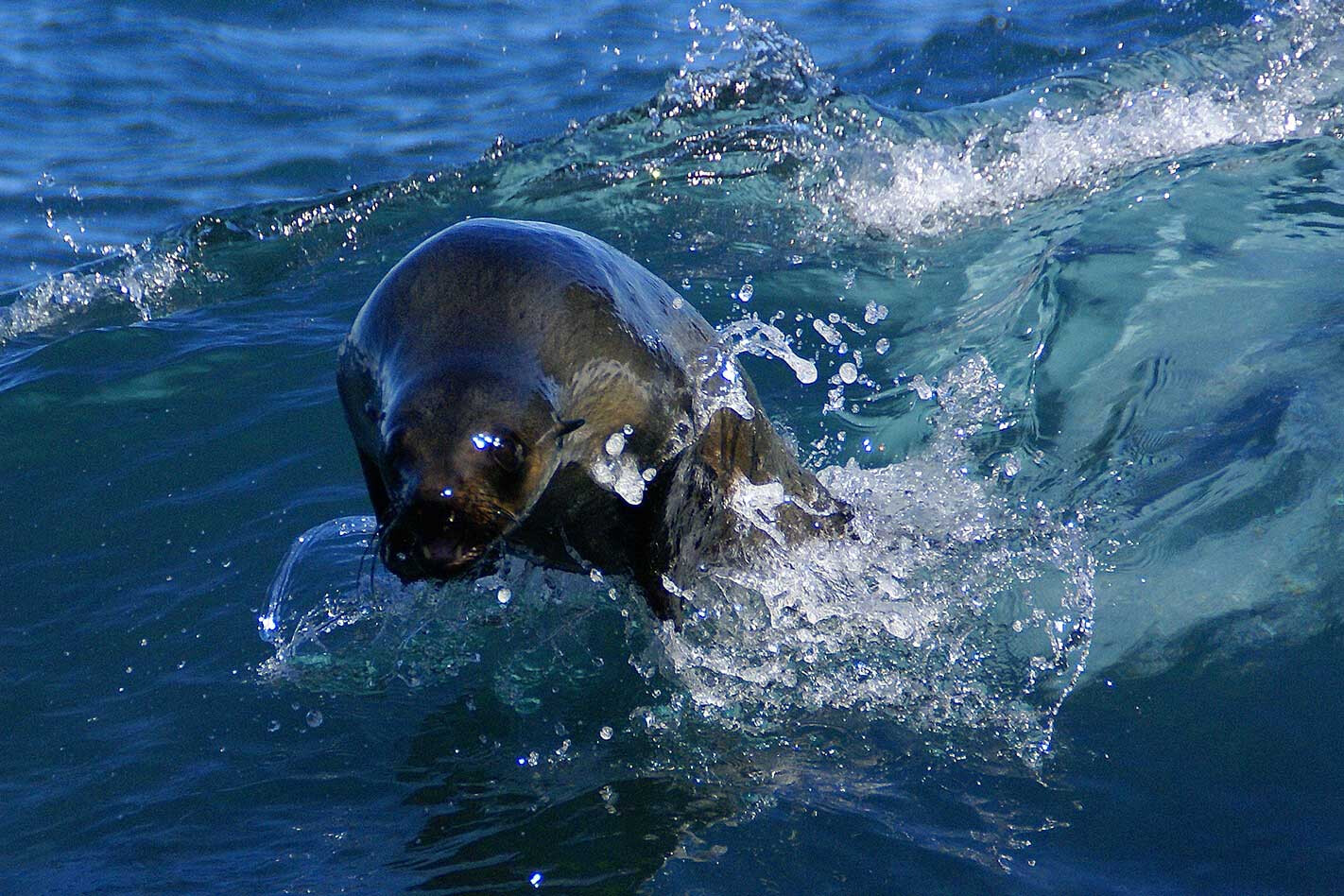
AS WELL as the Seals by Sea boat tour, you can also strap on a snorkel and mask and swim with the seals for the ultimate up-close encounter with these playful creatures. Sea kayaks will soon be available for hire, enabling seafaring adventurers to explore this protected part of Bridgewater Bay.
Back on dry land, the Bridgewater Café is the perfect place to sit back and drink in the views. The café decking practically merges with the white sand and is a great place to enjoy a delicious light meal and ale of choice with unsurpassed views, before you head back to camp at Swan Lake.
Seals by Sea Tours operates daily − weather and sea conditions permitting. Tours are closed over winter. Bookings are essential, with summer tours leaving almost every hour from 11am to 2pm. At other times a tour usually leaves around midday, but it’s recommended to phone ahead.
For more information phone (03) 5526 7247 or visit www.sealsbyseatours.com.au Seal Tour prices: $40 Adult; $35 Concession; $25 Child (3-15 years); Free 2yo and under. All gear is supplied. Maximum of 11 people per tour. Snorkelling prices: $60 Adult; $30 Children (6-15 years).
Whether the goal of your build is to turn a 4×4 into a workhorse or an all-out adventure rig, it can benefit from improvements to its load-carrying capabilities.
Rola has unveiled a nifty roof-rack solution, while Terrain Tamer has brought out a new set of parabolic springs.
Terrain Tamer parabolic springs
The new parabolic springs from Terrain Tamer are the result of extensive research and development, combined with the use of the latest in steel technology.
Terrain Tamer parabolic springs offer a number of advantages over standard multi-leaf spring setups, with fewer leaves (two or three) that feature a parabolic taper (thicker in the centre and becoming thinner toward each end). This allows each leaf to act independently for enhanced flexibility in operation, without sacrificing load-carrying capacity.
Another benefit of the parabolic system is less inter-leaf friction than standard multi-leaf jobbies and, thanks to no contact between each leaf, the chance of rust, noise and unwanted stiffness is reduced.
Add in a 500kg load rating combined with a softer, quieter ride and you’ve got a very attractive offering from the gurus at Terrain Tamer.
Website: www.terraintamer.com/suspension
Titan Tray by Rola
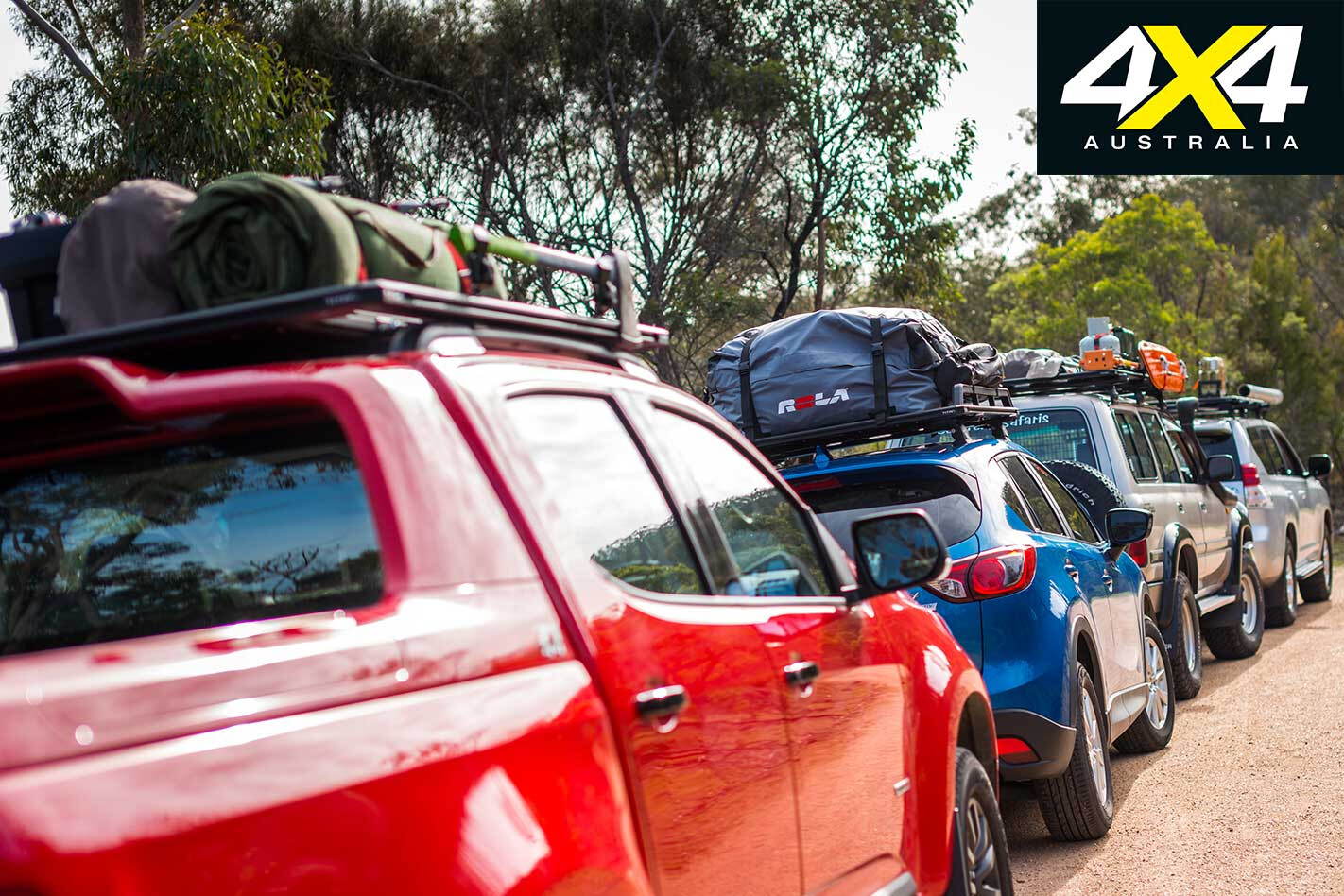
The all-new Titan Tray from Rola is lightweight and includes unique design features that provide excellent strength and durability. The Titan Tray features a mitred corner design and reinforced panels that are 1.5 times stronger than previously for a claimed carrying capacity up to 300kg (dependent on vehicle roof-weight limit).
The accessory channels allow users to customise the tray to suit requirements by adding a wide range of Rola (and other popular branded) accessories, such as awnings, and shovel and jerrycan holders. The slide-in mounting brackets can be placed between any plank on the tray for attaching to most popular roof-racks with an accessory channel. The Titan Tray is available in four sizes.
RRP: From $499 Website: www.titantray.com.au
IT’S TIME to swap our boots for thongs as we point our bullbars to the sunny, picturesque islands and beaches of south-east Queensland for the third instalment of the 4X4 Adventure Series.
Led once again by Ron Moon and Matt Raudonikis, in this episode the crew embark on a back-road journey from the parks and reserves in northern NSW – Richmond Range and Toonumbar National Parks – to link up with the Condamine River and cross the NSW border into Queensland, before having a play in the Scenic Rim Adventure Park.
Following a few hundred highway kilometres through Brisbane, the crew arrive at the majestic Great Sandy National Park and try their hand at kayaking (rather, staying afloat) on the Noosa River. The convoy eventually eyes the Pacific Ocean beyond the trees, and the bush-to-beach adventure wraps up at one of the true gems of south-east Queensland, Rainbow Beach.
FIGURING out how the hell I am going to take the family bikes on a camping trip is this writer’s most dreaded moment. Bicycles are, without doubt, one of the most awkward things to store and carry in or on a vehicle.
Methods differ – up top on the roof or via a hitch/tow-mounted carrier – each of which has its positives and negatives. And, although I don’t mind a single bike up on the roof, when you get to more than two a hitch/tow-mount carrier is the better option. They carry more bikes and are positioned down low behind your vehicle, thus having less effect on fuel consumption. It also means there’s less chance of wiping out your precious two-wheeler on a garage door.
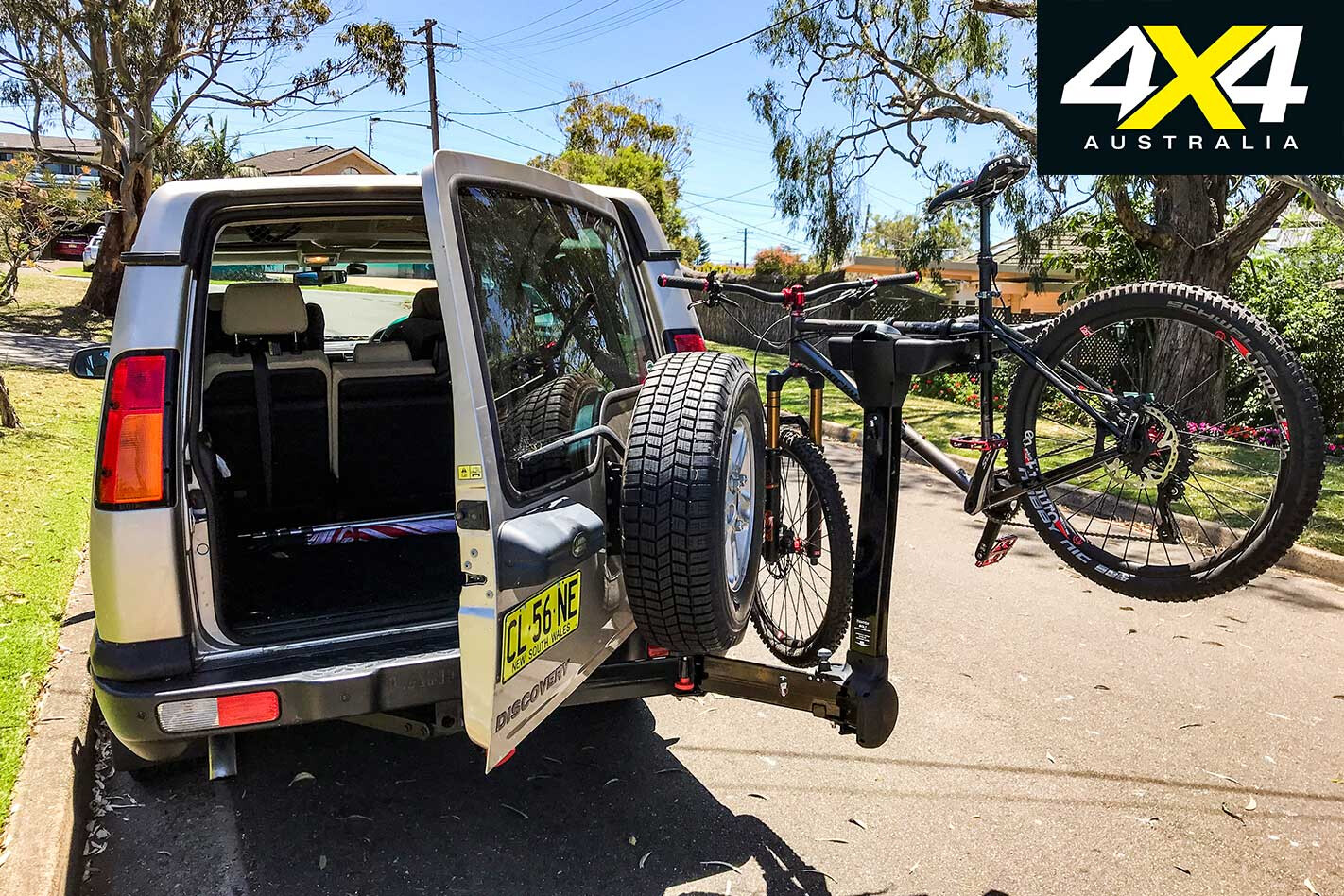
One of the main issues with the Disco 2 in regards to transporting bikes using a hitch-mount rack is the side-opening rear door. Hitch/tow-mount bike carriers don’t mesh well with this door type; a large number of carriers are ‘fold-down’ only, allowing only a modicum of cargo area access. The Yakima FullSwing is the solution, as it includes a clever dual-articulated hinged arm (located underneath the rack’s vertical arm) that folds out horizontally and allows me to open the rear door all the way out – even with four bikes attached.
The FullSwing is heavy (25.4kg), but this weight is a necessity; when you think of the average weight of a mountain bike (11-14kg) you realise that all that weight swung out wide away from the central pivot point adds plenty of leverage weight to the FullSwing.
Once you’ve put it together – it’ll take five to 10 minutes to join the top and base of the unit – fitment is straightforward. The FullSwing utilises what Yakima dubs an ‘AutoPin’ which slots into the hitch ‘hole’ as you slide the base section into the hitch. You then simply tighten the SpeedKnob, which in turn tightens an expander nut in the bottom arm and locks itself to the hitch.
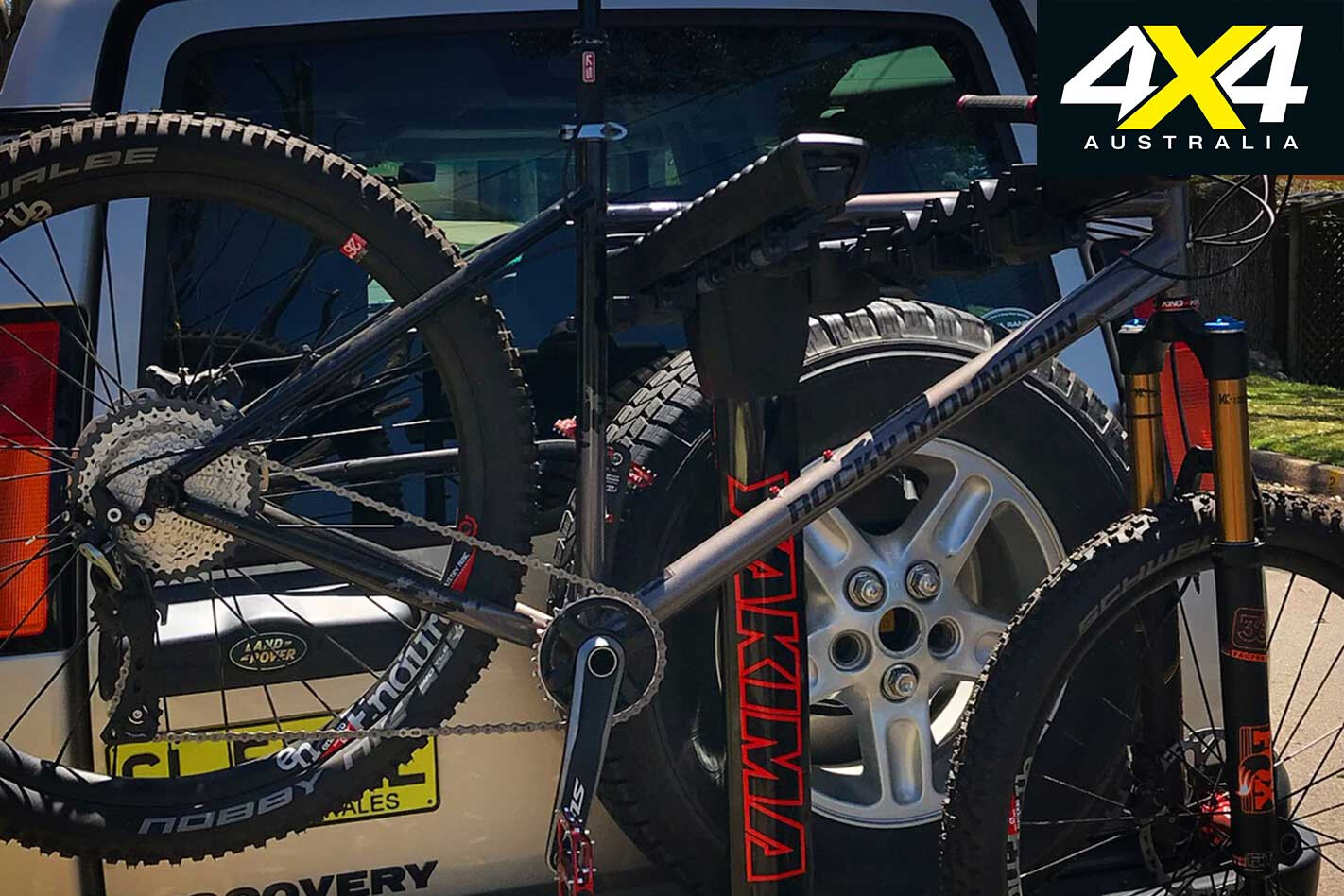
Once that’s done you can lock the SpeedKnob with the SKS (Same Key System) key supplied (this also locks the inbuilt cable lock that runs around your bikes, securing them to the rack) and not worry about theft of your bikes or the rack.
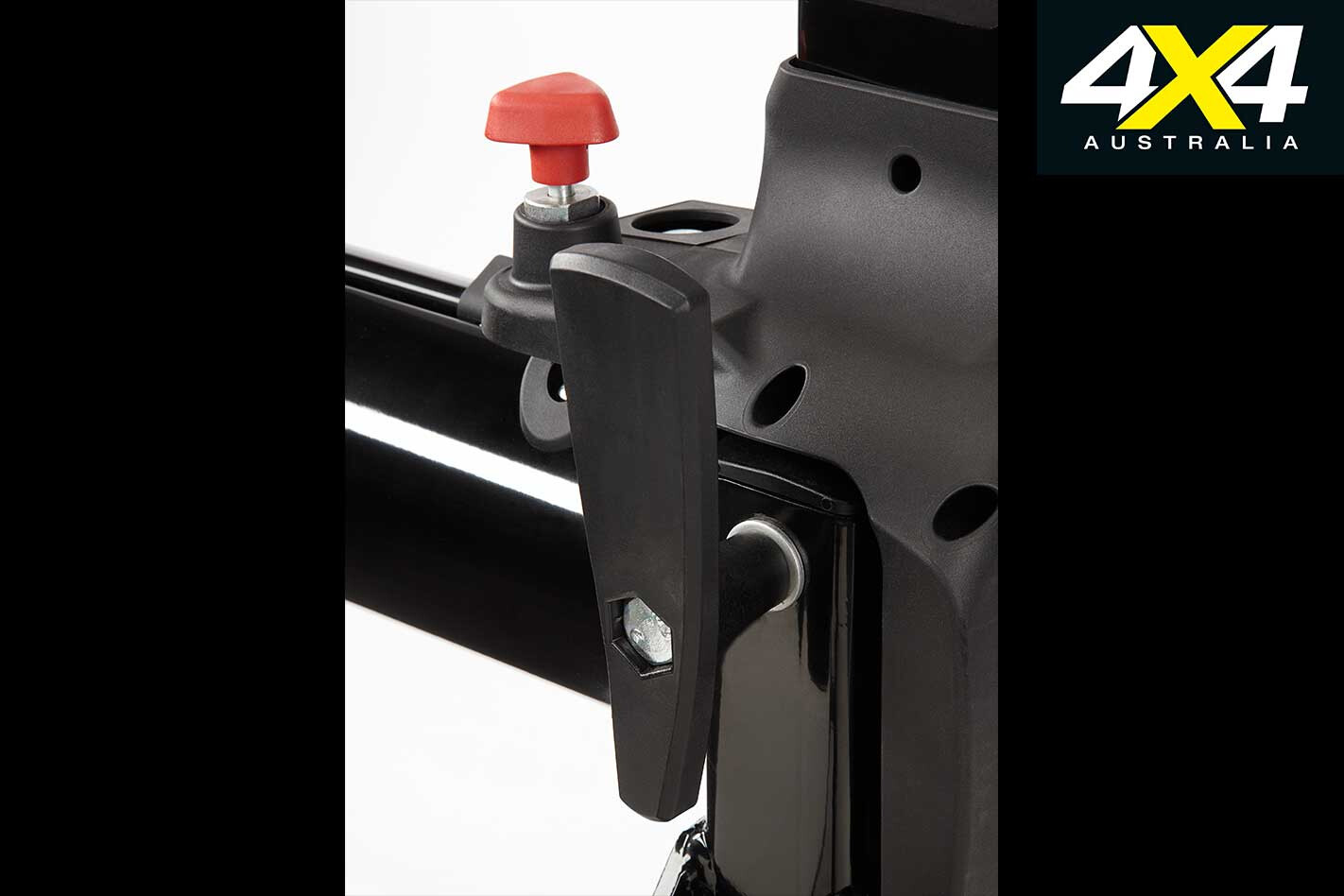
The FullSwing is easily operated. To swing it out you unscrew the large T-handle at the rear (closest to vehicle) of the rack then pull the red button near that (to release a slot-pin) and the dual-articulated hinge does the rest, with the rack arms (and bikes) locking out to 90 degrees from the closed position.
Reversing this is just as easy: pull the red pin at the outer end of the base arm, push the red lever in the centre, and away you go. Always remember to ensure the lock-pin is locked and that the T-handle is retightened.
The bike arms are padded and feature Yakima’s AntiSway cradles that, as the name suggests, assist in minimising bike sway during transportation. They do this to a certain extent – there’s still some movement, of course – but a tip to reduce the chances of bikes banging up against each other is to also strap the front wheel to the downtube, so the wheel doesn’t swing around.
There are few negatives with the FullSwing. The weight is a bit of an issue (when fitting) but it is understandable with all that load/leverage. The carrier also has no provision for an auxiliary number plate. In most states, if your bikes obscure the number plate and/or rear lights you cop a big fine. I usually tie my number plate to the rack and the rear lights are still visible, so I haven’t had to buy a separate light board.
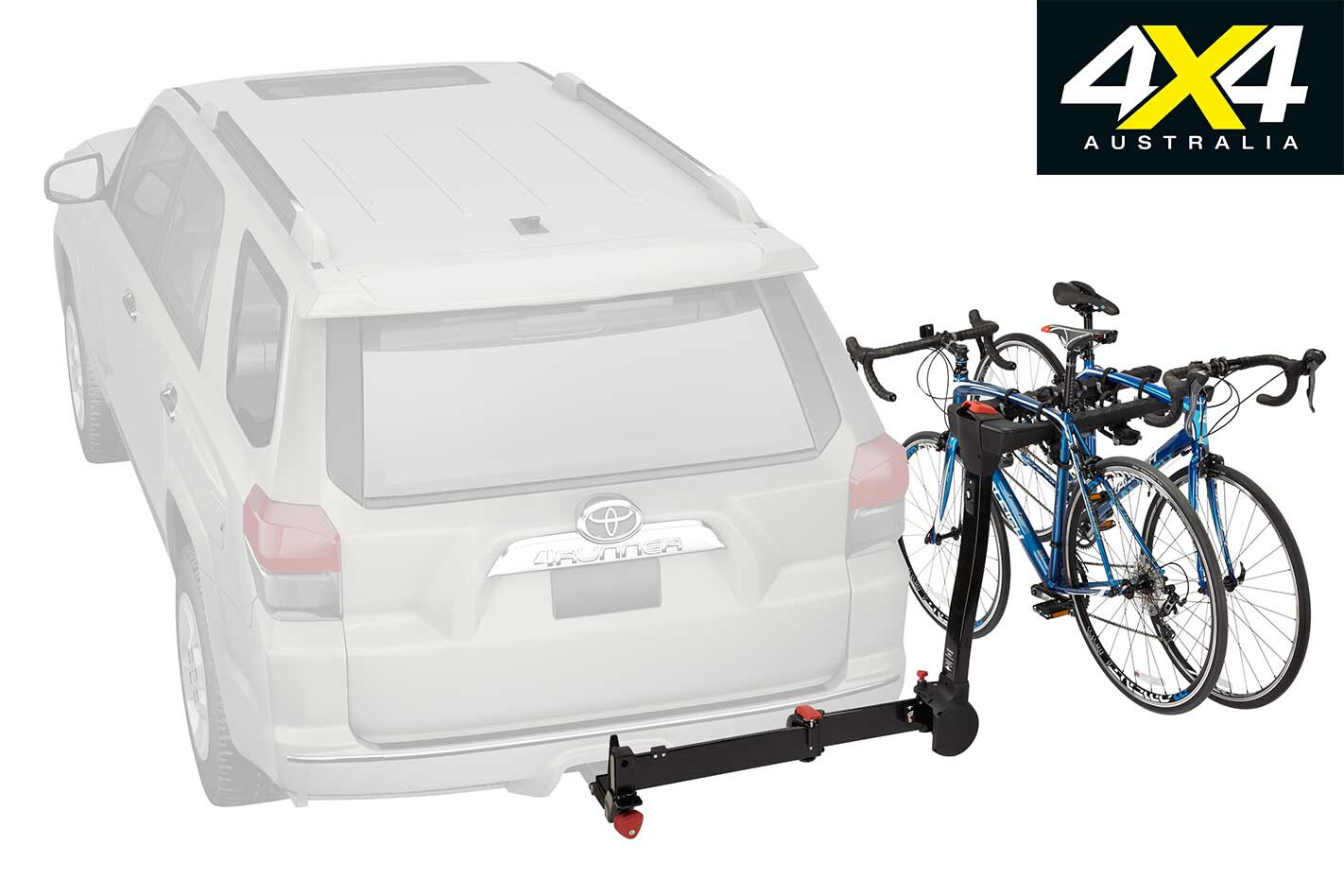
For those looking to transport two to four bikes (at four, it will take a bit of careful loading/wrangling) the FullSwing is a top option. It is built very tough, is simple to operate, and offers that unique feature of full access to the cargo area without having to remove bikes or the carrier.
It ain’t cheap, but once you’ve had to open the rear door with the bikes loaded up for the first time, looking for that lost kids’ toy or forgotten travel item, you will know it forever-more as top bang for your bucks.
RATED Available from: www.yakima.com.au RRP: $749 We Say: Tough multiple-bike carrier that offers easy vehicle access.
THE February 2019 issue of 4X4 Australia comes with a bonus DVD that completes our south-east Queensland trilogy on the beautiful beaches of North Stradbroke Island.
It’s a spectacular location for four-wheel driving and one of the many places MSA 4X4 Accessories visits when developing and testing its range of products.
On the DVD we featured some prototypes of the yet-to-be-released MSA 4X4 Driving Mirrors and were very impressed with their style, ease of use and practicality.
Testing of these mirrors is ongoing, with the team taking them out to the harsh environments of the outback, pounding them over the roughest corrugated roads and subjecting them to a wide variety of climates. Thousands of kilometres of punishing testing ensure that the products are the best they can be when they hit the market for purchase.
That time will be later this year, when MSA 4X4 will have the innovative mirrors available for most popular 4×4 vehicles.
For more details as the launch gets closer, keep an eye on social channels and the MSA 4X4 website at: www.msa4x4.com.au
THOUSANDS of people are filling their tanks with the wrong fuel each year, according to the specialists in “misfuelling”, Wrong Fuel Rescue.
The Australian-owned company will send a team out to drain and flush your fuel system should you have a brain fade, and they say they get called out to thousands of stranded motorists every year.

But, how could one possibly do something so stupid? Well, according to Yan Van De Velde, the founder of Wrong Fuel Rescue, there are a few reasons people make the simple mistake.
“Rushing; tiredness; unfamiliarity of a vehicle, especially if it’s a work car; and distractions at the pump tend to be the most common reasons behind the mix-ups,” he said.
The vast majority of mix-ups are when people put petrol into a diesel car – the nozzle fits in the fuel filler neck (unlike the other way around) – which has the potential to cause severe damage to the fuel injection system and engine.
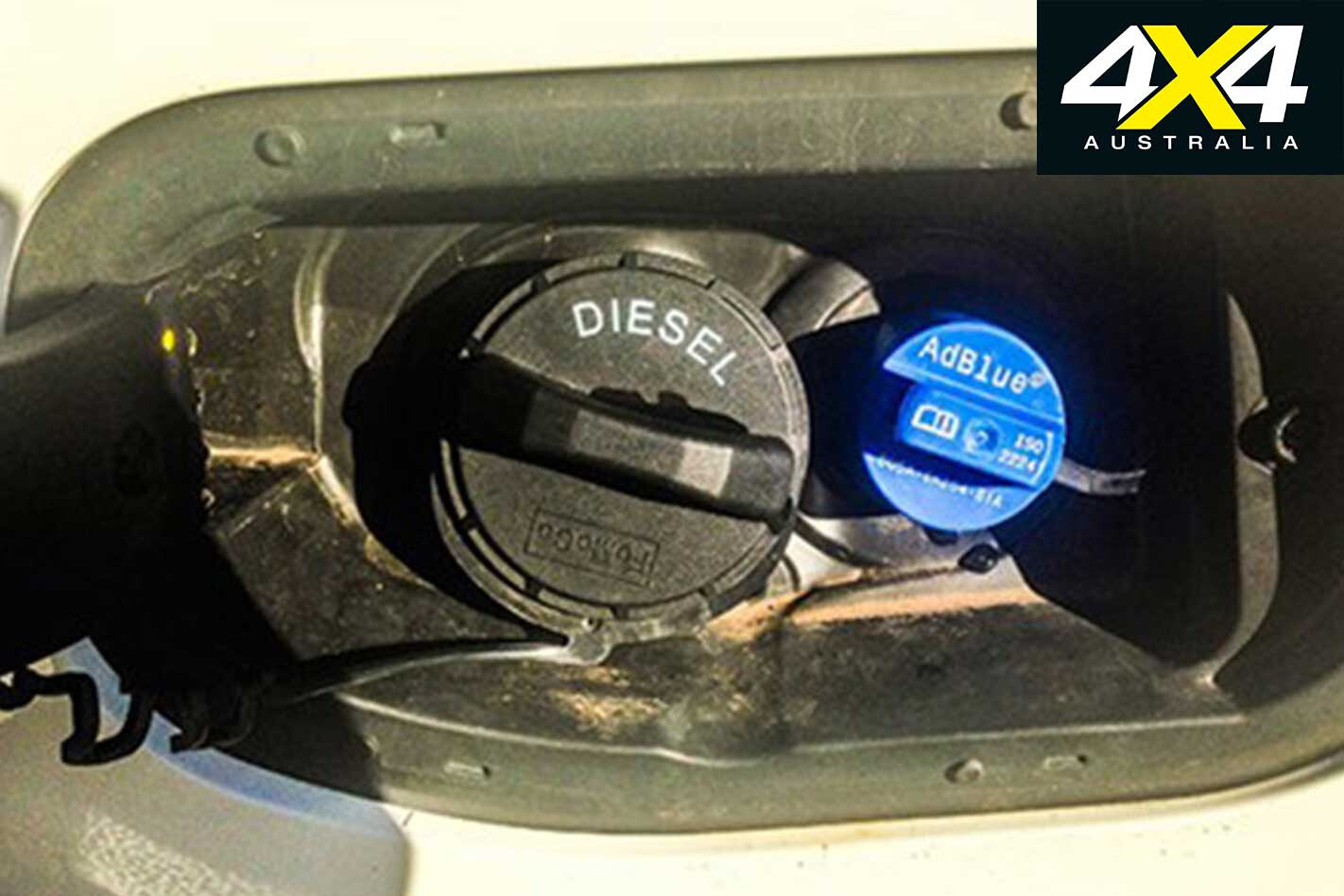
“Statistics show men are actually the worst offenders for misfuelling, making up for around 80 per cent of the rescues they attend every day,” Van De Velde added.
So, what do you do if you’ve made the blunder? If you realise straight away, DO NOT start your car. If you are driving, pull over immediately, as the longer you drive the more damage you’ll do. Catch the problem early enough and you’ll save your car – and your credit card from taking a bigger hit.
THE Ford Ranger Raptor was revealed as the 4×4 of the Year last night at the 2019 Australian Motoring Awards.
The event, held at the Peninsula in the Docklands, Melbourne, in the shadows of Marvel Stadium, is the motoring industry’s night of nights. Not only was the best 4×4 crowned, but the Wheels Car of the Year (Volvo XC40), MOTOR Performance Car of the Year (Porsche 911 GT2 RS) and WhichCar Style (Audi A7) awards were also presented on the night.
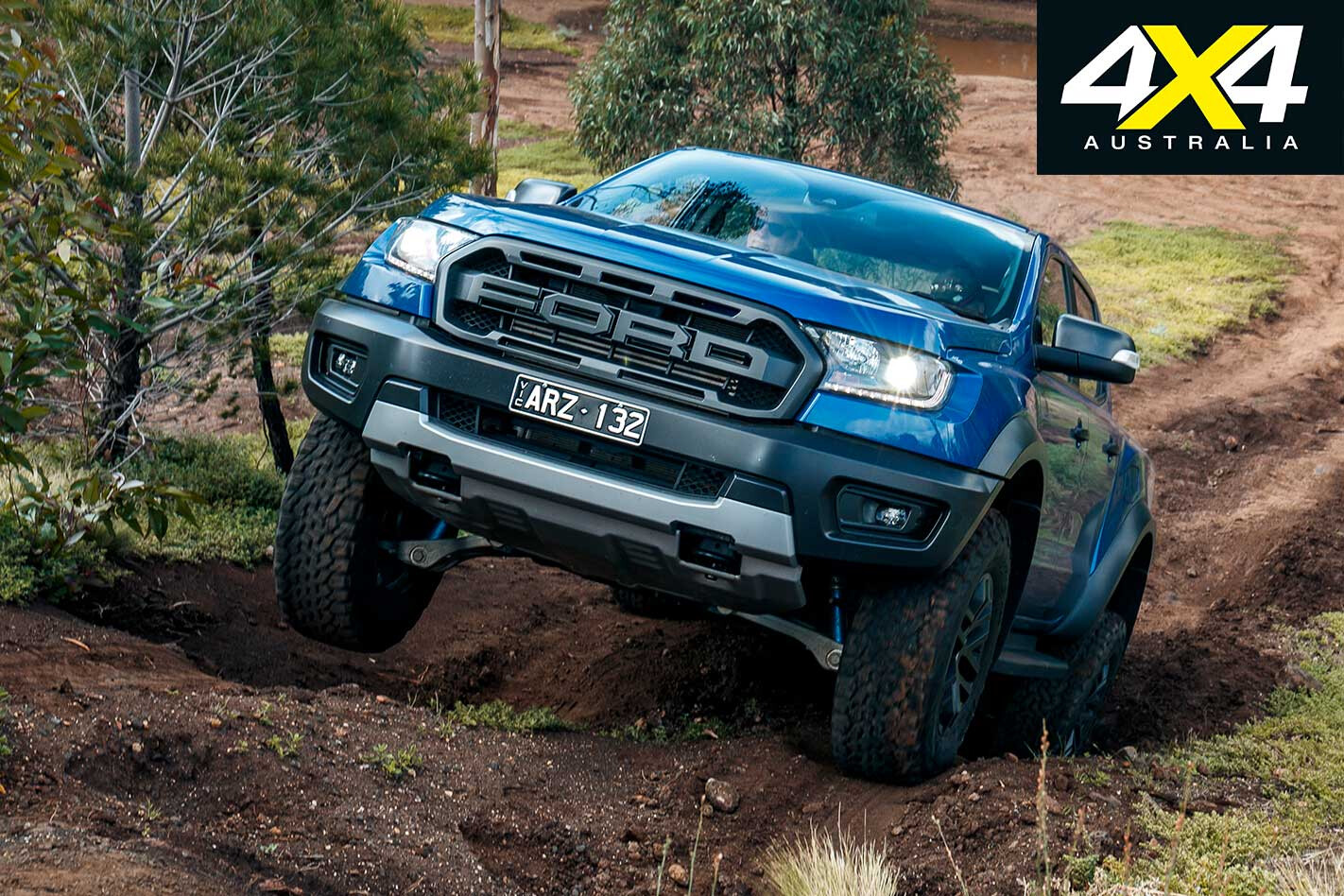
The Ranger Raptor received the majority of the judges’ votes – only fractionally ahead of the Ranger XLT, mind you – due to its effortless off-road ability and sophisticated suspension set-up.
Tony Jordan, Ford Australia’s marketing communications and brand strategy manager, accepted the award on behalf of Ford.
“The team at Broadmeadows and Lara Proving Ground put this car through its paces for years and years and years,” he said. “I get the easy job of just having to market and sell the car. It’s fantastic.”
To read all about the 4×4 of the Year in intricate detail, pick up a copy of the 4X4 Australia February 2019 issue, in stores now!