
WHEN Ford introduced the 2.0-litre engine to its 2019 Ford Ranger and Everest line-ups last year, we were eager to see if the smaller-capacity engine was as capable as its 3.2-litre stablemate at ferrying a load.
Does greater engine capacity equate to better towing capabilities? In this example, yes it does.
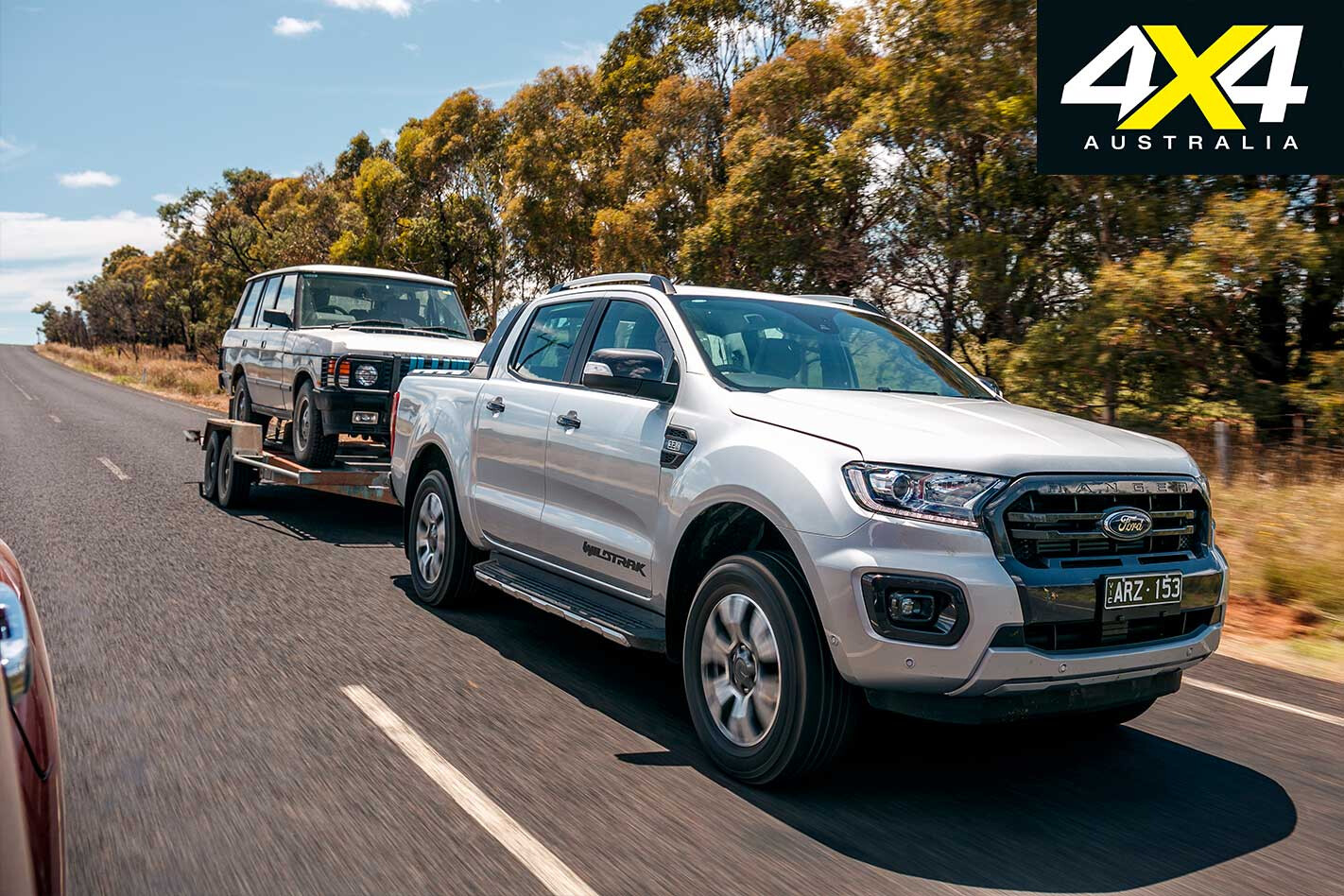
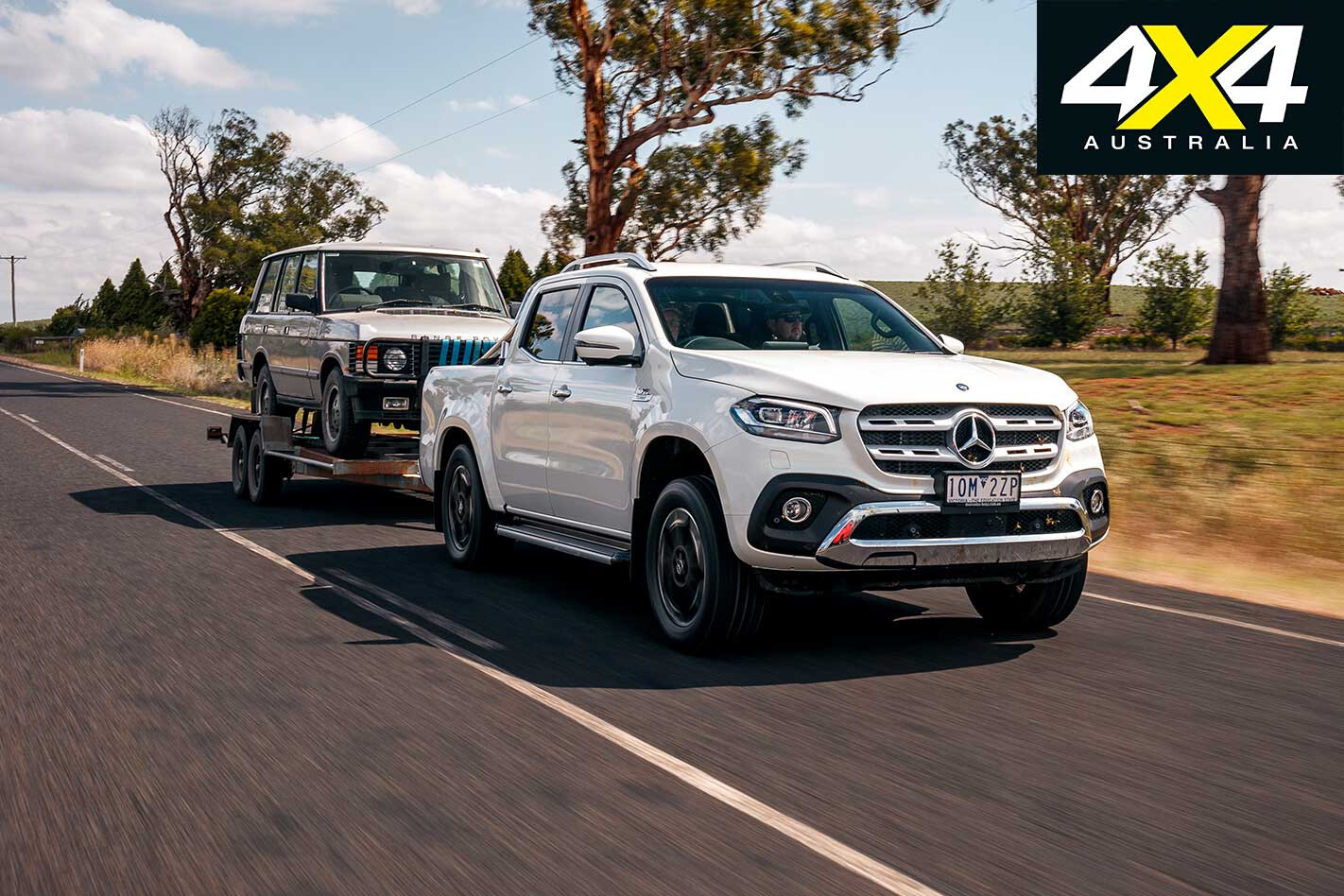
In a recent tow and load test we assembled six dual-cab utes and loaded 450kg in their tubs. We then made them tow a Range Rover on a tandem-axle trailer, weighing 2500kg. When you add those digits up and include driver and passenger, there was a total of 3144kg added to each ute’s Gross Combined Mass (GCM).
Upgrade your Ranger
The test route involved steep ascents and descents, hairpin turns, undulating rural roads and typical touring conditions.
At that test we had access to both the Ranger 3.2-litre five-cylinder turbo diesel and Ranger 2.0-litre four-cylinder turbo diesel. The MY19 Ranger 3.2 boasts performance figures of 147kW and 470Nm, with the ‘big’ engine mated to a six-speed automatic transmission. The Ranger 2.0 bi-turbo-diesel ups performance to 157kW and 500Nm, which runs through a 10-speed auto.
Both vehicles have 3500kg towing capacities and 350kg maximum towball download limits. The 3.2 has a payload of 922kg, while the 2.0’s payload is 954kg.
With 450kg loaded into the tray, the 3.2 and 2.0’s rear suspension both dropped by about 70mm. Adding the trailer and the chassis of both vehicles felt very good. Where the two vehicles differ is how the powertrains perform under load.
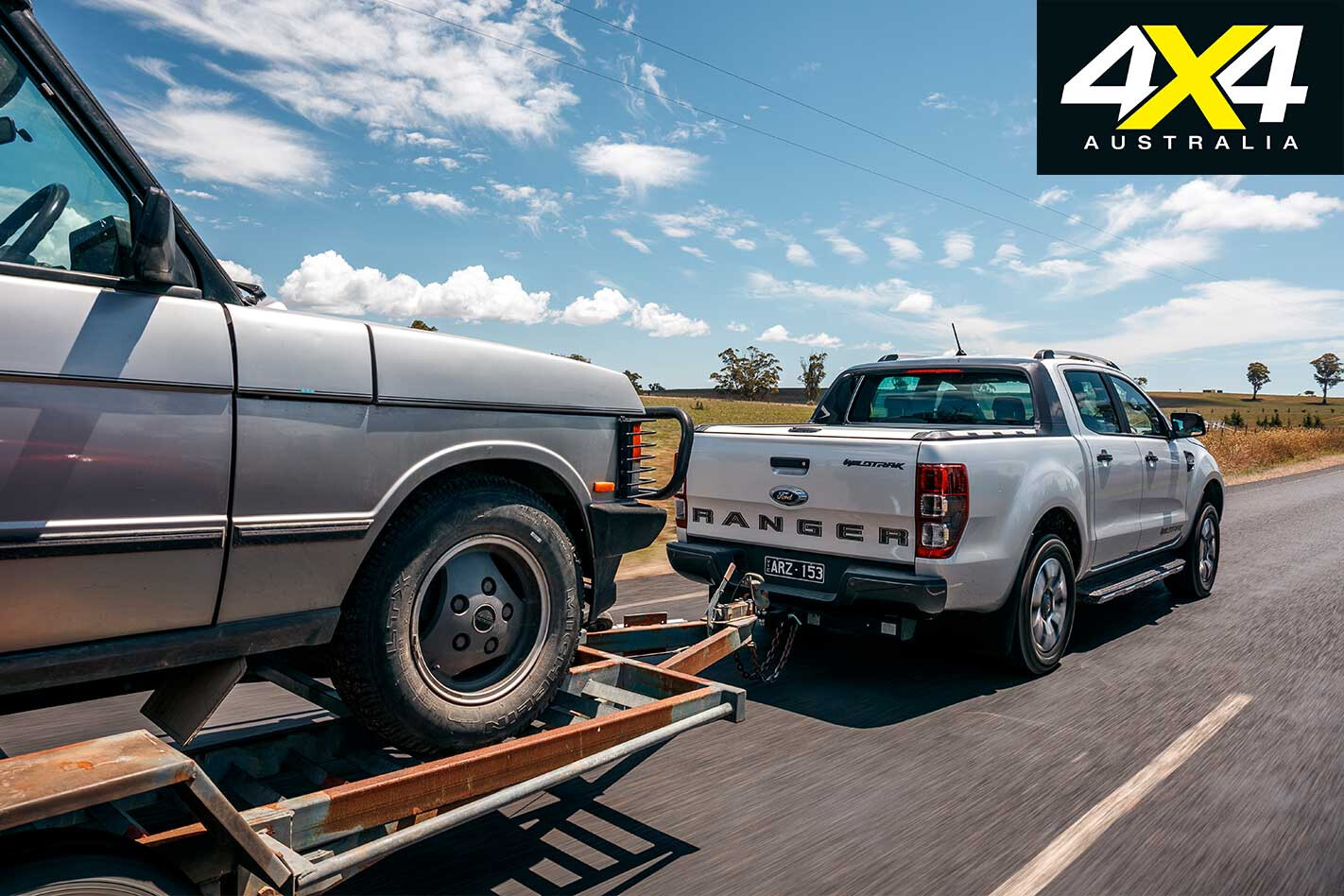
The 2.0 is more refined but needs more revs to do the same job – therefore it’s constantly shuffling up and down the gears. This is due to the extra gears, as well as a taller final gearing than the five-pot (3.31 v 3.73).
The 2.0 also struggled to gain momentum on the steep incline. It wasn’t great going down, either, with far less engine braking than the 3.2.
The 3.2 put in a strong towing performance, courtesy of good quality gear shifts (and less of them) and having max power on tap at 3000rpm. It shined on the steep hill climb, slogging along at 2500-3000rpm with no unnecessary gear changes. Engine braking was better, too.
The 2.0 might be better in general driving conditions, but when it’s time to roll the sleeves up and ferry a load, best opt for the 3.2.
MORE: Ford Ranger Range Review MORE: Ford Ranger Specs, Range & Price
4X4 Australia's project builds
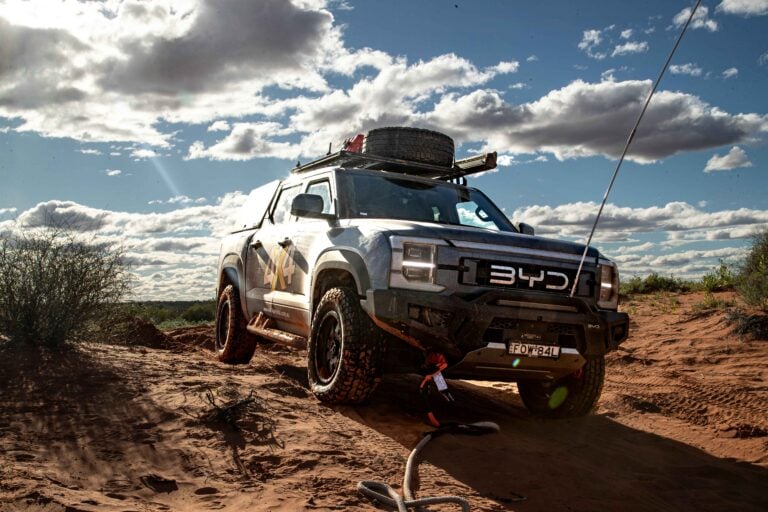
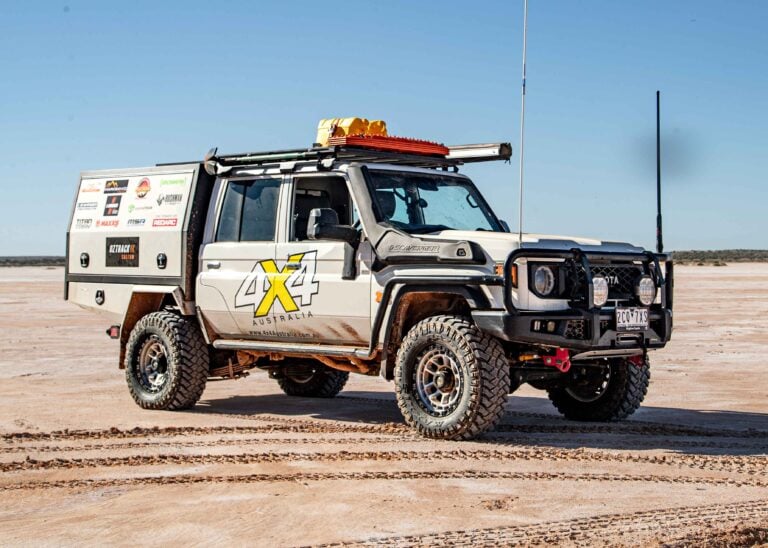
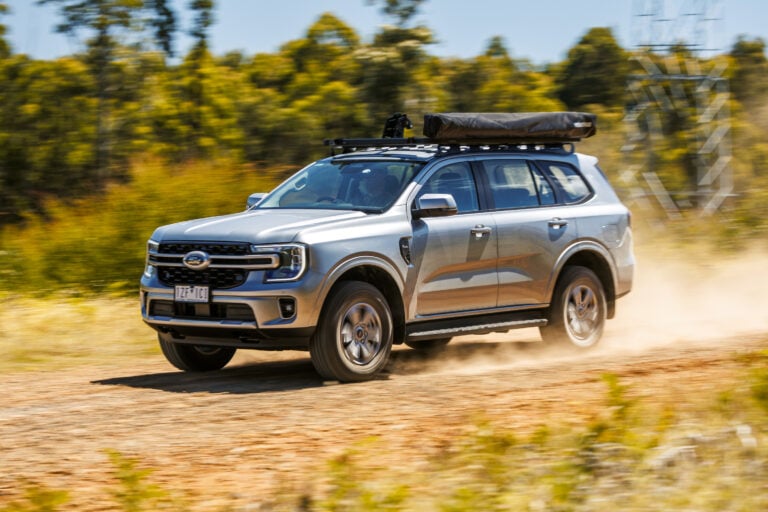
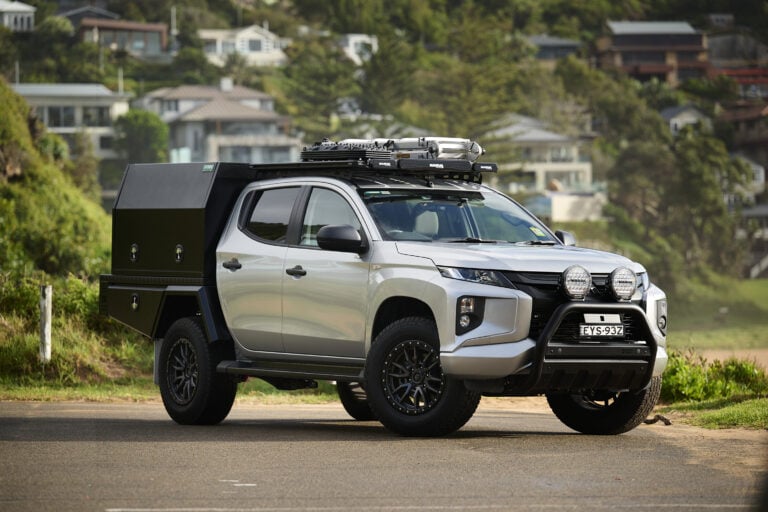
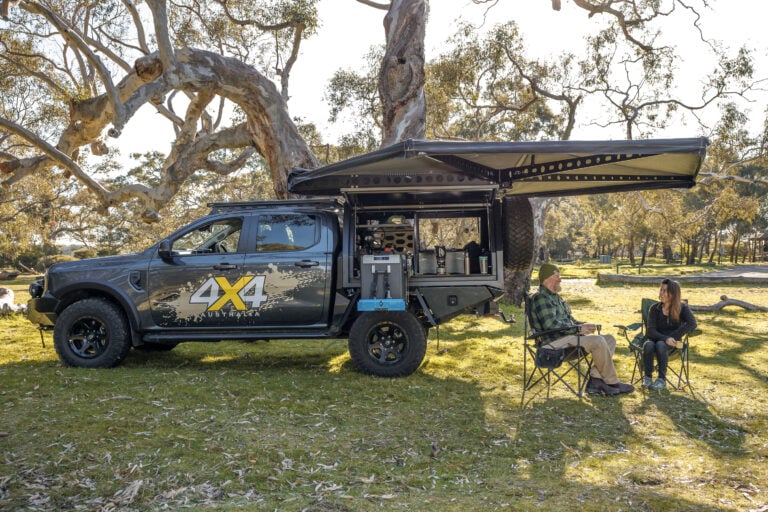
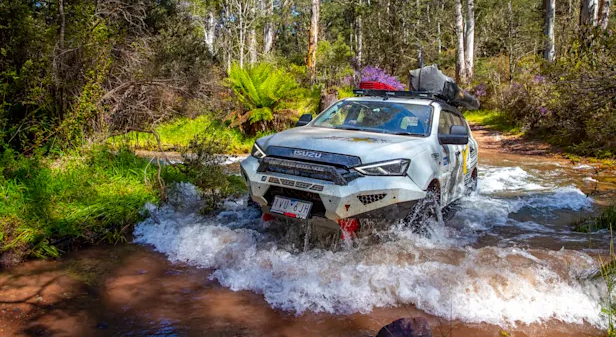
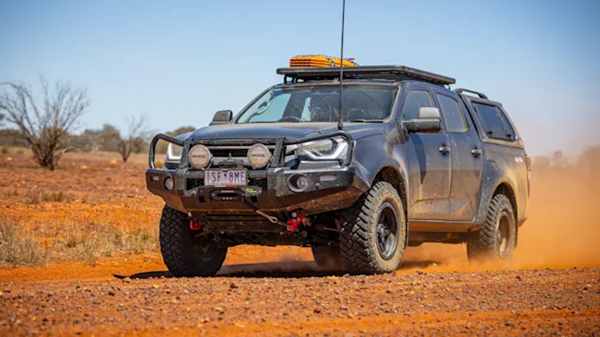
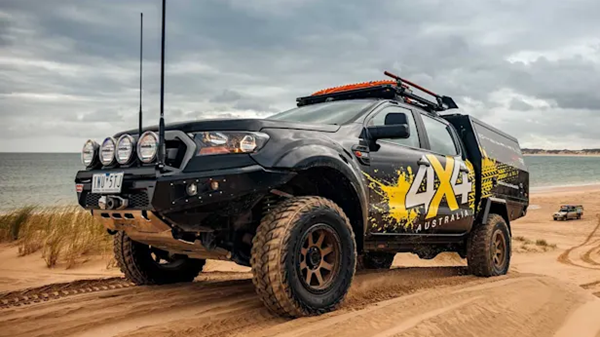
THE Rambler LC79 dominating the cover tops a massive list of off-road goodness this month, with the April issue of 4X4 Australia on shelves April 4.
The big, brawny Rambler LC79 is a turn-key tourer built by TJM to tackle all terrain, and this sandy taupe example is close to the ultimate driveaway deal on the Aussie market.
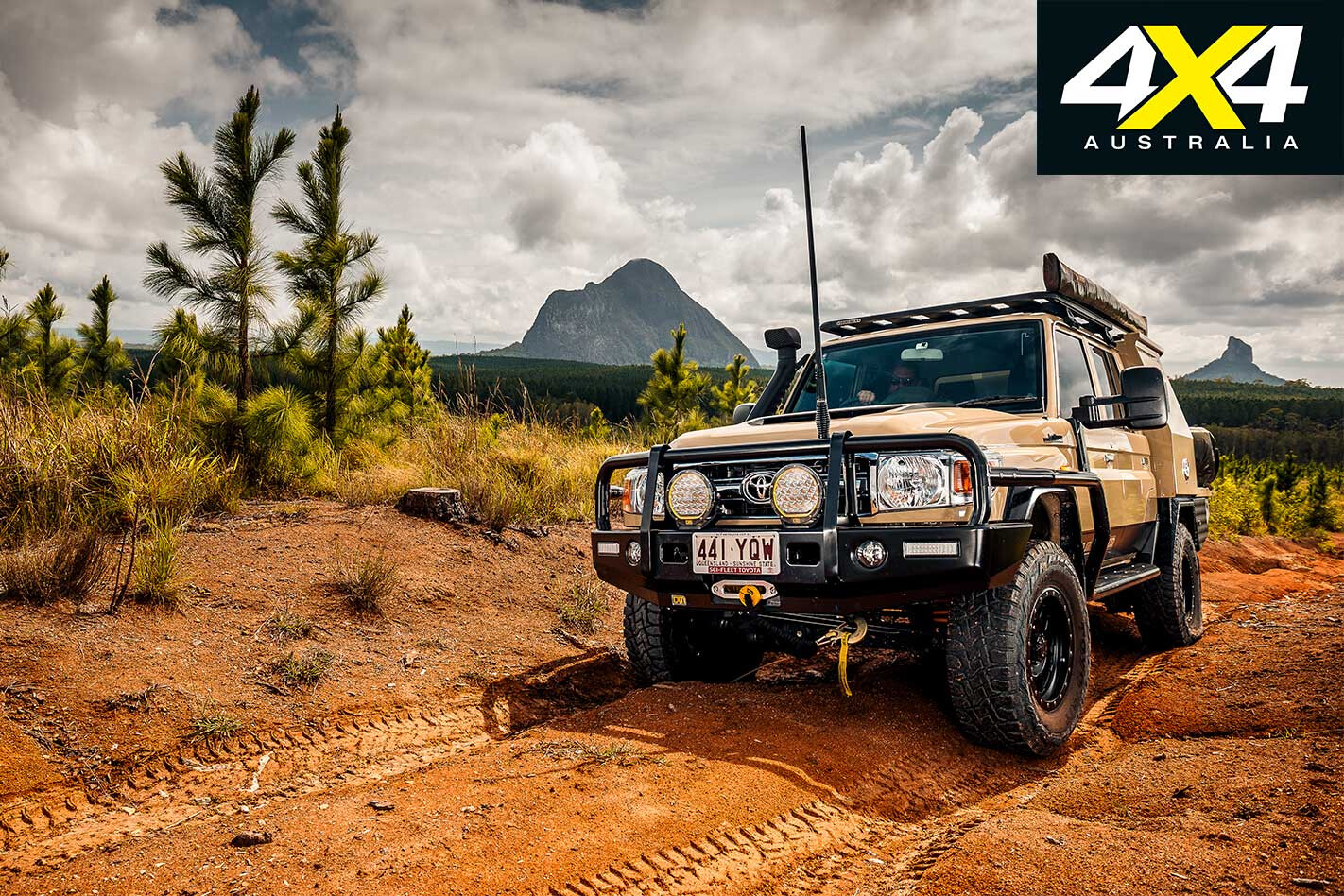
The Cruiser isn’t the only tidy custom to grace our pages this month, with a Jeep J10 pick-up modified to be an ideal desert-killing machine. The J10 utilises racer-inspired suspension and a V10 engine ripped straight from a 2004 SRT Viper sports car.
This month we also hooked up a 2500kg trailer and threw 450kg in the tray of six dual-cab utes – 3.2-litre Ranger, 2.0-litre Ranger, Colorado, D-Max, X350d and Amarok 580 – to see how they coped on- and off-road with heavy loads.
We sat behind the wheel of the MY19 Suzuki Jimny for a first fang last month, but in this issue we’ve taken it to the Victorian High Country to seriously test its mettle. How does it cope on some of Australia’s best tracks?
On the topic of best tracks, Ron Moon points his bullbar up and down a few often overlooked routes through South Australia’s Flinders Ranges. We’ll tell you where to go and what routes to take to get the most out of your adventure.
Plus, with the overwhelming choice for illumination these days being LED technology, we’ve assembled 10 LED driving lights and comprehensively dissected, tested and compared them.
WHAT ELSE IS THERE? – Resident Disco put to work. – Holden One Tonner update. – Plenty of new kit tested. – Blast from the past: Nissan P61G Patrol – Readers’ Rigs, opinions, and heaps more.
The April 2019 issue of 4X4 Australia will be on shelves April 4.
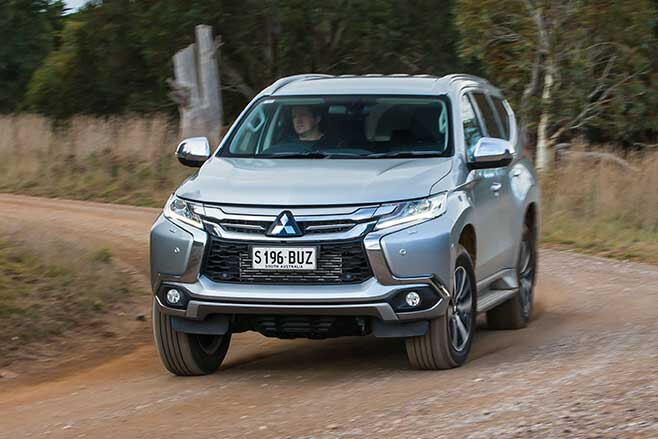
A SURGE in sales of the Pajero and Pajero Sport has helped give Mitsubishi Motors Australia (MMAL) its best March sales result on record.
With the aid of special offers and run-out bonuses, both the Pajero and Pajero Sport posted significant spikes in sales. The Sport posted a month-to-month increase of 59.2 per cent and a year-to-date (YTD) lift of 14.0 per cent; and, despite less overall sales, the Pajero has shown even greater improvement with a monthly hike of 103.4 per cent and a YTD increase of 21.2 per cent.
Combined with the sales growth of the brand’s small SUV range, MMAL finished second behind Toyota on the overall new vehicle sales chart for March.
“MMAL is fortunate to have such a strong dealer network and a very competitive SUV and LCV range which has helped us build the brand over the past four years to achieve such a strong result,” MMAL’s CEO, John Signoriello, said.
“SUVs consistently outsell passenger cars in Australia and while some are starting to see the opportunity, Mitsubishi Motors has been focused on delivering exceptional SUVs designed and engineered to meet the needs of our customers.”
4X4 CHARTS
ON THE 4×4 charts it was business as usual, with the Hilux (3397 sales), Ranger (3340) and Triton (2257) the best-selling models yet again.
In fact, when adding 4×2 models to the mix, those three models were the best-selling vehicles on the overall market, confirming the market’s ongoing shift from passenger cars to SUVs and LCVs.
This is further exaggerated when comparing segments on a year-to-date basis, with the passenger vehicle segment down 17.8 per cent, the SUV market down 3.5 per cent, and the LCV market only dropping 0.4 per cent. Overall car sales have decreased by 7.1 per cent.
The chief executive of the Federal Chamber of Automotive Industries (FCAI), Tony Weber, attributes this downward trend to current economic conditions.
“We are seeing a cautious consumer approach at the moment, and this is not surprising given the number of economic headwinds in the Australian market,” he said.
10 BEST-SELLING 4X4S IN 2019
| Rank | 4X4 | Units Sold |
| 1 | Toyota Hilux | 9786 |
| 2 | Ford Ranger | 8521 |
| 3 | Mitsubishi Triton | 6733 |
| 4 | Toyota Prado | 4584 |
| 5 | Holden Colorado | 4091 |
| 6 | Toyota Land Cruiser wagon | 3359 |
| 7 | Nissan Navara | 2896 |
| 8 | Isuzu D-MAX | 2579 |
| 9 | Mitsubishi Pajero Sport | 2220 |
| 10 | Toyota Land Cruiser PU/CC | 2198 |
20 BEST-SELLING 4X4S IN MARCH, 2019
| Rank | 4X4 | Units Sold |
| 1 | Toyota Hilux | 3397 |
| 2 | Ford Ranger | 3340 |
| 3 | Mitsubishi Triton | 2257 |
| 4 | Toyota Prado | 1665 |
| 5 | Holden Colorado | 1558 |
| 6 | Toyota Land Cruiser wagon | 1455 |
| 7 | Mitsubishi Pajero Sport | 1231 |
| 8 | Nissan Navara | 1106 |
| 9 | Isuzu D-Max | 1100 |
| 10 | Toyota Land Cruiser PU/CC | 852 |
| 11 | Volkswagen Amarok | 841 |
| 12 | Isuzu MU-X | 835 |
| 13 | Mazda BT-50 | 755 |
| 14 | Mitsubishi Pajero | 659 |
| 15 | Ford Everest | 437 |
| 16 | Range Rover Sport | 346 |
| 17 | Toyota Fortuner | 314 |
| 18 | LDV T60 | 293 |
| 19 | Jeep Grand Cherokee | 268 |
| 20 | Nissan Patrol | 263 |
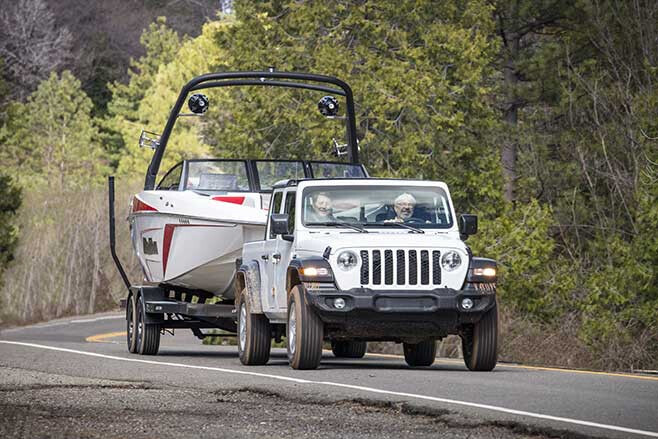
AMERICAN pricing has been unveiled for the 2020 Jeep Gladiator, indicating that Australians could expect to pay around $60,000 for the entry level model.
Australian prices are yet to be released, but if we follow in the footsteps of our mates across the Pacific – and compare Wrangler prices in the USA and Australia – we can take a more educated stab.
The entry level price for a Gladiator in the States is US$33,545 (Sport model), while the top-of-the-range Rubicon at US$43,545 will lighten your wallet further. Sandwiched between these two models is the Sport S, priced at US$36,755, and the Overland, priced at US$40,395.
The Wrangler Sport in the USA fetches US$31,445 (the Gladiator equivalent is US$33,545); while the Wrangler Rubicon retails for US$41,445 (the Gladiator equivalent is US$43,545). So, as you can see by looking at both the entry level and top-of-range models, the Gladiator asks for about US$2K more than the Wrangler.
The US-bound Gladiator utilises the 3.6-litre V6 petrol engine good for 213kW and 353Nm, so for this exercise we’ll compare the petrol-powered Wranglers.
In Australia the four-door Wrangler JL Sport S retails from $53,450; the four-door Overland asks for $62,950; and the four-door petrol-powered Rubicon $63,950.
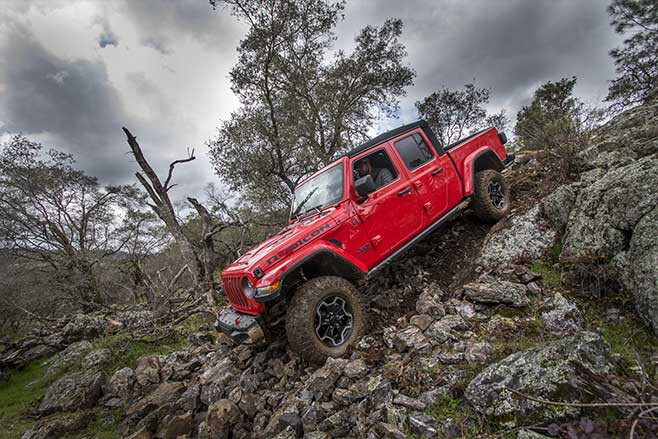
Like-for-like and taking into account exchange rates, we can expect to pay close to $60K to get into the range, and closer to $70K for the four-door Rubicon.
When it lands locally the Gladiator will be available in Sport, Sport S, Overland and Rubicon configurations, with a 3.6-litre Pentastar V6 and six-speed manual cog-swapper as standard. An eight-speed auto will be an option.
The Australian launch is expected sometime in 2020.
THE VW Amarok’s V6 diesel engine is proving hugely popular with buyers, dominating local sales of the German dual-cab ute.
The 3.0-litre V6 (available in two states of tune: 165kW/500Nm, and 190kW/580Nm in top-spec Amarok Ultimate) accounted for more than 83 per cent of the 9290 Amarok sales in 2018 – the greatest proportion of any market globally. On top of this, 2018’s overall sales saw Australia ranked the largest Amarok market outside of South America.
It’s a big success story for the local arm of the German marque, and it was kicked off by the launch of the 165kW/550Nm 3.0-litre V6 diesel Amarok (backed by a ZF eight-speed auto and permanent four-wheel drive) here in 2016.
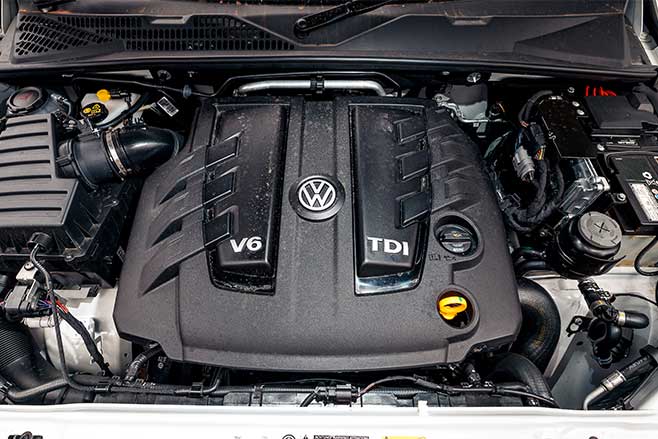
This was followed by the 2018 release of the more powerful Amarok Ultimate 580, with its 190kW/580Nm donk (that can punch out 200kW on Overboost) and quickest-in-class 0-100km/h time of 7.3 seconds.
On top of the 2018 Ultimate 580 release, VW also released the Core V6, a base-spec workhorse that offers the 165kW/550Nm V6 in a $50K package, plus it also upped the Amarok’s towing capacity to 3500kg. All of these factors have contributed to the Amarok V6’s impressive sales.
It’s not hard to surmise that VW Australia is more than just happy with its decision to bring in the V6, a fact confirmed by Ryan Davies, Volkswagen Australia Director of Commercial Vehicles.
“All Amarok V6 variants, but especially the higher grades, have been embraced by owners who want uncompromised performance married to what critics have universally called the best-handling in the ute space,” Mr Davies said “With due respect to some excellent rivals from other brands, Amarok V6 is still the benchmark for drivers.”
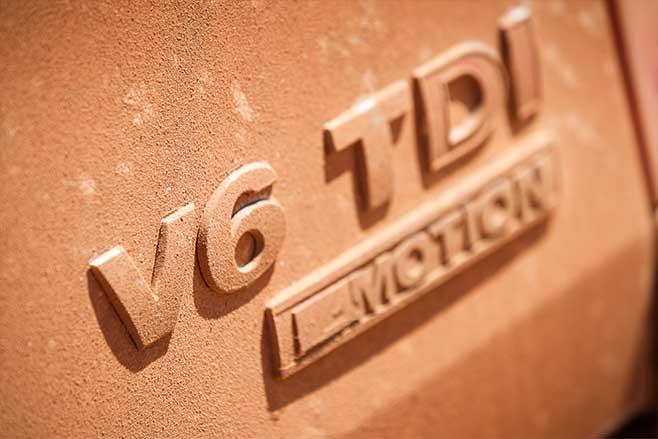
The Amarok V6 will see two additional variants hit the market in August, with Davies also confirming the long-awaited manual V6 is inching closer to reality, noting that “Australia is the only market calling out for this and we’re hopeful of bringing it home”.
There’s no word on a date for the manual V6, but if, indeed, VW Australia does bring the Amarok V6 manual to its spiritual home, we’d expect it to be here sooner rather than later, with this final piece of the Amarok V6 puzzle sure to have a further positive impact on sales.
THE WAIT is over, as we finally dive behind the wheel of the hotly anticipated Jeep Gladiator pick-up.
At the end of World War II Willys Overland emerged as a major player in the US automobile industry. Having produced more than 600,000 vehicles specifically for the war effort, its role as a peace-time manufacturer would need to expand. In 1947, the first Jeep “utility” truck rolled out of its Toledo, Ohio, facility and the rest, we will say, is history.
LOCAL DRIVE: 2019 JL Wrangler
The Willys pickup was phased out in the 1960s and replaced by the full-sized Gladiator, which claimed numerous “J” designations and enjoyed a 26-year tenure. The mid-size Comanche, introduced in 1982, ended production in 1994 and the seven-slot grille would be “bedless” for more than a quarter of a century.
Jeep has since hung a few carrots in front of pick-up ute devotees with their annual batch of concept vehicles. The J12 Scrambler, NuKaiser and Crew Chief 715 prompted the question: when was Jeep going to get back in the pick-up game? Enter the 2020 Wrangler JT Gladiator.
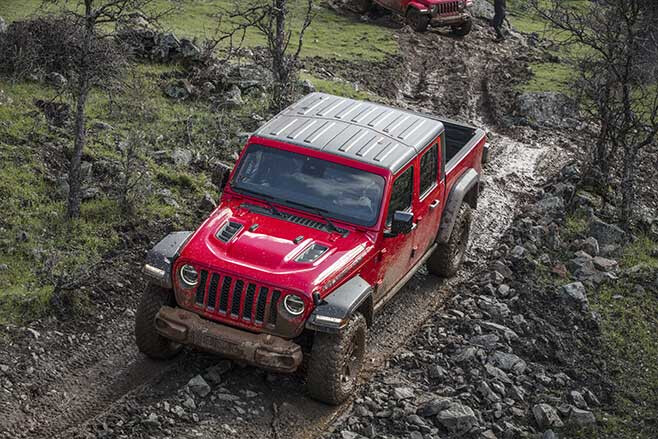
CHASSIS, DRIVETRAIN AND CAPACITIES
WHILE most money would have been bet on Jeep simply stretching four-door Wrangler and dropping a bed on the back, the team in Toledo knew that being competitive in the ute market would require, well, building a ute. They worked with Ram to design a chassis worthy of solid payload and towing capacities, as well as Dana and Fox for upgraded axles and shocks. As is the case with the new-generation of Ram trucks, the frame is comprised of high-strength steel to reduce weight and increase rigidity.
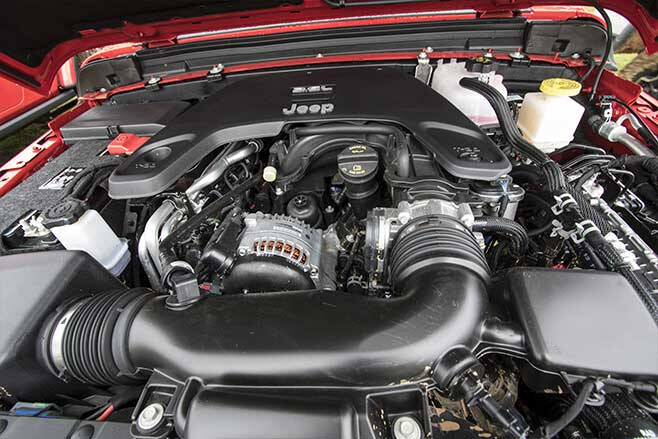
Raising the hood reveals a Pentastar 3.6-litre V6 tuned to produce an impressive 213kW and 353Nm. No surprises that the Pentastar has become one of the industry’s most versatile and reliable mid-size mills. The D478 six-speed manual transmission is standard fare (manual cog gearheads rejoice), while the 850RE eight-speed automatic is an available option ($2000). Gladiator won’t see the turbocharged four-cylinder found in the JL, but Jeep states that 2020 will bring the 3.0-liter EcoDiesel in US models. However, Jeep isn’t giving specifics on powertrains for the Australian market just yet. Transfer case options are the NV241 Command-Trac (Sport and Overland models) and the NV241 Rock-Trac (Rubicon).
Down below are Gen III Dana 44 axles fitted with 3.73:1 or 4.10:1 gears depending on model. As with its JL sibling, the suspension is coil-sprung links with monotube gas shocks. Rubicon models will host features we’ve grown to love: a 4:1 low-range transfer case, electronically actuated Tru-Lok differentials, one-button disconnectable front sway bar, Fox 2.0 shocks and 33-inch Falken all-terrain tyres.
WALKAROUND, INTERIOR AND TECHNOLOGY
GLANCING at the Gladiator from the front it looks much like its brethren JL. But closer inspection reveals wider slots in the grille for increased air flow when needed (towing). Under the paint is an aluminum hood, doors and tailgate, another weight reduction measure. Mindful features are a three-position tailgate (damping mechanism in the hinge), roll-up tonneau cover and 115-volt outlet in the bed. Up front is a Jeep Trailcam, which allows you to preview the terrain directly in front of the bumper. Adhering to its historical roots, the doors and roof are removable and the windscreen folds down to provide a full view of the heavens and trail. The entire process takes about 10 minutes and needed tools are provided in a handy tool kit. If you get caught with the top off in a rainstorm, no worries, the carpet can be removed for drying and the cab washed down.
The interior takes cues from several of the JT’s predecessors. The dash is a shorter aspect ratio similar to an old Willy or CJ, yet instruments and controls are in full view and at arm’s reach of the driver. The fourth-generation Uconnect features up to an 8.4-inch touchscreen, while Android Auto and Apple CarPlay pair with nearly any smartphone. Siri, along with steering wheel controls, allows the driver to keep his or her eyes on the road and hands on the wheel. Another cool option is a grab-n-go Bluetooth speaker to keep the tunes flowing around the campfire. Numerous USB and 12-volt ports are standard, and SiriusXM will provide your favorite tunes in any quadrant of the planet. Locker controls are out of the Rubicon’s playbook; a toggle below the Uconnect screen allows for rear, front, or dual locker engagement. A single button turns everything off.
Seats are quite comfortable, and the rear provides enough room for a full-size adult. Grab handles on the A- and B-pillar are solid, but I prefer the optional soft handles that mount directly over occupants on the roll cage. There is plenty of secure storage in the form of lockable compartments behind and under the rear seat. The seat can be locked (with a key) in the up or down position to keep sticky fingers from accessing your gear when going topless. As with all new Jeeps, the Gladiator has engine start/stop (ESS), ABS, electronic stability control (ESC), blind-spot monitoring, a backup camera, adaptive cruise control, and a host of modern safety features.
ON THE ROAD AND TRAIL
With 160km of pavement before we turn off on the dirt, we had plenty of time to evaluate the Gladiator’s street prowess. First impressions were that the extended wheelbase and firm suspension provided a very stable and comfortable ride. Tracking on constant-radius corners was predictable, simulated emergency braking and lane changes did not turn our knuckles white, and in-cab noise levels (soft and hardtop models) were on par for a Wrangler. It is louder than its closed-cab competitors, but lest we forget that in 10 minutes we can take the top off and kick the windscreen down.
Diving into mid-size truck territory, Jeep took it to task to ensure capacities would best the 4WD competition. The Gladiator’s stats come in at 725kg payload and 3500kg towing capacities (with Max Tow option). Generating 213kW, the Pentastar V6 is no slouch. In fact, it flat out gets with the program. Merging on the freeway is an effortless affair, but it did work a bit harder with a 2270kg ski boat in tow.
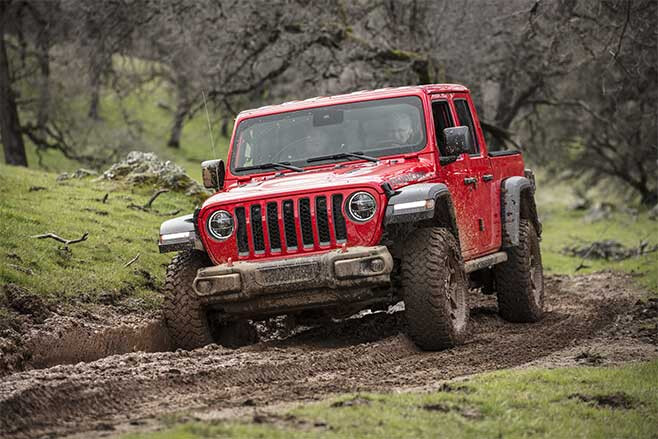
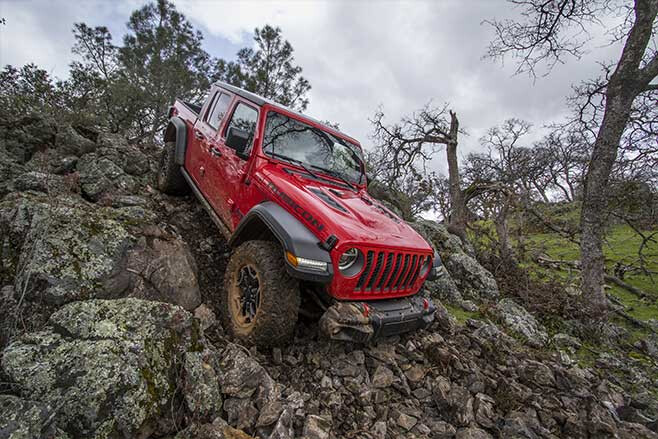
We spent the afternoon in a Rubicon, motoring through March mud and crawling over rocky technical terrain in the Californian Sierra Nevada. On the trail the Gladiator is everything we’d expect from a Wrangler. When needed, toggling the lockers kept all four tyres turning in unison, and the coil-link suspension did an admirable job of keeping them in contact with the tractive surface. While a solid front axle is not as cushy as its IFS rivals on the highway, this reviewer (who learned to drive on the Rubicon Trail) feels it is far superior than an independent suspension in cross-axle conditions. It also offers greater latitude with regard to raising ride height and other modifications. Approach and departure angles are 43 and 26 degrees respectively (another best-in-class), but breakover, due to the 3480mm wheelbase, lags at 20.3 degrees. We didn’t have the opportunity to test fording depth, but Jeep states it will clear 760mm of standing water without issue.
The automatic transmission’s 4.71:1 first gear combined with the Rubicon’s 4:1 transfer case provides Wrangler’s best-in-class crawl ratio of 72:1 (84.2:1 with the manual). The Sport and Overland offer a respectable 52:1, which to the best of our knowledge also beats most of the competition. Although the Sport and Overland are not available with Tru-Lok differentials, I’ve driven Wrangler JLs equipped with the Trac-Lok system (optional) over highly technical terrain and found it works exceptionally well. I do need to note that even with 280mm of clearance, the longer wheelbase and reduced breakover angle put the skid pans in contact with the hard deck a few times. The turning radius 1356cm also requires some forethought in tight quarters. However, a mild lift would greatly reduce any clearance issues and, we must remember, you can put five people in the cab and a dirt bike in the bed.
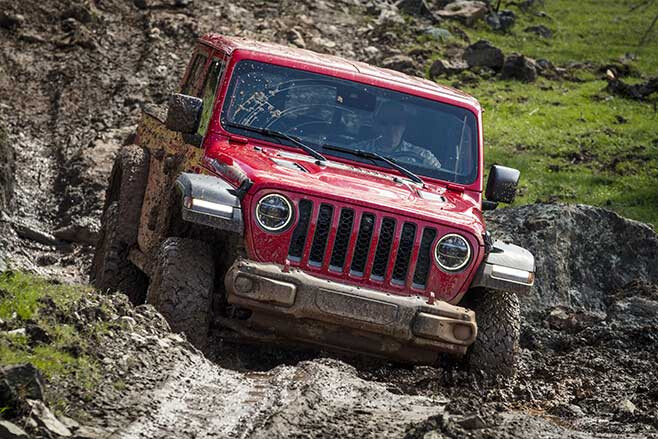
We’ve been waiting for years for Jeep to jump back into the pick-up ute world. When they did, their focus was on capability and capacity. Capability was confirmed when they entered a pre-production unit in one of the toughest races on the planet, King of the Hammers. Payload and towing capacities lead the field, and we love the fact that you can put a canopy and roof-top tent out back (or a stack of plywood). After three days behind the wheel in a variety of conditions and terrains, we’d say the Gladiator JT was worth the wait.
SPECIFICATIONS
Powerplant: Pentastar 3.6-litre V6
Output: 213kW, 353Nm
Transmission: six-speed manual, eight-speed automatic
Transfer case: NV241 Command-Trac (Sport/Overland), NV241OR Rock-Trac (Rubicon)
Axles/ratios: Dana 44, 3.73:1, 4.10:1
Crawl ratio: 52.1:1 (Sport/Overland), 84.2:1 (Rubicon)
Steering: Electro-hydraulic
Suspension: links, coil springs, stabilizer bars (f/r)
Tires: 285/70R17 Falken A/T, M/T
Base weight: 2290kg (Rubicon 5-speed)
Payload: 725kg
Towing capacity: 3500kg
Wheelbase/turning circle: 3480mm, 1356cm
Approach, breakover, departure angles: 43.4/20.3/26 (Rubicon)
Manufactured: Toledo, Ohio, USA
ARB has released the Classic Fridge Series II, a significant update of its popular fridge range.
The update heralds in a new colour scheme and new electronic internals, along with the ability to operate your fridge via a smartphone app that can be used from your smartphone. ARB also integrates the operation of the fridge into its ever-expanding LINX system.
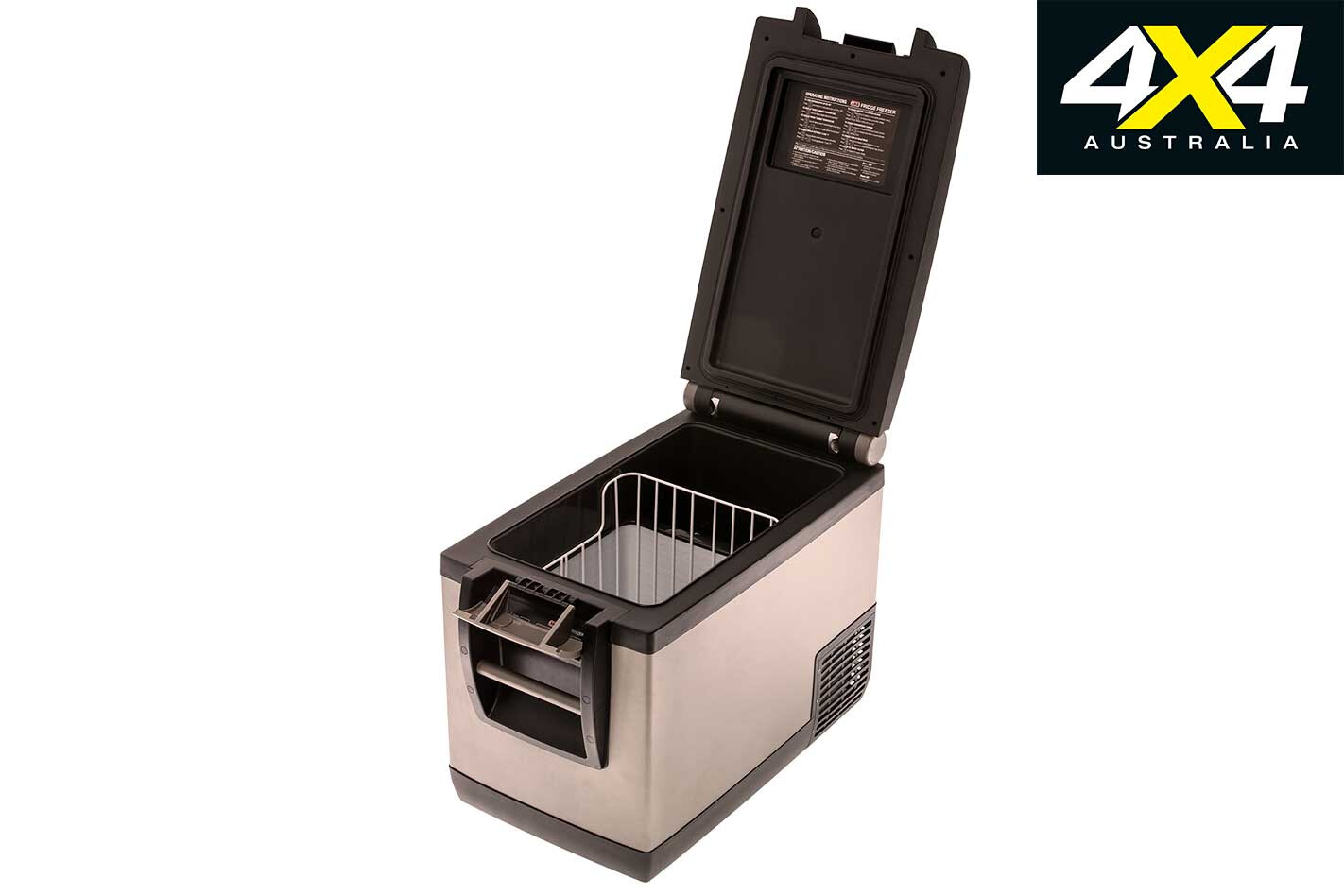
The new fridges include a backlit touchpad for optimum visibility and use. The display is now dimmable (high and low) and there’s a 12-volt power input readout.
The Bluetooth transmitter needed to use the app is included with any new Series II (or Elements) fridge and is simply attached to the fridge’s rear end. The ability of this app, whether via your phone or LINX, to keep you fully informed and control the fridge from that point, is pretty amazing. For owners of post-2014 Series I fridges, their current transmitter can be updated to the new one for $79.
Once transmitting, you can view the power input voltage, set the temperature (and check it), and keep yourself updated on how the compressor is going (whether it is at idle or running).
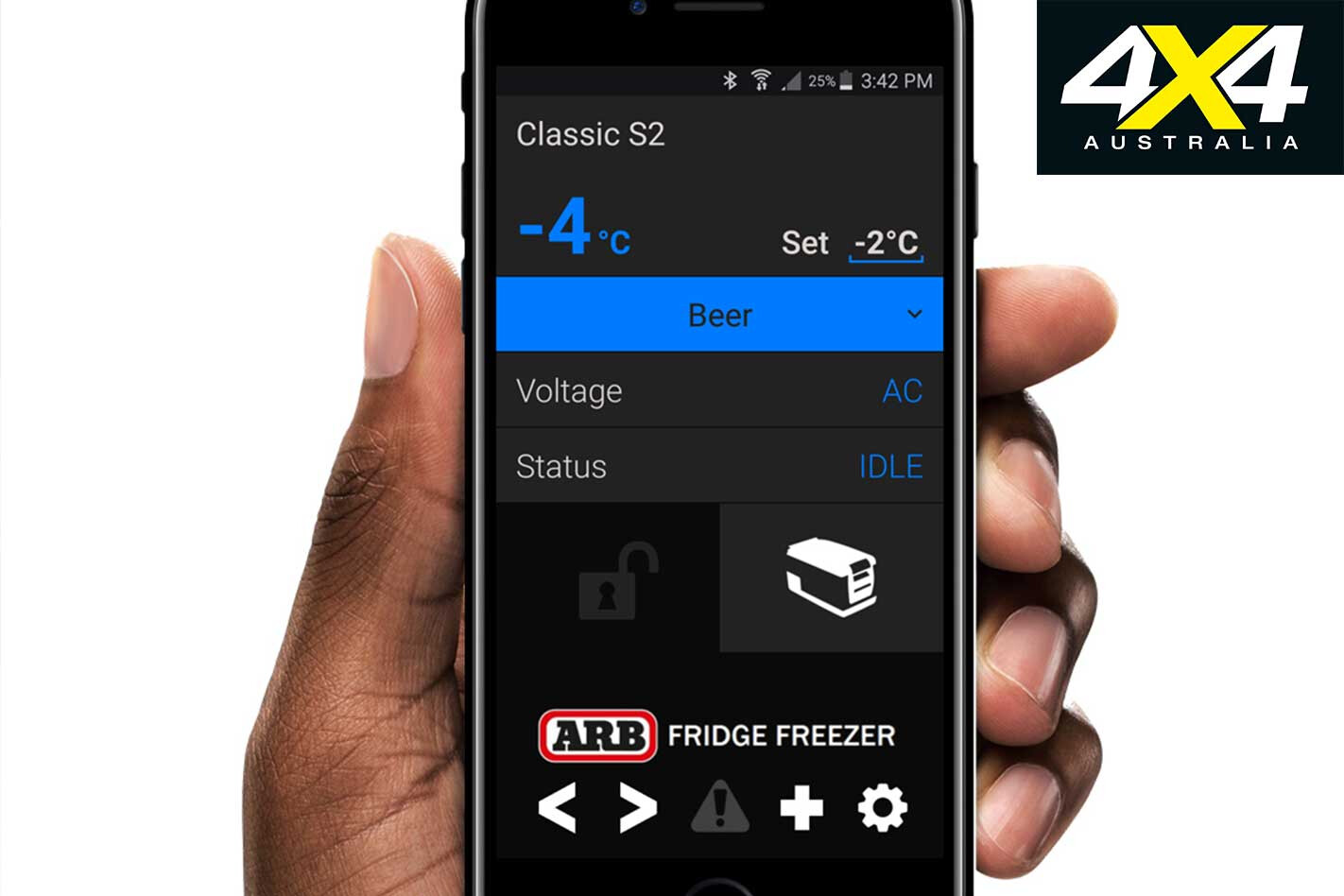
One very handy feature of the app is the ability to set the battery protection level to high, medium or low. It will also provide a warning if the lid is left open – pretty damn handy if you take off from home without realising you’ve left it open and thus may arrive with spoiled food and warm beer.
You can turn the fridge on/off via the app, adjust the temperature (or use pre-set ones), toggle between the various battery protection levels and display brightness, and even assign your fridge a name. Why do you need to name your fridge? Well, you can actually run multiple fridges from the one smartphone/LINX. Excuse the pun, but that’s pretty cool.
For more info visit: www.arb.com.au
EKING maximum performance from a four-wheel drive is often atop many tourers’ wish lists.
Despite the perk more grunt brings, it often comes with a hefty price tag. Here’s a PWR intercooler package for the 200 Series, as well as some Terrain Tamer heavy duty seals to protect a rig’s vital bits.
PWR LC200 intercooler package
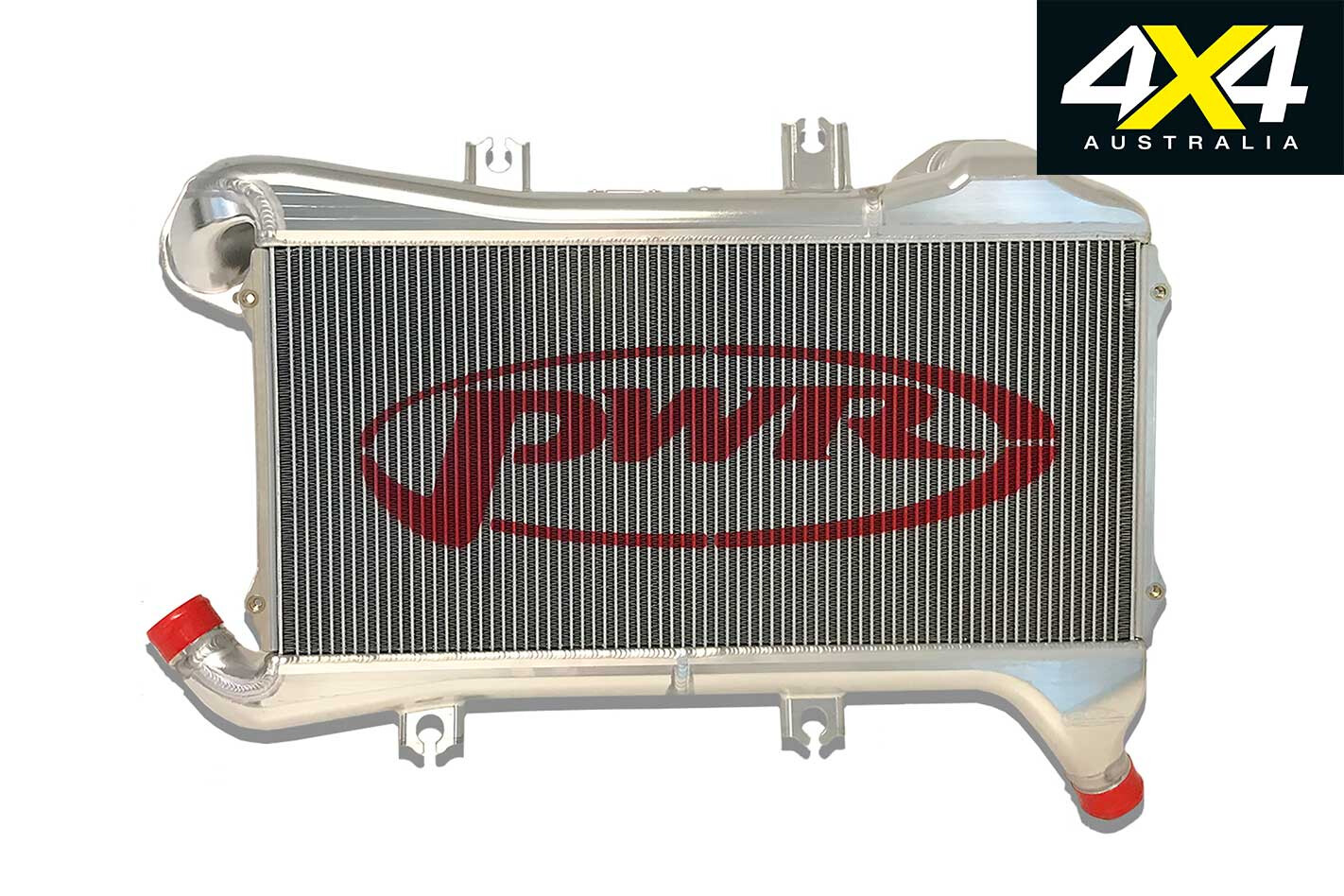
PWR’s new intercooler package for Toyota’s popular big wagon offers impressive torque and power increases and is built to the highest standard. The package includes CNC billet-machined tanks and incorporates billet outlets and mounts and a Formula 1-spec core in the intercooler, with the promise of supreme core recovery when under extreme load.
There’s also a PWR Thermo Fan Kit option (along with a complete intercooler and fan package). The fitment of the intercooler requires no additional pipe-kit and no cutting at all. The kit is a DIY dream, installing to all factory mounts easily.
With its many years of experience producing kits like this that offer both maximum efficiency and excellent durability, it’s easy to see why PWR gear is so popular with serious off-roaders.
RRP: Starting from $3195 Website: www.pwr.com.au
Terrain Tamer heavy duty hub seals
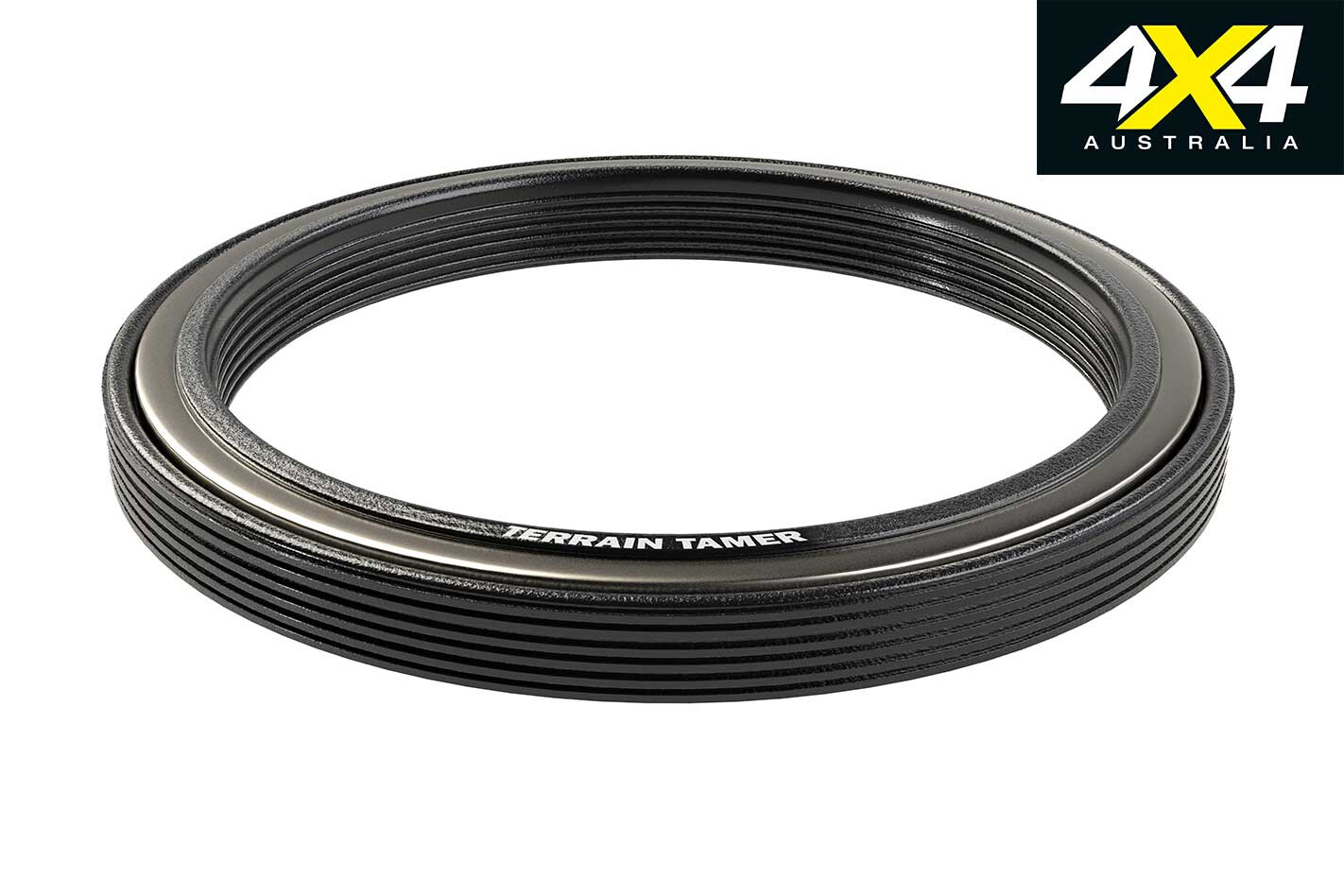
Terrain Tamer continues to produce top-end gear, and the latest is its innovative new range of Heavy Duty hub seals. Most seals traditionally feature a rubber lip design, but this can cause wear on rotating metal surfaces (think: shafts and spindles) which can create a groove that, in turn, allows grit and water in as well as allowing oil to leak out, with the potential to cause damage.
Using its own unique tooling, Terrain Tamer has tackled this problem with this new heavy duty seal range, which instead rotates on its own internal surface, without relying on the condition of the shaft, thus eliminating wear on other components and extending seal life.
Each heavy duty seal contains four internal sealing surfaces and utilises a labyrinth construction to assist in prevention of oil and lubrication fluid loss. It also helps protect against dirt/grit ingress, making them ideal for all off-road conditions.
Terrain Tamer’s Heavy Duty seals are now available for a growing range of vehicles, both as an individual seal and as part of the new Terrain Tamer Heavy Duty Bearing Kits.
Website: www.terraintamer.com
FOOD and shelter are two essentials when venturing to a remote part of the country. Not only does the equipment need to be reliable and robust, it’s handy if it doesn’t take up much space in or above your 4×4.
Check out this stove and shelter that have just hit aftermarket catalogues.
Primus Kinjia stove
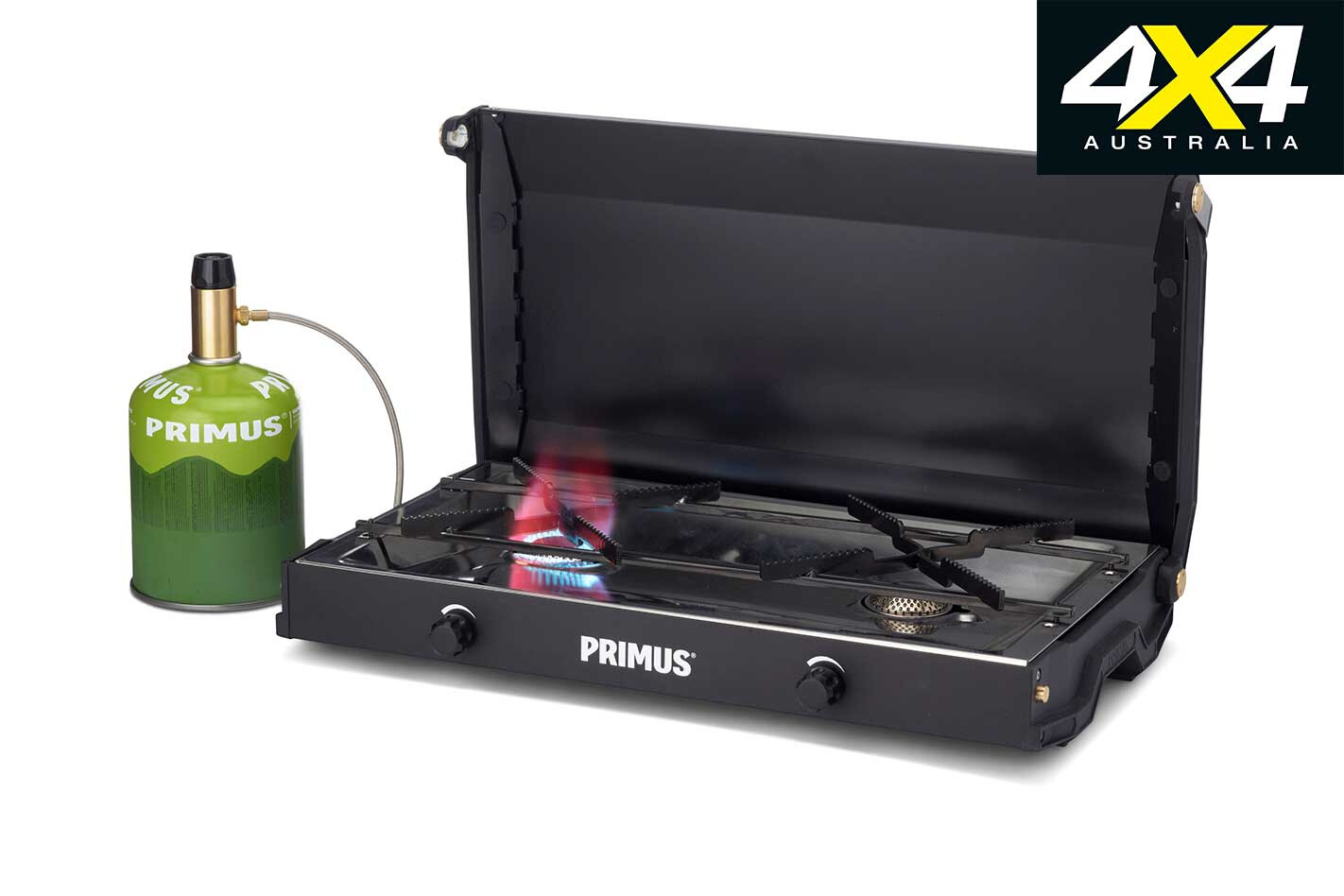
You don’t have to sacrifice function for a lighter weight and more compact size with the Primus Kinjia. The Kinjia weighs in at 4kg and measures 295mm wide, 475mm deep and is only 78mm in height, making it ideal for both lightweight fanatics and those who have limited cargo space in their rig.
This stove includes two burners and runs off canister gas stoves (100g, 230g and 450g), which are connected via a flexible gas hose and, thanks to their size, help keep the whole camp cooking package smaller than average without sacrificing burner efficiency. The drip tray and grids can be easily removed for cleaning and maintenance and the stove is built to last.
The compact size doesn’t mean you have to shrink your pots and pans, either; a regular pot and pan fit side-by-side on the stove. Get cooking!
Website: www.primusoutdoor.com.au
BlackWolf Sombra Shelter
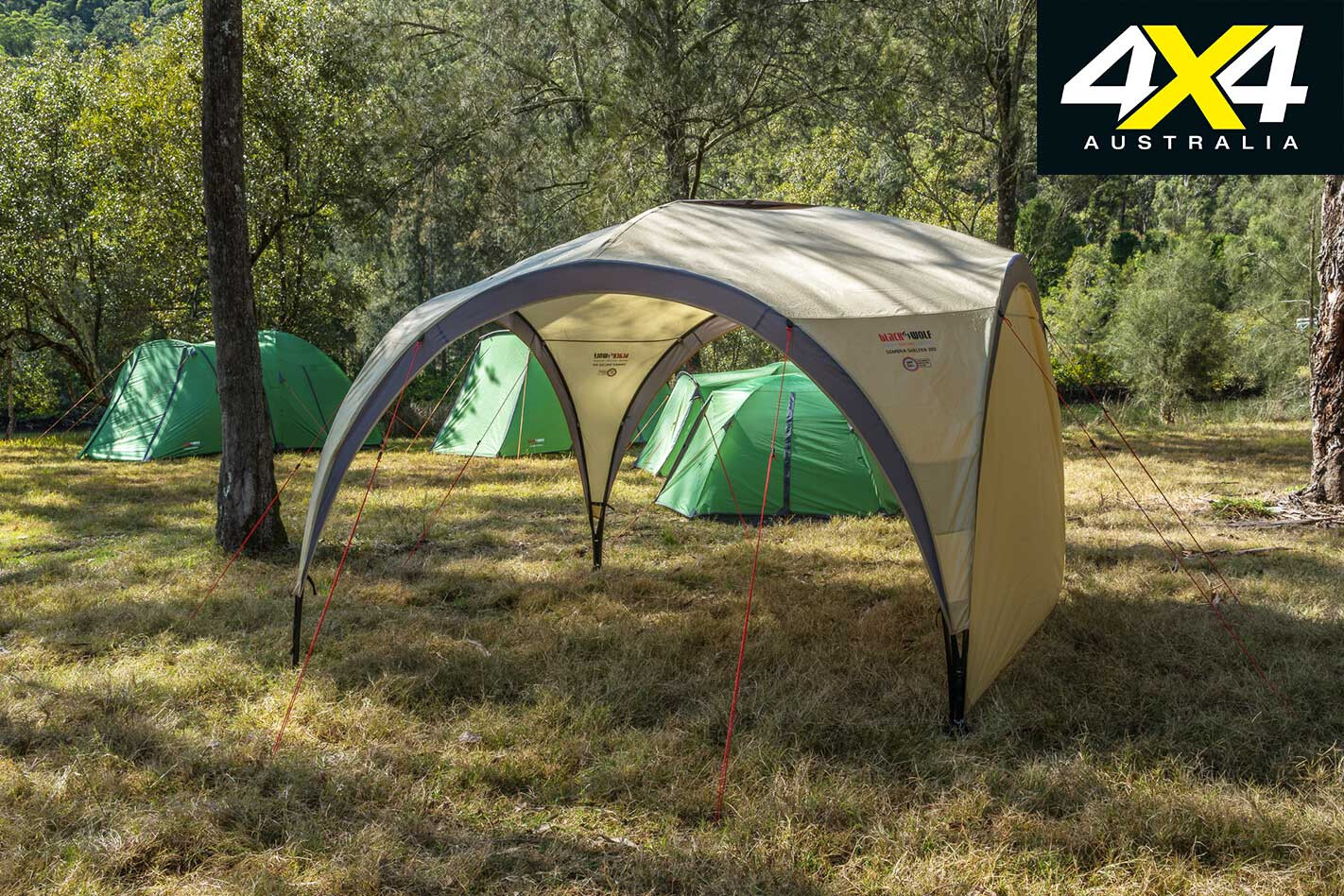
The Sombra Shelter’s heavy-duty canopy features a UPF 50+ rating, and is designed to offer plenty of shade and sun protection when camping. The unique design (available in two sizes) offers ample shade (up to 20 square metres in the case of the 450 model) and some rain protection without sacrificing ventilation (you can purchase an additional side panel as well).
The tough 150-denier polyester fabric will last years and is held in shape via BlackWolf’s custom 19mm Tuff steel poles, which offer high durability. Setting up is quick and it packs down nice and compact.
RRP: $400 (Sombra Shelter 300); $500 (Sombra Shelter 450) Website: www.blackwolf.com.au
TERRAIN TAMER has taken a huge step forward in renewing a long-forgotten suspension system with upgraded materials, technology and design. Sure, it’s a leaf spring design, but it’s very different to the old horse-and-cart system. The parabolic leaf spring design is currently available in some overseas markets, as well as in Australia for the trucking industry and for a very limited number of 4×4 models.
Terrain Tamer intends to change all that, initially with the introduction of Land Cruiser 70 Series kits (78 and 79 Series), followed by kits for many popular twin cabs that will surely raise interest given the claimed advantages.
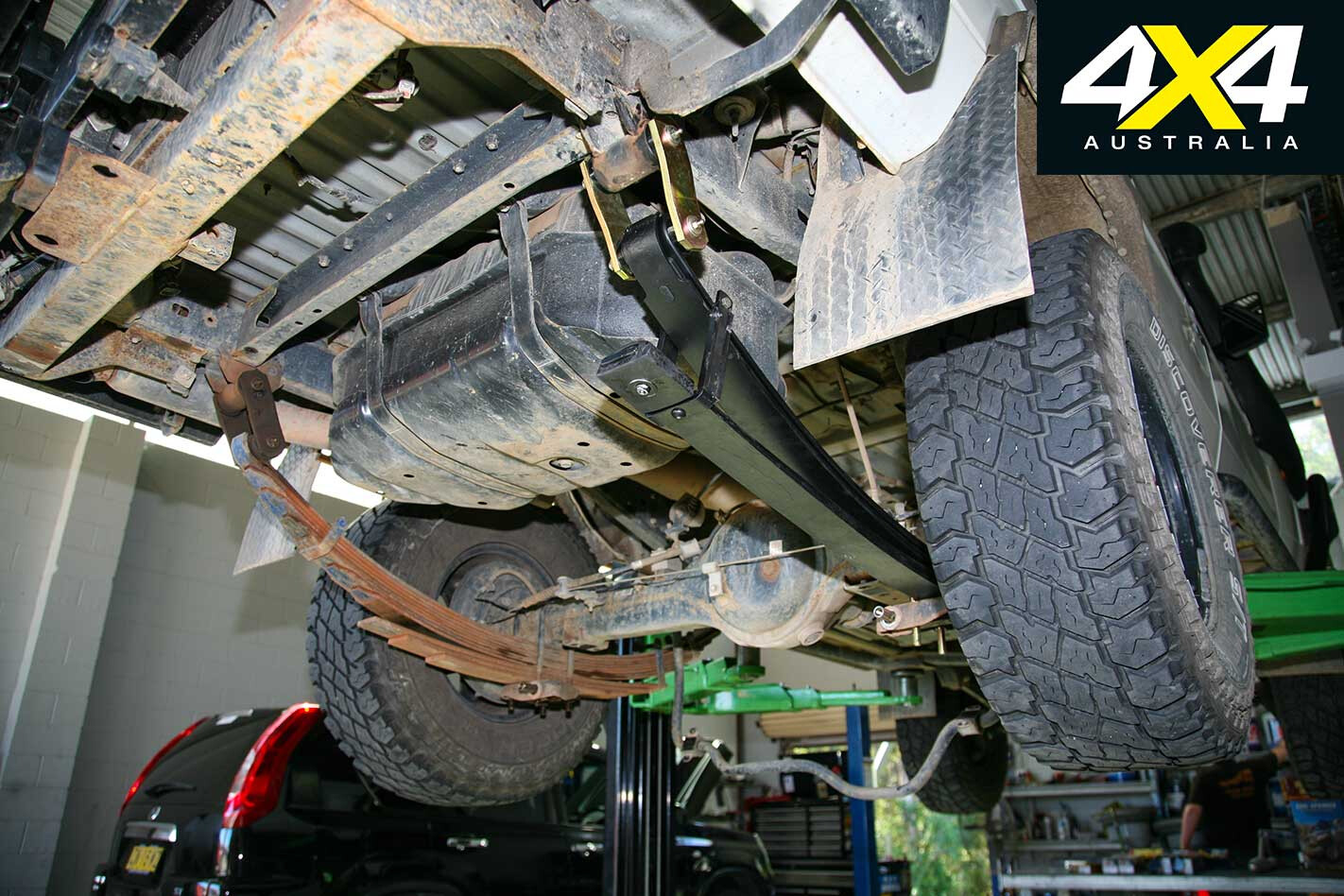
There is much hype, confusion and bullshit regarding parabolic leaf springs. They have seemingly been put into the too-hard basket for Australian manufacturers, leaving the more complex (compared to semi-elliptic leaves) fabrication and assembly to overseas markets.
But first, let’s outline the differences between a parabolic leaf spring and a semi-elliptic leaf spring, as fitted to the majority of rear-end Aussie 4x4s … well, the ones that don’t have the luxury of coils.
A semi-elliptic leaf pack consists of many separate leaves (from eight as OE, 11 for a 300kg kit, or more for an extreme heavy-duty pack). Each leaf within the pack is a separate length of flat spring steel of equal thickness from one end to the other, starting with the longest (and usually thinnest) at the top and ending with the shortest (and usually thickest) at the bottom of the pack. They represent a linear shape/return on spring performance. The more weight you need to carry, the thicker the leaves need to be – and the more you need of them.
Each leaf rubs on the one above/below as the suspension cycles; although, some companies use inter-leaf pads to reduce this friction. Depending on the exact design, each pack is bolted together at the centre and utilises spring clamps along the length to help ‘keep’ the leaves together.
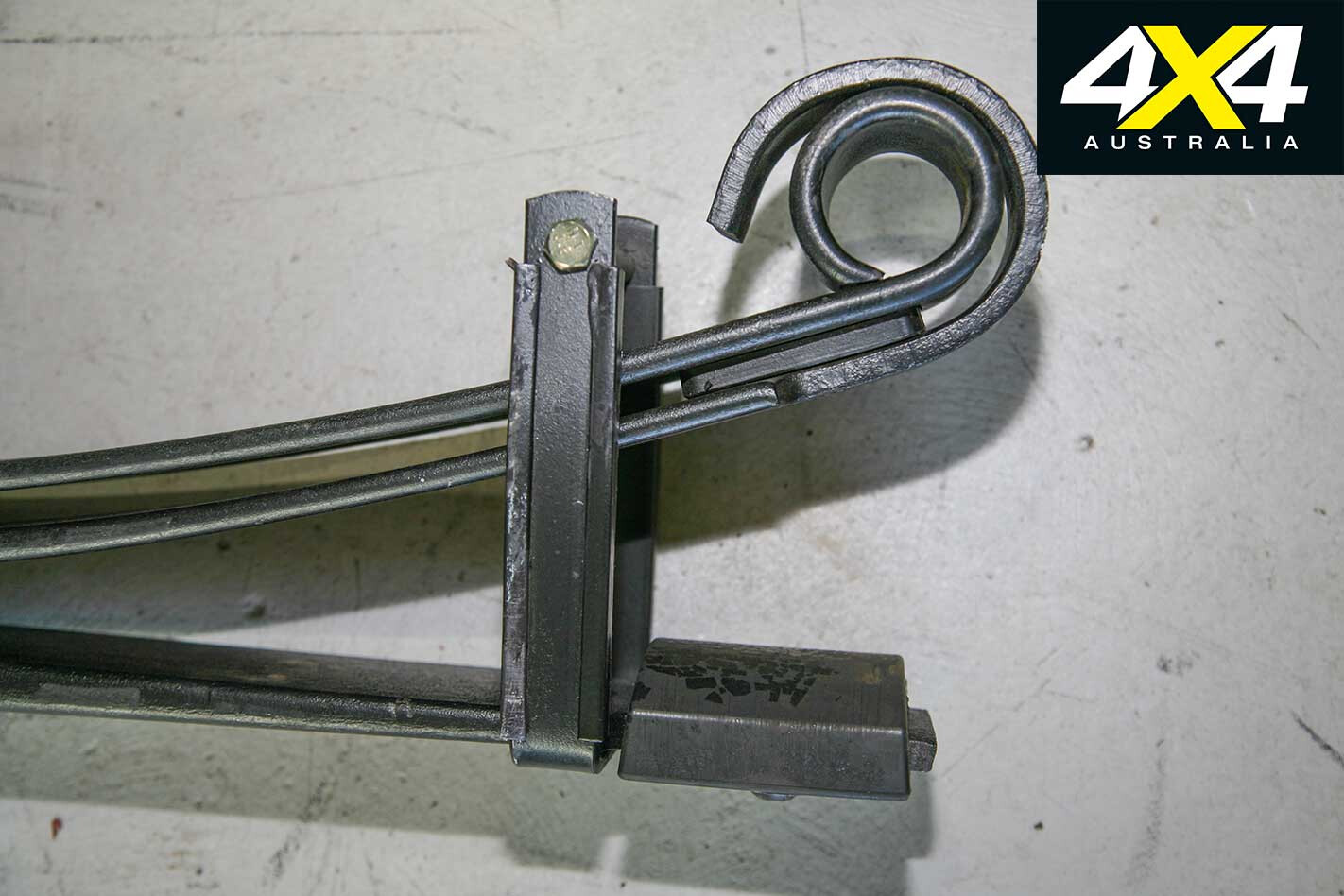
Eyes at each end have bushes fitted to the leaf pins of the 4×4; generally, the leading eye features a double wrap around the pin as a safety precaution should one leaf break, and the trailing eye hangs from a swivelling shackle with one-and-a-half wraps.
Parabolic leaf packs differ in many ways. Each leaf within the pack is tapered thicker (from the centre) to thinner at each end, in a parabolic shape. Basically, each separate parabolic leaf within the pack emulates a complete semi-elliptic pack from its side profile. Add leaves to form a pack and you have a parabolic-shaped curve of (in this case) three leaves, providing many advantages over a heavier semi-elliptic set that has more leaves.
The parabolic benefits
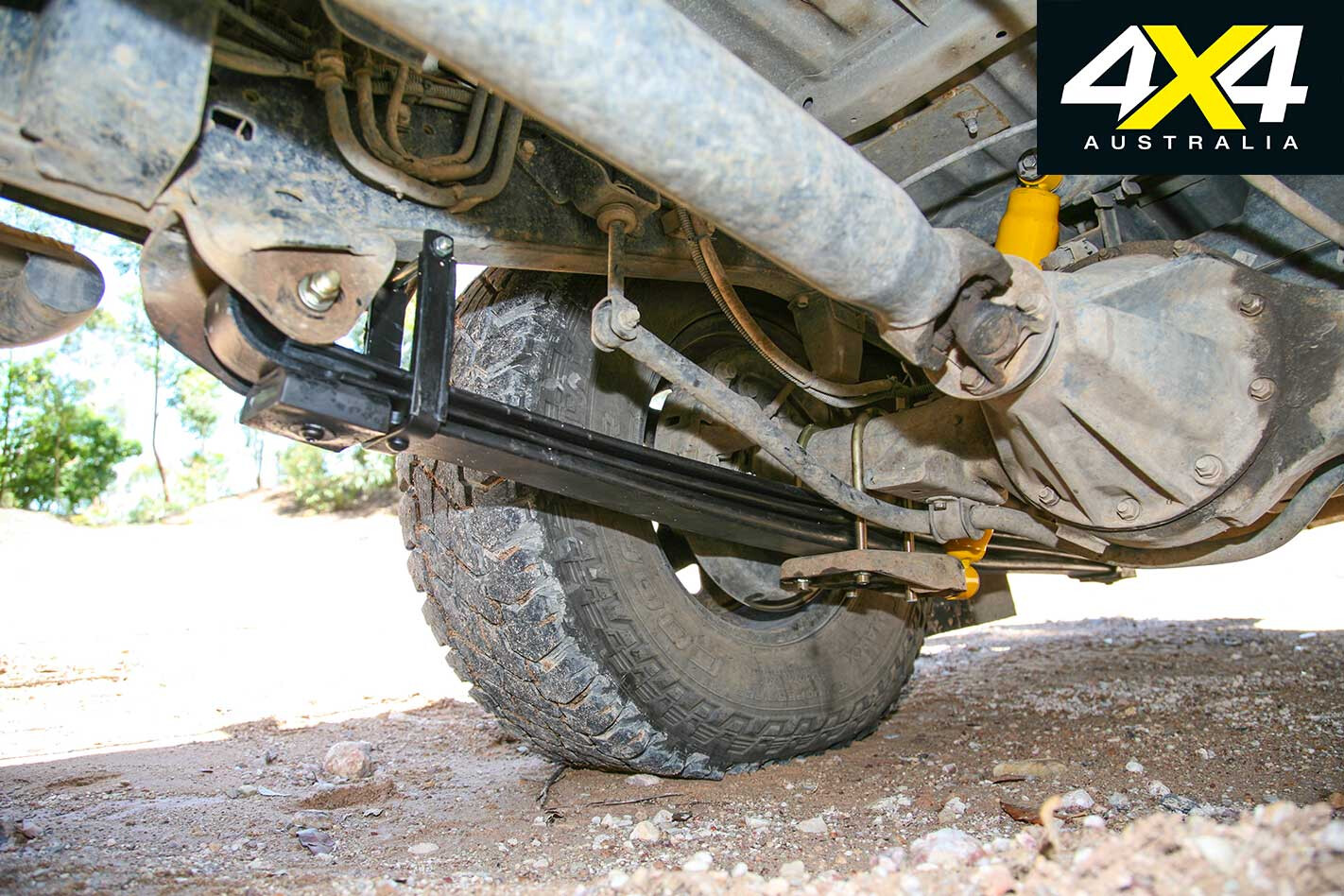
BENEFITS of a parabolic leaf spring over a standard semi-elliptic: lighter unsprung weight; tapering of each leaf returns load-carrying ability combined with improved ride quality both loaded and unladen; interleaf friction is (largely) eliminated given the leaves don’t touch each other; improved ride qualities and less chance of rusting and wearing; silencer rubber pads on lowest helper leaf prevents leaves touching each other, for a quieter operation; compliant and comfortable ride with any load; reduces shock induced from road unevenness back into vehicle components; a double military wrap at the shackled end and one-and-a-half at the fixed end; and improved flexibility off-road.
The negatives: if you break or damage a leaf – other than buying a complete new one to replace it – no other suspension repairer will be able to fix it; and there are no options at this stage for higher or lower load ratings or heights. There’s also limited range available at the moment, but that will change.
Measure everything
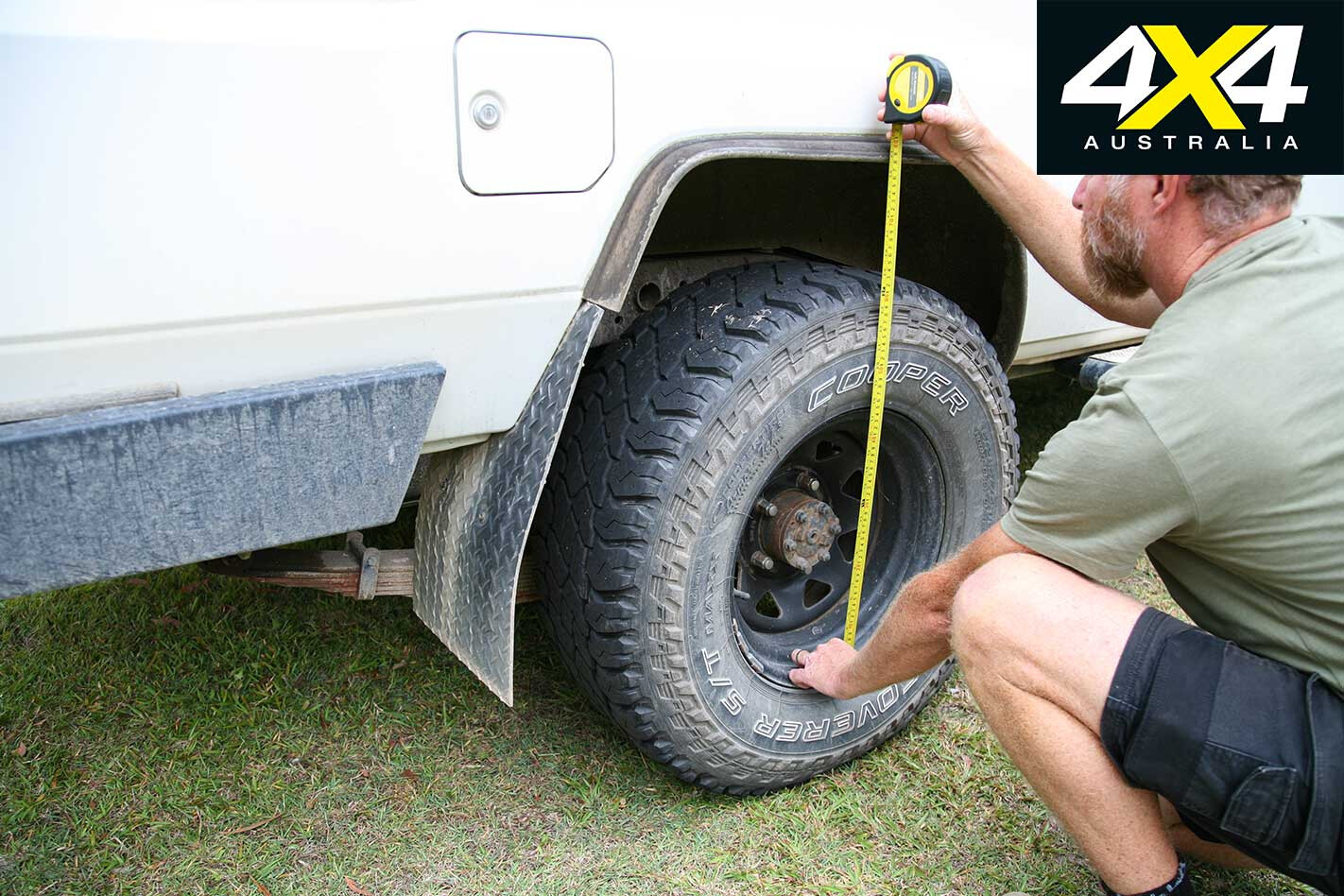
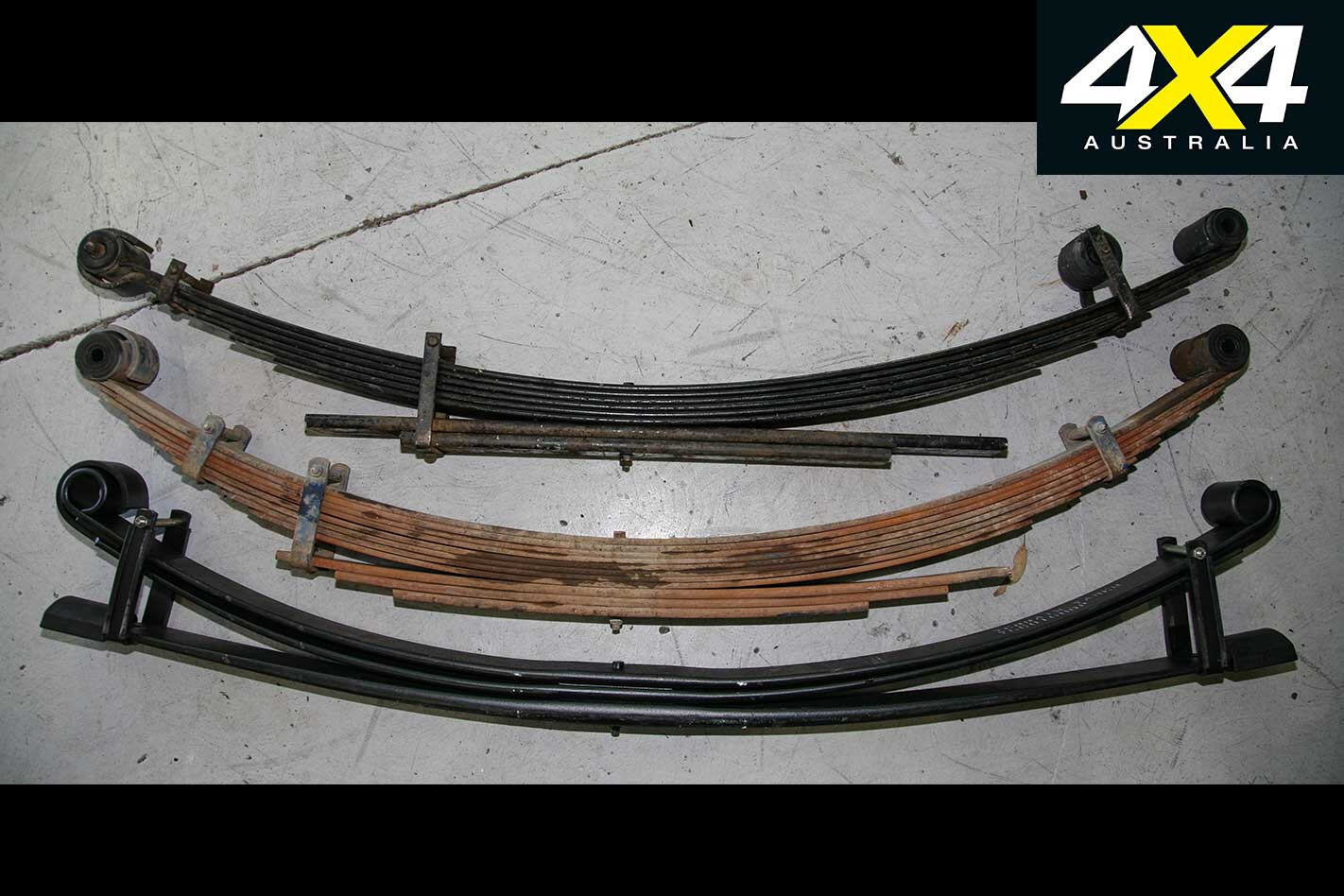
BEFORE changing from a 300kg Lovells kit, I measured every conceivable attribute of the kit while it was still on the Troopy. Once removed, I could further compare the Terrain Tamer parabolic leaves with the Lovells’, as well as the standard OE leaves that were originally fitted to my vehicle.
The OE eight-leaf pack weighed in at 50kg, the Lovells 11-leaf pack was 56kg, while Terrain Tamer parabolic three-leaf pack tipped the scales at a lightweight 33kg. Times that by two and it provides an overall weight saving of 46kg to the rear of my Troopy.
I loaded 750kg worth of sandbags into the rear of my Troopy prior to changing, in the process overloading the 300kg pack. I measured shackle angles, clearances under the shock mount, U-bolts and towball, as well as overall suspension drop at the rear and raising at the front.

Witness marks (rust and Texta lines) on the Lovells springs showed very little interleaf movement within the leaf pack; most movement was coming from the shackle pivoting. Not so with the parabolic leaves, with the pack of three leaves seen separating and compressing, and flexing up and down; shackle movement was also improved.
I even recorded vibration levels at 100km/h, as well as on a 0-100km/h run. Once I changed to the parabolic leaves every measurement was redone … even lifting 750kg of sand in and out of the Troopy.
Practically put to the test
NOTHING has been left to chance to prove if the Terrain Tamer parabolic leafs are up to the task: loading 750kg of sandbags; knocking up a 20-degree suspension flex travel ramp; towing a camper trailer and hitching up a caravan; recording vibrations; off-road low-range crawling; scorching fast, corrugated dirt tracks; measuring everything that moves; and seat-of-the-pants feelings.
Study the table below and you’ll note, to my astonishment, the many improvements of the Terrain Tamer gear over OE and old 300kg kit. Aside from the improvements in load-carrying capacity and flexibility, check out the ground clearance gained via having a shallower leaf pack.
| u00a0 | OE | Lovells 300kg kit | Terrain Tamer 500kg kit |
| Leaf pack weight | 50kg | 56kg | 33kg |
| Coil spring weight | 5kg | 7.5kg | 5kg |
| Height lost with 750kg loaded | N/A | +10mm (f); -50mm (r) | +10mm (f); -25mm (r) |
| Shackle angle loss with 750kg loaded | N/A | 6.5 degrees | 6.5 degrees |
| Height lost with caravan hitched (180kg ball weight) | N/A | +10mm (f); -35mm (r) | +10mm (f); -10mm (r) |
| Clearance under lowest leaf | N/A | 235mm | 275mm(r) |
| Clearance under shock | N/A | 185mm | 230mm(r) |
| Clearance under U-bolt | N/A | 175mm | 220mm(r) |
| Clearance lost under towball with 750kg loaded | N/A | 85mm | 60mm(r) |
| Distance travelled up 20 deg ramp – front | N/A | 1300mm | 1400mm(r) |
| Distance travelled up 20 deg ramp – rear | N/A | 1200mm | 1350mm(r) |
| Calculated RTI (Ramp travel Index) front | N/A | 436 | 469 |
| Calculated RTI (Ramp travel Index) rear | N/A | 402 | 453 |
Results
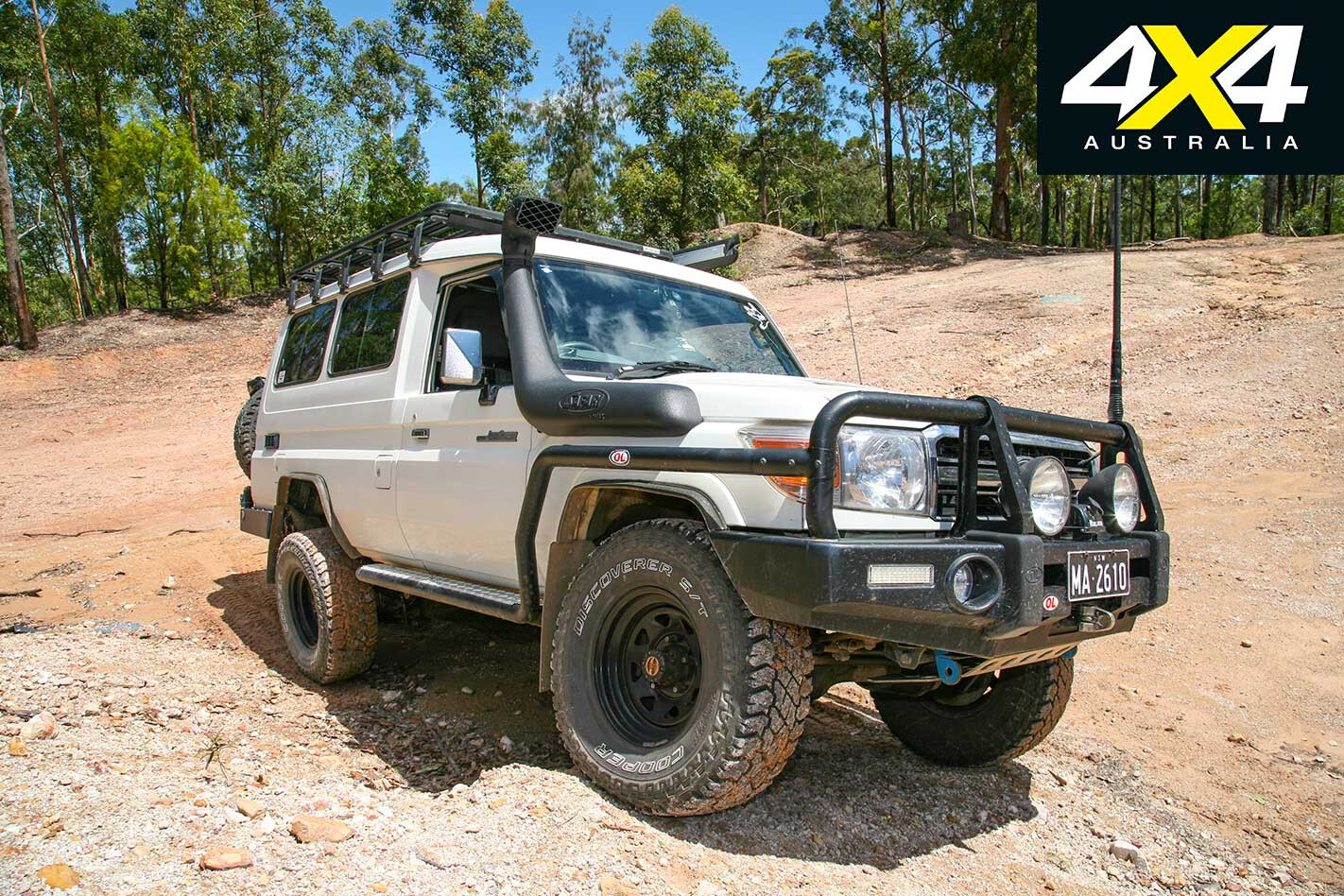
PRIOR to fitment – even though I’d convinced myself this modification was for the better – I was more than a little nervous and was prepared to return the Terrain Tamer gear if it didn’t meet my high expectations.
It only took the initial 20km drive home to accept I had little to worry about, with the comfort improvements as clear as day. On second-rate bitumen roads I was quite shocked (pun intended) as to how little jarring and harshness was being transmitted from the suspension through the cabin and up into my seat. There was no way I’d be removing this gear, regardless of whether it could carry a decent load.
The Terrain Tamer parabolics impressed with their ability to carry a load and return improved off-road flex … in fact, there were zero downsides. It doesn’t make sense given all the leaf-sprung 4x4s I’ve driven over the past 35 years, but rest-assured, they work.
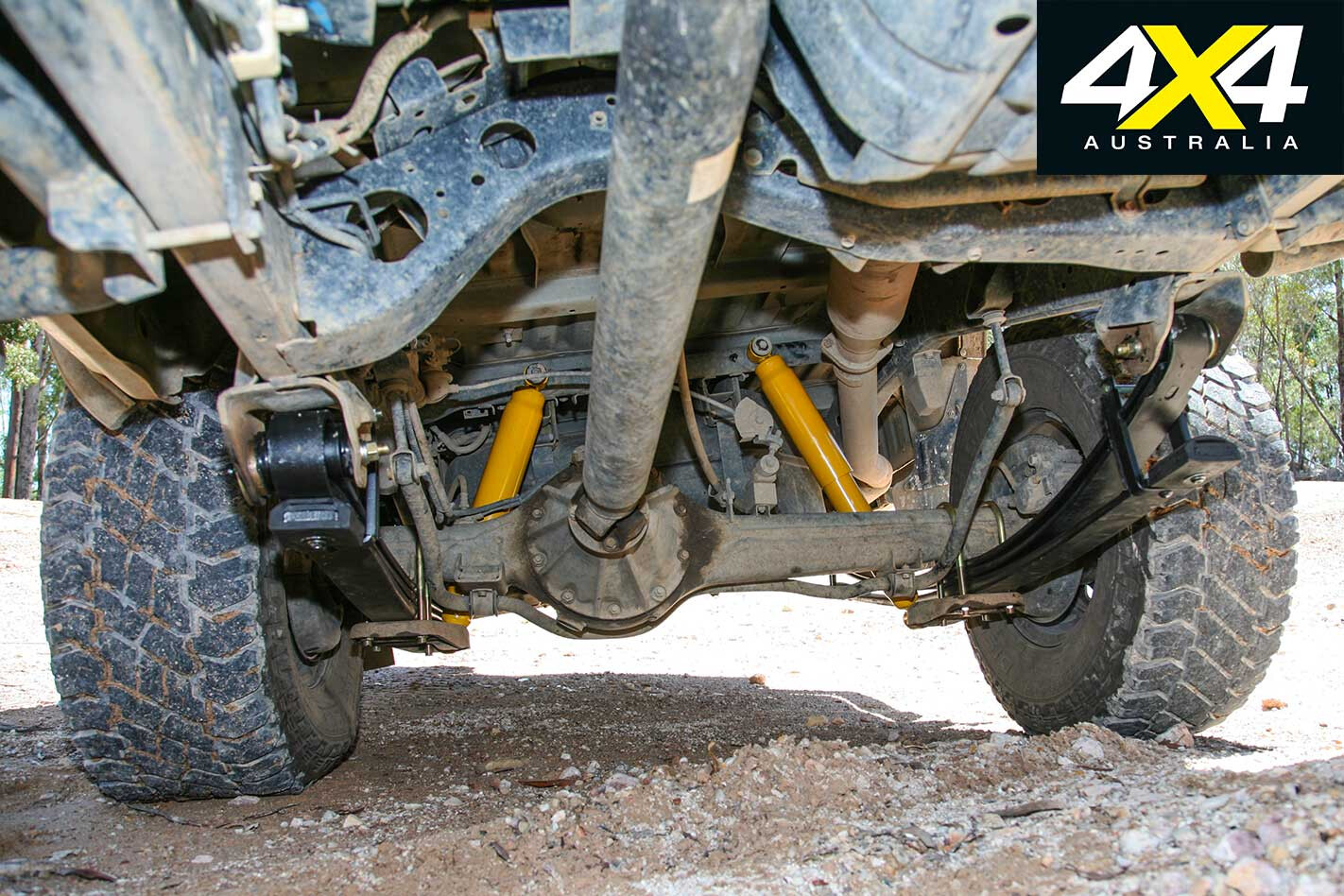
Would I recommend fitting the Terrain Tamer gear? Hell yes; although, there are a few scenarios where I’d give them a miss. If you’re running a vehicle that’s constantly near maximum GVM, if you want a GVM upgrade, or if you’re using a mining-spec leaf spring pack to cart maximum load all the time, I’d suggest parabolics aren’t for you. If you’re also after more than 50mm lift, then these parabolics aren’t able to ‘legally’ supply that lift.
If, however, you load your vehicle from near empty up to general ‘let’s go camping’ and occasionally up to maximum GVM – or even tow a caravan or camper trailer – then there are only advantages to be had in the swap, with the one proviso of perhaps throwing on a set of adjustable airbags for occasional extra-heavy loads. That’s exactly what I’ll consider in the future, pending how towing duties and maximum loads pan out.
These Terrain Tamer parabolic leaf springs have amazed in all facets of comfort and load-carrying ability up to their designated limits. Why did it take so long to make the change?
Procrastination 101
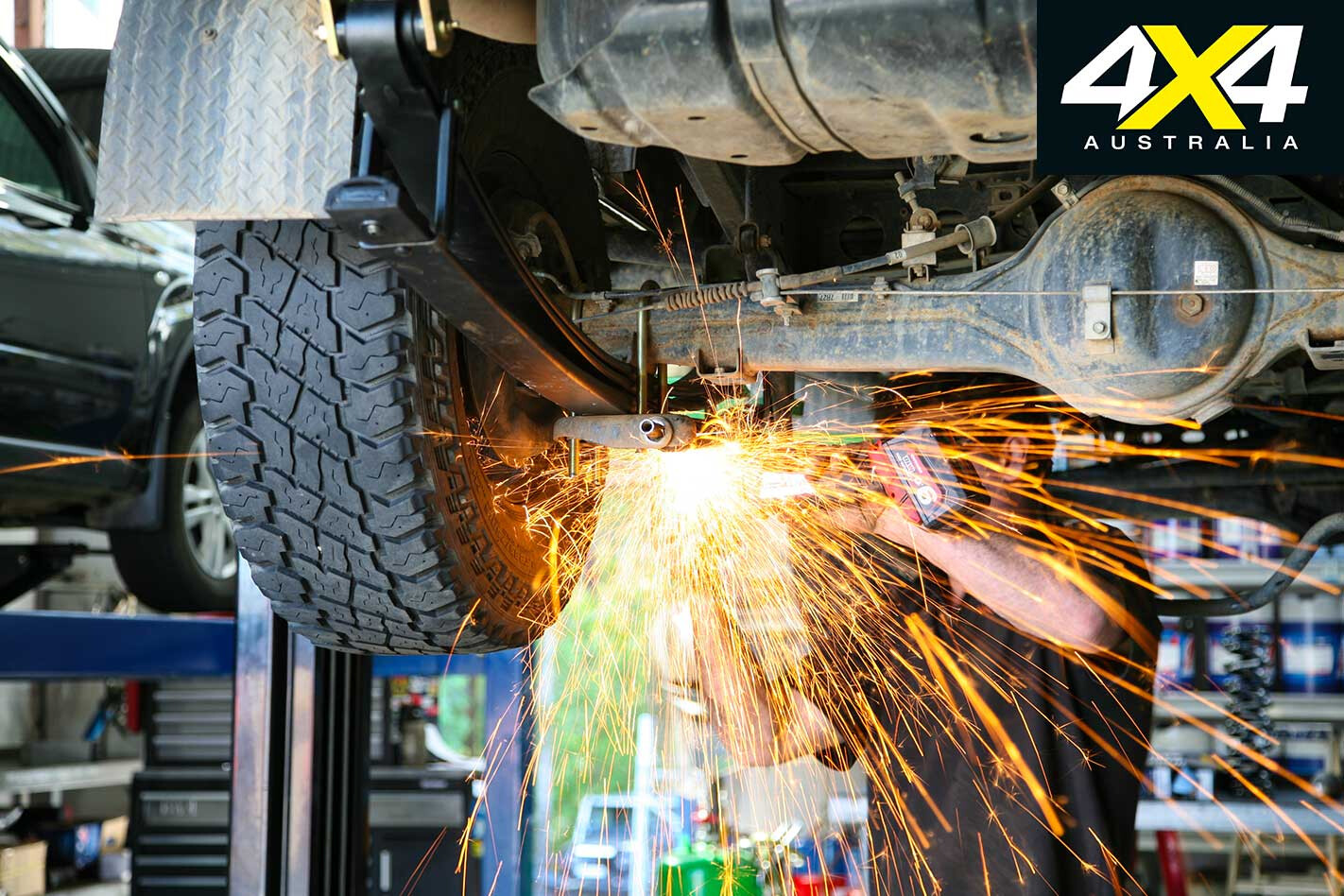
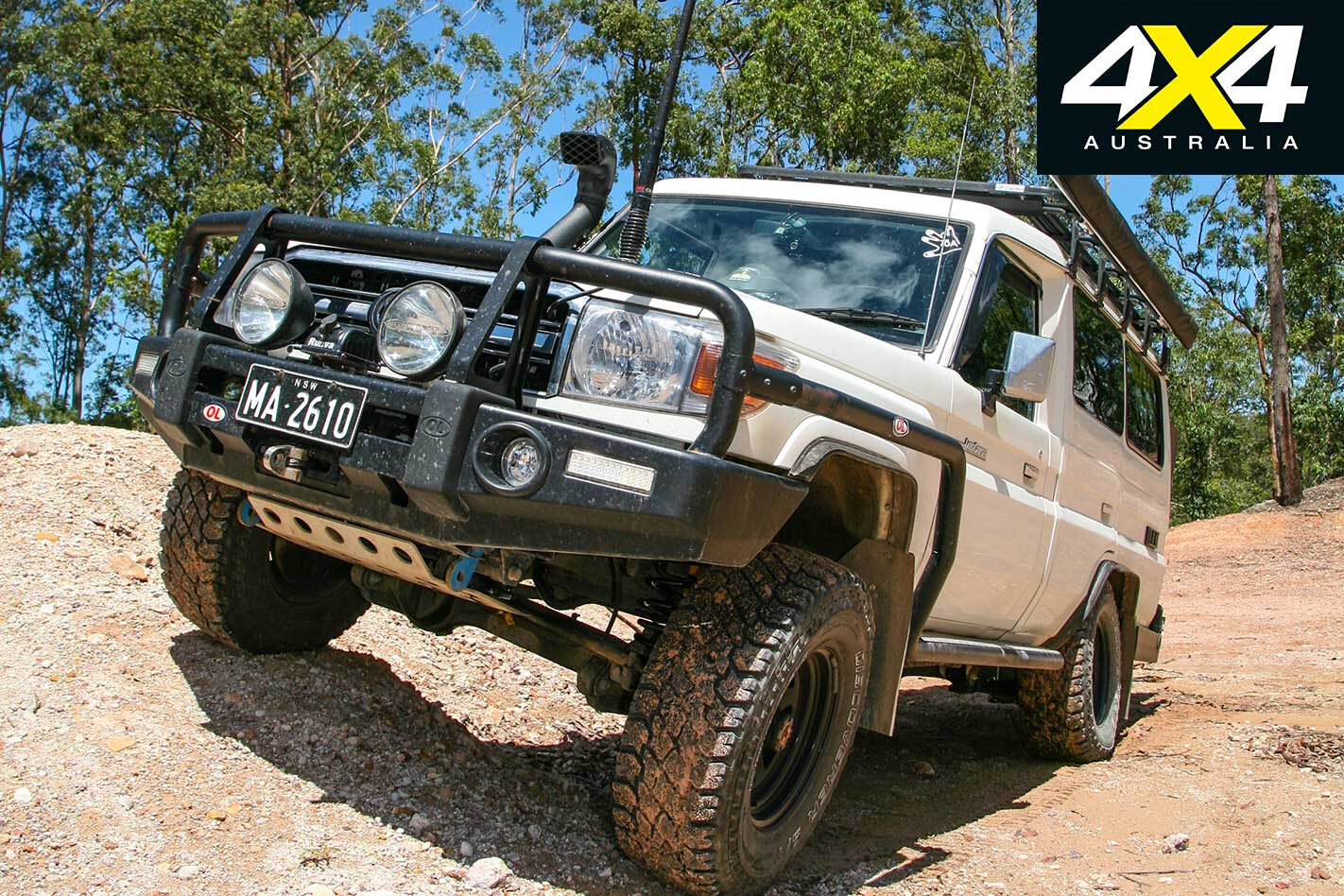
AFTER THE initial offer from Terrain Tamer to try out its newly designed parabolic suspension, I deferred for almost a week to do my own research. Given the kit was to be fitted to my own 4×4, I refuse to put any aftermarket gear on it unless I believe it will be made a better vehicle in some way.
I’ve been running the Lovells 300kg kit for well over a year and have been extremely happy with the way it handles my payload and tows my camper trailer and caravan. I’d figured, at the time of installation, if the 300kg pack couldn’t handle occasional higher loads or towing a ’van I’d stick on an airbag kit.
To date, I’ve been stoked with the Lovells gear and haven’t needed supplementary help with higher loads. The only downside was the overly firm and rigid ride while travelling empty or very lightly loaded, which was to be expected. Given I travel a lot with a light load, I had been on the hunt for a solution but couldn’t justify the high cost of converting the rear end to an aftermarket coil spring system, not that that’s a guarantee of a better ride.
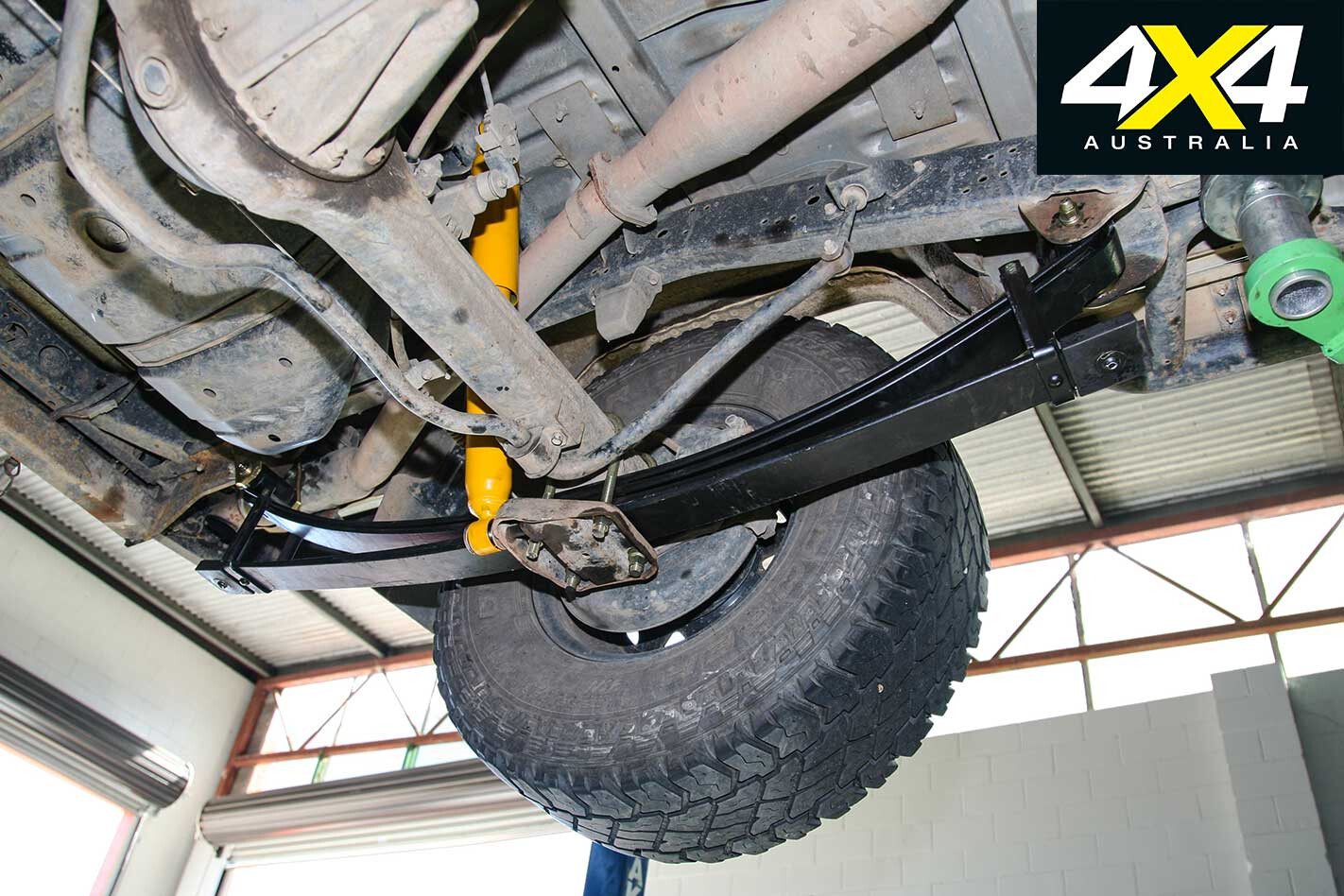
I’d already investigated parabolic leaf springs years ago, finding a lot of conflicting misinformation from both suppliers and users. Initially, my reply to Terrain Tamer was going to be “no thanks”, but I persisted with enquiries to spring manufacturers both in Australia and overseas and learned the only reason they aren’t made on home turf is because local manufacturers simply don’t have the machinery to make them.
Terrain Tamer claimed its three-leaf packs were rated at 500kg. Most other parabolic packs I had seen were rated at much lower carrying loads than that, closer to the 300kg mark; 500kg in a standard-style pack is pretty serious heavy-duty gear that’s more suited to high constant loads.
Quality materials make a massive difference in any product – crap canvas makes a crap swag and low-quality alloy on 4×4 rims is an accident waiting to happen. So too with suspension; instead of using run-of-the mill spring steel, Terrain Tamer sourced superior high-tech metals for its packs, which allows for the lesser number of leaves (combined with the design) that are capable of carrying a higher load, while still offering greater flexibility and comfort.
Given the claims I figured I’d give this test the nod, with the proviso that if they failed the kit would be removed and returned.
Shocking
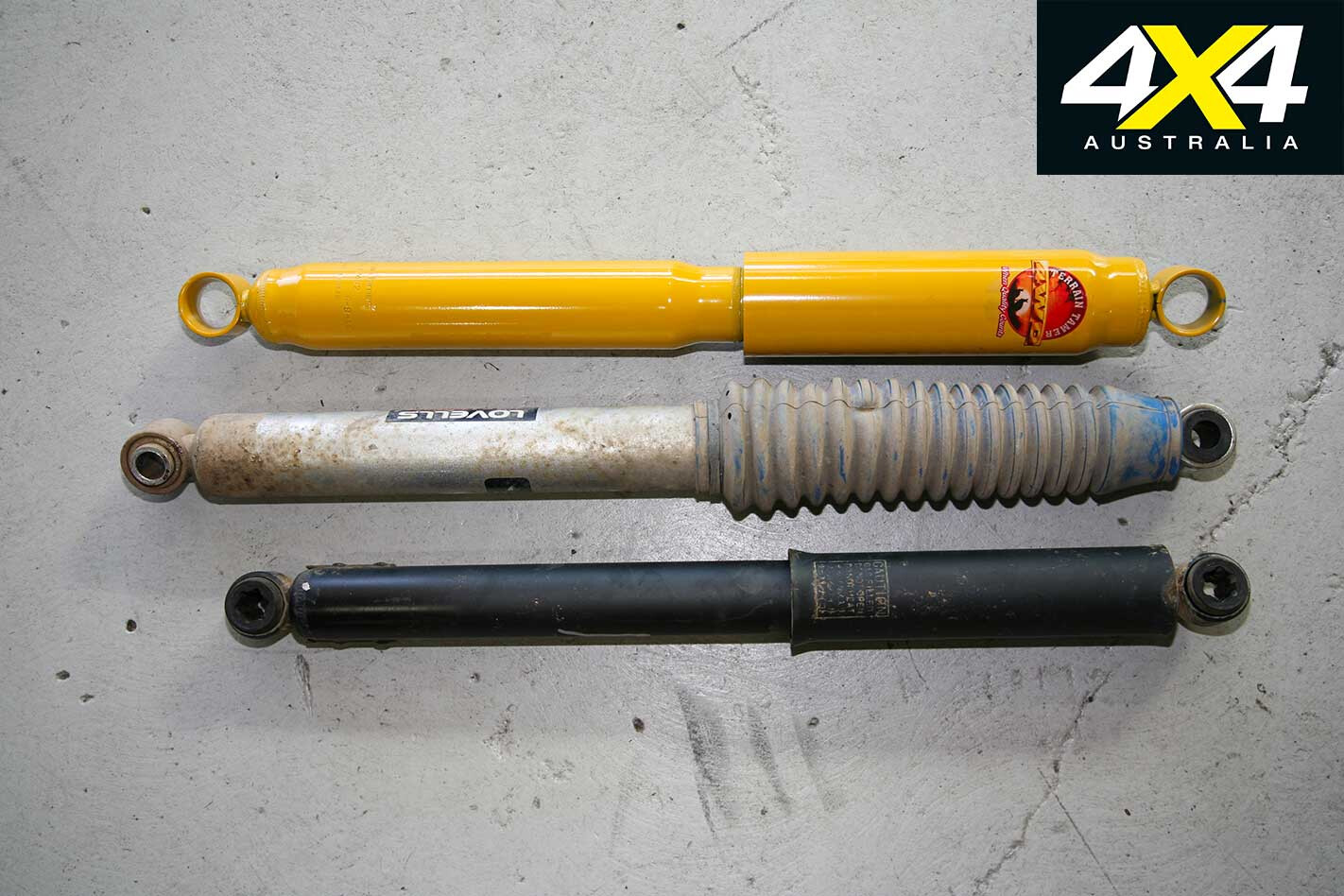
I’M convinced this suspension kit has made my 4×4 better, but there are more improvements to be made – mainly in improving the control over the leaves and coils. Given the Terrain Tamer kit is more subtle both laden and empty, via more flexibility and initial softness from first impact, the shocks are doing more work than a stiffer, non-flexible system.
While the compression characteristics of the Terrain Tamer expanded wall heavy-duty shocks are great, the rebound dampening could be turned up a smidgeon. Given the parabolic leaves are ‘livelier’ than a standard pack, it stands to reason they will try to push and pull the shocks in and out faster.
When my Troopy wallows into a road depression at speed, the shocks compress and do a superb job of soaking up the shock in combination with the parabolics; on rebound, I feel the shock could be firmer to resist a second and sometimes third ‘bounce’ (which alters depending on the weight I’m carrying/towing). I’d be happy settling for the complete system as it is, but I’m being picky and on a mission to get the big white bus as comfortable as possible.
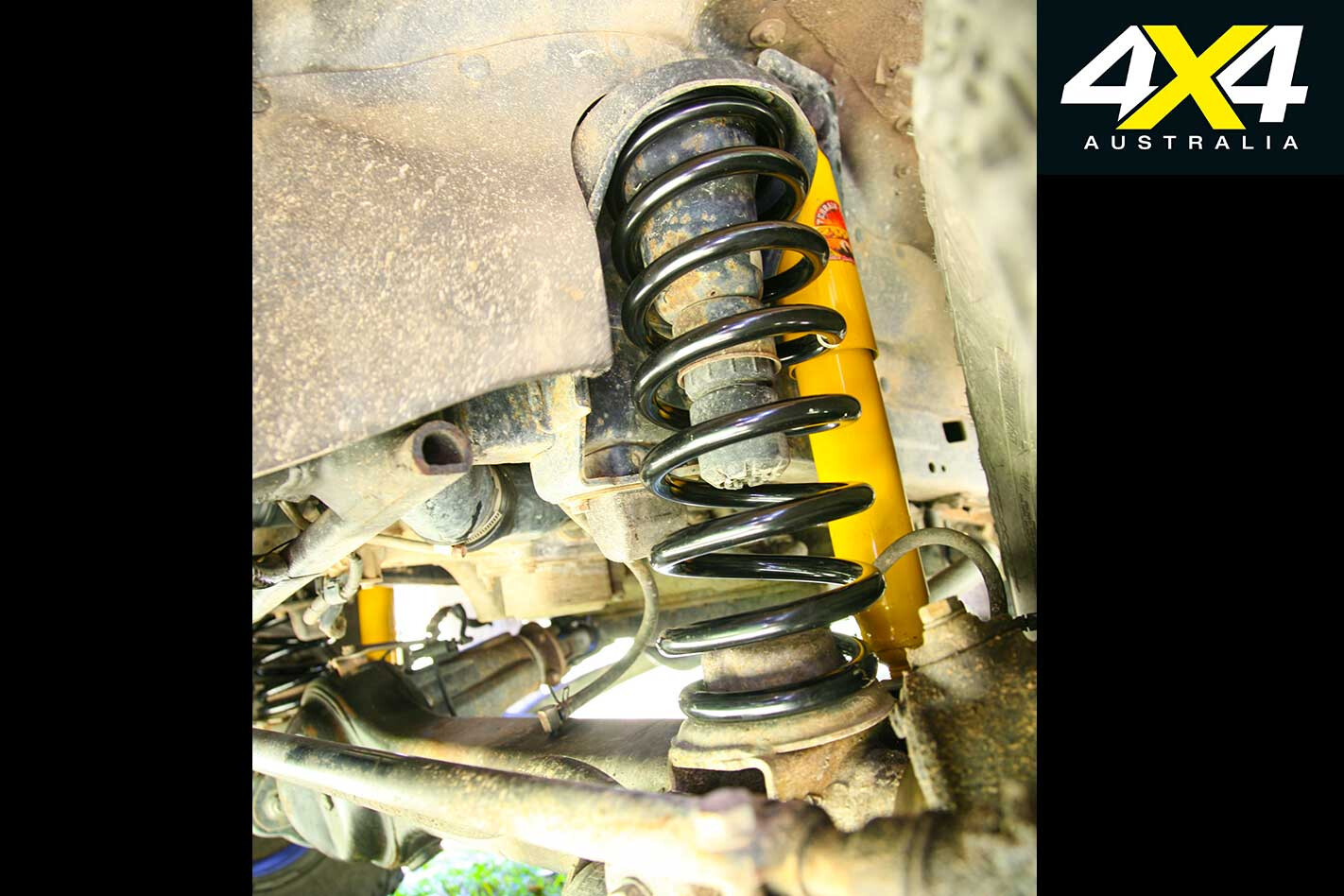
Here’s a potentially perfect fix: Terrain Tamer will soon be offering an updated Pro Shock absorber range. TT has had its remote reservoir, adjustable mono tube kit available for some time, but they are revamping and upgrading the units. Being able to adjust the valving on such a flexible suspension system to control the bounce via compression and/or rebound limiting will add a touch of finesse to the already impressive suspension system.
So stay tuned for the fitment of the new Terrain Tamer Pro Shock system. Will we be able to make a commercial lump of metal Troop Carrier float like a passenger-orientated 200 Series? I doubt it, but there is always that possibility.
Other gear fitted
AT fitment we also changed the front coils to Terrain Tamer Smart Coils, which are, in fact, the same principle as the tapering parabolic leaf spring. Other manufacturers supply a similar product under the name of a progressive-rate coil spring, as compared to a standard linear rate coil spring.
Each Smart Coil tapers in diameter and changes pitch from top to bottom to provide a softer initial reaction to irregularities in the road, followed by firmer characteristics for carrying a load. I opted for the heavy-duty 100kg pair of coils to suit my Opposite Lock steel bullbar and RUNVA winch.
Just as the rear leaves offer a softer initial impact resistance, so too does the smart coiling of the front suspension which uses high-quality German X5 steel, similar to some other high-quality coil manufacturers in Australia.
Terrain Tamer Heavy Duty expanded shock absorbers round out the complete suspension package. Of note, the Terrain Tamer shocks are a little shorter than the long-travel Lovells set; although, they’re longer than OE. Given they are also shorter on compression, this technically allows for each wheel to push up higher during off-road flex. Theoretically, this doesn’t allow for as much droop.
Unfortunately, there are many factors contributing to overall suspension flex – both compression and droop – so just measuring the shock length doesn’t tell a complete story, even though that is a contributing factor. Sway bars, shackle length and angle, leaf spring clamps, interleaf slippage and leaf design all make a difference.
Given all that, I was pleasantly surprised the complete Terrain Tamer kit returned superior flex on my 20-degree suspension travel ramp.