
A NEW entertainment system with Apple CarPlay and Android Auto tops a raft of tweaks to the 2019 Nissan Navara line-up.
Navara SL, ST and ST-X dual- and king-cab models have all been upgraded with Alliance In-Vehicle Infotainment (AIVI), a system which loses the CD player but adds a redesigned interface and Apple CarPlay and Android Auto connectivity. An 8.0-inch touchscreen replaces the outgoing 5.0- and 7.0-inch screens, while AM/FM radio, USB, AUX and Bluetooth functionality all remain.
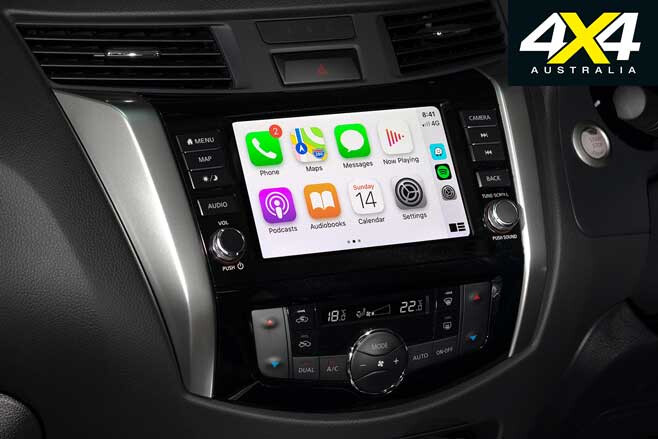
Sat-nav integration via device mirroring is now available with SL models, with the upper-spec ST and ST-X models getting a new TomTom sat-nav system.
“Nissan is pleased to introduce Apply CarPlay and Android Auto to Nissan Navara,” said Nissan Australia managing director Stephen Lester. “We took the opportunity to introduce this technology with our updated infotainment system – one that not only looks great but is modern, simple and intuitive to connect to and use.”
In addition, Nissan has brushed black paint on the headlamp bezel (SL, ST and ST-X) and side steps (ST).
The Navara 4×4 range is available with either the 120kW/403Nm 2.3-litre turbo-diesel or the 140kW/450Nm 2.3-litre twin-turbo diesel, which can both be mated to either a six-speed manual or seven-speed automatic transmission.
Despite the upgrades across the range, prices remain unchanged.
The new AIVI system is available as standard equipment on the following Navara variants:
| Dual Cab | MSRP |
| Nissan Navara Dual Cab ST-X 7AT (4×4) | $55,250 |
| Nissan Navara Dual Cab ST-X 6MT (4×4) | $52,750 |
| Nissan Navara Dual Cab ST 7AT (4×4) | $49,950 |
| Nissan Navara Dual Cab ST 6MT (4×4) | $47,450 |
| Nissan Navara Dual Cab SL 7AT (4×4) | $44,600 |
| Nissan Navara Dual Cab SL 6MT (4×4) | $47,100 |
| King Cab | MSRP |
| Nissan Navara King Cab ST-X 7AT (4×4) | $53,250 |
| Nissan Navara King Cab ST-X 6MT (4×4) | $50,750 |
| Nissan Navara King Cab ST 7AT (4×4) | $47,150 |
| Nissan Navara King Cab ST 6MT (4×4) | $44,650 |
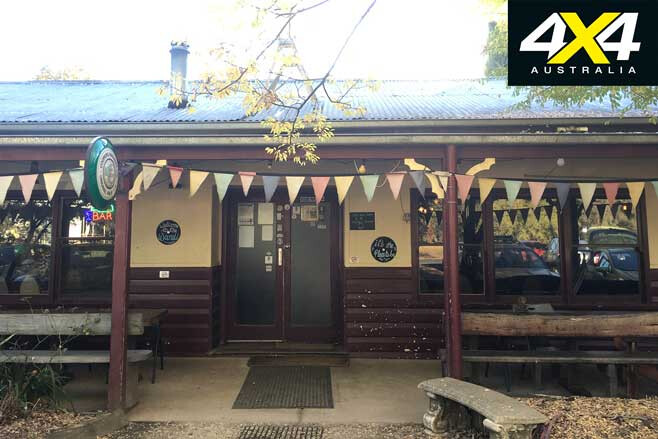
THE Wandiligong Pub, standing since 1854, is the place to be on a cool weekend. It’s rustic, welcoming and offers a great selection of local beer on tap, and it’s the hub of a village that once had more than 2000 residents.
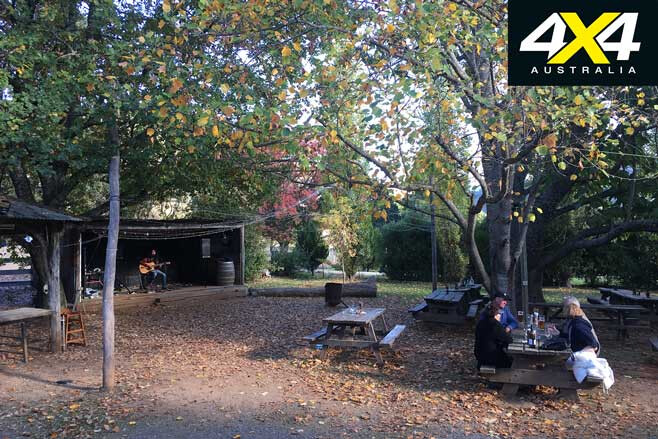
Less than 300 people now live here and, as we discovered, a lot of them can be found sitting outside in the pub’s beer garden on a Sunday afternoon. With its award-winning country tucker and cosy vibe, it’s no surprise.
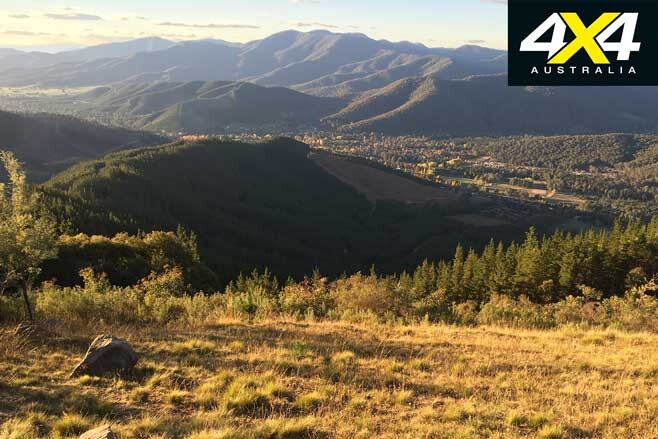
Sleepy and intimate, this tiny sub-alpine township in northeast Victoria lies under the radar for most of the year, but it bursts into life during the annual Wandi Nut Festival held in autumn.
Once the colours subside things quieten again, but there’s much more to this place than picturesque trees and nuts. Beyond the orchards and streets lined with walnut trees, chestnuts and poplars is an exciting network of scenic 4×4 tracks waiting to be explored.
Walking into the pub mid-Sunday to check it out and book a table for dinner that night, we got more than we expected with cruisy live music and a warm country welcome. Lured out the back towards the fire pit in the massive beer garden, we suddenly felt as though we were amongst camping buddies.
The Wandi Pub, as it’s known by the locals, is the last remaining pub in a town that once boasted 12 hotels. Established in the 18505 during the Victorian Gold Rush, it was a prosperous time. The first school was opened in 1860, two churches sprang up, and in 1864 the Manchester Unity Hall was built by the Manchester Unity Independent Order of Oddfellows try saying that after a few beers. Reef and deep-lead mining were prominent until the 19003, and within the valley, hops, orchards, tobacco and nut groves sprang up.
Exotic trees were planted, which became the colourful avenues of poplars that line the streets today, while Growlers Creek became a site for gold dredging. When dredging ended around 1930, Wandiligong’s population declined. The churches held their last services during the 19605 and the town was left with a few decaying buildings, which were rarely used.
When the grand brick Oddfellows Hall looked in danger of demolition in 1972, the Wandiligong Preservation Society was established and helped save the buildings. Today, the Wandi Hall is still a popular venue and, over the years, it has been used for functions ranging from concerts, dances, balls, weddings, funerals, markets and even roller skating. Today, the entire town is classified by the National Trust.
Scattered among its leafy streets are a few bed and breakfasts, a hedge maze and café, and a small, vibrant school of 37 students. Built in 1877, this state school is the last remaining of four schools that once served here.
The current principal, Jonathon Serpell, told us that student numbers have swelled from six to 60 in the past 30 years. Another building of interest is the Old General Store which operated from the 1860s until 1974. It’s now a private residence, albeit a very photogenic one.
Grab a coffee at Wandiful Produce, a small farm on the corner of Morses Creek Road and Austin Lane. The farm shed is a café and store which offers a fresh produce menu. Up the road at Nightingale Orchard you can stock up on camping goodies at their farm gate. There’s alpine cider and sparkling apple juice, and you can pick your own chestnuts, apples or seasonal berries that you can take away and turn into a fruit pie in the camp oven.
Across from the General Store is the Diggings Walk which follows the trail of mining history and leads to the Chinese Bridge, erected to commemorate the contribution of the Chinese goldminers. You can walk into Bright from Wandi, a picturesque 6km walk along Morses Creek, or an even better Option is to go the other way and finish the walk with lunch at the Wandi Pub.
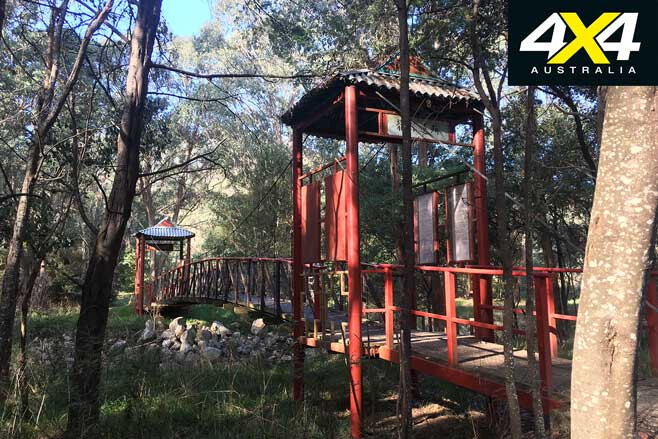
This valley is surrounded by the steep slopes of Mount Buffalo and Alpine national parks, so it offers some great off-road adventures for four wheels or two. Mountain bikers can explore a network of trails that weave through native and pine forest, in both sedate and challenging terrain.
In the sky it’s not unusual to see paragliders circling the air currents, as tandem flights take off from the Mystic Launch area above Bright. For off-roaders, this area has four-wheel drive tracks that climb to some fantastic lookouts and brilliant camping destinations.
Wandiligong sits on the junction of Growler and Morses creeks, tributaries of the Ovens River, and provides plenty of options to set up camp by the water. The Wandiligong camping and caravan reserve, close to town, provides an easy base for scenic local drives.
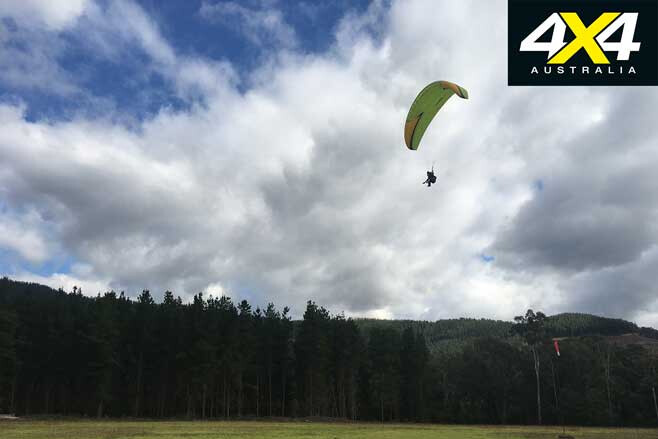
If you prefer more remote camping head out to the Buckland Valley, where there’s free camping at many spots including Ah Youngs Campsite. Once a fossicking hotspot in the gold rush era it now offers a tranquil spot and good access to the Buckland River. Nearby is a memorial to the Chinese goldminers at the historic Buckland Valley Cemetery.
The Wandiligong Demon Ridge circuit, which starts from either Bakers Gully Road in Bright or the backblocks of Wandiligong, takes you to Clear Spot Lookout, a great loop drive of approximately 36km. The main track follows Clear Spot Road, an easy 4×4 track with loads of challenging sidetracks. Sweeping views of Bright, Porepunkah, Mount Buffalo and Harrietville can be had from atop the track, and there’s a directional trig point to help identify the ranges.
Travelling the other way towards Bright leads to Tower Lookout, which is signposted from the Great Alpine Road. It’s a short but steep and rocky track to the top, but we didn’t stop there. Beyond the tower is a network of tracks that lead across the ridge.
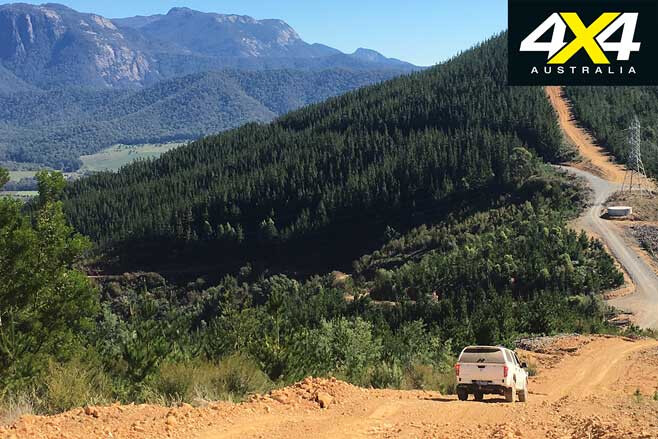
As we reached the top we saw the familiar and majestic rock face of Mount Buffalo. While there’s no direct access to Mount Buffalo from this track, you’ll be treated to 360-degree views of the forested hills and granite peaks, as well as a network of fun tracks that will ultimately take you back down into the township of Myrtleford and surrounds.
The publican of the Wandi Pub, Tim Heuchan, clearly relishes where he lives. He told me about his commute to and from work, saying that a trip to his home in Harrietville along the main Alpine Road can often be busy, particularly in summer. He said there are three 4×4 tracks that lead from Wandiligong to Harrietville. It can take an extra 20 minutes, but he reckons it’s a great way to relax after a busy day. Morses Creek Track is one of them, a track that winds its way from the upper end of the Wandiligong Valley and follows Morses Creek and over a range into Harrietville.
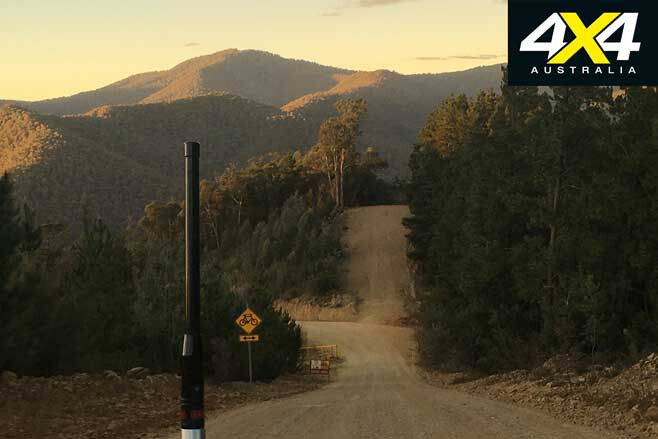
Beyond Harrietville is the beauty of Hotham Heights and the delights of the High Country, which is an entirely new and exciting trip, particularly during the winter months. Reliance Track is another track in the Wandiligong area that joins towards the back of the Buckland Valley.
From Freeburgh the track scoots across the ridge and is relatively easy, though it splits in half at times so it’s good to come with a map or a GPS. There are a few river crossings and a 500-metre steep climb, but otherwise the track is relatively easy. As with many of the tracks up here there are a couple of additional side trails which offer some intense climbs and descents.
At 1634m above sea level, Mount Murray can be reached in non-winter periods and overlooks the remote Selwyn Creek and the Blue Rag Range, arguably the most spectacular track in the High Country.
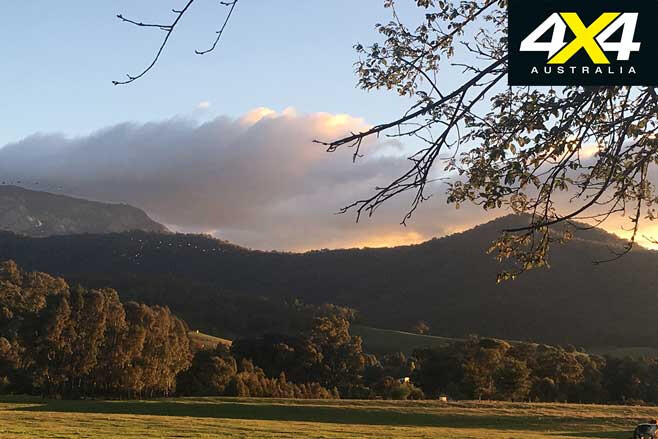
The lookout to Mount Murray can be reached by driving down the Buckland Valley from Porepunkah and following the Buckland River past Beveridges Station, named after the first pioneers here, the Beveridge brothers. The track follows the Mount Murray North Track until it hits the Twin Jeeps Track. From there, take the next left until you come to Mount Murray Track South, which takes you to the lookout.
Drive back along the Twins Road to Mt St Bernard. This off-road loop encompasses some of Victoria’s most scenic country and a map is highly recommended. A few nights in this beautiful part of Victoria will whet your appetite for more.
In this pristine landscape the tracks and trails of the Alpine parks and state forests offer both action and tranquillity, whether you’re chasing adventurous off-roading or a weekend around a warm campfire. Head for the area in late October and you might catch the Wandi Pub’s mini music festival; once you’ve pitched camp and explored some tracks prepare to settle in for three days of live music in the beer garden, complete with top-notch eats, award-winning parmas and outdoor fires. A perfect excuse to wander through Wandi.
Travel Planner
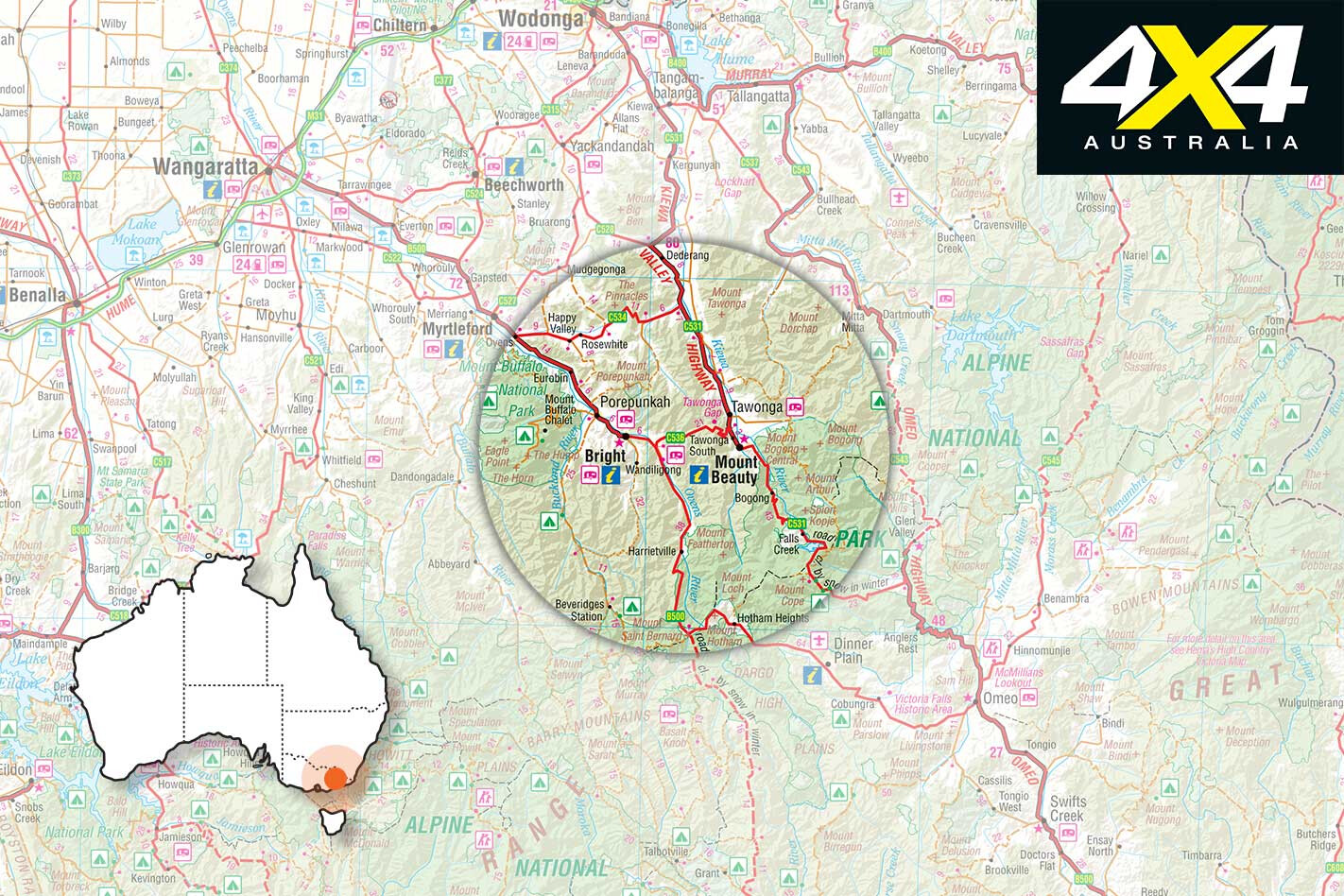
- WHERE: Wandiligong is 320km north of Melbourne. Take the Hume Freeway/National Highway M31 to Snow Road/C522 in Wangaratta South. Take the exit for C522 from Hume Fwy and follow Snow RoadC522 and Great Alpine Road to Wandiligong, approximately 6km south of Bright.
- CAMPING: Wandiligong Camping and Caravan Reserve, phone: (03) 5750 1162. There’s free camping in the Buckland Valley including at Ah Youngs, Leinster Flat and Camp Flat. Many have fireplaces and are right on the river, and some have pit toilets. In Selwyn, Beveridges Campground has many spacious and grassy sites. The best time to travel is spring to autumn.
- CONTACTS: Wandiligong: www.visitbright.com.au/wandiligong Wandiligong Pub: www.thewandipub.com; (03) 5750 1050; 580 Morses Creek Road, Wandiligong. The pub is open six days, 12pm-late (closed Mondays). Must call ahead to book an indoor table. Alpine Paragliding: 0428 352 048 Active Flight: 0428 854 455
YAKIMA has been around in the USA since the 1970s, but the brand is a relative newcomer to the Australian market, setting up here when the Kemflo Group purchased it – along with New Zealand’s Whispbar and Prorack – in 2010.
As a result, the local line-up of load-carrying equipment hasn’t always matched some of the more established players in the Australian market, but Yakima’s range has undergone steady growth over the past nine years and is now comprehensive.
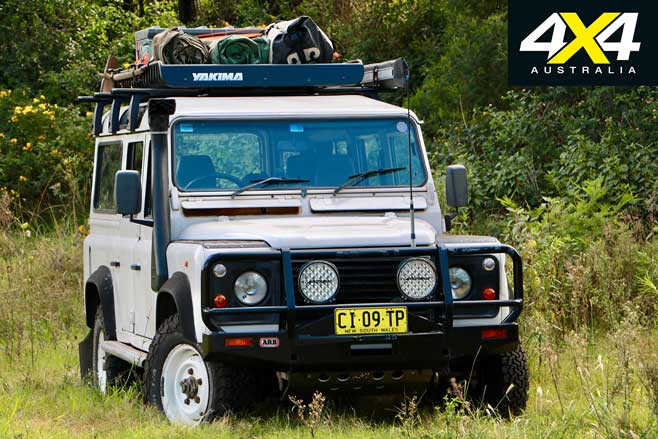
These days, while Yakima USA produces most of the brand’s cargo management systems, sister company Yakima Australia engineers the brand’s off-road products. One of Yakima’s products, the MegaWarrior cargo basket, has been hanging on my garage wall for the past couple of years.
It used to be fitted to the low-profile crossbars on my previous 4×4 (a D22 Navara) but wasn’t compatible with the higher-profile crossbars on my current 4×4 (a Defender 110). The solution, or so I thought, would be to fit Yakima crossbars to the Defender but, until recently, no suitable gutter-mount legs were available.
4×4 Australia’s Deputy Editor, Justin Walker, mentioned to me about a year ago that Yakima would soon offer gutter-mount crossbars to suit vehicles with high rooflines and, sure enough, while perusing the Yakima Australia website a couple of months ago, I spotted the new 210mm gutter-mount legs.
Yakima LockNLoad crossbars
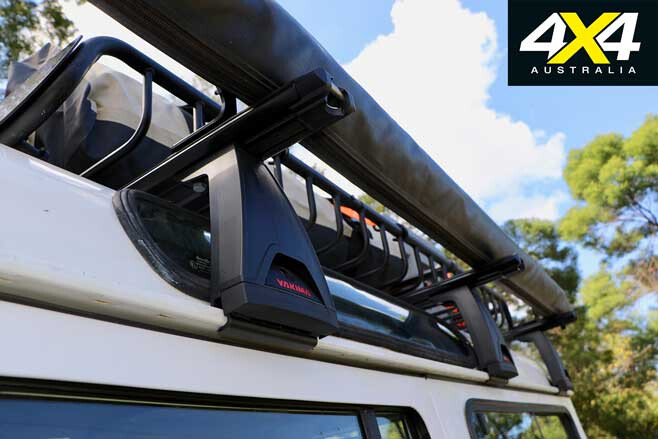
I OPTED for a set of three 1650mm LockNLoad crossbars mounted to the 210mm gutter-mount legs, with the setup providing a generous 150kg load capacity for $722.20. There’s also a 150kg capacity four-crossbar system for $963.60, as well as a 100kg capacity two-crossbar system for $481.80.
Fitting the secure gutter-mount legs isn’t rocket science, but there’s a bit more fiddling about compared to unsecured legs. A key-lockable security cover prevents unauthorised access to the bolt heads that clamp each of the legs to the vehicle’s gutter, to prevent theft.
The crossbars feature a low-profile design with a wide base, and they have a wide T-slot channel for accessory mounting. Protective rubber load strips need to be measured and cut to length when fitting, and these are aimed at protecting equipment carried on the crossbars as well as minimising wind noise; although, the latter isn’t really relevant when fitted to a rattly old Defender. The end caps are equipped with integrated tie-down points for securing gear, and the 1650mm bars offer generous overhang of the legs for looping over rope or tie-down straps.
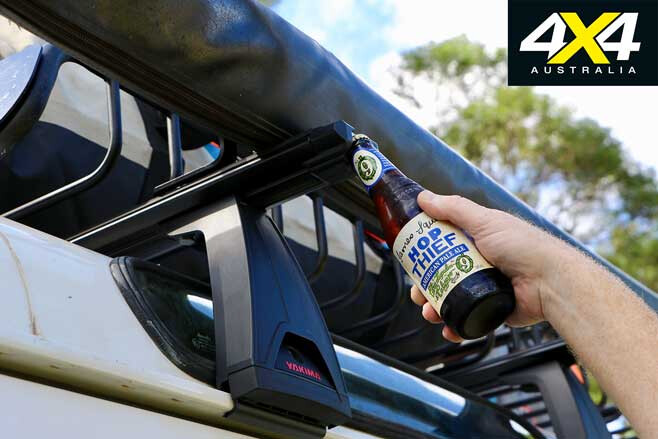
One of my favourite design aspects of the LockNLoad crossbars might seem a bit gimmicky to some, but I now have six integrated bottle openers on the exterior of my Defender – one on each end of each crossbar.
With the 210mm legs the low-profile LockNLoad crossbars sit close to the roof of the Defender, adding a paltry 53mm to overall height which is fantastic for those who need to access underground parking.
This doesn’t leave much space between the crossbar and the vehicle roof, though, so to fit the MegaWarrior cargo basket you need to add optional height packers that raise the crossbar enough to fit the mounting bracket underneath.
Yakima LockNLoad crossbar prices 2-bar system: $481.80 (100kg) 3-bar system: $722.20 (150kg) 4-bar system: $963.60 (150kg)
Yakima MegaWarrior cargo basket
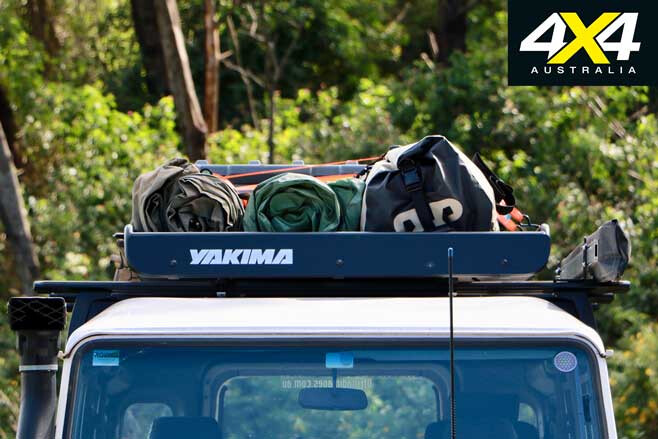
THE MegaWarrior is a quick and easy fit (just lift it into place and tighten the brackets around the LockNLoad crossbars) and, as the Defender’s roof is significantly longer than the Navara’s, I added an optional centre-mounted 560mm extension.
I also fitted the included cross brace that acts as another handy tie-down point and can also be situated at different spots to hold items in place, such as my large cargo box. Even with the cargo box up top, I can still easily fit three swags and camp chairs in the MegaWarrior.
Due to the added length with the extension fitted, I needed to relocate one of the brackets for the axe/shovel holder. I also fitted my awning to the LockNLoad crossbars using a universal awning bracket, and the generous width of the crossbars means there’s enough space between the awning and the MegaWarrior to squeeze in the optional Yakima Hi-Lift jack brackets and a jack.
With the custom wind fairing fitted to the MegaWarrior there’s no discernible addition to wind noise and, although this is hardly audible on the Defender, this was also the case when I had the setup fitted to my Navara.
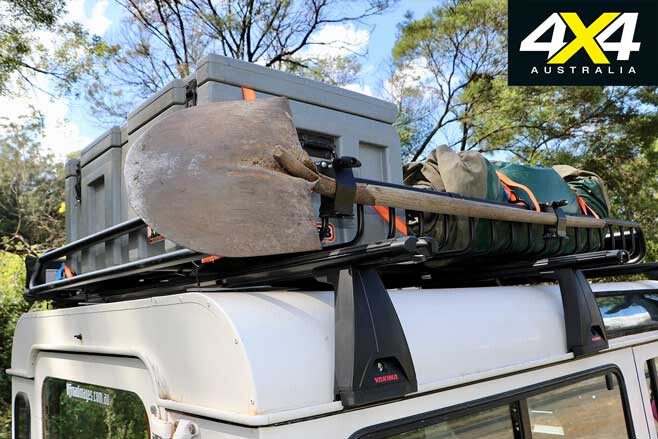
There are plenty of accessories available to suit the $489 MegaWarrior including the aforementioned extension ($189), axe/shovel bracket ($65) and Hi-Lift jack bracket ($109), as well as a stretch net ($59), spare wheel carrier ($109) and light mounting brackets ($59).
For those after something a little more substantial and permanent, Yakima offers the LockNLoad Platform that fits directly to the LockNLoad legs. Made from powder-coated aluminium, the platform features east-west slats with built-in perimeter channels that allow for numerous positions to mount accessories.
It is available in a range of widths and lengths to suit just about any vehicle, and accessories include holders for recovery tracks, Hi-Lift jacks, gas bottles, jerry cans and more, as well as awning brackets, light brackets, load rollers and eye bolts.
Yakima MegaWarrior parts prices Standard fitment: $489 560mm extension: $189 Axe/shovel holder: $65 Hi-Lift jack holder: $109
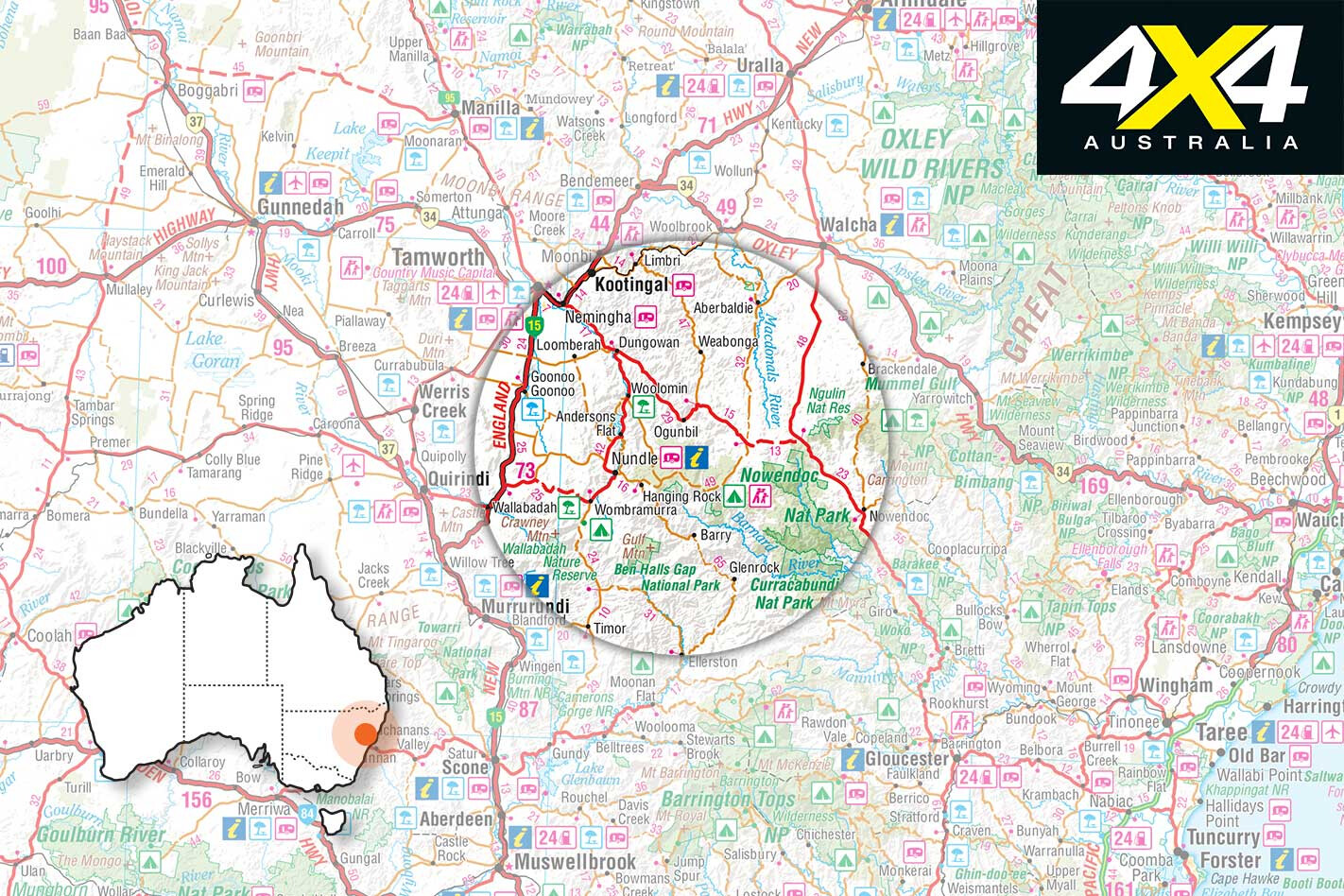
TAMWORTH may be famous for the Big Golden Guitar and its annual country music festival which is a massive event for the town and local area, but have you ever heard of Nundle, NSW located just 40 minutes’ drive to the south-east?
Back in its heyday of the 1800s gold was found, the rush was on and fortunes were lost and found. Today, the town is alive with tourists and a few old prospectors still scratching around in the valley. Gold was first found just outside town at Hanging Rock, where today you can visit a host of mine sites – some are just pits in the ground – where you can freely walk in.
The ground in the Hanging Rock area is solid rock and there’s not much dirt to actually dig through, showing just how tough it would have been for the old timers; combine this with a lack of water, bitter winters and stifling hot summers.
The Hanging Rock mine sites led to the first village in the area, with Chinese immigrants moving in to mine, create food gardens and open up stores. Over time gold ran out, but more was found down the valley in the Peel River.
Nundle was buzzing when gold was found, with 16 pubs (reportedly!), banks, a school, a church, a courthouse and even a wool mill; all built in the late 1800s. Soon after Nundle was officially declared a town, and closer to the 1900s it got another church, a post office and even a council office.
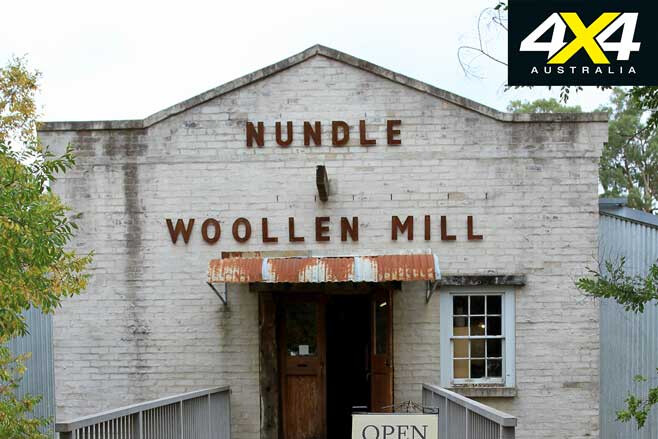
Today, Nundle is like a step back in time, where you can freely fossick for gold and crystals, walk the streets visiting the old buildings and museums, grab a coffee, or drive the history trails. The Mount Misery Gold mine café is a unique coffee shop in Nundle where you can get the best coffee in town and, for a small entry fee, you can go behind the cafe into parts of the old mine to explore the relics, read the 100-year-old reports and newspaper clippings, and admire the memorabilia collected over the years.
For those keen on fossicking and rock collection head to the Nundle Caravan Park cum Tourist Information Centre, where you can admire the lifetime collection of all things rock by the late Gil Bennett. The staff at the centre is clued-up on the display and will even give you a map of where to fossick in the area.
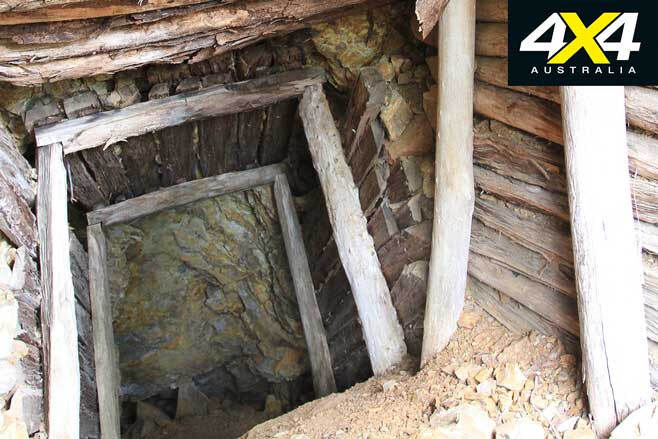
The map will lead to the Hanging Rock area, passing roadside mines, old mullock heaps and pine forests. An essential trip is the short drive to the lookout, where the 1100-metre-high vantage point provides views down and across the valley.
The area surrounding the lookout has a rich history, and if you head a few more miles you’ll reach the Sheba Dam Reserve which is a great base to camp (all free, with barbecues and toilets) to explore.
An old road cuts through a historically significant pine plantation east of Sheba, while an old cemetery dating back to the mid-1800s is at the start of Forest Way. This is no ordinary cemetery, as it’s where the original founders of the well-known Ashton Circus are buried.
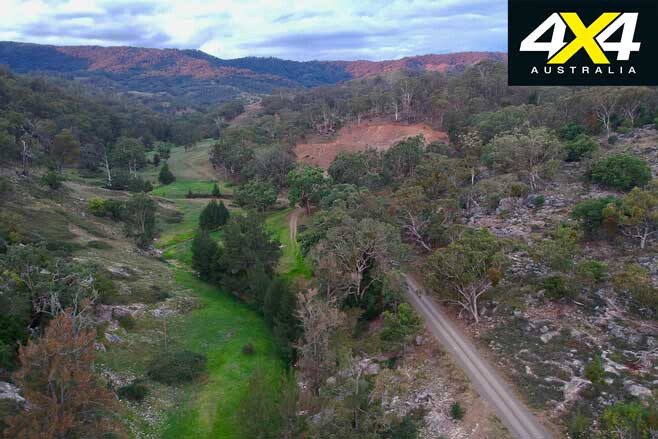
Mrs Ashton was buried here in 1852 when she gave birth to her daughter and died shortly after. Continuing along Forest Way, there are signs and plaques where the old pub was, as well as where the Ashton Circus performed every day except for Sundays, at Gibbons Inn.
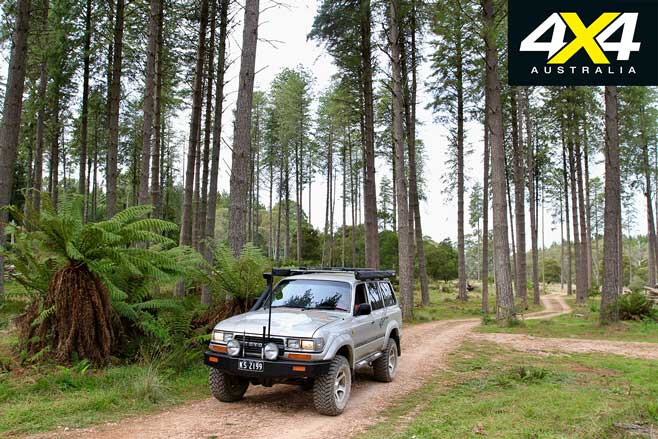
The road heads 20km to Ponderosa Park, where there’s a free campsite among huge pine trees with soft tree ferns growing underneath. Ponderosa Park was once the site of an old sawmill where timber was sent locally and to the coast.
Closing down 60 years ago, it now operates in Nundle. You can walk around the old site today to admire the relics left behind and read the info boards on the company’s history; you can also dig for zircon in the rich soil.
If you’ve had enough of the hinterland history trail, head back to Nundle and explore the 2km tourist walk where there are nearly 30 points of interest along the way. Museums, boutique shops and galleries now fill the proud historical buildings.
It’s easy to spend a few days at Nundle, especially when there’s free camping. In addition to Ponderosa Park and Sheba Dam, another free camp is located 4km on the northern side of town called Swamp Creek. Not only is it free but the area comes with toilets and shelters. Fires are also permitted, and you can fossick for gems in the creek nearby.
The magnificent Chaffey Dam, which supplies water to the Tamworth area, can be spotted when heading out from Nundle towards Tamworth, and the public can camp beside (with a small fee), swim, fish in and boat on this huge expanse of water.
Sheba Dam
SHEBA Dam was originally set up in 1888 to serve the miners with water. Built in several weeks, it played an important part in the miner’s way of life. Locals can still find semi-precious gems around the dam such as sapphires and zircons, and for nature buffs there is a walking trail around the dam.
This area near Sheba was the site of Hanging Rock Village, where there were grog shops, stores and a school of arts. There are a few signs highlighting the old buildings, but, sadly, over the past 150 years they have fallen down or been forgotten.
The Hanging Rock area covered 15,000 acres, and a great deal of gold was found within this area which was sent to Maitland and later onto Tamworth. Some say this gold discovery was the start of the growth and prosperity for Tamworth.
Chaffey Dam
WHEN Chaffey Dam was built, the village of Bowling Alley Point was flooded. These days all that is left are three original stone buildings, the 1877 cemetery and, when the dam is low, a few ruins visible in the swamp.
Back in 1864 a wrought-iron bridge was built across the Peel River (now concrete), but it was sadly washed away in a flood in the 1980s. The bridge was constructed at Newcastle and was brought up in pieces by bullock teams that took many days.
It’s amazing to think that in this area there were a stack of hotels, a school, a post office and nearly 50 assorted buildings, but, sadly due to progress, this history is all but gone.
- Introduction: Disco choice
- Update 1: Highway star
- Update 2: Load lugger
- Update 3: Daily duties
- Update 4: Copping new boots
- Update 5: Conclusion
Introduction: Disco choice
Land Rover let Matt configure his own Disco, and he didn’t hold back. By: Matt Raudonikis
BACK IN the middle of last year we asked Land Rover if we could get a Discovery Sd4 as a long-term test vehicle. This was the vehicle we had recently awarded as our 4×4 of the Year and we were keen to see what living with it and exploring in it over an extended period would be like.
Land Rover told us it was ordering its stock of 2019-spec cars and the then-current fleet was being pulled out of service, so they offered us the chance to specify and order a vehicle as we would like it via the online vehicle configurator at www.landrover.com.au

Now it’s unlikely I’ll ever be able to afford to order and buy a new vehicle of any kind, let alone something the calibre of the Discovery, so I was pretty chuffed at being let loose on the configurator with the promise of an actual vehicle at the end of it.
I’ve played with vehicle configurators from many manufacturers plenty of times, but it was only ever dreaming of how I’d spec a car. This was the real thing.
It’s well-known that European car manufacturers offer a truckload of options and extras on their vehicles which can really jack up the price, so I set aside some time to dive into the Land Rover configurator, but it wasn’t that complicated. As a 4X4 Australia vehicle there were a couple of essentials we needed, while the rest were comfort, convenience and style options.
The first essential item – and to match our 4X4OTY-winning vehicle spec – was the Capability Plus Pack. All Discovery vehicles have a dual-range transfer case, Terrain Response and height-adjustable suspension, however, this $3270 pack includes All Terrain Progress Control (ATPC), Terrain Response 2 and the Active Rear Locking differential. The most valuable part of the entire kit is that auto-locking rear diff.
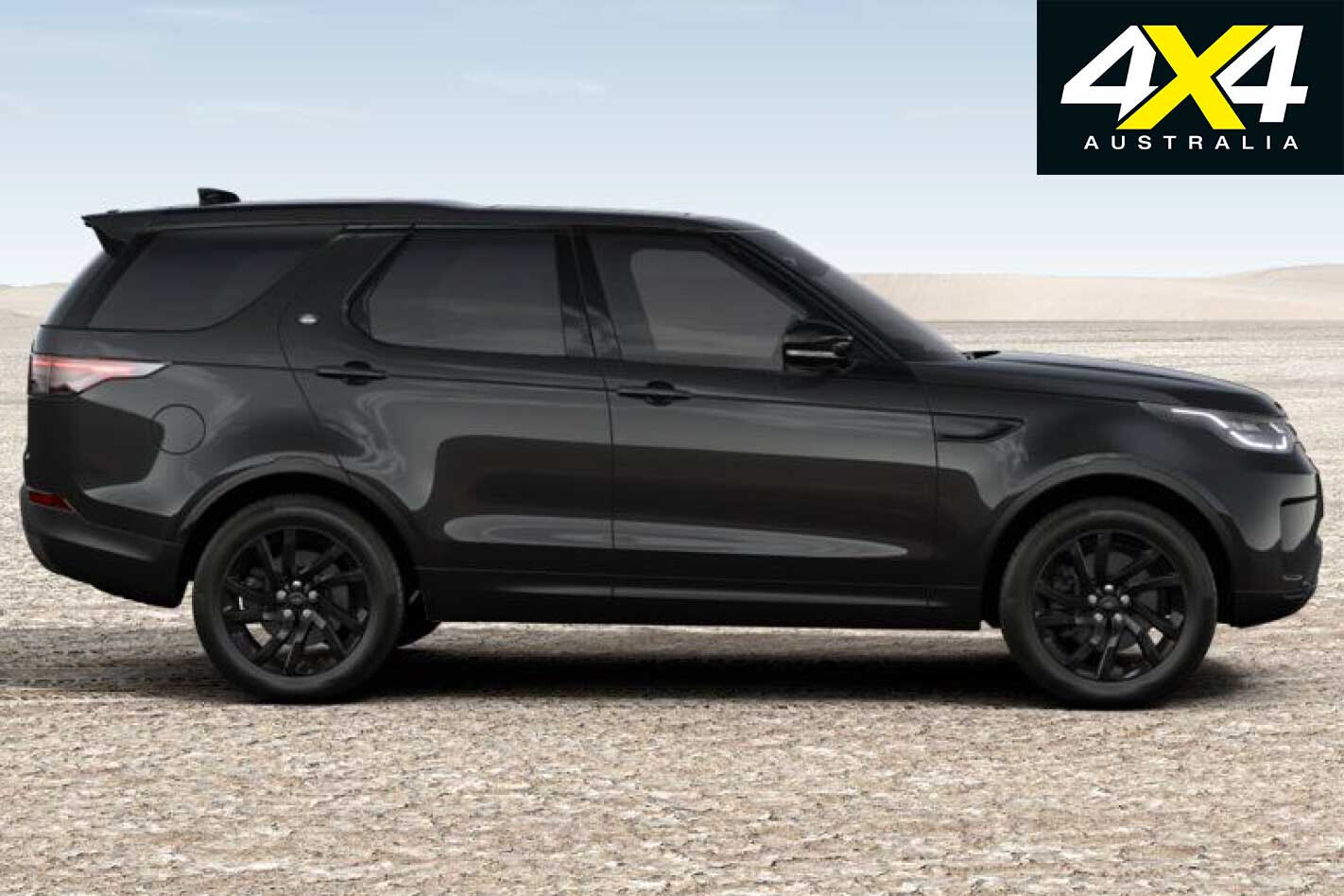
The other must-have for us was to upsize the Discovery SE’s standard-fit 19-inch alloys to 20s. No we haven’t gone crazy and resorted to big bling wheels, it’s just that 19s are a relatively uncommon size and there are a lot more options for off-road-suitable tyres on 20-inch rims. The 20-inch, five-split-spoke gloss black wheels added a further $2990 to the $87,450 sticker price.
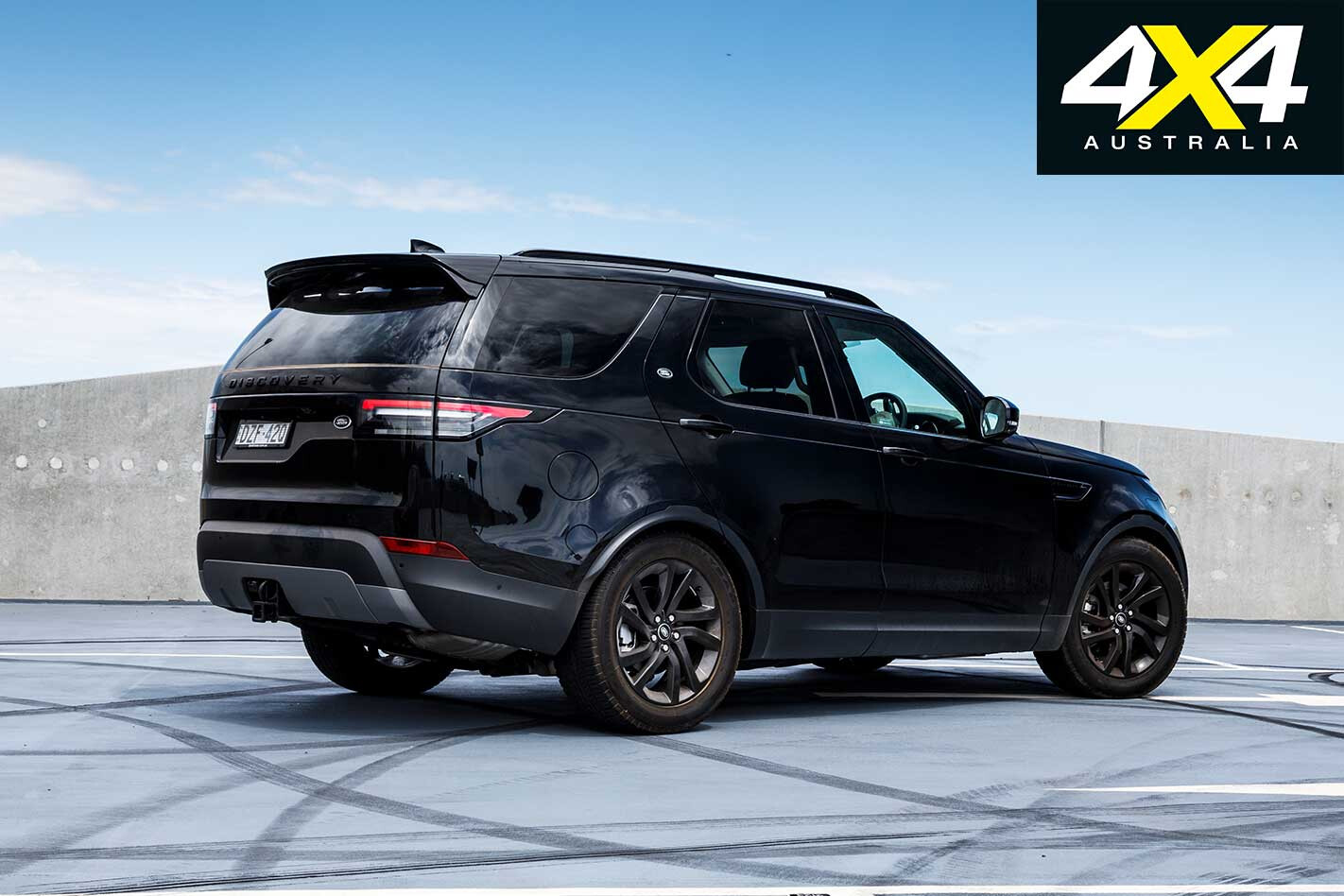
While we were going black on the wheels we also added the $1400 Black Exterior pack, which darkens the grille, side vents, door mirrors, bonnet badging and tow eye covers. Lather all that over the Santorini Black paintwork and black-as privacy glass and the Disco is looking pretty stealth.
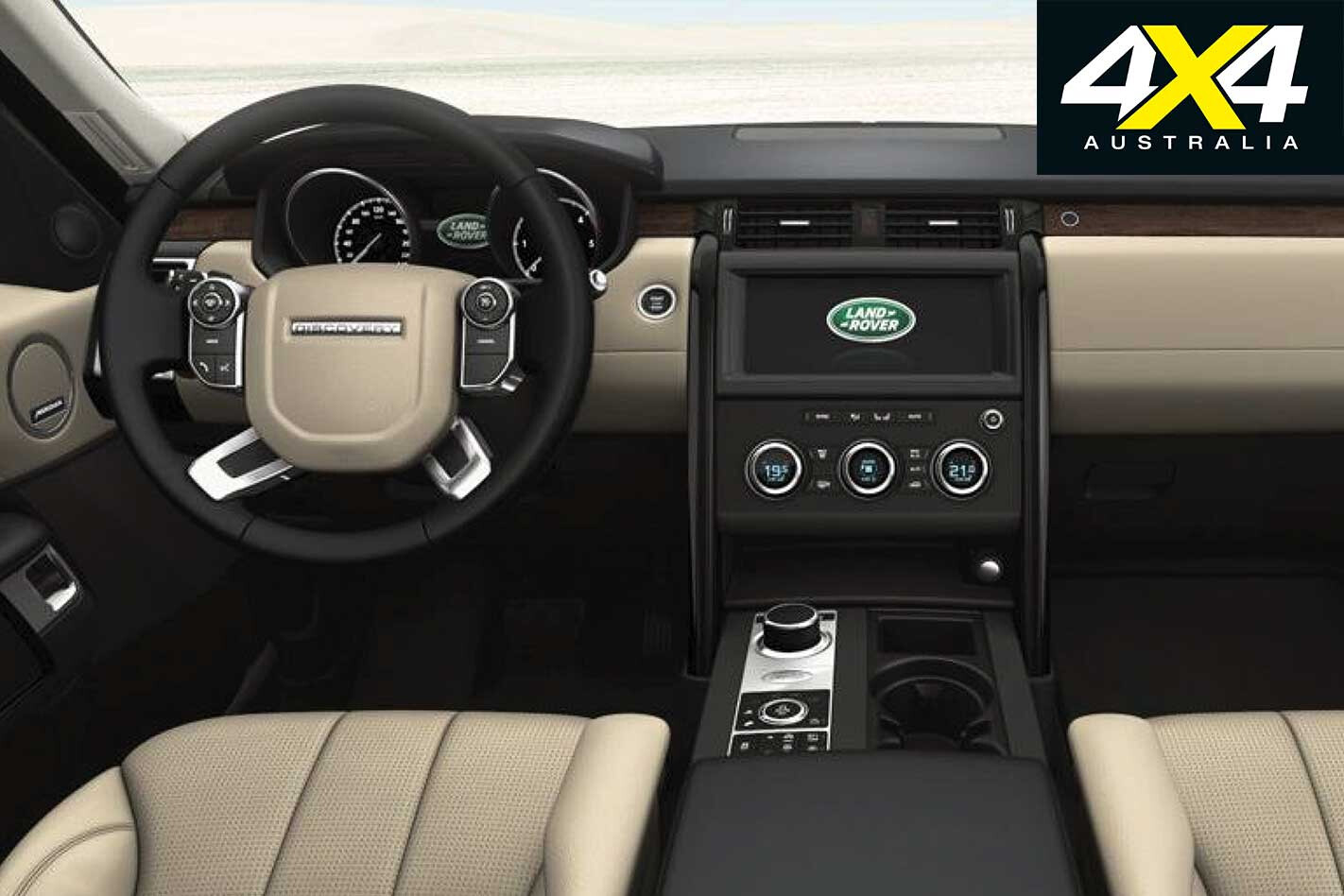
Inside I went for contrasting Acorn leather trim on the seats ($850 for heated front seats), natural Shadow Oak veneer trims ($640), and a dual panoramic roof with opening front sunroof and fixed rear (another $4370 to the price). All up we’d be looking at $103,840 plus on-road costs to drive away in this black beauty.
While $100K sounds like a lot of money for a family fourby, the Discovery delivers a lot of car. After all, it wasn’t our 4X4OTY for nothing. Think of it as a more affordable Range Rover and you start to see the value, as it’s a true luxury vehicle with all the luxury and convenience features you would expect. Well, almost all of them.
There are couple of features that come standard on much lower-priced vehicles that are not present on the Disco SE. They aren’t essential, but we miss them at this price point. The SE gets keyless push-button start/stop so you could theoretically leave the key fob in your pocket, but it doesn’t have keyless entry so you still need to unlock the doors using the fob. Keyless entry is another option on the SE, or standard if you step up to the HSE.
Initial use of the Disco’s factory navigation system has taken a bit of getting used to and it’s not as intuitive and simple as most other factory set-ups. Nor does the system have Apple CarPlay or Android Auto, which would solve this problem with direct connectivity to your chosen smartphone. Land Rover does have an InControl app that links to your phone, but we tried it and it offers nothing we would use. They might be petty little gripes and they certainly shouldn’t detract from the vehicle ownership experience.
The black Disco is living with us for the next six months, and next month we’ll start putting some kilometres under its tyres.
4×4 Shed Log 1: 2019 Land Rover Discovery SD4 Current mileage: 148km Date acquired: Dec 2018 Price: $103,840 +ORC Average fuel consumption: N/A
Update 1: Highway star
We hit the highway to run in our new Discovery. By: Matt Raudonikis
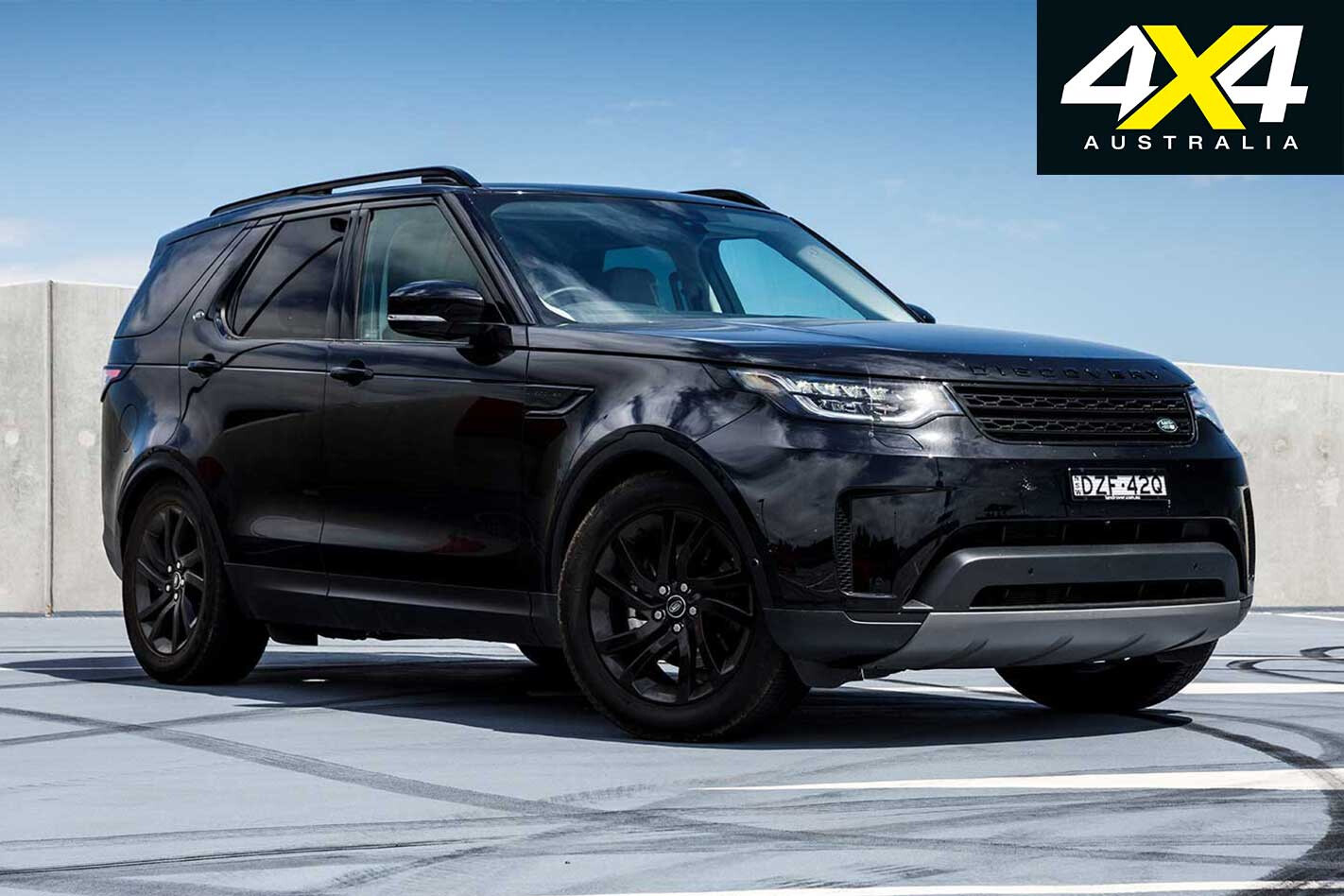
We took possession of the Discovery in late December and it landed pretty much exactly as we spec’d it on Land Rover’s configurator. The only real difference being that the steering wheel is on the right-hand side – thankfully – and it has roof rails. With the holiday break beckoning we set about putting some kilometres on the car, which had less than 150km on the clock.
Two weeks and a little more than 4000km later, the Discovery has proven itself as an incredible long-distance tourer. What was just as incredible was the sub-7.0L/100km of diesel fuel it sipped on the highway.
The trip took us from Melbourne to Brisbane via the Newell Highway, where we toured at the speed limit; being extra cautious to watch the speedo, with extra police patrols in force for the holidays.
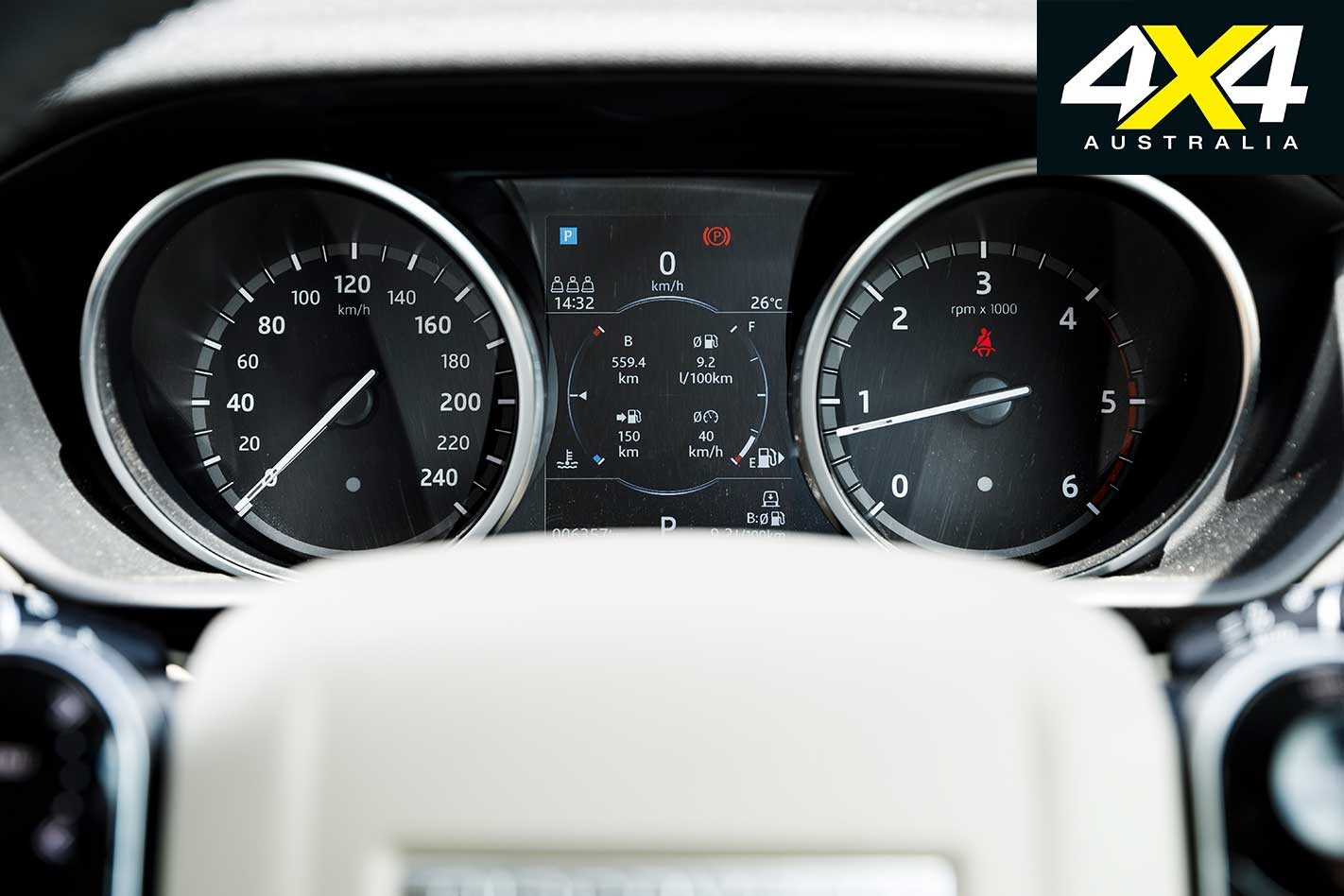
The SE spec has standard cruise control and not automatic radar cruise, which suits us fine as auto cruise can be a nuisance. Auto cruise is an option on SE spec, but we’d been careful not to tick too many options on this car to keep the price reasonable.
Cool bum, please
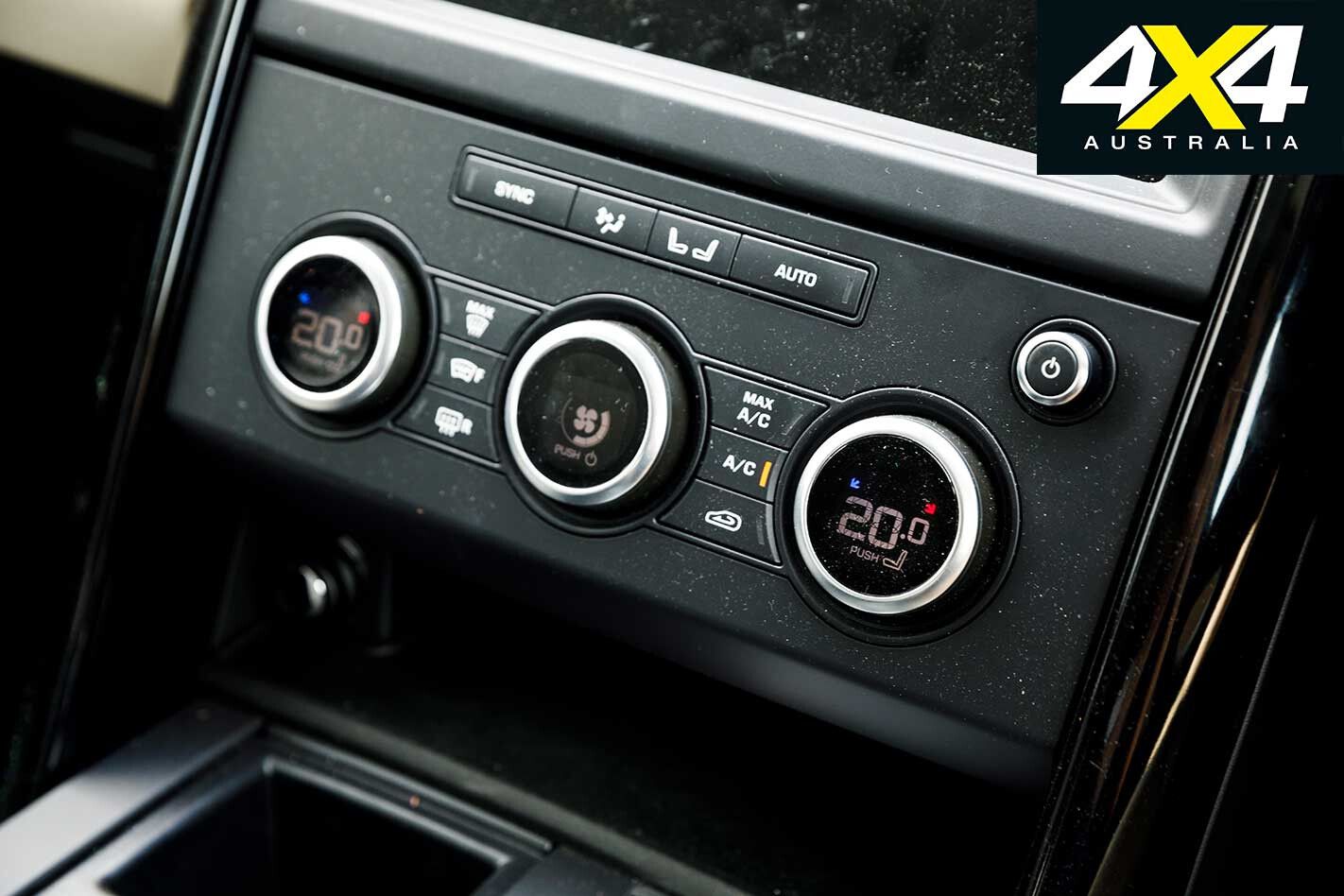
In the heat of summer it soon became apparent I should have ticked the box for optional cooled seats. The leather seats in the SE are heated but cooling is optional, and cool pews would have been appreciated during the long, hot stints on this drive.
Fortunately, the air-conditioning does a pretty good job of keeping the cabin cool; although, it does struggle a bit with Australian summer conditions. My usual preferred setting for climate control in any car is 23°C, but in the Disco I find myself using ‘A/C Max’ to cool the cabin and then setting it to 20°C to maintain comfort.
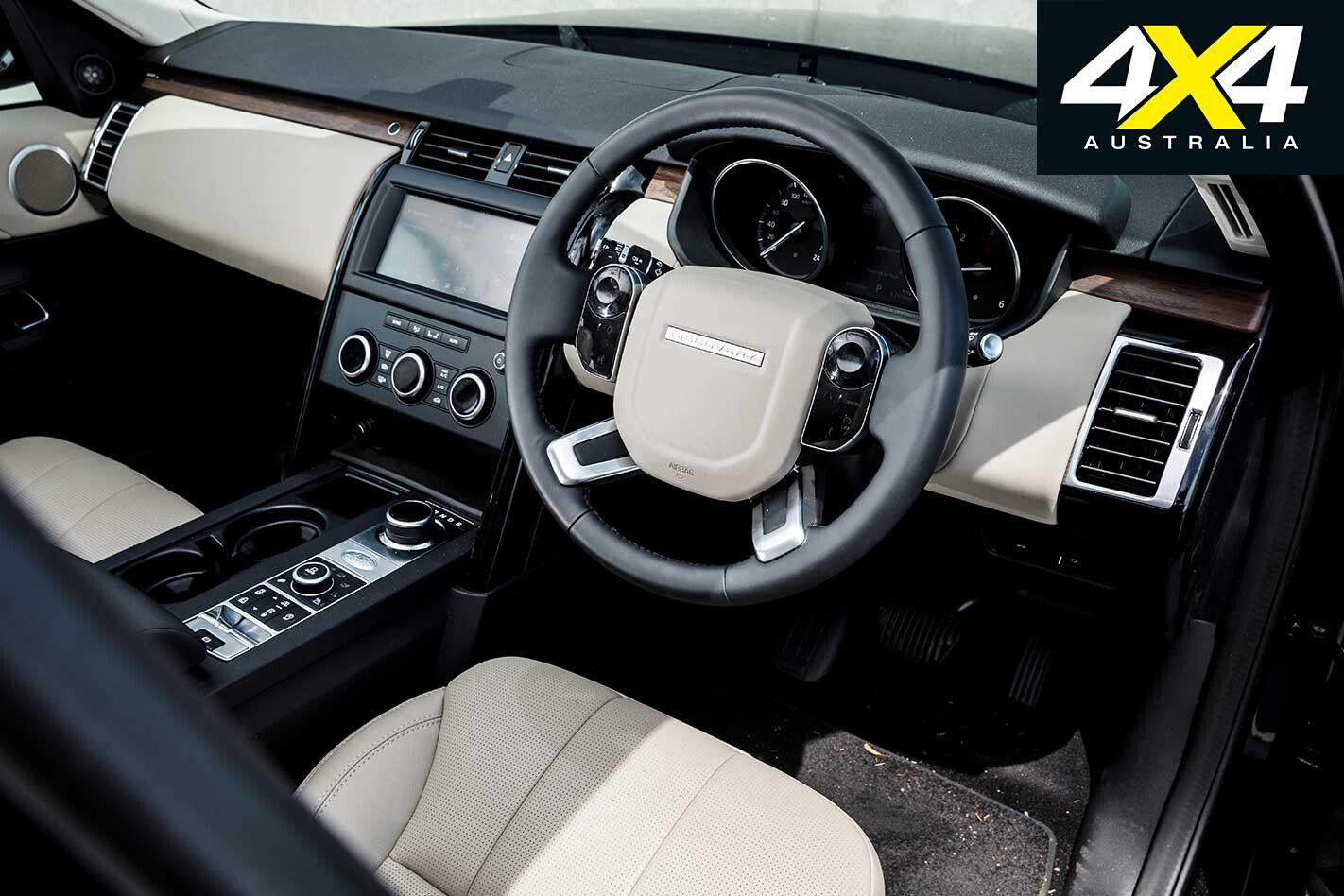
The seats and cabin are very comfortable, making long drives pleasurable. This latest Discovery has a very different feel to its cabin than that of Discos past, but it still has a large glasshouse that offers plenty of vision around the car and makes it ideal for touring scenic country roads or manoeuvring tight off-road tracks.
While the SD4’s 2.0-litre four-cylinder diesel engine might seem small for a large SUV like the Discovery – in fact, torque output has been cut from 500Nm in MY18 to 430Nm for the MY19 specification, to meet emission regulations – it never feels wanting for more performance on the highway.
Overtaking road trains at upwards of 100km/h was never an issue, the transmission kicking back quickly and the car powering onwards. Peak power remains at 177kW.
There is one area of performance where it does feel wanting, and that’s low-speed around-town throttle response. You squeeze the pedal lightly to drive through a roundabout or pull out of a street and there’s nothing there, so you squeeze it a bit more and the car shoots off like it’s propelled from a catapult.
It’s almost like turbo lag, but you would expect the bi-turbo arrangement of the Ingenium engine would account for that … it’s more likely the calibration of the throttle than the engine itself. This seems to be a trait of a few new vehicles, and it’s one aftermarket throttle tuners will take advantage of.
For now the Disco will be tasked with some city commuting, before we get to take it off-road again.
4×4 Shed Log 2: 2019 Land Rover Discovery SD4 Current mileage: 4411km Mileage since last update: 4263km Average fuel consumption: N/A
Update 2: Load lugger
A busy month has the Disco earning its keep. By: Tristan Tancredi
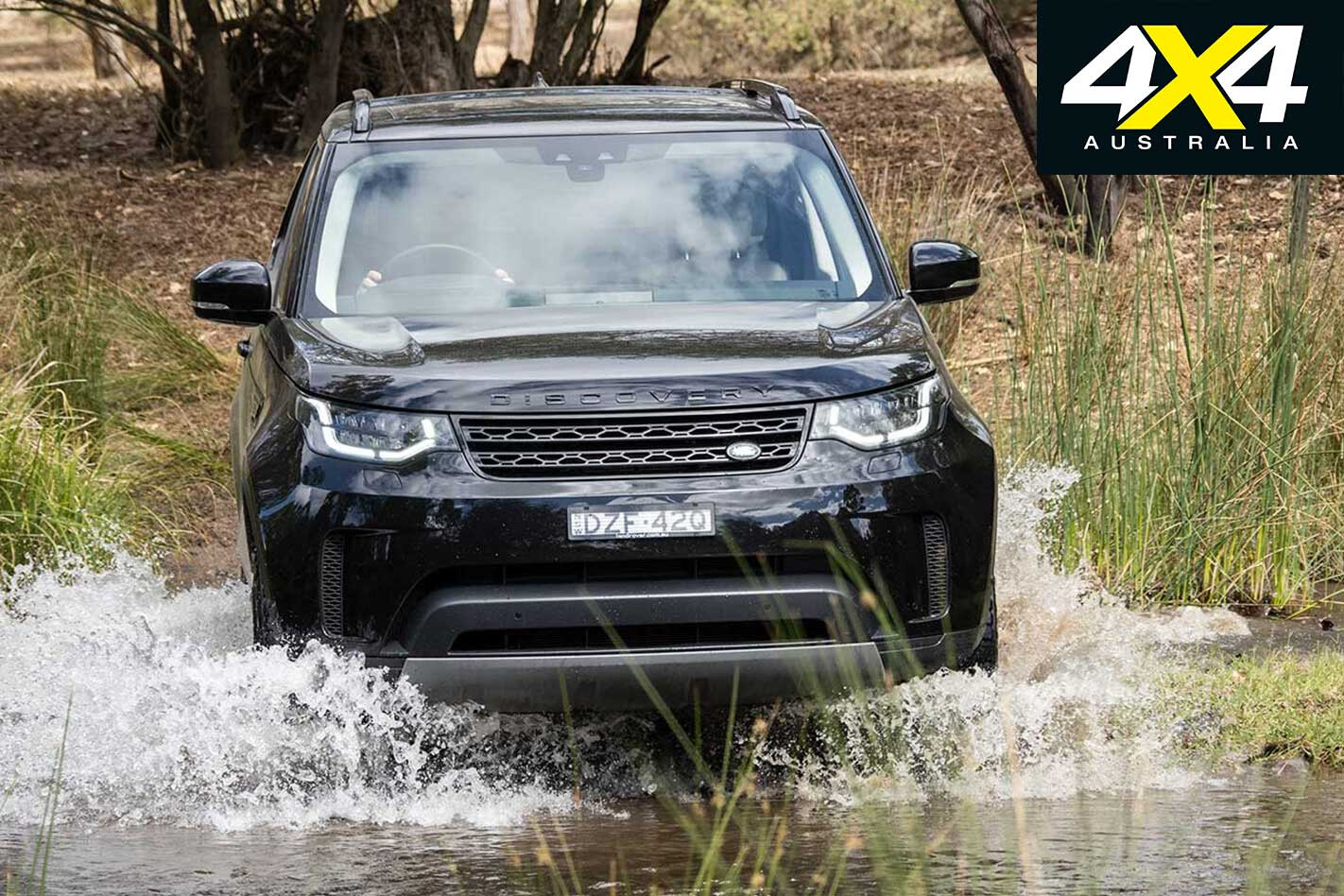
RETURNING from a 4000km return trip from Melbourne to Brisbane the previous month, the 2019 Land Rover Discovery’s duties were honed towards city and suburban life. By no means does that mean we took it easy on the big Brit; quite the opposite, actually.
Instead, we borrowed a tow ball and hitch from a mate and the black Disco played tow rig to a single-tandem trailer, ferrying tonnes of junk to the local tip. With a 3500kg towing capacity, the Disco’s 177kW and 430Nm made mince-meat of the load.
In the March issue of 4X4 Australia, Matt mentioned the Disco’s non-existent low-speed throttle response: “Squeeze the pedal lightly and there’s nothing there,” he said. Slowly backing the trailer up to the ‘dump-site’ exaggerated this issue, as touching the pedal to slowly usher the rig back a few metres proved to be difficult. The aftermarket should sort out this calibration issue, though.
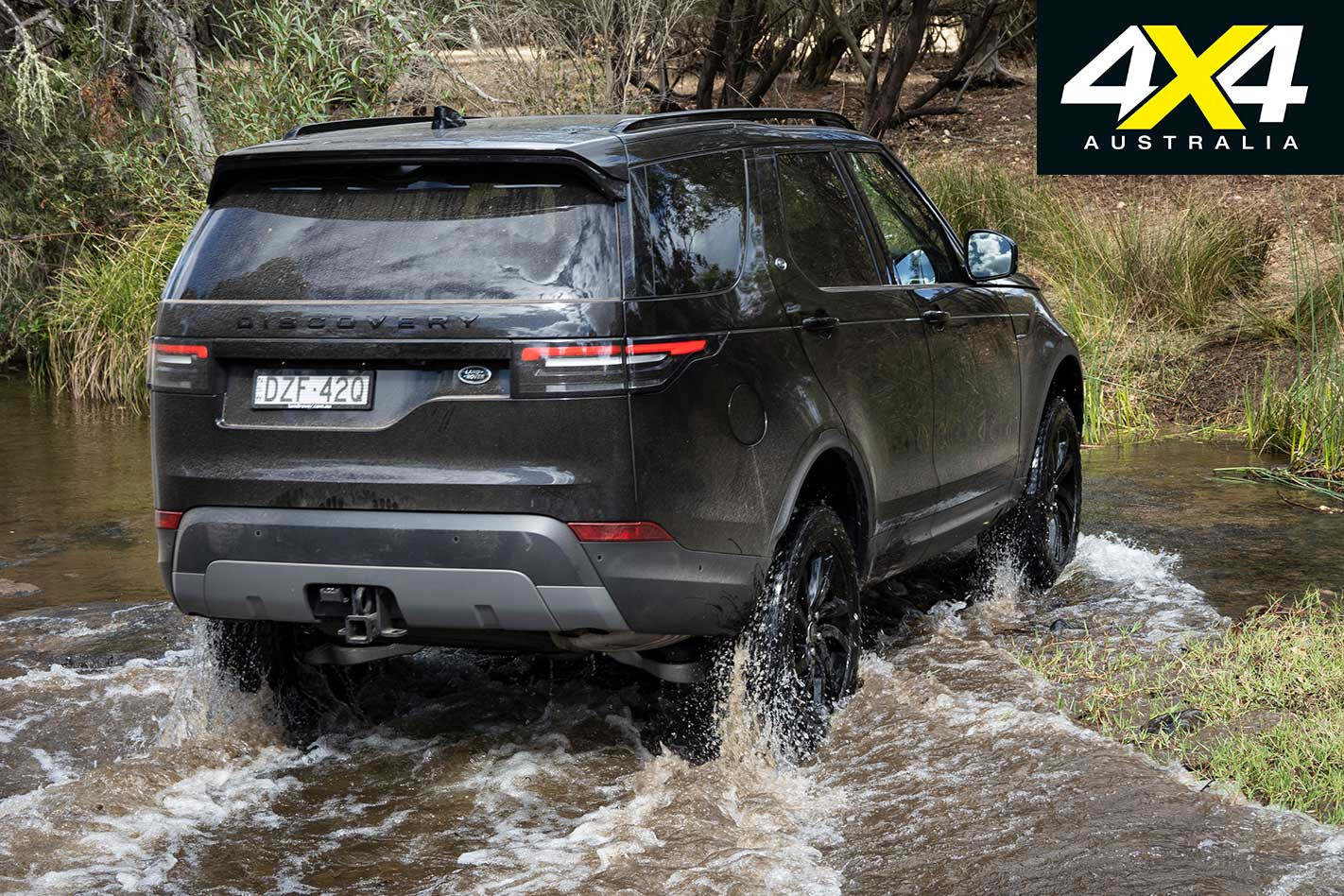
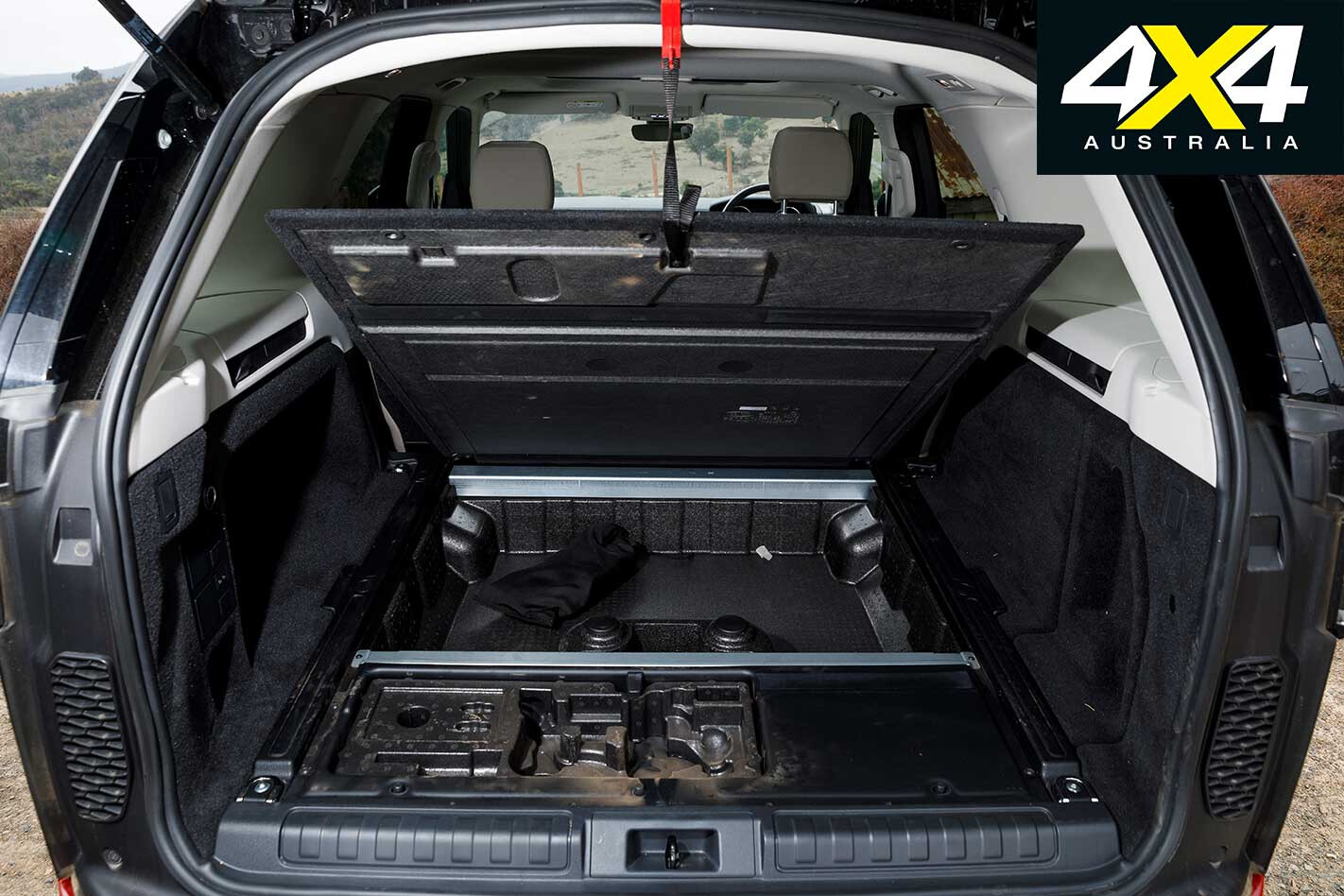
Boot space is ample, too, with more than 2400 litres behind the front seats and 1137 litres behind the second seats. We managed to store a pair of 2.7m lengths of timber within the vehicle, sliding them between the front seats.
The month also involved a weekend burst to Yea, north of Melbourne. Racing sunset to reach our destination, as this section of road is notorious for wandering wildlife, provided the opportunity to let the Disco stretch its legs and display its on-road prowess on twisty bitumen.
For a 2.0-litre four-cylinder diesel-powered car, you’re constantly aware you’re in a ‘floaty’ wagon weighing in at more than 2100kg, but the engine’s sufficient output gives the Disco enough urgency to make the drive fun enough.
The roads out here are dry and dusty, though, not the ideal environment for a black vehicle (with the added Black Exterior pack and privacy glass) and 20-inch, gloss black wheels.
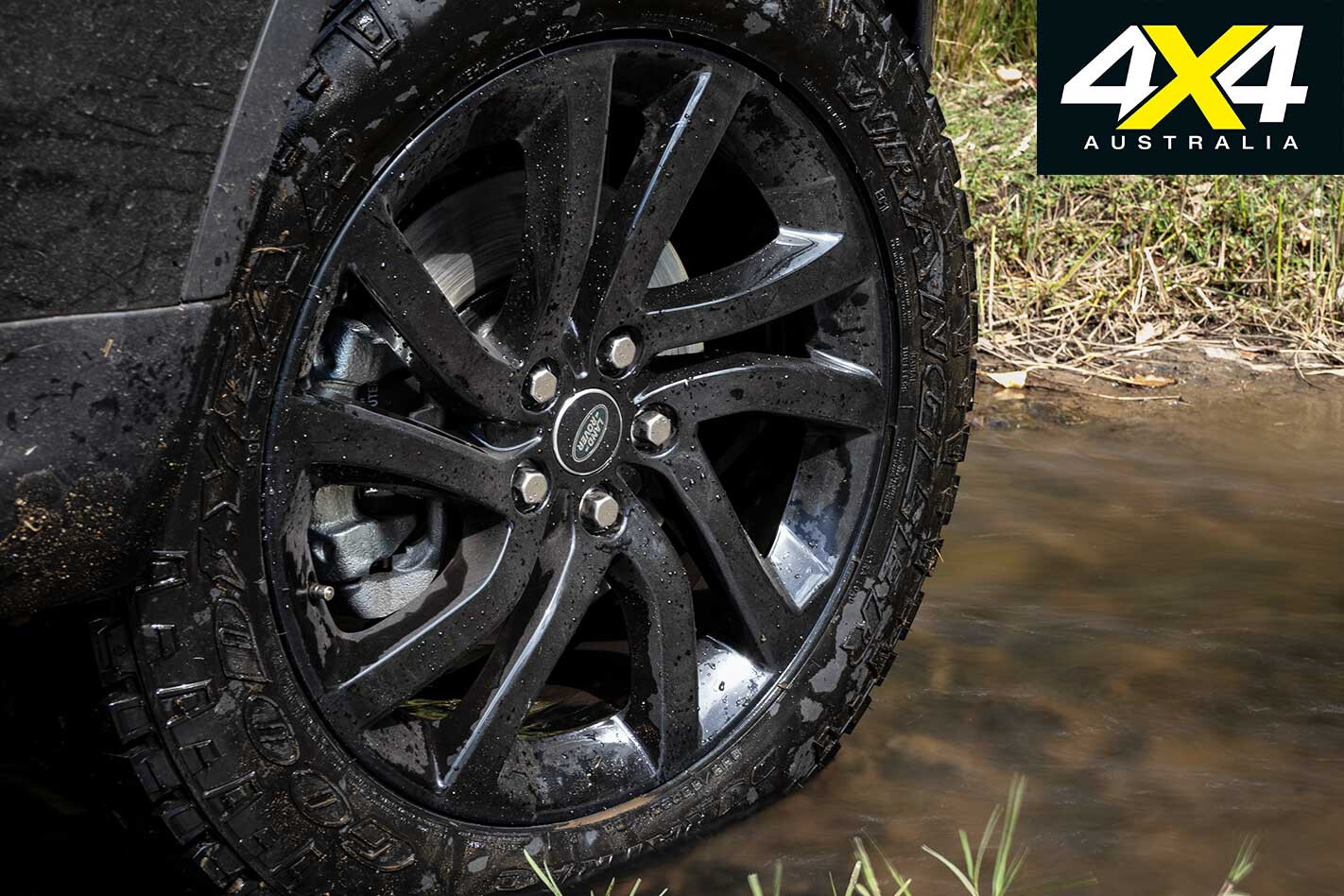
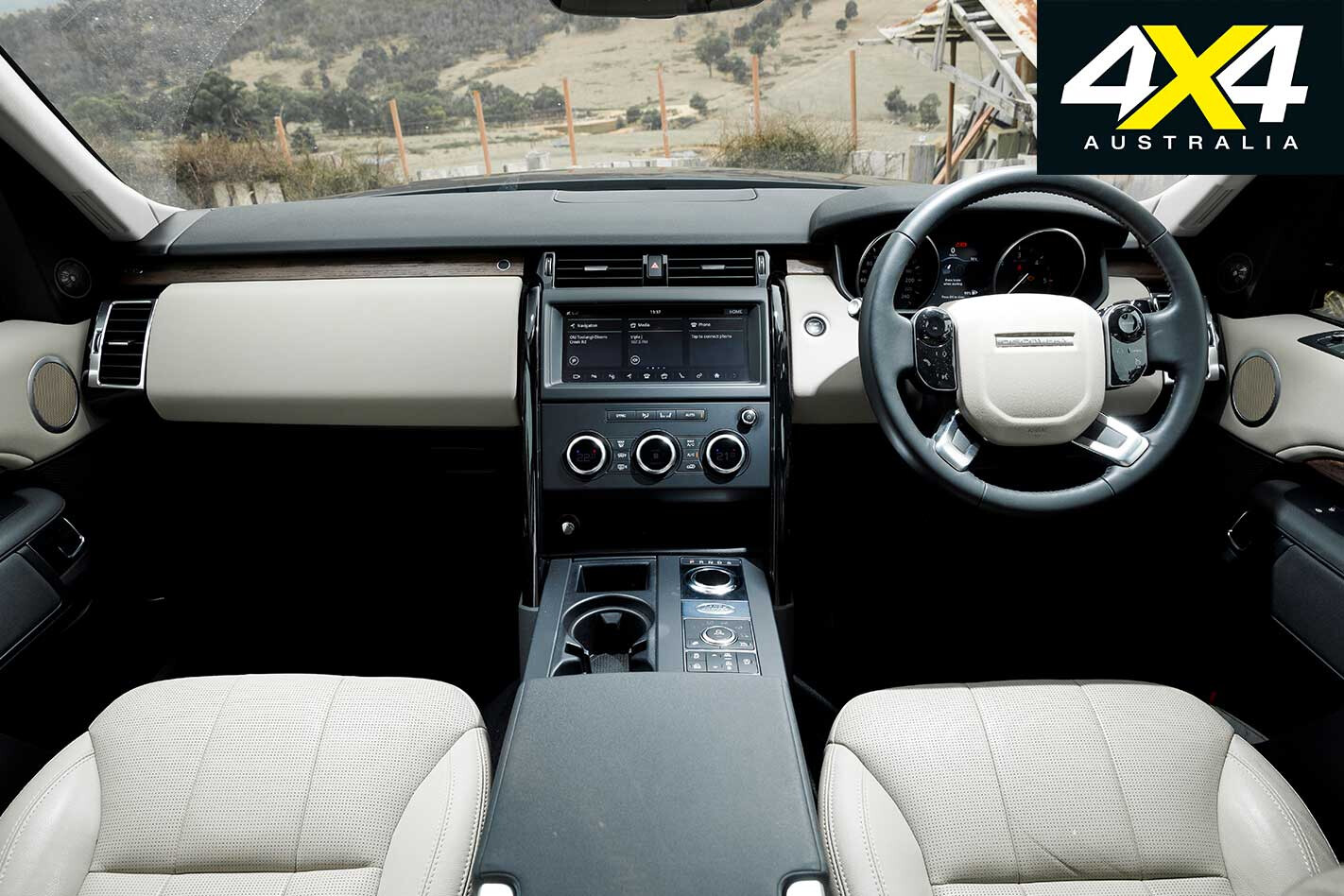
The cockpit is lush and spacious, with the beige contrasting well with the black upholstery. Nitpicking, perhaps, but waiting a few seconds for the transmission dial to rise once the ignition is kicked over – it sinks back in the centre console when the car is off – can be slightly cumbersome.
Also tiresome is the overbearing 360° Parking Aid technology, which constantly reminds the driver it’s there despite there being no notable obstacles (a dip in our driveway, for example, set it off without fail every morning).
The sat-nav interface on the 10-inch touchscreen is clean and easy to operate, but the InControl GPS powered by TomTom hasn’t quite figured out how to best analyse traffic and provide the quickest route.
More than once we used our Android’s Google Maps instead, shaving more than 20 minutes off the ETA in some instances. The vehicle doesn’t have Apple CarPlay or Android Auto, so we had to sit the phone in a cradle – the old-school way.
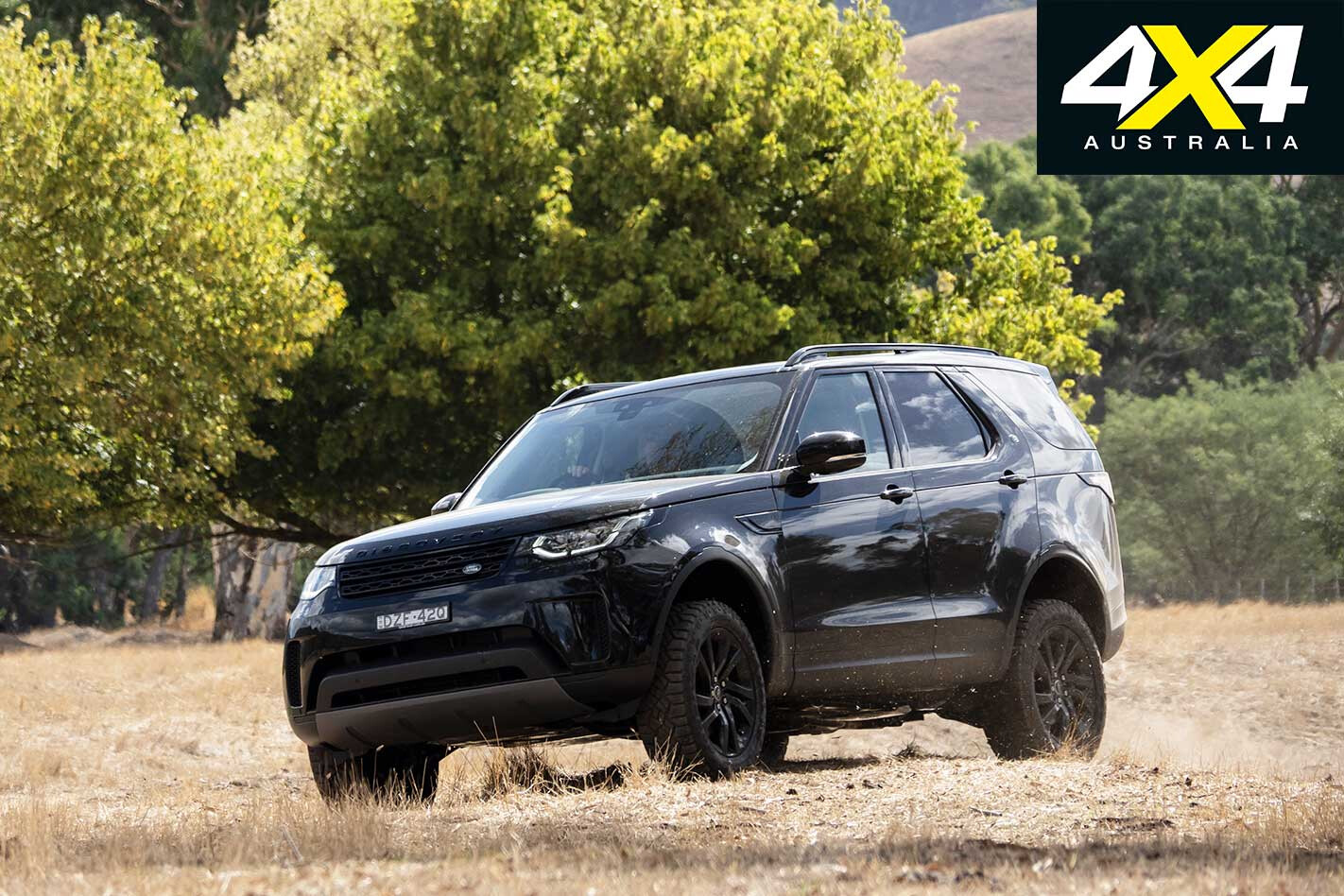
With 6500km on the odometer the dash was warning us that the exhaust fluid needed topping up and we only had 2000km of range. This is the Adblue for the SCR emissions reductions system and, if you let it run dry, the car won’t start.
Most cars simply have a filler for the Adblue tank beside the fuel filler and they are easy to fill. Not Land Rover, though. It puts the filler under the bonnet and has a small filler that requires a special LR bottle to fill it properly.
Past experience topping up a Range Rover from a store-bought bottle in the bush proved to be a messy job, so this time we took it straight back to the dealer to have them fill the tank. This is worth knowing if you’re planning a long trip in your late model Land Rover and you might need to carry a supply of the AdBlue fluid.
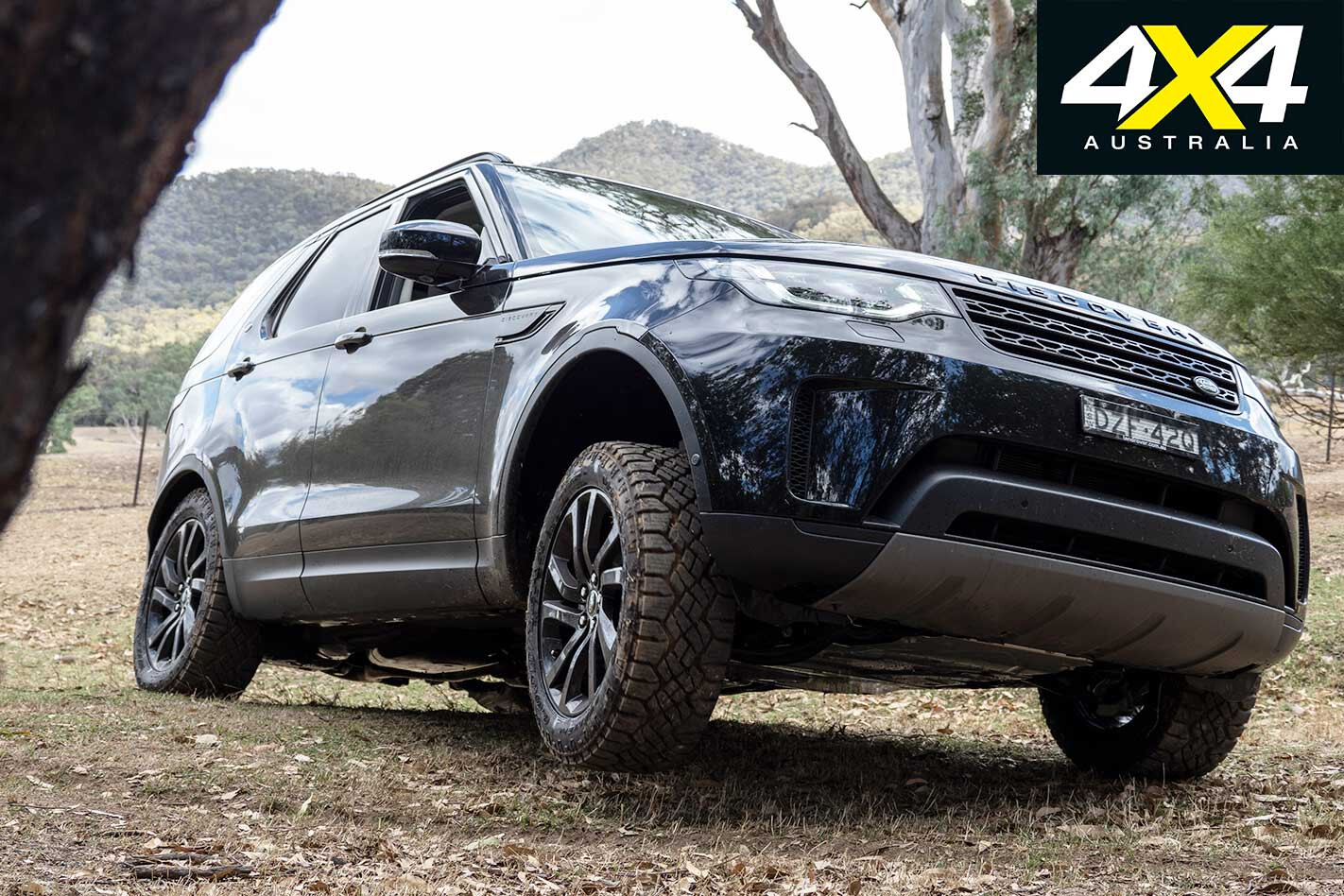
4×4 Shed Log 3: 2019 Land Rover Discovery SD4 Current mileage: 7059km Mileage since last update: 2468km Average fuel consumption: 8.84L/100km
Update 3: Daily duties
It’s been bush and ’burbs for our Discovery Sd4 this past month. By: Matt Raudonikis
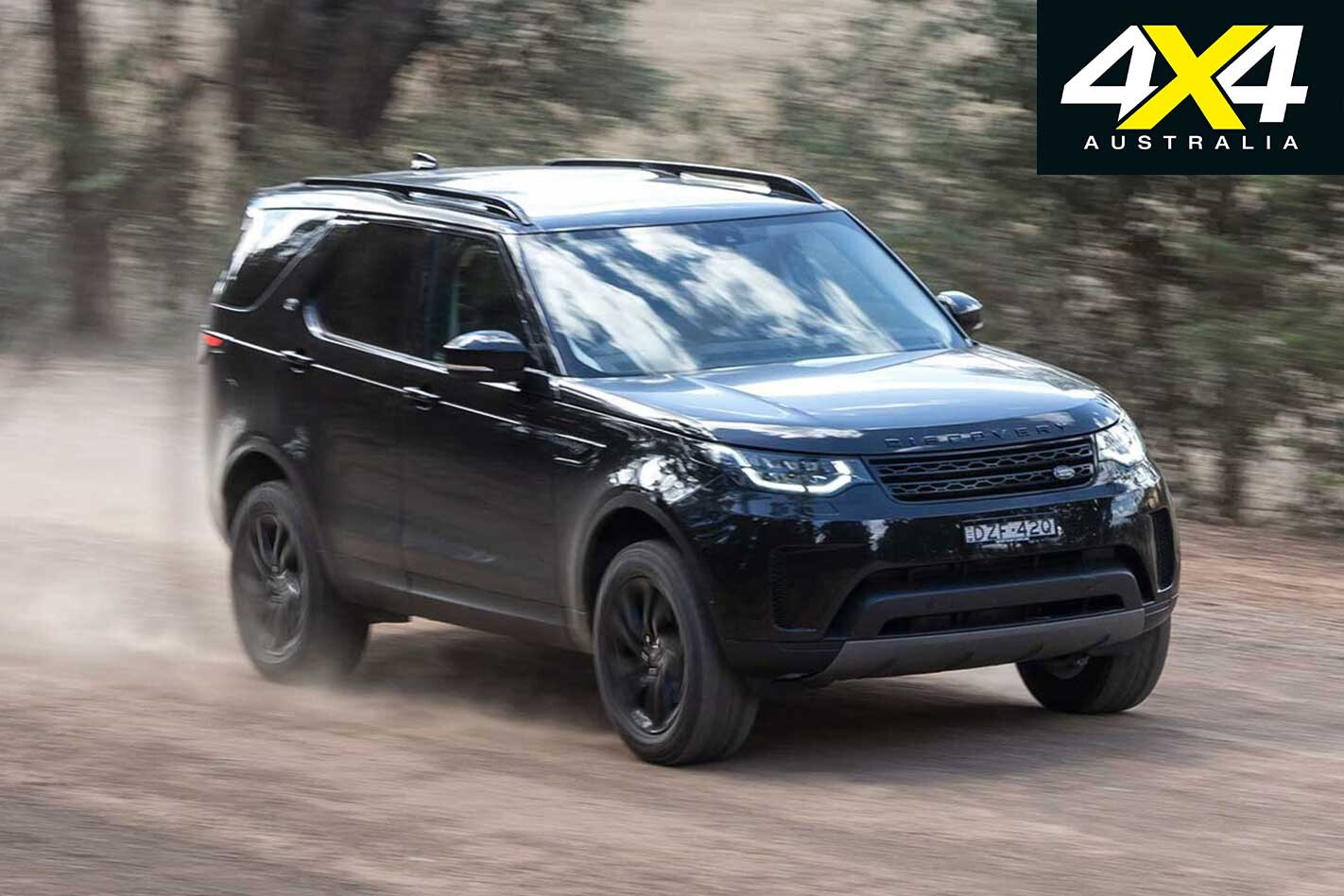
It’s been a solid mix of city commuting and weekend getaways for the Disco this past month, as we balance the work/life conundrum. Thankfully the 2019 Land Rover Discovery does both very well, delivering a comfortable and easy to live with vehicle for the weekday grind, yet one that is both capable and competent for bush escapes.
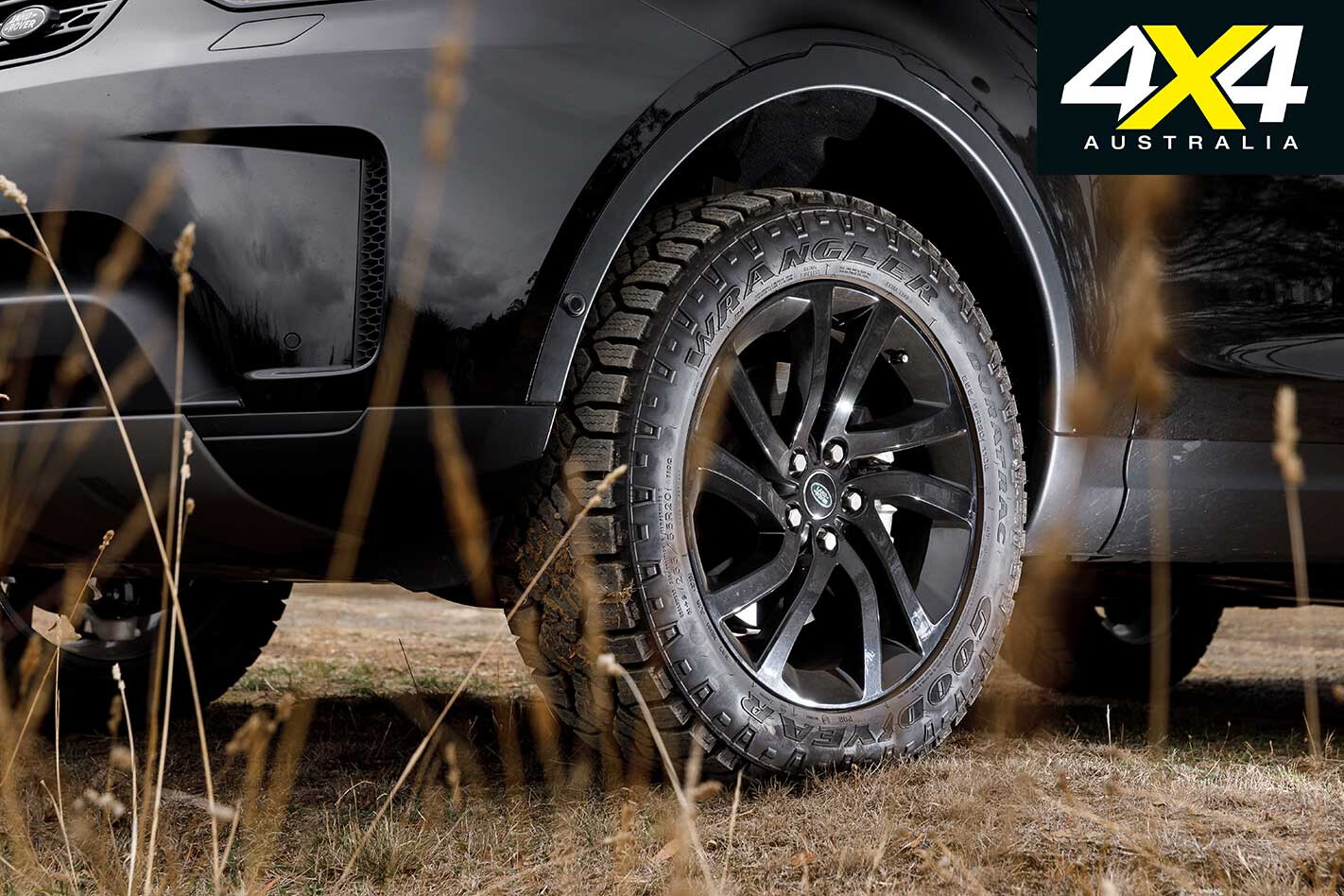
We’ve improved the bush ability of the Disco somewhat by replacing the OE highway tyres with a set of Goodyear Duratracs in the OE 255/55-20 size. This is the officially approved off-road option tyre from Land Rover, so we had to stick to the factory size.
The Duratracs are also available in a 275/55-20, which we would have preferred to fit and it still would have been a legal upgrade, but we didn’t have that option on the Land Rover test car.
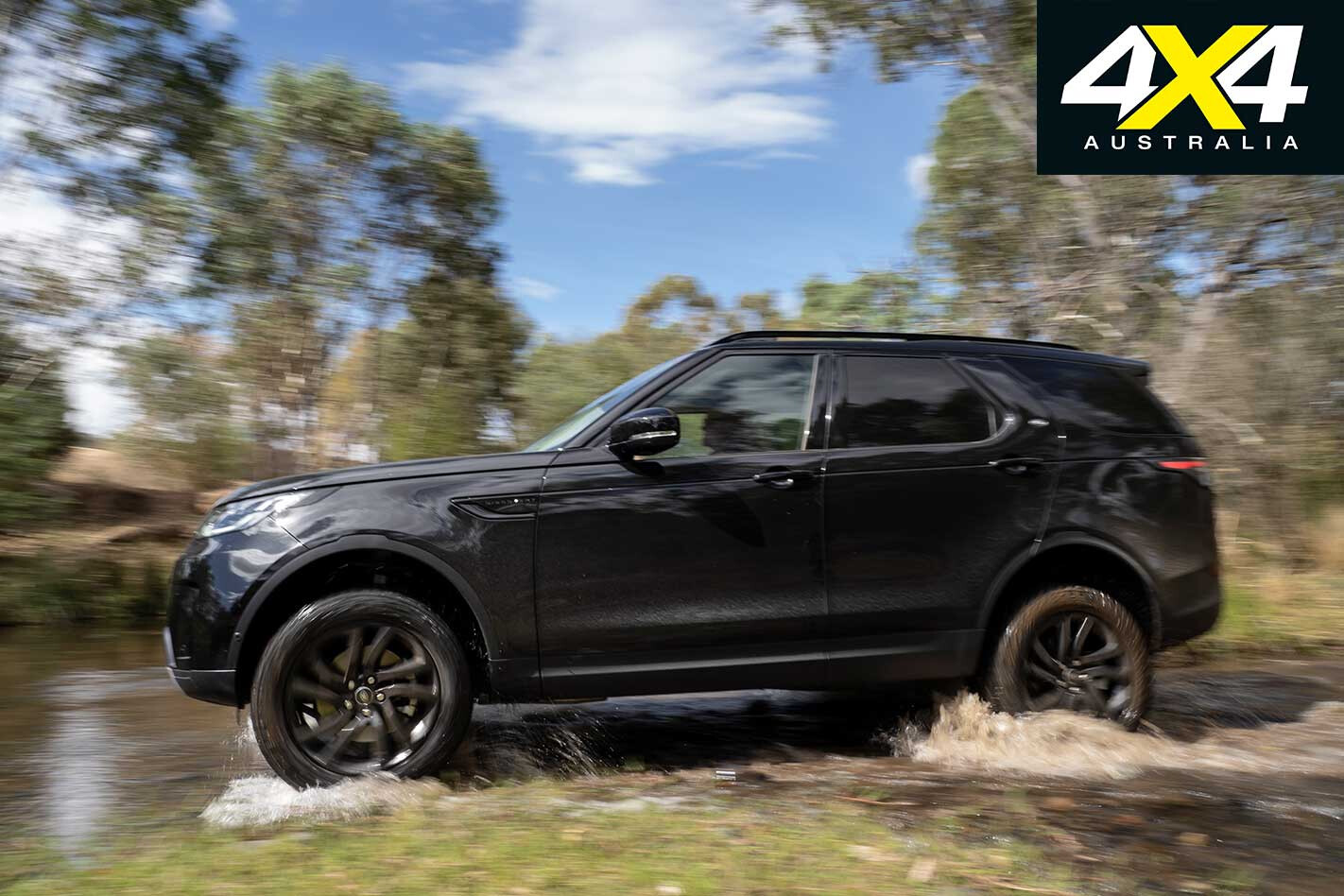
Lucky we fitted the tyres when we did, as when the guys at Beaurepaires Chadstone removed the originals tyres they found a chunk of tread missing from the inside edge of one of the front tyres. Being on the inside of the tyre it wasn’t easily detected, and it was bad enough that it could have led to tyre failure. It just shows the need for tougher rubber for vehicles that go off-road.
We’ll have more details on how well the Duratracs have performed in a full report soon, but since fitting them, people have commented on how good the Discovery looks, whereas before they would simply say “it looks good but you wouldn’t take it off-road”. The Duratracs gave us more confidence in the car on weekend escapes up to a bush property and to the Vic High Country.
Adding to the appearance of the Discovery has been the fact that I’m driving it in the raised suspension height most of the time. The automatic height-adjustable suspension doesn’t drop down to the lower setting until you hit 80km/h, when it lowers to its highway cruising height for improved dynamics and fuel efficiency.
We haven’t found the higher setting to have any detriment to everyday suburban ride quality and handling, while the taller height makes getting in and out easier. This suits me, as opposed to the Land Rover ‘access’ height that lowers the car when you put the transmission in ‘Park’. Plus, it looks more purposeful, as affirmed by the comments we’ve had on it.
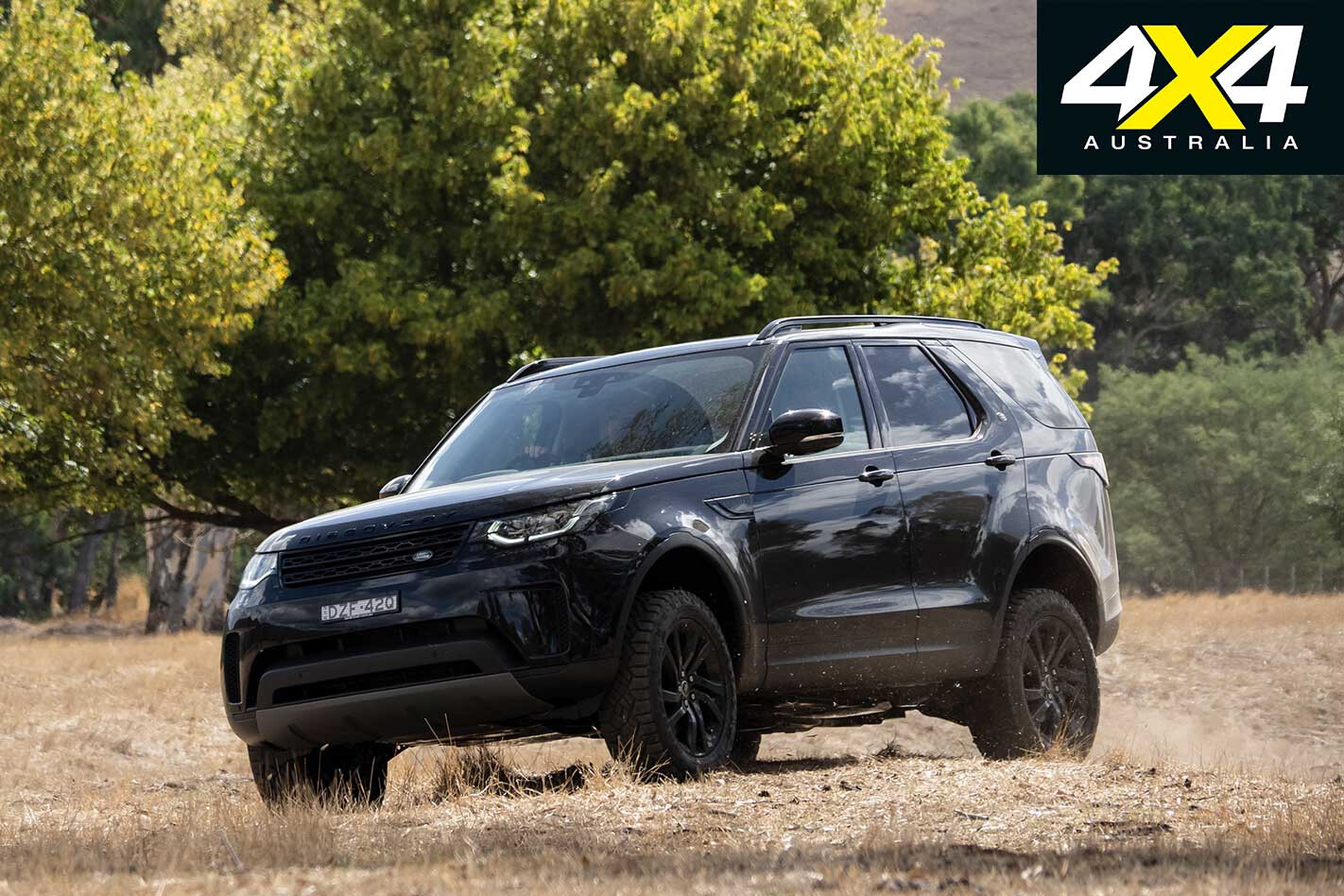
An added bonus of driving in the higher setting is that this disables the idle stop-start function, which I find annoying on any car… it saves me having to switch that function off every time I start the car.
We did have a minor hiccup with the Disco that required a short trip to the dealership: I was getting out of the car in our office carpark and was gathering my phone, keys and satchel for the day ahead. I dropped the Land Rover key fob in the driver’s footwell and it bounced off my heel and under the seat.
More worryingly, though, it landed with a metallic clunk and not the muffled sound you would expect had it hit the Disco’s plush carpet.
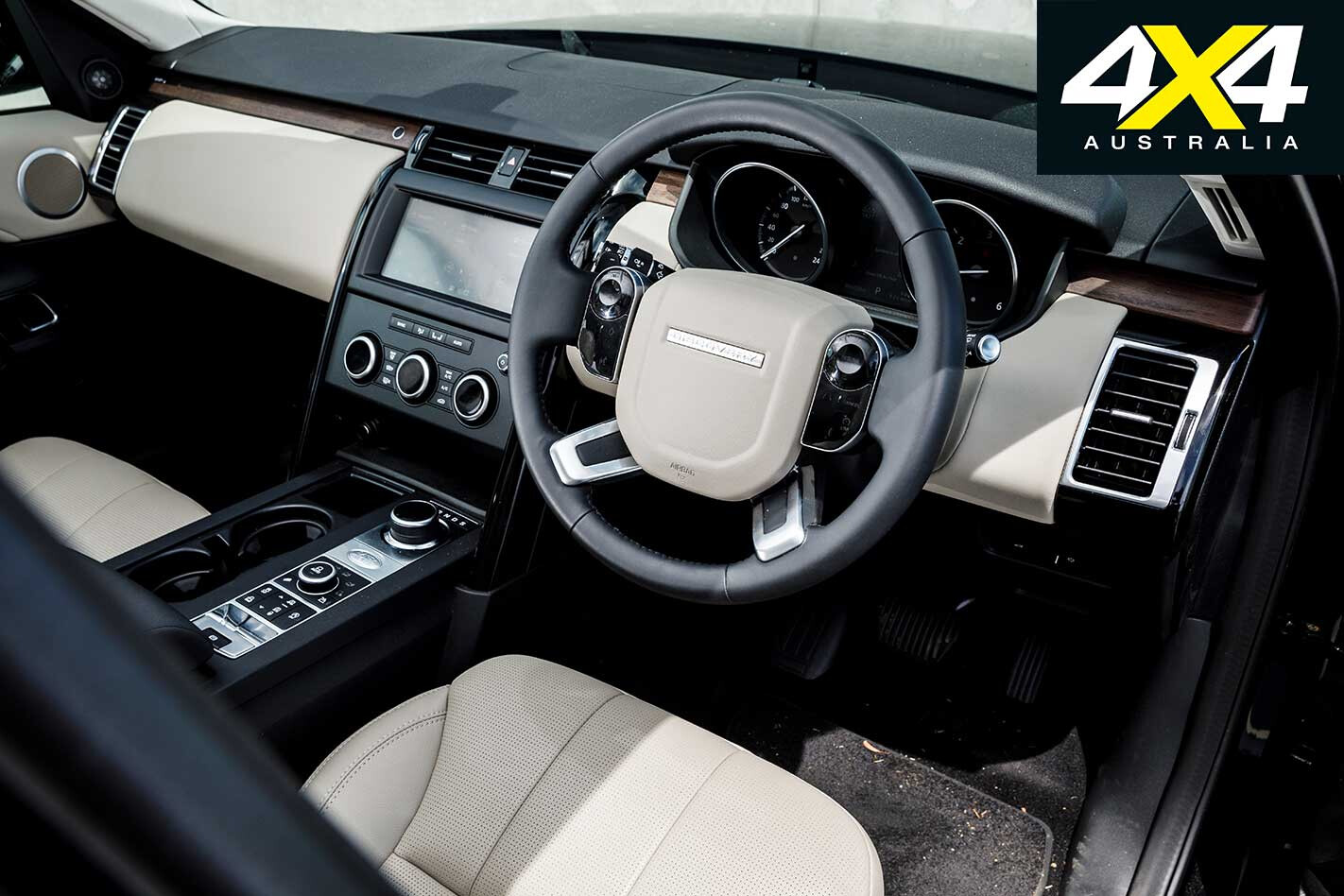
Looking under the seat the fob had found its way into a floor cavity and inside the chassis, where it couldn’t be reached by hand. I tried a magnet on a flexible wand hoping it might catch on the metal key ring, but to no avail. The Discovery SE has a start button for the ignition but requires you press the key fob to lock and unlock the doors, so I could start the car but couldn’t secure it.
On the drive to the dealer the fob must have moved further into the chassis as a dash warning came up to say that the key was not detected in the vehicle. So now, if I switched the engine off, I would not have been able to restart it as the car wasn’t detecting the proximity key.
At the dealer, the technician had to remove the seat completely and spent a while messing around to retrieve the fob before we could return to normal service. What an ordeal.
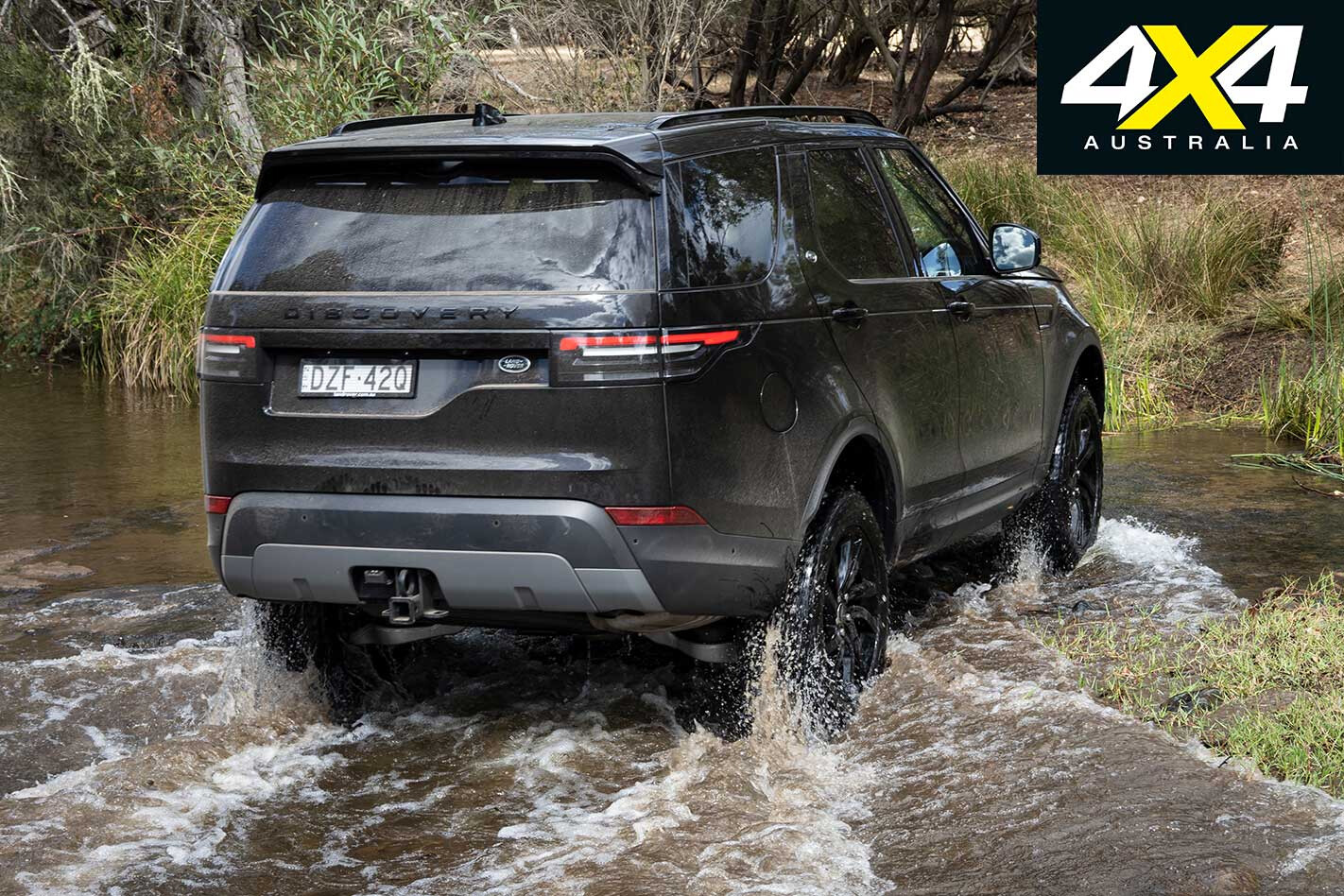
4×4 Shed Log 4: 2019 Land Rover Discovery SD4 Current mileage: 9013km Mileage since last update: 1954km Average fuel consumption: 9.78L/100km
Update 4: Copping new boots
New rubber, new ride for the Disco. By: Tristan Tancredi
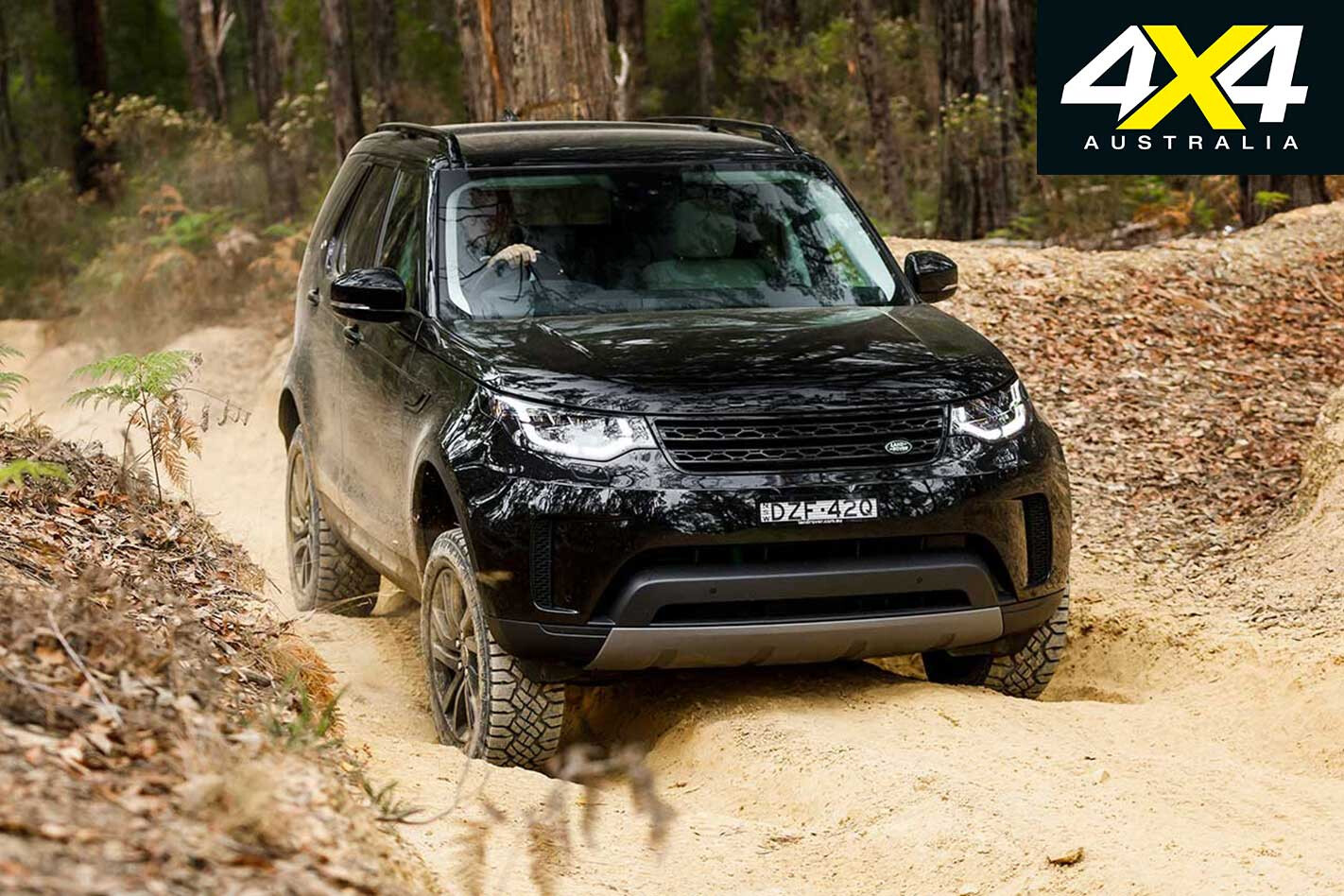
THE past month has been spent acclimating to the new Goodyear Duratracs that were zapped onto the four corners of our 2019 Land Rover Discovery long-termer last month by the folks at Beaurepaires in Chadstone, Victoria.
The off-road focused 255/55 R20 Duratracs not only enhance the Disco’s brooding presence, but they remain quite liveable on city and suburban tarmac. Granted, there’s an audible rumble generated by the tread pattern that invades the cabin, but the ride quality isn’t hindered and the sound becomes unobtrusive once you get used to it.
The comfort of the heated front pews, for short or long stints on the blacktop, has been discussed ad nauseam – and we’re starting to take advantage of this feature in the cooler months – but does the Disco remain comfortable when loaded up with four adults and plenty of cargo? In a word, yep!
With four ‘average-sized’ adults onboard, the Disco remains pleasant for long-distance touring. Leg and head room is aplenty for both front and rear passengers, while the spacious seats are both supportive and comfortable. The Acorn leather trim and natural Shadow Oak veneer trims add to the luxury.
Ample rear cargo space means you’ll be able to load up luggage for four, an Engel fridge and other campsite essentials. Plus, the centre console between the rear seats drops down so that longer objects can squeeze up through the cabin between the two rear-seat passengers.
Navigating the touchscreen is a stress-free affair due to the user-friendly interface, and connecting your phone via Bluetooth or plotting a route through the TomTom-based sat-nav both become two-second jobbies after a bit of getting used to – and the screen won’t lock when the car is in motion, so the front passenger can amend the sat-nav inputs on-the-fly. The lack of Apple CarPlay and Android Auto is a notable hole in the Disco’s arsenal, though.
The Disco is fitted with a bunch of InControl driving assistance technology including Autonomous Emergency Braking (AEB) and Lane Keep Assist; the latter guiding the vehicle back on track – and sending a slight vibration through the steering wheel – if it happens to drift out of a lane and touch the lines.
The system might sound obtrusive to old-school 4x4ers, but the technology corrects any wayward steering with a gentle nudge.
4×4 Shed Log 5: 2019 Land Rover Discovery SD4 Current mileage: 10,096km Mileage since last update: 1083km Average fuel consumption: 10.25L/100km
Update 5: Conclusion
Is it really time to give the Disco back? By: Matt Raudonikis
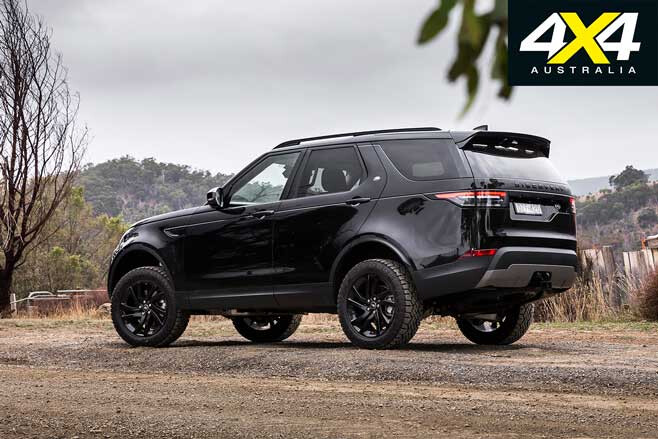
It’s hard to believe the Land Rover Discovery SD4 has been with us for six months already and its time to hand the black beauty back. It’s been such an easy car to live with, it will be tough giving it up. Warm and comfortable for the day-to-day commute grind and just as accommodating for long highway drives or weekend bush escapes.
We wanted to get one last chance to head bush with it and put the Goodyear Duratrac all-terrain tyres to the test, escaping the office for a day in the hills.
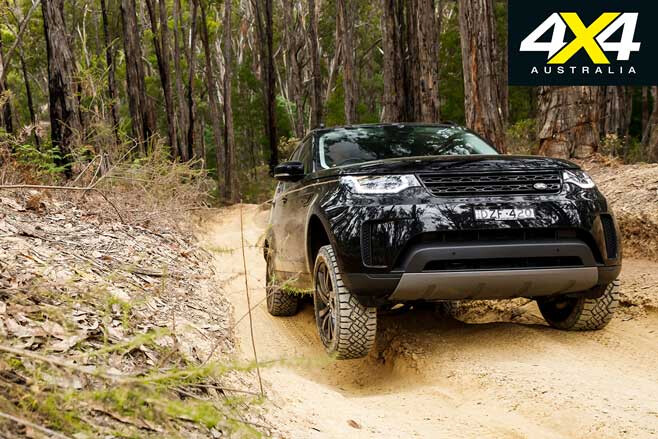
It had been dry for a long time around Melbourne and the tracks were dusty and rocky. We did find a clay track that climbed from a flowing creek and didn’t get any sun, so its surface looked slippery. It was also deeply rutted, so we set the suspension height to max and selected the ‘Mud & Ruts’ mode in the Terrain Response 2 system.
The Discovery takes on these sort of tracks without fuss or bother. You can open the off-road settings on the centre screen and see how soon the centre and rear auto-locking diffs are activating, which happens seamlessly. A little bit more suspension lift would be nice, but you need to fit aftermarket ‘bones’ to get that.
While the suspension tops out on rough stuff when in the highest setting, it isn’t fussed by gravel roads and smoother tracks. It drops down to the next lower setting at 80km/h and you need to raise it up again when the ruts deepen and you need the extra ground clearance.
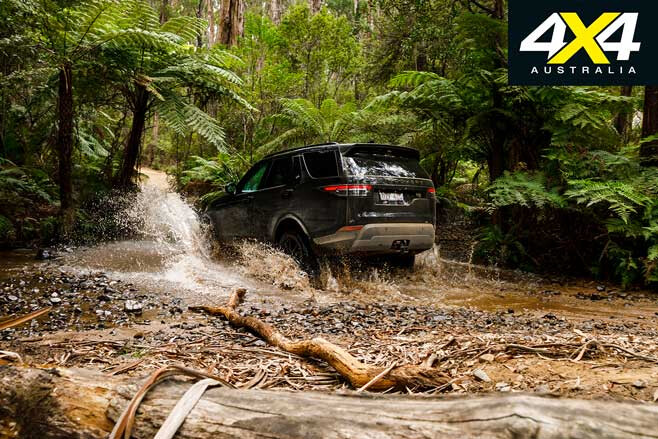
The Disco covers gravel roads with poise and precision that few large 4x4s can match. The independent suspension and lightweight body really help with handling, and by 4×4 standards the Discovery is as sharp as they come. That is equally true on sealed roads, particularly those rough, winding country roads that test a car’s dynamics.
We doubt that whatever car we replace the Discovery with in the 4×4 Shed could ever match the dynamics, luxury and ability of the Land Rover, which is why it will be a tough car to hand back. Maybe we’ll have to wait for the new Defender which will share many of its chassis components with the Discovery.
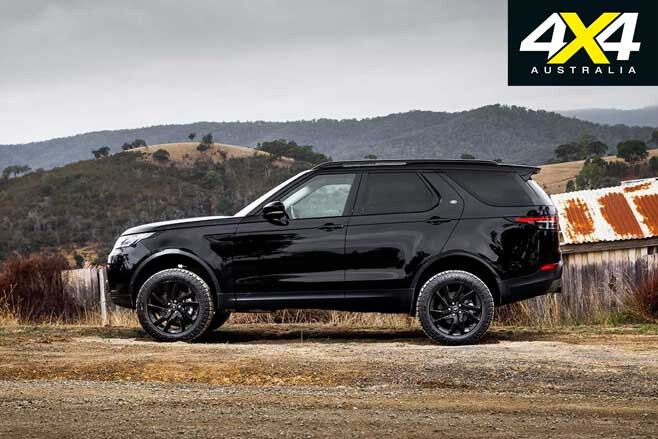
4×4 Shed Log 6: 2019 Land Rover Discovery SD4 Current mileage: 11,364km Date acquired: Dec 2018 Price: $103,840 +ORC Mileage since last update: 1268km Average fuel consumption: 11.16L/100km
MITSUBISHI has confirmed the all-new 2020 Mitsubishi Pajero Sport will make its official global debut on July 25, 2019, in Thailand.
The teaser shot of the Pajero Sport, revealed by Mitsubishi Motors Corporation (MMC), shows that the front-end will share a close resemblance with the recently released 2019 Triton. This means an adoption of the new-look Triton’s ‘Dynamic Shield’ design, which includes high-set headlights, a beefed-up design and a redesigned grille.
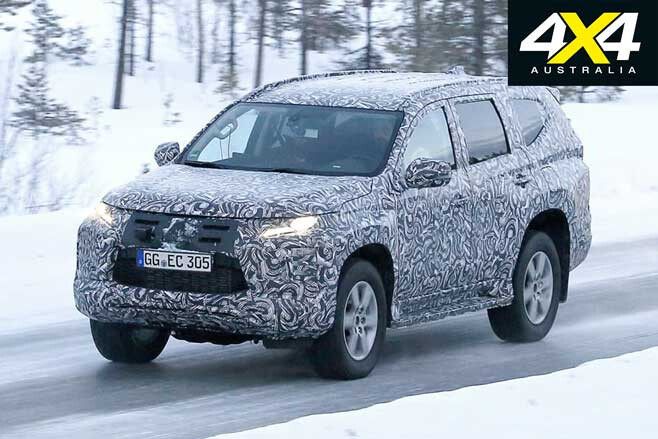
Information is scarce at this stage, but MMC said in a statement that the Pajero Sport will offer “further improvements to its design, convenience, comfort and quality”.
Just like the updates to the MY19 Triton, expect a raft of modern safety tech and improvements to cabin opulence. The 133kW/430Nm 2.4-litre turbo-diesel engine is also expected.
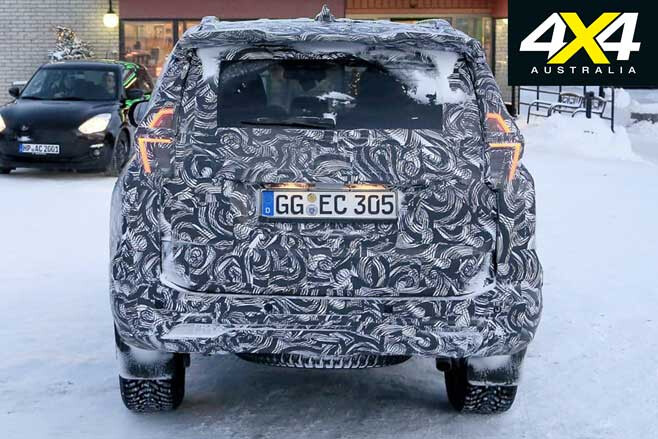
The current generation Pajero Sport debuted in 2015. Stay tuned for more information on the 2019 model when it lands.
WE’RE ALWAYS told an aftermarket upgrade to suspension and upping GVM is essential for any tourer with their eyes on the Red Centre or the tip of Cape York, but an upgrade also makes perfect sense for the runabout work ute loaded with tools and equipment for the daily grind. The problem is we rarely get the chance to see exactly how much improvement quality aftermarket kit actually makes to a vehicle.
Pedders Suspension saw fit to remedy this by holding the ‘Sandown Safety Week’ at Sandown Raceway in Springvale, Victoria, an event held to provide its sales staff and franchise owners – a couple of sales staff were even flown in from its European distributors – with first-hand experience of its new product, so that they could pass on the good news to clients.
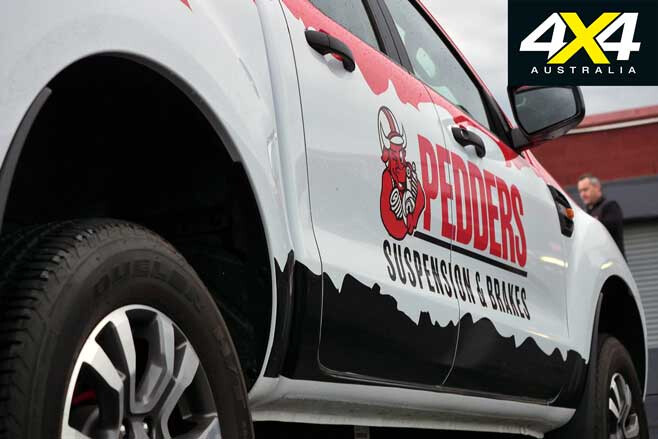
To do this Pedders set up five different stations around Sandown racetrack: Emergency Braking, Slalom Stability, Double Lane Change, Corner Braking and Rough Track (a dirt track with sharp corrugations).
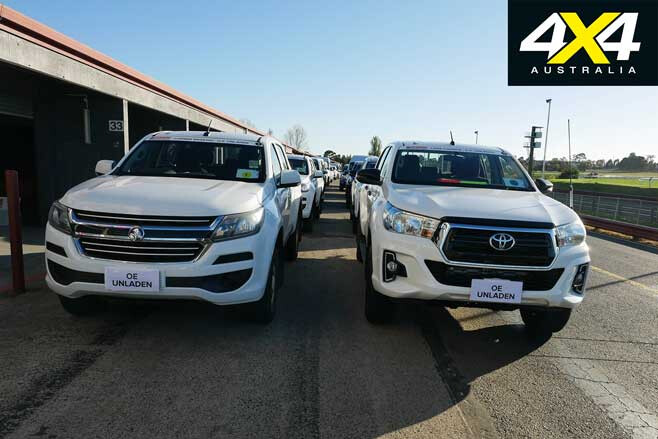
Three vehicles were at each station, all set up slightly differently: OE, OE laden and a laden vehicle equipped with Pedders gear. This gave those in attendance the opportunity to drive a bone-stock vehicle back-to-back with a bone-stock vehicle loaded with ballast to within 400kg of its GVM limit. Following these test runs, a Pedders-equipped vehicle loaded with the same weight was then let loose to highlight the benefits the equipment makes.
Ute preparations
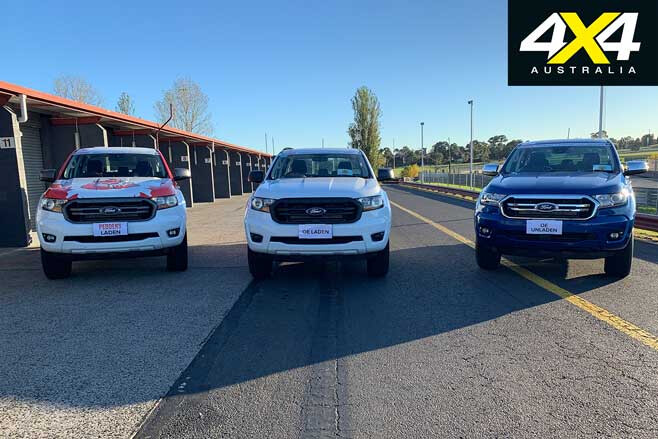
OE: Standard ute with no load OE Laden: Vehicle loaded with ballast to within 400kg of GVM limit Pedders Laden: Vehicle loaded with ballast to within 400kg of GVM limit with Pedders modifications*
Vehicles loaded with tools and/or enough gear to last weeks and months beyond the black stump often infringe on a vehicle’s GVM capacity, with some punters even unaware of the weight they’re imposing on their vehicles. The Pedders GVM+ kit helps alleviate this issue.
Each Pedders vehicle was equipped with a Pedders GVM+ Kit, which comprises Pedders’ TrakRyder foam cell shock absorbers (front and rear), heavy-duty coil springs (front), TrakRyder rear leaf springs, upgraded shackles and U-bolts, and urethane bushes.
Let’s take a closer look at each station.
Emergency Braking Test
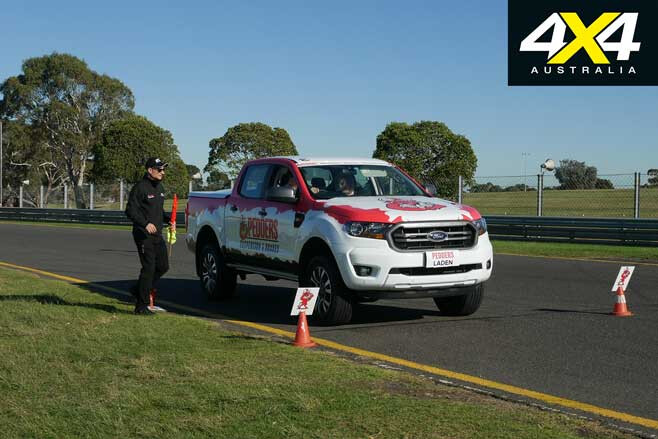
You all know the drill: Hit 60km/h and smash your brake foot to the floor like your life depends on it.
The OE Ford Ranger is already sufficiently succinct at pulling up when the brake pedal meets the footwell, so we were eager to note the difference once we jumped aboard the Pedders-equipped rig. The notable takeaway from the emergency braking test – other than confirming the impressive ability of the OE Ranger’s stoppers – is the added assurance of the Pedders front and rear brake kits.
Not only did ‘most’ people pull up quicker, there was also a noticeable increase in control and handling once severe braking was underway. Interestingly, it was at the emergency braking station rather than the slalom station where the suspension benefits were most noticeable.
Pedders Ford Ranger modifications GVM+ kit: $2699 (Increases GVM rating by 300kg over standard) Pedders Big Front Brake Kit: $2420 Pedders Rear Drum to Disc Brake Conversion Kit: $2370
Double Lane Change Test
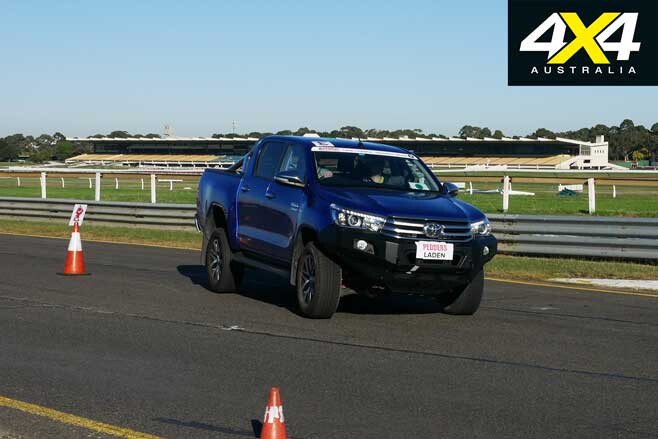
The purpose of the emergency double lane change is to prove that a driver can maintain control of a vehicle under heavy braking – brake hard, steer out to avoid an imaginary vehicle backing out of a driveway, and then quickly steer back into the original lane.
This exercise exemplified the increased bite the Pedders brake conversion kit afforded the Toyota Hilux, while the GVM+ kit allowed the driver to maintain more body control under hard braking, with the Pedders vehicle maintaining a higher level of composure than its OE counterparts.
Pedders Toyota Hilux modifications GVM+ kit: $2262 (Increases GVM rating by 450kg over standard) Pedders Rear Drum to Disc Brake Conversion Kit: $2360
Slalom Stability Test
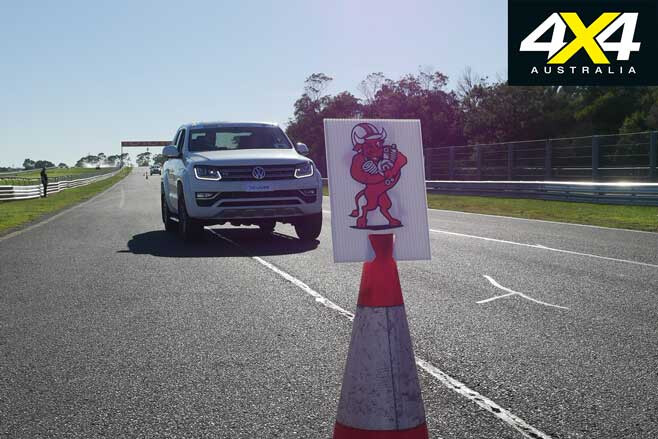
Arriving at the Slalom Stability station we weren’t surprised to see a trio of Amaroks as the vehicles of choice, and, if nothing else, this drill shone a light on the exemplary handling performance of the big German. Sans any changes other than the GVM+ kit, the Pedders-equipped Amarok was marginally surer and more stable through the slalom than its OE-laden counterpart.
Pedders Volkswagen Amarok modifications GVM+ kit: $2793 (Increases GVM rating by 460kg over standard)
Corner Braking Test
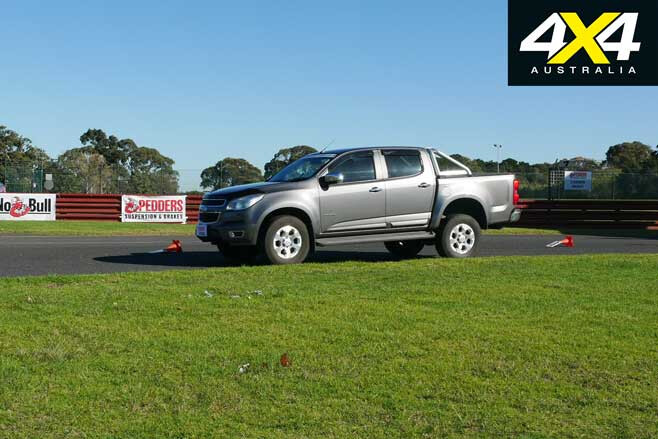
This test involves hitting 60km/h, smashing the anchors as you approach a bend, and then turning into the bend, ensuring you don’t oversteer in the process. With just the GVM+ kit installed, the purpose of this test was to experience the notable difference in smoothness and composure under extreme braking.
For something a bit different, we also got to mash the brakes into the corner with a trio of Toyota HiAces – not something we expected to be doing. Also unexpected was that the HiAce had a higher level of body control and stability than the Holden Colorado. Put that down to its wheelbase and a lower centre of gravity. (The Pedders HiAce was fitted with a GVM+ kit; RRP $2357.)
Pedders Holden Colorado modifications GVM+ kit: $2603 (Increases GVM rating by 300kg over standard)
Rough Track Test
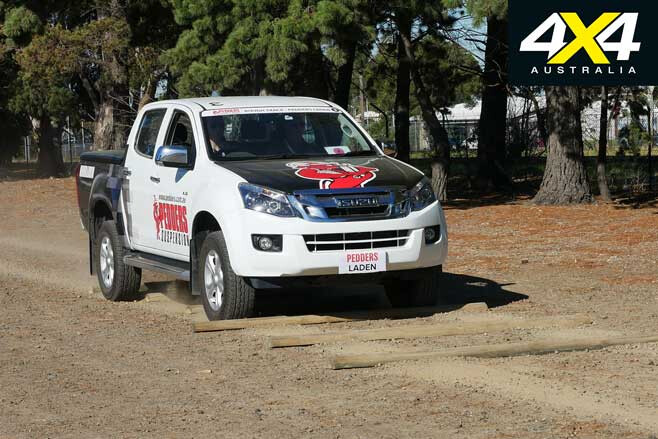
The ‘rough track’ station comprised of a quick loop around a series of sharp corrugations – not quite an off-road track, but enough to shake a few vertebrae. While the unladen OE banged and jolted its way across the circuit, it was the laden OE Isuzu D-Max that was riding on its bump stops by the end of the day – a bit of give is to be expected, though, after four days of non-stop abuse.
A drive of the Pedders GVM+ equipped D-Max resulted in a more surefooted experience, with a hell of a lot less banging and crashing within the cabin.
Pedders Isuzu D-Max modifications GVM+ kit: $2603 (Increases GVM rating by 600kg over standard)
Safe & Sound
Pedders offers its GVM upgrade kits to a wide range of vehicles, with all suspension components backed by a two-year/40,000km nationwide warranty. Pedders states that its gear is “great for serious four-wheel drives fitted with bullbars, winches, recovery equipment, drawer systems, camping gear and underbody protection looking for compliance to the federal and state GVM laws.”
All Pedders GVM+ kits are fully engineered and federally certified to ensure insurance and warranty compliance. So, if your rig is struggling with its current load or you have plans to load it up for an upcoming off-road adventure, head over to: www.pedders.com.au
ARNHEM LAND is a region I lived in for 10 years, during the entirety of the 1980s. But my first experience goes back to 1963 when a mate and I drove from Pine Creek to what is now Kakadu National Park. At Yellow Waters we caught barramundi and shot buffalo and boar; it was a Boy’s Own adventure.
Other trips followed, but in 1977 I flew into Maningrida for a three-week fishing trip as guest of a mate. The locals took me out fishing and crabbing in the Liverpool and Cadell Rivers, and it cemented a reason to return. I did so when I landed a job as information officer with the new Ranger Uranium Mine at Jabiru in 1979. Living there was a dream for a fisher and hunter and most weekends were spent chasing that dream, but I left Jabiru in 1989.
I renewed my friendship with the indigenous people of Maningrida as much as I could, taking several trips up there. The Central Arnhem Land Road was only a 4WD track in those days and it took almost a day to travel the 300km. These days the road has been upgraded to a good gravel surface, but the river crossings remain and only 4WDs can travel on it.
I was instrumental in arranging meetings between the traditional owners and Kenny Russell, who started the Arnhem Land Barramundi Nature Lodge. I flew in from my Queensland home to fish and promote the lodge many times and still do. The fishing is out of this world and is the reason why the area is high on the bucket list of anglers.
When Russell pulled out of the lodge, fishing media personality Alex Julius and legendary fishing guide Lindsay Mutimer took over, expanding the operation. Lindsay dropped out later and Alex operated it for years before it was sold to Outback Spirits.
Alex is a mate, and I made many trips by road and air to Maningrida to fish the lodge and promote it in my articles. As a bird lover, I noted many species that call the region home and mentioned to Alex that a birdwatching operation would be popular.
The outcome was that Lindsay, Trevor Robb and I did a bird count and in four days we ended up with a massive number of 194 species within a 50km radius of the lodge (which is 20km south of Maningrida).
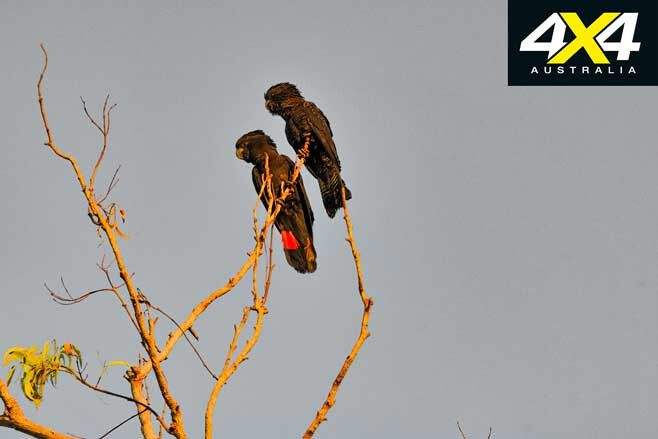
We organised a bird week, with myself as a guide. I was joined by an old mate from my Jabiru days, Johnny Estberg, and one of the NT’s most noted bird experts, Professor Richard Noske. We did two bird weeks a year for several years, plus I did many purpose-guided tours for individuals and small groups.
We had to take an Aboriginal guide with us to ensure we didn’t wander into forbidden areas. One was Stuart Aiken, who one day told me I was to be his brother, a great honour that meant I was to be accepted in his clan. I met his family members and others and was trusted to roam on their land alone with clients. Their land borders between the Cadell and Blyth Rivers, an area consisting of open flood plains, vast swamps, patches of monsoon rainforest, open woodlands and mangroves forests.
A network of tracks provides plenty of access, but if there are none the locals make their own with Land Cruisers and Troopies. I have seen them fearlessly driving into kilometre-wide swamps, following old walking paths. If a 4WD gets stuck, they may leave it there until the swamp dries out enough later in the dry season.
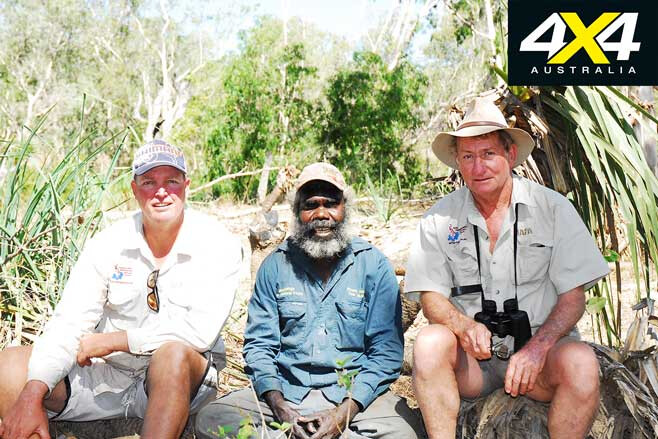
In search of rare birds, we travelled on bush tracks right to the base of the imposing Arnhem Land Escarpment. In the many outliers that jut out from the main range we discovered cave paintings that had never been seen by anyone, apart from local Aborigines.
One showed a woman being hit by lighting. I told the Indigenous guides that this had also happened to me, and I was an instant legend to have survived that – it’s true, and the reason I have a pacemaker fitted.
We were taken to burial sites, hidden springs and other rare treasures. The guides had never been there, but they had been told by the elders where they could take us and how to find such places, a rare happening indeed. The birding was outstanding and so was the game, with big boars and even bigger water buffalo adding an element of danger to the outings.
Arnhem land
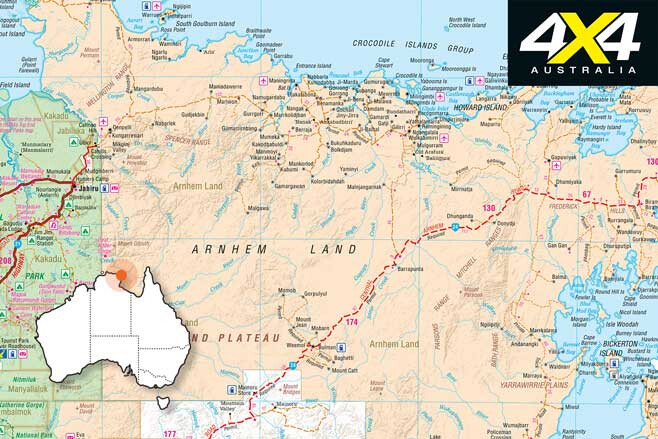
THE region was named by Dutch sea explorer Willem Joosten van Colster who sailed into the Gulf on the ship Arnhem in 1623. Later explorers, like Mathew Flinders, reported other boats in the surrounding seas including prau sailboats manned by Macassans who hailed from Sulawesi to harvest trepang, a harvest that started in 1705.
The trepangers had a major influence on the Aborigines, with some coastal tribes working for the fishermen. However, other tribes were not so welcoming and would attack and kill the trepangers if they landed on their shores.
Many Macassan words were learned and there were marriages, with some locals travelling home with the trepangers and returning the next season when the northwest monsoon winds were favourable. One Macassan word that is widely used is balanda, meaning white man.
When the Top End was settled in the early 1800s by the British, they had hopes of setting up a trading post with the trepangers but it never got off the ground. Later, when Darwin – or Palmerstone, as it was first called – was established, Europeans chased trepang, and as the Chinese outnumbered the whites 10 to one in the Top End in those days, there was a strong market demand for the sea slugs. Some whites would chase native girls, and this sometimes led to open warfare.
A custom officer, Alfred Searcy, was appointed to collect tribune from the trepangers in the 1880s. They were also discouraged, which led to the Japanese fishing the coast. The natives hated them with a passion and five Japanese were killed in Caledon Bay in 1932. The police sent in a patrol to arrest the culprits but withdrew when one of their own was speared on Woodah Island.
When word reached Darwin, there was uproar. A rum-fueled mob set out down the track but returned when they sobered up. Calls came from the deep south and orders for restraint, and the Church Missionary Society volunteered to bring the murderers to Darwin.
No one is sure how they convinced them, but the missionary lugger Holly landed in Darwin with the alleged culprits onboard. A lynch party formed, but were held back by the police.
The court case was a farce as none of the natives spoke English. The leader Tuckiar was found guilty and sentenced to death, while three of his men were given 20 years of hard labour. It created a storm of protest from the deep south and a High Court appeal was launched. Tuckiar was freed. He was taken to the Aboriginal Reserve in Darwin to await transportation back to his homeland, but he vanished and was never seen again. Due to the work and appeals from the missionaries, the other killers were set free in 1936 and returned home.

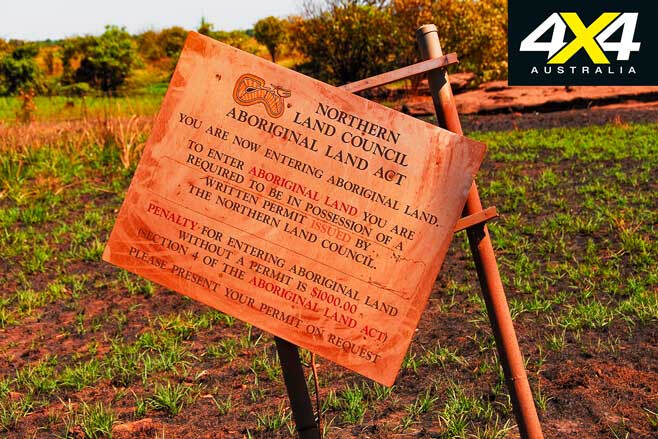
Even earlier, other happenings in the region led to the declaration of the 97,000km² Arnhem Land Aboriginal Reserve after two white trepangers were speared on Woodah Island. The reserve was off limits to whites and anyone going there did so at their own risk as no police protection could be counted on. Some persisted and paid for their folly.
Today, Arnhem Land is in transition. With a population of about 16,000, it remains sparsely settled with a handful of remote communities scattered about the region. Most are located on the Gulf of Carpentaria and Arafura Sea shores, as well as on offshore islands.
It’s difficult to enter Arnhem Land because it’s surrounded by seas on the west and the north, while to the south the NT’s largest perennial river, the Roper, marks the southern border. To the east, the 300m-high Arnhem Land Escarpment towers over the land. Only three roads enter this vast region, two from the south and the other from the east.
Adventures in Arnhem land
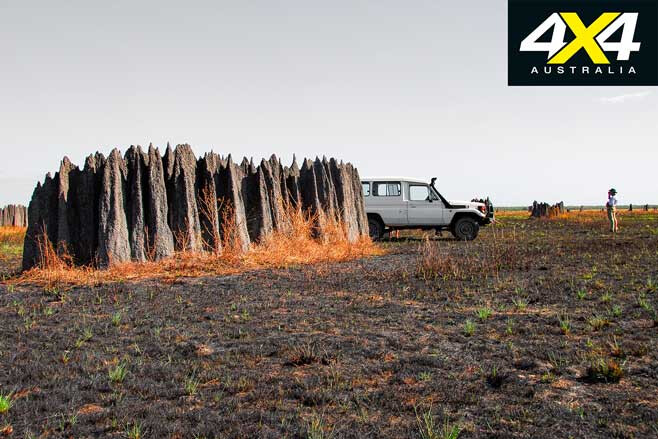
DUE TO my magazine duties and bird-guiding at the Arnhem Land Barramundi Nature Lodge, I have enjoyed many a stay there. I’ve mostly flown in, but there have been many times I have driven the 550km journey from Darwin.
The East Alligator River marks the boundary of the Kakadu National Park and Arnhem Land. Cahill’s Crossing is tidal influenced and very treacherous just after the wet season or when a “fresh”, caused by an upstream storm, sweeps down the river without warning.
A few years ago, Alex Julius asked me if I could take a Toyota Land Cruiser and a 5m plate boat to the lodge. It was just after the Wet season and from experience I knew that the crossing and the Central Arnhem Land Road were still treacherous. He told me that a main road inspector was en route to the lodge and would report back on road conditions.
So, Ken Phillips, a retired NT police sergeant, and I set off to time low tide at Cahill’s Crossing to perfection. Even though the river was high, we had plenty of weight onboard the Cruiser and the boat to keep it on the causeway.
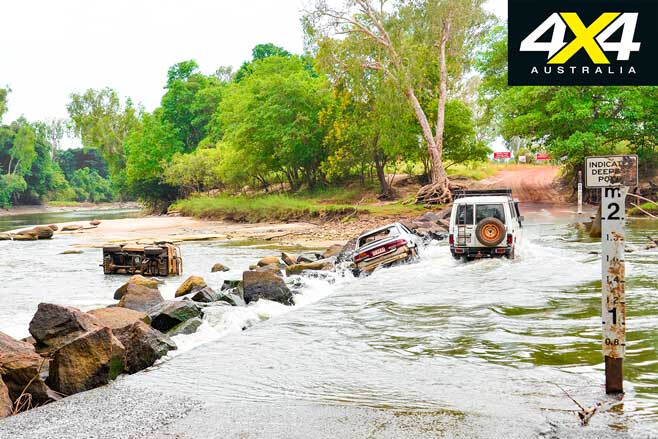
It’s a wonderland across the river – the place where the Crocodile Dundee II movie was largely filmed. There were plenty of wash-outs, but we took turns driving and took it easy. The King River was high but vehicle tracks on the other side indicated that someone had gone across it.
We made it okay, but the next river – the Gomadeer – has a sandy bottom. It was deep and flowing hard, but the powerful Cruiser plowed through it and the boat floated behind it. From here the road led through tall ancient monsoon woodlands before dropping down into paperbark tree country that was full to the brim with water that lapped the road or covered it in many sections.
For more than 20km we traversed the ti-tree swamps, the track marked by the wheel sets that had gone before us. Had we met anyone coming towards us someone would have had to do a lot of back-tracking. We reached rocky country where high, deep, running creeks dominated and slowed us down.
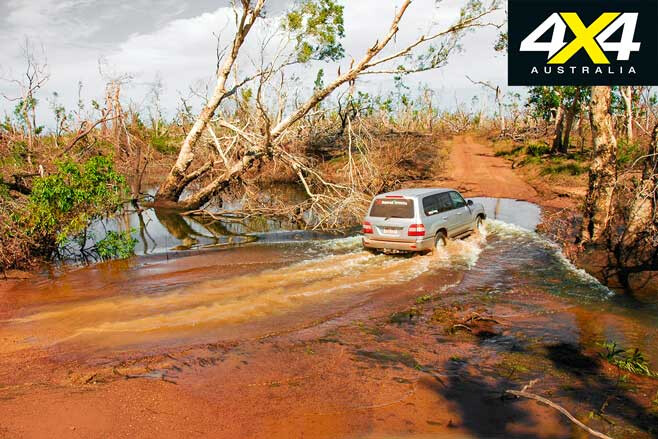
We also met the returning road inspector at a place where there was enough room to pass without dropping into the water-filled table drains. The inspector told us the rivers were running high and looked at the boat before wishing us luck.
We continued, directly into a huge “knock-em-down” storm. Another had formed behind us. These storms roam the Top End after the Wet and are called so because the powerful winds that create them blow everything that nature has no need for away. They also drop a lot of rain, up to 100mm in some instances; something we didn’t want.
We reached the Liverpool River, a 40m-wide deep stream. There was a lot of current in it, but with the windows open – ready for a rapid exit if needed – I drove into the current using the right bank. The water’s force pushed the Cruiser into the middle and I noted in the rear vision mirror that the heavy boat was floating and threatening to pull the Cruiser into the fringing pandanus that lined both sides of the crossing.
The rear wheels were starting to lift, before the front wheels gripped and I drove jubilantly onto the other side, the boat trailer pulling some pandanus leaves with it. It had been close; too close. Ahead lay the 100m-wide Mann River. Getting there was a feat, as most of the road was under water.
We breathed a sigh of relief when we saw the river, as it was down compared to the Liverpool. The Tomkinson River is shallow, but can be boggy. We made it and drove into the blackness of the big storm. Visibility was down to 40 metres, as lightning hit trees around us and the whipping wind blew leaves and branches into the windscreen. There were more ti-tree swamps and more flowing creeks and gullies, enforced by a “fresh” from the storm before we hit the high country and triumphantly drove into the lodge where Lindsay Muttiner handed us a beer for a job well done.
Deja Vu
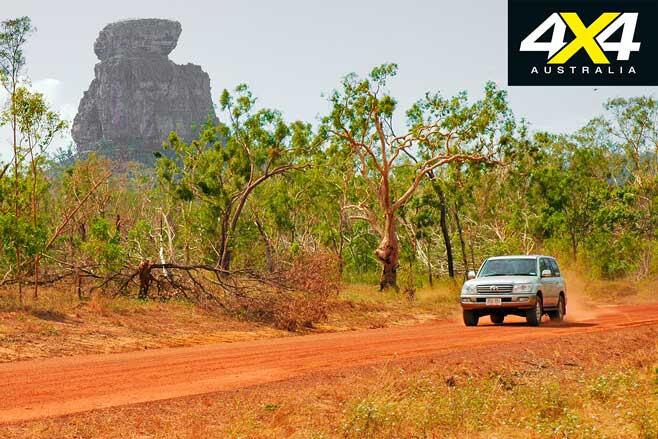
SOME years later, I drove a Toyota Troopie loaded with 1.5-tonne of supplies, mostly beer, to the lodge. It was mid-October, but already big build-up season storms were roaming the Top End. Along with me for the ride was fishing guide, Grassy. The East Alligator River had escaped a “fresh” so far and Cahill’s Crossing was shallow.
The Goomadeer River was running high and over the tyres, but we made it okay. There was a semi-trailer parked on the other side and the driver told us the Liverpool was up to the level of his trailer, which was about level with the top of the Troopie’s windows. He told us there was no way we would make it, but we were committed and the least we could do was have a look.
The river was high, but it had surprisingly little current in it. I put the Troopie in low range 4WD and third gear and committed ourselves to the river, even though Grassy wanted us to turn around and go back because storms were forming all about us.
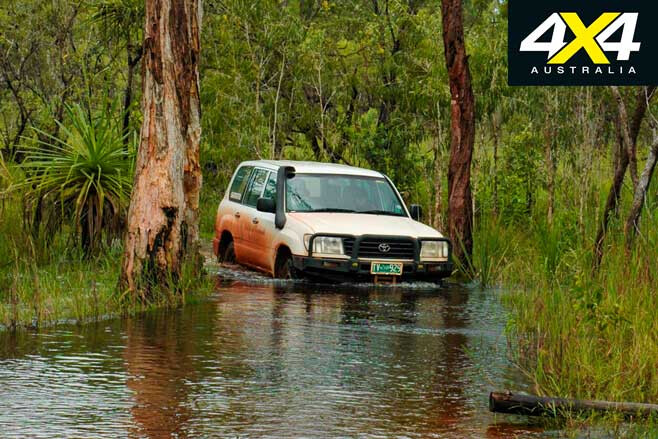
The stream was deep and flooded over the bonnet, with some water splashing into the vehicle on my side through the open window. There is no way I will wade a stream with windows closed and seat belts on, because if you need to evacuate there is no time to wind windows down and undo belts.
Also, of note, is that electric windows may not work once the whole system is flooded. Time and time again, I see TV presenters cross flooded or rushing streams with belts on and windows wound up.
We both breathed a sigh of relieve when the Troopie crawled out like a wet dog on the other side. There was about 50cm of water in the vehicle, but most drained away when we opened the doors.
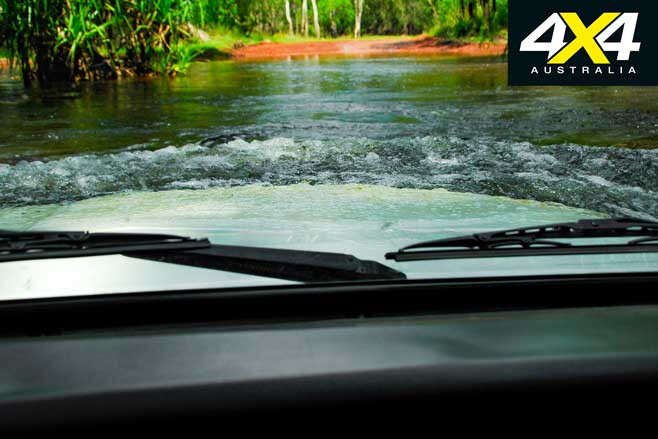
Ahead lay the 100m-wide Mann River, but getting there wasn’t easy as a storm had turned the road to mud. The Mann was running higher than I had ever seen it, even the island in the middle was underwater.
With Grassy on the camera and me on the wheel, we committed ourselves to let the Troopie do its work, and it never hesitated in the crossing. As it had done almost a decade before, a storm broke over us when we were halfway across, but we jubilantly drove out of it.
We noted slewing tyre marks near the Tompkinson River crossing and soon caught up to a 100 Series Cruiser towing a large trailer. The driver was surprised when I passed him. It was Seb Lord of Lord of Kakadu Tours, who was en route to Maningrida to pick up clients at the airport and take them back to Kakadu. He told us that it was his worst trip ever, but I don’t think he believed me when I told him about my trip some years before…
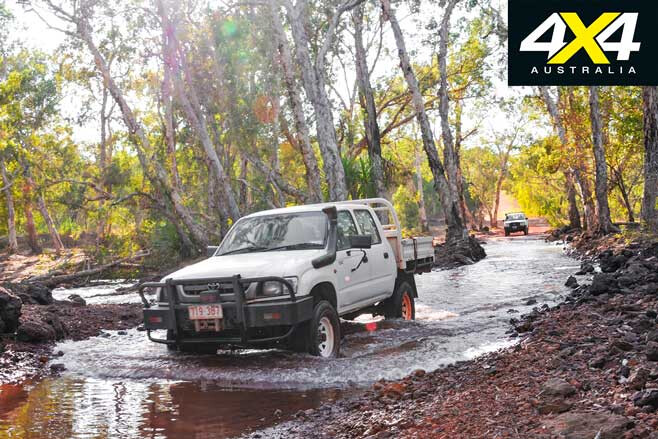
I fished for a week in the region before catching an Airnorth flight back to Darwin. The Wet proper set in during that week, with huge ground-shaking thunder storms and jagged lighting. Such early monsoon flows happen at times, perhaps every decade or so.
Arnhem Land is an exiting 4×4 adventure, but unless permits are issued by the Northern Land Council (www.nlc.com.au) the region is out of bounds for casual travelers, which is a shame as it has more to see than Cape York Peninsula.
After having established Formula E, series founder, Alejandro Agag, is now turning his attention to a new all-electric off-road racing series, Extreme E, and the Odyssey 21 racer will form the base car for all teams.
Debuting at last weekend’s Goodwood Festival of Speed, the Odyssey 21 is made up of standardised parts manufactured by Spark Racing Technology, with power drawn from a battery pack built by Williams Advanced Engineering.
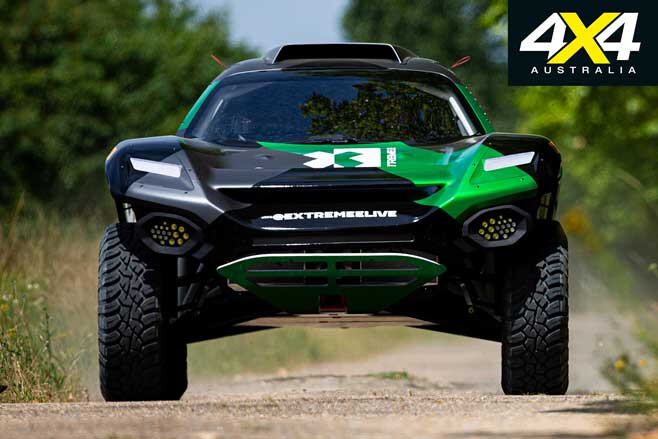
Spark Racing is the company responsible for developing and building the Formula E race cars, while Williams Advanced Engineering supplied the single-specification batteries for the first-gen cars that were used in the series’ first four seasons.
While the Odyssey 21 that debuted at Goodwood packed a 400kW drivetrain that is able to punt the 1650kg racer from 0 to 100km/h in 4.5 seconds and up gradients of up to 130 per cent, Extreme E organisers say that teams will be able to develop their own powertrain and tweak select areas of the bodywork to “reflect everyday road car models”.
The standardised bits of the Odyssey 21 will be its niobium-reinforced steel-alloy tubular frame, suspension system, braking and steering system, and crash structure and roll cage. Spark Racing aims to begin testing of the prototype in September, with delivery of the first dozen cars to participating teams to follow in March 2020.
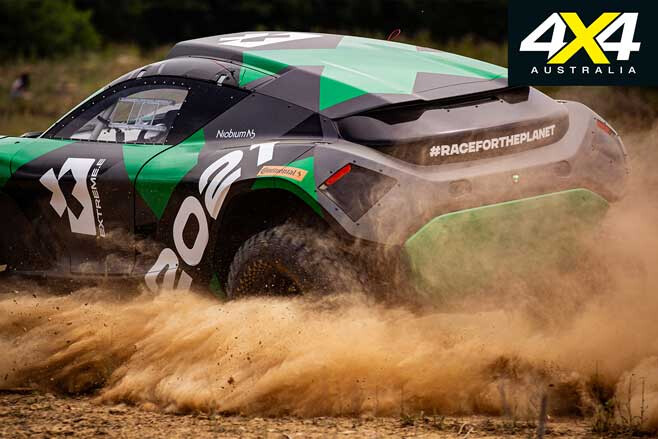
“Our challenge was to build a car that could face all the variations in surface and terrain, which will include gravel, rock, mud, ice, snow, water, and sand too,” said Theophile Gouzin, technical director of Spark Racing.
“Straight out-of-the-box in Season 1, the Odyssey 21 and its performance is going to be very impressive, exceeding the power and torque of WRC and rally raid cars,” he continued.
The Extreme E racing series, which will be a sister series to the Formula E series, is expected to have its inaugural season in early 2021.
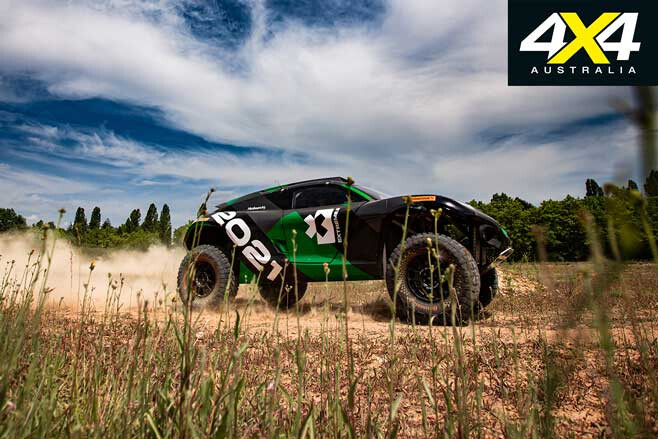
Race organisers are planning to hold an elimination tournament format on 6-10km-long off-road stages held in the Artic, Himalayan and Amazonian regions, as well as in the Sahara desert and on islands of the Indian Ocean.
According to the organisers, the locations were chosen to put the teams and cars through “one of the most testing but fragile environments in the world” in hopes that it will “help promote and accelerate the adoption of electric vehicles to help protect the planet and reduce air pollution”.
“Whether it’s in the Arctic, Himalayas, Amazon, Sahara or on Indian Ocean Islands, this car will showcase the ability of E-SUVs, not only to motorsports enthusiasts, but also to consumers who are looking to make their own difference to the planet by choosing an electric SUV,” added Agag.
TRAVEL anywhere outside of the capital cites in Australia and you can’t help but notice the proliferation of American pick-up trucks such as the Ford F-150 on our tracks and highways.
Chevy Silverados, Ford F-Series, Rams, Toyota Tundras and even the occasional Nissan Titan are all making far more regular appearances on our roads. This is despite the fact that none of them are OE-manufactured in right-hand drive or officially sold here by the manufacturers. It’s no wonder then that import and conversion companies such as Queensland’s Performax, and plenty of others, are doing such a roaring trade in selling them.
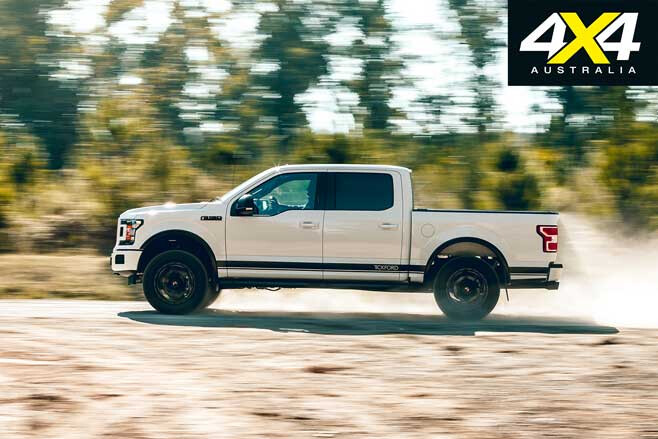
Ford F-trucks are a big part of Performax’s business, and the company recently teamed up with one of Australia’s leading Ford tuning experts, Tickford, to create a special high-performance package for the F-150.
The package is based on the popular double-cab F-150 powered by the EcoBoost V6 petrol engine and 10-speed auto transmission, with updates to the performance, suspension and styling. The Tickford F-150 is available exclusively through Performax dealers around the country.
The V6 EcoBoost/10-speed combo is a similar package to that used in the F-150 Raptor, so it provides a great baseline to start from. In standard trim it produces 280kW and 637Nm, so that’s nothing to be sneezed at, but with the Tickford tweak it now pumps out 354kW and 780Nm.
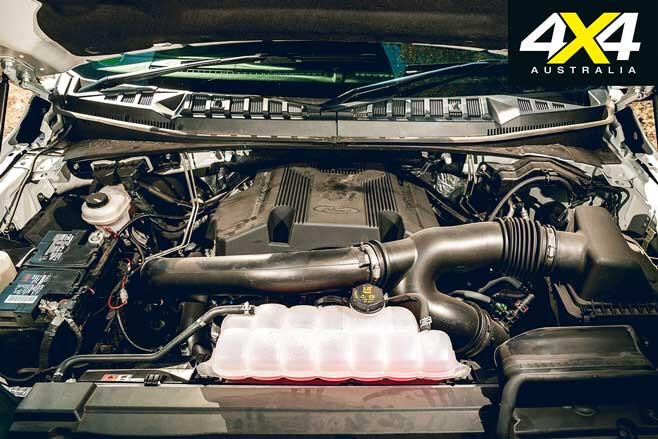
That’s more power and torque than the high-output version makes in the Raptor, so we were keen to try it out and answer the question: would it be better with a V8? For the record, the 5.0-litre petrol V8 that is available in the F-150 only makes 287kW and 524Nm in standard trim, so the twin-turbo V6 well and truly trumps it for grunt.
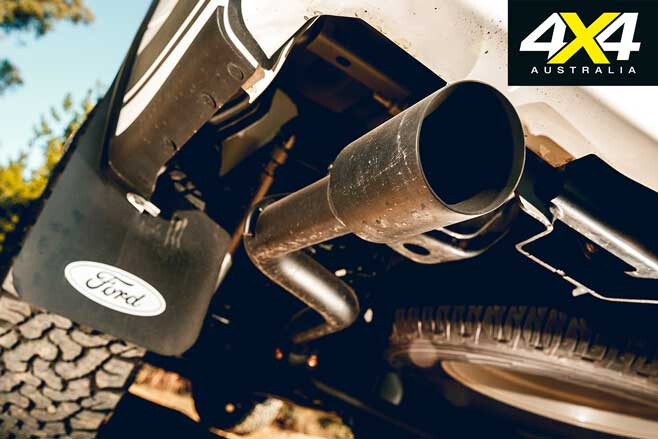
The Tickford tune helps make the most of the free-flowing cat-back exhaust system, which gives the EcoBoost engine a rorty exhaust note. It’s not a sweet sound, and it can drone a bit at touring highway speeds.
The regular F-150 doesn’t benefit from the Raptor’s synthesised exhaust note that is pumped into the cabin through the speakers, so that’s not included in the Tickford truck. Aftermarket exhaust manufacturers in the US have told us that you can’t make the EcoBoost V6 sound any good, and from what we’ve heard so far we have to agree with them. It’s certainly no V8 rumble and roar.
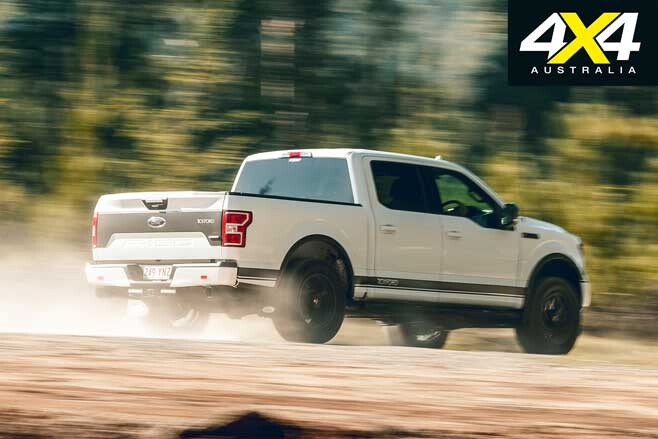
What you can’t argue with is the performance, and the tuned V6 helps the lightweight F-truck get up and boogie. The torque is V8-like and gives the 2300-odd-kilogram F-150 the mumbo to match its tough looks. Yep, the F-150 weighs around the same or even less than many of our popular one-tonne 4×4 utes, as the latest generation of F-trucks are made using weight-saving aluminium panels to improve performance and fuel consumption. FYI, the Tickford Effie returned 12.4L/100km over our week with it.
Most pick-up truck buyers will measure performance in payload rather than zero to 100 times or fuel efficiency, and the V6 EcoBoost F-150 is rated to a 934kg payload and monster 5216kg towing capacity. Try hauling that with your Ranger or other one-tonne 4×4 ute. We only sampled the Tickford Effie unladen but have no doubt that its hauling abilities would far outshine any of the more common 4×4 utes you see on our roads.
Another area that the one-tonners can’t compete with the US pick-ups is rear seat space. Squeezing adults into the back of any of the popular utes is unhealthy, while the rear seat in this F-150 Super Cab offers heaps of leg, shoulder and head room. If that’s not enough there’s always the Super Crew Cab available on the same model. The floor in the back is high and gives the passengers a knees-up seating position, but there’s plenty of space for their legs back there so they can ride in comfort.
Not quite so comfortable is the suspension setting on the Tickford truck. The F-150 runs a conventional light-truck setup comprising IFS with coil springs and a live rear axle riding on leaf springs. Tickford has fitted Fox Racing 2.0 shocks and springs all around, and while the brand is the same as on the Raptor, the tuning is not. While the Raptors are tuned for a soft, compliant ride, the Tickford package is firmer and more on-road oriented. This setting benefits the tow and load capacities which, in the Raptor, are compromised for better off-road performance from the big truck.
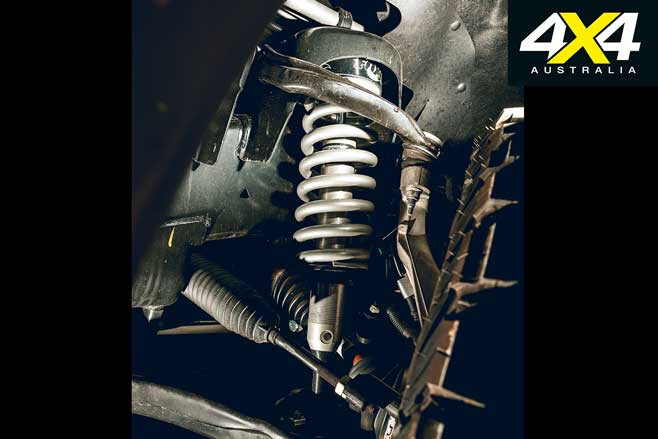
In the unladen test vehicle we found the ride to be firm and jittery, traits we expect would improve with more weight on-board. The high-quality components did, however, do well to control the vehicle at speed on the rough logging tracks we drove on, and the faster we drove the better they felt.
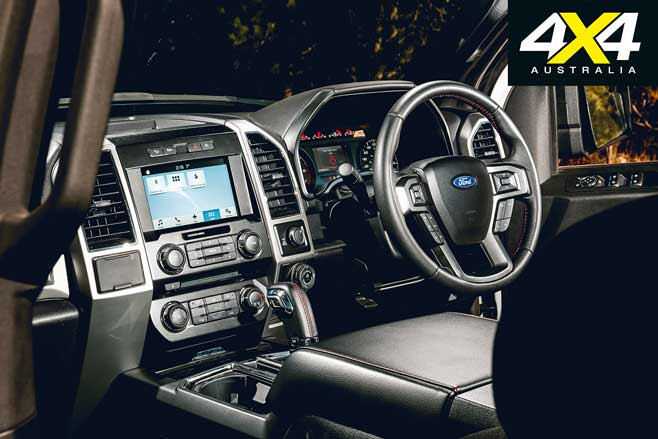
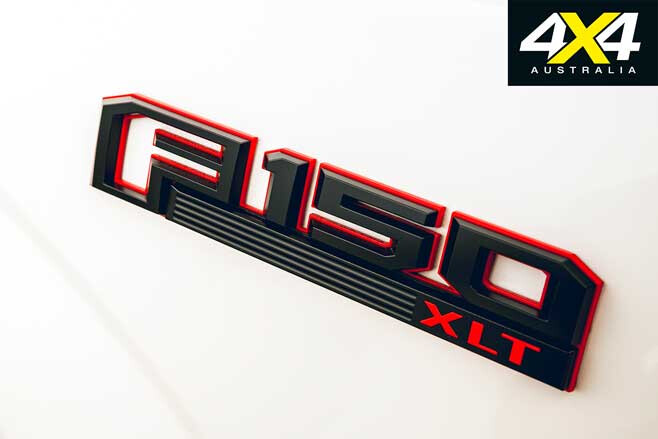
This test vehicle is an F-150 XLT Super Cab with the optional Sport styling package. The pack gives you those red-edged badges, black grille and bespoke interior trims. It’s reasonably well-appointed with many features you’ll appreciate, but we found the absence of leather seats or climate control to be a glaring omission in a $145,000 vehicle.
To get these features, plus a whole lot more, you need to step up to the Lariat model which will cost you an extra $10K. The $145,000 for this vehicle includes the $24,500 for the Tickford enhancements. Also notably absent were Australian maps within the Ford SYNC 3 sat-nav system. Performax is currently unable to update the US system to accept local maps, but say they are working on a solution.
Aside from the performance enhancements the Tickford kit includes 20-inch wheels wearing BFGoodrich All Terrain tyres, Tickford-branded side-steps, bespoke badging and decals inside and out, and wheel-arch flares. It’s a more subdued and stylish appearance package than some of the Tickford vehicles we’ve seen in the past, and it’s a package that looks the part and attracted plenty of attention while we were driving it.
While it might cost as much as two brand-new Ford Rangers, the Tickford F-150 can safely tow five tonnes, comfortably accommodate five passengers, has far superior performance from its turbocharged petrol V6, and looks cool to boot. The price of a new F-150 might leave it off the shopping list of many a new ute buyer, but the lucky few who do get one will be justly rewarded.
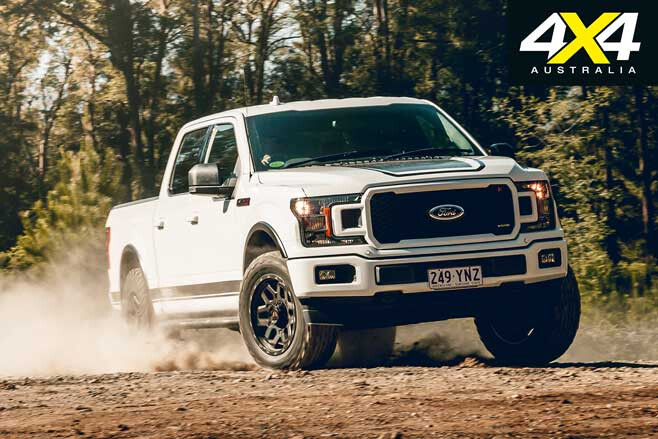
2019 TICKFORD FORD F-150 SPECS Engine: 3.5-litre V6 twin-turbocharged petrol Max Power: 354kW Max Torque: 780Nm Gearbox: 10-speed automatic 4×4 System: Part-time with low range Construction: Four-door pick-up on ladder-frame chassis Front Suspension: Coil-sprung double wishbone IFS Rear Suspension: Leaf-sprung live axle Kerb Weight: 2300kg (approx.) Payload: 934kg Towing Capacity: 5216kg Fuel tank capacity: 87L ADR fuel consumption*: N/A On-test fuel consumption: 12.4L/100km Price: $145,000 + ORC
*Australian Design Rule ‘Combined-Cycle’ claim
Import Duties
PERFORMAX imports and converts pick-up trucks from Ford, Chevrolet, GMC, Toyota and Nissan in various specifications, capacities and models to suit a wide range of buyers. Whether you’re after a heavy-duty 3500 truck for hauling a large boat or horse float across the country, you can’t live without the awesome F-150 Raptor, or you just want a stylish and spacious truck for the entire family, Performax has a pick-up to suit your needs.
The F-150 is America’s best-selling vehicle and it’s also popular here. Performax sells them in a range of variants starting with the F-150 XL from $95,000; then there’s the XLT like the one tested here from $110,000; the Lariat from $120,000; and the top-of-the-range Platinum, priced from $140,000.
Want to step up to the F-150 Raptor? That baby will set you back a cool $180,000, but being able to look down on all the Ranger Raptor drivers would make every dollar worth it.