
IT’S ALWAYS fun to compile ‘best of’ lists. It gives us something to crap on about in the office or around the campfire before we eventually put pen to paper and publish our judgements. Then it’s over to you lot to chime in on what we’ve got wrong, what should be at the top of the list, and what shouldn’t be. That’s when the real fun starts.
For the August 2019 issue of 4×4 Australia (out now!) we compiled what we think are the most off-road-capable 4x4s off the showroom floor, and our road test maestro Fraser Stronach tells us why each of them is on the list.
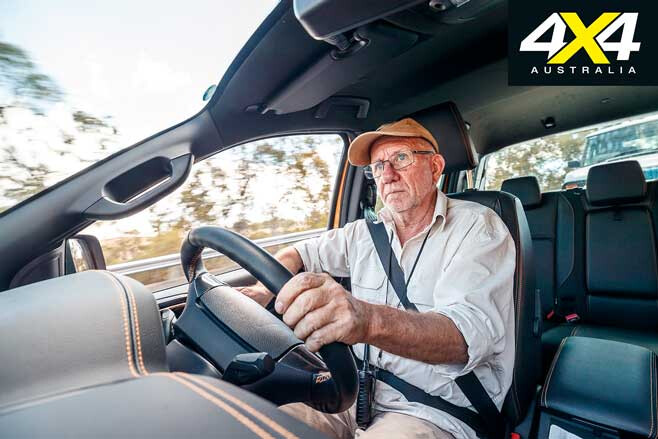
We’ve called them the Serious Seven. Most of you will probably say the two Land Cruisers on the cover of this issue trump anything on that list, but that’s not what this is about. Yes, they are probably better off-road – in fact, I’ll guarantee they are – but they are heavily modified and not showroom-stock.
When we say off-road we’re not talking about driving across Australia on gravel highways. We mean genuine off-roading, as in no roads, cross-country, forge your own trail stuff that no showroom stock vehicle is made for … unless it’s a Cat D9 or similar. Thankfully, we are blessed with an incredible aftermarket industry and clever fabricators to help us create our own ultimate off-roaders.
So take a look at our list and let us know your thoughts. Jump on our Facebook page and tell us what you think is the best showroom off-roader and why we’re wrong. We’re lucky enough to have driven them all in bone-stock trim, so we probably have a head start on most of you.
THE 2020 MITSUBISHI Pajero Sport has debuted with revised styling and a refreshed interior, with the off-road-ready wagon slated to land on local shores early in 2020.
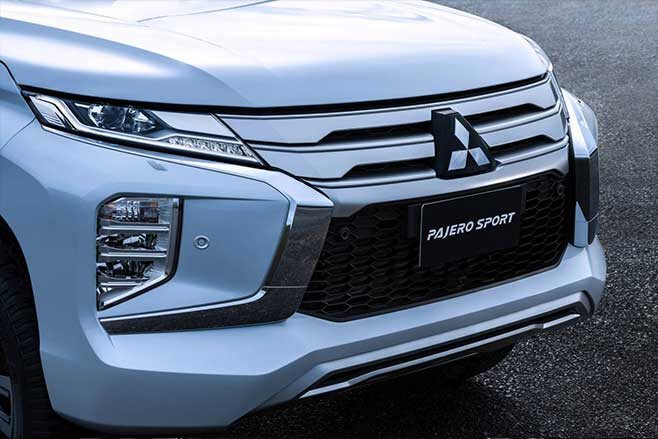
Officially launching in Thailand, the Pajero Sport’s front-end wears a version of the brand’s Dynamic Shield design – as seen on the 2019 Triton – that results in high-set headlights, repositioned fog lights and a tweaked front grille. The wagon now wears alloy wheels and, at the back, the length of the tear-drop tail-light has been shortened.
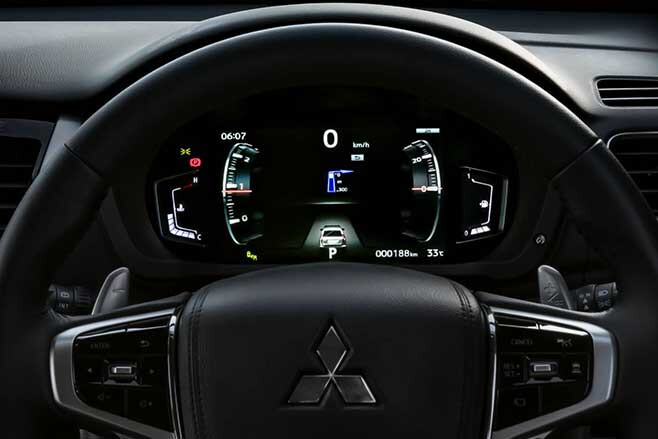
On the inside, the Pajero Sport has been sharpened with a new digital instrument display within the dash, while an eight-inch colour LCD screen – complete with Apple and Android link functionality – now resides in the centre console.
With the 2020 Pajero Sport, Mitsubishi’s design team made an effort to improve the vehicle’s ease of use. On this front, a power-operated tailgate has been installed – and will be available on upper-spec models – which can be opened by foot motion or via Mitsubishi’s smartphone app. Of note, the app will also notify drivers to lock the car doors if they’ve been left open.
The 133kW/430Nm 2.4-litre turbo-diesel engine, mated to an eight-speed automatic transmission, remains the drivetrain of choice, while the Super-Select 4WD II system is also retained. In terms of new tech, the Pajero Sport does pick up Land Change Assist and Rear Cross Traffic Alert safety functions.
The Pajero Sport is built in Thailand and will be sold in approximately 90 countries around the world. It will be available to Australian buyers early in 2020.
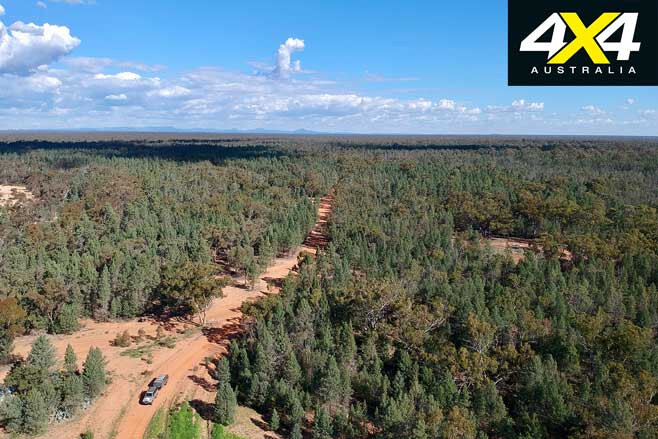
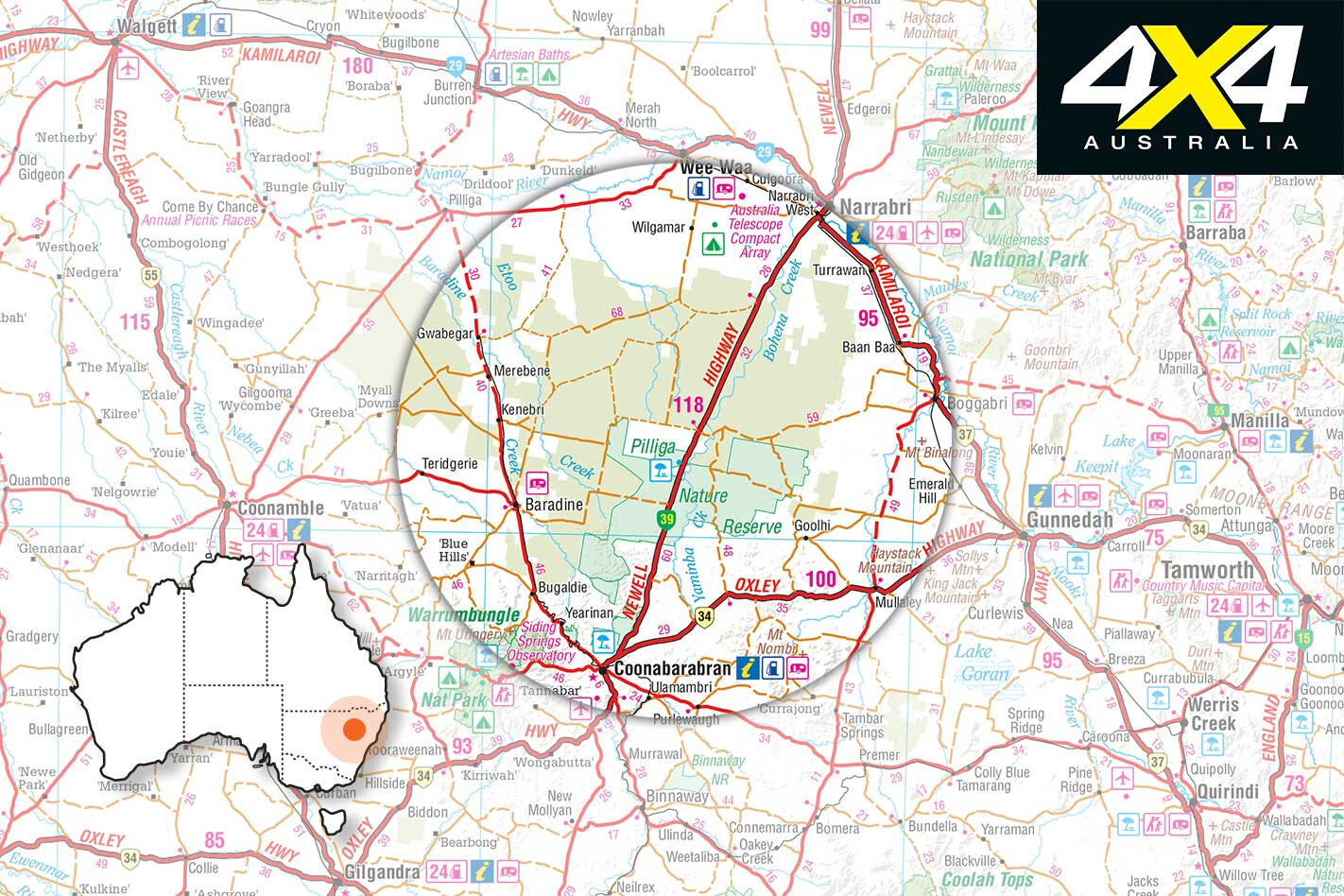
It’s hard to find unique areas these days without travelling plenty of clicks from civilisation, but we recently found a rare pocket within mid-western NSW. The Pilliga is a flat 3000km² area of dense bushland that has significant meaning to the local Kamilaroi people, who have called this place home for nearly 30,000 years.
Located midway between Narrabri and Coonabarabran the Pilliga is a maze of signposted tracks that crisscross each other, and it’s said it would take a week of driving to complete all the roads within. The best bet to avoid this but still explore the area’s secrets is to head to the local discovery centre in Baradine and grab a map and some local information on where to start.
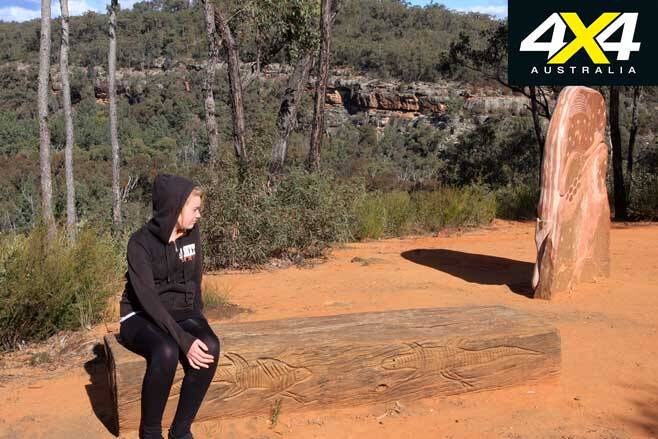
Our trip began by heading to the Sculptures in the Scrub picnic area and campground, about 35km away. The roads mostly have a sandy and gravel base and are generally in good nick, but the dry creek crossings can be a little rough in spots. The sculptures, designed and made by local elders, are a welcome sight for anyone meandering along the hour-long Dandry Creek gorge walk.
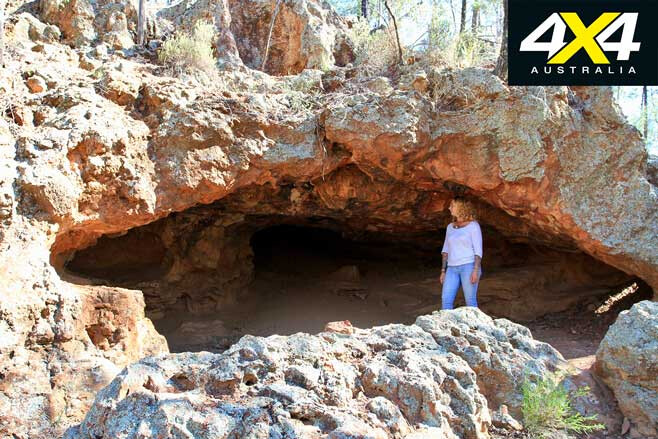
We pushed on to the Salt Caves, an hour’s drive north, where the NPWS has set up a great picnic and camping area with tables, water tanks and barbecues. Salt was ‘mined’ from the caves back at the turn of the century, and people used to come from miles away to bag salt blocks from deep within the cave network.
It has been reported that the caves were once up to a mile deep, but, sadly, they’re now only about 20 feet deep. A 200-metre walk above the caves leads to a new steel fire tower that you can freely and legally climb. While all is safe, it’s not for the fainthearted, as the climb is nearly 100 metres high.
If you do reach the top, the view across Pilliga NP is nothing short of spectacular. NPWS has installed a viewing ring that marks landmarks and their distance from the tower: 100km to the south you can see the Warrumbungles, while Mount Kaputar NP is to the north.
At the base of the tower there’s a 2km walk to a tower dam and birdwatching area. With a high diversity of birds in the area, we were lucky to see emus, parrots and wrens. One of the best things about the Pilliga is that you can free camp within the forest at designated spots, including at Sculptures in the Scrub and Salt Caves.
It’s hard to tear yourself from this place, but with time ticking away we wanted to head some 40km farther north to the now-isolated town of Pilliga. All that remains of the town is the pub and small store, but its history and natural beauty will last forever.
The area of Pilliga was once the home of many Indian people, where local traders would travel to outstations and villages to sell their wares. The local cemetery commemorates these hardworking people with large ornate headstones and colourful decorations.
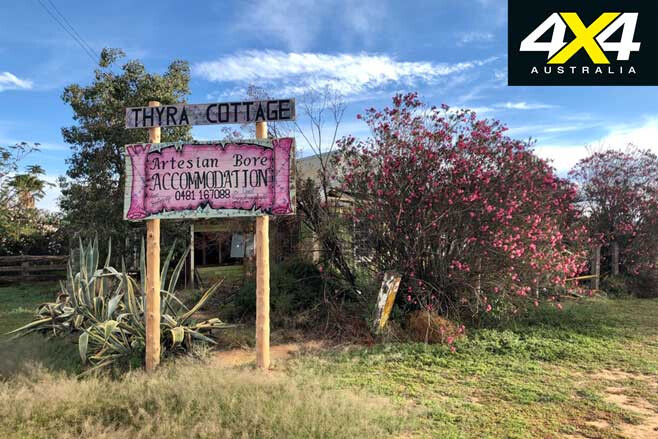
Located just a stone’s throw out of town are the Pilliga hot baths, where for a very small fee you can set up camp, make a fire, use the provided toilets and hot bore shower, and soak in the hot artesian bore water that comes from deep within the ground.
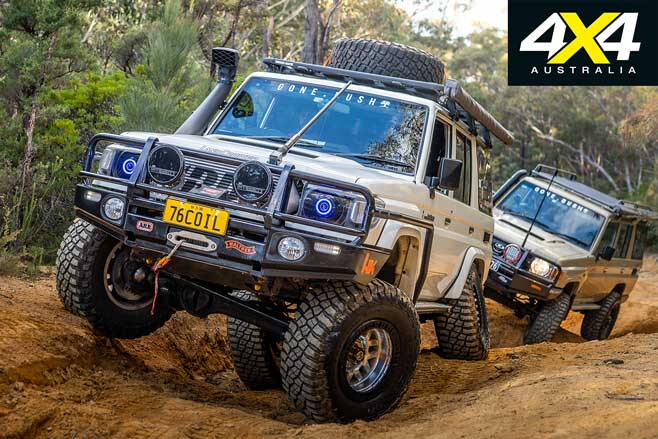
THE TWIN towers adorning the cover of 4×4 Australia August 2019’s mag are a pair of coiled Cruisers customised by two brothers in law. Off-roading is best spent with friends and family anyway, isn’t it? The pair of 70 Series Cruisers have been meticulously tinkered and both feature a generous smattering of aftermarket kit.
Customised metal in this issue doesn’t end there, though, with DBOR producing the first Australian-modified JL Wrangler. The orange Overland was even revealed before the JL’s official Australian debut, and it’s both eccentric and unstoppable.
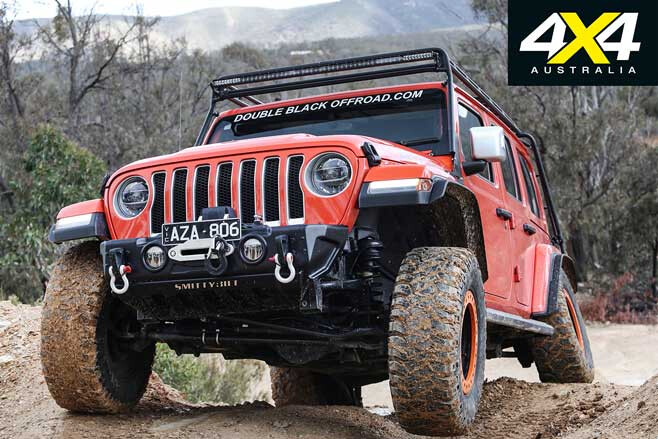
Customising a 4×4 mightn’t be everyone’s cup of tea – time or budget restraints, perhaps? – so we’ve listed the seven best stock vehicles currently in showrooms that are ready, as they are, to tackle some seriously wild off-road tracks … and yes, the Jimny made the cut.
A few new vehicles also arrived locally recently, and in this issue we carve a path through the twisties with both the 2020 Colorado and LDV T60 Trailrider.
In this issue we also take a look at three disparate wagons with very different price tags: the Jimny, the G-Class and the Wrangler.
Plus, MSA’s 6×6 build hits a few hurdles, we tackle a few well-known tracks in the Chillagoe and Pilliga regions, and we review a bunch of new off-road kit including the forward-fold Cub Camper.
WHAT ELSE IS THERE? – Exploring Condon to Marble Bar. – Ford Ranger project car enters the 4×4 shed. – 1976 FJ40 update. – Readers Rigs. – Product tests, regular columns and heaps more.
The August 2019 issue of 4X4 Australia will be in stores from today, July 25.
IT IS NO secret that Ford has put revolutionary plans in motion for its popular Ford F-150 pick-up.
The American giant has already confirmed it will be building an all-electric F-150, with a hybrid F-150 model set to be released next year.
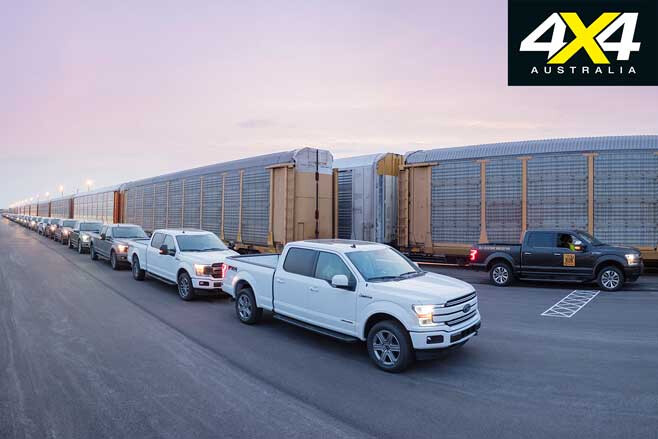
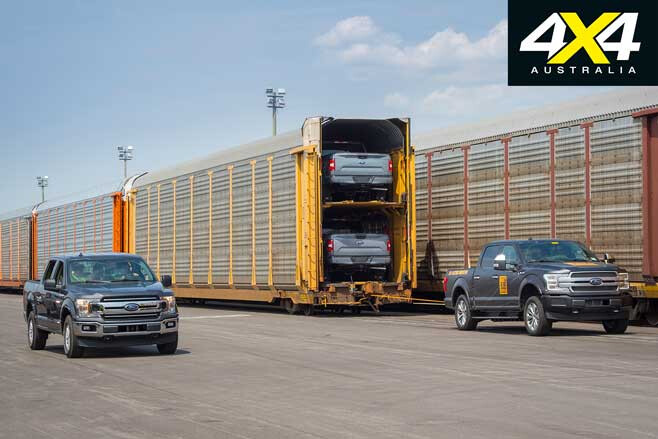
To demonstrate the potential of what an all-electric drivetrain can do, Ford hooked up a prototype to ten double-decker rail cars, loaded the carriages with 42 conventional F-150s, and towed it a short distance in a promotional video.
All tallied up, the weight of the rail cars and F-150s is said to be more than 560 tonnes. That being said, Ford has absolved itself from any responsibility of copycat stunts by stating that towing such loads is “far beyond a production trucks capacity” and it is a “one-time short event demonstration”.
Nevertheless, such towing performance from an electric pick-up should be expected thanks to the immediate high-torque delivery of an electric motor.
For comparison, Detroit-based start-up Rivian Automotive touts an 11,000lbs (approx. 5000kg) tow rating for its R1T all-electric pick-up truck. By comparison the Ford F-150 Raptor only manages a 2721kg tow rating.
While there is little to complain about regarding a torque-laden electric drivetrain, the main concerns about electric pick-up trucks and 4x4s include range and the availability of convenient charging infrastructure.
That being said, it should be noted that Ford has ploughed USD$500 million into Rivian with plans to form a partnership to collaborate on an upcoming Ford electric vehicle. It looks unlikely that the upcoming collaboration will be the aforementioned all-electric F-150, but it wouldn’t be surprising if Ford learns a thing or two from its start-up counterpart.
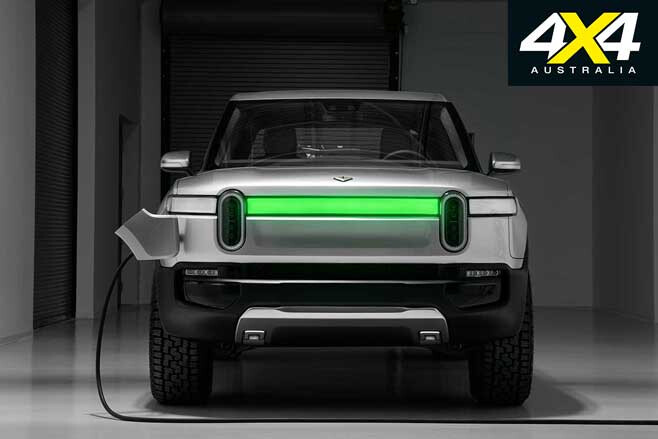
Rivian claims that its R1T pick-up will be made available with three battery sizes that offers 400+km, 480+km, and 640+km range, all of which can be charged at rates up to 160kW, which will give 320km worth of range in 30 minutes.
If the upcoming all-electric F-150 comes close to matching the R1T’s range figures, then the future prospects of the F-Series pick-up truck looks to be in good stead.
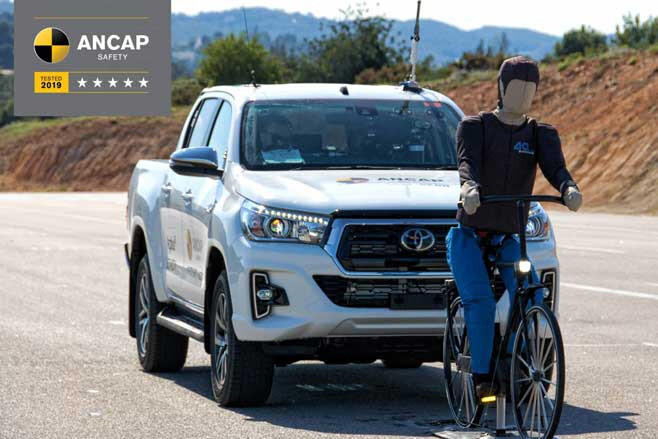
AUSTRALIA’S best-selling vehicle, the Toyota Hilux, has been awarded a five-star safety rating by independent vehicle safety authority, ANCAP.
Despite already being a five-star rated vehicle, the new rating was awarded under ANCAP’s revised and ever-more stringent 2019 testing parameters.
The revised rating follows a string of mid-life safety upgrades recently introduced to the eighth-gen Hilux, which includes a suite of collision avoidance technologies: autonomous emergency braking (AEB), active lane keep assist (LKA) and an advanced speed assistance system (SAS).
“This is certainly an important move for Toyota customers, the segment, and more broadly, the market,” said ANCAP Chief Executive, James Goodwin. “Significant upgrades have been introduced to the updated Hilux to enhance occupant protection and prevent collisions with other road users.
“While already a five-star vehicle, it is encouraging Toyota Motor Corporation Australia is the first to put forward a vehicle with improved safety specification to undergo re-testing against current, more stringent ANCAP criteria in order to update its rating date stamp,” Goodwin said.
A total of 19,516 Hilux 4x4s have been sold to date (up to June, 2019), edging out Ford Ranger 4×4 sales (19,258) – the entire Ranger line-up, including the Raptor, copped AEB as standard back in March this year.
“The standard inclusion of these advanced driver assistance systems across the Hilux range is a welcome move and one which will make this model even more appealing to private and fleet buyers, with many fleets insisting on five-star rated vehicles with a ‘TESTED’ date stamp of no older than three years,” James Goodwin added.
“Utes are the most popular choice among Australian and New Zealand consumers, and no matter the use, the highest levels of safety should be provided.
“This is a strong example of market-driven change,” he added.
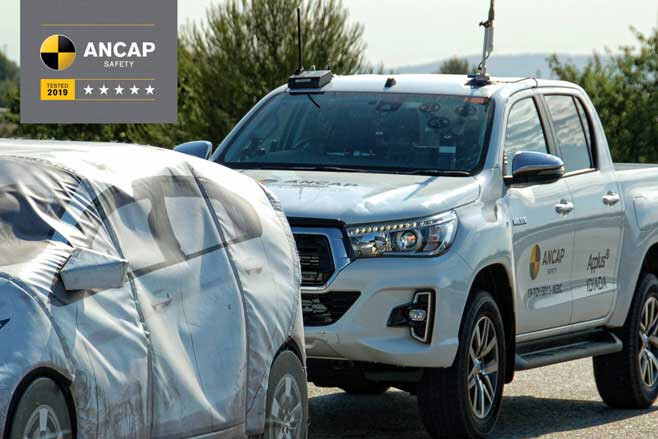
The Hilux received the following scores: Adult Occupant Protection (96%), Child Occupant Protection (87%), Vulnerable Road User Protection (88%) and Safety Assist (78%).
The ANCAP report states: “This ANCAP safety rating applies to updated Single Cab and Dual Cab Hilux variants built from May 2019, and Extended Cab variants built from August 2019. Updated Single Cab and Dual Cab variants became available from July 2019, with Extended Cab variants available from late August 2019.”
SINCE the collapse of Holden on local shores, HSV has had to radically shift its business mindset. No longer able to rely on luring punters with its gruntier versions of the now-extinct Holden V8 Commodore sedan, one of HSV’s main projects is a dual-cab 4×4 ute with a 2.8-litre Duramax diesel engine. With LCV sales continuing to blossom in a declining overall new-car market, it’s hardly a surprise.
HSV imports the Z71 Colorado from Thailand in dressed-down form – steel wheels and basic front pews, for example – as it bins the unnecessary parts anyway. The all-Australian brand then turns the Z71 into the HSV SportsCat at its 18-month-old Clayton facility in Melbourne, Victoria.
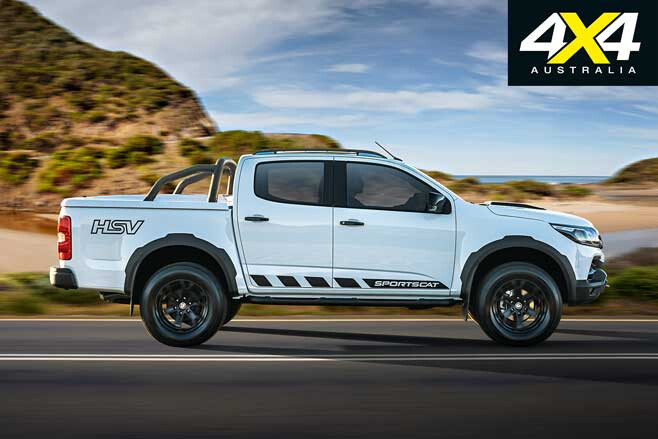
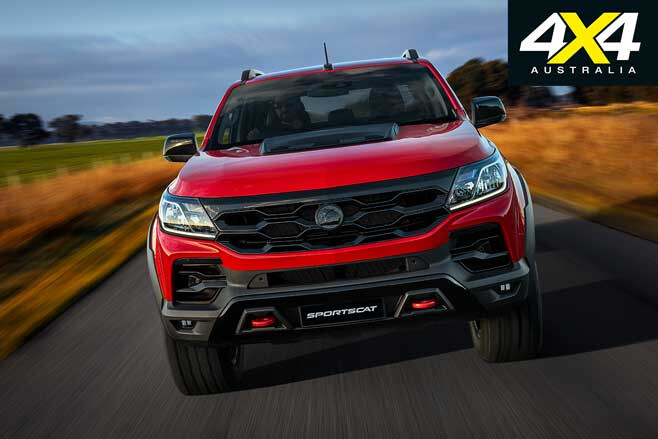
For this Series 2 update, this meant embracing the Series 1 SportsCat while turning the ‘aggression’ dial up even further. Gloss black treatment has been applied to the front grille and lower inserts – as was the case with the limited-run SportsCat RS – while there’s also a ‘for show only’ matte-black bonnet scoop. For the Series 2 SportsCat, HSV’s design team decided to scrap the subdued style option and offer the more radically stylised version only. This includes the chain-link design on the front grille, which is replicated on the fender flares and imprinted on the black tubular side steps.
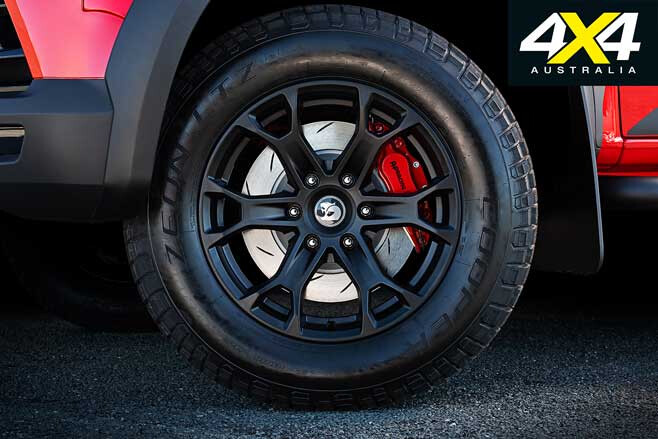
New matte-black 18.0 x 10-inch split-spoke forged alloys wheels, which weigh just 12.6kg each, add to the exterior’s menacing appearance. These are wrapped in Cooper Tires Zeon LTZ Pro All-Terrains, developed by Cooper Tires USA specifically for HSV.
The Cooper rubber was built to offer a balance of on-road comfort and off-road readiness, while their overall rolling radius has lifted ride height by 20mm. When combined with an increase to the front spring height – up by 25mm – the overall ride height has been lifted by a total of 45mm. This wheel-and-tyre package, as well as a wider track, gives the SportsCat a brooding stance that is 30mm wider than its predecessor.
Holden, SportsCat and HSV branding is prominent throughout the vehicle, with the rear-end visually enhanced via a matte-black tailgate and matte-black sailplane. The hard tonneau features a quick-release mechanism, while the tailgate utilises an EZ-down strut to prevent bruised limbs and fingers.
The powertrain remains unchanged, with the SportsCat continuing to run a 2.8-litre turbo-diesel engine that’s good for 147kW/500Nm (auto) and 147kW/441Nm (manual). While both six-speed manual and six-speed automatic transmissions are offered, manual variants only account for two per cent of overall sales; however, as it doesn’t affect its bottom line, HSV is happy to continue offering cog-swapping variants.
While HSV may be a brand synonymous with power and performance, striking that balance with the SportsCat – offering more power – was a matter of weighing up budgets and ever-stricter emissions regulations. After deliberation, HSV decided money was better spent elsewhere. However, a Walkinshaw ECU power hike is available for those desiring more performance – a 20 per cent improvement, in fact – and it can be installed by Walkinshaw at purchase, without voiding the new-car warranty.
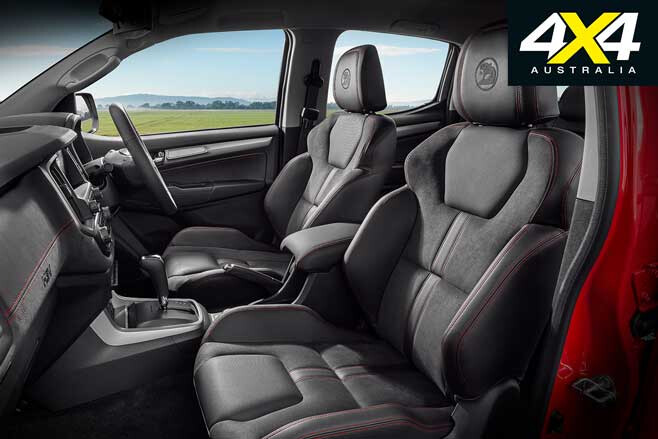
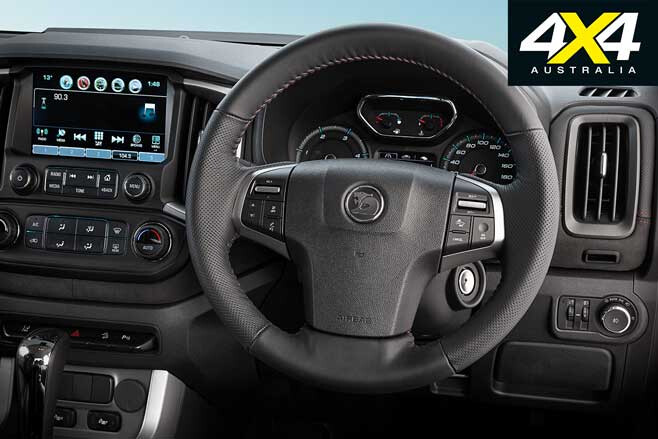
A drive day at Holden’s Lang Lang proving ground on a drizzly winter’s day allowed us to stretch the new SportsCat’s legs on a variety of road surfaces. However, before even firing the Duramax donk to life, a few in-cabin improvements were obvious. Namely the snug, bolstered front performance pews embedded with Windsor suede inserts, and the fat, perforated steering wheel; both valid improvements and both feel great.
Under heavy braking and during high-speed cone work, the SportsCat remains surefooted, with body roll mitigated courtesy of the tweaks to the suspension and the addition of the rear anti-roll bar (SV only). Those bespoke tyres also excel on the bitumen, inspiring confidence to push the SportsCat through corners harder and faster; at times you forget you’re driving a dual-cab ute.
The SportsCat 2’s suspension set-up was tweaked to find a greater balance between road and dirt driving. This was achieved in part by increasing the front spring rate (to 110N/mm) and height (by 25mm), and tuning the MTV dampers (front and rear). Off-road capability has also been improved courtesy of improved approach (32°), breakover (27°) and departure (24°) angles, while ground clearance is now 251mm.
A quick spurt on Lang Lang’s off-road circuit, soaked due to recent rainfall, proved the SportsCat finds a great balance between on-road comfort and off-road prowess. It also provided the opportunity to experience the 22mm rear de-coupling anti-roll bar – standard on SV and optional on V – that disconnects when transitioning into 4WD Low and improves off-road control and manoeuvrability
HSV’s chassis engineer, Dave Kermond, explained to us on Lang Lang’s high-speed dirt road circuit that one of the most important and underrated inclusions was the addition of a larger master cylinder, a vital part of the brand’s AP Racing Brake Package. The updated master cylinder now measures 25.4mm (up from 22.8mm) and provides the driver with greater pedal feel and more assuredness with the vehicle’s stopping gear.
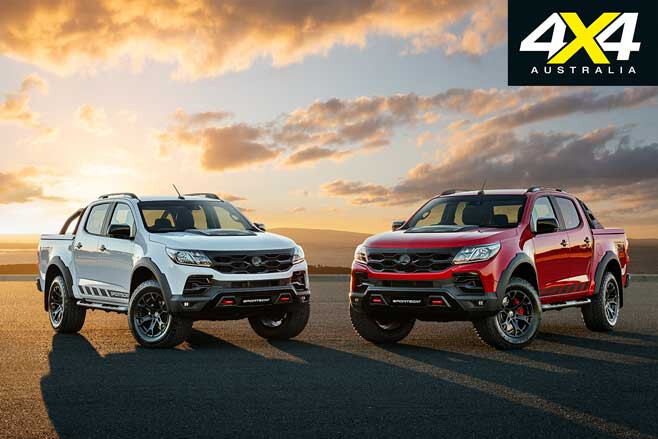
The AP Racing Brake Package also comprises four-piston forged calipers and 362 x 32mm front rotors. The package is only standard with the SV, but it can be added to the V at an extra cost. Due to the number of upgrades to the vehicle, HSV’s engineers also spent considerable time, both here and in the USA, recalibrating the SportsCat’s ESC system.
The SportsCat 2 mated with the six-speed auto has a payload capacity of 876kg (including passengers), while the manual has a capacity of 869kg. Pricing for the SportsCat V starts from $62,490 (manual) and $66,790 (manual) for the SV.
LESS THAN a year since American tuner Hennessey first announced it will be building a 6×6 beast based on the 2019 Chevrolet Silverado, the company has rolled out its first production Hennessey Goliath 6×6.
Plenty was done by Hennessey to turn a standard Silverado Z71 into the aptly named 6×6 pick-up truck. Aside from the new custom truck bed that stretches over the additional rear axle, the Goliath towers high on an eight-inch lift kit and rides on 20-inch wheels wrapped in BFG off-road tyres.
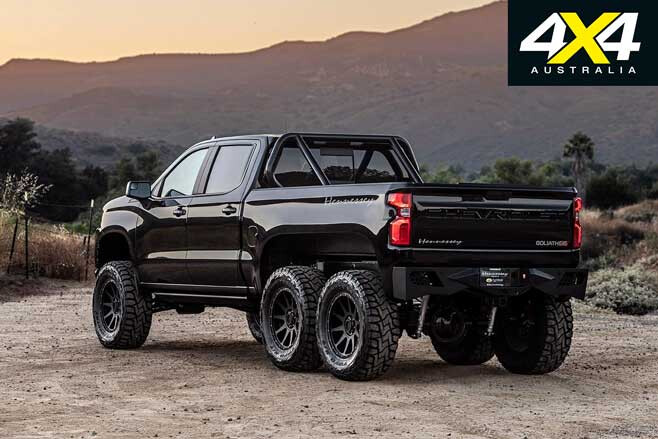
Despite its increased girth, this particular Goliath, which is earmarked for the “owner of the largest potato farm in Wisconsin”, only comes with Hennessey’s ‘450bhp engine upgrade’, which consists of a cold air intake and stainless steel exhaust fitted to the original Silverado’s 420bhp (313kW) 6.2-litre LS V8.
Being the same tuner that gave the world the Ford F-150-based 800bhp (597kW) Hennessey VelociRaptor 6×6 and the 1000bhp (746kW) Exorcist Camaro, there are higher power tuning options available, including a supercharger and stroker engine kit to raise power to 597kW.
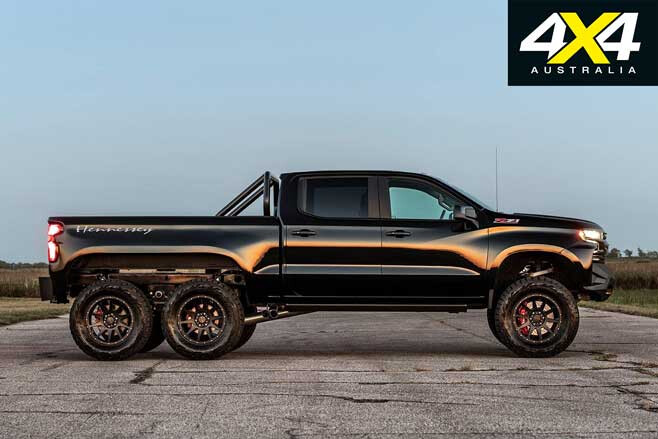
Other upgrade options Hennessey offers includes the fitment of Brembo brakes, as well as a custom interior upgrade.
Hennessey will only build 24 examples of the Goliath and will export to buyers in international markets, with prices starting at an equally large USD$375,000 before options; though that price does include the Silverado donor truck.
HERE are five reader-submitted 4x4s that were recently featured in the June 2019 issue of 4X4 Australia.
To get involved, post a pic and a description of your rig on our special site here or post it to our Facebook page and stand a chance to win an ARB High Output Air compressor valued at $335.
TOYOTA HILUX: REMAYNE NAMLISS (4×4 Australia Readers’ Rigs Winner of the Month)
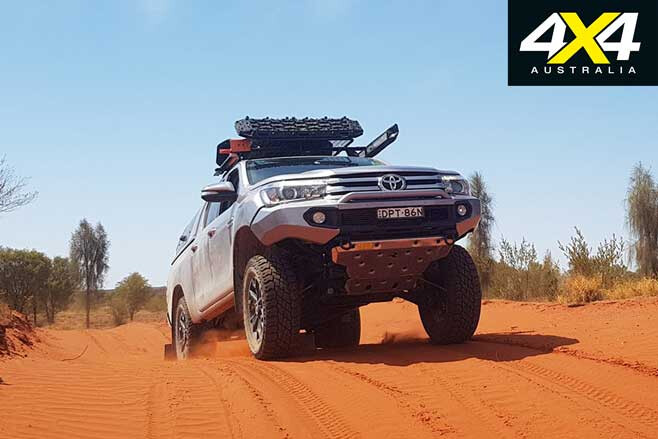
This is the Finke Desert Race track about 100km south of Alice Springs. The car has taken us through all of Western NSW, Flinders Ranges, Outback South Australia, and through the Red Centre of NT.
The car is fitted with: two-inch Outback Armour foam cell lift, Rhino 4×4 bar, OEM canopy, Rhino racks and flat cage on the roof, Cooper ST Maxx tyres (one size up from standard), and a Kings side awning. The car tows a 2006 Ultimate Camper – cracker of a camper.
NISSAN PATROL: MARK WILLSHIRE
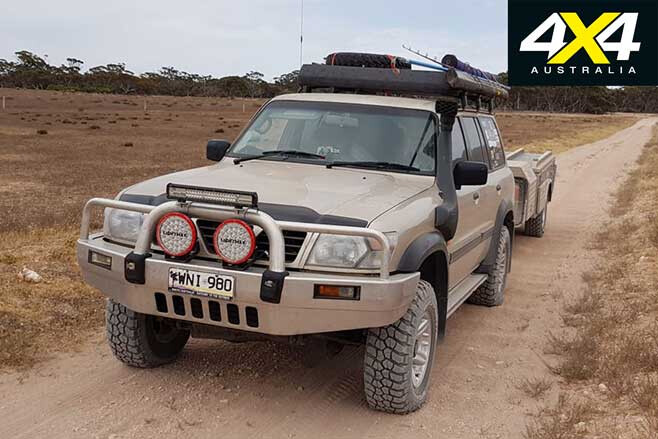
Modifications include a 75mm lift, ARB roof rack, snorkel, ARB rear drawers with fridge slide, BFG muddies, LED spotties and light bar, UHF radio, HEMA navigator (original but does the job) and two sets of MaxTrax. Best trip in this was from Kimberley to Pilbara and then back to Adelaide via Great Central Road (17,500km).
NISSAN PATROL: ADRIAN SZENTESSY
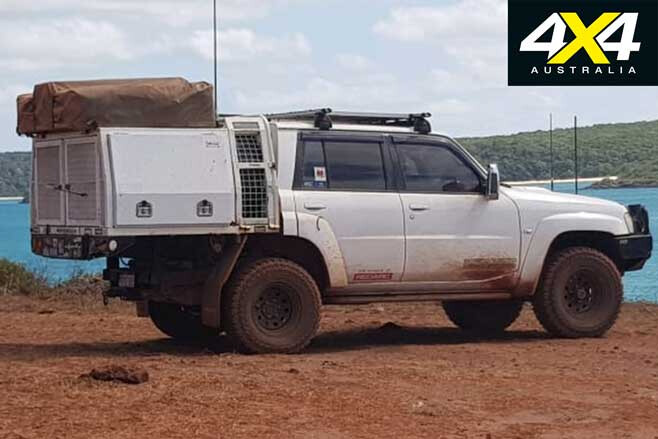
I have owned it since new, in 2005. Lots of mods, from chopped (in 2008) to centre console fridge. Best place is anywhere out of suburbia; it has done lots of remote work.
TOYOTA LC HJ75: KEVIN ROBY
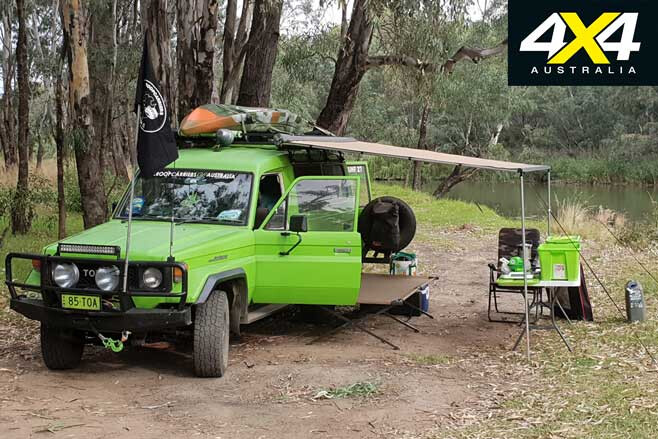
It is standard, with the only mods being an EFS 13,000lb winch and a home-built swing-away tow bar. Favourite spot is Nindigully Pub. My last trip was two weeks along the Murray River.
TOYOTA LC200: STEVE CARIS
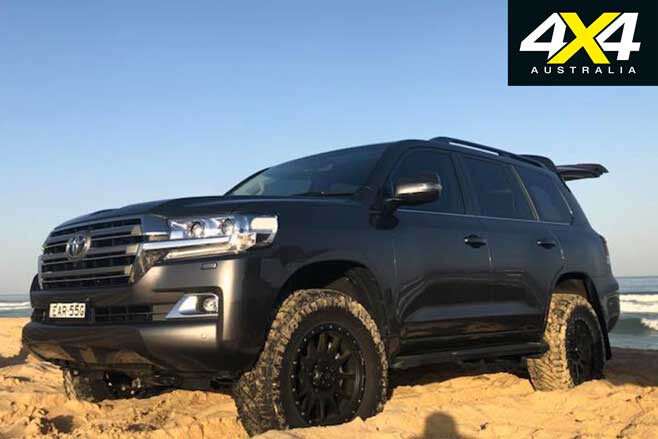
It’s only a new build. Mods include Fox 2.5-inch IFP front struts, Black Hawk upper control arms, Nitto Ridge Grapplers (33×12.5R18) and 18-inch black alloy rims. This photo was on Blacksmiths for its first run off-road. Plenty of plans down the track, though.
AT THE END of each year we here at 4X4 Australia gather the best new 4×4 vehicles from the past 12 months and take them out on a trip to determine our 4×4 Of The Year (4x4OTY). It’s always an interesting process and turns up some interesting results. The aim is not to find the best vehicle on the market, but the best new or improved 4×4 that was released in the past year.
Back in 2017 the vehicle that stood out the most was the then-new Land Rover Discovery, specifically the Sd4. Unofficially dubbed the Discovery 5, as it’s the fifth generation of the 30-year-old model, the new Disco was considered by many to be a softer version than the previous ones.
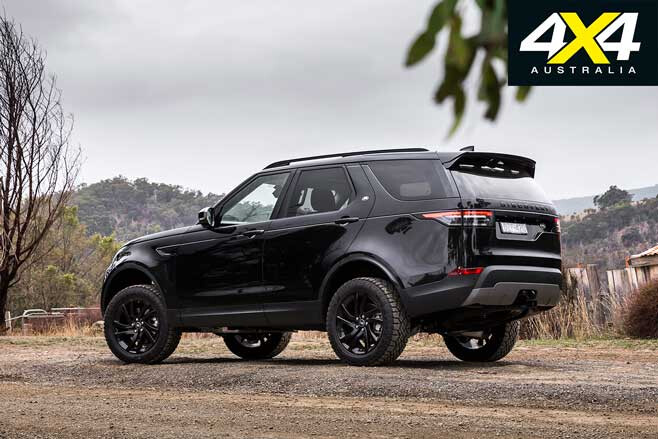
The 2017 Discovery rode on a new aluminium monocoque chassis with full independent, height-adjustable suspension, and even the design of the body was more swoopy and organic compared to the functional and boxy bodies on the Discovery 3 and 4.
As has always been the case with Land Rover and Range Rover models, the latest Discovery’s strength lies in its breadth of ability. As the Discovery has evolved it has forgone the functional and family friendly traits of the earlier ones to feature more stylish and luxurious designs and features, but there has always been that amazing breadth of ability.
The Discovery has always had a premium feel, with large, usable interiors and grand visibility from its large glasshouses, but it has also had excellent off-road ability thanks to long-travel suspension design inherited from the upper-class Range Rover elders.
Something we like to do with our 4x4OTY winners is spend more time with them to see if they live up to the title, and the Discovery was no exception; it just took a little bit longer to get into one. We asked Land Rover Australia mid-2018 if we could get a long-term tester and they said sure, but they were just ordering the 2019 stock and we’d need to order one from that allocation.
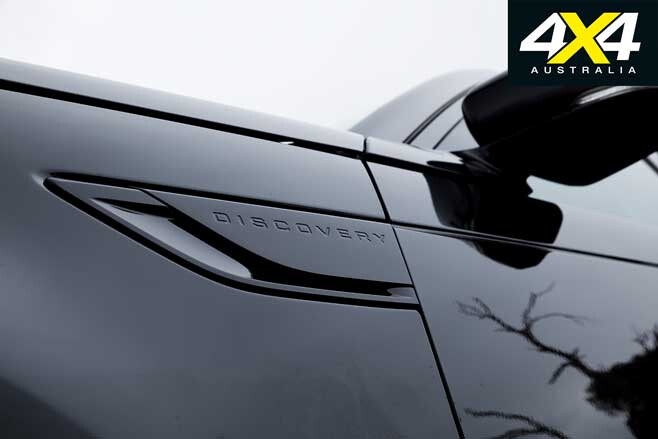
This gave us the chance to tailor the vehicle using the online Land Rover model configurator. We were able to choose everything we wanted in a Disco, from the options to the exterior hue and interior trim colours. We wanted to stick to the SE specification as that is what we gave the award to, so that limited some of the options we were keen on.
An essential option for us was the off-road package, which included height-adjustable suspension, Terrain Response 2 and the auto-locking rear differential. The rest of our choices related to style, comfort and convenience.
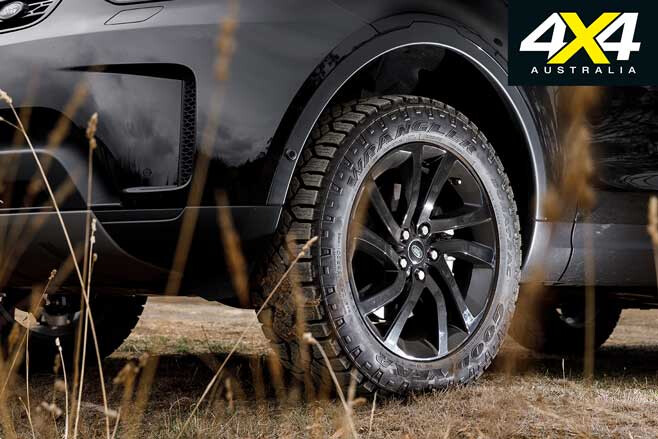
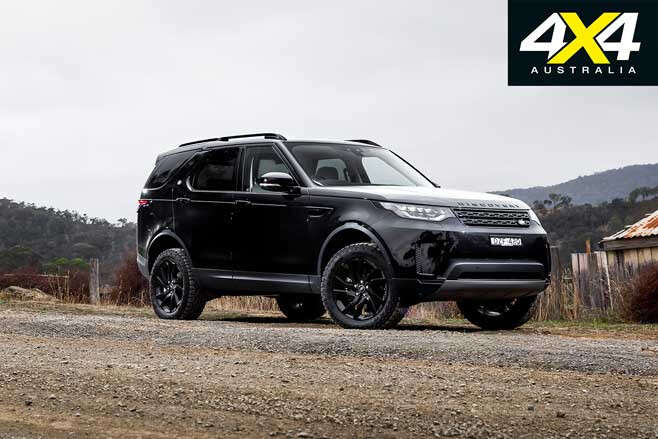
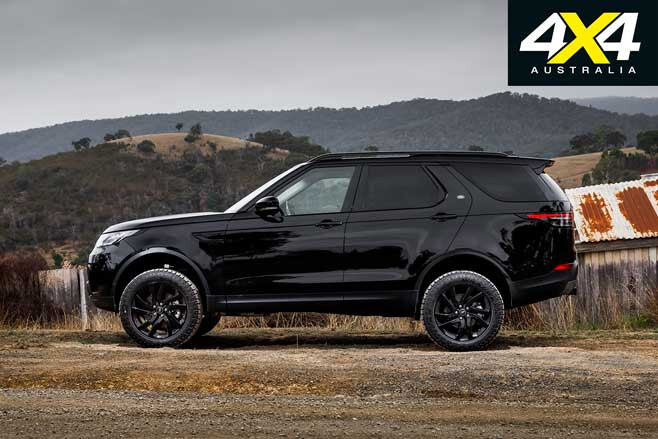
An interesting one for us was the wheel choice. We’d usually always choose the smallest wheel diameter possible, but the smallest on the Discovery is a 19-inch alloy. Tyre choices for 19s are very limited, so we selected the optional 20-inch black alloys as there are more off-road-suitable tyre options for 20s. All up our all-black Discovery retailed for $103,840 (+ORC), which is a fair hike from the $87,450 sticker price on a Discovery Sd4 SE.
Another interesting point when ordering this vehicle was that the Sd4’s 500Nm (as tested back in 2017) had been cut to 430Nm for the 2019 models, to meet global emissions targets. The 2.0-litre, bi-turbo diesel engine was essentially the same as the 500Nm version, but the tune was altered to meet the new targets. It was going to be interesting to see of we felt any deficit.
We didn’t get our Disco until the week before Christmas 2018 and we wasted no time putting it to work, running it in over a 4000km round trip to Queensland for the family holidays. If they cut 70Nm from the Sd4 engine’s torque we certainly didn’t feel it out on the open road, as the little diesel amazed us with its performance.
Touring along at highway speeds, overtaking road trains and cutting along gravel backroad detours, the Discovery never felt wanting for power. Some of those long overtakes took a bit longer than you might hope, but this is still a large 4×4 wagon and not a sports car.
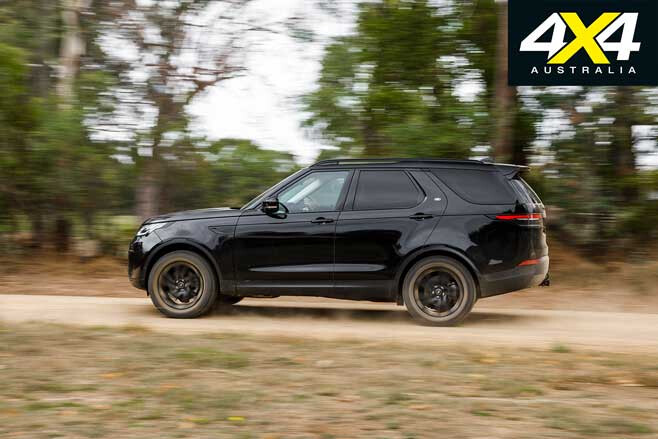
What was more amazing was fuel usage, with the holiday run sipping just 6.9L/100km of diesel. In fact, in our monthly updates on the Disco it rarely broke the 10L/100km mark, and that included daily commuting, highway driving and mountain adventures. The Disco’s Sd4 engine might be the worst-sounding engine we’ve ever driven, but its performance and economy make up for that. Lucky the sound system is pretty good, too.
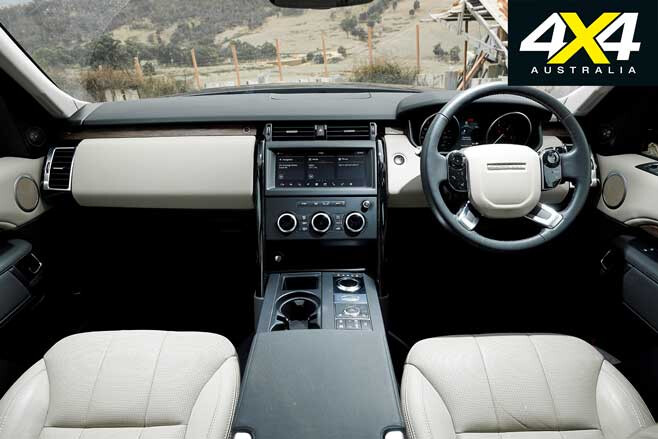
The interior of the Discovery is better than pretty good. Be it long distance touring or the workday commute, the Disco is always comfortable and a pleasant place to be. Big and spacious, supportive heated seats and oodles of luggage space; this car ticks all the boxes.
We mentioned in our monthly reports that we were disappointed Apple CarPlay and Android Auto weren’t included, but this feature seems to be coming standard in all the newer Land Rover products now. The factory Land Rover navigation is clunky to use and could be a lot simpler, and the Mp3 player suffers similarly – small complaints in an otherwise mostly satisfactory cabin.
After that initial highway run we were keen to fit some tougher tyres to the car for more confident off-road use. Past experience on the high-speed-rated OE tyres has us treading carefully whenever we leave the bitumen. If we wanted to test the vehicle’s off-road ability with confidence, we needed better tyres. We went with the factory approved Goodyear Duratrac all-terrains in the OE 255/55-20 size.
There is a 275/55-20 available in this size that we would have liked to fit, but Land Rover insisted we stick to stock and, hey, it’s their car. As mentioned, there are plenty of all-terrain tyre options for this 20-inch size wheel.
With these tyres on we’ve been able to venture to the High Country and out on farm tracks without too much concern for punctures. With the suspension cranked up in height and a bit of air dropped from the tyres, the sleek Disco is nearly unstoppable.
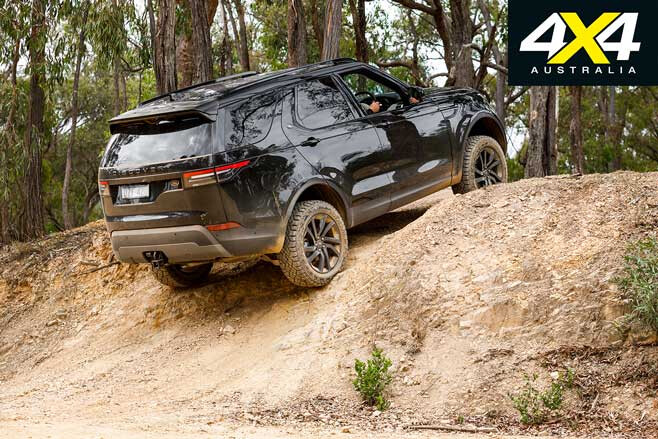
One of the features of the newer Terrain Response 2 system is its ‘Auto’ mode, which adjusts the settings on the run depending on the terrain and the amount of wheel slip detected. It works well for general off-roading, but it’s a bit slow when the going gets tougher. Using your knowledge to select the right mode for the terrain beforehand ensures faster response times from the centre and rear diffs, as well as the traction control.
With the suspension in its highest setting it does thump a bit when travelling over rough terrain, and it runs out of downward stroke travel. If you can sacrifice the ground clearance it rides better in the next setting down.
It might look softer than previous-gen Discos, but the new model still has potential as a strong off-roader. For this reason it’s disappointing it isn’t as well-supported by the aftermarket off-road accessory companies. It’s a Catch-22 situation, where the companies won’t develop the products because the vehicle isn’t bought by enthusiasts, and enthusiasts won’t buy it because you can’t get off-road kit for it.
Off-road or not, the Discovery is an exceptional grand tourer. It offers a mix of comfort, luxury, capacity, performance and fuel economy that can’t be matched by any other large 4×4 wagon with genuine off-road ability. It’s that old breadth of ability thing again. It mightn’t look as functional and rugged as it used to, and many onlookers reckon it’s downright ugly, but the Disco delivers on performance and capability.
2019 LAND ROVER DISCOVERY SD4 SPECS Engine: 2.0-litre inline-4 turbocharged diesel Max Power: 177kW @ 4000rpm Max Torque: 430Nm @ 1500rpm Gearbox: 8-speed automatic 4×4 System: Full-time with low range Construction: Alloy monocoque; 5-door wagon Front Suspension: IFS with height adjustable struts Rear Suspension: IFS with height adjustable struts Kerb Weight: 2109kg Payload: 840kg Towing Capacity: 3500kg Fuel tank capacity: 77L ADR fuel consumption*: 6.3L/100km On-test fuel consumption: 9.9L/100km
Follow the journey of 4×4 Shed’s 2019 Land Rover Discovery SD4 – Part 1 – Part 2 – Part 3 – Part 4 – Part 5 – Conclusion