
THE team at Yakima mustn’t see daylight going by the amount of new touring equipment they release each month. We’ve taken a closer look at the Hangover 4 and OffGrid.
Yakima HangOver 4
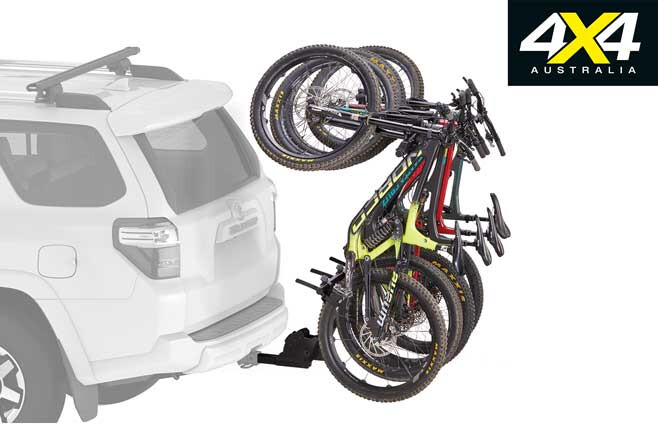
Yakima has devised another new and welcome way to transport bikes to the trailhead or campground, with the HangOver 4. The innovative vertically oriented hitch-mount bike carrier is made from heavy-duty steel and lugs your bikes while taking up less space behind your vehicle.
The HangOver 4 allows you to raise and lower the rack via a foot pedal, and it offers a tilt-away function so you can access the rear of your 4×4 wagon or the tray of your ute when bikes are on-board. The unit offers two height positions for bike mounting and has plenty of ground clearance.
Bikes are secured via the front fork and rear wheel (with straps) and the unit is compatible with Yakima’s BackSwing, which converts the HangOver 4 to a side-swing-out carrier. There’s a hitch-pin lock and a steel lock loop, so you can run a cable or chain to secure the bikes. As you’d expect from Yakima, there’s a built-in bottle opener.
RRP: $849 Website: www.yakima.com.au
Yakima OffGrid
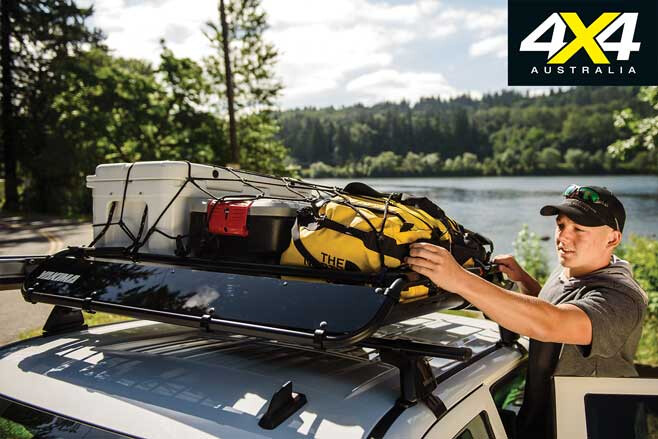
The OffGrid premium cargo basket (an evolution of Yakima’s LoadWarrior and MegaWarrior baskets) is a prime example. The OffGrid comes in two sizes – medium and large – an additional 40 per cent of storage/carry space is also available via an optional extension piece.
The OffGrid is made from tough welded steel and features a fairing and removable accessory bars. It is affixed to crossbars via the Universal strap mounting hardware or the optional SmarT-Slot Kit 3 (sold separately).
The accessory bars also allow fitment of other Yakima gear such as canoe/kayak carriers, snowboard/ski holders or bike carriers. Other accessories include an adaptor for the AceO’Spades shovel/spade holder and a Stretch Net to secure gear. The OffGrid is also SKS (Same Key System) compatible.
RRP: $599 (OffGrid Large); $499 (OffGrid Medium); $199 (Medium Extension); $219 (Large Extension) Website: www.yakima.com.au
This gig is a giggle-a-minute with this new-fangled social media.
Back in the days when print media ruled the world, one’s work only came under scrutiny by those who paid money for the magazine. Now’s there’s neither much cost nor effort to have one’s say on a platform like Facebook.
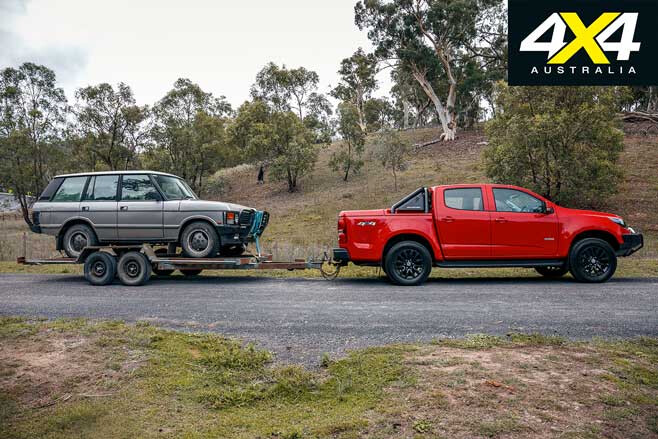
Given my mouse-powered bush internet I normally don’t bother with FB, but colleagues suggested I should check the comments attached to the recent six-way dual-cab tow and load comparison test I conducted using my 1990 ‘Classic’ Range Rover as the primary load to be towed.
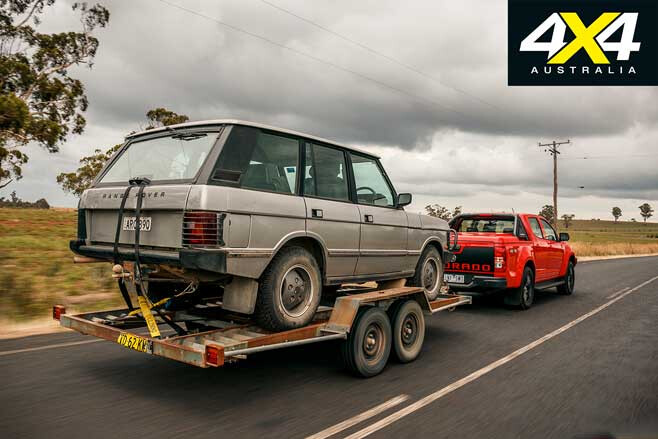
All the utes also carried 450kg in the tub as payload, plus the driver and observer; all up it totalled an additional 3144kg Gross Combined Mass, or roughly 10 per cent short of their respective maximum GCMs.
Not to let the utes off lightly – and among more general tow and load testing – we ran them each three times over up and down a long, steep incline with an average 15 per cent gradient that was steeper in parts and made more torturous with several near dead-stop hairpin bends on the way. This proved decisive in separating the good tow utes (Amarok V6 and Ranger 3.2) from the honest toilers (Colorado and D-Max) and the also-rans (X-Class V6 and Ranger 2.0).
Thank you very much for those who praised the Range Rover for its generally fine condition, and thank you even more for those asking if it’s for sale … possibly, at the right price. Special thanks also to those who suggested it would out-tow any of the six turbo-diesel dual-cabs we were testing; although, that confidence is unfortunately thoroughly misguided.
Despite having a 3.9-litre petrol V8 – a bigger engine with more cylinders than any of the utes – it only just betters (by 5kW) the least powerful of the utes in peak output and falls more than 100Nm short of the ute with the least torque. To achieve its best, the old petrol V8 also needs much higher engine speeds than these modern turbo-diesels need to do their best work. You’d expect no less from 30 years of progress in engine technology.
To the gent who suggested the RR looked to be off to the graveyard, you’ll be pleased to know, as I am, that Classic Range Rovers are quickly going up in value. To answer a couple of other questions: yes, the RR was tied down and yes, the trailer was rated to carry the load. By modern 4×4 standards the RR is actually quite light and doesn’t even top 1900kg when fuelled.
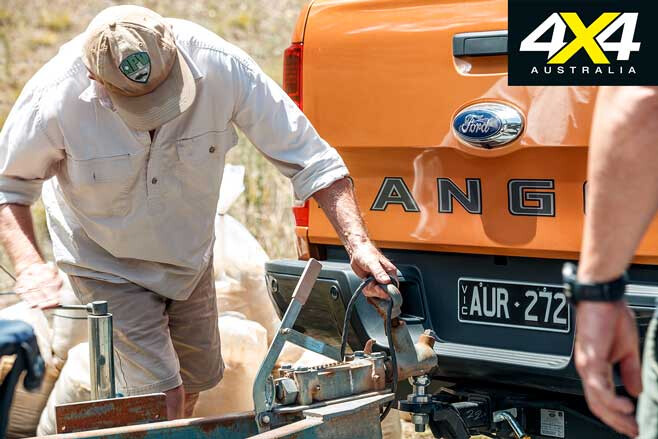
So why didn’t we tow a caravan, boat or horsefloat rather than the RR on the tandem axle trailer as some asked? Expediency for one, but more importantly we wanted a well-balanced tow load; something that’s easy to achieve by positioning the car in just the right place on the trailer to optimise the towball download, which is the secret to stable and safe towing.
Too much towball download will take weight off the front of the tow vehicle and affect its steering and stability, while too little towball download means too much weight at the rear of the towed element and an increased tendency for the ‘tail to wag the dog’.
No caravan, boat or horse float gives you that same easy ‘tuning’ of the towball download and therefore towing stability and safety.
Let’s face it, sometimes things just don’t go to plan in the Outback. We’d like to think that with good vehicle preparation a breakdown won’t happen but, the reality is, sometimes you just can’t prevent it. Imagine you’re stuck in the middle of nowhere with a 4WD that just won’t drive. Here’s how to survive in the outback if your car breaks down.
*Original article published October 20, 2016
Sure, there’s always the possibility of getting it back on the tracks with some smartypants bush-mechanic fix, but the premise here is that you’ve tried and you can’t. What’s the next step?
There are a few things that can change the way you handle this type of situation but truth be told, you’ve got to do a lot of things wrong if you end up having to go all Bear Grylls in the bush.
So let’s take a look at how to prepare for getting stranded in the Outback, and what to do if the worst should happen.
PREPARE BEFORE YOU LEAVE
When you think about it, camping is all about being prepared for the outdoors. For us 4WDers, the survival side of things in an emergency situation should be a lot easier than that of a solo hiker or bike rider. Reason being, we’ve got more than enough room to carry the gear we need to be totally self-sufficient. So there should be no excuses.
There are very few things a person absolutely requires to survive. The first is water. Yes, we’ve all seen a million and one survival techniques that will have you filtering dirty water through an even dirtier sock but guess what? If you carry enough water with you to start with, you should never have to rely on those last-resort techniques. So whenever you’re planning to head anywhere even slightly remote, ensure you’ve got enough to last at least a few extra days – just in case.
Having all the supplies in the world won’t help if nobody is actually looking for you, so always let somebody responsible know your travel plans. To be effective, they’ll need to know exactly where you’re heading and your expected check-in time. The sooner the authorities are contacted, the sooner they start searching and the quicker you’ll be found.
RATION WATER
If you have to ration your water, drink a cup at a time rather than sipping it. This way, your kidneys and bowels don’t suck it all up; meaning your brain gets some, too. The human body can only last a few days without water, especially in the heat. Once your brain is getting dehydrated you’ll start to make poor decisions. Make sure you ration your water, stay out of the sun and don’t exert any more energy than absolutely necessary.
GET ATTENTION
1. Move the vehicle into an open space and open the bonnet and doors so it’s easier to see from the air and the ground.
2. Point the mirrors upwards. The idea is to catch the sun’s reflection, which increases your chances of being noticed.
3. You can also remove the rear vision mirror to signal for help by hand.
STAY WARM
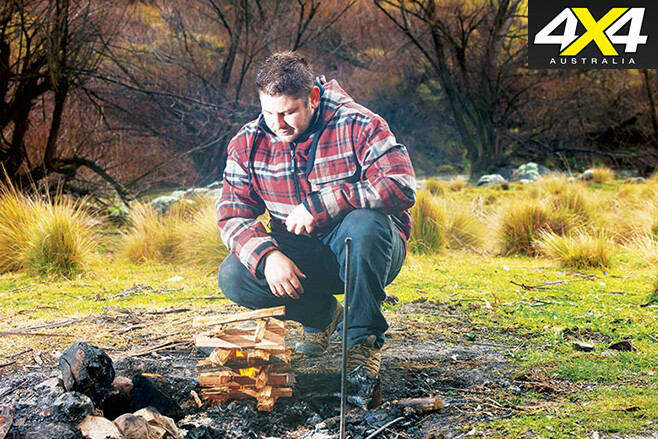
Extreme cold isn’t usually on people’s minds when you talk about a trip to the Outback, but it can get pretty bloody cold at night at some times of the year. So make sure you’ve got a way to keep warm, such as having blankets handy or a way of starting a fire.
STAY SHELTERED
You’ll need shelter to protect the body from the blistering sun, to avoid losing moisture. The longer you retain it, the longer you’ll live.
SIGNAL FOR ATTENTION
Once the mind and body are protected from the elements, it’s time to start thinking about how to signal for attention. This could be done by burning a tyre to emit thick clouds of smoke, using rocks to form an SOS signal, or anything else that will stand out to rescue teams.
RATION FOOD
Believe it or not, food is the least of your priorities. The body can last a few weeks without food so, if you ration any food you have on board, it should carry you until help arrives.
PACK THE RIGHT EQUIPMENT
TARP: A tarp will provide shelter almost anywhere, anytime. This can come in mighty handy if you’re stuck in the middle of an open paddock or similar.
SATELLITE COMMUNICATIONS: If you’re travelling in remote areas, there are no excuses for not having some type of satellite communication. It’s cheaper than ever before and, in its most basic form, will let you hail emergency services from just about anywhere.
BLANKET: A blanket in the car is mighty helpful on a cold desert night.
SURVIVAL KIT: Store a basic survival kit in your vehicle for a rainy day.
EMERGENCY WATER
If you completely run out of water, turn your air-conditioning on and collect the condensed water that trickles out under the car.
VW Australia has officially added new variants to its local Amarok line-up, with the German marque pulling the sheets off its Canyon and Highline Black variants.
The special-edition Amarok V6 Canyon TDI550 will return to dealerships in September, following a five-year hiatus. Getting the 3.0-litre turbo-diesel V6 engine found in Core and Highline models and good for 165kW (180kW on overboost) and 550Nm, the model will be offered with the eight-speed ZF automatic transmission.
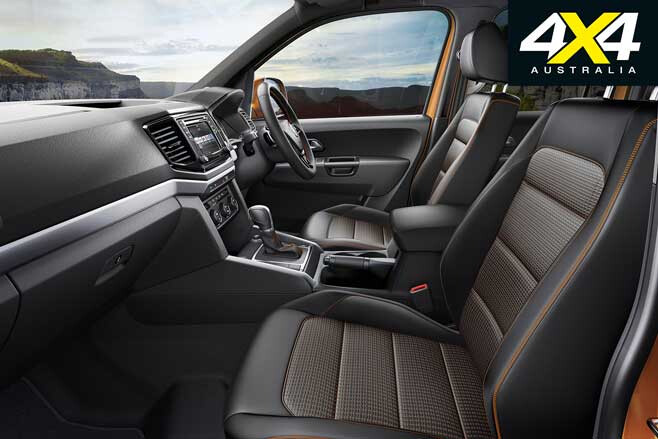
Despite no mechanical changes, the Canyon differentiates itself from the pack thanks to 17-inch ‘Aragua’ alloy wheels, tinted rear tail-lights, a black rear bumper, bi-xenon headlights with LED daytime running lights, Canyon door and tailgate decals, and a raft of interior changes headlined by special Canyon seat trim.
The Canyon is available in four colours: Candy White, Indium Grey Metallic, Deep Black Pearl Effect and Outback Orange. Only 350 units will be available at dealerships from September, where they’ll be available with an RRP of $57,990.
The Canyon is joined by the Amarok V6 Highline Black, which is on sale now and will become a permanent fixture in the line-up.
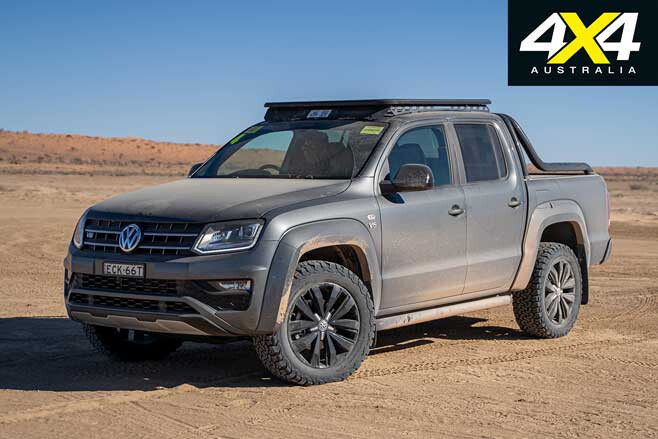
In addition to a tweak to the front nose, plenty of blacked-out features have been added to the V6 Highline including 20-inch black ‘Talca’ alloy wheels, high-gloss black styling bar and side bars, a black rear bumper, black badging, gloss black exterior mirrors, gloss black/chrome radiator grill bars, and bi-xenon headlights with LED daytime running lights.
Powered by the 190kW/580Nm (200kW on overboost) 3.0-litre turbo-diesel V6, the V6 Highline Black is available now from $64,990.
VOLKSWAGEN Australia has confirmed its Amarok V6 range will receive a six-speed manual variant, with the dual-cab’s first cog-swapper due to land in local showrooms this December.
Like the rest of the Amarok V6 range, the Core manual will be powered by a 3.0-litre turbo-diesel V6 engine capable of generating 165kW (180kW on overboost).
However, unlike the automatic variants, the manual’s torque tops out at 500Nm instead of 550Nm and 580Nm (Ultimate 580). Its claimed 3000kg braked towing capacity also falls 500kg short of its automatic stablemates.
The Amarok V6 Core will be fitted with a low-range transfer case and, like the rest of the Core range, will feature cloth seating, 17-inch alloy wheels and a 6.4-inch touchscreen.
The notion of a manual variant has been floating around for more than a year now, with Volkswagen Australia only recently succumbing to its customers and fan base who have been crying out for one.
“At every off-road, caravan and camping expo and Big Red Bash concert the team and I attend, we speak with current owners and members of the off-roading community who have begged us to bring an Amarok V6 manual to Australia,” said Ryan Davies, Director of Volkswagen Commercial Vehicles Australia.
“It was because of that passion that we were able to mount a case with our head office in Germany to build one and, based on Australia remaining the number one export market in the world for the V6 Amarok, we are finally able to offer this unique, Aussie-spec ‘Rok.”
Expect pricing to sit around the $45K mark.
EMERGENCY Services, Police, the Defence Force. The general population knows they are there when we need them, but too often these essential people in our lives blend into the background of why you see them.
Whether it is a motor vehicle accident, a violent situation, fighting bushfires, rescuing those in peril or being deployed to a conflict in a distant land, the true impact of being front and centre in these (and other) scenarios is only felt by those first attenders.
It’s incredibly hard to put yourself there mentally, to even try and understand the effect of seeing some of the worst things humanity can do to itself, and then trying to dismiss it – or at the least, bury it deep in the back of your memory.
Many understandably cannot, and the resultant post-traumatic stress disorder – and other stress and grief-related mental illnesses – can be incredibly difficult to deal with, for not only the one suffering but also their loved ones. It can take a unique approach to allow those affected to see beyond the grim reality of their jobs.
The Blue Green Crew (aka TBGC; the Blue acknowledges the police; Green the defence force, and Crew from the fact ambos work as a team) takes a unique approach, and it’s an absolute belter. It takes groups of Defence and Emergency Services personnel out of their intense environment for a weekend (or sometimes longer) of off-road touring and camping. It was an idea borne from TBGC founder Marcus Nash’s own battle with mental health issues.
“I came up with the idea after it was clear that I was struggling with mental health issues, and my way to reset or escape was to head away four-wheel driving and camping,” Marcus says. “I found that it had a profound effect on my mental health after taking away a couple of returned soldiers that had recently returned from Afghanistan who didn’t have 4x4s but loved getting away. It was, I guess, like a light bulb going on: I had an idea.”
This idea of Marcus’s soon grew into a more detailed plan as to how to convince attendees of the benefits of escaping the craziness of their professional lives for a few days, regularly.
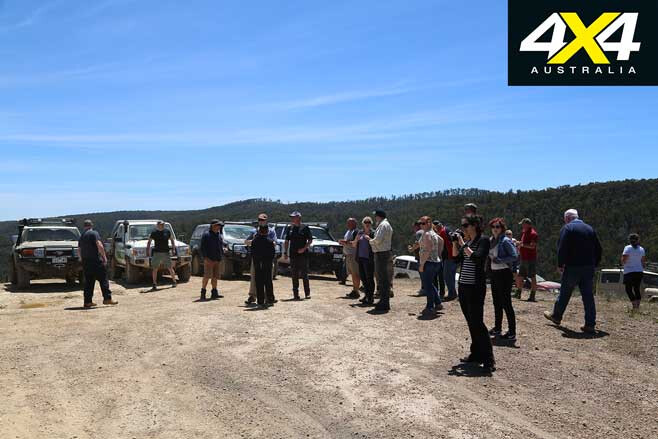
“As the vice president and one of the founding members of The Victoria Police 4WD Club, I realised most of us are going away on club trips by ourselves in the vehicles,” he recounts. “So why not fill those empty seats up with members of Emergency Services and Defence who are struggling with mental health issues (and) may not have the knowledge, equipment of confidence to go camping and four-wheel driving.
This would give them a safe environment in which to do so, and give them the opportunity to experience the fun that four-wheel driving and camping has to offer.”
The Blue Green Crew program has grown quickly since those early days – a sure sign this type of approach helps with mental health – and has benefited from plenty of support (and gear) from the various services (Vic Police, Vic Ambulance, the Army), as well as 4×4 industry icons Ironman 4×4 and ARB and adventure retailer Anaconda.
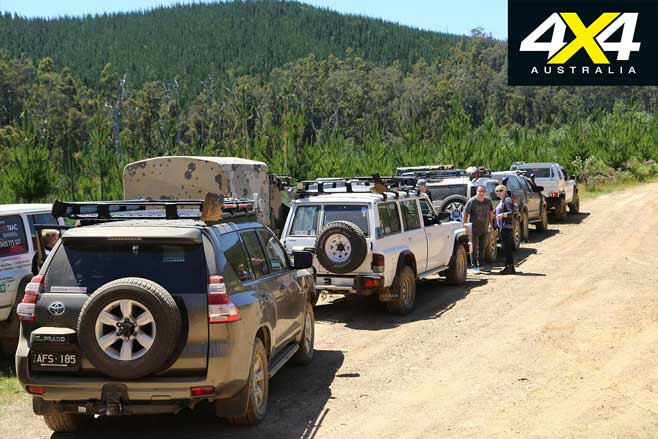
Icom and GME have also donated gear for members to use. Those early days also saw Marcus fulfil a lot of the roles needed to make weekends away a success, including becoming more than a dab hand at pre-cooking and prepping meals for the weekend.
“I would be up at 6am on a Friday. I’d head off shopping for everyone, and when I got home from the shops I’d start pre-cooking roast dinners and stacking them in foil containers for all the members and people filling the passenger seats,” he says. “The campsite would wake to the smell of bacon and eggs, as the army was fed for the morning; morning teas would be cakes, muffins and coffee; lunches were mostly salad rolls.”
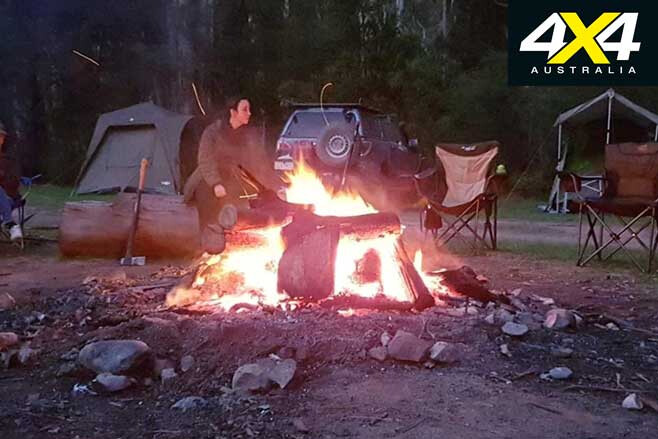
The cooking and catering soon got too big for one person, but this also allowed Marcus to implement a more inclusive and fun solution: the team now purchases all the food needed when at the weekend’s meeting point, and then everyone pitches in to cook and cater over the weekend, bringing them together as a team and ensuring there are plenty of tall tales and laughs around the camp kitchen and during the meal.
Trips are advertised early (about two months before the actual date) through a number of channels, according to Marcus, with Vic Police promoting them in its internal gazette, while the ambulance service sends its members emails and the defence crew posts it to its intranet.
The Blue Green Crew Facebook page is also a great central communications point. It is the communication side of this whole venture – and ensures the spirit of the Crew and its message gets through clearly – which is crucial to drawing out those who may be interested but need a bit of assurance before committing.
“Most attendees will email me first,” Marcus says. “You get one opportunity to instil total confidence in those people, as they are unlikely to reach out a second time if they felt in any way that it may not be a safe environment for them to be in. Normally, they will leave a phone number and I will call them to chat with them to put them at ease.”
It’s all about getting them there, Marcus reckons, and once they see how much fun and how relaxing, both physically and mentally, the trips are, they will usually return; as confirmed by John, a long-term member of TBGC.
“I have been a police officer with Victoria Police for almost 20 years,” John says. “I have been involved in two critical incidents (shootings) that have resulted in PTSD. I first heard about The Blue Green Crew through our Intranet Bulletin Board. I was then taken on a camping/4×4 trip as a passenger. This was my first real experience camping and 4×4 driving.
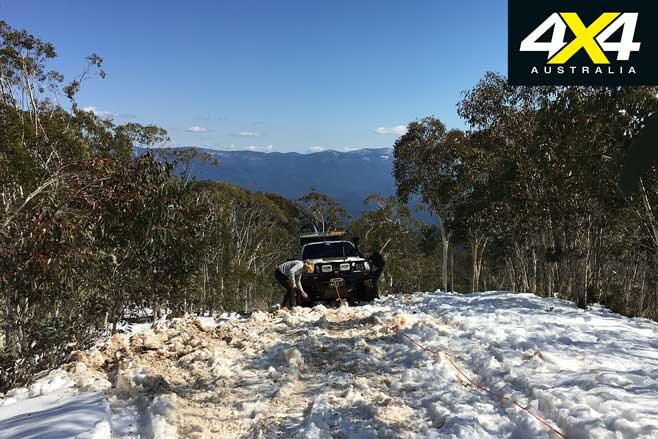
“I met some great people that had been through similar experiences and I realised that my thoughts and feelings were normal. This, along with the amazing scenery and views of the Victorian High Country, really helped me see things a little brighter. I had such a great time that I came back from that trip and bought my own 4×4. I have been on almost every trip since then and have developed some lifelong friendships that have helped me through some dark times.”
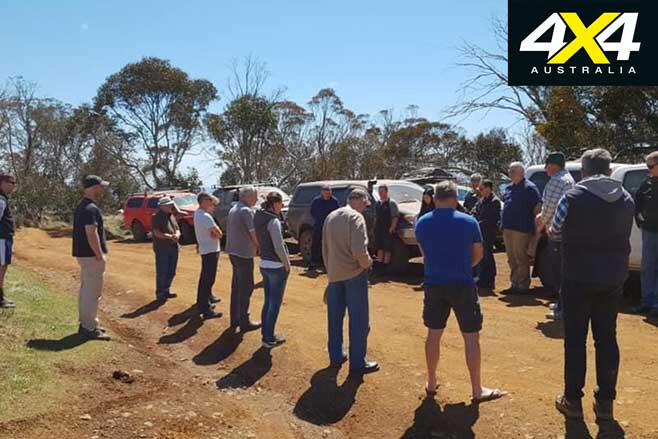
Yep, TBGC is one of the great feel-good stories, and it’s hard not to go overboard in terms of offering kudos to Marcus for thinking up the original concept and then offering more for just how big and impressive it has become in terms of reaching its goals. Of course, it’s not the only solution to this terrible problem, but it’s definitely one of the most unique – after all, it’s hard to think of anywhere that’d be more conducive to bringing a smile to someone’s face than a night around a campfire in the High Country.
In short, it’s a job very, very well done. Visit The Blue Green Crew’s Facebook page for more info.
The Readers’ Rigs feature in the August 2019 issue of 4X4 Australia features an ensemble of classic Nissan Patrol and Toyota Land Cruisers, and modern fourbies from our enthusiastic readers.
To get involved, post a pic and a description of your rig on our special site here or post it to our Facebook page and stand a chance to win an ARB High Output Air compressor valued at $335.
1986 NISSAN MK PATROL: KIERAN MINTER (4×4 Australia Readers’ Rigs Winner of the Month)
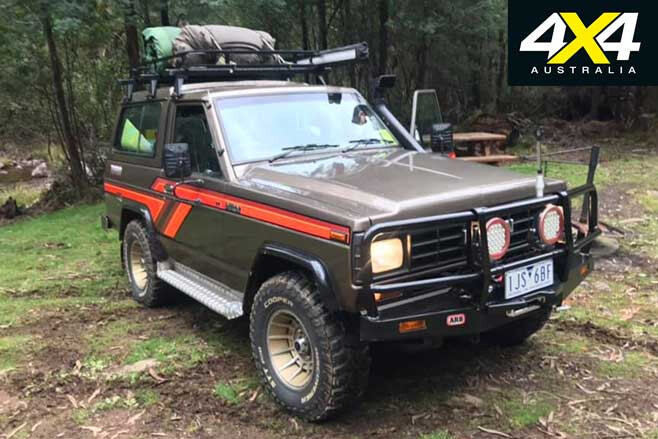
The Patrol runs plenty of gear including twin ARB lockers, custom drawer system, Brown Davis long-range fuel tank (160 litres), two-inch Old Man Emu lift, ARB deluxe winch bar, TJM rear bar, a fully rebuilt motor, front mount and a three-inch exhaust.
2018 NISSAN Y62 PATROL Ti: DALLAS SPENCER
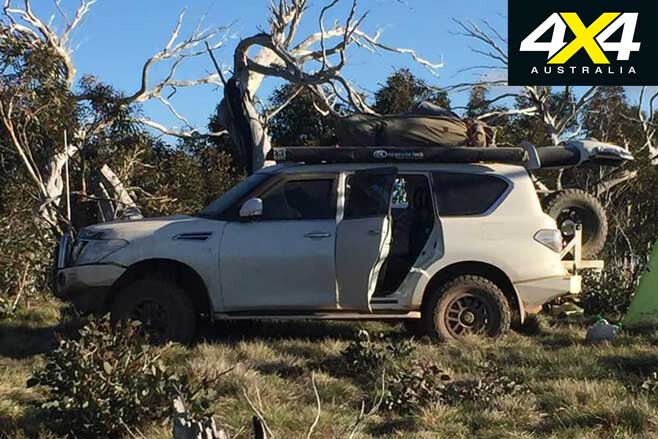
The Patrol received a two-inch On Track lift and an engine tune. Kit includes an Opposite Lock front bar, Raslarr rear bar, 18-inch King Tremor wheels with 305/65R19 KO2s and Airbag Man airbags.
JEEP WRANGLER: DAMIAN FERGUSON
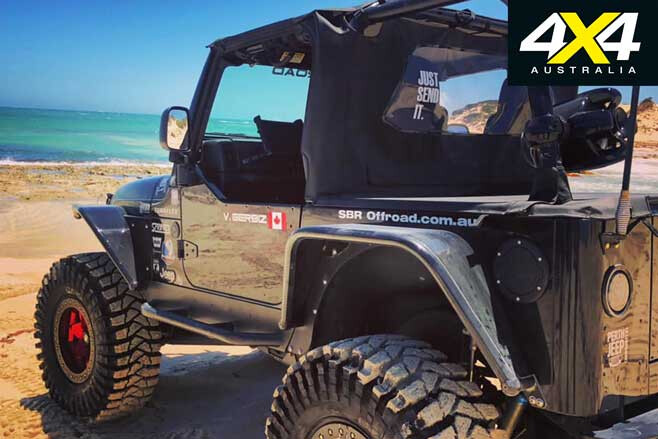
The Wrangler is road-driven and Gymkhana-raced (nine first places out of 12 comps). Features include a supercharged 4.0, long-arm suspension, twin-locked, 37-inch Trepadors, Trail Gear Creeper Locks, chromo axles, Falcon brake conversion, custom one-tonne GM steering… the list goes on and on.
TOYOTA LAND CRUISER: MIKE HENDO
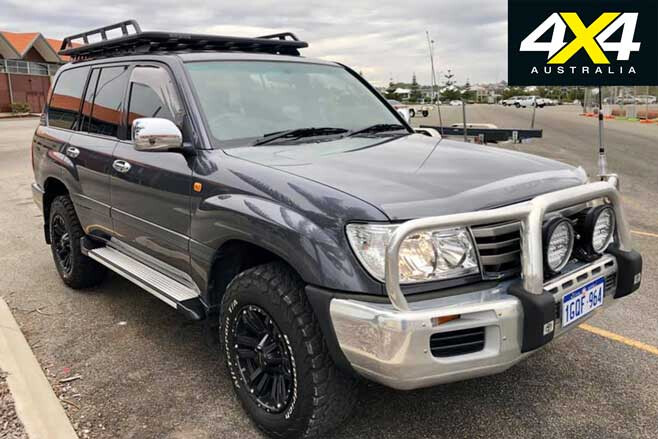
Mods since I’ve owned it (four weeks) include ROH vapour rims, Rhino-Rack Tradie rack, OME suspension upgrade, a tint, Gotya seat covers and Kings spotlights. It came with a two-way, rear drawers, fridge slide and BFG tyres. No trips as yet, but will be used for some weekends away in south-west WA very soon.
TOYOTA FJ45 LAND CRUISER: KYLE EWART
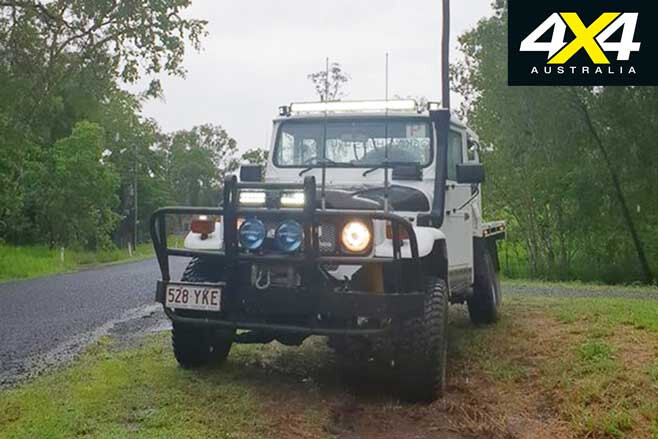
Upgrades include a two-inch lift with custom front leaves, dual batteries, custom roof console, snorkel, winch and bullbar. I love to take her up to the state forests and see what she’s made of.
FORD RANGER FX4: GRAHAM EMBLETON
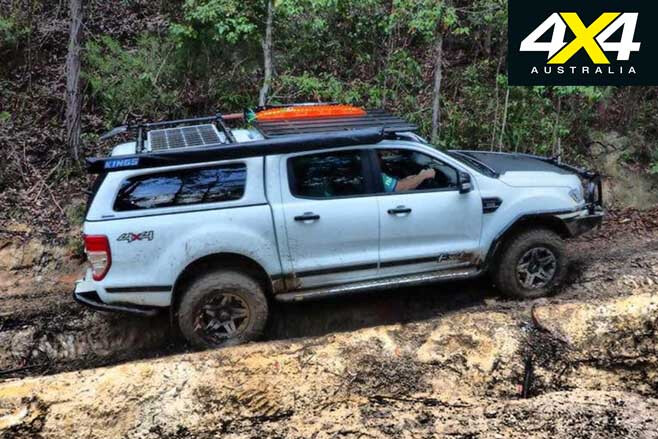
Aftermarket gear includes TJM bar work, 9500lb TJM winch, two-inch Tough Dog lift, 17-inch Auscar Bandit rims on 285/70/17 Hankook Dynapro MTs, TJM snorkel, Aeroklas canopy, Rhino racks and platform, custom drawers, fridge and 12V with solar, and a Kings awning. The best place I’ve been is Monkey Gum Fire trail, Yalwal (NSW), but planning a trip to Fraser and Cape York soon.
THE BEST of British will be on display at Shannons Sydney Winter Auction on Monday, August 26, with a tidy 1958 Land Rover Series I lining up as one of the headline acts.
According to Shannons, the Land Rover is one of the last examples of its type produced in 1958, and it’s powered by a 2.0-litre petrol engine and comes with optional free-wheeling hubs.
The vehicle was originally delivered to its first owner near Hervey Bay, Queensland, and it is said to be in remarkably original condition, having enjoyed limited use in the hands of several enthusiast owners, the last two who kept it in storage.
At the time of cataloguing the old Landy was showing just 8400 miles (13,500km) on its odometer, and Shannons is expecting a sale price in the $25,000-$29,000 vicinity, reflecting a rise in values of early Land Rovers.
Other British vehicles in the auction include a 1920 Rolls Royce Silver Ghost, a restored MG TC and a Jaguar XK140 FHC.
For a complete list of the Shannons Sydney Winter Auction lots, visit: www.shannons.com.au
WHETHER it’s a new set of LED lights to illuminate off-road tracks, a camp light to help find the dunny at night, some clever mounting brackets, or OE-style switches to simplify your in-cabin layout, these new products on the 4×4 market are sure to brighten your camping experience.
EFS Vividmax High Performance LED and mount brackets
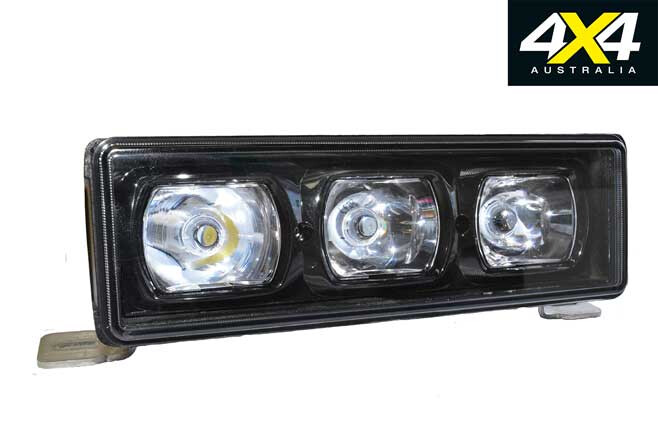
This new schmick lighting setup from EFS incorporates three high quality 9-watt Osram LEDs for the best bright white light output (5000-6300k). The lights offer a huge 20,000-hour life , include reverse-polarity protection and are 12-36 volt.
The Vividmax is built tough too; an IP67 water/dustproof rating, along with high-quality aluminium construction, polycarbonate lense covers and a claimed operating temperature range of between -40 degrees Celcius and 85 degrees Celcius ensure these things will last for years and years.
There are a number of mounting bracket size options (VM-BKT1 is 50mm; VM-BKT2 is 63mm – both can be used for aerial, light bar, spotlight) constructed of aluminium with stainless-steel fittings (rubber insulated). The VM-BKT3 (50mm) and VM-BKT4 (63mm) offers a side-mount option for the light bar.
Website: www.efs4wd.com.au
Narva OE-style push button switches
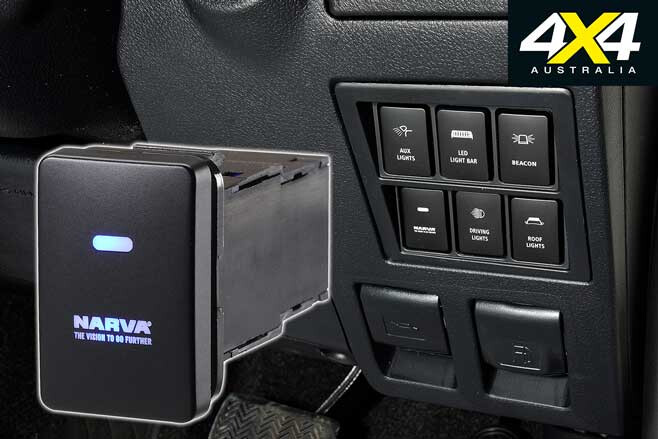
Narva’s new range of OE-style switches is designed to fit in a vehicle’s spare/blank switch space, which means you don’t have to cut into the dash as part of fitting switch-activated accessories. The buttons are of a top-notch factory finish and feature laser-etched LED symbols that are illuminated via blue backlight.
The switches are available for a number of ancillary light setups, such as light bars, driving lights, roof lights, etc. The OE-style push button switches have a 10Amp rating at 12V and are of a hard plastic construction to ensure optimum durability.
Each button includes a flying lead, with the ‘snap-in’ fitment method meaning installing these is a doddle. The OE-style push button switches are currently available for more than 30 different vehicle models, including those from Toyota, Holden/Isuzu, Mitsubishi, Nissan and VW.
Website: www.narva.com.au
Bushranger Night Hawk LED VLI series single-row light bars
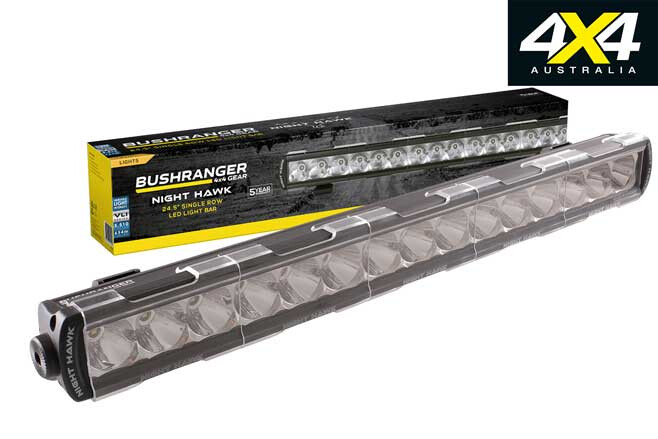
The latest model in Bushranger’s VLI (Variable Light Intensity) Series, the Night Hawk LED offers the same slim-line design of the previous-gen model but ups the effective lumens by 82 per cent across the range. This ensures “…considerable distance and width gains” in terms of illuminative coverage from the high-output OSRAM LEDs.
The VLI wiring system allows Bushranger to bring easily adjustable brightness control via a dial setup (wiring system sold separately). You can also create your own beam pattern, with each 13-inch to 51-inch light bars able to be set up as a full spotlight, full flood, or a combo of the two thanks to the ability to mix and match the supplied covers (a set of both spot and flood covers come with each kit).
The extruded 6061 aluminium housing and cast alloy mounts ensure durability, while the inbuilt temperature monitoring of the LED temps keeps it all cool and working to capacity.
RRP: From $115-$595 Website: www.bushranger.com.au/nighthawk
Narva interior RV lamp range
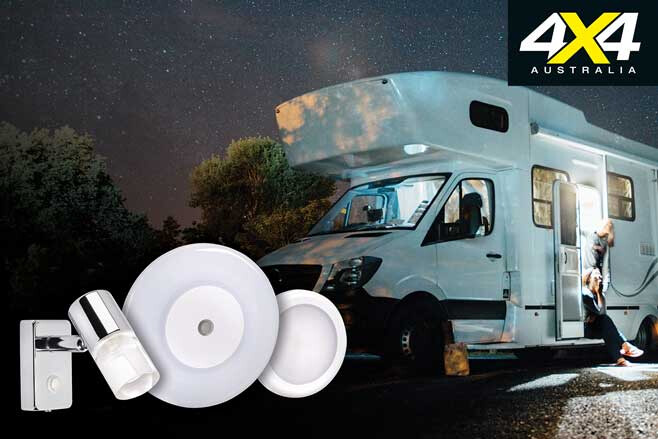
Narva’s new LED light range aimed at RV and caravan lighting is typical Narva: a combo of stylish design, functionality and durability. The range comprises Pendant (reading) lamps, courtesy and ceiling lamps, and interior downlights.
The Pendants offer two colour temps – warm white or cool white – and include touch-switch, a blue night light and a dimming function. The downlights (also available in the two colour temps) are compact, low-profile jobbies and (again) have concealed screws for affixing to your mobile abode. You can opt for either integrated switches (on/off/dim) or traditional wall-mounted switches. The Courtesy lamps (two colour temps) can be surface-mounted and feature built-in touch switches (with blue night switch) and are dimmable.
The LED Ceiling lamps include circular and rectangular options, as well as integrated touch switch, blue night light and dimming. Lamps are available in 12V and 10-30V multi-voltage variants and are backed by a five-year LED warranty.
Website: www.narva.com.au
Ironman 4×4 Meteor driving lights
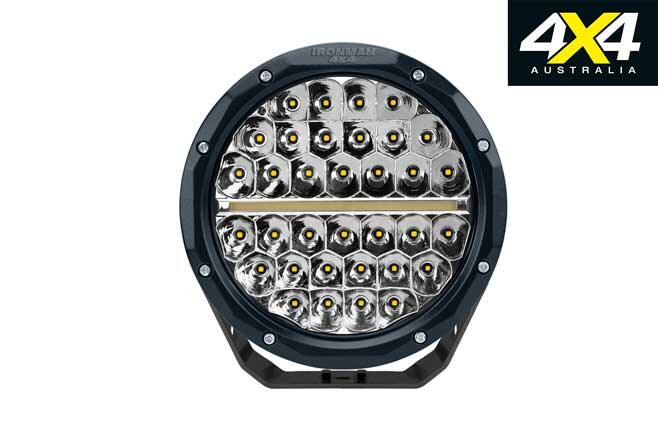
These new lights from Ironman 4×4 offer 6000K white light to ensure they imitate as closely as possible natural daylight – delivered via the lights’ 3W high lux output Osram LEDs (there are 16 of these in the 7-inch unit; 34 in the 9-inch).
The resultant output is 4320 lumens for the 7-inch model and 9180 Lumens from the 9-inch jobbie. As well as this, the lights include a Daytime Running Light (DRL) strip (this can be configured to switch on automatically once you start the vehicle) and are rated to IP67 and IP69, meaning they are capable of being submerged in water during a crossing and are also up to being blasted with high-pressure water hoses.
This high level of sealing also means they are fully protected from dust ingress. The housing is heavy duty diecast alloy and the lens is made from shockproof polycarbonate. The operating voltage with these punchy lights is 10-30V DC.
Website: www.ironman4x4.com
Thunder dimmable camp lantern
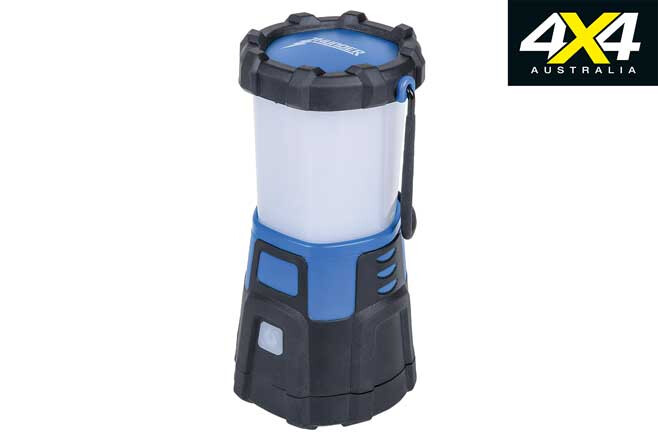
Thunder has released this cool new LED lantern that offers the perfect portable camping light source solution. The lantern is rechargeable and offers a three-hour operating time when run at full power. The light output for this lantern is 680 lumens – more than plenty to keep the camp kitchen and/or rear of your 4×4 lit up in the night for easy visibility.
The lantern also includes a USB charge point for smart phones, and the tough hard rubber housing ensures it is up for use in any extreme environment, whether it is at camp or when being used on a building site. It is IP44 rated so can withstand sharp object impacts and also splashes of water.
The lantern’s battery bank is rated 4800mAh for when charging phones. There’s an easy-to-see charge indicator (Red LED for flat/low charge and a green LED for when it is charged).
RRP: $72 Website: www.thunderauto.com.au
Knog Bandicoot headlamp
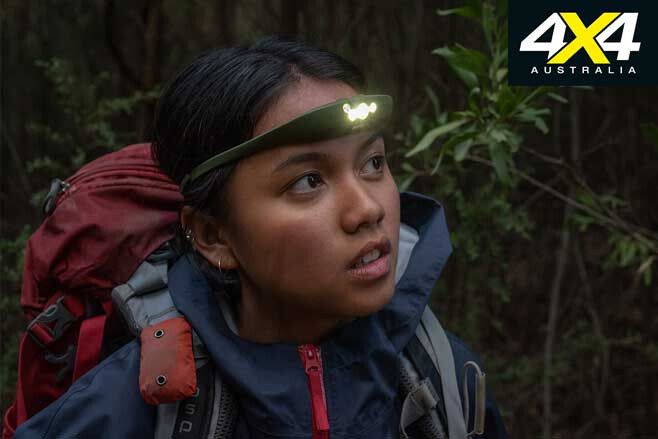
This new headlamp from Knog is unique in its all-in-one construction. The headlamp is of a ‘single chassis’ design, as in, it is made from lightweight silicone which allows Knog to merge the strap, body and LED lights together in one piece, eliminating the need for separate attached components (think: straps, elastics, etc., which are prone to failure).
Plus, being one piece it reduces the chances of it tangling in your headwear or hair, and due to its stretchability it will fit most of us with no need for adjustment of buckles, etc. The Bandicoot weighs a miniscule 60g and is perfect for all outdoor activities from camping, hiking, fishing or reading.
The headlamp has four sets of LED lights that offer a claimed maximum output of 100 lumens. Each light has a different function: high beam for visibility, elliptical beam for a broader ambient light, a red light for darker environs and a down-light for reading. On maximum output the headlamp lasts two hours, and it is USB rechargeable.
Website: www.escape2.com.au
TRAVELLING from Melbourne up through the Red Centre of Australia last month, it was encouraging to see the number of people out on the roads and tracks in their four-wheel drives. Towing caravans on the highways, exploring the gorges in the MacDonnell Ranges and taking on the dunes of the Simpson Desert; I reckon there were more 4×4 tourists out there than I have ever experienced before.
Sure, it was school holidays in some states of Australia, so that explains some of it. The Big Red Bash was happening in Birdsville as well, and there were folks heading that way via the desert; plus, others were headed to Ayers Rock to make the climb before they ban climbing it entirely. It was a busy time indeed, which is great for tourism and the outdoor equipment and 4×4 industries.
However, what’s concerning is the impact this huge number of humans and their vehicles will have on the often-fragile outback environment. It still sickens me to see dunny paper strewn around camps; there’s no excuse for this, yet folks still think it is okay to just leave it sitting on the surface or lightly covered. Bury your mess people and, where possible, burn the dunny paper. It’s not rocket science, but the disregard by some people is disgusting.
It’s inevitable that with the booming popularity of 4×4 vehicles, camper trailers and the life these tools afford, there will be more people in campgrounds and exploring the tracks of outback Australia; but that’s no excuse for the mess we’re seeing in some places.
Each person needs to be responsible for their own footprint on the environment: clean up your own waste, encourage others to do so and maybe even pick up a bit of trash and dispose of it the right way where possible.
I like to escape the filth of the city when I get away, but the way things are going the bush will be just as bad as the cities before too long.