
IT IS NOT uncommon for classic Toyota LandCruiser FJ40 examples of all shapes and running conditions to be traded for top dollar these days, but how far would you stretch your budget for a perfect FJ40?
American-based FJ40 specialists, The FJ Company, think the sky is the limit, with its run of custom-built, resto-modded FJ40s starting at USD$180,000 (AUD$270,000). And, according to its newly appointed Californian dealer, Canepa, The FJ Company has a 12-18 month waiting list on its hands.
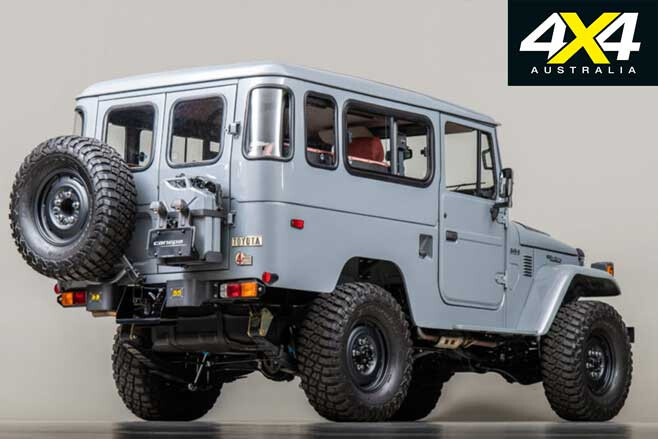
The resto-modded models, known as the G40, are built using authentic 1973-1983 FJ40 bodies and chassis with minimal rust or modifications. From there, The FJ Company fully strips down the body and chassis, realigns the chassis, restores the body, and rebuilds the entire FJ40 by hand.
While the G40 retains its classic exterior aesthetics, albeit with subtle modern touches like LED headlights and CNC-machined exterior bits, it gets modern-day thrust in the form of a 4.0-litre 1GRE-FE Toyota V6, producing 170kW in its naturally-aspirated guise.
The range-topping USD$220,000 (AUD$325,000) Signature G40-S comes specced with a Magnuson supercharger. Either engine spec will come mated to a Toyota five-speed manual gearbox.
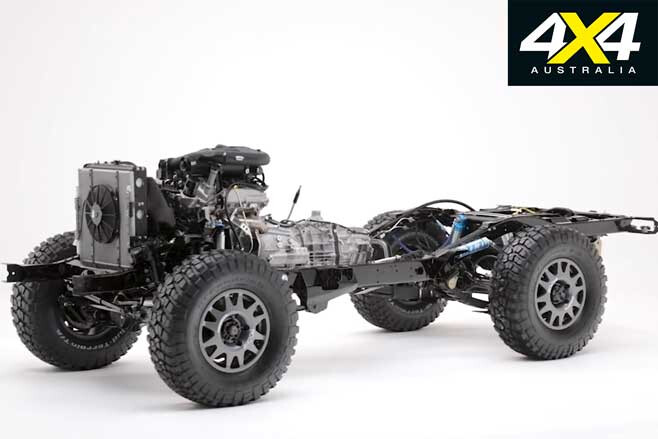
The mechanicals also get a thorough update, with the addition of front coil suspension, ABS with stability and traction control electronics, automatic locking hubs, and optional front and rear lockers.
For something with an asking price of a Range Rover, the G40 gets a raft of interior updates; although, as The FJ Company is dedicated to retaining the vehicle’s classic looks, it only comes in the form of custom upholstered Recaro seats, integrated vintage air-conditioning and heater functions, LED cabin lights, and a centre console-mounted modern infotainment system with Apple CarPlay functionality.
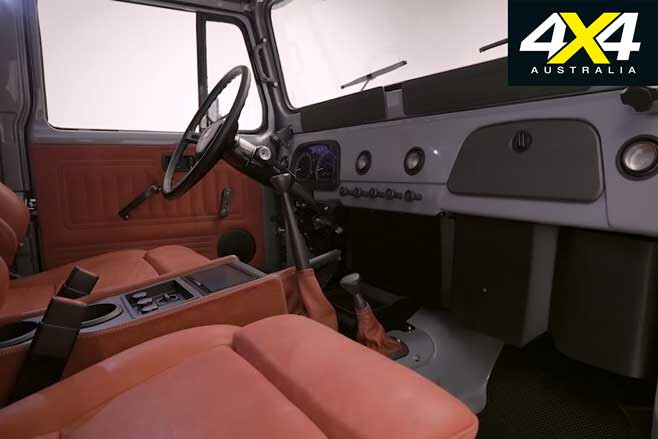
Customers are given a wide range of customisability with a generous list of options, which includes a full range of body colours, interior trim colours, 4×4 gear, and hard- or soft-top options.
According to Canepa, The FJ Company builds around 30 custom examples each year, with an average build time of six months.
IN A BID to thrust the Colorado up the 4×4 sales charts, Holden has introduced seven years of free scheduled servicing for its 4×4 ute.
Applied to all LS, LSX, LTZ and Z71 4×4 variants, the offer comes with Holden’s ongoing five-year/unlimited-kilometre warranty and should help reignite sales.
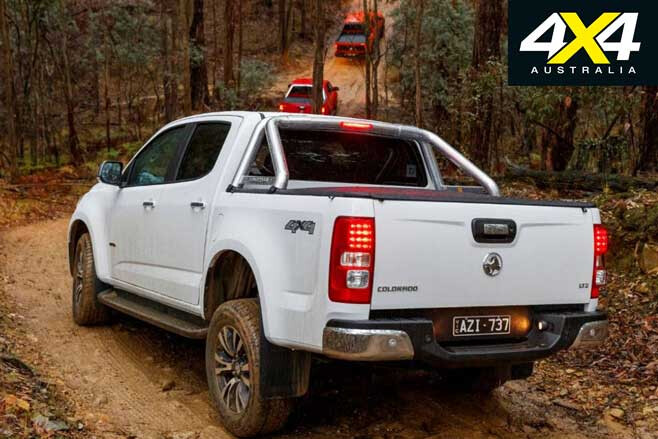
According to VFACTS, Holden has sold a total of 11,056 Colorado 4x4s so far in 2019. The segment’s perpetual best-sellers – Ranger and Hilux – have notched up more than double the amount of sales year-to-date (24,992 and 24,904 respectively).
Andre Scott, the General Manager of Colorado Marketing, said the MY20 Colorado has been a hit with buyers.
“The MY20 Colorado was launched earlier this year and has been very well-received by the marketplace,” Scott said, “but this seven years’ free servicing is an example of Holden ‘putting its money where its mouth is’ in what is an incredibly competitive segment where competitors typically offer ‘capped-price’ servicing schemes for up to six years.
“Just to be clear, this offer is for seven years’ free servicing, rather than capped-price servicing, and on a 4×4 Colorado that represents over $3000 in additional value.
“In covering these service costs for our customers, I hope that more of them are able to spend the extra cash in their pockets to get out and drive what I believe is one of the most capable four-wheel drive utes available,” Scott said.
The offer applies to all Colorado 4x4s ordered or delivered between October 1, 2019 and December 31, 2019.
AFTER more than 30 years as a local manufacturer and distributor of quality four-wheel drive accessories, Piranha Off Road Products’ new owner McNaughtans Pty. Ltd. has massively expanded the range of equipment on offer, transforming the business into what it describes as a “one-stop 4WD, caravan, and camper touring mecca”.
For three decades Piranha has been renowned as a leading expert in 4WD touring gear such as electric winches, dual-battery kits, battery trays, wiring looms, lighting, fridges, solar kits and more, and now Piranha has expanded its range to include the comprehensive line-up of AP LED high performance driving lights and light bars, Blue Max 4WD suspension kits, a range of Piranha-branded fibreglass ute canopies, and steel and aluminium ute trays.
Piranha’s Blue Max suspension upgrades are now available to suit a wide range of vehicles, and these can be fitted at the Piranha Off Road Products workshop in Boronia, Victoria.
The new Piranha fibreglass ute canopies feature an aerodynamic design with integrated spoiler and LED brake light, tinted windows, gas struts, interior LED light, carpet lining, rear window locking handle and demister, and roof rails with a 70kg load rating as standard.
The range of steel and alloy trays are available in a variety of sizes to suit single-cab, extra-cab and dual-cab pick-ups. The galvanised steel trays have a powdercoat finish, galvanised mudguards, trundle drawer, laser-cut safety screen and 76mm rear removable ladder rack. The aluminium trays feature aluminium mudguards, laser-cut aluminium safety mesh, 76mm tube headboard frame and optional ladder rack. Both steel and aluminium trays are available with optional side steps, water tank and toolboxes.
As well as the new line-up of gear, Piranha will continue to offer a range of Australian-made fridge slides and its popular ‘30 Second Kitchen’, as well as recovery gear, snow chains, high-lift jacks, air compressors, switches, fascias and much more.
The full range of equipment is listed in Piranha’s new ‘2019 Product Guide’. You can pick up a hard copy in-store at Factory 4, 383 Dorset Rd, Boronia, Vic, or download a PDF version at www.piranhaoffroad.com.au
PATENT diagrams unearthed in the USA by www.fordauthority.com show what looks to be a Ford Ranger double-cab ute with a removable hard-top.
While the idea of such a function sounds absurd, you’ve got to look deeper and think of the Jeep Gladiator, which, thanks to its Jeep Wrangler lineage, has a removable roof and doors.
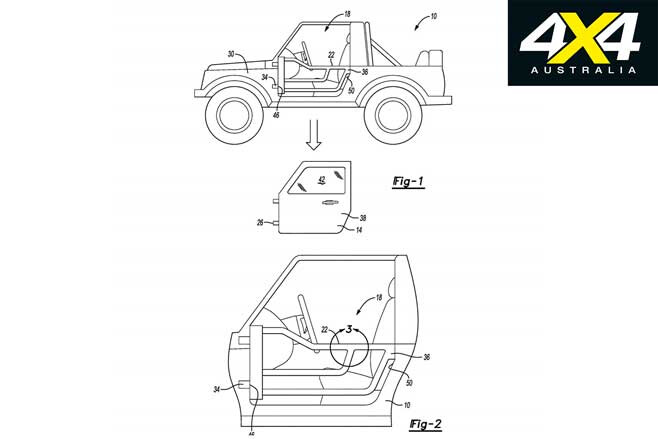
Ford USA is pitching its 2021 Bronco as a competitor to the Jeep Wrangler, and patent documents have shown FoMoCo has been working on removable doors for that off-road-focused wagon.
The Bronco will be based on the Australian-developed T6 platform which underpins both the Everest wagon and Ranger ute here, while the T6 Ranger went on sale in the US earlier in 2019. There have been rumours that Ford is working on a Bronco pick-up to go head-to-head with the Gladiator, and these latest findings are the biggest clue yet.
The patent diagrams show what appears to be a current PX generation Ranger, but there’s no reason that the removable roof couldn’t be for a T6 Bronco pick-up, or even the next generation of Ranger.
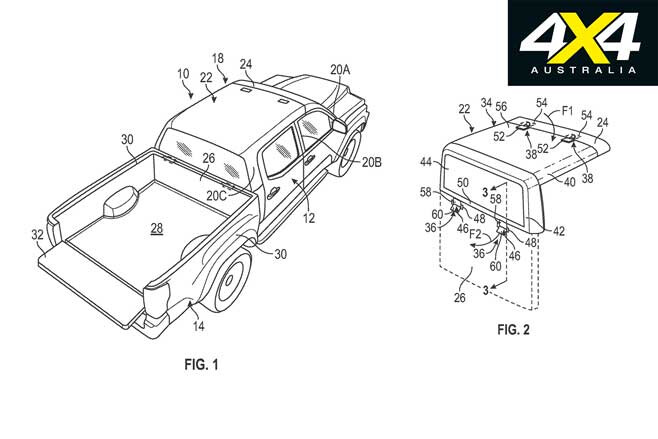
In the USA, the Ranger has been criticised for its bland styling that is not ‘truck enough’ for American tastes, so it goes without saying that Ford would like a tougher-looking mid-size truck to compete in that market.
Enter the Bronco pick-up, which would be part of the all-new family of Bronco vehicles that include a small crossover ‘Baby’ Bronco, two- and four-door Bronco 4×4 wagons and a Bronco pick-up.
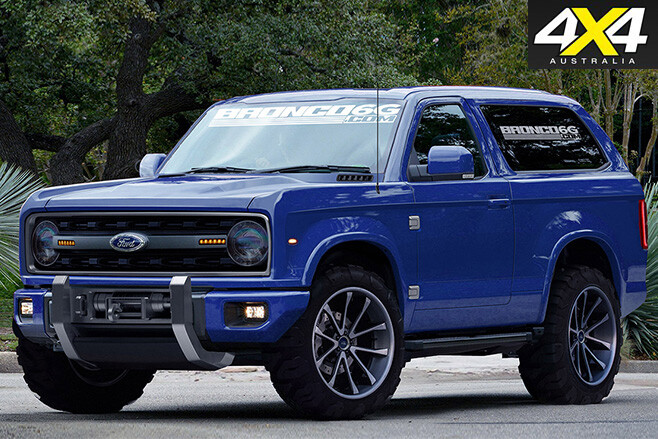
While the Bronco will ride on T6 underpinnings it will have a unique boxy body that better reflects the long history of the nameplate in the USA, and not the bulbous Everest body shell. The original Bronco was a compact truck that debuted in 1965 and went through five generations of models before being discontinued in 1996.
Only the third-generation Bronco was ever sold by Ford Australia, and these vehicles were assembled locally. Ford Australia currently says there are no plans to market and sell the new Bronco in this country. If we want a new 4×4 ute with a removable roof, we’ll have to be content with the Jeep Gladiator which goes on sale here early in 2020.
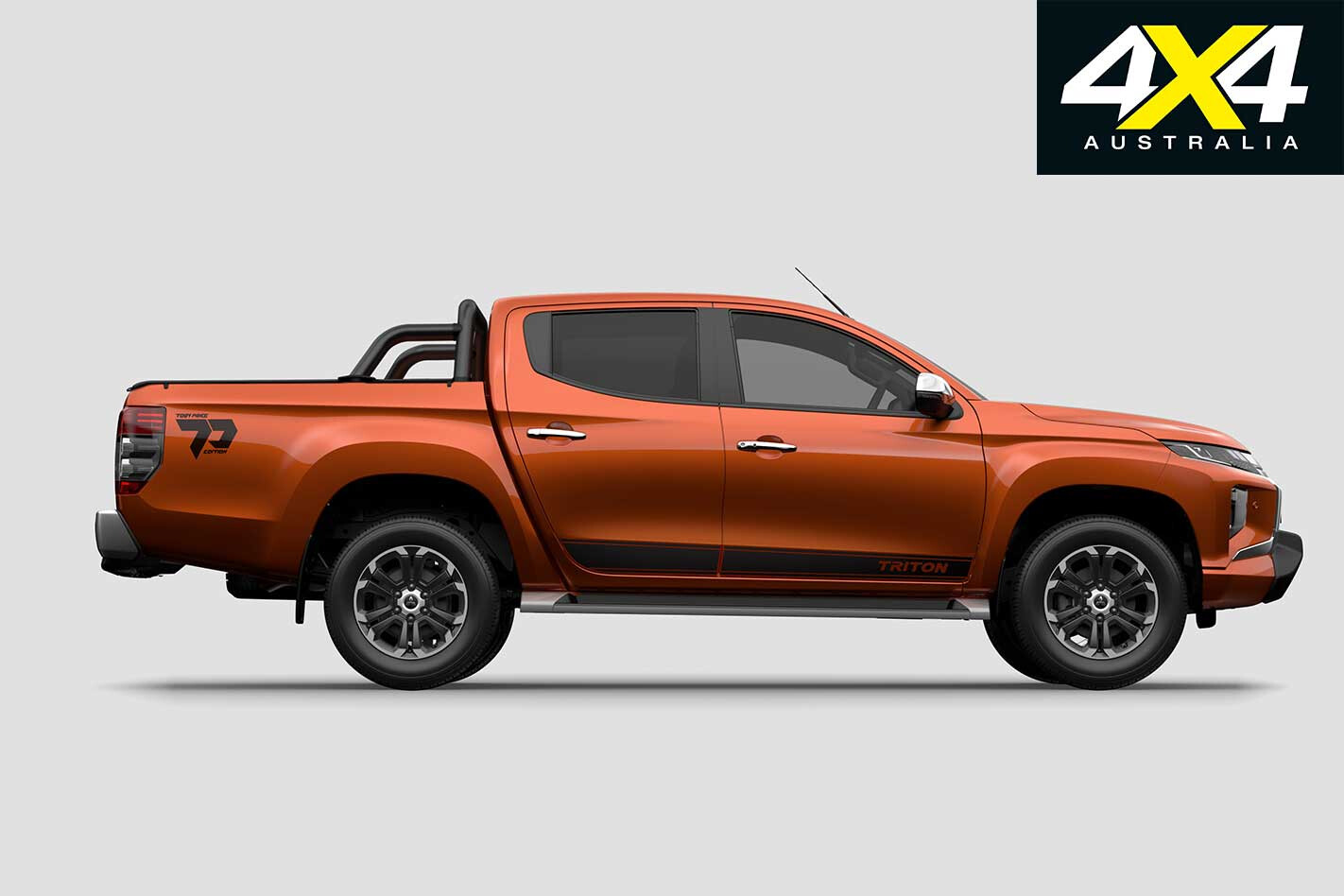
LEVERAGING its close relationship with two-time Dakar champion and Aussie off-road motorcycle racing legend, Toby Price, Mitsubishi has launched the Toby Price Limited Edition Triton, which will consist of 500 units based on the Triton GLS.
Available in manual and auto variants, in addition to the usual GLS features, the Toby Price Limited Edition Triton will score special Toby Price ‘77’ decals, a black nudge bar with integrated LED light bar, a black sports bar, a tub-liner, a soft tonneau cover, tinted bonnet protector and weather shields, and carpet floor mats.
While the vehicles will not be affixed with a special plaque, a unique VIN will ensure vehicle authenticity. The Toby Price Limited Edition Triton will retail for $48,140 with manual gearbox and $50,640 for the auto.
PRICING
4×4 Toby Price Edition Pick Up Man Diesel: $48,140
4×4 Toby Price Edition Pick Up Auto Diesel: $50,640
SPECS
MITSUBISHI TRITON 4X4
Engine: 2.4-litre I4 turbo diesel
Power/Torque: 133kW/430Nm
Gearbox: six-speed man/auto
4×4 System: part-time 4×4 (GLX-GLX+); selectable full-time 4×4 (GLS-GLS Premium)
Crawl Ratio: 40.5:1 (man); 39.5 (auto)
Kerb Weight: 1780-2045kg
GVM: 2900kg
Towing Capacity: 3100kg
GCM: 5885kg
Fuel Tank Capacity: 75 litres
ADR Fuel Claim: 7.9/8.6L/100km (man/auto)
EV start-up Bollinger Motors has officially revealed its 2020 B1 SUV and B2 pick-up, with the curtains dropping on the electric vehicles in Ferndale, Michigan.
Bollinger Motors first sparked interest back in 2017, when the US-based company revealed the initial two-door all-electric prototypes. Two years later and Bollinger Motors has finally displayed the production-spec four-door models, with the aim to begin building in a year’s time.
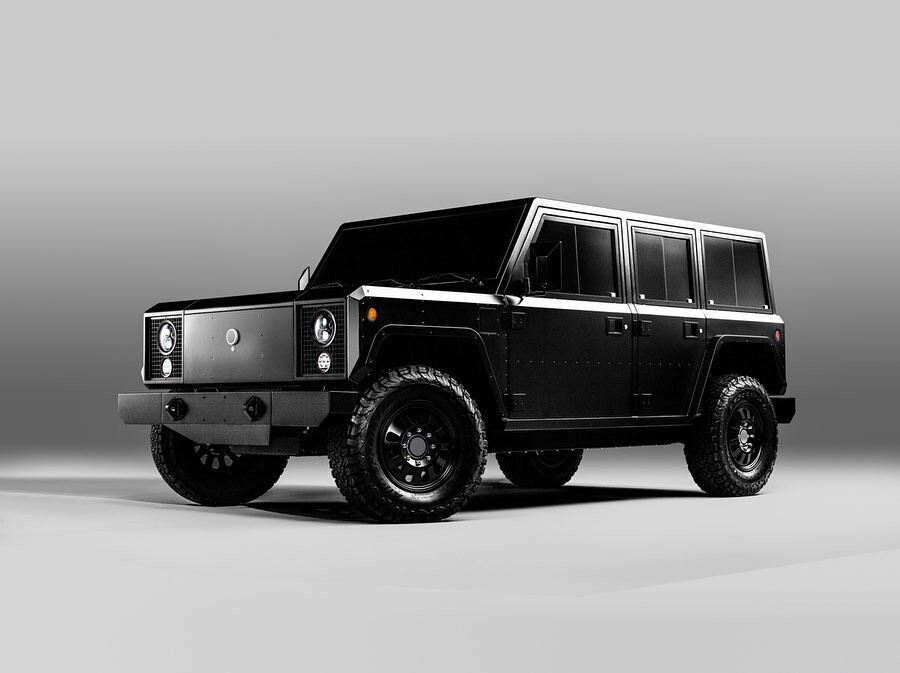
The reveal of the B1 and B2 is hardly a surprise and has just reiterated what we already know, with Bollinger Motors already uploading renderings and specs in the lead up to the vehicle’s debut.
“Tonight is a celebration that we actually built them; they actually work; [and] they’re amazing,” said Robert Bollinger, CEO and designer at Bollinger Motors, at the vehicle’s reveal.
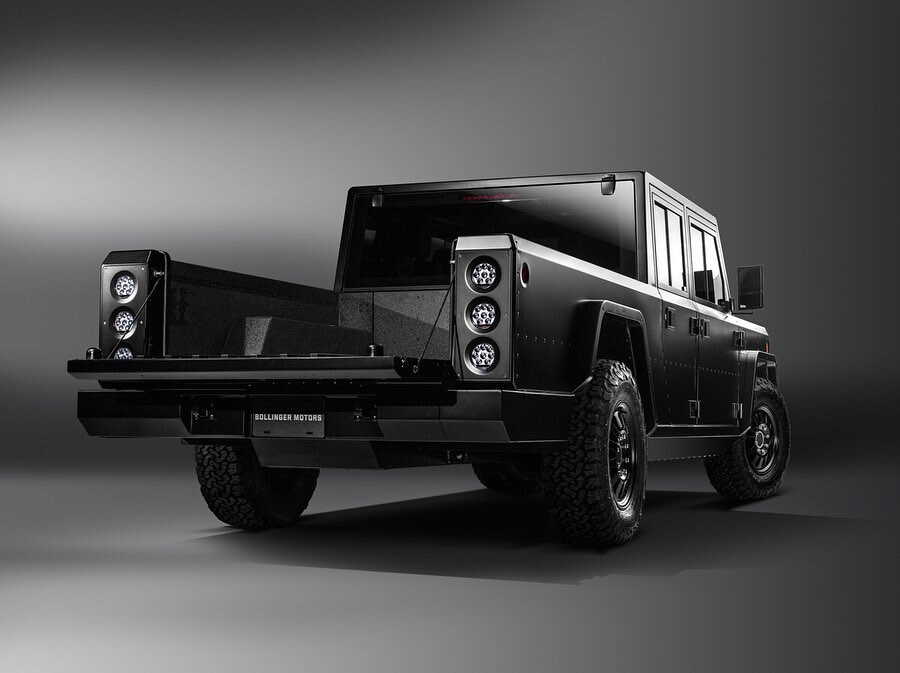
Both the B1 and B2 share the same dual electric motor set-up – 458kW and 906Nm – which runs through a two-speed (Hi/Lo Range) gearbox. These motors are aided by a 120kWh battery pack, which is said to have a range of about 322km, as well as regenerative braking.
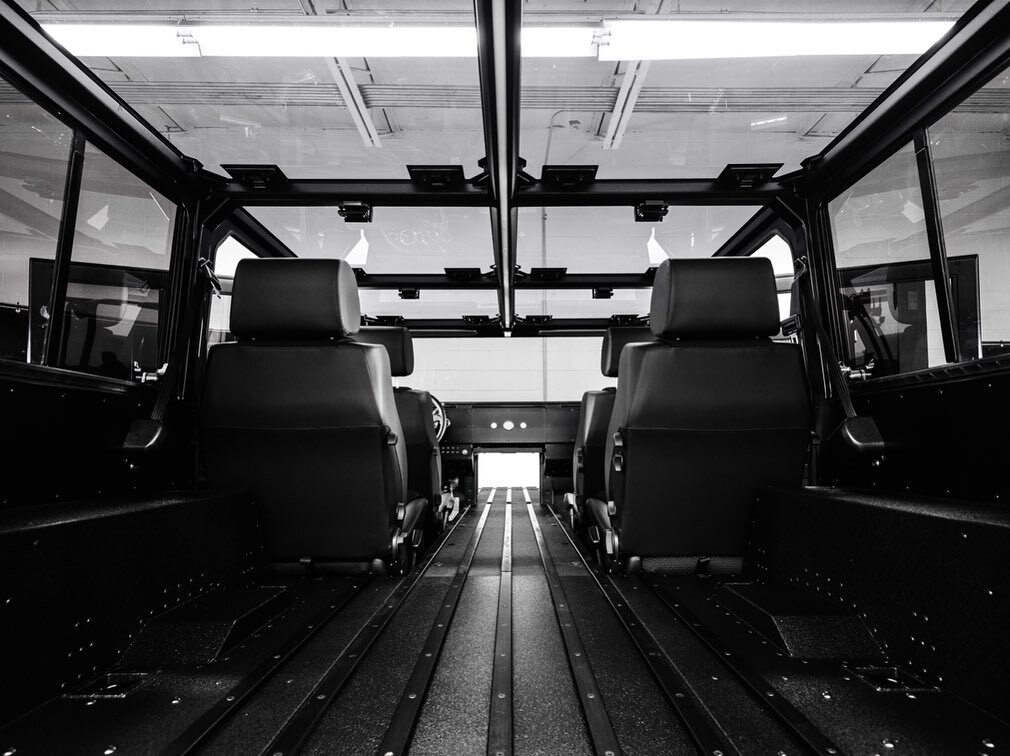
Both vehicles feature all-aluminium bodies; easily removable glass, doors, windshield and roof panels; a flip-up rear window; a patented passthrough which can store 40 2x4s; LT285/70R17 tyres; geared axle hubs; 381mm of ground clearance and towing capacities of 3402kg. The B1 has a slightly higher payload capacity (2359kg versus 2268kg).
Pricing hasn’t been confirmed by Bollinger Motors at this stage.
B1 DIMENSIONS
Wheelbase: 118.8in (3018mm)
Length: 171.5in (4356mm)
Height: 72.7in (1847mm)
Front Track: 66.2in (1681mm)
Rear Track: 66.2in (1681mm)
Approach Angle: 52°
Breakover Angle: 30°
Departure Angle: 43°
B2 DIMENSIONS
Wheelbase: 139in (3531mm)
Length: 207.5in (5271mm)
Height: 72.7in (1847mm)
Front Track: 66.2in (1681mm)
Rear Track: 66.2in (1681mm)
Approach Angle: 52°
Breakover Angle: 25°
Departure Angle: 28°
UPDATED: TOYOTA USA has launched a Heritage Edition Land Cruiser 200 Series to mark 60 years of the iconic model in the United States. The Land Cruiser first became available in the USA in 1958; however, this special edition is being sold there as a 2020 model, and has just hit dealer showrooms.
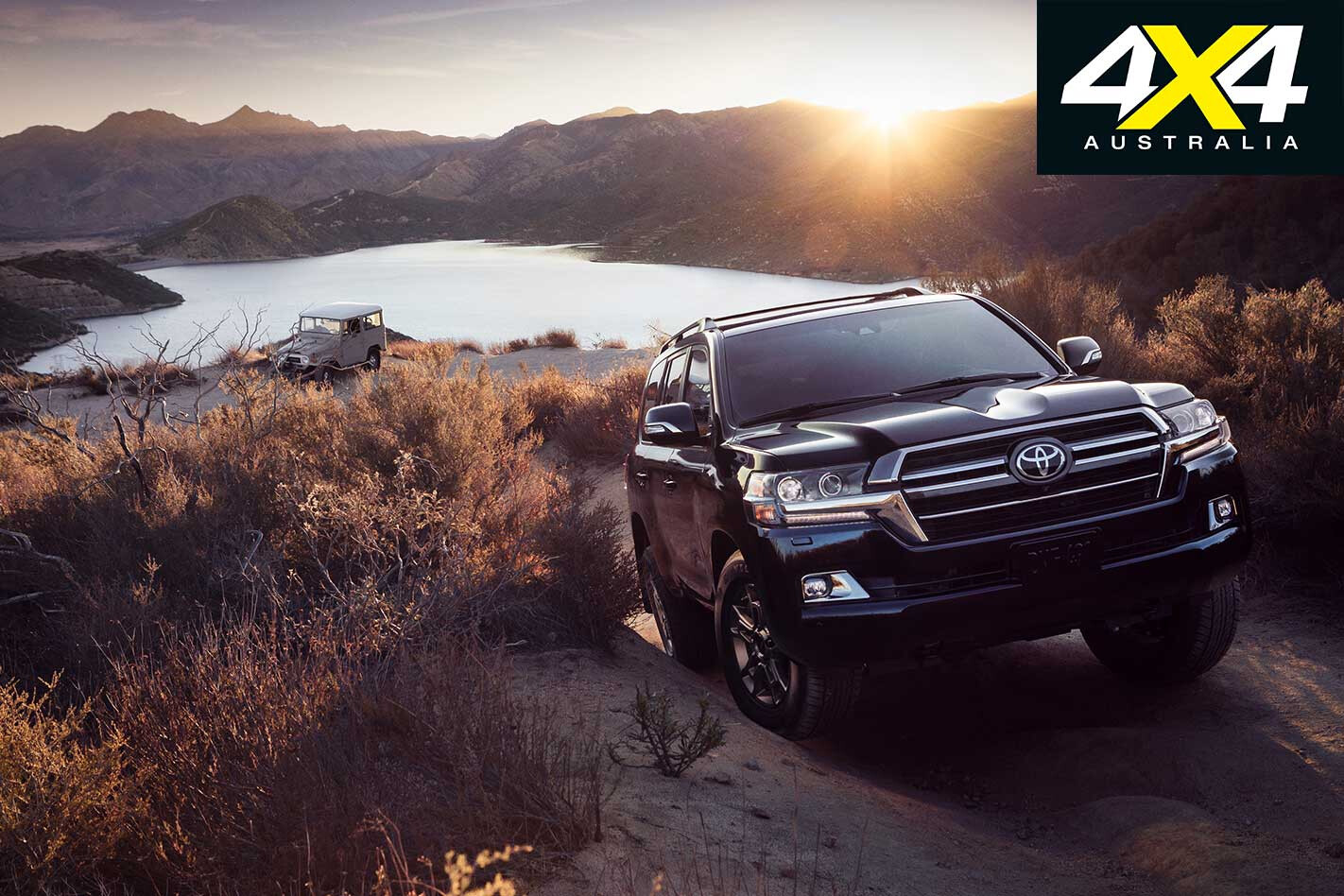
While most of what’s special about this Cruiser is the usual limited edition fare of blackouts, unique trim and leather upholstery, the items we couldn’t go past are the totally retro ‘Toyota Land Cruiser’ badges applied to the rear pillars.
They are straight off the original FJ20 Cruisers and don’t look out of place on this latest model. Where’s that eBay log-in again?
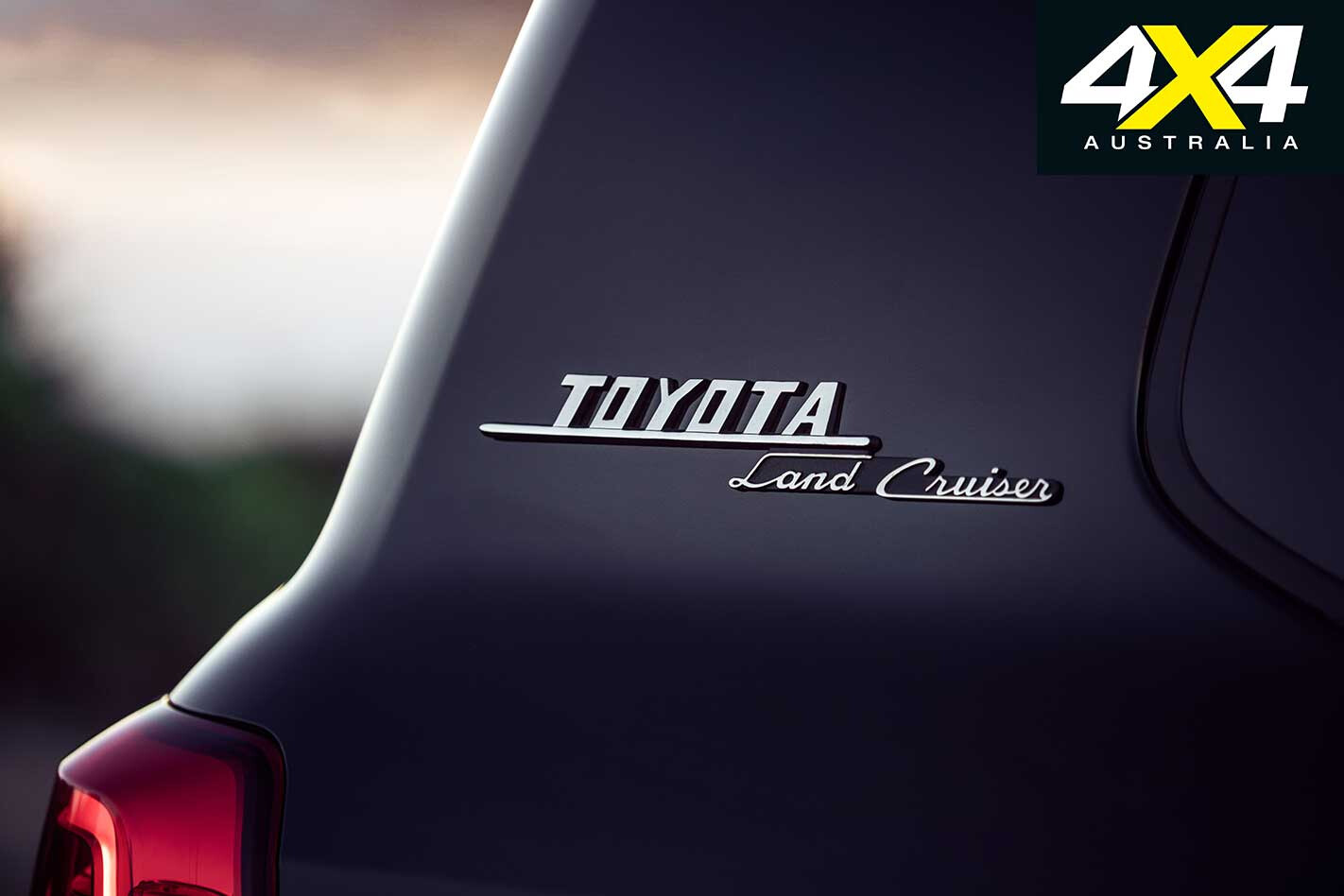
To its credit, the Heritage Edition has a couple of concessions to improve off-road ability: the side steps have been omitted to improve clearance, and those mode-specific bronze alloy wheels are 18-inch forged units from BBS instead of the oversized rims many manufacturers would fit to their special models.
Like all 200s in the US, the Heritage model is powered by the 5.7-litre petrol V8 engine back by an eight-speed automatic transmission and dual-range, full-time 4×4, as found under the Lexus LX570 model here in Australia.
The Americans don’t get the 1VD-FTE twin-turbo diesel V8, which accounts for more than 98 per cent of Land Cruiser sales here.
The Heritage Edition will be limited to just 1200 models.
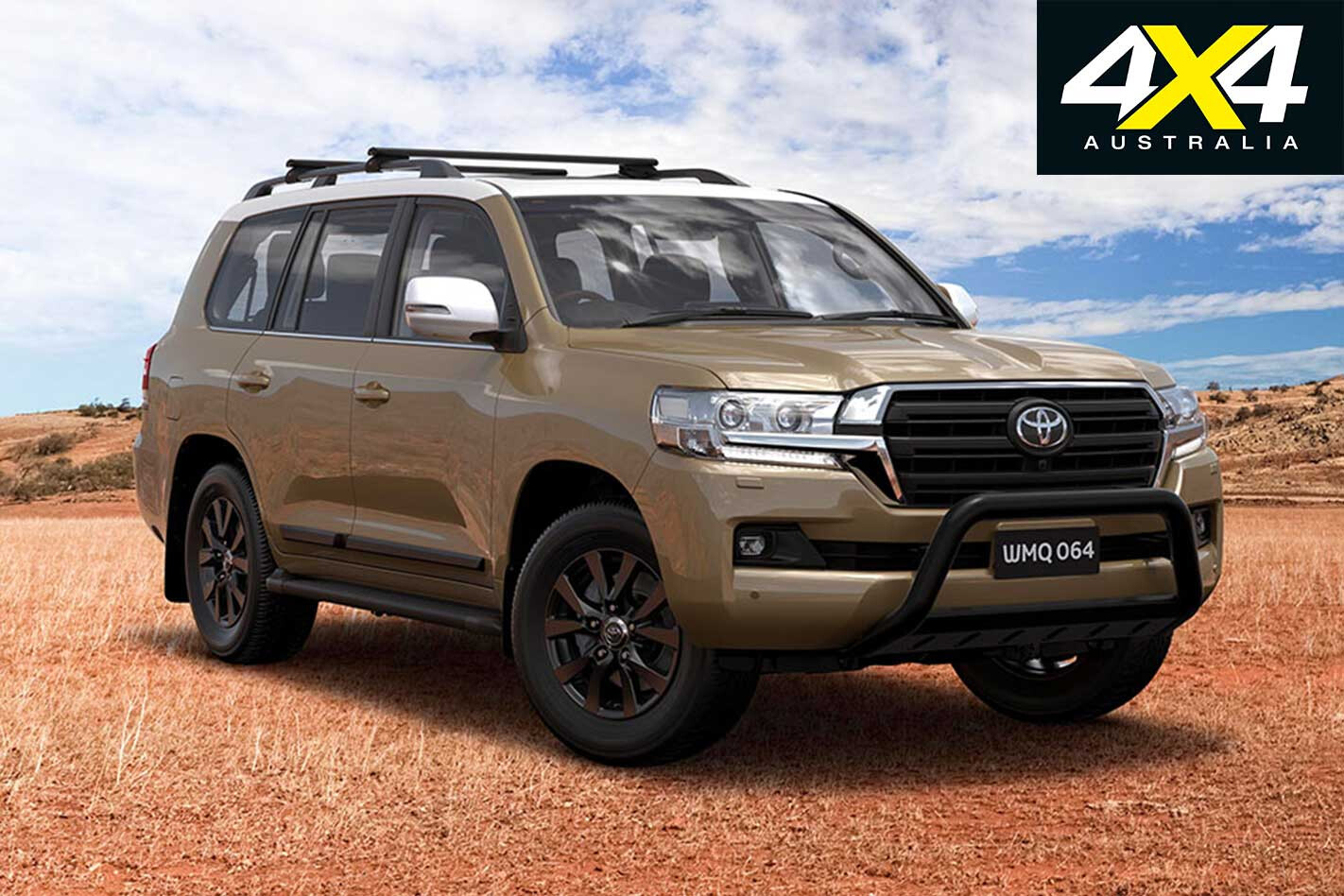
In Australia, TMCA produced a kind-of heritage edition of its own. This one-off LC200 Sahara was fitted with all the usual blackouts and factory accessories, and it copped a unique paint scheme in Vintage Gold Metallic with a contrasting white roof – a hat-tip to the classic FJ40.
For some people, and perhaps bears, a quick set-up is the be-all and end-all. It suits their fast-paced adventurous nature and gives just the bare necessities. For others, their off-road adventures might be a whole lot slower; camped by a billabong for a week at a time means they’ll be looking for more comfort, and they’ll be willing to trade speed to get it.
So what’s the perfect camper trailer for you? Well, my friends, that’s something only you can answer; but being the nice blokes we are, the next few pages will arm you with the intricate knowledge of the various camper platforms, their pros and cons, and, hell, we’ll even talk about the different suspension systems just so you know what keeps the whole show on the road.
So strap yourselves in as we delve deep into camper territory.
Soft-Floor Camper Trailer
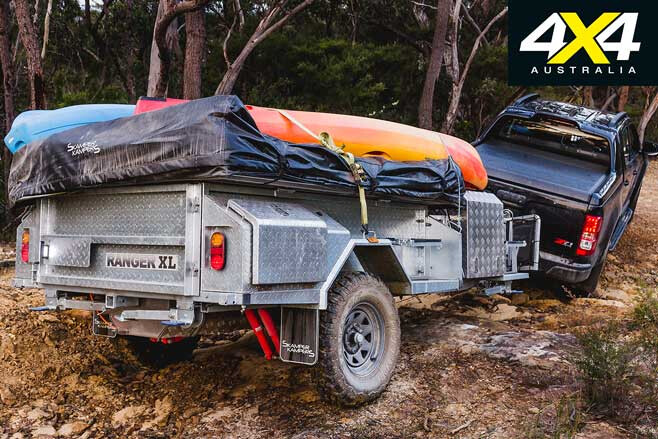
No matter if you’re looking at Aussie-built or import, with very few exceptions the entry level at all points of the market is going to be the humble soft-floor camper. In essence, these are an incredibly simple design: an off-road box trailer, topped with an elaborate version of a rooftop tent, and complete with a few basic amenities like a slide-out kitchen, and maybe a few water tanks and extra batteries thrown in for good measure.
Like every camper category, you’ll almost always get more when you spend more. Quality is the big factor you’ll notice as your budget increases, but set-up times will decrease too, with many of the high-end options taking less time than a roof-topper or swag to erect.
If you’re on a budget you can get your backside into an imported soft-floor camper trailer for as little as $7000. Expect to find a rudimentary design, so things like leaf-spring suspension, beam axles and a kitchen that’ll see the local campground barbecue hot plate look appealing. There’ll be minimal spit and polish in the setup, too, so don’t expect speedy erection when you pull up to camp.
Premium Aussie options will punch in around the $30K-$40K mark, but they bring a lot to the table for the money. Expect significantly quicker set-up times through clever designs, and more extensive lifestyle items like fancier kitchens, hot showers and extensive 12V systems that’ll keep electronics running long into the night. They will also better retain their resale value, which should be factored into your budget.
Pros • Low price (typically) • Low weight
Cons • Slow set-up (typically) • Can be mistaken for a box trailer full of camping gear.
Ideal for Campers on a budget or those looking to try their first one.
Price Range $7000-$47,000
Rear-Fold Camper Trailer
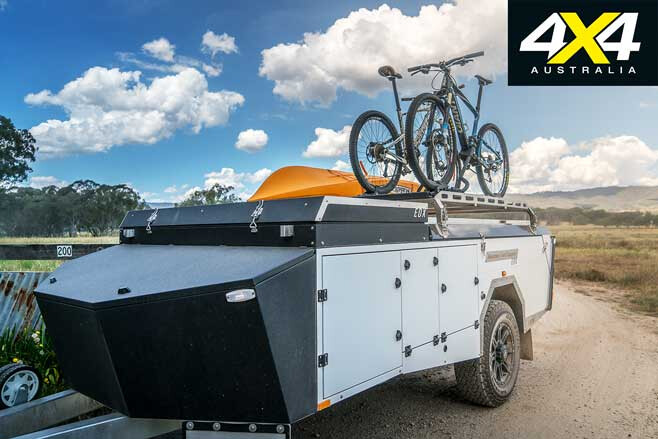
Campers didn’t just erupt on the scene, so there’s a fair bit of progression and evolution along the way. The logical step from the early soft-floors is possibly the biggest leap yet – rear-fold campers.
While you’re still sleeping above the trailer itself, the canvas floor is now replaced with a solid deck, typically hinged at the rear and pushed over thanks to a hand winch and some gas struts. You’ve still got the benefits of under-bed storage, but kitchens become standalone units that slide out the side. You’re also spoilt with a solid deck as the floor swings over, which is perfect for a table-and-chair set.
The raised floor also provides an extra layer of insulation from the cold, and with the climb up to the bed being divided between the floor and bed itself, rather than a ladder style in a soft-floor, they are easier on the knees.
High-end or low-end will often look similar in this category but premium versions will typically be lighter to tow due to more advanced construction methods, have better weather sealing, and be easier to set up and pack down. Those with deep enough wallets can even find their way to electric opening and closing models; although, expect to spend the price of a new ’Cruiser for the pleasure.
Pros • Solid floor out of the elements • Plenty of storage
Cons • Large overall footprint • Can be cold due to larger volume of air
Ideal for Older couples looking for that extra layer of protection
Price Range $10,000-$70,000
Twin-Fold Camper Trailer
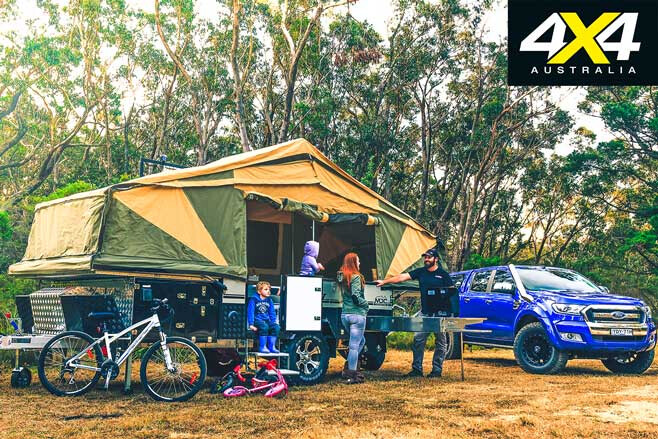
If a rear- or forward-fold isn’t big enough, and the budget doesn’t extend to a caravan, a twin-fold might be up your alley. There are no Aussie manufacturers currently producing them, but they’re often the flagship products in imported lines.
Where a forward-fold has the bed attached to the lid and sends it forward, a twin-fold is a larger unit, with twin double beds arranged on a split lid. The double beds run sideways across the camper, to increase width significantly – some examples are more than 2200mm wide, and up to six people can sleep in comfort.
Despite their size, the unique design allows a reasonably quick set-up time; though most weigh around the 1700kg mark, which is roughly 400kg heavier than some forward-folds. Like a typical forward-fold, storage space isn’t great, but the width allows fitment of two fridges up front.
Pros • Twin bedrooms and a separate lounge • Twin fridges (common) • Fast set-up speeds
Cons • Big weight penalty • Poor manoeuvrability on tight tracks
Ideal for Families with teenagers, or couples needing that little bit more space
Price Range $25,000-$30,000
Forward-Fold Camper Trailer
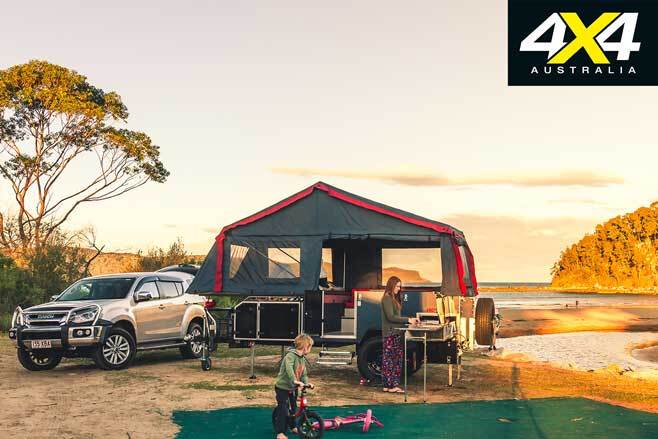
Forward- and rear-fold campers may look identical, but their differences go much deeper than where their hinges are. While a rear-fold puts the bed above the box and an empty floor space on the lid, the forward-fold camper flips things around a little. Crank the hand winch over and the forward-fold lid folds … well, forwards, but this time there’s a bed attached to it. This means the box can be put to better use.
In almost all situations the internals of the box will be filled with a wrap-around lounge of varying quality. With a little shuffling this wraparound lounge can be transformed into a second bed; so a well-designed forward-fold offers camping for families of four to five with incredibly quick set-up and a seating/dining area out of the dirt. As the camper sets up in its own footprint, you also don’t need to hang your 4×4 half onto the track to allow room for the set-up.
As there’s a lounge in the main body, storage can be more complicated; although, you’ll still be able to stow some things under the seating area. Keep an eye on weights in this category, too – as designs become more complex, inferior engineering tends to throw material at the problem rather than the clever solutions you’ll typically see in locally produced offerings.
Pros • Faster set-up times • Raised living space and second bed
Cons • Expect a price increase • Mattress comfort can suffer due to folding arrangement • Reduced storage space
Ideal for Adventurous families looking for room for four
Price Range $18,000-$38,000
Compact Camper Trailer
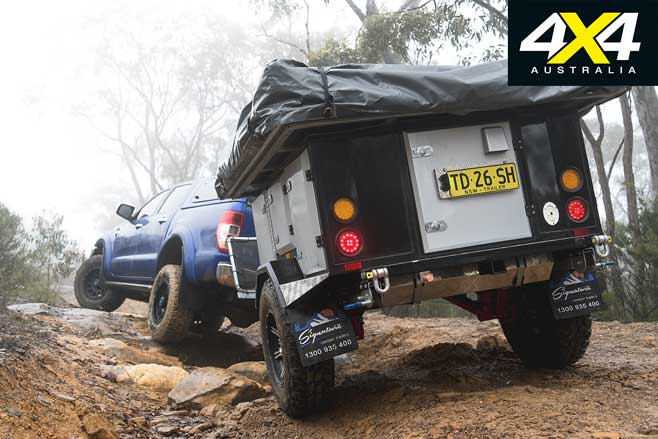
Trading comfort for capability, compact campers typically resemble a tradie’s site trailer with armour plating and tyres that’ll roll over anything. Entry-level offerings typically have a few basic amenities in the side boxes, with a rooftop tent and a roll-out awning if you’re lucky, and very little fit or finish.
As a result they typically weigh in around half the weight of a forward- or rear-fold camper. Bump up the budget and things get a fair bit more thought-out, with diesel heating, air suspension, extensive kitchen setups and hot and cold running water making them more on par with an inside-out caravan than a box with a tent.
Your budget will typically be going towards off-road ability rather than creature comforts or living space, so compact campers are best suited to solo travellers who can’t afford to get caught out by a large camper, or people looking to push the boundaries of family camping.
Pros • Small towing footprint • Large storage volume • Serious off-road capability
Cons • Fewer creature comforts • Less covered area to weather a storm
Ideal for Couples and long-distance travellers who want the ultimate off-road ability
Price Range $15,000-$50,000
Hybrid Camper Trailer
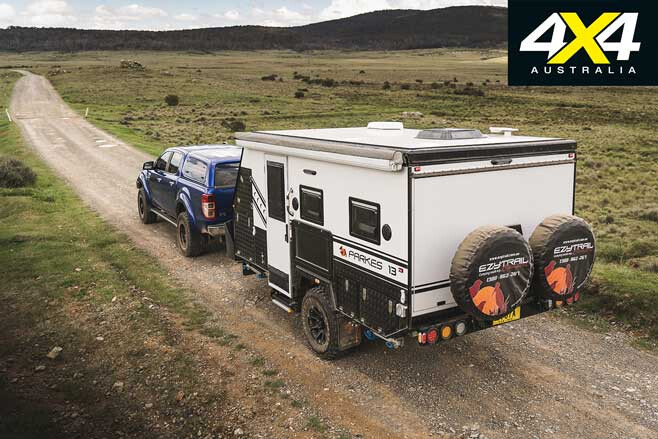
With more and more camper manufacturers vying for your business it’s no surprise there’d be another huge leap forward in terms of comfort and options. This time the result is what’s rather ambiguously known as the hybrid camper, which is something that straddles the line between camper trailer and caravan, with no clear defining guidelines on what it needs to be.
Prices range from the $30,000 mark to more than $100K, and the designs are just as varied. We’ve seen complicated, heavy, clunky imported offerings that don’t offer any convenience or space over a camper. Then there are space-age designs built out of composite materials that offer lightweight construction and interior fit-outs that’d rival some five-star hotels.
With a hybrid, expect to find yourself under a hard roof with an external kitchen and full-size sleeping arrangement. Some hybrids also offer sleeping arrangements for kids; although, this segment is typically aimed towards older couples looking for that next step of comfort and ease rather than a good way to house a swarm of little tackers.
Pros • Caravan comfort in a camper package • Enough options to suit everyone’s needs
Cons • Minimal sleeping options • Compact internal space • Poor designs can have cumbersome set-ups
Ideal for Couples looking for a step up in comfort from a camper
Price Range $35,000-$120,000
Off-Road Caravan Camper Trailer
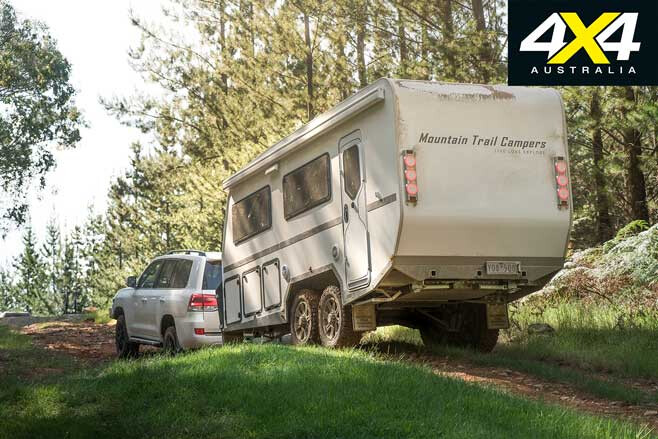
While hybrid campers seek to bridge the divide between off-road capability and serious comfort, off-road caravan manufacturers have been working hard on the same angle, although with a twist. Where the caravans of old were rudimentary units of corrugated sheets and cheap timber interiors, these days manufacturers are using high-tech construction methods and making them lighter and tougher than ever.
Budget offerings will give budget results as always, with imported units typically giving you a basic bed and en suite with off-road suspension, while pushing up around the six-figure mark will net you a dust- and weather-sealed home on the road complete with internal and external kitchen, multiple sleeping options and fully functioning bathrooms with washers and dryers. Sure, you won’t be punting one through the Tele Track too often, but if your aim is to live at Loyalty Beach for a month it’d be a hell of a way to do it.
Pros • Instant set-up • Fully dust- and weather-sealed • Space for the whole family
Cons • You’re towing a block of flats • May push the budget • Often require larger tow-rigs
Ideal for Families or couples looking to take on the long-haul
Price Range $40,000-$150,000
Independelty Verified
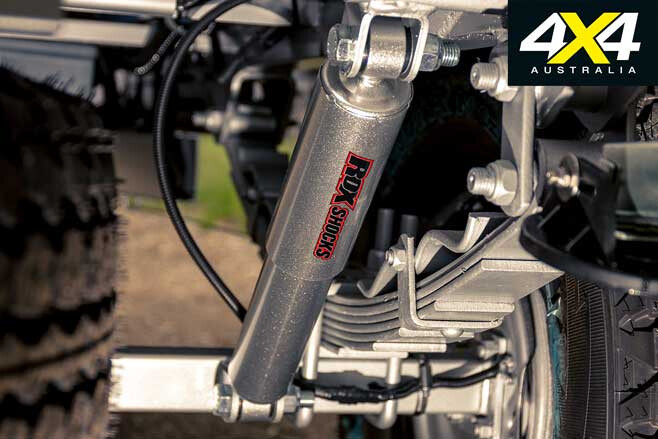
A phrase you’ve probably seen slick-haired camper salesmen throw around is independent suspension, but it’s important to know exactly what you’re getting. There are typically two types of suspension you’ll come across in a camper, no matter the budget.
The first is the trusty old leaf spring and solid axle. These have been around for a million years and are functionally similar to the rear-end in most modern dual cabs. They’re easy to fix trackside, and easy to find parts for. The downside is the suspension can’t cycle at high speeds, so corrugations will make a mess of your eggs. They also have a lower ground clearance in the centre, which can cause issues in deep ruts.
Most campers that run an independent suspension typically have a trailing arm on either side of the camper with a spring and shock arrangement. The benefit of a lighter independent setup with a coil or air spring is they can cycle much fast giving a smoother ride, and therefore minimise stress on the tow vehicle. While twin shocks are great redundancy for travelling in remote areas, some manufacturers can use them to mask poor mounting angles that reduce the shock’s effectiveness.
You’ll want to keep an eye on the trailing arms themselves, too. Cheap offerings have been known to use poor suspension designs or materials that can lead to catastrophic failure in remote back country.
Two new 4×4 products that’ll come in handy for that next vehicle recovery: Tred boards and MSA 4×4’s winch rope protector.
Tred GT and HD recovery boards
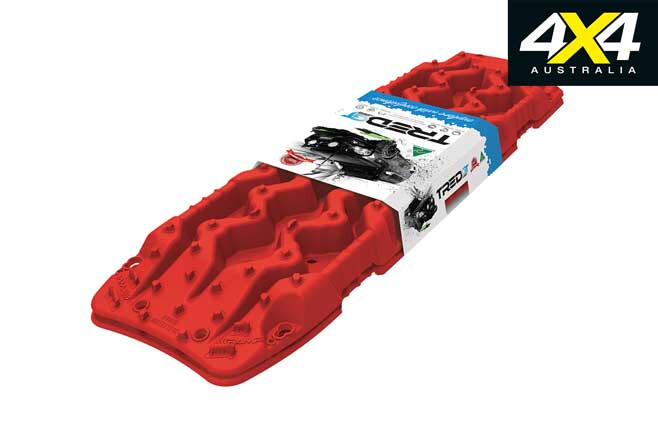
Tred has released two new recovery boards to suit four-wheel drivers with different needs, vehicles and budgets. While the new Tred GT (Grand Touring) and Tred HD (Heavy Duty) recovery boards share the same design, they are made from different materials.
According to Tred, the new boards have the same essential recovery characteristics of the brand’s top-of-the-range Tred Pro model, but at a more affordable mid-level price. The Tred GT is made from polypropylene, while the Tred HD is made from a custom-engineered nylon blend; the former is suitable for vehicles up to 4000kg while the latter suits vehicles up to 4500kg.
Tred GT boards weigh just 2.7kg each and are designed for use in weather conditions ranging in temperature from 0°-55°C, while Tred HD boards weigh 3.5kg each and can be used in temperatures ranging from -15°-70°C.
Both GT and HD boards have dedicated entry and exit points, sipe locks to grip the outer edges of a vehicle’s tyres, a Tred-Link system that allows them to be linked together, and they offer various mounting options. They are also available in a range of colours.
RRP: $229 (Tred GT); $279 (Tred HD) Website: tred4x4.com.au
MSA 4×4 winch rope protector
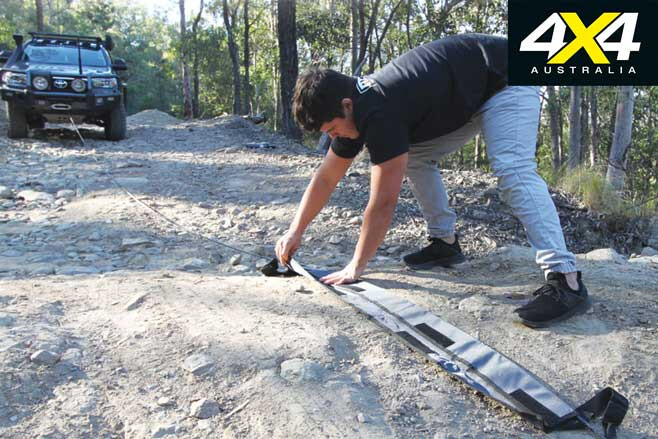
The team at MSA 4×4 has done it again, producing another top-notch off-road touring accessory in the form of this winch rope protector. Designed to eliminate any chance of damage to your winch rope from abrasion when it may come in contact with tree branches, rocks or other harsh terrain, the winch rope protector is made from super-tough 1680-denier Oxford Nylon.
The protector is designed to wrap around the winch rope and is affixed via four heavy duty Velcro strips, thus providing a protective sleeve over the rope. Also included are reflective tape strips for better visibility when/if submerged (or at night) and two handles that allow for easy positional adjustment of the protector on the rope.
The quick-fit design means it takes just a few seconds to fit, and it’s also easy to remove once the recovery has been completed. There’s even a handy storage bag to ensure the rope protector is ready to go again for the next recovery.
RRP: $79 Website: www.msa4x4.com.au
Eurimbula National Park is located almost 500km north of Brisbane, near the stunning coastline of Agnes Water and Seventeen Seventy (1770). It’s a place of natural beauty, where you can stop and unwind for a while. Getting back to nature never hurt anyone, and here at Eurimbula you won’t find better.
Don’t for one minute think you can test your off-road skills here on huge hill climbs or through deep bog holes; there’s only one narrow road that leads to and from several camps, and the only challenge you’re likely to encounter is negotiating around oncoming vehicles.
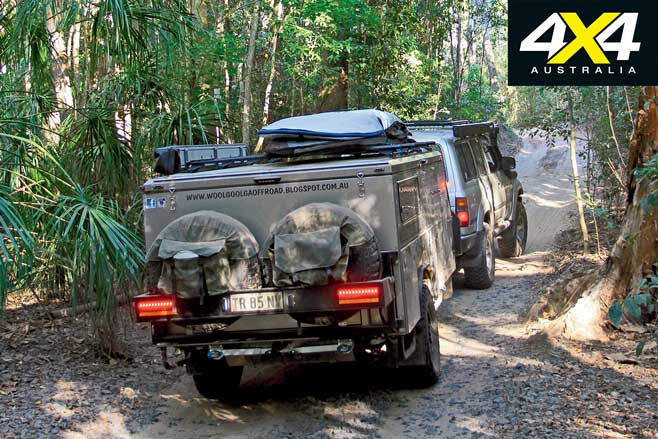
To get to Eurimbula from Brisbane, follow the Bruce Highway north until the turnoff to Agnes Water and then swing a left at the ‘National Park’ sign approximately 10km before Agnes. Those who need supplies can stock up at Agnes Water, where there’s a number of outlets with food, fuel and bait. Walking around town you’ll find a cultural mix of islanders, backpackers, retirees and, of course, grey-haired nomads who spend time here soaking up the tropical Queensland sun.
With only 17 camping sites in Eurimbula NP it’s a good idea to book ahead, but there’s decent phone coverage in the park if you prefer to look before you buy. The first 10km of the road into the NP is unsealed but usually well-maintained; although, the last section can be rough in places, albeit quite beautiful as it twists it way through a mixture of gum forest, dry rainforest and stunning pockets of cabbage tree palms that seem to reach out like a drive-through car wash, with their massive fronds brushing along the sides of your 4×4.
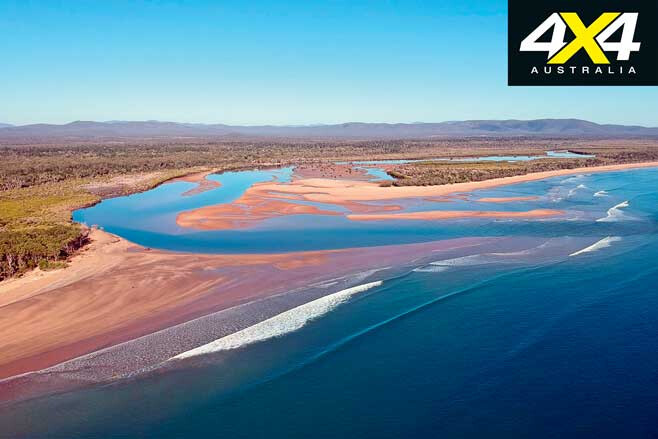
About halfway along the National Park road, keep an eye out for the Ganoonga Nnoonga lookout track, which is one of the park highlights. The easy 30-minute walk leads to a 60m-high lookout that offers stunning views across the lower heathlands and up into the mountains.
The last section of the National Park road has a sandy base but isn’t overly challenging, and despite the narrow road there are plenty of pull-over areas if you happen to encounter oncoming traffic.
Camp can be set up wherever there’s an available spot, as there are no set sites with the camp bookings. All campsites have a decent fire ring (bring your own wood), composting toilets, huge sheltered eating areas and water tanks filled with fresh water.
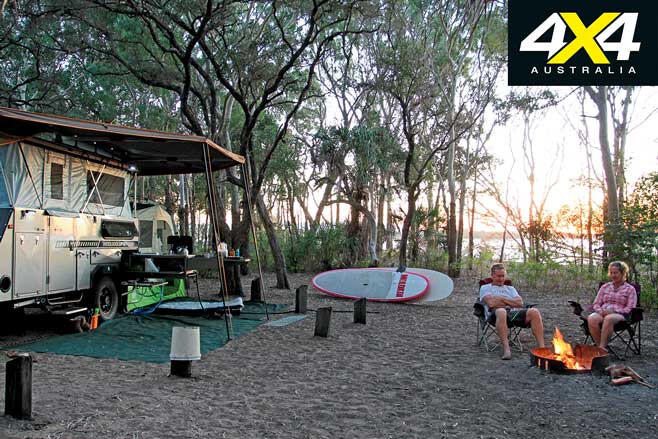
This is beachside camping at its best, with most campsites only 80-200 steps to the beach along dedicated walking tracks – fishermen and beachcombers will adore this place. And with a mix of tall coastal palms, pandanus, beautiful gums and other rich rainforest trees, all campsites offer plenty of shade.
Those who enjoy soaking up nature will love ambling along the beach with the sand between their toes, listening to the waves crash and the birds singing. Not much else happens at Eurimbula, unless you make your own fun by bringing a kayak or an SUP to explore the creek and to access the other side at Bustard Beach. If you’re a keen fisher, there’s bream, flathead or something bigger in both Eurimbula Creek and the ocean. As Eurimbula is very close to the Great Barrier Reef and located in a marine park, there are strict guidelines on fish sizes and any collection of shells and other marine life.
We also saw a few land-dwelling creatures around camp including brush turkeys, echidnas, cane toads and an array of birds, and it’s reported that coastal emus frequent the beach.

While hardcore off-roaders need not apply, Eurimbula NP is perfect for those who just need a break and want to get back to nature, with coastal camping and easy recreational activities on offer. It’s a hidden gem that, once visited, usually ends up on most travellers’ ‘must return to’ lists.
Day Trip to 1770
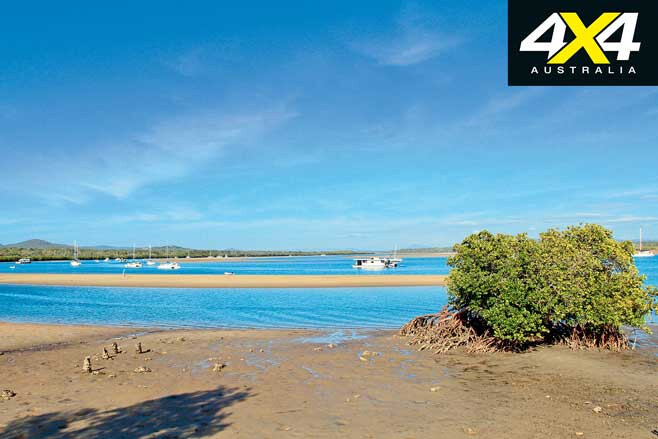
Much more than just another boutique holiday village, Seventeen Seventy (1770) has very significant importance to Australia and Queensland. Back in May, 1770, Captain James Cook landed at nearby Round Hill, the first landing of Cook to what is now called Queensland. In 1935, after the area was surveyed, the town’s name was changed to 1770. It was also here that botanist Joseph Banks came ashore – his only landing in what is now Queensland – and collected 33 new plant species.
In the town of 1770 a stone monument has been erected where Cook proclaimed his landing, and there’s a stunning coastal walk that leads along Round Hill Creek to the headland. One of the highlights along the way is the deep gully of pristine palms that creates its own ecosystem where, at the right time of the year, masses of butterflies congregate to mate and then die.
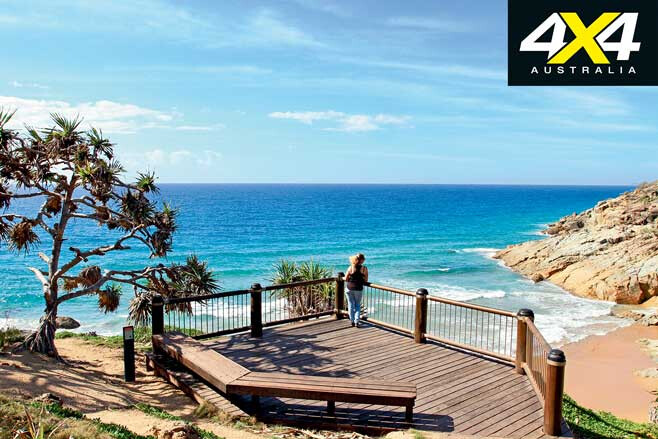
Along the walking track are stunning views up the coast to Bustard Head and the lighthouse, which was named by Cook when his convoy landed and shot a bustard turkey for food. At the end of the Round Hill walk, a viewing platform provides 180-degree views along the coastline and out to the Coral Sea. The town holds an annual re-enactment of Cooks’ landing, for historical celebrations.
Another attraction is the anchor of the Countess Russell sailing ship, which has been set up as a monument to those who died after it ran aground south of Agnes Water in 1873.
The ship set sail from London with nearly 350 immigrants, but 17 people had died by the time it reached Australia. An outbreak of typhoid then hit the ship, with another eight deaths. After the final passengers disembarked, the ship was loaded with coal in Newcastle and, on its way north, it ran aground after being hit by a huge gale at the now-named Wreck Point.