
LDV Automotive has added a stretched version of its T60 dual-cab ute to its line-up, with the all-new T60 Luxe Mega Tub boasting one of the biggest trays in the segment.
With a tray length of 1800mm, the budget-friendly Luxe Mega Tub’s tub is now 275mm longer than the regular T60 ute and, according to LDV, can store bikes standing upright and fit a typical six-foot tradie ladder.
There’s also an extra 315mm in the wheelbase (to total 3470mm), and the tray features an inner tray line for added protection. Hard lids and roller tops will be available, according to LDV.
“Size matters, and by bringing the T60 Luxe Mega Tub to market we’re broadening our offering in the most competitive segment in Australia,” said Dinesh Chinnappa, LDV Automotive’s General Manager.
“It’s clear owners want a vehicle that blurs the lines between weekend lifestyle and week-day workhorse,” he added. “The T60 Luxe Mega Tub is the perfect ute to do just that – and a premium of just $1500 over a regular T60 means it’s significantly better value than any other LWB ute in the segment.”
The Luxe Mega Tub mirrors the powertrain and running gear of the existing T60, which means it gets the 110kW/360Nm 2.8-litre turbo-diesel engine – mated to either a six-speed auto or six-speed manual transmission – and a rear on-demand diff lock.
Earlier this month, Volkswagen unveiled its Amarok XL and XXL models, with the wheelbases stretching to 3405mm (XL) and 3745mm (XXL), and the tray length extending to 1865mm (XL) and 2205mm (XXL).
Aside from the gargantuan price discrepancy between the Amarok and LDV, a vital difference between the stretched T60 and Amarok is that the T60 version is built on the same production line as the regular T60 – unlike the conversion applied to the VWs by Adelaide-based Adaptive Manufacturing.
While pricing for the VW versions hasn’t been finalised, it’s expected to cost around $15K on top of the price of the car; in comparison, with a $34,990 sticker price, the Luxe Mega Tub will cost just $1500 more than the regular T60 dual-cab.
The Luxe Mega Tub will be available from December 2019.
LDV T60 DUAL CAB DRIVEAWAY ABN PRICING (MT/AT) Pro: $28,990/$30,990 Luxe: $33,490/$35,490 Luxe Mega Tub: $34,990/$36,990 Trailrider: $36,990/$38,990
FORD Australia has hand-picked a suite of aftermarket kit and given the Everest Trend more off-road nous, with the launch the Ford Everest BaseCamp accessories pack.
Exclusive to the Trend – the most popular Everest in the Blue Oval stable – the accessories pack is available for both the 3.2-litre/six-speed auto and 2.0-litre bi-turbo/10-speed auto variants.
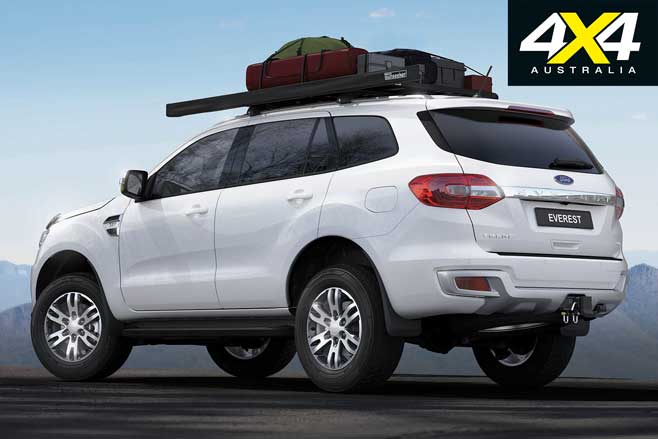
The pack, consisting of a mixture of Ford Licenced accessories, Genuine Ford accessories and specific components selected by the boffins at Ford, is stamped with a manufacturer’s list price (MLP) of $2000, which includes fitment at a Ford dealership.
For that coin, punters get a 76mm-diameter black nudge bar, a Genuine Ford bonnet protector and snorkel, a Ford Licensed LED light bar, a Pioneer platform affixed with a Sunseeker awning, and black roof-mounted carry bars. Despite already featuring a handy wading depth of 800mm, the snorkel, in particular, is a notable addition to the Everest, especially for the intrepid 4×4 explorer who prefers dust to tarmac.
In addition, a Genuine Ford tow bar is included, which is rated to 3000kg (for the 3.2-litre) and 3100kg (for the 2.0-litre bi-turbo).
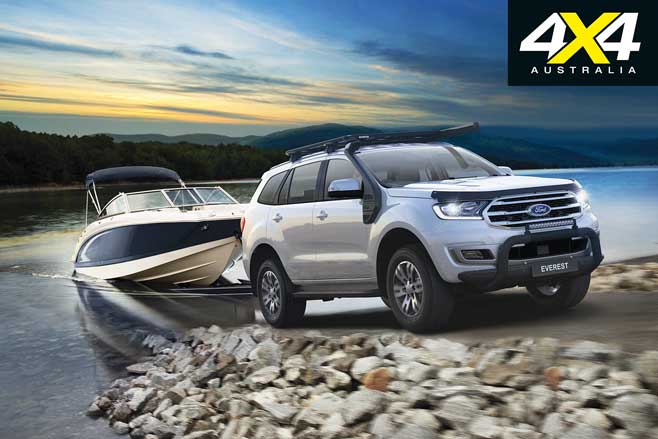
“We know that Everest owners have a keen sense of adventure, and the off-road, off-the-beaten track capability engineered into the Everest 4WD is something we know customers love about their vehicle,” said Kay Hart, President and CEO, Ford Australia and New Zealand. “Now, with the Everest BaseCamp accessories pack, we’re making it easier for customers to get adventure-ready features in a convenient, affordable way to make those weekend escapes a reality.”
The BaseCamp accessories pack provides the Trend with an assortment of useable, practical 4×4 gear, and it seems nicely priced, too, with Ford Australia claiming the kit equates to $6000 worth of value. It’s available now.
OF THIS year’s Baja 1000 field of 264 vehicle entries, the spotlight was undoubtedly focused on the Scuderia Cameron Glickenhaus Boot and the Ford Bronco R.
Both first-time entrants were inspired by 1960s Baja rigs, and both went head-to-head against each other as the sole entrants of the Class 2 unrestricted cars/trucks category.
The two-day cross-country rally, which was held over 1288km of cross country tracks, concluded with the Boot crossing the line with a total time of 33hrs 59min 14sec, a gnat’s whisker of just 46 seconds before the 34-hour cut-off mark.
https://www.instagram.com/p/B5R6t22ll4f/?utm_source=ig_embed&utm_campaign=loading
Unfortunately for Ford, the Bronco R copped myriad race-stopping damages to its components, before malfunctioning cooling fans forced the team to call it quits after 933km.
According to a CNET report, the decision was made to retire the Bronco R in the interest of safety as the next section of the course involved driving over mountainous terrain where recovery would be nearly impossible. Instead, the team nursed the Bronco R to the Baja 1000’s finish location in Ensenada, Mexico, on tarmac.
Despite being handed a comfortable lead by the Bronco R’s misfortunes, the Boot’s journey wasn’t all that smooth-sailing, either, with the team having to stop to deal with a broken spindle with just 78km to go.
Fortunately, the chase team managed to deliver the parts and the Boot was fixed just in time to make it across the finishing line to take a class win.
Top honours for the Baja 1000 was taken by brothers Alan and Aaron Ampudia in a ID Design Ford Raptor Trophy truck, who crossed the line in 16hrs 10min 36sec, 10min 30sec ahead of Dakar-winning Australian Toby Price and Qatari Nasser Al-Attiyah in a Ford F-250 Trophy truck.
NOT TO be confused with the X-Runner, Isuzu UTE Australia this month launched an alternative that’s easier on the hip pocket: the Isuzu D-MAX X-Rider.
Targeted at the thrifty 4×4 segment, the X-Rider is available in six-speed manual and six-speed auto configurations and is priced at $39,990 and $41,990 respectively. The limited-edition model is based on the D-MAX SX platform and, interesting, this variant is typically priced at $44,600 (manual) and $46,700 (auto).
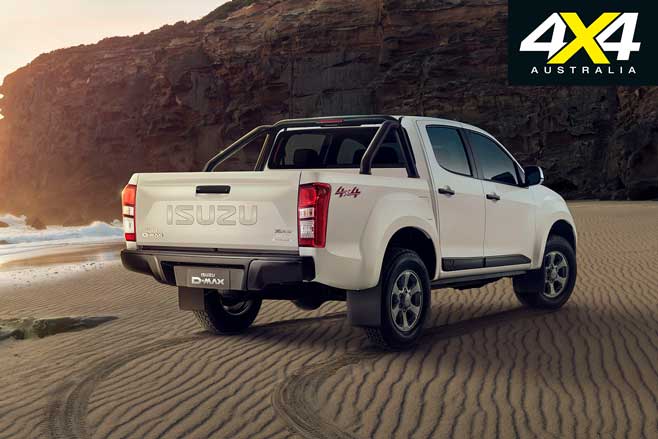
The changes applied by Isuzu UTE Australia for the X-Rider are entirely aesthetic, with the vehicle retaining Isuzu’s trusty 3.0-litre 130kW/430Nm turbo-diesel powerplant, as well as the same running gear.
For the X-Rider, ISUZU Ute Australia has added a satin black sports bar, blacked-out B-pillars, X-Rider badging, X-embossed door mouldings and 16-inch gunmetal grey alloy wheels. The X-Rider is available in three colours: Splash White, Titanium Silver and Obsidian Grey.
For comparison’s sake, the D-MAX X-Runner is based on the top-of-the-range six-speed-auto LS-T model and was also limited to visual changes, including 18-inch wheels, matte-black styling, X-Runner branding and a bunch of genuine Isuzu UTE accessories. The X-Runner was limited to 645 units and priced at $54,990.
The D-MAX X-Rider is available now from Isuzu UTE Australia’s dealer network.
MSA 4×4 Accessories has returned from the 2019 SEMA Show with a Global Media Award, with the Australian company winning the coveted prize for its innovative MSA 4×4 Towing Mirrors.
It’s no mean feat, either, with more than 2400 companies showing off more than 3000 products at this year’s event.
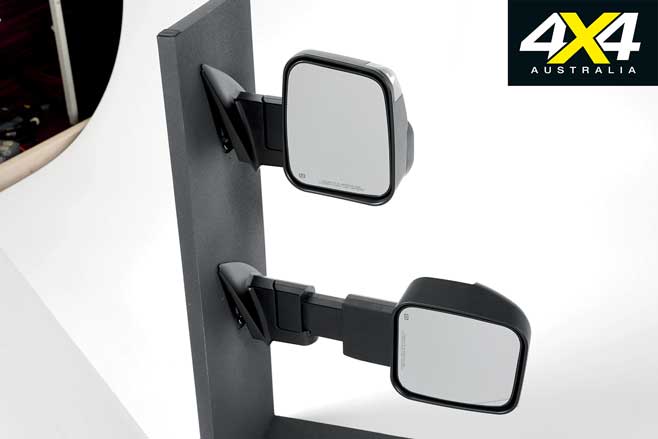
The Global Media Awards are voted for by a group of 30 international journalists from 19 countries around the world, who vote to recognise the companies that manufacture speciality products and accessories that have mass appeal to consumers.
MSA 4×4’s director, Shane Miles, was in Las Vegas to accept the award. “We’re extremely proud that our new Towing Mirrors have been recognised by the international media” he said. “It’s taken years to develop a mirror that, when not towing, was not disproportionate to the styling of the vehicle, and matched the size of the vehicle.”
As the name implies, the Towing Mirrors are designed to offer enhanced vision for towing, yet remain unobtrusive in the day-to-day scramble. The mirrors are designed so that a large single mirror pivots on a heavy-duty extension slide, so that it can return to its normal position once the tow rig has been disconnected.
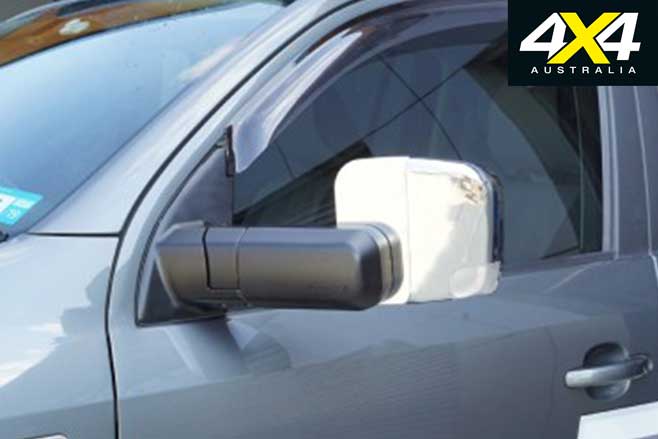
The newly patented Towing Mirrors come with a five-year warranty, with the product to be available in Australia from early December 2019. However, pre-orders can be made through MSA 4×4’s stockist network.
We’re hoping to install a set on our Project Ranger soon, so stay tuned!
MSA 4X4: msa4x4.com.au
BACK IN 2018 Holden did a limited run of LSX-badged Colorado 4x4s and they must have done alright, because despite the initial disappointment of the special edition not actually having an LSX engine fitted, folks snapped them up quickly. In fact, they were so popular that when Holden updated the Colorado range for 2019, the LSX returned as a full-time variant.
The LSX is based on the low-grade LS variant, but it muscles up with grey 18-inch alloy wheels, a gloss black grille, a new design black sports bar, black wheel arch flares, soft tonneau cover, ‘COLORADO’ decal on the locking tailgate, and a digital radio. Despite the exterior extras, the LSX retains the charm of a hosed-out interior with vinyl-covered floors and rubber mats – the no-frills interior trim many four-wheel drivers like in a car.
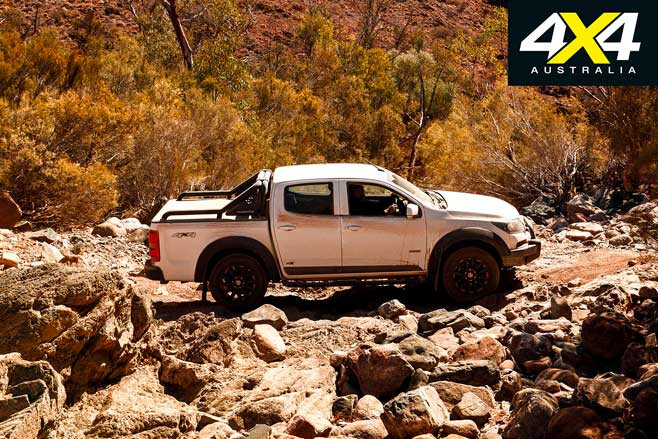
The new LSX is designed to appeal to buyers who want the tough-truck look without all the bells and whistles, and it’s priced at $46,990 (manual) or $49,190 (auto). The engine remains the grunty yet efficient stock 500Nm 2.8-litre Duramax, and the drivetrain remains the same as any other new Colorado. The only thing we can complain about is the lack of a factory-fitted locking diff in the front or the rear.
We enjoyed driving the Colorado so much that when we had an LTZ model last year, we racked up more than 15,000km during three months of use, which saw us travel to Stradbroke and Fraser islands and to Finke and back via the Oodnadatta Track. So when Holden said they’d like us to take the new LSX on our next adventure to the Flinders and Gammon Ranges in South Australia, we jumped at the opportunity.
When we told them where we were planning to take the LSX, Holden slapped on some factory extras including a genuine accessories steel front bumper with a Warn Zeon 10-S winch fitted, and a set of Goodyear Kevlar all-terrain tyres, a tow bar, side steps and underbody protection plates, all of which can be optioned from your Holden dealer. The optional extras took the price of this Colorado up to $53,440.
I had my doubts about running the highway-tyre-looking Goodyears on the harsh rocky tracks of the Flinders Ranges, but they proved me wrong.
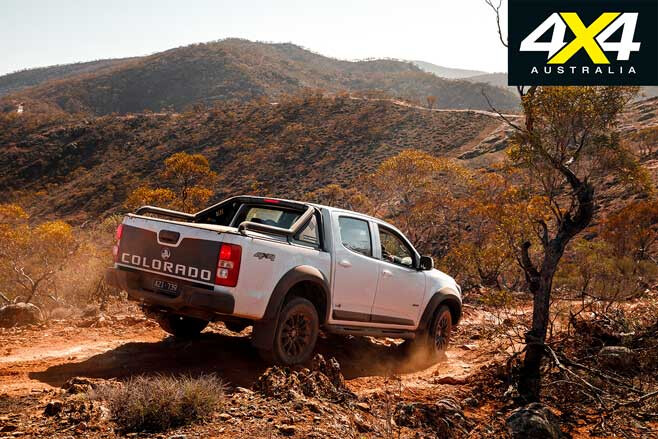
On the highway drive from Melbourne to the southern tip of the Flinders, the Colorado reminded us of what we like and don’t like about it. We love the punchy 2.8-litre engine and its smart-shifting six-speed auto transmission; equally, we love the way the engine sips fuel as you cruise along on highway drives.
We’re not so in love with the NVH that comes from said engine, as it’s noisy and rattly and you really know about it in the cabin. Thank goodness then for the standard inclusion of Apple CarPlay that keeps the tunes flowing and makes taking and making calls easy. The Colorado is a comfortable highway cruiser, sipping diesel in the low 10L/100km range and with plenty of punch for overtaking.
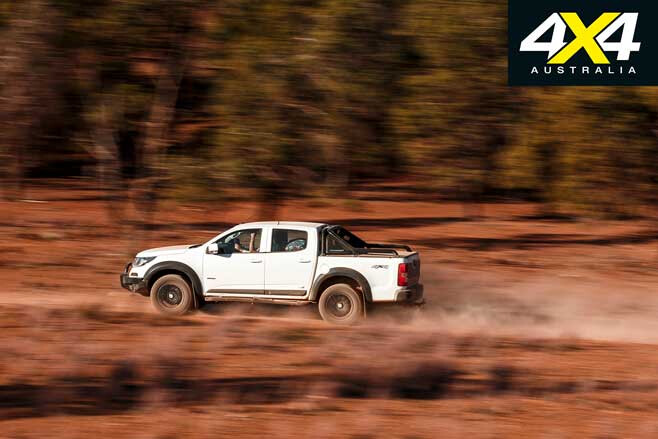
Once we left the sealed roads behind and hit the gravel of the Southern Flinders, the Colorado felt just as at home as it did on the highway. The sounds of dirt under the tyres blocked out any complaints about engine NVH, and the suspension is well-tuned to the conditions. As mentioned, the Holden doesn’t come with a factory fitted locking rear differential which many of its competitors do, but what it does have in lieu of a locker is an LSD.
A limited-slip differential comes in handy on gravel roads. Most 4×4 utes have an open differential and rely on the locker when off-road and electronic traction control for gravel road control, but ETC is annoying as it cuts your throttle.
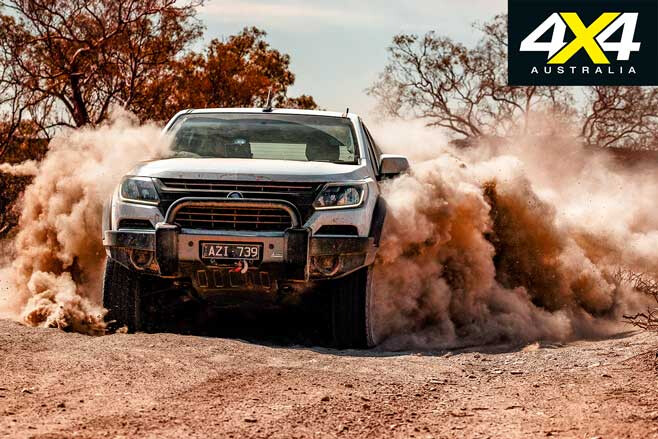
The LSD calmly controls any wheelspin and allows the driver to get on with the job. This is particularly handy when pulling out from a stop at intersections on dirt and wet sealed roads in town, especially when you have 500Nm underfoot; so kudos to GM for retaining the old LSD.
The LSD also helps when climbing steep and scraggly tracks in low range, and there’s plenty of that sort of driving to be had in the Flinders. Sure, the ETC covers traction as well, but the LSD does it in a more progressive manner and without interfering with your throttle. The extensive refresh of the Colorado range back in 2017 included a recalibration of the ETC, which greatly improved its reaction time and the car’s ability to ascend steep and rutted tracks. It still falls short of a locker-equipped vehicle on the toughest terrain, but it will go way farther than the pre-facelift models.
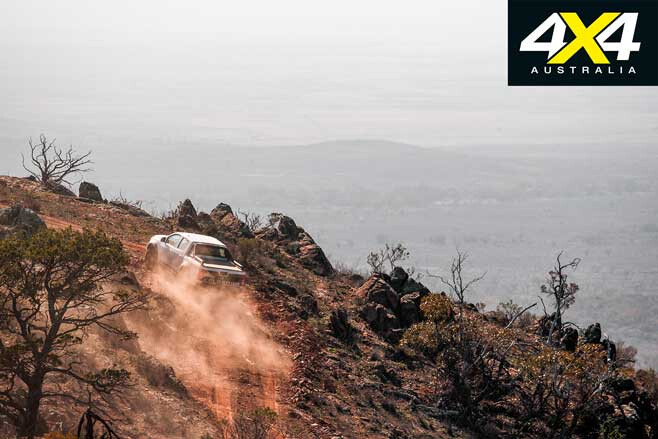
With all that grunt available and a steep 2.62:1 low range in the transfer case, climbing the steepest of terrain posed no problem for the Colorado. Hitting the tracks of the Bendleby Ranges, Willow Springs Skytrek, Warraweena Conservation Park and the iconic gorges of the Flinders is a must for any 4x4er touring through this area, as they provide challenging driving and spectacular views over the harsh and rocky landscape.
The rocky terrain also brought forth a big issue with the Colorado in this trim. Holden quotes the Colorado as having 215mm of ground clearance and an approach angle of 28.3 degrees with the standard front bumper – that angle should be a little better with the genuine steel bumper fitted to this vehicle.
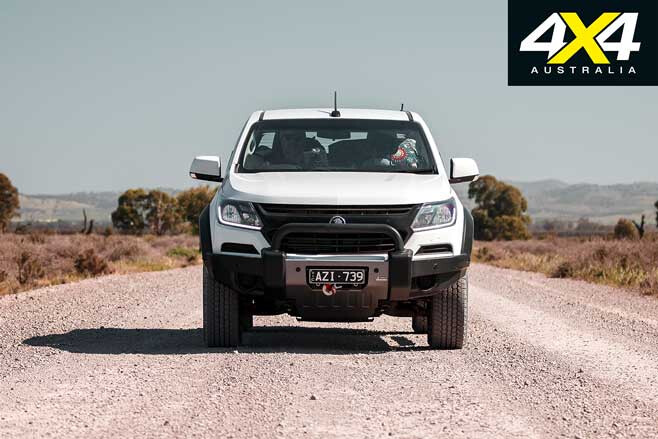
Not earth-shattering off-road numbers when compared with most new 4×4 utes, but this LSX seemed to find every rock in the Flinders with its bash plate and side steps. Even high crowns on the gravel roads scraped the underbody protection, and it was particularly bad when descending the steep hills and the weight of the car compressed the front suspension.
We put this down to the added weight of the steel bar and Warn winch over the front end, as we didn’t find any such issues with our bog-stock LTZ last year. As a result, the front bash plate was reshaped by the terrain and we lost a side step, as they are only lightly secured to the body.
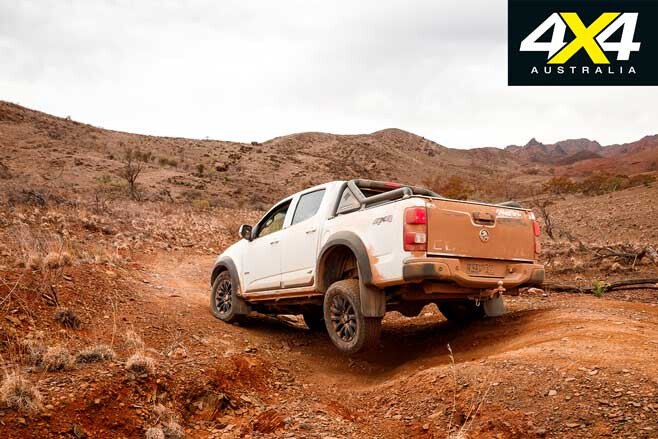
We’ve heard stories of Colorados busting sumps in such conditions without proper underbody protection, and we doubt this car would have survived without the optional plates. The simple fix for this would be to install a pair of heavier and/or taller front coil springs and, let’s face it, all of these utes need a lift in ride height for better clearance.
Aside from the clearance issues the LSX proved its muscle on the hills and on the highway. It’s competent and comfortable with grunt to burn, and provides excellent economy and brawny good looks with the LSX extras. A special shout-out to those Goodyear Kevlar all-terrain tyres – despite their soft-roader looks, they came away from the harsh, punishing rocky tracks of the Flinders unscathed … much to my surprise.
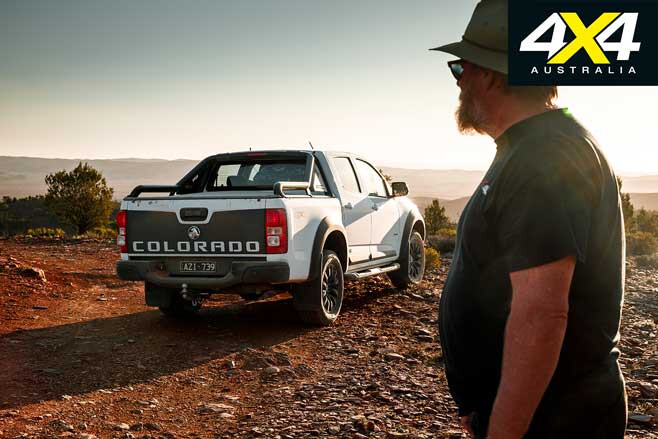
2019 HOLDEN COLORADO LSX SPECS: Engine: 2776cc inline-4 16v common-rail turbo-diesel Max Power: 147kW at 3600rpm Max Torque: 500Nm at 2000rpm Gearbox: six-speed auto Crawl Ratio: 43.3:1 4×4 System: Part-time with high and low range Construction: Ladder chassis/4-door pick-up body Front Suspension: IFS with coil springs Rear Suspension: Live axle on leaf springs Wheel & Tyre: 18-inch alloys with 265/60R18 tyres Kerb Weight: 2103kg GVM: 3150kg Payload: 1047kg Towing Capacity: 3500kg Departure angle: 23.1° Rampover angle: 22.1° Approach angle: 28.3° Wading depth: 600mm Ground clearance: 215mm Fuel Tank Capacity: 76 litres ADR Fuel Claim: 10.7L/100km On-test Fuel Consumption: 11.2L/100km
WITH a new decade almost upon us, now is a better time than ever to prep your fourbie for an off-road adventure.
The 2020 Gear Guide is the bible for dirt-chasing enthusiasts, with a range of the best aftermarket componentry to make your 4×4 the ultimate go-anywhere machine.
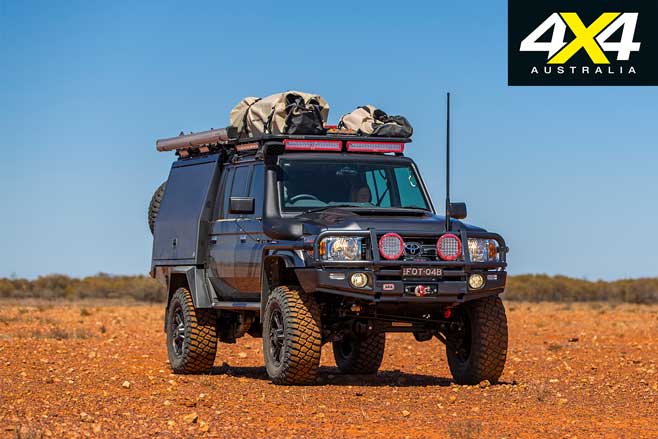
Not only have we listed some of the best new kit currently on sale, we’ve also spent time analysing and testing a heap of products including Terrain Tamer’s parabolic springs, a Dometic fridge/freezer, TJM Pro Lockers and a CTEK battery management system.
The easiest way to learn how to build the perfect tourer is to ogle at those who have already done climbed the mountain. To this end, we’ve included some of the best custom 4x4s roaming the Aussie countryside: two mighty 79 Series rigs and an immaculate GU Patrol ute.
We also took three popular dual-cabs decked out in Ironman 4×4 kit – Ranger, Hilux and Triton – to the hills, for a proper off-road workout. Plus, Dan Everett simplifies the process of updating an old-school 4×4, by outlining the 10 areas you need to focus on to make an ageing 4×4 perform as-new.
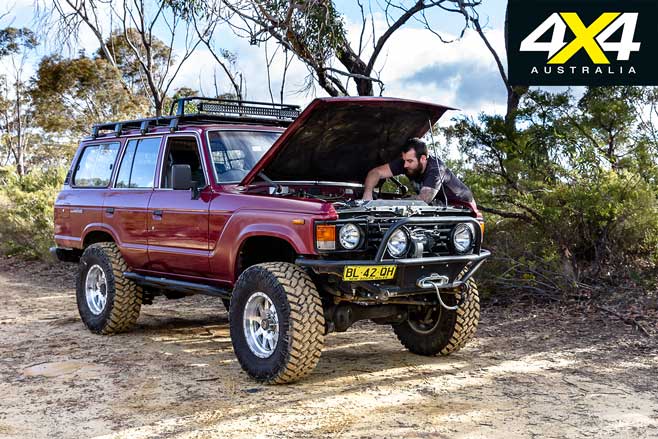
WHAT ELSE IS THERE? – A closer look at Club 4×4 Insurance. – LED Driving Light comparison. – Shock Absorber buyers’ guide. – Synthetic Rope buyers’ guide. – 4×4 Battery buyers’ guide. – Roof Rack buyers’ guide.
The 2020 Gear Guide is on sale now!
OFFROAD Images have been in the photography game for over 25 years. They have provided creative to clients and the magazine industry as a preferred supplier of photography, primarily to the automotive scene and specialising in anything which has been designed to be used in the Outback.
REDARC Australia spoke to Mike Ellem, owner of Offroad Images, to get his experience on RedVision and how it’s benefited him as a photographer.
REQUIREMENTS
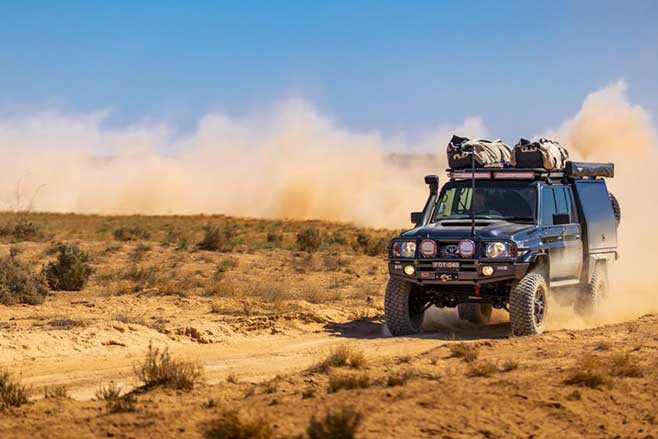
Michael Ellem: Whilst our demands on power are extremely high and important to every shoot that we do, we are just photographers, not electrical engineers. So, it was important that we understand what is going on in the back of our vehicle.
We used to cart around generators and we never really knew when the fuel would run out, so we were always worried about the result of a power outage.
With the various inverter systems, we have run, I must admit, I never was really confident in how much time I would get out of the systems. I would watch the Voltmeter tick down and simply pack up everything even if it wasn’t fully charged … knowing that we might need to conserve our photography and filming the following day.
So, we need to be confident in every aspect of the equipment we use and understand how much power we have, are using and how much power we are creating. Our creativity as photographers stops without the powered systems.
THE VEHICLE
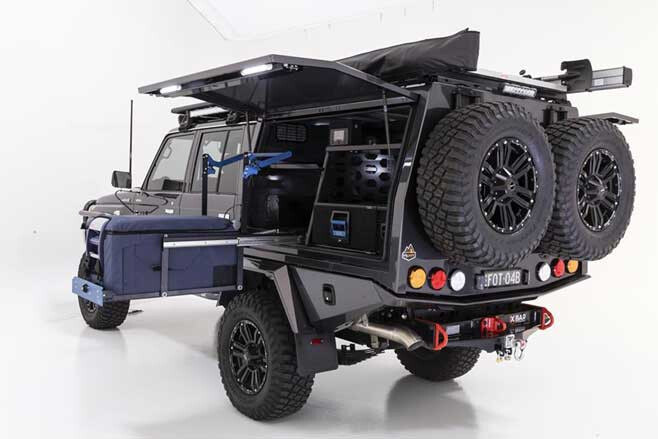
We have built a specialised vehicle to work for us as a camera truck. It’s a 79 Series Dual Cab Cruiser with a Trigpoint service body on the back. It was important to us that the service body and everything within it would be self-sufficient as everything inside the service body is a vital asset to our photography and filming.
BATTERIES
Four 60Amp lithium batteries from Revolution Batteries Australia, which is probably the most reliable battery on the market.
BATTERY MANAGEMENT SYSTEM
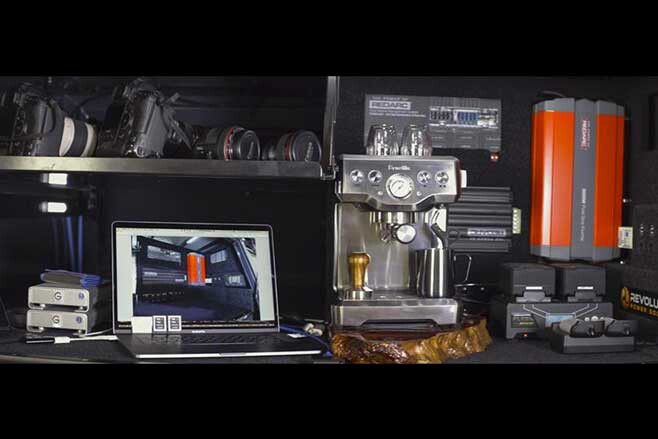
The Manager 30 battery management system handles the charging of these batteries, including deciding where the charging power comes from. It will distribute charge from the 300 watts of solar on the roof, or from the alternator as we drive, or from a 240V outlet if I plug into power. It can also utilise a combination of these power systems to ensure charging is kept up to the efficient levels.
3000W PURE SINE WAVE INVERTER
We photograph and film remotely and depend 100 per cent on the reliability of our camera and lighting platforms. But these are only as good as the charging systems. On a daily basis, we charge camera, drone, lighting systems with huge power requirements via our Pure Sine Wave Inverter. We also run computer systems as we copy, back-up and edit data in the middle of nowhere.
ENTER REDVISION
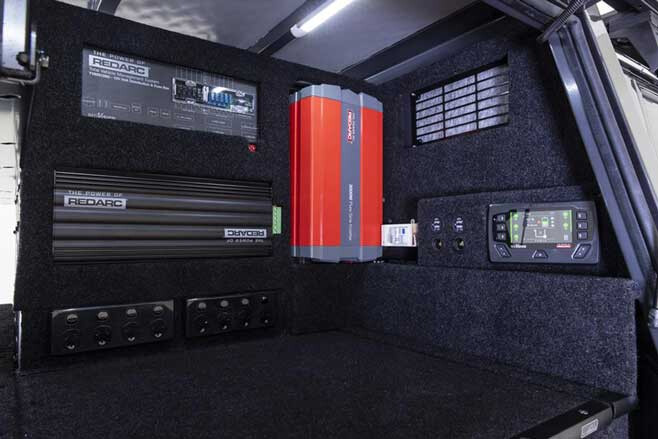
Now, this is the part that I love. RedVision is so easy to use, but also and most importantly, so easy to understand. At a glance, I can see battery and water levels in an easy to understand graphical layout. At the touch of a button, I can analyse power coming in and power going out. This is so important as I can easily understand how long we will be able to work for, and how many camera, lighting or drone batteries we will be able to charge.
I can even look into the history of our power usage. We have various lights set up throughout the service body which are all turned on and off via the Redvision controller. Importantly, we have a Redvision controller on the left and right side of the service body, so all this information is easily accessible.
I have to admit, the system REDARC configured meet every part of our demanding power requirements, but also allows us to run a full coffee machine ensuring that the crew working with us are all happy.
After all, when you ask these people to get up at stupid hour, clean cars and move lighting gear around, the least you can do is have the ability to make an awesome coffee while they take in the location as the sun rises.
We also run a 60-litre ARB fridge and a Travel Buddy oven, plus various USB and Cig sockets, all controlled by dual RedVision monitor controllers in the back, and via the app on my iPhone in the front.
WHAT I LOVE
As explained the ease of use is really important to me, but I was also really impressed by the quick reference display of power available and at a click of a button, I have a visual and graphical display of where the power is coming from and how much power is coming in and going out of the system.
The Revolution Lithium Batteries with REDARC Manager30 and RedVision monitoring give me a longer draw of power meaning more power and most importantly, an easy to understand interface provides me peace of mind of percentage and usable hours of battery remaining. Absolutely amazing.
Alu-Cab Generation 3 Expedition Tent
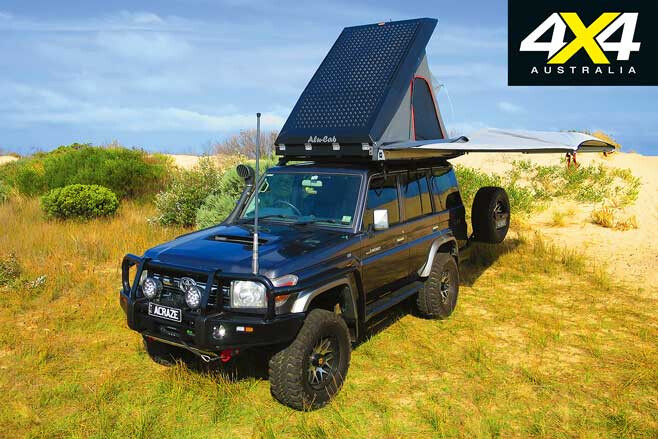
Ironman 4×4 Accessories is now the Australian distributor for Alu-Cab, and the Generation 3 Expedition Tent is one of the brand’s signature products.
This hard-shell rooftop tent features lightweight aluminium construction and a streamlined aerodynamic profile. The wind-resistant gas strut pop-up design means you can literally set up (or pack away) camp in seconds, while the tent’s dual-layer canvas provides protective insulation.
Additional features include triple point window/door access with rear door awning, quick release ladder that stows away inside tent when closed, 75mm high-density foam mattress with zip-off cover, integrated cargo rails for optional load bars, and internal storage pockets, USB ports, 12V power outlet and lighting.
The tent weighs 88kg and measures 2300 x 1400 x 280mm when closed, yet it offers a generous interior height of 1600mm when open.
RRP: $5600 Website: ironman4x4.com
EFS Awning Range
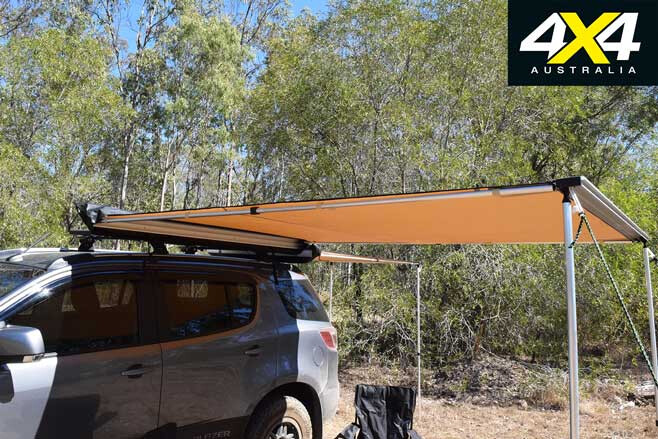
EFS 4X4 Accessories has developed a new awning range that’s made from tough 280gsm rip-stop poly-cotton canvas with a 50+ UV rating. Housed in a heavy-duty UV-treated black nylon bag, the awnings feature aluminium camlock poles, additional canvas corner reinforcements, high-quality zips and materials, Velcro fasteners, and are supplied with included mounting brackets, ropes and pegs.
Optional extras include side and front walls. The awnings are available in the following sizes: 2.5 x 2.5m ($268); 2 x 2.5m ($254); and 1.4 x 2m ($240). Side walls and front walls to suit range in price from $65 to $81.
RRP: From $240 Website: www.efs4x4.com.au
Yakima SkyRise HD tent
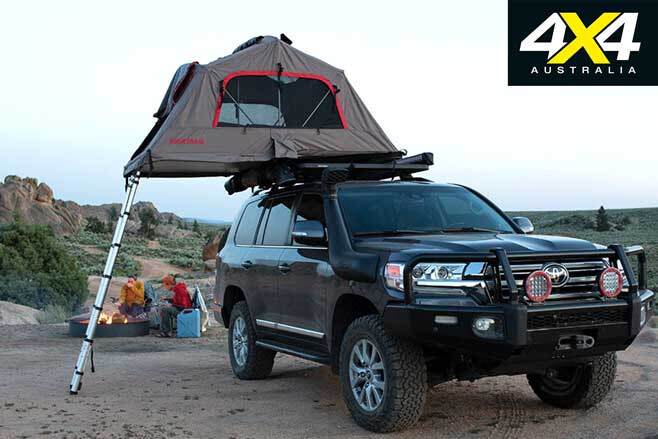
The all-new Yakima SkyRise HD tent body is ruggedly constructed with 600D Ripstop polyester fabric and a 3000mm waterproof PU coating. Paired with a weather-shedding waterproof rainfly, the rooftop tent is claimed to provide complete protection from the elements.
Weighing it at just 52kg, the SkyRise HD Tent offers room for up to three campers, and features include extra-large windows, doors and skylights, a thick wall-to-wall foam sleeping pad, guy lines and D-rings for windy conditions, abrasion-resistant tent floor with textured finish for durability, height adjustable ladder with auto-close function, and tool-free and lockable vehicle mounts for easy installation and removal.
RRP: $2200 Website: www.yakima.com.au
We’ve plucked out some new off-road rubber that has hit the aftermarket recently. Swipe away!
Goodyear Wrangler AT SilentTrac
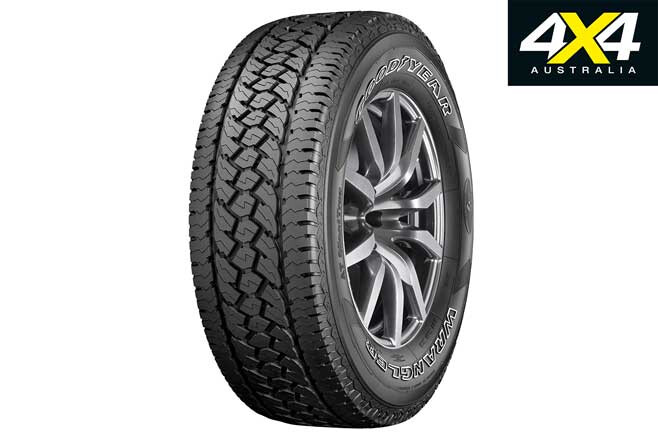
Goodyear has developed a new all-terrain tyre called the Wrangler AT SilentTrac. Available in a wide range of sizes in both Passenger (P) and Light Truck (LT) constructions, as its name suggests the tyre has been designed to provide quiet and smooth on-road performance thanks to a thick rubber layer under the tread that absorbs vibration, as well as an angled-block tread design.
The tyre provides improved mileage performance compared with its predecessor, the Wrangler AT/SA, thanks to more wearable rubber volume and an optimised cavity shape. As you’d expect of an all-terrain tyre, Goodyear claims tough off-road performance thanks in part to its ‘DuraWall’ technology which consists a robust compound and thick gauge layer to provide resistance against cuts and punctures when driving in off-road terrain. The new Wrangler AT SilentTrac is available in a range of sizes to suit 15-inch rims through to 18-inch rims.
RRP: $199 (205R16) to $379 (285/60R18) Website: www.goodyear.com.au
Cooper Evolution M/T
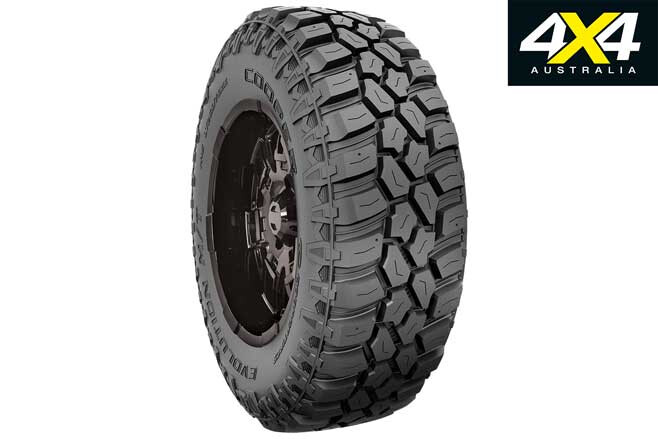
The Cooper Evolution M/T is a new mud-terrain tyre with an 80 per cent off-road bias. It features V-shaped sidewall “climbers” designed to offer added grip on rocks and other slippery surfaces while providing added sidewall protection; deep and wide “mud slingers” between the tread blocks to aid mud clearing and provide extra traction; and a high-strength, high-tensile body ply that’s claimed to be 20 per cent stronger than most other brands for resistance to rock cuts and impact damage when driving off-road.
The Evolution M/T has also been designed to provide optimum cornering and stability on mud and dirt, and it packs the latest generation noise-reduction technology. The Evolution M/T is available in a wide range of sizes to suit rims from 15-inch to 20-inch including popular 31X10.50R15, 285/75R16, 285/70R17 and 275/70R18 sizes. See the website for full size availability.
RRP: From $269 Website: coopertires.com.au