
The Ford Castrol Cross Country Team of South Africa has recently pulled the covers off its all-new 2020 contender for the South African Cross Country Series (SACCS), a turbo V6-powered Ford Ranger rally raid ute.
Built and campaigned by Neil Woolridge Motorsport (NWM) under the Ford Castrol Cross Country Team banner, the carbon-fibre bodied rally ute is a clean-sheet design that is built to compete in the series’ premier Production Vehicle class, the FIA-class.
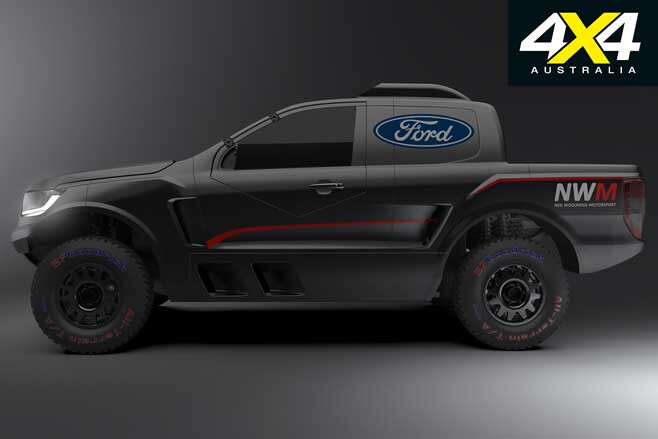
According to Ford South Africa, the FIA-class category is catered for the most sophisticated rally vehicles, as raced in the Dakar Rally and FIA World Cup for Cross Country Rallies.
While the Ford-NWM partnership has so far yielded two SACCS Class T championships, in 2018 and 2019, with Mustang Coyote V8-powered Rangers, the FIA-class Rangers will be using the same 3.5-litre turbocharged Ecoboost V6 used in the F-150 Raptor and Ford GT supercar.
Peak power from the V6 engine in the FIA-class Ranger is rated at 298kW, lower than the F-150 Raptor’s 335kW, though torque output is bumped up to 700Nm as compared to the stock 691Nm.
With a shorter length, NWM says the engineers were able to fit the engine further back in the chassis to achieve the ideal mid-mounted position for optimal weight distribution than they were able to with the Mustang’s 5-litre V8 engine in the Class T racers.
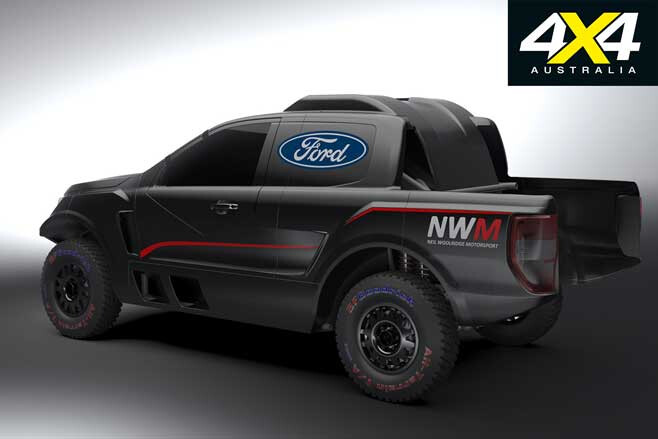
French-based SADEV supplies both the FIA-class Ranger’s six-speed sequential manual and specialised steering rack that is designed for cross country off-road racing.
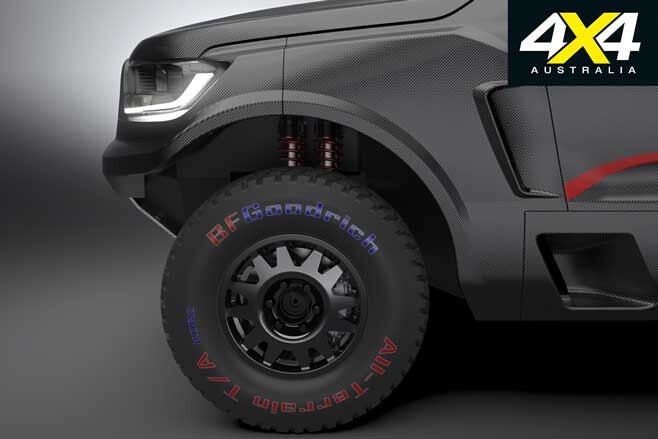
Unlike the Class T racers, the FIA-class Ranger swaps out its solid rear axle configuration for fully independent front and rear suspension, which are complemented with dual high-performance BOS dampers that allow 280mm wheel travel.
To suit the higher speeds FIA-class contenders compete in, the Ranger comes fitted with six-piston Brembo brakes all round and BF Goodrich KDR2+ tyres.
With the first race of the SACCS set to take place this weekend, NWM says it would campaign an upgraded version of its Class T V8 Rangers for the first two races, while testing and development for its V6 contender is underway.
The team expects to introduce the FIA-Class Ranger by the second or third race in April or May, with a full line-up of three FIA-class Rangers ready by mid-year.
Following the recent introduction of the updated 2020 Mitsubishi Pajero Sport, Mitsubishi Australia has released three accessory packs, the Signature, Signature Plus, and Expedition, for the new 4×4 wagon.
The $2799 Signature Pack brings black fender flares, illuminated scuff plates, front bonnet emblem, an interior emblem, front and rear bar garnish, textile floor mats, and a tailgate spoiler.
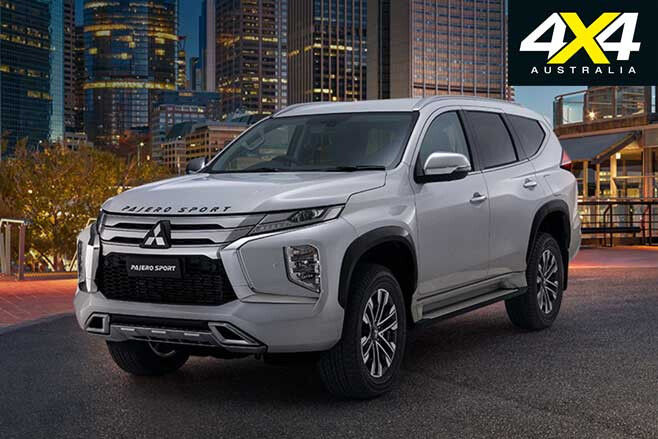
For a more adventurous look, the $4599 Signature Plus Pack adds the Signature Pack’s fender flares, scuff plates, interior emblem, floor mats, and tailgate spoiler, with the addition of a lower nudge bar with an integrated LED light bar, window weathershields, hood and headlamp protectors, and a 50mm towball.
The $6999 Expedition Pack (pictured in the main image) on the other hand takes a different path with proper a combination of off-road gear such as a bull bar with integrated fog lights, a snorkel intake, roof rack cross bars with a Rola Titan roof tray, rear towbar with a towball, electronic brake control kit, corner sensors, rubber mats, scuff plates, and a luggage tray.
According to Mitsubishi, the quoted prices for the accessory packs are 23 to 24 per cent cheaper than the total cost of the parts purchased individually.
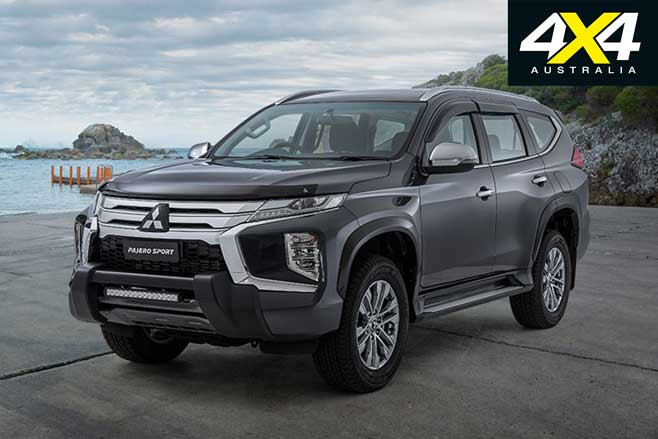
The list of accessories were based on feedback Mitsubishi’s product strategists gathered from a number of clinics held with Australian customers during the model’s development.
“Based on the feedback from our customers, we better understood the needs of owners who wanted additional real-world protection that included the basics such as floor mats to scuff plates,” said Shaun Westcott, deputy director of aftersales for Mitsubishi Australia.
The USD$375,000 Hennessey Goliath 6×6 is one of the most over-the-top creations to have ever come out of American tuning house Hennessey Performance Engineering, however for those will more modest budgets and smaller driveways, Hennessey has brought the Goliath treatment to standard American pick-ups.
The company’s latest creation, the Hennessey Goliath 700 GMC Sierra Denali takes the GM-branded pick-up truck’s 313kW 6.2-litre V8 and cranks it up to 522kW with the fitment of a US$26,995 Goliath 700 Supercharger package.
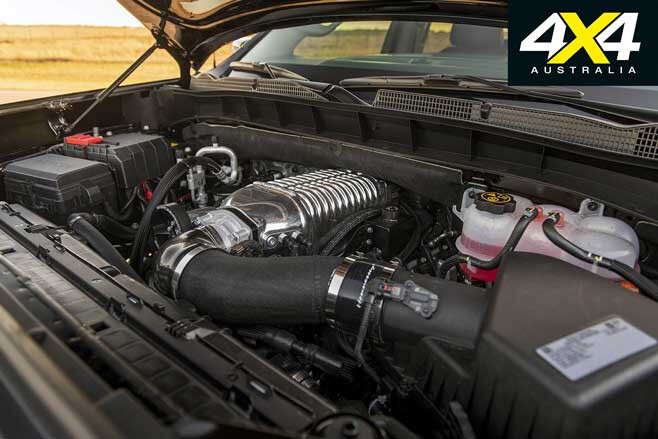
The package includes a 2.9-litre supercharger system, custom camshafts, hardened pushrods and a new engine management calibration.
The stock GMC Sierra Denali’s off-road prowess is also bolstered with what Hennessey brands the Goliath Off-Road Stage 1 package, which adds a six-inch lift kit, 20-inch wheels wrapped in Toyo off-road tyres, and a front bar with integrated LED lighting. The Off-Road package is priced at USD$14,950.
The Goliath 700 treatment for the Sierra is broadly similar to those seen on the Goliath 6×6 Silverado, sans the 6×6 drivetrain.
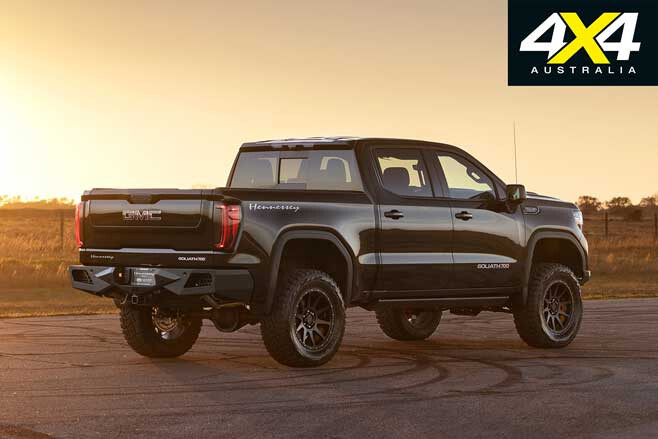
Other upgrades that are available for the donor GM pick-up include a ram-air hood, 384mm Brembo front brakes, rear bar, electrically retractable bed cover, upgraded electric fold-out side-steps, and a diamond stitched interior.
According to Hennessey the Goliath 700 GMC Sierra Denali will undergo chassis dyno testing and go through up to 320km worth of road testing before being delivered to the customer with a three-year/58,000km warranty.
The only mechanical upgrade we’ve made to our Ford Ranger was to fit a King Brown exhaust system from South Aussie exhaust gurus Pacemaker. The three-inch turbo-back King Brown system allows the 3.2-litre diesel engine to breathe a little better and gives it a nice growl though the exhaust. It also gives us scope for future engine enhancements through the intake and tuning.
One of the great things about using quality Australian-made products on your 4×4 is that you can talk to the people who design and manufacture them and have the security of local after sales service if needed.
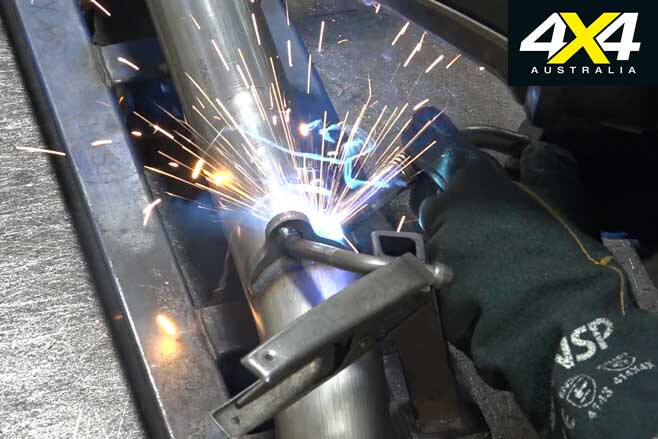
There’s also comfort in knowing it was designed and made by people who know Aussie conditions and the unique terrain it can throw up. That’s not something you can always rely on from an imported online purchase.
When we were passing through Adelaide after our Flinders Ranges adventure, we couldn’t miss the opportunity to drop by Pacemaker’s manufacturing facility to see where these legendary exhaust systems come to life.
American Expedition Vehicles (AEV) is best known for its work with Jeep and Ram vehicles from the FCA stable.
For more than 20 years the skilled team at AEV has been turning these 4×4 vehicles into off-road weapons, but unlike trucks from many custom shops and modifiers the AEV rigs are built with an OEM attention to detail, product integration and quality. This comes after years of working closely with Jeep on other vehicles including show specials.
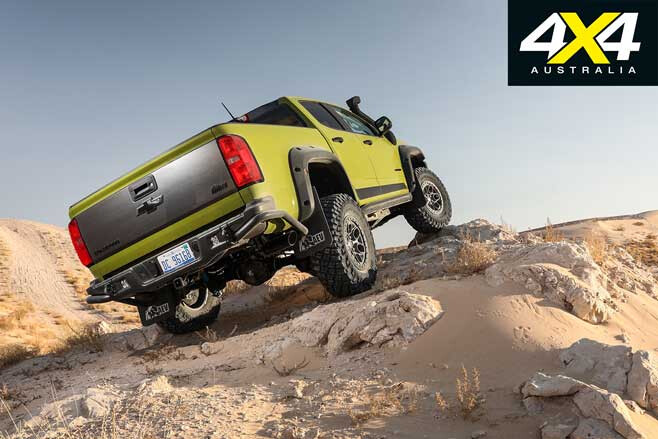
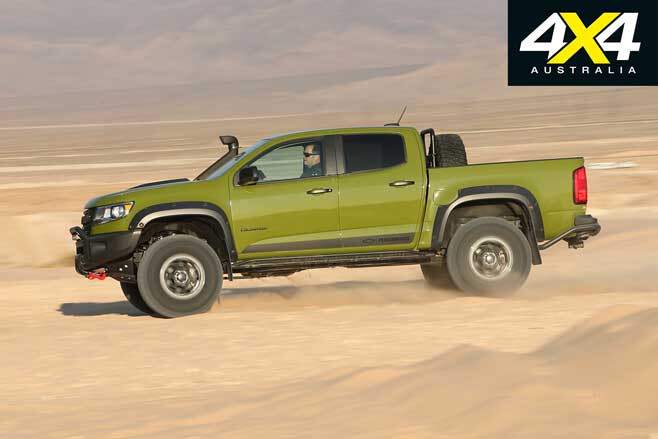
In more recent times, the AEV badge has been seen on the Chevrolet Colorado ZR2 midsize pick-up. The ZR2 is the high-performance version of the US-Colorado and it comes with off-road-focused suspension and a bolder look. As is its way, AEV has taken the ZR2 to the next level with a factory-backed collaboration to create the ZR2 Bison.
The AEV ZR2 Bison debuted at the SEMA Show in 2018 and went on sale at Chevy dealers in the USA throughout 2019. Also at SEMA that year was a ZR2 Bison concept that featured a swag of off-road extras to really make the product stand out.
In the year since then, AEV’s founder and president Dave Harriton and the team have developed those Bison extras to make them available as options on the vehicle, and for SEMA 2019 they displayed this stunning example bearing the full kit, now called the AEV350.
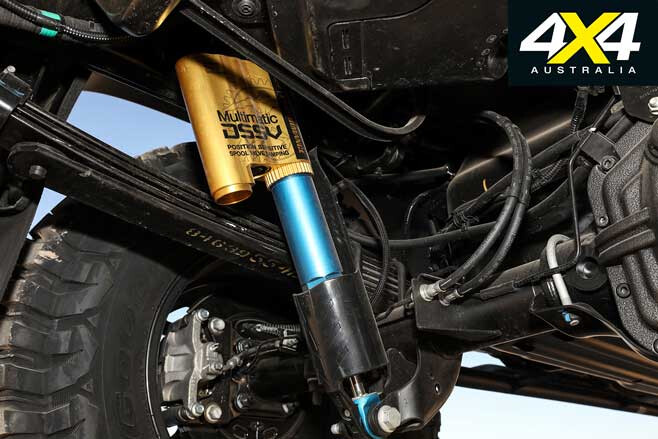
What makes the ZR2 Colorado more than just another styling exercise is its DSSV Multimatic suspension. These clever shocks come from the Chevrolet Performance team and give the truck a best-of-both-worlds suspension tune that delivers firm and stable on-road dynamics while it eats up bumps and ruts in the rough stuff. It might sound too good to be true, but we’ve driven a stock ZR2 and the shocks work unbelievably well.
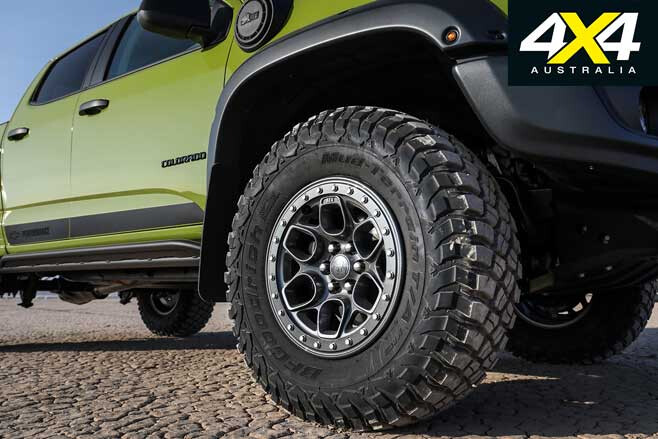
What wasn’t too good on the standard ZR2 was the relatively small tyre and wheel package fitted by Chevy, with the 31-inch all-terrain rubber getting lost under the lifted wheel arches and struggling when the going got tough. Even the ZR2 Bison only rides on 31s, albeit on AEV wheels, but the deal gets real with the AEV350 hop-up kit that squeezes 35s beneath the bespoke flares.
Significantly, the new, American-made AEV Highmark wheel-arch flares allow those 35-inch BFGs to fit under there without any suspension lift over and above the ZR2’s factory 50mm lift (over a stock Colorado).
The front-end is assisted by a GM Performance levelling kit with high-angle ball joints and a GMP tie rod reinforcement kit, to maintain suspension geometry and strength with the bigger tyres fitted. The extra ground clearance offered by the 35s transforms the Colorado to give it the off-road capability it deserves; crawling over rocks, cresting dunes and negotiating ruts with ease.
Should the Colorado run out of ground clearance, the underbody of the Bison is protected by AEV’s exclusive hot-stamped boron steel (HSBS) skid plates. HSBS is stronger than regular steel and the plates are available to protect under the engine, transmission, transfer case, fuel tank and rear differential. The Bison’s off-road performance is bolstered by the ZR2’s factory differential locks both front and rear … to think we can’t even get a factory diff lock in the rear of a Holden Colorado!
To compensate for the larger rolling diameter of the 35-inch wheels, the final-drive ratio in the diffs has been shortened to 4.11:1. This Bison is powered by the Duramax 2.8-litre diesel engine we are familiar with in Australia, and it gets the Americans excited because it’s the only diesel engine offered in this class of truck there. The sound, feel and the performance of the engine is all very familiar to us, and none of those 500Nm are lost to the bigger tyres.
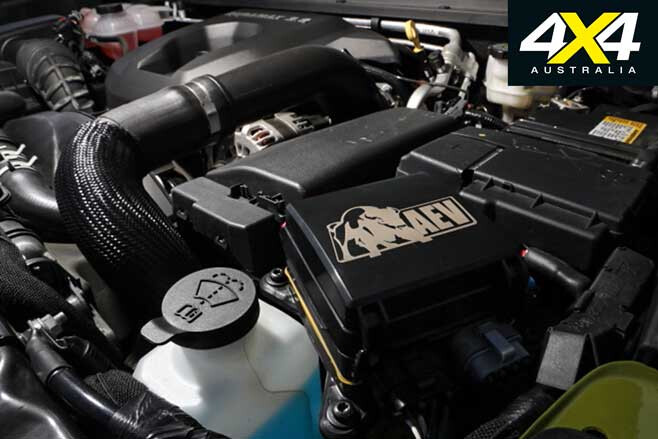
One of the things we love about driving AEV trucks is that, not only do they perform well off road, they drive just like an OE-stock vehicle on the highway. Most AEV vehicles run Bilstein shocks, so they ride better than stock.
The AEV350 retains the DSSV dampers and features none of the pitching and wallowing that many lifted vehicles exhibit, and there are no unusual noises coming from underneath; just comfortable highway cruising, with the BFGs humming beneath. This comes from AEV’s philosophy of using the minimum lift possible and keeping the suspension geometry as close to OE as possible. Even on some of the company’s bigger Jeep and Ram rigs that roll on 37- and 40-inch tyres, the trucks still ride and steer as good as factory … and in most cases, better.
The wheels on the SEMA ’19 Bison are AEV’s Crestone DualSport alloys that can be used with or without a beadlock. They are US-DOT approved, but using beadlocks on the street is legal in some US states and not others – and not at all here in Australia. The beadlocks are best saved for off-road use, and a feature of the Crestone wheels is that AEV offers a protection ring that can be fitted in place of the beadlock ring to protect the rim from kerb or rock scrapes.
The one issue with fitting 35s to the Colorado is finding a spot to mount the spare; the bed mount in this vehicle was a prototype, and the production version that will soon be available looks a bit different. Other trick AEV gear on this truck includes the AEV low-tube Bison bumper with Baja Designs light bar and driving lights; AEV winch mount and winch; AEV intake snorkel; AEV Bison rear bar; AEV interior trim and switch panel for light switches; and that uber-cool colour which Dave calls AEV ZC Green. All the AEV vehicles at the SEMA Show were painted in this custom colour.
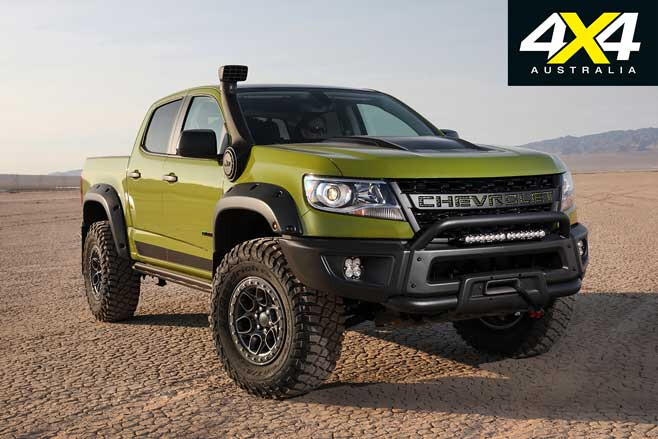
The AEV350 package on the ZR2 certainly makes a good thing better, giving the Colorado much-needed ground clearance and the rubber you want for rugged off-road use. All the parts work together, fit better than OE and are well integrated into a total package.
The only real problem with the AEV kit is that little if any of it will fit on your Holden Colorado. That’s right, the US-built Chevrolet Colorado is a different car to our Thai-built Holden and it rides on a different platform altogether, so AEV is just teasing us Aussies with all this good gear. We can only hope the next-gen Colorado will be built on a new global GM platform, as has been rumoured, and parts will be interchangeable on both sides of the Pacific.
Gladiator good gear
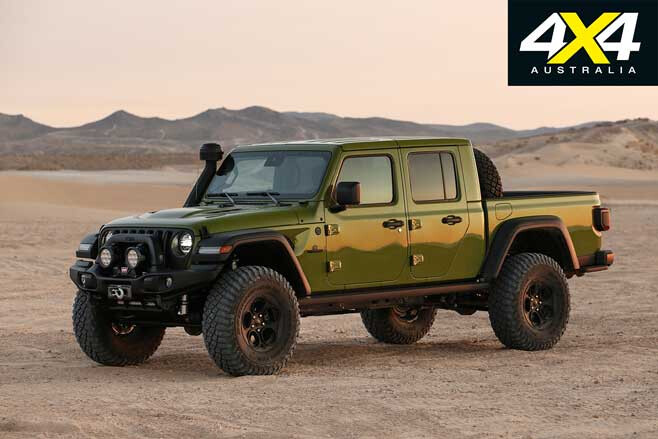
When we went out to play in the desert with the AEV Colorado, the team had all its SEMA Show vehicles with them including the RAM 2500 Prospector, JL Wrangler and the new Gladiator; all of them resplendent in custom ZC Green.
The good news for Australians is that most of the AEV kit for the Jeeps and Ram will fit our vehicles and is available through AEV dealers here. Of particular interest was the AEV-equipped Gladiator fitted with AEV front and rear bumpers, AEV Wheels, suspension and snorkel; and most of this kit is ready to go.
If you’re looking for some of the best gear available to outfit your new JT Gladiator, then the AEV products are worth a look.
Suspension. You probably think of it in terms of lift kits and making your 4×4 more capable off-road, which is a natural thing to do given ground clearance is the single most important attribute when it comes to how well a vehicle works off road.
But suspension is far more than that and is a make-or-break factor in how well your 4×4 works everywhere, on and off road. And while you may also think your suspension works harder off road than on road, it’s more likely the reverse of that is true, depending of course on your particular on- and off-road driving regime.
What makes suspension work hard is not only the bumps and dips it has to cope with but the speed at which the vehicle is travelling when it hits these bumps and dips. At crawling pace – first gear, low range – no matter how big the bumps or deep the dips, your suspension doesn’t work all that hard even if it is moving through its full travel. And under these conditions you don’t even need particularly sophisticated suspension, as the dampers have less work to do. At absolute snail-pace driving, even with extreme full-travel conditions, you could even ditch the dampers to no great ill effect, especially with leaf springs with their inherent self-damping characteristics.
On-road driving – most obviously – brings in the element of higher vehicle speeds, and speed combined with bumps is where the suspension really has to start working hard. Not only that but dampers, which are largely irrelevant at off-road crawling pace, become the key ingredient even at moderate road speeds let alone at high road speeds. What’s more, getting the damper tuning right is the key to getting the suspension to work well and is a more nuanced art than getting the spring rates right, which in comparison is a more straightforward engineering exercise.
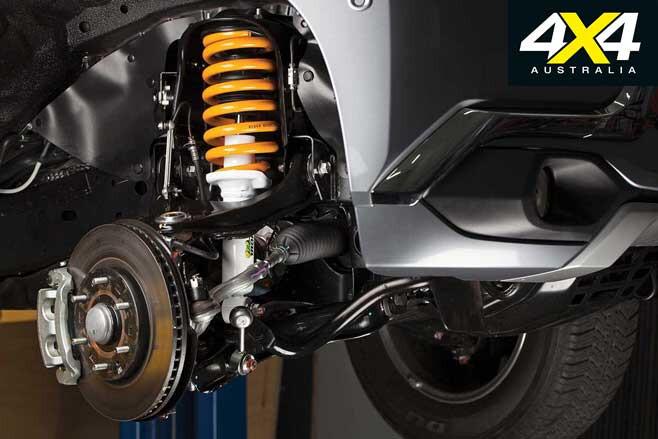
All this is most important in Australia given there’s a far greater distance of bumpy roads than smooth roads, and once you’re in the country and away from any interstate expressway, it’s all bumpy roads – to varying degrees – anyway. Getting the suspension on any vehicle working just right is a vital element to having the whole vehicle work on Australian roads. You can have a brilliant powertrain, but without a suspension that provides stability and agility where it’s needed on all road surfaces it will be wasted.
The secret to having a suspension that works well on Australia’s bumpy roads at higher speeds is longer-travel suspension architecture, as the more travel that’s available to be used, the softer the springs you can employ. Softer, long-travel suspension simply soaks up the bumps better. Drive a Ford Ranger Raptor if you’re not convinced.
The key to this making long-travel suspension work are well-tuned dampers to control the spring movement. You also need dampers that stand up over time to all the work they have to do coping with bumpy roads traversed at speed.
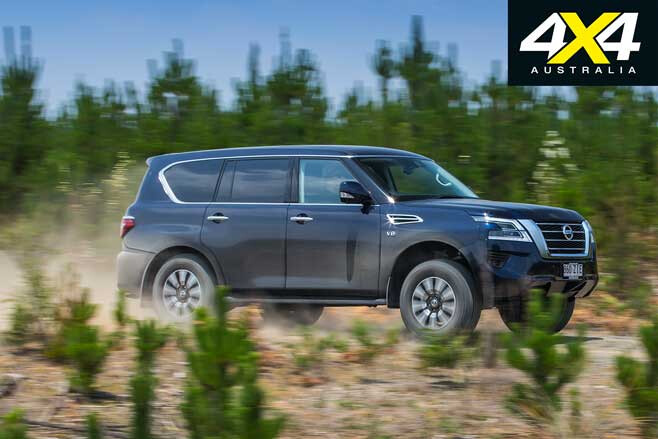
Unfortunately, most new 4x4s (and cars more so) come with relatively low-quality dampers. Even if the as-new damper tune is okay, the dampers soon lose their ability to replicate the as-new damping force as the damping fluid breaks down and/or becomes aerated. It’s a regular occurrence when we take away a new 4×4 for a week, or even a couple of days, and drive it over rough roads at normal touring speeds only to come back with suspension noticeably poorer for the experience.
The trouble is good quality dampers are expensive and, given each new 4×4 or car has four of them, the cost soon starts to add up for any manufacturer who wishes to use quality dampers instead of the usual budget items installed in vehicles produced in high volumes. And even with quality dampers you still need to get the tuning right, which is arguably the ‘blackest’ of all automotive arts.
For years, new car dealers have shuddered at the potential money they could be making when they see the 4×4 vehicles they just sold being driven off the lot and around the corner to the local 4×4 accessories outfitter, where the owner then spends another $10K, $20K or even $30K (or more) on the new truck.
The smarter vehicle manufacturers have developed extensive ranges of factory made and approved accessories to tempt the buyer into spending more with at the dealer, but most enthusiasts prefer the kit to come from a company that knows what we do with our 4x4s and how to make the gear to better prepare the cars for this use.
More often than not the OE accessories would be made to the company’s specification by a recognised 4×4 accessories manufacturer and then sold to the car company unbranded, yet buyers still prefer to have known brands on their trucks.
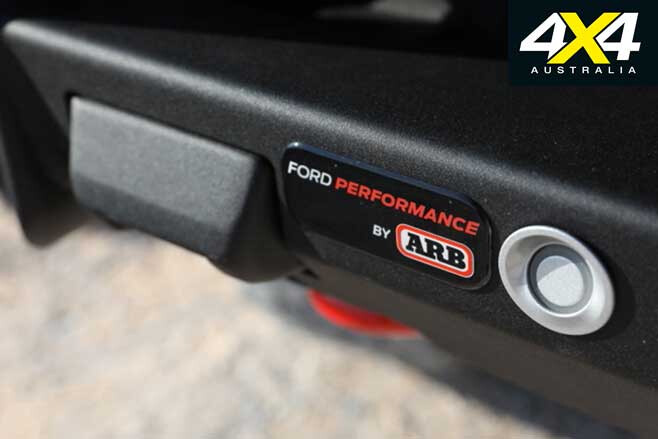
It put a smile on my face to see the Ford Rangers on display at the SEMA Show wearing steel bumpers and the “Ford Performance by ARB” badge. ARB has previously made bullbars for OEMs, but this is the first time I’ve seen it acknowledged on the product. Ford recognises that enthusiasts like to have name brands on their cars and is capitalising on it with ARB and with the Fox Shocks it fits to its Ford Performance Raptor models. Isn’t it great to see Australia’s ARB getting such recognition worldwide?
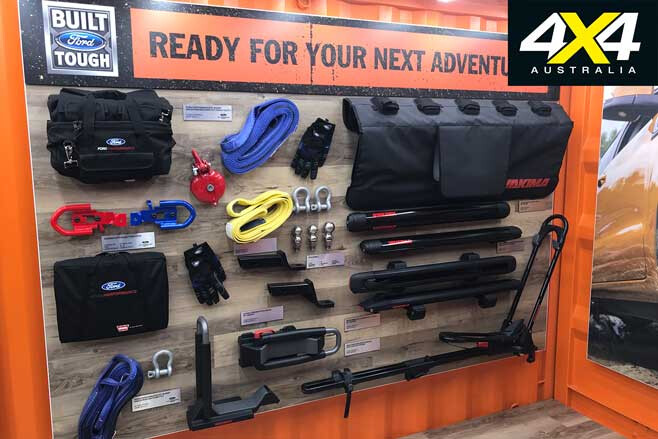
The Ford Performance stand at SEMA had a host of name-brand accessories for US-Ranger buyers including ARB bars, Fox suspension, Yakima storage and Warn recovery products. Each of these brand names are loved and used by 4×4 enthusiasts. Wouldn’t it be nice to see such product on offer here?
OEMs working with third-party companies has taken a huge step further with the turnkey vehicles featured in this issue, with RTR working in close collaboration with Ford, and AEV with General Motors.
These partnerships provide a win-win-win situation for the vehicle manufacturer, the tuner and the buyer, as you are getting a new car with improved performance and styling from recognised companies, built to OE quality standards and with factory warranty and support. It’s a trend we can see in the USA and we look forward to seeing it take off here.
Following the axing of the Mercedes-Benz X-Class and Holden Colorado, the ute segment might be showing signs of straining at the lid, but Peugeot believes that there is still room with the introduction of the Peugeot Landtrek.
Developed in partnership with Chinese carmaker Changan Automobile, the Landtrek is primarily aimed at markets in sub-Saharan Africa, and South and Central America.
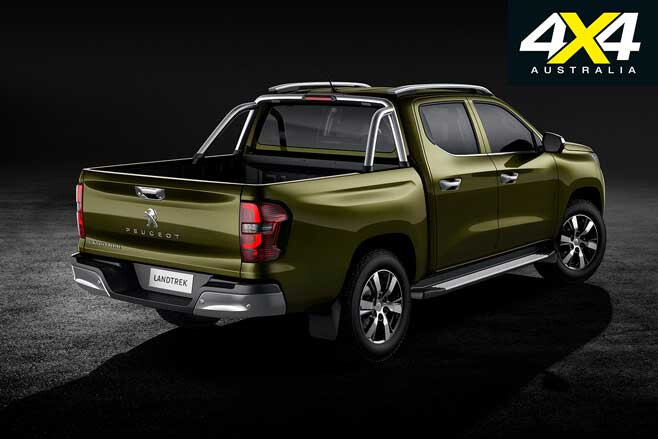
Straight off the bat Peugeot says that the European market “is not expected to be included in the scope of the marketing”. However Peugeot Australia is open to the idea of bringing the Landtrek into Australia, though certainly not in 2020.
“At this point there are no plans to introduce the Landtrek into Australia for 2020,” said Kate Gillis, general manager of marketing for Peugeot Australia.
“The 4×4 ute market is always under consideration as it is growing every year, however for the time being we would like to continue our focus on passenger cars, SUV, and light commercial vehicles (LCV) range. We recently introduced the LCV range in 2019 and we want to focus on establishing it in the Australian market before we consider future models.”
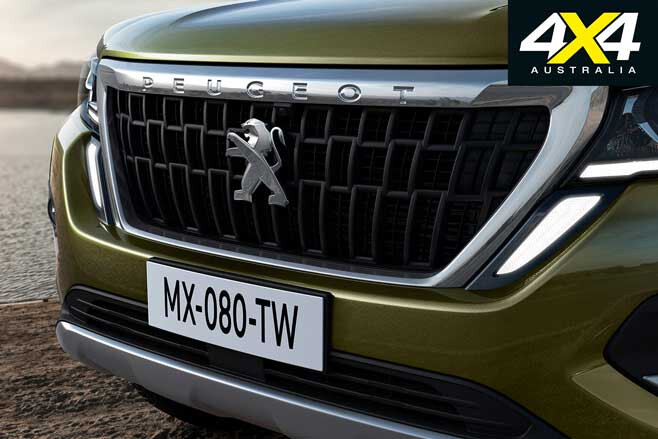
With single-cab and dual-cab variants, the Landtrek features two engine options, a 112kW/350Nm 1.9-litre 4-cylinder turbo-diesel mated to a six-speed manual, and a 157kW/320Nm 2.4-litre petrol with a choice of either a six-speed manual or six-speed automatic.
According to Peugeot, the 4×4 variants of the Landtrek would have 30° approach, 25° ramp over, and 27° departure angles, with a ground clearance of up to 235mm and a wading depth of up to 600mm.
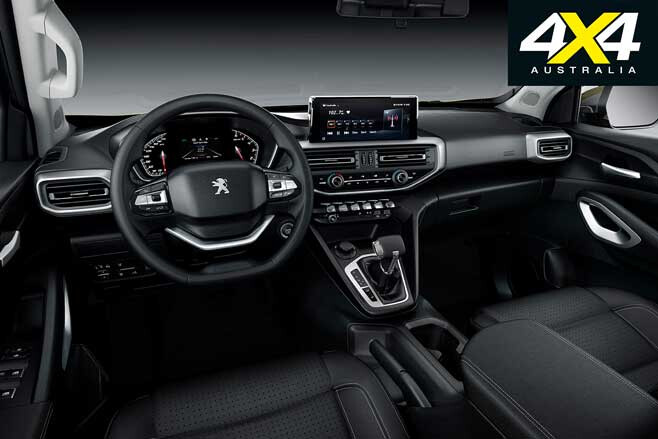
Despite being catered towards developing nations, the Landtrek features a highly stylised interior with design touches similar to Peugeot’s passenger cars, and it is well equipped with 10-inch touchscreen infotainment system and even a surround-view off-road camera option.
Other neat features include LED lighting and 12V power in the rear bed.
The Readers’ Rigs feature in the December 2019 issue of 4X4 Australia features a several customised raised adventure-ready 4×4 rigs from our enthusiastic readers.
To get involved, post a pic and a description of your rig on our special site here or post it to our Facebook page and stand a chance to win an ARB High Output Air compressor valued at $335.
NISSAN TD42T GU PATROL: RYAN JACOBSEN (4×4 Australia Readers’ Rigs Winner of the Month)
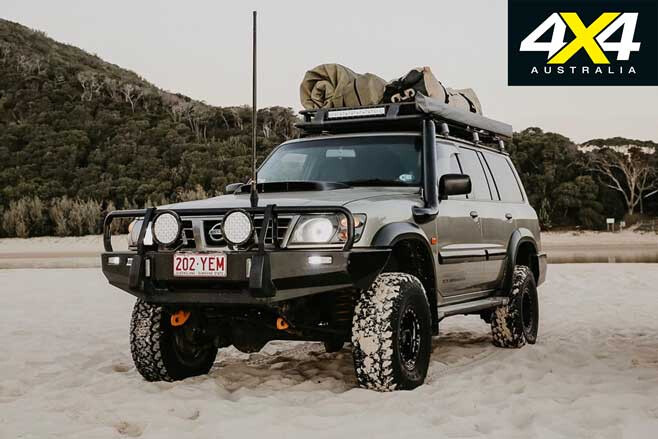
Modifications include Cross Country Ultimate Intercooler, ARB bullbar, Kaymar rear bar, front and rear ARB air lockers, rear drawer system, Radius Fabrications stainless-steel snorkel, three-inch Tough Dog lift, three-inch exhaust, ARB Aluminium Series roof rack, awning, ARB long-range tank, Micks HID headlights, and a GMW UHF … that’s just off the top of my head.
By far the best place I’ve taken it is Fraser Island. I love a good Double Island trip as well.
1998 NISSAN GU PATROL: FRASER COLLINS
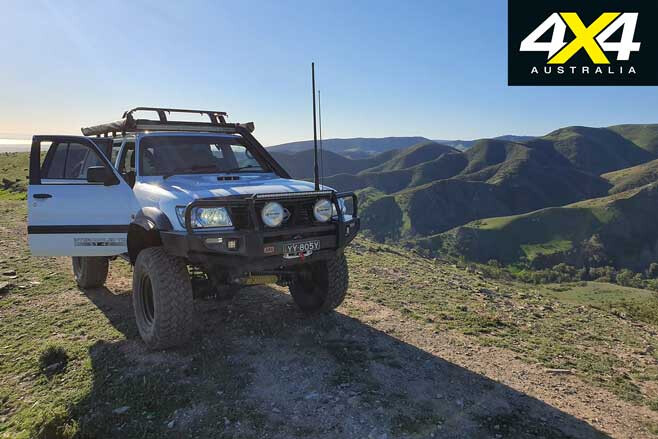
Kit includes 2004 GU 4.2 motor; UFI 18g turbo, pump and fan hub kit; six-inch Dobinsons coils (soon to be Fox shocks); rear drawers; FG XR6 seat conversion; 37-inch tyres; rear ARB locker; ARB Deluxe front bar; and an Outback 4×4 rear bar. The best place I’ve taken it to is the Flinders Ranges.
1991 TOYOTA LC80 SAHARA: MATTHEW LILLEY
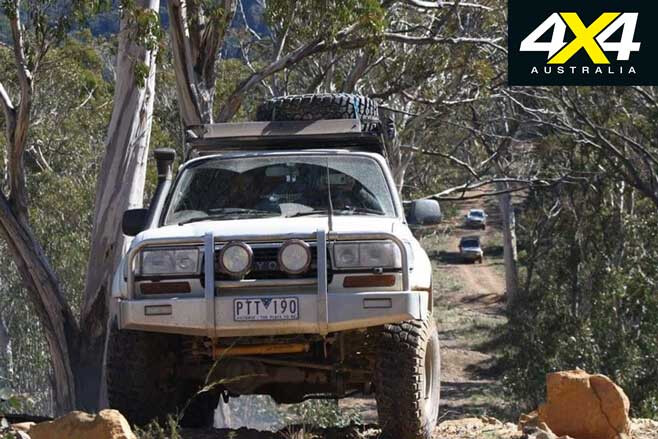
It has a reconditioned 1HD-T, high-flow turbo, top-mount intercooler, brake calliper upgrade to later model, rebuilt pump, three-inch straight-through exhaust, reinforced diffs with solid spacers, and 33-inch muddies and ATs. It’s been to the Vic High Country, the Pyrenees ranges and tracks including Old Bluff, Oodnadatta Track and Mereenie Loop. It has gone everywhere I have pointed it!
JEEP WRANGLER RUBICON: PETER COLTHUP
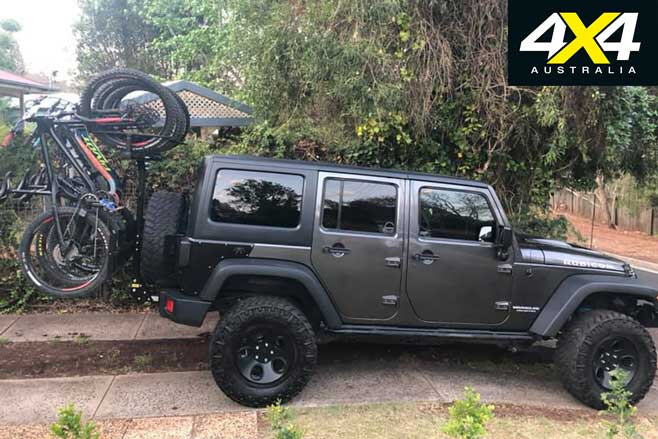
Mods include four-inch Dobinsons Flexi coils, Bilstein 5100 shocks, Nitto Trail Grapplers, High Steer conversion, Synergy drag link, TeraFlex Monster trackbar, sector shaft brace, longer brake lines and swaybar links, front control arm drop brackets, and a RackPRO bike carrier. The best places would be in and around the Burdekin River, as well as Vinegar Hill.
HOLDEN RODEO: RYAN BOLTON-TURNER
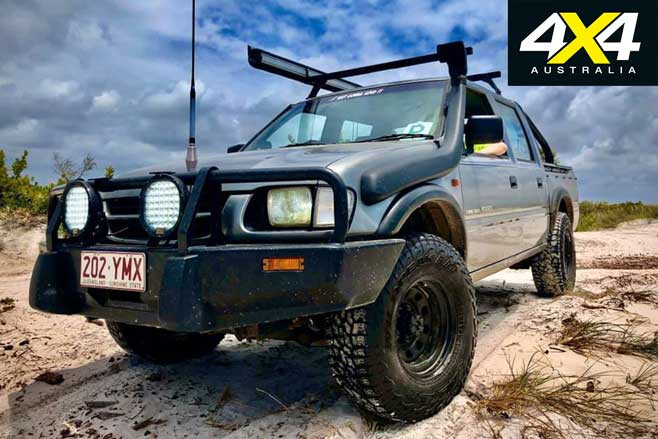
I’ve had it for about a year now and fell in love with it as soon as I bought it. It has an ARB bullbar off a Holden Jackaroo with custom mounts housing eight-inch spotties and HID headlights, a snorkel, roof racks, a Kings awning, custom-made sports bar with rear-facing rock lights, two-inch extended shackles with T-bars wound up, Raptor-coated flares, and 31-inch Falken Wildpeaks.
The best place I have taken the little ’Deo to is Fraser for a week for schoolies last year. It shows you don’t need big, done-up rigs to get to the places you want to go.
2003 NISSAN PATROL: DANIEL TADIJA
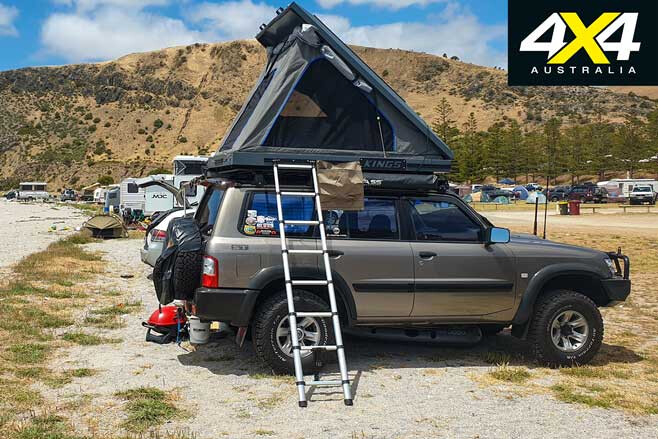
With 33s, a Kings rooftop tent, a two-inch lift and an Opposite Lock bullbar, it’s taken me everywhere I want it to go.
If Jeep’s new Gladiator pick-up doesn’t deliver the retro vibes you’re chasing then a restored Jeep CJ8 Scrambler might be just what you’re looking for. The Scrambler was the last pick-up made by Jeep in 1986 and they are still around in good numbers for enthusiasts, even in Australia.
Better than a 30-year old Jeep is one that’s been fully restored with a few improvements to improve the decades old design; a so-called restomod.
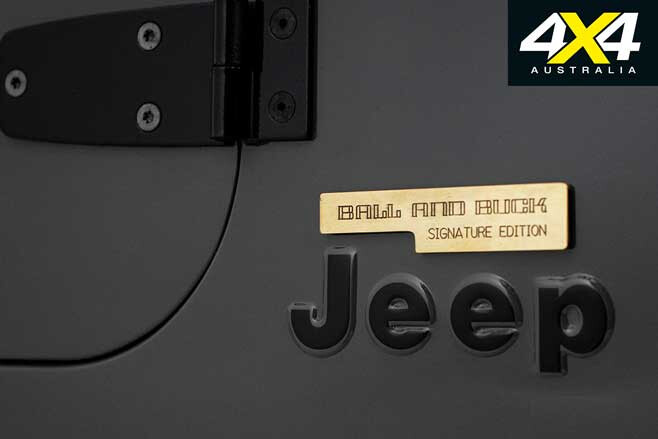
American outdoor sportsmen outfitters Ball and Buck, has recently added a signature edition CJ8 Scrambler to its catalogue with prices listed between US$65 to $105,000. For that money you get a classic Jeep that has been subjected to a ground up, nut and bolt restoration with custom touches reflecting Ball and Buck’s style.
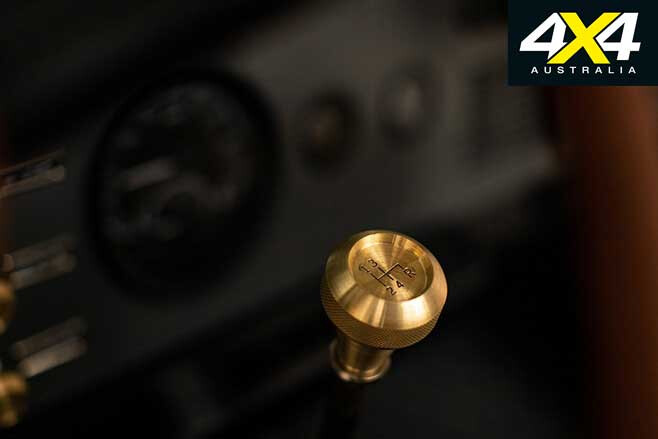
These include Ball and Buck Signature canvas and camo seat covers and door panels, a leather wrapped steering wheel, grab bar and dash, hand-turned brass shift knobs and heater controls, and a Ball and Buck gun case.
The restored Jeep chassis is updated with full ARB suspension, alloy wheels with BFG All Terrain tyres and uprated brakes. Power comes from either a restored original ANC 6-cylinder, a Cummins 2.8-liter turbo diesel or a GM LS3 petrol V8.
The Ball and Buck Scrambler isn’t cheap but it is exclusive. Once a deposit is paid and the order details finalised it will take up to six months for your Scrambler to be built. Add some Ball and Buck apparel, a B&B Zippo lighter and book yourself on one of the exclusive hunting expeditions and you’ll complete the look.